Tag: Zohran Mamdani

  • The Grocery Gambit: Polymarket’s $1 Million NYC Pop-Up Sparks High-Stakes Political Betting

    The Grocery Gambit: Polymarket’s $1 Million NYC Pop-Up Sparks High-Stakes Political Betting

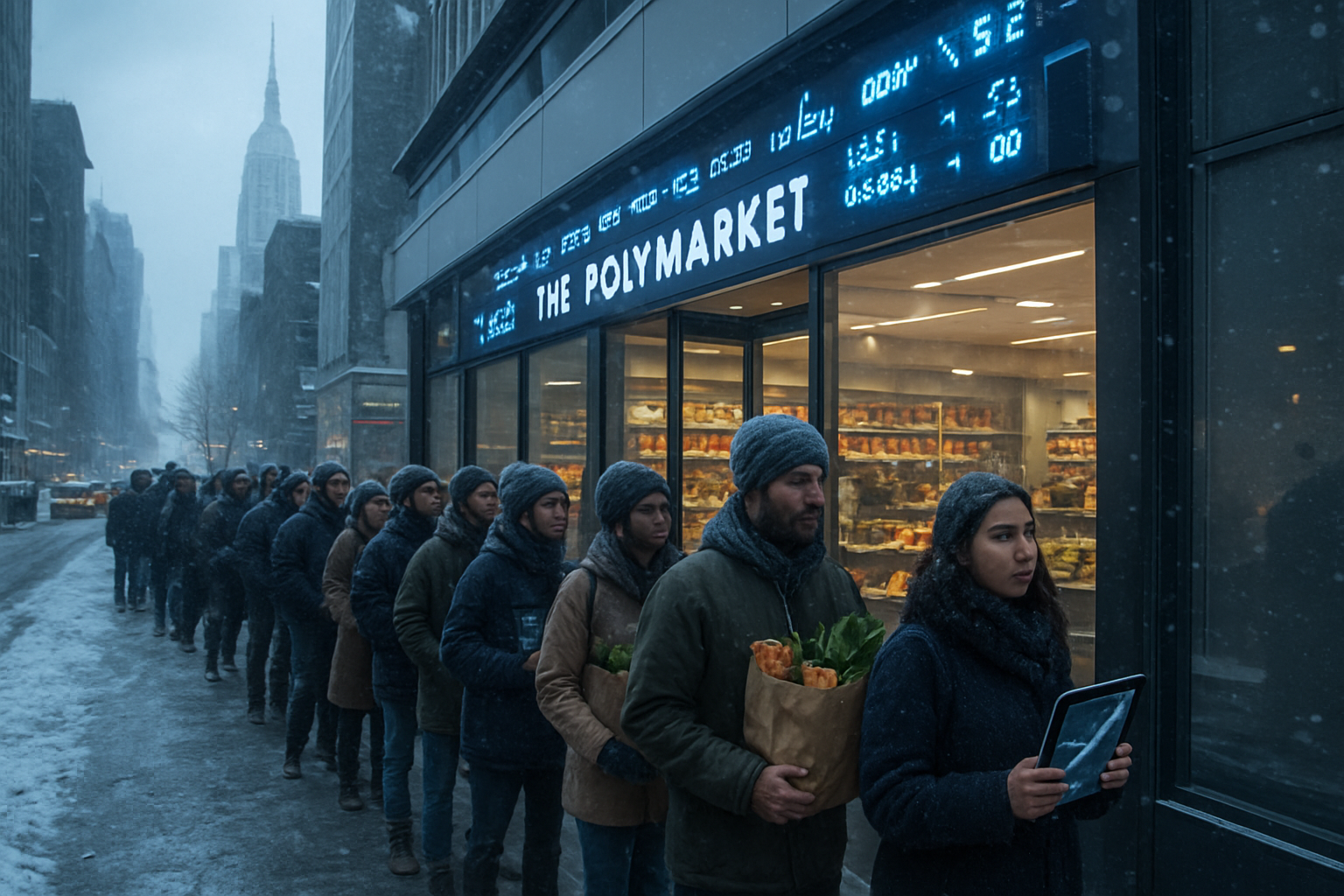
    As of February 8, 2026, the intersection of decentralized finance and urban politics has reached a fever pitch in New York City. Prediction market giant Polymarket has announced a "free grocery store" pop-up in downtown Manhattan, a move that traders are betting will either be a masterstroke of PR or a regulatory lighting rod. Currently, markets on Polymarket and rival Kalshi are pricing in a 68% probability that the "The Polymarket" store will run out of stock before its scheduled closing on February 16, reflecting both the immense demand for free goods and the skepticism surrounding the logistics of this corporate-led "food sovereignty" experiment.

    The event, which includes a massive $1 million donation to the Food Bank for NYC, is widely viewed by traders as a sardonic critique of the city's shifting political landscape. With the recent inauguration of Mayor Zohran Mamdani—a democratic socialist who campaigned on establishing city-run municipal grocery stores—the prediction markets are buzzing. Investors are not just betting on whether the milk stays on the shelves; they are wagering on whether this private-sector "flex" will successfully delegitimize the new administration's signature public policy before it even leaves the pilot phase.

    The Market: What's Being Predicted

    The primary market generating heat is "Will 'The Polymarket' run out of stock before Feb 15?", currently trading on Polymarket with high liquidity. Traders are also eyeing a secondary market on whether the NYC Department of Health will issue a "cease and desist" order to the pop-up before its five-day run concludes. Volume across these event-based contracts has surged to over $4.2 million in the last 48 hours, as New Yorkers and global speculators alike weigh the efficiency of "crypto-philanthropy" against the city’s notoriously stringent health and safety regulations.

    Unlike traditional political betting, these markets are resolved based on verifiable on-the-ground outcomes. Resolution for the "stock-out" market depends on independent journalist verification and social media reports of empty shelves for more than four consecutive hours. Meanwhile, a "meta-market" has emerged regarding the user acquisition rates of prediction platforms: "Will Polymarket's NYC user base grow by >15% in Feb 2026?" This highlights the ultimate goal of the stunt—converting the visibility of the $1 million donation and the free store into a surge of new participants in the prediction ecosystem.

    Why Traders Are Betting

    Traders are leaning into the "logistical chaos" thesis. History shows that free giveaways in high-density urban areas like NYC often face overwhelming demand that outstrips even the most well-funded corporate budgets. The $1 million donation to the Food Bank for NYC—estimated to provide 10 million meals—adds a layer of legitimacy that makes some "Yes" bettors nervous, as it suggests Polymarket has secured the supply chain expertise of established nonprofits.

    However, the political friction is the real driver of the "No" (shutdown) bets. Mayor Zohran Mamdani’s response to the stunt was a masterclass in sardonic politics. Quoting a viral Clickhole headline, Mamdani posted: "Heartbreaking: The Worst Person You Know Just Made A Great Point." While Mamdani acknowledges the desperate need for food security, his administration is reportedly wary of a private entity—especially one frequently at odds with the Commodity Futures Trading Commission (CFTC)—using hunger as a marketing tool. Traders are closely monitoring City Hall’s press briefings, looking for signs that the Department of Health might find a "technical violation" in the store’s refrigeration or labeling to shut down the mockery.

    Broader Context and Implications

    This stunt is a pointed jab at the legacy of former Mayor Eric Adams, whose failed "NYC Token" crypto-initiative left many in the tech sector frustrated by government-led blockchain experiments. By succeeding where the previous administration’s digital assets failed, Polymarket is attempting to prove a broader point: markets can provide immediate, tangible relief more efficiently than bureaucracy. This "free grocery" model is a direct challenge to the municipal grocery store pilot program, a $60 million initiative proposed by the Mamdani administration.

    The real-world implications are stark. If Polymarket can operate a "frictionless" grocery store for five days without the administrative overhead of city-run programs, it strengthens the narrative that decentralized platforms can solve public goods problems. However, critics point out the temporary nature of the stunt. Unlike the proposed city stores, Polymarket’s pop-up is a five-day marketing budget line item, not a sustainable solution. This skepticism is reflected in the markets for "Mamdani’s Municipal Grocer Pilot Success", which have seen a slight dip in confidence as the public gets a taste of private-sector speed.

    What to Watch Next

    The key date to monitor is February 12, the store's opening day. If lines wrap around several city blocks, as expected, the "stock-out" probability will likely climb toward 80%. Conversely, if the Food Bank for NYC’s involvement ensures a steady replenishment of goods, we could see a massive "No" swing. Traders should also watch the social media accounts of the NYC Department of Health. Any mention of an unpermitted "distribution of perishables" could send the "Shutdown" market into a frenzy.

    Furthermore, the competition between Polymarket and Kalshi is heating up. Kalshi recently countered with a $50-per-shopper giveaway at independent retailers, attempting to maintain its status as the "regulated" alternative. Any public company involvement, such as a logistics partnership with United Parcel Service, Inc. (NYSE: UPS) or a supply deal with a major distributor like Sysco Corporation (NYSE: SYY), could provide the store with the operational backbone needed to stay open, significantly moving the odds in the "No stock-out" direction.

    Bottom Line

    Polymarket’s "The Polymarket" pop-up is more than just a giveaway; it is a high-stakes experiment in brand positioning and political commentary. By putting $1 million on the line and mocking the mayor’s signature policy, the platform has turned the act of buying groceries into a tradable event. The markets currently favor a "chaotic success"—one where the store runs out of food due to overwhelming demand but succeeds in dominating the news cycle.

    Ultimately, this event signals a new era for prediction markets, where platforms move beyond just predicting the news and start creating it to test their own market theories. Whether the store remains open or is shuttered by a wary City Hall, the real winner may be the prediction market format itself, which has once again proven its ability to capture the nuance of a complex, politically charged moment in real-time.


    This article is for informational purposes only and does not constitute financial or betting advice. Prediction market participation may be subject to legal restrictions in your jurisdiction.

    PredictStreet focuses on covering the latest developments in prediction markets.
    Visit the PredictStreet website at https://www.predictstreet.ai/.
  • The Odds of Governance: How Prediction Markets Redefined the NYC Mayoral Race

    The Odds of Governance: How Prediction Markets Redefined the NYC Mayoral Race

    As New York City enters the first weeks of the Zohran Mamdani administration, political analysts and financial traders alike are looking back at the 2025 mayoral race not just for its ideological shift, but as a watershed moment for the prediction market industry. For the first time in a major U.S. municipal election, real-time betting data from platforms like Kalshi and Polymarket moved from the fringes of political nerd-dom into the center of campaign strategy, social media warfare, and high-budget television advertisements.

    By the time the polls closed on November 4, 2025, prediction markets were showing a staggering 95% probability of victory for Mamdani, the 34-year-old Democratic Socialist. This high-conviction forecast stood in stark contrast to traditional polling, which suggested a much tighter "margin of error" race against former Governor Andrew Cuomo. The markets’ aggressive stance—and the candidates' reactions to it—has ignited a fierce debate over whether these financial instruments are tools for clarity or weapons of psychological voter suppression.

    The Market: What's Being Predicted

    The 2025 NYC Mayoral market was the largest municipal betting event in history, facilitated by a significant regulatory expansion earlier in the year. Leading the charge were Kalshi, a regulated exchange, and Polymarket, the decentralized giant. Together, these platforms saw hundreds of millions of dollars in trading volume, providing a liquidity depth that allowed for sophisticated price discovery throughout the turbulent campaign cycle.

    The market narrative was defined by the "Cuomo Collapse." In early 2025, markets assigned Andrew Cuomo an 80–90% chance of returning to the governor’s mansion’s city-level equivalent. However, the price of "Mamdani Yes" contracts began a meteoric rise in June 2025, surging from a mere 7 cents to over 50 cents in a matter of weeks. By late October, as the general election approached, the markets were effectively "locked," with Mamdani trading at nearly 94 cents on Kalshi, implying a nearly certain victory that traditional pollsters were hesitant to call.

    The resolution criteria for these markets were strictly tied to the official certification of results by the NYC Board of Elections. However, the sheer volume of "event contracts" allowed traders to hedge against specific outcomes, such as a ranked-choice voting upset or even the likelihood of a legal challenge to the results—a market that spiked briefly after Cuomo supporters alleged voter fraud in early November.

    Why Traders Are Betting

    The divergence between market odds and traditional polling was the primary driver of the year's heavy trading volume. While polls often struggled with the complexities of New York’s ranked-choice voting and the enthusiasm of younger demographics, traders were quick to price in the "ground game" advantage of Mamdani’s progressive coalition.

    "The markets weren't just looking at who people said they would vote for; they were looking at the momentum of the donor base and the collapse of the centrist vote after Eric Adams' indictment," said one high-frequency trader who specialized in political contracts. Notable "whale" activity also influenced the boards. Billionaire Bill Ackman, a frequent commentator on market integrity, publicly questioned the odds on social media, suggesting that large positions were being taken to create a "mirage of inevitability" for the Mamdani campaign.

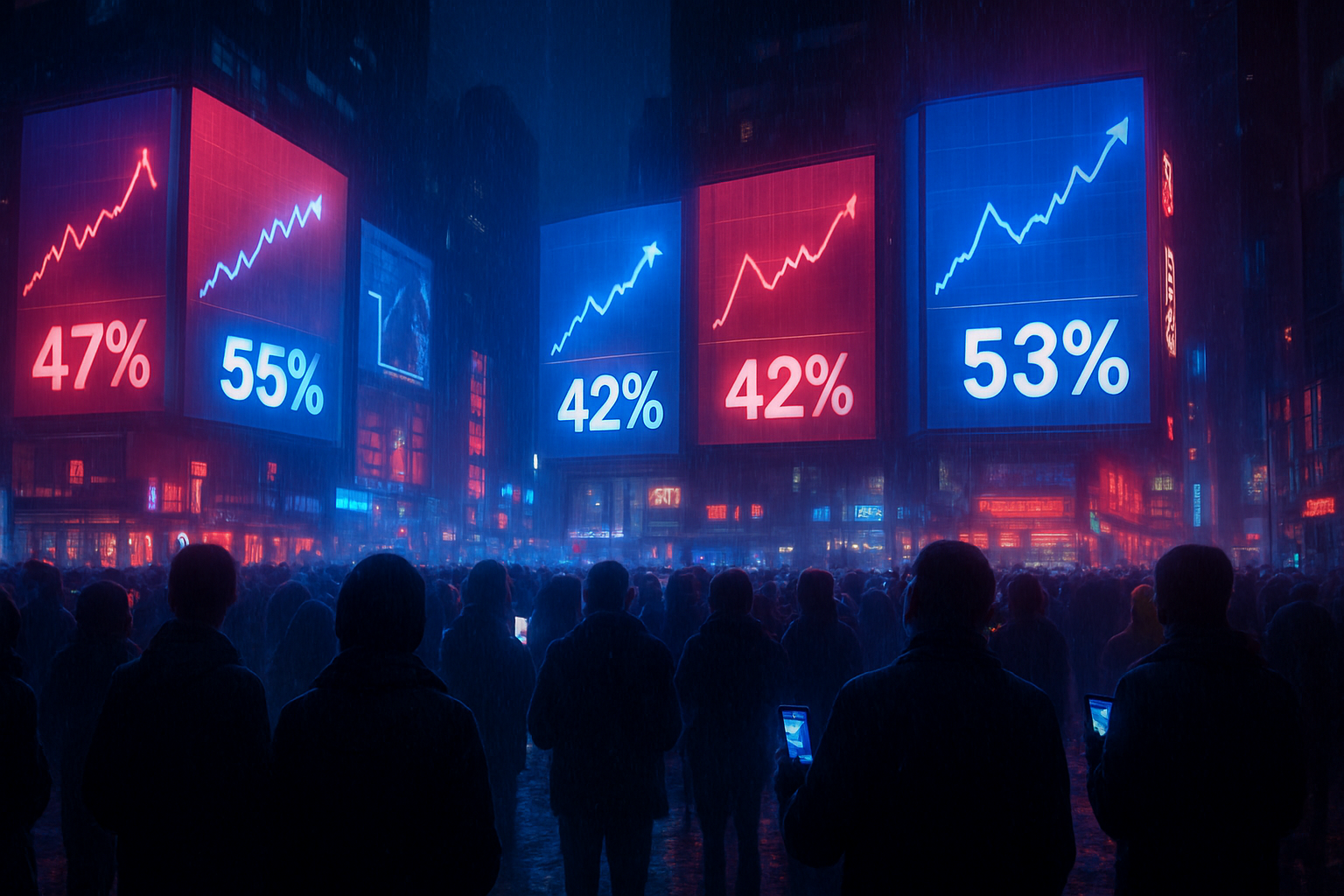
    In response, the Mamdani campaign did something unprecedented: they weaponized the odds. At "NYC Is Not For Sale" rallies, Mamdani frequently pointed to Kalshi odds on large screens to warn his base against complacency. By showing how the "smart money" had shifted from Cuomo to him, he argued that the power of grassroots organizing was literally changing the financial forecast of the city. This feedback loop—where market data influences the very events it is trying to predict—has become a central point of study for political scientists.

    Broader Context and Implications

    The NYC race served as a proof-of-concept for the mainstreaming of prediction markets. Public companies like Robinhood Markets, Inc. (NASDAQ: HOOD) and Interactive Brokers Group, Inc. (NASDAQ: IBKR) had expanded their "Election Event" offerings throughout 2025, allowing retail investors to trade on political outcomes with the same ease as buying a share of Apple Inc. (NASDAQ: AAPL). This accessibility brought political betting into the living rooms of average New Yorkers, but not without significant controversy.

    The most heated debate involved "victory ads" run by Kalshi. On the morning of Election Day, the platform ran digital billboards in Times Square and ads on Meta Platforms, Inc. (NASDAQ: META) and Alphabet Inc. (NASDAQ: GOOGL) properties that effectively "called" the race for Mamdani based on their 93% probability data. Critics, including the Cuomo campaign, argued that declaring a winner while people were still standing in line to vote was a dangerous new form of voter suppression.

    Furthermore, the post-election "Deportation Market"—which allowed users to bet on the odds of the Ugandan-born, naturalized Mamdani being deported under a potential future federal administration—showed the darker side of these platforms. The existence of such a market drew condemnation from civil rights groups, highlighting the regulatory vacuum regarding "distasteful" or "unethical" contracts that nonetheless meet the technical criteria for being a predictable event.

    What to Watch Next

    As the Mamdani administration begins its first 100 days, the focus of prediction markets has shifted from "who will win" to "what will they do." Currently, active markets are tracking whether the new Mayor can successfully implement his promised citywide rent freeze by July 2026. Traders are currently pricing that outcome at a cautious 42% probability, reflecting skepticism over the legal hurdles in the State Legislature.

    Another key milestone is the upcoming FY 2026 budget. With a projected $2 billion deficit, markets on the "NYC Credit Rating Downgrade" are seeing increased activity. Investors should also keep an eye on federal-city relations; contracts regarding federal funding cuts for "Sanctuary Cities" are already trading on Polymarket, with significant implications for Mamdani’s ambitious social programs.

    Bottom Line

    The 2025 NYC Mayoral race proved that prediction markets are no longer a niche hobby for economists; they are a potent political force. By accurately forecasting the "Mamdani Wave" long before it was reflected in mainstream media narratives, these markets provided a level of real-time insight that traditional methods failed to capture.

    However, the controversy over campaign-led "odds ads" and the ethical questions surrounding sensitive contracts suggest that the industry is at a crossroads. While platforms like Kalshi and Polymarket offer a more efficient way to aggregate information, the "commodification of expectations" can have real-world consequences on voter turnout and political stability. As we look toward the 2028 presidential cycle, the lessons of New York City will serve as the primary case study for how—or if—prediction markets should be regulated in the heat of a democratic contest.


    This article is for informational purposes only and does not constitute financial or betting advice. Prediction market participation may be subject to legal restrictions in your jurisdiction.

    PredictStreet focuses on covering the latest developments in prediction markets.
    Visit the PredictStreet website at https://www.predictstreet.ai/.