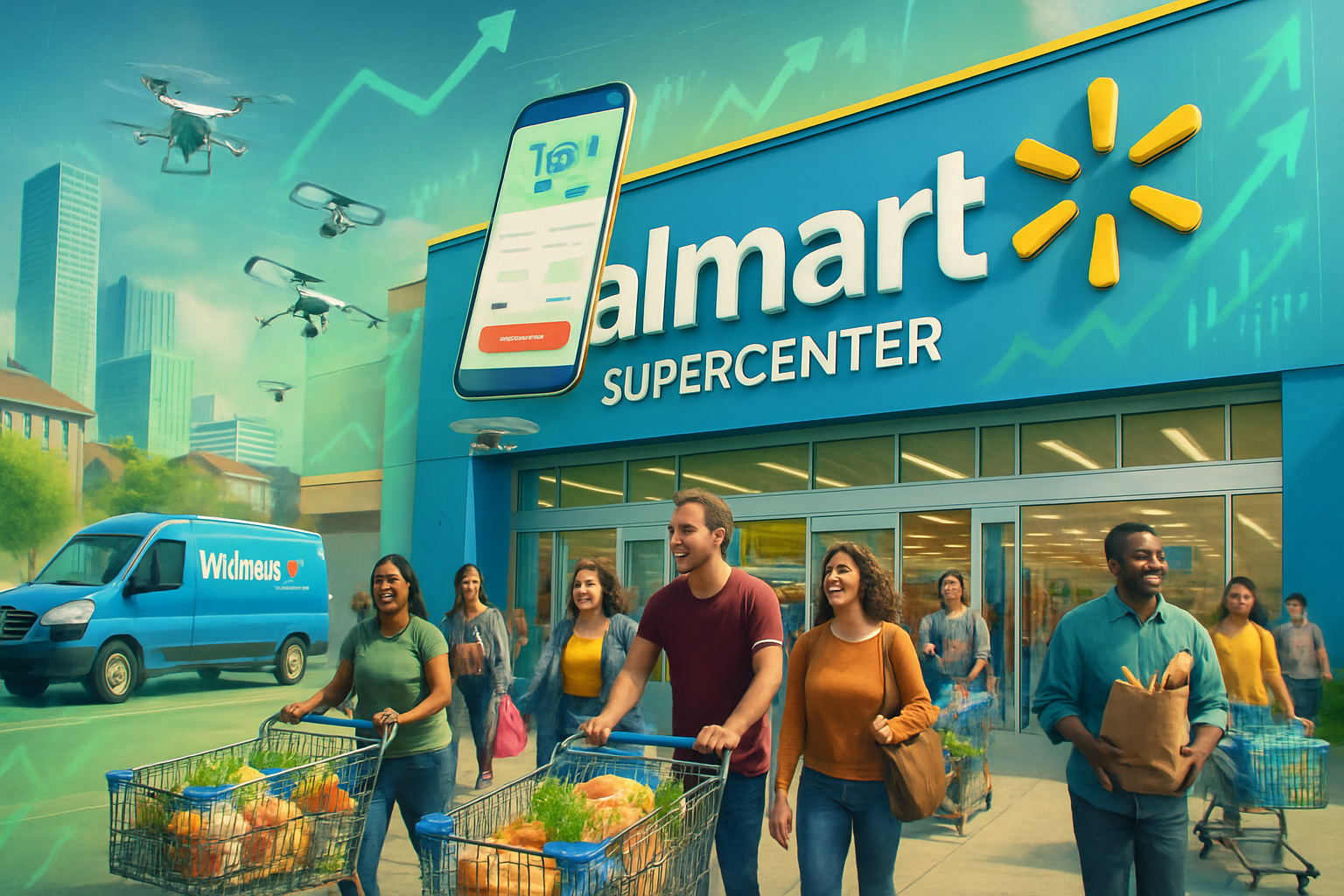
Walmart Inc. (NYSE: WMT) stands as a global retail behemoth, operating a vast network of hypermarkets, discount department stores, and grocery stores across 19 countries, alongside its rapidly expanding e-commerce platforms. As of fiscal year 2025, the company reported an impressive revenue of $681 billion and employs approximately 2.1 million associates worldwide, serving roughly 270 million customers and members each week. Its foundational business model, established by Sam Walton in 1962, continues to center on offering "Everyday Low Prices" (EDLP), leveraging massive economies of scale and efficient supply chain management to deliver cost savings to consumers.
Why Walmart is in Focus
Walmart remains a prominent focus for investors and industry observers due to its robust financial performance, aggressive digital transformation, and strategic initiatives aimed at solidifying its market leadership in an evolving retail landscape.
1. Strong Financial Performance and E-commerce Acceleration:
Walmart has demonstrated robust financial health, with its Q3 FY25 earnings (for the period ending October 2024) exceeding expectations. The company reported consolidated sales of $168 billion, up from $159.44 billion in the prior year, and adjusted earnings per share (EPS) of $0.58, an increase from $0.51. For Q2 FY26 (ending July 31, 2025), global revenue reached $177.4 billion, reflecting a 4.8% year-over-year growth, with strong e-commerce performance being a key driver.
E-commerce is a critical growth engine, with global online sales surging 25% year-over-year in Q2 FY26. Specifically, U.S. e-commerce sales jumped by 26% in Q2 FY25, outpacing Amazon's retail segment growth in the same period, driven by investments in ultra-fast deliveries and AI-driven inventory management. By late 2025, Walmart aims for 95% of the U.S. population to have access to these expedited delivery services, leveraging its extensive network of over 4,600 U.S. stores as fulfillment hubs. E-commerce operations accounted for approximately 18% of Walmart's total company revenue in fiscal 2025, a significant increase from 15.4% in fiscal 2024.
2. Strategic Investments in Technology and Store Modernization:
Walmart is heavily investing in technology, including artificial intelligence (AI) and automation, to enhance operational capabilities and customer experience. The company signed a substantial lease in Silicon Valley in June 2025, signaling a deeper integration of e-commerce, logistics technology, and potentially AI or data analytics into its core operations. AI-driven supply chain upgrades have reportedly reduced fulfillment costs by 30%, enabling more efficient delivery services.
Alongside digital advancements, Walmart is modernizing its physical footprint. Plans for 2025 include opening over 150 new "Store of the Future" concepts and remodeling 650 existing locations across 47 states and Puerto Rico to improve the in-store shopping experience and omnichannel capabilities.
3. Enhanced Private Brands and Sustainability Initiatives:
A significant announcement on October 1, 2025, highlights Walmart's commitment to consumer preferences for healthier and more transparent food options. The company declared its intention to eliminate synthetic dyes and over 30 other ingredients, including certain preservatives, artificial sweeteners, and fat substitutes, from its U.S. private brand food products (e.g., Great Value, Marketside, Freshness Guaranteed, bettergoods) by January 2027. This move is a direct response to customer demand for simpler, more familiar ingredients and reinforces Walmart's mission to provide affordable, high-quality private brand products.
4. Employee Investment and Workforce Development:
Walmart has expanded its employee discount program to cover 95% of regularly priced items, including groceries, for its 1.6 million U.S. employees after 90 days of employment. This initiative aims to boost retention and can generate significant internal sales. Furthermore, in collaboration with OpenAI, Walmart is launching an AI skills program in 2025 to prepare its 2.1 million global employees for technological changes in the workplace, focusing on "plussing up" existing jobs rather than replacing them.
5. Competitive Landscape and Market Positioning:
Walmart faces stiff competition from e-commerce giants like Amazon, warehouse clubs like Costco, and traditional retailers such as Target and Kroger. Walmart's strategies, including aggressive digital growth, same-day pickup, and a focus on rural areas, directly challenge Amazon's dominance. Its massive physical retail presence and efficient supply chain remain core competitive advantages.
Current Relevance for a Stock Research Article (October 1, 2025)
As of October 1, 2025, Walmart (WMT) presents a compelling case for a stock research article due to its ongoing transformation and resilient market position.
- Recent Earnings and Outlook: The company's strong Q2 FY26 performance, marked by significant e-commerce growth and overall sales increases, positions it favorably. Walmart's Q3 FY25 also showed increased sales and net profit, beating estimates. Walmart has raised its FY25 guidance, forecasting sales growth of 4.8% to 5.1% and operating income growth of 8.5% to 9.25%.
- Strategic Growth Levers: The aggressive expansion of e-commerce, particularly in ultra-fast delivery, combined with substantial investments in AI and automation, indicates a forward-looking strategy that could drive sustained growth and efficiency. The modernization of its store fleet further reinforces its omnichannel approach.
- Consumer-Centric Initiatives: The move to eliminate artificial ingredients from private brands reflects a keen understanding of evolving consumer preferences, potentially strengthening brand loyalty and market share in the competitive grocery segment.
- Dividend Reliability: Walmart has a strong track record of increasing its annual dividend, marking 52 consecutive years of dividend increases, with an annual dividend of $0.94 per share (0.91% yield) as of October 2025. The next ex-dividend date is December 12, 2025.
- Analyst Sentiment and Valuation: Analyst sentiment generally remains positive, with many rating WMT as a "Strong Buy" or "Buy" and average 12-month price targets around $110.68 to $112.38. While the stock trades at a premium P/E ratio, its dominant market position and anticipated double-digit EPS growth are often cited as justifications. Current stock forecasts for October 2025 suggest a potential trading range between $102.01 and $110.37.
In summary, Walmart, as of October 1, 2025, is a compelling subject for stock research. Its ongoing digital transformation, robust financial health, strategic investments in technology and workforce, and responsiveness to consumer demands position it as a resilient and adaptable leader in the global retail sector. These factors suggest continued relevance and potential for long-term investor appeal.
2. Historical Background
Walmart Inc. (WMT) has evolved from a single discount store in rural Arkansas into a global retail behemoth, driven by its founder's vision of "everyday low prices" and a relentless pursuit of efficiency and innovation. This research article, dated October 1, 2025, details Walmart's founding story, early milestones, and key transformations that have shaped its trajectory as a prominent stock in the retail sector.
Founding Story: Sam Walton's Vision
Walmart's origins trace back to the entrepreneurial spirit of Sam Walton, who gained early retail experience working for J.C. Penney after graduating college and later operating a Ben Franklin variety store franchise in Newport, Arkansas, starting in 1945. In 1950, Walton relocated to Bentonville, Arkansas, opening "Walton's 5&10".
Inspired by the success of his dime store and his belief that customers would travel for significant savings, Sam Walton opened the first Walmart Discount City on July 2, 1962, in Rogers, Arkansas. Walton's innovative strategy was built on providing a wide range of goods at the lowest possible prices, focusing on high sales volume and lower profit margins. He initially targeted rural towns, strategically avoiding direct competition with larger retailers like Sears and Kmart, which were focused on urban and suburban areas.
Early Milestones: Laying the Foundation for Growth
The 1960s and 1970s marked a period of rapid expansion and foundational developments for Walmart:
- Incorporation (1969): The company officially incorporated as Wal-Mart Stores, Inc. in 1969. By 1967, the Walton family owned 24 stores with $12.7 million in sales.
- Public Offering (1970): Walmart became a publicly traded company in 1970, with its first stock sold at $16.50 per share. Shares began trading on the New York Stock Exchange (WMT) in 1972.
- Distribution Centers: In 1970-1971, Walmart opened its first distribution center and home office in Bentonville, Arkansas, a crucial step in building its legendary supply chain efficiency.
- Rapid Expansion: The company quickly expanded across the Southern United States. By 1980, Walmart had reached $1 billion in annual sales, achieving this milestone faster than any other company at that time.
- Technological Adoption: Walmart was an early adopter of technology, leasing an IBM computer system in 1975 to manage inventory across warehouses and distribution centers, a revolutionary move for retailers at the time. By 1988, 90% of its stores were equipped with barcode readers.
- New Store Formats: The 1980s saw the introduction of new store concepts, including the first Sam's Club, a members-only warehouse store, in Midwest City, Oklahoma, in 1983. The first Walmart Supercenter, combining a supermarket with general merchandise, opened in Washington, Missouri, in 1988.
Key Transformations Over Time
Walmart's journey from a regional discount chain to a global retail powerhouse involved several significant transformations:
-
International Expansion (1990s onward): Recognizing limitations for growth solely within the U.S., Walmart began its international expansion in 1991 with a joint venture with Cifra, a Mexican retail company, opening a Sam's Club in Mexico City. This was followed by expansion into Canada in 1994, South America (Argentina and Brazil) in 1995, China in 1996, the United Kingdom (through the acquisition of Asda) in 1999, and Japan (through Seiyu Group) in 2002. By the mid-1990s, Walmart was operating in all 50 U.S. states.
-
E-commerce and Digital Transformation (2000s onward):
- Early Online Presence: Walmart launched Walmart.com in 2000, offering online shopping to U.S. customers.
- Strategic Acquisitions: To accelerate its digital presence and compete with Amazon, Walmart made significant e-commerce acquisitions, notably Jet.com in 2016 for $3.3 billion. Other acquisitions included Moosejaw, Modcloth, and Flipkart (India's largest online retailer).
- Omnichannel Integration: Walmart has heavily invested in integrating its online and offline experiences, expanding grocery pickup and delivery services nationwide. Its e-commerce sales have seen substantial growth, particularly boosted by the COVID-19 pandemic, with digital sales in the U.S. growing over fivefold from $13.8 billion in 2017 to $73 billion in 2023.
- Advanced Technologies: The company is undergoing a digital reinvention, implementing AI, machine learning, and data analytics to optimize its supply chain, enhance customer experience, and streamline internal operations. This includes autonomous vehicles and drones for delivery, and automated micro-fulfillment centers.
- Membership Programs: In 2020-2021, Walmart launched Walmart+, a membership program offering benefits like free delivery and fuel discounts, mirroring Amazon's Prime strategy.
-
Supply Chain and Operational Excellence: Walmart's supply chain is legendary and a core competitive advantage.
- Early Innovations: Beyond its initial distribution centers and computer systems, Walmart pioneered concepts like continuous replenishment (CR) and Collaborative Planning, Forecasting, and Replenishment (CPFR) with suppliers.
- Retail Link: In 1992, Walmart deployed its powerful Retail Link system, which provided vendors with real-time information on sales trends and inventory levels, fostering deep integration and efficiency throughout the supply chain.
- Cross-Docking: The company mastered cross-docking, a logistics strategy that transfers goods directly from suppliers to outbound carriers with minimal storage, significantly reducing warehousing costs and accelerating replenishment.
- Modernization: Walmart continues to invest in state-of-the-art technology, including RFID and automated storage and retrieval systems in its distribution centers, to enhance speed, capacity, and efficiency, particularly in its massive grocery network.
-
Market Leadership and Corporate Identity:
- Top Retailer: By 1990, Walmart had become the number one retailer in the United States. In 2002, it reached the number one spot in the Fortune 500 list.
- Branding Evolution: The company's logo has evolved over time, with the most notable change in 2008 when it dropped the hyphen from "Wal-Mart" and introduced "The Spark" symbol, representing innovation and customer satisfaction. A further redesign in 2025 aimed for a more streamlined, digital-friendly font to align with its e-commerce focus.
Walmart's sustained growth and market dominance are a testament to its foundational principles of value and efficiency, combined with its ability to adapt and transform through technological innovation, strategic expansion into new markets and formats, and a keen focus on optimizing its robust supply chain. For a stock research article dated 10/1/2025, it's clear that Walmart's continued investments in e-commerce, digital tools, and supply chain modernization are critical drivers for its future performance.
3. Business Model
Walmart Inc. (WMT) operates as a multinational retail corporation with a robust and diversified business model focused on providing a wide range of products and services at "Everyday Low Prices" (EDLP). As of October 1, 2025, its strategy emphasizes an omnichannel approach, integrating its extensive physical store network with a growing e-commerce presence to cater to a broad customer base.
Operating Segments
Walmart’s operations are structured into three primary reportable segments:
- Walmart U.S.: This is the largest segment, encompassing various store formats such as Walmart Discount Stores, Supercenters, and Neighborhood Markets, along with walmart.com. It historically contributes the highest amount to the company's net sales and operating income. In fiscal year 2025, Walmart U.S. generated $462.42 billion in revenue, representing approximately 68.55% of the company's total revenue.
- Walmart International: This segment includes operations of wholly-owned subsidiaries and majority-owned businesses in various countries like Canada, Chile, China, Africa, Mexico, and Central America. It features diverse retail formats adapted to local markets, including discount stores, supercenters, supermarkets, and Sam's Clubs internationally. Walmart International contributed $121.89 billion in revenue in fiscal year 2025, or about 18.07% of total revenue.
- Sam's Club: This segment operates membership-only warehouse clubs in the U.S. and samsclub.com. It focuses on bulk sales and offers additional benefits to its members. Sam's Club generated $90.24 billion in revenue in fiscal year 2025, accounting for approximately 13.38% of Walmart's total revenue.
Revenue Sources
Walmart's diversified revenue model is built on high-volume, low-margin retailing and includes several key streams:
- Retail Product Sales: This remains the core revenue driver, encompassing sales from a vast array of goods across its physical stores and e-commerce platforms.
- E-commerce Sales: Significant investments in its online platform (Walmart.com) and digital capabilities, including services like in-store pickup, curbside pickup, and local delivery, generate billions in online sales. U.S. e-commerce saw a 20% increase in Q4 FY2025, with global growth at 16%.
- Membership Programs: Subscription services like Walmart+ (offering free delivery, fuel discounts, and other perks) and Sam's Club memberships contribute to recurring revenue.
- Advertising Revenue (Walmart Connect): The company leverages its extensive customer data and traffic to offer an advertising platform for brands to run targeted campaigns across its website, app, and in-store screens.
- Financial and Other Services: Walmart earns fees and interest from various financial services, fulfillment/logistics services for third-party sellers, and other offerings.
For fiscal year 2025, Walmart reported total revenue of $680.99 billion, a 5.07% increase from fiscal year 2024's $648.13 billion. The company's gross profit margin improved slightly to 24.85% in FY2025 from 24.38% in FY2024, with net income reaching $19.44 billion, a 25.3% increase year-over-year.
Product Lines
Walmart offers an extensive range of merchandise, encompassing nearly every consumer need. Key product categories include:
- Groceries: This is Walmart's largest product category and a primary driver of sales, including fresh produce, meat, dairy, pantry staples, and frozen foods.
- Health and Beauty: Personal care products, cosmetics, fragrances, hygiene items, over-the-counter medications, and pharmacy items.
- Household Essentials: Cleaning supplies, paper goods, laundry detergent, and other daily necessities.
- Electronics: Televisions, streaming devices, computers, cell phones, gaming consoles, and accessories.
- Apparel: Clothing, shoes, and accessories for men, women, and children, including private label brands like George, EV1, No Boundaries (NOBO), and Joyspun.
- Home Goods: Furniture, bedding, kitchenware, home décor, and small appliances.
- Toys: A wide selection, particularly strong during holiday seasons.
- Sporting Goods: Equipment and apparel for various sports and outdoor activities.
- Automotive: Car care products, tires, and accessories.
- Private Label Brands: Walmart significantly utilizes its own private label brands, which offer cost-effective alternatives to national brands and contribute to higher profit margins. Notable brands include Great Value (groceries, household essentials), Equate (health and beauty), Mainstays (home products), and Sam's Choice (premium food and selected hard goods).
Services
Beyond product sales, Walmart provides a comprehensive suite of services, enhancing convenience and creating additional revenue streams:
- Financial Services: Walmart MoneyCenter offers money transfers, check cashing, bill payments, money orders, tax preparation services (in partnership with Jackson Hewitt), reloadable debit cards, and a new credit card program launched in June 2025.
- Pharmacy & Health Services: Prescription refills, medication management, immunizations, pet pharmacy, vision centers (prescription eyeglasses and contact lenses), and Walmart Health centers offering medical, dental, and behavioral health services.
- Auto Care Centers: Services such as oil changes and tire services are available at many Supercenter locations.
- Protection, Home & Tech Services: Walmart Protection Plans, AppleCare, assembly, home improvement, and installation services.
- Photo Services: Photo printing and custom photo gifts.
- Custom Cakes: In-store bakery services for special occasions.
- Online and Omnichannel Services: Grocery pickup and delivery, in-store pickup, and mobile payment solutions like Walmart Pay.
Customer Base
Walmart's business model primarily targets price-sensitive consumers and middle-income families, emphasizing affordability and value.
- Demographics: The typical U.S. Walmart shopper is often described as a suburban woman, married, with a household income between $40,000 and $80,000, and an average age between 60 and 78 years old. While this represents a significant portion, Walmart aims for a broad demographic across all ages and genders.
- Geographic Reach: Walmart maintains a strong presence in suburban and rural areas across the United States, where it often serves as a primary shopping destination. Its extensive online platform also caters to urban customers, expanding its accessibility.
- Shopping Habits: Millions of shoppers visit Walmart weekly, with 95% of American consumers visiting at least twice a year. An average shopper makes 67 annual trips, spending around $54 on 13 products per trip. Groceries are the main sales category.
- Evolving Customer: Walmart is increasingly appealing to younger demographics, including Gen Z, who appreciate its value proposition and convenience, particularly for online shopping and grocery pickup/delivery.
4. Stock Performance Overview
Walmart (WMT) Stock Performance Analysis (October 1, 2025)
Overview:
As of October 1, 2025, Walmart (WMT) continues to demonstrate robust stock performance, reflecting its resilience as a global retail powerhouse and successful adaptation to evolving consumer trends. The company's strategic focus on its omnichannel approach, including aggressive expansion in e-commerce, curbside pickup, and delivery services, has been pivotal in driving growth over the past decade. Walmart's unrivaled scale, expansive physical footprint, and commitment to low prices have solidified its market position.
The latest closing stock price for Walmart as of September 30, 2025, was $103.06.
1-Year Stock Performance (October 1, 2024 – October 1, 2025)
Walmart has experienced a strong performance in the most recent year. The total return for WMT stock over the past 12 months (Trailing Twelve Months, or TTM), including reinvested dividends, stands at 28.87%, with another source reporting 30.34%. The price appreciation alone for this period was approximately 25.30%.
Around October 1, 2024, the stock price was approximately $80.75. By September 30, 2025, it had reached $103.06.
Notable Moves and Trends (1-Year):
The 2024 calendar year was particularly strong, with WMT stock soaring an impressive 76.4% year-to-date as of December 26, 2024, significantly outpacing broader market benchmarks. This strong rally was attributed to robust operational performance, strategic initiatives, and resilience in a challenging economic environment. Key drivers included the company's continued emphasis on its omnichannel strategy, seamlessly blending digital shopping with physical stores, and innovations like Sam's Club's "Just Go" checkout. Walmart also revised its fiscal 2025 guidance upward, signaling confidence in its ongoing momentum. The stock reached an all-time high closing price of $104.27 on September 17, 2025, with a 52-week high of $106.11.
5-Year Stock Performance (October 1, 2020 – October 1, 2025)
Over the past five years, Walmart's stock has delivered substantial returns. The total return for WMT stock, including reinvested dividends, is reported as 136.90%, with another source indicating 141.73%. This translates to an average annual return (CAGR) of 19.30% for this period.
Around October 1, 2020, Walmart's adjusted stock price was approximately $43.50. By September 30, 2025, the price had risen to $103.06.
Notable Moves and Trends (5-Year):
This period saw a significant upward trend in Walmart's share price, more than doubling from 2020 to 2025. The company's focus on expanding its e-commerce capabilities and enhancing customer experiences proved highly effective, particularly as consumer behaviors shifted during and after the global pandemic. Walmart's Earnings Per Share (EPS) recovered significantly post-2019, reaching $2.42 by 2025, indicating improved earnings performance. The company demonstrated strong top and bottom-line growth, outperforming the broader market during this period.
10-Year Stock Performance (October 1, 2015 – October 1, 2025)
Walmart has provided exceptional long-term value to shareholders over the last decade. The 10-year total return for WMT stock, with dividends reinvested, is an impressive 486.90%. The average annual return (CAGR) over this decade has been 19.28%.
In October 2015, the adjusted closing price for WMT was around $15.80. By September 30, 2025, this had climbed to $103.06.
Notable Moves and Trends (10-Year):
Over the last ten years, Walmart's stock has shown a consistent upward trend, reflecting growing investor confidence and market valuation. The company navigated significant shifts in the retail landscape, including the rise of e-commerce and intense competition, by investing heavily in its digital infrastructure and supply chain. Walmart has maintained its status as a dividend-paying stock, with a history of growing dividends for 51 consecutive years.
While the Price-to-Earnings (P/E) ratio experienced some variability, peaking around 41.79 in 2019 (a period that coincided with lower EPS), it has since fluctuated, suggesting optimistic forward-looking market expectations. Walmart's CEO has also highlighted the significant role of AI in transforming "literally every job" within the company, indicating a forward-looking approach to technological integration for continued efficiency and growth.
Conclusion
Walmart (WMT) has delivered strong and consistent stock performance across the 1-year, 5-year, and 10-year horizons leading up to October 1, 2025. The company's strategic investments in its omnichannel model, e-commerce capabilities, and operational efficiencies have been critical to its success. Its ability to adapt to changing market conditions and maintain its dominant position in the retail sector, coupled with consistent dividend payments, makes WMT a notable performer for long-term investors.
5. Financial Performance
Walmart (WMT) has demonstrated continued financial growth and strategic expansion as of October 1, 2025, with its most recent earnings reports highlighting robust revenue and strong e-commerce performance.
Latest Earnings (Q2 Fiscal Year 2026, ending July 31, 2025):
Walmart reported its Second Quarter Fiscal Year 2026 earnings on August 21, 2025.
- Adjusted Earnings Per Share (EPS): Walmart reported an adjusted EPS of $0.68, which fell slightly below analysts' consensus estimates of $0.73.
- Revenue: Quarterly revenue increased by 4.8% year-over-year to $169.34 billion, missing the consensus estimate of $174.02 billion. However, another source indicated revenue grew nearly 5% year-over-year to $177.40 billion, exceeding the $175.97 billion consensus.
- Comparable Sales Growth: U.S. comparable sales growth was 4.3%, surpassing the 4.1% projection.
- E-commerce Growth: Global e-commerce sales surged by 25%, driven by store-fulfilled pickup and delivery, and marketplace operations. Walmart U.S. and Sam's Club U.S. led with 26% growth.
- Operating Income: Consolidated operating income fell more than 8%, impacted by discrete legal and restructuring items, as well as rising tariff-impacted costs.
For the First Quarter Fiscal Year 2026 (ending April 30, 2025), Walmart reported:
- Revenue: $165.6 billion, marking a 2.5% increase (4.0% in constant currency).
- Adjusted EPS: $0.61.
- E-commerce and Advertising: Global e-commerce sales grew by 22%, and the global advertising business saw a 50% increase, with Walmart Connect in the U.S. up 31%. Membership income also grew by 14.8%.
Walmart's next earnings report, for the fiscal quarter ending October 2025 (Q3 FY26), is anticipated on November 20, 2025.
Revenue Growth:
Walmart has consistently demonstrated revenue growth.
- Latest Twelve Months (ending July 31, 2025): Total revenue was $693.153 billion, reflecting a 4.23% increase year-over-year.
- Fiscal Year 2025 (ended January 31, 2025): Annual revenue reached $680.985 billion, a 5.07% increase from fiscal year 2024.
- Fiscal Year 2024 (ended January 31, 2024): Annual revenue was $648.125 billion, a 6.03% increase from fiscal year 2023.
- Five-Year Trend: Over the past five years, Walmart's revenues have grown at an average annual rate of 5.2%.
Margins:
Walmart's profitability margins show varying trends across different periods:
- Net Profit Margin: For the quarter ending July 31, 2025, the net profit margin was 3.96%. For the fiscal year ending January 31, 2025, the net profit margin was 2.9%.
- Gross Profit Margin: The gross profit margin for the fiscal year ending January 2025 was 24.85%. The latest twelve-month gross profit margin is 24.9%. In Q1 FY26, the gross margin rate increased by 12 basis points. In Q2 FY26, the consolidated gross margin increased four basis points on a reported basis and nine basis points on an adjusted basis.
- EBITDA Margin: For the most recent fiscal year (FY25), the EBITDA margin was 6.2%.
Debt:
Walmart maintains a significant, but generally managed, debt profile.
- Total Debt (as of July 31, 2025): Walmart's total debt was reported as $50.263 billion. Another source stated total debt on the balance sheet as of July 2025 at $65.01 billion.
- Long-Term Debt (as of July 31, 2025): Long-term debt stood at $41.587 billion.
- Recent Debt Activity: In the first quarter of fiscal year 2026, the company raised $4 billion in long-term debt for general corporate purposes. As of July 2024, Walmart's net debt was approximately $33.1 billion after accounting for cash reserves.
Cash Flow:
Walmart generates substantial cash flow from its operations.
- Operating Cash Flow (Quarter ending July 31, 2025): Cash flow from operating activities for the quarter was $18.352 billion, representing a 12.2% increase year-over-year.
- Operating Cash Flow (Twelve months ending July 31, 2025): This figure was $83.124 billion, a 10.32% increase year-over-year.
- Annual Operating Cash Flow (Fiscal Year 2025): For the fiscal year ending January 31, 2025, annual operating cash flow was $36.443 billion, a 2.01% increase from 2024.
- Free Cash Flow (Fiscal Year 2025): Annual free cash flow for fiscal year 2025 was $13.092 billion, which was a 14.82% decline from 2024.
Key Valuation Metrics (as of late September 2025):
- Market Capitalization: Walmart's market cap was $822 billion.
- Enterprise Value (EV): The enterprise value was $878 billion.
- Price-to-Earnings (P/E) Ratio: The P/E ratio was 39.4x. The trailing P/E ratio was 38.75, and the forward P/E ratio was 40.42.
- EV/EBITDA Ratio: The EV/EBITDA ratio was 20.0x. The trailing twelve-month (TTM) EV/EBITDA as of July 2025 was 19.76.
6. Leadership and Management
As of October 1, 2025, Walmart (WMT) is led by a comprehensive executive team and a diverse Board of Directors, driving strategic initiatives focused on omnichannel retail, technological innovation, and sustainability, while navigating ongoing scrutiny of its governance practices.
Walmart's CEO
Doug McMillon serves as the President and Chief Executive Officer (CEO) of Walmart Inc.. He assumed this role in February 2014 and also holds a position on the company's Board of Directors. McMillon began his career with Walmart in 1984 as an hourly associate and has held various senior leadership positions across all business segments, including President and CEO of Walmart International and Sam's Club. Under his leadership, Walmart has heavily invested in its associates, increasing wages, expanding parental leave, and offering education opportunities. He is a proponent of leveraging technology, particularly AI, stating that it will "literally change every job".
Leadership Team (Executive Council)
Walmart's Executive Council and broader leadership team are responsible for the company's global operations and strategic direction. Key members as of October 1, 2025, include:
- Doug McMillon: President and CEO, Walmart Inc.
- John David Rainey: Executive Vice President and Chief Financial Officer
- Suresh Kumar: Executive Vice President, Global Chief Technology Officer and Chief Development Officer
- Rachel Brand: Executive Vice President of Global Governance, Chief Legal Officer and Corporate Secretary
- Donna Morris: Executive Vice President and Chief People Officer
- Dan Bartlett: Executive Vice President, Corporate Affairs
- John Furner: President and CEO, Walmart U.S.
- Kathryn McLay: President and CEO, Walmart International
- Chris Nicholas: President and CEO, Sam's Club U.S.
- Daniel Danker: Executive Vice President, AI Acceleration, Product and Design
- Kathleen McLaughlin: Executive Vice President and Chief Sustainability Officer
Recent leadership changes, effective February 1, 2025, to prepare for fiscal year 2026, include:
- Lance de la Rosa: Moved from COO at Sam's Club to Executive Vice President of New Initiatives and Omni Fulfillment at Walmart U.S.
- Dave Guggina: Became Executive Vice President and Chief e-commerce Officer for Walmart U.S.
- Rob Montgomery: Promoted to Executive Vice President of Supply Chain for Walmart U.S.
- Megan Crozier: Returned to Walmart U.S. as Executive Vice President of General Merchandise
- Tom Ward: Moved from EVP and Chief eCommerce Officer for Walmart U.S. to Executive Vice President and Chief Operating Officer, End to End, at Sam's Club
- Julie Barber: Became Chief Merchandising Officer at Sam's Club
- Diana Marshall: Assumed the newly created position of Chief Experience Officer at Sam's Club
- Venessa Yates: Appointed CEO of Walmart Canada
Board of Directors
Walmart's Board of Directors is composed of individuals with diverse backgrounds and extensive experience. As of October 1, 2025, the Board includes:
- Gregory B. Penner: Chairman
- Randall Stephenson: Lead Independent Director (effective June 5, 2025, succeeding Tom Horton)
- Doug McMillon: President and CEO, Walmart Inc.
- Cesar Conde: Chairman of NBCUniversal News Group
- Timothy P. Flynn:
- Sarah Friar: Chief Financial Officer of OpenAI
- Carla A. Harris:
- Tom Horton: Partner, Global Infrastructure Partners, and Retired Chairman and CEO of American Airlines
- Marissa A. Mayer: Co-founder and CEO of Sunshine Products, Inc. (formerly Lumi Labs, Inc.), and Former President and CEO of Yahoo!, Inc.
- Bob Moritz: Former Global Chair of PricewaterhouseCoopers (appointed August 15, 2024)
- Brian Niccol: Chairman and Chief Executive Officer, Starbucks Corporation
- Steuart Walton: Founder and Chairman, RZC Investments, LLC
The Board is focused on effective oversight of strategy, risk management, and corporate governance, emphasizing the importance of a diverse range of skills and experiences.
Strategic Initiatives (as of 2025)
Walmart's strategic initiatives for 2025 and beyond are centered on driving growth and shareholder value through a "people-led, tech-powered omnichannel" approach. Key areas of focus include:
- Omnichannel Strategy: Walmart is committed to providing a seamless shopping experience across in-store, online, pickup, and delivery channels. The company aims to deliver to 95% of U.S. households in under three hours by later this year.
- Technology and AI Investment: Significant investments are being made in e-commerce infrastructure, modern retail technology, and artificial intelligence (AI). AI is expected to reshape virtually every job, and Walmart is partnering with OpenAI to upskill its workforce. AI-powered tools are being implemented to improve inventory management, associate productivity, and customer experiences.
- Store Expansion and Modernization: Walmart plans to open over 150 new "Store of the Future" concept locations and remodel 650 existing stores across 47 states and Puerto Rico by 2029. Sam's Club also intends to double its membership over the next 8-10 years and remodel all 600 clubs, accelerating new club growth with a pipeline of 15 new clubs annually.
- Supply Chain Transformation: The company is transforming its supply chain into an omnichannel network, integrating stores, fulfillment centers, distribution centers, pickup, and delivery using data, intelligent software, and automation. This aims to improve inventory management, enable faster fulfillment, and reduce costs. More than 50% of its e-commerce fulfillment center volume is now processed through next-generation centers.
- Business Mix Accelerators: Walmart is investing in key business accelerators such as Walmart+, Walmart Connect (advertising), Data Ventures, and Fintech to drive growth, bolster profitability, and generate incremental margins. Global advertising revenue grew to $4.4 billion, supported by the acquisition of VIZIO in December 2024.
- Investment in Associates: Walmart continues to invest heavily in its 2.1 million global associates through competitive wages, benefits, and education programs, including debt-free college and expanded parental leave. Average store manager earnings were $249,000 in 2024, with top performers earning over $500,000.
- Sustainability: A long-term goal is to become a regenerative company, increasing environmental sustainability and eliminating waste. Initiatives like "Project Gigaton" aim to reduce 1 billion metric tons of emissions by 2030. New and remodeled stores incorporate energy-efficient equipment, lighting, and lower-impact refrigerants.
Governance Reputation
Walmart emphasizes a commitment to strong governance practices, transparency, and accountability. The company's corporate governance framework is built on having an independent board with diverse backgrounds and relevant skills to oversee strategy, risks, and opportunities. Walmart actively engages with shareholders on topics including governance, compensation, sustainability, and human capital management.
However, challenges and areas for improvement have been noted. As of 2022, Walmart had an 18% diversity rate and 27% female representation on committees, indicating cultural diversity issues. The average tenure of board members (6-12 years) has also been cited as contributing to lower turnover, which could impede demographic optimization and skill diversity. The Walton family's control of over 50% of shares and their historical representation of three members on the board has led to perceptions of a traditional, autocratic leadership style.
In terms of Environmental, Social, and Governance (ESG) ratings, Walmart receives varied assessments. The Upright Project gives Walmart a net impact ratio of -11.4%, noting positive value in taxes, jobs, and nutrition, but negative impacts related to GHG emissions, physical diseases, and waste. MSCI ESG Research provides a BBB rating, focusing on the company's resilience to financially material ESG risks. Walmart is recognized for its efforts to improve supply chain transparency, reduce plastic waste, and offer sustainable products, with commitments to carbon neutrality and renewable energy adoption. The company has also faced scrutiny regarding alleged issues such as employee monitoring, unrealistic work expectations, and concerns about worker well-being and supply chain practices.
7. Products, Services, and Innovations
Walmart (WMT) is actively advancing its offerings and innovation pipeline as of October 1, 2025, focusing on a "people-led, tech-powered" omnichannel strategy to enhance customer experience, streamline operations, and secure a competitive advantage. The company's efforts span from expanding healthcare services to deeply embedding artificial intelligence (AI) across its supply chain and customer interactions.
Current Products and Services Offered by Walmart
Walmart continues to operate its extensive retail formats, including Supercenters, Walmart Neighborhood Markets, and the membership-based Sam's Club, offering a wide range of merchandise. Beyond traditional retail, its current services portfolio includes:
- Omnichannel Retail and E-commerce: Walmart maintains robust e-commerce platforms globally, such as walmart.com, walmart.com.mx, walmart.ca, flipkart.com, and PhonePe. The company emphasizes seamless integration between its physical and digital channels, with services like curbside pickup, and aims to offer same-day delivery to 95% of U.S. households in under three hours by the end of 2025. Walmart Fulfillment Services (WFS) also supports third-party sellers with logistics.
- Healthcare Services: Walmart Health is a significant growth area, with plans to operate over 75 health centers by early 2025. These centers provide comprehensive primary care, virtual health, dental care, behavioral health, lab tests, X-rays, and audiology services. Walmart's pharmacies have expanded their offerings, with over 2,700 remodeled locations featuring Health Services Rooms. A notable innovation is the home delivery of chilled and reconstituted prescription medications, including insulin and GLP-1s, with a centralized prescription processing network expanding to cover nearly 90% of its pharmacies by the end of 2026.
- Membership Programs: Walmart+ continues to grow, providing benefits like free shipping, free food and pharmacy delivery, streaming, and gas discounts.
- Advertising (Walmart Connect): Walmart Connect, the company's retail media platform, is a crucial profit driver. Its global advertising business saw a 46% year-over-year increase in Q2 FY26, partly driven by the acquisition of connected TV maker Vizio in December 2024.
- Private Brands: Walmart is heavily invested in its owned brands, including the recently launched "bettergoods" food brand. The company announced in October 2025 that it would remove synthetic dyes and nearly 30 other additives from its U.S. store-brand food products, such as Great Value and Freshness Guaranteed, by January 2027, responding to consumer demand for "cleaner" ingredients.
- Financial Technology (Fintech) and Data Ventures: These are identified as key business accelerators, contributing to profitability and incremental margins.
Innovation Pipelines and R&D Efforts
Walmart's innovation strategy is deeply rooted in technology, particularly AI and automation, with a continuous focus on improving both customer and associate experiences.
- AI Integration Across Operations: AI is pervasive throughout Walmart's business, influencing shopper applications, administrative tasks, supplier interactions, and in-store operations. The company is rapidly integrating "agentic AI" capabilities to boost productivity, efficiency, and personalized customer experiences. Examples include generative AI-powered shopping assistants and tools that automate day-to-day tasks for in-store associates, freeing them for more complex work.
- Supply Chain Transformation: Walmart is reengineering its global supply chain with real-time AI and automation to achieve faster and smarter operations. This involves predictive AI for sorting produce and optimizing delivery routes to reduce waste. Innovations like "self-healing inventory" systems, which automatically reroute supplies, have yielded significant cost savings. The company is also implementing sustainable supply chain initiatives, including energy-efficient transportation and blockchain for food traceability.
- Last-Mile Delivery Innovation: Advancements in last-mile delivery include sophisticated tracking systems, real-time data analytics, and AI-driven routing algorithms to ensure faster, more accurate, and environmentally sustainable logistics.
- Strategic Partnerships for R&D: Walmart actively collaborates with startups, particularly in India, to foster innovation in supply chain protection and sustainability. Pilot programs are testing solutions such as natural textile dyes made from agricultural waste and plant-extract sachets to extend the freshness of produce, with a focus on increasing product availability, reducing waste, and developing sustainable alternatives.
- Workforce Development: In partnership with OpenAI, Walmart is launching an AI skills program in 2025 to equip its 2.1 million employees with necessary digital literacy and AI-powered tool proficiency, aiming to enhance existing jobs rather than replace them.
- In-Store Technology: Rollouts include digital price tags in collaboration with VusionGroup and the "Sidekick AI tool" to assist associates with real-time inventory management.
Patents
Walmart demonstrates a strong commitment to protecting its innovations through patents. As of Q2 2024, the company held 7746 patents globally, with 48 specifically in artificial intelligence, and over 93% of its patents remain active. The United States is Walmart's primary hub for R&D and patent activity.
Recent patent filings (Q2 2024 to Q3 2025) highlight:
- AI for Personalization: Methods and systems for personalized search recommendations based on user images and features.
- Data Analytics and AI Training: Systems for detecting and correcting label noise in historical data for machine learning training, and for automatically generating and presenting insight data in natural language.
- Computer Vision: Technologies for computer-vision-based product detection and identification, and automated person detection in retail environments.
- Retail Operations: Patents granted in September 2025 include systems for updating electronic shelf label displays and error correction using RFID signals. A patent application filed in July 2025 pertains to a user interface for displaying search results grouped by virtual categories.
Competitive Edge
Walmart's competitive edge in offerings and innovation is built upon a multi-faceted approach:
- Unrivaled Scale and Omnichannel Prowess: By leveraging its vast physical footprint (over 10,750 stores) as distribution and fulfillment centers, coupled with a robust e-commerce platform, Walmart offers unparalleled convenience and speed in delivery and pickup, surpassing many competitors.
- AI-Driven Efficiency and Cost Leadership: Significant investments in AI and automation across its supply chain, inventory management, and pricing strategies (e.g., "self-healing inventory" and dynamic pricing) lead to lower operational costs, improved product availability, and the ability to sustain its "everyday low prices" value proposition.
- Diversified Profit Streams: The growth of higher-margin businesses like Walmart Connect, Walmart Health, Walmart+, Fintech, and Data Ventures allows Walmart to reshape its profit mix, outpace sales growth in operating profits, and fund further investments in technology and associate benefits.
- Customer-Centric Innovation: Walmart's focus on utilizing AI to personalize shopping experiences (e.g., shopping assistants, personalized search), enhance convenience, and provide affordable healthcare services directly addresses evolving consumer needs.
- Strategic Workforce Development: The collaboration with OpenAI for AI skills training ensures that its large workforce remains adaptable and proficient with new technologies, enhancing productivity and service quality.
- Commitment to Quality and Sustainability: The move to eliminate synthetic additives from private-label food products aligns with consumer preferences for healthier and more sustainable options, further strengthening brand loyalty.
In essence, Walmart's competitive edge as of October 1, 2025, lies in its strategic combination of massive retail scale, aggressive technological innovation (especially in AI and automation), and a diversified business model that prioritizes efficiency, customer value, and a continuously evolving service ecosystem.
8. Competitive Landscape
Walmart Inc. (WMT) operates within a highly competitive global retail landscape, as of October 1, 2025, characterized by diverse rivals, intense price competition, and an ongoing shift towards omnichannel retail. The company leverages its significant scale and strategic initiatives to maintain its dominant position, while actively addressing areas for improvement, particularly in e-commerce.
Industry Rivals
Walmart faces a broad array of competitors across its various retail segments:
- E-commerce Giants: Amazon is Walmart's most significant rival, especially in the online retail space. Other online competitors include Alibaba (primarily in Asia), eBay, and smaller niche players.
- General Merchandise & Discount Retailers: Target is a key competitor, particularly in general merchandise, apparel, and home goods, known for its curated offerings and private labels.
- Warehouse Clubs: Costco is a major rival in the membership-based warehouse club segment, competing with Walmart's Sam's Club, focusing on bulk sales and competitive pricing.
- Grocery Chains: Kroger is the largest traditional grocery retailer in the U.S., directly competing with Walmart's dominant grocery business. Aldi and Lidl also pose a threat as discount supermarket chains.
- Specialty Retailers: Companies like Home Depot and Lowe's compete in the home improvement sector, while Best Buy rivals Walmart in electronics.
Market Share
Walmart holds a substantial market share in various retail categories as of 2025, though its online presence, while growing, still trails Amazon:
- Overall Retail: Walmart is recognized as the world's largest retailer by revenue. While specific overall retail market share data for 2025 across all segments is not explicitly provided, its global presence spans over 10,500 locations in 19 countries.
- U.S. E-commerce: Amazon remains the undisputed leader in U.S. e-commerce, projected to account for 40.9% of total U.S. retail e-commerce sales by 2025. Walmart has significantly narrowed the gap, rapidly closing in as the second-largest online retailer, sitting at approximately 8-9% of the U.S. e-commerce market in early 2025. In 2024, Walmart's e-commerce market share was 6.4%.
- U.S. Grocery: Walmart maintains a dominant position in the U.S. grocery sector, commanding over one-fifth (more than 20%) of total food spending nationwide. In online grocery, Walmart held approximately 31.6% of the U.S. market share in 2025, compared to Amazon's 22.6%.
- Sam's Club (Warehouse Club): Walmart's Sam's Club competes directly with Costco in the membership warehouse model.
Competitive Strengths
Walmart's competitive strengths are deeply rooted in its operational excellence and strategic positioning:
- Brand Recognition: Walmart is one of the most recognized retail brands globally.
- Cost Leadership & "Everyday Low Prices": The company's foundational strategy of "Everyday Low Prices" allows it to offer competitive pricing, attracting price-sensitive consumers and driving sales volume. This strategy often results in thin profit margins but gives it significant market power.
- Massive Scale and Global Footprint: With over 10,500 stores in 19 countries and 2.1 million employees worldwide, Walmart's scale provides immense purchasing power over suppliers and operational efficiencies.
- Robust Supply Chain Management: Walmart's highly developed distribution and logistics systems are a core competency, enabling efficient inventory management and product delivery. The company is implementing AI-driven supply chain upgrades to reduce fulfillment costs and enable faster delivery.
- Omnichannel Integration: Walmart effectively leverages its vast network of physical stores as fulfillment centers for online orders, offering convenient services like grocery pickup and delivery to a significant portion of the U.S. population within one day.
- Diverse Product Assortment and Private Labels: Walmart offers a wide range of products, including a strong portfolio of private label brands like Great Value and Member's Mark (Sam's Club), which contribute to higher margins and customer loyalty.
- Technological Advancements: The company is investing heavily in technology, including AI for inventory management, personalized shopping experiences, predictive analytics, and digital shelf labels, to enhance operational efficiency and customer experience. Its mobile app now offers features like in-store scanning and personalized deals.
- Walmart+ Membership Program: This subscription service offers free shipping, same-day grocery and pharmacy delivery, gas discounts, and other perks, enhancing customer loyalty and competing with Amazon Prime.
- Expanding Healthcare Services: Walmart is growing its healthcare services, creating new revenue streams and opportunities.
- Employee-Centric Initiatives: In 2025, Walmart expanded its employee discount program to cover 95% of regularly priced items, aiming to boost retention and generate internal sales.
Competitive Weaknesses
Despite its strengths, Walmart faces several notable weaknesses:
- Thin Profit Margins: The "Everyday Low Prices" strategy, while a strength for consumers, leads to tight profit margins, limiting financial flexibility and potentially impacting investment in certain areas.
- Overdependence on the U.S. Market: A significant portion of Walmart's revenue is generated domestically, making it vulnerable to U.S. economic fluctuations.
- E-commerce Lag (Historically): Despite significant investments, Walmart's e-commerce growth has been restricted compared to Amazon, which has a much larger digital footprint and market share. While gaining ground, Walmart's online presence is still smaller.
- Labor Relations and Employee Treatment: Walmart has faced ongoing criticism regarding employee wages, working conditions, and potential discriminatory practices, which can pose reputational risks.
- Extensive Inventory: Maintaining a large inventory can sometimes lead to inefficiencies and potential issues with product quality and customer satisfaction if not managed effectively.
- Private Label Quality Perception: While private labels are a strength, some customers may perceive their quality as lower compared to national brands.
- Intense Competition: The retail sector is fiercely competitive, with constant pressure from both traditional and e-commerce rivals, forcing Walmart to resort to steep discounts that can impact margins.
- Regulatory Scrutiny and Reputational Controversies: Due to its size and global reach, Walmart faces intensifying regulatory scrutiny and is susceptible to reputational controversies.
9. Industry and Market Trends
The retail industry, as of October 1, 2025, is characterized by dynamic shifts driven by technological innovation, evolving consumer preferences, and persistent macroeconomic pressures. Retailers are increasingly focusing on digital transformation, artificial intelligence (AI) integration, and sustainable practices. Walmart, a global leader, is strategically adapting to and influencing these trends through significant investments in technology, automation, and a robust omnichannel presence.
Sector-Level Trends
The retail sector is currently undergoing a fundamental transformation:
- Digital Transformation and Omnichannel Integration: A key trend is the seamless integration of online and offline shopping experiences. Retail executives are prioritizing omnichannel capabilities, recognizing that these shoppers spend 1.5 times more than those who use only one channel. Consequently, major investments are being made in real-time inventory visibility, unified customer views across channels, and diverse fulfillment options, which can lead to 27% lower fulfillment costs and 18% reduced cart abandonment rates. E-commerce continues to expand rapidly, with projections for 2025 showing a 4.5% growth in online sales.
- Artificial Intelligence (AI) and Personalization: AI is fundamentally reshaping retail, optimizing inventory management, streamlining operations, and significantly enhancing customer experiences through personalization. A substantial portion of consumers, particularly Gen Z, are already utilizing generative AI for shopping, often replacing traditional search engines. Seven out of ten retail executives anticipate having AI capabilities for personalization in place this year.
- Sustainability and Circular Economy: Sustainability has become a core business imperative rather than just a secondary initiative. Retailers are adopting practices like carbon footprint tracking for products and developing circular economy business models. The demand for sustainable and affordable options, largely driven by Gen Z, has led to a remarkable 325% growth in fashion brands offering resale programs since 2021.
- Autonomous Retail and Automation: The industry is seeing a rise in cashierless stores, automated warehouses, and self-driving delivery vehicles, driven by recent labor challenges. Automation is being widely adopted to boost efficiency, with robots increasingly common in inventory management and fulfillment centers.
- Retail Media Networks (RMNs): RMNs are emerging as a lucrative alternative revenue stream, offering high margins compared to traditional retail operations. They are forecasted to be the fastest-growing advertising channel, with an anticipated 20% annual growth through 2027.
Macro Drivers Impacting the Retail Industry
Macroeconomic factors continue to exert significant influence on the retail sector:
- Consumer Spending and Inflation: Consumer spending remains a vital engine of economic growth, with disposable personal income showing robust growth and overall consumption of goods and services on the rise. However, persistent inflation and high living costs are prompting consumers to prioritize value-oriented shopping. While inflation has moderated, it is still a key consideration, and tariffs are expected to contribute to inflation's impact on holiday sales in 2025.
- Labor Market Dynamics: A healthy labor market is crucial for sustained retail activity. While job growth has tempered, real wage increases, particularly for lower-income groups, are supporting consumer spending. Retailers are increasingly turning to technology and automation to address staffing shortages and complexities in the workforce.
- Trade Policy and Tariffs: Uncertainties stemming from trade policies and potential new tariffs are a concern for retail supply chains, potentially increasing costs. Significant tariff increases on consumer goods could impact inventory costs, giving larger retailers who procured goods in advance a competitive edge.
- Economic Growth: The U.S. economy is projected to experience steady growth in 2025, fueled by strong labor markets and consistent consumer spending, presenting opportunities for the retail sector.
Supply Chains in the Retail Industry
Retail supply chains are undergoing substantial evolution to enhance their resilience and efficiency:
- Resilience and Adaptability: A primary focus is on building resilient supply chains capable of withstanding disruptions. This involves significant technology investments, including real-time inventory visibility and predictive analytics, with 93% of supply chain executives planning to increase resilience through tech in 2025.
- Technology Integration (AI, Automation, Data Analytics): AI and machine learning are being deployed to predict disruptions, optimize logistics, and track inventory. Automated picking systems, robotic pallet movers, and drone technology are becoming more common in fulfillment centers. Data-driven decision-making is critical for streamlining operations and improving accuracy.
- Sustainability and Transparency: There's growing pressure from regulators and investors to integrate ESG principles into supply chains. Retailers are adopting energy-efficient transportation, waste reduction programs, and using blockchain for improved traceability.
- Inventory Management: Companies are moving towards a "just-right" inventory approach, balancing just-in-time practices with safety stocks to mitigate economic fluctuations and potential disruptions.
Cyclical Effects Impacting the Retail Industry
The retail industry remains sensitive to economic cycles:
- Consumer Confidence and Spending: Economic cycles directly influence consumer confidence and discretionary spending. While consumers remain resilient, economic uncertainty is driving them to seek value.
- Inflationary Pressures: The effects of inflation, even as it eases, contribute to consumers' focus on value. Tariffs are a key uncertainty for 2025, potentially causing short-term inflationary pressures on inventory costs.
- Seasonal Fluctuations: Seasonal demand, driven by holidays (e.g., Black Friday/Cyber Monday, Christmas) and weather patterns, continues to significantly impact retail sales and inventory planning. Online sales during Black Friday/Cyber Monday 2024 surged by 10.2% year-over-year.
- Industry Slowdowns: Certain sectors, like the fashion industry, are experiencing a cyclical slowdown in 2025, with consumers showing increased price sensitivity.
Walmart Specifically (as of 10/1/2025)
Walmart is strategically positioned to navigate and capitalize on these industry trends:
- Strategic Vision and Performance: Walmart's strategy for 2025 is centered on a "people-led, tech-powered, omnichannel" approach, aiming for sustained growth and shareholder value. For fiscal year 2025, Walmart reported solid financial growth, with total revenues of $681.0 billion and U.S. net sales of $462.4 billion. Profitability has also seen strong growth.
- Technology and Automation Investments: Walmart is making substantial investments in its technological infrastructure, including a significant lease in Silicon Valley. The company plans to automate 65% of its stores by 2026, with over half of fulfillment center operations already automated. This involves advanced picking systems, robotic pallet movers, and drone technology. AI is extensively used for demand forecasting, inventory allocation, automated procurement, and even supplier negotiations, yielding significant cost reductions.
- Omnichannel Leadership: Walmart leverages its vast network of over 4,600 U.S. stores as key fulfillment hubs, driving a 22% increase in global e-commerce sales in Q1 FY2026 and targeting 95% coverage for under-24-hour delivery. They offer diverse fulfillment options, including in-store pickup and ship-from-store, with thousands of pickup and delivery locations globally.
- Advanced Supply Chain Optimization: Walmart's supply chain strategy focuses on direct sourcing, regional distribution, and deep technology integration to maintain low prices and high product availability. Their global supply chain is being reengineered with real-time AI and automation, rolling out successful U.S. initiatives like "Self-Healing Inventory" to international markets. This system automatically redirects overstock to high-demand stores, saving millions annually. Walmart also employs a vendor-managed inventory (VMI) model to reduce lead times and enhance fulfillment speed.
- Sustainability Commitment: Sustainability is integrated throughout Walmart's supply chain, with initiatives such as energy-efficient transportation, waste reduction, and the use of renewable energy and blockchain for traceability. These efforts boost transparency and reinforce Walmart's commitment to responsible retail.
- Competitive Advantage: Walmart's low-cost structure and extensive physical network provide a competitive edge, allowing it to offer attractive pricing and outperform rivals like Amazon and Target in certain market segments, particularly in suburban and rural areas.
10. Risks and Challenges
Walmart (WMT) faces a variety of operational, regulatory, controversial, and market risks as of October 1, 2025, influencing its operations, compliance strategies, and strategic outlook. The global retailer is navigating evolving trade policies, diverse legal landscapes, and a push towards greater sustainability and supply chain resilience.
Operational Risks
Walmart's vast global operations expose it to several key operational risks:
- Supply Chain Disruptions and Tariffs: The company's reliance on a global supply chain, particularly for imported goods, makes it highly sensitive to changes in trade policies and tariffs. Increased tariffs, especially from countries like China, can lead to higher sourcing costs for Walmart. This may force the company to raise prices for consumers, potentially impacting sales volume as customers seek lower-priced alternatives. Walmart's CEO has indicated that the company might not be able to absorb all these costs, suggesting price increases could be passed on to consumers. To mitigate this, Walmart may diversify its sourcing strategies, increasing the proportion of domestically sourced goods or those from countries not subject to tariffs.
- Inflation and Cost Pressures: Persistent inflation and rising operational costs, including labor and transportation, can weigh on Walmart's profit margins. While Walmart has a reputation for low prices, sustained cost pressures could limit its ability to maintain these prices, potentially impacting its competitive advantage and market share. The company operates at below-market gross and net profit margins compared to peers, meaning resumed inflation growth could significantly suppress profits. However, Walmart's strategic investments in automation, logistics, and AI-powered inventory management aim to drive cost control and competitive advantage. Walmart's CEO expects AI to enable growth without increasing headcount, potentially reducing labor costs and boosting free cash flow.
- E-commerce and Technology Integration: While e-commerce growth is a key strategic focus, Walmart faces challenges in seamlessly integrating technology across its vast physical and digital footprint. Initial costs associated with enhancing e-commerce platforms and transforming in-store experiences could temporarily impact margins. Furthermore, the successful execution of technology investments, particularly in AI, is critical for long-term growth, and any under-delivery could pose a risk.
- Liability Claims: Walmart has experienced unexpected financial blows due to higher-than-anticipated liability claims. In its Q2 2026 earnings report, Walmart's U.S. operating income growth was offset by approximately $400 million attributed to these claims. This trend is not unique to Walmart, as other major retailers have also flagged increasing liability expenses.
- Consumer Behavior Shifts: While Walmart has benefited from inflation-weary shoppers seeking value, changes in consumer spending habits, such as a broad pullback in discretionary spending, could impact sales. The company must adapt its pricing strategy and maintain consumer loyalty in a challenging pricing environment.
Regulatory Risks
Walmart navigates a complex global regulatory environment, presenting several risks:
- Third-Party Seller Oversight: Walmart's reliance on third-party sellers for its e-commerce platform is a double-edged sword. While it diversifies inventory, it exposes Walmart to liability for seller actions. Recent regulatory actions, such as New York's $16,000 fine for non-compliant toy gun sales, highlight systemic vulnerabilities in Walmart's screening processes. This recurring issue suggests institutional complacency and is a red flag as states expand regulations to target e-commerce platforms. Stricter compliance could lead to increased operational overheads, reputational damage, and litigation risks.
- Product Safety and Ingredient Regulations: Walmart is proactively addressing evolving consumer demands and potential regulatory pressures by phasing out synthetic food dyes and certain preservatives from its private-label food offerings by January 2027. This move, while aiming to meet changing tastes and respond to calls from health officials, underscores the ongoing need to adapt to product safety and ingredient regulations.
- Antitrust and Litigation: Ongoing legal and regulatory problems, including opioid-related cases, pharmacy litigation, and antitrust issues in Mexico and India, continue to hang over the company. These cases could divert capital from growth initiatives and impact investor confidence.
- Cybersecurity Threats: As of January 31, 2025, Walmart's annual report acknowledges that its systems and those of its third-party service providers have experienced cybersecurity incidents and threats. While the company is not aware of any material impacts to its business strategy, operations, or financial condition from these threats, there's no assurance that future incidents won't materially affect them.
Controversies
Several controversies challenge Walmart's reputation and operations:
- Diversity, Equity, and Inclusion (DEI) Policies: In April 2025, a seven-day boycott of Walmart began, protesting what a nonpartisan group, The People's Union USA, sees as corporate giant's tax avoidance, inequality, and rising prices. This boycott was partly fueled by Walmart's November 2024 decision to roll back DEI policies, no longer considering race and gender when making decisions about suppliers, ending various diversity programs, and removing "diversity" and "DEI" from documents in favor of language about "belonging." This move has generated public scrutiny and boycotts, potentially impacting customer perception and sales.
- Corporate Practices and Social Responsibility: The boycotts mentioned above also cite broader concerns about tax avoidance, inequality, and rising prices, reflecting ongoing scrutiny of Walmart's corporate practices and social responsibility initiatives.
Market Risks
Walmart is exposed to various market risks that could impact its stock performance and financial health:
- Economic Uncertainty and Consumer Spending: Macroeconomic uncertainty, including inflation and a potential consumer slowdown, remains a key risk. While Walmart's focus on affordability and its strong position in the grocery segment provide some resilience, a broad pullback in consumer spending could significantly impact its sales and profitability.
- Intensified Competition: The retail landscape is highly competitive, with rivals like Amazon and other discount retailers constantly threatening Walmart's pricing power, particularly in e-commerce and international markets. As Walmart enhances its offerings and invests in technology, competitors are likely to respond, leading to intensified competition.
- Tariff Fallout and Trade Tensions: The ongoing threat of new U.S. import tariffs and potential reciprocal tariffs from countries like China poses a significant risk. Walmart cautioned about tariffs, and analysts have suggested the company could retract its full-year forecasts due to their impact. Tariffs can lead to increased costs for imported goods, which Walmart may pass on to consumers, potentially affecting sales and market share.
- High Valuation and Investor Expectations: Walmart's stock has been trading at a significant premium to both its peers and the benchmark, with a forward P/E of around 39 times earnings as of late September 2025. This elevated valuation leaves little room for error; any slip in performance or weaker-than-anticipated consumer outlook could lead to a sharp pullback in the stock price. Investors are already paying for future growth, and sustained, strong execution and faster-than-expected earnings or margin expansion are needed to justify the current valuation.
- Currency Fluctuations: Currency fluctuations can negatively impact Walmart's reported sales and operating income, particularly for its international segment. In Q3 FY2025, currency pressure negatively impacted reported sales and operating income growth by approximately 70 and 160 basis points, respectively.
11. Opportunities and Catalysts
Walmart (WMT) is actively pursuing a multi-faceted strategy to drive growth and enhance shareholder value as of October 1, 2025, focusing on key growth levers, strategic market expansions, potential M&A benefits, and various near-term events.
Growth Levers
Walmart's growth strategy is underpinned by a "people-led, tech-powered omnichannel" approach, integrating its vast physical footprint with advanced digital capabilities.
- E-commerce Dominance and Speed: E-commerce is a significant growth driver, with Walmart's online operations accounting for approximately 18% of total company revenue in fiscal year 2025, up from an estimated 15.4% in FY24. U.S. e-commerce grew 20% and global e-commerce expanded 16% in Q4 FY25. In Q2 FY26 (ended July 31, 2025), global online sales surged 25% year-over-year, with U.S. and Sam's Club e-commerce each growing 26%. This growth is fueled by a relentless focus on speed, leveraging its store network for ultra-fast deliveries, with 95% of the U.S. population expected to have access to deliveries in three hours or less by late 2025. Store-fulfilled deliveries increased 50% year-over-year in Q2 FY26.
- Retail Media (Walmart Connect) and Advertising: Walmart Connect, the company's U.S. retail media arm, is a crucial profit driver. Walmart's global advertising business grew nearly 50% in fiscal Q2 FY26, boosted by the integration of connected TV maker Vizio, which was acquired for $2.3 billion in December 2024. Walmart Connect alone saw U.S. ad sales grow 31% year-over-year in Q1 FY26. Retail media and membership offerings collectively constitute a quarter of Walmart's profits. The company increased its advertising spend to $5.1 billion in FY25, a 16% jump from FY24.
- AI and Automation: Walmart is operationalizing AI across various layers of its business. This includes AI-driven inventory management, geospatial technology for optimizing delivery, predictive analytics, and automated sorting systems in fulfillment centers. AI is also being leveraged for customer-facing shopping agents, computer-vision checkout, and large-language models to shorten fashion lead times. In its supply chain, AI-powered optimization software has saved 30 million driving miles and reduced logistics costs. Walmart is also using AI to transform developer workflows with its WIBEY system, built on the Element machine learning and AI platform.
- Membership Programs: Accelerated growth of membership across formats, including Walmart+ and Sam's Club, with expanding benefits and higher renewals, contributes to profitability.
- Store Modernization and Expansion: Plans for 2025 include opening over 150 new stores under its "Store of the Future" concept and remodeling 650 existing locations across 47 states and Puerto Rico. Sam's Club is also accelerating new club growth, aiming for 15 new clubs annually, and plans to remodel all 600 clubs as a strategic investment.
- Private Brands and Assortment: Walmart is investing in owned brands, including the launch of "bettergoods," a private food brand. Walmart U.S. currently has 21 private brands with over $1 billion each in annual sales, five exceeding $5 billion. As of October 1, 2025, Walmart announced plans to remove synthetic food dyes and 30 other ingredients from its store brands by January 2027, impacting about 1,000 products, including Great Value, Marketside, and Freshness Guaranteed lines.
- Healthcare Initiatives: Walmart is actively expanding its presence in healthcare. The company is transforming the healthcare shopping experience with new digital innovations, including "Everyday Health Signals," an AI-powered health platform, to help Medicare Advantage customers maximize supplemental benefits. This platform helps customers identify plan-specific, benefits-eligible products online and track their spending. Walmart aims to have more than 75 Walmart Health centers operational by early 2025, though this goal was previously delayed from 2024. These centers offer a range of services including primary care, dental, behavioral health, and pharmacy services, with a focus on underserved communities. Walmart also nationally launched pharmacy delivery, integrating prescription medications into its e-commerce experience.
New Markets
Walmart's new market focus extends beyond geographical expansion to encompass new service and product categories.
- International Expansion: Walmart International is focusing on growth in markets like Mexico, China, and India, with a goal of reaching $200 billion in GMV and doubling profits and digital mix by 2028.
- Walmart Marketplace: The Walmart Marketplace is experiencing explosive growth, surpassing 200,000 active sellers by mid-2025, with a significant influx of international sellers (nearly 60% of new sellers in 2025 originating from China). The company is expanding its U.S. marketplace and has launched marketplaces in multiple global markets.
- Business Mix Accelerators: Walmart U.S. is investing in "business mix accelerators" such as Walmart+, Walmart Connect, Data Ventures, and Fintech to fuel growth and bolster profitability.
- Healthcare Services: The expansion of Walmart Health centers and the launch of digital health platforms represent a significant push into the healthcare services market.
M&A Potential
While specific future M&A targets are not explicitly detailed in the search results, the recent acquisition and strategic focus provide insights:
- Vizio Acquisition (completed December 2024): This $2.3 billion acquisition is a significant recent M&A event, directly boosting Walmart's advertising business by integrating Vizio's connected TV inventory. This acquisition demonstrates Walmart's willingness to acquire companies that strategically enhance its growth levers, particularly in high-margin areas like retail media.
- Strategic Investments: Walmart's emphasis on scaling digital and related businesses, including membership, advertising, data, and Fintech, suggests that future M&A could target companies that complement these "business mix accelerators" to further diversify income streams and enhance profitability.
Near-term Events (as of 10/1/2025)
- Upcoming Earnings Report: Walmart's next earnings report (Q3 fiscal year 2026) is estimated for Thursday, November 20, 2025, before market open. Analysts forecast consensus EPS of $0.60 for the quarter ending October 2025. The previous Q2 FY26 earnings were reported on August 21, 2025, with an EPS of $0.68 on revenue of $177.4 billion.
- Product Launches (Ongoing/Upcoming):
- "WICKED: FOR GOOD" Collection: Walmart launched an exclusive collection of products related to the movie "Wicked: For Good" on October 1, 2025, including dolls, clothing, speakers, and a singing toothbrush.
- New Food Items: Throughout 2025, Walmart introduced various new food items under its private brands, such as "Better Goods" frozen chicken wings with spicy dill dry rub, Hot Honey Chicken and Waffle Breakfast Sandwich, Dairy Free Lemon Strawberry Sorbet, and "Great Value" Confetti Crunch cereal.
- Walmart Start Program: Brands selected for the "Walmart Start" program, focusing on beauty categories (hair, skin, cosmetics, nails, fragrance, beauty accessories), are expected to launch in Walmart stores and/or online between December 2025 and March 2026.
- Food Additive Removal Plan: On October 1, 2025, Walmart announced plans to remove synthetic food dyes and 30 other ingredients from its U.S. store brands by January 2027. This initiative will impact about 1,000 products, with reformulated items expected in the coming months.
- Everyday Health Signals Rollout: Walmart rolled out its AI-powered health platform, "Everyday Health Signals," starting in May 2025, specifically for Medicare Advantage members.
12. Investor Sentiment and Analyst Coverage
Investor Sentiment for Walmart (WMT) as of October 1, 2025
Investor sentiment for Walmart (WMT) as of October 1, 2025, reflects a generally positive outlook from Wall Street analysts and a notable level of institutional investment, though with some insider selling. Retail investor sentiment, while broadly positive, shows some underlying concerns regarding valuation and macroeconomic factors.
Wall Street Ratings
Wall Street analysts hold a predominantly optimistic view of Walmart. The consensus rating for WMT is a "Strong Buy" or "Moderate Buy."
- Consensus Price Targets: The average twelve-month price target from analysts ranges from approximately $110.68 to $114.89, with a median target of $114.00. This suggests a potential upside of 9.49% to 13.47% from the stock's price around $103.16-$103.30 in late September/early October 2025.
- Recent Analyst Activity: In September 2025, several firms reiterated or initiated positive ratings. Piper Sandler issued an "Overweight" rating with a $111.00 price target on September 24, 2025. Telsey Advisory Group also issued an "Outperform" rating with a $118.00 price target on the same date. Wolfe Research initiated coverage with an "Outperform" rating and the highest target price of $129.00 on September 18, 2025. Other recent "Buy" or "Outperform" ratings and targets came from Tigress Financial ($125.00), B of A Securities ($125.00), Goldman Sachs ($115.00), JP Morgan ($127.00), Evercore ISI Group ($110.00), and Guggenheim ($115.00).
- Overall Recommendation: Out of 30 analysts covering WMT, 29 have given a "Buy" rating and 1 has given a "Hold" rating, with no "Sell" ratings, reinforcing the positive sentiment. Analysts generally favor Walmart more than other "retail/wholesale" companies, which have an average consensus rating of "Hold."
Hedge Fund Moves
Hedge funds and other institutional investors collectively own 26.76% to 36.09% of Walmart's stock.
- Increased Holdings: In the last quarter, hedge funds increased their holdings in Walmart by 324.4K shares. Several institutional investors have recently boosted their positions. Capital Investment Advisors LLC increased its stake by 2.8% in Q2 2025. Vanguard Group Inc. significantly increased its position by 0.8% in Q1 2025, holding over 425 million shares. Kingstone Capital Partners Texas LLC dramatically raised its position by 397,264.9% in Q2 2025, acquiring over 104 million shares. Goldman Sachs Group Inc. increased its position by 30.1% in Q1 2025. Other firms like Ameriprise Financial Inc., Invesco Ltd., Operose Advisors LLC, PFS Partners LLC, Bear Mountain Capital Inc., G&S Capital LLC, and Clal Insurance Enterprises Holdings Ltd. also reported increased holdings in Q1 or Q2 2025.
- Major Holders: Prominent hedge funds holding substantial stakes in Walmart include Ken Fisher, Bill Gates, and Magnus Billing. Major institutional shareholders also include BlackRock, Inc., State Street Corp, Jpmorgan Chase & Co, Geode Capital Management, Llc, Morgan Stanley, Bank Of America Corp /de/, and Norges Bank.
- Insider Selling: Despite the positive institutional sentiment, there has been notable insider selling activity over the past six months. Walmart insiders have traded WMT stock 58 times, all of which were sales, with no purchases. The Walton Family Holdings Trust sold over 23 million shares, and CEO C. Douglas McMillon and EVP John R. Furner also made significant sales in Q3 2025. This insider selling has sparked debates on corporate governance and sentiment among investors.
Institutional Investors
Institutional ownership in Walmart is substantial, with 2,967 institutional buyers and total institutional inflows of $51.38 billion over the last 12 months, against 2,366 institutional sellers and $21.59 billion in outflows. This indicates a net positive flow of institutional money into WMT. Walmart's stock is a component of many large ETFs, and its performance can influence the broader market.
Retail Chatter
Retail investor sentiment for Walmart is generally positive, with an overall sentiment score of 80 out of 100 on top investing forums, although this is slightly down compared to the 30-day moving average. Walmart is seen to outperform a majority of its industry peers in sentiment, ranking in the 80th percentile.
However, looking at specific discussions, some concerns are evident:
- Valuation Concerns: In August 2025, discussions on Reddit's r/stocks forum indicated that some retail investors find Walmart's current valuation high, with a P/E ratio of 37, pricing it like a tech growth stock despite its forecasted revenue growth of 3.75-4.75% for 2025. There's a sentiment that the stock might stay flat or slightly down until earnings catch up to the price.
- Tariff Impact: Concerns about potential U.S. import tariffs and their impact on Walmart's low-margin retail model were frequently discussed. An April 2025 StockTwits poll showed retail sentiment dropped from "extremely bullish" to "bullish" due to these tariff worries. Investors anticipated potential price hikes and margin compression if tariffs persist.
- Consumer Spending: In March 2025, Walmart's CEO Doug McMillon noted "stressed behaviors" and low confidence among budget-constrained American consumers, which led to a $22 billion drop in Walmart's market cap and sparked discussions among retail investors about the impact on the company's revenue, particularly for a low-price retailer usually insulated from economic downturns. This indicates a cautious view on consumer spending impacting retail profits.
- E-commerce and Diversification: Despite these concerns, retail discussions also highlight Walmart's strong e-commerce growth (over 20% year-over-year global e-commerce sales in Q2 FY2025) and diversification into advertising and membership services (Walmart+), which are seen as positive drivers for future growth and competitive advantage against online retailers like Amazon. Walmart's efforts to eliminate synthetic dyes and other ingredients from its private brands also reflect a response to customer demand for simpler, natural ingredients, which could positively impact customer perception.
In summary, while professional analysts maintain a strong buy rating for Walmart, reflecting confidence in its strategic initiatives and market position, retail investors show a more nuanced sentiment, acknowledging Walmart's strengths but also expressing caution regarding its valuation and the potential impacts of macroeconomic challenges like tariffs and consumer spending.
13. Regulatory, Policy, and Geopolitical Factors
Walmart (WMT) faces a complex interplay of regulatory and geopolitical factors as of October 1, 2025, influencing its operations, compliance strategies, and strategic outlook. The global retailer is navigating evolving trade policies, diverse legal landscapes, and a push towards greater sustainability and supply chain resilience.
Relevant Laws and Compliance
Walmart operates under a vast array of laws and compliance requirements, both domestically and internationally.
1. Supplier Compliance and Product Safety:
Walmart maintains stringent compliance programs for its suppliers. The On-Time In-Full (OTIF) program monitors delivery performance, while the Supplier Quality Excellence Program (SQEP) addresses aspects like purchase order accuracy, labeling, packaging, and product preparation. Non-compliance with OTIF targets (e.g., 98% on-time for Collect Ready, 90% for Prepaid, and 95% In-Full) can result in a 3% penalty on the cost of goods sold. Suppliers must ensure label accuracy, use approved barcode formats, and comply with pallet requirements. They are also required to maintain records for at least six years.
For products sold on its marketplace, particularly children's items, Walmart is tightening rules, requiring Children's Product Certificates (CPC) and enforcing stricter adherence to avoid suspensions and "gating" of products. Furthermore, suppliers must carry specific types of insurance and are subject to audits, certifications, and testing for food safety, general merchandise product safety, health and wellness product safety, responsible sourcing, and supply chain security.
2. Labor Laws and Workforce Management:
Minimum wage laws in various states and localities directly impact Walmart's wage obligations. As of 2025, the average hourly wage for a Walmart U.S. associate was $18.25. The company has recently increased base pay and bonus packages for store managers, with some earning over $600,000 annually, including stock grants and incentives. Walmart also expanded its parental-leave plan and family adoption benefits.
A significant recent development is a U.S. Supreme Court ruling that allows the Trump administration to end Temporary Protected Status (TPS) for hundreds of thousands of migrants. This has led Walmart to terminate migrant workers at some Florida stores who lack valid federal work authorization, underscoring stricter adherence to federal I-9 verification requirements.
3. Environmental Regulations and Sustainability Commitments:
Walmart has ambitious environmental goals but faces challenges in meeting them. The company aims to reduce its Scope 1 and 2 greenhouse gas emissions by 35% by 2025 and 65% by 2030 (from 2015 levels). It also committed to achieving "zero waste to landfill" in its operations in key markets (U.S., U.K., Japan, Canada) by 2025. Additionally, Walmart targets powering 50% of its global operations with renewable energy by 2025 and 100% by 2035.
However, Walmart anticipates missing its 2025 and 2030 emissions reduction targets, citing challenges with energy policy, infrastructure, and the availability of economically viable technologies, such as low-emitting refrigeration and heating systems, and low-carbon heavy transportation. The company may revise these targets in 2025. In a move towards product sustainability, Walmart U.S. is eliminating synthetic dyes and 30 other ingredients from its private brand food products by October 2025.
4. Data Privacy Laws:
Walmart is subject to evolving data privacy regulations, including the California Consumer Privacy Act (CCPA), which requires retailers to provide consumers with rights to access, correct, delete, and opt-out of the sale or sharing of their personal information. The company has implemented "Do Not Sell My Info" links on its websites and signage in California stores. The increasing use of AI and generative AI technologies presents new data privacy risks and compliance complexities, especially with a fragmented regulatory environment across different jurisdictions. Walmart's privacy notice outlines how personal and biometric information is handled and retained.
5. Anti-Corruption and Ethical Conduct:
Walmart maintains a Global Anti-Corruption Policy that strictly prohibits the use of company funds or assets for illegal, improper, or unethical purposes. Compliance is mandatory for all associates and third parties interacting with government officials on Walmart's behalf.
Government Incentives
Governments provide various incentives that impact Walmart's operations, particularly in areas of job creation, local development, and domestic sourcing.
1. Job Development and Investment Grants:
Walmart benefits from local and state government incentives for economic development. For example, North Carolina awarded Walmart Fulfillment Services, LLC a Job Development Investment Grant (JDIG) of up to $3.6 million over 12 years for a new fulfillment center in Gaston County. This grant is contingent on meeting incremental job creation and capital investment targets.
2. Support for Small Businesses and Domestic Sourcing:
Walmart actively engages with programs that support American-made products and small businesses. Its "Grow with US" program and annual "Open Call" event (with applications opening June 24, 2025, and the event in October 2025) aim to facilitate U.S.-based small and medium-sized businesses in becoming Walmart suppliers, providing them with training, mentorship, and access to the national market. Over two-thirds of Walmart's total product spend is on items made, grown, or assembled in the United States, with over 60% of its U.S. suppliers being small businesses.
3. Community Grants:
Walmart and Sam's Club also offer "Spark Good Local Grants," ranging from $250 to $5,000, to local community organizations addressing specific community needs, provided they meet tax ID and verification requirements.
Geopolitical Risks and Opportunities
Walmart operates globally, making it susceptible to geopolitical shifts, trade policies, and international relations.
1. Trade Wars and Tariffs (Risk):
Ongoing US-China tariffs have significantly impacted Walmart's supply chain, increasing costs, particularly for consumer electronics, apparel, and household goods. In early 2025, the U.S. announced 10% tariffs on Chinese imports and 25% on Mexican/Canadian goods, with China facing particularly high rates (e.g., 125% in some cases) under emergency powers. This volatility forces Walmart to evaluate its pricing strategies and supply chain dynamics, leading to higher prices for consumers on hundreds of products. The company has temporarily pulled its financial guidance due to this uncertainty.
2. Supply Chain Diversification and Nearshoring (Risk Mitigation & Opportunity):
To mitigate tariff risks and build resilience, Walmart is aggressively diversifying its global supply chain. It sources from over 70 countries, significantly shifting away from China (which accounted for 20% of goods sourced in early 2025) towards other regions like India, Mexico, and Vietnam. Imports from India increased from 2% to 25% between 2018 and 2023, while Chinese imports decreased from 80% to 60% in the same period.
Mexico has emerged as a key nearshoring partner, offering tariff-free access under the USMCA for textiles, electronics, and machinery. Mexico's IMMEX 4.0 program also presents opportunities for cheaper nearshored production. However, potential U.S. tariffs on Mexico could escalate if issues like migration or fentanyl flows persist, posing a risk to these nearshoring efforts.
3. Geopolitical Instability and Economic Uncertainty (Risk):
Geopolitical tensions and broader economic uncertainties are dampening consumer spending and are expected to result in lower sales and profits for Walmart in 2025. Rising inflation rates in the U.S. further contribute to this cautious outlook. Supply chain fragility due to global chip shortages and ongoing geopolitical conflicts (e.g., Sino-U.S. tensions) could also disrupt nearshoring plans.
4. Strategic Market Focus and "De-Americanization" (Opportunity & Risk):
Walmart International is strategically focused on growth in key markets such as Mexico, China, and India, aiming to be a leading omnichannel retailer in each. Despite U.S.-China tensions, Walmart China has successfully boosted domestic sourcing, with over 60% of its inventory now locally produced, reducing exposure to cross-border tariffs. Walmart's e-commerce in China also saw significant growth in 2025 through strategic integrations with domestic platforms. India's burgeoning manufacturing sector, attractive labor costs, and technological advancements make it a significant opportunity for supply chain diversification, with Walmart committing to import $10 billion annually from India by 2027.
However, the increasing trade volatility and tariffs have reportedly led Walmart to consider a radical "de-americanization" strategy, potentially relocating its global operational core outside the United States to jurisdictions like Singapore, Ireland, or the UAE, which offer greater legal flexibility and insulation from U.S.-centric trade policies. This could involve scaling back procurement from domestic U.S. suppliers and lead to job losses in the U.S.
5. Technology and Innovation (Opportunity):
Walmart is investing heavily in AI and automation to transform its supply chain, improving inventory management, enabling faster fulfillment, and reducing costs. AI is being used in supplier negotiations and to analyze global data and trends for product development, particularly in fashion. These technological advancements enhance the company's ability to navigate geopolitical complexities and operational inefficiencies.
In conclusion, as of October 2025, Walmart is actively adapting to a dynamic global environment. While facing risks from trade protectionism, economic uncertainty, and complex regulatory landscapes, it is leveraging strategies like supply chain diversification, nearshoring, and technological innovation to maintain its competitive edge and pursue growth opportunities in key international markets.
14. Outlook and Scenarios
Walmart (WMT) is navigating a dynamic retail landscape with a multi-pronged strategy focused on digital transformation, diversified revenue streams, and an enhanced customer and employee experience. As of October 1, 2025, the company faces both significant opportunities and challenges in its future outlook.
Bull Case
The bull case for Walmart is driven by its robust strategic pivots and strong market positioning:
- E-commerce Growth and Profitability: Walmart's U.S. e-commerce segment has shown impressive growth, surging 26% in Q2 FY25, and notably became profitable in Q1 FY26. E-commerce now accounts for 18% of total net sales. The company leverages its extensive network of over 4,600 U.S. superstores as fulfillment hubs, aiming to achieve less than 24-hour delivery coverage for 95% of U.S. households by December 2025. This focus on "route density" helps spread costs over more volume, contributing to profitability.
- High-Margin Businesses: Walmart's advertising business, Walmart Connect, is a significant growth driver, with global advertising revenue (including the recently acquired VIZIO smart TV manufacturer) increasing by 46% in Q2 FY26. Even excluding VIZIO, Walmart Connect grew 31%, providing "flexibility" and acting as an important profit driver amidst economic pressures. Membership programs like Sam's Club and Walmart+ are also expanding, contributing to shareholder value.
- Healthcare Expansion: Walmart is expanding its footprint in healthcare with Walmart Health clinics, aiming to operate over 70 physician-staffed clinics in five states by the end of 2024 and introducing Arizona in 2025. The company is remodeling nearly 2,000 pharmacy locations by the end of 2025 to include dedicated Health Services rooms for clinical services like testing, treatment, and immunizations. This strategic move positions Walmart as an accessible healthcare resource, especially in underserved communities.
- Technological Advancement (AI & Automation): Walmart is heavily investing in AI and automation to optimize its supply chain, inventory management, and overall operations. CEO Doug McMillon stated that AI will "literally touch every job" within the company, indicating a proactive approach to integrating AI for efficiency and cost reduction.
- Strong Analyst Sentiment: The majority of Wall Street analysts maintain a positive outlook, with a consensus rating of "Moderate Buy" or "Strong Buy." Recent analyst price targets range from $109.00 to $129.00, with a median target of $114.00.
Bear Case
Despite the positive momentum, Walmart faces several challenges:
- Recent Earnings Miss: Walmart recently missed consensus estimates for EPS and revenue in the quarter ending August 21, 2025. The company reported $0.68 EPS against an expected $0.74, and revenue of $169.34 billion compared to a forecast of $174.02 billion.
- Cost Pressures: The company is experiencing increased cost pressures from elevated general liability claims, having accrued an additional $450 million in Q2 FY26, with an expected total of $730 million for the first half of FY26.
- Competitive Landscape: Walmart operates in a fiercely competitive retail environment, facing strong competition from e-commerce giants like Amazon and other traditional retailers.
- Insider Selling and Technical Signals: Some technical indicators suggest potential short-term headwinds, including a sell signal from a pivot top point and a double top formation observed on September 17, 2025. Additionally, insiders have been selling more shares than they are buying.
- Currency Fluctuations: Currency fluctuations negatively impacted Walmart's net sales by $3.2 billion in FY25.
- Tariff Impact: Ongoing economic uncertainties driven by tariffs could impact prices and consumer spending, which Walmart aims to mitigate through its growing advertising and membership businesses.
Short-Term Projections (as of 10/1/2025)
- Stock Price: For October 2025, WMT is projected to trade between $102.01 and $110.37, with an average monthly value of $106.37. Some forecasts anticipate a rise to approximately $108.53 per share by October 28, 2025. Another projection suggests a closing price of $111 by the end of October 2025.
- Earnings and Revenue: For the current quarter, Walmart is expected to post earnings of $0.60 per share, representing a 3.5% increase from the prior-year quarter. Q3 FY26 guidance for EPS is set between $0.58 and $0.60. Consensus sales estimates for the current quarter are $177.01 billion, indicating a 4.4% year-over-year change.
- Strategic Initiatives: Walmart is launching a "Walmart Deals" sales event in October 2025 to compete with Amazon's Prime Big Deal Days. The company is also continuing the rollout of reformulated private brand food products, removing synthetic dyes and other ingredients, with a full transition expected by January 2027. Remodeling and upgrading nearly 2,000 pharmacy locations with dedicated Health Services rooms are also ongoing through the end of 2025.
Long-Term Projections
- Stock Price: Looking ahead, some forecasts suggest Walmart's price could climb to $122 in the first half of 2026 and close the year at $123. Long-term estimates indicate a potential share price above $200.00 by 2030–2035, with analysts also suggesting Walmart could reach $140 by 2030.
- E-commerce Dominance: Walmart aims to solidify its digital leadership by reaching 95% of U.S. households with sub-24-hour delivery by December 2025. Automation in fulfillment centers is projected to handle over half of the volume, leading to approximately 20% reduction in unit costs.
- AI Integration: The widespread integration of AI across all job functions within Walmart is a long-term strategic focus, aiming to enhance efficiency and create new opportunities for employees through training and transition support.
- Sustainable Growth: Walmart's long-term strategy involves strengthening its business model to deliver strong returns, growing profit faster than sales, and enhancing cash flows, while investing in lower prices, associate wages, and experience-enhancing technologies.
- International Expansion: The company plans its largest global expansion in years, with the opening of its first branded stores in South Africa by the end of 2025, and continued growth in Latin America, Canada, China, and India.
Strategic Pivots for Walmart's Future as of 10/1/2025
Walmart's future strategy is characterized by several key pivots:
- Omnichannel Integration and Hyper-Convenience: The company is deeply committed to its "people-led, tech-powered omnichannel strategy," seamlessly integrating its vast physical store network with its growing e-commerce capabilities. This includes expanding fast delivery options (such as <3-hour "Express" windows), leveraging stores for fulfillment, and continuously improving the online and in-store shopping experience.
- Diversification into High-Margin Services: Walmart is actively reshaping its profit mix by significantly investing in and growing its advertising business (Walmart Connect) and membership programs (Walmart+ and Sam's Club). These segments offer higher margins compared to traditional retail and provide "flexibility" for continued investment in core retail operations.
- Aggressive Expansion in Healthcare: Walmart is making a strategic push into healthcare, aiming to become a major provider of accessible and affordable health services. This involves expanding Walmart Health clinics, introducing new testing and treatment services, and integrating pharmacy and vision centers into a broader healthcare ecosystem.
- AI and Automation-Driven Transformation: A core pivot is the extensive adoption of AI and automation across the entire enterprise. This includes optimizing supply chains, enhancing inventory management, streamlining customer service, and leveraging data for trend analysis. The company is also focusing on upskilling its workforce to adapt to AI-driven changes.
- Focus on Private Brands and Ingredient Transparency: Walmart is enhancing its product assortment and investing in owned brands. In response to consumer demand, the company is committed to removing synthetic dyes and 30 other ingredients from its private label food products, with a full transition planned by January 2027.
- Strategic International Growth: While maintaining a strong domestic presence, Walmart is undertaking significant international expansion, exemplified by its plans to open branded stores in South Africa. The strategy involves building strong local businesses powered by Walmart's global scale and standards.
- Associate Investment and Engagement: Recognizing the importance of its workforce, Walmart is investing in its associates through expanded employee discounts, competitive wages, increased bonus potential for store managers, and providing training and support for evolving job roles in an AI-powered future.
In summary, Walmart is transforming from a traditional retail giant into a "people-led, tech-powered omnichannel retailer". While facing competitive pressures and the need to consistently meet earnings expectations, its strategic pivots into e-commerce profitability, diversified high-margin businesses, healthcare, AI, and international expansion position it for sustained growth in the short and long term.
15. Conclusion
Walmart (WMT) has demonstrated robust performance and strategic agility as of October 1, 2025, driven by strong e-commerce growth, strategic investments in technology and supply chain, and an expanded focus on membership and advertising services. The company continues to solidify its position as a dominant force in global retail, though it faces ongoing challenges related to the economic environment and intense competition.
Summary of Key Findings:
- Strong Financial Performance: Walmart reported significant growth in its recent fiscal quarters. For Q2 FY2026 (ended August 1, 2025), consolidated revenue was $169.3 billion, up 4.8% (5% in constant currency), exceeding expectations. Adjusted EPS for Q2 FY2026 was $0.67. Q3 FY2025 (ended October 2024) also saw total sales increase by 6.1% in constant currency, with adjusted EPS growing by 14% to $0.58, surpassing guidance.
- E-commerce and Omnichannel Dominance: E-commerce sales have been a major growth driver, with global e-commerce surging 21% in Q2 FY2026 and U.S. digital sales up 22%. Walmart U.S. e-commerce grew 22% in Q3 FY2025, contributing significantly to comparable sales. The company's omnichannel strategy, including grocery pickup, delivery, and Walmart+ subscription service, is resonating with customers. Automation now handles 45% of e-commerce fulfillment.
- Strategic Investments: Walmart is heavily investing in technology, including AI and automation, to enhance operations and customer experience. This includes a significant lease in Silicon Valley, suggesting deeper integration of e-commerce, logistics technology, and AI. The company is also modernizing its physical footprint with a "Store of the Future" concept, planning to open over 150 new stores and remodel 650 existing locations by 2029.
- Diversified Revenue Streams: Beyond traditional retail, Walmart is expanding its higher-margin businesses. Global advertising revenue grew 46% in Q2 FY2026, including the acquisition of VIZIO in December 2024. Membership income from Sam's Club and Walmart+ also saw double-digit growth. The company's Indian fintech subsidiary, PhonePe, confidentially filed for an IPO, aiming for a valuation of approximately 120 billion rupees, further diversifying Walmart's strategic interests.
- Customer and Employee Focus: Walmart has expanded its 10% employee discount to 95% of regularly priced items, including groceries, which is expected to boost retention and generate significant internal sales. The company is also responding to customer demand for simpler ingredients by eliminating synthetic dyes and 30 other ingredients from its private brand food products by January 2027.
A Balanced Perspective:
Strengths:
- Market Dominance and Scale: Walmart remains the world's largest retailer, with substantial brand recognition and market power over suppliers.
- Effective Omnichannel Strategy: The seamless integration of physical stores with strong e-commerce capabilities, including rapid delivery and pickup options, provides a significant competitive advantage.
- Technological Innovation: Aggressive adoption of AI, automation, and data analytics is driving efficiency, improving customer experience, and diversifying revenue streams.
- Pricing Power: Walmart's "Everyday Low Price" strategy continues to attract price-conscious customers, including higher-income households.
Weaknesses:
- Thin Profit Margins: While improving, profit margins can be thin in the core retail business, and increased legal expenses can impact the bottom line.
- Overdependence on U.S. Market: Despite international presence, a significant portion of Walmart's revenue and stores are concentrated in the U.S., potentially exposing it to domestic economic fluctuations.
- Competitive Landscape: Facing intense competition from online giants like Amazon and brick-and-mortar rivals such as Target, Costco, and Kroger, requires continuous investment and innovation.
Opportunities:
- Further E-commerce Expansion: Continued growth in the e-commerce market provides substantial opportunities for Walmart to expand its online sales channels and market share, particularly in categories like fashion, home, and automotive.
- Global Market Penetration: Expansion into developing markets can diversify revenue streams and increase the global customer base.
- High-Margin Businesses: Further scaling advertising services (Walmart Connect) and membership programs (Walmart+, Sam's Club) can reshape the profit mix.
- Supply Chain Optimization: Continued investments in AI-driven supply chain upgrades can reduce fulfillment costs and enable faster delivery.
Threats:
- Economic Uncertainty and Consumer Spending: A potential pullback in consumer spending and ongoing inflation could impact sales, particularly in general merchandise.
- Tariffs: The potential impact of new tariffs on goods sourced from countries like China could lead to increased prices and affect Walmart's low-price model.
- Intense Competition: The fierce competition from various retailers, both online and in physical stores, necessitates continuous adaptation and innovation to maintain market share.
- Regulatory Risks: Walmart faces ongoing scrutiny regarding employment policies, wages, and working conditions, which could lead to legal actions and reputational damage.
What Investors Should Watch Regarding Walmart as of 10/1/2025:
Investors should monitor several key areas to assess Walmart's performance and future outlook:
- E-commerce Growth and Profitability: While e-commerce sales are strong, investors should watch for continued acceleration and, critically, for signs of improving profitability in this segment, as the company works to narrow losses and optimize delivery costs.
- Membership Program Expansion (Walmart+ and Sam's Club): Growth in membership numbers and increased penetration of higher-tier memberships (e.g., Sam's Club Plus) directly contribute to recurring, high-margin revenue.
- Advertising Revenue Growth: The expansion of Walmart Connect and the successful integration of newly acquired assets like VIZIO are crucial for diversifying revenue and improving overall margins.
- Impact of AI and Automation Investments: Investors should look for tangible benefits from technology investments, such as improved supply chain efficiency, reduced operational costs, and enhanced customer experiences that translate into sales growth and margin expansion.
- International Performance and Strategic Divestitures/IPOs: The performance of international segments, especially in high-growth markets like India (Flipkart, PhonePe IPO), and the strategic management of other global operations, will be important.
- Consumer Spending Trends and Inflation: Given Walmart's reliance on consumer spending, especially for groceries, any significant shifts in consumer behavior due to economic uncertainty, inflation, or interest rates could impact sales and margins.
- Tariff and Supply Chain Management: How Walmart navigates potential new tariffs and manages its global supply chain to mitigate cost increases and maintain competitive pricing will be critical.
- Guidance Updates: Walmart's updated fiscal year 2025 guidance projects consolidated net sales to increase 3.75-4.75% year-over-year in constant currency, and adjusted EPS to be $2.35-$2.43. Any revisions to this guidance in future earnings reports will be significant.
- Analyst Sentiment and Price Targets: Analysts currently rate WMT as a "Moderate Buy" or "Strong Buy," with an average price target around $110-$112, representing a potential upside from current prices (around $103 as of late September 2025). Consistent positive revisions to these targets would signal strong confidence.
Overall, Walmart appears to be executing a clear strategy to maintain its retail leadership by embracing digital transformation, diversifying its revenue streams, and leveraging its scale and pricing power, while proactively addressing operational challenges and evolving consumer demands.
This content is intended for informational purposes only and is not financial advice