
Tag: Venezuela

  • The $400,000 Whistleblower: How the ‘Maduro Trade’ Shook Polymarket and Washington

    The $400,000 Whistleblower: How the ‘Maduro Trade’ Shook Polymarket and Washington

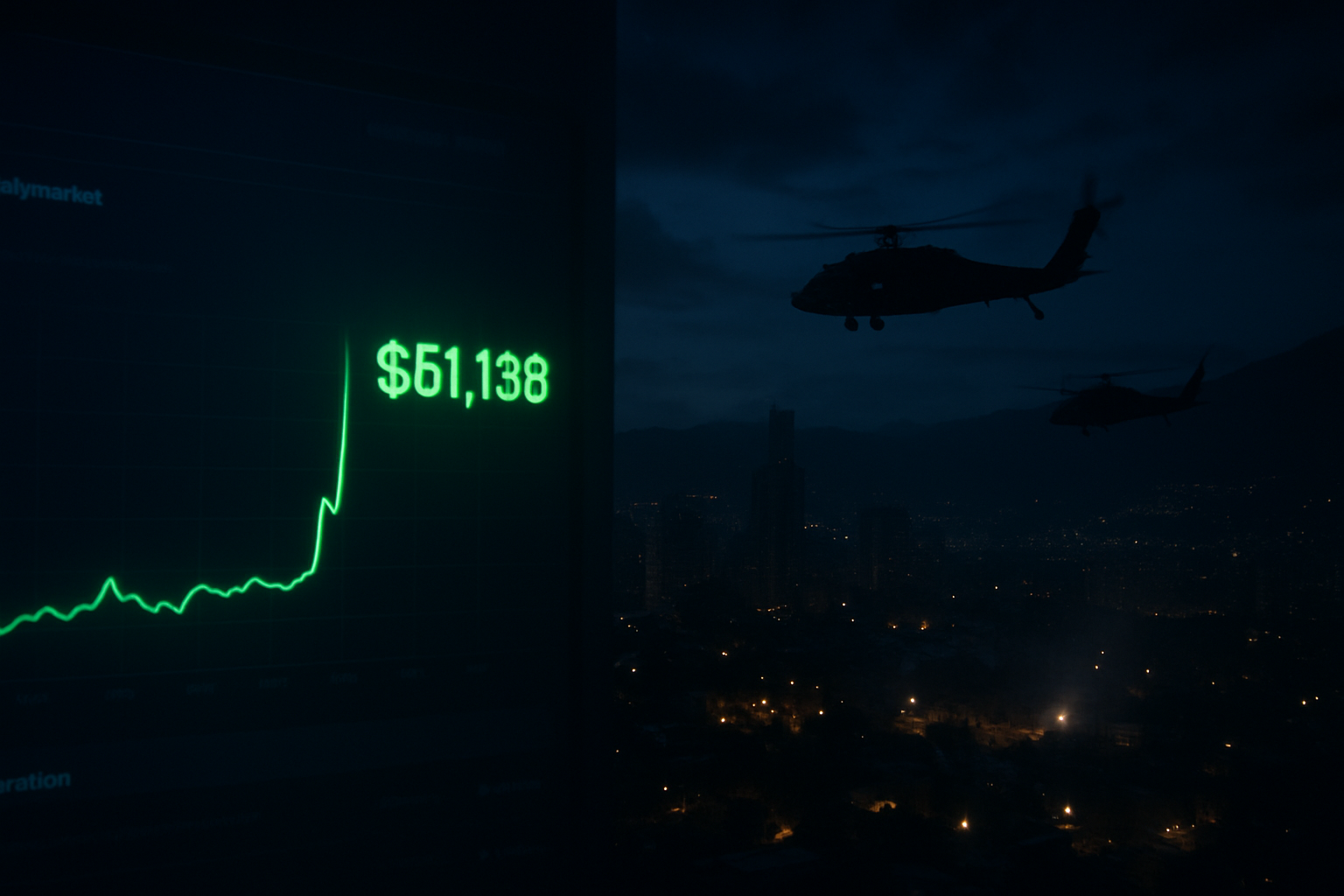
    In the early hours of January 3, 2026, the world woke to the shocking news that Nicolás Maduro had been captured by U.S. Special Operations forces in a daring raid dubbed "Operation Absolute Resolve." But while mainstream news outlets like The New York Times (NYSE: NYT) and News Corp (NASDAQ: NWSA) were scrambling to confirm the reports, a different kind of drama was unfolding on the blockchain. On Polymarket, a single anonymous trader had already locked in a massive windfall, having bet heavily on Maduro’s ouster just hours before the first helicopter took flight.

    The "Maduro Trade," as it has become known, saw an anonymous account turn a modest $32,000 position into a staggering $436,000 payout. The suspicious timing of the wager—placed with surgical precision before any public knowledge of the military operation—has sparked a firestorm of controversy. What began as a win for a savvy bettor has evolved into a national conversation on insider trading, "war-profiteering," and a desperate call for federal regulation of the prediction market industry.

    The Market: What's Being Predicted

    The focus of this controversy was a high-liquidity contract on Polymarket titled "Will Maduro be out of office by January 31, 2026?" Unlike the chaotic resolution of the 2024 Venezuelan election market, which saw disputes over "official" state data versus opposition reporting, this market had a clear binary outcome: Maduro either remained in power in Caracas, or he did not.

    As of late December 2025, the odds of Maduro leaving office were trading at a mere 8%, reflecting a general skepticism that the long-standing regime would crumble anytime soon. However, as the calendar turned to 2026, trading volume surged. By the time the market was resolved on January 3, it had seen over $115 million in total volume, making it one of the most liquid geopolitical markets in the platform's history. Polymarket, which recently received a $2 billion strategic investment from Intercontinental Exchange (NYSE: ICE), found itself at the center of a geopolitical earthquake.

    The resolution criteria were strict. The market required Maduro to be physically removed from his executive functions or held in custody. When "Operation Absolute Resolve" concluded with Maduro in a U.S. detention facility, the market resolved almost instantly. While many traders celebrated the "truth machine" capability of prediction markets, the focus quickly shifted to the identity of the winners.

    Why Traders Are Betting

    For months, traders had been betting on the "Maduro Trade" based on varying factors: economic collapse, internal military coups, or diplomatic pressure. Most traditional forecasting models gave Maduro a high chance of survival through 2026. However, the activity of one specific wallet, identified by blockchain analysts as "Burdensome-Mix," defied all standard logic.

    Between 9:00 PM and 11:30 PM ET on January 2, 2026, "Burdensome-Mix" aggressively bought up "Yes" shares at 8 cents on the dollar. The sheer aggression of the buying pushed the price from 8% to 22% in under three hours. Less than six hours later, the raid began. President Donald Trump later fueled the fire during a press conference, confirming that a "leaker" within the logistical chain of the operation had been identified. This comment confirmed the worst fears of market skeptics: the payout wasn't the result of superior analysis, but of material non-public information.

    This whale activity stands in stark contrast to the retail sentiment seen on other platforms like Robinhood Markets, Inc. (NASDAQ: HOOD) and Interactive Brokers Group (NASDAQ: IBKR) through its ForecastEx exchange. While those platforms saw steady, incremental increases in "Yes" bets as geopolitical tensions rose, Polymarket’s decentralized nature allowed for the kind of anonymous, massive-scale positioning that looks, to many regulators, like a textbook case of insider trading.

    Broader Context and Implications

    The "Maduro Trade" has reignited a debate that has simmered since the 2024 election. During that cycle, Polymarket faced intense criticism for resolving a Venezuela election market in favor of Maduro based on "official" counts, despite widespread evidence of fraud. Critics argued then that the platform was susceptible to state-sponsored manipulation. Now, the pendulum has swung to the other extreme: the platform is being accused of being a conduit for U.S. government insiders to monetize classified military secrets.

    This controversy has profound implications for the future of the industry. U.S. Rep. Ritchie Torres (D-NY) has already introduced the Public Integrity in Financial Prediction Markets Act of 2026, which would explicitly ban federal and military personnel from participating in these markets. The bill argues that prediction markets, while valuable for price discovery, cannot become a "casino for the deep state."

    Furthermore, the infrastructure supporting these platforms is coming under the microscope. Regulators are questioning whether cloud providers like Alphabet Inc. (NASDAQ: GOOGL) and Amazon (NASDAQ: AMZN) should be required to implement "kill switches" for markets that involve active military operations or sensitive national security data.

    What to Watch Next

    The immediate focus is on a series of upcoming congressional hearings scheduled for February 2026. The Commodity Futures Trading Commission (CFTC) is expected to testify on whether it has the authority to claw back payouts derived from insider information on offshore, decentralized platforms. If the CFTC asserts jurisdiction, it could set a precedent that fundamentally changes the "permissionless" nature of crypto-based markets.

    Traders should also keep an eye on "Operation Absolute Resolve" follow-up markets. Contracts are already active regarding the transition of power in Venezuela and the potential for a U.S. military presence in Caracas through the end of the year. If suspicious volume patterns emerge in these markets, it could trigger a coordinated shutdown of similar event contracts on regulated U.S. exchanges.

    Lastly, the identity of "Burdensome-Mix" remains the ultimate "known unknown." If the Department of Justice is able to link the wallet to a specific individual within the military or intelligence community, the resulting legal battle will likely define the boundaries of "insider trading" in a realm where the "commodity" being traded is information itself.

    Bottom Line

    The "Maduro Trade" is a watershed moment for prediction markets. On one hand, it proved that these markets are the fastest way to aggregate information—Polymarket’s odds were "right" about the raid hours before any journalist. On the other hand, it highlighted a glaring ethical and legal vacuum. If prediction markets are to become the "global source of truth" that their proponents claim, they must find a way to distinguish between "collective intelligence" and "criminal intelligence."

    As we move further into 2026, the era of the "Wild West" in prediction markets appears to be closing. With institutional giants like ICE and Robinhood now deeply invested in the space, the pressure for a "clean" market will likely lead to more KYC (Know Your Customer) requirements and stricter federal oversight. For now, the "Maduro Trade" stands as both a triumph of market efficiency and a cautionary tale of the dangers inherent in betting on the movements of the most powerful military on earth.


    This article is for informational purposes only and does not constitute financial or betting advice. Prediction market participation may be subject to legal restrictions in your jurisdiction.

    PredictStreet focuses on covering the latest developments in prediction markets.
    Visit the PredictStreet website at https://www.predictstreet.ai/.

  • The $32,000 ‘Glint’ Before the Storm: Did a Polymarket Trader Have Advance Knowledge of Maduro’s Capture?

    The $32,000 ‘Glint’ Before the Storm: Did a Polymarket Trader Have Advance Knowledge of Maduro’s Capture?

    The sudden and dramatic capture of Nicolás Maduro by U.S. special operations forces in early January 2026 sent shockwaves through the global political landscape. However, for those watching the prediction markets, the real explosion happened hours before the first Delta Force helicopter crossed the Venezuelan border. A single, anonymous trader placed a high-stakes bet that has now become the center of a firestorm involving allegations of insider trading and calls for a federal crackdown on the industry.

    As the dust settles in Caracas and Maduro awaits trial in New York, the focus has shifted to Polymarket, the decentralized betting platform that correctly—if suspiciously—predicted the regime's collapse. At the heart of the controversy is a $32,000 wager that ballooned into a nearly half-million-dollar payout, occurring just as the final authorization for "Operation Absolute Resolve" was being signed in the Oval Office.

    The Market: What's Being Predicted

    The primary theater for this financial drama was the Polymarket contract titled "Will Maduro remain in power?" Throughout the final months of 2025, as the U.S. tightened a naval blockade on Venezuelan oil exports, the market remained remarkably skeptical of a total regime change. For most of December, the odds of Maduro being ousted by January 31, 2026, hovered between a mere 7% and 10%. Liquidity was high, with the market attracting over $57 million in total volume as speculators weighed the likelihood of continued diplomatic stalemate against the possibility of military action.

    The resolution criteria for the market were explicit: the contract would settle as "Yes" (for removal) if Maduro was physically removed from Venezuelan territory or if he officially resigned and a successor was recognized by the international community. Trading remained relatively stagnant until the evening of January 2, 2026, when a flurry of activity—led by a single account—completely upended the order book.

    In addition to the "power" market, a secondary contract regarding a potential "U.S. invasion" of Venezuela saw over $10.5 million in volume. While the "power" market resolved in favor of those betting on Maduro's downfall, the "invasion" market sparked its own controversy. Despite the presence of U.S. troops, Polymarket ruled the event as "No," citing their criteria that defined an invasion as "establishing territorial control" rather than a "snatch-and-extract" raid. This semantic nuance has led to a "Polyscam" backlash among traders who feel the platform moved the goalposts to avoid a massive payout.

    Why Traders Are Betting

    The sudden shift in odds was driven by a trader using the pseudonym "Burdensome-Mix." This account, created only weeks prior, began a methodical accumulation of "Yes" shares in late December. The defining moment occurred at 9:58 PM ET on January 2—less than an hour before President Donald Trump reportedly signed the final strike authorization. At that time, with the "downfall" probability still sitting at 8%, "Burdensome-Mix" dropped a final $32,537 into the pool.

    When the news of the raid broke at 4:21 AM the following morning, the shares spiked to a full $1.00. The trader walked away with a profit of $436,759.61, a staggering 12-fold return on an event the broader market viewed as highly improbable. Analysts from various crypto-intelligence firms have pointed out that the timing was too precise to be a mere coincidence. "It is statistically an anomaly to see that level of conviction on a low-probability event right before the command is given," noted one lead researcher at Polysights.

    Traditional forecasting methods, including geopolitical risk assessments from major firms, had estimated the likelihood of a direct military extraction as a "tail risk" due to the potential for regional escalation. However, the prediction markets proved once again that they can act as a magnet for "dark information." Whether this trader was a high-level government staffer, a military contractor, or simply an incredibly lucky speculator remains the subject of intense debate.

    Broader Context and Implications

    This incident has reignited the conversation regarding the role of prediction markets in modern governance. Supporters of platforms like Polymarket and Kalshi argue that these markets serve as an invaluable tool for "truth discovery." CEO Shayne Coplan has previously suggested that if someone has inside information, the market provides a way for that truth to be priced in, essentially alerting the public to impending events before they happen.

    However, the "Maduro Trade" has also caught the attention of regulators who see it differently. Following the capture, U.S. Representative Ritchie Torres introduced the "Public Integrity in Financial Prediction Markets Act of 2026." The bill seeks to explicitly bar government officials, their staff, and military personnel from trading on markets where they possess material nonpublic information. The concern is that prediction markets could become a new, harder-to-track avenue for corruption and the monetization of classified secrets.

    The geopolitical ramifications are equally massive. As the U.S. signals its intention to oversee a "safe transition" in Venezuela, global energy markets are already reacting. Companies like Chevron (NYSE: CVX), ExxonMobil (NYSE: XOM), and ConocoPhillips (NYSE: COP) are being watched closely by investors as the potential for the revitalization of Venezuela’s massive oil reserves becomes a reality. The prediction markets correctly signaled the end of the Maduro era, but the resulting regulatory fallout may change how these platforms operate forever.

    What to Watch Next

    The immediate focus for the markets is now on the stability of the transitional government in Caracas. While Vice President Delcy Rodríguez was technically sworn in as acting president, her hold on power is tenuous. Polymarket has already launched new contracts regarding the date of the next Venezuelan general election and the potential for a formal U.S. military occupation to secure oil fields.

    On the regulatory front, a group of 12 U.S. Senators has called on the Commodity Futures Trading Commission (CFTC) to launch a full-scale investigation into the "Burdensome-Mix" trade. If the identity of the trader is linked to the U.S. government or the military, it could lead to the first major "insider trading" prosecution in the history of decentralized prediction markets. This would likely result in mandatory Know Your Customer (KYC) requirements that could alienate a large portion of the current user base.

    Bottom Line

    The capture of Nicolás Maduro will be remembered as a pivotal moment in 21st-century history, but in the world of finance, it will be remembered as the "Maduro Trade." The event highlighted the uncanny ability of prediction markets to sniff out "black swan" events before they occur, often by attracting those with "inside" knowledge who are looking for a payout.

    While the $32,000 bet by "Burdensome-Mix" was a masterstroke of timing, it has also put a target on the back of the entire prediction market industry. As lawmakers move to close the "insider trading" loophole, the platform's reputation for being an unbiased aggregator of truth is being tested. Ultimately, the Maduro controversy proves that when the stakes are high enough, the line between a "prediction" and "privileged information" becomes razor-thin.


    This article is for informational purposes only and does not constitute financial or betting advice. Prediction market participation may be subject to legal restrictions in your jurisdiction.

    PredictStreet focuses on covering the latest developments in prediction markets.
    Visit the PredictStreet website at https://www.predictstreet.ai/.
  • The Maduro Bet: How a $32,000 Wager Foretold a U.S. Military Raid

    The Maduro Bet: How a $32,000 Wager Foretold a U.S. Military Raid

    In the hyper-volatile world of decentralized prediction markets, "alpha"—the industry term for an information edge—is everything. But on the evening of January 2, 2026, a single trader on Polymarket appeared to possess an edge so sharp it cut through the fog of international diplomacy. Just hours before U.S. Special Forces descended on Caracas in a daring mission codenamed "Operation Absolute Resolve," an anonymous account turned a $32,537 bet into a staggering $436,000 windfall.

    The wager, now infamously known as the "Maduro Bet," has sent shockwaves through the financial world and the U.S. intelligence community. By betting that Venezuelan President Nicolás Maduro would be out of power by the end of January—at a time when the market gave the outcome a mere 7% probability—the trader known as "Burdensome-Mix" didn't just win a bet; they ignited a national debate over the legality of betting on state secrets and the potential for prediction markets to serve as a back door for high-level insider trading.

    The Market: What's Being Predicted

    The focal point of the controversy was a contract on Polymarket titled "Will Nicolás Maduro be out of power by January 31, 2026?". Polymarket, a decentralized platform that uses the Polygon blockchain, allows users to buy and sell "shares" in the outcome of real-world events. Each share pays out $1.00 if the prediction comes true and $0.00 if it does not.

    For much of late 2025, the "Yes" shares for Maduro’s removal were trading in the "basement," hovering around $0.06 to $0.07. Geopolitical analysts largely agreed that while tensions were high, Maduro’s control over the Venezuelan military remained firm. However, the volume surged on January 2, 2026. Within a four-hour window, liquidity poured into the "Yes" side, briefly moving the needle to $0.15 before the market was flooded by the "Burdensome-Mix" account.

    The resolution criteria were crystalline: Maduro had to be physically removed from the presidency, resign, or be captured by a foreign power. When news broke at 4:30 AM ET on January 3 that U.S. Special Forces had successfully extracted Maduro from the Fort Tiuna military complex, the market instantly spiked to $0.98. By the time Maduro was arraigned in a New York courtroom on January 5, the market settled, and the anonymous trader walked away with a 1,242% return on investment.

    Why Traders Are Betting

    The "Maduro Bet" stands out not because of its size—whales often move millions on Polymarket—but because of its surgical timing. While retail traders were busy betting on the NFL playoffs or the price of Bitcoin, "Burdensome-Mix" placed their final, largest buy order at 9:58 PM ET on January 2. This was approximately four hours before the first U.S. aircraft entered Venezuelan airspace.

    The community’s initial reaction was one of awe, but it quickly soured into suspicion. Unlike traditional forecasting methods—which relied on satellite imagery showing increased naval activity from Chevron (NYSE: CVX) tankers or regional troop movements—this trade showed no signs of hedging. It was an "all-in" move on a low-probability event.

    Evidence of a leak became undeniable when the White House announced on January 16 that federal authorities had arrested Aurelio Perez-Lugones, a Navy veteran and government contractor. Perez-Lugones allegedly used his Top Secret clearance to access tactical databases and pass the timing of "Operation Absolute Resolve" to an associate linked to the "Burdensome-Mix" account. This "insider edge" allowed the trader to front-run a geopolitical earthquake that would eventually send shares of defense giants like Lockheed Martin (NYSE: LMT) and RTX Corporation (NYSE: RTX) to record highs.

    Broader Context and Implications

    The Maduro Bet has forced a reckoning for the prediction market industry. Proponents, such as those at the Mercatus Center, argue that these markets are "truth machines" that successfully aggregated hidden information to provide a public warning of the impending raid. They point out that the price spike on January 2 was a leading indicator that something major was about to happen—information that could have been used by civilians or businesses to prepare for the fallout.

    However, regulators view it differently. The Commodity Futures Trading Commission (CFTC) has ramped up its scrutiny of Polymarket, questioning whether the platform’s lack of "Know Your Customer" (KYC) rigor for certain tiers of users makes it a haven for illicit gains. The incident has already sparked legislative action: Representative Ritchie Torres introduced the "Public Integrity in Financial Prediction Markets Act of 2026." The bill proposes a total ban on federal employees and contractors wagering on outcomes related to their official duties.

    Furthermore, the event has highlighted the intersection of "Info-War" and finance. Media conglomerates like Fox Corp (NASDAQ: FOX) and Warner Bros. Discovery (NASDAQ: WBD) saw record viewership during the weekend of the raid, but prediction markets provided the only venue where that information was being priced into a tradable asset in real-time.

    What to Watch Next

    As Maduro remains in federal custody at the Metropolitan Detention Center in Brooklyn, the prediction market community has shifted its focus to his trial. Markets are already forming around the likelihood of a conviction versus a plea deal that would see him exiled to a third country.

    Key dates to monitor include:

    • February 12, 2026: The first evidentiary hearing for Aurelio Perez-Lugones, which may reveal more about the "Burdensome-Mix" trader’s identity.
    • March 2026: The expected floor vote for the Torres Bill, which could fundamentally change how prediction markets operate in the United States.
    • Infrastructure Tenders: Watch for movement in Palantir Technologies (NYSE: PLTR) and Exxon Mobil (NYSE: XOM), as markets begin to bet on which U.S. firms will be awarded the lion's share of contracts for Venezuela’s reconstruction.

    Bottom Line

    The "Maduro Bet" is a watershed moment for the 2020s. It demonstrated that prediction markets are no longer just a niche playground for "crypto-bros" and political junkies; they are a potent, albeit dangerous, tool for surfacing information that traditional intelligence and journalism often miss.

    While "Burdensome-Mix" may have successfully cashed out their $436,000, the cost to the industry may be much higher. If prediction markets are perceived as a way for insiders to monetize classified information, they risk a regulatory crackdown that could stifle the very "wisdom of the crowd" they seek to harness. For now, the Maduro Bet remains the ultimate example of a market that knew too much, too soon.


    This article is for informational purposes only and does not constitute financial or betting advice. Prediction market participation may be subject to legal restrictions in your jurisdiction.

    PredictStreet focuses on covering the latest developments in prediction markets.
    Visit the PredictStreet website at https://www.predictstreet.ai/.
  • The “Blue Wave” vs. The “Red Strike”: Prediction Markets Brace for a Volatile 2026

    The “Blue Wave” vs. The “Red Strike”: Prediction Markets Brace for a Volatile 2026

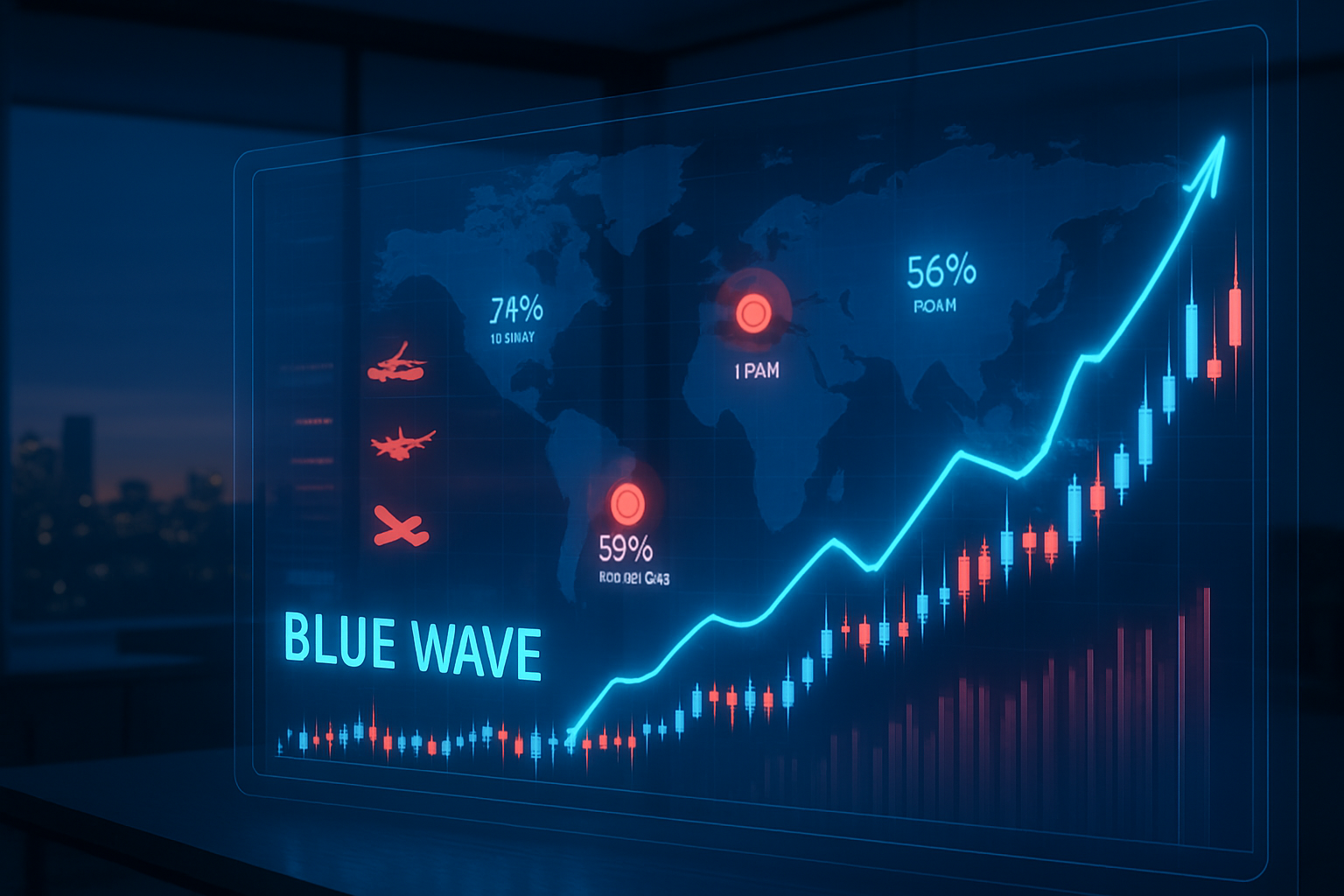
    As the United States enters the second year of the second Trump administration, the focus of global forecasting has shifted from the shock of the 2024 results to the high-stakes chess match of the 2026 Midterm elections. On January 15, 2026, prediction markets are signaling a dramatic pivot in American power: Polymarket and Manifold Markets currently place the odds of a Democratic takeover of the House of Representatives at a staggering 78% and 87%, respectively. Traders are betting heavily that the razor-thin Republican majority (220–213) will crumble under the weight of historical midterm trends and a series of brewing "catastrophe markets" abroad.

    While the domestic political map looks grim for the incumbent party, the "signal" from geopolitical markets is even more intense. In the wake of the successful January 3rd capture of Nicolás Maduro in Venezuela—an event priced into markets hours before official confirmation—traders have turned their capital toward Iran. With a "Winter Uprising" rocking Tehran and U.S. military strikes before June 30 now sitting at a 74% probability, these platforms are no longer just betting hubs; they have become the primary "parallel intelligence" infrastructure for global observers.

    The Market: What's Being Predicted

    The 2026 Midterm markets are currently the highest-volume domestic contracts on Polymarket, drawing in tens of millions in liquidity. The primary contract, "Which party will control the House after the 2026 election?", has seen a massive "Blue Wave" shift. Democrats are trading at 79¢, reflecting a belief that a net gain of just three seats is a historical inevitability during a GOP trifecta. On Manifold, the "Split Congress" scenario (Democratic House, Republican Senate) is the dominant forecast at 62%, as the Senate map remains structurally difficult for Democrats to flip entirely.

    Beyond the ballot box, "catastrophe markets" regarding Iran and Venezuela are seeing unprecedented volatility. On Polymarket, a contract titled "U.S. Military Action against Iran by June 30, 2026" has surged from 10% in late December to 74% today. This follows reports of over 2,500 deaths in the Iranian "Winter Uprising." Meanwhile, in Venezuela, despite the capture of Maduro, the "U.S. Invasion" contract remains a point of contention, trading at 22%. Traders are debating whether "special operations" qualify as an invasion, a semantic dispute that has led to millions of dollars being locked in escrow as the decentralized oracle UMA prepares a resolution.

    Why Traders Are Betting

    The divergence between market odds and official rhetoric is driven by what traders call "Alpha Raccoons"—pseudo-anonymous participants who appear to possess insider information or advanced surveillance data. During the "Maduro Trade" in early January, odds of the Venezuelan leader being "out of power" spiked from 8% to 65% a full six hours before News Corp (NASDAQ: NWSA) or the New York Times Company (NYSE: NYT) broke the story. Traders weren't watching cable news; they were monitoring the "Pizza Index" (late-night spikes in Pentagon deliveries) and tracking the repositioning of U.S. naval assets via open-source intelligence.

    In the case of the 2026 Midterms, the heavy "Yes" on a Democratic House flip is fueled by "Skin in the Game." Unlike traditional pundits, prediction market participants are financially incentivized to ignore political spin. While GOP strategists point to a strong economy, traders are focused on the "incumbent fatigue" and the historically narrow margin of the current House majority. Institutional desks at firms like Susquehanna have increasingly used these markets to hedge against potential regulatory shifts that a "Blue House" might bring, particularly for tech giants like Alphabet Inc. (NASDAQ: GOOGL) and Microsoft Corp (NASDAQ: MSFT), which face ongoing antitrust scrutiny.

    Broader Context and Implications

    The rise of these markets represents a paradigm shift in how the public consumes "truth." In early 2026, the signal value of a Polymarket percentage often carries more weight in diplomatic circles than a State Department briefing. These "catastrophe markets" provide a brutal, real-time assessment of risk that traditional forecasting methods cannot match. When the odds of a strike on Iran hit 74%, insurance premiums for oil tankers in the Strait of Hormuz rise in tandem, showing a direct link between prediction markets and the global economy.

    However, this "high signal" comes with significant regulatory and ethical concerns. The Public Integrity in Financial Prediction Markets Act of 2026, currently being debated in the House, seeks to address the "moral hazard" of betting on war. Critics argue that allowing individuals to profit from military strikes incentivizes sabotage or the leaking of classified information. Furthermore, the reliance of these platforms on cloud infrastructure from Amazon.com Inc. (NASDAQ: AMZN) has raised questions about "decentralization" and whether the government could theoretically "pull the plug" on markets that predict its own military secrets.

    What to Watch Next

    The immediate horizon is dominated by the June 30th "Strike Deadline." If U.S. military action in Iran does not occur by this date, the market could see a massive "liquidity drain" as traders recalibrate for a more diplomatic approach. Conversely, any official move toward a "government-in-exile" for Venezuela could send the "Regime Change" contracts on Kalshi and Polymarket into a frenzy.

    On the domestic front, the first major "move" in the Midterm markets is expected following the President's State of the Union address in February. Traders will be looking for any signs of policy shifts that could alienate the moderate suburban voters who hold the key to the House. Additionally, watch for "whale activity" from new wallets; in 2025, several large-scale bets preceded major cabinet reshuffles, suggesting that the "insider proxy" effect remains the most potent force in these markets.

    Bottom Line

    As of January 15, 2026, prediction markets are flashing red for both the Republican House majority and the stability of the Middle East. The 79% probability of a Democratic House takeover suggests that traders view the current GOP trifecta as a short-term phenomenon, likely to be checked by voters in November. Simultaneously, the 74% odds of military action in Iran indicate that the world is on the precipice of a significant kinetic conflict, one that the markets have been "pricing in" for weeks.

    These platforms have successfully transitioned from a curiosity into a "truth engine" that operates faster than traditional media. Whether it is the capture of a dictator or the flip of a Congressional seat, the markets are no longer just predicting the future—they are providing the earliest, most accurate map of the world as it actually exists. For global observers, the message is clear: if you want to know what happens next, don't watch the news—watch the tape.


    This article is for informational purposes only and does not constitute financial or betting advice. Prediction market participation may be subject to legal restrictions in your jurisdiction.

    PredictStreet focuses on covering the latest developments in prediction markets.
    Visit the PredictStreet website at https://www.predictstreet.ai/.

  • ExxonMobil (XOM) in 2026: Navigating the Trump “Venezuela Ban” and the Future of Energy

    ExxonMobil (XOM) in 2026: Navigating the Trump “Venezuela Ban” and the Future of Energy

    Date: January 13, 2026

    Introduction

    As of early 2026, Exxon Mobil Corporation (NYSE: XOM) finds itself in an extraordinary position: a financial titan at the peak of its operational powers, yet locked in a high-stakes geopolitical game of chicken with the United States executive branch. While the company’s balance sheet has never looked stronger following the integration of Pioneer Natural Resources, a widening rift between CEO Darren Woods and the Trump administration over the future of Venezuela has cast a shadow of uncertainty over the stock.

    The core of the current focus is a direct threat from President Trump to "ban" or deprioritize Exxon from participating in the massive rebuilding of Venezuela’s oil sector. This friction comes just days after the January 3, 2026, capture of Nicolás Maduro, an event that has theoretically opened the world’s largest oil reserves to Western investment for the first time in two decades. While competitors like Chevron are racing in, Exxon’s hesitation—rooted in a history of asset seizures—has turned a corporate strategy into a national political flashpoint.

    Historical Background

    ExxonMobil’s lineage traces back to John D. Rockefeller’s Standard Oil Trust, founded in 1870. Following the 1911 antitrust breakup, the entities known as Jersey Standard (Exxon) and Socony (Mobil) eventually reunited in a $81 billion merger in 1999, creating what was then the world’s largest private oil company.

    Historically, Exxon has been defined by its "Texas-sized" engineering projects and a culture of extreme fiscal discipline. However, its history with Venezuela is one of trauma. In 2007, under the leadership of Hugo Chávez, Venezuela’s government seized Exxon’s multi-billion dollar assets in the Orinoco Belt after the company refused to accept more restrictive terms. Unlike peers who negotiated, Exxon fought the seizure in international courts for over a decade. This historical grievance heavily colors the company’s current cautious stance under the new geopolitical reality of 2026.

    Business Model

    ExxonMobil operates a fully integrated energy business model, structured into three primary segments:

    1. Upstream: The powerhouse of the company, focusing on the exploration and production of crude oil and natural gas. In 2026, this segment is dominated by "advantaged" assets in the Permian Basin and offshore Guyana, which offer lower break-even costs than traditional deepwater or shale projects.
    2. Product Solutions: This segment combines the former Downstream (refining) and Chemical operations. By integrating these, Exxon maximizes the value of every molecule, producing everything from high-performance fuels to plastics and lubricants.
    3. Low Carbon Solutions: A growing division focused on Carbon Capture and Storage (CCS), hydrogen, and lithium. The "Proxxon" lithium project in the U.S. South is a key part of the 2026 growth strategy, aiming to supply the domestic EV battery market.

    Stock Performance Overview

    As of mid-January 2026, XOM shares are trading near $124.50. The stock’s trajectory reflects its transition from a pandemic-era laggard to a cash-flow machine.

    • 1-Year Performance: Up approximately 13.5%. The stock recently retreated from an all-time high of $125.93 reached on news of the Venezuelan transition.
    • 5-Year Performance: Up a staggering 156%. Since 2021, Exxon has capitalized on higher energy prices and rigorous cost-cutting, significantly outperforming the S&P 500 energy sector.
    • 10-Year Performance: Up 60%. While the capital appreciation over a decade is more modest than high-growth tech, the Total Shareholder Return (TSR)—including dividends—remains a benchmark for value investors.

    Financial Performance

    Exxon’s 2025 fiscal year was nothing short of historic. The company reported estimated full-year earnings between $28 billion and $30 billion.

    • Revenue: Trailing Twelve Month (TTM) revenue stands at roughly $334 billion.
    • Margins: The focus on "advantaged" barrels has kept margins robust even as global crude prices stabilized in the $60–$65 range.
    • Balance Sheet: Exxon maintains a net-debt-to-capital ratio of just 9.5%, with a cash reserve of nearly $14 billion.
    • Shareholder Returns: In 2025, the company returned over $37 billion to shareholders, split between a $20 billion buyback program and a consistent quarterly dividend of $1.03 per share.

    Leadership and Management

    CEO Darren Woods has been the architect of Exxon’s current "commercial discipline" philosophy. Since taking the helm in 2017, he has focused on high-margin production over volume, a strategy that famously led to the $60 billion acquisition of Pioneer Natural Resources in 2024.

    Woods is widely regarded as a "fundamentalist" of the oil industry—unswayed by short-term political trends or social pressure. However, this unwavering focus on legal "durable protections" for investments has led to his current friction with the White House. While President Trump demands "America First" speed in rebuilding Venezuela, Woods remains adamant that Venezuela remains "uninvestable" without ironclad legal guarantees—a stance that has branded him as "uncooperative" in the eyes of current administration officials.

    Products, Services, and Innovations

    Exxon’s competitive edge in 2026 lies in its technological leadership:

    • Advanced Drilling: The integration of Pioneer’s data-driven shale techniques into Exxon’s Permian operations has significantly lowered the cost per barrel.
    • The Proxxon Project: This initiative marks Exxon’s entry into the lithium market. By extracting lithium from brine in the Smackover formation, Exxon is leveraging its traditional drilling expertise to enter the "new energy" supply chain.
    • Carbon Capture: Exxon is currently the world leader in carbon capture volume, selling "carbon-free" energy credits to industrial customers across the Gulf Coast.

    Competitive Landscape

    Exxon’s primary rival, Chevron Corporation (NYSE: CVX), has taken a diametrically opposite approach to the Venezuela crisis. Chevron maintained a skeleton crew in Caracas throughout the Maduro years and is now the "preferred partner" of the Trump administration for the $100 billion rebuilding effort.

    While Exxon dominates in Guyana—where production has hit 1.1 million barrels per day—Chevron is positioned as the primary beneficiary of the Venezuelan windfall. Meanwhile, European rivals like Shell (NYSE: SHEL) and BP (NYSE: BP) have largely pivoted away from the heavy crude projects characteristic of Venezuela, leaving the South American arena as a two-horse race between the American "Big Oil" pair.

    Industry and Market Trends

    The energy sector in 2026 is defined by "The Great Balancing." While the transition to renewables continues, energy security has returned as the top priority for Western governments.

    • Crude Outlook: Prices have moderated to the $60s, but supply remains tight due to underinvestment in the previous decade.
    • Regional Shifts: The Gulf of Mexico and the Permian Basin remain the heart of global production growth, but the "re-opening" of the Venezuelan spigot represents the most significant supply-side shift in a generation.

    Risks and Challenges

    The most immediate risk to Exxon is the political "de-platforming" threatened by the U.S. administration. President Trump’s January 11, 2026, statement that he is "inclined to keep Exxon out" of the Venezuelan transition could prevent the company from accessing the world’s largest heavy-oil reserves.

    Other risks include:

    • Commodity Volatility: A global recession could push crude prices below the $55 level, stressing even Exxon's low-cost model.
    • Guyana Tensions: While the Maduro ouster de-risked the Essequibo region, any lingering instability in Guyana’s neighbor could still disrupt offshore operations.
    • Regulatory Backlash: Potential "windfall" taxes or executive orders aimed at penalizing the company for its cautious stance in South America.

    Opportunities and Catalysts

    • Guyana Expansion: Exxon’s Stabroek block is a generational asset. Further discoveries there could push production toward 1.5 million bpd by 2030.
    • Lithium Scalability: If the Proxxon project succeeds, Exxon could become a dominant player in the EV supply chain, diversifying its revenue away from internal combustion engines.
    • Reconciliation: Should the administration and Exxon find common ground on Venezuelan legal protections, Exxon’s technical capability in heavy oil could see them eventually regain a leading role in the country.

    Investor Sentiment and Analyst Coverage

    Wall Street remains cautiously optimistic. The consensus rating on XOM is a Moderate Buy, with an average price target of $130.57.

    • The Bulls: Argue that Exxon’s Guyana cash flow is so strong that they don’t need Venezuela. They see the political spat as a temporary noise.
    • The Bears: Worry that being "last in line" for the world’s largest oil reserve gives Chevron a permanent advantage in the next cycle of global production.

    Regulatory, Policy, and Geopolitical Factors

    The central narrative of 2026 is the clash between Corporate Legalism (Exxon) and America-First Realpolitik (The White House).
    Following the capture of Maduro on January 3, the U.S. has moved to establish a transitional authority in Caracas. The administration views oil as the primary funding mechanism for this transition and wants rapid production increases. Exxon’s demand for "durable legal frameworks" is seen by some in Washington as an obstacle to national security. This has led to the current threat of a "ban," which, while legally complex, could involve the denial of specific licenses or the prioritization of competitors in the allocation of infrastructure.

    Conclusion

    ExxonMobil enters 2026 as a financial fortress, yet it finds itself in the uncomfortable role of a political pariah in Washington. For investors, the company represents a paradox: it owns the world’s most efficient offshore oil assets in Guyana and a powerhouse Permian operation, but it is currently "winning the battle and losing the war" for the future of Venezuela.

    The key for investors will be whether Darren Woods can maintain his disciplined "legal-first" approach without being permanently locked out of the next major production frontier. If a compromise is reached, XOM has the potential to break toward the $150 mark. If the political "ban" holds, the stock may remain range-bound as its competitors reap the rewards of the Venezuelan re-opening. In the immediate term, Exxon remains the "gold standard" for energy dividends and stability, even as the political winds howl outside its Irving, Texas, headquarters.


    This content is intended for informational purposes only and is not financial advice.

  • Chevron (CVX) Deep-Dive: Navigating the Venezuela Catalyst and Crude Price Retreat

    Chevron (CVX) Deep-Dive: Navigating the Venezuela Catalyst and Crude Price Retreat

    As of January 8, 2026, Chevron Corporation (NYSE: CVX) finds itself at the center of one of the most significant geopolitical shifts in the energy sector in decades. While the global oil market grapples with a sustained crude price retreat—with Brent falling below $60 per barrel—Chevron has emerged as the primary beneficiary of a historic regime change in Venezuela. Following the dramatic events of early January 2026, the San Ramon-based supermajor has solidified its "first-mover" advantage in South America, pivoting from a period of defensive consolidation to one of aggressive expansion. This research feature examines Chevron’s resilience in a low-price environment and its strategic positioning in the wake of the Hess acquisition and the Venezuelan opening.

    Historical Background

    Chevron’s roots trace back to the 1879 discovery of oil at Pico Canyon, California, which led to the formation of the Pacific Coast Oil Company. Later acquired by Standard Oil, it became Standard Oil Co. (California), or Socal, following the 1911 antitrust breakup. Socal was a pioneer in Middle Eastern exploration, discovering oil in Saudi Arabia in the 1930s and forming the Caltex partnership with Texaco.

    The modern incarnation of Chevron is the result of massive consolidations: the 1984 merger with Gulf Oil (the largest in history at the time), the 2001 acquisition of Texaco, and the 2005 purchase of Unocal. Most recently, the 2023–2025 period was defined by the acquisition of Noble Energy and the monumental $60 billion purchase of Hess Corporation. Throughout its history, Chevron has maintained a reputation for "capital discipline," a strategy that has allowed it to survive numerous boom-and-bust cycles better than many of its peers.

    Business Model

    Chevron operates a fully integrated energy model divided into two primary segments:

    • Upstream: This is the company’s engine, focused on the exploration, development, and production of crude oil and natural gas. Key assets include the Permian Basin (U.S.), the Tengiz field in Kazakhstan, and the newly integrated 30% stake in the Stabroek Block in Guyana.
    • Downstream: This segment encompasses refining, marketing, and transport. Chevron operates major refineries in the U.S. Gulf Coast, West Coast, and Asia. It also holds a 50% interest in CPChem, a leading petrochemical joint venture.

    The company’s model is increasingly focused on "short-cycle" assets like the Permian, which allow for rapid adjustments in production to meet market demand, balanced by "long-cycle" high-margin projects in deepwater and international LNG.

    Stock Performance Overview

    Over the past decade, Chevron has been a cornerstone of the "energy-for-income" portfolio.

    • 1-Year Performance: CVX has traded in a range of $145 to $165. The stock saw a 12% jump in the first week of 2026 following news of the Venezuelan export deal, though this was tempered by the broader retreat in WTI prices.
    • 5-Year Performance: Chevron outperformed the S&P 500 energy sector from 2021 to 2025, buoyed by its strong balance sheet and the successful navigation of the post-pandemic recovery.
    • 10-Year Performance: CVX has delivered a steady total return, significantly bolstered by its dividend. Despite the volatility of 2014-2016 and 2020, the stock has maintained an upward trajectory, reflecting its status as a Dividend Aristocrat.

    Financial Performance

    Despite the crude price retreat in late 2025, Chevron’s financials remain robust. For the trailing twelve months ending January 2026, the company reported:

    • Net Profit: Approximately $12.8 billion.
    • Free Cash Flow (FCF): A healthy $15.4 billion, which has comfortably covered its dividend obligations and share buyback programs.
    • Debt-to-Equity: Maintains one of the lowest leverage ratios among the supermajors (roughly 12%).
    • Dividend: A 4.4% yield, marking 38 consecutive years of dividend increases.

    The integration of Hess has begun to yield the promised $1 billion in annual cost synergies, helping to offset the impact of $55/bbl WTI prices on the bottom line.

    Leadership and Management

    Chevron is led by Mike Wirth, Chairman and CEO, who has been in the role since 2018. Wirth is widely credited with instilling a culture of capital austerity, famously stating that the company will not "chase" production at the expense of returns.

    The leadership team saw significant updates in 2025, with Eimear Bonner serving as CFO and Clay Neff leading Upstream operations. The recent appointment of Amit R. Ghai as Controller (effective March 2026) signals a continued focus on precise financial reporting as the company integrates complex international assets. The board is recognized for its strong governance, though it faces ongoing pressure from ESG-focused institutional investors to accelerate its "New Energies" transition.

    Products, Services, and Innovations

    Chevron continues to innovate in both traditional and emerging energy sectors:

    • Renewable Fuels: Through its acquisition of Renewable Energy Group (REG), Chevron is now a major producer of renewable diesel and sustainable aviation fuel (SAF).
    • Carbon Capture and Storage (CCS): The company is investing billions in CCS hubs, particularly in the Gulf Coast and Australia, aiming to reduce the carbon intensity of its traditional upstream operations.
    • The "Permian Factory": Chevron utilizes advanced data analytics and standardized drilling techniques to drive down the break-even cost in the Permian Basin to below $40 per barrel.

    Competitive Landscape

    Chevron’s primary rivals include Exxon Mobil (NYSE: XOM), Shell (NYSE: SHEL), and TotalEnergies (NYSE: TTE).

    • VS. ExxonMobil: While Exxon has a larger overall production footprint, Chevron is often viewed as more disciplined with its capital. The two companies recently settled a major arbitration dispute regarding the Guyana assets, with Chevron successfully securing its entry into the Stabroek Block via Hess.
    • VS. European Majors: Unlike Shell and BP, which aggressively pivoted toward renewables in the early 2020s (before partially walking back those goals), Chevron has remained steadfastly "oil and gas first," focusing on lowering the carbon footprint of its existing products rather than exiting the sector.

    Industry and Market Trends

    The energy sector in early 2026 is defined by a "bearish glut."

    1. Global Oversupply: Record U.S. production (13.6M bpd) and the unwinding of OPEC+ cuts have led to a surplus of 2.3M to 3.8M bpd.
    2. The Venezuela Catalyst: The sudden removal of the Maduro regime on January 3, 2026, has reopened a massive potential supply source.
    3. The "Donroe Doctrine": A more interventionist U.S. foreign policy in Latin America is seeking to secure regional energy supplies, moving away from reliance on Middle Eastern and Russian crude.

    Risks and Challenges

    • Geopolitical Instability: While the Venezuelan regime change offers opportunity, the country is in a state of flux. The cost to rehabilitate the decayed infrastructure of PDVSA is estimated at over $110 billion.
    • Price Volatility: If Brent crude stays below $55 for a prolonged period, even Chevron’s low-cost assets will face margin compression.
    • Regulatory Scrutiny: The integration of Hess and the dominant position in Guyana and Venezuela have drawn the attention of antitrust regulators and international bodies.

    Opportunities and Catalysts

    • The Venezuela Export Deal: A new $2 billion deal struck in January 2026 allows Chevron to move 30-50 million barrels of crude to U.S. Gulf Coast refineries. This is high-margin business for Chevron’s downstream segment, which is optimized for heavy Venezuelan crude.
    • Guyana Growth: Production in Guyana is expected to reach 1.2 million bpd by 2027. Chevron’s 30% stake provides a massive growth lever that is independent of U.S. shale cycles.
    • TCO Project Completion: The Future Growth Project in Kazakhstan (TCO) is nearing full ramp-up, which will add significant high-margin production in 2026.

    Investor Sentiment and Analyst Coverage

    Wall Street remains largely bullish on CVX. The consensus rating is "Outperform," with a median price target of $175.

    • Institutional Sentiment: Large hedge funds have increased their positions in CVX following the Hess deal, viewing Chevron as the "safest" way to play the Guyana growth story.
    • Retail Chatter: Retail investors are primarily focused on the 4.4% dividend yield, seeing Chevron as a "bond alternative" in a volatile market.
    • Analyst View: Analysts highlight that Chevron’s break-even price is among the lowest in the industry, making it the preferred "defensive" stock during the current price retreat.

    Regulatory, Policy, and Geopolitical Factors

    The Trump administration’s 2026 energy policy has been a major tailwind for Chevron. The "Donroe Doctrine" emphasizes U.S. dominance in the Western Hemisphere, which has directly facilitated Chevron’s expanded licenses in Venezuela. However, this interventionist stance carries the risk of friction with other regional powers like Brazil. Furthermore, OFAC (Office of Foreign Assets Control) licenses remain a critical regulatory hurdle that Chevron must navigate monthly as the political situation in Caracas stabilizes.

    Conclusion

    Chevron Corporation enters 2026 in a position of unique strength. By successfully closing the Hess acquisition and securing a dominant role in the Venezuelan recovery, the company has diversified its portfolio against the risks of a cooling global economy. While the retreat in crude prices to the mid-$50s presents a challenge for the entire sector, Chevron’s low debt, disciplined capital spending, and significant "first-mover" advantage in South America make it a compelling case for investors seeking both growth and income.

    As the "Venezuela Catalyst" unfolds, investors should watch for the pace of infrastructure repair in the Orinoco Belt and the continued integration of Hess assets. In a world of geopolitical uncertainty and price volatility, Chevron remains the "Gold Standard" of the integrated energy majors.


    This content is intended for informational purposes only and is not financial advice. Today's date: 1/8/2026.

  • The Oil Giant at a Geopolitical Crossroads: A Deep Dive into Exxon Mobil (XOM)

    The Oil Giant at a Geopolitical Crossroads: A Deep Dive into Exxon Mobil (XOM)

    As of January 2026, Exxon Mobil (NYSE: XOM) remains the preeminent Western "supermajor," but the environment in which it operates has shifted dramatically over the past twelve months. After a period of windfall profits following the geopolitical shocks of 2022-2024, the company is now contending with Brent crude trading near $60 per barrel—a significant retreat from the $80+ levels seen a year ago.

    Despite this price pressure, Exxon is currently the focus of intense market speculation due to a potential paradigm shift in South America. Following a series of dramatic political upheavals in Caracas, the U.S. government has signaled a move toward a major "oil-for-debt" deal that could see Exxon Mobil return to the Venezuelan oil fields for the first time in nearly two decades. This deep dive explores how the company’s massive production growth in Guyana, its successful integration of Pioneer Natural Resources, and its cautious geopolitical maneuvering are positioning it for the remainder of the decade.

    Historical Background

    The story of Exxon Mobil is essentially the history of the modern energy industry. Its lineage traces back to John D. Rockefeller’s Standard Oil Trust, founded in 1870. Following the 1911 Supreme Court-ordered breakup of the trust, two of its primary descendants—Jersey Standard (later Exxon) and Socony (later Mobil)—evolved into global leaders.

    The two entities famously reunited in 1999 in what was then the largest merger in corporate history. For much of the early 21st century, Exxon Mobil was the most valuable company in the world by market capitalization. However, the 2010s proved difficult, characterized by high capital expenditures that failed to yield expected returns and a lagging response to the shale revolution. Under the leadership of CEO Darren Woods, who took the helm in 2017, the company embarked on a multi-year "value over volume" strategy, which included divesting non-core assets and doubling down on "advantaged" basins like the Permian and Guyana.

    Business Model

    Exxon Mobil operates a vertically integrated model, though it has recently reorganized to emphasize operational efficiency. Its revenue is derived through three primary segments:

    1. Upstream: This is the company's engine room, focusing on the exploration and production of crude oil and natural gas. In 2026, the upstream segment is heavily concentrated in high-margin regions with low breakeven costs.
    2. Product Solutions: Formed by the merger of its refining and chemical divisions, this segment processes crude and gas into high-value products, including fuels, lubricants, and performance chemicals. This integration provides a natural hedge; when crude prices fall (as they have recently), refining margins often expand.
    3. Low Carbon Solutions: A newer, rapidly growing segment focused on carbon capture and storage (CCS), hydrogen, and lithium. Exxon aims to leverage its large-scale engineering expertise to lead in "hard-to-abate" industrial decarbonization.

    Stock Performance Overview

    Exxon’s stock performance reflects its transition from a struggling giant to a dividend-growing powerhouse:

    • 1-Year Performance: XOM has been resilient but pressured, trading in the $118–$122 range as of early 2026. This represents a slight decline from its 2025 highs of $126, primarily due to the 20% retreat in global crude prices over the last year.
    • 5-Year Performance: The stock remains a stellar performer over a five-year horizon. Since the lows of early 2021, when it traded near $45–$50, XOM has more than doubled in value, significantly outperforming the broader S&P 500 energy sector.
    • 10-Year Performance: Looking back to 2016, the stock has risen from roughly $75 to its current levels. While the decade saw extreme volatility—including the brief period of negative oil prices in 2020—the current valuation reflects a fundamental rerating of the company’s cash-generation capabilities.

    Financial Performance

    Despite the crude price retreat, Exxon’s financial health in early 2026 remains robust. For the full year 2025, the company is estimated to have generated approximately $34 billion in net income.

    Key metrics for investors to note:

    • Dividends: In late 2025, Exxon raised its quarterly dividend to $1.03 per share, marking 43 consecutive years of increases.
    • Cash Flow: The company maintains industry-leading free cash flow, allowing it to fund a $20 billion share buyback program while keeping its debt-to-capital ratio below 20%.
    • Breakeven Costs: Crucially, Exxon’s massive investments in Guyana and the Permian have lowered its average cost of production. Even with WTI at $56, its core assets remain highly profitable, with Guyana breakevens estimated at just $35 per barrel.

    Leadership and Management

    CEO Darren Woods has solidified his reputation as a disciplined strategist. His focus on "advantaged assets" was initially criticized by those urging a faster pivot to renewables, but the record profits of 2022-2025 largely vindicated his approach.

    On January 1, 2026, Woods completed a major organizational overhaul, centralizing operations into a single entity: ExxonMobil Global Operations. This move aims to shave another $2 billion in annual costs by 2027. Key leadership changes include the rise of Dan Ammann (formerly of GM’s Cruise) as head of the Upstream Company, signaling a shift toward more tech-driven, data-heavy operational management.

    Products, Services, and Innovations

    While oil remains the primary product, Exxon is increasingly marketing its technological "moat."

    • The Permian Engine: Following the $60 billion acquisition of Pioneer Natural Resources (integrated in 2024-2025), Exxon now commands the most efficient operations in the U.S. shale patch.
    • Carbon Capture: The company has signed several landmark CCS agreements with industrial giants (like Nucor and Linde), effectively selling "emissions management" as a service.
    • Lithium: By early 2026, Exxon’s "Proxxon" lithium project in the Smackover formation is nearing its first production phase, positioning the company as a key supplier for the North American EV battery supply chain.

    Competitive Landscape

    Exxon’s primary rivals include Chevron (NYSE: CVX), Shell (SHEL), and BP.

    • Versus Chevron: While Chevron has focused on its acquisition of Hess and expansion in Kazakhstan, Exxon has managed to integrate Pioneer more rapidly, realizing nearly $4 billion in synergies—double its initial estimates.
    • Versus European Peers: Unlike Shell and BP, which have faced internal tension over their energy transition strategies, Exxon has remained steadfast in its fossil-fuel-centric approach, which currently gives it a higher valuation multiple (P/E) due to more predictable cash flows.

    Industry and Market Trends

    The energy sector in 2026 is grappling with a "supply glut." Record production from non-OPEC countries (led by the U.S., Brazil, and Guyana) has outpaced global demand growth. This oversupply is the primary driver behind the current crude price retreat. However, long-term trends remain favorable for companies that can produce the lowest-carbon, lowest-cost barrels. Decarbonization policy in the U.S. continues to provide tailwinds for Exxon's Low Carbon Solutions via tax credits under the Inflation Reduction Act.

    Risks and Challenges

    • Price Volatility: If Brent crude drops and stays below $50, even Exxon’s disciplined budget will feel the squeeze, potentially slowing its aggressive buyback pace.
    • The Venezuela Gamble: Entering Venezuela is fraught with risk. The infrastructure is in shambles, and the political situation remains precarious despite the recent U.S.-backed shifts. There is a danger of "capital entrapment" where Exxon invests billions only to face a future nationalization under a different regime.
    • Regulatory Scrutiny: Environmental litigation continues to be a persistent nuisance, with several U.S. states pursuing climate-related damages.

    Opportunities and Catalysts

    • The Venezuelan Import Deal: The potential to recover $2 billion in old arbitration claims through Venezuelan crude imports is a major near-term catalyst. If Exxon secures "operator status" in the Orinoco Belt, it could add millions of barrels to its long-term reserves.
    • Guyana Expansion: Production in the Stabroek block surpassed 700,000 barrels per day in late 2025. With the "Hammerhead" project recently sanctioned, production is on track to hit 1.7 million bpd by 2030.

    Investor Sentiment and Analyst Coverage

    Wall Street is currently "cautiously optimistic" on XOM. The consensus rating is an Outperform, with a median price target of $131.44.

    • Bulls argue that Exxon’s $35/bbl breakeven assets make it the safest play in a low-price environment.
    • Bears point to a Zacks #5 (Strong Sell) rating from some quantitative models, citing the 11% year-over-year earnings decline caused by the crude price slump.

    Institutional ownership remains high, with Vanguard and BlackRock holding significant stakes, while retail investors continue to favor XOM for its "Dividend Aristocrat" status.

    Regulatory, Policy, and Geopolitical Factors

    The geopolitical landscape of 2026 is dominated by the U.S. administration’s efforts to stabilize global energy prices through a normalized relationship with Venezuela. President Trump has publicly urged Exxon to spearhead the reconstruction of Venezuela’s oil infrastructure. For Exxon, this represents a delicate balancing act: adhering to U.S. foreign policy while ensuring that any investment is legally protected by international treaties to avoid the expropriations of the past.

    Conclusion

    Exxon Mobil enters 2026 as a formidable machine that has successfully navigated the integration of Pioneer and the expansion of Guyana. While the retreat in crude prices to $60 levels presents a headwind for short-term earnings growth, the company’s fortress balance sheet and industry-leading low-cost production provide a significant safety net.

    The brewing deal in Venezuela is the wild card. If Exxon can successfully trade its technical expertise for debt recovery and low-cost crude imports, it will have turned a decades-old loss into a strategic victory. For investors, the play is clear: Exxon is no longer just a bet on the price of oil; it is a bet on operational efficiency, technological innovation in carbon management, and the ability to navigate the world’s most complex geopolitical theaters.


    This content is intended for informational purposes only and is not financial advice

  • The Heavy Crude Renaissance: Why Valero (VLO) is the Primary Winner of the Venezuelan Oil Thaw

    The Heavy Crude Renaissance: Why Valero (VLO) is the Primary Winner of the Venezuelan Oil Thaw

    On this day, January 7, 2026, the global energy landscape finds itself at a peculiar crossroads. As traditional refining margins face pressure from the energy transition, Valero Energy Corporation (NYSE: VLO) has positioned itself as the primary beneficiary of a geopolitical thaw in South America. The resurgence of Venezuelan heavy crude exports to the United States has transformed Valero from a standard downstream player into a specialized powerhouse capable of extracting premium margins from the world's most difficult-to-process oil.

    Introduction

    Valero Energy Corporation stands today as the world’s largest independent petroleum refiner. While the broader energy sector has spent the last decade debating the "end of oil," Valero has spent it refining its technical advantage: complexity. In the current market environment of 2026, Valero is in the spotlight not just for its scale, but for its unique ability to thrive on the heavy, sour crudes returning to the U.S. Gulf Coast from Venezuela. Following years of sanctions that starved American complex refineries of their preferred feedstock, the reopening of Venezuelan supply lines has provided Valero with a "feedstock alpha" that its less complex competitors cannot match.

    Historical Background

    Valero’s journey began in 1980 as a spinoff from the Coastal States Gas Corporation. Under the leadership of Bill Greehey, the company transformed from a regional natural gas pipeline operator into a refining juggernaut. The defining strategy of the 1990s and early 2000s was aggressive acquisition. Valero scooped up assets that others deemed too difficult or "dirty" to manage, including the landmark acquisition of Ultramar Diamond Shamrock in 2001 and Premcor in 2005.

    Throughout its history, Valero has been defined by its contrarian approach. When rivals were divesting from refining to focus on exploration, Valero doubled down on "bottom-of-the-barrel" processing. This historical commitment to high-complexity assets—refineries equipped with cokers and hydrocrackers—is exactly what has enabled the company to capitalize on the 2025-2026 influx of Venezuelan Merey crude.

    Business Model

    Valero operates through three primary segments: Refining, Renewable Diesel, and Ethanol.

    1. Refining: The core engine, consisting of 15 refineries across the U.S., Canada, and the U.K., with a total throughput capacity of approximately 3.2 million barrels per day (bpd).
    2. Renewable Diesel: Operated through Diamond Green Diesel (DGD), a joint venture with Darling Ingredients. Valero is currently the world’s second-largest producer of renewable diesel.
    3. Ethanol: Valero remains one of the largest ethanol producers in the U.S., operating 12 plants with a combined capacity of 1.6 billion gallons per year.

    The company's model is built on "system optimization," where it sources the cheapest possible feedstocks (heavy crude, corn, animal fats) and converts them into high-value transportation fuels.

    Stock Performance Overview

    Over the last decade, Valero has been a staple for value and income investors.

    • 1-Year Performance: Throughout 2025, VLO outperformed the S&P 500 Energy Index, driven by widening "heavy-light" spreads.
    • 5-Year Performance: The stock has seen a dramatic recovery from the pandemic lows of 2020, fueled by the "Golden Age of Refining" that began in 2022.
    • 10-Year Performance: VLO has consistently outpaced peers like Phillips 66 (NYSE: PSX) in total shareholder returns, largely due to its superior capital allocation and aggressive share buyback programs.

    As of early 2026, the stock remains a favorite for its high dividend yield and the market’s realization that refining capacity remains structurally short globally.

    Financial Performance

    Valero’s financial health in 2026 is robust. For the full year 2025, the company reported an earnings per share (EPS) of approximately $10.00, beating consensus estimates.

    • Margins: The "heavy-light" spread—the discount at which heavy crude trades relative to light benchmarks—widened significantly in late 2025 as Venezuelan production ramped up, directly boosting Valero’s gross margins.
    • Cash Flow: Valero generated over $9 billion in cash flow from operations in the last fiscal year, allowing it to return over 50% of that to shareholders through dividends and buybacks.
    • Liquidity: The company maintains a massive liquidity cushion of roughly $9.6 billion, providing a buffer against the inherent volatility of commodity markets.

    Leadership and Management

    In 2023, Lane Riggs took the helm as CEO, succeeding longtime leader Joe Gorder. Riggs, a Valero veteran with deep operational roots, has maintained the company’s "operational excellence" mantra. Under his leadership, Valero has stayed disciplined on capital expenditures, focusing on small, high-return optimization projects rather than risky mega-acquisitions. The management team is widely respected for its transparency and its "shareholder-first" approach to capital allocation, which has become the gold standard in the downstream sector.

    Products, Services, and Innovations

    While refining is the bedrock, Valero’s innovation is currently centered on Sustainable Aviation Fuel (SAF).

    • SAF Expansion: In January 2025, Valero’s SAF project at the Port Arthur Diamond Green Diesel plant became fully operational. This facility now has the capability to upgrade 50% of its 470-million-gallon annual capacity to SAF.
    • Technical Edge: Valero’s refineries are among the most sophisticated in the world, with a high Nelson Complexity Index. This allows them to process "opportunity crudes" that other refineries literally cannot handle without damaging their equipment.

    Competitive Landscape

    Valero competes primarily with Marathon Petroleum (NYSE: MPC) and Phillips 66 (NYSE: PSX).

    • The Valero Advantage: Compared to its peers, Valero has a higher concentration of assets on the U.S. Gulf Coast, which is the epicenter for receiving and processing Venezuelan and Mexican heavy grades.
    • Market Share: Valero accounts for an estimated 37% of all U.S. imports of Venezuelan oil as of early 2026, a dominant position that provides a significant cost advantage over inland refiners who rely on more expensive domestic light crude.

    Industry and Market Trends

    The "de-Russianization" of global oil flows and the depletion of the Strategic Petroleum Reserve (SPR) have forced U.S. refiners to look southward. The trend for 2026 is the "Heavy Crude Renaissance." After years of light, tight oil dominance from the Permian Basin, the global market is desperate for the heavy molecules needed to produce diesel and jet fuel. Valero’s infrastructure is perfectly aligned with this structural shift in global supply.

    Risks and Challenges

    • Geopolitical Volatility: The flow of Venezuelan crude depends entirely on U.S. Treasury (OFAC) licenses. Any political shift in Washington or Caracas could snap sanctions back into place, cutting off Valero’s preferred feedstock.
    • Regulatory Pressures: The closure of the Benicia Refinery in California, scheduled for April 2026, highlights the rising cost of environmental compliance in certain jurisdictions.
    • Renewable Margins: The renewable diesel segment has faced volatility due to fluctuating prices for Renewable Identification Numbers (RINs) and increased competition in the low-carbon fuel space.

    Opportunities and Catalysts

    • Venezuelan Production Growth: Reports indicate Venezuela is aiming for 2.5 million bpd over the next 18 months. As the largest buyer, Valero stands to gain the most from this volume increase.
    • St. Charles Optimization: A $230 million optimization of the St. Charles refinery’s FCC unit is slated to go live in the second half of 2026, which will further increase the yield of high-value products from heavy feedstocks.
    • M&A Potential: With a pristine balance sheet, Valero is well-positioned to acquire distressed refining assets if a market downturn occurs.

    Investor Sentiment and Analyst Coverage

    Wall Street remains overwhelmingly bullish on VLO in early 2026. Major firms have maintained "Outperform" ratings, citing the "unprecedented" margin opportunity provided by Venezuelan imports. Institutional ownership remains high, with giants like Vanguard and BlackRock holding significant stakes, attracted by the company’s disciplined capital return policy and its role as a "bridge" in the energy transition.

    Regulatory, Policy, and Geopolitical Factors

    The U.S. government’s stance on energy security has shifted toward pragmatic engagement. The "Chevron License" model, which allows for the export of Venezuelan crude to the U.S. to offset debt, has become the blueprint for Valero’s supply chain. However, investors must remain wary of the 2026 mid-term election cycle in the U.S., which could once again politicize energy trade with South America.

    Conclusion

    Valero Energy Corporation enters 2026 as a refined version of its former self—more efficient, more technologically advanced, and strategically positioned at the heart of the heavy crude recovery. By leveraging its complex Gulf Coast assets to process discounted Venezuelan barrels while simultaneously leading the charge in Sustainable Aviation Fuel, Valero has created a dual-track growth engine. For investors, Valero represents a rare combination: a high-yielding "old energy" giant that has successfully insulated itself from the volatility of the energy transition by becoming indispensable to it.


    This content is intended for informational purposes only and is not financial advice. Today's date: 1/7/2026.

  • Energy Tech Giant: An In-Depth Research Report on SLB (Schlumberger) in 2026

    Energy Tech Giant: An In-Depth Research Report on SLB (Schlumberger) in 2026

    As of January 7, 2026, SLB (NYSE: SLB) stands at the precipice of one of the most significant transformations in its century-long history. Formerly known as Schlumberger, the company has successfully pivoted from a pure-play oilfield services provider to a high-margin energy technology firm. While the global energy sector remains focused on the long-term transition to low-carbon sources, the immediate narrative surrounding SLB is dominated by a sudden and dramatic geopolitical shift: the potential reopening of the Venezuelan energy market following recent regime changes.

    This deep dive explores how SLB is positioning itself to lead the reconstruction of Venezuela’s oil infrastructure, the impact of its recent multi-billion dollar acquisition of ChampionX, and why Wall Street analysts are increasingly treating this 100-year-old giant as a technology and software growth story.

    Historical Background

    The story of SLB begins in 1926, founded by brothers Conrad and Marcel Schlumberger. Their pioneering invention of "wireline logging"—using electrical measurements to map subsurface rock formations—revolutionized the oil industry. For decades, the company was defined by its French roots, its secretive engineering culture, and its dominance in subsurface data.

    Over the 20th century, Schlumberger expanded through aggressive acquisitions and R&D, becoming the indispensable partner for national oil companies (NOCs) and international oil companies (IOCs) alike. However, the 2014-2016 oil price crash and the subsequent COVID-19 pandemic forced a reckoning. Under the leadership of Olivier Le Peuch, the company rebranded as "SLB" in 2022, signaling a shift away from "oilfield services" toward "energy innovation."

    Business Model

    SLB operates through a diversified, technology-heavy business model organized into four primary divisions:

    1. Digital & Integration: The crown jewel of the portfolio, featuring the Delfi cognitive E&P environment. This segment sells high-margin software-as-a-service (SaaS) and data consulting.
    2. Reservoir Performance: Focused on technical services that optimize production from existing reservoirs.
    3. Well Construction: The traditional heart of the business, involving drilling, fluids, and equipment.
    4. Production Systems: Enhanced significantly by the 2025 acquisition of ChampionX, this segment focuses on the entire production lifecycle, including chemical treatments and artificial lift.

    The company has intentionally shifted toward an "asset-light" strategy, prioritizing international and offshore markets over the capital-intensive and volatile North American shale market.

    Stock Performance Overview

    SLB’s stock performance has mirrored the broader energy sector’s volatility but has recently begun to decouple due to its technology-centric valuation.

    • 1-Year Performance: In early 2026, SLB has outperformed the S&P 500 Energy Index, bolstered by an 11% surge in the first week of January 2026 following news of Venezuelan political shifts.
    • 5-Year Performance: The stock has seen a robust recovery from its 2020 lows, driven by disciplined capital allocation and a return to multi-year growth cycles in offshore drilling.
    • 10-Year Performance: Long-term investors have seen a period of significant consolidation. While the stock has not yet returned to its 2014 highs, its dividend yield and share buyback programs have provided substantial total returns during the late 2024–2025 period.

    Financial Performance

    For the fiscal year 2025, SLB reported a banner year. Preliminary figures for 2025 show revenue reaching $36.3 billion, a significant increase from 2024 levels.

    • Margins: Adjusted EBITDA margins expanded by over 100 basis points in 2025, reaching the high 20% range.
    • Cash Flow: The company generated robust free cash flow, allowing for the fulfillment of its promise to return $4 billion to shareholders through dividends and repurchases.
    • Balance Sheet: Net debt-to-EBITDA remains healthy at approximately 1.2x, despite the $8 billion acquisition of ChampionX, which was integrated smoothly by late 2025.

    Leadership and Management

    Olivier Le Peuch, CEO since 2019, is widely credited with the "SLB New Energy" vision. A career Schlumberger veteran, Le Peuch has prioritized returns over growth and has successfully navigated the company through the geopolitical minefields of Russia (exit) and Venezuela (preservation).

    The management team is recognized for its technical depth and a board of directors that balances traditional energy expertise with Silicon Valley-style digital transformation experience. Governance ratings remain among the highest in the energy sector.

    Products, Services, and Innovations

    SLB’s competitive edge lies in its R&D pipeline. Key innovations include:

    • Delfi: Used by 85 of the top 100 global oil producers, it leverages AI to reduce drilling costs and improve reservoir recovery rates.
    • SLB Capturi: A carbon capture, utilization, and storage (CCUS) technology that is currently being deployed in major European industrial hubs.
    • Neuro Autonomous Drilling: A system that allows for hands-off drilling of complex offshore wells, significantly reducing safety risks and operational downtime.
    • Sustainable Lithium: SLB has entered the battery supply chain through its partnerships in direct lithium extraction (DLE) from brine.

    Competitive Landscape

    SLB maintains a dominant market share in the international and offshore markets, where technical complexity is highest.

    • Halliburton (NYSE: HAL): SLB’s primary rival, Halliburton, is more heavily weighted toward North American land operations. SLB holds the advantage in deepwater and digital maturity.
    • Baker Hughes (NYSE: BKR): Baker Hughes has moved aggressively into industrial tech and turbomachinery, but SLB remains the preferred subsurface partner for major NOCs like Saudi Aramco and Petrobras.

    Industry and Market Trends

    The "Age of Resilience" in the energy sector is characterized by three trends that favor SLB:

    1. Offshore Renaissance: Deepwater drilling in Brazil, Guyana, and Namibia is seeing multi-decade highs.
    2. Digitalization: Operators are using software to squeeze efficiency out of existing wells rather than drilling new ones.
    3. Decarbonization as a Service: Oil companies are increasingly hiring SLB to help lower the carbon intensity of their operations.

    Risks and Challenges

    Despite the current optimism, SLB faces several headwinds:

    • Commodity Price Volatility: A sharp drop in oil prices below $60/bbl would likely lead to CAPEX cuts by SLB's customers.
    • Geopolitical Instability: While Venezuela presents an opportunity, it also carries extreme risk. Any reversal in the political transition could strand new investments.
    • Energy Transition Pace: If the world transitions away from hydrocarbons faster than SLB can scale its "New Energy" segment, its legacy revenue could decline prematurely.

    Opportunities and Catalysts: The Venezuela Factor

    The most immediate catalyst for SLB in 2026 is Venezuela. Following the January 3, 2026, events involving the collapse of the Maduro administration, the U.S. Office of Foreign Assets Control (OFAC) is expected to significantly broaden licenses.

    SLB has maintained a "skeleton" presence in Venezuela for years under asset-preservation licenses. Unlike many competitors who exited entirely, SLB is "operationally ready" to restart the Orinoco Belt’s heavy oil production. Analysts estimate that reconstruction of Venezuela's energy sector could represent a $5 billion to $10 billion multi-year revenue opportunity for the services sector, with SLB poised to capture the lion's share.

    Investor Sentiment and Analyst Coverage

    Wall Street is overwhelmingly bullish on SLB.

    • Goldman Sachs: Reaffirmed a Conviction Buy with a price target of $52.00 in January 2026.
    • Morgan Stanley: Maintains an Overweight rating, citing SLB as a "top pick" for the international offshore cycle.
    • Institutional Sentiment: Hedge funds have increased positions in SLB as a "macro hedge" that benefits from both higher energy demand and digital efficiency.

    Regulatory, Policy, and Geopolitical Factors

    SLB is a master of navigating global policy. In the U.S., the company benefits from the Inflation Reduction Act’s (IRA) tax credits for carbon capture. Globally, the company is aligning with the "Paris Agreement" goals by helping its clients meet Scope 1 and Scope 2 emission targets. The current geopolitical climate—emphasizing energy security in the West—has made SLB’s services a matter of national interest for many European and North American allies.

    Conclusion

    SLB enters 2026 not just as an oilfield services provider, but as a central nervous system for the global energy infrastructure. The integration of ChampionX has solidified its production revenue, while its Digital segment provides the high-margin "moat" that investors crave.

    The unfolding situation in Venezuela offers a rare "black swan" upside that could accelerate revenue growth beyond previous forecasts. For investors, the key will be watching the pace of OFAC license expansions and the company’s ability to convert its technological lead in carbon capture into meaningful profit. In a world balancing the need for energy security with the necessity of decarbonization, SLB appears uniquely positioned to profit from both sides of the coin.


    This content is intended for informational purposes only and is not financial advice.

  • Rebuilding the Giant: Halliburton’s Strategic Pivot to a Reopened Venezuelan Market

    Rebuilding the Giant: Halliburton’s Strategic Pivot to a Reopened Venezuelan Market

    As of January 7, 2026, the global energy landscape is undergoing a tectonic shift. While the focus of the previous decade was largely centered on the American shale revolution and the energy transition, the start of 2026 has brought an old giant back into the spotlight: Venezuela. For Halliburton (NYSE: HAL), a cornerstone of the oilfield services (OFS) sector, the potential reopening of the Venezuelan market represents more than just a new revenue stream; it is a homecoming and a critical catalyst for a stock that has spent years navigating a volatile North American market. Following the dramatic geopolitical developments of the first week of January, Halliburton finds itself uniquely positioned to lead the reconstruction of one of the world’s largest proven oil reserves.

    Historical Background

    Founded in 1919 by Erle P. Halliburton, the company began with a single horse-drawn wagon and a revolutionary idea for cementing oil wells. Over the next century, it transformed into a global behemoth, pivotal to the development of modern drilling and hydraulic fracturing.

    Halliburton’s history in Venezuela is particularly storied. The company established its first Venezuelan office in 1940, playing a foundational role in the country’s rise as a global energy superpower. For decades, Halliburton was the preferred partner for Petróleos de Venezuela, S.A. (PDVSA), providing the technical expertise required to tap the complex Orinoco Belt. However, the relationship soured as political instability and economic mismanagement took hold. Between 2016 and 2020, Halliburton was forced to wind down operations, eventually reporting nearly $200 million in losses and writing off significant assets as U.S. sanctions and local defaults made business untenable.

    Business Model

    Halliburton operates through two primary segments: Completion and Production (C&P) and Drilling and Evaluation (D&E).

    • Completion and Production: This is the company's "bread and butter," involving the cementing, stimulation, and well-completion services necessary to start production. Halliburton is the global leader in cementing, a critical skill set for reviving the aging, neglected infrastructure in Venezuela.
    • Drilling and Evaluation: This segment provides modeling, drilling tools, and fluid services.
      The company’s revenue model is highly sensitive to global rig counts and the capital expenditure (CAPEX) budgets of major Exploration and Production (E&P) firms. Unlike its rival Schlumberger (NYSE: SLB), which has a more diversified global footprint, Halliburton has historically been more levered to the North American market—a factor that has caused volatility but also allowed for explosive growth during shale booms.

    Stock Performance Overview

    As of January 7, 2026, Halliburton’s stock performance tells a story of resilience and recent resurgence:

    • 1-Year Performance: HAL is up approximately 14.4%, bolstered by a massive 11% rally in the first week of 2026 following news of Venezuelan political shifts.
    • 5-Year Performance: The stock has seen a 72% total return, recovering from the pandemic lows of 2020 and benefiting from the post-2022 energy security push.
    • 10-Year Performance: The longer-term view reflects the broader malaise in the OFS sector during the late 2010s, with a CAGR of roughly 4.17%.
      Despite these fluctuations, the current price of ~$31.91 reflects a market that is beginning to price in a "reconstruction premium" for the first time in a decade.

    Financial Performance

    Halliburton’s 2025 fiscal year was characterized by a pivot toward "capital discipline." The company ended 2025 with an estimated revenue of $22.13 billion, a slight dip from 2024 as North American shale activity plateaued. However, net income remained steady at approximately $1.31 billion, excluding one-time charges.

    • Margins: Operating margins in the international segment hovered around 18%, significantly outperforming the North American C&P margins which faced pricing pressure.
    • Balance Sheet: The company has aggressively reduced debt over the last 24 months, entering 2026 with a much cleaner balance sheet than it had during the 2014 or 2020 downturns.
    • Valuation: Trading at a P/E ratio of approximately 19.8x, HAL is currently valued slightly higher than its historical average, reflecting investor optimism regarding upcoming international contracts.

    Leadership and Management

    CEO Jeff Miller, who took the helm in 2017, has steered the company through some of its most turbulent years. Miller’s strategy, often termed "Halliburton 4.0," focuses on digital integration and capital efficiency. He has been a vocal proponent of returning capital to shareholders, a move that has helped maintain institutional support even when revenues were flat. Under Miller’s leadership, Halliburton has moved away from "growth at any cost" toward a model that prioritizes free cash flow and high-margin international projects—a strategy that perfectly aligns with the high-stakes, high-reward environment of a reopened Venezuela.

    Products, Services, and Innovations

    Innovation remains a key competitive edge. Halliburton’s iCruise intelligent rotary steerable system and its SmartFleet intelligent fracturing system have revolutionized well efficiency. In the context of Venezuela, Halliburton’s expertise in Enhanced Oil Recovery (EOR) and heavy oil production is paramount. The Orinoco Belt contains some of the world's heaviest crude, requiring specialized chemical and thermal techniques that Halliburton has refined over decades. Furthermore, their recent investments in digital twin technology allow for remote monitoring of wells—a vital feature for operating in regions where physical security may still be a concern.

    Competitive Landscape

    Halliburton operates in a "Big Three" oligopoly alongside Schlumberger (NYSE: SLB) and Baker Hughes (NYSE: BKR).

    • SLB: The undisputed leader in international offshore and digital services. While SLB has a larger global footprint, it is often viewed as more complex and less "pure-play" oil than Halliburton.
    • Baker Hughes: Has pivoted more toward industrial energy technology and LNG, leaving Halliburton and SLB to battle for the core oilfield services market.
      In Venezuela, Halliburton’s specific history with PDVSA and its legacy of onshore expertise give it a slight "home field" advantage over SLB, which has historically focused more on deepwater and complex offshore projects.

    Industry and Market Trends

    The "Super-Cycle" narrative continues to dominate 2026. After years of underinvestment in traditional hydrocarbons, the world is facing a supply-demand imbalance. While renewable energy adoption continues, the immediate need for energy security has led to a "dash for gas" and a renewed interest in traditional oil basins. Venezuela, which sits on 300 billion barrels of proven reserves, is the ultimate "dark horse" in this trend. The industry is also seeing a shift toward "short-cycle" barrels—production that can be brought online quickly—which plays directly into Halliburton’s strengths in well completion.

    Risks and Challenges

    Despite the optimism, the risks are significant:

    1. Geopolitical Instability: While early January 2026 has seen a regime shift, the situation in Caracas remains fluid. Any return to civil unrest or a "snapback" of sanctions would stall operations.
    2. Asset Degradation: Venezuela’s oil infrastructure has been neglected for nearly a decade. The cost and technical difficulty of bringing these wells back online may exceed initial estimates.
    3. Legal Hurdles: Halliburton’s December 2025 ICSID claim against the Venezuelan state remains active. While this serves as a protection for past losses, it could complicate negotiations with a new government.
    4. Operational Risk: Security for personnel and equipment in a post-conflict zone is a high-cost endeavor.

    Opportunities and Catalysts

    The primary catalyst for Halliburton is the expected issuance of a "Reconstruction License" from the U.S. Office of Foreign Assets Control (OFAC). Analysts estimate that restoring Venezuela to 80% of its peak production will require over $10 billion in immediate capital investment.
    Halliburton is expected to capture a "lion's share" of the cementing and completion contracts. Furthermore, the company’s pivot to international markets in 2025 means it has already repositioned its equipment and labor force to be ready for mobilization in Latin America.

    Investor Sentiment and Analyst Coverage

    Sentiment has shifted from "cautious" to "aggressively bullish" in the first week of 2026. Major Wall Street firms have raised their price targets for HAL to the $35.00–$38.00 range. Institutional ownership remains high, with heavyweights like Vanguard and BlackRock maintaining significant positions. Hedge fund activity in late Q4 2025 showed a notable increase in "long" positions for Halliburton, suggesting that some institutional players anticipated the geopolitical shift in Venezuela.

    Regulatory, Policy, and Geopolitical Factors

    The "Trump Corollary" to the Monroe Doctrine, as cited by some analysts in early 2026, has signaled a more interventionist and supportive U.S. policy toward South American energy production. This macro shift is the wind at Halliburton's back. However, compliance remains a minefield. Halliburton must navigate the transition from General License 😯 (which restricted them to mere asset preservation) to full operational status while ensuring that every contract complies with evolving U.S. foreign policy.

    Conclusion

    Halliburton stands at the threshold of a new era. The potential opening of the Venezuelan market is not merely a "bonus" for the company; it is a fundamental shift in its growth trajectory. While North American shale provides a steady baseline, Venezuela offers the kind of high-margin, large-scale project work that can drive significant earnings beats in the years to come.

    Investors should watch for two key triggers: the formal settlement of the ICSID claim and the first announcements of "New Well Delivery" contracts in the Orinoco Belt. While the risks of operating in a transitioning nation are high, the rewards for the world’s premier completion company have never been more tangible. Halliburton is no longer just a shale play; as of 2026, it is the primary engine of the South American energy reconstruction.


    This content is intended for informational purposes only and is not financial advice.