Tag: US Elections

  • Midterm Mania: Why the 2026 Elections are Set to Break Prediction Market Records

    Midterm Mania: Why the 2026 Elections are Set to Break Prediction Market Records

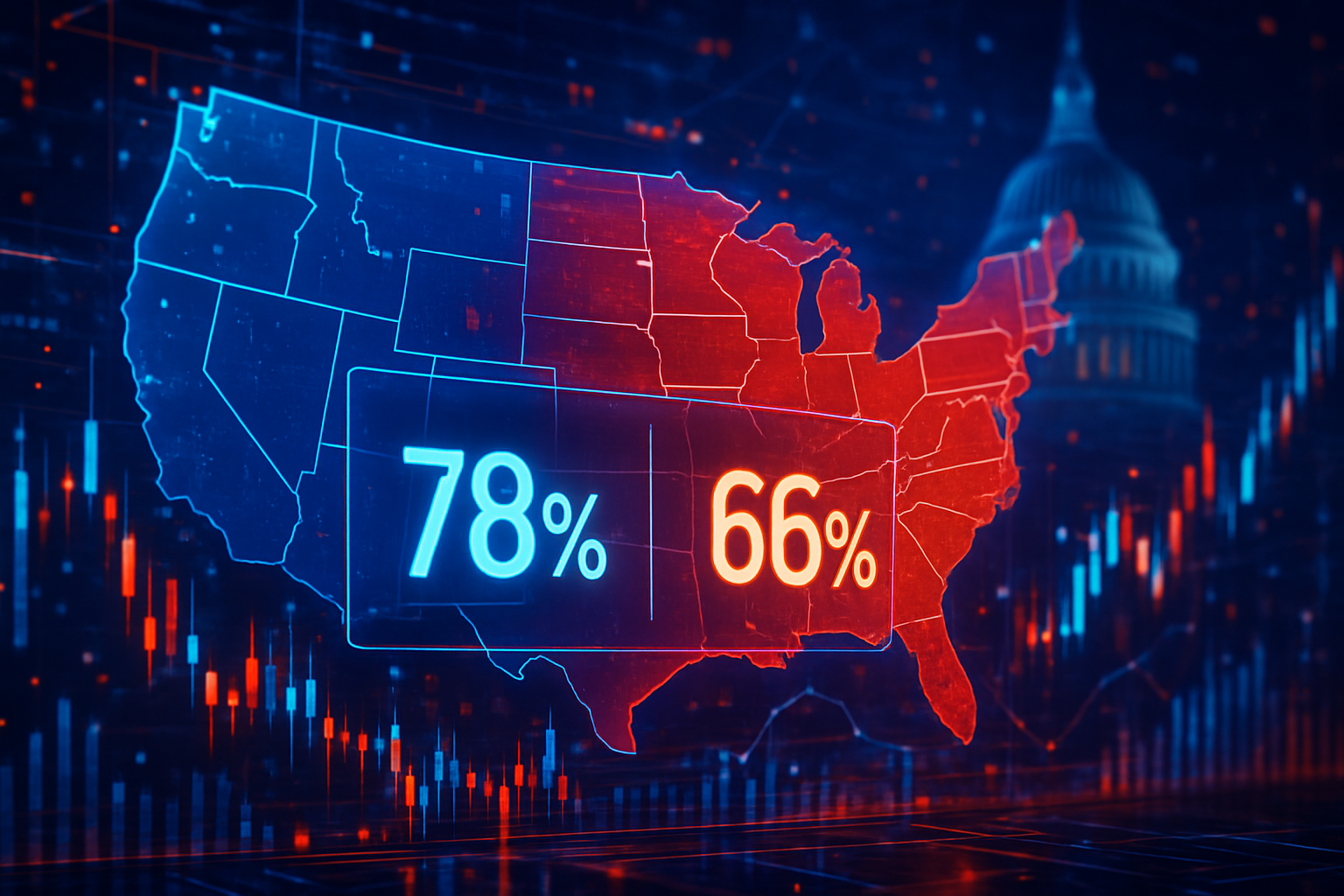
    As the calendar turns to February 2026, the United States is bracing for a political showdown that promises to be as much a financial event as a democratic one. The 2026 U.S. Midterm Elections are already generating unprecedented activity in the prediction market space, with traders pouring billions of dollars into contracts determining the future control of the 119th Congress. Currently, the "Balance of Power" markets show a high probability of a divided government, with Democrats holding a commanding 78% chance of flipping the House of Representatives, while Republicans maintain a 66–68% lead to keep the Senate.

    This surge in interest is more than just political speculation; it represents the maturation of "Information Finance," or InfoFi. For the first time, prediction markets are not just side-bets for political junkies but are functioning as a primary source of real-time probability data for news networks and institutional investors alike. Weekly notional volume across major platforms recently hit a staggering $6.32 billion, signaling that the 2026 midterms will likely be the highest-volume event in the history of the industry.

    The Market: What's Being Predicted

    The core of the 2026 prediction frenzy revolves around the control of the two legislative chambers. On Kalshi, the first fully regulated U.S. exchange for such contracts, the "Democratic House Control" contract is trading at 78¢, implying a near-certainty among traders of a "midterm correction." Meanwhile, Polymarket, the decentralized heavyweight that recently secured a massive $2 billion investment from the Intercontinental Exchange, Inc. (NYSE: ICE), shows a more contested but still favorable outlook for a Democratic House.

    The Senate remains the primary battleground for Republican defense. On PredictIt—which recently underwent a "Grand Relaunch" under the Aristotle Exchange with higher investment limits—Republican Senate control is priced at 67¢. This divergence between the House and Senate forecasts suggests that traders expect a legislative stalemate starting in 2027. Liquidity has never been higher; individual contracts for the "Balance of Power" have already surpassed $500,000 in volume on Kalshi, while the total open interest across all political markets is approaching record highs.

    Why Traders Are Betting

    The massive volume is being driven by a combination of retail enthusiasm and sophisticated institutional hedging. Many traders are using these markets to protect their portfolios against potential shifts in tax policy and regulatory oversight that would accompany a change in House leadership. The entry of Interactive Brokers Group, Inc. (NASDAQ: IBKR) through its ForecastEx platform has provided a bridge for institutional players to enter the space, capturing roughly 12% of the institutional market share by early 2026.

    Beyond hedging, the "InfoFi" movement has turned political outcomes into a new asset class. Notable "whale" activity has been spotted on Polymarket, where large positions are being taken on specific swing-state Senate races. These traders are often betting against traditional polling, which many in the prediction community view as slower and more prone to bias than a market with "skin in the game." The decentralized nature of Polymarket allows it to tap into global liquidity, providing a broader, perhaps less American-centric, perspective on U.S. political stability, which often contrasts with the more domestic-focused sentiment on Kalshi.

    Broader Context and Implications

    The 2026 cycle marks a turning point in the regulatory landscape. Newly appointed CFTC Chairman Michael Selig recently launched the "Future-Proof Initiative," which aimed to eliminate the regulatory uncertainty that plagued the industry during the 2024 cycle. By withdrawing old proposals to ban political betting, the federal government has effectively signaled that prediction markets are here to stay. This has paved the way for Robinhood Markets, Inc. (NASDAQ: HOOD) to dominate the retail sector, processing over 3.0 billion event contracts in late 2025 alone.

    However, the rise of these markets has not been without friction. While federal regulators are leaning toward acceptance, state-level conflicts are intensifying. Nevada and Massachusetts have both recently challenged the legality of these platforms under state gambling laws. This ongoing tug-of-war between federal preemption and state enforcement remains a key risk factor for the industry. Despite these hurdles, the historical accuracy of these markets—which famously outperformed polls in several 2024 battlegrounds—has given them a level of credibility that is now attracting interest from even the most traditional financial institutions.

    What to Watch Next

    As we move deeper into the 2026 primary season, several key milestones will likely shift the current odds. The first major data point will be the fundraising totals for the first quarter of 2026, which often serve as a proxy for candidate viability. Additionally, traders are keeping a close eye on a pending court ruling in Nevada that could determine whether decentralized platforms like Polymarket can continue to operate through U.S.-licensed intermediaries without interference from state gaming commissions.

    Market participants should also watch for the expected launch of a native prediction platform by Coinbase Global, Inc. (NASDAQ: COIN) later this year. A Coinbase entry would likely bring a fresh wave of crypto-native liquidity to the midterms, potentially challenging the current dominance of Kalshi and Polymarket. Any significant shifts in inflation data or unemployment figures will also immediately reflect in the House control markets, as economic sentiment remains the strongest historical indicator of midterm results.

    Bottom Line

    The 2026 Midterm Elections are cementing prediction markets as the ultimate "truth machine" for political forecasting. With $6 billion in weekly volume and the backing of major financial entities like ICE and Interactive Brokers, these platforms have moved beyond the fringes and into the heart of the American financial system. The current consensus of a Democratic House flip and a Republican Senate hold reflects a market that is pricing in a return to legislative gridlock.

    Ultimately, the success of these markets in 2026 will tell us whether "InfoFi" is a permanent fixture of the global economy or a temporary bubble. If the markets continue to provide more accurate and timely data than traditional polls, they will likely become the standard by which all future political events are measured. For now, the message from the traders is clear: the political pendulum is swinging, and the smart money is already positioned for the impact.


    This article is for informational purposes only and does not constitute financial or betting advice. Prediction market participation may be subject to legal restrictions in your jurisdiction.

    PredictStreet focuses on covering the latest developments in prediction markets.
    Visit the PredictStreet website at https://www.predictstreet.ai/.
  • Betting on the Blue Wave: 2026 Midterm Markets Hit Record $700 Million Daily Volume

    Betting on the Blue Wave: 2026 Midterm Markets Hit Record $700 Million Daily Volume

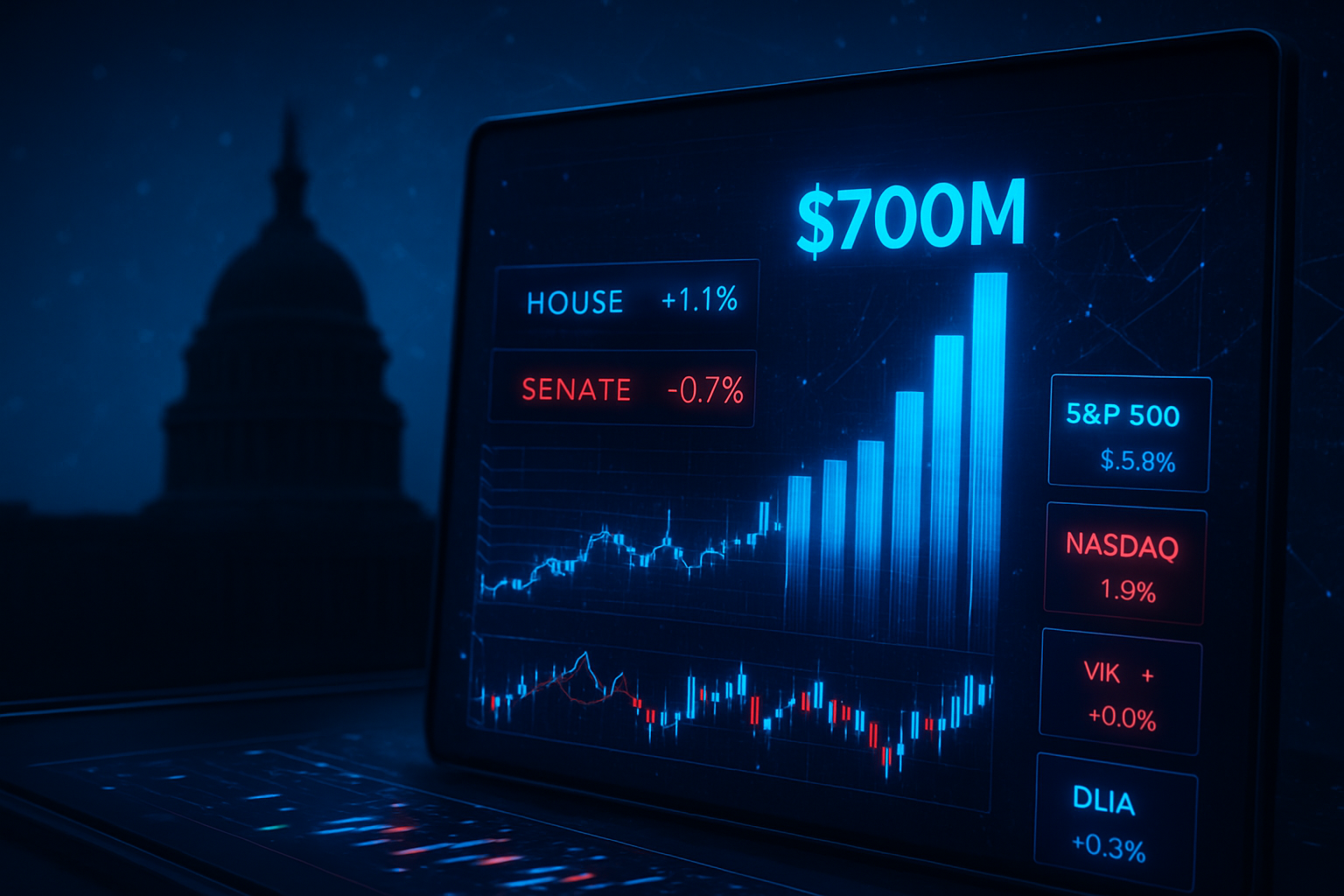
    As the calendar turns to early 2026, the political landscape is already being reshaped not by campaign rallies, but by the rapid-fire clicks of high-stakes traders. Prediction markets have officially entered their "super-cycle," with the 2026 U.S. Midterm elections driving unprecedented liquidity. For the first time in history, daily trading volume across the sector eclipsed the $700 million mark on January 12, signaling that forecasting platforms have moved from the periphery of political discourse to its very epicenter.

    At the heart of this surge is a stark divergence between traditional polling and market sentiment. While early polls suggest a competitive generic ballot, traders on platforms like Kalshi and Polymarket are aggressively pricing in a Democratic takeover of the House of Representatives, with odds hovering near 80%. Simultaneously, Vice President JD Vance has emerged as a paradox: a polarizing figure in public approval ratings, yet the undisputed betting favorite to lead the Republican ticket in 2028.

    The Market: What's Being Predicted

    The primary focus of the early 2026 cycle is the "Balance of Power" contracts, which allow traders to bet on the specific partisan split of the 110th Congress. On Kalshi, the leading regulated exchange in the U.S., the most liquid market currently concerns House control. Democrats are priced at 74–75 cents, implying a roughly 75% chance of retaking the lower chamber. Polymarket, the decentralized heavyweight, shows an even more bullish outlook for the left, with shares trading at 78–79 cents.

    In the Senate, however, the map tells a different story. Despite a national environment that favors Democrats, the 2026 Senate map is structurally difficult for the opposition. Republicans currently hold a 53–47 majority, and prediction markets give them a 66–68% probability of retaining control. The "Split Congress" outcome—a Democratic House and Republican Senate—is currently the "favorite" scenario among institutional traders, priced at 48% on Kalshi.

    Liquidity has reached a tipping point. On January 12, 2026, total daily volume across major platforms hit $701.7 million. Kalshi dominated this record-breaking day, accounting for 66.4% of the volume, largely driven by its "Combos" features which allow users to bet on complex political and economic outcomes simultaneously. This level of liquidity ensures that even "whale" positions of $1 million or more can be absorbed without radical price slippage, attracting a new class of sophisticated market participants.

    Why Traders Are Betting

    The aggressive positioning in favor of a "blue wave" in the House is being driven by what traders call the "Referendum Effect." Historically, the first midterm of a second presidential term is brutal for the incumbent party. However, traders are looking beyond history and focusing on specific policy catalysts. The second Trump administration's aggressive stances on tariffs and immigration, along with a recent tie-breaking vote by Vice President JD Vance to block a war powers resolution regarding Venezuela, have created a volatile political environment that traders believe will provoke a significant voter backlash.

    Furthermore, JD Vance’s standing as the 2028 heir apparent has turned 2026 into a proxy war for his future. On Kalshi, Vance holds a 27–28% chance of being the 2028 Republican nominee—a massive lead over rivals like Marco Rubio (11%). Traders are betting that the 2026 midterms will serve as the ultimate "stress test" for the Vance-led wing of the GOP. If the party loses the House by a wider margin than expected, his 2028 odds are predicted to crater, making these midterm contracts a hedge for 2028 presidential bets.

    The discrepancy between polls and markets is also a major factor in current trading strategies. While Morning Consult shows a modest Democratic lead of +2, markets are pricing in a much more decisive shift. Professional bettors are essentially betting that traditional polling is undercounting "suburban flight" and the impact of recent macroeconomic shifts. This "Knightian risk"—the uncertainty of how a second-term administration's disruptions will manifest at the ballot box—is currently being priced more heavily by markets than by pollsters.

    Broader Context and Implications

    The $700 million daily volume milestone is not just a win for the platforms; it represents a fundamental shift in how the public consumes political intelligence. Institutional players, including hedge funds and data analytics firms, are increasingly using these markets as a real-time sentiment gauge that reacts faster than any 1,000-person phone survey. The rise of these markets has also caught the attention of major financial institutions like Interactive Brokers (NASDAQ: IBKR), which has expanded its forecast market offerings to meet the demand for regulated election trading.

    The real-world implications of these odds are already being felt in Washington. Legislative strategies for the remainder of 2026 are being adjusted based on the high probability of a divided government. If the markets continue to hold at 75% for a Democratic House, we can expect a rush of Republican "legacy" legislation in the first half of the year before the window closes.

    From a regulatory standpoint, the 2026 cycle is the first to operate under a fully clarified legal framework following years of litigation between the CFTC and exchange platforms. This clarity has allowed for the entry of "market makers" who provide the deep liquidity necessary for the $700 million days we are now seeing. The historical accuracy of these markets—which outperformed polls in the 2024 general election—gives these early 2026 numbers a level of perceived authority that is influencing donor behavior and candidate recruitment.

    What to Watch Next

    As we head into the spring of 2026, several "volatility triggers" could shift the current odds. The primary season will be the first major test; if "Vance-aligned" candidates struggle in deep-red districts, expect his 2028 presidential odds to slide and the Democratic House probability to climb even higher. Traders will also be watching the quarterly GDP prints and Federal Reserve decisions closely, as any signs of an economic cooling could cement the "blue wave" narrative.

    Key dates to monitor include the filing deadlines in March and April, which will reveal the quality of the challengers Democrats have recruited for key swing districts. If high-profile "star" candidates jump into races that were previously considered safe Republican seats, the markets will likely react before the first television ad even airs. Additionally, the "Senate Floor" is a critical metric; if Republicans' odds of holding the Senate dip below 60%, it would signal a total collapse of the GOP's defensive map, a scenario not currently priced into the market.

    Bottom Line

    The 2026 midterm cycle is proving that prediction markets are no longer a "niche" interest but a primary pillar of the American political and financial ecosystem. The $700 million daily volume record is a testament to the growing trust in these platforms as accurate aggregators of disparate information. Currently, the "wisdom of the crowd" is betting heavily on a divided government, viewing a Democratic House takeover as a near-certainty while keeping the Senate in Republican hands.

    JD Vance remains the central figure of this drama. As the market's favorite for 2028, his political capital is effectively being "traded" through the 2026 midterm contracts. For observers and participants alike, the message from the markets is clear: the 2026 midterms will not just be a fight for the gavel, but a high-stakes referendum on the future of the Republican party's leadership. As liquidity continues to pour in, these markets will offer the most ruthless and accurate map of the American electorate’s intentions.


    This article is for informational purposes only and does not constitute financial or betting advice. Prediction market participation may be subject to legal restrictions in your jurisdiction.

    PredictStreet focuses on covering the latest developments in prediction markets.
    Visit the PredictStreet website at https://www.predictstreet.ai/.