
Tag: Trading

  • The New Casino-Bank: How Robinhood is Democratizing Truth and Risk with Event Contracts

    The New Casino-Bank: How Robinhood is Democratizing Truth and Risk with Event Contracts

    In the world of retail finance, the "meme stock" era has officially been replaced by the "event contract" era. Leading this charge is Robinhood (NASDAQ: HOOD), which has successfully pivoted its massive user base from speculative equity trading toward the rapidly expanding frontier of prediction markets. As of early February 2026, the platform has moved far beyond its origins, transforming into a one-stop-shop where a user can buy Bitcoin, trade S&P 500 options, and now, hedge their weekend plans against an NFL upset—all within the same interface.

    The timing could not be more critical. With Super Bowl LX between the Seattle Seahawks and the New England Patriots just days away, Robinhood’s prediction markets are seeing unprecedented liquidity. Unlike traditional sportsbooks that operate on a "house vs. player" model, Robinhood’s partnership with Kalshi allows users to trade directly against one another. This "peer-to-peer" (P2P) structure has driven the cumulative volume of event contracts on Robinhood to over 11 billion, creating a "truth engine" that many analysts believe is more accurate than any traditional polling or punditry.

    The Market: What's Being Predicted

    The current centerpiece of Robinhood's prediction ecosystem is its comprehensive suite of football event contracts, launched in partnership with the CFTC-regulated exchange Kalshi in August 2025. This market covers every NFL regular-season game and the "Power Four" college football conferences. Unlike the opaque odds of Las Vegas, these contracts trade between $0.00 and $1.00. If you buy a "Seattle Seahawks to Win" contract at $0.60, the market is effectively giving them a 60% chance of victory; if they win, your contract settles at $1.00, netting a $0.40 profit.

    Since its inception, the platform has rapidly expanded its "menu" of outcomes. Traders can now speculate on point spreads, over/under totals, and as of December 2025, highly specific player props like anytime touchdowns or quarterback passing yards. The liquidity is staggering: the Super Bowl LX winner market alone has seen over $166 million in volume across the Robinhood-Kalshi ecosystem. This represents a nearly six-fold increase over the volume seen just one year ago, signaling a massive shift in how the public engages with major cultural events.

    Why Traders Are Betting

    The primary driver behind this retail migration is the introduction of "Custom Combos," a sophisticated feature that mimics traditional sports betting parlays but functions through a financial Request-for-Quote (RFQ) mechanism. When a user bundles up to 10 different outcomes—such as a Seahawks win, a Federal Reserve rate cut, and a specific movie’s opening weekend performance—Robinhood’s system polls market makers, led by Susquehanna International Group, to provide a real-time price.

    Traders are also drawn to the efficiency of the "bid-ask spread" compared to the "vig" of a traditional sportsbook. While companies like DraftKings (NASDAQ: DKNG) or FanDuel typically bake a 5% to 10% margin into their odds, Robinhood's peer-to-peer model often sees spreads as thin as a single penny. "I'm not betting against a bookie who wants me to lose," says one high-volume trader on the platform. "I'm trading a financial instrument against someone who simply has a different view of the future."

    Furthermore, the ability to "day trade" these contracts has revolutionized the experience. In a traditional bet, your money is locked until the final whistle. On Robinhood, if the Seahawks take a 14-point lead in the first quarter, the price of a "Yes" contract might jump from $0.60 to $0.85, allowing traders to exit early and lock in gains—a mechanic that feels much more like trading stocks than placing a wager.

    Broader Context and Implications

    Robinhood’s aggressive expansion into this space is part of a larger strategic vision that CEO Vlad Tenev calls the "Prediction Market Supercycle." By framing these as "truth futures" rather than gambling, Robinhood is navigating a complex regulatory landscape. Because the trades are routed through the CFTC-regulated Kalshi—and soon through Robinhood's newly acquired MIAXdx (formerly LedgerX) exchange—the platform can offer these products in states where traditional sports betting remains illegal, such as California and Texas.

    This vertical integration is a game-changer. In January 2026, Robinhood completed its 90% acquisition of MIAXdx, giving it its own Designated Contract Market (DCM) and clearinghouse. This move reduces the company's reliance on third-party partners and paves the way for "Robinhood-exclusive" contracts that could range from hyper-local weather events to corporate earnings outcomes.

    The move is also paying off on the balance sheet. Prediction markets have become Robinhood’s fastest-growing revenue stream, currently on a trajectory to contribute over $300 million in annual revenue. It has effectively turned "news" into a tradable asset class, competing not just with sportsbooks, but with traditional derivatives exchanges like the CME Group (NASDAQ: CME) and Interactive Brokers (NASDAQ: IBKR), which has also launched its own "ForecastEx" platform.

    What to Watch Next

    As we move past the Super Bowl, the next major test for Robinhood’s infrastructure will be the 2026 mid-term election cycle and the integration of AI-assisted trading tools. Tenev has hinted at a future where users can use "AI Hedging Agents" to automatically buy event contracts that protect them against real-world risks, such as a rise in gas prices or a drop in their local housing market.

    Additionally, the industry is closely watching for potential regulatory pushback. While the CFTC has currently allowed these "event contracts" to flourish, a shift in the political or legal winds could result in tighter restrictions on what qualifies as a "financial event." Robinhood’s ownership of MIAXdx is a defensive moat in this regard, providing it with the legal standing of a registered exchange rather than just a brokerage.

    Bottom Line

    Robinhood's pivot to prediction markets represents the final evolution of the "everything app" for the retail investor. By blurring the lines between sports, politics, and finance, the platform has created a high-engagement ecosystem that thrives on the 24-hour news cycle. The sheer volume seen in the 2025-2026 football season suggests that the public's appetite for "trading the truth" is only beginning to grow.

    Ultimately, Robinhood (NASDAQ: HOOD) is betting that prediction markets will eventually be viewed as a core pillar of a modern portfolio. Whether it’s hedging a mortgage or speculating on a touchdown, the message to retail traders is clear: the future is no longer something to just watch—it’s something to trade.


    This article is for informational purposes only and does not constitute financial or betting advice. Prediction market participation may be subject to legal restrictions in your jurisdiction.

    PredictStreet focuses on covering the latest developments in prediction markets.
    Visit the PredictStreet website at https://www.predictstreet.ai/.
  • The New ‘Day’ Job: Inside the Rise of the Full-Time Prediction Market Trader

    The New ‘Day’ Job: Inside the Rise of the Full-Time Prediction Market Trader

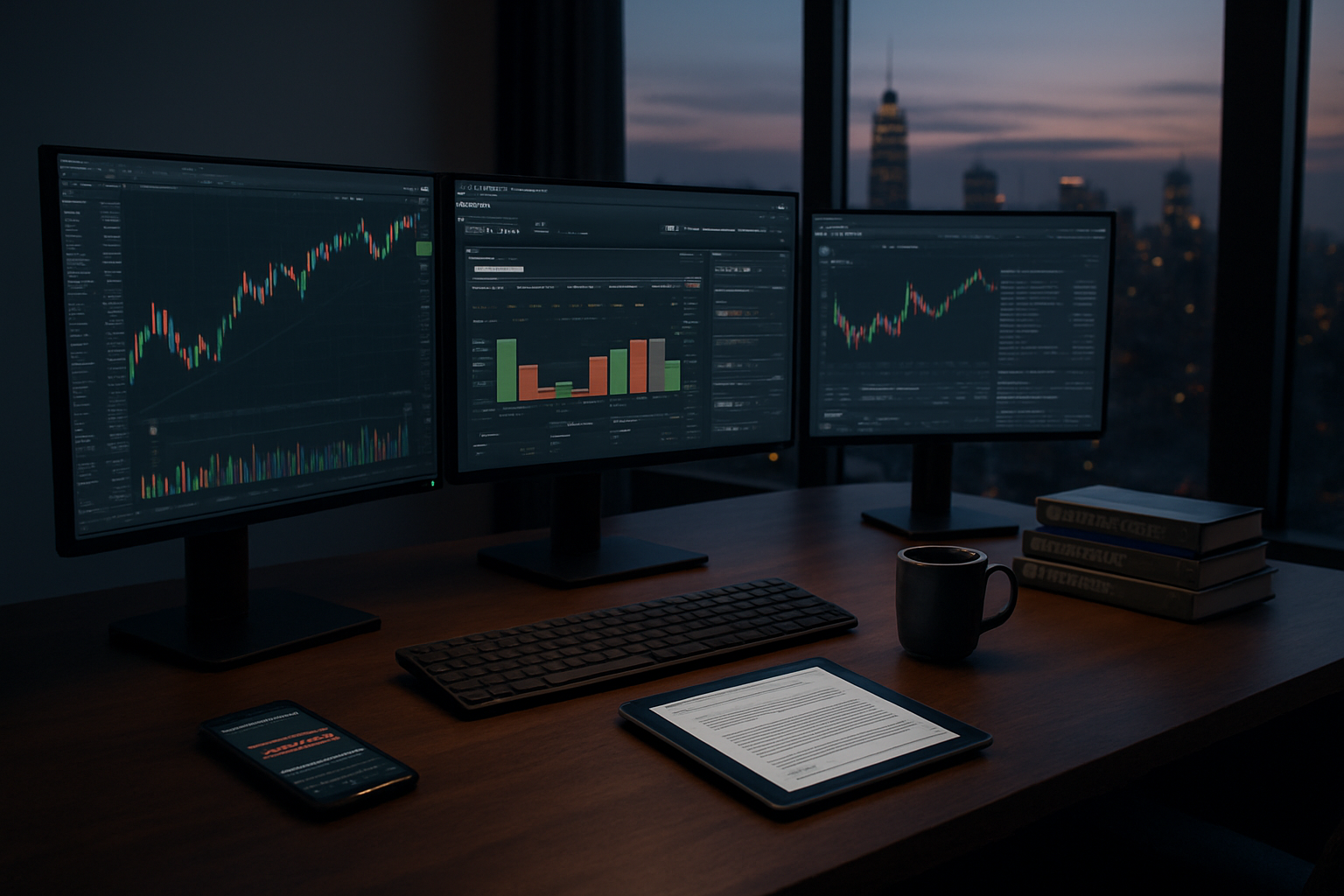
    As the sun sets over Atlanta, Georgia, 25-year-old Logan Sudeith isn't heading home from an office. Instead, he is likely propped up against his headboard, surrounded by glowing monitors and discarded DoorDash containers, preparing for another marathon shift in the world of "Information Finance." Sudeith is a leading figure in a burgeoning class of professionals who have abandoned traditional finance to trade the news in real-time. On platforms like Kalshi and Polymarket, the odds of a geopolitical crisis or a presidential "mention" of a specific keyword are no longer just points of conversation—they are a paycheck.

    Currently, the market for professional event trading is exploding. Monthly volumes across the sector hit a staggering $13.5 billion in December 2025, driven by a post-election hangover that transitioned seamlessly into high-stakes macro-economic and culture-war contracts. Sudeith recently hit a milestone that would make any Wall Street analyst blush: $100,000 in profit in a single month. This trend is drawing thousands of "news-driven" traders away from the 9-to-5 grind, betting that their ability to parse a tweet or analyze a legislative sub-clause is more valuable than any corporate salary.

    The Market: What's Being Predicted

    The landscape of prediction markets has shifted dramatically from niche political betting to a comprehensive financial ecosystem. At the center of this movement are two dominant forces: Kalshi, the federally regulated exchange in the United States, and Polymarket, which recently successfully re-entered the U.S. market after acquiring the CFTC-licensed derivatives exchange QCEX. These platforms offer "event contracts"—binary options that pay out $1 if an event occurs and $0 if it does not.

    Trading on these platforms is no longer a hobby. As of January 22, 2026, the market has seen a massive surge in liquidity for "mention markets"—contracts that pay out based on whether specific figures like Donald Trump use phrases such as "drill, baby, drill" during public addresses. Sudeith has dominated this space, utilizing API integrations to execute trades in milliseconds as soon as a transcript is processed.

    The volume is not limited to politics. The industry processed over $814 million in a single day on January 18, 2026, following the "Maduro Incident" in Venezuela. While the 2024 U.S. Election provided the initial proof of concept, the market has matured into 24/7 coverage of everything from the NYC mayoral race to scientific breakthroughs and even the Time Person of the Year selection.

    Why Traders Are Betting

    For traders like Sudeith, the move from a $75,000-a-year job as a financial risk analyst to a full-time "Professional Event Trader" (PMT) was a matter of simple arithmetic. "The math was clear," Sudeith famously noted, citing his ability to earn a year's salary in a single successful month on Kalshi, where his cumulative profits have surpassed $302,000.

    The strategy behind these bets is rooted in "Information Finance"—a term popularized by Ethereum founder Vitalik Buterin. Unlike traditional stock trading, which relies on earnings reports and P/E ratios, event trading relies on the aggregation of truth. Sudeith and his peers spend upwards of 100 hours a week conducting deep historical analysis and monitoring live sentiment. For his $40,236 win on the Time Person of the Year contract, Sudeith didn't just guess; he meticulously tracked selection patterns and media leaks that the broader market had ignored.

    However, the strategy is not without high-stakes drama. Sudeith recently faced his "biggest loss ever" during the Venezuelan political crisis, where he took a heavy hit betting on the removal of Nicolas Maduro. The volatility of these markets means that a trader can be up six figures one week and fighting for liquidity the next. This has led to the rise of elite communities like the "Crypto Inner Circle" on Discord, where traders share order flow analysis to spot "insidered" activity—bets that suggest someone, somewhere, has non-public information.

    Broader Context and Implications

    The rise of the PMT class has coincided with a massive influx of institutional capital. In late 2025, the Intercontinental Exchange (NYSE: ICE), the parent company of the New York Stock Exchange, invested nearly $2 billion into Polymarket’s infrastructure. Simultaneously, traditional betting giants like DraftKings (Nasdaq: DKNG) and Flutter Entertainment (NYSE: FLUT), via its subsidiary FanDuel, launched dedicated event contract platforms to compete for market share.

    This institutionalization has rebranded "betting" as "InfoFi." Major newsrooms now treat prediction market tickers as more accurate than traditional polling. Yet, this legitimacy comes with new risks. The regulatory environment remains a patchwork; while Kalshi is federally overseen by the CFTC, it faces ongoing legal battles in states like Nevada and Massachusetts over the legality of sports-related contracts.

    Furthermore, the "lifestyle" of the full-time trader is under scrutiny. The 24/7 nature of global news cycles has led to reports of extreme burnout and social isolation. Sudeith’s own "bed-lounging" setup and reliance on delivery apps highlight the physical and mental toll of a career that requires constant vigilance. There is also a looming "tax no-man's land"—many traders are filing under Section 1256 for a 60/40 tax split, but if the IRS reclassifies these earnings as gambling winnings, many could face catastrophic back-tax liabilities.

    What to Watch Next

    The next several weeks will be a crucible for the prediction market industry. In February 2026, a New York court is expected to issue a ruling on the "de facto" legality of political contracts, a decision that could either cement the industry’s future or create a major hurdle for U.S.-based exchanges.

    Traders are also closely watching the "ORACLE Act" currently moving through the New York legislature, which seeks to formally define prediction markets as financial entities rather than gambling venues. If passed, it would likely trigger a fresh wave of TradFi professionals quitting their roles to join the PMT ranks.

    On the market side, liquidity is the key metric to monitor. While headline volumes are high, "slippage"—the difference between the expected price of a trade and the price at which it's executed—remains a significant risk during non-peak hours. As more institutional "market makers" enter the space, this should stabilize, but for now, it remains a dangerous game for those trading with large positions.

    Bottom Line

    The story of Logan Sudeith is the story of a fundamental shift in how we value information. Prediction markets have moved from the periphery of the internet to the heart of the financial world, turning news consumption into a professional skill set. These markets are no longer just about who wins an election; they are "truth engines" that provide a real-time, financialized look at the world’s most pressing questions.

    However, the transition from TradFi to PMT is not for the faint of heart. It requires a tolerance for extreme volatility, a 100-hour work week, and a willingness to navigate a legal and tax landscape that is still being written. For those like Sudeith, the rewards—both financial and intellectual—are worth the risk. For the rest of the world, these markets offer a new way to see the future, one trade at a time.


    This article is for informational purposes only and does not constitute financial or betting advice. Prediction market participation may be subject to legal restrictions in your jurisdiction.

    PredictStreet focuses on covering the latest developments in prediction markets.
    Visit the PredictStreet website at https://www.predictstreet.ai/.
  • The Gamification of Truth: Robinhood Hits 9 Billion Prediction Contracts as Event Trading Goes Mainstream

    The Gamification of Truth: Robinhood Hits 9 Billion Prediction Contracts as Event Trading Goes Mainstream

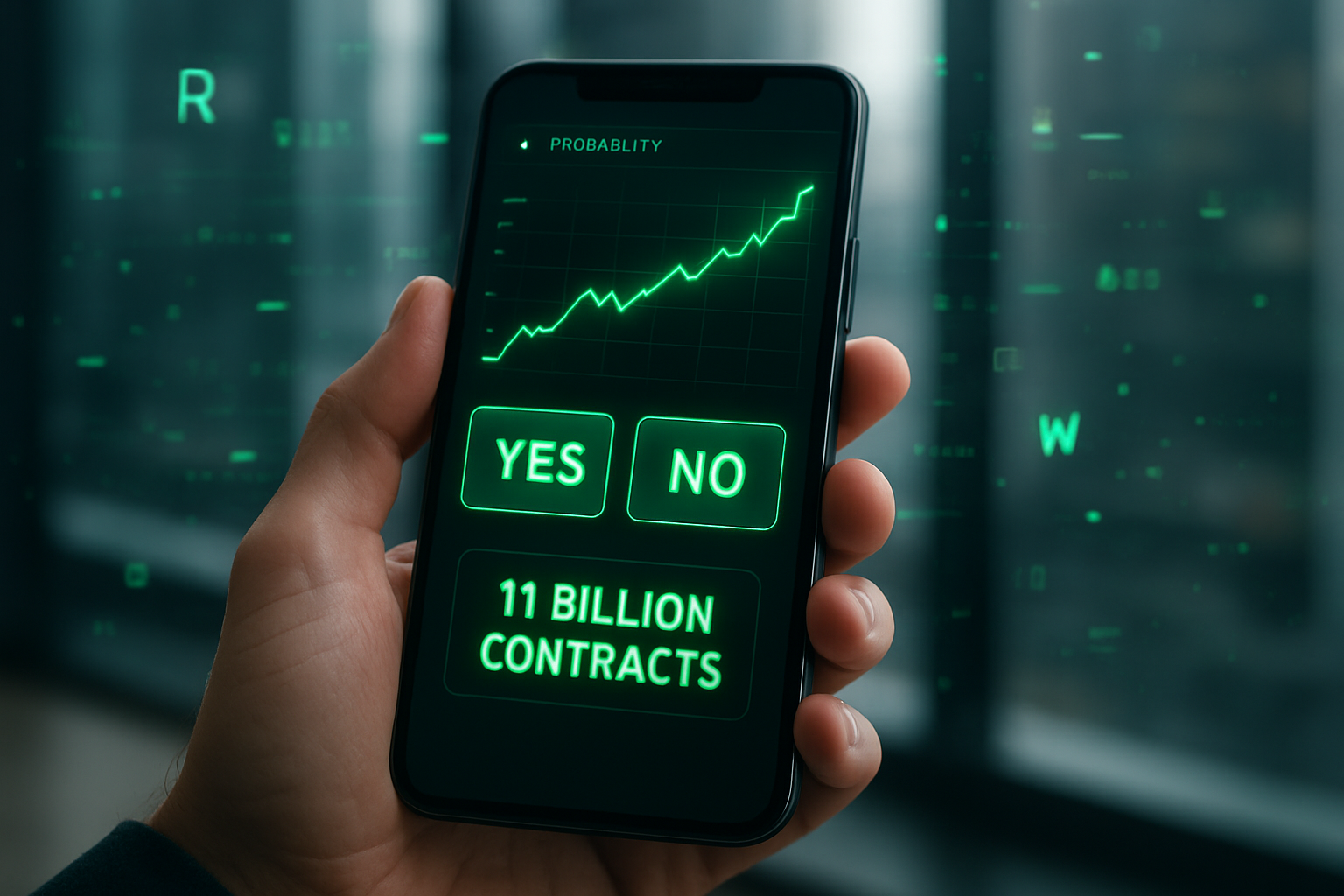
    The retail trading landscape has been fundamentally reshaped. As of January 22, 2026, Robinhood Markets (NASDAQ: HOOD) has officially transitioned from a stock-and-crypto powerhouse into the undisputed leader of the prediction market revolution. Following a record-breaking holiday season and a high-stakes NFL playoff run, the platform announced it has surpassed the staggering milestone of 11 billion event contracts traded—a trajectory that saw it roar past the 9 billion mark just two months prior.

    With over one million active customers now betting on everything from Federal Reserve interest rate hikes to the winners of the Academy Awards, prediction markets have become Robinhood’s fastest-growing product line by revenue. This surge in activity represents more than just a new feature; it marks a cultural shift where news consumption and financial speculation have merged into a singular, high-velocity experience. As the platform moves to vertically integrate its operations, the "prediction economy" is no longer a niche curiosity—it is the new retail standard.

    The Market: What's Being Predicted

    Robinhood’s event contract ecosystem has evolved rapidly since its full-scale launch in early 2025. While the platform initially gained traction with high-profile political markets, the current volume is being driven by a diverse array of "Yes/No" binary options. Currently, the most liquid markets on the platform center on the January FOMC meeting, with a 68% probability priced in for a 25-basis-point rate cut, and the upcoming Super Bowl LXI, which has seen over $500 million in notional volume in the last week alone.

    The platform's trading mechanics are designed for the mobile-first generation. Unlike traditional options, which involve complex Greeks and decay, Robinhood’s event contracts trade between $0.01 and $0.99, representing the market’s perceived probability of an event occurring. If the event happens, the contract settles at $1.00; if not, it goes to zero. This simplicity, combined with 24/7 trading availability, has allowed Robinhood to capture a segment of the market that previously found Kalshi or the offshore Polymarket too cumbersome or inaccessible.

    The liquidity on Robinhood has benefited significantly from its strategic partnership with Kalshi, which provided the underlying exchange architecture for much of 2025. However, the market dynamics changed yesterday, January 21, 2026, when Robinhood completed its acquisition of a 90% stake in MIAXdx, a CFTC-regulated exchange. This move allows Robinhood to bypass third parties, listing its own proprietary contracts and offering even tighter spreads to its million-plus user base.

    Why Traders Are Betting

    The explosive growth in prediction trading is driven by a unique intersection of social media, real-time news, and the "gamification" of information. For many of Robinhood's younger users, betting on a news event feels more intuitive than analyzing a corporate balance sheet. "I don't need to know Apple's (NASDAQ: AAPL) P/E ratio to have an opinion on whether the iPhone 17 will be delayed," says one high-volume trader. "I just need to follow the supply chain news."

    This sentiment has been bolstered by the introduction of "Custom Combos," a feature launched following the MIAXdx acquisition. These allow users to create parlays—for example, betting that the Consumer Price Index (CPI) will fall below 2% and that a specific candidate will win a primary election. This cross-pollination of economic data and pop culture has turned every news alert into a potential trade, keeping users engaged with the app far longer than traditional equity markets allow.

    Furthermore, the "accuracy war" has played a role in attracting serious capital. Traders are increasingly viewing prediction markets as a more reliable source of truth than traditional polling or expert pundits. When Robinhood's markets successfully "called" a surprise legislative vote in late 2025 hours before the mainstream media, it cemented the platform's reputation as a leading indicator of public sentiment. This "wisdom of the crowds" effect has attracted "whales"—large-scale traders who use these markets to hedge real-world risks, such as inflation or regulatory changes.

    Broader Context and Implications

    The success of Robinhood's prediction wing is part of a broader institutional embrace of the sector. In late 2025, the Intercontinental Exchange (NYSE: ICE)—the parent company of the New York Stock Exchange—made a landmark $2 billion investment in Polymarket, signaling that the world's largest financial entities now view event contracts as a legitimate asset class. This institutional validation, combined with the federal CLARITY Act of 2025, has provided the regulatory roadmap necessary for mainstream adoption.

    However, the rise of prediction markets has not been without friction. While the CLARITY Act legalized federal oversight for event contracts, a "messy standoff" remains at the state level. Regulators in states like Massachusetts and Connecticut have recently issued cease-and-desist orders, arguing that sports-based event contracts are a form of unlicensed gambling rather than financial derivatives. This legal tug-of-war between the CFTC’s federal authority and state gaming commissions is the primary hurdle standing between the current million users and the next ten million.

    Historically, prediction markets were limited by low liquidity and regulatory "gray zones." The entry of a retail giant like Robinhood has solved the liquidity problem, but it has also raised concerns about market manipulation. Critics argue that "whales" could attempt to influence public perception by taking massive positions in sensitive political or social markets. To combat this, Robinhood has implemented rigorous participant verification and position limits on certain "sensitive" contracts, aiming to preserve the integrity of the data.

    What to Watch Next

    The next three months will be a defining period for the prediction market industry. Investors should closely monitor the integration of MIAXdx into the Robinhood app, as this will likely lead to a flood of new, niche markets that were previously unavailable. Expect to see "micro-events," such as local weather patterns or specific box-office numbers for blockbuster films, becoming tradable assets by mid-2026.

    Key milestones to watch include the legal response to the recent state-level bans. If Robinhood and Kalshi can successfully challenge the Massachusetts cease-and-desist in court, it will set a precedent that could open the floodgates for the remaining "holdout" states. Conversely, an adverse ruling could force these platforms to geofence certain types of contracts, complicating the user experience.

    Additionally, keep an eye on the "Forecasting Accuracy Scores" that Robinhood is expected to launch next month. This feature will rank users based on their historical accuracy, potentially creating a new class of "predictive influencers" whose trades are followed with the same fervor as high-profile hedge fund managers. As these markets become more efficient, they may even start to influence the very events they are predicting, creating a feedback loop between the market and reality.

    Bottom Line

    The milestone of 9 billion—and now 11 billion—contracts on Robinhood is a clear signal that prediction markets have moved from the periphery to the center of the financial world. By stripping away the complexity of traditional derivatives and focusing on the "Yes/No" nature of everyday life, Robinhood has unlocked a massive, untapped demand for information-based trading.

    As we look toward the rest of 2026, the primary challenge for the platform will be navigating the jurisdictional disputes between state and federal regulators. Yet, with the backing of the CLARITY Act and the massive liquidity provided by a million-strong user base, the momentum seems irreversible. Prediction markets are no longer just a way to bet on the future; they are becoming the primary mechanism through which we understand it.

    For the retail investor, the message is clear: the ability to price information is becoming as valuable as the ability to price assets. Whether you are hedging against inflation or simply expressing a view on a movie premiere, the prediction market is now open, and it is here to stay.


    This article is for informational purposes only and does not constitute financial or betting advice. Prediction market participation may be subject to legal restrictions in your jurisdiction.

    PredictStreet focuses on covering the latest developments in prediction markets. Visit the PredictStreet website at https://www.predictstreet.ai/.