Tag: Tesla

  • Tesla (TSLA) 2026 Outlook: From Electric Vehicles to an AI and Robotics Powerhouse

    Tesla (TSLA) 2026 Outlook: From Electric Vehicles to an AI and Robotics Powerhouse

    As of December 23, 2025, Tesla, Inc. (NASDAQ: TSLA) stands at a critical juncture that defines not just its own future, but the trajectory of the global industrial landscape. No longer viewed strictly as an electric vehicle (EV) manufacturer, Tesla has spent the last 24 months aggressively pivoting toward a future defined by autonomous robotics and artificial intelligence. With a market capitalization hovering near $1.6 trillion, the company remains one of the most polarizing and scrutinized entities on Wall Street. This year has been characterized by a "return to growth" following a stagnant 2024, driven by record performance in its energy storage division and high-stakes legal victories regarding executive governance.

    Historical Background

    Founded in 2003 by Martin Eberhard and Marc Tarpenning, Tesla’s trajectory was forever altered when Elon Musk joined as the lead investor in 2004, eventually taking over as CEO in 2008. The company’s "Master Plan" began with the low-volume Roadster, followed by the premium Model S and Model X, which proved that electric cars could be both desirable and high-performance.

    The 2017–2019 period, famously described by Musk as "production hell," saw the company nearly collapse while ramping up the Model 3. However, the successful launch of the Model 3 and Model Y transformed Tesla into a mass-market powerhouse, leading to a period of unprecedented stock appreciation and the construction of "Gigafactories" in Berlin, Shanghai, and Texas. By 2024, the narrative shifted again as Tesla moved past the "EV adoption" phase into the "AI and Autonomy" era, marked by the unveiling of the Cybercab.

    Business Model

    Tesla operates a vertically integrated business model that spans several high-growth sectors:

    • Automotive Sales & Leasing: The primary revenue driver, encompassing the Model 3, Y, S, X, and the Cybertruck.
    • Software (FSD): Tesla sells Full Self-Driving (FSD) as a one-time purchase or a monthly subscription, representing a high-margin recurring revenue stream.
    • Energy Generation & Storage: This segment includes Megapack (large-scale utility storage) and Powerwall (residential), which have recently seen triple-digit growth.
    • Services & Other: This includes the global Supercharger network, insurance, and vehicle service, which act as a "moat" for the ecosystem.
    • Robotics (Emerging): Revenue from Optimus, Tesla's humanoid robot, is currently internal (factory labor savings) but is projected to become a commercial product by late 2026.

    Stock Performance Overview

    Tesla remains a high-beta stock, rewarding long-term "believers" while punishing short-term speculators during volatile cycles.

    • 10-Year Performance: An astounding return of approximately 3,088%, making it a "decabagger" for those who held through the early Model 3 struggles.
    • 5-Year Performance: A total return of ~125%, significantly outpacing the S&P 500 despite several "drawdowns" exceeding 40%.
    • 1-Year Performance (2025): The stock is up roughly 15% year-to-date. After a difficult first half in 2025 where shares dipped on margin concerns, the stock rallied in Q4 following the Delaware Supreme Court's decision to reinstate Musk’s compensation package and positive FSD v13 data.

    Financial Performance

    Tesla’s financials in 2025 show a company successfully managing a transition. While 2024 saw revenue flatline at $97.7 billion and margins compress to 7.2%, 2025 has been a recovery year.

    • Revenue: Projected to reach $117.2 billion for FY 2025 (+17.5% YoY).
    • Margins: Operating margins have stabilized at roughly 11% by Q4 2025. This was aided by the Cybertruck reaching a 250,000-unit annual run rate and record 30%+ margins in the Energy segment.
    • Deliveries: Tesla is on track to deliver approximately 1.95 to 2.0 million vehicles in 2025, up from 1.79 million in 2024.
    • Cash Flow: Tesla continues to maintain a pristine balance sheet with over $30 billion in cash and equivalents, allowing it to self-fund R&D for Optimus and Robotaxi.

    Leadership and Management

    The leadership of Tesla remains inseparable from its CEO, Elon Musk. On December 19, 2025, a major cloud of uncertainty was lifted when the Delaware Supreme Court reinstated Musk’s $139 billion compensation package, affirming the 2024 shareholder vote.

    • Management Team: Despite high-profile departures in 2024, the current leadership team is anchored by CFO Vaibhav Taneja and Tom Zhu (SVP of Automotive). Zhu’s influence has been critical in implementing "unboxed" manufacturing techniques to lower costs.
    • Strategy: Musk’s focus has shifted almost entirely to "General Purpose Robotics" and "End-to-End AI," leading to some internal friction but positioning the company as a leader in real-world AI applications.

    Products, Services, and Innovations

    Innovation at Tesla is currently focused on three pillars:

    1. FSD v13: Released in December 2025, this version utilizes end-to-end neural networks for both perception and control, achieving over 10 billion kilometers of training data.
    2. Cybercab (Robotaxi): A dedicated two-seater without a steering wheel, currently in pilot production at Giga Texas. Public testing is active in Austin, with a commercial launch planned for April 2026.
    3. Optimus v2.5: Tesla’s humanoid robot has moved from being a prototype to a functional tool. Thousands are now working in Tesla’s own factories for logistics, with external sales anticipated by late 2026.
    4. Affordable Models: Instead of a single "Model 2," Tesla has launched refreshed, lower-cost variants of the Model 3 and Model Y (sub-$37k) using next-gen cost-reduction techniques.

    Competitive Landscape

    Tesla no longer enjoys a near-monopoly on the EV market.

    • BYD (HKG: 1211): The Chinese giant overtook Tesla in pure BEV volume in 2025, leveraging its vertical integration and lower price points in Southeast Asia and Europe.
    • Xiaomi (HKG: 1810): Emerging as a potent "tech-first" rival, Xiaomi’s rapid EV scaling in China has directly challenged Tesla’s market share in the premium sedan segment.
    • Legacy OEMs: While General Motors (NYSE: GM) has seen success in the North American truck market, European players like Volkswagen (OTC: VWAGY) have struggled, with VW closing major plants in 2025 due to inefficient EV transitions.

    Industry and Market Trends

    The "EV Winter" of 2024 has thawed into a bifurcated market in 2025.

    • AI Pivot: The industry is shifting from "how far can the car go?" (range) to "what can the car do?" (autonomy).
    • Supply Chain: There is a massive "reshoring" effort. Tesla has moved aggressively to secure North American lithium and cathode production to comply with stricter 2025 tax credit requirements.
    • Storage Boom: Utility-scale battery storage is growing faster than the EV market as global power grids struggle to integrate renewable energy.

    Risks and Challenges

    • Key-Man Risk: Tesla’s valuation is heavily dependent on Elon Musk’s focus and reputation. His involvement in other ventures (X, SpaceX, xAI) remains a point of contention for some institutional investors.
    • Regulatory Hurdles: FSD remains under intense scrutiny from the NHTSA in the US, while European regulators have been slow to grant approval for hands-free driving.
    • Geopolitical Friction: Increasing tariffs on Chinese-made components (reaching up to 145% in some categories) threaten Tesla’s cost structure for global battery production.

    Opportunities and Catalysts

    • The "Robotaxi" Revenue: If Tesla successfully launches its autonomous network in 2026, it could shift from a hardware-margin business to a high-margin software/service business.
    • Energy Sector Dominance: With the Shanghai Megafactory scaling up, Tesla Energy is on track to contribute nearly 25% of total company profits by 2026.
    • Optimus Commercialization: Selling humanoid robots to third-party manufacturers represents a multi-trillion dollar TAM (Total Addressable Market) that is currently unpriced in many analyst models.

    Investor Sentiment and Analyst Coverage

    Wall Street is currently split. "Bulls" see Tesla as an AI company and maintain price targets in the $550–$600 range. "Bears" argue that Tesla is still just a car company facing slowing demand and suggest a valuation closer to $150.

    • Institutional Moves: After trimming positions in early 2025, several major hedge funds have re-entered TSLA, citing the resolution of the Musk pay package as a "stabilizing event."
    • Retail Sentiment: Tesla remains the "king of retail" stocks, with a massive and loyal individual investor base that frequently drives high trading volumes.

    Regulatory, Policy, and Geopolitical Factors

    Tesla sits at the center of the US-China trade war. While Tesla China (Giga Shanghai) is its most efficient hub, the company has had to navigate complex "data security" audits to gain approval for FSD in the Chinese market (expected Q1 2026). In the US, the 2025 regulatory landscape is focused on the safety of Level 4 autonomous systems, with Tesla lobbying for a unified federal framework to replace the current patchwork of state laws.

    Conclusion

    Tesla at the end of 2025 is a company that has successfully weathered a transitional storm. By diversifying into high-margin energy storage and doubling down on AI and robotics, it has moved beyond the "commodity car manufacturer" trap that has ensnared many of its peers. However, the path ahead is fraught with execution risk. The upcoming 2026 launch of the Cybercab and the commercialization of Optimus will be the ultimate tests of whether Tesla can fulfill its trillion-dollar promise. For investors, Tesla remains a bet on the future of autonomy—a high-stakes play that requires a high tolerance for volatility and a belief in the transformative power of AI.


    This content is intended for informational purposes only and is not financial advice.

  • Tesla (TSLA) 2025 Deep-Dive: The Shift from EVs to Physical AI and the $139 Billion Pay Package Reinstatement

    Tesla (TSLA) 2025 Deep-Dive: The Shift from EVs to Physical AI and the $139 Billion Pay Package Reinstatement

    As of December 22, 2025, Tesla, Inc. (NASDAQ: TSLA) finds itself at the epicenter of a transformation that has redefined the boundaries between the automotive industry and the frontier of artificial intelligence. Once viewed purely as a pioneer of electric vehicles (EVs), the company is now increasingly characterized by its ambitions in robotics and autonomous systems. This year has been particularly momentous, marked by the resolution of a multi-year legal saga regarding executive compensation and a strategic shift toward a "Physical AI" future.

    With the stock experiencing significant volatility following a post-election rally in late 2024 and major technical milestones in 2025, Tesla remains one of the most scrutinized and debated entities on Wall Street. This deep-dive explores the company’s current standing, its financial health, and the high-stakes roadmap that aims to put thousands of autonomous "Cybercabs" on the road by next year.

    Historical Background

    Founded in 2003 by Martin Eberhard and Marc Tarpenning, with Elon Musk leading the Series A funding and eventually taking the CEO mantle, Tesla’s journey is one of the most improbable success stories in industrial history. From the niche Roadster in 2008 to the luxury Model S and X, the company initially set out to prove that electric cars could be superior to their internal combustion engine (ICE) counterparts.

    The "Master Plan" culminated in the 2017 launch of the Model 3, which brought Tesla to the brink of bankruptcy during its production ramp but ultimately secured its position as a mass-market leader. Following the successful launch of the Model Y—which became the world’s best-selling vehicle in 2023—Tesla expanded its global footprint with "Gigafactories" in Shanghai, Berlin, and Texas. Over the last three years, the company has transitioned from a growth-at-all-costs manufacturer to an efficiency-focused giant, navigating "EV fatigue" in Western markets and fierce competition from Chinese rivals.

    Business Model

    Tesla’s business model is vertically integrated to an extent rarely seen in the automotive sector. Its revenue streams are categorized into three primary segments:

    1. Automotive: Sale and leasing of the Model S, 3, X, Y, and Cybertruck. This remains the core revenue driver, though margins have faced pressure due to price cuts intended to stimulate demand.
    2. Energy Generation and Storage: This segment has emerged as a powerhouse in 2025. By selling the Megapack for utility-scale storage and the Powerwall for homes, Tesla is capitalizing on the global shift toward renewable energy.
    3. Services and Other: This includes vehicle repairs, supercharging network access (which has now been opened to almost all major OEMs), and software-based revenue such as Full Self-Driving (FSD) subscriptions.

    In 2025, the strategic focus has shifted toward "Autonomy-as-a-Service," where Tesla aims to transition from selling hardware once to generating recurring, high-margin software revenue through its Robotaxi network.

    Stock Performance Overview

    As we conclude 2025, TSLA stock remains a high-beta asset that responds aggressively to both macro trends and "Musk-specific" catalysts.

    • 1-Year Performance: The stock is up approximately 10.32% over the trailing 12 months. This reflects a difficult first half of 2025 followed by a massive recovery in the fourth quarter.
    • 5-Year Performance: Long-term investors have seen a cumulative return of 122.14%, outperforming the broader S&P 500 significantly during the same period.
    • 10-Year Performance: For the truly "diamond-handed," the returns are staggering at 3,003.72%, cementing Tesla’s status as a generational wealth-builder despite its many pullbacks.

    The recent surge in late 2025 is largely attributed to the Delaware Supreme Court's decision to reinstate Elon Musk’s compensation package and the removal of the "key-man risk" overhang that had plagued the stock for two years.

    Financial Performance

    Tesla’s 2024 fiscal year was a period of consolidation. The company delivered 1.79 million vehicles, a slight 1.1% dip from 2023, as high interest rates dampened consumer appetite for new car loans. However, the financial picture for 2025 has improved significantly.

    For the full year 2025, Tesla is projected to report revenue of approximately $117.2 billion, a roughly 17.5% increase year-over-year. This growth is being driven by the expansion of the Energy segment, which saw margins exceed 30% this year, and the ramp-up of Cybertruck production to an annualized rate of 250,000 units. Operating margins have stabilized around 11%, as the company continues to lower its cost per vehicle through manufacturing innovations like "unboxed" assembly and increased use of large-scale castings.

    Leadership and Management

    The leadership narrative at Tesla is dominated by CEO Elon Musk. While his involvement in other ventures like SpaceX and xAI has occasionally led to "part-time CEO" criticisms, his influence remains the primary driver of the company’s valuation.

    The management team has seen stabilization under CFO Vaibhav Taneja and Automotive Senior VP Tom Zhu. However, governance remains a central topic. The Delaware Supreme Court ruling on December 19, 2025, which reinstated Musk’s $139 billion pay package (current valuation), was a landmark moment. The court ruled that the 2024 shareholder re-vote effectively ratified the board's decision, ending a period of legal uncertainty that many feared would lead to Musk’s exit or a reduced focus on Tesla.

    Products, Services, and Innovations

    Tesla’s product pipeline is currently focused on the "AI pivot."

    • The Cybercab: Unveiled in late 2024, the Cybercab is a dedicated two-seater without a steering wheel. Pilot production began in late 2025 at Giga Texas, with mass production targeted for April 2026.
    • Optimus (Tesla Bot): The second-generation Optimus humanoid robot is now performing basic tasks in Tesla factories. Musk has signaled that limited external sales could begin in 2026, positioning Tesla as a leader in general-purpose robotics.
    • FSD v13 & Unsupervised Autonomy: The release of FSD v13 in late 2025 has brought Tesla closer to "Level 4" autonomy. The company has begun filing for regulatory approval to launch an unsupervised Robotaxi pilot in Texas and California by early next year.

    Competitive Landscape

    Tesla no longer operates in a vacuum. The competitive landscape in 2025 is bifurcated:

    • In China: BYD Co. Ltd. (OTC: BYDDY) remains a formidable rival, often trading the title of "world's largest EV maker" with Tesla on a quarterly basis. Other tech-heavy entrants like Xiaomi (OTC: XIACY) have also gained significant market share in the premium sedan segment.
    • In the U.S. and Europe: Legacy automakers like Ford (NYSE: F) and General Motors (NYSE: GM) have scaled back their aggressive EV targets in favor of hybrids, leaving Tesla to maintain a dominant share of the pure-EV market. Meanwhile, pure-play rivals like Rivian Automotive (NASDAQ: RIVN) are focusing on their next-generation R2 platform to compete with the Model Y.

    Tesla’s competitive edge remains its superior charging infrastructure (Supercharger), its massive data advantage for AI training, and its industry-leading cost structure.

    Industry and Market Trends

    The global EV industry in 2025 has transitioned into a "second phase." The early adopter phase is over, and the industry is now tackling the "pragmatist" middle market.

    • Interest Rates: As the Federal Reserve began easing rates in mid-2025, vehicle affordability improved, providing a tailwind for the entire sector.
    • Energy Transition: The massive demand for grid-scale batteries to support intermittent renewable energy has made Tesla’s Energy business a critical infrastructure player, detached from the cyclical nature of the auto market.
    • AI Democratization: The race for autonomous compute has intensified, with Tesla’s Dojo supercomputer and NVIDIA-based clusters providing the "brains" for the next generation of transport.

    Risks and Challenges

    Despite its successes, Tesla faces non-trivial risks:

    1. Regulatory Hurdles: Achieving technical autonomy is only half the battle. Securing state-by-state approval for steering-wheel-less vehicles like the Cybercab could take years of legal and safety reviews.
    2. Geopolitical Tension: With a large percentage of production and sales tied to China, any escalation in trade wars or data-security disputes could severely impact Tesla's supply chain and revenue.
    3. Execution Risk: Moving from pilot production of Optimus and Cybercab to mass manufacturing involves the same "production hell" risks that nearly sank the company in 2017.
    4. Key-Man Dependency: Despite the pay package resolution, the company's valuation remains tied to Musk’s personal brand and continued presence.

    Opportunities and Catalysts

    Looking toward 2026, several catalysts could drive the next leg of growth:

    • The "Affordable Model": Long-rumored and expected to be priced around $25,000, a smaller Tesla model using the "unboxed" manufacturing process could unlock the mass-market volumes needed to reach the 5-million-vehicle annual target.
    • FSD Licensing: Musk has repeatedly mentioned discussions with other OEMs to license FSD. A single major partnership would transform Tesla into a high-margin software provider overnight.
    • Energy Scaling: The ramp of the Lathrop and Shanghai Megafactories could see Energy revenue eventually rival Automotive revenue.

    Investor Sentiment and Analyst Coverage

    Wall Street remains deeply divided on Tesla. "Value-oriented" analysts often value Tesla as an auto company, leading to price targets in the $150–$200 range based on P/E multiples. Conversely, "Growth" and "AI" analysts view Tesla as a robotics play, with targets exceeding $400 based on the projected Net Present Value (NPV) of a future Robotaxi fleet.

    Institutional sentiment has improved in late 2025 as the "overhang" of the Musk pay package and the 2024 delivery slump has cleared. Retail sentiment remains fervently bullish, often acting as a floor for the stock during periods of macro volatility.

    Regulatory, Policy, and Geopolitical Factors

    In the U.S., the regulatory environment for 2025 has been influenced by a shift in federal EV incentives. While some direct consumer tax credits have been modified, the emphasis has moved toward "Made in America" manufacturing credits, which Tesla is uniquely positioned to capture through its domestic battery cell production.

    Furthermore, the National Highway Traffic Safety Administration (NHTSA) continues to monitor FSD performance. Any major safety recall or federal ban on unsupervised testing would be a catastrophic event for the current "AI-first" valuation.

    Conclusion

    As we stand at the end of 2025, Tesla is no longer a "car company" in the traditional sense; it is a high-stakes bet on the future of autonomous intelligence. The resolution of the Delaware court case has secured Elon Musk’s leadership for the foreseeable future, and the shift toward the Cybercab and Optimus marks the beginning of the company's most ambitious chapter yet.

    For investors, Tesla represents a unique blend of a mature, profitable manufacturer and a speculative technology startup. The next 12 to 24 months will be a "show-me" period: the company must prove that its FSD software can safely operate without human intervention and that it can successfully transition its robotics prototypes into profitable products. While the path remains fraught with regulatory and technical risks, Tesla’s ability to defy the odds has historically been its most consistent feature.


    This content is intended for informational purposes only and is not financial advice.

  • Tesla (TSLA) Deep Dive: The AI and Robotics Inflection Point (December 2025)

    Tesla (TSLA) Deep Dive: The AI and Robotics Inflection Point (December 2025)

    Today’s Date: December 19, 2025

    Introduction

    As we approach the end of 2025, Tesla, Inc. (NASDAQ: TSLA) stands at a pivotal crossroads that few analysts could have accurately predicted just two years ago. No longer viewed by the market as a "mere" automotive manufacturer, Tesla has successfully pivoted its narrative toward becoming the world’s preeminent AI and robotics powerhouse. With its market capitalization surging past the $1.5 trillion mark this quarter, the company has silenced many skeptics who argued that the era of hyper-growth was over. Today, Tesla is in focus not just for its delivery numbers, but for the tangible progress of its Full Self-Driving (FSD) software, the deployment of humanoid robots in its factories, and an energy business that is growing at twice the rate of its automotive segment.

    Historical Background

    Founded in 2003 by Martin Eberhard and Marc Tarpenning, and later steered into the global spotlight by Elon Musk, Tesla’s journey has been defined by "production hell" and near-death experiences. From the niche Roadster in 2008 to the mass-market Model 3 and Model Y, Tesla revolutionized the global perception of electric vehicles (EVs). Key milestones include the 2012 launch of the Model S, which proved EVs could be high-performance luxury machines, and the 2019 opening of Giga Shanghai, which solidified Tesla's global manufacturing footprint. Over the last three years, the company has transitioned through "Master Plan Part 3," focusing on sustainable energy at scale and the "endgame" of autonomy.

    Business Model

    Tesla’s business model is a multi-pronged ecosystem centered on vertical integration.

    • Automotive: Designing and manufacturing EVs, including the Model S, 3, X, Y, and the polarizing Cybertruck. Revenue is driven by vehicle sales, leasing, and regulatory credits.
    • Energy Generation and Storage: A rapidly expanding segment comprising Powerwall (residential), Megapack (utility-scale), and solar products.
    • Services and Other: This includes the Supercharger network, in-app software purchases, Tesla Insurance, and the lucrative FSD subscription model.
    • AI and Robotics (Emerging): Revenue from licensing FSD to other OEMs and the future commercialization of the Optimus humanoid robot.

    Stock Performance Overview

    Tesla's stock performance over the last decade has been nothing short of legendary, though characterized by extreme volatility.

    • 10-Year View: Investors who held through the 2010s have seen returns exceeding 1,500%, despite numerous drawdowns.
    • 5-Year View: The stock navigated the post-pandemic boom, a sharp correction in 2022-2023 due to rising interest rates, and a subsequent "AI-driven" recovery starting in late 2024.
    • 1-Year View: 2025 has been a banner year for TSLA. After starting the year around $250, the stock hit a new all-time high of $490 earlier this month, a nearly 100% gain within twelve months, fueled by the "unsupervised" FSD breakthroughs and the Trump administration’s deregulatory stance on autonomous driving.

    Financial Performance

    In its latest quarterly report, Tesla demonstrated why it remains the gold standard of EV profitability.

    • Revenue: Fiscal Year 2025 revenue is projected to exceed $110 billion.
    • Margins: While automotive gross margins faced pressure (hovering around 18-19%) due to competitive pricing and the ramp-up of the "Next-Gen" vehicle, the Energy segment reached record gross margins of 32%.
    • Cash Flow: Tesla continues to maintain a fortress balance sheet with over $35 billion in cash and short-term investments, allowing it to fund the massive R&D required for the Dojo supercomputer and Optimus development without seeking external capital.
    • Valuation: Trading at a forward P/E of approximately 75x, the valuation remains rich compared to peers like Toyota (NYSE: TM), reflecting the market’s belief in Tesla’s software-as-a-service (SaaS) future.

    Leadership and Management

    Elon Musk remains the visionary and polarizing face of the company. Despite concerns regarding his split attention between X (formerly Twitter), SpaceX, and xAI, the 2024 re-approval of his massive pay package by shareholders signaled deep institutional trust in his leadership. Beneath Musk, CFO Vaibhav Taneja and VP of Engineering Lars Moravy have emerged as steady hands, managing the intricate logistics of global manufacturing. The board, while often criticized for being "Musk-friendly," has successfully overseen the transition from a growth-at-all-costs model to a focus on operational efficiency and AI implementation.

    Products, Services, and Innovations

    As of late 2025, the product pipeline is more diverse than ever:

    • FSD v14.2: The latest software iteration utilizes high-resolution video processing and a "native AI4" architecture, significantly reducing disengagements.
    • The "Cybercab": A dedicated robotaxi with no steering wheel, currently undergoing pilot testing in Austin and San Francisco.
    • Optimus Gen 3: Tesla’s humanoid robot is now deployed in "thousands" across Giga Texas and Giga Berlin, performing repetitive logistics tasks and proving the hardware's viability for external sale in 2026.
    • Next-Gen Vehicle: Often called the "Model 2," this $25,000 platform began pre-volume production this year, aimed at capturing the mass-market segment.

    Competitive Landscape

    Tesla continues to lead the US EV market, though its share has stabilized around 48%. In China, it faces fierce competition from BYD (OTC: BYDDF), which rivals Tesla in pure volume. However, Tesla’s "moat" is no longer just the car—it is the data. With billions of miles of real-world driving data fed into its Dojo supercomputer, Tesla holds a multi-year lead in AI-based computer vision over rivals like Rivian (NASDAQ: RIVN) and legacy players like Ford (NYSE: F) and General Motors (NYSE: GM), who have largely pivoted back toward hybrids.

    Industry and Market Trends

    The "EV Winter" of 2024 has thawed, replaced by a "Software-Defined Vehicle" (SDV) era. The global trend toward decarbonization remains a tailwind, but the focus has shifted toward cost-efficiency. Additionally, the utility-scale battery storage market is experiencing a "super-cycle," with Tesla’s Megapack leading the transition from gas-peaker plants to renewable grids.

    Risks and Challenges

    • Execution Risk: The timeline for the "Model 2" and mass-market Robotaxis is ambitious; any delay could lead to a sharp valuation correction.
    • Key Man Risk: Tesla’s valuation is inextricably linked to Elon Musk. His political involvements and multi-company responsibilities remain a primary concern for institutional investors.
    • Margin Compression: Continuous price cuts to maintain market share in a crowded EV space could erode the very profitability that justifies its premium multiple.

    Opportunities and Catalysts

    • FSD Licensing: A single licensing deal with a major global OEM (such as Ford or Volkswagen) would be a massive revenue catalyst.
    • Federal Autonomous Standards: The expected 2026 rollout of a unified US federal standard for Level 4 autonomy would remove the "regulatory patchwork" that currently hinders the Cybercab's national rollout.
    • Optimus Commercialization: Moving the robot from the factory floor to the open market represents a potential multi-trillion-dollar long-term opportunity.

    Investor Sentiment and Analyst Coverage

    Sentiment is currently "Max Bullish" among retail investors, while Wall Street remains divided.

    • Dan Ives (Wedbush): Maintains an "Outperform" rating with a $600 price target, calling the current era "Tesla's iPhone moment."
    • Goldman Sachs: Remains neutral, citing concerns over the scalability of robotaxis and the impact of lower-cost Chinese competition on global margins.
    • Hedge Fund Moves: We have seen significant accumulation from AI-focused funds throughout 2025, as Tesla is increasingly classified as an AI/Robotics play rather than an "Auto" stock.

    Regulatory, Policy, and Geopolitical Factors

    The geopolitical landscape in late 2025 is favorable yet complex. In the US, the current administration’s push for deregulation has benefited Tesla’s autonomous testing. However, the "Data Great Wall" in China remains a hurdle; Tesla must navigate strict data residency laws to deploy FSD in the world’s largest EV market. Furthermore, potential trade tensions and tariffs on battery minerals continue to pose a risk to the global supply chain.

    Conclusion

    Tesla in December 2025 is a company that has successfully reinvented itself. By leaning into AI, robotics, and energy storage, it has escaped the "commodity car manufacturer" trap that many predicted would be its downfall. While the $490 share price reflects high expectations, the company’s ability to execute on its autonomous vision will determine if this is a peak or just the beginning of a new ascent. Investors should keep a close eye on the "Model 2" production ramp in 2026 and the first "unsupervised" public rides in the Cybercab—these will be the true tests of the Tesla thesis.


    This content is intended for informational purposes only and is not financial advice.

  • Deep Dive: Tesla (TSLA) – Navigating the Future of AI, Autonomy, and Energy

    Deep Dive: Tesla (TSLA) – Navigating the Future of AI, Autonomy, and Energy

    As of December 17, 2025, Tesla, Inc. (TSLA/NASDAQ) continues to command significant attention in the global markets, operating at the nexus of electric vehicles (EVs), clean energy, and cutting-edge artificial intelligence (AI). Co-founded in 2003, with Elon Musk taking the helm as CEO in 2008, Tesla’s mission to accelerate the world's transition to sustainable energy remains its guiding principle.

    In late 2025, Tesla is intensely focused on several transformative initiatives. A primary driver of current market interest is its rapid progress in autonomous driving, with Elon Musk confirming the commencement of fully driverless robotaxi testing in Austin, Texas. This development is pivotal to the company's long-term vision, shifting its valuation beyond traditional automotive metrics towards an AI-driven mobility platform. Concurrently, Tesla is making significant strides in humanoid robotics, with its Optimus robot poised for a production ramp-up in 2025, signaling an official entry into the commercial robotics market.

    To counter increasing competition and stabilize sales, Tesla is also strategically introducing more affordable EV models, such as the anticipated "Model Q" or "Model 2," slated for launch in the first half of 2025. This move aims to broaden its market appeal, particularly in the face of a general downturn in the U.S. EV market and the expiration of federal tax credits. Beyond automotive, Tesla's energy division, encompassing Powerwall and Megapack storage systems, is experiencing robust growth, with a new Megafactory in Shanghai commencing production in Q1 2025. This segment is increasingly recognized as a critical pillar for future revenue and profitability, contributing to grid stability and renewable energy integration. Tesla's continued relevance stems from its pioneering role in EV adoption, its relentless pursuit of AI and autonomy, and its expanding footprint in the global energy sector, even as it navigates intense competition and regulatory scrutiny.

    2. Historical Background

    Tesla, Inc. (originally Tesla Motors) has profoundly impacted the automotive and energy industries since its inception, marked by a dynamic founding story, rapid product development, and strategic evolution. Named after the inventor Nikola Tesla, the company's journey highlights a consistent drive towards sustainable energy and technological innovation.

    Founding Story

    Tesla Motors was incorporated on July 1, 2003, by American engineers Martin Eberhard and Marc Tarpenning in San Carlos, California. Eberhard served as the CEO and Tarpenning as CFO, with their initial vision being to build a high-performance electric sports car, inspired by the positive reception to General Motors' EV1 experiment. They aimed to create a car manufacturer that was also a technology company, focusing on core technologies like batteries, software, and proprietary motors. Ian Wright joined them a few months later.

    In February 2004, Elon Musk led Tesla's Series A funding round, investing $6.5 million of the $7.5 million raised, becoming the company's chairman and largest shareholder. J.B. Straubel joined in May 2004 as chief technical officer. While Musk is widely recognized, a lawsuit settlement in 2009 allowed Eberhard, Tarpenning, Wright, Musk, and Straubel to all be recognized as co-founders.

    Early Milestones

    Tesla's early years were characterized by ambitious development and significant financial challenges:

    • 2006: Roadster Prototype Unveiled The prototype for Tesla's first car, the all-electric Roadster, was showcased. It boasted an unprecedented range of 245 miles (394 km) on a single charge and could go from 0 to 60 mph in under 4 seconds.
    • 2007-2008: Leadership Changes and Roadster Production Martin Eberhard resigned as CEO in 2007 and was eventually replaced by Elon Musk in October 2008. The Roadster entered production in March 2008, with Elon Musk receiving the first vehicle. Approximately 2,450 Roadsters were sold, priced around $109,000, making it a luxury item.
    • 2009: Financial Struggles and Strategic Partnerships Despite the Roadster's launch, Tesla faced significant financial difficulties. Daimler AG acquired a 10% stake for $50 million, and Tesla secured a $465 million loan from the Department of Energy, providing crucial working capital.
    • 2010: Initial Public Offering (IPO) Tesla went public on the Nasdaq in June 2010, raising $226 million by selling 13.3 million shares at $17 each. This made Tesla the first U.S. carmaker to go public since Ford in 1956.
    • 2011-2012: Model S and Supercharger Network Tesla unveiled the prototype for the Model S, its first sedan, in 2011. The Model S entered full production in June 2012 and was critically acclaimed, winning numerous automotive awards. Production of the Roadster ceased in January 2012. In 2012, Tesla also launched its first Supercharger charging stations in California, offering quick charging services.

    Key Transformations and Strategic Shifts

    Tesla's evolution has been marked by several significant transformations:

    • Shift to Broad Differentiation: Initially, Tesla pursued a "differentiation focus" strategy, targeting early adopters in the high-end EV market with unique products like the Roadster. As production costs declined and brand popularity grew, the company shifted to a "broad differentiation" strategy, aiming to attract a wider range of customers across the automotive market with environmentally friendly technology.
    • Vertical Integration: Tesla has increasingly focused on vertical integration, seeking control over various aspects of its operations, from software to battery manufacturing. The company's investment in battery technology, including the development of its 4680 battery cells, has been pivotal in driving down costs.
    • Global Expansion and Gigafactories: Tesla embarked on a strategy of global expansion, establishing large manufacturing facilities known as Gigafactories. Key examples include Gigafactory Nevada (announced 2014), Gigafactory Shanghai (started 2019), Gigafactory Berlin (started 2020), and Gigafactory Texas (started 2020). These factories enable scalable production, reduce costs, and align with local market demands.
    • Diversification into Energy: In 2015, Tesla entered the solar power and energy storage markets, announcing products like the Powerwall for residential use and Powerpack for commercial applications. The acquisition of SolarCity in 2016 further solidified this strategic shift, leading to the company rebranding from "Tesla Motors" to "Tesla, Inc." in 2017 to reflect its broader energy focus.
    • Focus on AI and Robotics: As of late 2025, Tesla's "Master Plan 4.0" heavily emphasizes AI and robotics as core to its future, including continued advancements in Autopilot and Full Self-Driving (FSD) capabilities, and plans for a Robotaxi.

    Significant Product Launches

    Tesla's product roadmap has expanded from niche sports cars to a diversified lineup:

    • Roadster (2008): The company's first production vehicle, a high-performance electric sports car that demonstrated the viability of EVs.
    • Model S (2012): A luxury electric sedan that significantly boosted Tesla's market presence and revenues, becoming a best-seller in its category.
    • Model X (2015): A crossover SUV featuring distinctive "Falcon Wing" doors, combining SUV features with car-like attributes.
    • Model 3 (2017): Positioned as Tesla's first mass-market affordable electric car, it received over 325,000 paid reservations within a week of its prototype showing. It became the world's best-selling electric car from 2018 to 2021.
    • Model Y (2020): A smaller, less expensive crossover SUV sharing many components with the Model 3, which has become Tesla's best-selling vehicle worldwide.
    • Tesla Semi (2022): An all-electric heavy-duty truck, entering limited production.
    • Cybertruck (2023): An electric pickup truck with a distinctive, angular design, which began production in November 2023. A second-generation Roadster is also anticipated for release in 2025.

    3. Business Model

    Tesla's business model as of December 17, 2025, is characterized by its vertical integration and a strategic evolution beyond solely automotive manufacturing to encompass energy solutions and advanced AI/robotics. The company operates on a "full vehicle sales + self-charging network" model, with a layered approach to its long-term vision.

    Primary Revenue Sources

    Tesla's revenue streams are diverse, though automotive sales remain the largest contributor:

    • Automotive Sales: This segment, including electric vehicle sales and regulatory credits, is projected to account for 74% of Tesla's total revenues in fiscal year 2025, totaling an estimated $77 billion.
    • Services and Other Revenue: This rapidly growing segment is expected to reach $12 billion in 2025, encompassing vehicle service and maintenance, Supercharging fees, Full Self-Driving (FSD) subscriptions, and other automotive-related offerings.
    • Energy Generation and Storage: This segment is experiencing significant growth, with projected revenues of $15 billion in 2025. This includes the sale and deployment of solar products and battery storage solutions.

    Product Lines

    1. Vehicles:
    Tesla's current vehicle lineup includes the Model S, Model X, Model 3, Model Y, Cybertruck, and the Semi.

    • Mass Market Vehicles: Tesla continues to expand its offerings to broader audiences. In October 2025, the Model 3 and Model Y "Standard" variants were launched, providing compelling range at attractive price points. A new, more affordable model, sometimes referred to as "Model Q," is anticipated to launch in the first half of 2025, aiming to further broaden the customer base.
    • Specialty Vehicles:
      • The Cybertruck began shipping in November 2024 from Gigafactory Texas.
      • The Tesla Semi, a heavy-duty electric truck, is expected to enter full volume production in late 2025.
      • The second-generation Roadster, a high-performance sports car, is also slated for production in 2025 after previous delays.
      • The Model YL, a six-seat variant of the Model Y, is also mentioned for a 2025 release.

    2. Energy Products:
    Tesla's energy division focuses on sustainable energy generation and storage solutions.

    • Battery Storage: This includes the Powerwall for residential use and the Megapack and the newly unveiled Megablock for industrial and utility-scale energy storage. Tesla achieved record energy storage deployments in Q3 2025, driven by the ramp-up of Megafactory Shanghai and Powerwall deployments.
    • Solar Products: Tesla offers solar panels and solar roofs for energy generation.
    • Manufacturing Expansion: Tesla expects its lithium refinery in Texas to begin production in Q4 2025, and LFP (Lithium Iron Phosphate) battery lines in Nevada to start production in Q1 2026, aiming to localize and de-risk its battery supply chains.

    Services

    Tesla's service offerings are integral to its ecosystem:

    • Charging (Supercharger Network): Tesla continues to expand its global Supercharger network. The introduction of V4 Supercharger cabinets enables faster charging for passenger vehicles (up to 500kW) and the Tesla Semi (up to 1,200kW). A significant development is the widespread adoption of Tesla's North American Charging Standard (NACS) by other major EV manufacturers by 2025, positioning the Supercharger network as a stable source of recurring revenue.
    • Full Self-Driving (FSD): FSD (Supervised) is available as a subscription service, providing advanced driver assistance features. Tesla is making an aggressive push with FSD, planning to launch a paid FSD Unsupervised (Robotaxi) service in Austin by June 2025, with further expansion to California and other U.S. markets. Licensing FSD technology to other automakers is also under discussion.
    • Service Centers: While still facing some challenges with parts availability and occasional repeat visits for repairs, Tesla has improved appointment availability, with customers typically able to secure appointments within a week. During service visits exceeding one business day, Tesla automatically extends active subscriptions (like FSD and Premium Connectivity) or free trials to compensate owners for downtime. Tesla also provides loaner vehicles, often with unlimited Supercharging and FSD, to customers whose cars are in for service.
    • Other Services: This includes Premium Connectivity subscriptions for in-car features like real-time traffic visualization and streaming, vehicle accessories and merchandise, financing and insurance options, and over-the-air software updates that continuously improve vehicle functionality and introduce new features.

    Market Segments and Customer Base

    Tesla's target market is evolving, moving from a niche luxury segment to a broader consumer base.

    • Demographics: As of 2025, Tesla's primary customer segments are affluent, tech-savvy, and environmentally conscious consumers. The median age of a Tesla owner is approximately 48, with an average household income of about $144,341. While predominantly male (74%), there's a growing number of female buyers. A significant portion (70%) of owners do not have children at home. Tesla is actively targeting lower and middle-income consumers with its new, more affordable vehicle offerings.
    • Psychographics: Customers value cutting-edge technology, performance, design, and environmental sustainability. Owning a Tesla is often associated with status and aligning with eco-conscious values.
    • Geographic Focus: Tesla maintains a significant global presence, with the United States as its largest market (though its U.S. EV market share decreased to 46% in Q1 2025). China remains the second-largest market, followed by Europe. Tesla is also strategically expanding into developing markets such as India, Southeast Asia, and Latin America.
    • New Segments: The company is targeting new customer segments, including fleet operators and commercial vehicle customers, alongside expanding its energy storage solutions for commercial and industrial sectors.

    Tesla's business model is increasingly framed as a "layered company." The electric vehicle business forms the foundational layer, generating cash flow and providing a platform for software-driven services. The middle layer is the autonomous driving business, envisioned as a high-margin mobility platform. The top layer, representing the long-term future, is the robotics business, particularly with the Optimus humanoid robot, which is expected to see external deliveries begin in late 2025. This strategic shift emphasizes Tesla as an "AI-driven platform company with physical products."

    4. Stock Performance Overview

    Tesla (TSLA/NASDAQ) has demonstrated a highly dynamic and often volatile stock performance over the past decade, characterized by periods of exponential growth, significant pullbacks, and a consistent outperformance of broader market benchmarks over the longer term. As of December 17, 2025, the company's trajectory reflects its evolution from an electric vehicle (EV) pioneer to a broader artificial intelligence and robotics powerhouse.

    Past 1 Year Performance (December 2024 – December 2025)

    The past year for Tesla stock has been a rollercoaster, culminating in a new record high. On December 17, 2025, TSLA closed at $489.88. This marked its first record close since December 17, 2024, after trading above $490 intraday for the first time. The stock's 52-week low was $214.25, reached in early April 2025. Through December 11, 2025, Tesla's share price rose 8.8%. The year-to-date (YTD) total return for TSLA in 2025 is 21.31%.

    • Significant Price Movements & Key Drivers:

      • Early 2024 Slump: The year began with a sharp 30% plunge in TSLA's stock price during the first quarter of 2024, attributed to concerns over declining revenues and vehicle margin pressures. Factors contributing to a downward trend in the first half of 2024 included a slowing adoption rate of EVs, declining Tesla sales, increased competition from rivals like BYD, and general economic uncertainty.
      • Mid-to-Late 2024 Recovery and "Trump Bump": Tesla shares were up more than 70% in 2024, with a significant portion of these gains occurring after Donald Trump's election victory in November 2024, due to anticipated policy support.
      • Early 2025 Politicization and Sales Decline: By February 2025, a perceived "bromance" between Elon Musk and President Trump soured, leading to increased politicization of the business and anti-Tesla protests. This, combined with slower sales in China, put the company on track for an annual sales decline and pushed the stock to its 52-week low in early April.
      • Late 2025 AI and Robotics Surge: The stock "stormed back" as Tesla advanced its plans for artificial intelligence (AI) and robotics. The approval of an ambitious compensation plan for Elon Musk and the anticipation of a SpaceX IPO also boosted investor confidence.
      • Robotaxi Developments: A major catalyst in late 2025 was Elon Musk's update on driverless robotaxis, confirming that Tesla began testing fully autonomous vehicles in Austin, Texas, with plans to expand operations to several other cities by year-end. The year 2025 was seen as a "strategic clarification" for Tesla, where the company repositioned itself less as an automaker and more as an AI-driven platform focusing on autonomy and robotics, with the stock reacting more to FSD, autonomy milestones, and Optimus robot demonstrations than traditional delivery numbers.
      • Energy Division Growth: Tesla's energy generation and storage segment, including products like the Megapack, continued to be a strong performer with high margins and increasing demand, contributing to revenue diversification.
    • Comparison to Benchmarks:

      • Over the past 12 months, TSLA slightly underperformed the S&P 500, with TSLA delivering an 8.8% return through December 11, 2025, while the S&P 500 gained 13.4% (14.8% total return with dividends). However, another source indicates that as of December 15, 2025, TSLA's YTD return was 17.70%, slightly outperforming the SPDR S&P 500 ETF (SPY) at 17.17%.

    Past 5 Years Performance (December 2020 – December 2025)

    Over the past five years, Tesla has experienced "explosive growth," solidifying its position as a global leader in the EV segment. The 5-year total return for TSLA stock is 135.99%. An investment of $1,000 in TSLA stock five years ago would be worth $2,359.85 today.

    • Significant Price Movements & Key Drivers:

      • 2020-2021 Boom: Tesla closed 2020 at $232.22 and 2021 at $352.26 (split-adjusted). This surge was fueled by four consecutive profitable quarters, inclusion in the S&P 500 index in December 2020, and increasing global demand for EVs.
      • 2022 Slump: A significant downturn occurred in 2022, with the stock opening at $382.58 and closing the year at $123.18. This slump was largely due to a restrictive economic environment, rising US interest rates, declining EV sales, increased competition (particularly in China), and concerns surrounding Elon Musk's acquisition of Twitter.
      • 2023 Rebound: Stocks began to rebound in 2023, with Tesla being a prime beneficiary. Price cuts, increased production, and efforts to improve profitability helped sentiment recover, and the stock rose to a high of $299.29 in July 2023.
      • Continued Innovation and Expansion: Over this period, Tesla continued its global expansion with new Gigafactories in Austin, Texas, and Berlin, significantly increasing its production capacity. Advancements in Full Self-Driving (FSD) technology and the growth of its energy solutions business also played crucial roles.
    • Comparison to Benchmarks:

      • TSLA's 5-year appreciation of 126% outpaced the S&P 500's 102.4% return. Its 5-year total return of 135.99% places it in the top 10% of its industry. The annualized return for TSLA over five years was 18.02%, compared to SPY's 14.55%.

    Past 10 Years Performance (December 2015 – December 2025)

    Over the last decade, Tesla has undergone a fundamental transformation, evolving from a niche EV manufacturer to a global leader in clean energy, autonomous driving, and electric vehicles. The 10-year total return for TSLA stock is a remarkable 3,033.43%. This represents an annualized return of 40.94%.

    • Significant Price Movements & Key Drivers:

      • Exponential Growth: Since its Initial Public Offering (IPO) in June 2010 at $17 per share, Tesla has seen dramatic price changes. An investor who bought $1,000 worth of Tesla stock at the IPO would have $306,534 today, representing a 46.51% compound annual growth rate over 15 years.
      • Product Launches and Expanding Portfolio: Key product launches like the Model X (2015), Model 3 (2017), Model Y (2020), Tesla Semi (2022), and Cybertruck (2023) significantly expanded its market reach and revenue streams.
      • Gigafactory Expansion: The development and ramp-up of Gigafactories in Nevada, New York, Shanghai (2019), Berlin (2020), and Texas (2020) were critical for scaling production and meeting burgeoning demand. The Shanghai Gigafactory, in particular, was the first automobile factory in China fully owned by a foreign company and began production less than a year after groundbreaking.
      • Technological Advancements: Continuous innovation in battery technology, charging infrastructure (Supercharger network), and advancements in autonomous driving capabilities (FSD) have been central to its growth.
      • Energy Solutions: The expansion of Tesla's energy division, including solar panels, Powerwall, and Megapack, further diversified its business beyond just automotive, capitalizing on the global shift towards renewable energy.
      • Regulatory Support and Incentives: Government regulations and incentives favoring electric vehicle adoption worldwide have also positively influenced Tesla's market performance.
    • Comparison to Benchmarks:

      • Between December 16, 2015, and December 16, 2025, Tesla delivered an astonishing 3,110.1% return, vastly outperforming the S&P 500 (GSPC), which returned 233.1% over the same period.
      • Over the past 10 years, TSLA's annualized return of 40.94% significantly outperformed the S&P 500 (SPY), which yielded a 14.88% annualized return.

    In summary, Tesla's stock performance over the past one, five, and ten years highlights its position as a disruptive force in multiple industries. While experiencing significant volatility, particularly in response to macroeconomic conditions, competitive pressures, and controversies surrounding its CEO, Elon Musk, its long-term growth has been driven by continuous innovation in EVs, autonomous driving, robotics, and energy solutions, consistently outperforming the broader market over extended periods. The company's future valuation is increasingly tied to its AI and robotics initiatives rather than solely its automotive sales.

    5. Financial Performance

    Tesla's Q3 2025 Financial Performance Reflects Record Revenue and Deliveries Amidst Significant Margin Compression and Strategic Investments

    Tesla (TSLA/NASDAQ) reported its Q3 2025 financial results on October 22, 2025, showcasing record revenue and vehicle deliveries. However, profitability metrics experienced a notable decline due to aggressive pricing strategies, increased operating expenses, and reduced regulatory credit income. The company's focus on future growth through AI and energy solutions remains a key theme.

    Key Financial Metrics (Q3 2025):

    • Revenue Growth: Tesla achieved a total revenue of $28.1 billion in Q3 2025, marking a 12% increase year-over-year (YoY) and surpassing analyst expectations.
      • Automotive revenue reached $21.2 billion, up 6% YoY.
      • Energy Generation and Storage revenue surged by 44% YoY to $3.4 billion, achieving a record gross profit of $1.1 billion.
      • Services and Other revenue grew by 25% YoY to $3.5 billion.
    • Earnings:
      • GAAP Net Income was $1.4 billion.
      • Non-GAAP Net Income stood at $1.8 billion.
      • GAAP Earnings Per Share (EPS) was $0.39.
      • Non-GAAP EPS was $0.50, falling short of analyst estimates of $0.54-$0.55.
    • Margins:
      • Total GAAP Gross Margin declined to 18.0% from 19.8% in Q3 2024, representing a 185 basis point (bp) decrease YoY.
      • Operating Margin compressed significantly to 5.8% from 10.8% in the prior year, a 501 bp reduction.
      • Automotive gross margin excluding regulatory credits was approximately 15.4%.
    • Operating Income: Income from operations decreased by 40% YoY to $1.6 billion.
    • Debt Levels (as of September 2025): Tesla's long-term debt was reported at $5,609 million.
    • Cash Flow (Q3 2025):
      • Operating cash flow reached $6.2 billion.
      • Free Cash Flow hit a record of nearly $4.0 billion.
      • Quarter-end cash, cash equivalents, and investments totaled $41.6 billion.

    Valuation Metrics (as of December 17, 2025):

    • P/E Ratio (TTM): As of December 17, 2025, Tesla's trailing twelve-month (TTM) P/E ratio is 326.59. This is significantly higher than industry averages, reflecting high investor expectations for future growth.
    • EV/EBITDA: The EV/EBITDA ratio for Tesla Inc (TSLA) is 134.3 as of December 17, 2025. This metric also suggests a premium valuation compared to historical averages and industry benchmarks.

    Significant Trends and Concerns:

    1. Margin Compression Despite Record Deliveries: While Tesla achieved record vehicle deliveries of 497,099 units in Q3 2025, up 7% YoY, its profitability suffered. This was primarily driven by aggressive price cuts implemented to stimulate demand amidst increasing competition, higher operating expenses (including significant investments in AI and R&D), and a decrease in high-margin regulatory credit revenue.
    2. Strength in Energy Business: The Energy Generation and Storage segment continues to be a strong growth area for Tesla, with substantial revenue and gross profit increases. This diversification beyond automotive sales is a positive trend.
    3. Record Free Cash Flow: The company generated a record free cash flow of nearly $4.0 billion, indicating strong operational efficiency and cash generation capabilities, which supports its ambitious product roadmap.
    4. Impact of Expiring Tax Credits: A significant concern is the potential "pull-forward" of demand in Q3 2025 due to U.S. consumers rushing to purchase EVs before the federal tax credit expired. This could lead to a noticeable slowdown in vehicle demand in Q4 2025 and into 2026.
    5. High Valuation and Investor Expectations: Tesla's valuation metrics, particularly its P/E and EV/EBITDA ratios, remain exceptionally high. This suggests that investors are pricing in substantial future growth and successful execution of its long-term strategies, leaving little room for error.
    6. Investments in AI, Robotics, and Autonomous Driving: Operating expenses increased by 50% YoY, largely due to significant investments in AI, R&D projects, and higher selling, general, and administrative (SG&A) costs. The company is heavily focused on developing its Optimus humanoid robots and Robotaxi platform, with plans for a Cybercab launch in Q2 2026.
    7. Competitive Landscape: The global EV market is becoming increasingly competitive, with strong challenges from both established automakers and new entrants, particularly from Chinese brands. This heightened competition is a contributing factor to Tesla's pricing adjustments and margin pressures.
    8. Regulatory Scrutiny: Ongoing investigations, such as the National Highway Traffic Safety Administration's probe into FSD-equipped Teslas, contribute to cost, risk, and potential brand overhang.
    9. Elon Musk's Influence and Compensation: Shareholder attention is also on CEO Elon Musk's robotaxi and AI work, and an upcoming vote on his compensation package. There are concerns that Musk might take key AI projects outside of Tesla if his ownership stake isn't increased, which could compromise Tesla's essential AI strategy.

    6. Leadership and Management

    As of December 17, 2025, Tesla's leadership and management are characterized by the influential role of CEO Elon Musk, a team of key executives, a board of directors facing scrutiny over compensation and independence, a strategic pivot towards artificial intelligence and robotics, and a corporate governance reputation marked by significant controversies and recent leadership changes.

    CEO: Elon Musk

    Elon Musk serves as Tesla's Chief Executive Officer and Director, spearheading the company's overarching vision, product innovation, and strategic direction across electric vehicles (EVs), AI, robotics, and energy solutions.

    Strategic Approach: In 2025, Tesla's strategic focus underwent a significant clarification, repositioning the company less as an automaker and more as an AI-driven platform company with physical products. While electric vehicles remain foundational, the future emphasis is heavily placed on autonomy and robotics, particularly the development of driverless Robotaxis and the Optimus humanoid robot. Tesla has launched a limited, geofenced robotaxi pilot in Austin, Texas, and by December 2025, confirmed testing truly unsupervised rides, aiming for commercial operation and mass production of purpose-built autonomous vehicles like the Cybercab by April 2026. Musk envisions a future where vehicle owners can integrate their cars into a decentralized robotaxi network. The Optimus robot project also continues to show improvements in movement, balance, and task execution, with a bold vision for general-purpose robots in various sectors.

    Recent Changes/Controversies: A major development in November 2025 saw Tesla shareholders approve a new, performance-linked pay package for Elon Musk, potentially worth up to $1 trillion in Tesla stock over the next decade, tied to ambitious market capitalization and operational milestones. This package had previously faced rejection by a Delaware judge in January 2024 due to significant governance flaws, raising questions about conflicts of interest and compromising the board's independence in negotiations.

    Key Executives

    Tesla's executive leadership team is designed to be lean yet impactful, overseeing various critical functions. Key executives as of December 2025 include:

    • Vaibhav Taneja: Chief Financial Officer (CFO) and Chief Accounting Officer, responsible for global financial operations, reporting, and regulatory compliance. He succeeded Zach Kirkhorn in 2023.
    • Tom Zhu: Senior Vice President, Automotive, leading global automotive operations, including manufacturing, sales, and service.
    • Andrew Baglino: Senior Vice President, Powertrain & Energy Engineering, overseeing the development of Tesla's energy and powertrain systems, battery architecture, and AI training infrastructure.

    Recent Changes/Controversies: Tesla has experienced significant leadership changes and departures throughout 2025. Key figures responsible for the Model Y and Cybertruck projects, Siddhant Awasthi and Emmanuel Lamacchia, resigned on the same day in November 2025. Other high-level exits since mid-2024 and throughout 2025 include the director of the battery team, the head of Tesla's "Dojo" supercomputer team, the vice president of North American sales and service (Omead Afshar was fired in June 2025), the head of HR (Jenna Ferrua), and Milan Kovac, the lead engineer for the Optimus robot program. Some departures have been attributed to internal tensions, Musk's micromanagement, and his divided attention across multiple ventures like xAI and the Department of Government Efficiency (DOGE). These departures have raised concerns about leadership instability and technical depth, particularly in powertrain engineering (with the exit of Andrew Baglino, an 18-year veteran) and battery architecture (Vineet Mehta).

    Board of Directors

    Robyn Denholm serves as the Chair of Tesla's Board of Directors since 2018. Other notable members of the board include:

    • Elon Musk (CEO)
    • Kimbal Musk (Elon Musk's brother)
    • Ira Ehrenpreis
    • James Murdoch
    • Kathleen Wilson-Thompson
    • Joe Gebbia
    • JB Straubel
    • Jack Hartung

    Recent Changes/Controversies: Tesla's board compensation has been a major source of controversy. Since 2004, the board has reaped over $3 billion in stock awards, an amount significantly exceeding that of directors at other major U.S. technology firms. Much of this compensation has come from stock options rather than shares, a practice criticized by corporate governance experts for magnifying upside potential with limited downside risk and potentially compromising directors' objectivity. Kimbal Musk alone has earned nearly $1 billion, and director Ira Ehrenpreis $869 million, from these stock options. A shareholder lawsuit in 2021 led to the suspension of new stock grants, and a Delaware court ruled that excessive pay and personal ties had compromised CEO-pay negotiations. In 2025, despite a four-year suspension of pay for some directors, average annual compensation for Tesla board members between 2018 and 2024 remained more than double that of Meta directors, the next highest-paid among "Magnificent Seven" tech companies.

    Company's Governance Reputation

    Tesla's governance reputation as of December 2025 is a contentious issue, frequently drawing criticism from corporate governance experts and shareholders.

    • Executive and Board Compensation: The extraordinary compensation packages for both Elon Musk and the board of directors are central to governance concerns, raising questions about accountability and potential conflicts of interest.
    • Board Independence: Critics argue that the significant financial ties and close relationships among some board members, particularly with Elon Musk, compromise their ability to provide independent oversight.
    • Musk's Influence and Leadership Style: Elon Musk's "superstar CEO" status, his influential role in key decisions, and his often-controversial public statements and political activities have been linked to a "brand crisis" for Tesla, alienating some customers and investors. His divided attention across multiple companies (Tesla, SpaceX, xAI, Neuralink, and a federal commission in 2025) has also been cited as a factor in executive departures.
    • High Executive Turnover: The numerous high-level executive departures in 2025 suggest leadership instability and potential issues with internal management and retention, with some former executives reportedly citing Musk's micromanagement.
    • Regulatory Scrutiny and Legal Issues: Tesla faces ongoing scrutiny from federal prosecutors, securities regulators, and the National Highway Traffic Safety Administration regarding claims made about its "Autopilot" and "Full Self-Driving" (FSD) software. As of December 2025, the California Department of Motor Vehicles has accused Tesla of exaggerating the capabilities of its driver-assistance technology and is poised to suspend the company's sales in California for 30 days if marketing practices are not changed. There is also a criminal probe from the US Department of Justice concerning these self-driving claims. The company has also faced shareholder lawsuits over past events, such as Musk's 2018 tweet about taking the company private.
    • Shareholder Rights: Despite a shareholder vote approving Musk's compensation package, underlying judicial concerns about governance flaws persist, highlighting a potential disconnect between shareholder approval and robust governance practices. In December 2025, former President Donald Trump directed federal regulators to review proxy advisory firms (like ISS and Glass Lewis), which Musk had criticized for their recommendations against his compensation package, indicating ongoing debates about external influence on corporate governance.

    7. Products, Services, and Innovations

    Tesla, as of December 17, 2025, continues to be a prominent force in the automotive and energy sectors, driven by its diverse product and service offerings and an ambitious innovation pipeline. The company's strategy focuses on electric vehicles, energy solutions, and cutting-edge artificial intelligence and robotics to maintain its competitive edge.

    Tesla's Current Product and Service Offerings

    1. Vehicle Lineup:
    Tesla's current vehicle offerings span various segments, with ongoing updates and expansions:

    • Sedans:
      • Model 3: Available in Standard Rear-Wheel Drive (RWD) and Long Range (both RWD and All-Wheel Drive) configurations. A refreshed "Highland" version has rolled out in several regions with updated interiors and extended range.
      • Model S: Continues to be offered as a luxury sedan, including the high-performance Plaid variant.
    • SUVs:
      • Model Y: Features Standard Rear-Wheel Drive, Long Range All-Wheel Drive (AWD), and Performance variants. A "Juniper" refresh is expected, along with new options such as a 7-seater configuration and a long-wheelbase "Model Y L" with a six-seat layout.
      • Model X: Available in All-Wheel Drive and the high-performance Plaid trims, offering luxury SUV capabilities.
    • Trucks:
      • Cybertruck: Limited production began in November 2023, with initial customer deliveries shortly after. As of 2025, it is available in the United States, Mexico, Canada, and South Korea in three variants: the tri-motor "Cyberbeast," a dual-motor All-Wheel Drive, and a single-motor Rear-Wheel Drive "Long Range" model. The RWD "Long Range" Cybertruck, while offering up to 350 miles of range, omits certain features like ventilated seats, a rear-seat display, and adaptive air suspension.
    • Future Vehicle Introductions:
      • "Model Q" / "Redwood": Tesla is developing a more affordable, compact crossover, often referred to as the "Model Q" or codenamed "Redwood." This vehicle is expected to launch in the first half of 2025, potentially priced under $30,000, aiming to significantly boost sales volume in the competitive EV market.
      • Cybercab (Robotaxi): A driverless version of the next-generation platform, unveiled in October 2024, is targeting 2026 production. Tesla launched a commercial taxi service, "Tesla Robotaxi," to a small group of invited users in Austin, Texas, in June 2025, utilizing modified Model Y vehicles. By December 2025, driverless testing without human safety monitors had commenced in Austin.
      • New Tesla Semi: Volume production of an updated Semi is expected in the second half of 2026, featuring 1,072 horsepower, a 500-mile range, an 850 kWh battery pack, and 1.2 MW charging capability.
      • Next-generation Roadster: An unveiling is tentatively planned for April 2026, with production commencing around mid-2027.
      • Tesla Robovan/Robus: A concept for a vehicle capable of carrying up to 20 passengers was shown in October 2024, with potential production by 2028.

    2. Energy Products:
    Tesla's energy division plays a crucial role in its ecosystem, focusing on sustainable energy generation and storage:

    • Powerwall: A home battery storage system for backup power and self-consumption of solar energy.
    • Solar Roof: Integrated solar panels designed to resemble traditional roofing tiles.
    • Megapack: Large-scale battery storage for utility, commercial, and industrial applications.
    • Supercharger Network: Tesla continues to expand its global Supercharger network, a key competitive advantage. The adoption of the North American Charging Standard (NACS) by other automakers further solidifies Tesla's position in charging infrastructure, although Tesla owners retain a premium, native experience. Tesla's 2025 Holiday Software Update includes a 3D Supercharger Site Map with live occupancy information for select locations.

    3. Software Services:
    Software is central to Tesla's value proposition, continuously evolving through over-the-air (OTA) updates:

    • Full Self-Driving (FSD) (Supervised): This advanced driver-assistance system is marketed as "Full Self-Driving (Supervised)." An Xpeng CEO described FSD V14.2 as having "near-Level 4" performance in some driving scenarios by December 2025. Tesla has begun testing driverless robotaxis in Austin, aiming for unsupervised rides by the end of 2025, although regulatory hurdles persist in regions like California.
    • Connectivity and Infotainment: Tesla regularly rolls out significant software updates. The "2025 Holiday Software Update" introduced enhanced navigation, personalized user profiles, expanded multimedia options, a "Photobooth" feature, and deeper integration of Tesla's Grok AI for intelligent route planning and adaptive driving assistance. Other new features include Dog Mode Live Activity for iPhone users, detailed Dashcam Viewer updates, automatic carpool lane routing, charge limits customizable per location, and a "Phone Left Behind Chime." Entertainment additions include a SpaceX ISS Docking Simulator game, "Tron Mode" visuals, and a "Jingle Rush" Light Show. The update also includes Apple Watch integration for phone key and controls, and the ability to save Dashcam and Sentry Mode clips directly to a phone.
    • Over-the-Air Updates: A foundational service, allowing continuous improvement and addition of features to vehicles.
    • Insurance: Tesla offers its own insurance services in select markets, leveraging real-time driving data to offer personalized rates.

    Innovation Pipeline and R&D Focus

    Tesla's R&D efforts are strategically concentrated on several high-impact areas, aiming to push boundaries in AI, robotics, and manufacturing:

    • Advanced AI and Autonomy: Tesla's R&D is heavily invested in artificial intelligence for vision and planning, which underpins both its FSD system and humanoid robots.
      • AI Chips: Following the discontinuation of its Dojo supercomputer project between August and October 2025 (deemed a "dead end" by Elon Musk), Tesla has pivoted its focus to developing more versatile AI5 and AI6 chips. These chips are designed for both inference and training tasks across vehicles and robots. The company also utilizes Cortex, a large-scale GPU training cluster.
      • FSD Evolution: The goal is to achieve unsupervised, fully autonomous driving, with the company aiming for Level 5 autonomy by 2025 and having launched initial paid Robotaxi services in Austin. Tesla leverages data from its millions of vehicles to train deep neural networks for perception and control.
    • Humanoid Robotics (Optimus): Tesla has ambitious plans for the mass production of its Optimus humanoid robot. The company aims to produce several thousand units in 2025 and scale up to approximately 500,000 units annually by 2027. Optimus robots are planned for deployment within Tesla's own manufacturing facilities by 2025, with broader commercial availability anticipated by 2026. The upcoming Optimus Gen 3 (expected Q1 2026) is set to feature significant hardware and mobility upgrades, learning autonomously through a "sim-to-real" method, and its hands boast 22 degrees of freedom for delicate tasks.
    • Next-Generation Vehicle Platform: R&D is heavily focused on a new, more cost-effective vehicle platform, intended to significantly reduce production costs (by half compared to the Model 3/Y platform). This platform is expected to utilize advanced manufacturing concepts like large single-unit castings (Giga Press) and structural battery packs incorporating 4680 battery cells.
    • Battery Technology: Continuous innovation in battery cells (e.g., 4680 cells), battery management systems, and new chemistries aims to improve energy density, range, and cost efficiency. Tesla's in-house battery manufacturing at its Gigafactories is a key R&D and production strategy.
    • Manufacturing Innovation: Tesla emphasizes revolutionary manufacturing processes, including the "Unboxed Process" for vehicle assembly, large single-unit castings using Giga Press machines, and a 48-volt architecture to streamline production and reduce costs.

    Key Patents:
    While specific new patents for late 2025 were not explicitly detailed, Tesla's R&D focus areas inherently involve a significant patent portfolio. Key areas for patenting would include:

    • Advanced battery cell designs and manufacturing processes (e.g., 4680 cell structure, dry electrode processes).
    • AI chips (AI5, AI6) for autonomous driving and robotics.
    • Neural network architectures and algorithms for Full Self-Driving.
    • Humanoid robot design, actuation systems, and AI control software for Optimus.
    • Innovative manufacturing techniques like the Giga Press and the "Unboxed Process" for vehicle production.
    • Thermal management systems for batteries and powertrains.
    • Supercharging technology and network integration.

    Contribution to Competitive Edge

    Tesla's product, service, and innovation strategies collectively contribute to its competitive edge in several ways:

    1. Technological Leadership: Tesla maintains a strong lead in AI for autonomous driving and advanced battery technology, which underpins the performance and efficiency of its vehicles. The continuous evolution of FSD and the development of Optimus robots position Tesla at the forefront of AI and robotics.
    2. Integrated Ecosystem and Data Advantage: The seamless integration of hardware, software, charging infrastructure, and energy products creates a powerful ecosystem. Millions of Tesla vehicles on the road constantly gather real-world data, feeding into the AI training loop and accelerating the development of FSD and other AI functionalities, a data moat that competitors struggle to match.
    3. Manufacturing Innovation and Cost Advantage: Proprietary manufacturing processes like the Giga Press and the "Unboxed Process," combined with in-house battery production, are designed to significantly reduce production costs. This efficiency allows Tesla pricing flexibility to compete in an increasingly crowded market and enables the development of more affordable vehicles like the "Model Q."
    4. Proprietary Charging Network: The Supercharger network, enhanced by its native experience for Tesla owners and the broader adoption of NACS, remains a significant differentiator, providing convenience and reliability that many competitors lack.
    5. Brand Recognition and Direct Sales Model: Tesla's strong brand identity and direct-to-consumer sales model provide control over pricing and customer experience, contributing to higher margins and customer loyalty.
    6. Diversification into Robotics: The ambitious Optimus program signifies Tesla's intent to diversify beyond automotive, potentially unlocking entirely new markets and revenue streams, which Elon Musk has suggested could eventually surpass the value of its car business.

    Despite intensifying competition from legacy automakers and nimble Chinese EV manufacturers, which has led to some market share erosion and margin pressures, Tesla's relentless focus on technological innovation, vertical integration, and ecosystem expansion, particularly in AI and robotics, continues to be its core strategy for long-term growth and competitive differentiation.

    8. Competitive Landscape

    As of December 17, 2025, Tesla (TSLA/NASDAQ) faces a rapidly evolving and intensely competitive electric vehicle (EV) landscape. While still a prominent player, its market dominance is being challenged by traditional automakers, a surge of EV startups, and, most notably, aggressive Chinese manufacturers. Tesla's market share is showing signs of decline in key regions, despite an overall increase in global EV adoption.

    Tesla's Market Share and Shifts

    Tesla's global market share in Battery Electric Vehicles (BEVs) was approximately 13-13.4% in Q3 2025, ranking second globally. However, some estimates for Q1-Q3 2025 place it around 9%. Global EV sales saw robust growth in Q3 2025, surging 32-48% year-on-year.

    Regional Breakdown and Shifts:

    • United States: Tesla's share of the U.S. EV market has significantly decreased. In Q3 2025, it dropped to 41%, a notable decline from 48.5% in Q2 2025, 49.3% in Q3 2024, and 53.9% in Q3 2023. Some data even shows a dip to 38% in August 2025. This shift comes amidst a strong surge in U.S. EV sales, partly driven by consumers rushing to purchase before federal tax credits expired on September 30, 2025, which is expected to cause a sales slowdown in Q4.
    • Europe: Tesla's market share in the European EV segment has fallen considerably, from a peak of 36% in Q3 2019 to 10.2% in Q3 2025. Year-to-date European deliveries for Tesla are 20% lower compared to 2024. Despite this, Q3 2025 saw a rebound in sales, with a 6.3% quarter-over-quarter increase in registrations, and the Model Y was the best-selling car in Europe in September 2025.
    • China: Tesla's global sales in China are down approximately 6% in 2025. Its market share in China saw a steep decline, plummeting from 8.7% in September to just 3.2% in October 2025, hitting a three-year low. Chinese domestic EV giant BYD sold 1.023 million pure electric passenger vehicles in the first half of 2025, outselling Tesla by about 300,000 units. China remains the largest global EV market, accounting for 60% of all global BEV sales in Q3 2025, with NEVs (New Energy Vehicles) reaching 50% of new sales for the first time in 2025.

    Key Industry Rivals

    1. Traditional Automakers (Legacy Manufacturers):
    Traditional automakers are aggressively transitioning to EVs, leveraging their extensive manufacturing expertise and brand recognition. While they still trail in global EV market share, they are gaining ground, particularly in the US and Europe.

    • Market Share (U.S. Q3 2025): General Motors (15.1%), Hyundai-Kia (10.3%), Volkswagen Group (8.3%), Ford Motor Co. (7.0%), Honda Motor Co. (5.4%), BMW Group (2.5%), Stellantis (1.6%), Mercedes-Benz Group (1.4%), Toyota Motor Co. (1.0%), and Nissan Corp. (0.9%).
    • Market Share (Global Q1-Q3 2025): Volkswagen (~7%), Stellantis (<3%), General Motors (<2%), Ford Motor (<2%). The combined market share of the "Detroit Three" (Ford, GM, Stellantis) is less than 5% globally.
    • Competitive Strengths: Existing vast dealer networks, established supply chains, long-standing customer loyalty, and diversified product portfolios (including profitable ICE vehicles to fund EV transitions). Many are investing heavily in EV platforms and battery production. Some, like Volkswagen, Stellantis, and Hyundai, are exploring Extended-Range Electric Vehicles (EREVs) to alleviate range anxiety and cater to a broader market, particularly as EV demand shows signs of slowing in some areas.
    • Weaknesses: Slower to adapt to EV technology and software-centric vehicle design compared to Tesla, often burdened by legacy manufacturing processes, and sometimes face higher EV production costs, leading to losses (e.g., Ford's EV division has lost approximately $13 billion since 2021). Their charging infrastructure is not as unified or extensive as Tesla's Supercharger network.

    2. EV Startups:
    While a few EV startups have gained traction, many face significant challenges in scaling production and achieving profitability.

    • Market Share (U.S. Q3 2025): Rivian (3.0%), Lucid Motors (0.6%). Rivian showed strong momentum, with sales up 7.6% year-over-year.
    • Competitive Strengths: Often bring innovative designs, niche market focus (e.g., Rivian with electric trucks/SUVs), and modern, unburdened manufacturing approaches.
    • Weaknesses: Limited production capacity, significant capital burn, challenges in scaling, and brand recognition still far behind Tesla or legacy automakers. They also lack the extensive service networks of traditional players.

    3. Chinese Manufacturers:
    Chinese EV manufacturers are the most formidable and rapidly growing competitors, dominating the global market, especially in terms of sales volume and affordability.

    • Market Share (Global Q3 2025): BYD Auto Group is the undisputed leader in the global BEV market, with approximately 15.4-22% share (depending on the source and period, some indicate 16% in Q3 2025). Geely Holding Group ranked third globally with a 10% BEV share, achieving 51% YoY growth in Q3 2025. Chery Automobile holds approximately 5% global market share (Q1-Q3 2025).
    • Key Players and Developments:
      • BYD: Maintained its dominant lead with nearly 0.6 million BEV sales in Q3 2025 (33% YoY increase), driven by strong overseas expansion (27% of sales outside China). BYD's strength lies in its diversified lineup (BEVs and PHEVs), competitive pricing, and vertical integration, including its innovative Blade Battery technology.
      • Geely: Benefited from strong momentum across its Galaxy and Zeekr brands, offering accessible pricing with advanced software features.
      • Other Chinese Brands (e.g., Nio, Xpeng, Li Auto, Xiaomi, Leapmotor): These companies are intensifying competition within China. Xpeng doubled its revenue year-on-year in Q3 2025, with record deliveries. Nio also saw record revenue, though still faced deep losses. Xiaomi sold 109,000 EVs in Q3 2025, and Leapmotor offers models at half the price of a Model Y.
    • Competitive Strengths: Cost advantages through integrated supply chains, rapid model rollout (launching a new model every 1.8 years compared to 5.2 years for non-Chinese brands), and strong domestic government support. They excel in offering more affordable, feature-rich EVs. Chinese manufacturers control over 70% of global EV production.
    • Weaknesses: Brand recognition and perception outside of China, particularly in Western markets, may still lag, though they are actively expanding globally.

    Tesla's Competitive Strengths

    Despite increasing competition, Tesla retains several significant competitive advantages:

    • Brand Value and Recognition: Tesla remains the most recognizable EV brand globally, commanding a "cult-like" following and substantial resale value.
    • Vertical Integration and Technology Leadership: Tesla's end-to-end control over its production line, from battery manufacturing (Gigafactories and 4680 cells) to software (Full Self-Driving Beta), provides an edge in innovation, speed, and margin control. This allows for superior battery performance, energy density, and range, as well as efficient vehicle operation.
    • Advanced Software and AI: Tesla's advanced driver assistance systems (Autopilot/FSD) and over-the-air (OTA) software updates offer continuous improvement, a dynamic vehicle OS, and a seamlessly integrated mobile app, creating a user experience that competitors find hard to match.
    • Supercharger Network: Tesla operates the largest fast-charging network globally. While other automakers are adopting Tesla's NACS standard, Tesla owners are expected to retain a premium, native charging experience, potentially strengthening the network's overall utility.
    • Direct-to-Consumer Sales Model: This model gives Tesla control over pricing and the customer experience, bypassing traditional dealership complexities.

    Tesla's Competitive Weaknesses

    Tesla faces several challenges that could impact its long-term competitive position:

    • Declining Market Share and Sales Growth: As highlighted, Tesla's market share is eroding in key regions due to intense competition and a maturing EV market. Global sales are down about 10% in 2025 compared to a peak in 2023.
    • Product Freshness and Limited Lineup: Concerns exist about declining deliveries due to an aging product lineup and slower introduction of new models compared to rivals, especially Chinese manufacturers. The Cybertruck has faced production delays and mixed reception.
    • High Pricing: Tesla's vehicles are still considered premium, limiting accessibility for a broader consumer base, especially against increasingly affordable options from competitors. While Tesla is working on a low-cost EV platform, it is yet to be widely available.
    • Manufacturing and Quality Control Issues: The company has faced frequent manufacturing delays and criticisms regarding quality control.
    • Regulatory Scrutiny: Tesla's Full Self-Driving (FSD) technology continues to face regulatory hurdles and safety concerns, which could impact its future profitability and rollout.
    • Dependence on Elon Musk: The controversial public persona and frequent distractions of its CEO, Elon Musk, can impact brand perception and investor confidence.

    In conclusion, while Tesla maintains significant technological and brand strengths, its competitive landscape has become far more challenging by December 2025. The company is experiencing market share erosion across crucial global markets, primarily driven by the aggressive expansion and cost-competitiveness of Chinese EV manufacturers and the accelerated electrification efforts of traditional automakers. Tesla's ability to introduce more affordable models, refine its manufacturing processes, and continue innovating will be critical to navigating this evolving environment.

    9. Industry and Market Trends

    As of December 17, 2025, Tesla (TSLA/NASDAQ) navigates a dynamic landscape shaped by evolving trends across the EV and renewable energy sectors, macroeconomic shifts, and intricate supply chain dynamics. Consumer demand, while generally robust for EVs, is also subject to cyclical economic effects and shifting sentiment.

    Sector-Level Trends: EVs and Renewable Energy

    Electric Vehicles (EVs):
    The global EV market continues its strong upward trajectory, with sales expected to exceed 20 million worldwide in 2025, representing over a quarter of total car sales globally. Battery Electric Vehicles (BEVs) are consolidating their position as the long-term powertrain solution, while Plug-in Hybrid Electric Vehicles (PHEVs) are increasingly seen as a transitional technology.

    • Growth Drivers: Global sustainability goals, rapid technological innovation, and changing consumer preferences are primary drivers. Expanding model availability, improved battery technology, and increased public awareness are also fueling growth. Many new EV models, particularly those starting under $50,000, are seeing strong consumer response, diversifying the market.
    • Regional Dynamics: China remains a dominant force, with electric cars projected to reach around 60% of total car sales in the country in 2025, benefiting from continued political support and competitive EV pricing. Emerging markets in Asia and Latin America are experiencing significant growth, with EV sales jumping over 60% in 2024. Countries like Vietnam, Thailand, and Brazil are seeing dramatic rises in EV sales and adoption rates that are now higher than some wealthier nations. In the US, EV sales are projected to reach 2.25 million by year-end 2025, accounting for 9.1% of total vehicle sales, with forecasts of 11.8% in 2026 and 26% by 2030. However, a dip in US sales was observed in October 2025 following the expiration of federal tax credits, though long-term demand is expected to be resilient. Europe saw EV adoption slow in 2024 but sales are rising again in 2025, driven by tightening CO2 regulations.
    • Competition: The market is becoming increasingly competitive, with Chinese brands dominating the volume battle, largely due to scale, pricing power, vertical integration, and rapid product cycles.
    • Infrastructure and Services: The EV ecosystem is maturing, with emerging opportunities in vehicle-to-grid (V2G) technology, allowing EV owners to participate in energy markets and create new revenue streams. Over-the-air (OTA) updates and continuous digital engagement are also becoming crucial aspects of the automotive industry, enhancing connected services around the vehicle.

    Renewable Energy:
    The renewable energy sector is experiencing significant momentum, driven by the need to reduce carbon emissions, technological advancements, and the pursuit of energy security.

    • Growth and Investment: Renewables are expected to surpass coal-generated electricity for the first time in 2025, accounting for 35% of the global electricity supply. Solar PV, in particular, continues to become cheaper and is anticipated to meet roughly half of the growth in global electricity demand in 2024 and 2025. Record investments and increased demand for clean energy led to substantial growth in 2024, with solar capacity growing by 88%.
    • Technological Innovations: Advanced photovoltaic systems, AI and big data for grid management, distributed energy storage systems, green hydrogen, and advanced robotics are key trends. Perovskite solar cells are boosting energy conversion rates, and innovations in wind energy include floating and airborne turbines. Advanced storage solutions like solid-state and flow batteries are being developed for safer and more efficient energy storage.
    • Challenges: Grid saturation and instability remain top challenges, with aging infrastructure requiring updates to handle the surge in electricity use. Higher interest rates in some markets are also affecting project costs.

    Macro Drivers

    Economic Growth:
    The global economy has shown resilience but remains fragile. Global growth is projected to slow from 3.2% in 2025 to 2.9% in 2026, before picking up to 3.1% in 2027, according to the OECD. Other projections indicate global economic growth easing slightly to 2.6% in 2025 and 2.5% in 2026.

    • Regional Differences: The US economy is projected to expand by just over 2% in 2025, potentially experiencing "stagflation lite" in 2026 with inflation around 3.5% and growth under 2%. China's growth is expected to ease from 5.0% in 2025 to 4.4% in 2026, impacted by the property sector crisis and low private-sector confidence. The Eurozone is projected for subdued growth, around 0.9% in 2025.
    • Impact on EV Sales: Lower economic growth and its effect on consumer purchasing power could temper new vehicle sales across all powertrain types, although EV sales shares might remain relatively robust, especially in markets like China where EVs are already price-competitive. Global trade growth has moderated, and weakening labor demand is noted, with job openings falling back to pre-pandemic levels.

    Interest Rates:
    Central banks globally are navigating a complex environment. The US Federal Reserve is projected to make two rate cuts by the end of 2025, bringing the target range down to 3.75-4.00%. Some forecasts suggest only three more cuts in 2025, keeping the key borrowing benchmark at 3.5-3.75%, still the highest since 2008. The European Central Bank is expected to have interest rates around 1.93% by the end of 2025.

    • Impact: Elevated interest rates generally increase financing costs for consumers (auto loans, credit cards) and raise project costs for industries like renewable energy. However, anticipated rate cuts could lead to modestly falling new and used car loan rates.

    Supply Chain Dynamics

    Battery Materials:
    Securing sufficient battery production capacity and critical materials is paramount, with global EV sales projected to reach 26.8 million units by 2030.

    • Material Shortages: Demand for critical materials like lithium, nickel, and cobalt is surging, creating bottlenecks. China dominates global lithium-ion battery production (70%) and cobalt sourcing (70% from DRC), leading automakers to diversify suppliers to mitigate geopolitical risks.
    • Technological Advancements: Innovations such as solid-state batteries and alternative cathode/anode materials are improving energy efficiency, safety, and cost-effectiveness, driving demand for new materials. Battery recycling technologies are also gaining traction to create a more circular supply.
    • Regional Capacity: While North America is shifting from an undersupply in 2025 (addressed by imports) to a projected oversupply in 2030, other regions may not have enough local capacity to meet domestic demand. Europe's factories have the capacity to meet approximately two-thirds of domestic battery cell demand in 2025. However, an oversupply of batteries is predicted globally in both 2025 and 2030 if demand slows or remains on its current trajectory.

    Chips (Semiconductors):
    The semiconductor supply chain is experiencing a significant shift in demand, primarily driven by AI data centers.

    • AI vs. Automotive: AI data centers now dominate demand for high-performance chips, commanding priority and higher prices, leaving other industries like automotive to compete for a smaller share of available supply. As EV adoption cools in some segments, overall semiconductor demand from automakers has softened, as EVs typically use more chips than internal combustion engine vehicles.
    • Bottlenecks and Risks: OEMs are increasingly aware that semiconductor shortages could emerge by late 2025 and worsen through 2026, particularly in power discrete components and packaging. The key bottleneck is in back-end packaging and assembly, where investment has been limited, rather than wafer output. Supply chain vulnerabilities remain due to critical inputs being concentrated in a few regions.
    • Mitigation Strategies: Companies are diversifying sourcing (over 70% implementing dual sourcing), regionalizing supply chains (60%), and viewing inventory as a strategic buffer against volatility. Automotive and industrial chip markets are anticipated to begin recovering in the second half of 2025 as inventory pressures subside.

    Cyclical Effects on Consumer Demand

    Consumer demand for EVs shows a complex picture. While global EV sales are growing, there are regional variations and shifts in sentiment.

    • Overall Growth: Global EV sales continued to accelerate in 2025, reaching adoption levels that indicate a mature and irreversible shift towards electrified mobility. In the US, more than 1.2 million light-duty EVs were sold through the first three quarters of 2025, exceeding previous full-year records.
    • Affordability and Choice: Expanded EV model availability, especially in more affordable segments (under $50,000), is a key driver of growth, attracting a wider range of consumers.
    • Shifting Sentiment and Incentives: A new study from December 2025 indicates a significant drop in interest for EVs among gasoline-powered vehicle drivers (down 20%) and hybrid drivers (down 19% year-over-year). This shift is attributed to the expiration of federal tax credits and concerns about charging infrastructure and range. Consequently, some automakers are re-focusing on hybrids to meet consumer demand.
    • Economic Impact: Lower GDP growth and higher tariffs could dampen overall car sales, including EVs. However, for China, robust demand is expected due to continued policy support and competitive pricing. In the US, while Q3 2025 saw strong growth ahead of tax credit expiration, October sales declined sharply. The impact of economic slowdowns can lead to significant declines in car sales across all powertrains, as seen historically.

    10. Risks and Challenges

    As of December 17, 2025, Tesla (TSLA/NASDAQ) navigates a complex landscape marked by significant operational, regulatory, controversial, and market-related challenges. While the company continues its pivot towards becoming an AI-driven platform focused on autonomy and robotics, its traditional automotive business faces considerable headwinds.

    Operational Risks

    Tesla faces several operational hurdles that impact its production capabilities and supply chain efficiency:

    • Production Challenges: Production delays have affected key projects such as the Cybercab and Semi. Furthermore, the Fremont plant operates below capacity due to issues like labor disputes and parts shortages. The planned launch of a more affordable Model Y, which was initially expected in the first half of 2025, has been delayed, potentially pushing into 2026.
    • Supply Chain Bottlenecks: The company continues to experience supply chain bottlenecks. Geopolitical tariff risks, particularly the expiration of the U.S.-China tariff truce on August 12, 2025, have led to a substantial 145% surge in import costs for Chinese-sourced components, directly threatening the profitability of future projects.
    • Manufacturing Inefficiency and Costs: Tesla acknowledges internal challenges related to inefficiency and high manufacturing costs, which contribute to narrowing margins.

    Regulatory Risks

    Tesla is under intense regulatory scrutiny across multiple jurisdictions, particularly concerning its advanced driver-assistance systems and environmental practices:

    • Full Self-Driving (FSD) and Autopilot Scrutiny:
      • California DMV Actions: The California Department of Motor Vehicles (DMV) has ruled that Tesla's marketing of its "Autopilot" and "Full Self-Driving" (FSD) features is misleading. The state issued a 90-day ultimatum, starting December 16, 2025, for Tesla to clarify or remove deceptive advertisements. Failure to comply could result in a 30-day suspension of Tesla's license to sell and manufacture electric vehicles in California. The DMV's decision underscores concerns that Tesla's marketing fosters dangerous overconfidence in a Level 2 driver-assistance system, which still requires constant human supervision.
      • NHTSA Investigations: The U.S. National Highway Traffic Safety Administration (NHTSA) has initiated multiple probes into FSD, investigating numerous reports of traffic violations and crashes, including incidents of red light running, improper lane changes, and collisions resulting in injuries. Tesla's "Mad Max" driving mode, rolled out in October 2025, which allows vehicles to exceed posted speed limits and make aggressive lane changes, has further intensified this scrutiny.
      • Legal and Financial Implications: A Miami jury recently awarded $240 million in a wrongful death case involving Autopilot. Overall, a surge in investor lawsuits and regulatory probes related to FSD safety presents material risks to Tesla's operational flexibility and reputation.
      • European Regulatory Hurdles: In Europe, the full availability of FSD could be delayed until 2028 due to stringent EU regulatory revisions, including the proposed Artificial Intelligence Act, which classifies autonomous driving as a "high-risk" AI application requiring extensive safety testing.
      • Robotaxi Ambitions: Tesla's public discussions about imminent robotaxi services have triggered regulatory alarms, particularly in California and at the federal level, due to a lack of necessary driverless operation permits in some jurisdictions. Regulators are increasingly focusing on communication transparency.
    • Environmental Regulations:
      • Factory Emissions: Tesla's Bay Area facility has faced repeated admonishments and fines from local air quality districts and the EPA for releasing toxic air pollution from its paint shops.
      • Hazardous Waste: In 2024, dozens of California counties sued Tesla over claims of illegally dumping hazardous waste. The company settled for $1.5 million, agreeing to mandatory training and independent waste audits.
      • Climate Standards: While Tesla publicly urged the U.S. EPA to maintain the endangerment finding for greenhouse gas regulations, a potential weakening of these federal rules could impact the value of regulatory credits, a significant revenue source for Tesla.
      • Electric Truck Regulations: Shifting regulations in states like California and Oregon regarding zero-emission commercial trucks create an uncertain environment for Tesla's Semi program and the broader EV heavy-duty sector.

    Controversies

    Controversies surrounding Tesla's CEO, Elon Musk, and product quality continue to pose challenges:

    • CEO Behavior and Public Persona: Elon Musk's polarizing public persona and increasing political involvement, including his role leading the Department of Government Efficiency (DOGE), have alienated some potential buyers and led to consumer backlash. Musk himself acknowledged that his businesses suffered due to his DOGE work. This has raised concerns among investors about whether Tesla is receiving his full attention, especially during a period requiring sharp execution.
    • Leadership Instability: Abrupt executive departures and internal restructurings have further "muddied" Tesla's execution capabilities.
    • "Texting and Driving" Claim: Musk's statement in December 2025 that Tesla's FSD (Supervised) system would soon "allow you to text and drive" sparked legal backlash and safety concerns, as current laws classify it as a driver-supervised vehicle, meaning drivers are responsible for attention to the road.
    • Executive Compensation: Senator Bernie Sanders branded Musk's controversial proposed $1 trillion pay package as "insanity," reflecting growing public backlash against income inequality.
    • Quality Control: Tesla vehicles have faced criticism for inconsistent build quality, including issues such as panel gaps and paint imperfections.

    Market Risks

    Tesla faces a more challenging market environment characterized by increasing competition, softening demand, and macroeconomic pressures:

    • Intensifying Competition: The electric vehicle market has matured, with numerous competitors rapidly closing the gap on Tesla. The company's U.S. market share eroded to 43% by Q2 2025, and its European presence collapsed to 2.8% by June 2025. Chinese rivals like BYD have particularly gained ground through localized production, aggressive pricing, and diversified product lines, even surpassing Tesla in key markets and showing significant sales growth in regions like Germany. Legacy automakers and new startups are introducing compelling alternatives.
    • Weakening Demand: Tesla faces a potential second consecutive year of declining sales in 2025. U.S. sales plummeted to under 40,000 units in November 2025, marking the lowest monthly figure in nearly four years. Global EV sales growth has slowed significantly, from 40% in the prior year to 20% in 2025.
      • Aging Product Lineup: Critics argue that Tesla's aging Model 3 and Model Y lineup, which hasn't seen major refreshes in years, makes the company vulnerable to newer competition.
      • Expired Incentives: The expiration of federal EV tax credits at the end of 2024 removed a key incentive that previously bolstered demand.
      • Consumer Hesitation: Consumer concerns over charging infrastructure and range anxiety persist.
    • Pricing Pressure: Tesla has resorted to aggressive discounting and price cuts to stimulate demand, a strategy that is now showing its limits in the current environment. These pricing pressures are weighing on the company's margins. Current aggressive lease pricing, designed to boost end-of-year deliveries, is heavily subsidized and unsustainable, with significant price hikes anticipated for December 26, 2025.
    • Macroeconomic Factors: High interest rates contribute to a slowdown in global EV adoption. Geopolitical tensions, tariffs, and diminishing EV subsidies act as macroeconomic headwinds, impacting profitability and market positioning. Tesla's financial performance has shown deteriorating fundamentals, with revenue declines and plummeting net income in early 2025. The company's valuation remains elevated, trading at a premium based on long-term potential, despite weakening fundamentals and institutional investors divesting in Q3 2025, leading some to consider the stock overvalued.

    11. Opportunities and Catalysts

    As of December 17, 2025, Tesla (TSLA/NASDAQ) stands at a pivotal juncture, with a range of opportunities and catalysts poised to drive its growth across diverse sectors. The company is strategically redefining itself beyond just an electric vehicle (EV) manufacturer, increasingly emphasizing its role as an AI-driven platform company with significant advancements in autonomy, robotics, and energy solutions.

    Key Opportunities and Catalysts:

    1. Growth Levers (New Products & Market Expansion)

    • Affordable New Models (Model 2/Redwood): Tesla is set to introduce a new entry-level vehicle, codenamed "Redwood" and widely anticipated as the "Model 2," with production slated to begin in mid-2025. This compact crossover/hatchback is expected to be priced between $25,000 and $30,000, potentially as low as $20,000-$21,800, aiming to tap into a broader, more accessible market segment and significantly increase sales volume.
    • Cybertruck Expansion: The single-motor Rear-Wheel Drive (RWD) variant of the Cybertruck is scheduled for release in 2025, expanding the initial offerings that began limited production in late 2023. The Cybertruck is currently sold in the United States, Mexico, Canada, and South Korea, with further global rollout anticipated.
    • Refreshed Existing Models:
      • A new Standard Rear-Wheel Drive variant of the Model Y was introduced in 2025, priced at $39,990, alongside expectations for a refreshed seven-seat configuration. Additionally, a 6-seater Model Y L, launched in China in August 2025, is projected for an international launch in Q1 2026.
      • The Model 3 Highland refresh, featuring improved aerodynamics and new interiors, continues to bolster demand.
    • Dedicated Autonomous Vehicles (Cybercab/Robotaxi): The Cybercab, or Robotaxi, is designed for purely autonomous use and is expected to launch in 2026, with a projected price around $25,000-$30,000. Tesla aims for an ambitious production target of 2 million Cybercabs annually by the end of 2026, potentially revolutionizing urban mobility and ride-sharing.
    • New Tesla Semi & Roadster: The Tesla Semi received a facelift with enhancements anticipated in 2026 for mass production. The next-generation Roadster is tentatively planned for unveiling on April 1, 2026, with production commencing around mid-2027.
    • Market Expansion: Tesla's growth strategy includes market expansion, such as the opening of its first showroom in India in 2025. Furthermore, the global Model Y refresh has shown increasing demand, particularly in Asia.

    2. New Technologies

    • Full Self-Driving (FSD) Software & Robotaxi Services:
      • Tesla's FSD software continues to advance rapidly, with the latest update (version 13.2) introducing features like reverse driving and auto-parking.
      • The "miles to critical disengagement" metric for FSD v14.1.x demonstrated a greater than 20x improvement, reaching over 9,200 miles from 441, marking the most significant sequential improvement in four years of testing and indicating a nearing breakthrough in unsupervised autonomy.
      • Unsupervised FSD was launched as a paid service in Austin, Texas, in June 2025, with plans for broader U.S. coverage by year-end (subject to regulatory approval) and unsupervised personal FSD use in select cities. Full production of the dedicated Cybercab is targeted for April 2026.
      • Regulatory approvals are crucial catalysts: full FSD approval in China is expected by February-March 2026, following partial approval in June 2025. In Europe, national approval in the Netherlands is anticipated by February 2026, paving the way for an EU-wide rollout. These approvals will open up vast new markets for FSD and Robotaxi services.
    • Robotics (Optimus Humanoid Robot):
      • Optimus production is ramping up significantly in 2025, with a target of 1,000 units for internal deployment at Tesla plants (Giga Texas) by year-end. Elon Musk projects 5,000-10,000 units in 2026, with external deliveries potentially starting in late 2025.
      • The Gen 2 model features 40 degrees of freedom in its hands, improved battery life (8 hours), reduced weight (73 kg), and a manufacturing cost of $20,000 per unit using "unboxed" techniques.
      • Optimus is designed for practical applications, including factory automation (boosting efficiency by 25% in tasks like battery pack assembly) and household chores, integrating with xAI's Grok for natural language interaction. Analysts forecast Optimus could contribute $1 trillion to Tesla's valuation by 2030.
    • Advanced Battery Technologies:
      • Aluminum-ion batteries: Announced in August 2025, these batteries promise up to 745 miles of range and a full charge in just 15 minutes, with production costs potentially 30% lower than current lithium-ion batteries. Tesla aims to integrate them into production vehicles within 18-24 months. They could offer double the energy density of standard lithium-ion batteries and maintain 88% capacity after 5,000 charge cycles.
      • "Tera-Cell" battery technology: Unveiled in November 2025, it promises a 40% increase in energy density, translating to over 600 miles of range and an 80% charge in under 15 minutes, addressing key barriers to EV adoption.
      • Sodium-Ion, Solid-State, and LFP Short Blade batteries: Elon Musk announced these for 2025, touting charging times as low as 10 minutes and lifespans up to a million miles or 50 years. Sodium-ion batteries, in particular, offer a cheaper, more abundant alternative to lithium.
      • 4680 Battery: The third generation is under development, aiming to exceed 300 Wh/kg and reduce costs through dry electrode manufacturing.
    • Energy Storage Business Growth: Tesla's energy division, driven by demand for Powerwall and Megapack storage systems, is expected to grow its capacities by 50% in 2025. This expansion is supported by a new Megapack factory in China and full capacity operation at its US Megafactory.

    3. M&A Potential

    While specific M&A targets or rumors for Tesla are not prominently highlighted in the provided information as of December 2025, the company's strong cash position ($33 billion in Q3 2024) and low debt could provide the flexibility for strategic acquisitions if opportunities arise that align with its AI, robotics, or energy ambitions.

    4. Near-Term Events

    • Earnings Reports:
      • Tesla last reported Q3 2025 earnings on October 22/23, 2025.
      • The next earnings announcement for Q4 2025 is unconfirmed but is estimated to occur between January 23-28, 2026, or potentially February 4, 2026.
    • Product Launches:
      • Production start for the Model 2/Redwood in mid-2025.
      • Release of the Cybertruck RWD variant in 2025.
      • International launch of the 6-seater Model Y L in Q1 2026.
      • Unveiling of the Roadster tentatively planned for April 1, 2026.
    • Regulatory Approvals:
      • Full regulatory approval for FSD in China is anticipated by February-March 2026.
      • National approval for FSD in the Netherlands by February 2026 is expected to facilitate an EU-wide rollout.
      • Continued testing and expansion of unsupervised FSD/Robotaxi services in multiple US cities through the end of 2025 and into 2026, following initial driverless tests in Austin, Texas.

    Other Catalysts:

    • Elon Musk's Renewed Focus: Musk has indicated a significant shift in focus back to Tesla, which is perceived as a positive catalyst by investors, especially after a period of decreased involvement.
    • Shifting Investor Perception: Investors are increasingly valuing Tesla based on its long-term opportunities in autonomy and robotics, rather than solely on automotive sales metrics, transforming the stock's narrative.
    • Favorable Trade Environment: Recent tariffs on imported vehicles in April 2025 under the Trump Administration could benefit Tesla due to its strong domestic manufacturing presence.

    12. Investor Sentiment and Analyst Coverage

    As of December 17, 2025, investor sentiment for Tesla (TSLA/NASDAQ) presents a complex picture, characterized by a prevailing "Hold" consensus among Wall Street analysts, highly divergent price targets, significant institutional activity, and a retail investor base heavily influenced by the company's long-term artificial intelligence (AI) and robotaxi ambitions, often outweighing near-term fundamental concerns.

    Wall Street Analyst Coverage and Price Targets

    The consensus among Wall Street analysts for Tesla (TSLA) is currently a "Hold" rating. Across various reports, the number of analysts covering TSLA ranges from 26 to 56, but the overall sentiment leans neutral. For instance, out of 33 analysts, 12 recommend "Buy," 12 suggest "Hold," and 9 advise "Sell." Another perspective from 26 analysts indicates 23% Strong Buy, 23% Buy, 31% Hold, 12% Sell, and 12% Strong Sell ratings. Similarly, an average recommendation of 2.7 (on a scale of 1=Strong Buy to 5=Sell) from 54 brokerage firms also points to a "Hold" status.

    Price targets for TSLA vary significantly, reflecting the wide range of opinions on the company's future. The median one-year price target is $386.42, implying a potential downside of 18.70% from recent trading prices. The average target price across 42 analysts is $377.50, with estimates ranging from a bearish $19.05 to a highly bullish $600.00. This average also suggests a downside of approximately 17.75% from the December 15, 2025, price of $458.96. Other average price targets reported include $379.08 and $400.86.

    Recent notable analyst price targets and ratings include:

    • Wedbush (Dan Ives): Maintained an "Outperform" rating with a $600.0 price target (December 15, 2025).
    • Piper Sandler (Alexander Potter): Maintained an "Overweight" rating with a $500.0 price target (December 9, 2025).
    • Morgan Stanley (Adam Jonas): Downgraded to "Equal-Weight" but raised the price target from $410 to $425 (December 8, 2025).
    • Mizuho (Vijay Rakesh): Maintained "Outperform" but slightly lowered the price target from $485 to $475 (November 25, 2025), though Mizuho also recently raised its target from $475 to $530.
    • Goldman Sachs (Mark Delaney):): Maintained a "Neutral" rating and a $400.00 price target, citing concerns over potential regulatory challenges in California regarding Tesla's Autopilot system (December 17, 2025).

    Hedge Fund Movements and Institutional Investor Positions

    Hedge fund activity and institutional ownership in TSLA have shown dynamic shifts throughout 2025. In Q2 2025, institutional ownership surged as prominent players like Vanguard Group and Goldman Sachs significantly increased their holdings, positioning Tesla as a top addition to hedge fund portfolios, often alongside other AI-driven tech giants like Amazon and Microsoft. By the end of Q3 2025, 99 hedge funds reported holding TSLA in their portfolios, an increase from 85 in the previous quarter. Overall, hedge funds are reported to hold approximately 66.2% of the stock.

    However, the institutional landscape is not uniform. As of December 8, 2025, institutional owners held 48.12% of the company's float, with 117 institutions having entirely liquidated their positions over the past year. Despite some selling, major institutional holders like Vanguard Group Inc, BlackRock, Inc., State Street Corp, and JPMorgan Chase & Co. remain significant shareholders. Notably, Norges Bank and Vanguard increased their positions recently.

    Insider trading activity reveals a mixed signal: while Director Kimbal Musk and CFO Vaibhav Taneja engaged in selling shares, CEO Elon Musk made 25 purchases totaling over 2.5 million shares, valued at nearly $1 billion, within the last six months, with no reported sales.

    Retail Investor Chatter and Trends

    Retail investor sentiment appears largely bullish, driven primarily by Tesla's long-term vision in AI, robotics, and robotaxi technology, often overshadowing concerns about its core electric vehicle (EV) business fundamentals. Tesla shares saw a significant surge on December 17, 2025, in pre-market trading, signaling renewed investor confidence specifically in its robotaxi ambitions. Analysts highlighted Morgan Stanley's projection of scaling an autonomous vehicle fleet to a million units by 2035, fueling optimism. Investors seem to be betting on Tesla's ability to monetize its existing EV fleet through autonomous features, moving focus from long-term R&D to potential tangible revenue streams.

    Despite this optimism, some retail chatter reflects skepticism regarding the timeline and efficacy of Full Self-Driving (FSD), with comments noting delays since 2016.

    Significant Shifts in Sentiment or Consensus

    Tesla's sentiment has undergone significant shifts throughout 2025. The stock experienced a challenging start to the year, sliding over 30% in the first three months. This downturn was attributed to weakening sales in key markets like Europe and China, intensified competition from rivals such as BYD, and investor unease over CEO Elon Musk's increasing involvement in politics, which was perceived to divert his attention from the company.

    However, sentiment began to rebound, with shares more than doubling from an April low. This recovery was largely fueled by renewed investor enthusiasm for Musk's vision in AI and robotics, a narrative that has increasingly become a dominant factor in Tesla's valuation, often overshadowing concerns about its core EV business.

    The third quarter of 2025 saw record vehicle deliveries, partially boosted by a rush of buyers ahead of the expiration of the $7,500 U.S. federal EV tax credit. However, analysts anticipate a weaker Q4, citing intensifying competition, diminishing impact of price cuts, the absence of tax credit incentives, and potential brand backlash due to Musk's political activities.

    Despite these near-term headwinds and fundamental concerns, the stock surged to a new all-time high in mid-December 2025. This indicates a clear divergence: while short-term fundamental outlooks raise caution, long-term speculative optimism, particularly around Tesla's AI and robotaxi potential, continues to drive investor confidence and stock performance. This trend highlights that Tesla's valuation is heavily influenced by future technological leadership rather than solely current vehicle performance.

    Short interest in TSLA has fluctuated, with 78.30 million shares shorted as of November 28, 2025, representing 3.28% of the public float. This indicates a slight increase from 71.19 million shares on November 14, 2025, but a decrease from earlier levels in 2025 where it reached 81 million shares, reflecting a mixed but generally significant level of bearish bets earlier in the year.

    13. Regulatory, Policy, and Geopolitical Factors

    As of December 17, 2025, Tesla (TSLA/NASDAQ) operates within a dynamic and complex global landscape shaped by evolving regulatory frameworks, significant policy shifts, and persistent geopolitical tensions. These factors present both substantial challenges and strategic opportunities for the electric vehicle (EV) and clean energy giant.

    Regulatory and Compliance Factors

    Tesla faces increasing scrutiny across multiple regulatory domains, particularly concerning its advanced driver-assistance systems and overall vehicle safety.

    • Autonomous Driving (Autopilot & Full Self-Driving – FSD): This remains a prominent area of regulatory contention. Tesla is under "intensifying public-policy scrutiny" and has drawn "regulatory alarm" over its communications regarding "imminent robotaxi services" and the capabilities of its Full Self-Driving technology.

      • In California, regulators have accused Tesla of "overselling" its Autopilot and FSD features, leading to a recommended temporary suspension of its license to sell or manufacture vehicles in the state if marketing practices are not adjusted. Tesla plans to dispute this ruling.
      • The National Highway Traffic Safety Administration (NHTSA) has initiated multiple investigations into Tesla's FSD. These include probes into 2.4 million vehicles (October 2024), 58 reported FSD violations (such as running red lights, improper lane changes, and crashes resulting in injuries), and 2.6 million Teslas for issues related to their "remote driving feature".
      • The introduction of Tesla's "Mad Max driving mode" in October 2025, which allows vehicles to exceed posted speed limits and make aggressive lane changes, has ignited significant regulatory backlash from NHTSA.
      • In Europe, the proposed Artificial Intelligence Act classifies autonomous driving as a "high-risk" AI application, necessitating extensive safety testing and ethical impact assessments. This could delay the full deployment of FSD in the region until at least 2028. Data privacy concerns under GDPR and unresolved liability issues further complicate FSD approvals in European markets.
      • The U.S. federal government is working to modernize Federal Motor Vehicle Safety Standards (FMVSS) for autonomous driving to reduce costs and enhance safety. However, a unified national law for autonomous vehicles is still lacking, resulting in a fragmented regulatory environment with numerous states introducing their own laws on testing, cybersecurity, insurance, and data reporting.
    • EV Safety Standards: China is setting a new global benchmark for EV battery safety. Its updated GB 38031-2025 standard, effective July 2026, mandates that batteries must not experience fire or explosion for two hours following thermal runaway initiation and must provide a 5-minute warning to occupants. This standard also introduces internal heating as a testing trigger, making it considerably more stringent than current European regulations.

    • Emissions Standards: The European Union's 2025 emission standards mandate that overall fleet emissions reach 93.6 grams of CO2 per kilometer. To avoid substantial fines, several major automakers, including Stellantis, Toyota, Ford, Subaru, Leapmotor, and Mazda, are forming "Super pools" by purchasing carbon credits from Tesla, whose all-electric fleet generates a surplus.

      • However, there are indications that the EU is softening its 2035 ban on new combustion-engine vehicles, potentially shifting to a 90% CO2 reduction target instead of 100%. This move, influenced by lobbying from traditional European automakers, could extend the market life of plug-in hybrids and erode Tesla's financial advantage from selling emissions credits.
    • Recalls: Tesla has initiated several recalls in 2025.

      • A significant recall involves over 239,000 vehicles (Model 3, S, X, Y from 2023-2025 model years) due to a computer circuit board issue that could lead to the loss of the rearview camera image, violating FMVSS 111. This issue is primarily addressed through over-the-air (OTA) software updates, with physical replacements for failed components.
      • Other recalls include certain 2021-2025 Model S and Model X vehicles for incorrect airbag horn pads, 2024-2025 Cybertrucks for potentially detaching exterior trim panels, and 2024-2026 models for overly bright front parking lights. These follow a major recall in December 2024 affecting over 2 million vehicles for a defective Autopilot system.

    Policy Factors: Government Incentives for EVs and Renewable Energy

    Government policies continue to play a crucial role in shaping the EV market and supporting renewable energy adoption, directly impacting Tesla's automotive and energy divisions.

    • EV Purchase Incentives: Government incentives, such as tax exemptions, reduced registration fees, and relaxed traffic restrictions, continue to stimulate EV sales in various regions. Tesla's upcoming low-cost EV model, planned for launch in the first half of 2025, faces uncertainty regarding its eligibility for the $7,500 federal subsidy under the U.S. Inflation Reduction Act (IRA).
    • Renewable Energy and Battery Storage Incentives: These incentives are vital for Tesla Energy.
      • The U.S. Inflation Reduction Act (IRA) and the "One Big Beautiful Bill Act" (July 2025) have extended the Investment Tax Credit (ITC) to include standalone battery storage systems, providing a 30% rebate on costs for systems installed from 2022 through 2032.
      • However, for residential installations, the 30% federal tax credit under the Residential Clean Energy Credit (Section 25D) is slated to expire after December 31, 2025, creating a rush for homeowners to install systems before the deadline.
      • State and local governments, along with utility companies, offer additional incentives and rebates for battery storage solutions.
      • Internationally, Australia significantly expanded its "Cheaper Home Batteries Program" in December 2025, increasing funding from $2.3 billion to an estimated $7.2 billion over four years. This program aims to facilitate over 2 million battery installations by 2030, with incentives tied to usable capacity and small-scale technology certificates.

    Geopolitical Factors

    Geopolitical dynamics, particularly U.S.-China relations and broader supply chain vulnerabilities, pose significant risks and opportunities for Tesla's global operations.

    • U.S.-China Trade Tensions: The escalating trade war between the U.S. and China represents a major challenge.

      • Increased tariffs, with the U.S. imposing up to 145% and China retaliating with 125% levies on U.S. exports, have made American-made Tesla vehicles (like the Model S and Model X) prohibitively expensive in China. Consequently, Tesla stopped taking new orders for these imported models in China as of April 2025.
      • Tesla's dependence on Chinese components for its vehicles, even for those assembled in the U.S., exposes it to "outsized" cost pressures from these "mega-tariffs".
      • A temporary U.S.-China trade truce that reduced tariffs expired on August 12, 2025, raising the risk of tariffs reverting to 145%. This could severely impact production costs for future models like the Cybercab.
      • To mitigate these risks, Tesla is reportedly instructing its suppliers to phase out Chinese-sourced parts for U.S.-made cars by 2027, aiming to build more resilient supply chains. The company has also encouraged Chinese suppliers to establish operations in Mexico and Southeast Asia to potentially circumvent tariffs.
      • Rising nationalism in China contributes to a challenging market, with local EV competitors like BYD gaining significant market share.
      • Elon Musk's close ties with Chinese officials are under increasing strain amidst the escalating trade conflict. His political affiliations are also seen as a potential factor influencing sales and investor sentiment.
    • Global Supply Chains & Manufacturing: Tesla acknowledges its "very reliant" on a global supply chain, and new tariffs are expected to impact its business and profitability. The company is actively diversifying its manufacturing footprint to enhance resilience against geopolitical risks. This includes expanding battery cell investment at its German Gigafactory, which aims to reduce logistics costs and geopolitical exposure. While approximately 40% of Tesla's battery materials suppliers are Chinese, the company is seeking to diversify its sourcing.

    • Competition and Market Dynamics: Intense global competition, particularly from Chinese EV manufacturers like BYD, is contributing to declining sales, market share losses, and margin compression for Tesla. BYD notably surpassed Tesla in EV deliveries and profitability in the first quarter of 2025. The potential softening of EU emissions targets, which might extend the life of hybrid vehicles, could further benefit European and Asian competitors, eroding Tesla's competitive edge as a pure EV manufacturer. This overall trend of reduced enthusiasm for purely electric cars in the U.S. and Europe risks ceding global leadership in electrification to China.

    • Opportunities: Despite the risks, Tesla has opportunities in the expanding market for energy storage solutions. Continued global demand for renewable energy and grid stability intensifies the market for products like Tesla's Megapack 3 and Megablock, presenting a significant growth avenue.

    14. Outlook and Scenarios

    As of December 17, 2025, Tesla (TSLA/NASDAQ) stands at a pivotal juncture, actively transitioning its core identity from primarily an electric vehicle (EV) manufacturer to a full-stack artificial intelligence (AI) and robotics enterprise. This strategic pivot, coupled with evolving market dynamics and technological advancements, defines its future outlook. The company's stock is currently trading near its all-time high, reflecting significant investor expectations tied to its ambitious long-term projects despite some near-term challenges in its automotive segment.

    Short-Term Outlook (Next 1-2 years: 2026-2027)

    Current Landscape (Late 2025):
    Tesla's core automotive business is experiencing headwinds. Q1 2025 deliveries saw a 9% year-over-year decline, its first substantial volume contraction in a decade, attributed to factory retoolings, brand perception issues, and new tariffs. Record vehicle deliveries in Q3 2025 came at the expense of profit margins, which are expected to be around 16.5% to 17.0% (excluding regulatory credits), less than half of their 2021 peak. This margin pressure is due to aggressive price cuts and intense competition, particularly from Chinese EV manufacturers like BYD, which now holds a significant global market share. Tesla's U.S. sales hit a four-year low in November 2025, partly due to the expiration of the $7,500 federal EV tax credit.

    However, Tesla's energy storage segment (Megapack, Powerwall) is a bright spot, posting record gross profits in Q3 2025, fueled by demand from AI data centers, and is projected to double its revenue to $18 billion by 2026.

    Bull Case (2026-2027):

    • FSD and Robotaxi Monetization: Tesla successfully launches its fully driverless Robotaxi network by mid-2026, with the Cybercab (a driverless vehicle without steering wheel or pedals) entering volume production by the end of 2026. Regulatory approvals in key markets like Europe and China for FSD expansion are secured in Q1 2025, leading to significant software revenue. The economic model of robotaxis, with projected operating costs of $0.20-$0.40 per mile, becomes highly compelling, attracting a large user base and generating substantial recurring revenue with high margins (40-50%).
    • Optimus Progress: Low-volume production of Optimus robots for internal use begins in 2025, demonstrating their utility in Tesla's factories. High-volume production for external companies begins in 2026, showcasing the robot's capabilities in various industrial and commercial applications, generating early revenue streams beyond automotive.
    • Next-Gen Platform: The new, cost-reduced next-generation EV platform is successfully implemented, leading to the launch of new, more affordable vehicle models or "Standard" versions of existing models. This helps Tesla regain market share and improve automotive margins through manufacturing efficiencies, offsetting competitive pressures.
    • Energy Growth: The energy segment continues its rapid expansion, becoming a substantial and stable contributor to overall revenue and profitability, effectively cushioning any lingering weakness in the automotive sector.

    Bear Case (2026-2027):

    • Autonomy Delays/Failures: Full Self-Driving (FSD) technology faces persistent regulatory hurdles globally, particularly for Level 4/5 autonomy, significantly delaying robotaxi deployment and monetization beyond mid-2026. Technical challenges or safety incidents erode public trust and regulatory confidence, limiting widespread adoption.
    • Optimus Immaturity: Optimus robot development proves slower and more costly than anticipated, failing to achieve significant internal deployment or commercial viability by 2026-2027. Skepticism regarding its general-purpose viability persists.
    • Intensified EV Competition & Margin Erosion: The highly competitive EV market continues to drive down vehicle prices, further compressing Tesla's automotive gross margins. Chinese manufacturers expand aggressively into new markets, and traditional automakers catch up on technology and scale, making it difficult for Tesla to differentiate solely on its vehicles.
    • Macroeconomic Headwinds: A global economic downturn or sustained high interest rates negatively impact consumer demand for high-value purchases like EVs and adoption of new, unproven technologies.
    • Leadership Distractions: Elon Musk's involvement with other ventures or controversial statements detracts from Tesla's focus and brand image, impacting investor and consumer sentiment.

    Long-Term Outlook (3-5+ years: 2028-2030 and beyond)

    Bull Case (2028-2030+):

    • Dominant AI/Robotics Powerhouse: Tesla successfully executes its transformation into a "full-stack AI physical infrastructure firm." The Robotaxi network achieves global scale, disrupting traditional transportation and generating trillions in market opportunity, with Tesla managing its own fleet and enabling owners to earn passive income.
    • Optimus Mass Production & Impact: Tesla achieves its ambitious target of producing one million Optimus robots annually by 2029, deploying them across various industries and potentially in homes, addressing labor shortages and boosting productivity across society. This establishes a new, massive revenue stream, potentially making humanoid robots its largest product category.
    • Energy Grid Transformation: The energy storage business, including Megapack and Powerwall, plays a critical role in global grid modernization and renewable energy adoption, becoming a multi-billion dollar segment that complements Tesla's AI infrastructure vision.
    • Sustainable Manufacturing: The next-generation platform and advanced manufacturing techniques (e.g., "Unboxed Process," Giga Press, 4680 cells) lead to unprecedented cost efficiencies and production volumes for both vehicles and robots. Tesla could reach its goal of producing 20 million vehicles annually by 2030.
    • Valuation Surge: Analyst projections in the bull case see Tesla's market cap potentially reaching $7 trillion by 2029, with stock prices ranging from $1,100 to $3,100 by 2029-2030, driven by the success of AI, FSD, and Optimus.

    Bear Case (2028-2030+):

    • AI/Autonomy Failure to Launch: FSD fails to achieve Level 4/5 autonomy at scale or faces insurmountable legal and ethical challenges, preventing the widespread deployment of robotaxis. The expected high-margin software revenue never materializes, and Tesla remains primarily an automotive company.
    • Optimus Niche or Flop: Optimus robots prove to be too complex, expensive, or limited in capability for mass adoption, becoming a niche product or failing to gain significant market traction against specialized robotics solutions.
    • EV Market Commoditization: The EV market fully commoditizes, with Tesla losing its premium pricing power and struggling to maintain profitability against a proliferation of cheaper, high-quality alternatives from global competitors. Its market share continues to erode globally.
    • Capital Intensity and Debt: The ambitious AI and robotics projects require immense capital, forcing Tesla to raise significant external capital that dilutes shareholders, without delivering commensurate returns.
    • Regulatory & Public Backlash: Increased scrutiny over data privacy, AI ethics, and autonomous vehicle safety leads to stringent regulations that stifle innovation and deployment, particularly in its high-growth AI ventures.
    • Leadership Exodus/Succession Issues: Key talent departs, or a lack of clear succession planning for its charismatic but often controversial CEO creates uncertainty and hinders execution.

    Potential Strategic Pivots or Key Inflection Points:

    1. Successful Robotaxi Deployment: The ability to launch and scale a truly unsupervised, commercially viable robotaxi service globally would be a monumental inflection point, transforming Tesla's revenue model from selling vehicles to selling transportation-as-a-service.
    2. Optimus Commercialization: Achieving mass production and widespread commercial adoption of the Optimus humanoid robot for external use, beyond internal factory applications, would signify a massive expansion of Tesla's addressable market.
    3. Next-Generation Vehicle Platform Success: The successful launch and high-volume, low-cost production of vehicles built on the new platform could reignite automotive growth, especially if it leads to a genuinely affordable mass-market EV (despite the apparent cancellation of the "Model 2" in favor of robotaxis).
    4. Energy Storage Dominance: The energy segment's continued explosive growth, potentially eclipsing automotive revenue in profitability, could solidify Tesla's position as a diversified energy and AI company rather than solely an EV maker.
    5. Regulatory Landscape Shift: Significant changes in autonomous driving regulations, either enabling or severely restricting FSD and robotaxi deployment, will be critical. The outcome of ongoing legal challenges and public perception will heavily influence this.
    6. Competitive Landscape Evolution: How traditional automakers and new EV players respond to Tesla's strategic pivot will be crucial. If competitors rapidly advance in AI/robotics or flood the market with highly competitive EVs, Tesla's need for successful diversification becomes even more acute.

    In conclusion, Tesla is at an "asymmetric future", where its valuation is increasingly tied to its long-term AI and robotics aspirations, potentially unlocking unprecedented growth if successful. However, the journey is fraught with significant execution risks, regulatory hurdles, and intense competition, making for a highly volatile and uncertain, yet potentially transformative, outlook.

    15. Conclusion

    Tesla (TSLA/NASDAQ) has navigated a challenging yet transformative 2025, marked by fluctuating financial performance, intensifying competition in its core electric vehicle (EV) business, and significant strides in its ambitious AI, robotics, and energy sectors. As of December 17, 2025, a balanced perspective for investors highlights both substantial opportunities and considerable risks.

    Key Findings from 2025:

    1. Mixed Financial Performance and Shifting Revenue Drivers:
    Tesla experienced a volatile financial year in 2025. Q1 saw a significant decline, missing revenue and EPS expectations, with automotive revenue dropping 20% year-over-year (YoY) and operating income falling 66% due to Model Y production line changeovers. Q2 also reported revenue and net income declines, alongside a 13.5% decrease in deliveries compared to Q2 2024. However, Q3 presented a stronger picture, achieving record vehicle deliveries of 497,099 units (+7% YoY) and record energy storage deployments (+81% YoY). This drove a 12% YoY increase in total revenue to $28.1 billion and record free cash flow. The Q3 surge was partly attributed to demand being pulled forward in the U.S. due to the phasing out of the federal EV tax credit. Despite record revenue in Q3, operating income still decreased 40% YoY, and gross margins compressed, indicating pricing pressures and increased operating expenses.

    2. Intensified Competition and Declining EV Market Share (Especially in Europe):
    The competitive landscape for EVs has stiffened considerably, with strong challenges from traditional automakers and particularly Chinese manufacturers like BYD. Tesla's market share in Europe saw a significant drop, falling from 16.8% in January-July 2024 to 7.7% in January-July 2025. European sales plummeted, with a 37% decline in May 2025 and over a 30% average drop across major countries in Q1 2025, despite the overall European EV market continuing to grow. This decline has raised concerns about Tesla's brand image and the perceived outdatedness of some models amidst newer competition.

    3. Accelerated Progress in AI, Autonomy, and Energy Storage:
    While automotive sales faced headwinds, Tesla made significant technological advancements.

    • Full Self-Driving (FSD): The FSD system (v14.2.1.25) demonstrated continuous improvements in late 2025, particularly in speed profile refinements, lane change confidence, and speed limit recognition for highway driving. FSD adoption reportedly rose by approximately 25% since versions 12/13.
    • Robotaxi/Cybercab: A limited Robotaxi service launched in Austin in June 2025, with plans for broader U.S. coverage by year-end (subject to regulatory approval) and unsupervised personal FSD use in select cities. Full production of the dedicated Cybercab is targeted for April 2026.
    • Battery Technology: Tesla announced revolutionary aluminum-ion (Tera-Cell) battery technology in late 2025, promising a 40% increase in energy density, over 600 miles of range, and ultra-fast charging (80% in under 15 minutes). This technology, along with LFP Shortblade, solid-state, and sodium-ion batteries, aims to significantly reduce production costs and extend battery life, with integration into production vehicles expected within 18-24 months.
    • Energy Storage: Energy storage deployments reached a record 12.5 GWh in Q3 2025, with robust growth in this segment.
    • Robotics (Optimus): Tesla continued to emphasize its humanoid robot, Optimus, with prototypes expected in months and production ramp-up starting in 2026. Optimus V3 is anticipated in Q1 2026. Elon Musk has stated that Optimus could account for a substantial portion of Tesla's future valuation.

    4. Leadership Scrutiny and Strategic Refocus:
    Elon Musk's involvement in politics caused investor unease in early 2025, raising concerns about his attention being diverted from Tesla. However, he later publicly committed to refocusing on the company, which positively impacted investor sentiment. The company's strategic narrative has visibly shifted, increasingly emphasizing its identity as an AI and robotics company rather than solely an automaker.

    Investor Watchpoints (as of 12/17/2025):

    Short-Term (Next 6-12 Months):

    1. Demand and Pricing Power in Automotive: Monitor delivery numbers and average selling prices (ASPs) closely. Continued aggressive price cuts could further compress margins, even if they boost sales volume. The impact of the expiring U.S. EV tax credit in Q4 2025 and Q1 2026 on demand will be critical.
    2. Cybertruck and Next-Gen Vehicle Ramp-Up: Observe the production ramp-up of the Cybertruck and the introduction of the more affordable next-generation vehicle, expected in the second half of 2025. Delays or unforeseen production challenges could impact revenue projections.
    3. European and Chinese Market Performance: Watch for any signs of stabilization or recovery in Tesla's declining market share in Europe and its performance in the highly competitive Chinese market. Increased competition from local players will likely continue to exert pressure.
    4. FSD Regulatory Progress and Robotaxi Expansion: While FSD technology shows improvement, regulatory approvals and the pace of Robotaxi service expansion beyond initial limited deployments will be key indicators of short-term progress in autonomous revenue generation.
    5. Gross Margins: Pay close attention to automotive and overall gross margins. Continued erosion could signal deeper issues with competition and pricing strategy.

    Long-Term (1-5 Years and Beyond):

    1. Successful Monetization of Autonomy (FSD/Robotaxi/Cybercab): Tesla's long-term valuation increasingly hinges on the successful, scalable, and profitable deployment of its FSD software and Robotaxi network. The transition from FSD (Supervised) to true Level 4/5 autonomy and widespread regulatory acceptance are paramount. The ability to launch Cybercab in volume by 2026, as targeted, and expand services to significant populations will be a major catalyst.
    2. Advancements and Production of New Battery Technology: The successful scaling and integration of the announced aluminum-ion (Tera-Cell) and other next-generation battery technologies into production vehicles could provide a significant competitive advantage in range, charging speed, and cost, reinforcing Tesla's leadership in battery innovation.
    3. Diversification into AI and Robotics (Optimus): The progress of the Optimus humanoid robot and its potential to contribute meaningfully to Tesla's revenue streams will be a long-term watchpoint. Analysts are increasingly viewing Tesla as an AI company, making Optimus a critical component of its future value.
    4. Energy Business Growth: The sustained growth and profitability of Tesla's energy generation and storage business (Powerwall, Megapack) can provide a stable, growing revenue stream less directly exposed to the cyclical nature of vehicle sales.
    5. Global Manufacturing Footprint and Cost Efficiency: Tesla's ability to further expand its global manufacturing capacity (e.g., Gigafactory Mexico) and implement innovative production processes (like the "Unboxed Process" and large single-unit castings for next-gen vehicles) will be crucial for maintaining cost leadership and scaling production efficiently.
    6. Leadership and Capital Allocation: Elon Musk's continued focus on Tesla and strategic capital allocation across its diverse ventures (EVs, FSD, Robotaxi, Optimus, Energy) will remain a critical factor in the company's long-term success.

    Conclusion:

    Tesla remains a high-risk, high-reward investment. While its core EV business faces significant near-term pressure from increased competition and slowing demand in key markets, its ambitious long-term vision in AI, autonomous driving, robotics, and advanced energy solutions offers substantial growth potential. For investors, Tesla's future is increasingly tied to the successful execution and commercialization of these emergent technologies. The stock's current high valuation (P/E ratio around 300) reflects significant future growth expectations, making it particularly sensitive to progress in these areas and susceptible to volatility. A discerning investor will monitor not just vehicle delivery numbers, but more importantly, the tangible advancements and monetization strategies in Tesla's AI-driven initiatives and energy solutions.


    This content is intended for informational purposes only and is not financial advice

  • Tesla (TSLA): Navigating the Future of Electrification, AI, and Robotics – A Comprehensive Research Feature

    Tesla (TSLA): Navigating the Future of Electrification, AI, and Robotics – A Comprehensive Research Feature

    Date: 12/15/2025

    1. Introduction

    Tesla, Inc. (NASDAQ: TSLA), the multinational automotive and clean energy behemoth, remains a focal point for investors, industry observers, and the public alike. Headquartered in Austin, Texas, Tesla has transcended its origins as a niche electric vehicle (EV) manufacturer to become a significant player in battery energy storage, solar products, artificial intelligence (AI), and robotics. As of December 2025, the company's relevance stems from its pioneering role in sustainable transportation and energy, coupled with its ambitious technological pursuits under the often-controversial leadership of CEO Elon Musk. While the Model Y continues to be a global best-seller, Tesla faces intensifying competition from both established automakers and agile Chinese EV manufacturers like BYD, leading to price wars and shifting market dynamics. The company's aggressive push into full self-driving technology, robotaxis, and the Optimus humanoid robot is central to its future vision, with some analysts forecasting a multi-trillion-dollar market capitalization driven by these ventures. However, concerns about high valuation, declining market share in key regions, and the impact of Musk's external commitments continue to fuel debate among the financial community.

    2. Historical Background

    Tesla Motors was incorporated on July 1, 2003, by engineers Martin Eberhard and Marc Tarpenning, with a vision to create a technology-driven car company focused on advanced battery technology and electric motors. Elon Musk became a pivotal early investor in February 2004, leading the Series A funding round and assuming the role of chairman. By October 2008, Musk took over as CEO.

    Early milestones included the launch of the high-performance Tesla Roadster in 2008, the first mass-production all-electric car using lithium-ion batteries. In 2010, Tesla acquired the former NUMMI plant in Fremont, California, transforming it into the Tesla Factory, and made its Initial Public Offering (IPO) on the NASDAQ, raising $226 million. The company further solidified its automotive presence with the launch of the Model S luxury sedan in 2012, which quickly became a global best-seller.

    Key transformations over time have seen Tesla diversify its offerings and expand its global footprint. In 2015, Tesla entered the energy storage market with Powerwall and Powerpack, and introduced its Autopilot driver-assistance system. A significant strategic move was the acquisition of SolarCity in 2016, integrating solar energy generation with battery storage and leading to the company's rebranding to Tesla, Inc. in 2017. The aggressive expansion of Gigafactories in Nevada, New York, Shanghai, and Texas has been crucial for scaling production. The introduction of mass-market vehicles like the Model 3 (2016) and Model Y (2020), alongside the Tesla Semi (2022) and Cybertruck (2023), broadened its appeal. Since 2020, Tesla has significantly advanced its Full Self-Driving (FSD) Beta program, making its autonomous software available to consumers and setting the stage for its robotaxi ambitions.

    3. Business Model

    As of December 15, 2025, Tesla's business model is a dynamic blend of automotive sales, advanced energy solutions, and an increasingly prominent suite of AI-driven services, targeting a tech-savvy and environmentally conscious customer base.

    Revenue Sources and Segments:
    Tesla's revenue is primarily generated across three segments:

    • Automotive: This remains the largest segment, projected to contribute approximately 74% of total revenues in fiscal year 2025. It encompasses the sale and leasing of electric vehicles and the sale of regulatory credits. While 2024 saw a slight dip, 2025 is expected to see a 20-30% increase in vehicle sales, driven by new models and increased deliveries.
    • Energy Generation and Storage: This is Tesla's fastest-growing segment, with revenue growth of 67.1% in 2024 and an expected 45% growth to $15 billion in FY2025. It includes solar energy systems (Solar Roof, solar panels) and battery storage products (Powerwall for residential, Megapack for utility-scale). The Shanghai "megafactory" for energy storage batteries began production in February 2025, with new Megapack 3 and Megablock products unveiled in Q3 2025.
    • Services & Other: This segment, projected to grow 17% to $12 billion in FY2025, includes vehicle services, Supercharging, merchandise sales, and other related operations. Initiatives like the "Fast Pass" aim to enhance customer service.

    Product Lines:

    • Electric Vehicles (EVs): Model S, Model 3 (including a new Standard Rear-Wheel Drive variant at $36,990), Model X, Model Y (with new Standard Rear-Wheel Drive, long-wheelbase, and refreshed 7-seater/Performance versions), Cybertruck (shipping since late 2024), Tesla Semi (full production late 2025). A more affordable "Model Q" (or "Model 2") is anticipated in H1 2025, potentially under $30,000, and the Cybercab (robotaxi) production is set for Q2 2026.
    • Energy Products: Powerwall (residential), Megapack (utility-scale, with new Megapack 3 and Megablock versions), Solar Roof, and Solar Panels.
    • Robotics: Optimus, the humanoid robot, is a significant future focus, with production scaling to 1,000 units per month in 2025 and external deliveries by late 2025.

    Services:
    Key services include Full Self-Driving (FSD) software (with plans for unsupervised, fully autonomous service in Austin by June 2025), Premium Connectivity, and the global Supercharger network. The North American Charging Standard (NACS) is becoming an industry standard, positioning Tesla for recurring revenue. Vehicle maintenance and service are managed through the Tesla app, with new policies like "Fast Pass" improving customer experience.

    Customer Base:
    Tesla's customer base is evolving, moving from affluent early adopters to a broader market with more accessible models. Demographically, owners skew male (74%), with a median age of 48 and an average household income of $144,341. Psychographically, Tesla targets environmentally conscious, tech-savvy consumers who prioritize performance, design, and innovation. Geographically, while historically focused on developed urban markets, Tesla is expanding its reach with more affordable offerings and exploring new markets like India. Recent shifts in Elon Musk's political alignment have reportedly impacted favorability among some demographics.

    4. Stock Performance Overview

    Tesla (NASDAQ: TSLA) stock has delivered a "wild ride" over the past decade, marked by periods of explosive growth and significant volatility. As of December 15, 2025, TSLA closed on December 12, 2025, at $458.96.

    1-Year Stock Performance (December 2024 – December 2025):
    TSLA gained approximately 14% year-to-date, starting around $404 and reaching $459. The first half of 2025 saw a slump, with the stock falling to less than half its current price by March. This was attributed to slowing EV adoption, increased competition (especially from BYD), economic uncertainty, and concerns over Elon Musk's public actions. However, a strong recovery since April 2025, with a 108% increase, was fueled by advancements in FSD and Robotaxis, record sales volumes, macroeconomic optimism (expected Fed rate cuts), and investor focus on future AI and robotics ventures. The 52-week high was $488.54, and the low was $214.25.

    5-Year Stock Performance (December 2020 – December 2025):
    Over five years, TSLA has grown by 98%. The 2020-2021 period saw a remarkable surge, driven by consistent profitability, S&P 500 inclusion, and booming global EV demand. However, 2022 brought a significant slump, with the stock plummeting due to rising interest rates, slowing EV sales, intensifying competition, and concerns over Musk's acquisition of Twitter. A rebound in 2023 was aided by price cuts, increased production, and new model launches like the Cybertruck, despite continued competitive pressures.

    10-Year Stock Performance (December 2015 – December 2025):
    Tesla's 10-year performance reflects its transformation, with a total return of an impressive 3,049.61% and a compound annual growth rate (CAGR) of 40.31%. This long-term growth has been driven by the sustained expansion of the EV market, continuous technological innovation in battery and autonomous driving, strategic global manufacturing expansion (Gigafactories), and the diversification into energy solutions. Strong revenue growth and R&D investments have also correlated positively with its stock performance.

    5. Financial Performance

    As of December 15, 2025, Tesla's financial performance reflects a company in transition, balancing growth in new segments against pressures in its core automotive business.

    Latest Earnings (Q3 2025):
    Reported on October 22, 2025, Tesla posted GAAP EPS of $0.39 and non-GAAP EPS of $0.50, falling short of consensus estimates. GAAP net income was $1.4 billion, and non-GAAP net income was $1.8 billion.

    Revenue Growth:
    Q3 2025 total revenues were $28.1 billion, a 12% increase year-over-year from Q3 2024 and a 24.8% increase quarter-over-quarter, surpassing analyst forecasts. Automotive revenue rose 6% to $21.2 billion. However, for the trailing twelve months (TTM) ending September 30, 2025, revenue was $95.63 billion, a 1.56% decline year-over-year, and annual revenue for FY2024 was $97.69 billion, a 0.95% increase from 2023.

    Margins:
    Operating margin for Q3 2025 was 5.8%. TTM gross profit margin is 17.0%, with Q3 2025 gross profit margin at 17.99%, a decrease from 19.8% in the prior year, attributed to lower regulatory credits and price reductions. TTM operating margin is 7.54%, down from 9.56% at the end of 2024.

    Debt:
    As of September 30, 2025, total debt was $13.78 billion USD. Long-term debt for Q3 2025 was $5.778 billion, a 6.9% increase year-over-year.

    Cash Flow:
    Q3 2025 saw operating cash flow of $6.2 billion and a record free cash flow of nearly $4.0 billion. TTM operating cash flow was $15.75 billion, resulting in $6.83 billion in free cash flow. Cash, cash equivalents, and investments stood at $41.6 billion by the end of Q3 2025.

    Valuation Metrics:
    Tesla's market capitalization is $1.29 trillion. Key ratios include:

    • P/E Ratio (Annual): 181.08 (TTM: 300.54, Forward: 223.82).
    • P/B Ratio: 17.71.
    • P/S Ratio: 13.22.
    • EV/EBITDA: 87.61.
    • PEG Ratio: 6.89.
      Analysts' average 1-year price target is $382.87, with an intrinsic valuation suggesting TSLA might be overvalued by 88% compared to its current price of $458.96.

    6. Leadership and Management

    As of December 15, 2025, Tesla's leadership is inextricably linked to its charismatic, yet often controversial, CEO, Elon Musk, and a board facing persistent questions about its independence.

    CEO: Elon Musk:
    Elon Musk remains CEO, a role he has held since October 2008, also bearing the title of Technoking of Tesla. His visionary leadership has been instrumental in Tesla's technological breakthroughs and market expansion. However, his extensive commitments to SpaceX, X (formerly Twitter), xAI, The Boring Company, and Neuralink, coupled with his polarizing political engagements (including a role as Senior Advisor to the President in early 2025), are widely seen as distractions impacting Tesla's operational focus and brand image.

    Leadership Team:
    Tesla's executive team is dynamic, with key members including:

    • Vaibhav Taneja: CFO and Chief Accounting Officer.
    • Xiaotong Zhu: Senior Vice President of APAC & Global Vehicle Manufacturing.
    • Lars Moravy: Vice President of Vehicle Engineering.
    • Andrew Baglino: Senior Vice President, Powertrain & Energy Engineering.
      Despite some turnover, the team is noted for its experience, with an average tenure of 9.5 years.

    Board of Directors:
    Robyn Denholm chairs the Board of Directors, which includes Elon Musk, Kimbal Musk (Elon's brother), and several independent directors such as Ira Ehrenpreis, James Murdoch, Kathleen Wilson-Thompson, Jeffrey Straubel, Joe Gebbia, and John Hartung.
    Concerns about the board's independence are significant, with critics arguing it is overly deferential to Elon Musk due to strong personal and business ties. The board has faced scrutiny over executive compensation, particularly Musk's pay packages. A Delaware court rejected a $56 billion package in December 2024, but a new $1 trillion package was approved by shareholders in November 2025, though it also faces scrutiny.

    Strategy:
    Tesla's strategy for late 2025 is a sharp pivot towards AI-driven services and robotics, alongside its automotive core and energy solutions. Key focuses include:

    • AI and Robotics: Aggressive push into FSD, Robotaxis, and the Optimus humanoid robot, with Musk seeing Optimus as potentially Tesla's biggest product.
    • Affordable EVs: Plans for models under $30,000 in H1 2025 to expand market reach.
    • Energy Solutions: Continued expansion in energy generation and storage.
    • Manufacturing Efficiency: Leveraging 21st-century technologies for global manufacturing.
    • Digital Transformation: Emphasizing innovation in technology themes.

    Governance Reputation:
    Tesla's corporate governance reputation is under considerable strain, often described as a "governance crisis." Criticisms include the perceived lack of board independence, controversial executive compensation, the impact of Musk's external commitments, and a "one-man-band" approach that prioritizes alignment over challenge. Shareholder activism has increased due to these concerns.

    7. Products, Services, and Innovations

    As of December 15, 2025, Tesla (NASDAQ: TSLA) continues to drive innovation across its product and service portfolio, with a strong emphasis on artificial intelligence and robotics.

    Current Offerings:

    • Automotive Products: Model S, Model 3 (new Standard Rear-Wheel Drive variant at $36,990), Model X, Model Y (new Standard Rear-Wheel Drive variant at $39,990, and a 6-seater Model Y L in China, slated for international release in Q1 2026), Cybertruck, and Tesla Semi. An "affordable Model Q" (or "Model 2") is anticipated in H1 2025.
    • Energy Products: Powerwall, Megapack (including new Megapack 3 and Megablock units unveiled in September 2025 for easier installation), Solar Roof, and Solar Panels.
    • Software and Services: Full Self-Driving (FSD) (Supervised) and Autopilot, with continuous over-the-air (OTA) updates. The December 2025 Holiday Update included FSD version 14.2, Grok integration with navigation commands (Beta), Dog Mode Live Activity, Dashcam Viewer updates, and Supercharger Site Map. Premium Connectivity and the Supercharger network remain core services.

    Innovation Pipelines and R&D:
    Tesla's R&D expenditure increased significantly in 2025, focusing on:

    • Autonomous Driving: Rapid advancements in FSD, with FSD v14.1.x showing a 20-fold improvement in "miles to critical disengagement." Unsupervised FSD is considered "pretty much solved," with a pilot robotaxi service launched in Austin by June 2025 and expansion plans. A new FSD model is expected in early 2026.
    • AI and Robotics: Optimus humanoid robot production is targeted for 1,000 units per month in 2025, with external deliveries by late 2025. Grok AI chatbot was integrated into vehicles in July 2025.
    • Battery Technology: In-house 4680 battery cells achieved the lowest cost per kWh by Q1 2025, and innovations include integrated structural battery packs.
    • Manufacturing: The Shanghai Gigafactory produced its four millionth vehicle in December 2025. Plans for Gigafactory Mexico are underway.
    • Connectivity: A patent published in December 2025 suggests direct satellite internet integration (potentially Starlink) into EVs via RF-transparent roof panels.

    Patents:
    Tesla holds 4060 global patents (3028 active), with recent grants including "Enhanced object detection for autonomous vehicles" and "Integrated energy storage system." Patent applications indicate work on "Autonomous and user controlled vehicle summon to a target" and satellite communication for vehicles.

    Competitive Edge:
    Tesla's competitive advantage stems from vertical integration, technological leadership in batteries, FSD, and AI/robotics, a vast data advantage from its fleet for neural network training, global manufacturing scale, the Supercharger network, and software-driven innovations. However, this edge is challenged by intensified competition, pricing pressures impacting profitability, and concerns about a lack of a durable moat against aggressive rivals.

    8. Competitive Landscape

    As of December 15, 2025, Tesla (NASDAQ: TSLA) operates within an increasingly crowded and intensely competitive landscape, with its market share facing pressure from a diverse array of rivals.

    Industry Rivals:

    • Chinese Automakers: BYD, Geely (Zeekr, Galaxy), Xiaomi, XPeng, Leapmotor, and Nio are formidable competitors, offering compelling alternatives often at lower price points. BYD has surpassed Tesla in global pure EV market share through Q3 2025 and outsold Tesla in Europe for the first time in April 2025. Xiaomi's SU7 sedan outsold Tesla's Model 3 in China.
    • Traditional Automotive Giants: Volkswagen Group holds a significant BEV market share in Europe. General Motors (NYSE: GM) is the second-largest EV seller in the U.S. Other major OEMs like Renault and Ford (NYSE: F) are rapidly expanding their EV offerings, with Ford partnering with Renault for low-cost EVs in Europe.
    • Other EV Players: Lucid Motors (NASDAQ: LCID) and Rivian (NASDAQ: RIVN) target luxury performance and specific segments like trucks.

    Market Share:

    • Global: Tesla's global EV market share decreased to 7.5% in H1 2025, though it held over 13% of the global BEV market in Q3 2025. BYD remains the global BEV leader.
    • United States: Tesla's U.S. sales hit a four-year low in November 2025 due to the expiration of the federal EV tax credit. However, due to even sharper declines among competitors, Tesla's U.S. market share increased from 43.1% to 56.7% during this period, though it is generally below 50%.
    • Europe: Tesla's market share in 13 European countries plummeted from 36% in Q3 2019 to 10.2% in Q3 2025, with sales down over 50% compared to 2024.
    • China: While sales are improving, the market is dominated by domestic players, and competition is eroding Tesla's share.

    Competitive Strengths:

    • Brand Recognition: Strong global brand known for performance and technology.
    • Technological Innovation: Leadership in battery tech, FSD, AI, and robotics (Optimus, Cybercab). Tesla's vision-based autonomous system offers a cost advantage.
    • Scalability and Manufacturing: Massive scale with Gigafactories, driving efficiency.
    • Supercharger Network: Extensive and reliable charging infrastructure.
    • Financial Health: Robust revenue growth, expanding margins, solid liquidity.

    Competitive Weaknesses:

    • Intensifying Competition: Unprecedented challenges from diverse rivals, especially Chinese automakers offering lower price points.
    • Declining EV Sales and Market Share: Global EV market share decrease and significant sales declines in Europe and the U.S. (though U.S. market share paradoxically rose due to competitors' steeper drops).
    • Policy Impact: Expiration of U.S. federal EV tax credit significantly impacted sales.
    • Valuation Concerns and Margin Pressure: High P/E ratio and persistent price reductions eroding margins.
    • Reliance on Future Tech: Robotaxis and AI are years from generating meaningful revenue, while the core EV business struggles.
    • Elon Musk's Public Profile: Backlash tied to Musk's political associations affecting buyer sentiment.
    • Aging Model Lineup: Vulnerability against newer, more diverse offerings from rivals.

    9. Industry and Market Trends

    As of December 15, 2025, the electric vehicle (EV) and clean energy industries, and by extension Tesla (NASDAQ: TSLA), are shaped by significant sector-level trends, macroeconomic forces, supply chain complexities, and cyclical effects.

    Sector-Level Trends:

    • EV Industry: Global EV market grew nearly 28% in H1 2025, with a projected 32.5% CAGR from 2025-2030, driven by affordable models. However, U.S. sales are challenging, while China and Europe remain strong. Used EV values are also rising.
    • Clean Energy Industry: Global energy investment is projected to exceed $3.3 trillion in 2025, with two-thirds directed towards clean energy. Renewables (solar PV, onshore wind) dominate capacity growth. Rapidly increasing electricity demand from AI and data centers is a new driver for clean energy and storage, with utility-scale solar-plus-storage projects seeing substantial growth.

    Macro Drivers:

    • Government Policies & Regulations: The expiration of the $7,500 U.S. federal EV tax credit in September 2025 significantly impacted U.S. EV sales. Future U.S. EV policy is uncertain. Europe faces fragmented regulations for autonomous driving, and Germany's EV registrations have stabilized. Discussions around softening the EU's 2035 combustion engine ban persist.
    • Economic Conditions: Federal Reserve interest rate cuts in late 2024 and anticipated further reductions in 2025 are expected to lower financing costs for clean energy projects and boost investor confidence. However, sticky inflation and elevated interest rates have generally challenged the global EV market.
    • Consumer Behavior: Consumer sentiment towards EVs is cooling, with a 10-percentage-point decline in EV preference to 14%, and 50% of buyers intending to purchase ICE vehicles. Range anxiety, limited charging infrastructure, and high purchase prices remain barriers.
    • Geopolitical Factors: Trade disputes between the U.S. and China are causing supply chain difficulties, increased costs, and strategic diversification efforts in both EV and clean energy sectors.

    Supply Chains:

    • Critical Minerals: Fragile supply chains for critical minerals (lithium, cobalt, nickel, etc.) pose a threat. Demand is projected to double by 2030. Efforts include recycling, refining outside China, and new technologies (e.g., LFP batteries). China dominates midstream processing.
    • Semiconductors: A significant semiconductor shortage is anticipated in 2025 for mature process nodes, exacerbated by U.S. trade restrictions on AI chips to China. This impacts EV production, leading to delays and higher costs. Automakers, including Tesla, are diversifying suppliers and developing proprietary chips.
    • Tesla Specific Supply Chain: Tesla is actively diversifying its supply chain away from Chinese components for U.S. and European operations due to tariffs and geopolitical risks. It's engaging U.S. and Indian chip suppliers, localizing battery production (4680 cells at Giga Texas), and expanding partnerships with LG Chem and Panasonic. Shanghai Gigafactory's 90% localization rate in China exposes it to tariff wars for other markets.

    Cyclical Effects:

    • Economic Cycles and EV Demand: The EV market is experiencing cyclical demand shifts, with declines in Europe and the U.S. (post-tax credit expiration), impacting Tesla's sales. Analysts anticipate a significant pullback in Q4 2025 deliveries for Tesla.
    • Interest Rate Impact: Lowering interest rates are expected to mitigate headwinds for clean energy, making projects more attractive.
    • Tesla Specific Cyclical Effects: Tesla's Q3 2025 record deliveries were boosted by buyers accelerating purchases before U.S. tax credit expiration, leading to anticipated Q4 2025 delivery pullback and potential net loss. European sales plummeted, and U.S. sales hit a four-year low. Inventory levels are a growing concern.
    • Competitive Landscape: Intense competition and strategic pricing from rivals (BYD, Volkswagen, NIO, Ford, GM) are impacting Tesla's market share and profitability. Tesla's aging model lineup is a vulnerability.

    10. Risks and Challenges

    As of December 15, 2025, Tesla (NASDAQ: TSLA) faces a multifaceted array of operational, regulatory, reputational, and market risks that could impede its growth and profitability.

    Operational Risks:

    • Product Recalls and Quality Concerns: Persistent recalls (e.g., airbag horn pads, Cybertruck trim panels, warning light font size, power steering, rearview camera) and ongoing reports of inconsistent build quality (panel gaps, paint issues) for models like the Model 3 continue to be challenges.
    • Production and Delivery Challenges: Q1 and Q2 2025 saw year-over-year declines in sales and deliveries, with a noticeable gap between vehicles produced and delivered. The Fremont plant has reportedly operated below capacity due to labor disputes and parts shortages.
    • Supply Chain Vulnerabilities: Tesla's reliance on Chinese components for critical projects like Cybercab and Semi, combined with escalating geopolitical risks, forces the company to mandate suppliers to manufacture outside China and Taiwan, a complex and costly transition.
    • Aging Product Line and Innovation Pace: Critics argue that the Model 3 and Model Y lack major refreshes, leaving Tesla vulnerable to newer competitor offerings. Sales declines for Model S and X suggest a lack of "transformative tech" to justify their price.
    • New Product Development and Scaling: The Cybercab launch could be delayed by tariff reversions. Optimus robot development faces significant technical challenges in dexterity and supply chain establishment for mass production.

    Regulatory Risks:

    • Full Self-Driving (FSD) Investigations: NHTSA has multiple probes into Tesla's FSD, covering nearly 2.9 million vehicles, addressing traffic safety violations, crashes, and delayed reporting. Regulators express concern over "robotaxi" timelines without necessary permits.
    • Environmental Compliance and Emissions Standards: Tesla navigates legal challenges over hazardous waste handling and advocates for EPA to uphold emissions standards to protect regulatory credits. Shifting state regulations (e.g., California's ACT rule) add complexity.
    • Geopolitical Tariffs and Trade Policies: The expiration of the U.S.-China trade truce in August 2025 could lead to renewed tariffs, drastically increasing production costs for Chinese-sourced components.
    • Labor Practice Investigations: Past investigations by the Department of Labor concerning unfair labor practices, safety violations, and discriminatory practices, though some may have been halted under the new administration.

    Controversies:

    • Elon Musk's Public Persona and Political Activities: Musk's outspoken political views and activities have led to consumer backlash and softened demand, particularly in liberal-leaning markets. His dual roles (e.g., White House advisor while promoting Tesla) raise ethics concerns.
    • FSD Safety Debates: Beyond regulatory probes, FSD faces criticism for "hallucinations," abrupt braking, speeding, and difficulties in adverse weather, impacting real-world performance and safety perception.
    • Ethics and Conflicts of Interest: Instances of Musk promoting Tesla while in government advisory roles raise concerns about using public office for private gain.

    Market Risks:

    • Intensifying Competition: The rapidly maturing EV market sees robust competition from legacy automakers and new EV startups, particularly from China (BYD), which are quickly closing gaps in quality, pricing, and features.
    • Declining Sales and Weakening Demand: Tesla faces a potential second consecutive year of declining sales in 2025. U.S. sales plummeted in November 2025 despite discounting, and European sales have halved.
    • Pricing Pressures and Volatility: Aggressive discounting by Tesla and competitors has created significant pricing pressure, impacting margins.
    • Impact of Interest Rates and Economic Downturn: Rising global interest rates increase financing costs, making EVs less affordable and impacting Tesla's own financing services.
    • Expiration of Tax Credits: The removal of the $7,500 federal EV tax credit in the U.S. removed a significant incentive, exacerbating sales downturns.
    • Geopolitical and Macroeconomic Headwinds: Tensions involving China and Taiwan contribute to supply chain instability and increased costs, leading to declining profits and margin compression.

    11. Opportunities and Catalysts

    As of December 15, 2025, Tesla (NASDAQ: TSLA) possesses several significant opportunities and catalysts that could fuel future growth, despite the prevailing challenges.

    Growth Levers:

    • Robotaxi and Autonomous Driving (FSD): This is a paramount long-term growth driver. Tesla launched its Robotaxi service in Austin in June 2025 and expanded to the Bay Area, with plans for 8-10 metro areas by year-end. Unsupervised FSD is considered "pretty much solved," with safety monitors expected to be removed from Austin robotaxis by end of 2025. Volume production of the dedicated Cybercab robotaxi is targeted for 2026, aiming for 2 million units annually. The deployment of FSD v14 (Supervised) in October 2025 incorporates much of the Robotaxi FSD model.
    • Energy Generation and Storage: This segment is a robust growth engine, with record deployments and gross profit in Q3 2025. Energy storage deployments more than doubled in 2024 and saw 154% year-over-year growth in Q1 2025. The Texas lithium refinery is expected to begin production in Q4 2025, and LFP battery lines in Nevada in Q1 2026. This growth is partly driven by demand for AI infrastructure.
    • Affordable Electric Vehicles and New Models: To broaden market reach, Tesla plans to launch more affordable EV models (targeting under $25,000) in H1 2025. New variants of Model Y (YL, Performance, Standard) and Model 3 Standard have been introduced to boost sales.
    • Artificial Intelligence and Robotics (Optimus): Tesla views AI and its Optimus humanoid robot as critical future value drivers. Optimus is projected to enter scale production in 2026, with ambitious production targets. Tesla also partnered with Samsung for advanced AI semiconductors.
    • Supercharging Network Expansion: Continued expansion of the global Supercharging network, including v4 Supercharger cabinets, enhances the ecosystem.
    • Software and Services: OTA updates, including Grok integration, Low Power Mode, and Light Sync, improve user experience and app functionality for diagnostics and service.

    New Markets:

    • Geographical Expansion: Tesla opened its first showroom in India in 2025 and is strategically expanding in other international markets.
    • Robotaxi Services: Expansion of Robotaxi services to additional major U.S. cities signifies a new market for autonomous ride-hailing.
    • Industrial and Utility Energy Storage: New products like Megablock strengthen Tesla's position in large-scale energy storage for grid stability and renewable energy integration.

    M&A Potential:
    Based on available research as of December 15, 2025, there is no specific information or active rumors regarding Tesla's merger and acquisition (M&A) potential. The company's focus appears to be on internal development and commercialization of its AI, robotics, and energy initiatives.

    Near-Term Events (Earnings, Launches):

    • Q3 2025 Earnings: Reported strong on October 22, 2025.
    • Q4 2025 Earnings: Estimated for release on January 28, 2026, or February 4, 2026.
    • Driverless Robotaxi Testing: Initiated around December 14, 2025, in Austin, Texas.
    • Lithium Refinery Production: Texas refinery expected to commence production in Q4 2025.
    • LFP Battery Production (Nevada): Anticipated to begin in Q1 2026.
    • New Semi (Facelift): Volume production expected in H2 2026.
    • Cybercab: Volume production planned for 2026, tentatively starting April 2026.
    • Optimus: Expected to enter scale production in 2026.
    • Model S and Model X Refresh: Anticipated in 2025.
    • Model Q (Affordable EV): Reportedly planned for launch in 2025.

    12. Investor Sentiment and Analyst Coverage

    As of December 15, 2025, investor sentiment and analyst coverage for Tesla (NASDAQ: TSLA) remain highly divided, reflecting both the company's visionary potential and its significant execution risks.

    Wall Street Ratings and Price Targets:

    • Consensus: Generally a "Hold" rating. Out of 26-44 analysts, "Hold" is the most frequent recommendation, often with an even split between "Buy" and "Sell" ratings.
    • Price Targets: Median one-year price targets range from $377.50 to $399.33, implying a potential downside from the current stock price of around $458-$459. Individual targets vary widely, from a bearish $19.05 to a bullish $600.00.
    • Recent Actions: Morgan Stanley downgraded Tesla to "equal-weight" (from "overweight") in December 2025, though raising their price target to $425. Conversely, Wedbush reiterated an "Outperform" rating with a $600 price target.
    • Deliveries Outlook: Analysts anticipate a 17.5% revenue increase for Tesla in 2025, but Q4 delivery outlooks have been cut due to emerging demand pullback.

    Hedge Fund Moves:
    Hedge fund activity is mixed. While some funds increased holdings (e.g., FMR LLC, BlackRock) in late 2024, others significantly reduced positions (e.g., LEGAL & GENERAL GROUP PLC, BAILLIE GIFFORD & CO). Q3 2025 filings showed some boosts by institutional investors, but Peter Thiel's fund cut its stake by 76%, and Bill Gates maintained a short position.

    Institutional Investors:
    Institutional ownership is significant, ranging from 48.11% to 66% of the float. In Q3 2025, institutions like Brighton Jones, Revolve Wealth Partners, Bison Wealth, AMG National Trust Bank, and ARK Invest increased their stakes. WINTON GROUP Ltd notably raised its holdings by over 1,500% in Q2 2025.

    Retail Chatter:
    Retail sentiment is highly dynamic. On platforms like Stocktwits, sentiment was "neutral" in early December 2025, with some predicting drops below $350. Discussions on Reddit and Investing.com highlight both bullish enthusiasm (FSD advancements, Optimus potential, Musk's "single compounding system" vision) and skepticism (fierce competition, valuation concerns, historical parallels to overvalued companies). Kimbal Musk's $25.6 million stock sale in December 2025 fueled debates about overvaluation, with Michael Burry also labeling it "ridiculously overvalued." Despite caution, many retail investors remain engaged, viewing pullbacks as buying opportunities.

    13. Regulatory, Policy, and Geopolitical Factors

    As of December 15, 2025, Tesla (NASDAQ: TSLA) operates within a complex web of regulatory, policy, and geopolitical factors that significantly influence its global strategy and market performance.

    Laws and Compliance:

    • Full Self-Driving (FSD) Technology:
      • U.S.: NHTSA actively investigates FSD due to concerns over performance, driver-assistance errors, and reported traffic violations. "Mad Max" driving mode has intensified scrutiny. Critical oversight delays broader FSD deployment despite some relaxed rules.
      • EU: FSD expansion faces significant hurdles due to stringent and fragmented regulations (e.g., UK's hands-on-wheel requirement, UNECE safety protocols). GDPR imposes strict data collection rules, and liability ambiguities persist. The EU AI Act classifies autonomous driving as "high-risk," extending certification timelines. Full urban autonomy is not expected before 2028.
      • China: FSD trials temporarily suspended due to new government rules on data transfer outside the country, impacting software development. Concerns over FSD performance in China also contribute to tighter regulations. Tesla may need a China-only FSD version.
    • Data Privacy: China's new draft rules (June 2025) mandate in-country storage of all vehicle-generated data, challenging Tesla's global data aggregation. EU's GDPR also imposes strict requirements.
    • Emissions Standards: Tesla urges the U.S. EPA to maintain greenhouse gas regulations, fearing rollbacks could harm the EV industry and reduce regulatory credit sales.
    • One-Pedal Driving: China is restricting "one-pedal driving mode," effective January 1, 2026, for new vehicle type approvals.
    • Product Quality and Safety: Ongoing scrutiny over product quality and safety concerns related to FSD accidents.
    • Environmental Impact: Increasing scrutiny on the carbon footprint of battery production, raw material mining, and EV battery disposal.
    • EU CO2 Emission Rules: Other automakers are pooling carbon emissions with Tesla to comply with 2025 rules, allowing Tesla to sell regulatory credits.

    Government Incentives:

    • U.S.: The $7,500 federal EV tax credit expired after September 30, 2025, dampening demand and prompting aggressive incentives from Tesla (0% APR, zero-down leases). State and local incentives remain. A 30% federal tax credit for EV charging equipment is available until June 2026. The incoming US administration might eliminate existing EV incentives.
    • Europe: Fragmented regulations and stringent safety standards pose challenges for FSD.
    • India: Significantly slashed EV import duties to 15% to attract foreign investment, making it an attractive market for Tesla.
    • Canada: Toronto excluded Tesla from EV incentives amidst US-Canada trade tensions.

    Geopolitical Risks and Opportunities:

    • US-China Trade War and Tariffs: The expiration of the temporary US-China trade truce in August 2025 could lead to renewed "mega-tariffs" (up to 145%), drastically increasing production costs for Chinese-sourced components. Tesla has requested suppliers to manufacture outside China and Taiwan by 2025-2026.
    • Intensifying Competition: Geopolitical factors exacerbate competition, particularly from Chinese automakers like BYD, which are gaining market share globally and in Europe.
    • Supply Chain Vulnerabilities: Continued reliance on Chinese components for some models remains a vulnerability.
    • Elon Musk's Political Affiliations: Musk's political engagements and statements create controversy and strain Tesla's reputation in some markets, potentially affecting sales. His role in the Trump administration could influence policy but also introduces volatility.
    • Expansion into Emerging Markets (India): India presents a significant opportunity to diversify market reach, supported by government incentives. Tesla is exploring Indian suppliers for semiconductors.
    • Geopolitical Conflicts and Oil Prices: Tensions (e.g., US-Iran) can spike oil prices, theoretically boosting EV demand, but also fuel inflation and market volatility.
    • Data Sovereignty: China's new rules on vehicle data export highlight growing concerns, potentially forcing Tesla to adapt its global software and data management strategies.

    14. Outlook and Scenarios

    As of December 15, 2025, Tesla (NASDAQ: TSLA) faces a bifurcated outlook, characterized by near-term headwinds in its core automotive business and transformative long-term potential in AI and robotics.

    Strategic Pivots:
    Tesla is strategically shifting from solely an EV manufacturer to a broader technology company, emphasizing AI, autonomous driving, and sustainable energy. This pivot is driven by:

    • Autonomous Driving (FSD & Robotaxi): Significant progress in FSD, with unsupervised FSD likely before 2026. Driverless robotaxis are being tested, with a full network planned by mid-2026. Tesla's vision-based system offers a cost advantage for scalability.
    • AI and Robotics (Optimus): Substantial investments in AI chip production, aiming to produce 100,000 to 200,000 units annually. Optimus humanoid robot mass production is targeted by end of 2026, aiming for one million units annually by 2029, potentially becoming "the biggest product of all time."
    • Energy Storage: The energy division (Megapack) is a strong performer, with revenue projected to double to $18 billion by 2026, providing gross profit and cash flow stability.
    • "Unboxed" Manufacturing: A new assembly approach aims to drastically cut costs and cycle time.

    Short-Term Projections (2025-2026):

    • Bear Case (Short-Term):

      • Declining EV Sales: Sharp global sales declines, especially in Europe, and erosion of U.S. market share (despite a recent paradoxical increase due to competitors' steeper drops). Q1 2025 saw significant revenue and net income drops.
      • Intensifying Competition: Aggressive competition from Chinese manufacturers (BYD) and traditional automakers.
      • Regulatory Hurdles: Withdrawal of U.S. federal EV tax credit, geopolitical tariff risks (145% on Chinese imports post-truce expiration).
      • Brand and Leadership Concerns: Backlash from Elon Musk's political activities impacting brand perception and stock volatility.
      • Valuation Concerns: High P/S ratio leaves little room for error.
      • Stock Price Volatility: Forecasts show potential dips below $435.43 by December 19, 2025, with a close below $411.47 signaling further sell-offs.
    • Bull Case (Short-Term):

      • AI and Robotics Momentum: Investors increasingly view Tesla as an AI play, with FSD, Robotaxi, and Optimus as key catalysts.
      • FSD Progress and Robotaxi Rollout: Successful launch of unsupervised FSD and expansion of robotaxi services drive immediate growth.
      • Energy Business Strength: Steady growth and margin support from the energy storage segment.
      • Brand Recovery: Brand value and purchase intent have reportedly recovered after the early 2025 controversies.
      • Analyst Confidence: Some analysts (Wedbush, Piper Sandler, Melius Research) maintain "Outperform" ratings and high price targets, citing AI and FSD advancements.
      • Production Targets: Aiming for 3 million units per year within 24 months, with Cybercab as a major volume driver.
      • Regulatory Environment: Anticipated favorable regulatory environment for autonomous driving under the Trump administration could unlock market opportunities.

    Long-Term Projections (2027-2030 and Beyond):

    • Bull Case (Long-Term):

      • AI and Robotaxi Dominance: Robotaxi business could contribute 60% of expected value and over half of EBITDA by 2026, with revenue surging to $75 billion by 2030 (45% of total automotive sales). ARK Invest projects a 2030 stock price between $0 and $3,100, with 90% of enterprise value stemming from robotaxi.
      • Optimus Impact: Mass rollout of Optimus by 2030 could transform Tesla into a "full-stack AI physical infrastructure firm," expanding its addressable market significantly.
      • Energy Sector Growth: Energy segment revenue forecast to double to $18 billion by 2026, providing stability amidst AI investments.
      • High Price Targets: ARK Invest's 2026 price target is $4,600, with some 2030 projections up to $3,100, and $4,600-$5,900 by 2040-2050.
      • Market Cap Expansion: Wedbush believes Tesla could reach a $2 trillion market cap by early 2026 and $3 trillion by end of 2026, driven by its autonomous and robotics roadmap.
    • Bear Case (Long-Term):

      • Execution Risks: Significant execution risks and regulatory hurdles for ambitious AI and robotics projects (FSD, Robotaxi, Optimus), with historical FSD delays noted.
      • Intense Competition and Market Saturation: Maturing EV market and competition could limit long-term automotive growth and margins.
      • Valuation Disconnect: DCF analyses suggest significant overvaluation, requiring near-perfect execution on unproven tech bets.
      • Capital Intensity: Extensive investments in Dojo, Optimus, and Cybercab could weigh on near-term free cash flow, potentially requiring external capital.
      • Lower Price Targets: Bearish long-term projections for 2030 range as low as $300-$350 if Robotaxi does not materialize.

    15. Conclusion

    As of December 15, 2025, Tesla (NASDAQ: TSLA) is a company in the midst of a profound transformation, grappling with both significant challenges and immense opportunities. Its journey from an EV pioneer to an aspiring AI and robotics powerhouse defines its current investment thesis.

    Summary of Key Findings:
    Tesla's financial performance in 2025 has been mixed, with its core automotive segment facing headwinds from intensifying competition and price reductions, impacting revenue and profitability in Q1 and Q2. However, the energy generation and storage business has emerged as a strong growth driver. While Tesla's global EV market share has seen erosion, particularly in Europe against aggressive Chinese rivals like BYD, it paradoxically increased its U.S. market share in November 2025 due to competitors' steeper sales declines post-tax credit expiration. The company continues to innovate with new model variants (including an anticipated "affordable Model Q"), advancements in Full Self-Driving and Robotaxi technology (with driverless tests underway), and the ambitious Optimus humanoid robot project. Regulatory scrutiny on FSD, data privacy, and geopolitical risks (like potential U.S.-China tariffs) remain significant concerns.

    Balanced Perspective:
    Tesla's strengths lie in its undeniable technological leadership in EVs, batteries, and advanced AI, coupled with its strong brand loyalty, direct sales model, and extensive Supercharger network. The strategic pivot towards AI and robotics, particularly the Robotaxi network and Optimus, offers a compelling vision for future growth, potentially diversifying its revenue streams beyond automotive.

    However, the weaknesses are equally salient. Intense global competition, especially from Chinese manufacturers, is eroding market share and pressuring margins. Regulatory hurdles for FSD, geopolitical trade tensions, and the impact of Elon Musk's public persona on brand perception present ongoing challenges. The company's valuation remains a point of contention, with some analysts arguing that future growth is already priced in, demanding near-flawless execution on unproven technologies. The slower-than-anticipated adoption of EVs in some markets and the weak sales performance of the Cybertruck add to the short-term concerns.

    What Investors Should Watch:
    Investors in Tesla should meticulously monitor several critical factors:

    1. New Product Success: The market reception and sales volume of the anticipated "affordable Model Q" and refreshed Model Y variants will be key indicators of Tesla's ability to compete in a crowded market.
    2. Autonomous Driving Commercialization: The successful launch and scaling of unsupervised FSD and the Cybercab/robotaxi service, including navigating regulatory approvals and demonstrating real-world safety, are paramount for unlocking significant long-term value.
    3. Optimus Robot Progress: The pace of Optimus development, production ramp-up, and the demonstration of its commercial viability will be crucial for validating Tesla's broader AI ambitions.
    4. Energy Business Performance: Continued robust growth and profitability in the energy generation and storage division can provide a stable financial foundation and offset automotive volatility.
    5. Competitive Dynamics: How Tesla adapts its pricing strategy and product offerings to counter aggressive competition, particularly from Chinese EV makers, and whether it can stabilize or regain market share.
    6. Regulatory and Geopolitical Landscape: Changes in EV adoption rates across different regions (US, Europe, China), government incentives, and potential tariffs (e.g., US-China trade tensions) will directly impact Tesla's sales and profitability.
    7. Financial Metrics: Beyond delivery numbers, investors should focus on Tesla's automotive gross margins, overall revenue and earnings growth, and free cash flow generation. The profitability of new ventures beyond vehicle sales will be essential.
    8. Elon Musk's Influence: The ongoing impact of Musk's diverse commitments and public statements on Tesla's operational focus, brand perception, and executive stability should be closely observed.

    Ultimately, Tesla's trajectory hinges on its ability to execute its ambitious strategic pivot, successfully commercialize its advanced AI and robotics technologies, and effectively navigate a fiercely competitive and rapidly evolving global market. The coming years will reveal whether it can truly transition from a leading EV manufacturer to a dominant force in the broader technology landscape.


    This content is intended for informational purposes only and is not financial advice

  • Tesla (TSLA): Navigating the Crossroads of Innovation and Competition

    Tesla (TSLA): Navigating the Crossroads of Innovation and Competition

    Date: 12/12/2025

    As of December 12, 2025, Tesla, Inc. (TSLA) on the NASDAQ exchange, remains a pivotal and often polarizing force in the global economy, captivating investors, consumers, and industry observers alike. Founded in 2003, the Austin, Texas-based multinational is renowned for its pioneering role in electric vehicles (EVs), but its ambitions stretch far beyond automotive manufacturing, encompassing stationary battery energy storage, solar panels, and a significant push into artificial intelligence (AI) and robotics. Tesla’s mission to "accelerate the world's transition to sustainable energy" underpins its diverse ventures, from the iconic Model S, 3, X, and Y, to the revolutionary Cybertruck and Tesla Semi, alongside its Powerwall, Powerpack, and Megapack energy solutions.

    Tesla's enduring relevance stems from several key factors. It continues to be a hotbed of innovation, pushing the boundaries of battery technology, advanced driver-assistance systems like Autopilot, and its ambitious Full Self-Driving (FSD) software. The company's strategic diversification into AI and robotics, particularly with its Optimus humanoid robot and plans for a Robotaxi network, positions it as a speculative bet on future technological paradigms. While historically a dominant leader in the EV market, Tesla now faces intensified competition from both legacy automakers and aggressive new entrants, especially from China, leading to a dynamic shift in its market share. The outsized influence of CEO Elon Musk, with his visionary pronouncements and sometimes controversial public persona, ensures Tesla consistently occupies the public and investor spotlight. This combination of groundbreaking technology, ambitious future projects, and Musk's charismatic leadership contributes to TSLA's characteristic high market valuation and significant stock volatility, often driven by long-term growth narratives rather than immediate financial metrics.

    As of late 2025, Tesla is navigating a complex period of strategic evolution. The company's "Master Plan 4.0" heavily emphasizes AI and robotics as core to its future. New, more affordable vehicle models, such as the anticipated "Model Q" priced under $30,000, are slated for launch in the first half of 2025, alongside the global expansion of the Cybertruck. Tesla aims for a significant milestone in autonomous driving, targeting an unsupervised, fully autonomous driving service by June 2025, with expanded robotaxi pilot programs. The energy division is experiencing robust growth, with plans for increased production capacities and a third Gigafactory dedicated to energy storage. Furthermore, the Supercharger network continues to expand its accessibility to other automakers, solidifying Tesla's infrastructure leadership. Despite record revenues in Q3 2025, the company reported a notable drop in GAAP net income and operating margins, reflecting increased costs and pricing adjustments in a competitive market. With its U.S. EV market share dipping and sales volumes facing headwinds, analysts are closely scrutinizing Tesla's ability to execute its ambitious AI and robotics projects while defending its core automotive business. The stock, while up approximately 20% year-to-date, remains subject to significant volatility and ongoing debates regarding its valuation.

    2. Historical Background

    Tesla, Inc.'s journey, spanning over two decades, is a testament to ambitious vision, technological innovation, and a relentless drive to disrupt established industries. From its humble beginnings as an EV startup, it has transformed into a diversified clean energy and technology conglomerate.

    Founding Story

    Tesla Motors, Inc. was formally incorporated on July 1, 2003, in San Carlos, California, by engineers Martin Eberhard and Marc Tarpenning. Their core idea was to establish "a car manufacturer that is also a technology company," focusing on developing proprietary battery, software, and motor technologies. Inspired by the recall of GM's EV1 electric cars and the impressive performance of the AC Propulsion tzero prototype, Eberhard and Tarpenning saw a clear opportunity to demonstrate that electric vehicles could be both high-performance and efficient. Ian Wright joined them shortly after incorporation.

    In February 2004, Elon Musk played a pivotal role by leading the Series A funding round, investing $6.5 million out of the $7.5 million raised. He subsequently became the company's chairman and largest shareholder, actively engaging in the company's product development and long-term strategic direction. J.B. Straubel joined in May 2004 as the fifth employee. A 2009 legal settlement solidified the recognition of Eberhard, Tarpenning, Wright, Musk, and Straubel as co-founders of Tesla.

    Early Milestones

    Tesla's formative years were characterized by the development of its inaugural product and critical financial bootstrapping:

    • Roadster Prototype and Production (2006-2008): In 2006, Tesla unveiled the prototype of its first vehicle, the Roadster. This all-electric sports car, capable of 0-60 mph in under 4 seconds and an unprecedented range of 245 miles, showcased the viability and excitement of electric performance. Production commenced in 2008.
    • Leadership Transition (2007-2008): A significant leadership change occurred when Martin Eberhard was asked to step down as CEO in August 2007. After a brief period with interim CEOs, Elon Musk assumed the roles of CEO and product architect in October 2008, positions he continues to hold.
    • Initial Public Offering (IPO) (2010): Tesla Motors went public on NASDAQ on June 29, 2010, raising $226 million by offering 13.3 million shares at $17 each. This marked a historic moment as the first IPO by an American car company since Ford in 1956.
    • Model S Launch (2012): Following the discontinuation of Roadster production in early 2012, Tesla launched its highly anticipated Model S luxury sedan in June 2012. The Model S garnered critical acclaim and became a global best-seller in its category for 2015 and 2016.
    • Supercharger Network (2012): Recognizing the need for robust charging infrastructure, Tesla began deploying its proprietary Supercharger network in 2012, starting with six locations in California.
    • Model X Unveiling and Launch (2012-2015): The prototype for the Model X, a mid-size luxury crossover SUV, was revealed in February 2012, with initial deliveries commencing in September 2015.
    • Autopilot Introduction (2014): Tesla introduced its advanced driver-assistance system, Autopilot, in 2014, equipping all new vehicles with the necessary hardware and software.
    • Tesla Energy and Powerwall (2015): Diversifying beyond vehicles, Tesla officially entered the energy storage market in April 2015, launching the Powerwall for residential use and Powerpack for commercial applications.

    Key Transformations Over Time (up to 12/12/2025)

    Tesla's evolution has been defined by strategic expansions and product innovations that have fundamentally reshaped its identity:

    • Acquisition of SolarCity and Name Change (2016-2017): In November 2016, Tesla acquired SolarCity, a solar energy system installer, for $2.6 billion. This move was central to Elon Musk's "Master Plan, Part Deux," aiming to create a vertically integrated sustainable energy ecosystem. In February 2017, Tesla Motors, Inc. officially rebranded as Tesla, Inc., reflecting its broader focus beyond just automotive manufacturing.
    • Global Gigafactory Expansion: Tesla embarked on an aggressive global manufacturing strategy with its Gigafactories. Gigafactory Nevada (batteries) was announced in 2014. Gigafactory Shanghai (China's first wholly foreign-owned auto factory) began construction in January 2019. Gigafactory Berlin and Gigafactory Texas broke ground in 2020, both commencing Model Y production in 2022. In March 2023, plans for Gigafactory Mexico were announced, with an expected opening in 2025.
    • Mass-Market Vehicle Push:
      • Model 3 (2017): Unveiled in March 2016 and delivered starting July 2017, the Model 3 was Tesla's first foray into the mass-market segment. It quickly became the world's best-selling electric car from 2018 to 2021 and received a significant refresh in September 2023.
      • Model Y (2020): Introduced in March 2019 and delivered starting March 2020, the Model Y mid-size crossover SUV has, as of 2025, become the best-selling vehicle worldwide. An updated "Juniper" Model Y for 2025, featuring revised styling and an 8-inch rear touchscreen, began deliveries in the US in March 2025.
    • Heavy Vehicle Diversification:
      • Tesla Semi (2022): The electric semi-truck, initially unveiled in 2017, began production in 2022.
      • Cybertruck (2023): The distinctive Cybertruck pickup, revealed in November 2019, entered production in November 2023.
    • Financial and Market Milestones: Tesla achieved four consecutive profitable quarters from July 2019 to June 2020, paving the way for its inclusion in the S&P 500 on December 21, 2020, as the most valuable company ever added. By July 1, 2020, Tesla surpassed Toyota to become the world's largest automaker by market capitalization. As of October 2024, Tesla was ranked among the top fifteen most valuable global brands.
    • Continued Technological Advancements: Tesla has consistently advanced its Autopilot and Full Self-Driving (FSD) capabilities, with a strong emphasis on robotics and AI as critical drivers for its future growth.
    • Recent Vehicle Updates (2025): The Model X and Model S both received updates in June 2025, including new front bumper cameras, wheel designs, and enhanced third-row space for the Model X.

    As of December 12, 2025, Tesla's history is a compelling narrative of innovation, strategic expansion into diverse markets, and an unwavering commitment to accelerating the global transition to sustainable energy.

    3. Business Model

    As of December 12, 2025, Tesla's business model is a dynamic and increasingly diversified ecosystem built around electric vehicles, energy solutions, and advanced artificial intelligence (AI) services. The company's strategy emphasizes vertical integration, continuous technological innovation, and aggressive global expansion.

    Revenue Sources

    Tesla's revenue is primarily generated from three core segments: Automotive, Energy Generation and Storage, and Services & Other.

    1. Automotive Sales: This segment remains the largest contributor to Tesla's top line, historically accounting for over 85% of total revenue. In Q3 2025, the company reported record global vehicle deliveries, underscoring the continued demand for its existing lineup and the impact of new, more affordable variants.
    2. Energy Generation and Storage: This segment is a rapidly expanding and strategically important part of Tesla's business. Q3 2025 saw record energy storage deployments, with 12.5 GWh deployed, representing an 81% year-over-year increase. This growth is driven by demand for Powerwall (residential), Megapack (utility-scale), and the newly introduced Megablock (industrial storage) products. The company anticipates at least 50% growth in this segment for 2025.
    3. Services & Other: This category encompasses a broad range of offerings:
      • Full Self-Driving (FSD) Software: Tesla monetizes its FSD technology through both one-time purchases and subscription models, with the ultimate goal of launching a fully autonomous "Robotaxi" service.
      • Supercharging Network: Tesla's extensive global Supercharger network generates revenue from charging sessions. A significant development in 2025 is the expansion of access to 15 other automakers in North America, solidifying it as a stable source of recurring revenue.
      • Vehicle Maintenance and Repairs: While Tesla vehicles are designed for lower maintenance, services such as tire rotations, brake checks, and other routine maintenance contribute to this segment.
      • Regulatory Credits: Tesla sells environmental regulatory credits to other automakers who need to meet emissions standards, providing a notable, albeit potentially volatile, revenue stream.

    Product Lines

    Tesla's product portfolio is strategically expanding to cater to a broader market, encompassing luxury and mass-market EVs, heavy-duty transport, comprehensive energy solutions, and cutting-edge robotics.

    • Electric Vehicles:
      • Model S: A flagship luxury sedan known for its performance and range.
      • Model 3: A popular, more affordable sedan, with a new "Standard Rear-Wheel Drive" variant launched in 2025 priced at USD 36,990.
      • Model X: A luxury SUV distinguished by its "falcon wing" doors.
      • Model Y: A compact SUV that was the best-selling Battery Electric Vehicle (BEV) globally in Q1 2025. New 2025 variants include the Model Y Standard (USD 39,990), Model YL (longer wheelbase), and refreshed Performance and 7-seater versions.
      • Cybertruck: The distinctive all-electric pickup truck, which began shipping in late 2024 and continues its production ramp-up in 2025.
      • Semi: An electric heavy-duty truck, with mass production slated for 2026 following the unveiling of a refreshed version.
      • "Model Q" / Affordable EV: A highly anticipated, more affordable model, expected to launch in the first half of 2025, potentially priced under $30,000, aimed at significantly expanding market reach and sales volume.
      • Cybercab (Robotaxi): A dedicated autonomous vehicle, designed without a steering wheel or pedals, with production planned to commence in April 2026.
    • Energy Products:
      • Powerwall: Residential battery storage systems.
      • Megapack & Megablock: Large-scale battery storage solutions for industrial and utility applications, with deployment boosted by Megafactory Shanghai.
      • Solar Roof & Solar Panels: Integrated solar energy generation solutions for homes and businesses.
    • Artificial Intelligence and Robotics:
      • Full Self-Driving (FSD) Software: Continuous development of AI for autonomous driving capabilities.
      • Optimus Robot: A humanoid robot, with Tesla aiming to ramp up production to 1,000 units per month in 2025, with external deliveries anticipated in late 2025, marking its entry into the commercial robotics market.
      • Grok: An AI chatbot integrated into Tesla vehicles in July 2025 for enhanced in-car functionality.

    Services

    Tesla's services are crucial for enhancing the value proposition of its products and generating recurring revenue.

    • Supercharging: A global network of fast chargers primarily for Tesla vehicles, now increasingly accessible to non-Tesla EVs in North America, expanding its service reach and revenue potential.
    • Full Self-Driving (FSD) and Robotaxi Network: Offering advanced driver-assistance features and progressing towards a fully autonomous ride-hailing service, with a pilot launch planned for Austin by June 2025 and subsequent expansion.
    • Vehicle Service and Maintenance: Tesla provides service through its global network of service centers and mobile service units. This includes essential checks, repairs, and optional packages like the "Luxe Package" for newer models and Cybertruck, offering recommended maintenance for four years.
    • Connectivity and Infotainment: Premium connectivity services provide features such as navigation, live traffic visualization, satellite-view maps, video streaming, and an internet browser.
    • Insurance: Tesla offers its own insurance services in select regions, leveraging proprietary vehicle data to potentially offer competitive rates.

    Segments

    Tesla reports its financial performance across three primary business segments:

    1. Automotive: This segment encompasses the design, development, manufacturing, sales, and leasing of electric vehicles, as well as the sale of regulatory credits. It remains the dominant revenue generator.
    2. Energy Generation and Storage: This segment includes the design, manufacture, installation, sales, and leasing of solar energy generation and energy storage products, along with related services. This segment has demonstrated significant growth.
    3. Services and Other: This segment comprises non-warranty after-sales vehicle services, sales of used vehicles, retail merchandise, and Supercharging fees.

    Customer Base

    Tesla's customer base is evolving as its product offerings expand and market dynamics shift.

    • Early Adopters & Tech Enthusiasts: Historically, Tesla attracted affluent, environmentally conscious consumers and technology enthusiasts drawn to its cutting-edge EVs and software.
    • Broader Market Appeal: With the introduction of more affordable models like the Model 3 Standard and Model Y Standard, Tesla is increasingly targeting "value buyers" and expanding its reach to a wider demographic.
    • Global Presence: Tesla maintains a strong global presence, with significant sales in North America, China, and Europe. China, in particular, remains a robust market.
    • Shifting Demographics: While recent controversies surrounding CEO Elon Musk have reportedly impacted brand perception among some liberal consumers, the company continues to focus on global market penetration and scaling its core hardware business.
    • Commercial and Industrial Customers: The Energy Generation and Storage segment serves residential, commercial, and utility-scale customers with its Powerwall, Megapack, and Megablock solutions. The Tesla Semi targets the commercial trucking industry.

    In summary, as of late 2025, Tesla's business model is anchored by a strong automotive core, aggressive expansion into energy solutions, and a strategic pivot towards AI-driven services like FSD and Robotaxis. Its focus on manufacturing efficiency, global market growth, and the introduction of more affordable vehicles aims to broaden its customer base, while its technology and energy divisions are crucial to its long-term vision of sustainable abundance.

    4. Stock Performance Overview

    Tesla (TSLA) has consistently been one of the most talked-about and volatile stocks on the market, delivering remarkable, albeit sometimes turbulent, returns across various time horizons as of December 12, 2025. Its performance is deeply intertwined with its pioneering role in electric vehicles (EVs), its ambitious ventures into autonomous technology and AI, and its strategic diversification into energy solutions.

    1-Year Stock Performance (December 2024 – December 2025)

    Over the past year, TSLA has demonstrated positive growth, though with notable fluctuations. As of December 10, 2025, the stock delivered a total return of approximately 12.77%. The closing price in December 2024 was around $403.84, while on December 11, 2025, it stood at approximately $446.89. The 52-week high was $488.54 (reached in December 2024), and its 1-year low was $214.25, indicating significant intra-year volatility. The stock underperformed the Nasdaq composite over this period.

    Notable Moves and Key Drivers (1-Year):

    • Early 2025 Decline: The year began with a significant downturn, with the stock declining by roughly 30% by March 2025. This was attributed to intensifying competition in the global EV market, particularly from Chinese manufacturers, production challenges, broader macroeconomic headwinds, and investor concerns regarding Elon Musk's increasing political engagement. Q1 2025 also marked Tesla's weakest deliveries in nearly three years, accompanied by a 9% decrease in revenue.
    • Mid-2025 Rebound: Despite the initial struggles, TSLA experienced a strong rally from April 2025 onwards, gaining approximately 98% in eight months. This resurgence was largely driven by improving financial and operational metrics.
    • Key Growth Catalysts:
      • FSD and Robotaxi Progress: Significant advancements in Full Self-Driving (FSD) technology and concrete plans for deploying robotaxi fleets in Austin and Silicon Valley by year-end 2025 generated considerable investor optimism.
      • Energy Business Expansion: Tesla's energy generation and storage segment, encompassing solar, Powerwall, and Megapack, demonstrated rapid growth and is increasingly recognized as a high-margin differentiator from other EV pure-plays.
      • New Low-Cost Model: The anticipation of a new, more affordable EV model, codenamed "Juniper," expected in mid-2025, is seen as a crucial driver for future volume growth and market share expansion.
      • Improved Margins and Delivery Outlook: Management's focus on cost reduction and margin expansion, coupled with a forecast of 20-30% growth in vehicle deliveries for 2025, reassured investors.
      • AI and Robotics Initiatives: Tesla's ventures into AI and humanoid robotics, particularly the Optimus robot, are increasingly viewed as potential "mega-products" that could eventually eclipse its automotive business.
      • Strategic Partnerships: A partnership with Hyundai to expand the Supercharger network is expected to boost Tesla's customer base and revenue streams.

    5-Year Stock Performance (December 2020 – December 2025)

    Over the past five years, Tesla's stock has delivered substantial returns. As of December 10, 2025, the 5-year total return stands at an impressive 115.98%. This period notably includes an "exponential growth" phase between 2020 and 2021.

    Notable Moves and Key Drivers (5-Year):

    • Phenomenal Surge (2020-2021): This period witnessed an extraordinary surge in TSLA's valuation, fueled by accelerating EV adoption, consistent profitability, its highly anticipated inclusion in the S&P 500 index, and stock splits that enhanced accessibility. Tesla achieved profitability in 2020 with $721 million in net income, which then soared to $5.519 billion in 2021.
    • Improved Margins and Global Expansion: Management's strategic focus on cutting manufacturing costs and expanding margins, alongside the successful establishment of Gigafactories in Shanghai, China, and Berlin, Germany, significantly reduced export-related costs and tariffs, thereby boosting sales and profitability.
    • Diversified Business Segments: The rapid growth of Tesla's Supercharger network, its energy storage business (Powerwall, Powerpack, Megapack), and continuous advancements in battery technology further distinguished the company from pure EV competitors and contributed significantly to revenue growth.
    • R&D Payoff: Sustained investment in research and development, particularly in FSD and robotaxi technology, solidified Tesla's position as a leader in autonomous driving, often perceived as being significantly ahead of its rivals.

    10-Year Stock Performance (December 2015 – December 2025)

    Tesla's stock performance over the last decade has been nothing short of extraordinary, transforming it into a global market behemoth. As of December 10, 2025, TSLA has delivered an exceptional total return of 2,808.31%. To put this in perspective, the closing price on December 31, 2015, was $16.00, while on December 11, 2025, it traded around $446.79. An initial investment of $1,000 at its IPO in 2010 would now be worth approximately $279,524, representing a compound annual growth rate of 45.61% over 15 years.

    Notable Moves and Key Drivers (10-Year):

    • Establishment as an EV Leader (2015-2019): In the earlier part of this decade, Tesla solidified its position as the undisputed leader in EV manufacturing. The sustained success of the Model S and the introduction of mass-market vehicles like the Model 3 (the world's best-selling electric car from 2018-2021) and the Model Y (debuted in 2019, with deliveries starting in 2020) were pivotal in driving significant growth. This period also saw the initial deployment of Gigafactories, supported by burgeoning EV demand and government incentives worldwide.
    • Consistent Innovation: Tesla's unwavering commitment to innovation in battery technology, its proprietary Supercharger network, and the continuous development of autonomous driving features have consistently bolstered investor confidence and fueled long-term expansion.
    • Transition to Profitability: A critical turning point in Tesla's financial stability and investor appeal was its transition from reporting net losses in 2017, 2018, and 2019 to achieving substantial net income by 2020.
    • Stock Splits: Tesla executed two stock splits during this period (a 5-for-1 split on August 31, 2020, and a subsequent 3-for-1 split), which made shares more accessible to a broader investor base and enhanced liquidity.

    In summary, Tesla's stock performance across all three timeframes reflects a company that has successfully navigated intense competition and macroeconomic shifts through continuous innovation, aggressive global expansion, and a diversified business model extending well beyond just automotive sales into energy, AI, and robotics. While short-term volatility remains a characteristic, the overwhelming long-term trend has been upward, driven by its leadership in critical technological and clean energy sectors.

    5. Financial Performance

    Tesla (TSLA) presented a mixed financial picture in its third quarter of 2025, demonstrating record revenue and robust cash flow generation, yet experiencing a notable contraction in profitability margins. As of December 12, 2025, the company's valuation metrics continue to reflect a premium market position, though analyst sentiment suggests a degree of caution regarding its near-term outlook.

    Q3 2025 Earnings:
    Tesla reported a GAAP net income of $1.4 billion and a non-GAAP net income of $1.8 billion for Q3 2025. GAAP operating income stood at $1.6 billion. Despite achieving record revenue, the company's non-GAAP earnings per share (EPS) of $0.50 fell short of analyst expectations, which ranged from $0.54 to $0.56, representing an approximate 7.41% miss. This also marked a significant year-over-year decline in net income, which plunged 37% from Q3 2024 to $1.37 billion.

    Revenue Growth:
    Tesla achieved record total revenue of $28.1 billion in Q3 2025, marking a 12% year-over-year increase from $25.1 billion in Q3 2024. This figure surpassed analyst expectations of $26.22 billion. The growth was primarily driven by record vehicle deliveries, which reached 497,099 units, a 7% increase year-over-year.

    • Automotive Revenue: Increased by 6% year-over-year to $21.2 billion. Automotive sales revenue specifically rose 8.1% to $20.36 billion, propelled by higher volume but partially offset by lower average selling prices.
    • Energy Generation and Storage Revenue: This segment continued its strong momentum, surging by 44% year-over-year to $3.4 billion and achieving a record $1.1 billion in gross profit. The segment also saw record deployments of 12.5 GWh of energy storage products, an 81% increase compared to Q3 2024.
    • Services and Other Revenue: This segment grew by 25% year-over-year to $3.5 billion.

    Margins:
    Profitability metrics faced considerable pressure in Q3 2025:

    • Gross Margin: Declined to 18.0% from 19.8% in the prior-year period. The automotive gross margin specifically was 17.0%, a decrease of 3.1 percentage points. This contraction was primarily attributed to lower fixed cost absorption for certain models, increased tariffs, and shifts in the sales mix. Excluding regulatory credits, automotive margins were 15.4%.
    • Operating Margin: Declined significantly to 5.8% from 10.8% in Q3 2024, representing a 40% year-over-year decrease in operating income to $1.6 billion. This was primarily due to increased operating expenses, including substantial investments in AI and R&D projects, higher selling, general, and administrative (SG&A) costs, and lower one-time Full Self-Driving (FSD) revenue recognition.
    • Net Margin: Stood at 5.31% as of December 12, 2025.

    Debt:
    As of September 2025, Tesla's debt profile included:

    • Short-Term Debt: $1.852 billion.
    • Long-Term Debt: $5.609 billion.
      Tesla's balance sheet is generally considered robust, with a manageable debt-to-equity ratio of 0.17.

    Cash Flow:
    Tesla demonstrated strong cash flow generation in Q3 2025:

    • Operating Cash Flow: $6.2 billion.
    • Free Cash Flow: Reached a record of nearly $4.0 billion ($3.99 billion).
    • Cash, Cash Equivalents, and Investments: The company's cash position significantly strengthened, increasing 24% year-over-year to $41.6 billion by the end of the quarter, primarily driven by its strong free cash flow generation.

    Key Valuation Metrics (as of 12/12/2025):
    Tesla's valuation metrics continue to reflect a premium market position, with the stock trading near historical highs.

    • Market Capitalization: Approximately $1.49 trillion.
    • P/E Ratio (Trailing): Ranged between 292.63 and 304.
    • P/E Ratio (Forward): 218.20.
    • P/S Ratio: Ranged between 16.39 and 17.
    • P/B Ratio: 18.57.
    • EV/EBITDA Ratio: 135.44.
    • EV/FCF Ratio: 213.41.

    Analyst sentiment is cautiously optimistic, with a consensus rating of "Hold" from 26 analysts. The average analyst price target is around $379.08 to $399.33, suggesting limited near-term upside from current levels. Some analysts have downgraded the stock due to valuation concerns, believing that much of the anticipated gains from AI initiatives are already reflected in the stock price. However, others maintain "Buy" or "Outperform" ratings with higher price targets, citing significant long-term growth potential in areas like robotaxis and AI.

    6. Leadership and Management

    As of December 12, 2025, Tesla's leadership and management landscape is defined by the indelible, yet increasingly scrutinized, presence of CEO Elon Musk, a dynamic executive team undergoing significant turnover, a board facing questions regarding its independence, and a strategic direction pivoting sharply towards artificial intelligence and robotics. The company's governance reputation remains a notable area of concern, drawing criticism from various stakeholders.

    Elon Musk: CEO and Visionary

    Elon Musk continues to serve as Tesla's Chief Executive Officer and a director, having recently reaffirmed his commitment to lead the company for at least another five years. His influence is undeniably paramount, shaping the company's overarching vision, product innovation, and technological trajectory. However, his divided attention across multiple ventures—SpaceX, xAI, and X (formerly Twitter)—coupled with his highly publicized political engagements, has become a significant point of contention for investors. These external commitments have reportedly impacted Tesla's brand perception and sales, particularly in key international markets like Europe. Musk's brief, controversial role as Senior Advisor to the President and head of the "Department of Government Efficiency" (DOGE) under the Trump administration also sparked debate, though he indicated a scaling back of this involvement to prioritize Tesla.

    Shareholders recently approved a substantial 2025 CEO Performance Award for Musk, potentially worth up to $1 trillion if ambitious targets, including an $8.5 trillion market capitalization and the deployment of one million robotaxis, are met over a 10-year period. While this package signals considerable investor confidence in Musk's long-term vision, it has also drawn criticism for its sheer magnitude and for further concentrating power within a single shareholder, with large pension funds like Calpers notably opposing it.

    Executive Team

    Tesla's executive team has experienced considerable flux throughout 2024 and 2025, resulting in a leaner leadership structure with Musk reportedly reducing his direct reports from 35 to 19. Key current executives include Vaibhav Taneja, serving as Chief Financial Officer and Chief Accounting Officer, overseeing global financial operations. Tom Zhu holds the position of Senior Vice President of Automotive, leading global automotive operations, manufacturing, sales, and service. Lars Moravy is the Vice President of Vehicle Engineering, while Franz von Holzhausen remains the Chief Designer. Ashok Elluswamy, Director of Autopilot Software, is anticipated to assume the role of VP of Engineering for the Optimus robotics program following a recent departure.

    However, the period has been marked by a significant wave of executive departures. Since mid-2024, at least 14 senior leaders have exited the company, including key figures in sales, engineering, and human resources. Notable exits include Piero Landolfi (North American Market Service Director), Troy Jones (former VP of Sales, Service, and Delivery for North America), Omead Afshar (former VP of North America & Europe Operations), Milan Kovac (head of the Optimus humanoid robot team), Vineet Mehta (battery chief), David Lau (software director), Drew Baglino (Senior VP of Powertrain & Energy Engineering), and Rohan Patel (Global Public Policy Director). These departures, often attributed to internal tensions, Musk's micromanagement, or a strategic shift towards AI-powered businesses, raise concerns about leadership continuity and the momentum of crucial initiatives such as Optimus and FSD software development.

    Board of Directors

    Tesla's Board of Directors comprises Robyn Denholm (Chairperson), Elon Musk, Kimbal Musk (Elon's brother), James Murdoch, Ira Ehrenpreis, Kathleen Wilson-Thompson, Joe Gebbia, and JB Straubel. While the board is tasked with overseeing management and setting strategic direction, it has faced strong criticism regarding its independence and overall effectiveness.

    Critics, including prominent investors like Ross Gerber, contend that the board is "weak" and has failed to adequately hold Musk accountable for his external distractions and their impact on the company's performance. Concerns have been raised about the extensive business and personal relationships between several board members and Elon Musk, which critics argue potentially compromises the board's independence according to institutional investor guidelines. The board's perceived inaction in addressing issues stemming from Musk's political engagements and divided focus has contributed to what some describe as a "governance crisis" and a decline in stakeholder confidence. At the 2025 Annual Meeting, shareholders approved the election of Class III directors for a three-year term, and a proposal to elect each director annually was also approved, indicating some responsiveness to governance concerns.

    Strategic Direction

    Tesla's strategic direction as of late 2025 represents a significant evolution, as articulated in "Master Plan Part IV" unveiled late in the year. The company is actively transitioning beyond its identity as solely an electric vehicle manufacturer to become a leader in AI-driven robotics and vertical integration, with an ambitious aim to fundamentally redefine global labor, energy, and mobility systems.

    Key strategic pillars include:

    • AI and Robotics: Central to this vision is the Optimus humanoid robot (Gen 3), with a target to produce 1 million units by 2029 for applications in manufacturing, logistics, and elder care. Tesla is also heavily invested in autonomous driving, with plans for robotaxis (Cybercab) by 2026 and ongoing testing in areas like Phoenix, Arizona. The company is shifting towards vision-based training for its AI and developing in-house AI chips (AI5 and AI6) to maintain full control over hardware, software, and manufacturing.
    • Affordable EVs: Tesla aims to launch more affordable EV models in 2025, potentially priced under $30,000 with subsidies, to drive significant volume growth and expand its market reach.
    • Energy Storage: The energy generation and storage segment is identified as Tesla's highest-margin division, with aggressive plans to scale production significantly, including leveraging the Shanghai Megapack factory.

    Despite these ambitious plans, Tesla faces ongoing financial and operational challenges, including a notable drop in net income and automotive gross margins in Q1 2025, driven by price cuts, softer demand, and retooling efforts. The company's vertical integration strategy necessitates massive capital investment and exceptional operational expertise.

    Governance Reputation

    Tesla's corporate governance reputation is currently under considerable strain, with the company often described as facing a "governance crisis." Criticisms largely stem from the perceived lack of independence of its Board of Directors, which many view as being overly deferential to Elon Musk. Musk's multiple external commitments and often polarizing political engagements are widely believed to distract from Tesla's core operations and have negatively impacted its brand perception and sales, leading to persistent calls for stronger board oversight.

    Shareholder activism is on the rise, with concerns focused on executive compensation, board oversight, and the broader impact of Musk's external activities on the company's performance. The delay in convening the 2025 annual shareholder meeting, partly attributed to the corporate domicile move from Delaware to Texas, further fueled shareholder anxieties. While shareholders recently approved Musk's performance award and an equity incentive plan, other proposals related to sustainability metrics and a child labor audit were not approved, indicating ongoing tensions and diverse shareholder opinions on governance matters. The departure of numerous senior executives, with some citing internal tensions and Musk's micromanagement, also reflects negatively on the company's internal governance and leadership stability. Some analysts view Tesla as acting more like a "meme stock" than a traditional automotive manufacturer, suggesting that corporate governance concerns are sometimes overlooked by the market due to its unique CEO and brand.

    7. Products, Services, and Innovations

    As of December 12, 2025, Tesla, Inc. (TSLA) continues to drive innovation across its product lines, services, and ambitious R&D efforts, maintaining its position as a dominant force in the electric vehicle (EV) and clean energy sectors. The company's strategic focus remains on expanding its automotive offerings, advancing autonomous driving capabilities, scaling energy solutions, and making significant inroads into robotics.

    Current Product Offerings

    Tesla's automotive lineup encompasses a range of electric sedans, SUVs, and a distinctive pickup truck:

    • Model 3: Available in Long Range Rear-Wheel Drive, Long Range All-Wheel Drive, and Performance All-Wheel Drive configurations. The entry-level Standard Range model has been discontinued.
    • Model Y: Offered in Long Range Rear-Wheel Drive, Long Range All-Wheel Drive, and Performance variants. A new Standard Rear-Wheel Drive option, priced around $39,990, provides an EPA-estimated 321 miles of range. A refreshed 7-seater version with updated features is also expected.
    • Model S and Model X: These luxury vehicles are available in All-Wheel Drive and high-performance Plaid trims, representing the pinnacle of Tesla's automotive performance and technology.
    • Cybertruck: Launched in late 2024, the Cybertruck continues to be a flagship offering, maintaining its unique design and capabilities, with production ongoing.

    In its rapidly expanding energy division, Tesla offers:

    • Powerwall: The lineup includes Powerwall 2, Powerwall+, and the newest Powerwall 3. The Powerwall 3 boasts 13.5 kWh of usable capacity, 11.5 kW of continuous power output, and features a built-in inverter for easier solar system integration. The Powerwall 2 offers 13.5 kWh of storage with over 90% efficiency.
    • Megapack: The Megapack 3, unveiled in September 2025, provides 5.0 MWh of battery capacity per unit (an increase from 3.9 MWh in Megapack 2) and features a simplified design aimed at lower costs and easier installation for utility-scale projects.
    • Solar Panels and Solar Roof: These products are integral to Tesla's vision for sustainable energy, allowing homeowners and businesses to generate and store their own clean power, seamlessly integrating with Powerwall solutions.

    Services

    Tesla's comprehensive service ecosystem significantly enhances its product offerings and customer experience:

    • Supercharger Network: The extensive global Supercharger network remains a significant competitive advantage. The widespread adoption of Tesla's North American Charging Standard (NACS) by other automakers is further strengthening its charging infrastructure moat, positioning it as a dominant player in EV charging.
    • Full Self-Driving (FSD) Software: FSD continues to be a key differentiator, with version 14.2 (as of December 2025) introducing features like limited phone use while driving under safe conditions, reflecting increased confidence in the autonomous technology. A new, "order-of-magnitude larger" FSD model, incorporating more reasoning and reinforcement learning, is anticipated for deployment in January or February 2026.
    • Robotaxi Service: Tesla launched a commercial taxi service to a select group of users in Austin, Texas, in June 2025, utilizing Model Y vehicles with a safety monitor present. CEO Elon Musk has indicated that the company aims to remove Robotaxi Safety Monitors by late December 2025 and has declared FSD's unsupervised capability "pretty much solved." The Cybercab, a dedicated driverless version of the next-generation platform, is targeting 2026 production.
    • Premium Connectivity: Existing Tesla vehicles are equipped with cellular antennas to support this subscription service, offering enhanced navigation, streaming, and internet browsing.
    • Mobile App Enhancements: The Tesla mobile app (version 4.51.5 as of December 2025) offers an enhanced user experience with features such as improved Photobooth capabilities, an optimized Dog Mode with real-time updates, customization options for vehicle wraps and tints, advanced Dashcam data, and a vehicle location guidance system.
    • Grok AI Integration: As part of the 2025 Holiday Update, Tesla plans to integrate its Grok AI as a personal tour guide within the vehicle, enhancing navigation with interactive and personalized features, demonstrating its commitment to in-car AI.

    Innovation Pipelines & R&D Efforts

    Tesla's R&D investments saw a significant increase, reaching 7% of revenue in Q2 and six-month periods of 2025, up from 4-5% in 2024. These substantial investments primarily target AI, autonomous driving, product roadmap expansion, and next-generation platform development.

    Key innovation areas include:

    • Battery Technology:
      • 4680 Cells: Tesla is achieving significant milestones with its in-house 4680 battery cells. As of Q1 2025, Tesla's Texas manufacturing team has made the 4680 cell the lowest-cost battery cell produced per kWh, outpacing external suppliers. The company aims for mass production in Q2 2025 and achieved a 90% production yield by the end of 2024. This cost advantage (predicted to be less than $70/kWh) is crucial for upcoming affordable models.
      • Dry-Electrode Technology: Tesla is nearing mass production of vehicles equipped with "fully dry-electrode" 4680 batteries by the end of 2025, aiming to reinvent battery manufacturing by eliminating wet-electrode processes for cathodes, which is expected to significantly cut costs. LG Energy Solution is also ramping up its 4680 cylindrical battery production for Tesla, starting in mid-2025.
      • Advanced Battery Chemistry: Recent patent filings detail new 'dicarbonate' solvents and Lithium bis(fluorosulfonyl)imide (LiFSI) salt to improve Li-ion battery performance, efficiency, and safety, especially at high temperatures, which could support the expansion of Robotaxi services in hotter climates.
    • Next-Generation Vehicle Platform: Under active development since 2022, this will be Tesla's third mainstream platform. It is designed to significantly reduce production costs, potentially enabling a "~$25,000 Tesla" (referred to as Model Q or Model 2) to be launched in the first half of 2025. This platform will leverage advanced manufacturing techniques like large single-unit castings (Gigacasting), the "Unboxed Process," a 48-volt architecture, and structural battery packs utilizing 4680 cells.
    • Autonomous Driving: Tesla's FSD efforts are accelerating towards Level 5 autonomy (complete independence from human intervention), with significant progress on unsupervised capabilities and a goal to launch such a service by June 2025. The system benefits from billions of miles of real-world driving data from Tesla's fleet, providing a substantial data advantage for refining AI-driven systems.
    • Robotics (Optimus): Tesla's humanoid robot, Optimus, is a major innovation pipeline. The Optimus Gen 2 features improved joint articulation and a sleek design for industrial and domestic tasks. Tesla aims to ramp up Optimus production to 1,000 units per month in 2025, with long-term goals of reaching 1 million units annually. The company is targeting to produce parts for 10,000 to 12,000 Optimus robots in 2025, hoping to achieve 5,000 successful units. The Optimus Gen 3 is anticipated to debut in Q1 2026, with plans for annual refreshes and exponentially larger production capacity in subsequent years.

    Patents

    Tesla holds a substantial and growing patent portfolio, with a global total of 4060 patents belonging to 1205 unique patent families, 3028 of which are active. In the US, Tesla has filed 1237 patent applications, with 929 granted, resulting in an 89.33% grant rate, indicating a strong focus on protecting its intellectual property.

    Key areas of Tesla's patent activity include:

    • Battery Technology: Patents cover advancements in battery chemistry, thermal management systems, production processes (like the 4680 cell manufacturing), sustainable materials, and recycling methods for valuable metals. Recent patents also focus on improving Li-ion battery efficiency and safety at high temperatures.
    • Manufacturing Innovations: Patents protect Gigafactory processes related to materials handling, cell assembly, and quality control, ensuring manufacturing efficiency and cost advantages, particularly with Gigacasting.
    • Vehicle Integration: Innovations in battery placement, cooling systems, and structural integration with the overall vehicle design are also protected, contributing to safety and performance.
    • Artificial Intelligence: Tesla's AI patents address areas such as enhancing privacy in UAV and vehicle data management, optimizing parallel processing for AI workloads, and improving cooling solutions and distance prediction for autonomous driving.
    • Starlink Integration: A patent published on December 4, 2025, hints at integrating satellite communication components, including antennas, directly into the car roof, suggesting future Tesla EVs could offer built-in satellite internet access, potentially via Starlink, enhancing connectivity.

    Competitive Edge

    Tesla maintains several significant competitive advantages that differentiate it in a rapidly evolving market:

    • Technological Leadership:
      • Battery Technology: Tesla's proprietary battery cells (including the 4680), advanced battery management system, and in-house manufacturing provide a cost-per-kilowatt-hour advantage, superior energy density, and extended range.
      • Software and AI: The Full Self-Driving software, with its continuous advancements and vast real-world driving data, sets Tesla apart. The integration of AI in various vehicle functions and the aggressive development of humanoid robots further reinforce its AI leadership.
      • Over-the-Air Updates: Tesla's unique ability to deliver continuous software improvements and new features via OTA updates keeps its vehicles at the forefront of technology, enhancing value over time.
    • Manufacturing and Cost Efficiency:
      • Vertical Integration and Gigacasting: Revolutionary manufacturing processes, including large single-piece castings (Gigacasting) and extensive vertical integration, significantly reduce production costs and complexity.
      • Cost Leadership: By manufacturing key components like batteries in-house and standardizing vehicle designs, Tesla achieves economies of scale, allowing it to aggressively cut prices and challenge competitors on cost.
    • Ecosystem and Brand:
      • Supercharger Network: The robust and expanding Supercharger network remains a critical infrastructure advantage, even as it opens to other EVs, ensuring convenient charging for Tesla owners.
      • Strong Brand Recognition: Tesla possesses a globally recognized brand that resonates with tech-savvy consumers and those valuing high-tech, innovative features, fostering strong brand loyalty.
      • Direct-to-Consumer Sales Model: This model gives Tesla unparalleled control over pricing, inventory, and customer experience, resulting in lower sales costs and potentially higher profit margins compared to traditional dealership models.
      • Integrated Energy Ecosystem: The seamless integration of electric vehicles, solar panels, and battery storage solutions (Powerwall, Megapack) offers a comprehensive sustainable energy platform, providing a holistic solution for customers.

    Despite these formidable strengths, Tesla faces intensifying competition from legacy automakers and rapidly growing Chinese manufacturers like BYD, leading to some market share erosion. Challenges also include maintaining mass production stability for new technologies like 4680 batteries, navigating complex regulatory hurdles for autonomous driving, and addressing profitability concerns amidst aggressive pricing strategies and high R&D expenditures. Nonetheless, Tesla's unwavering commitment to innovation and its diversified strategy across automotive, energy, and AI/robotics position it to continue shaping the future of these industries.

    8. Competitive Landscape

    As of December 12, 2025, Tesla (TSLA) is navigating an increasingly complex and intensely competitive landscape within the electric vehicle (EV) industry. The company faces formidable rivalry from both established automotive giants and aggressive new entrants, particularly from Chinese EV manufacturers. While Tesla remains a significant player, its once-dominant market share has noticeably eroded amidst a maturing and rapidly evolving global EV market.

    Industry Rivals

    Tesla's competitive field has become more crowded and diverse than ever before, with a wide array of companies vying for market share across various segments:

    • Chinese Automakers: BYD is a particularly formidable adversary, prioritizing affordability and commanding a significant market presence both domestically in China and increasingly internationally. BYD's diversified lineup, competitive pricing, and scale efficiencies, especially in compact SUVs and sedans, have fueled its rapid growth. Other notable Chinese competitors include Geely, Wuling, Chery, Leapmotor, Li Auto, and Xiaomi. These companies are redefining cost efficiency in the EV sector, compelling Tesla to adapt its industrial strategies and pricing.
    • Traditional Automakers: Legacy automotive giants are making substantial investments in electrification and aggressively expanding their EV lineups, leveraging their immense global reach and established production capabilities. General Motors (GM) has emerged as a strong contender, establishing itself as the number two player in the U.S. EV market with a diverse portfolio of new models like the Chevrolet Equinox EV. Volkswagen (VW) and Ford are also significant rivals, committing billions to their EV transitions. Other traditional players making notable inroads include Hyundai Group, Stellantis Group, BMW, Mercedes-Benz, and Nissan.
    • EV Startups: Companies like Rivian have successfully carved out a niche, particularly in the electric truck and SUV segments, appealing to adventure-oriented consumers. Lucid also competes in the premium EV market, focusing on ultra-luxury and performance.

    Market Share

    Tesla's market share has experienced a notable decline in 2025, both globally and in the crucial U.S. market, as the competitive intensity has ratcheted up.

    • Global EV Market Share (2025):
      • Between January and August 2025, Tesla ranked third globally with a 7.7% market share based on 985,000 deliveries. During this period, BYD held the largest share at nearly 20%, followed by Geely.
      • In Q3 2025, Tesla secured the second position in the global Battery Electric Vehicle (BEV) market with over 13% share, experiencing a 7% year-over-year sales increase. BYD maintained its lead, while Geely ranked third with a 10% market share.
      • For the first nine months of 2025, Tesla accounted for 8% of the global EV market, a drop of 3.1 percentage points compared to the previous year.
      • More recent data from October 2025 indicates Tesla's global market share fell further to 7.8%, a 0.5% decline in one month and a 2.7 percentage point drop year-over-year, positioning it as the sixth-largest EV OEM globally.
    • U.S. EV Market Share (2025):
      • Tesla's long-standing dominance in the U.S. has significantly eroded. Its market share dipped to 44.7% in the first half of 2025, a substantial drop from its previous majority hold.
      • In August 2025, Tesla's U.S. EV market share fell further to 38%, marking its lowest point in eight years.

    Competitive Strengths and Weaknesses

    Strengths:

    • Brand Value and Recognition: Tesla maintains an unrivaled global brand value and recognition in the EV sector, often leading in consumer mindshare and desirability.
    • Innovation and Technology: The company is widely recognized for its innovative approach to product design, cutting-edge technology, and continuous software updates, including advancements like Unreal Engine integration for in-car digital experiences.
    • Supercharger Network: Tesla's extensive, reliable, and increasingly open Supercharger network remains a significant competitive advantage, offering fast and convenient charging that often surpasses the developing charging capabilities of other automakers.
    • Vertical Integration: In-house development of software, batteries, and a direct-to-consumer sales model provides Tesla with significant control over its value chain and potential for higher margins.
    • Manufacturing Innovation: Tesla's pioneering manufacturing processes, such as the use of Giga Presses for large single-piece castings, are aimed at reducing costs and assembly time. The company has also actively studied and adapted cost-efficiency strategies from its Chinese rivals.
    • Data Moat: With billions of miles driven by its Full Self-Driving (FSD) technology, Tesla possesses an immense dataset that is considered an insurmountable lead for AI development in autonomous driving.
    • Performance and Range: Tesla vehicles are consistently praised for their impressive range, superior performance, instant torque, and rapid acceleration.
    • Safety: Tesla models consistently achieve high safety ratings in crash tests, incorporating advanced active and passive safety features.
    • Diversified Business: Beyond vehicles, Tesla's rapidly growing energy generation and storage business (Powerwall, Powerpack, Megapack) contributes to diversification and financial resilience.
    • Talent Acquisition: Tesla's strong brand and visionary projects enable it to attract and retain top engineering and technical talent, a key driver of its success.

    Weaknesses:

    • Declining Market Share and Deliveries: Tesla has experienced a drop in vehicle deliveries and a significant erosion of its market share globally and in the U.S., signaling increased competitive pressure.
    • Execution and Production Challenges: The company has faced bottlenecks and slow ramp-ups in production for new products like the Cybertruck and its proprietary 4680 battery cells.
    • Margin Erosion: Aggressive price cuts implemented in 2024 have led to a decrease in automotive gross margins, impacting overall profitability.
    • Reliance on Elon Musk: Tesla is heavily dependent on Elon Musk for its vision, public image, and strategic direction. This concentration of influence can expose the company to risks associated with his controversial actions and public statements, which have sometimes negatively impacted the brand.
    • Quality Control Issues: Despite ongoing improvements, persistent issues such as misaligned panels, paint imperfections, and interior rattles continue to be reported, particularly when compared to the build quality of some traditional automakers.
    • Full Self-Driving (FSD) Reality: The discrepancy between FSD's ambitious promises and its current Level 2 reality creates legal risks and potential customer dissatisfaction. Concerns about Tesla robotaxis appearing to disobey traffic laws have also been noted.
    • High Costs for Consumers: High repair costs, often due to integrated components, and elevated insurance premiums, along with the premium price tag of some models, can deter budget-conscious buyers.
    • Battery Life Concerns: While Tesla batteries are designed for longevity, degradation over time can reduce range, and battery pack replacements, though rare, can be exceptionally costly.
    • Lack of Physical Controls: The heavy reliance on software and touchscreens, and the lack of traditional physical controls in some models, can lead to software glitches and a steeper learning curve for users.
    • Financial Uncertainty: Tesla carries a significant outstanding debt, and its profitability has recently shown declines amidst rising operating expenses for AI and R&D. Regulatory credit revenue, once a significant profit booster, has also fallen.
    • Intensifying Competition: The rapid growth of competitors, particularly affordable offerings from Chinese manufacturers, poses a significant threat to Tesla's market position and profitability. The industry as a whole faces an "EV winter" with slowing demand and margin pressures.

    9. Industry and Market Trends

    The electric vehicle (EV) industry, with Tesla (TSLA) at its forefront, is undergoing a period of dynamic transformation as of December 12, 2025. This era is characterized by continued growth, yet it is tempered by evolving macroeconomic conditions, strategic realignments in supply chains, and fluctuating consumer sentiment.

    Industry-Level Trends

    The global EV market continues its expansion, with sales reaching a record 17 million units in 2024 and an impressive 29% increase in Q1 2025 alone. This trajectory is expected to lead to 22.1 million sales and a 24% market share by the end of 2025. Projections suggest the global EV fleet could swell to 116 million units in 2026, a 30% year-on-year increase.

    However, this growth is not uniform. A notable trend is the accelerated adoption of Plug-in Hybrid Electric Vehicles (PHEVs), with ownership forecast to grow by 32% in 2026, reflecting a consumer preference for greater flexibility. Conversely, the dominance of Battery Electric Vehicles (BEVs) in sales forecasts has been revised downwards for 2026, from 77% to 63%, indicating a slower-than-anticipated adoption for fully electric models in some segments.

    Competition is intensifying, particularly from Chinese manufacturers who frequently offer more affordable EVs. Western automakers are preparing to introduce a new wave of "Gen 3" EVs in 2026, designed to rival China's best in terms of charging performance, efficiency, software capability, and long-term upgradability, often featuring advanced 800-volt architectures.

    Battery technology remains a critical innovation driver, with advancements leading to faster charging, longer ranges, and improved energy density. Solid-state batteries, promising higher energy density, faster charging, and enhanced safety, are expected to see initial commercial deployment between 2025 and 2027, with companies like Toyota targeting a 2026 or 2027 market launch for batteries offering significant range improvements. The expansion of charging infrastructure, including ultra-fast chargers and bidirectional charging stations (Vehicle-to-Grid, V2G), is also a significant trend addressing a major barrier to widespread EV adoption.

    For Tesla specifically, while facing increasing competition and some plateauing in vehicle sales, the company is strategically shifting its focus. Tesla is expected to experience significant growth waves in 2025 and 2026 through the introduction of lower-cost models and the deployment of its Cybercab robotaxi service. The company is increasingly being viewed by investors not just as an automaker, but as an AI and robotics firm, with considerable attention directed towards its robotaxi expansion and humanoid robot development.

    Macro Drivers

    Several macroeconomic factors are significantly influencing the EV market:

    • Government Policies and Incentives: The landscape of EV incentives is diverse and rapidly changing. In the United States, the federal EV tax credit of up to $7,500 is largely phasing out by September 30, 2025, for new purchases, which has already led to a dramatic 53% plummet in EV sales in October 2025 compared to September. While some states still offer rebates, federal support is significantly reduced. Europe expects EV sales to rise in 2025 due to new incentives, the availability of more affordable models, and stricter CO2 targets, though some countries like France are cutting subsidies. China continues its strong government support, competitive pricing, and expanding mandates, driving its dominance in the global EV market. Tariffs on Chinese EVs in the U.S. (increased to 100% in 2024) and the EU (ranging from 17.4% to 38.1%) are impacting market dynamics and global trade flows.
    • Economic Uncertainty and Interest Rates: Persistent economic uncertainty continues to weigh on consumer confidence, potentially impacting new vehicle purchases. However, a potential easing of interest rates is seen as a tailwind, as it would reduce monthly payments for consumers. The International Monetary Fund (IMF) projected global GDP growth of 2.8% in 2025 and 3% in 2026, with revisions most pronounced in North America, where U.S. growth for 2025 fell from 2.7% to 1.8%.
    • Consumer Sentiment: While global EV sales are rising, consumer enthusiasm shows signs of cooling in some areas. A December 2025 EY Mobility Consumer Index reported that 50% of global car buyers intend to purchase an Internal Combustion Engine (ICE) vehicle in the next 24 months, a 13-point increase from 2024, with BEV preference falling to 14%. Key barriers to broader EV adoption remain range anxiety (51%), charging infrastructure gaps (53-54%), and initial cost (51%). Safety concerns, particularly regarding fire risk, also deter some potential buyers. Despite this, current EV owners overwhelmingly (98%) intend to buy another EV, indicating strong satisfaction among existing users.

    Supply Chains

    The EV supply chain is undergoing a significant transformation, shifting from global dependency, particularly on China, towards more localized, regional manufacturing hubs by 2026. This strategic shift is driven by government policies, rising transportation costs, geopolitical tensions, and the imperative for more resilient supply chains.

    • Raw Materials and Batteries: China remains heavily concentrated in battery cell manufacturing (nearly 80% of global production in 2024) and critical battery components like cathode and anode active materials (85-90%). This dominance creates geopolitical risks and prompts automakers to diversify suppliers. Battery metal prices, such as lithium, cobalt, and nickel, saw increases in 2025 due to supply risks and export quotas. However, overall battery pack prices continue to decline, dropping 8% in 2025 to $108/kWh and forecast to fall another 3% to $105/kWh in 2026. This reduction is largely attributed to China's oversupply of cells, intense competition, and the widespread adoption of cheaper Lithium Iron Phosphate (LFP) battery technology. Goldman Sachs Research forecasts average battery prices could reach $80/kWh by 2026, making EVs cost-competitive with gasoline cars without subsidies.
    • Localization and "Mine-to-Motor" Ecosystems: Countries are actively building regional "mine-to-motor" ecosystems, reducing reliance on single regions. This involves localizing gigafactories, mineral refining, and component manufacturing to reduce costs, mitigate shipping delays, and lessen political vulnerability. Automation and AI are making local manufacturing more affordable and efficient, with 60-70% of EV assembly lines expected to be automated by 2026.
    • Battery Recycling: The EV battery recycling sector is projected to become a multi-billion-dollar industry by 2026 as millions of older EVs reach the end of their battery life. This growth is driven by rising raw material prices and the desire for import reduction and circular economy principles.

    Cyclical Effects

    The EV market is experiencing cyclical influences, often tied to broader economic conditions and policy changes:

    • Sales Fluctuations: After years of explosive growth, EV sales growth is decelerating from its previous pace in some markets. For instance, the expiration of the federal EV tax credit in the U.S. led to a sharp drop in sales in October 2025, from 12.9% market share in September to 6.0%. This indicates a "pull-ahead" effect where buyers rushed to take advantage of incentives before they expired. This cooling among incentive-driven shoppers is expected to cause EV market share in the U.S. to slip to around 6% in 2026, down from 7.5% in 2025.
    • Affordability and Used Market: Economic uncertainty and rising ownership costs (insurance, loan payments, maintenance) are driving consumers to prioritize affordability. This is shifting demand towards more affordable new EV models, hybrids, and a growing supply of near-new used EVs, which can divert some demand from new vehicle sales.
    • Long-term vs. Short-term Outlook: While some short-term sales slowdowns are evident due to policy changes and economic pressures, the long-term outlook for EV adoption remains strong. Global EV sales are projected to reach 40.7 million units by 2030, representing a 42% market share. The automotive industry is still working through cycles of model introductions and infrastructure build-out to meet evolving consumer demands and regulatory targets.

    10. Risks and Challenges

    Tesla (TSLA) faces a multifaceted array of operational, regulatory, controversial, and market risks as of December 12, 2025. These challenges are inherent in its ambitious technological pursuits, the outspoken nature of its CEO, Elon Musk, and a rapidly evolving global automotive and geopolitical environment.

    Operational Risks

    Tesla's operational challenges primarily revolve around manufacturing quality, supply chain vulnerabilities, and the development and scaling of new technologies.

    • Production and Quality Control: The company has continued to issue several recalls for its vehicles. Notably, 2025 Model 3 and 2026 Model Y vehicles were recalled due to faulty battery pack contactors that could cause a sudden loss of propulsion. Other recalls in 2025 include issues with rearview camera image loss, tire pressure monitoring system warnings, incorrect horn pads, and the potential detachment of exterior panels on the Cybertruck. A recall in February 2025 also addressed a potential loss of power steering in certain 2023 Model 3 and Model Y vehicles, which was to be fixed via a software update. Inconsistent build quality, such as panel gaps and paint issues, remains a recognized drawback for some models, potentially impacting brand perception and customer satisfaction.
    • Supply Chain Dependencies: Tesla's significant reliance on China for production and critical raw materials like lithium and cobalt exposes it to geopolitical risks and tariffs. The company has reportedly asked suppliers to shift manufacturing of components and parts outside of China and Taiwan as early as 2025 to mitigate these geopolitical risks, leading some suppliers to reconsider or even exit their engagements. Tariffs on imported parts from countries like China, Korea, and Vietnam have increased supply chain costs and squeezed profit margins, necessitating strategic shifts in production and sourcing. The expiration of a U.S.-China trade truce in August 2025 poses a risk of renewed, higher tariffs.
    • New Technology Development: The development of the Optimus humanoid robot has faced setbacks, including a recent demonstration where the robot fell, sparking debate over its true level of autonomy and readiness for commercial deployment. Historically, Tesla has faced "production hell" during the Model 3 ramp-up due to over-reliance on automation and battery assembly bottlenecks, highlighting the inherent risks of aggressive automation and pioneering new manufacturing processes.

    Regulatory Risks

    Tesla faces intense scrutiny from regulatory bodies concerning its autonomous driving technology and environmental compliance.

    • Autonomous Driving Regulations (Autopilot/FSD): The National Highway Traffic Safety Administration (NHTSA) is actively investigating Tesla's Full Self-Driving (FSD) system due to numerous reports of traffic safety law violations. These include instances of vehicles driving through red lights and making improper lane changes while FSD is engaged, with some incidents resulting in crashes and injuries. Previous investigations in January 2025 involved 2.6 million Teslas over crashes linked to the autonomous driving technology. The regulatory environment for autonomous driving remains complex and fragmented globally, posing challenges for widespread deployment.
    • Misleading Advertising Claims: The California Department of Motor Vehicles (DMV) has filed a lawsuit against Tesla for alleged false advertising concerning its "Autopilot" and "Full Self-Driving Capability" features, contending that these names imply full autonomy which the vehicles do not possess. The DMV is reportedly seeking to suspend Tesla's dealer license for at least one month in California. Similar regulatory actions have been taken in Germany and the UK, where Tesla has been barred from using or offering its "Autopilot" or "Full Self-Driving" terms in marketing, highlighting a global pushback against potentially misleading terminology.
    • Environmental and Emissions Standards: Tesla has publicly advocated for the U.S. Environmental Protection Agency (EPA) to maintain ambitious tailpipe emissions standards. The company warns that any rollback of these regulations, particularly the "endangerment finding," could destabilize the EV market, reduce the value of performance-based incentives, and potentially cost Tesla billions in regulatory credits that it sells to other automakers. Some U.S. states, like California and Oregon, are also modifying or delaying their clean truck regulations, creating an uncertain regulatory environment for commercial EVs. The proposed "One Big Beautiful Bill" (OBBA) also threatens to eliminate carbon credit revenue by 2027, a significant income stream for Tesla.

    Controversies

    Several ongoing controversies, largely centered around CEO Elon Musk and the company's autonomous driving technology, continue to impact Tesla's brand and sales.

    • Elon Musk's Public and Political Actions: Elon Musk's "polarizing and partisan actions," including his political affiliations, public statements, and ownership of X (formerly Twitter), have significantly impacted Tesla's sales. A Yale study estimated these actions reduced Tesla's sales by up to 1.2 million vehicles over a three-year period, with sales particularly dropping in Democratic-leaning states. His brief role as head of the White House's Department of Government Efficiency (DOGE) under the Trump administration led to widespread backlash, including vandalism against Tesla vehicles, dealerships, and factories by activists protesting his federal downsizing agenda. A 2025 survey in Germany indicated that 94% of respondents would not consider buying a Tesla due to Musk's controversial comments and support for certain political parties.
    • FSD Safety and Marketing: Musk's claim in December 2025 that Tesla's Full Self-Driving (FSD) software now permits drivers to text in heavy traffic drew sharp rebukes from law enforcement officials who emphasized that such actions remain illegal regardless of technological advancements. Despite Tesla's own Q2 2025 safety report suggesting FSD (Supervised) has a better safety record than manual driving, concerns persist regarding driver complacency and potential misinterpretation of the system's capabilities, leading to calls for clearer communication and robust safety measures.
    • Executive Compensation: U.S. Senator Bernie Sanders publicly criticized Elon Musk's reported $1 trillion pay package as "insanity," highlighting broader concerns about excessive executive remuneration and the widening CEO-to-worker pay gap, which can fuel negative public sentiment and shareholder discontent.

    Market Risks

    Tesla faces escalating competition, fluctuating demand, economic pressures, and geopolitical uncertainties that impact its market position and profitability.

    • Intensifying Competition: The electric vehicle (EV) market is rapidly maturing, with traditional automakers and new startups aggressively introducing competitive models that challenge Tesla's dominance in terms of build quality, pricing, features, and regional market share. Tesla experienced a year-over-year decline in vehicle deliveries in 2024 and faces increased competitive pressure, resulting in dwindling market share in key regions like Europe and the U.S. BYD, a Chinese EV maker, is particularly noted for its strong competition, especially in the European market, offering a range of affordable and feature-rich EVs.
    • Demand Fluctuations and Pricing Pressure: Softer-than-expected consumer demand has led Tesla to offer discounted financing rates and incentives on models like the Model Y and Model 3 in the U.S. and Europe. Tesla's profits and margins are declining due to increased competitive pressures and the necessity of price adjustments to stimulate demand. In early December 2025, an estimated 10,799 Tesla vehicles were awaiting sale, indicating a potential oversupply risk if demand does not increase. European sales experienced significant drops in late 2025, with declines of 58% in France and 49% in Denmark in November alone, exacerbated by competition and consumer backlash.
    • Economic Factors: Rising global interest rates directly increase the cost of vehicle financing for consumers, potentially making Tesla's high-value vehicles less affordable and deterring buyers. This impacts Tesla's own financing services and can reduce overall demand, particularly for more rate-sensitive market segments as Tesla aims for broader penetration.
    • Geopolitical and Trade Risks: Beyond supply chain impacts, geopolitical tensions and trade wars directly affect Tesla's international sales channels and profitability. The imposition of tariffs, such as the 25% "mega-tariffs" on cars and parts entering the U.S. in early April, adds significant costs and can be met with retaliatory measures from other countries like China and the EU, further threatening Tesla's global sales. These political risks also influence regulatory environments, such as Tesla's exclusion from certain U.S. tax credit programs, impacting its competitive standing.

    11. Opportunities and Catalysts

    Tesla (TSLA) is strategically positioning itself for significant growth and market expansion as of December 12, 2025, driven by ambitious new product categories, aggressive geographical ventures, and continuous advancements in its core technologies. The company's strategic focus extends well beyond electric vehicles (EVs) into artificial intelligence (AI), robotics, and comprehensive energy solutions.

    Growth Levers

    Tesla's primary growth levers for the near to medium term are multifaceted, aiming to expand its addressable market and diversify its revenue streams:

    • Affordable Electric Vehicles: A major catalyst is Tesla's plan to launch new, more affordable EV models in 2025, with production slated for the first half of the year. These vehicles are expected to be priced under $30,000, which would significantly broaden Tesla's customer base and drive substantial increases in sales volumes. Reports suggest a "Model Q" or "Model 2" and a cheaper Model Y variant (E41) are in the pipeline for late 2025 or 2026.
    • Full Self-Driving (FSD) and Robotaxi Network: The advancement and commercialization of FSD technology represent a critical growth lever. Tesla aims to launch a pilot autonomous robotaxi service in Austin, Texas, by June 2025, with plans to expand to other U.S. cities by year-end. The purpose-built Cybercab (previously Robotaxi), designed without traditional driver controls, is anticipated to begin production in April 2026. This initiative is expected to unlock entirely new revenue streams through autonomous ride-hailing services, potentially disrupting the transportation industry.
    • Energy Generation and Storage: Tesla is heavily investing in its energy division, focusing on Powerwall (residential) and Megapack (utility-scale) storage systems. The company expects to increase its energy storage capacities by 50% in 2025. A third Gigafactory dedicated to energy storage systems is planned, and the Shanghai "megafactory" for battery storage began production in February 2025. This segment is seen as a stable, high-growth source of income and a cornerstone of Tesla's future expansion into a decentralized energy grid.
    • Optimus Humanoid Robot: Tesla intends to ramp up production of its humanoid robot, Optimus, to 1,000 units per month in 2025, with external deliveries projected to start in late 2025. Elon Musk views Optimus as a potential massive revenue driver, eventually comprising a significant portion of Tesla's overall earnings by addressing labor shortages and automating various tasks across industries.
    • Tesla Semi Truck: Production of the long-awaited Tesla Semi truck is scheduled to commence by the end of 2025, with mass production scaling at Giga Nevada in 2026. This marks Tesla's significant entry into commercial logistics and freight transportation, offering a sustainable alternative for heavy-duty trucking.

    New Markets

    Tesla is actively pursuing aggressive geographical expansion to sustain its growth trajectory:

    • Europe: Tesla is undertaking a major expansion of Giga Berlin and is actively scouting locations for a new Gigafactory in Southern Europe. These efforts aim to bolster manufacturing presence, reduce logistics costs, and meet the rising demand for EVs and energy products across the region.
    • India: The company is exploring a potential Gigafactory in India, with site evaluations expected to lead to a groundbreaking by late 2025. Tesla is focusing on building out its ecosystem in India, including service centers and charging infrastructure, and considering local assembly of a cheaper Model Y variant by late 2025 or 2026, tapping into one of the world's largest untapped automotive markets.
    • Mexico: A new Gigafactory in Monterrey, Mexico, is expected to become operational and produce 500,000 vehicles annually by 2026, serving as a key hub for North American and potentially Latin American markets.
    • China: Tesla plans two additional Gigafactories in China to cater to the immense Asia-Pacific demand. China remains a robust market for Tesla, with strong sales volumes from the Shanghai factory, and further expansion will solidify its regional dominance.
    • Emerging Markets: Tesla is focusing on emerging markets like Colombia, Chile, and Mexico, which saw substantial EV market growth in 2025 due to supportive tax policies and infrastructure investments. The company's strategy involves adapting products and pricing to local conditions while navigating currency volatility and protectionism.
    • Service Network Expansion: Analysts anticipate an addition of 200-300 service centers globally by the end of 2025, with a particular focus on expanding into emerging markets in India, Southeast Asia, Africa, and Latin America, crucial for supporting sales and customer satisfaction.

    M&A Potential

    While specific near-term external acquisition targets are not explicitly detailed, Tesla's M&A strategy has historically focused on vertical integration and acquiring companies that enhance its technological innovation and production efficiency. Past acquisitions, such as SolarCity, Grohmann Engineering, Perbix, Maxwell Technologies, and DeepScale, exemplify this approach.

    Currently, there is significant speculation around potential internal mergers involving Elon Musk's other ventures:

    • xAI Merger: There is growing speculation about a potential merger between Tesla and xAI, Musk's artificial intelligence company. Some analysts believe such a move could significantly increase Tesla's revenue and earnings multiple due to higher growth potential and improved future positioning in the rapidly expanding AI space.
    • Broader "X Corp." Integration: Some analysts suggest a larger convergence of Musk's various companies under one umbrella, potentially including a stake in SpaceX, creating a powerful, integrated technology conglomerate.

    Elon Musk has indicated that Tesla is open to discussions about merging with other automakers, provided it's a mutually beneficial idea, explicitly ruling out hostile takeovers. Historically, in 2020, Daimler was suggested as a suitable acquisition target to boost Tesla's global output, given its luxury brand appeal and previous investment in Tesla. However, these discussions are historical, and no concrete external M&A targets are identified for late 2025.

    Near-Term Events (as of 12/12/2025)

    • Earnings:
      • Q3 2025 Earnings: Tesla reported delivering 497,099 vehicles globally, a 7.4% increase year-over-year, with over $28 billion in global revenue.
      • Q4 2025 Earnings: While the exact reporting date in early 2026 is not yet specified, analysts anticipate a rebound in Fiscal Year 2025 with projected earnings per share (EPS) growth of 31.7%, following an expected contraction in Fiscal Year 2024.
    • Launches and Key Initiatives:
      • New Affordable EV Models: Production of these models is slated for the first half of 2025, with significant market anticipation.
      • Robotaxi Service Pilot: A test run for the FSD Unsupervised (Robotaxi) service is scheduled for June 2025 in Austin, Texas, with further expansion across U.S. cities later in the year, marking a critical step towards autonomous mobility.
      • Optimus Deliveries: External deliveries of the Optimus humanoid robot are expected to commence in late 2025, following a ramp-up in production, signifying Tesla's entry into commercial robotics.
      • Tesla Semi Production Start: Initial production of the Tesla Semi truck is planned by the end of 2025, laying the groundwork for its expansion into commercial freight.
      • Energy Storage Capacity Increase: Tesla expects a 50% increase in energy storage deployments during 2025, driven by strong demand for Powerwall and Megapack.
      • Model Y Variants: New Standard Rear-Wheel Drive and refreshed 7-seater configurations of the Model Y were introduced in 2025, expanding consumer choices.
      • Low-Cost Model 3 for Europe: A new, lower-priced Model 3 variant was launched in Europe in December 2025, with deliveries projected to begin in the first quarter of 2026, aiming to boost European market share.

    12. Investor Sentiment and Analyst Coverage

    As of December 12, 2025, investor sentiment surrounding Tesla (TSLA) is a complex tapestry, weaving together fervent enthusiasm for its long-term technological ambitions with a growing sense of caution regarding its core electric vehicle (EV) business and its premium valuation. Wall Street analysts generally hold a "Hold" consensus, while institutional investors exhibit a mixed but overall increasing interest, and retail chatter highlights both unwavering optimism and underlying concerns.

    Investor Sentiment

    Investor sentiment for Tesla (TSLA) is broadly characterized as "cautiously optimistic" and "divided." Bulls are primarily driven by Tesla's "moonshot" initiatives, including the aggressive expansion of its robotaxi services, continuous advancements in Full Self-Driving (FSD) technology, the transformative potential of humanoid robots (Optimus), and robust growth in its energy generation and storage business. CEO Elon Musk's confidence in unsupervised FSD, with some data suggesting a 77% chance of launch before 2026, significantly fuels this optimism. Some analysts believe Tesla is entering a "boom mode" with accelerating sales and emerging "moonshot" initiatives poised to redefine its future.

    Conversely, bears express significant concerns over the struggles of Tesla's traditional EV business, intensified competition from both established automakers and aggressive Chinese rivals, and declining sales in key markets like the U.S. and Europe. U.S. sales reportedly dropped by 23% in November, reaching a four-year low, and European sales plunged by nearly 50%, with UK sales down 19%. The stock's exceptionally high valuation metrics, such as a P/E ratio near 300x, also raise alarms about it being "significantly overvalued" and offering little margin for error. There is also a perception that Elon Musk's increased political focus and controversial public statements might be impacting the company's prospects and brand image. Overall, Tesla is widely viewed as a "sentiment-driven asset," subject to "manic cycles of booms and busts."

    Wall Street Ratings

    Wall Street analysts currently maintain a "Hold" consensus rating for Tesla. Out of 26 analysts, the breakdown of recommendations is as follows: 23% recommend a "Strong Buy," 23% a "Buy," 31% a "Hold," 12% a "Sell," and 12% a "Strong Sell." Another breakdown from Visible Alpha, tracking 13 analysts, shows six "buy," four "hold," and three "sell" ratings, indicating a similar distribution of sentiment.

    Recent analyst actions include:

    • Morgan Stanley downgraded TSLA to "Equal-Weight" from "Overweight" on December 8, 2025, while raising its price target slightly to $425 from $410. They cited near-term risks in the EV business but acknowledged long-term potential in self-driving software and humanoid robots.
    • Piper Sandler reiterated an "Overweight" rating with a price target of $500 on December 9, 2025, maintaining a bullish outlook.
    • Wedbush reiterated an "Outperform" rating with a street-high price target of $600 on November 7, 2025, consistently bullish on Tesla's long-term trajectory.
    • Mizuho maintained an "Outperform" rating but lowered its price target from $485 to $475 on November 25, 2025, reflecting some minor adjustments to its valuation model.
    • Stifel maintained a "Buy" rating, raising its price target from $483 to $508 on November 17, 2025, indicating continued confidence.
    • Robert W. Baird upgraded TSLA to "Outperform" with a $548 target, signaling a more positive outlook.

    The average one-year price target from analysts ranges from approximately $375.71 to $393.29, which generally implies a downside of 12% to 17% from the current trading price of around $446-$455 as of December 10-12, 2025. This suggests that while there is long-term optimism, many analysts believe the stock is fully valued in the near term.

    Hedge Fund Moves

    Hedge funds have shown a mixed but overall increasing trend in their Tesla holdings. In the last reported quarter, hedge funds collectively increased their holdings in Tesla by 480.9K shares. During Q3 2025, 2,090 institutional investors added TSLA shares to their portfolios, while 1,652 decreased their positions, indicating a dynamic rebalancing of portfolios.

    Notable moves include:

    • UBS AM, a distinct business unit of UBS Asset Management Americas LLC, significantly added 14,840,290 shares (+59.9%) in Q3 2025, demonstrating strong conviction.
    • MORGAN STANLEY removed 7,090,349 shares (-16.4%) in Q3 2025, suggesting a more cautious stance.
    • Quantinno Capital Management LP significantly increased its holdings by 44.6% in Q2 2025, acquiring an additional 193,752 shares, bringing its total to 628,072 shares.
    • In Q4 2024, prominent hedge funds like Bridgewater Associates added 153,589 shares worth $62 million, and Daniel Loeb's Third Point increased its holdings by 100,000 shares to 500,000. These moves, at the time, suggested a divergence from some retail traders who remained wary.

    Approximately 66.20% of Tesla's stock is owned by hedge funds and other institutional investors, underscoring its significant presence in professional portfolios.

    Institutional Investors

    As of December 12, 2025, Tesla has 5,393 institutional owners holding a total of 1,783,788,534 shares. Institutional ownership stands at 48.16% as of December 5, 2025. Some sources note this institutional ownership as "light" at 48.11%, with 117 institutions having fully liquidated their positions over the past year. This indicates a degree of flux and varied strategies among large investors, with some rotating out while others increase exposure.

    Major institutional shareholders include Vanguard Group Inc., BlackRock, Inc., State Street Corp, Geode Capital Management, LLC, Susquehanna International Group, LLP, Jane Street Group, LLC, and JPMorgan Chase & Co. Vanguard Group Inc. increased its stake by 1.8% in Q2 2025, holding over 251 million shares. Amundi also raised its holdings by 29.4% in Q1 2025, indicating continued institutional accumulation.

    Retail Chatter

    Retail investor sentiment has been described as "tepid" and "uncertain" in early 2025, with a "neutral" sentiment reading on platforms like Stocktwits. Some individual investors have openly voiced concerns that Elon Musk's heightened political involvement and controversial public persona could be detrimental to the company's brand and financial prospects.

    However, retail traders are also noted for "betting on Musk's moonshot" projects, such as robotaxis and FSD. Options trading activity shows a split among big-money traders, with 37% bullish and 45% bearish sentiment, though some recent options signals point to bullish momentum, particularly with calls dominating open interest at higher strike prices. There's a general understanding that Tesla's stock is highly influenced by sentiment, and individual investors often consider "human research" to pick up on nuances that AI models might miss, leading to a vibrant and often speculative retail trading environment.

    13. Regulatory, Policy, and Geopolitical Factors

    As of December 12, 2025, Tesla (TSLA) operates within a complex and rapidly evolving global landscape of regulatory, policy, and geopolitical factors that significantly impact its operations, market position, and future growth. These influences span from stringent autonomous driving and safety standards to shifting government incentives and heightened international trade tensions.

    Regulatory Factors: Laws and Compliance

    Tesla faces an intricate and often fragmented global regulatory landscape, particularly concerning autonomous driving and vehicle safety.

    • Autonomous Driving Regulations: While there is a growing global alignment in regulatory strategy for autonomous vehicles (AVs), a unified international framework is still absent. China and Germany have taken leading roles in establishing regulatory frameworks for Level 2-4 autonomy, with China introducing a commercialization pathway in November 2023. The United States, in June 2025, broadened Federal Motor Vehicle Safety Standards (FMVSS) exemptions to allow the deployment of safety-validated autonomous vehicles that do not meet conventional design requirements. However, the U.S. still lacks a single national law for AVs, with a "messy mix" of state-level regulations covering testing rules, cybersecurity, insurance, liability, and data reporting. Europe also presents a highly regulated automotive market with strict safety standards for autonomous systems, and regulatory delays are reportedly affecting Tesla's robotaxi service plans in Europe and China.
    • Vehicle Safety and Compliance: Tesla has faced ongoing scrutiny and recalls related to its vehicle systems. In December 2024, a major recall affected over 2 million vehicles across its lineup due to a defective Autopilot system, with U.S. regulators also opening an investigation into 2.6 million Teslas over crash reports involving remote autonomous driving technology. In early 2025, Tesla issued a recall for over 240,000 vehicles due to a rearview camera malfunction where a computer circuit board may short, resulting in a loss of the camera image. Additionally, a significant recall in early 2024 involved nearly all Tesla vehicles sold in the U.S. (over 2.19 million) due to warning lights on the instrument panel having a smaller font size than required by federal safety standards, though this was resolved with a software update. In Australia, the 2024 Model 3 faced a recall for a compliance breach related to an inaccessible top-tether restraint anchorage for its rear-middle seat.
    • Battery and Environmental Regulations: Stricter sustainability and safety standards for EVs and batteries are emerging globally. China's updated GB 38031-2025 standard, taking effect in July 2026, significantly raises the global benchmark for EV battery fire safety, requiring no fire or explosion for two hours following thermal runaway initiation in a single cell and maintaining a five-minute early warning system. This standard is more stringent than current EU and US regulations. The EU Battery Regulation, effective February 2024, mandates rigorous sustainability and safety requirements for all batteries sold in the EU, including conformity assessments and electronic battery passports, impacting Tesla's battery supply chain and product design.
    • Data Privacy: As autonomous and connected vehicles collect vast amounts of data, robust data privacy and security policies are becoming critical. In September 2025, the European Commission published guidance on Data Act obligations applying to vehicle data, covering access and use rights for product data generated by vehicles. Various U.S. states have also enacted laws to protect user data collected by autonomous vehicles, requiring Tesla to ensure compliance across multiple jurisdictions.

    Policy Factors: Government Incentives

    Government policies and incentives play a crucial role in shaping the demand and competitive landscape for electric vehicles, directly impacting Tesla's sales and profitability.

    • United States Incentives and the Inflation Reduction Act (IRA): The U.S. Inflation Reduction Act (IRA), enacted in August 2022, provides significant tax credits for EVs but includes stringent requirements for North American assembly and sourcing of critical minerals and battery components. To qualify for the $7,500 tax credit, EVs produced after 2024 must not include battery components manufactured or assembled by a "foreign entity of concern," and after 2025, critical minerals must not be sourced, processed, or recycled from such entities. The expiration of these U.S. tax credits has led to a significant contraction in U.S. EV sales, with North American EV registrations falling by 42% in November 2025, marking the region's first annual drop since 2019. This has impacted Tesla's market share, with sales falling by about 11% in the U.S. in 2025.
    • European Incentives: Europe, supported by government incentives, has seen stronger growth in EV registrations, jumping 36% in November 2025. However, Tesla's European sales have struggled, with registrations dropping significantly in countries like France (58%) and Denmark (49%) in November 2025, partly due to intensifying competition and potentially consumer backlash related to broader controversies.
    • Chinese Incentives: China extended its EV tax breaks until 2028. EVs bought in 2024 and 2025 will be exempted from sales tax up to 30,000 yuan, with the maximum exemption reducing to 15,000 yuan in 2026 and 2027. Despite these incentives, China's EV sales growth slowed to its lowest year-on-year rise since early 2024, with a 3% increase in November 2025. Tesla's sales in China declined by 8.4% from 2023 to 2024 and by 2% year-over-year in Q1 2025, facing intense competition from local automakers.
    • Other Policy Impacts: Canada has excluded Tesla from EV incentives amidst escalating US-Canada trade tensions. The loss of regulatory credits that historically boosted Tesla's financials is also a significant concern, as this revenue stream is diminishing.

    Geopolitical Factors: Risks and Opportunities

    Geopolitical dynamics, particularly U.S.-China relations, present significant risks and compel strategic adjustments for Tesla, while also creating opportunities in diversifying markets.

    • US-China Trade Tensions and Tariffs: The escalating trade tensions between the U.S. and China are a major geopolitical risk for Tesla. The U.S. has imposed "mega-tariffs," including an additional 25% tax on cars and parts from China, Korea, and Vietnam, significantly increasing Tesla's supply chain costs and eroding profit margins. Some tariffs on Chinese imports were temporarily reduced but were set to expire in August 2025, with the risk of reverting to 145%, which could surge production costs and delay new model launches like the Cybercab. In response, Tesla has reportedly instructed its suppliers to stop using China-made auto parts in U.S.-manufactured vehicles and to explore shifting production to regions like Mexico and Southeast Asia to mitigate tariff risks, supply chain disruptions, and maintain eligibility for certain tax credits. However, Tesla's energy business, which relies on importing Chinese battery cells, is particularly vulnerable to increased tariffs, potentially doubling the price of its stationary battery packs.
    • Supply Chain Diversification and Localization: To counter geopolitical risks and tariff impacts, Tesla is actively pursuing supply chain diversification and localization. The company is exploring building additional manufacturing capacity in Southeast Asia and Mexico, and has increased battery cell production in the U.S., delaying plans in Germany. Its Gigafactories in Texas and Mexico are part of a long-term strategy to re-shore production and reduce geopolitical dependency, although as of June 2025, 60% of its output still relied on Asia.
    • Intense Competition: Tesla faces fierce competition, particularly from Chinese automakers like BYD, which has surpassed Tesla in global BEV sales for consecutive quarters and commands a significant market share in China (40% vs. Tesla's 6%). BYD's aggressive pricing, with models significantly cheaper than Tesla's, is putting pressure on Tesla's profit margins in China and Europe, forcing Tesla to respond with its own price adjustments.
    • Raw Material Sourcing Risks: China remains a critical supplier of battery materials and components, creating a vulnerability for Tesla given trade tensions and the IRA's stringent sourcing requirements. This necessitates strategic solutions like localizing battery cells and critical parts in the North America-Europe triangle to secure supply and comply with regulations.
    • Elon Musk's Political Engagement: Elon Musk's direct political involvement, including his role in the Trump administration, has created "political risk" for Tesla. This has led to concerns about conflicts of interest, potential brand risk, and market volatility, with a June 2025 feud reportedly triggering a 14% single-day drop in Tesla's stock.
    • Global Market Dynamics: Global EV sales growth slowed significantly in November 2025, driven by policy changes in the US and China. While North America saw a decline, Europe experienced robust growth due to incentives. Tesla's regional sales variability highlights the impact of these shifting market dynamics, with significant sales contractions in the U.S., China, and Germany, requiring tailored strategies for each market.
    • Cybersecurity: As software-defined vehicles become more complex and autonomous driving environments expand, the associated attack surfaces for cybersecurity threats also increase, from internal vehicle systems to connected external infrastructure, posing risks to data integrity and vehicle safety.

    14. Outlook and Scenarios

    As of December 12, 2025, Tesla (TSLA) stands at a pivotal juncture, navigating intense competition in its core electric vehicle (EV) business while aggressively pushing into artificial intelligence (AI), robotics, and energy solutions. The company's outlook is characterized by divergent bull and bear case scenarios, with short-term projections reflecting current market headwinds and long-term forecasts heavily reliant on the success of its ambitious strategic pivots.

    Bull Case Scenarios

    Optimistic projections for Tesla hinge on its ability to transcend its identity as primarily an automotive manufacturer and successfully evolve into a dominant, diversified technology platform.

    • AI and Robotics Leadership: A key driver is the successful development and widespread deployment of Full Self-Driving (FSD) technology and the proposed robotaxi network. Analysts predict FSD could revolutionize the transportation industry by 2026, opening significant new revenue streams through autonomous ride-hailing services and potentially generating higher margins than vehicle sales. Furthermore, the Optimus humanoid robot program, with a prototype rollout targeted for 2026 and early commercialization by 2027, is seen as a substantial long-term opportunity, with Goldman Sachs projecting the humanoid robotics market to reach $38 billion by 2035.
    • Energy Sector Dominance: Tesla's Energy Generation and Storage segment is experiencing explosive growth, compounding at an extraordinary 180% over the past three years, and has reportedly become its highest-margin division. The company's aggressive expansion into energy, including applying for an electricity supply license in the UK, is expected to create scalable, recurring revenue streams, potentially growing to a $10+ billion revenue line by 2030. Wolfe Research forecasts energy revenue to double to $18 billion by 2026. This diversification provides a hedge against automotive cyclicality.
    • Manufacturing Efficiency and Global Expansion: Continued improvements in manufacturing costs and expanding margins, aided by Gigafactories in Shanghai and Berlin, are expected to reduce export-related tariffs and boost sales. Tesla's ongoing expansion of its manufacturing footprint, including a new "megafactory" near Houston, aims to meet burgeoning global EV demand and reduce geopolitical dependencies.
    • Strong Financial Performance (Long-Term): Bull case valuations anticipate aggressive growth in AI, robotics, and robotaxis, with 2030 revenue potentially reaching around $1.94 trillion and net profit around $534 billion, leading to fair value projections as high as $2,708 per share. Macroeconomic factors like Federal Reserve easing interest rates are also seen as supportive for high-multiple growth equities like Tesla.

    Bear Case Scenarios

    Conversely, the bear case highlights significant challenges and risks that could hinder Tesla's ambitious growth trajectory and temper its valuation.

    • Intensifying EV Competition and Market Share Erosion: Tesla's core automotive business is facing substantial headwinds, including slowing growth rates, declining profitability, and increased competition from both legacy automakers (e.g., Ford and GM hybrids) and rapidly expanding Chinese rivals like BYD. This has led to a significant erosion of market share, with the U.S. market share falling to 43% by Q2 2025 and European presence collapsing to 2.8% by June 2025, indicating a loss of its early mover advantage.
    • Declining Sales and Margin Compression: Tesla's U.S. deliveries hit a low in November 2025, and overall U.S. sales for the first eight months of 2025 were down approximately 24% year-over-year. Globally, Q1 2025 sales dropped 13% year-over-year. Profit margins have been under severe pressure, with gross automotive margin plummeting from 28% in 2022 to 13.6% in the latest quarter of 2025, and Q3 2025 net profit dropping 37% year-over-year. The Cybertruck has also seen a 50% sales drop from Q4 2024, indicating weak initial demand.
    • FSD and Robotaxi Execution Risks: Skepticism surrounds the timeline and feasibility of Tesla's robotaxi vision. Actual robotaxi deployments have significantly underperformed initial projections, and the FSD system is still considered a Level 2 autonomous system, requiring constant driver attention, unlike competitors like Waymo that offer fully driverless services. Regulatory hurdles, public safety concerns, and production delays also pose significant challenges to these highly anticipated initiatives.
    • Elon Musk's Influence and Geopolitical Risks: Elon Musk's political involvement and polarizing social media activity have led to nationwide boycott campaigns and eroded brand perception, particularly in international markets. Geopolitical risks, such as the expiration of the U.S.-China tariff truce, have surged import costs for Chinese-sourced components, threatening project profitability and supply chain stability.
    • Overvaluation Concerns: Many analysts argue that Tesla's current valuation, with a price-to-earnings (P/E) ratio near 300, is "ridiculously overvalued" and prices in a "perfect case" scenario for its future ventures, leaving little room for error. This implies a significant overvaluation compared to a fair value derived from traditional cash flow analysis, suggesting a potential for a significant correction if growth falters.

    Short-Term vs. Long-Term Projections (as of 12/12/2025)

    Short-Term (Late 2025 – 2027):

    • Current Performance (Late 2025): Tesla's Q3 2025 saw global deliveries increase 7.4% year-over-year to 497,099 vehicles, with revenue up 12% to over $28 billion. However, U.S. sales have softened, and inventory levels are a concern, indicating potential demand saturation in some segments.
    • Analyst Outlook: Wall Street's consensus 12-month price target has risen to $393.29, which is 12.9% lower than the most recent closing price, suggesting a "choppy" outlook. Morgan Stanley downgraded Tesla to "Equal Weight" citing near-term challenges. Technical indicators suggest the stock may remain range-bound between $420 and $470 without significant new catalysts.
    • 2026 Projections: Analysts project a sales growth of around 11.7% for the year. EPS forecasts for 2026 range from $1.67 (Wolfe Research) to $2.98 (24/7 Wall St.), with projected stock prices varying widely from $233 (bearish) to $1,213 (bullish), reflecting high uncertainty.
    • 2027 Projections: 24/7 Wall St. projects $3.84 EPS and $155.708 billion revenue, with a stock price of $556.71. Other projections for mid-2027 range from $371 to $1,486, continuing the wide dispersion of estimates.

    Long-Term (2028+):

    • Growth Drivers: The long-term outlook is heavily tied to the successful scaling of Tesla's non-automotive ventures. If FSD, robotaxis, Optimus, and the energy business scale effectively, analysts like 24/7 Wall St. project significant growth, with EPS reaching $11.24 and revenue hitting $297.430 billion by 2030, and a stock price exceeding $1,100.
    • Diverse Forecasts: Long-term forecasts show a wide divergence, reflecting the inherent uncertainty in projecting the success of nascent technologies. By 2030, bullish scenarios predict revenue around $1.94 trillion, while bearish scenarios project revenue in the $120 billion to $150 billion range. Stock price projections for 2030 range from a low of $353.43 to a high of $1,276 or even higher under extremely optimistic AI/robotics scenarios. Beyond 2030, some highly optimistic estimates suggest prices could reach $4,600-$5,900 by 2040-2050, emphasizing the speculative nature of these long-term bets.
    • Challenges: The company's prior goal of 20 million annual sales by 2030 appears increasingly distant, given 2024 sales of 1.7 million, suggesting a significant ramp-up challenge for its core automotive business.

    15. Conclusion

    As of December 12, 2025, Tesla (TSLA) stands at a pivotal juncture, navigating a complex landscape of intensifying competition, evolving market dynamics, and ambitious technological ventures. The company's performance throughout 2025 has presented a mixed bag of record-breaking achievements alongside notable challenges in its core automotive business.

    Summary of Key Findings:

    Tesla's financial and operational performance in 2025 has been characterized by both resilience and growing pressures. While the first quarter of 2025 saw a notable slump in deliveries, with a 13% year-over-year (YoY) drop to 336,000 vehicles and a 9% decline in revenue to $19.3 billion, Q2 and Q3 showed signs of recovery and strength. Q2 deliveries met expectations at 384,000 units, and Q3 set new records with over 497,000 deliveries and a record $28.095 billion in revenue, representing a 12% YoY increase. Despite record revenue, operating income in Q3 decreased by 40% YoY, and the operating margin fell to 5.8%, down from 19.8% in Q3 2024, partly due to price cuts and a reduction in regulatory credits. The full-year 2025 deliveries are projected to exceed 2 million units, aligning with Elon Musk's long-term growth target of 20-30% year-over-year production, though some analyst forecasts are slightly lower.

    The Cybertruck, which entered limited production in November 2023, is expected to see a ramp-up in full-scale manufacturing in late 2025, with a goal of achieving profitability by the end of the year and mass production by 2026. Tesla's energy generation and storage segment has been a significant bright spot, demonstrating extraordinary growth with deployments compounding at 180% over the past three years and over 80% YoY recently, making it the company's highest-margin division.

    In the realm of Artificial Intelligence (AI) and robotics, Tesla continues to push forward aggressively. Its Full Self-Driving (FSD) software has shown rapid improvements, with version 14.1.x in October demonstrating impressive advancements. The company plans to expand its Robotaxi fleet in Austin, Texas, doubling it in December, with ambitions for a broader rollout in major US metropolitan areas by the end of 2025 to establish a nationwide autonomous ride-hailing network. Production of the dedicated Cybercab robotaxi is slated for April 2026, and the Optimus humanoid robot project continues to advance with a vision of producing over 500,000 units per year.

    However, Tesla faces mounting competition in the global electric vehicle (EV) market, particularly from established automakers and rapidly growing Chinese manufacturers like BYD and NIO. This increased competition has contributed to declining market share and significant sales drops in some key regions, such as a 23% decrease in US sales as of November 2025 and a 49% plummet in European sales in April 2025. Tesla has responded with aggressive price cuts, which have impacted profit margins. A notable concern among investors is the perceived negative impact of Elon Musk's political activities on Tesla's business fundamentals, with a March 2025 Morgan Stanley survey indicating 85% of respondents held this view.

    Balanced Perspective:

    Bullish Arguments:
    Tesla's enduring strength lies in its innovation and diversification beyond just electric vehicles. The company's advancements in AI, particularly FSD and the development of Robotaxis and Optimus humanoid robots, present substantial long-term growth opportunities that could redefine its business model. The booming energy generation and storage business provides a high-margin, rapidly expanding revenue stream that is less susceptible to automotive market fluctuations. Record Q3 deliveries and revenue underscore underlying demand for its products, and strategic price adjustments, while impacting margins, help maintain sales volume in a competitive environment. Analyst sentiment is mixed but includes "Buy" and "Outperform" ratings from firms like Piper Sandler, Wedbush, Mizuho, and Stifel, with price targets ranging up to $600, reflecting confidence in its long-term potential. Deutsche Bank has even named Tesla a top pick for 2026, specifically citing its AI opportunities.

    Bearish Arguments:
    The core EV business faces significant headwinds, including fierce competition from both legacy automakers and new entrants, especially in China, leading to pressure on market share and profitability. The aggressive price cuts implemented to stimulate demand have eroded gross and operating margins, raising concerns about sustained profitability. Vehicle delivery growth has been inconsistent, with declines in Q1 and in key markets like the US and Europe. Valuation remains a contentious issue; some analysts, including Michael Burry, consider the stock "ridiculously overvalued," and Morgan Stanley recently downgraded Tesla to "Equal-Weight" citing valuation concerns and near-term challenges. Furthermore, Elon Musk's controversial political activities are perceived by a significant portion of investors as detrimental to the company's brand and business fundamentals. Operational challenges, such as production bottlenecks for new products like the Cybertruck, and potential regulatory hurdles in various markets, also pose risks to Tesla's growth trajectory.

    What Investors Should Watch For:

    Investors in Tesla (TSLA) should closely monitor several critical factors in the coming months and years:

    1. EV Deliveries and Market Share: The ability of Tesla to sustain and accelerate delivery growth in the face of intense global competition will be paramount. Any signs of further significant market share erosion, especially in crucial markets like China and Europe, could signal ongoing challenges.
    2. Profit Margins: Track gross and operating margins closely. The impact of continued price adjustments versus production efficiencies and higher-margin segments like energy and software will be key to understanding profitability trends.
    3. Cybertruck Production and Profitability: The successful ramp-up to mass production and the achievement of profitability for the Cybertruck in 2026 are important milestones to watch, demonstrating Tesla's ability to diversify its automotive offerings.
    4. AI and Robotics Execution: Progress in FSD achieving unsupervised capability, the successful wider rollout and monetization of Robotaxi services, and tangible advancements with the Optimus humanoid robot are critical for validating Tesla's long-term growth narrative beyond traditional EVs. The Cybercab production scheduled for April 2026 is a specific event to watch.
    5. Energy Storage Growth: Continued robust growth in the energy generation and storage business, including new product deployments like Megablock, will be a significant indicator of its diversification success and a buffer against automotive volatility.
    6. Regulatory Environment and Geopolitics: Changes in government incentives for EVs (such as US tax credits) and evolving regulatory landscapes, especially concerning autonomous driving and data privacy, could impact sales and operational costs. Elon Musk's ongoing public and political engagements should also be observed for potential investor sentiment shifts.
    7. Valuation Rationale: Given the stock's high valuation, investors should critically assess whether the company's execution in its new ventures justifies the premium. Disconnects between current financial performance and aspirational future potential could lead to significant volatility. Analyst ratings and price targets, while varied, offer a spectrum of expectations to consider.

    This content is intended for informational purposes only and is not financial advice
  • Tesla Inc. (TSLA): Navigating the Future of Electrification, AI, and Robotics

    Tesla Inc. (TSLA): Navigating the Future of Electrification, AI, and Robotics

    Date: 12/10/2025

    1. Introduction

    As of December 10, 2025, Tesla Inc. (NASDAQ: TSLA) remains a company of intense focus and significant global relevance, transcending its origins as an electric vehicle (EV) manufacturer to become a pivotal player in artificial intelligence (AI), robotics, and sustainable energy solutions. Headquartered in Austin, Texas, Tesla’s multifaceted operations span the design, manufacture, and sale of battery electric vehicles, stationary battery energy storage, solar panels, and solar shingles.

    Under the leadership of CEO Elon Musk, Tesla’s direct-to-consumer sales model, bolstered by its extensive Supercharger network, has reshaped the automotive industry. The company is currently in the spotlight due to ambitious new product launches like the Cybertruck and the anticipated affordable EV (potentially "Model 2" or "Model Q"), alongside significant strides in autonomous driving with its Robotaxi service and the Optimus humanoid robot. While maintaining a strong position in the EV market, Tesla faces escalating competition, particularly from Chinese manufacturers, and navigates ongoing supply chain complexities and macroeconomic shifts. Its valuation increasingly hinges on the successful execution of its futuristic AI and robotics ventures, making it a compelling, albeit volatile, investment case.

    2. Historical Background

    Tesla Motors, Inc. was founded on July 1, 2003, by engineers Martin Eberhard and Marc Tarpenning, with the vision of building a technology company focused on battery and electric motor expertise. Elon Musk joined in February 2004, leading the initial funding round and becoming chairman. He assumed the CEO role in October 2008.

    Early milestones included the unveiling of the all-electric Roadster prototype in 2006, followed by its production launch in 2008, establishing Tesla as a pioneer in high-performance EVs. Critical investments from Daimler AG and a $465 million loan from the U.S. Department of Energy bolstered its early growth. In June 2010, Tesla went public on NASDAQ, raising $226 million. The launch of the Model S in 2012, alongside the rollout of the Supercharger fast-charging network, solidified its market presence. By 2015, Tesla expanded into energy storage with Powerwall and Powerpack.

    Key transformations include the 2016 acquisition of SolarCity, rebranding to Tesla, Inc. in 2017 to reflect its broader clean energy focus. The introduction of mass-market vehicles like the Model 3 (2017) and Model Y (2020) propelled significant volume growth. Tesla embarked on a global manufacturing expansion with Gigafactories in Nevada, Shanghai (producing its four millionth vehicle by December 2025), Berlin, and Texas, where its corporate headquarters relocated in 2021. Further diversification saw the unveiling of the Tesla Semi (2017) and Cybertruck (2019). Financially, Tesla became the world's largest automaker by market capitalization in 2020 and joined the S&P 500, reaching a $1 trillion valuation by 2021. Recent developments include updates to existing models, the anticipated next-generation Roadster (unveiling April 2026), and ongoing executive changes, shaping its trajectory as a technology and manufacturing powerhouse.

    3. Business Model

    As of December 10, 2025, Tesla Inc. (NASDAQ: TSLA) operates a vertically integrated, direct-to-consumer business model that extends beyond electric vehicles into comprehensive energy solutions and advanced AI-driven technologies.

    Revenue Sources:

    • Automotive Sales: The primary revenue driver, comprising sales of new EVs, generated an estimated 74% of total revenues for FY2025, approximately $77 billion. Q3 2025 saw record vehicle deliveries contributing to $28.1 billion in revenue for the quarter, though automotive gross margins faced pressure, falling to around 16%.
    • Regulatory Credits: Tesla earns revenue by selling emission credits to other automakers, forecasted to reach $3 billion in 2025.
    • Energy Generation and Storage: This segment, including solar panels, Solar Roof, Powerwall, Megapack, and the new Megablock, is rapidly growing. Energy storage deployments hit a record 12.5 GWh in Q3 2025 (81% YoY increase), accounting for over 12% of total revenue.
    • Services and Other: This category includes Supercharging fees, vehicle service and maintenance, FSD software subscriptions, and merchandise sales, showing a 25% YoY increase in Q3 2025.

    Product Lines:

    • Electric Vehicles: Model S, Model 3, Model X, Model Y (including new Standard RWD and Performance variants), Cybertruck, and Tesla Semi.
    • Upcoming Vehicles: An affordable EV (potentially "Model Q" or "Model 2"), expected in H1 2025, targeting a $25,000 price point. The Cybercab (Robotaxi) is planned for production before 2027, and the next-generation Roadster is slated for an April 2026 unveiling.
    • Energy Products: Powerwall, Megapack (including Megapack 3 and Megablock), Solar Panels, and Solar Roof.
    • Robotics: Optimus humanoid robot, with external deliveries expected in late 2025 and production ramping up to 1,000 units per month.

    Services:

    • Supercharger Network: Expanding globally, with NACS becoming the industry standard, ensuring recurring revenue.
    • Full Self-Driving (FSD) Software: FSD (Supervised) is expanding internationally, with plans for a fully autonomous Robotaxi service launch in Austin by June 2025.
    • Vehicle Maintenance and Service: Offering "as-needed" service and extended warranty options.
    • Insurance and Financing: Tesla provides its own insurance and financing solutions.
    • Software Updates: Over-the-air updates deliver new features and improvements, such as the 2025 Holiday Update with Grok AI integration.

    Segments:
    Tesla primarily reports across two segments:

    • Automotive: Design, development, manufacturing, sales, and leasing of EVs, plus regulatory credits.
    • Energy Generation and Storage: Design, manufacture, installation, sales, and leasing of solar and energy storage products.
    • Services and Other: After-sales vehicle services, used vehicle sales, merchandise, and Supercharger access.

    Customer Base:
    Tesla's customer base is evolving from affluent, tech-savvy early adopters to a broader demographic, driven by more accessible models. The median age of owners is 48, with an average household income of approximately $144,341. Customers prioritize sustainability, advanced technology, and innovative design. The U.S. remains the largest market, followed by China and Europe, with active expansion into emerging markets.

    4. Stock Performance Overview

    As of December 10, 2025, Tesla Inc. (NASDAQ: TSLA) has demonstrated a highly dynamic stock performance over the past decade, characterized by periods of explosive growth, significant volatility, and a strong correlation with its technological advancements and market sentiment. The stock has undergone two splits: a 5-for-1 split on August 31, 2020, and a 3-for-1 split on August 25, 2022. All performance figures are split-adjusted.

    1-Year Stock Performance (December 10, 2024 – December 10, 2025):
    TSLA has delivered a total return of 12.77% over the past year, with its price at approximately $445.17 as of December 9, 2025. The year-to-date return for 2025 is 8.85%.

    • Early 2025 Decline: The stock initially fell by about 30% by March 2025 due to intensifying EV competition (especially from Chinese rivals), production challenges, macroeconomic pressures, and concerns over Elon Musk’s increasing political involvement. Q1 2025 deliveries were the weakest in nearly three years, with revenue decreasing by 9%.
    • Mid-2025 Volatility: Continued volatility saw revenue growth slow, operating margins decline (to 5.8% in Q3 2025), and inventory concerns rise in the U.S.
    • Late 2025 Rebound: A recent surge was driven by optimism surrounding breakthroughs in Full Self-Driving (FSD) software, with Piper Sandler reporting a 20x improvement in disengagement metrics. This fueled hopes for software monetization and Tesla's transition into an AI and robotics leader. However, some analysts, like Morgan Stanley, downgraded the stock, believing the "Robotaxi Premium" was fully priced in.

    5-Year Stock Performance (December 10, 2020 – December 10, 2025):
    Over the past five years, TSLA has delivered an impressive total return of 102.92%.

    • 2020-2021 Surge: Massive growth (743.44% in 2020, 49.76% in 2021) was driven by consistent profitability, S&P 500 inclusion, rising global EV demand, and the 2020 stock split.
    • 2022 Slump: A significant decline (-65.03%) was attributed to a restrictive economic environment, rising interest rates, increased competition, and concerns over Elon Musk's acquisition of Twitter.
    • 2023 Recovery: The stock rebounded strongly (101.72%) due to price cuts, increased production, and improved profitability, alongside the 2022 stock split.
    • 2024 Performance: Achieved a 62.52% return, fueled by strong delivery numbers, record energy storage deployments, and bullish analyst coverage.
    • 2025 Challenges and Hopes: A mixed year with initial declines followed by a rebound driven by FSD developments, as detailed above.

    10-Year Stock Performance (December 10, 2015 – December 10, 2025):
    TSLA has delivered an extraordinary total return of 2,808.31% over the past decade.

    • Early Growth (2015-2019): Tesla established itself as a leading EV manufacturer, expanding its product line (Model S, X, 3, Y) and initiating Gigafactory deployments, fueled by growing EV demand and government incentives.
    • Exponential Growth (2020-2021): The period of phenomenal surge driven by market penetration, profitability, S&P 500 inclusion, and stock splits.
    • Increased Volatility and Maturation (2022-2025): Tesla transitioned from a pure growth stock to a company facing heightened competition, macroeconomic headwinds, and complexities of scaling global operations. While production expanded, challenges intensified from new EV entrants, particularly in China and Europe, impacting market share and margins. Elon Musk's public statements also introduced volatility. Towards 2025, valuation increasingly depended on non-automotive segments like energy storage and future technologies such as FSD, Optimus, and Robotaxi.

    In summary, Tesla's stock performance reflects its journey from EV pioneer to a diversified technology giant, with recent movements increasingly influenced by its AI and robotics ambitions in a competitive and evolving market.

    5. Financial Performance

    As of December 10, 2025, Tesla Inc. (NASDAQ: TSLA) has demonstrated a mixed financial performance, with strong top-line growth often accompanied by margin pressures and a high valuation that anticipates future technological breakthroughs. The latest available full results are for Q3 2025, which concluded on September 30, 2025.

    Latest Earnings (Q3 2025):

    • GAAP Earnings Per Share (EPS): $0.39.
    • Non-GAAP Earnings Per Share (EPS): $0.50, missing the analyst consensus of $0.54-$0.56.
    • GAAP Net Income: $1.37 billion.
    • Non-GAAP Net Income: $1.8 billion.
    • Operating Income: $1.6 billion, a 40% year-over-year (YoY) decrease.

    Revenue Growth (Q3 2025):

    • Total Revenue: $28.095 billion, surpassing analyst expectations.
    • Year-over-Year Revenue Growth: 12% compared to Q3 2024.
    • Automotive Revenue: $21.2 billion, a 6% YoY increase.
    • Energy Generation and Storage Revenue: $3.4 billion, surging 44% YoY, accounting for over 12% of total revenue.
    • Services and Other Revenue: Grew 25% YoY to $3.5 billion.

    Margins (Q3 2025):

    • GAAP Gross Margin: 18.0%, down from 19.8% in the prior-year period. Automotive gross margin fell to around 16%. This decline is attributed to lower fixed cost absorption, increased tariffs, and sales mix shifts, partially offset by lower raw material costs.
    • Operating Margin: 5.8%, a significant decrease from 10.8% in Q3 2024, reflecting higher operating expenses and stock-based compensation.
    • Net Profit Margin: 4.89%, less than half of its 2022 peak.
    • Adjusted EBITDA Margin: 15.0%.

    Debt (as of Q3 2025):

    • Short-Term Debt: $1.852 billion.
    • Long-Term Debt: $5.609 billion.
    • Total Debt: Approximately $13.79 billion (trailing twelve months).
    • Net Debt Issuance: $490 million for Q3 2025, a 370.72% increase YoY.

    Cash Flow (Q3 2025):

    • Operating Cash Flow: $6.2 billion.
    • Free Cash Flow: Nearly $4.0 billion, a record for the company.
    • Cash, Cash Equivalents, and Investments: $41.6 billion at the end of Q3, a sequential increase of $4.9 billion, primarily driven by strong free cash flow. The company maintains a net cash position of $27.86 billion.

    Valuation Metrics (as of 12/10/2025):

    • Market Capitalization: Approximately $1.48 trillion.
    • Stock Price: Around $445.17 per share (December 9, 2025).
    • Trailing P/E Ratio: 291.51, reflecting high investor expectations despite some earnings contraction.
    • Forward P/E Ratio: 217.36.
    • P/S Ratio: 15.61 (Q3 2025).
    • P/BV Ratio: 18.67 (Q3 2025).
    • Analyst Ratings and Price Targets: Consensus "Hold" rating with a median one-year price target of $383.54, though targets vary widely from $19.05 to $600.0.

    Despite strong revenue growth from record vehicle deliveries and energy storage deployments, Tesla faced profitability challenges in Q3 2025 due to ongoing price cuts, increased operating expenses, and reduced regulatory credit revenue. The company's valuation remains heavily influenced by its strategic focus on AI, autonomous driving (Robotaxi), and robotics (Optimus), which are perceived as key long-term growth drivers.

    6. Leadership and Management

    As of December 10, 2025, Tesla Inc. (NASDAQ: TSLA) continues to be steered by its charismatic and often controversial CEO, Elon Musk, whose vision heavily influences the company's strategic direction towards autonomous driving, artificial intelligence, and sustainable energy.

    CEO: Elon Musk
    Elon Musk remains the Chief Executive Officer and a Director. He has publicly committed to leading Tesla for at least the next five years, despite his extensive involvement in other ventures and recent political activities. His leadership is characterized by ambitious technological goals and a relentless pursuit of innovation.

    Leadership Team
    Tesla's executive leadership team, while dynamic, has experienced significant changes throughout 2025, raising concerns about stability.

    • Vaibhav Taneja: Chief Financial Officer, overseeing financial strategy.
    • Andrew Baglino: Senior Vice President of Powertrain and Energy Engineering (though reports of his departure exist, highlighting a broader executive exodus).
    • Tom Zhu: Senior Vice President of Automotive.
    • Lars Moravy: Vice President of Vehicle Engineering.
      The company has seen notable executive departures in 2025, including Omead Afshar (North America and Europe sales), Troy Jones (North American sales), Jenna Ferrua (HR director), Milan Kovac (lead Optimus engineer), and Vineet Mehta (battery architecture head). These departures have been linked to internal tensions and Musk's management style.

    Board of Directors
    The Tesla Board of Directors is chaired by Robyn Denholm (Independent Director) and includes:

    • Elon Musk (CEO and Director)
    • Kimbal Musk (Director)
    • Ira Ehrenpreis (Independent Director)
    • James Murdoch (Independent Director)
    • Kathleen Wilson-Thompson (Independent Director)
    • Joe Gebbia (Independent Director)
    • JB Straubel (Director)
    • Jack Hartung (joined June 2025, also on audit committee)
      In November 2025, shareholders re-elected Ehrenpreis, Gebbia, and Wilson-Thompson to three-year terms.

    Strategy
    Tesla's strategy for late 2025 and beyond is heavily focused on:

    1. Autonomous Driving (Robotaxi/Cybercab): Aiming to launch unsupervised robotaxi services in Austin by December 2025, with plans for a dedicated "Cybercab" by 2026.
    2. Artificial Intelligence and Robotics: Investing heavily in FSD technology and the Optimus humanoid robot, with external deliveries of Optimus expected in late 2025.
    3. Electric Vehicles: Launching an affordable "Model Q" (under $30,000) in H1 2025 to boost volume and expanding the Cybertruck's global debut.
    4. Energy Storage and Supercharger Network: Scaling energy storage production with new factories and expanding the Supercharger network.

    Governance Reputation
    Tesla's corporate governance reputation remains contentious. Elon Musk's substantial $56 billion pay package was rejected twice by a Delaware court due to governance flaws and conflicts of interest, though shareholders approved a new performance award in November 2025. Shareholder activists continue to push for improved governance and board independence. Musk's political activities have also drawn criticism, reportedly impacting Tesla's stock and sales in Europe. The executive exodus throughout 2025 further highlights concerns about operational stability and the execution of Tesla's ambitious vision.

    7. Products, Services, and Innovations

    As of December 10, 2025, Tesla Inc. (NASDAQ: TSLA) maintains its competitive edge through a relentless pursuit of innovation across its electric vehicle, energy, and artificial intelligence ecosystems.

    Current Product and Service Offerings:

    • Vehicle Lineup:
      • Sedans: Model S and Model 3 (including 2025 Standard RWD, Long Range RWD/AWD, and Performance AWD variants). The Model 3 Standard RWD is Tesla's most affordable at $36,990 (EPA-estimated 321 miles range).
      • SUVs: Model X and Model Y (including 2025 Long Range RWD/AWD, Performance, and a new Standard RWD variant at $39,990 with 321 miles range). A longer wheelbase, six-seat Model Y L is available in China.
      • Trucks: Cybertruck (Dual Motor and Beast configurations, deliveries began late 2024) and Tesla Semi.
    • Energy Products: Solar panels, Solar Roof, Powerwall (home battery storage), and Megapack (utility-scale battery storage), including the new Megapack 3 and integrated "Megablock" system (unveiled September 2025).
    • Charging Infrastructure: Global Supercharger network (7,377 stations, 70,228 connectors by Q2 2025). The North American Charging System (NACS) is becoming the industry standard, opening Tesla's network to other EVs.
    • Software and Services:
      • Full Self-Driving (FSD): FSD (Supervised) with features like Navigate on Autopilot, Traffic and Stop Sign Control. FSD v14 integrates Robotaxi FSD elements.
        • Robotaxi Service: Ride-hailing service launched in Bay Area (Q3 2025), with unsupervised, fully autonomous services planned for Austin by June 2025.
      • Vehicle Services: "As-needed" service, "Fast Pass" policy, and loaner vehicles.
      • Software Updates: Over-the-air updates, including the 2025 Holiday Update with Grok AI integration for navigation.

    Innovation Pipelines and R&D Efforts:
    Tesla's R&D (7% of revenue in Q2 2025) focuses on:

    • Next-Generation Vehicles: Affordable EV ("Model Q"/"Redwood") expected H1 2025 (under $30,000). Next-gen Roadster unveiling April 2026 (production mid-2027). Cybercab (robotaxi) expected 2026, Robovan/Robus 2028, new Tesla Semi 2026.
    • Autonomous Driving and AI: Aiming for Level 5 autonomy by 2025, continuously refining FSD through neural networks. Exploring FSD licensing to other automakers.
    • Robotics: Ramping up Optimus humanoid robot production to 1,000 units/month in 2025, with external deliveries late 2025.
    • Battery Technology and Manufacturing: New patent for "Gen 2" dry-cathode fabrication for 4680 cells (lower costs). Lithium refinery in Texas (Q4 2025 production), LFP lines in Nevada (Q1 2026). Implementing "unboxed process" and Gigacasting for efficiency. Manufacturing advanced AI semiconductors with Samsung.

    Patents:
    Tesla holds 4060 patents globally (3028 active). Recent patents in late 2024 and 2025 cover:

    • Battery Technology: Integrated energy storage systems, prelithiated hybridized energy storage, grill portions for battery enclosures, and the "Gen 2" dry-cathode process.
    • Autonomous Driving: Enhanced object detection, autonomous vehicle summon, and Vehicle-to-Everything (V2X) communication.
    • Manufacturing and Charging: Liquid-cooled charging connectors, pulsed spray quench for extruded objects, and manifolds.
    • Energy Ecosystems: Renewable-powered charging ecosystems integrating solar, storage, and charging.

    Competitive Edge:
    Tesla's competitive advantages stem from:

    • Technological Leadership: Advanced battery technology, proprietary BMS, and leading FSD.
    • Extensive Charging Infrastructure: Vast and reliable Supercharger network (NACS standard).
    • Vertical Integration & Manufacturing Innovation: In-house battery production, Gigacasting, powertrain integration.
    • Direct-to-Consumer Sales Model: Control over pricing and customer relationships.
    • Brand Recognition & Innovation Culture: Strong brand and reputation for pushing boundaries.
    • Diversified Business Model: Growing energy generation/storage and commercial robotics.

    However, intensifying competition and pressure on margins necessitate continuous execution in cost reduction and delivering on ambitious technological innovations.

    8. Competitive Landscape

    As of December 10, 2025, Tesla Inc. (NASDAQ: TSLA) operates within an intensely competitive and rapidly evolving global landscape, facing significant challenges from both established automotive giants and aggressive new entrants, particularly from China.

    Competitive Landscape Overview:
    The global EV market is experiencing exponential growth but also increasing price sensitivity. Tesla is navigating a pivotal period where its automotive market share is being challenged, while simultaneously investing heavily in AI, autonomous driving, and robotics to diversify its future revenue streams. Regulatory shifts and macroeconomic factors, such as the expiration of U.S. tax credits and high interest rates, are further influencing market dynamics.

    Industry Rivals:

    • Global EV Market Leaders: BYD Auto Group is the undisputed global leader in Battery Electric Vehicles (BEVs), with significant sales growth. Geely Holding Group also holds a substantial global share. Other key Chinese rivals include SAIC, Changan, Chery, and emerging players like Xiaomi Corp.
    • Traditional Automakers (U.S. & Europe): In the U.S., Ford and General Motors (GM) are increasingly competitive with both EVs and hybrids. Hyundai and Volkswagen Group (whose Skoda Enyaq SUV surpassed the Model Y as Europe's best-selling EV in October 2025) are also strong contenders.
    • Autonomous Driving and AI: Waymo is considered ahead of Tesla in fully driverless robotaxi services, requiring less human intervention. Rivian is also advancing AI-driven manufacturing and practical highway autonomy.

    Market Share (as of late 2025):

    • Global BEV Market Share (Q3 2025): Tesla ranked second globally with over 13% market share (7% YoY sales increase), behind BYD (33% YoY increase). Geely was third with 10%.
    • Global EV Market Share (Jan-Aug 2025): BYD led with 19.9%, followed by Geely (10.2%), and Tesla in third (7.7%), with Tesla's deliveries declining 11% annually in this period.
    • U.S. EV Market Share (Q3 2025): Tesla's U.S. market share dropped to 41%, hitting an eight-year low of 38% in August 2025.
    • China Market: China remains strong, with Tesla's China-made EV sales growing 10% YoY in November 2025. Over half of new cars sold in China are now electric.
    • Europe Market: Tesla's European sales struggled in November 2025, with significant drops in France and Denmark, though the refreshed Model Y was Europe's best-selling car in September 2025.

    Competitive Strengths:

    • Strong Brand Value and Market Capitalization: Recognizable as an EV pioneer with high market capitalization.
    • Technological Leadership in AI and Autonomous Driving: FSD is a "crown jewel," leveraging a vast data-generating fleet.
    • Integrated Ecosystem: Comprehensive energy solutions (Powerwall, Megapack, solar) and extensive Supercharging Network.
    • Product Appeal: Model Y and Model 3 remain global best-sellers, with plans for more affordable EVs.

    Competitive Weaknesses:

    • Softening Demand and Declining Sales: Declining sales and demand in key markets (e.g., U.S. deliveries in November 2025 were the lowest for the year).
    • Intensifying Price Competition and Margin Pressure: Aggressive pricing from Chinese rivals erodes margins, especially in China.
    • Regulatory and Geopolitical Headwinds: Regulatory uncertainties and the cessation of U.S. tax credits impact demand. Elon Musk's political activities may affect brand perception.
    • Profitability Concerns: Net income plunged 36.82% in Q3 2025, and operating income slipped YoY.
    • Oversupply Risk: Notable inventory of unsold vehicles in the U.S. as of early December 2025.
    • Challenges in Autonomous Driving Deployment: FSD faces reliability concerns and lags Waymo in fully driverless robotaxi deployments.
    • Overly Ambitious Targets and Production Challenges: Criticism for unmet targets and manufacturing delays.

    Tesla's ability to navigate these competitive pressures, while successfully executing on its AI and robotics ambitions, will be crucial for its future market position.

    9. Industry and Market Trends

    As of December 10, 2025, Tesla Inc. (NASDAQ: TSLA) operates within a dynamic and complex industry landscape, shaped by accelerating EV adoption, fierce competition, persistent supply chain challenges, and influential macroeconomic and geopolitical factors.

    1. Sector-Level Trends (Electric Vehicle Industry):

    • Overall Growth and Adoption: The global EV market continues its robust expansion, projected to exceed 20 million units in 2025, representing over a quarter of all cars sold. Emerging markets are driving significant growth.
    • Intensifying Competition: Tesla faces increasing rivalry from both established automakers (e.g., Volkswagen, Ford, GM) and rapidly growing Chinese EV manufacturers (e.g., BYD), which offer more affordable models, pressuring Tesla's market share in China and Europe.
    • Technological Advancements: Innovation in battery technology leads to improved range and charging times. Tesla's focus on autonomous driving (FSD) and robotaxis is a critical future growth area. Next-generation battery technologies (solid-state, sodium-ion) are emerging.
    • Rise of Hybrids: Plug-in Hybrid Electric Vehicles (PHEVs) are gaining popularity due to affordability and range anxiety concerns.
    • Charging Infrastructure: Expansion of global EV charging infrastructure is accelerating, supported by government and private investment.
    • Sustainable Manufacturing: Growing emphasis on renewable energy, circular manufacturing, and battery recycling within the industry.

    2. Macro Drivers:

    • Government Policies and Incentives: Incentives remain crucial, though their landscape is shifting. Some regions, like China, are expanding subsidies, while others, particularly in Europe, have reduced or phased them out, leading to varied growth rates. Potential changes in U.S. EV incentives under a new administration could slow EV transition.
    • Trade Policies and Tariffs: Geopolitical tensions, especially U.S.-China tariffs, significantly impact production costs and necessitate localized production strategies. U.S. tariffs (25% on imported vehicles/parts from certain regions as of April 2025) aim to reduce reliance on Chinese suppliers.
    • Economic Conditions: Inflation, interest rates, and consumer spending influence the broader automotive market. Economic uncertainty and rising rates may deter large purchases like new EVs.
    • Consumer Preferences: Growing demand for environmentally friendly, sustainable transportation, advanced safety, and connected features continues to benefit Tesla.

    3. Supply Chains:

    • Persistent Disruptions: Ongoing semiconductor shortages and logistical bottlenecks (e.g., port congestion) continue to challenge Tesla's production and delivery timelines.
    • Battery Material Constraints and Diversification: Demand for critical battery materials (lithium, nickel, cobalt) is creating bottlenecks. China dominates global battery production. Tesla is diversifying suppliers and localizing production through its Gigafactories and investments in direct lithium extraction.
    • Semiconductor Industry Dynamics: The automotive semiconductor market is growing but faces fragility, high costs, and geopolitical influences. Tesla has adapted by designing vehicles to use available chip supplies.
    • Vertical Integration: Tesla's vertical integration in battery manufacturing provides control but also amplifies the impact of internal bottlenecks.

    4. Cyclical Effects:

    • Impact of Economic Cycles: Economic downturns and reduced consumer spending can dampen EV demand.
    • Sales Fluctuations and Inventory: While global EV sales are increasing, some regions show slowdowns (e.g., U.S. and German sales declines in 2025), leading to inventory concerns.
    • Policy-Driven Swings: Changes in government incentives and regulatory targets (e.g., eased EU CO2 emission rules) can introduce cyclical demand shifts.
    • Pricing and Affordability: The market is seeking a "new normal" where EVs are more broadly affordable, moving beyond affluent early adopters.

    In conclusion, Tesla is navigating a complex environment where its core EV business faces margin pressure and intense competition. Its future growth is increasingly tied to advancements in autonomous driving, energy storage, and robotics. Supply chain resilience and adaptation to evolving policies and macroeconomic conditions are critical for its continued leadership.

    10. Risks and Challenges

    As of December 10, 2025, Tesla Inc. (NASDAQ: TSLA) confronts a complex array of operational, regulatory, controversial, and market risks that could significantly impact its growth trajectory and profitability.

    Operational Risks:

    • Fluctuating Demand and Oversupply: While Q3 2025 deliveries globally increased, U.S. deliveries in November 2025 were the lowest for the year, leading to a potential oversupply of ~10,799 vehicles. European sales also struggled significantly in November 2025 (e.g., 58% drop in France). This necessitates price cuts and production adjustments.
    • Quality Control and Reliability: Tesla ranked last in reliability for used cars (Consumer Reports). The Cybertruck has faced multiple recalls (ten in its first two years) related to issues like detaching body panels and power loss.
    • Production Scalability: Despite Gigafactory Shanghai producing its four millionth vehicle, unprecedented demand for models like the Model 3 Performance AWD in China raises questions about the scalability of production for new models and managing supply chain constraints for components like AI5 chips.

    Regulatory Risks:

    • Autonomous Driving Scrutiny: The National Highway Traffic Safety Administration (NHTSA) in the U.S. is investigating FSD for performance issues and driver-assistance errors. Shareholders have also filed lawsuits alleging misleading claims and concealed safety risks. In Europe, the EU's proposed Artificial Intelligence Act classifies autonomous driving as "high-risk," requiring extensive testing, potentially delaying full FSD availability until 2028. UNECE regulations demand stricter safety protocols, and GDPR impacts data collection.
    • Robotaxi Hurdles: The planned "Cybercab" robotaxi service for 2026 faces complex regulatory hurdles. Shareholders have filed lawsuits alleging misleading claims about robotaxi capabilities and concealed safety risks, with test videos reportedly showing traffic violations. European regulatory approvals for supervised self-driving have also been prematurely announced.
    • Environmental and Data Regulations: Compliance with evolving global environmental regulations (e.g., EU battery recycling targets, China's stringent GB 38031-2025 battery safety standard) and data privacy laws (GDPR in Europe) adds complexity and cost.

    Controversies:

    • Elon Musk's Influence: Musk's political involvement and controversial public statements have generated significant backlash, particularly in Europe, impacting sales and brand image. Protests and surveys indicate a negative consumer perception due to his comments.
    • FSD Safety and Marketing: Ongoing criticisms regarding past accidents, driver complacency, and the company's communication of FSD limitations persist, with France accusing Tesla of misleading marketing.

    Market Risks:

    • Weakening EV Demand: Global EV demand growth is not as rapid as previously anticipated, with an "electric vehicle winter" expected through 2026.
    • Intensifying Competition and Pricing Pressure: Tesla faces fierce competition from Chinese automakers (BYD), which offer cheaper models, and hybrid vehicles from Ford and GM, leading to aggressive price cuts that compress profit margins.
    • Loss of Incentives: The elimination of U.S. EV tax credits has created a demand vacuum.
    • Overvaluation: Morgan Stanley downgraded TSLA, suggesting high expectations for AI and robotics are "fully priced in." The stock's high forward earnings multiple (over 190x) relies on software margins surpassing hardware, making it vulnerable to "multiple compression" if robotaxi services face delays.
    • Macroeconomic Headwinds: Inflation, interest rate adjustments, and geopolitical tensions contribute to broader market apprehension and could further slow consumer demand.

    Tesla's ability to effectively address these multifaceted risks, while delivering on its ambitious technological promises, will be crucial for its sustained growth and investor confidence.

    11. Opportunities and Catalysts

    As of December 10, 2025, Tesla Inc. (NASDAQ: TSLA) is positioned for significant growth, with several key opportunities and catalytic events on the horizon across its diverse business segments.

    Growth Levers:

    • Affordable Electric Vehicles (Model Q / $25,000 EV): The anticipated launch of a more affordable EV, potentially priced under $30,000, in the first half of 2025 is a major volume driver. This model aims to broaden Tesla's market reach, particularly in price-sensitive regions like China.
    • Full Self-Driving (FSD) Software and Robotaxi Network: Successful widespread deployment of its autonomous ride-hailing service (Robotaxi/Cybercab) is a significant catalyst. Tesla aims to launch unsupervised, fully autonomous driving services in Austin, Texas, by the end of December 2025, with expansion to other U.S. cities planned. Licensing FSD technology to other automakers is also a potential revenue stream.
    • Energy Generation and Storage: The energy segment (Powerwall, Megapack) is projected for substantial growth, with Tesla forecasting at least 50% growth in 2025. The Shanghai "megafactory" for energy storage batteries (started production February 2025) and plans for a third gigafactory underscore this segment's importance as a stable, long-term income source.
    • Optimus Humanoid Robot: Tesla plans to ramp up production of its Optimus humanoid robot to 1,000 units per month in 2025, with external deliveries expected in late 2025, marking its entry into the commercial robotics market.
    • Refreshed and Expanded Vehicle Lineup: The updated Model Y launched in North America (January 2025) and a six-seat Model Y L in China (August 2025). A new, lower-priced Model 3 variant was launched in Europe (December 2025) to counter competition.

    New Markets:

    • Geographical Expansion: Beyond established markets, Tesla is targeting emerging markets like India (where Model Y deliveries began), Southeast Asia, and Latin America.
    • Product Markets:
      • Commercial Robotics: Optimus signifies entry into this market.
      • Autonomous Ride-Hailing: Robotaxi deployment creates a new market for fully autonomous services.
      • Mass Market EVs: Upcoming affordable models target a wider customer demographic.
      • Future Vehicles: Cybercab (purpose-built Robotaxi), Robovan/Robus, and a new Tesla Semi are expected around 2026. The next-generation Roadster unveiling is slated for April 2026.

    M&A Potential:
    Tesla's M&A strategy focuses on vertical integration and acquiring technologies that enhance innovation, production efficiency, and market reach, particularly in AI, automation, and renewable energy. In February 2025, Tesla acquired assets of German automation systems supplier Manz AG to boost automation capacity. While no other significant new M&A targets have been disclosed, past acquisitions (e.g., Wiferion, DeepScale, Maxwell Technologies) show a pattern of strategic tech integration.

    Near-term Events (Earnings, Launches) as of 12/10/2025):

    • Q3 2025 Earnings: Reported October 23, 2025, exceeding EPS and revenue estimates.
    • Q4 2025 Earnings: Estimated around January 28, 2026, or February 4, 2026.
    • Fully Driverless Robotaxi Launch (Austin): Elon Musk announced fully driverless Robotaxis will begin operating in Austin by the end of December 2025.
    • Low-Cost Model 3 in Europe: Launched December 5, 2025, with deliveries expected Q1 2026.
    • Model Q / Affordable EV Production: Expected to commence in H1 2025.
    • Optimus Robot Deliveries: External deliveries expected late 2025.
    • Cybertruck Production and Deliveries: Full-scale production ramp-up ongoing through 2025, aiming for mass production in 2026. A recall affecting 46,096 Cybertrucks produced until February 2025 was issued in March 2025.
    • New FSD Model: A significantly larger FSD model is scheduled for release in January or February 2026.
    • Roadster Unveiling: Tentatively slated for April 1, 2026.
    • Giga Mexico: Delayed until late 2026.

    These opportunities and catalysts highlight Tesla's aggressive strategy to leverage its technological prowess and market position to drive future growth and solidify its standing as a leader in multiple transformative industries.

    12. Investor Sentiment and Analyst Coverage

    As of December 10, 2025, investor sentiment for Tesla Inc. (NASDAQ: TSLA) is a dynamic blend of fervent optimism regarding its AI and robotics ambitions, tempered by persistent concerns over its core automotive business and market competition. This duality is reflected in the diverse opinions of Wall Street analysts, fluctuating hedge fund activity, and robust institutional investor interest.

    Investor Sentiment:
    Sentiment is highly polarized. On one hand, social media buzz surrounding Tesla's Full Self-Driving (FSD), robotaxi developments, and the Optimus humanoid robot fuels considerable excitement, with long-term investors viewing these as "crown jewels" offering attractive risk-reward.
    On the other hand, concerns persist regarding weakening EV sales, factory shutdowns in China, intense global competition, and the impact of Elon Musk's political activities on brand perception. The stock's inherent volatility is a frequent discussion point. Short interest in TSLA has fluctuated, with a significant surge to 81 million shares (20% of public float) by April 2025, generating substantial profits for short sellers as the stock declined. However, by November 2025, short interest saw a slight decrease to 71.19 million shares (2.67% of float).

    Wall Street Analyst Ratings:
    The consensus rating from 26 analysts is "Hold," with an average price target of $379.08 (MarketBeat reports $399.33). GuruFocus indicates an average target of $375.71 from 44 analysts, suggesting potential downside from the current price of approximately $445.17.

    Recent analyst actions in late 2025 include:

    • Morgan Stanley: Downgraded from "Overweight" to "Equal-weight" on December 8, 2025, while raising target to $425 from $410, citing that AI expectations are "fully priced in" and anticipating a "choppy" trading environment.
    • Piper Sandler: Reiterated "Overweight" with a $500 target on December 9, 2025.
    • Mizuho: Maintained "Outperform" but adjusted target from $485 to $475 on November 25, 2025.
    • Stifel: Maintained "Buy" and increased target from $483 to $508 on November 17, 2025.
    • Wedbush: Reiterated "Outperform" with an unchanged target of $600 on November 7 and 5, 2025.
      Overall, among 11 firms issuing recent ratings, 11 issued "buy" ratings and 4 issued "sell" ratings.

    Hedge Fund Moves:
    Hedge fund activity has been mixed. Tesla reappeared on Goldman Sachs' "VIP" list of hedge fund favorites in Q2 2025. However, Q3 2025 data shows significant reductions by funds like KINGSTONE CAPITAL PARTNERS TEXAS, LLC and VALEO FINANCIAL ADVISORS, LLC, while FMR LLC increased its holdings by 20.7%. Several hedge funds still hold substantial portions of their portfolios in TSLA.

    Institutional Investor Activity:
    Institutional investors have generally shown a bullish stance. Q4 2025 early filings indicate over 620 institutional holders increased their total shares by 44% compared to Q3, with 54% being net buyers. As of December 8, 2025, 5,394 institutional owners held 1.78 billion shares. Major holders include Vanguard Group Inc, BlackRock, Inc., and State Street Corp. Institutions collectively purchased over 303 million shares in the last 24 months, valued at approximately $106.13 billion. However, some, like Bank of America Corp and Barclays PLC, decreased holdings in Q3 2025.

    In essence, while institutional confidence remains strong, the market is grappling with Tesla's evolving narrative, weighing current automotive challenges against its ambitious long-term AI and robotics potential, leading to a highly debated valuation.

    13. Regulatory, Policy, and Geopolitical Factors

    As of December 10, 2025, Tesla Inc. (NASDAQ: TSLA) operates within a complex and dynamic global environment, where regulatory frameworks, government policies, and geopolitical tensions significantly influence its operations, market access, and competitive position.

    Regulatory Landscape: Laws and Compliance

    • Autonomous Driving (FSD/Robotaxi): Tesla's FSD and robotaxi ambitions face intense scrutiny. The National Highway Traffic Safety Administration (NHTSA) in the U.S. is investigating FSD for performance issues and driver-assistance errors. Shareholders have also filed lawsuits alleging misleading claims and concealed safety risks. In Europe, the EU's proposed Artificial Intelligence Act classifies autonomous driving as "high-risk," requiring extensive testing, potentially delaying full FSD availability until 2028. UNECE regulations demand stricter safety protocols, and GDPR impacts data collection.
    • Environmental and Battery Regulations: New EU mandates require specific targets for battery recycling efficiency, recycled material content (e.g., 6% lithium by 2030), and lifecycle CO2 emission disclosures. China's updated GB 38031-2025 standard (effective July 1, 2026) significantly raises the global benchmark for EV battery fire safety, requiring no fire/explosion for two hours after thermal runaway.
    • Charging Infrastructure Mandates: The EU mandates at least one EV charging point for non-residential buildings with over 20 parking spaces and one 150 kW fast charger every 60 km on core highways by 2025 (AFIR).
    • Emissions Standards: The European Commission has eased CO2 emission rules, giving automakers until 2027 to comply with 2025 targets, potentially slowing EV adoption.
    • Local Compliance and Litigation: Tesla successfully opposed stricter environmental regulations in Nevada but faces a lawsuit from 25 California counties over alleged hazardous waste mishandling.

    Policy: Government Incentives

    • United States: The Inflation Reduction Act (IRA) previously offered up to $7,500 tax credits for new EVs, but the "One Big Beautiful Bill Act" (OBBBA), signed July 4, 2025, terminates most consumer EV tax credits after September 30, 2025. Eligibility for remaining credits requires North American final assembly and strict battery component/critical mineral sourcing, excluding "foreign entities of concern." Commercial clean vehicle credits (§45W) remain available through 2032. Federal funding for EV charging infrastructure continues, though revised NEVI guidance aims to streamline applications. Tesla benefits from selling regulatory credits to other automakers.
    • Europe: A patchwork of incentives exists, including purchase grants, VAT/duty exemptions, and reduced taxes. Norway offers full VAT exemption. Germany provides subsidies up to €6,750. France offers bonuses up to €7,000, though these are projected to decrease in 2025. Spain's MOVES III subsidy program is expiring. The EU is developing a new "E car" category for compact EVs to enhance price competitiveness.
    • China: National purchase subsidies ended in 2022, but purchase tax exemptions for New Energy Vehicles (NEVs) extend through 2027. China renewed its car trade-in subsidy scheme for 2025 (up to RMB20,000). China plans to phase out remaining government support for its EV industry, signaling a transition to market-driven growth.

    Geopolitical Risks and Opportunities

    • US-China Relations and Trade Wars: Tensions pose a major threat to the global EV revolution. From April 2025, the U.S. imposed a 25% tariff on imported vehicles and parts, including batteries, from certain regions, aiming to reduce dependence on Chinese suppliers. The EU is also considering anti-subsidy duties on Chinese EVs.
    • Supply Chain Vulnerabilities: The EV supply chain is highly exposed to foreign dependencies for critical battery materials (lithium, nickel, cobalt). China dominates global battery production.
    • Regionalization of Supply Chains: Major economies are pushing for localized production, leading to three primary EV battery supply chain hubs (Americas, Europe, East Asia). However, re-shoring incurs higher costs, reliant on continued subsidies.
    • Competitive Landscape: Tesla faces intensifying competition from Chinese automakers like BYD, which are rapidly gaining global market share. China's new stringent battery safety standard is seen as a strategic move to give Chinese OEMs a competitive edge.
    • Tesla's Geopolitical Positioning: Tesla's Shanghai Gigafactory remains critical despite local protectionism. Elon Musk's public statements have strained Tesla's reputation in Europe.

    Tesla's ability to adapt to these evolving regulatory and geopolitical factors, alongside intensifying competition, will be critical to maintaining its market leadership and achieving its sustainability goals.

    14. Outlook and Scenarios

    As of December 10, 2025, Tesla Inc. (NASDAQ: TSLA) faces a highly divergent future outlook, driven by its ambitious technological bets in AI and robotics, juxtaposed with increasing headwinds in its core electric vehicle (EV) business. Analyst projections for TSLA's stock span a wide range, reflecting both significant upside potential and considerable risks.

    Current Landscape (December 2025):
    Tesla's stock has seen a 7-16% increase year-to-date in 2025, despite its core EV business facing challenges, including an annual decline in deliveries in 2024 and a further slowdown in H1 2025. This is largely due to intensified competition and market share erosion in key regions. Investor perception is increasingly shifting, viewing Tesla as an AI and robotics firm, with its future growth tied to robotaxis (Cybercab) and humanoid robots (Optimus).

    Short-Term Projections (2025-2026):

    • 2025: Price predictions range from a bearish $399-$442 to a bullish $786, with averages around $440-$485.
    • 2026: Projections range from a very bearish $18.63 to highly optimistic figures exceeding $1,000-$1,200. Deutsche Bank considers Tesla a top pick for 2026, driven by AI.
    • Catalysts: Mass production of Cybercab robotaxi and Optimus humanoid robot slated for 2026.
    • Challenges: Continued weakness in EV sales, intense competition, and unfavorable regulatory environment. Some analysts foresee a decline to $350-$400 in 2026 due to the removal of EV tax credits and slower-than-expected progress in driverless tech.

    Long-Term Projections (2027-2030 and Beyond):

    • 2027-2029: Projections range from conservative $140-$371 to optimistic targets of $1,486-$1,813 by 2028. Many forecast $500-$700 by 2029.
    • 2030: Bearish scenarios place the stock between $200-$421, base cases around $300-$520. Bullish predictions range from $520-$650+ to as high as $1,611 or even $3,100-$3,601.
    • Beyond 2030: Highly optimistic analysts project $1,657 by 2035 and $2,180-$5,879 by 2040-2050, primarily driven by robotaxi and AI success.

    Bull Case Scenarios:

    • Robotaxi Network (Cybercab) and FSD: Successful, widespread deployment could add $1 trillion to market cap and generate $10 trillion in revenue for the robot business by 2050. Elon Musk envisions over a million robotaxis by end of 2026.
    • Humanoid Robots (Optimus): Mass production could significantly decouple Tesla's valuation from traditional automotive risks. Morgan Stanley estimates the humanoid robot market could exceed $5 trillion by 2050.
    • Energy Storage and Generation: Rapid growth in this segment could become a substantial and stable revenue source, potentially surpassing the automotive division.
    • Global EV Market Expansion: Continued long-term EV adoption, especially if Tesla successfully introduces a competitively priced mass-market EV (e.g., a sub-$25,000 car by mid-decade).
    • Operational Efficiency and Innovation: Tesla's ability to scale production efficiently and continuously innovate.
    • Strong Financials: Robust free cash flow and healthy quick ratio.

    Bear Case Scenarios:

    • Slowing EV Demand and Intense Competition: Increasing pressure from rivals (BYD, etc.) leading to declining market share.
    • Margin Pressure: Falling automotive gross margins and constrained profitability if revenue mix doesn't shift to higher-margin software/energy.
    • Execution Risks in Autonomous Driving and Robotics: Regulatory hurdles, production delays, and failure to meet ambitious deployment timelines for FSD, robotaxis, and Optimus could severely impact valuations.
    • Overvaluation: Some analyses suggest that Tesla's stock is significantly overvalued relative to its current business fundamentals. A discounted cash flow analysis indicated it might be 230% above its estimated fair value.
    • Elon Musk's Influence: The close association with Elon Musk means his political alignments and controversies could negatively affect consumer perception and market sentiment.
    • Regulatory and Geopolitical Risks: Changes in government incentives (e.g., expiration of EV tax credits), supply chain bottlenecks, and geopolitical factors like U.S.-China tariffs could negatively impact profitability.
    • Production and Supply Chain Challenges: Difficulties in scaling manufacturing capacity, potential battery shortages, and the capital-intensive nature of expansion pose ongoing risks.

    Strategic Pivots:
    Tesla's strategic pivots involve a clear shift towards being a leader in AI and robotics, leveraging its automotive platform as a data collection and deployment mechanism. The success of its next-generation vehicle platform, Gigafactory expansion, and battery technology advancements are crucial for both bull and bear outcomes.

    In conclusion, Tesla's outlook as of December 2025 is characterized by extreme divergence in expert opinions. While its core EV business faces mounting competition and slowing growth, the company's valuation is increasingly tied to its long-term potential in AI, robotics, and energy solutions. The successful execution and scaling of its robotaxi (Cybercab) and humanoid robot (Optimus) initiatives are critical for realizing bullish projections. Conversely, failure to overcome competitive pressures, manage execution risks, navigate regulatory hurdles, or justify its premium valuation could lead to more bearish outcomes. Investors are advised to consider the high volatility and speculative nature of TSLA, weighing its ambitious technological bets against significant operational and market challenges.

    15. Conclusion

    As of December 10, 2025, Tesla Inc. (NASDAQ: TSLA) stands at a critical inflection point, striving to maintain its pioneering spirit in the electric vehicle (EV) industry while aggressively expanding into the transformative realms of artificial intelligence (AI) and robotics. The company's journey, from an audacious startup to a global technology behemoth, has been marked by unparalleled innovation and market disruption. However, its path forward is characterized by a delicate balance of immense opportunity and significant headwinds.

    Summary of Key Findings

    Tesla’s financial performance presents a mixed bag, with strong revenue growth in Q3 2025 driven by record deliveries and a burgeoning energy segment, yet tempered by declining automotive gross margins and an earnings per share miss. The automotive division faces an increasingly competitive landscape, particularly from Chinese EV manufacturers, leading to market share erosion in key regions like the U.S. and Europe. To counter this, Tesla is strategically launching more affordable EV models in early 2025 and ramping up Cybertruck production.

    Beyond vehicles, Tesla’s future narrative is increasingly tied to its AI and robotics ventures. Significant advancements in Full Self-Driving (FSD) software, the imminent launch of unsupervised Robotaxi services in Austin, and the planned external deliveries of the Optimus humanoid robot in late 2025 are central to its long-term vision. The energy generation and storage business continues its rapid growth, providing a diversifying and stable revenue stream. However, these ambitious projects are not without risk, facing intense regulatory scrutiny, particularly for FSD, and the inherent challenges of commercializing nascent technologies.

    Balanced Perspective

    Tesla's Strengths lie in its unparalleled technological innovation, particularly in battery technology, AI-driven autonomous systems, and its vertically integrated manufacturing approach. The strong brand recognition, extensive Supercharger network (now an industry standard), and a growing ecosystem of products and services provide a formidable competitive moat. The diversification into energy storage and robotics offers substantial long-term growth potential, potentially decoupling its valuation from traditional automotive cycles.

    However, Tesla's Weaknesses and Challenges are equally significant. The intensifying global EV competition, coupled with softening demand in some markets, is exerting considerable pressure on automotive sales and profit margins. The high valuation of TSLA stock already prices in substantial future growth and the success of its AI and robotics ambitions, leaving little room for error. Regulatory hurdles for FSD, persistent quality control concerns (e.g., Cybertruck recalls), and the potential for oversupply in key markets pose operational risks. Furthermore, the strong influence and sometimes controversial public commentary of CEO Elon Musk introduce an element of volatility and potential brand damage.

    What Investors Should Watch

    Investors considering Tesla (NASDAQ: TSLA) should closely monitor several critical factors:

    1. Q4 2025 Earnings and 2026 Guidance: The upcoming earnings report will provide crucial insights into profitability, delivery forecasts, and cost reduction strategies amidst a competitive environment.
    2. FSD and Robotaxi Deployment: The successful, widespread, and unsupervised rollout of Robotaxi services, particularly in new cities and internationally, will be a significant catalyst for software revenue and overall valuation. Regulatory approvals will be paramount.
    3. Optimus Humanoid Robot Progress: Track the development, production ramp-up, and initial external deliveries of Optimus. Its commercial viability could fundamentally alter Tesla's long-term value proposition.
    4. Affordable EV Launch: The market reception and sales volume of the new, more affordable EV models in 2025 will be key to revitalizing delivery growth and expanding market share.
    5. Competitive Dynamics: Observe how Tesla fares against the aggressive strategies of established automakers and new EV players, especially in China and Europe.
    6. Energy Storage Growth: Continued robust performance in the energy generation and storage business will underscore its role as a stable and growing revenue stream.
    7. Macroeconomic and Regulatory Shifts: Pay attention to global economic conditions, interest rate trends, and potential changes in EV incentives, as these directly impact consumer demand and market sentiment.
    8. Cybertruck Production and Deliveries: The ability to scale Cybertruck production efficiently and address any lingering quality issues will be important for this high-profile vehicle.

    In conclusion, Tesla Inc. is a company defined by its audacious vision and relentless pursuit of innovation. While its core EV business faces a maturing and competitive landscape, its future hinges on the successful execution of its ambitious AI and robotics projects. Investors must carefully weigh the company's significant growth potential against the inherent risks and high valuation, recognizing that the narrative around Tesla is increasingly about its role as a multi-faceted technology powerhouse rather than solely an automaker. The coming years will be pivotal in determining whether Tesla can fully realize its transformative aspirations.


    This content is intended for informational purposes only and is not financial advice
  • Tesla (TSLA): Navigating the Future of Mobility and AI in a Competitive Landscape

    Tesla (TSLA): Navigating the Future of Mobility and AI in a Competitive Landscape

    As of December 8, 2025, Tesla, Inc. (NASDAQ: TSLA) remains a highly prominent and often polarizing company in the global financial landscape. Its multifaceted business, ambitious future projects, and the significant influence of CEO Elon Musk consistently place it under intense scrutiny for financial researchers. Headquartered in Austin, Texas, Tesla’s mission is to accelerate the world's transition to sustainable energy.

    Tesla’s core business segments include Electric Vehicles (EVs) such as the Model S, Model 3, Model X, Model Y, Cybertruck, and Tesla Semi. The company is also a significant player in Energy Generation and Storage, offering Powerwall, Powerpack, and Megapack solutions, alongside solar panels and solar roofs. Furthermore, Tesla is heavily invested in Artificial Intelligence (AI) and Robotics, with its Full Self-Driving (FSD) technology, ambitious robotaxi (Cybercab) plans, and the humanoid robot Optimus. The Supercharging Network and various software and services also contribute to its ecosystem.

    Tesla is currently in focus due to a confluence of factors: volatile stock performance (surging over 7% year-to-date by December 2, but experiencing a nearly 50% drop earlier in the year), declining profitability amidst revenue growth (Q1 2025 revenue decreased by 9% year-over-year, and Q3 2025 net income plunged by 36.82%), and intensifying competition from both established automakers and aggressive Chinese EV players like BYD. Strategic initiatives like robotaxis, Optimus, and more affordable EVs are key future bets. Elon Musk's unparalleled influence, including the controversial approval of his $1 trillion stock-based pay package in November 2025, also keeps the company in the spotlight, fueling debates on valuation, corporate governance, and the justification of its "AI premium."

    For financial researchers, Tesla in December 2025 offers a rich case study into market disruption, valuation methodologies in the face of speculative growth, and the complexities of leadership in a rapidly evolving technological landscape.

    2. Historical Background

    Tesla, Inc. (TSLA) has transformed from a visionary startup into a global leader in sustainable energy and advanced technology. The company was incorporated on July 1, 2003, by Martin Eberhard and Marc Tarpenning, with a mission to build a technology-driven car manufacturer focused on batteries, software, and proprietary motors. Elon Musk joined as the largest shareholder and chairman in February 2004, eventually becoming CEO in October 2008.

    Early milestones include the unveiling of the high-performance electric Roadster prototype in 2006, with production starting in 2008, establishing the viability of electric sports cars. Tesla went public on NASDAQ in June 2010, raising $226 million. The acquisition of the former NUMMI plant in Fremont, California, in 2010 became its first large-scale production facility. In 2012, Tesla launched the critically acclaimed Model S luxury sedan and began deploying its Supercharger network. The company posted its first quarterly profit and joined the NASDAQ-100 in 2013. Autopilot was introduced in 2014, and plans for Gigafactory Nevada were announced. In 2015, Tesla diversified into energy storage with Powerwall and Powerpack, and launched the Model X SUV.

    Key transformations over time include:

    • Diversification from Niche to Mass Market: From the high-priced Roadster, Tesla moved to more accessible vehicles like the Model 3 (2017) and Model Y (2020), broadening its customer base. The Tesla Semi (2022) and Cybertruck (2023) further diversified its product line.
    • Expansion into Clean Energy: The acquisition of SolarCity in 2016 and the rebranding to "Tesla, Inc." in 2017 reflected its broader focus on solar panels, solar roofs, and energy storage solutions.
    • Global Manufacturing Scale-Up: A network of Gigafactories (Nevada, New York, Shanghai, Texas, Berlin) became crucial for scaling production and reducing costs.
    • Technological Leadership in AI and Autonomy: Continuous investment in battery innovation, AI, and Full Self-Driving (FSD) software underscores its long-term ambition for autonomous vehicles and robotaxis.
    • Vertical Integration: Tesla maintains significant control over its design, manufacturing, and distribution, allowing for rapid iteration.
    • Headquarters Relocation: In 2021, Tesla moved its corporate headquarters to Austin, Texas.

    As of late 2025, Tesla continues to push boundaries, solidifying its position as a transformative force in the automotive, energy, and AI sectors.

    3. Business Model

    Tesla, Inc. (TSLA) operates a vertically integrated business model centered on accelerating the world's transition to sustainable energy. Its diversified revenue streams, product lines, and services target a distinct, yet evolving, customer base.

    Revenue Sources

    1. Automotive Sales: The primary revenue driver, encompassing the sale and leasing of electric vehicles, non-warranty after-sales services, used vehicle sales, merchandise, and crucially, the sale of automotive regulatory credits. In FY2024, this segment accounted for approximately 78.89% of total revenue and is projected to be 74% in FY2025.
    2. Energy Generation and Storage: Includes the design, manufacture, installation, sales, and leasing of solar energy systems (Solar Panels, Solar Roof) and energy storage products (Powerwall, Powerpack, Megapack). This segment grew by 67.13% in 2024 and accounted for 10.32% of total revenue. It's expected to grow by 45% to $15 billion in FY2025, making up 14% of total revenues.
    3. Services and Other: Covers revenue from the Supercharging network, vehicle maintenance, Full Self-Driving (FSD) subscription service, and Tesla Insurance. This segment generated $10.53 billion in revenue in FY2024 (10.78% of total) and is expected to grow by 17% to $12 billion in FY2025.

    Product Lines

    • Electric Vehicles (BEVs): Model S, Model 3 (including a new affordable Standard Rear-Wheel Drive variant at $36,990), Model X, Model Y (including a new Standard Rear-Wheel Drive at $39,990 and anticipated refreshed versions), Cybertruck, and Tesla Semi. Upcoming models include a "Model Q" (cheaper, mass-market EV) and a "Cybercab" (robotaxi).
    • Energy Generation and Storage Products: Solar Panels, Solar Roof, Powerwall, Powerpack, and Megapack.

    Services

    • Charging Network: Global Supercharger network, a significant competitive advantage, now also a source of recurring revenue as other manufacturers adopt NACS.
    • Vehicle Maintenance: Streamlined service needs due to electric powertrains, with recommended intervals for tire rotations and filter replacements.
    • Software and Connectivity: Full Self-Driving (FSD) capability (purchase or subscription) and Premium Connectivity.
    • Insurance: Tesla offers its own insurance, leveraging real-time driving data.
    • Robotaxi Network (Future): Anticipated to generate significant recurring high-margin software revenue.

    Segments

    Tesla primarily reports through two segments: Automotive and Energy Generation and Storage. "Services and Other" is usually categorized within these for official reporting.

    Customer Base

    Historically, Tesla's customer base has been affluent, tech-savvy, environmentally conscious, white males (median age 48, average household income $144,341). While still predominantly male (74%), the introduction of more affordable models like the Model 3 and Model Y is broadening this demographic. Customers value performance, design, environmental benefits, and the innovative brand status. Geographically, Tesla has focused on urban/suburban regions in economically strong, environmentally conscious countries. The company is actively working to expand its reach beyond the niche luxury segment.

    4. Stock Performance Overview

    As of December 8, 2025, Tesla (TSLA) has demonstrated a highly dynamic and often volatile stock performance over the past decade, characterized by significant growth, strategic pivots, and the influence of both company-specific innovations and broader market forces.

    1-Year Stock Performance (December 2024 – December 2025)

    Over the last 12 months, TSLA delivered a total return of 23.14%, closing at approximately $455.00 on December 5, 2025. The 52-week high was $488.54 (Dec 18, 2024), and the low was $214.25 (April 7, 2025).

    • Early 2025 Optimism: Surged over 100% in the 12 months leading to January 2025, driven by "Cybercab" and cheaper car model timelines.
    • Q1 2025 Deliveries: Produced over 362,000 and delivered over 336,000 vehicles, leading to a 5%+ stock rebound despite a 9.2% year-over-year revenue drop.
    • Mid-2025 Volatility: Lost a quarter of its value by July 2025 due to delivery concerns, political feuds, and EV subsidy curtailments.
    • Q3 2025 Earnings Impact: Fell 5% after Q3 profit missed estimates, despite revenue growth, due to lower EV prices and higher operating costs (AI, R&D).
    • Focus on AI and Diversification: Performance influenced by meeting production targets and advancements in AI (FSD, Optimus) and the strong growth of the energy storage segment.

    5-Year Stock Performance (December 2020 – December 2025)

    An investment in TSLA five years ago would have yielded a total return of 112.70%. The closing price from December 31, 2020, to December 5, 2025, increased by 88.6%.

    • 2020 Surge and Stock Split: Extraordinary 743.44% return, fueled by EV demand, Model 3/Y scaling, and a 5-for-1 stock split (Aug 2020).
    • Continued Growth and Second Stock Split: 49.76% return in 2021, driven by Gigafactory expansion and EV adoption. A 3-for-1 stock split occurred in August 2022.
    • 2022 Correction: -65.03% return due to rising interest rates, macroeconomic uncertainty, competition, and concerns over Elon Musk's Twitter acquisition.
    • 2023-2024 Rebound: Strong rebound (101.72% in 2023, 62.52% in 2024) driven by aggressive price cuts, production ramp-ups, and excitement over Cybertruck and the "next-generation vehicle platform."

    10-Year Stock Performance (December 2015 – December 2025)

    Over the past decade, TSLA has delivered an average annual return (CAGR) of 40.24%. $1,000 invested at IPO in 2010 would be worth $284,609 today (45.79% CAGR over 15 years).

    • Model 3 Introduction: Pivotal for growth, overcoming initial "manufacturing hell."
    • Global Expansion: Gigafactories in Nevada, Shanghai, Berlin, and Texas expanded capacity.
    • Diversification into Energy: Powerwall, Powerpack, and Megapack provided diversified revenue.
    • Technological Leadership: Advancements in FSD and AI (Optimus, Dojo) fueled long-term investor enthusiasm.
    • Increased Competition: Tesla's market leadership attracted rivals, with BYD surpassing it in revenue and market share in 2024.
    • Elon Musk's Influence: His statements and actions consistently drove stock volatility.
    • Macroeconomic Environment: Interest rates, supply chain issues, and consumer trends played a role.

    In summary, Tesla's stock performance reflects immense growth and disruptive innovation, but also periods of significant correction due to headwinds, competition, and the inherent volatility of a high-growth company led by a charismatic CEO.

    5. Financial Performance

    As of December 8, 2025, Tesla (TSLA) has reported its Third Quarter (Q3) 2025 financial results, showcasing record revenue and free cash flow generation, despite a noticeable contraction in profitability margins.

    Latest Earnings (Q3 2025)

    • GAAP EPS: $0.39
    • Non-GAAP EPS: $0.50 (missed analyst consensus of $0.54-$0.56)
    • GAAP Net Income: $1.37 billion (37% year-over-year decline)
    • Non-GAAP Net Income: $1.8 billion

    Revenue Growth (Q3 2025)

    • Total Revenues: Record $28.1 billion (12% increase year-over-year), surpassing analyst expectations.
    • Automotive Segment: $21.2 billion (6% year-over-year growth).
    • Energy Generation and Storage: $3.4 billion (44% year-over-year surge), driven by record deployments of 12.5 GWh.
    • Services and Other: $3.5 billion (25% increase).

    Margins (Q3 2025)

    • Gross Margin: Declined to 18.0% from 19.8% in the prior-year period, attributed to lower fixed cost absorption, increased tariffs, and shifts in sales mix, partially offset by lower raw material costs.
    • Automotive Regulatory Credit Revenue: Dropped significantly by 43.6% year-over-year to $417 million.
    • Operating Margin: Decreased to 5.8% (40% decline year-over-year from 10.8% in Q3 2024), due to increased operating expenses (up 50% year-over-year to $3.43 billion) from investments in AI, R&D, and higher SG&A costs.

    Debt (as of September 30, 2025)

    • Long-term Debt: $5.778 billion (6.9% increase year-over-year).
    • Total Debt: Peaked at $13.788 billion in September 2025.

    Cash Flow (Q3 2025)

    • Operating Cash Flow: $6.2 billion.
    • Free Cash Flow: Record nearly $4.0 billion ($3.99 billion), a 46% increase from Q3 2024.
    • Cash, Cash Equivalents, and Investments: $41.6 billion (up 24% year-over-year).

    Valuation Metrics (as of December 5-8, 2025)

    • Market Capitalization: Approximately $1.46 trillion to $1.513 trillion.
    • P/E Ratio: 253.85 (near 3-year high), indicating high investor expectations.
    • P/S Ratio: 16.55 (near historical highs).
    • Analyst Target Price: $363.6, with a "hold" recommendation score of 2.6.

    While sales grew through increased deliveries, much attention remains on future initiatives like Robotaxi, Cybercab, Optimus, and AI integration, which are seen as critical for justifying its premium valuation amidst declining profitability margins.

    6. Leadership and Management

    As of December 8, 2025, Tesla (TSLA) continues to be led by its high-profile CEO, Elon Musk, with an ambitious strategic direction centered on electric vehicles, artificial intelligence, robotics, and energy solutions. However, its corporate governance reputation remains a significant point of concern.

    CEO: Elon Musk

    Elon Musk, co-founder and CEO since October 2008, is the driving force behind Tesla's strategy and product development. He recently committed to remaining CEO for at least five more years. His compensation has been a recurring controversy; in November 2025, shareholders approved a new, potentially trillion-dollar pay package contingent on ambitious performance milestones, following a previous $56 billion package being nullified by a Delaware judge in 2024. Critics argue this raises questions about corporate governance and CEO power.

    Leadership Team

    Tesla's executive team is focused on accelerating the world's transition to sustainable energy. Key executives include:

    • Vaibhav Taneja: CFO and Chief Accounting Officer.
    • Tom Zhu: Senior Vice President, Automotive, overseeing global automotive operations.
    • Andrew Baglino: Senior Vice President, Powertrain and Energy Engineering.
    • Lars Moravy: Vice President, Vehicle Engineering.
    • Laurie Shelby: Vice President, Environment, Health and Safety.
      Other notable executives lead various engineering, finance, and supply chain functions.

    Board of Directors

    The Tesla Board is responsible for governance and strategy. Its independence has been under scrutiny. Current members include:

    • Robyn M. Denholm: Chair of the Board and Independent Director.
    • Elon Musk: CEO and Director.
    • James Murdoch: Independent Director.
    • Kimbal Musk: Director (Elon Musk's brother, not independent).
    • Ira Ehrenpreis: Independent Director.
    • Kathleen Wilson-Thompson: Independent Director.
    • Joe Gebbia: Independent Director.
    • JB Straubel: Director (former CTO, re-joined).
    • Jack Hartung: Newest director (May 2025), whose son-in-law's employment at Tesla raises independence concerns.
      Critics argue the board's independence is compromised due to close relationships with Elon Musk, hindering objective oversight.

    Strategic Direction (as of 12/8/2025)

    Tesla's strategy for 2025 and beyond involves a three-pronged growth approach:

    1. Affordable Electric Vehicles: Launching new, more affordable models (potentially "Model Q") in H1 2025, targeting under $30,000, to expand market reach and drive volume.
    2. Autonomous Driving and Robotics: Launching an unsupervised FSD service (Cybercab robotaxi) in Austin by June 2025, with other U.S. cities to follow. Aiming for mass production of Optimus humanoid robots by late 2025, with external deliveries.
    3. Energy Storage Expansion: Forecasting at least 50% growth in 2025, with the Shanghai Megapack factory ramping up to 20 GWh/year initially.
      Overall, Tesla focuses on innovation, efficiency, and scalability across sustainable mobility, energy, AI, and robotics.

    Corporate Governance Reputation

    Tesla's corporate governance reputation faces significant challenges:

    • Board Independence: Perceived lack of independence due to close personal and business ties between Musk and board members.
    • Musk's Influence and Distractions: Concerns that Musk's numerous other ventures and political engagements divert his attention, potentially turning Tesla into a polarizing brand.
    • Compensation Controversies: The approval of Musk's latest pay package, despite opposition, highlights ongoing governance concerns.
    • Sales and Performance Impact: Some link governance weaknesses and Musk's external activities to declining sales and reduced consumer confidence.
      While Tesla's leadership drives aggressive innovation, its governance structure remains under scrutiny, posing potential risks to financial performance and long-term shareholder value.

    7. Products, Services, and Innovations

    Tesla (TSLA) continues to be a dominant force in the electric vehicle (EV) and sustainable energy sectors, with its product and service offerings, innovation pipelines, R&D efforts, patents, and technological competitive edge evolving rapidly as of December 8, 2025.

    Current Product and Service Offerings

    • Vehicles: Model S, Model X, Model 3, Model Y, Tesla Semi, and Cybertruck. New affordable Standard Rear-Wheel Drive variants of the Model Y ($39,990) and Model 3 ($36,990) were introduced in late 2025. A refreshed Model Y Performance is reaching European buyers, and a six-seat, long-wheelbase Model Y L launched in China.
    • Energy Products: Powerwall home battery storage and Megapack utility-scale battery storage systems, with the Shanghai Megapack Factory significantly ramping up production.
    • Services: Advanced Autopilot and Full Self-Driving (FSD) software, proprietary Supercharger network, and Tesla Insurance (available in 12 U.S. states, with in-house underwriting in California).

    Innovation Pipelines

    • Next-Generation Vehicles: Development of a new, third mainstream EV platform (potentially "Model 2" or "Model Q"), expected to be more affordable (under $30,000), with production anticipated in H1/mid-2025 at Gigafactories in Texas, Berlin, and Mexico.
    • Cybercab (Robotaxi): A two-passenger, battery-electric self-driving vehicle unveiled in October 2024, with production targeted for 2026, central to Tesla's robotaxi service vision.
    • Unsupervised Full Self-Driving (FSD): Significant launch planned in Austin by June 2025, aiming for full autonomy and potential licensing to other automakers.
    • Second-Generation Roadster: Redesigned, with an unveiling tentatively set for April 1, 2026, and production around mid-2027, touted as a "technology showcase."
    • Robovan/Robus: Plans for future commercial and passenger vans.
    • Optimus Robot: Rapidly advancing humanoid robot, with production ramp-up to 1,000 units/month in 2025 and external sales expected in 2026, targeting a consumer price as low as $20,000.
    • Battery Technology: Continued focus on next-generation battery technology for longer range and faster charging, including four new 4680 battery versions by 2026 and small-batch pilot production of solid-state batteries for Model 2 in 2026.
    • Manufacturing Innovations: The "Unboxed Process" aims to optimize production efficiency and reduce costs.
    • AI Chip Technology: A new chip, reportedly 40 times faster, expected in 2026 to support FSD and Optimus.

    Research and Development (R&D) Efforts

    Tesla's R&D expenditure reached $5.904 billion for the twelve months ending September 30, 2025 (35.47% increase year-over-year), primarily supporting AI, autonomous driving, product roadmap, and the next-generation vehicle platform. R&D expenses are expected to continue increasing, with plans for an R&D center in India.

    Patents

    Tesla holds 4,060 patents globally (3,028 active), covering power management, solar energy, EV drive systems, battery technology, computer vision, AI, advanced materials, and autonomous vehicle systems. While Tesla famously open-sourced some patents in 2014, it continues to actively file new patents in AI, manufacturing, energy storage, and robotics, balancing collaboration with strategic protection.

    Competitive Edge in Technology

    • Battery Technology: Industry-leading energy density, range, and proprietary battery management systems, supported by Gigafactories for economies of scale.
    • Autonomous Driving and AI: Autopilot and FSD software are defining differentiators, leveraging AI for advanced driver assistance and aiming for full autonomy.
    • Integrated Ecosystem: Comprehensive energy ecosystem (solar, Powerwall, Megapack) positions Tesla as a holistic sustainable technology leader.
    • Manufacturing Innovation: Continuous development in manufacturing processes (e.g., "Unboxed Process") reduces costs.
    • Rapid Iteration and Software-Defined Vehicles: Over-the-air software updates allow for faster innovation.
    • Brand and Design: Sleek, modern design and impressive performance continue to attract consumers.

    While competition is increasing, particularly in software ecosystems, Tesla's advancements in FSD and its broad sustainable energy portfolio are critical to maintaining its technology leadership.

    8. Competitive Landscape

    As of December 8, 2025, Tesla (TSLA) faces a rapidly evolving competitive landscape across its key segments, marked by increasing pressure from both established automotive giants and aggressive new entrants, particularly from China.

    Industry Rivals

    • Premium and Performance EVs: BMW (i4 M50), Porsche (Taycan, Macan Electric), Lucid Motors (Air Sapphire), Mercedes-Benz (EQS).
    • Mainstream and Affordable EVs: BYD (Seal, Seagull, Dolphin), Ford (Mustang Mach-E GT), Volkswagen (ID. series), Hyundai (Ioniq 5 N, Ioniq 6), Chevrolet (Equinox EV), Kia (EV9).
    • Chinese EV Startups: NIO, Li Auto, Xpeng, and Xiaomi are rapidly expanding domestically and internationally.

    Market Share Across Segments

    • Global EV Market: From January to August 2025, BYD held nearly 20%, Geely 10.2%, and Tesla ranked third globally at 7.7% of deliveries. In Q3 2025, Tesla's global BEV market share was over 13%, with Model Y and Model 3 remaining top sellers.
    • United States EV Market: Tesla's share, while still significant, declined from 48.5% in Q2 2025 to 38% in August 2025. Model Y was the best-selling EV (27.6% share) in H1 2025.
    • European EV Market: Tesla's BEV market share dropped by 55% from January to July 2025 (from 16.8% to 7.7%), with Q1 2025 sales plummeting over 30%. In October 2025, EU sales slumped nearly 49% year-over-year due to Chinese competition and an outdated model lineup.
    • Chinese EV Market: Tesla's China-made EV sales increased 9.9% year-over-year in November 2025, but its share of China's NEV market was 5.54%. In October 2025, Tesla's market share fell to a three-year low of 3%. BYD remains dominant.
    • Energy Storage Market: Tesla Energy was the top global battery energy storage system (BESS) integrator in 2024 (15% share) and held a 39% share in North America.

    Competitive Strengths

    • Strong Brand Value: Unrivaled brand recognition and cult-like following.
    • Vertical Integration and Technology: Deep integration from battery cells to software, offering cost advantages and superior performance.
    • Supercharger Network: Extensive and reliable global charging network.
    • Direct-to-Consumer Sales Model: Controls pricing and customer relationships.
    • Innovation in AI and Autonomous Driving: Advanced Autopilot and FSD capabilities.
    • Energy Business: Diversified portfolio with significant growth opportunities.

    Competitive Weaknesses

    • Declining Market Share and Sales Momentum: Global sales estimated down 10% in 2025, losing share in key regions.
    • Intensifying Competition: Crowded EV market with compelling alternatives.
    • Product Freshness and Limited Lineup: Some mainstream models lack major redesigns, relying heavily on Model 3 and Y.
    • Brand Perception and CEO Influence: Elon Musk's polarizing statements and political activities have negatively impacted brand favorability.
    • Affordability and Pricing Pressure: Products often perceived as high-end, facing pressure from cheaper competitors.
    • Manufacturing Delays: History of overly optimistic targets and delays.
    • Regulatory Headwinds: Impact of expiring tax credits and regulatory changes.

    In conclusion, Tesla is at a crucial juncture, needing strategic adjustments to secure long-term dominance amidst intensified competition and challenges in maintaining market share and managing brand perception.

    9. Industry and Market Trends

    As of December 8, 2025, the electric vehicle (EV) and renewable energy industries are undergoing significant transformations, driven by evolving sector-level trends, macro drivers, dynamic supply chain shifts, and notable cyclical effects, all highly relevant to Tesla (TSLA).

    Sector-Level Trends

    • EV Market Maturation and Competition: The global EV market is transitioning to mainstream, with plug-in vehicle sales rising 25% in 2024 to 17.8 million units and projected to reach 22.1 million in 2025. China dominates, with EVs expected to reach over 51% of light-vehicle sales in 2025. Europe anticipates a 26.7% rise in EV sales in 2025. However, North America's EV share is projected to remain around 10% due to tariffs and tax credit eliminations. Tesla remains a leader, with Model Y being the best-selling vehicle globally in 2024, but faces intense competition.
    • Renewable Energy Expansion and Storage: Renewable capacity is projected to increase by 4,600 GW between 2025-2030, with solar PV accounting for nearly 80%. Energy storage systems are critical, with Tesla Energy being a significant player. Tesla expects at least 50% year-over-year growth in energy deployments in 2025, driven by the Shanghai Megapack factory.

    Macro Drivers

    • Policy and Regulatory Shifts: The U.S. "One Big Beautiful Bill Act" (July 2025) eliminated federal EV tax credits after September 2025, potentially causing a notable decline in U.S. EV adoption. An additional 25% tariff on all automobiles and components impacts EV batteries. Europe's stricter CO2 targets and mandated charging points drive EV uptake. China continues to lead with competitive pricing and incentives.
    • Economic Conditions: Persistently high interest rates in 2025 increase the cost of capital for clean energy projects, slowing pipelines. However, anticipated Federal Reserve interest rate cuts in 2025 are expected to support solar energy storage and development.
    • Battery Cost Reduction & Affordability: Falling raw material prices have driven battery cell costs to historic lows, projected to reach $99/kWh by 2025 (40% decrease from 2022), making EVs more affordable and potentially achieving cost parity with ICE vehicles.
    • Technological Advancements: Major transformations in battery technology, including commercial scaling of solid-state batteries, rise of sodium-ion batteries, and advancements in LFP and LMR chemistries. AI integration is transforming energy management and battery systems.

    Supply Chain Dynamics

    • Critical Raw Materials: Lithium market rebalanced, but production cuts and weak downstream buying create volatility. Cobalt faces oversupply and price pressure. LFP material prices are seeing proposed increases in late 2025 due to rising costs and supply constraints. Tesla actively secures ethical cobalt and moves towards cobalt reduction.
    • Manufacturing and Regional Dominance: China maintains a near monopoly in LFP cell manufacturing and dominates the global EV battery market. North America and Europe face higher production costs. Tesla's supply chain is vulnerable to geopolitical risks due to reliance on China, prompting diversification efforts.

    Cyclical Effects

    • Economic Cycles and Investment: Capital-intensive renewable energy projects are sensitive to interest rate fluctuations. Anticipated rate cuts in 2025 are expected to reactivate stalled projects.
    • Commodity Cycles: Volatility in prices of lithium, cobalt, and nickel directly impacts battery production costs and EV pricing.
    • Investment and Market Sentiment: Influenced by policy certainty, economic growth, and technological breakthroughs. Tesla's stock performance reflects concerns about EV demand saturation and competition.

    In conclusion, the EV and renewable energy sectors are navigating a complex landscape of continued growth, innovation, and geopolitical and economic pressures. Tesla remains at the forefront, adapting to these trends through strategic product development, energy storage expansion, and supply chain management.

    10. Risks and Challenges

    Tesla (TSLA) is navigating a complex landscape of operational, regulatory, controversial, and market risks as of December 8, 2025, posing significant challenges for the electric vehicle (EV) giant.

    Operational Risks

    • Supply Chain Vulnerability: Reliance on China for production and raw materials makes Tesla vulnerable to geopolitical tensions and trade policy fluctuations, impacting production goals and costs.
    • Production Challenges and Quality Issues: The Cybertruck has faced commercial disappointment due to higher pricing and numerous quality issues (e.g., ten recalls since January 2024). Model 3/Y production dropped 16.2% in Q1 2025, highlighting a lack of innovation.
    • Oversupply Risk: Approximately 10,799 vehicles are awaiting sale in the U.S. as of early December 2025, potentially necessitating production adjustments or incentives.
    • Aging Designs: Core models' aging designs put pressure on sales, which are on track for a second consecutive annual decline.

    Regulatory Risks

    • FSD Scrutiny: The National Highway Traffic Safety Administration (NHTSA) is intensifying investigations into FSD, especially after Elon Musk confirmed that the 14.2.1 update allows drivers to text under certain conditions, raising safety concerns and clashing with laws.
    • Robotaxi Challenges: Legal and regulatory hurdles, including lawsuits alleging overstatement of capabilities and concealed safety risks. Videos show vehicles violating traffic laws. European FSD approval by February 2026 remains uncertain.
    • Political and Policy Changes: Potential EV subsidy cuts and relaxed fuel standards under a Trump administration could impact profits and regulatory credit revenue. Regulatory uncertainty in Europe is also affecting sales.

    Controversies

    • Elon Musk's Influence: His controversial actions and statements, including political interventions and inflammatory comments, have alienated customers and led to declining sales, particularly in Europe. Research suggests Musk's actions may have cost Tesla over a million vehicle sales.
    • FSD Claims: Musk's claims about FSD 14.2.1 allowing texting have drawn backlash from law enforcement and safety advocates, continuing a pattern of overstating FSD's capabilities.
    • Valuation Concerns: Investor Michael Burry and Morgan Stanley (downgraded TSLA to "Equal Weight" in December 2025) argue Tesla is "ridiculously overvalued," with Musk's large pay package potentially diluting shareholder value.

    Market Risks

    • Intensifying Competition: Tesla is losing market share in the U.S., Europe, and China to rivals like Ford, GM, and BYD, which offer cheaper models and increased presence.
    • Softening Demand: Global deliveries fell in H1 2025, with November 2025 U.S. deliveries being the lowest monthly total for the year. The company's 20-30% vehicle growth goal for 2025 is deemed unlikely.
    • High Valuation: TSLA's P/E ratio of 303.7 is significantly above the sector average, suggesting limited upside without substantial growth in EV sales or successful scaling of new products like Cybercab and Optimus. Analysts predict a "choppy trading environment" through 2026.

    In summary, Tesla faces significant headwinds from operational inefficiencies, stringent regulatory oversight, brand damage from controversies, and a highly competitive market, all impacting its ability to justify its premium valuation.

    11. Opportunities and Catalysts

    As of December 8, 2025, Tesla (TSLA) is poised for significant strategic shifts and product introductions, aiming to reinforce its position as a leader in electric vehicles (EVs), sustainable energy, and artificial intelligence (AI).

    Growth Levers

    • Energy Storage (Megapack and Powerwall): Tesla's fastest-growing business, with 81% increase in deployments in Q3 2025, revenue of $3.415 billion, and projected at least 50% year-over-year growth in 2025. Gross margins often exceed automotive.
    • Affordable Electric Vehicles: Introduction of "Model 2" or "Model Q" with deliveries anticipated in December 2025, and a new low-cost Model 3 variant in Europe (Q1 2026), aiming to expand market share.
    • Full Self-Driving (FSD) and Robotaxi (Cybercab): FSD is a "crown jewel" for recurring software revenue. Robotaxi services aim for expansion in Austin by end of December 2025, with Cybercab production and rollout in 2026, projecting up to 4 million units annually long-term.
    • Optimus Robot: Humanoid robot with mass production expected by end of 2026, potentially revolutionizing daily tasks and industrial applications.
    • Advanced Battery Technology: Development of four new 4680 battery versions by 2026 and small-batch pilot production of solid-state batteries for the Model 2 platform in 2026.
    • AI Chip Technology: A new chip, reportedly 40 times faster, expected in 2026 to support FSD and Optimus.

    New Market Potential

    • Geographical Expansion for FSD/Robotaxi: Critical regulatory approvals for FSD anticipated in Europe (Netherlands by February 2026) and China (early 2026), unlocking new markets.
    • Humanoid Robotics: Optimus represents an entirely new market for Tesla, moving into general-purpose AI and robotics.
    • Commercial Logistics (Tesla Semi): Full-scale production and enhancements in 2026 will push Tesla further into heavy-duty electrification.
    • Residential and Utility-Scale Energy Solutions: Enhanced energy solutions with Megapack 3 and Mega Block, and new in-house manufactured residential solar panels.

    M&A Opportunities

    • Speculative mention of a potential future merger between Tesla and xAI, reframing Tesla as a "physical AI" company and enhancing revenue multiples through internal AI integration.

    Near-Term Events (Catalysts) – As of 12/8/2025

    • Q4 2025 Earnings Report: Expected in late January/early February 2026, providing insights into performance and 2026 guidance.
    • Deliveries of Affordable EVs: Commencement of "Model 2" or "Model Q" deliveries in December 2025, and the new low-cost Model 3 in Europe in Q1 2026.
    • Robotaxi Service Expansion and Autonomy Milestones: Expansion to at least seven cities and removal of safety monitors in Austin by end of December 2025. Launch of steering-wheel-free Cybercab in 2026.
    • FSD Regulatory Progress: Critical approvals in Europe (Netherlands by February 2026) and China (early 2026).
    • Product Unveils and Production Ramps: New Tesla Semi (H2 2026), Roadster unveil (April 1, 2026), Optimus mass production (end of 2026).
    • Technological Breakthroughs: Announcements regarding solid-state batteries, new AI chip, or FSD improvements.
    • Government Policy Support: Potential executive order focused on robotics by the Trump administration in 2026.

    Overall, Tesla's trajectory for late 2025 and 2026 is characterized by a strategic shift towards AI, robotics, and energy, alongside efforts to make its EV offerings more affordable and widespread, presenting a compelling narrative for future growth.

    12. Investor Sentiment and Analyst Coverage

    As of December 8, 2025, investor sentiment for Tesla (TSLA) presents a complex picture, marked by a blend of cautious optimism from Wall Street analysts, mixed movements among hedge funds and institutional investors, and diverse chatter within the retail investor community.

    Wall Street Analyst Ratings

    • Consensus: "Hold" rating, with an average price target ranging from $383.54 to $399.33, suggesting potential downside from the current $455.00.
    • Recent Activity:
      • Morgan Stanley downgraded TSLA from "Overweight" to "Equal-Weight" on December 7, 2025, citing valuation concerns despite raising its price target to $425.
      • Wedbush's Daniel Ives reiterated a "Buy" with a $600 target on November 7, 2025.
      • Mizuho issued an "Outperform" (Buy) with a $475 target on November 25, 2025.
      • Stifel (Buy, $508 target) and Cantor Fitzgerald (Overweight, $510 target) also show bullish sentiment.
      • BofA Securities maintained "Hold" ($471 target), and GLJ Research issued a "Sell."
    • Overall Distribution: 1 "Strong Buy," 21 "Buy," 13 "Hold," and 9 "Sell" recommendations.
    • Key Concern: High valuation (P/E ratio of 303.7) compared to the sector average (19.5), suggesting future growth is largely priced in.

    Hedge Fund Moves

    Hedge fund activity in Q3 2025 shows a mixed but net positive trend in institutional accumulation. Institutional investors and hedge funds collectively own approximately 66.20% of Tesla's stock.

    • Increases: UBS AM (+59.9%), FMR LLC (+20.7%), Vanguard Group Inc. (+1.8%), Geode Capital Management LLC (+2.0%), Norges Bank (new position), WINTON GROUP Ltd (+1,513.3%), Nomura Asset Management (+4.2%), ARK Invest (added over 512,000 shares).
    • Decreases: Morgan Stanley (-16.4%), KINGSTONE CAPITAL PARTNERS TEXAS, LLC (liquidated entire position), Peter Thiel's fund (-76%), Winslow Capital Management LLC (-14.2%).
    • Insider Activity: Director James R. Murdoch and SVP Xiaotong Zhu sold shares in September. Insiders own 19.90% of the stock.

    Institutional Investors

    Tesla has 5,394 institutional owners, holding 1.78 billion shares. In Q3 2025, 2,089 increased positions, while 1,653 decreased, indicating net accumulation. Major holders include Vanguard, BlackRock, State Street, Geode Capital, and JPMorgan. Many view Tesla as a diversified technology and energy company with significant growth potential in energy storage, FSD, Robotaxi, and Optimus.

    Retail Investor Sentiment and Chatter

    Retail sentiment is highly dynamic, with both strong bullish convictions and significant skepticism.

    • Bullish Drivers: Excitement on social media about AI and FSD advancements, anticipation of robotaxi launches, rumors of cheaper new models, Optimus progress, strong Q3 2025 earnings, and technical stock strength. StockTwits sentiment is largely "bullish."
    • Bearish/Skeptical Views: Concerns about high valuation, weaker sales data, factory shutdowns, increased competition from low-cost rivals, skepticism about Elon Musk's FSD timelines, and the "overvalued" label from investors like Michael Burry. Musk's controversial profile also affects sentiment.

    In conclusion, Tesla investor sentiment is a battleground between future-oriented growth prospects (AI, robotics) and present-day challenges (high valuation, stiffening EV competition, volatile deliveries). While institutional investors show net accumulation, Wall Street is divided, and retail investors exhibit a wide spectrum of views.

    13. Regulatory, Policy, and Geopolitical Factors

    Tesla (TSLA) navigates a complex global landscape shaped by evolving regulatory frameworks, government incentives, and significant geopolitical pressures as of December 8, 2025.

    Laws, Compliance, and Regulatory Factors

    • Autonomous Driving (FSD): Tesla faces fragmented regulations. The NHTSA is investigating FSD in the U.S. due to safety concerns, particularly after Elon Musk confirmed FSD 14.2.1 allows texting under certain conditions. European regulations (UN R171 01 amendment) permit "self-initiated maneuvers" but restrict full self-driving in urban areas. China has implemented a clearer liability system for Level 4/5 autonomous driving. Data privacy (GDPR, CCPA) is a concern for FSD.
    • Emissions and Environmental Regulations: Tesla benefits from stringent climate policies, which accelerate EV adoption and generate demand for regulatory credits. The company advocates for robust federal rules.
    • Data Privacy and Cybersecurity: Tesla states it doesn't sell personal data, but past compliance issues (e.g., Sentry Mode in 2023) highlight ongoing challenges in adhering to GDPR and CCPA, especially with FSD expansion.

    Government Incentives

    • United States (Inflation Reduction Act – IRA): The IRA offers up to $7,500 in consumer tax credits for eligible EVs, contingent on North American final assembly and battery sourcing. Tesla is localizing production to qualify. IRA credits generated $1.38 billion in profits in 2024. However, a potential repeal of IRA credits and stricter battery sourcing requirements pose risks.
    • European Union: EV incentives are diverse and increasingly fragmented, with several countries phasing out direct purchase incentives. Some still offer substantial support (e.g., Austria, Greece).
    • China: Purchase tax exemptions for New Energy Vehicles (NEVs) extended through 2027, and local governments offer subsidies. China's heavy investment in charging infrastructure supports EV adoption.

    Geopolitical Risks and Opportunities

    • US-China Trade Tensions and Tariffs: "Mega-tariffs" (additional 25% tax on imported cars/parts) imposed in April 2025 impact Tesla due to its reliance on Chinese components, increasing costs. Tesla has requested suppliers to manufacture outside China ("China Plus One" strategy) to diversify its supply chain.
    • EU-China Trade Relations: The EU imposed anti-subsidy tariffs on Chinese EV imports in late 2024. Tesla's Shanghai division is challenging the EU tariffs in court to mitigate impact on exports to Europe.
    • Supply Chain Resilience and Localization: Tesla is restructuring its supply chain towards regionalized resilience, leveraging Gigafactory Shanghai for China, and Giga Texas/Nevada for the U.S. Planned "Giga Mexico" aims to supply North/South America tariff-free.
    • Intense Global Competition: Fierce competition from Chinese EV manufacturers (BYD, NIO, Xpeng) with aggressive pricing strategies, and traditional automakers like Mercedes-Benz launching Level 3 autonomous driving.
    • Political and Leadership Risks: Elon Musk's public political statements have reportedly caused consumer backlash and negative sentiment, impacting sales and brand image. Aggressive timelines for autonomous driving carry regulatory pushback risks.

    In conclusion, Tesla's financial outlook is significantly influenced by its ability to adeptly navigate these multifaceted regulatory and geopolitical challenges while capitalizing on strategic opportunities for localization and technological advancement.

    14. Outlook and Scenarios

    As of December 8, 2025, Tesla (TSLA) faces a complex and dynamic future, with analysts presenting widely divergent outlooks. The company's trajectory is heavily influenced by its core electric vehicle (EV) business, ambitious ventures into artificial intelligence (AI) and robotics, and an evolving global economic and competitive landscape.

    Bull Case Scenarios

    The bull case for Tesla hinges on the success and widespread adoption of its non-automotive initiatives:

    • Autonomous Driving and Robotaxis: Successful deployment of a fully functional Robotaxi network (public launch of driverless ride-hailing app in late 2025, mass rollout mid-2026) could generate billions in high-margin software revenue. Cathie Wood projects 90% of Tesla's enterprise value and earnings by 2029 from robotaxis.
    • Optimus Humanoid Robots: Elon Musk predicts Optimus could be the "biggest product of all time," a $10 trillion revenue opportunity long-term, with mass production by end of 2026. Goldman Sachs expects the humanoid robotics market to hit $38 billion by 2035.
    • Energy Business Expansion: Tesla's energy business (solar, Powerwall, Megapack) is expected to grow substantially, potentially outgrowing automotive and becoming a $10+ billion revenue line by 2030.
    • Technological Advancements and Innovation: Continued breakthroughs in battery technology and vertical integration across software, energy storage, and manufacturing.
    • Strong Financial Position: Healthy cash position ($37 billion as of March 31, 2025) and positive free cash flow.

    Bear Case Scenarios

    The bear case for Tesla emphasizes increasing competition, margin pressures, regulatory hurdles, and valuation concerns:

    • Intensifying EV Competition and Declining Market Share: Tesla's market share is eroding rapidly in the U.S. (38% in August 2025), Europe, and China, due to aggressive incentives and newer models from rivals (BYD, Hyundai, Toyota, VW).
    • High Valuation and Profit Margin Concerns: Tesla's P/E ratios are significantly higher than peers, raising sustainability questions. Morgan Stanley downgraded due to valuation, predicting a "choppy trading environment" through 2026.
    • Regulatory Scrutiny and FSD Delays: FSD is not yet Level 4 autonomy, and regulatory scrutiny could delay commercialization. Concerns exist about Tesla's camera-based autonomy strategy.
    • Missed Lofty Targets and Execution Risk: History of ambitious but unmet goals (20 million vehicle target by 2030 withdrawn, Cybertruck volumes below predictions). Failure to meet high expectations for Cybercab or Optimus could lead to stock corrections.
    • Macroeconomic Headwinds and Geopolitical Risks: High interest rates impact consumer purchasing power. Tariffs and U.S.-China trade tensions disrupt supply chains and demand.
    • Elon Musk's Controversial Profile: His political and social media activities have caused "brand damage" and "permanent demand destruction" for some buyers.

    Short-Term Projections (2025-2026)

    • 2025: Mixed outlook. Described as a "difficult" and "lackluster" year with falling deliveries and PR issues. Tesla backed away from earlier sales growth views. Model Y sales saw a year-on-year drop of 24.7% in Q1.
    • 2026: Crucial year for Cybercab production and Robotaxi service expansion. Mass production of Optimus humanoids expected by end of 2026. Analysts predict a "choppy trading environment." EV sales remain primary revenue, with Wall Street expecting only 15% top-line growth. Price targets vary widely.

    Long-Term Projections (2027-2030 and Beyond)

    • 2027-2030: Most long-term forecasts are bullish, assuming autonomy and robotics succeed. Cathie Wood projects a 2030 stock price between $0 and $3,100, with an expected value for 2029 at $2,600.
    • Beyond 2030: Very optimistic forecasts reaching $1,657 by 2035, $4,644 in 2040, and $5,879 in 2050, assuming continued technological leadership and product expansion.

    Potential Strategic Pivots

    Tesla is actively undergoing a strategic pivot:

    • From EV Manufacturer to AI and Robotics Company: Transforming into a "full-stack AI physical infrastructure firm," with significant bets on robotaxis and humanoid robots.
    • Expansion of Energy Business: Aggressively expanding the energy division to be a substantial revenue generator.
    • Operational Refocus: Elon Musk's commitment to "spend 24/7 on Tesla, X, and SpaceX" signals a recalibration towards core operations.
    • Geographical and Supply Chain Adjustments: Working to stabilize European sales and recalibrate supply chain reliance on Chinese-made batteries.
    • Cost Reductions and Manufacturing Efficiency: Driving growth through cost-cutting and increased factory utilization, expanding into the budget EV segment.

    In conclusion, Tesla's future outlook is one of high potential coupled with significant risk. Its ability to successfully execute its strategic pivot towards AI, robotics, and energy will be crucial in determining whether bullish long-term projections materialize, or if increasing competition and execution challenges lead to a more bearish outcome.

    15. Conclusion

    As of December 8, 2025, Tesla (TSLA) stands at a pivotal juncture, navigating intense competition in its core automotive business while simultaneously betting heavily on ambitious future technologies like artificial intelligence (AI), autonomous driving, and robotics. A comprehensive analysis reveals a mixed financial picture, significant market challenges, and long-term opportunities that underpin its highly debated valuation.

    Summary of Key Findings

    Tesla’s financial performance in 2025 has been characterized by record revenues and deliveries in some quarters, yet accompanied by declining profitability in its core automotive segment. Q3 2025 saw record revenue of $28.1 billion and record vehicle deliveries, alongside a 40% year-over-year decrease in operating income and declining gross margins. The EV market has become intensely competitive, with Tesla's global market share shrinking as rivals like BYD and Xiaomi gain ground. While the Model Y and Model 3 remain top-selling BEVs, their individual market shares have decreased, and European sales have seen significant declines. Beyond vehicles, Tesla's energy storage business is a standout performer, achieving record deployments and demonstrating impressive margins. The company’s future growth narrative is heavily tied to its advancements in Full Self-Driving (FSD) software, the planned Cybercab robotaxi service, and the Optimus humanoid robot.

    A Balanced Perspective on Tesla (TSLA)

    Strengths: Tesla maintains strong innovation capabilities, a powerful brand, and a rapidly growing, high-margin energy business. Its strong balance sheet provides flexibility for capital-intensive projects. The company's focus on AI, FSD, and robotics positions it as a potential leader in future high-growth technology sectors.
    Weaknesses/Challenges: The company faces fierce and escalating competition, leading to margin pressure and declining market share in its core automotive business. Its exceptionally high valuation suggests much of its future growth is already priced in, making it susceptible to unmet expectations. The execution risk of ambitious future projects like robotaxis and Optimus is significant, and regulatory hurdles for FSD persist. Geopolitical tensions, tariffs, and Elon Musk's controversial public profile also pose risks to sales and brand image.

    What Investors Should Watch in the Future

    Investors considering Tesla should closely monitor several key areas:

    1. Robotaxi and FSD Development/Deployment: The successful commercialization and widespread adoption of Cybercab and FSD technology are paramount. Regulatory approvals, especially in Europe and China, are critical milestones.
    2. Competitive Landscape and Market Share: How Tesla counters intensifying competition from rivals, particularly in pricing and new model offerings, will dictate its automotive market share and profitability.
    3. Profitability and Margins: Focus on the trajectory of operating and gross margins. Sustained pressure on these metrics could indicate fundamental challenges in its core business. The contribution of higher-margin energy storage will be crucial.
    4. Energy Storage Business Growth: Continued expansion and strong financial performance from the energy division could provide a more stable and high-margin revenue stream, diversifying Tesla's reliance on automotive sales.
    5. New Product Introductions and Production Ramps: The successful ramp-up of new products like the Cybertruck and the introduction of the next-generation vehicle platform will be vital for stimulating demand and maintaining growth momentum. The Optimus humanoid robot's development and commercial viability will also be a long-term watch item.
    6. Global Economic and Regulatory Environment: Macroeconomic factors, including interest rates, consumer spending on big-ticket items like EVs, and governmental policies regarding EV incentives and tariffs (particularly in key markets like China and the U.S.), could significantly impact Tesla's sales and profitability.

    In conclusion, Tesla remains a company with immense potential driven by its technological ambitions in AI, autonomy, and sustainable energy. However, investors must weigh this long-term vision against increasing competitive pressures, current margin contractions in its core business, and a valuation that already prices in substantial future success. The coming years, especially 2026, will be critical in determining whether Tesla can effectively execute on its ambitious projects and maintain its growth trajectory amidst a rapidly evolving market.


    This content is intended for informational purposes only and is not financial advice
  • Tesla: Navigating the Crossroads of Automotive Innovation and AI Ambition

    Tesla: Navigating the Crossroads of Automotive Innovation and AI Ambition

    Tesla, Inc. (NASDAQ: TSLA), the American multinational automotive and clean energy company headquartered in Austin, Texas, remains a focal point in global technology and financial markets. Founded in 2003, and famously led by CEO Elon Musk since 2008, Tesla’s mission to accelerate the world's transition to sustainable energy has propelled it to the forefront of the electric vehicle (EV) revolution and into the burgeoning fields of energy storage, artificial intelligence (AI), and robotics.

    Tesla’s current relevance stems from its continuous technological innovation, particularly in autonomous driving (Full Self-Driving, or FSD), AI, and robotics (Optimus project), positioning it as a pioneer beyond just automotive manufacturing. The company revolutionized the automotive industry by proving the viability and desirability of high-performance electric vehicles, compelling traditional automakers to fast-track their own electrification strategies. As of December 5, 2025, Tesla’s product line has expanded to include a new, lower-priced Model 3 in Europe, an entry-level Model Y Standard trim, and the ongoing rollout of the Cybertruck. The company is also aggressively pushing its FSD (Supervised) system globally, integrating AI with vehicle functions via "Grok with Navigation Commands (Beta)," and planning a dedicated "robotaxi" (Cybercab) for 2026. Its energy generation and storage segment, encompassing Powerwall and Megapack, continues to show robust growth, with over 30% gross margins and 81% year-over-year deployment growth in Q3 2025.

    Despite facing intensifying competition, particularly from Chinese manufacturers like BYD, and softening demand in some markets, Tesla’s strategic adjustments and relentless pursuit of innovation maintain its high relevance in the global technology and automotive landscape. Its stock has experienced volatility throughout 2025, but shows resilience, up approximately 25.83% over the last 12 months, reflecting investor confidence in its long-term vision to become an AI, Robotics, and Sustainable Energy powerhouse.

    2. Historical Background

    Tesla Motors, Inc. was incorporated on July 1, 2003, by engineers Martin Eberhard and Marc Tarpenning, named after the visionary inventor Nikola Tesla. Their initial vision was to create a technology-driven car manufacturer focused on advanced battery technology, software, and electric motors. Elon Musk’s pivotal $6.5 million investment in February 2004 made him the largest shareholder and chairman, eventually leading him to assume the CEO role in October 2008.

    Early milestones were critical in establishing Tesla’s credibility:

    • 2006: The prototype for the all-electric Roadster was unveiled.
    • 2008: Production of the first-generation Tesla Roadster began, a groundbreaking vehicle with lithium-ion battery cells and a range exceeding 200 miles.
    • 2010: Tesla went public on NASDAQ (TSLA) with an IPO at $17 per share, raising $226 million, marking the first IPO by an American car company since Ford in 1956. The Tesla Factory in Fremont, California, was also established.
    • 2012: The Model S luxury sedan launched to critical acclaim, and the Supercharger network began its deployment.
    • 2013: Tesla achieved its first profitable quarter and became a NASDAQ-100 component.
    • 2014: Plans for Gigafactory Nevada were announced, and the Autopilot driver-assistance system was introduced.

    Key transformations over time saw Tesla evolve from a niche sports car maker to a broader mass-market and energy solutions provider. This included the expansion of its product line with the Model X SUV (2015), the mass-market Model 3 (2017), and the Model Y crossover (2020), followed by the Tesla Semi (2022) and Cybertruck (2023). A cornerstone of its strategy has been vertical integration and the construction of Gigafactories in Nevada, New York, Shanghai, Berlin, and Texas, significantly scaling battery and vehicle production. The acquisition of SolarCity in 2016 marked a significant expansion into clean energy, leading to the company’s name change to "Tesla, Inc." in 2017, reflecting its focus on solar panels, solar shingles, and stationary battery storage (Powerwall, Megapack). Tesla also pioneered a direct-to-consumer sales model and continuously developed its advanced driver-assistance systems and software capabilities.

    3. Business Model

    As of December 5, 2025, Tesla's business model is a dynamic blend of electric vehicle manufacturing, energy solutions, and increasingly, software and artificial intelligence. While automotive sales remain the primary revenue driver, the company is strategically diversifying into AI and robotics, which are increasingly central to its long-term vision.

    Revenue Sources:

    • Automotive Sales: The largest segment, projected to account for 74% of Tesla's total revenues in FY2025 ($77 billion), including vehicle sales and leasing.
    • Services and Other: Expected to grow 17% to $12 billion in FY2025, covering vehicle servicing, used vehicle sales, body shop operations, and non-warranty services.
    • Energy Generation and Storage: A rapidly growing segment, projected to increase 45% to $15 billion in FY2025, from solar panels, Solar Roof, Powerwall, and Megapack.
    • Regulatory Credits: Revenue from selling emissions credits to other automakers.
    • Software Upgrades: Sales of Full Self-Driving (FSD) software.
    • Charging Network: The expanding North American Charging Standard (NACS) is expected to become a stable recurring revenue source.

    Product Lines:

    1. Vehicles:
      • Model S, Model X: Luxury sedan and SUV.
      • Model 3, Model Y: Mass-market sedan and compact SUV, with new lower-priced "Standard" variants to boost demand.
      • Cybertruck: Unique stainless-steel pickup truck.
      • Tesla Semi: Commercial heavy-duty electric truck, mass production anticipated in 2026.
      • "Model Q" / Affordable Mass-Market EV: Planned for launch in 2025, aiming for under $30,000.
      • Cybercab (Robotaxi): Dedicated robotaxi planned for mass production in 2026.
    2. Energy:
      • Solar Generation: Solar Roof and traditional Solar Panels.
      • Energy Storage: Powerwall (home/small business), Megapack (utility-scale), and the newly unveiled Megapack 3 & Megablock (higher capacity, simpler installation).
      • Software & Grid Optimization: Autobidder (AI-driven asset optimization) and Virtual Power Plants (VPPs).
    3. Software:
      • Full Self-Driving (FSD) (Supervised): Advanced driver-assistance system with continuous over-the-air (OTA) updates.
      • Autopilot: Standard driver assistance features.
      • OTA Updates: Regularly deploy new features like Grok (xAI voice assistant), Tron Mode UI, 3D Buildings, and enhanced Dashcam Viewer.

    Services: Vehicle servicing, Supercharger Network, home charging products, insurance, financing, and a nascent Robotaxi service.

    Market Segments and Customer Base: Tesla primarily targets affluent, tech-savvy, and environmentally conscious individuals aged 25-55, with a median household income of approximately $144,341. While historically appealing to innovators and early adopters, the introduction of more affordable models is broadening its appeal to middle-income segments. The company is also expanding into fleet operators, commercial vehicles, and industrial sectors, particularly with its energy storage solutions.

    4. Stock Performance Overview

    Tesla (TSLA) has delivered a highly volatile yet substantially rewarding performance across different time horizons, reflecting its disruptive market position and investor sentiment.

    1-Year Horizon (December 2024 – December 2025):
    The past year has been a rollercoaster. TSLA closed 2024 at approximately $403.84, hitting an all-time high of $479.86 on December 17, 2024, and a 52-week high of $488.54. However, 2025 began with a sharp downturn, plunging over a third of its value by early March to a 52-week low of $167.42. A significant rebound started in April, with shares gaining nearly 64% through late May. As of December 5, 2025, TSLA's closing price was approximately $454.89, representing a 12-month increase of 26.99%.

    • Key Drivers: Initial 2025 downturn due to declining revenues, margin woes, and increased competition. The rebound was fueled by optimism surrounding FSD, the unveiling of Robotaxis, and a "Trump bump" post-election. Strong energy division growth also contributed.

    5-Year Horizon (December 2020 – December 2025):
    Over the past five years, TSLA has seen substantial growth, with a 125.4% increase in closing price. The total return is 127.63%. The period began with a surge in 2020-2021 due to consistent profitability, S&P 500 inclusion, and rising EV demand. However, 2022 brought a slump due to rising interest rates, increased EV competition, and concerns over Elon Musk's acquisition of Twitter. A rebound in 2023-2024 was driven by price cuts, increased production, and improving profitability.

    • Key Drivers: EV market boom, S&P 500 inclusion, profitability milestones, macroeconomic headwinds (2022), intensifying competition, and Elon Musk's activities. Continuous technological advancements in battery and FSD have been consistent drivers.

    10-Year Horizon (December 2015 – December 2025):
    Over the past decade, Tesla has delivered an astounding performance, with an average annual return of 40.12% and a total return of approximately 2,672.6%. An investor buying $1,000 at IPO in 2010 would have approximately $284,609 today.

    • Key Drivers: Pioneering the EV market, product line expansion (Model 3, Model Y), global Gigafactory network, technology leadership in batteries and autonomous driving, strong brand, Elon Musk's visionary leadership, and the growth of the energy division.

    In summary, Tesla's stock performance reflects a company with explosive growth and market leadership, but also high volatility influenced by competitive pressures, macroeconomic shifts, and the unpredictable nature of its CEO's public actions.

    5. Financial Performance

    Tesla's financial performance in Q3 2025, reported on October 22, 2025, presented a mixed picture of record revenue and deliveries alongside significant profitability compression.

    Recent Earnings:

    • GAAP Net Income: $1.4 billion, a 37% year-over-year (YoY) decline.
    • Non-GAAP Net Income: $1.8 billion.
    • GAAP Diluted EPS: $0.39.
    • Non-GAAP Diluted EPS: $0.50, missing analyst expectations of $0.54-$0.56 by 7.41%.

    Revenue Growth:

    • Total Revenue: Record $28.1 billion, a 12% YoY increase, exceeding analyst expectations. This marked a return to top-line growth after two quarters of declines.
    • Automotive Revenue: $21.2 billion, up 6% YoY.
    • Energy Generation and Storage Revenue: Surged 44% to $3.4 billion, a significant growth engine.
    • Services and Other Revenue: Grew 25% to $3.5 billion.

    Gross and Operating Margins:

    • Gross Margin: Declined to 18.0% from 19.8% in Q3 2024, significantly below its peak in the 25% range. This was due to lower fixed cost absorption, increased tariffs, and sales mix shifts.
    • Operating Margin: Fell to 5.8% from 10.8% YoY, a 5-percentage-point decrease.
    • Operating Income: Decreased 40% YoY to $1.6 billion, driven by a 50% increase in operating expenses ($3.43 billion) due to investments in AI, R&D, and higher SG&A costs. Regulatory credit revenue also dropped 44% to $417 million.

    Debt Levels:

    • Long-Term Debt: $5.609 billion as of September 2025.
    • Total Debt (Fiscal Q2 2025): $13.13 billion.
      Despite these levels, Tesla maintains a strong liquidity position, with cash, cash equivalents, and investments increasing 24% YoY to $41.6 billion.

    Cash Flow:

    • Operating Cash Flow: $6.2 billion.
    • Free Cash Flow: Record nearly $4.0 billion, well above estimates of $1.25 billion, driven by strong operations and a $1.3 billion YoY reduction in capital expenditures.

    Key Valuation Metrics (as of early December 2025):

    • Market Capitalization: Approximately $1.4 trillion to $1.51 trillion.
    • Trailing Twelve Months (TTM) P/E Ratio: 292x to 313.98x.
    • Forward P/E Ratio: 198x to 220.60x.
    • Price-to-Sales (P/S) Ratio: 15.0x to 16.55x.
      These metrics are significantly higher than the S&P 500 average and traditional automakers, indicating that Tesla's valuation heavily prices in future high growth and the successful commercialization of its emerging AI and robotics businesses.

    6. Leadership and Management

    As of December 5, 2025, Tesla, Inc. (TSLA) is primarily shaped by its charismatic and often controversial CEO, Elon Musk, supported by a focused leadership team and a board of directors that has faced scrutiny regarding governance.

    CEO:
    Elon Musk serves as the Chief Executive Officer and "Technoking" of Tesla, a role he has held since October 2008. He is deeply involved in product design, engineering, and manufacturing across Tesla's automotive, battery, and solar energy divisions. Beyond Tesla, Musk leads SpaceX, X (formerly Twitter), The Boring Company, Neuralink, and xAI. His public persona and ambitious pronouncements frequently place Tesla in the spotlight.

    Leadership Team:
    Tesla's executive team is lean and focused on executing Musk's vision:

    • Vaibhav Taneja: Chief Financial Officer & Chief Accounting Officer.
    • Tom Zhu: Senior Vice President, Automotive, overseeing global automotive operations.
    • Andrew Baglino: Senior Vice President, Powertrain & Energy Engineering, leading battery, motor, and energy system development, and involved in AI infrastructure.
    • Lars Moravy: Vice President, Vehicle Engineering.
    • Franz von Holzhausen: Chief Designer.
    • Ashok Elluswamy: Director, Autopilot Software.

    Board of Directors:
    The Board, chaired by Robyn M. Denholm, includes:

    • Elon Musk
    • Ira Ehrenpreis (Independent Director)
    • Joe Gebbia (Independent Director)
    • James Murdoch (Independent Director)
    • Kimbal Musk (Director, Elon's brother)
    • JB Straubel (Director, co-founder)
    • Kathleen Wilson-Thompson (Independent Director)
    • Jack Hartung (Independent Director, joined June 2025)

    Corporate Strategy:
    Tesla's 2025 strategy is multi-pronged:

    • Electric Vehicles (EVs): Innovating its lineup with a lower-priced "Model 3 Standard" and a rumored "Model Q" under $30,000 to counter softening demand and competition.
    • Energy Storage and Diversification: Significantly expanding its energy generation and storage segment (Powerwall, Megapack), with a new Shanghai "megafactory" and projected 50%+ growth in 2025.
    • Full Self-Driving (FSD) Software: Aiming for an unsupervised, fully autonomous driving service by June 2025 and exploring licensing FSD technology.
    • Humanoid Robotics (Optimus): Planning to ramp up Optimus production to 1,000 units per month in 2025, with external deliveries by late 2025, seen as a major long-term technological bet.
    • Robotaxi/Cybercab: Launched a "robotaxi" service in Austin and the San Francisco Bay Area, with a dedicated "Cybercab" for mass production in 2026.

    Governance Reputation:
    Tesla's governance remains a complex and debated topic.

    • Musk's Compensation: Shareholders approved a significant performance-based restricted stock award for Elon Musk in November 2025, following a Delaware court's rejection of an earlier $56 billion package. This approval, while aiming to align Musk's interests, has drawn criticism from some institutional investors over dilution and concentration risk. A pending Delaware Supreme Court decision on the 2018 compensation plan could result in a $26 billion accounting charge.
    • Shareholder Concerns: Concerns persist over Musk's political activities and their potential impact on Tesla's brand and performance, especially given the stock's year-to-date decline.
    • Valuation Debate: The company's high valuation is often seen as disconnected from slowing fundamentals, overly reliant on speculative AI potential.
    • Board Accountability: Questions have been raised about the opaque voting structure and its impact on shareholder input regarding executive pay and ESG matters.

    7. Products, Services, and Innovations

    As of December 5, 2025, Tesla (TSLA) continues to drive innovation across its core automotive business, expanding energy division, and ambitious ventures into artificial intelligence and robotics. This multifaceted approach is supported by significant R&D investments and a strategic patent portfolio.

    Current Product and Service Offerings:

    Vehicle Lineup:

    • Model 3: Available in Standard, Long Range RWD, and Performance configurations, with new "Standard" trims introduced in North America and Europe for affordability.
    • Model Y: Offered in Standard RWD, Premium, Performance, and a 7-seater variant. Received a facelift in early 2025 and new entry-level trims.
    • Model S and Model X: Premium sedan and SUV.
    • Cybertruck: Launched in late 2024, continuing its rollout.

    Energy Products:

    • Solar Roof and Solar Panels: Integrated solar generation solutions.
    • Powerwall: Home and small business battery system for energy storage, backup, and Virtual Power Plant (VPP) participation.
    • Megapack: Large-scale battery storage for utility and industrial applications.

    Services:

    • Supercharging Network: Tesla's extensive fast-charging network, with many major North American EV manufacturers adopting NACS.
    • Full Self-Driving (FSD) Software: Advanced driver-assistance system, continuously improved via over-the-air (OTA) updates, with efforts to achieve unsupervised autonomous driving.
    • Auto Insurance: Tesla's proprietary insurance services.

    Innovation Pipelines:

    Upcoming Vehicles and Platforms:

    • Affordable EV (Model Q/Model 2): Expected to launch in the first half of 2025, potentially priced under $30,000, to expand market reach.
    • Cybercab (Robotaxi): A dedicated robotaxi vehicle planned for mass production in 2026, with autonomous ride-hailing services already in trial.
    • New Tesla Semi: Volume production of the updated Semi anticipated in H2 2026.
    • Next-Gen Roadster: Tentatively planned for unveiling in April 2026, with production around mid-2027.
    • Robovan/Robus: An autonomous electric van for future development, potentially launching around 2028.

    AI and Robotics:

    • Optimus Robot: Rapidly advancing humanoid robot, with production ramping to 1,000 units/month in 2025 and external deliveries expected in late 2025. Utilizes AI-driven balance modeling and motion optimization.
    • Full Self-Driving (FSD) Advancements: Continuous software improvements aiming for fully unsupervised driving capabilities and exploring FSD licensing to other automakers.
    • AI Infrastructure: Heavy investment in AI infrastructure, including the development of HW5.0 chips.

    Battery Technology and Manufacturing:

    • 4680 Battery Cells: Continued focus on in-house development and production for cost reduction and efficiency.
    • Gigafactory Expansion: Massive scaling of Gigafactories in Texas, Berlin, Shanghai, and Nevada to support increased output.

    R&D Investments:
    Tesla has significantly increased R&D, with expenses reaching $5.904 billion for the twelve months ending September 30, 2025 (35.47% YoY increase). Q3 2025 R&D expenses were $1.63 billion, exceeding expectations due to investments in AI, HW5.0 chips, Robotaxi, and Optimus development. Capital expenditures in 2025 are expected to be around $9 billion.

    Patents:
    Tesla holds a global portfolio of 4060 patents (3028 active) across key areas: power management, solar energy, EV drive systems, battery technology, autonomous vehicle systems (AI, machine learning, computer vision), vehicle safety, and manufacturing processes. Patent activity is increasing in China and Europe.

    Sources of Competitive Edge:

    • Technological Leadership: Dominance in EV technology, battery innovation, AI, and FSD software.
    • Vertical Integration: Control over design, manufacturing, and distribution for efficiency and quality.
    • Energy Ecosystem: Tesla Energy's comprehensive solutions (Solar Roof, Powerwall, Megapack, Autobidder, VPPs) position it as a critical infrastructure provider.
    • Supercharging Network: Extensive charging infrastructure, now adopted by other automakers via NACS.
    • Software and Over-the-Air Updates: Continuous improvements enhance vehicle features and performance.
    • Manufacturing Innovation: Focus on efficiency, including 48-volt architecture and cost optimization.
    • Brand and Early-Mover Advantage: Strong brand recognition and pioneering role in the EV market.
    • Reliability Improvements: Model Y ranked as the most dependable EV in Consumer Reports' 2026 rankings.
    • Humanoid Robotics (Optimus): Potential to open new markets and revenue streams.

    8. Competitive Landscape

    As of December 5, 2025, Tesla faces an increasingly competitive landscape across both its electric vehicle (EV) and energy storage segments, with market share shifts driven by aggressive new entrants and established players.

    Major Industry Rivals:

    Electric Vehicle (EV) Segment:

    • Chinese Manufacturers: BYD (Tesla's most formidable global competitor, often surpassing in total EV sales), Nio, Geely, SAIC, Changan, Chery, and Wuling.
    • Traditional Automakers: Volkswagen, General Motors (GM), Ford, Hyundai, Kia, and BMW, all heavily investing in electrification and expanding their EV lineups.
    • EV Start-ups: Rivian (electric trucks/SUVs) and Lucid Motors (luxury EVs).

    Energy Storage Segment (Powerwall, Megapack):

    • Chinese Companies: Sungrow, BYD, CRRC Zhuzhou Institute, Huawei, Pylontech, Deye, CALB, EVE.
    • Other Global Players: Fluence Energy (utility-scale), Enphase Energy (residential), LG Energy Solution, Samsung SDI, and CATL (battery manufacturing).

    Estimated Market Share in Key Segments (as of 12/5/2025):

    Electric Vehicles (EVs):
    Tesla's EV market share has declined amidst rising competition.

    • Global EV Market Share: Ranked third globally with 7.7% between January and August 2025, trailing BYD (19.9%) and Geely (10.2%). In Q2 2025, Tesla held 8%, behind BYD (22%) and Geely (10%). BYD surpassed Tesla in Q4 2024 for BEV sales.
    • U.S. EV Market Share: Dominant but declining, holding 45.2% in February 2025 (down from ~80% in 2019) and ~41% in Q3 2025. For the full year 2024, estimates range from 38% to 49%.
    • UK EV Market Share: Dropped to 9.4% in November 2025 from 11.9% in November 2024.

    Energy Storage (ESS):
    Tesla maintains a leading position.

    • Global ESS Market Share: Top global producer in 2024 with 15% share. Among the top five in 1Q-3Q 2025 (alongside Sungrow, BYD, CRRC Zhuzhou Institute, Huawei).
    • Residential Battery Market: Powerwall was the most quoted brand in H2 2024 (63% share).
    • North American ESS Market Share: Held top spot for the third consecutive year in 2024, capturing 39%.

    Competitive Strengths:

    • Strong Brand Loyalty: Synonymous with EVs.
    • Advanced Battery Technology: Leading in energy density and range.
    • Vertical Integration: Control over production stages for quality and innovation.
    • Supercharger Network: Unmatched fast-charging infrastructure, now industry-standard.
    • Technological Leadership: Advanced software, autopilot, performance, and energy storage solutions.
    • Strong Energy Storage Business: Flourishing with high margins.
    • High Resale Value: Models like Model Y and Model 3.
    • Commitment to Sustainability: Aligns with global trends.
    • Reliability Improvements: Model Y ranked as most dependable EV by Consumer Reports.
    • Humanoid Robotics (Optimus): Potential for new markets.

    Competitive Weaknesses:

    • Intensifying Competition: Declining market share due to rivals.
    • Quality Control Issues: Persistent reports of build quality issues (e.g., suspension, braking, lighting in TÜV Report 2026).
    • Production and Delivery Delays: Struggling to meet timelines for new models.
    • Service and Repair Limitations: Fewer service centers than traditional automakers.
    • Price Fluctuations: Frequent pricing changes create uncertainty.
    • Limited Product Portfolio: Narrow range of EV models.
    • High Cost of Premium Features: Expensive FSD and performance versions.
    • Dependency on Elon Musk: Controversial persona can impact brand and sales.
    • Supply Chain Constraints: Vulnerabilities in critical battery materials and semiconductors.
    • Software Glitches: Despite innovation, some users report glitches.
    • Inventory Concerns: Potential oversupply risks in some markets.

    9. Industry and Market Trends

    The electric vehicle (EV) and renewable energy sectors are undergoing profound transformations as of December 5, 2025, driven by a confluence of macro drivers, evolving supply chain dynamics, and distinct cyclical effects. These trends present both significant opportunities and challenges for Tesla.

    Macro Drivers:

    • Global Electrification and Decarbonization Push: A continued worldwide shift towards clean energy, with renewable electricity projected to surpass coal globally in 2025. Global EV sales are expected to exceed 20 million in 2025, representing over one-quarter of total car sales.
    • Government Policies and Incentives: Robust policies like the U.S. Inflation Reduction Act (IRA) spur clean energy manufacturing. However, some policy changes, like the "One Big Beautiful Bill Act," have rolled back tax credits. Europe is accelerating its EV transition with stringent emission regulations.
    • Technological Advancements: Innovations in battery technology (solid-state), solar PV (perovskite), and the increasing use of AI for grid optimization and demand forecasting are key.
    • Rising Electricity Demand: Driven by widespread electrification, including EVs and energy-intensive data centers.
    • Increased Private Investment: Growing private capital flowing into solar, wind, and energy storage.

    Supply Chain Dynamics:

    • EV Sector:
      • Battery Raw Materials: Robust growth in lithium and nickel markets, with supply capacity expected to come online, though project delays are a risk. Lithium prices have stabilized.
      • Semiconductors: Automotive chip market growing, but demand for older, larger node size chips remains high. Geopolitical events and talent shortages are vulnerabilities.
      • Regionalization: Intense global competition to onshore clean technology supply chains, with the U.S. incentivizing domestic battery and EV component production to reduce reliance on China.
    • Renewable Energy Sector (Solar and Energy Storage):
      • Solar PV Supply Chain: Highly concentrated in China, leading to vulnerabilities and a push for localization/nearshoring. U.S. investment in solar manufacturing is growing, but reliance on imports for cells/wafers remains.
      • Material Shortages & Cost Volatility: Surging demand for solar materials (polysilicon, aluminum, copper) creating shortages, though module and battery component prices have dropped. Copper demand is projected to outstrip supply.
      • Logistics: Growth creating challenges in managing global components, tariffs, and infrastructure bottlenecks.
      • Energy Storage Systems (ESS): Global ESS shipments saw strong growth in 1Q-3Q 2025 (84.7% YoY). A trend of U.S. battery manufacturers shifting focus to grid-scale storage over EV batteries.

    Cyclical Effects:

    • EV Market: Global EV sales continue growth, but competition is narrowing profit margins. Market sensitive to government incentives (e.g., policy changes in Europe).
    • Renewable Energy Project Development: Continued upward trajectory despite some investment dips. Competitive auctions are replacing feed-in tariffs.
    • Supply Chain Adjustment: Solar industry supply chains continually adjusting to trade policies and tariffs, leading to diversification efforts.

    Key Sector-Level Trends Impacting Tesla's Business:

    • EV Market Competition and Demand Fluctuations: Tesla's U.S. EV market share reduced from ~75% in Q1 2022 to 43.5% in Q1 2025. Q2 2025 saw its largest on-record quarterly fall in EV deliveries. Tesla is producing more affordable EVs to counter this.
    • Strong Growth in Energy Storage: Tesla's energy generation and storage segment is a rapidly growing revenue driver, with forecast 50% YoY growth in 2025.
    • Supply Chain Resilience and Cost Management: Benefits from improved raw material costs and focuses on circular economy principles. Aims for AI-driven supply chain optimization.
    • Strategic Diversification and Vertically Integrated Model: Tesla's strategy extends to robotaxis, humanoid robots, solar, and battery storage, aiming for a vertically integrated clean energy ecosystem.
    • Policy Impact: While benefiting from manufacturing tax credits, shifts in federal EV tax credits and trade policies influence market dynamics.

    10. Risks and Challenges

    Tesla (TSLA) faces a multifaceted array of operational, regulatory, and market risks, compounded by ongoing controversies, which could significantly impact its growth and profitability as of December 5, 2025.

    Operational Risks:

    • Quality Control Issues: Despite some improvements, the TÜV Report 2026 found 17.3% of Model Ys failed inspection due to "serious" or "dangerous" defects (suspension, braking, lighting). Model 3 also performed poorly. Electrically controlled doors continue to generate consumer complaints.
    • Production Challenges and Oversupply: U.S. deliveries in November 2025 were the lowest monthly total for the year (39,800 vehicles), leading to an inventory of ~10,799 vehicles. This signals potential oversupply if demand doesn't rebound. While Q3 2025 global deliveries were strong, the planned mass production of a more affordable EV faces intense competition and potential delays.
    • Supply Chain Resilience: The broader automotive industry continues to face potential disruptions, though specific 2025 details for Tesla are limited.

    Regulatory Risks:

    • Full Self-Driving (FSD) System Scrutiny: NHTSA is intensely investigating FSD due to safety concerns, identifying at least 80 incidents of alleged traffic violations. The investigation focuses on FSD's ability to detect and respond to traffic signals and provide driver warnings. Tesla must respond by January 19, 2026.
    • Controversial FSD Features and Legal Battles: Elon Musk's confirmation that FSD v14.2.1 allows texting while driving under certain conditions sparks legal and safety debates, conflicting with state laws. The California DMV is suing Tesla for allegedly misleading customers about FSD capabilities.
    • International Regulatory Challenges for FSD: In Europe, FSD faces data privacy (GDPR) and liability issues, slowing approvals. The EU's proposed AI Act classifies autonomous driving as "high-risk," requiring exhaustive testing and ethical assessments, potentially delaying full FSD availability until 2028. FSD's camera-centric system struggles with dynamic European traffic rules.
    • Environmental and Tax Regulations: European sales are affected by regulatory changes. The UK's looming "pay-per-mile" EV tax (April 2028) and weakened Zero Emission Vehicle (ZEV) mandate rules are expected to reduce EV attractiveness. Germany has seen a sharp decline in Tesla sales in 2025. The EU poses a risk with potential CO2 emissions penalties.
    • Recalls: Tesla issued its largest recall of 2025 (500,000 vehicles) due to an FSD system glitch, highlighting rapid software defect propagation. Recalls also occurred for 2025 Model 3 and 2026 Model Y rearview camera issues.

    Ongoing Controversies:

    • FSD Safety and Misleading Marketing: Core controversy around FSD's safety performance (e.g., running red lights) and marketing practices that may overstate capabilities, leading to driver over-reliance.
    • Elon Musk's Influence and Controversial Statements: Musk's public persona, including claims about FSD allowing texting, continues to generate negative headlines and regulatory scrutiny. His political interventions have led to "buyer backlash" in Europe.
    • Executive Compensation: Elon Musk's $1 trillion pay deal, approved by shareholders in November 2025, sparks debates about excessive compensation and shareholder dilution. A pending Delaware Supreme Court decision on a prior 2018 compensation plan could result in a $26 billion accounting charge.
    • Labor Practices: Tesla has faced scrutiny regarding its labor practices in the past.

    Market Risks:

    • Intensifying Competition and Market Share Erosion: Increased competition from traditional automakers and Chinese EV manufacturers is leading to declining market dominance, particularly in Europe and the U.S.
    • Softening Demand and Oversupply: U.S. and European sales have fallen, and inventory levels are a concern. This could force production adjustments or incentives, impacting margins.
    • Stock Volatility and Valuation Concerns: TSLA is known for volatility, with a 50%+ plunge between December 2024 and March 2025. Critics like Michael Burry label it "ridiculously overvalued" due to high P/E and P/S ratios despite declining earnings.
    • Macroeconomic Headwinds: Broader economic conditions, consumer sentiment, and international regulatory changes affect EV demand.
    • Technological Shift Risks: FSD and robotaxis are unproven at scale, facing significant regulatory and technical hurdles. Delays in AI chip development (AI6 chips to mid-2027) pose risks.

    11. Opportunities and Catalysts

    Tesla (TSLA) is strategically positioning itself for substantial growth, leveraging its diversified business segments and ambitious technological ventures. As of December 5, 2025, key growth levers, potential new markets, and anticipated near-term catalysts underscore its future potential.

    Key Growth Levers:

    1. Energy Storage (Megapack and Powerwall): This is Tesla's fastest-growing business segment, with an 81% increase in deployments in Q3 2025. Revenue from this segment reached $3.415 billion (12% of total revenue) with gross margins often exceeding automotive. Projections indicate at least 50% year-over-year growth in 2025 and over 50 GWh annually by 2030.
    2. Full Self-Driving (FSD) Software and Robotaxi/Cybercab Service: FSD is a major source of recurring revenue, transforming Tesla into an "AI powerhouse." The "robotaxi" service is launched in Austin and San Francisco Bay Area, with plans for expansion to at least seven cities and removal of safety monitors in Austin by end of December 2025. The dedicated "Cybercab" robotaxi is slated for mass production in 2026.
    3. Optimus Humanoid Robot: This initiative could redefine Tesla's identity, with Elon Musk suggesting it could account for 80% of Tesla's value. Production is aimed at "several thousand" (5,000-10,000) units in 2025 for internal industrial use, with external sales expected in 2026 at an estimated price under $20,000 once scaled.
    4. Affordable Electric Vehicles ("Model 2" or "Model Q"): To counter intense EV competition and drive volume, Tesla plans to start making more affordable EVs in the first half of 2025, with mass production potentially by September 2025 and deliveries by December 2025. These models, expected under $30,000, will significantly expand market share.
    5. AI Infrastructure and Hardware: Internal development of advanced AI capabilities and custom FSD chips (like the AI5 chip) is crucial for enhancing autonomous driving and supporting robotics.

    Potential New Markets:

    1. Global Expansion for FSD/Robotaxi: Regulatory approval and deployment of FSD in new regions, especially Europe and China, represent massive growth opportunities. National approval in the Netherlands by February 2026 could open doors for wider EU adoption, with full regulatory approval in China anticipated by early 2026.
    2. Broader Industrial and Home Automation with Optimus: Optimus, while initially for factories, is designed for wider industrial and potentially home automation, opening a multi-trillion-dollar market.
    3. Mobility-as-a-Service (MaaS): The robotaxi service positions Tesla to capture a share of the MaaS industry, projected to reach $50 billion by 2032.
    4. Utility-Scale and Residential Energy Solutions: The energy storage business taps into global demand for grid modernization and renewable energy integration. Tesla is considering a third Megafactory for production.

    M&A Opportunities:
    While not explicitly highlighted for external acquisitions, there's speculative mention of a potential future merger between Tesla and xAI. This would frame Tesla as a "physical AI" company and enhance its revenue multiples, focusing on internal AI integration rather than external acquisitions for core growth.

    Near-term Catalysts (as of 12/5/2025):

    • Q4 2025 Earnings Report: Expected in late January 2026, providing crucial insights into performance and 2026 guidance.
    • Affordable EV Deliveries: Deliveries of the "Model 2" or "Model Q" are anticipated to begin in December 2025.
    • Robotaxi Service Expansion and Autonomy Milestones: Aiming to expand robotaxi service to at least seven cities and remove safety monitors from vehicles in Austin by end of December 2025. Unsupervised FSD by end of 2025.
    • FSD Regulatory Progress: Critical approvals in Europe (Netherlands by Feb 2026) and China (early 2026).
    • Optimus Robot Production Ramp-up: Plans for producing several thousand Optimus robots in 2025.
    • Continued Strong Energy Storage Growth: Energy business expected to maintain rapid growth, with a new Megafactory in Shanghai easing constraints.
    • Refreshed Model Y Variants: New Standard RWD and 7-seater configurations expected in 2025.
    • Tesla Semi Mass Production: Planned for 2026.

    12. Investor Sentiment and Analyst Coverage

    As of December 5, 2025, investor sentiment for Tesla (TSLA) presents a nuanced picture, characterized by a prevailing "Hold" consensus among Wall Street analysts, mixed movements from hedge funds, and a blend of long-term conviction and increasing skepticism among retail investors.

    Wall Street Analyst Ratings:
    The overall Wall Street consensus for Tesla is "Hold," with an average 12-month price target typically ranging between $380 and $400, suggesting a potential downside from current trading prices (around $430-$455). While the consensus is cautious, individual ratings vary, with some analysts maintaining "Buy" or "Outperform" ratings and raising price targets (e.g., Stifel to $508, Wedbush to $600, Robert W. Baird to $548, Piper Sandler to $500).

    • Cautious Outlook: Driven by Tesla's stretched valuation (P/E ratios of 292x trailing and 198x forward), declining operating margins (down 5 percentage points to 5.8% in Q3 2025), and a softer outlook for EV demand in key markets.
    • Bullish Sentiment: Fueled by anticipated progress in robotaxi and FSD initiatives, advancements in AI chip development, and robust growth in the energy storage business.

    Hedge Fund Moves (Q3 2025 Filings):
    Hedge fund activity showed mixed trends.

    • Increased Holdings: 2,089 institutional investors added Tesla shares. Notable increases from UBS AM (+59.9%), FMR LLC (+20.7%), and Ken Griffin's Citadel Advisors (+1.1 million shares). Cathie Wood's ARK Invest increased its holding to $1.6 billion, with Tesla representing 9.5% of its 13F portfolio.
    • Decreased Holdings: 1,650 institutional investors reduced positions. Significant reductions from Morgan Stanley (-16.4%), VALEO FINANCIAL ADVISORS (-98.4%), KINGSTONE CAPITAL PARTNERS (-100.0%), BANK OF AMERICA (-23.6%), and BARCLAYS (-20.4%). Peter Thiel's fund cut its stake by 76%, and Bill Gates maintained a short position.

    Institutional Investors (Q3 2025 Filings):
    Institutional investors collectively hold approximately 66% of Tesla's outstanding shares (GuruFocus reports 48.16% of institutional ownership). Major shareholders include Vanguard Group Inc, BlackRock, Inc., State Street Corp, and Geode Capital Management. Many asset managers, including Nomura Asset Management, Brighton Jones, Revolve Wealth Partners, Bison Wealth, and AMG National Trust Bank, boosted their stakes.

    Retail Investor Sentiment:
    Retail investors hold approximately 41% of Tesla's freely tradable shares, significantly higher than for other "Magnificent Seven" stocks, giving them an outsized impact.

    • Resilience and Conviction: Despite a 3.4% stock price drop after the November 6, 2025, annual meeting (where Elon Musk's compensation was approved), retail investors were net buyers, adding $1.1 billion in the week leading up to November 18, 2025. Many maintain conviction in Tesla's long-term potential in self-driving taxis, humanoid robots, and energy storage.
    • Increasing Skepticism: Sentiment on Stocktwits remained "neutral" in early December. A "very bearish" sentiment emerged on Reddit's r/investing following Michael Burry's "ridiculously overvalued" call, citing high P/E ratios and a 37% YoY decline in Q3 2025 earnings. Some retail investors believe the current valuation reflects "buying a religion" rather than fundamentals.

    13. Regulatory, Policy, and Geopolitical Factors

    As of December 5, 2025, Tesla (TSLA) operates within a complex web of regulatory, policy, and geopolitical factors that significantly influence its global strategy, compliance, and supply chain.

    Relevant Laws and Compliance:

    United States:

    • FSD Scrutiny: Tesla faces intense scrutiny from NHTSA regarding its Full Self-Driving (FSD) technology, with ongoing investigations into alleged exaggerations of capabilities and safety concerns. This is expected to increase compliance costs.
    • Environmental Regulations: Tesla advocates for the EPA to uphold ambitious tailpipe emissions standards, which are crucial for driving EV demand and investments, arguing that weakening them could impede EV adoption.

    Europe:

    • Charging Infrastructure: New EU legislation (January 2025) mandates EV charging points in non-residential buildings with over 20 parking spaces.
    • CO2 Emissions: Amended EU regulations offer manufacturers more flexibility by assessing compliance based on a three-year average (2025-2027), potentially leading to fewer EV sales than initially expected.
    • Battery Recycling (EPR): An Extended Producer Responsibility (EPR) regulation (effective August 2025) requires car manufacturers to finance collection, traceability, and recycling of lithium-ion batteries.
    • FSD Hurdles: FSD faces significant hurdles due to stringent and fragmented EU regulations. The proposed AI Act classifies autonomous driving as "high-risk," necessitating exhaustive safety and ethical assessments, potentially delaying full FSD availability until 2028. Tesla is conducting supervised FSD ride-alongs to meet existing EU rules.

    China:

    • NEV Mandates: China continues its "NEV mandates" requiring automakers to produce a certain quota of electric or hybrid vehicles.
    • Battery Safety Standards: Stricter battery safety standards (GB38031-2025) take effect July 1, 2026, demanding "zero tolerance" for fire/explosion risks and prohibiting smoke emissions.
    • NEV Tax Incentive Requirements: New technical requirements for NEVs to qualify for purchase tax incentives begin January 1, 2026, including a minimum 100 km pure electric range for PHEVs and stricter energy consumption standards for BEVs.

    Government Incentives:

    United States:

    • Federal EV Tax Credits: The federal EV tax credit ($7,500 for new, $4,000 for used) will end on September 30, 2025. A loophole allows buyers with binding purchase agreements before this date to still qualify. After this, only state/local incentives will remain. A new car loan interest tax deduction allows up to $10,000 annually.

    Europe:

    • Varied Fiscal Support: All EU member states offer some EV support, but many (Germany, Italy, etc.) are discontinuing direct purchase incentives.
    • France: Reduced national EV subsidy for 2025, with a low-income EV leasing scheme resuming in H2 2025 with a reduced budget.
    • Germany: Direct EV subsidies ended in December 2023, but retains tax incentives (up to €6,750) and a 10-year road tax exemption.
    • Norway: Full VAT exemption, no registration fees, and free ferry/parking for EVs.
    • Netherlands: Property tax reductions, tax breaks for charging stations, and car tax exemptions.
    • Spain: Current EV subsidy program (Moves III) expiring end of 2024.

    China:

    • Purchase Tax Exemptions: National purchase subsidies ended in 2022, but purchase tax exemptions for NEVs were extended through 2027. Starting January 1, 2026, these exemptions will be halved, capped at RMB 15,000.
    • Car Trade-in Subsidy: Renewed for 2025 (RMB 81 billion allocated), offering up to RMB 20,000 for trading in older ICE or EVs for new EVs.

    Geopolitical Risks and Opportunities:

    • US-China Tensions and Supply Chain Diversification: Escalating US-China tensions are forcing Tesla to de-risk its supply chain. Tesla has reportedly instructed suppliers to cease using China-made components for U.S.-manufactured vehicles within 12-24 months from November 2025, seeking alternatives in Mexico and Southeast Asia. This reflects a "dual supply chain strategy" to mitigate tariffs and ensure U.S. tax credit eligibility.
    • Supply Chain Vulnerabilities: Reliance on China for semiconductors makes the Shanghai Gigafactory vulnerable. Dependence on critical raw materials (lithium, cobalt, nickel) exposes it to geopolitical risks and price fluctuations.
    • Competitive Landscape: Intense competition from local EV manufacturers in China (e.g., BYD) is impacting Tesla's market share and profitability.
    • Market Diversification: Tesla is exploring new markets like India, which offers government support for EV adoption, to offset challenges in established markets.

    14. Outlook and Scenarios

    As of December 5, 2025, Tesla (TSLA) is at a critical juncture, attempting to pivot from a leading EV manufacturer to a "full-stack AI physical infrastructure firm." This ambitious transformation shapes its future outlook, with both bullish and bearish scenarios hinging on execution, market acceptance, and competitive dynamics.

    Strategic Pivots:
    Tesla is betting heavily on the convergence of three interconnected growth "flywheels" between 2026 and 2027: autonomous robotaxis (Cybercabs), humanoid robots (Optimus), and AI-optimized energy platforms. This involves significant capital expenditure, exceeding $10 billion in 2025. Other pivots include diversifying into energy storage (Megapack 3, Megablock in 2026) and introducing more affordable EV models in early 2025. Elon Musk has also indicated a move into AI chip manufacturing.

    Bull Case Scenarios

    Short-Term Projections (2026-2027):

    • FSD Advancements: FSD software (v14.2.1) continues to improve, with enhanced urban driving and hints of hands-free functionality. Aggressive promotion in Europe could lead to wider adoption and regulatory approval, generating billions in EBIT annually.
    • Robotaxi Launch: The mid-2026 launch of a fully functional Robotaxi network (Cybercabs) could create a lucrative, around-the-clock revenue stream, potentially contributing 60% of Tesla's expected value by 2026.
    • Optimus Progress: Optimus humanoid robots are expected to begin external sales in 2026, with mass production accelerating towards 2030. Recent demonstrations show significant progress, including the ability to run, suggesting improving mobility and coordination.
    • Energy Storage Growth: Energy storage deployments are projected to grow by at least 50% YoY in 2025, with new higher-capacity Megapack 3 and Megablock systems in 2026 further boosting revenue.
    • EV Market Rebound: The introduction of new, more affordable EV models in early 2025 is anticipated to reaccelerate delivery growth and recapture market share.

    Long-Term Projections (2028-2030+):

    • AI and Robotics Dominance: Tesla's transformation into an AI and robotics enterprise could lead to an exponential expansion of its addressable market. Elon Musk envisions Optimus generating over $10 trillion in long-term revenue, potentially making traditional jobs optional within 10-20 years and even eradicating poverty. Some predictions suggest humanoid robots could outnumber humans by 2040 and be five times more productive.
    • Autonomous Revenue Streams: Full realization of FSD and robotaxis could unlock massive new revenue streams through autonomous ride-hailing services, revolutionizing transportation.
    • Analyst Optimism: Highly bullish analysts, such as Cathie Wood and Ron Baron, project TSLA stock targets ranging from $1,500 to $2,000 by 2030, with ARK Invest's base case for 2030 exceeding $20,000 per share. Long-term estimates extending to 2040-2050 are largely bullish, citing Tesla's continuous innovation, product line expansion, and strong brand recognition.

    Bear Case Scenarios

    Short-Term Projections (2026-2027):

    • EV Market Headwinds: Tesla experienced a 9% year-over-year decline in deliveries in Q1 2025, marking its first volume contraction in a decade. This slowdown is attributed to factory retoolings, brand perception issues linked to Elon Musk's public activism, and increasing competition, particularly from Chinese EV manufacturers like BYD.
    • Margin Compression: The maturing EV adoption curve and heightened competitive intensity are leading to tightening profit margins and declining sales in Tesla's core automotive business.
    • High Valuation Concerns: Tesla's stock trades at significantly elevated trailing and forward P/E ratios compared to other automakers, leading some analysts to believe the stock is overvalued and susceptible to a correction.
    • Regulatory and Political Risks: Potential regulatory rollbacks, such as the elimination of federal EV tax credits in the US, could negatively impact demand and profitability. Elon Musk's controversial public statements and political activities are also cited as potential deterrents for some customers.
    • FSD Limitations and Legalities: FSD remains a Level 2 autonomous driving system, requiring continuous driver attention, despite recent upgrades. The legality of features allowing activities like texting while driving is controversial and could face regulatory hurdles.
    • Execution Risk of New Ventures: The ambitious robotaxi and Optimus projects are still in development and largely unproven at scale, carrying high execution risks and capital intensity.

    Long-Term Projections (2028-2030+):

    • Failure of AI/Robotics Scaling: The massive capital investment and inherent technological challenges mean Optimus and Robotaxis might not achieve mass market adoption or profitability as quickly or widely as projected. Some analysts are skeptical of Musk's "vaporware" claims and believe Optimus is still years away from meaningful scale.
    • Competition in AI/Robotics: Tesla faces intense competition in the "physical AI" space, with other companies also making strides in humanoid robotics and autonomous technology.
    • Missed Production Targets: Analysts are skeptical that Tesla will achieve Musk's ambitious target of 20 million vehicle deliveries annually by 2030, which would require capturing a fifth of the global automotive market.
    • Capital Requirements: Unless current business lines see a dramatic reacceleration of deliveries or monetization of autonomy features, Tesla might require external capital within the next 12-18 months to fund its extensive AI and robotics aspirations.
    • Lower Stock Price Forecasts: Some long-term forecasts for 2030 are significantly more conservative, ranging from $215.2 to $703.07, and even as low as $232.93, reflecting skepticism about the company's ability to monetize its future ventures or sustain its current valuation.

    15. Conclusion

    As of December 5, 2025, Tesla (TSLA) presents a complex and dynamic investment profile, marked by both significant achievements in its diverse business segments and increasing pressures in its core automotive market. The company continues to push boundaries in electric vehicles (EVs), artificial intelligence (AI), robotics, and energy solutions, while navigating intense competition and macroeconomic headwinds.

    Summary of Key Findings:
    Tesla's Q3 2025 performance showcased record revenue and deliveries, particularly driven by its rapidly expanding energy storage business, which is a significant and profitable growth engine. The company is aggressively pushing its Full Self-Driving (FSD) software globally and making notable strides in humanoid robotics with Optimus. However, this growth has come at the cost of compressed operating margins, influenced by aggressive pricing strategies, increased investments in AI and R&D, and declining regulatory credit sales. The core automotive segment faces intensifying competition from both traditional automakers and formidable Chinese rivals like BYD, leading to softening demand and market share erosion in key regions. Regulatory scrutiny over FSD's safety and capabilities, coupled with Elon Musk's often controversial public persona and governance concerns surrounding his compensation, add layers of risk. Despite these pressures, Tesla maintains a robust cash position and is strategically diversifying its supply chain to mitigate geopolitical risks.

    Balanced Perspective on its Investment Case:
    The bull case for Tesla is compelling, envisioning a transformation into a dominant AI and robotics powerhouse. Proponents believe FSD, robotaxis (Cybercabs), and Optimus will unlock exponential revenue streams, fundamentally changing transportation and labor. The energy storage business provides a stable, high-growth foundation. For these investors, Tesla's current valuation, while high, is justified by its long-term disruptive potential.

    Conversely, the bear case highlights the disconnect between Tesla's lofty valuation and its current automotive fundamentals. Critics point to compressed margins, intense competition, and declining market share as evidence of a maturing EV market where Tesla's dominance is challenged. The ambitious AI and robotics ventures, while promising, carry immense execution risk, high capital requirements, and face formidable competition. Regulatory hurdles and the potential for reputational damage from FSD controversies or Elon Musk's actions are also significant concerns. For bears, the stock is overvalued, pricing in a future that is far from guaranteed.

    What Investors Should Closely Monitor:
    Investors should meticulously track several critical factors in the coming months and into 2026:

    1. Production and Delivery Figures: Especially for Q4 2025 and 2026 guidance, and the ramp-up of new, more affordable EV models and the Cybertruck. Inventory levels in key markets will be a crucial indicator of demand.
    2. Profit Margins: Closely track gross and operating margins in future earnings reports. The ability to stabilize or improve these margins amidst ongoing price competition and high R&D spending on AI and robotics will be a key indicator of financial health.
    3. Full Self-Driving (FSD) Progress and Regulatory Approvals: Monitor technological advancements, geographic expansion, and, critically, any regulatory decisions or increased scrutiny regarding its capabilities and safety. Successful widespread adoption and monetization of FSD are vital for the long-term software revenue thesis.
    4. Optimus Robot Development and Commercialization: Keep an eye on the actual internal deployment of Optimus units and any timelines for external commercialization. The successful transition from prototype to mass production and functional application will be key to validating Tesla's ambitious valuation beyond just automotive.
    5. Energy Storage Business Growth: Continue to track the deployment and profitability of Tesla's energy storage solutions (Powerwall, Megapack). Sustained high growth in this segment can provide a more stable and diversified revenue base, mitigating automotive cyclicality.
    6. Competitive Landscape and Market Share: Observe how Tesla fares against intensifying competition from both established automakers and new EV players, particularly in the BEV and hybrid markets globally. Any further erosion of market share could impact future growth prospects.
    7. Global Economic Conditions: Broader economic trends, consumer confidence, and interest rates will influence demand for electric vehicles, especially given their higher price points compared to traditional internal combustion engine (ICE) vehicles.

    Tesla's journey remains one of high ambition and high risk. Its ability to execute on its vision of becoming an AI and robotics leader, while navigating a fiercely competitive and evolving automotive landscape, will determine its long-term trajectory.


    This content is intended for informational purposes only and is not financial advice
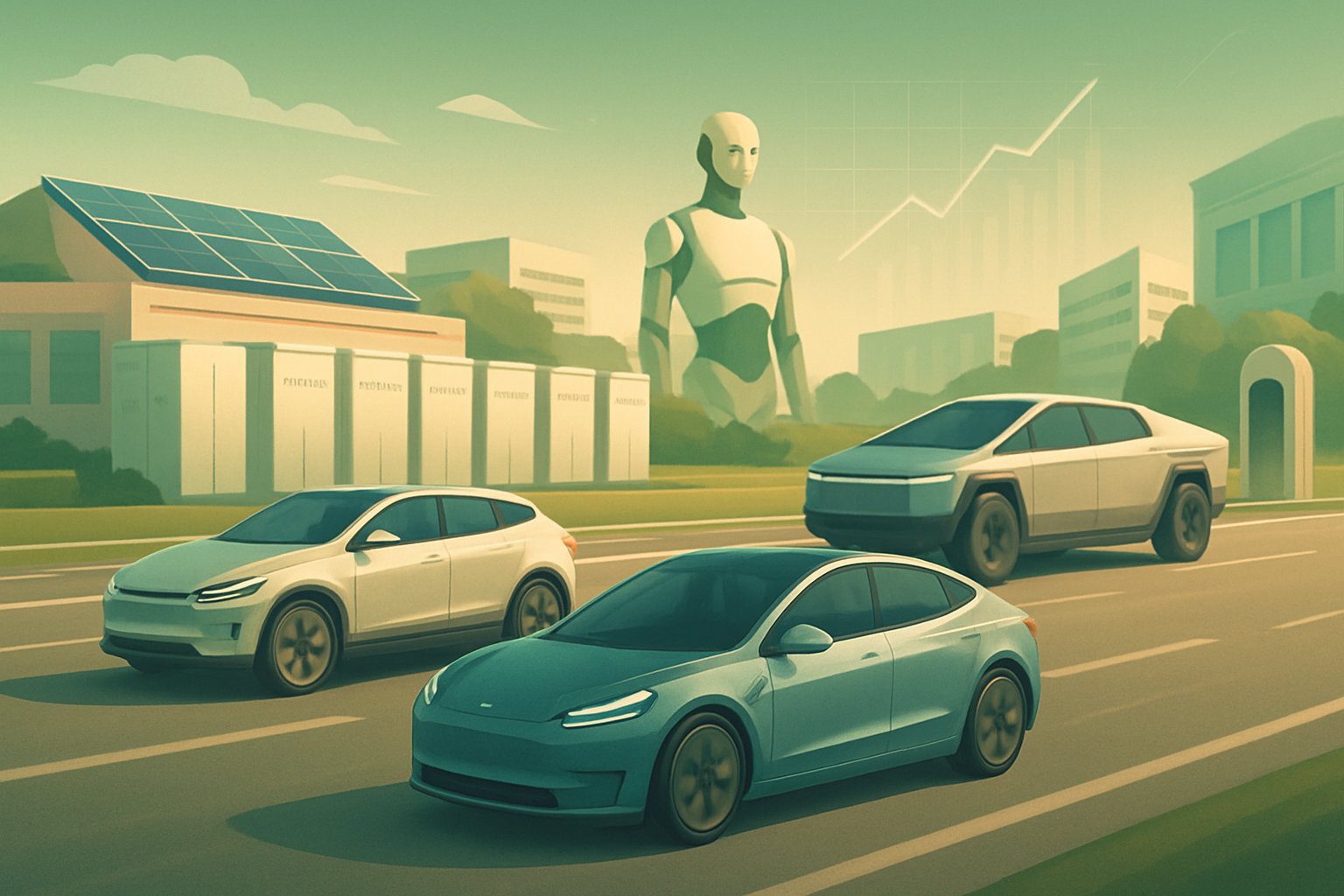
  • Tesla, Inc. (TSLA): A Deep Dive into the Future of Electric Vehicles and AI

    Tesla, Inc. (TSLA): A Deep Dive into the Future of Electric Vehicles and AI

    As of October 1, 2025, Tesla, Inc. (NASDAQ: TSLA) remains a dominant and highly scrutinized entity in the global electric vehicle (EV) and clean energy sectors. Founded in 2003, the company has transcended its origins as a niche EV manufacturer to become a diversified technology giant, deeply invested in artificial intelligence, robotics, and sustainable energy solutions. Tesla's continued relevance stems from its relentless pursuit of innovation, the visionary—and often controversial—leadership of CEO Elon Musk, and its profound impact on both the automotive industry and the broader energy transition.

    Tesla's business model is characterized by vertical integration, emphasizing a direct-to-consumer sales approach and a comprehensive ecosystem that includes EV manufacturing, a proprietary charging network (Supercharger), and advanced software development. Beyond vehicles like the Model S, 3, X, Y, and the anticipated Cybertruck, Tesla's portfolio encompasses energy generation and storage products such as solar panels, Solar Roof, Powerwall, and Megapack. The company's ambitious foray into autonomous driving (Autopilot and Full Self-Driving, or FSD) and its emerging humanoid robot project, Optimus, further solidify its position as a key player in "physical AI."

    The company is currently in focus due to several dynamic factors: its volatile yet potentially high-growth stock performance, significant advancements in AI and robotics, intense competition from both legacy automakers and new EV entrants (particularly from China), and the evolving landscape of regulatory incentives. Recent developments, such as Elon Musk's substantial stock purchase, the launch of the updated Model Y Performance "Juniper," and the expiration of the U.S. federal EV tax credit, are all contributing to a complex and highly watched narrative. As Tesla prepares to release its Q3 2025 delivery results, investors and analysts are keenly observing how these factors will shape its short-term performance and long-term trajectory.

    2. Historical Background

    Tesla Motors, Inc., was founded in July 2003 by Martin Eberhard and Marc Tarpenning, with a vision to create high-performance electric vehicles. Their initial goal was to prove that electric cars could be better, quicker, and more fun to drive than gasoline cars. Elon Musk joined the company as a major investor in 2004, taking an active role in product design and eventually becoming CEO in 2008. His arrival marked a pivotal moment, injecting significant capital and a bold, long-term strategic direction.

    The company’s first product, the Tesla Roadster, launched in 2008, was a high-performance electric sports car based on the Lotus Elise chassis. It demonstrated that EVs could offer compelling performance and range, challenging the prevailing skepticism about electric vehicles. This early success established Tesla's reputation for innovation and engineering prowess.

    A key transformation occurred with the launch of the Model S in 2012. This luxury electric sedan was designed from the ground up by Tesla and quickly garnered critical acclaim, setting new benchmarks for range, performance, and technological integration, including its large touchscreen interface and over-the-air software updates. The Model S was instrumental in cementing Tesla's image as a legitimate and disruptive force in the automotive industry.

    Following the Model S, Tesla expanded its lineup with the Model X, an SUV featuring distinctive "falcon-wing" doors, launched in 2015. However, the most significant transformation came with the introduction of the Model 3 in 2017. Positioned as a more affordable, mass-market electric vehicle, the Model 3 was crucial for Tesla's ambition to accelerate the world's transition to sustainable energy. Its production ramp-up was fraught with challenges, famously dubbed "production hell" by Elon Musk, but ultimately, Tesla overcame these hurdles, demonstrating its ability to scale manufacturing.

    In 2017, the company officially changed its name from Tesla Motors, Inc. to Tesla, Inc., reflecting its expanding focus beyond just vehicles to include energy generation and storage solutions, a segment significantly bolstered by its 2016 acquisition of SolarCity. Over the years, Tesla has continued to push boundaries with its Supercharger network, a proprietary global fast-charging infrastructure, and its advanced driver-assistance systems, Autopilot and Full Self-Driving (FSD). The introduction of the Model Y crossover in 2020 and the highly anticipated Cybertruck further diversified its vehicle offerings.

    From its humble beginnings, Tesla has evolved into a global automotive and technology powerhouse, characterized by a direct-to-consumer sales model, vertical integration, and a relentless pursuit of technological leadership in EVs, battery technology, AI, and renewable energy. Its journey has been marked by audacious goals, significant challenges, and a profound impact on the trajectory of the automotive industry.

    3. Business Model

    Tesla, Inc. (NASDAQ: TSLA) operates a vertically integrated business model that spans electric vehicle manufacturing, energy generation and storage, and advanced software and services. This multifaceted approach distinguishes it from traditional automakers and positions it as a leader in the broader sustainable technology landscape.

    Revenue Sources and Product Lines:

    Tesla's primary revenue streams are derived from two main segments:

    1. Automotive: This segment accounts for the vast majority of Tesla's revenue and includes:

      • Electric Vehicle Sales: Design, development, manufacturing, sales, and leasing of premium and mass-market EVs. Current models include the Model S (luxury sedan), Model X (luxury SUV), Model 3 (mass-market sedan), Model Y (mass-market crossover), and the recently introduced Cybertruck.
      • Automotive Services and Other: This includes non-warranty after-sales vehicle services, sales of used vehicles, retail merchandise, and body shop repairs.
      • Regulatory Credits: Sales of ZEV (Zero Emission Vehicle) credits to other automakers who need to meet emission standards. While a smaller portion of revenue, these credits have historically contributed significantly to profitability.
    2. Energy Generation and Storage: This segment focuses on sustainable energy solutions and includes:

      • Solar Products: Design, manufacturing, installation, and sale of solar energy systems, including conventional solar panels and the innovative Solar Roof, which integrates solar cells into roof tiles.
      • Energy Storage Products: Design, manufacturing, installation, and sale of battery energy storage systems for residential (Powerwall), commercial (Powerpack), and utility-scale (Megapack) applications. These systems provide backup power, grid services, and demand management.

    Services and Software:

    Beyond physical products, Tesla generates revenue and builds customer loyalty through a robust suite of services and software offerings:

    • Supercharger Network: A proprietary global network of fast-charging stations for Tesla vehicles. While primarily a cost center for supporting vehicle sales, it provides a significant competitive advantage and convenience for Tesla owners.
    • Full Self-Driving (FSD) Software: Tesla offers its advanced driver-assistance system as an optional upgrade, either through a one-time purchase or a subscription model. FSD is a key differentiator and a significant potential future revenue driver, with ongoing development aiming for full autonomy.
    • Premium Connectivity: A subscription service offering features like live traffic visualization, satellite-view maps, video streaming, and internet browsing in the vehicle.
    • Service and Maintenance: While Tesla vehicles require less maintenance than internal combustion engine (ICE) cars, the company provides service through its service centers and mobile service technicians.

    Segments and Customer Base:

    Tesla primarily serves a global customer base across various demographics, from early adopters of cutting-edge technology and environmental enthusiasts to mainstream consumers seeking sustainable and high-performance transportation.

    • Geographic Segments: Tesla operates globally, with significant markets in North America (U.S., Canada), Europe, and Asia (particularly China). Manufacturing facilities in Fremont (California), Austin (Texas), Berlin (Germany), and Shanghai (China) support its global distribution.
    • Customer Base: Initially targeting high-income early adopters with its luxury models, Tesla has successfully expanded its appeal to a broader market with the Model 3 and Model Y, attracting consumers looking for performance, technology, and environmental benefits at a more accessible price point. Its energy products serve both residential and commercial clients, from homeowners seeking energy independence to utilities requiring grid-scale storage.

    Key Characteristics of the Business Model:

    • Direct-to-Consumer Sales: Tesla bypasses traditional dealership networks, selling directly to customers online and through its company-owned stores. This allows for greater control over the customer experience and pricing, though it faces regulatory hurdles in some U.S. states.
    • Vertical Integration: From battery cell design to software development and charging infrastructure, Tesla controls a significant portion of its supply chain and product ecosystem, aiming for efficiency, innovation, and quality control.
    • Software-Defined Vehicles: Tesla vehicles are highly software-centric, enabling over-the-air updates that introduce new features, improve performance, and enhance safety, effectively making cars improve over time.
    • Brand and Innovation: A strong brand built on innovation, performance, and sustainability, coupled with a visionary CEO, underpins Tesla's ability to command premium pricing and attract a loyal customer base.

    In essence, Tesla's business model is designed to disrupt multiple industries simultaneously—automotive, energy, and increasingly, artificial intelligence and robotics—by offering integrated, technologically advanced, and sustainable solutions.

    4. Stock Performance Overview

    As of October 1, 2025, Tesla, Inc. (NASDAQ: TSLA) stock has been a quintessential example of high-growth, high-volatility equity. Its performance over various time horizons reflects both its transformative impact on the automotive industry and the speculative nature often associated with its ambitious technological ventures and the leadership of Elon Musk.

    1-Year Stock Performance (October 2024 – October 2025):

    The past year has seen TSLA experience significant fluctuations. After a strong run in late 2024, the stock began Q1 2025 with a decline, reflecting broader market concerns about EV demand saturation, increased competition, and some of Tesla's own operational challenges, including narrowing margins. However, a notable recovery commenced in September 2025, driven by several factors: positive investor sentiment following Elon Musk's open-market stock purchase (his first since 2020), anticipation of the updated Model Y "Juniper" launch, and speculative interest in Tesla's "physical AI" ambitions (robotaxis, Optimus). As of September 29, 2025, the stock closed at $444.72, approaching a break-even point year-to-date. This period highlights the stock's sensitivity to news, product cycles, and CEO sentiment.

    5-Year Stock Performance (October 2020 – October 2025):

    Over the past five years, TSLA has delivered exceptional, albeit volatile, returns for long-term investors. This period encompasses Tesla's meteoric rise during the COVID-19 pandemic, driven by accelerated EV adoption, strong demand for its Model 3 and Model Y, and growing excitement around its FSD technology. The stock underwent a 5-for-1 stock split in August 2020 and a 3-for-1 split in August 2022, making its shares more accessible to retail investors and further boosting liquidity.

    The five-year chart shows a dramatic upward trajectory, punctuated by significant pullbacks. Key milestones during this period include:

    • Expansion of Gigafactories: Opening of Gigafactories in Berlin and Austin, significantly expanding production capacity.
    • Profitability and S&P 500 Inclusion: Sustained profitability leading to its inclusion in the S&P 500 index in December 2020, attracting institutional investment.
    • FSD Beta Rollout: Continuous development and wider rollout of its Full Self-Driving beta program, fueling AI and autonomy narratives.

    Despite recent competitive pressures and margin concerns, the stock has substantially outpaced the broader market over this horizon, rewarding investors who held through its intense volatility.

    10-Year Stock Performance (October 2015 – October 2025):

    Looking back a decade, Tesla's stock performance is nothing short of phenomenal, representing one of the most successful growth stories in modern market history. In October 2015, the stock was trading significantly lower (pre-splits, adjusted for splits, it would be in the low double digits). The journey from a niche automaker to a trillion-dollar company (at its peak) is reflected in this long-term view.

    Key developments over the last ten years that fueled this growth include:

    • Model 3 Launch and Ramp: The successful launch and mass production of the Model 3, transforming Tesla from a luxury EV maker to a volume producer.
    • Energy Business Growth: Expansion of its energy generation and storage business with Powerwall and Megapack, diversifying revenue streams.
    • Global Expansion: Establishing manufacturing and sales operations in key international markets, especially China and Europe.
    • Technological Leadership: Continuous innovation in battery technology, electric powertrains, and autonomous driving, maintaining a perception of technological superiority.

    While the ride has been bumpy, characterized by extreme highs and lows driven by production targets, regulatory scrutiny, and Elon Musk's public statements, the long-term trend has been overwhelmingly positive. Investors who bought into Tesla a decade ago have seen multi-thousand-percent returns, underscoring its status as a disruptive force that has fundamentally reshaped the automotive and energy landscapes.

    Notable Moves and Market Perception:

    TSLA's stock is highly reactive to news flow, analyst ratings, and macroeconomic trends. Periods of rapid ascent are often followed by sharp corrections as investors grapple with valuation concerns, production bottlenecks, and competitive threats. Its "meme stock" status at times has also contributed to its outsized movements, with a significant retail investor base often acting as a strong buying force on dips. The market's perception of Tesla often oscillates between seeing it as a revolutionary technology company poised for exponential growth and a highly speculative bet facing increasing competition and execution risks.

    5. Financial Performance

    As of October 1, 2025, Tesla, Inc. (NASDAQ: TSLA) presents a complex financial picture, characterized by impressive long-term growth tempered by recent challenges in sales and profitability. The company is navigating a maturing EV market and intensifying competition, which has put pressure on its traditionally strong margins.

    Latest Earnings (Q2 2025 and Q3 2025 Expectations):

    Tesla's Q2 2025 financial results, released earlier in the year, revealed a significant year-over-year revenue decline of 12% to $22.5 billion, missing analyst expectations. This was accompanied by a 23% drop in Earnings Per Share (EPS), signaling a challenging period for the company. The decline was largely attributed to a slowdown in EV demand in certain markets, increased pricing pressure, and production adjustments.

    Investors are keenly awaiting the release of Tesla's Q3 2025 delivery results on October 2, 2025, which will provide crucial insights into recent sales trends. Analysts anticipate a surge in U.S. demand for Q3 due to buyers pulling forward purchases to take advantage of the expiring $7,500 federal EV tax credit. However, global registrations have been declining, and sales in the European Union were down 42.9% year-on-year for January-August 2025, suggesting continued headwinds in key international markets. Sales in China also reportedly declined in Q3 2025.

    Revenue Growth:

    While Q2 2025 saw a year-over-year decline, the broader outlook for 2025 projects continued, albeit moderated, revenue growth. Analysts forecast a 17.5% revenue increase for the full year 2025, reaching an estimated $117.2 billion. This growth is expected to be driven by:

    • Increased Deliveries: Despite recent dips, overall vehicle deliveries are projected to grow as new models (like the Cybertruck and updated Model Y "Juniper") ramp up and production capacity expands.
    • Energy Segment Expansion: The energy generation and storage segment (Powerwall, Megapack, solar) continues to be a significant growth driver, with strong demand for battery storage solutions.
    • Software and Services: Growing revenue from FSD subscriptions, premium connectivity, and other recurring services.

    Long-term revenue growth remains a key bullish thesis, predicated on Tesla's ability to scale production, introduce new products, and further monetize its AI and energy ventures.

    Margins:

    Tesla's gross and operating margins have been a point of concern in recent quarters. The company has engaged in price cuts across its vehicle lineup in response to increased competition and to stimulate demand, particularly in China and Europe. While these price adjustments have helped maintain sales volume, they have compressed automotive gross margins.

    In Q2 2025, the automotive gross margin (excluding regulatory credits) was notably lower than previous periods. The company is focused on cost reduction initiatives and production efficiencies to mitigate this pressure. The profitability of the energy segment and the high-margin nature of software (like FSD) are expected to help offset some of the automotive margin compression. The long-term trajectory of margins will depend on Tesla's ability to achieve economies of scale with new Gigafactories, reduce battery costs, and increase the attach rate of high-margin software services.

    Debt and Cash Flow:

    Tesla has significantly strengthened its balance sheet over the years. The company typically maintains a healthy cash position, funding its ambitious R&D and capital expenditure projects through internally generated cash flow and occasional equity raises. As of recent filings, Tesla's debt levels are manageable, with a strong emphasis on reinvesting cash flow back into the business for expansion, new product development, and AI initiatives. Free cash flow generation remains robust, albeit subject to quarterly fluctuations based on capital expenditures for new factories and product launches.

    Valuation Metrics:

    Tesla's valuation has historically been a subject of intense debate. Its price-to-earnings (P/E) ratio often appears elevated compared to traditional automakers, reflecting investor expectations of future hyper-growth, its technological leadership, and its status as an AI and energy company rather than just an automotive firm.

    Key valuation considerations include:

    • Growth Premium: Investors are willing to pay a premium for Tesla's projected growth in EV sales, energy storage, and particularly its AI and robotics ventures (FSD, Optimus).
    • Future Profitability: The potential for FSD to become a highly profitable software-as-a-service (SaaS) offering and the scaling of its energy business are significant factors in its long-term valuation.
    • Market Sentiment: Tesla's stock is highly sensitive to market sentiment, often trading on future potential rather than current fundamentals alone. Analyst price targets vary widely, reflecting this uncertainty and the diverse interpretations of its long-term potential.

    In summary, while Tesla's recent financial performance has shown some signs of deceleration and margin pressure, its underlying growth drivers, strong balance sheet, and ambitious diversification into AI and energy continue to underpin a bullish long-term narrative for many investors. The upcoming Q3 2025 results will be critical in shaping near-term financial perceptions.

    6. Leadership and Management

    Tesla, Inc. (NASDAQ: TSLA) is inextricably linked to its CEO, Elon Musk, whose visionary leadership, unconventional management style, and public persona profoundly influence the company's strategy, innovation, and market perception.

    CEO: Elon Musk

    Elon Musk serves as the Chief Executive Officer and is the "Technoking" of Tesla. He is the driving force behind the company's ambitious goals, from accelerating the world's transition to sustainable energy to pioneering autonomous driving and humanoid robotics. Musk's leadership is characterized by:

    • Visionary Thinking: He consistently pushes the boundaries of what is technologically possible, setting audacious targets for product development, production scale, and technological breakthroughs.
    • Hands-on Approach: Musk is deeply involved in engineering and product design, often making critical decisions and driving the pace of innovation directly.
    • Public Persona: His active presence on social media and outspoken nature frequently generate significant media attention, both positive and negative, directly impacting investor sentiment and the company's brand.
    • Multi-Company Demands: Juggling leadership roles at SpaceX, Neuralink, and X (formerly Twitter) raises questions about his bandwidth and focus, though his supporters argue his cross-industry insights are a strength. His recent $1 billion stock purchase in Tesla, his first open-market buy since 2020, was widely interpreted as a strong sign of confidence.

    Leadership Team:

    While Musk is the public face, Tesla relies on a team of experienced executives and engineers to execute its ambitious plans. Key members typically include:

    • Zachary Kirkhorn (CFO): Responsible for managing Tesla's financial operations, capital allocation, and investor relations. His role is critical in navigating the company's growth and maintaining a strong balance sheet.
    • Tom Zhu (Senior VP of Automotive): Oversees global production, sales, and service, particularly instrumental in the success of Gigafactory Shanghai and now a broader global role.
    • Drew Baglino (Senior VP of Powertrain and Energy Engineering): Leads the development of Tesla's core technologies, including batteries, motors, and energy storage systems.

    The leadership team often operates with a lean structure, emphasizing direct communication and rapid decision-making, consistent with Musk's philosophy of minimizing bureaucracy.

    Board of Directors:

    Tesla's Board of Directors is responsible for corporate governance, strategic oversight, and ensuring the company acts in the best interests of shareholders. The board has faced scrutiny in the past regarding its independence and oversight of Musk, particularly concerning executive compensation and related-party transactions. However, there have been efforts to enhance board independence and diversity. Key responsibilities include:

    • Strategic Direction: Reviewing and approving the company's long-term strategic plans.
    • Risk Management: Overseeing the company's risk profile and mitigation strategies.
    • Executive Compensation: Setting and reviewing compensation for top executives, including Musk.
    • Shareholder Representation: Ensuring accountability to shareholders.

    Strategy and Governance Reputation:

    Tesla's corporate strategy under Musk is characterized by:

    • Aggressive Innovation: A relentless focus on technological advancement in EVs, battery technology, AI, and manufacturing processes.
    • Vertical Integration: Controlling key aspects of its supply chain and product ecosystem to enhance efficiency and innovation.
    • Global Expansion: Rapidly expanding manufacturing capacity and sales presence in key international markets.
    • Diversification: Moving beyond automotive into energy solutions, AI (FSD, Optimus), and potentially other high-tech ventures.

    The company's governance reputation has been mixed. While praised for its disruptive innovation, it has faced criticism regarding executive compensation, board independence, and Musk's sometimes controversial public statements and interactions with regulators. Shareholder activism has occasionally pushed for greater transparency and improved governance practices.

    In summary, Tesla's leadership is defined by Elon Musk's unparalleled vision and drive, supported by a dedicated executive team. While his leadership style brings both immense opportunity and unique risks, it is undeniably central to Tesla's identity and strategic direction.

    7. Products, Services, and Innovations

    Tesla, Inc. (NASDAQ: TSLA) stands at the forefront of innovation, continuously expanding its product and service offerings beyond electric vehicles to encompass a broader ecosystem of sustainable energy and advanced AI technologies.

    Current Offerings:

    1. Electric Vehicles (EVs):

      • Model S: A full-size luxury all-electric five-door liftback, known for its performance, range, and advanced technology.
      • Model 3: A compact executive sedan, designed for the mass market, offering a balance of performance, range, and affordability.
      • Model X: A mid-size luxury all-electric SUV, featuring "falcon-wing" doors and seating for up to seven.
      • Model Y: A compact crossover SUV, sharing many components with the Model 3, and has become one of Tesla's best-selling vehicles globally. The updated Model Y Performance "Juniper" was recently launched in the U.S. on October 1, 2025, with enhanced acceleration and range.
      • Cybertruck: An all-electric, battery-powered light-duty truck, featuring a unique angular design and a stainless-steel exoskeleton. Deliveries commenced in late 2023 and are ramping up.
      • Tesla Semi: An all-electric Class 8 semi-truck designed for freight transport, with initial deliveries to PepsiCo.
      • Roadster (Next Generation): A high-performance all-electric sports car, announced with extremely ambitious performance targets, currently in development.
    2. Energy Generation and Storage:

      • Solar Panels: Traditional photovoltaic solar panels for residential and commercial installations.
      • Solar Roof: Integrated solar tiles that look like conventional roofing materials but generate electricity.
      • Powerwall: A home battery storage system that stores solar energy or grid electricity for backup power, self-consumption, and load shifting.
      • Powerpack: A commercial-scale battery storage system for businesses.
      • Megapack: A utility-scale battery storage system designed for large-scale energy storage projects, grid stabilization, and renewable energy integration.
    3. Software and Services:

      • Autopilot & Full Self-Driving (FSD): Tesla's suite of advanced driver-assistance systems. Autopilot provides adaptive cruise control and autosteer. FSD is an optional upgrade (purchase or subscription) that aims for full autonomous driving capabilities, continuously evolving through over-the-air (OTA) software updates.
      • Supercharger Network: A proprietary global network of DC fast-charging stations, providing a seamless and convenient charging experience for Tesla owners.
      • Mobile Service: Technicians who can perform many repairs and maintenance tasks at a customer's home or workplace.
      • Premium Connectivity: An in-car subscription service offering features like live traffic visualization, satellite-view maps, video streaming, and internet browsing.

    Innovation Pipelines & R&D:

    Tesla's innovation engine is constantly running, with significant investments in Research & Development (R&D) across multiple domains:

    • Battery Technology: Continuous efforts to improve battery energy density, reduce costs, and extend cycle life. This includes advancements in cell chemistry, structural battery packs, and potentially new battery types like 4680 cells.
    • Artificial Intelligence (AI) & Robotics:
      • FSD Development: Further enhancing its neural network for autonomous driving, including advancements in vision-only perception, planning, and decision-making. The goal is to achieve true Level 5 autonomy and deploy a robotaxi fleet.
      • Optimus Humanoid Robot: Development of a general-purpose humanoid robot, Optimus, designed to perform repetitive or dangerous tasks. Sales are anticipated to begin in 2026, positioning Tesla as a major player in "physical AI."
      • Dojo Supercomputer: Building its own custom supercomputer for AI training, specifically for autonomous driving, to accelerate the development and deployment of its neural networks.
    • Manufacturing Innovation: Pioneering new manufacturing techniques like Gigacasting (large single-piece castings) to simplify vehicle assembly, reduce costs, and improve production efficiency.
    • New Vehicle Platforms: Development of next-generation vehicle platforms that are expected to be significantly cheaper to produce, enabling more affordable EV models in the future.

    Patents and Competitive Edge:

    Tesla holds numerous patents across its various technologies, particularly in battery management, electric powertrains, autonomous driving systems, and manufacturing processes. While Tesla has famously opened some of its patents to encourage EV adoption, it continues to innovate and protect its core intellectual property.

    Tesla's competitive edge stems from:

    • Technological Leadership: Often perceived as having a lead in battery technology, electric powertrain efficiency, and AI for autonomous driving.
    • Brand Strength: A powerful brand associated with innovation, performance, and sustainability.
    • Integrated Ecosystem: The seamless integration of vehicles, charging infrastructure, energy products, and software creates a compelling value proposition for customers.
    • Direct Sales Model: Allows for greater control over the customer experience and direct feedback loops for product improvement.
    • Software-Defined Vehicles: The ability to continuously improve vehicles through over-the-air updates is a significant differentiator.

    In essence, Tesla's product and service portfolio, coupled with its aggressive R&D and commitment to innovation, positions it as a disruptive force not only in the automotive industry but also in the broader energy and AI landscapes.

    8. Competitive Landscape

    The competitive landscape for Tesla, Inc. (NASDAQ: TSLA) is rapidly intensifying across all its major segments – electric vehicles, energy storage, and autonomous driving. While Tesla initially enjoyed a significant first-mover advantage, established automakers and new entrants are now aggressively vying for market share.

    Industry Rivals and Market Share:

    1. Electric Vehicles (EVs): This is Tesla's core battleground.
    * Legacy Automakers: Traditional giants like General Motors (NYSE: GM), Ford (NYSE: F), Volkswagen (XTRA: VOW), Mercedes-Benz (XTRA: MBG), BMW (XTRA: BMW), and Hyundai (KRX: 005380) have invested billions in EV platforms and are launching compelling models across various price points and segments. They leverage established dealer networks, brand loyalty, and vast manufacturing expertise. Volkswagen, for example, is a strong contender in Europe with its ID. series.
    * Chinese EV Manufacturers: Companies like BYD Co. Ltd. (HKG: 1211 / OTCMKTS: BYDDY), NIO Inc. (NYSE: NIO), XPeng Inc. (NYSE: XPEV), and Li Auto Inc. (NASDAQ: LI) are formidable rivals, especially in the crucial Chinese market and increasingly in Europe. BYD, in particular, has become a global EV powerhouse, often surpassing Tesla in total EV sales (including hybrids) and offering a wide range of affordable and technologically advanced vehicles. These companies benefit from strong government support and a rapidly evolving domestic supply chain.
    * Other EV Startups: Companies like Rivian Automotive, Inc. (NASDAQ: RIVN) (focusing on trucks and SUVs) and Lucid Group, Inc. (NASDAQ: LCID) (luxury EVs) are carving out niche segments, though they face significant production and profitability challenges.

    *   **Market Share:** While Tesla remains a global leader in pure EV sales, its market share has shown signs of erosion. For instance, its share in California's EV market has fallen below 50%. Globally, registrations are declining in some regions, and sales in the European Union were down 42.9% year-on-year for January-August 2025, indicating intense pressure from both European and Chinese competitors offering more affordable alternatives.
    

    2. Energy Generation and Storage:
    * Solar: Competitors include traditional solar panel manufacturers and installers like First Solar, Inc. (NASDAQ: FSLR), Sunrun Inc. (NASDAQ: RUN), and numerous smaller regional players. For solar roofs, specialized roofing companies and other solar integrators are rivals.
    * Battery Storage: Companies like LG Energy Solution (KRX: 373220), Samsung SDI (KRX: 006400), BYD, and Fluence Energy, Inc. (NASDAQ: FLNC) (a joint venture between Siemens and AES) are major players in grid-scale and residential battery storage, offering competing products and solutions.

    3. Autonomous Driving:
    * Waymo (Alphabet Inc. – NASDAQ: GOOGL): Widely considered a leader in Level 4/5 autonomous driving technology, operating robotaxi services in several cities.
    * Cruise (General Motors): Another significant player in autonomous ride-hailing, though it has faced recent regulatory setbacks.
    * Mobileye (NASDAQ: MBLY): A leading provider of advanced driver-assistance systems (ADAS) to numerous automakers.
    * Other Automakers: Most major automakers are developing their own advanced ADAS and autonomous driving capabilities, often through partnerships or or in-house R&D.

    Competitive Strengths and Weaknesses:

    Tesla's Strengths:

    • Brand Recognition and Innovation: A powerful global brand synonymous with EVs and cutting-edge technology.
    • Technological Leadership: Perceived advantage in battery technology, electric powertrains, and AI for autonomous driving (though this lead is narrowing).
    • Integrated Ecosystem: The combination of vehicles, Supercharger network, energy products, and software creates a strong customer lock-in.
    • Direct Sales Model: Allows for greater control over customer experience and data.
    • Over-the-Air (OTA) Updates: Ability to continuously improve vehicles and add features post-purchase.
    • Manufacturing Efficiency (Gigafactories): Advanced manufacturing techniques like Gigacasting aim for cost reduction and speed.

    Tesla's Weaknesses:

    • Reliance on Elon Musk: While a strength, it also presents key person risk and can lead to volatility from his public statements.
    • Aging Model Lineup: Critics argue that the core Model 3/Y lineup needs significant refreshes to compete with newer, more diverse offerings.
    • Pricing Pressure and Margin Compression: Aggressive price cuts to maintain market share have impacted profitability.
    • Service and Quality Concerns: Historically, some customers have reported issues with service availability and vehicle quality.
    • Regulatory Scrutiny: FSD technology faces increasing regulatory and public scrutiny regarding safety and capabilities.
    • Lack of Dealership Network: While a strength in control, it can be a weakness in terms of widespread physical presence and traditional customer service for some buyers.

    The competitive landscape is dynamic, with innovation and pricing being key battlegrounds. Tesla's ability to maintain its technological edge, refresh its product lineup, and manage costs will be crucial for its continued market leadership against a growing array of formidable rivals.

    9. Industry and Market Trends

    The electric vehicle (EV) and clean energy industries, where Tesla, Inc. (NASDAQ: TSLA) operates, are undergoing rapid and transformative shifts. As of October 1, 2025, several key sector-level trends, macro drivers, supply chain dynamics, and cyclical effects are shaping the market.

    Sector-Level Trends:

    1. Maturing EV Market & Intensifying Competition: The global EV market is transitioning from an early-adopter phase to a more mainstream market. This maturity brings intense competition from both legacy automakers (e.g., Volkswagen, GM, Ford) and a strong wave of new entrants, especially from China (e.g., BYD, Nio, Xpeng). This competition is leading to:

      • Price Wars: Automakers are increasingly engaging in price reductions to gain or defend market share, putting pressure on margins across the industry.
      • Diversification of Offerings: A wider range of EV models, including SUVs, trucks, and more affordable options, are entering the market, catering to diverse consumer needs.
      • Focus on Charging Infrastructure: The expansion and standardization of charging networks remain critical for mass EV adoption.
    2. Advancements in Battery Technology: Continuous innovation in battery chemistry (e.g., solid-state, LFP), energy density, charging speeds, and cost reduction are paramount. The industry is striving for cheaper, lighter, and more efficient batteries to extend range and lower vehicle prices.

    3. Autonomous Driving & AI Integration: The push towards higher levels of autonomous driving (Level 3, 4, and 5) is a major trend. This involves significant R&D in AI, sensor technology, and software. The development of AI for other applications, such as humanoid robotics (e.g., Tesla's Optimus), is also gaining traction, blurring lines between automotive and general AI companies.

    4. Energy Storage Growth: Beyond vehicles, stationary energy storage (residential, commercial, utility-scale) is a rapidly expanding market driven by the need for grid stability, renewable energy integration, and backup power solutions.

    Macro Drivers:

    1. Climate Change & Sustainability Mandates: Global efforts to combat climate change continue to drive demand for EVs and renewable energy. Government regulations, emissions targets, and consumer environmental awareness are powerful tailwinds.
    2. Government Incentives & Subsidies: Historically, tax credits, rebates, and purchase incentives have played a crucial role in stimulating EV adoption. However, as seen with the expiring U.S. federal EV tax credit on September 30, 2025, these incentives are evolving or phasing out, which can impact demand.
    3. Economic Conditions: Inflation, interest rates, and consumer discretionary spending directly influence vehicle sales. Higher interest rates can make car loans more expensive, potentially dampening demand for new vehicles, including EVs.
    4. Geopolitical Dynamics: Trade policies, tariffs, and international relations (e.g., U.S.-China relations) can impact supply chains, manufacturing locations, and market access for global players like Tesla.

    Supply Chains:

    1. Battery Raw Materials: The supply of critical raw materials for batteries (lithium, cobalt, nickel, graphite) remains a key concern. Geopolitical risks, mining practices, and refining capacities can lead to price volatility and supply disruptions. Companies are actively seeking to secure long-term supply agreements and diversify sourcing.
    2. Semiconductor Shortages: While less severe than in previous years, the automotive industry remains susceptible to semiconductor supply chain disruptions, which can impact production volumes and the integration of advanced vehicle technologies.
    3. Localized Production: There's a growing trend towards regionalized supply chains and manufacturing (e.g., Tesla's Gigafactories in the U.S., Europe, and China) to reduce logistics costs, mitigate geopolitical risks, and qualify for local incentives.

    Cyclical Effects:

    1. Automotive Sales Cycles: The automotive industry is inherently cyclical, influenced by economic growth, consumer confidence, and credit availability. While EVs might be somewhat insulated due to their growth trajectory, they are not entirely immune to broader economic downturns.
    2. Product Refresh Cycles: New model launches and significant product refreshes can create demand surges, while aging lineups can lead to sales stagnation, as some analysts suggest Tesla might be experiencing with its core Model 3/Y.
    3. Technology Adoption Curve: As EVs move past early adopters, the market becomes more price-sensitive, and factors like charging infrastructure and total cost of ownership become more critical drivers of demand.

    In summary, Tesla operates within a dynamic environment shaped by rapid technological advancements, evolving consumer preferences, shifting regulatory landscapes, and complex global supply chain dynamics. Navigating these trends effectively will be crucial for its sustained growth and profitability.

    10. Risks and Challenges

    Tesla, Inc. (NASDAQ: TSLA) faces a multitude of risks and challenges that could impact its future growth, profitability, and stock performance. These range from operational hurdles and intense competition to regulatory pressures and broader market dynamics.

    Operational Risks:

    1. Production Ramps & Manufacturing Complexity: While Tesla has demonstrated its ability to scale, new product introductions (e.g., Cybertruck, next-gen vehicles) and expansions of Gigafactories always carry risks of production bottlenecks, quality control issues, and delays. Achieving high-volume, low-cost manufacturing for complex vehicles remains a significant challenge.
    2. Supply Chain Disruptions: Reliance on a global supply chain for critical components, especially batteries and semiconductors, makes Tesla vulnerable to geopolitical events, trade disputes, natural disasters, and raw material price volatility (e.g., lithium, nickel).
    3. Battery Technology & Supply: While a leader, Tesla faces challenges in securing sufficient battery cell supply and continuously innovating to reduce costs and improve performance. Dependence on a few key suppliers or proprietary technology could be a risk.
    4. Service and Charging Infrastructure: As the vehicle fleet grows, ensuring adequate and high-quality service capacity and a robust, reliable charging network (Supercharger) is crucial for customer satisfaction and brand reputation.
    5. Product Quality and Recalls: Any significant quality issues or widespread recalls could damage brand image, incur substantial costs, and impact sales.

    Regulatory Risks:

    1. Autonomous Driving Scrutiny: Tesla's Full Self-Driving (FSD) system faces increasing regulatory and public scrutiny regarding its safety, capabilities, and marketing claims. Potential investigations, lawsuits, or stricter regulations could delay deployment, increase development costs, or limit its functionality.
    2. Environmental Regulations: While benefiting from the global push for cleaner transportation, Tesla is subject to regulations concerning manufacturing emissions, waste disposal, and battery recycling.
    3. Direct Sales Model Challenges: Tesla's direct-to-consumer sales model faces legal challenges and restrictions in several U.S. states and other jurisdictions, limiting its ability to operate traditional dealerships.
    4. International Trade & Tariffs: Geopolitical tensions and trade disputes (e.g., between the U.S. and China) could lead to tariffs or restrictions that impact vehicle imports/exports, supply chain costs, and market access.

    Controversies & Reputation Risks:

    1. Elon Musk's Influence: While a strength, CEO Elon Musk's often controversial public statements, social media activity, and involvement in multiple companies can create reputational risks, distract from core business, and impact investor sentiment.
    2. Workplace Culture & Labor Relations: Allegations of discrimination, unsafe working conditions, or labor disputes could harm brand image and lead to legal challenges.
    3. Product Safety: Incidents related to battery fires, autonomous driving accidents, or other safety concerns could lead to negative publicity, regulatory action, and consumer distrust.

    Market Risks:

    1. Intensifying Competition: The rapid influx of new EV models from legacy automakers and aggressive Chinese players (e.g., BYD, Xpeng) is eroding Tesla's market share and putting significant pressure on pricing and margins. The need to refresh its model lineup against more affordable and diverse offerings is a critical challenge.
    2. EV Demand Volatility: While long-term EV adoption is expected, short-term demand can be volatile due to economic conditions, interest rates, changing consumer preferences, and the phasing out of incentives.
    3. Pricing Pressure & Margin Compression: To maintain market share, Tesla has engaged in price cuts, which have negatively impacted its automotive gross margins. Sustaining profitability in a more competitive, price-sensitive market is a major challenge.
    4. Macroeconomic Headwinds: Global economic slowdowns, high inflation, and rising interest rates can reduce consumer purchasing power and dampen demand for new vehicles, especially higher-priced EVs.
    5. Valuation & Investor Expectations: Tesla's stock often trades at a premium based on future growth expectations. Any failure to meet these high expectations or signs of slowing growth could lead to significant stock price corrections.
    6. Technological Obsolescence: While an innovator, Tesla must continuously out-innovate competitors to avoid its technologies becoming obsolete or less competitive.

    Addressing these multifaceted risks and challenges will require adept management, continuous innovation, and strategic adaptation to a rapidly evolving global market.

    11. Opportunities and Catalysts

    Despite the significant risks, Tesla, Inc. (NASDAQ: TSLA) possesses numerous opportunities and potential catalysts that could drive future growth and shareholder value. These range from expanding market reach and product diversification to technological breakthroughs and strategic initiatives.

    Growth Levers:

    1. New Vehicle Platforms & Models:

      • Next-Generation Platform: Development of a significantly lower-cost vehicle platform could unlock massive new markets, allowing Tesla to produce more affordable EVs and dramatically expand its total addressable market.
      • Cybertruck Ramp-Up: Successful scaling of Cybertruck production and deliveries will tap into the lucrative truck market, attracting a new segment of buyers.
      • Refreshed Model Lineup: Introducing refreshed versions of the Model 3 and Model Y (like the "Juniper" update) with improved features and aesthetics can stimulate demand and maintain competitiveness against newer rivals.
    2. Energy Storage & Solar Expansion:

      • Megapack & Powerwall Demand: The global demand for grid-scale energy storage (Megapack) and residential backup power (Powerwall) is surging. Tesla's established products and manufacturing capacity position it to capitalize on this trend, significantly growing its energy segment revenue and profitability.
      • Solar Roof Adoption: Increased adoption of Solar Roof, particularly if installation costs can be further reduced and efficiency improved, offers a unique integrated energy solution for homeowners.
    3. Full Self-Driving (FSD) Monetization & Robotaxis:

      • FSD as a Service (SaaS): Achieving true Level 4/5 autonomous driving would transform FSD into a highly profitable software-as-a-service (SaaS) offering, generating recurring revenue from millions of vehicles.
      • Robotaxi Network: The deployment of a fully autonomous robotaxi fleet could unlock an entirely new and massive revenue stream, disrupting the ride-hailing industry and generating significant per-mile revenue. This is a key "accelerated AI autonomous path" that some analysts foresee in 2026.
    4. AI & Robotics (Optimus):

      • Humanoid Robot Market: The successful development and commercialization of the Optimus humanoid robot, with sales anticipated to begin in 2026, could open up an entirely new, multi-trillion-dollar market for general-purpose robots, fundamentally transforming Tesla's business model and valuation. This represents a significant diversification into "physical AI."

    New Markets:

    1. Emerging Markets: Expanding sales and potentially manufacturing operations into new emerging markets (e.g., Southeast Asia, India, Latin America) could provide vast untapped growth opportunities for EVs.
    2. Fleet Sales: Penetrating corporate and government fleet markets with its electric vehicles and energy solutions offers large-volume sales potential.

    M&A Potential:

    While Tesla typically focuses on organic growth and vertical integration, strategic acquisitions in areas like battery technology, AI software, or specific manufacturing capabilities could accelerate its development or consolidate its market position. However, significant M&A has not been a primary strategy for Tesla.

    Near-Term Events (Earnings, Launches):

    1. Q3 2025 Deliveries & Earnings: The upcoming Q3 2025 delivery results (expected October 2, 2025) and subsequent earnings report will be crucial catalysts. Strong delivery numbers, particularly if U.S. demand surged due to the U.S. tax credit pull-forward, and positive commentary on margins or future outlook could boost investor confidence.
    2. Cybertruck Production Ramp & Deliveries: Continued successful ramp-up of Cybertruck production and increasing deliveries throughout late 2025 and into 2026 will be closely watched.
    3. FSD Progress & Regulatory Approvals: Any significant advancements in FSD capabilities, successful beta expansions, or positive indications from regulators regarding autonomy could act as a strong catalyst.
    4. Optimus Milestones: Demonstrations of Optimus's capabilities and concrete timelines for its commercial deployment will generate considerable excitement.
    5. Battery Day/Investor Day Announcements: Future investor events or "Battery Day" style presentations that unveil new technological breakthroughs or strategic plans (e.g., for next-gen vehicles or AI) often serve as major catalysts.

    These opportunities, particularly in AI, robotics, and energy storage, present a compelling long-term growth narrative for Tesla, capable of offsetting some of the competitive pressures in the core EV automotive market. Realizing these opportunities, however, will depend on flawless execution and continued innovation.

    12. Investor Sentiment and Analyst Coverage

    Investor sentiment towards Tesla, Inc. (NASDAQ: TSLA) is consistently polarized, reflecting its status as both a highly innovative technology leader and a volatile, often speculative, growth stock. Analyst coverage, while extensive, also shows a wide divergence of opinions and price targets.

    Wall Street Ratings:

    Wall Street analysts typically have a mixed bag of ratings for TSLA. As of October 1, 2025:

    • Buy/Outperform: A significant portion of analysts maintain a "Buy" or "Outperform" rating, driven by belief in Tesla's long-term growth potential in EVs, AI, and energy. These analysts often focus on the future revenue streams from FSD, robotaxis, and Optimus, viewing Tesla as more than just an automotive company. Price targets from this group can be quite aggressive, sometimes predicting significant upside from current levels.
    • Hold/Neutral: A substantial number of analysts adopt a "Hold" or "Neutral" stance. This group often acknowledges Tesla's innovation but expresses concerns about its valuation relative to current fundamentals, intensifying competition, margin pressures from price cuts, and the execution risks associated with its ambitious projects. Their price targets tend to be closer to the current trading range.
    • Sell/Underperform: A smaller, but vocal, contingent of analysts maintains a "Sell" or "Underperform" rating. These analysts typically highlight the extreme valuation, the narrowing competitive moat, increasing regulatory risks (especially for FSD), and the challenges of sustaining high growth in a maturing EV market. They often compare Tesla's valuation to traditional automakers, finding it significantly overvalued based on current earnings.

    The wide spread in price targets (e.g., from as low as $150 to over $1,000 in some past projections) underscores the fundamental disagreement on how to value Tesla's future potential, particularly its non-automotive segments.

    Hedge Fund Moves and Institutional Investors:

    Institutional ownership of TSLA is substantial, with many large asset managers and mutual funds holding significant positions. However, hedge fund activity tends to be more dynamic and reflects varying strategies:

    • Long Positions: Many growth-oriented hedge funds maintain long positions, betting on Tesla's continued technological leadership and disruptive potential. They often view dips as buying opportunities.
    • Short Positions: Tesla has historically been one of the most heavily shorted stocks, attracting bearish bets from funds that believe its valuation is unsustainable, its technology is not as differentiated as perceived, or that competition will ultimately erode its market dominance. While the short interest has fluctuated, it remains a significant factor.
    • Activist Investors: While less common for Tesla, activist investors occasionally emerge, pushing for changes in governance, capital allocation, or strategy, particularly concerning Elon Musk's multi-company commitments.

    Recent activity includes Elon Musk's own $1 billion open-market stock purchase in September 2025, which was widely seen as a strong vote of confidence and contributed to positive investor sentiment. This move often influences other institutional and retail investors.

    Retail Chatter:

    Retail investors play an exceptionally significant role in TSLA's market dynamics. Tesla has a highly engaged and passionate retail shareholder base, often referred to as "Teslarati."

    • Social Media Influence: Online forums, Reddit, X (formerly Twitter), and other social media platforms are rife with discussions, analyses, and speculation about TSLA. Elon Musk's direct engagement on X further fuels this retail interest.
    • "Meme Stock" Characteristics: At times, TSLA has exhibited characteristics of a "meme stock," with retail investors collectively driving significant price movements, often independent of traditional fundamental analysis. This can lead to rapid rallies and sharp corrections.
    • Buy-the-Dip Mentality: Many retail investors have a strong "buy-the-dip" mentality, seeing any significant pullback as an opportunity to accumulate more shares, contributing to the stock's resilience after corrections.
    • Long-Term Conviction: A core group of retail investors holds TSLA with strong long-term conviction, believing in the company's mission and its potential to revolutionize multiple industries.

    In summary, investor sentiment for Tesla is a complex interplay of strong conviction in its future potential, skepticism about its valuation and execution, and the unique influence of its CEO and dedicated retail following. This dynamic environment contributes to TSLA's characteristic volatility and makes it one of the most closely watched stocks in the market.

    13. Regulatory, Policy, and Geopolitical Factors

    Tesla, Inc. (NASDAQ: TSLA) operates within a highly regulated and politically sensitive global environment. Regulatory decisions, government policies, and geopolitical tensions significantly impact its operations, market access, and profitability.

    Laws and Compliance:

    1. Automotive Safety Standards: Tesla must comply with stringent automotive safety standards in every market it operates, including crash test ratings, recall procedures, and component specifications. Any failure to meet these standards can result in fines, recalls, and reputational damage.
    2. Environmental Regulations: While benefiting from the global push for cleaner transportation, Tesla is subject to regulations concerning manufacturing emissions, waste disposal, and battery recycling.
    3. Autonomous Driving Regulations: This is a particularly dynamic area. Regulations for advanced driver-assistance systems (ADAS) and autonomous driving (FSD) vary widely by jurisdiction and are still evolving. Tesla faces scrutiny from regulators (e.g., NHTSA in the U.S.) regarding the safety and marketing of its FSD system. Potential new laws, liability frameworks, or restrictions on testing and deployment could significantly impact its robotaxi ambitions.
    4. Direct Sales Laws: Tesla's direct-to-consumer sales model faces legal restrictions in many U.S. states due to franchise laws protecting traditional dealerships. This necessitates navigating a complex patchwork of state-specific regulations.
    5. Data Privacy Laws: As a technology company collecting vast amounts of vehicle and user data, Tesla must comply with global data privacy regulations like GDPR in Europe and similar laws in other regions.

    Government Incentives:

    1. EV Purchase Subsidies: Historically, government incentives such as federal tax credits (e.g., the $7,500 U.S. federal EV tax credit, which expired on September 30, 2025), state rebates, and local perks (e.g., HOV lane access) have been crucial in stimulating EV demand. The expiration or reduction of these incentives can directly impact sales and pricing strategies, as seen with Tesla's lease credit adjustments.
    2. Charging Infrastructure Grants: Governments often provide grants and subsidies for the expansion of EV charging infrastructure, which can benefit Tesla's Supercharger network or its ability to partner with public charging initiatives.
    3. Manufacturing Incentives: Governments frequently offer incentives (tax breaks, land grants, subsidies) to attract EV and battery manufacturing facilities, influencing Tesla's Gigafactory location decisions (e.g., in Texas, Berlin).

    Geopolitical Risks and Opportunities:

    1. U.S.-China Relations: China is a critical market and manufacturing hub for Tesla. Tensions between the U.S. and China, including trade disputes, tariffs, and national security concerns, can create significant risks. Any escalation could impact Tesla's ability to operate smoothly in China, affect supply chains, or lead to restrictions on exports/imports. Conversely, stable relations present a massive opportunity for growth in the world's largest EV market.
    2. European Market Dynamics: The European Union has aggressive emissions targets and is a major market for EVs. However, increasing competition from Chinese EV makers and evolving local preferences mean Tesla must adapt its strategy to maintain market share. Policies promoting local manufacturing or specific battery technologies could also impact Tesla.
    3. Raw Material Sourcing: Geopolitical stability in regions supplying critical battery raw materials (e.g., lithium from South America, nickel from Indonesia, cobalt from Africa) is crucial. Supply chain disruptions due to political instability or resource nationalism can impact production costs and availability.
    4. Energy Security: The global push for energy independence and security, often driven by geopolitical events (e.g., conflicts impacting oil and gas supplies), creates a strong tailwind for Tesla's energy storage and solar businesses. Governments are increasingly investing in renewable energy infrastructure.

    In essence, Tesla's global ambitions are deeply intertwined with the political and regulatory landscape. Navigating these complexities, leveraging supportive policies, and mitigating geopolitical risks will be critical for its sustained international growth and operational stability.

    14. Outlook and Scenarios

    Tesla, Inc. (NASDAQ: TSLA) faces a future brimming with both immense potential and significant challenges. The outlook for the company, and consequently its stock, can be framed through distinct bull and bear scenarios, influenced by short-term and long-term projections and potential strategic pivots.

    Bull Case Scenario:

    The bull case for Tesla is predicated on its continued technological leadership, successful diversification beyond automotive, and flawless execution of its ambitious growth plans.

    • Short-Term (1-2 years):
      • Strong Q3/Q4 2025 Deliveries & Margins: Better-than-expected delivery numbers, particularly benefiting from the U.S. tax credit pull-forward in Q3, and signs of margin stabilization due to cost efficiencies and Cybertruck ramp-up.
      • Successful Cybertruck Ramp: Smooth and rapid increase in Cybertruck production, meeting demand and contributing meaningfully to revenue.
      • FSD Progress & Monetization: Significant breakthroughs in Full Self-Driving capabilities, leading to wider regulatory approvals for unsupervised driving in more geographies, boosting FSD subscription adoption and proving its revenue potential.
      • Energy Segment Acceleration: Continued robust growth in Powerwall, Megapack, and solar deployments, establishing the energy division as a major, high-margin revenue contributor.
    • Long-Term (3-5+ years):
      • Robotaxi Dominance: Successful launch and widespread deployment of a fully autonomous robotaxi network, fundamentally disrupting the transportation industry and generating unprecedented recurring revenue at high margins. This is seen as the ultimate "accelerated AI autonomous path."
      • Optimus Commercialization: The successful commercialization of the Optimus humanoid robot, with sales beginning in 2026 as anticipated, opening up a multi-trillion-dollar market for general-purpose AI robotics and transforming Tesla into a leading AI company.
      • Next-Gen Vehicle Mass Production: Introduction of a significantly cheaper, mass-market EV platform, expanding Tesla's total addressable market exponentially and solidifying its position as the dominant global EV manufacturer.
      • Battery Technology Breakthroughs: Continued innovation in battery technology, leading to further cost reductions, increased energy density, and faster charging, maintaining a competitive edge.
      • Global Market Leadership: Tesla maintains or expands its global market share in EVs, energy storage, and AI, leveraging its integrated ecosystem and brand strength.

    Bear Case Scenario:

    The bear case highlights the formidable competitive pressures, execution risks, regulatory hurdles, and valuation concerns that could hinder Tesla's growth and profitability.

    • Short-Term (1-2 years):
      • Continued Margin Erosion: Persistent price wars, particularly from Chinese competitors, lead to further compression of automotive gross margins, impacting overall profitability.
      • Slowing EV Demand: Global EV demand growth decelerates more than expected, possibly due to economic slowdowns, high interest rates, or the phasing out of incentives, leading to lower-than-projected delivery volumes.
      • FSD Delays & Regulatory Setbacks: FSD development faces significant technical hurdles or increased regulatory scrutiny, leading to further delays in achieving full autonomy and limiting its monetization potential.
      • Cybertruck Production Issues: Significant challenges in ramping up Cybertruck production or unexpected quality issues lead to missed targets and increased costs.
      • Aging Product Lineup: Lack of compelling refreshes for Model 3/Y leads to further market share loss to newer, more diverse competitor offerings, especially in Europe and China.
    • Long-Term (3-5+ years):
      • Intense Competition Dominates: Legacy automakers and Chinese EV players successfully close the technology gap and offer more compelling, affordable, and diverse EV options, permanently eroding Tesla's market share and pricing power.
      • AI/Robotaxi Failure: Tesla fails to achieve true Level 4/5 autonomous driving or faces insurmountable regulatory hurdles, preventing the widespread deployment of robotaxis. Optimus also struggles to find a viable commercial market.
      • Valuation Correction: Investors re-evaluate Tesla's valuation downwards as growth moderates, competitive pressures intensify, and its ambitious AI/robotics ventures fail to materialize as expected.
      • Supply Chain & Geopolitical Risks: Persistent supply chain disruptions, escalating trade wars, or geopolitical instability significantly impact manufacturing, costs, and market access.
      • Elon Musk Distractions: Musk's involvement in other ventures or controversial public statements increasingly distracts from Tesla's core business and negatively impacts brand and investor confidence.

    Strategic Pivots:

    Tesla's strategic pivots could include:

    • Aggressive Pricing: Further price reductions to gain market share, even at the expense of short-term margins, betting on long-term volume and software monetization.
    • Licensing FSD/Battery Tech: Potentially licensing its FSD software or battery technology to other automakers, creating new revenue streams but also aiding competitors.
    • Acquisitions: Strategic acquisitions to bolster its AI capabilities, battery technology, or manufacturing expertise.
    • Focus Shift: A more pronounced shift towards AI and robotics as its primary identity, potentially de-emphasizing the automotive segment's relative importance over time.

    The future of Tesla will likely involve elements of both scenarios, with the degree of success depending on execution, market acceptance of new technologies, and the evolving competitive landscape. Investors will need to weigh these possibilities carefully.

    15. Conclusion

    As of October 1, 2025, Tesla, Inc. (NASDAQ: TSLA) remains a company defined by audacious ambition, relentless innovation, and a highly polarized market perception. Its journey from a niche EV startup to a global powerhouse in electric vehicles, energy storage, and nascent AI/robotics has been nothing short of remarkable, yet its path forward is fraught with both exhilarating opportunities and formidable challenges.

    Summary of Key Findings:

    Tesla's historical narrative showcases a company that consistently defied skeptics, from the Roadster to the Model 3 production ramp. Its business model is deeply vertically integrated, leveraging direct sales, a proprietary charging network, and advanced software to create a comprehensive ecosystem. While its stock performance over the long term has been exceptional, recent quarters have seen volatility and margin compression, reflecting a maturing EV market and intensifying competition.

    Under the visionary, albeit sometimes controversial, leadership of Elon Musk, Tesla continues to push boundaries in battery technology, autonomous driving (FSD), and humanoid robotics (Optimus). These innovations are at the core of its competitive edge, alongside its powerful brand and integrated product offerings. However, this competitive landscape is rapidly filling with formidable rivals, particularly from established automakers and aggressive Chinese EV manufacturers, who are increasingly challenging Tesla's market share and pricing power.

    Regulatory, policy, and geopolitical factors play a crucial role, with evolving EV incentives, autonomous driving regulations, and U.S.-China relations all impacting Tesla's operations and market access. Investor sentiment remains deeply divided, with strong bullish conviction on its long-term AI and energy potential balanced by significant bearish concerns over valuation, competition, and execution risks.

    Balanced Perspective:

    The bull case for Tesla hinges on its ability to successfully commercialize its Full Self-Driving technology into a profitable robotaxi network and to launch Optimus into a new, massive market for general-purpose robots. Coupled with a successful ramp of next-generation, lower-cost vehicles and continued growth in its energy division, this scenario paints a picture of a company transforming into a dominant AI and sustainable technology conglomerate.

    Conversely, the bear case highlights the increasing competitive pressures in the core automotive business, leading to sustained margin erosion and market share loss. Delays or failures in achieving true autonomy, alongside significant execution risks in robotics and new vehicle platforms, could temper growth expectations and lead to a significant re-evaluation of its premium valuation. Geopolitical tensions and evolving regulatory scrutiny further add layers of uncertainty.

    What Investors Should Watch:

    Investors should closely monitor several key indicators in the coming quarters and years:

    1. Q3 2025 Deliveries and Margins: The upcoming Q3 2025 results will be critical for assessing recent demand trends and the impact of pricing strategies on profitability.
    2. Cybertruck Production Ramp: The speed and efficiency of Cybertruck production will indicate Tesla's ability to execute on new vehicle launches.
    3. FSD Progress and Regulatory Approvals: Any announcements regarding advancements in FSD capabilities, safety data, or regulatory breakthroughs will be highly impactful.
    4. Optimus Development: Key milestones in the development and anticipated commercialization timeline for the Optimus humanoid robot will be a significant long-term catalyst.
    5. Next-Generation Platform Details: Updates on the development and potential launch of a lower-cost vehicle platform will be crucial for assessing Tesla's ability to expand its addressable market.
    6. Competitive Response: Observe how traditional automakers and Chinese EV players continue to innovate and compete, particularly in terms of pricing, technology, and market share in key regions like Europe and China.
    7. Battery Technology and Supply: Any developments in battery cost reduction, energy density, or supply chain security will be vital.

    Tesla stands at a pivotal juncture. While its past achievements are undeniable, its future success hinges on its ability to navigate a fiercely competitive landscape, execute on ambitious technological visions, and adapt to a rapidly evolving global market. For investors, Tesla remains a high-stakes, high-reward proposition, demanding careful analysis and a balanced perspective on its extraordinary potential and inherent risks.


    This content is intended for informational purposes only and is not financial advice