
Tag: Telco Solutions

  • Alphabet’s AI Renaissance: A Deep Dive into the $4 Trillion Powerhouse (2026 Research Feature)

    Alphabet’s AI Renaissance: A Deep Dive into the $4 Trillion Powerhouse (2026 Research Feature)

    Date: January 13, 2026

    Introduction

    As of early 2026, Alphabet Inc. (NASDAQ: GOOGL) stands at the pinnacle of the global technology landscape, having successfully transitioned from a search-centric giant into a diversified "AI-first" conglomerate. Following a year of historic financial milestones—including its first-ever $100 billion revenue quarter in late 2025—Alphabet has silenced critics who once feared it might fall behind in the generative AI arms race. Today, the company is not just a gateway to the internet but a foundational architect of the AI economy, with its Gemini models powering everything from consumer smartphones to enterprise cloud infrastructures. With a market capitalization now exceeding $4 trillion, Alphabet’s relevance has never been greater, even as it navigates the most significant regulatory scrutiny in its 27-year history.

    Historical Background

    Founded in a garage in 1998 by Larry Page and Sergey Brin, Google began as a research project at Stanford University aimed at organizing the world’s information. Its proprietary PageRank algorithm revolutionized the early internet, making information accessible and relevant. The company’s 2004 initial public offering (IPO) was a watershed moment, but it was the strategic acquisitions of Android (2005) and YouTube (2006) that cemented its dominance in the mobile and video eras.

    In 2015, the company underwent a massive corporate restructuring, forming the holding company Alphabet Inc. to separate its core Google business from its "Other Bets"—ambitious, long-term ventures like Waymo (autonomous driving) and Verily (life sciences). This transformation allowed for greater financial transparency and focused leadership. Over the last decade, Alphabet has shifted its focus from "mobile-first" to "AI-first," a journey that culminated in the 2024–2025 period with the rapid deployment of the Gemini generative AI ecosystem.

    Business Model

    Alphabet’s business model is a high-margin engine built on data and attention. It is primarily categorized into three core segments:

    1. Google Services: This includes Search, YouTube, Maps, and Chrome. The vast majority of revenue is derived from advertising (Google Ads). YouTube has evolved into a powerhouse for both long-form content and "Shorts," competing directly with TikTok and traditional streaming services.
    2. Google Cloud: This segment provides infrastructure and platform services (GCP) to enterprises. As of 2026, Cloud has become a major profit driver, buoyed by high demand for AI-optimized computing (TPUs) and enterprise-grade generative AI tools.
    3. Other Bets: This comprises Alphabet's "moonshot" ventures. While historically loss-making, this segment now features Waymo, which transitioned into a revenue-generating leader in autonomous ride-hailing by the end of 2025.

    The company’s customer base spans from individual consumers using free services to small businesses and global enterprises paying for advanced advertising and cloud solutions.

    Stock Performance Overview

    Alphabet’s stock performance over the last decade reflects its steady growth and recent AI-fueled acceleration.

    • 1-Year Performance: In 2025, GOOGL was a standout performer among the "Magnificent Seven," returning approximately 70% as the market rewarded its AI execution and Cloud profitability. This significantly outperformed the S&P 500's ~18% return.
    • 5-Year Performance: Over the past five years, the stock has nearly tripled, benefiting from the post-pandemic digital ad boom and the subsequent AI revolution.
    • 10-Year Performance: Long-term shareholders have seen extraordinary gains, with the stock price rising over 600% since 2016, driven by consistent double-digit revenue growth and robust share buyback programs.

    Notable moves in 2025 included a massive rally following the launch of Gemini 3.0 and the announcement of a multi-year AI partnership with Apple.

    Financial Performance

    Alphabet’s financial health in early 2026 is arguably the strongest in its history.

    • Revenue: For the full year 2025, Alphabet is estimated to have generated approximately $392 billion in revenue, up from $307 billion in 2023.
    • Earnings: Earnings per share (EPS) for 2025 reached an estimated $10.75, reflecting improved operating margins as the company optimized its workforce and benefited from Cloud's scale.
    • Cash Flow and Debt: Alphabet continues to maintain one of the strongest balance sheets in the corporate world, with over $110 billion in cash and cash equivalents. This liquidity has supported aggressive R&D spending and over $60 billion in annual share repurchases.
    • Valuation: Despite the stock's recent surge, it trades at a forward P/E ratio of roughly 29x, which many analysts view as attractive given its projected 20% annual earnings growth through 2027.

    Leadership and Management

    Alphabet is led by Sundar Pichai, who has served as CEO since 2015 (and Alphabet CEO since 2019). Pichai is credited with navigating the company through the transition to AI and handling intense regulatory pressure with a steady, diplomatic hand.

    The leadership team saw a strategic shift in 2024–2025:

    • Ruth Porat, the long-time CFO credited with bringing financial discipline to Google, transitioned to President and Chief Investment Officer. She now focuses on the "Other Bets" portfolio and global investments.
    • Anat Ashkenazi took over as CFO in 2024, maintaining the company’s focus on "cost-efficient" growth and margin expansion, which has been highly praised by institutional investors.
    • Demis Hassabis, head of Google DeepMind, remains the visionary architect of the company’s AI roadmap.

    Products, Services, and Innovations

    Alphabet’s innovation pipeline is currently centered on the Gemini 3.0 multimodal AI model.

    • AI-Integrated Search: Google Search has been reimagined with "AI Overviews," which provide synthesized answers to complex queries. This has increased user retention among younger demographics.
    • Google Cloud Vertex AI: This platform has become the preferred choice for developers to build and deploy custom AI applications, utilizing Alphabet’s custom-designed TPU (Tensor Processing Unit) chips.
    • Waymo: By January 2026, Waymo has expanded to 11 new cities, including an international debut in London. It currently services nearly 500,000 paid rides per week, proving the viability of autonomous ride-sharing at scale.
    • Quantum Computing: Google continues to lead in quantum supremacy research, with early-stage applications in material science and cryptography beginning to show promise.

    Competitive Landscape

    Alphabet operates in a highly competitive environment across multiple fronts:

    • AI & Search: Microsoft (NASDAQ: MSFT) and OpenAI remain the primary challengers in generative AI. However, Google’s integration of Gemini into the Android ecosystem (3 billion+ devices) provides a distribution advantage that rivals struggle to match.
    • Advertising: Meta Platforms (NASDAQ: META) and Amazon (NASDAQ: AMZN) compete for digital ad dollars. While Amazon dominates retail search, Google’s YouTube Shorts has successfully recaptured market share from TikTok.
    • Cloud Infrastructure: Amazon Web Services (AWS) and Microsoft Azure are the market leaders, but Google Cloud is the fastest-growing of the three, specifically in the AI-native startup segment.

    Industry and Market Trends

    Several macro trends are currently shaping Alphabet’s trajectory:

    1. Generative AI Maturity: The industry has moved from "hype" to "utility," with companies now demanding ROI on AI investments. Alphabet's focus on enterprise Gemini tools aligns with this shift.
    2. Privacy-First Advertising: With the deprecation of third-party cookies and rising privacy regulations, Google’s "Privacy Sandbox" has become the industry standard, reinforcing its first-party data advantage.
    3. The Rise of Autonomous Mobility: Waymo’s success is signaling the beginning of a multi-trillion dollar shift in urban transportation, where Alphabet holds a significant first-mover advantage.

    Risks and Challenges

    Despite its dominance, Alphabet faces significant hurdles:

    • Antitrust Remedies: In late 2025, a U.S. judge ordered Google to stop paying for exclusive default search status (notably with Apple). While Google is appealing, the loss of these defaults could potentially impact search volume.
    • AI Hallucinations and Safety: As AI becomes the primary interface for Search, the risk of providing inaccurate or biased information remains a reputational and legal threat.
    • Hardware Dependence: While Android is dominant, Google’s own hardware (Pixel) remains a small player compared to Apple, leaving it somewhat dependent on third-party manufacturers to distribute its AI services.

    Opportunities and Catalysts

    • Waymo Monetization: Analysts expect Waymo to reach a $1 billion revenue run rate by late 2026, potentially leading to a highly anticipated spin-off or IPO.
    • Gemini-Apple Integration: The 2026 rollout of Gemini as a core component of Apple’s Siri could bring hundreds of millions of new users into the Google AI ecosystem.
    • YouTube Subscription Growth: YouTube TV and YouTube Premium continue to see strong conversion rates, diversifying revenue away from purely cyclical advertising.

    Investor Sentiment and Analyst Coverage

    Sentiment among Wall Street analysts is overwhelmingly bullish as of January 2026. Roughly 88% of analysts covering the stock maintain a "Buy" or "Strong Buy" rating.

    • Price Targets: The consensus price target is $338, with several top-tier firms (Goldman Sachs, J.P. Morgan) recently raising their targets to $395 following the Q4 2025 earnings beat.
    • Institutional Moves: Hedge funds increased their "overweight" positions in GOOGL during the second half of 2025, viewing it as the most reasonably valued "Mega-Cap" AI play compared to Nvidia or Microsoft.

    Regulatory, Policy, and Geopolitical Factors

    Alphabet remains the primary target of global regulators.

    • United States: The DOJ’s AdTech trial reached a critical stage in late 2025, with potential remedies including the divestiture of parts of Google’s ad exchange.
    • European Union: The Digital Markets Act (DMA) continues to force Alphabet to open its ecosystem to third-party developers, impacting how it promotes its own services on Android.
    • Geopolitics: Trade tensions with China present a dual risk: potential supply chain disruptions for Google’s TPU chips and increased competition from Chinese AI giants like Baidu in international markets.

    Conclusion

    Alphabet Inc. enters 2026 in a position of unprecedented strength. By successfully integrating generative AI into its core search and cloud businesses, the company has not only protected its moat but expanded it. While the looming shadow of antitrust regulation and the potential forced restructuring of its ad-tech business remain the primary risks, the sheer scale of Alphabet’s cash flow and its leadership in autonomous driving via Waymo provide a diversified safety net. For investors, Alphabet represents a rare combination of a "legacy" cash-cow business and a high-growth AI frontier play. The key will be watching how the company navigates the "post-default" search world and whether Waymo can maintain its lead as competitors like Tesla's FSD continue to evolve.


    This content is intended for informational purposes only and is not financial advice.

  • The Great Tech Re-Alignment: How Alphabet Reclaimed the Throne

    The Great Tech Re-Alignment: How Alphabet Reclaimed the Throne

    The technology landscape witnessed a historic tectonic shift yesterday. On January 7, 2026, Alphabet Inc. (NASDAQ: GOOGL) officially surpassed Apple Inc. (NASDAQ: AAPL) in market capitalization, reaching a valuation of $3.89 trillion. This milestone marks the first time since 2019 that the Google parent company has held the title of the world’s most valuable public entity. The "re-rating" of Alphabet comes on the heels of its successful transition from a legacy search engine into a vertically integrated "AI-first utility." While Apple has grappled with plateauing hardware cycles, Alphabet has leveraged its proprietary silicon, vast data moats, and a surging Cloud division to convince investors that it is the primary architect of the "Agentic AI" era.

    Historical Background

    Founded in a garage in 1998 by Larry Page and Sergey Brin, Google’s journey began with a simple mission: to organize the world’s information. The company’s 2004 IPO set the stage for two decades of dominance, punctuated by the high-conviction acquisitions of YouTube (2006) and DoubleClick (2007). In 2015, the company restructured as Alphabet Inc., a move designed to separate its core "Alphabet" (Google, Search, YouTube) from its "Other Bets" (Waymo, Verily, X).

    For much of the 2010s, Alphabet was viewed as a high-growth advertising play. However, the 2022-2023 "AI panic"—triggered by the rise of OpenAI—forced a transformation. Under CEO Sundar Pichai, the company merged its Brain and DeepMind units in 2023, accelerating its research-to-product pipeline and setting the stage for the market cap surge of 2025.

    Business Model

    Alphabet’s business model in 2026 is a sophisticated flywheel of advertising, enterprise infrastructure, and autonomous systems. Its revenue is broadly categorized into:

    • Google Services: Including Search, YouTube, and the Play Store. Despite the rise of AI-driven answers, advertising remains the core engine, now supplemented by "AI Overview" integrated ads.
    • Google Cloud (GCP): Once a distant third to Amazon (NASDAQ: AMZN) and Microsoft (NASDAQ: MSFT), GCP has pivoted toward "AI-native" computing, providing the Vertex AI platform and custom TPU instances to enterprises.
    • Other Bets: This segment is led by Waymo, which transitioned from an R&D project to a commercial powerhouse, now operating robotaxi fleets in 20 major global cities.

    Stock Performance Overview

    Alphabet's stock performance over the last decade has reflected its evolving narrative:

    • 1-Year (2025): A meteoric +65% rise, driven by the rollout of Gemini 3 and the profitability of Google Cloud.
    • 5-Year: Alphabet has returned approximately 268%, significantly outperforming the S&P 500 (70%) and Apple (113%) in the same period.
    • 10-Year: Investors have seen a ~775% return, turning Alphabet into one of the most successful wealth-creation vehicles in history.

    The stock, currently trading near $322 (GOOGL), has benefited from a lower P/E ratio relative to its peers for much of the early 2020s, allowing for a massive "catch-up" trade as its AI strategy solidified.

    Financial Performance

    In Q3 2025, Alphabet achieved a historic milestone: its first-ever $100 billion revenue quarter, reporting $102.35 billion (up 16% YoY).

    • Net Income: $26.3 billion, with a diluted EPS of $2.87.
    • Margins: Operating margins for Google Cloud stabilized at an impressive 24%, while the core Services margin remained robust at 35% despite increased R&D costs.
    • Balance Sheet: Alphabet holds over $110 billion in cash and marketable securities. Under CFO Anat Ashkenazi, the company has maintained a $70 billion annual share buyback program and introduced a quarterly dividend in 2024.

    Leadership and Management

    The current leadership team is characterized by "disciplined scaling."

    • Sundar Pichai (CEO): Has successfully navigated the company through the "AI Wars," focusing on hardware-software vertical integration.
    • Anat Ashkenazi (CFO): Credited with tightening capital expenditures and improving ROI on massive data center builds.
    • Thomas Kurian (CEO, Google Cloud): The architect of GCP's enterprise success.
    • Ruth Porat (President & CIO): Oversees the "Other Bets" and long-term infrastructure, including the company's recent push into nuclear and geothermal energy to power its AI clusters.

    Products, Services, and Innovations

    Alphabet’s 2026 product roadmap is dominated by three pillars:

    1. Gemini 3: A multimodal AI ecosystem that powers "Gemini Deep Think," a reasoning-capable model that handles complex engineering and legal tasks.
    2. TPU v7 ("Ironwood"): Alphabet’s custom-designed AI silicon. Unlike rivals who rely on Nvidia (NASDAQ: NVDA), Alphabet’s Ironwood chips allow it to run AI at 1/4th the energy cost of competitors.
    3. Aluminium OS: The highly anticipated 2026 merger of Android and ChromeOS, creating a unified operating system designed specifically for the "Agentic AI" era on both mobile and desktop.

    Competitive Landscape

    Alphabet competes on multiple fronts:

    • Vs. Microsoft/OpenAI: Alphabet's advantage is its "full-stack" control. While Microsoft depends on OpenAI for models and Nvidia for chips, Alphabet builds its own models (Gemini) and its own chips (TPUs).
    • Vs. Amazon: Google Cloud is currently growing at 36% YoY, outpacing AWS’s 20% growth, as enterprises flock to Google for its superior data-handling capabilities.
    • Vs. Meta (NASDAQ: META): In a surprising 2025 shift, Alphabet began renting its TPU capacity to Meta, effectively becoming a silicon provider to its largest social media rival.

    Industry and Market Trends

    The "Agentic AI" trend is the primary macro driver. In 2026, AI is no longer just "chatting"; it is "acting"—autonomously booking travel, managing supply chains, and writing code. This shift favors Alphabet, whose Workspace (Docs, Sheets, Gmail) provides the perfect environment for these agents to operate. Additionally, "Energy Sovereignty" has become a sector-wide trend, with Alphabet leading the charge by securing long-term nuclear power contracts to mitigate the power-hungry nature of modern data centers.

    Risks and Challenges

    Despite its dominance, Alphabet faces significant headwinds:

    • Monetization Cannibalization: "AI Overviews" provide direct answers to users, potentially reducing the number of clicks on traditional ads. Managing this transition without hurting revenue is a delicate balance.
    • Execution Risk: The consolidation of hardware and software units (Pixel and Android) under Rick Osterloh must yield a true Apple-rivaling ecosystem to justify the high R&D spend.
    • Talent Wars: Competition for top-tier AI researchers remains fierce, with startups and rivals offering massive compensation packages.

    Opportunities and Catalysts

    • Waymo Commercialization: Analysts believe Waymo could be spun off or valued as a $200B+ entity by late 2026 as it expands into international markets like London and Tokyo.
    • Enterprise Vertex AI: The "backlog" for Google Cloud reached a record $155 billion in early 2026, representing a massive pipeline of future high-margin revenue.
    • Sovereign AI: Governments are increasingly looking for localized AI infrastructure, a demand Alphabet is meeting through its "Global Cloud Regions" initiative.

    Investor Sentiment and Analyst Coverage

    Wall Street is currently "Overweight" on GOOGL.

    • Consensus: "Strong Buy."
    • Price Targets: Major firms like JP Morgan and Goldman Sachs have set 12-month targets ranging from $317 to $400.
    • Institutional Sentiment: Large hedge funds have increased their positions in Alphabet, viewing it as a "safe-haven AI play" compared to the volatility of smaller AI hardware stocks.

    Regulatory, Policy, and Geopolitical Factors

    2026 is the year of the "Remedy Phase." Following the landmark United States v. Google antitrust ruling, Alphabet is now prohibited from paying for exclusive "default" status on browsers and devices. While this was initially feared, it has actually improved Alphabet's margins by reducing the billions previously paid to Apple and Samsung. However, the EU AI Act and ongoing ad-tech litigation in Europe remain persistent threats that could lead to structural divestitures by 2027.

    Conclusion

    Alphabet Inc.’s ascent to the top of the market cap leaderboard is a testament to its successful "AI Reset." By moving vertically into silicon, horizontally into autonomous vehicles, and deep into the enterprise cloud, the company has diversified its revenue streams far beyond the search bar. While regulatory shadows and the transition to an AI-first ad model present risks, Alphabet enters 2026 with the most complete technological stack in the world. For investors, the focus will remain on whether Alphabet can maintain its "efficiency moat" as it battles Microsoft and Amazon for the soul of the next computing era.


    This content is intended for informational purposes only and is not financial advice.
  • The Telco Pivot: Analyzing HCLTech’s Transformation and the HPE Solutions Acquisition

    The Telco Pivot: Analyzing HCLTech’s Transformation and the HPE Solutions Acquisition

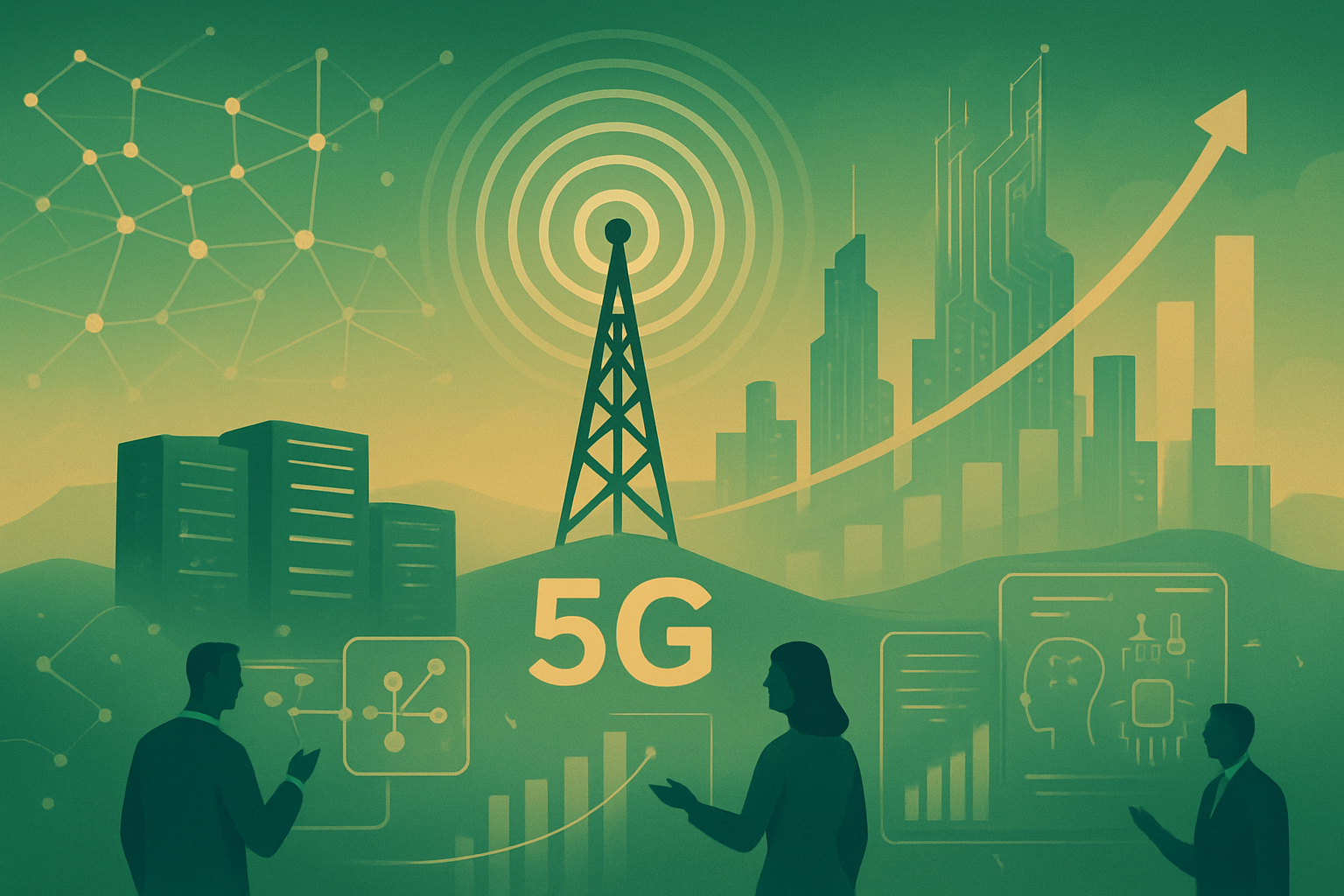
    As of today, December 19, 2025, HCL Technologies (NSE: HCLTECH) has solidified its position as a global leader in the telecommunications and engineering services landscape. While the broader Indian IT sector grapples with shifting geopolitical tides and a volatile macroeconomic environment, HCLTech has made a definitive move to dominate the "Telco-to-Techco" transformation. The focus today is the company's strategic acquisition of Hewlett Packard Enterprise’s (NYSE: HPE) Telco Solutions business—a deal that marks the culmination of a multi-year pivot toward high-value, IP-led engineering services. This acquisition is not merely a transfer of assets; it is a declaration of HCLTech's intent to own the underlying infrastructure of the 5G and autonomous networking era.

    Historical Background

    The HCL (Hindustan Computers Limited) story is one of the foundational narratives of the Indian technology industry. Founded in 1976 by Shiv Nadar and seven others in a Delhi garage, the company predates many of its global competitors. Originally a hardware firm, HCL was instrumental in bringing modern computing to India.

    Over the decades, HCL underwent several metamorphoses. In the 1990s, it pivoted aggressively toward software services, birthing HCL Technologies. Unlike its peers TCS or Infosys, which focused heavily on application development and maintenance, HCLTech carved out a niche in remote infrastructure management and engineering R&D. This "engineering DNA" has remained its core differentiator. Under the leadership of figures like Shiv Nadar and later C Vijayakumar, the company evolved from an outsourcing vendor to a strategic partner for the world’s largest enterprises.

    Business Model

    HCLTech operates through three primary business segments, each contributing to a diversified and resilient revenue stream:

    1. IT and Business Services (ITBS): The largest segment, focusing on digital transformation, cloud migrations, and managed infrastructure services.
    2. Engineering and R&D Services (ERS): The "crown jewel" of HCLTech. This segment focuses on product engineering, hardware design, and embedded software for industries like aerospace, automotive, and telecommunications.
    3. HCLSoftware: A high-margin segment born from the acquisition of IBM’s legacy software portfolio. It focuses on DevOps, security, and customer experience products, providing HCLTech with a recurring, IP-based revenue model that most Indian IT firms lack.

    The customer base is heavily skewed toward Global 2000 companies, with a significant presence in the United States and Europe.

    Stock Performance Overview

    Over the long term, HCLTech has been a "steady compounder," rewarding patient investors with both capital appreciation and consistent dividends.

    • 10-Year Horizon: The stock has delivered a total shareholder return (TSR) of approximately 425%, significantly outperforming the Nifty IT index.
    • 5-Year Horizon: Despite various market cycles, the stock doubled investor capital between 2020 and 2025, fueled by the pandemic-era digital acceleration.
    • 1-Year Horizon: The last 12 months have been more challenging. As of December 2025, the stock is down roughly 14% from its 52-week highs. This decline is largely attributed to external shocks—specifically, US trade policy shifts and a broader cooling of discretionary IT spending—rather than internal operational failures.

    Financial Performance

    HCLTech’s financial health remains robust, characterized by disciplined margin management and a strong balance sheet. For FY2025, the company reported:

    • Revenue: ₹1,17,055 Crore ($14.2 Billion), representing a 6.5% year-on-year growth.
    • Net Income: ₹17,390 Crore, up 10.8% YoY, reflecting improved operational efficiencies.
    • EBIT Margins: Stabilized in the 18% to 19.5% range, a significant feat given the rising costs of specialized AI and engineering talent.
    • Cash Position: The company effectively slashed its net debt by nearly 97% over the past year, entering 2026 with a near-zero net debt position.
    • Dividends: A payout of ₹60 per share in 2025 maintains its reputation as one of the best dividend-yielding stocks in the Indian IT space (yielding approx 3-4%).

    Leadership and Management

    Continuity is the hallmark of HCLTech’s leadership. C Vijayakumar (CVK), who has been with the company since 1994 and CEO since 2016, was recently reappointed to lead until March 2030.

    CVK’s "Mode 1-2-3" strategy has been the North Star for the company’s growth. Under his tenure, HCLTech has successfully integrated multi-billion dollar acquisitions, shifted the focus toward AI-led digital services, and maintained a culture of "Ideapreneurship." The board, led by Chairperson Roshni Nadar Malhotra, is praised for its conservative financial oversight and strategic long-term vision.

    Products, Services, and Innovations

    The acquisition of HPE’s Telco Solutions business, announced in full detail today, is the latest innovation catalyst. This deal brings:

    • Autonomous Networking: AI-driven Operations Support Systems (OSS) that allow networks to "self-heal" and optimize without human intervention.
    • 5G Mastery: Specialized Subscriber Data Management (SDM) solutions that manage over 1 billion devices globally.
    • GenAI Enterprise Foundry: HCLTech’s proprietary framework for deploying Large Language Models (LLMs) in industrial settings.

    By owning the IP for these telco solutions, HCLTech moves beyond just implementing HPE’s technology—it now owns the technology, allowing for higher-margin licensing and specialized consulting.

    Competitive Landscape

    HCLTech occupies a unique position. While Tata Consultancy Services (NSE: TCS) and Infosys (NSE: INFY) are larger in terms of total headcount and revenue, HCLTech is the undisputed leader in Engineering and R&D Services (ERS), holding an estimated 7.3% global market share in the outsourced engineering space.

    Compared to global giants like Accenture (NYSE: ACN) or Capgemini, HCLTech offers a more competitive cost structure while maintaining high-end product engineering capabilities. Its HCLSoftware division also provides a "product-led" growth lever that remains elusive for many of its domestic competitors.

    Industry and Market Trends

    The IT services industry in late 2025 is undergoing a "bifurcation." Standard application maintenance is being commoditized by AI, forcing firms to move up the value chain.

    1. Agentic AI: The shift from chat-based AI to "Agentic AI"—where autonomous agents perform complex workflows—is the new frontier. HCLTech’s early investment in this space is a key differentiator.
    2. 5G Monetization: After years of infrastructure rollout, telecom companies are finally focusing on monetizing 5G. HCLTech’s acquisition of HPE’s assets positions it perfectly to help CSPs (Communication Service Providers) manage this transition.

    Risks and Challenges

    The "elephant in the room" for HCLTech—and the entire Indian IT sector—is the shifting regulatory landscape in the United States.

    • Tariff Pressures: Proposed reciprocal tariffs of up to 26% on services could squeeze margins if clients are unwilling to absorb the costs.
    • Visa Costs: Drastic increases in H-1B visa fees (potentially up to $100,000 for new petitions) are forcing a rapid shift toward local hiring in the US, which typically comes with higher wage bills.
    • Macro Slowdown: With JP Morgan placing US recession odds at 60% for late 2025/early 2026, discretionary IT spending remains under pressure.

    Opportunities and Catalysts

    Despite the headwinds, the HPE Telco acquisition provides a massive growth lever.

    • Cross-Selling: HCLTech now has direct relationships with 20 of the top 30 global telcos. There is significant potential to cross-sell its AI and Cloud services to this new, elite client base.
    • Margin Expansion: As the HPE IP is integrated into HCLSoftware, the shift from a linear "time and material" model to a non-linear "licensing" model should provide a tailwind for EBIT margins.
    • Verizon Partnership: The $2.1 billion deal with Verizon continues to ramp up, providing a stable revenue floor for the Telecom vertical.

    Investor Sentiment and Analyst Coverage

    Analyst sentiment is currently "cautiously optimistic." While technical indicators suggest a bearish trend due to the recent stock price pullback, fundamental analysts highlight HCLTech’s resilience.

    • Wall Street/Dalal Street: The consensus rating remains a "Moderate Buy." Analysts at firms like Goldman Sachs and ICICI Securities point to the company’s zero-net-debt status and attractive valuation (trading at roughly 22x forward earnings) as a margin of safety.
    • Institutional Investors: Hedge fund activity has seen some consolidation, though long-only mutual funds continue to favor HCLTech for its dividend yield and "defensive" characteristics in a volatile market.

    Regulatory, Policy, and Geopolitical Factors

    The geopolitical environment in late 2025 is characterized by "protectionist pragmatism." The US administration’s focus on domestic manufacturing and "Buy American" policies has forced HCLTech to increase its US-based delivery centers (e.g., in Texas and North Carolina).

    Conversely, the "India-Middle East-Europe Economic Corridor" (IMEC) presents long-term opportunities for infrastructure and telco engineering services, where HCLTech’s new HPE-acquired capabilities will be highly relevant for digital sovereignty projects in Europe and the Middle East.

    Conclusion

    HCL Technologies stands at a crossroads on December 19, 2025. The acquisition of HPE’s Telco Solutions business is a bold, $160 million bet that the future of technology lies in the intersection of AI, 5G, and autonomous engineering. While the stock has faced short-term pressure from US policy uncertainty, the underlying business fundamentals—strong margins, zero debt, and a leadership position in ERS—suggest a company built for the long haul.

    For investors, the key will be monitoring the integration of the 1,500 new HPE specialists and the company’s ability to navigate the rising costs of US operations. If HCLTech can successfully transform these telco assets into a high-margin recurring revenue stream, it may well emerge as the most resilient player in the "Big Three" of Indian IT.


    This content is intended for informational purposes only and is not financial advice.