
Tag: STX

  • The Architecture of the AI Data Lake: A Deep Dive into Seagate Technology (STX)

    The Architecture of the AI Data Lake: A Deep Dive into Seagate Technology (STX)

    As of January 8, 2026, the global technology sector finds itself in the midst of a fundamental shift. While the early years of the current decade were defined by the "compute" race—dominated by high-performance GPUs—the focus has now shifted to the "storage bottleneck." At the heart of this transition is Seagate Technology (NASDAQ: STX), a company that has transformed itself from a legacy hardware manufacturer into the essential architect of the AI data lake. After a period of significant stock price volatility driven by cyclical downturns in 2023 and 2024, Seagate has emerged as a high-margin leader in mass-capacity storage, capturing the market’s attention as it leads the charge in next-generation recording technologies.

    Historical Background

    Seagate Technology was founded in 1979 by Al Shugart and Finis Conner, originally under the name Shugart Technology. The company played a pivotal role in the microcomputer revolution by developing the ST-506, the first 5.25-inch hard disk drive (HDD). Throughout the 1980s and 1990s, Seagate navigated a cutthroat landscape of hardware consolidation, surviving by vertically integrating its supply chain and focusing on the manufacturing of the two most critical components of a drive: the recording heads and the media disks.

    The 2010s marked a difficult transition as Solid State Drives (SSDs) began to replace HDDs in consumer electronics like laptops and gaming consoles. Many analysts predicted the "death of the spinning disk." However, Seagate pivoted aggressively toward the enterprise and cloud markets. Rather than trying to compete in the commodity flash memory market, the company doubled down on "Mass Capacity" storage, betting that the world’s exponential data growth would eventually outpace the affordability of SSDs for large-scale storage.

    Business Model

    Seagate’s modern business model is a study in specialization. Approximately 80–90% of its revenue now stems from its Mass Capacity segment, which provides high-density HDDs to hyperscale cloud providers (Amazon, Microsoft, Google) and large enterprises.

    A key evolution in their model since 2024 is the shift to a Build-to-Order (BTO) strategy. By moving away from the "spot market" and toward long-term volume agreements with major customers, Seagate has significantly reduced the historical "boom-and-bust" cycle of the storage industry. This provides the company with approximately 9 to 12 months of demand visibility, allowing for more efficient manufacturing and capital allocation. Additionally, the company has expanded its Lyve Cloud services—a storage-as-a-service offering designed to help enterprises manage "edge" data without the high egress fees charged by major cloud incumbents.

    Stock Performance Overview

    The performance of Seagate stock (NASDAQ: STX) has been a tale of two eras.

    • 1-Year Performance: Over the past twelve months, STX has surged roughly 220%. This reflects a massive re-rating by the market as investors recognized the "AI Storage Supercycle."
    • 5-Year Performance: On a five-year horizon, the stock has gained approximately 550%, representing a 44% CAGR. Much of this gain occurred in the 2024–2025 window as the company successfully commercialized its HAMR (Heat-Assisted Magnetic Recording) technology.
    • 10-Year Performance: For long-term shareholders, the return has been spectacular, with a total return exceeding 1,400% (including dividends), vastly outperforming the S&P 500 and the broader Nasdaq.

    Financial Performance

    Seagate entered early 2026 on a high financial note. In its most recent quarterly report (FY Q1 2026, ending late 2025), the company reported revenue of $2.63 billion, a 21% increase year-over-year. The standout metric was the non-GAAP gross margin, which hit a record 40.1%.

    This margin expansion is directly tied to the transition to higher-capacity drives (30TB+), which command a price premium while offering a lower cost-per-terabyte to the customer. The company has also been aggressive in its debt management, reducing its total debt from over $6 billion in 2023 to $5.0 billion by the end of 2025. With a market capitalization now hovering around $59 billion, Seagate is no longer viewed as a "legacy" value stock but as a growth-oriented infrastructure play.

    Leadership and Management

    Dr. Dave Mosley, who has served as CEO since 2017 and was recently elected Board Chair in October 2025, is the primary architect of Seagate’s current success. Mosley’s tenure has been defined by his "operational discipline" and his refusal to abandon HDD technology in the face of the SSD surge.

    Under Mosley, the leadership team—including CFO Gianluca Romano and CTO John Morris—has focused on "structural improvements" to the business. This includes shutting down less profitable product lines (like low-capacity consumer drives) and focusing R&D exclusively on areal density breakthroughs. The governance reputation of the company is strong, characterized by a commitment to returning capital to shareholders through a consistent (though occasionally volatile) dividend policy.

    Products, Services, and Innovations

    The "crown jewel" of Seagate’s innovation pipeline is HAMR (Heat-Assisted Magnetic Recording), marketed under the Mozaic brand. HAMR uses a tiny laser to heat the disk surface for a nanosecond before writing data, allowing for much smaller bit sizes and, consequently, higher capacity.

    • Mozaic 3+: Currently shipping in volume, these drives offer 30TB to 36TB of storage.
    • Mozaic 4+: These 40TB+ drives are currently in the qualification phase with major cloud service providers, with volume shipments expected to commence in the first half of 2026.
    • Future Roadmap: Seagate has outlined a clear path to 50TB drives by 2027 and targets 100TB by 2030. This technological moat is significant; it allows Seagate to store roughly 6 to 8 times more data per dollar than enterprise-grade SSDs.

    Competitive Landscape

    The HDD industry is essentially a duopoly between Seagate and Western Digital (NASDAQ: WDC), with Toshiba holding a minor third-place position.

    As of early 2026, Seagate holds a clear technological lead. While Western Digital split its flash (SSD) and HDD businesses into two separate entities in February 2025, it remains behind Seagate in the transition to HAMR technology. Western Digital currently relies on "Energy-Assisted Magnetic Recording" (ePMR), which struggles to reach the 30TB+ threshold as efficiently as Seagate's laser-based approach. Analysts estimate Seagate has a 1.5 to 2-year head start in the HAMR volume manufacturing curve.

    Industry and Market Trends

    The "Storage Supercycle" is being driven by two main macro factors:

    1. Generative AI Output: AI models generate staggering amounts of unstructured data. A single minute of AI-generated video is thousands of times larger than the text prompt that created it. This data must be stored somewhere, and HDDs remain the only cost-effective medium for this "warm" storage.
    2. The "Data Lake" Philosophy: Modern enterprises no longer delete data; they store everything to train future proprietary AI models. This "save-everything" mentality has led to an explosion in Exabyte shipments.

    Risks and Challenges

    Despite the current optimism, Seagate faces notable risks:

    • Geopolitical Concentration: Seagate does much of its manufacturing in Singapore, Thailand, and Malaysia. Any escalation in regional tensions or disruptions to the supply chain could be catastrophic.
    • SSD Cost Erosion: If breakthroughs in 3D NAND (SSD) layering occur faster than expected, the cost-per-terabyte gap between HDDs and SSDs could narrow, potentially allowing SSDs to eat into Seagate’s mass-capacity territory.
    • Capex Cycles: Hyperscale providers are known for "digesting" their capacity. If companies like Meta or Google pause their AI infrastructure spending in late 2026, Seagate could face a temporary but sharp revenue contraction.

    Opportunities and Catalysts

    • The 40TB Milestone: The successful volume launch of Mozaic 4+ drives in mid-2026 is the most immediate catalyst. If Seagate hits its production yields, margins could expand toward the 50% mark.
    • The 2026 Refresh Cycle: Much of the cloud infrastructure built during the 2020 pandemic boom is reaching its 5-year end-of-life. A massive replacement cycle of older 12TB/16TB drives with new 30TB+ HAMR drives is expected throughout 2026.
    • M&A Potential: With its strengthened balance sheet, Seagate may look to acquire smaller software companies to bolster its Lyve Cloud storage-as-a-service ecosystem.

    Investor Sentiment and Analyst Coverage

    Wall Street sentiment toward Seagate is currently at its highest point in a decade. Most analysts have "Buy" or "Overweight" ratings, citing the "pure-play" nature of Seagate’s HDD business following the Western Digital split. Hedge funds have increased their positions in STX throughout 2025, viewing it as a "undervalued AI play" compared to the high-multiple chipmakers like Nvidia or AMD. Retail sentiment on platforms like Reddit and X (formerly Twitter) has also turned bullish, focusing on the company's dividend yield and its role as the "world's hard drive."

    Regulatory, Policy, and Geopolitical Factors

    Seagate operates in a sensitive regulatory environment. In 2023, the company faced a $300 million fine from the U.S. Bureau of Industry and Security (BIS) regarding shipments to Huawei. Today, the company maintains a rigorous compliance framework but remains at the mercy of U.S.-China trade relations. As a significant portion of its end-demand comes from Chinese data centers, any further tightening of export controls on high-capacity storage could impact its long-term growth projections in the Asia-Pacific region.

    Conclusion

    Seagate Technology has successfully navigated the "trough of disillusionment" regarding hard disk technology. By January 2026, the company has proven that the HDD is not a relic of the past, but the bedrock of the AI future. With a dominant technological lead in HAMR, record-breaking margins, and a streamlined business model, Seagate is well-positioned to capitalize on the global storage supercycle.

    However, investors should remain mindful of the cyclical nature of the industry and the geopolitical risks inherent in high-tech manufacturing. While the stock has seen a meteoric rise, its future will depend on whether it can maintain its areal density advantage and successfully manage the transition to 40TB and 50TB capacities. For now, Seagate stands as a formidable "pure-play" on the world’s insatiable hunger for data.


    This content is intended for informational purposes only and is not financial advice.

  • The Bedrock of the AI Era: A Deep-Dive into Seagate Technology’s (STX) Resurgence

    The Bedrock of the AI Era: A Deep-Dive into Seagate Technology’s (STX) Resurgence

    In the global race to build the infrastructure for Artificial Intelligence, much of the spotlight has been dominated by the silicon "brains" of the operation—the high-performance GPUs. However, as the industry enters 2026, a new realization has gripped Wall Street: those brains require a massive, high-density "memory" to function. This realization has catapulted Seagate Technology (NASDAQ: STX) into the center of the AI narrative.

    Following a recent 14% surge in stock price, Seagate has transitioned from being viewed as a legacy hardware manufacturer into a "structural winner" of the AI data-center boom. With the successful commercialization of its Heat-Assisted Magnetic Recording (HAMR) technology and a tightening supply market for mass-capacity storage, Seagate is proving that the hard disk drive (HDD) is far from obsolete. This article examines the factors behind Seagate’s recent performance, its technological moat, and the risks it navigates in a fragmented geopolitical landscape.

    Historical Background

    Founded in 1979 by Al Shugart and Finis Conner, Seagate Technology helped birth the personal computing revolution. Its first product, the ST-506, was the first 5.25-inch hard drive for microcomputers, effectively bringing high-capacity storage to the desktop. Over the decades, Seagate navigated the brutal consolidation of the storage industry, surviving through a mix of aggressive acquisitions (including the storage business of Maxtor in 2006 and Samsung’s HDD business in 2011) and engineering prowess.

    In the mid-2010s, as cloud computing began to take off, Seagate made a strategic pivot. While competitor Western Digital (NASDAQ: WDC) diversified heavily into Flash/SSD technology, Seagate remained fundamentally committed to the HDD, betting that the sheer volume of data being generated would always require a more cost-effective medium than solid-state storage could provide at scale. This "Mass Capacity" strategy, once criticized as narrow-minded, has become the cornerstone of its current valuation.

    Business Model

    Seagate operates a highly concentrated business model focused on the design, manufacture, and sale of hard disk drives. Unlike its peers, Seagate derives roughly 90% of its revenue from HDDs, specifically targeting the "Mass Capacity" segment.

    • Nearline Cloud Storage: This is Seagate’s primary revenue driver. These high-capacity drives (Exos series) are sold to "Hyperscalers" like Microsoft, Amazon, and Google for use in massive data centers.
    • Edge and Video Image Storage: Seagate provides specialized drives (IronWolf and SkyHawk) for network-attached storage (NAS) and surveillance systems.
    • Build-to-Order (BTO) Model: Under current management, Seagate has moved toward a "Build-to-Order" system. This involves securing long-term commitments from major customers before production begins, which helps stabilize pricing and prevents the inventory gluts that historically caused massive earnings volatility in the sector.

    Stock Performance Overview

    Over the last five years, STX has undergone a dramatic "U-shaped" recovery.

    • 1-Year Performance: In 2025, the stock outperformed the S&P 500 by over 30%, driven by the successful volume ramp of the Mozaic 3+ platform.
    • 5-Year Performance: Investors who weathered the 2023 cyclical bottom have seen their holdings nearly triple, as the company pivoted from a $50-60 range to its current record highs.
    • Recent 14% Jump: The early January 2026 surge was triggered by a series of analyst upgrades from firms like Morgan Stanley, citing a "structural floor" in gross margins and the revelation that Seagate’s production capacity for 30TB+ drives is fully committed through the end of 2026.

    Financial Performance

    Seagate’s fiscal year 2025 results, released in late 2025, showed a company in peak operational health.

    • Revenue: Rebounded to $9.1 billion in FY2025, up 39% from the previous year.
    • Margins: Non-GAAP gross margins reached a record 40.1% in the most recent quarter. This is significant because it marks the first time an HDD manufacturer has consistently stayed in the 40% range—a territory typically reserved for software or high-end chipmakers.
    • EPS: Non-GAAP earnings per share for FY2025 reached $8.10, reflecting the massive operating leverage gained from the Mozaic platform.
    • Balance Sheet: Seagate has reduced its gross debt to $5.0 billion. With a Net Debt/EBITDA ratio falling below 1.8x, the company has signaled a return to aggressive capital returns, including stock buybacks scheduled for the first half of 2026.

    Leadership and Management

    The company is currently led by Dr. Dave Mosley, who has served as CEO since 2017 and was recently appointed Chairman of the Board in October 2025. Mosley, a physicist, has been praised for his "technology-first" approach. Unlike previous leaders who focused primarily on financial engineering, Mosley’s tenure has been defined by the high-stakes gamble on HAMR.

    The executive team is rounded out by CFO Gianluca Romano, who is credited with implementing the BTO discipline that has protected margins, and CTO Dr. John Morris, who leads the R&D efforts in areal density. The management team is generally viewed by the street as highly disciplined and transparent, particularly after navigating the fallout of a major regulatory settlement in 2023.

    Products, Services, and Innovations

    The crown jewel of Seagate’s portfolio is the Mozaic 3+ platform. This technology utilizes HAMR—where a nanophotonic laser momentarily heats a tiny spot on the disk to make it more receptive to magnetic changes—to achieve storage densities previously thought impossible.

    • 30TB and Beyond: Seagate is currently shipping 30TB and 32TB drives in volume.
    • The 40TB Horizon: As of early 2026, Seagate has begun sampling 44TB and 48TB drives (Mozaic 4+).
    • The TCO Moat: Seagate’s primary competitive advantage is "Total Cost of Ownership" (TCO). While SSDs are faster, HDDs currently maintain a 6-to-1 cost-per-terabyte advantage for enterprise-grade storage. For the "data lakes" required to train Large Language Models (LLMs), the cost of using only SSDs remains prohibitive for most enterprises.

    Competitive Landscape

    The HDD market is a triopoly, consisting of Seagate, Western Digital (NASDAQ: WDC), and Toshiba.

    • Seagate vs. WDC: While Western Digital is currently undergoing a corporate split to separate its HDD and Flash businesses, Seagate has remained a pure-play HDD power. Seagate currently leads in "Mass Capacity" unit market share (approx. 40-42%).
    • The Technology Gap: Seagate is currently roughly 12 to 18 months ahead of its competitors in the volume deployment of HAMR. Western Digital has relied more on ePMR (energy-assisted perpendicular magnetic recording), which is approaching its physical limits in terms of density.

    Industry and Market Trends

    The "Data-Centric" phase of AI is the primary macro driver in 2026. While 2023 and 2024 were defined by the acquisition of GPUs (the "Compute" phase), 2025 and 2026 are about "Storage and Inference."

    • Generative AI Data Lakes: Video-generation AI and high-resolution imaging require exponentially more storage than text-based LLMs.
    • Supply Constraints: Due to years of underinvestment in HDD manufacturing capacity, the industry is currently facing a supply shortage. Lead times for high-capacity drives have extended to over 50 weeks in some regions, giving Seagate significant pricing power.

    Risks and Challenges

    Despite the recent rally, Seagate faces significant hurdles:

    • SSD Erosion: Solid-state drives continue to improve in density. If the price of NAND flash drops precipitously, it could shrink the 6-to-1 TCO advantage that protects Seagate’s nearline business.
    • Supply Chain Vulnerability: HDDs rely on rare earth magnets, 90% of which are processed in China. Any disruption in this supply chain would be catastrophic for production.
    • Debt Load: While falling, Seagate still carries $5 billion in debt. In a high-interest-rate environment, servicing this debt remains a significant portion of cash flow.

    Opportunities and Catalysts

    • Hyper-Scale Adoption: As more enterprises move their AI training in-house (Private AI), the demand for on-premise mass storage is expected to surge alongside public cloud demand.
    • Dividends and Buybacks: Seagate has maintained its dividend even during the 2023 downturn. With the recent earnings surge, a significant increase in the dividend or a massive share buyback program in 2026 is a likely catalyst for further stock appreciation.
    • HAMR Yield Improvements: As the manufacturing yields of HAMR drives improve, Seagate’s unit costs will drop further, allowing for even higher gross margins.

    Investor Sentiment and Analyst Coverage

    Sentiment toward Seagate has shifted from "neutral/cautious" to "overwhelmingly bullish" in the last six months.

    • Wall Street Ratings: As of January 2026, 75% of analysts covering STX have a "Buy" or "Strong Buy" rating.
    • Institutional Moves: Major hedge funds have increased their positions, viewing STX as a lower-multiple way to play the AI boom compared to Nvidia (NASDAQ: NVDA) or Super Micro Computer (NASDAQ: SMCI).
    • Retail Chatter: On platforms like X and Reddit, Seagate is frequently discussed as the "hidden AI play," with retail investors focusing on its high dividend yield relative to other tech stocks.

    Regulatory, Policy, and Geopolitical Factors

    Seagate’s history with regulators is a critical part of its risk profile.

    • The 2023 BIS Settlement: Seagate is still paying off a $300 million penalty to the U.S. Department of Commerce for shipping drives to Huawei in 2020-2021. The company remains under a mandatory compliance audit period until late 2026.
    • Export Controls: As the U.S. continues to tighten restrictions on AI-related technology exports to China, Seagate must carefully navigate where its 30TB+ drives are sold.
    • Geopolitics: With roughly 20-25% of its revenue coming from China, any further deterioration in US-China relations poses a direct threat to Seagate’s top line.

    Conclusion

    Seagate Technology has successfully navigated the "Valley of Death" that many legacy hardware companies fail to cross. By doubling down on HAMR technology and aligning its business model with the massive data requirements of the AI era, it has transformed from a cyclical commodity player into a critical infrastructure provider.

    For investors, the recent 14% gain is a validation of Dave Mosley's high-stakes strategy. However, the path forward requires careful monitoring of SSD price parity and the fragile geopolitical environment. As of early 2026, Seagate sits in a position of strength, holding the keys to the massive "data lakes" that will feed the next generation of artificial intelligence.


    This content is intended for informational purposes only and is not financial advice.

  • The Storage Supercycle: How Seagate Technology is Powering the AI Data Revolution

    The Storage Supercycle: How Seagate Technology is Powering the AI Data Revolution

    The digital world is currently in the midst of a silent but massive physical expansion. While the headlines of the last two years have been dominated by the blistering speed of AI processors and the software breakthroughs of generative models, a second, more structural challenge has emerged: where to put the trillions of gigabytes being generated by these machines. On the front lines of this infrastructure surge is Seagate Technology Holdings PLC (NASDAQ: STX).

    Seagate’s stock recently notched a 1.68% gain, continuing a momentum streak that mirrors its peer Western Digital Corporation (NASDAQ: WDC). Both companies are beneficiaries of a fundamental shift in the technology landscape. As of early 2026, the market has realized that AI is not just a compute problem; it is a storage problem. With shares trading near all-time highs and a technological lead in high-capacity drives, Seagate has transitioned from a legacy hardware manufacturer into a critical gatekeeper of the AI era.

    Historical Background

    The story of Seagate is essentially the story of the hard disk drive (HDD) itself. Founded in 1979 by industry legends Al Shugart and Finis Conner, the company (originally Shugart Technology) revolutionized the personal computing world by introducing the 5.25-inch HDD. This innovation moved data storage out of refrigerator-sized cabinets and onto the desktop, effectively enabling the PC revolution of the 1980s.

    Over the decades, Seagate navigated the brutal consolidation of the storage industry. What was once a field of over 200 competitors eventually narrowed to a triopoly. Throughout the 1990s and 2000s, Seagate survived by focusing on vertical integration—manufacturing its own heads and media. However, by the mid-2010s, the company faced an existential threat: the rise of Solid State Drives (SSDs). While many predicted the "death of the spinning disk," Seagate pivoted, doubling down on "Mass Capacity" storage for the burgeoning cloud market, a bet that is paying off spectacularly in 2026.

    Business Model

    Seagate operates a high-volume, technology-intensive business model focused on maximizing "areal density"—the amount of data that can be stored on a single disk platter. As of 2026, its revenue is heavily weighted toward the Mass Capacity segment, which accounts for approximately 80% to 90% of its total turnover. This segment serves hyperscale cloud providers (like Amazon, Google, and Microsoft) and large-scale enterprises.

    A key evolution in Seagate’s model has been the shift toward Build-to-Order (BTO) and long-term volume agreements. Historically, the HDD market was plagued by volatile price swings and inventory gluts. By securing multi-year contracts with major cloud players, Seagate has stabilized its production cycles and gained significant pricing power. Additionally, the company has expanded into software-defined storage through its Lyve Cloud platform, offering "Storage-as-a-Service" to help customers manage data across edge and cloud environments.

    Stock Performance Overview

    Investors who held Seagate through the "boring" years of the late 2010s have been handsomely rewarded. As of early January 2026, STX is trading at approximately $275.39, a staggering climb from the ~$20–$25 range seen a decade ago in 2016.

    • 1-Year Performance: The last 12 months have been the most explosive in the company's history. Beginning 2025 at roughly $86.60, the stock surged over 218% as the market began pricing in the "AI Storage Supercycle."
    • 5-Year Performance: From January 2021 to 2026, the stock has grown more than fourfold, reflecting the successful transition from consumer-grade drives to enterprise-grade cloud dominance.
    • 10-Year Performance: Over the decade, STX has transformed from a cyclical dividend play into a high-growth infrastructure staple, delivering a total return that significantly outpaces the S&P 500 and the broader tech sector.

    Financial Performance

    Seagate’s financial results in late 2025 have silenced skeptics who doubted the profitability of hardware manufacturing. In its Q1 Fiscal 2026 report (ending October 2025), the company posted:

    • Revenue: $2.63 billion, a 21% year-over-year increase.
    • Gross Margins: A record-breaking 40.1% (Non-GAAP), driven by the lower manufacturing costs of its high-density HAMR drives.
    • Earnings Per Share (EPS): $2.61, comfortably beating analyst consensus.

    The company's balance sheet has also strengthened. While it carries significant debt typical of capital-intensive industries, CFO Gianluca Romano has focused on high free cash flow ($427 million in the most recent quarter) to fund a dividend that currently sits at $0.74 per share, alongside aggressive share buybacks.

    Leadership and Management

    The architect of Seagate's current success is Dr. Dave Mosley, who has served as CEO since 2017 and was appointed Board Chair in late 2025. A physicist by training, Mosley’s "technology-first" approach has been a departure from the purely financial management of previous eras.

    Mosley’s decision to bypass several incremental storage technologies to focus entirely on Heat-Assisted Magnetic Recording (HAMR) was a high-stakes gamble that has now become the company's primary competitive moat. His leadership is generally viewed by analysts as disciplined and operationally excellent, with a focus on "returns over volume."

    Products, Services, and Innovations

    Seagate’s flagship innovation is the Mozaic 3+ platform, which utilizes HAMR technology. By using a tiny laser to heat the disk surface to over 400°C for a nanosecond, Seagate can write data to much smaller areas than previously possible.

    • Current Offerings: Seagate is currently shipping 30TB and 36TB drives in volume. These drives are the "gold standard" for AI data lakes, where petabytes of training data must be stored at the lowest possible cost per terabyte.
    • Innovation Pipeline: The company is currently sampling 40TB+ drives with volume production expected in the first half of 2026. A roadmap to 50TB by late 2026 or early 2027 is already in place.
    • Edge Portfolio: Through its LaCie and FireCuda brands, Seagate remains a leader in high-performance external storage for creative professionals and gamers, though this is a shrinking portion of the overall revenue mix compared to the cloud.

    Competitive Landscape

    The HDD market is a global triopoly, but the power dynamics are shifting:

    1. Seagate (STX): The technology leader in areal density. By shipping more terabytes per platter, Seagate achieves higher margins than its rivals.
    2. Western Digital (WDC): The largest player by total exabytes shipped. WDC has a more diversified business including Flash/SSD technology, which some investors prefer, though it is currently in the process of separating its HDD and Flash businesses.
    3. Toshiba: A distant third, focusing largely on the traditional enterprise and consumer markets without the aggressive HAMR roadmap seen at Seagate.

    In 2026, the competition has shifted from a price war to a "density war." Hyperscalers are space-constrained; they would rather buy one 36TB drive than two 18TB drives to save on power, cooling, and rack space. Currently, Seagate holds a 1–2 year lead in this specific high-density tier.

    Industry and Market Trends

    The dominant trend of 2026 is the AI Data Lake. While AI training (the "thinking" phase) happens on expensive HBM memory and SSDs, the "learning" data and the "output" logs are stored on HDDs.

    • Cost Gap: Enterprise HDDs remain roughly 6 to 8 times cheaper per terabyte than enterprise SSDs. This cost delta is expected to persist through the end of the decade, ensuring HDDs remain the backbone of the "cold" and "warm" storage tiers.
    • Sustainability: Data centers are under immense pressure to reduce carbon footprints. Higher-density drives (more TB per watt) are a primary way for cloud providers to meet ESG goals.

    Risks and Challenges

    Despite the current rally, Seagate faces significant headwinds:

    • Cyclicality: Historically, the storage industry has been prone to "boom and bust" cycles. While BTO contracts mitigate this, a macro-economic slowdown could still lead to a "digestion period" where cloud providers pause their expansion.
    • SSD Encroachment: While HDDs are cheaper today, the cost of Flash storage continues to fall. If a technological breakthrough significantly closes the price gap, the long-term terminal value of HDD manufacturing could be questioned.
    • Geopolitical Risk: A significant portion of Seagate's manufacturing and customer base is in Asia. Any escalation in trade tensions between the U.S. and China poses a direct threat to supply chains.

    Opportunities and Catalysts

    • AI Inference Growth: As text-to-video and multimodal AI become mainstream, the amount of data generated will grow exponentially, requiring a massive "storage refresh" in existing data centers.
    • Margin Expansion: If Seagate successfully ramps its 40TB drives in 2026, analysts believe gross margins could approach 50%, a level traditionally reserved for software companies.
    • M&A Potential: With the storage industry consolidating further, Seagate’s Lyve Cloud could be an attractive acquisition target for a larger cloud or networking firm, or Seagate itself could look to acquire niche AI-data management firms.

    Investor Sentiment and Analyst Coverage

    Wall Street is currently "Overweight" on STX. Institutional ownership is exceptionally high at over 93%, indicating that the "smart money" sees Seagate as a core infrastructure play rather than a speculative tech stock.

    Analyst price targets for 2026 range from $330 to $350. The prevailing sentiment is that the market is finally valuing Seagate not as a "hardware maker," but as a "utility for the AI economy." However, some retail sentiment has turned cautious, with chatter on social platforms suggesting the stock may be "overextended" after its 200%+ run in 2025.

    Regulatory, Policy, and Geopolitical Factors

    The U.S. Bureau of Industry and Security (BIS) remains a constant shadow over Seagate. Following a $300 million settlement in 2023 regarding sales to Huawei, Seagate has implemented some of the most stringent export compliance programs in the industry.

    As of early 2026, new U.S. restrictions on high-capacity storage for Chinese AI projects have increased the compliance burden. However, Seagate’s progress in environmental sustainability—aiming for 100% renewable energy by 2030—has made it a favorite for ESG-focused institutional funds, providing a stable floor for the stock price.

    Conclusion

    Seagate Technology is no longer the "spinning disk" company of the 20th century. By the dawn of 2026, it has successfully rebranded itself as the warehouse of the AI era. With Dr. Dave Mosley at the helm and a clear technological advantage in HAMR-enabled density, Seagate is positioned to capture the lion's share of the massive data expansion required by the next generation of artificial intelligence.

    Investors should watch for the volume ramp of 40TB drives in mid-2026 and any shifts in the SSD-to-HDD price ratio. While the stock has seen a historic run-up, the structural demand for mass-capacity storage suggests that Seagate's role in the global tech stack has never been more vital.


    This content is intended for informational purposes only and is not financial advice.
  • The Data Vault: Why Seagate (STX) is the Unsung Hero of the AI Era in 2025

    The Data Vault: Why Seagate (STX) is the Unsung Hero of the AI Era in 2025

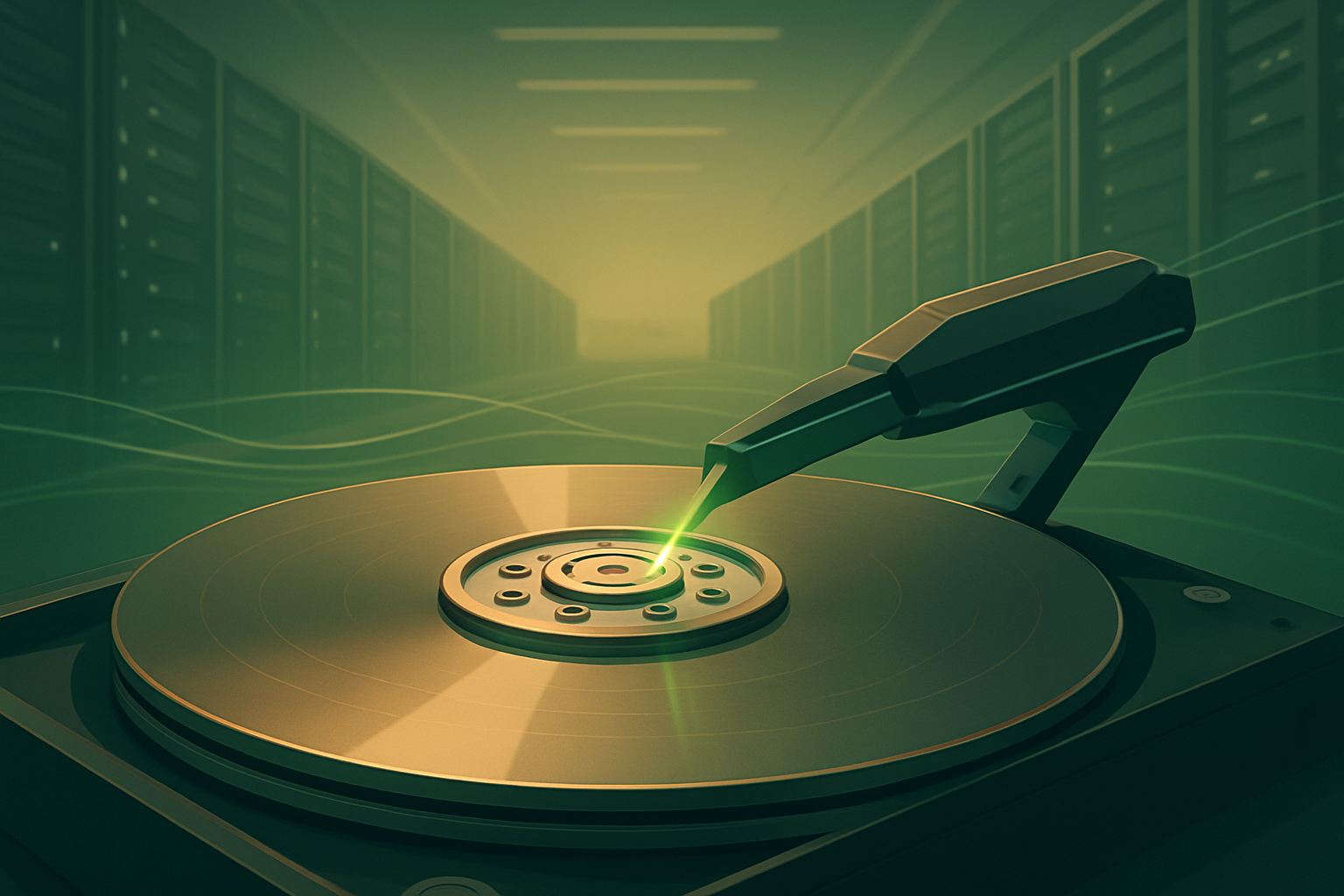
    As of December 26, 2025, Seagate Technology Holdings plc (NASDAQ: STX) stands at the epicenter of a "Data Renaissance." While the technology world spent the early 2020s obsessed with processing power (GPUs), 2025 has become the year of the "Data Vault." With the explosion of generative AI models and autonomous systems, the world is generating more data than it can physically store. Seagate, a veteran of the hard disk drive (HDD) industry, has successfully shed its image as a legacy hardware provider to become a critical infrastructure play for the AI era. By betting the company on Heat-Assisted Magnetic Recording (HAMR) technology, Seagate has positioned itself as the indispensable provider of mass-capacity storage for the world’s hyperscale data centers.

    Historical Background

    Founded in 1978 by Al Shugart and Finis Conner, Seagate has been a cornerstone of the storage industry for nearly five decades. Originally based in Silicon Valley (now headquartered in Dublin, Ireland), the company revolutionized the personal computer market with the ST-506, the first 5.25-inch hard drive. Over the decades, Seagate navigated the tumultuous consolidation of the storage industry, acquiring rivals like Maxtor in 2006 and Samsung’s HDD business in 2011. These strategic moves helped create the current global HDD oligopoly. In the mid-2010s, as Solid State Drives (SSDs) began to dominate the consumer market, Seagate made a pivotal decision: rather than trying to lead in low-capacity flash memory, it would double down on "mass capacity" magnetic storage for the burgeoning cloud computing sector.

    Business Model

    Seagate’s business model is now bifurcated into two distinct categories:

    1. Mass Capacity Storage: This is the company’s primary growth engine, representing over 80% of total revenue. It focuses on "Nearline" HDDs—high-capacity drives (ranging from 16TB to the newly released 32TB+ models) designed for the massive data centers of Google, Amazon, and Microsoft.
    2. Legacy and Other: This includes traditional storage for desktop PCs, laptops, and consumer electronics. While this segment provides steady cash flow, it is in a long-term secular decline as SSDs continue to replace HDDs in smaller consumer devices.

    Seagate’s transition to a "build-to-order" (BTO) strategy in 2024 has further refined its model, allowing for tighter inventory management and better pricing power with major cloud clients.

    Stock Performance Overview

    The year 2025 has been a breakout period for Seagate. After a "storage recession" in late 2022 and 2023 caused by inventory gluts at cloud providers, the stock began a meteoric rise.

    • 1-Year Performance: STX has surged over 200% year-to-date in 2025, significantly outperforming the broader S&P 500 and even many of its semiconductor peers.
    • 5-Year Performance: Long-term investors have seen the stock nearly triple in value, as the market moved from skepticism about HDD longevity to valuing it as an AI-enabler.
    • 10-Year Performance: The decade-long view shows a company that survived the "death of the hard drive" narrative through aggressive R&D and strategic pivoting, ultimately rewarding patient shareholders with both capital gains and consistent dividends.

    Financial Performance

    In its most recent fiscal reports for 2025 (fiscal year ending June 2025), Seagate demonstrated a powerful recovery. Total revenue for FY2025 reached $9.10 billion, a staggering 39% increase year-over-year. The real story, however, lies in the margins. As the Mozaic 3+ platform (HAMR) entered volume production, Seagate’s non-GAAP gross margins expanded to a decade-high of 37.4% in the final quarter of the fiscal year.

    The company reported a non-GAAP EPS of $8.10 for FY2025, up from just $1.29 the previous year. Free cash flow also rebounded strongly to $818 million, allowing the company to maintain its $0.72 per share quarterly dividend while managing its debt obligations.

    Leadership and Management

    CEO Dave Mosley, who took the helm in 2017, is credited with navigating Seagate through the transition to HAMR. Under his leadership, the company has prioritized R&D in areal density (the amount of data that can be stored on a disk platter) over chasing low-margin market share in the flash market. The management team is viewed as disciplined and technically proficient, with a clear focus on the "Areal Density Roadmap." Governance is generally well-regarded, though the board has had to manage the fallout from past regulatory missteps with transparency and rigorous compliance updates.

    Products, Services, and Innovations

    Seagate’s "crown jewel" is the Mozaic 3+ platform, which utilizes Heat-Assisted Magnetic Recording (HAMR).

    • HAMR Technology: By using a tiny laser to heat the disk surface momentarily, Seagate can write data to significantly smaller grains, bypassing the physical limits of traditional recording methods.
    • Mozaic 3+: This platform incorporates 32TB+ drives, featuring iron-platinum superlattice media and 7th-generation spintronic readers.
    • Future Pipeline: Seagate has already begun sampling 36TB drives and has a roadmap targeting 40TB by late 2026 and 50TB+ by 2028. This technological lead creates a significant "moat" as competitors struggle to match these densities cost-effectively.

    Competitive Landscape

    The HDD market is a three-way battle:

    • Seagate (STX): Holds approximately 41% of the market and is the undisputed leader in HAMR technology deployment.
    • Western Digital (NASDAQ: WDC): Holds roughly 42% of the market. Western Digital’s recent split into two separate entities (Flash and HDD) in 2025 has made it a more focused competitor, but it has lagged Seagate in the transition to HAMR, relying more on Shingled Magnetic Recording (SMR) to extend current capacities.
    • Toshiba: Holds the remaining 17%. While a stable player, Toshiba generally follows the technological lead of Seagate and WDC.

    Seagate’s competitive edge currently lies in its vertical integration and its "first-mover" advantage in HAMR, which allows it to offer lower total cost of ownership (TCO) for data centers.

    Industry and Market Trends

    Three macro trends are driving the industry in late 2025:

    1. AI Model Storage: Large Language Models (LLMs) and video-generative AI require massive datasets for training and archiving. While GPUs do the "thinking," HDDs provide the "memory" where these vast libraries reside.
    2. Cloud CAPEX Thaw: After two years of cautious spending, hyperscalers (Meta, Google, etc.) have entered a massive "refresh cycle" to upgrade their storage infrastructure for AI readiness.
    3. Sustainability: High-capacity drives (30TB+) are more energy-efficient per terabyte than older 16TB units, helping data centers meet aggressive ESG and carbon-neutrality targets.

    Risks and Challenges

    Despite the current tailwinds, Seagate faces several risks:

    • SSD Encroachment: While HDDs remain significantly cheaper per terabyte for mass storage, price drops in QLC (Quad-Level Cell) flash memory could eventually threaten the lower end of the mass-capacity market.
    • Cyclicality: The storage industry is notoriously cyclical. Any slowdown in AI investment or a global recession could lead to another "inventory correction."
    • Operational Risk: HAMR is a highly complex technology. Any manufacturing yield issues or field failures in the 32TB+ drives could be catastrophic for both reputation and the bottom line.

    Opportunities and Catalysts

    • 40TB Launch: The market is looking toward late 2026 for the first 40TB drives, which would further cement Seagate's TCO lead.
    • Edge Computing: As AI moves to the edge (autonomous vehicles, smart cities), new demand for ruggedized, high-capacity storage is emerging.
    • Stock Buybacks: With free cash flow rising, there is increasing speculation that Seagate may resume aggressive share repurchases in 2026 once the BIS fine payments are further advanced.

    Investor Sentiment and Analyst Coverage

    Wall Street sentiment toward STX is at a multi-year high. Most analysts carry "Buy" or "Strong Buy" ratings, viewing Seagate as a "pure-play" on AI infrastructure that trades at a more reasonable valuation than some of the high-flying semiconductor stocks. Institutional ownership remains high, with major players like BlackRock and Vanguard maintaining significant positions. However, some cautious voices note that the 200% YTD run-up may have priced in much of the near-term perfection, leading to a "Moderate Buy" consensus in recent weeks.

    Regulatory, Policy, and Geopolitical Factors

    Seagate continues to navigate a complex regulatory environment:

    • BIS Settlement: Seagate is currently in the third year of its 5-year, $300 million settlement with the U.S. Bureau of Industry and Security for past sales to Huawei. This requires a $15 million quarterly payment and strict compliance audits.
    • Export Controls: As U.S.-China tensions persist, Seagate must constantly adjust its sales strategy to comply with evolving restrictions on high-tech exports to the Chinese market, which remains a significant source of demand.

    Conclusion

    As we close out 2025, Seagate Technology has successfully transformed from a legacy hardware manufacturer into an AI-essential infrastructure company. By mastering HAMR technology and executing a disciplined financial strategy, Seagate has captured the "mass capacity" narrative that defines the modern cloud era. While the risks of cyclicality and geopolitical friction remain ever-present, Seagate's technological roadmap suggests it will remain the dominant force in high-density storage for the remainder of the decade. Investors should keep a close eye on manufacturing yields of the Mozaic 4+ platform and any shifts in hyperscale CAPEX as we head into 2026.


    This content is intended for informational purposes only and is not financial advice.