Tag: Sports Betting

  • Norway’s “Ice Machine” Dominance: Polymarket Bettors Give Norse 79% Edge as Winter Olympics Heat Up

    Norway’s “Ice Machine” Dominance: Polymarket Bettors Give Norse 79% Edge as Winter Olympics Heat Up

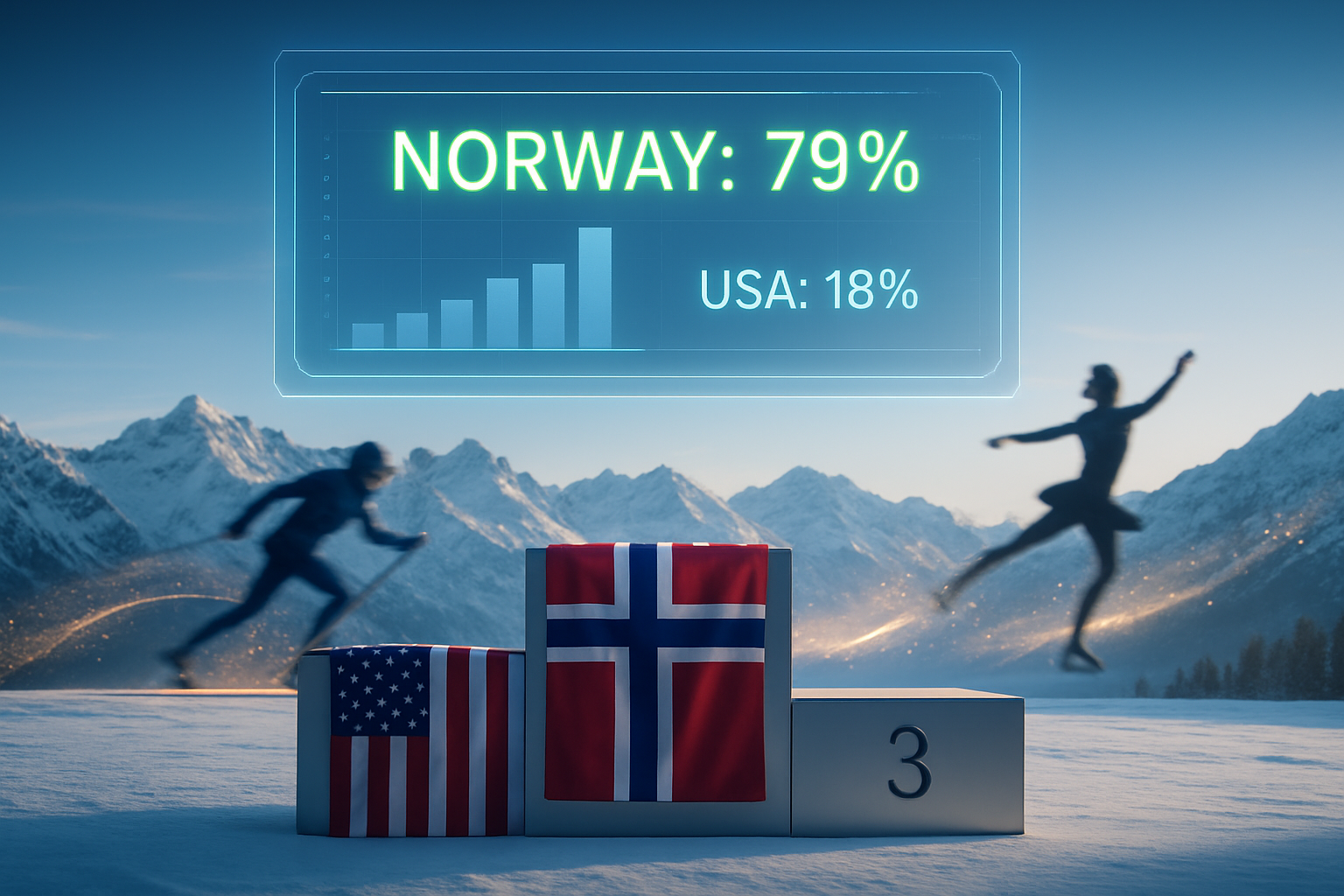
    As the torch burns bright over Milano-Cortina for the 2026 Winter Olympics, the battle for international supremacy is already reaching a fever pitch—not just on the slopes, but in the high-stakes world of prediction markets. Just three days into the official competition, Norway has emerged as a staggering favorite to top the gold medal leaderboard, with the "Most Gold Medals" market on Polymarket giving the Nordic powerhouse a 79% probability of victory. Meanwhile, the United States, once seen as a formidable challenger, has seen its odds slip to a mere 18%.

    The intensity of the competition is mirrored by the liquidity in the markets. Traders have pushed over $4 million in volume into the gold medal category, making it one of the most traded non-political events of the year. This surge in interest follows a weekend of "shock" wins for Norway and a major injury setback for Team USA, forcing bettors to rapidly recalibrate their portfolios as the "Medal Machine" from the north begins to pull away.

    The Market: What's Being Predicted

    The primary theater for this financial speculation is Polymarket, where the "Most Gold Medals" contract has become a focal point for sports analysts and crypto-traders alike. Currently, Norway "Yes" shares are trading at $0.79, reflecting the 79% implied probability, while the United States "Yes" shares languish at $0.18. This represents a massive shift from the pre-Opening Ceremony odds, which saw Norway at a more modest 63% and the U.S. at 26%.

    The market is structured as a winner-take-all contract that settles based on the final official medal tally from the International Olympic Committee (IOC). In the event of a tie in gold medals, Polymarket’s resolution rules state that the winner will be determined by the most silver medals, followed by the most total medals overall. This "tie-break" clause is particularly relevant given the dominance of the Comcast Corporation (NASDAQ:CMCSA)-owned NBCUniversal’s coverage, which often focuses on total medal counts, whereas prediction markets are laser-focused on the specific gold-medal "winner-take-all" outcome.

    Liquidity in the market remains exceptionally high for a sporting event, with the $4 million volume providing tight spreads and allowing "whales" to move large positions. Traders who backed Norway early are already sitting on significant "paper gains," while those betting on a U.S. resurgence are hoping for a heavy-hitting second week dominated by figure skating and snowboarding.

    Why Traders Are Betting

    The 79% confidence in Norway isn't just a result of national bias; it is backed by cold, hard performance. Over the opening weekend, Norway secured three pivotal golds that shattered the "bear case" for the nation. Cross-country legend Johannes Høsflot Klæbo secured his sixth career gold in the men’s 20km skiathlon on February 8, while Anna Odine Strøm delivered a massive upset in women’s ski jumping—a sport where Norway was not the favorite. Perhaps most impressively, Sander Eitrem broke the Olympic record in the men’s 5000m speed skating, proving that Norway's dominance extends beyond the ski trails and into the rinks.

    Conversely, the U.S. market position took a significant hit following the dramatic crash of alpine legend Lindsey Vonn on Day 2. Vonn’s highly publicized comeback was cut short in the downhill race, an event the U.S. had hoped would provide a crucial gold. While Breezy Johnson did secure a gold in the women's downhill for Team USA, the loss of Vonn’s "points" in the projected standings caused a sharp sell-off in U.S. shares.

    Traders are also eyeing the "systemic dominance" of Norway versus the "superstar reliance" of the U.S. "Norway's floor is incredibly high because of their depth in biathlon and cross-country skiing," noted one high-volume Polymarket trader. "The U.S. needs near-perfection from individual stars like Ilia Malinin in figure skating and Chloe Kim in snowboarding. If just one of those stars falters, the U.S. path to most golds effectively evaporates. Norway can afford a few mistakes; the U.S. cannot."

    Broader Context and Implications

    The 2026 Games represent a turning point for how the public consumes Olympic data. While traditional broadcasters like Warner Bros. Discovery (NASDAQ:WBD) and NBCUniversal focus on human interest stories and delayed broadcasts, prediction markets provide a real-time, unsentimental "scoreboard" of expectations. The 79% probability for Norway suggests that the "wisdom of the crowd" has largely written off the competitive nature of the gold medal race, viewing Norway's "Ice Machine" as an inevitability.

    Furthermore, the $4 million volume on a single Olympic market highlights the growing mainstreaming of prediction platforms. Unlike traditional sportsbooks, which often limit winning bettors or offer static odds, decentralized platforms allow for dynamic hedging. For example, sponsors like Nike, Inc. (NYSE:NKE), which outfits many of the top athletes, could theoretically use these markets to hedge against the marketing loss of a "gold-less" Games for their primary sponsored nations.

    Historically, prediction markets have been remarkably accurate in predicting Olympic outcomes, often outperforming traditional statistical models. In the 2022 Beijing Games, the markets correctly identified Norway’s record-breaking run days before the mathematical certainty was achieved. The current 2026 data suggests we are seeing a repeat of that efficiency, as bettors front-run the upcoming biathlon schedule, which is heavily weighted toward the Norwegian roster.

    What to Watch Next

    The coming week offers several "inflection points" that could either cement Norway’s 79% lead or provide the U.S. with a much-needed "moonshot" rally. The most critical event on the horizon is the men's singles figure skating, where American Ilia Malinin—known as the "Quad God"—is the heavy favorite. A gold here is priced in for the U.S., but any mistake could send U.S. shares tumbling toward the single digits.

    Speed skating phenom Jordan Stolz is another "must-watch" for market participants. Stolz is favored in three separate distances (500m, 1000m, and 1500m). If Stolz sweeps these events, the U.S. probability could feasibly jump back above 30%, especially if Norway suffers a rare "bad day" on the biathlon range.

    Finally, traders should keep a close eye on the biathlon mixed relay and the upcoming ski jumping large hill events. These are the "battleground states" of the Winter Olympics. If Norway continues to "steal" golds in events where they are only 20-30% favorites—as they did in the normal hill ski jumping—the market will likely close out, with Norway shares hitting $0.90 or higher before the start of the final weekend.

    Bottom Line

    As it stands on February 9, 2026, the prediction markets are signaling that the race for the most gold medals is Norway's to lose. The 79% to 18% split reflects a fundamental belief in the Nordic nation's specialized "medal factory" system over the American "star power" model. With $4 million in volume already processed, the market is displaying deep conviction that the Norwegian flag will be the one seen most frequently atop the podium in Milano-Cortina.

    For the United States to stage a comeback, they need a "perfect week" from their elite specialists and a series of uncharacteristic failures from the Norwegian endurance squad. In the cold, calculating world of prediction markets, sentiment is a secondary factor; the numbers currently point to a Norse landslide. Whether you are a sports fan or a market speculator, the next seven days will determine if the "Ice Machine" is truly unstoppable or if the U.S. has one more miracle on ice left in the tank.


    This article is for informational purposes only and does not constitute financial or betting advice. Prediction market participation may be subject to legal restrictions in your jurisdiction.

    PredictStreet focuses on covering the latest developments in prediction markets. Visit the PredictStreet website at https://www.predictstreet.ai/.
  • The “Frozen Gold” Race: Norway Heavily Favored Over Team USA as 2026 Winter Olympics Begin

    The “Frozen Gold” Race: Norway Heavily Favored Over Team USA as 2026 Winter Olympics Begin

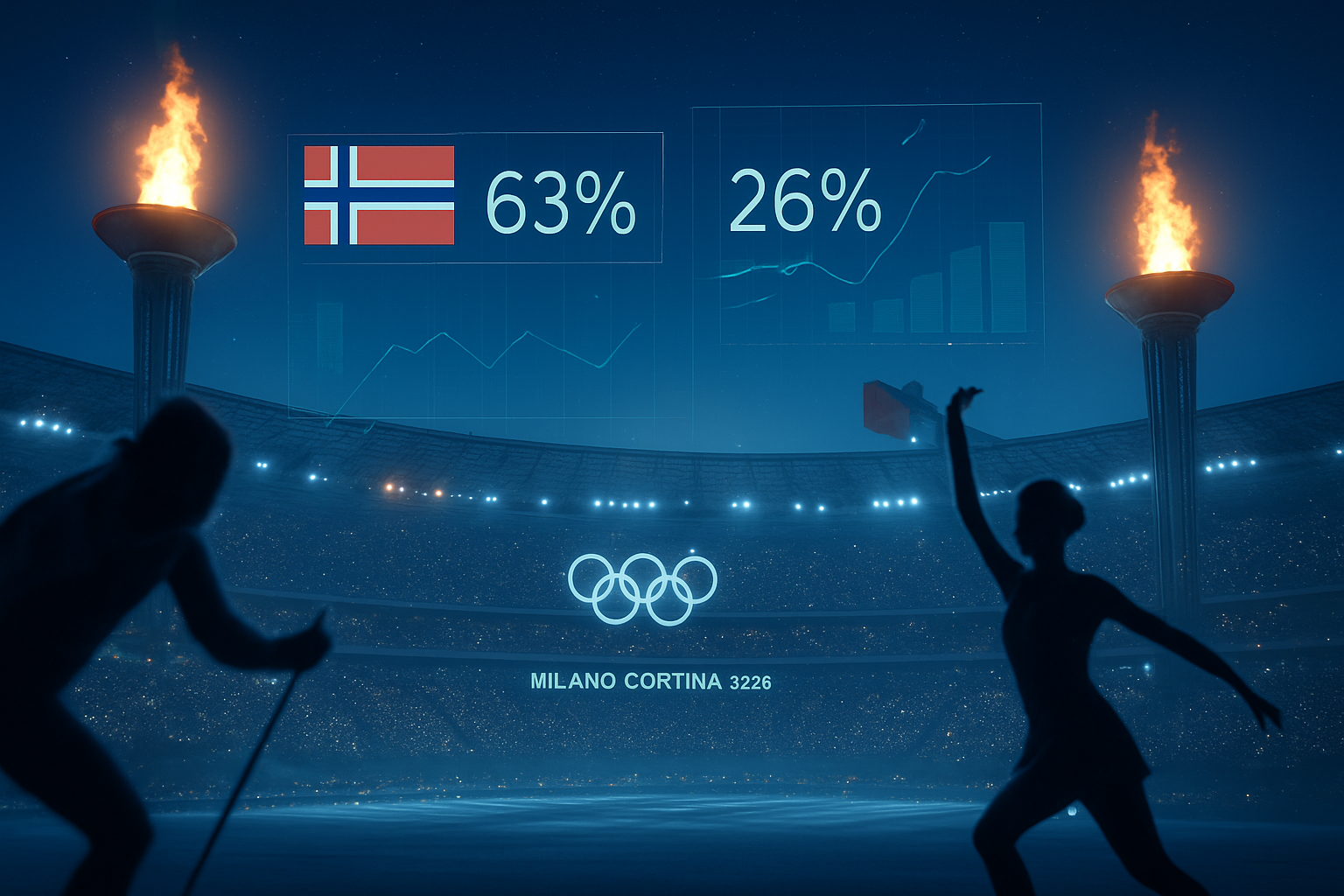
    As the ceremonial fires of the XXV Olympic Winter Games flicker in the dual host cities of Milan and Cortina d'Ampezzo, the world’s attention has shifted from the spectacle of the opening ceremony to the high-stakes reality of the podium. On the world’s leading prediction platform, Polymarket, a clear consensus has emerged: Norway is the overwhelming favorite to lead the 2026 Winter Olympics in total gold medals, commanding a 63% probability of victory.

    Team USA, currently sitting at 26% odds, trails significantly despite a roster packed with high-profile stars. The market reflects a deep-seated belief in Norwegian dominance in the "snow sports" that define the first half of the Games. With the first medals being awarded this weekend, the "Most Gold Medals" market is seeing its highest trading volume of the year, as speculators bet on whether American technical specialists can overcome the sheer depth of the Norwegian cross-country and biathlon machines.

    The Market: What's Being Predicted

    The primary market in focus is the "Most Gold Medals – 2026 Winter Olympics" contract on Polymarket. This "winner-take-all" market asks participants to predict which country will secure the highest number of gold medals by the closing ceremony on February 22, 2026. While the International Olympic Committee (IOC) does not officially recognize a "winning country," the gold medal count is the de facto scoreboard for international prestige.

    At the current 63% mark, shares for Norway are trading at roughly $0.63, while the United States sits at $0.26. Trailing behind are Germany at 9% and Canada at a distant 2%. The liquidity in this market has surged since the torch was lit at San Siro Stadium yesterday, with millions of dollars in volume already recorded. The market resolution is tied to the official final medal standings published by the IOC, meaning any late-stage disqualifications or administrative shifts could potentially affect the outcome, though the market typically settles shortly after the final event—usually the Men’s Ice Hockey final.

    Why Traders Are Betting

    The 63% confidence in Norway isn't just a hunch; it’s backed by a historical track record that bordering on the invincible. Norway set an all-time record at the 2022 Beijing Games with 16 gold medals, and traders believe they are poised to repeat or exceed that performance in Italy. Norway's strength is concentrated in disciplines with multiple medal opportunities: Biathlon and Cross-Country Skiing. With legends like Johannes Thingnes Bø and Johannes Høsflot Klæbo still at the peak of their powers, Norway has a high floor for gold medals that few other nations can match.

    Conversely, the 26% odds for the United States represent a "quality over quantity" gamble. American hopes are pinned on individual dominance in specialized events. Figure skater Ilia Malinin, known as the "God of the Quad," is a heavy favorite for gold, as is speed skater Jordan Stolz, who is eyeing a historic multi-medal haul. However, prediction market traders are skeptical that these individual brilliances can match the sheer volume of gold that Norway typically harvests from the biathlon trails.

    Recent activity on Polymarket suggests that "whales"—large-scale traders—are hedging their bets on the USA following the return of NHL players to the Men's Ice Hockey competition. The inclusion of professional stars has made the USA a co-favorite in hockey, a high-prestige gold that could be the tiebreaker in a close race.

    Broader Context and Implications

    This market highlights the evolving role of prediction markets in sports. Unlike traditional sportsbooks that offer odds on individual games, platforms like Polymarket provide a macro-view of national performance, effectively acting as a real-time sentiment gauge for the "soft power" race of the Olympics. This has significant implications for sponsors and broadcasters. Comcast Corporation (NASDAQ: CMCSA), the parent company of NBCUniversal, is airing over 3,000 hours of coverage, and their advertising rates are often influenced by the perceived success of the home team.

    Furthermore, the "Olympic Large Model" AI infrastructure provided by Alibaba Group Holding Limited (NYSE: BABA) is being used to track athlete performance more granularly than ever before. Traders are increasingly using these data points to find "value" in the market. Major sponsors like Nike, Inc. (NYSE: NKE), Visa Inc. (NYSE: V), and The Coca-Cola Company (NYSE: KO) also have a vested interest in these probabilities, as a "gold rush" for Team USA significantly boosts the marketing value of their sponsored athletes.

    From a regulatory standpoint, the 2026 Games represent a turning point. Prediction markets have faced scrutiny in the past, but their accuracy—often outperforming traditional sports analysts—is making them an indispensable tool for understanding the likely trajectory of global events.

    What to Watch Next

    The next 48 hours are critical for the market’s stability. If Norway sweeps the early Biathlon and Cross-Country events as expected, their odds could climb toward the 75-80% range, effectively pricing out most competitors. However, the Men’s Downhill in Alpine Skiing and the early rounds of the Snowboard Big Air events offer the USA an opportunity to "steal" golds that could narrow the gap.

    Key dates to watch include the Figure Skating finals in the second week and the Speed Skating events at the Fiera di Milano. If Jordan Stolz manages to capture three or more individual golds, the USA’s 26% odds will look like a massive bargain in hindsight. Conversely, if Norway’s "sliding" athletes perform well in the Bobsled and Luge events in Cortina—sports traditionally dominated by Germany—the race for the top spot could be over before the final weekend.

    Bottom Line

    The 2026 Winter Olympics gold medal race is currently Norway’s to lose. The 63% to 26% split on Polymarket reflects a market that respects Norway’s systemic advantages in high-medal-count winter disciplines. While Team USA possesses individual "superstars" capable of securing individual golds, they lack the broad-spectrum dominance across the snow disciplines that Norway has cultivated for decades.

    For prediction market enthusiasts, this market serves as a fascinating case study in "volume vs. volatility." Norway represents the steady, high-volume producer, while the USA represents the volatile, high-upside challenger. As the Games progress through the mountains of Northern Italy, every pole plant and skate stride will be reflected in the fluctuating cents of the Polymarket contract. For now, the "Frozen Gold" belongs to the Norsemen.


    This article is for informational purposes only and does not constitute financial or betting advice. Prediction market participation may be subject to legal restrictions in your jurisdiction.

    PredictStreet focuses on covering the latest developments in prediction markets.
    Visit the PredictStreet website at https://www.predictstreet.ai/.

  • The Billion-Dollar Pivot: How Super Bowl LX and Prediction Markets Are Redefining Sports Wagering

    The Billion-Dollar Pivot: How Super Bowl LX and Prediction Markets Are Redefining Sports Wagering

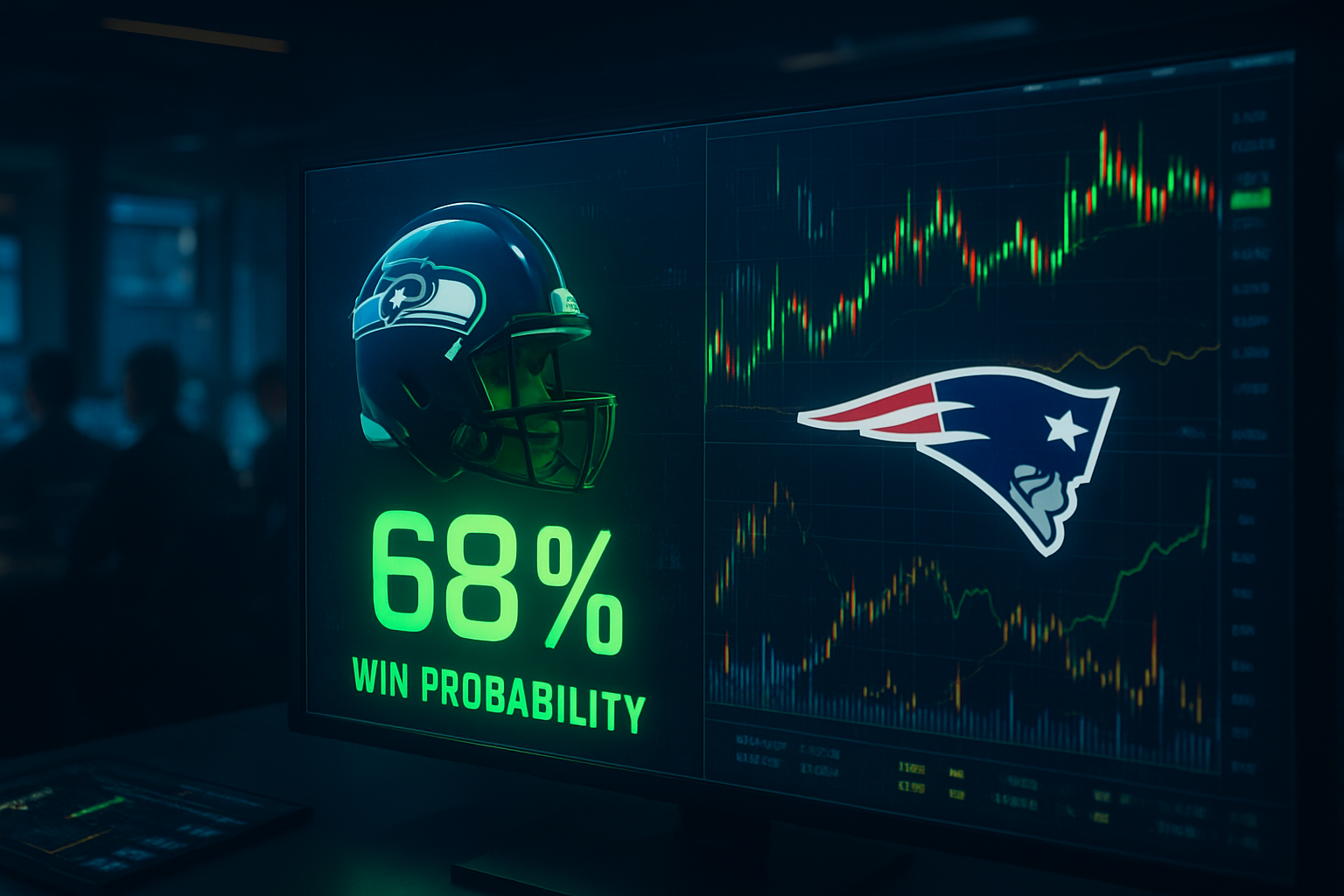
    The primary market under the microscope is Kalshi’s "Pro Football Champion" contract, which specifically tracks the winner of Super Bowl LX. Unlike a traditional bet where a bookmaker sets a line and takes a margin (the "vig"), these event contracts allow users to trade shares of an outcome in a peer-to-peer fashion. At the current price of $0.68, traders are betting that the Seahawks have a nearly 7-in-10 chance of winning. Meanwhile, the New England Patriots are trading as the underdog at $0.33, or a 33% probability.

    The liquidity in this market is unprecedented. Kalshi has reported over $161 million in total trading volume for this single Super Bowl contract, a 450% increase over the previous year. This growth is part of a broader trend: in 2025, Kalshi processed a staggering $23.8 billion in total notional trading volume, with sports event contracts accounting for approximately 75% of that activity. The contract is scheduled for final resolution immediately following the game’s conclusion, with payouts processed shortly after the final whistle.

    Why Traders Are Betting

    The market’s overwhelming favor for the Seahawks is rooted in a historic 14-3 regular season and the "Darnold Renaissance." Quarterback Sam Darnold, who signed with Seattle in the off-season, delivered a career-defining performance in 2025, throwing for over 4,500 yards and 35 touchdowns. This offensive explosion, combined with a defense nicknamed "Legion of Boom 2.0" under head coach Mike Macdonald, has made Seattle a statistical juggernaut.

    Traders are also eyeing the geographic and situational advantages. Although the game is at a neutral site, the proximity of the San Francisco Bay Area to Seattle has created a "home-field" sentiment in the market, as Seahawks fans have reportedly snapped up a majority of the available tickets. Conversely, some "whale" traders have taken large positions on the Patriots ($0.33), citing New England’s veteran poise and the potential for a market overcorrection on the Seahawks’ dominance. These contrarian positions have prevented the Seahawks' price from climbing even higher, as savvy traders look for value in the underdog's potential to disrupt Seattle’s defensive schemes.

    Broader Context and Implications

    The rise of these markets has created a palpable tension with traditional sports betting giants. In response to the migration of users toward event contracts, Flutter Entertainment (NYSE: FLUT), the parent company of FanDuel, launched "FanDuel Predicts" in December 2025. Similarly, DraftKings (NASDAQ: DKNG) introduced "DraftKings Predictions" just weeks later. Both companies are now framing sports outcomes as financial derivatives to tap into markets where traditional sports betting remains legally murky, such as California and Texas.

    This shift is driven by the regulatory clarity provided by the Commodity Futures Trading Commission (CFTC), which has increasingly recognized event contracts as legitimate financial tools. By classifying these trades as derivatives rather than bets, platforms like Kalshi have successfully circumvented the "gambling" stigma, attracting a new demographic of retail investors who view the Seahawks' victory as a high-probability trade rather than a "sucker's bet." This evolution suggests that the line between the New York Stock Exchange and the local sportsbook is blurring permanently.

    What to Watch Next

    As we count down the final 72 hours until kickoff, market volatility is expected to reach a fever pitch. Traders should watch for any late-breaking injury news, particularly regarding Seattle’s star running back Kenneth Walker III, whose limited participation in practice earlier this week caused a temporary price dip to $0.64. Any confirmation of his full health could see the Seahawks' price rally toward $0.72 before the game begins.

    Post-game, the focus will immediately shift to the "2027 Champion" contracts. Early look-ahead markets are already live, and the performance of both teams on Sunday will dictate the opening prices for next season. Furthermore, the industry will be watching the quarterly earnings reports from DraftKings (NASDAQ: DKNG) and Flutter Entertainment (NYSE: FLUT) to see if their new prediction services are successfully clawing back market share from dedicated platforms like Kalshi and Polymarket.

    Bottom Line

    The Super Bowl LX market on Kalshi has proven that prediction markets are no longer a niche interest for policy wonks and tech enthusiasts; they are now a primary engine for sports discourse and financial activity. The Seahawks’ 68% probability reflects a season of utter dominance, but the real story lies in the $161 million traded by individuals who view the game through the lens of a balance sheet.

    As traditional sportsbooks pivot to become "prediction services," the competition for the consumer's dollar will only intensify. Whether Seattle wins or New England pulls off the upset, the ultimate winner of Super Bowl LX appears to be the event contract model itself. The accuracy of these markets on Sunday will serve as a high-stakes litmus test for the future of forecasting in the sports world.


    This article is for informational purposes only and does not constitute financial or betting advice. Prediction market participation may be subject to legal restrictions in your jurisdiction.

    PredictStreet focuses on covering the latest developments in prediction markets.
    Visit the PredictStreet website at https://www.predictstreet.ai/.
  • The State vs. The Exchange: Kalshi’s High-Stakes Legal Battle with Gaming Regulators Threatens 2026 Volume Leadership

    The State vs. The Exchange: Kalshi’s High-Stakes Legal Battle with Gaming Regulators Threatens 2026 Volume Leadership

    As of February 2, 2026, the meteoric rise of prediction markets has hit a significant roadblock not in Washington D.C., but in the state houses of Nevada and Connecticut. While 2025 was defined by Kalshi’s historic legal victory against the Commodity Futures Trading Commission (CFTC), 2026 has opened with a multi-front "guerrilla war" as state gaming authorities attempt to reclassify prediction markets as unlicensed gambling.

    The core of the dispute rests on Kalshi’s aggressive expansion into sports event contracts—markets that allow users to hedge on the outcome of NFL games, the Super Bowl, and NBA matchups. With state regulators in Nevada and Connecticut issuing cease-and-desist orders, the legal battle is no longer a matter of administrative law, but a fundamental question of federal preemption. Traders are now pricing in a significant risk that Kalshi could be forced to geofence up to 15 states by the end of the year, a move that could jeopardize its status as the world’s volume leader in the prediction market space.

    The Market: What's Being Predicted

    The primary "market" currently under observation is the legal survival of Kalshi’s sports contracts in key jurisdictions. In January 2026 alone, Kalshi processed an estimated $9.1 billion in trading volume, with a staggering 91.1% of that activity tied directly to sports event contracts. For comparison, its main rival, Polymarket, saw approximately $7.5 billion in volume during the same period.

    While Kalshi currently maintains a 28.1% share of the global prediction market volume, meta-markets on platforms like Manifold Markets have begun to reflect a shift in sentiment. Traders are currently giving Polymarket a 47% chance of finishing 2026 as the top platform by volume, while Kalshi’s odds have slipped to 34%. This inversion is driven almost entirely by the regulatory friction in Nevada and Connecticut.

    The resolution of these state-level battles depends on two upcoming legal milestones:

    1. Connecticut District Court: A high-stakes hearing scheduled for February 12, 2026, where a judge will decide whether to grant a preliminary injunction against the Connecticut Department of Consumer Protection (DCP).
    2. The Ninth Circuit Court of Appeals: Oral arguments are set for April 2026 regarding the Nevada Gaming Control Board's (NGCB) attempt to shut down Kalshi operations in the state.

    Why Traders Are Betting

    Traders and legal analysts are divided on the "federal preemption" defense. Kalshi argues that because its contracts are regulated by the CFTC as financial derivatives under the Commodity Exchange Act (CEA), state gaming laws are preempted. However, the Nevada Gaming Control Board disagrees, citing NRS 463.0193, which defines any wager on a sporting event as gambling that requires a state license.

    The market sentiment shifted significantly in late November 2025, when U.S. District Judge Andrew Gordon dissolved a preliminary injunction that had protected Kalshi in Nevada. Gordon’s ruling suggested that stripping states of their power to regulate gambling would "upset decades of federalism." This legal pivot has led "whale" traders to hedge their Kalshi positions by moving liquidity toward platforms like Polymarket or Robinhood (NASDAQ: HOOD), the latter of which also faces scrutiny but has a broader diversification of assets.

    Furthermore, the Connecticut DCP, led by Commissioner Bryan T. Cafferelli, has introduced a "consumer protection" narrative, arguing that Kalshi lacks the age-verification rigors and responsible gaming safeguards required by state law. This has introduced a new variable: even if Kalshi wins on the "gambling" definition, it could still be hamstrung by state-level administrative hurdles.

    Broader Context and Implications

    This conflict represents the "final frontier" for prediction markets in the United States. If Kalshi loses these cases, it would create a fragmented "patchwork" regulatory environment. This would lead to what analysts call "phantom liquidity"—where price discovery occurs on a national level, but users in states like Nevada or Connecticut are geofenced out, leading to wider spreads and less efficient markets.

    The implications for 2026 volume leadership are profound. Kalshi’s business model is uniquely exposed to sports, which act as the "on-ramp" for many retail traders. If the platform is forced to exit Nevada—the spiritual home of American sports betting—its competitive advantage over Polymarket and newer entrants like Crypto.com (which also received a Connecticut cease-and-desist) could evaporate.

    Historically, prediction markets have thrived on being "information engines." However, the transition into sports has moved them into the crosshairs of powerful state gaming commissions that protect billions in tax revenue from traditional sportsbooks. The current legal battle is less about "what is a derivative" and more about "who gets to tax the trade."

    What to Watch Next

    The immediate focus for the market is the February 12 hearing in Connecticut. Judge Vernon Oliver’s decision on the preliminary injunction will serve as a bellwether. If he sides with the DCP and allows the cease-and-desist to stand, it is expected that 5–10 other states will follow suit with similar orders by the end of Q1 2026.

    Beyond the courtroom, watch for Kalshi to potentially pivot its product mix. To mitigate the "unlicensed gambling" risk, the exchange may begin prioritizing "non-event" economic contracts or midterm election hedging markets to dilute the percentage of its volume coming from sports.

    Finally, the Ninth Circuit's oral arguments in April will be the definitive moment for the industry. A ruling in favor of the Nevada Gaming Control Board would likely force the issue to the U.S. Supreme Court, creating years of uncertainty for the prediction market sector.

    Bottom Line

    Kalshi entered 2026 with the momentum of a dominant incumbent, but the "State-Level Pushback" has proven to be a more resilient foe than the federal CFTC. The argument that sports event contracts are unlicensed gambling is gaining traction among state judges who are wary of federal overreach into local police powers.

    For prediction market participants, the current volatility in "platform dominance" markets is a reflection of this legal reality. While Kalshi still holds the volume crown today, its path to 2026 leadership is now narrow and heavily dependent on winning a series of high-stakes legal coin flips. If the Connecticut and Nevada dominos fall against the exchange, the "regulated US market" may look very different by this time next year.

    The next two weeks will be among the most consequential in the history of the industry. As the February 12 deadline approaches, expect liquidity to be cautious and the "State-Level Risk" premium to remain high.


    This article is for informational purposes only and does not constitute financial or betting advice. Prediction market participation may be subject to legal restrictions in your jurisdiction.

    PredictStreet focuses on covering the latest developments in prediction markets.
    Visit the PredictStreet website at https://www.predictstreet.ai/.
  • The $100 Million Play: How Kalshi’s Regulated Sports Markets are Rewriting the Playbook for Institutional Bettors

    The $100 Million Play: How Kalshi’s Regulated Sports Markets are Rewriting the Playbook for Institutional Bettors

    In the week following the NCAA Football Championship, the dust is settling on more than just the gridiron. On January 20, 2026, the championship game did more than crown a college football king; it solidified Kalshi as a financial juggernaut. The platform recorded a staggering $111 million in trading volume for the single event, a figure that signals a tectonic shift in how Americans—and increasingly, Wall Street—engage with sports.

    Currently, the markets for the upcoming Super Bowl LX are already seeing nearly $150 million in open interest, with odds fluctuating as professional trading desks move multi-million dollar positions. This is no longer just "betting" in the traditional sense; it is the financialization of sports outcomes through federally regulated event contracts. Driven by a landmark regulatory victory and integration into major retail brokerages, Kalshi has transformed sports results into a legitimate asset class, attracting institutional-scale liquidity that was previously confined to offshore exchanges or private bookmakers.

    The Market: What's Being Predicted

    The core of Kalshi’s explosion lies in its "event contracts," which are binary options that pay out $1 if an event occurs and $0 if it does not. Unlike traditional sportsbooks where you "place a bet" against the house, Kalshi operates a peer-to-peer exchange where traders buy and sell contracts from one another. In the lead-up to the 2025-2026 NFL playoffs, this model allowed for unprecedented liquidity. For instance, the final day of the NFL regular season on January 4, 2026, saw a single-day volume record of $403 million.

    While Polymarket continues to dominate the decentralized, crypto-native space, Kalshi has carved out a massive lead in the regulated U.S. domestic market. By the third week of January 2026, total trading volume for the NFL playoffs reached nearly $2 billion. The resolution criteria for these markets are strictly defined by official league data, ensuring that contracts settle instantly upon the final whistle. This transparency has allowed Kalshi to list complex derivatives, including point spreads and player performance metrics, all under the watchful eye of federal regulators.

    Why Traders Are Betting

    The migration of capital toward Kalshi is driven by one primary factor: regulatory certainty. Following the 2024 court victory in KalshiEX LLC v. CFTC, and the subsequent decision by the Commodity Futures Trading Commission (CFTC) to drop its appeal in May 2025, Kalshi’s status as a Designated Contract Market (DCM) became unassailable. This regulatory "seal of approval" has opened the floodgates for institutional participants.

    Unlike traditional sportsbooks—which are notorious for limiting or banning "sharp" bettors who win too consistently—Kalshi’s exchange model welcomes winners. Large-scale proprietary trading firms and hedge funds now treat touchdowns and game wins as "Zero Days to Expiration" (0DTE) derivatives. They use these contracts to hedge macro risks or to capitalize on high-frequency data models that traditional books cannot accommodate. Furthermore, the integration of Kalshi markets into platforms like Robinhood (NASDAQ: HOOD) and Coinbase (NASDAQ: COIN) has brought institutional-level liquidity into the hands of over 24 million retail users, creating a deeper, more stable market than any sportsbook could offer.

    Broader Context and Implications

    The success of Kalshi represents a pivotal moment in the "Prediction Market vs. Gambling" debate. By framing sports outcomes as event contracts under the Commodity Exchange Act (CEA), Kalshi has managed a feat that traditional sports betting apps like DraftKings or FanDuel could not: federal preemption. Recent rulings in federal courts have suggested that the CEA preempts state-level gaming restrictions, allowing Kalshi to legally offer sports trading in all 50 U.S. states, including major markets like California and Texas where traditional online sports betting remains prohibited.

    This shift reveals a growing public appetite for transparent, low-fee alternatives to the "vig-heavy" model of traditional gambling. It also highlights a change in public sentiment; sports are increasingly viewed through the lens of data and probability rather than just loyalty and luck. However, this growth has not come without friction. The NCAA has voiced significant concerns regarding the integrity of college sports, particularly around "player prop" markets. In response, Kalshi has had to balance its aggressive expansion with "market design" concessions, such as pulling controversial transfer portal markets in late 2025 to maintain its standing with federal regulators.

    What to Watch Next

    All eyes are now turned toward Super Bowl LX on February 8, 2026. Early trading suggests the championship winner market could surpass $300 million in volume before kickoff. This will be the ultimate test of Kalshi’s infrastructure and its ability to handle "Black Swan" events or massive late-game volatility without the "suspension of play" issues that often plague traditional sportsbooks during high-volume periods.

    Beyond the Super Bowl, the next major milestone is March Madness 2026. Following the $350 million trading week in mid-January for NCAA basketball, analysts expect the tournament to break all previous records for prediction market engagement. Traders will be watching closely for any new regulatory guidance from the CFTC regarding "micro-trading" or live in-game contracts, which represent the next frontier for the platform.

    Bottom Line

    Kalshi’s rise marks the end of the era where sports betting was a sidelined, "sin-taxed" activity and the beginning of its life as a legitimate financial instrument. The $111 million NCAA Championship volume is not an outlier; it is the new baseline for a world where sports data is as tradable as oil or gold.

    For the broader prediction market ecosystem, Kalshi’s success proves that regulation, rather than being a hindrance, can be a massive catalyst for liquidity when paired with a superior exchange model. As institutional capital continues to pour into these markets, the line between "trader" and "fan" will continue to blur, forever changing the landscape of both Wall Street and the stadium.


    This article is for informational purposes only and does not constitute financial or betting advice. Prediction market participation may be subject to legal restrictions in your jurisdiction.

    PredictStreet focuses on covering the latest developments in prediction markets.
    Visit the PredictStreet website at https://www.predictstreet.ai/.
  • The Bay State Shutdown: Massachusetts Court Bars Kalshi Sports Markets in Landmark Ruling

    The Bay State Shutdown: Massachusetts Court Bars Kalshi Sports Markets in Landmark Ruling

    In a decision that has sent shockwaves through the prediction market and sports betting industries, Judge Christopher Barry-Smith of the Suffolk County Superior Court ruled on January 20, 2026, that the platform Kalshi must halt its sports-related "event contracts" in Massachusetts. The preliminary injunction represents a massive victory for Massachusetts Attorney General Andrea Joy Campbell, who argued that Kalshi’s offerings—despite being regulated as commodities at the federal level—functionally constitute unlicensed sports wagering under state law.

    The news has immediately trickled into the prediction markets themselves. On Polymarket, a contract asking if Kalshi will stop offering sports contracts in Massachusetts by January 31 is currently trading at just 4 cents (4%). This low probability for an immediate exit is not a sign of Kalshi’s legal strength, but rather a reflection of a tactical delay: on January 23, Judge Barry-Smith "kicked the can down the road" by staying the enforcement of his own injunction. This maneuver effectively allows Kalshi to remain operational through the 2026 Super Bowl while the court considers a longer-term stay pending appeal.

    The Market: What's Being Predicted

    The central conflict involves Kalshi’s suite of sports-themed event contracts, including "Moneyline," "Point Spread," and "Over/Under" predictions. While traditional sportsbooks like DraftKings Inc. (NASDAQ: DKNG) and Flutter Entertainment (NYSE: FLUT)—the parent company of FanDuel—operate under the Massachusetts Sports Wagering Law (G.L. c. 23N), Kalshi has long maintained that its products are binary options or "swaps" regulated by the Commodity Futures Trading Commission (CFTC).

    The specific market in question is whether Kalshi will be forced to "geofence" Massachusetts, effectively blocking residents from accessing these specific sports contracts. Since the January 20 ruling, trading volume on the "legal outcome" markets has spiked. Analysts are watching two key fronts:

    • The Immediate Exit: Traders on Polymarket are betting on the specific date Kalshi will flip the switch to "off" for Massachusetts users.
    • The Appellate Survival: On platforms like Manifold Markets, traders are pricing in a roughly 35% chance that Kalshi successfully overturns this injunction in the Massachusetts Appeals Court by the end of Q2 2026.

    Resolution of these markets depends on the next set of court filings due on January 30 and February 4, which will determine if Kalshi gets to keep its "open for business" sign hanging through the spring.

    Why Traders Are Betting

    The volatility in these legal prediction markets is driven by the judge’s explicit rejection of "federal preemption." Kalshi’s primary defense—that its status as a federal Designated Contract Market (DCM) shields it from state gambling laws—was described by Judge Barry-Smith as "overly broad." Traders are betting on whether this judicial skepticism will spread to other jurisdictions.

    Recent news of a "domino effect" has heavily influenced market sentiment. Following the Massachusetts ruling, gaming commissions in New York, Ohio, and Nevada filed the Barry-Smith decision as "supplemental authority" in their own ongoing legal battles against Kalshi. Whale activity on Polymarket has notably shifted toward "Yes" positions for a Massachusetts exit, as the judge's comments about Kalshi’s "self-inflicted" harm suggest a lack of sympathy for the platform's business model.

    Strategic traders are also eyeing the 2026 Super Bowl as a pivot point. The court’s decision to delay the injunction’s enforcement until early February suggests a "last hurrah" for Kalshi’s sports volume in the state. Those betting on the "4-cent" Polymarket contract are banking on the legal bureaucracy moving slower than the NFL playoff calendar.

    Broader Context and Implications

    This injunction is the first of its kind in the United States. While other states have issued cease-and-desist letters, this is the first time a U.S. court has granted a preliminary injunction specifically targeting a CFTC-regulated platform’s sports offerings. It draws a stark line in the "event contract vs. sports betting" debate, with Judge Barry-Smith ruling that if a product "mirrors digital gambling experiences," it must be regulated as such.

    The real-world implications are significant for the broader prediction market ecosystem. If Massachusetts successfully forces Kalshi to obtain a gaming license, it sets a precedent that federal oversight does not equal a "blanket shield" for all products. This could force prediction markets to:

    1. Raise the minimum age from 18 to 21 for certain contracts.
    2. Pay state taxes on "handle" similar to traditional sportsbooks.
    3. Implement strict geofencing, fragmenting the national liquidity that makes prediction markets efficient.

    This case reveals a growing tension between the "innovate first, ask permission later" ethos of fintech and the "historic police powers" of states to regulate vice and gambling.

    What to Watch Next

    The most critical date on the horizon is February 4, 2026, when the court is expected to issue a final ruling on whether the injunction will be stayed during the entirety of Kalshi’s appeal. If the stay is denied, Kalshi will have to immediately block Massachusetts users from sports markets, likely causing the Polymarket "Yes" shares to moon.

    Investors should also monitor the Massachusetts Gaming Commission (MGC). If Kalshi decides to apply for a license rather than fight, it would represent a total surrender of its "not gambling" legal thesis. Additionally, keep an eye on federal movements; if the CFTC issues new guidance in response to this state-level encroachment, it could provide Kalshi with the federal "hook" it needs to revive its preemption argument in the Appeals Court.

    Bottom Line

    The Massachusetts ruling is a watershed moment that challenges the very identity of prediction markets. By labeling sports-based event contracts as "wagers," Judge Barry-Smith has stripped away the linguistic armor Kalshi used to differentiate itself from the likes of DraftKings.

    As a tool, these prediction markets on the case itself show that while the legal community is divided, traders are increasingly pessimistic about Kalshi’s ability to maintain a "one-size-fits-all" federal regulatory approach. If the injunction holds, 2026 may be remembered as the year the "Wild West" of prediction markets was finally fenced in by the traditional boundaries of state gaming law.

    The ultimate outcome will likely depend on whether the Massachusetts Appeals Court views these contracts as legitimate hedging tools for the "knowledge economy" or simply a clever way to bypass the high taxes and strict rules of the sportsbook industry.


    This article is for informational purposes only and does not constitute financial or betting advice. Prediction market participation may be subject to legal restrictions in your jurisdiction.

    PredictStreet focuses on covering the latest developments in prediction markets. Visit the PredictStreet website at https://www.predictstreet.ai/.

  • NHL Goes “All-In” on Prediction Markets: Inside the Landmark Deal with Kalshi and Polymarket

    NHL Goes “All-In” on Prediction Markets: Inside the Landmark Deal with Kalshi and Polymarket

    The National Hockey League (NHL) has officially shattered the glass ceiling for the prediction market industry. In a multiyear deal that has become the talk of both Wall Street and the sports world, the league has partnered with Kalshi and Polymarket to provide official proprietary data and broadcast branding rights. As of late January 2026, this collaboration has transformed how fans interact with the game, turning speculative interest into high-volume, data-driven markets.

    Currently, the primary focus of these markets is the 2026 Stanley Cup winner. On Polymarket, the Colorado Avalanche are the current frontrunners with a 21.0% probability of taking home the Cup, followed closely by the Tampa Bay Lightning at 11.1%. The market is seeing unprecedented activity, with traders reacting in real-time to every puck drop, injury report, and official league announcement. The integration of official data has not only stabilized these odds but has also sparked a surge in retail and institutional participation.

    The Market: What's Being Predicted

    At the center of this partnership are the "event contracts" hosted on Kalshi and Polymarket. Unlike traditional sportsbooks like DraftKings Inc. (NASDAQ: DKNG) or Flutter Entertainment (NYSE: FLUT) (the parent company of FanDuel), these platforms operate as peer-to-peer exchanges where users trade shares in an outcome. The flagship market is the "2026 Stanley Cup Champion," which has seen its total trading volume on Polymarket explode to over $7.06 million as of January 25, 2026.

    Kalshi, which operates as a regulated exchange in the U.S., has seen similar success. Its 2026 Stanley Cup market recorded nearly $1 million in volume within just its first week of the league partnership in late 2025. The key to this volume is liquidity; by using official NHL proprietary data to settle contracts, the "basis risk"—the fear that a market might settle incorrectly—has been virtually eliminated. Contracts are now settled instantly based on verified league statistics, a move that has attracted "sharp" traders who previously stayed on the sidelines of decentralized markets.

    Why Traders Are Betting

    The current surge in "Yes" shares for the Colorado Avalanche (trading at roughly $0.21 to $0.26 across platforms) is driven by their dominant start to the 2026 calendar year. Traders are betting on the "steamroller" effect, as the Avalanche have dismantled high-ranking opponents throughout January. However, it isn't just team performance driving the action. The official partnership allows these platforms to offer hyper-specific in-game contracts, such as "Will Connor McDavid record 3+ points tonight?", with settlement guaranteed by the NHL's own data feed.

    Furthermore, the "whale" activity—large-scale positions taken by institutional players—has shifted toward the Carolina Hurricanes and Edmonton Oilers, both hovering around 8-10% probability. Traders are utilizing sophisticated hedging strategies, playing the prediction markets against traditional lines found on sports networks like ESPN, owned by The Walt Disney Company (NYSE: DIS), to find arbitrage opportunities. The consensus among top traders is that the reliability of official data makes these markets a more accurate "source of truth" than traditional sportsbooks, which often bake in a higher house edge or "vig."

    Broader Context and Implications

    This partnership marks a massive step for the legitimacy of the prediction market industry. For years, platforms like Polymarket operated in a regulatory grey area, often forced to use generic names like "Florida Hockey Team" due to licensing restrictions. Now, with the NHL’s blessing and branding, the league's logos and the "official partner" designation are appearing on everything from Digitally Enhanced Dasherboards (DEDs) to the virtual blue line signage during national broadcasts.

    NHL Commissioner Gary Bettman has emphasized that the deal provides the league with "regulatory control," allowing them to request the removal of any contracts that could jeopardize league integrity. This level of cooperation between a major sports league and prediction platforms is a historical first, signaling a shift in how professional sports leagues view the intersection of data, gambling, and fan engagement. It suggests a future where every major league could eventually have a "prediction market partner" to provide an alternative, more transparent layer to the betting ecosystem.

    What to Watch Next

    The immediate focus for traders is the upcoming 2026 Stadium Series in Tampa, where the Lightning will face the Bruins on February 1. Markets for this event are expected to see record-breaking daily volume, as the NHL plans to feature live prediction market odds directly on the broadcast. These "live odds" will move in real-time based on exchange activity, offering fans a secondary screen experience that traditional betting apps struggle to replicate.

    Looking further ahead, the NHL Trade Deadline in March will be the next major catalyst. Prediction markets are already forming around which star players will be moved, with "official data" ensuring that the moment a trade is registered with the league office, the market resolves. This transparency is expected to drive even higher engagement from fans who want to capitalize on breaking news before it hits the mainstream wire.

    Bottom Line

    The NHL’s partnership with Kalshi and Polymarket is more than just a sponsorship deal; it is a fundamental shift in the sports data economy. By providing proprietary data and broadcast space, the NHL has effectively "deputized" prediction markets as an official extension of the fan experience. This has resulted in a more robust, liquid, and trusted marketplace for hockey fans and professional traders alike.

    As the Avalanche continue their march toward the playoffs, the prediction markets will remain the most accurate barometer of public and institutional sentiment. For the industry at large, this deal serves as a blueprint: when leagues embrace the transparency of prediction markets, they don't just increase engagement—they build a more resilient and legitimate ecosystem for the future of sports.


    This article is for informational purposes only and does not constitute financial or betting advice. Prediction market participation may be subject to legal restrictions in your jurisdiction.

    PredictStreet focuses on covering the latest developments in prediction markets.
    Visit the PredictStreet website at https://www.predictstreet.ai/.

  • The Massachusetts “Red Line”: Court Labels Kalshi’s Sports Markets Unlicensed Gambling

    The Massachusetts “Red Line”: Court Labels Kalshi’s Sports Markets Unlicensed Gambling

    On January 20, 2026, the legal landscape for prediction markets shifted dramatically when a Massachusetts court delivered a stinging blow to Kalshi, the leading federally regulated exchange. Suffolk County Superior Court Judge Christopher Barry-Smith granted a preliminary injunction requiring the platform to immediately cease offering its popular sports-related "event contracts" to Massachusetts residents without first obtaining a state-sanctioned sports wagering license.

    The ruling, which takes full effect today, January 23, 2026, marks the first time a state court has successfully pierced the "federal preemption" shield that Kalshi has used to expand nationwide. For months, the platform’s sports markets—ranging from NFL point spreads to individual player performances—had been the primary driver of its explosive growth. However, with the court officially categorizing these contracts as unlicensed gambling rather than financial derivatives, the industry now faces an existential crisis regarding state-level regulation.

    The Market: What's Being Predicted

    At the center of this legal firestorm are Kalshi’s sports event contracts. Unlike traditional sportsbooks that offer "odds," Kalshi frames its markets as binary options where the price (between $0.01 and $0.99) represents the market-implied probability of an event occurring. In 2025, Kalshi aggressively expanded its catalog to include high-liquidity markets on game outcomes, "prop" bets on player yardage, and even live in-game trading for major league events.

    As of early January, sports contracts accounted for an estimated 75% of Kalshi’s total trading volume, which has surged into the billions of dollars since the platform’s landmark legal victories against the federal government in 2024. Before the injunction, the probability of "The Home Team winning by 7 or more points" might trade at $0.55, implying a 55% chance of success. Following the ruling, liquidity in these markets has begun to fragment as Massachusetts traders—who represented a significant portion of the platform's New England user base—are forcibly sidelined.

    The court’s resolution criteria are stark: Kalshi must halt all new sports trades for users with Massachusetts IP addresses or residential credentials by 11:59 PM tonight. While existing positions held by Massachusetts residents will be allowed to settle naturally to avoid a "market-clearing catastrophe," no new capital from the state can enter the sports vertical.

    Why Traders Are Betting

    The legal battle has pitted two fundamentally different views of the world against each other. Kalshi argues its contracts are "swaps"—financial instruments intended for risk management and price discovery—regulated exclusively by the federal Commodity Futures Trading Commission (CFTC). To many traders, this was a distinction with a massive difference: Kalshi offered a "cleaner" financial experience without the heavy "vig" or house edge found at traditional sportsbooks like DraftKings Inc. (NASDAQ:DKNG) or FanDuel.

    However, Massachusetts Attorney General Andrea Joy Campbell argued that Kalshi was effectively "masquerading" as a financial exchange while providing an experience indistinguishable from a digital sportsbook. The state’s case focused on three key factors:

    1. Consumer Demographics: Allegations that the platform allowed 18-to-20-year-olds to trade, bypassing the state’s 21+ requirement for sports betting.
    2. Product Design: The introduction of "parlay-style" event bundles that closely mimicked gambling products.
    3. Revenue Models: Court filings revealed that Kalshi’s revenue was no longer coming primarily from economic hedging but from retail speculation on athletic outcomes.

    Whale activity on the platform had recently shifted toward these sports markets, with some institutional traders using Kalshi to hedge large-scale investments in sports media and advertising. The sudden removal of Massachusetts liquidity has caused minor "slippage" in prices for upcoming Super Bowl LIX markets, as professional arbitrageurs adjust to the smaller pool of participants.

    Broader Context and Implications

    The Massachusetts ruling sets a dangerous precedent for what many call the "fragmentation" of prediction markets. For years, the industry operated under the assumption that a single federal license as a Designated Contract Market (DCM) would provide a "golden ticket" to operate across all 50 states. Judge Barry-Smith’s rejection of this "federal preemption" argument suggests that states still maintain "police powers" to regulate gambling, even if the instrument is technically a financial derivative.

    This decision is a significant victory for traditional gambling regulators and a setback for fintech giants like Robinhood Markets, Inc. (NASDAQ:HOOD), which recently integrated Kalshi’s markets into its trading app. If other states follow Massachusetts' lead—and early reports suggest Nevada and New York are already preparing similar filings—prediction markets could be forced into a "patchwork" compliance model. This would require them to pay state taxes (20% in Massachusetts) and abide by varying state-level consumer protection laws, effectively ending the era of the "frictionless" national exchange.

    Furthermore, this ruling highlights the tension between the CFTC and state Attorneys General. While the CFTC has historically been the primary regulator for commodities, the court’s decision suggests that "sports" may not constitute a "commodity" in the eyes of state law, regardless of how the federal government classifies the trade.

    What to Watch Next

    The immediate focus shifts to the federal courts. Robinhood (NASDAQ:HOOD) has already filed a separate federal lawsuit against the Commonwealth of Massachusetts, arguing that state interference in a federally regulated market violates the Supremacy Clause of the U.S. Constitution. A ruling in that case, expected by late February 2026, could potentially override the Massachusetts state court injunction.

    Additionally, industry analysts are watching Nevada. The Silver State has historically been protective of its licensed gambling industry and is rumored to be citing the Massachusetts "Barry-Smith Precedent" in a forthcoming cease-and-desist order against several prediction platforms. If Nevada moves, it could trigger a "domino effect" among other states with established gaming commissions.

    Finally, keep an eye on Kalshi’s internal pivot. To mitigate the loss of sports revenue, the platform is expected to accelerate the rollout of "pure-play" economic and political markets—such as Federal Reserve rate hike probabilities and legislative outcomes—which are less likely to be classified as "sports betting" under state law.

    Bottom Line

    The Massachusetts ruling is a reality check for the prediction market "gold rush." While Kalshi and its partners have successfully argued that betting on elections and economic data is a legitimate financial activity, the attempt to swallow the $100 billion sports betting market has run into a wall of state-level protectionism and regulatory scrutiny.

    This setback tells us that prediction markets are currently in a "hybrid" state: federally accepted as finance, but state-regulated as gambling. For the industry to reach its multi-trillion-dollar potential, it must resolve this identity crisis. Until a higher federal court or the U.S. Supreme Court settles the preemption debate, the "odds" of a unified national prediction market remain highly volatile. For now, the "Red Line" drawn in Massachusetts serves as a stark reminder that in the eyes of the law, a "swap" on a touchdown still looks an awful lot like a bet.


    This article is for informational purposes only and does not constitute financial or betting advice. Prediction market participation may be subject to legal restrictions in your jurisdiction.

    PredictStreet focuses on covering the latest developments in prediction markets.
    Visit the PredictStreet website at https://www.predictstreet.ai/.
  • Hedge or Hazard? The Billion-Dollar Legal War to Define Sports Prediction Markets

    Hedge or Hazard? The Billion-Dollar Legal War to Define Sports Prediction Markets

    As of January 21, 2026, the American financial landscape is locked in a high-stakes jurisdictional civil war. On one side, federal regulators and Silicon Valley giants argue that prediction markets are sophisticated hedging tools—derivatives no different than corn futures or interest rate swaps. On the other, state attorneys general and powerful tribal gaming interests contend they are nothing more than unlicensed, high-tech sportsbooks masquerading as financial exchanges.

    At the heart of this conflict is a simple question with a multi-billion dollar answer: Is predicting the outcome of a Sunday night NFL game an act of financial risk management or a common bet? With Robinhood Markets, Inc. (HOOD:NASDAQ) reporting over 11 billion contracts traded on its platform in the last year, and Kalshi expanding its reach into every major professional league, the outcome of this legal debate will determine the future of how Americans interact with risk.

    The Market: What's Being Predicted

    The current prediction market ecosystem has evolved far beyond its humble origins of political forecasting. Today, platforms like Kalshi and the newly launched Fanatics Markets—a joint venture between Crypto.com and the sports merchandise giant—offer a dizzying array of "event contracts." These include everything from the point spread of the Super Bowl to the number of passing yards a specific quarterback will achieve in a season.

    Unlike traditional sportsbooks, these markets operate as peer-to-peer exchanges. On Kalshi, for instance, the "NFL: Chiefs to Win Super Bowl LX" contract currently trades at 18 cents, implying an 18% probability of victory. Prices are dictated by supply and demand rather than a house-set line. Trading volume has reached unprecedented heights; since Robinhood (HOOD:NASDAQ) acquired its own Designated Contract Market (DCM), MIAXdx, liquidity has surged, with daily volumes often rivaling mid-cap stocks.

    The resolution of these markets is strictly binary. If the event occurs, the contract settles at $1.00; if it doesn't, it goes to zero. While this sounds like a bet, the platforms argue the underlying mechanics—regulated by the Commodity Futures Trading Commission (CFTC)—make them legitimate financial instruments.

    Why Traders Are Betting

    The surge in volume is driven by a new class of "hedgers" who view sports outcomes as a unique asset class. Professional ticket brokers, for example, use these markets to hedge against a local team being eliminated from the playoffs, which would crater their inventory value. Similarly, small businesses in "sports towns" are using prediction markets to offset the loss of revenue that occurs when a home team underperforms.

    "We aren't gambling; we're managing exposure," says one high-frequency trader who recently moved a significant portion of his portfolio into sports derivatives. "If I have a massive position in regional brewery stocks, I am fundamentally exposed to the performance of the local sports teams that drive bar traffic. These markets allow me to offset that risk with surgical precision."

    However, traditional gaming interests and the American Gaming Association (AGA) argue this is a semantic distraction. They point to the "whale" activity on these platforms—multi-million dollar positions on individual game outcomes—as evidence of speculative gambling. Critics argue that the lack of traditional "gaming taxes" gives these platforms an unfair competitive advantage over licensed sportsbooks like DraftKings Inc. (DKNG:NASDAQ) or FanDuel.

    Broader Context and Implications

    The legal friction is currently manifesting in a "federal-state divide." While the CFTC, under the leadership of Chairman Michael Selig, has embraced a "Future-Proof" initiative to accommodate these markets, state regulators are pushing back. Just yesterday, January 20, 2026, a Massachusetts judge issued a preliminary injunction against Kalshi, ruling that sports "prop bets" are "substantively indistinguishable" from wagering and require a state gaming license.

    This conflict is further complicated by the Indian Gaming Regulatory Act (IGRA). A coalition of California tribes, including the Blue Lake Rancheria, has sued Robinhood (HOOD:NASDAQ) and Kalshi, alleging that allowing users to trade these contracts on tribal lands violates their exclusive gaming rights. This is not merely a regulatory spat; it is an existential threat to the tribal gaming model, which generates over $40 billion in annual revenue.

    Historically, prediction markets have been more accurate than pundits or polls because traders have "skin in the game." If the legal system ultimately classifies them as gambling, they will be subjected to a fragmented state-by-state regulatory regime that could kill the liquidity necessary for them to function as accurate forecasting tools.

    What to Watch Next

    The immediate future of the industry hinges on the Ninth Circuit Court of Appeals. The court is currently reviewing Blue Lake Rancheria v. Kalshi, a case that could determine whether federal law (the Commodity Exchange Act) preempts tribal and state gaming regulations. A ruling is expected by mid-summer 2026.

    Additionally, monitor the Ho-Chunk Nation’s lawsuit in Wisconsin, which has a trial date set for May 2027. This case specifically targets the definition of "occurrence" versus "outcome." If the court finds that a football game is an "occurrence" (a neutral event) rather than a "gamble," it will provide a massive legal shield for the industry.

    Finally, keep an eye on the partnership between Crypto.com and the "Plaee" infrastructure. If more crypto-native platforms gain DCM status, the sheer volume of "on-chain" prediction trading may become too large for state regulators to effectively police, forcing a federal legislative solution from Congress.

    Bottom Line

    The battle over sports prediction markets is a proxy for a larger debate about the nature of risk in the 21st century. To the platforms and their millions of users, these are the ultimate democratized financial tools—allowing anyone to hedge against the unpredictable. To the states and tribes, they are a "Trojan Horse" for unregulated gambling that bypasses years of established law and tax revenue.

    The data from the first few weeks of 2026 suggests that the market’s appetite for these contracts is insatiable. However, the "Massachusetts Injunction" served as a cold reminder that federal approval does not mean a clear path forward. For investors in companies like Robinhood (HOOD:NASDAQ), the legal bills may be as significant as the trading fees in the years to come.

    Ultimately, the resolution of this debate will likely require a Supreme Court ruling or a comprehensive new act of Congress. Until then, prediction markets will continue to operate in a gray zone—part hedge fund, part stadium concourse—testing the limits of American financial law.


    This article is for informational purposes only and does not constitute financial or betting advice. Prediction market participation may be subject to legal restrictions in your jurisdiction.

    PredictStreet focuses on covering the latest developments in prediction markets.
    Visit the PredictStreet website at https://www.predictstreet.ai/.

  • Prediction Powerhouse: Kalshi Hits $11 Billion Valuation as Sports Surge Drives $1 Billion Weekly Volume

    Prediction Powerhouse: Kalshi Hits $11 Billion Valuation as Sports Surge Drives $1 Billion Weekly Volume

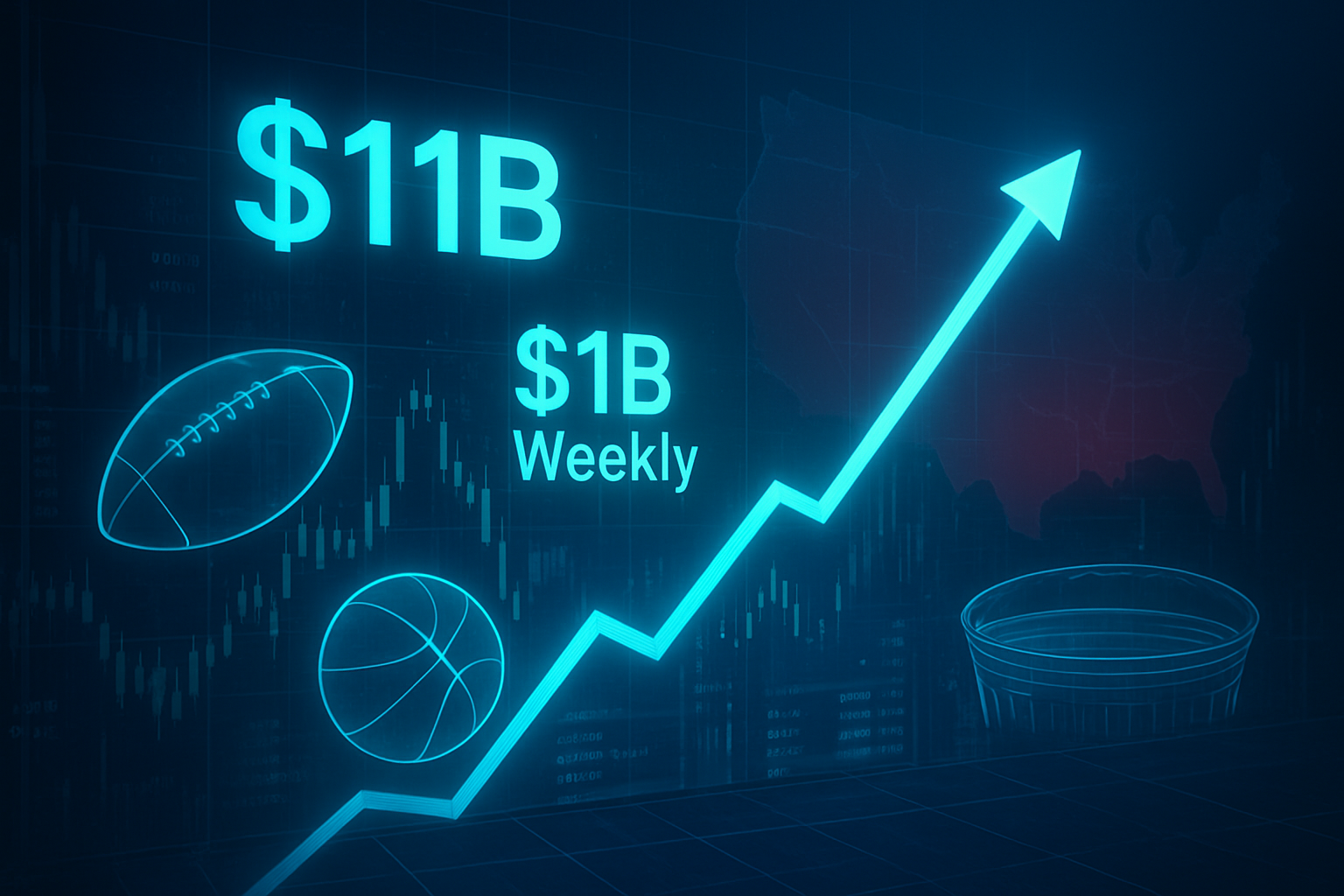
    The rapid evolution of prediction markets has reached a fever pitch as Kalshi, the first federally regulated exchange for event contracts, officially reached "decacorn" status this month. With a fresh $11 billion valuation and weekly trading volumes consistently surpassing the $1 billion mark, the platform has transformed from a niche economic forecasting tool into a dominant force in the global wagering landscape. However, this meteoric rise has placed Kalshi directly in the crosshairs of state regulators, sparking a legal battle that could redefine the boundaries between financial commodities and sports gambling.

    The surge in activity marks a significant shift in the prediction market ecosystem. While the 2024 U.S. elections served as the initial catalyst for mainstream adoption, Kalshi’s sustained growth into early 2026 is being driven by a strategic pivot into sports event contracts. Traders are no longer just betting on interest rate hikes or election outcomes; they are high-frequency trading the point spreads of NFL games and the over/under of NBA totals, all through a platform regulated by the Commodity Futures Trading Commission (CFTC).

    The Market: Kalshi’s Explosive Growth and Dominance

    In December 2025, Kalshi solidified its position as a market leader by closing a massive $1.1 billion Series E funding round. This capital injection, led by the crypto-focused venture firm Paradigm and supported by heavyweights like Sequoia Capital and Alphabet Inc. (NASDAQ: GOOGL) via its growth fund CapitalG, valued the exchange at a staggering $11 billion. Other participants included Andreessen Horowitz, ARK Invest (NYSE Arca: ARKK), and IVP, signaling broad institutional confidence in the "everything market" model.

    The valuation is backed by eye-popping performance metrics. By the final week of December 2025, Kalshi reported a record-breaking $1.7 billion in notional trading volume. Daily volumes have also seen a dramatic uptick, with the platform recording approximately $291 million on January 1, 2026, alone. This represents an 1,100% year-over-year increase, largely fueled by the platform's expansion into sports. Unlike traditional sportsbooks, Kalshi’s contracts are structured as binary options, allowing for unique hedging strategies and price discovery that mimic traditional financial markets.

    Why Traders Are Betting: The Retail Revolution

    The primary driver behind Kalshi’s volume explosion is its aggressive integration with retail trading platforms and media giants. Kalshi has successfully moved beyond its own app by embedding its markets into the interfaces of Robinhood Markets, Inc. (NASDAQ: HOOD) and Coinbase Global, Inc. (NASDAQ: COIN). This "brokerage-as-a-service" model allows millions of retail investors to trade event contracts alongside their stocks and cryptocurrencies, lowering the barrier to entry for a new generation of traders.

    Furthermore, Kalshi has effectively institutionalized prediction market data through exclusive partnerships with major news networks. Starting in January 2026, live market odds from Kalshi have become a staple on Warner Bros. Discovery (NASDAQ: WBD)'s CNN and Comcast Corporation (NASDAQ: CMCSA)'s CNBC. These integrations provide real-time, market-based sentiment on everything from corporate earnings to playoff outcomes, creating a self-reinforcing loop of visibility and trading activity. For many traders, the transparency of an order-book-based exchange offers a more "fair" alternative to the opaque "vig" of traditional sportsbooks.

    Broader Context and Implications: The 38-State Legal Firestorm

    Despite its commercial success, Kalshi is facing an existential legal challenge. A coalition of 38 states and the District of Columbia recently filed a joint amicus brief in the ongoing case of Maryland vs. Kalshi. The states argue that Kalshi’s sports contracts are "functionally indistinguishable" from sports wagering and should therefore fall under state-level gambling regulations rather than federal CFTC oversight. This coalition, which includes major markets like California and New York, contends that Kalshi is bypassing state taxes and consumer protection laws.

    The tension reached a breaking point on January 20, 2026, when a Massachusetts judge granted a preliminary injunction against the exchange. The ruling effectively bans Kalshi from offering sports event contracts in the state starting January 23, 2026. This is the first major state-level ban to take effect, creating a fragmented legal landscape where Kalshi may be legal in New Jersey (where it recently won a stay against a cease-and-desist) but prohibited in neighboring states. The outcome of these battles will determine if prediction markets can coexist with the traditional gaming industry or if they will be relegated back to strictly economic and political events.

    What to Watch Next

    The coming months will be pivotal for Kalshi's $11 billion valuation. Investors and traders are closely watching the Maryland vs. Kalshi case, as a final ruling there could set a precedent for other states in the 38-member coalition. If Maryland successfully argues that state gaming laws supersede CFTC regulation for sports contracts, Kalshi could face a wave of "geofencing" requirements, significantly impacting its liquidity and volume.

    Another key milestone is the potential for further integration with daily fantasy sports (DFS) platforms. Kalshi’s existing partnership with PrizePicks has already expanded its reach, and rumors of a deeper tie-up with other major DFS operators could further bolster volumes. However, these moves will likely attract even more scrutiny from powerful tribal gaming groups and established casino operators who view Kalshi’s growth as a direct threat to their regulated monopolies.

    Bottom Line

    Kalshi has successfully proven that there is a massive appetite for a "market for everything," bridging the gap between Wall Street and Main Street through the gamification of real-world outcomes. Reaching an $11 billion valuation and $1 billion in weekly volume is a testament to the platform's technical scale and the public's desire for transparent, high-liquidity prediction markets.

    However, the "State vs. Federal" jurisdictional battle looms large. While Kalshi has the backing of Silicon Valley and the federal oversight of the CFTC, the combined weight of 38 state attorneys general and the established gaming lobby presents a formidable obstacle. For now, Kalshi remains the undisputed king of prediction markets, but its path to long-term stability depends on whether it can convince the legal system that its contracts are tools for risk management, not just another way to bet on the big game.


    This article is for informational purposes only and does not constitute financial or betting advice. Prediction market participation may be subject to legal restrictions in your jurisdiction.

    PredictStreet focuses on covering the latest developments in prediction markets.
    Visit the PredictStreet website at https://www.predictstreet.ai/.