Tag: Semiconductors

  • Wolfspeed Inc. (WOLF): A Phoenix Rising in the Silicon Carbide Era

    Wolfspeed Inc. (WOLF): A Phoenix Rising in the Silicon Carbide Era

    Date: September 30, 2025

    1. Introduction

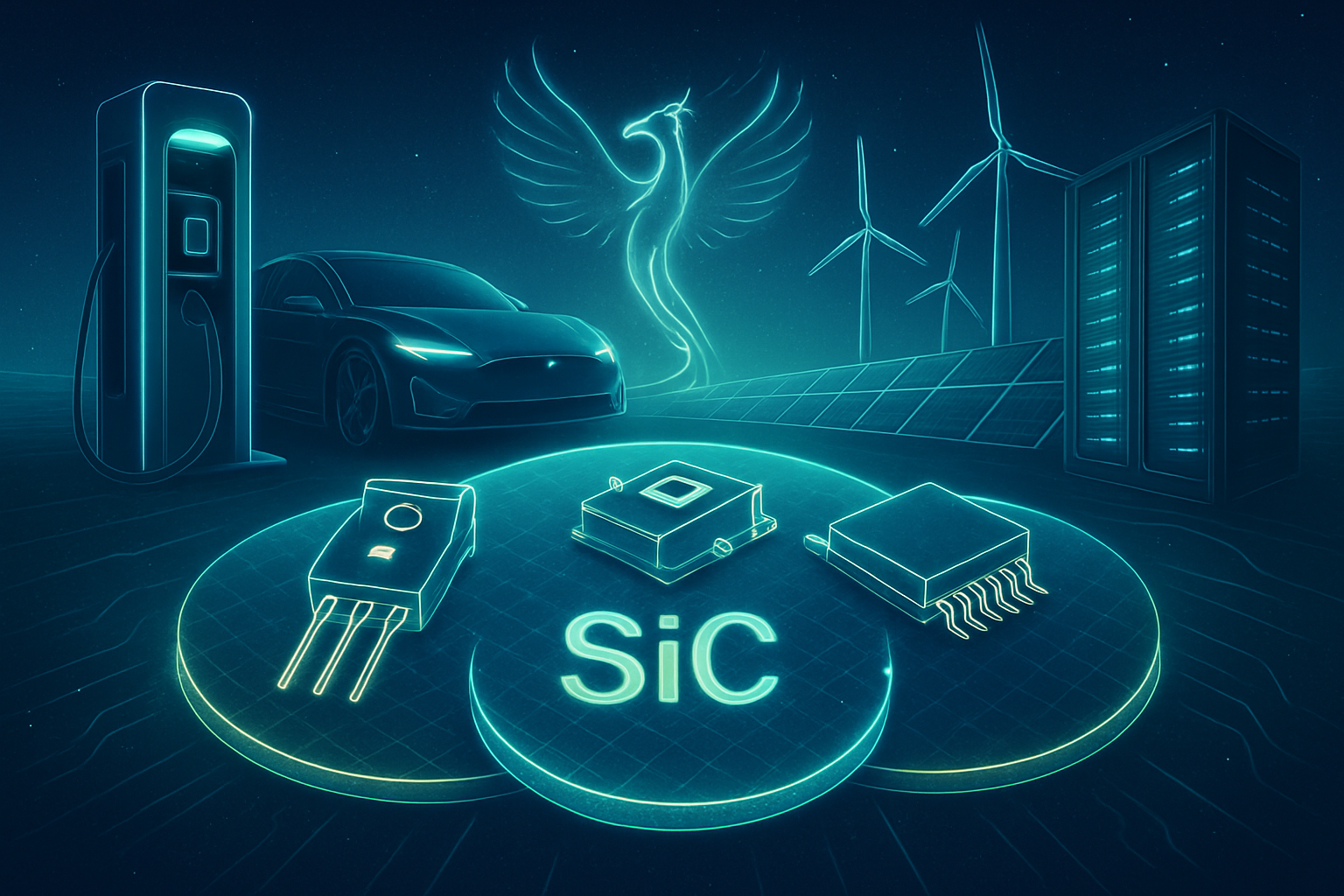
    Wolfspeed Inc. (NASDAQ: WOLF) stands at a pivotal juncture in the semiconductor industry. As a leading American developer and manufacturer of wide-bandgap (WBG) semiconductors, primarily focusing on silicon carbide (SiC) and gallium nitride (GaN) technologies, Wolfspeed is a critical enabler of the global energy transition. Its products are foundational for high-efficiency power electronics in electric vehicles (EVs), renewable energy systems, 5G infrastructure, and advanced AI data centers. While the company has historically been a pioneer in SiC, its recent emergence from Chapter 11 bankruptcy in late September 2025 has dramatically reshaped its financial and operational landscape, marking a new chapter for this influential technology firm. This report delves into Wolfspeed's comprehensive profile, analyzing its business model, financial health, market position, and future outlook as it navigates a highly dynamic and competitive sector.

    2. Historical Background

    Wolfspeed Inc.'s journey began in July 1987 as Cree Research Inc. in Durham, North Carolina. Founded by a team of North Carolina State University (NCSU) graduates, including brothers Eric and Neal Hunter, the company's initial focus was on exploring the properties of silicon carbide (SiC) for high-performance semiconductors and light-emitting diodes (LEDs).

    Early milestones cemented Cree's reputation as an innovator: In 1989, it introduced the world's first blue LED, a breakthrough that enabled full-color displays. By 1991, Cree had released the first commercial SiC wafer. The company went public in 1993 and officially rebranded as Cree Inc. in 2000, continuing its innovation in the LED lighting sector, notably with the XR-E LED in 2006 for general illumination.

    However, under the leadership of CEO Gregg Lowe, who joined in 2017, Cree embarked on a significant strategic transformation. Facing declining profits in its traditional LED and lighting segments, the company recognized the burgeoning potential and higher profitability of its silicon carbide-focused semiconductor business, already operating under the Wolfspeed brand. This led to a series of strategic divestitures: the lighting business was sold to Ideal Industries in 2019, followed by the LED products division to SMART Global Holdings in 2021.

    Concurrently, Cree made substantial investments, including a planned $1 billion for a state-of-the-art 200mm SiC fabrication facility and a materials mega factory in Durham, N.C. The rebranding to Wolfspeed Inc. on October 4, 2021, and its stock listing transfer to the NYSE under the ticker "WOLF," formally completed this transformation. The name change signaled a clear commitment to its core wide-bandgap semiconductor business, aligning its corporate identity with its most promising and profitable segment.

    3. Business Model

    Wolfspeed Inc. operates a vertically integrated business model centered on the development, manufacturing, and sale of advanced wide-bandgap semiconductor materials and devices, primarily silicon carbide (SiC) and gallium nitride (GaN). This integration spans the entire SiC value chain, from raw material crystal growth and wafer fabrication to the manufacturing of semiconductor devices, giving the company control over quality, supply, and cost.

    Primary Revenue Sources: Revenue is primarily generated from the sale of its Power Products and Materials Products. Historically, a significant portion (around 80% in fiscal year 2023) has come from outside the United States, with Europe, China, and the U.S. being key markets.

    Key Product Lines:

    • Materials: Wolfspeed produces SiC bare and epitaxial wafers, which are foundational for many high-performance semiconductor devices. It also offers GaN on SiC materials, combining the benefits of GaN with SiC's thermal properties. The commercial launch of its 200mm SiC Materials Portfolio in September 2025 is a significant step towards scaling production.
    • Power Devices: This segment includes SiC MOSFETs, Schottky diodes, and integrated power modules. These devices are crucial for efficient energy conversion and robust power management in electric vehicle powertrains, fast charging infrastructure, renewable energy systems (solar inverters), industrial motor drives, and data center power supplies.
    • RF (Radio Frequency) Devices: Leveraging GaN technology, these products cater to high-frequency communication and radar applications, including GaN High Electron Mobility Transistors (HEMTs) and Monolithic Microwave Integrated Circuits (MMICs) for 5G infrastructure, satellite communications, and military applications. (Note: MACOM acquired Wolfspeed's RF business in August 2023, but GaN products for RF are still mentioned in some current listings, indicating ongoing supply or residual activity.)

    Services: Wolfspeed provides foundry services for GaN-on-SiC MMIC technology, offering design assistance and testing. It also offers design support through reference designs and evaluation kits to accelerate customer design cycles.

    Market Segments and Customer Base: Wolfspeed's products serve high-growth markets driven by demand for energy-efficient and high-performance solutions:

    • Automotive: A major focus, particularly for EVs, including partnerships with automakers like General Motors, Mercedes-Benz, and Jaguar Land Rover.
    • Industrial: Data centers, server power supplies, industrial motor drives, and automation.
    • Energy: Solar inverters, energy storage, and power grid technologies.
    • Communications: 5G, wireless systems, radar, and satellite communications.
    • Aerospace and Defense: Specialized, robust RF device applications.

    4. Stock Performance Overview

    Wolfspeed Inc. (WOLF) has experienced a highly volatile and ultimately transformative decade, culminating in a dramatic financial restructuring. As of September 30, 2025, the company has just emerged from Chapter 11 bankruptcy, which fundamentally reset its stock valuation and shareholder structure.

    1-Year Horizon (September 30, 2024 – September 30, 2025): The year leading up to the bankruptcy and emergence was characterized by significant declines. Prior to the restructuring, the stock had fallen over 88% year-over-year. The 52-week low was around $0.39. However, upon emerging from bankruptcy on September 29, 2025, the "new" Wolfspeed stock surged dramatically, rocketing over 1,700% in a single day, from $1.21 to $22.10, and continued to climb, reaching a new 52-week high of $32.09 on September 30, 2025. This surge, however, followed the cancellation of old shares and severe dilution for previous shareholders.

    5-Year Horizon (September 30, 2020 – September 30, 2025): This period captures Wolfspeed's peak and subsequent decline. The stock reached an all-time high of $141.87 on November 16, 2021, driven by immense investor optimism in SiC for EVs. This was followed by a substantial downward trend through 2024 and early 2025, influenced by production delays at its new factories, increasing Chinese competition, and a slowdown in EV demand, ultimately leading to the Chapter 11 filing. The current stock price, while significantly up from its pre-bankruptcy lows, remains well below its 2021 peak.

    10-Year Horizon (September 30, 2015 – September 30, 2025): Over the past decade, Wolfspeed (formerly Cree) underwent a strategic pivot, divesting its LED and lighting businesses to focus entirely on SiC and GaN. This transformation initially fueled significant growth, culminating in its 2021 high. However, the period concludes with the severe financial distress of 2025, leading to Chapter 11. While the restructuring eliminated billions in debt and reset the balance sheet, it resulted in massive dilution for long-term shareholders of the original stock. The recent stock surge reflects market optimism in the reorganized company's future, not a recovery for original investors.

    5. Financial Performance

    Wolfspeed Inc.'s financial performance as of September 30, 2025, is primarily viewed through the lens of its recent Chapter 11 emergence, which fundamentally reset its balance sheet. The company successfully exited bankruptcy on September 29, 2025, after filing for reorganization on June 30, 2025.

    Revenue Growth: For the full fiscal year 2025 (ending June 29, 2025), Wolfspeed reported revenue of approximately $758 million, a 6.1% decrease from $807 million in fiscal year 2024. Q4 FY2025 revenue was $197 million, a slight decrease year-over-year but a 6.3% sequential increase. The Mohawk Valley Fab, despite ramp-up challenges, contributed $94.1 million to Q4 FY2025 revenue, more than double the prior year, indicating future growth potential as it scales.

    Margins: Profitability remains a challenge. For Q4 FY2025, the GAAP gross margin was (13)%, and the non-GAAP gross margin was (1)%, both down from the prior year. For the full fiscal year 2025, GAAP gross margin was (16)%, significantly down from 10% in FY2024, and non-GAAP gross margin was 2%, down from 13%. These negative margins reflect significant underutilization costs associated with ramping up its new Mohawk Valley Fab. Operating margins were deeply negative, at -70.92% on a trailing twelve-month basis and -295.23% for Q4 FY2025.

    Debt Levels (Post-Restructuring): This is the most significant positive change. Wolfspeed successfully reduced its total debt by approximately 70%, from an estimated $6.5 billion to $2 billion. This also lowered annual cash interest expenses by about 60%, saving over $200 million annually, and extended debt maturities to 2030, providing crucial financial runway.

    Cash Flow: Wolfspeed has experienced substantial negative cash flow due to heavy capital expenditures for its new facilities. Q4 FY2025 operating cash flow was -$242.5 million, and free cash flow was -$454 million. For the full fiscal year 2025, free cash flow was -$1.98 billion. However, post-restructuring, the company anticipates generating $200 million of positive unlevered operating cash flow by fiscal year 2026, supported by its new self-funded business plan.

    Valuation Metrics: The restructuring dramatically impacted valuation. While some reports show market capitalization figures ranging widely post-restructuring (e.g., $189.34 million to $5.06 billion due to share cancellation and issuance), the enterprise value is approximately $3.5 billion. The Price-to-Sales (P/S) ratio is around 2.72 to 4.12. The company reported a GAAP loss per share of ($11.39) and a non-GAAP loss per share of ($3.32) for FY2025, with consensus estimates for Q1 FY2026 at -$0.62. The severe dilution of existing shareholders means previous valuation metrics are largely irrelevant for the "new" stock.

    In essence, Wolfspeed has a "cleaner balance sheet" and ample liquidity post-bankruptcy, providing a fresh start. However, the challenge remains to translate its technological leadership and manufacturing investments into sustained revenue growth and, crucially, positive gross and operating margins.

    6. Leadership and Management

    As of September 30, 2025, Wolfspeed Inc. has a significantly revamped leadership team and board of directors, largely a direct consequence of its recent emergence from Chapter 11 bankruptcy. This overhaul aims to steer the company towards renewed profitability and market leadership.

    Chief Executive Officer (CEO): Robert Feurle assumed the CEO role on May 1, 2025, replacing former CEO Gregg Lowe. Feurle brings over three decades of operational and financial leadership experience in the semiconductor industry, crucial for navigating Wolfspeed's post-restructuring phase.

    Key Executive Team Members:

    • Chief Financial Officer (CFO): Gregor van Issum was appointed CFO, effective September 1, 2025. With over 20 years in strategic finance and operational transformation in semiconductors, he is tasked with managing the company's strengthened balance sheet.
    • Chief Operating Officer (COO): Dr. David Emerson rejoined Wolfspeed in June 2025 as EVP and COO, overseeing manufacturing, procurement, and quality to accelerate time-to-market.
    • Chief Information Officer (CIO) & Senior Vice President (SVP): Priya Almelkar leads the company's technology vision and digital transformation.

    Board of Directors: Upon its emergence from Chapter 11, the Board of Directors underwent a comprehensive reconstitution. Anthony M. Abate was appointed as the new Chairman, succeeding Tom Werner. Five new experienced directors joined the board, including Mike Bokan (ex-Micron), Eric Musser (ex-Corning), Hong Q. Hou (Semtech CEO), and Aris Bolisay (Renesas VP of Finance). Mark Jensen and Paul Walsh remain on the board. This influx of new directors with extensive semiconductor, technology, and finance backgrounds is a deliberate move to enhance governance and provide fresh strategic guidance. Several former directors, including Tom Werner, stepped down.

    Strategic Vision: Wolfspeed's post-restructuring strategic vision is clear: to solidify its position as the global leader in silicon carbide technology. This involves:

    • Scaling Manufacturing: Leveraging its vertically integrated 200mm manufacturing footprint, particularly the Mohawk Valley Fab and the John Palmour Manufacturing Center in Siler City, NC, to achieve scale and cost efficiency.
    • Targeting High-Growth Markets: Aggressively capturing demand in EVs, AI data centers, industrial, and energy sectors.
    • Financial Discipline: Utilizing its de-risked balance sheet to fund innovation and expansion through a self-funded business plan, aiming for positive unlevered operating cash flow by fiscal 2026.
    • Innovation: Continuing to drive technological advancements, such as its Gen 4 SiC technology.

    Governance Reputation: The Chapter 11 filing, while a strategic financial maneuver, highlighted significant past financial distress and raised questions about governance. The comprehensive overhaul of the board and executive team, along with the reincorporation to Delaware, indicates a strong commitment to strengthening governance and instilling a more disciplined, growth-oriented culture. The company aims to restore investor confidence by demonstrating operational execution and a clear path to profitability under its new leadership.

    7. Products, Services, and Innovations

    As of September 30, 2025, Wolfspeed Inc. is at the forefront of wide-bandgap semiconductor technology, with a strong focus on silicon carbide (SiC) and gallium nitride (GaN) materials and devices. Its recent financial restructuring allows it to sharpen its focus on innovation and scaling production.

    Current Products and Services:

    • SiC Materials: Wolfspeed commercially launched its 200mm Silicon Carbide Materials Portfolio in September 2025, a critical step towards high-volume, cost-effective production. This includes SiC bare wafers and epitaxial wafers, essential substrates for advanced power and RF devices.
    • Power Devices: The portfolio includes SiC MOSFETs (e.g., Gen 3 and Gen 4), Schottky diodes, and integrated power modules. These are designed for high-efficiency energy conversion in demanding applications such as EV traction inverters, fast chargers, solar inverters, and industrial power supplies. Wolfspeed also offers bare die products for custom module designs.
    • RF Devices: Wolfspeed continues to offer GaN epitaxial layers on SiC wafers and GaN-based devices for radio-frequency applications, crucial for 5G infrastructure, radar, and satellite communications.
    • Foundry and Design Services: The company provides foundry services for GaN-on-SiC MMIC technology, offering design assistance and testing. It also supports customers with reference designs and evaluation kits to accelerate product development.

    Innovations and Innovation Pipeline:

    • Gen 4 Silicon Carbide Technology: Launched in January 2025, this platform significantly reduces power losses (up to 80% less than silicon), extending EV driving range by 10% and reducing thermal loads in AI data centers by 40%. This represents a major leap in SiC performance.
    • 200mm SiC Wafer Production: A core strategic innovation is the transition to and scaling of 200mm SiC wafer production at its Mohawk Valley Fab in New York and the John Palmour Manufacturing Center in Siler City, NC. This move from 150mm to 200mm wafers is expected to reduce manufacturing costs by 30% and improve yields, enabling greater scalability.
    • Advanced Manufacturing: Wolfspeed is committed to completing its multi-billion-dollar U.S. capacity expansion plan, creating the world's largest and most advanced 200mm SiC footprint.
    • R&D Collaborations: Partnerships with institutions like North Carolina A&T State University for joint R&D facilities underscore its commitment to developing next-generation compound semiconductors.

    R&D Investments: Wolfspeed consistently invests heavily in R&D, with reported annual investments of $254 million in 2023 and substantial capital expenditures (estimated $1.2 billion to $1.4 billion for FY2025) primarily for capacity expansion and infrastructure.

    Key Patents: Wolfspeed possesses a robust intellectual property portfolio, including 534 issued U.S. patents and over 1,000 foreign patents. Recent patent grants (e.g., for wide bandgap unipolar/bipolar transistors, edge termination structures, and power module designs in mid-2025) demonstrate its ongoing focus on improving device performance, packaging, and manufacturing processes, creating significant barriers to entry for competitors.

    Competitive Edge: Wolfspeed's competitive advantage is built on:

    • Technological Leadership: Over 35 years of SiC R&D expertise and innovations like Gen 4 SiC.
    • Vertical Integration: Full control from crystal growth to device fabrication ensures quality and supply.
    • 200mm Manufacturing Scale: Being the only U.S. player in high-volume 8-inch SiC wafer production provides a strategic advantage in cost and efficiency.
    • Strong IP: An extensive patent portfolio protects its innovations.
    • Strategic Market Positioning: Dominant market share in SiC power and RF devices, especially in EVs.
    • Financial Resilience: The recent restructuring provides financial flexibility to continue R&D and scaling.

    8. Competitive Landscape

    Wolfspeed Inc. operates in a highly competitive and rapidly evolving wide-bandgap semiconductor market. As of September 30, 2025, while it maintains technological leadership, it faces intensifying rivalry across its silicon carbide (SiC) and gallium nitride (GaN) offerings. The company's recent financial restructuring has also added a new dimension to its competitive standing.

    Primary Industry Rivals:

    • Silicon Carbide (SiC) Rivals:
      • Integrated Device Manufacturers (IDMs): Major global players like STMicroelectronics, Infineon Technologies AG, ROHM Co., Ltd., and onsemi are aggressively investing in and expanding their SiC capabilities, including transitioning to 200mm wafers. They benefit from broad product portfolios and strong customer relationships.
      • SiC Substrate Manufacturers: While Wolfspeed is a leader, it faces growing competition from CoorsTek, II-VI Advanced Materials/Coherent, Inc., SiCrystal GmbH, and emerging Chinese players like SICC and TanKeBlue, who are rapidly gaining market share with competitive pricing.
      • Other Notables: Fuji Electric, General Electric, and Toshiba also have a presence in the SiC market.
    • Gallium Nitride (GaN) Rivals:
      • Power and RF GaN Specialists: Competitors include Infineon Technologies (which acquired GaN Systems), Qorvo, MACOM Technology Solutions, Texas Instruments, NXP Semiconductors, Efficient Power Conversion (EPC), and Navitas Semiconductor.
      • RF Specific Competitors: Ampleon, BOWEI, Mitsubishi, and Sumitomo are also active in the RF device space, offering GaN as well as silicon and GaAs alternatives.

    Market Share:

    • Silicon Carbide (SiC): Wolfspeed has historically been a leader in SiC wafers, holding a 62% market share as of February 2025. However, its share in the SiC substrate market was estimated at 33.7% in 2024, facing erosion from Chinese vendors. In SiC power semiconductors, Wolfspeed is a significant player, with its power SiC devices accounting for over 50% of its revenue in 2024 and ranking globally at No. 4. It maintains over 30% of the global EV semiconductor supply chain.
    • Gallium Nitride (GaN): Wolfspeed is recognized as a key player, alongside other major semiconductor firms, in the GaN market, particularly for GaN-on-SiC power semiconductors targeting EVs, 5G, and defense.

    Competitive Strengths:

    • Technological Leadership: A pioneer in SiC technology with over 35 years of R&D, Wolfspeed is the only company manufacturing SiC devices on an 8-inch platform in high volume as of 2025. Its Gen 4 SiC technology offers significant performance advantages.
    • Vertical Integration: Control over the entire SiC value chain, from crystal growth to device processing, ensures quality, supply, and optimized performance.
    • Reliability and Performance: Strong reputation for high-performance and reliable RF power products, backed by low failure rates.
    • Strategic Partnerships and Government Accreditation: A U.S. Department of Defense Category 1A Trusted Foundry, highlighting its security and robustness.
    • Strong Patent Portfolio: A robust IP portfolio creates high barriers to entry.
    • Order Backlog: A substantial $12 billion backlog provides multi-year revenue visibility.

    Competitive Weaknesses:

    • Financial Restructuring Impact: While beneficial for long-term stability, the Chapter 11 process resulted in severe dilution for previous shareholders and highlighted past financial distress.
    • Profitability Challenges: Wolfspeed has struggled with negative gross and operating margins, partly due to massive investments in new facilities and underutilization costs during the ramp-up phase.
    • Slowing EV Demand and Market Conditions: A slowdown in EV demand in 2024, coupled with broader semiconductor inventory corrections, has impacted device revenue growth.
    • Intensifying Competition and Price Pressure: Rapid expansion of SiC capacity, particularly from Chinese players offering lower prices, has led to significant price erosion (e.g., a 30% drop in SiC wafer prices in 2024). Well-funded IDMs are also aggressively competing.
    • Manufacturing Complexities and Delays: The ramp-up of the 8-inch Mohawk Valley Fab has taken longer than expected, impacting production and revenue.

    In conclusion, Wolfspeed's future competitiveness hinges on its ability to leverage its technological leadership and 200mm manufacturing scale to improve profitability, effectively manage costs, and navigate the aggressive pricing and market share battles, particularly against well-capitalized IDMs and rapidly emerging Chinese SiC producers.

    9. Industry and Market Trends

    The wide-bandgap (WBG) semiconductor sector, encompassing silicon carbide (SiC) and gallium nitride (GaN), is a high-growth industry driven by global megatrends. As of September 30, 2025, the market is valued at approximately $1.68 billion to $2.44 billion, with projections for rapid expansion to over $8 billion by the early 2030s, fueled by superior performance over traditional silicon.

    Key Industry and Market Trends:

    • SiC Dominance in High Power: SiC is particularly dominant in high-power applications, projected to account for over 54% of the WBG market by 2025. The industry is rapidly transitioning to 8-inch (200mm) SiC wafers to achieve economies of scale and lower unit costs, with Wolfspeed leading this shift.
    • GaN Growth in High Frequency: GaN is experiencing substantial growth, favored for high switching frequencies, reduced power losses, and smaller device sizes, making it ideal for energy-efficient power electronics.

    Macro Drivers:

    • Electric Vehicles (EVs): The most significant driver for SiC, especially for inverters, onboard chargers, and DC-DC converters in advanced 800V EV architectures. EV adoption is expected to exceed 25% of new vehicle sales in 2025, driving substantial demand for SiC and GaN to improve efficiency and range.
    • Renewable Energy Systems: SiC and GaN enhance the efficiency of solar inverters, wind turbines, and energy storage solutions, reducing transmission losses and improving power density.
    • 5G and Telecommunications: The global deployment of 5G infrastructure fuels demand for GaN-based RF components due to their high-frequency operation and power density.
    • Data Centers and AI Infrastructure: Growing demand for energy-efficient power electronics in data centers, particularly for high-power AI racks, creates a substantial market for WBG semiconductors.
    • Industrial Automation and Consumer Electronics: Increasing adoption in industrial power supplies, motor drives, and fast chargers.

    Supply Chain Dynamics:

    • Capacity Expansion and Vertical Integration: Major players are heavily investing in production capacity. The IDM model (internal wafer capacity management) is becoming dominant, driven by automotive customer requirements and geopolitical uncertainties.
    • 8-inch Wafer Transition: The industry's rapid move to 200mm SiC wafers is crucial for cost-effectiveness and scale. Wolfspeed is a frontrunner, being the only company manufacturing 8-inch SiC devices in high volume.
    • Oversupply and Price Pressures (SiC): A capacity boom in SiC wafer fabrication, particularly from Chinese players, has led to oversupply and significant price decreases (e.g., a 30% drop in SiC wafer prices in 2024). This, paradoxically, accelerates SiC adoption by making it more affordable.
    • Geopolitical and Raw Material Challenges: Elevated raw material costs and manufacturing complexities are ongoing challenges. Geopolitical tensions, particularly U.S.-China trade policies and tariffs, impact supply chains, raising costs and potentially constraining supply for critical applications. China's aggressive investments aim for it to control 53% of global SiC manufacturing by 2027.

    Cyclical Effects:

    • Demand-Supply Mismatches: Long lead times for capacity additions can create imbalances.
    • EV Market Slowdown: A temporary slowdown in EV sales in 2024 led to cautious reassessments and inventory adjustments among SiC manufacturers.
    • Macroeconomic Headwinds: Broader economic uncertainties can dampen spending across semiconductor applications.

    Wolfspeed, post-restructuring, is strategically focused on SiC for high-growth markets. Its financial stability, vertical integration, and 200mm manufacturing leadership position it to leverage these trends. However, it must navigate the SiC oversupply, intense price competition, and demand fluctuations to achieve sustained profitability.

    10. Risks and Challenges

    Wolfspeed Inc. (WOLF), having recently emerged from Chapter 11 bankruptcy in late September 2025, faces a complex array of risks and challenges. While the financial restructuring addressed its crippling debt, operational, regulatory, and market risks persist and are now intertwined with the company's "fresh start."

    Lingering Impacts and New Risks from Chapter 11 Emergence:

    • Shareholder Dilution: The most immediate impact is the severe dilution of previous common stockholders, who received only 3-5% of the reorganized company's new equity. This reflects a near-total loss for prior investors and could impact future retail investor confidence.
    • Reputational Scrutiny: While framed as a strategic move, the bankruptcy filing highlighted severe financial distress and raises questions about past management, potentially affecting supplier and customer relationships, though Wolfspeed emphasizes continuity.
    • Operational Continuity: Despite the restructuring, ensuring seamless operational continuity and meeting customer commitments post-bankruptcy is crucial.

    Operational Risks:

    • Manufacturing Ramp-up (SiC): The ramp-up of Wolfspeed's 200mm Mohawk Valley Fab has experienced delays (12-18 months) and significant underutilization costs. Risks associated with this ramp-up include further delays, cost overruns, equipment qualification issues, and lower-than-expected yields, which could hinder production targets and profitability.
    • Supply Chain Resilience: While Wolfspeed aims for a U.S.-based supply chain, global semiconductor shortages and geopolitical tensions can still impact raw material availability (e.g., quartz sand, silicon, carbon) and costs. Reliance on specific vendors or complex global logistics remains a risk.
    • Technology Execution: Successfully combining R&D innovations with high-volume, cost-effective production at scale is a complex challenge, particularly with advanced wide-bandband materials.

    Regulatory Risks:

    • Government Funding Uncertainty: Wolfspeed initially anticipated significant U.S. CHIPS Act funding ($750 million direct funding), but this ultimately did not materialize, contributing to its bankruptcy. While the company now expects $600 million in cash tax refunds under the Act, future policy shifts or changes in administration could still impact the availability of government support.
    • Trade Policies and Tariffs: The potential for new U.S. trade policies, particularly under a possible Trump administration, including auto tariffs, could dampen EV momentum, directly impacting Wolfspeed's largest growth market. Such policies can create market uncertainty, distort pricing, and influence supply chain decisions.
    • Environmental and Safety Compliance: Operating large-scale semiconductor fabs requires strict adherence to environmental and safety regulations, with potential for fines or operational disruptions from non-compliance.

    Potential Controversies:

    • Past Financial Management: The need for Chapter 11, despite being a technology leader, raises questions about prior financial strategies, cash burn, and debt management.
    • Investor Confidence: The severe dilution for existing shareholders could lead to lingering skepticism, especially among retail investors, despite the post-bankruptcy stock surge.

    Market Risks:

    • Intense Competition and Pricing Pressures: The SiC and GaN markets are rapidly attracting new entrants and significant investment. Wolfspeed faces aggressive competition from well-capitalized IDMs (STMicroelectronics, Infineon, onsemi) and, crucially, from Chinese manufacturers (SICC, TanKeBlue) who are rapidly expanding capacity and offering lower-priced SiC wafers, leading to significant price erosion (e.g., 30% drop in SiC wafer prices in 2024). This puts immense pressure on Wolfspeed's margins.
    • Demand Volatility in Key Markets:
      • Electric Vehicle (EV) Market: A slowdown in EV adoption in the U.S. and Europe has already impacted Wolfspeed's revenue. Macroeconomic headwinds, high interest rates, and tariff-induced uncertainty could further dampen EV demand, directly affecting Wolfspeed as a key supplier.
      • Artificial Intelligence (AI) Market: While an opportunity, the AI market's rapid evolution and potential for sudden shifts in technology or demand could also introduce volatility.
    • Market Oversupply: The rapid expansion of SiC production capacity across the industry, combined with a potentially slower-than-anticipated increase in demand, could lead to a market glut, further exacerbating pricing pressures.

    Wolfspeed's ability to navigate these multifaceted risks, particularly successfully executing its manufacturing ramp-up, managing competitive pricing pressures, and adapting to dynamic market demands, will be critical for its long-term success post-restructuring.

    11. Opportunities and Catalysts

    Wolfspeed Inc. (WOLF), having successfully emerged from Chapter 11 bankruptcy in late September 2025, is strategically positioned to capitalize on significant opportunities within the rapidly expanding wide-bandgap semiconductor market. Its de-risked balance sheet and focus on silicon carbide (SiC) technology provide a foundation for substantial growth.

    Impact of Chapter 11 Emergence and Restructuring:
    The successful restructuring is the most significant catalyst. It reduced total debt by approximately 70% ($4.6 billion), extended debt maturities to 2030, and lowered annual cash interest expenses by 60%. This dramatically improves financial stability and liquidity, allowing Wolfspeed to reinvest in operations and growth initiatives without the burden of excessive leverage. The company now operates with a self-funded business plan, aiming for positive unlevered operating cash flow.

    Key Opportunities and Growth Levers:

    1. Dominance in Silicon Carbide Technology: Wolfspeed is a recognized pioneer and global leader in SiC materials and devices. SiC's superior efficiency, power density, and thermal performance make it indispensable for next-generation power electronics, ensuring sustained long-term demand.
    2. Vertically Integrated 200mm Manufacturing: Wolfspeed is uniquely positioned as the only company manufacturing SiC devices on an 8-inch (200mm) platform in high volume as of 2025. Its multi-billion-dollar Mohawk Valley Fab and the John Palmour Manufacturing Center in Siler City, NC, are crucial for achieving economies of scale, improving yields, and reducing costs. The commercial launch of its 200mm SiC Materials Portfolio in September 2025 further accelerates this transition.
    3. Secure U.S.-Based Supply Chain: Emphasizing a secure and scalable U.S.-based supply chain mitigates geopolitical risks and appeals to customers prioritizing supply chain resilience. This domestic focus is reinforced by government support.
    4. Technological Innovation (Gen 4 MOSFETs): The launch of its Gen 4 MOSFET technology platform in January 2025 provides a significant performance advantage, offering up to 80% fewer power losses for EVs (extending range by 10%) and a 40% reduction in thermal loads for AI data centers. This continuous innovation strengthens its competitive moat.
    5. Substantial Order Backlog: A robust $12 billion order backlog provides multi-year revenue visibility and demonstrates strong customer commitments, offering a stable revenue base for future growth.

    Expansion into New Markets:

    1. Electric Vehicles (EVs) and E-mobility: The EV market remains the largest growth driver for SiC, with projections of 70% of the $11-14 billion SiC device market by 2030. Wolfspeed holds over 30% of the global EV semiconductor supply chain, making it a critical partner for automakers.
    2. Artificial Intelligence (AI) Infrastructure: The escalating demand for high-efficiency power solutions in AI data centers is a rapidly emerging market for SiC, where it can significantly reduce thermal loads and energy consumption.
    3. Industrial and Energy Applications: Continued growth in renewable energy systems (solar, wind, energy storage) and broader industrial power conversion systems will drive demand for high-voltage and high-efficiency SiC devices.
    4. Broader 200mm Adoption: As 200mm SiC becomes the industry standard, Wolfspeed's first-mover advantage and capacity will enable it to capture a larger share of the materials and device markets.

    Potential for Mergers and Acquisitions (M&A):
    While not explicitly pursuing M&A for acquisitions, Wolfspeed's strengthened balance sheet and strategic importance could make it an attractive target for larger semiconductor firms seeking to bolster their SiC capabilities. Alternatively, its improved financial health could enable strategic partnerships or smaller, targeted acquisitions to enhance its technology or market reach in the future.

    Near-Term Events and Catalysts (as of September 30, 2025):

    • Chapter 11 Emergence: The successful completion of financial restructuring in late September 2025 provides a "fresh start" and removes a major overhang for investors.
    • Commercial Launch of 200mm SiC Materials: The commercial availability of 200mm SiC wafers and epitaxy in September 2025 is a key operational milestone for scaling production.
    • Mohawk Valley Fab Ramp-up: Continued progress and increased utilization at the 8-inch Mohawk Valley Fab will be a critical driver for improving margins and revenue.
    • Siler City Facility Production Start: The John Palmour Manufacturing Center is expected to begin 200mm SiC wafer production by early 2025, further boosting capacity.
    • Gen 4 MOSFET Technology Platform: The introduction of the Gen 4 MOSFET platform in January 2025 provides a roadmap for high-performance, application-optimized products throughout 2025 and early 2026.
    • Strategic Leadership: The new CEO, CFO, and revamped board bring fresh expertise and a renewed focus on execution.

    Wolfspeed's future is largely dependent on its ability to execute its ambitious manufacturing ramp-up and leverage its technological lead in a rapidly expanding market. The recent restructuring has cleared a path for it to fully focus on these opportunities.

    12. Investor Sentiment and Analyst Coverage

    Investor sentiment and analyst coverage for Wolfspeed Inc. (WOLF) as of September 30, 2025, are profoundly shaped by its recent emergence from Chapter 11 bankruptcy. This event has created a highly volatile and complex picture, with a stark contrast between the fate of previous shareholders and the prospects of the reorganized entity.

    Chapter 11 Emergence and Restructuring Impact:
    Wolfspeed successfully completed its financial restructuring process and emerged from Chapter 11 protection on September 29, 2025. This expedited restructuring aimed to address financial challenges stemming from economic uncertainties and weak market demand, which led the company to file for bankruptcy in June 2025.

    Key outcomes of the restructuring include:

    • Debt Reduction: Wolfspeed reduced its total debt by approximately 70%, lowering it from an estimated $6.5 billion to $2 billion.
    • Extended Maturities & Lower Interest: Debt maturities have been extended to 2030, and annual cash interest expenses are expected to decrease by roughly 60%.
    • Liquidity and Strategy: The company asserts it maintains ample liquidity and a self-funded business plan supported by free cash flow generation. It aims to leverage its vertically-integrated 200mm manufacturing footprint, backed by a secure U.S.-based supply chain, to drive sustainable growth. CEO Robert Feurle described this as "the beginning of a new era" with improved financial stability.
    • Shareholder Impact: A critical aspect of the restructuring was the cancellation of all previously issued common shares. Existing shareholders received new common stock at a steep exchange ratio, approximately 1 new share for every 120 old shares. This resulted in significant losses for legacy shareholders, who now hold only 3-5% of the new equity, with creditors owning the majority. Trading of the old stock was halted on the NYSE and is scheduled for delisting on October 10, 2025.

    Wall Street Ratings and Price Targets:
    Analyst coverage for Wolfspeed shows a mixed, but generally cautious, sentiment, with several ratings predating the full impact of the restructuring becoming clear.

    • Consensus: Across various sources, the consensus analyst rating for WOLF is generally "Hold" or "Moderate Sell." MarketBeat, based on 10 analysts, reported a "Hold" consensus as of September 26, 2025, with 4 "Sell" ratings, 2 "Hold," and 4 "Buy." Stock Analysis reported a "Hold" from 9 analysts with an average price target of $8.39 as of July 22, 2025. TipRanks, focusing on the past three months, indicated a "Moderate Sell" based on 3 analysts (0 Buy, 2 Hold, 1 Sell).
    • Price Targets: Price targets vary significantly due to the recent volatility and restructuring.
      • MarketBeat's average price target was $9.80, with a high of $20.00 and a low of $3.00, representing a forecasted downside of -69.69% from the stock's closing price of $32.34 on September 26, 2025.
      • TipRanks showed an average 12-month price target of $1.75, ranging from $1.50 to $2.00, representing a 44.63% upside from the last reported price of $1.21.
      • CoinCodex projected Wolfspeed to reach $16.48 in September 2025, with a potential return of 8.10% for investors, and an average annualized price of $17.45 in 2025.
    • Recent Specific Ratings (last three months):
      • Aria Wafelle (AI) reiterated a "Hold" rating with a $2 price target on September 26, 2025.
      • Samik Chatterjee of J.P. Morgan reiterated a "Sell" rating on September 5, 2025.
      • Christopher Rolland of Susquehanna reiterated a "Hold" rating with a $1.5 price target on August 26, 2025.
      • Vijay Rakesh of Mizuho Securities reiterated a "Sell" rating and lowered his price target from $2 to $0.61 on June 23, 2025.

    Significant Hedge Fund and Institutional Investor Moves:
    Institutional ownership data for Wolfspeed reflects shifts prior to and immediately following the Chapter 11 emergence, although detailed Q3 2025 (ending September 30) 13F filings are not fully available yet.

    • Q1 2025 Activity: Several institutional investors increased their positions in Wolfspeed during Q1 2025. Vanguard Group Inc. increased its stake by 18.8%, owning 18,913,793 shares. Primecap Management Co. CA raised its holdings by 2.2%, and Neuberger Berman Group LLC significantly increased its holdings by 72.7%.
    • Recent Filings (August 2025 reporting dates): Various funds reported holdings and changes, including Marex Group plc, GMT Capital Corp (increased by 42.9%), Engineers Gate Manager LP, Canada Pension Plan Investment Board, MIRAE ASSET GLOBAL ETFS HOLDINGS Ltd., Ilex Capital Partners UK LLP (increased by 499.1%), WINTON GROUP Ltd, Marshall Wace LLP (decreased by 59.0%), First Trust Advisors LP (decreased by 13.4%), Two Seas Capital LP, Invesco Ltd. (decreased by 98.6%), Panagora Asset Management Inc. (increased by 709.4%), and XTX Topco Ltd (increased by 4,954.1%). These figures represent positions held during the prior quarter and may not fully reflect post-bankruptcy adjustments.

    Notable Retail Investor Chatter or Sentiment:
    Retail investor sentiment saw a dramatic turnaround in late September 2025, directly correlating with the bankruptcy emergence news.

    • Shift to Bullish: On Stocktwits, retail sentiment for Wolfspeed "flipped to 'bullish' (67/100) by early Tuesday," September 30, 2025, from a "bearish" sentiment observed the day before. The message volume on the platform also surged to "extremely high" levels.
    • Stock Price Reaction: Following the news of its Chapter 11 exit, Wolfspeed shares experienced massive rallies, surging over 1,700% on Monday, September 29, and another 50% in pre-market trading on Tuesday, September 30. This brought the stock to a 52-week high of $32.09. It's crucial to understand that these percentage gains are against a very low pre-restructuring share price and largely reflect the effective "re-initialization" of the stock value post-bankruptcy. The new shares opened significantly higher than the converted value of the old shares, still leading to substantial losses for previous holders despite the surge.

    In summary, as of September 30, 2025, Wolfspeed Inc. is navigating a new chapter post-bankruptcy restructuring. While the financial overhaul has significantly reduced its debt and instilled confidence in its operational stability, the immediate investor sentiment is volatile, marked by dramatic price swings attributed to the complex share exchange process. Analyst ratings remain cautious, but retail investors, particularly those new to the "new" WOLF stock, appear to be reacting positively to the company's re-emergence and future growth prospects in silicon carbide technologies.

    13. Regulatory, Policy, and Geopolitical Factors

    Wolfspeed Inc. (WOLF) has navigated a complex landscape of regulatory, policy, and geopolitical factors as of September 30, 2025, culminating in a significant financial restructuring that has reshaped its operational foundation and strategic outlook. The company's focus on silicon carbide (SiC) technology places it at the intersection of critical government initiatives, intensifying global competition, and the accelerating worldwide push for electrification.

    Regulatory and Policy Factors:

    • Financial Restructuring and Compliance: As of September 30, 2025, Wolfspeed has successfully completed a prepackaged Chapter 11 bankruptcy restructuring process, emerging as a financially leaner company. This involved a substantial reduction of its total debt by approximately 70%, from $6.5 billion to $2 billion, and a 60% decrease in annual cash interest payments, with maturities extended to 2030. The U.S. Bankruptcy Court approved the Plan of Reorganization on September 8, 2025, and the company formally emerged from Chapter 11 protection on September 29, 2025. Current shareholders experienced significant dilution, receiving only 3-5% of the new equity. This strategic financial overhaul aims to provide Wolfspeed with the stability to focus on innovation and leverage its manufacturing capabilities. Additionally, as part of its restructuring, Wolfspeed converted its corporate domicile from North Carolina to Delaware by September 29, 2025, a move often undertaken for streamlined governance and legal flexibility, particularly during bankruptcy proceedings.
    • Government Incentives (CHIPS Act): Wolfspeed was a prominent prospective recipient of funding under the U.S. CHIPS and Science Act. In October 2024, the U.S. Department of Commerce and Wolfspeed signed a non-binding preliminary memorandum of terms (PMT) for up to $750 million in proposed direct funding. This was part of a broader expectation of accessing up to $2.5 billion in capital, including an additional $750 million from an investment group and $1 billion in cash tax refunds from the advanced manufacturing tax credit (Section 48D). The intended purpose of this funding was to support the expansion of Wolfspeed's silicon carbide manufacturing in the United States, specifically for facilities in Siler City, North Carolina, and Marcy, New York. These projects aimed to bolster domestic production of SiC for electric vehicles (EVs), AI data centers, and battery storage, aligning with U.S. economic and national security interests.
      However, as of September 30, 2025, the anticipated $750 million in direct CHIPS Act funding ultimately did not materialize. This failure was attributed to policy shifts and Wolfspeed's inability to restructure its capital in time, becoming a contributing factor to the company's bankruptcy filing. This situation has raised concerns about the reliability of government subsidies under the CHIPS Act, underscoring the necessity for robust private sector planning alongside federal support.

    Geopolitical Factors:

    • U.S.-China Relations: U.S.-China relations significantly impact Wolfspeed, primarily through intense market competition and stringent export controls.
      • Competition from Chinese Players: Wolfspeed faces substantial competitive pressure from Chinese manufacturers who are rapidly gaining market share in the low- and mid-tier EV and industrial segments. These competitors often offer lower-priced SiC wafers, with 6-inch SiC wafers from Chinese rivals reportedly selling for as little as $500 or less, compared to Wolfspeed's previous prices of $1,500. China is actively investing in and building out a vertically integrated local SiC supply chain, further intensifying the price wars and challenging Wolfspeed's market position, even in premium segments. This has been cited as a major factor contributing to Wolfspeed's financial difficulties and decline in market share.
      • U.S. Export Controls: The U.S. government has implemented and progressively tightened export controls on advanced computing and semiconductor manufacturing items to China. These measures, primarily driven by national security and foreign policy concerns, aim to restrict China's ability to develop advanced artificial intelligence (AI) and military capabilities. While Wolfspeed primarily deals in power semiconductors rather than advanced logic chips, the broader U.S.-China tech tensions and the strategic importance of semiconductors for national security inherently affect the operating environment for all U.S. semiconductor companies.
      • Section 301 Investigation: In December 2024, the U.S. initiated a Section 301 investigation specifically targeting China's mature manufacturing processes, including silicon carbide semiconductor production. This investigation could potentially lead to further U.S. restrictions, tariffs, or trade remedies, which would directly impact the competitive dynamics in the SiC market and Wolfspeed's operations.
    • Supply Chain Resilience: Wolfspeed's strategy emphasizes supply chain resilience and domestic manufacturing. The company aims to leverage its vertically integrated 200mm manufacturing footprint, underpinned by a secure and scalable U.S.-based supply chain. This approach is critical for mitigating disruptions, especially given the geopolitical climate and the reliance on a limited number of suppliers for key raw materials like quartz sand, silicon, and carbon, which are subject to price volatility. In July 2023, Wolfspeed stated its supply chain would not be impacted by China's export restrictions on gallium and germanium. However, the challenges faced by Wolfspeed, including its bankruptcy, have highlighted the vulnerabilities of relying on single-vendor supply deals for critical components, as evidenced by the impact on partners like Renesas Electronics.

    Global Push for Electrification:

    • Opportunities: Silicon carbide technology is a crucial enabler for next-generation power devices, offering superior performance in high-temperature, high-voltage, and high-frequency conditions. This makes SiC vital for electric vehicles (EVs), wind turbines, solar power systems, and other renewable energy applications. Wolfspeed, as a pioneer and leader in SiC technology, is well-positioned to capitalize on this megatrend, with its products being essential for EV powertrains, fast charging infrastructure, renewable energy systems, AI data centers, and 5G telecommunications. The long-term market for SiC power devices is projected to grow substantially, potentially reaching $9 billion to over $12 billion by the early 2030s.
    • Risks and Challenges: Despite the long-term growth prospects, Wolfspeed has faced short-term headwinds. A slower-than-expected adoption rate of EVs and a decline in EV demand contributed to Wolfspeed's financial struggles and lower revenues. Furthermore, the rapid expansion of SiC wafer and chip capacity across the industry, coupled with the weakened EV demand, has led to concerns about a potential SiC market glut in 2025. This oversupply, alongside intense price competition from Chinese manufacturers, puts additional pressure on pricing and profitability for SiC suppliers like Wolfspeed.

    In conclusion, as of September 30, 2025, Wolfspeed Inc. has undertaken a crucial financial restructuring to improve its stability amidst a challenging operational environment. While government incentives like the CHIPS Act were initially anticipated to provide substantial support for domestic manufacturing expansion, the expected direct funding did not materialize. The company continues to grapple with intense price competition from Chinese SiC manufacturers and operates within a broader geopolitical context of U.S.-China tech tensions and export controls. Nevertheless, the overarching global push for electrification remains a fundamental long-term growth driver, offering significant opportunities for Wolfspeed's core SiC technology, provided it can execute its leaner strategy and navigate market fluctuations and competitive pressures.

    14. Outlook and Scenarios

    Wolfspeed Inc. (WOLF) is charting a new course following its successful emergence from Chapter 11 bankruptcy on September 29, 2025. This pivotal event has significantly de-risked its balance sheet, but the company's future hinges on its ability to translate technological leadership and expanded manufacturing capacity into sustained profitability in a highly competitive market.

    Short-Term Projections (Next 6-12 Months):
    The immediate focus is on operational execution and achieving positive cash flow. Wolfspeed enters this period with improved financial stability, significantly reduced debt, and ample liquidity. The crucial task is to rapidly ramp up its 200mm Mohawk Valley Fab, which has faced past delays and underutilization costs. While revenue declined in FY2025, analysts project a strong recovery in FY2026, driven by the Power segment. The stock is likely to remain volatile as the market assesses the effectiveness of the restructuring and the company's execution. New leadership, including CEO Robert Feurle and CFO Gregor van Issum, will be under intense scrutiny to deliver on revised financial targets.

    Long-Term Projections (Beyond 12 Months):
    Long-term success depends on Wolfspeed's ability to solidify its leadership in the SiC market and achieve consistent profitability. The secular growth trends in EVs, renewable energy, AI, and industrial applications provide a robust backdrop for SiC demand, projected to reach $11-14 billion by 2030. Wolfspeed's first-mover advantage and investments in 200mm production are key to capturing this market. The ultimate long-term goal is to leverage its reduced debt burden to fund growth internally and generate sustainable positive free cash flow, with projections aiming for $1.1 billion in revenue and $160.2 million in earnings by 2028.

    Bull Case Scenarios and Key Drivers:

    • Mohawk Valley Fab Success: The smooth and rapid ramp-up of the 200mm Mohawk Valley Fab to full utilization is the most critical driver. This would significantly improve gross margins and cash flow by reducing underutilization costs and increasing output of high-demand SiC materials and devices.
    • Accelerated SiC Adoption: Faster-than-expected adoption of silicon carbide in key end markets, particularly EVs, AI data centers, and renewable energy, would drive substantial demand for Wolfspeed's products. Silicon carbide offers superior efficiency, higher power density, and better thermal performance compared to traditional silicon, making it ideal for these applications.
    • New Design Wins and Partnerships: Securing major long-term supply agreements and design wins with leading automotive OEMs and industrial customers would provide stable revenue streams and validate its technology. Wolfspeed already has a $12 billion backlog providing multi-year revenue visibility.
    • Technological Leadership: Continued innovation and expansion of its 4th-generation product platform, including advanced 200mm silicon carbide wafers and power modules, could reinforce its competitive moat against rivals.
    • CHIPS Act Funding: Potential for significant funding under the U.S. CHIPS Act could provide a lifeline and further support its ambitious manufacturing expansion plans, although past reports suggested uncertainty regarding its distribution.

    Bear Case Scenarios and Key Drivers:

    • Execution Risks and Delays: Continued operational challenges, production delays, or inefficiencies at the Mohawk Valley Fab could lead to persistent negative gross margins and cash burn, eroding investor confidence despite the debt reduction. Building out new fabs and scaling production is incredibly difficult.
    • Intense Competition: The silicon carbide market is attracting significant investment from established players and new entrants, particularly from Chinese companies which controlled nearly 40% of the SiC substrate market as of 2025, up from 10% in 2021. Increased competition could lead to pricing pressure and market share erosion.
    • Slower EV Adoption/Market Slowdown: A slowdown in the electric vehicle market or broader economic downturn could dampen demand for silicon carbide, impacting Wolfspeed's revenue growth and profitability.
    • Further Shareholder Dilution: If the company faces unforeseen financial difficulties or requires additional capital, further equity offerings could lead to additional dilution for existing shareholders, impacting stock value.
    • Failure to Achieve Profitability: Despite debt reduction, if Wolfspeed cannot achieve sustainable positive free cash flow and profitability within a reasonable timeframe, it will remain a high-risk investment. Historically, the company has struggled with negative return on invested capital.

    Strategic Pivots Post-Restructuring:
    The Chapter 11 emergence itself represents the most significant strategic pivot for Wolfspeed. Other key strategic directions include:

    • De-leveraging and Financial Health: The primary pivot is the dramatic reduction of debt and interest expense, allowing the company to operate with greater financial flexibility and focus on growth rather than debt servicing.
    • Focus on 200mm Silicon Carbide: A reinforced commitment to its 200mm vertically integrated manufacturing footprint. This is a crucial technological and cost advantage that the company aims to fully leverage.
    • Leadership and Governance Overhaul: The appointment of a new CEO, CFO, and a revamped board of directors signals a shift towards disciplined operational execution and a renewed commitment to innovation.
    • Market Prioritization: Capturing rising demand in specific high-growth end markets such as AI, EVs, industrial, and energy, where silicon carbide offers distinct performance advantages.
    • Self-Funded Growth Plan: Shifting towards a business plan supported by free cash flow generation to fund future growth, rather than relying heavily on external financing, which was a challenge previously.
    • Delaware Reincorporation: The move to Delaware is a strategic legal and governance decision that may streamline future corporate actions and potentially attract institutional investment.

    In summary, Wolfspeed Inc. stands at a pivotal juncture. While the Chapter 11 restructuring has addressed its crippling debt, the company now faces the challenge of translating its technological leadership and expanded capacity into sustainable profitability in a competitive and evolving market. The coming months will be crucial in demonstrating its ability to execute its revised strategic plan.

    15. Conclusion

    Wolfspeed Inc. (WOLF) has navigated a tumultuous period, emerging from Chapter 11 bankruptcy on September 29, 2025, with a significantly de-risked balance sheet and a renewed strategic focus. This marks a critical turning point for the company, which remains a technological pioneer in the rapidly expanding wide-bandgap semiconductor market, particularly in silicon carbide (SiC).

    Summary of Key Findings:

    • Strategic Transformation Complete: Wolfspeed's journey from Cree Inc. to a pure-play SiC leader is complete, underpinned by its vertically integrated business model spanning SiC materials and power devices.
    • Financial Reset: The Chapter 11 restructuring successfully slashed approximately 70% of its debt, extended maturities, and significantly reduced interest expenses. This provides crucial financial stability and liquidity, though at the severe cost of substantial dilution for previous common shareholders.
    • Technological Leadership: Wolfspeed maintains a strong competitive edge through its advanced Gen 4 SiC technology, robust patent portfolio, and pioneering role in 200mm SiC wafer manufacturing, being the only company currently producing SiC devices on this platform in high volume.
    • High-Growth Markets: The company is strategically positioned to capitalize on megatrends like electric vehicles (EVs), AI infrastructure, renewable energy, and industrial electrification, all of which require high-efficiency SiC power solutions. It boasts a substantial $12 billion order backlog.
    • Operational Challenges Persist: Despite its technological prowess, Wolfspeed faces ongoing operational risks related to the ramp-up of its new Mohawk Valley Fab, which has experienced delays and underutilization costs, impacting profitability.
    • Intense Competition: The SiC market is becoming increasingly competitive, with aggressive expansion from well-funded IDMs and lower-cost Chinese manufacturers exerting significant pricing pressure.
    • New Leadership: A new CEO, CFO, and a reconstituted board of directors are in place, tasked with guiding the company through its next phase of growth and achieving sustainable profitability.

    Balanced Perspective:

    The bull case for Wolfspeed hinges on its ability to execute flawlessly on its 200mm manufacturing scale-up, rapidly improve yields and margins at its new fabs, and capitalize on the accelerating adoption of SiC across its target markets. If it can translate its technological leadership and substantial backlog into consistent positive free cash flow, the "new" Wolfspeed could be a compelling long-term growth story.

    However, the bear case highlights significant execution risks, including potential further delays in fab ramp-up, persistent negative margins due to competitive pricing and underutilization, and a potential slowdown in EV demand. The intensity of competition, particularly from lower-cost Chinese players, remains a formidable challenge that could erode market share and profitability if not effectively managed.

    What Investors Should Watch:

    Investors should closely monitor several key indicators:

    1. Mohawk Valley Fab Ramp-up Progress: Quarterly updates on capacity utilization, yield rates, and cost reductions at the 200mm Mohawk Valley Fab will be crucial.
    2. Gross Margin Improvement: A sustained trend towards positive and expanding gross margins will signal successful operational execution and cost control.
    3. Cash Flow Generation: The company's ability to achieve and maintain positive unlevered operating cash flow by fiscal 2026, as targeted, is paramount for self-funded growth.
    4. New Design Wins and Backlog Conversion: Continued securing of significant customer commitments and efficient conversion of its existing backlog into revenue.
    5. Competitive Dynamics: How Wolfspeed responds to pricing pressures and market share shifts, especially from Chinese rivals and other IDMs.
    6. EV Market Trends: The pace of global EV adoption and any shifts in demand will directly impact Wolfspeed's largest revenue driver.

    Wolfspeed Inc. has been given a second chance through its financial restructuring. While the road ahead is challenging, its foundational technology and strategic positioning in critical growth markets offer substantial long-term potential. The success of its new leadership in executing its revised strategy will be the ultimate determinant of its future as a dominant force in the silicon carbide era.


    This content is intended for informational purposes only and is not financial advice

  • Rigetti Computing: A Deep Dive into the Quantum Frontier (NASDAQ: RGTI)

    Rigetti Computing: A Deep Dive into the Quantum Frontier (NASDAQ: RGTI)

    Rigetti Computing, Inc. (NASDAQ: RGTI) is a pioneering full-stack quantum computing company at the forefront of a potentially transformative technological revolution. Headquartered in Berkeley, California, Rigetti specializes in developing superconducting quantum integrated circuits, known as quantum processors, and integrating them with sophisticated control architectures and software. The company’s Quantum Cloud Services (QCS) platform makes this cutting-edge technology accessible to a broad spectrum of users, from businesses and researchers to developers, enabling them to write and execute quantum algorithms. Rigetti also distinguishes itself by operating its own manufacturing facility, Fab-1, in Fremont, California, providing in-house control over its quantum chip production.

    As of late 2025, Rigetti Computing is a significant focal point in the quantum computing landscape due to a confluence of factors: notable technological breakthroughs, strategic partnerships, substantial government contracts, and a surge in investor interest. The company recently launched "Cepheus-1-36Q," a 36-qubit multi-chip quantum computer that has achieved a median two-qubit gate fidelity of 99.5%, demonstrating a twofold reduction in error rates compared to its predecessor. This validates Rigetti’s chiplet-based scaling approach, a crucial step toward achieving "quantum advantage." The company remains on track to deliver a 100+ qubit system by the end of 2025.

    Rigetti has also secured key government funding, including a $5.8 million contract from the U.S. Air Force Research Laboratory (AFRL) to advance superconducting quantum networking and a $5.48 million research grant from the Air Force Office of Scientific Research (AFOSR) to enhance qubit fidelity. These contracts, alongside strategic collaborations with industry giants like Quanta Computer and cloud integrations with Microsoft Azure and Amazon Braket, underscore its growing influence. While the quantum computing industry is still in its nascent stages, with widespread commercial viability often projected for the 2030s, Rigetti's consistent advancements and strategic initiatives position it as a critical player shaping the future of quantum technology.

    2. Historical Background

    Rigetti Computing was founded in 2013 by Chad Rigetti, a physicist with prior experience in quantum computing at IBM Research and studies under quantum scientist Michel Devoret at Yale. The company was established with the ambitious vision of developing practical quantum computers and quickly emerged as the world's first full-stack, universal pure-play quantum computing company. Its initial business model aimed to democratize access to quantum computing resources through a cloud-based platform.

    Founding Story and Early Milestones:
    Rigetti's journey began in Berkeley, California. In 2014, the company gained early traction, participating in prominent accelerator programs like Y Combinator and The Alchemist Accelerator. By February 2016, Rigetti had developed its first quantum processor, a three-qubit chip. That same year marked a significant milestone with the commissioning of Fab-1 in Fremont, California—the industry's first dedicated quantum chip fabrication facility—designed to accelerate the design and manufacturing of superconducting qubits. Rigetti also secured substantial early funding, including $24 million in Series A funding led by Andreessen Horowitz and $40 million in Series B funding led by Vy Capital.

    In 2017, Rigetti rapidly expanded its qubit count, testing eight-qubit quantum computers. In June, the company launched the public beta of Forest 1.0, its Quantum Cloud Services (QCS) platform, which provided the first hybrid cloud platform integrating quantum processors with classical computing infrastructure. Later that year, Rigetti deployed its 8-qubit Agave device and a 19-qubit device, on which it notably became the first to solve an unsupervised machine learning problem on a gate-model quantum computer.

    Key Transformations Over Time:

    • 2018-2020: Cloud Accessibility and Aspen-series. Rigetti prioritized making its Quantum Processing Units (QPUs) accessible through its QCS platform, enabling integration with major cloud environments like Microsoft Azure and Amazon Braket. The introduction of the Aspen™-series in 2020, featuring an octagon lattice, improved connectivity, faster gate speeds, and longer qubit coherence times. The 32-qubit Aspen-8 system was deployed on Amazon Braket, further broadening accessibility.
    • 2021: Multi-Chip Processors and Public Listing. Rigetti announced the development of the world's first multi-chip quantum processor based on a proprietary modular architecture, designed for scalability towards fault-tolerant quantum computing. In October 2021, the company announced plans to go public via a SPAC merger, which closed on March 2, 2022, listing on NASDAQ as RGTI. This move aimed to raise capital to scale quantum processors to 1,000 qubits by 2024 and 4,000 by 2026. The company also began selling on-premises quantum computing systems.
    • 2022: Leadership Transition. In December 2022, Subodh Kulkarni took over as President and CEO of Rigetti Computing, succeeding founder Chad Rigetti.
    • 2023: Strategic Plan and New Systems. February 2023 saw an updated strategic plan prioritizing higher-performance systems and a potential path to narrow quantum advantage, focusing on the Ankaa-1 84-qubit system. In July, Rigetti launched the single-chip 84-qubit Ankaa-3, and in Q4, introduced its Novera™ QPU, its first commercially available QPU for on-premises use.
    • 2024: Quantum Error Correction Breakthrough. In October 2024, Rigetti, in collaboration with Riverlane, achieved a significant breakthrough in real-time, low-latency quantum error correction on its Ankaa-2 system, demonstrating decoding times under one microsecond.
    • 2025: Major Funding and Multi-Chip Milestone. As of June 2025, Rigetti completed a $350 million at-the-market equity offering, boosting its liquidity to approximately $575 million. In July 2025, the company announced achieving 99.5% median two-qubit gate fidelity on its modular 36-qubit system (Cepheus-1-36Q), validating its chiplet strategy for scaling quantum processors. Rigetti plans to release a 100+ qubit chiplet-based system with 99.5% fidelity by the end of 2025, aiming for quantum advantage within four years.

    Rigetti's business model revolves around the design, manufacture, and deployment of full-stack quantum computing systems, generating revenue from hardware sales, cloud subscriptions through QCS, and collaborative research initiatives.

    3. Business Model

    Rigetti Computing operates a comprehensive "full-stack" business model, encompassing the development and delivery of quantum computing solutions that integrate both proprietary hardware and software. As of September 29, 2025, the company's approach is characterized by diversified revenue streams, a range of product lines and services, and a targeted customer base primarily within specialized high-tech, research, and government sectors.

    Revenue Sources:
    Rigetti generates revenue through several key channels:

    • Quantum Cloud Services (QCS) Subscriptions: This "quantum-computing-as-a-service" model provides on-demand access to Rigetti's quantum computers via the cloud, serving as a primary driver.
    • Direct Sales of On-Premises Systems: The company sells its Quantum Processing Units (QPUs) directly to government labs, national laboratories, and research institutions for on-premises deployment. An example is the 9-qubit Novera system.
    • Partnerships and Licensing Agreements: Rigetti engages in collaborations and licenses its proprietary quantum technology.
    • Government Contracts and Research & Development Projects: Securing contracts with government agencies, such as the $5.8 million contract with the U.S. Air Force Research Laboratory for quantum networking, provides significant revenue and technical validation.

    For Q2 2025, Rigetti reported revenues of $1.8 million, a 41.9% decline year-over-year, highlighting the volatility inherent in its early-stage revenue model. However, a $350 million at-the-market equity offering significantly bolstered its balance sheet, resulting in $571.6 million in cash and investments as of June 30, 2025, with no debt.

    Product Lines and Services:
    Rigetti offers a full suite of quantum computing products and services:

    • Quantum Processors (Hardware): Rigetti designs and manufactures its superconducting qubit-based quantum processors in-house at Fab-1.
      • Novera QPU: A 9-qubit system commercially available for on-premises use, targeting the R&D community.
      • Ankaa-2: An 84-qubit system based on Rigetti's fourth-generation chip architecture, offering high-fidelity 2-qubit operations (98% median fidelity).
      • Cepheus-1-36Q: Rigetti's new multi-chip quantum computer, generally available, features a 36-qubit system built from a modular 4-chiplet architecture. It boasts a 99.5% median 2-qubit gate fidelity, a significant improvement in error rates.
      • Upcoming Systems: Rigetti plans to release a 100+ qubit modular system by the end of 2025 and aims for 1,000 qubits within the next four years.
    • Software Platform:
      • Rigetti Quantum Cloud Services (QCS): Provides unified, on-demand access to Rigetti's quantum hardware, integrating with public clouds like Microsoft Azure Quantum and Amazon Braket.
      • Forest SDK: Rigetti's proprietary software development kit, including pyQuil, the Quil compiler (QuilC), and a Quantum Virtual Machine (QVM), enables developers to write quantum algorithms.
    • Research and Development Collaborations: Rigetti actively engages in R&D projects and strategic partnerships with entities like Keysight Technologies, NVIDIA, Bluefors, Microsoft Azure, QphoX, and Quanta Computer Inc.

    Segments and Customer Base:
    Rigetti Computing targets a specialized customer base primarily within:

    • Government and Defense: National laboratories and government agencies are key clients, often through contracts for quantum computing and networking advancements.
    • Enterprise Users: Commercial customers in sectors requiring advanced computational capabilities, such as finance, pharmaceuticals, energy, and logistics, are targeted for application-specific solutions. Rigetti currently has 14 enterprise users.
    • Research and Academic Institutions: Universities and research organizations utilize Rigetti's systems for advanced R&D, exemplified by the sale of a Novera QPU to Montana State University in December 2024.

    Rigetti's global presence extends through offices in the U.K., Canada, and Australia, allowing it to serve a worldwide clientele.

    4. Stock Performance Overview

    Rigetti Computing (NASDAQ: RGTI) has experienced a highly volatile but ultimately significantly upward trajectory in its stock performance since its public debut, driven by a combination of technological advancements, strategic partnerships, and the speculative nature of the nascent quantum computing industry. As of September 29, 2025, its stock trades around $31.18.

    Rigetti Computing went public on March 2, 2022, through a Special Purpose Acquisition Company (SPAC) merger. Given this IPO date, a 5-year and 10-year stock performance as a publicly traded company is not yet available.

    1-Year Performance (September 2024 – September 2025):
    Rigetti Computing's stock has seen a remarkable surge over the past year, with various sources reporting increases ranging from approximately 1,000% to over 4,200%. The total return for the past 12 months is cited as 2,917.07%. The stock's price has soared, transforming it from a penny stock to a multi-billion-dollar company.

    • All-time High: RGTI reached an all-time high of $34.40 on September 23, 2025.
    • Significant Monthly and Six-Month Gains: The stock saw a 93.61% increase over the last month and a surge of over 190% in the past six months leading up to September 2025.
    • Recent Momentum: In the week prior to September 27, 2025, the stock rose by 9.90%. It also experienced an increase of 63.33% over two weeks ending September 26, 2025.

    Performance Since IPO (March 2022 – September 2025):
    Rigetti's journey as a public company has been characterized by extreme volatility.

    • Initial Decline (2022 – early 2023): After its IPO, the stock crumbled, experiencing a total return of -92.91% in 2022 and hitting an all-time low of $0.36 on May 3, 2023. This downturn was attributed to missed pre-merger estimates, significant losses, the unexpected resignation of founder and CEO Chad Rigetti in December 2022, and a challenging macroeconomic environment.
    • Recovery and Growth (2023 – 2025): The stock began a strong recovery, with a total return of 35.07% in 2023. This momentum accelerated significantly in 2024, with a total return of 1,449.40%. The 3-year average annual return for RGTI stock is 115.52%.

    Key Factors Influencing Rigetti Computing's Stock Price:

    1. Technological Advancements and Breakthroughs: Major catalysts include the July 2025 announcement of 99.5% median two-qubit gate fidelity on its 36-qubit system and plans for a 100-qubit system by the end of 2025.
    2. Government Partnerships and Contracts: A significant boost came from the September 2025 three-year, $5.8 million contract from the U.S. Air Force Research Laboratory (AFRL) for quantum networking, which led to an immediate and substantial positive impact on the stock.
    3. Financial Performance and Capital Raises: Despite ongoing operating losses ($19.9 million in Q2 2025) and modest revenue ($1.8 million in Q2 2025), Rigetti completed a $350 million equity offering in Q2 2025, bolstering its balance sheet. However, these offerings have also led to substantial dilution.
    4. Market Sentiment and Industry Dynamics: As an early-stage quantum computing company, Rigetti's stock is highly volatile, influenced by technological developments, partnership announcements, and broader market sentiment towards emerging technologies. The stock's rapid rally has led to a very high valuation (P/S ratio of 893 in September 2025), suggesting potential overvaluation.

    In summary, Rigetti Computing's stock has demonstrated explosive growth in the past year, largely fueled by advancements in its quantum technology and crucial government contracts. However, its history since IPO reveals significant downturns and inherent volatility, characteristic of an early-stage technology company in a highly speculative but potentially transformative industry.

    5. Financial Performance

    As of September 29, 2025, Rigetti Computing (NASDAQ: RGTI) has released its Second Quarter 2025 financial results, providing the latest insights into its financial performance. The company continues to operate in a high-investment phase, typical of the nascent quantum computing industry, marked by modest revenues and significant operating losses.

    Latest Earnings (Q2 2025, ended June 30, 2025):

    • Revenue: $1.8 million, slightly below analyst expectations of $1.87 million.
    • Net Loss: $39.7 million, including $22.8 million in non-cash losses from changes in the fair value of derivative warrant and earn-out liabilities.
    • Operating Expenses: $20.4 million, a 7.7% decrease from Q1 2025 but a 12.7% increase from Q2 2024.
    • Operating Loss: Widened to $19.9 million from $16.1 million in Q2 2024.

    Revenue Growth:
    Rigetti's revenue performance shows volatility and a year-over-year decline.

    • Quarter-over-Quarter: Increased by 20.0% from $1.5 million in Q1 2025 to $1.8 million in Q2 2025.
    • Year-over-Year: Q2 2025 revenue declined by 41.9% compared to $3.1 million in Q2 2024.
    • Trailing Twelve Months (TTM): $7.93 million, a decrease of 37.20% year-over-year.
    • Full Year 2024: Annual revenue was $10.79 million, down 10.14% from 2023.

    Margins:
    Rigetti faces significant margin pressures.

    • Gross Margin: Fell to 31% in Q2 2025 from 64% in Q2 2024, attributed to a heavier mix of lower-margin development contracts and the expiration of the U.S. National Quantum Initiative.
    • Net Profit Margin: -2357.14% for Q2 2025, reflecting substantial losses relative to revenue. The average net profit margin for 2024 was -934.89%.

    Debt:
    As of June 30, 2025, Rigetti Computing has no debt, having prepaid all remaining amounts owed under its loan agreement with Trinity Capital, Inc. during Q4 2024.

    Cash Flow:

    • Cash, Cash Equivalents, and Investments: A strong liquidity position with $571.6 million as of June 30, 2025, largely due to a $350 million at-the-market (ATM) equity offering completed during Q2 2025.
    • Cash Used in Operating Activities: For the full year 2024, cash flow from operating activities was -$50.63 million. The Q2 2025 operating loss indicates continued cash burn.
    • Free Cash Flow: Negative for both 2024 and the twelve months ending June 30, 2025.

    Key Valuation Metrics (as of September 29, 2025):
    Rigetti's valuation reflects significant market hype rather than current fundamentals.

    • Market Capitalization: Approximately $10.11 billion.
    • Enterprise Value: $9.69 billion.
    • Price-to-Sales (P/S) Ratio: Trailing P/S of 1,275.39, with a forward P/S of 771.74. This is considered "beyond excessive" and suggests anticipated future growth.
    • Price-to-Book (P/B) Ratio: 18.25, appearing overvalued compared to peers.
    • Earnings Per Share (EPS): Trailing EPS of -$0.76. Consensus EPS forecast for Q3 2025 is -$0.05.
    • Debt-to-Equity Ratio: 0.01 (or 0%), indicating it is virtually debt-free.

    In summary, Rigetti Computing is in a growth phase, investing heavily in R&D. While the company has significantly bolstered its cash reserves, it continues to experience substantial net and operating losses. Its valuation metrics are extremely high, suggesting that investors are pricing in considerable future potential rather than current financial performance.

    6. Leadership and Management

    Rigetti Computing's leadership and management team, as of September 29, 2025, are focused on driving technological advancements in superconducting qubit technology and expanding the company's market presence through strategic partnerships and government collaborations.

    CEO and Leadership Team:
    Dr. Subodh Kulkarni serves as the President and Chief Executive Officer of Rigetti Computing, a role he assumed in December 2022. With over three decades of experience in the semiconductor industry, Dr. Kulkarni is known for his expertise in scaling and commercializing cutting-edge technologies. His appointment followed the departure of founder Chad Rigetti, signaling a shift towards a more commercially focused leadership.

    Key members of the leadership team include David Rivas, who was appointed Chief Technology Officer (CTO) in February 2023. Rivas previously oversaw the engineering and operations of Rigetti's Quantum Cloud Services platform as Senior Vice President, Systems and Services. Ms. Kaweck serves as the Senior Vice President, Human Resources, a position she has held since July 2021.

    Board of Directors:
    The Board of Directors is chaired by Mr. Iannotti, who has held the position since October 2023. Current board members include Helene Gail Sandford, who joined in March 2022. In June 2025, Michael Clifton and Ray Johnson were elected as Class III Directors, with their terms set to run until 2028. Cathy McCarthy announced in February 2025 that she would not seek re-election to the Board after her term concludes at the 2025 Annual Meeting of Stockholders, indicating some changes in board composition.

    Strategic Direction:
    Rigetti Computing's strategic direction is centered on advancing its proprietary chiplet-based superconducting architecture to achieve "quantum advantage." The company recently launched Cepheus-1-36Q, a 36-qubit processor built from four connected chiplets, demonstrating a significant reduction in two-qubit gate errors and achieving a 99.5% median fidelity. Rigetti is on track to deliver a 100+ qubit system by the end of 2025 and aims to expand to 1,000 qubits within the next four years.

    The company's commercial strategy heavily relies on government and research partnerships. Recent strategic developments in September 2025 underscore this approach:

    • A memorandum of understanding was signed with India's Centre for Development of Advanced Computing (C-DAC) to explore co-development of hybrid quantum-classical systems, opening avenues into Asian markets.
    • In collaboration with Dutch partner QphoX, Rigetti secured a three-year, $5.8 million contract from the U.S. Air Force Research Laboratory (AFRL) to advance superconducting quantum networking, a critical step toward a scalable quantum internet.

    Financially, Rigetti is focused on securing capital for R&D. In Q2 2025, the company completed a $350 million at-the-market equity offering, boosting its cash, cash equivalents, and investments to $571.6 million with no debt. Quanta Computer also invested $35 million in Rigetti in April 2025 as part of a broader partnership. Rigetti has offered quantum computers over the cloud since 2017 through its Rigetti Quantum Cloud Services platform, which is also available on Microsoft Azure.

    Governance Reputation:
    Rigetti Computing's governance is notable for its significant individual investor ownership, with the general public collectively holding 57% of the company's shares. This provides individual investors with considerable influence over key policy decisions. While insider ownership accounts for less than 1%, board members collectively hold shares valued at $61 million.

    However, recent insider trading activity has introduced a degree of uncertainty. In August and September 2025, several insiders, including Chairman Thomas J. Iannotti, CTO David Rivas, and director Helene Gail Sandford, reported sales of common stock. These sales have been noted as contributing to "investors' unease over strategic roadmaps."

    Furthermore, the company's Q2 2025 financial performance, which included a deepened net loss and a decline in revenue that missed analyst expectations, has reinforced a bearish sentiment among some investors, adding to concerns about its operational improvements and revenue streams.

    7. Products, Services, and Innovations

    As of September 29, 2025, Rigetti Computing maintains a strong position in the quantum computing landscape, offering a range of advanced hardware and software, actively pursuing innovation, and leveraging a robust intellectual property portfolio and strategic partnerships to define its competitive edge.

    Current Product Offerings:
    Rigetti provides access to its superconducting quantum processors through its Quantum Cloud Services (QCS) platform, which integrates both hardware and software. Key hardware offerings include:

    • Novera QPU: Launched in Q4 2023, this is a commercially available 9-qubit processor, also including a simpler 5-qubit chip for benchmarking. Designed for on-premises R&D.
    • Ankaa-2: An 84-qubit processor based on Rigetti's fourth-generation chip architecture, featuring tunable couplers and a square lattice designed for high-fidelity 2-qubit operations, achieving a 98% median fidelity. Available on platforms like Amazon Braket.
    • Cepheus-1-36Q: Launched in August 2025 and made generally available, this 36-qubit processor is built from four interconnected chiplets. It represents a significant advancement, achieving a 99.5% median 2-qubit gate fidelity and demonstrating a 2x reduction in two-qubit gate errors. Rigetti highlights this as the industry's largest multi-chip quantum computer.

    Their software stack, the Forest SDK, includes pyQuil, the Quil compiler (QuilC), and a Quantum Virtual Machine (QVM), enabling users to design, test, and run quantum algorithms.

    Services:
    Rigetti's primary service is Quantum Cloud Services (QCS), providing unified, on-demand access to their quantum hardware and software development tools. QCS offers quantum-classical infrastructure for ultra-low latency, multi-cloud access, and integration with public and private clouds, including Microsoft Azure and Amazon Braket. The company also engages in co-development and research-as-a-service through strategic collaborations and government contracts. Additionally, Rigetti offers Quantum Foundry Services leveraging its in-house Fab-1 facility.

    Innovation Pipelines & R&D Efforts:
    Rigetti's innovation roadmap focuses on increasing qubit count, enhancing fidelity, and advancing quantum networking and error correction:

    • Higher Qubit Systems: Rigetti plans to release a 36-qubit modular system in mid-2025 and is on track to deliver a 100+ qubit chiplet-based system with 99.5% median 2-qubit gate fidelity by the end of 2025. Their roadmap includes the 336-qubit Lyra™ system.
    • Chiplet-Based Architecture: A core R&D effort is their proprietary chiplet-based scaling approach, which enables greater control over chip uniformity, improved performance, reduced manufacturing complexity, and enhanced fabrication yield.
    • Qubit Fidelity and Error Reduction: Rigetti has achieved significant breakthroughs, including optimizing two-qubit gates for faster times and reduced coherent errors, leading to a 99.5% median 2-qubit gate fidelity. They developed Alternating-Bias Assisted Annealing (ABAA), a novel chip fabrication method that fine-tunes qubit frequencies and improves coherence.
    • Quantum Error Correction (QEC): In collaboration with Riverlane, Rigetti achieved a breakthrough in real-time, low-latency quantum error correction in October 2024, demonstrating decoding times under one microsecond on Ankaa-2, a crucial step towards fault-tolerant quantum computing.
    • Quantum Networking: Rigetti, with QphoX, secured a $5.8 million AFRL contract in September 2025 to advance superconducting quantum networking, aiming to convert microwave signals from qubits into optical photons for long-distance transmission, vital for a "quantum internet."

    Patents:
    Rigetti holds a "robust IP portfolio with 252 issued and pending patents across quantum engineering, fabrication, and algorithms." Recent patent activity in 2025 includes applications and grants for quantum-assisted algorithms, quantum instruction compilers, low-frequency activation of single-qubit gates, and methods for constructing quantum processes.

    Competitive Edge:
    Rigetti Computing's competitive edge is multifaceted:

    • High Fidelity and Scaling Architecture: The chiplet-based superconducting architecture, demonstrated by the Cepheus-1-36Q with 99.5% median 2-qubit gate fidelity, positions them as a leader in scaling quantum systems while maintaining performance.
    • Full-Stack Offering: Rigetti provides a comprehensive solution, encompassing hardware, software (Forest SDK), and quantum-classical infrastructure.
    • Early Mover in Cloud Quantum Computing: Rigetti was one of the first to deliver quantum computing over the cloud in 2017 and continues to offer its hardware on major cloud platforms.
    • Strategic Partnerships and Government Contracts: Significant government contracts provide non-dilutive funding and validate their technology's strategic importance.
    • Proprietary Manufacturing (Fab-1): In-house control over chip design and production facilitates rapid R&D.
    • Focus on Error Correction: Breakthroughs in real-time, low-latency quantum error correction are crucial for moving towards fault-tolerant quantum computing.

    Despite these strengths, Rigetti, like other quantum pure-plays, operates as a high-growth R&D enterprise with modest revenue and ongoing losses, indicating that widespread commercialization is still some years away. However, a strong cash position of over $570 million provides a healthy runway for continued development.

    8. Competitive Landscape

    Rigetti Computing operates within a highly competitive and rapidly evolving quantum computing landscape. As of September 29, 2025, the company faces formidable rivals ranging from well-established tech giants with extensive resources to specialized quantum computing startups.

    Rigetti Computing's Industry Rivals:

    1. Major Tech Companies: These players possess significant financial resources, R&D capabilities, and existing cloud infrastructure.

      • IBM: A pioneer in superconducting qubits, known for its IBM Quantum Experience and continuously increasing qubit counts (e.g., 1,121-qubit Condor processor).
      • Google Quantum AI (Alphabet): Achieved quantum supremacy with Sycamore and focuses on error-corrected logical qubits with its Willow chip.
      • Microsoft (Azure Quantum): Focuses on topological qubits and expands its Azure Quantum platform through partnerships (e.g., Quantinuum, Atom Computing).
      • Amazon (AWS Braket): Offers on-demand access to diverse quantum hardware from various providers, including Rigetti, and unveiled its proprietary quantum chip, Ocelot, in February 2025.
      • Intel: Investing in silicon spin qubits and scalable architectures.
      • NVIDIA: A significant player in the broader quantum ecosystem, particularly for quantum simulation and HPC.
    2. Pure-Play Quantum Computing Companies: These firms are exclusively focused on quantum technology, often specializing in specific qubit modalities.

      • IonQ: Prominent in trapped-ion quantum computing, known for high-fidelity gates and an aggressive roadmap.
      • D-Wave Systems: Historically known for quantum annealing, now also advancing into gate-based superconducting quantum computing.
      • Quantinuum (Honeywell-owned): A leader in trapped-ion quantum technology, expanding capabilities in quantum error correction.
      • Xanadu Quantum Technologies: Focuses on photonic quantum computers.
      • Pasqal: Specializes in neutral atom quantum computers.
      • Origin Quantum (China): Introduced a 64-qubit superconducting system, representing a major player from the Asia-Pacific region.

    Market Share Analysis:
    Traditional market share percentages for individual quantum computing companies are not precisely quantifiable due to the nascent stage of the industry. The global quantum computing market, however, is projected to grow significantly from between USD 1.44 billion and USD 3.52 billion in 2025 to approximately USD 20.20 billion by 2030.
    Within this market, the "systems" segment (hardware and associated systems) dominated with over 63.91% in 2024, and superconducting qubits, Rigetti's core technology, held a 35.9% market share within this segment. Leadership is often assessed by technological advancement, investment, partnerships, and early commercial traction rather than conventional market share.

    Rigetti's Competitive Strengths:

    1. Advanced Superconducting Qubit Technology: Rigetti designs and operates advanced superconducting quantum processors.
    2. Modular Chiplet-Based Architecture: This core innovation allows for linking multiple smaller chips, crucial for accelerating scalability beyond current limitations.
    3. High Qubit Fidelity and Error Rate Reduction: The Cepheus-1-36Q system achieved 99.5% median 2-qubit gate fidelity, a 2x reduction in error rates, noted as the highest in multi-chip superconducting quantum systems.
    4. Strategic Partnerships and Government Contracts: Secured a $5.8 million AFRL contract for quantum networking and a $35 million investment from Quanta Computer as part of a larger $250 million partnership.
    5. Cloud Accessibility: Hardware is available on Amazon Braket and Microsoft Azure.
    6. Focus on Fault Tolerance and Error Correction: Breakthroughs in real-time, low-latency quantum error correction are critical steps towards fault-tolerant quantum computing.
    7. Strong Cash Position: Over $570 million in cash provides a financial runway for continued development.
    8. Novel Fabrication Method: Alternating-Bias Assisted Annealing (ABAA) improves qubit coherence and two-qubit gate performance.

    Rigetti's Competitive Weaknesses:

    1. High Valuation vs. Limited Revenue: Rigetti is valued at exceptionally high multiples (over 1,000x trailing revenue), reflecting market speculation rather than current financial performance.
    2. Lack of Commercial Traction and Profitability: Revenue remains modest ($1.8 million in Q2 2025) and the company is not yet profitable, reporting significant net losses.
    3. Intense Competition from Tech Giants: Rigetti faces direct competition from IBM and Google, who possess vastly greater R&D budgets and resources.
    4. Dependence on Government Contracts: While beneficial, revenue is heavily reliant on government contracts, which can be inconsistent.
    5. Long Road to Commercial Viability: Widespread commercial applications are generally anticipated around 2030, meaning a significant time horizon before widespread adoption and profitability.
    6. Stock Volatility: The stock has experienced substantial fluctuations, characteristic of an early-stage technology company.

    9. Industry and Market Trends

    The quantum computing industry, as of September 29, 2025, is undergoing a significant transformation, moving from a predominantly research-driven field towards one with emerging commercial readiness and substantial investment. This market is characterized by rapid technological advancements, growing enterprise interest, and increasing geopolitical importance.

    Sector-Level Trends:

    1. Shift Towards Logical Qubits and Error Correction: The industry is increasingly focusing on logical qubits and robust error correction mechanisms to enhance stability and reduce errors. Rigetti's collaboration with Riverlane on real-time, low-latency quantum error correction exemplifies this critical trend.
    2. Specialized Hardware and Software: There's a growing emphasis on developing specialized hardware and software solutions tailored for specific applications, rather than solely pursuing universal quantum computing.
    3. Networking Quantum Devices: Efforts are underway to interconnect noisy intermediate-scale quantum (NISQ) devices to create larger, distributed quantum systems, paving the way for a "quantum internet." Rigetti is actively involved in advancing superconducting quantum networking through its AFRL contract.
    4. Hybrid Quantum-Classical Systems: The integration of hybrid quantum-classical systems is making quantum technologies more practical by combining the strengths of quantum computers for specific tasks with classical computers for orchestration.
    5. Rise of Quantum-as-a-Service (QCaaS): Quantum computing is increasingly offered as a cloud service, lowering the barrier to entry for businesses, with major players like IBM, Google, Microsoft, and Amazon providing such platforms.
    6. Growing Applications Across Industries: Quantum computing is finding real-world applications in finance, pharmaceuticals, chemicals, aerospace, logistics, and materials science for tasks like risk modeling, drug discovery, and optimization.

    Macro Drivers:

    1. Surging Investment: Investment in quantum technologies is surging, with Q1 2025 quantum computing investment exceeding $1.25 billion. The total global quantum technology market is estimated to reach $1.88 billion in 2025. Governments worldwide, including the U.S. and Europe, are significantly funding national quantum initiatives.
    2. Technological Maturity and Breakthroughs: Continuous breakthroughs in quantum hardware (qubit stability, coherence, error rates) and software are driving market expansion, moving beyond mere qubit counts to practical reliability.
    3. Enterprise Interest and Commercial Readiness: Enterprises are moving beyond theoretical exploration to seeking tangible applications and ROI, facilitated by cloud-based quantum services.
    4. Geopolitical Urgency: Governments view quantum technology as a strategic asset, leading to significant national initiatives to ensure leadership in this critical area for national security.
    5. Synergy with AI and Machine Learning: Quantum technology is seen as a key enabler for AI and machine learning, offering transformative computational power for model training.

    Supply Chain Dynamics:

    1. Specialized Hardware Components: The quantum computing supply chain is highly specialized, requiring unique components for cryogenics, precision lasers, and custom control electronics.
    2. Importance of Infrastructure Providers: A full ecosystem of developers, infrastructure providers, and enabling technologies is essential for scaling quantum technologies.
    3. Prototyping to Manufacturing Challenges: The transition from early-stage development to reproducible, manufacturable, and scalable products is a key challenge, requiring adaptation from manufacturers.
    4. Global Competition and Collaboration: While North America dominates, Asia-Pacific and Europe are seeing considerable growth, fostering both competition and international R&D collaborations.

    Cyclical Effects:

    1. Investment Cycles: The industry is experiencing a surge in investment in early 2025, after a period where private sector funding saw a slight decline in 2024. This suggests a potential "flight to quality" with venture funding concentrating on later-stage startups.
    2. Hype vs. Reality: The industry navigates a balance between theoretical promise and commercial reality, with widespread commercial impact still years away, leading to potential "hype cycles."
    3. Talent Shortage: A significant challenge is the shortage of skilled workers in quantum computing (estimated 5,000 available vs. 10,000 needed by 2025), which is a bottleneck for market growth.
    4. Consolidation and Competition: Increased funding and innovation are expected to drive both increased competition and market consolidation, pressuring companies to move from proof-of-concept to product.

    Rigetti Computing as of 9/29/2025:
    Rigetti is a key player in superconducting quantum computing, aiming to be a full-stack provider. Its technological advancements, including the 84-qubit Ankaa-2 and the upcoming 100+ qubit system with 99.5% fidelity, position it well. Strategic initiatives like the $5.8 million AFRL contract for quantum networking and partnerships with Quanta Computer and India's C-DAC underscore its market ambition. While financially still in a high-burn R&D phase with modest revenue and losses, its strong cash position of $571.6 million (bolstered by a $350 million equity offering) provides a runway. Its stock has seen significant increases, but its valuation is high, reflecting market anticipation of future potential.

    10. Risks and Challenges

    Rigetti Computing, as a prominent player in the nascent quantum computing sector, faces a multifaceted array of operational, regulatory, and market risks, alongside ongoing controversies, as of September 29, 2025. These challenges stem largely from the early stage of quantum technology, intense competition, and a highly speculative market environment.

    Operational Risks:
    Rigetti's operational landscape is characterized by significant financial challenges and the inherent complexities of developing cutting-edge technology:

    • Ongoing Losses and High Cash Burn Rate: Rigetti has consistently reported substantial net and operating losses. In Q2 2025, revenues were $1.8 million, with an operating loss of $19.9 million and a net loss of $39.7 million. This reflects the significant R&D investment required.
    • Capitalization and Share Dilution: While a $350 million equity raise in Q2 2025 boosted cash reserves to $571.6 million, the company has historically funded operations through dilution. Concerns remain about the sufficiency of this capital to sustain operations until profitability, which is not projected until the 2030s.
    • Technical Challenges and Commercialization Uncertainty: Quantum computing remains in its scientific infancy, facing formidable technical bottlenecks, particularly in achieving robust error correction. The timeline for achieving "quantum advantage" is still several years away (likely not before 2030), directly impacting the ability to commercialize quantum services at scale.

    Regulatory Risks:
    As quantum computing gains strategic importance, Rigetti faces increasing regulatory scrutiny, particularly concerning international collaborations and technological transfers:

    • Intellectual Property (IP) Protection and Cross-Border Technology Transfer: Partnerships, such as with Taiwan-based Quanta Computer, introduce complex regulatory considerations regarding safeguarding proprietary quantum architectures across jurisdictions with differing IP laws.
    • Export Controls and National Security: Stricter export controls, like the U.S. Commerce Department's worldwide controls on quantum computing items (implemented September 2024), aim to prevent sensitive technologies from falling into adversarial hands. Rigetti's cross-border technology transfers could face intense scrutiny, risking fines or restrictions.
    • Data Sovereignty and Digital Market Regulations: Operating globally, Rigetti may encounter regulatory challenges from entities like European regulators concerning data sovereignty and compliance with regulations such as the EU's Digital Markets Act.

    Market Risks:
    Rigetti operates within a highly competitive and speculative market, presenting substantial market risks:

    • Intense Competition: Rigetti faces fierce competition from tech giants like Google, Microsoft, and IBM, who possess vast financial resources, and numerous other well-funded quantum computing startups.
    • High Valuation and Speculative Nature: Rigetti's stock exhibits significant volatility and is widely considered overvalued. Trading at exceptionally high multiples (P/S ratio of 893 in Q2 2025, often above 1000x trailing sales), its valuation is largely driven by market hype and speculative potential rather than current fundamentals.
    • Uncertainty of Market Expansion and Adoption: The quantum computing market is still in its very early stages, with widespread practical applications and significant revenue generation likely not materializing until the 2030s. The speed and scale of market expansion are highly uncertain.
    • Economic Sensitivity and Investor Sentiment: Rigetti's stock performance is sensitive to the broader economic climate. Economic downturns or rising interest rates can negatively impact funding and valuations for speculative technology stocks.

    Controversies:
    Rigetti Computing's journey is marked by several controversies, primarily centered around its financial performance and market valuation:

    • Valuation Bubble Concerns: A significant controversy is its extremely high valuation in light of low revenue and consistent losses. Analysts have expressed concerns about a potential "valuation bubble." The stock's dramatic surges (up nearly 3,300% over the past year) are often attributed to speculative fervor and market hype rather than strong underlying financial performance.
    • Aggressive Growth Forecasts: Aggressive revenue growth forecasts, projecting high-double to low-triple-digit growth by the decade's end, are viewed with skepticism by some, especially given the company's underperformance in 2024, raising questions about the realism of these projections.

    11. Opportunities and Catalysts

    Rigetti Computing, a pioneer in full-stack quantum-classical computing, is strategically positioning itself for growth through a combination of technological advancements, expanding partnerships, and a focus on emerging market opportunities. As of September 29, 2025, the company's trajectory is influenced by several key levers and catalysts.

    Growth Levers:
    Rigetti's primary growth levers stem from its continuous innovation in quantum hardware and its strategic collaborations. The company's chiplet-based architecture is a significant technical advantage, enabling the scaling of quantum processors. This modular approach allows for the development of larger quantum computers without rebuilding monolithic processors each time, which is crucial for achieving "quantum advantage."

    A major technical milestone achieved in July 2025 was the demonstration of 99.5% median two-qubit gate fidelity with its modular 36-qubit quantum computing system, Cepheus-1-36Q. This represents a significant reduction in error rates (halving them compared to its previous Ankaa-3 system) and strengthens Rigetti's position in the industry. Improved fidelity is critical for making quantum computers more useful and reliable.

    New Market Opportunities:
    Rigetti is actively pursuing new market opportunities by leveraging its technology in various applications and expanding its global reach:

    • Hybrid Quantum-Classical Systems: Partnerships are opening doors to developing hybrid quantum-classical systems for government and academic use, particularly in rapidly growing tech markets like India, through a memorandum of understanding with the Centre for Development of Advanced Computing (C-DAC).
    • Quantum Networking and Distributed Quantum Systems: The company is making significant strides in quantum networking, often referred to as the "quantum internet." A three-year, $5.8 million contract with the U.S. Air Force Research Laboratory (AFRL), in collaboration with QphoX, aims to advance superconducting quantum networking by converting microwave signals from qubits into optical photons for long-distance transmission. This development is crucial for linking smaller quantum processors. The global quantum networking market is projected to experience substantial growth, from $1.15 billion in 2025 to $42.11 billion by 2035.
    • Research and Development: Rigetti's participation in programs like DARPA's Quantum Benchmarking Initiative and grants for quantum error correction with Innovate UK, Riverlane, and the National Quantum Computing Centre (NQCC) highlight its role in pioneering next-generation quantum technologies.
    • Cloud-based Access: Rigetti continues to offer its quantum computing services via its cloud platform, Forest, and makes its hardware available on major platforms like Microsoft Azure and Amazon Braket, expanding accessibility.

    M&A Potential:
    While specific M&A targets for Rigetti have not been announced, the company has indicated that it may use proceeds from recent equity offerings to engage in strategic collaborations, acquisitions, or partnerships in the future. The broader quantum computing sector has seen M&A activity, suggesting a consolidating industry where strategic acquisitions could play a role. Rigetti's strong cash position, bolstered by a $350 million at-the-market equity offering in Q2 2025, provides it with significant liquidity for potential strategic moves, with approximately $571.6 million in cash and no debt.

    Near-Term Catalysts:
    Several near-term catalysts are expected to influence Rigetti Computing's performance and market perception:

    • 100+ Qubit System Launch: Rigetti remains on track to release a 100+ qubit chiplet-based system with 99.5% median two-qubit gate fidelity before the end of 2025. This highly anticipated product launch is a critical technical milestone.
    • Q3 2025 Earnings Release: The company is projected to release its Q3 2025 earnings on November 18, 2025. These reports are closely watched for updates on revenue, expenses, and strategic progress.
    • Continued Government Contracts and Partnerships: Recent contract wins, such as the $5.8 million AFRL contract for quantum networking, and ongoing collaborations with entities like India's C-DAC and Quanta Computer, provide critical funding, technical validation, and open new avenues. Further announcements of similar agreements could serve as positive catalysts.
    • Advancements in Quantum Error Correction: Rigetti's involvement in a £3.5 million Innovate UK consortium focused on benchmarking and advancing quantum error correction is crucial for the long-term viability of quantum computing.
    • Broader Quantum Sector Momentum and Government Support: General bullish sentiment in the quantum computing sector, fueled by ongoing technological breakthroughs and potential supportive executive orders from the U.S. administration, could also act as a catalyst. Analysts have also upgraded price targets for Rigetti, reflecting confidence.

    12. Investor Sentiment and Analyst Coverage

    As of September 29, 2025, investor sentiment and analyst coverage for Rigetti Computing (NASDAQ: RGTI) are largely bullish, driven by recent technological advancements and strategic partnerships, although concerns about valuation and profitability persist.

    Wall Street Ratings:
    Wall Street analysts currently hold a "Strong Buy" consensus rating for Rigetti Computing. A group of seven analysts tracked by Barchart has issued five "Strong Buy," one "Moderate Buy," and one "Hold" rating, with no "Sell" ratings. Similarly, TipRanks reports a "Strong Buy" consensus with seven "Buys" and one "Hold" in the last three months. MarketBeat also indicates a "Buy" consensus from six firms.

    Price targets for RGTI vary, ranging from $15.00 to $21.50 on average. Notably, B. Riley analyst Craig Ellis recently increased his price target to a street-high of $35.00 on September 23, 2025, which led to a 10% jump in the stock price. This bullish revision was attributed to accelerated progress in the quantum computing sector and a shift by national laboratories toward commercialization. However, RGTI's stock, trading around $31.18 to $32.24 as of late September 2025, is already above some average analyst targets, suggesting potential overvaluation according to some metrics.

    Hedge Fund Moves and Institutional Investor Activity:
    Institutional ownership data, primarily reflecting Q2 2025 filings, indicates significant institutional interest. The company has 374 to 544 institutional owners holding a total of 117.10 million to 145.39 million shares, representing approximately 39.26% of institutional holding.

    Top institutional holders as of June 30, 2025, include Vanguard Group Inc, BlackRock, Inc., State Street Corp, Marex Group plc, and Susquehanna International Group, Llp. Recent position changes from August 2025 filings show several major institutions increased their stakes: Vanguard Group added 60.95% more shares, BlackRock increased by 39.44%, Marex Group plc by 100%, and Ameriprise Financial by 100%. Hedge funds like Maplelane Capital and Tudor Investment have initiated new positions, while others have significantly increased holdings.

    Despite institutional accumulation, insider trading activity shows some executives offloading shares. In August and September 2025, CTO David Rivas and Director Michael S. Clifton sold shares. CFO Jeffrey A. Bertelsen also sold shares in August. This insider selling could be interpreted as profit-taking after the stock's significant rally.

    Retail Investor Sentiment:
    Retail investor sentiment toward Rigetti Computing is "extremely bullish" as of late September 2025, particularly on platforms like Stocktwits. The sentiment meter registered 88/100, accompanied by "extremely high" message volume. The 30-day message volume on the Rigetti stream surged by 2,272% by September 24, 2025, reflecting a significant increase in retail interest. Discussions on Reddit indicate excitement surrounding recent achievements and partnerships. Some retail investors are questioning whether to take profits, acknowledging the stock's substantial run-up.

    However, the options market shows "mixed options sentiment" as of September 26, 2025, with puts leading calls (put/call ratio of 1.35 compared to a typical 0.92) and a steepening put-call skew, suggesting an increased demand for downside protection among options traders.

    Overall Analysis:
    Rigetti Computing has experienced an "unprecedented rally," with its stock surging over 4100% in the past year. This surge is largely attributed to recent technological breakthroughs, such as the launch of Cepheus-1-36Q (a 36-qubit processor with 99.5% fidelity), and strategic partnerships and government contracts. The company also boasts a strong cash position of $571.6 million with no debt as of Q2 2025.

    Despite this strong positive momentum and bullish sentiment, the stock carries significant risks. Rigetti Computing remains a high-growth, R&D-focused enterprise that is not yet profitable. In Q2 2025, the company reported $1.8 million in revenue and an operating loss of $19.9 million, with a net loss of $39.6 million. Its valuation, with a price-to-sales (P/S) ratio of 893, is considered very high and potentially overpriced. Analysts do not expect the company to achieve profitability before 2031 at the earliest. The stock is also characterized by extreme volatility.

    13. Regulatory, Policy, and Geopolitical Factors

    Rigetti Computing, as a prominent player in the quantum computing industry, navigates a complex and evolving landscape of regulatory, policy, and geopolitical factors as of September 29, 2025. These factors significantly influence its operations, funding, partnerships, and market access.

    Regulatory Factors:
    The regulatory environment for quantum computing is rapidly developing, primarily driven by national security concerns and the strategic importance of the technology.

    • Export Controls: The U.S. Commerce Department's Bureau of Industry and Security (BIS) implemented worldwide export controls on quantum computing items in September 2024. These controls aim to prevent sensitive technologies from falling into the hands of rival nations. Rigetti's global collaborations, such as its partnership with Quanta Computer in Taiwan, face scrutiny under these heightened regulations regarding intellectual property protection and cross-border technology transfer.
    • Deemed Export Controls: While the BIS rule requires licenses for exporting key components, it makes exceptions for "deemed exports" (sharing controlled technology with foreign nationals in the U.S.) for individuals from certain countries. However, entities like Rigetti must record information release, with potential for future license requirements.
    • Data Privacy and Cybersecurity: The potential of quantum computers to break current encryption standards ("Q-Day") is driving legislation like the National Quantum Cybersecurity Migration Strategy Act (July 2025), which mandates a federal quantum cybersecurity strategy and quantum-safe encryption pilot programs. This creates a future demand for quantum-safe solutions, a significant long-term opportunity for Rigetti.

    Policy Factors:
    Government policies are a major driver for Rigetti, providing substantial funding, strategic direction, and market opportunities.

    • Government Contracts and Funding (U.S.): Rigetti heavily relies on U.S. government contracts. Recent examples include a $5.8 million AFRL contract for quantum networking (September 2025) and a $5.48 million AFOSR research grant (April 2025). Rigetti also has multi-year projects with the DoE and delivered its 84-qubit Ankaa-1 system to the DoE's Quantum Systems Accelerator.
    • National Quantum Initiative Act (NQI): The original NQI Act expired in 2023, and its reauthorization is pending. Rigetti's Q2 2025 revenue was impacted by this delay, highlighting its dependence on these programs. A reauthorization bill allocating around $2.5 billion over five years is anticipated.
    • Quantum Benchmarking Initiative (QBI): Rigetti's participation in DARPA's QBI, aimed at evaluating quantum computing's "utility-scale operation" by 2033, provides further validation and funding.
    • Government Incentives (UK): The UK government's Quantum Strategy, with £2.5 billion in funding, has benefited Rigetti's UK subsidiary, which deployed the UK's first commercially available quantum computer. Rigetti also leads a £3.5 million Innovate UK consortium for quantum error correction.
    • European Union (EU) Strategy: The "Quantum Europe Strategy" (July 2025) aims to make Europe a "quantum industrial powerhouse," emphasizing strategic autonomy. This broader European push could create future opportunities or regulatory considerations.

    Geopolitical Factors:
    The geopolitical landscape significantly impacts Rigetti, presenting both risks and opportunities due to the strategic nature of quantum technology.

    • Global Competition and Technological Dominance: The "quantum supremacy race" is a major geopolitical concern, with nations like the U.S., China, and the EU heavily investing in quantum R&D. U.S. export controls are designed to create a "quantum firewall" against Chinese tech threats, potentially bifurcating the global quantum ecosystem.
    • Export Controls and Supply Chain Security: U.S. export controls on quantum technology explicitly aim to prevent adversaries from accessing sensitive technology. This creates challenges for companies like Rigetti in terms of global innovation and supply chain management.
    • International Partnerships and Collaborations: Despite competition, international collaborations are emerging among allied nations. The UK and U.S. have formed a quantum alliance, and Rigetti's partnerships with entities in the UK and India's C-DAC exemplify this. Such deals offer commercial opportunities but demand careful navigation of IP and regulatory complexities.
    • National Security Implications: Quantum computing has significant national security implications, particularly in cryptography and defense. Governments view it as a strategic asset, and Rigetti's work for the U.S. Air Force directly contributes to national security objectives.
    • Intellectual Property (IP) Protection: Rigetti's global alliances necessitate careful consideration of IP protection across different legal jurisdictions.
    • Market Opportunities: Increasing government investment globally, particularly from "friendlier countries in Asia," represents a significant market opportunity for Rigetti's on-premises quantum systems.

    In summary, Rigetti Computing operates within a dynamic environment shaped by robust government support, stringent export controls driven by national security, and intense global competition. While government contracts provide essential funding, they also highlight the company's reliance on public sector revenue. International partnerships offer growth opportunities but demand careful navigation of IP and regulatory complexities in a geopolitically sensitive technological domain.

    14. Outlook and Scenarios

    Rigetti Computing, a pioneer in full-stack quantum-classical computing, stands at a critical juncture as of September 29, 2025. The company's future outlook is characterized by ambitious technological roadmaps, strategic partnerships, significant capital raises, and the inherent volatility and risks associated with an nascent, yet potentially transformative, industry.

    Short-Term Projections (Remainder of 2025 and Early 2026):
    In the immediate future, Rigetti is focused on advancing its quantum hardware capabilities and expanding its market presence.

    • Technological Milestones: Rigetti plans to release a 36-qubit system by mid-2025 and a 100+ qubit system by the end of 2025, both targeting 99.5% median two-qubit fidelity. The Cepheus-1-36Q, a 36-qubit processor, has already demonstrated a 2x reduction in two-qubit gate errors.
    • Financial and Market Position: Analyst expectations for 2025 revenue are around $14 million, though recent quarters have shown declining revenues and ongoing losses. Rigetti significantly strengthened its balance sheet with a $350 million equity raise, resulting in over $570 million in cash. Stock price forecasts vary, with some predicting a rise to $55 by the end of 2025. Strategic partnerships with Quanta Computer and the U.S. Air Force Research Laboratory provide near-term validation and funding.

    Long-Term Projections (2026 and Beyond):
    The long-term outlook for Rigetti is heavily dependent on the broader development and commercialization of quantum computing.

    • Technological Roadmap: Rigetti aims to expand to over 1,000 qubits within four years (by approximately 2029) and plans to develop a 336-qubit Lyra system. A key long-term goal is to achieve "quantum advantage" within four years, alongside reducing gate speeds and implementing robust quantum error correction.
    • Market and Financial Outlook: The quantum computing market is projected to grow at a CAGR of 28.5% to 28.7% from 2025 to 2035. Long-term stock price predictions show significant divergence, reflecting the speculative nature, with some forecasts suggesting prices could reach $200 by 2035, while others suggest a more bearish trend. Analysts expect revenue to grow, but profitability is not anticipated in the near term.

    Bull Case Scenario:
    In a bull case, Rigetti Computing successfully executes its technology roadmap and capitalizes on the burgeoning quantum computing market.

    • Rapid Technological Advancement: Rigetti consistently meets or exceeds its qubit scaling and fidelity targets, delivering its advanced systems on schedule. Continued breakthroughs in error rate reduction lead to tangible "quantum advantage" earlier than anticipated.
    • Strong Commercialization and Partnerships: The collaboration with Quanta Computer yields significant advancements, leading to increased adoption of Rigetti's hardware and software. Additional high-profile government contracts and enterprise partnerships drive substantial revenue growth.
    • Market Leadership in a Growing Industry: Rigetti establishes itself as a clear leader in a rapidly expanding quantum computing market, attracting a significant share of the projected multi-billion dollar market.
    • Financial Stability and Profitability: While currently operating at a loss, increased revenue from commercialization and efficient R&D spending lead to a clear path to profitability. The strong cash position provides ample runway.
    • Stock Performance: The stock experiences significant appreciation, potentially reaching and surpassing the more optimistic price targets (e.g., $85 by end of 2026, $100 by 2027, $200 by 2035).

    Bear Case Scenario:
    In a bear case, Rigetti Computing faces significant challenges that hinder its growth and market position.

    • Technological Setbacks and Delays: Rigetti encounters unforeseen difficulties in scaling qubit counts, improving fidelity, or implementing error correction, leading to delays. Competitors achieve breakthroughs faster, diminishing Rigetti's competitive advantage.
    • Slow Commercialization and Market Adoption: Despite technological progress, commercial adoption of quantum computing remains slower than expected, or Rigetti struggles to translate advancements into substantial revenue. Reliance on government contracts exposes the company to market fluctuations.
    • Intense Competition and Market Share Erosion: Other players, with greater resources, gain significant market share. Partnerships may not yield expected results, or new entrants disrupt the market.
    • Continued Financial Losses and Dilution: High R&D expenses and limited revenue lead to ongoing net losses, necessitating further equity raises and diluting existing shareholders.
    • Stock Performance: The stock experiences downward pressure due to missed milestones, weak financial performance, and increased competition. Predictions of a bearish trend with limited upside becomes more prevalent, reflecting investor skepticism. The stock's current high valuation makes it particularly vulnerable to negative news.

    In conclusion, Rigetti Computing's outlook is highly speculative, characteristic of a pioneering company in an emerging, high-potential field. While short-term technological progress and strategic partnerships offer bullish signals, the long-term success hinges on overcoming significant technical and commercialization hurdles in a fiercely competitive environment.

    15. Conclusion

    Rigetti Computing (NASDAQ: RGTI) stands as a prominent player in the nascent but rapidly evolving quantum computing industry. As of September 29, 2025, the company is characterized by significant technological advancements, strategic partnerships, and a highly speculative financial profile that reflects the industry's early stage.

    Summary of Key Findings:
    Rigetti specializes in superconducting qubit-based quantum processors and offers full-stack quantum-classical computing solutions through its Quantum Cloud Services (QCS) platform.

    • Technological Leadership: Rigetti launched the 84-qubit Ankaa-3 system in December 2024 and the multi-chip Cepheus-1-36Q in 2025, which features 36 qubits with 99.5% median 2-qubit gate fidelity, representing a significant 2x reduction in error rates. The company is pursuing a modular architecture, aiming for a 100-qubit system by the end of 2025 and over 1,000 qubits within four years. Breakthroughs in real-time, low-latency quantum error correction (October 2024) are also notable.
    • Strategic Partnerships: Rigetti has secured crucial collaborations, including a $5.8 million AFRL contract for quantum networking (September 2025), a Memorandum of Understanding with India's C-DAC, and a partnership with Quanta Computer ($35 million investment in April 2025).
    • Financial Profile: The company's financial performance indicates a pre-commercialization phase, with Q2 2025 revenue of $1.8 million and a net loss of $39.7 million. Despite declining revenues and consistent losses, Rigetti maintains a strong cash position of over $570 million, bolstered by a $350 million equity raise. The global quantum computing market is projected for significant growth, from $1.44 billion in 2025.

    Balanced Perspective on Investment Potential:
    Investing in Rigetti Computing is viewed as a high-risk, high-reward proposition, akin to a "long-dated call option on the inevitability of quantum advantage".

    • Upside Potential: Rigetti's impressive technical milestones in error reduction and modular architecture position it as a leader among pure-play quantum computing firms. Government contracts add credibility and non-dilutive funding. The quantum computing market's projected significant growth, coupled with successful commercialization, could lead to substantial returns. Analysts generally have a consensus "Buy" rating.
    • Risks and Challenges: Rigetti's valuation is exceptionally high (over 1,000 times trailing sales), reflecting market hype rather than current fundamentals. The company faces intense competition from tech giants (IBM, Google, Microsoft) and other well-funded startups. Commercial viability is still years away, likely not before 2030. Revenue is primarily government-derived, and its ability to secure high-margin commercial contracts is unproven. Dilution from equity offerings is also a concern.

    What Investors Should Watch (as of 9/29/2025):
    For investors considering Rigetti Computing, several key areas warrant close attention:

    • Execution of Technology Roadmap: Monitor progress on the 100-qubit system by year-end 2025 and subsequent expansion to over 1,000 qubits. Continued improvements in qubit fidelity and error correction are crucial.
    • Commercialization and Revenue Growth: Look for Rigetti's ability to transition from R&D to commercial applications that generate substantial, high-margin revenue and diversify beyond government contracts.
    • Financial Health: Watch the cash burn rate and any further dilution. The ability to secure additional non-dilutive funding or significantly increase revenue will be vital.
    • Competitive Landscape: Keep an eye on advancements from competitors, as disruptive breakthroughs could shift market positions rapidly.
    • Quantum Advantage Milestones: Any announcements or demonstrations of achieving "quantum advantage" would be significant catalysts.
    • Analyst Sentiment and Price Targets: While current analyst ratings are generally positive, Rigetti's stock is prone to high volatility based on news and market sentiment. Investors should track how analyst price targets and ratings evolve.

    In conclusion, Rigetti Computing presents a compelling, albeit speculative, investment opportunity for those bullish on the long-term potential of quantum computing. Its technological leadership and strategic partnerships are strong positives, but these are balanced by significant financial risks and the early, unproven nature of the quantum computing market. Investors should proceed with caution, understanding that the stock's performance is closely tied to future technological breakthroughs and successful commercialization rather than current financial fundamentals.


    This content is intended for informational purposes only and is not financial advice