
Tag: Semiconductors

  • The Architect of Intelligence: A Comprehensive 2025 Deep Dive into NVIDIA (NVDA)

    The Architect of Intelligence: A Comprehensive 2025 Deep Dive into NVIDIA (NVDA)

    Today’s Date: December 26, 2025

    Introduction

    As we close out 2025, NVIDIA Corporation (NASDAQ: NVDA) stands not merely as a semiconductor manufacturer, but as the primary architect of the global "Intelligence Age." Over the past three years, the company has undergone a transformation unparalleled in corporate history, evolving from a high-end graphics card provider into a multi-trillion-dollar infrastructure powerhouse. With a market capitalization that has frequently breached the $5 trillion mark this year, NVIDIA’s influence extends into every corner of the modern economy, from sovereign data centers in Riyadh to the robotics labs of Silicon Valley. This feature examines the factors that have sustained NVIDIA’s momentum and the risks that loom as the world becomes increasingly "AI-native."

    Historical Background

    NVIDIA’s journey began in 1993, famously co-founded by Jensen Huang, Chris Malachowsky, and Curtis Priem over a meal at a Denny’s in San Jose. Their original mission was to solve the "3D graphics problem" for the burgeoning PC gaming market. The release of the GeForce 256 in 1999—marketed as the world’s first GPU (Graphics Processing Unit)—set the stage for the company’s dominance in gaming.

    However, the pivotal moment in NVIDIA’s history occurred in 2006 with the launch of CUDA (Compute Unified Device Architecture). By allowing researchers to use GPUs for general-purpose parallel processing, Jensen Huang effectively "bet the company" on a market that didn't yet exist. For nearly a decade, Wall Street questioned the investment in CUDA, but the rise of deep learning and the 2012 AlexNet breakthrough proved Huang's foresight. Since then, NVIDIA has successfully pivoted from gaming to crypto-mining, and ultimately to the generative AI explosion that began in late 2022.

    Business Model

    NVIDIA’s business model has shifted from selling discrete hardware components to providing a "full-stack" accelerated computing platform. Revenue is categorized into four primary segments:

    1. Data Center: This is the company’s crown jewel, accounting for approximately 90% of total revenue as of late 2025. It includes sales of AI accelerators (Blackwell, Hopper), networking hardware (InfiniBand and Spectrum-X), and specialized AI software.
    2. Gaming: Once the core business, gaming now serves as a stable, high-margin secondary engine, driven by the GeForce RTX 50-series and cloud gaming services like GeForce NOW.
    3. Professional Visualization: Focuses on workstations and the Omniverse platform, targeting digital twins and industrial design.
    4. Automotive and Robotics: A high-growth segment providing the "brains" for autonomous vehicles (NVIDIA DRIVE) and humanoid robots (Project GR00T).

    Crucially, NVIDIA has expanded into a recurring software model via NVIDIA AI Enterprise, charging per-GPU per-year for its optimized software stack, effectively creating a "moat" that makes it difficult for customers to switch to rival hardware.

    Stock Performance Overview

    NVIDIA’s stock performance has been nothing short of legendary. Over the 10-year horizon, the stock has returned over 30,000%, turning modest early investments into generational wealth.

    • 1-Year Performance (2025): The stock surged approximately 110% this year, fueled by the successful ramp-up of the Blackwell architecture.
    • 5-Year Performance: A gain of over 1,500%, reflecting the acceleration from the pandemic-era gaming boom to the AI supercycle.
    • DeepSeek Monday: 2025 was not without volatility. On January 27, 2025, a massive sell-off triggered by concerns over AI efficiency (the so-called "DeepSeek Monday") saw the stock drop 17% in a single day—the largest single-day value loss in history—before recovering as investors realized that higher efficiency typically drives more demand (Jevons Paradox).

    Financial Performance

    The financial metrics reported in late 2025 underscore NVIDIA’s "money-printing" capabilities. In Q3 Fiscal 2026 (the quarter ending October 2025), NVIDIA reported:

    • Quarterly Revenue: $57.0 billion (a staggering increase from $35.1 billion in the same period of the previous year).
    • Gross Margins: Non-GAAP gross margins hovered between 73% and 75%. While slightly down from the 76% peaks of early 2024 due to the complexity of liquid-cooled rack systems, they remain the envy of the hardware world.
    • Net Income: Quarterly net income reached $31 billion, with the company on track to generate over $80 billion in free cash flow for the full fiscal year.
    • Valuation: Despite the price surge, NVIDIA’s forward P/E ratio remains surprisingly grounded (around 35x-40x) because earnings growth has largely kept pace with share price appreciation.

    Leadership and Management

    Jensen Huang remains the longest-tenured founder-CEO in the tech industry. His leadership style is characterized by a "flat" organizational structure (over 50 direct reports) and a culture of "intellectual honesty." Huang is widely credited with the "Sovereign AI" strategy, convincing nation-states that they must own their own "intelligence factories" rather than relying on foreign clouds. The management team is lauded for its operational excellence, particularly in navigating the transition from the Hopper architecture to the more complex Blackwell system without major supply chain failures.

    Products, Services, and Innovations

    The current product lineup is led by the Blackwell (GB200) platform. Unlike previous generations, Blackwell is often sold as a "system-level" product—the NVL72 rack—which combines 72 GPUs and 36 CPUs into a single liquid-cooled entity.

    Looking ahead, NVIDIA has already announced the Rubin architecture for 2026, which will utilize 3nm process technology and HBM4 (High Bandwidth Memory). Beyond hardware, the NVIDIA Omniverse is becoming the operating system for "Physical AI," allowing companies like Siemens and BMW to simulate entire factories in a "digital twin" before building them.

    Competitive Landscape

    While NVIDIA holds an estimated 85-90% market share in AI accelerators, the competition is intensifying:

    • Advanced Micro Devices (NASDAQ: AMD): The MI350 and MI400 series have become the preferred "second source" for hyperscalers like Meta and Oracle, offering competitive price-to-performance for specific inference workloads.
    • Custom Silicon: The "Big Tech" customers (Alphabet, Amazon, Microsoft) are increasingly designing their own chips (TPUs, Trainium, Maia). While these chips are optimized for internal workloads, they represent a long-term threat to NVIDIA’s merchant silicon dominance.
    • Intel (NASDAQ: INTC): While struggling in the GPU space, Intel’s move into "Systems Foundry" services could ironically see NVIDIA become an Intel customer for future manufacturing needs.

    Industry and Market Trends

    Three key trends are currently shaping the market in late 2025:

    1. Shift from Training to Inference: As AI models move from the development phase to the deployment phase, the market for "inference" (running the models) is exploding. NVIDIA’s Rubin architecture is specifically designed to dominate this high-volume segment.
    2. Sovereign AI: Governments in the UK, France, Japan, and the Middle East are investing billions in domestic compute, decoupling from US-based hyperscalers.
    3. Physical AI/Robotics: The focus of generative AI is shifting from "chatbots" to "robots." NVIDIA’s Jetson and Isaac platforms are becoming the standard for autonomous machines.

    Risks and Challenges

    No company is without peril, and NVIDIA faces significant headwinds:

    • China Exposure: Tightened US export controls remain a thorn in NVIDIA’s side, effectively barring its most advanced chips from the Chinese market and leaving a multi-billion dollar revenue hole.
    • Cyclicality: Historically, the semiconductor industry is highly cyclical. If the ROI on AI software doesn't materialize for enterprise customers, there could be a massive "air pocket" in demand for new hardware.
    • Energy Constraints: The massive power requirements of Blackwell-class data centers are hitting the limits of existing electrical grids, potentially slowing the deployment of new clusters.

    Opportunities and Catalysts

    • The "Rubin" Launch: Anticipation for the 2026 Rubin architecture could drive a pre-order supercycle in early 2026.
    • Humanoid Robotics: As companies like Tesla and Figure scale their humanoid robots, NVIDIA’s "brain" chips (Thor) represent a massive new vertical.
    • Software Monetization: Converting the massive installed base of GPUs into a high-margin software subscription business could lead to a significant valuation re-rating.

    Investor Sentiment and Analyst Coverage

    Wall Street remains overwhelmingly bullish. Approximately 85% of analysts maintain a "Strong Buy" rating. Institutional ownership remains high at ~67%, with major funds like BlackRock and Vanguard holding large core positions. Sentiment in late 2025 has shifted from "Are we in a bubble?" to "Who can catch them?", as NVIDIA’s earnings growth consistently silences skeptics. Retail sentiment remains feverish, though more sensitive to the high-dollar volatility seen during events like DeepSeek Monday.

    Regulatory, Policy, and Geopolitical Factors

    The geopolitical landscape is NVIDIA’s greatest "unknown." The US Department of Commerce continues to use export controls as a tool of foreign policy, which limits NVIDIA’s addressable market in Asia. Furthermore, antitrust regulators in the EU and the US have begun investigating NVIDIA’s dominance in the AI software stack, looking for evidence of "vendor lock-in." Any regulatory action that forces NVIDIA to unbundle its software from its hardware could weaken its competitive moat.

    Conclusion

    NVIDIA enters 2026 as the undisputed king of the technology world. Its ability to maintain 70%+ margins while growing revenue at near-triple-digit rates is a feat rarely seen in industrial history. While competition from AMD and custom Big Tech silicon is growing, NVIDIA’s "full-stack" advantage—the combination of hardware, networking, and software—remains a formidable barrier to entry.

    For investors, the key will be watching the "inference" transition and the pace of "Sovereign AI" build-outs. While the valuation is high, it is backed by concrete cash flows and a roadmap that shows no signs of slowing down. As long as the world’s appetite for intelligence remains insatiable, NVIDIA will likely remain the most important company in the global economy.


    This content is intended for informational purposes only and is not financial advice.

  • The Nervous System of AI: A Deep Dive into Marvell Technology’s (MRVL) Strategic Pivot and the Celestial AI Acquisition

    The Nervous System of AI: A Deep Dive into Marvell Technology’s (MRVL) Strategic Pivot and the Celestial AI Acquisition

    Date: December 25, 2025

    Introduction

    As the calendar turns to the final days of 2025, the semiconductor landscape has crystallized into a hierarchy defined by artificial intelligence (AI) infrastructure. While specialized GPU makers often capture the headlines, the critical "plumbing" that enables these chips to communicate has become the primary bottleneck for the next generation of AI scaling. Marvell Technology (NASDAQ: MRVL) has positioned itself at the epicenter of this shift.

    Currently, Marvell is in sharp focus following its landmark acquisition of Celestial AI, a move intended to consolidate its lead in optical interconnects and custom silicon. With the "power wall" and "latency wall" threatening the progress of Large Language Models (LLMs), Marvell’s evolution from a storage-centric company to an AI connectivity titan represents one of the most significant strategic transformations in the industry.

    Historical Background

    Founded in 1995 by Sehat Sutardja, Weili Dai, and Pantas Sutardja, Marvell Technology Group began its life in Santa Clara as a specialist in storage and networking controllers. For the first two decades, the company’s fortunes were largely tied to the Hard Disk Drive (HDD) and Solid State Drive (SSD) markets.

    The modern era of Marvell began in 2016 with the appointment of Matt Murphy as CEO. Under Murphy’s leadership, the company underwent a radical restructuring, shedding low-margin legacy businesses and executing a series of high-stakes acquisitions: Cavium ($6 billion in 2018) for networking and compute, Inphi ($10 billion in 2021) for high-speed electro-optics, and Innovium ($1.1 billion in 2021) for cloud-optimized switching. These moves pivoted Marvell away from consumer electronics toward the high-growth data center market, setting the stage for its current dominance in AI infrastructure.

    Business Model

    Marvell operates as a fabless semiconductor company, meaning it designs its chips but outsources the actual manufacturing to foundries like TSMC. Its revenue model is now heavily weighted toward high-performance data infrastructure.

    • Data Center (75% of Revenue): This is the flagship segment, comprising optical DSPs (Digital Signal Processors), custom ASICs (Application-Specific Integrated Circuits), and high-end switches.
    • Enterprise Networking: Focuses on the campus and corporate office networking hardware, though this has seen a cyclical downturn in 2024-2025.
    • Carrier Infrastructure: Sells chips for 5G base stations and core networking to telecom providers.
    • Government/Others: Includes high-reliability chips for aerospace and defense.

    In mid-2025, Marvell finalized the sale of its Automotive Ethernet business to Infineon for $2.5 billion, a strategic divestiture aimed at focusing 100% of its resources on the data center and AI compute segments.

    Stock Performance Overview

    Marvell’s stock performance has been a tale of two horizons.

    • 10-Year Performance: Marvell has been a "super-winner," providing a total return exceeding 970% as of late 2025, significantly outperforming the broader S&P 500 and the Philadelphia Semiconductor Index (SOX).
    • 5-Year Performance: Shares have yielded a return of approximately 100%, driven by the massive post-2023 AI surge.
    • 1-Year (2025) Performance: The stock has faced a notable correction. After reaching an all-time high of $127 in January 2025, shares have retreated roughly 25% to the $85 range. This "breather" reflects a broader market rotation out of high-multiple growth stocks and concerns over the cyclicality of Marvell’s non-AI business segments.

    Financial Performance

    Marvell’s Q3 Fiscal Year 2026 earnings, reported in early December 2025, showcased the sheer scale of the AI tailwind.

    • Quarterly Revenue: Reached a record $2.075 billion, a 37% year-over-year increase.
    • Data Center Revenue: This segment surged to $1.52 billion (up 38% YoY), effectively masking the weakness in the Enterprise and Carrier segments, which declined roughly 35%.
    • Margins: Non-GAAP gross margins remained healthy at 62%, though the heavy R&D spend required for 1.6T and 3.2T optical transitions has kept operating margins under pressure.
    • Capital Allocation: In late 2025, the board authorized a new $5 billion share buyback program, signaling confidence in the company’s long-term cash flow generation despite the Celestial AI acquisition costs.

    Leadership and Management

    CEO Matt Murphy remains one of the most respected leaders in the semiconductor space, credited with the "Inphi-ization" of Marvell—shifting the culture toward high-speed connectivity.

    In July 2025, Chris Koopmans was promoted to President and COO, a move seen as consolidating operational control under a single leader to manage the complexity of the Celestial AI integration. Sandeep Bharathi, as President of the Data Center Group, now oversees the most critical P&L in the company. The management team is viewed as disciplined, particularly in their ability to integrate large acquisitions without disrupting the existing product roadmap.

    Products, Services, and Innovations

    Marvell’s competitive edge lies in "connecting the AI clusters."

    • Celestial AI and Photonic Fabric: The December 2, 2025, acquisition of Celestial AI is the crown jewel of Marvell’s current innovation pipeline. Celestial AI’s "Photonic Fabric" allows chips to communicate using light instead of electricity at the board level. This solves the "memory wall" by allowing GPUs to access massive pools of remote memory with near-zero latency.
    • Custom ASICs: Marvell is the partner of choice for hyperscalers like Amazon (NASDAQ: AMZN) and Microsoft (NASDAQ: MSFT) to build their own AI accelerators (Trainium/Maia).
    • Optical DSPs: Marvell is the world leader in 800G and 1.6T optical interconnects, which are the physical cables and chips that link AI servers together.

    Competitive Landscape

    Marvell exists in a "duopoly of sorts" with Broadcom (NASDAQ: AVGO).

    • Broadcom: The dominant player with over 75% market share in high-end switching and custom silicon (Google TPU). Broadcom remains Marvell’s fiercest rival, often beating them to market with new Ethernet standards.
    • Nvidia (NASDAQ: NVDA): While Nvidia is the primary customer for Marvell’s optical chips, they are also a competitor in the networking space via their proprietary InfiniBand technology.
    • The Ethernet Crossover: A major trend in 2025 has been the shift from Nvidia's InfiniBand to open Ethernet standards for AI clusters. This transition favors Marvell and Broadcom over Nvidia’s networking business.

    Industry and Market Trends

    The semiconductor industry in late 2025 is dominated by the transition to Co-Packaged Optics (CPO). As data speeds reach 1.6 Terabits and beyond, traditional copper wiring becomes physically unable to carry the signal without massive power loss. This necessitates moving the optics directly onto the chip substrate—an area where Marvell’s newly acquired Photonic Fabric technology will be decisive.

    Furthermore, the "Custom Silicon" trend is accelerating. Hyperscalers no longer want off-the-shelf parts; they want bespoke chips designed for their specific software stacks to lower the Total Cost of Ownership (TCO).

    Risks and Challenges

    • Revenue Concentration: With 75% of revenue coming from the data center, Marvell is extremely sensitive to any slowdown in AI capital expenditures by the "Magnificent Seven."
    • Integration Risk: The $3.25 billion to $5.5 billion acquisition of Celestial AI is a significant bet on unproven, high-end technology. If Photonic Fabric fails to achieve mass-market adoption by 2028, the "earn-out" structure and initial outlay could weigh on the balance sheet.
    • Cyclicality: The "Enterprise Networking" and "Carrier" segments have been in a multi-quarter slump. While AI is growing, these legacy segments can drag down overall corporate performance.

    Opportunities and Catalysts

    • The 1.6T Cycle: 2026 is expected to be the year of mass 1.6T optical deployment. Marvell is already sampling these chips with all major cloud providers.
    • Celestial AI Revenue: Marvell expects a $1 billion annualized run rate from Photonic Fabric by late 2028. Investors will be watching for design wins throughout 2026 as proof of concept.
    • Buybacks: The $5 billion buyback program provides a floor for the stock price during periods of volatility.

    Investor Sentiment and Analyst Coverage

    Wall Street remains overwhelmingly bullish on Marvell. Despite the stock's 2025 correction, the average price target from major firms like Citi, Stifel, and J.P. Morgan sits between $110 and $118. Analysts view the Celestial AI acquisition as a "moat-building" move that makes Marvell indispensable to the future of AI. Institutional ownership is high (83%), with Vanguard and BlackRock holding significant positions.

    Regulatory, Policy, and Geopolitical Factors

    Marvell is a significant beneficiary of the U.S. CHIPS and Science Act, receiving grants for domestic R&D and advanced packaging facilities. However, geopolitical tensions remain a "black box" risk. Strict export controls on AI-related silicon to China limit Marvell’s growth in the Asian market. Furthermore, in late 2025, there has been increasing discussion regarding the U.S. government taking non-voting equity stakes in critical semiconductor designers to ensure national security—a move that could impact Marvell’s governance structure.

    Conclusion

    Marvell Technology enters 2026 as the preeminent "architect of connectivity" for the AI era. The acquisition of Celestial AI is not just another line item; it is a strategic strike intended to solve the most pressing physical limitations of AI compute.

    While investors must weigh the current stock price volatility and the cyclicality of legacy segments, the long-term thesis remains intact: you cannot build a world-class AI cluster without the silicon Marvell provides. For those looking to invest in the "picks and shovels" of the AI gold rush, Marvell remains a sophisticated, albeit high-stakes, play on the future of data infrastructure.


    This content is intended for informational purposes only and is not financial advice.
  • The Memory Backbone: How Micron Technology Captured the AI Supercycle

    The Memory Backbone: How Micron Technology Captured the AI Supercycle

    By [Your Name], Senior Financial Correspondent
    December 25, 2025

    Introduction

    As we close out 2025, the global technology landscape has been irrevocably altered by the generative AI revolution. While NVIDIA (NASDAQ: NVDA) remains the face of this movement, a shift in the investment narrative has occurred over the last 18 months: the realization that the "intelligence" of the modern data center is only as fast as the memory that feeds it. At the heart of this realization sits Micron Technology, Inc. (NASDAQ: MU).

    Once regarded as a cyclical commodity manufacturer prone to the "boom and bust" cycles of the PC and smartphone markets, Micron has successfully pivoted to become a top-tier provider of High-Bandwidth Memory (HBM). In 2025, Micron’s stock has outperformed major indices as the company transitioned from a secondary player in HBM to a formidable rival to South Korean giants. With its HBM3E production capacity sold out through 2026, Micron is no longer just a memory maker; it is the critical infrastructure partner for the world’s most advanced AI workloads.

    Historical Background

    Founded in 1978 in the basement of a dental office in Boise, Idaho, Micron Technology’s journey is one of survival and relentless cost optimization. In its early decades, the company survived the "Memory Wars" of the 1980s and 90s, where dozens of Japanese and American firms were forced out of the DRAM market due to intense price competition.

    Micron’s modern era began in earnest in 2017 when Sanjay Mehrotra, the co-founder of SanDisk, took the helm as CEO. Mehrotra shifted the company’s focus from mere volume to "technology leadership." Under his tenure, Micron achieved several "industry firsts," including the first 176-layer and 232-layer NAND and the early adoption of Extreme Ultraviolet (EUV) lithography in DRAM. This technical prowess laid the groundwork for Micron to enter the AI era not as a follower, but as a leader in power efficiency and performance.

    Business Model

    Micron operates through four primary business segments, primarily centered around DRAM (Dynamic Random Access Memory) and NAND (Flash storage):

    1. Compute and Networking Business Unit (CNBU): Includes memory for cloud servers, enterprise data centers, and client PCs. This is currently the largest growth driver due to HBM demand.
    2. Mobile Business Unit (MBU): Provides low-power DRAM and NAND for smartphones.
    3. Storage Business Unit (SBU): Focused on SSDs for consumer and enterprise markets.
    4. Embedded Business Unit (EBU): Tailored memory solutions for automotive, industrial, and "Edge" AI applications.

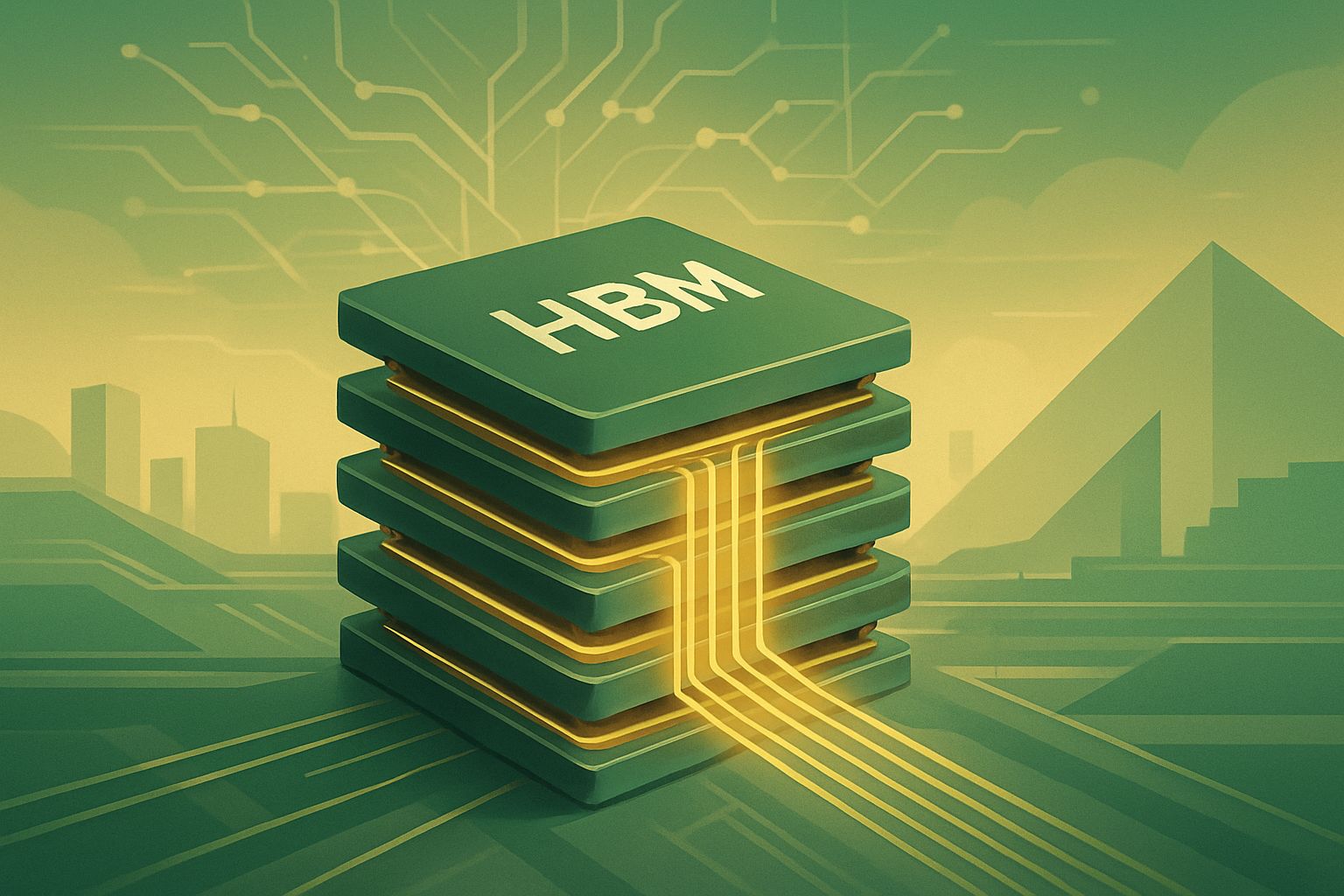
    The fundamental shift in 2025 has been the "HBM-ization" of the business model. HBM is a specialized DRAM where memory chips are stacked vertically and linked via Through-Silicon Vias (TSVs). Because HBM requires three times the wafer capacity of standard DDR5 memory, its production has significantly tightened the overall supply of DRAM, giving Micron unprecedented pricing power.

    Stock Performance Overview

    Micron’s stock performance over the last decade illustrates a transformation from a cyclical laggard to a high-growth tech titan:

    • 1-Year Performance (2025): The stock has surged approximately 65% year-to-date, driven by consecutive quarterly earnings beats and upward revisions in HBM market share.
    • 5-Year Performance: Looking back to 2020, MU has appreciated nearly 280%. While it faced a brutal downturn in 2023 during the post-pandemic "inventory correction," the rebound starting in early 2024 has been one of the most aggressive in the semiconductor sector.
    • 10-Year Performance: Over a 10-year horizon, Micron has outperformed the S&P 500 significantly, though with much higher volatility. Investors who held through the 2015-2016 and 2022-2023 troughs have seen massive multi-bagger returns as the company's "trough" earnings levels have consistently risen.

    Financial Performance

    The fiscal year 2025 (ended August 2025) was a watershed moment for Micron’s balance sheet.

    • Revenue: Micron reported FY2025 revenue of $37.38 billion, a 49% increase year-over-year.
    • Profitability: Gross margins, which were negative during parts of 2023, expanded to over 45% by late 2025. This was driven by the high ASP (Average Selling Price) of HBM3E products, which command margins significantly higher than traditional DRAM.
    • Earnings Per Share (EPS): For the most recent quarter (Q1 FY2026, ending Nov 2025), Micron delivered record EPS, with analysts projecting a full-year FY2026 EPS range of $30.00 to $36.00.
    • Capital Expenditure: To meet demand, Micron’s CapEx for 2025 exceeded $12 billion, focused on HBM packaging and the expansion of its Boise, Idaho fabrication facility.

    Leadership and Management

    CEO Sanjay Mehrotra remains the architect of Micron’s current success. His strategy has been characterized by "disciplined supply management"—refusing to overproduce even when prices are high, to avoid the gluts of the past.

    Supporting him is Manish Bhatia, EVP of Global Operations, who has been instrumental in navigating the complex ramp-up of HBM3E 12-Hi production. The leadership team’s reputation among institutional investors is currently at an all-time high, praised for their transparency regarding "yield" challenges and their success in securing long-term supply agreements with major CSPs (Cloud Service Providers).

    Products, Services, and Innovations

    Micron’s product roadmap is currently the envy of the memory industry:

    • HBM3E (High-Bandwidth Memory): Micron’s flagship HBM3E provides 30% lower power consumption than its nearest competitor. In early 2025, Micron moved into volume production of its 12-Hi (36GB) stacks, which have become the standard for NVIDIA’s latest Blackwell-series GPUs.
    • HBM4: In late 2025, Micron began sampling HBM4, which utilizes a 2048-bit interface. This next-generation memory is expected to enter mass production in 2026, promising a 60% increase in bandwidth.
    • LPCAMM2: A revolutionary modular memory form factor for laptops that delivers the power efficiency of soldered LPDDR5X with the serviceability of a module—critical for "AI PCs" that require massive amounts of local RAM.

    Competitive Landscape

    The DRAM market remains an oligopoly, dominated by three players:

    1. SK Hynix: The early leader in HBM. As of late 2025, they still hold approximately 60% of the HBM market, though their lead is being chipped away.
    2. Micron (MU): Now firmly entrenched as the #2 or #3 player depending on the month. In Q2 2025, Micron briefly overtook Samsung in HBM market share, currently sitting at roughly 21-22%.
    3. Samsung Electronics: Despite its massive scale, Samsung struggled with HBM3E yields throughout 2024 and early 2025. However, a late-2025 recovery has seen Samsung reclaim some ground, keeping the "Big Three" in a fierce technological arms race.

    Micron’s competitive edge lies in its power efficiency and its U.S.-based manufacturing footprint, which appeals to Western customers concerned about supply chain resilience.

    Industry and Market Trends

    Three macro trends are defining Micron’s trajectory:

    • The 3-to-1 Wafer Trade Ratio: Producing one bit of HBM takes roughly three times the wafer capacity of one bit of standard DDR5. This "wafer cannibalization" has created a structural shortage in the memory market, leading to rising prices across all DRAM categories.
    • AI at the Edge: 2025 has seen the rise of "AI PCs" and "AI Smartphones" (like the iPhone 17 Pro). These devices require 2x to 3x the RAM of previous generations to run LLMs locally, providing a huge tailwind for Micron’s Mobile and Client business units.
    • Server Refresh Cycle: Beyond AI, traditional data center servers are being upgraded to DDR5, which carries higher margins than the aging DDR4 standard.

    Risks and Challenges

    Despite the optimism, Micron faces significant headwinds:

    • Geopolitical Friction: Micron remains a "political football" in the US-China trade war. While the 2023 CAC ban in China has been partially mitigated, further restrictions on equipment or sales remain a constant threat.
    • Yield Risks: HBM is notoriously difficult to manufacture. Any "hiccup" in the assembly of 12-Hi or 16-Hi stacks could lead to massive write-offs and margin compression.
    • Cyclicality: While many argue "this time is different," the memory industry has never permanently escaped its cyclical nature. A sudden slowdown in AI capital expenditure by the "Magnificent Seven" would leave Micron with massive, expensive excess capacity.

    Opportunities and Catalysts

    • HBM4 Transition: Micron’s early progress in HBM4 could allow it to capture market share from SK Hynix in 2026.
    • Stock Buybacks: With free cash flow reaching record levels in late 2025, management has hinted at a massive increase in its share repurchase program for 2026.
    • Automotive AI: As Level 3 and Level 4 autonomous driving become more common, cars are essentially becoming "data centers on wheels," requiring gigabytes of high-performance DRAM.

    Investor Sentiment and Analyst Coverage

    Wall Street sentiment on Micron is overwhelmingly "Bullish." As of December 2025:

    • Price Targets: Major banks like Goldman Sachs and Morgan Stanley have raised their targets to the $180 – $210 range.
    • Institutional Ownership: Large hedge funds have increased their positions in MU, treating it as a "pure play" on the AI infrastructure layer with a lower valuation (P/E ratio) than NVIDIA or AMD.
    • Retail Sentiment: On social platforms, Micron is frequently cited as the "best value" in the semiconductor space.

    Regulatory, Policy, and Geopolitical Factors

    Micron is a primary beneficiary of the U.S. CHIPS and Science Act.

    • In December 2024, the government finalized a $6.14 billion grant for Micron.
    • Boise Expansion: Micron has accelerated the construction of its Boise "ID2" fab, with first wafer output expected by mid-2027.
    • New York Mega-Fab: While the Clay, NY project faced some environmental delays in 2025, it remains the largest private investment in New York history, intended to ensure U.S. memory sovereignty through 2045.

    Conclusion

    As we look toward 2026, Micron Technology stands at the pinnacle of its 47-year history. The company has successfully shed its image as a commodity vendor, proving it can compete at the highest levels of semiconductor engineering.

    For investors, the case for Micron is built on the "scarcity" of memory. In a world where AI models are growing exponentially, memory is the bottleneck. While the inherent cyclicality of the chip industry remains a risk, the structural shift toward HBM and Edge AI provides a floor for earnings that didn't exist five years ago. Micron is no longer just a participant in the tech industry; it is the vital, high-speed foundation upon which the future of artificial intelligence is being built.


    This content is intended for informational purposes only and is not financial advice.

  • The Bedrock of the Intelligence Age: A Deep Dive into Taiwan Semiconductor (TSM)

    The Bedrock of the Intelligence Age: A Deep Dive into Taiwan Semiconductor (TSM)

    As the world marks the end of 2025, the global economy has entered a new epoch defined by Artificial Intelligence (AI). At the epicenter of this transformation is one company that has become more than just a manufacturer; it is the "foundry utility" for the modern world. Taiwan Semiconductor Manufacturing Company (NYSE: TSM), commonly known as TSMC, has transitioned from a specialized component supplier to a critical pillar of global infrastructure.

    In late 2025, TSMC stands as the world’s most indispensable company. Whether it is the generative AI models running in hyperscale data centers, the advanced smartphones in our pockets, or the sophisticated defense systems securing nations, they all share a common origin: the cleanrooms of TSMC. With a market capitalization recently surpassing $1.5 trillion, TSMC’s dominance in high-end chip manufacturing has reached a level of exclusivity that is both a financial marvel and a geopolitical flashpoint.

    Historical Background

    TSMC was founded in 1987 by Dr. Morris Chang, a visionary who fundamentally altered the semiconductor industry by inventing the "pure-play" foundry model. Before TSMC, chip companies were vertically integrated—designing and manufacturing their own silicon. Chang realized that as chip fabrication became more complex and expensive, a massive market would emerge for a company that only manufactured chips designed by others.

    Based in Hsinchu Science Park, Taiwan, the company spent its first two decades perfecting the art of "copy exactly" manufacturing and building deep trust with clients. The 2010s marked a turning point when TSMC successfully secured the contract for Apple’s (NASDAQ: AAPL) iPhone processors, overtaking rivals like Samsung. This partnership provided the massive capital needed to outpace the rest of the world in research and development, leading to its current state of "process leadership"—being the first to reach the 7nm, 5nm, 3nm, and now the 2nm production milestones.

    Business Model

    TSMC’s business model is a masterclass in the "winner-takes-most" dynamic. Unlike competitors such as Intel (NASDAQ: INTC), TSMC does not design its own chips, meaning it never competes with its customers. This "customer-first" philosophy has allowed it to build a massive ecosystem where giants like NVIDIA (NASDAQ: NVDA), AMD (NASDAQ: AMD), and Qualcomm (NASDAQ: QCOM) share their roadmaps years in advance.

    Revenue Segments (2025 Estimates):

    • High-Performance Computing (HPC): 57% (The primary driver, including AI accelerators).
    • Smartphones: 31% (Stable, high-volume revenue).
    • IoT & Automotive: 12% (High-growth diversification areas).

    The company generates revenue by charging for processed silicon wafers and, increasingly, for advanced packaging services like CoWoS (Chip on Wafer on Substrate), which are essential for stitching together the massive logic and memory components required for AI chips.

    Stock Performance Overview

    TSMC has been a generational wealth creator for long-term investors. As of late December 2025, the stock reflects the immense premium the market places on AI manufacturing.

    • 1-Year Performance: TSM ADRs have surged approximately 51% in 2025, fueled by the "AI Supercycle" and the successful volume production of 3nm chips.
    • 5-Year Performance: Investors have seen a total return of over 200%, as the company successfully navigated the post-pandemic supply chain crisis and the subsequent AI boom.
    • 10-Year Performance: An extraordinary total return of roughly 1,550%. A $10,000 investment in TSM in late 2015 would be worth over $165,000 today (including dividends).

    The stock reached an all-time high of $313.98 earlier this month, as institutional investors rotated out of software and into the hardware "picks and shovels" that make AI possible.

    Financial Performance

    TSMC’s 2025 financial results have shattered previous records. For the first time, annual revenue is projected to exceed $100 billion, a testament to the company’s incredible pricing power in the 3nm and 2nm nodes.

    • Profitability: The company maintains a gross margin of 59.5%, a level typically reserved for software companies, despite the massive physical capital required for chip making.
    • Earnings: In Q3 2025, TSMC reported net income growth of 39% year-over-year.
    • Capital Expenditure (Capex): TSMC continues to reinvest aggressively, with a 2025 Capex budget of approximately $35–$38 billion. This "capital moat" makes it nearly impossible for new entrants to compete.
    • Valuation: Despite its run-up, TSM trades at a Forward P/E of approximately 24x, which many analysts consider reasonable given its projected 25% earnings CAGR through 2027.

    Leadership and Management

    The year 2025 has been a defining period for Dr. C.C. Wei, who now holds the dual role of Chairman and CEO. Following the retirement of Mark Liu in 2024, Wei has streamlined decision-making.

    Wei’s leadership style is characterized by "operational resilience." He has been the architect of TSMC’s global expansion strategy, overseeing the difficult "ramp-up" phase of the Arizona and Japan fabs. His reputation for maintaining neutrality while under immense pressure from both Washington and Beijing has earned him the respect of the global diplomatic community. The board remains one of the most stable in the industry, focused on long-term technological roadmaps that span 10 to 15 years.

    Products, Services, and Innovations

    TSMC’s product is not just the chip, but the process of making it.

    1. 2nm (N2) Process: Volume production of 2nm chips began in the second half of 2025. This node introduces Gate-all-around (GAA) nanosheet transistors, providing a massive jump in energy efficiency and performance over the 3nm FinFET architecture.
    2. Advanced Packaging (CoWoS): AI chips like NVIDIA's Blackwell and Rubin architectures require advanced packaging to function. TSMC has doubled its CoWoS capacity for two consecutive years (2024 and 2025) to meet demand, with monthly output now reaching 80,000 wafers.
    3. A16 Node: Development is already underway for the "A16" node (1.6nm), which will utilize backside power delivery, a revolutionary way to power chips from the rear to save space and reduce heat.

    Competitive Landscape

    While TSMC holds a dominant 72% share of the pure-play foundry market, it is not without rivals.

    • Intel Foundry: Intel is aggressively pursuing a "five nodes in four years" strategy. However, as of late 2025, Intel still struggles to match TSMC’s yields and lacks the established ecosystem of "fabless" clients that TSMC enjoys.
    • Samsung Foundry: Samsung remains a formidable competitor in the memory space and is attempting to gain ground in logic manufacturing. However, Samsung's "conflict of interest" (manufacturing its own Galaxy devices while trying to win foundry clients) remains a hurdle that TSMC does not face.

    TSMC’s competitive advantage—its "moat"—is its yield. If TSMC can produce 92 usable chips per 100 on a wafer while a competitor produces 70, TSMC’s profit and the customer’s cost advantage are insurmountable.

    Industry and Market Trends

    The semiconductor industry has shifted from being "cyclical" to "structural."

    • The AI Pivot: HPC and AI now account for over half of TSMC's revenue, reducing the company's historical reliance on the cyclical smartphone market.
    • Edge AI: A new trend in late 2025 is the "AI Smartphone" and "AI PC." These devices require advanced 3nm and 2nm chips to run localized LLMs (Large Language Models), creating a fresh wave of demand for TSMC’s leading-edge nodes.
    • Custom Silicon: Major cloud providers (Amazon, Google, Microsoft) are increasingly designing their own custom AI chips (TPUs, Maia, Trainium). Crucially, almost all of these "in-house" designs are manufactured by TSMC.

    Risks and Challenges

    Despite its dominance, TSMC faces significant risks:

    1. Geopolitical Tension: The "Taiwan Strait Risk" remains the primary concern for investors. Any disruption in Taiwan would effectively halt the global digital economy.
    2. Concentration Risk: Apple and NVIDIA together account for over 40% of TSMC’s revenue. If either were to face a significant downturn or successfully diversify to a rival foundry, TSMC would feel the impact.
    3. Complexity and Yield: As transistors shrink to the size of a few atoms, the physics of manufacturing becomes exponentially harder. A major delay in the 2nm or 1.4nm roadmap could allow competitors to close the gap.

    Opportunities and Catalysts

    • 2nm Ramp-up (2026): The full financial impact of 2nm will hit the balance sheet in 2026 as Apple integrates these chips into the iPhone 17/18 lineup.
    • Global Diversification: The successful start of Fab 1 in Arizona with 92% yields has proven that TSMC can manufacture outside of Taiwan successfully, reducing the "single-point-of-failure" discount on its stock.
    • Automotive Silicon: As vehicles transition to Software-Defined Vehicles (SDVs) and autonomous driving, the demand for TSMC’s 5nm and 7nm nodes in cars is expected to triple by 2030.

    Investor Sentiment and Analyst Coverage

    Wall Street remains overwhelmingly bullish on TSMC. In late 2025, the consensus rating is a "Strong Buy," with an average price target of $340. Institutional ownership remains high, with major sovereign wealth funds and ETFs like the VanEck Semiconductor ETF (NASDAQ: SMH) holding TSMC as a top-three position.

    Retail sentiment is equally positive, often viewing TSM as the "safest" way to play the AI boom without the extreme volatility of individual chip designers. Analysts frequently cite TSMC's "defensive growth" characteristics—high growth combined with a healthy dividend yield and a rock-solid balance sheet.

    Regulatory, Policy, and Geopolitical Factors

    The regulatory landscape is TSMC's most complex hurdle. In 2025, the company received its final $6.6 billion disbursement from the U.S. CHIPS Act. However, this funding comes with strings, including restrictions on expanding advanced capacity in China.

    Geopolitically, the "Silicon Shield" theory—that TSMC's importance to the world prevents conflict—is being tested. The company has responded by building a "Global Triad" of manufacturing bases:

    • Taiwan: The R&D heart and home of the most advanced nodes.
    • USA (Arizona): For high-end domestic needs and defense.
    • Japan (Kumamoto): For specialty nodes and automotive supply chain resilience.

    Conclusion

    Taiwan Semiconductor (NYSE: TSM) enters 2026 not just as a company, but as a global strategic asset. Its transition to the dual-leadership of C.C. Wei and the successful launch of its 2nm process have solidified its position at the peak of the technology pyramid.

    For investors, TSMC offers a unique proposition: it is the only way to own the entire AI industry's growth through a single ticker. While geopolitical risks will always shadow the stock, the world’s literal inability to function without TSMC’s chips provides a floor for its value. As we look toward 2026, the question is no longer whether TSMC can stay ahead, but how much larger the gap between them and the rest of the world will grow.


    This content is intended for informational purposes only and is not financial advice.

  • Broadcom’s AI and VMware Revolution: A 2025 Deep Dive into the Infrastructure Giant

    Broadcom’s AI and VMware Revolution: A 2025 Deep Dive into the Infrastructure Giant

    Today’s Date: December 25, 2025

    Introduction

    As we close out 2025, few companies have reshaped the technology landscape as profoundly as Broadcom Inc. (NASDAQ: AVGO). Once viewed as a quiet, diversified semiconductor conglomerate, Broadcom has evolved into an indispensable titan of the artificial intelligence (AI) era. Its dominance is no longer defined just by high-speed switches or wireless chips for iPhones; it is now the architect behind the custom silicon powering the world’s largest AI clusters and the software engine driving the global shift toward private clouds.

    With the $69 billion acquisition of VMware now fully integrated and its custom AI chip business reaching record heights, Broadcom finds itself in a unique position. It is the primary alternative to NVIDIA in the networking space and the essential partner for hyperscalers like Google and Meta. As of late 2025, Broadcom’s market capitalization exceeds $1.5 trillion, reflecting its status as the "backbone" of the next industrial revolution.

    Historical Background

    Broadcom’s journey is a masterclass in aggressive growth through consolidation. The modern Broadcom is the result of a 2016 merger where Singapore-based Avago Technologies acquired the original Broadcom Corp. for $37 billion. Under the leadership of Hock Tan, the combined entity adopted a relentless strategy of acquiring "franchise" businesses—market-leading technologies that are difficult to replace and possess high barriers to entry.

    Over the last decade, Tan has systematically expanded this portfolio. Key acquisitions included Brocade (storage networking) in 2017, CA Technologies (mainframe software) in 2018, and Symantec’s enterprise security business in 2019. However, the 2023 closing of the VMware acquisition marked the most significant pivot in the company's history, transitioning Broadcom from a hardware-centric firm into a balanced software and semiconductor powerhouse.

    Business Model

    Broadcom operates a bifurcated but highly synergistic business model. Its revenue is derived from two primary segments:

    1. Semiconductor Solutions: This segment accounts for the majority of revenue, focusing on hardware that enables data to move quickly and efficiently. This includes networking switches (Tomahawk and Jericho series), custom ASICs (Application-Specific Integrated Circuits), broadband access, and wireless chips.
    2. Infrastructure Software: Following the VMware integration, this segment has grown to represent nearly 40% of total revenue. It focuses on the "Broadcom Cloud" stack, primarily centered around VMware Cloud Foundation (VCF), as well as mainframe management and cybersecurity.

    The brilliance of the model lies in its customer concentration. Broadcom focuses on "the top 1,000" customers—hyperscalers, global banks, and telecommunications giants—who require high-end, mission-critical technology and are willing to pay for performance and stability.

    Stock Performance Overview

    The performance of AVGO shares has been nothing short of legendary for long-term investors. Following a 10-for-1 stock split in July 2024 to improve accessibility for retail investors, the stock has continued its upward trajectory.

    • 1-Year Performance: In 2025, AVGO shares surged approximately 52%, significantly outperforming the broader Philadelphia Semiconductor Index (SOXX).
    • 5-Year Performance: Investors who held Broadcom through the early 2020s have seen returns exceeding 500%, driven by the pandemic-era digital transformation and the subsequent AI boom.
    • 10-Year Performance: Over the last decade, Broadcom has consistently outperformed the S&P 500, delivering a total return including dividends that places it among the top decile of large-cap tech performers.

    Financial Performance

    Broadcom’s fiscal 2025 results have set new benchmarks for the industry. The company reported total annual revenue of approximately $64 billion, a 24% increase year-over-year.

    The integration of VMware has been a massive catalyst for margin expansion. Broadcom achieved an adjusted EBITDA margin of 68% in 2025, the highest in its history. This was driven by the successful transition of VMware’s customer base from perpetual licenses to high-margin subscription bundles. AI-related revenue exceeded $20 billion in FY2025, representing roughly 32% of total sales—up from 15% just two years prior. Free cash flow generation remains robust, with the company returning nearly $27 billion to shareholders in the form of dividends and buybacks during the calendar year.

    Leadership and Management

    Hock Tan, Broadcom’s President and CEO, is widely regarded as one of the most effective, albeit polarizing, leaders in the technology sector. His management philosophy centers on "operating at scale" and ruthless efficiency. Tan’s approach involves identifying R&D projects with the highest return on investment while divesting or cutting costs in non-core areas.

    In 2025, Tan’s leadership team successfully navigated the VMware transition, which involved collapsing thousands of software products into four core bundles. Despite criticisms from some smaller clients regarding price hikes, Tan has maintained a steadfast focus on serving high-value enterprise customers, a strategy that has consistently rewarded shareholders.

    Products, Services, and Innovations

    Broadcom’s innovation pipeline in 2025 is dominated by two pillars: high-speed networking and custom AI processors.

    • Tomahawk 6: Launched in late 2025, the Tomahawk 6 switch chip offers 102.4 Tbps of bandwidth, making it the industry standard for connecting massive GPU clusters in AI data centers.
    • Custom ASICs (XPUs): Broadcom remains the leader in custom silicon. It co-develops the TPU (Tensor Processing Unit) for Alphabet Inc. (NASDAQ: GOOGL) and the MTIA for Meta Platforms (NASDAQ: META). In late 2025, Broadcom confirmed a landmark deal with OpenAI to develop a custom inference chip, a project dubbed "Titan."
    • VMware Cloud Foundation (VCF) 9.0: The latest software release has enabled "Private AI," allowing enterprises to run large language models (LLMs) on their own infrastructure without sending sensitive data to public clouds.

    Competitive Landscape

    Broadcom’s primary rival in the AI networking space is NVIDIA (NASDAQ: NVDA). While NVIDIA dominates the GPU market, Broadcom is winning the "interconnect" battle. In 2025, the industry saw a "Crossover Event" where high-speed Ethernet (Broadcom’s forte) began to outpace NVIDIA’s proprietary InfiniBand technology in new AI data center deployments.

    In the custom silicon market, Broadcom faces competition from Marvell Technology (NASDAQ: MRVL). However, Broadcom’s deep relationship with Google and its recent wins at Meta and OpenAI have solidified its lead. Marvell remains a strong player in the carrier and storage markets, but Broadcom’s "full-system" approach—providing both the chip and the networking fabric—gives it a distinct competitive edge.

    Industry and Market Trends

    The "AI Supercycle" remains the dominant macro driver for Broadcom. As enterprises move past the initial phase of AI experimentation and into large-scale deployment, the need for efficient "east-west" data traffic (communication between servers) has skyrocketed.

    Furthermore, 2025 has seen a resurgence in "Private Cloud" adoption. Many corporations, spooked by the rising costs and data sovereignty issues of public clouds, are reinvesting in on-premise data centers using VMware’s software stack. This "re-centralization" of IT infrastructure is a significant tailwind for Broadcom’s software division.

    Risks and Challenges

    Despite its dominance, Broadcom faces several headwinds:

    • Regulatory Scrutiny: In late 2025, European regulators (CISPE) continued to challenge the VMware acquisition, citing licensing changes that some claim are anti-competitive.
    • Customer Concentration: A significant portion of Broadcom’s semiconductor revenue comes from a handful of clients—Apple, Google, and Meta. If any of these giants successfully bring their silicon design entirely in-house, Broadcom would face a substantial revenue gap.
    • Debt Load: While Broadcom has been aggressively paying down the debt used to acquire VMware, it still carries a significant leverage profile compared to "net cash" peers like NVIDIA.

    Opportunities and Catalysts

    Looking into 2026, the potential for further growth is immense. The ramp-up of the OpenAI custom chip represents a multi-billion dollar opportunity. Additionally, as more enterprises adopt the "Ultra Ethernet" standard, Broadcom’s networking division is expected to see sustained 20%+ growth.

    Another catalyst is the potential for further "tuck-in" acquisitions. With the VMware integration complete, Hock Tan has hinted that Broadcom remains "selectively acquisitive," potentially looking at specialized software or optical interconnect firms to further round out its AI infrastructure portfolio.

    Investor Sentiment and Analyst Coverage

    Wall Street remains overwhelmingly bullish on AVGO. As of December 2025, over 85% of analysts covering the stock maintain a "Strong Buy" or "Buy" rating. Institutional ownership remains high, with major funds viewing Broadcom as a "lower-volatility" way to play the AI boom compared to the more volatile GPU manufacturers.

    Retail sentiment has also improved significantly following the 2024 stock split, as the lower nominal share price allowed for more participation from individual investors. Broadcom is now a common fixture in most "Magnificent 7-adjacent" portfolios.

    Regulatory, Policy, and Geopolitical Factors

    Geopolitical tensions between the U.S. and China remain a key risk factor. Broadcom has successfully reduced its direct revenue exposure to China to approximately 20% in 2025. However, it remains vulnerable to export controls on high-end networking chips.

    On the policy front, the U.S. CHIPS Act continues to provide indirect benefits by incentivizing domestic manufacturing, though Broadcom primarily operates as a fabless designer, relying on TSMC (NYSE: TSM) for production. Any disruption in the Taiwan Strait remains the "black swan" risk for the entire semiconductor sector.

    Conclusion

    Broadcom Inc. has transformed from a components supplier into the essential architect of the AI-powered enterprise. By masterfully combining world-class networking hardware with an indispensable software stack in VMware, Hock Tan has built a recurring revenue machine that is both highly profitable and strategically defensive.

    For investors, Broadcom offers a compelling proposition: the growth of AI infrastructure paired with the stability of enterprise software. While regulatory challenges and customer concentration require careful monitoring, Broadcom’s position as the gatekeeper of the "open" AI data center makes it one of the most important companies to watch as we head into 2026.


    This content is intended for informational purposes only and is not financial advice.

  • The Nervous System of AI: A Deep-Dive into Marvell Technology (MRVL)

    The Nervous System of AI: A Deep-Dive into Marvell Technology (MRVL)

    As of December 24, 2025, the semiconductor landscape has been irrevocably reshaped by the "AI Supercycle." While the headlines are often dominated by the sheer compute power of graphic processing units (GPUs), a secondary but equally critical narrative has emerged: the infrastructure required to connect these engines. Marvell Technology, Inc. (NASDAQ: MRVL) has positioned itself at the epicenter of this shift. Often described as the "nervous system" of the modern data center, Marvell provides the high-speed connectivity, optical interfaces, and custom silicon that allow tens of thousands of processors to function as a single, coherent artificial intelligence machine.

    In 2025, Marvell has transitioned from a diversified chipmaker into a focused powerhouse for AI infrastructure. With its Data Center segment now accounting for roughly three-quarters of its total revenue, the company is no longer just a "connectivity play"—it is a foundational architect of the generative AI era.

    Historical Background

    Founded in 1995 by Sehat Sutardja, Weili Dai, and Pantas Sutardja, Marvell Technology began its life as a specialist in storage controller chips. For much of its early history, it was known primarily for the silicon that powered hard disk drives (HDDs) and solid-state drives (SSDs). However, the mid-2010s brought a period of internal turmoil and stagnation, leading to the appointment of Matt Murphy as CEO in 2016.

    Under Murphy’s leadership, Marvell underwent one of the most successful transformations in the semiconductor industry. The company aggressively divested non-core consumer businesses and pivoted toward high-growth infrastructure markets. The acquisition of Cavium in 2018 for $6 billion broadened its portfolio into networking and security processors. This was followed by the landmark $10 billion acquisition of Inphi in 2021, which gave Marvell a dominant position in optical high-speed interconnects—the technology that has since become the "gold standard" for AI data center networking. By late 2025, Marvell has completed this metamorphosis, shedding its legacy "storage-only" reputation to become a premier designer of cloud-optimized silicon.

    Business Model

    Marvell operates as a fabless semiconductor company, focusing on the design and development of high-performance integrated circuits. Its business model is increasingly anchored by the Data Center segment, which serves the world’s largest "hyperscalers" (Amazon, Google, Microsoft, and Meta).

    The company’s revenue is categorized into five primary segments:

    • Data Center (75% of revenue): Includes custom AI accelerators (ASICs), optical Digital Signal Processors (DSPs), and high-speed Ethernet switches.
    • Enterprise Networking (~10%): Provides switches and PHYs for corporate campus and branch office networks.
    • Carrier Infrastructure (~6%): Focused on 5G base station hardware, currently a cyclical low point in 2025.
    • Consumer (~6%): Storage controllers for high-end PCs and gaming consoles.
    • Automotive/Industrial (~3%): Following the late-2025 divestiture of its automotive Ethernet division to Infineon, this segment now focuses on specialized industrial storage and ruggedized networking.

    Marvell’s "Cloud-Optimized" strategy focuses on co-designing chips with customers, moving away from generic, off-the-shelf products toward bespoke solutions that maximize performance-per-watt for specific AI workloads.

    Stock Performance Overview

    Over the last decade, Marvell’s stock has reflected its profound corporate shift.

    • 10-Year Horizon: Investors who held through the 2016 restructuring have seen significant multi-bagger returns, as the stock rose from the low $10s to its current valuation.
    • 5-Year Horizon: The 2021-2025 period was characterized by volatility during the 2022 tech correction, followed by a meteoric rise beginning in mid-2023 as the AI narrative took hold.
    • 1-Year Horizon (2025): Throughout 2025, MRVL has outperformed the broader Philadelphia Semiconductor Index (SOX). Starting the year around $85, the stock has climbed to approximately $115 as of late December, driven by consecutive earnings beats and the successful ramp of its custom AI silicon programs for AWS.

    Financial Performance

    Marvell’s Fiscal Year 2025 (ending February 1, 2025) was a watershed year. The company reported total revenue of $5.767 billion, with Q4 alone generating a record $1.817 billion.

    Key financial metrics as of late 2025 include:

    • AI Revenue Growth: AI-related revenue exceeded $1.5 billion in FY2025 and is projected to surpass $2.5 billion in FY2026.
    • Margins: While GAAP margins were pressured by acquisition-related expenses earlier in the decade, Non-GAAP gross margins have stabilized in the 62-63% range. Custom ASIC programs typically carry lower margins than merchant chips, but the massive volume has driven absolute dollar growth in operating income.
    • Profitability: Marvell achieved consistent GAAP profitability in 2025, a key milestone for institutional investors.
    • Valuation: Trading at approximately 35x forward earnings, Marvell carries a premium valuation, reflecting its high-growth status within the AI infrastructure niche.

    Leadership and Management

    Matt Murphy (CEO) is widely credited with the "New Marvell." His strategy of focusing on data centers and high-speed connectivity has been validated by the current AI boom. Murphy’s leadership style is noted for disciplined M&A and a focus on R&D—directing over 80% of the company's research budget toward the cloud and AI.

    The management team is supported by a board with deep experience in scaling semiconductor operations. In 2025, the company has emphasized governance and strategic clarity, evidenced by the $2.5 billion sale of its automotive Ethernet business to Infineon Technologies AG (ETR: IFX), a move designed to "prune the portfolio" and focus resources on the hyper-growth AI sector.

    Products, Services, and Innovations

    Marvell’s technological edge lies in three core areas:

    1. Optical Interconnects: Marvell’s Inphi division leads the world in PAM4 DSPs. Their Nova 2 (1.6T DSP) is the industry’s first 1.6 Terabit-per-second optical engine, essential for the next generation of 200G-per-lane GPU clusters.
    2. Custom ASICs (XPUs): Marvell co-develops custom AI accelerators. In 2025, the ramp of Amazon’s Trainium 2 and Inferentia chips—which Marvell helped design—has become a massive revenue driver.
    3. Cloud-Scale Switching: The Teralynx 10 switch, acquired through Innovium, offers 51.2 Tbps of bandwidth with ultra-low latency, providing a viable alternative to Nvidia’s proprietary networking stacks.

    Competitive Landscape

    The primary rival for Marvell is Broadcom Inc. (NASDAQ: AVGO). Broadcom currently holds a larger share of the custom ASIC market (notably with Google’s TPU) and the merchant switch market. However, Marvell is successfully positioning itself as the "strategic second source," capturing hyperscalers who want to avoid vendor lock-in with Broadcom or Nvidia Corporation (NASDAQ: NVDA).

    While Nvidia dominates the GPU market, Marvell is both a partner and a competitor. Marvell’s chips power the optical links between Nvidia GPUs, but Marvell also champions open-standard networking protocols like UALink and Ultra Ethernet, which compete with Nvidia’s proprietary NVLink and InfiniBand technologies.

    Industry and Market Trends

    The semiconductor industry in 2025 is defined by two major trends:

    • The Transition to 800G and 1.6T: As AI models grow, the need for faster data movement is skyrocketing. Marvell’s dominance in 800G optical DSPs (with ~80% market share) has made them the primary beneficiary of this upgrade cycle.
    • Silicon Customization: Hyperscalers are increasingly designing their own chips to save costs and optimize performance. This "Custom Silicon" trend plays directly into Marvell’s co-design business model.

    Risks and Challenges

    Despite its growth, Marvell faces several hurdles:

    • Margin Dilution: Custom ASICs generally have lower gross margins than standard merchant products. If Marvell’s revenue mix shifts too heavily toward custom chips, it could cap overall profitability.
    • Customer Concentration: A significant portion of Marvell’s growth depends on a handful of hyperscalers (Amazon, Google, Microsoft). Any reduction in their AI CapEx spending would hit Marvell disproportionately.
    • Cyclicality in Non-AI Segments: While AI is booming, the Carrier (5G) and Enterprise segments have been sluggish, though they show signs of recovery heading into 2026.

    Opportunities and Catalysts

    • 1.6T Optical Ramp: The full-scale production of 1.6T optical modules in 2026 represents a major upcoming catalyst.
    • New Design Wins: Rumors persist in late 2025 that Marvell has secured a third major hyperscale customer for a custom AI chip, which could be announced in early 2026.
    • UALink Momentum: As the Ultra Accelerator Link (UALink) consortium gains steam, Marvell’s role as an independent provider of high-speed interconnects could expand at the expense of Nvidia's closed ecosystem.

    Investor Sentiment and Analyst Coverage

    Sentiment on Wall Street remains overwhelmingly bullish as of late 2025. Major firms like Goldman Sachs, Citi, and Jefferies maintain "Buy" or "Strong Buy" ratings, citing Marvell as the cleanest "infrastructure play" in the AI space. Institutional ownership remains high, with significant positions held by Vanguard, BlackRock, and Fidelity. Retail sentiment has also surged, as Marvell is increasingly recognized as a vital component of the "AI Trade" alongside Nvidia.

    Regulatory, Policy, and Geopolitical Factors

    Marvell is a significant beneficiary of the U.S. CHIPS and Science Act, receiving grants for R&D and domestic capacity expansion. However, geopolitical tensions with China remain a risk. Export controls on high-performance computing silicon to China limit Marvell's addressable market in the region, though much of this impact has already been priced in by 2025. The company’s focus on U.S.-based hyperscalers provides a degree of insulation from international trade volatility.

    Conclusion

    Marvell Technology (NASDAQ: MRVL) has successfully navigated a decade of transformation to emerge as a cornerstone of the AI era. By dominating the optical interconnect market and securing critical custom silicon partnerships with the world’s largest cloud providers, the company has built a wide "connectivity moat."

    For investors, the case for Marvell rests on its role as the indispensable facilitator of the data-heavy AI future. While risks regarding margin profile and customer concentration exist, the company’s strategic focus on "Cloud-Optimized Silicon" aligns perfectly with the current trajectory of the technology industry. As the world moves toward 1.6T networking and even more complex AI clusters in 2026, Marvell appears well-positioned to remain the "nervous system" of global computing.


    This content is intended for informational purposes only and is not financial advice.

  • Intel (INTC) at the 18A Crossroads: Analyzing the Nvidia Testing Halt and the Future of American Silicon

    Intel (INTC) at the 18A Crossroads: Analyzing the Nvidia Testing Halt and the Future of American Silicon

    As of December 24, 2025, Intel Corporation (NASDAQ:INTC) finds itself at the most consequential crossroads in its 57-year history. Once the undisputed titan of the semiconductor world, the Santa Clara giant is currently locked in a high-stakes race to reclaim its manufacturing crown through its ambitious "Intel 18A" (1.8nm) process node. While the company has technically achieved high-volume manufacturing (HVM) this year, the narrative has been recently clouded by reports of a testing halt from Nvidia (NASDAQ:NVDA). This setback—occurring just as Intel attempts to pivot toward a "Foundry-first" business model—has reignited debates over whether the company can truly challenge the dominance of Taiwan Semiconductor Manufacturing Company (NYSE:TSM). Today’s deep dive examines the technical milestones, the financial restructuring, and the geopolitical lifelines that define Intel’s current standing.

    Historical Background

    Founded in 1968 by Robert Noyce and Gordon Moore, Intel was the primary architect of the PC revolution. For decades, it followed "Moore’s Law" with religious precision, maintaining a two-year lead over competitors in transistor density. However, the late 2010s marked a period of stagnation. Missteps in the transition to 10nm and 7nm processes allowed TSMC and Samsung to leapfrog Intel, while the rise of mobile and eventually AI chips shifted the industry’s gravitational center away from Intel's x86 architecture.

    In 2021, Pat Gelsinger returned as CEO with the "IDM 2.0" strategy, intending to open Intel’s fabs to external customers. By early 2025, however, the financial strain of this transition led to a leadership shift, with Lip-Bu Tan taking the helm to implement a more "ruthless prioritization" of foundry yields and balance sheet stability.

    Business Model

    Intel’s business model is currently split into two distinct, yet interdependent, pillars:

    1. Intel Products: This includes the Client Computing Group (CCG), which produces processors for PCs and laptops (the current Panther Lake lineup), and the Data Center and AI (DCAI) group.
    2. Intel Foundry: This is the capital-intensive arm tasked with manufacturing chips for both Intel and external "fabless" companies.

    The company is moving toward an "internal foundry" accounting model, where the product teams must compete for fab capacity just like external customers. This transparency is intended to drive efficiency, but in the near term, it has exposed the massive losses the foundry division is currently absorbing as it builds out new capacity in Oregon, Arizona, and Ohio.

    Stock Performance Overview

    Intel’s stock performance has been a source of frustration for long-term investors.

    • 1-Year: The stock is down approximately 12% over the last 12 months, significantly underperforming the Philadelphia Semiconductor Index (SOX).
    • 5-Year: INTC has seen a decline of nearly 45%, a period during which peers like Nvidia and Broadcom (NASDAQ:AVGO) saw multi-bagger returns.
    • 10-Year: While the broader market tripled, Intel’s share price remains trapped in a decade-long range, reflecting the market's "show-me" attitude toward its turnaround promises.

    The most recent volatility was triggered this month by news that Nvidia, the world’s leading AI chipmaker, halted its 18A testing process, causing a sharp 5% intraday drop on December 24.

    Financial Performance

    Intel’s Q3 2025 earnings reported revenue of $13.7 billion, a modest 3% year-over-year growth. However, the financials are a tale of two halves. The product groups remain profitable, but the Foundry division continues to lose billions per quarter.

    • Gross Margins: Currently stabilized at roughly 38%, down from the 60%+ levels seen during Intel’s heyday.
    • Cash Flow: Intel has aggressively cut costs, including a 20% headcount reduction in 2025, but free cash flow remains negative due to $20 billion+ in annual capital expenditures (CapEx).
    • Dividends: Following the suspension of the dividend in late 2024, the company has prioritized liquidity over shareholder payouts, a move that alienated many retail income investors.

    Leadership and Management

    In early 2025, the board appointed Lip-Bu Tan, a veteran of Cadence Design Systems and a long-time Intel board member, as CEO to succeed Pat Gelsinger. Tan’s focus has been on "simplification." Under his tenure, Intel has spun off a majority stake in its Altera FPGA unit and cancelled the "Falcon Shores" XPU project to consolidate resources onto the 18A and 14A roadmaps. The management team is now heavily weighted toward manufacturing and EDA (Electronic Design Automation) experts, signaling a shift from a product-led to a process-led culture.

    Products, Services, and Innovations

    The Intel 18A node is the crown jewel of Intel’s innovation pipeline. It introduces two revolutionary technologies:

    • RibbonFET: A gate-all-around (GAA) transistor architecture that improves performance and power efficiency.
    • PowerVia: Backside power delivery, which separates the power lines from the signal lines on a chip.

    Intel is the first to implement PowerVia in high-volume manufacturing, roughly a year ahead of TSMC. The lead product, Panther Lake, is currently shipping to laptop manufacturers and has demonstrated competitive AI-on-device performance. However, the delay of the Clearwater Forest server chip to 1H 2026 has raised concerns about the maturity of Intel’s packaging tech.

    Competitive Landscape

    Intel remains in a fierce three-way battle with TSMC and Samsung.

    • TSMC (NYSE:TSM): The gold standard. TSMC’s N2 (2nm) node is set to ramp up in early 2026. While Intel claims its 18A is technically superior due to PowerVia, TSMC holds a significant advantage in yield maturity and CoWoS packaging—the secret sauce for high-end AI chips.
    • Samsung Electronics: While Samsung has struggled with yields on its 3nm GAA process, it remains a formidable threat for mobile and memory-integrated logic.

    The "Nvidia Testing Halt" is particularly damaging because it suggests that while Intel's technology is sound on paper, its yields or reliability are not yet ready for the extreme demands of Nvidia’s Blackwell or subsequent AI architectures.

    Industry and Market Trends

    The semiconductor industry is currently defined by the "AI Gold Rush" and the push for "Sovereign Silicon."

    • AI Accelerators: The market is hungry for more capacity than TSMC can provide, which should benefit Intel. However, the shift from general-purpose CPUs to GPUs has shrunk Intel's addressable market in the data center.
    • Sovereign Foundries: Governments are willing to pay a premium for domestic chip production to secure supply chains against geopolitical instability in the Taiwan Strait.

    Risks and Challenges

    1. Execution Risk: Intel has a history of over-promising on node transitions. Any further delay in the 18A roadmap would likely be fatal to its foundry ambitions.
    2. Customer Trust: The Nvidia testing halt is a public relations blow. If major fabless firms like Apple (NASDAQ:AAPL) or AMD (NASDAQ:AMD) don't commit to 18A, the fabs will remain underutilized and unprofitable.
    3. Financial Burn: The cost of building fabs in the US and Europe is astronomical. Intel is essentially "betting the company" on these projects.

    Opportunities and Catalysts

    • 14A Roadmap: Intel is already marketing its 14A (1.4nm) node for 2027. If 18A serves as a "learning node," 14A could be the node where Intel regains a commercial lead.
    • US Defense Contracts: Through the "Secure Enclave" program, Intel has secured a $3 billion award to produce chips for the US military, providing a high-margin, stable revenue stream.
    • Internal Efficiencies: If Lip-Bu Tan’s restructuring can bring gross margins back above 45%, the stock could see a massive re-rating.

    Investor Sentiment and Analyst Coverage

    Wall Street remains deeply divided on Intel.

    • Bulls argue that Intel is a "too big to fail" national champion, trading at a fraction of the valuation of its peers. They see the 18A technical lead as the foundation for a massive 2026 recovery.
    • Bears point to the Nvidia news as evidence that Intel’s foundry culture is still not ready for prime time. Many analysts have "Hold" or "Underperform" ratings, citing the lack of a major external anchor customer for 18A.

    Regulatory, Policy, and Geopolitical Factors

    Intel is the primary beneficiary of the U.S. CHIPS and Science Act. In late 2024, the Department of Commerce finalized a $7.86 billion direct grant for Intel. Interestingly, the deal was restructured in 2025 to include a 9.9% non-voting equity stake held by the US Treasury, effectively making the US government a silent partner. This ensures that Intel will have political backing, but also subjects it to intense regulatory oversight regarding its international operations, particularly its remaining footprint in China.

    Conclusion

    Intel’s journey with the 18A process is a microcosm of the modern American industrial challenge: the difficulty of regaining technological leadership after decades of outsourcing and stagnation. The reported Nvidia testing halt is a sobering reminder that technical "firsts" like PowerVia do not automatically translate into commercial dominance. Yields and customer confidence are the new currency.

    For investors, Intel is no longer a safe blue-chip dividend stock; it is a high-risk, high-reward turnaround play. The next 12 to 18 months will determine if Intel becomes a specialized US-based foundry for defense and legacy chips, or if it successfully returns to the pinnacle of global computing.


    This content is intended for informational purposes only and is not financial advice.
  • The Backbone of the AI Era: A Deep-Dive into Broadcom’s (AVGO) Networking Dominance

    The Backbone of the AI Era: A Deep-Dive into Broadcom’s (AVGO) Networking Dominance

    Date: December 24, 2025
    Sector: Technology / Semiconductors
    Ticker: (NASDAQ: AVGO)

    Introduction

    As 2025 draws to a close, Broadcom Inc. (NASDAQ: AVGO) has solidified its status not merely as a semiconductor manufacturer, but as the indispensable architect of the global artificial intelligence (AI) infrastructure. Long characterized as a "collection of franchises" under the disciplined leadership of CEO Hock Tan, Broadcom has evolved into a $1.5 trillion conglomerate that sits at the intersection of high-performance silicon and mission-critical enterprise software.

    While much of the market’s focus over the past two years was directed at GPU dominance, the "AI Supercycle" of 2025 has highlighted a critical reality: AI models are only as powerful as the networks that connect them. Broadcom’s dominance in high-speed Ethernet switching and its expanding custom AI accelerator (XPU) business have made it the primary beneficiary of a massive architectural shift in the data center. Today, Broadcom is the "plumber" of the AI era—providing the essential pipes, valves, and control systems that allow trillions of parameters to flow across the world’s most advanced computing clusters.

    Historical Background

    Broadcom’s journey to the top of the semiconductor world is a masterclass in strategic consolidation. The modern entity is the result of a 2016 merger between Avago Technologies—a legacy spin-off from Hewlett-Packard (NYSE: HPQ)—and the original Broadcom Corporation.

    Under Hock Tan’s leadership, the company pursued an "acquire-and-optimize" strategy that reshaped the industry. Key milestones include the acquisition of Brocade (2017), CA Technologies (2018), and Symantec’s Enterprise Security business (2019). However, the most transformative moment in the company’s history was the 2023 closing of its $69 billion acquisition of VMware. This deal marked Broadcom’s full-scale pivot into high-margin infrastructure software, diversifying its revenue away from the cyclicality of the chip market and creating a formidable hybrid model that pairs hardware leadership with deep enterprise software integration.

    Business Model

    Broadcom operates through two primary segments: Semiconductor Solutions and Infrastructure Software.

    • Semiconductor Solutions (~60% of Revenue): This segment is the world leader in networking, broadband, wireless, and industrial silicon. It provides the "switching fabric" for data centers, RF front-end modules for smartphones (including Apple), and custom-designed chips (ASICs) for hyperscalers like Google and Meta.
    • Infrastructure Software (~40% of Revenue): Following the integration of VMware, this segment focuses on cloud management, virtualization, cybersecurity, and mainframe software. Broadcom’s model is predicated on owning "franchise" assets—products that are essential to the daily operations of Fortune 500 companies and are difficult to displace.

    The company’s customer base is concentrated among the world’s largest cloud service providers (Hyperscalers), global telecommunications firms, and blue-chip enterprises. Broadcom’s strategy is to spend heavily on R&D for these specific "franchises" while maintaining an extremely lean operational structure elsewhere.

    Stock Performance Overview

    Broadcom has been one of the most consistent wealth creators in the technology sector. As of late 2025, the stock has significantly outperformed both the S&P 500 and the PHLX Semiconductor Index (SOXX).

    • 1-Year Performance (2025): The stock surged approximately 52% in 2025, fueled by better-than-expected VMware margins and the expansion of its custom AI silicon pipeline.
    • 5-Year Performance: On a total return basis, Broadcom has delivered gains exceeding 850%. This was punctuated by a 10-for-1 stock split in July 2024, which increased liquidity and accessibility for retail investors.
    • 10-Year Performance: Over the past decade, Broadcom’s stock has appreciated by over 3,000%, driven by massive dividend increases and strategic acquisitions that expanded its total addressable market (TAM).

    Financial Performance

    Broadcom’s FY2025 results, concluded recently, showcased a company firing on all cylinders.

    • Revenue: Total revenue reached approximately $64.0 billion, a 24% year-over-year increase, largely driven by the full-year inclusion of VMware and a 63% jump in AI-related revenue.
    • AI Contribution: AI-specific semiconductor revenue exceeded $20 billion in FY2025, up from $12.2 billion in FY2024.
    • Profitability: The company’s Adjusted EBITDA margin reached an industry-leading 68%. This "software-like" profitability in a hardware-heavy sector is Broadcom’s financial hallmark.
    • Cash Flow and Debt: Broadcom generated a staggering $26.9 billion in Free Cash Flow (FCF) in 2025. This cash was used to reduce the debt load from the VMware acquisition from a peak of $74 billion to roughly $65.1 billion by December 2025.

    Leadership and Management

    The Broadcom story is inseparable from its President and CEO, Hock Tan. Known for his no-nonsense, financially disciplined approach, Tan’s contract was recently extended through 2030. His strategy focuses on "mission-critical" technologies and aggressive cost management.

    Supporting Tan is Dr. Charlie Kawwas, President of the Semiconductor Solutions Group. Kawwas is credited with securing the company’s dominance in the AI networking space and managing the complex "co-design" relationships with hyperscalers. The leadership team’s reputation for operational excellence and shareholder-friendly capital allocation (prioritizing dividends and debt repayment) has earned it a "best-in-class" rating from Wall Street analysts.

    Products, Services, and Innovations

    In 2025, Broadcom’s innovation roadmap is centered on solving the "interconnect bottleneck" in AI.

    1. Networking Silicon: Broadcom’s Tomahawk 6 switching chip (102.4 Tbps) is the industry benchmark for Ethernet-based AI clusters. It allows data centers to connect hundreds of thousands of GPUs with minimal latency.
    2. Thor Ultra NIC: Launched in late 2025, this 800G Ethernet chip provides the highest power efficiency in the market, a critical factor as data centers hit power-consumption ceilings.
    3. Custom AI Accelerators (XPUs): Broadcom is the architect behind Google’s TPU (Tensor Processing Unit) v6 and v7, and Meta’s MTIA chips. A landmark deal with OpenAI for custom "Titan" inference chips was also confirmed in 2025.
    4. VMware Cloud Foundation (VCF) 9.0: This AI-native private cloud platform allows enterprises to deploy "Private AI," keeping sensitive data within their own firewalls while leveraging Broadcom’s optimized hardware.

    Competitive Landscape

    Broadcom occupies a unique competitive position. While it does not compete directly with Nvidia (NASDAQ: NVDA) in GPU production, it competes fiercely in the interconnect fabric market.

    • vs. Nvidia: Nvidia promotes its proprietary InfiniBand networking. Broadcom, as a founding member of the Ultra Ethernet Consortium (UEC), champions open Ethernet standards. In 2025, the "Ethernet Crossover" occurred, where high-speed Ethernet began to outpace InfiniBand in new AI deployments due to its scalability and lower total cost of ownership.
    • vs. Marvell (NASDAQ: MRVL): Marvell is Broadcom’s closest rival in custom ASICs and optical networking. However, Broadcom’s superior scale and deep SerDes (serializer/deserializer) IP portfolio have allowed it to maintain an 80%+ market share in high-end switching silicon.

    Industry and Market Trends

    The dominant trend of 2025 is the shift toward Specialized AI Hardware. As the cost of general-purpose GPUs remains high, hyperscalers are increasingly moving toward custom ASICs (Application-Specific Integrated Circuits) for inference and specific training workloads. This "ASIC-ization" of the data center is a direct tailwind for Broadcom.

    Additionally, the rise of Private AI—where corporations run AI models on-premise rather than in the public cloud—has rejuvenated the VMware business. Enterprises are using VMware Cloud Foundation to build self-service AI clouds that offer the agility of AWS but with the security of private infrastructure.

    Risks and Challenges

    Despite its dominance, Broadcom faces significant risks:

    • Customer Concentration: A large portion of Broadcom’s custom silicon revenue comes from just a handful of players (Google, Meta, and OpenAI). If these firms successfully "insource" their design processes or shift to other partners, Broadcom’s growth could stall.
    • Debt Load: While Broadcom is aggressively paying down its VMware debt, the $65 billion liability remains significant and limits the company’s ability to pursue further massive M&A in the near term.
    • EU Regulatory Pushback: European cloud providers have challenged VMware’s new subscription-only licensing model, alleging drastic price increases. Ongoing litigation in the EU could force further concessions.

    Opportunities and Catalysts

    • The "Titan" Project: Broadcom’s multi-year partnership with OpenAI to develop custom inference chips represents a massive future revenue stream, potentially worth over $100 billion through 2029.
    • The 1.6T Upgrade Cycle: The move from 800G to 1.6T (Terabit) networking, expected to begin in late 2026, will benefit Broadcom’s optical and switching divisions as data centers require more advanced silicon.
    • Dividend Growth: With FCF margins approaching 42%, Broadcom remains a premiere "dividend growth" stock, with analysts expecting another double-digit percentage increase in 2026.

    Investor Sentiment and Analyst Coverage

    Sentiment among institutional investors remains overwhelmingly bullish. Many hedge funds have rotated out of more volatile names into AVGO, viewing it as a "safer" way to play the AI infrastructure theme. On Wall Street, the consensus is a "Strong Buy," with several analysts recently raising price targets to reflect the higher-than-expected profitability of the VMware software transition. Broadcom is now frequently cited as a replacement for Tesla (NASDAQ: TSLA) in the "Magnificent Seven" group of tech giants.

    Regulatory, Policy, and Geopolitical Factors

    Geopolitical tensions between the U.S. and China remain a wildcard.

    • China Exposure: Broadcom has successfully reduced its China revenue exposure to approximately 20% by 2025, down from over 35% two years ago.
    • Export Controls: While U.S. restrictions on high-end AI chips impact some sales to firms like Bytedance, Broadcom has largely offset these losses with increased demand from Western hyperscalers.
    • Policy Support: The U.S. CHIPS Act continues to provide indirect benefits by incentivizing the build-out of domestic data center capacity, which in turn drives demand for Broadcom’s networking gear.

    Conclusion

    Broadcom Inc. enters 2026 as a titan of the digital economy. By mastering the complex physics of high-speed data movement and the high-margin world of enterprise software, the company has built a moat that is as wide as it is deep.

    For investors, the case for Broadcom is built on its dual-engine growth: a high-growth AI semiconductor business providing the "brains and brawn" for the data center, and a recurring-revenue software business providing a massive "cash cow" to fund dividends and R&D. While risks regarding customer concentration and regulatory scrutiny in the EU persist, Broadcom’s role as the essential connectivity layer for the AI era makes it one of the most compelling long-term holdings in the technology sector.


    This content is intended for informational purposes only and is not financial advice.

  • The Engine of Intelligence: A Deep-Dive Research Feature on Nvidia (NVDA) in 2025

    The Engine of Intelligence: A Deep-Dive Research Feature on Nvidia (NVDA) in 2025

    As of December 24, 2025, NVIDIA Corporation (NASDAQ: NVDA) stands not just as a semiconductor manufacturer, but as the foundational architect of the global artificial intelligence economy. Over the past three years, the company has undergone a metamorphosis that has seen it transcend the traditional boundaries of the tech sector, becoming the primary benchmark for the world’s computational progress. With a market capitalization that has frequently vied for the top spot globally, Nvidia’s influence extends from the deepest data centers of Silicon Valley to the sovereign AI initiatives of nation-states across the globe. Today, we analyze a company that has moved beyond the "chipmaker" label to become a full-stack AI infrastructure provider, navigating unprecedented demand, shifting geopolitical landscapes, and a transition toward high-margin software services.

    Historical Background

    Founded in 1993 by Jensen Huang, Chris Malachowsky, and Curtis Priem, Nvidia initially set out to solve the "3D graphics problem" for the burgeoning PC gaming market. The release of the GeForce 256 in 1999—marketed as the world’s first GPU (Graphics Processing Unit)—defined the company’s early identity. However, the most pivotal moment in Nvidia’s history occurred in 2006 with the launch of CUDA (Compute Unified Device Architecture).

    CUDA allowed researchers and developers to use the parallel processing power of GPUs for general-purpose computing, effectively turning a video game component into a supercomputing engine. For nearly a decade, this was viewed as a niche endeavor. It wasn't until the "AI spring" of the mid-2010s, when deep learning researchers discovered that Nvidia GPUs were uniquely suited for training neural networks, that the company’s long-term bet began to pay off. Since then, Nvidia has systematically pivoted from gaming to data centers, culminating in the AI explosion of the early 2020s.

    Business Model

    Nvidia operates through four primary segments, though the weight of these has shifted dramatically:

    • Data Center: The current crown jewel, accounting for over 85% of total revenue. This includes AI chips (H100, H200, Blackwell), networking hardware (Mellanox integration), and AI software platforms.
    • Gaming: Once the core business, it now provides a stable secondary revenue stream driven by the GeForce RTX series for PC enthusiasts and creators.
    • Professional Visualization: Serving the workstation market with RTX GPUs for CAD, film production, and medical imaging.
    • Automotive: Focused on autonomous driving systems (NVIDIA DRIVE) and AI cockpits, representing a long-term growth lever.

    Nvidia has increasingly moved toward a "Full-Stack" model, selling entire integrated systems like the DGX SuperPOD and transitioning into a Software-as-a-Service (SaaS) provider via the NVIDIA AI Enterprise platform, which charges a recurring per-GPU annual license fee.

    Stock Performance Overview

    The stock performance of NVDA has been nothing short of historic.

    • 1-Year Performance: Over the course of 2025, the stock has maintained a robust upward trajectory, up approximately 65% as the company successfully navigated Blackwell production delays to reach record shipment volumes.
    • 5-Year Performance: Investors have seen gains exceeding 1,000%, fueled by the transition from a cyclical gaming stock to a secular AI growth story.
    • 10-Year Performance: NVDA has been one of the best-performing stocks in the S&P 500, with returns exceeding 25,000% over the last decade, reflecting its shift from a $10 billion mid-cap to a multi-trillion dollar behemoth.

    Financial Performance

    Nvidia’s fiscal 2025 and 2026 (ongoing) have redefined the limits of corporate growth at scale.

    • Revenue: For the fiscal year ending January 2025, Nvidia reported a staggering $130.5 billion, a 114% increase year-over-year. As of late 2025 (Q3 FY2026), quarterly revenue reached a record $57.0 billion.
    • Margins: Gross margins have remained exceptionally high, hovering around 75%, reflecting the company’s immense pricing power and the premium commanded by its proprietary software ecosystem.
    • Cash Flow & Debt: The company maintains a pristine balance sheet with over $35 billion in cash and equivalents, allowing for aggressive R&D and strategic acquisitions.
    • Valuation: While the P/E ratio remains elevated compared to traditional hardware companies, it has stayed surprisingly grounded relative to its triple-digit earnings growth, trading at a forward multiple that many analysts argue is justified by its dominant market position.

    Leadership and Management

    Jensen Huang, the co-founder and CEO, remains the face of the company. Known for his signature leather jacket and visionary long-term outlook, Huang is widely regarded as one of the most effective tech CEOs of the 21st century. Under his leadership, Nvidia has adopted a "yearly rhythm" for chip architectures—a blistering pace that forces competitors to play a constant game of catch-up.

    The management team is characterized by stability and technical depth, with a board that has consistently supported Huang’s high-risk, high-reward bets on AI and accelerated computing.

    Products, Services, and Innovations

    Nvidia’s competitive edge is currently defined by the Blackwell (B200/GB200) architecture. Despite minor initial design delays in mid-2024, the Blackwell platform is now fully ramped, offering up to 25x less energy consumption and cost compared to its predecessor for LLM (Large Language Model) inference.

    Looking ahead, the company has already teased the Vera Rubin architecture, slated for late 2026, which will utilize 3nm process technology and HBM4 memory. Beyond hardware, the NVIDIA NIM (Nvidia Inference Microservices) is a critical innovation, allowing enterprises to deploy AI models in production with optimized, pre-configured containers that only run on Nvidia hardware.

    Competitive Landscape

    Nvidia currently commands between 80% and 90% of the AI chip market.

    • AMD (NASDAQ: AMD): The closest competitor with its Instinct MI300 and MI350 series. While AMD has gained ground with cost-conscious hyperscalers, it still faces the "CUDA moat"—the massive ecosystem of software and developers built around Nvidia's platform.
    • Cloud-Native Chips (Hyperscalers): Google (TPU), Amazon (Trainium), and Microsoft (Maia) are developing their own silicon. While these pose a long-term threat for internal workloads, many cloud customers still demand Nvidia GPUs for their versatility and widespread support.
    • Intel (NASDAQ: INTC): Following its "Gaudi" line, Intel remains a distant third in the AI accelerator space, focusing more on the burgeoning AI PC market and foundry services.

    Industry and Market Trends

    The primary trend of 2025 is the shift from AI Training to AI Inference. As models like GPT-5 and its successors move from development to global deployment, the demand for chips that can run these models efficiently is skyrocketing. Additionally, "Sovereign AI"—where nations build their own domestic AI infrastructure to ensure data privacy and cultural alignment—has become a multi-billion dollar tailwind for Nvidia, with massive orders coming from the Middle East, Europe, and Asia.

    Risks and Challenges

    • Supply Chain Concentration: Reliance on TSMC for fabrication and SK Hynix/Micron for HBM (High Bandwidth Memory) remains a single point of failure.
    • Cyclicality: Historically, the semiconductor industry is highly cyclical. There are persistent fears that the massive CapEx spending by big tech companies (Microsoft, Meta, Google) could eventually peak and lead to a "digestive period."
    • Regulatory Scrutiny: Antitrust investigations in the US and EU regarding Nvidia’s dominance in AI software and its acquisition strategies (e.g., Run:ai) continue to loom.

    Opportunities and Catalysts

    • Software Recurring Revenue: The transition to charging for the software layer (NVIDIA AI Enterprise) could provide more stable, high-margin revenue that isn't tied to hardware replacement cycles.
    • Edge AI and Robotics: The NVIDIA Isaac platform for robotics and the expansion of AI into edge devices (smart factories, healthcare) represent the "physical AI" wave that Huang predicts will be larger than the digital AI wave.
    • Rubin Architecture: The anticipated launch of the Rubin platform in late 2026 acts as a forward-looking catalyst for investors.

    Investor Sentiment and Analyst Coverage

    Wall Street remains overwhelmingly bullish. As of late 2025, "Buy" ratings still outnumber "Hold" ratings by a significant margin. Institutional ownership remains at record highs, and while retail chatter often focuses on the high share price, the 10-for-1 stock split in 2024 has maintained high liquidity. The general sentiment is that Nvidia is the "only game in town" for high-end AI deployment at scale.

    Regulatory, Policy, and Geopolitical Factors

    Geopolitics remains the most volatile variable. In a major shift in late 2025, the U.S. government implemented a "thaw" in China export policies. Nvidia is now permitted to export its high-end H200 chips to approved commercial entities in China, but with a significant caveat: the U.S. government collects a 25% revenue share fee on these transactions. This allows Nvidia to reclaim a portion of the Chinese market while the U.S. maintains strict oversight and security reviews.

    Conclusion

    As we close out 2025, Nvidia remains the undisputed titan of the AI era. By successfully managing the transition from the Hopper architecture to Blackwell and maintaining a ruthless innovation cycle, the company has defied those who predicted a swift end to the AI boom. While risks related to geopolitical tension and potential CapEx exhaustion among its largest customers remain, Nvidia’s evolution into a full-stack platform company—anchored by the CUDA moat and a burgeoning software business—provides a defensive layer that most semiconductor firms lack. Investors should continue to monitor the Blackwell Ultra and Rubin rollout schedules, as well as the progress of the company's software licensing revenue, which may define the next era of Nvidia’s growth.


    This content is intended for informational purposes only and is not financial advice.

  • The Infrastructure Architect: A Deep-Dive into Broadcom’s (AVGO) AI and Software Empire

    The Infrastructure Architect: A Deep-Dive into Broadcom’s (AVGO) AI and Software Empire

    As of December 23, 2025, the technology landscape has been irrevocably altered by the "Second AI Wave"—the shift from raw computing power to massive-scale infrastructure and efficient data management. At the epicenter of this transition stands Broadcom Inc. (NASDAQ: AVGO). Once viewed primarily as a diversified semiconductor house known for its relentless pursuit of acquisitions, Broadcom has evolved into the definitive "Infrastructure Technology" titan.

    With a market capitalization that has solidified its position in the upper echelon of the global tech hierarchy, Broadcom is currently in focus for two primary reasons: its undisputed leadership in the custom AI accelerator market and its radical transformation of the enterprise software landscape through the integration of VMware. In an era where data centers are being redesigned from the ground up to support trillion-parameter models, Broadcom’s silicon and software have become the "glue" that holds the modern digital economy together.

    Historical Background

    The story of Broadcom is one of the most successful examples of corporate reinvention in American history. The modern entity is the result of a complex lineage that traces back to Hewlett-Packard (NYSE: HPQ). In 1999, HP spun off its semiconductor and instrument division into Agilent Technologies. In 2005, Agilent's semiconductor group was acquired by private equity firms KKR and Silver Lake, forming Avago Technologies.

    Under the leadership of CEO Hock Tan, Avago became a serial acquirer, targeting "franchise" businesses with durable market leads and high margins. The pivotal moment came in 2016 when Avago acquired the "original" Broadcom Corp. for $37 billion, adopting its name and its massive portfolio of networking patents.

    Broadcom’s evolution didn't stop at hardware. Following a blocked attempt to acquire Qualcomm (NASDAQ: QCOM) on national security grounds in 2018, Tan pivoted the company’s strategy toward enterprise software. The acquisitions of CA Technologies (2018), Symantec’s Enterprise Security business (2019), and the monumental $69 billion acquisition of VMware (completed in late 2023) transformed the company into a hybrid giant. By 12/23/2025, Broadcom has effectively proved the skeptics wrong, demonstrating that a hardware-software conglomerate can achieve higher margins and faster growth than pure-play competitors.

    Business Model

    Broadcom operates a sophisticated, multi-layered business model designed to maximize "stickiness" and free cash flow. It operates through two primary segments:

    1. Semiconductor Solutions (~60-65% of Revenue): This segment provides the plumbing of the internet and AI. Key product lines include networking switches (Tomahawk and Jericho lines), custom AI ASICs (Application-Specific Integrated Circuits), broadband access chips, and wireless components (notably high-performance RF filters found in the iPhone). Broadcom’s model focuses on "franchise" products—technologies where it holds a #1 or #2 market position and where customer switching costs are prohibitively high.
    2. Infrastructure Software (~35-40% of Revenue): This segment has been dramatically expanded by VMware. Broadcom’s strategy here is to pivot from selling fragmented licenses to offering the VMware Cloud Foundation (VCF)—a comprehensive private cloud platform. By focusing on the top 10,000 global enterprises, Broadcom extracts high-value, recurring revenue through long-term subscription models.

    The genius of the Broadcom model lies in its customer concentration. Rather than trying to serve the entire market, Broadcom focuses on the "Magnificent Seven" hyperscalers—such as Alphabet (NASDAQ: GOOGL), Meta (NASDAQ: META), and Amazon (NASDAQ: AMZN)—and the world’s largest banks and governments.

    Stock Performance Overview

    Over the past decade, Broadcom has been a "compounding machine." As of late 2025, its performance reflects its dual identity as an AI growth play and a cash-flow-rich defensive stock.

    • 1-Year Performance: AVGO has seen a staggering ~52% increase in the last 12 months. This was fueled by the official announcement of a massive custom silicon partnership with OpenAI and the faster-than-expected accretion of VMware’s earnings.
    • 5-Year Performance: Investors have enjoyed returns of approximately 810%. This period covers the explosion of AI demand and the successful integration of three major software acquisitions.
    • 10-Year Performance: Broadcom has delivered a total return exceeding 3,000%, vastly outperforming the S&P 500 and the PHLX Semiconductor Index (SOXX).

    The 10-for-1 stock split in July 2024 served as a major catalyst for retail liquidity, allowing a broader base of investors to participate in the company’s growth. At current late-2025 prices, the stock is trading near its all-time highs, reflecting a significant valuation re-rating from a "cyclical semi" to a "secular growth" leader.

    Financial Performance

    Broadcom’s financial profile is arguably the strongest in the semiconductor sector. For the fiscal year 2025, the company has delivered spectacular results:

    • Revenue: Projected to finish FY2025 at approximately $63.9 billion, representing a 24% organic growth rate over the previous year.
    • AI Contribution: AI-related revenue has exceeded $20 billion, driven by custom TPU (Tensor Processing Unit) orders for Google and the ramp-up of Meta’s MTIA chips.
    • Margins: Adjusted EBITDA margins have expanded to an industry-leading 67%. This is a direct result of Hock Tan’s "operational excellence" philosophy, which involves stripping away non-core R&D and focusing resources on high-margin winners.
    • Free Cash Flow (FCF): The company is on track to generate roughly $26.9 billion in FCF for the year.
    • Valuation: Despite the price appreciation, Broadcom’s forward P/E ratio remains surprisingly reasonable compared to other AI peers like Nvidia (NASDAQ: NVDA), largely because Broadcom’s earnings growth has kept pace with its stock price.

    Leadership and Management

    The Broadcom story is inseparable from its CEO, Hock Tan. Widely regarded as one of the most disciplined capital allocators in corporate history, Tan has recently extended his contract to remain at the helm through 2030.

    Tan’s strategy is often described as "private equity-style management of a public company." He prioritizes cash flow over market share in commodity segments and is famously unsentimental about selling off underperforming divisions. Under his leadership, Broadcom has maintained a lean corporate structure, focusing on decentralization where product-line managers have significant autonomy over their P&Ls.

    The board of directors is highly experienced in M&A, which is critical as Broadcom begins the process of deleveraging the $74 billion in debt it took on to acquire VMware. By late 2025, the debt-to-EBITDA ratio has already fallen below 2.0x, ahead of analyst expectations.

    Products, Services, and Innovations

    Broadcom’s R&D efforts in 2025 are concentrated on the "Three Pillars of Infrastructure":

    1. Networking Fabric: The Tomahawk 6 switch chip, released in early 2025, provides 102.4 Tbps of bandwidth. This is the "backbone" of modern AI clusters, allowing tens of thousands of GPUs to communicate with minimal latency.
    2. Custom AI Accelerators (XPUs): Broadcom is the world leader in co-designing custom chips for hyperscalers. While Nvidia sells "off-the-shelf" GPUs, Broadcom helps companies like Google and Meta build their own proprietary AI silicon, which is more power-efficient for their specific workloads.
    3. VMware Cloud Foundation (VCF) 9.0: Launched in mid-2025, VCF 9.0 has introduced "Private AI" capabilities. This allows enterprises to run large language models on their own private servers rather than sending data to a public cloud provider, addressing major security and regulatory concerns for industries like healthcare and finance.

    Competitive Landscape

    The competitive landscape for Broadcom has shifted in 2025. While it once competed with hundreds of smaller chipmakers, it now faces off against a few "titans":

    • Nvidia (NASDAQ: NVDA): The rivalry has moved from chips to networking. Nvidia’s proprietary InfiniBand technology is facing a massive challenge from Broadcom’s Ethernet solutions. The formation of the Ultra Ethernet Consortium (UEC), led by Broadcom, has created an open standard that many hyperscalers prefer over Nvidia’s "walled garden."
    • Marvell Technology (NASDAQ: MRVL): Marvell is Broadcom’s closest competitor in custom ASICs. Marvell has won key designs with Amazon and Microsoft (NASDAQ: MSFT), but Broadcom maintains a lead in scale and manufacturing relationships.
    • Cisco Systems (NASDAQ: CSCO): In the software-defined networking and security space, Cisco is fighting to keep pace with the VMware-VCF ecosystem.

    Industry and Market Trends

    Three macro trends are currently driving Broadcom’s growth in late 2025:

    • The Shift to Ethernet: The industry is moving away from proprietary networking fabrics toward high-speed Ethernet for AI training. Broadcom, as the king of Ethernet silicon, is the primary beneficiary.
    • Sovereign AI: Nations are increasingly wanting to build their own AI infrastructure within their borders. Broadcom’s "Private AI" software (via VMware) and custom silicon provide the tools for these national projects.
    • Silicon "Disaggregation": Large tech companies no longer want to rely on a single chip vendor. They are designing their own chips and hiring Broadcom to handle the complex design and manufacturing logistics.

    Risks and Challenges

    No investment is without risk. For Broadcom, the primary challenges in 2025 include:

    • Customer Concentration: A significant portion of Broadcom’s revenue comes from a handful of customers, most notably Apple (NASDAQ: AAPL) for wireless chips and Google for TPUs. Any decision by these giants to move designs entirely in-house would be a major blow.
    • China Exposure: Broadcom still derives a significant portion of its revenue from China. Ongoing US-China trade tensions and export controls on advanced AI networking equipment represent a constant threat to its top line.
    • VMware Execution: While the integration is going well, the aggressive pivot to subscription-only models has alienated some smaller customers. Broadcom must ensure it doesn't leave a vacuum for competitors like Nutanix (NASDAQ: NTNX) to fill.

    Opportunities and Catalysts

    • The OpenAI Partnership: The multi-year deal with OpenAI to develop next-generation AI accelerators is expected to start hitting the revenue line in late 2026, providing a massive multi-year tailwind.
    • 6G Infrastructure: As the world begins to look toward 6G, Broadcom’s wireless and broadband divisions are poised for a new upgrade cycle.
    • Edge AI: The integration of AI capabilities into edge devices (routers, enterprise servers) is a nascent market where Broadcom’s low-power silicon could dominate.

    Investor Sentiment and Analyst Coverage

    Wall Street sentiment on Broadcom remains overwhelmingly "Buy" as of December 2025. Analysts have praised Hock Tan’s ability to find "growth in the gaps"—sectors that others overlook but that are essential for the AI economy.

    Institutional ownership remains high, with major funds viewing AVGO as a "core" tech holding alongside Microsoft and Nvidia. The stock has also become a favorite among dividend-growth investors, as the company consistently returns 50% of its prior year's free cash flow to shareholders.

    Regulatory, Policy, and Geopolitical Factors

    Broadcom operates in a highly scrutinized environment. The VMware acquisition faced hurdles in dozens of jurisdictions, and Broadcom remains under the watchful eye of the FTC and European Commission regarding its bundling practices.

    Geopolitically, Broadcom is a major participant in the CHIPS Act ecosystem. Its manufacturing partnerships with TSMC (NYSE: TSM) and its investments in domestic design facilities make it a central player in the US strategy to secure its semiconductor supply chain. However, any escalation in the Taiwan Strait would be catastrophic for Broadcom’s manufacturing capacity.

    Conclusion

    Broadcom Inc. has transitioned from a component supplier into the foundational architect of the AI age. By 12/23/2025, the company has successfully merged the high-growth world of custom AI silicon with the high-margin, recurring world of enterprise software.

    Under Hock Tan’s relentless leadership, the company has proved that scale and discipline are the ultimate competitive advantages. While risks regarding China and customer concentration persist, Broadcom’s dominant position in the "scale-out" of AI infrastructure makes it one of the most critical companies for investors to watch in the coming decade. Whether it’s the networking chips that connect the world’s most powerful GPUs or the software that runs the world’s private clouds, Broadcom is increasingly the invisible hand guiding the future of technology.


    This content is intended for informational purposes only and is not financial advice.