Tag: Robinhood

  • The 11 Billion Contract Explosion: How Robinhood and Interactive Brokers Mainstreamed Prediction Markets

    The 11 Billion Contract Explosion: How Robinhood and Interactive Brokers Mainstreamed Prediction Markets

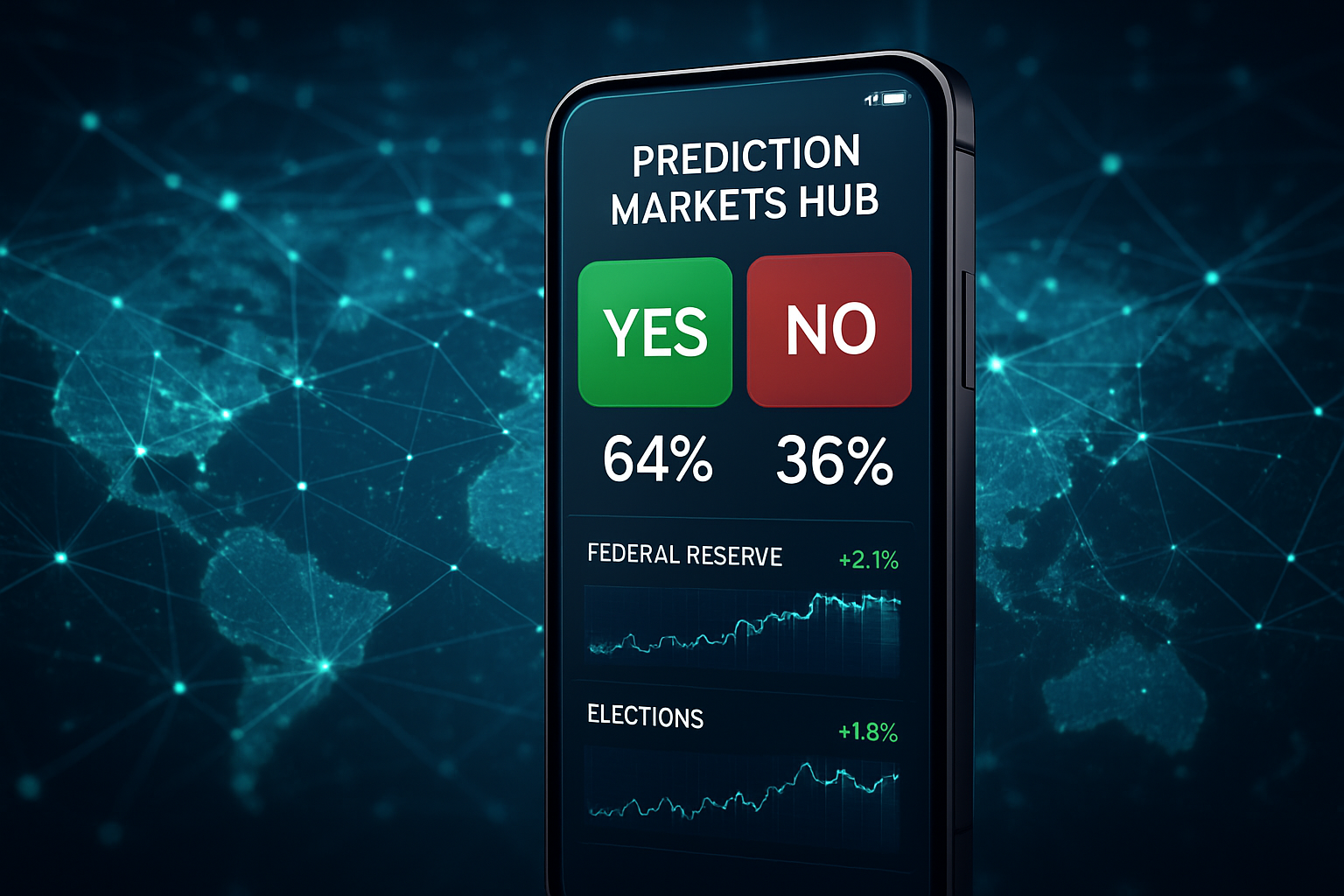
    In the span of just ten months, prediction markets have transitioned from a niche obsession of political junkies and crypto-enthusiasts to a cornerstone of the modern retail brokerage experience. As of January 18, 2026, the industry is reeling from a staggering milestone: Robinhood Markets, Inc. (NASDAQ: HOOD) has processed over 11 billion contracts through its "Prediction Markets Hub" since its debut in March 2025. This volume represents more than just a successful product launch; it signals a fundamental shift in how the public perceives information, risk, and the "truth" of future events.

    The surge is fueled by a combination of regulatory clarity and the gamification of macroeconomic and climate data. While Robinhood captures the mass retail audience with sports and pop culture "Combos," Interactive Brokers Group, Inc. (NASDAQ: IBKR) has carved out a sophisticated niche with its ForecastEx platform, where businesses are now bypassing traditional insurance to hedge against the increasing volatility of climate change. With current odds on the platform suggesting a 68% probability of a record-breaking 2026 hurricane season, the market has become a real-time barometer for global anxiety and anticipation.

    The Market: What's Being Predicted

    The current landscape is dominated by Robinhood’s "Prediction Markets Hub," which launched on March 17, 2025. What began as a platform for trading the Federal Funds Rate and NCAA tournament outcomes has expanded into a comprehensive "everything-market." Traders are currently placing massive bets on the timing of the next Federal Reserve rate cut (currently trading at a 42% probability for March 2026) and the outcome of the upcoming 2026 midterm elections. The liquidity in these markets is unprecedented; bid-ask spreads on major political and economic events have narrowed to less than a cent, rivaling the efficiency of blue-chip equities.

    On the more specialized front, Interactive Brokers' ForecastEx has become the go-to exchange for "Economic and Environmental Hedging." ForecastEx utilizes a "Yes/No" contract structure that pays out $1 upon resolution. Unlike the more speculative "meme-heavy" trades found elsewhere, ForecastEx features high-volume contracts on hyper-local weather events, such as the probability of a Category 3 hurricane making landfall in Miami-Dade County. This market saw a massive spike in October 2025 during the approach of Hurricane Melissa, with trading volume reaching $500 million in a single week.

    The resolution criteria for these markets have become increasingly standardized. Robinhood recently announced its "Cortex" AI, an assistant that monitors verified data feeds—from NOAA for weather to the Bureau of Labor Statistics for CPI—to ensure near-instantaneous settlement. This speed has turned prediction markets into a high-frequency trading environment, with over 3 billion contracts traded in November 2025 alone.

    Why Traders Are Betting

    The primary driver of the current retail frenzy is the "democratization of the hedge." Traditionally, only large corporations could afford complex derivatives to protect against economic shifts or weather disasters. Today, a small business owner in Florida can use ForecastEx to buy "Yes" contracts on a local hurricane landfall. If the storm hits, the payout provides immediate liquidity to cover damages—often weeks before a traditional insurance claim would be processed. During the Hurricane Melissa event in October 2025, market participants correctly predicted the landfall location in the Bahamas four days before major meteorological models reached a consensus.

    For the Robinhood crowd, the motivation is often a blend of entertainment and "Information Finance." The platform’s introduction of "Custom Combos" in late 2025—which allow users to parlay NFL player statistics with economic indicators—has blurred the lines between sports betting and traditional investing. Analysts note that retail traders are increasingly using prediction markets as a "hedge against their own lives." For instance, someone worried about rising gas prices might buy "Yes" contracts on Brent Crude hitting $100, effectively using the profit to offset their costs at the pump.

    Large "whale" activity has also moved from shadow offshore platforms like Polymarket to these regulated US exchanges. Notable positions have been spotted in the 2026 Midterm "Control of the House" markets, where several anonymous accounts have built eight-figure positions. Unlike traditional polling, which has struggled with declining response rates, these markets are being hailed as the "Truth Machine" because they require participants to put real capital behind their convictions.

    Broader Context and Implications

    The explosion of retail event trading marks a pivotal moment in regulatory history. The formation of the Coalition for Prediction Markets (CPM) in December 2025—led by Kalshi, Robinhood, and Interactive Brokers—has successfully lobbied for a "pro-innovation" framework under the CFTC. With newly confirmed CFTC Chairman Michael Selig taking a permissive stance on "event contracts," the legal clouds that hung over the industry in 2024 have largely dissipated. Prediction markets are now viewed legally as derivatives, rather than gambling, provided they serve a "public interest" or hedging function.

    This shift has profound implications for how the public consumes news. Major media outlets now lead their broadcasts with "Market Probabilities" rather than expert opinions. When the market prices in an event, it creates a feedback loop that can influence real-world behavior. Critics, however, warn about the potential for market manipulation, particularly in low-liquidity "niche" markets, though the massive volume on Robinhood has made "cornering" the market on major events increasingly difficult.

    Historically, the accuracy of these markets has been remarkably high. In the 2024 election cycle, prediction markets were often the first to signal shifts in momentum, a trend that has only accelerated in 2025. By Jan 2026, the consensus among financial historians is that we are witnessing the birth of a "Prediction Market Economy," where the price of every future event is constantly being discovered in real-time.

    What to Watch Next

    The next major catalyst for the sector is the upcoming "YES/NO" summit in February 2026, where Robinhood is rumored to be announcing the finalization of its acquisition of MIAXdx (formerly LedgerX). This move would allow Robinhood to move its entire clearing and execution infrastructure in-house, potentially lowering fees and further increasing trading velocity. Additionally, the industry is bracing for a potential Google ad policy shift that could allow regulated prediction markets to advertise globally, potentially bringing in another wave of retail liquidity.

    On the event side, all eyes are on the March 2026 Federal Reserve meeting. The prediction markets currently show a volatile "flip-flop" between a 25-basis point cut and a "hold" scenario. Given the 11 billion contracts already in the books, the volume surrounding this single economic event is expected to break all previous records for a non-election trade.

    Finally, as we enter the first quarter of 2026, the "Climate Hedging" trend will be tested. If ForecastEx’s hurricane contracts continue to provide more accurate and faster relief than traditional insurance, we may see a massive migration of institutional capital into these markets, further legitimizing the asset class for long-term "risk-linked" returns.

    Bottom Line

    The rise of Robinhood’s Prediction Markets Hub and Interactive Brokers' ForecastEx represents the final bridge being crossed between speculative gambling and sophisticated financial hedging. With 11 billion contracts traded, the sheer scale of participation proves that there is a massive appetite for an "exchange for everything."

    Prediction markets have proven to be more than a novelty; they are an essential tool for price discovery in an increasingly uncertain world. Whether it is a business owner hedging against a hurricane or a retail trader betting on a Fed pivot, the ability to put a price on the future has changed the financial landscape forever. As we move deeper into 2026, the "Truth Machine" is only getting louder, and the markets are suggesting that the volatility—and the opportunity—is just beginning.


    This article is for informational purposes only and does not constitute financial or betting advice. Prediction market participation may be subject to legal restrictions in your jurisdiction.

    PredictStreet focuses on covering the latest developments in prediction markets. Visit the PredictStreet website at https://www.predictstreet.ai/.


  • The Day Information Finance Went Mainstream: Inside the $700 Million Prediction Market Explosion

    The Day Information Finance Went Mainstream: Inside the $700 Million Prediction Market Explosion

    January 12, 2026, will be remembered as the day the "invisible hand" of the market finally grew a voice. In a historic 24-hour window, global prediction markets processed a staggering $701.7 million in daily trading volume, a milestone that effectively signals the end of the industry's experimental phase. This surge wasn't just a win for speculators; it represented a fundamental shift in how the public consumes and prices information.

    At the center of this whirlwind was Kalshi, which solidified its position as the undisputed heavyweight of the space. Capturing a dominant 66.4% market share, Kalshi processed approximately $465.9 million in trades. This unprecedented liquidity was fueled by a "perfect storm" of geopolitical shocks and a groundbreaking integration with Robinhood Markets, Inc. (NASDAQ: HOOD), which has turned millions of retail brokerage accounts into real-time sentiment gauges.

    The Market: What's Being Predicted

    While prediction markets were once the domain of niche political junkies and crypto-natives, the January 12 record was built on a diversified portfolio of high-stakes event contracts. The volume was split across a variety of platforms, with Kalshi leading the pack, followed by Polymarket and Opinion Labs (Opinion), which each captured roughly 14.3% of the daily share (approximately $100 million each). Smaller entrants like Predict Fun and Probable also saw record activity, though they remained in the shadow of the "Big Three."

    The primary driver of Kalshi’s dominance has been its status as a CFTC-regulated exchange, which allowed for its seamless integration into the Robinhood (NASDAQ: HOOD) ecosystem. Since the 2025 launch of the "Prediction Markets Hub," over 24 million retail traders have gained the ability to trade "Yes/No" outcomes as easily as they buy shares of an ETF. On January 12, Robinhood users reportedly accounted for over 50% of Kalshi’s total volume, transforming complex event derivatives into a standard retail asset class.

    Liquidity on these platforms has reached a critical mass where institutional-sized positions can now be entered with minimal slippage. This has attracted major quantitative firms like Susquehanna International Group (SIG) and DRW, who have reportedly established dedicated "Information Finance" desks to arbitrage discrepancies between prediction markets and traditional financial instruments.

    Why Traders Are Betting

    The massive volume spike on January 12 was triggered by several high-impact events that occurred simultaneously. The most dramatic was a sudden geopolitical shock in South America: the capture of Venezuelan leader Nicolás Maduro. While traditional news outlets scrambled to verify reports, prediction markets moved in milliseconds. One trader on Polymarket famously turned a $30,000 position into $400,000 by betting on the capture just hours before it was officially confirmed, a feat that drew thousands of new users to the platform in a "gold rush" of reactionary trading.

    Domestically, a high-stakes constitutional standoff between the U.S. Department of Justice and Federal Reserve Chair Jerome Powell became a massive liquidity sink. Traders poured over $120 million into contracts regarding a potential March 2026 interest rate cut. As rumors of a Fed "rebellion" against DOJ directives swirled, the odds of a rate cut fluctuated wildly between 34% and 74%, providing a real-time heat map of institutional anxiety that traditional polling could never capture.

    Furthermore, the early positioning for the 2026 Midterm elections saw significant "whale" activity. Large-scale traders used the markets to hedge against potential legislative gridlock, with a heavy concentration of volume on "Split Congress" outcomes. For many institutional players, these bets are no longer seen as gambles but as essential hedges against political risk that could impact their broader equity portfolios.

    Broader Context and Implications

    This record-breaking day marks a turning point for "Information Finance"—the concept that prices are the most accurate way to aggregate disparate pieces of information. For years, skeptics argued that prediction markets were too thin and prone to manipulation. However, the $701.7 million volume suggests that the markets have finally reached a level of maturity where they can serve as a "source of truth" that rivals or even exceeds traditional news wires like Bloomberg.

    The "Robinhood Effect" cannot be overstated. By demystifying event contracts and placing them alongside traditional stocks, Robinhood (NASDAQ: HOOD) has effectively democratized the ability to profit from being right about the world. This has not gone unnoticed by regulators. In the wake of the January 12 surge, lawmakers in New York have expedited discussions around the ORACLE Act, a proposed regulatory framework intended to clarify the legal boundaries between event trading and gambling.

    Historically, prediction markets have shown a remarkable ability to outperform expert pundits. By requiring participants to "put their money where their mouth is," these platforms filter out the noise of partisan bias and social media echo chambers. The January 12 milestone confirms that the public is increasingly looking to these markets to understand what is actually happening, rather than what people hope is happening.

    What to Watch Next

    As the dust settles from this record day, all eyes are on the Federal Reserve standoff. The volatility in interest rate contracts suggests that the market expects a major resolution before the end of the first quarter. Traders should monitor the liquidity in these contracts; if the $700 million daily volume becomes a new baseline, we could see even more aggressive price discovery in the coming weeks.

    Additionally, the expansion of Robinhood's (NASDAQ: HOOD) prediction offerings will be a key metric for the industry's growth. There are rumors that the platform may soon offer "Cross-Exchange" liquidity, allowing users to tap into multiple prediction market backends from a single interface. Such a move would likely push daily volumes past the $1 billion mark before the end of the year.

    Finally, keep a close watch on the legislative front. The success of January 12 has painted a target on the industry's back. How Kalshi and its peers navigate the impending ORACLE Act and potential CFTC challenges will determine whether this $700 million day was a one-time peak or the beginning of a new era in global finance.

    Bottom Line

    The record-shattering performance of January 12, 2026, proves that prediction markets are no longer a sideshow—they are the main event. With Kalshi and Robinhood (NASDAQ: HOOD) leading the charge, the barrier to entry for "Information Finance" has been permanently lowered. The ability of these markets to price in a presidential capture and a Federal Reserve crisis in real-time demonstrates an efficiency that traditional institutions are struggling to match.

    Ultimately, this milestone tells us that in an era of "alternative facts" and fragmented media, the world is hungry for a decentralized, incentive-aligned source of truth. As liquidity continues to grow and institutional players deepen their involvement, the odds found on prediction markets will likely become the primary lens through which we view future global events. The $701.7 million day wasn't just about the money; it was about the markets finally proving they can handle the weight of the world's most important questions.


    This article is for informational purposes only and does not constitute financial or betting advice. Prediction market participation may be subject to legal restrictions in your jurisdiction.

    PredictStreet focuses on covering the latest developments in prediction markets.
    Visit the PredictStreet website at https://www.predictstreet.ai/.

  • The Democratization of Destiny: How Robinhood and Kalshi Mainstreamed Prediction Markets

    The Democratization of Destiny: How Robinhood and Kalshi Mainstreamed Prediction Markets

    The landscape of retail finance has undergone a seismic shift, culminating in today's milestone as prediction markets move from the fringes of political junkies to the center of the mobile brokerage experience. As of January 16, 2026, the partnership between Robinhood (NASDAQ: HOOD) and Kalshi has transformed "event contracts" into a multi-billion dollar asset class. What began as a high-stakes legal battle with regulators has evolved into a daily habit for millions of investors who are now trading the outcome of everything from Federal Reserve meetings to the weekend’s NFL divisional playoffs with the same ease as buying a share of stock.

    Interest in these markets has reached a fever pitch this week, following the launch of "Custom Combos"—a new Robinhood feature that allows users to bundle multiple event contracts into bespoke derivatives. This integration has bridged the gap between traditional sports betting and financial hedging, creating a regulated environment where "skin in the game" applies to the news cycle itself. With over 1 million active prediction traders on the Robinhood platform, the liquidity provided by this retail surge has turned prediction markets into some of the most accurate forecasting tools in existence, often moving faster than traditional news desks or polling data.

    The Market: What's Being Predicted

    The core of the Robinhood-Kalshi integration lies in the "Prediction Markets Hub," a dedicated interface within the Robinhood app that routes orders directly to KalshiEX LLC, a CFTC-regulated exchange. Unlike traditional options, which can be complex and Greeks-heavy, these contracts are binary: a simple "Yes" or "No" on whether an event will occur. Currently, the most active markets center on the upcoming January Federal Open Market Committee (FOMC) meeting, where traders are currently pricing in a 68% probability of a 25-basis-point rate cut.

    Since the partnership's full-scale rollout in 2025, trading volume has exploded, recently surpassing 9 billion total contracts traded. The resolution criteria are strictly defined by Kalshi’s rulebook, ensuring that contracts are settled based on verifiable data—such as official government reports or sports box scores. This transparency has been a primary driver of liquidity; during peak periods, such as the 2024 Presidential Election, Robinhood users alone accounted for over 35% of the daily volume on the Kalshi exchange, facilitating a level of market depth that was previously non-existent in the event contract space.

    Why Traders Are Betting

    The surge in betting activity is driven by a fundamental shift in how retail investors consume information. In an era of fragmented media, prediction markets offer a "source of truth" backed by capital. Traders are no longer just passive observers of the news; they are active participants. For many, event contracts serve as a superior alternative to traditional options for hedging specific risks. For instance, a small business owner might buy "Yes" contracts on an interest rate hike to offset increased borrowing costs, while a tech enthusiast might trade on the probability of a specific AI regulation being passed.

    Strategies have also become more sophisticated. "Whale" activity—once the domain of secretive offshore accounts on unregulated platforms—is now visible and regulated. Notable large positions are frequently taken by institutional players who use the Robinhood-Kalshi pipeline to gauge retail sentiment. Unlike traditional forecasting methods like polling, which have faced a crisis of credibility, prediction markets are incentivized by profit. If a poll is wrong, the pollster keeps their job; if a trader is wrong, they lose their stake. This "accountability by design" is why Robinhood’s user base has embraced these markets as a more reliable barometer of reality than cable news.

    Broader Context and Implications

    The success of this partnership is a direct result of the landmark Kalshi vs. CFTC legal ruling in late 2024. When Judge Jia Cobb ruled that "elections are not gaming," it broke the regulatory dam that had held back prediction markets for decades. By 2025, the CFTC’s decision to drop further appeals provided the regulatory "green light" that Robinhood (NASDAQ: HOOD) needed to fully integrate these products. This transition from "gambling" to "regulated financial derivatives" has been crucial for mainstream adoption, as it allows users to trade within the same protected environment as their 401(k) or IRA holdings.

    Historically, prediction markets have shown remarkable accuracy, often outperforming experts in fields ranging from public health to geopolitical conflicts. By bringing these markets to millions of retail investors, Robinhood and Kalshi have effectively created a "global brain"—a decentralized mechanism for processing information. However, this has not been without controversy. The newly formed Coalition for Prediction Markets (CPM), which includes Robinhood and Kalshi alongside Coinbase (NASDAQ: COIN), is currently lobbying against several states that are attempting to reclassify these contracts as illegal gambling. The outcome of these state-level battles will determine whether the "democratization of destiny" remains a nationwide phenomenon or a regional privilege.

    What to Watch Next

    The next major milestone for this integration is Robinhood’s pending acquisition of a 90% stake in MIAXdx, a CFTC-licensed exchange and clearinghouse. Expected to close by the end of Q1 2026, this move will allow Robinhood to vertically integrate its prediction market stack, potentially lowering fees even further and allowing for the creation of proprietary contracts that go beyond what is currently offered via Kalshi.

    Traders should also keep a close eye on the "Custom Combos" performance over the next few weeks. If retail adoption of these parlay-style derivatives mirrors the explosion of same-game parlays in the sports betting world, it could lead to a massive spike in platform revenue. Additionally, with several high-profile Senate races and global climate summits scheduled for mid-2026, the "Prediction Markets Hub" will likely see its next major test of liquidity and forecasting accuracy.

    Bottom Line

    The partnership between Robinhood and Kalshi has done more than just add a new feature to an app; it has validated a new way of interacting with the future. By providing a regulated, liquid, and user-friendly gateway to event contracts, they have turned the "wisdom of crowds" into a tradable commodity. For the retail investor, the ability to hedge against real-world outcomes or profit from unique insights has leveled the playing field in a way that traditional equities never quite could.

    As we look toward the remainder of 2026, the line between "investing" and "predicting" continues to blur. While risks remain—particularly on the regulatory front at the state level—the genie is out of the bottle. Prediction markets are now a permanent fixture of the financial landscape, proving that when people are given the opportunity to bet on what they believe, the resulting data is a powerful tool for understanding the world.


    This article is for informational purposes only and does not constitute financial or betting advice. Prediction market participation may be subject to legal restrictions in your jurisdiction.

    PredictStreet focuses on covering the latest developments in prediction markets.
    Visit the PredictStreet website at https://www.predictstreet.ai/.

  • The Trillion-Dollar Horizon: Why Prediction Markets are the Next Great Asset Class

    The Trillion-Dollar Horizon: Why Prediction Markets are the Next Great Asset Class

    As of January 16, 2026, the United States prediction market ecosystem has shifted from a speculative niche into a cornerstone of the modern financial landscape. Once defined by the volatility of election cycles, the sector is now witnessing an institutional-grade transformation. According to a landmark analysis by Citizens Financial Group (NYSE: CFG) and a detailed sector report from Eilers & Krejcik Gaming (EKG), the industry is no longer just "growing"—it is on a direct flight path toward exceeding $1 trillion in annual trading activity as it matures into a universal tool for hedging and entertainment.

    Current market data shows that the industry's annual trading volume has already surged to an estimated $13 billion to $15 billion in late 2025, representing a staggering tenfold increase from 2024 levels. This "exponential scaling" phase has been ignited by a confluence of regulatory clarity, the entry of major retail brokerages, and a massive shift in consumer behavior that prizes peer-to-peer event contracts over traditional sports betting or static financial derivatives.

    The Market: What's Being Predicted

    The central "prediction" being tracked by analysts is the timeline for the U.S. ecosystem to hit the $1 trillion mark in annual volume. EKG’s research, titled “U.S. Prediction Markets: How Big, How Fast, What’s Next?”, identifies the end of the decade as the "plausible ceiling" for this milestone. For context, the industry is currently operating at a revenue run-rate of approximately $2 billion annually, a figure Citizens Financial Group (NYSE: CFG) projects will quintuple to over $10 billion by 2030.

    The dominant player in this space is currently Kalshi, which has secured a commanding 66% market share as of early 2026. Kalshi’s dominance is largely attributed to its status as a federally regulated exchange under the CFTC and its high-profile integration with Robinhood (NASDAQ: HOOD). This partnership has effectively democratized event trading, allowing millions of retail investors to swap event contracts with the same ease as they trade stocks.

    While Kalshi leads on the domestic regulated front, Polymarket remains a titan in the global and on-chain sectors. Despite sitting at second place in total U.S. volume, Polymarket boasts a valuation near $12 billion and continues to dominate the "crypto-native" and international markets. The competition between these platforms has created a liquidity-rich environment, where weekly volumes on Kalshi alone have recently topped $2 billion.

    The resolution criteria for this "trillion-dollar" forecast depend on three main factors: continued federal regulatory support, the successful integration of sports event contracts into peer-to-peer formats, and the expansion of prediction markets into corporate finance and M&A hedging.

    Why Traders Are Betting

    The massive capital flows into prediction markets are no longer just "political betting." EKG’s analysis reveals that Sports has become the primary engine of the market, projected to account for 44% (~$435 billion) of the eventual trillion-dollar volume. Traders are fleeing traditional sportsbooks—operated by the likes of DraftKings (NASDAQ: DKNG) and Flutter Entertainment (NYSE: FLUT), the parent of FanDuel—in favor of prediction markets because event contracts offer superior odds and lower "juice" (the vigorish) by allowing users to bet against each other rather than a house.

    Finance and macroeconomics have emerged as the second-largest pillar, accounting for 31% (~$310 billion) of projected volume. In early 2026, it is common practice for hedge funds and retail traders to use Kalshi or Polymarket to hedge against CPI prints, Federal Reserve rate decisions, and even the daily flows of Bitcoin ETFs. These "macro-mini" contracts provide a more precise tool for hedging specific news risks than traditional equity options.

    The "financialization of everything" is the primary driver here. As Robinhood (NASDAQ: HOOD) recently reported, event contracts have become their fastest-scaling product line in history, now accounting for 10% of the firm's total revenue. Traders are betting on prediction markets because they provide a "truth machine" that aggregates information more efficiently than traditional media or polling, offering a clear, real-time probability for any event.

    Broader Context and Implications

    This shift represents a fundamental "blurring of the lines" between gambling, finance, and social media. The rise of prediction markets has forced a re-evaluation of how the public consumes information. In 2025, during several high-stakes geopolitical events, prediction market odds were cited more frequently by news outlets than traditional expert commentary, as the "money on the line" was viewed as a more reliable indicator of reality.

    However, this growth has not been without friction. While the CFTC has largely accepted event contracts at the federal level, a "regulatory split" has emerged. In early 2026, states like Connecticut and Nevada issued cease-and-desist orders against platforms offering sports-based event contracts, arguing they constitute unlicensed gambling. This jurisdictional battle is the most significant hurdle on the road to the $1 trillion milestone.

    The broader implication is the birth of an "Information Economy" where news is not just consumed, but traded. The historical accuracy of these markets—which outperformed traditional polls by a wide margin in the 2024 and 2025 cycles—has given them a level of institutional credibility that was unthinkable five years ago. This has led companies to explore internal prediction markets for forecasting project deadlines and supply chain disruptions.

    What to Watch Next

    The most critical milestone to watch in the coming months is the outcome of the state-level legal challenges. If Kalshi and Robinhood (NASDAQ: HOOD) can successfully argue that their contracts are financial instruments rather than gambling products in state courts, it will clear the way for a massive influx of liquidity from states that have previously banned online sports betting.

    Additionally, the expansion of "Combos"—peer-to-peer parlay products—is expected to be a major volume driver throughout 2026. Watch for traditional sportsbooks like DraftKings (NASDAQ: DKNG) to respond; many analysts expect the legacy operators to launch their own exchange-style products by the end of the year to combat the drain on their user bases.

    Finally, keep an eye on institutional adoption. As more Fortune 500 companies begin using event contracts to hedge against specific regulatory or weather-related risks, the "Finance & Crypto" segment of the market could grow even faster than EKG’s current projections.

    Bottom Line

    The transition of prediction markets from a fringe curiosity to a trillion-dollar ecosystem is the defining financial story of the mid-2020s. The EKG and Citizens Financial reports underscore a reality that is already visible on the screens of millions of traders: the world is increasingly viewing "events" as an asset class.

    Whether it is a Fed rate hike, the outcome of the Super Bowl, or the success of a blockbuster movie, the ability to trade these outcomes in a transparent, peer-to-peer environment is a revolutionary shift. While regulatory hurdles at the state level remain a significant variable, the momentum behind the "truth machine" suggests that the $1 trillion annual volume mark is not a matter of if, but when.

    PredictStreet focuses on covering the latest developments in prediction markets. Visit the PredictStreet website at https://www.predictstreet.ai/.



    This article is for informational purposes only and does not constitute financial or betting advice. Prediction market participation may be subject to legal restrictions in your jurisdiction.

  • The Robinhood Effect: How Kalshi and HOOD Rewrote the Rules of Retail Speculation

    The Robinhood Effect: How Kalshi and HOOD Rewrote the Rules of Retail Speculation

    As of January 16, 2026, the financial landscape has been permanently altered by a transition that many traditionalists once thought impossible: the full-scale integration of prediction markets into the daily habits of retail investors. What began as a high-stakes legal gamble in late 2024 has matured into a multi-billion dollar industry, with Robinhood Markets, Inc. (NASDAQ: HOOD) and the regulated exchange Kalshi leading the charge. Today, the "market-implied probability" of an event is no longer a niche metric for political junkies; it is the headline figure for news organizations and the "third pillar" of the modern brokerage account.

    The synergy between these two firms has democratized "Information Finance," allowing millions of users to trade on the outcome of everything from Federal Reserve rate hikes to the winner of the Super Bowl. Currently, prediction market volume is at an all-time high, with major event contracts seeing hundreds of millions of dollars in liquidity. The recent surge in activity is largely attributed to the seamless integration within the Robinhood app, which has translated the complex world of event derivatives into a simple "Yes/No" proposition for the average smartphone user.

    The Market: What's Being Predicted

    The core of this revolution is the Robinhood Prediction Markets Hub, powered primarily by Kalshi’s regulated exchange infrastructure. While the 2024 U.S. Presidential Election served as the massive proof-of-concept—drawing over $250 million in volume on Kalshi alone in its final weeks—the scope of prediction has since expanded dramatically. As we move into early 2026, the most active markets include the timing of the next interest rate cut, the outcome of the 2026 Midterm elections, and hyper-local weather events.

    Trading occurs directly within the Robinhood interface, using Kalshi’s backend to ensure all contracts are fully collateralized and regulated by the Commodity Futures Trading Commission (CFTC). Unlike offshore platforms like Polymarket, which operate in a legal gray area for U.S. residents and utilize cryptocurrency, the Robinhood-Kalshi partnership offers a U.S. dollar-based, fully compliant environment. This has led to a significant shift in liquidity; while Polymarket still boasts high volumes globally, the domestic retail "whale" activity has moved toward the HOOD-Kalshi ecosystem.

    Current odds for major contracts, such as the "Will the Fed lower rates in March?" market, are trading at a 64% "Yes" probability. This market alone has seen a 40% increase in trading volume over the last quarter, totaling over $1.2 billion in notional value. The resolution of these contracts is strictly defined by predetermined data sources, such as official government reports or specific league scoring, providing a level of transparency that traditional sportsbooks often lack.

    Why Traders Are Betting

    The primary driver of the current betting frenzy is the unprecedented accessibility afforded by Robinhood (NASDAQ: HOOD). By removing the friction of setting up a separate crypto wallet or navigating complex exchange interfaces, the partnership has tapped into the same retail energy that fueled the meme-stock era. However, the motivations have shifted toward hedging and information discovery. Retail traders are increasingly using event contracts as a form of "personal insurance." For example, homeowners in hurricane-prone regions are buying "Yes" contracts on storm landfalls to hedge against potential insurance deductibles.

    Beyond personal hedging, the "skin in the game" philosophy has become a major draw. Traders are finding that prediction markets offer a more honest assessment of reality than cable news pundits or traditional polling. Recent movement in the "2026 Senate Control" markets shows a sharp divergence from mainstream media narratives, often pricing in legislative shifts weeks before they are reflected in the polls. This has created a self-fulfilling cycle where the markets become the news, which in turn drives more trading volume as users react to the shifting probabilities.

    Furthermore, the participation of institutional players has provided the liquidity necessary for large-scale trading. Unlike the early days of prediction markets, which were plagued by thin order books, the current partnership allows for trades of up to $100,000 to be executed with minimal slippage. This institutional involvement, often facilitated through Interactive Brokers Group, Inc. (NASDAQ: IBKR) and its ForecastEx exchange in conjunction with Kalshi, has stabilized the markets and narrowed bid-ask spreads to near-zero.

    Broader Context and Implications

    The success of the Robinhood-Kalshi integration marks the end of a decade-long regulatory struggle. The turning point was the landmark legal victory in Kalshi v. CFTC, where federal courts ruled that event contracts do not constitute "gaming." In May 2025, the CFTC officially dropped its remaining appeals, signaling a white-flag moment for regulators who had previously sought to block election-based trading. This legal clarity has rebranded the sector from "gambling" to "Information Finance," a term now widely used by financial analysts and major news outlets.

    The real-world implications of this shift are profound. We are witnessing the "death of the pundit," as market-based forecasts consistently outperform subjective analysis. Major networks like CNN, owned by Warner Bros. Discovery, Inc. (NASDAQ: WBD), and CNBC, owned by Comcast Corporation (NASDAQ: CMCSA), now feature live "Kalshi-Robinhood" tickers alongside traditional stock quotes. This has fundamentally changed public sentiment, as the collective intelligence of thousands of traders is viewed as more reliable than the opinion of a single expert.

    Historically, prediction markets have shown a remarkable degree of accuracy, famously outperforming polls in the 2024 election cycle. However, the regulatory landscape remains a patchwork. While federal hurdles have been cleared, some state-level challenges persist. Nevertheless, the sheer volume of capital—over $13 billion in monthly notional volume across all major platforms—suggests that the industry has reached an "escape velocity" where total prohibition is no longer feasible.

    What to Watch Next

    The next major milestone for the partnership is the expected launch of Robinhood’s own proprietary clearinghouse. Following reports of its interest in acquiring MIAXdx, Robinhood (NASDAQ: HOOD) is positioned to verticalize its prediction market offerings, potentially reducing fees further and increasing the speed of contract resolution. This move would likely coincide with an expansion into more "social" markets, such as entertainment awards and box office totals, aiming to capture the Gen Z demographic.

    Investors should also keep a close eye on the upcoming 2026 Midterm elections. This will be the first major election cycle where prediction markets are fully integrated into a major retail brokerage from the start of the primary season. The influx of "political hedging" capital could dwarf the numbers seen in 2024, potentially pushing daily active users on the Prediction Markets Hub past the 2 million mark.

    Finally, the potential for "cross-margining" between stocks and event contracts is on the horizon. If Robinhood allows users to use their stock holdings as collateral for event contracts, it would unlock a massive amount of dormant capital, further accelerating the growth of the sector.

    Bottom Line

    The partnership between Robinhood and Kalshi has done more than just create a new asset class; it has validated the idea that every piece of information has a price. By giving retail investors the tools to trade on real-world outcomes with the same ease as buying a share of a tech company, the two firms have established a new paradigm in finance. Prediction markets are no longer a curiosity for economists; they are a fundamental utility for the digital-native investor.

    As we look toward the rest of 2026, the data suggests that this is not a passing fad. The high accuracy, deep liquidity, and regulatory seal of approval have created a robust ecosystem. While volatility remains a constant and the risks of event-based trading are real, the "Information Finance" movement is here to stay. For the retail investor, the message is clear: the world is no longer just something to watch—it is something you can trade.


    This article is for informational purposes only and does not constitute financial or betting advice. Prediction market participation may be subject to legal restrictions in your jurisdiction.

    PredictStreet focuses on covering the latest developments in prediction markets.
    Visit the PredictStreet website at https://www.predictstreet.ai/.
  • The Battle for Albany: New York’s $700 Million Showdown Over the Future of Prediction Markets

    The Battle for Albany: New York’s $700 Million Showdown Over the Future of Prediction Markets

    In the corridors of power in Albany, a legislative storm is brewing that could redefine the boundaries between Wall Street and Las Vegas. Just four days ago, on January 12, 2026, the prediction market industry hit a staggering milestone: $701.7 million in total daily trading volume. This explosion in liquidity, fueled by the 2026 midterm election cycle and high-stakes geopolitical events, has transformed a once-niche sector into a financial powerhouse that New York regulators are now desperate to contain.

    At the heart of the conflict is the "Oversight and Regulation of Activity for Contracts Linked to Events" (ORACLE) Act, also known as Assembly Bill A9251. Reintroduced on January 7, 2026, the bill seeks to classify prediction markets—specifically event contracts—as "unlicensed gambling," threatening to shut down some of the industry’s most prominent players in the Empire State. As the industry fights for "federal preemption," claiming that these markets are financial tools regulated at the federal level, the outcome of this battle will likely set the legal precedent for the rest of the United States.

    The Market: What's Being Predicted

    While the legislative fight rages in the Assembly, the prediction markets themselves are betting on the outcome. On platforms like Kalshi and Interactive Brokers (NASDAQ:IBKR) through its ForecastEx exchange, traders are putting millions of dollars behind contracts predicting the survival of event contracts in New York. The primary market in question—"Will New York pass a bill to ban political event contracts in 2026?"—has seen its odds fluctuate wildly in the first two weeks of the year.

    As of January 16, 2026, the probability of the ORACLE Act (A9251) passing in its current, restrictive form has dropped from 65% to 38%. This shift followed the introduction of a rival piece of legislation, Senate Bill S8889, on January 13. Sponsored by Senator Jeremy Cooney, S8889 offers a friendlier path, proposing that prediction markets be regulated as financial derivatives under the New York Department of Financial Services (DFS) rather than the State Gaming Commission.

    Liquidity in these "regulatory outcome" markets is at an all-time high. Major platforms are seeing tens of millions in open interest as hedge funds and political operatives use these contracts to hedge against potential regulatory shifts. The resolution criteria are clear: if any version of the ORACLE Act that classifies event contracts as unlicensed gambling is signed into law by Governor Kathy Hochul before the end of the 2026 legislative session, the "Yes" contracts pay out.

    Why Traders Are Betting

    The sudden surge in betting activity is driven by a clash of philosophies. Assemblymember Clyde Vanel, the architect of the ORACLE Act, views prediction markets as "gamified sportsbooks" that prey on retail investors. "Wall Street stays on Wall Street and Vegas stays in Vegas," Vanel famously stated earlier this month. His bill proposes existential fines of up to $1 million per day for platforms that allow New Yorkers to trade on "sensitive" categories like politics, catastrophes, or sports.

    Traders, however, are increasingly betting that the industry’s heavy hitters will win the day. The recent $700 million volume milestone was significantly aided by Robinhood Markets, Inc. (NASDAQ:HOOD), which has integrated event contracts into its "Prediction Markets Hub." This influx of retail liquidity has made the markets more accurate and harder to ignore. Notable "whales" in the space argue that the ORACLE Act is technologically unenforceable and legally flawed due to the doctrine of federal preemption.

    Furthermore, the industry has found an unlikely ally in the sports world. On January 8, 2026, Madison Square Garden Sports Corp (NYSE:MSGS) announced a landmark partnership making Polymarket the "Official Prediction Market Partner" of the New York Rangers. With Polymarket branding now appearing on the dasherboards of the historic arena, traders believe the "normalization" of these markets makes it politically difficult for Albany to categorize them as illicit activity.

    Broader Context and Implications

    The "Battle for Albany" is a microcosm of a larger national struggle over the classification of "information finance." Prediction markets have proven to be more accurate than traditional polling in predicting election results and more responsive than news outlets in signaling geopolitical shifts—such as the "Maduro trade" on Polymarket, where traders accurately predicted a major Venezuelan policy announcement hours before it happened.

    The industry’s primary defense is federal preemption under the Commodity Exchange Act (CEA). Kalshi, a platform regulated by the Commodity Futures Trading Commission (CFTC), is currently suing the New York State Gaming Commission in the Southern District of New York (SDNY). They argue that as a "Designated Contract Market" (DCM), they are subject to federal oversight that overrides state-level gambling statutes. If Kalshi wins this legal fight, the ORACLE Act could be rendered dead on arrival, regardless of whether it passes the Assembly.

    This conflict reveals a deep-seated anxiety among state regulators about losing control over tax revenue. Currently, New York generates significant income from mobile sports betting. If prediction markets are classified as financial products, they would be subject to federal capital gains taxes rather than state-level gambling levies, potentially leaving a hole in Albany’s budget—a concern frequently raised by powerful Assembly broker J. Gary Pretlow.

    What to Watch Next

    The next 45 days will be critical for the future of the industry. The most immediate catalyst to watch is a pending ruling from the Southern District of New York in the Kalshi vs. NY State Gaming Commission case, expected in late February. A ruling in favor of Kalshi would solidify the federal preemption argument and likely force the NY Assembly to pivot toward Senator Cooney’s DFS-regulated model (S8889).

    Investors should also keep a close eye on the "Prediction Market Regulation Act" (S8889) as it moves through the Senate Racing, Gaming and Wagering Committee, chaired by Senator Joseph Addabbo Jr. If this bill gains a companion in the Assembly, it would signal a move away from the prohibitive ORACLE Act and toward a compromise that allows New York to remain the financial capital of the world while adopting these new "truth machines."

    Finally, the 2026 Midterm elections will continue to drive volume. If the industry can maintain daily volumes above the $500 million mark consistently, the pressure on legislators to provide a clear, legal framework will become overwhelming.

    Bottom Line

    The Battle for Albany is no longer just about whether New Yorkers can bet on the news; it is about whether "information finance" will be recognized as a legitimate pillar of the modern economy. The record-breaking $700 million daily volume milestone reached this month proves that public demand for these markets is vast and growing, despite the legislative hurdles.

    The ORACLE Act represents the "old guard" of regulation attempting to apply 20th-century gambling laws to 21st-century financial technology. However, the momentum currently favors the industry. Between the federal preemption lawsuits and the mainstream commercial partnerships like the one with the Rangers, the walls are closing in on those who wish to ban these markets.

    For prediction market participants, New York is the "final boss." If the industry can secure a victory here—either through the courts or via Senator Cooney’s regulatory bill—it will signal the end of the "unlicensed gambling" era and the beginning of a new age where every major event in the world has a liquid, transparent, and legally protected market behind it.


    This article is for informational purposes only and does not constitute financial or betting advice. Prediction market participation may be subject to legal restrictions in your jurisdiction.

    PredictStreet focuses on covering the latest developments in prediction markets. Visit the PredictStreet website at https://www.predictstreet.ai/.
  • Prediction Markets Hit the Big Leagues: Kalshi Secures $1 Billion at $11 Billion Valuation to ‘Financialize Everything’

    Prediction Markets Hit the Big Leagues: Kalshi Secures $1 Billion at $11 Billion Valuation to ‘Financialize Everything’

    In a move that signals the definitive arrival of event contracts as a mainstream asset class, Kalshi, the first regulated prediction market in the United States, has announced a staggering $1.1 billion Series E funding round. The investment values the New York-based exchange at $11 billion, catapulting it to "decacorn" status and marking one of the largest venture rounds in the fintech sector since the early 2020s.

    The funding comes at a time when prediction markets are no longer a niche curiosity for political junkies but a central pillar of global financial forecasting. Following a 2025 that saw trading volumes explode by over 1,100%, the platform is now processing billions of dollars in weekly volume. For investors, the message is clear: the ability to trade on the outcome of real-world events is no longer an experiment—it is the next frontier of the global economy.

    The Market: What’s Being Predicted

    The $1 billion capital injection, led by the crypto-focused venture firm Paradigm, represents a massive bet on the infrastructure of "truth." While Kalshi itself is an exchange, the "market" being predicted here is the future of information itself. Investors are betting that the traditional methods of forecasting—polling, expert punditry, and subjective analysis—are being permanently replaced by the cold, hard efficiency of price discovery.

    On the platform itself, the sheer variety of tradable outcomes has expanded exponentially. While Kalshi gained fame for its federal election contracts, it now lists thousands of markets ranging from the timing of Federal Reserve interest rate cuts to the success of summer blockbusters and even the daily high temperature in major cities. This high-liquidity environment has been bolstered by its integration with major retail brokers, most notably Robinhood (NASDAQ: HOOD), which launched its "Prediction Markets Hub" powered by Kalshi in early 2025. This partnership alone has brought millions of retail participants into the fold, providing the deep liquidity necessary for institutional players to enter the space.

    Why Traders Are Betting

    The primary driver behind Kalshi’s massive valuation and investor confidence is its hard-won regulatory status. In late 2024, the company secured a landmark legal victory in Kalshi v. CFTC, which effectively barred federal regulators from banning election-related contracts. By May 2025, when the CFTC dropped its final appeals, the "regulatory risk" that had long dampened institutional interest in prediction markets vanished.

    "The regulatory seal of approval was the dam breaking," said one analyst at ARK Invest (NYSE: ARKK), a participant in the recent round. "Once the D.C. Circuit Court paved the way for regulated derivatives on real-world events, it opened the gates for massive institutional capital that had been sitting on the sidelines."

    Beyond regulation, the 2024 election cycle served as the ultimate proof-of-concept. While traditional polls struggled with accuracy, prediction markets remained remarkably resilient, providing real-time data that traders and hedge funds used to hedge their portfolios against political volatility. This utility has transformed Kalshi from a gambling curiosity into a sophisticated hedging tool used by firms like Susquehanna and Saba Capital to manage event-driven risk.

    Broader Context and Implications

    The "North Star" for this movement is CEO Tarek Mansour’s vision of "financializing everything." In his recent statements, Mansour argued that every disagreement or uncertainty in the world should have a corresponding market price. By turning a difference of opinion into a tradable asset, Kalshi aims to replace subjective debate with objective, market-driven truth.

    This vision places Kalshi at the center of a high-stakes "duopoly" alongside its crypto-native rival, Polymarket. While Polymarket dominates the offshore and decentralized audience with a valuation reportedly approaching $15 billion, Kalshi has cornered the regulated U.S. market. The competition has spurred rapid innovation; by the end of 2025, Kalshi introduced "combo" contracts, allowing traders to create parlay-style bets on correlated events, further deepening the financial complexity of the platform.

    The implications extend far beyond Wall Street. Companies are now using internal Kalshi-style markets to forecast project deadlines, while insurance firms are looking at the platform's weather and catastrophe markets as a more agile way to hedge risk compared to traditional reinsurance.

    What to Watch Next

    As Kalshi moves into its next phase of growth, the focus shifts to international expansion and deeper vertical integration. The $1 billion in new capital is earmarked for acquiring licenses in European and Asian markets, where demand for regulated event contracts is surging.

    Closer to home, the industry is watching for further moves from Alphabet Inc. (NASDAQ: GOOGL), whose growth fund, CapitalG, participated in this round. There are persistent rumors that search data could eventually be integrated into prediction market tools to provide traders with even more granular data. Additionally, the industry is awaiting the potential IPO of Kalshi’s main retail conduit, as rumors of a spinoff for Robinhood’s prediction division continue to swirl.

    Key milestones for 2026 will include the launch of "Internal Corporate Markets," which will allow large enterprises to create private prediction exchanges for their employees, and the highly anticipated expansion of the "Science & Innovation" category, allowing traders to bet on the success of FDA drug trials and SpaceX launch windows.

    Bottom Line

    Kalshi’s $11 billion valuation is more than just a successful funding round; it is a validation of the "prediction market hypothesis." It suggests that in an era of misinformation and polarized media, markets are the most reliable tool for distilling truth from noise.

    As Tarek Mansour famously stated, Kalshi is "replacing debate with accuracy." For the broader financial world, the message is that anything—from a geopolitical conflict to a celebrity marriage—can be modeled, priced, and traded. As prediction markets continue to mature, they are poised to become not just a new asset class, but the fundamental infrastructure of how we understand the future.


    This article is for informational purposes only and does not constitute financial or betting advice. Prediction market participation may be subject to legal restrictions in your jurisdiction.

    PredictStreet focuses on covering the latest developments in prediction markets. Visit the PredictStreet website at https://www.predictstreet.ai/.

  • From Niche to Necessity: Robinhood and Coinbase Trigger a $13 Billion Prediction Market Revolution

    From Niche to Necessity: Robinhood and Coinbase Trigger a $13 Billion Prediction Market Revolution

    As of January 16, 2026, the financial landscape has undergone a seismic shift that few traditional analysts predicted just two years ago. The world of prediction markets, once a niche playground for crypto enthusiasts and political junkies, has officially entered the mainstream. Driven by the aggressive entry of retail powerhouses Robinhood Markets, Inc. (NASDAQ: HOOD) and Coinbase Global, Inc. (NASDAQ: COIN), event contracts have transformed into a foundational asset class for the modern investor.

    Current market data shows that the probability of prediction markets becoming a standard feature in every major U.S. brokerage by year-end has surged to over 85%. This interest is not merely speculative; it is fueled by a staggering $13 billion industry volume recorded in December 2025 alone. With liquidity reaching levels that rival mid-cap equity markets, the "wisdom of the crowds" is no longer a theory—it is a billion-dollar reality integrated into the daily lives of millions of retail traders.

    The Market: What’s Being Predicted

    The explosion of prediction markets is best illustrated by the sheer volume passing through retail interfaces. Robinhood (NASDAQ: HOOD) reported a landmark third quarter in 2025, where its Prediction Markets Hub processed 2.3 billion event contracts. This represented a 100% increase over the previous quarter, a growth rate that accelerated into October 2025, where a single month saw 2.5 billion contracts traded. Much of this growth was facilitated by Robinhood’s deep integration with Kalshi, the first CFTC-regulated exchange to clear event contracts at scale.

    Not to be outdone, Coinbase (NASDAQ: COIN) took a more vertical approach to the market. In late December 2025, Coinbase announced the acquisition of "The Clearing Company," a move specifically designed to bring on-chain clearing and settlement of event contracts under its own roof. By securing specialized talent and moving toward Derivatives Clearing Organization (DCO) status, Coinbase has effectively built an "Everything Exchange" where users can hedge against inflation, bet on the outcome of the next Fed meeting, or predict the success of a blockbuster movie—all within the same app where they hold their Bitcoin.

    Currently, the most liquid markets across these platforms include:

    • Macroeconomic Data: Monthly CPI prints and Federal Reserve interest rate decisions.
    • Geopolitical Events: Resolution of international trade disputes and election outcomes.
    • Corporate Milestones: Earnings beats or misses for "Magnificent Seven" companies.
    • Pop Culture: High-stakes outcomes in professional sports and entertainment awards.

    Why Traders Are Betting

    The primary driver of this retail surge is the unprecedented ease of access. For years, prediction markets like Polymarket were largely restricted to the crypto-native population due to the friction of moving funds onto decentralized protocols. Today, the integration into existing brokerage accounts at Robinhood and Coinbase has eliminated that barrier. Traders are no longer "gambling" on offshore sites; they are participating in what many now view as a superior form of price discovery.

    Recent events, such as the volatility surrounding the late-2025 labor negotiations and the surge in global trade tensions, have driven traders toward these markets as a way to hedge real-world risk. Traditional forecasting methods—polls, punditry, and expert analysis—have often lagged behind the real-time probability feeds provided by these high-volume markets. Large "whales" are also increasingly active, with notable positions exceeding $50 million being placed on the direction of U.S. Treasury yields, suggesting that institutional capital is now using prediction markets to fine-tune their portfolios.

    Furthermore, the psychological shift cannot be ignored. Retail traders have embraced the "event contract" as a simpler, more intuitive version of options trading. Rather than dealing with Greeks like Delta or Theta, a prediction market contract is binary: you are either right or you are wrong, making it a highly attractive entry point for the millions of new investors who entered the market during the 2021-2024 period.

    Broader Context and Implications

    The "too big to ignore" status of the industry has forced a massive rethink of regulatory frameworks in the United States. Following a landmark legal victory by Kalshi against the Commodity Futures Trading Commission (CFTC) in 2024, the federal stance has shifted from opposition to reluctant oversight. However, a new battleground has emerged at the state level.

    As of early 2026, states like Michigan and Tennessee have attempted to classify prediction markets as illegal sports betting. This has sparked a high-stakes legal counter-offensive. In December 2025, Coinbase (NASDAQ: COIN) filed a series of lawsuits against state regulators, arguing that event contracts are federal commodities subject only to CFTC jurisdiction. This conflict led to the formation of the "Coalition for Prediction Markets," an industry alliance featuring Robinhood, Coinbase, and Kalshi, which is currently lobbying for the "Safe Harbor Act" in Congress to provide permanent legal clarity.

    Historically, the accuracy of these markets has proven to be a double-edged sword for regulators. During the 2024 and 2025 election cycles, prediction markets consistently outperformed traditional polling data in predicting swing state outcomes. This accuracy has led major news organizations like CNN and CNBC to integrate real-time market odds into their broadcasts, further cementing the legitimacy of these platforms in the eyes of the public.

    What to Watch Next

    The coming months will be critical for the continued expansion of the $13 billion industry. The most significant milestone to monitor is the progress of the Safe Harbor Act. If passed, it would effectively end the state-level bans and open the door for even more conservative financial institutions—such as traditional banks and retirement fund providers—to offer event contracts to their clients.

    Additionally, the industry is watching the launch of Coinbase’s fully integrated clearing house. If Coinbase can successfully transition its 100 million users toward its proprietary "The Clearing Company" infrastructure, it could potentially challenge the dominance of Kalshi and Polymarket. Investors should also look for the expansion of contracts into "hyper-local" events, such as city-level zoning laws or weather-related outcomes, which would represent the final frontier of the prediction market as a ubiquitous information tool.

    Key dates to watch:

    • February 20, 2026: First hearing on the Coinbase vs. Michigan jurisdiction lawsuit.
    • March 2026: Expected rollout of Robinhood's "Macro Hub" for professional-grade economic event contracts.
    • Q2 2026: Quarterly earnings reports for Robinhood and Coinbase, which will reveal the full revenue impact of the 2025 volume surge.

    Bottom Line

    The transition of prediction markets from a fringe digital asset experiment to a $13 billion pillar of retail finance is complete. By lowering the barriers to entry and navigating the regulatory gauntlet, Robinhood (NASDAQ: HOOD) and Coinbase (NASDAQ: COIN) have done more than just create a new way to trade; they have created a real-time, incentivized map of human expectations.

    Ultimately, these markets have proven that when people are forced to "put their money where their mouth is," the resulting data is far more accurate than any poll or expert opinion. As we move deeper into 2026, the question is no longer whether prediction markets will survive, but how deeply they will reshape our understanding of risk, news, and the global economy. For the retail investor, the ability to trade on the future has finally arrived, and there is no going back.


    This article is for informational purposes only and does not constitute financial or betting advice. Prediction market participation may be subject to legal restrictions in your jurisdiction.

    PredictStreet focuses on covering the latest developments in prediction markets.
    Visit the PredictStreet website at https://www.predictstreet.ai/.

  • The Information Finance Revolution: How Robinhood and Kalshi Mainstreamed the Global Truth Engine

    The Information Finance Revolution: How Robinhood and Kalshi Mainstreamed the Global Truth Engine

    As of January 16, 2026, the landscape of retail finance has been irrevocably altered. What began as a high-stakes legal battle between Kalshi and federal regulators in late 2024 has blossomed into a multi-billion dollar industry, with Robinhood Markets, Inc. (NASDAQ: HOOD) standing at the center of the storm. The integration of prediction markets—once a niche hobby for policy wonks and crypto enthusiasts—into the pockets of millions of retail traders has transformed "event contracts" from a speculative novelty into a foundational asset class.

    Current market data shows that trading volume for event contracts on Robinhood is reaching new heights, with participation in Federal Reserve interest rate markets and geopolitical "yes/no" contracts rivaling traditional options volume. This shift is not merely about betting; it is the realization of a new era of "Information Finance," where the collective wisdom of the crowd is priced in real-time, providing a "truth engine" that often outpaces traditional news media and polling.

    The Market: What's Being Predicted

    The current prediction market ecosystem on Robinhood is a far cry from its humble beginnings during the 2024 election cycle. Through its strategic partnership with Kalshi, Robinhood launched its "Prediction Markets Hub" in March 2025, which has since expanded to include thousands of daily contracts. While the 2024 U.S. Presidential Election served as the definitive "proof of concept," today's traders are focused on a more diverse array of outcomes.

    Currently, the most liquid markets center on macroeconomic indicators. Traders are currently pricing in a 68% probability that the Federal Reserve will hold interest rates steady at its next meeting, a figure that has fluctuated wildly following recent CPI data releases. Beyond the Fed, the "Hub" offers contracts on everything from the outcome of the 2026 midterm primaries to the winner of the upcoming Super Bowl and even the year-end closing price of Brent Crude oil.

    These contracts are structured as binary options, typically trading between $0.02 and $0.99. A "Yes" contract that settles correctly pays out $1.00, while an incorrect prediction goes to zero. This simplicity has been the key to Robinhood’s success, allowing retail investors to trade on their beliefs with the same ease they buy a fractional share of a tech stock.

    Why Traders Are Betting

    The surge in prediction market activity is driven by a fundamental shift in how retail investors perceive information. Robinhood CEO Vlad Tenev has championed the concept of "Information Finance," arguing that putting "skin in the game" is the most effective way to filter through the noise of the modern news cycle. For many, these markets are not just about profit; they are about accuracy and hedging.

    Traders are increasingly using event contracts to protect their broader portfolios. For example, an investor heavily weighted in real estate might buy "Yes" contracts on a Fed rate hike as a direct hedge against mortgage rate volatility. "In a world of deepfakes and biased media, the market is the only unbiased source of truth," says one high-volume trader on the platform. "The price doesn't have an agenda; it only has an incentive to be right."

    Notable "whale" activity has also been observed, with large positions being taken by institutional players who use Robinhood’s liquidity to signal their conviction on policy outcomes. This "wisdom of the crowd" has proven remarkably resilient; during the 2024 election, Robinhood and Kalshi's prices often stabilized and predicted state-level outcomes hours before major networks called them, cementing the platform's reputation as a leading indicator.

    Broader Context and Implications

    The mainstreaming of prediction markets represents a major victory for Kalshi, which fought a grueling legal battle against the Commodity Futures Trading Commission (CFTC) to prove that election contracts were not "gaming" but legitimate financial instruments. The court's decision in late 2024 paved the way for the current environment, where event contracts are regulated with the same rigor as futures and options.

    This evolution has significant real-world implications. Governments and corporations are now looking to prediction market data as a more reliable metric than traditional sentiment surveys. If a market gives a 90% chance of a specific regulatory change, businesses can begin adjusting their capital expenditures months in advance.

    However, the rapid growth has not been without controversy. Regulators continue to scrutinize the potential for market manipulation, particularly in lower-liquidity cultural markets. In response, Robinhood recently co-founded the Coalition for Prediction Markets alongside other industry leaders like Coinbase Global, Inc. (NASDAQ: COIN), aimed at establishing self-regulatory standards and lobbying for federal frameworks that protect participants while fostering innovation.

    What to Watch Next

    The next major milestone for Robinhood is the full transition to its proprietary derivatives exchange. Following the 2025 acquisition of a majority stake in LedgerX (now operating as MIAXdx), Robinhood is moving to bring the clearing and hosting of event contracts in-house. This move is expected to significantly reduce transaction costs and allow for even more exotic contract types, such as "bracket-style" betting on multi-candidate elections or tournament outcomes.

    Investors should also keep an eye on the upcoming 2026 midterm elections. This will be the first major political cycle where prediction markets are fully integrated into the retail trading experience from the start of the primary season. The liquidity expected for these markets is predicted to dwarf the 2024 cycle, potentially reaching tens of billions in total volume.

    Additionally, keep a close watch on international expansion. While currently centered in the U.S., Robinhood has signaled intentions to bring its "Information Finance" hub to the U.K. and EU markets, pending local regulatory approvals. A global, 24/7 truth engine could redefine how geopolitical risk is priced worldwide.

    Bottom Line

    The partnership between Robinhood and Kalshi has successfully moved prediction markets from the fringes of the internet to the center of the financial world. By framing these markets as "Information Finance" rather than "betting," Robinhood has tapped into a deep-seated desire among retail traders for more transparency and direct participation in the events that shape their lives.

    As of January 2026, it is clear that prediction markets are no longer a fad. They have become an essential tool for price discovery and risk management in an increasingly volatile world. While the risks of binary "all-or-nothing" trading remain, the utility of a real-time, incentivized forecasting tool is proving too valuable for the market to ignore.

    Ultimately, the success of this integration suggests that the future of finance is not just about what you own, but what you know—and how much you’re willing to back that knowledge with capital.


    This article is for informational purposes only and does not constitute financial or betting advice. Prediction market participation may be subject to legal restrictions in your jurisdiction.

    PredictStreet focuses on covering the latest developments in prediction markets.
    Visit the PredictStreet website at https://www.predictstreet.ai/.
  • The Regulated Giant: Kalshi Commands 66% of Market Share as Sports Betting Explosion Dethrones Polymarket

    The Regulated Giant: Kalshi Commands 66% of Market Share as Sports Betting Explosion Dethrones Polymarket

    In a seismic shift for the prediction market landscape, Kalshi has officially overtaken Polymarket as the dominant force in the industry. As of early January 2026, Kalshi handled approximately 66.4% of total global trades, a staggering reversal from the crypto-native era of 2024. The surge has been fueled by a combination of federal regulatory approval, a massive integration with retail powerhouse Robinhood Markets Inc. (NASDAQ:HOOD), and a pivot toward high-frequency sports betting that has fundamentally changed the platform's DNA.

    The momentum culminated in a historic milestone during the week ending January 11, 2026, when Kalshi recorded over $2 billion in weekly notional volume for the first time. For the millions of retail investors now treating event contracts like stocks, the distinction between "betting" and "trading" has all but vanished. This explosion in volume reflects a broader trend: the mainstreaming of prediction markets as a legitimate asset class, underpinned by the safety of U.S. regulation.

    The Market: What's Being Predicted

    While Kalshi initially built its reputation on economic indicators like CPI prints and Fed interest rate decisions, its recent dominance is almost entirely driven by the "financialization of sports." In the first week of January 2026, a remarkable 91.1% of Kalshi's total volume was concentrated in sports markets. The platform’s entry into NFL, NBA, and NHL contracts has transformed it from a niche intellectual tool into a high-octane trading floor.

    The most significant driver of this volume has been the launch of "Combos"—Kalshi’s peer-to-peer version of a sports parlay. Unlike traditional sportsbooks like DraftKings Inc. (NASDAQ:DKNG) or FanDuel, which is owned by Flutter Entertainment plc (NYSE:FLUT), Kalshi operates as a pure exchange. This means users trade against each other rather than a house, often resulting in better odds and higher transparency. During the NFL Wild Card weekend in early January, Kalshi processed a record $466 million in a single day, with "Combos" alone generating over $100 million in weekly volume.

    This shift has left the previous market leader, Polymarket, in an unfamiliar second place. While Polymarket continues to dominate global geopolitical and crypto-centric forecasting, it captured only about $1.5 billion in volume during Kalshi’s $2 billion week. The gap is widening as Kalshi’s liquidity in U.S. sports becomes an insurmountable "moat," drawing in liquidity that used to reside in offshore betting markets.

    Why Traders Are Betting

    The primary catalyst for Kalshi’s volume surge is its deep integration with Robinhood Markets Inc. (NASDAQ:HOOD). Since the late 2025 launch of the "Prediction Markets Hub" within the Robinhood app, more than 50% of Kalshi's total betting volume has originated from Robinhood users. By allowing millions of retail traders to buy and sell event contracts directly from their existing brokerage accounts, Kalshi effectively removed the friction of crypto wallets and "gas fees" that define the Polymarket experience.

    Beyond ease of use, the psychological shift toward "legalized trading" has been a powerful motivator. Because Kalshi is a Commodity Futures Trading Commission (CFTC)-regulated exchange, traders can move money in and out via standard USD bank transfers with full federal oversight. In contrast, Polymarket’s reliance on the USDC stablecoin and the Polygon blockchain remains a barrier for the average American retail investor who is wary of crypto-related regulatory hurdles.

    Whale activity has also shifted. Large-scale institutional "event traders" are increasingly favoring Kalshi for its regulatory certainty. These traders are not just betting on who wins a game; they are using sports contracts as a hedge against broader market volatility or as a high-liquidity alternative to traditional options. The ability to trade these contracts in a regulated environment provides a level of institutional trust that unregulated or offshore platforms simply cannot match.

    Broader Context and Implications

    The current battle between Kalshi and Polymarket represents a fork in the road for the future of prediction markets. Kalshi’s 66.4% trade share suggests that the "Regulated Model" is winning the battle for the masses. By adhering to CFTC rules, Kalshi has gained access to the pipes of the traditional financial system, allowing it to scale in a way that decentralized, crypto-native platforms have struggled to do within U.S. borders.

    This dominance has real-world implications for how we view public sentiment. With $2 billion flowing through these markets weekly, the prices of these contracts are becoming more accurate than traditional polling or sports analyst projections. When Kalshi’s "Super Bowl Winner" contract moves, it moves because of massive capital flows, not just opinion. This is turning prediction markets into a "truth machine" for everything from championship games to legislative outcomes.

    However, the regulatory landscape remains a double-edged sword. While Kalshi enjoys its current edge, its growth is limited to the types of contracts the CFTC permits. Polymarket, operating globally and often outside U.S. jurisdiction, can offer markets on a wider—and sometimes more controversial—range of international topics. Yet, for now, the sheer scale of the U.S. consumer market means that whoever wins the American retail trader wins the crown.

    What to Watch Next

    As we move deeper into 2026, the key question is whether Polymarket will find a way to re-enter the U.S. market in a compliant manner to regain its lost share. Rumors of a "Polymarket USA" brokerage model have circulated, but the platform currently faces stiff competition and a massive head start from Kalshi. If Polymarket cannot find a way to integrate with a major domestic financial platform to match the "Robinhood Effect," Kalshi’s dominance may become permanent.

    Upcoming milestones include the 2026 FIFA World Cup and the mid-term election cycle. These events will serve as the ultimate test for whether Kalshi can maintain its 90%+ sports-driven volume while simultaneously scaling its political and economic markets. Traders should also watch for Kalshi’s potential expansion into other asset classes, such as real estate price contracts or even weather-based derivatives, which could further diversify its $2 billion-a-week liquidity pool.

    Bottom Line

    The rise of Kalshi to a 66.4% market share is more than just a victory for one platform; it is a coming-of-age moment for the prediction market industry. By leveraging the distribution power of Robinhood and the safety of CFTC regulation, Kalshi has successfully transitioned event betting from a niche hobby for crypto enthusiasts into a mainstream financial product for millions of Americans.

    The lesson for the industry is clear: accessibility and regulation are the ultimate drivers of volume. While the decentralized world of Polymarket offers a vision of a global, borderless future, Kalshi has proven that the path to $2 billion weeks lies in the structured, USD-native world of traditional finance. As 2026 unfolds, the prediction market is no longer just predicting the future—it is becoming a fundamental part of the global financial infrastructure.


    This article is for informational purposes only and does not constitute financial or betting advice. Prediction market participation may be subject to legal restrictions in your jurisdiction.

    PredictStreet focuses on covering the latest developments in prediction markets.
    Visit the PredictStreet website at https://www.predictstreet.ai/.