Tag: Retail Sector

  • Costco (COST) Deep Dive: The Financial Fortress in a Mixed Jobs Market

    Costco (COST) Deep Dive: The Financial Fortress in a Mixed Jobs Market

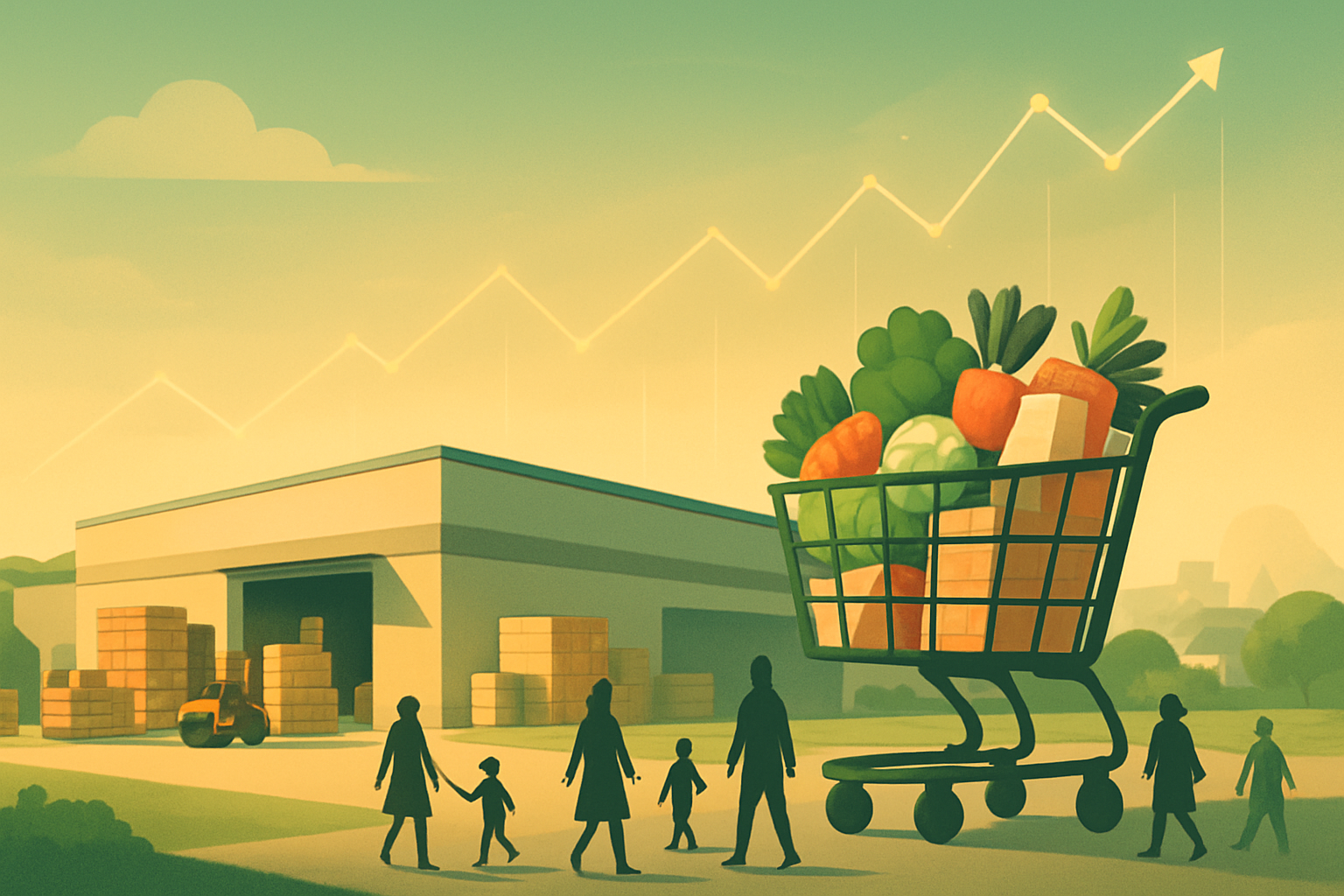
    As of January 9, 2026, the global retail landscape is defined by a paradoxical "mixed" jobs market—one where low hiring rates and cooling wage growth coexist with resilient, albeit selective, consumer spending. In this environment of "pocketbook anxiety," Costco Wholesale Corporation (NASDAQ: COST) has emerged not just as a retailer, but as a financial fortress for its members and a gold standard for institutional investors. While many big-box competitors have struggled with a "spending hangover" following the 2025 holiday season, Costco has continued to post robust comparable sales growth, driven by its unique membership-centric model and an unwavering commitment to value. This report provides a deep-dive analysis into the factors that allow Costco to trade at a significant premium to the broader market, even as macroeconomic headwinds intensify.

    Historical Background

    The Costco story is a masterclass in the evolution of the warehouse club concept. Its roots trace back to Sol Price, who founded FedMart in 1954 and introduced the idea of a membership-based discount retailer. A young protégé of Price, Jim Sinegal, eventually took these lessons to Seattle, where he co-founded Costco with Jeffrey Brotman in 1983.

    The company’s DNA was forged in the "airplane hangar" aesthetic of the first warehouses, where the focus was strictly on high volume and low overhead. A pivotal moment occurred in 1993, when Costco merged with Sol Price’s Price Club to form PriceCostco. By 1997, the company officially rebranded as Costco Wholesale. Throughout the decades, the company has famously maintained a philosophy of "successful stubbornness"—refusing to raise prices unnecessarily, capping markups at 14-15%, and prioritizing employee retention through high wages, a strategy that has shielded the firm from the labor turnover crises that plagued the retail sector in the early 2020s.

    Business Model

    Costco’s business model is an anomaly in the retail world. Unlike traditional retailers that profit from the "margin" between wholesale and retail prices, Costco is essentially a membership organization that happens to sell groceries and general merchandise.

    • Membership Revenue: The "Gold Star" ($65) and "Executive" ($130) fees account for the vast majority of the company's operating profit. This creates a predictable, recurring revenue stream that allows Costco to sell goods almost at cost.
    • Inventory Velocity: By carrying only about 4,000 SKUs (compared to 30,000+ at a typical supermarket), Costco maximizes buying power and ensures high inventory turnover.
    • Kirkland Signature: This private-label powerhouse now accounts for approximately 33% of total sales, generating over $86 billion annually. It serves as a strategic lever to force national brands to lower their prices while offering Costco higher relative margins.
    • Vertical Integration: From owning poultry processing plants to its own logistics fleet, Costco controls its supply chain to an extent few others can match.

    Stock Performance Overview

    Costco has long been a "darling" of the equity markets, consistently outperforming the S&P 500. As of January 9, 2026, the stock trades in the $915 – $930 range.

    • 1-Year Performance: The stock has seen a slight consolidation phase in 2025 (-0.78%), largely due to valuation concerns after hitting an all-time high of $1,078.23 in February 2025. However, early 2026 has seen a 5% surge as investors rotate back into defensive "quality" stocks.
    • 5-Year Performance: Investors have enjoyed a ~161% return, driven by the massive expansion of the membership base during the post-pandemic inflationary era.
    • 10-Year Performance: The stock has delivered a staggering ~663% return, cementing its status as a "generational wealth" compounder.

    Financial Performance

    Costco’s Q1 Fiscal 2026 results (ended November 23, 2025) underscored its operational efficiency.

    • Net Sales: $65.98 billion, an 8.2% increase year-over-year.
    • Net Income: $2.001 billion ($4.50 per diluted share), beating analyst estimates of $4.27.
    • Digital Growth: E-commerce sales surged 18.9% in December 2025, a result of the company’s belated but successful push into mobile app optimization and the "Costco Next" direct-to-consumer platform.
    • Balance Sheet: With a cash position of approximately $16.2 billion, rumors are circulating on Wall Street regarding a potential special dividend later in 2026—a move Costco has historically used to return excess capital to shareholders.

    Leadership and Management

    CEO Ron Vachris, who took the helm on January 1, 2024, has successfully navigated the transition from long-time leader Craig Jelinek. Vachris, who famously started his career as a forklift driver at Price Club, embodies the company's "promote from within" culture.
    Under his leadership, Costco has modernized its tech stack without losing its soul. He has overseen the rollout of AI-driven personalized digital marketing and the implementation of pre-scanning technology at checkouts to maintain the legendary speed of the Costco warehouse. His 2025 recognition as a "US Best Leader" highlights a governance reputation that is virtually unparalleled in the retail industry.

    Products, Services, and Innovations

    While Costco is known for its rotisserie chickens and bulk toilet paper, its 2026 innovation pipeline is focused on the digital-physical hybrid model.

    • Costco Next: This "curated marketplace" allows members to buy directly from high-end manufacturers like Anker and Viking at exclusive discounts. It allows Costco to offer discretionary luxury items without the risk of holding inventory.
    • Costco Logistics: Following the integration of Innovel, Costco now operates a world-class "big and bulky" delivery network, making it a formidable competitor in the appliance and furniture markets.
    • AI Inventory Management: The company has quietly integrated machine learning to predict regional demand shifts, significantly reducing waste in its fresh food departments.

    Competitive Landscape

    Costco maintains a dominant 54.3% market share in the warehouse club space, but the competition is heating up:

    • Sam’s Club (Walmart): Under the parentage of Walmart (WMT), Sam’s Club has led the way in "Scan & Go" technology, appealing to a younger, tech-savvy demographic.
    • BJ’s Wholesale Club (BJ): BJ's differentiates by targeting smaller households with smaller pack sizes and a heavier focus on traditional grocery items.
    • Amazon (AMZN): While not a direct warehouse competitor, Amazon remains the primary threat for discretionary spending, though Costco’s membership loyalty (92.2% renewal rate) remains an effective moat.

    Industry and Market Trends

    The "Mixed" jobs market of early 2026 has created a unique tailwind for Costco. In an economy where job growth is stagnant but the "wealth effect" from a high-performing stock market persists for the upper-middle class, Costco serves as the "rational choice."

    • Bulk-Buying as a Hedge: Consumers are increasingly using bulk-buying as a hedge against persistent, albeit slowing, inflation.
    • The "K-Shaped" Consumer: Costco’s core demographic—the higher-income suburban household—remains financially resilient, even as lower-income tiers feel the squeeze of high interest rates.

    Risks and Challenges

    No company is without risk, and for Costco, the primary concern is valuation.

    • Premium Valuation: Trading at 48-50x earnings, Costco is priced for perfection. Any miss in comparable sales growth could lead to a sharp re-rating.
    • Saturation in the U.S.: With over 600 warehouses in the U.S., the company must increasingly look abroad for growth, which carries higher execution risks.
    • Labor Costs: As the company raised its minimum wage to $30/hour in 2024, maintaining the low-margin model requires even higher sales volume to offset the increased payroll expenses.

    Opportunities and Catalysts

    • International Expansion: China remains a massive opportunity. With only 7 warehouses currently, the potential for expansion in Tier 1 and Tier 2 Chinese cities is significant.
    • Special Dividend: Historically, Costco has issued special dividends (e.g., $15 in 2023). Given the current cash pile, an announcement in mid-2026 would be a major catalyst for the stock.
    • Supply Chain Localization: Moving Kirkland production closer to end-markets in Europe and Asia is expected to further improve margins by reducing shipping costs and tariff exposure.

    Investor Sentiment and Analyst Coverage

    Wall Street remains largely bullish on COST, though price targets are wide-ranging.

    • Consensus: "Moderate Buy" with a median price target of $1,030.
    • Institutional Backing: With nearly 68% institutional ownership, the stock is a staple in most large-cap growth and "quality" factor portfolios.
    • Sentiment: Investors view Costco as a "set it and forget it" stock—a safe haven during periods of economic ambiguity.

    Regulatory, Policy, and Geopolitical Factors

    In 2026, Costco faces a tightening regulatory environment.

    • Environmental Laws: New California mandates for Greenhouse Gas (GHG) reporting and Extended Producer Responsibility (EPR) for plastics have added compliance costs.
    • Labor Regulation: The New York Retail Worker Safety Act has forced investments in security and de-escalation training.
    • Trade Policy: Persistent tariffs remain a challenge; however, Costco’s strategy of litigating for tariff refunds and diversifying its manufacturing base away from high-duty regions has mitigated the impact compared to smaller peers.

    Conclusion

    Costco Wholesale Corporation remains a retail titan that thrives on efficiency, loyalty, and a "long-view" management philosophy. In the face of a mixed jobs market and economic uncertainty, its ability to maintain 90%+ membership renewal rates and double-digit digital growth is a testament to the strength of its brand. While the current stock valuation requires a high degree of confidence in future growth, the company’s massive cash reserves and international expansion potential provide a compelling case for long-term investors. As we move further into 2026, the key metrics to watch will be the pace of warehouse openings in China and the potential announcement of a special dividend to reward the shareholders who have made Costco a cornerstone of their portfolios.


    This content is intended for informational purposes only and is not financial advice.
  • The Rural Fortress: A Deep Dive into Dollar General’s 2026 Renaissance

    The Rural Fortress: A Deep Dive into Dollar General’s 2026 Renaissance

    Date: January 1, 2026

    Introduction

    As we enter 2026, Dollar General Corporation (NYSE: DG) stands at a critical juncture in its eighty-year history. Once the undisputed "darling" of the retail sector, the company spent much of 2023 and 2024 navigating a perfect storm of operational missteps, rampant inventory "shrink," and regulatory scrutiny. However, the narrative has shifted over the past twelve months. Under the renewed leadership of retail veteran Todd Vasos, Dollar General has embarked on an aggressive "Back to Basics" campaign that has begun to yield tangible results.

    In an era defined by persistent inflationary pressures on the low-to-middle income consumer, Dollar General’s proximity-based, value-driven model is more relevant than ever. With over 20,000 stores across the United States, the company is often the only accessible retailer in many rural communities. This article examines whether Dollar General’s recent operational stabilization is a temporary reprieve or a sustainable return to the compounding growth that characterized its performance for decades.

    Historical Background

    The story of Dollar General is fundamentally a story of the American South. Founded in 1939 by J.L. Turner and his son, Cal Turner Sr., as J.L. Turner and Son in Scottsville, Kentucky, the company began as a wholesale business. The turning point came in 1955, when the duo launched the first "Dollar General Store" in Springfield, Kentucky. The concept was revolutionary: no item in the store cost more than one dollar.

    By 1968, the company went public, and by the 1970s, it had expanded its footprint across the Sun Belt. A significant transformation occurred in 2007 when the private equity firm KKR & Co. took the company private in a $6.9 billion deal. This era modernized the company’s supply chain and store layout, preparing it for its highly successful 2009 IPO. Over the following decade, Dollar General became a market leader, expanding its reach into nearly every corner of the continental U.S., focusing specifically on "food deserts" and rural areas where larger competitors like Walmart chose not to build.

    Business Model

    Dollar General operates as a "small-box" discount retailer. Unlike the "dollar-everything" model previously employed by competitors, DG focuses on a broad range of consumables, home products, seasonal items, and apparel at price points generally under $10, though the "core" remains fixed on value.

    Key Pillars of the Model:

    • Target Demographic: The core customer typically comes from a household earning less than $40,000 per year.
    • Real Estate Strategy: Approximately 80% of stores are located in communities with populations of 20,000 or fewer. The goal is to provide a "10-minute trip" convenience that larger supermarkets cannot match.
    • Product Mix: Consumables (paper towels, milk, snacks) account for roughly 75-80% of net sales. While these carry lower margins, they drive the high-frequency foot traffic essential for the business.
    • Cost Efficiency: Stores are designed with a low-cost, no-frills layout, typically around 8,500 square feet, requiring minimal staffing compared to big-box rivals.

    Stock Performance Overview

    Over the last decade, DG stock has been a study in extreme cycles.

    • The 10-Year Horizon: From 2016 to 2022, the stock was a powerhouse, climbing from approximately $70 to an all-time high of $245.52 in October 2022.
    • The 5-Year Horizon: The last five years have been more turbulent. After peaking in 2022, the stock suffered a catastrophic decline, losing nearly 60% of its value by mid-2024 as earnings plummeted and the company faced severe inventory issues.
    • The 1-Year Horizon: 2025 marked a period of recovery. After bottoming out in the $60-$70 range, the stock rallied back to approximately $132 by January 1, 2026. This 12-month resurgence reflects Wall Street’s approval of the company’s operational pivots and stabilizing margins.

    Financial Performance

    Entering 2026, Dollar General’s financials show signs of "normalization" after the volatility of the post-pandemic years.

    • Revenue Growth: For the third quarter of 2025, net sales rose 4.6% year-over-year to $10.65 billion, with same-store sales increasing by 2.5%.
    • Margins: Gross margins have expanded to nearly 30%, a significant improvement from the 28.4% lows seen in late 2023. This expansion is attributed to better inventory management and a reduction in markdowns.
    • Earnings: Analysts expect fiscal year 2025 (ending Jan 2026) to deliver an EPS of approximately $6.10, with projections for 2026 rising to $7.15 as the "Back to Basics" strategy fully takes hold.
    • Debt: The company carries a significant debt load of roughly $7.5 billion, but it remains well-capitalized with a focus on using cash flow for store remodels rather than aggressive share buybacks, which were paused in 2023 to preserve liquidity.

    Leadership and Management

    The return of Todd Vasos as CEO in late 2023 was a watershed moment for the company. Vasos, who had previously led DG through a period of massive growth from 2015 to 2022, was brought back to replace Jeff Owen.

    Vasos’s leadership style is characterized by a "hands-on" approach to store operations. His first major move was a $150 million investment in store labor, a direct response to complaints of messy, understaffed stores. The board of directors has also been refreshed to include more operational experts, moving away from a purely financial growth mindset to one of "operational excellence." This leadership shift has successfully restored institutional investor confidence, which had evaporated during the 2023 management crisis.

    Products, Services, and Innovations

    While "value" is the core offering, DG has innovated to capture higher margins and new demographics:

    • DG Fresh: This in-house cold chain distribution network allows the company to offer fresh produce and refrigerated goods in rural areas. By 2026, a majority of stores have been outfitted with expanded cooler space.
    • DG Wellbeing: Perhaps the most ambitious project, this initiative seeks to turn DG stores into rural healthcare destinations. The company has expanded its health and beauty assortments and continues to pilot mobile health clinics in partnership with companies like DocGo, offering basic diagnostics in "medical deserts."
    • pOpshelf: A treasure-hunt style store targeting suburban, higher-income women. While the company slowed its aggressive expansion of pOpshelf in 2025 to focus on the core DG brand, the concept remains a key laboratory for non-consumable, higher-margin goods.

    Competitive Landscape

    The competitive environment for Dollar General is dual-sided:

    • The Big Box Threat: Walmart (NYSE: WMT) remains the primary competitor for the "weekly shop." However, DG’s convenience "moat"—being located 5-10 miles closer to the rural customer than the nearest Walmart—is a formidable defense.
    • The Deep Discount Sector: Dollar Tree (NASDAQ: DLTR) and its subsidiary Family Dollar are the most direct rivals. In recent years, DG has widened its lead over Family Dollar, which has struggled with store closures and poor site selection. As of 2026, Dollar General holds a dominant 58% share of foot traffic in the deep-discount retail sector.

    Industry and Market Trends

    The retail industry in 2026 is grappling with several macro trends:

    • The "Trade-Down" Effect: As middle-income consumers feel the pinch of high housing and insurance costs, they are increasingly "trading down" to dollar stores for household essentials.
    • Digital Transformation: DG has finally caught up in the digital space, with its mobile app reaching high penetration. The "DG Media Network" is now a significant revenue stream, as CPG brands pay for access to the unique rural data DG possesses.
    • Labor Market Shifts: Rising minimum wages in several states have pressured margins, forcing DG to automate some back-room processes while reinvesting in front-facing customer service.

    Risks and Challenges

    Investing in Dollar General is not without significant risk:

    • Inventory Shrink: Retail theft and inventory mismanagement (shrink) took a massive bite out of profits in 2023-2024. While the removal of self-checkouts in high-theft areas has helped, it remains a persistent industry-wide headwind.
    • Operational Safety: The company has been plagued by OSHA violations for blocked exits and unsafe warehouses. Being placed on the "Severe Violator Enforcement Program" has resulted in millions in fines and a reputational hit.
    • Labor Costs: As a company that relies on low-wage labor, any federal or regional push for a $15-$20 minimum wage could drastically alter the unit economics of a small-box store.

    Opportunities and Catalysts

    • Retail Media: The DG Media Network is a high-margin growth engine that leverages the company’s proprietary data on 20 million+ monthly active digital users.
    • Health Care Expansion: If the DG Wellbeing mobile clinic pilot succeeds, it could turn DG stores into essential government-subsidized service hubs, creating a new, recession-proof revenue stream.
    • Market Consolidation: As smaller local retailers and struggling Family Dollar locations close, DG is perfectly positioned to capture the orphaned market share.

    Investor Sentiment and Analyst Coverage

    As of January 2026, Wall Street sentiment has shifted from "Bearish" to "Cautiously Optimistic."

    • Ratings: The consensus among major analysts is currently a "Buy," with a median 12-month price target of $142.
    • Institutional Activity: Several large hedge funds that exited the stock in 2023 have begun rebuilding positions, citing the attractive valuation (trading at roughly 18x forward earnings, compared to its historical 22x average).
    • Retail Sentiment: Small investors remain wary due to the 2023 collapse, but positive earnings surprises in late 2025 have begun to heal that rift.

    Regulatory, Policy, and Geopolitical Factors

    DG is highly sensitive to domestic policy:

    • Pricing Scrutiny: In 2025, DG paid $15 million in settlements regarding "price discrepancies" between shelf tags and registers. The company is now under a microscope, requiring frequent internal audits to ensure compliance.
    • SNAP Benefits: A significant portion of DG’s revenue comes from customers using the Supplemental Nutrition Assistance Program (SNAP). Any legislative changes to the Farm Bill that reduce SNAP benefits would have a direct and immediate impact on DG's top line.

    Conclusion

    Dollar General’s journey over the last three years serves as a masterclass in the dangers of over-expansion and the power of returning to core competencies. On January 1, 2026, the company is leaner, more focused, and operationally sounder than it was just twenty-four months ago.

    By pivoting away from self-checkouts, reinvesting in its workforce, and leaning into its rural moat, Dollar General has rebuilt its defensive wall. While regulatory hurdles and labor costs remain permanent fixtures of its risk profile, the company’s role as the "pantry of the rural South" remains unchallenged. For investors, DG represents a classic "turnaround" play that has completed its most difficult phase, now entering a period where operational efficiency will be the primary driver of shareholder value.


    This content is intended for informational purposes only and is not financial advice.
  • Warehouse Titan: A Comprehensive Deep Dive into Costco Wholesale Corporation (COST) in 2025

    Warehouse Titan: A Comprehensive Deep Dive into Costco Wholesale Corporation (COST) in 2025

    Date: December 26, 2025

    Introduction

    As we approach the end of 2025, few retail entities command the level of consumer loyalty and investor reverence as Costco Wholesale Corporation (NASDAQ: COST). Often described as a "cult favorite" among both suburban families and Wall Street fund managers, Costco has transcended the typical retail category to become a bellwether for consumer spending health. In an era where e-commerce dominance and inflationary pressures have dismantled traditional brick-and-mortar players, Costco’s warehouse club model remains not just resilient, but thriving. This article examines the internal mechanics, historical journey, and future trajectory of a company that has turned the simple act of bulk-buying into a global financial powerhouse.

    Historical Background

    The Costco story is one of calculated evolution and retail rebellion. The company traces its spiritual roots to 1976, when Sol Price opened the first Price Club in San Diego, pioneering the membership warehouse concept. In 1983, James Sinegal—a protégé of Price—and Jeffrey Brotman opened the first Costco warehouse in Seattle, Washington.

    The two companies, Price Club and Costco, eventually merged in 1993 to form PriceCostco, though the company reverted to the Costco Wholesale Corporation name in 1997. From its inception, the company broke the rules of retail by refusing to spend on advertising, focusing instead on high volumes and ultra-low prices. By 1995, the launch of the "Kirkland Signature" private label cemented its reputation for quality, transforming the company from a mere wholesaler into a global brand curator.

    Business Model

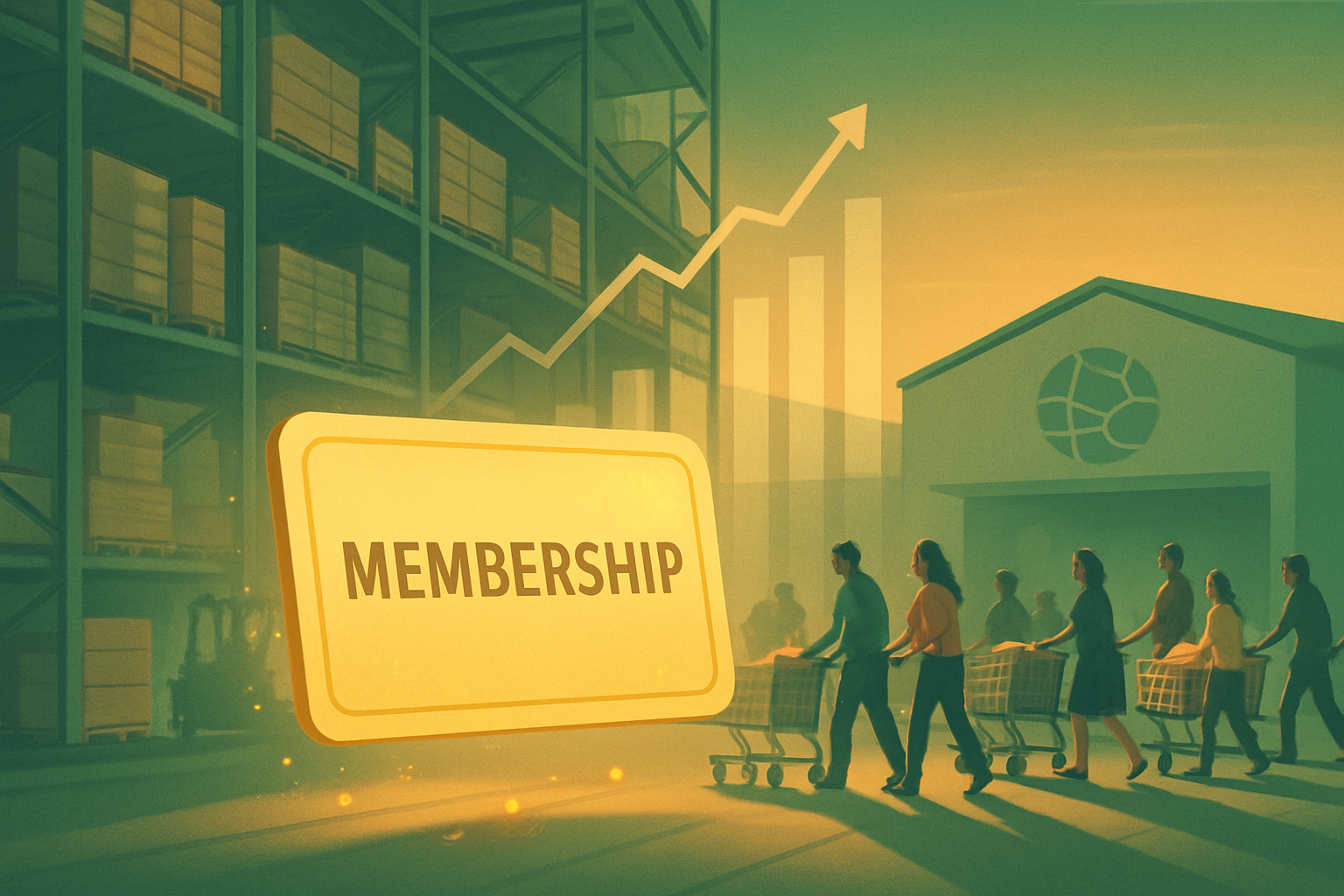
    Costco operates on a distinct "membership-first" business model. Unlike traditional retailers that aim for high margins on individual items, Costco operates at razor-thin margins—often just enough to cover operating costs—while generating the lion’s share of its profit from annual membership fees.

    Key pillars of the model include:

    • Membership Fees: As of late 2024, approximately 70% of the company’s operating income is derived from membership dues.
    • Limited SKU Strategy: While a typical supermarket carries 30,000 to 40,000 items, Costco stocks only about 4,000. This curated selection grants the company immense bargaining power with suppliers and ensures high inventory turnover.
    • The Treasure Hunt: By rotating luxury items (like high-end watches or designer handbags) alongside daily staples, Costco creates an "act now" shopping psychology that encourages frequent visits.
    • Vertical Integration: Through Kirkland Signature and its own poultry and logistics operations, Costco controls its supply chain to keep prices suppressed regardless of market volatility.

    Stock Performance Overview

    Costco’s stock has been a hallmark of compounding wealth over the last decade.

    • 10-Year View: Since 2015, the stock has grown from approximately $140 to its current levels, significantly outperforming the S&P 500.
    • 5-Year View: The stock benefited immensely from the "pandemic bulk-buy" era and the subsequent inflationary period, as consumers sought value.
    • Recent Performance (2024-2025): 2024 was a banner year for COST, with shares gaining nearly 40% as the company announced its first membership fee hike in seven years. In February 2025, the stock reached an all-time high of approximately $1,072. While there has been a minor valuation "reset" in late 2025 as interest rates stabilized, the stock remains a top performer in the consumer staples sector.

    Financial Performance

    Costco’s fiscal year 2025 results highlight a machine operating at peak efficiency.

    • Revenue: Total net sales reached $275.2 billion, an 8.2% increase year-over-year.
    • Net Income: The company reported $8.1 billion in net income, translating to $18.21 per diluted share.
    • Margins: Operating margins remain characteristically slim at roughly 3.5%, while the company maintains a robust cash position, allowing for periodic special dividends—a favorite among long-term shareholders.
    • Valuation: The stock currently trades at a trailing Price-to-Earnings (P/E) ratio in the 45x–50x range. While high for a retailer, this "Costco Premium" reflects the high predictability of its membership revenue.

    Leadership and Management

    In 2024, Costco underwent a significant leadership transition. Ron Vachris, a 40-year company veteran who famously began his career as a forklift driver, took the helm as CEO, succeeding Craig Jelinek. This transition has been seamless, as Vachris embodies the company’s internal culture of "continuity and frugality."

    Assisting Vachris is CFO Gary Millerchip, who joined from Kroger in early 2024, replacing the legendary Richard Galanti. This new duo has maintained the company’s conservative financial posture while slowly accelerating digital transformation and international logistics investments.

    Products, Services, and Innovations

    Costco’s innovation is often invisible to the naked eye, focusing on supply chain efficiency rather than flashy technology.

    • Kirkland Signature: This private label now accounts for over 33% of total sales (approximately $86 billion in 2024). It serves as a defensive moat against brand-name price hikes.
    • Costco Next: A growing digital platform that allows members to purchase directly from suppliers at "Costco prices," expanding the inventory without requiring warehouse shelf space.
    • Services Expansion: From travel and insurance to pharmacy and optical, Costco continues to embed itself into every facet of its members' lives, increasing the "stickiness" of the membership.

    Competitive Landscape

    Costco operates in a fiercely competitive environment but maintains a distinct demographic advantage.

    • Walmart (NYSE: WMT) / Sam’s Club: Sam’s Club is the closest direct competitor. While Sam's has made strides in digital integration and Scan-and-Go technology, Costco maintains higher average household income levels among its members and superior renewal rates.
    • BJ’s Wholesale Club (NYSE: BJ): A smaller regional player that offers more pack-size flexibility but lacks Costco's global purchasing power.
    • Amazon (NASDAQ: AMZN): While Amazon dominates in convenience, Costco wins on unit pricing and the "physical discovery" experience that e-commerce has yet to replicate.

    Industry and Market Trends

    The retail sector in 2025 is defined by "Value Polarization." As the middle class seeks to stretch their dollars, the warehouse club model has gained market share from traditional grocers.

    • Bulk Buying Resilience: Even as inflation cooled throughout 2025, the consumer habit of buying in bulk has remained, driven by a permanent shift toward home-based consumption.
    • Supply Chain Localization: Following the disruptions of the early 2020s, Costco has invested heavily in localized logistics and owned distribution centers to mitigate global shipping volatility.

    Risks and Challenges

    Despite its dominance, Costco faces several headwinds:

    • Valuation Compression: Trading at nearly 50x earnings, any slowdown in comparable-store sales or membership growth could lead to a significant stock price correction.
    • Digital Lag: While improving, Costco’s e-commerce experience still lags behind Amazon and Walmart. The company must balance its "in-warehouse experience" with the growing demand for frictionless digital shopping.
    • Labor Costs: As a company that prides itself on paying above-market wages and providing excellent benefits, rising labor costs and potential unionization efforts in the broader retail sector remain a monitoring point.

    Opportunities and Catalysts

    • International Expansion: With only seven warehouses in China as of late 2025, the growth potential in Asia remains massive. The company’s ability to replicate its culture in diverse markets like Japan, South Korea, and Sweden provides a long runway for growth.
    • Membership Fee Revenue: The full impact of the September 2024 fee increase (Gold Star to $65, Executive to $130) is flowing through the 2025 and 2026 financials, providing a direct boost to the bottom line.
    • Advertising Potential: While Costco avoids traditional advertising, the data it holds on its 130+ million members represents an untapped "Retail Media" goldmine should management choose to leverage it.

    Investor Sentiment and Analyst Coverage

    Wall Street sentiment remains "Overweight" on COST. Analysts emphasize the company’s 90%+ membership renewal rate as a source of safety in a volatile macro environment. Institutional ownership remains high at approximately 69%, with giants like Vanguard and BlackRock holding significant stakes. Retail sentiment is equally strong, with "Costco enthusiasts" often viewing the stock as a core "buy and hold forever" position in their portfolios.

    Regulatory, Policy, and Geopolitical Factors

    As a global retailer, Costco is subject to a complex web of regulations:

    • Trade Policy: Given its high volume of imported goods, changes in tariffs—particularly between the U.S. and China—can impact Kirkland Signature’s pricing.
    • Sustainability Mandates: New 2025 regulations regarding plastic packaging and carbon footprints in the EU and North America are forcing Costco to innovate its packaging and logistics networks.
    • Antitrust: While not a primary target like Big Tech, the sheer size of Costco and its impact on local grocery ecosystems keeps it within the peripheral vision of regulatory bodies.

    Conclusion

    Costco Wholesale Corporation (NASDAQ: COST) enters 2026 as a titan of efficiency. Its simple yet profound strategy—selling high-quality goods at the lowest possible prices while charging for the privilege of entry—has created a financial fortress. While the stock’s premium valuation requires nerves of steel for new investors, the company's fundamentals, bolstered by a recent fee hike and aggressive international expansion, remain peerless. For investors, the key metric to watch in 2026 will be the success of new warehouse openings in the Chinese market and the continued digital evolution of the "Costco Next" platform.


    This content is intended for informational purposes only and is not financial advice.

  • The Costco Dividend Watch: A Deep Dive into Membership Growth and 2026 Catalysts

    The Costco Dividend Watch: A Deep Dive into Membership Growth and 2026 Catalysts

    Date: December 24, 2025

    Introduction

    As the final trading days of 2025 approach, Costco Wholesale Corporation (NASDAQ: COST) stands at a fascinating crossroads of operational strength and stock market valuation. While the broader retail sector spent much of 2025 navigating shifting consumer sentiment and high interest rates, Costco has remained a beacon of stability. However, the narrative for 2025 has been one of a "valuation reset." After a blistering 2024 that saw the stock gain nearly 40%, Costco has underperformed the S&P 500 this year, as investors grapple with its premium price tag. Despite this, two major themes dominate the discourse in corporate boardrooms and retail investment circles: the company's aggressive digital transformation (the "Netflix-style" membership crackdown) and the looming question of when—not if—the next massive special dividend will be announced.

    Historical Background

    The Costco story is one of the most celebrated in retail history, beginning with a simple premise: high volume and low markups. The company’s roots trace back to 1976, when Sol Price and his son Robert opened the first Price Club in a converted airplane hangar in San Diego. It was the world's first membership warehouse club, originally serving only small businesses.

    In 1983, James Sinegal and Jeffrey Brotman opened the first Costco warehouse in Seattle, modeling it after the Price Club concept. Ten years later, in 1993, the two companies merged to form PriceCostco. Under the leadership of Sinegal, who served as CEO until 2012, Costco developed a legendary corporate culture centered on worker retention, thin profit margins on goods, and a "no-frills" shopping experience. This ethos transformed Costco from a regional experiment into a global powerhouse, maintaining a unique identity that prioritizes membership fees over traditional retail markups.

    Business Model

    Costco operates on a subscription-based model that fundamentally differs from traditional retailers like Target Corporation (NYSE: TGT) or Walmart Inc. (NYSE: WMT). Its revenue is generated from two primary streams:

    1. Membership Fees: Accounting for the vast majority of the company's operating income, these fees provide high-margin, recurring revenue that allows Costco to sell goods at near-cost.
    2. Merchandise Sales: Costco maintains ultra-efficient operations by carrying only ~4,000 Stock Keeping Units (SKUs) compared to 30,000+ at a typical supermarket. This massive volume per SKU grants Costco immense bargaining power with suppliers.

    The crown jewel of the model is Kirkland Signature, a private-label brand that now generates over $60 billion in annual sales. By controlling the quality and supply chain of these products, Costco provides value to members while maintaining better margins than national brands.

    Stock Performance Overview

    The year 2025 has been a period of consolidation for COST. After peaking near the end of 2024, the stock entered a "reset" phase.

    • 1-Year Performance (2025): The stock is down approximately 4% year-to-date as of December 24, significantly underperforming the S&P 500's ~16% gain. This is largely attributed to a contraction in its Price-to-Earnings (P/E) multiple, which had reached historic highs.
    • 5-Year Performance: Despite the 2025 lull, long-term investors have seen returns of over 180%, fueled by the pandemic-era shopping surge and consistent membership growth.
    • 10-Year Performance: Costco remains a "compounder," with the stock up over 450% since 2015, outstripping almost all of its traditional brick-and-mortar peers.

    Financial Performance

    In its latest Q1 FY2026 earnings report (released December 11, 2025), Costco demonstrated why its balance sheet is considered one of the safest in the world.

    • Revenue: Total revenue for the quarter rose 7.1% year-over-year, driven by a 14% jump in membership fee income following the September 2024 fee hike.
    • Cash Position: As of late December 2025, Costco sits on a record $17.18 billion in cash and cash equivalents.
    • Margins: Operating margins remain thin but stable at around 3.5%, while net income continues to grow alongside membership expansion.
    • Valuation: The stock currently trades at roughly 44x forward earnings. While lower than its 58x peak in 2024, it remains a steep premium compared to Walmart's ~32x or Target's ~17x.

    Leadership and Management

    The year 2025 marked the first full year under the leadership duo of CEO Ron Vachris and CFO Gary Millerchip. Vachris, a Costco veteran who started as a forklift driver, has emphasized continuity, yet he has notably increased the company's "pace of play." Under his tenure, the target for new warehouse openings has shifted from 25 per year to a more aggressive 30+.

    Millerchip, formerly of Kroger Co. (NYSE: KR), has brought a disciplined approach to the balance sheet, particularly in navigating the 2025 tariff environment. The duo is widely praised for successfully avoiding a major Teamsters strike in early 2025 and for modernizing Costco’s digital infrastructure.

    Products, Services, and Innovations

    Costco’s innovation strategy in 2025 has focused on "frictionless membership."

    • Entrance Scanners: A nationwide rollout of scanners at warehouse entrances has largely eliminated membership card sharing, boosting new sign-ups in 2025.
    • AI Implementation: Costco is now using AI for predictive inventory management. This technology has reportedly improved pharmacy in-stock rates to 98% and optimized rotisserie chicken production to minimize waste.
    • Digital Growth: The company has finally embraced a robust mobile app experience, allowing for real-time warehouse inventory checking and "click-and-collect" for high-ticket items like electronics.

    Competitive Landscape

    Costco faces a two-front war. On one side, Walmart's Sam's Club has made major strides in digital integration and scan-and-go technology. On the other, Amazon.com Inc. (NASDAQ: AMZN) continues to dominate the convenience-driven household essentials market.

    However, Costco’s moat remains its high-income demographic. The average Costco member has a higher household income than the typical Walmart or Target shopper, making the company more resilient to inflationary pressures. Furthermore, Costco's international strength, particularly in Asia, provides a geographical diversification that competitors like BJ’s Wholesale Club (NYSE: BJ) lack.

    Industry and Market Trends

    Three major trends shaped the retail landscape in 2025:

    1. Retail Media: Costco has begun monetizing its first-party member data through an advertising network, creating a high-margin revenue stream that mimics the success of Amazon Advertising.
    2. Local Sourcing: To hedge against global trade volatility, Costco has shifted toward sourcing more Kirkland Signature items locally in international markets like Japan and China.
    3. The "Middle-Income Squeeze": As middle-class consumers sought value in 2025, the warehouse club model gained market share at the expense of traditional grocery stores.

    Risks and Challenges

    Despite its strengths, Costco is not without risks:

    • Valuation Sensitivity: At 44x earnings, any slight miss in comparable-store sales or membership growth could lead to a sharp sell-off.
    • Labor Costs: While the 2025 Teamsters agreement averted a strike, top-scale wages exceeding $30/hour put pressure on the company’s famously thin retail margins.
    • Tariff Exposure: Costco’s legal challenge against "emergency" tariffs in late 2025 highlights the company's sensitivity to trade policy, particularly for its non-food merchandise.

    Opportunities and Catalysts

    The most anticipated catalyst for 2026 is the Special Dividend. Having last paid $15.00 per share in January 2024, and with a cash pile of over $17 billion, analysts believe Costco is primed for another payout in the $12–$15 range.

    Other growth levers include:

    • International Expansion: With only seven warehouses in China as of late 2025, the runway for growth in Asia remains enormous.
    • Membership Tier Optimization: Management has hinted at potential new membership tiers or "digital-only" options to capture younger demographics.

    Investor Sentiment and Analyst Coverage

    Wall Street remains largely bullish on COST, though "Buy" ratings are often accompanied by a "wait for a dip" caveat due to the current valuation. Hedge fund ownership remained stable through 2025, and institutional investors like The Vanguard Group and BlackRock Inc. (NYSE: BLK) remain the largest shareholders. Retail sentiment is buoyed by the brand’s cult-like status, though the "scanner crackdown" at entrances caused some social media friction in the summer of 2025.

    Regulatory, Policy, and Geopolitical Factors

    In December 2025, Costco made a bold move by filing a lawsuit in the U.S. Court of International Trade against the federal government, challenging the legality of certain executive-imposed tariffs. This reflects a broader corporate trend of pushing back against trade volatility. Additionally, the company has pivoted its ESG strategy, including anti-ESG proposals in its proxy statements to align with shifting regulatory climates in Washington, while simultaneously expanding its massive solar-and-battery storage projects at distribution centers.

    Conclusion

    Costco enters 2026 as a defensive powerhouse with a fortress balance sheet. While 2025 was a year of stock price stagnation, it was also a year of vital operational strengthening. The "Netflix-style" membership verification has provided a new tailwind for fee income, and the company's massive cash reserves make it a prime candidate for a massive special dividend in the coming year. For investors, the question remains whether they are willing to pay the premium for what is arguably the most disciplined operator in global retail. Watch for the special dividend announcement and international growth metrics as the key indicators of Costco's next leg up.


    This content is intended for informational purposes only and is not financial advice.

  • Deep Dive: Is Home Depot (HD) the Ultimate ‘Recovery Play’ for 2026?

    Deep Dive: Is Home Depot (HD) the Ultimate ‘Recovery Play’ for 2026?

    As we close out 2025, The Home Depot, Inc. (NYSE: HD) remains the undisputed titan of the home improvement industry, yet it finds itself at a critical strategic crossroads. For decades, the Atlanta-based giant thrived on the "do-it-yourself" (DIY) spirit of the American homeowner. However, the economic landscape of 12/23/2025—marked by persistent mortgage rates near 7% and a stagnant housing turnover market—has forced a radical evolution.

    Home Depot is no longer just a place to buy a gallon of paint or a new lawnmower; it has transformed into a sophisticated industrial distributor. Through the massive $18.25 billion acquisition of SRS Distribution and the subsequent $5.5 billion purchase of GMS Inc., Home Depot has pivoted aggressively toward the "Complex Pro"—the roofing, drywall, and pool contractors who manage multi-million dollar projects. This deep dive explores how Home Depot is navigating a "maintenance economy," leveraging artificial intelligence to serve professionals, and why its stock remains a foundational, albeit currently pressured, pillar of the retail sector.

    Historical Background

    Founded in 1978 by Bernie Marcus, Arthur Blank, Ron Brill, and Pat Farrah, Home Depot was born from a vision of "one-stop shopping" for the DIYer. The first two stores opened in Atlanta, Georgia, in 1979, famously stocked with empty boxes to give the illusion of massive inventory. The concept was revolutionary: warehouse-sized stores with low prices and highly trained staff who could teach customers how to fix their own homes.

    The company went public in 1981 and experienced explosive growth through the 1990s, expanding into Canada and Mexico. Under CEO Bob Nardelli in the early 2000s, the company centralized operations but faced criticism for eroding the customer-centric culture. This led to the tenure of Frank Blake (2007–2014), who is credited with restoring "orange-blooded" service and investing in the digital transformation that saved the company during the Great Recession. Today, under Ted Decker, the company is undergoing its most significant structural shift since its founding, moving from a retail-centric model to a dual retail-and-specialty distribution powerhouse.

    Business Model

    Home Depot’s business model is currently split between two primary customer segments: the DIYer and the Professional (Pro).

    1. DIY Customer: This segment includes homeowners completing small-to-medium projects. While high-interest rates have softened "discretionary" spending (e.g., luxury kitchen remodels), the "necessity" repair segment—HVAC, plumbing, and electrical—remains a stable revenue stream.
    2. The Pro Segment: Now accounting for approximately 50% of total revenue, the Pro segment is the company's growth engine. Home Depot categorizes Pros into "Pro-lite" (handymen) and "Complex Pros" (general contractors and specialists). The acquisition of SRS Distribution and GMS Inc. has allowed Home Depot to capture the latter, providing specialized job-site delivery and credit terms that a standard retail store cannot offer.

    The company earns revenue through the sale of building materials, home improvement products, lawn and garden packages, and décor. Additionally, it offers services such as tool and equipment rental, as well as installation services for floors, roofs, and windows.

    Stock Performance Overview

    As of late 2025, Home Depot’s stock performance reflects the broader struggle of the interest-rate-sensitive housing sector.

    • 1-Year Performance: Down approximately 12%. The "higher-for-longer" mortgage rate environment has kept housing turnover at multi-decade lows, reducing the immediate need for "move-in" renovations.
    • 5-Year Performance: A total return of ~45%. While respectable, it has lagged the S&P 500's tech-heavy rally, as investors favored growth stocks over cyclical retail during the post-pandemic era.
    • 10-Year Performance: A staggering ~233% total return. Over the long term, Home Depot has been a "dividend aristocrat" favorite, consistently increasing payouts and utilizing aggressive share buybacks to drive shareholder value.

    The stock remains a "proxy for the American home," often moving in inverse correlation with the 10-year Treasury yield.

    Financial Performance

    In the third quarter of fiscal 2025, Home Depot reported sales of $41.4 billion, a 2.8% increase year-over-year. Most importantly, comparable sales turned positive at +0.2%, breaking a streak of declines that began in late 2023.

    • Profitability: Net earnings for Q3 2025 stood at $3.6 billion, with an adjusted EPS of $3.74. Operating margins have seen slight compression (around 13.5%) due to the integration of the SRS and GMS acquisitions and the higher cost of debt.
    • Debt and Liquidity: To fund its $23 billion acquisition spree in 2024-2025, Home Depot took on significant long-term debt. However, its cash-flow generation remains robust, with free cash flow (FCF) expected to normalize as acquisition synergies take hold in 2026.
    • Valuation: HD currently trades at a forward P/E ratio of approximately 21x, which is slightly above its 10-year historical average, suggesting that the market is already pricing in a housing recovery.

    Leadership and Management

    Ted Decker, who became CEO in 2022, is the architect of the "Pro-First" strategy. Decker, a long-time Home Depot veteran, has balanced the need for digital innovation with a fierce commitment to the company's "inverted pyramid" management philosophy (where the CEO is at the bottom, supporting the frontline associates).

    In late 2024, Decker made headlines by mandating that all corporate employees work one 8-hour retail shift per quarter. This "back-to-the-floor" initiative was designed to ensure that the engineers building AI tools for the company understand the physical realities of moving 80-pound bags of concrete. The management team is highly regarded for its disciplined capital allocation, even if the recent large acquisitions have increased the company's risk profile.

    Products, Services, and Innovations

    Innovation at Home Depot in 2025 is focused on "frictionless" commerce for the Pro.

    • AI Blueprint Takeoff Tool: Launched in 2025, this tool allows contractors to upload digital blueprints to the Home Depot app. The AI automatically calculates the necessary materials—down to the last box of nails—and provides an instant quote and delivery schedule.
    • Supply Chain Expansion: Home Depot has opened over 100 new distribution centers specifically designed for flatbed delivery. This allows the company to deliver lumber and shingles directly to a job site, bypassing the crowded parking lots of retail stores.
    • Interconnected Retail: Roughly 50% of online orders are still picked up in-store, proving the lasting value of the company’s 2,300+ physical locations.

    Competitive Landscape

    Home Depot operates in a fragmented $1 trillion market.

    • Lowe’s Companies, Inc. (NYSE: LOW): The primary rival. While Home Depot has dominated the Pro market, Lowe’s has focused on the "Total Home" strategy, catering more heavily to DIYers and the aesthetic-focused "millennial homeowner."
    • Specialty Distributors: With the SRS and GMS acquisitions, Home Depot is now competing directly with specialized firms like Beacon Roofing Supply (NASDAQ: BECN) and BlueLinx (NYSE: BXC).
    • Amazon (NASDAQ: AMZN): While Amazon dominates small-parcel home goods, it struggles with the "heavy and bulky" category (lumber, appliances) where Home Depot’s physical footprint and specialized delivery fleet provide a significant moat.

    Industry and Market Trends

    Two dominant trends are shaping Home Depot’s 2025 environment:

    1. The Aging Housing Stock: The median age of a U.S. home is now over 40 years. This creates a "maintenance floor" of demand for roofing, HVAC, and plumbing that is independent of the housing market's volatility.
    2. The "Lock-In" Effect: Homeowners with 3% mortgage rates are unwilling to move and take on a 7% rate. Instead of moving to a larger house, they are choosing to renovate their existing ones—a phenomenon that benefits Home Depot’s high-margin remodeling categories.

    Risks and Challenges

    • Interest Rate Sensitivity: If mortgage rates remain at 7% or rise higher into 2026, the recovery in "big-ticket" discretionary spending could be delayed further.
    • Integration Risk: Integrating $23 billion worth of acquisitions (SRS and GMS) is a massive undertaking. Failure to realize synergies or a clash in corporate cultures could drag on earnings.
    • Labor Shortage: The shortage of skilled tradespeople (plumbers, electricians, roofers) limits the capacity of Home Depot’s Pro customers to take on more work, indirectly capping Home Depot’s sales growth.

    Opportunities and Catalysts

    • The $1 Trillion TAM: By expanding into specialized distribution, Home Depot has nearly doubled its Total Addressable Market.
    • The "Great Unlocking": Any meaningful cut to the Federal Funds Rate by the SEC/Fed in 2026 would likely spark a surge in home sales, creating an immediate catalyst for "move-in" renovation spending.
    • Shareholder Returns: Home Depot has a long history of returning capital to shareholders. Once the debt from the SRS acquisition is paid down, investors expect a return to aggressive share buybacks and dividend hikes.

    Investor Sentiment and Analyst Coverage

    Wall Street maintains a "Moderate Buy" consensus on HD as of December 2025.

    • Bulls argue that the company is a "coiled spring" ready to pop as soon as interest rates decline, citing its improved Pro capabilities as a long-term competitive advantage.
    • Bears point to the increased leverage on the balance sheet and the continued weakness in the DIY consumer segment.
      Institutional ownership remains high (over 70%), with firms like Vanguard and BlackRock holding significant positions, viewing HD as a core "blue-chip" holding for long-term portfolios.

    Regulatory, Policy, and Geopolitical Factors

    • Trade Policy: As of late 2025, trade tensions have impacted the cost of imported lumber and steel. Home Depot’s massive scale allows it to negotiate better than smaller rivals, but sustained tariffs remain an inflationary pressure on material costs.
    • Sustainability & ESG: Home Depot has committed to reaching 100% renewable energy for its facilities by 2030. Regulatory shifts toward "green building" codes are also driving demand for energy-efficient appliances and sustainable insulation materials, categories where Home Depot is expanding its "Eco Options" line.

    Conclusion

    The Home Depot of late 2025 is a more complex, more industrial, and more technologically advanced company than it was just three years ago. By pivoting toward the professional contractor while maintaining its retail dominance, it has insulated itself against the worst effects of a stagnant housing market.

    For investors, HD represents a "wait-and-see" play on the housing cycle. The company has done the heavy lifting of acquiring growth through SRS and GMS; now, it must prove it can integrate these giants while waiting for the macro environment to soften. While the stock may face short-term volatility as interest rates stabilize, its dominant market position, aging U.S. infrastructure, and AI-driven efficiency make it a formidable force for the decade ahead. Investors should watch for the Q4 2025 earnings report in February for updates on the SRS integration and 2026 guidance.


    This content is intended for informational purposes only and is not financial advice.