Tag: Regulation

  • Polymarket’s $112 Million Gambit: The QCEX Acquisition and the High-Stakes Battle for the U.S. Market

    Polymarket’s $112 Million Gambit: The QCEX Acquisition and the High-Stakes Battle for the U.S. Market

    As of January 15, 2026, the prediction market landscape has been fundamentally reshaped by what insiders are calling the "regulatory heist of the decade." Following years of operating in a state of "regulatory exile" from the United States, Polymarket has successfully completed its strategic acquisition of QCEX, a CFTC-licensed exchange. The $112 million deal, finalized in late 2025, has paved the way for Polymarket’s official domestic relaunch, bringing the world’s most liquid prediction platform directly into competition with the incumbent heavyweight, Kalshi.

    The move has sent shockwaves through the industry. For years, American traders were forced to watch from the sidelines or use complex workarounds to access Polymarket’s deep liquidity pools. Now, with the acquisition of QCEX’s Designated Contract Market (DCM) and Derivatives Clearing Organization (DCO) licenses, Polymarket is no longer an offshore outsider. The platform is currently in a high-stakes race to onboard millions of American retail users, with trading volumes across the industry hitting a record-shattering $700 million daily this month.

    The Market: What's Being Predicted

    The focus of prediction market enthusiasts has shifted from if Polymarket would return to the U.S., to how fast it can seize market share from Kalshi. Currently, secondary markets on various platforms are tracking "Polymarket U.S. Volume vs. Kalshi" for the first half of 2026. While Kalshi currently commands approximately 66% of the daily U.S. regulated volume—thanks to its deep integration with platforms like Robinhood Markets, Inc. (NASDAQ: HOOD)—Polymarket’s "waitlist-only" U.S. app has already seen over 500,000 sign-ups since its December rollout.

    Liquidity remains the primary metric. Traders are closely monitoring the "Total Value Locked" (TVL) in Polymarket’s new U.S.-compliant silos. Unlike its international version, which operates on the Polygon blockchain using USDC, the U.S. version is a hybrid model designed to appease federal regulators while maintaining the fast-paced, high-liquidity environment that defined the platform during the 2024 election cycle. The resolution of these "market share" contracts is set for July 1, 2026, and the odds have been swinging wildly as Polymarket clears new regulatory hurdles.

    Why Traders Are Betting

    The primary driver of the current market volatility is the sheer scale of institutional backing Polymarket has secured. In the wake of the QCEX deal, the Intercontinental Exchange (NYSE: ICE), the parent company of the New York Stock Exchange, finalized a landmark $2 billion investment in Polymarket. This partnership integrates Polymarket’s real-time data into ICE’s professional financial terminals, effectively treating prediction market odds as a legitimate new asset class for institutional desks.

    However, the path hasn't been entirely smooth. Traders are currently processing the fallout from the "Venezuela Controversy." Earlier this month, a $10.5 million market regarding the capture of Nicolás Maduro led to widespread outrage when Polymarket’s decentralized oracle initially hesitated to pay out, citing technicalities in the "invasion" definition. This has created a "trust gap" that Kalshi is actively exploiting in its marketing, positioning itself as the "cleaner" and more legally robust alternative.

    Whale activity has been notable on the "U.S. Market Dominance" contracts. Several large positions were recently taken by decentralized finance (DeFi) hedge funds betting that Polymarket's "culture-first" approach—focusing on viral news and sports contracts—will eventually overwhelm Kalshi’s more "academic" focus on macroeconomic data and interest rate pivots.

    Broader Context and Implications

    The acquisition of QCEX represents a "regulatory reset" that many thought impossible after the CFTC’s 2022 enforcement action against Polymarket. By purchasing an existing licensed entity (previously owned by Quadcode Group), Polymarket bypassed the standard multi-year federal registration process. This "M&A-first" strategy for regulatory compliance is now being studied by other international crypto firms looking to re-enter the U.S.

    The real-world implications of this battle are significant. The surge in prediction market volume has caught the eye of Washington D.C., leading to the introduction of the Public Integrity in Financial Prediction Markets Act of 2026. This proposed legislation aims to curb "insider trading" by government officials on markets where they may have non-public knowledge—such as upcoming regulatory decisions or military actions. The accuracy of these markets has reached a point where they are frequently cited on major news networks like CNN and CNBC as more reliable than traditional polling or expert analysis.

    Furthermore, the competition is forcing a technological evolution. We are seeing the "Robinhood-ification" of prediction markets, where complex derivatives are being packaged into user-friendly mobile interfaces that appeal to the same demographic that fueled the 2021 meme-stock craze.

    What to Watch Next

    The immediate milestone to watch is the full public launch of the Polymarket U.S. app, currently slated for late February 2026. Until now, the platform has been restricted to a slow waitlist rollout. A successful "unveiling" could see a massive migration of liquidity. Additionally, keep a close eye on the ongoing state-level legal battles. States like Tennessee and Connecticut have issued cease-and-desist orders, arguing that "event contracts" are a form of unlicensed sports betting. How Polymarket and Kalshi navigate these state vs. federal jurisdictional conflicts will determine the industry's ceiling.

    Another key event is the upcoming "Predictive Data Summit" in March, where ICE is expected to reveal how it will package Polymarket data for high-frequency trading firms. If institutional "market makers" begin providing deep liquidity to these markets, the bid-ask spreads will tighten significantly, making prediction markets a viable hedging tool for traditional corporations.

    Bottom Line

    The QCEX acquisition was more than just a business deal; it was a declaration of war for the future of the "Information Economy." By moving into the U.S. market with federal licenses in hand, Polymarket has transformed from a crypto-native underdog into a systemic financial player. The competition with Kalshi is no longer just about who has the better interface, but about who can maintain the delicate balance between high-octane trading and the stringent requirements of the CFTC.

    Prediction markets are finally graduating from the fringes of the internet to the center of the financial world. Whether Polymarket’s liquidity can overcome Kalshi’s institutional trust remains the biggest bet of 2026. One thing is certain: the era of "betting on the news" has officially arrived in America, and the stakes have never been higher.


    This article is for informational purposes only and does not constitute financial or betting advice. Prediction market participation may be subject to legal restrictions in your jurisdiction.

    PredictStreet focuses on covering the latest developments in prediction markets.
    Visit the PredictStreet website at https://www.predictstreet.ai/.
  • The $400,000 Tip-Off: How the ‘Maduro Trade’ Broke Polymarket and Sparked a DC Crackdown

    The $400,000 Tip-Off: How the ‘Maduro Trade’ Broke Polymarket and Sparked a DC Crackdown

    The capture of Venezuelan President Nicolás Maduro by U.S. forces on January 3, 2026, was a geopolitical shockwave that few saw coming. But while the world’s intelligence agencies and newsrooms were caught off guard, a single anonymous trader on the prediction platform Polymarket appeared to have a front-row seat to the planning. In a series of high-conviction bets placed just hours before the "snatch-and-extract" operation in Caracas, a user known as "Burdensome-Mix" turned a modest $32,000 into a windfall of over $400,000.

    The trade has since become the center of a firestorm in Washington D.C. and New York, reigniting the debate over the legality and ethics of prediction markets. With odds on Maduro’s removal hovering at a mere 7% just before the raid, the sudden influx of "informed" capital has led lawmakers to question whether these platforms have become the ultimate venue for modern-day insider trading. The event, now dubbed the "Maduro Trade," is currently the primary exhibit in a push for federal regulation that could fundamentally alter the landscape of event-based betting.

    The Market: What's Being Predicted

    The controversy centers on several interlinked contracts hosted on Polymarket, a decentralized prediction platform that has surged in popularity despite its regulatory battles in the United States. The most prominent contract, "Maduro out by January 31, 2026?", saw relatively low volume throughout December as analysts remained skeptical of any immediate regime change in Venezuela. For much of the holiday season, shares were trading at approximately $0.07, representing a consensus probability of just 7%.

    However, the liquidity of the market changed drastically on December 26, 2025, when the "Burdensome-Mix" account was created. The trader began accumulating "Yes" shares aggressively across four specific contracts: Maduro’s removal, the presence of U.S. forces in Venezuela, and a controversial market titled "Will the US invade Venezuela by January 31?" By the early hours of January 3, the trader had amassed a position of $32,537.

    When news of the capture broke, the contracts "Yes" shares immediately spiked to $1.00. While the removal and troop presence contracts resolved smoothly, the "Invasion" contract, which saw over $10.5 million in total volume, became a flashpoint. Polymarket's refusal to initially pay out "Yes" holders—arguing that a tactical raid did not constitute a full-scale "invasion"—led to a "semantic freeze" that left millions in limbo and infuriated the trading community.

    Why Traders Are Betting

    The sheer precision of the "Maduro Trade" has led experts to believe this wasn't the result of superior geopolitical analysis, but rather what critics call the "Alpha Raccoon" effect. This term describes traders who exploit massive information asymmetry, likely derived from government or military leaks. Analysts note that "Burdensome-Mix" held four times more contracts than the next-highest bidder, suggesting a level of "conviction" that is rarely seen in speculative markets without inside knowledge.

    Suspicion has also fallen on the intersection of the political and financial worlds. Scrutiny has specifically targeted the dual roles of prominent figures like Donald Trump Jr., whose firm 1789 Capital has invested heavily in the sector. With Trump Jr. serving as a strategic advisor to the regulated exchange Kalshi and an advisory board member for Polymarket, critics argue that the proximity between prediction market stakeholders and the executive branch creates a moral hazard where non-public military plans could be commodified.

    From a trading perspective, the Maduro event showcased the limits of traditional forecasting. While mainstream media was focused on diplomatic stalemates, the "whisper" in the prediction markets was shouting. Proponents of the markets, such as economist Robin Hanson, argue that this is actually a feature, not a bug. They contend that the "Maduro Trade" forced private information into a public price, providing a more accurate signal to the world than any news outlet could offer.

    Broader Context and Implications

    The fallout from the Maduro Trade is now fueling a significant legislative push. On January 9, 2026, Rep. Ritchie Torres (D-NY) introduced the Public Integrity in Financial Prediction Markets Act of 2026. The bill aims to criminalize insider trading on these platforms by federal officials and their families. Torres has been vocal about his concerns, describing the current state of prediction markets as "the most corrupt corner of Washington."

    In Albany, the New York State Assembly is moving forward with the ORACLE Act (A9251). If passed, the act would effectively ban New York residents from trading on contracts linked to political or catastrophic events, potentially classifying them as unlicensed gambling. This mirrors the aggressive stance taken by the CFTC under Chair Michael Selig, who has been pressured by a group of 12 Democratic senators, led by Catherine Cortez Masto, to investigate the "improbable" timing of the Caracas-related trades.

    The financial community remains deeply divided. While some see these markets as essential tools for "hedging uncertainty"—a sentiment echoed by Thomas Peterffy, Chairman of Interactive Brokers (Nasdaq: IBKR)—others, like Daniel Taylor of the Wharton School, warn that the lack of robust oversight by the CFTC undermines the integrity of the entire financial system. Unlike the SEC's clear mandate over equities, the "event contract" space remains a regulatory gray zone.

    What to Watch Next

    The immediate focus for the industry is the progress of the Torres bill in D.C. and the ORACLE Act in New York. If these laws pass, they could force platforms like Polymarket to implement rigorous KYC (Know Your Customer) and "insider" screening processes similar to those used by traditional stock exchanges. We are also expecting a formal report from the CFTC by the end of Q1 2026 regarding the specific trades made by the "Burdensome-Mix" account.

    Another key milestone is the resolution of the "Invasion" contract dispute. The outcome of this arbitration will set a precedent for how prediction markets handle "edge cases" where the technical definition of an event differs from the public's perception. If Polymarket is forced to pay out, it could face a liquidity crunch; if it refuses, it may lose the trust of its most active whales.

    Finally, market watchers are looking at the 2026 midterm election markets. If "informed" trades continue to appear hours before major policy shifts or announcements, the calls for a total ban on political betting will likely become deafening. The maturation of these platforms hinges on their ability to prove they are tools for collective intelligence, not just laundry mats for classified leaks.

    Bottom Line

    The "Maduro Trade" has proven that prediction markets are no longer just a niche hobby for data nerds; they are potent, sometimes dangerous, tools of financial intelligence. A single trader turning $32,000 into $400,000 by betting on a secret military operation has stripped away the illusion that these platforms are immune to the same "insider" pressures that haunt Wall Street.

    As we move further into 2026, the question is not whether prediction markets will exist, but who will be allowed to use them and under what constraints. While the efficiency of the "Maduro price signal" was undeniably high, the cost of that efficiency may be a wave of regulation that brings the "Wild West" era of Polymarket to a definitive end. For now, the "Alpha Raccoons" are in the spotlight, and Washington is finally reaching for the trap.


    This article is for informational purposes only and does not constitute financial or betting advice. Prediction market participation may be subject to legal restrictions in your jurisdiction.

    PredictStreet focuses on covering the latest developments in prediction markets.
    Visit the PredictStreet website at https://www.predictstreet.ai/.
  • The $60 Billion Revolution: How Prediction Markets Outpaced Projections to Challenge the Sports Betting Throne

    The $60 Billion Revolution: How Prediction Markets Outpaced Projections to Challenge the Sports Betting Throne

    As we cross the midpoint of January 2026, the final tallies for the previous year have confirmed a seismic shift in global finance: prediction markets are no longer a niche curiosity for political junkies and crypto-enthusiasts. In 2025, the industry didn't just meet the ambitious $40 billion volume projection set by analysts—it shattered it, recording a staggering $63.5 billion in total notional volume.

    This 302% year-over-year explosion has placed prediction markets on a direct collision course with the $300 billion global sports betting industry. What was once seen as "gambling for nerds" is now being recognized as a sophisticated "Information Finance" ecosystem. Driven by regulatory breakthroughs in the United States and massive retail distribution via major brokerage apps, the probability of prediction markets becoming a permanent, dominant fixture of the financial landscape has moved from a "maybe" to a near-certainty.

    The Market: What's Being Predicted

    The scope of prediction markets expanded dramatically in 2025. While election cycles traditionally provide the largest volume spikes, the market successfully pivoted to "evergreen" categories including economic data, climate events, and, most notably, sports. Leading the charge are Kalshi, the first regulated U.S. prediction exchange, and Polymarket, the decentralized giant that remains a powerhouse in international and crypto-native circles.

    By the end of 2025, the distribution of volume shifted significantly toward regulated event contracts. Kalshi emerged as the surprise volume leader in the final quarter, finishing the year with $23.8 billion in volume, a more than 1,100% increase from 2024. Much of this growth came from their expansion into sports event contracts, which allowed users to trade on the outcome of NFL and NBA games with the transparency and regulatory oversight of a financial derivative rather than a traditional sportsbook.

    Meanwhile, Polymarket maintained its relevance by recording $22.5 billion in volume. Despite losing its dominant market share to regulated U.S. competitors, Polymarket’s liquidity in non-U.S. political events and "culture" markets remains unmatched. The barrier to entry for the average investor vanished in March 2025 when Robinhood (NASDAQ: HOOD) launched its "Prediction Markets Hub" in partnership with Kalshi, instantly putting event contracts into the pockets of over 24 million retail traders.

    Why Traders Are Betting

    The 2025 surge was fueled by a fundamental realization among participants: prediction markets offer better "yield" on information than almost any other asset class. Unlike the stock market, where a company's price is influenced by thousands of variables from interest rates to management changes, a prediction market contract on the Federal Reserve's next rate hike or a specific legislative vote has a clear, binary resolution.

    Traders are also increasingly using these markets as a hedge. For example, in late 2025, businesses sensitive to hurricane damage used Interactive Brokers (NASDAQ: IBKR) and its ForecastEx platform to hedge against climate risks. By buying "Yes" contracts on specific weather events, they created a form of ad-hoc insurance that was more flexible and faster-paying than traditional policies.

    The "whale" activity has also shifted from anonymous crypto wallets to institutional desks. The strategic $2 billion investment by Intercontinental Exchange (NYSE: ICE) into Polymarket in late 2025 signaled that the world's most powerful financial institutions now view the data generated by these markets as a high-fidelity signal for risk management.

    Broader Context and Implications

    The path to $63.5 billion was paved by a landmark regulatory victory in May 2025. After years of litigation, the CFTC officially dropped its appeal against Kalshi, effectively greenlighting the listing of election and political derivatives in the U.S. This decision removed the "grey market" stigma that had plagued the industry since the early days of Intrade and PredictIt.

    This regulatory clarity has allowed prediction markets to begin eating into the market share of traditional sportsbooks like DraftKings (NASDAQ: DKNG) and Flutter Entertainment (NYSE: FLUT). Because event contracts on exchanges like Kalshi are structured as derivatives with lower "vig" (the house take) than traditional sports betting "juice," savvy bettors are migrating toward prediction markets for better pricing.

    Beyond the money, these markets have proven to be the most accurate "source of truth" in a fragmented media landscape. Throughout 2025, prediction market prices consistently front-ran traditional polling and expert commentary on everything from the European central bank decisions to the success of major film releases.

    What to Watch Next

    As we look toward the rest of 2026, the primary catalyst on the horizon is the U.S. Midterm Elections. Early volume for "Control of the House" and "Control of the Senate" contracts is already outpacing the levels seen at this stage in the 2022 and 2024 cycles. Analysts are now projecting that the industry could surpass the $100 billion annual volume milestone by the end of this year.

    The next major milestone to monitor is the potential integration of event contracts into more mainstream retirement and savings products. There is growing talk on Wall Street about "Event-Linked ETFs" that would allow institutional investors to gain exposure to a basket of prediction market outcomes as a non-correlated asset class.

    Furthermore, keep an eye on the "cross-pollination" between sports betting and prediction markets. As more jurisdictions clarify the rules, expect traditional sportsbooks to launch their own exchange-style interfaces to compete with the low-fee models of Kalshi and Robinhood.

    Bottom Line

    The story of 2025 was the year prediction markets grew up. By surpassing the $40 billion projection and hitting $63.5 billion, the industry has proven that the appetite for "trading on the truth" is massive and globally distributed. The integration into platforms like Robinhood has democratized access, making the act of forecasting as simple as buying a share of stock.

    Ultimately, prediction markets are evolving into the world’s most efficient central nervous system. They don’t just offer a place to bet; they provide a real-time, financially-backed consensus on the direction of our society. As we head deeper into 2026, the question is no longer whether prediction markets will rival sports betting, but how long it will take before they surpass it.


    This article is for informational purposes only and does not constitute financial or betting advice. Prediction market participation may be subject to legal restrictions in your jurisdiction.

    PredictStreet focuses on covering the latest developments in prediction markets.
    Visit the PredictStreet website at https://www.predictstreet.ai/.
  • Empire State vs. Event Contracts: The High-Stakes Battle to Regulate Prediction Markets

    Empire State vs. Event Contracts: The High-Stakes Battle to Regulate Prediction Markets

    As of mid-January 2026, a legal and legislative storm is brewing in Albany that could redefine the future of information finance in the United States. New York, a state traditionally at the center of global finance, has become the primary battleground for a clash between state-level gambling regulators and the emerging asset class of prediction markets. Lawmakers are currently weighing aggressive new legislation that seeks to classify event contracts as unlicensed gambling, even as platforms like Kalshi and Polymarket argue they are essential financial tools for hedging risk and discovering truth.

    The tension has reached a fever pitch following several "high-signal" events in early 2026, most notably a controversial "Maduro trade" on Polymarket where a single user reportedly turned $32,000 into $400,000 just hours before a U.S. military raid in Venezuela. This incident has catalyzed federal and state lawmakers to act, with New York residents now caught in the crosshairs of a jurisdictional tug-of-war. On decentralized platforms like Manifold, traders currently give an 81% probability to the theory that federal preemption will eventually shield these markets from state bans, yet the short-term outlook for New York-based traders remains fraught with legal uncertainty.

    The Market: What's Being Predicted

    The "market" currently under the most intense scrutiny isn't a single election or a sporting event, but the legal survival of the platforms themselves in New York. Two major pieces of legislation have defined the landscape in early 2026. The first, Assembly Bill A9251, known as the ORACLE Act (Oversight and Regulation of Activity for Contracts Linked to Events), was re-referred to the Assembly Committee on Consumer Affairs and Protection on January 7, 2026. Sponsored by Assemblymember Clyde Vanel, the bill is a scorched-earth proposal that would ban New Yorkers from trading on any contracts linked to political outcomes, catastrophic events, or the price of individual securities.

    On the other side of the aisle, the New York Prediction Market Regulation Act (Senate Bill S8889), introduced by Senator Jeremy Cooney on January 13, 2026, offers a more moderate path. This bill would treat prediction markets as financial entities rather than gambling houses, requiring them to obtain a license from the Department of Financial Services (DFS). While the ORACLE Act threatens platforms with fines of up to $1 million per day for non-compliance, the Cooney bill seeks to integrate them into the state’s robust financial oversight system.

    Currently, Kalshi is operating in New York under a "litigation stay" after receiving a cease-and-desist letter from the New York State Gaming Commission in late 2025. Kalshi’s legal team argues that because they are a designated contract market (DCM) regulated by the Commodity Futures Trading Commission (CFTC), federal law preempts state gambling statutes. Polymarket, which recently signed a high-profile marketing partnership with the New York Rangers, owned by Madison Square Garden Sports Corp. (NYSE: MSGS), remains in a more precarious "invite-only" status for U.S. users as it navigates the final hurdles of domestic compliance.

    Why Traders Are Betting

    The surge in regulatory pressure has not dampened trading volume; if anything, it has highlighted the unique utility of these markets. The "Maduro trade" of early January became a lightning rod for the debate. Critics, including Representative Ritchie Torres (D-NY), point to the trade as evidence of potential "insider trading" by individuals with non-public information about government operations. However, proponents argue that the market correctly priced in the high probability of the event, providing a more accurate geopolitical forecast than traditional intelligence agencies or news outlets.

    Traders are increasingly using these platforms not just for speculation, but as a hedge against real-world volatility. For instance, institutional traders are reportedly using Kalshi’s "recession" and "interest rate" markets to offset risks that traditional derivatives, often found on the Intercontinental Exchange (NYSE: ICE), may not cover as efficiently. The ability to "bet" on a catastrophe or a regulatory shift is, in financial terms, no different from buying an insurance policy or a credit default swap.

    The primary factor driving the current 81% "preemption" odds on Manifold is the historical precedent of the Commodity Exchange Act (CEA). Legal experts argue that if the federal government (via the CFTC) has authorized a market, a state cannot unilaterally ban it under the guise of "public morality." This has led to a "whale" strategy where large positions are being taken on the belief that Kalshi will win its lawsuit against the NY Gaming Commission, effectively opening the floodgates for fully regulated event trading across the country.

    Broader Context and Implications

    The fight in New York is the tip of the spear for a broader national conversation regarding the distinction between "financial trading" and "gambling." New York Attorney General Letitia James has been a vocal critic, maintaining that if a product "behaves like a bet," it should be subject to the state's strict gambling laws. This stance ignores the information-aggregation benefits that economists call the "wisdom of the crowd," which has consistently outperformed traditional polling and expert analysis in predicting everything from Fed rate hikes to the 2024 election results.

    Enter Representative Ritchie Torres and the Public Integrity in Financial Prediction Markets Act of 2026, introduced on January 9. Unlike the NY State bills which target the platforms, the Torres bill targets the traders—specifically government insiders. By proposing a ban on federal officials trading on markets where they have "material nonpublic information," Torres is essentially treating prediction markets like the stock market. This is a significant move toward legitimization; it suggests that prediction markets are a permanent fixture of the financial landscape that simply requires the same ethical guardrails as Wall Street.

    If New York successfully bans these markets, it could lead to a fragmented "digital wall" across the U.S., where prediction market access depends on one’s GPS coordinates. This "geofencing" reality is already a point of contention, as traders in New Jersey or Connecticut can access markets that their New York neighbors cannot. The historical accuracy of these markets suggests that such a ban would not only hurt traders but would deprive policymakers of a vital source of real-time data.

    What to Watch Next

    The coming weeks are critical for the New York market. On the legislative front, the ORACLE Act (A9251) currently lacks a Senate sponsor. If Senator Jeremy Cooney’s DFS-focused bill (S8889) gains traction instead, it would signal a victory for the "financial trading" camp and provide a roadmap for other states like California and Illinois to follow.

    In the courts, all eyes are on the Southern District of New York, where a ruling on Kalshi’s motion for a preliminary injunction against the Gaming Commission is expected by late February. A win for Kalshi would effectively freeze the state's ability to enforce gambling-based crackdowns on federal-regulated exchanges. Conversely, a loss would likely embolden AG Letitia James to pursue broader enforcement actions against decentralized platforms like Polymarket.

    Finally, keep a close watch on the progress of Representative Torres’ federal bill. While it seeks to limit who can trade, its passage would be a landmark moment for the industry, officially recognizing event contracts as a legitimate financial instrument under the umbrella of "public integrity."

    Bottom Line

    The regulatory struggle in New York is more than a legal dispute; it is an existential battle over the definition of risk. By attempting to shoehorn prediction markets into 20th-century gambling definitions, New York risk stifling a powerful 21st-century tool for price discovery and information clarity. The high probability assigned to "federal preemption" by the markets themselves suggests that traders believe the future of finance is too big for any single state to stop.

    Ultimately, the "Maduro trade" and the resulting Torres bill highlight a shift in the narrative. The question is no longer if prediction markets should exist, but how to ensure they operate with integrity. As 2026 progresses, the outcome of the Empire State’s war on event contracts will likely determine whether prediction markets remain a niche hobby or become the bedrock of the global information economy.


    This article is for informational purposes only and does not constitute financial or betting advice. Prediction market participation may be subject to legal restrictions in your jurisdiction.

    PredictStreet focuses on covering the latest developments in prediction markets.
    Visit the PredictStreet website at https://www.predictstreet.ai/.
  • The ‘Perfect’ Bet: Inside the Polymarket Controversy Surrounding the Capture of Nicolás Maduro

    The ‘Perfect’ Bet: Inside the Polymarket Controversy Surrounding the Capture of Nicolás Maduro

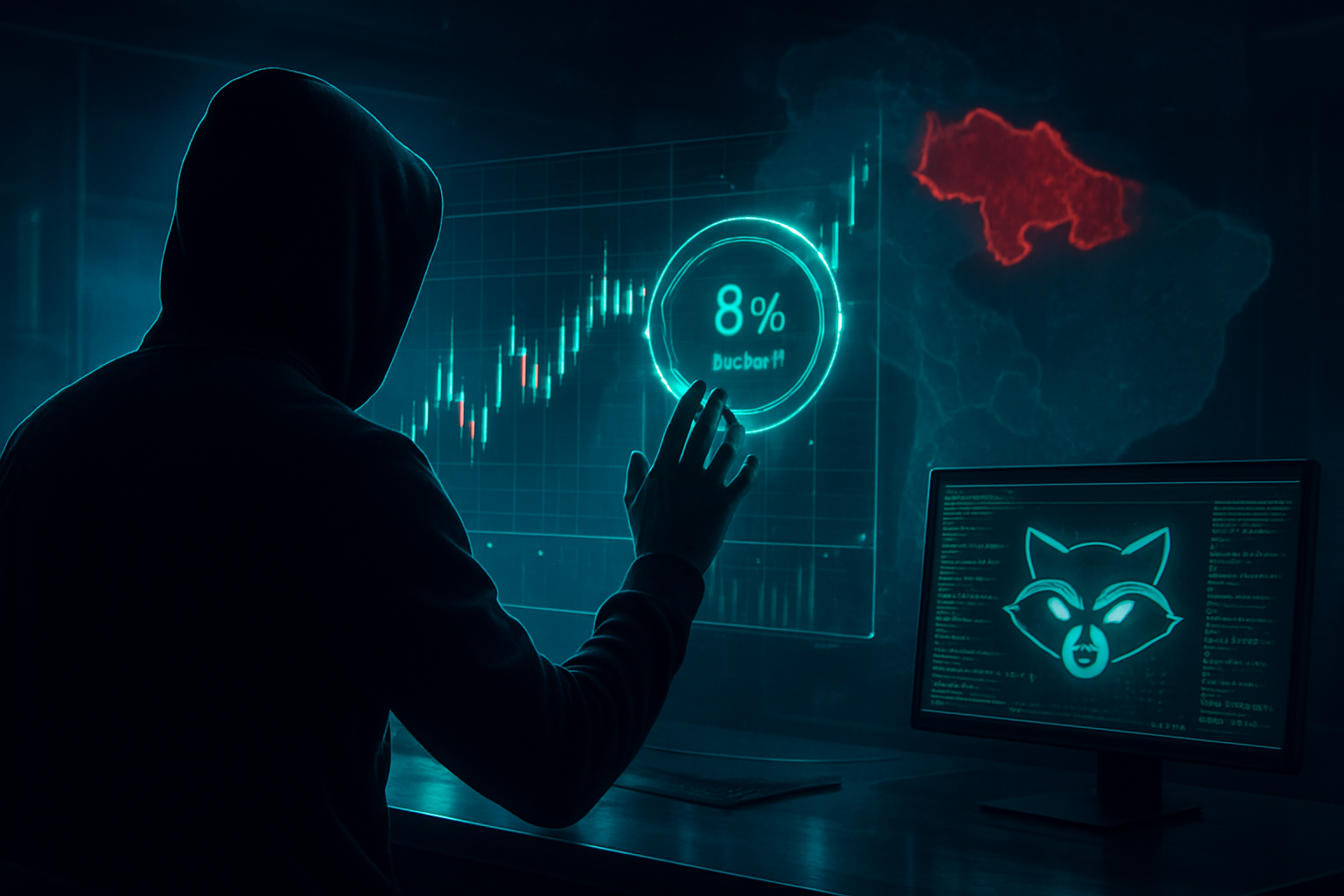
    The world of prediction markets is reeling following a sequence of events that has critics questioning the very foundation of market integrity. On January 3, 2026, the geopolitical landscape shifted overnight when U.S. forces reportedly captured Venezuelan leader Nicolás Maduro. While the news sent shockwaves through global capitals, it was a single trade on the decentralized prediction platform Polymarket that sparked a different kind of firestorm: a $32,000 bet placed just hours before the announcement that netted a staggering $436,000 profit.

    This "improbable" timing has reignited a fierce debate over insider trading and the "Alpha Raccoon" phenomenon—a term now synonymous with traders who appear to possess non-public information. With probabilities for Maduro’s exit hovering near 8% just moments before the trade, the market’s sudden movement has caught the attention of federal regulators and Capitol Hill. As of January 15, 2026, Polymarket is facing its most significant existential crisis yet, caught between its promise of "the wisdom of the crowd" and allegations of being a playground for well-connected insiders.

    The Market: What's Being Predicted

    The controversy centers on the "Venezuelan Leadership: Maduro Out of Power?" contract, which traded heavily throughout late 2025. The specific resolution criteria required Nicolás Maduro to no longer hold the office of President of Venezuela by January 31, 2026. While the market had been active for months, trading volume exploded in the first week of January, reaching a record $702 million daily high as rumors of military movements began to circulate.

    On January 2, 2026, the "Yes" shares were trading at a basement-level price of approximately $0.07 to $0.08, reflecting a consensus that Maduro would remain in power through the end of the month. However, at roughly 10:00 PM ET—just 6.5 hours before the official announcement—a newly created account linked to a cluster of sophisticated wallets (often associated with the handle @0xafEe) aggressively purchased shares. This move effectively locked in a massive position at an 8% probability.

    Following the 4:21 AM announcement on Truth Social—the platform owned by Trump Media & Technology Group Corp. (NASDAQ: DJT)—the contract immediately shot to $1.00. The trader's $32,537 investment ballooned to over $436,000 in less than a day, marking one of the most profitable and suspiciously timed trades in the platform's history.

    Why Traders Are Betting

    The Maduro trade is not an isolated incident but rather the latest example of what analysts call the "Alpha Raccoon" effect. Named after a pseudonymous trader who famously turned a five-figure sum into $1.1 million by predicting Alphabet Inc. (NASDAQ: GOOGL) search trends in late 2025, the "Alpha Raccoon" archetype represents the sophisticated actor who leverages information asymmetry.

    Traders are increasingly divided into two camps. On one side are the "Information Whales," who appear to trade on military intelligence, internal corporate data, or advanced data-scraping techniques. On the other are retail traders, whom independent analyst DANNY recently described as "exit liquidity." A December 2025 study found that 99% of retail participants in event-driven contracts lose money, as they are consistently late to price in major news that insiders have already capitalized on.

    Recent market movements suggest that "Alpha Raccoon" style accounts are no longer just betting on outcomes; they are front-running the news cycle. This has led to a "wait-and-see" approach among smaller traders, who are becoming hesitant to enter markets where a sudden, massive bet from a new wallet often signals a massive event is imminent.

    Broader Context and Implications

    The Maduro controversy has landed in the wake of a damning study by Columbia University, published in November 2025, titled "Network-Based Detection of Wash Trading." The study revealed that roughly 25% of Polymarket’s total historical volume was attributable to wash trading—the practice of traders buying and selling to themselves to create the illusion of liquidity. During high-stakes periods, like the 2024 U.S. elections and the recent Venezuelan crisis, that figure reportedly spiked to as high as 60%.

    These findings have provided ammunition for regulators. On January 10, 2026, Representative Ritchie Torres (D-NY) introduced the Public Integrity in Financial Prediction Markets Act of 2026. This legislation aims to explicitly prohibit federal employees and political appointees from participating in prediction markets where they hold material non-public information.

    Furthermore, on January 14, a group of twelve U.S. Senators sent a formal inquiry to the Commodity Futures Trading Commission (CFTC). They are demanding a full investigation into how offshore platforms like Polymarket monitor for manipulation. The core of the issue is the "split model": while platforms like Interactive Brokers Group, Inc. (NASDAQ: IBKR) and Robinhood Markets, Inc. (NASDAQ: HOOD) operate under strict U.S. oversight, the bulk of geopolitical betting still occurs on crypto-native platforms that exist in a regulatory gray area.

    What to Watch Next

    The immediate focus is on the "Public Integrity Act" as it moves through congressional committees. If passed, it could force platforms to implement "Know Your Customer" (KYC) protocols that are far more rigorous than current industry standards, potentially stifling the pseudonymity that many crypto-traders prize.

    Investors should also keep an eye on the resolution of other geopolitical contracts. With Maduro's capture confirmed, the market is now shifting its focus to the "Venezuela Transition" contracts. There is significant speculation regarding who will lead the interim government, and the "Alpha Raccoon" accounts are already active. If another massive, perfectly timed bet appears before a major diplomatic announcement, it could provide the final impetus for a total shutdown of unregulated event contracts.

    Finally, the technical "wash trading" fix is in development. Several blockchain forensics firms are reportedly working with prediction platforms to implement real-time "manipulation scores" for individual markets. Whether these tools can truly level the playing field between insiders and the public remains to be seen.

    Bottom Line

    The Maduro capture was a triumph for U.S. military intelligence, but for prediction markets, it has been a clarifying—and perhaps damning—moment. The "perfect" trade of January 2 highlights the inherent vulnerability of event contracts: they are only as good as the fairness of the information environment they inhabit.

    While prediction markets were once heralded as the ultimate tool for aggregating public sentiment, the "Alpha Raccoon" study and the recent wash-trading revelations suggest they may currently be functioning as a mechanism for transferring wealth from the uninformed to the hyper-informed. Until the "insider" problem is addressed through either technology or regulation, the "wisdom of the crowd" may continue to be drowned out by the "knowledge of the few."


    This article is for informational purposes only and does not constitute financial or betting advice. Prediction market participation may be subject to legal restrictions in your jurisdiction.

    PredictStreet focuses on covering the latest developments in prediction markets.
    Visit the PredictStreet website at https://www.predictstreet.ai/.
  • The Great State Divide: Prediction Markets Face a Legislative Reckoning

    The Great State Divide: Prediction Markets Face a Legislative Reckoning

    As of mid-January 2026, the meteoric rise of prediction markets has hit a significant jurisdictional wall. Despite record-breaking daily trading volumes exceeding $700 million, the industry is currently navigating a chaotic "checkerboard" of state-level regulation that threatens to fragment the market. While federal courts have largely cleared a path for political and event-based derivatives, state lawmakers and gambling regulators are fighting back, arguing that these platforms are essentially unlicensed sportsbooks masquerading as financial exchanges.

    The tension reached a boiling point this week with the reintroduction of the Oversight and Regulation of Activity for Contracts Linked to Events (ORACLE) Act in New York. The bill, which seeks to prohibit residents of the Empire State from wagering on everything from local elections to the outcome of military conflicts, represents the most aggressive legislative push against the industry to date. Traders are currently pricing in a high degree of uncertainty, with sentiment on platforms like Manifold showing an 81% confidence in federal preemption in some states, while others, like Nevada, have already successfully shuttered major exchange operations.

    The Market: What's Being Predicted

    The primary "market" currently occupying the minds of industry participants isn't just a single contract, but the legal survival of the industry in the United States' most lucrative jurisdictions. On Manifold and niche regulatory sub-markets on Polymarket, traders are aggressively betting on whether platforms like Kalshi and Interactive Brokers (NASDAQ:IBKR) will be forced to implement permanent "geofencing" to block users in New York, Nevada, and New Jersey.

    Currently, the focus is on two key legal fronts:

    • The New Jersey Preemption Fight: Traders are currently giving Kalshi an 81% probability of winning its lawsuit against New Jersey regulators. This optimism stems from a late-2025 preliminary injunction where a district court suggested that the federal Commodity Exchange Act (CEA) likely overrides state-level gambling laws for CFTC-regulated exchanges.
    • The Ninth Circuit Appeal: In Nevada, the outlook is bleaker. Following a November 2025 ruling by U.S. District Judge Andrew Gordon, which labeled Kalshi’s sports-related contracts as illegal gaming, the exchange has moved to the Ninth Circuit Court of Appeals. Analysts describe this as a "toss-up," with many expecting the court to uphold the state's right to regulate gambling within its borders.

    Trading volume in these regulatory-focused markets has surged, as institutional players look to hedge their exposure to the platforms themselves. Total monthly notional volume for the industry now regularly exceeds $2 billion, even as the threat of state-level bans looms.

    Why Traders Are Betting

    The surge in betting volume is driven by a fundamental disagreement between federal regulators and state gaming commissions. Following the CFTC's decision to drop its appeal against Kalshi in May 2025, the federal path for election and macro-economic markets seemed clear. However, state regulators—often pressured by the traditional gambling lobby—have pivoted to a different strategy: classifying event contracts as "sports wagering" or "contest of chance" under century-old state statutes.

    Pro-market traders point to the Unlawful Internet Gambling Enforcement Act (UIGEA) carve-out for CFTC-regulated exchanges as their primary defense. They argue that if a market is approved at the federal level as a financial derivative, states cannot legally block it. On the other side, figures like former New Jersey Governor Chris Christie, now an advisor to the American Gaming Association, argue that prediction markets are "cannibalizing" the regulated sports betting industry without paying the requisite taxes or adhering to consumer protection standards.

    This conflict has forced major players like Robinhood Markets, Inc. (NASDAQ:HOOD) and Crypto.com to play it safe, with both firms reportedly halting certain "high-risk" event contracts in states with active litigation. The volatility in these markets is no longer just about the outcome of the events themselves, but whether the trade will even be allowed to settle before a state attorney general intervenes.

    Broader Context and Implications

    The regulatory squeeze isn't limited to the United States. In early January 2026, the Ukrainian government officially blocked access to Polymarket via Resolution No. 695. While the official reason was a lack of a local gambling license, the move was largely driven by ethical concerns over "war-related bets." Polymarket had hosted high-liquidity markets predicting the specific dates of city occupations in the Donbas region, which Ukrainian officials characterized as "exploitative" and "detrimental to national morale."

    This international backlash highlights a growing rift in the prediction market philosophy:

    1. The Information-Efficacy School: Proponents argue that markets on war and catastrophe provide the most accurate, real-time data for intelligence and humanitarian efforts.
    2. The Social-Harm School: Regulators argue that profiting from tragedy is inherently "contrary to the public interest," a clause the CFTC has historically used to try and block markets.

    In New York, the ORACLE Act takes the social-harm argument to the extreme, proposing a total ban on markets related to death, terrorism, and "catastrophic events." If passed, it would set a precedent that could see the prediction market industry split into two: a "clean" market for economic data and a "gray" market for everything else.

    What to Watch Next

    The coming weeks will be pivotal for the industry's legal standing. The first major milestone is the decision by the New York Senate Racing, Gaming & Wagering Committee on whether to advance the ORACLE Act. Industry eyes are on Senator Joseph Addabbo Jr., whose support or opposition could determine the bill's fate. If the bill reaches the floor, expect a massive lobbying push from both the "Big Three" exchanges and the traditional gaming industry.

    Secondly, the Ninth Circuit's decision on Kalshi’s emergency stay in Nevada is expected by late February 2026. A loss there would likely trigger a wave of similar cease-and-desist orders from other states, potentially forcing platforms to adopt a "state-by-state" licensing model similar to DraftKings or FanDuel.

    Finally, the industry is watching for any movement toward the U.S. Supreme Court. With conflicting rulings now emerging from different federal circuits regarding state preemption, many legal experts believe a final resolution won't be reached until 2027, leaving the market in a state of high-stakes limbo until then.

    Bottom Line

    The current regulatory landscape for prediction markets is a classic battle of "the new world vs. the old." While the technology has proven its ability to aggregate information more efficiently than traditional polling or expert analysis, it has run headlong into the complex web of American federalism and the entrenched interests of the $100 billion gambling industry.

    The ORACLE Act and the blocks in Ukraine suggest that "unregulated" prediction markets may be a thing of the past. The future likely belongs to platforms that can successfully navigate the transition from "disruptive startup" to "regulated financial utility." For traders, the "alpha" in 2026 isn't just in predicting the next Fed rate cut or election result—it’s in predicting which states will let them keep their winnings.


    This article is for informational purposes only and does not constitute financial or betting advice. Prediction market participation may be subject to legal restrictions in your jurisdiction.

    PredictStreet focuses on covering the latest developments in prediction markets. Visit the PredictStreet website at https://www.predictstreet.ai/.
  • The $400,000 “Shadow Bet”: How a Timely Wager on Maduro’s Downfall Ignited an Insider Trading Firestorm

    The $400,000 “Shadow Bet”: How a Timely Wager on Maduro’s Downfall Ignited an Insider Trading Firestorm

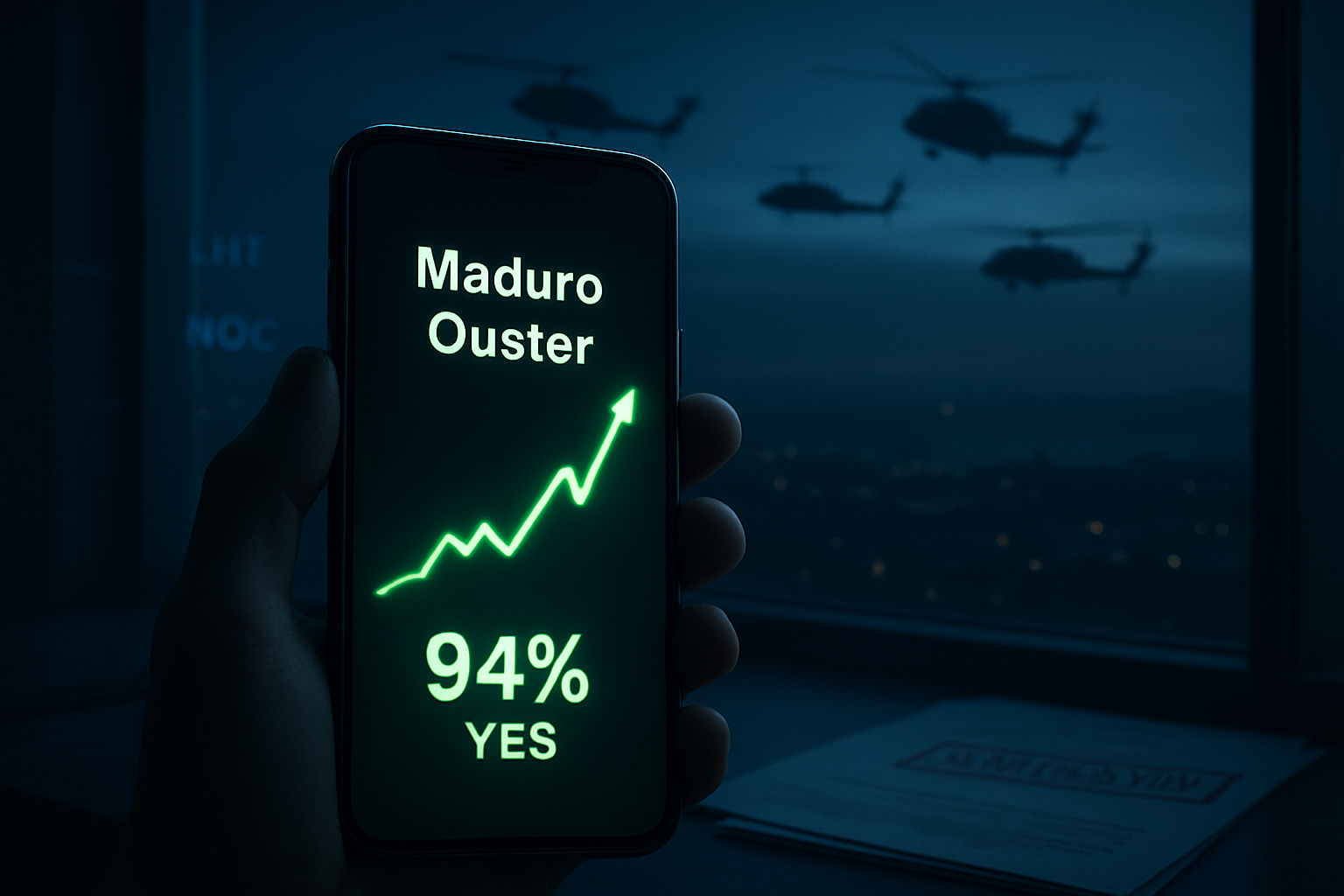
    On January 3, 2026, as U.S. Special Forces launched "Operation Absolute Resolve" to apprehend Venezuelan President Nicolás Maduro, the world watched in shock. But on the decentralized prediction platform Polymarket, the shock had already been priced in. Just hours before the first Delta Force boots hit the ground in Caracas, an anonymous user liquidated a massive position, turning a $34,000 wager into a staggering $436,000 windfall. The "impeccable" timing of the trade, executed while the market gave Maduro’s removal a mere 6% probability, has sent shockwaves through the prediction market industry and caught the eye of federal investigators.

    Today, January 14, 2026, the fallout has reached a boiling point. As the U.S. Senate demands an immediate investigation into the payout, the incident has become a lightning rod for critics who argue that prediction markets are becoming high-stakes playgrounds for individuals with access to classified military and diplomatic intelligence. With a $400,000 payout now at the center of a geopolitical scandal, the question is no longer whether prediction markets can forecast the future, but whether they are being used to profit from its secrets.

    The Market: What's Being Predicted

    The controversy centers on a specific contract hosted on Polymarket: "Will Nicolás Maduro be out of power by January 31, 2026?" For much of late 2025, this market was a sleepy corner of the platform, with shares trading at roughly 7 cents (representing a 7% probability). Most geopolitical analysts viewed Maduro’s grip on power as firm, despite ongoing sanctions and internal unrest. However, the liquidity in this market spiked dramatically in the final 48 hours of December 2025, as a newly created account under the handle "Burdensome-Mix" began aggressively buying "Yes" shares.

    While Polymarket operated as the primary hub for this speculative activity, the regulated U.S. exchange Kalshi also hosted a similar market (Series: KXMADUROOUT). On Kalshi, the odds remained relatively stable until the early morning hours of January 3, when prices began to surge just ahead of the official 4:21 a.m. ET announcement from the White House. The discrepancy between the two platforms has highlighted the differences in oversight; Kalshi operates under the watchful eye of the Commodity Futures Trading Commission (CFTC), while Polymarket’s decentralized nature has historically made it more difficult to police for "informed" trading.

    The resolution of the market was not without its own drama. While the "Ouster" contract was settled quickly following Maduro’s appearance in a Manhattan federal court on January 5, a secondary market regarding a potential "U.S. Invasion" of Venezuela became mired in a bitter dispute. Polymarket initially refused to pay out "Yes" bettors for the invasion contract, arguing that a targeted special forces raid did not constitute a full-scale territorial invasion—a technicality that left many retail traders furious and further muddied the platform's reputation.

    Why Traders Are Betting

    The primary driver behind the sudden market movement was not public sentiment, but rather a suspected leak of "material non-public information." Before the raid, traditional forecasting methods—including intelligence briefs from major consultancies and public diplomatic channels—showed no indication that a military strike was imminent. In fact, most experts believed the U.S. was pursuing a policy of containment rather than direct intervention.

    The "Burdensome-Mix" account represents what many in the industry call "whale activity," but with a darker undertone. By investing approximately $34,000 into a high-risk contract that the broader public deemed a "long shot," the user demonstrated a level of confidence that suggests access to the Pentagon’s operational timeline for Operation Absolute Resolve. This has led to a comparison between prediction markets and traditional equity markets; when Maduro was captured, defense giants like Lockheed Martin (NYSE: LMT) and Northrop Grumman (NYSE: NOC) saw immediate stock rallies of 8% and 2.7% respectively, but those moves happened after the news broke. The Polymarket trade, by contrast, happened before.

    Traders on these platforms are often a mix of hobbyist geeks and professional arbitrageurs. However, the Maduro payout has highlighted a third category: the "insider trader." While traditional forecasting focuses on aggregated public data, this event suggests that prediction markets are increasingly being used as a way to "monetize" secrets. The surge in gold prices to over $4,300 per ounce and the rally of energy companies like Valero (NYSE: VLO) and Phillips 66 (PSX) further confirm that the markets were reacting to the raid, but only the prediction markets seemed to have a "tell" in the hours preceding the mission.

    Broader Context and Implications

    The "Maduro Bet" is being viewed as a watershed moment for the regulation of prediction markets. It has exposed a significant "insider information" loophole that current laws are ill-equipped to handle. In response, Congressman Ritchie Torres (D-NY) has introduced the Public Integrity in Financial Prediction Markets Act, which would specifically ban federal officials, political appointees, and military personnel from wagering on outcomes they may have a hand in shaping.

    This event also reveals a paradoxical truth about prediction markets: their greatest strength—their ability to incorporate "all available information"—is also their greatest regulatory liability. If a market is "accurate" because it contains leaked classified data, it loses its status as a public sentiment tool and becomes a national security risk. The CFTC, led by Chair Michael Selig, is now under immense pressure from a bipartisan group of 12 U.S. Senators to determine if Polymarket’s security protocols are sufficient to prevent such manipulation.

    Historically, prediction markets have been praised for their accuracy in elections and corporate mergers. However, the intersection of these markets with kinetic military operations like Operation Absolute Resolve creates a new ethical frontier. If speculators can profit from the movement of troops, the incentive to leak or even influence military strategy increases exponentially. This has led to renewed calls for platforms to adopt the same rigorous anti-manipulation standards as the NYSE or Nasdaq.

    What to Watch Next

    In the coming weeks, all eyes will be on the Department of Justice and the CFTC as they attempt to unmask the owner of the "Burdensome-Mix" account. If the trail leads back to a government or military official, it could lead to the first major criminal prosecution for "prediction market insider trading." This would set a legal precedent that could redefine how these platforms operate globally.

    Furthermore, the "Invasion" versus "Ouster" dispute on Polymarket is expected to go to a formal arbitration or a community vote. The outcome of this dispute will be a major test for the decentralized governance models that many of these platforms use. If the platform is seen as "moving the goalposts" to avoid a large payout, it could lead to a mass exodus of liquidity toward more regulated competitors like Kalshi or ForecastEx.

    Finally, keep a close watch on the legislative progress of the Torres bill. If passed, it would represent the most significant expansion of financial oversight in the prediction market space since the Dodd-Frank Act. The defense sector will also remain volatile; as data analytics firms like Palantir (NASDAQ: PLTR) and hardware providers like Raytheon (NYSE: RTX) and General Dynamics (NYSE: GD) report their quarterly earnings, analysts will be looking for clues as to how much "pattern of life" intelligence was used in the Venezuelan operation—and whether any of that data could have been the source of the Polymarket leak.

    Bottom Line

    The $400,000 Maduro payout is a "smoke alarm" for the prediction market industry. While the capture of a high-profile target like Nicolás Maduro is a significant military achievement for the U.S., the corresponding activity on Polymarket suggests that the "wisdom of the crowd" may sometimes just be the "knowledge of the few." The event has proved that these markets are no longer just a niche interest; they are sensitive instruments that can reflect—and perhaps even compromise—the most sensitive geopolitical operations.

    As a tool, prediction markets remain incredibly powerful, offering a real-time gauge of probability that traditional polls and news outlets cannot match. However, without the guardrails of transparency and strict anti-insider trading enforcement, they risk becoming a tool for corruption rather than a source of truth. The Maduro scandal will likely be the catalyst that finally brings these platforms into the mainstream regulatory fold.

    Ultimately, the capture of Maduro has changed the map of South American politics, but the $400,000 bet may have changed the landscape of global finance forever. Whether this leads to a more transparent era of forecasting or the eventual shutdown of unregulated platforms remains the most important prediction of all.


    This article is for informational purposes only and does not constitute financial or betting advice. Prediction market participation may be subject to legal restrictions in your jurisdiction.

    PredictStreet focuses on covering the latest developments in prediction markets.
    Visit the PredictStreet website at https://www.predictstreet.ai/.
  • The ‘Maduro Bet’ Backlash: Will Congress Finally Ban Prediction Market Insider Trading?

    The ‘Maduro Bet’ Backlash: Will Congress Finally Ban Prediction Market Insider Trading?

    The world of prediction markets is facing its most significant legislative reckoning to date. Following a series of suspicious trades linked to high-stakes geopolitical events, Representative Ritchie Torres (D-NY) has introduced the "Public Integrity in Financial Prediction Markets Act of 2026." The bill seeks to explicitly criminalize insider trading on prediction platforms by government employees, political appointees, and elected officials—essentially extending the ethics of the STOCK Act to the digital forecasting age.

    As of January 13, 2026, the legislative push is gaining rapid momentum in Washington, D.C. While there is not yet a direct contract for the bill's passage on major platforms, proxy markets on PredictIt tracking a broader "ban on member stock trading" have seen a surge in volume, though they currently trade at a cautious 12% probability (12 cents). Despite the low odds of passage in a crowded election-year calendar, the market sentiment reflects a growing consensus: the "Wild West" era of government insiders wagering on their own classified briefings may be coming to a close.

    The Market: What's Being Predicted

    While the "Public Integrity in Financial Prediction Markets Act" is the headline, traders are currently forced to bet on its success through secondary markets. On PredictIt, the long-standing market for "Will Congress pass a ban on member stock trading?" has become the primary bellwether for the Torres bill. This contract is currently trading at 12¢, a slight uptick from its 2025 lows, but still reflecting deep skepticism that Congress will police itself during a midterm year.

    On Kalshi (Kalshi Exhange), which operates as a regulated contract market, traders are focusing on broader regulatory outcomes. Markets for "Will the CFTC adopt new insider trading rules in 2026?" are currently pricing in a 20% probability. This suggests that while a full act of Congress might be a long shot, traders believe administrative action from the Commodity Futures Trading Commission (CFTC) or the Securities and Exchange Commission (SEC) is increasingly likely.

    The liquidity in these regulatory markets has spiked since the bill was introduced on January 5. Over $2.5 million has changed hands on related legislative outcomes in the last week alone. The resolution criteria for the Torres bill would require the President to sign the act into law by December 31, 2026—a tight window that explains the current "underdog" odds.

    Why Traders Are Betting

    The sudden urgency for this legislation stems from a "smoking gun" incident on Polymarket involving the January 3, 2026, capture of Venezuelan President Nicolás Maduro. Just hours before the U.S. military raid was made public, a mysterious account named "Burdensome-Mix" placed a $32,000 bet that Maduro would be ousted. When news of the capture broke, the account’s position swelled to over $400,000, a staggering 1,200% return that many analysts believe could only have been achieved through material non-public information (MNPI).

    "The Maduro trade was the 'A-ha!' moment for regulators," says one high-volume trader on Kalshi. "It wasn't just a lucky guess; the timing was too surgical. It looked like someone in the loop decided to treat a classified military operation like a parlay bet."

    Further fueling the fire is the case of "0xafEe," a trader dubbed the "Google Insider." This individual has reportedly netted $1.2 million by correctly predicting search trends and product release dates for Alphabet Inc. (NASDAQ: GOOGL) with near-perfect accuracy. These incidents have created a "perfect storm" for Representative Torres, who has framed his bill as a necessary tool to prevent public service from becoming a "for-profit enterprise."

    Support for the bill has come from an unlikely corner: the industry itself. Tarek Mansour, CEO of Kalshi, has publicly endorsed the Act. Mansour argues that regulated exchanges already adhere to standards similar to those of the New York Stock Exchange (NYSE: ICE) or Nasdaq (NASDAQ: NDAQ), and that the bill would primarily target the "unregulated, offshore" activity that currently tarnishes the industry's reputation.

    Broader Context and Implications

    The "Public Integrity in Financial Prediction Markets Act" represents a pivotal moment in the professionalization of prediction markets. For years, these platforms have been touted as superior forecasting tools, aggregating the "wisdom of the crowd" to predict everything from elections to interest rates. However, the Maduro incident highlights a darker side: when the "crowd" includes individuals who can control the outcome or possess classified intelligence, the market ceases to be a forecasting tool and becomes a vehicle for corruption.

    Historically, prediction markets have been remarkably accurate, often outperforming traditional polling or expert analysis. Yet, if the public perceives these markets as "rigged" by insiders, liquidity will dry up, and their utility as a public sentiment gauge will vanish.

    The bill also touches on a larger trend of increased scrutiny on "political gambling." The CFTC has long sought to ban markets on election outcomes, arguing they threaten the integrity of the democratic process. By focusing on insider trading rather than a total ban, Torres may have found a middle ground that allows the industry to survive while imposing the same rigors faced by traditional finance.

    What to Watch Next

    The immediate hurdle for the bill is its lack of a Republican co-sponsor. While it has over 30 Democratic supporters, including high-profile figures like Nancy Pelosi, it will need a bipartisan coalition to clear the House Financial Services Committee. Analysts will be watching for any GOP members who have previously been vocal about banning congressional stock trading to join the bill.

    Key dates to monitor include:

    • January 25, 2026: The scheduled House Financial Services Committee hearing where the bill is expected to be discussed.
    • February 2026: The release of the CFTC's semi-annual regulatory agenda, which may include new rules for "event contracts" that mirror the Torres bill's language.
    • Mid-2026: The resolution of the Maduro "Invasion" payout dispute on Polymarket, which could trigger further legal action or legislative amendments.

    If a Republican co-sponsor signs on before the end of the month, expect the 12% "Yes" odds on PredictIt to double almost overnight.

    Bottom Line

    The proposed "Public Integrity in Financial Prediction Markets Act of 2026" is a reactive but perhaps necessary piece of legislation in a rapidly evolving financial landscape. The Maduro raid "Burdensome-Mix" trade served as a wake-up call, proving that the threat of insider trading in prediction markets is no longer a theoretical concern—it is a documented reality.

    While current market odds suggest the bill has a difficult path to becoming law in 2026, the rhetoric from leaders like Ritchie Torres and Tarek Mansour suggests that the status quo is no longer an option. Whether through this specific Act or through a series of administrative crackdowns by the CFTC and SEC, the "Wild West" days of prediction markets are being reined in.

    For traders, the message is clear: the market rewards information, but the government is drawing a hard line on how that information is obtained. As these markets mature into mainstream financial instruments, they must adopt the transparency and ethical standards of the institutions they aim to supplement.


    This article is for informational purposes only and does not constitute financial or betting advice. Prediction market participation may be subject to legal restrictions in your jurisdiction.

    PredictStreet focuses on covering the latest developments in prediction markets.
    Visit the PredictStreet website at https://www.predictstreet.ai/.
  • Ukraine Blacklists Polymarket as Ethical Backlash Grows Over $270 Million in “War Bets”

    Ukraine Blacklists Polymarket as Ethical Backlash Grows Over $270 Million in “War Bets”

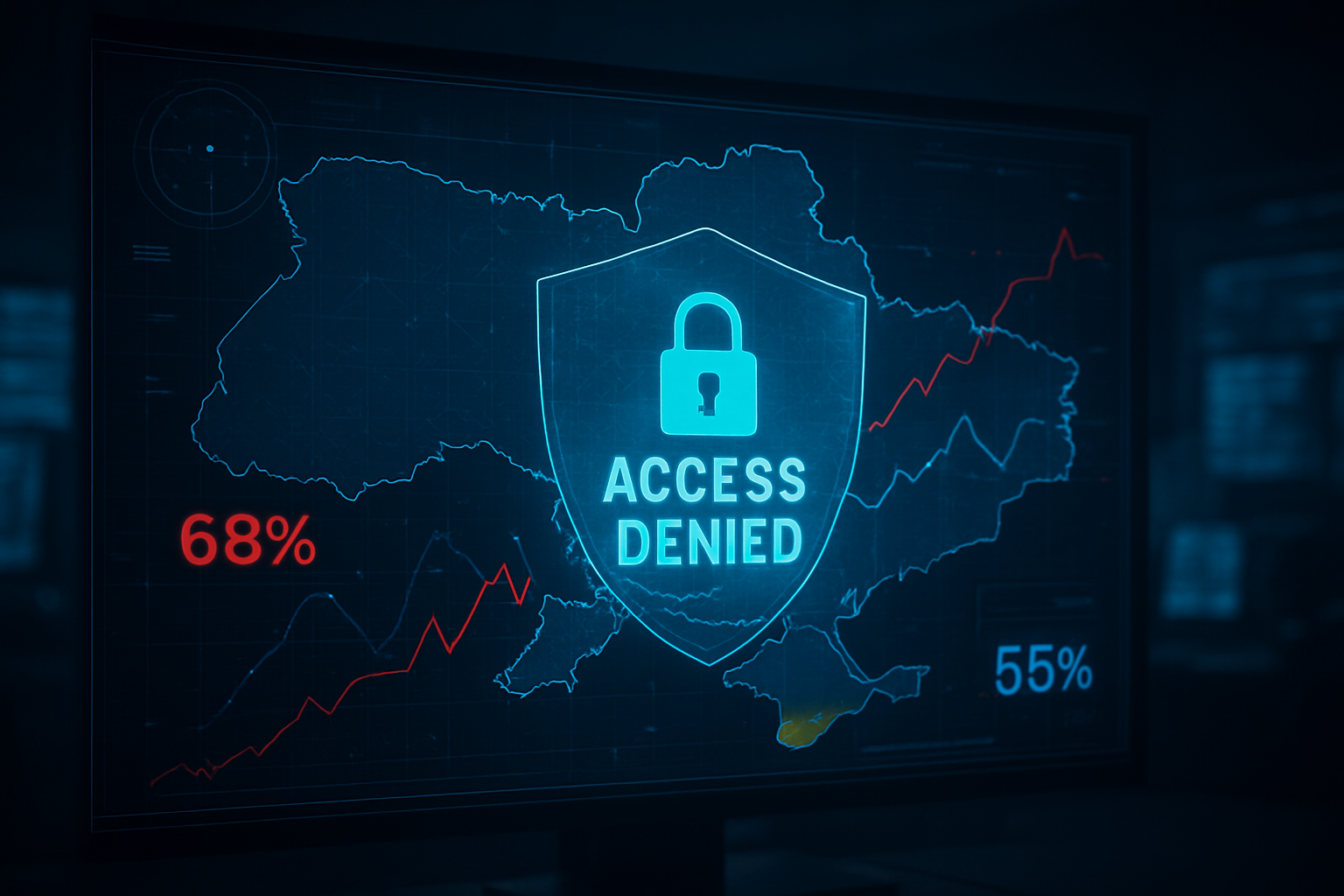
    The Ukrainian government has officially moved to block access to Polymarket, the world’s largest decentralized prediction platform, marking a significant escalation in the regulatory and ethical scrutiny of geopolitical betting. The ban, finalized in mid-January 2026, comes after months of mounting tension over the platform's "war markets," which allowed global speculators to wager on the granular movements of the front lines in the ongoing Russia-Ukraine conflict. At the time of the block, internal data and local media reports suggested that over $270 million had been wagered on war-related outcomes, with active "open interest" exceeding $140 million.

    The decision was driven by a combination of unlicensed gambling concerns and a fierce moral debate over the "gamification" of human suffering. While markets regarding the likelihood of a ceasefire by late 2026 hovered around 35% just before the ban, the real controversy centered on hyper-local wagers. These included bets on the specific week a city might fall or the outcome of individual drone strikes, leading Ukrainian officials to condemn the platform as a parasitic entity that monetizes national trauma. Despite the crackdown on Polymarket, other prediction sites like Kalshi and PredictIt remain accessible to Ukrainian users for now, largely due to their more restrictive and less granular market listings.

    The Market: What's Being Predicted

    The markets that triggered the Ukrainian blockade were among the most liquid and controversial in Polymarket’s history. Unlike traditional political forecasting, these wagers focused on high-stakes military maneuvers and territorial control. Key contracts included "Will Russia control Pokrovsk by April 1, 2026?" and "Will Ukraine recapture Crimea before 2027?" These markets frequently saw millions of dollars in daily volume, with liquidity often exceeding that of major U.S. political races. The granularity reached a point where traders were essentially betting on the success or failure of specific tactical operations.

    Resolution criteria for these markets were often tied to reporting from established news organizations and conflict mappers. However, the reliance on real-time data created a volatile environment where odds could shift by 20% or more in a single hour based on unverified social media footage or telegram reports. For instance, the probability of a Russian breakthrough in the Donbas region spiked dramatically in late 2025 following a series of disputed map updates, leading to massive sell-offs and liquidations for those betting on Ukrainian defensive stability.

    The platform's decentralized nature made it difficult for any single authority to regulate the flow of capital, but the Ukrainian National Commission for the State Regulation of Electronic Communications (NKEK) eventually moved to block the domain under Resolution No. 695. The official justification cited Polymarket’s failure to obtain a local gambling license, a requirement for any entity offering financial predictions to Ukrainian citizens. However, the $270 million in cumulative war bets made it clear that the "war market" phenomenon had become a security and morale concern for the state.

    Why Traders Are Betting

    The influx of capital into Ukraine-related prediction markets was driven by a mix of institutional hedging, retail speculation, and the rise of "OSINT" (Open Source Intelligence) traders. Many sophisticated participants argued that prediction markets provided a more accurate "truth signal" than state-run media or biased news outlets. By putting money on the line, traders were incentivized to sift through propaganda to find factual battlefield developments. This led to a subculture of "war-room" traders who monitored satellite imagery and battlefield APIs to gain an edge, often moving the market hours before official government statements were released.

    However, this hunt for an information edge led to significant scandals. In late 2025, a controversy erupted when it was discovered that a third-party tool had synced the API of DeepState, a prominent Ukrainian defense monitoring group, directly into Polymarket’s trading interface. DeepState leadership expressed outrage, accusing speculators of "vulture-like behavior." Even more damaging was the "ISW Map Scandal," where an unauthorized edit to a map by the Institute for the Study of War led to a $1.3 million payout on a Polymarket contract that resolved based on what was later revealed to be a data error. These incidents reinforced the Ukrainian government’s view that these markets were not just unethical but prone to manipulation.

    Beyond the ethics, many international traders used these markets as a hedge against global economic instability. Large-scale bets on the duration of the war were often paired with positions in energy commodities or defense contractors like Lockheed Martin (NYSE: LMT) and Northrop Grumman (NYSE: NOC). For these investors, Polymarket served as a high-leverage instrument to protect portfolios against the macro-economic shocks caused by the conflict's expansion or contraction.

    Broader Context and Implications

    The Ukrainian ban on Polymarket represents a pivotal moment for the prediction market industry, highlighting the tension between the "free flow of information" and the ethical boundaries of speculative betting. Historically, prediction markets have been praised for their accuracy in forecasting elections and economic shifts. However, the "war bet" phenomenon has tested the limits of what society is willing to tolerate as a tradable asset. The $270 million figure has sparked debates in Washington and Brussels about whether war-related contracts should be categorized as "public interest" tools or predatory gambling.

    This regulatory crackdown isn't happening in a vacuum. Major tech platforms and search engines, including Alphabet Inc. (NASDAQ: GOOGL), have faced pressure to de-rank or restrict access to "conflict-betting" sites that do not adhere to local licensing laws. In Ukraine, the selective nature of the ban—blocking Polymarket while leaving Kalshi and PredictIt alone—suggests that granularity and data sourcing are the primary triggers for government intervention. Kalshi, which is regulated by the CFTC in the United States, typically avoids the highly specific battlefield contracts that Polymarket’s decentralized model allowed.

    Furthermore, the ban highlights the growing divide between regulated, centralized exchanges and decentralized, offshore platforms. While Polymarket has grown into a billion-dollar ecosystem, its lack of a physical headquarters or a traditional corporate structure makes it a difficult target for enforcement beyond IP blocking. For the broader gambling industry, including giants like Flutter Entertainment (NYSE: FLTR), the rise of these high-stakes geopolitical markets represents both a threat and a potential new frontier for regulated products, provided they can navigate the ethical minefield.

    What to Watch Next

    As we move further into 2026, the primary question is whether other nations involved in or affected by the conflict will follow Ukraine's lead. If European regulators decide to label "war bets" as a violation of humanitarian ethics or a security risk, Polymarket could face a cascading series of bans across the continent. Traders should monitor the upcoming NKEK reviews and potential appeals from decentralized autonomous organizations (DAOs) associated with the platform, though the likelihood of a reversal in the current wartime climate remains slim.

    Another key factor to watch is the movement of liquidity. With Polymarket blocked in Ukraine, will the $140 million in open interest migrate to more "sanitized" platforms, or will it move further underground into smaller, less transparent crypto-betting sites? The "ceasefire" markets, currently sitting at a 35% probability for a 2026 resolution, will likely remain a focal point for global traders, serving as a proxy for diplomatic progress. Any major shift in these odds will likely precede actual news from peace summits or frontline breakthroughs.

    Finally, the role of data providers will be under the microscope. Following the ISW and DeepState controversies, expect new "Terms of Service" from OSINT organizations to specifically prohibit the use of their data for financial betting. This could lead to a "data blackout" for prediction markets, forcing them to rely on more traditional—and potentially slower—news sources, which would fundamentally change the speed and volatility of the markets.

    Bottom Line

    The blockade of Polymarket in Ukraine serves as a stark reminder that even the most innovative financial tools are subject to the realities of national security and public sentiment. While prediction markets have proven their utility as powerful forecasting engines, the $270 million in "war bets" pushed the envelope further than the Ukrainian state was willing to tolerate. The "truth signal" provided by these markets was ultimately outweighed by the ethical outcry over speculators profiting from the destruction of cities and the loss of life.

    For the prediction market industry, this is a moment of reckoning. The success of regulated platforms like Kalshi in avoiding the ban suggests that a path forward exists through cooperation with regulators and a more curated approach to sensitive markets. However, for those who value the permissionless, "bet on anything" ethos of decentralized finance, the Ukrainian ban is a significant blow that could signal the beginning of a much wider regulatory crackdown on offshore geopolitical betting.

    As the conflict continues, the odds will keep shifting, but the venue for those bets is becoming increasingly fragmented. Whether prediction markets can survive this ethical crisis and remain a trusted tool for public sentiment remains to be seen, but the "war bet" era has undeniably changed the landscape of digital speculation forever.


    This article is for informational purposes only and does not constitute financial or betting advice. Prediction market participation may be subject to legal restrictions in your jurisdiction.

    PredictStreet focuses on covering the latest developments in prediction markets.
    Visit the PredictStreet website at https://www.predictstreet.ai/.