Tag: Regulation

  • The $100 Million Play: How Kalshi’s Regulated Sports Markets are Rewriting the Playbook for Institutional Bettors

    The $100 Million Play: How Kalshi’s Regulated Sports Markets are Rewriting the Playbook for Institutional Bettors

    In the week following the NCAA Football Championship, the dust is settling on more than just the gridiron. On January 20, 2026, the championship game did more than crown a college football king; it solidified Kalshi as a financial juggernaut. The platform recorded a staggering $111 million in trading volume for the single event, a figure that signals a tectonic shift in how Americans—and increasingly, Wall Street—engage with sports.

    Currently, the markets for the upcoming Super Bowl LX are already seeing nearly $150 million in open interest, with odds fluctuating as professional trading desks move multi-million dollar positions. This is no longer just "betting" in the traditional sense; it is the financialization of sports outcomes through federally regulated event contracts. Driven by a landmark regulatory victory and integration into major retail brokerages, Kalshi has transformed sports results into a legitimate asset class, attracting institutional-scale liquidity that was previously confined to offshore exchanges or private bookmakers.

    The Market: What's Being Predicted

    The core of Kalshi’s explosion lies in its "event contracts," which are binary options that pay out $1 if an event occurs and $0 if it does not. Unlike traditional sportsbooks where you "place a bet" against the house, Kalshi operates a peer-to-peer exchange where traders buy and sell contracts from one another. In the lead-up to the 2025-2026 NFL playoffs, this model allowed for unprecedented liquidity. For instance, the final day of the NFL regular season on January 4, 2026, saw a single-day volume record of $403 million.

    While Polymarket continues to dominate the decentralized, crypto-native space, Kalshi has carved out a massive lead in the regulated U.S. domestic market. By the third week of January 2026, total trading volume for the NFL playoffs reached nearly $2 billion. The resolution criteria for these markets are strictly defined by official league data, ensuring that contracts settle instantly upon the final whistle. This transparency has allowed Kalshi to list complex derivatives, including point spreads and player performance metrics, all under the watchful eye of federal regulators.

    Why Traders Are Betting

    The migration of capital toward Kalshi is driven by one primary factor: regulatory certainty. Following the 2024 court victory in KalshiEX LLC v. CFTC, and the subsequent decision by the Commodity Futures Trading Commission (CFTC) to drop its appeal in May 2025, Kalshi’s status as a Designated Contract Market (DCM) became unassailable. This regulatory "seal of approval" has opened the floodgates for institutional participants.

    Unlike traditional sportsbooks—which are notorious for limiting or banning "sharp" bettors who win too consistently—Kalshi’s exchange model welcomes winners. Large-scale proprietary trading firms and hedge funds now treat touchdowns and game wins as "Zero Days to Expiration" (0DTE) derivatives. They use these contracts to hedge macro risks or to capitalize on high-frequency data models that traditional books cannot accommodate. Furthermore, the integration of Kalshi markets into platforms like Robinhood (NASDAQ: HOOD) and Coinbase (NASDAQ: COIN) has brought institutional-level liquidity into the hands of over 24 million retail users, creating a deeper, more stable market than any sportsbook could offer.

    Broader Context and Implications

    The success of Kalshi represents a pivotal moment in the "Prediction Market vs. Gambling" debate. By framing sports outcomes as event contracts under the Commodity Exchange Act (CEA), Kalshi has managed a feat that traditional sports betting apps like DraftKings or FanDuel could not: federal preemption. Recent rulings in federal courts have suggested that the CEA preempts state-level gaming restrictions, allowing Kalshi to legally offer sports trading in all 50 U.S. states, including major markets like California and Texas where traditional online sports betting remains prohibited.

    This shift reveals a growing public appetite for transparent, low-fee alternatives to the "vig-heavy" model of traditional gambling. It also highlights a change in public sentiment; sports are increasingly viewed through the lens of data and probability rather than just loyalty and luck. However, this growth has not come without friction. The NCAA has voiced significant concerns regarding the integrity of college sports, particularly around "player prop" markets. In response, Kalshi has had to balance its aggressive expansion with "market design" concessions, such as pulling controversial transfer portal markets in late 2025 to maintain its standing with federal regulators.

    What to Watch Next

    All eyes are now turned toward Super Bowl LX on February 8, 2026. Early trading suggests the championship winner market could surpass $300 million in volume before kickoff. This will be the ultimate test of Kalshi’s infrastructure and its ability to handle "Black Swan" events or massive late-game volatility without the "suspension of play" issues that often plague traditional sportsbooks during high-volume periods.

    Beyond the Super Bowl, the next major milestone is March Madness 2026. Following the $350 million trading week in mid-January for NCAA basketball, analysts expect the tournament to break all previous records for prediction market engagement. Traders will be watching closely for any new regulatory guidance from the CFTC regarding "micro-trading" or live in-game contracts, which represent the next frontier for the platform.

    Bottom Line

    Kalshi’s rise marks the end of the era where sports betting was a sidelined, "sin-taxed" activity and the beginning of its life as a legitimate financial instrument. The $111 million NCAA Championship volume is not an outlier; it is the new baseline for a world where sports data is as tradable as oil or gold.

    For the broader prediction market ecosystem, Kalshi’s success proves that regulation, rather than being a hindrance, can be a massive catalyst for liquidity when paired with a superior exchange model. As institutional capital continues to pour into these markets, the line between "trader" and "fan" will continue to blur, forever changing the landscape of both Wall Street and the stadium.


    This article is for informational purposes only and does not constitute financial or betting advice. Prediction market participation may be subject to legal restrictions in your jurisdiction.

    PredictStreet focuses on covering the latest developments in prediction markets.
    Visit the PredictStreet website at https://www.predictstreet.ai/.
  • The ‘STOCK Act for InfoFi’: Markets Skeptical of Congressional Crackdown on Insider Trading

    The ‘STOCK Act for InfoFi’: Markets Skeptical of Congressional Crackdown on Insider Trading

    The nascent but rapidly maturing world of "Information Finance" (InfoFi) is facing its most significant regulatory test yet. Introduced in early January 2026, the Public Integrity in Financial Prediction Markets Act of 2026 (H.R. 7004) seeks to formally ban federal officials, political appointees, and government employees from trading in prediction markets using non-public information. The bill, which many have dubbed the "STOCK Act for Prediction Markets," comes in the wake of a scandalous wager involving the ouster of a foreign leader that has sent shockwaves through Washington and the financial world.

    Despite the high-profile nature of the controversy, prediction markets themselves remain unconvinced that the legislative hammer will fall anytime soon. On the non-profit platform PredictIt, contracts for the bill’s passage in 2026 are currently trading at a lowly 12 to 15 cents, implying less than a 15% probability that the legislation will clear both chambers and reach the President's desk this year. This skepticism highlights a growing disconnect between the public outrage in the halls of Congress and the cold, hard calculations of the trading pits.

    The Market: What's Being Predicted

    The primary venue for speculating on this legislative outcome is PredictIt, where the market "Will H.R. 7004 pass in 2026?" has seen a surge in volume since the bill’s introduction on January 9. Trading opened at a cautious 8 cents and peaked briefly at 22 cents following a fiery press conference by the bill’s sponsor, Rep. Ritchie Torres (D-NY), before settling back to its current range. The low price suggests that while the bill has political momentum, traders expect it to languish in the House Committee on Oversight and Accountability, a common fate for ethics-related legislation during a midterm election cycle.

    On Kalshi, the first CFTC-regulated prediction market in the U.S., the platform has opted not to list a direct contract on the bill to avoid potential conflicts of interest among its politically active user base. However, traders are using a proxy market: "Will the CFTC adopt new insider trading rules by year-end?" That contract is currently priced at 20 cents (20%), reflecting a belief that even if H.R. 7004 fails, regulatory agencies may act independently to tighten the screws on market participants.

    The liquidity in these markets has remained robust, with over $500,000 in open interest across the major platforms. The resolution criteria are strictly tied to the bill being signed into law by 11:59 PM ET on December 31, 2026.

    Why Traders Are Betting

    The sudden urgency for H.R. 7004 was sparked by the now-infamous "Maduro Trade." On January 3, 2026, an anonymous trader on the decentralized platform Polymarket wagered $32,000 that Venezuelan leader Nicolás Maduro would be removed from power by the end of the month. Hours later, the U.S. government announced "Operation Absolute Resolve," a successful raid that led to Maduro’s capture. The trader's position skyrocketed, netting a profit of over $400,000.

    "The timing was too perfect to be anything other than a leak from someone with high-level security clearance," said one veteran PredictIt trader. This event has become the "smoking gun" for proponents of H.R. 7004, who argue that prediction markets have become a "dark pool" for government insiders to monetize classified intelligence.

    However, the "No" voters (those betting against the bill) point to the gridlocked nature of the current Congress. With a slim majority and a crowded legislative calendar, passing a bill that restricts the financial activities of members of Congress and their staff is a notoriously difficult task. Furthermore, platforms like Interactive Brokers Group (NASDAQ: IBKR) and Robinhood Markets, Inc. (NASDAQ: HOOD), which have expanded their "event contract" offerings, have lobbied for "surgical" regulation rather than broad bans, fearing that over-regulation could stifle the liquidity that makes these markets useful forecasting tools.

    Broader Context and Implications

    The debate over H.R. 7004 represents a pivotal moment for the prediction market industry. For years, proponents like economist Robin Hanson have argued that "insider trading" is actually a feature of these markets, as it forces the most accurate information to the surface. However, as prediction markets move into the mainstream—competing with traditional financial instruments—they are being held to the same integrity standards as the Nasdaq (NASDAQ: NDAQ) or the New York Stock Exchange.

    Tarek Mansour, CEO of Kalshi, has taken a proactive stance, publicly supporting the spirit of H.R. 7004. He argues that regulated U.S. exchanges already have surveillance systems in place to catch suspicious activity, similar to those used by the Cboe Global Markets (BATS: CBOE). By codifying these rules into law, the industry hopes to distinguish "clean" regulated platforms from offshore, unregulated competitors that have become magnets for illicit activity.

    If the bill were to pass, it would likely lead to a "Know Your Customer" (KYC) overhaul across the industry, requiring platforms to flag accounts held by "Politically Exposed Persons" (PEPs). This could temporarily reduce liquidity but significantly increase the institutional credibility of prediction markets as a source of "truth" for policymakers and businesses.

    What to Watch Next

    The next major catalyst for the market will be a scheduled hearing in the House Financial Services Committee in late February 2026. Market analysts suggest that if the bill gains even a single prominent Republican co-sponsor during that session, the odds on PredictIt could jump from 15% to over 30% instantly.

    Additionally, the Commodity Futures Trading Commission (CFTC) is expected to release its report on the "Maduro Trade" investigation in early March. Any evidence linking the trade to a specific government official would likely create an irresistible public mandate for Congress to act, potentially forcing a floor vote on H.R. 7004 before the summer recess.

    Investors should also watch for any defensive moves from the major platforms. If Polymarket or other decentralized venues implement voluntary bans on federal official trading, the "fire" behind the legislative push might subside, as lawmakers often prefer industry self-regulation over passing new statutes.

    Bottom Line

    The "Public Integrity in Financial Prediction Markets Act" is the first major legislative attempt to define the boundaries of the "InfoFi" era. While the markets are currently pricing in a high degree of skepticism regarding the bill's passage, the underlying issues of market integrity and insider access are not going away.

    For prediction markets to fulfill their potential as "truth machines," they must navigate the transition from a niche hobby to a regulated financial ecosystem. Whether or not H.R. 7004 becomes law, the "Maduro Trade" has ensured that the days of consequence-free insider wagering in prediction markets are likely over. Traders who can correctly anticipate the timing and severity of this regulatory "moat-building" will be the ones who profit as the industry matures.


    This article is for informational purposes only and does not constitute financial or betting advice. Prediction market participation may be subject to legal restrictions in your jurisdiction.

    PredictStreet focuses on covering the latest developments in prediction markets. Visit the PredictStreet website at https://www.predictstreet.ai/.
  • The Buckeye Blockade: Ohio Intensifies War on Federally Licensed Prediction Markets

    The Buckeye Blockade: Ohio Intensifies War on Federally Licensed Prediction Markets

    In a legal maneuver that has sent ripples through the prediction market community, the state of Ohio has formally doubled down on its efforts to block federally regulated exchanges from operating within its borders. On January 23, 2026, the Ohio Casino Control Commission (OCCC) filed a notice of supplemental authority in federal court, signaling a significant escalation in the battle between state gambling regulators and the Commodity Futures Trading Commission (CFTC). The move is aimed directly at KalshiEx LLC, the pioneer of regulated event contracts in the U.S., which is currently suing Ohio to protect its right to offer markets to the state’s residents.

    Traders and legal analysts are watching this development with intense scrutiny. At the heart of the conflict is a fundamental question: does a federal license from the CFTC provide a "nationwide permission slip," or can individual states use their historic "police powers" to classify prediction markets as illegal gambling? With Ohio now leveraging a fresh legal victory from Massachusetts to bolster its case, the probability of a fragmented, state-by-state regulatory landscape for prediction markets has never been higher.

    The Market: What's Being Predicted

    While prediction markets are typically used to forecast elections or economic data, the "market" currently under the most intense observation is the legal survival of the industry itself. In the U.S. District Court for the Southern District of Ohio, the case KalshiEx LLC v. Ohio Casino Control Commission et al. has become the primary theater for this conflict. Kalshi seeks to prevent Ohio’s Attorney General, Dave Yost, and the OCCC from enforcing state gaming laws against its CFTC-regulated platform.

    The tension has escalated since April 2025, when the OCCC issued cease-and-desist orders not only to Kalshi but also to major fintech players like Robinhood Markets, Inc. (NASDAQ: HOOD) and Crypto.com, alleging they were facilitating unlicensed sports gaming. Trading volume on these platforms in Ohio has effectively frozen as geofencing measures were tightened in response to the state’s aggressive posture. Investors are now pricing in a significant risk that other states will follow Ohio’s lead, potentially creating a "patchwork" regulatory environment similar to the early days of the U.S. sports betting rollout.

    Resolution in the Ohio case is expected by mid-2026, but the recent filing of supplemental authority has accelerated the timeline. Ohio is specifically citing a January 20, 2026, ruling from Massachusetts, where a judge granted a preliminary injunction against Kalshi, effectively banning its sports-related event contracts. Ohio argues that this Massachusetts precedent provides the "roadmap" for why state laws should not be preempted by federal commodities law.

    Why Traders Are Betting

    The primary driver of the current uncertainty is the strategic pivot by state attorneys general. Led by Ohio’s Dave Yost, a coalition of 36 states has argued that prediction markets—particularly those involving elections and sports—pose "life-altering consequences" for citizens if left to the relatively light-touch oversight of the CFTC. This perspective stands in stark contrast to the "Selig Doctrine" currently emerging from Washington.

    The new CFTC Chairman, Michael Selig, who was confirmed in December 2025, has championed a "future-proof" regulatory framework that views prediction markets as essential financial hedging tools. Traders who are bullish on the industry had hoped that Selig’s permissive stance would override state-level concerns. However, the Massachusetts ruling has proven that state judges are increasingly sympathetic to the argument that the Commodity Exchange Act (CEA) does not explicitly displace state gaming commissions.

    Market participants are also closely watching the behavior of traditional sportsbooks like FanDuel, owned by Flutter Entertainment plc (NYSE: FLUT), and DraftKings Inc. (NASDAQ: DKNG). In a bold move in August 2025, OCCC Executive Director Matthew Schuler warned these licensed operators that their Ohio gaming licenses would be at risk if they even peripherally associated with prediction market exchanges. This has effectively isolated Kalshi and its peers from the broader gaming ecosystem in the Midwest, forcing traders to weigh the risk of total exclusion from the Ohio market.

    Broader Context and Implications

    The Ohio-Massachusetts alliance represents a significant shift in the narrative of prediction markets. For years, the industry was viewed through a federal lens—a battle between the CFTC and exchanges. Now, the conflict has shifted to a "Federalism vs. Preemption" fight. If Ohio succeeds in using the Massachusetts ruling to defeat Kalshi's motion for a preliminary injunction, it could set a precedent that renders a CFTC license nearly worthless in a dozen or more "restrictive" states.

    This reveals a deep public sentiment divide regarding the nature of "event contracts." While Silicon Valley and Wall Street view these as "truth machines" and hedging instruments, state regulators in the "Rust Belt" and beyond continue to view them through the prism of consumer protection and tax revenue. By labeling these contracts as "gaming," Ohio ensures it can maintain its 20% tax on sports gaming revenue—a revenue stream that prediction markets, which operate as low-fee exchanges, currently do not provide to the state.

    Historically, prediction markets have thrived when they have clear, singular regulatory oversight. The current friction mirrors the early 20th-century battles over "bucket shops," where states successfully shuttered unregulated exchanges. The difference today is that the exchanges are federally licensed, creating a constitutional clash that may ultimately require intervention from the U.S. Supreme Court to resolve the ambiguity of the Commodity Exchange Act.

    What to Watch Next

    The immediate next step is the ruling from the U.S. District Court for the Southern District of Ohio on Kalshi’s request for a preliminary injunction. Following the January 23 filing of the Massachusetts authority, a decision is expected within the next 30 days. If the court sides with Ohio, expect an immediate "domino effect" as states like New Jersey, Nevada, and Tennessee—who have already been coordinating with Ohio—move to issue their own injunctions.

    Another critical milestone is the CFTC’s formal notice-and-comment rulemaking, scheduled to begin in February 2026. Chairman Selig’s attempt to codify prediction market rules could include language specifically intended to preempt state laws. However, if the courts have already ruled in favor of state "police powers" by then, the CFTC’s rules may arrive too late to protect the exchanges from being geofenced out of significant portions of the U.S. population.

    Finally, keep a close watch on the 2026 midterm election markets. If the legal blockade in Ohio remains in place, it will serve as the first major test of how a "fragmented market" affects the accuracy of these platforms. If Ohio residents—historically a bellwether for national trends—are excluded, the predictive power of these markets could be significantly diminished, potentially impacting the liquidity and utility that make them attractive to traders in the first place.

    Bottom Line

    The "Buckeye Blockade" is more than just a local regulatory dispute; it is a fundamental challenge to the federal government's authority over the next generation of financial markets. Ohio’s strategic use of the Massachusetts ruling as "supplemental authority" shows that state regulators are no longer acting in isolation—they are building a collective legal arsenal to keep prediction markets under the thumb of state gambling commissions.

    For prediction markets to serve as effective tools for social and economic forecasting, they require broad, liquid participation. The current pushback from Ohio threatens to Balkanize the U.S. market, creating a scenario where a trader's ability to hedge against political or economic risk depends entirely on their zip code.

    As we move further into 2026, the likely outcome is a prolonged period of legal volatility. While the CFTC may want to usher in a new era of "event-driven finance," Ohio has made it clear that the path to a national market runs directly through the state house in Columbus—and the gate is currently locked.


    This article is for informational purposes only and does not constitute financial or betting advice. Prediction market participation may be subject to legal restrictions in your jurisdiction.

    PredictStreet focuses on covering the latest developments in prediction markets.
    Visit the PredictStreet website at https://www.predictstreet.ai/.
  • The Bay State Shutdown: Massachusetts Court Bars Kalshi Sports Markets in Landmark Ruling

    The Bay State Shutdown: Massachusetts Court Bars Kalshi Sports Markets in Landmark Ruling

    In a decision that has sent shockwaves through the prediction market and sports betting industries, Judge Christopher Barry-Smith of the Suffolk County Superior Court ruled on January 20, 2026, that the platform Kalshi must halt its sports-related "event contracts" in Massachusetts. The preliminary injunction represents a massive victory for Massachusetts Attorney General Andrea Joy Campbell, who argued that Kalshi’s offerings—despite being regulated as commodities at the federal level—functionally constitute unlicensed sports wagering under state law.

    The news has immediately trickled into the prediction markets themselves. On Polymarket, a contract asking if Kalshi will stop offering sports contracts in Massachusetts by January 31 is currently trading at just 4 cents (4%). This low probability for an immediate exit is not a sign of Kalshi’s legal strength, but rather a reflection of a tactical delay: on January 23, Judge Barry-Smith "kicked the can down the road" by staying the enforcement of his own injunction. This maneuver effectively allows Kalshi to remain operational through the 2026 Super Bowl while the court considers a longer-term stay pending appeal.

    The Market: What's Being Predicted

    The central conflict involves Kalshi’s suite of sports-themed event contracts, including "Moneyline," "Point Spread," and "Over/Under" predictions. While traditional sportsbooks like DraftKings Inc. (NASDAQ: DKNG) and Flutter Entertainment (NYSE: FLUT)—the parent company of FanDuel—operate under the Massachusetts Sports Wagering Law (G.L. c. 23N), Kalshi has long maintained that its products are binary options or "swaps" regulated by the Commodity Futures Trading Commission (CFTC).

    The specific market in question is whether Kalshi will be forced to "geofence" Massachusetts, effectively blocking residents from accessing these specific sports contracts. Since the January 20 ruling, trading volume on the "legal outcome" markets has spiked. Analysts are watching two key fronts:

    • The Immediate Exit: Traders on Polymarket are betting on the specific date Kalshi will flip the switch to "off" for Massachusetts users.
    • The Appellate Survival: On platforms like Manifold Markets, traders are pricing in a roughly 35% chance that Kalshi successfully overturns this injunction in the Massachusetts Appeals Court by the end of Q2 2026.

    Resolution of these markets depends on the next set of court filings due on January 30 and February 4, which will determine if Kalshi gets to keep its "open for business" sign hanging through the spring.

    Why Traders Are Betting

    The volatility in these legal prediction markets is driven by the judge’s explicit rejection of "federal preemption." Kalshi’s primary defense—that its status as a federal Designated Contract Market (DCM) shields it from state gambling laws—was described by Judge Barry-Smith as "overly broad." Traders are betting on whether this judicial skepticism will spread to other jurisdictions.

    Recent news of a "domino effect" has heavily influenced market sentiment. Following the Massachusetts ruling, gaming commissions in New York, Ohio, and Nevada filed the Barry-Smith decision as "supplemental authority" in their own ongoing legal battles against Kalshi. Whale activity on Polymarket has notably shifted toward "Yes" positions for a Massachusetts exit, as the judge's comments about Kalshi’s "self-inflicted" harm suggest a lack of sympathy for the platform's business model.

    Strategic traders are also eyeing the 2026 Super Bowl as a pivot point. The court’s decision to delay the injunction’s enforcement until early February suggests a "last hurrah" for Kalshi’s sports volume in the state. Those betting on the "4-cent" Polymarket contract are banking on the legal bureaucracy moving slower than the NFL playoff calendar.

    Broader Context and Implications

    This injunction is the first of its kind in the United States. While other states have issued cease-and-desist letters, this is the first time a U.S. court has granted a preliminary injunction specifically targeting a CFTC-regulated platform’s sports offerings. It draws a stark line in the "event contract vs. sports betting" debate, with Judge Barry-Smith ruling that if a product "mirrors digital gambling experiences," it must be regulated as such.

    The real-world implications are significant for the broader prediction market ecosystem. If Massachusetts successfully forces Kalshi to obtain a gaming license, it sets a precedent that federal oversight does not equal a "blanket shield" for all products. This could force prediction markets to:

    1. Raise the minimum age from 18 to 21 for certain contracts.
    2. Pay state taxes on "handle" similar to traditional sportsbooks.
    3. Implement strict geofencing, fragmenting the national liquidity that makes prediction markets efficient.

    This case reveals a growing tension between the "innovate first, ask permission later" ethos of fintech and the "historic police powers" of states to regulate vice and gambling.

    What to Watch Next

    The most critical date on the horizon is February 4, 2026, when the court is expected to issue a final ruling on whether the injunction will be stayed during the entirety of Kalshi’s appeal. If the stay is denied, Kalshi will have to immediately block Massachusetts users from sports markets, likely causing the Polymarket "Yes" shares to moon.

    Investors should also monitor the Massachusetts Gaming Commission (MGC). If Kalshi decides to apply for a license rather than fight, it would represent a total surrender of its "not gambling" legal thesis. Additionally, keep an eye on federal movements; if the CFTC issues new guidance in response to this state-level encroachment, it could provide Kalshi with the federal "hook" it needs to revive its preemption argument in the Appeals Court.

    Bottom Line

    The Massachusetts ruling is a watershed moment that challenges the very identity of prediction markets. By labeling sports-based event contracts as "wagers," Judge Barry-Smith has stripped away the linguistic armor Kalshi used to differentiate itself from the likes of DraftKings.

    As a tool, these prediction markets on the case itself show that while the legal community is divided, traders are increasingly pessimistic about Kalshi’s ability to maintain a "one-size-fits-all" federal regulatory approach. If the injunction holds, 2026 may be remembered as the year the "Wild West" of prediction markets was finally fenced in by the traditional boundaries of state gaming law.

    The ultimate outcome will likely depend on whether the Massachusetts Appeals Court views these contracts as legitimate hedging tools for the "knowledge economy" or simply a clever way to bypass the high taxes and strict rules of the sportsbook industry.


    This article is for informational purposes only and does not constitute financial or betting advice. Prediction market participation may be subject to legal restrictions in your jurisdiction.

    PredictStreet focuses on covering the latest developments in prediction markets. Visit the PredictStreet website at https://www.predictstreet.ai/.

  • The Massachusetts “Red Line”: Court Labels Kalshi’s Sports Markets Unlicensed Gambling

    The Massachusetts “Red Line”: Court Labels Kalshi’s Sports Markets Unlicensed Gambling

    On January 20, 2026, the legal landscape for prediction markets shifted dramatically when a Massachusetts court delivered a stinging blow to Kalshi, the leading federally regulated exchange. Suffolk County Superior Court Judge Christopher Barry-Smith granted a preliminary injunction requiring the platform to immediately cease offering its popular sports-related "event contracts" to Massachusetts residents without first obtaining a state-sanctioned sports wagering license.

    The ruling, which takes full effect today, January 23, 2026, marks the first time a state court has successfully pierced the "federal preemption" shield that Kalshi has used to expand nationwide. For months, the platform’s sports markets—ranging from NFL point spreads to individual player performances—had been the primary driver of its explosive growth. However, with the court officially categorizing these contracts as unlicensed gambling rather than financial derivatives, the industry now faces an existential crisis regarding state-level regulation.

    The Market: What's Being Predicted

    At the center of this legal firestorm are Kalshi’s sports event contracts. Unlike traditional sportsbooks that offer "odds," Kalshi frames its markets as binary options where the price (between $0.01 and $0.99) represents the market-implied probability of an event occurring. In 2025, Kalshi aggressively expanded its catalog to include high-liquidity markets on game outcomes, "prop" bets on player yardage, and even live in-game trading for major league events.

    As of early January, sports contracts accounted for an estimated 75% of Kalshi’s total trading volume, which has surged into the billions of dollars since the platform’s landmark legal victories against the federal government in 2024. Before the injunction, the probability of "The Home Team winning by 7 or more points" might trade at $0.55, implying a 55% chance of success. Following the ruling, liquidity in these markets has begun to fragment as Massachusetts traders—who represented a significant portion of the platform's New England user base—are forcibly sidelined.

    The court’s resolution criteria are stark: Kalshi must halt all new sports trades for users with Massachusetts IP addresses or residential credentials by 11:59 PM tonight. While existing positions held by Massachusetts residents will be allowed to settle naturally to avoid a "market-clearing catastrophe," no new capital from the state can enter the sports vertical.

    Why Traders Are Betting

    The legal battle has pitted two fundamentally different views of the world against each other. Kalshi argues its contracts are "swaps"—financial instruments intended for risk management and price discovery—regulated exclusively by the federal Commodity Futures Trading Commission (CFTC). To many traders, this was a distinction with a massive difference: Kalshi offered a "cleaner" financial experience without the heavy "vig" or house edge found at traditional sportsbooks like DraftKings Inc. (NASDAQ:DKNG) or FanDuel.

    However, Massachusetts Attorney General Andrea Joy Campbell argued that Kalshi was effectively "masquerading" as a financial exchange while providing an experience indistinguishable from a digital sportsbook. The state’s case focused on three key factors:

    1. Consumer Demographics: Allegations that the platform allowed 18-to-20-year-olds to trade, bypassing the state’s 21+ requirement for sports betting.
    2. Product Design: The introduction of "parlay-style" event bundles that closely mimicked gambling products.
    3. Revenue Models: Court filings revealed that Kalshi’s revenue was no longer coming primarily from economic hedging but from retail speculation on athletic outcomes.

    Whale activity on the platform had recently shifted toward these sports markets, with some institutional traders using Kalshi to hedge large-scale investments in sports media and advertising. The sudden removal of Massachusetts liquidity has caused minor "slippage" in prices for upcoming Super Bowl LIX markets, as professional arbitrageurs adjust to the smaller pool of participants.

    Broader Context and Implications

    The Massachusetts ruling sets a dangerous precedent for what many call the "fragmentation" of prediction markets. For years, the industry operated under the assumption that a single federal license as a Designated Contract Market (DCM) would provide a "golden ticket" to operate across all 50 states. Judge Barry-Smith’s rejection of this "federal preemption" argument suggests that states still maintain "police powers" to regulate gambling, even if the instrument is technically a financial derivative.

    This decision is a significant victory for traditional gambling regulators and a setback for fintech giants like Robinhood Markets, Inc. (NASDAQ:HOOD), which recently integrated Kalshi’s markets into its trading app. If other states follow Massachusetts' lead—and early reports suggest Nevada and New York are already preparing similar filings—prediction markets could be forced into a "patchwork" compliance model. This would require them to pay state taxes (20% in Massachusetts) and abide by varying state-level consumer protection laws, effectively ending the era of the "frictionless" national exchange.

    Furthermore, this ruling highlights the tension between the CFTC and state Attorneys General. While the CFTC has historically been the primary regulator for commodities, the court’s decision suggests that "sports" may not constitute a "commodity" in the eyes of state law, regardless of how the federal government classifies the trade.

    What to Watch Next

    The immediate focus shifts to the federal courts. Robinhood (NASDAQ:HOOD) has already filed a separate federal lawsuit against the Commonwealth of Massachusetts, arguing that state interference in a federally regulated market violates the Supremacy Clause of the U.S. Constitution. A ruling in that case, expected by late February 2026, could potentially override the Massachusetts state court injunction.

    Additionally, industry analysts are watching Nevada. The Silver State has historically been protective of its licensed gambling industry and is rumored to be citing the Massachusetts "Barry-Smith Precedent" in a forthcoming cease-and-desist order against several prediction platforms. If Nevada moves, it could trigger a "domino effect" among other states with established gaming commissions.

    Finally, keep an eye on Kalshi’s internal pivot. To mitigate the loss of sports revenue, the platform is expected to accelerate the rollout of "pure-play" economic and political markets—such as Federal Reserve rate hike probabilities and legislative outcomes—which are less likely to be classified as "sports betting" under state law.

    Bottom Line

    The Massachusetts ruling is a reality check for the prediction market "gold rush." While Kalshi and its partners have successfully argued that betting on elections and economic data is a legitimate financial activity, the attempt to swallow the $100 billion sports betting market has run into a wall of state-level protectionism and regulatory scrutiny.

    This setback tells us that prediction markets are currently in a "hybrid" state: federally accepted as finance, but state-regulated as gambling. For the industry to reach its multi-trillion-dollar potential, it must resolve this identity crisis. Until a higher federal court or the U.S. Supreme Court settles the preemption debate, the "odds" of a unified national prediction market remain highly volatile. For now, the "Red Line" drawn in Massachusetts serves as a stark reminder that in the eyes of the law, a "swap" on a touchdown still looks an awful lot like a bet.


    This article is for informational purposes only and does not constitute financial or betting advice. Prediction market participation may be subject to legal restrictions in your jurisdiction.

    PredictStreet focuses on covering the latest developments in prediction markets.
    Visit the PredictStreet website at https://www.predictstreet.ai/.

  • The Great De-Regulation: How a ‘Hollowed Out’ CFTC Ignited a $1 Billion Prediction Market Boom

    The Great De-Regulation: How a ‘Hollowed Out’ CFTC Ignited a $1 Billion Prediction Market Boom

    As of January 22, 2026, the landscape of American finance is undergoing its most radical transformation in decades, driven not by a new asset class, but by the systematic dismantling of the guardrails that once hemmed it in. The Commodity Futures Trading Commission (CFTC), once the primary antagonist of event-based wagering, has been effectively reshaped into a partner for the industry. Under a "regulatory light" mandate from the Trump administration, the agency has seen a wave of leadership departures and significant workforce cuts, leaving a skeleton crew that is more focused on "future-proofing" markets than policing them.

    This vacuum has sparked an unprecedented explosion in trading activity. Daily volumes across major platforms have surged past $800 million this month, as traders bet on everything from the outcome of Supreme Court cases to the exact timing of the next federal interest rate cut. Currently, the "market of markets"—the probability that prediction markets will achieve over $1 trillion in annual volume by the end of 2026—has climbed to a staggering 68% on Kalshi, up from just 24% a year ago.

    The Market: What's Being Predicted

    The most high-stakes "market" currently captivating traders isn't a political race or a sporting event, but the legal survival of the industry itself. On the regulated exchange Kalshi, a high-liquidity contract titled "Federal Preemption of State Gambling Laws" is currently trading at 72 cents (implying a 72% probability). This market resolves to "Yes" if a federal court or legislative action confirms that CFTC-regulated event contracts override state-level bans on "gambling" before December 31, 2026.

    This specific contract has become a proxy for the entire industry’s expansion. While the federal government has signaled a hands-off approach, several states—most notably Massachusetts and Tennessee—have issued cease-and-desist orders against Kalshi, claiming its sports and event contracts constitute illegal gambling. Trading volume on this "Supremacy Clause" market has surpassed $120 million, with liquidity provided by a mix of institutional hedge funds and retail speculators.

    The resolution criteria are strictly tied to a final ruling from a U.S. appellate court or the signing of federal legislation that explicitly protects "Event Contract" providers from state interference. As the CFTC’s own enforcement capabilities have shrunk due to a 15% reduction in total headcount, the market is increasingly betting that the federal government will lack the will—or the staff—to help states enforce local bans against federally registered exchanges.

    Why Traders Are Betting

    The primary driver of the current "bull market" in prediction platforms is the appointment of Michael Selig as the sole acting Commissioner and Chairman of the CFTC. With four of the five commission seats currently vacant following a series of high-profile resignations in 2025, Selig has wielded unprecedented unilateral authority. His "Future-Proof" initiative has effectively ended the era of "regulation by enforcement," moving toward a model where the agency provides a "minimum effective dose" of oversight.

    Traders are also reacting to the sensational "Maduro Trade" of early January, where a user on Polymarket reportedly turned $30,000 into $400,000 by betting on the capture of Venezuelan leader Nicolás Maduro just hours before a U.S. military operation. While critics decried the trade as evidence of "insider information," the market saw it as a proof of concept: prediction markets are now the fastest way to aggregate intelligence. This has led to "whale" activity on Polymarket—which relaunched for U.S. users in December 2025 via the acquisition of the exchange QCX—where single positions on geopolitical outcomes are now routinely exceeding $5 million.

    Furthermore, traditional finance is moving in. Institutional brokers like Interactive Brokers Group, Inc. (NASDAQ: IBKR) have begun facilitating "intermediated access" to these markets, treating event contracts as a legitimate alternative asset class for portfolio hedging. This shift from "fringe betting" to "institutional hedging" has provided the floor of liquidity necessary for the 2026 boom.

    Broader Context and Implications

    The "regulatory light" environment is a direct byproduct of a broader federal push to shrink the civil service. In early 2025, the CFTC terminated nearly a dozen probationary employees in its Enforcement and Market Oversight divisions. This workforce reduction has made the agency dependent on the industry it regulates. In a move that would have been unthinkable two years ago, the CFTC’s new Innovation Advisory Committee now includes the CEOs of both Kalshi and Polymarket as charter members.

    This closeness has sparked a legislative backlash. Rep. Ritchie Torres recently introduced the Public Integrity in Financial Prediction Markets Act of 2026, which seeks to ban federal officials from trading on contracts influenced by non-public government data. The market's reaction to this bill has been telling; the probability of its passage currently sits at only 15%, as traders bet that the de-regulatory momentum in the executive branch will stall any attempts at legislative restriction.

    The historical accuracy of these markets is also playing a role in their survival. During the 2024 and 2025 cycles, prediction markets consistently outperformed traditional polling and economic forecasting from major banks like Goldman Sachs Group, Inc. (NYSE: GS). This track record has given the current de-regulatory push a "veneer of utility"—the argument being that these markets are a public good that provides more accurate data than the government itself can produce.

    What to Watch Next

    The immediate horizon is dominated by the "State vs. Federal" legal showdown. A preliminary injunction in Massachusetts has temporarily halted Kalshi’s sports contracts in that state, but a federal court in the Second Circuit is expected to rule on the "Supremacy Clause" issue by late spring. A "Yes" ruling there would likely cause the probability of a nationwide expansion to jump to near-certainty.

    Additionally, watch for the growth of Opinion, a new competitor backed by YZi Labs and supported by crypto-billionaire interests. Opinion allows users to earn yield on their "staked" bets, a feature that has already captured 40% of the daily volume in the decentralized prediction space. If the CFTC allows Opinion to register as a U.S. exchange under the current "light" framework, it would signal the total capitulation of traditional financial barriers.

    Finally, the mid-year "Workforce Audit" of the CFTC will be a key milestone. If the agency continues to lose senior attorneys and economists without replacement, its ability to even conduct basic market surveillance will be called into question, potentially leading to a "Wild West" scenario that could either accelerate growth or lead to a catastrophic market failure.

    Bottom Line

    The transformation of the CFTC from a skeptical watchdog to a de-regulatory facilitator has turned prediction markets into the most dynamic sector of the 2026 economy. By hollowing out the agency’s enforcement arm and prioritizing "innovation" over "oversight," the current administration has cleared a path for Kalshi and Polymarket to become the primary venues for price discovery in the modern age.

    What we are witnessing is the birth of "Information Finance." In this new era, prediction markets are no longer just for enthusiasts; they are the scoreboard for reality. However, the risk remains that a "regulatory light" environment is also a "vulnerability heavy" one. As traders flock to these platforms, the lack of a robust workforce at the CFTC means the industry is essentially self-policing.

    For now, the odds favor the innovators. With daily volumes nearing $1 billion and the federal government standing down, the prediction market boom appears to be just getting started. Whether this leads to a more transparent world or a more volatile one remains the ultimate bet.


    This article is for informational purposes only and does not constitute financial or betting advice. Prediction market participation may be subject to legal restrictions in your jurisdiction.

    PredictStreet focuses on covering the latest developments in prediction markets.
    Visit the PredictStreet website at https://www.predictstreet.ai/.

  • The Homecoming: Polymarket’s U.S. Relaunch Signals a New Era for Prediction Markets

    The Homecoming: Polymarket’s U.S. Relaunch Signals a New Era for Prediction Markets

    NEW YORK — Polymarket, the world’s largest decentralized prediction platform, has officially begun its long-awaited homecoming. After years of operating in a regulatory exile that forced it to block American IP addresses, the platform is now aggressively onboarding thousands of users from its domestic waitlist. This strategic pivot follows a landmark regulatory shift under the second Trump administration, effectively ending the adversarial era that defined the platform's relationship with Washington during the Biden years.

    The return isn't just a expansion of geography; it is a fundamental transformation of the industry. As of late January 2026, Polymarket is no longer just a "crypto-native" darling of the offshore world. Through a series of high-stakes acquisitions and a favorable new regime at the Commodity Futures Trading Commission (CFTC), the platform is positioning itself to challenge retail giants like Robinhood Markets, Inc. (NASDAQ: HOOD) and established incumbents like Interactive Brokers Group, Inc. (NASDAQ: IBKR) for the future of "event-based" finance.

    The Market: What's Being Predicted

    The current focus of the prediction market community isn't just the outcomes of elections or sports, but the success of Polymarket itself. On Polymarket’s own global platform, a high-volume contract titled “Will Polymarket hit 1 million active U.S. users by Q3 2026?” is currently trading at a 68% probability. This optimism is fueled by the platform’s official U.S. relaunch, which was catalyzed by its $112 million acquisition of QCX, a CFTC-licensed exchange and clearinghouse, in late 2025.

    This acquisition allowed Polymarket to bypass the years of litigation that have hampered other startups. By operating as a Designated Contract Market (DCM), the platform can now legally offer a wide array of event contracts to American retail investors. Trading volume on the U.S.-specific app has already topped $450 million in its first full month of operation, with significant liquidity flowing into markets surrounding Federal Reserve interest rate cuts and the 2026 midterm election cycles.

    The resolution criteria for these new U.S. markets are strictly tied to verified data feeds, a requirement of their new CFTC status. Unlike the "Wild West" days of 2021, the current iteration of Polymarket features a dual-layered settlement system that combines decentralized oracles with a traditional regulatory oversight board, a move intended to satisfy the stringent transparency demands of the current administration.

    Why Traders Are Betting

    The primary driver behind the surge in activity is the radical shift in the U.S. regulatory climate. Under the previous administration, the CFTC, led by former Chair Rostin Behnam, viewed prediction markets with deep skepticism, often characterizing them as unregulated gambling. In contrast, the current CFTC Chair, Michael Selig, has embraced the concept of prediction markets as "information aggregators" and "truth engines."

    Traders are also reacting to the institutionalization of the space. In October 2025, the Intercontinental Exchange, Inc. (NYSE: ICE), the parent company of the New York Stock Exchange, led a $2 billion investment round in Polymarket, valuing the company at a staggering $9 billion. This "seal of approval" from traditional finance (TradFi) has given whales the confidence to take massive positions, with some individual traders reportedly betting upwards of $10 million on macro-economic outcomes.

    Furthermore, the influence of political figures has not gone unnoticed. With Donald Trump Jr. serving as a strategic advisor to several firms in the prediction market space, including investment through 1789 Capital, the market perceives a "regulatory moat" that protects these platforms from the kind of enforcement actions seen during the Gary Gensler era at the SEC. This perceived safety has led to a massive migration of capital from offshore platforms back to regulated U.S. entities.

    Broader Context and Implications

    Polymarket’s return marks a maturation of the "crypto-to-utility" pipeline. For years, critics argued that blockchain technology lacked a "killer app" beyond speculation. Prediction markets have silenced that critique by providing a service that traditional polling and forecasting have failed to deliver: real-time, skin-in-the-game accuracy. During the 2024 election cycle, Polymarket famously outpaced mainstream media outlets in predicting key swing state outcomes, a feat that cemented its reputation among the political elite.

    The implications of this shift are profound for the broader financial sector. We are witnessing the birth of a new asset class where "knowledge" is the primary currency. The formation of the Coalition for Prediction Markets (CPM) by Polymarket, Coinbase Global, Inc. (NASDAQ: COIN), and Robinhood (NASDAQ: HOOD) in late 2025 highlights a unified front against state-level attempts to tax or ban these markets. These companies are betting that federal oversight will provide a more stable environment for growth than a patchwork of state gambling laws.

    However, the rapid growth has not been without controversy. In early January 2026, Senators Adam Schiff and Alex Padilla called for investigations into potential "information asymmetry" (insider trading) after a series of suspiciously timed trades on Polymarket preceded the news of a major political upheaval in South America. These legislative challenges suggest that while the executive branch is currently friendly, the legislative branch remains a source of potential friction for the industry.

    What to Watch Next

    The immediate milestone to monitor is the conversion of the Polymarket U.S. waitlist into active, funded accounts. Industry analysts expect the platform to hit the 500,000-user mark by the end of Q1 2026, particularly as it expands its offerings into "culture markets"—betting on the Oscars, the Grammys, and high-profile tech product launches.

    Perhaps the most anticipated event is the rumored launch of a native "POLY" governance token. While the company has remained tight-lipped, the integration of a tokenized incentive structure for U.S. users would be a first for a CFTC-regulated DCM. If approved, it could set a precedent for how other crypto-based companies like Kraken or Gemini might approach domestic expansion.

    Investors should also keep a close eye on the "Public Integrity in Financial Prediction Markets Act," a bill recently introduced in the House. If passed, it would ban federal employees from trading on these platforms, a move that could dampen liquidity in political markets but might ultimately enhance the industry's credibility by preventing conflicts of interest.

    Bottom Line

    The return of Polymarket to the United States is the definitive "growing up" moment for the prediction market industry. By aligning with the current administration's pro-innovation stance and securing the backing of TradFi giants like ICE, Polymarket has moved from the periphery of the internet to the center of the financial discourse.

    As the platform clears its waitlist and stabilizes its domestic operations, the divide between "gambling" and "forecasting" will continue to blur. For the average investor, this means access to a powerful new tool for hedging against real-world uncertainty. For the industry at large, it signifies that the most valuable commodity in the 21st century is not oil or gold, but accurate, incentivized information.

    The next six months will determine whether Polymarket can maintain its dominance in a crowded domestic field, or if the weight of regulation will eventually slow the very innovation that made it a global powerhouse. For now, however, the odds are firmly in favor of the prediction market giant.


    This article is for informational purposes only and does not constitute financial or betting advice. Prediction market participation may be subject to legal restrictions in your jurisdiction.

    PredictStreet focuses on covering the latest developments in prediction markets.
    Visit the PredictStreet website at https://www.predictstreet.ai/.
  • The Battle for Federal Preemption: Kalshi’s State-Level War Reaches a Fever Pitch

    The Battle for Federal Preemption: Kalshi’s State-Level War Reaches a Fever Pitch

    As of January 22, 2026, the United States is witnessing a historic constitutional collision between federal financial oversight and century-old state police powers. At the center of this storm is KalshiEX LLC, the first federally regulated exchange for "event contracts," which is currently locked in a multi-front legal war with state gaming regulators in Nevada, New Jersey, and Maryland. These cases, which have now migrated to the U.S. appellate courts, are not just about whether Americans can bet on the weather or elections; they are about the "Federal Preemption" doctrine and whether the Commodity Futures Trading Commission (CFTC) has the exclusive right to define what constitutes a financial derivative.

    In the prediction markets themselves, traders are placing millions of dollars on the outcome of these very lawsuits. On platforms like Polymarket and ForecastEx, a "Circuit Split" is already being priced in. While the market for the Third Circuit (New Jersey) case shows a staggering 81% probability of a Kalshi victory, the outlook in the Ninth Circuit (Nevada) remains significantly more bearish following a surprise reversal by a district judge last November. The divergence in these markets suggests that the industry is bracing for a Supreme Court showdown that could redefine the legality of prediction markets for a generation.

    The Market: What’s Being Predicted

    The "Legal Recognition" markets have become some of the most liquid and closely watched contracts in the early months of 2026. These are not markets about political outcomes or sports scores, but "meta-markets" on the judicial system itself. Traders are currently focusing on three primary judicial battlegrounds:

    1. The Third Circuit (New Jersey): Currently trading at 81% "Yes" for a Kalshi win. This contract tracks whether the Third Circuit Court of Appeals will uphold a lower court’s ruling that the Commodity Exchange Act (CEA) preempts New Jersey state law.
    2. The Ninth Circuit (Nevada): Trading at a more volatile 42% probability. This market has seen heavy "No" activity after U.S. District Judge Andrew Gordon dissolved a previous injunction in November 2025, ruling that Kalshi’s sports-related products do not qualify as "swaps" and are thus subject to Nevada’s gaming laws.
    3. The Fourth Circuit (Maryland): Trading at 55%, reflecting deep uncertainty after Maryland became the first state to successfully argue in district court that Congress never intended for the CFTC to override state-level gambling prohibitions.

    The trading volume for these contracts has surged past $50 million as institutional legal analysts and arbitrageurs hedge against the risk of a "patchwork" regulatory environment. If Kalshi loses in the Ninth and Fourth Circuits but wins in the Third, the resulting circuit split would almost certainly trigger a petition to the U.S. Supreme Court by late 2026.

    Why Traders Are Betting

    The optimism in the New Jersey market is driven by the legal theory of "Field Preemption." Proponents argue that when Congress passed the CEA and designated the CFTC as the "exclusive" regulator of derivatives, it intended to occupy the entire field of financial contracts. Traders betting "Yes" believe the Third Circuit will follow the precedent set by Judge Edward Kiel, who ruled that a federally authorized Designated Contract Market (DCM) like Kalshi cannot be expected to navigate 50 different sets of state licensing laws.

    Conversely, the bearish sentiment in Nevada stems from a growing judicial skepticism regarding the definition of a "swap." In November 2025, the Nevada court sided with the Nevada Gaming Control Board, arguing that contracts based on player statistics or game outcomes are "contingent wagers"—the very definition of sports betting.

    Notable whale activity has been observed in these markets, with several large positions betting on a "State’s Rights" resurgence. These traders are likely tracking the amicus briefs filed by 34 state attorneys general who argue that exempting Kalshi from state oversight would create a "regulatory vacuum" where traditional sportsbooks, such as DraftKings Inc. (NASDAQ:DKNG) and Flutter Entertainment plc (NYSE:FLUT), are forced to pay state taxes and licensing fees while prediction markets operate tax-free under federal rules.

    Broader Context and Implications

    This conflict represents a "Constitutional Crisis" for the prediction market industry. If the courts ultimately rule against Kalshi, it would mean that every state could individually ban or tax CFTC-approved contracts. This would effectively destroy the liquidity and national reach that make prediction markets valuable tools for price discovery and forecasting.

    The real-world implications extend far beyond Kalshi. A loss for federal preemption would likely embolden states to target other platforms and could even impact how traditional financial institutions handle complex derivatives that have "gaming-like" characteristics. This tension reveals a deep public sentiment divide: is a prediction market a sophisticated financial tool for hedging risk, or is it simply a high-tech "bucket shop" designed to bypass state gambling taxes?

    Historically, prediction markets have been more accurate than pundits, and the current markets on these legal cases suggest a high degree of confidence that the federal government will eventually prevail in the most business-friendly circuits. However, the accuracy of these markets is now being tested by the sheer unpredictability of the "State’s Rights" arguments gaining traction in Maryland and Nevada.

    What to Watch Next

    The most immediate catalyst to watch is the Ninth Circuit’s upcoming decision on the Nevada "partial stay." On January 14, 2026, the district court allowed Kalshi to continue its appeal while the litigation proceeds. A definitive ruling from the Ninth Circuit is expected by late spring 2026. If the Ninth Circuit reverses the district court and sides with Kalshi, the "Yes" odds across all legal markets will likely skyrocket toward 90%.

    Another key milestone is the Third Circuit’s final ruling on the New Jersey appeal. Given the high probability currently priced in, a loss for Kalshi there would be a "black swan" event, likely causing a massive liquidation across the prediction market ecosystem.

    Investors should also monitor the New York State Legislature. The "ORACLE Act" (A9251), which seeks to explicitly ban political event contracts, saw its passage probability drop to 38% this week. Traders are interpreting this as a sign that state legislators are waiting for the courts to decide the preemption issue before committing to new state laws.

    Bottom Line

    The legal battle between Kalshi and state regulators is the final hurdle for the mainstreaming of prediction markets in the United States. The current markets suggest that while Kalshi is a favorite in the more business-friendly Eastern courts, the "State’s Rights" strongholds in the West and Mid-Atlantic present a significant risk.

    This saga demonstrates that prediction markets are more than just a place to bet on the news—they are becoming an essential tool for quantifying complex legal and regulatory risks in real-time. Whether the "exclusive jurisdiction" of the CFTC can withstand the traditional police power of the states remains the billion-dollar question. For now, the "smart money" is betting on a divided judiciary, a fragmented 2026 market, and an inevitable date with the Supreme Court.


    This article is for informational purposes only and does not constitute financial or betting advice. Prediction market participation may be subject to legal restrictions in your jurisdiction.

    PredictStreet focuses on covering the latest developments in prediction markets.
    Visit the PredictStreet website at https://www.predictstreet.ai/.

  • The Maduro Raid: $400,000 Prediction Market Payout Sparks Insider Trading Outcry and Legislative Crackdown

    The Maduro Raid: $400,000 Prediction Market Payout Sparks Insider Trading Outcry and Legislative Crackdown

    The early morning of January 3, 2026, will be remembered as one of the most significant geopolitical shifts of the decade. As U.S. Army Delta Force commandos descended upon the Fort Tiuna military complex in Caracas to capture Nicolás Maduro, a parallel drama was unfolding in the digital corridors of decentralized finance. While the world slept, a series of high-stakes trades on Polymarket signaled the impending raid hours before the first explosion echoed through the Venezuelan capital.

    The successful capture of Maduro—now awaiting trial on narco-terrorism charges in New York—triggered a massive payout on one of the most controversial prediction contracts in history. With nearly half a million dollars flowing to a single anonymous trader who appeared to know the "unknowable," the event has ignited a firestorm of debate over the integrity of prediction markets, the potential for state-level insider trading, and the urgent need for new regulatory guardrails.

    The Market: What’s Being Predicted

    The focal point of the controversy was a Polymarket contract titled: "Will Nicolás Maduro be out of office by January 31, 2026?" For much of the latter half of 2025, this market was a quiet corner of the platform, with shares trading between $0.05 and $0.08. This pricing indicated that the broad market assigned less than an 8% probability to Maduro being removed from power, as geopolitical analysts viewed a direct military extraction as a "tail risk" that could destabilize the region.

    The resolution criteria for the contract were specific: Maduro had to be resigned, physically removed, captured by a foreign power, or otherwise rendered unable to exercise the powers of the presidency. Following the announcement of "Operation Absolute Resolve" by President Trump at 4:21 a.m. EST on January 3, the market quickly moved toward a $1.00 valuation. By the time Maduro was confirmed to be in custody aboard the USS Iwo Jima, the total trading volume for Maduro-related ouster markets across platforms had surged past $64 million.

    On the night of the raid, between 9:58 p.m. and 2:58 a.m. EST, the market witnessed an unprecedented anomaly. An anonymous user under the pseudonym "Burdensome-Mix" began aggressively buying "Yes" shares. This trader wagered approximately $32,537 on the low-probability outcome just hours before the Delta Force helicopters crossed the Venezuelan border. When the market resolved, the trader walked away with a staggering profit of $436,759.61—a return of more than 1,242%.

    Why Traders Are Betting

    The timing of the "Burdensome-Mix" trades has led many to believe that the bet was not based on public sentiment, but on classified military intelligence. The bulk of the positions were entered after the final strike authorization was reportedly signed but before the public—or even the Venezuelan military—was aware of the operation. This "pitch-perfect" conviction on a low-probability event has led to widespread allegations of "dark information" usage.

    While some traditional geopolitical analysts were caught off guard, the prediction markets were reacting in real-time. Proponents of these platforms argue that this is exactly how they are supposed to work: by aggregating all available information, including that held by people "in the know," to produce the most accurate forecast possible. Critics, however, argue that when the "information" is a top-secret military operation, the market ceases to be a forecasting tool and becomes a vehicle for laundering government secrets into personal profit.

    Furthermore, a secondary conflict erupted over an "invasion" market. While the ouster market paid out, a separate contract asking if the U.S. would "invade" Venezuela was ruled as "No" by the UMA oracle. The oracle determined that a "snatch-and-extract" mission by special forces did not meet the definition of an invasion, which typically requires a large-scale occupation of territory. This distinction left many "Yes" bettors frustrated, claiming the oracle manipulated the outcome to favor the house or high-volume liquidity providers.

    Broader Context and Implications

    The fallout from the "Maduro Bet" has reached the halls of Congress. Representative Ritchie Torres (D-N.Y.) recently introduced the Public Integrity in Financial Prediction Markets Act of 2026. The bill aims to close what Torres calls the "geopolitical loophole" by prohibiting federal elected officials, political appointees, and executive branch staff from trading on prediction markets if they possess material nonpublic information related to their official duties.

    The event has also highlighted the operational role of defense contractors in modern conflicts. During the raid, high-tech assets from companies like Lockheed Martin (NYSE: LMT), including F-35 stealth fighters used to suppress Venezuelan air defenses, were critical to the mission's success. The intersection of military hardware and digital betting software has created a new paradigm where the success of a $100 million aircraft can directly determine the winner of a $400,000 bet.

    This incident marks a turning point for the credibility of decentralized prediction markets. On one hand, Polymarket correctly "predicted" the event through its pricing mechanism, proving its utility as a leading indicator. On the other hand, the suspicion of insider trading and the semantic disputes over oracle resolutions have provided ammunition for regulators who wish to see these platforms brought under stricter oversight by the Commodity Futures Trading Commission (CFTC).

    What to Watch Next

    In the coming weeks, the focus will shift from the betting floor to the courtroom. The U.S. Department of Justice is reportedly investigating the "Burdensome-Mix" account to determine if the individual behind it has ties to the Department of Defense or the National Security Council. Any evidence linking the trades to a government employee could lead to the first major criminal prosecution for "prediction market insider trading."

    Additionally, the passage of Rep. Torres's bill remains a key milestone. If enacted, it would force platforms like Polymarket and Kalshi to implement more rigorous Know Your Customer (KYC) protocols to identify and block government employees from specific markets. The debate over whether an "extraction" counts as an "invasion" will also likely lead to a standardizing of contract language across the industry to avoid future "oracle disputes."

    Finally, eyes are on the upcoming legal proceedings for Maduro in the Southern District of New York. Markets are already forming around the length of his trial and the eventual verdict. Traders are closely watching for any signs of a plea deal, which could once again send shockwaves through the political prediction markets.

    Bottom Line

    The $400,000 Maduro payout is a watershed moment for prediction markets. It has demonstrated their uncanny ability to capture the "wisdom of the crowds" (or the knowledge of the few) with surgical precision. However, it has also exposed the significant ethical and legal risks inherent in betting on global security events.

    As we move further into 2026, the "Maduro Bet" will serve as the primary case study for the tension between transparency and security. While these markets provide invaluable data to the public, the risk of incentivizing the leak of classified information remains a daunting challenge for lawmakers and platform operators alike. For now, the "Burdensome-Mix" trader remains a symbol of the high stakes—and high suspicions—of the new era of geopolitical forecasting.


    This article is for informational purposes only and does not constitute financial or betting advice. Prediction market participation may be subject to legal restrictions in your jurisdiction.

    PredictStreet focuses on covering the latest developments in prediction markets.
    Visit the PredictStreet website at https://www.predictstreet.ai/.
  • The Great Preemption Bet: ‘Shadow Market’ Traders Brace for Federal Sovereignty Over Prediction Markets

    The Great Preemption Bet: ‘Shadow Market’ Traders Brace for Federal Sovereignty Over Prediction Markets

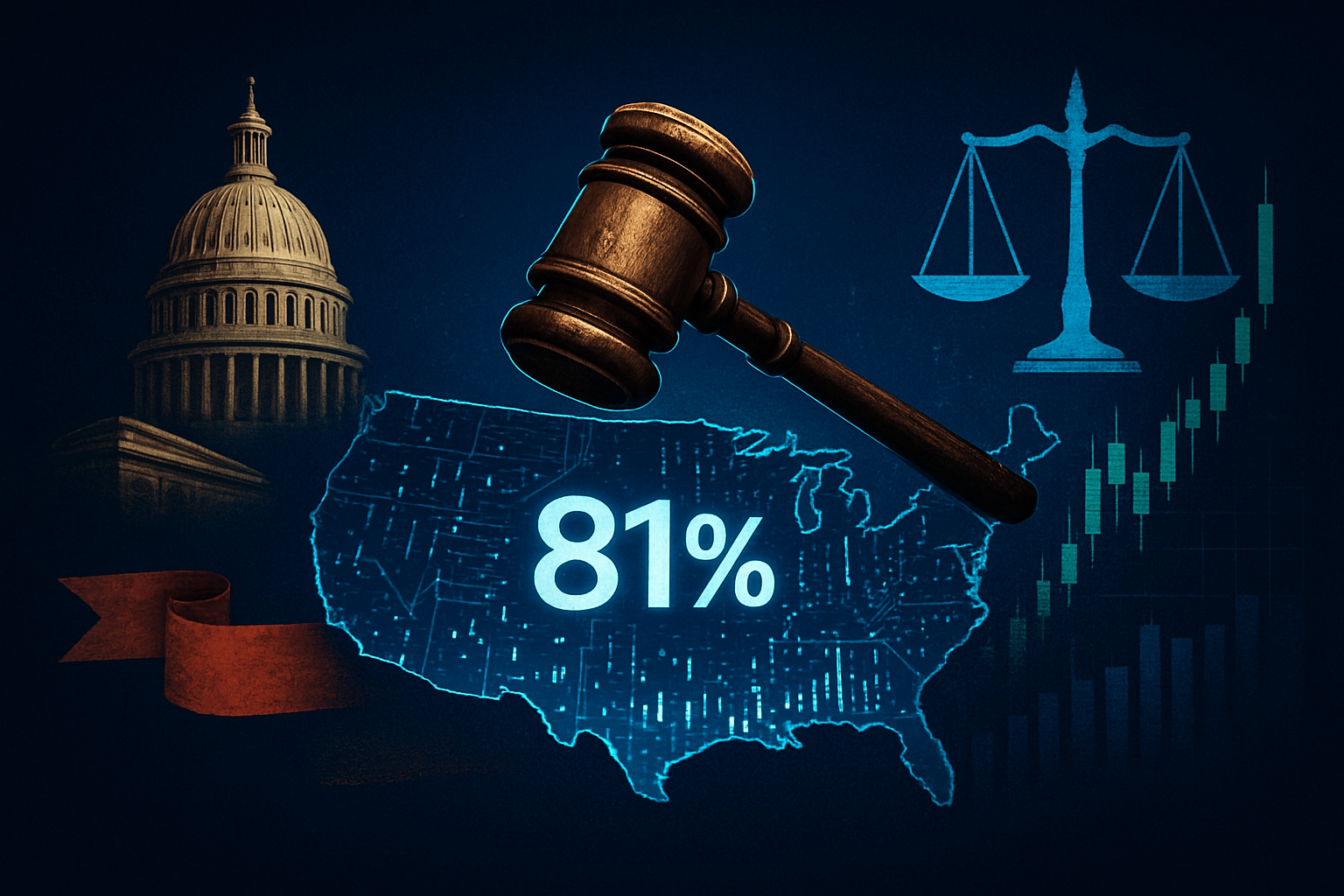
    As the legal landscape for prediction markets enters its most volatile phase yet, a "Shadow Market" on the forecasting platform Manifold Markets has become the ultimate barometer for the industry's survival. Traders are currently placing an overwhelming 81% probability on a scenario where federal preemption—the legal doctrine that federal law overrides state law—will shield prediction markets from a growing wave of state-level bans.

    This surge in confidence comes at a critical juncture. While state regulators in New York and Massachusetts have launched aggressive campaigns to shutter "event contract" trading, the market sentiment suggests a "knockout blow" from the federal judiciary is imminent. With a landmark ruling expected from the Third Circuit and a newly reformulated Commodity Futures Trading Commission (CFTC) taking a hands-off approach, the "Shadow Market" is signaling that the era of the state-by-state "gambling" label for prediction markets may be nearing its end.

    The Market: What's Being Predicted

    The specific contract driving this conversation is hosted on Manifold Markets, titled "Will Federal Preemption Protect DCMs from State Bans by End of 2026?" Because regulated exchanges like Kalshi and Interactive Brokers Group, Inc. (NASDAQ:IBKR) are legally restricted from listing contracts that speculate on their own regulatory status—to avoid self-referential conflicts of interest—Manifold has filled the void. This "Shadow Market" allows participants to trade on the legal fate of the entire industry using Manifold’s "Mana" currency, which often serves as a leading indicator for real-money sentiment.

    Currently trading at 81%, the odds have climbed significantly from just 55% in late 2024. The market has seen a spike in volume over the last 48 hours, following a series of conflicting rulings in state courts. The resolution criteria for this market are strict: it requires either a definitive U.S. Supreme Court ruling or a federal appellate court decision that explicitly invokes the Supremacy Clause to strike down a state-level ban on a federally registered Designated Contract Market (DCM).

    Liquidity in this Shadow Market has reached record highs, with over 1.5 million Mana traded. Professional "arbs" and legal analysts are increasingly using this market to hedge their exposure on regulated platforms. If the 81% probability holds true, it suggests that the industry is one court case away from achieving the same national regulatory status enjoyed by the stock and options markets.

    Why Traders Are Betting

    The bullish sentiment is largely driven by a pivot in federal strategy. Under the leadership of Chairman Michael Selig, who was confirmed in December 2025, the CFTC has abandoned the adversarial stance of the previous administration. In a historic move in mid-2025, the CFTC dropped its appeal in the Kalshi v. CFTC case, effectively conceding that the agency does not have a blanket mandate to ban political election markets. This federal "truce" has left state regulators as the primary antagonists, and traders believe the states are overplaying their hand.

    Recent events have only strengthened this conviction. While a Massachusetts judge issued a preliminary injunction against Kalshi on January 20, 2026, many traders viewed this as a "last gasp" for state-level resistance. The logic among the "81% crowd" is that a DCM—a federally licensed entity—cannot be subjected to 50 different sets of state gambling laws. They argue that once a contract is approved at the federal level, the Supremacy Clause of the U.S. Constitution prevents states from "de-authorizing" it.

    Furthermore, the entry of major retail players into the space has changed the political calculus. Companies like Robinhood Markets, Inc. (NASDAQ:HOOD) and Coinbase Global, Inc. (NASDAQ:COIN) have joined the Coalition for Prediction Markets, lobbying for the "Safe Harbor Act of 2026." This proposed legislation would provide permanent federal protection from state-level interference, and traders are betting heavily that the bill will find a path through Congress given the bipartisan interest in the data these markets provide.

    Broader Context and Implications

    This battle mirrors the historical struggle of the sports betting industry following the repeal of PASPA, but with a crucial difference: prediction markets are being framed as financial hedging tools rather than gambling. If federal preemption is upheld, it will treat a contract on the Consumer Price Index or a presidential election the same way the law treats a soybean future or a share of Apple stock.

    The real-world implications of an 81% probability are staggering. A victory for federal preemption would likely trigger a massive influx of institutional capital. Currently, many hedge funds are sidelined by the "patchwork" of state laws, fearing that a position legal in Delaware might be deemed an "illegal wager" in New York. A unified federal standard would clear the path for prediction markets to become a standard asset class in diversified portfolios.

    Moreover, this market reveals a profound shift in public sentiment. The "Shadow Market" traders are not just betting on the law; they are betting against the ability of state "vice laws" to contain digital, borderless financial innovation. The historical accuracy of Manifold’s legal shadow markets has been remarkably high, correctly predicting the outcome of the Loper Bright decision and the initial Kalshi victory in 2024 long before traditional pundits caught on.

    What to Watch Next

    The most immediate catalyst for this market is the pending ruling from the Third Circuit Court of Appeals regarding a New Jersey challenge to federal jurisdiction. A pro-preemption ruling there would likely push the Manifold odds into the 90% range, as New Jersey is a traditionally influential venue for gaming and financial law.

    Investors should also keep a close eye on the "ORACLE Act" in New York. Introduced on January 7, 2026, this bill is a "scorched-earth" attempt to ban all prediction market trading within the state. If the bill passes but is immediately stayed by a federal judge, it will serve as the perfect "test case" for the preemption doctrine. Any movement on this bill in the Albany legislature will cause immediate volatility in the Shadow Market.

    Finally, the role of the Supreme Court cannot be ignored. While traders are currently betting that the appellate courts will resolve the issue, any signal that SCOTUS intends to take up a case on the "DCM vs. State Gambling Law" conflict would create a massive liquidity event. Legal experts are monitoring the docket for any "Certiorari" filings that could redefine federalism for the 21st-century digital economy.

    Bottom Line

    The 81% probability on Manifold’s Shadow Market represents a high-conviction bet that the federal government—not the states—will ultimately hold the keys to the prediction market industry. It reflects a growing consensus that these markets are essential pieces of financial infrastructure that cannot be governed by the fragmented, archaic rules of state-level gaming commissions.

    As a tool for insight, the Shadow Market has proven that "skin in the game" offers a clearer view of the legal horizon than partisan commentary. While the "resistance" from states like New York and Massachusetts remains a headwind, the markets suggest that the legal foundation for a unified, national prediction market is being laid in real-time.

    Ultimately, if the traders are right, the resolution of this conflict will mark the beginning of a new era for American finance—one where the collective intelligence of the crowd is protected by the highest laws of the land.


    This article is for informational purposes only and does not constitute financial or betting advice. Prediction market participation may be subject to legal restrictions in your jurisdiction.

    PredictStreet focuses on covering the latest developments in prediction markets.
    Visit the PredictStreet website at https://www.predictstreet.ai/.