Tag: Regulation

  • States Launch “Guerrilla War” Against Kalshi: The Legal Battle Reshaping the 2026 Prediction Market Landscape

    States Launch “Guerrilla War” Against Kalshi: The Legal Battle Reshaping the 2026 Prediction Market Landscape

    The high-stakes world of prediction markets is currently facing its most existential threat since the landmark 2024 election cycle. As of February 8, 2026, Kalshi—the first federally regulated prediction market—is locked in what legal scholars are calling a "guerrilla war" with state gaming regulators in Massachusetts, Nevada, and Connecticut. At the heart of the conflict is a fundamental disagreement over the definition of a "contract": Is an event-based prediction a federally protected financial derivative, or is it simply unlicensed gambling?

    Traders are closely watching the fallout, with current market sentiment on peer-to-peer forecasting platforms shifting rapidly. While Kalshi dominated the late 2024 and early 2025 volume cycles, the threat of state-mandated geofencing has caused its probability of maintaining volume leadership for 2026 to slip. For the first time in two years, decentralized rival Polymarket has overtaken Kalshi in "Total 2026 Volume" odds, with traders pricing in a 47% chance for the offshore platform to lead the year, compared to Kalshi’s 34%, as regulatory "indigestion" begins to take its toll on domestic liquidity.

    The Market: What’s Being Predicted

    The primary market under the microscope isn't just a single event contract, but the survival and growth of the regulated prediction market industry itself. Specifically, traders are betting on whether Kalshi can successfully maintain its dominance in the "Sports Event Contract" sector—a category that accounted for a staggering 91.1% of its $9.1 billion trading volume in January 2026.

    On Kalshi’s own platform and institutional dashboards like those offered by Interactive Brokers (NASDAQ: IBKR), liquidity has become fragmented as state-level injunctions take effect. The resolution of this legal friction hinges on several key criteria: the ability of Kalshi to overturn state-level cease-and-desist orders and whether the federal government will intervene to assert preemption over state "police powers." If Kalshi is forced to geofence more than 10 states by the end of Q3 2026, analysts expect a "liquidity crater" that could permanently hand the crown to decentralized competitors.

    Why Traders Are Betting

    The sudden bearishness on Kalshi’s 2026 outlook stems from a series of legal setbacks in early 2026. In late January, Judge Christopher K. Barry-Smith of the Suffolk County Superior Court granted a preliminary injunction in Commonwealth of Massachusetts v. KalshiEX LLC, ruling that Kalshi’s sports-related contracts constitute "unlicensed gambling." The judge’s observation that the interface "mirrors digital gambling experiences" has terrified bulls who believed federal CFTC regulation provided a "bulletproof vest" against state gaming commissions.

    Whale activity has notably shifted toward defensive positions. Large-scale traders are hedging their domestic exposure by moving capital into macro-focused exchanges like ForecastEx, operated by Interactive Brokers (NASDAQ: IBKR), which focuses on non-sports contracts like CPI and interest rates to avoid the "gambling" label. Meanwhile, Robinhood (NASDAQ: HOOD), which previously partnered with Kalshi to offer event markets to its retail base, has seen its stock price face volatility as it weighs the risks of its own upcoming proprietary exchange launch, LedgerX.

    Broader Context and Implications

    This "guerrilla war" represents a classic clash between federal and state authority. While Kalshi remains a Designated Contract Market (DCM) under the oversight of the Commodity Futures Trading Commission (CFTC), states are utilizing the "Gaming Clause" of the Commodity Exchange Act to argue that federal law does not extinguish their right to regulate wagering. This has created a "phantom liquidity" scenario—where national price discovery exists in theory, but is physically blocked for millions of Americans via geofencing.

    The real-world implications are profound. If state regulators succeed in reclassifying these markets as gambling, the dream of a unified, high-liquidity national prediction market may die. Instead, the industry would be forced into the fragmented, state-by-state licensing model used by sportsbooks like DraftKings or FanDuel. Furthermore, Coinbase (NASDAQ: COIN) has entered the fray, proactively suing regulators in Connecticut and Illinois to defend the federal preemption of blockchain-based prediction products, signaling that the entire crypto and fintech ecosystem sees this as a do-or-die moment for digital assets.

    What to Watch Next

    The most immediate catalyst for the market is a high-stakes hearing in Connecticut scheduled for February 12, 2026. Traders view this as a pivotal test for the "federal preemption" defense; a defeat for Kalshi here is expected to trigger a domino effect of geofencing across the Northeast.

    Beyond February, the Ninth Circuit Court of Appeals is scheduled to hear oral arguments in KalshiEX LLC v. Nevada Gaming Control Board in April 2026. This case is particularly significant because Nevada is the epicenter of American gambling regulation. If Kalshi wins in the Ninth Circuit, it could provide the legal precedent needed to halt the state-level "guerrilla war" and restore investor confidence. Conversely, a loss would likely cement Kalshi's status as a regional, rather than national, player for the remainder of the year.

    Bottom Line

    The legal friction between Kalshi and state gaming commissions has transformed the prediction market landscape from a "blue ocean" of growth into a jurisdictional battlefield. While Kalshi’s $9.1 billion volume in January shows the massive appetite for regulated event contracts, the 91.1% concentration in sports contracts has left the platform uniquely vulnerable to state regulators who view any "win-loss" outcome as their exclusive domain.

    Ultimately, the 2026 volume leadership race is no longer just about who has the better app or more markets—it is about who can navigate the complex web of American federalism. If Kalshi cannot secure a "preemption victory" in the coming months, the prediction market industry may face a Great Bifurcation: a regulated, institutional market for macro events, and a decentralized, offshore market for everything else. For now, the "guerrilla war" continues, and the odds of a Kalshi-dominated 2026 are narrowing by the day.


    This article is for informational purposes only and does not constitute financial or betting advice. Prediction market participation may be subject to legal restrictions in your jurisdiction.

    PredictStreet focuses on covering the latest developments in prediction markets.
    Visit the PredictStreet website at https://www.predictstreet.ai/.
  • The Return of the King: PredictIt’s ‘Grand Relaunch’ and the $3,500 Revolution

    The Return of the King: PredictIt’s ‘Grand Relaunch’ and the $3,500 Revolution

    The landscape of political forecasting has shifted beneath the feet of Washington insiders and retail traders alike. As of February 2026, the "Grand Relaunch" of PredictIt has officially transformed the platform from an embattled academic experiment into a fully regulated powerhouse known as the Aristotle Exchange. By shedding its restrictive "no-action" status and adopting a Designated Contract Market (DCM) framework, PredictIt has effectively reset the terms of engagement for political handicappers heading into the critical 2026 midterms.

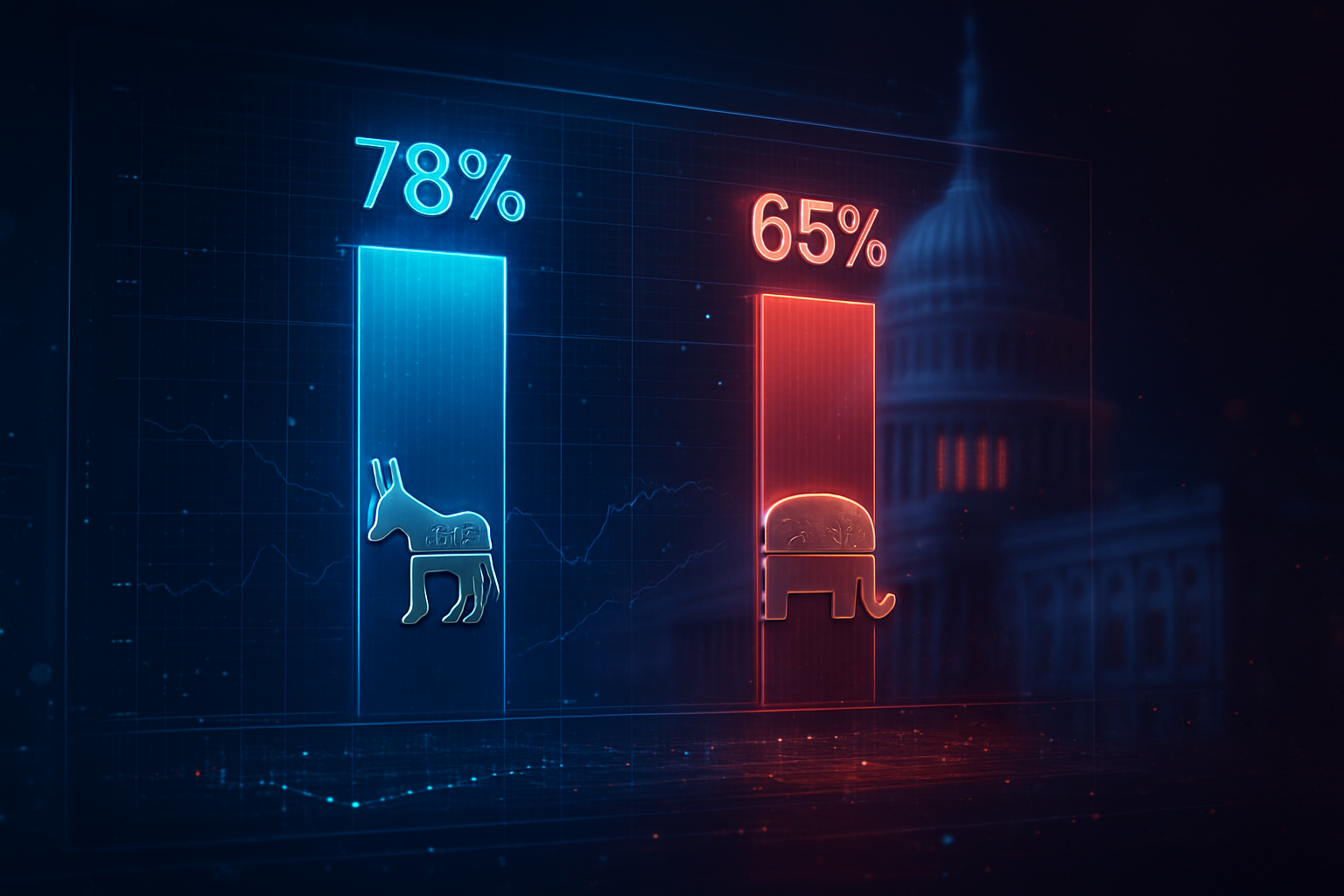
    Currently, the markets are flashing a clear, if divided, signal for the upcoming elections: a 78% probability that Democrats will reclaim the House of Representatives, contrasted with a 65% chance that Republicans will maintain their grip on the Senate. This divergence is driving record-breaking volume to the newly revamped platform, as traders move quickly to capitalize on the highest investment limits in PredictIt’s history. The platform’s transition marks a new era where political sentiment is not just polled, but priced with professional-grade precision.

    The Market: What's Being Predicted

    The centerpiece of the "Grand Relaunch" is the move to the Aristotle Exchange, a transition that has fundamentally altered the mechanics of political betting. For years, PredictIt was hamstrung by an $850 individual investment limit and a 5,000-trader cap per contract—rules that often led to "sold out" markets and distorted prices. Under the new DCM status, the investment limit has been quadrupled to $3,500, and the trader cap has been abolished entirely. This allows for deeper liquidity and ensures that prices more accurately reflect the aggregate wisdom of the crowd rather than just the first few thousand people to the gate.

    To handle this influx of capital, the exchange has integrated the Eqlipse Clearing technology from Nasdaq (NASDAQ: NDAQ), providing a level of institutional reliability previously unseen in the political prediction space. The 2026 midterm contracts are the first major test of this infrastructure. Currently, the "Party Control of the House" market is trading at 78 cents for Democratic control, while the "Senate Majority" market remains more competitive, with Republican shares hovering at 65 cents. These contracts are set to resolve following the certification of the November 2026 election results, providing a multi-billion dollar real-time barometer of the national mood.

    Why Traders Are Betting

    The surge in activity is driven by a combination of regulatory certainty and the historic stakes of the 2026 cycle. Previously, many large-scale traders avoided PredictIt due to the legal "gray area" created by its long-running battle with the CFTC. Now, with a permanent license in hand, "whales" who previously occupied the shadows are entering the fray. The $3,500 limit, while still retail-focused compared to traditional futures markets, is enough to allow sophisticated handicappers to build meaningful positions across dozens of individual race markets.

    Traders are currently leaning heavily into the "House Flip" narrative, largely based on the historical precedent that the president's party almost always faces setbacks in the first midterm of a second term (or the second midterm of a long tenure). However, the 65% odds for a Republican Senate suggest that the "GOP Firewall" in key states like Texas and Iowa remains formidable. Strategists are using these markets to hedge against potential policy shifts, as a divided government would likely stall any major legislative agendas regarding tax reform or climate spending through 2028.

    Broader Context and Implications

    PredictIt’s evolution is part of a broader "Prediction Market Arms Race." While PredictIt has captured the traditionalist and academic crowd, it faces stiff competition from Kalshi, which has marketed itself as the "Wall Street" of events, and Polymarket, which recently secured a massive $2 billion investment from the Intercontinental Exchange (NYSE: ICE). The fact that the parent company of the New York Stock Exchange is now backing a primary competitor highlights how mainstream this asset class has become.

    Beyond the numbers, these markets reveal a deepening skepticism toward traditional polling. In the 2024 cycle, prediction markets famously front-ran polling shifts in swing states, a trend that traders expect to continue in 2026. The move to a DCM model also brings PredictIt under stricter oversight, requiring enhanced transparency and anti-manipulation protocols. This regulatory "clean-up" is essential for the industry's survival, as it positions prediction markets as a legitimate financial tool rather than a niche gambling product.

    What to Watch Next

    As we move deeper into the 2026 primary season, several key milestones will likely trigger volatility in the House and Senate markets. First, the filing deadlines in March and April will clarify the candidate fields, particularly in "toss-up" districts where incumbent retirements could cause double-digit swings in the odds. Any movement in the 78% House probability will likely be tied to these candidate quality assessments.

    Furthermore, economic indicators—specifically inflation data and consumer sentiment—will serve as the primary "macro" drivers for the midterm markets. If the Federal Reserve continues its current path of interest rate stabilization, the 65% Republican Senate lead may soften as the "incumbent penalty" decreases. Conversely, any economic shock would likely solidify the Democratic House advantage. Traders should also watch for the launch of "Individual Seat" markets, which will offer the granular data that professional political consultants now rely on more than internal polling.

    Bottom Line

    The "Grand Relaunch" has successfully reclaimed PredictIt’s position at the top of the political forecasting hierarchy. By increasing limits and professionalizing its backend through the Aristotle Exchange, the platform has solved the liquidity issues that plagued its previous iteration. The current 78/65 split for the House and Senate provides a fascinating roadmap for the next two years of American governance, suggesting a return to the "gridlock" that markets often prefer.

    Ultimately, the transformation of PredictIt into a regulated financial exchange is a win for the entire "Information Finance" sector. It proves that there is a sustainable, legal path for event-based trading in the United States. Whether the 78% Democratic House probability holds or fails, the real winner is the market itself, which has finally found a way to turn political uncertainty into a transparent, tradable, and highly accurate forecasting engine.


    This article is for informational purposes only and does not constitute financial or betting advice. Prediction market participation may be subject to legal restrictions in your jurisdiction.

    PredictStreet focuses on covering the latest developments in prediction markets.
    Visit the PredictStreet website at https://www.predictstreet.ai/.

  • The ‘Gaming’ Gambit: Kalshi Fights 19 Lawsuits to Redefine Prediction Markets as Finance

    The ‘Gaming’ Gambit: Kalshi Fights 19 Lawsuits to Redefine Prediction Markets as Finance

    As of February 6, 2026, the prediction market industry is no longer just a niche playground for political junkies; it is the front line of a massive constitutional and regulatory war. At the center of this storm is Kalshi, the federally regulated exchange that has spent the last year oscillating between landmark legal victories and existential threats. The core of the conflict rests on a single, deceptively simple question: Is a prediction market a sophisticated financial instrument for hedging risk, or is it just a high-tech sportsbook?

    The stakes have reached a fever pitch as Kalshi and its peers grapple with 19 active federal lawsuits that threaten to fragment the U.S. market into a patchwork of geofenced jurisdictions. While a 2024 D.C. federal court ruling famously declared that election betting does not constitute "gaming," new and conflicting decisions from Maryland and Massachusetts have cast a long shadow over the industry. With sports event contracts now accounting for more than 90% of Kalshi’s total trading volume, the company’s ability to convince judges that these are financial derivatives—not gambling—will determine whether the multi-billion dollar prediction market industry survives in its current form.

    The Market: What's Being Predicted

    The "market" currently under the most intense scrutiny isn't an election or a sporting event, but the legal status of the industry itself. Traders across platforms like Polymarket and Kalshi are closely monitoring the "judicial climate," as the 19 pending federal lawsuits are categorized into three distinct fronts. There are six "offensive" suits where Kalshi has sued regulators in states like New York, Michigan, and Illinois, arguing that the Commodity Exchange Act (CEA) grants the Commodity Futures Trading Commission (CFTC) exclusive jurisdiction over their operations.

    Conversely, eight "defensive" suits have been launched by state gaming commissions and tribal entities, such as the Ho-Chunk Nation, alleging that Kalshi is operating as an unlicensed sportsbook. The final five cases are consumer-led class actions focusing on gambling addiction. This legal sprawl has created a volatile environment where liquidity is often tied to the latest courtroom transcript. On Kalshi, the volume for sports-related event contracts hit an estimated $9.1 billion monthly in January 2026, representing a staggering 91.1% of the platform's activity. The resolution of these cases will dictate whether this liquidity remains centralized or is throttled by state-level "police powers."

    Why Traders Are Betting

    The divergence in judicial opinion has turned legal analysis into a primary trading strategy. In Washington D.C., Judge Jia Cobb’s "Rocket-Booster" precedent remains the industry's North Star. Her ruling that "politics is not a game" effectively stripped the CFTC of its power to block election markets, arguing that the term "gaming" in the CEA refers to traditional games of chance like poker, not solemn public processes. This gave traders confidence that federal law favored the expansion of event contracts.

    However, that confidence has been shaken by more recent rulings. In August 2025, Judge Adam Abelson of the Maryland Federal Court rejected Kalshi's attempt to block state regulators, ruling that sports contracts are "indistinguishable" from traditional sports wagering. This was followed by a January 2026 bombshell in Massachusetts, where Judge Christopher Barry-Smith ordered Kalshi to geofence the state, noting that the platform's user interface "mirrors other digital gambling experiences." Traders are now forced to weigh the "exclusive jurisdiction" argument against the 10th Amendment rights of states to regulate gambling—a conflict that many believe is destined for the Supreme Court.

    Broader Context and Implications

    This legal battle represents a fundamental shift in how the U.S. views risk. Kalshi argues that its sports contracts are essential financial tools. For example, a small business owner in a college town might use a "home team loss" contract to hedge against the drop in foot traffic and revenue that follows a losing season. In this view, prediction markets are more akin to the CME Group (NASDAQ: CME) or Interactive Brokers (NASDAQ: IBKR) ForecastEx than to a casino.

    However, the CFTC, under new Chairman Michael Selig, is navigating a delicate path. While Selig has begun withdrawing the more restrictive "Event Contracts" proposals from 2024, the commission is still pressured by states and anti-gambling advocates. The broader implication is the potential "fragmentation" of the U.S. economy. If a financial instrument is legal in D.C. but "illegal gambling" in Massachusetts, the efficiency of prediction markets as a forecasting tool is severely diminished. The industry's historical accuracy—which famously outperformed traditional polling during the 2024 cycle—relies on deep, nationwide liquidity pools that state geofencing would destroy.

    What to Watch Next

    The next three to six months will be pivotal. The "Blue Lake Rancheria v. Kalshi" case in California, which Kalshi won in late 2025 on federal preemption grounds, is currently being appealed. A win for Kalshi in the Ninth Circuit would create a powerful counterweight to the Massachusetts and Maryland decisions, potentially forcing a Supreme Court intervention.

    Additionally, investors should watch for the CFTC's upcoming "durable standards" memo, expected in the second quarter of 2026. Chairman Selig has hinted at a framework that would solidify the "financial instrument" status for event contracts while requiring more robust consumer protections. Key dates in April will also see hearings for the class-action suits in Michigan, which could determine if Kalshi is liable for "gambling losses" under state statutes—a ruling that would be catastrophic for the platform's revenue model.

    Bottom Line

    The legal war facing Kalshi is a battle for the soul of the "Information Age" economy. If Kalshi succeeds in proving that sports and political events are economic variables rather than "games," it will open the floodgates for a new era of decentralized finance and risk management. If the "gaming" definition holds in state courts, the industry may be forced into a permanent defensive crouch, operating as a glorified, geofenced sportsbook rather than a global revolutionary exchange.

    For now, the data is clear: the public wants to trade these markets. With over $9 billion in monthly volume moving through sports contracts alone, the market has already "voted" on the utility of these instruments. The question remains whether the 19 federal lawsuits will catch up to the reality of the 21st-century trader.


    This article is for informational purposes only and does not constitute financial or betting advice. Prediction market participation may be subject to legal restrictions in your jurisdiction.

    PredictStreet focuses on covering the latest developments in prediction markets.
    Visit the PredictStreet website at https://www.predictstreet.ai/.

  • The $400,000 ‘Maduro Windfall’: Prediction Markets Face ‘Insider Trading’ Reckoning After Caracas Raid

    The $400,000 ‘Maduro Windfall’: Prediction Markets Face ‘Insider Trading’ Reckoning After Caracas Raid

    The world of prediction markets is currently reeling from what critics are calling the most brazen example of "political insider trading" in the history of decentralized finance. Just weeks after U.S. special forces conducted "Operation Absolute Resolve" to apprehend Venezuelan President Nicolás Maduro, a single trader on the platform Polymarket has become the face of a mounting regulatory storm. The trader, operating under the pseudonym "Burdensome-Mix," managed to turn a modest $32,000 bet into a staggering $403,000 windfall by betting on Maduro’s downfall just hours before the mission was made public.

    As of early February 2026, the fallout from this trade has moved from the digital message boards of crypto-enthusiasts to the halls of Congress and the headquarters of the Commodity Futures Trading Commission (CFTC). With the odds of Maduro being ousted sitting at a mere 8% just moments before the trade was placed, the surgical timing of the wager has led many to believe that the trader had access to classified military intelligence. The event has ignited a fierce debate: are prediction markets a revolutionary tool for truth-seeking, or have they become a lucrative incentive for government leakers to sell state secrets for a profit?

    The Market: What's Being Predicted

    The contract at the center of the controversy was hosted on Polymarket, a decentralized platform that has surged in popularity during the mid-2020s. The specific market asked: "Will Nicolás Maduro be out of power by January 31, 2026?" For months, the contract had traded at low levels, reflecting the long-standing stalemate in Venezuelan politics. However, on the evening of January 3, 2026, the "Burdensome-Mix" account (linked to a wallet funded via Coinbase Global, Inc. (NASDAQ: COIN)) began aggressively buying "Yes" shares at approximately $0.08 each.

    At the time of the trade, the implied probability of Maduro’s exit was less than 10%. Trading volume for the day had been relatively thin until this sudden influx of capital. By the time the Pentagon confirmed the capture of Maduro in a midnight press conference, the shares had soared to $1.00. The rapid price movement and the massive liquidity available on Polymarket allowed the trader to realize a gain of over 1,200% in under 24 hours. The resolution criteria were straightforward—Maduro’s physical removal from the presidential palace—making the contract’s settlement almost instantaneous once the news broke.

    Why Traders Are Betting

    The "Burdensome-Mix" trade was not the result of traditional geopolitical analysis or "wisdom of the crowds." Rather, the timing suggests a "perfect information" advantage. While other traders were looking at stagnant diplomatic reports and regional protests, this specific actor moved in less than an hour before President Donald Trump reportedly signed the final strike authorization for the raid. Analysts who track blockchain movement noted that the wallet address 0x31a56e showed no prior history of trading in South American politics, focusing instead on high-conviction, low-probability events.

    This "whale" activity stands in stark contrast to traditional forecasting methods. Intelligence agencies and think tanks had largely characterized a direct intervention in Caracas as a high-risk, low-probability "black swan" event for early 2026. The fact that a retail-facing prediction market moved before the news hit the Bloomberg terminals has highlighted a significant shift in how information is priced in the modern era. While some argue this proves the "efficiency" of prediction markets, others, including federal investigators, see it as a "red alert" for systemic abuse.

    Broader Context and Implications

    The "Maduro Trade" has provided a massive catalyst for lawmakers who have long been skeptical of event-based betting. In Washington, D.C., and New York, the reaction has been swift and bipartisan. Rep. Ritchie Torres (D-NY) introduced H.R. 7004, the "Public Integrity in Financial Prediction Markets Act of 2026," on January 9. The bill seeks to apply the ethical guardrails of the STOCK Act to prediction markets, effectively making it a felony for federal employees or military personnel to trade on non-public information.

    "We cannot allow prediction markets to become a bounty system for classified leaks," Torres stated during a recent press briefing. The bill has gained traction with over 40 co-sponsors, including high-profile New York lawmakers like Rep. Dan Goldman (NY). The concern is that if a trader can net $400,000 on a single raid, the temptation for a low-level analyst or staffer to leak operational details becomes a matter of national security. Meanwhile, Kalshi—the leading U.S.-regulated competitor to Polymarket—has moved to distance itself from the controversy. Kalshi CEO Tarek Mansour has reiterated that his platform strictly prohibits government employees from trading on markets related to their official duties, emphasizing their "Know Your Customer" (KYC) protocols as a deterrent to the kind of anonymous "insider" trading seen on offshore platforms.

    What to Watch Next

    The coming weeks will be pivotal for the future of the industry. The CFTC has officially opened an investigation into the "Burdensome-Mix" account, and because the funds originated from Coinbase, investigators are reportedly close to unmasking the account holder. The arrest of Aurelio Perez-Lugones in late January on charges related to leaking sensitive military data has already signaled that the Department of Justice is treating this as a criminal conspiracy rather than a lucky bet.

    Investors should monitor the progress of H.R. 7004 in the House Financial Services Committee. If the bill passes, it could force a massive restructuring of how prediction markets operate in the U.S., potentially requiring platforms to implement more rigorous monitoring tools. Additionally, the Senate, led by Sen. Elissa Slotkin (D-MI), is pressuring the CFTC to provide a comprehensive framework for "geopolitical insider trading," which could lead to stricter regulations on contracts involving foreign elections, coups, or military actions.

    Bottom Line

    The $400,000 Maduro windfall is a watershed moment for prediction markets. On one hand, it demonstrates the unparalleled speed at which these platforms can reflect real-world changes. On the other, it exposes a glaring vulnerability: when the stakes are this high, the market creates a financial incentive for the betrayal of public trust. The Maduro trade wasn't just a bet on a dictator's downfall; it was a test of the integrity of the entire forecasting ecosystem.

    As we move further into 2026, the question is no longer whether prediction markets are accurate, but whether they can be ethical. If the "Burdensome-Mix" trader is indeed proven to be an insider, the resulting crackdown could fundamentally change the landscape of political betting, shifting it away from "wild west" offshore platforms toward highly regulated, transparent exchanges. For now, the Maduro windfall remains a chilling reminder that in the world of high-stakes predictions, some traders are playing with a deck that the rest of the world hasn't even seen yet.


    This article is for informational purposes only and does not constitute financial or betting advice. Prediction market participation may be subject to legal restrictions in your jurisdiction.

    PredictStreet focuses on covering the latest developments in prediction markets.
    Visit the PredictStreet website at https://www.predictstreet.ai/.

  • The “New Animal” War: Kalshi’s 19 Federal Lawsuits and the Battle for the Future of Financial Trading

    The “New Animal” War: Kalshi’s 19 Federal Lawsuits and the Battle for the Future of Financial Trading

    The legal boundary between a "hedge" and a "bet" has reached a breaking point. As of February 5, 2026, the prediction market industry is locked in what experts are calling a "jurisdictional civil war," pitting the federally regulated exchange Kalshi against a phalanx of state regulators. At the heart of the storm is a question with billion-dollar implications: Are event contracts—ranging from Oscar winners to NBA scores—legitimate financial derivatives protected by federal law, or are they merely high-tech gambling?

    Currently, the markets themselves are betting on the outcome of their own survival. On decentralized platforms, the probability that federal preemption will ultimately shield exchanges like Kalshi from state bans by the end of 2026 is trading at a robust 81%. However, in the trenches of state legislatures, the outlook is more volatile; the odds of New York passing a permanent ban on event contracts (the "ORACLE Act") have fluctuated wildly, currently sitting at 38% as rival, industry-friendly legislation begins to gain traction.

    The Market: What's Being Predicted

    The most consequential "market" in the industry right now isn't the price of oil or the winner of the next election; it is the legal status of the platforms themselves. Traders are actively wagering on the outcome of Kalshi’s unprecedented legal offensive. By early 2026, Kalshi has initiated or is defending a total of 19 federal lawsuits across the United States. These include "offensive" suits against regulators in New York, Ohio, and Nevada, seeking to prove that the federal Commodity Exchange Act (CEA) preempts state gambling laws.

    On platforms like Manifold Markets and Polymarket, these legal milestones have become high-volume assets. The "Federal Preemption Protects DCMs" contract has seen over 1.5 million in play-money volume, while a Polymarket contract on whether the U.S. Supreme Court will hear a sports-contract case has attracted over $856,000 in liquidity. Meanwhile, ForecastEx, the prediction market venture launched by Interactive Brokers (NASDAQ: IBKR), has become a secondary hub for institutional traders hedging against a potential New York ban.

    The resolution criteria for these markets are tied to specific judicial dates. A critical hearing in Connecticut on February 12, 2026, and a ruling on a preliminary injunction in the Southern District of New York expected by the end of the month, are the primary triggers for current price movements.

    Why Traders Are Betting

    The bullish sentiment regarding federal preemption (the 81% "Yes" odds) is driven by the legal precedent set in late 2024 when Kalshi successfully sued the Commodity Futures Trading Commission (CFTC). That victory established that the CFTC did not have the authority to blanket-ban election markets. Traders are now betting that this federal "blessing" extends to sports and social events, rendering state-level cease-and-desist letters legally toothless under the Supremacy Clause of the U.S. Constitution.

    However, recent setbacks have introduced significant "geofencing" risk. In January 2026, a Massachusetts court issued a preliminary injunction forcing Kalshi to block users in the state, causing a momentary dip in the platform’s perceived dominance. This has fueled the "Great Prediction War" market, where Polymarket currently holds a 47% probability of being the top platform by volume in 2026, compared to Kalshi’s 34%. Traders are wary that Kalshi’s heavy regulatory footprint in the U.S. might allow offshore or decentralized competitors to capture the market while Kalshi is tied up in court.

    Large "whale" positions have also been noted in markets surrounding New York’s ORACLE Act. The odds of a ban dropped from 65% to 38% following the introduction of Senate Bill S8889, a rival bill that would classify prediction markets as financial products. This legislative pivot suggests that lobbyists are successfully framing these markets as sophisticated data tools rather than "digital casinos."

    Broader Context and Implications

    The tension between state and federal oversight reached a fever pitch in October 2025, when the New York State Gaming Commission (NYSGC) issued a formal cease-and-desist letter to Kalshi. The Commission alleged that Kalshi was running an "unlicensed mobile sports wagering platform," citing New York Penal Law § 225.00. This move was a direct challenge to the CFTC’s authority, essentially arguing that a federal license to trade derivatives does not grant a "get out of jail free" card regarding state gambling prohibitions.

    New York Assemblymember Clyde Vanel, a key figure in the debate, summarized the challenge during a January 2026 hearing: "We’re dealing with a new animal." Vanel’s quote captures the regulatory anxiety: if a bet on a football game is wrapped in the terminology of "hedging" and "event contracts," does it bypass the taxes and consumer protections required of traditional sportsbooks like FanDuel (NYSE: FLUT) or DraftKings (NASDAQ: DKNG)?

    The real-world implications are massive. If state regulators win, the U.S. prediction market landscape will become a fractured mosaic of geofenced territories, killing the liquidity that makes these markets useful for forecasting. If Kalshi wins its 19 lawsuits, it could effectively deregulate "betting" nationwide by rebranding it as "trading," a move that would fundamentally disrupt the multi-billion dollar domestic gaming industry.

    What to Watch Next

    The next 30 days are perhaps the most critical in the history of the industry. On February 11, 2026, a Nevada court will hold a hearing on a permanent injunction against Polymarket. Just one day later, on February 12, a Connecticut court will hear arguments on whether the state's cease-and-desist order against Kalshi violates federal law.

    Market participants should also monitor the progress of the ORACLE Act in the New York legislature. If Assemblymember Vanel’s bill gains momentum, expect the "New York Ban" contracts on ForecastEx and Kalshi to spike. Conversely, a victory for Kalshi in the Southern District of New York could lead to a rapid collapse in the probability of state-level bans, as other governors may realize their legal standing is on shaky ground.

    Finally, keep an eye on the "jurisdictional discount." Currently, spreads on Kalshi are wider for users in litigated states. If a major appeals court rules in favor of federal preemption, we could see a massive "liquidity convergence" event, where national volume floods back into a unified market.

    Bottom Line

    The legal battle for prediction markets is no longer about whether you can bet on the presidency; it is a fundamental test of the U.S. financial regulatory system. Kalshi’s "19-front war" is an aggressive gamble that the federal government—specifically the CFTC—is the sole arbiter of what constitutes a "market." By challenging states like New York and Massachusetts, Kalshi is attempting to build a national infrastructure that treats human events as tradable commodities.

    As the "New Animal" quote suggests, regulators are struggling to categorize a product that looks like a sportsbook but acts like a stock exchange. For traders, the high probability of federal preemption winning out suggests a belief that technology and federal law will eventually steamroll state-level resistance. However, the "geofencing" reality of 2026 shows that, for now, the map is as important as the math.

    If these markets are eventually fully vindicated in court, they will become the most powerful data-aggregation tools in history. If they fail, they will be remembered as a brief, high-stakes attempt to disrupt the ancient laws of the wagering world.


    This article is for informational purposes only and does not constitute financial or betting advice. Prediction market participation may be subject to legal restrictions in your jurisdiction.

    PredictStreet focuses on covering the latest developments in prediction markets.
    Visit the PredictStreet website at https://www.predictstreet.ai/.
  • The Maduro Whale: Inside the $400,000 Trade That Sparked a Washington Firestorm

    The Maduro Whale: Inside the $400,000 Trade That Sparked a Washington Firestorm

    The capture of Venezuelan leader Nicolás Maduro by U.S. special operations forces on January 3, 2026, was a geopolitical earthquake that few saw coming. But for one anonymous trader on the decentralized prediction platform Polymarket, the event was more than a headline—it was a $400,000 windfall. Hours before President Donald Trump took to Truth Social, owned by Trump Media & Technology Group Corp. (NASDAQ: TMTG), to announce that "Operation Absolute Resolve" had successfully taken Maduro into custody, a series of aggressive bets were placed that have now triggered a federal investigation and a legislative firestorm in Washington.

    At the time the trades were executed, the market-implied probability of Maduro’s downfall by the end of January sat at a measly 7%. The sudden, massive influx of capital from a single account, just as the raid was commencing in Caracas, has forced a reckoning for the prediction market industry. Critics argue the trade is the "smoking gun" of insider trading on decentralized platforms, while proponents claim the market performed exactly as intended: by surfacing truth before the rest of the world caught up.

    The Market: What's Being Predicted

    The controversy centers on a specific contract on Polymarket: "Will Nicolás Maduro be out of power by January 31, 2026?" For much of late 2025, this was a low-liquidity "longshot" market. Traders viewed Maduro’s grip on power as firm, despite escalating rhetoric from the White House. Trading volume hovered in the low tens of thousands of dollars, and the "Yes" shares were trading at roughly 8 cents, implying an 8% chance of success.

    On the morning of January 3, 2026, the market dynamics shifted violently. An account using the handle "Burdensome-Mix" began vacuuming up "Yes" shares. According to on-chain data, the user deployed approximately $32,537 across several hours. By the time the trade was completed, the sudden demand had pushed the odds up to 15%, though most of the general public remained unaware of the military operation unfolding in real-time.

    The contract was structured to resolve based on a consensus of major news outlets or an official government statement. When President Trump’s announcement went live at 4:21 AM EST, the "Yes" shares immediately hit $1.00. The "Burdensome-Mix" account cashed out shortly after, realizing a profit of over $403,000—a staggering 1,240% return on investment in under 24 hours.

    Why Traders Are Betting

    The "too-perfect" timing of the "Burdensome-Mix" trade is the primary driver of the current controversy. Financial watchdogs, including experts at Better Markets, have noted that the account was funded and the positions established just as U.S. forces were descending on Maduro’s compound in Caracas. This suggests the bettor may have had access to classified details of the raid’s timing or its authorization.

    While most traders were reacting to public news cycles and historical precedent, the "Maduro Whale" appeared to be trading on a certainty that didn't exist in the public record. This has reignited the debate over "information leakage" in high-stakes geopolitics. In a decentralized environment like Polymarket, which operates on the Polygon blockchain, users are often shielded by pseudonymity. This makes it difficult to determine if the trader was a government official, a military contractor, or an associate of a political appointee with direct knowledge of Operation Absolute Resolve.

    Beyond the "Burdensome-Mix" account, other "whales" have entered the fray, betting on secondary contracts related to the fallout, such as whether a U.S.-backed transition government will be installed by March. The market for "Will the U.S. invade Venezuela?" also saw a massive spike in volume, though it led to a secondary dispute: Polymarket’s decentralized oracle initially hesitated to rule the capture of a leader as an "invasion," leading to a $10.5 million liquidity deadlock that frustrated many institutional participants.

    Broader Context and Implications

    This incident has provided the ultimate ammunition for lawmakers who have long been skeptical of event-based wagering. On January 9, 2026, Representative Ritchie Torres (D-NY) introduced the Public Integrity in Financial Prediction Markets Act of 2026. The bill aims to strictly prohibit federal officials and those with access to classified information from participating in markets that overlap with their official duties. The legislation has gained rapid, high-profile co-sponsorship from veteran lawmakers including Nancy Pelosi and Brad Sherman.

    The regulatory response has been swift. Michael S. Selig, the recently appointed Chairman of the Commodity Futures Trading Commission (CFTC), announced that the agency is moving to establish a formal framework for "Event Contracts." While the CFTC has historically been hostile toward political betting, the Maduro incident has shifted the focus toward anti-manipulation and insider trading rules rather than outright bans.

    Competitors in the regulated space, such as Kalshi and the prediction wings of Coinbase Global, Inc. (NASDAQ: COIN) and Robinhood Markets, Inc. (NASDAQ: HOOD), have moved to distance themselves from Polymarket. These platforms, which operate under U.S. regulatory umbrellas, have joined a newly formed Coalition for Prediction Markets to lobby for a clear federal framework that would mandate "Know Your Customer" (KYC) protocols for all large-scale event traders—a move that could fundamentally change the "permissionless" nature of decentralized betting.

    What to Watch Next

    The immediate focus for the market is the resolution of the "Invasion" contract. The dispute over whether a "snatch-and-extract" operation constitutes an invasion is currently being adjudicated by UMA, the decentralized oracle used by Polymarket. The outcome of this dispute will serve as a litmus test for whether decentralized governance can handle the nuances of international law and military terminology, or if centralized oversight is inevitable.

    In Washington, all eyes are on the progress of the Torres bill. If it passes, it would mark the first time prediction markets are explicitly named in U.S. federal code as a venue for potential insider trading. Such a development could lead to a massive migration of "smart money" away from offshore platforms and toward regulated U.S. exchanges that offer better legal protections, albeit with more transparency.

    Finally, keep an eye on the "Burdensome-Mix" wallet. If the U.S. Department of Justice moves to freeze the assets or subpoena the exchange that served as the wallet's ramp, it will signal a new era of enforcement where "code is law" no longer protects traders from the reach of federal investigators.

    Bottom Line

    The Maduro trade has proven that prediction markets are a double-edged sword. On one hand, they functioned as a "truth machine," moving the odds of a regime change in Venezuela hours before the world’s media caught wind of the story. On the other hand, the $400,000 profit for a perfectly timed, anonymous bet has exposed the systemic vulnerabilities of platforms that operate outside traditional financial oversight.

    As prediction markets continue to mature into a multi-billion dollar industry, the "Maduro Whale" will likely be remembered as the catalyst for the industry's "Great Regulation." Whether these markets can survive the transition from the "Wild West" of decentralized finance to the strictly governed corridors of federal oversight remains the biggest bet of all. For now, the Maduro trade serves as a stark reminder: in the world of prediction markets, information is the most valuable currency—and sometimes, it’s too valuable for the law to ignore.


    This article is for informational purposes only and does not constitute financial or betting advice. Prediction market participation may be subject to legal restrictions in your jurisdiction.

    PredictStreet focuses on covering the latest developments in prediction markets. Visit the PredictStreet website at https://www.predictstreet.ai/.
  • The State vs. The Exchange: Kalshi’s High-Stakes Legal Battle with Gaming Regulators Threatens 2026 Volume Leadership

    The State vs. The Exchange: Kalshi’s High-Stakes Legal Battle with Gaming Regulators Threatens 2026 Volume Leadership

    As of February 2, 2026, the meteoric rise of prediction markets has hit a significant roadblock not in Washington D.C., but in the state houses of Nevada and Connecticut. While 2025 was defined by Kalshi’s historic legal victory against the Commodity Futures Trading Commission (CFTC), 2026 has opened with a multi-front "guerrilla war" as state gaming authorities attempt to reclassify prediction markets as unlicensed gambling.

    The core of the dispute rests on Kalshi’s aggressive expansion into sports event contracts—markets that allow users to hedge on the outcome of NFL games, the Super Bowl, and NBA matchups. With state regulators in Nevada and Connecticut issuing cease-and-desist orders, the legal battle is no longer a matter of administrative law, but a fundamental question of federal preemption. Traders are now pricing in a significant risk that Kalshi could be forced to geofence up to 15 states by the end of the year, a move that could jeopardize its status as the world’s volume leader in the prediction market space.

    The Market: What's Being Predicted

    The primary "market" currently under observation is the legal survival of Kalshi’s sports contracts in key jurisdictions. In January 2026 alone, Kalshi processed an estimated $9.1 billion in trading volume, with a staggering 91.1% of that activity tied directly to sports event contracts. For comparison, its main rival, Polymarket, saw approximately $7.5 billion in volume during the same period.

    While Kalshi currently maintains a 28.1% share of the global prediction market volume, meta-markets on platforms like Manifold Markets have begun to reflect a shift in sentiment. Traders are currently giving Polymarket a 47% chance of finishing 2026 as the top platform by volume, while Kalshi’s odds have slipped to 34%. This inversion is driven almost entirely by the regulatory friction in Nevada and Connecticut.

    The resolution of these state-level battles depends on two upcoming legal milestones:

    1. Connecticut District Court: A high-stakes hearing scheduled for February 12, 2026, where a judge will decide whether to grant a preliminary injunction against the Connecticut Department of Consumer Protection (DCP).
    2. The Ninth Circuit Court of Appeals: Oral arguments are set for April 2026 regarding the Nevada Gaming Control Board's (NGCB) attempt to shut down Kalshi operations in the state.

    Why Traders Are Betting

    Traders and legal analysts are divided on the "federal preemption" defense. Kalshi argues that because its contracts are regulated by the CFTC as financial derivatives under the Commodity Exchange Act (CEA), state gaming laws are preempted. However, the Nevada Gaming Control Board disagrees, citing NRS 463.0193, which defines any wager on a sporting event as gambling that requires a state license.

    The market sentiment shifted significantly in late November 2025, when U.S. District Judge Andrew Gordon dissolved a preliminary injunction that had protected Kalshi in Nevada. Gordon’s ruling suggested that stripping states of their power to regulate gambling would "upset decades of federalism." This legal pivot has led "whale" traders to hedge their Kalshi positions by moving liquidity toward platforms like Polymarket or Robinhood (NASDAQ: HOOD), the latter of which also faces scrutiny but has a broader diversification of assets.

    Furthermore, the Connecticut DCP, led by Commissioner Bryan T. Cafferelli, has introduced a "consumer protection" narrative, arguing that Kalshi lacks the age-verification rigors and responsible gaming safeguards required by state law. This has introduced a new variable: even if Kalshi wins on the "gambling" definition, it could still be hamstrung by state-level administrative hurdles.

    Broader Context and Implications

    This conflict represents the "final frontier" for prediction markets in the United States. If Kalshi loses these cases, it would create a fragmented "patchwork" regulatory environment. This would lead to what analysts call "phantom liquidity"—where price discovery occurs on a national level, but users in states like Nevada or Connecticut are geofenced out, leading to wider spreads and less efficient markets.

    The implications for 2026 volume leadership are profound. Kalshi’s business model is uniquely exposed to sports, which act as the "on-ramp" for many retail traders. If the platform is forced to exit Nevada—the spiritual home of American sports betting—its competitive advantage over Polymarket and newer entrants like Crypto.com (which also received a Connecticut cease-and-desist) could evaporate.

    Historically, prediction markets have thrived on being "information engines." However, the transition into sports has moved them into the crosshairs of powerful state gaming commissions that protect billions in tax revenue from traditional sportsbooks. The current legal battle is less about "what is a derivative" and more about "who gets to tax the trade."

    What to Watch Next

    The immediate focus for the market is the February 12 hearing in Connecticut. Judge Vernon Oliver’s decision on the preliminary injunction will serve as a bellwether. If he sides with the DCP and allows the cease-and-desist to stand, it is expected that 5–10 other states will follow suit with similar orders by the end of Q1 2026.

    Beyond the courtroom, watch for Kalshi to potentially pivot its product mix. To mitigate the "unlicensed gambling" risk, the exchange may begin prioritizing "non-event" economic contracts or midterm election hedging markets to dilute the percentage of its volume coming from sports.

    Finally, the Ninth Circuit's oral arguments in April will be the definitive moment for the industry. A ruling in favor of the Nevada Gaming Control Board would likely force the issue to the U.S. Supreme Court, creating years of uncertainty for the prediction market sector.

    Bottom Line

    Kalshi entered 2026 with the momentum of a dominant incumbent, but the "State-Level Pushback" has proven to be a more resilient foe than the federal CFTC. The argument that sports event contracts are unlicensed gambling is gaining traction among state judges who are wary of federal overreach into local police powers.

    For prediction market participants, the current volatility in "platform dominance" markets is a reflection of this legal reality. While Kalshi still holds the volume crown today, its path to 2026 leadership is now narrow and heavily dependent on winning a series of high-stakes legal coin flips. If the Connecticut and Nevada dominos fall against the exchange, the "regulated US market" may look very different by this time next year.

    The next two weeks will be among the most consequential in the history of the industry. As the February 12 deadline approaches, expect liquidity to be cautious and the "State-Level Risk" premium to remain high.


    This article is for informational purposes only and does not constitute financial or betting advice. Prediction market participation may be subject to legal restrictions in your jurisdiction.

    PredictStreet focuses on covering the latest developments in prediction markets.
    Visit the PredictStreet website at https://www.predictstreet.ai/.
  • The InfoFi Divide: Why PredictIt Traders Are Fading the ‘Public Integrity’ Act Despite CEO Support

    The InfoFi Divide: Why PredictIt Traders Are Fading the ‘Public Integrity’ Act Despite CEO Support

    The InfoFi Divide: Why PredictIt Traders Are Fading the 'Public Integrity' Act Despite CEO Support

    As the 2026 midterm election cycle kicks into high gear, a legislative battle over the soul of the "Information Finance" (InfoFi) movement has reached a fever pitch on Capitol Hill. At the center of the storm is H.R. 7004, the "Public Integrity in Financial Prediction Markets Act of 2026." While the bill aims to curb insider trading by government officials on event contracts, the very traders it seeks to regulate remain deeply skeptical of its prospects.

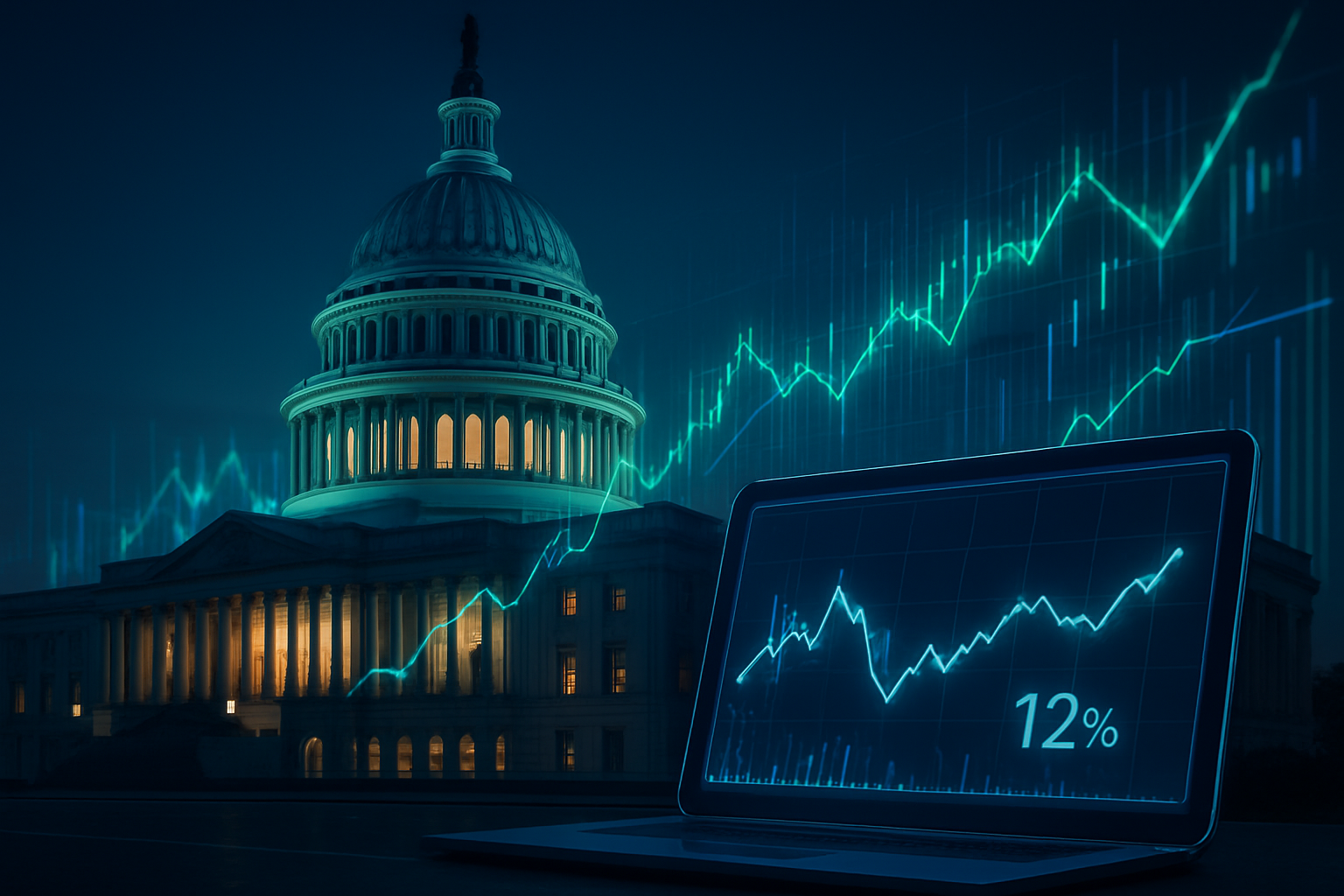
    On the popular political betting platform PredictIt, the contract for H.R. 7004’s passage in 2026 is currently trading at just $0.12, implying a slim 12% chance of the bill becoming law this year. This bearish sentiment persists despite a rare alignment of interests between high-profile Democrats, led by Representative Ritchie Torres (D-NY) and Speaker Emerita Nancy Pelosi, and industry titan Tarek Mansour, the CEO of Kalshi. The clash highlights a growing divide between the optimistic "InfoFi" narrative—which views prediction markets as the ultimate truth-seeking tool—and the harsh realities of a gridlocked Congress during an election year.

    The Market: What’s Being Predicted

    The primary market tracking the bill's fate is PredictIt's "Will H.R. 7004 (Public Integrity Act) pass in 2026?" contract. Since its launch in mid-January, the market has seen significant volatility, initially spiking to 25 cents following the bill's introduction before drifting down to its current 12-cent floor. The contract is designed to pay out $1.00 if the bill is signed into law by December 31, 2026, and $0.00 otherwise.

    Trading volume has been robust, with over 150,000 shares exchanged in the last three weeks alone. Liquidity has improved significantly since PredictIt’s successful 2025 transition into a fully regulated Designated Contract Market (DCM) under the Aristotle Exchange, which saw the removal of the 5,000-trader cap and an increase in individual investment limits to $3,500. While offshore giant Polymarket—which recently saw a $2 billion investment from the Intercontinental Exchange (NYSE: ICE)—hosts similar thematic markets, PredictIt remains the primary venue for US-based traders specifically focused on the legislative process.

    Why Traders Are Betting

    The 12% probability reflects a classic "efficient market" assessment of legislative hurdles. While the bill, nicknamed the "STOCK Act for Prediction Markets," seeks to ban federal officials and congressional staff from trading contracts tied to their official duties, traders point to the looming midterm elections as a primary obstacle. History suggests that non-essential, complex financial regulation rarely moves through both chambers in the final months before a nationwide vote.

    However, the "Yes" side is being fueled by lingering public outrage over the infamous "Maduro Trade" of early January 2026. In that event, a Polymarket user netted over $400,000 on a wager involving the removal of Venezuelan President Nicolás Maduro just hours before a secret U.S. military operation was announced. This perceived insider advantage has given proponents like Tarek Mansour a powerful narrative. Mansour has aggressively lobbied for the bill, pursuing a "Clean Market" strategy to differentiate regulated U.S. exchanges like Kalshi from their offshore counterparts. By supporting federal oversight, Mansour hopes to institutionalize prediction markets as a legitimate asset class comparable to those traded on the Nasdaq (NASDAQ: NDAQ).

    Broader Context and Implications

    The debate over H.R. 7004 is the latest chapter in the evolution of InfoFi. In 2026, prediction markets are no longer seen as mere gambling dens; they are increasingly integrated into the global financial infrastructure. The concept of "Information Finance" posits that pricing the probability of real-world events provides a vital public service, often outperforming traditional media and intelligence agencies in accuracy. For instance, InfoFi advocates point to a February 2026 shift in "Government Shutdown" odds on Kalshi that preceded official news by nearly three minutes, a phenomenon now called the "InfoFi Premium."

    This transition has been aided by a regulatory pivot at the Commodity Futures Trading Commission (CFTC). Under Chairman Michael Selig, the agency has moved away from its 2024-era attempts to ban election markets, instead focusing on "modernization." The Public Integrity Act represents the legislative branch's attempt to catch up with this new reality. If passed, it would provide the legal certainty that institutional giants like Interactive Brokers (NASDAQ: IBKR) have sought before fully committing their balance sheets to the event contract space.

    What to Watch Next

    Traders should keep a close eye on the House Financial Services Committee, where H.R. 7004 is currently stalled. A scheduled hearing on February 15 will be a critical bellwether. If the committee moves to a "markup" session—where the bill is debated and amended—the PredictIt odds could easily double overnight. Conversely, if the bill is not attached to a "must-pass" piece of legislation, such as the upcoming spring budget resolution, the 12% probability may continue its slow decay toward zero.

    Another key factor is the stance of the White House. While President Biden has generally supported measures to increase government transparency, his administration has remained quiet on the specific nuances of InfoFi. A formal Statement of Administration Policy (SAP) in favor of the bill would be a massive catalyst for market movement, potentially bringing in "whales" who have been waiting on the sidelines for a clearer political signal.

    Bottom Line

    The 12% probability of H.R. 7004's passage reveals a cynical but perhaps realistic view of Washington's ability to police itself. While the "InfoFi" revolution has successfully rebranded prediction markets as essential data tools, the political will to enact a "STOCK Act" for this new frontier remains tested by the distractions of an election year.

    Ultimately, whether the bill passes or not, the debate itself has solidified the status of prediction markets in the national discourse. By forcing a conversation on public integrity and the "pricing of truth," H.R. 7004 has already achieved one of the primary goals of any InfoFi instrument: it has forced the market to put a price on the integrity of the government itself. For now, the market says that price is low, and the hurdles are high.


    This article is for informational purposes only and does not constitute financial or betting advice. Prediction market participation may be subject to legal restrictions in your jurisdiction.

    PredictStreet focuses on covering the latest developments in prediction markets.
    Visit the PredictStreet website at https://www.predictstreet.ai/.

  • The Selig Revolution: CFTC Reclaims the Prediction Market Frontier

    The Selig Revolution: CFTC Reclaims the Prediction Market Frontier

    The landscape of American financial forecasting shifted fundamentally on January 29, 2026. In a move that market participants are calling a "regulatory ceasefire," Commodity Futures Trading Commission (CFTC) Chairman Michael Selig formally withdrew the proposed ban on political and sports event contracts—a relic of the Rostin Behnam era that had throttled the industry for nearly two years. Selig’s directive doesn't just allow these markets to exist; it actively "plants the flag," asserting exclusive federal jurisdiction over event contracts and effectively daring state-level regulators to challenge the agency’s authority.

    As of February 1, 2026, the impact on the markets has been immediate and profound. Trading volumes on domestic exchanges have surged to record highs, with the 2026 Midterm Election markets now serving as the primary "information engine" for political analysts. Current odds across major platforms suggest a 76% probability of Democrats reclaiming the House, while Republicans maintain a 67% chance of holding the Senate. The "Selig Shift" has transformed prediction markets from a legal battleground into a cornerstone of the broader financial ecosystem.

    The Market: What's Being Predicted

    The focus of the trading world has centered on two massive pillars: the 2026 Midterm Elections and the impending Super Bowl LX. Following the CFTC’s policy pivot, Kalshi has seen a localized explosion in volume, processing a record $403 million on January 4 alone. The primary contract currently being traded is the "Control of Congress" parlay, which has seen its bid-ask spreads compress by nearly 20% since Selig took office, a direct result of increased market-maker confidence.

    Meanwhile, Polymarket—despite its decentralized roots—has solidified its role as a global liquidity hub, particularly for international sports and geopolitical events. The "World Cup 2026 Winner" market is already drawing tens of millions in "early-bird" liquidity, with Spain currently priced as the favorite at 18%. On the regulated side, ForecastEx—the exchange operated by Interactive Brokers (NASDAQ: IBKR)—is dominating the macro-economic space. Their "US Recession by Q1 2026" contract currently holds over 128,000 open positions, providing a real-time gauge of institutional sentiment that many argue is more accurate than traditional consensus surveys.

    Why Traders Are Betting

    The surge in activity is driven by a newfound sense of legal permanence. For years, the threat of a sudden federal ban or a patchwork of state-level "gaming" lawsuits kept institutional capital on the sidelines. Selig’s "Clear Standards" framework has changed the calculus. By categorizing event contracts as vital tools for "price discovery" and "information aggregation" rather than gambling, the CFTC has given the green light to major financial players.

    Recent activity from "whales"—large-scale traders—indicates a shift toward high-conviction information trades. For instance, a controversial $400,000 payout on Polymarket regarding the capture of a foreign head of state in early 2026 has highlighted the market’s ability to front-run traditional news cycles. Furthermore, the entry of retail giants like Robinhood (NASDAQ: HOOD), which recently acquired a 90% stake in the exchange now known as Rothera, has brought a flood of new participants who view event trading as a natural extension of their equity and crypto portfolios.

    Broader Context and Implications

    This "New Era of Regulation" represents a strategic victory for federal preemption. Selig has made it clear that the CFTC views prediction markets as commodity derivatives under the Commodity Exchange Act (CEA). This stance is designed to shield exchanges from the aggressive cease-and-desist orders issued by states like Michigan and New York in late 2025. By "planting the flag," the CFTC is centralizing oversight, ensuring that a trader in California and a trader in Florida are operating under the same set of rules.

    However, Selig’s vision is not a "Wild West" scenario. The "Clear Standards" initiative introduces rigorous anti-manipulation and anti-fraud protections, specifically targeting "insider trading" within event markets. This institutionalization is a double-edged sword: while it brings the liquidity and stability required for prediction markets to be taken seriously by policymakers, it also introduces a level of surveillance and reporting that may alienate some of the industry’s early, privacy-focused adopters.

    What to Watch Next

    The immediate focus for the market is a high-stakes federal hearing scheduled for February 12, 2026. This case will determine whether the CFTC’s assertion of federal authority can legally override state gaming bans. Traders are already betting on the outcome, with a "Federal Preemption Success" contract currently trading at 0.62—indicating a 62% market confidence that the CFTC will prevail in court.

    Furthermore, the launch of Robinhood’s proprietary exchange in Q2 2026 is expected to be a liquidity "Big Bang" for the industry. If the current regulatory trajectory holds, we may see the first-ever "Event Derivatives" ETFs filed by the end of the year, further blurring the lines between traditional finance and the prediction economy.

    Bottom Line

    The transition from Rostin Behnam’s restrictive stance to Michael Selig’s "Future-Proof" framework marks the end of the prediction market’s infancy. By embracing political and sports contracts as legitimate financial instruments, the CFTC has finally aligned its regulatory posture with the reality of the 21st-century information economy.

    Predictive markets are no longer just a niche hobby for "pundits and punters"; they have become an essential piece of national infrastructure. While challenges regarding state-level jurisdiction and market integrity remain, the "Selig Revolution" has provided the one thing every trader craves: clarity. As we move closer to the 2026 Midterms, the signals generated by these markets will likely be the most watched—and most accurate—metrics in the world.


    This article is for informational purposes only and does not constitute financial or betting advice. Prediction market participation may be subject to legal restrictions in your jurisdiction.

    PredictStreet focuses on covering the latest developments in prediction markets.
    Visit the PredictStreet website at https://www.predictstreet.ai/.
  • State Gaming Boards vs. Silicon Valley: The High-Stakes Legal Battle Threatening Kalshi’s $200 Billion Ambitions

    State Gaming Boards vs. Silicon Valley: The High-Stakes Legal Battle Threatening Kalshi’s $200 Billion Ambitions

    As of January 30, 2026, the meteoric rise of prediction markets faces its most existential threat yet: a "jurisdictional civil war" between federal regulators and state gaming authorities. While platforms like Kalshi have successfully argued their case before the Commodity Futures Trading Commission (CFTC) and federal courts, a new wave of state-level cease-and-desist orders is threatening to fragment the market. The core of the dispute centers on whether a contract predicting a sports outcome is a sophisticated financial derivative or simply an unlicensed bet.

    Market participants are currently pricing in a high degree of uncertainty regarding Kalshi's geographic reach. While the platform processed a staggering $23.8 billion in notional volume in 2025, recent legal setbacks in Massachusetts and looming hearings in Connecticut have forced traders to consider a future where prediction markets are geofenced state-by-state. This "regulatory design problem" has become the primary driver of market sentiment, as the industry waits to see if federal preemption will shield these exchanges from the heavy hand of state gambling commissions.

    The Market: What's Being Predicted

    The current focus of the prediction market community isn't just on the outcomes of the events themselves, but on the survival of the markets that host them. On Kalshi and competing platforms like Polymarket, the most liquid contracts currently involve high-stakes sports events, including the upcoming Super Bowl LX and the 2026 NBA playoffs. For instance, the market for "Will the Kansas City Chiefs win Super Bowl LX?" is seeing massive liquidity, with shares trading at $0.34 (implying a 34% probability), despite the legal clouds gathering over the platform's right to host such contracts.

    Kalshi, which operates as a CFTC-regulated Designated Contract Market (DCM), has seen its weekly trading volume surge to over $2.3 billion this month. However, the platform's liquidity is increasingly bifurcated by geography. Following a preliminary injunction in Massachusetts on January 20, 2026, and a cease-and-desist in Tennessee, traders in those states have been sidelined. This has created a "phantom liquidity" scenario where national price discovery is hampered by the sudden exit of users from key markets, leading to wider spreads on certain state-contested contracts.

    The resolution criteria for these legal battles are clear: a federal court hearing in Connecticut scheduled for February 12, 2026, is expected to determine whether the "federal preemption" defense holds water. If Kalshi loses this round, the platform may be forced to exit up to 15 states by the end of the year, a move that would drastically alter the volume outlook for 2026.

    Why Traders Are Betting

    Traders are flocking to Kalshi’s sports-event contracts primarily because of the "vig" gap. Traditional sportsbooks, managed by giants like DraftKings (NASDAQ: DKNG) and Flutter Entertainment (NYSE: FLUT), typically charge a significant house edge, often between 5% and 10%. In contrast, Kalshi’s peer-to-peer exchange model allows for much tighter spreads, often effectively reducing the cost of a "bet" to a fraction of a percent. This has attracted high-frequency traders and institutional "whales" who view these contracts as efficient hedging tools rather than mere gambling.

    The narrative driving current positions is one of "hedging vs. consumption." Proponents argue that a contract on the price of a touchdown is no different than a contract on the price of corn; both provide a "truth signal" and allow parties to manage risk. For example, a local business in a host city might buy "No" contracts on a home team's victory to hedge against the loss of local economic activity that follows a playoff exit. This sophisticated financial logic is what traders are betting will eventually win over federal judges.

    However, the opposition is equally motivated. State gaming boards in Nevada and Connecticut argue that Kalshi is exploiting a "regulatory design problem." By structuring bets as $0 or $1 binary options, Kalshi is accused of "engineering preemption"—deliberately designing gambling products to look like commodities to bypass state taxes and consumer protection laws. Large positions are being taken by speculators who believe a "federal legislative solution" is the only way out, betting that the current administration will favor a "future-proof" regulatory framework for fintech.

    Broader Context and Implications

    This conflict highlights a significant shift in the prediction market landscape. In 2024 and 2025, the industry's biggest hurdle was scaling user demand; in 2026, the problem is one of legal architecture. If states like Massachusetts and Nevada succeed in classifying these markets as "gaming," the regulatory burden could become insurmountable. Traditional sportsbooks are currently taxed at rates as high as 51% in some jurisdictions, a cost that would destroy the low-margin exchange model Kalshi relies on.

    The real-world implications are profound. Prediction markets have historically been more accurate than polls or pundits, offering real-time data on everything from inflation to election outcomes. If these markets are geofenced or shut down, the world loses a critical "truth engine." Furthermore, the entry of traditional finance players like Robinhood (NASDAQ: HOOD) into the space—following their own legal skirmishes in Connecticut—suggests that the "financialization of everything" is a trend that state regulators may be unable to stop, only delay.

    Historically, the CFTC has had a complicated relationship with event contracts. While the agency under Chairman Michael Selig has signaled a more permissive approach, the "Gaming Clause" of the Commodity Exchange Act remains a potent weapon for states. The outcome of this struggle will decide if the United States maintains a unified national market for information or a fragmented patchwork of state-regulated betting shops.

    What to Watch Next

    The immediate milestone for every trader in this space is February 12, 2026. The hearing in the Connecticut Department of Consumer Protection case will be the first major test of whether the federal pause on state enforcement will hold. A victory for Kalshi there would likely lead to a "legal rally," where liquidity returns to the platform as traders gain confidence in its nationwide longevity. Conversely, a defeat would likely trigger a wave of geofencing across the Northeast.

    Additionally, keep a close eye on the "Massachusetts model." If other states adopt the logic that event contracts are "substantively indistinguishable" from wagering, we may see a mass exodus of prediction market startups to offshore jurisdictions or decentralized protocols. Investors should also watch for any movement from the Tennessee Sports Wagering Council, which has ordered a cease-operations deadline for the end of this month.

    Finally, the total notional volume projections for 2026—estimated by analysts at Piper Sandler to reach $222.5 billion—hinge entirely on these court dates. Any sign of a Supreme Court petition regarding federal preemption could send shockwaves through the industry, as it would represent the final word on the legality of the "regulatory design" Kalshi has pioneered.

    Bottom Line

    The battle over Kalshi’s sports-event contracts is about more than just football or basketball; it is a fundamental test of the United States' regulatory agility in the face of financial innovation. Kalshi has proven that there is a massive, multi-billion dollar appetite for low-cost, transparent event contracts. However, the "regulatory design problem" has created a friction point where state-level police powers meet federal commodity oversight.

    As of early 2026, the market remains in a state of "cautious expansion." While the volume numbers are record-breaking, the legal foundation is at its most precarious. For prediction markets to fulfill their potential as a global utility for price discovery, they must first survive a domestic gauntlet of gaming regulators who see them not as the future of finance, but as a threat to the established order of the betting industry.

    The next few months will determine if Kalshi remains a nationwide powerhouse or becomes a niche platform serving only a handful of "permissive" states. For now, the odds favor a prolonged legal stalemate, with the ultimate resolution likely requiring an act of Congress to finally bridge the gap between "hedging" and "gaming."


    This article is for informational purposes only and does not constitute financial or betting advice. Prediction market participation may be subject to legal restrictions in your jurisdiction.

    PredictStreet focuses on covering the latest developments in prediction markets.
    Visit the PredictStreet website at https://www.predictstreet.ai/.