Tag: PredictIt

  • The Resurrection of PredictIt: Inside the Push to Become the ‘Gold Standard’ for Regulated Forecasting

    The Resurrection of PredictIt: Inside the Push to Become the ‘Gold Standard’ for Regulated Forecasting

    The "Little Market That Could" has finally grown up. As of January 16, 2026, the prediction market landscape looks radically different than it did just eighteen months ago. The most significant shift has not come from the arrival of new crypto-based giants, but from the rebirth of an industry pioneer: PredictIt. Following a grueling three-year legal battle with federal regulators, PredictIt has emerged from its "No-Action" limbo to become a fully regulated exchange and clearinghouse under the Commodity Futures Trading Commission (CFTC).

    The transition, finalized in late 2025, has effectively removed the "training wheels" that once held the platform back. With the elimination of the 5,000-trader-per-contract cap and a significant jump in individual wager limits from $850 to $3,500, PredictIt is no longer just an academic curiosity—it is a high-stakes arena for political intelligence. Traders are now pouring millions into markets ranging from the 2026 Midterm control to the next Supreme Court vacancy, testing whether PredictIt’s reputation for "wisdom of the crowd" accuracy holds up when the volume is turned to ten.

    The Market: What's Being Predicted

    The "New PredictIt" operates under a radically different set of rules than its predecessor. Since late 2025, the platform has transitioned its operations to a Designated Contract Market (DCM) and Derivatives Clearing Organization (DCO) framework, a status it shares with established financial institutions like Interactive Brokers Group (NASDAQ: IBKR) and its ForecastEx exchange.

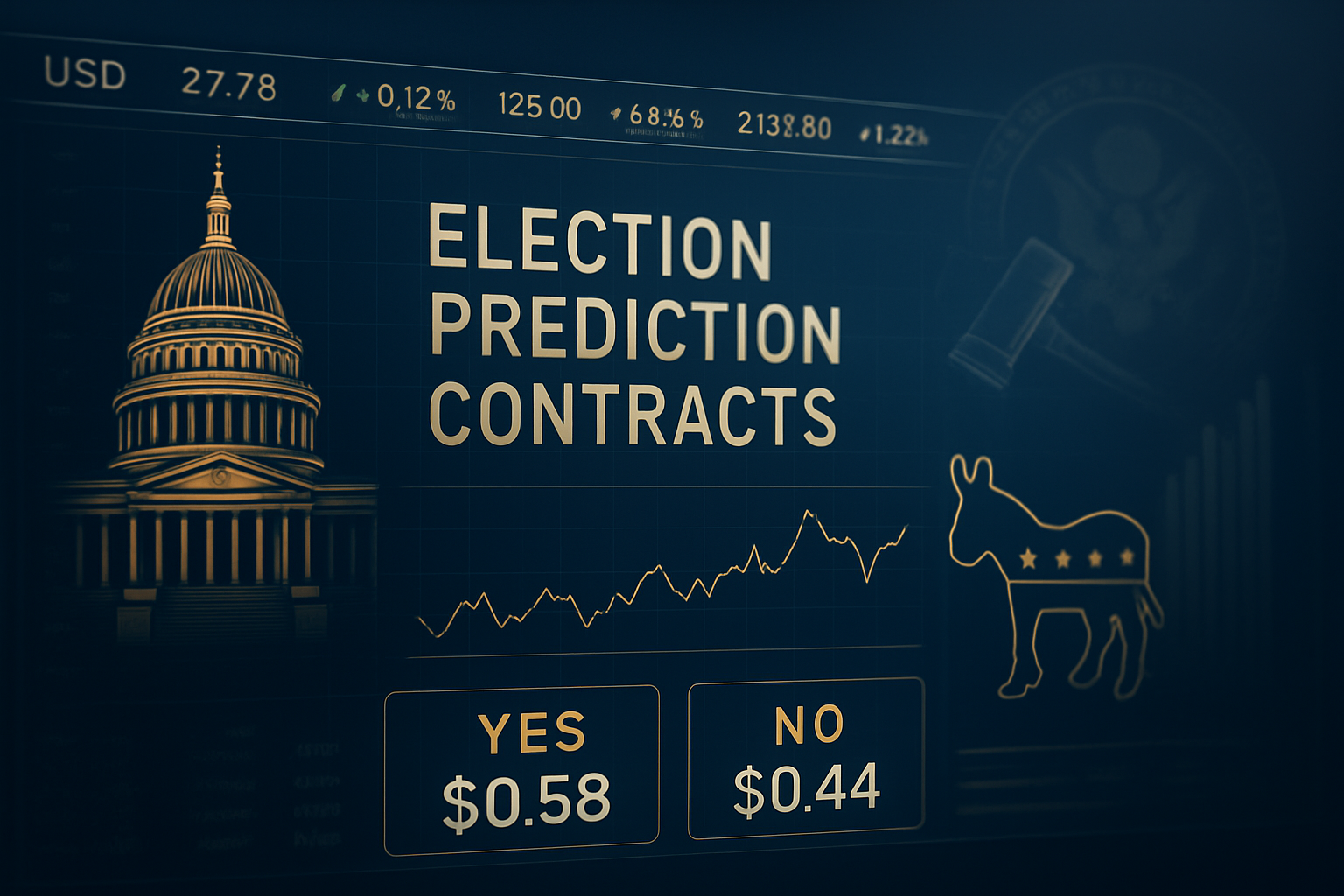
    Currently, the primary focus of the market is the 2026 Congressional Midterms. Unlike previous cycles where the 5,000-trader cap led to "bottlenecking"—where a contract would reach its limit and prices would stagnate regardless of new information—the current market for "GOP Control of the House" is seeing unprecedented liquidity. At the time of writing, the odds of Republicans maintaining their majority sit at 58%, while the Democratic path to the Senate gavel is priced at 44 cents (a 44% probability).

    Trading volume on PredictIt has surged by over 400% since the removal of the trader cap. Previously, large events like the 2024 Presidential Election were hampered by the $850 limit, which often allowed "fan bias" or low-information retail traders to move the needle. Now, the $3,500 limit—deliberately indexed to match federal individual campaign contribution limits—allows more sophisticated actors to enter the fray, providing a deeper pool of capital and more stable pricing.

    Why Traders Are Betting

    The move to full regulation has fundamentally changed who is trading. The $3,500 limit is the primary driver. While still modest compared to the uncapped offshore markets like Polymarket, the 4x increase in the wager cap has attracted a new class of "professionalized" political junkies and small-scale hedge fund analysts.

    "The old $850 limit was essentially a hobbyist's cap," says one high-volume trader who has been active on the platform since 2016. "With $3,500, you can actually build a meaningful position that rewards the hours of research we put into precinct-level data. It’s enough money to make the signal drown out the noise."

    Furthermore, the legal certainty provided by the 2025 settlement—stemming from the Clarke v. CFTC lawsuit—has eliminated the "platform risk" that plagued the exchange for years. Traders no longer fear that their funds will be frozen or that the market will be shuttered by a regulatory whim. This has led to a "flight to quality," where traders who prefer the legal protections of a U.S.-regulated exchange are moving away from decentralized platforms and back to PredictIt’s refined interface.

    Broader Context and Implications

    PredictIt’s evolution is part of a broader "mainstreaming" of prediction markets that accelerated throughout 2025. The entry of Robinhood Markets (NASDAQ: HOOD) into the event contract space and the growth of CME Group (NASDAQ: CME)'s event derivatives have forced PredictIt to adapt or die. By securing its status as a fully regulated exchange, PredictIt has managed to maintain its niche as the "gold standard" for political data—a reputation built on a decade of providing more accurate forecasts than traditional polling.

    The regulatory shift also highlights a major change in the CFTC’s philosophy. After years of resisting election-based betting, the Commission, influenced by court losses and a shifting legislative tide, has pivoted toward a "regulated expansion" model. This model acknowledges that prediction markets provide a public good by aggregating information that polls often miss.

    However, this expansion is a double-edged sword for PredictIt's accuracy. Some critics argue that the "wisdom of the crowds" relied on the platform's high density of small-dollar, highly informed academic and political observers. There is a fear that by raising limits to $3,500, the market may become more susceptible to "whales" or manipulative attempts by political campaigns to shift public perception—though supporters argue that higher limits actually make manipulation more expensive and therefore less likely.

    What to Watch Next

    The immediate test for the New PredictIt will be the upcoming primary season for the 2026 Midterms. Watch for the "liquidity test" in high-profile Senate races in Pennsylvania and Georgia. If these markets can handle tens of thousands of traders and multi-million dollar pools without the price volatility seen in the "old" PredictIt, it will prove that the platform can scale.

    Additionally, keep an eye on the competitive response from Cboe Global Markets (NASDAQ: CBOE). While Cboe has traditionally focused on financial indicators, there are rumors that they may partner with data providers to launch their own suite of political contracts to compete with PredictIt’s new DCM status.

    Finally, the relationship between PredictIt and the Prediction Market Research Consortium (PMRC)—the non-profit entity now overseeing its research mission—will be critical. How they balance the "for-profit" needs of a regulated exchange with the "pro-social" mission of academic data collection will define the platform's identity in the years to face.

    Bottom Line

    The transition of PredictIt into a fully regulated, high-capacity exchange marks the end of the "wild west" era of U.S. prediction markets and the beginning of their institutionalization. By removing the 5,000-trader cap and nearly quadrupling wager limits, PredictIt is effectively betting that more money and more people will lead to more truth.

    If the 2026 Midterm cycle proves that PredictIt can maintain its "gold standard" accuracy under these new conditions, it will cement the platform's place not just as a betting site, but as a critical piece of the American democratic infrastructure. For the first time in history, the "wisdom of the crowd" has the regulatory backing and the financial depth to truly challenge the dominance of traditional political punditry.


    This article is for informational purposes only and does not constitute financial or betting advice. Prediction market participation may be subject to legal restrictions in your jurisdiction.

    PredictStreet focuses on covering the latest developments in prediction markets. Visit the PredictStreet website at https://www.predictstreet.ai/.
  • The Liquidity Paradox: Why PredictIt’s $850 Limit Beat Polymarket’s $2.4 Billion in 2024

    The Liquidity Paradox: Why PredictIt’s $850 Limit Beat Polymarket’s $2.4 Billion in 2024

    In the wake of the most heavily traded political event in history, a landmark study from Vanderbilt University has sent shockwaves through the burgeoning prediction market industry. The report, titled "Prediction Markets? The Accuracy and Efficiency of $2.4 Billion in the 2024 Presidential Election," reveals a startling inverse relationship between raw capital and predictive precision. While the 2024 cycle saw billions of dollars flow into contracts on a potential Trump-Harris matchup, the massive liquidity often cited as the primary strength of these markets appears to have been their greatest vulnerability.

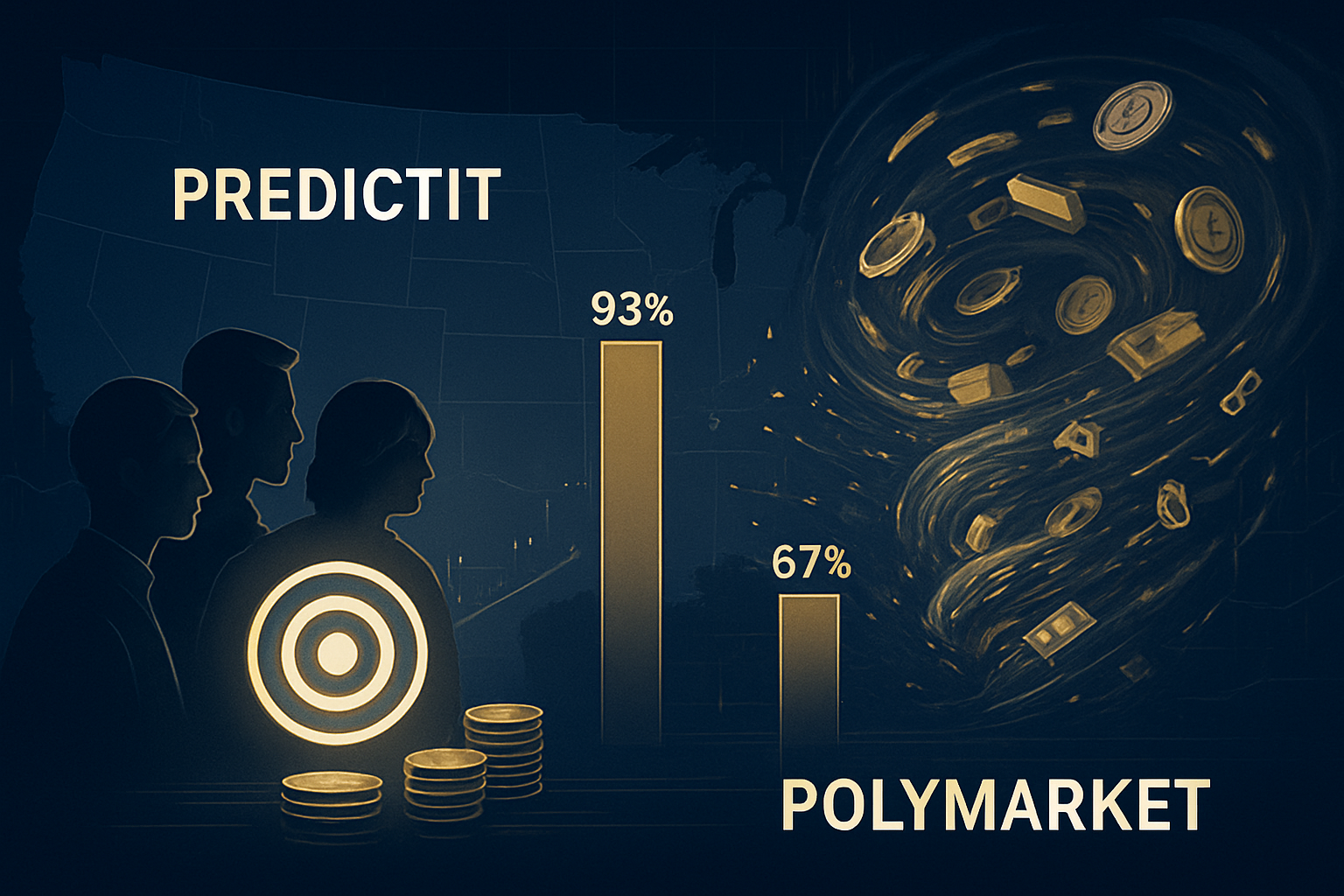
    The study, led by Joshua D. Clinton and TzuFeng Huang, analyzed over 2,500 political contracts across the final five weeks of the campaign. It found that PredictIt, the academic-aligned platform known for its stringent $850 individual betting limit, achieved a staggering 93% accuracy rate on Election Eve. This outperformed the federally regulated Kalshi (78%) and the decentralized volume-leader Polymarket (67%), the latter of which became a global phenomenon for its nine-figure "whale" positions but struggled to separate signal from noise.

    The Market: What's Being Predicted

    The focus of the Vanderbilt research was the 2024 U.S. Presidential Election, a cycle that transformed prediction markets from niche hobbies into mainstream financial instruments. The primary contracts involved the winner of the Presidency, individual state outcomes, and control of the House and Senate. By November 2024, Polymarket had recorded over $2.4 billion in total volume on its primary presidential winner contract, while Kalshi, which recently gained legal clearance to offer election betting, saw its volume surge in the final weeks following a partnership with Robinhood (Nasdaq: HOOD).

    Prices on these exchanges function as implied probabilities: a contract trading at $0.52 indicates a 52% consensus chance of an event occurring. Throughout the cycle, these odds fluctuated wildly. In October 2024, Polymarket prices famously diverged from traditional polling, at one point giving Donald Trump a 67% chance of victory while national polls remained within the margin of error. This divergence created massive arbitrage opportunities—situations where traders could bet on opposite outcomes across different platforms to lock in a guaranteed profit—which Vanderbilt researchers found peaked just days before the vote.

    Why Traders Are Betting

    The 2024 election was characterized by a fundamental clash between "data-driven" traders and "sentiment-driven" whales. On Polymarket, a single anonymous French trader, dubbed the "Théo" whale, reportedly wagered over $30 million on a Republican sweep. This outsized position single-handedly shifted the platform's odds, a move that researchers now believe contributed to Polymarket's lower 67% accuracy rating by creating a "feedback loop" of artificial confidence.

    Conversely, PredictIt’s success is being attributed to its "enforced diversity." Because no single user can risk more than $850 on a single contract, the price is determined by the collective wisdom of thousands of unique participants rather than a handful of deep-pocked speculators. This structure effectively neutralized the impact of institutional influence from players like Interactive Brokers (Nasdaq: IBKR), which launched its own ForecastEx exchange to cater to high-net-worth hedgers. While traditional forecasting methods like polling struggled with non-response bias, the Vanderbilt study suggests that markets with lower entry barriers and tighter limits may actually provide a "purer" signal.

    Broader Context and Implications

    The Vanderbilt findings arrive at a critical juncture for the industry. The perceived accuracy of prediction markets has led to major media integration, with real-time odds now a staple of coverage on CNBC, owned by Comcast (Nasdaq: CMCSA), and CNN, owned by Warner Bros. Discovery (Nasdaq: WBD). However, the 26-point accuracy gap between PredictIt and Polymarket suggests that these media outlets may be anchoring their coverage to the wrong data sets.

    Furthermore, the study highlights a failure in market efficiency. Theoretically, if the same event is being predicted on two different platforms, the prices should be identical. Vanderbilt found this was rarely the case. The lack of correlation between platforms suggests that traders were often reacting to internal "social media vibes" rather than external political developments. This has already triggered a regulatory response in Washington. Following reports of potential insider trading on international events, Representative Ritchie Torres introduced the "Public Integrity in Financial Prediction Markets Act of 2026," which seeks to restrict government officials from participating in these markets to prevent information asymmetry.

    What to Watch Next

    As we move toward the 2026 midterm elections, the industry is undergoing a massive consolidation. DraftKings Inc. (Nasdaq: DKNG) and Flutter Entertainment (NYSE: FLUT), the parent of FanDuel, are reportedly exploring the integration of event contracts directly into their sports betting apps, which would introduce tens of millions of new users to the ecosystem. The key question for 2026 is whether these platforms will adopt the "whale-friendly" model of Polymarket or the "capped-signal" model of PredictIt.

    The next major milestone for the industry will be the first quarterly report from the Commodity Futures Trading Commission (CFTC) under its new oversight framework. This report is expected to address the "Vanderbilt Gap" and could potentially lead to new rules regarding maximum position sizes for political contracts. Investors should also monitor the stock performance of Intercontinental Exchange (NYSE: ICE), which has a strategic stake in the infrastructure powering these markets, as a bellwether for institutional confidence in the sector.

    Bottom Line

    The Vanderbilt University study serves as a sobering reality check for the "liquidity is king" mantra. The 93% accuracy of PredictIt proves that a well-designed market with restricted participation can significantly outperform a multi-billion-dollar global pool dominated by speculative capital. It suggests that for prediction markets to fulfill their promise as a superior forecasting tool, they must prioritize the breadth of their participant base over the depth of their order books.

    As we look toward the 2026 and 2028 cycles, the "Vanderbilt Gap" will likely define the debate over market regulation and design. For now, the takeaway is clear: if you want to know who will win an election, look to the market where the many bet a little, rather than the market where the few bet a lot. The $2.4 billion experiment of 2024 has shown that in the world of high-stakes forecasting, volume is no substitute for variety.


    This article is for informational purposes only and does not constitute financial or betting advice. Prediction market participation may be subject to legal restrictions in your jurisdiction.

    PredictStreet focuses on covering the latest developments in prediction markets. Visit the PredictStreet website at https://www.predictstreet.ai/.
  • PredictIt: The ‘Gold Standard’ of Politics Holds Its Ground Against Crypto Giants and Retail Powerhouses

    PredictIt: The ‘Gold Standard’ of Politics Holds Its Ground Against Crypto Giants and Retail Powerhouses

    In the fast-evolving landscape of 2026 prediction markets, the conversation is often dominated by the massive volumes of crypto-native platforms or the retail explosion of regulated exchanges. Yet, as the primary season for the 2026 Midterm elections heats up, one name remains the essential dashboard for political professionals and junkies alike: PredictIt. Despite a decade of regulatory hurdles and the arrival of well-funded competitors, the "little exchange that could" has cemented its status as the most trusted signal in political forecasting.

    Currently, PredictIt’s markets for the 2026 Midterms show a divided government as the most likely outcome, with Democrats trading at 78¢ to retake the House of Representatives and Republicans holding a 69¢ lead to retain the Senate. While larger competitors like Polymarket and Kalshi boast higher total trading volumes, PredictIt's prices are frequently cited by cable news networks and political strategists as the definitive "market view," a testament to its unique market architecture and historical accuracy.

    The Market: What's Being Predicted

    PredictIt’s current board is dominated by two massive cycles: the 2026 Midterms and the 2028 Presidential Election. On the 2026 front, traders are closely watching the "GOP Senate Seats" contract, which suggests a narrow majority of 51-52 seats is the most probable scenario. Meanwhile, the 2028 Presidential Winner market has already seen over $15 million in shares traded, with Vice President JD Vance leading the Republican field at 28¢ and California Governor Gavin Newsom fronting the Democrats at 23¢.

    The platform's survival into 2026 is a story of legal resilience. Following a landmark victory in the case of Clarke v. CFTC, the platform’s operator, Aristotle International, successfully transitioned PredictIt into a fully regulated Designated Contract Market (DCM). While it now operates under the expanded "Aristotle Exchange" banner with a higher per-contract limit of $3,500, it still pales in comparison to the "no-limit" environment of Polymarket or the institutional scale of Kalshi. However, this smaller footprint is precisely what traders say makes its data more reliable; the high "signal-to-noise" ratio remains PredictIt's greatest competitive advantage.

    Why Traders Are Betting

    The enduring appeal of PredictIt lies in its "anti-whale" design. For years, the platform was capped by a strict $850 individual investment limit per contract. While that limit was recently raised to $3,500 under its new regulatory status, the DNA of the platform remains geared toward the "wisdom of the crowd" rather than the "influence of the wealthy." On larger platforms like Polymarket, a single "whale" with a $10 million position can move the odds significantly, creating a price that reflects one person's conviction rather than a broad consensus.

    Traders on PredictIt are often "super-forecasters"—political staffers, data scientists, and policy wonks—who treat the platform more like an intellectual hobby than a get-rich-quick scheme. This has created a market environment where prices are less susceptible to sudden, irrational spikes caused by social media hype. Recent news, such as shifting polling data in key battleground states like Pennsylvania and Arizona, tends to be priced into PredictIt hours before it reflects on more volatile, high-volume platforms.

    Broader Context and Implications

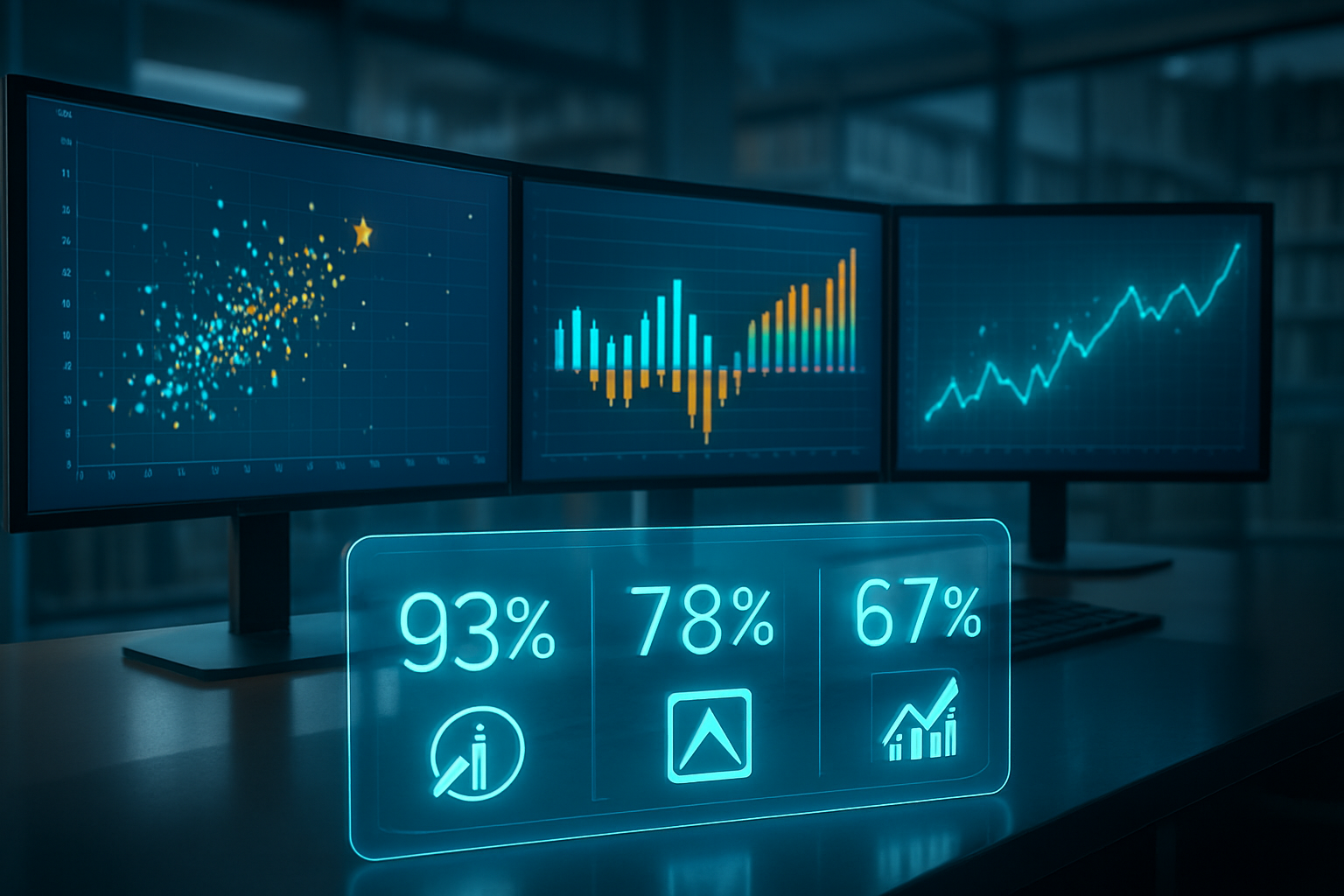
    The platform’s resilience is increasingly backed by academic data. A 2025 study from Vanderbilt University, which analyzed over $2 billion in betting volume across the 2024 election cycle, found that PredictIt achieved a 93% accuracy rate in predicting state-level outcomes, significantly outperforming Kalshi (78%) and the crypto-giant Polymarket (67%). The study concluded that PredictIt’s position limits prevented market manipulation and ensured that prices were driven by a diverse array of independent information sources.

    This accuracy has kept PredictIt at the center of the regulatory conversation. While Kalshi has found success through a high-profile integration with Robinhood Markets (NASDAQ: HOOD), and Polymarket has scaled via a strategic partnership with Intercontinental Exchange (NYSE: ICE), PredictIt has leaned into its academic roots. Originally launched as a research project by Victoria University of Wellington, it continues to provide anonymized data to over 200 universities worldwide, making it the most studied prediction market in history.

    What to Watch Next

    As we move toward the 2026 Midterm filing deadlines in March, PredictIt's "Candidate Entry" markets will be the primary focus. Traders are currently eyeing several "Will They Run?" contracts for high-profile Senate seats that could swing the balance of power. Any movement in these contracts often serves as a precursor to formal announcements, as "insider" sentiment often leaks into the market via small, incrementally trades.

    Furthermore, the integration of Aristotle Exchange’s new derivatives clearing capabilities will be a major milestone to watch in mid-2026. This move is expected to introduce more complex "bracket" contracts, allowing traders to bet on the exact margin of victory in the House and Senate. The question for the market is whether PredictIt can maintain its "gold standard" accuracy as it scales up to compete with the sheer financial gravity of its larger rivals.

    Bottom Line

    PredictIt’s position in 2026 proves that in the world of forecasting, bigger is not always better. By prioritizing a broad base of small-stakes traders over a narrow base of high-rolling speculators, the platform has created a unique ecosystem where information is valued over capital. It remains the "purist's market," a place where the collective intelligence of thousands of political junkies outweighs the massive liquidity of the crypto world.

    As the 2026 election cycle intensifies, PredictIt will likely remain the primary reference point for those seeking the "true" probability of political events. While other platforms may offer more excitement and higher stakes, PredictIt’s decade of data and academic rigor have made it the indispensable "North Star" of the prediction market industry.


    This article is for informational purposes only and does not constitute financial or betting advice. Prediction market participation may be subject to legal restrictions in your jurisdiction.

    PredictStreet focuses on covering the latest developments in prediction markets.
    Visit the PredictStreet website at https://www.predictstreet.ai/.
  • The Volume Trap: Why Vanderbilt Researchers Say ‘Bigger’ Isn’t ‘Better’ for Prediction Markets

    The Volume Trap: Why Vanderbilt Researchers Say ‘Bigger’ Isn’t ‘Better’ for Prediction Markets

    In the high-stakes world of "information finance," the common wisdom has long been that more money equals more truth. The theory of the "wisdom of the crowd" suggests that as trading volume increases, market prices become more accurate reflections of reality. However, a bombshell new study from Vanderbilt University is turning that assumption on its head, revealing that the world’s largest prediction market was actually its least accurate during the most recent election cycle.

    The study, authored by Vanderbilt political science professor Joshua D. Clinton and researcher TzuFeng Huang, analyzed over 2,500 political contracts across the major players in the space: PredictIt, Kalshi, and Polymarket. Their findings have sent shockwaves through the industry: PredictIt, the smallest of the trio by volume due to strict regulatory limits, emerged as the "gold standard" with a 93% accuracy rate. Meanwhile, the $2.4 billion behemoth Polymarket trailed significantly behind at just 67%, raising serious questions about whether massive liquidity is a feature or a bug in political forecasting.

    The Market: What's Being Predicted

    The Vanderbilt research focused on the accuracy and efficiency of prediction markets during the 2024 U.S. election cycle—an event that saw prediction markets move from the fringes of the internet to the center of mainstream media. At the heart of the study was a comparison of how accurately these platforms predicted the outcome of 2024 presidential, congressional, and down-ballot races.

    Trading on these events took place across several distinct ecosystems. PredictIt, operated by Victoria University of Wellington with a "no-action" letter from the CFTC (though frequently under legal scrutiny), has long maintained a $850 limit per contract. Kalshi, a regulated exchange in the U.S., saw its volume explode after winning a landmark legal battle to host election markets. Polymarket, a decentralized platform built on the Polygon blockchain, became the global "whale" of the industry, fueled by international liquidity and massive crypto-native bets.

    Despite the disparities in how they operate, the study looked at the "market-implied probability" on the eve of Election Night. While PredictIt correctly called 93% of the outcomes it listed, Kalshi followed with a respectable 78%. Polymarket’s 67% accuracy rate was particularly notable given its $2 billion-plus handle, suggesting that a significant portion of its volume may have been "noise" rather than "signal."

    Why Traders Are Betting

    The discrepancy in accuracy appears to be rooted in the very factor that proponents of prediction markets usually celebrate: volume. Researchers Clinton and Huang found that massive liquidity often acts as a "double-edged sword." In the case of Polymarket, the influx of billions of dollars attracted not just informed "insiders," but also speculative noise and political partisans who used the market as a tool for "cheerleading" rather than objective analysis.

    One of the most striking findings in the Vanderbilt study was the presence of "herd behavior." Researchers noted that price movements were frequently driven by "within-market actions"—traders reacting to what other traders were doing on the same platform—rather than external political news or polling data. This created a feedback loop where prices became untethered from reality. In several instances, the study found that the probability of mutually exclusive outcomes (like a "Republican Sweep" and a "Democratic Sweep") actually moved in the same direction simultaneously—a sign of fundamental market irrationality.

    Furthermore, the rise of social media influence played a pivotal role. Platforms like X (formerly Twitter) became echo chambers where "whales" could influence market sentiment, leading smaller traders to follow their lead in a classic display of the "herd" mentality. This behavior was less prevalent on PredictIt, where the $850 cap prevents any single trader from moving the needle too far, forcing the price to rely on a broader, more diverse consensus of smaller, more cautious bettors.

    Broader Context and Implications

    The Vanderbilt study arrives at a time when prediction markets are becoming deeply integrated into the American financial and media landscape. Major public companies have already placed their bets on the sector’s longevity. Robinhood (NASDAQ: HOOD) recently launched its "Prediction Markets Hub" in partnership with Kalshi, while Interactive Brokers (NASDAQ: IBKR) has developed its own exchange, ForecastEx, to allow clients to hedge against economic and political volatility.

    The institutionalization of the space is accelerating. Intercontinental Exchange (NYSE: ICE), the parent company of the New York Stock Exchange, recently made a strategic investment in Polymarket, while Alphabet (NASDAQ: GOOGL) has begun integrating live prediction data from both Kalshi and Polymarket into Google Finance results. Even traditional media is pivoting; News Corp (NASDAQ: NWS), via Dow Jones, recently signed an exclusive partnership to embed Polymarket modules into The Wall Street Journal and MarketWatch.

    However, the Vanderbilt findings serve as a warning for these corporate giants. If these markets are "merely loud" rather than "wise," their utility as a hedging tool or a journalistic "thermometer" is compromised. The researchers warn that if the public and media outlets treat these markets as infallible "truth machines," they risk being misled by speculative bubbles rather than informed by the "wisdom of the crowd."

    What to Watch Next

    As we move deeper into 2026, the focus of prediction markets is shifting from the 2024 post-mortem to the upcoming midterm cycles and global economic indicators. Traders and researchers alike will be watching to see if platforms like Polymarket can implement new mechanisms to dampen "herd behavior" and filter out speculative noise.

    Keep a close eye on the "arbitrage gaps" identified by the Vanderbilt team. The researchers found that identical contracts often traded at significantly different prices across platforms, particularly in the final two weeks of an event. As market efficiency experts work to bridge these gaps, we may see the emergence of cross-platform "aggregator" tools that attempt to find a "true" price by weighing the signals from PredictIt, Kalshi, and Polymarket against each other.

    Additionally, regulatory scrutiny remains a looming shadow. While Kalshi has secured key legal victories, the CFTC continues to express concern over the "gamification" of democracy. The Vanderbilt study’s finding that PredictIt—the most regulated and restricted platform—was also the most accurate could provide a surprising defense for the "low-limit" model that regulators prefer.

    Bottom Line

    The Vanderbilt study by Clinton and Huang is a landmark moment for the prediction market industry. It challenges the foundational belief that higher volume leads to better data, proving instead that on platforms like Polymarket, billions of dollars in liquidity can lead to "informational cascades" where traders simply follow the leader into inaccuracy.

    For the prediction market enthusiast, the lesson is clear: size isn't everything. PredictIt’s 93% accuracy rate suggests that a diverse group of small-stakes traders may be better at filtering out noise than a handful of high-rolling "whales." As prediction markets become an embedded feature of platforms like Robinhood (NASDAQ: HOOD) and Google Finance (NASDAQ: GOOGL), the industry must grapple with the reality that "herd behavior" is a potent force that can easily drown out the truth.

    In the end, prediction markets remain a powerful tool for forecasting, but they are not a crystal ball. They are a reflection of human psychology—and as this study shows, humans are just as prone to following the crowd as they are to finding the truth.


    This article is for informational purposes only and does not constitute financial or betting advice. Prediction market participation may be subject to legal restrictions in your jurisdiction.

    PredictStreet focuses on covering the latest developments in prediction markets.
    Visit the PredictStreet website at https://www.predictstreet.ai/.
  • Size vs. Science: How PredictIt’s Small-Scale Market Outpaced Global Giants in Accuracy

    Size vs. Science: How PredictIt’s Small-Scale Market Outpaced Global Giants in Accuracy

    As the dust settles on the hyper-active forecasting cycles of the last two years, a landmark study from Vanderbilt University has sent shockwaves through the prediction market industry. For years, the prevailing wisdom was that "liquidity is king"—that the more money and participants a market has, the more accurate its "crowdsourced wisdom" becomes. However, according to research led by Professor Joshua D. Clinton and TzuFeng Huang, the reality is far more nuanced.

    Analyzing over 2,500 individual markets during the peak of the 2024 election season, the Vanderbilt study revealed a startling hierarchy of accuracy. PredictIt, the long-standing "academic" platform often criticized for its strict trade limits, emerged as the victor with a staggering 93% accuracy rate. Meanwhile, the regulated U.S. exchange Kalshi followed with 78%, and the high-volume, crypto-based behemoth Polymarket trailed at 67%. As of January 16, 2026, these findings are forcing a massive rethink of how we value market signals over raw trading volume.

    The Market: What’s Being Predicted

    The study focused on the efficiency and predictive power of four major platforms: PredictIt, Kalshi, Polymarket, and the Iowa Electronic Markets (IEM). Researchers tracked 2,500 political contracts, specifically focusing on down-ballot races and niche "event contracts" that are often ignored by mainstream polls but are vital for professional hedgers and political strategists.

    While Polymarket captured the world's attention by processing billions of dollars in volume, the Vanderbilt data suggests that this volume may have been a double-edged sword. PredictIt, which historically capped individual bets at $850 (a limit recently adjusted following its 2025 regulatory victory), maintained a "purer" information signal. Because traders on PredictIt couldn't simply "move" the market with millions of dollars, the price discovery was driven by a broader consensus of smaller, highly informed participants.

    In contrast, Kalshi—the first CFTC-regulated exchange for election contracts in the U.S.—has seen its market share explode in early 2026. By January 12, 2026, Kalshi commanded over 66% of the daily regulated volume, yet even its robust, institutional-grade infrastructure couldn't match the pinpoint accuracy of PredictIt's more restricted environment in the Vanderbilt analysis.

    Why Traders Are Betting

    The discrepancy in accuracy has largely been attributed to "whale" activity and the resulting herd behavior. The most famous example cited in the study is "Théo," the so-called "French Whale" who famously bet over $30 million on a Donald Trump victory on Polymarket. While Théo’s specific bet proved profitable, the Vanderbilt researchers argue that such massive, concentrated positions create "noise" that distorts the market for everyone else.

    When a single actor holds 20% of the "Yes" shares in a major contract, it creates a feedback loop. Other traders, seeing the price rise, assume there is new, secret information and follow the trend—a classic case of herd behavior. This "social media hype" led to what researchers identified as "negative serial correlation," where prices would spike based on momentum rather than data, only to crash or correct shortly after.

    This phenomenon has sparked intense interest from retail platforms like Robinhood Markets, Inc. (NASDAQ: HOOD) and Interactive Brokers Group, Inc. (NASDAQ: IBKR), both of which have integrated event contracts into their suites. Traders on these platforms are now increasingly looking for "alpha" by identifying when a market is being moved by a "whale" versus when it is being moved by genuine information.

    Broader Context and Implications

    The Vanderbilt study’s findings come at a pivotal moment for the industry's reputation. Throughout 2025, the narrative was that prediction markets were the "new polls," offering a real-time, incentivized alternative to traditional survey data. However, the 67% accuracy rate of the largest player, Polymarket, suggests that "crowdsourced wisdom" can easily devolve into the "madness of crowds" when unregulated or dominated by high-net-worth individuals.

    This has led to a shift in how institutional players, such as Flutter Entertainment PLC (NYSE: FLUT)—the parent company of FanDuel—view the space. While prediction markets are a powerful tool for sentiment analysis, the Vanderbilt data proves that size does not always equal smarts. The regulatory landscape has shifted accordingly; following its full compliance status in late 2025, PredictIt has leaned into its "accuracy-first" branding, even launching an AI-driven mascot named "Itoldyousaurus" to highlight its superior track record over its more capitalized rivals.

    Furthermore, the entry of traditional betting companies like DraftKings Inc. (NASDAQ: DKNG) into the event contract space has introduced more sophisticated risk management tools designed to prevent the kind of market distortion seen with the "French Whale" incident.

    What to Watch Next

    As we move deeper into 2026, the industry is watching how Polymarket will respond to these accuracy critiques. The platform recently announced a high-profile partnership with the Golden Globes to be their "exclusive prediction partner," signaling a pivot toward entertainment and culture markets where "whale" distortion might be less politically sensitive but equally profitable.

    The next major milestone for the industry will be the 2026 midterm election cycle. Analysts are watching to see if Kalshi’s dominance in market share (now valued at roughly $11 billion) will finally translate into the top spot for accuracy, or if the "PredictIt Effect"—where small, capped markets produce better data—will hold true once again.

    Additionally, keep an eye on the integration of "neighbor polling" techniques into market strategies. After "Théo" successfully used this method to justify his $30 million bet, several new hedge funds are reportedly building proprietary algorithms to scan prediction markets for "whale-driven" vs. "consensus-driven" price movements.

    Bottom Line

    The Vanderbilt study serves as a sobering reminder that prediction markets are not infallible oracles; they are tools that are only as good as the incentives and participants within them. PredictIt’s 93% accuracy rate suggests that when you limit the ability of individuals to "buy" the narrative, the resulting price is far more likely to reflect reality.

    For the average investor or observer, the lesson is clear: volume is a measure of interest, not necessarily truth. While Polymarket may have the most "noise" and Kalshi the most "institutional backing," the "quiet" markets of PredictIt have, for now, proven to be the most reliable indicators of the future. As prediction markets become a mainstream fixture on platforms like Robinhood, the battle between "big money" and "broad data" is only just beginning.


    This article is for informational purposes only and does not constitute financial or betting advice. Prediction market participation may be subject to legal restrictions in your jurisdiction.

    PredictStreet focuses on covering the latest developments in prediction markets.
    Visit the PredictStreet website at https://www.predictstreet.ai/.

  • The Accuracy Paradox: New Vanderbilt Study Shines a Light on the Reliability of Prediction Markets

    The Accuracy Paradox: New Vanderbilt Study Shines a Light on the Reliability of Prediction Markets

    The long-debated question of whether massive trading volume leads to superior forecasting accuracy has finally been answered with a treasure trove of data. A groundbreaking study from Vanderbilt University, titled "Prediction Markets? The Accuracy and Efficiency of $2.4 Billion in the 2024 Presidential Election," has sent shockwaves through the financial and political communities. The study analyzed over 2,500 individual prediction markets to determine which platform truly provides the most reliable signal amidst the noise of a high-stakes election cycle.

    The findings have upended the conventional wisdom that the highest liquidity produces the "truth." While the decentralized giant Polymarket dominated headlines and volume, the study revealed a significant performance gap: PredictIt led the pack with a staggering 93% accuracy rate in its contracts, while Polymarket lagged behind at just 67%. As of January 14, 2026, these results are forcing institutional investors and political strategists to rethink how they use these platforms as forecasting tools in an increasingly volatile global landscape.

    The Market: What's Being Predicted

    The Vanderbilt study, led by Professor Joshua D. Clinton and PhD student TzuFeng Huang, represents the most comprehensive post-mortem of the 2024 election cycle’s prediction market performance. Researchers tracked every available political contract across four major platforms: PredictIt, Polymarket, Kalshi, and the Iowa Electronic Markets (IEM). By analyzing the implied probabilities against actual outcomes, the study sought to determine if "the wisdom of the crowd" was actually wise or merely loud.

    PredictIt emerged as the gold standard for accuracy. Despite its historically smaller footprint and regulatory constraints, it correctly predicted the outcome of 93% of the analyzed markets. Kalshi, which has rapidly expanded its presence through data-sharing partnerships with major media outlets like CNBC (Nasdaq: CMCSA) and CNN (Nasdaq: WBD), followed with a respectable 78% accuracy rate. Polymarket, the crypto-native platform that processed billions in volume, fell to the bottom with a 67% accuracy rate across its thousands of niche and down-ballot contracts.

    The disparity is particularly striking when considering the volume. Polymarket was the undisputed "whale" of the 2024 cycle, handling over $2 billion in trades. However, the study suggests that this massive liquidity often acted as a double-edged sword, attracting speculative "noise" and irrational herd behavior that distorted the true odds of many electoral outcomes.

    Why Traders Are Betting

    The research highlights a fundamental tension in prediction markets: the difference between "sober" analysis and "speculative" momentum. PredictIt’s success is attributed in part to its unique structure. For years, the platform operated under a $850 cap on individual bets (a limit that has since been increased to $3,500 following its 2025 settlement with the CFTC). This cap discouraged the massive, market-moving "whale" positions seen on Polymarket, instead favoring a larger number of smaller, more deliberate participants who were often deeply informed about specific local or niche races.

    In contrast, Polymarket’s lack of betting limits allowed for significant price manipulation and "irrational movements." The Vanderbilt study noted instances where mutually exclusive outcomes—such as the probability of a Republican sweep versus a Democratic sweep—moved in the same direction simultaneously. This suggests that many traders were not processing information rationally but were instead reacting to social media trends or platform-wide sentiment.

    Current market dynamics in early 2026 reflect these findings. On January 12, 2026, the industry hit a historic daily trading volume of $701.7 million, with Kalshi commanding a 66.4% market share. Traders are increasingly flocking to regulated platforms like Kalshi and PredictIt, seeking the "cleaner" data that comes from oversight and internal controls against insider trading.

    Broader Context and Implications

    The Vanderbilt study arrives at a critical juncture for the industry. Just last week, Polymarket was embroiled in a major controversy over its resolution of a contract regarding a U.S. mission in Venezuela. When U.S. forces captured Nicolás Maduro, Polymarket initially hesitated to pay out "Yes" bets, sparking accusations of arbitrariness in its role as an "arbiter of truth." This incident, combined with the Vanderbilt findings, has fueled a narrative that decentralized, high-volume markets may be more prone to systemic failure than their regulated counterparts.

    Furthermore, the study's revelation about the lack of "market efficiency" has drawn the eye of federal and state regulators. The researchers found that arbitrage opportunities—the ability to profit by betting on both sides of an event across different platforms—actually peaked in the final weeks of the 2024 campaign. This indicates that information was not being synthesized across the ecosystem, a hallmark of an immature or inefficient market.

    In response, New York lawmakers and federal regulators are currently drafting the "Public Integrity in Financial Prediction Markets Act of 2026." This legislation aims to formalize rules against insider trading, especially as more government officials and corporate insiders are suspected of using these markets to hedge against or profit from non-public information.

    What to Watch Next

    As we move deeper into 2026, the focus will shift to how these platforms adapt to the "accuracy over volume" mandate. PredictIt, now operating as a fully regulated CFTC exchange and clearinghouse as of September 2025, has removed its 5,000-trader cap while raising wager limits to $3,500. This expansion will test whether the platform can maintain its 93% accuracy rate as its liquidity begins to rival that of its larger competitors.

    Kalshi, meanwhile, is fighting a series of "preemption battles" in state courts. Just yesterday, on January 13, 2026, a U.S. District Judge in Tennessee granted Kalshi a Temporary Restraining Order against the Tennessee Sports Wagering Council. The outcome of these state-level legal battles will determine whether prediction markets can legally offer "event contracts" that overlap with traditional sports betting, a move that could potentially triple the industry's total addressable market by the end of the year.

    Investors should also watch for the integration of prediction market data into the broader financial ecosystem. Tech giants like Meta Platforms, Inc. (Nasdaq: META) and Amazon.com, Inc. (Nasdaq: AMZN) are reportedly exploring the use of internal prediction markets to guide project timelines and product launches, further validating the technology as a corporate forecasting tool.

    Bottom Line

    The Vanderbilt study serves as a definitive debunking of the "liquidity equals accuracy" myth. While Polymarket succeeded in creating a global macro-indicator and a massive speculative venue, it was PredictIt’s more constrained, sober environment that consistently provided the more accurate forecast. For those using prediction markets as a "crystal ball" for future events, the message is clear: the most expensive market is not always the most correct.

    As we look toward the 2026 midterms and beyond, the industry is maturing. The transition of PredictIt into a fully regulated powerhouse and Kalshi’s dominance in the regulated daily volume space suggest a future where transparency and oversight are the primary drivers of market trust. Prediction markets remain a powerful tool for aggregating information, but as the Vanderbilt researchers have proven, the quality of the crowd matters just as much as its size.


    This article is for informational purposes only and does not constitute financial or betting advice. Prediction market participation may be subject to legal restrictions in your jurisdiction.

    PredictStreet focuses on covering the latest developments in prediction markets.
    Visit the PredictStreet website at https://www.predictstreet.ai/.