Tag: Prediction Markets

  • Geopolitical Truth Engines: Why Prediction Markets Are the New Early Warning System

    Geopolitical Truth Engines: Why Prediction Markets Are the New Early Warning System

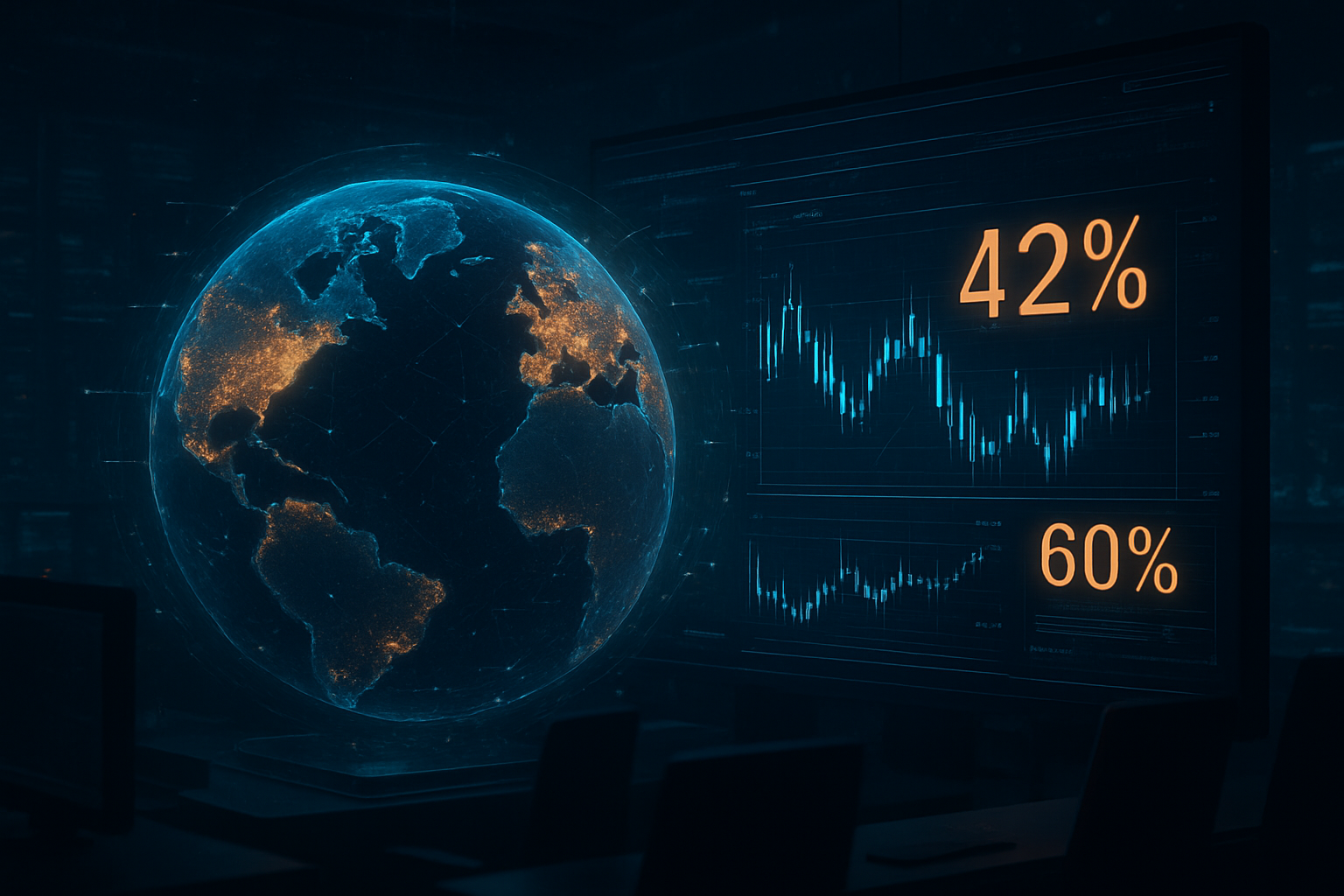
    As of February 5, 2026, the global information landscape has been fundamentally reshaped not by a new cable news network or a government intelligence agency, but by the relentless, cold-blooded efficiency of prediction markets. What were once dismissed as niche "gambling" platforms for political junkies have evolved into what institutional analysts now call "Geopolitical Truth Engines." Across platforms like Polymarket and Kalshi, billions of dollars are now flowing into contracts that predict everything from the next tactical missile strike in the Middle East to the administrative feasibility of the United States acquiring Greenland.

    The shift is driven by a stark reality: traditional expert models and diplomatic "cheap talk" are failing to keep pace with a volatile world. Currently, traders are pricing a 56% probability of a U.S. military strike on Iranian assets by the end of March 2026, and a surprising 42% chance that a deal for Greenland is reached within the next three years. These aren't just numbers; they are real-time, capital-backed aggregations of global intelligence that are increasingly being used by hedge funds and policy think tanks to navigate a world where official statements are often the last place to find the truth.

    The Market: What's Being Predicted

    The most high-stakes "truth engine" currently running involves the renewed, serious effort by the Trump administration to negotiate a territorial transfer or a massive strategic lease for Greenland. On the regulated exchange Kalshi, the contract for "U.S. to acquire part of Greenland by 2029" has seen its odds surge to 42%, a significant jump from just 26% late last year. Meanwhile, on the decentralized platform Polymarket, more granular markets regarding a "Greenland deal in 2026" are trading at a 23% probability. This divergence suggests that while a short-term acquisition remains a long shot, the market is beginning to price in the long-term geopolitical inevitability of a U.S.-Danish-Greenlandic realignment, with over $13.8 million already wagered on the outcome.

    In the Middle East, the markets are even more liquid and urgent. The "Military Action" categories have become the primary source of risk assessment for global shipping and energy firms. Markets predicting an Israeli strike on Iranian strategic sites by June 30, 2026, have climbed to a 60% probability. Even more striking is the volume: the contract for "U.S. kinetic action against Iran" by the end of Q1 2026 has attracted over $142 million in cumulative volume. This level of liquidity ensures that the "market price" is highly resistant to manipulation, reflecting a sophisticated consensus built on thousands of individual data points.

    Why Traders Are Betting

    The rise of these markets is fueled by a concept known as "InfoFi" (Information Finance). Unlike traditional analysts who may be hindered by institutional bias or diplomatic sensitivities, prediction market traders are incentivized solely by accuracy. These markets allow individuals with asymmetric information—ranging from embassy staff and defense contractors to regional journalists and satellite imagery analysts—to anonymously monetize their knowledge. When a trader with inside knowledge of a carrier group's movement or a diplomatic cable's tone places a large bet, the "price" of the contract shifts, effectively broadcasting that truth to the public.

    Major institutional players have also entered the fray. Market makers such as Susquehanna International Group (SIG) and Jane Street have significantly increased liquidity in 2025, narrowing spreads and making it possible for large-scale "geopolitical hedging." Furthermore, media conglomerates like News Corp (NASDAQ: NWSA) have begun integrating live Polymarket widgets into their reporting, treating the market price as a more reliable indicator than the "official line" from government press secretaries. This institutionalization has transformed these platforms from speculative playgrounds into essential tools for "systemic arbitrage."

    Broader Context and Implications

    The credibility of prediction markets as "Truth Engines" is backed by a track record of outperforming traditional models. In the 2024 U.S. Presidential Election, Polymarket consistently gave Donald Trump a lead in key swing states weeks before traditional polls showed any significant movement. More recently, in January 2026, the markets correctly anticipated the collapse of the Maduro regime in Venezuela just hours before "Operation Absolute Resolve" was launched—at a time when traditional media outlets like The New York Times (NYSE: NYT) were still reporting on "diplomatic gridlock."

    This shift has profound implications for public sentiment and democratic accountability. A 2025 study from Vanderbilt University confirmed that prediction markets are roughly 23% more accurate than expert surveys in "rapid-shift" environments where data changes hour-by-hour. By providing a transparent, real-time probability of major events, these markets strip away the "fog of war" and partisan spin. However, they also raise regulatory questions. While Kalshi operates under the oversight of the Commodity Futures Trading Commission (CFTC), decentralized platforms like Polymarket continue to navigate a complex global legal landscape, even as their influence on global finance becomes undeniable.

    What to Watch Next

    As we move toward the spring of 2026, several key milestones will serve as a "stress test" for these geopolitical truth engines. For the Greenland market, the upcoming April summit between U.S., Danish, and Greenlandic officials will be a major catalyst. If the odds on Kalshi move toward 50%, it will signal that the "impossible" deal is entering the realm of the probable. Traders are currently watching for any shifts in "infrastructure investment" language, which often precedes a formal territorial negotiation.

    In the Middle East, the March 31 deadline for the "U.S. strike Iran" contract is the date to watch. If the probability continues to hover above 50%, it suggests that the market has already factored in military movements that have yet to be confirmed by the Pentagon. Additionally, watch for the launch of new "Cyber War" markets, which aim to predict state-sponsored hacks on critical infrastructure—an area where prediction markets may prove to be the only effective early warning system for the private sector.

    Bottom Line

    The transformation of prediction markets into "Geopolitical Truth Engines" represents the most significant shift in information gathering since the advent of the 24-hour news cycle. By forcing participants to put "skin in the game," these platforms cut through the noise of modern media and the opacity of international diplomacy. Whether it is the potential redrawing of the Arctic map or the ignition of a regional conflict in the Middle East, the "market price" is now the most honest signal we have.

    Ultimately, these markets tell us that the public is no longer content to wait for "expert" post-mortems after a crisis has already begun. In 2026, the quest for truth has been financialized, and the result is a more accurate, if sometimes more frightening, view of the world’s future. For anyone looking to understand where the world is actually headed, the ticker tape is now more important than the teleprompter.


    This article is for informational purposes only and does not constitute financial or betting advice. Prediction market participation may be subject to legal restrictions in your jurisdiction.

    PredictStreet focuses on covering the latest developments in prediction markets.
    Visit the PredictStreet website at https://www.predictstreet.ai/.
  • The “New Animal” War: Kalshi’s 19 Federal Lawsuits and the Battle for the Future of Financial Trading

    The “New Animal” War: Kalshi’s 19 Federal Lawsuits and the Battle for the Future of Financial Trading

    The legal boundary between a "hedge" and a "bet" has reached a breaking point. As of February 5, 2026, the prediction market industry is locked in what experts are calling a "jurisdictional civil war," pitting the federally regulated exchange Kalshi against a phalanx of state regulators. At the heart of the storm is a question with billion-dollar implications: Are event contracts—ranging from Oscar winners to NBA scores—legitimate financial derivatives protected by federal law, or are they merely high-tech gambling?

    Currently, the markets themselves are betting on the outcome of their own survival. On decentralized platforms, the probability that federal preemption will ultimately shield exchanges like Kalshi from state bans by the end of 2026 is trading at a robust 81%. However, in the trenches of state legislatures, the outlook is more volatile; the odds of New York passing a permanent ban on event contracts (the "ORACLE Act") have fluctuated wildly, currently sitting at 38% as rival, industry-friendly legislation begins to gain traction.

    The Market: What's Being Predicted

    The most consequential "market" in the industry right now isn't the price of oil or the winner of the next election; it is the legal status of the platforms themselves. Traders are actively wagering on the outcome of Kalshi’s unprecedented legal offensive. By early 2026, Kalshi has initiated or is defending a total of 19 federal lawsuits across the United States. These include "offensive" suits against regulators in New York, Ohio, and Nevada, seeking to prove that the federal Commodity Exchange Act (CEA) preempts state gambling laws.

    On platforms like Manifold Markets and Polymarket, these legal milestones have become high-volume assets. The "Federal Preemption Protects DCMs" contract has seen over 1.5 million in play-money volume, while a Polymarket contract on whether the U.S. Supreme Court will hear a sports-contract case has attracted over $856,000 in liquidity. Meanwhile, ForecastEx, the prediction market venture launched by Interactive Brokers (NASDAQ: IBKR), has become a secondary hub for institutional traders hedging against a potential New York ban.

    The resolution criteria for these markets are tied to specific judicial dates. A critical hearing in Connecticut on February 12, 2026, and a ruling on a preliminary injunction in the Southern District of New York expected by the end of the month, are the primary triggers for current price movements.

    Why Traders Are Betting

    The bullish sentiment regarding federal preemption (the 81% "Yes" odds) is driven by the legal precedent set in late 2024 when Kalshi successfully sued the Commodity Futures Trading Commission (CFTC). That victory established that the CFTC did not have the authority to blanket-ban election markets. Traders are now betting that this federal "blessing" extends to sports and social events, rendering state-level cease-and-desist letters legally toothless under the Supremacy Clause of the U.S. Constitution.

    However, recent setbacks have introduced significant "geofencing" risk. In January 2026, a Massachusetts court issued a preliminary injunction forcing Kalshi to block users in the state, causing a momentary dip in the platform’s perceived dominance. This has fueled the "Great Prediction War" market, where Polymarket currently holds a 47% probability of being the top platform by volume in 2026, compared to Kalshi’s 34%. Traders are wary that Kalshi’s heavy regulatory footprint in the U.S. might allow offshore or decentralized competitors to capture the market while Kalshi is tied up in court.

    Large "whale" positions have also been noted in markets surrounding New York’s ORACLE Act. The odds of a ban dropped from 65% to 38% following the introduction of Senate Bill S8889, a rival bill that would classify prediction markets as financial products. This legislative pivot suggests that lobbyists are successfully framing these markets as sophisticated data tools rather than "digital casinos."

    Broader Context and Implications

    The tension between state and federal oversight reached a fever pitch in October 2025, when the New York State Gaming Commission (NYSGC) issued a formal cease-and-desist letter to Kalshi. The Commission alleged that Kalshi was running an "unlicensed mobile sports wagering platform," citing New York Penal Law § 225.00. This move was a direct challenge to the CFTC’s authority, essentially arguing that a federal license to trade derivatives does not grant a "get out of jail free" card regarding state gambling prohibitions.

    New York Assemblymember Clyde Vanel, a key figure in the debate, summarized the challenge during a January 2026 hearing: "We’re dealing with a new animal." Vanel’s quote captures the regulatory anxiety: if a bet on a football game is wrapped in the terminology of "hedging" and "event contracts," does it bypass the taxes and consumer protections required of traditional sportsbooks like FanDuel (NYSE: FLUT) or DraftKings (NASDAQ: DKNG)?

    The real-world implications are massive. If state regulators win, the U.S. prediction market landscape will become a fractured mosaic of geofenced territories, killing the liquidity that makes these markets useful for forecasting. If Kalshi wins its 19 lawsuits, it could effectively deregulate "betting" nationwide by rebranding it as "trading," a move that would fundamentally disrupt the multi-billion dollar domestic gaming industry.

    What to Watch Next

    The next 30 days are perhaps the most critical in the history of the industry. On February 11, 2026, a Nevada court will hold a hearing on a permanent injunction against Polymarket. Just one day later, on February 12, a Connecticut court will hear arguments on whether the state's cease-and-desist order against Kalshi violates federal law.

    Market participants should also monitor the progress of the ORACLE Act in the New York legislature. If Assemblymember Vanel’s bill gains momentum, expect the "New York Ban" contracts on ForecastEx and Kalshi to spike. Conversely, a victory for Kalshi in the Southern District of New York could lead to a rapid collapse in the probability of state-level bans, as other governors may realize their legal standing is on shaky ground.

    Finally, keep an eye on the "jurisdictional discount." Currently, spreads on Kalshi are wider for users in litigated states. If a major appeals court rules in favor of federal preemption, we could see a massive "liquidity convergence" event, where national volume floods back into a unified market.

    Bottom Line

    The legal battle for prediction markets is no longer about whether you can bet on the presidency; it is a fundamental test of the U.S. financial regulatory system. Kalshi’s "19-front war" is an aggressive gamble that the federal government—specifically the CFTC—is the sole arbiter of what constitutes a "market." By challenging states like New York and Massachusetts, Kalshi is attempting to build a national infrastructure that treats human events as tradable commodities.

    As the "New Animal" quote suggests, regulators are struggling to categorize a product that looks like a sportsbook but acts like a stock exchange. For traders, the high probability of federal preemption winning out suggests a belief that technology and federal law will eventually steamroll state-level resistance. However, the "geofencing" reality of 2026 shows that, for now, the map is as important as the math.

    If these markets are eventually fully vindicated in court, they will become the most powerful data-aggregation tools in history. If they fail, they will be remembered as a brief, high-stakes attempt to disrupt the ancient laws of the wagering world.


    This article is for informational purposes only and does not constitute financial or betting advice. Prediction market participation may be subject to legal restrictions in your jurisdiction.

    PredictStreet focuses on covering the latest developments in prediction markets.
    Visit the PredictStreet website at https://www.predictstreet.ai/.
  • The ‘Oracle Layer’: How Prediction Markets Became the New Backbone of Financial Media

    The ‘Oracle Layer’: How Prediction Markets Became the New Backbone of Financial Media

    In the world of finance, information has always been the most valuable currency. But as of early 2026, how that information is gathered, verified, and broadcast has undergone a fundamental transformation. The 2024 U.S. Election was the "proof-of-concept" for prediction markets; today, they have become the "Oracle Layer" for the global economy.

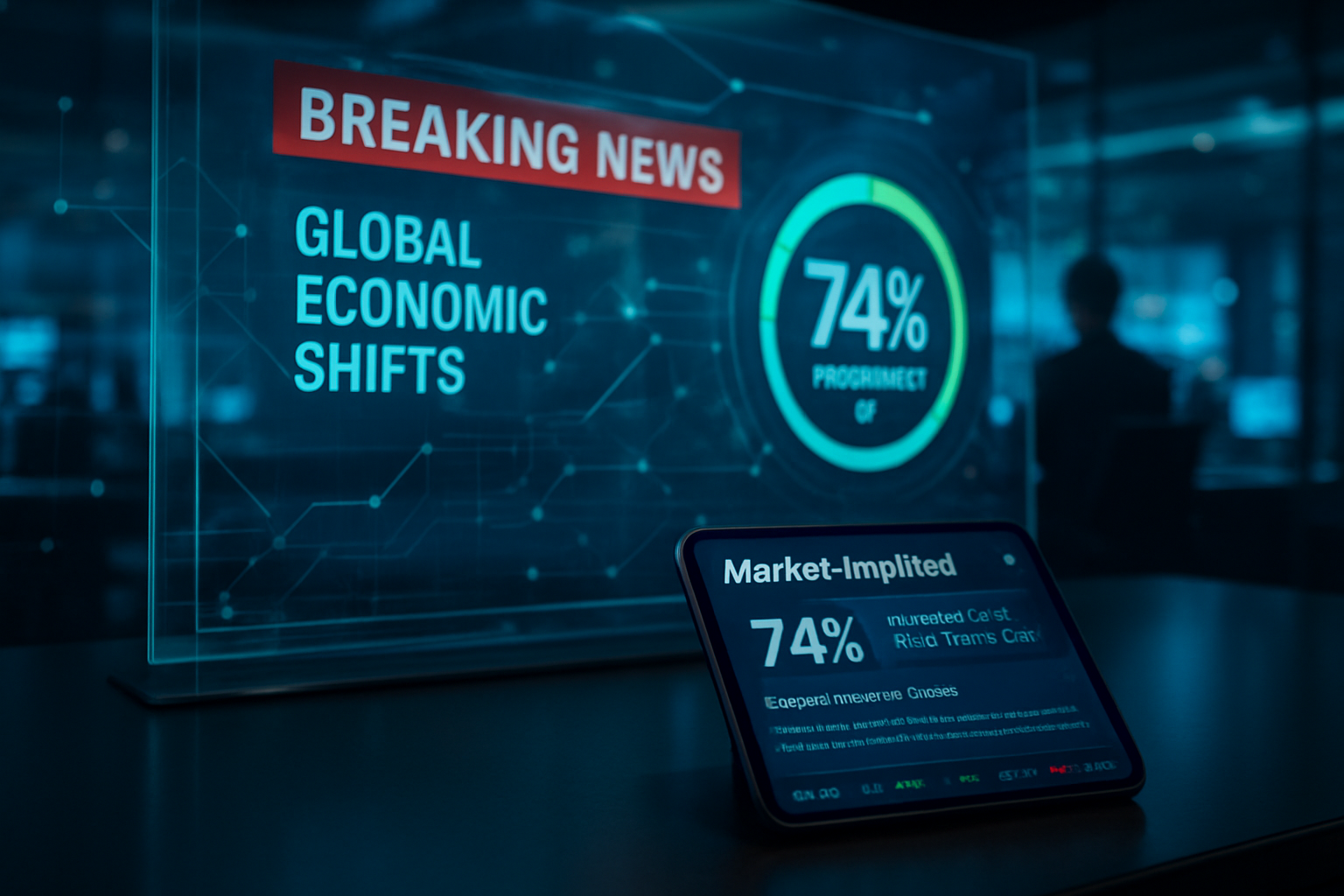
    Major media conglomerates, once skeptical of "election betting," have now fully integrated prediction market data into their core newsroom operations. Platforms like Polymarket and Kalshi are no longer just alternative data sources—they are the official scoreboards for reality. With probability data now appearing on the same ticker tapes as the S&P 500, the era of "Information Finance" (InfoFi) has officially arrived, turning every headline into a price and every event into a trade.

    The Market: What's Being Predicted

    Today, prediction markets cover nearly every measurable outcome in the modern world. While political markets remain a cornerstone, the scope has expanded drastically. Traders are now forecasting everything from the exact Federal Funds Rate target in the next FOMC meeting to the specific earnings-per-share (EPS) beats for tech giants like Nvidia (NASDAQ: NVDA) and Apple (NASDAQ: AAPL).

    The two dominant players, Polymarket and Kalshi, have divided the landscape into global and domestic spheres. Polymarket, which saw its profile explode after the 2024 election cycle, now operates with a projected $1 trillion annual trading run-rate. Meanwhile, Kalshi has solidified its role as the premier CFTC-regulated venue for U.S. institutional and retail traders. The liquidity in these markets has reached a "critical mass," where even billion-dollar "whale" positions move the odds by only fractions of a percent, providing a level of stability and signal accuracy that traditional polling simply cannot match.

    Why Traders Are Betting

    The shift toward prediction markets as a primary news source is driven by the concept of "skin-in-the-game." Unlike traditional analysts or pollsters who face little professional consequence for being wrong, traders in these markets face immediate financial loss. This creates a powerful incentive for accuracy, known in the industry as the "Truth Premium."

    In late 2025 and early 2026, we saw the emergence of massive hedging strategies where institutional investors used Kalshi contracts to protect against legislative changes. For example, during the debate over new AI regulations, the market-implied probability of a "strict regulatory flip" provided a more accurate signal for hedge funds than the public statements of lobbyists. Furthermore, retail participation has surged following the integration of event contracts into major brokerages like Robinhood (NASDAQ: HOOD), allowing everyday investors to trade on their personal knowledge of local trends or industry news.

    Broader Context and Implications: The Rise of 'InfoFi'

    The integration into mainstream media is perhaps the most significant milestone for the industry. In January 2026, News Corp (NASDAQ: NWSA), the parent company of The Wall Street Journal and Barron’s, announced an exclusive distribution partnership with Polymarket. Readers now see "Market-Implied Probability" widgets alongside every political and economic article. Similarly, Warner Bros. Discovery (NASDAQ: WBD), through CNN, has designated Kalshi as its "Official Prediction Market Partner," using their real-time odds to "fact-check" traditional polling data on-air.

    This marks the definitive shift to "Information Finance." The narrative has changed from "gambling" to "price discovery for information." By treating odds as factual indicators, financial news outlets are acknowledging that a liquid market is the most efficient way to aggregate disparate pieces of information. This has profound implications for regulatory considerations; as these markets become vital public utilities for information, the push for clearer federal frameworks has intensified, leading to the institutionalization of the sector.

    What to Watch Next

    As we look toward the remainder of 2026, several key milestones will test the resilience of this new information ecosystem. The upcoming 2026 Midterm Elections will be the first major political test for the fully integrated "InfoFi" newsrooms. Analysts are already watching how "Market-Implied House Control" odds diverge from traditional surveys, which struggled to keep pace with the market’s predictive power in 2024.

    Additionally, the expansion of "micro-markets" is a trend to monitor. We are seeing the rise of hyper-local prediction markets—such as the probability of a specific city council's zoning vote or the likelihood of a local weather event. These niche markets are becoming essential tools for local news outlets looking to provide their audiences with something more substantial than mere speculation.

    Bottom Line

    The integration of prediction market data into mainstream media represents the most significant change in financial journalism in a generation. By moving beyond the "expert opinion" model and toward a "market-driven truth" model, outlets like the WSJ and CNN are providing their audiences with a more objective, data-backed view of the world.

    Prediction markets have evolved from a curiosity into a structural pillar of the financial world. They offer a real-time, high-stakes vibe check that traditional methods simply cannot replicate. While the risks of market manipulation or volatility remain, the sheer volume of liquidity and the diversity of participants have turned these platforms into the ultimate tools for navigating an increasingly uncertain global landscape. In 2026, the question is no longer "what do the experts think?" but rather, "what is the market price of the truth?"


    This article is for informational purposes only and does not constitute financial or betting advice. Prediction market participation may be subject to legal restrictions in your jurisdiction.

    PredictStreet focuses on covering the latest developments in prediction markets.
    Visit the PredictStreet website at https://www.predictstreet.ai/.
  • The Maduro Whale: Inside the $400,000 Trade That Sparked a Washington Firestorm

    The Maduro Whale: Inside the $400,000 Trade That Sparked a Washington Firestorm

    The capture of Venezuelan leader Nicolás Maduro by U.S. special operations forces on January 3, 2026, was a geopolitical earthquake that few saw coming. But for one anonymous trader on the decentralized prediction platform Polymarket, the event was more than a headline—it was a $400,000 windfall. Hours before President Donald Trump took to Truth Social, owned by Trump Media & Technology Group Corp. (NASDAQ: TMTG), to announce that "Operation Absolute Resolve" had successfully taken Maduro into custody, a series of aggressive bets were placed that have now triggered a federal investigation and a legislative firestorm in Washington.

    At the time the trades were executed, the market-implied probability of Maduro’s downfall by the end of January sat at a measly 7%. The sudden, massive influx of capital from a single account, just as the raid was commencing in Caracas, has forced a reckoning for the prediction market industry. Critics argue the trade is the "smoking gun" of insider trading on decentralized platforms, while proponents claim the market performed exactly as intended: by surfacing truth before the rest of the world caught up.

    The Market: What's Being Predicted

    The controversy centers on a specific contract on Polymarket: "Will Nicolás Maduro be out of power by January 31, 2026?" For much of late 2025, this was a low-liquidity "longshot" market. Traders viewed Maduro’s grip on power as firm, despite escalating rhetoric from the White House. Trading volume hovered in the low tens of thousands of dollars, and the "Yes" shares were trading at roughly 8 cents, implying an 8% chance of success.

    On the morning of January 3, 2026, the market dynamics shifted violently. An account using the handle "Burdensome-Mix" began vacuuming up "Yes" shares. According to on-chain data, the user deployed approximately $32,537 across several hours. By the time the trade was completed, the sudden demand had pushed the odds up to 15%, though most of the general public remained unaware of the military operation unfolding in real-time.

    The contract was structured to resolve based on a consensus of major news outlets or an official government statement. When President Trump’s announcement went live at 4:21 AM EST, the "Yes" shares immediately hit $1.00. The "Burdensome-Mix" account cashed out shortly after, realizing a profit of over $403,000—a staggering 1,240% return on investment in under 24 hours.

    Why Traders Are Betting

    The "too-perfect" timing of the "Burdensome-Mix" trade is the primary driver of the current controversy. Financial watchdogs, including experts at Better Markets, have noted that the account was funded and the positions established just as U.S. forces were descending on Maduro’s compound in Caracas. This suggests the bettor may have had access to classified details of the raid’s timing or its authorization.

    While most traders were reacting to public news cycles and historical precedent, the "Maduro Whale" appeared to be trading on a certainty that didn't exist in the public record. This has reignited the debate over "information leakage" in high-stakes geopolitics. In a decentralized environment like Polymarket, which operates on the Polygon blockchain, users are often shielded by pseudonymity. This makes it difficult to determine if the trader was a government official, a military contractor, or an associate of a political appointee with direct knowledge of Operation Absolute Resolve.

    Beyond the "Burdensome-Mix" account, other "whales" have entered the fray, betting on secondary contracts related to the fallout, such as whether a U.S.-backed transition government will be installed by March. The market for "Will the U.S. invade Venezuela?" also saw a massive spike in volume, though it led to a secondary dispute: Polymarket’s decentralized oracle initially hesitated to rule the capture of a leader as an "invasion," leading to a $10.5 million liquidity deadlock that frustrated many institutional participants.

    Broader Context and Implications

    This incident has provided the ultimate ammunition for lawmakers who have long been skeptical of event-based wagering. On January 9, 2026, Representative Ritchie Torres (D-NY) introduced the Public Integrity in Financial Prediction Markets Act of 2026. The bill aims to strictly prohibit federal officials and those with access to classified information from participating in markets that overlap with their official duties. The legislation has gained rapid, high-profile co-sponsorship from veteran lawmakers including Nancy Pelosi and Brad Sherman.

    The regulatory response has been swift. Michael S. Selig, the recently appointed Chairman of the Commodity Futures Trading Commission (CFTC), announced that the agency is moving to establish a formal framework for "Event Contracts." While the CFTC has historically been hostile toward political betting, the Maduro incident has shifted the focus toward anti-manipulation and insider trading rules rather than outright bans.

    Competitors in the regulated space, such as Kalshi and the prediction wings of Coinbase Global, Inc. (NASDAQ: COIN) and Robinhood Markets, Inc. (NASDAQ: HOOD), have moved to distance themselves from Polymarket. These platforms, which operate under U.S. regulatory umbrellas, have joined a newly formed Coalition for Prediction Markets to lobby for a clear federal framework that would mandate "Know Your Customer" (KYC) protocols for all large-scale event traders—a move that could fundamentally change the "permissionless" nature of decentralized betting.

    What to Watch Next

    The immediate focus for the market is the resolution of the "Invasion" contract. The dispute over whether a "snatch-and-extract" operation constitutes an invasion is currently being adjudicated by UMA, the decentralized oracle used by Polymarket. The outcome of this dispute will serve as a litmus test for whether decentralized governance can handle the nuances of international law and military terminology, or if centralized oversight is inevitable.

    In Washington, all eyes are on the progress of the Torres bill. If it passes, it would mark the first time prediction markets are explicitly named in U.S. federal code as a venue for potential insider trading. Such a development could lead to a massive migration of "smart money" away from offshore platforms and toward regulated U.S. exchanges that offer better legal protections, albeit with more transparency.

    Finally, keep an eye on the "Burdensome-Mix" wallet. If the U.S. Department of Justice moves to freeze the assets or subpoena the exchange that served as the wallet's ramp, it will signal a new era of enforcement where "code is law" no longer protects traders from the reach of federal investigators.

    Bottom Line

    The Maduro trade has proven that prediction markets are a double-edged sword. On one hand, they functioned as a "truth machine," moving the odds of a regime change in Venezuela hours before the world’s media caught wind of the story. On the other hand, the $400,000 profit for a perfectly timed, anonymous bet has exposed the systemic vulnerabilities of platforms that operate outside traditional financial oversight.

    As prediction markets continue to mature into a multi-billion dollar industry, the "Maduro Whale" will likely be remembered as the catalyst for the industry's "Great Regulation." Whether these markets can survive the transition from the "Wild West" of decentralized finance to the strictly governed corridors of federal oversight remains the biggest bet of all. For now, the Maduro trade serves as a stark reminder: in the world of prediction markets, information is the most valuable currency—and sometimes, it’s too valuable for the law to ignore.


    This article is for informational purposes only and does not constitute financial or betting advice. Prediction market participation may be subject to legal restrictions in your jurisdiction.

    PredictStreet focuses on covering the latest developments in prediction markets. Visit the PredictStreet website at https://www.predictstreet.ai/.
  • The ‘Liquid Truth’ of 2028: JD Vance and Gavin Newsom Emerge as Early Favorites in the Information Finance Era

    The ‘Liquid Truth’ of 2028: JD Vance and Gavin Newsom Emerge as Early Favorites in the Information Finance Era

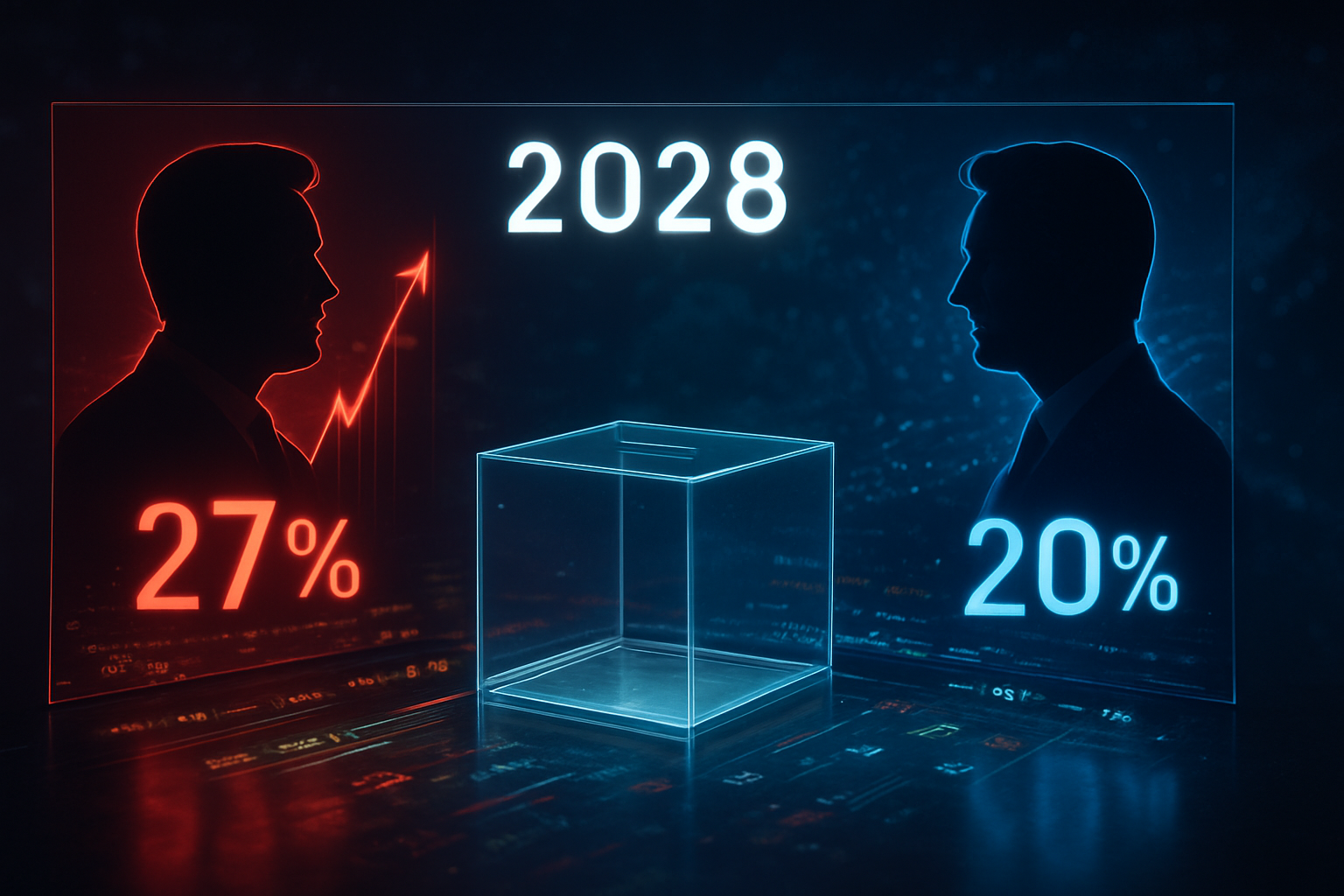
    While the dust of the 2024 election cycle has barely settled, the financial world is already placing its bets on the next battle for the White House. As of February 2026, prediction markets—the once-niche platforms that successfully forecasted the 2024 outcome with surgical precision—are signaling a clear trajectory for the 2028 U.S. Presidential Election. Vice President JD Vance has solidified his position as the GOP frontrunner, while California Governor Gavin Newsom has emerged as the clear favorite to lead the Democratic ticket.

    Traders on Kalshi and Polymarket are currently pricing a Vance presidency at a 27% probability, a striking figure for a race still nearly three years away. Newsom follows closely at approximately 20%, reflecting a market that is increasingly viewing the 2028 cycle as a high-stakes clash between the incumbent "America First" successor and the West Coast’s most prominent Democratic "fighter." This early activity is not merely speculative; it is the cornerstone of what analysts are calling "Information Finance," where these markets serve as long-term sentiment indicators that influence everything from corporate hedging to legislative strategy.

    The Market: What’s Being Predicted

    The 2028 Presidential election is no longer just a political conversation; it is a high-liquidity financial market. On Polymarket, the world’s largest decentralized prediction platform, the "2028 Presidential Winner" contract has already surpassed $250 million in total trading volume. Meanwhile, Kalshi—the first federally regulated exchange to offer such contracts—has seen over $12.5 million in its GOP nomination market alone. These platforms allow participants to buy and sell "shares" in a candidate, with prices fluctuating between $0.01 and $0.99 based on the perceived probability of the outcome.

    The current odds reflect a significant consolidation within both parties. JD Vance’s nomination odds are currently trading at nearly 50%, a level of dominance that suggests traders view him as the undisputed heir to the MAGA movement. His primary competition, according to the markets, remains at a distance: Florida’s political heavyweights and other GOP rising stars are trading in the low double digits. On the Democratic side, Gavin Newsom has pulled away from a crowded field that includes figures like Representative Alexandria Ocasio-Cortez (7%) and Pennsylvania Governor Josh Shapiro (8%), with Newsom’s nomination odds hovering around 32%.

    This surge in liquidity has been bolstered by the entry of mainstream financial institutions. Robinhood Markets, Inc. (NASDAQ: HOOD) and Interactive Brokers Group, Inc. (NASDAQ: IBKR) have integrated event contracts into their retail platforms, bringing millions of new participants into the ecosystem. The resolution of these markets is straightforward: a "yes" contract pays out $1.00 if the candidate is inaugurated as President in January 2029, while all other contracts expire at zero.

    Why Traders Are Betting

    The market’s favoritism toward JD Vance is largely driven by his performance during the first year of his vice presidency. Traders point to his role as the administration’s "legislative enforcer" and his deep ties to the domestic manufacturing and trade policy sectors as evidence of his entrenched power within the party. Unlike traditional polling, which often measures "favorability," prediction markets measure "electability" and "institutional momentum." The markets are effectively "pricing in" the consolidation of the Republican base behind Vance.

    For Gavin Newsom, the momentum is tied to his aggressive stance against federal policies in late 2025. Specifically, his successful push for California’s "Prop 50"—a measure that allowed the state to redraw its congressional maps mid-decade—is viewed by traders as a signal that he is willing to engage in the "bare-knuckle" politics required for a national campaign. When the federal courts upheld these maps in January 2026, Newsom’s odds of winning the Democratic nomination saw a 15% jump in a single week.

    Traders are also heavily influenced by the "Nate Silver Effect"—the retrospective realization that prediction markets were far more accurate than traditional polls in 2024. While many pollsters described the 2024 race as a 50/50 toss-up until Election Night, markets on Polymarket and Kalshi consistently priced a 60% probability for the eventual winner weeks in advance. This track record has transformed "liquid truth" into a preferred metric for hedge funds and institutional investors looking to mitigate political risk.

    Broader Context and Implications

    The 2028 markets are the primary evidence for the rise of "Information Finance" (InfoFi), a term increasingly used to describe the transition of truth into a tradable asset. The Intercontinental Exchange, Inc. (NYSE: ICE), the parent company of the New York Stock Exchange, recently finalized a strategic investment in prediction infrastructure, recognizing that political futures are now critical utilities for the global economy. Major firms like Susquehanna International Group (SIG) have become primary market makers, ensuring that these markets have the depth and liquidity required for institutional participation.

    This shift has been aided by a dramatic change in the regulatory climate. In January 2026, under new leadership, the Commodity Futures Trading Commission (CFTC) withdrew several long-standing proposals that sought to ban political event contracts. The agency's new "pro-innovation" stance treats these markets as vital tools for price discovery, allowing platforms like Kalshi to operate with greater legal certainty and partner with media giants like Warner Bros. Discovery, Inc. (NASDAQ: WBD) and Comcast Corporation (NASDAQ: CMCSA) to provide real-time probability data.

    Historically, early-cycle markets have been criticized for their volatility, but the 2028 cycle is different. The sheer volume of capital involved has compressed bid-ask spreads and reduced the impact of "noise" traders. These markets are now acting as early-warning systems for corporations, which use the JD Vance or Gavin Newsom odds to hedge against future tax reforms, environmental regulations, or changes in international trade agreements.

    What to Watch Next

    As we move through the remainder of 2026, several key milestones are expected to shift the 2028 odds. The first major hurdle will be the 2026 Midterm Elections. If the GOP maintains or expands its control of Congress, Vance’s odds are expected to climb further, potentially breaking the 30% mark for the presidency. Conversely, a Democratic "Blue Wave" would likely see Newsom’s odds surge as he would be credited as the party’s most effective surrogate and strategist.

    Legislative battles in the summer of 2026 regarding the renewal of major tax provisions will also be a catalyst for market movement. Traders will be watching how Vance navigates these negotiations as the tie-breaking vote in the Senate. On the Democratic side, the upcoming primary debates for various governorships and Senate seats will provide a platform for Newsom to further consolidate his "leader of the opposition" status.

    Additionally, the integration of prediction market data into mainstream financial terminals like Bloomberg and Refinitiv is expected to bring a second wave of institutional liquidity. As more quantitative trading firms—such as DRW and Jane Street—establish dedicated InfoFi desks, we expect the 2028 Presidential market to become one of the most stable and scrutinized assets in the world.

    Bottom Line

    The early 2028 presidential markets represent more than just a bet on a candidate; they are a sophisticated real-time analysis of the American political landscape. The current lead held by JD Vance reflects a market that sees his incumbency and party consolidation as a formidable barrier to any challenger. At the same time, Gavin Newsom’s steady rise illustrates a Democratic base—and a donor class—that is increasingly rallying behind a candidate perceived as a media-savvy fighter.

    These markets have successfully moved from the fringes of the internet to the core of Wall Street. By treating political outcomes as financial risks that can be hedged, the prediction market ecosystem has created a more accurate, or at least more responsive, indicator of public sentiment than traditional methods.

    As the 2028 cycle progresses, the "liquid truth" provided by these exchanges will likely become the primary lens through which the world views the future of American leadership. While 2028 remains far on the horizon, the markets are already telling us that the battle for the next decade has already begun.


    This article is for informational purposes only and does not constitute financial or betting advice. Prediction market participation may be subject to legal restrictions in your jurisdiction.

    PredictStreet focuses on covering the latest developments in prediction markets.
    Visit the PredictStreet website at https://www.predictstreet.ai/.

  • Gamifying the Fed: Robinhood’s ‘Custom Combos’ Turn Macroeconomics into the Ultimate Parlay

    Gamifying the Fed: Robinhood’s ‘Custom Combos’ Turn Macroeconomics into the Ultimate Parlay

    As the clock ticks toward the February Consumer Price Index (CPI) release, a new kind of "game day" ritual is taking over the morning routines of young investors. Forget the NFL playoffs or the NBA finals—for the 24 million active users on Robinhood (NASDAQ: HOOD), the most exciting play of the season is the "Macro Stack."

    In January 2026, Robinhood officially launched its "Custom Combos" feature, a revolutionary addition to its Prediction Markets Hub that allows users to bundle up to 10 different event outcomes into a single, high-leverage contract. With the potential for payouts exceeding 40-to-1 on "Goldilocks" economic scenarios, the feature is effectively gamifying macroeconomics for a demographic that treats Jerome Powell’s press conferences with the same fervor as a Super Bowl halftime show. Currently, the market is pricing in a 91% probability that the Federal Reserve will hold rates steady in March, but the real action lies in the "long-shot parlays" where traders are betting on a surprise rate cut paired with a core inflation miss.

    The Market: What's Being Predicted

    At the heart of this frenzy is the Robinhood Prediction Markets Hub, which has rapidly evolved since the platform’s first foray into election contracts in late 2024. The "Custom Combos" feature operates on a Request for Quote (RFQ) system powered by MIAXdx, the CFTC-regulated exchange in which Robinhood (NASDAQ: HOOD) acquired a 90% stake in early 2026. This vertical integration allows Robinhood to offer seamless, near-instant settlement on complex, multi-leg event contracts.

    Unlike traditional prediction platforms like Polymarket or Kalshi, which typically focus on single binary outcomes, Custom Combos allow for "horizontal betting" across categories. A typical high-volume combo in early February 2026 might include:

    • The CPI Leg: Predicting February YoY CPI falls below 2.3%.
    • The Fed Leg: Predicting a "Pause" at the March 18 FOMC meeting.
    • The Tech Leg: Predicting that Nvidia (NASDAQ: NVDA) will close the month above $1,800.
    • The Political Leg: Predicting a specific outcome in a 2026 U.S. Midterm primary.

    Because every "leg" of the parlay must hit for the contract to pay out at its full $1-per-share value, the cost of entry is remarkably low—often just pennies per share—creating the "lotto ticket" appeal that has long driven the success of sports betting parlays. Trading volume on the Hub has already surpassed 11 billion cumulative contracts, with "Custom Combos" accounting for an estimated 30% of new activity.

    Why Traders Are Betting

    The surge in "Macro Parlay" activity is driven by a cultural shift Robinhood executives call "Information Finance." For Gen Z and Millennial traders, the traditional 60/40 portfolio feels antiquated. Instead, they are using Custom Combos to express complex views on how the world works, often using these markets to "hedge their lives."

    "I'm long on tech stocks, so if the Fed hikes and the market crashes, my portfolio takes a hit," explains one viral trader on X whose 5-leg "Recession Hedge" combo recently turned $200 into $8,500. "By betting on a 'Triple Threat'—high CPI, a Fed hike, and an unemployment spike—I'm basically buying insurance that pays out if my day job or my stocks are in trouble."

    This "hedging life" mentality is frequently augmented by Robinhood’s "Cortex AI" assistant, which suggests "Optimal Combos" based on real-time news sentiment. If a major retailer like Walmart (NYSE: WMT) reports sluggish guidance, Cortex might prompt a user to "add a leg" predicting a dip in retail sales data, further increasing the potential payout. This creates a feedback loop where news consumption is immediately monetized, shifting the investor's role from a passive observer to an active, high-velocity speculator.

    Broader Context and Implications

    The timing of the "Custom Combo" craze is no coincidence. On February 4, 2026, the Commodity Futures Trading Commission (CFTC) made a landmark policy reversal, withdrawing a 2024 proposal that sought to ban "gaming" and sports-related event contracts. This move has been hailed as a "Green Light" for the prediction economy, signaling that federal regulators now view event contracts as legitimate financial derivatives rather than prohibited gambling.

    However, the rise of these markets has reignited the debate over the "gamification" of finance. Critics argue that by mimicking the structure of sports betting—complete with "boosted odds" and viral "gain porn" screenshots—Robinhood is encouraging risky behavior among inexperienced traders. Proponents, meanwhile, argue that these markets serve as a "truth engine," providing more accurate forecasts than traditional pundits or polling.

    Historically, prediction markets have shown remarkable accuracy in forecasting FOMC decisions and election outcomes. By aggregating the "wisdom of the crowd" into a tradable price, Robinhood is creating a real-time sentiment gauge that institutional players are beginning to watch closely. The convergence of sports betting mechanics with macroeconomic data is not just a feature; it’s the birth of a new asset class where "knowledge of the world" is the primary currency.

    What to Watch Next

    The immediate focus for the market is the February 13 CPI print. "Nowcast" models from the Cleveland Fed currently project a 2.34% YoY headline increase, but the spread on Robinhood suggests retail traders are split between a "cool-down" and a "sticky inflation" narrative. Any significant deviation from the 2.34% mark will likely trigger massive payouts—or liquidations—for thousands of "Macro Stacks."

    Looking further ahead, the March 18 FOMC meeting remains the "Anchor Leg" for most custom combos. While a "Hold" is the overwhelming consensus at 91%, the 9% of traders betting on a cut are looking at astronomical payouts if the Fed pivots early. Additionally, as the 2026 Midterm election cycle heats up, expect Robinhood to introduce "Political-Economic Combos," where users can bet on how specific election results might impact localized economic data or sector-specific stock prices.

    Bottom Line

    Robinhood’s "Custom Combos" represent a fundamental evolution in how retail investors engage with the world. By lowering the barrier to entry for complex derivative trading and wrapping it in the familiar, high-adrenaline interface of a sportsbook, Robinhood has successfully turned the "dismal science" of economics into a viral entertainment product.

    While the risks of high-leverage parlays are real, the success of the Prediction Markets Hub suggests that the demand for "Information Finance" is here to stay. As the CFTC moves toward a more permissive framework and MIAXdx provides the institutional-grade plumbing, the "Macro Parlay" may soon become as common in the American household as the Sunday night football bet. In this new era, the Federal Reserve isn't just a regulatory body—it’s the most watched team in the league.


    This article is for informational purposes only and does not constitute financial or betting advice. Prediction market participation may be subject to legal restrictions in your jurisdiction.

    PredictStreet focuses on covering the latest developments in prediction markets.
    Visit the PredictStreet website at https://www.predictstreet.ai/.
  • The FOMC Disconnect: Kalshi Traders Signal March Rate Cut as Macro Prediction Markets Explode

    The FOMC Disconnect: Kalshi Traders Signal March Rate Cut as Macro Prediction Markets Explode

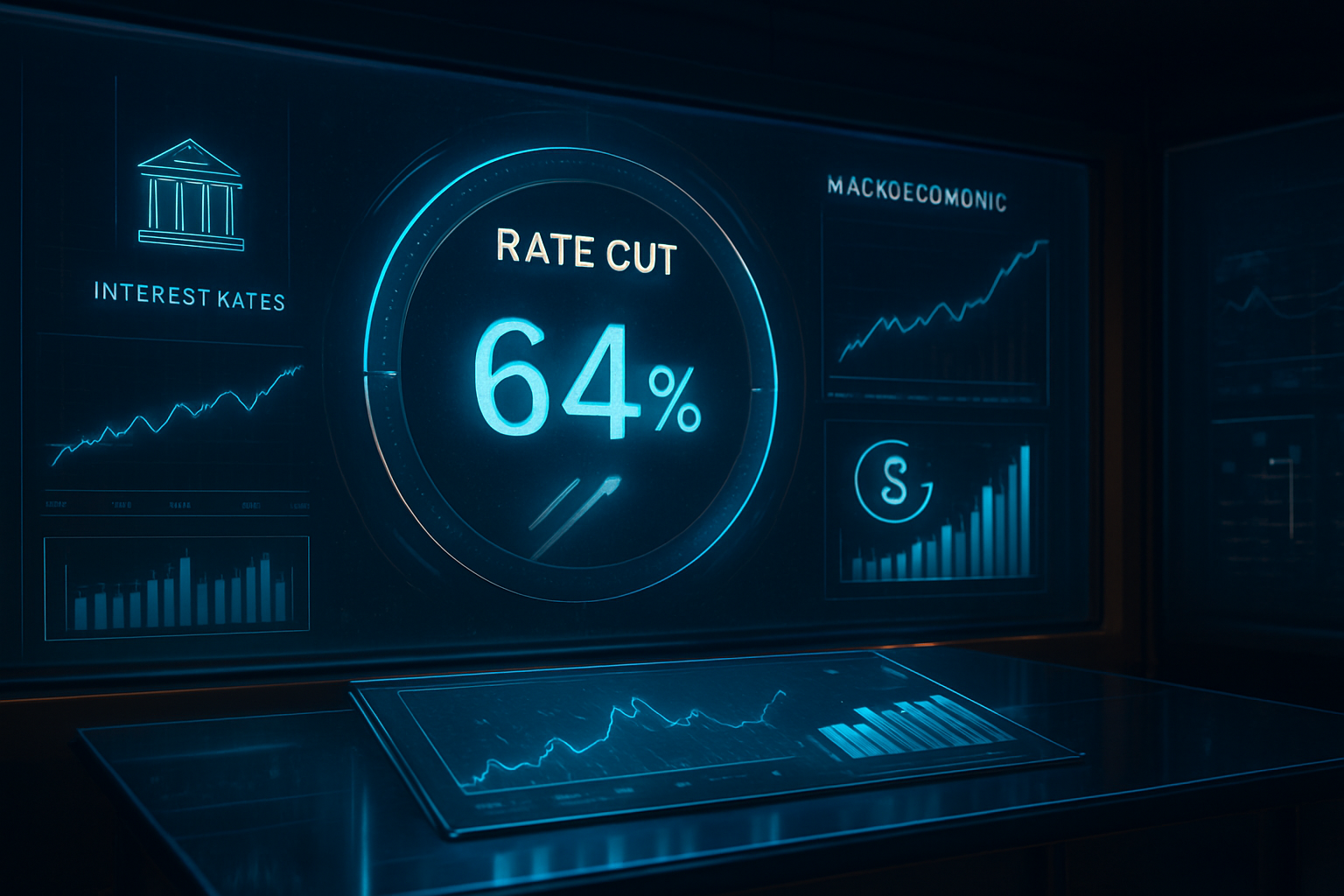
    As the Federal Reserve's March 2026 meeting approaches, a striking divergence has emerged between traditional financial instruments and the burgeoning world of "Information Finance." On Kalshi, the federally regulated prediction market, traders are increasingly convinced that the central bank will pivot toward easing. Currently, 64% of participants on the platform are betting on a 25-basis-point rate cut for the March 17-18 session, a stark contrast to the more conservative stance reflected in the broader bond market.

    This surge in activity is not merely speculative retail interest; it represents a fundamental shift in how macroeconomic risk is priced. With open interest on Kalshi’s Federal Reserve contracts exceeding $450 million as of February 5, 2026, these markets are no longer a sideshow. They have become a primary source of truth for hedge funds and high-frequency trading (HFT) firms, which are increasingly using these event contracts to hedge against policy shifts that traditional models often fail to capture in real-time.

    The Market: What's Being Predicted

    The focus of the financial world is currently fixed on the "March 2026 FOMC Target Rate" contract. Trading on Kalshi, the first CFTC-regulated prediction exchange, the market allows participants to buy "Yes" or "No" contracts on specific interest rate ranges. At the current 64% probability for a 25-basis-point cut, the price of a "Yes" contract sits at approximately $0.64, aiming for a $1.00 payout if the Fed lowers the target range from its current 3.5%–3.75% level.

    This volume is part of a broader explosion in prediction market liquidity. While Kalshi leads the regulated US space with its $450 million in open interest, Polymarket—which recently re-entered the US market after acquiring a CFTC-licensed clearinghouse—is seeing similar enthusiasm, with its March rate-cut contracts trading at an even more aggressive 71% probability. The scale of these markets is now rivaling the daily turnover of mid-cap equities, providing a level of depth that allows institutional players like Jump Trading and Susquehanna Government Products to execute large-scale positions without massive slippage.

    In comparison, the CME Group (NASDAQ: CME) FedWatch Tool, which derives its data from 30-Day Fed Funds Futures, is currently pricing in a much higher 90% probability that the Fed will hold rates steady. This massive 54% "spread" between prediction markets and traditional futures has created a lucrative arbitrage opportunity for algorithmic traders, who are using the Kalshi "oracle" to front-run movements in the Treasury market.

    Why Traders Are Betting

    The conviction among Kalshi traders is driven by a weakening labor market that has yet to be fully acknowledged by official Fed rhetoric. While Federal Reserve Chair Jerome Powell characterized economic activity as "solid" during the January 28 press conference, January’s employment data showed a significant cooling in job gains. Prediction market participants, who often prioritize "nowcasting" data over lagging government reports, are betting that the Fed will be forced to act to prevent a harder landing.

    Furthermore, the "Warsh Factor" is looming large over the market. President Trump’s nomination of Kevin Warsh to succeed Powell in May 2026 has introduced a new variable. Many traders believe the current board may want to "clear the deck" with a preemptive cut before the leadership transition begins, or that they are responding to subtle political pressure for more aggressive easing. Analysts at firms like JPMorgan Chase & Co. (NYSE: JPM) and Goldman Sachs (NYSE: GS) have remained cautious in their public notes, but the "skin-in-the-game" nature of Kalshi is telling a different story.

    Another factor is the rise of the "Synthetic Straddle." Institutional desks are reportedly buying "No" on a rate cut on Kalshi while simultaneously going long on interest-rate futures at the CME Group. This allows them to profit if the prediction market’s aggressive forecast proves correct, while hedging their exposure with traditional derivatives.

    Broader Context and Implications

    The surge in macroeconomic betting reflects the maturation of "InfoFi"—the intersection of information and finance. Major news networks have fully embraced this shift; CNBC (NASDAQ: CMCSA) recently integrated a live "Kalshi Ticker" into its daily broadcasts, acknowledging that these markets often move faster than the Bloomberg terminal in the wake of breaking news. When a probability shifts on Kalshi, it now frequently triggers multi-billion dollar trades in the S&P 500 (NYSEARCA: SPY) within milliseconds.

    The entry of major infrastructure players has also lent the sector a new level of legitimacy. The Intercontinental Exchange (NYSE: ICE), the parent company of the New York Stock Exchange, recently made a landmark $2 billion investment in prediction market infrastructure. This move signals that traditional exchanges view event contracts as a permanent and essential part of the modern financial stack, rather than a fleeting trend.

    However, regulatory hurdles remain. While Kalshi operates under federal oversight, Polymarket continues to face state-level challenges, including a recent temporary restraining order in Nevada. These legal battles highlight the ongoing tension between federal deregulation and state-level gaming concerns, even as the markets themselves become indispensable for risk management.

    What to Watch Next

    The primary catalyst for the next major movement in these odds will be the upcoming Consumer Price Index (CPI) release for January, scheduled for mid-February. If inflation continues its "sticky" trend near 2.7%, the 64% probability for a cut may retreat as traders fear the Fed will prioritize price stability over labor market support. Conversely, a sub-2.5% print could send the Kalshi odds north of 80%.

    Traders should also monitor the public appearances of Fed governors over the next three weeks. Any shift in tone toward a "risk-management" approach—a common euphemism for preemptive cuts—will likely be priced into Kalshi hours before it is reflected in the CME futures.

    Finally, the transition of the "Warsh nomination" through the Senate will be a key milestone. Any delays or complications in the confirmation process could inject volatility into the May and June 2026 contracts, which currently anticipate a rapid easing cycle once the new Chair takes the helm.

    Bottom Line

    The March 2026 FOMC meeting is shaping up to be a watershed moment for prediction markets. With $450 million at stake on Kalshi, the "wisdom of the crowd" is directly challenging the established wisdom of Wall Street’s largest banks and the CME Group’s traditional futures. The fact that 64% of traders are leaning toward a cut suggests a deeper anxiety about the labor market than official figures currently show.

    What we are witnessing is the birth of a more democratic, real-time economic forecasting tool. As hedge funds and HFT bots continue to bridge the gap between prediction markets and traditional assets, the distinction between "betting" and "investing" continues to blur. Whether or not the Fed actually cuts in March, the prediction markets have already won by providing a level of transparency and responsiveness that the financial world has never seen before.


    This article is for informational purposes only and does not constitute financial or betting advice. Prediction market participation may be subject to legal restrictions in your jurisdiction.

    PredictStreet focuses on covering the latest developments in prediction markets.
    Visit the PredictStreet website at https://www.predictstreet.ai/.

  • The Great Prediction War: Polymarket vs. Kalshi

    The Great Prediction War: Polymarket vs. Kalshi

    The global financial landscape has shifted into a new era of "Information Finance," or InfoFi, where the most valuable commodity is not gold or oil, but the "truth." As of February 5, 2026, the battle for dominance in this sector has narrowed down to two titans: Polymarket, the decentralized, crypto-native pioneer, and Kalshi, the regulated, Wall Street-compliant exchange. This rivalry, often dubbed "The Great Prediction War," has evolved from a niche betting experiment into a multi-billion-dollar infrastructure that now dictates the narrative of global politics and economics.

    Current sentiment on Manifold Markets reflects the high stakes of this struggle. Traders are currently pricing Polymarket at a 47% probability to hold the title of the world’s leading prediction engine by the end of 2026, while Kalshi trails at 34%. This divergence highlights a fundamental debate among forecasters: whether the future of prediction markets lies in the permissionless liquidity of the blockchain or the structured safety of regulated finance.

    The Market: What's Being Predicted

    The central question currently captivating traders is which platform will claim the "Volume Crown" for 2026. For the week ending February 1, 2026, the combined trading volume across both platforms hit a staggering $6.32 billion, a record high that reflects the growing mainstream adoption of event contracts. While the market share is currently split nearly down the middle—with Kalshi holding a slight 51/49 edge in raw volume—the composition of that volume tells a different story.

    Kalshi’s volume is heavily bolstered by its expansion into the sports betting sector, where it cleared over $43.1 billion in 2025. Conversely, Polymarket, which ended 2025 with $33.4 billion in volume, remains the undisputed king of "high-signal" events. Its markets on geopolitics, macroeconomic shifts, and scientific breakthroughs attract a different class of high-conviction traders. The Manifold Markets contract specifically excludes "pure sports betting" from its resolution criteria, which explains why Polymarket remains the favorite despite Kalshi’s larger total footprint.

    Why Traders Are Betting

    The 2024 U.S. Presidential Election was the "Netscape moment" for this industry, proving that prediction markets could provide more accurate, real-time data than traditional polling. Polymarket famously outpaced mainstream media in 2024, handling $3.7 billion on the election outcome alone. Since then, the platform has sought to solidify its lead by aggressively expanding its reach. In a major strategic move in late 2025, Polymarket completed a $112 million acquisition of QCEX, a CFTC-licensed exchange, allowing it to legally re-enter the U.S. market and compete head-to-head with Kalshi on American soil.

    Meanwhile, Kalshi has leveraged its status as the "regulated incumbent" to integrate with mainstream brokerage giants like Robinhood (NASDAQ: HOOD). By early 2026, the Robinhood "Prediction Markets Hub" has become a massive funnel for Kalshi, processing billions of contracts for retail users who prefer the simplicity of a bank transfer over the complexities of crypto wallets. However, Kalshi has faced its own hurdles, most notably a recent preliminary injunction in Massachusetts that effectively banned it from offering sports-related contracts in the state, labeling them unlicensed gambling.

    Broader Context and Implications

    The prediction war is no longer confined to the platforms themselves; it has drawn in the largest players on Wall Street. The Intercontinental Exchange (NYSE: ICE), the parent company of the New York Stock Exchange, signaled its endorsement of the sector with a $2 billion investment into Polymarket in late 2025. Simultaneously, Interactive Brokers (NASDAQ: IBKR) has captured a significant portion of the institutional hedging market through its ForecastEx platform, which offers yield on open positions—a feature that attracts corporate treasurers looking to hedge against interest rate fluctuations or climate risks.

    Regulatory sentiment has also shifted dramatically under the new leadership of the CFTC. The focus has moved from "prevention" to "oversight," as policymakers realize that these markets offer a public utility: an unbiased, real-time gauge of public sentiment. This "truth engine" model is increasingly seen as a necessary antidote to misinformation and the decline of traditional media credibility. However, the legal landscape remains a patchwork, with Polymarket facing recent bans in France and Singapore, highlighting the ongoing tension between global, decentralized protocols and national jurisdictions.

    What to Watch Next

    As we move toward the 2026 midterm elections, all eyes will be on how these platforms handle the influx of political volume. A key milestone to watch is the anticipated launch of a native prediction market by Coinbase (NASDAQ: COIN) in late Q1 2026. Coinbase’s entry could potentially disrupt the duopoly, as it possesses both the crypto-native user base of Polymarket and the regulatory licenses to operate within the U.S.

    Additionally, traders are monitoring the "Nevada Restraining Order" against Polymarket, which was issued by the state's Gaming Control Board in late January. The resolution of this legal skirmish will likely set a precedent for how individual states interact with federally licensed prediction exchanges. If Polymarket can navigate these state-level challenges as effectively as it has the national ones, its path to the 2026 Volume Crown seems increasingly secure.

    Bottom Line

    The battle between Polymarket and Kalshi is more than a fight for market share; it is a clash of philosophies. Polymarket represents the "Bloomberg of the Blockchain"—a global, high-signal network that rewards conviction and expertise. Kalshi, meanwhile, is the "Robinhood of Events," aiming to democratize event trading by making it as safe and accessible as buying a share of stock.

    While Kalshi currently holds the lead in raw numbers due to its sports-heavy volume, the market’s betting odds favor Polymarket’s dominance in the "Information Finance" space. As we approach the mid-point of 2026, the real winner may be the public at large, who now have access to a sophisticated, real-time mirror of the world's collective expectations. Whether the future is decentralized or strictly regulated, the prediction market has officially become the world's most vital source of truth.


    This article is for informational purposes only and does not constitute financial or betting advice. Prediction market participation may be subject to legal restrictions in your jurisdiction.

    PredictStreet focuses on covering the latest developments in prediction markets.
    Visit the PredictStreet website at https://www.predictstreet.ai/.
  • The $45 Billion Truth Engine: How Prediction Markets Became Wall Street’s New Standard

    The $45 Billion Truth Engine: How Prediction Markets Became Wall Street’s New Standard

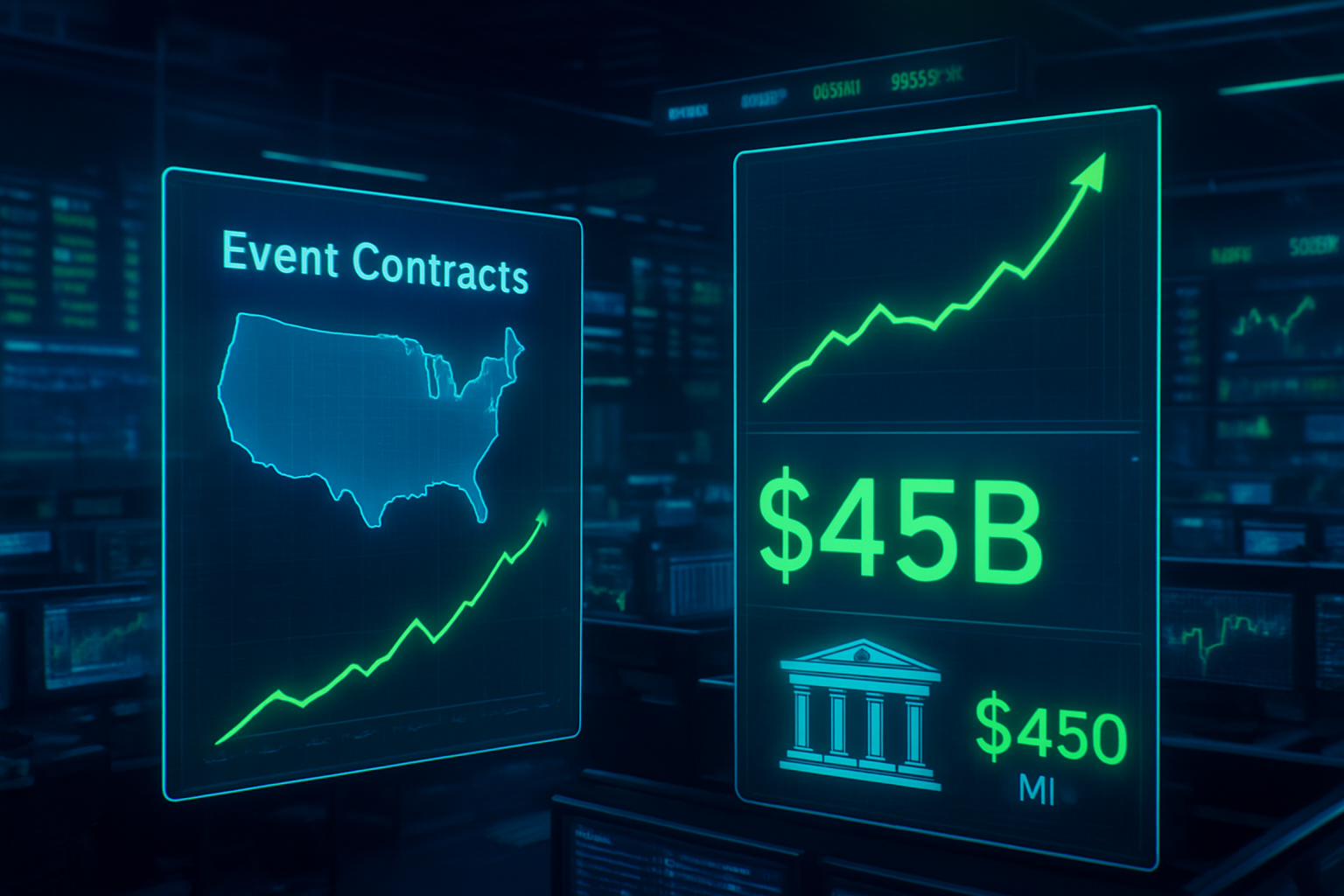
    The prediction market industry has officially shed its label as a niche corner of the internet for political junkies and sports bettors. As of early February 2026, the sector is celebrating a watershed moment: total trading volume surpassed a staggering $45 billion in 2025, a nearly five-fold increase from the previous year. This momentum shows no signs of slowing, with February 2026 on track to set a new monthly record for trading activity as retail and institutional investors pour into the space.

    At the heart of this explosion is the rise of the "Event Contract," a structured derivative that allows participants to trade directly on the outcome of real-world events. No longer viewed as mere gambling, these contracts have become a standard asset class. The primary driver of this month’s record volume is the Federal Reserve’s interest rate path, where the market for a potential March rate cut has ballooned to over $450 million in open interest. For many, these markets are no longer just a side bet—they are the most accurate real-time indicator of economic reality available.

    The Market: From $9 Billion to $45 Billion

    The scale of the prediction market industry has undergone a total transformation over the last 24 months. In 2024, the industry aggregate volume sat at approximately $9 billion, largely buoyed by the U.S. presidential election. However, 2025 proved that the appetite for event-based trading was not a one-off phenomenon. Total volumes for 2025 topped $44 billion, led by the regulated U.S. exchange Kalshi and the decentralized giant Polymarket.

    Kalshi, the first CFTC-regulated prediction market, saw its 2025 volume soar to $23.8 billion, representing an 1,108% increase year-over-year. Meanwhile, Polymarket, which saw Intercontinental Exchange (NYSE:ICE) take a 20% strategic stake late last year, contributed roughly $21.5 billion to the global total. These platforms have moved beyond political "who-will-win" scenarios into complex macro-economic hedging tools.

    Currently, the highest-liquidity market involves the Federal Open Market Committee (FOMC) meeting scheduled for March 17–18, 2026. After the Fed held rates steady at 3.5%–3.75% during their January 28 meeting, the prediction markets are now pricing in a 64% probability of a 25-basis-point cut in March. With nearly half a billion dollars at stake in this single contract, the liquidity now rivals that of traditional interest rate swaps.

    Why Traders Are Betting: The Search for "Settlement Certainty"

    The migration of capital into event contracts is driven by a fundamental shift in how traders perceive "truth." Unlike traditional equities or commodities, which can be influenced by sentiment, stock buybacks, or accounting nuances, event contracts settle based on objective, immutable data points—such as a press release from the Federal Reserve or a report from the Bureau of Labor Statistics.

    Professional traders are increasingly using these markets for macro hedging. For example, a portfolio manager heavily weighted in regional banks might buy "Yes" contracts on a Fed rate cut to hedge against the risk of prolonged high interest rates. This strategy has been validated by the entry of major financial institutions. Goldman Sachs Group Inc. (NYSE:GS) and CME Group Inc. (NASDAQ:CME) have both begun integrating event contract data into their proprietary trading stacks, treating them as "real-time truth engines."

    The current flurry of activity in February is fueled by a "data-heavy" calendar. While there is no FOMC meeting this month, the market is reacting violently to January’s employment data and CPI figures. Traders are no longer waiting for analyst notes from big banks; they are watching the shifting odds on Kalshi to see how the "wisdom of the crowd" interprets a hot inflation print in real-time.

    Broader Context and Implications

    The legitimization of prediction markets is the result of a hard-fought regulatory battle. The turning point occurred in late 2024 when a federal court ruled in favor of Kalshi, determining that election-based event contracts did not constitute "gaming" under the Commodity Exchange Act. This ruling paved the way for the CFTC, now under the pro-innovation leadership of Chairman Michael Selig, to withdraw its previous proposals to ban these markets.

    The implications of this shift are profound. Prediction markets are increasingly being used as the primary source of truth by mainstream media outlets. Partnerships between platforms and news giants like Bloomberg and CNBC have brought live probability tickers to millions of viewers. Furthermore, the integration of event contracts into retail platforms like Robinhood Markets Inc. (NASDAQ:HOOD) and Coinbase Global Inc. (NASDAQ:COIN) has democratized access to institutional-grade hedging tools.

    However, the path forward is not without friction. While federal regulators have eased their stance, several states continue to issue cease-and-desist orders, arguing that these contracts infringe on state-regulated gaming laws. The resolution of this state-versus-federal conflict will likely be the next major hurdle for the industry's expansion.

    What to Watch Next

    As we move through the remainder of February 2026, several key milestones will dictate whether the industry hits its projected record-breaking monthly volume. The release of the FOMC Minutes on February 18 will be a critical volatility catalyst, providing the "why" behind the January hold and potentially shifting the 64% probability of a March cut.

    Additionally, the Producer Price Index (PPI) data on February 27 will serve as the final major piece of the inflation puzzle before the Fed enters its pre-meeting blackout period in March. Market participants should also monitor the increasing "whale" activity on decentralized platforms, where single positions in the tens of millions are becoming more common, often signaling institutional repositioning.

    Bottom Line

    The rise of the prediction market industry from $9 billion to $45 billion in just two years marks one of the fastest adoption curves in the history of financial derivatives. By turning "information" into a tradable asset, these platforms have provided a level of price discovery that traditional markets often struggle to match.

    The $450 million currently sitting in Fed rate cut markets is a testament to the fact that "Event Contracts" are no longer an experiment; they are an essential component of the modern financial ecosystem. As more professional traders and retail investors embrace the transparency and settlement certainty of these markets, the $45 billion milestone of 2025 may soon look like just the beginning.


    This article is for informational purposes only and does not constitute financial or betting advice. Prediction market participation may be subject to legal restrictions in your jurisdiction.

    PredictStreet focuses on covering the latest developments in prediction markets.
    Visit the PredictStreet website at https://www.predictstreet.ai/.

  • The Rise of InfoFi: How Prediction Markets Became the World’s ‘Truth Machine’

    The Rise of InfoFi: How Prediction Markets Became the World’s ‘Truth Machine’

    The concept of "Information Finance," or InfoFi, has transitioned from a niche crypto-economic theory into a foundational pillar of global finance and media. As of February 2, 2026, prediction markets are no longer viewed as mere platforms for speculation; they have been repositioned as sophisticated data-transmission mechanisms that assign a market price to the accuracy of information itself. This shift is most visible in the current pricing of the Federal Reserve’s next moves, where the market is currently pricing in a 64% probability of a 25-basis-point rate cut in March, a signal that traditional economists are now using to calibrate their own models.

    The surge in interest surrounding InfoFi is driven by a fundamental realization: financial stakes force an honesty that social media algorithms and traditional polling lack. This "Truth Machine" philosophy, championed by industry leaders, has been validated by a massive influx of institutional capital and a landmark shift in how the world’s largest tech companies treat the sector. With total weekly trading volumes across major platforms recently hitting a record $6.32 billion, the era of purely speculative "betting" is being replaced by a disciplined quest for the "Truth Premium."

    The Market: What's Being Predicted

    At the heart of the InfoFi movement are two dominant platforms: the federally regulated Kalshi and the globally expansive Polymarket. These exchanges have moved beyond simple "yes/no" binaries on pop culture to become the primary clearinghouses for high-stakes geopolitical and macroeconomic data. On Kalshi, the "March 2026 Fed Rate Decision" contract has seen over $450 million in open interest, effectively functioning as a real-time shadow FOMC.

    Meanwhile, on Polymarket, traders are currently fixated on the 2026 U.S. Midterm Elections. The market currently prices a 78% probability that Democrats will flip the House, while Republicans maintain a 66% chance of holding the Senate. These odds are being cited by major news networks as a more reliable indicator than traditional polls, which many argue have failed to account for the "incentivized accuracy" that comes when traders have "skin in the game."

    The liquidity in these markets has reached a tipping point. On January 21, 2026, Alphabet Inc. (NASDAQ: GOOGL) updated its global advertising policies to officially permit prediction market advertisements in the United States for the first time. This regulatory "blessing" from Google has allowed platforms like Kalshi to tap into the world’s largest advertising network, provided they are federally regulated as Designated Contract Markets (DCMs). This move effectively reclassified these markets from "gambling" to "financial products," placing them in the same category as options or futures.

    Why Traders Are Betting

    Traders are flocking to InfoFi because it offers a "pure" play on information that is often obscured by institutional bias or media spin. Kalshi CEO Tarek Mansour has frequently described his platform as a "Truth Machine," arguing that "people don't lie with their money." This sentiment is the driving force behind the current market movements. Traders are not just betting on an outcome; they are betting that they have discovered a piece of information—whether it’s a shift in voter sentiment or a supply chain delay at NVIDIA (NASDAQ: NVDA)—before the rest of the market does.

    The incentive structure is simple: if you are right, you profit; if you are wrong, you lose. This Darwinian environment has given rise to a new professional class of "Prediction Market Traders." These individuals use specialized expertise, such as tracking FDA approval timelines or analyzing semiconductor shipment data (specifically the NVIDIA Blackwell Ultra B300 shipments, which are currently a hot-button InfoFi contract), to generate alpha.

    Furthermore, the integration of prediction markets into mainstream financial tools has lowered the barrier to entry. Robinhood Markets, Inc. (NASDAQ: HOOD) and Coinbase Global, Inc. (NASDAQ: COIN) have both integrated "Prediction Market Hubs" directly into their apps, reaching over 25 million combined users. This has brought a "flywheel" effect to the market: more users lead to better liquidity, which leads to sharper price signals, which in turn attracts even more institutional traders.

    Broader Context and Implications

    The rise of InfoFi represents a paradigm shift in how society processes truth. Historically, we have relied on "experts" and "institutions" to tell us what is likely to happen. However, the consistent accuracy of prediction markets during the 2024 elections and the subsequent AI boom has eroded trust in traditional forecasting. In late 2025, Mansour stated that Kalshi’s mission is about "replacing debate and subjectivity with markets and accuracy."

    This trend is also being reflected in the legislative halls of Washington D.C. In January 2026, the Public Integrity in Financial Prediction Markets Act (H.R. 7004) was introduced to ensure the "purity of data" in these markets by banning federal officials from trading on non-public information. This suggests that the government now views these markets not as a nuisance to be regulated out of existence, but as a critical piece of national financial infrastructure that must be protected.

    The broader implication is a world where "truth" is a tradable asset. When Intercontinental Exchange (NYSE: ICE), the parent company of the New York Stock Exchange, backed Polymarket with a $2 billion investment in 2025, it signaled that the old guard of finance had finally accepted InfoFi. These markets are now used to hedge against "event risk"—situations like a government shutdown or a sudden geopolitical conflict—where traditional stocks and bonds may not provide an adequate shield.

    What to Watch Next

    As we move through the first quarter of 2026, several key milestones will determine if InfoFi can maintain its momentum. First and foremost is the Federal Reserve’s March meeting. If the market’s 64% prediction of a rate cut proves accurate, it will further solidify the "Truth Machine" narrative. Conversely, a significant miss would give ammunition to critics who still view these markets as volatile and prone to manipulation.

    Another critical area to monitor is the "AI Release Cycle." On Polymarket, the contract for "GPT-5.3 released by February 28, 2026" is currently trading at 82% odds. This market serves as a proxy for the entire tech sector's health. If OpenAI misses this window, it could trigger a broader sell-off in AI-related stocks, proving how deeply intertwined InfoFi has become with the traditional Nasdaq.

    Finally, the expansion of Google’s ad program will be a major catalyst. As more regulated platforms enter the space, the cost of customer acquisition is expected to drop, potentially bringing hundreds of millions of new retail dollars into the prediction ecosystem. This liquidity surge will be the ultimate test of the platforms' stability and their ability to remain "un-manipulatable."

    Bottom Line

    The emergence of Information Finance (InfoFi) marks the end of the era where truth was a matter of opinion. By attaching a price tag to accuracy, prediction markets have created a global, real-time feedback loop that is increasingly difficult for traditional institutions to ignore. Tarek Mansour’s vision of a "Truth Machine" is no longer a theoretical goal; it is a multi-billion-dollar reality that is being indexed by Google and traded on Robinhood.

    For the average observer, these markets provide a level of clarity that was previously impossible. Whether you are looking at the probability of a 2026 House flip or the release date of the next major AI model, the "wisdom of the crowd"—when backed by billions of dollars—is proving to be the most reliable compass in an uncertain world.

    As we look toward the remainder of 2026, the question is no longer whether prediction markets are legal or moral, but rather: how much is the truth worth to you?


    This article is for informational purposes only and does not constitute financial or betting advice. Prediction market participation may be subject to legal restrictions in your jurisdiction.

    PredictStreet focuses on covering the latest developments in prediction markets. Visit the PredictStreet website at https://www.predictstreet.ai/.