Tag: Prediction Markets

  • The Invisible Hand Becomes the Front Page: Prediction Markets Cement Status as Core Financial Infrastructure

    The Invisible Hand Becomes the Front Page: Prediction Markets Cement Status as Core Financial Infrastructure

    As of January 15, 2026, the global financial landscape has undergone a silent but profound transformation. What were once niche platforms for political junkies and crypto enthusiasts have evolved into the bedrock of modern financial decision-making. Prediction markets have officially moved from the periphery to the core, driven by a wave of institutional adoption, high-stakes regulatory wins, and seamless integration into the world's most popular financial apps.

    Today, the "probability of outcome" is no longer just a metric buried in a research report; it is a live ticker price embedded in the wallets and news feeds of hundreds of millions of people. With the recent scaling of partnerships between regulated exchanges like Kalshi and retail giants such as Robinhood Markets, Inc. (NASDAQ: HOOD) and Coinbase Global, Inc. (NASDAQ: COIN), the friction between having an opinion and placing a trade has effectively vanished.

    The Market: A New Asset Class Emerges

    The "market" being predicted is no longer a single event, but the entire trajectory of the global economy. By mid-January 2026, the total daily trading volume across major event contract platforms has surpassed $5 billion. On Kalshi, the CFTC-regulated leader, volume is dominated by macroeconomic hedges. Contracts on the Federal Reserve’s next interest rate move, the monthly Consumer Price Index (CPI) release, and even the likelihood of specific legislative passages have become some of the most liquid instruments in the world.

    The integration with Robinhood (NASDAQ: HOOD), launched in March 2025, has been the primary catalyst for this liquidity explosion. The "Prediction Markets Hub" within the Robinhood app now accounts for over 50% of Kalshi's total volume, boasting over 1 million active daily traders. Meanwhile, on the decentralized side, Polymarket continues to dominate geopolitical and cultural forecasting, with its data now serving as the primary source of truth for global news organizations.

    Currently, the most watched markets involve the Q1 2026 GDP growth projections, where odds have shifted significantly following recent tech sector earnings. These contracts act as a "real-time census," reflecting public and institutional sentiment with a granularity that traditional polling or economic forecasting simply cannot match. Resolution is handled through rigorous, pre-defined data points—such as Bureau of Labor Statistics (BLS) releases—ensuring that traders have absolute clarity on the timeline of their payouts.

    Why Traders Are Betting: Frictionless Intelligence

    The surge in participation is driven by a fundamental shift in user experience. In the past, participating in a prediction market required moving funds across multiple "on-ramps" and navigating complex interfaces. In 2026, that friction is gone. Coinbase (NASDAQ: COIN) has integrated Kalshi’s event contracts directly into its "Unified Dashboard," allowing users to fund their prediction positions with USDC or USD cash balances. This "Everything Exchange" strategy treats an event contract as a legitimate asset class, sitting right next to Bitcoin and blue-chip stocks.

    In the decentralized world, the Phantom wallet has become the dominant gateway. With over 20 million users, Phantom’s native "Predictions" tab—powered by a hybrid of Kalshi and DFlow—allows users to trade on-chain with the same ease as a token swap. The ability to use SOL or even high-liquidity stablecoins as collateral has turned the wallet into a social trading hub, complete with live sentiment feeds.

    Traders are moving into these markets not just for speculation, but for superior data. Traditional news cycles are often 24 to 48 hours behind the price movements of an event contract. By the time a news anchor announces a "surprise" economic shift, the prediction market has usually priced it in hours earlier. This "speed gap" has attracted institutional whales who use these markets to hedge against "black swan" events that traditional options markets are too slow to reflect.

    Broader Context and Implications

    The embedding of probability data into mainstream news marks a turning point for public discourse. News Corp (NASDAQ: NWSA), through its Dow Jones and Wall Street Journal brands, now features live Polymarket and Kalshi odds on its homepages. When readers look at a headline about a pending merger or a government shutdown, they see a "Market Probability" percentage right next to it. This has effectively replaced the "punditry" model with a "price discovery" model.

    Regulatorily, the landscape has stabilized significantly. The CFTC's recognition of event contracts as a valid tool for risk management has allowed US-based platforms like Kalshi to operate with the same legal standing as the CME Group Inc. (NASDAQ: CME). This has paved the way for the "institutionalization" of sentiment. Even Alphabet Inc. (NASDAQ: GOOGL) has integrated these probabilities into Google Finance, prioritizing market-derived data over traditional AI-generated summaries for search queries like "Will the Fed cut rates?"

    Historical data from the 2024 and 2025 cycles showed that prediction markets consistently outperformed traditional polls in terms of accuracy and lead time. This track record has built the trust necessary for them to become "financial infrastructure." We are moving toward a world where every major news event is instantly priced, creating a more transparent, if more volatile, information economy.

    What to Watch Next

    The next frontier for this infrastructure is the expansion of clearing and settlement. Coinbase’s (NASDAQ: COIN) recent acquisition of "The Clearing Company" in late 2025 suggests that the exchange intends to internalize the entire lifecycle of an event contract, potentially reducing fees to near-zero. This would make prediction markets even more competitive against traditional sportsbooks and options desks.

    Investors should also monitor the upcoming "Super Tuesday" of economic data in February 2026. The liquidity in these markets will face a major test as massive institutional hedges are expected to collide with retail sentiment. Furthermore, the integration of prediction data into AI agents—where your personal AI can automatically hedge your portfolio based on shifting event probabilities—is currently in beta at several major fintech firms.

    As we look toward the rest of 2026, the key milestone will be the potential launch of "Exchange Traded Prediction Funds" (ETPFs), which would allow passive investors to gain exposure to a basket of "high-probability" outcomes.

    Bottom Line

    Prediction markets have completed their journey from "online betting" to "core financial infrastructure." The partnerships between Kalshi, Robinhood, and Coinbase have democratized access to the world’s most accurate forecasting tool, while Phantom has ensured that the decentralized future of these markets is just a tap away for millions.

    This shift tells us that the future of finance is inherently probabilistic. We are no longer satisfied with "what might happen" according to an expert; we want to know "what the price is" according to the collective wisdom of the market. As probability data becomes as ubiquitous as the weather report, the value of a prediction market lies not just in the potential for profit, but in its role as the ultimate source of truth in an uncertain world.


    This article is for informational purposes only and does not constitute financial or betting advice. Prediction market participation may be subject to legal restrictions in your jurisdiction.

    PredictStreet focuses on covering the latest developments in prediction markets.
    Visit the PredictStreet website at https://www.predictstreet.ai/.

  • The ‘Perfect’ Bet: Inside the Polymarket Controversy Surrounding the Capture of Nicolás Maduro

    The ‘Perfect’ Bet: Inside the Polymarket Controversy Surrounding the Capture of Nicolás Maduro

    The world of prediction markets is reeling following a sequence of events that has critics questioning the very foundation of market integrity. On January 3, 2026, the geopolitical landscape shifted overnight when U.S. forces reportedly captured Venezuelan leader Nicolás Maduro. While the news sent shockwaves through global capitals, it was a single trade on the decentralized prediction platform Polymarket that sparked a different kind of firestorm: a $32,000 bet placed just hours before the announcement that netted a staggering $436,000 profit.

    This "improbable" timing has reignited a fierce debate over insider trading and the "Alpha Raccoon" phenomenon—a term now synonymous with traders who appear to possess non-public information. With probabilities for Maduro’s exit hovering near 8% just moments before the trade, the market’s sudden movement has caught the attention of federal regulators and Capitol Hill. As of January 15, 2026, Polymarket is facing its most significant existential crisis yet, caught between its promise of "the wisdom of the crowd" and allegations of being a playground for well-connected insiders.

    The Market: What's Being Predicted

    The controversy centers on the "Venezuelan Leadership: Maduro Out of Power?" contract, which traded heavily throughout late 2025. The specific resolution criteria required Nicolás Maduro to no longer hold the office of President of Venezuela by January 31, 2026. While the market had been active for months, trading volume exploded in the first week of January, reaching a record $702 million daily high as rumors of military movements began to circulate.

    On January 2, 2026, the "Yes" shares were trading at a basement-level price of approximately $0.07 to $0.08, reflecting a consensus that Maduro would remain in power through the end of the month. However, at roughly 10:00 PM ET—just 6.5 hours before the official announcement—a newly created account linked to a cluster of sophisticated wallets (often associated with the handle @0xafEe) aggressively purchased shares. This move effectively locked in a massive position at an 8% probability.

    Following the 4:21 AM announcement on Truth Social—the platform owned by Trump Media & Technology Group Corp. (NASDAQ: DJT)—the contract immediately shot to $1.00. The trader's $32,537 investment ballooned to over $436,000 in less than a day, marking one of the most profitable and suspiciously timed trades in the platform's history.

    Why Traders Are Betting

    The Maduro trade is not an isolated incident but rather the latest example of what analysts call the "Alpha Raccoon" effect. Named after a pseudonymous trader who famously turned a five-figure sum into $1.1 million by predicting Alphabet Inc. (NASDAQ: GOOGL) search trends in late 2025, the "Alpha Raccoon" archetype represents the sophisticated actor who leverages information asymmetry.

    Traders are increasingly divided into two camps. On one side are the "Information Whales," who appear to trade on military intelligence, internal corporate data, or advanced data-scraping techniques. On the other are retail traders, whom independent analyst DANNY recently described as "exit liquidity." A December 2025 study found that 99% of retail participants in event-driven contracts lose money, as they are consistently late to price in major news that insiders have already capitalized on.

    Recent market movements suggest that "Alpha Raccoon" style accounts are no longer just betting on outcomes; they are front-running the news cycle. This has led to a "wait-and-see" approach among smaller traders, who are becoming hesitant to enter markets where a sudden, massive bet from a new wallet often signals a massive event is imminent.

    Broader Context and Implications

    The Maduro controversy has landed in the wake of a damning study by Columbia University, published in November 2025, titled "Network-Based Detection of Wash Trading." The study revealed that roughly 25% of Polymarket’s total historical volume was attributable to wash trading—the practice of traders buying and selling to themselves to create the illusion of liquidity. During high-stakes periods, like the 2024 U.S. elections and the recent Venezuelan crisis, that figure reportedly spiked to as high as 60%.

    These findings have provided ammunition for regulators. On January 10, 2026, Representative Ritchie Torres (D-NY) introduced the Public Integrity in Financial Prediction Markets Act of 2026. This legislation aims to explicitly prohibit federal employees and political appointees from participating in prediction markets where they hold material non-public information.

    Furthermore, on January 14, a group of twelve U.S. Senators sent a formal inquiry to the Commodity Futures Trading Commission (CFTC). They are demanding a full investigation into how offshore platforms like Polymarket monitor for manipulation. The core of the issue is the "split model": while platforms like Interactive Brokers Group, Inc. (NASDAQ: IBKR) and Robinhood Markets, Inc. (NASDAQ: HOOD) operate under strict U.S. oversight, the bulk of geopolitical betting still occurs on crypto-native platforms that exist in a regulatory gray area.

    What to Watch Next

    The immediate focus is on the "Public Integrity Act" as it moves through congressional committees. If passed, it could force platforms to implement "Know Your Customer" (KYC) protocols that are far more rigorous than current industry standards, potentially stifling the pseudonymity that many crypto-traders prize.

    Investors should also keep an eye on the resolution of other geopolitical contracts. With Maduro's capture confirmed, the market is now shifting its focus to the "Venezuela Transition" contracts. There is significant speculation regarding who will lead the interim government, and the "Alpha Raccoon" accounts are already active. If another massive, perfectly timed bet appears before a major diplomatic announcement, it could provide the final impetus for a total shutdown of unregulated event contracts.

    Finally, the technical "wash trading" fix is in development. Several blockchain forensics firms are reportedly working with prediction platforms to implement real-time "manipulation scores" for individual markets. Whether these tools can truly level the playing field between insiders and the public remains to be seen.

    Bottom Line

    The Maduro capture was a triumph for U.S. military intelligence, but for prediction markets, it has been a clarifying—and perhaps damning—moment. The "perfect" trade of January 2 highlights the inherent vulnerability of event contracts: they are only as good as the fairness of the information environment they inhabit.

    While prediction markets were once heralded as the ultimate tool for aggregating public sentiment, the "Alpha Raccoon" study and the recent wash-trading revelations suggest they may currently be functioning as a mechanism for transferring wealth from the uninformed to the hyper-informed. Until the "insider" problem is addressed through either technology or regulation, the "wisdom of the crowd" may continue to be drowned out by the "knowledge of the few."


    This article is for informational purposes only and does not constitute financial or betting advice. Prediction market participation may be subject to legal restrictions in your jurisdiction.

    PredictStreet focuses on covering the latest developments in prediction markets.
    Visit the PredictStreet website at https://www.predictstreet.ai/.
  • The Day of the Truth Engine: Prediction Markets Shatter Records with $701.7 Million Surge

    The Day of the Truth Engine: Prediction Markets Shatter Records with $701.7 Million Surge

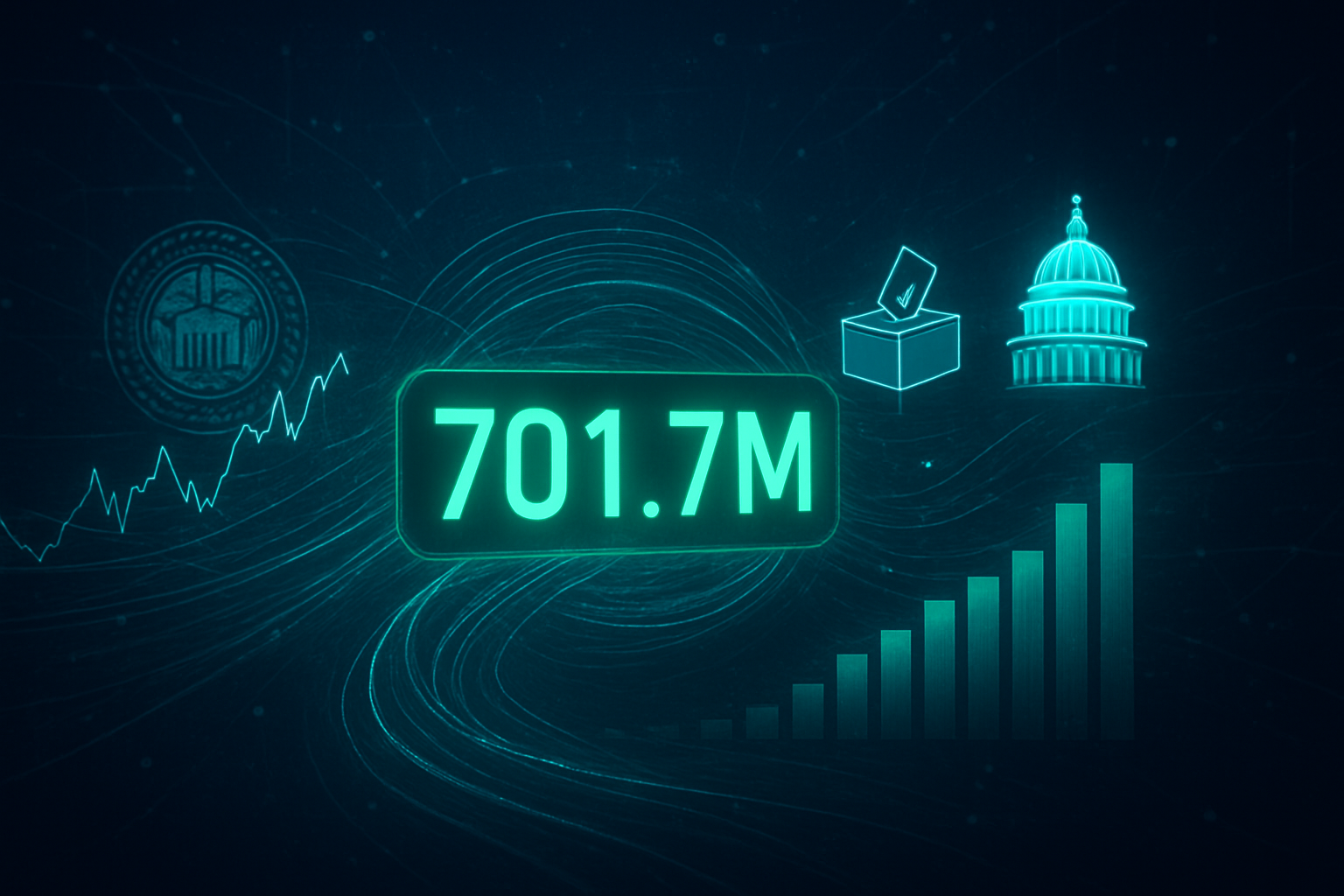
    On January 12, 2026, the financial landscape witnessed a seismic shift as daily trading volume in prediction markets hit a staggering $701.7 million, marking the industry's most prolific 24-hour period in history. What was once dismissed as a niche corner of the internet for political hobbyists has officially transitioned into a primary "truth engine" for global finance. The surge was not merely a spike in speculative interest but a calculated migration of capital toward real-time, high-stakes information during a period of intense macroeconomic and geopolitical volatility.

    The record-breaking day saw a dominant performance by Kalshi, which captured a massive 66.4% of the total market share. This explosion in activity was fueled by a "perfect storm" of data: a slowing labor market, an unprecedented constitutional clash between the executive branch and the Federal Reserve, and early-cycle positioning for the 2026 Midterm elections. As institutional giants and retail traders alike flocked to these platforms, the consensus among analysts is clear: prediction markets are no longer about "betting"—they are about "knowing."

    The Market: What's Being Predicted

    The bulk of the $701.7 million volume was concentrated on the CFTC-regulated exchange Kalshi, which processed approximately $465.9 million in trades. A significant portion of this liquidity flowed through retail gateways, particularly Robinhood (NASDAQ: HOOD), which has integrated Kalshi’s event contracts directly into its "Prediction Markets Hub." Other major players, including Coinbase (NASDAQ: COIN) and the crypto-native Polymarket—now backed by a $2 billion investment from the Intercontinental Exchange (NYSE: ICE)—accounted for the remainder of the day's record-setting activity.

    The most active contracts on January 12 revolved around two pillars: central bank policy and political control. Traders poured over $120 million into a single contract on Kalshi: "Will the Fed cut interest rates in March?" Simultaneously, the market for "Who will control the House in 2027?" saw open interest swell to $150 million. These weren't just long-term wagers; they were highly liquid instruments being traded in real-time as news broke, with bid-ask spreads tightening to levels comparable to major equities.

    Beyond traditional macro data, the day was marked by high-velocity "flash markets." Following the sudden news of a U.S. military operation in Venezuela, volume on contracts related to the capture of Nicolás Maduro spiked instantly. Similarly, a "volatility index" for the 2026 election cycle emerged in the form of Trump impeachment odds, which surged to 57% on the back of escalating domestic political tensions.

    Why Traders Are Betting

    The primary driver behind the January 12 surge was a dramatic escalation in the "Fed Independence" narrative. Following reports that the Department of Justice had issued subpoenas to Federal Reserve Chair Jerome Powell, the markets became the only place to find a real-time probability of a constitutional crisis. Traditional forecasting from institutions like JPMorgan Chase (NYSE: JPM) struggled to keep pace with the headlines, leading traders to use prediction markets to hedge against a potentially compromised central bank.

    Market activity was also heavily influenced by the January 9 labor report, which showed a meager addition of 50,000 jobs. This data point, combined with a 4.4% unemployment rate, created a divide in opinion that only a market could resolve. While some analysts predicted a defensive "hold" by the Fed, the prediction markets moved aggressively toward a 25-basis point cut, providing a "source of truth" that anticipated subsequent movements in S&P 500 futures.

    Institutional participation reached a tipping point as well. Firms like Goldman Sachs (NYSE: GS) and Interactive Brokers (NASDAQ: IBKR) have increasingly acknowledged these markets as vital sentiment indicators. The entry of CME Group (NASDAQ: CME) into the event contract space has provided the regulatory "moat" necessary for large-scale capital to enter. On January 12, this institutional liquidity met a wave of retail enthusiasm from the Robinhood and Coinbase ecosystems, creating a liquidity flywheel that shattered all previous records.

    Broader Context and Implications

    The record volume on January 12 highlights the maturation of prediction markets from "betting platforms" to "information aggregators." In an era of fragmented media and polarized polling, these platforms provide an objective, capital-weighted consensus. Brian Armstrong, CEO of Coinbase, noted that these markets are becoming superior to traditional news outlets because participants have "skin in the game," ensuring that the prevailing odds are the most accurate reflection of available data.

    However, this rapid growth has not come without scrutiny. The massive volume on the Maduro capture contracts prompted U.S. Senators Adam Schiff and Alex Padilla to call for a CFTC investigation into potential insider trading. The concern is that prediction markets may be "too good" at uncovering information, potentially incentivizing the leak of sensitive government or corporate data for profit.

    Historically, prediction markets have shown a remarkable ability to outperform pundits. From the 2024 elections to the 2025 inflation pivots, these platforms have consistently bottomed out ahead of the curve. The $701.7 million day suggests that the broader financial world has finally accepted this reality, integrating event contracts into the standard toolkit of risk management alongside options and futures.

    What to Watch Next

    As the dust settles on this record-breaking day, all eyes are on the January 13 CPI release. Prediction markets are currently pricing in a "sticky" headline inflation rate of 2.7%, and any deviation from this will likely trigger another massive volume day as traders recalibrate their Fed expectations. The market’s reaction to this data will be a crucial test of whether the January 12 volume was a one-time anomaly or the new baseline for the industry.

    Furthermore, the legal battle involving the Federal Reserve and the DOJ is expected to generate a series of "binary events"—subpoena responses, grand jury leaks, and potential executive orders—that are tailor-made for prediction market trading. Traders should also monitor the upcoming primary filing deadlines for the 2026 Midterms, which will begin to lock in the field of candidates and drive the next wave of political liquidity.

    Bottom Line

    The events of January 12, 2026, represent a point of no return for the prediction market industry. With $701.7 million in daily volume and Kalshi commanding a dominant 66.4% share, the infrastructure of "knowing" has been firmly established. These platforms are no longer just a mirror of public opinion; they are a driver of it, influencing how major institutions hedge their bets and how the public interprets breaking news.

    Ultimately, the surge in volume tells us that in an increasingly uncertain world, the value of a clear, market-driven probability is worth hundreds of millions of dollars. As prediction markets continue to integrate with mainstream financial platforms and gain institutional legitimacy, the line between "betting" and "investing" will continue to blur, leaving us with a powerful new tool for navigating the complexities of the 21st-century economy.


    This article is for informational purposes only and does not constitute financial or betting advice. Prediction market participation may be subject to legal restrictions in your jurisdiction.

    PredictStreet focuses on covering the latest developments in prediction markets.
    Visit the PredictStreet website at https://www.predictstreet.ai/.

  • The Great Integration: How Robinhood, Coinbase, and Gemini Turned Prediction Markets into a Retail Mainstay

    The Great Integration: How Robinhood, Coinbase, and Gemini Turned Prediction Markets into a Retail Mainstay

    As of January 14, 2026, the financial landscape has undergone a seismic shift. What were once niche "betting" platforms for crypto enthusiasts have matured into a cornerstone of the modern retail brokerage experience. The primary catalyst? A wave of high-profile integrations by Robinhood Markets, Inc. (NASDAQ:HOOD), Coinbase Global, Inc. (NASDAQ:COIN), and Gemini, which have collectively brought event contracts to the fingertips of over 100 million retail investors.

    The movement is no longer experimental. In the first two weeks of 2026, prediction markets have dominated the national conversation, particularly as traders eye the upcoming January 28 Federal Reserve meeting. Current market odds on these platforms show a staggering 96% probability that interest rates will remain unchanged, a level of certainty that has largely silenced traditional financial pundits. This surge in mainstream participation follows a record-breaking day on January 12, 2026, when total daily volume across major U.S. platforms hit an all-time high of $701 million.

    The Market: What’s Being Predicted

    The democratization of prediction markets has moved beyond the "binary" outcomes of election cycles. While the 2026 Midterm Elections are the highest-volume markets currently active—with Democrats showing a 74% probability of retaking the House and Republicans maintaining a 68% chance of Senate control—the variety of available contracts has exploded. Users are now trading on everything from the appointment of the next Federal Reserve Chair to specific geopolitical outcomes, such as the likelihood of U.S. military intervention in Venezuela (currently priced at a 39% "Yes" probability).

    Trading activity is now concentrated across three primary regulated hubs:

    • Robinhood (NASDAQ:HOOD): Following its official "Prediction Markets Hub" launch on March 17, 2025, in partnership with Kalshi, Robinhood has become the retail volume leader. It now accounts for over 50% of Kalshi's total volume, reporting more than 1 million active prediction traders.
    • Coinbase (NASDAQ:COIN): Having integrated prediction markets into its main app in late 2025, Coinbase allows users to settle contracts in both USD and USDC. Its recent acquisition of The Clearing Company in January 2026 signals a move toward internalizing its own clearing operations.
    • Gemini: Taking a "regulation-first" path, Gemini launched "Gemini Predictions" in December 2025 through its own subsidiary, Gemini Titan LLC, which holds a Designated Contract Market (DCM) license from the CFTC.

    Why Traders Are Betting

    The migration to mainstream platforms has fundamentally changed the "who" and "why" of prediction trading. Unlike the 2024 cycle, which was largely driven by political hobbyists and crypto whales, the 2026 market is fueled by retail investors who view event contracts as a superior hedge against market volatility. A Robinhood user holding tech stocks, for instance, might buy "Yes" contracts on a Fed rate hike to offset potential equity losses.

    This "Information Finance" model is increasingly seen as more reliable than traditional polling or expert analysis. "The markets aren't just reflecting news; they are synthesizing it faster than any newsroom can," says one senior analyst at PredictStreet. This was evident during the recent speculation surrounding the next Fed Chair. While traditional media debated several candidates, prediction markets on Coinbase and Gemini correctly identified Kevin Hassett as the frontrunner (currently at 55%) weeks before mainstream financial outlets caught up.

    Furthermore, the integration with established wallets has lowered the barrier to entry. Retail traders are moving away from offshore platforms like Polymarket in favor of the regulated, tax-compliant environments offered by Robinhood and Coinbase. The introduction of aggressive incentives, such as Gemini’s $250 sign-up bonus and fee-free trading for event contracts, has also successfully lured users away from traditional sportsbooks.

    Broader Context and Implications

    The mainstreaming of these markets is the direct result of a landmark legal victory by Kalshi against the Commodity Futures Trading Commission (CFTC) in 2024. That court ruling established that "macro" events—including elections—could be traded on regulated exchanges. This opened the floodgates for institutional "whales" to provide the liquidity necessary for a stable market.

    However, the industry now faces a new regulatory hurdle: a "federal vs. state" jurisdictional battle. In late 2025, a newly formed Coalition for Prediction Markets (CPM)—led by former politicians and executives from Robinhood, Coinbase, and Kalshi—filed lawsuits against regulators in states like Michigan and Nevada. These states have attempted to classify prediction markets as "illegal gambling." The CPM argues that federal CFTC oversight preempts state law, a case that could determine whether these markets remain available nationwide.

    Despite these hurdles, the impact on public sentiment is undeniable. Prediction markets have become the "truth layer" of the internet. When a politician makes a claim about an upcoming economic indicator, the public no longer checks a fact-checker; they check the live odds on Robinhood.

    What to Watch Next

    The immediate focus for the market is the January 28, 2026, Federal Reserve meeting. While the odds of a rate change are low, high-volume contracts are currently being traded on the number of "dissents" within the Federal Open Market Committee (FOMC). A higher-than-expected dissent count could signal future volatility, and the "Dissent" market is often a leading indicator for the bond market.

    Beyond economics, the market for the 2026 Midterm Elections will see its first major liquidity test in the coming months as primary season begins. Traders should watch for "volatility spikes" in key swing states, which often precede major shifts in campaign funding and strategy. Finally, the resolution of the CPM's lawsuits against state regulators remains the most significant tailwind or headwind for the industry. A victory for the coalition would solidify prediction markets as a permanent fixture in every American's financial toolkit.

    Bottom Line

    The integration of prediction markets into Robinhood, Coinbase, and Gemini represents the final step in the evolution of "Information Finance." By treating event contracts as a legitimate asset class, these platforms have provided the public with a tool that is more than just a betting venue; it is a real-time, high-stakes engine for truth.

    As we move further into 2026, the success of these markets suggests that the era of relying solely on pundits and polls is over. The "wisdom of the crowd," backed by the capital of millions of retail traders, has proven to be an incredibly resilient forecaster. Whether you are hedging a portfolio or simply seeking the most accurate data on the future, the prediction markets on your phone are now the most important screen to watch.


    This article is for informational purposes only and does not constitute financial or betting advice. Prediction market participation may be subject to legal restrictions in your jurisdiction.

    PredictStreet focuses on covering the latest developments in prediction markets. Visit the PredictStreet website at https://www.predictstreet.ai/.
  • The Price of Conflict: Prediction Markets Signal 83% Probability of Iran Strike in 2026

    The Price of Conflict: Prediction Markets Signal 83% Probability of Iran Strike in 2026

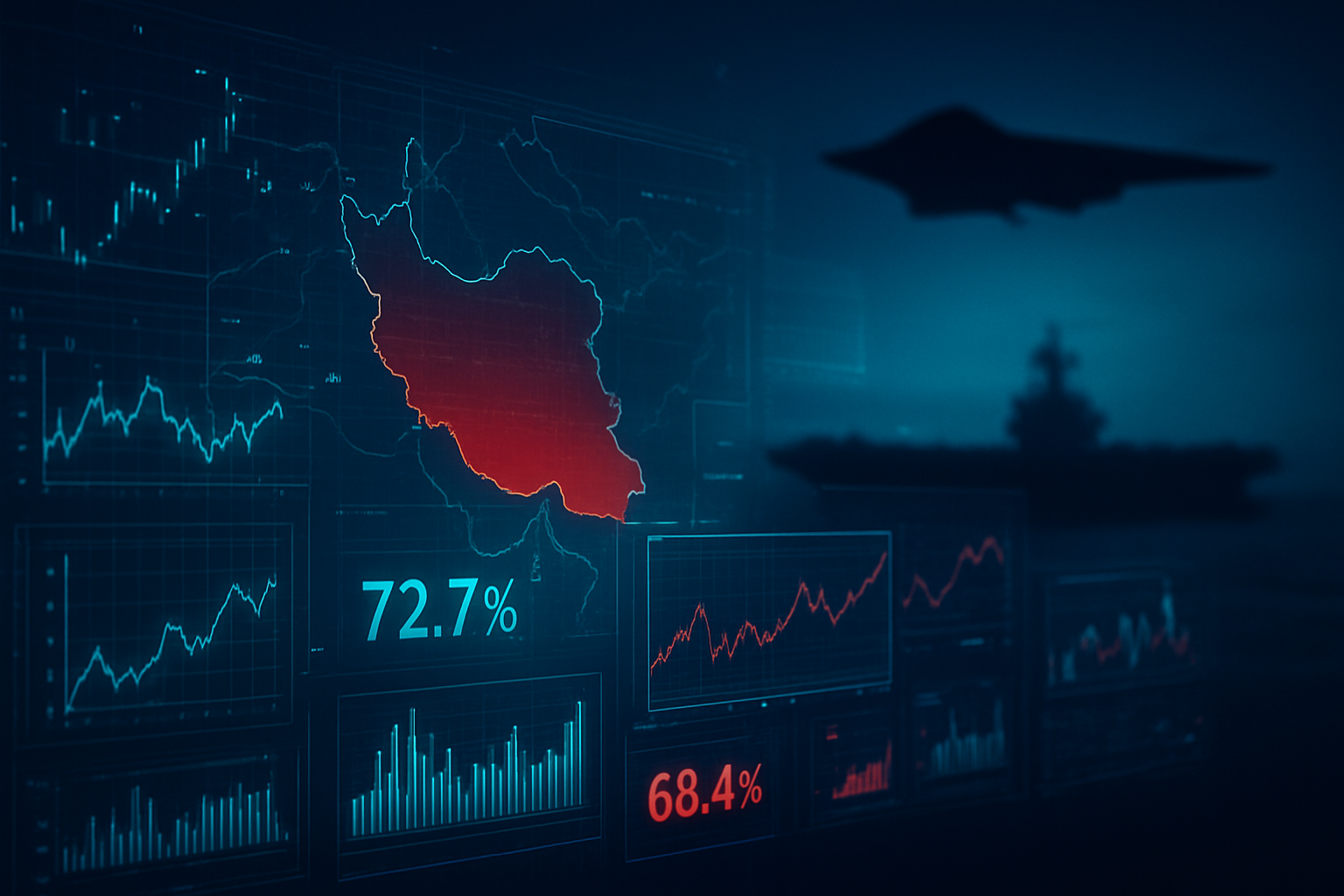
    As of January 14, 2026, prediction markets are flashing a severe warning signal for the Middle East, with traders pricing in an overwhelming likelihood of a direct military strike on Iran by the United States or Israel this year. Current odds on major decentralized platforms have surged to a staggering 83% for a U.S. strike by June 2026, marking a significant departure from the more cautious rhetoric seen in traditional diplomatic circles.

    This spike in activity follows a turbulent 2025 that saw regional tensions reach a boiling point, including the "12-Day War" in June and the subsequent collapse of several Iranian-aligned regional proxies. While traditional polling often struggles to capture the nuances of rapidly evolving geopolitical crises, prediction markets are operating as a real-time "war room," aggregating the collective intelligence of global participants who are putting millions of dollars on the line to forecast the next move in a high-stakes game of brinkmanship.

    The Market: What's Being Predicted

    The most liquid markets regarding this conflict are currently hosted on Polymarket, where the "U.S. strikes Iran by June 30, 2026" contract has seen its volume balloon to over $22 million. The odds on this specific outcome have experienced a dramatic climb, rising from 48% in the first week of January to the current 83%. Simultaneously, a shorter-term market on whether Israel will strike Iranian soil by January 31, 2026, is currently hovering around 53%, suggesting that traders believe a multi-national or U.S.-led operation is more likely than a unilateral Israeli action in the immediate future.

    On the regulated U.S. side, Kalshi has seen significant interest in markets related to Iranian leadership stability. The contract for "Ali Khamenei out as Supreme Leader by end of 2026" is trading at a 66% probability. This correlation between military action and regime change suggests that traders aren't just betting on a singular strike, but on a broader campaign designed to fundamentally alter the Iranian political landscape.

    Resolution criteria for these markets are remarkably precise to ensure "truth signals" for participants. A "strike" is typically defined as a kinetic military operation—missiles, drones, or manned aircraft—originating from Israeli or U.S. forces that impacts targets on Iranian soil. Cyberattacks and proxy engagements, while common, are explicitly excluded from the resolution, ensuring that the odds reflect actual direct military escalation.

    Why Traders Are Betting

    The "smart money" is currently reacting to a series of escalatory triggers that defined the late months of 2025. Following the re-implementation of the "Maximum Pressure" campaign by the current U.S. administration, Iran’s nuclear breakout time was reportedly reduced to zero, prompting fears of a nuclear-armed Tehran. Defense contractors like Lockheed Martin (NYSE: LMT) and Northrop Grumman (NYSE: NOC) have seen increased focus as traders monitor the deployment of specialized hardware, such as the B-2 Spirit and B-21 Raider stealth bombers, which were utilized in the limited strikes of June 2025.

    Traders are also closely watching the domestic situation within Iran. In late 2025, the Iranian Rial plummeted to a historic low of 1.4 million to $1 USD, sparking the "Bazaar Revolts." Prediction market participants appear to be betting that the U.S. and Israel will view this internal fragility as a strategic window of opportunity to degrade Iran’s nuclear and military infrastructure while the regime is preoccupied with civil unrest.

    Large-scale "whale" activity has been noted on Polymarket, with several high-net-worth accounts taking six-figure positions in favor of a strike. These moves often precede major news breaks, leading some to speculate that prediction markets are capturing "insider" cues or early-warning signals from intelligence communities that haven't yet been confirmed by mainstream media outlets.

    Broader Context and Implications

    This trend highlights the growing reliance on prediction markets over traditional expert analysis. While a standard political analyst might be hesitant to predict a full-scale war due to reputational risks, prediction market participants are incentivized solely by accuracy. Research from late 2025 indicates that these markets have maintained an accuracy rate of roughly 76% in predicting kinetic actions, outperforming traditional expert panels which often hover around 68%.

    The real-world implications of these odds are profound. When prediction markets hit an 80%+ threshold for military conflict, it often triggers a cascade of economic shifts. Oil futures typically see a "conflict premium," and defense stocks become highly volatile. For the first time, prediction markets are being used by hedge funds and risk managers as a primary hedging tool against geopolitical "black swan" events.

    However, the regulatory environment remains complex. While Kalshi has paved the way for legal event contracts in the U.S., decentralized platforms like Polymarket still operate in a legal gray area for American participants. Despite this, the volume and liquidity of these markets have become too large for regulators or policymakers to ignore, effectively creating a "shadow" intelligence agency that operates in the public eye.

    What to Watch Next

    In the coming weeks, several key milestones could send these odds even higher or cause a sharp correction. The International Atomic Energy Agency (IAEA) is scheduled to release a "special report" on Iranian enrichment levels by January 25. If the report confirms a nuclear weaponization milestone, traders expect the 83% odds to move toward the high 90s.

    Military drills in the Persian Gulf and troop movements across U.S. bases in Qatar and Bahrain are also being tracked via satellite imagery by traders on social platforms. Any sign of "readiness" beyond standard training exercises will likely be priced into the markets within minutes. Furthermore, the upcoming 2026 State of the Union address will be a pivotal moment for participants to gauge the administration's appetite for a prolonged engagement.

    Bottom Line

    Prediction markets are signaling that the era of "strategic patience" with Tehran has likely ended. The high probability of a 2026 military strike reflects a market consensus that the diplomatic and economic escalations of 2025 have failed to resolve the nuclear issue, leaving kinetic action as the perceived "inevitable" next step for the U.S. and Israeli leadership.

    As a tool for geopolitical forecasting, these platforms have proven themselves to be faster and often more accurate than traditional models. By forcing participants to have "skin in the game," prediction markets filter out the noise of partisan rhetoric and media bias, providing a cold, hard look at the probability of conflict. Whether these markets are a self-fulfilling prophecy or a vital early warning system, one thing is clear: the "wisdom of the crowd" is currently betting on a year of unprecedented fire and fury in the Middle East.


    This article is for informational purposes only and does not constitute financial or betting advice. Prediction market participation may be subject to legal restrictions in your jurisdiction.

    PredictStreet focuses on covering the latest developments in prediction markets.
    Visit the PredictStreet website at https://www.predictstreet.ai/.

  • The Great State Divide: Prediction Markets Face a Legislative Reckoning

    The Great State Divide: Prediction Markets Face a Legislative Reckoning

    As of mid-January 2026, the meteoric rise of prediction markets has hit a significant jurisdictional wall. Despite record-breaking daily trading volumes exceeding $700 million, the industry is currently navigating a chaotic "checkerboard" of state-level regulation that threatens to fragment the market. While federal courts have largely cleared a path for political and event-based derivatives, state lawmakers and gambling regulators are fighting back, arguing that these platforms are essentially unlicensed sportsbooks masquerading as financial exchanges.

    The tension reached a boiling point this week with the reintroduction of the Oversight and Regulation of Activity for Contracts Linked to Events (ORACLE) Act in New York. The bill, which seeks to prohibit residents of the Empire State from wagering on everything from local elections to the outcome of military conflicts, represents the most aggressive legislative push against the industry to date. Traders are currently pricing in a high degree of uncertainty, with sentiment on platforms like Manifold showing an 81% confidence in federal preemption in some states, while others, like Nevada, have already successfully shuttered major exchange operations.

    The Market: What's Being Predicted

    The primary "market" currently occupying the minds of industry participants isn't just a single contract, but the legal survival of the industry in the United States' most lucrative jurisdictions. On Manifold and niche regulatory sub-markets on Polymarket, traders are aggressively betting on whether platforms like Kalshi and Interactive Brokers (NASDAQ:IBKR) will be forced to implement permanent "geofencing" to block users in New York, Nevada, and New Jersey.

    Currently, the focus is on two key legal fronts:

    • The New Jersey Preemption Fight: Traders are currently giving Kalshi an 81% probability of winning its lawsuit against New Jersey regulators. This optimism stems from a late-2025 preliminary injunction where a district court suggested that the federal Commodity Exchange Act (CEA) likely overrides state-level gambling laws for CFTC-regulated exchanges.
    • The Ninth Circuit Appeal: In Nevada, the outlook is bleaker. Following a November 2025 ruling by U.S. District Judge Andrew Gordon, which labeled Kalshi’s sports-related contracts as illegal gaming, the exchange has moved to the Ninth Circuit Court of Appeals. Analysts describe this as a "toss-up," with many expecting the court to uphold the state's right to regulate gambling within its borders.

    Trading volume in these regulatory-focused markets has surged, as institutional players look to hedge their exposure to the platforms themselves. Total monthly notional volume for the industry now regularly exceeds $2 billion, even as the threat of state-level bans looms.

    Why Traders Are Betting

    The surge in betting volume is driven by a fundamental disagreement between federal regulators and state gaming commissions. Following the CFTC's decision to drop its appeal against Kalshi in May 2025, the federal path for election and macro-economic markets seemed clear. However, state regulators—often pressured by the traditional gambling lobby—have pivoted to a different strategy: classifying event contracts as "sports wagering" or "contest of chance" under century-old state statutes.

    Pro-market traders point to the Unlawful Internet Gambling Enforcement Act (UIGEA) carve-out for CFTC-regulated exchanges as their primary defense. They argue that if a market is approved at the federal level as a financial derivative, states cannot legally block it. On the other side, figures like former New Jersey Governor Chris Christie, now an advisor to the American Gaming Association, argue that prediction markets are "cannibalizing" the regulated sports betting industry without paying the requisite taxes or adhering to consumer protection standards.

    This conflict has forced major players like Robinhood Markets, Inc. (NASDAQ:HOOD) and Crypto.com to play it safe, with both firms reportedly halting certain "high-risk" event contracts in states with active litigation. The volatility in these markets is no longer just about the outcome of the events themselves, but whether the trade will even be allowed to settle before a state attorney general intervenes.

    Broader Context and Implications

    The regulatory squeeze isn't limited to the United States. In early January 2026, the Ukrainian government officially blocked access to Polymarket via Resolution No. 695. While the official reason was a lack of a local gambling license, the move was largely driven by ethical concerns over "war-related bets." Polymarket had hosted high-liquidity markets predicting the specific dates of city occupations in the Donbas region, which Ukrainian officials characterized as "exploitative" and "detrimental to national morale."

    This international backlash highlights a growing rift in the prediction market philosophy:

    1. The Information-Efficacy School: Proponents argue that markets on war and catastrophe provide the most accurate, real-time data for intelligence and humanitarian efforts.
    2. The Social-Harm School: Regulators argue that profiting from tragedy is inherently "contrary to the public interest," a clause the CFTC has historically used to try and block markets.

    In New York, the ORACLE Act takes the social-harm argument to the extreme, proposing a total ban on markets related to death, terrorism, and "catastrophic events." If passed, it would set a precedent that could see the prediction market industry split into two: a "clean" market for economic data and a "gray" market for everything else.

    What to Watch Next

    The coming weeks will be pivotal for the industry's legal standing. The first major milestone is the decision by the New York Senate Racing, Gaming & Wagering Committee on whether to advance the ORACLE Act. Industry eyes are on Senator Joseph Addabbo Jr., whose support or opposition could determine the bill's fate. If the bill reaches the floor, expect a massive lobbying push from both the "Big Three" exchanges and the traditional gaming industry.

    Secondly, the Ninth Circuit's decision on Kalshi’s emergency stay in Nevada is expected by late February 2026. A loss there would likely trigger a wave of similar cease-and-desist orders from other states, potentially forcing platforms to adopt a "state-by-state" licensing model similar to DraftKings or FanDuel.

    Finally, the industry is watching for any movement toward the U.S. Supreme Court. With conflicting rulings now emerging from different federal circuits regarding state preemption, many legal experts believe a final resolution won't be reached until 2027, leaving the market in a state of high-stakes limbo until then.

    Bottom Line

    The current regulatory landscape for prediction markets is a classic battle of "the new world vs. the old." While the technology has proven its ability to aggregate information more efficiently than traditional polling or expert analysis, it has run headlong into the complex web of American federalism and the entrenched interests of the $100 billion gambling industry.

    The ORACLE Act and the blocks in Ukraine suggest that "unregulated" prediction markets may be a thing of the past. The future likely belongs to platforms that can successfully navigate the transition from "disruptive startup" to "regulated financial utility." For traders, the "alpha" in 2026 isn't just in predicting the next Fed rate cut or election result—it’s in predicting which states will let them keep their winnings.


    This article is for informational purposes only and does not constitute financial or betting advice. Prediction market participation may be subject to legal restrictions in your jurisdiction.

    PredictStreet focuses on covering the latest developments in prediction markets. Visit the PredictStreet website at https://www.predictstreet.ai/.
  • Decacorn Status: Kalshi’s $11 Billion Valuation and Media Deals Usher in the ‘Prediction Media’ Era

    Decacorn Status: Kalshi’s $11 Billion Valuation and Media Deals Usher in the ‘Prediction Media’ Era

    The landscape of information and finance reached a historic turning point this week as Kalshi, the leading U.S. regulated prediction market, announced a staggering $1 billion Series E funding round, valuing the company at $11 billion. This "decacorn" milestone, finalized in late December 2025, signals a paradigm shift in how global markets and the general public consume information, transitioning from static polls to dynamic, real-time probability markets.

    The funding news coincides with a massive media blitz. Starting in January 2026, Kalshi has officially launched exclusive partnerships with CNN, owned by Warner Bros. Discovery (NASDAQ: WBD), and CNBC, a subsidiary of Comcast (NASDAQ: CMCSA). These deals integrate Kalshi’s live prediction data directly into televised broadcasts and digital platforms, effectively making market-based odds a central pillar of news reporting alongside traditional journalism and financial data.

    The Market: What's Being Predicted

    The scale of the prediction market ecosystem has exploded over the last 12 months. On January 12, 2026, daily trading volume across the industry hit a record-breaking $701.7 million, with Kalshi accounting for nearly two-thirds of that activity. While politics dominated 2024, the "Market of Everything" has now matured. Traders are currently heavily positioned in contracts ranging from the 2026 Midterm Election control to corporate merger outcomes, such as the rumored acquisition of Warner Bros. Discovery by Netflix, Inc. (NASDAQ: NFLX).

    Kalshi’s growth is anchored by its status as a CFTC-regulated exchange, which allows for high-liquidity contracts that were previously unavailable to the American retail public. Currently, the "Who Will Control the House in 2027?" market is one of the most active, with over $150 million in open interest. The odds have seen significant volatility this week following the funding announcement, as institutional "whales" increasingly use these markets to hedge against political and regulatory risks.

    Why Traders Are Betting

    The surge in valuation and volume is driven by a unique convergence of institutional adoption and retail enthusiasm. Following the CFTC’s decision to withdraw its legal appeals against Kalshi in May 2025, major brokerages including Robinhood Markets, Inc. (NASDAQ: HOOD) and Interactive Brokers Group, Inc. (NASDAQ: IBKR) integrated Kalshi’s event contracts into their platforms. This has democratized access to event-based hedging for millions of individual investors.

    Traders are moving away from traditional polling, which many see as lagging and prone to bias. "The market doesn't have an opinion; it has a price," noted one prominent institutional trader. The $1 billion funding round, led by Paradigm with participation from Alphabet Inc. (NASDAQ: GOOGL) via its growth fund CapitalG, provides Kalshi with the war chest needed to maintain deep liquidity. This liquidity attracts "smart money" that views prediction markets as the most accurate "truth machine" for forecasting binary events, from Fed rate hikes to the success of summer blockbusters.

    Broader Context and Implications

    The partnerships with CNN and CNBC represent a fundamental shift in the media landscape. For the first time, prediction market tickers are appearing on flagship shows like CNBC’s Squawk Box and CNN’s political coverage featuring Harry Enten. By presenting "market-implied odds" as a primary metric, these networks are validating the idea that skin-in-the-game data is more reliable than expert punditry.

    This integration serves a dual purpose: it provides a more engaging, data-driven viewer experience while simultaneously driving new users to the prediction platforms. However, the rapid ascent of these markets has not been without friction. While Kalshi won its federal battle with the CFTC, it is now navigating a patchwork of state-level challenges. Regulators in Tennessee and Nevada have recently raised questions about whether sports-related prediction contracts constitute "illegal gambling," leading to a flurry of legal filings as 2026 begins.

    What to Watch Next

    The coming months will be a crucial "stress test" for the newly minted decacorn. All eyes are on the 2026 Midterm Election markets, which are expected to dwarf the volume of the 2024 cycle. The infusion of $1 billion in capital will allow Kalshi to expand its infrastructure to handle the anticipated multi-billion dollar monthly volumes.

    Furthermore, investors are watching for the resolution of the "Third Circuit" case in New Jersey, where a group of state attorneys general is challenging the federal preemption of state gambling laws. A victory for Kalshi here would likely clear the final legal hurdles for a national rollout of its sports and event-based contracts. Additionally, keep an eye on Alphabet Inc. (NASDAQ: GOOGL) and Yahoo Finance, which are rumored to be deepening their own data integrations with Kalshi by mid-2026.

    Bottom Line

    Kalshi’s $11 billion valuation is more than just a corporate milestone; it is a signal that prediction markets have officially entered the mainstream of American finance and culture. By partnering with the biggest names in news, Kalshi is positioning itself as the infrastructure layer for the "Information Economy," where every headline has a price and every forecast can be traded.

    As we move further into 2026, the distinction between a "trader" and a "news consumer" will continue to blur. Whether this leads to a more informed public or a more volatile society remains to be seen, but one thing is clear: the era of the prediction market decacorn is here, and it is reshaping the way we understand the future.


    This article is for informational purposes only and does not constitute financial or betting advice. Prediction market participation may be subject to legal restrictions in your jurisdiction.

    PredictStreet focuses on covering the latest developments in prediction markets.
    Visit the PredictStreet website at https://www.predictstreet.ai/.

  • The Accuracy Paradox: New Vanderbilt Study Shines a Light on the Reliability of Prediction Markets

    The Accuracy Paradox: New Vanderbilt Study Shines a Light on the Reliability of Prediction Markets

    The long-debated question of whether massive trading volume leads to superior forecasting accuracy has finally been answered with a treasure trove of data. A groundbreaking study from Vanderbilt University, titled "Prediction Markets? The Accuracy and Efficiency of $2.4 Billion in the 2024 Presidential Election," has sent shockwaves through the financial and political communities. The study analyzed over 2,500 individual prediction markets to determine which platform truly provides the most reliable signal amidst the noise of a high-stakes election cycle.

    The findings have upended the conventional wisdom that the highest liquidity produces the "truth." While the decentralized giant Polymarket dominated headlines and volume, the study revealed a significant performance gap: PredictIt led the pack with a staggering 93% accuracy rate in its contracts, while Polymarket lagged behind at just 67%. As of January 14, 2026, these results are forcing institutional investors and political strategists to rethink how they use these platforms as forecasting tools in an increasingly volatile global landscape.

    The Market: What's Being Predicted

    The Vanderbilt study, led by Professor Joshua D. Clinton and PhD student TzuFeng Huang, represents the most comprehensive post-mortem of the 2024 election cycle’s prediction market performance. Researchers tracked every available political contract across four major platforms: PredictIt, Polymarket, Kalshi, and the Iowa Electronic Markets (IEM). By analyzing the implied probabilities against actual outcomes, the study sought to determine if "the wisdom of the crowd" was actually wise or merely loud.

    PredictIt emerged as the gold standard for accuracy. Despite its historically smaller footprint and regulatory constraints, it correctly predicted the outcome of 93% of the analyzed markets. Kalshi, which has rapidly expanded its presence through data-sharing partnerships with major media outlets like CNBC (Nasdaq: CMCSA) and CNN (Nasdaq: WBD), followed with a respectable 78% accuracy rate. Polymarket, the crypto-native platform that processed billions in volume, fell to the bottom with a 67% accuracy rate across its thousands of niche and down-ballot contracts.

    The disparity is particularly striking when considering the volume. Polymarket was the undisputed "whale" of the 2024 cycle, handling over $2 billion in trades. However, the study suggests that this massive liquidity often acted as a double-edged sword, attracting speculative "noise" and irrational herd behavior that distorted the true odds of many electoral outcomes.

    Why Traders Are Betting

    The research highlights a fundamental tension in prediction markets: the difference between "sober" analysis and "speculative" momentum. PredictIt’s success is attributed in part to its unique structure. For years, the platform operated under a $850 cap on individual bets (a limit that has since been increased to $3,500 following its 2025 settlement with the CFTC). This cap discouraged the massive, market-moving "whale" positions seen on Polymarket, instead favoring a larger number of smaller, more deliberate participants who were often deeply informed about specific local or niche races.

    In contrast, Polymarket’s lack of betting limits allowed for significant price manipulation and "irrational movements." The Vanderbilt study noted instances where mutually exclusive outcomes—such as the probability of a Republican sweep versus a Democratic sweep—moved in the same direction simultaneously. This suggests that many traders were not processing information rationally but were instead reacting to social media trends or platform-wide sentiment.

    Current market dynamics in early 2026 reflect these findings. On January 12, 2026, the industry hit a historic daily trading volume of $701.7 million, with Kalshi commanding a 66.4% market share. Traders are increasingly flocking to regulated platforms like Kalshi and PredictIt, seeking the "cleaner" data that comes from oversight and internal controls against insider trading.

    Broader Context and Implications

    The Vanderbilt study arrives at a critical juncture for the industry. Just last week, Polymarket was embroiled in a major controversy over its resolution of a contract regarding a U.S. mission in Venezuela. When U.S. forces captured Nicolás Maduro, Polymarket initially hesitated to pay out "Yes" bets, sparking accusations of arbitrariness in its role as an "arbiter of truth." This incident, combined with the Vanderbilt findings, has fueled a narrative that decentralized, high-volume markets may be more prone to systemic failure than their regulated counterparts.

    Furthermore, the study's revelation about the lack of "market efficiency" has drawn the eye of federal and state regulators. The researchers found that arbitrage opportunities—the ability to profit by betting on both sides of an event across different platforms—actually peaked in the final weeks of the 2024 campaign. This indicates that information was not being synthesized across the ecosystem, a hallmark of an immature or inefficient market.

    In response, New York lawmakers and federal regulators are currently drafting the "Public Integrity in Financial Prediction Markets Act of 2026." This legislation aims to formalize rules against insider trading, especially as more government officials and corporate insiders are suspected of using these markets to hedge against or profit from non-public information.

    What to Watch Next

    As we move deeper into 2026, the focus will shift to how these platforms adapt to the "accuracy over volume" mandate. PredictIt, now operating as a fully regulated CFTC exchange and clearinghouse as of September 2025, has removed its 5,000-trader cap while raising wager limits to $3,500. This expansion will test whether the platform can maintain its 93% accuracy rate as its liquidity begins to rival that of its larger competitors.

    Kalshi, meanwhile, is fighting a series of "preemption battles" in state courts. Just yesterday, on January 13, 2026, a U.S. District Judge in Tennessee granted Kalshi a Temporary Restraining Order against the Tennessee Sports Wagering Council. The outcome of these state-level legal battles will determine whether prediction markets can legally offer "event contracts" that overlap with traditional sports betting, a move that could potentially triple the industry's total addressable market by the end of the year.

    Investors should also watch for the integration of prediction market data into the broader financial ecosystem. Tech giants like Meta Platforms, Inc. (Nasdaq: META) and Amazon.com, Inc. (Nasdaq: AMZN) are reportedly exploring the use of internal prediction markets to guide project timelines and product launches, further validating the technology as a corporate forecasting tool.

    Bottom Line

    The Vanderbilt study serves as a definitive debunking of the "liquidity equals accuracy" myth. While Polymarket succeeded in creating a global macro-indicator and a massive speculative venue, it was PredictIt’s more constrained, sober environment that consistently provided the more accurate forecast. For those using prediction markets as a "crystal ball" for future events, the message is clear: the most expensive market is not always the most correct.

    As we look toward the 2026 midterms and beyond, the industry is maturing. The transition of PredictIt into a fully regulated powerhouse and Kalshi’s dominance in the regulated daily volume space suggest a future where transparency and oversight are the primary drivers of market trust. Prediction markets remain a powerful tool for aggregating information, but as the Vanderbilt researchers have proven, the quality of the crowd matters just as much as its size.


    This article is for informational purposes only and does not constitute financial or betting advice. Prediction market participation may be subject to legal restrictions in your jurisdiction.

    PredictStreet focuses on covering the latest developments in prediction markets.
    Visit the PredictStreet website at https://www.predictstreet.ai/.
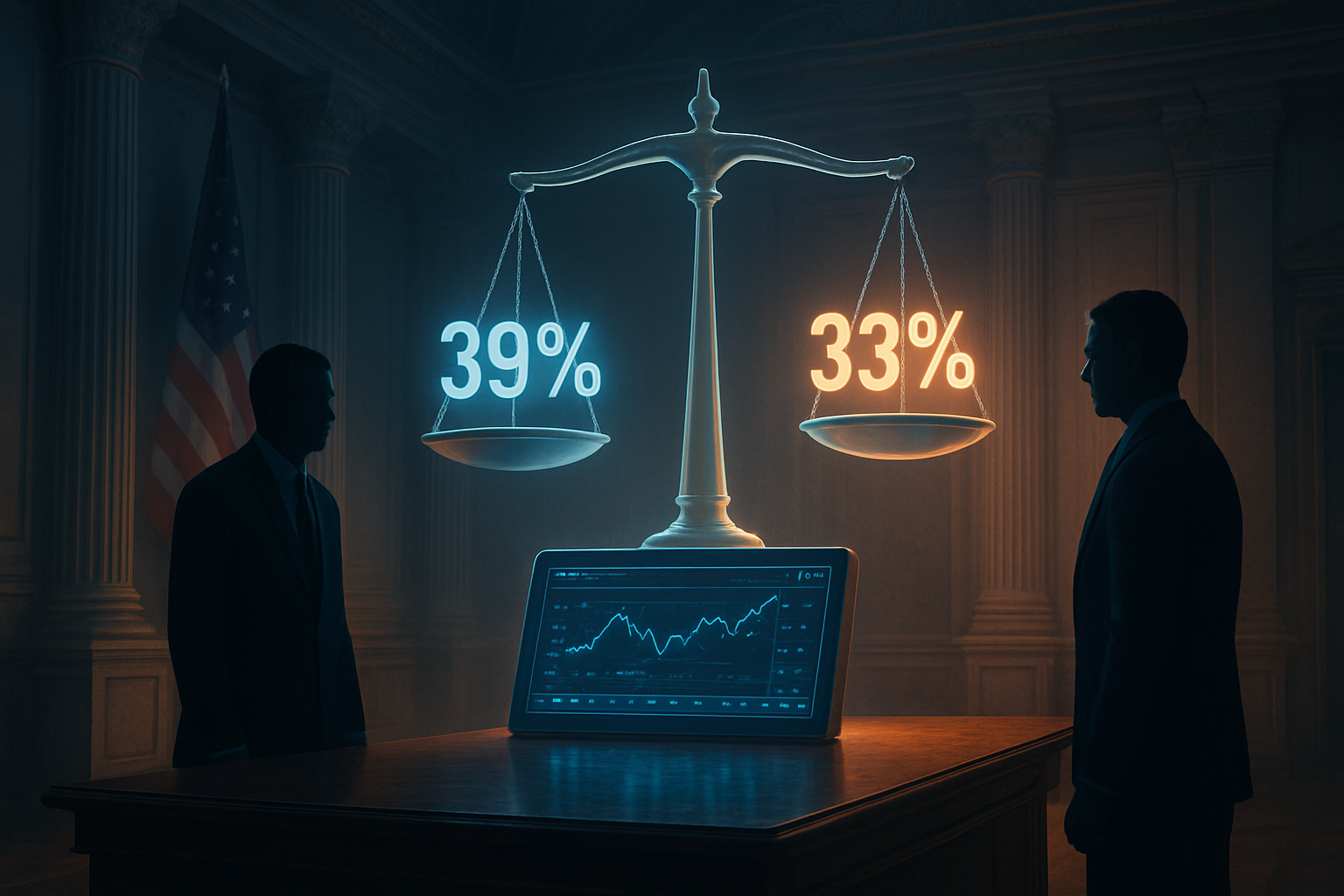
  • The Battle for the Fed: Warsh and Hassett Neck-and-Neck in High-Stakes Kalshi Race

    The Battle for the Fed: Warsh and Hassett Neck-and-Neck in High-Stakes Kalshi Race

    The transition of power at the Federal Reserve has officially moved from a matter of speculation to a high-stakes duel in the prediction markets. As of January 14, 2026, the race to succeed Jerome Powell as Chair of the Federal Reserve has seen a dramatic shift in momentum. For months, the market had favored a "loyalist" pick, but the tides are turning as political and legal tensions between the White House and the central bank reach a boiling point.

    On the prediction platform Kalshi, a significant "flip" occurred this week: Kevin Warsh has surged to a 39% probability of becoming the next Fed Chair, overtaking former frontrunner Kevin Hassett, who has slipped to 33%. This three-point lead for Warsh marks a sharp reversal from late December, when Hassett held a dominant 58% share of the market. Traders are now pricing in a more complex confirmation process, as the "Two Kevins" represent vastly different visions for the future of American monetary policy and institutional independence.

    The Market: What's Being Predicted

    The Kalshi market for "Next Fed Chair" is currently one of the most liquid and closely watched contracts in the prediction space. The contract asks participants to forecast who will be the individual officially nominated by the President and subsequently confirmed by the Senate to lead the Federal Reserve when Jerome Powell’s term expires in May 2026. While other platforms like Polymarket have seen similar volume, Kalshi’s status as a CFTC-regulated exchange has made it a primary destination for institutional hedgers and political junkies alike.

    The recent volatility in these odds is striking. Just two weeks ago, Kevin Hassett was viewed as a "done deal" by many traders, given his close ties to the current administration and his alignment with the President's public demands for aggressive interest rate cuts. However, as the January 14 data shows, Warsh’s 39% lead reflects a growing consensus that the nomination will not be a simple "coronation." Trading volume has spiked in the last 48 hours, with over $15 million in total position value across the top candidates as the market reacts to every leak from the West Wing and the Senate Banking Committee.

    The resolution criteria for this market are specific: the individual must be the first person to be confirmed by the U.S. Senate for the role. This nuance is critical, as it forces traders to account not just for who the President wants to pick, but who can actually survive the gauntlet of a divided Senate. With the current odds sitting at 39% for Warsh and 33% for Hassett, the market is effectively signaling a "toss-up" with a slight lean toward the candidate perceived as more palatable to institutional gatekeepers.

    Why Traders Are Betting

    The primary driver behind Kevin Warsh’s ascent is the perceived "confirmation risk" associated with Kevin Hassett. While Hassett is viewed as a "growth-oriented dove" who would readily implement the President’s goal of 1% interest rates, his perceived lack of independence has sparked a rebellion among moderate Republicans in the Senate. Senators like Thom Tillis and Lisa Murkowski have recently signaled they might block any nominee viewed as a political "tool," creating a opening for Warsh.

    Warsh, a former Fed Governor and Morgan Stanley (NYSE: MS) investment banker, is seen as the "Wall Street Choice." He has garnered implicit support from major financial leaders, including Jamie Dimon of JPMorgan Chase & Co. (NYSE: JPM). Traders are betting that the administration may eventually pivot to Warsh to avoid a protracted confirmation battle. "Warsh offers a 'regime change' that satisfies the President's desire for a Fed overhaul but keeps the bond market from revolting," noted one prominent trader on the Kalshi Discord.

    Conversely, the decline in Hassett’s odds is directly linked to the burgeoning Department of Justice (DOJ) probe into Jerome Powell. The investigation has turned the Fed Chair succession into a partisan lightning rod. As the White House ramps up its "coercion" of Powell, the risk of a "loyalist" nominee like Hassett being rejected by the Senate has increased. Traders are increasingly using these contracts to hedge against broader market volatility; a Hassett nomination is viewed as "risk-on" for the S&P 500 (NYSEARCA: SPY), while a Warsh nomination is seen as a stabilizing force for the financial sector and banks like Goldman Sachs Group Inc. (NYSE: GS).

    Broader Context and Implications

    This race highlights the growing role of prediction markets as a real-time barometer for political developments that traditional polling and media cannot capture. While cable news outlets are still debating whether Powell will resign early, the Kalshi market has already moved on, pricing in the likelihood of various successors. This "wisdom of the crowd" often identifies shifts in sentiment days before they appear in mainstream headlines, serving as a vital tool for economists and portfolio managers.

    The real-world implications of this choice are staggering. A Kevin Hassett chairmanship would likely signal a period of aggressive monetary easing and a potential challenge to the Fed's traditional independence. This could lead to a massive rally in growth-heavy sectors like Technology (NYSEARCA: XLK). On the other hand, a Kevin Warsh-led Fed would likely focus on "institutional reform" and balance sheet reduction, which could favor the Financials (NYSEARCA: XLF) by normalizing the yield curve and reducing regulatory uncertainty.

    Historically, prediction markets have been remarkably accurate in forecasting high-level appointments. In 2017, markets correctly identified Jerome Powell as the frontrunner months before he was formally chosen. The current 39% to 33% split suggests that we are in the most uncertain phase of the process, where a single tweet or a leaked shortlist could cause a 20-point swing in minutes.

    What to Watch Next

    As we move closer to the expiration of Powell's term, several key milestones will dictate the next moves in the Kalshi market. The most immediate event is the President’s scheduled "Economic Summit" later this month, where he is expected to provide further clarity on his shortlist. Any mention of "institutional stability" would likely see Warsh’s odds climb above 45%, while a renewed call for "radical rate cuts" would likely see Hassett regain his lead.

    Furthermore, keep a close eye on the Senate Banking Committee. If the committee's leadership begins to publicly vet Warsh, it would signal that a "backroom deal" has been struck to ensure a smooth transition. Conversely, any progress in the DOJ's investigation into Powell could delay the nomination process entirely, potentially giving rise to a "dark horse" candidate like Christopher Waller, who currently languishes at 9% odds.

    Finally, the reaction of the bond market will be a leading indicator. If the 10-year Treasury yield begins to spike in anticipation of a "political" Fed Chair, the pressure on the White House to nominate a "market-credible" candidate like Warsh will become immense.

    Bottom Line

    The current flip on Kalshi—Kevin Warsh at 39% and Kevin Hassett at 33%—is more than just a change in numbers; it is a reflection of the deep-seated tension between political ambition and market reality. While Hassett remains the ideological favorite of the administration, Warsh has emerged as the pragmatic choice for a President who cannot afford a failed confirmation or a bond market collapse.

    For participants in prediction markets, this race serves as a masterclass in "event hedging." The closeness of the odds tells us that the outcome is far from decided and that the "Two Kevins" represent a binary path for the U.S. economy. Whether the Fed moves toward a populist, pro-growth model under Hassett or a reformist, institutionalist model under Warsh, the prediction markets will be the first to tell us which way the wind is blowing.

    In the coming weeks, the 6% gap between the two frontrunners will likely expand or contract based on the political temperature in Washington. For now, Kevin Warsh holds the narrowest of leads, but in the world of high-stakes nominations, a 39% probability is a far cry from a victory lap.


    This article is for informational purposes only and does not constitute financial or betting advice. Prediction market participation may be subject to legal restrictions in your jurisdiction.

    PredictStreet focuses on covering the latest developments in prediction markets.
    Visit the PredictStreet website at https://www.predictstreet.ai/.

  • Market Odds Surging: Why Traders Are Betting Heavily on the End of the Khamenei Era

    Market Odds Surging: Why Traders Are Betting Heavily on the End of the Khamenei Era

    As of January 14, 2026, prediction markets are flashing a signal that would have been unthinkable just two years ago: a supermajority of traders believe the era of Ayatollah Ali Khamenei is coming to an end. On the decentralized platform Polymarket, the contract for Khamenei to exit office by the end of 2026 has climbed to a 65% probability, while the regulated U.S. exchange Kalshi shows an even more aggressive 66% chance.

    This surge in "Yes" bets is not merely speculative noise; it is backed by tens of millions of dollars in trading volume and a convergence of geopolitical crises that have brought the Islamic Republic to its most precarious position since the 1979 Revolution. Following a devastating regional conflict in mid-2025 and a subsequent domestic economic meltdown, the market is no longer asking if the 86-year-old Supreme Leader will depart, but rather how and how soon.

    The Market: What’s Being Predicted

    The "Khamenei Exit" market has become one of the most liquid political contracts in the world. On Polymarket, the primary contract resolves to "Yes" if Khamenei ceases to be the Supreme Leader for any reason—including death, resignation, or formal removal—by midnight on December 31, 2026. This market alone has seen over $10 million in aggregate volume, driven by high-stakes traders who treat the contract as a hedge against regional instability.

    Meanwhile, Kalshi has introduced a "World Leaders" series that includes more granular timelines. While their year-end 2026 contract sits at 66%, their shorter-term market for an exit before July 2026 is already trading at 56%. One key distinction for traders to watch is Kalshi’s resolution criteria, which often requires official confirmation of a "resignation, removal, or termination." In cases of death, some specialized contracts on these platforms trigger specific payout structures, making the distinction between a peaceful succession and a sudden power vacuum a critical variable for bettors.

    Succession markets are also heating up. Traders are currently pricing in a 53–56% chance that the position of Supreme Leader might be abolished entirely in favor of a governing council or a total regime shift, while Mojtaba Khamenei remains the individual frontrunner for succession with 18–20% odds.

    Why Traders Are Betting

    The 65% probability is the direct result of a "perfect storm" of events that occurred throughout 2025. The most significant was the "12-Day War" in June 2025, a high-intensity conflict involving massive preemptive strikes by Israel on Iranian nuclear and military infrastructure. This conflict decimated the leadership of the Islamic Revolutionary Guard Corps (IRGC) and significantly weakened the regime’s "Axis of Resistance."

    Defense contractors like RTX Corporation (NYSE: RTX) and Lockheed Martin (NYSE: LMT) saw significant stock volatility during this period as regional defense needs shifted, but for prediction market traders, the war’s primary takeaway was the apparent fragility of Iranian command and control. Reports from opposition outlets in late 2025 suggested that Khamenei suffered a physical or nervous breakdown during the strikes, leading to long periods of public absence.

    Domestically, the situation is even more dire. By January 2026, the Iranian rial has collapsed to a staggering 1.4 million to $1 USD, triggering the "Bazaar Revolts"—a series of protests in over 180 cities where even traditional merchant classes have turned against the clerical establishment. The market is pricing in the high likelihood that the security forces may soon find it impossible to maintain order without a significant change at the top.

    Broader Context and Implications

    The pricing of these markets reflects a broader trend in the prediction market industry: the move toward "regime risk" forecasting. Unlike traditional polling, which is nearly impossible to conduct accurately in authoritarian states, prediction markets aggregate "boots-on-the-ground" intelligence, capital flows, and geopolitical analysis. The current 65% odds suggest a consensus among sophisticated actors that the status quo is unsustainable.

    The real-world implications of a Khamenei exit would be seismic for global energy markets. Companies like ExxonMobil (NYSE: XOM) and other global energy giants are closely monitoring these odds, as a regime change or a civil war in Iran could lead to significant fluctuations in the price of Brent crude. Historically, prediction markets have been remarkably prescient in forecasting "black swan" leadership changes, often moving weeks ahead of mainstream media reports as insiders and analysts begin to move capital.

    From a regulatory standpoint, the high volume on these markets has drawn scrutiny. However, for many users, these platforms provide a unique form of "geopolitical insurance." If the regime in Tehran were to collapse, the resulting regional instability could be hedged by holding a "Yes" position on the Supreme Leader’s exit.

    What to Watch Next

    As we move deeper into 2026, several key milestones will likely move the needle. The first is the Assembly of Experts meetings scheduled for the spring. This 88-member body is legally responsible for choosing the next leader, and rumors of secret committees finalizing a successor could cause sudden price spikes in "Exit" contracts.

    Secondly, Khamenei’s 87th birthday in April 2026 will be a focal point for health rumors. Any failure to appear for traditional televised addresses during the spring holidays would likely push the exit probability toward the 80% mark. Conversely, if the regime manages to secure new credit lines or stabilize the rial, we could see a "buy the dip" opportunity for "No" bettors who believe the regime can survive through sheer repression.

    Finally, the international community is watching for a "Plan B" scenario. Intelligence leaks in early 2026 have hinted at contingency plans for top leadership to seek asylum in Moscow should the domestic protests reach a tipping point. Any confirmation of such preparations would likely send "Yes" shares to near-certainty levels.

    Bottom Line

    The 65% odds on Ayatollah Khamenei exiting office by the end of 2026 signal a world in transition. Prediction markets are currently signaling that the combination of 86-year-old leadership, a shattered economy, and a humiliated military has created a terminal environment for the current administration.

    While the Islamic Republic has proven resilient in the past, the current data suggests that the "succession crisis" sparked by the 2024 death of President Ebrahim Raisi was never truly resolved. For traders and geopolitical observers alike, these markets provide the most honest, capital-weighted assessment of a nation on the brink. Whether through a managed transition or a chaotic collapse, the smart money is betting that the Iranian landscape will look very different by 2027.


    This article is for informational purposes only and does not constitute financial or betting advice. Prediction market participation may be subject to legal restrictions in your jurisdiction.

    PredictStreet focuses on covering the latest developments in prediction markets.
    Visit the PredictStreet website at https://www.predictstreet.ai/.