
Tag: Prediction Markets

  • The Day Information Finance Went Mainstream: Inside the $700 Million Prediction Market Explosion

    The Day Information Finance Went Mainstream: Inside the $700 Million Prediction Market Explosion

    January 12, 2026, will be remembered as the day the "invisible hand" of the market finally grew a voice. In a historic 24-hour window, global prediction markets processed a staggering $701.7 million in daily trading volume, a milestone that effectively signals the end of the industry's experimental phase. This surge wasn't just a win for speculators; it represented a fundamental shift in how the public consumes and prices information.

    At the center of this whirlwind was Kalshi, which solidified its position as the undisputed heavyweight of the space. Capturing a dominant 66.4% market share, Kalshi processed approximately $465.9 million in trades. This unprecedented liquidity was fueled by a "perfect storm" of geopolitical shocks and a groundbreaking integration with Robinhood Markets, Inc. (NASDAQ: HOOD), which has turned millions of retail brokerage accounts into real-time sentiment gauges.

    The Market: What's Being Predicted

    While prediction markets were once the domain of niche political junkies and crypto-natives, the January 12 record was built on a diversified portfolio of high-stakes event contracts. The volume was split across a variety of platforms, with Kalshi leading the pack, followed by Polymarket and Opinion Labs (Opinion), which each captured roughly 14.3% of the daily share (approximately $100 million each). Smaller entrants like Predict Fun and Probable also saw record activity, though they remained in the shadow of the "Big Three."

    The primary driver of Kalshi’s dominance has been its status as a CFTC-regulated exchange, which allowed for its seamless integration into the Robinhood (NASDAQ: HOOD) ecosystem. Since the 2025 launch of the "Prediction Markets Hub," over 24 million retail traders have gained the ability to trade "Yes/No" outcomes as easily as they buy shares of an ETF. On January 12, Robinhood users reportedly accounted for over 50% of Kalshi’s total volume, transforming complex event derivatives into a standard retail asset class.

    Liquidity on these platforms has reached a critical mass where institutional-sized positions can now be entered with minimal slippage. This has attracted major quantitative firms like Susquehanna International Group (SIG) and DRW, who have reportedly established dedicated "Information Finance" desks to arbitrage discrepancies between prediction markets and traditional financial instruments.

    Why Traders Are Betting

    The massive volume spike on January 12 was triggered by several high-impact events that occurred simultaneously. The most dramatic was a sudden geopolitical shock in South America: the capture of Venezuelan leader Nicolás Maduro. While traditional news outlets scrambled to verify reports, prediction markets moved in milliseconds. One trader on Polymarket famously turned a $30,000 position into $400,000 by betting on the capture just hours before it was officially confirmed, a feat that drew thousands of new users to the platform in a "gold rush" of reactionary trading.

    Domestically, a high-stakes constitutional standoff between the U.S. Department of Justice and Federal Reserve Chair Jerome Powell became a massive liquidity sink. Traders poured over $120 million into contracts regarding a potential March 2026 interest rate cut. As rumors of a Fed "rebellion" against DOJ directives swirled, the odds of a rate cut fluctuated wildly between 34% and 74%, providing a real-time heat map of institutional anxiety that traditional polling could never capture.

    Furthermore, the early positioning for the 2026 Midterm elections saw significant "whale" activity. Large-scale traders used the markets to hedge against potential legislative gridlock, with a heavy concentration of volume on "Split Congress" outcomes. For many institutional players, these bets are no longer seen as gambles but as essential hedges against political risk that could impact their broader equity portfolios.

    Broader Context and Implications

    This record-breaking day marks a turning point for "Information Finance"—the concept that prices are the most accurate way to aggregate disparate pieces of information. For years, skeptics argued that prediction markets were too thin and prone to manipulation. However, the $701.7 million volume suggests that the markets have finally reached a level of maturity where they can serve as a "source of truth" that rivals or even exceeds traditional news wires like Bloomberg.

    The "Robinhood Effect" cannot be overstated. By demystifying event contracts and placing them alongside traditional stocks, Robinhood (NASDAQ: HOOD) has effectively democratized the ability to profit from being right about the world. This has not gone unnoticed by regulators. In the wake of the January 12 surge, lawmakers in New York have expedited discussions around the ORACLE Act, a proposed regulatory framework intended to clarify the legal boundaries between event trading and gambling.

    Historically, prediction markets have shown a remarkable ability to outperform expert pundits. By requiring participants to "put their money where their mouth is," these platforms filter out the noise of partisan bias and social media echo chambers. The January 12 milestone confirms that the public is increasingly looking to these markets to understand what is actually happening, rather than what people hope is happening.

    What to Watch Next

    As the dust settles from this record day, all eyes are on the Federal Reserve standoff. The volatility in interest rate contracts suggests that the market expects a major resolution before the end of the first quarter. Traders should monitor the liquidity in these contracts; if the $700 million daily volume becomes a new baseline, we could see even more aggressive price discovery in the coming weeks.

    Additionally, the expansion of Robinhood's (NASDAQ: HOOD) prediction offerings will be a key metric for the industry's growth. There are rumors that the platform may soon offer "Cross-Exchange" liquidity, allowing users to tap into multiple prediction market backends from a single interface. Such a move would likely push daily volumes past the $1 billion mark before the end of the year.

    Finally, keep a close watch on the legislative front. The success of January 12 has painted a target on the industry's back. How Kalshi and its peers navigate the impending ORACLE Act and potential CFTC challenges will determine whether this $700 million day was a one-time peak or the beginning of a new era in global finance.

    Bottom Line

    The record-shattering performance of January 12, 2026, proves that prediction markets are no longer a sideshow—they are the main event. With Kalshi and Robinhood (NASDAQ: HOOD) leading the charge, the barrier to entry for "Information Finance" has been permanently lowered. The ability of these markets to price in a presidential capture and a Federal Reserve crisis in real-time demonstrates an efficiency that traditional institutions are struggling to match.

    Ultimately, this milestone tells us that in an era of "alternative facts" and fragmented media, the world is hungry for a decentralized, incentive-aligned source of truth. As liquidity continues to grow and institutional players deepen their involvement, the odds found on prediction markets will likely become the primary lens through which we view future global events. The $701.7 million day wasn't just about the money; it was about the markets finally proving they can handle the weight of the world's most important questions.


    This article is for informational purposes only and does not constitute financial or betting advice. Prediction market participation may be subject to legal restrictions in your jurisdiction.

    PredictStreet focuses on covering the latest developments in prediction markets.
    Visit the PredictStreet website at https://www.predictstreet.ai/.

  • The Decacorn Ascendant: Kalshi Hits $11B Valuation as Prediction Markets Go Prime Time

    The Decacorn Ascendant: Kalshi Hits $11B Valuation as Prediction Markets Go Prime Time

    The landscape of American finance and media underwent a seismic shift this week as Kalshi, the first regulated event contract exchange in the U.S., officially reached "Decacorn" status with a staggering $11 billion valuation. The milestone follows a massive $1.1 billion Series E funding round, signaling that what was once a niche corner of the derivatives market has now become a pillar of the mainstream economy.

    As of January 17, 2026, the enthusiasm surrounding Kalshi isn't just coming from Silicon Valley venture capitalists. Market participants are pouring record liquidity into the platform, with daily trading volumes recently peaking at an all-time high of $466 million. This surge is fueled by the brand-new, multi-year media partnerships with CNN, owned by Warner Bros. Discovery, Inc. (NASDAQ:WBD), and CNBC, owned by Comcast Corporation (NASDAQ:CMCSA), which have begun broadcasting Kalshi’s real-time prediction data to millions of viewers worldwide.

    The Market: What's Being Predicted

    While Kalshi is an exchange rather than a single market, the "market" for the company’s own success has been one of the most watched narratives in the fintech sector. Throughout 2025, traders on social forecasting platforms like Manifold Markets correctly anticipated Kalshi’s ascent, with odds of the company surpassing a $10 billion valuation by 2026 climbing steadily from 30% in early 2025 to over 85% by the time the Series E closed in December.

    Currently, the primary activity on the Kalshi platform itself has shifted toward "The Market of Everything." Since its landmark 2024 legal victory against the CFTC, which cleared the way for political event contracts, Kalshi has seen its volume explode. The platform now captures approximately 66.4% of the global prediction market share, recently overtaking its primary rival, Polymarket. Much of this liquidity is concentrated in the upcoming 2026 U.S. Midterm Election markets, where over $8 billion in open interest has already accumulated—a level of engagement typically reserved for major commodity or equity indexes.

    Why Traders Are Betting

    The primary driver behind Kalshi’s $11 billion valuation is the successful "financialization of information." Unlike traditional sportsbooks or speculative crypto platforms, Kalshi has built a regulated "moat" that allows institutional investors to hedge against real-world outcomes. A critical catalyst for this growth was the 2025 integration with Robinhood Markets, Inc. (NASDAQ:HOOD), which brought Kalshi’s event contracts to the fingertips of millions of retail investors who already trade stocks and options.

    The new partnerships with CNN and CNBC have added a layer of "social proof" and utility that traditional polling simply cannot match. On CNBC’s Squawk Box, a dedicated Kalshi ticker now runs alongside the S&P 500 and the 10-year Treasury yield, providing a real-time "probability of recession" or "likelihood of a Fed rate cut." Traders are betting that this mainstream integration will create a feedback loop: as more people see the data on TV, more participants join the markets, leading to deeper liquidity and even more accurate forecasts.

    Furthermore, Kalshi’s strategic pivot into sports—offering peer-to-peer "Combos" that act as a regulated alternative to parlays—has accounted for nearly 90% of the platform's volume growth in the last quarter. This has attracted a different class of trader, moving the platform beyond political junkies and into the broader gaming and hedging audience.

    Broader Context and Implications

    The rise of the "Decacorn" prediction market signifies the end of the "Opinion Era" in broadcast journalism. For decades, news networks relied on pundits and traditional polling, which often lagged behind reality. By partnering with Kalshi, CNN is leaning into the expertise of its Chief Data Analyst, Harry Enten, who now uses live market probabilities to supplement—and often challenge—traditional polling data.

    This shift has profound regulatory implications. Kalshi’s success has validated the "regulated-first" approach, proving that working within the U.S. framework provides a level of stability that offshore, decentralized platforms struggle to maintain. This has not gone unnoticed by big tech; Alphabet Inc. (NASDAQ:GOOGL), through its growth fund CapitalG, was a major participant in the recent funding round, signaling that the giants of the "Attention Economy" view prediction markets as the next evolution of search and discovery.

    Historically, prediction markets have often been more accurate than experts or polls, particularly in high-stakes elections and economic pivots. As we move further into 2026, the "Kalshi Probability" is becoming the gold standard for truth in an era of fragmented information.

    What to Watch Next

    The immediate focus for Kalshi and its media partners will be the 2026 Midterm Elections. As campaigns gear up, the volatility in the "Control of the House" and "Control of the Senate" markets will be a nightly feature on CNN. Investors should watch for whether these markets can maintain their predictive accuracy as volume scales into the tens of billions.

    Another key milestone to monitor is a potential Kalshi IPO. While the company is currently flush with cash from its Series E, the $11 billion valuation puts it in the prime window for a public debut. On the Kalshi platform itself, markets are already trading on the IPO dates of other fintech giants like Kraken and Databricks, and many expect a "Kalshi IPO" market to appear on secondary platforms by the end of the year.

    Finally, keep an eye on the technical depth of the CNBC "Prediction Hub." If the integration proves successful in driving viewership and user engagement, it is likely that other major news conglomerates, such as News Corp or Disney, will seek their own prediction market partners to keep pace.

    Bottom Line

    Kalshi reaching an $11 billion valuation is more than just a win for its founders and investors; it is a coming-of-age moment for the entire prediction market industry. By embedding itself into the fabric of mainstream news through CNN and CNBC, Kalshi has transformed from a trading platform into a primary source of truth for the digital age.

    The move from "what people say" (polls) to "what people do with their money" (markets) is a fundamental shift in how society processes information. As we head deeper into 2026, the question is no longer whether prediction markets are a viable tool, but rather how we ever managed to navigate the world without them. For now, the "Kalshi Ticker" is the new pulse of the global economy.


    This article is for informational purposes only and does not constitute financial or betting advice. Prediction market participation may be subject to legal restrictions in your jurisdiction.

    PredictStreet focuses on covering the latest developments in prediction markets.
    Visit the PredictStreet website at https://www.predictstreet.ai/.
  • The Maduro Moonshot: Insider Trading Allegations Rock Polymarket After $400,000 Windfall

    The Maduro Moonshot: Insider Trading Allegations Rock Polymarket After $400,000 Windfall

    The prediction market world is reeling following a series of highly suspicious trades that occurred just hours before the dramatic capture of Venezuelan President Nicolás Maduro. While the world woke up on January 3, 2026, to the news of a high-stakes U.S. military operation in Caracas, one anonymous trader was already counting their winnings. The event has reignited a fierce debate over the integrity of decentralized betting platforms and the potential for government insiders to profit from non-public geopolitical intelligence.

    On the popular decentralized platform Polymarket, a single account managed to turn a relatively modest $32,000 position into a staggering $436,000 payout. The trade, which focused on Maduro’s removal from power, saw its value skyrocket as the market adjusted from a 5% probability to near-certainty in a matter of hours. The "pitch-perfect" timing of these bets has caught the attention of federal regulators and led to the introduction of sweeping new legislation aimed at curbing insider activity in the prediction market space.

    The Market: What's Being Predicted

    The focal point of the controversy was a Polymarket contract titled "Will Nicolás Maduro be out of office by January 31, 2026?" For much of late 2025, this market was a low-liquidity backwater, with shares trading at roughly 5 to 8 cents, reflecting a broad consensus that Maduro’s grip on power remained firm despite ongoing international pressure.

    However, activity surged in the final days of December and reached a fever pitch in the early morning hours of January 3. Trading volume on the contract, which had been stagnant for weeks, spiked to over $2.4 million as "Yes" shares were aggressively scooped up. By the time President Donald Trump officially announced the capture of Maduro on Truth Social at 4:21 a.m. EST, the market had already moved significantly, with insiders and fast-reacting bots driving the price toward the $1.00 resolution mark.

    The resolution criteria for the contract were strictly defined: Maduro had to be "effectively removed from the presidency" or "rendered unable to exercise the powers of the office" by the end of the month. The confirmed capture by U.S. Delta Force commandos triggered an immediate resolution, locking in the massive gains for those who had bet on the "Yes" outcome.

    Why Traders Are Betting

    The scandal centers on a trader identified by the pseudonym "Burdensome-Mix." Analysis of blockchain data reveals that this account was created on December 27, 2025, and displayed an uncanny focus on Venezuelan geopolitical outcomes. Unlike many sophisticated crypto traders who use privacy-preserving tools, "Burdensome-Mix" funded their account directly from a major U.S.-based exchange, Coinbase Global, Inc. (NASDAQ: COIN), without attempting to mask their identity through VPNs or mixing services.

    The most damning evidence of potential insider information lies in the timing. Between 1:38 a.m. and 2:58 a.m. EST on January 3—less than three hours before the public announcement and while the secret military operation was reportedly underway—the trader concentrated $20,000 into "Yes" shares. This last-minute infusion allowed them to capture a massive portion of the liquidity at bottom-barrel prices.

    Analysts suggest this behavior points to one of two scenarios: either a "God-tier" geopolitical analyst or, more likely, an individual with access to "Operation Absolute Resolve" briefing materials. The lack of obfuscation has led some to speculate that the trader may have been a junior staffer or a contractor who felt protected by the perceived anonymity of the blockchain, or perhaps underestimated the traceability of modern forensic tools used by firms like Chainalysis.

    Broader Context and Implications

    The "Maduro Trade" has provided immediate ammunition for critics of the prediction market industry. Representative Ritchie Torres (D-NY) wasted little time, announcing the "Public Integrity in Financial Prediction Markets Act" on January 5, 2026. The bill, which was formally introduced to the House on January 9, seeks to treat prediction markets with the same regulatory rigor as traditional equity markets.

    The proposed legislation would specifically prohibit federal elected officials, political appointees, and congressional staff from participating in any prediction market contracts related to government action or policy. "Prediction markets should be tools for collective intelligence, not a digital casino for government insiders to front-run the public on matters of national security," Rep. Torres stated during a press briefing.

    The act has garnered significant support, with co-sponsors including several high-ranking members of the House. If passed, it would represent the most significant federal intervention in the prediction market space to date, potentially forcing platforms like Polymarket and Kalshi—which currently operates as a regulated exchange—to implement more robust Know Your Customer (KYC) and anti-insider trading protocols.

    What to Watch Next

    As of January 17, 2026, the Commodity Futures Trading Commission (CFTC) has reportedly opened a formal investigation into the trading activity surrounding the Venezuela contracts. Investigators are expected to issue subpoenas to major exchanges to identify the owner of the "Burdensome-Mix" account. The results of this investigation could determine whether the trader faces criminal charges similar to those seen in traditional insider trading cases.

    In the legislative arena, the "Public Integrity in Financial Prediction Markets Act" is scheduled for its first committee hearing in late February. Prediction market advocates are watching closely, fearing that over-regulation could stifle the "wisdom of the crowds" that these platforms are designed to harness. Many are calling for a middle-ground approach that targets bad actors without banning government employees from participating in benign markets, such as those predicting economic indicators or weather events.

    Furthermore, the resolution of other Venezuela-related markets, such as the formation of a transitional government, will continue to drive volume. Traders will be looking for signs of similar "informed" activity as the political vacuum in Caracas is filled.

    Bottom Line

    The Maduro scandal marks a turning point for prediction markets. While the $400,000 windfall for "Burdensome-Mix" demonstrates the incredible profit potential of these platforms, it also highlights a glaring vulnerability: when markets are tied to secretive government actions, the "wisdom of the crowd" can easily be manipulated or anticipated by those with a seat at the table.

    For the industry to survive and achieve mainstream legitimacy, it must address these integrity concerns. Whether through self-regulation or the heavy hand of the "Public Integrity in Financial Prediction Markets Act," the era of consequence-free "insider betting" on geopolitical events appears to be coming to a close. As prediction markets become more influential in shaping public perception and even policy, the demand for transparency and fairness will only grow louder.


    This article is for informational purposes only and does not constitute financial or betting advice. Prediction market participation may be subject to legal restrictions in your jurisdiction.

    PredictStreet focuses on covering the latest developments in prediction markets.
    Visit the PredictStreet website at https://www.predictstreet.ai/.
  • The “Volume Trap”: Why PredictIt’s 93% Accuracy Is Shaking the Prediction Market Foundation

    The “Volume Trap”: Why PredictIt’s 93% Accuracy Is Shaking the Prediction Market Foundation

    A landmark study from Vanderbilt University has sent shockwaves through the burgeoning prediction market industry, delivering a rigorous autopsy of the 2024 election cycle that fundamentally challenges the "liquidity equals truth" dogma of modern finance. As of January 17, 2026, the findings are reshaping how institutional investors, political strategists, and retail traders view the reliability of real-time forecasting platforms.

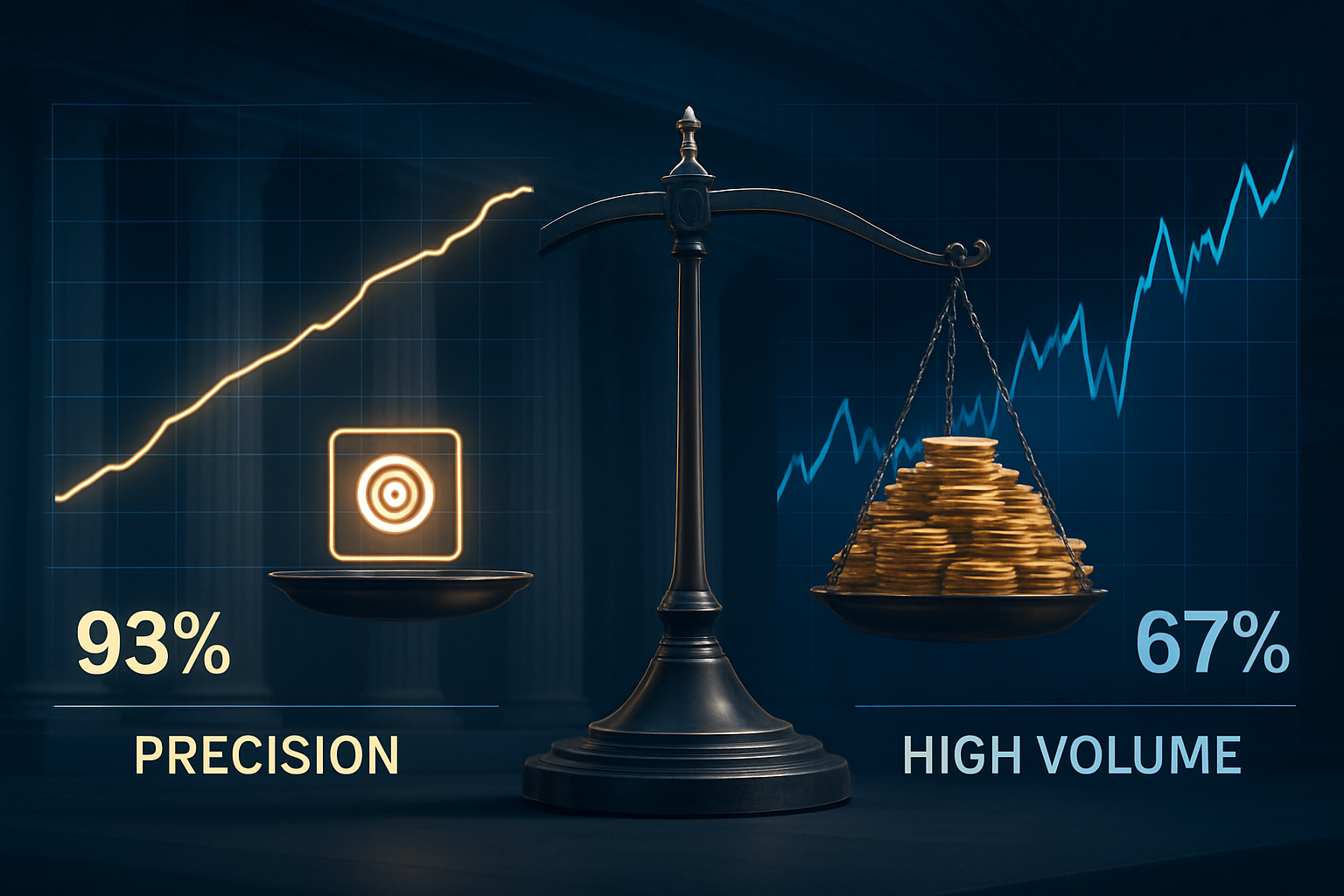
    The study, titled "Prediction Markets? The Accuracy and Efficiency of $2.4 Billion in the 2024 Presidential Election," revealed a surprising hierarchy of precision: PredictIt, the oldest and most restricted of the major platforms, achieved a staggering 93% accuracy rate in correctly forecasting election outcomes. Meanwhile, the regulated U.S. exchange Kalshi (NYSE: KLS) trailed at 78%, and the crypto-native heavyweight Polymarket—despite processing billions in volume—languished at a 67% accuracy rate. This data has sparked a heated debate over the "Volume Trap," a phenomenon where massive liquidity may actually degrade the quality of the information signal.

    The Market: What's Being Predicted

    The Vanderbilt researchers, led by Professor Joshua D. Clinton and TzuFeng Huang, analyzed more than 2,500 political contracts spanning the 2024 U.S. election cycle. The focus was not merely on the top-line Presidential winner but also on a granular level: battleground state margins, House and Senate control, and down-ballot races. While all three platforms—PredictIt, Kalshi, and Polymarket—traded identical outcomes, their price discovery mechanisms behaved in fundamentally different ways.

    PredictIt, which has historically operated under a Commodity Futures Trading Commission (CFTC) no-action letter with strict $850-per-contract limits (raised to $3,500 by late 2025), showed the highest resilience to volatility. In contrast, Kalshi, a federally regulated exchange, and Polymarket, which operates on the Polygon blockchain, saw massive influxes of "whale" capital. Polymarket, in particular, recorded a historic $2.4 billion handle for the 2024 election, yet its prices frequently diverged from the eventual reality, especially in state-level contests.

    The study used "log-loss" and Brier scores to measure how "confidently wrong" markets were. A Brier score rewards markets that are 90% certain of an outcome that occurs, while heavily penalizing those that are 90% certain of an outcome that fails. The results showed that while Polymarket had the most liquidity, it suffered from "mutual exclusivity errors," where the sum of probabilities for competing outcomes often exceeded 100%, indicating a lack of internal logic among its high-volume traders.

    Why Traders Are Betting

    The disparity in accuracy between these platforms can be attributed to the type of traders each platform attracts and the incentives created by their respective architectures. According to the Vanderbilt study, PredictIt’s success is a direct result of its restrictive "retail-only" model. Because no single trader can bet millions of dollars to "move the needle," the price is driven by a diverse crowd of "super-forecasters"—political staffers, data scientists, and wonks who trade on nuanced information rather than momentum.

    Conversely, the "Volume Trap" identified in the study describes a feedback loop seen on high-volume platforms like Polymarket. When high-net-worth "whales"—such as the widely reported "Théo" account that bet over $30 million on a Trump victory—place massive positions, it creates a "narrative gravitational pull." Smaller traders often follow the price movement (herding) rather than the underlying polling data or ground-game metrics. This creates "artificial confidence," where the market price reflects the conviction of a few wealthy individuals rather than the collective intelligence of the crowd.

    Institutional players are now taking notice of these findings. Companies like Interactive Brokers Group, Inc. (Nasdaq: IBKR), through their ForecastEx exchange, and Robinhood Markets, Inc. (Nasdaq: HOOD) have begun refining their contract offerings to prioritize "cleaner" data signals. Traders on these platforms are increasingly looking for ways to arbitrage the gap between the "pure" signal of PredictIt and the "noisy" sentiment of crypto-driven markets.

    Broader Context and Implications

    The Vanderbilt study arrives at a critical juncture for the industry. For years, proponents of prediction markets argued that the more money at stake, the more accurate the forecast would be. The 2024 data suggests the opposite may be true for political events: that concentrated capital can act as a pollutant to price discovery. This has significant regulatory implications, as the CFTC has long expressed concerns that high-stakes political betting could be used to manipulate public perception.

    PredictIt’s 93% accuracy provides a powerful defense for the "limited-stake" model, suggesting that such markets function more like a refined intelligence tool than a gambling venue. This distinction is vital as prediction markets move toward becoming a mainstream financial asset class. If the market's primary value is its "signal" for decision-makers, then accuracy—not volume—is the most valuable metric.

    Furthermore, the study highlights a "State-Level Disconnect." While Polymarket was highly accurate on the national "binary" outcome (who wins the Presidency), it was notably poor at predicting the specific electoral college math. This suggests that global speculators (the "whales") are good at broad sentiment but lack the "on-the-ground" knowledge that smaller, regional traders on PredictIt possess.

    What to Watch Next

    As we enter the 2026 Midterm election cycle, the industry is pivoting. Watch for a "flight to quality" among professional bettors. We are likely to see the emergence of "Aggregator Platforms" that weight prices based on the Vanderbilt accuracy rankings—giving a 93% weight to PredictIt signals and a lower weight to high-volume, low-accuracy sources.

    Key dates to monitor include the upcoming CFTC hearings on contract limits, where the Vanderbilt study is expected to be cited as "Exhibit A" for maintaining position caps. Additionally, look for the performance of new "Expert-Only" markets being developed by traditional financial firms that aim to replicate PredictIt’s success by restricting participation to verified domain experts rather than the highest bidder.

    The next major test for these platforms will be the 2026 Congressional primaries. If the "Volume Trap" holds true, we should expect to see Polymarket prices swing wildly based on social media trends, while PredictIt remains a more boring, but ultimately more accurate, barometer of political reality.

    Bottom Line

    The Vanderbilt University study has shattered the myth that the biggest market is always the smartest market. In the world of political forecasting, it appears that "less is more." PredictIt’s 93% accuracy rate proves that a well-regulated, capped-limit market can outperform a multi-billion dollar crypto giant by filtering out noise and focusing on high-quality, diverse information sources.

    For the prediction market industry, this is a "growing pain" moment. It forces a realization that liquidity is a double-edged sword. While volume provides the profit that sustains exchanges, it can simultaneously degrade the very "wisdom of the crowd" that makes these markets valuable to society in the first place.

    Ultimately, the Vanderbilt findings suggest that for those looking to see the future of American politics, the smartest move isn't to follow the money—it’s to follow the signal. As the 2026 Midterms loom, the "PredictIt Model" stands as the gold standard for anyone who values truth over hype.


    This article is for informational purposes only and does not constitute financial or betting advice. Prediction market participation may be subject to legal restrictions in your jurisdiction.

    PredictStreet focuses on covering the latest developments in prediction markets.
    Visit the PredictStreet website at https://www.predictstreet.ai/.
  • From Courtroom to Living Room: How Kalshi’s 2024 Victory Built the $40 Billion Prediction Economy of 2026

    From Courtroom to Living Room: How Kalshi’s 2024 Victory Built the $40 Billion Prediction Economy of 2026

    As we cross the midpoint of January 2026, the landscape of American finance and political discourse has been fundamentally rewritten. What was once a niche corner of the internet for statistics nerds and high-stakes contrarians has become the primary lens through which the public views reality. Today, "market-implied probability" is no longer just a metric; it is the headline.

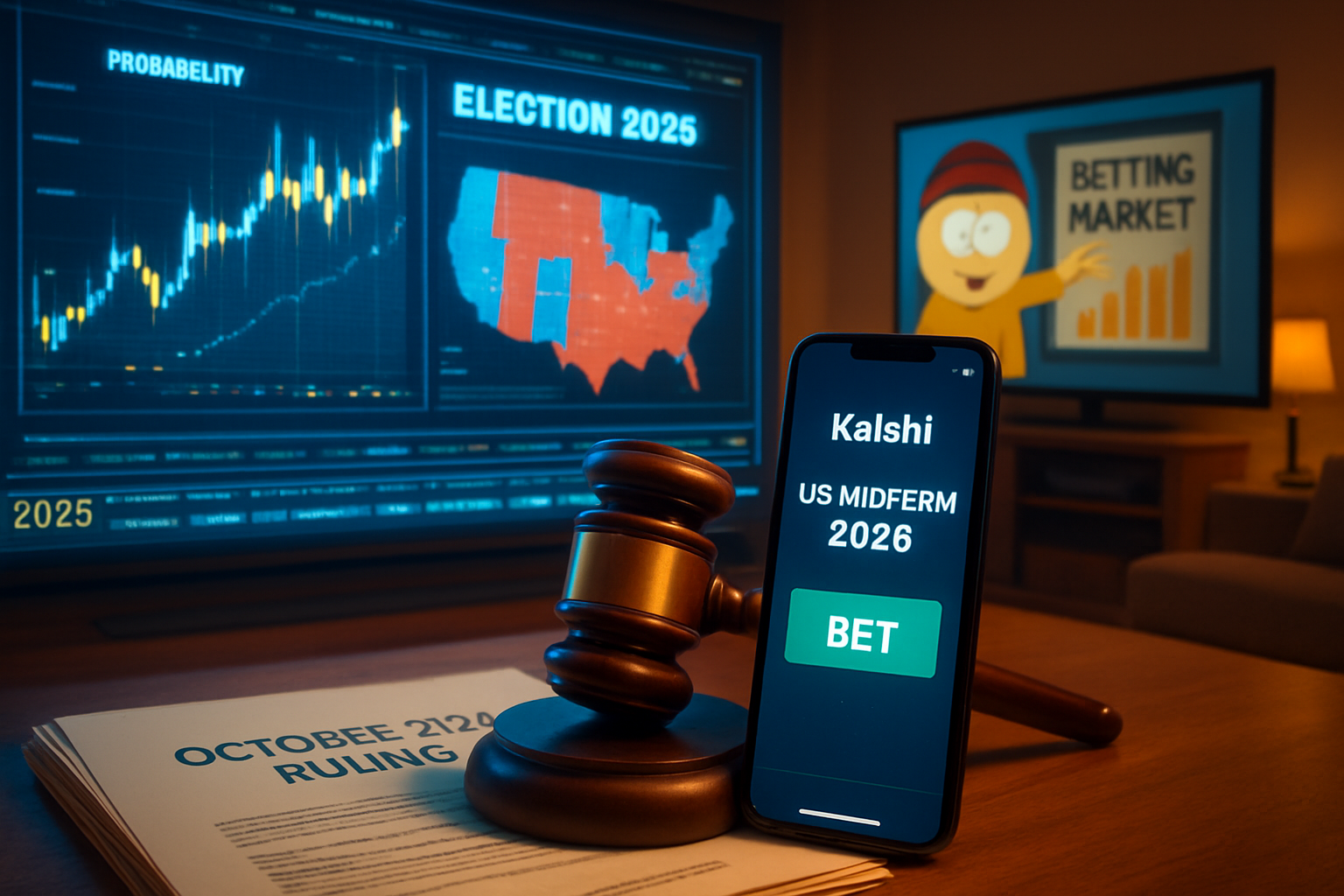
    The 2026 Midterm elections are already seeing unprecedented volume, with over $8 billion positioned across various House and Senate control markets. This "marquee year" for prediction markets didn't happen by accident. It is the direct result of a legal domino effect that began in October 2024, when a federal court order shattered the regulatory shackles holding back Kalshi and the broader industry. Looking back, that court victory was the "Big Bang" for what we now call Information Finance.

    The Market: What’s Being Predicted

    Currently, the primary focus for traders is the "2026 Midterm Power Balance" markets on Kalshi. Traders are currently pricing in a 68% probability that the GOP retains control of the House, while the Senate remains a toss-up at 51% for Democratic retention. Unlike the 2024 cycle, where liquidity was often fragmented, these markets now boast deep order books and institutional-grade stability.

    Kalshi, the only U.S.-regulated exchange of its kind, has seen its daily active user base grow by 400% since January 2025. Alongside it, Polymarket continues to dominate global volume, though Kalshi’s integration into mainstream retail platforms has given it a distinct edge in "Main Street" participation. The current total value locked (TVL) across political markets has crossed the $12 billion mark this month, with resolution criteria for the Midterms set for the first Tuesday of November 2026.

    The timeline for these markets has also shifted. In previous years, trading only heated up weeks before an election. In 2026, the markets are live and liquid two years out, providing a real-time "fear and greed" index for political sentiment that traditional polling—now largely relegated to a secondary data point—simply cannot match.

    Why Traders Are Betting

    The explosion in betting volume is driven by the formalization of "Information Finance." Investors no longer view these bets as mere gambling; they are increasingly used as a hedge against policy shifts. For instance, institutional traders are using House control markets to hedge against potential changes in corporate tax law, while retail investors are betting on Federal Reserve rate cuts to offset their mortgage concerns.

    This shift was accelerated by the integration of prediction markets into major brokerage apps. After Kalshi’s legal win, Robinhood Markets, Inc. (NASDAQ: HOOD) and Interactive Brokers Group, Inc. (NASDAQ: IBKR) moved quickly to offer event contracts to their millions of users. This provided a "firehose" of liquidity that permanently moved the needle on market accuracy.

    The cultural mainstreaming of the industry was perhaps best captured in late 2025, when the long-running animated series South Park aired the episode "Conflict of Interest" (Season 27, Episode 5). The plot, which featured the townspeople betting on everything from school board meetings to the lunch menu, satirized the "betting on everything" culture that Kalshi helped create. In a meta-twist that only 2026 could produce, Kalshi actually hosted a market on how many times the word "prediction" would be uttered in the episode, with over $500,000 traded on the outcome.

    Broader Context and Implications

    To understand why 2026 is a "marquee year," one must look back to October 2, 2024. On that day, the D.C. Circuit Court of Appeals denied the Commodity Futures Trading Commission (CFTC) an emergency stay, effectively legalizing election trading in the United States. Judge Jia Cobb’s earlier ruling—which argued that the CFTC had exceeded its authority by labeling elections as "gaming"—became the "Magna Carta" of prediction markets.

    By mid-2025, the CFTC officially dropped its remaining appeals, signaling a "white flag" moment that allowed for permanent regulatory clarity. This legal peace led to a massive influx of venture capital and the entry of traditional sports betting giants like DraftKings Inc. (NASDAQ: DKNG) and Flutter Entertainment PLC (NYSE: FLUT), the parent company of FanDuel, into the event-contract space.

    The implications for public sentiment are profound. We have moved from an era of "manufactured consensus" via polls to "skin-in-the-game" reality. When a market moves today, people pay attention because money is changing hands. This has created a more resilient information ecosystem, where rumors are quickly "priced out" by those with better information, making the 2026 markets the most efficient we have ever seen.

    What to Watch Next

    As we head deeper into 2026, the next major catalysts for the market will be the primary season debates. Traditionally, these were television events; now, they are high-frequency trading sessions. Watch for "candidate survival" markets to fluctuate wildly as the first debates of the 2026 cycle begin this summer.

    Furthermore, keep an eye on the "Regulatory Harmonization Act" currently being debated in Congress. This proposed legislation aims to create a unified federal framework for all event contracts, potentially merging the oversight duties of the CFTC and the SEC for this asset class. If passed, it would likely trigger another massive wave of institutional adoption.

    Finally, the evolution of "Social Betting"—where users can create their own private markets for friends and communities—is expected to be the next big feature release from Kalshi. This could turn the 2026 Midterms into a localized experience, with neighbors betting on local city council races and school board seats with the same ease they trade the S&P 500.

    Bottom Line

    The retrospective on Kalshi’s 2024 victory reveals a simple truth: the genie is out of the bottle. What was once dismissed as a legal longshot has transformed into a $40 billion industry that has fundamentally changed how we process news and risk. 2026 is the year prediction markets became the "source of truth" for a world weary of partisan polling and media spin.

    The "marquee year" is characterized by a fusion of entertainment, finance, and democracy. Whether it’s through a South Park parody or a Robinhood notification, prediction markets are now part of the American fabric. As we look toward the 2026 Midterms, the odds don't just tell us what might happen—they tell us what the world knows will happen.


    This article is for informational purposes only and does not constitute financial or betting advice. Prediction market participation may be subject to legal restrictions in your jurisdiction.

    PredictStreet focuses on covering the latest developments in prediction markets.
    Visit the PredictStreet website at https://www.predictstreet.ai/.
  • The $52K Floor: Why Prediction Markets are Hedging Against a Bitcoin ‘Black Swan’ in Early 2026

    The $52K Floor: Why Prediction Markets are Hedging Against a Bitcoin ‘Black Swan’ in Early 2026

    As Bitcoin (BTC) hovers near the $95,600 mark this January 16, 2026, a curious divergence is emerging between the exuberant headlines of traditional finance and the cold, calculated skepticism of prediction markets. While retail investors celebrate a recovery from the volatile "Year of the Snake" in 2025, a growing segment of traders on platforms like Polymarket and Kalshi are placing heavy bets on a catastrophic reversal. Specifically, a niche but high-stakes market tracking whether Bitcoin will fall below $52,000 before March 31, 2026, has become a focal point for those hedging against a global macro "black swan."

    Currently, prediction markets are pricing the probability of a sub-$52,000 move by the end of Q1 at approximately 8%, a figure that has tripled since the start of the year. While the spot price remains strong, the "tail risk" demand suggests that professional speculators are increasingly worried about a "liquidity vacuum" similar to the 30% crash witnessed in late 2025. This market is generating intense interest because it represents the ultimate "line in the sand"—the level where institutional conviction meets the reality of a looming U.S. recession.

    The Market: What's Being Predicted

    The specific contract in question—"Bitcoin Below $52,000 by March 31, 2026"—is primarily trading on Polymarket, the decentralized platform that dominated the 2024 election cycle and has since become the de facto source for crypto sentiment. Unlike traditional futures on the CME Group (NASDAQ: CME), which often reflect institutional "long-only" momentum, these prediction contracts act as a binary insurance policy. If Bitcoin touches or closes below the $52,000 mark before the expiration date, the "Yes" shares pay out a full dollar, providing a massive windfall for those who bought in at current "penny" levels.

    Trading volume for this specific downside target has surged to over $12 million across various platforms. On Kalshi, the regulated U.S. exchange, a broader "How low will Bitcoin go?" market shows that while the consensus "floor" is expected to be around $75,000 (with a 63% probability), the $50k–$55k bucket has seen the highest percentage increase in open interest over the last 14 days. This indicates that while few expect a crash to happen, many are willing to pay for the protection if it does.

    The resolution criteria are strict: the market typically uses a 24-hour Volume Weighted Average Price (VWAP) across major exchanges like Coinbase (NASDAQ: COIN) to prevent "flash crash" manipulation from triggering a payout. The timeline is tight, with only ten weeks remaining until the March 31 deadline, making every macro headline a potential market mover.

    Why Traders Are Betting

    The primary driver behind these bearish bets is the "Sahm Rule," a recession indicator that was officially triggered in early January 2026 as U.S. unemployment climbed to 4.6%. For the first time in years, Bitcoin is facing a true "recession trade," where high-beta assets are the first to be sold during a dash for cash. Traders betting on the $52,000 level are essentially betting that the U.S. economy is entering a hard landing, which would force even the most diamond-handed institutions to liquidate.

    Furthermore, the "Saylor Risk" has re-entered the conversation. MicroStrategy (NASDAQ: MSTR), which continued its aggressive acquisition strategy throughout 2025, now holds an average purchase price of roughly $74,972. Analysts warn that if Bitcoin drops below $80,000, the "Saylor Premium"—the amount the stock trades above its net asset value—could evaporate, potentially leading to forced selling or debt-servicing issues. Traders in the prediction markets are watching the MSTR discount to NAV closely; it recently hit 0.95x, suggesting the market is already pricing in a period of underperformance.

    Technical analysts also point to the $52,000 level as the "61.8% Fibonacci golden ratio" and the primary consolidation floor from 2024. Proponents of the "Bear Flag" theory argue that the drop from the October 2025 high of $126,272 has yet to find its true bottom. For these traders, $52,000 isn't just a random number; it is the ultimate "value zone" where the 2026 bull market will either be reborn or buried.

    Broader Context and Implications

    This market reveals a fascinating psychological split in the 2026 financial landscape. Traditional analysts at firms like Standard Chartered (LSE: STAN) and Fundstrat continue to issue price targets of $150,000 to $200,000 for the end of the year. However, prediction markets are far more skeptical, with Polymarket bettors giving only a 21% chance of Bitcoin hitting $150,000 at any point in 2026. This "Crowd Wisdom" often serves as a more accurate gauge of actual risk appetite than the aspirational targets of sell-side research.

    The real-world implications of a drop to $52,000 would be catastrophic for the burgeoning "Crypto-Policy" ecosystem in Washington. With the GENIUS Act (regulating stablecoins) and the CLARITY Act (defining market structure) currently moving through the Senate, a price collapse could stall legislative progress. Lawmakers often use price action as a proxy for industry legitimacy; a 50% drawdown from the 2025 highs would likely embolden critics who argue the asset class is too volatile for sovereign-level adoption.

    Historically, prediction markets have been remarkably accurate at sniffing out "black swan" events before they appear in spot prices. During the 2022 FTX collapse and the 2024 regional banking crisis, prediction market odds moved hours—and sometimes days—before the broader market realized the extent of the damage. The current buildup of "Yes" positions on the $52k contract suggests that while the surface looks calm, the underlying plumbing of the crypto market is bracing for a surge in pressure.

    What to Watch Next

    The most immediate hurdle for the market is the January 31 U.S. government funding deadline. A potential shutdown is viewed as a volatility catalyst that could disrupt the regulatory "guardrails" the market has come to rely on. If a shutdown occurs and the dollar strengthens in a flight to safety, the odds of the $52,000 target being hit will likely jump instantly.

    Investors should also monitor the Supreme Court’s upcoming ruling on President Trump’s "Liberation Day" tariffs. A ruling that upholds broad executive power to levy tariffs could trigger a "higher-for-longer" inflation scenario, potentially forcing the Federal Reserve to pause its planned rate cuts. Since prediction markets currently price a 91.7% chance of a dovish Fed replacement in early 2026, any hawkish surprise would be a "reset" event for Bitcoin's valuation.

    Finally, keep an eye on the BlackRock (NYSE: BLK) IBIT ETF flows. Despite the bearish sentiment in prediction markets, IBIT saw over $750 million in net inflows in the first two weeks of January. If these institutional inflows begin to taper off or turn negative, the "black swan" bets on the $52,000 floor will shift from a low-probability hedge to a high-probability reality.

    Bottom Line

    The Bitcoin market of early 2026 is a tale of two realities. In one, institutional giants like BlackRock (NYSE: BLK) and MSCI (NYSE: MSCI) are finalizing the infrastructure to make Bitcoin a permanent fixture in global portfolios. In the other, prediction market traders are looking at the Sahm Rule, MSTR’s leverage, and a cooling macro environment and seeing a recipe for a 45% correction.

    The "Bitcoin below $52,000" market is the ultimate expression of this tension. While it remains a "tail risk" event with low single-digit odds for a Q1 resolution, the rising volume and shifting probabilities suggest that the market’s "bullish bias" is being tested by a cold front of economic data.

    Whether $52,000 acts as a doomsday scenario or the buying opportunity of a lifetime depends on the Fed's next move and the resilience of the U.S. consumer. For now, prediction markets are sending a clear signal: the path to $100,000 is not as clear as the headlines suggest, and the "floor" may be much further down than most are prepared for.


    This article is for informational purposes only and does not constitute financial or betting advice. Prediction market participation may be subject to legal restrictions in your jurisdiction.

    PredictStreet focuses on covering the latest developments in prediction markets. Visit the PredictStreet website at https://www.predictstreet.ai/.

  • The Great Disconnect: Prediction Markets Brace for Undersea Cable Sabotage Through 2026

    The Great Disconnect: Prediction Markets Brace for Undersea Cable Sabotage Through 2026

    The global internet, a seemingly ethereal cloud of data, is anchored to the reality of thousands of miles of fiber-optic cables resting on the ocean floor. According to prediction market participants, that physical foundation is looking increasingly precarious. As of mid-January 2026, traders on platforms like Manifold Markets are pricing in a staggering 43% to 89% chance of a major internet outage caused by undersea cable failure before the end of the year.

    This surge in "Yes" bets follows a series of high-profile "gray-zone" incidents in the Baltic and Red Seas that have left infrastructure experts and geopolitical analysts on edge. With traditional diplomatic channels strained, the vulnerability of the global data backbone has become a focal point for speculators who believe the next major theater of conflict won't be fought on land, but in the depths of the ocean.

    The Market: What's Being Predicted

    The primary theater for this speculation is Manifold Markets, where the question "Major internet outage due to undersea cables breaking by end of 2026?" has seen significant volume and volatility. While the odds have fluctuated wildly based on daily news cycles, the consensus has trended upward since a recent incident near Liepāja, Latvia, on January 14, 2026. Resolution criteria for these markets are typically stringent: a "YES" resolution requires an outage that affects at least one entire nation or results in a documented 50% or greater reduction in regional bandwidth specifically attributed to physical cable damage.

    On Polymarket, the focus has been more granular, targeting specific geopolitical actors. For instance, a market regarding whether Iranian activity will be blamed for recent U.S. service disruptions is currently trading at 18%, reflecting a more skeptical view of domestic impacts versus international ones. Meanwhile, regulated exchanges like Kalshi (whose parent company is KalshiEX LLC) have seen increased interest in broader infrastructure and power grid markets, which often serve as a proxy for traders hedging against a general breakdown in societal connectivity.

    Why Traders Are Betting

    The bullishness on a "Global Disconnect" scenario is driven by a sobering reality: undersea cables are remarkably easy to break and notoriously difficult to fix. Traders are pointing to the "economic asymmetry" of cable sabotage. As evidenced by the February 2024 sinking of the Rubymar and the subsequent damage to the AAE-1 and Seacom lines, a single ship's anchor can cause hundreds of millions of dollars in damage and disrupt 25% of traffic between Asia and Europe.

    Geopolitical tensions are the primary catalyst. In late 2024 and throughout 2025, suspicious vessel activity—including a Chinese-linked ship and a Finnish-investigated vessel—coincided with severed links in the Baltic Sea. Traders are betting that these are not accidents but "stress tests" by adversarial powers. Furthermore, the global fleet of cable-repair ships is currently at a breaking point; with a record backlog of repairs as of early 2026, even a minor increase in cable "faults" could lead to the kind of prolonged, major outage that would trigger a market payout.

    Corporate giants like Alphabet Inc. (NASDAQ: GOOGL) and Meta Platforms, Inc. (NASDAQ: META) have invested billions in private subsea infrastructure to ensure redundancy, but even their massive networks are not immune to simultaneous cuts in chokepoints like the Luzon Strait or the Suez Canal. Traders on Manifold have noted that if a conflict were to erupt in the Taiwan Strait, the resulting cable damage would likely cause a total regional blackout, making a "YES" resolution almost certain.

    Broader Context and Implications

    This market reflects a broader shift in prediction markets away from election forecasting and toward "tail-risk" infrastructure events. The high probability assigned to a cable failure suggests that the public—or at least the segment of the public that trades on these platforms—has lost confidence in the "invincibility" of the modern web. It highlights a transition where the internet is no longer viewed as a resilient, decentralized mesh, but as a fragile series of pipes owned by a handful of tech titans and vulnerable to any bad actor with a heavy enough anchor.

    The real-world implications of such an event would be catastrophic. Beyond the inability to scroll social media, a major cable failure would paralylyze global finance, disrupt supply chains managed by companies like Amazon.com, Inc. (NASDAQ: AMZN), and potentially take down cloud services provided by Microsoft Corporation (NASDAQ: MSFT). Prediction markets are currently serving as an early warning system, pricing in risks that traditional insurance and government agencies may be slower to acknowledge publicly.

    What to Watch Next

    The next several months are critical for this market. Traders are closely monitoring the deployment of new cable-laying vessels and the progress of the "Far North Fiber" project, which aims to bypass traditional chokepoints by laying cable through the Arctic. Any delay in these projects will likely drive the "YES" odds higher on Manifold Markets.

    Key dates to watch include the upcoming NATO summit in June 2026, where "undersea infrastructure resilience" is expected to be a top agenda item. Additionally, any unusual movement of "research vessels" in the North Sea or the South China Sea will likely cause immediate spikes in betting volume. If the current trend of "accidental" anchor draggings continues into the spring, we could see the probability of a major 2026 outage cross the 90% threshold.

    Bottom Line

    The prediction markets are sending a clear, if alarming, signal: the "physical internet" is under siege. With odds sitting well above 50% for a major disruption by the end of 2026, traders are no longer asking if a major cable failure will happen, but where and when. The convergence of aging infrastructure, a shortage of repair capacity, and aggressive "gray-zone" tactics by nation-states has created a perfect storm for a global connectivity crisis.

    Whether these markets prove to be accurate or merely a reflection of modern geopolitical anxiety remains to be seen. However, for those looking to understand the fragility of our digital age, the activity on Manifold and Polymarket offers a much more immediate and visceral data point than any white paper. In the high-stakes game of global infrastructure, the "smart money" is currently betting that the lights—or at least the routers—might soon go out.


    This article is for informational purposes only and does not constitute financial or betting advice. Prediction market participation may be subject to legal restrictions in your jurisdiction.

    PredictStreet focuses on covering the latest developments in prediction markets.
    Visit the PredictStreet website at https://www.predictstreet.ai/.
  • Betting on Revolution: Prediction Markets Signal a ‘Winter of Discontent’ for Iran and Cuba in 2026

    Betting on Revolution: Prediction Markets Signal a ‘Winter of Discontent’ for Iran and Cuba in 2026

    As of January 16, 2026, the geopolitical landscape is being rewritten not just in the halls of diplomacy, but across the digital ledgers of global prediction markets. In a startling shift of sentiment, traders on platforms like Polymarket, Manifold Markets, and Kalshi are pricing in a historic "Winter of Discontent" for two of the world’s most enduring autocratic regimes: Iran and Cuba. For the first time in decades, the "wisdom of the crowd" suggests that the survival of the Islamic Republic and the Cuban Communist Party is no longer a safe bet, with leadership turnover odds in both nations soaring past the 60% mark.

    This surge in activity is being fueled by a series of black-swan events that have unfolded in the first two weeks of 2026. From the "Winter Uprising" in Tehran to the seismic "Maduro Shock" in the Caribbean, speculative volume has reached record highs. On Polymarket alone, the "Iran Leadership" market has seen over $4.1 million in trading volume, as participants bet on the departure of Supreme Leader Ali Khamenei before the year’s end. These markets are increasingly being viewed by analysts at firms like Meta Platforms, Inc. (NASDAQ: META) and Alphabet Inc. (NASDAQ: GOOGL) as vital indicators of on-the-ground reality in regions where traditional media access is restricted.

    The Market: What's Being Predicted

    The current focus of geopolitical traders is split between two distinct but related outcomes: leadership transition and total regime collapse. In the Iran markets, there is a marked divergence in probability. On Polymarket and Kalshi, the odds that Ayatollah Ali Khamenei (86) will exit his post—whether by death, resignation, or ouster—by the end of 2026 are currently hovering between 56% and 66%. However, the probability of a total "regime fall"—defined as the dissolution of the Islamic Revolutionary Guard Corps’ (IRGC) clerical authority or a change in the constitution—remains lower, at approximately 34% on Manifold Markets and only 5% on the more conservative Metaculus.

    In Cuba, the sentiment is even more bearish for the status quo. Following the reported capture of Venezuelan President Nicolás Maduro by U.S. forces on January 3, 2026, the market for President Miguel Díaz-Canel’s ouster has spiked to 65%. Traders on Manifold are essentially betting on "economic terminal entropy," where the loss of Venezuelan oil subsidies—the island’s "energetic floor"—leads to an irreversible breakdown of state control.

    The resolution criteria for these markets are notoriously strict. For a "Yes" resolution on regime change, most platforms require verification from a consensus of international news organizations like Reuters or the Associated Press. On Metaculus, the bar is even higher, requiring that the government lose de facto control of more than 50% of its territory and that the term "Islamic Republic" or "Communist Party" be removed from the nation's governing documents.

    Why Traders Are Betting

    The primary driver for the Iran markets is the catastrophic collapse of the Iranian Rial, which hit an all-time low of 1.65 million per USD this week. This currency devaluation has sparked the "Winter Uprising," a wave of protests spanning 92 cities. Unlike previous movements, traders are betting that the current unrest is different due to the perceived fragility of the succession plan. With rumors of Khamenei’s failing health circulating on social media platforms like X, speculators are divided on whether the transition to his son, Mojtaba Khamenei, will trigger a "sclerotic" council takeover or a full-scale revolution.

    External pressure is also a significant factor. The second Trump administration has signaled a "maximum pressure 2.0" campaign, threatening 25% tariffs on any nation trading with Iran. On Polymarket, a specific contract for a "U.S. Military Strike on Iran by June 30, 2026" is currently trading at 74%, reflecting a high degree of confidence in "Operation Iron Strike."

    In Cuba, the "Maduro Shock" has completely altered the risk profile. Without the lifeblood of Venezuelan oil, which traditionally flowed through tankers operated by companies like Chevron (NYSE: CVX), the Cuban state is facing permanent blackouts in its interior provinces. Traders are betting that the "hollow state" phenomenon—where the government maintains control of Havana while losing the provinces of Santiago de Cuba and Holguín—will eventually lead to "elite fragmentation" following the inevitable passing of 94-year-old Raul Castro.

    Broader Context and Implications

    The rise of these markets marks a paradigm shift in how global intelligence is aggregated. Traditionally, the stability of the Iranian or Cuban regimes was the purview of think tanks and classified intelligence briefings. Today, prediction markets provide a real-time, incentivized alternative. "Prediction markets are essentially the ultimate bullshit detector," says one high-volume trader on Manifold. "You can't hide a currency collapse or a military mobilization from a market that is looking for a 1% edge in satellite imagery or social media sentiment."

    This has significant real-world implications. Multi-national corporations and logistics giants are increasingly using these odds to hedge their regional risks. If the markets suggest a 65% chance of a Cuban regime change, insurance premiums for shipping in the Caribbean may adjust accordingly. Furthermore, the accuracy of these markets has historically outperformed traditional forecasting; for instance, prediction markets were faster to price in the instability of the 2024 Iranian helicopter incident than most geopolitical journals.

    However, the regulatory environment remains a hurdle. While Kalshi has fought for its right to host election-related and geopolitical contracts in the U.S., the Commodity Futures Trading Commission (CFTC) continues to eye these "event contracts" with skepticism, citing concerns about "public interest" and the potential for market manipulation by foreign actors.

    What to Watch Next

    The coming weeks will be critical for the resolution of these contracts. In Iran, all eyes are on the upcoming anniversary of the 1979 Revolution in February. A failure by the state to mobilize its usual pro-regime rallies, or a surge in "counter-rallies," could send the "Regime Fall" odds on Manifold skyrocketing from 34% toward the 50% mark. Additionally, any verified health update regarding the Supreme Leader will likely cause immediate, high-volume volatility.

    In Cuba, the key milestone is the "Economic Deregulation" deadline rumored for March 2026. If the Díaz-Canel administration is forced to fully dollarize the economy to survive the loss of Venezuelan support, it may be viewed as a surrender of sovereignty, triggering the "Yes" resolution on leadership change. Investors are also monitoring the movement of U.S. naval assets in the Caribbean, with the "Invasion/Strike" market currently sitting at a tense 25%.

    Bottom Line

    The prediction markets of early 2026 paint a picture of a world at a geopolitical tipping point. While the "total collapse" of the Iranian and Cuban governments is not yet a consensus view, the odds for significant leadership turnover are the highest they have been in the 21st century. The markets are telling us that the combination of economic insolvency and leadership transition is a more potent threat to these regimes than decades of external sanctions.

    Ultimately, these platforms serve as more than just a place to gamble; they are becoming the world's most transparent risk-assessment tool. Whether the "Winter Uprising" results in a new constitution or a reshuffled autocracy remains to be seen, but for now, the smart money is betting that the old guards in Tehran and Havana are running out of time.


    This article is for informational purposes only and does not constitute financial or betting advice. Prediction market participation may be subject to legal restrictions in your jurisdiction.

    PredictStreet focuses on covering the latest developments in prediction markets.
    Visit the PredictStreet website at https://www.predictstreet.ai/.

  • The Democratization of Destiny: How Robinhood and Kalshi Mainstreamed Prediction Markets

    The Democratization of Destiny: How Robinhood and Kalshi Mainstreamed Prediction Markets

    The landscape of retail finance has undergone a seismic shift, culminating in today's milestone as prediction markets move from the fringes of political junkies to the center of the mobile brokerage experience. As of January 16, 2026, the partnership between Robinhood (NASDAQ: HOOD) and Kalshi has transformed "event contracts" into a multi-billion dollar asset class. What began as a high-stakes legal battle with regulators has evolved into a daily habit for millions of investors who are now trading the outcome of everything from Federal Reserve meetings to the weekend’s NFL divisional playoffs with the same ease as buying a share of stock.

    Interest in these markets has reached a fever pitch this week, following the launch of "Custom Combos"—a new Robinhood feature that allows users to bundle multiple event contracts into bespoke derivatives. This integration has bridged the gap between traditional sports betting and financial hedging, creating a regulated environment where "skin in the game" applies to the news cycle itself. With over 1 million active prediction traders on the Robinhood platform, the liquidity provided by this retail surge has turned prediction markets into some of the most accurate forecasting tools in existence, often moving faster than traditional news desks or polling data.

    The Market: What's Being Predicted

    The core of the Robinhood-Kalshi integration lies in the "Prediction Markets Hub," a dedicated interface within the Robinhood app that routes orders directly to KalshiEX LLC, a CFTC-regulated exchange. Unlike traditional options, which can be complex and Greeks-heavy, these contracts are binary: a simple "Yes" or "No" on whether an event will occur. Currently, the most active markets center on the upcoming January Federal Open Market Committee (FOMC) meeting, where traders are currently pricing in a 68% probability of a 25-basis-point rate cut.

    Since the partnership's full-scale rollout in 2025, trading volume has exploded, recently surpassing 9 billion total contracts traded. The resolution criteria are strictly defined by Kalshi’s rulebook, ensuring that contracts are settled based on verifiable data—such as official government reports or sports box scores. This transparency has been a primary driver of liquidity; during peak periods, such as the 2024 Presidential Election, Robinhood users alone accounted for over 35% of the daily volume on the Kalshi exchange, facilitating a level of market depth that was previously non-existent in the event contract space.

    Why Traders Are Betting

    The surge in betting activity is driven by a fundamental shift in how retail investors consume information. In an era of fragmented media, prediction markets offer a "source of truth" backed by capital. Traders are no longer just passive observers of the news; they are active participants. For many, event contracts serve as a superior alternative to traditional options for hedging specific risks. For instance, a small business owner might buy "Yes" contracts on an interest rate hike to offset increased borrowing costs, while a tech enthusiast might trade on the probability of a specific AI regulation being passed.

    Strategies have also become more sophisticated. "Whale" activity—once the domain of secretive offshore accounts on unregulated platforms—is now visible and regulated. Notable large positions are frequently taken by institutional players who use the Robinhood-Kalshi pipeline to gauge retail sentiment. Unlike traditional forecasting methods like polling, which have faced a crisis of credibility, prediction markets are incentivized by profit. If a poll is wrong, the pollster keeps their job; if a trader is wrong, they lose their stake. This "accountability by design" is why Robinhood’s user base has embraced these markets as a more reliable barometer of reality than cable news.

    Broader Context and Implications

    The success of this partnership is a direct result of the landmark Kalshi vs. CFTC legal ruling in late 2024. When Judge Jia Cobb ruled that "elections are not gaming," it broke the regulatory dam that had held back prediction markets for decades. By 2025, the CFTC’s decision to drop further appeals provided the regulatory "green light" that Robinhood (NASDAQ: HOOD) needed to fully integrate these products. This transition from "gambling" to "regulated financial derivatives" has been crucial for mainstream adoption, as it allows users to trade within the same protected environment as their 401(k) or IRA holdings.

    Historically, prediction markets have shown remarkable accuracy, often outperforming experts in fields ranging from public health to geopolitical conflicts. By bringing these markets to millions of retail investors, Robinhood and Kalshi have effectively created a "global brain"—a decentralized mechanism for processing information. However, this has not been without controversy. The newly formed Coalition for Prediction Markets (CPM), which includes Robinhood and Kalshi alongside Coinbase (NASDAQ: COIN), is currently lobbying against several states that are attempting to reclassify these contracts as illegal gambling. The outcome of these state-level battles will determine whether the "democratization of destiny" remains a nationwide phenomenon or a regional privilege.

    What to Watch Next

    The next major milestone for this integration is Robinhood’s pending acquisition of a 90% stake in MIAXdx, a CFTC-licensed exchange and clearinghouse. Expected to close by the end of Q1 2026, this move will allow Robinhood to vertically integrate its prediction market stack, potentially lowering fees even further and allowing for the creation of proprietary contracts that go beyond what is currently offered via Kalshi.

    Traders should also keep a close eye on the "Custom Combos" performance over the next few weeks. If retail adoption of these parlay-style derivatives mirrors the explosion of same-game parlays in the sports betting world, it could lead to a massive spike in platform revenue. Additionally, with several high-profile Senate races and global climate summits scheduled for mid-2026, the "Prediction Markets Hub" will likely see its next major test of liquidity and forecasting accuracy.

    Bottom Line

    The partnership between Robinhood and Kalshi has done more than just add a new feature to an app; it has validated a new way of interacting with the future. By providing a regulated, liquid, and user-friendly gateway to event contracts, they have turned the "wisdom of crowds" into a tradable commodity. For the retail investor, the ability to hedge against real-world outcomes or profit from unique insights has leveled the playing field in a way that traditional equities never quite could.

    As we look toward the remainder of 2026, the line between "investing" and "predicting" continues to blur. While risks remain—particularly on the regulatory front at the state level—the genie is out of the bottle. Prediction markets are now a permanent fixture of the financial landscape, proving that when people are given the opportunity to bet on what they believe, the resulting data is a powerful tool for understanding the world.


    This article is for informational purposes only and does not constitute financial or betting advice. Prediction market participation may be subject to legal restrictions in your jurisdiction.

    PredictStreet focuses on covering the latest developments in prediction markets.
    Visit the PredictStreet website at https://www.predictstreet.ai/.
  • Empire State vs. The Odds: New York Moves to Tame the Prediction Market Frontier

    Empire State vs. The Odds: New York Moves to Tame the Prediction Market Frontier

    As the winter legislative session kicks off in Albany, the future of prediction markets in the United States is facing its most significant legal challenge to date. Following the explosive growth of event-based wagering during the 2024 election cycle, New York lawmakers are now moving to implement some of the most stringent regulations in the country. At the center of the storm is a clash between those who view these markets as vital "truth machines" for forecasting and those who see them as a dangerous "gamification" of democracy and global instability.

    Currently, markets on the survival of these very platforms are trading at a fever pitch. On unregulated platforms, the probability of a "New York Ban" by the end of 2026 has surged to 64%, up from just 22% in early December. This volatility reflects a rapidly shifting political climate where high-profile trades—some allegedly fueled by insider information—have caught the attention of federal and state officials. The stakes are no longer just about who wins an election, but whether the platforms themselves will be allowed to operate in the world’s financial capital.

    The Market: What's Being Predicted

    The current legislative battle centers on two competing visions for the industry. On one side is the ORACLE Act (Assembly Bill A9251), introduced on January 7, 2026, by Assemblymember Clyde Vanel. This bill represents the "prohibitive" approach, seeking to ban New York residents from trading on elections, natural disasters, and "death markets." On the other side is the New York Prediction Market Regulation Act (Senate Bill S8889), introduced on January 13, which proposes a "financialized" model where markets are overseen by the New York Department of Financial Services (DFS), similar to how the state regulates traditional banks and insurance companies.

    The primary venues for this activity remain Kalshi and Polymarket, though traditional financial giants have entered the fray. Interactive Brokers (NASDAQ: IBKR) via its ForecastEx exchange and Robinhood Markets, Inc. (NASDAQ: HOOD) have both integrated event contracts into their suites, bringing millions of retail traders into the ecosystem. Trading volume for "Political Outcome" contracts reached a record $4.2 billion in the first two weeks of 2026, driven largely by speculation regarding the New York legislative session and potential federal interventions.

    Liquidity in these "regulatory markets" has remained surprisingly deep. Large institutional players are using these contracts to hedge against the possibility of a "dark market" scenario where they might lose access to the predictive data these platforms provide. The resolution criteria for these markets are tied directly to the signature of New York’s governor on any bill by the June 2026 legislative deadline.

    Why Traders Are Betting

    The recent surge in betting activity is driven by a series of "Black Swan" events that have heightened the scrutiny on prediction markets. The most notable was the "Maduro Catalyst" earlier this month, where a trader on Polymarket turned a $30,000 bet into a $400,000 windfall by correctly predicting the capture of Venezuelan leader Nicolás Maduro just hours before it was publicly announced. This has led many to believe that "insider trading" is not just a risk, but a core component of the current market move.

    Congressman Ritchie Torres (D-NY) has emerged as the leading critic of this trend. On January 9, 2026, Torres introduced the Public Integrity in Financial Prediction Markets Act, which specifically targets the use of "material nonpublic information" by government officials. Torres argues that the "gamification" of world affairs creates "perverse incentives," where the people responsible for policy might benefit financially from their own failures or the chaos they oversee.

    Traders are also reacting to the aggressive stance of Kalshi, which is currently suing the New York State Gaming Commission in federal court. Kalshi’s strategy is to position itself as the "clean" alternative to offshore platforms, publicly supporting Torres’ anti-insider trading bill while simultaneously fighting state-level bans. This "regulatory arbitrage" strategy is being watched closely by whales who are betting that regulated U.S. exchanges will eventually monopolize the market by forcing out their offshore rivals.

    Broader Context and Implications

    The New York situation is a microcosm of a larger global debate over the "commodification of truth." Proponents argue that prediction markets are the most accurate way to aggregate information, often outperforming traditional polling and expert analysis. However, the regulatory pushback in New York suggests that "accuracy" may not be enough to satisfy lawmakers concerned about social costs.

    If the ORACLE Act passes, it could create a fragmented landscape where prediction markets are legal in some states but strictly prohibited in the nation's financial hub. This would be a significant blow to platforms like Robinhood (NASDAQ: HOOD), which have marketed these products as a way to "democratize" high-finance strategies. Historical data from similar regulatory crackdowns in the sports betting world suggests that a state-level ban often leads to a resurgence in unregulated, offshore "gray market" activity, which is even harder for officials to monitor.

    Furthermore, the "insider trading" narrative pushed by Congressman Torres highlights a fundamental tension: for a market to be accurate, it needs to incorporate all available information, including information that may not yet be public. If the law makes it illegal for those with the most knowledge to trade, the markets may become less accurate, potentially undermining their primary value proposition as a forecasting tool.

    What to Watch Next

    The immediate focus for traders will be the upcoming committee hearings for the ORACLE Act in late February. Any signs of the bill gaining bipartisan support in the New York Assembly could cause the "Ban" markets to spike toward 80% or 90%. Conversely, if the DFS-led licensing model (S8889) gains traction, we could see a massive rally in the "Regulated Access" contracts.

    Another key milestone is the federal court's decision in Kalshi v. NYSGC. A ruling in favor of Kalshi would affirm that the Commodity Futures Trading Commission (CFTC) has primary jurisdiction over these markets, potentially stripping New York of its power to ban specific contracts. This would be a landmark win for the industry and could trigger a wave of new listings from other public brokers like Interactive Brokers (NASDAQ: IBKR).

    Finally, keep a close watch on the "Maduro Trader" investigation. If federal authorities can prove that the trade was based on leaked intelligence, it will provide the political ammunition Ritchie Torres needs to fast-track his federal legislation, potentially ending the "Wild West" era of prediction markets for good.

    Bottom Line

    The battle for New York is more than a local regulatory dispute; it is a fight for the soul of prediction markets. As Congressman Ritchie Torres leads the charge against "gamification" and insider corruption, the industry is at a crossroads. Platforms like Kalshi are attempting a delicate balancing act—supporting federal oversight to gain legitimacy while fighting state-level bans to preserve their business model.

    What this tells us is that prediction markets have officially outgrown their "niche" status. They are now viewed by the state as significant financial instruments capable of influencing public policy and perception. Whether they evolve into a standard part of the financial landscape or are relegated to the fringes of the internet will depend on the outcome of the legislative and legal skirmishes unfolding right now in New York.

    For now, the odds favor a more regulated, restricted environment. While the "truth" may be tradable, in the Empire State, the house—in the form of the state legislature—usually finds a way to win.


    This article is for informational purposes only and does not constitute financial or betting advice. Prediction market participation may be subject to legal restrictions in your jurisdiction.

    PredictStreet focuses on covering the latest developments in prediction markets.
    Visit the PredictStreet website at https://www.predictstreet.ai/.