
Tag: Prediction Markets

  • The Great Homecoming: Polymarket’s $112 Million Gambit to Reclaim the American Market

    The Great Homecoming: Polymarket’s $112 Million Gambit to Reclaim the American Market

    As of January 18, 2026, the landscape of American finance is undergoing a seismic shift that few saw coming four years ago. Polymarket, once the "offshore pariah" of the prediction market world, has successfully executed a multi-step regulatory maneuver to return to the United States. Following a period of exile that began with a CFTC settlement in 2022, the platform is now aggressively positioning itself as a regulated domestic powerhouse, challenging the current market leader, Kalshi, for dominance over the American retail trader.

    The stakes for this "homecoming" are reflected in the massive capital flows and internal meta-markets currently being tracked by analysts. While Kalshi currently commands a significant 66% share of the U.S. regulated volume—driven largely by its integration with Robinhood Markets (NASDAQ:HOOD)—Polymarket’s re-entry is being viewed by traders as a potential "regime change" event. Market participants are currently betting on whether Polymarket’s deeper liquidity and aggressive 0.01% fee structure will allow it to overtake Kalshi in total U.S. monthly volume before the end of Q2 2026.

    The Market: What's Being Predicted

    The primary focus for traders right now isn't just the geopolitical events Polymarket is famous for, but the "market of markets": Polymarket’s own performance against its regulated rivals. On decentralized data platforms like Dune Analytics and specialized forecasting sites like Manifold Markets, "market share" contracts are trading at a fever pitch. Traders are currently pricing in a 45% probability that Polymarket will surpass Kalshi’s domestic volume by June 2026. This is a significant jump from the 15% probability seen in early 2025, before the QCEX acquisition was finalized.

    Resolution of these markets depends on official volume reporting from the CFTC and clearinghouse data. The competition is essentially a "war of models." Kalshi has built a massive moat through a brokerage-first approach, leveraging the 24 million users on the Robinhood (NASDAQ:HOOD) platform. Polymarket, meanwhile, is betting on its superior global brand and its new "managed rails" infrastructure. The liquidity in these meta-markets has reached record highs, with over $50 million currently "at stake" in various contracts tracking the growth of regulated event contracts in the U.S.

    Why Traders Are Betting

    The bullish sentiment surrounding Polymarket’s return is anchored in two major milestones from late 2025. First was the $112 million acquisition of QCEX (the holding company for QCX LLC and QC Clearing LLC) in July. This was a strategic "legalization via acquisition" that granted Polymarket a Designated Contract Market (DCM) license and a Derivatives Clearing Organization (DCO) license. By purchasing these licenses, Polymarket bypassed years of federal red tape. This was followed by a massive $2 billion investment from the Intercontinental Exchange (NYSE:ICE), the parent company of the New York Stock Exchange, which valued Polymarket at $9 billion and signaled that institutional heavyweights were ready to back the platform’s domestic play.

    Furthermore, a pivotal "no-action letter" from the CFTC in September 2025 provided the regulatory air cover Polymarket needed. The letter offered relief from certain swap data reporting requirements, effectively treating Polymarket’s event contracts as regulated financial derivatives. Traders are also reacting to Polymarket’s aggressive pricing; while Kalshi and Interactive Brokers (NASDAQ:IBKR) charge fees that can reach 1%, Polymarket has entered the U.S. with a 0.01% fee for its beta users. This "fee war" is expected to attract high-frequency traders who have previously been sidelined by the costs of regulated domestic platforms.

    Broader Context and Implications

    Polymarket’s shift from an "offshore" crypto-native platform to a regulated U.S. entity marks the end of the "wild west" era of prediction markets. In 2024, Polymarket was frequently criticized for operating outside U.S. law, but its 2025 transformation has turned it into a cornerstone of the broader financial ecosystem. Its data is now integrated into the Bloomberg Terminal and serves as a primary sentiment indicator for major news outlets. This institutionalization is having a cooling effect on traditional gambling stocks like DraftKings (NASDAQ:DKNG) and Flutter Entertainment (NYSE:FLUT), as investors realize that prediction markets offer a more efficient, "peer-to-peer" way to hedge risk and speculate on outcomes.

    However, the return has not been without friction. In early January 2026, a controversial trade involving the capture of Venezuelan President Nicolás Maduro sparked allegations of insider trading, leading to the introduction of the "Public Integrity in Financial Prediction Markets Act of 2026" by Rep. Ritchie Torres. This legislation aims to ban federal officials from trading on these platforms. While some see this as a hurdle, veteran market participants argue that such regulation is a sign of maturity; if the government feels the need to regulate who can trade, it is essentially admitting that these markets have become as influential as the stock or bond markets.

    What to Watch Next

    The immediate focus is on the "Full Public Launch" slated for late February 2026. Polymarket currently operates an invite-only beta for U.S. residents, but a wide-scale opening—reportedly to a waitlist of over 500,000 users—is expected to coincide with the Super Bowl and the primary season of the upcoming midterm elections. A successful, glitch-free launch would likely see the "market share" odds swing heavily in Polymarket's favor.

    Additionally, keep an eye on the legal battlegrounds at the state level. While the CFTC has granted federal approval, states like Nevada and Connecticut have issued cease-and-desist orders, arguing that sports-related event contracts constitute unlicensed gambling. The resolution of this "federal vs. state" conflict will determine the ultimate ceiling for Polymarket and Kalshi. If the industry can secure federal preemption—a scenario currently trading at an 81% probability on Manifold—the path to becoming a trillion-dollar asset class will be wide open.

    Bottom Line

    Polymarket’s $112 million bet on QCEX and its subsequent regulatory pivot represent one of the most successful "second acts" in fintech history. By January 2026, the platform has successfully shed its reputation as a legal outlier and re-emerged as a sophisticated, CFTC-regulated exchange. The backing of the Intercontinental Exchange (NYSE:ICE) provides the institutional credibility and technical infrastructure necessary to compete with the Kalshi-Robinhood (NASDAQ:HOOD) alliance.

    Ultimately, the real winners of this rivalry are the traders. The "war of models" is driving fees down, liquidity up, and transparency to new heights. Prediction markets are no longer a niche curiosity for crypto enthusiasts; they are becoming the primary mechanism for how the world prices the probability of the future. Whether Polymarket can truly "dethrone" Kalshi in the U.S. remains to be seen, but the era of regulated, mass-market forecasting has officially arrived.


    This article is for informational purposes only and does not constitute financial or betting advice. Prediction market participation may be subject to legal restrictions in your jurisdiction.

    PredictStreet focuses on covering the latest developments in prediction markets.
    Visit the PredictStreet website at https://www.predictstreet.ai/.
  • The 11 Billion Contract Explosion: How Robinhood and Interactive Brokers Mainstreamed Prediction Markets

    The 11 Billion Contract Explosion: How Robinhood and Interactive Brokers Mainstreamed Prediction Markets

    In the span of just ten months, prediction markets have transitioned from a niche obsession of political junkies and crypto-enthusiasts to a cornerstone of the modern retail brokerage experience. As of January 18, 2026, the industry is reeling from a staggering milestone: Robinhood Markets, Inc. (NASDAQ: HOOD) has processed over 11 billion contracts through its "Prediction Markets Hub" since its debut in March 2025. This volume represents more than just a successful product launch; it signals a fundamental shift in how the public perceives information, risk, and the "truth" of future events.

    The surge is fueled by a combination of regulatory clarity and the gamification of macroeconomic and climate data. While Robinhood captures the mass retail audience with sports and pop culture "Combos," Interactive Brokers Group, Inc. (NASDAQ: IBKR) has carved out a sophisticated niche with its ForecastEx platform, where businesses are now bypassing traditional insurance to hedge against the increasing volatility of climate change. With current odds on the platform suggesting a 68% probability of a record-breaking 2026 hurricane season, the market has become a real-time barometer for global anxiety and anticipation.

    The Market: What's Being Predicted

    The current landscape is dominated by Robinhood’s "Prediction Markets Hub," which launched on March 17, 2025. What began as a platform for trading the Federal Funds Rate and NCAA tournament outcomes has expanded into a comprehensive "everything-market." Traders are currently placing massive bets on the timing of the next Federal Reserve rate cut (currently trading at a 42% probability for March 2026) and the outcome of the upcoming 2026 midterm elections. The liquidity in these markets is unprecedented; bid-ask spreads on major political and economic events have narrowed to less than a cent, rivaling the efficiency of blue-chip equities.

    On the more specialized front, Interactive Brokers' ForecastEx has become the go-to exchange for "Economic and Environmental Hedging." ForecastEx utilizes a "Yes/No" contract structure that pays out $1 upon resolution. Unlike the more speculative "meme-heavy" trades found elsewhere, ForecastEx features high-volume contracts on hyper-local weather events, such as the probability of a Category 3 hurricane making landfall in Miami-Dade County. This market saw a massive spike in October 2025 during the approach of Hurricane Melissa, with trading volume reaching $500 million in a single week.

    The resolution criteria for these markets have become increasingly standardized. Robinhood recently announced its "Cortex" AI, an assistant that monitors verified data feeds—from NOAA for weather to the Bureau of Labor Statistics for CPI—to ensure near-instantaneous settlement. This speed has turned prediction markets into a high-frequency trading environment, with over 3 billion contracts traded in November 2025 alone.

    Why Traders Are Betting

    The primary driver of the current retail frenzy is the "democratization of the hedge." Traditionally, only large corporations could afford complex derivatives to protect against economic shifts or weather disasters. Today, a small business owner in Florida can use ForecastEx to buy "Yes" contracts on a local hurricane landfall. If the storm hits, the payout provides immediate liquidity to cover damages—often weeks before a traditional insurance claim would be processed. During the Hurricane Melissa event in October 2025, market participants correctly predicted the landfall location in the Bahamas four days before major meteorological models reached a consensus.

    For the Robinhood crowd, the motivation is often a blend of entertainment and "Information Finance." The platform’s introduction of "Custom Combos" in late 2025—which allow users to parlay NFL player statistics with economic indicators—has blurred the lines between sports betting and traditional investing. Analysts note that retail traders are increasingly using prediction markets as a "hedge against their own lives." For instance, someone worried about rising gas prices might buy "Yes" contracts on Brent Crude hitting $100, effectively using the profit to offset their costs at the pump.

    Large "whale" activity has also moved from shadow offshore platforms like Polymarket to these regulated US exchanges. Notable positions have been spotted in the 2026 Midterm "Control of the House" markets, where several anonymous accounts have built eight-figure positions. Unlike traditional polling, which has struggled with declining response rates, these markets are being hailed as the "Truth Machine" because they require participants to put real capital behind their convictions.

    Broader Context and Implications

    The explosion of retail event trading marks a pivotal moment in regulatory history. The formation of the Coalition for Prediction Markets (CPM) in December 2025—led by Kalshi, Robinhood, and Interactive Brokers—has successfully lobbied for a "pro-innovation" framework under the CFTC. With newly confirmed CFTC Chairman Michael Selig taking a permissive stance on "event contracts," the legal clouds that hung over the industry in 2024 have largely dissipated. Prediction markets are now viewed legally as derivatives, rather than gambling, provided they serve a "public interest" or hedging function.

    This shift has profound implications for how the public consumes news. Major media outlets now lead their broadcasts with "Market Probabilities" rather than expert opinions. When the market prices in an event, it creates a feedback loop that can influence real-world behavior. Critics, however, warn about the potential for market manipulation, particularly in low-liquidity "niche" markets, though the massive volume on Robinhood has made "cornering" the market on major events increasingly difficult.

    Historically, the accuracy of these markets has been remarkably high. In the 2024 election cycle, prediction markets were often the first to signal shifts in momentum, a trend that has only accelerated in 2025. By Jan 2026, the consensus among financial historians is that we are witnessing the birth of a "Prediction Market Economy," where the price of every future event is constantly being discovered in real-time.

    What to Watch Next

    The next major catalyst for the sector is the upcoming "YES/NO" summit in February 2026, where Robinhood is rumored to be announcing the finalization of its acquisition of MIAXdx (formerly LedgerX). This move would allow Robinhood to move its entire clearing and execution infrastructure in-house, potentially lowering fees and further increasing trading velocity. Additionally, the industry is bracing for a potential Google ad policy shift that could allow regulated prediction markets to advertise globally, potentially bringing in another wave of retail liquidity.

    On the event side, all eyes are on the March 2026 Federal Reserve meeting. The prediction markets currently show a volatile "flip-flop" between a 25-basis point cut and a "hold" scenario. Given the 11 billion contracts already in the books, the volume surrounding this single economic event is expected to break all previous records for a non-election trade.

    Finally, as we enter the first quarter of 2026, the "Climate Hedging" trend will be tested. If ForecastEx’s hurricane contracts continue to provide more accurate and faster relief than traditional insurance, we may see a massive migration of institutional capital into these markets, further legitimizing the asset class for long-term "risk-linked" returns.

    Bottom Line

    The rise of Robinhood’s Prediction Markets Hub and Interactive Brokers' ForecastEx represents the final bridge being crossed between speculative gambling and sophisticated financial hedging. With 11 billion contracts traded, the sheer scale of participation proves that there is a massive appetite for an "exchange for everything."

    Prediction markets have proven to be more than a novelty; they are an essential tool for price discovery in an increasingly uncertain world. Whether it is a business owner hedging against a hurricane or a retail trader betting on a Fed pivot, the ability to put a price on the future has changed the financial landscape forever. As we move deeper into 2026, the "Truth Machine" is only getting louder, and the markets are suggesting that the volatility—and the opportunity—is just beginning.


    This article is for informational purposes only and does not constitute financial or betting advice. Prediction market participation may be subject to legal restrictions in your jurisdiction.

    PredictStreet focuses on covering the latest developments in prediction markets. Visit the PredictStreet website at https://www.predictstreet.ai/.

  • The Great Unlocking: How Kalshi’s Courtroom Triumph Rewrote the Rules of American Democracy

    The Great Unlocking: How Kalshi’s Courtroom Triumph Rewrote the Rules of American Democracy

    The era of "underground" political wagering officially ended not with a whimper, but with a gavel. As we move into the first quarter of 2026, the ripple effects of Kalshi’s landmark legal victory over the Commodity Futures Trading Commission (CFTC) have transformed the U.S. financial landscape. What began as a niche legal challenge in late 2024 has blossomed into a multi-billion-dollar industry, where trading on the 2026 Midterm elections has already eclipsed the total volume of several mid-cap equity sectors.

    Currently, markets on Kalshi are pricing a 58% probability that the Republican Party retains control of the House in the upcoming November elections, a figure that has seen massive volatility following recent fiscal policy shifts. This high-velocity trading environment was unthinkable just eighteen months ago. Before October 2024, American prediction markets were largely stifled by regulatory red tape, forcing retail traders toward offshore platforms like Polymarket. Today, the "unfreezing" of the U.S. market has integrated political forecasting directly into the brokerage accounts of millions, fundamentally changing how the public consumes and hedges against political risk.

    The Market: What's Being Predicted

    The central market currently captivating traders is the "Congressional Control" suite of contracts. Unlike the speculative fervor of 2024, today’s markets on Kalshi and Interactive Brokers (NASDAQ: IBKR) are characterized by deep liquidity and institutional participation. On Kalshi alone, notional volume for 2025 exceeded $23 billion, a staggering jump from the platform's early days. The resolution criteria are razor-sharp: contracts payout based on the official certification of election results, providing a binary outcome that serves as a definitive "price" for political power.

    The path to this liquidity was paved in October 2024 when Judge Jia Cobb of the U.S. District Court for the District of Columbia ruled that the CFTC had overstepped its authority by banning Kalshi’s election contracts. Judge Cobb famously clarified that speculating on elections did not constitute "gaming" under the Commodity Exchange Act. This ruling effectively categorized political forecasting as a legitimate form of economic hedging rather than illicit gambling. By May 2025, the CFTC, under new leadership, dropped its appeal, cementing the legality of these markets at the federal level.

    This regulatory clarity has allowed for an explosion of secondary markets. Traders are no longer just betting on who wins; they are trading on the margin of victory, the timing of Supreme Court vacancies, and even the probability of specific legislative packages passing before the 2026 recess. The timeline for these markets has also stretched; while the 2024 election was a "sprint" following the court's October stay denial, the 2026 cycle is a "marathon," with markets opening nearly two years in advance.

    Why Traders Are Betting

    The primary driver of current market activity is the realization that prediction markets are often "faster" than traditional polling. During the 2024 election cycle, prediction markets famously signaled shifts in key battleground states hours—and sometimes days—before major networks or polling aggregates like 538 could catch up. This "price discovery" mechanism has turned traders into amateur analysts, utilizing high-frequency data to hedge their traditional portfolios.

    Furthermore, the integration of event contracts into mainstream platforms like Robinhood (NASDAQ: HOOD) has democratized the asset class. Retail investors now use prediction markets to hedge against "policy shocks." For instance, a trader heavily invested in renewable energy stocks might buy "Democratic Senate Control" contracts as a hedge; if the party loses and subsidies are threatened, the payout from the prediction market offsets the loss in their equity portfolio. This "hedging utility" has moved the conversation away from moral objections toward financial pragmatism.

    Recent whale activity has also underscored the institutionalization of the space. In late 2025, several prominent hedge funds were identified as taking massive positions in "Federal Reserve Rate Cut" and "Debt Ceiling Resolution" markets. These players aren't "gambling" in the traditional sense; they are using Kalshi as a transparent venue to offset macro risks that were previously difficult to price. The consensus among traders is that the market's collective intelligence, backed by real capital, provides a more accurate "truth" than the punditry seen on cable news.

    Broader Context and Implications

    Despite the federal green light, a new front has opened in the battle for prediction markets: the "Social Harm" doctrine. Leading the charge is New York with its Oversight and Regulation of Activity for Contracts Linked to Events (ORACLE) Act. Introduced in late 2025, the ORACLE Act represents a significant counter-offensive by state-level regulators who view certain markets—specifically those tied to "social harm"—as unethical.

    The ORACLE Act seeks to ban New York residents from trading on outcomes involving mass shootings, natural disasters, or wars. Proponents of the bill argue that profiting from tragedy creates "perverse incentives" and degrades the moral fabric of the financial system. This has sparked a fierce debate over the limits of information markets. Should a trader be allowed to profit from a predicted famine in a conflict zone? While platforms argue that these markets provide vital data for NGOs and insurance companies to allocate resources, critics see them as a "death pool" for the digital age.

    This tension highlights a growing divide between federal preemption and state sovereignty. While the 2024 Kalshi ruling protected election markets from the CFTC, it did not necessarily shield them from state-level consumer protection or gambling laws. As of January 2026, the industry is watching a critical case in Nevada, where Kalshi is fighting to prevent the state from classifying its contracts as "unlicensed gambling." The outcome of these state battles will determine whether the U.S. becomes a unified market or a fragmented "checkerboard" of varying restrictions.

    What to Watch Next

    The immediate focus for the industry is the Public Integrity in Financial Prediction Markets Act of 2026, introduced in Congress earlier this month. This bipartisan bill seeks to codify the legality of election markets at the federal level while simultaneously banning government officials and their immediate families from trading on them. If passed, it would provide the "gold standard" of legitimacy the industry craves, potentially overriding state-level bans like New York’s ORACLE Act through federal preemption.

    On the judicial front, the Ninth Circuit Court of Appeals is expected to issue a ruling in February 2026 regarding Nevada's attempt to ban election betting. A victory for Kalshi there would likely stifle other states from pursuing similar bans, while a loss could embolden New York and California to move forward with their own restrictive legislation. Traders should also keep a close eye on the "Social Harm" markets; if a major platform launches a high-profile market on a controversial global conflict, it could provide the political ammunition necessary for the ORACLE Act to pass the New York Senate.

    Finally, the 2026 Midterm cycle will be the first "full-cycle" test of these markets. We will see if the liquidity remains stable during the summer doldrums or if it requires the "high-stakes" atmosphere of a presidential year to thrive. Watch for Robinhood (NASDAQ: HOOD) to expand its offerings, potentially including "Local Election" contracts, which would further test the limits of state-level oversight.

    Bottom Line

    The October 2024 Kalshi victory was the "Big Bang" for American prediction markets, proving that the demand for real-time, capital-backed forecasting is insatiable. We have moved past the question of whether these markets should exist and into the much more complex territory of how they should be governed. The transition from a "gaming" prohibited by the CFTC to a "derivative" traded on major exchanges is nearly complete.

    However, the "Social Harm" debate suggests that the industry’s greatest challenge is no longer legal, but reputational. While election markets have gained a measure of respectability as "civic sensors," markets tied to tragedy remain a lightning rod for controversy. The success of the ORACLE Act in New York will serve as a bellwether for whether the public is ready to accept the cold, hard logic of prediction markets when the subject matter turns grim.

    As we look toward the 2026 Midterms, one thing is certain: the "wisdom of the crowd" has been weaponized. For the first time in history, the most accurate pulse of the American electorate isn't found in a pollster’s spreadsheet, but on a trading floor. Whether this makes for a more informed democracy or a more volatile one remains the most important prediction of all.


    This article is for informational purposes only and does not constitute financial or betting advice. Prediction market participation may be subject to legal restrictions in your jurisdiction.

    PredictStreet focuses on covering the latest developments in prediction markets. Visit the PredictStreet website at https://www.predictstreet.ai/.

  • The $9 Billion “Truth Engine”: How ICE’s $2B Bet on Polymarket Redefined Wall Street

    The $9 Billion “Truth Engine”: How ICE’s $2B Bet on Polymarket Redefined Wall Street

    The financial landscape shifted permanently in October 2025 when the Intercontinental Exchange (NYSE: ICE), the powerhouse parent of the New York Stock Exchange, announced a staggering $2 billion strategic investment into Polymarket. This move didn't just inject capital; it effectively minted prediction markets as the new "truth engine" of global finance. At the time of the announcement, Polymarket’s valuation skyrocketed to a projected $9 billion, a nearly ten-fold increase from its status just months earlier.

    The investment arrived on the heels of a historic 2024 election cycle where Polymarket outpaced traditional pollsters in both speed and accuracy. By the time the deal was inked on October 7, 2025, the narrative around prediction markets had evolved from "on-chain betting" to "essential financial infrastructure." This partnership signaled to the world that the "implied probability" of an event is now as valuable a commodity as the price of West Texas Intermediate crude or a share of blue-chip stock.

    The Market: What's Being Predicted

    The primary "market" being traded here is no longer just a single event, but the institutionalization of event-driven data itself. Following the ICE investment, Polymarket transitioned from a decentralized platform primarily used by crypto-natives into a professional-grade exchange integrated with the world's most sophisticated trading terminals. Under the terms of the deal, ICE became the exclusive global distributor of Polymarket’s data, feeding real-time odds into the workstations of hedge funds, central banks, and institutional desks across the globe.

    Currently, the liquidity on Polymarket has reached unprecedented levels, with monthly volumes consistently exceeding $5 billion as of January 2026. The platform’s "Election 2024" markets served as the proof of concept, but the new frontier involves corporate-specific event contracts. For instance, traders are now actively betting on the "Market-Implied Earnings Calendar," where the probability of an earnings beat for companies like Apple Inc. (NASDAQ: AAPL) or Tesla (NASDAQ: TSLA) is traded with higher volume than some mid-cap equities.

    This maturation was further solidified by Polymarket’s acquisition of QCX, a CFTC-registered derivatives exchange, for $112 million in mid-2025. This move provided the necessary legal bridge to relaunch fully regulated services in the United States, allowing for a seamless integration of "event contracts" alongside traditional derivatives.

    Why Traders Are Betting

    The massive valuation jump to $9 billion is driven by a fundamental realization: prediction markets provide a superior signal-to-noise ratio compared to any other forecasting method. Institutional traders are moving away from traditional political polling and expert "punditry," which proved increasingly unreliable throughout the early 2020s. Instead, they are putting capital behind the "wisdom of the crowd," where every participant has "skin in the game."

    The 2025 investment was also heavily influenced by a favorable shift in the U.S. regulatory environment. The passage of the CLARITY Act (Digital Asset Market Clarity Act) earlier in 2025 provided the legal safe harbor that massive institutional players like ICE required. By codifying event contracts as a protected class of financial derivatives, the Act removed the "gambling" stigma that had previously hampered growth.

    Furthermore, the introduction of the GENIUS Act (Guiding and Establishing National Innovation for U.S. Stablecoins Act) allowed Polymarket to settle its massive volumes in regulated stablecoins with full legal certainty. Whale activity has followed this regulatory clarity, with multi-million dollar positions now common in markets ranging from Federal Reserve interest rate hikes to the outcome of high-stakes antitrust trials.

    Broader Context and Implications

    The ICE-Polymarket tie-up is the crowning achievement in a broader trend toward the "prediction-fication" of everything. It places Polymarket in direct competition—and sometimes collaboration—with other major players like Kalshi, which recently saw its own valuation climb to $11 billion following a deep integration with Robinhood Markets Inc. (NASDAQ: HOOD).

    For the New York Stock Exchange and its parent ICE, the integration of prediction data serves as a "sentiment overlay" for the broader market. When a major regulatory decision is pending in Washington, NYSE traders no longer wait for the news break; they watch the Polymarket odds shift in real-time. This has created a new layer of the financial stack, where the probability of an event is traded as a leading indicator for the underlying asset's price.

    This trend also reveals a profound shift in public sentiment. There is a growing distrust in traditional media and polling institutions, leading the public to trust markets—where people must back their opinions with money—over surveys. Even mainstream entertainment has caught the bug; during the January 2026 Golden Globes, real-time Polymarket odds were displayed on-screen, treating the awards ceremony with the same analytical rigour as a presidential primary.

    What to Watch Next

    As we move through the first quarter of 2026, the industry is bracing for the official launch of the POLY token. Polymarket CMO Matthew Modabber has hinted at a retroactive airdrop for long-term users, a move intended to decentralize governance and further incentivize liquidity. Market analysts are watching closely to see if the token launch will trigger another wave of retail interest similar to the "DeFi Summer" of years past.

    The next major milestone is the full integration of Polymarket data into the ICE "Data Services" suite. Once institutional traders can hedge against "event risk" as easily as they hedge against interest rate risk, the volume on these platforms could easily double. Additionally, keep an eye on the burgeoning "Corporate Event" category, where contracts tied to FDA approvals and merger clearances are expected to become standard hedging tools for biotech and M&A desks.

    Bottom Line

    The $2 billion investment by ICE into Polymarket is more than just a successful funding round; it is the "Big Bang" moment for prediction markets. By bringing the parent of the NYSE into the fold, Polymarket has transitioned from a fringe experiment into a foundational piece of the global financial architecture. The $9 billion valuation reflects the enormous value of having a reliable, real-time "truth engine" in an era of deepfakes and partisan misinformation.

    As we look toward the rest of 2026, the line between "investing" and "predicting" will continue to blur. For the modern trader, an event contract is no longer a bet; it is a sophisticated instrument for managing risk in an increasingly volatile world. The "wisdom of the crowd" has finally been professionalized, and with the backing of ICE, the era of the prediction market is officially here.


    This article is for informational purposes only and does not constitute financial or betting advice. Prediction market participation may be subject to legal restrictions in your jurisdiction.

    PredictStreet focuses on covering the latest developments in prediction markets.
    Visit the PredictStreet website at https://www.predictstreet.ai/.
  • The ‘Truth Engine’ Ascendant: How the Dow Jones-Polymarket Alliance is Redefining Reality

    The ‘Truth Engine’ Ascendant: How the Dow Jones-Polymarket Alliance is Redefining Reality

    On January 7, 2026, the global media landscape underwent a seismic shift that few traditional pundits saw coming. News Corp (Nasdaq: NWSA), the parent company of Dow Jones, announced an exclusive multi-year partnership with Polymarket, the world’s leading decentralized prediction platform. This alliance does more than just share data; it signals the definitive arrival of the "Truth Engine" era—a period where market-implied probabilities are beginning to supersede editorial narratives and traditional polling as the public's primary source of truth.

    The collaboration has already integrated real-time prediction widgets across the digital homepages of The Wall Street Journal, Barron’s, and MarketWatch. Within days of the announcement, the industry witnessed a record-breaking single-day trading volume of $701.7 million on January 12, 2026. As participants put billions of dollars on the line to forecast everything from Federal Reserve interest rate cuts to the outcome of the 2026 Midterm elections, the message is clear: the era of the "expert" opinion is being challenged by the collective intelligence of the market.

    The Market: What's Being Predicted

    The partnership between Dow Jones and Polymarket has introduced a suite of new financial and political instruments that have quickly become essential reading for institutional investors. At the heart of this integration is the "Market-Implied Earnings Calendar," now a permanent fixture on the WSJ terminal. This tool allows users to view the real-time probability of a corporate earnings beat or miss, often moving hours or days before traditional equity analysts at firms like Goldman Sachs or JPMorgan can update their models.

    Currently, the most liquid markets on Polymarket and its regulated competitor Kalshi revolve around the 2026 U.S. Midterm elections. Traders are currently pricing in a "Blue Wave" for the House of Representatives, with Democrats holding a staggering 78% chance of victory on Polymarket and 74% on Kalshi. Conversely, the Senate remains a Republican stronghold in the eyes of the market, with a 66% probability of GOP control. This "split congress" scenario has become the most heavily traded outcome, attracting over $5.23 billion in notional volume in the first two weeks of January alone.

    Beyond politics, the "Truth Engine" is being applied to corporate milestones. New "mentions markets" allow users to bet on whether specific keywords will be used in earnings calls or by public figures. For instance, after Coinbase (Nasdaq: COIN) CEO Brian Armstrong intentionally triggered specific markets during a 2025 earnings call, these contracts have evolved into a sophisticated way to hedge against corporate messaging shifts.

    Why Traders Are Betting

    The surge in participation is driven by a philosophical shift led by figures like Brian Armstrong, who has long championed prediction markets as a superior alternative to traditional media outlets like The New York Times Company (NYSE: NYT). Armstrong’s vision centers on "skin in the game." In his view, a journalist at a legacy publication faces little personal consequence for an incorrect forecast, whereas a prediction market participant faces an immediate financial loss.

    "The market is the 99% versus the 1%," Armstrong noted during a recent industry summit. "While 1% of the users are professional traders looking for an edge, the other 99% are using these platforms as a 'Truth Engine' to see what the world actually thinks is going to happen, unburdened by editorial bias."

    This sentiment is echoed by institutional players. The Intercontinental Exchange (NYSE: ICE), which led a $2 billion investment round into Polymarket in late 2025, views prediction markets as a necessary evolution of price discovery. Traders are no longer just betting on the price of a stock; they are betting on the underlying reality that drives that price. This "financialization of truth" provides a hedging mechanism against misinformation, as the cost of attempting to manipulate a $9 billion market like Polymarket is prohibitively high for almost any bad actor.

    Broader Context and Implications

    The Dow Jones-Polymarket deal represents the "institutionalization" phase of prediction markets. In previous years, these platforms were often dismissed as "crypto gambling." However, the integration of Kalshi into Robinhood Markets (Nasdaq: HOOD) has brought prediction trading to millions of retail brokerage accounts, providing the liquidity needed for these markets to remain accurate. In 2026, Kalshi captured 66.4% of the industry’s record-breaking volume, largely due to its accessibility for the average American investor.

    This shift reveals a growing public skepticism toward traditional forecasting methods. In the 2024 and 2025 cycles, traditional polling consistently lagged behind market odds, which were quicker to react to real-time events like debate performances and economic reports. By 2026, the historical accuracy of these markets has become a self-fulfilling prophecy; as more people trust the odds, more capital flows in, making the signals even more robust.

    Regulatory considerations have also stabilized. The successful defense of election betting by platforms like Kalshi in U.S. courts throughout 2024 and 2025 has provided a legal "green light" for major media conglomerates to form partnerships. The SEC and CFTC have moved from a stance of opposition to one of observation, recognizing that prediction markets provide valuable data on systemic risk that traditional financial instruments cannot capture.

    What to Watch Next

    As we move toward the 2026 Midterms, the most critical development to monitor will be the integration of Artificial Intelligence (AI) into these "Truth Engines." Several hedge funds are reportedly developing AI agents that trade prediction markets autonomously, which could increase liquidity even further but also lead to unprecedented "flash crashes" in the odds if a major piece of news is misinterpreted by the algorithms.

    Key dates to watch include the upcoming Federal Reserve meeting in March 2026. Polymarket’s Fed-tracking contracts are currently showing a 42% chance of a "hawkish pause," a figure that has diverged sharply from the consensus of mainstream economists. If the market proves correct once again, it may permanently cement the "Truth Engine" as the primary oracle for the global economy.

    Furthermore, keep an eye on the "Everything Exchange" roadmap from Coinbase. There are persistent rumors that Armstrong’s company may attempt to acquire a secondary prediction platform or launch its own native integration to compete directly with the Polymarket-Dow Jones alliance, potentially sparking a "truth war" between different market-based data providers.

    Bottom Line

    The partnership between Dow Jones and Polymarket is more than a business deal; it is a concession by legacy media that the old ways of reporting the "news" are no longer sufficient in a high-velocity, information-saturated world. By embedding market probabilities into the Wall Street Journal, News Corp is admitting that the collective wisdom of thousands of traders is a more reliable metric than a single editorial board.

    This tells us that prediction markets have officially graduated from a niche curiosity to a fundamental pillar of modern information infrastructure. While they are not perfect—and remain subject to the same irrational exuberance as any other market—they offer a transparency and accountability that traditional punditry lacks.

    As we look toward the remainder of 2026, the "Truth Engine" will likely become the standard by which all public discourse is measured. Whether you are a retail trader on Robinhood or a corporate executive reading the WSJ, the question is no longer "What do the experts say?" but rather, "Where is the money moving?"


    This article is for informational purposes only and does not constitute financial or betting advice. Prediction market participation may be subject to legal restrictions in your jurisdiction.

    PredictStreet focuses on covering the latest developments in prediction markets.
    Visit the PredictStreet website at https://www.predictstreet.ai/.
  • The 81% Gamble: Why Traders Bet Federal Law Will Crush New York’s Prediction Market Ban

    The 81% Gamble: Why Traders Bet Federal Law Will Crush New York’s Prediction Market Ban

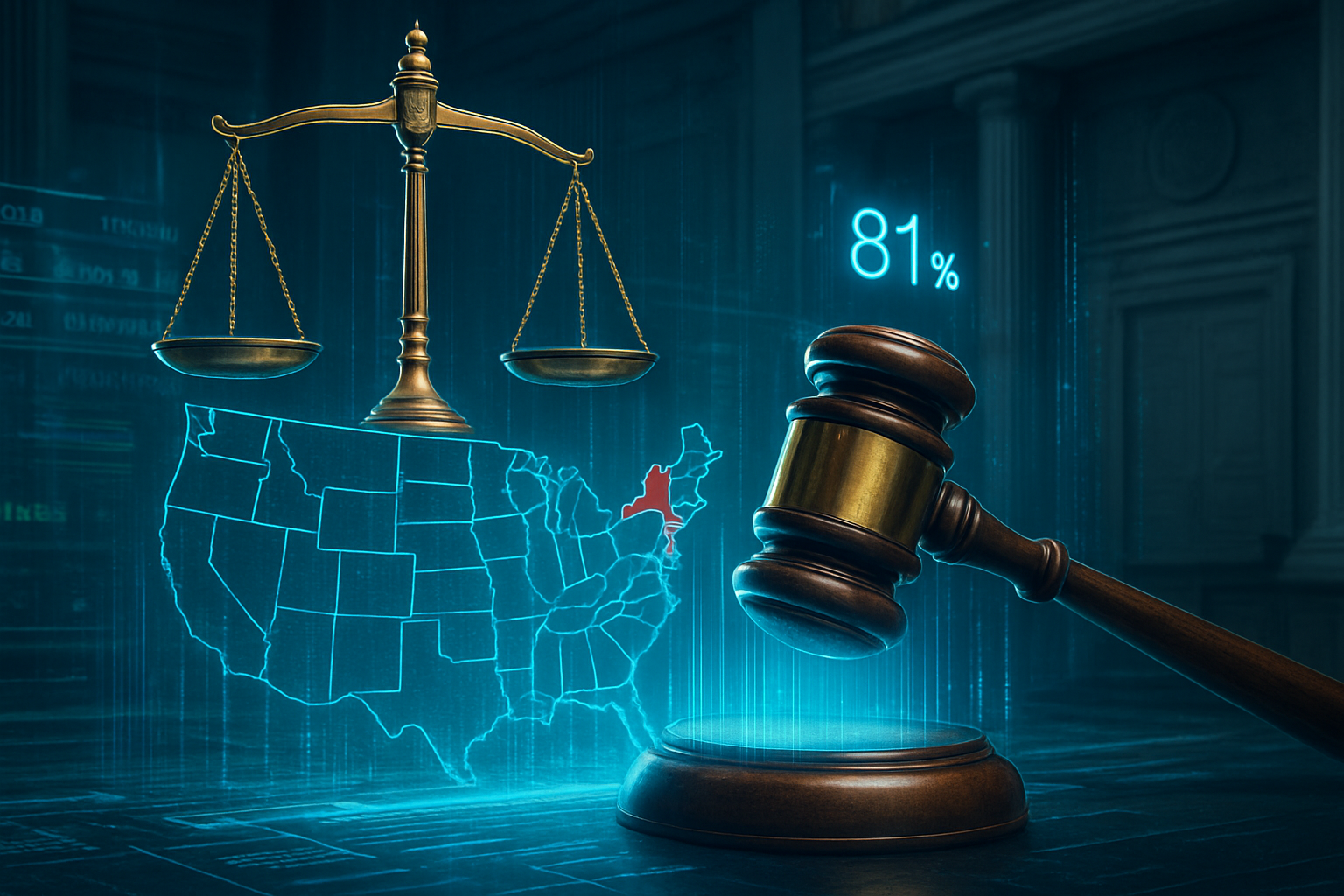
    As the battle for the future of information markets moves from the betting floor to the federal courtroom, a new consensus is emerging among the world’s most active forecasters. On the social prediction platform Manifold Markets, a high-stakes contract titled "Will Federal Preemption Protect DCMs from State Bans by End of 2026?" has seen a dramatic surge in confidence, with traders now pricing in an 81% probability that federal law will ultimately shield the industry from state-level shutdowns.

    This "81% Gamble" represents a pivotal moment for the industry. While state legislators in Albany push for aggressive bans on event-based trading, market participants are betting heavily that the U.S. Constitution’s Supremacy Clause—and the "exclusive jurisdiction" of the Commodity Futures Trading Commission (CFTC)—will render those bans toothless. The outcome will decide whether prediction markets become a unified national financial asset class or remain a fragmented, state-by-state legal minefield.

    The Market: What's Being Predicted

    The focus of the "81% Gamble" is the legal doctrine of federal preemption. Traders on Manifold Markets are wagering on whether Designated Contract Markets (DCMs)—platforms fully registered with the federal government like Kalshi and Interactive Brokers Group, Inc. (NASDAQ: IBKR)—will be legally permitted to operate even in states that have passed explicit bans.

    The market has seen significant liquidity over the last two weeks, following the reintroduction of the ORACLE Act in New York on January 7, 2026. While the bill aims to impose fines of up to $1 million per day on platforms offering contracts on "catastrophic events" or political outcomes, the probability of the ban succeeding has actually dropped on prediction platforms. Trading volume has spiked as professional "arbs" move between play-money sentiment on Manifold and real-money hedges on regulated exchanges. The resolution hinges on a definitive court ruling or federal legislation by December 31, 2026, that establishes the CFTC as the sole arbiter of these markets.

    Why Traders Are Betting

    The bullish sentiment for federal preemption is driven by a string of legal victories for the industry throughout 2024 and 2025. Traders are looking at the "Kalshi Precedent" as their North Star. After winning a landmark federal case that allowed for Congressional election markets, Kalshi is now suing the New York State Gaming Commission in the Southern District of New York (SDNY). The core of their argument is that once the CFTC approves a contract, a state cannot use "gambling" laws to override that federal authorization.

    Furthermore, the entry of major financial players has changed the "optics" of the legal fight. Robinhood Markets, Inc. (NASDAQ: HOOD) recently integrated Kalshi’s infrastructure directly into its app, effectively turning millions of retail investors into stakeholders in the market's legality. "When you have a company like Robinhood or Interactive Brokers treating these as financial derivatives, it becomes much harder for a local gaming commission to argue they are just 'illegal gambling' like an unlicensed sportsbook," says one lead trader on the Manifold contract. The 81% odds reflect a belief that federal judges will favor the stability of national financial markets over localized moral objections.

    Broader Context and Implications

    The conflict in New York is a microcosm of a larger national struggle. The ORACLE Act (Assembly Bill A9251) represents the "nuclear option" for state regulators, seeking to ban everything from political betting to contracts on security price movements. However, a competing piece of legislation, the Cooney Bill (S8889), suggests a different path: regulating prediction markets as financial entities under the New York Department of Financial Services (DFS) rather than the Gaming Commission.

    If the 81% probability holds true and federal preemption wins the day, it would strip states of the power to ban specific types of contracts, provided they are sanctioned by the CFTC. This would align prediction markets with other federally regulated commodities like oil, gold, and wheat. A defeat for preemption, conversely, would create a "patchwork" regulatory environment, where a trader in New Jersey could hedge against a recession while a trader across the river in Manhattan would be committing a felony for the same transaction.

    What to Watch Next

    The most immediate catalyst for this market is the expected ruling in the SDNY case, Kalshi vs. NYSGC, due in late February 2026. A preliminary injunction in favor of Kalshi would likely send the Manifold odds into the mid-90s, effectively ending the debate for the current year. Conversely, if the judge denies the injunction and allows New York to proceed with its ban, we could see a "black swan" collapse in the odds as platforms prepare for a state-by-state retreat.

    Investors should also monitor the Public Integrity in Financial Prediction Markets Act of 2026, introduced by Rep. Ritchie Torres (D-NY) on January 9. While the bill seeks to ban insider trading by government officials, its passage would indirectly codify the legality of the platforms themselves, providing the "federal shield" that traders are currently betting on. Even traditional institutions like The Goldman Sachs Group, Inc. (NYSE: GS) have begun hinting at entering the space, a move that would provide massive political cover for the "preemption" argument.

    Bottom Line

    The "81% Gamble" is more than just a bet on a legal outcome; it is a vote of confidence in the institutionalization of prediction markets. For years, these platforms existed in a gray area, but the massive adoption seen in late 2025 has moved them into the financial mainstream. Traders believe that the federal government—specifically the CFTC—is better equipped to manage the risks and rewards of this technology than a decentralized collection of state gaming boards.

    As we approach the critical February ruling in New York, the lopsided odds on Manifold Markets suggest that the "state's rights" argument against prediction markets is on its last legs. Whether that confidence is justified will depend on a single federal judge in Manhattan, but for now, the smart money is betting that federal law will prove to be an impenetrable shield.


    This article is for informational purposes only and does not constitute financial or betting advice. Prediction market participation may be subject to legal restrictions in your jurisdiction.

    PredictStreet focuses on covering the latest developments in prediction markets.
    Visit the PredictStreet website at https://www.predictstreet.ai/.

  • The Trillion-Dollar Horizon: Prediction Markets Set to Eclipse the Global Sports Betting Industry

    The Trillion-Dollar Horizon: Prediction Markets Set to Eclipse the Global Sports Betting Industry

    The era of prediction markets has officially shifted from a niche experimental phase into a primary pillar of global finance. As of January 17, 2026, the industry is no longer just a "truth machine" for political cycles; it has become a high-velocity financial engine. Recent data shows the total prediction market industry hit an all-time daily high of $701.7 million in trading volume this past week, fueled by a convergence of the NFL playoffs, macroeconomic shifts, and the early positioning for the 2026 midterm elections.

    This surge is not a fluke. A landmark joint analysis by Citizens Financial Group (NYSE: CFG) and Eilers & Krejcik Gaming (EKG) suggests that prediction markets are on a direct path to a "Trillion-Dollar Horizon." These reports project that the sector will exceed $1 trillion in annual trading volume by 2030, effectively eating into the market share of the $300 billion global sports betting industry and providing a more efficient venue for hedging real-world risks.

    The Market: What’s Being Predicted

    Today's prediction markets are broader and deeper than ever before. While the 2024 U.S. election was the "supercycle" that brought these platforms into the mainstream, the current liquidity is driven by daily institutional-grade contracts. On Kalshi, which currently commands a 66% market share of the regulated U.S. ecosystem, the most active contracts revolve around the Federal Reserve's upcoming January 28 meeting. Traders are currently pricing in a 95% probability that the Fed will hold interest rates steady, a contract that has seen over $390 million in cumulative volume.

    Meanwhile, on Polymarket, the leading crypto-native platform with over $44.8 billion in cumulative volume, the focus has shifted toward the 2026 midterm elections. With the midterms less than ten months away, markets are already seeing massive "early cycle" liquidity. Current odds favor a Democratic takeover of the House of Representatives at a 76% probability, while Republicans are favored to retain control of the Senate at 67%.

    These markets are not just binary "Yes/No" bets; they have evolved into sophisticated instruments. For example, Kalshi’s new "Combos"—peer-to-peer sports parlays—have allowed it to compete directly with traditional sportsbooks, with sports now accounting for over 90% of the platform’s weekend volume. The current Super Bowl LX favorite, the Seattle Seahawks, is trading at a 25% win probability, attracting tens of millions in localized liquidity.

    Why Traders Are Betting

    The migration of capital into prediction markets is being driven by three primary factors: regulatory clarity, institutional integration, and superior forecasting accuracy. Following a series of favorable court rulings against the CFTC, platforms like Kalshi have been able to offer federally regulated contracts in all 50 states—a feat that online sports betting, which remains a patchwork of state-by-state laws, has yet to achieve.

    Institutional players are also entering the fray. Robinhood (NASDAQ: HOOD) and Coinbase (NASDAQ: COIN) have successfully integrated prediction market products into their retail apps, providing millions of users with one-click access to event contracts. This has drastically lowered the barrier to entry, moving the "whale" activity from offshore accounts to domestic, transparent order books.

    Furthermore, the "accuracy gap" between prediction markets and traditional methods has widened. During the 2024 election and recent macro pivots, prediction markets frequently moved hours—sometimes days—ahead of traditional polling and cable news analysis. Traders are essentially "voting with their wallets," creating a feedback loop where higher liquidity leads to more accurate prices, which in turn attracts more institutional capital seeking a "pure" hedge against event risk.

    Broader Context and Implications

    The "Trillion-Dollar Horizon" represents a fundamental shift in how society values information. According to the Citizens Financial Group (NYSE: CFG) report, prediction markets address a core inefficiency in capital markets by allowing investors to express views on specific events without the "basis risk" of using traditional ETFs or index options. If an investor is worried about a specific regulatory change or an interest rate hike, they can now bet directly on that event rather than shorting a broad index like the S&P 500.

    This growth is beginning to disrupt the $300 billion sports betting industry. While giants like DraftKings (NASDAQ: DKNG) and Flutter Entertainment (NYSE: FLUT) have dominated the gambling space, prediction markets offer a lower "vig" (house take) because they function as peer-to-peer exchanges rather than playing against a bookmaker. EKG estimates that mature sports prediction markets could support a handle equivalent to 80% of today’s regulated online sports betting market by 2030.

    However, this rapid expansion has not come without scrutiny. Regulatory considerations remain at the forefront, as the CFTC continues to monitor the impact of "political betting" on election integrity. Despite these concerns, the historical accuracy of these markets has acted as a powerful shield, with many proponents arguing that they provide a more honest assessment of public sentiment than biased media or opaque polling data.

    What to Watch Next

    As we move deeper into 2026, several key milestones will determine if the $1 trillion projection remains on track. First is the resolution of the "Fed Chair" speculation. Markets on Polymarket currently show Kevin Warsh as the frontrunner at 56% to be the next Fed Chair nominee, an event that will trigger massive volume in both prediction markets and traditional bond markets.

    Second is the "Midterm Pivot." Historically, volume on political contracts peaks in the three months leading up to an election. If the current early-cycle volume is any indication, the 2026 midterms could see double the trading activity of the 2024 presidential cycle. Watch for the $5 billion weekly volume milestone on Kalshi; traders are currently betting with a 74% probability that the platform hits this mark by December.

    Finally, keep an eye on the entry of traditional "Social" platforms. Rumors persist that Meta (NASDAQ: META) or X (formerly Twitter) may integrate prediction widgets to capitalize on their massive real-time news audiences. Such a move would be the final catalyst needed to move the industry from the "financial fringe" to the center of the global internet economy.

    Bottom Line

    The rise of prediction markets to a trillion-dollar industry is no longer a matter of "if," but "when." The infrastructure provided by platforms like Kalshi and Polymarket, combined with the distribution power of Robinhood (NASDAQ: HOOD) and Coinbase (NASDAQ: COIN), has created a permanent new asset class.

    For the average observer, these markets offer a clearer window into the future than any pundit or pollster. For the trader, they represent the ultimate tool for hedging the uncertainties of a volatile world. As the "Trillion-Dollar Horizon" approaches, the line between betting, investing, and forecasting continues to blur, permanently changing the face of global finance.


    This article is for informational purposes only and does not constitute financial or betting advice. Prediction market participation may be subject to legal restrictions in your jurisdiction.

    PredictStreet focuses on covering the latest developments in prediction markets.
    Visit the PredictStreet website at https://www.predictstreet.ai/.
  • The ‘Théo Effect’: How an $85 Million Bet Ignited the 2026 Prediction Market Super-Cycle

    The ‘Théo Effect’: How an $85 Million Bet Ignited the 2026 Prediction Market Super-Cycle

    As of January 17, 2026, the global financial landscape has fundamentally shifted. What were once dismissed as "gambling dens" for political junkies have evolved into the world’s most accurate "truth engines." The catalyst for this transformation can be traced back to a single, high-conviction figure from the 2024 U.S. election: the pseudonymous French trader known as "Théo." By wagering over $30 million—and walking away with a staggering $85 million profit—Théo didn’t just win a bet; he validated a new asset class.

    Today, prediction markets are no longer on the fringes. With daily volumes hitting record highs of $700 million this month, the "Super-Cycle" of 2026 is in full swing. "Whale activity," once criticized as market manipulation, is now analyzed by institutional desks at firms like Goldman Sachs Group Inc. (NYSE: GS) and Intercontinental Exchange Inc. (NYSE: ICE) as the ultimate high-conviction signal. The "wisdom of the crowd" has been augmented by the "conviction of the informed," creating a market environment where the biggest bets often signal the most accurate realities.

    The Market: What's Being Predicted

    In the current 2026 landscape, the focus has shifted from the presidency to the upcoming Midterm Elections and the rapid evolution of Artificial Intelligence. On Kalshi, the leading regulated U.S. exchange, the market for "Democratic Control of the House" is currently trading at 75 cents, implying a 75% probability of a flip. Conversely, the "Republican Senate Control" market remains robust at 68%, suggesting a high likelihood of a split Congress—a scenario that is already being priced into corporate tax hedges and treasury yields.

    The scale of these markets is unprecedented. While Polymarket dominated the 2024 cycle, 2026 has seen Kalshi capture roughly 66% of the domestic market share following a series of favorable regulatory rulings and its integration into the Robinhood Markets Inc. (NASDAQ: HOOD) ecosystem. Total industry open interest has ballooned from millions to billions, with individual contracts often seeing more liquidity than mid-cap stocks.

    Beyond politics, the "AGI Race" has become a primary driver of volume. Traders are currently pricing a 24% chance that OpenAI or a competitor will announce a verified Artificial General Intelligence (AGI) by the end of 2026. This market is particularly sensitive to "whale" moves, as large positions often correlate with insider sentiment regarding compute clusters and training breakthroughs at companies like Alphabet Inc. (NASDAQ: GOOGL) and Microsoft Corp. (NASDAQ: MSFT).

    Why Traders Are Betting

    The 2024 "French Whale" legacy changed the psychology of the market. Théo’s strategy was not based on gut feeling but on sophisticated "neighbor-effect" polling—asking respondents who they thought their neighbors would vote for to bypass social desirability bias. This data-driven approach allowed him to spot a mispricing in the 2024 GOP sweep that traditional pollsters missed entirely.

    In 2026, traders are using similar proprietary data to find an edge. We are seeing a massive influx of "event-linked derivatives," where sophisticated actors use prediction markets to hedge real-world risks. For instance:

    • Energy Hedges: Large-scale bets on oil hitting $45 per barrel by autumn 2026 are acting as a hedge for shipping conglomerates against aggressive energy-production policies.
    • Regulatory Front-Running: High-volume trades on the outcome of the January 28 Federal Reserve meeting are currently pricing a 96% chance of a rate pause, with "whales" leading the movement away from the "pivot" narrative that dominated December.

    The entry of retail giants has also provided the "ballast" for this super-cycle. When Coinbase Global Inc. (NASDAQ: COIN) fully integrated prediction markets into its interface in late 2025, it brought over 100 million potential participants into the ecosystem, ensuring that even the largest whale bets are met with sufficient counter-party liquidity.

    Broader Context and Implications

    The "Super-Cycle" represents a broader societal shift toward decentralized information. In a world of deepfakes and partisan media, prediction markets provide a "hard-money" incentive for truth. This transition was accelerated by the 2024 legal victory of Kalshi over the CFTC, which effectively ended the era of "election betting" being viewed as a public nuisance. Instead, it is now treated as a legitimate financial tool for price discovery.

    The historical accuracy of these markets has become their strongest selling point. During the 2024 cycle, Polymarket’s odds were consistently 6 to 12 hours ahead of major news networks on election night. This "signal advantage" has led to a decline in the influence of traditional polling and cable news pundits, who are now frequently seen as trailing indicators of market sentiment.

    However, the rise of the "whale" as a signal has raised new regulatory questions. While Théo was cleared of manipulation, the SEC and CFTC continue to monitor "coordinated whaling," where groups of high-net-worth individuals might attempt to move a thin market to influence public perception. Thus far, the 2026 markets have proven too deep for such tactics to work effectively on major contracts.

    What to Watch Next

    As we move toward the 2026 Midterm primaries in March, all eyes are on the "Primary Contestedness" markets. These contracts track whether incumbent leaders will face serious challenges from within their parties, a key indicator for the 2028 presidential cycle. Large "whale" positions in these markets are already beginning to form, signaling early dissatisfaction with certain party leadership structures.

    Another critical milestone is the March release of GPT-5 (and the corresponding Gemini 3 Pro benchmarks). Prediction markets are currently the only place where the public can see a real-time "price" on the progress of AI safety and capability. If the "AGI in 2026" odds jump above 40%, expect a massive ripple effect across the technology sector and a potential re-valuation of the entire semiconductor industry, led by Nvidia Corp. (NASDAQ: NVDA).

    Bottom Line

    The legacy of the French Whale is not just a story of a successful bet; it is the story of the birth of a new financial era. Théo proved that prediction markets are not "noise" to be filtered out, but "signals" to be followed. In 2026, these markets have become the definitive scoreboard for human progress, political shifts, and economic reality.

    As we navigate the 2026 Super-Cycle, the takeaway is clear: the biggest winners are those who realize that prediction markets are the ultimate meritocracy. Whether it’s a pseudonymous trader in France or a multi-billion dollar hedge fund in New York, the only thing that matters is being right. As liquidity continues to pour in, the markets will only become more efficient, making the "signal" from the whales more valuable than ever before.


    This article is for informational purposes only and does not constitute financial or betting advice. Prediction market participation may be subject to legal restrictions in your jurisdiction.

    PredictStreet focuses on covering the latest developments in prediction markets.
    Visit the PredictStreet website at https://www.predictstreet.ai/.
  • The Search for Truth: Google’s 2026 Policy Shift Unlocks Nationwide Prediction Market Ads

    The Search for Truth: Google’s 2026 Policy Shift Unlocks Nationwide Prediction Market Ads

    Starting January 21, 2026, the landscape of digital information and financial speculation will undergo a seismic transformation. Alphabet Inc. (NASDAQ: GOOGL) has officially announced a major policy shift, reclassifying regulated prediction markets from "gambling" to "financial products." This change allows federally supervised platforms to advertise their services nationwide across Google’s massive search and display network, signaling the mainstream arrival of a sector once relegated to the fringes of the internet.

    The move comes at a time when prediction markets are seeing record-breaking engagement. Industry leader Kalshi currently commands a 66.4% share of the U.S. regulated event-trading market, with daily active users peaking near 75,000 following its deep integration with Robinhood Markets, Inc. (NASDAQ: HOOD). By defining these markets as "financial services," Google is betting that the public views forecasting everything from Federal Reserve interest rate hikes to the outcome of the 2026 FIFA World Cup not as a roll of the dice, but as a sophisticated tool for price discovery and risk management.

    The Market: What's Being Predicted

    The "market" being predicted here is the very future of the information economy. Google's new policy, effective January 21, 2026, specifically targets "Exchange-Listed Event Contracts." To qualify for the new advertising tier, a platform must be a Designated Contract Market (DCM) authorized by the Commodity Futures Trading Commission (CFTC) or a brokerage registered with the National Futures Association (NFA).

    This regulatory "gold seal" creates a two-tier system in the industry. Kalshi, as the first CFTC-regulated exchange, is the immediate frontrunner for these ad slots. Meanwhile, Polymarket, which recently secured a $2 billion investment from the Intercontinental Exchange, Inc. (NYSE: ICE) and pivoted to a regulated U.S. model via its acquisition of QCEX, is also poised to launch nationwide campaigns.

    The policy shift is expected to act as a massive liquidity injector. Analysts at Eilers & Krejcik project that total notional volume for prediction markets could surge to between $120 billion and $150 billion by the end of 2026. While no specific "Google Policy" contract is trading on the boards, "metamarkets" tracking user growth and industry volume milestones have seen heavy activity, with bettors overwhelmingly wagering that 2026 will be the "Year of the Prediction Market."

    Why Traders Are Betting

    Traders are increasingly treating prediction markets as a "truth engine" that cuts through the noise of traditional polling and expert commentary. The ability for platforms to now advertise on Google means a vastly larger pool of retail participants will soon be contributing their "votes" via capital.

    Several factors are driving the current bullishness in this sector:

    • Institutional Integration: The partnership between Kalshi and Robinhood has fundamentally changed the demographic of the average bettor, moving from crypto enthusiasts to mainstream retail investors.
    • Data Utility: Google’s recent move to integrate real-time odds from Kalshi and Polymarket directly into Google Finance and Search results has validated the data as a legitimate financial indicator.
    • The "Sports Swap" Advantage: By classifying event contracts as financial products, these platforms can theoretically "leapfrog" the state-by-state licensing hurdles that hamper traditional sportsbooks like DraftKings Inc. (NASDAQ: DKNG).

    However, not everyone is celebrating. The American Gaming Association (AGA) and the Indian Gaming Association (IGA) have signaled fierce opposition, arguing that prediction markets are merely "unregulated sports betting under the guise of financial investments." This tension is creating a volatile trading environment where regulatory news can move odds as sharply as the events themselves.

    Broader Context and Implications

    The reclassification of prediction markets as "financial products" is more than just a nomenclature change; it is a fundamental shift in how the law views the "quantification of the future." By aligning with the CFTC’s oversight, Google is helping to cement a reality where predicting a hurricane’s path or a corporate merger is seen as a form of insurance or hedging, similar to traditional futures and options.

    The Nevada Exception remains the most significant outlier in this expansion. A federal judge in Nevada recently ruled that sports-related contracts are effectively a form of gambling rather than financial "swaps," allowing state regulators to maintain their jurisdiction. Consequently, Google’s new policy explicitly forbids targeting ads to Nevada residents. This geographic "dead zone" highlights the ongoing friction between federal financial oversight and state-level gaming laws—a battle that will likely define the legal landscape for years to come.

    Historically, prediction markets have proven more accurate than traditional pundits, particularly in political and economic forecasting. By allowing these markets to advertise nationwide, Google is effectively scaling a decentralized intelligence network. The implication is clear: the more people participate, the more accurate the "collective mind" becomes, creating a feedback loop that could eventually disrupt the multi-billion dollar polling and consulting industries.

    What to Watch Next

    As we approach the January 21 rollout, market watchers should keep a close eye on the "cost per install" (CPI) and "lifetime value" (LTV) metrics for prediction market apps. If Google’s ad platform proves efficient at onboarding high-value traders, we could see a massive capital inflow that pushes daily volumes past the $1 billion mark.

    Key milestones to monitor include:

    1. The 2026 U.S. Midterm Elections: These will serve as the first major test of the "national ad" strategy for political contracts.
    2. Legal Challenges: Watch for any "cease-and-desist" orders from states like Tennessee or Maryland, which have expressed skepticism about the "financial product" label.
    3. The ORACLE Act: Proposed legislation in New York that could grant the state attorney general the power to ban specific types of prediction markets despite federal approval.

    Bottom Line

    Google’s policy shift on January 21, 2026, represents the final "green light" for an industry that has spent years fighting for legitimacy. By reclassifying prediction markets as financial products, the tech giant is not just opening a new revenue stream for itself; it is providing a platform for the financialization of information.

    For traders, this means more liquidity, more competitive spreads, and a broader range of events to trade. For the public, it means that "market odds" will likely replace "expert opinion" as the primary way we understand the probability of future events. While the "Nevada Exception" serves as a reminder of the lingering legal complexities, the overall trend is clear: prediction markets are no longer a niche hobby—they are a core pillar of the modern financial ecosystem.


    This article is for informational purposes only and does not constitute financial or betting advice. Prediction market participation may be subject to legal restrictions in your jurisdiction.

    PredictStreet focuses on covering the latest developments in prediction markets.
    Visit the PredictStreet website at https://www.predictstreet.ai/.
  • Betting on the Ban: Albany’s High-Stakes Clash Over the Future of Prediction Markets

    Betting on the Ban: Albany’s High-Stakes Clash Over the Future of Prediction Markets

    As the 2026 legislative session kicks off in Albany, New York has become the epicenter of a national struggle over the legality of "information finance." At the heart of the storm are two competing visions for the state’s regulatory future: a "scorched-earth" prohibition known as the ORACLE Act (Assembly Bill A9251) and a rival regulatory framework (Senate Bill S8889) designed to bring prediction markets under the oversight of the Department of Financial Services.

    Traders on platforms like Kalshi and ForecastEx, operated by Interactive Brokers Group, Inc. (NASDAQ: IBKR), are currently pricing the probability of a comprehensive ban on political event contracts in New York at roughly 38%. This represents a significant decline from the 65% odds seen in late 2025, suggesting that the industry’s push for a regulated middle ground is gaining momentum despite aggressive rhetoric from anti-gambling advocates. The market is generating intense interest because New York represents the largest financial hub in the world; a total ban here could isolate the U.S. financial capital from the fastest-growing sector of the fintech landscape.

    The Market: What's Being Predicted

    The primary market being watched by analysts is the "Will New York pass a bill to ban political event contracts in 2026?" contract on Kalshi. Trading volume has surged as the legislative session began on January 7, with liquidity reaching levels rarely seen for state-level political outcomes. While the headline probability sits at 38%, more granular "shadow markets" and community-based platforms like Manifold present a more nuanced picture. Traders there see a roughly 60% chance that the ORACLE Act passes the Assembly, but only a 22% chance it survives the Senate, where more moderate voices prevail.

    The resolution criteria for these markets are tied to the signature of Governor Kathy Hochul or the expiration of the legislative session in June 2026. If a bill is signed into law that explicitly prohibits residents from participating in event contracts related to elections or government actions, the "Yes" side pays out. Conversely, if the session ends without such a ban, or if a regulatory bill like Senator Jeremy Cooney’s S8889 is passed instead, the "No" side wins.

    Why Traders Are Betting

    The sudden shift in odds toward a "No" outcome—meaning no ban—is driven by several high-profile developments in early January. Most notably, the "normalization" of prediction markets took a massive leap forward on January 8, 2026, when Madison Square Garden Sports Corp (NYSE: MSGS) announced a landmark partnership naming Polymarket the "Official Prediction Market Partner" of the New York Rangers. This deal has made it politically difficult for lawmakers to frame the industry as a "shadow" operation when it is prominently displayed on the scoreboard of one of the state's most iconic sports teams.

    However, the "Yes" camp remains vocal, fueled by the controversial "Maduro Trade." In early January, a trader reportedly turned a $32,000 position into $400,000 just hours before a U.S.-led raid in Venezuela, sparking fears of systemic insider trading. Assemblymember Clyde Vanel, the sponsor of the ORACLE Act, has used this incident to argue that these platforms are "skipping the hard part: licensure and oversight." His bill includes a "nuclear option" fine of $1 million per day for platforms that defy state injunctions, a provision that traders are closely monitoring as a potential deal-breaker for the industry.

    Broader Context and Implications

    The New York battle is a microcosm of a larger federal-state conflict. While Albany debates a ban, U.S. Rep. Ritchie Torres (D-NY) has introduced the federal Public Integrity in Financial Prediction Markets Act, which aims to regulate the participants (government insiders) rather than banning the platforms themselves. Many traders on Manifold are betting on "Federal Preemption," with an 81% probability that any state-level ban in New York will eventually be overridden by federal law or a Supreme Court challenge.

    If the ORACLE Act passes, it would set a precedent that could lead other states to follow suit, potentially fragmenting the U.S. market. Conversely, if Senator Cooney’s S8889 succeeds, it would place prediction markets under the Department of Financial Services (DFS), the same body that regulates Wall Street banks. This would effectively rebrand prediction markets from "gambling" to "risk management," a shift that competitors like DraftKings Inc. (NASDAQ: DKNG) and Flutter Entertainment plc (NYSE: FLUT) are watching closely as they weigh their own entries into the event-contract space.

    What to Watch Next

    The most immediate catalyst for the market is a looming decision from the Southern District of New York (SDNY). A ruling in the ongoing lawsuit between Kalshi and the New York State Gaming Commission is expected by late February 2026. If the court rules that the Gaming Commission lacks the authority to block these markets under current law, the odds of the ORACLE Act passing the Assembly will likely spike as prohibitionists scramble to close the legal loophole.

    Investors should also keep an eye on the Senate Banks Committee, where Senator Cooney’s S8889 currently resides. If the bill gains co-sponsors from key Democratic leadership, it will signal that the "regulatory path" is the preferred route for the Governor’s office. Any public comments from Governor Hochul regarding the "Maduro Trade" or the MSG partnership could also lead to double-digit swings in market probability overnight.

    Bottom Line

    The legislative battle in Albany is more than a local dispute; it is a referendum on whether the U.S. will lead or lag in the "Information Finance" revolution. The ORACLE Act represents a "scorched-earth" approach that views prediction markets as a threat to public order, while SB S8889 views them as a technological evolution of the financial markets that New York has pioneered for centuries.

    Current market data suggests that while the ban has teeth in the Assembly, the industry’s push for legitimacy through high-profile partnerships and regulatory compliance is winning over the more cautious Senate. For now, the "smart money" is betting on a compromise that includes strict oversight and anti-insider trading rules, rather than a total blackout. As we move toward the June deadline, the volatility in these markets will serve as a real-time pulse of the political climate in one of the world's most influential legislatures.


    This article is for informational purposes only and does not constitute financial or betting advice. Prediction market participation may be subject to legal restrictions in your jurisdiction.

    PredictStreet focuses on covering the latest developments in prediction markets.
    Visit the PredictStreet website at https://www.predictstreet.ai/.