Tag: Prediction Markets

  • Betting Against the Brink: Why Prediction Markets See Only an 11% Chance of a January Shutdown

    Betting Against the Brink: Why Prediction Markets See Only an 11% Chance of a January Shutdown

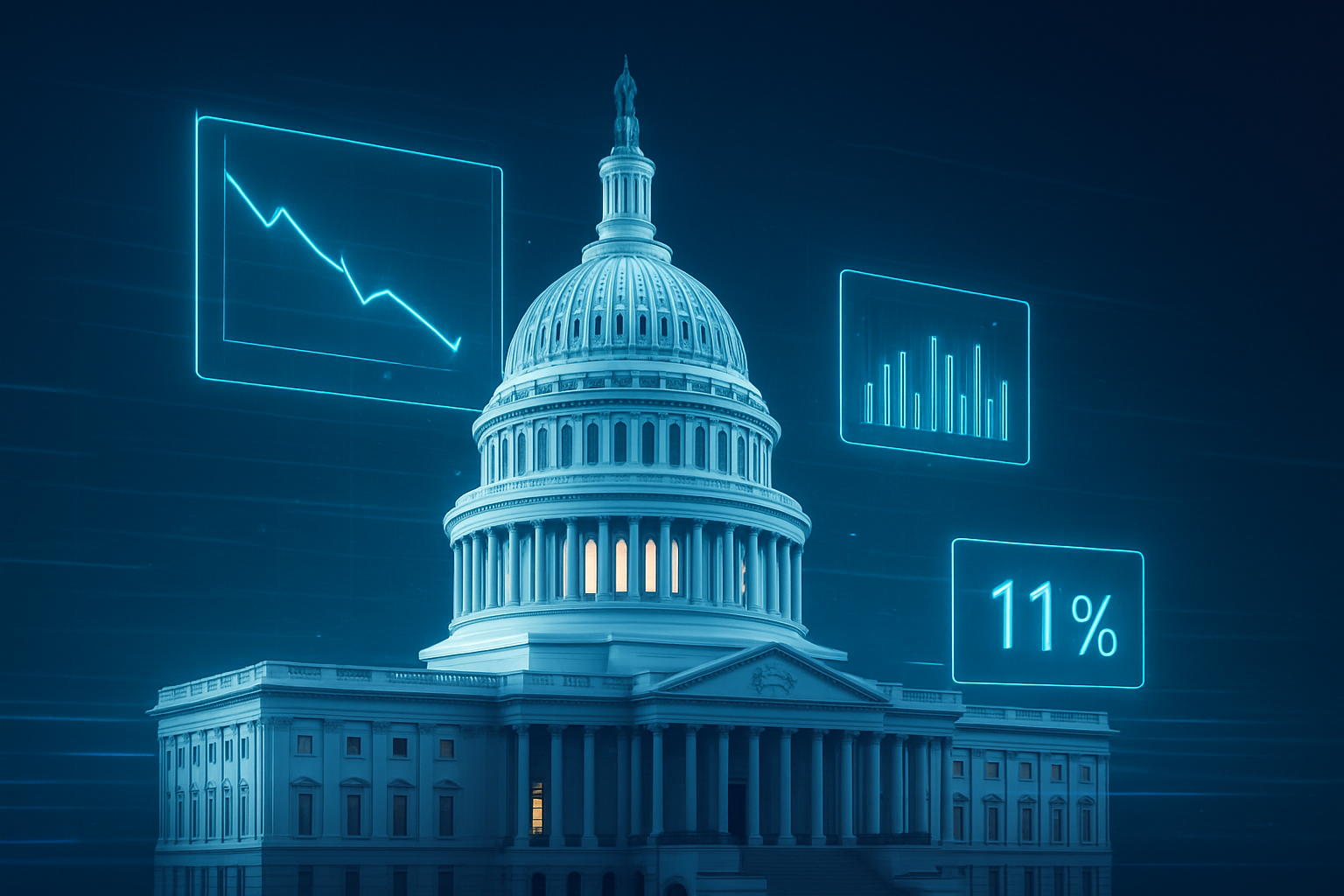
    As the January 31 deadline for federal funding rapidly approaches, the high-stakes political drama usually associated with Capitol Hill budget battles appears to be fizzling out—at least according to the collective intelligence of the world’s most active traders. On the leading decentralized prediction platform Polymarket, the probability of a U.S. government shutdown has plummeted to just 11%, a stark contrast to the coin-flip odds seen just months ago.

    This low-probability signal comes despite the looming expiration of several funding measures, suggesting that the "shutdown fatigue" following 2025’s record-breaking 43-day funding lapse has fundamentally altered the legislative landscape. With over $3 million in trading volume on this specific outcome, the market isn't just guessing; it is pricing in a high degree of confidence that a deal is already effectively done.

    The Market: What's Being Predicted

    The primary theater for this financial forecasting is Polymarket, where the contract "Will there be another US government shutdown by January 31?" has become a focal point for political speculators. Currently, the "Yes" shares are trading at approximately 11 cents, implying an 11% chance of a funding lapse. This represents a significant collapse in odds from late December, when the same contract touched 45% amid fears of a renewed partisan deadlock.

    Parallel activity is occurring on the U.S.-regulated exchange Kalshi, which has seen even higher engagement levels. Kalshi’s shutdown market has recorded over 1.66 million transactions, with a massive liquidity pool of more than 28 million contracts. While Kalshi’s implied probability sat slightly higher at 24% earlier in the month, live order book activity has rapidly converged with Polymarket’s sub-15% levels as news of legislative progress reached the floor.

    The resolution criteria for these markets are strict: a shutdown is typically defined as a lapse in appropriations that results in the issuance of "furlough notices" to federal employees. With the clock ticking toward midnight on January 30, the narrow window for failure is what's driving the current 11% floor, as any minor procedural hiccup in the Senate could still theoretically trigger a weekend lapse.

    Why Traders Are Betting

    The overwhelming sentiment for a "No" resolution is rooted in the unique political composition of early 2026. Following the 2024 elections, Republicans maintain control of the White House, the House of Representatives, and the Senate. This unified government has streamlined the appropriations process, moving away from the chaotic "continuing resolution" (CR) cycles of the previous year.

    Traders are specifically reacting to the passage of two massive funding bills. On January 22, the House passed H.R. 7148, the Consolidated Appropriations Act of 2026, with a bipartisan 341–88 vote. This followed the enactment of the "One Big Beautiful Bill" (OBBB) Act late last year, which pre-funded nearly 90% of federal operations. Markets are also closely monitoring the influence of the Department of Government Efficiency (DOGE), whose cost-cutting recommendations have provided fiscal hawks with enough "wins" to support the broader spending packages without resorting to shutdown tactics.

    Furthermore, the memory of the 43-day shutdown in late 2025—the longest in American history—acts as a powerful deterrent. That event caused significant volatility for major defense contractors like Lockheed Martin (NYSE: LMT) and Northrop Grumman (NYSE: NOC), and traders believe leadership is desperate to avoid a repeat that could spook the broader markets or the SPDR S&P 500 ETF Trust (NYSE Arca: SPY).

    Broader Context and Implications

    The divergence between traditional media narratives and prediction markets has never been clearer. While some cable news outlets continue to highlight the "looming deadline" and "partisan friction," prediction markets have been steadily pricing in a resolution for over two weeks. This suggests that these platforms are increasingly serving as a "truth machine," filtering out political posturing to focus on the mechanical realities of bill drafting and vote counts.

    Real-world implications of these odds are significant. A low shutdown probability allows federal agencies and private sector partners to maintain normal operations without the costly preparation for a work stoppage. Historically, prediction markets have been remarkably accurate in forecasting budget resolutions, often moving ahead of official announcements from leadership.

    From a regulatory perspective, the high volume on these markets—now totaling millions across platforms—underscores the growing appetite for "event hedging." For institutional investors, these markets are no longer just a curiosity; they are a vital tool for managing the political risk associated with government contracts and Treasury yields.

    What to Watch Next

    The final hurdle remains the U.S. Senate. While the House has cleared the necessary legislation, the market will be watching for any "poison pill" amendments or filibuster threats that could delay the final vote past the January 30 deadline. Traders should monitor the Senate floor schedule on January 28 and 29; if a "cloture" vote is successfully called, the 11% probability will likely crash toward zero.

    Another factor to watch is the specific language regarding the Department of Homeland Security funding (H.R. 7147). This remains the most contentious piece of the puzzle. If the Senate decides to split this bill from the broader "minibus" package, we could see a "partial shutdown" scenario, which might still trigger a "Yes" resolution depending on the specific wording of the Polymarket and Kalshi contracts.

    Bottom Line

    The 11% probability of a government shutdown on January 31 is a testament to the current era of unified government and a collective desire to avoid the economic scars of 2025. With $3 million in volume backing this sentiment on Polymarket, the "smart money" is clearly betting that the era of the frequent "shutdown cliff" is, at least for now, in the rearview mirror.

    As a tool for public insight, these markets suggest that despite the loud rhetoric often found in Washington, the underlying legislative machinery is functioning with surprising efficiency. For those holding "No" positions, the next few days will be about watching the Senate clock. For everyone else, it’s a sign that the federal government is likely to stay open for business through the remainder of the fiscal year.


    This article is for informational purposes only and does not constitute financial or betting advice. Prediction market participation may be subject to legal restrictions in your jurisdiction.

    PredictStreet focuses on covering the latest developments in prediction markets. Visit the PredictStreet website at https://www.predictstreet.ai/.
  • Arctic Real Estate: Greenland Acquisition Odds Surge as Trump Pivots to NATO ‘Framework’

    Arctic Real Estate: Greenland Acquisition Odds Surge as Trump Pivots to NATO ‘Framework’

    As of January 24, 2026, the geopolitical landscape has been rocked by a sudden and intense focus on the world's largest island. What was once dismissed as a peripheral diplomatic curiosity has transformed into one of the most liquid and debated markets in the prediction space. Traders are currently grappling with the nuances of "ownership" versus "control," as President Donald Trump’s administration signals a strategic pivot that has recalibrated expectations across major forecasting platforms.

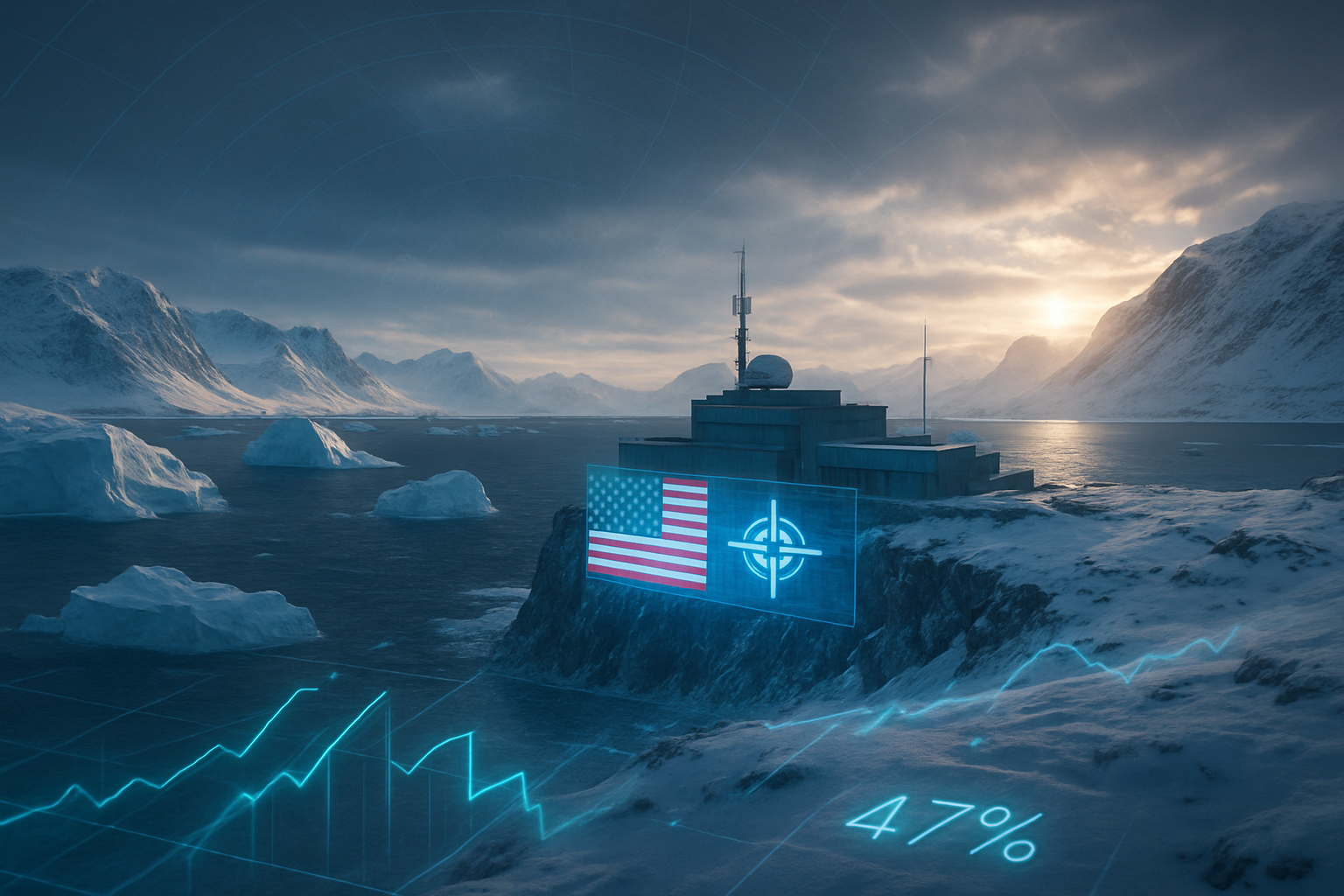
    On Polymarket, the flagship contract tracking whether the U.S. will acquire Greenland has seen its volume skyrocket to a massive $25 million. Meanwhile, on the regulated exchange Kalshi, a broader contract predicting whether the U.S. will take control of any part of Greenland before 2029 is currently pricing in a 47% probability. This surge in interest follows a pivotal week of diplomacy at the World Economic Forum in Davos, where a shift in rhetoric has fundamentally changed how the market views the "Greenland question."

    The Market: What's Being Predicted

    The prediction markets regarding Greenland are currently bifurcated into two distinct categories: outright sovereignty and strategic jurisdictional control. On Polymarket, a crypto-native platform, the primary focus is on the total acquisition of the island before the end of 2026 or 2027. Despite the high volume, the odds for a full "purchase" remain relatively conservative, hovering between 13% and 20%. This reflects the significant legal and international hurdles required for a total transfer of sovereignty from the Kingdom of Denmark.

    In contrast, Kalshi, which operates under the oversight of the Commodity Futures Trading Commission (CFTC), offers a contract with a wider lens. Their market—"Will the U.S. take control of any part of Greenland before 2029?"—is trading at a much higher 47% chance. The discrepancy lies in the resolution criteria. While Polymarket traders are betting on a formal deed or annexation, Kalshi traders are betting on "formal jurisdiction" or "governance" over specific "pockets" of the island. This distinction has made the Kalshi contract a preferred vehicle for those betting on a hybrid "leasing" or "basing" model.

    The liquidity in these markets is unprecedented for a geopolitical event of this nature. Polymarket’s $25 million volume demonstrates the global interest and the "whale" activity often seen in decentralized finance. On the other hand, Kalshi’s $3.8 million in total Greenland-related contracts shows a growing participation from institutional and retail traders who prefer a regulated environment to express their views on American foreign policy.

    Why Traders Are Betting

    The primary driver of the recent market movement was a bombshell announcement on January 21, 2026. During the Davos summit, President Trump revealed he had reached a "framework of a future deal" with NATO Secretary-General Mark Rutte. This announcement marked a significant de-escalation from earlier in the month when the administration had floated the possibility of 25% tariffs against European allies to force a sale.

    Traders responded immediately to this "NATO Framework." By ruling out military force and dropping tariff threats, the administration shifted the goalposts toward a "Sovereign Base" model, similar to the UK’s Sovereign Base Areas in Cyprus. This model would allow the U.S. to exert permanent sovereign control over specific strategic zones—particularly those housing the proposed "Golden Dome" missile defense system—without requiring Denmark to surrender the entire island.

    Major defense contractors like RTX Corporation (NYSE: RTX) and Lockheed Martin Corporation (NYSE: LMT) are central to this narrative. The "Golden Dome" project, a cornerstone of the Trump administration's defense policy, would require significant infrastructure in the Arctic. Traders are betting that the promise of increased NATO-wide security and shared mineral rights will be enough to sway the Danish government toward a compromise.

    Broader Context and Implications

    The Greenland market is more than just a bet on real estate; it is a proxy for the shifting dynamics of the 21st-century "Great Power Competition." The Arctic has become a frontline for energy security and rare earth mineral extraction. MP Materials Corp. (NYSE: MP) and other mineral producers have seen their prospects tied to these geopolitical maneuvers, as Greenland holds some of the world's largest untapped deposits of neodymium and praseodymium.

    This market also highlights the growing utility of prediction platforms as a sentiment gauge. While traditional polls or punditry might dismiss a "Greenland deal" as impossible, the $25 million in "skin in the game" on Polymarket suggests that a significant portion of the global community views some form of U.S. jurisdictional expansion as a realistic possibility.

    Historically, prediction markets have been more accurate than pundits in forecasting complex international negotiations. By aggregating the collective intelligence of thousands of participants, these markets are pricing in a "middle path" outcome: the U.S. will likely not "buy" Greenland in a traditional real estate transaction, but it may very well obtain "de facto" sovereignty over the island's most critical assets.

    What to Watch Next

    The immediate focus for traders will be the upcoming NATO ministerial meetings in February 2026. This is where the technical details of the "Sovereign Base" framework are expected to be hashed out. Any signal from the Danish government or the Greenlandic Self-Rule Government that they are open to "jurisdictional leases" would likely send the Kalshi odds well above the 50% mark.

    Key milestones to monitor include:

    • The "Golden Dome" Budget Allocation: If Congress fast-tracks funding for Arctic missile defense, it will signal that the "control" model is the administration's primary objective.
    • Danish Parliamentary Statements: Watch for any shift in the "Not for Sale" rhetoric toward "Strategic Cooperation Agreements."
    • Rare Earth Mining Licenses: Any U.S.-led consortia receiving licenses to mine in southern Greenland would serve as a "soft" indicator of increasing American influence.

    Bottom Line

    The prediction markets for Greenland have evolved from a fringe curiosity into a sophisticated barometer for a new era of American diplomacy. The shift from "outright purchase" to a "NATO security framework" has allowed the market to find a more realistic equilibrium, reflected in the 47% probability of the U.S. taking control of strategic portions of the island by 2029.

    For observers of prediction markets, the Greenland saga is a masterclass in how market resolution criteria can dictate price discovery. While the "ownership" dream of 2019 has faded, the "strategic control" reality of 2026 is gaining steam. Whether this results in a formal lease or a new type of sovereign partnership, the $25 million already wagered shows that the market is convinced the Arctic map is about to be redrawn.


    This article is for informational purposes only and does not constitute financial or betting advice. Prediction market participation may be subject to legal restrictions in your jurisdiction.

    PredictStreet focuses on covering the latest developments in prediction markets.
    Visit the PredictStreet website at https://www.predictstreet.ai/.
  • $89 Million Wagered on US Strike on Iran as January Deadline Approaches

    $89 Million Wagered on US Strike on Iran as January Deadline Approaches

    As January 2026 enters its final week, the digital landscape of prediction markets is flashing a warning sign that global intelligence communities and defense analysts are watching closely. On Polymarket, a decentralized prediction platform, the collective "wisdom of the crowd" is currently pricing in a significant possibility of a direct United States military strike on Iranian targets before the month concludes.

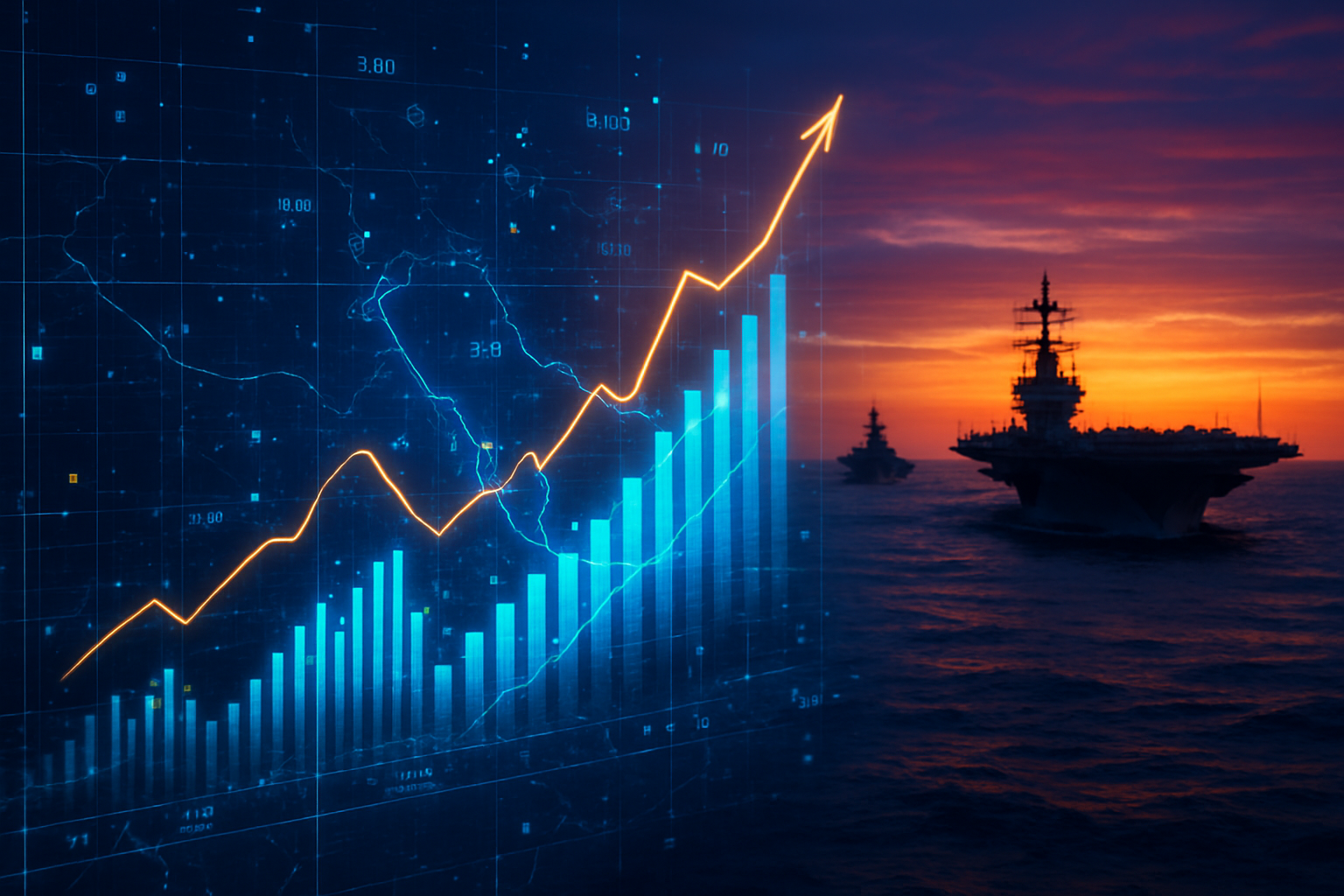
    With a staggering $89 million in total volume now flowing through Iran-related conflict contracts, the markets are currently reflecting a volatile probability range between 10% and 26% for a strike to occur by January 31. This surge in betting activity comes amidst the "January Uprising" in Iran and a massive naval redeployment by the Trump administration, turning what was once a geopolitical tail-risk into the most liquid and debated market of the year.

    The Market: What’s Being Predicted

    The primary theater for this financial forecasting is Polymarket, though similar contracts have seen increased liquidity on other platforms. The specific market in question—“US Strike on Iran by Jan 31, 2026”—has become a focal point for traders, with resolution criteria strictly defined as any kinetic military action (missile strikes, drone attacks, or manned aircraft sorties) officially acknowledged by the Pentagon or the White House as directed against Iranian territory or military assets.

    Current odds have been highly sensitive to real-time events. After a mid-month spike that saw probabilities climb as high as 37% following reports of mass casualties in Tehran protests, the odds have settled into a "wait-and-see" range of 10% to 26% as of January 24. This pricing suggests that while traders view a strike as a tail-risk, they believe the window for immediate action is rapidly narrowing. The liquidity in these markets is unprecedented for a geopolitical event; the $89 million volume represents a massive shift toward "conflict betting" as a form of alternative data for hedge funds and political analysts alike.

    Why Traders Are Betting

    The primary driver behind the sudden influx of capital into these contracts is the deteriorating internal situation within Iran. Since late December 2025, the nation has been gripped by the "January Uprising," a series of nationwide protests triggered by economic collapse and harsh internet blackouts. Reports from human rights agencies suggest a death toll exceeding 5,000 people as of January 23, 2026. The White House's pivot from negotiation to "maximum pressure" has provided the fundamental catalyst for the market's movement.

    Traders are also tracking physical military movements. The USS Abraham Lincoln Carrier Strike Group is currently transiting the Indian Ocean, expected to reach the Arabian Sea by the end of the month. Furthermore, the defense sector has signaled a shift toward readiness. Companies like Northrop Grumman (NYSE: NOC) and Lockheed Martin (NYSE: LMT) are trading near record highs, buoyed by the administration’s proposed $1.5 trillion defense budget for FY2026.

    Notably, some market volatility has been attributed to potential "insider" activity. On January 8, several newly created wallets placed synchronized bets on a strike when odds were below 18%. This follows a pattern seen earlier this month during U.S. operations in Venezuela, leading many to believe that traders with access to logistical or diplomatic intelligence are using these markets to hedge or profit from upcoming escalations.

    Broader Context and Implications

    The sheer volume of the Iran markets underscores a transformative trend: prediction markets are increasingly being treated as a more accurate, or at least more responsive, indicator than traditional diplomatic cables or cable news punditry. In an era where "black box" intelligence is often delayed or politicized, the real-time financial commitment of thousands of traders provides a raw sentiment analysis that is difficult to ignore.

    This market also reveals a grim public sentiment regarding regional stability. While defense stocks like RTX (NYSE: RTX) have seen a 7% year-to-date increase due to a record $251 billion backlog in missile defense systems, the prediction markets suggest that the public views defense as more than just a deterrent. The heavy betting on a kinetic strike indicates a belief that the "red lines" of 2024 and 2025 are being redrawn in early 2026.

    Historically, markets of this nature have a mixed record. While they successfully predicted the timing of recent tactical shifts in South America, they often over-index on "noise" from high-profile political rhetoric. However, the regulatory gaze is intensifying. The massive payouts—such as a $400,000 win for a single trader earlier this month—have prompted calls for Congressional oversight, specifically regarding the ethics of profiting from kinetic warfare.

    What to Watch Next

    As we approach the January 31 deadline, several key milestones could send the odds toward the 50% mark or crashing toward zero. The most critical factor is the positioning of the USS Abraham Lincoln. Should the carrier strike group begin launch-cycle preparations or be joined by additional assets from the Mediterranean, the market is likely to see a massive spike in "Yes" shares.

    Furthermore, the diplomatic rhetoric from regional players is a key indicator. Iran has warned that any strike launched from neighboring territories like Qatar or the UAE would result in immediate retaliation. Traders should watch for any movement of U.S. personnel from regional airbases, similar to the recent withdrawal from Ain al-Asad Airbase in Iraq, which some analysts interpreted as a move to clear the deck for offshore naval operations.

    Bottom Line

    The $89 million currently sitting in the US-Iran prediction market is more than just a series of bets; it is a high-stakes aggregation of global anxiety and intelligence. As of January 24, the 10% to 26% odds reflect a world that is bracing for a "spark" but hasn't yet seen the flame. Whether these markets are providing a true signal of impending conflict or merely reflecting the chaotic rhetoric of the new year remains to be seen.

    What is clear, however, is that prediction markets have officially entered the "War Room." As investors and world leaders alike look toward the January 31 deadline, the fluctuating percentages on Polymarket may offer the most honest assessment of where the line between diplomacy and conflict truly lies. For now, the world waits to see if the crowd is right—or if the end of the month will bring a de-escalation that the markets have not yet priced in.


    This article is for informational purposes only and does not constitute financial or betting advice. Prediction market participation may be subject to legal restrictions in your jurisdiction.

    PredictStreet focuses on covering the latest developments in prediction markets. Visit the PredictStreet website at https://www.predictstreet.ai/.
  • Betting on the Pause: Prediction Markets Signal 99% Certainty for Fed Hold in January as Polymarket Volume Nears $500 Million

    Betting on the Pause: Prediction Markets Signal 99% Certainty for Fed Hold in January as Polymarket Volume Nears $500 Million

    With the first Federal Reserve meeting of 2026 just days away, prediction markets have reached a state of near-total consensus. Traders are placing massive bets that the Federal Open Market Committee (FOMC) will opt to keep interest rates steady at its January 27–28 meeting, halting the cycle of rate cuts that defined the latter half of 2025.

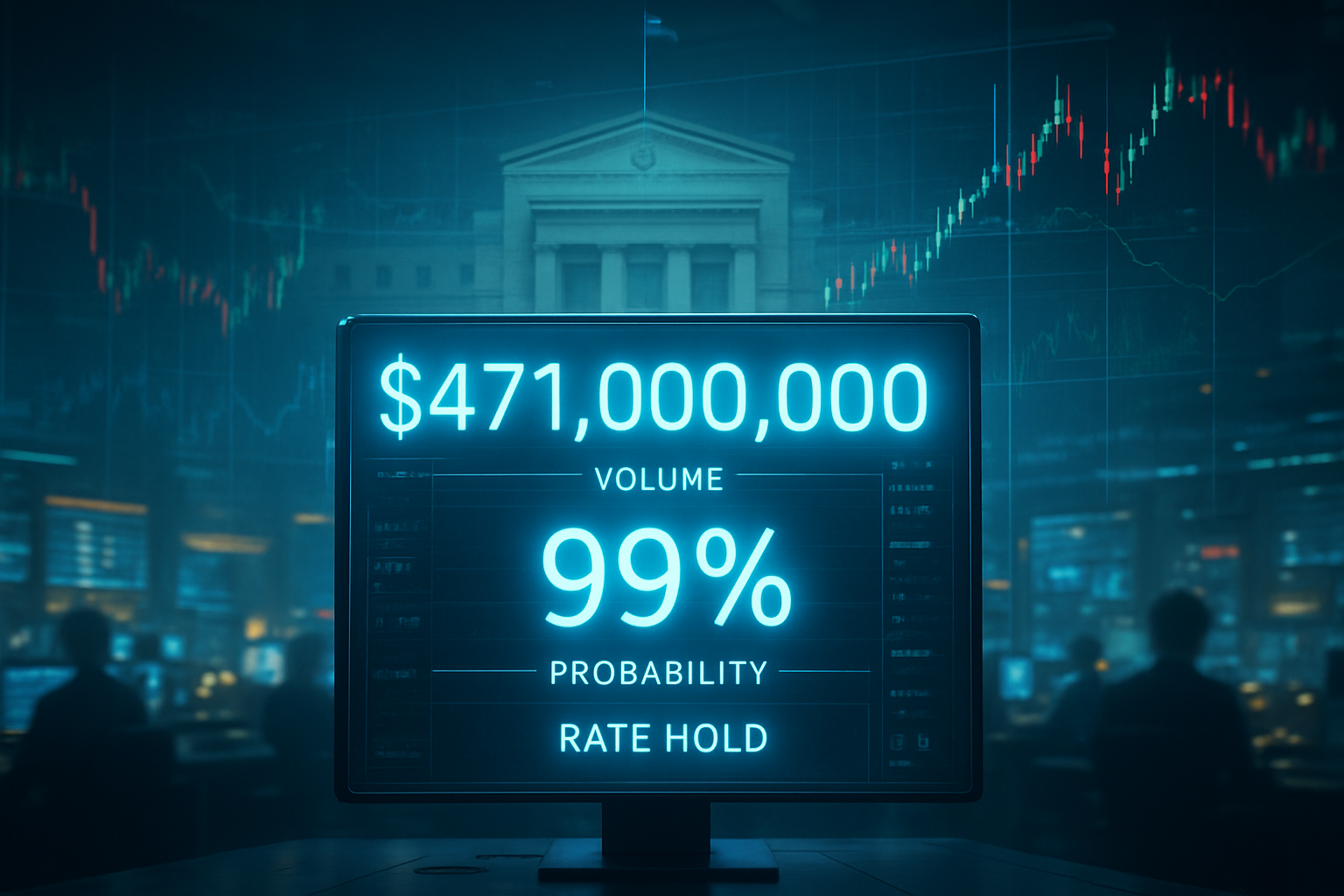
    The scale of the "hold" prediction is staggering, not just in its probability but in the capital backing it. On Polymarket, the world’s largest decentralized prediction platform, the volume for the January interest rate decision has surged to a massive $471 million. As of January 24, 2026, the market assigns a 99% probability to a "No Change" outcome, effectively pricing out any chance of a 25 or 50 basis point decrease, both of which are currently trading at 1% or less.

    The Market: What's Being Predicted

    The central question facing traders is whether the Fed will maintain the federal funds rate at its current range of 3.50%–3.75%. While traditional financial instruments like Fed Funds Futures have long been the gold standard for these forecasts, the rise of prediction markets has shifted the landscape. On Polymarket, the "Fed Interest Rate Decision: January 2026" contract has become one of the most liquid markets on the platform, drawing in hundreds of millions in volume from a global pool of retail and crypto-native participants.

    The conviction on Polymarket is slightly higher than that of institutional tools. For comparison, the FedWatch tool provided by the CME Group (NASDAQ: CME) currently shows a 95.4% chance of a hold and a 4.6% chance of a 25 basis point cut. While both indicate a high degree of certainty, the "99% club" on prediction markets suggests that speculators are even more convinced than the professional hedgers using CME’s futures contracts.

    Meanwhile, on the U.S.-regulated exchange Kalshi, the odds tell a similar story. Contracts for the Fed maintaining the current rate are trading at roughly 99 cents, reflecting a 99% implied probability. The liquidity on these platforms has become so deep that even large "whale" trades struggle to move the needle against the overwhelming tide of the "hold" consensus.

    Why Traders Are Betting

    The shift toward a definitive pause is driven by a complex "data-dependent" narrative that has become increasingly muddled. Throughout late 2025, the Fed enacted three consecutive rate cuts to support a cooling labor market. However, by the start of 2026, the economic picture began to blur. Core Personal Consumption Expenditures (PCE), the Fed’s preferred inflation metric, remains "sticky" at 2.8%—well above the 2% target.

    Traders are also reacting to the "data holes" created by a brief but disruptive government shutdown in late 2025. This shutdown delayed several key economic reports, leaving the Fed with incomplete information. Most market participants believe Chair Jerome Powell will prefer a "wait-and-see" approach rather than risk another cut while inflation remains stubborn and official data is unreliable.

    Furthermore, political risk is looming large over the central bank. With Jerome Powell’s term as Chair set to expire in May 2026, and rumors of potential replacements swirling in Washington, the FOMC is perceived to be in a defensive crouch. Traders are betting that the committee will avoid any bold policy moves that could be interpreted as politically motivated or overly aggressive during a sensitive transition period.

    Broader Context and Implications

    The $471 million volume on Polymarket is a testament to the growing institutionalization of prediction markets as a serious financial forecasting tool. These markets are often praised for their "wisdom of the crowd" effect, which can sometimes process breaking news—such as leaked political rumors or localized economic indicators—faster than traditional banking models.

    Historically, when prediction markets hit a 99% probability for a Fed decision this close to the meeting date, they are rarely wrong. However, the real-world implications of a hold are significant. A pause in January signals to the broader economy that the "easy money" era of late 2025 is over for now. This has direct consequences for mortgage rates, corporate borrowing costs, and the overall performance of the S&P 500 (NYSE: SPY).

    This market also highlights the regulatory evolution of the space. Following Kalshi’s legal victories against the CFTC in 2024 and 2025, prediction markets have moved from the fringe to the mainstream of political and economic forecasting. The fact that nearly half a billion dollars is being wagered on a single Fed meeting underscores the massive appetite for these direct-betting instruments.

    What to Watch Next

    As we approach the January 28 announcement, any sudden "Fed leak" or unexpected comment from a committee member could cause a late-stage tremor in the markets. Traders should keep a close eye on the "Statement" language. Even if the rate remains unchanged as expected, the "hawkish" or "dovish" tone of the accompanying text will set the odds for the next meeting in March.

    The most critical date to monitor is Wednesday, January 28, at 2:00 PM EST. The release of the FOMC statement will provide the ultimate resolution for these multi-million dollar contracts. Immediately following, at 2:30 PM, Chair Powell’s press conference will be scrutinized for clues regarding the Fed's stance on the 2.8% inflation floor and the upcoming leadership transition in May.

    Bottom Line

    The prediction markets have spoken: the January 2026 FOMC meeting is expected to be a non-event in terms of rate movements. The 99% probability of a hold across Polymarket and Kalshi represents a rare moment of total market unity, backed by nearly $500 million in skin-in-the-game.

    This level of certainty suggests that traders have fully absorbed the impact of sticky inflation and the data distortions from the recent government shutdown. While the "hold" itself may be predictable, the true value of these markets lies in their ability to quantify sentiment in real-time. As the Fed enters its "blackout period" before the meeting, these prediction markets remain the only living, breathing indicator of where the money is moving.


    This article is for informational purposes only and does not constitute financial or betting advice. Prediction market participation may be subject to legal restrictions in your jurisdiction.

    PredictStreet focuses on covering the latest developments in prediction markets. Visit the PredictStreet website at https://www.predictstreet.ai/.
  • Oscar Season’s Heavyweight: ‘One Battle After Another’ Grips Prediction Markets as Nominations Drop

    Oscar Season’s Heavyweight: ‘One Battle After Another’ Grips Prediction Markets as Nominations Drop

    The 98th Academy Awards race has officially entered its most volatile phase following the announcement of the official nominations today, January 24, 2026. In the immediate wake of the Academy's reveal, prediction markets have reacted with lightning speed, cementing a clear hierarchy that suggests a potential landslide victory for one of the year’s most ambitious cinematic projects. Paul Thomas Anderson’s sprawling epic, One Battle After Another, has surged to a commanding 71% win probability, leaving competitors scrambling to close a widening gap in the eyes of bettors.

    The market’s intensity is reaching a fever pitch, with traders pouring millions into Best Picture contracts as the "Gold Derby" of the digital age takes center stage. While critical consensus is still forming, the decentralized wisdom of the markets is currently signaling a near-certain coronation for the Warner Bros. Discovery (NASDAQ: WBD) flagship title. However, as any veteran of the 2026 awards cycle knows, the distance between a nomination and a statuette is often paved with market upsets and "whale" maneuvers that can shift the narrative in a single afternoon.

    The Market: What's Being Predicted

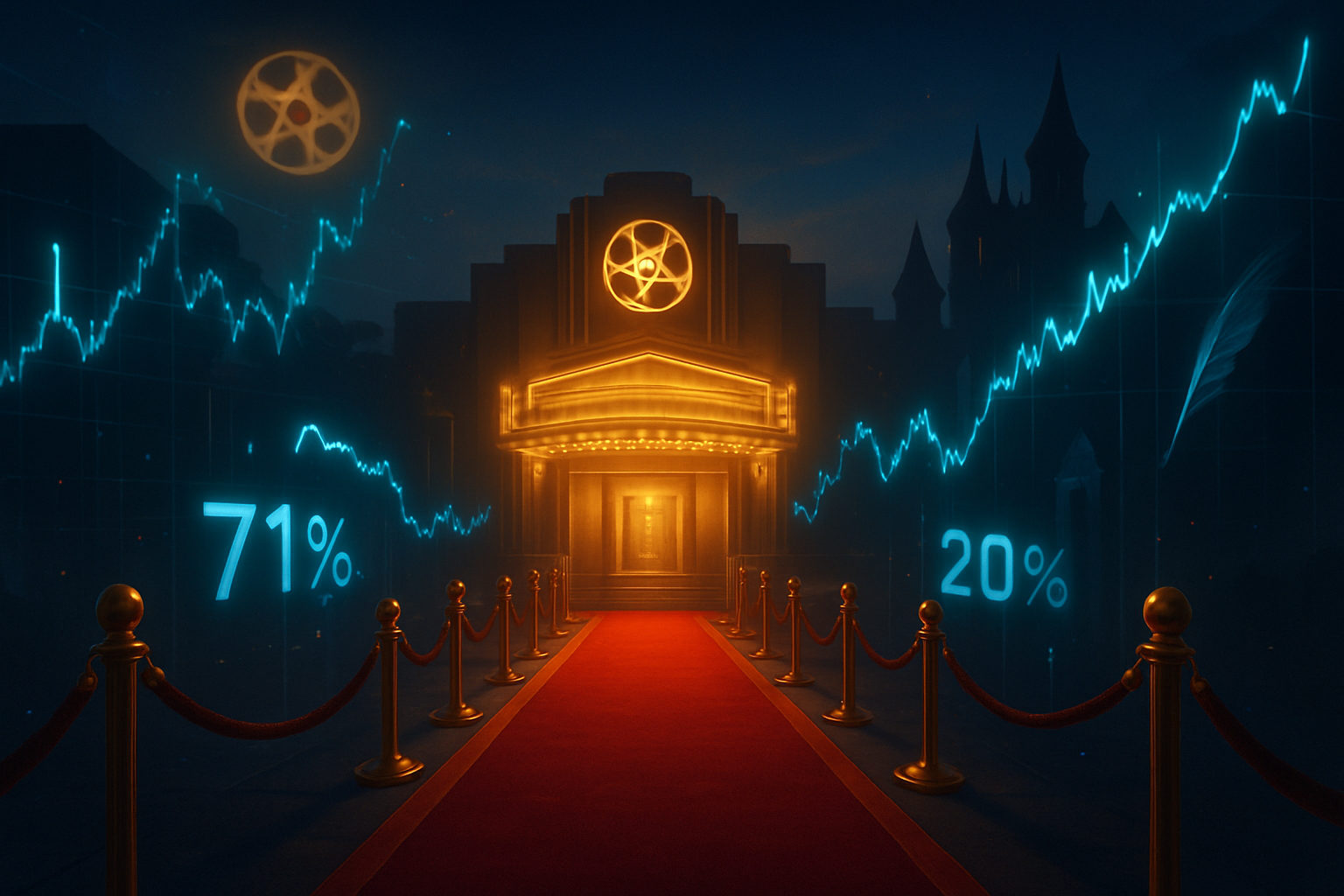
    The primary hub for this speculative frenzy is Polymarket, the decentralized prediction platform that has become the gold standard for high-volume event forecasting. As of this morning, the "Best Picture 2026" market has surpassed $9 million in total trading volume, a record for an entertainment-focused category this early in the calendar year. Traders are currently pricing One Battle After Another at 71 cents (representing a 71% implied probability), a sharp rise from the 55% it held just forty-eight hours ago.

    Trailing in a distant second place is Ryan Coogler’s Sinners, also distributed by Warner Bros. Discovery (NASDAQ: WBD), which is currently trading at roughly 20%. The internal competition between two high-budget WBD titles has created a unique dynamic for traders, many of whom are hedging their bets across both films to capture the studio’s dominant momentum. Meanwhile, "long-shot" contenders like Guillermo del Toro’s Frankenstein, distributed by Netflix (NASDAQ: NFLX), and Chloé Zhao’s Hamnet, released via Focus Features and Comcast (NASDAQ: CMCSA), are hovering in the 4% to 7% range, attracting value bettors who believe the Academy may pivot toward more traditional "prestige" dramas in the final vote.

    The resolution of these contracts is strictly tied to the official announcement at the 98th Academy Awards ceremony. Unlike traditional betting which often closes weeks in advance, these markets will remain live and liquid right up until the envelope is opened, allowing for frantic last-minute trading as rumors from the Governor's Ball or leaked ballot data begin to circulate.

    Why Traders Are Betting

    The dominance of One Battle After Another is not merely a reflection of its critical acclaim, but a bet on the "overdue" narrative surrounding director Paul Thomas Anderson. After decades of nominations without a Best Picture win, traders view this 2026 cycle as his definitive moment. The film's massive scale—shot in VistaVision and featuring an ensemble led by Leonardo DiCaprio—signals a return to the "big-screen epic" that the Academy has historically rewarded when technical prowess meets a resonant American story.

    Today’s nominations announcement served as the ultimate catalyst for the current odds shift. One Battle After Another led the pack with 14 nominations, including key "litmus test" categories like Film Editing and Best Director, which are statistically correlated with a Best Picture win. Conversely, Sinners performed well but missed out on a crucial Screenplay nomination, a historical red flag that prompted many Polymarket "whales" to liquidate their positions in Coogler's film and consolidate into the favorite.

    Strategic betting has also been influenced by the "streaming fatigue" sentiment present in current market commentary. Despite the visual splendor of del Toro’s Frankenstein, traders remain skeptical of Netflix's (NASDAQ: NFLX) ability to secure the top prize against a major theatrical powerhouse like WBD. This skepticism is baked into the 7% price for Frankenstein, which some contrarian traders argue is an undervalued position given del Toro’s previous success with The Shape of Water.

    Broader Context and Implications

    The $9 million volume on this single Oscar market highlights the growing legitimacy of prediction markets as a sentiment gauge that often outpaces traditional film critics and pundits. While legacy outlets like Variety or The Hollywood Reporter rely on subjective "expert" panels, Polymarket forces participants to put capital behind their convictions, creating a "wisdom of the crowd" effect that has historically proven remarkably accurate in predicting the eventual Best Picture winner.

    From a regulatory standpoint, the 2026 Oscar markets are operating in a more established environment than previous years. With platforms like Kalshi and Polymarket gaining mainstream traction, the intersection of pop culture and financial speculation is no longer a niche hobby. These markets provide a real-time data feed for studios like Warner Bros. Discovery (NASDAQ: WBD) and Comcast (NASDAQ: CMCSA), who can monitor the "fair value" of their awards campaigns and adjust their marketing spends accordingly.

    Furthermore, this market reveals a public appetite for high-stakes, "Auteur" cinema. The fact that the top four contenders are all directed by visionary filmmakers—Anderson, Coogler, del Toro, and Zhao—suggests that even in a speculative environment, the "brand name" of the director remains the most powerful currency in Hollywood forecasting.

    What to Watch Next

    The next major volatility event will be the Screen Actors Guild (SAG) and Directors Guild of America (DGA) Awards. Historically, the "Guild Sweep" is the most reliable indicator of Oscar success. If One Battle After Another manages to take the top prize at the DGAs, expect its Polymarket odds to climb into the 85% to 90% range, effectively ending the competitive phase of the market.

    Traders should also keep a close eye on the "Anonymous Ballot" season, which typically begins in mid-February. As trade publications begin publishing interviews with unnamed Academy members, small shifts in sentiment can cause massive swings in the 20% "underdog" slot held by Sinners. A late-breaking "passion campaign" for a smaller film like Hamnet (NASDAQ: CMCSA) could also drain liquidity from the top, creating a more fragmented and unpredictable market in the final 72 hours before the ceremony.

    Bottom Line

    As of January 24, 2026, the prediction markets have spoken: One Battle After Another is the heavy favorite to win Best Picture. With 71% odds and a massive lead in nominations, the film is currently viewed by the market as a juggernaut that is Paul Thomas Anderson's to lose. However, the $9 million in volume suggests that there is still significant disagreement and "hedging" occurring, particularly with Sinners holding onto a respectable 20% of the market share.

    The 2026 Oscar cycle demonstrates that prediction markets are no longer just a tool for political or economic forecasting; they are now an integral part of the entertainment industry’s ecosystem. Whether the crowd’s 71% confidence in One Battle After Another is a sign of a true frontrunner or a massive speculative bubble will be decided on the Dolby Theatre stage this March. For now, the smart money is betting on a "Battle" that is increasingly looking like a victory lap.


    This article is for informational purposes only and does not constitute financial or betting advice. Prediction market participation may be subject to legal restrictions in your jurisdiction.

    PredictStreet focuses on covering the latest developments in prediction markets.
    Visit the PredictStreet website at https://www.predictstreet.ai/.
  • Rick Rieder Surges to 60% Odds as Trump’s Preference for Next Fed Chair Crystallizes

    Rick Rieder Surges to 60% Odds as Trump’s Preference for Next Fed Chair Crystallizes

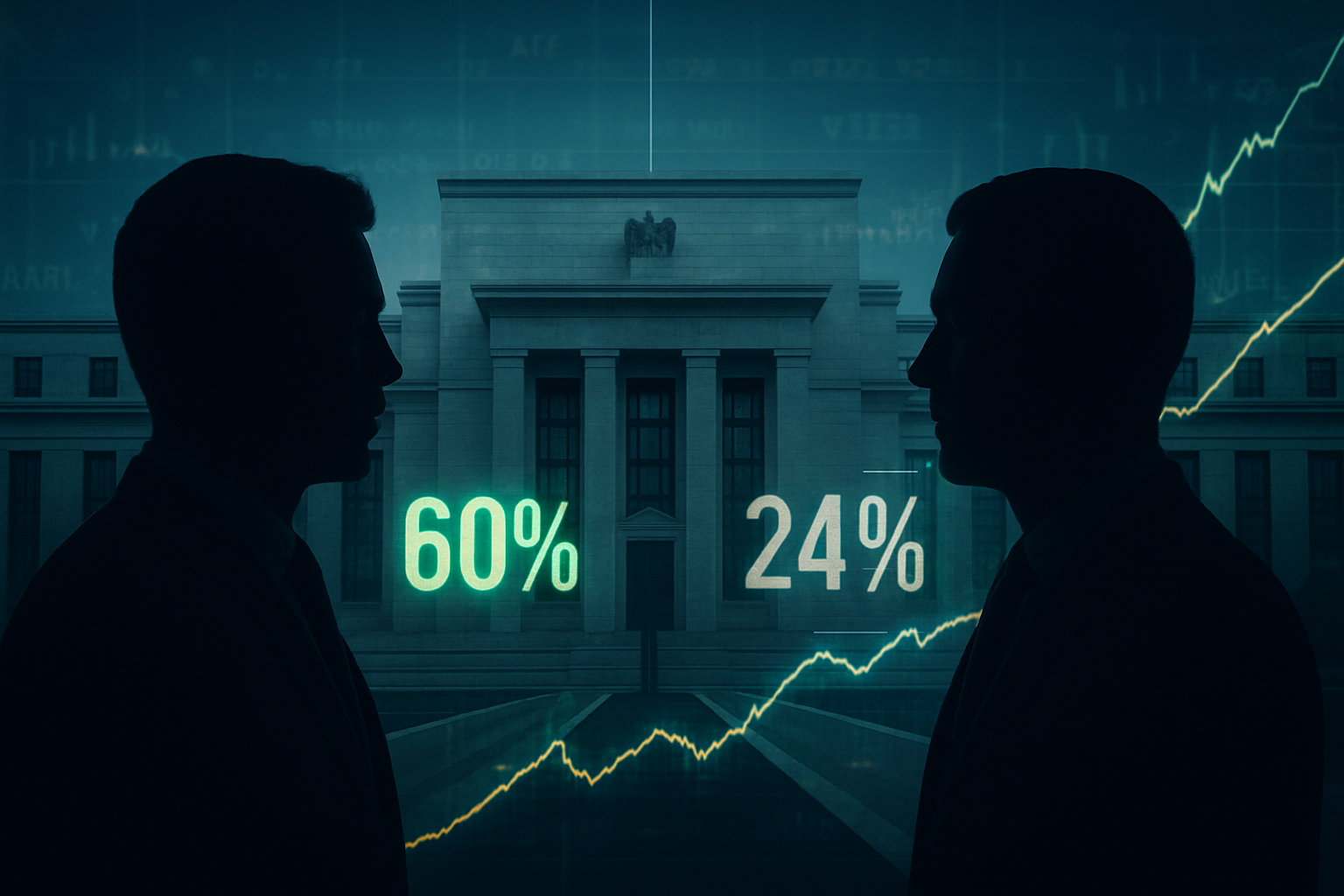
    The race to lead the world’s most powerful central bank has reached a fever pitch in prediction markets, with a decisive shift in sentiment favoring Wall Street veteran Rick Rieder. As of January 24, 2026, Rieder, the Chief Investment Officer of Global Fixed Income at BlackRock Inc. (NYSE: BLK), has emerged as the clear frontrunner to succeed Jerome Powell, whose term is set to expire in May. While the race was previously a dead heat between various conservative economists, Rieder now commands a dominant 60% probability on major forecasting platforms, leaving former Federal Reserve Governor Kevin Warsh trailing in a distant second.

    This market movement reflects more than just speculation; it is the culmination of high-stakes political signaling from the White House. The surge in Rieder’s odds coincides with a massive influx of capital into these markets, as traders scramble to position themselves ahead of a formal announcement. With over $300 million in combined volume between decentralized and regulated platforms, the "Next Fed Chair" market has become the focal point of global macro trading in early 2026.

    The Market: What's Being Predicted

    The prediction markets for the next Federal Reserve Chair have seen unprecedented liquidity this cycle. On Polymarket, the leading decentralized prediction platform, total volume for the Fed Chair contract has surpassed $250 million. Simultaneously, Kalshi, the U.S.-regulated exchange, has seen its volume climb to $55 million. The sheer scale of these markets suggests that institutional players and professional "political hunters" are using these contracts to hedge against potential shifts in monetary policy.

    Current odds across both platforms are remarkably aligned:

    • Rick Rieder: 60%
    • Kevin Warsh: 23-24%
    • Christopher Waller: 10%
    • Kevin Hassett: 5-7%

    The contract resolution is tied specifically to the official nomination by President Trump and subsequent confirmation or a formal announcement designated as the "intended nominee." Historically, these markets have traded with high volatility, but the recent consolidation around Rieder represents the first time a single candidate has held a supermajority probability since the speculation began in late 2025.

    Why Traders Are Betting

    The primary catalyst for the "Rieder Rally" was a strategic pivot by President Trump regarding his economic team. For much of late 2025, Kevin Hassett, the Director of the National Economic Council (NEC), was the betting favorite. However, Trump’s public insistence that Hassett is "too good on television" to be moved from the NEC essentially eliminated him from the running.

    Traders jumped on this "Hassett Pivot" to find the President's next preferred candidate. While Kevin Warsh briefly surged to 60% odds last week, the momentum shifted toward Rieder following a series of high-profile signals:

    1. Trump’s CNBC Endorsement: In a mid-January interview, the President praised Rieder’s "market-based judgment" and labeled him a "reformer" who understands the "true cost of debt."
    2. The Housing Factor: Rieder has been vocal about the need for the Fed to aggressively target mortgage rates to stimulate housing affordability—a key pillar of the current administration’s economic rhetoric.
    3. Hassett’s "Kingmaker" Move: Kevin Hassett himself recently described Rieder as "the best bond guy in the world," signaling that the President’s inner circle has reached a consensus.

    Whale activity on Polymarket suggests that several large-scale bettors moved seven-figure positions out of Warsh and into Rieder following these endorsements, viewing Rieder as the "outsider" candidate that Trump typically favors over "Washington insiders" like Warsh or Waller.

    Broader Context and Implications

    The dominance of Rick Rieder in these markets marks a potential shift in the Federal Reserve’s philosophy. Unlike previous chairs, Rieder would come directly from the heart of the private sector, specifically from BlackRock Inc. (NYSE: BLK), rather than from academia or a long-standing legal career. Prediction market participants are effectively betting that the Fed under Rieder would be more reactive to market conditions and perhaps more aggressive in cutting rates to accommodate fiscal expansion.

    Furthermore, this market highlights the increasing utility of prediction platforms like Kalshi and Polymarket as real-time barometers for political appointments. Traditional news outlets have been slower to catch the shift, often still reporting Warsh as the "likely" pick based on 2017-era precedents. However, the "wisdom of the crowd" in prediction markets has proven highly sensitive to the specific populist and market-driven rhetoric emerging from the Trump administration in 2026.

    The legal and regulatory backdrop also looms large. As Kalshi and other platforms fight to maintain their status in the U.S. regulatory landscape, the high volume and accuracy of the Fed Chair market serve as a powerful case study for their role in price discovery for political risk.

    What to Watch Next

    The window for a formal nomination is narrowing. With Jerome Powell’s term ending in May, President Trump is expected to make an announcement by the end of January or early February to allow for a smooth Senate confirmation process. Traders should keep a close eye on any "trial balloon" tweets or comments regarding the ongoing DOJ investigations into the Fed’s internal operations, which Trump has used as a justification for an early transition.

    A sudden drop in Rieder’s odds would likely only occur if a "dark horse" candidate—such as a surprise pick from a different major financial institution—emerges during one of the President's weekend meetings at Mar-a-Lago. Conversely, if the administration confirms that Rieder has met with the Senate Finance Committee, his odds could easily climb toward 80% or 90% before the official press release.

    Bottom Line

    As of January 24, 2026, the prediction markets have spoken: the "Warsh Era" that many expected has been eclipsed by the "Rieder Surge." With 60% odds and massive volume backing him, Rick Rieder is the clear market favorite to become the next Chair of the Federal Reserve.

    This shift tells us that traders are prioritizing "outsider" status and market expertise over traditional central banking credentials. While Kevin Warsh remains a viable backup at 24%, the alignment of Trump’s public praise and Hassett’s endorsement has created a powerful narrative that Rieder is the intended nominee. For those watching the future of American monetary policy, the prediction markets aren't just reflecting reality—they are increasingly the most reliable signal we have.


    This article is for informational purposes only and does not constitute financial or betting advice. Prediction market participation may be subject to legal restrictions in your jurisdiction.

    PredictStreet focuses on covering the latest developments in prediction markets.
    Visit the PredictStreet website at https://www.predictstreet.ai/.

  • The Great Convergence: How Kalshi’s Solana Pivot and ‘Builder Codes’ Are Rewiring Prediction Markets

    The Great Convergence: How Kalshi’s Solana Pivot and ‘Builder Codes’ Are Rewiring Prediction Markets

    The dawn of 2026 has brought a seismic shift to the prediction market landscape, one that is blurring the lines between the regulated boardrooms of Washington D.C. and the permissionless protocols of decentralized finance. As of January 23, 2026, the focus of the trading world has shifted from specific election outcomes to the very infrastructure of the markets themselves. At the center of this revolution is Kalshi, the first CFTC-regulated prediction market, which has successfully bridged its order books onto the Solana (SOL) blockchain.

    This technical expansion is not merely a change in venue; it is a fundamental re-engineering of how liquidity is accessed and distributed. By tokenizing its event contracts as SPL tokens and introducing a novel “Builder Codes” incentive program, Kalshi is attempting to create a global, decentralized front-end for regulated forecasting. Market analysts are watching closely as the platform’s "Yes/No" contracts—once confined to a single proprietary app—now circulate through decentralized exchanges (DEXs) and lending protocols, signaling a new era for real-world asset (RWA) tokenization.

    The Market: What's Being Predicted

    The "market" currently under the microscope isn't just a single event, but the adoption and performance of Kalshi’s new tokenized ecosystem. Since the official launch on December 1, 2025, Kalshi has partnered with DFlow to create a specialized tokenization layer. This API-driven system allows Kalshi’s federally regulated contracts—ranging from Fed interest rate decisions to movie box office results—to be minted as on-chain representations. These tokens mirror the liquidity of Kalshi’s central limit order book, providing what developers call "100% market coverage on-chain."

    Trading volume has seen a massive surge as these contracts hit the Jupiter (JUP) aggregator, Solana’s largest decentralized exchange. By integrating with Jupiter, Kalshi has effectively placed its regulated markets in front of millions of active crypto wallets. The liquidity for these tokenized contracts is deep, bolstered by a hybrid request-for-quote (RFQ) and automated market maker (AMM) model that ensures trades on-chain are matched instantly with Kalshi’s underlying institutional order book. Settlement occurs in USDC, providing a stable and compliant medium for exchange that bridges the gap between traditional finance and DeFi.

    Why Traders Are Betting

    The primary driver behind the current momentum is the introduction of Builder Codes. This mechanism allows any third-party developer to integrate Kalshi’s markets into their own applications and earn a percentage of the trading fees generated. It is a "Lego-brick" approach to prediction markets: a weather app can now embed a "Will it snow in NYC?" contract directly into its interface, while a political news site can offer live betting on legislative votes.

    Traders and developers are also being lured by the $2 million Builder Grant Program, which Kalshi launched in late 2025 to kickstart this ecosystem. Beyond the fees, the "composability" of these tokens is a major draw. For the first time, a trader can hold a "Yes" position on a Federal Reserve rate cut and use that position as collateral on lending platforms like Kamino or Marginfi. This allows for sophisticated hedging strategies that were previously impossible in the siloed world of traditional prediction markets.

    Furthermore, the rise of AI agents has added a new layer of activity. Autonomous trading bots are utilizing Builder Codes to execute high-frequency trades across various front-ends, collecting rebate fees while providing essential liquidity to the network. This "machine-to-machine" economy is rapidly becoming a significant portion of Kalshi’s total daily volume.

    Broader Context and Implications

    This expansion is the culmination of a multi-year journey for Kalshi. Following a landmark legal victory against the Commodity Futures Trading Commission (CFTC) in late 2024, which cleared the way for regulated political event contracts, Kalshi found itself with the legal standing to challenge offshore rivals like Polymarket. However, while Polymarket dominated the crypto-native audience during the 2024 election cycle, Kalshi’s pivot to Solana is an attempt to capture both the regulatory high ground and the technical agility of DeFi.

    The implications for the broader financial system are profound. By bringing regulated RWAs onto a high-speed blockchain like Solana, Kalshi is providing a blueprint for how other traditional assets—stocks, bonds, or commodities—might eventually be traded. It also reveals a shift in public sentiment: traders are increasingly demanding the transparency and instant settlement of blockchain technology, but with the legal protections afforded by a regulated exchange.

    However, this move is not without its risks. The integration of regulated assets into permissionless DeFi protocols raises complex questions for regulators. While Kalshi remains the central counterparty and ensures KYC/AML compliance for its users, the movement of tokenized "claims" through secondary DEXs tests the boundaries of existing financial laws.

    What to Watch Next

    As we move deeper into 2026, the key metric for success will be the diversity of the "Powered by Kalshi" ecosystem. Watch for the emergence of "niche terminals"—specialized trading apps built by third parties that cater to specific sectors like sports, entertainment, or macro-economics. The success of these apps will determine whether Builder Codes can successfully decentralize the user acquisition process.

    Another critical milestone will be the potential integration of these markets into major retail fintech platforms. Rumors have circulated that established players like Robinhood Markets, Inc. (NASDAQ: HOOD) or Coinbase Global, Inc. (NASDAQ: COIN) could leverage Kalshi’s Builder Codes to offer prediction markets to their massive user bases without having to build their own regulatory or liquidity infrastructure from scratch.

    Finally, keep an eye on the liquidity depth of tokenized contracts during major "black swan" events. The true test of the Solana integration will be its ability to maintain stability and narrow spreads when market volatility spikes and thousands of AI agents and retail traders rush to adjust their positions simultaneously.

    Bottom Line

    Kalshi’s expansion into tokenized markets on Solana represents more than just a technical upgrade; it is the first major bridge between the "Wild West" of decentralized prediction markets and the regulated stability of the U.S. financial system. The introduction of Builder Codes effectively turns Kalshi into a liquidity layer for the entire internet, allowing any website or app to become a prediction market hub.

    As the ecosystem grows, the distinction between "betting" and "hedging" continues to fade. For the average participant, the result is a more accessible, liquid, and versatile marketplace. Whether Kalshi can maintain its dominance in this new hybrid landscape remains to be seen, but the "Great Convergence" of 2026 has officially begun, and the prediction market industry will likely never be the same.


    This article is for informational purposes only and does not constitute financial or betting advice. Prediction market participation may be subject to legal restrictions in your jurisdiction.

    PredictStreet focuses on covering the latest developments in prediction markets. Visit the PredictStreet website at https://www.predictstreet.ai/.
  • The New Oracle: Prediction Markets Emerge as Global ‘Early Warning Systems’

    The New Oracle: Prediction Markets Emerge as Global ‘Early Warning Systems’

    As we move into early 2026, the global information landscape has undergone a radical transformation. No longer are political analysts and corporate strategists solely reliant on slow-moving surveys or expert panels to gauge the future. Instead, they are turning to the real-time, high-stakes data of prediction markets. These platforms, once viewed as niche betting hubs, have matured into what many are now calling the world’s most accurate "Early Warning Systems" (EWS).

    In January 2026, the evidence of this shift is undeniable. While traditional polling data often lags behind reality by days or even weeks, prediction markets are responding to geopolitical tremors and economic shifts in mere seconds. From the capture of international fugitives to the timing of Federal Reserve interest rate cuts, these markets are providing a level of foresight that traditional media is struggling to match.

    The Market: What's Being Predicted

    The scope of what can be traded on prediction markets has expanded dramatically since the landmark 2024 election cycle. Platforms like Polymarket and Kalshi have moved far beyond simple "Who will win the presidency?" contracts. Today, traders are betting on everything from the success of SpaceX's Starship Flight 12 to the number of confirmed measles cases in specific Texas counties.

    The scale of these markets is equally impressive. In late 2025, total weekly notional volume across major platforms frequently exceeded $5 billion. Kalshi alone recorded its highest-ever weekly volume of $1.98 billion in the first week of January 2026, largely driven by NFL-related event contracts. Meanwhile, Polymarket, following its successful U.S. relaunch via the acquisition of a CFTC-licensed exchange, reported over $21.5 billion in total nominal volume through December 2025.

    These platforms rely on binary outcome contracts—where a share pays out $1 if the event occurs and $0 if it doesn't—providing a clear, percentage-based probability for any given event. This "price discovery" for future events has become an essential tool for institutional investors and news organizations alike.

    Why Traders Are Betting

    The 2024 U.S. Presidential Election was the ultimate proof of concept for the "Early Warning" theory. Throughout October 2024, traditional pollsters like The New York Times (NYSE: NYT) and 538 described the race as a "dead heat." However, prediction markets told a different story. By late October, the price of a Donald Trump "win" share on Polymarket and Kalshi had moved decisively toward 67%, signaling a shift in momentum that polls didn't capture until it was too late.

    Traders are driven by the "financial incentive for accuracy." Unlike a survey respondent who may give a socially desirable answer, or a television pundit who faces no financial penalty for a wrong prediction, prediction market participants must put capital at risk. This filters out noise and prioritizes "hidden" information.

    A prime example occurred in early January 2026. Hours before the Trump administration announced the capture of Venezuelan leader Nicolás Maduro, a single trader on Polymarket placed a $32,000 bet on his downfall, eventually netting a $400,000 profit. This instance of "information finance" sparked debates about insider information, but it also proved that markets can act as a sensor for events long before they hit the headlines.

    Broader Context and Implications

    The evolution of these markets has been bolstered by significant regulatory victories. Following the CFTC vs. Kalshi legal battle, which concluded in May 2025 when the government dropped its appeal, political event contracts are now legally traded on federally regulated exchanges in the U.S. This has cleared the path for mainstream integration, with Warner Bros. Discovery (NASDAQ: WBD) and its subsidiary CNN, as well as Comcast’s (NASDAQ: CMCSA) CNBC, now featuring live prediction market odds as a standard part of their election and economic coverage.

    Furthermore, traditional finance players like Robinhood Markets, Inc. (NASDAQ: HOOD) and Interactive Brokers Group, Inc. (NASDAQ: IBKR) have integrated these markets into their platforms, bringing prediction contracts to millions of retail investors. This influx of liquidity has reduced the influence of "whales" and increased the "wisdom of crowds," making the signals more stable and reliable.

    Historically, prediction markets have shown a remarkable ability to process complex news faster than experts. In 2025, economic contracts on the CME Group (NASDAQ: CME) FedWatch tool and Kalshi correctly priced in a June rate cut months in advance, even as many bank analysts remained skeptical of a cooling labor market.

    What to Watch Next

    As we look toward the remainder of 2026, the 2026 Midterm Elections (November 3, 2026) are already the highest-liquidity markets in the world. Currently, markets are pricing a 79% probability of a Democratic House takeover and a 67% chance of the GOP maintaining control of the Senate. These odds are expected to shift rapidly as the primary season begins in March.

    Outside of politics, the 2026 Winter Olympics in Milan-Cortina (February 6–22) and the 2026 FIFA World Cup in June will provide massive volume for sports-related event contracts. In the tech sector, all eyes are on the anticipated IPO of SpaceX. Rumors of a mid-2026 public offering have already created a highly active market, with traders currently betting on a debut valuation exceeding $1 trillion.

    Bottom Line

    The rise of prediction markets as "Early Warning Systems" represents a fundamental shift in how we perceive and process the future. By attaching a financial value to truth, these platforms have successfully bypassed the biases of traditional polling and the lag of institutional reporting. They are no longer just betting platforms; they are the new infrastructure of information.

    As we head into the 2026 midterms and beyond, the most important signal won't be found in a pundit's monologue or a "margin of error" poll—it will be found in the fluctuating price of a contract on an exchange. For the first time in history, the collective wisdom of the crowd isn't just a theory; it’s a tradable asset.


    This article is for informational purposes only and does not constitute financial or betting advice. Prediction market participation may be subject to legal restrictions in your jurisdiction.

    PredictStreet focuses on covering the latest developments in prediction markets.
    Visit the PredictStreet website at https://www.predictstreet.ai/.

  • The $400,000 Whistleblower: How the ‘Maduro Trade’ Shook Polymarket and Washington

    The $400,000 Whistleblower: How the ‘Maduro Trade’ Shook Polymarket and Washington

    In the early hours of January 3, 2026, the world woke to the shocking news that Nicolás Maduro had been captured by U.S. Special Operations forces in a daring raid dubbed "Operation Absolute Resolve." But while mainstream news outlets like The New York Times (NYSE: NYT) and News Corp (NASDAQ: NWSA) were scrambling to confirm the reports, a different kind of drama was unfolding on the blockchain. On Polymarket, a single anonymous trader had already locked in a massive windfall, having bet heavily on Maduro’s ouster just hours before the first helicopter took flight.

    The "Maduro Trade," as it has become known, saw an anonymous account turn a modest $32,000 position into a staggering $436,000 payout. The suspicious timing of the wager—placed with surgical precision before any public knowledge of the military operation—has sparked a firestorm of controversy. What began as a win for a savvy bettor has evolved into a national conversation on insider trading, "war-profiteering," and a desperate call for federal regulation of the prediction market industry.

    The Market: What's Being Predicted

    The focus of this controversy was a high-liquidity contract on Polymarket titled "Will Maduro be out of office by January 31, 2026?" Unlike the chaotic resolution of the 2024 Venezuelan election market, which saw disputes over "official" state data versus opposition reporting, this market had a clear binary outcome: Maduro either remained in power in Caracas, or he did not.

    As of late December 2025, the odds of Maduro leaving office were trading at a mere 8%, reflecting a general skepticism that the long-standing regime would crumble anytime soon. However, as the calendar turned to 2026, trading volume surged. By the time the market was resolved on January 3, it had seen over $115 million in total volume, making it one of the most liquid geopolitical markets in the platform's history. Polymarket, which recently received a $2 billion strategic investment from Intercontinental Exchange (NYSE: ICE), found itself at the center of a geopolitical earthquake.

    The resolution criteria were strict. The market required Maduro to be physically removed from his executive functions or held in custody. When "Operation Absolute Resolve" concluded with Maduro in a U.S. detention facility, the market resolved almost instantly. While many traders celebrated the "truth machine" capability of prediction markets, the focus quickly shifted to the identity of the winners.

    Why Traders Are Betting

    For months, traders had been betting on the "Maduro Trade" based on varying factors: economic collapse, internal military coups, or diplomatic pressure. Most traditional forecasting models gave Maduro a high chance of survival through 2026. However, the activity of one specific wallet, identified by blockchain analysts as "Burdensome-Mix," defied all standard logic.

    Between 9:00 PM and 11:30 PM ET on January 2, 2026, "Burdensome-Mix" aggressively bought up "Yes" shares at 8 cents on the dollar. The sheer aggression of the buying pushed the price from 8% to 22% in under three hours. Less than six hours later, the raid began. President Donald Trump later fueled the fire during a press conference, confirming that a "leaker" within the logistical chain of the operation had been identified. This comment confirmed the worst fears of market skeptics: the payout wasn't the result of superior analysis, but of material non-public information.

    This whale activity stands in stark contrast to the retail sentiment seen on other platforms like Robinhood Markets, Inc. (NASDAQ: HOOD) and Interactive Brokers Group (NASDAQ: IBKR) through its ForecastEx exchange. While those platforms saw steady, incremental increases in "Yes" bets as geopolitical tensions rose, Polymarket’s decentralized nature allowed for the kind of anonymous, massive-scale positioning that looks, to many regulators, like a textbook case of insider trading.

    Broader Context and Implications

    The "Maduro Trade" has reignited a debate that has simmered since the 2024 election. During that cycle, Polymarket faced intense criticism for resolving a Venezuela election market in favor of Maduro based on "official" counts, despite widespread evidence of fraud. Critics argued then that the platform was susceptible to state-sponsored manipulation. Now, the pendulum has swung to the other extreme: the platform is being accused of being a conduit for U.S. government insiders to monetize classified military secrets.

    This controversy has profound implications for the future of the industry. U.S. Rep. Ritchie Torres (D-NY) has already introduced the Public Integrity in Financial Prediction Markets Act of 2026, which would explicitly ban federal and military personnel from participating in these markets. The bill argues that prediction markets, while valuable for price discovery, cannot become a "casino for the deep state."

    Furthermore, the infrastructure supporting these platforms is coming under the microscope. Regulators are questioning whether cloud providers like Alphabet Inc. (NASDAQ: GOOGL) and Amazon (NASDAQ: AMZN) should be required to implement "kill switches" for markets that involve active military operations or sensitive national security data.

    What to Watch Next

    The immediate focus is on a series of upcoming congressional hearings scheduled for February 2026. The Commodity Futures Trading Commission (CFTC) is expected to testify on whether it has the authority to claw back payouts derived from insider information on offshore, decentralized platforms. If the CFTC asserts jurisdiction, it could set a precedent that fundamentally changes the "permissionless" nature of crypto-based markets.

    Traders should also keep an eye on "Operation Absolute Resolve" follow-up markets. Contracts are already active regarding the transition of power in Venezuela and the potential for a U.S. military presence in Caracas through the end of the year. If suspicious volume patterns emerge in these markets, it could trigger a coordinated shutdown of similar event contracts on regulated U.S. exchanges.

    Lastly, the identity of "Burdensome-Mix" remains the ultimate "known unknown." If the Department of Justice is able to link the wallet to a specific individual within the military or intelligence community, the resulting legal battle will likely define the boundaries of "insider trading" in a realm where the "commodity" being traded is information itself.

    Bottom Line

    The "Maduro Trade" is a watershed moment for prediction markets. On one hand, it proved that these markets are the fastest way to aggregate information—Polymarket’s odds were "right" about the raid hours before any journalist. On the other hand, it highlighted a glaring ethical and legal vacuum. If prediction markets are to become the "global source of truth" that their proponents claim, they must find a way to distinguish between "collective intelligence" and "criminal intelligence."

    As we move further into 2026, the era of the "Wild West" in prediction markets appears to be closing. With institutional giants like ICE and Robinhood now deeply invested in the space, the pressure for a "clean" market will likely lead to more KYC (Know Your Customer) requirements and stricter federal oversight. For now, the "Maduro Trade" stands as both a triumph of market efficiency and a cautionary tale of the dangers inherent in betting on the movements of the most powerful military on earth.


    This article is for informational purposes only and does not constitute financial or betting advice. Prediction market participation may be subject to legal restrictions in your jurisdiction.

    PredictStreet focuses on covering the latest developments in prediction markets.
    Visit the PredictStreet website at https://www.predictstreet.ai/.

  • The Rise of ‘Information Finance’: How Susquehanna and DRW Are Professionalizing Prediction Markets

    The Rise of ‘Information Finance’: How Susquehanna and DRW Are Professionalizing Prediction Markets

    The landscape of global finance is undergoing a structural transformation as the boundaries between speculative betting and institutional trading continue to blur. As of January 2026, the entry of Wall Street heavyweights Susquehanna International Group (SIG) and DRW into the prediction market space has signaled the end of the "retail-only" era. These firms are not just participating; they are pioneering dedicated "Information Finance" desks, treating the probability of real-world events with the same mathematical rigor once reserved for high-frequency equity trading.

    Currently, monthly notional volume across the prediction market sector has surged past $8.5 billion, driven by a record single-day trading volume of $701.7 million on January 12, 2026. This surge was catalyzed by geopolitical volatility in South America and a series of high-stakes macroeconomic shifts in the U.S. The arrival of institutional liquidity has compressed bid-ask spreads on major event contracts from 10% in the early 2020s to less than 0.5% today, effectively turning these markets into the world’s most efficient "truth engines."

    The Market: What's Being Predicted

    While prediction markets once focused on niche election outcomes, the modern "InfoFi" (Information Finance) ecosystem covers everything from the timing of Federal Reserve rate cuts to scientific breakthroughs and geopolitical conflicts. These contracts are primarily traded on two powerhouse platforms: the CFTC-regulated Kalshi and the decentralized giant Polymarket. By early 2026, the valuation of these platforms has reached atmospheric heights, with Kalshi valued at $11 billion and Polymarket at $9 billion following a landmark investment from the Intercontinental Exchange (NYSE:ICE).

    The market is no longer just a haven for political junkies. Major retail brokerages like Robinhood Markets, Inc. (NASDAQ:HOOD) and Webull have integrated "Prediction Market Hubs" directly into their apps, allowing millions of retail investors to trade event outcomes alongside their stock portfolios. This influx of retail "noise" has created a fertile environment for institutional market makers like SIG and DRW to provide liquidity, capture the "edge" in pricing, and ensure that contracts accurately reflect the aggregate sum of available human information.

    Trading volume is now concentrated in "Macro Truth" contracts. For instance, the market for the next FOMC interest rate decision currently processes billions in volume, with odds shifting in real-time as economic data is released. Unlike traditional polling, these markets require traders to put "skin in the game," a mechanism that has historically made them more accurate than expert forecasts or media sentiment analysis.

    Why Traders Are Betting

    The primary driver for institutional entry into prediction markets is the pursuit of "alpha" through sophisticated arbitrage and hedging strategies. Firms like Susquehanna and DRW have built specialized desks to exploit the discrepancies between prediction markets and traditional financial instruments. This is often referred to as "TradFi-Event Arbitrage." For example, if S&P 500 futures drop following a leaked news report while a related "Presidential Policy" contract on Kalshi remains stagnant, HFT algorithms can trade the lead-lag relationship between the two in milliseconds.

    Another key strategy is asset-class hedging. Institutional traders are increasingly using event contracts as a "pure" hedge against systemic risks. Rather than buying gold or defensive stocks to hedge against inflation, a fund might buy a "CPI exceeds 3.1%" contract. This provides a direct payout that is uncoupled from the volatility of the equity or bond markets, offering a cleaner way to manage specific macro exposures.

    Furthermore, the concept of "Information Finance," popularized by Ethereum co-founder Vitalik Buterin, has taken hold. Traders are betting because they believe these markets are the ultimate tool for truth aggregation. As SIG recruiting documents for their "Event Trading" teams suggest, the goal is to detect "incorrect fair values" in public sentiment. By identifying where the public consensus deviates from the mathematical probability of an outcome, these firms can harvest significant profits while simultaneously correcting the market price toward reality.

    Broader Context and Implications

    The professionalization of prediction markets carries profound implications for society and the financial system. We are witnessing the birth of a "Truth Layer" for the internet. When major news breaks, such as the capture of Nicolás Maduro in early January 2026—an event known as the "Maduro Trade"—the odds on Polymarket moved hours before official government confirmation. This has led many to view prediction markets as a more reliable source of breaking news than traditional journalism.

    However, this rapid growth has caught the attention of regulators. The "Maduro Trade" sparked allegations of insider trading by individuals with non-public information, leading to the introduction of the Public Integrity in Financial Prediction Markets Act of 2026 (H.R. 7004) by Rep. Ritchie Torres. This bill seeks to prohibit government officials from trading on event contracts tied to their own policy areas. The market currently prices the likelihood of this bill passing at 15%, reflecting the ongoing tension between innovation and regulation.

    At the regulatory level, the CFTC, under the leadership of Chairman Mike Selig, has moved toward a "future-proof" framework. Selig has explicitly stated that prediction markets should be distinguished from gambling, treating them instead as vital tools for price discovery in the "Information Economy." This regulatory clarity has been a green light for firms like SIG and DRW to expand their operations, provided they maintain high levels of collateralization.

    What to Watch Next

    As we move deeper into 2026, all eyes are on the upcoming U.S. Midterm Elections. This will be the first major political cycle where institutional liquidity providers like SIG and DRW are fully integrated into the market. Observers will be watching to see if this professionalization prevents the wild price swings and "fat-finger" errors that plagued thinner markets in the 2020 and 2024 cycles.

    Another critical milestone is the potential approval of "Exchange Traded Prediction Funds" (ETPFs). Several asset managers have already filed applications to launch these funds, which would allow retail investors to hold diversified baskets of event outcomes in their retirement accounts. If approved, the influx of 401(k) capital could push prediction market liquidity into the trillions, making "Information Finance" as common as index fund investing.

    Finally, the resolution of the legal "checkerboard" in the United States remains a key factor. While federal rulings have favored exchanges like Kalshi, individual states like Massachusetts have attempted to ban specific types of event contracts. The outcome of these jurisdictional battles will determine whether prediction markets can truly operate as a unified, global liquidity pool or remain fragmented by local regulations.

    Bottom Line

    The entry of Susquehanna and DRW marks a turning point where prediction markets have graduated from a curiosity into a core component of the global financial architecture. By treating information as a tradable commodity, "Information Finance" is professionalizing the search for truth, providing a hedge against uncertainty, and creating a new frontier for quantitative alpha.

    As prediction markets continue to outperform traditional polling and media analysis, they are becoming the definitive "source of truth" for the 21st century. For the first time, we have a financial incentive for accuracy in public discourse. While regulatory hurdles and ethical questions about insider information remain, the momentum behind "InfoFi" suggests that the market-driven aggregation of human knowledge is here to stay.

    The next few months will be a "trial by fire" for the industry. If prediction markets can navigate the volatility of the midterms and the scrutiny of Congress, they will solidify their role as the world’s most powerful forecasting tool. In the world of Information Finance, the most valuable asset isn't gold or oil—it's the truth.


    This article is for informational purposes only and does not constitute financial or betting advice. Prediction market participation may be subject to legal restrictions in your jurisdiction.

    PredictStreet focuses on covering the latest developments in prediction markets.
    Visit the PredictStreet website at https://www.predictstreet.ai/.