
Tag: Polymarket

  • The New Oracle: Prediction Markets Emerge as Global ‘Early Warning Systems’

    The New Oracle: Prediction Markets Emerge as Global ‘Early Warning Systems’

    As we move into early 2026, the global information landscape has undergone a radical transformation. No longer are political analysts and corporate strategists solely reliant on slow-moving surveys or expert panels to gauge the future. Instead, they are turning to the real-time, high-stakes data of prediction markets. These platforms, once viewed as niche betting hubs, have matured into what many are now calling the world’s most accurate "Early Warning Systems" (EWS).

    In January 2026, the evidence of this shift is undeniable. While traditional polling data often lags behind reality by days or even weeks, prediction markets are responding to geopolitical tremors and economic shifts in mere seconds. From the capture of international fugitives to the timing of Federal Reserve interest rate cuts, these markets are providing a level of foresight that traditional media is struggling to match.

    The Market: What's Being Predicted

    The scope of what can be traded on prediction markets has expanded dramatically since the landmark 2024 election cycle. Platforms like Polymarket and Kalshi have moved far beyond simple "Who will win the presidency?" contracts. Today, traders are betting on everything from the success of SpaceX's Starship Flight 12 to the number of confirmed measles cases in specific Texas counties.

    The scale of these markets is equally impressive. In late 2025, total weekly notional volume across major platforms frequently exceeded $5 billion. Kalshi alone recorded its highest-ever weekly volume of $1.98 billion in the first week of January 2026, largely driven by NFL-related event contracts. Meanwhile, Polymarket, following its successful U.S. relaunch via the acquisition of a CFTC-licensed exchange, reported over $21.5 billion in total nominal volume through December 2025.

    These platforms rely on binary outcome contracts—where a share pays out $1 if the event occurs and $0 if it doesn't—providing a clear, percentage-based probability for any given event. This "price discovery" for future events has become an essential tool for institutional investors and news organizations alike.

    Why Traders Are Betting

    The 2024 U.S. Presidential Election was the ultimate proof of concept for the "Early Warning" theory. Throughout October 2024, traditional pollsters like The New York Times (NYSE: NYT) and 538 described the race as a "dead heat." However, prediction markets told a different story. By late October, the price of a Donald Trump "win" share on Polymarket and Kalshi had moved decisively toward 67%, signaling a shift in momentum that polls didn't capture until it was too late.

    Traders are driven by the "financial incentive for accuracy." Unlike a survey respondent who may give a socially desirable answer, or a television pundit who faces no financial penalty for a wrong prediction, prediction market participants must put capital at risk. This filters out noise and prioritizes "hidden" information.

    A prime example occurred in early January 2026. Hours before the Trump administration announced the capture of Venezuelan leader Nicolás Maduro, a single trader on Polymarket placed a $32,000 bet on his downfall, eventually netting a $400,000 profit. This instance of "information finance" sparked debates about insider information, but it also proved that markets can act as a sensor for events long before they hit the headlines.

    Broader Context and Implications

    The evolution of these markets has been bolstered by significant regulatory victories. Following the CFTC vs. Kalshi legal battle, which concluded in May 2025 when the government dropped its appeal, political event contracts are now legally traded on federally regulated exchanges in the U.S. This has cleared the path for mainstream integration, with Warner Bros. Discovery (NASDAQ: WBD) and its subsidiary CNN, as well as Comcast’s (NASDAQ: CMCSA) CNBC, now featuring live prediction market odds as a standard part of their election and economic coverage.

    Furthermore, traditional finance players like Robinhood Markets, Inc. (NASDAQ: HOOD) and Interactive Brokers Group, Inc. (NASDAQ: IBKR) have integrated these markets into their platforms, bringing prediction contracts to millions of retail investors. This influx of liquidity has reduced the influence of "whales" and increased the "wisdom of crowds," making the signals more stable and reliable.

    Historically, prediction markets have shown a remarkable ability to process complex news faster than experts. In 2025, economic contracts on the CME Group (NASDAQ: CME) FedWatch tool and Kalshi correctly priced in a June rate cut months in advance, even as many bank analysts remained skeptical of a cooling labor market.

    What to Watch Next

    As we look toward the remainder of 2026, the 2026 Midterm Elections (November 3, 2026) are already the highest-liquidity markets in the world. Currently, markets are pricing a 79% probability of a Democratic House takeover and a 67% chance of the GOP maintaining control of the Senate. These odds are expected to shift rapidly as the primary season begins in March.

    Outside of politics, the 2026 Winter Olympics in Milan-Cortina (February 6–22) and the 2026 FIFA World Cup in June will provide massive volume for sports-related event contracts. In the tech sector, all eyes are on the anticipated IPO of SpaceX. Rumors of a mid-2026 public offering have already created a highly active market, with traders currently betting on a debut valuation exceeding $1 trillion.

    Bottom Line

    The rise of prediction markets as "Early Warning Systems" represents a fundamental shift in how we perceive and process the future. By attaching a financial value to truth, these platforms have successfully bypassed the biases of traditional polling and the lag of institutional reporting. They are no longer just betting platforms; they are the new infrastructure of information.

    As we head into the 2026 midterms and beyond, the most important signal won't be found in a pundit's monologue or a "margin of error" poll—it will be found in the fluctuating price of a contract on an exchange. For the first time in history, the collective wisdom of the crowd isn't just a theory; it’s a tradable asset.


    This article is for informational purposes only and does not constitute financial or betting advice. Prediction market participation may be subject to legal restrictions in your jurisdiction.

    PredictStreet focuses on covering the latest developments in prediction markets.
    Visit the PredictStreet website at https://www.predictstreet.ai/.
  • The $400,000 Whistleblower: How the ‘Maduro Trade’ Shook Polymarket and Washington

    The $400,000 Whistleblower: How the ‘Maduro Trade’ Shook Polymarket and Washington

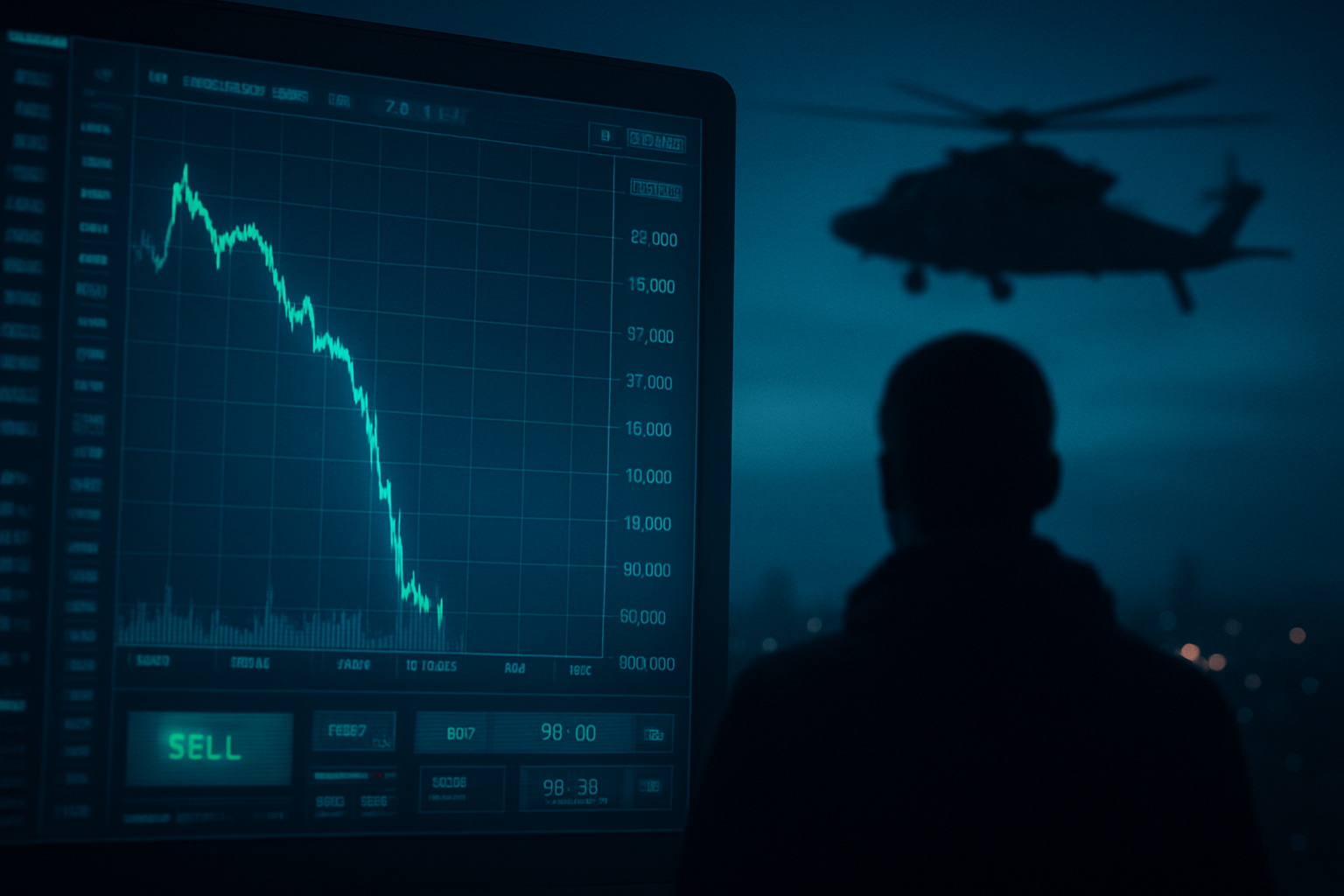
    In the early hours of January 3, 2026, the world woke to the shocking news that Nicolás Maduro had been captured by U.S. Special Operations forces in a daring raid dubbed "Operation Absolute Resolve." But while mainstream news outlets like The New York Times (NYSE: NYT) and News Corp (NASDAQ: NWSA) were scrambling to confirm the reports, a different kind of drama was unfolding on the blockchain. On Polymarket, a single anonymous trader had already locked in a massive windfall, having bet heavily on Maduro’s ouster just hours before the first helicopter took flight.

    The "Maduro Trade," as it has become known, saw an anonymous account turn a modest $32,000 position into a staggering $436,000 payout. The suspicious timing of the wager—placed with surgical precision before any public knowledge of the military operation—has sparked a firestorm of controversy. What began as a win for a savvy bettor has evolved into a national conversation on insider trading, "war-profiteering," and a desperate call for federal regulation of the prediction market industry.

    The Market: What's Being Predicted

    The focus of this controversy was a high-liquidity contract on Polymarket titled "Will Maduro be out of office by January 31, 2026?" Unlike the chaotic resolution of the 2024 Venezuelan election market, which saw disputes over "official" state data versus opposition reporting, this market had a clear binary outcome: Maduro either remained in power in Caracas, or he did not.

    As of late December 2025, the odds of Maduro leaving office were trading at a mere 8%, reflecting a general skepticism that the long-standing regime would crumble anytime soon. However, as the calendar turned to 2026, trading volume surged. By the time the market was resolved on January 3, it had seen over $115 million in total volume, making it one of the most liquid geopolitical markets in the platform's history. Polymarket, which recently received a $2 billion strategic investment from Intercontinental Exchange (NYSE: ICE), found itself at the center of a geopolitical earthquake.

    The resolution criteria were strict. The market required Maduro to be physically removed from his executive functions or held in custody. When "Operation Absolute Resolve" concluded with Maduro in a U.S. detention facility, the market resolved almost instantly. While many traders celebrated the "truth machine" capability of prediction markets, the focus quickly shifted to the identity of the winners.

    Why Traders Are Betting

    For months, traders had been betting on the "Maduro Trade" based on varying factors: economic collapse, internal military coups, or diplomatic pressure. Most traditional forecasting models gave Maduro a high chance of survival through 2026. However, the activity of one specific wallet, identified by blockchain analysts as "Burdensome-Mix," defied all standard logic.

    Between 9:00 PM and 11:30 PM ET on January 2, 2026, "Burdensome-Mix" aggressively bought up "Yes" shares at 8 cents on the dollar. The sheer aggression of the buying pushed the price from 8% to 22% in under three hours. Less than six hours later, the raid began. President Donald Trump later fueled the fire during a press conference, confirming that a "leaker" within the logistical chain of the operation had been identified. This comment confirmed the worst fears of market skeptics: the payout wasn't the result of superior analysis, but of material non-public information.

    This whale activity stands in stark contrast to the retail sentiment seen on other platforms like Robinhood Markets, Inc. (NASDAQ: HOOD) and Interactive Brokers Group (NASDAQ: IBKR) through its ForecastEx exchange. While those platforms saw steady, incremental increases in "Yes" bets as geopolitical tensions rose, Polymarket’s decentralized nature allowed for the kind of anonymous, massive-scale positioning that looks, to many regulators, like a textbook case of insider trading.

    Broader Context and Implications

    The "Maduro Trade" has reignited a debate that has simmered since the 2024 election. During that cycle, Polymarket faced intense criticism for resolving a Venezuela election market in favor of Maduro based on "official" counts, despite widespread evidence of fraud. Critics argued then that the platform was susceptible to state-sponsored manipulation. Now, the pendulum has swung to the other extreme: the platform is being accused of being a conduit for U.S. government insiders to monetize classified military secrets.

    This controversy has profound implications for the future of the industry. U.S. Rep. Ritchie Torres (D-NY) has already introduced the Public Integrity in Financial Prediction Markets Act of 2026, which would explicitly ban federal and military personnel from participating in these markets. The bill argues that prediction markets, while valuable for price discovery, cannot become a "casino for the deep state."

    Furthermore, the infrastructure supporting these platforms is coming under the microscope. Regulators are questioning whether cloud providers like Alphabet Inc. (NASDAQ: GOOGL) and Amazon (NASDAQ: AMZN) should be required to implement "kill switches" for markets that involve active military operations or sensitive national security data.

    What to Watch Next

    The immediate focus is on a series of upcoming congressional hearings scheduled for February 2026. The Commodity Futures Trading Commission (CFTC) is expected to testify on whether it has the authority to claw back payouts derived from insider information on offshore, decentralized platforms. If the CFTC asserts jurisdiction, it could set a precedent that fundamentally changes the "permissionless" nature of crypto-based markets.

    Traders should also keep an eye on "Operation Absolute Resolve" follow-up markets. Contracts are already active regarding the transition of power in Venezuela and the potential for a U.S. military presence in Caracas through the end of the year. If suspicious volume patterns emerge in these markets, it could trigger a coordinated shutdown of similar event contracts on regulated U.S. exchanges.

    Lastly, the identity of "Burdensome-Mix" remains the ultimate "known unknown." If the Department of Justice is able to link the wallet to a specific individual within the military or intelligence community, the resulting legal battle will likely define the boundaries of "insider trading" in a realm where the "commodity" being traded is information itself.

    Bottom Line

    The "Maduro Trade" is a watershed moment for prediction markets. On one hand, it proved that these markets are the fastest way to aggregate information—Polymarket’s odds were "right" about the raid hours before any journalist. On the other hand, it highlighted a glaring ethical and legal vacuum. If prediction markets are to become the "global source of truth" that their proponents claim, they must find a way to distinguish between "collective intelligence" and "criminal intelligence."

    As we move further into 2026, the era of the "Wild West" in prediction markets appears to be closing. With institutional giants like ICE and Robinhood now deeply invested in the space, the pressure for a "clean" market will likely lead to more KYC (Know Your Customer) requirements and stricter federal oversight. For now, the "Maduro Trade" stands as both a triumph of market efficiency and a cautionary tale of the dangers inherent in betting on the movements of the most powerful military on earth.


    This article is for informational purposes only and does not constitute financial or betting advice. Prediction market participation may be subject to legal restrictions in your jurisdiction.

    PredictStreet focuses on covering the latest developments in prediction markets.
    Visit the PredictStreet website at https://www.predictstreet.ai/.

  • The Rise of ‘Information Finance’: How Susquehanna and DRW Are Professionalizing Prediction Markets

    The Rise of ‘Information Finance’: How Susquehanna and DRW Are Professionalizing Prediction Markets

    The landscape of global finance is undergoing a structural transformation as the boundaries between speculative betting and institutional trading continue to blur. As of January 2026, the entry of Wall Street heavyweights Susquehanna International Group (SIG) and DRW into the prediction market space has signaled the end of the "retail-only" era. These firms are not just participating; they are pioneering dedicated "Information Finance" desks, treating the probability of real-world events with the same mathematical rigor once reserved for high-frequency equity trading.

    Currently, monthly notional volume across the prediction market sector has surged past $8.5 billion, driven by a record single-day trading volume of $701.7 million on January 12, 2026. This surge was catalyzed by geopolitical volatility in South America and a series of high-stakes macroeconomic shifts in the U.S. The arrival of institutional liquidity has compressed bid-ask spreads on major event contracts from 10% in the early 2020s to less than 0.5% today, effectively turning these markets into the world’s most efficient "truth engines."

    The Market: What's Being Predicted

    While prediction markets once focused on niche election outcomes, the modern "InfoFi" (Information Finance) ecosystem covers everything from the timing of Federal Reserve rate cuts to scientific breakthroughs and geopolitical conflicts. These contracts are primarily traded on two powerhouse platforms: the CFTC-regulated Kalshi and the decentralized giant Polymarket. By early 2026, the valuation of these platforms has reached atmospheric heights, with Kalshi valued at $11 billion and Polymarket at $9 billion following a landmark investment from the Intercontinental Exchange (NYSE:ICE).

    The market is no longer just a haven for political junkies. Major retail brokerages like Robinhood Markets, Inc. (NASDAQ:HOOD) and Webull have integrated "Prediction Market Hubs" directly into their apps, allowing millions of retail investors to trade event outcomes alongside their stock portfolios. This influx of retail "noise" has created a fertile environment for institutional market makers like SIG and DRW to provide liquidity, capture the "edge" in pricing, and ensure that contracts accurately reflect the aggregate sum of available human information.

    Trading volume is now concentrated in "Macro Truth" contracts. For instance, the market for the next FOMC interest rate decision currently processes billions in volume, with odds shifting in real-time as economic data is released. Unlike traditional polling, these markets require traders to put "skin in the game," a mechanism that has historically made them more accurate than expert forecasts or media sentiment analysis.

    Why Traders Are Betting

    The primary driver for institutional entry into prediction markets is the pursuit of "alpha" through sophisticated arbitrage and hedging strategies. Firms like Susquehanna and DRW have built specialized desks to exploit the discrepancies between prediction markets and traditional financial instruments. This is often referred to as "TradFi-Event Arbitrage." For example, if S&P 500 futures drop following a leaked news report while a related "Presidential Policy" contract on Kalshi remains stagnant, HFT algorithms can trade the lead-lag relationship between the two in milliseconds.

    Another key strategy is asset-class hedging. Institutional traders are increasingly using event contracts as a "pure" hedge against systemic risks. Rather than buying gold or defensive stocks to hedge against inflation, a fund might buy a "CPI exceeds 3.1%" contract. This provides a direct payout that is uncoupled from the volatility of the equity or bond markets, offering a cleaner way to manage specific macro exposures.

    Furthermore, the concept of "Information Finance," popularized by Ethereum co-founder Vitalik Buterin, has taken hold. Traders are betting because they believe these markets are the ultimate tool for truth aggregation. As SIG recruiting documents for their "Event Trading" teams suggest, the goal is to detect "incorrect fair values" in public sentiment. By identifying where the public consensus deviates from the mathematical probability of an outcome, these firms can harvest significant profits while simultaneously correcting the market price toward reality.

    Broader Context and Implications

    The professionalization of prediction markets carries profound implications for society and the financial system. We are witnessing the birth of a "Truth Layer" for the internet. When major news breaks, such as the capture of Nicolás Maduro in early January 2026—an event known as the "Maduro Trade"—the odds on Polymarket moved hours before official government confirmation. This has led many to view prediction markets as a more reliable source of breaking news than traditional journalism.

    However, this rapid growth has caught the attention of regulators. The "Maduro Trade" sparked allegations of insider trading by individuals with non-public information, leading to the introduction of the Public Integrity in Financial Prediction Markets Act of 2026 (H.R. 7004) by Rep. Ritchie Torres. This bill seeks to prohibit government officials from trading on event contracts tied to their own policy areas. The market currently prices the likelihood of this bill passing at 15%, reflecting the ongoing tension between innovation and regulation.

    At the regulatory level, the CFTC, under the leadership of Chairman Mike Selig, has moved toward a "future-proof" framework. Selig has explicitly stated that prediction markets should be distinguished from gambling, treating them instead as vital tools for price discovery in the "Information Economy." This regulatory clarity has been a green light for firms like SIG and DRW to expand their operations, provided they maintain high levels of collateralization.

    What to Watch Next

    As we move deeper into 2026, all eyes are on the upcoming U.S. Midterm Elections. This will be the first major political cycle where institutional liquidity providers like SIG and DRW are fully integrated into the market. Observers will be watching to see if this professionalization prevents the wild price swings and "fat-finger" errors that plagued thinner markets in the 2020 and 2024 cycles.

    Another critical milestone is the potential approval of "Exchange Traded Prediction Funds" (ETPFs). Several asset managers have already filed applications to launch these funds, which would allow retail investors to hold diversified baskets of event outcomes in their retirement accounts. If approved, the influx of 401(k) capital could push prediction market liquidity into the trillions, making "Information Finance" as common as index fund investing.

    Finally, the resolution of the legal "checkerboard" in the United States remains a key factor. While federal rulings have favored exchanges like Kalshi, individual states like Massachusetts have attempted to ban specific types of event contracts. The outcome of these jurisdictional battles will determine whether prediction markets can truly operate as a unified, global liquidity pool or remain fragmented by local regulations.

    Bottom Line

    The entry of Susquehanna and DRW marks a turning point where prediction markets have graduated from a curiosity into a core component of the global financial architecture. By treating information as a tradable commodity, "Information Finance" is professionalizing the search for truth, providing a hedge against uncertainty, and creating a new frontier for quantitative alpha.

    As prediction markets continue to outperform traditional polling and media analysis, they are becoming the definitive "source of truth" for the 21st century. For the first time, we have a financial incentive for accuracy in public discourse. While regulatory hurdles and ethical questions about insider information remain, the momentum behind "InfoFi" suggests that the market-driven aggregation of human knowledge is here to stay.

    The next few months will be a "trial by fire" for the industry. If prediction markets can navigate the volatility of the midterms and the scrutiny of Congress, they will solidify their role as the world’s most powerful forecasting tool. In the world of Information Finance, the most valuable asset isn't gold or oil—it's the truth.


    This article is for informational purposes only and does not constitute financial or betting advice. Prediction market participation may be subject to legal restrictions in your jurisdiction.

    PredictStreet focuses on covering the latest developments in prediction markets.
    Visit the PredictStreet website at https://www.predictstreet.ai/.

  • The Great Prediction War of 2026: Polymarket and Kalshi Battle for Dominance as “Information Finance” Goes Mainstream

    The Great Prediction War of 2026: Polymarket and Kalshi Battle for Dominance as “Information Finance” Goes Mainstream

    As the first month of 2026 draws to a close, the prediction market industry is no longer a niche corner of the internet; it has evolved into a foundational pillar of global finance. On Manifold Markets, a high-stakes meta-contract titled "Top 1 Prediction Market by Volume in 2026" has become the definitive barometer for the sector’s future. Currently, traders are pricing in a two-horse race that reflects a massive shift in how the world consumes information and hedges against uncertainty.

    As of January 23, 2026, Polymarket holds a slight lead with approximately 47% odds of finishing the year as the volume leader, while Kalshi follows closely at 34%. The "Other" category—comprising newcomers like Robinhood Markets Inc. (NASDAQ:HOOD) and established institutional players—is capturing a significant 20% of the market share. This intense competition follows a record-breaking 2025 that saw the industry transition from "speculative casinos" to what experts now call "Information as an Asset Class."

    The Market: What’s Being Predicted

    The Manifold Markets contract is a multi-choice prediction asking which platform will record the highest total trading volume (USD equivalent) during the calendar year 2026. The resolution criteria are strict: the total must include all event contracts but specifically excludes "pure sports betting" platforms to distinguish prediction markets from traditional gambling. This distinction has become a major point of contention among traders, as Kalshi currently leads in raw notional volume—clearing over $43 billion—but derives roughly 90% of that from sports-related event contracts.

    Polymarket, by contrast, remains the "mindshare leader" for global events. Following a landmark $2 billion investment from Intercontinental Exchange (NYSE:ICE), the parent company of the New York Stock Exchange, Polymarket has seen its cumulative volume soar to $33.4 billion. While Kalshi has the raw numbers, Manifold traders are betting that Polymarket's dominance in geopolitical and macroeconomic markets will carry the day when "pure sports" are stripped from the final tally. Other notable contenders included in the contract are Interactive Brokers Group (NASDAQ:IBKR) via its ForecastX platform and PredictIt, though they currently trail the two giants.

    Why Traders Are Betting

    The current market sentiment is being driven by a "Supercycle" of events and massive institutional backing. The late 2025 investment by Intercontinental Exchange (NYSE:ICE) acted as a "institutional seal of approval," providing Polymarket with a liquidity backstop that has finally won the trust of traditional finance (TradFi) firms. Traders on Manifold, such as high-profile "whales" like pixel and Ziddletwix, have been aggressively moving the market based on these infrastructure developments.

    Recent volatility in the contract was sparked by the "January 2nd Shockwave," where a series of massive institutional-sized trades caused the odds of smaller platforms like Manifold itself to crash, while bolstering the "Big Two." Traders are also looking at the upcoming 2026 U.S. Midterm Elections as the primary volume driver. Historical data shows that political cycles are the lifeblood of prediction market growth; with the Midterms approaching, the community expects Polymarket’s global reach and decentralized nature to capture the lion's share of high-intent political volume.

    Furthermore, the recent acquisition of a 90% stake in MIAXdx by Robinhood (NASDAQ:HOOD) has introduced a "wildcard" element. Traders are watching to see if Robinhood’s massive retail user base can pivot from stock trading to event contracts quickly enough to challenge the incumbents before the year’s end.

    Broader Context and Implications

    The "Top Prediction Market of 2026" contract is more than a simple leaderboard; it represents the maturation of the entire sector. In early January 2026, Alphabet Inc. (NASDAQ:GOOGL) officially updated its advertising policies to allow prediction market promotions, and rumors are swirling that Meta Platforms Inc. (NASDAQ:META) is testing prediction widgets for its news feeds. This mainstreaming has shifted the regulatory conversation.

    While the Commodity Futures Trading Commission (CFTC) has adopted a more "forward-looking" approach under recent leadership, a new "regulatory design problem" has emerged. State gaming authorities in Nevada and Connecticut have begun issuing cease-and-desist orders against platforms like Kalshi, arguing that sports-event contracts overlap too heavily with unlicensed gambling. This legal friction is a key reason why many Manifold traders are cautious about Kalshi's chances; a significant legal setback in a major state could throttle their volume overnight.

    What to Watch Next

    The next few months will be critical for determining the winner of the 2026 volume crown. Market participants should keep a close eye on the Democratic and Republican primary season for the Midterms. If Polymarket maintains its lead in political "liquidity depth" during these early contests, its odds on Manifold are likely to climb above the 50% mark.

    Key dates to monitor include the March 2026 FOMC meeting, where prediction markets are now used as the primary data feed for algorithmic trading bots, and any potential announcements from X regarding the integration of live prediction data. Additionally, the resolution of the state-level legal challenges against Kalshi will be a massive "binary event" for the platform's 2026 volume outlook.

    Bottom Line

    The battle for the top spot in 2026 is a testament to the resilience and utility of prediction markets. No longer a hobby for "degens," these platforms are now essential tools for institutional hedging and real-time sentiment analysis. The Manifold contract suggests that while Kalshi has the technological throughput, Polymarket possesses the global brand and "event purity" that traders value most.

    As we move deeper into 2026, the real winner may not just be one platform, but the concept of Information Finance itself. Whether it is a crypto-native giant backed by the NYSE (ICE) or a retail powerhouse like Robinhood (NASDAQ:HOOD), the fact that billions of dollars are now being wagered on the accuracy of world events suggests that the era of "guesswork" in news and finance is rapidly coming to an end.


    This article is for informational purposes only and does not constitute financial or betting advice. Prediction market participation may be subject to legal restrictions in your jurisdiction.

    PredictStreet focuses on covering the latest developments in prediction markets.
    Visit the PredictStreet website at https://www.predictstreet.ai/.

  • The David of Data: Why Political Quants Still Bet on PredictIt Over the Polymarket ‘Whale’ Waves

    The David of Data: Why Political Quants Still Bet on PredictIt Over the Polymarket ‘Whale’ Waves

    As the 2026 midterm election cycle enters its first high-stakes primary season this January, the prediction market landscape looks radically different than it did during the 2024 presidential frenzy. While the crypto-fueled giants like Polymarket continue to draw billions in volume from international speculators, a quieter, more academic battle is being waged on PredictIt. Despite the entry of institutional heavyweights like Interactive Brokers Group (NASDAQ: IBKR) and Robinhood Markets (NASDAQ: HOOD) into the forecasting space, seasoned political quants and "small-cap" traders are doubling down on PredictIt as the only platform capable of filtering out the "whale-driven" noise that has increasingly distorted uncapped markets.

    Currently, PredictIt’s 2026 "Balance of Power" markets show a nuanced picture: Republican odds of holding the House have softened to 58%, while the Democratic "Blue Wave" scenario—the party regaining control of both chambers—is trading at a steady 32 cents. These prices have remained remarkably stable compared to the volatile swings seen on decentralized platforms, where single six-figure trades frequently send "win" probabilities oscillating by 5 to 10 percentage points in a matter of hours. For the data-driven trader, this stability is not a lack of liquidity; it is a feature of the market’s design.

    The Market: What’s Being Predicted

    The central focus of PredictIt’s 2026 portfolio is the fight for the 120th Congress. Unlike the "wild west" era of 2022, PredictIt enters 2026 as a fully regulated Designated Contract Market (DCM), having survived a grueling three-year legal battle with the Commodity Futures Trading Commission (CFTC). The platform’s "relaunch" in late 2025 brought significant structural upgrades: the historical $850 individual investment limit was raised to $3,500, and the 5,000-trader-per-contract cap was abolished entirely.

    Despite these increases, PredictIt remains a "small-stakes" environment compared to the uncapped millions flowing through Polymarket or the institutional-grade ForecastEx exchange operated by Interactive Brokers. As of January 23, 2026, PredictIt’s most active contracts involve individual Senate races in battleground states like Pennsylvania and Arizona, where "Yes" shares for incumbents are trading between 45 and 55 cents. The resolution criteria remain strictly tied to official certification by state and federal authorities, with most 2026 markets scheduled to settle by mid-November.

    Why Traders Are Betting

    The primary driver for the continued loyalty to PredictIt is the "Whale Effect"—a phenomenon that reached its zenith during the 2024 election. Analysts point to the "Théo" incident on Polymarket, where a single French trader used four accounts (including "Fredi9999") to bet over $30 million on a Donald Trump victory. While Théo’s bet was ultimately profitable, it created what quants call an "informational cascade," where the market price reflected one wealthy individual's private conviction rather than the collective intelligence of the crowd.

    Political quants argue that PredictIt’s $3,500 limit acts as a "signal filter." To move a price on PredictIt, a candidate needs the consensus of thousands of unique individuals rather than one deep-pocketed "whale." This distributed model prevents the "narrative capture" that occurs when a billionaire or a crypto-fund "buys the tape" to influence public perception or social media sentiment.

    "PredictIt is the 'small-cap' market of politics," says one veteran quantitative trader who moved their activity back to the platform in late 2025. "On Polymarket, you're trading against the ego of a whale. On PredictIt, you're trading against the collective research of 10,000 political junkies who are reading local precinct reports. The latter is a much purer signal of what’s actually happening on the ground."

    Broader Context and Implications

    The debate over market design is backed by recent academic data. A 2025 study from Vanderbilt University analyzed over 2,500 political contracts from the 2024 cycle and found that PredictIt achieved a staggering 93% accuracy rate in predicting down-ballot winners, compared to 67% for Polymarket and 78% for Kalshi. Researchers concluded that the capped-investment model effectively prioritized "distributed knowledge" over "speculative capital."

    This accuracy gap has significant real-world implications for how media organizations and campaigns use these markets. While Robinhood Markets (NASDAQ: HOOD) has successfully "mainstreamed" prediction markets for the retail masses—reporting over 11 billion contracts processed by January 2026—PredictIt remains the "academic gold standard." The platform's transition to a non-profit management structure under the Prediction Market Research Consortium (PMRC) has further solidified its role as a tool for political science research rather than just a venue for high-stakes gambling.

    Furthermore, the regulatory landscape has stabilized. Following the landmark 2024 legal victory by Kalshi against the CFTC, and PredictIt’s subsequent 2025 win in the Western District of Texas, prediction markets are now recognized as legitimate hedging tools. This has allowed PredictIt to coexist with massive brokerages like Interactive Brokers Group (NASDAQ: IBKR), which focuses on macro-hedging (like inflation and climate), leaving PredictIt to dominate the niche of high-conviction retail political forecasting.

    What to Watch Next

    As we move toward the summer of 2026, several key milestones will test the "Signal vs. Whale" theory. The first is the wave of Republican primaries in the Sun Belt, where PredictIt's prices currently diverge from Polymarket by as much as 400 basis points. Quants are watching to see if PredictIt’s "small-cap" traders correctly identify insurgent candidates before the large-scale liquidity on other platforms catches up.

    Additionally, the potential for a "Black Swan" event—such as a major Supreme Court ruling or a shift in Federal Reserve policy—will likely see Polymarket prices react violently as whales hedge their portfolios. In contrast, PredictIt’s $3,500 cap is expected to keep prices more grounded, reflecting the slower, more deliberate shift in voter sentiment.

    Bottom Line

    PredictIt’s unique position in the 2026 landscape proves that in the world of forecasting, bigger is not always better. By maintaining a capped-investment structure, the platform has preserved its status as a sanctuary for those who value the "wisdom of crowds" over the "power of the purse." For political quants, the platform offers a "clean" data set that is remarkably resistant to the manipulation and volatility that plague uncapped, crypto-native markets.

    As the 2026 midterms approach, the "Accuracy War" will likely intensify. While the billions in volume may reside on Polymarket and Robinhood, the most reliable signal of the next Speaker of the House may well be found in the $3,500-limit trenches of PredictIt. For the savvy trader, the message is clear: watch the volume for the excitement, but watch the "small-caps" for the truth.


    This article is for informational purposes only and does not constitute financial or betting advice. Prediction market participation may be subject to legal restrictions in your jurisdiction.

    PredictStreet focuses on covering the latest developments in prediction markets.
    Visit the PredictStreet website at https://www.predictstreet.ai/.
  • The Age of the Prediction Decacorn: Why Kalshi and Polymarket are Now Worth $20 Billion Combined

    The Age of the Prediction Decacorn: Why Kalshi and Polymarket are Now Worth $20 Billion Combined

    The landscape of global finance has shifted. As of January 23, 2026, the once-niche sector of prediction markets has officially entered its "Decacorn Era." With Kalshi recently commanding an $11 billion valuation and Polymarket following closely at $9 billion, event-based trading is no longer a curiosity for political junkies and crypto enthusiasts—it is a cornerstone of the modern institutional and retail investment ecosystem.

    This explosive growth is fueled by a fundamental change in how the world consumes information. Today, these platforms are trading billions of dollars in volume weekly, outperforming traditional polling and expert analysis in accuracy and speed. With venture capital pouring in at record rates, the rivalry between Kalshi’s regulated, brokerage-integrated model and Polymarket’s global, data-centric approach has set the stage for a $20 billion battle for the future of "Information Finance."

    The Market: What's Being Predicted

    The current valuations are a reflection of staggering liquidity and user adoption that was unthinkable just two years ago. Kalshi, currently valued at $11 billion following a massive $1.1 billion Series E round in December 2025, has successfully positioned itself as the "CME of Event Contracts." The platform is seeing weekly trading volumes between $1.7 billion and $2.3 billion, with an annualized run rate approaching $50 billion. Much of this growth is driven by its "Brokerage-as-a-Service" model, which has embedded event trading directly into the apps of retail giants like Robinhood Markets, Inc. (NASDAQ: HOOD) and Coinbase Global, Inc. (NASDAQ: COIN).

    Polymarket, meanwhile, holds a $9 billion valuation that many analysts consider conservative. Following a landmark $2 billion strategic investment from the Intercontinental Exchange (NYSE: ICE), the parent company of the New York Stock Exchange, Polymarket is reportedly in talks for a new funding round that could push its valuation as high as $15 billion. While it maintains a strong lead in geopolitical and economic markets, its weekly active user base has surged past 335,000, fueled by its pivot into regulated U.S. trading after its acquisition of the CFTC-licensed exchange QCX.

    The core of these valuations lies in the diversification of their "contracts." While politics dominated the 2024 cycle, the 2026 market is defined by high-frequency trading in sports, corporate milestones, and weather events. On Kalshi, sports contracts—structured as binary options—accounted for over 90% of its December volume. On Polymarket, traders are currently betting heavily on the outcome of impending central bank decisions and the stability of global supply chains, with markets often resolving within hours or days rather than months.

    Why Traders Are Betting

    The influx of capital into these platforms is driven by a realization that prediction markets provide something traditional markets cannot: a "pure" price on an outcome without the noise of equity valuations or interest rate sensitivity. Institutional desks are increasingly using these platforms to hedge specific risks. For instance, a logistics firm might use Kalshi’s weather markets to hedge against hurricane disruptions, while hedge funds use Polymarket’s geopolitical odds as a "real-time sentiment factor" to adjust their currency positions.

    The accuracy of these markets has also become their best marketing tool. During the recent volatile primary seasons and economic shifts of late 2025, prediction market odds consistently moved 12 to 24 hours ahead of major news breaks on platforms like CNN or CNBC. This "early warning system" has attracted a new class of professional "info-traders" who treat news as a tradable commodity. Notable "whale" activity has also shifted; rather than just individual speculators, we are now seeing systematic trading firms providing deep liquidity, ensuring that even multi-million dollar positions can be entered and exited with minimal slippage.

    Furthermore, the integration of these markets into mainstream media has created a feedback loop. When a prediction market moves, it becomes the news, which in turn drives more trading volume. Partnerships with organizations like Dow Jones, owned by News Corp (NASDAQ: NWSA), have integrated Polymarket data directly into the terminals of financial professionals, elevating the platform from a betting site to a critical data utility.

    Broader Context and Implications

    The rise of Kalshi and Polymarket represents the birth of "Information Finance." In this new paradigm, the value is not in the asset being traded, but in the information revealed by the trade. This shift has massive implications for regulatory bodies like the CFTC, which has had to evolve quickly. While Kalshi enjoys federal regulatory approval, it is currently embroiled in state-level legal battles in jurisdictions like Massachusetts and Nevada, where officials argue that sports-event contracts overlap too heavily with traditional, state-regulated gambling.

    The venture capital influx also signals a "gold rush" that is attracting traditional players. Giants in the gaming and sports betting world, such as DraftKings Inc. (NASDAQ: DKNG) and Flutter Entertainment (NYSE: FLUT)—the parent company of FanDuel—are aggressively developing their own "exchange-style" prediction products to compete with the 2026 FIFA World Cup on the horizon. The entry of Alphabet Inc. (NASDAQ: GOOGL) via its CapitalG investment in Kalshi further underscores that tech titans see prediction markets as the next evolution of search and discovery.

    However, the rapid growth has not been without controversy. Critics continue to point to the risks of "wash trading" on decentralized platforms and the potential for market manipulation in low-liquidity niche markets. As valuations soar, the pressure on these platforms to maintain market integrity and prevent "insider trading" on upcoming news events has never been higher.

    What to Watch Next

    The next six months will be a trial by fire for these $20 billion valuations. The primary event on the horizon is the 2026 FIFA World Cup, which is expected to be the largest betting event in human history. Both Kalshi and Polymarket are positioning themselves to capture this volume, with Kalshi focusing on its regulated U.S. retail funnel and Polymarket leveraging its global reach and new partnership with sports streaming giant DAZN.

    Investors should also watch the emergence of new, aggressive competitors. "Opinion," a new platform backed by the founders of the world’s largest crypto exchange, reportedly cleared $2 billion in volume in its first few weeks of operation in early 2026. This indicates that despite the lead held by the "Big Two," the market remains far from settled.

    Finally, the full "re-entry" of Polymarket into the U.S. market as a Designated Contract Market (DCM) will be a pivotal moment. If Polymarket can successfully navigate the transition from a crypto-native offshore entity to a fully compliant U.S. exchange, it could challenge Kalshi’s valuation lead by the end of the year.

    Bottom Line

    The $11 billion valuation of Kalshi and the $9 billion valuation of Polymarket are more than just reflections of their current balance sheets; they are bets on the future of how humanity processes uncertainty. We have moved past the era where "expert opinion" is the gold standard. In 2026, the gold standard is the market price.

    As prediction markets become more integrated with traditional brokerages and news organizations, the line between "investing" and "predicting" will continue to blur. Whether you are a retail trader on Robinhood or a portfolio manager at a global macro fund, the odds generated by Kalshi and Polymarket have become an indispensable part of the financial toolkit. The $20 billion collectively assigned to these two platforms is a testament to the belief that, in an increasingly volatile world, there is nothing more valuable than an accurate glimpse into the future.


    This article is for informational purposes only and does not constitute financial or betting advice. Prediction market participation may be subject to legal restrictions in your jurisdiction.

    PredictStreet focuses on covering the latest developments in prediction markets. Visit the PredictStreet website at https://www.predictstreet.ai/.
  • The “Maduro Windfall”: Washington Moves to Ban Insider Betting as H.R. 7004 Hits the Floor

    The “Maduro Windfall”: Washington Moves to Ban Insider Betting as H.R. 7004 Hits the Floor

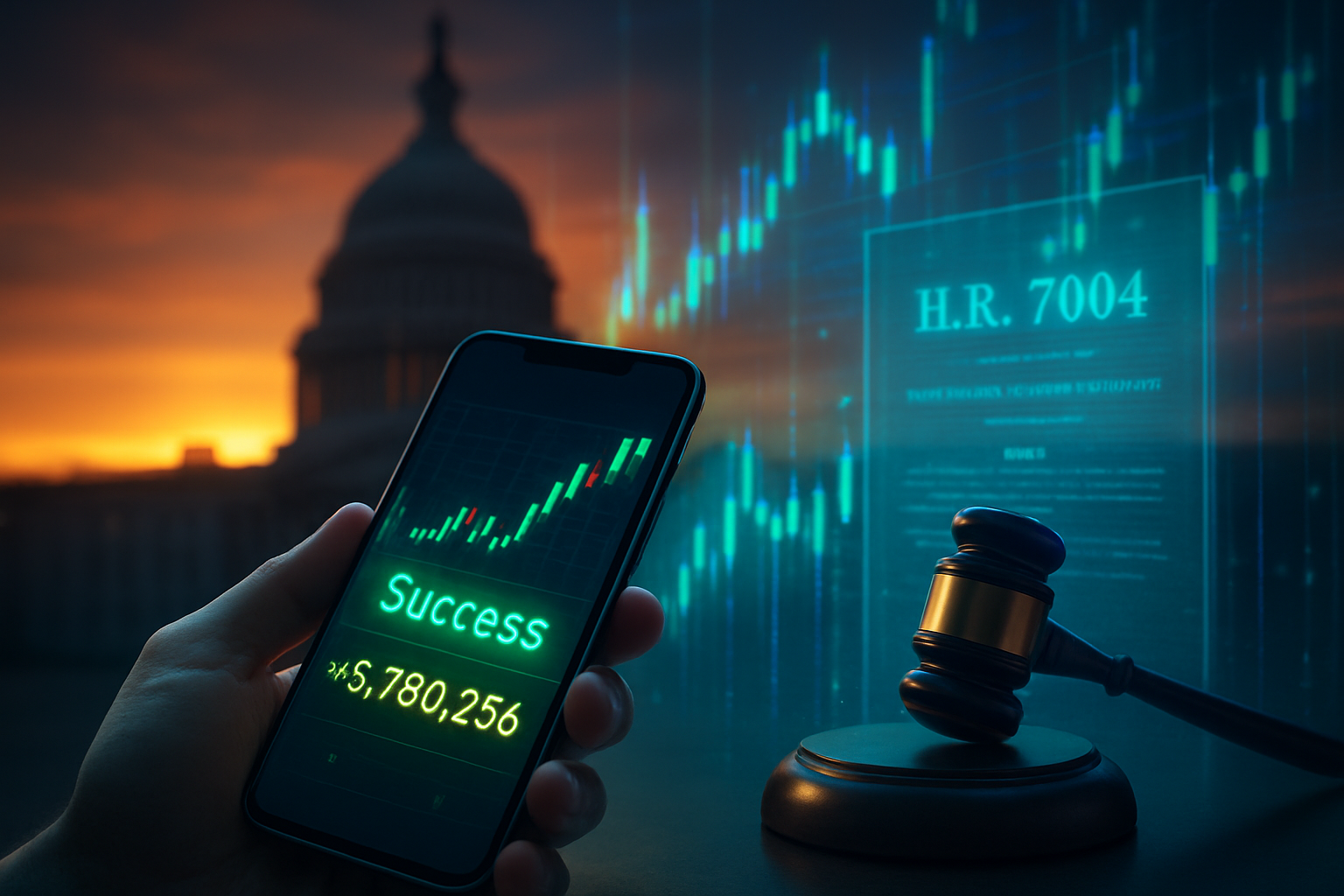
    The sudden $400,000 profit on a Venezuelan regime-change contract has done more than just mint a new crypto-millionaire; it has ignited a firestorm on Capitol Hill. As of January 23, 2026, the prediction market industry is facing its most significant regulatory reckoning to date with the introduction of the "Public Integrity in Financial Prediction Markets Act of 2026" (H.R. 7004).

    Introduced by Congressman Ritchie Torres (D-NY), the bill seeks to effectively outlaw "insider trading" in the world of event contracts. The push follows a suspicious trade on Polymarket that perfectly anticipated the U.S. special forces' capture of Nicolás Maduro, turning a modest $32,000 position into nearly half a million dollars in less than 24 hours. While the trade has been hailed by some as a triumph of "Information Finance," it has provided lawmakers with the "smoking gun" needed to argue that government staffers are treating classified intelligence like a personal brokerage account.

    The Market: What's Being Predicted

    The primary market under the microscope isn't just the fate of foreign dictators, but the survival of the prediction market industry itself. On PredictIt, a popular platform for political wagering, the contract "Will H.R. 7004 pass in 2026?" is currently trading at 12 cents, suggesting a meager 12% probability that the bill will become law this year.

    Despite the low odds of the full act passing a divided Congress, related "proxy" markets show a much higher expectation for regulatory intervention. On Kalshi, a platform regulated by the Commodity Futures Trading Commission (CFTC), a market tracking whether the CFTC will adopt new insider trading rules by year-end is trading at 20%.

    Trading volume has reached feverish heights. In January 2026 alone, Polymarket has seen over $6 billion in total volume, a 40% month-over-month increase. Much of this liquidity is concentrated in geopolitical and regulatory "risk" contracts, as institutional traders and retail bettors alike scramble to hedge against the potential for a federal crackdown.

    Why Traders Are Betting

    The catalyst for H.R. 7004 was an account pseudonymously known as "Burdensome-Mix." On January 3, 2026, just hours before "Operation Absolute Resolve"—the mission that led to the capture of Nicolás Maduro—was declassified, this trader placed $32,000 on "Yes" shares for Maduro’s exit. At the time, the market was trading at less than 8 cents. When the news broke, the shares hit $1.00, resulting in a $404,000 windfall.

    Suspicion immediately fell on government insiders. The account was funded via Coinbase Global, Inc. (NASDAQ: COIN) without the use of privacy mixers, allowing investigators to trace the funds back to a U.S.-based exchange. This "pitch-perfect" timing has led Congressman Torres to argue that the current legal framework is insufficient to prevent staffers with access to briefing materials from front-running the public.

    "We cannot have a system where a junior staffer at the Pentagon can pay off their student loans by betting on the very missions our brave service members are executing," Torres said during a press briefing last week.

    Broader Context and Implications

    The introduction of H.R. 7004 represents the "maturation" of the prediction market sector, often called InfoFi. For years, these markets operated in a legal gray area, but the massive scale of the 2024 and 2025 election cycles proved they are here to stay. Major brokerage firms like Robinhood Markets, Inc. (NASDAQ: HOOD) and Interactive Brokers Group, Inc. (NASDAQ: IBKR) have already integrated event contracts into their platforms, further blurring the lines between gambling and traditional finance.

    The bill's provisions are modeled after the 2012 STOCK Act, which aimed to prevent members of Congress from using non-public information to trade stocks. H.R. 7004 would extend these prohibitions to "event contracts" tied to government policy, military actions, and political outcomes.

    However, the industry is split on the implications. While Kalshi CEO Tarek Mansour has voiced support for the bill—viewing federal "rules of the road" as a prerequisite for institutional trust—decentralized advocates on Polymarket argue that the "insider information" actually makes the markets more accurate. They contend that the $400,000 Maduro trade provided a valuable signal to the world that something major was about to happen, effectively serving as an early warning system.

    What to Watch Next

    The most immediate milestone for the bill is a House Committee hearing scheduled for late February 2026. Traders will be watching for any signs of Republican support; currently, the bill has 30 Democratic co-sponsors, including former Speaker Nancy Pelosi, but lacks a GOP lead. If a prominent Republican joins the effort, the odds of passage on PredictIt could easily double overnight.

    Simultaneously, the CFTC has opened a formal investigation into the "Burdensome-Mix" account. If the commission manages to unmask the trader and prove they are a government employee, the resulting scandal could provide the political momentum needed to bypass congressional gridlock.

    Finally, keep an eye on the Supreme Court. Several legal challenges regarding the CFTC’s authority to regulate "public interest" markets are currently making their way through the appellate courts. A ruling that limits the CFTC’s power would make H.R. 7004 even more critical for those seeking to rein in the markets.

    Bottom Line

    The "Public Integrity in Financial Prediction Markets Act" is a classic example of "regulation by scandal." The $400,000 Maduro windfall provided a clear narrative of abuse that has forced the hand of regulators and lawmakers. While the markets currently give the bill a low 12% chance of passing in its current form, the era of the "unregulated wild west" for political betting is clearly drawing to a close.

    Whether through H.R. 7004 or administrative action by the CFTC, the integration of prediction markets into the broader financial system—represented by the likes of Robinhood (NASDAQ: HOOD)—means that "insider trading" rules are no longer an if, but a when. For now, the "Burdensome-Mix" trade stands as a testament to the power of prediction markets to surface hidden information—and the political firestorms that follow when they do.


    This article is for informational purposes only and does not constitute financial or betting advice. Prediction market participation may be subject to legal restrictions in your jurisdiction.

    PredictStreet focuses on covering the latest developments in prediction markets. Visit the PredictStreet website at https://www.predictstreet.ai/.
  • The $100 Billion Horizon: Why Prediction Markets are the Decade’s Defining Asset Class

    The $100 Billion Horizon: Why Prediction Markets are the Decade’s Defining Asset Class

    As of January 22, 2026, the global financial landscape is undergoing a fundamental transformation. What was once a niche corner of the internet for political junkies and hobbyist forecasters has evolved into a powerhouse of the modern economy. Prediction markets—increasingly rebranded by Wall Street as "event trading"—are no longer just a curiosity; they are becoming the primary tool for price discovery and risk management in an increasingly volatile world.

    The industry is currently riding a wave of unprecedented momentum. Following a series of landmark regulatory victories and a massive surge in retail participation throughout 2025, analysts are now painting a staggeringly bullish picture for the future. Leading the charge is Piper Sandler, which recently released a research note suggesting that the prediction market industry is on track to reach a total addressable market (TAM) of $100 billion within the next decade. With a projected annual growth rate of 47%, the transition from "alternative data" to "mainstream asset" is occurring at a pace that few in traditional finance anticipated.

    The Market: What's Being Predicted

    The focus of prediction markets has shifted from the "big event" cycle to a persistent, high-frequency trading environment. While the 2024 U.S. Presidential Election served as the industry's "Big Bang," the market in early 2026 is defined by its breadth. Traders are no longer just betting on who will win the White House; they are trading contracts on Federal Reserve interest rate hikes, monthly CPI data, Academy Award winners, and—most significantly—daily sports outcomes and micro-economic indicators.

    Currently, the market is dominated by two distinct titans. Kalshi, the primary U.S.-regulated exchange, reached a valuation of $11 billion in late 2025. It currently processes a significant portion of domestic regulated volume, offering everything from climate-related event contracts to "recession" markets. On the decentralized side, Polymarket has seen its valuation climb toward $15 billion after securing strategic investment from the Intercontinental Exchange (NYSE:ICE). Collectively, these platforms and their peers are expected to facilitate the trade of over 445 billion contracts in 2026, representing roughly $222.5 billion in notional volume—a massive leap from the 95 billion contracts recorded in 2025.

    Why Traders Are Betting

    The 47% annual growth rate is being fueled by a "flywheel effect" involving regulatory clarity, technological integration, and the quest for objective truth. A series of federal court rulings in late 2024 and 2025 fundamentally altered the legal landscape by establishing that event contracts are regulated financial swaps rather than gambling products. This distinction has opened the floodgates for institutional capital, which now uses these markets to hedge against "black swan" events that traditional derivatives fail to cover.

    Furthermore, the "sports flywheel" has become the industry's primary volume engine. In 2025, sports-related contracts accounted for over 90% of trade frequency on major platforms, as bettors transitioned from traditional "fixed-odds" sportsbooks to the more transparent, peer-to-peer pricing of prediction markets. Traders are also increasingly utilizing AI-driven tools to filter noise and capitalize on market inefficiencies. This move toward sophisticated trading strategies has attracted a new class of "quant" traders who treat prediction markets with the same rigor as the options or futures markets.

    Broader Context and Implications

    The most significant driver of the $100 billion projection is the "Distribution Unlock"—the integration of prediction markets into mainstream financial and betting applications. Robinhood (NASDAQ:HOOD) has led this charge, with event trading becoming its fastest-growing product line by revenue in early 2026. By acquiring the CFTC-licensed exchange and clearinghouse MIAXdx, Robinhood now allows its millions of users to trade event contracts natively within the same app where they buy stocks and crypto.

    Other major players are following suit. Interactive Brokers (NASDAQ:IBKR) has expanded its "ForecastEx" platform globally, positioning event contracts as essential hedging tools for sophisticated investors. Even traditional news outlets like CNN and financial data providers like Google Finance have begun integrating prediction market tickers into their standard coverage. This shift reflects a growing public sentiment that "crowd-sourced probabilities" are more accurate than traditional polling or expert punditry, especially in a world where data fragmentation makes traditional forecasting difficult.

    What to Watch Next

    As we look toward the remainder of 2026, several key milestones will determine if the industry can maintain its 47% CAGR. The most immediate factor is the continued expansion of event trading into the "everyday" apps used by retail investors. Watch for Coinbase (NASDAQ:COIN) to deepen its integration with Kalshi, potentially offering prediction markets as a core "on-ramp" for its international user base.

    Regulatory developments in Europe and Asia will also be critical. As the U.S. model for regulated event trading proves successful, other jurisdictions are likely to follow, potentially unlocking billions in additional liquidity. Additionally, the development of "negative event" insurance—where businesses use prediction markets to hedge against specific supply chain disruptions or local political instability—could represent the next major frontier for institutional adoption.

    Bottom Line

    The rise of prediction markets represents a shift in how society processes information and manages risk. The Piper Sandler projection of a $100 billion industry is not just a reflection of growing trading volumes; it is a testament to the power of the "wisdom of the crowds" in a digital-first economy. By incentivizing accuracy through financial stakes, these markets provide a level of clarity that traditional media and polling have struggled to maintain.

    For investors and traders, the message is clear: prediction markets have moved from the periphery to the center of the financial world. Whether through the direct trading of event contracts or through the stocks of the companies building this infrastructure—such as Robinhood (NASDAQ:HOOD), Interactive Brokers (NASDAQ:IBKR), and StoneX Group (NASDAQ:SNEX), the owner of FOREX.com—the opportunities for growth are immense. As we move deeper into 2026, the $100 billion horizon looks less like a distant dream and more like an inevitable reality.


    This article is for informational purposes only and does not constitute financial or betting advice. Prediction market participation may be subject to legal restrictions in your jurisdiction.

    PredictStreet focuses on covering the latest developments in prediction markets.
    Visit the PredictStreet website at https://www.predictstreet.ai/.

  • Beyond the Ballot: The Rise of Niche Event Contracts

    Beyond the Ballot: The Rise of Niche Event Contracts

    In the wake of the high-stakes 2024 election cycle, many analysts expected a "prediction market hangover"—a period of cooling interest and declining volumes as the political fever broke. Instead, as of January 22, 2026, the opposite has occurred. Prediction markets have evolved from election-centric novelties into high-velocity "truth engines" for every corner of culture and commerce.

    Traders are no longer just betting on who will lead the country; they are wagering on whether President Trump will utter his signature catchphrase "Drill, Baby, Drill" during his Davos address (currently sitting at a 54% probability) or if the word "Greenland" will appear in the 2026 State of the Union (a near-certainty at 94%). These niche event contracts are driving record volumes, with monthly turnovers on major exchanges hitting the $10 billion mark in late 2025, fueled by a new demographic of retail traders and AI-driven bots.

    The Market: What's Being Predicted

    The landscape of prediction markets has shifted from macro-politics to micro-events. On platforms like Kalshi and Polymarket, "rhetoric markets"—contracts based on the specific vocabulary used by public figures—have become the new gold rush. The most liquid of these, centered on President Trump’s 2026 World Economic Forum appearance, saw over $1.5 billion in weekly volume as traders debated the likelihood of specific policy signals.

    Beyond rhetoric, the "Time Person of the Year 2025" market became a defining moment for the industry. When Time selected "The Architects of AI"—a group featuring Nvidia Corp. (NASDAQ: NVDA) CEO Jensen Huang and OpenAI’s Sam Altman—it triggered a massive "resolution crisis." Traders on Robinhood Markets, Inc. (NASDAQ: HOOD), which now powers event trading through its "Prediction Markets Hub," were split on whether the award constituted a "Yes" for individual candidates or a "No" because it was a group title.

    Current high-liquidity markets as of late January 2026 include:

    • Oscars 2026 Best Picture: Paul Thomas Anderson’s One Battle After Another is the overwhelming favorite at 78¢ (78% probability).
    • The Federal Reserve: Odds of a "Sound Money" mention in the State of the Union are at 42%, serving as a proxy for the official appointment of a Fed hawk.
    • State of the Union Mentions: "Greenland" is trading at 94¢, following reports of renewed diplomatic interest in the island’s resources.

    Why Traders Are Betting

    The surge in niche contracts is driven by a unique confluence of "vibe trading" and sophisticated algorithmic participation. According to recent market data, nearly 40% of the volume in rhetoric markets is now driven by AI agents that can execute trades in the milliseconds between a public figure speaking a word and the audio reaching a human ear.

    For the retail crowd on Robinhood, these contracts represent a simplified alternative to the complex options Greeks found in traditional equity markets. "It’s the ultimate binary bet," says one active trader. "I don't need to understand a balance sheet to have an opinion on whether a movie will win an Oscar or if the President will mention Bitcoin."

    On the institutional side, Interactive Brokers Group, Inc. (NASDAQ: IBKR) has seen its ForecastEx platform flourish by targeting "serious" hedging. Businesses are increasingly using niche contracts to hedge against specific risks, such as hurricane landfall probabilities or precise CPI targets. Unlike more speculative platforms, ForecastEx offers zero commissions and pays an incentive coupon of roughly 3.14% on the value of held contracts, attracting capital that might otherwise sit in money market funds.

    Broader Context and Implications

    The "niche-ification" of prediction markets marks a pivotal shift in how the public consumes news. These platforms provide a real-time, financialized "consensus reality" that often proves more accurate than traditional punditry. The 2025 legal resolution between the CFTC and Kalshi—where the regulator dropped its appeal against cultural and political contracts—formally recognized that these events are not "gaming" or "gambling," but rather a legitimate form of information discovery.

    However, a new regulatory front has opened in 2026. Tribal Gaming authorities and states like Nevada and New Jersey are currently challenging the federal preemption of these markets, arguing that cultural contracts compete directly with regulated sportsbooks. This "clash of the titans" between federal commodity law and state gaming law will likely define the industry's trajectory for the rest of the decade.

    The rise of the platform "Opinion," which captures market share by offering "yield-bearing bets," also points to a future where prediction markets are fully integrated with decentralized finance (DeFi). In this ecosystem, your capital earns interest while you wait for the Academy Awards or a Fed announcement, effectively turning a "bet" into a high-yield savings account with an "event-driven" bonus.

    What to Watch Next

    The immediate focus for the market is the February 2026 State of the Union address. Beyond the high-probability "Greenland" and "Drill, Baby, Drill" bets, traders are closely watching for "Sound Money" and "Bitcoin Reserve" mentions. If these phrases appear, it could trigger massive volatility in both the prediction markets and the broader crypto and equity sectors.

    Key dates to monitor:

    • February 3, 2026: Scheduled date for the State of the Union.
    • March 15, 2026: The 98th Academy Awards, which will resolve the current $2 billion "Best Picture" market.
    • Q2 2026: A likely ruling in the Kalshi vs. State Gaming Authorities lawsuit, which could restrict or expand the availability of these markets in several U.S. states.

    Bottom Line

    Prediction markets have successfully moved "Beyond the Ballot." The record volumes seen in niche event contracts prove that the public’s appetite for forecasting isn't tied to the four-year election cycle, but to a deeper desire for clarity in an increasingly complex cultural and economic landscape.

    While political outcomes will always be the "headline" events, the future of the industry lies in the granular—the speeches, the awards, and the micro-shocks of daily life. As these platforms become more integrated with traditional brokerages like Robinhood and Interactive Brokers, event trading is poised to become as ubiquitous as stock trading, providing a financial incentive for the truth in an era of uncertainty.


    This article is for informational purposes only and does not constitute financial or betting advice. Prediction market participation may be subject to legal restrictions in your jurisdiction.

    PredictStreet focuses on covering the latest developments in prediction markets.
    Visit the PredictStreet website at https://www.predictstreet.ai/.

  • The Great De-Regulation: How a ‘Hollowed Out’ CFTC Ignited a $1 Billion Prediction Market Boom

    The Great De-Regulation: How a ‘Hollowed Out’ CFTC Ignited a $1 Billion Prediction Market Boom

    As of January 22, 2026, the landscape of American finance is undergoing its most radical transformation in decades, driven not by a new asset class, but by the systematic dismantling of the guardrails that once hemmed it in. The Commodity Futures Trading Commission (CFTC), once the primary antagonist of event-based wagering, has been effectively reshaped into a partner for the industry. Under a "regulatory light" mandate from the Trump administration, the agency has seen a wave of leadership departures and significant workforce cuts, leaving a skeleton crew that is more focused on "future-proofing" markets than policing them.

    This vacuum has sparked an unprecedented explosion in trading activity. Daily volumes across major platforms have surged past $800 million this month, as traders bet on everything from the outcome of Supreme Court cases to the exact timing of the next federal interest rate cut. Currently, the "market of markets"—the probability that prediction markets will achieve over $1 trillion in annual volume by the end of 2026—has climbed to a staggering 68% on Kalshi, up from just 24% a year ago.

    The Market: What's Being Predicted

    The most high-stakes "market" currently captivating traders isn't a political race or a sporting event, but the legal survival of the industry itself. On the regulated exchange Kalshi, a high-liquidity contract titled "Federal Preemption of State Gambling Laws" is currently trading at 72 cents (implying a 72% probability). This market resolves to "Yes" if a federal court or legislative action confirms that CFTC-regulated event contracts override state-level bans on "gambling" before December 31, 2026.

    This specific contract has become a proxy for the entire industry’s expansion. While the federal government has signaled a hands-off approach, several states—most notably Massachusetts and Tennessee—have issued cease-and-desist orders against Kalshi, claiming its sports and event contracts constitute illegal gambling. Trading volume on this "Supremacy Clause" market has surpassed $120 million, with liquidity provided by a mix of institutional hedge funds and retail speculators.

    The resolution criteria are strictly tied to a final ruling from a U.S. appellate court or the signing of federal legislation that explicitly protects "Event Contract" providers from state interference. As the CFTC’s own enforcement capabilities have shrunk due to a 15% reduction in total headcount, the market is increasingly betting that the federal government will lack the will—or the staff—to help states enforce local bans against federally registered exchanges.

    Why Traders Are Betting

    The primary driver of the current "bull market" in prediction platforms is the appointment of Michael Selig as the sole acting Commissioner and Chairman of the CFTC. With four of the five commission seats currently vacant following a series of high-profile resignations in 2025, Selig has wielded unprecedented unilateral authority. His "Future-Proof" initiative has effectively ended the era of "regulation by enforcement," moving toward a model where the agency provides a "minimum effective dose" of oversight.

    Traders are also reacting to the sensational "Maduro Trade" of early January, where a user on Polymarket reportedly turned $30,000 into $400,000 by betting on the capture of Venezuelan leader Nicolás Maduro just hours before a U.S. military operation. While critics decried the trade as evidence of "insider information," the market saw it as a proof of concept: prediction markets are now the fastest way to aggregate intelligence. This has led to "whale" activity on Polymarket—which relaunched for U.S. users in December 2025 via the acquisition of the exchange QCX—where single positions on geopolitical outcomes are now routinely exceeding $5 million.

    Furthermore, traditional finance is moving in. Institutional brokers like Interactive Brokers Group, Inc. (NASDAQ: IBKR) have begun facilitating "intermediated access" to these markets, treating event contracts as a legitimate alternative asset class for portfolio hedging. This shift from "fringe betting" to "institutional hedging" has provided the floor of liquidity necessary for the 2026 boom.

    Broader Context and Implications

    The "regulatory light" environment is a direct byproduct of a broader federal push to shrink the civil service. In early 2025, the CFTC terminated nearly a dozen probationary employees in its Enforcement and Market Oversight divisions. This workforce reduction has made the agency dependent on the industry it regulates. In a move that would have been unthinkable two years ago, the CFTC’s new Innovation Advisory Committee now includes the CEOs of both Kalshi and Polymarket as charter members.

    This closeness has sparked a legislative backlash. Rep. Ritchie Torres recently introduced the Public Integrity in Financial Prediction Markets Act of 2026, which seeks to ban federal officials from trading on contracts influenced by non-public government data. The market's reaction to this bill has been telling; the probability of its passage currently sits at only 15%, as traders bet that the de-regulatory momentum in the executive branch will stall any attempts at legislative restriction.

    The historical accuracy of these markets is also playing a role in their survival. During the 2024 and 2025 cycles, prediction markets consistently outperformed traditional polling and economic forecasting from major banks like Goldman Sachs Group, Inc. (NYSE: GS). This track record has given the current de-regulatory push a "veneer of utility"—the argument being that these markets are a public good that provides more accurate data than the government itself can produce.

    What to Watch Next

    The immediate horizon is dominated by the "State vs. Federal" legal showdown. A preliminary injunction in Massachusetts has temporarily halted Kalshi’s sports contracts in that state, but a federal court in the Second Circuit is expected to rule on the "Supremacy Clause" issue by late spring. A "Yes" ruling there would likely cause the probability of a nationwide expansion to jump to near-certainty.

    Additionally, watch for the growth of Opinion, a new competitor backed by YZi Labs and supported by crypto-billionaire interests. Opinion allows users to earn yield on their "staked" bets, a feature that has already captured 40% of the daily volume in the decentralized prediction space. If the CFTC allows Opinion to register as a U.S. exchange under the current "light" framework, it would signal the total capitulation of traditional financial barriers.

    Finally, the mid-year "Workforce Audit" of the CFTC will be a key milestone. If the agency continues to lose senior attorneys and economists without replacement, its ability to even conduct basic market surveillance will be called into question, potentially leading to a "Wild West" scenario that could either accelerate growth or lead to a catastrophic market failure.

    Bottom Line

    The transformation of the CFTC from a skeptical watchdog to a de-regulatory facilitator has turned prediction markets into the most dynamic sector of the 2026 economy. By hollowing out the agency’s enforcement arm and prioritizing "innovation" over "oversight," the current administration has cleared a path for Kalshi and Polymarket to become the primary venues for price discovery in the modern age.

    What we are witnessing is the birth of "Information Finance." In this new era, prediction markets are no longer just for enthusiasts; they are the scoreboard for reality. However, the risk remains that a "regulatory light" environment is also a "vulnerability heavy" one. As traders flock to these platforms, the lack of a robust workforce at the CFTC means the industry is essentially self-policing.

    For now, the odds favor the innovators. With daily volumes nearing $1 billion and the federal government standing down, the prediction market boom appears to be just getting started. Whether this leads to a more transparent world or a more volatile one remains the ultimate bet.


    This article is for informational purposes only and does not constitute financial or betting advice. Prediction market participation may be subject to legal restrictions in your jurisdiction.

    PredictStreet focuses on covering the latest developments in prediction markets.
    Visit the PredictStreet website at https://www.predictstreet.ai/.