Tag: Polymarket

  • The Oracle of War: Shin Bet Probes Polymarket as ‘Rundeep’ Bets on Near-Term Iran Strike

    The Oracle of War: Shin Bet Probes Polymarket as ‘Rundeep’ Bets on Near-Term Iran Strike

    The intersection of high-stakes military intelligence and decentralized finance has reached a boiling point this week as Israeli security services launch an unprecedented investigation into a single prediction market account. The focus is on the user known as Rundeep (formerly RicoSauve666), whose uncanny ability to "predict" Israeli military operations has earned them over $150,000 in profits and the intense scrutiny of the Shin Bet.

    As of January 26, 2026, the global eyes of the trading community are fixed on a specific market: "Israel strikes Iran by January 31, 2026?" What began as a low-probability long shot earlier this month has surged in value, driven largely by the massive positions taken by Rundeep. With only five days remaining until the deadline, the odds have fluctuated wildly between 38% and 50%, reflecting a market that is no longer just speculating on geopolitics, but following what many believe to be a direct leak from within the Israeli defense establishment.

    The Market: What's Being Predicted

    The current focus of the controversy is a high-volume contract on the decentralized platform Polymarket. The market asks a binary question: will Israel conduct a kinetic strike against Iranian territory before the clock strikes midnight on January 31? While diplomatic channels remain officially quiet, the liquidity in this specific market has ballooned to over $12 million, making it one of the most active geopolitical contracts of the year.

    The odds for this event were languishing at a mere 16% in the first week of January. However, the momentum shifted dramatically when the Rundeep account resurfaced from a seven-month hiatus. After placing an initial wager of approximately $15,517 on the "Yes" outcome, the market saw a "follow-trade" effect. Retail traders and institutional "whales" alike have begun mirroring the account's moves, assuming that the user has access to classified military timelines. The resolution criteria are strict: an officially acknowledged strike or undeniable satellite confirmation of an attack on Iranian soil.

    Why Traders Are Betting

    The obsession with Rundeep stems from a track record that many analysts call "statistically impossible" without insider knowledge. The account first gained notoriety during Operation Rising Lion in June 2025. During that 12-day conflict (June 13–24), the user—then trading as RicoSauve666—placed four high-conviction bets just 48 hours before the first missiles were launched. At the time, the market gave a strike only a 14% chance of occurring.

    The user’s precision was surgical, betting on the exact dates of the initial aerial assault on Iranian nuclear facilities in Natanz and Isfahan. By the time the operation concluded, the account had cleared over $154,219 in profit. The Shin Bet and the Israel Defense Forces (IDF) have reportedly been "looking into" the account for months, but the recent activity has accelerated the probe. Authorities are reportedly weighing the risk of a formal criminal investigation against the possibility that such a move would confirm to the world that the account’s bets are indeed based on top-secret military clocks.

    Traders are not just betting on war; they are betting on the integrity of the source. The phenomenon has turned Polymarket into a "shadow intelligence agency," where the movement of a single digital wallet carries more weight for some than official statements from the Pentagon or the Knesset.

    Broader Context and Implications

    The Rundeep saga is part of a growing trend of "geopolitical insider trading" that is forcing a reckoning for prediction market platforms. Earlier this month, a different anonymous account profited over $400,000 on the surprise capture of Venezuelan leader Nicolás Maduro, placing bets just hours before U.S.-led forces moved in. This has caught the attention of regulators in Washington.

    U.S. Representative Ritchie Torres (D-NY) has already introduced the Public Integrity in Financial Prediction Markets Act of 2026. The bill aims to prohibit federal officials and political appointees from trading on these platforms and would classify the use of material non-public information in prediction markets as a federal crime. While proponents of these markets, including Coinbase Global, Inc. (NASDAQ: COIN) CEO Brian Armstrong, have previously argued that such "insiders" help create a more accurate "truth oracle," national security experts are concerned that these platforms provide a financial incentive for leaking state secrets.

    The historical accuracy of these markets has often outperformed traditional intelligence analysis, but at a cost. If military commanders can see their own surprise attacks being priced in real-time by anonymous bettors, the strategic element of surprise is fundamentally compromised.

    What to Watch Next

    The next 120 hours are critical. If the "Israel strikes Iran" market resolves as "Yes" by January 31, it will virtually confirm that Rundeep has a direct line to the IDF's tactical plans. This could lead to a massive crackdown on the platform or a "purge" of suspected leakers within the Israeli security establishment.

    Conversely, if the deadline passes without a strike, the "Oracle" will be debunked, likely causing a massive liquidity exit from geopolitical markets as traders lose faith in the "insider" narrative. Watch for any sudden shifts in the odds during the overnight hours in Tel Aviv; in previous operations, Rundeep's most aggressive betting occurred precisely six to eight hours before kinetic action.

    Bottom Line

    The Rundeep investigation highlights the double-edged sword of prediction markets. While they offer unparalleled foresight into global events by aggregating hidden information, they also create a "marketplace for secrets" that can destabilize international relations. As of now, the market is pricing in a coin-flip chance of a major conflict in the Middle East within the week.

    For the Shin Bet, the goal is no longer just about catching a leaker; it is about managing the narrative in a world where the blockchain may know the date of the next war before the generals do. Whether Rundeep is a high-ranking official or an incredibly lucky analyst, the $150,000 in profits has already changed the way the world watches the drums of war.


    This article is for informational purposes only and does not constitute financial or betting advice. Prediction market participation may be subject to legal restrictions in your jurisdiction.

    PredictStreet focuses on covering the latest developments in prediction markets.
    Visit the PredictStreet website at https://www.predictstreet.ai/.
  • The Price of Peace: Prediction Markets Signal Uncertainty for Russia and India as ‘Board of Peace’ Deadline Looms

    The Price of Peace: Prediction Markets Signal Uncertainty for Russia and India as ‘Board of Peace’ Deadline Looms

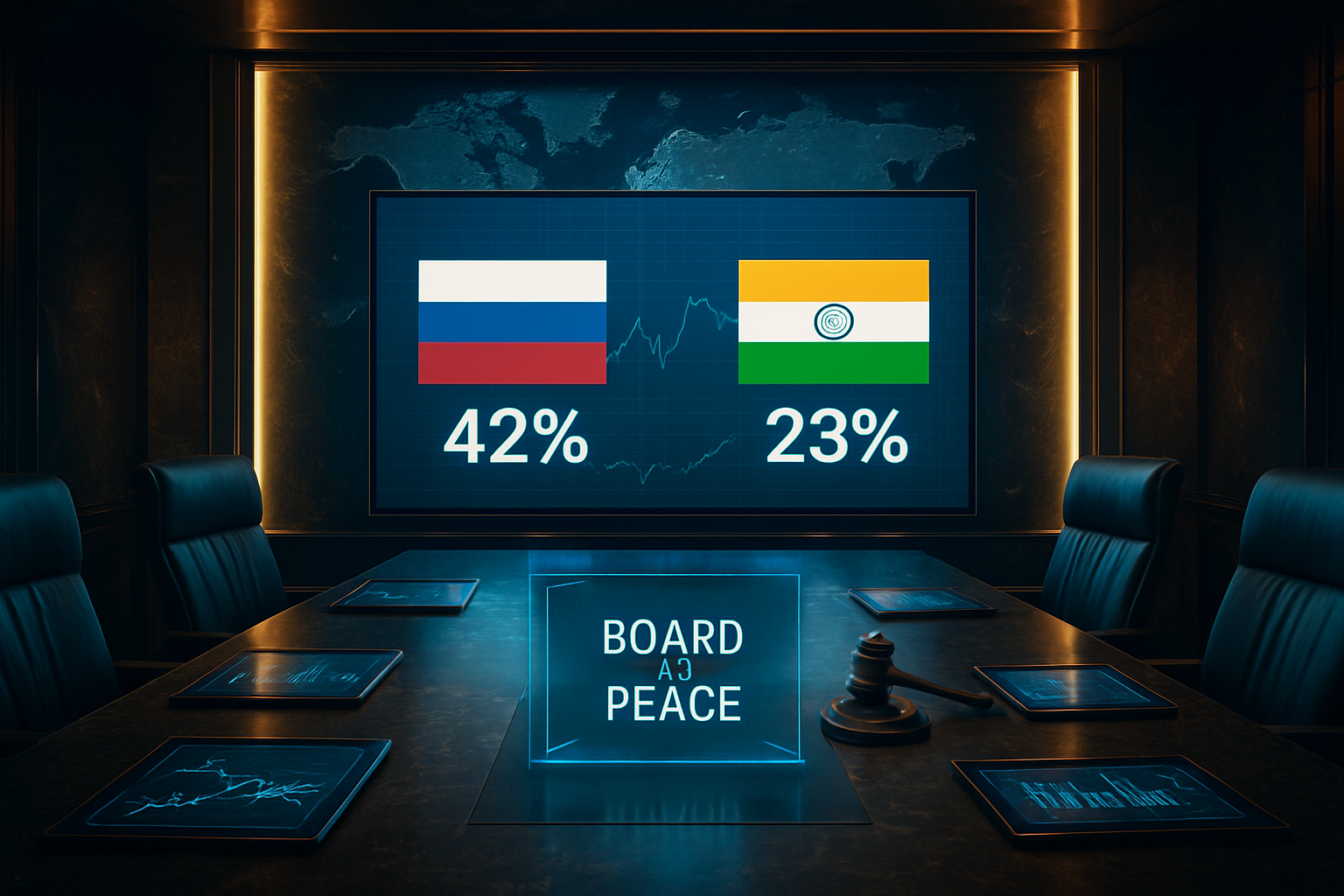
    With the March 31 resolution date fast approaching, traders on decentralized prediction platforms are locked in a high-stakes debate over the future of the "Board of Peace" (BoP). As of January 24, 2026, the market for the new global conflict-resolution body has become a focal point for geopolitical speculators, with Russia currently sitting at a 42% probability of joining and India trailing at 23%. This burgeoning market, which has already surpassed $418,000 in trading volume, is increasingly viewed as a real-time barometer for the success of President Donald Trump’s "transactional diplomacy" initiative.

    The Board of Peace, which began as a roadmap for the reconstruction of Gaza, has rapidly evolved into an alternative to traditional international institutions. For traders, the core question isn't just about diplomacy, but about who is willing to pay the reported $1 billion "membership fee" to secure a seat at a table chaired by Trump and a circle of high-profile advisors. The movement in the odds over the last 48 hours reflects a volatile week in international relations, following a dramatic launch ceremony at Davos that saw some allies embraced and others publicly sidelined.

    The Market: What's Being Predicted

    The primary venue for this speculation is Polymarket, where the contract "Which countries will join the Board of Peace by March 31?" has seen a surge in liquidity since the Davos summit on January 22. The market requires a definitive confirmation of membership from the Board’s executive leadership or official government statements by the end of the first quarter. While early predictions saw a "big tent" approach, the reality has proven more exclusionary, leading to wild swings in the "Yes" and "No" shares for several major powers.

    Russia’s odds have been a rollercoaster, fluctuating between 40% and 51% this week before settling at 42%. The resolution criteria are strict: membership must be formalized, which in Russia’s case involves a complex web of sanctions relief and the potential use of frozen assets. Meanwhile, India’s 23% odds represent a significant collapse from a mid-January high of 48%. The $418,700 in volume suggests that while this is a relatively new market, it is attracting sophisticated traders who are monitoring "Truth Social" posts and official diplomatic cables with equal intensity.

    Why Traders Are Betting

    The 42% probability for Russia is tied to a "frozen asset" gambit that has captivated market participants. President Vladimir Putin has reportedly expressed interest in joining the BoP, but on the condition that Russia’s $1 billion entry fee is paid using its own assets currently frozen in U.S. financial institutions. Traders are split on whether the Trump administration will accept this circular payment method. Recent reports of secret meetings in Moscow involving Special Envoy Steve Witkoff and Jared Kushner have kept the "Yes" side alive, as speculators bet that a broader peace framework for Ukraine is being baked into the BoP's expansion.

    Conversely, the bearish sentiment surrounding India (23%) stems from New Delhi’s strategic decision to skip the Davos launch. Prime Minister Narendra Modi is reportedly wary of the BoP’s "personality-driven" nature and its potential to undermine India’s long-standing non-aligned status. The market reacted sharply to the Trump administration’s recent imposition of 50% tariffs on Indian goods, a move many traders interpret as a "stick" intended to force BoP participation. This contrasts sharply with traditional forecasting from think tanks like Chatham House, which often underestimate the impact of such aggressive trade leverage on diplomatic timelines.

    Broader Context and Implications

    The Board of Peace market highlights a shift in how the world views international order—moving from institutional consensus to a "private-sector led" diplomatic model. The presence of Marc Rowan, CEO of Apollo Global Management (NYSE: APO), on the BoP’s Executive Board has signaled to the markets that reconstruction efforts will be run like a corporate turnaround. This has led to increased scrutiny of the board's "for-sale" permanent seats, a concept that has shocked traditional diplomats but energized prediction market "whales" who thrive on high-stakes, transactional outcomes.

    The market also reflects a broader trend where prediction platforms react faster than news cycles. For example, when the U.S. publicly rescinded Canada’s invitation earlier this week following critical remarks from Prime Minister Mark Carney, the Polymarket odds for Canada plummeted to near zero within minutes. This real-time processing of "diplomacy by social media" provides a level of clarity that traditional polling or expert analysis cannot match. It also raises questions about how global trade, influenced by companies like Tesla (NASDAQ: TSLA) and their international supply chains, will be impacted by who is "in" or "out" of the Board's favor.

    What to Watch Next

    The upcoming trilateral talks in Abu Dhabi, scheduled for the final week of January, are the next major catalyst for this market. These meetings between U.S., Russian, and Ukrainian officials are expected to clarify whether the Board of Peace will serve as the primary vehicle for a Ukraine ceasefire. If a breakthrough occurs, Russia’s 42% odds could moon toward 80% overnight. Traders should also watch for any "softening" of the tariff rhetoric toward India, which would indicate that back-channel negotiations are progressing.

    Key dates include the February 15 "Interim Board Review" and the March 31 final resolution. Any official statements from World Bank President Ajay Banga, who also holds a seat on the BoP executive board, could provide clues regarding the financial architecture of the membership fees. If the World Bank provides a mechanism for emerging economies to join without the $1 billion upfront cost, we could see a massive rally in the odds for countries currently sitting in the single digits or low teens.

    Bottom Line

    The Board of Peace prediction market is more than just a bet on diplomatic membership; it is a live-action valuation of a new, transactional world order. Russia’s 42% odds suggest a market that is cautiously optimistic about a historic pivot, provided the financial and legal hurdles of frozen assets can be cleared. India’s 23% odds reflect the growing pains of a nation caught between its traditional foreign policy and the new reality of "membership-driven" trade access.

    As we move toward the March 31 deadline, this market will likely remain one of the most liquid and volatile sectors in the forecasting world. It proves that in 2026, the boundaries between geopolitics, high finance, and prediction markets have effectively dissolved. Whether the BoP becomes a lasting institution or a transient diplomatic experiment, the traders on Polymarket are currently the ones providing the most honest assessment of its prospects.


    This article is for informational purposes only and does not constitute financial or betting advice. Prediction market participation may be subject to legal restrictions in your jurisdiction.

    PredictStreet focuses on covering the latest developments in prediction markets.
    Visit the PredictStreet website at https://www.predictstreet.ai/.
  • Betting on a Revolution? Khamenei’s Exit Odds Hit 21% Amid Tehran Turmoil

    Betting on a Revolution? Khamenei’s Exit Odds Hit 21% Amid Tehran Turmoil

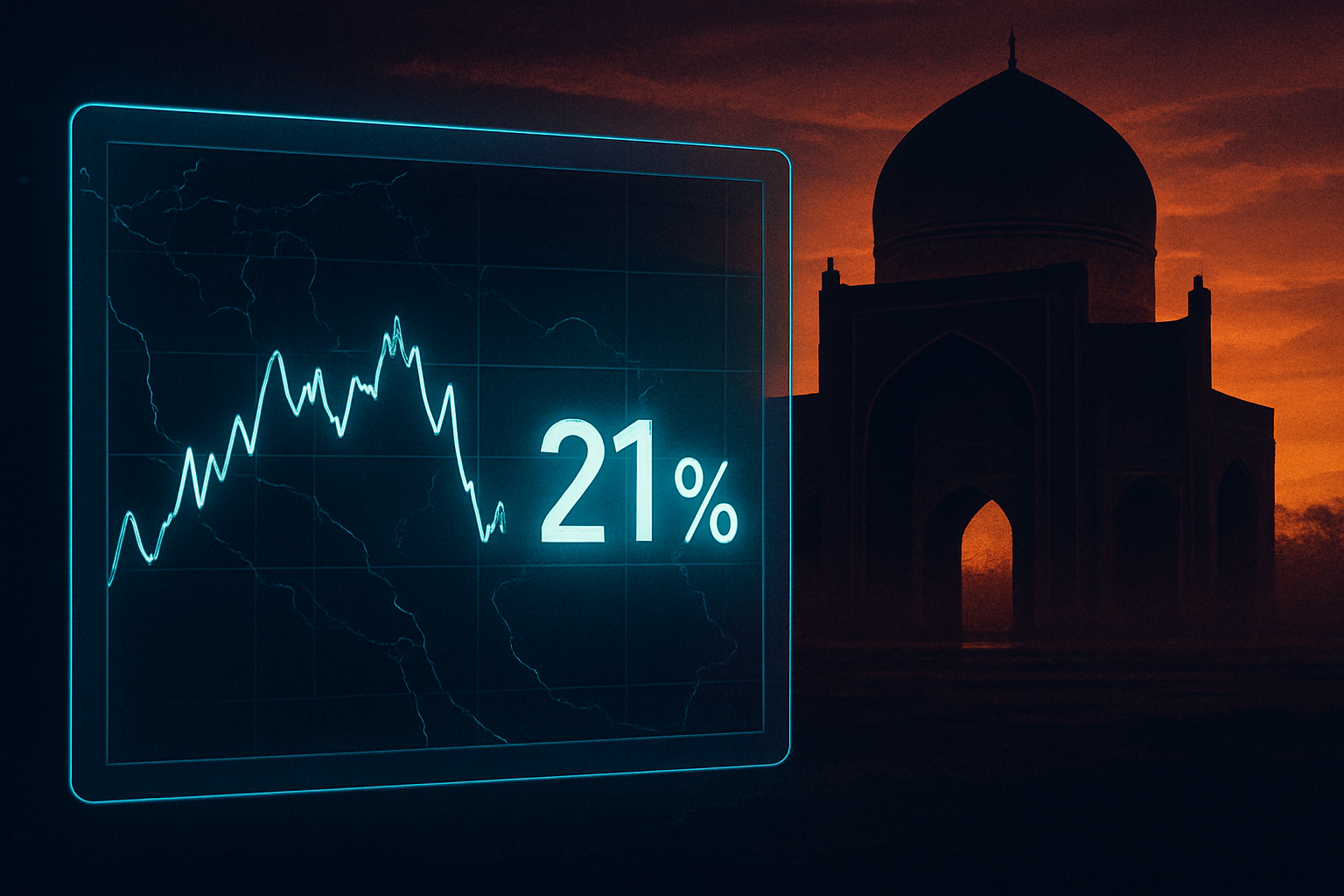
    As of January 24, 2026, the geopolitical landscape of the Middle East is being distilled into a single, high-stakes number on the world’s leading prediction markets. Traders on Polymarket are currently pricing in a 21% probability that Ali Khamenei will be out as the Supreme Leader of Iran by February 28, 2026. This surge in betting activity comes as Tehran faces its most existential crisis since the 1979 Revolution, driven by a combination of internal domestic uprising and intensifying external military pressure.

    The market has captured the attention of both retail speculators and institutional analysts, with trading volume recently surpassing the $1.25 million mark. In a region where official state media often masks the truth, many are looking to these decentralized platforms as a more accurate barometer of the regime's stability. The 21% chance reflects a significant uptick in volatility; just weeks ago, the odds of a transition before March were in the low single digits.

    The Market: What's Being Predicted

    The primary contract driving this conversation is Polymarket’s "Khamenei out as Supreme Leader by February 28?" This binary market allows participants to buy "Yes" or "No" shares, with the price of a "Yes" share representing the market-implied probability of the event. The resolution criteria are explicit: the market will resolve to "Yes" if Ali Khamenei ceases to be the Supreme Leader for any reason—including death, resignation, or removal—at any point before the February 28 deadline.

    Liquidity in the market has been robust, sustained by over $1 million in total volume. This depth allows for large "whale" positions to enter without immediately destabilizing the price, suggesting that the 21% figure is a settled consensus rather than a fluke of low-volume trading. While Polymarket is the epicenter of this activity, similar shadow markets and private forecasting circles have seen comparable spikes in "regime change" sentiment.

    The contract’s expiration date is particularly noteworthy. February 28 marks the end of a critical winter window where Iranian infrastructure is traditionally strained and geopolitical tensions often peak around the anniversary of the 1979 Revolution. If Khamenei remains in power through 11:59 PM ET on that date, the market resolves to "No," rewarding the current 79% majority of skeptics.

    Why Traders Are Betting

    The sudden interest in this market is driven by a convergence of "Black Swan" events. Chief among them are credible reports concerning the 86-year-old leader’s health. Intelligence suggests Khamenei has been suffering from "advanced cognitive impairment" and has experienced several "coma-like episodes" over the last quarter. As of late January, reports indicate he has moved into a fortified bunker in Tehran, with his son, Masoud Khamenei, reportedly managing the day-to-day operations of the Office of the Supreme Leader.

    Furthermore, Iran is currently in the grip of the "Economic Uprising" that began on December 28, 2025. Sparked by a total collapse of the Iranian rial, protests have spread to over 180 cities. Unlike previous movements, this unrest has seen a brutal state response, with human rights groups estimating deaths in the thousands. The use of live ammunition by security forces has only galvanized the protesters, many of whom are calling for the return of Prince Reza Pahlavi to lead a transitional government.

    Traders are also closely monitoring the movement of U.S. military assets. A massive carrier strike group, led by the USS Abraham Lincoln, is currently positioned in the Persian Gulf. The Trump administration has issued stern "red lines" regarding the execution of protesters, and the market is pricing in the possibility that a U.S. or Israeli kinetic action could serve as the final catalyst for a leadership collapse. Defense contractors like Lockheed Martin (NYSE: LMT) and Raytheon (NYSE: RTX) are seeing increased scrutiny from investors as the likelihood of a major regional escalation climbs.

    Broader Context and Implications

    The existence of a million-dollar market on the life or death of a world leader highlights the evolving role of prediction markets in international relations. While critics argue that these markets can be macabre or even incentivize "assassination markets," proponents argue they provide an invaluable "wisdom of the crowds" that traditional intelligence often misses. For companies with significant exposure to global energy markets or shipping, such as ExxonMobil (NYSE: XOM) or Maersk, these odds act as a real-time risk hedge.

    Historically, prediction markets have been remarkably prescient at identifying the "breaking point" of autocratic regimes before they are officially acknowledged. The 21% probability is not just a bet on a person’s health; it is a bet on the failure of a 47-year-old political system under extreme duress. If the market continues to climb toward 50%, it could trigger a "reflexive" effect, where the belief in the regime's fall becomes a self-fulfilling prophecy, discouraging security forces from defending a leader they believe is already gone.

    Moreover, the regulatory environment for such markets remains complex. While platforms like Kalshi operate under CFTC oversight in the U.S., Polymarket’s decentralized nature allows global participants—including those inside Iran using VPNs—to cast their "vote" with their capital. This provides a rare, unfiltered look at Iranian sentiment that social media platforms like those owned by Meta Platforms (NASDAQ: META) struggle to provide due to government-imposed internet blackouts.

    What to Watch Next

    As we move toward the February 28 resolution date, several key milestones will likely move the needle. The most significant is the February 11 anniversary of the Islamic Revolution. Traditionally a day of state-sponsored rallies, this year it is expected to be a flashpoint for the opposition. If the regime fails to mobilize its base or if the security forces show signs of defection during the anniversary, the "Yes" odds could easily double overnight.

    The status of the nationwide internet blackout, which began on January 8, is another critical variable. If the blackout is lifted and footage of the scale of the uprising reaches the international community, the pressure on the U.S. and its allies to intervene will increase. Conversely, a sudden televised appearance by Khamenei—if he is cognitively and physically able—would likely cause the "Yes" shares to crater as the market recalibrates for a longer survival timeline.

    Finally, traders are keeping a close eye on the U.S. Treasury's new 25% tariff on countries continuing to trade with Iran. If China (NYSE: BABA) or India-based firms begin to pull back from Iranian oil contracts in response to these tariffs, the resulting economic "asphyxiation" could trigger a palace coup before the month is out.

    Bottom Line

    The 21% probability on Polymarket is a stark reminder that the status quo in Iran is more fragile than it has been in decades. While a one-in-five chance is far from a certainty, the $1.25 million in volume suggests this is more than mere speculation; it is an aggregation of geopolitical anxiety and whispered intelligence.

    Prediction markets are proving to be a ruthless but efficient tool for cutting through state propaganda. Whether Khamenei remains in power on March 1 or not, the "Khamenei Exit" market has already succeeded in quantifying the unquantifiable. It tells us that the "invincibility" of the Islamic Republic is currently being questioned by the most honest metric we have: the willingness of people to put their money where their mouth is.

    In the coming weeks, the movements of the USS Abraham Lincoln and the resilience of the protesters in the streets of Tehran will dictate whether that 21% was a high-water mark or merely the beginning of the end.


    This article is for informational purposes only and does not constitute financial or betting advice. Prediction market participation may be subject to legal restrictions in your jurisdiction.

    PredictStreet focuses on covering the latest developments in prediction markets.
    Visit the PredictStreet website at https://www.predictstreet.ai/.
  • Betting Against the Brink: Why Prediction Markets See Only an 11% Chance of a January Shutdown

    Betting Against the Brink: Why Prediction Markets See Only an 11% Chance of a January Shutdown

    As the January 31 deadline for federal funding rapidly approaches, the high-stakes political drama usually associated with Capitol Hill budget battles appears to be fizzling out—at least according to the collective intelligence of the world’s most active traders. On the leading decentralized prediction platform Polymarket, the probability of a U.S. government shutdown has plummeted to just 11%, a stark contrast to the coin-flip odds seen just months ago.

    This low-probability signal comes despite the looming expiration of several funding measures, suggesting that the "shutdown fatigue" following 2025’s record-breaking 43-day funding lapse has fundamentally altered the legislative landscape. With over $3 million in trading volume on this specific outcome, the market isn't just guessing; it is pricing in a high degree of confidence that a deal is already effectively done.

    The Market: What's Being Predicted

    The primary theater for this financial forecasting is Polymarket, where the contract "Will there be another US government shutdown by January 31?" has become a focal point for political speculators. Currently, the "Yes" shares are trading at approximately 11 cents, implying an 11% chance of a funding lapse. This represents a significant collapse in odds from late December, when the same contract touched 45% amid fears of a renewed partisan deadlock.

    Parallel activity is occurring on the U.S.-regulated exchange Kalshi, which has seen even higher engagement levels. Kalshi’s shutdown market has recorded over 1.66 million transactions, with a massive liquidity pool of more than 28 million contracts. While Kalshi’s implied probability sat slightly higher at 24% earlier in the month, live order book activity has rapidly converged with Polymarket’s sub-15% levels as news of legislative progress reached the floor.

    The resolution criteria for these markets are strict: a shutdown is typically defined as a lapse in appropriations that results in the issuance of "furlough notices" to federal employees. With the clock ticking toward midnight on January 30, the narrow window for failure is what's driving the current 11% floor, as any minor procedural hiccup in the Senate could still theoretically trigger a weekend lapse.

    Why Traders Are Betting

    The overwhelming sentiment for a "No" resolution is rooted in the unique political composition of early 2026. Following the 2024 elections, Republicans maintain control of the White House, the House of Representatives, and the Senate. This unified government has streamlined the appropriations process, moving away from the chaotic "continuing resolution" (CR) cycles of the previous year.

    Traders are specifically reacting to the passage of two massive funding bills. On January 22, the House passed H.R. 7148, the Consolidated Appropriations Act of 2026, with a bipartisan 341–88 vote. This followed the enactment of the "One Big Beautiful Bill" (OBBB) Act late last year, which pre-funded nearly 90% of federal operations. Markets are also closely monitoring the influence of the Department of Government Efficiency (DOGE), whose cost-cutting recommendations have provided fiscal hawks with enough "wins" to support the broader spending packages without resorting to shutdown tactics.

    Furthermore, the memory of the 43-day shutdown in late 2025—the longest in American history—acts as a powerful deterrent. That event caused significant volatility for major defense contractors like Lockheed Martin (NYSE: LMT) and Northrop Grumman (NYSE: NOC), and traders believe leadership is desperate to avoid a repeat that could spook the broader markets or the SPDR S&P 500 ETF Trust (NYSE Arca: SPY).

    Broader Context and Implications

    The divergence between traditional media narratives and prediction markets has never been clearer. While some cable news outlets continue to highlight the "looming deadline" and "partisan friction," prediction markets have been steadily pricing in a resolution for over two weeks. This suggests that these platforms are increasingly serving as a "truth machine," filtering out political posturing to focus on the mechanical realities of bill drafting and vote counts.

    Real-world implications of these odds are significant. A low shutdown probability allows federal agencies and private sector partners to maintain normal operations without the costly preparation for a work stoppage. Historically, prediction markets have been remarkably accurate in forecasting budget resolutions, often moving ahead of official announcements from leadership.

    From a regulatory perspective, the high volume on these markets—now totaling millions across platforms—underscores the growing appetite for "event hedging." For institutional investors, these markets are no longer just a curiosity; they are a vital tool for managing the political risk associated with government contracts and Treasury yields.

    What to Watch Next

    The final hurdle remains the U.S. Senate. While the House has cleared the necessary legislation, the market will be watching for any "poison pill" amendments or filibuster threats that could delay the final vote past the January 30 deadline. Traders should monitor the Senate floor schedule on January 28 and 29; if a "cloture" vote is successfully called, the 11% probability will likely crash toward zero.

    Another factor to watch is the specific language regarding the Department of Homeland Security funding (H.R. 7147). This remains the most contentious piece of the puzzle. If the Senate decides to split this bill from the broader "minibus" package, we could see a "partial shutdown" scenario, which might still trigger a "Yes" resolution depending on the specific wording of the Polymarket and Kalshi contracts.

    Bottom Line

    The 11% probability of a government shutdown on January 31 is a testament to the current era of unified government and a collective desire to avoid the economic scars of 2025. With $3 million in volume backing this sentiment on Polymarket, the "smart money" is clearly betting that the era of the frequent "shutdown cliff" is, at least for now, in the rearview mirror.

    As a tool for public insight, these markets suggest that despite the loud rhetoric often found in Washington, the underlying legislative machinery is functioning with surprising efficiency. For those holding "No" positions, the next few days will be about watching the Senate clock. For everyone else, it’s a sign that the federal government is likely to stay open for business through the remainder of the fiscal year.


    This article is for informational purposes only and does not constitute financial or betting advice. Prediction market participation may be subject to legal restrictions in your jurisdiction.

    PredictStreet focuses on covering the latest developments in prediction markets. Visit the PredictStreet website at https://www.predictstreet.ai/.

  • Arctic Real Estate: Greenland Acquisition Odds Surge as Trump Pivots to NATO ‘Framework’

    Arctic Real Estate: Greenland Acquisition Odds Surge as Trump Pivots to NATO ‘Framework’

    As of January 24, 2026, the geopolitical landscape has been rocked by a sudden and intense focus on the world's largest island. What was once dismissed as a peripheral diplomatic curiosity has transformed into one of the most liquid and debated markets in the prediction space. Traders are currently grappling with the nuances of "ownership" versus "control," as President Donald Trump’s administration signals a strategic pivot that has recalibrated expectations across major forecasting platforms.

    On Polymarket, the flagship contract tracking whether the U.S. will acquire Greenland has seen its volume skyrocket to a massive $25 million. Meanwhile, on the regulated exchange Kalshi, a broader contract predicting whether the U.S. will take control of any part of Greenland before 2029 is currently pricing in a 47% probability. This surge in interest follows a pivotal week of diplomacy at the World Economic Forum in Davos, where a shift in rhetoric has fundamentally changed how the market views the "Greenland question."

    The Market: What's Being Predicted

    The prediction markets regarding Greenland are currently bifurcated into two distinct categories: outright sovereignty and strategic jurisdictional control. On Polymarket, a crypto-native platform, the primary focus is on the total acquisition of the island before the end of 2026 or 2027. Despite the high volume, the odds for a full "purchase" remain relatively conservative, hovering between 13% and 20%. This reflects the significant legal and international hurdles required for a total transfer of sovereignty from the Kingdom of Denmark.

    In contrast, Kalshi, which operates under the oversight of the Commodity Futures Trading Commission (CFTC), offers a contract with a wider lens. Their market—"Will the U.S. take control of any part of Greenland before 2029?"—is trading at a much higher 47% chance. The discrepancy lies in the resolution criteria. While Polymarket traders are betting on a formal deed or annexation, Kalshi traders are betting on "formal jurisdiction" or "governance" over specific "pockets" of the island. This distinction has made the Kalshi contract a preferred vehicle for those betting on a hybrid "leasing" or "basing" model.

    The liquidity in these markets is unprecedented for a geopolitical event of this nature. Polymarket’s $25 million volume demonstrates the global interest and the "whale" activity often seen in decentralized finance. On the other hand, Kalshi’s $3.8 million in total Greenland-related contracts shows a growing participation from institutional and retail traders who prefer a regulated environment to express their views on American foreign policy.

    Why Traders Are Betting

    The primary driver of the recent market movement was a bombshell announcement on January 21, 2026. During the Davos summit, President Trump revealed he had reached a "framework of a future deal" with NATO Secretary-General Mark Rutte. This announcement marked a significant de-escalation from earlier in the month when the administration had floated the possibility of 25% tariffs against European allies to force a sale.

    Traders responded immediately to this "NATO Framework." By ruling out military force and dropping tariff threats, the administration shifted the goalposts toward a "Sovereign Base" model, similar to the UK’s Sovereign Base Areas in Cyprus. This model would allow the U.S. to exert permanent sovereign control over specific strategic zones—particularly those housing the proposed "Golden Dome" missile defense system—without requiring Denmark to surrender the entire island.

    Major defense contractors like RTX Corporation (NYSE: RTX) and Lockheed Martin Corporation (NYSE: LMT) are central to this narrative. The "Golden Dome" project, a cornerstone of the Trump administration's defense policy, would require significant infrastructure in the Arctic. Traders are betting that the promise of increased NATO-wide security and shared mineral rights will be enough to sway the Danish government toward a compromise.

    Broader Context and Implications

    The Greenland market is more than just a bet on real estate; it is a proxy for the shifting dynamics of the 21st-century "Great Power Competition." The Arctic has become a frontline for energy security and rare earth mineral extraction. MP Materials Corp. (NYSE: MP) and other mineral producers have seen their prospects tied to these geopolitical maneuvers, as Greenland holds some of the world's largest untapped deposits of neodymium and praseodymium.

    This market also highlights the growing utility of prediction platforms as a sentiment gauge. While traditional polls or punditry might dismiss a "Greenland deal" as impossible, the $25 million in "skin in the game" on Polymarket suggests that a significant portion of the global community views some form of U.S. jurisdictional expansion as a realistic possibility.

    Historically, prediction markets have been more accurate than pundits in forecasting complex international negotiations. By aggregating the collective intelligence of thousands of participants, these markets are pricing in a "middle path" outcome: the U.S. will likely not "buy" Greenland in a traditional real estate transaction, but it may very well obtain "de facto" sovereignty over the island's most critical assets.

    What to Watch Next

    The immediate focus for traders will be the upcoming NATO ministerial meetings in February 2026. This is where the technical details of the "Sovereign Base" framework are expected to be hashed out. Any signal from the Danish government or the Greenlandic Self-Rule Government that they are open to "jurisdictional leases" would likely send the Kalshi odds well above the 50% mark.

    Key milestones to monitor include:

    • The "Golden Dome" Budget Allocation: If Congress fast-tracks funding for Arctic missile defense, it will signal that the "control" model is the administration's primary objective.
    • Danish Parliamentary Statements: Watch for any shift in the "Not for Sale" rhetoric toward "Strategic Cooperation Agreements."
    • Rare Earth Mining Licenses: Any U.S.-led consortia receiving licenses to mine in southern Greenland would serve as a "soft" indicator of increasing American influence.

    Bottom Line

    The prediction markets for Greenland have evolved from a fringe curiosity into a sophisticated barometer for a new era of American diplomacy. The shift from "outright purchase" to a "NATO security framework" has allowed the market to find a more realistic equilibrium, reflected in the 47% probability of the U.S. taking control of strategic portions of the island by 2029.

    For observers of prediction markets, the Greenland saga is a masterclass in how market resolution criteria can dictate price discovery. While the "ownership" dream of 2019 has faded, the "strategic control" reality of 2026 is gaining steam. Whether this results in a formal lease or a new type of sovereign partnership, the $25 million already wagered shows that the market is convinced the Arctic map is about to be redrawn.


    This article is for informational purposes only and does not constitute financial or betting advice. Prediction market participation may be subject to legal restrictions in your jurisdiction.

    PredictStreet focuses on covering the latest developments in prediction markets.
    Visit the PredictStreet website at https://www.predictstreet.ai/.

  • $89 Million Wagered on US Strike on Iran as January Deadline Approaches

    $89 Million Wagered on US Strike on Iran as January Deadline Approaches

    As January 2026 enters its final week, the digital landscape of prediction markets is flashing a warning sign that global intelligence communities and defense analysts are watching closely. On Polymarket, a decentralized prediction platform, the collective "wisdom of the crowd" is currently pricing in a significant possibility of a direct United States military strike on Iranian targets before the month concludes.

    With a staggering $89 million in total volume now flowing through Iran-related conflict contracts, the markets are currently reflecting a volatile probability range between 10% and 26% for a strike to occur by January 31. This surge in betting activity comes amidst the "January Uprising" in Iran and a massive naval redeployment by the Trump administration, turning what was once a geopolitical tail-risk into the most liquid and debated market of the year.

    The Market: What’s Being Predicted

    The primary theater for this financial forecasting is Polymarket, though similar contracts have seen increased liquidity on other platforms. The specific market in question—“US Strike on Iran by Jan 31, 2026”—has become a focal point for traders, with resolution criteria strictly defined as any kinetic military action (missile strikes, drone attacks, or manned aircraft sorties) officially acknowledged by the Pentagon or the White House as directed against Iranian territory or military assets.

    Current odds have been highly sensitive to real-time events. After a mid-month spike that saw probabilities climb as high as 37% following reports of mass casualties in Tehran protests, the odds have settled into a "wait-and-see" range of 10% to 26% as of January 24. This pricing suggests that while traders view a strike as a tail-risk, they believe the window for immediate action is rapidly narrowing. The liquidity in these markets is unprecedented for a geopolitical event; the $89 million volume represents a massive shift toward "conflict betting" as a form of alternative data for hedge funds and political analysts alike.

    Why Traders Are Betting

    The primary driver behind the sudden influx of capital into these contracts is the deteriorating internal situation within Iran. Since late December 2025, the nation has been gripped by the "January Uprising," a series of nationwide protests triggered by economic collapse and harsh internet blackouts. Reports from human rights agencies suggest a death toll exceeding 5,000 people as of January 23, 2026. The White House's pivot from negotiation to "maximum pressure" has provided the fundamental catalyst for the market's movement.

    Traders are also tracking physical military movements. The USS Abraham Lincoln Carrier Strike Group is currently transiting the Indian Ocean, expected to reach the Arabian Sea by the end of the month. Furthermore, the defense sector has signaled a shift toward readiness. Companies like Northrop Grumman (NYSE: NOC) and Lockheed Martin (NYSE: LMT) are trading near record highs, buoyed by the administration’s proposed $1.5 trillion defense budget for FY2026.

    Notably, some market volatility has been attributed to potential "insider" activity. On January 8, several newly created wallets placed synchronized bets on a strike when odds were below 18%. This follows a pattern seen earlier this month during U.S. operations in Venezuela, leading many to believe that traders with access to logistical or diplomatic intelligence are using these markets to hedge or profit from upcoming escalations.

    Broader Context and Implications

    The sheer volume of the Iran markets underscores a transformative trend: prediction markets are increasingly being treated as a more accurate, or at least more responsive, indicator than traditional diplomatic cables or cable news punditry. In an era where "black box" intelligence is often delayed or politicized, the real-time financial commitment of thousands of traders provides a raw sentiment analysis that is difficult to ignore.

    This market also reveals a grim public sentiment regarding regional stability. While defense stocks like RTX (NYSE: RTX) have seen a 7% year-to-date increase due to a record $251 billion backlog in missile defense systems, the prediction markets suggest that the public views defense as more than just a deterrent. The heavy betting on a kinetic strike indicates a belief that the "red lines" of 2024 and 2025 are being redrawn in early 2026.

    Historically, markets of this nature have a mixed record. While they successfully predicted the timing of recent tactical shifts in South America, they often over-index on "noise" from high-profile political rhetoric. However, the regulatory gaze is intensifying. The massive payouts—such as a $400,000 win for a single trader earlier this month—have prompted calls for Congressional oversight, specifically regarding the ethics of profiting from kinetic warfare.

    What to Watch Next

    As we approach the January 31 deadline, several key milestones could send the odds toward the 50% mark or crashing toward zero. The most critical factor is the positioning of the USS Abraham Lincoln. Should the carrier strike group begin launch-cycle preparations or be joined by additional assets from the Mediterranean, the market is likely to see a massive spike in "Yes" shares.

    Furthermore, the diplomatic rhetoric from regional players is a key indicator. Iran has warned that any strike launched from neighboring territories like Qatar or the UAE would result in immediate retaliation. Traders should watch for any movement of U.S. personnel from regional airbases, similar to the recent withdrawal from Ain al-Asad Airbase in Iraq, which some analysts interpreted as a move to clear the deck for offshore naval operations.

    Bottom Line

    The $89 million currently sitting in the US-Iran prediction market is more than just a series of bets; it is a high-stakes aggregation of global anxiety and intelligence. As of January 24, the 10% to 26% odds reflect a world that is bracing for a "spark" but hasn't yet seen the flame. Whether these markets are providing a true signal of impending conflict or merely reflecting the chaotic rhetoric of the new year remains to be seen.

    What is clear, however, is that prediction markets have officially entered the "War Room." As investors and world leaders alike look toward the January 31 deadline, the fluctuating percentages on Polymarket may offer the most honest assessment of where the line between diplomacy and conflict truly lies. For now, the world waits to see if the crowd is right—or if the end of the month will bring a de-escalation that the markets have not yet priced in.


    This article is for informational purposes only and does not constitute financial or betting advice. Prediction market participation may be subject to legal restrictions in your jurisdiction.

    PredictStreet focuses on covering the latest developments in prediction markets. Visit the PredictStreet website at https://www.predictstreet.ai/.
  • Betting on the Pause: Prediction Markets Signal 99% Certainty for Fed Hold in January as Polymarket Volume Nears $500 Million

    Betting on the Pause: Prediction Markets Signal 99% Certainty for Fed Hold in January as Polymarket Volume Nears $500 Million

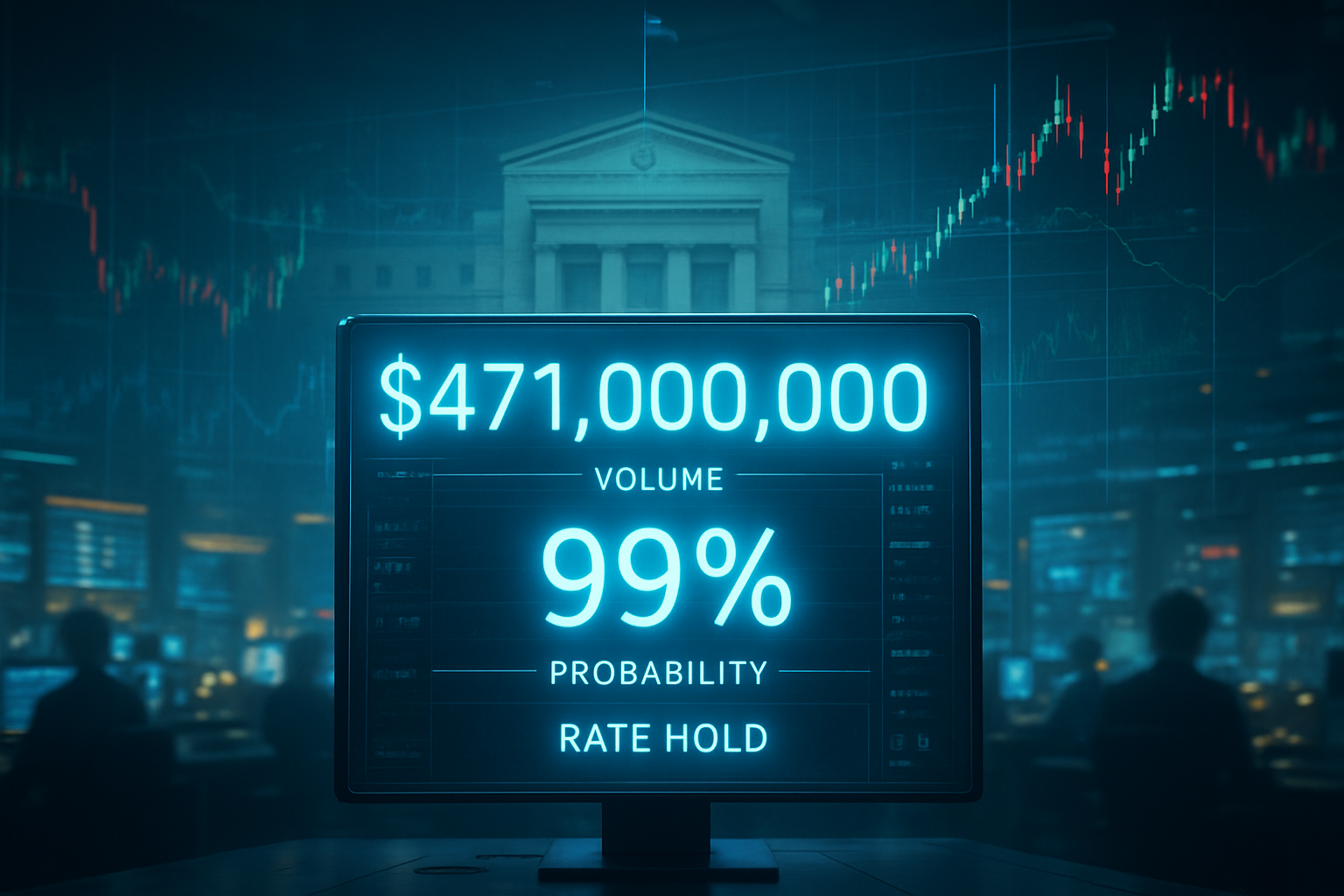
    With the first Federal Reserve meeting of 2026 just days away, prediction markets have reached a state of near-total consensus. Traders are placing massive bets that the Federal Open Market Committee (FOMC) will opt to keep interest rates steady at its January 27–28 meeting, halting the cycle of rate cuts that defined the latter half of 2025.

    The scale of the "hold" prediction is staggering, not just in its probability but in the capital backing it. On Polymarket, the world’s largest decentralized prediction platform, the volume for the January interest rate decision has surged to a massive $471 million. As of January 24, 2026, the market assigns a 99% probability to a "No Change" outcome, effectively pricing out any chance of a 25 or 50 basis point decrease, both of which are currently trading at 1% or less.

    The Market: What's Being Predicted

    The central question facing traders is whether the Fed will maintain the federal funds rate at its current range of 3.50%–3.75%. While traditional financial instruments like Fed Funds Futures have long been the gold standard for these forecasts, the rise of prediction markets has shifted the landscape. On Polymarket, the "Fed Interest Rate Decision: January 2026" contract has become one of the most liquid markets on the platform, drawing in hundreds of millions in volume from a global pool of retail and crypto-native participants.

    The conviction on Polymarket is slightly higher than that of institutional tools. For comparison, the FedWatch tool provided by the CME Group (NASDAQ: CME) currently shows a 95.4% chance of a hold and a 4.6% chance of a 25 basis point cut. While both indicate a high degree of certainty, the "99% club" on prediction markets suggests that speculators are even more convinced than the professional hedgers using CME’s futures contracts.

    Meanwhile, on the U.S.-regulated exchange Kalshi, the odds tell a similar story. Contracts for the Fed maintaining the current rate are trading at roughly 99 cents, reflecting a 99% implied probability. The liquidity on these platforms has become so deep that even large "whale" trades struggle to move the needle against the overwhelming tide of the "hold" consensus.

    Why Traders Are Betting

    The shift toward a definitive pause is driven by a complex "data-dependent" narrative that has become increasingly muddled. Throughout late 2025, the Fed enacted three consecutive rate cuts to support a cooling labor market. However, by the start of 2026, the economic picture began to blur. Core Personal Consumption Expenditures (PCE), the Fed’s preferred inflation metric, remains "sticky" at 2.8%—well above the 2% target.

    Traders are also reacting to the "data holes" created by a brief but disruptive government shutdown in late 2025. This shutdown delayed several key economic reports, leaving the Fed with incomplete information. Most market participants believe Chair Jerome Powell will prefer a "wait-and-see" approach rather than risk another cut while inflation remains stubborn and official data is unreliable.

    Furthermore, political risk is looming large over the central bank. With Jerome Powell’s term as Chair set to expire in May 2026, and rumors of potential replacements swirling in Washington, the FOMC is perceived to be in a defensive crouch. Traders are betting that the committee will avoid any bold policy moves that could be interpreted as politically motivated or overly aggressive during a sensitive transition period.

    Broader Context and Implications

    The $471 million volume on Polymarket is a testament to the growing institutionalization of prediction markets as a serious financial forecasting tool. These markets are often praised for their "wisdom of the crowd" effect, which can sometimes process breaking news—such as leaked political rumors or localized economic indicators—faster than traditional banking models.

    Historically, when prediction markets hit a 99% probability for a Fed decision this close to the meeting date, they are rarely wrong. However, the real-world implications of a hold are significant. A pause in January signals to the broader economy that the "easy money" era of late 2025 is over for now. This has direct consequences for mortgage rates, corporate borrowing costs, and the overall performance of the S&P 500 (NYSE: SPY).

    This market also highlights the regulatory evolution of the space. Following Kalshi’s legal victories against the CFTC in 2024 and 2025, prediction markets have moved from the fringe to the mainstream of political and economic forecasting. The fact that nearly half a billion dollars is being wagered on a single Fed meeting underscores the massive appetite for these direct-betting instruments.

    What to Watch Next

    As we approach the January 28 announcement, any sudden "Fed leak" or unexpected comment from a committee member could cause a late-stage tremor in the markets. Traders should keep a close eye on the "Statement" language. Even if the rate remains unchanged as expected, the "hawkish" or "dovish" tone of the accompanying text will set the odds for the next meeting in March.

    The most critical date to monitor is Wednesday, January 28, at 2:00 PM EST. The release of the FOMC statement will provide the ultimate resolution for these multi-million dollar contracts. Immediately following, at 2:30 PM, Chair Powell’s press conference will be scrutinized for clues regarding the Fed's stance on the 2.8% inflation floor and the upcoming leadership transition in May.

    Bottom Line

    The prediction markets have spoken: the January 2026 FOMC meeting is expected to be a non-event in terms of rate movements. The 99% probability of a hold across Polymarket and Kalshi represents a rare moment of total market unity, backed by nearly $500 million in skin-in-the-game.

    This level of certainty suggests that traders have fully absorbed the impact of sticky inflation and the data distortions from the recent government shutdown. While the "hold" itself may be predictable, the true value of these markets lies in their ability to quantify sentiment in real-time. As the Fed enters its "blackout period" before the meeting, these prediction markets remain the only living, breathing indicator of where the money is moving.


    This article is for informational purposes only and does not constitute financial or betting advice. Prediction market participation may be subject to legal restrictions in your jurisdiction.

    PredictStreet focuses on covering the latest developments in prediction markets. Visit the PredictStreet website at https://www.predictstreet.ai/.

  • Oscar Season’s Heavyweight: ‘One Battle After Another’ Grips Prediction Markets as Nominations Drop

    Oscar Season’s Heavyweight: ‘One Battle After Another’ Grips Prediction Markets as Nominations Drop

    The 98th Academy Awards race has officially entered its most volatile phase following the announcement of the official nominations today, January 24, 2026. In the immediate wake of the Academy's reveal, prediction markets have reacted with lightning speed, cementing a clear hierarchy that suggests a potential landslide victory for one of the year’s most ambitious cinematic projects. Paul Thomas Anderson’s sprawling epic, One Battle After Another, has surged to a commanding 71% win probability, leaving competitors scrambling to close a widening gap in the eyes of bettors.

    The market’s intensity is reaching a fever pitch, with traders pouring millions into Best Picture contracts as the "Gold Derby" of the digital age takes center stage. While critical consensus is still forming, the decentralized wisdom of the markets is currently signaling a near-certain coronation for the Warner Bros. Discovery (NASDAQ: WBD) flagship title. However, as any veteran of the 2026 awards cycle knows, the distance between a nomination and a statuette is often paved with market upsets and "whale" maneuvers that can shift the narrative in a single afternoon.

    The Market: What's Being Predicted

    The primary hub for this speculative frenzy is Polymarket, the decentralized prediction platform that has become the gold standard for high-volume event forecasting. As of this morning, the "Best Picture 2026" market has surpassed $9 million in total trading volume, a record for an entertainment-focused category this early in the calendar year. Traders are currently pricing One Battle After Another at 71 cents (representing a 71% implied probability), a sharp rise from the 55% it held just forty-eight hours ago.

    Trailing in a distant second place is Ryan Coogler’s Sinners, also distributed by Warner Bros. Discovery (NASDAQ: WBD), which is currently trading at roughly 20%. The internal competition between two high-budget WBD titles has created a unique dynamic for traders, many of whom are hedging their bets across both films to capture the studio’s dominant momentum. Meanwhile, "long-shot" contenders like Guillermo del Toro’s Frankenstein, distributed by Netflix (NASDAQ: NFLX), and Chloé Zhao’s Hamnet, released via Focus Features and Comcast (NASDAQ: CMCSA), are hovering in the 4% to 7% range, attracting value bettors who believe the Academy may pivot toward more traditional "prestige" dramas in the final vote.

    The resolution of these contracts is strictly tied to the official announcement at the 98th Academy Awards ceremony. Unlike traditional betting which often closes weeks in advance, these markets will remain live and liquid right up until the envelope is opened, allowing for frantic last-minute trading as rumors from the Governor's Ball or leaked ballot data begin to circulate.

    Why Traders Are Betting

    The dominance of One Battle After Another is not merely a reflection of its critical acclaim, but a bet on the "overdue" narrative surrounding director Paul Thomas Anderson. After decades of nominations without a Best Picture win, traders view this 2026 cycle as his definitive moment. The film's massive scale—shot in VistaVision and featuring an ensemble led by Leonardo DiCaprio—signals a return to the "big-screen epic" that the Academy has historically rewarded when technical prowess meets a resonant American story.

    Today’s nominations announcement served as the ultimate catalyst for the current odds shift. One Battle After Another led the pack with 14 nominations, including key "litmus test" categories like Film Editing and Best Director, which are statistically correlated with a Best Picture win. Conversely, Sinners performed well but missed out on a crucial Screenplay nomination, a historical red flag that prompted many Polymarket "whales" to liquidate their positions in Coogler's film and consolidate into the favorite.

    Strategic betting has also been influenced by the "streaming fatigue" sentiment present in current market commentary. Despite the visual splendor of del Toro’s Frankenstein, traders remain skeptical of Netflix's (NASDAQ: NFLX) ability to secure the top prize against a major theatrical powerhouse like WBD. This skepticism is baked into the 7% price for Frankenstein, which some contrarian traders argue is an undervalued position given del Toro’s previous success with The Shape of Water.

    Broader Context and Implications

    The $9 million volume on this single Oscar market highlights the growing legitimacy of prediction markets as a sentiment gauge that often outpaces traditional film critics and pundits. While legacy outlets like Variety or The Hollywood Reporter rely on subjective "expert" panels, Polymarket forces participants to put capital behind their convictions, creating a "wisdom of the crowd" effect that has historically proven remarkably accurate in predicting the eventual Best Picture winner.

    From a regulatory standpoint, the 2026 Oscar markets are operating in a more established environment than previous years. With platforms like Kalshi and Polymarket gaining mainstream traction, the intersection of pop culture and financial speculation is no longer a niche hobby. These markets provide a real-time data feed for studios like Warner Bros. Discovery (NASDAQ: WBD) and Comcast (NASDAQ: CMCSA), who can monitor the "fair value" of their awards campaigns and adjust their marketing spends accordingly.

    Furthermore, this market reveals a public appetite for high-stakes, "Auteur" cinema. The fact that the top four contenders are all directed by visionary filmmakers—Anderson, Coogler, del Toro, and Zhao—suggests that even in a speculative environment, the "brand name" of the director remains the most powerful currency in Hollywood forecasting.

    What to Watch Next

    The next major volatility event will be the Screen Actors Guild (SAG) and Directors Guild of America (DGA) Awards. Historically, the "Guild Sweep" is the most reliable indicator of Oscar success. If One Battle After Another manages to take the top prize at the DGAs, expect its Polymarket odds to climb into the 85% to 90% range, effectively ending the competitive phase of the market.

    Traders should also keep a close eye on the "Anonymous Ballot" season, which typically begins in mid-February. As trade publications begin publishing interviews with unnamed Academy members, small shifts in sentiment can cause massive swings in the 20% "underdog" slot held by Sinners. A late-breaking "passion campaign" for a smaller film like Hamnet (NASDAQ: CMCSA) could also drain liquidity from the top, creating a more fragmented and unpredictable market in the final 72 hours before the ceremony.

    Bottom Line

    As of January 24, 2026, the prediction markets have spoken: One Battle After Another is the heavy favorite to win Best Picture. With 71% odds and a massive lead in nominations, the film is currently viewed by the market as a juggernaut that is Paul Thomas Anderson's to lose. However, the $9 million in volume suggests that there is still significant disagreement and "hedging" occurring, particularly with Sinners holding onto a respectable 20% of the market share.

    The 2026 Oscar cycle demonstrates that prediction markets are no longer just a tool for political or economic forecasting; they are now an integral part of the entertainment industry’s ecosystem. Whether the crowd’s 71% confidence in One Battle After Another is a sign of a true frontrunner or a massive speculative bubble will be decided on the Dolby Theatre stage this March. For now, the smart money is betting on a "Battle" that is increasingly looking like a victory lap.


    This article is for informational purposes only and does not constitute financial or betting advice. Prediction market participation may be subject to legal restrictions in your jurisdiction.

    PredictStreet focuses on covering the latest developments in prediction markets.
    Visit the PredictStreet website at https://www.predictstreet.ai/.
  • NFC West Rivalry Dominates Super Bowl LX Prediction Markets as Polymarket Volume Hits $688 Million

    NFC West Rivalry Dominates Super Bowl LX Prediction Markets as Polymarket Volume Hits $688 Million

    As the NFL postseason reaches its fever pitch, the eyes of the financial and sporting worlds are locked on a high-stakes showdown in the Pacific Northwest. With the NFC Championship game scheduled for tomorrow, January 25, 2026, prediction markets have transformed a regional rivalry into a global betting phenomenon. The race for the Super Bowl LX title has narrowed significantly, with the Seattle Seahawks and Los Angeles Rams emerging as the clear frontrunners to hoist the Lombardi Trophy in Santa Clara next month.

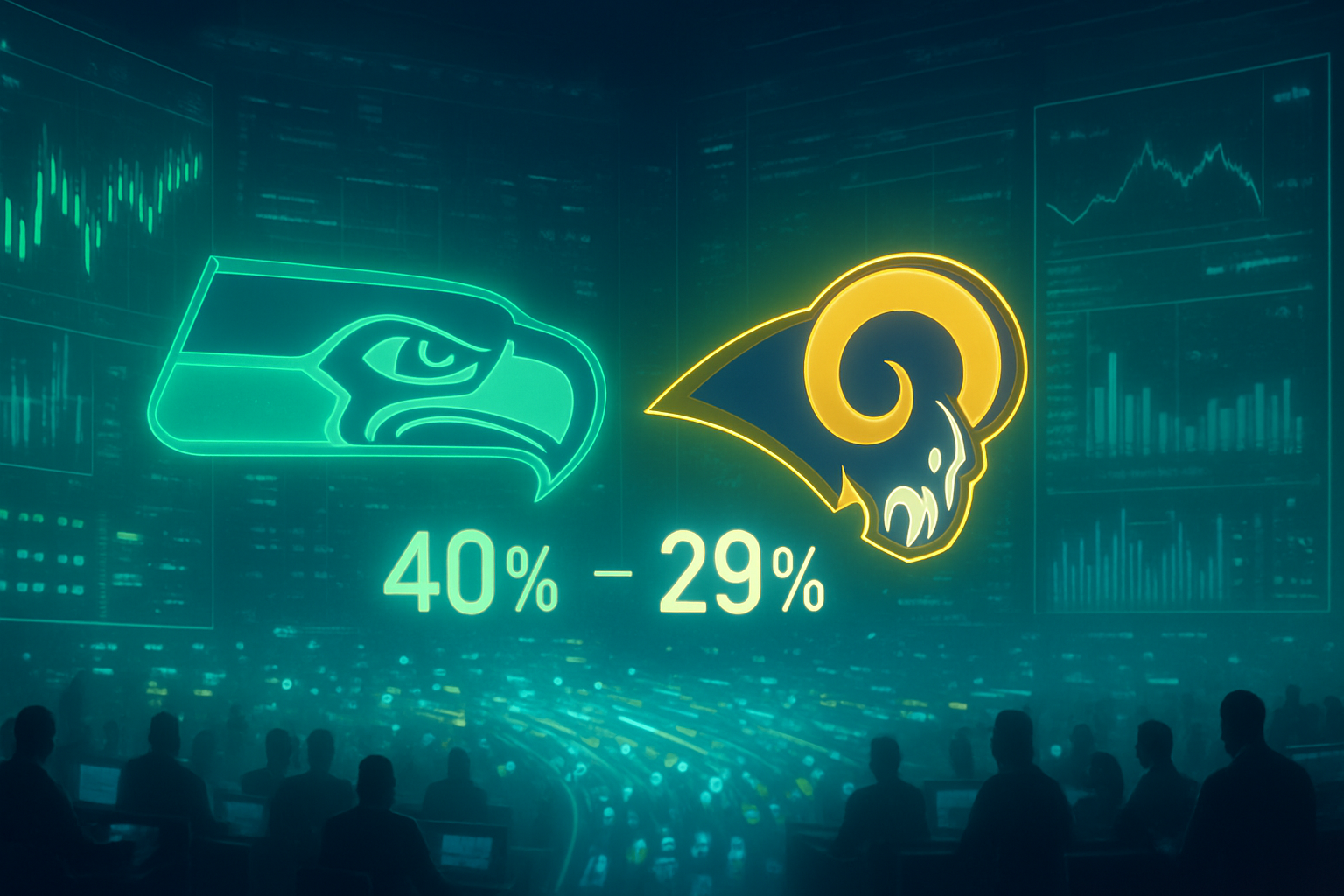
    On the decentralized platform Polymarket, the "Super Bowl LX Champion" market has exploded, surpassing $688 million in total trading volume. This surge in liquidity reflects a growing consensus among "sharps" and retail traders alike that the winner of the upcoming Seahawks-Rams clash will be the heavy favorite to win the championship on February 8. Currently, the Seahawks lead the market with an implied probability of 38-40%, while the Rams follow closely at 28-29%. These figures represent a massive shift from the preseason, where both teams were viewed as secondary contenders behind the AFC powerhouses.

    The Market: What's Being Predicted

    The primary market generating this historic volume is the "Winner of Super Bowl LX" contract on Polymarket. Unlike traditional sportsbooks like DraftKings (NASDAQ: DKNG) or FanDuel, owned by Flutter Entertainment (NYSE: FLUT), which offer fixed odds, these prediction markets operate as a binary exchange. Traders buy and sell "shares" in a team’s success, with prices fluctuating between $0.00 and $1.00 based on real-time sentiment and news. A price of $0.40, for instance, implies a 40% chance of that team winning the championship.

    While Polymarket leads in offshore volume, the U.S.-regulated exchange Kalshi has also seen record participation in its NFL-related event contracts. The liquidity in the Seahawks-Rams "match-up" has reached such heights that it now rivals the trading volume seen during the 2024 presidential election cycle. This is largely due to the "de facto Super Bowl" narrative: with the AFC representative likely to be a depleted Denver Broncos squad or a surging but underdog New England Patriots, traders view the NFC Championship as the true deciding factor for the season.

    The resolution of these contracts is straightforward: the market will pay out $1.00 for the team that wins Super Bowl LX on February 8, 2026. However, the secondary market for the NFC Championship specifically has also seen massive action, with Seattle currently trading as a 57% favorite to advance past Los Angeles tomorrow at Lumen Field.

    Why Traders Are Betting

    The divergence in odds between Seattle and Los Angeles is largely driven by a classic "unstoppable force vs. immovable object" dynamic. Seattle’s 40% chance to win the Super Bowl is anchored by their league-leading defense. Under the tutelage of head coach Mike Macdonald, the Seahawks’ defensive unit has become the gold standard of the 2025-2026 season, allowing a mere 17.2 points per game. Traders have reacted favorably to the health of Seattle’s secondary, particularly All-Pro cornerback Devon Witherspoon, whose ability to erase opponents' top options has made the Seahawks a favorite for risk-averse bettors.

    On the offensive side, the "Darnold Renaissance" has provided the necessary stability for Seattle. Quarterback Sam Darnold, despite an oblique strain suffered in mid-January, has been cleared to start. His efficient play—marked by a 99.1 passer rating this season—has convinced the market that Seattle's offense can do just enough to let their defense win games.

    Conversely, the Los Angeles Rams' 29% odds are a bet on elite offensive ceiling and veteran experience. Matthew Stafford led the NFL in passing yards this season (4,707), fueled by a legendary campaign from Puka Nacua and the mid-season acquisition of Davante Adams. However, the Rams' defense has shown cracks, ranking 10th in points allowed and struggling in high-scoring shootouts. Traders are also wary of Stafford’s health, as he manages a sprained index finger on his throwing hand. Though he has been removed from the official injury report, his 47.6% completion rate in last week’s snowy Divisional Round game has some whales hesitant to back the Rams at a higher price point.

    Broader Context and Implications

    The $688 million volume on Polymarket is a watershed moment for prediction markets in the sporting arena. Historically, these platforms were dominated by political and geopolitical events, but the 2025-2026 NFL season has proven that sports can provide the necessary volatility and public interest to sustain massive liquidity. This shift suggests that prediction markets are increasingly being used as a more "accurate" barometer of outcome than traditional betting lines, as the "wisdom of the crowd" adjusts instantly to micro-news, such as practice reports or weather shifts.

    From a regulatory standpoint, the success of these markets continues to draw scrutiny. While Kalshi has carved out a regulated niche in the U.S., Polymarket remains a dominant force globally, operating in a complex legal landscape. The massive participation in the Super Bowl LX market highlights a growing demand for transparent, peer-to-peer betting options that offer better "odds" (lower vig) than centralized sportsbooks.

    Furthermore, the market's heavy lean toward the NFC winner reveals a significant lack of confidence in the AFC field. With the Denver Broncos losing star quarterback Bo Nix to a season-ending injury, the AFC's "win probability" has been cannibalized by the Seahawks and Rams. This inter-conference disparity is a rare occurrence in prediction markets, which typically see more parity between the two sides of the bracket this close to the Super Bowl.

    What to Watch Next

    The most immediate catalyst for the market will be the NFC Championship kickoff tomorrow. Any early-game injury to either Sam Darnold or Matthew Stafford will cause violent swings in the "Super Bowl Champion" contract. Traders should specifically monitor the Seattle pass rush; if they can pressure Stafford early, his finger injury could become a focal point, potentially driving the Rams' championship odds down into the low teens within the first quarter.

    Following the game, the market will consolidate into a two-team race between the NFC champion and the winner of the Patriots-Broncos AFC title game. If Seattle advances, expect their Super Bowl odds to jump from 40% to as high as 65% or 70% overnight, assuming they open as significant favorites against whoever emerges from the AFC.

    Finally, the weather forecast for Super Bowl LX in Santa Clara will be a key variable. Unlike the freezing conditions of the Divisional Round, the temperate California climate favors the Rams' high-flying passing attack. Should Los Angeles pull off the upset tomorrow, their odds to win it all would likely surge, as they are viewed as a "better" team on a fast, neutral track.

    Bottom Line

    The prediction market for Super Bowl LX has become a $688 million referendum on the dominance of the NFC West. Seattle’s defensive prowess and Sam Darnold's steady hand have made them the statistically favored "safe" bet, while the Rams represent a high-upside alternative for those who believe in Matthew Stafford’s championship pedigree.

    As a tool for insight, these markets have provided a more nuanced view of the playoffs than simple point spreads. They have accounted for the "AFC weakness" factor and the impact of specific injuries with a speed that traditional media struggle to match. Whether Seattle's 40% probability holds firm or collapses under the pressure of a Rams offensive onslaught, the 2026 season will be remembered as the year prediction markets truly conquered the gridiron.


    This article is for informational purposes only and does not constitute financial or betting advice. Prediction market participation may be subject to legal restrictions in your jurisdiction.

    PredictStreet focuses on covering the latest developments in prediction markets.
    Visit the PredictStreet website at https://www.predictstreet.ai/.
  • Rick Rieder Surges to 60% Odds as Trump’s Preference for Next Fed Chair Crystallizes

    Rick Rieder Surges to 60% Odds as Trump’s Preference for Next Fed Chair Crystallizes

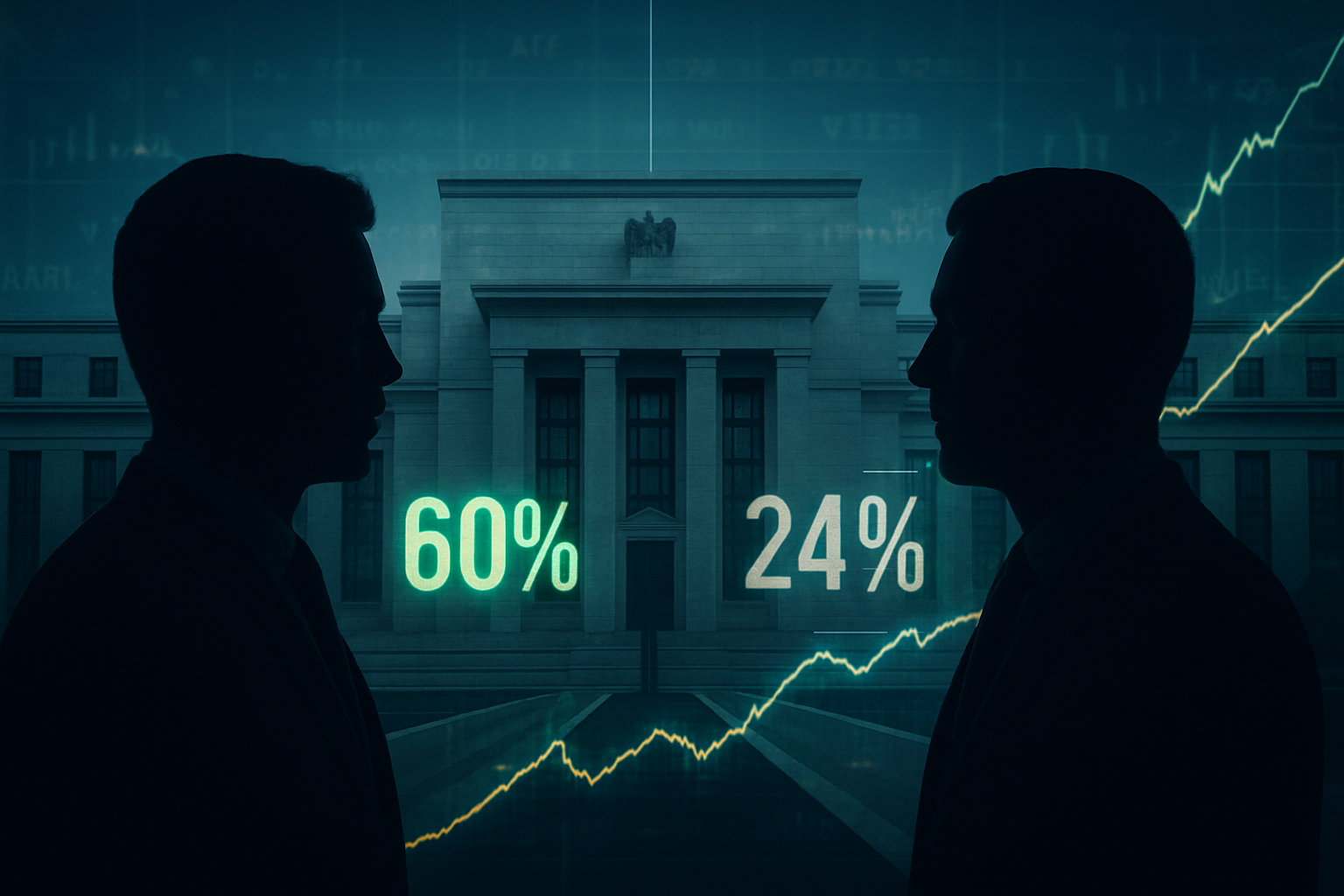
    The race to lead the world’s most powerful central bank has reached a fever pitch in prediction markets, with a decisive shift in sentiment favoring Wall Street veteran Rick Rieder. As of January 24, 2026, Rieder, the Chief Investment Officer of Global Fixed Income at BlackRock Inc. (NYSE: BLK), has emerged as the clear frontrunner to succeed Jerome Powell, whose term is set to expire in May. While the race was previously a dead heat between various conservative economists, Rieder now commands a dominant 60% probability on major forecasting platforms, leaving former Federal Reserve Governor Kevin Warsh trailing in a distant second.

    This market movement reflects more than just speculation; it is the culmination of high-stakes political signaling from the White House. The surge in Rieder’s odds coincides with a massive influx of capital into these markets, as traders scramble to position themselves ahead of a formal announcement. With over $300 million in combined volume between decentralized and regulated platforms, the "Next Fed Chair" market has become the focal point of global macro trading in early 2026.

    The Market: What's Being Predicted

    The prediction markets for the next Federal Reserve Chair have seen unprecedented liquidity this cycle. On Polymarket, the leading decentralized prediction platform, total volume for the Fed Chair contract has surpassed $250 million. Simultaneously, Kalshi, the U.S.-regulated exchange, has seen its volume climb to $55 million. The sheer scale of these markets suggests that institutional players and professional "political hunters" are using these contracts to hedge against potential shifts in monetary policy.

    Current odds across both platforms are remarkably aligned:

    • Rick Rieder: 60%
    • Kevin Warsh: 23-24%
    • Christopher Waller: 10%
    • Kevin Hassett: 5-7%

    The contract resolution is tied specifically to the official nomination by President Trump and subsequent confirmation or a formal announcement designated as the "intended nominee." Historically, these markets have traded with high volatility, but the recent consolidation around Rieder represents the first time a single candidate has held a supermajority probability since the speculation began in late 2025.

    Why Traders Are Betting

    The primary catalyst for the "Rieder Rally" was a strategic pivot by President Trump regarding his economic team. For much of late 2025, Kevin Hassett, the Director of the National Economic Council (NEC), was the betting favorite. However, Trump’s public insistence that Hassett is "too good on television" to be moved from the NEC essentially eliminated him from the running.

    Traders jumped on this "Hassett Pivot" to find the President's next preferred candidate. While Kevin Warsh briefly surged to 60% odds last week, the momentum shifted toward Rieder following a series of high-profile signals:

    1. Trump’s CNBC Endorsement: In a mid-January interview, the President praised Rieder’s "market-based judgment" and labeled him a "reformer" who understands the "true cost of debt."
    2. The Housing Factor: Rieder has been vocal about the need for the Fed to aggressively target mortgage rates to stimulate housing affordability—a key pillar of the current administration’s economic rhetoric.
    3. Hassett’s "Kingmaker" Move: Kevin Hassett himself recently described Rieder as "the best bond guy in the world," signaling that the President’s inner circle has reached a consensus.

    Whale activity on Polymarket suggests that several large-scale bettors moved seven-figure positions out of Warsh and into Rieder following these endorsements, viewing Rieder as the "outsider" candidate that Trump typically favors over "Washington insiders" like Warsh or Waller.

    Broader Context and Implications

    The dominance of Rick Rieder in these markets marks a potential shift in the Federal Reserve’s philosophy. Unlike previous chairs, Rieder would come directly from the heart of the private sector, specifically from BlackRock Inc. (NYSE: BLK), rather than from academia or a long-standing legal career. Prediction market participants are effectively betting that the Fed under Rieder would be more reactive to market conditions and perhaps more aggressive in cutting rates to accommodate fiscal expansion.

    Furthermore, this market highlights the increasing utility of prediction platforms like Kalshi and Polymarket as real-time barometers for political appointments. Traditional news outlets have been slower to catch the shift, often still reporting Warsh as the "likely" pick based on 2017-era precedents. However, the "wisdom of the crowd" in prediction markets has proven highly sensitive to the specific populist and market-driven rhetoric emerging from the Trump administration in 2026.

    The legal and regulatory backdrop also looms large. As Kalshi and other platforms fight to maintain their status in the U.S. regulatory landscape, the high volume and accuracy of the Fed Chair market serve as a powerful case study for their role in price discovery for political risk.

    What to Watch Next

    The window for a formal nomination is narrowing. With Jerome Powell’s term ending in May, President Trump is expected to make an announcement by the end of January or early February to allow for a smooth Senate confirmation process. Traders should keep a close eye on any "trial balloon" tweets or comments regarding the ongoing DOJ investigations into the Fed’s internal operations, which Trump has used as a justification for an early transition.

    A sudden drop in Rieder’s odds would likely only occur if a "dark horse" candidate—such as a surprise pick from a different major financial institution—emerges during one of the President's weekend meetings at Mar-a-Lago. Conversely, if the administration confirms that Rieder has met with the Senate Finance Committee, his odds could easily climb toward 80% or 90% before the official press release.

    Bottom Line

    As of January 24, 2026, the prediction markets have spoken: the "Warsh Era" that many expected has been eclipsed by the "Rieder Surge." With 60% odds and massive volume backing him, Rick Rieder is the clear market favorite to become the next Chair of the Federal Reserve.

    This shift tells us that traders are prioritizing "outsider" status and market expertise over traditional central banking credentials. While Kevin Warsh remains a viable backup at 24%, the alignment of Trump’s public praise and Hassett’s endorsement has created a powerful narrative that Rieder is the intended nominee. For those watching the future of American monetary policy, the prediction markets aren't just reflecting reality—they are increasingly the most reliable signal we have.


    This article is for informational purposes only and does not constitute financial or betting advice. Prediction market participation may be subject to legal restrictions in your jurisdiction.

    PredictStreet focuses on covering the latest developments in prediction markets.
    Visit the PredictStreet website at https://www.predictstreet.ai/.