
Tag: Polymarket

  • Forecasting the Forecasters: Manifold’s Meta-Markets Signal a 2026 Industry Shakeup

    Forecasting the Forecasters: Manifold’s Meta-Markets Signal a 2026 Industry Shakeup

    As the prediction market industry enters its most ambitious year to date, a single contract on Manifold Markets has emerged as the definitive "North Star" for traders, regulators, and venture capitalists alike. The contract—"Which Prediction Market will have the highest total USD-equivalent trading volume in 2026?"—is currently trading with Polymarket as the 47% favorite, followed closely by Kalshi at 34%.

    This "meta-contract" has become more than a simple wager; it is a live barometer for the "Information Finance" (InfoFi) era. With the industry coming off a record-breaking 2025 that saw over $40 billion in total notional volume, the 2026 race represents a battle for total dominance between crypto-native platforms, regulated U.S. exchanges, and traditional brokerage giants that have finally entered the fray.

    The Market: What's Being Predicted

    The Manifold Markets contract is a winner-take-all prediction on which platform will facilitate the most trading volume by the end of the 2026 calendar year. Unlike typical markets that track elections or weather, this is a meta-market—a forecast about the industry itself. While Manifold is the primary venue for this specific "play money" meta-prediction, the implications are being tracked by high-stakes desks across the globe.

    As of January 30, 2026, the odds are stratified into four primary contenders:

    • Polymarket (47%): The global, crypto-native leader continues to hold the pole position, bolstered by its reputation as the world's premier "truth engine."
    • Kalshi (34%): The CFTC-regulated heavyweight is the primary challenger, benefiting from deep integration with domestic financial news networks.
    • ForecastEx (12%): The platform owned by Interactive Brokers (NASDAQ: IBKR) has seen its odds triple since November 2025, following a surge in institutional macro-hedging.
    • Robinhood (7%): Since its 2025 expansion into event contracts, Robinhood Markets, Inc. (NASDAQ: HOOD) has become the dark horse of retail volume.

    The resolution criteria for the contract are strict, requiring audited or publicly verifiable volume data. Total volume is calculated as the USD-equivalent of all trades made across all categories, including politics, economics, and sports, through December 31, 2026.

    Why Traders Are Betting

    The volatility in this meta-contract is being driven by a fundamental shift in how the world consumes information. In the wake of the 2024 U.S. election—frequently cited as the "Netscape moment" for prediction markets—traders are no longer just betting on outcomes; they are betting on which infrastructure will capture the most liquidity.

    Institutional players like Susquehanna International Group and Jane Street are reportedly using these meta-contracts to hedge their platform-specific exposure. For example, if a trader is heavily positioned in Kalshi’s recession markets, they might buy "Polymarket" shares on the meta-contract as a hedge against a potential regulatory squeeze on Kalshi's operations.

    Furthermore, the recent $2 billion investment by Intercontinental Exchange (NYSE: ICE)—the parent company of the New York Stock Exchange—into Polymarket has fundamentally altered the math. Traders are betting that this massive capital injection will allow Polymarket to scale its liquidity to levels previously unthinkable, potentially moving the platform from a "prediction market" to a core global financial utility.

    Broader Context and Implications

    The rise of the meta-contract reflects the maturing of the prediction market industry into a legitimate asset class. In 2025, the sector proved it could survive and thrive without a U.S. Presidential election to anchor it. By pivoting to "perpetual" markets—tracking Federal Reserve interest rate decisions, corporate M&A, and high-stakes sporting events—platforms have seen monthly volumes consistently top $5 billion in early 2026.

    This trend is also a reflection of public sentiment regarding traditional media. As trust in conventional polling continues to erode, the "wisdom of the crowd" as expressed through liquid markets has become the primary source of truth for major corporations. Alphabet Inc. (NASDAQ: GOOGL) and other tech giants have even begun integrating these market probabilities directly into their search and AI results, further driving retail volume toward the platforms that win the meta-race.

    However, regulatory friction remains the "X-factor." A recent January 2026 ruling in a Massachusetts court regarding Kalshi’s sports-related contracts has temporarily slowed its momentum, a move that was immediately reflected by a 5% drop in its Manifold odds. These meta-contracts effectively price in the risk of regulatory "whack-a-mole" across different jurisdictions.

    What to Watch Next

    The coming months feature several catalysts that could dramatically shift the odds in the 2026 volume race. First and foremost is the expected launch of a native prediction market product from Coinbase Global, Inc. (NASDAQ: COIN) in late Q1 2026. Should Coinbase successfully integrate event contracts into its existing app for its 100+ million users, it could leapfrog the current leaders in retail volume overnight.

    Investors are also closely watching the monthly "Volume Prints" from ForecastEx. If Interactive Brokers (NASDAQ: IBKR) continues to see double-digit month-over-month growth in its institutional macro-contracts, the market may begin to price in a "Wall Street takeover" of the prediction space, potentially dethroning the crypto-native incumbents.

    Key dates to monitor include the mid-year regulatory review by the CFTC and the performance of these markets during the upcoming 2026 World Cup, which many analysts predict will be the single highest-volume event in the history of the industry.

    Bottom Line

    The "Top 1 Prediction Market by Volume in 2026" contract is more than just a contest of numbers; it is a forecast of the future of information itself. Manifold’s meta-contracts show us that the market believes the industry is no longer in a "niche" phase. We are seeing a consolidation where the winner will likely become a permanent fixture of the global financial landscape.

    As of today, the battle is a toss-up between Polymarket’s global reach and Kalshi’s regulatory compliance. But with retail giants like Robinhood (NASDAQ: HOOD) and Interactive Brokers (NASDAQ: IBKR) scaling rapidly, the 2026 volume crown is far from decided. For the prediction market enthusiast, the meta-contract remains the best way to watch the world’s most exciting financial race in real-time.


    This article is for informational purposes only and does not constitute financial or betting advice. Prediction market participation may be subject to legal restrictions in your jurisdiction.

    PredictStreet focuses on covering the latest developments in prediction markets.
    Visit the PredictStreet website at https://www.predictstreet.ai/.
  • The Billion-Dollar Ballot: Why the 2026 Midterms are the New Engine of Prediction Markets

    The Billion-Dollar Ballot: Why the 2026 Midterms are the New Engine of Prediction Markets

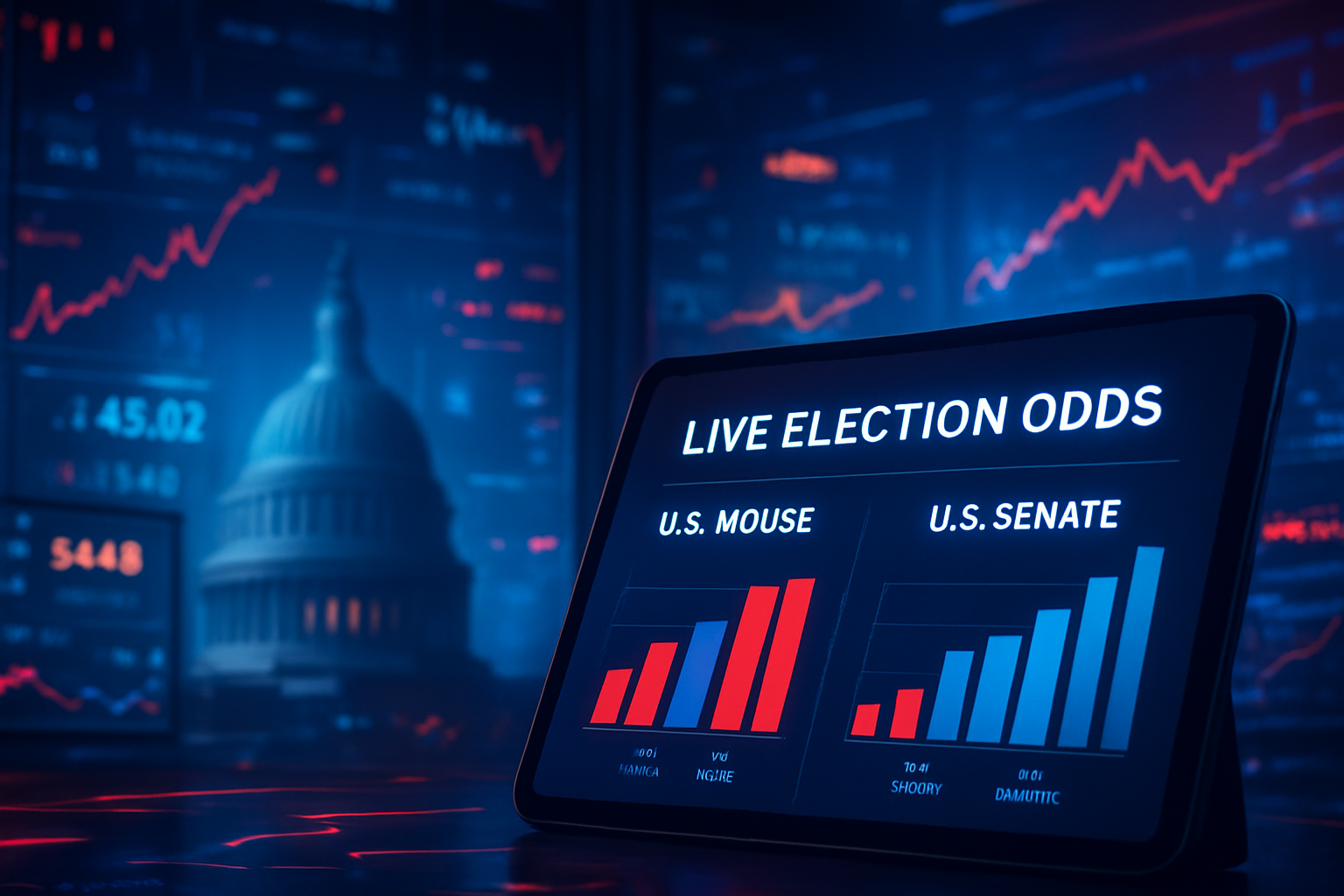
    As the calendar turns to January 30, 2026, the global financial eye has shifted from the traditional exchanges of Wall Street to the high-stakes digital arenas of prediction markets. The primary catalyst is the 2026 U.S. Midterm Elections, which have rapidly ascended to become the most significant volume driver in the history of the forecasting industry. With the first year of the second Trump administration in the rearview mirror, traders are now aggressively pricing the likelihood of a "midterm correction," with current odds on major platforms like Polymarket showing a 78% probability of Democrats flipping the House of Representatives, while Republicans maintain a 66% chance of holding the Senate.

    This surge in activity isn't just a political curiosity; it is a financial phenomenon. The prediction market sector has transformed into a $44 billion powerhouse, representing a staggering 130-fold growth in monthly volume compared to the same point in the 2024 cycle. Driven by institutional entry and a newfound regulatory "green light" from the Commodity Futures Trading Commission (CFTC), the 2026 midterms are serving as the ultimate stress test and growth engine for a burgeoning asset class that treats political outcomes as tradable commodities.

    The Market: What's Being Predicted

    The 2026 midterm markets are characterized by unprecedented liquidity and a diverse array of contract types. On Polymarket, the primary contract for House control has already surpassed $2 million in trading volume, an unheard-of figure for a race still nine months away. Similarly, Kalshi—a regulated U.S. exchange—has seen its political event contracts contribute to a record-breaking 2025 where it processed over $23.8 billion in total volume. These platforms have moved beyond simple "who will win" bets to offer more granular instruments, such as the number of seats gained or lost, the performance of specific incumbents, and even the margin of victory in key swing districts.

    Currently, the most liquid market across all platforms is the "Congressional Control" parlay. On Kalshi, the "Split Congress" outcome (Democratic House, Republican Senate) is trading at 46%, making it the consensus favorite among high-volume traders. Meanwhile, PredictIt, which remains a staple for retail political enthusiasts, shows Republican shares for "Winning 192 or fewer House seats" trading at 26¢, suggesting a significant portion of the market expects a substantial "blue wave" in the lower chamber.

    The resolution criteria for these markets are strictly defined by the certification of election results by the respective state secretaries of state and the convening of the 119th Congress in January 2027. This long lead time has allowed for the development of complex hedging strategies, where institutional investors use these markets to offset potential policy risks associated with shifts in legislative power.

    Why Traders Are Betting

    The primary driver of the current odds is the historical "midterm penalty" that typically plagues the party holding the White House. However, traders are also reacting to specific 2026 variables, most notably the public response to the second Trump administration’s economic and trade policies. The potential for renewed trade tensions has led many to bet on a Democratic House as a legislative "brake" on executive action. Sentiment is also closely tied to macro indicators; when the Consumer Price Index (CPI) shows signs of cooling or heating, the odds for the incumbent party fluctuate in real-time.

    Another major factor is the upcoming appointment of a new Federal Reserve Chair. With names like Kevin Warsh and Kevin Hassett circulating, the market is pricing in how a more hawkish or dovish Fed will impact the electoral prospects of Republicans. Significant "whale" activity has been spotted on Polymarket, where large positions—some exceeding $500,000—have been taken on a Democratic House flip, often coinciding with major policy announcements from the White House regarding government spending and a narrow brush with a government shutdown earlier this month.

    Furthermore, these markets are increasingly viewed as more reliable than traditional polling. While polls have struggled with non-response bias and the "shy voter" effect, prediction markets require participants to put capital at risk, creating a "wisdom of the crowds" effect that many institutional players now prefer. The inclusion of institutional capital, such as the reported $2 billion investment from Intercontinental Exchange (NYSE: ICE) into the prediction market infrastructure, has provided the depth necessary for these markets to reflect nuanced political realities faster than a telephone survey ever could.

    Broader Context and Implications

    The 2026 cycle marks a turning point in the regulatory status of prediction markets. In late January 2026, the new CFTC Chairman, Michael Selig, announced a major policy reversal, withdrawing the previous year's proposal to ban political event contracts. By treating these contracts as legitimate derivatives rather than gambling, the federal government has opened the floodgates for mainstream adoption. This shift has been bolstered by partnerships with major data providers like Yahoo Finance, owned by Apollo Global Management (NYSE: APO), which now integrates prediction market odds alongside traditional stock tickers.

    However, the rapid growth has not been without friction. State-level regulators remain cautious; Nevada recently launched enforcement actions against certain decentralized platforms, and Massachusetts has sought to maintain a temporary ban on specific event markets. Additionally, the industry is grappling with integrity concerns. Allegations of "insider trading" involving the timing of White House press conferences led to a brief period of volatility in mid-January, sparking calls for the "Torres Bill," a legislative proposal aimed at establishing strict non-public information rules for political staffers.

    Historically, prediction markets have shown a remarkable ability to predict midterm outcomes, often outperforming the "generic ballot" polls in the final months of a campaign. In 2022 and 2024, these markets correctly identified key shifts in the Senate long before mainstream media outlets updated their projections. The 2026 cycle is proving that political cycles are not just a distraction for these platforms—they are their lifeblood, providing the high-stakes, binary outcomes that drive the liquidity needed to sustain a global exchange.

    What to Watch Next

    The immediate future of the 2026 markets hinges on several key milestones. The upcoming primary season will be the next major volatility event, particularly in districts where "MAGA" incumbents face challenges from more moderate wings of the party, or vice versa for the Democrats. Traders will be looking for signs of candidate quality, as "electability" often shifts the odds in the Senate more than national trends.

    Economic data releases in the second and third quarters of 2026 will also be pivotal. If the "trade war" dynamics lead to a noticeable spike in consumer prices, expect the odds for a Democratic House flip to climb into the 85-90% range. Conversely, if the administration manages to secure a significant legislative win or a major foreign policy breakthrough—such as a resolution to tensions in Venezuela—the "Republican Sweep" odds, currently at 21%, could see a rapid resurgence.

    Finally, the progress of the "Torres Bill" in Congress will be a significant indicator for the industry's health. If the market can move toward a more transparent, regulated framework for handling political information, it will likely attract even more conservative institutional capital that has so far remained on the sidelines.

    Bottom Line

    The 2026 U.S. Midterm Elections have solidified prediction markets as the "new polling," providing a real-time, capital-backed pulse on the American electorate. As platforms like Polymarket and Kalshi continue to shatter volume records, it is clear that political cycles are the essential engine of growth for this sector. The markets currently tell a story of a nation leaning toward a divided government, with a clear preference for a Democratic House to act as a check on the current administration.

    For the prediction market industry, 2026 is the year of maturity. The combination of massive liquidity, regulatory softening at the federal level, and institutional backing from giants like Intercontinental Exchange (NYSE: ICE) has moved these platforms from the fringes of the internet to the center of the global financial conversation. Whether the markets' current 78% certainty regarding a House flip holds true remains to be seen, but one thing is certain: the world is watching the odds, not the polls.


    This article is for informational purposes only and does not constitute financial or betting advice. Prediction market participation may be subject to legal restrictions in your jurisdiction.

    PredictStreet focuses on covering the latest developments in prediction markets.
    Visit the PredictStreet website at https://www.predictstreet.ai/.

  • The Death of Guessing: How Prediction Markets Became Wall Street’s New Favorite Asset Class in 2026

    The Death of Guessing: How Prediction Markets Became Wall Street’s New Favorite Asset Class in 2026

    As of January 30, 2026, the financial landscape has undergone a tectonic shift. What were once dismissed as "speculative casinos" for crypto enthusiasts and political junkies have matured into the world’s most efficient "truth machines." Prediction markets, led by platforms like Polymarket and Kalshi, are no longer just places to bet on who will win an Oscar or a football game; they have become a foundational layer of the global financial infrastructure, institutionalized as a legitimate "Information Asset Class."

    Currently, the collective "Event Contract" market is pricing the probability of a U.S. government shutdown by the January 31 deadline at a staggering 68%, while the odds of a March interest rate cut by the Federal Reserve have plummeted from 45% to 12% in just the last week. This rapid movement isn't driven by retail hysteria, but by sophisticated institutional hedging. In 2026, when the market moves, it isn’t just noise—it’s the sound of the world’s most informed participants putting their capital behind what they know to be true.

    The Market: What's Being Predicted

    The scale of prediction markets in 2026 is unprecedented. Kalshi, a platform regulated by the Commodity Futures Trading Commission (CFTC), reported a staggering $23.8 billion in total volume for 2025, an 1,100% increase over the previous year. Just two weeks ago, on January 14, 2026, the platform hit a record single-day volume of $465.9 million. Meanwhile, Polymarket has successfully re-entered the U.S. market after its strategic acquisition of the licensed exchange QCX, pushing its combined cumulative volume with Kalshi toward the $50 billion mark.

    These platforms are no longer dominated by small-time bettors. The average trade size has ballooned to $4,800, a clear indicator that high-net-worth individuals and algorithmic funds have taken the wheel. The most liquid markets currently focus on macro-economic indicators and geopolitical stability. For instance, the "March 2026 Fed Rate Decision" market on Kalshi has already seen over $120 million in volume, providing a 24/7 real-time probability signal that is often more reactive and accurate than the traditional FedWatch Tool provided by CME Group (NASDAQ:CME).

    Resolution criteria have also become more robust. Markets now utilize a combination of official government data, decentralized oracles, and "trusted witness" protocols to ensure that payouts are indisputable. This maturity has allowed for more complex contracts, such as those predicting the specific percentage of the Consumer Price Index (CPI) or the outcome of specific legislative votes in the 2026 midterms.

    Why Traders Are Betting

    The transition from "gambling" to "Information Finance" has been accelerated by the entry of traditional financial heavyweights. In a landmark move last year, Intercontinental Exchange (NYSE:ICE), the parent company of the New York Stock Exchange, led a $2 billion strategic investment in Polymarket. This wasn't a speculative play; it was a move to own the pipeline of "event-driven data" that is now integrated into every professional trading desk.

    Institutional traders are using these markets for "pure-play hedging." For example, federal contractors and municipal bond holders are currently using Kalshi’s "Government Shutdown" contracts to hedge against the January 31 funding deadline. If the government shuts down, their traditional portfolios may take a hit, but their "Yes" contracts pay out, offsetting the loss. This is a far more precise instrument than buying gold or defensive stocks, which are often subject to unrelated market volatility.

    Perhaps the most dramatic example of this "predictive edge" occurred earlier this month during the "Maduro Trade." On Polymarket, odds for a sudden shift in Venezuelan political stability spiked to 98% hours before the U.S. military announced "Operation Absolute Resolve." This suggests that participants with on-the-ground intelligence are using these markets to monetize their information, effectively turning "insider knowledge" into a public, tradable price signal.

    Broader Context and Implications

    The "Information as an Asset Class" movement marks the definitive end of the polling era. After prediction markets correctly identified the 2024 U.S. Presidential victory in key swing states weeks before traditional pollsters, the public lost faith in the "margin of error." In 2025, this was solidified during the Canadian Federal Election, where markets priced a Liberal minority at 65% while poll-based models were still stuck at an 85% probability of a majority. The markets were right.

    Regulatory clarity has been the final piece of the puzzle. Following Kalshi's landmark legal victory in late 2024, which ruled that political event contracts are not "gambling" under federal law, the CFTC has pivoted. In early January 2026, CFTC Chairman Michael Selig announced a new formal rulebook to support "lawful innovation" in event contracts, effectively ending the era of regulatory uncertainty that previously hampered the industry.

    Furthermore, these markets are now integrated into the standard financial stack. Alphabet Inc. (NASDAQ:GOOGL) now features real-time probability charts from Kalshi and Polymarket directly in Google Finance and Search results. If you search for "recession probability," you are no longer met with op-eds, but with a live, tradable percentage. This has democratized access to institutional-grade sentiment analysis, making it available to any retail investor with a smartphone.

    What to Watch Next

    As we move toward the 2026 U.S. midterm elections, the volume in political event contracts is expected to shatter all previous records. Market analysts are watching for "lead-lag" relationships, where movements in the prediction markets precede shifts in the S&P 500 or the bond market.

    Key dates to monitor include:

    • January 31, 2026: The deadline for the U.S. government funding bill. The market is currently signaling high tension.
    • March 18, 2026: The next Federal Open Market Committee (FOMC) meeting. Prediction markets are currently pricing a "hawkish hold," contrary to some traditional bank analysts.
    • May 2026: The launch of "Climate Event Contracts" on Kalshi, which will allow insurance companies to hedge against specific hurricane and wildfire milestones using binary outcomes.

    Bottom Line

    The narrative has changed. In 2024, people asked if prediction markets were "legal" or "moral." In 2026, the only question being asked is, "What is the market saying?" The shift to "Information Finance" has turned every global event into a tradable asset, creating a world where information is not just power—it is liquidity.

    For the first time in history, we have a real-time, global dashboard of human expectations. Whether it is a corporate merger, a geopolitical conflict, or a central bank decision, prediction markets are providing a level of clarity that traditional media and polling have failed to deliver. As institutional capital continues to pour into these "truth machines," the line between "betting" and "investing" will continue to blur until it disappears entirely.


    This article is for informational purposes only and does not constitute financial or betting advice. Prediction market participation may be subject to legal restrictions in your jurisdiction.

    PredictStreet focuses on covering the latest developments in prediction markets.
    Visit the PredictStreet website at https://www.predictstreet.ai/.
  • Big Tech’s ‘Truth Engine’ Pivot: Alphabet and Meta Fuel the Prediction Market Revolution

    Big Tech’s ‘Truth Engine’ Pivot: Alphabet and Meta Fuel the Prediction Market Revolution

    As of January 30, 2026, the global financial landscape is witnessing the official dawn of "InfoFi"—Information Finance. Prediction markets, once relegated to the fringes of the internet and academic white papers, have shattered the glass ceiling of mainstream adoption. This shift is being driven by a historic pivot from Silicon Valley’s titans, most notably Alphabet Inc. (NASDAQ:GOOGL), which recently overhauled its decades-long stance on advertising for event contracts, and Meta Platforms (NASDAQ:META), which is reportedly preparing to integrate real-time market probabilities directly into the social feeds of billions.

    The momentum is staggering. On January 12, 2026, the industry recorded a record-breaking single-day trading volume of $701.7 million, signaling that the public is no longer just reading the news—they are trading it. With the 2026 U.S. Midterm elections looming and the Federal Reserve navigating a complex "soft landing" sequel, the appetite for probabilistic clarity has never been higher. Traders are no longer looking to pundits for what happens next; they are looking at the order books of Kalshi and the newly U.S.-regulated Polymarket.

    The Market: What's Being Predicted

    The primary catalyst for this month’s market euphoria was Alphabet’s decision on January 21, 2026, to update its Google Ads policies. For the first time, prediction markets are being classified alongside traditional financial instruments rather than gambling. This policy change allows Commodity Futures Trading Commission (CFTC)-authorized Designated Contract Markets (DCMs) and NFA-certified brokerages to run search and display ads globally. The impact was immediate: Kalshi's monthly trading volume is currently pacing toward $16.4 billion for January, a 38% increase from December 2025.

    Parallel to this, the "Meta Rumor Mill" has set prediction markets on fire. Insiders suggest Meta Platforms is in the final stages of testing "Truth Widgets"—interactive modules for Facebook, Instagram, and Threads that display real-time odds for major news events. These widgets are expected to draw data from platforms like Polymarket, which recently gained a U.S. foothold via its acquisition of the exchange QCEX. While Meta has not officially confirmed the launch date, the "Meta Widget Integration" market on Polymarket is currently trading at a 74% probability for a Q1 2026 rollout, with over $150 million in position value.

    Why Traders Are Betting

    The institutionalization of prediction markets is the primary driver behind the current betting frenzy. On January 7, 2026, News Corp (NASDAQ:NWSA) announced a landmark partnership with Polymarket to integrate event data into the Wall Street Journal and Dow Jones feeds. This followed a similar move by CNBC, effectively creating a "Prediction Hub" that validates market data as a legitimate alternative to traditional polling. Analysts at Piper Sandler (NYSE:PIPR) have revised their 2026 forecasts, projecting that the industry will trade over 445 billion contracts this year, representing a notional volume of approximately $222.5 billion.

    Large-scale "whale" activity has also been noted in the "Federal Preemption" markets. Traders are heavily betting on the outcome of a legal standoff in Massachusetts, where a state court recently issued a preliminary injunction against Kalshi regarding sports-related event contracts. High-net-worth traders are positioning for a Supreme Court showdown that could finally settle whether federal CFTC oversight overrides state-level gambling commissions. The "Federal Preemption Confirmed" contract is currently trading at 0.62, reflecting a cautious but optimistic outlook on federal authority.

    Broader Context and Implications

    This mainstreaming represents the birth of "Truth Engines." In an era of AI-generated content and deepfakes, prediction markets provide a financial incentive for accuracy. When Alphabet allows these platforms to advertise, it isn't just a business move; it is a recognition that market-implied probabilities are a critical utility for the modern internet user. The transition from "betting" to "hedging real-world risk" is nearly complete, with retail users now using Kalshi to hedge against mortgage rate hikes or local property tax increases.

    However, the rapid expansion has hit a regulatory "speed bump" at the state level. While the CFTC has stabilized its federal stance—dropping its long-standing appeal against election markets in 2025—states like New York and Massachusetts are fighting to retain their "police powers" over what they classify as gaming. This tension highlights the primary conflict of 2026: Is a prediction market a financial tool for price discovery, or is it a derivative of sports betting? The market sentiment, as seen in the rising valuations of Kalshi (now at $11 billion) and Polymarket, suggests the financial tool argument is winning.

    What to Watch Next

    The immediate focus for February 2026 will be Meta’s potential announcement. If the "Truth Widgets" go live on Instagram, it would represent the single largest onboarding event in the history of prediction markets, potentially bringing hundreds of millions of retail users into the ecosystem. Furthermore, keep a close watch on the Trump Media & Technology Group (NASDAQ:DJT). Rumors are circulating that Truth Social plans to launch its own proprietary prediction market service, potentially advised by Donald Trump Jr., who has become a vocal advocate for the "InfoFi" movement.

    On the legal front, the February 15 hearing in the New York State Gaming Commission vs. Kalshi case will be a pivotal moment. A victory for Kalshi would likely trigger a massive "green candle" across all event contract markets, as it would effectively neutralize the most significant remaining barrier to a unified U.S. market. Traders should also monitor the "First 100 Days of 2026" markets, which are seeing record liquidity as the geopolitical landscape shifts.

    Bottom Line

    The events of January 2026 have proven that prediction markets are no longer a subculture; they are the new infrastructure of information. Alphabet’s policy shift and Meta’s rumored integration signify that the world’s most powerful gatekeepers of information have accepted the "Wisdom of the Crowd" as a commercial and social necessity.

    As we move further into 2026, the line between social media, news, and financial markets will continue to blur. Whether you view these platforms as a "Truth Engine" or a "Global Casino," their influence on public sentiment and capital allocation is undeniable. For the prediction market trader, the message is clear: the markets are finally open, and the world is watching.


    This article is for informational purposes only and does not constitute financial or betting advice. Prediction market participation may be subject to legal restrictions in your jurisdiction.

    PredictStreet focuses on covering the latest developments in prediction markets.
    Visit the PredictStreet website at https://www.predictstreet.ai/.
  • The Retail Revolution: Robinhood’s Billion-Dollar Bet on Prediction Markets

    The Retail Revolution: Robinhood’s Billion-Dollar Bet on Prediction Markets

    On January 20, 2026, the landscape of American finance shifted when Robinhood Markets, Inc. (NASDAQ:HOOD) announced it had acquired a 90% majority stake in MIAXdx, a CFTC-regulated derivatives exchange. This move signals more than just a corporate expansion; it marks the moment prediction markets—once a niche interest for crypto enthusiasts and political junkies—officially became a cornerstone of the retail investing experience.

    With over 27 million funded accounts and a history of disrupting traditional brokerages, Robinhood’s aggressive entry into the space is already rattling established giants like Polymarket and Kalshi. As of late January 2026, Robinhood has processed over 11 billion cumulative event contracts, leveraging its massive user base to drive unprecedented liquidity into markets ranging from the outcome of Super Bowl LX to the 2026 U.S. Midterm elections. The "Robinhood Effect," which famously upended the equity markets in 2021, is now recalibrating the odds in the world of binary outcomes.

    The Market: What's Being Predicted

    The current crown jewel of the prediction market world is the Super Bowl LX matchup between the Seattle Seahawks and the New England Patriots, scheduled for February 8, 2026. On the Robinhood platform, which now routes much of its volume through its own MIAXdx-powered infrastructure, the Seahawks are holding steady as the favorites with a 67.7% implied probability of victory.

    While sports are the primary driver of daily retail frequency, the high-stakes "long game" is being played in the 2026 U.S. Midterm Election markets. Traders are currently pricing in a 76% chance of a Democratic takeover of the House of Representatives, while the GOP is favored at 68% to maintain control of the Senate. These markets are no longer just for speculators; they have become essential hedging tools for corporations and institutional investors looking to manage legislative risk.

    Liquidity has reached levels previously thought impossible for event derivatives. In the first three weeks of January 2026 alone, the total notional value traded across Robinhood’s prediction suite exceeded $2.5 billion. This surge in volume has narrowed bid-ask spreads to fractions of a cent, making event contracts a viable alternative to traditional options for short-term retail traders.

    Why Traders Are Betting

    The explosion in betting activity is driven by a combination of regulatory clarity and the "gamification" of macro events. In late 2024, a landmark court victory for Kalshi against the Commodity Futures Trading Commission (CFTC) opened the floodgates for regulated election betting in the U.S. Robinhood capitalized on this immediately, launching its first contracts just days before the 2024 presidential election.

    The current momentum is also fueled by a new generation of "macro-traders" who find event contracts more intuitive than complex Greeks in the options market. For many Robinhood users, betting $10 on a Federal Reserve rate pause (currently trading at a 98% certainty for the March meeting) is simpler and more direct than trading treasury ETFs or bank stocks.

    Furthermore, "whale" activity has become more transparent. Large positions, some exceeding $5 million, have been spotted in the Midterm House control markets, likely placed by political action committees (PACs) or hedge funds using prediction markets as a real-time sentiment gauge that is often more accurate than traditional polling.

    Broader Context and Implications

    Robinhood’s entry has fundamentally reordered the industry hierarchy. Throughout 2024, the crypto-native Polymarket held a near-monopoly on prediction volume. However, by January 2026, the tide has turned. Kalshi, boosted by its partnership with Robinhood and Interactive Brokers Group, Inc. (NASDAQ:IBKR), now commands roughly 66% of the U.S. regulated market share.

    The acquisition of MIAXdx allows Robinhood to move from being a broker to a self-clearing exchange operator. This vertical integration reduces fees and allows for "Custom Combo" bets—parlays on political and economic outcomes that were previously impossible. This move echoes the strategy of traditional giants like Intercontinental Exchange, Inc. (NYSE:ICE), but with a focus on the "everyday" trader.

    Regulators have also softened their stance. The current CFTC leadership, under Chair Michael Selig, has moved away from trying to ban these markets, instead opting for a framework that treats event contracts as a legitimate asset class. This has provided the legal "green light" necessary for institutional capital to enter the fray, further stabilizing these markets against the volatility seen in earlier, unregulated iterations.

    What to Watch Next

    The upcoming month will be a litmus test for Robinhood’s new infrastructure. The Super Bowl LX "flywheel" is expected to generate record-breaking volume on February 8, testing the reliability of the MIAXdx clearing system under extreme load.

    Beyond sports, the focus will shift to the March primary season for the 2026 Midterms. If the House control markets remain lopsided (currently 76% for Democrats), watch for a potential "correction" as Republican-aligned traders begin to hedge against the prevailing narrative. Additionally, the transition of the Federal Reserve Chair in May 2026 is already generating significant "who will it be?" volume, with BlackRock (NYSE:BLK) executive Rick Rieder currently leading the odds at 52%.

    Bottom Line

    Robinhood’s 90% stake in MIAXdx is the final piece of a puzzle that transforms prediction markets from a curiosity into a financial powerhouse. By marrying a 27-million-strong retail army with institutional-grade exchange infrastructure, Robinhood has created a liquidity moat that even the most established prediction platforms will find difficult to cross.

    As we look toward the remainder of 2026, it is clear that prediction markets are the new "social layer" of finance. They provide a more accurate, real-time reflection of public sentiment than polls, and a more accessible hedging tool than traditional derivatives. Whether you are betting on a Super Bowl winner or a shift in Congressional power, the message is clear: the future of forecasting isn't in a crystal ball—it's in the order book.


    This article is for informational purposes only and does not constitute financial or betting advice. Prediction market participation may be subject to legal restrictions in your jurisdiction.

    PredictStreet focuses on covering the latest developments in prediction markets.
    Visit the PredictStreet website at https://www.predictstreet.ai/.
  • The TradFi Tipping Point: ICE’s $2 Billion Bet Transforms Polymarket into a Global Liquidity Powerhouse

    The TradFi Tipping Point: ICE’s $2 Billion Bet Transforms Polymarket into a Global Liquidity Powerhouse

    In a move that has effectively ended the "Wild West" era of decentralized forecasting, Intercontinental Exchange (NYSE: ICE) has finalized a landmark $2 billion strategic investment in Polymarket. This massive capital injection, completed in January 2026, values the platform at $9 billion and serves as an institutional "seal of approval" that has fundamentally rewired the relationship between traditional finance (TradFi) and the prediction market ecosystem.

    As of late January 2026, the results of this institutional pivot are staggering. Polymarket has reported a cumulative trading volume of $33.4 billion for the previous year, proving that the appetite for "Information Finance" has moved far beyond crypto-native speculators. With a massive liquidity backstop now in place, Wall Street's largest firms are no longer just watching these markets from the sidelines; they are using them to hedge macro risks with the same frequency they use the S&P 500 or Treasury futures.

    The Market: What's Being Predicted

    The $2 billion investment from Intercontinental Exchange is more than a mere cash infusion; it is a structural integration of prediction markets into the global financial plumbing. As part of the deal, ICE—the parent company of the New York Stock Exchange—has become the exclusive global distributor of Polymarket’s real-time data. This means that "market-implied probabilities" for everything from Federal Reserve pivots to geopolitical conflicts are now streamed directly into institutional terminals alongside traditional benchmarks.

    While the platform’s cumulative volume reached $33.4 billion, its monthly activity has stabilized at a robust $19 billion. The market depth has improved exponentially. Previously, a million-dollar trade could significantly "move the needle" on an outcome's probability, creating volatility that deterred institutional desks. With the ICE-backed liquidity backstop, the order books now possess the depth to handle nine-figure positions with minimal slippage.

    Currently, the most liquid market on the platform revolves around the Federal Reserve’s upcoming policy meeting. Traders are pricing in an 81% probability that the Fed will "Hold" rates, a figure that is being cited by major outlets like CNBC and Bloomberg as the definitive "source of truth," superseding traditional economist surveys.

    Why Traders Are Betting

    The surge in volume is being driven by a fundamental shift in how "information" is valued. TradFi firms now treat the "probability of outcome" as a distinct, tradeable asset class. Proprietary trading firms are utilizing Polymarket to hedge against "Black Swan" events that traditional insurance or equity derivatives cannot adequately cover.

    "The liquidity provided by the ICE partnership changed the game," says one head of macro trading at a Tier-1 bank. "Before, prediction markets were a curiosity. Now, when we see a 15% move in a geopolitical contract, we treat it with the same seriousness as a 15% move in Brent Crude."

    Recent high-profile successes have further fueled this betting frenzy. For instance, traders on Polymarket accurately signaled the capture of Nicolás Maduro hours before official confirmation, with one savvy participant netting a $436,000 profit. Such "alpha" is drawing in sophisticated players who specialize in alternative data and investigative research, moving the market closer to perfect information.

    Broader Context and Implications

    This mainstream explosion comes amid a radical shift in the regulatory climate. In early January 2026, the new Commodity Futures Trading Commission (CFTC) Chair, Michael Selig, launched the "Selig Initiative." This policy pivot directed the agency to withdraw older proposals that sought to ban event contracts, signaling a new era of federal support for "lawful innovation" in prediction markets.

    However, the rapid growth has not been without friction. The sheer amount of money flowing through these markets has caught the attention of Capitol Hill. Representative Ritchie Torres recently introduced the "Public Integrity in Financial Prediction Markets Act," aimed at preventing federal employees from trading on contracts where they might possess non-public information. This move highlights the growing concern that prediction markets are becoming so accurate that they could incentivize insider trading by those within the government.

    Furthermore, the "mainstreamization" of these markets is being accelerated by tech giants. On January 21, 2026, Alphabet (NASDAQ: GOOGL) updated its Google ads policy to allow federally regulated prediction markets to advertise, sparking a massive user acquisition race between Polymarket and its rivals.

    What to Watch Next

    As we move deeper into 2026, the battle for dominance is shifting from liquidity to accessibility. While Polymarket holds the "mindshare" for macro and geopolitical events, its regulated rival Kalshi has seen a "sports flywheel" effect that pushed its own volume to $43.1 billion. The next major milestone will be the integration of prediction market data into consumer-facing fintech apps like Robinhood (NASDAQ: HOOD) and Coinbase (NASDAQ: COIN), which are rumored to be exploring direct trading interfaces for event contracts.

    The immediate focus for traders, however, remains the ongoing legal battle between federal regulators and individual states. While the CFTC has signaled a "hands-off" approach under the Selig Initiative, several states—including Massachusetts and New York—are pursuing injunctions to protect their local gaming monopolies. How these state vs. federal jurisdictional disputes are resolved will determine whether prediction markets can maintain their current growth trajectory.

    Bottom Line

    The Intercontinental Exchange investment marks the moment prediction markets grew up. By providing a $2 billion liquidity backstop and integrating event data into the world’s most important financial terminals, ICE has effectively canonized Polymarket as a permanent fixture of the global economy.

    With $33.4 billion in cumulative volume and a regulatory environment that is finally trending toward clarity, the industry is no longer a speculative experiment. It is a sophisticated engine for price discovery that turns collective intelligence into actionable financial data. As we head toward the 2026 midterm elections and more economic uncertainty, the world will likely spend less time looking at polls and more time looking at the "truth" reflected in the order books of Polymarket.


    This article is for informational purposes only and does not constitute financial or betting advice. Prediction market participation may be subject to legal restrictions in your jurisdiction.

    PredictStreet focuses on covering the latest developments in prediction markets.
    Visit the PredictStreet website at https://www.predictstreet.ai/.
  • The 2026 Volume War: Polymarket and Kalshi Battle for the Future of ‘InfoFi’

    The 2026 Volume War: Polymarket and Kalshi Battle for the Future of ‘InfoFi’

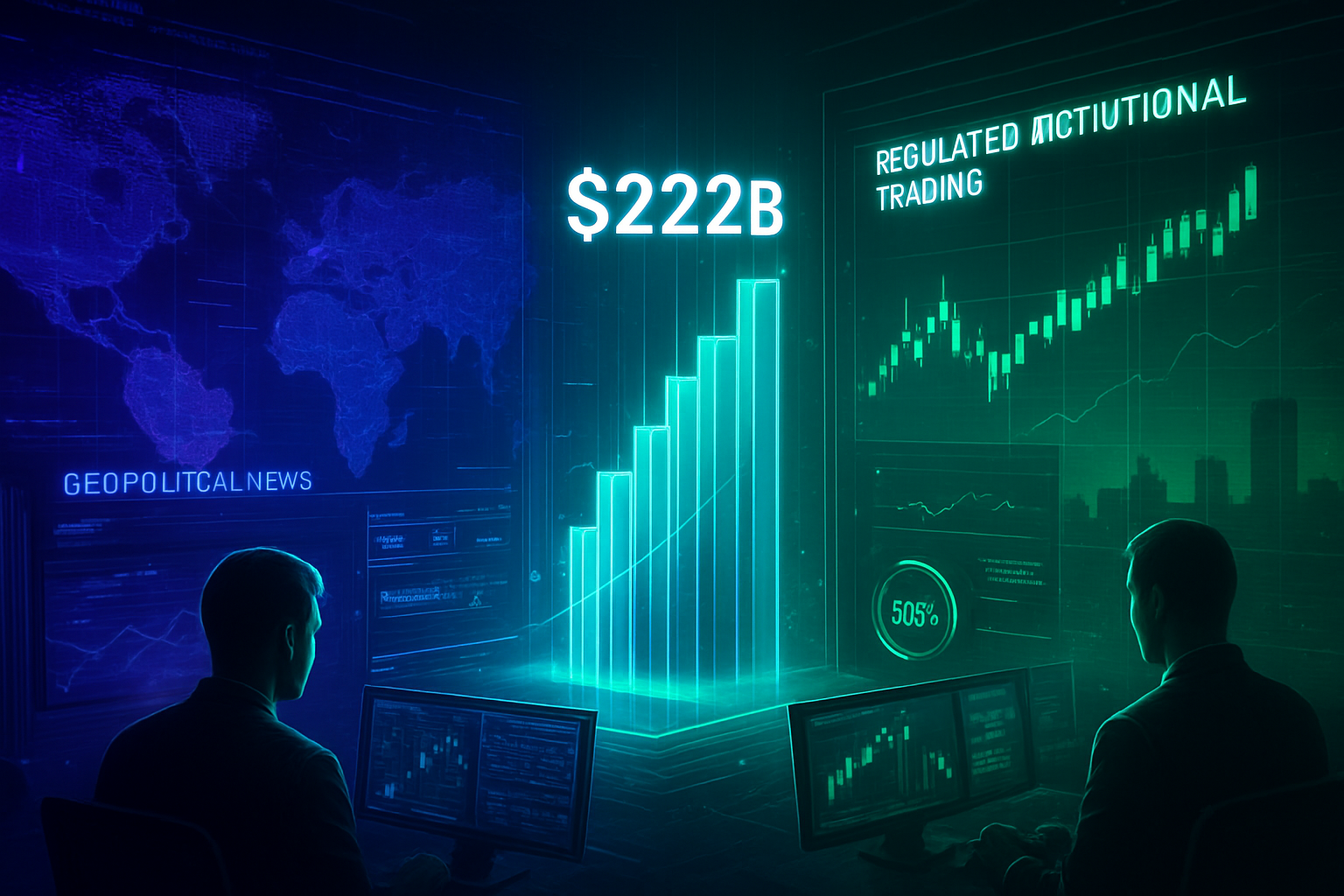
    As of late January 2026, the prediction market landscape has officially transitioned from a niche fascination into a multi-billion dollar pillar of global finance. The industry, now frequently referred to as "Information Finance" or "InfoFi," hit a staggering record of $5.23 billion in combined weekly trading volume earlier this month. At the heart of this explosion is an intense "volume war" between the decentralized giant Polymarket and the CFTC-regulated Kalshi, with the two platforms currently locked in a struggle for absolute market dominance.

    On the meta-forecasting platform Manifold Markets, a high-stakes contract titled "Top 1 Prediction Market by Volume in 2026" has become the definitive scoreboard for industry insiders. Currently, Polymarket leads the field with 47% odds of finishing the year as the volume king, while Kalshi trails at 34%. This 13-point gap highlights a growing sentiment among professional traders: while Kalshi may have the raw numbers today thanks to a heavy pivot into sports, Polymarket’s "event-pure" dominance in politics and global news makes it the more resilient long-term bet.

    The Market: What's Being Predicted

    The central question for 2026 is whether the "notional volume" generated by sports bettors can outpace the "information volume" generated by political and economic speculators. The Manifold Markets contract has seen significant volatility over the last thirty days. In December 2025, Kalshi held a slight lead as the NFL and NCAA seasons reached their peak. However, January 2026 has seen a sharp reversal, with Polymarket's odds surging from 38% to 47% in just three weeks.

    While Kalshi is currently on pace to facilitate roughly $9.1 billion in volume for January alone, much of this is concentrated in high-frequency sports wagers. In contrast, Polymarket has seen a massive influx of liquidity following its late-2025 acquisition of QCEX, a CFTC-licensed exchange. This strategic move allowed Polymarket to relaunch legally in the United States as a Designated Contract Market (DCM), tapping into a massive domestic waitlist that has existed since its 2022 regulatory settlement.

    Other competitors are also entering the fray, though they remain in the shadow of the Big Two. ForecastEx, the native platform of Interactive Brokers (NASDAQ: IBKR), currently holds 12% odds on Manifold, while Robinhood (NASDAQ: HOOD) sits at 7%. The resolution of these markets typically hinges on publicly reported audited volume, which has become a key metric for equity analysts tracking the fintech sector.

    Why Traders Are Betting

    The primary driver behind Polymarket’s current lead in the meta-contract is the perceived fragility of Kalshi’s sports-heavy volume. As of January 2026, an estimated 91.1% of Kalshi's volume is derived from sports contracts. While the NCAA Championship game on January 20 alone generated $111 million in activity, Kalshi hit a major regulatory speed bump last week. A Massachusetts judge issued a preliminary injunction barring the platform from offering sports contracts in the state, ruling they constitute illegal gambling under state law. With other states like New York and New Jersey reportedly considering similar moves, traders are fleeing Kalshi’s volume odds.

    Polymarket, meanwhile, has doubled down on its status as a "global truth engine." Its volume is significantly more diversified, with sports accounting for only 39.9% of its activity. The rest is driven by high-stakes geopolitical and financial events. Recent notable activity includes:

    • The "Maduro Trade": Massive wagers on the political future of Nicolás Maduro, which spiked to over $150 million in volume this month.
    • Fed Chair Nominations: Markets regarding the second Trump administration's potential Federal Reserve appointments have surpassed $329 million in cumulative volume.
    • Military Conflict: Markets on Iran-related military escalations saw $107 million in liquidity in a single weekend.

    Whale activity has also shifted. Institutional desks that previously used Interactive Brokers (NASDAQ: IBKR) for hedging are increasingly seen providing liquidity on Polymarket’s new US-regulated arm, attracted by the platform's superior depth in non-sports categories.

    Broader Context and Implications

    The "Volume War" of 2026 represents the final validation of prediction markets as a legitimate asset class. This shift has been accelerated by a friendlier regulatory environment in Washington. The new CFTC Chair, Michael Selig—appointed in December 2025—has publicly characterized prediction markets as "essential federally regulated derivatives," effectively providing a legal shield against the more aggressive state-level bans that have plagued Kalshi’s sports expansion.

    Furthermore, the integration of these markets into mainstream financial "plumbing" is nearly complete. Polymarket now provides real-time forecast data to major media outlets owned by News Corp (NASDAQ: NWSA), including The Wall Street Journal and Barron’s. Similarly, Coinbase (NASDAQ: COIN) has officially integrated prediction market feeds into its "Everything Exchange," allowing retail users to trade event contracts alongside traditional crypto assets.

    What this reveals about public sentiment is a profound distrust in traditional polling. In 2026, the "Polymarket Price" is often cited by news anchors as more reliable than data from traditional research firms. The market is no longer just a place to bet; it is the primary source of truth for the probability of future events.

    What to Watch Next

    The upcoming 2026 Midterm Elections will likely be the single largest volume event in the history of prediction markets. Traders are watching to see if Polymarket can maintain its momentum as the go-to destination for political junkies. Additionally, the 2026 FIFA World Cup, hosted across North America, will be a massive test for Polymarket’s new exclusive partnership with Major League Soccer (MLS). If Polymarket can capture a significant slice of World Cup volume while maintaining its political dominance, Kalshi will find it nearly impossible to reclaim the lead.

    Key dates to monitor include the February 15 CFTC hearing on cross-margining for event contracts, which could allow traders to use their equity or crypto portfolios as collateral for prediction market positions. Any further state-level injunctions against Kalshi will also serve as a "buy" signal for Polymarket's 2026 volume odds.

    Bottom Line

    The battle between Polymarket and Kalshi is more than a corporate rivalry; it is a test of what prediction markets are actually for. Kalshi is currently winning the battle of raw numbers by catering to the sports-betting public through its integration with Robinhood (NASDAQ: HOOD). However, Polymarket is winning the battle of "relevance" by dominating the markets that matter to global decision-makers.

    As of January 30, 2026, the 47% to 34% split on Manifold Markets suggests that the "smart money" favors the platform that prioritizes information over entertainment. Whether Kalshi can pivot back to its roots in economic forecasting or Polymarket can successfully navigate the complexities of US regulation remains the multi-billion dollar question. For now, the "Volume War" shows no signs of cooling down, and the ultimate winner will likely define the future of how the world processes information.


    This article is for informational purposes only and does not constitute financial or betting advice. Prediction market participation may be subject to legal restrictions in your jurisdiction.

    PredictStreet focuses on covering the latest developments in prediction markets.
    Visit the PredictStreet website at https://www.predictstreet.ai/.
  • The 99% Consensus: Why Prediction Markets Are Calling the Fed’s Bluff on Interest Rates

    The 99% Consensus: Why Prediction Markets Are Calling the Fed’s Bluff on Interest Rates

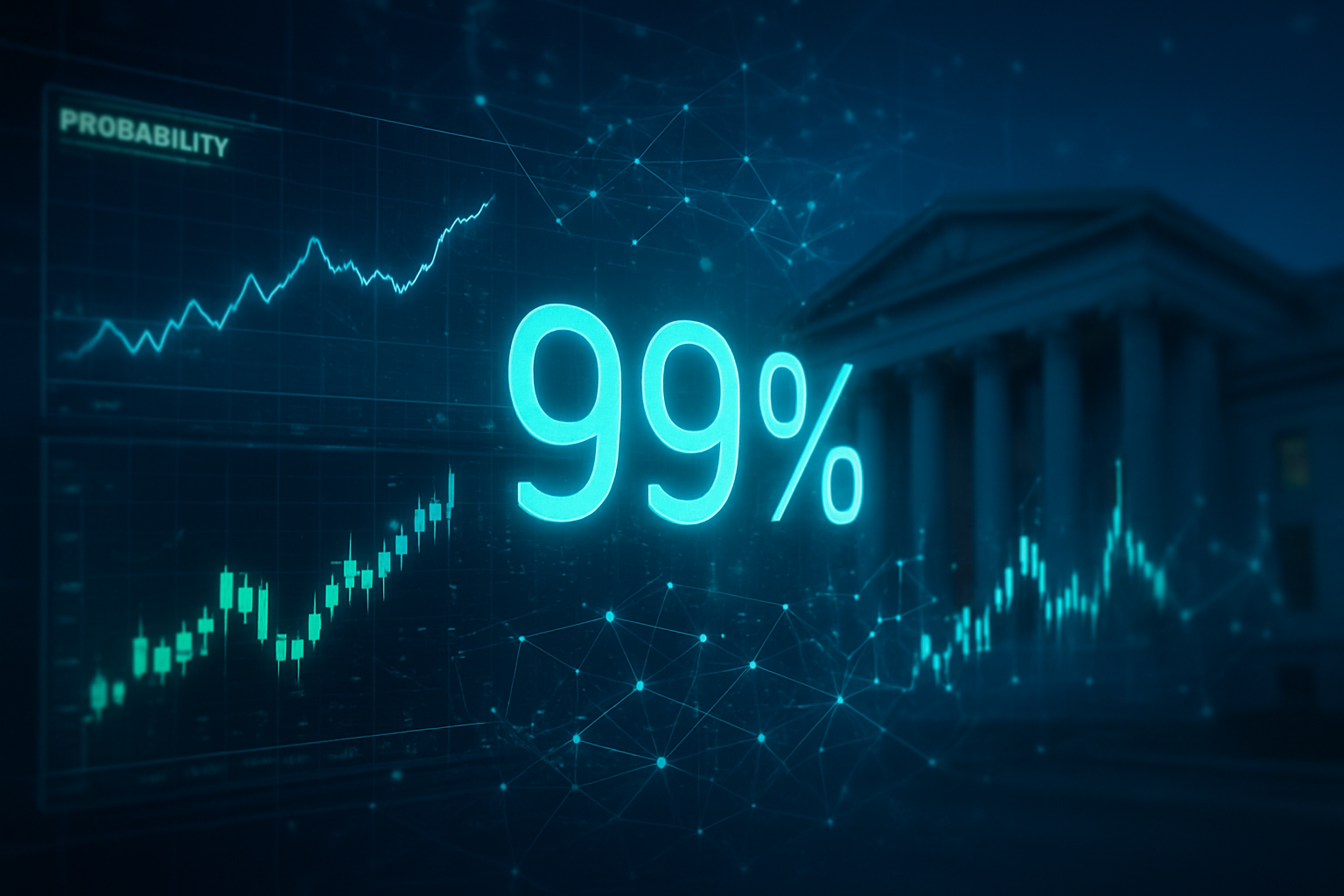
    As the Federal Open Market Committee (FOMC) convenes for its first meeting of 2026, the financial world is witnessing a rare moment of absolute conviction. On Polymarket, the world’s largest decentralized prediction market, the probability of the Federal Reserve maintaining interest rates at their current target of 3.50%–3.75% has surged to a staggering 99%. This near-certainty reflects a dramatic shift from late 2025, when traders were still debating the possibility of a fourth consecutive rate cut.

    The "No Change" consensus isn't just a hunch; it represents hundreds of millions of dollars in "skin in the game" betting that Chair Jerome Powell will opt for a "wait-and-see" approach. While traditional bank analysts at firms like Goldman Sachs (NYSE: GS) and JPMorgan (NYSE: JPM) were still debating the nuances of "sticky inflation" just weeks ago, prediction markets have been pricing in this pause with cold, mathematical precision. This 99% certainty has transformed the FOMC meeting from a high-stakes guessing game into a validation exercise for the burgeoning field of event-based forecasting.

    The Market: What's Being Predicted

    The specific market in question focuses on the outcome of the January 27–28, 2026, FOMC meeting. On Polymarket, the "Fed Interest Rate Decision: January 2026" contract has become one of the most liquid markets on the platform, with cumulative trading volume exceeding $471 million. As of this morning, the "No Change" contract is trading at $0.99, meaning a bettor must risk $99 to win a single dollar in profit—a level of confidence rarely seen in macro-economic forecasting.

    Other platforms tell a similar story. Kalshi, the federally regulated exchange, shows its "Fed maintains rate" contract trading between 98.5% and 99%. Even the CME Group’s (NASDAQ: CME) FedWatch Tool, which derives its data from 30-day Fed Funds futures, mirrors this sentiment with a 97.2% to 99% probability of a hold. The consistency across decentralized, regulated, and traditional futures markets suggests that the era of "Fed surprises" may be drawing to a close as prediction market liquidity deepens.

    The resolution criteria for these contracts are straightforward: the official press release from the Federal Reserve Board of Governors. If the target range remains at 3.50%–3.75% when the statement is released tomorrow afternoon, the "No" contracts will expire at $1.00, rewarding the massive pool of traders who have bet on stability.

    Why Traders Are Betting

    The 99% certainty is anchored in a trifecta of robust economic data that emerged in early January. First, the December 2025 jobs report showed the unemployment rate ticking down to 4.4%, easing fears of a labor market "hard landing." Second, the Atlanta Fed’s GDPNow tool estimated a blistering 5.4% annualized growth for Q4 2025. Finally, headline CPI has remained stubbornly fixed at 3.0%, well above the Fed's 2% target.

    Traders are also employing sophisticated "bonding" strategies. By betting on an outcome with a 99% probability, institutional "whales" are effectively using prediction markets as a high-yield savings account. A 1% return over the 48-hour duration of an FOMC meeting, when compounded throughout the year, represents an annualized return that dwarfs traditional fixed-income products. This "smart money" activity has been bolstered by the Intercontinental Exchange (NYSE: ICE), which recently finalized a $2 billion strategic investment in Polymarket, signaling that the institutional world now views these odds as a primary data source.

    Furthermore, a "lame duck" dynamic is influencing the market. Chair Jerome Powell’s term ends in May 2026, and reports of a Department of Justice investigation into the Fed's recent internal protocols have surfaced. Traders believe the Fed will stay the course to maintain a veneer of institutional stability and independence during this period of heightened political and legal scrutiny.

    Broader Context and Implications

    The shift toward prediction markets marks a fundamental change in how the public and institutions digest economic news. Historically, the "analyst consensus" from major banks like Morgan Stanley (NYSE: MS) or Nomura (NYSE: NMR) was the gold standard. However, data from 2024 and 2025 has begun to flip the script. During the December 2025 "pivot," prediction markets assigned a 95% probability to a rate cut while several major brokerages were still forecasting a hold. The markets were right; the analysts were late.

    This trend highlights the "wisdom of the crowd" in absorbing "statistical noise." A late-2025 government shutdown disrupted Bureau of Labor Statistics data, creating confusion for traditional models. Prediction market participants, however, successfully looked past the noisy data to the underlying economic strength, providing a cleaner signal than traditional economist surveys.

    Regulatory milestones have also fueled this growth. In November 2025, Polymarket officially returned to the U.S. market after acquiring the licensed exchange QCEX. While Kalshi continues to fight state-level battles in places like Massachusetts and Nevada, the overall trend is toward a regulated, liquid environment where event contracts are treated as legitimate hedging tools rather than mere gambling.

    What to Watch Next

    While the January "hold" is essentially priced to perfection, the real volatility lies in the "Dot Plot" and Powell’s post-meeting press conference. Traders will be looking for clues regarding the March 2026 meeting. Currently, prediction markets are split, with a 60% chance of a 25-basis-point cut in March, diverging from JPMorgan’s (NYSE: JPM) forecast that the Fed will hold rates steady through the entirety of 2026.

    Key milestones to monitor include:

    • The February Employment Situation Report: Any spike in unemployment could rapidly shift the March odds.
    • The "Shadow Chair" Race: As Powell's term winds down, markets on Kalshi for the next Fed Chair—with names like Rick Rieder and Kevin Warsh leading—will likely begin to correlate with interest rate expectations.
    • Inflation Print (Feb 12, 2026): If CPI remains at 3% or higher, the current 60% probability for a March cut may evaporate.

    Bottom Line

    The 99% certainty on Polymarket and Kalshi regarding the January FOMC decision is more than just a bet; it is a declaration of the new economic order. Prediction markets have evolved from niche experimental platforms into high-fidelity mirrors of reality, often moving faster and more accurately than the most prestigious research desks on Wall Street.

    As we move into 2026, the convergence of institutional capital from the likes of ICE (NYSE: ICE) and the regulatory "thaw" for platforms like Polymarket suggests that the "Fed Watch" of the future will happen on a blockchain or a regulated exchange, rather than in a bank's quarterly report. For now, the message from the markets is clear: Jerome Powell has found a level he likes, and he isn't moving until the data forces his hand.


    This article is for informational purposes only and does not constitute financial or betting advice. Prediction market participation may be subject to legal restrictions in your jurisdiction.

    PredictStreet focuses on covering the latest developments in prediction markets.
    Visit the PredictStreet website at https://www.predictstreet.ai/.
  • The Meta-Forecast: Betting on the Future of Information Finance in 2026

    The Meta-Forecast: Betting on the Future of Information Finance in 2026

    As of January 27, 2026, the prediction market industry is no longer a fringe hobby for statistics nerds or a seasonal interest for election cycles; it has evolved into a multi-billion dollar pillar of the global financial system known as "InfoFi" (Information Finance). On Manifold Markets, the industry's self-appointed "meta-layer," traders are currently obsessed with a high-stakes question: who will win the "Great Prediction War" of 2026?

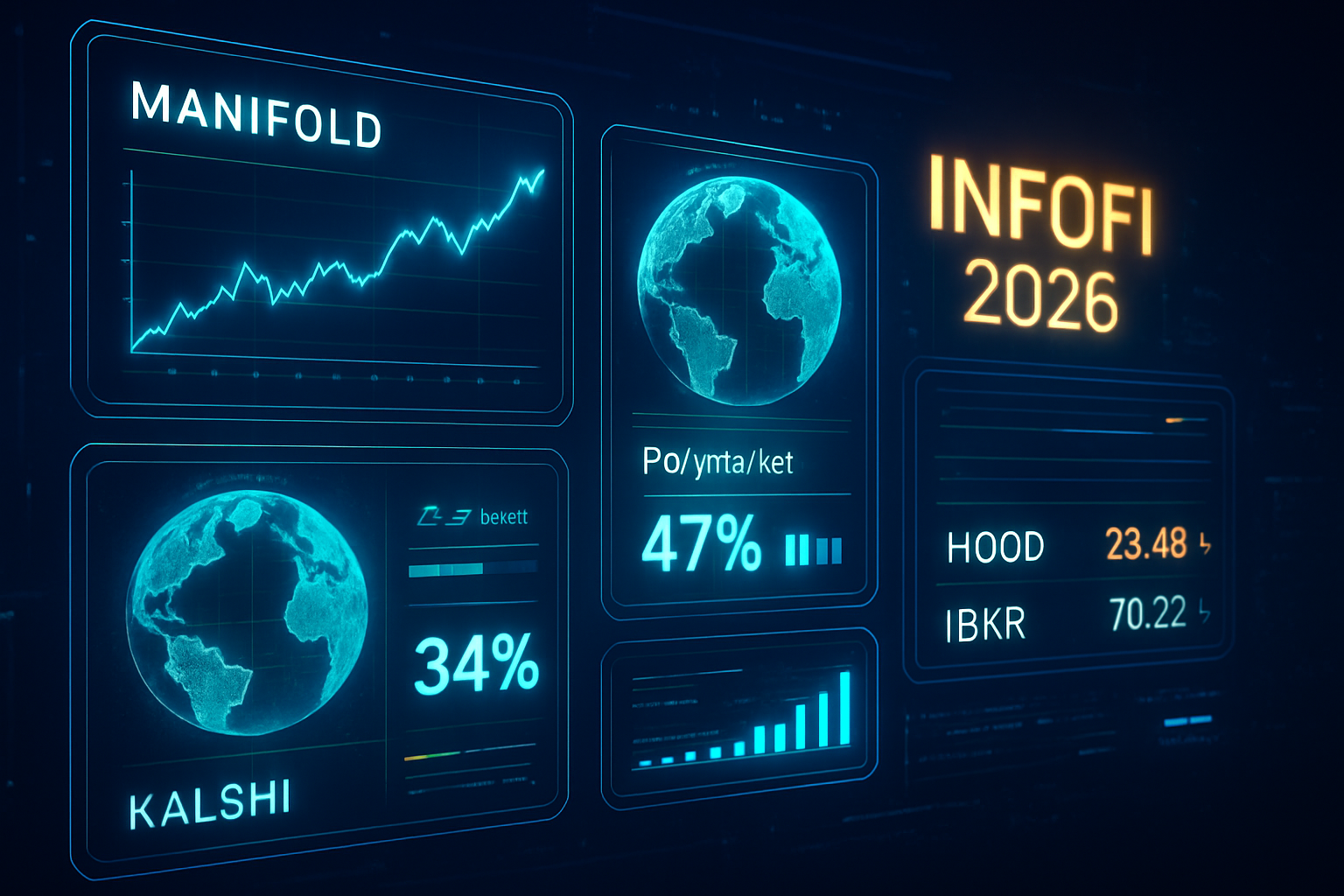
    With total industry volume reaching a staggering $13 billion per month in late 2025, meta-markets on Manifold are currently pricing a 47% probability that Polymarket will maintain its crown as the volume leader through the end of the year. However, the regulated giants are closing in. Interest in these meta-markets has skyrocketed as institutional liquidity from firms like Susquehanna International Group and Jane Street begins to treat event contracts not as "bets," but as sophisticated hedging tools for geopolitical and macroeconomic risk.

    The Market: What's Being Predicted

    The primary battleground for industry observers is the Manifold market titled "Top 1 Prediction Market by Volume in 2026." This contract tracks the total notional volume across the major players: Polymarket, Kalshi, and the rapidly ascending ForecastEx, owned by Interactive Brokers (NASDAQ: IBKR).

    As of today, the odds stand at:

    • Polymarket (47%): The crypto-native giant continues to lead, fueled by its role as the global "truth engine" for international events.
    • Kalshi (34%): Despite facilitating over $43 billion in trades in 2025, Kalshi’s odds have softened following a recent regulatory speed bump in Massachusetts regarding sports contracts.
    • ForecastEx (12%): A dark horse that recently surpassed $1 billion in cumulative notional volume, drawing in traditional finance (TradFi) users through the existing IBKR ecosystem.
    • Robinhood (7%): Following its high-profile joint venture with Susquehanna, Robinhood (NASDAQ: HOOD) has become the fastest-growing retail entrant, though its 2026 volume is still playing catch-up.

    Trading on these markets is characterized by high liquidity and a unique "insider" feel, as many participants are employees of these very platforms or professional market makers who provide the liquidity for the industry.

    Why Traders Are Betting

    The volatility in these meta-markets is being driven by three primary factors: regulatory arbitrage, the "InfoFi" narrative, and institutional product integration. Traders are currently reacting to a January 2026 preliminary injunction in Massachusetts that temporary banned "event contracts related to sports" on regulated exchanges. Since nearly 90% of Kalshi's record-breaking 2025 volume was derived from sports-adjacent markets, the "No" side of their dominance contract saw a massive 15% spike in volume this week.

    Meanwhile, the concept of Information Finance (InfoFi)—the idea that prediction markets are the most efficient way to price the probability of truth—is moving from theory to reality. Projects like Intuition, which launched its mainnet in late 2025, have convinced Manifold traders that the industry's growth is "non-linear." There is currently a 53% probability on Manifold that a major bank CEO, such as Jamie Dimon of JPMorgan Chase & Co. (NYSE: JPM), will publicly endorse prediction markets as a legitimate asset class before the end of Q3 2026.

    Finally, the entry of Coinbase (NASDAQ: COIN) into the space via its acquisition of The Clearing Company has signaled to traders that the infrastructure for a $10 trillion annual volume rate—the "bull case" for 2026—is finally being built.

    Broader Context and Implications

    This meta-forecasting trend reveals a fundamental shift in how the public views information. In 2024, prediction markets were used to "fact-check" polls; in 2026, they are being used to price the very future of the platforms themselves. This represents the ultimate "skin in the game" for an industry built on the premise that financial incentives lead to better forecasting.

    The regulatory implications are particularly significant. A dominant market on Manifold currently gives an 81% chance that federal preemption will eventually protect Designated Contract Markets (DCMs) from varying state-level bans. If this "Yes" outcome triggers, it would effectively create a unified national market for event contracts in the U.S., similar to the equity markets.

    Historically, Manifold's meta-markets have been eerily accurate. In late 2024, Manifold traders correctly predicted the exact quarter that Kalshi would achieve its first $1 billion month, months before it happened. The current betting activity suggests that 2026 will be the year where regulated (Kalshi, IBKR) and decentralized (Polymarket) volumes finally begin to converge as the legal "grey areas" evaporate.

    What to Watch Next

    The most immediate catalyst for these markets is the resolution of the "Public Integrity in Financial Prediction Markets Act" (H.R. 7004), currently making its way through Congress. If passed, it would formalize the rules around insider trading on event contracts—a move that sounds restrictive but is actually viewed as "bullish" by traders because it provides the legal framework necessary for pension funds and insurance companies to enter the market.

    Key dates to monitor include:

    • February 15, 2026: The deadline for the CFTC to respond to the Massachusetts injunction, which will likely decide Kalshi’s volume trajectory for the first half of the year.
    • Q2 2026 Earnings: Watch for Robinhood (NASDAQ: HOOD) to report its first full quarter of "Event Derivatives" revenue, which many expect will surprise to the upside.

    Traders should also keep an eye on the "Social-to-Market" pipeline. There is an active market on whether a major social media platform like X (formerly Twitter) or Reddit will integrate native prediction market widgets, a move that would likely push the "InfoFi" adoption probability toward 90%.

    Bottom Line

    The meta-markets on Manifold suggest that the prediction market industry is entering its "scaling phase." While Polymarket remains the volume king due to its global reach and crypto integration, the institutional weight behind ForecastEx and the retail power of Robinhood make the 2026 volume lead a closer race than most realize.

    The rise of InfoFi represents a paradigm shift where information is no longer just consumed—it is priced, traded, and verified through financial incentives. Whether the industry hits the predicted $10 trillion annual volume target by the end of 2026 remains to be seen, but the "smart money" on Manifold is betting that the search for truth has finally found its business model.

    In 2026, we aren't just predicting the news; we are betting on the machines that predict the news.


    This article is for informational purposes only and does not constitute financial or betting advice. Prediction market participation may be subject to legal restrictions in your jurisdiction.

    PredictStreet focuses on covering the latest developments in prediction markets.
    Visit the PredictStreet website at https://www.predictstreet.ai/.
  • Predictive Power: Iran Conflict Markets Surge to $107M as Traders Price in 83% Chance of US Action

    Predictive Power: Iran Conflict Markets Surge to $107M as Traders Price in 83% Chance of US Action

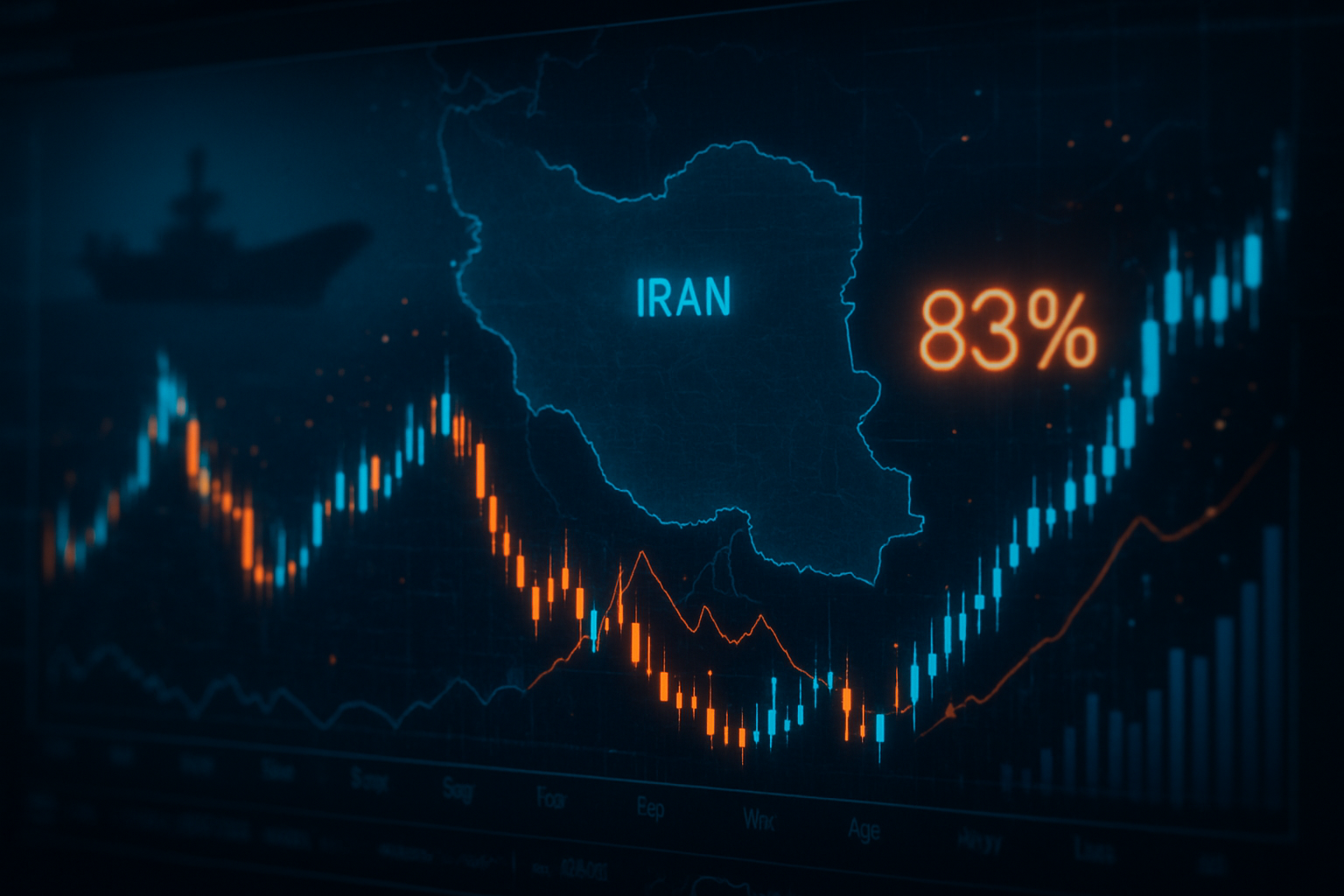
    As of January 27, 2026, the geopolitical landscape in the Middle East has reached a fever pitch, and nowhere is this tension more visible than on global prediction markets. Polymarket, the world’s largest decentralized prediction platform, has seen the volume in its Iran-related military action markets explode to over $107 million. Traders are currently pricing in a staggering 83% probability that the United States will conduct a military strike against Iranian targets before June 30, 2026—a sharp climb from just 48% at the start of the year.

    The surge in trading activity follows a volatile 2025, marked by direct military confrontations and shifting diplomatic alliances. What was once dismissed as "digital gambling" has transformed into a critical barometer for global risk. With millions of dollars at stake, these markets are no longer just reflecting public opinion; they are serving as a high-stakes "shadow intelligence" network that many institutional investors now monitor more closely than traditional news broadcasts from outlets like CNN, owned by Warner Bros. Discovery (NASDAQ: WBD).

    The Market: What's Being Predicted

    The focal point of this massive liquidity is the "US Military Action Against Iran" umbrella market on Polymarket. This contract, which has recorded over $107 million in total volume, requires a definitive "Yes" resolution if the U.S. military executes an airstrike, naval attack, or ground operation on Iranian soil, airspace, or maritime territory. While the 83% chance of U.S. action dominates the long-term outlook, short-term contracts are equally active. A market predicting an Israeli strike by January 31, 2026, is currently trading at a low 6%—a dramatic drop from 53% earlier this month—suggesting that traders believe unilateral Israeli action is being sidelined in favor of a coordinated, U.S.-led operation.

    The resolution criteria for these markets are notoriously strict to prevent ambiguity. For a "Yes" to be triggered, the action must be a physical kinetic strike; economic sanctions or cyberattacks are explicitly excluded. Verification relies on official government statements or a consensus of at least five major international news organizations, including Thomson Reuters (NYSE: TRI), the Associated Press, and The New York Times Company (NYSE: NYT). This level of rigor has attracted professional arbitrageurs and institutional desks looking for a clear, binary way to play geopolitical volatility.

    Why Traders Are Betting

    The current bullishness on military action is heavily informed by the events of June 2025, known as "Operation Rising Lion." During that period, Israel conducted surgical strikes on Iranian nuclear facilities in Natanz and Isfahan. In the 48 hours leading up to those strikes, Polymarket odds for an Israeli attack surged from 14% to nearly 99%, providing a much faster signal than traditional media. This historical accuracy has emboldened traders in the current cycle.

    However, the market is also being driven by whispers of "insider" activity. The platform is still reeling from the controversy surrounding a trader known as "Rundeep," who allegedly placed massive "Yes" bets just hours before Operation Rising Lion. This has led to increased scrutiny from intelligence agencies, including Israel's Shin Bet, though the decentralized nature of the platform makes enforcement difficult. Beyond speculation, the fundamental drivers include the continued expansion of Iran's enrichment programs and the recent deployment of U.S. carrier strike groups to the North Arabian Sea, which many see as a precursor to the 83% probability currently reflected in the odds.

    Broader Context and Implications

    The evolution of these markets represents a paradigm shift in risk management. Hedge funds are no longer just using traditional derivatives to hedge their energy exposure; they are "shorting" peace. For instance, risk managers for global logistics firms have been using the "Strait of Hormuz Closure" market—currently at 48%—to offset potential spikes in shipping insurance costs. The "wisdom of the crowd" found in prediction markets often incorporates fragmented information from ground-level sources and diplomatic leaks that haven't yet reached the mainstream.

    Furthermore, these markets have shown a significant correlation with other asset classes. Analysts have noted a high inverse correlation between the "Iran Strike" odds and the price of Bitcoin, while safe-haven assets have moved in tandem with the conflict probability. In early 2026, as the odds of a U.S. strike climbed, Gold prices surged past the $5,000 per ounce mark. Even major tech platforms like Alphabet Inc. (NASDAQ: GOOGL) via Google Finance have begun integrating real-time prediction market data into their dashboards, signaling a growing acceptance of these odds as legitimate financial signals.

    What to Watch Next

    The immediate focus for traders is the January 31, 2026, deadline for the unilateral Israeli strike market. While the 6% probability suggests the immediate threat of a solo mission has passed, any sudden movement in these odds could signal a breakdown in U.S.-Israel coordination. Market participants are also keeping a close eye on the "Regime Stability" contracts. Currently, there is a 27% probability that Supreme Leader Ali Khamenei will be removed from power by March 31, 2026, reflecting the domestic unrest that has plagued Iran since late 2025.

    As we approach the June 30th deadline for the primary U.S. strike market, expect liquidity to tighten and volatility to increase. Key dates for U.S. Congressional testimony on Middle East policy and the scheduled rotation of naval assets in the Persian Gulf will be major catalysts for market movement. Traders will be looking for any deviation from the current 83% "Yes" price as a signal of a possible diplomatic breakthrough or a delay in military plans.

    Bottom Line

    The $107 million volume in Iran military action markets underscores a new reality: prediction markets are becoming the world’s most efficient processing engine for geopolitical risk. By incentivizing the discovery of truth through financial gain, platforms like Polymarket are providing a level of clarity that traditional intelligence and media often struggle to match. The high conviction behind an impending U.S. strike suggests that the "smart money" is preparing for a significant escalation in the first half of 2026.

    Whether these markets are accurately predicting the future or simply reflecting a collective anxiety, their impact on modern finance is undeniable. As tools for hedging and "shadow intelligence," they have become essential for anyone navigating the complexities of the modern Middle East. For now, all eyes remain on the 83% probability, a number that carries the weight of billions in potential economic impact and the lives of millions in the region.


    This article is for informational purposes only and does not constitute financial or betting advice. Prediction market participation may be subject to legal restrictions in your jurisdiction.

    PredictStreet focuses on covering the latest developments in prediction markets. Visit the PredictStreet website at https://www.predictstreet.ai/.