Tag: Polymarket

  • The ICE Age of InfoFi: How a $2 Billion Bet Turned Polymarket into Wall Street’s Truth Engine

    The ICE Age of InfoFi: How a $2 Billion Bet Turned Polymarket into Wall Street’s Truth Engine

    The landscape of global finance shifted permanently this winter as the Intercontinental Exchange (NYSE: ICE) finalized a staggering $2 billion strategic investment into Polymarket. For years, prediction markets were viewed as the "Wild West" of decentralized finance—a niche playground for crypto-natives and political junkies. However, with the backing of the world’s most powerful exchange operator, the narrative has shifted from speculative curiosity to institutional necessity.

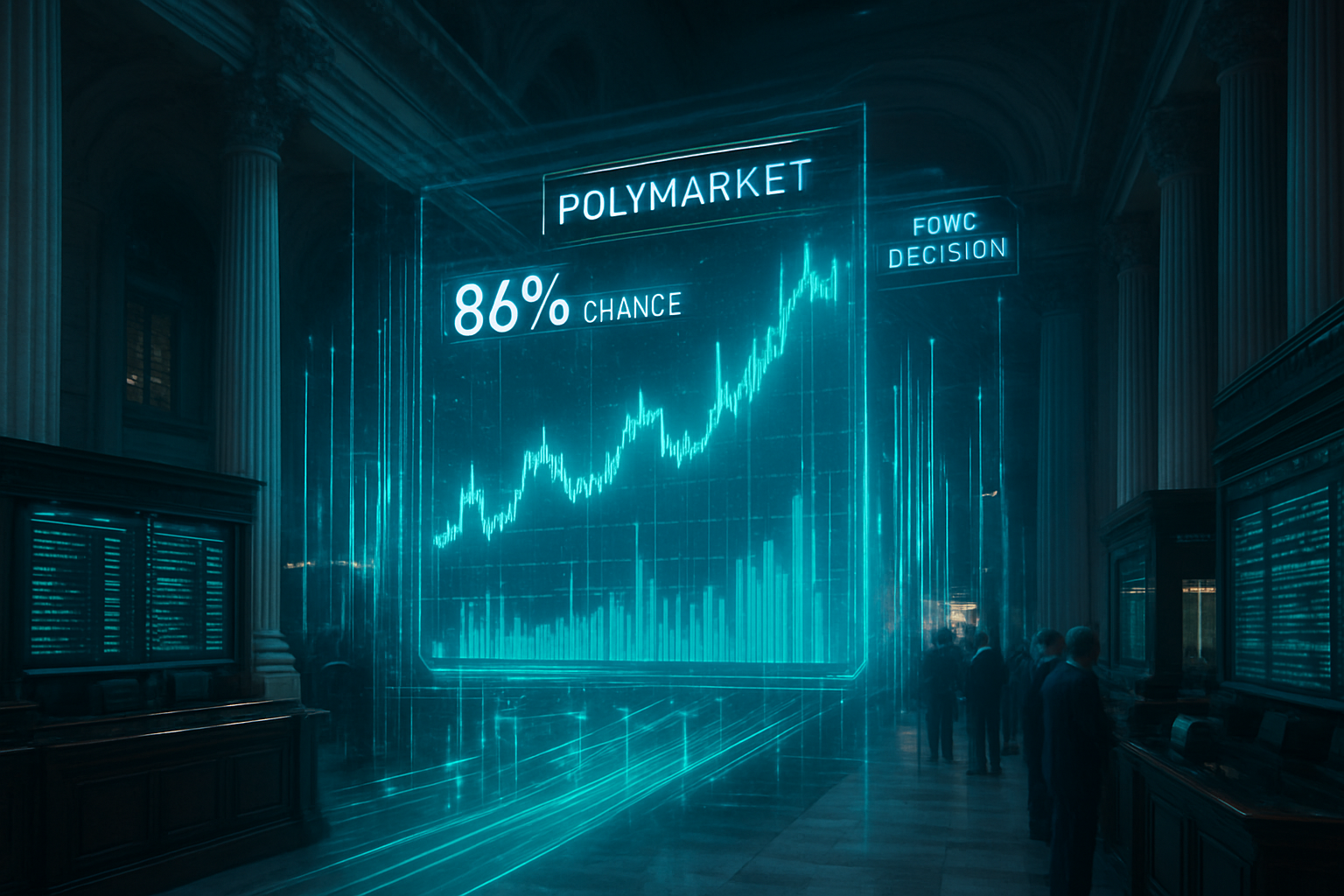
    As of early February 2026, the "institutional seal of approval" has propelled Polymarket’s cumulative trading volume to a record-shattering $33.4 billion, with $12 billion of that activity occurring in January 2026 alone. The market is currently laser-focused on the Federal Reserve’s March policy meeting, where traders are pricing in an 86% probability that interest rates will remain unchanged. This surge in volume and precision isn't just a trend; it is the arrival of "Information Finance" (InfoFi) as a foundational pillar of the global economy.

    The Market: What's Being Predicted

    While Polymarket rose to prominence during the 2024 election cycle, the platform has evolved into a multi-asset "truth engine" following its $112 million acquisition of the CFTC-licensed derivatives exchange, QCX. This regulatory pivot allowed Polymarket to legally relaunch in the United States, bringing domestic institutional capital into the fold. Today, the most liquid markets are no longer just about politics; they are about macroeconomic shifts and corporate performance.

    The March FOMC Decision market is currently the platform’s crown jewel, boasting over $72 million in active volume. Beyond the Fed, traders are heavily engaged in corporate "Earnings Beats" markets for tech giants like NVIDIA (NASDAQ: NVDA) and Amazon (NASDAQ: AMZN). For instance, the market currently assigns a 95% probability to an NVIDIA earnings beat later this month, a signal that traditional equity traders are now using to front-run movements in the NASDAQ 100. These contracts resolve based on official government reports or SEC filings, providing a clear, binary outcome that eliminates the ambiguity often found in traditional analyst forecasts.

    Why Traders Are Betting

    The primary driver behind this explosion in activity is the "liquidity backstop" provided by the Intercontinental Exchange (NYSE: ICE). Historically, prediction markets suffered from thin order books, where a $1 million trade could drastically swing the odds. With ICE’s $2 billion infusion, the platform now possesses the depth to handle nine-figure positions from hedge funds and institutional desks without significant slippage.

    Wall Street giants like Goldman Sachs (NYSE: GS) and Point72 have reportedly begun integrating Polymarket’s real-time probability data into their risk management models. Traders are no longer betting just to "win" a wager; they are using these markets to hedge macro risks. For example, a firm heavily exposed to Iranian oil disruptions may take a "Yes" position on the "US strikes Iran by March 31" market (currently at 42%) as a direct hedge against geopolitical volatility. This shift from "gambling" to "hedging" has fundamentally changed the participant profile of the platform.

    Furthermore, the integration of Polymarket data into ICE Connect terminals has placed prediction market odds alongside S&P 500 benchmarks and Treasury yields. This proximity has fostered a new level of trust among traditional finance (TradFi) firms, who now view these decentralized probabilities as more reliable and reactive than traditional polling or lagging economic indicators.

    Broader Context and Implications

    The ICE-Polymarket alliance marks the end of the "polling era" in financial forecasting. In a world where traditional surveys have repeatedly failed to capture public sentiment or economic reality, prediction markets offer a "skin-in-the-game" alternative. When people put money behind their opinions, the noise of partisan bias is filtered out, leaving a high-fidelity signal that has consistently outperformed think-tank models in terms of Brier scores—the gold standard for measuring forecasting accuracy.

    This transition also highlights a major regulatory win for the industry. By securing a CFTC-licensed path through the QCX acquisition, Polymarket has neutralized the legal "grey area" that plagued the sector for years. This regulatory clarity is what allowed the Intercontinental Exchange (NYSE: ICE) to step in, providing a template for how other legacy financial institutions might interact with blockchain-based protocols.

    The implications for "InfoFi" are vast. We are seeing the birth of an asset class where the underlying commodity is truth. As more real-world assets (RWAs) are tokenized, the line between a prediction market and a traditional futures market will continue to blur, creating a unified global ledger for both value and information.

    What to Watch Next

    The next major milestone for the ICE-Polymarket partnership is the widely rumored "Tokenization Initiative." Industry insiders suggest that the two entities are working on a framework to bring SpaceX IPO participation to the platform. Currently, traders assign an 84% chance that SpaceX will be the largest IPO of 2026. If Polymarket can facilitate the trading of "pre-IPO" synthetic shares or derivatives, it could disrupt the entire private equity landscape.

    Another key date to monitor is the upcoming nomination for the next Federal Reserve Chair. Following reports of a nomination plan in late January, the market for "Who will Trump nominate as Fed Chair?" has seen Kevin Warsh emerge as the 58% frontrunner. Any shift in these odds will likely precede official White House announcements, serving as the ultimate "alpha" for bond traders.

    Finally, the industry is watching for the full integration of Polymarket accounts into retail brokerage apps. Once a user can trade Apple (NASDAQ: AAPL) stock and "Apple Earnings Beat" prediction contracts within the same interface, the mainstreaming of prediction markets will be complete.

    Bottom Line

    The $2 billion investment by the Intercontinental Exchange (NYSE: ICE) is more than just a capital infusion; it is the moment prediction markets graduated to the major leagues of global finance. By providing the liquidity and regulatory cover necessary for institutional participation, ICE has turned Polymarket into a $33 billion "truth engine" that Wall Street can no longer ignore.

    This evolution proves that prediction markets are not merely a tool for betting on elections, but a sophisticated financial instrument for price discovery in an increasingly uncertain world. As we move deeper into 2026, the markets that once seemed like high-stakes experiments are now the very benchmarks by which the world measures its future. Whether it is interest rate cuts or corporate earnings, the "smart money" is no longer looking at polls—it’s looking at the tape.


    This article is for informational purposes only and does not constitute financial or betting advice. Prediction market participation may be subject to legal restrictions in your jurisdiction.

    PredictStreet focuses on covering the latest developments in prediction markets.
    Visit the PredictStreet website at https://www.predictstreet.ai/.
  • The Signal in the Noise: Why Prediction Markets Are the New ‘Information Asset Class’ for Global Crises

    The Signal in the Noise: Why Prediction Markets Are the New ‘Information Asset Class’ for Global Crises

    As of February 6, 2026, the traditional landscape of geopolitical analysis is undergoing a radical transformation. While cable news pundits and academic experts grapple with the nuances of diplomatic cables and legislative posturing, a more precise—and often more brutal—barometer has emerged: the prediction market. In the first week of February, these markets have become the primary "truth signal" for two of the most volatile issues of the year: the escalating military tensions with Iran and the ongoing paralysis of the U.S. government.

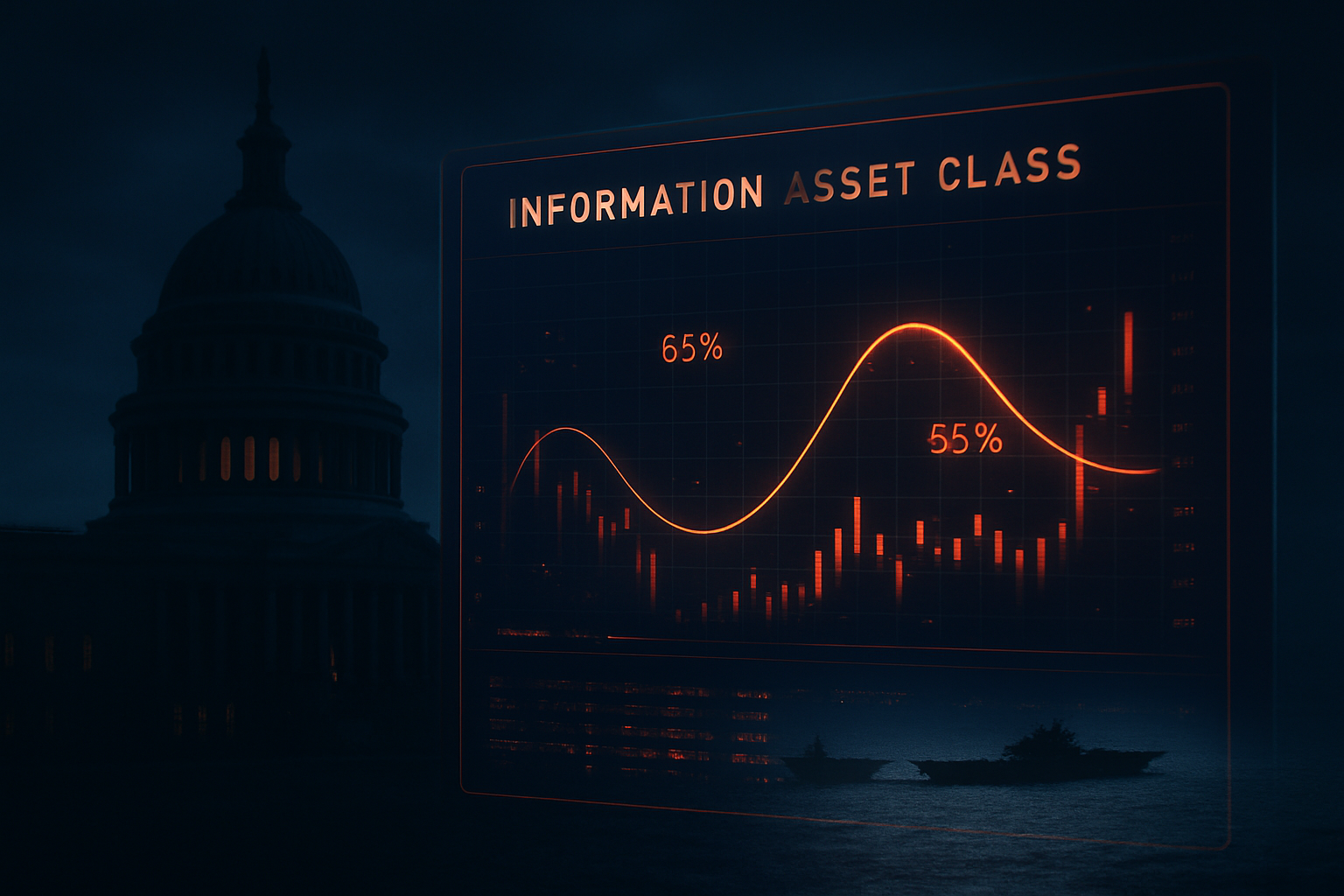
    Currently, Polymarket and Kalshi are pricing the likelihood of another U.S. government shutdown at 65%, following a peak of 73% in late January. Simultaneously, the probability of a U.S. strike on Iran by mid-summer has climbed to a significant 55%, even as short-term traders "fade the heat" of an immediate conflict. This shift represents more than just a new way to gamble; it marks the maturation of prediction markets into a bona fide "Information Asset Class" that consistently outperforms traditional forecasting models by aggregating real-time data through the lens of financial risk.

    The Market: What's Being Predicted

    The current focus of global traders is split between the "Maximum Pressure" campaign in the Persian Gulf and the domestic budget gridlock in Washington. On Polymarket, the world’s largest decentralized prediction platform, the market for a "U.S. strike on Iran" has seen its volume swell past $182 million. While the odds for a strike by the end of February sit at a relatively low 29%, the "By June 30" contract is trading at 55%, suggesting that traders expect the current naval standoff to reach a breaking point within the next quarter.

    Domestically, the U.S. government is currently navigating a partial shutdown that began on January 31, 2026. On Kalshi—the first regulated prediction market in the U.S.—the "Government Shutdown Extension" contract is the most liquid asset on the platform. Traders are currently pricing a 65% chance that the Department of Homeland Security (DHS) will remain unfunded past the upcoming February 14 deadline. These markets are no longer dominated by retail hobbyists; the involvement of major financial institutions and platforms like Interactive Brokers (NASDAQ: IBKR) and Robinhood (NASDAQ: HOOD), which both integrated prediction products in late 2024, has brought unprecedented liquidity and professional rigor to these forecasts.

    Why Traders Are Betting

    The 73% probability peak for the current shutdown wasn't driven by general political malaise, but by a specific catalyst known as the "Minneapolis Incident." Following the fatal shooting of a U.S. citizen, Alex Pretti, by Border Patrol agents in late January, Senate Democrats withdrew support for the DHS funding bill. Prediction market traders identified this "black swan" event instantly, spiking the shutdown odds 40 points higher in a single afternoon—hours before mainstream political analysts realized the legislative path forward had vanished.

    In the geopolitical sphere, the 55% odds for an Iran strike are being influenced by the deployment of the USS Abraham Lincoln and its surrounding carrier strike group to the Gulf of Oman. However, a significant "whale" position—recently flagged by the tracking tool Unusual Whales—has placed $5 million on "No strike by February 28." These sophisticated traders are betting that the current naval posturing is a high-stakes negotiating tactic designed to force Iran back to the table in Oman, rather than a precursor to immediate kinetic action. This "fading the heat" strategy highlights the depth of analysis within these markets, where participants must distinguish between political theater and actual intent.

    Broader Context and Implications

    The rise of the "Information Asset Class" finds its roots in the 2024 U.S. Presidential Election. During that cycle, traditional pollsters and cable news networks labeled the race a "dead heat" or "too close to call" well into election night. In contrast, prediction markets had consistently priced a 60% probability of a Republican sweep for weeks. The most famous example was "Théo," a French trader who used "neighbor polling" techniques to identify hidden voter support, eventually netting over $80 million on Polymarket.

    This historical accuracy has forced a shift in how the public and policymakers view these platforms. Unlike pundits, who face no financial penalty for being wrong, prediction market participants are incentivized to seek out the most accurate, unvarnished truth. This has led to a "virtuous cycle" of accuracy: as the markets prove more reliable, they attract more capital, which in turn leads to even more precise pricing. However, this success has also brought regulatory scrutiny. The Commodity Futures Trading Commission (CFTC) continues to monitor these markets for potential "insider trading" by government officials, especially following reports of high-accuracy trades originating from sensitive diplomatic zones.

    What to Watch Next

    The coming weeks will be a crucible for these markets. The February 14 budget deadline is the next major milestone for the government shutdown contracts. If a bipartisan deal regarding DHS reform remains elusive by February 12, expect the 65% odds to surge toward 90% as "lame duck" legislative sessions begin to stall.

    Regarding Iran, the key signal will be the conclusion of the Oman diplomatic talks. If the Sultanate of Oman issues a "no progress" statement, the June 30 strike odds are expected to climb toward 70%. Traders are also closely watching the movement of the USS Abraham Lincoln; any repositioning toward the Strait of Hormuz will likely trigger an immediate price jump in the conflict-related contracts.

    Bottom Line

    The current pricing of a 73% shutdown peak and a 55% chance of mid-year conflict with Iran confirms that prediction markets have transcended their origins as "betting sites." They are now essential tools for navigating an increasingly complex world where traditional media often lags behind the reality of the ground. By forcing participants to "put their money where their mouth is," these markets strip away the partisan bias and "hopium" that often cloud expert analysis.

    As we move through 2026, the success of these platforms as an "Information Asset Class" suggests that the most accurate news of the future won't be found in a headline, but in a price chart. Whether it’s the survival of a government or the start of a war, the smartest money in the room is already telling us what happens next.


    This article is for informational purposes only and does not constitute financial or betting advice. Prediction market participation may be subject to legal restrictions in your jurisdiction.

    PredictStreet focuses on covering the latest developments in prediction markets. Visit the PredictStreet website at https://www.predictstreet.ai/.
  • The Death of the Poll: How Google and Meta are Turning Prediction Markets into the Global Truth Engine

    The Death of the Poll: How Google and Meta are Turning Prediction Markets into the Global Truth Engine

    As of February 6, 2026, the digital landscape has undergone a tectonic shift. Once relegated to the fringes of the internet and dismissed as "speculative casinos," prediction markets have officially entered the mainstream. This transformation is crystallized by the recent, sweeping policy updates from Alphabet (NASDAQ: GOOGL) and Meta (NASDAQ: META), which have moved to treat prediction markets not as gambling, but as vital financial and information tools.

    The current probability of prediction markets becoming the primary source for real-time news verification—a concept now widely known as "Information Finance" or InfoFi—sits at an all-time high. Markets tracking the efficacy of traditional polling versus prediction market accuracy for the upcoming 2026 U.S. Midterms show a staggering 85% confidence level that markets will outperform traditional data sets. This surge in interest is driven by a series of regulatory victories and a fundamental change in how the world's largest advertising platforms categorize "event-based" trading.

    The Market: What’s Being Predicted

    The "market" for prediction markets itself has exploded. Leading platforms like Kalshi and Polymarket are no longer niche startups; they are billion-dollar infrastructure plays. In early 2026, Kalshi reached an estimated valuation of $11 billion, while Polymarket, following its successful U.S. pivot, is trailing closely at $9.5 billion. The sheer volume of trade is the most telling metric: industry analysts project notional trading volume for event contracts to reach between $120 billion and $150 billion by the end of this year.

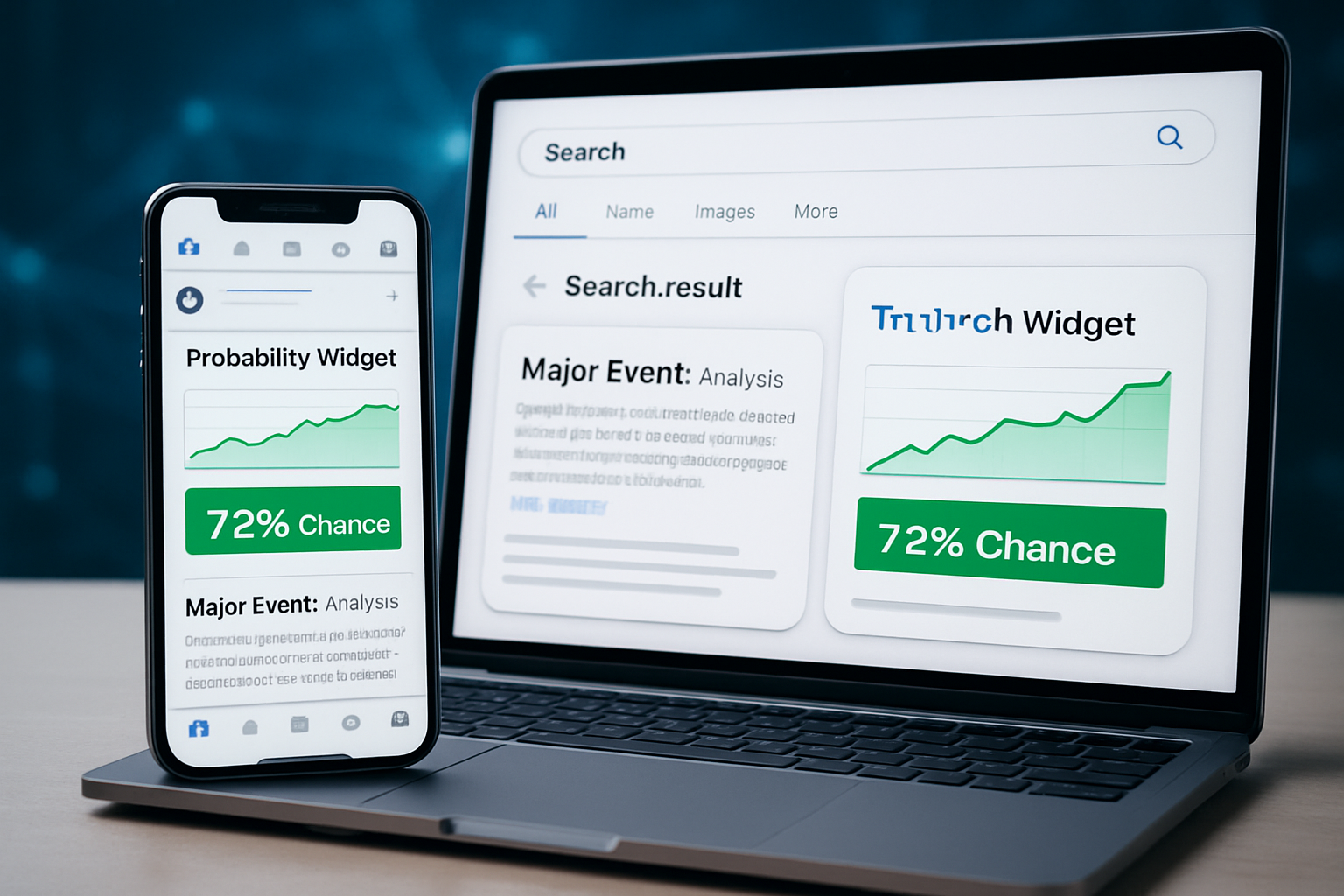
    This growth is being funneled through highly visible integrations. Google has recently embedded "Probability Widgets" directly into Google Finance and Search results. Users searching for "Fed interest rate hike" or "2026 World Cup winner" are now presented with a live odds-based widget sourced from CFTC-regulated exchanges. Meanwhile, Robinhood (NASDAQ: HOOD) has fully integrated election and economic contracts into its primary retail app, making "trading the news" as accessible as buying a fractional share of an ETF.

    The key resolution criteria for this shift rest on the "mainstreaming" of these platforms. When Google updated its ads policy on January 21, 2026, it specifically opened the gates for Commodity Futures Trading Commission (CFTC)-authorized markets to run search ads. This move ended a decade of "shadow-banning" for the industry, effectively legitimizing prediction markets as regulated financial instruments rather than offshore betting sites.

    Why Traders Are Betting

    The primary driver for the current betting frenzy is the proven accuracy of these markets during the 2024 election cycle. While traditional polls were mired in margin-of-error debates, prediction markets provided a stable, real-time barometer of voter sentiment that correctly signaled key pivots weeks in advance. Traders aren't just betting on outcomes; they are betting on the superiority of the mechanism.

    Recent movements have been fueled by the concept of "Information Finance," a term popularized by thinkers like Vitalik Buterin. The logic is simple: when people put their money where their mouth is, the resulting data is "correct by construction." This has led to the rise of institutional "alpha seekers"—hedge funds and market makers—who now provide deep liquidity to these markets. They treat event contracts as legitimate hedges against geopolitical and economic risks, such as sudden shifts in trade policy or central bank decisions.

    Furthermore, the introduction of interactive "Truth Widgets" on Meta platforms like Facebook and Instagram has created a new class of "social predictors." Meta’s pilot program allows users to see real-time market odds alongside controversial news stories. This serves as a market-based counter-narrative to misinformation, shifting the public perception from "gambling for profit" to "participating in truth discovery."

    Broader Context and Implications

    The mainstreaming of InfoFi represents a massive regulatory and cultural pivot. The 2024 landmark legal victory of Kalshi over the CFTC acted as a catalyst, stripping the agency of its power to unilaterally ban political event contracts. Under the leadership of the current CFTC Chairman, Michael Selig, the agency has performed a "Regulatory Reset," withdrawing previous bans and asserting exclusive federal jurisdiction over these markets. This has effectively pre-empted the patchwork of state-level gambling laws that previously stifled growth.

    This shift reveals a growing public hunger for objective truth in an era of AI-generated content and fragmented media. Prediction markets offer a decentralized, incentive-aligned alternative to the "expert class." Historically, these markets have shown a remarkable ability to process complex information faster than traditional newsrooms, accurately predicting everything from the resolution of the Hollywood strikes to the exact timing of tech layoffs.

    However, the "InfoFi" revolution is not without friction. Some platforms, including X (formerly Twitter), have faced challenges with "market spam"—automated accounts designed to manipulate odds or farm rewards. This has led to a technological arms race, where platforms are deploying advanced verification and anti-manipulation algorithms to ensure that the market signal remains pure.

    What to Watch Next

    The most immediate milestone to monitor is the full-scale rollout of Meta’s prediction widgets across its global news feeds. If successful, this will integrate market data into the daily social experience of billions, potentially making "checking the odds" as common as checking the weather. Additionally, the 2026 FIFA World Cup, hosted in North America, is expected to be the largest non-political event in prediction market history, providing a massive liquidity test for platforms like DraftKings (NASDAQ: DKNG) and Fanatics, which are increasingly eyeing the event-contract space.

    Investors should also watch for the potential launch of a "Prediction Market ETF." With the industry's valuation soaring, rumors of a structured product that allows investors to gain exposure to a basket of event-contract platforms are intensifying. The regulatory path for such a product seems clearer now than ever before, following the CFTC’s shift toward a pro-innovation stance.

    Bottom Line

    The mainstreaming of prediction markets marks the end of the "speculative casino" era and the beginning of the "Information Finance" age. By allowing these markets to advertise and integrating their data into core products, Alphabet and Meta have effectively deputized prediction markets as the internet’s "Source of Truth." This is not just about betting on the future; it is about creating a more accurate, incentive-driven way to understand the present.

    As we move deeper into 2026, the distinction between a "trader" and a "news consumer" is blurring. In a world where information is the most valuable commodity, the platforms that can most accurately price that information are the ones that will win. Prediction markets have evolved from a niche hobby into the foundational infrastructure of the modern information economy, and the "Big Tech" seal of approval is the final hurdle they needed to clear.


    This article is for informational purposes only and does not constitute financial or betting advice. Prediction market participation may be subject to legal restrictions in your jurisdiction.

    PredictStreet focuses on covering the latest developments in prediction markets.
    Visit the PredictStreet website at https://www.predictstreet.ai/.
  • The ‘InfoFi’ Dynasty: Trump Family Seals Dominance Over the Prediction Market Industry

    The ‘InfoFi’ Dynasty: Trump Family Seals Dominance Over the Prediction Market Industry

    As of February 6, 2026, the intersection of high finance and political power has reached a new frontier. The Trump family, led by Donald Trump Jr., has successfully pivoted from the political arena into the bedrock of the global "Information Finance" (InfoFi) movement. With strategic advisory roles at the industry’s two largest platforms, Kalshi and Polymarket, and the recent launch of a proprietary prediction wing within Trump Media & Technology Group (NASDAQ: DJT), the family has positioned itself as the gatekeeper of the world’s most accurate "truth engines."

    The prediction market sector, once a niche hobby for data nerds and political junkies, has exploded into a multi-billion dollar pillar of the financial system. Current odds across major platforms suggest that prediction market volume will surpass traditional polling revenue by a factor of ten by the end of 2026. This surge is being driven by a massive influx of retail capital and the family’s aggressive branding of these markets as the ultimate antidote to "fake news"—a move that has turned market forecasting into a populist movement.

    The Market: What's Being Predicted

    The current landscape is dominated by a three-way battle for liquidity. Kalshi, the federally regulated heavyweight now valued at approximately $11 billion, has seen its user base skyrocket following its integration with retail trading giants like Robinhood Markets, Inc. (NASDAQ: HOOD). Meanwhile, Polymarket, the decentralized leader, has cemented its status with a $9 billion valuation, bolstered by a landmark $2 billion investment from the Intercontinental Exchange (NYSE: ICE) in late 2025.

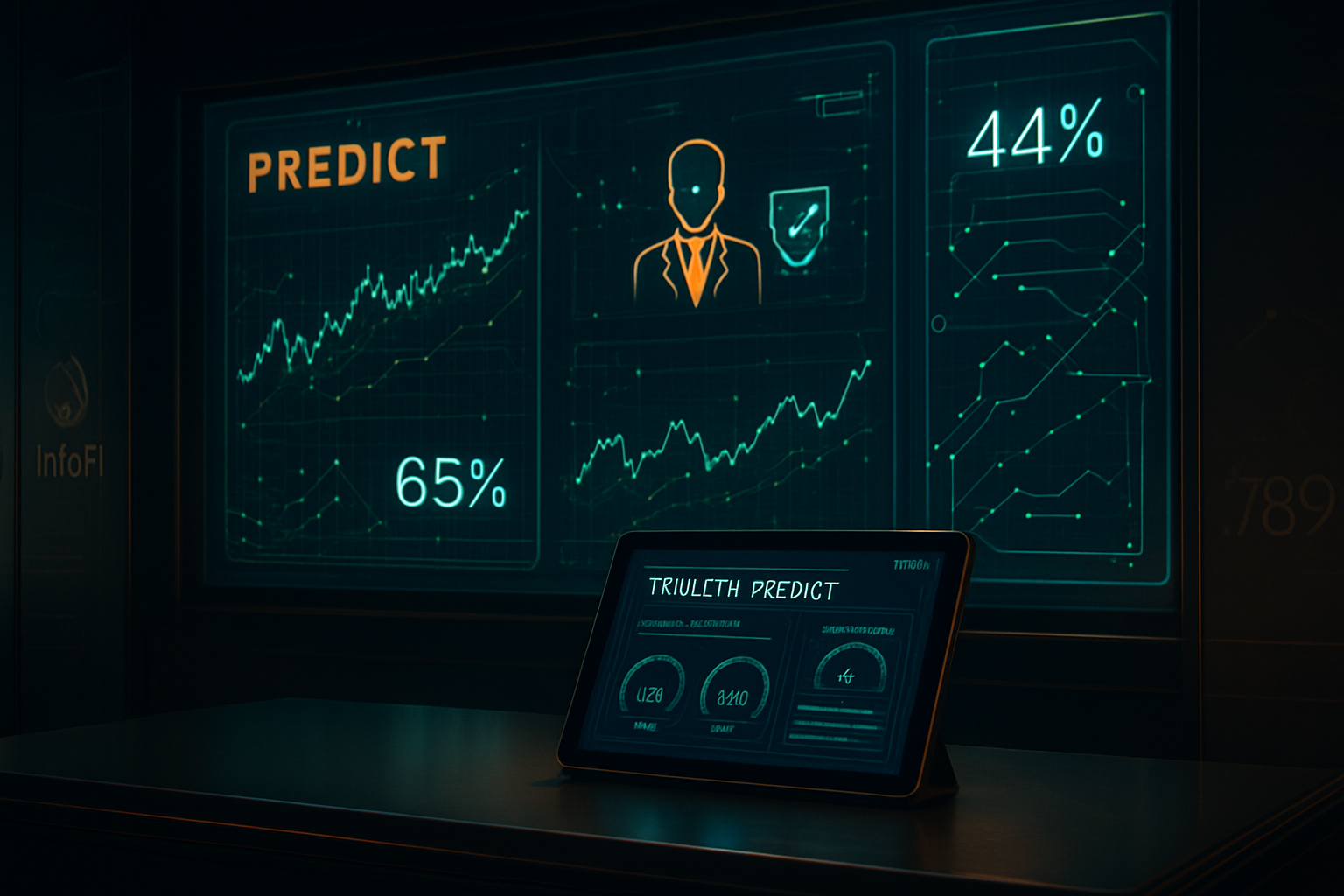
    However, the newest and most disruptive entrant is Truth Predict, the prediction market arm of Truth Social. Launched in late 2025, Truth Predict utilizes a partnership with Crypto.com’s CFTC-registered derivatives arm to offer U.S. users legal, regulated event contracts. Traders are currently betting on everything from the 2026 midterm election outcomes to specific Federal Reserve interest rate hikes. The most active market at the moment, "Will the DJT Shareholder Token reach $10.00 by June?", has seen over $500 million in volume, reflecting the intense intersection of fandom and finance.

    Why Traders Are Betting

    The primary driver for the current betting frenzy is the perceived "insider edge" provided by the Trump family’s involvement. Donald Trump Jr.’s dual advisory roles at Kalshi and Polymarket—facilitated by the venture capital firm 1789 Capital—have signaled to traders that these platforms are no longer just mirrors of public sentiment, but are actively influenced by the pulse of the political establishment. Omeed Malik, President of 1789 Capital, has been a central figure in this transition, framing the firm's eight-figure investment in Polymarket as a move toward "patriotic capitalism."

    Traders are also reacting to the "InfoFi" narrative. By rebranding prediction markets as a layer of the financial system dedicated to accurate data rather than gambling, the Trump family has attracted a more sophisticated class of institutional investors. Notable large positions, or "whales," have moved from traditional hedge funds into InfoFi platforms, using them as hedges against political volatility. For example, several large-scale bets on U.S. foreign policy shifts in early 2026 have yielded massive returns, leading some to speculate that prediction markets are now front-running traditional news outlets by hours, if not days.

    Broader Context and Implications

    The rise of the "Trump InfoFi Empire" marks a fundamental shift in how the public consumes information. For decades, traditional polling and media analysis were the primary tools for forecasting; today, the market price is the "scoreboard of reality." This shift has profound implications for democratic processes. As prediction markets become more liquid, they exert a gravitational pull on policy, as politicians and officials look to market probabilities to gauge the success of their initiatives.

    From a regulatory standpoint, the landscape is complex but stabilizing. Following a series of legal victories against the CFTC in 2024 and 2025, prediction markets have gained the legal standing of commodities exchanges. However, the Trump family’s deep involvement has sparked a new debate over potential conflicts of interest and "insider trading" in InfoFi. While federal oversight remains favorable under the current administration, several states are still pushing for local restrictions, viewing the integration of social media and betting as a public health risk.

    What to Watch Next

    The coming months will be a stress test for the InfoFi ecosystem. On February 2, 2026, Trump Media & Technology Group set a record date for its "DJT shareholder token" program, which is expected to launch later this month. If this program successfully bridges the gap between equity ownership and prediction market participation, it could create a new model for corporate governance and shareholder engagement.

    Furthermore, the industry is closely watching for a potential merger or "super-app" development. Rumors suggest that Truth Predict may seek to acquire a larger stake in a decentralized protocol to expand its global reach beyond the U.S. regulatory perimeter. Any such move would likely trigger a massive shift in liquidity across the board. The 2026 midterm primaries will serve as the first major test of whether these markets can maintain their accuracy under the weight of unprecedented retail and political pressure.

    Bottom Line

    The Trump family’s deepening involvement in prediction markets represents the ultimate convergence of media, finance, and politics. By leveraging the advisory power of Donald Trump Jr. and the capital of 1789 Capital, the family has effectively turned the prediction market industry into a central pillar of their "Information Finance" vision. These markets are no longer just about betting on outcomes; they are about defining what is true in an era of digital fragmentation.

    Ultimately, the success of platforms like Kalshi, Polymarket, and Truth Predict suggests that the world has moved past the era of the "expert" and into the era of the "market." As liquidity grows, the "scoreboard of reality" will only become harder to ignore. For investors and citizens alike, the message is clear: the most valuable commodity in 2026 is no longer just money, but the accurate prediction of what comes next.


    This article is for informational purposes only and does not constitute financial or betting advice. Prediction market participation may be subject to legal restrictions in your jurisdiction.

    PredictStreet focuses on covering the latest developments in prediction markets.
    Visit the PredictStreet website at https://www.predictstreet.ai/.
  • Divided Mandate: Prediction Markets Signal Blue House and Red Senate for 2026 Midterms

    Divided Mandate: Prediction Markets Signal Blue House and Red Senate for 2026 Midterms

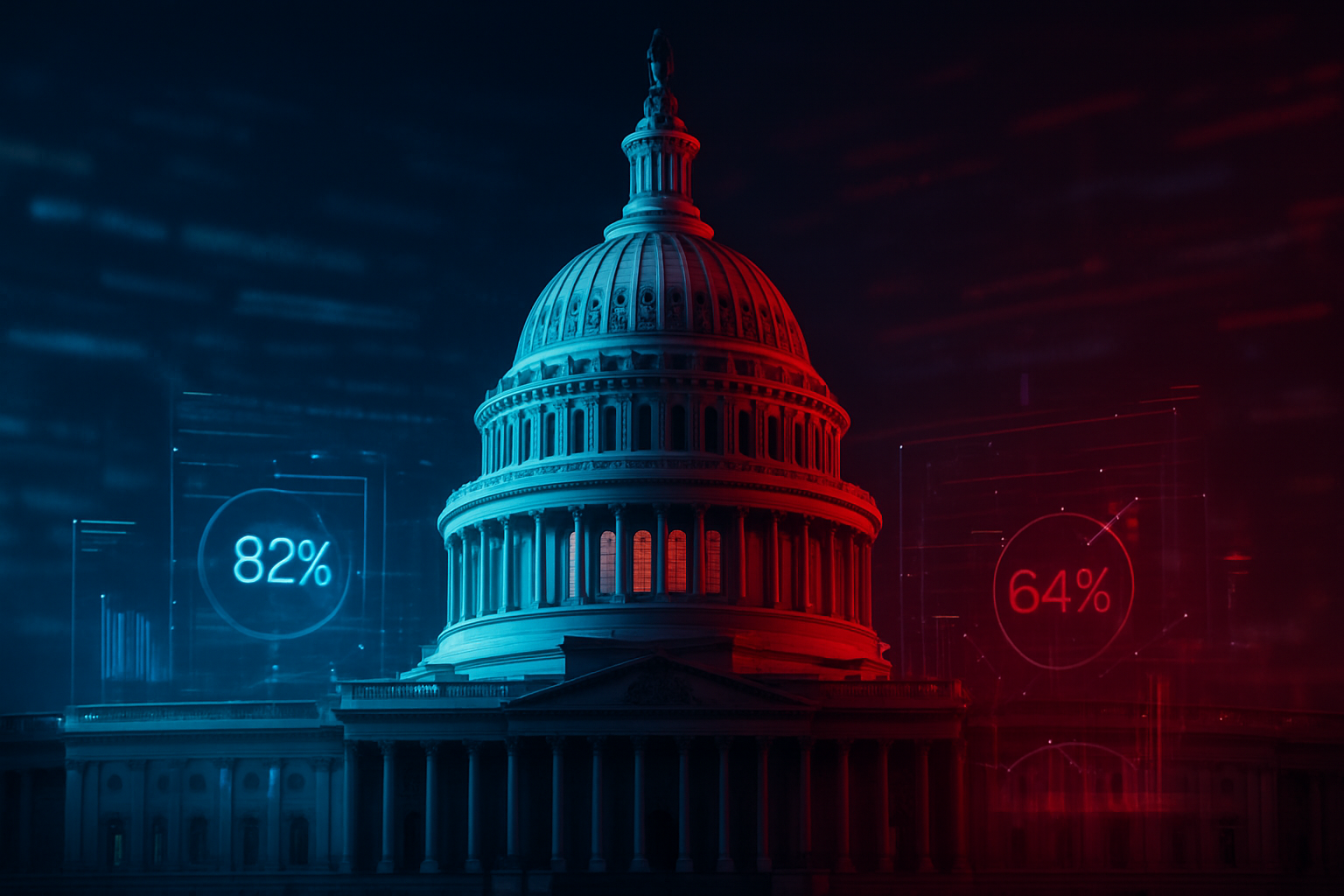
    As the 2026 midterm election cycle enters its most volatile phase, prediction markets have coalesced around a startlingly clear vision of the future: a deeply divided Washington. According to the latest data from Polymarket and Kalshi, the probability of Democrats retaking the House of Representatives has surged to a dominant 82%, while Republicans maintain a resilient 64% chance of holding the Senate. This "split-decision" forecast has become the primary benchmark for political strategists and financial analysts alike.

    The widening gap between the two chambers reflects a unique political landscape in February 2026. While national sentiment has shifted toward the "Blue Wave" in the lower house—fueled by recent Supreme Court rulings on redistricting and a series of federal immigration controversies—the Senate’s structural map remains a formidable "red firewall." For the first time in a midterm cycle, these probabilities aren't just being discussed in niche forums; they are being broadcast as real-time truth by the world's largest media conglomerates.

    The Market: What's Being Predicted

    The "Balance of Power" markets on Polymarket, a decentralized prediction platform, have seen record-breaking liquidity this quarter, with hundreds of millions of dollars now backing the current 82/64 split. The House contract, which pays out if Democrats secure a simple majority, has climbed steadily from 72% in late 2025 to its current 82% high. Conversely, the Senate market has seen more friction, with Republican odds softening slightly from 68% to 64% over the last thirty days, yet remaining the clear favorite.

    On Kalshi, a platform regulated by the Commodity Futures Trading Commission (CFTC), trading volume has similarly spiked. The resolution criteria for these markets are tied to the official certification of the 2026 election results. Unlike traditional polling, which often suffers from a "non-response" bias, these markets are "prediction-incentivized," meaning every percentage point represents real capital moving in response to new information. This has created a highly efficient price discovery mechanism that reacts in minutes to breaking news.

    Why Traders Are Betting

    Traders are pointing to two primary catalysts for the 82% House probability. First, a landmark U.S. Supreme Court decision in January 2026 regarding California’s redistricting has effectively "unlocked" several previously competitive seats for the Democratic party. Second, what has been dubbed the "Minnesota ICE Scandal"—a series of controversial federal enforcement actions in the Midwest—has significantly energized the Democratic base, a trend captured instantly by the markets well before it appeared in traditional suburban polling.

    The Republican "Senate Firewall" at 64% is driven by a starkly different set of data. The 2026 Senate map is historically favorable to the GOP, featuring difficult defensive battles for incumbent Democrats in states like Georgia and Alaska. Institutional traders argue that while the national "generic ballot" mood favors Democrats, the individual state-level math makes a Republican Senate hold the most likely outcome. Large "whale" positions on Polymarket have been observed "hedging" their House bets by doubling down on GOP Senate control, a strategy that anticipates a gridlocked legislative environment through 2028.

    Broader Context and Implications

    The 2026 cycle marks the official "Institutionalization Phase" of prediction markets. Warner Bros. Discovery (NASDAQ: WBD), the parent company of CNN, recently announced an exclusive partnership with Kalshi to integrate real-time "Market-Implied Probability" tickers into their live broadcasts. CNN’s chief data analyst, Harry Enten, now uses these odds to fact-check traditional polls, arguing that the 80% market confidence in candidates like Jon Ossoff is a more reliable indicator of voter sentiment than 400-person phone surveys.

    Similarly, News Corp (NASDAQ: NWSA), through its Dow Jones division, has embedded Polymarket data across the digital platforms of The Wall Street Journal and MarketWatch. These outlets now feature a "Market-Implied Earnings Calendar," which correlates the 82% chance of a Democratic House with projected volatility in the defense and healthcare sectors. This integration signals that prediction markets are no longer a "fringe" tool but are now viewed with the same authority as the S&P 500 or the Treasury yield curve.

    What to Watch Next

    As we move toward the primary season in late spring, several events could disrupt the current 82/64 equilibrium. Key milestones include the March 2026 jobs report and the first set of "swing-district" primaries in Pennsylvania and Virginia. Should Democrats underperform in these early contests, the 82% House probability could see a "correction" back toward the mid-70s.

    Conversely, the Republican Senate odds are highly sensitive to candidate quality. Traders are closely monitoring whether the GOP nominates "moderate-leaning" candidates in states like Michigan and Arizona. If the party leans into more polarizing figures, the 64% Senate "firewall" could collapse, potentially moving the market toward a "Blue Sweep" scenario, which currently sits at a modest 44% probability.

    Bottom Line

    The 2026 Midterm markets represent a paradigm shift in how we understand political outcomes. The 82% probability of a Democratic House and a 64% chance of a Republican Senate suggest that traders are pricing in a return to legislative gridlock. For investors, this data is a crucial signal to prepare for a "status quo" environment where major policy shifts—such as tax code overhauls or massive infrastructure spending—become significantly more difficult to pass.

    Ultimately, the adoption of these markets by giants like Warner Bros. Discovery (NASDAQ: WBD) and News Corp (NASDAQ: NWSA) confirms that prediction markets have become the new "Gold Standard" for real-time probability. As we head into the summer, the "Wisdom of the Crowd" will likely remain a step ahead of the pundits, providing a cold, capital-backed look at the future of American governance.


    This article is for informational purposes only and does not constitute financial or betting advice. Prediction market participation may be subject to legal restrictions in your jurisdiction.

    PredictStreet focuses on covering the latest developments in prediction markets.
    Visit the PredictStreet website at https://www.predictstreet.ai/.

  • The $400,000 ‘Maduro Windfall’: Prediction Markets Face ‘Insider Trading’ Reckoning After Caracas Raid

    The $400,000 ‘Maduro Windfall’: Prediction Markets Face ‘Insider Trading’ Reckoning After Caracas Raid

    The world of prediction markets is currently reeling from what critics are calling the most brazen example of "political insider trading" in the history of decentralized finance. Just weeks after U.S. special forces conducted "Operation Absolute Resolve" to apprehend Venezuelan President Nicolás Maduro, a single trader on the platform Polymarket has become the face of a mounting regulatory storm. The trader, operating under the pseudonym "Burdensome-Mix," managed to turn a modest $32,000 bet into a staggering $403,000 windfall by betting on Maduro’s downfall just hours before the mission was made public.

    As of early February 2026, the fallout from this trade has moved from the digital message boards of crypto-enthusiasts to the halls of Congress and the headquarters of the Commodity Futures Trading Commission (CFTC). With the odds of Maduro being ousted sitting at a mere 8% just moments before the trade was placed, the surgical timing of the wager has led many to believe that the trader had access to classified military intelligence. The event has ignited a fierce debate: are prediction markets a revolutionary tool for truth-seeking, or have they become a lucrative incentive for government leakers to sell state secrets for a profit?

    The Market: What's Being Predicted

    The contract at the center of the controversy was hosted on Polymarket, a decentralized platform that has surged in popularity during the mid-2020s. The specific market asked: "Will Nicolás Maduro be out of power by January 31, 2026?" For months, the contract had traded at low levels, reflecting the long-standing stalemate in Venezuelan politics. However, on the evening of January 3, 2026, the "Burdensome-Mix" account (linked to a wallet funded via Coinbase Global, Inc. (NASDAQ: COIN)) began aggressively buying "Yes" shares at approximately $0.08 each.

    At the time of the trade, the implied probability of Maduro’s exit was less than 10%. Trading volume for the day had been relatively thin until this sudden influx of capital. By the time the Pentagon confirmed the capture of Maduro in a midnight press conference, the shares had soared to $1.00. The rapid price movement and the massive liquidity available on Polymarket allowed the trader to realize a gain of over 1,200% in under 24 hours. The resolution criteria were straightforward—Maduro’s physical removal from the presidential palace—making the contract’s settlement almost instantaneous once the news broke.

    Why Traders Are Betting

    The "Burdensome-Mix" trade was not the result of traditional geopolitical analysis or "wisdom of the crowds." Rather, the timing suggests a "perfect information" advantage. While other traders were looking at stagnant diplomatic reports and regional protests, this specific actor moved in less than an hour before President Donald Trump reportedly signed the final strike authorization for the raid. Analysts who track blockchain movement noted that the wallet address 0x31a56e showed no prior history of trading in South American politics, focusing instead on high-conviction, low-probability events.

    This "whale" activity stands in stark contrast to traditional forecasting methods. Intelligence agencies and think tanks had largely characterized a direct intervention in Caracas as a high-risk, low-probability "black swan" event for early 2026. The fact that a retail-facing prediction market moved before the news hit the Bloomberg terminals has highlighted a significant shift in how information is priced in the modern era. While some argue this proves the "efficiency" of prediction markets, others, including federal investigators, see it as a "red alert" for systemic abuse.

    Broader Context and Implications

    The "Maduro Trade" has provided a massive catalyst for lawmakers who have long been skeptical of event-based betting. In Washington, D.C., and New York, the reaction has been swift and bipartisan. Rep. Ritchie Torres (D-NY) introduced H.R. 7004, the "Public Integrity in Financial Prediction Markets Act of 2026," on January 9. The bill seeks to apply the ethical guardrails of the STOCK Act to prediction markets, effectively making it a felony for federal employees or military personnel to trade on non-public information.

    "We cannot allow prediction markets to become a bounty system for classified leaks," Torres stated during a recent press briefing. The bill has gained traction with over 40 co-sponsors, including high-profile New York lawmakers like Rep. Dan Goldman (NY). The concern is that if a trader can net $400,000 on a single raid, the temptation for a low-level analyst or staffer to leak operational details becomes a matter of national security. Meanwhile, Kalshi—the leading U.S.-regulated competitor to Polymarket—has moved to distance itself from the controversy. Kalshi CEO Tarek Mansour has reiterated that his platform strictly prohibits government employees from trading on markets related to their official duties, emphasizing their "Know Your Customer" (KYC) protocols as a deterrent to the kind of anonymous "insider" trading seen on offshore platforms.

    What to Watch Next

    The coming weeks will be pivotal for the future of the industry. The CFTC has officially opened an investigation into the "Burdensome-Mix" account, and because the funds originated from Coinbase, investigators are reportedly close to unmasking the account holder. The arrest of Aurelio Perez-Lugones in late January on charges related to leaking sensitive military data has already signaled that the Department of Justice is treating this as a criminal conspiracy rather than a lucky bet.

    Investors should monitor the progress of H.R. 7004 in the House Financial Services Committee. If the bill passes, it could force a massive restructuring of how prediction markets operate in the U.S., potentially requiring platforms to implement more rigorous monitoring tools. Additionally, the Senate, led by Sen. Elissa Slotkin (D-MI), is pressuring the CFTC to provide a comprehensive framework for "geopolitical insider trading," which could lead to stricter regulations on contracts involving foreign elections, coups, or military actions.

    Bottom Line

    The $400,000 Maduro windfall is a watershed moment for prediction markets. On one hand, it demonstrates the unparalleled speed at which these platforms can reflect real-world changes. On the other, it exposes a glaring vulnerability: when the stakes are this high, the market creates a financial incentive for the betrayal of public trust. The Maduro trade wasn't just a bet on a dictator's downfall; it was a test of the integrity of the entire forecasting ecosystem.

    As we move further into 2026, the question is no longer whether prediction markets are accurate, but whether they can be ethical. If the "Burdensome-Mix" trader is indeed proven to be an insider, the resulting crackdown could fundamentally change the landscape of political betting, shifting it away from "wild west" offshore platforms toward highly regulated, transparent exchanges. For now, the Maduro windfall remains a chilling reminder that in the world of high-stakes predictions, some traders are playing with a deck that the rest of the world hasn't even seen yet.


    This article is for informational purposes only and does not constitute financial or betting advice. Prediction market participation may be subject to legal restrictions in your jurisdiction.

    PredictStreet focuses on covering the latest developments in prediction markets.
    Visit the PredictStreet website at https://www.predictstreet.ai/.

  • The Great Prediction War of 2026: Polymarket and Kalshi Battle for Dominance as ICE Enters the Fray

    The Great Prediction War of 2026: Polymarket and Kalshi Battle for Dominance as ICE Enters the Fray

    As of February 6, 2026, the prediction market landscape has officially transitioned from a niche corner of the internet into a high-stakes battleground for global financial supremacy. Dubbed "The Great Prediction War of 2026," the industry is currently witnessing an unprecedented clash between the decentralized heavyweight Polymarket and the federally regulated Kalshi. At the center of this conflict is a high-profile meta-contract on Manifold Markets, where the world’s most sophisticated "info-traders" are wagering on which platform will claim the 2026 volume crown.

    Currently, Polymarket holds a steady lead in the meta-market with a 47% probability of taking the top spot, while Kalshi trails at 34%. This three-horse race (including "Other") has been electrified by the recent entry of Intercontinental Exchange (NYSE: ICE), which late last year injected a staggering $2 billion into Polymarket. This massive institutional backing has shifted the narrative from a battle of startups to a fundamental reorganization of how the world prices information.

    The Market: What's Being Predicted

    The Manifold Markets meta-contract is the definitive scoreboard for the industry. Unlike traditional volume trackers, this market asks a binary question: "Which prediction market platform will record the highest total USD trading volume for the 2026 calendar year?" The stakes are more than just bragging rights; the winner of this market likely signals the future standard for global sentiment data.

    Early in 2025, Kalshi appeared to be the frontrunner after its deep integration with retail trading apps like Robinhood fueled a massive surge in high-frequency event trading. However, the tide turned in late 2025 following Polymarket’s strategic acquisition of QCEX, a CFTC-licensed exchange and clearinghouse. This move allowed Polymarket to legally re-enter the U.S. market, a development that saw its Manifold odds jump from 28% to its current 47%.

    Trading volume in these meta-contracts has reached record highs, with over $50 million in "play money" and real-money proxies being moved as traders react to every regulatory filing and platform update. The resolution criteria are strictly defined: total reported volume as of midnight on December 31, 2026, excluding wash trading and specific "zero-fee" promotional pairs that some platforms have used to pad their stats.

    Why Traders Are Betting

    The 13-point lead held by Polymarket is primarily attributed to its recent $2 billion windfall from Intercontinental Exchange (NYSE: ICE). This investment was a watershed moment, valuing Polymarket at $9 billion and providing the platform with the institutional plumbing necessary to compete with traditional finance. Traders view the ICE partnership as a signal that Polymarket’s data will soon be integrated into the same terminals used by hedge fund managers and central banks.

    In contrast, Kalshi’s 34% probability reflects a period of "regulatory indigestion." While Kalshi led the charge for federal legitimacy, it has recently hit significant roadblocks at the state level. In January 2026, a Massachusetts judge issued a preliminary injunction against Kalshi’s sports-related contracts, ruling they constituted "unlicensed gambling." This has forced a pivot in strategy, as Kalshi’s volume was heavily reliant on its "pure sports" offerings, which accounted for a significant portion of its 2025 growth.

    Whale activity on Manifold suggests that "smart money" is betting on the durability of Polymarket’s "Information Finance" (InfoFi) model. Large positions have been taken on Polymarket’s ability to capture "global event volume"—high-stakes wagers on geopolitical shifts, Federal Reserve decisions, and international elections—which are viewed as less susceptible to the state-by-state legal challenges currently plaguing sports-heavy markets.

    Broader Context and Implications

    The "Great Prediction War" is forcing a legal and conceptual distinction between sports betting and true event markets. Industry leaders now frequently distinguish between "pure sports" (betting on who wins the Super Bowl) and "Information Finance" (betting on the impact of a trade tariff). Polymarket has leaned heavily into the latter, positioning itself as a "truth engine" for the digital age.

    The involvement of Intercontinental Exchange (NYSE: ICE) suggests that prediction markets are being viewed as a new asset class. ICE CEO Jeffrey Sprecher has hinted at the development of tokenized securities that would trade alongside prediction contracts, effectively merging the "if" (prediction) with the "what" (equities). This integration would allow a trader to hedge their exposure to a specific company by betting on the regulatory outcome that affects its bottom line, all within the same ecosystem.

    Furthermore, this war reveals a significant shift in public sentiment toward data. Instead of relying on traditional polling, which was largely discredited during the mid-2020s election cycles, the public and the media are increasingly looking to the "Wisdom of the Crowds" provided by these platforms. The platform that wins the volume war in 2026 will likely become the de facto source for "real-time truth" in the global news cycle.

    What to Watch Next

    The next three months are critical for both platforms. All eyes are on the federal appeals court, which is expected to rule on whether state-level gaming commissions have the authority to override CFTC-approved event contracts. A win for Kalshi here could see their Manifold odds skyrocket back toward the 50% mark as their sports volume returns to full capacity.

    Meanwhile, Polymarket is preparing for a massive "Phase 2" rollout of its ICE-backed infrastructure. Watch for announcements regarding the integration of Polymarket data into institutional trading platforms. If Polymarket can successfully bridge the gap between "crypto-native" traders and institutional "legacy" capital, their lead may become insurmountable before the summer.

    Key dates to monitor include:

    • March 15, 2026: Deadline for the CFTC’s new "Event Contract Rule" comments, which will define the boundaries of sports vs. information.
    • April 2026: The expected launch of the NYSE-Polymarket tokenized data feed.
    • June 2026: Semi-annual volume reports, which will serve as the first major reality check for the Manifold meta-contract.

    Bottom Line

    The Great Prediction War of 2026 is more than a corporate rivalry; it is a battle for the soul of the "truth economy." Polymarket’s current lead reflects the market’s belief in the power of institutional backing and the global appeal of information-driven markets. However, Kalshi’s regulatory pedigree and retail-friendly approach keep them firmly in the hunt, especially if they can navigate the current thicket of state-level litigation.

    As of today, the 47-to-34 split suggests that while Polymarket has the momentum, the "war" is far from over. For traders, the real opportunity lies in the volatility of these meta-contracts. As prediction markets become the primary way we price the future, the platforms themselves have become the most important "events" of all.


    This article is for informational purposes only and does not constitute financial or betting advice. Prediction market participation may be subject to legal restrictions in your jurisdiction.

    PredictStreet focuses on covering the latest developments in prediction markets.
    Visit the PredictStreet website at https://www.predictstreet.ai/.

  • The Truth Machine: How Prediction Markets Became Global Financial Infrastructure in 2025

    The Truth Machine: How Prediction Markets Became Global Financial Infrastructure in 2025

    The year 2025 will be remembered in financial history as the moment prediction markets evolved from a niche curiosity into a foundational pillar of the global economy. What was once dismissed as "gambling for nerds" has transformed into a high-stakes "truth machine," providing real-time data that traditional polling and expert analysis have struggled to match. In just twelve months, the industry shed its speculative reputation, proving that when people put money where their mouths are, the resulting data is more accurate than any focus group.

    The numbers are staggering. Monthly trading volume across major platforms surged from under $100 million in early 2024 to a consistent baseline of over $13 billion by the end of 2025. During periods of extreme macroeconomic volatility, such as the Federal Reserve’s surprise mid-year pivot, volumes peaked as high as $22 billion. This explosive growth wasn't just driven by a few "whales" or election hobbyists; it was propelled by the deep integration of prediction markets into the daily workflows of retail investors and corporate treasuries alike.

    The Market: What's Being Predicted

    The transformation of prediction markets in 2025 was defined by the transition from "event betting" to "event hedging." While the 2024 U.S. presidential election provided the initial spark, the market's liquidity migrated toward complex economic and regulatory outcomes throughout 2025. Today, traders are less focused on who will win an award show and more focused on whether the "Digital Asset Market Clarity Act" will pass the Senate, or if a specific judicial ruling will impact the business model of a Fortune 500 company.

    The landscape is dominated by two primary titans: Polymarket, the decentralized giant that pioneered high-volume crypto-settled markets, and Kalshi, the first CFTC-regulated prediction market in the United States. Throughout 2025, these platforms transitioned into high-liquidity exchanges where billions of contracts change hands daily. According to market data, daily trading volumes reached a peak of $700 million in early 2026, with liquidity depth in key economic markets (such as CPI prints and Fed rate decisions) now rivaling that of traditional interest rate swaps.

    The resolution criteria for these markets have also become more sophisticated. Rather than simple "Yes/No" binary outcomes, 2025 saw the rise of "range markets" and "scalar contracts," allowing participants to bet on the exact percentage of a tax hike or the precise date of a regulatory approval. This level of granularity has turned prediction markets into a "real-time demand curve for uncertainty," according to industry analysts.

    Why Traders Are Betting

    The primary driver behind this $13 billion monthly volume is accessibility. In 2025, prediction markets became "financial infrastructure" through a series of high-profile integrations. Robinhood Markets, Inc. (NASDAQ: HOOD) launched its "Prediction Markets Hub" in partnership with Kalshi in March 2025, bringing event-based trading to over 24 million active users. This was followed by Coinbase Global, Inc. (NASDAQ: COIN), which integrated prediction market contracts directly into its main application, allowing users to trade on events using USD or USDC. Even the decentralized finance (DeFi) space saw a massive boost when the Phantom wallet integrated prediction markets, enabling millions of Solana users to trade outcomes with a single tap.

    This "Great Integration" solved the friction problems that had previously hampered the industry. "Prediction markets… do a very, very good job at distilling information and surfacing truth to people," said Kalshi CEO Tarek Mansour during a late-2025 briefing. Mansour has long argued that the core value of these markets isn't the payout, but the information they generate. "It’s much harder to lie when you have some money on the line… You’re actually much more truthful, and that’s why these markets work so well."

    Beyond retail enthusiasm, institutional demand has shifted from speculative to strategic. Quantitative hedge funds and corporate risk officers are now using these markets as a more efficient way to price risks that traditional insurance or derivatives don't cover. If a company's revenue is threatened by a potential government shutdown, they can now purchase a "Yes" contract on that event as a direct hedge, effectively creating a customized insurance policy.

    Broader Context and Implications

    The success of prediction markets in 2025 has created a new paradigm known as "Information Finance." This shift has profound implications for public sentiment and democratic accountability. In a world of deepfakes and algorithmic echo chambers, prediction markets provide a decentralized, incentivized source of truth. When a news report contradicts a market price, savvy observers have learned to trust the money.

    This trend has been bolstered by a series of regulatory victories. After years of legal battles, the CFTC’s acceptance of regulated event markets allowed for the entry of major institutions like AQR Capital Management and Saba Capital Management. These firms now use prediction markets to hedge "tail risks"—rare but catastrophic events that could otherwise devastate a portfolio. The historical accuracy of these markets throughout 2025 was notable, with market odds correctly anticipating several key Supreme Court rulings and interest rate shifts weeks before they occurred.

    However, the rise of these markets has also sparked debate. Critics argue that "betting on disaster" could create perverse incentives, though proponents counter that the markets merely reflect existing risks rather than creating them. What is undeniable is that prediction markets have become a vital feedback loop for policymakers, who now monitor the "probability of success" for their own legislation in real-time.

    What to Watch Next

    As we look further into 2026, the next frontier for prediction markets is their full integration into institutional terminal software. Rumors suggest that major financial data providers are in talks to include Kalshi and Polymarket feeds as standard features alongside stock tickers and bond yields. This would further cement their role as a primary source of market intelligence for global traders.

    Another development to monitor is the expansion into local and municipal prediction markets. Several states are exploring "policy markets" to gauge public opinion and the likely impact of new zoning laws or tax initiatives. Furthermore, the arrival of more "AI agents" as market participants is expected to increase liquidity even further, as automated bots trade on sub-second news releases, driving prices toward efficiency faster than humanly possible.

    Bottom Line

    The story of prediction markets in 2025 is the story of a technology finally finding its "killer app": the truth. By growing from a $100 million niche to a $13 billion-a-month pillar of financial infrastructure, platforms like Kalshi and Polymarket have proven that the wisdom of the crowd is best captured when that crowd has a stake in being right.

    For the average investor, the inclusion of prediction markets in platforms like Robinhood Markets, Inc. (NASDAQ: HOOD) and Coinbase Global, Inc. (NASDAQ: COIN) means that "hedging your life" is now as easy as buying a stock. Whether you are a corporation protecting against a regulatory shift or a retail trader looking for an unbiased source of information, prediction markets have become the ultimate tool for navigating an increasingly uncertain world. As Tarek Mansour noted, these markets don't just predict the future—they reveal the truth of the present.


    This article is for informational purposes only and does not constitute financial or betting advice. Prediction market participation may be subject to legal restrictions in your jurisdiction.

    PredictStreet focuses on covering the latest developments in prediction markets.
    Visit the PredictStreet website at https://www.predictstreet.ai/.
  • Geopolitical Truth Engines: Why Prediction Markets Are the New Early Warning System

    Geopolitical Truth Engines: Why Prediction Markets Are the New Early Warning System

    As of February 5, 2026, the global information landscape has been fundamentally reshaped not by a new cable news network or a government intelligence agency, but by the relentless, cold-blooded efficiency of prediction markets. What were once dismissed as niche "gambling" platforms for political junkies have evolved into what institutional analysts now call "Geopolitical Truth Engines." Across platforms like Polymarket and Kalshi, billions of dollars are now flowing into contracts that predict everything from the next tactical missile strike in the Middle East to the administrative feasibility of the United States acquiring Greenland.

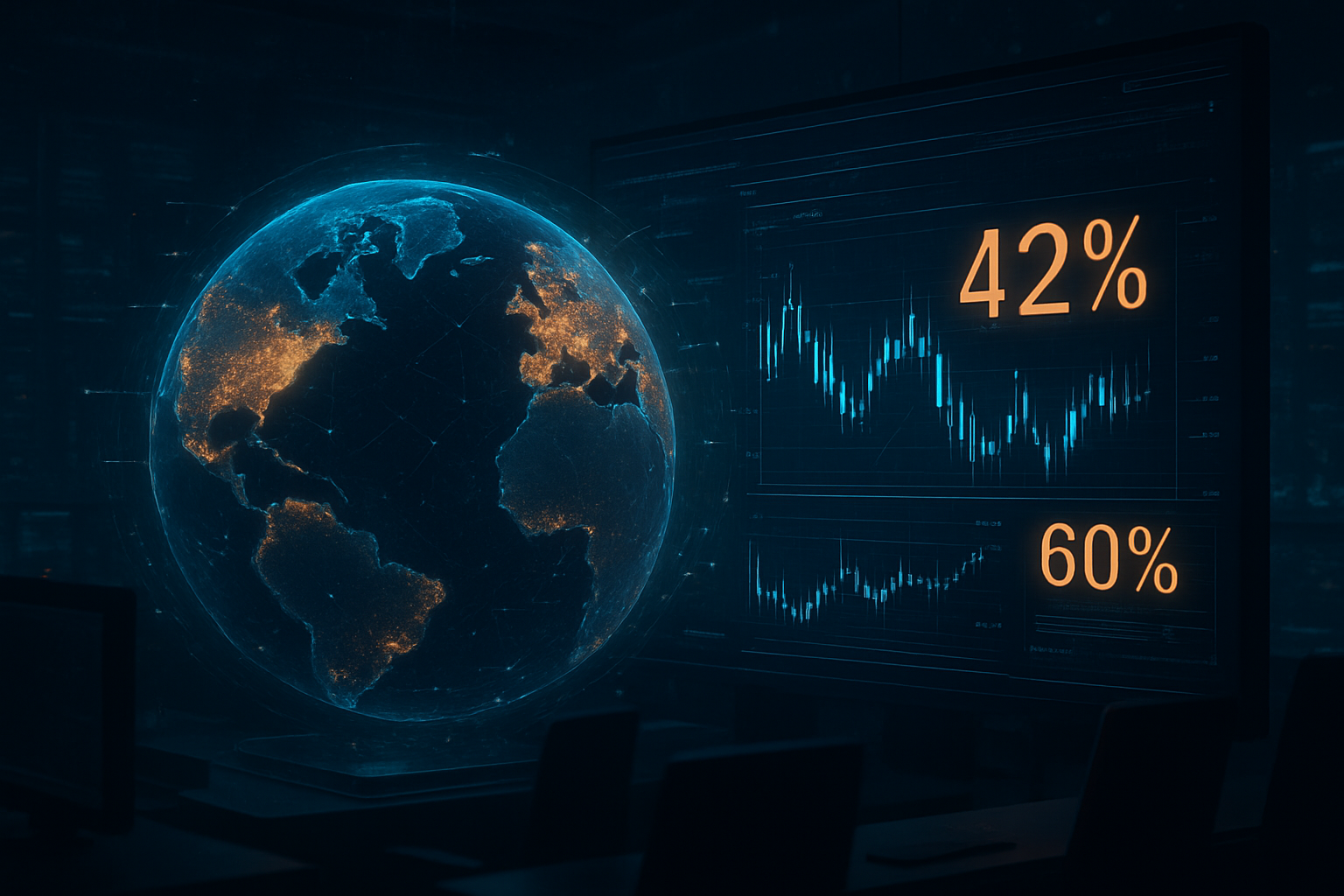
    The shift is driven by a stark reality: traditional expert models and diplomatic "cheap talk" are failing to keep pace with a volatile world. Currently, traders are pricing a 56% probability of a U.S. military strike on Iranian assets by the end of March 2026, and a surprising 42% chance that a deal for Greenland is reached within the next three years. These aren't just numbers; they are real-time, capital-backed aggregations of global intelligence that are increasingly being used by hedge funds and policy think tanks to navigate a world where official statements are often the last place to find the truth.

    The Market: What's Being Predicted

    The most high-stakes "truth engine" currently running involves the renewed, serious effort by the Trump administration to negotiate a territorial transfer or a massive strategic lease for Greenland. On the regulated exchange Kalshi, the contract for "U.S. to acquire part of Greenland by 2029" has seen its odds surge to 42%, a significant jump from just 26% late last year. Meanwhile, on the decentralized platform Polymarket, more granular markets regarding a "Greenland deal in 2026" are trading at a 23% probability. This divergence suggests that while a short-term acquisition remains a long shot, the market is beginning to price in the long-term geopolitical inevitability of a U.S.-Danish-Greenlandic realignment, with over $13.8 million already wagered on the outcome.

    In the Middle East, the markets are even more liquid and urgent. The "Military Action" categories have become the primary source of risk assessment for global shipping and energy firms. Markets predicting an Israeli strike on Iranian strategic sites by June 30, 2026, have climbed to a 60% probability. Even more striking is the volume: the contract for "U.S. kinetic action against Iran" by the end of Q1 2026 has attracted over $142 million in cumulative volume. This level of liquidity ensures that the "market price" is highly resistant to manipulation, reflecting a sophisticated consensus built on thousands of individual data points.

    Why Traders Are Betting

    The rise of these markets is fueled by a concept known as "InfoFi" (Information Finance). Unlike traditional analysts who may be hindered by institutional bias or diplomatic sensitivities, prediction market traders are incentivized solely by accuracy. These markets allow individuals with asymmetric information—ranging from embassy staff and defense contractors to regional journalists and satellite imagery analysts—to anonymously monetize their knowledge. When a trader with inside knowledge of a carrier group's movement or a diplomatic cable's tone places a large bet, the "price" of the contract shifts, effectively broadcasting that truth to the public.

    Major institutional players have also entered the fray. Market makers such as Susquehanna International Group (SIG) and Jane Street have significantly increased liquidity in 2025, narrowing spreads and making it possible for large-scale "geopolitical hedging." Furthermore, media conglomerates like News Corp (NASDAQ: NWSA) have begun integrating live Polymarket widgets into their reporting, treating the market price as a more reliable indicator than the "official line" from government press secretaries. This institutionalization has transformed these platforms from speculative playgrounds into essential tools for "systemic arbitrage."

    Broader Context and Implications

    The credibility of prediction markets as "Truth Engines" is backed by a track record of outperforming traditional models. In the 2024 U.S. Presidential Election, Polymarket consistently gave Donald Trump a lead in key swing states weeks before traditional polls showed any significant movement. More recently, in January 2026, the markets correctly anticipated the collapse of the Maduro regime in Venezuela just hours before "Operation Absolute Resolve" was launched—at a time when traditional media outlets like The New York Times (NYSE: NYT) were still reporting on "diplomatic gridlock."

    This shift has profound implications for public sentiment and democratic accountability. A 2025 study from Vanderbilt University confirmed that prediction markets are roughly 23% more accurate than expert surveys in "rapid-shift" environments where data changes hour-by-hour. By providing a transparent, real-time probability of major events, these markets strip away the "fog of war" and partisan spin. However, they also raise regulatory questions. While Kalshi operates under the oversight of the Commodity Futures Trading Commission (CFTC), decentralized platforms like Polymarket continue to navigate a complex global legal landscape, even as their influence on global finance becomes undeniable.

    What to Watch Next

    As we move toward the spring of 2026, several key milestones will serve as a "stress test" for these geopolitical truth engines. For the Greenland market, the upcoming April summit between U.S., Danish, and Greenlandic officials will be a major catalyst. If the odds on Kalshi move toward 50%, it will signal that the "impossible" deal is entering the realm of the probable. Traders are currently watching for any shifts in "infrastructure investment" language, which often precedes a formal territorial negotiation.

    In the Middle East, the March 31 deadline for the "U.S. strike Iran" contract is the date to watch. If the probability continues to hover above 50%, it suggests that the market has already factored in military movements that have yet to be confirmed by the Pentagon. Additionally, watch for the launch of new "Cyber War" markets, which aim to predict state-sponsored hacks on critical infrastructure—an area where prediction markets may prove to be the only effective early warning system for the private sector.

    Bottom Line

    The transformation of prediction markets into "Geopolitical Truth Engines" represents the most significant shift in information gathering since the advent of the 24-hour news cycle. By forcing participants to put "skin in the game," these platforms cut through the noise of modern media and the opacity of international diplomacy. Whether it is the potential redrawing of the Arctic map or the ignition of a regional conflict in the Middle East, the "market price" is now the most honest signal we have.

    Ultimately, these markets tell us that the public is no longer content to wait for "expert" post-mortems after a crisis has already begun. In 2026, the quest for truth has been financialized, and the result is a more accurate, if sometimes more frightening, view of the world’s future. For anyone looking to understand where the world is actually headed, the ticker tape is now more important than the teleprompter.


    This article is for informational purposes only and does not constitute financial or betting advice. Prediction market participation may be subject to legal restrictions in your jurisdiction.

    PredictStreet focuses on covering the latest developments in prediction markets.
    Visit the PredictStreet website at https://www.predictstreet.ai/.
  • The ‘Oracle Layer’: How Prediction Markets Became the New Backbone of Financial Media

    The ‘Oracle Layer’: How Prediction Markets Became the New Backbone of Financial Media

    In the world of finance, information has always been the most valuable currency. But as of early 2026, how that information is gathered, verified, and broadcast has undergone a fundamental transformation. The 2024 U.S. Election was the "proof-of-concept" for prediction markets; today, they have become the "Oracle Layer" for the global economy.

    Major media conglomerates, once skeptical of "election betting," have now fully integrated prediction market data into their core newsroom operations. Platforms like Polymarket and Kalshi are no longer just alternative data sources—they are the official scoreboards for reality. With probability data now appearing on the same ticker tapes as the S&P 500, the era of "Information Finance" (InfoFi) has officially arrived, turning every headline into a price and every event into a trade.

    The Market: What's Being Predicted

    Today, prediction markets cover nearly every measurable outcome in the modern world. While political markets remain a cornerstone, the scope has expanded drastically. Traders are now forecasting everything from the exact Federal Funds Rate target in the next FOMC meeting to the specific earnings-per-share (EPS) beats for tech giants like Nvidia (NASDAQ: NVDA) and Apple (NASDAQ: AAPL).

    The two dominant players, Polymarket and Kalshi, have divided the landscape into global and domestic spheres. Polymarket, which saw its profile explode after the 2024 election cycle, now operates with a projected $1 trillion annual trading run-rate. Meanwhile, Kalshi has solidified its role as the premier CFTC-regulated venue for U.S. institutional and retail traders. The liquidity in these markets has reached a "critical mass," where even billion-dollar "whale" positions move the odds by only fractions of a percent, providing a level of stability and signal accuracy that traditional polling simply cannot match.

    Why Traders Are Betting

    The shift toward prediction markets as a primary news source is driven by the concept of "skin-in-the-game." Unlike traditional analysts or pollsters who face little professional consequence for being wrong, traders in these markets face immediate financial loss. This creates a powerful incentive for accuracy, known in the industry as the "Truth Premium."

    In late 2025 and early 2026, we saw the emergence of massive hedging strategies where institutional investors used Kalshi contracts to protect against legislative changes. For example, during the debate over new AI regulations, the market-implied probability of a "strict regulatory flip" provided a more accurate signal for hedge funds than the public statements of lobbyists. Furthermore, retail participation has surged following the integration of event contracts into major brokerages like Robinhood (NASDAQ: HOOD), allowing everyday investors to trade on their personal knowledge of local trends or industry news.

    Broader Context and Implications: The Rise of 'InfoFi'

    The integration into mainstream media is perhaps the most significant milestone for the industry. In January 2026, News Corp (NASDAQ: NWSA), the parent company of The Wall Street Journal and Barron’s, announced an exclusive distribution partnership with Polymarket. Readers now see "Market-Implied Probability" widgets alongside every political and economic article. Similarly, Warner Bros. Discovery (NASDAQ: WBD), through CNN, has designated Kalshi as its "Official Prediction Market Partner," using their real-time odds to "fact-check" traditional polling data on-air.

    This marks the definitive shift to "Information Finance." The narrative has changed from "gambling" to "price discovery for information." By treating odds as factual indicators, financial news outlets are acknowledging that a liquid market is the most efficient way to aggregate disparate pieces of information. This has profound implications for regulatory considerations; as these markets become vital public utilities for information, the push for clearer federal frameworks has intensified, leading to the institutionalization of the sector.

    What to Watch Next

    As we look toward the remainder of 2026, several key milestones will test the resilience of this new information ecosystem. The upcoming 2026 Midterm Elections will be the first major political test for the fully integrated "InfoFi" newsrooms. Analysts are already watching how "Market-Implied House Control" odds diverge from traditional surveys, which struggled to keep pace with the market’s predictive power in 2024.

    Additionally, the expansion of "micro-markets" is a trend to monitor. We are seeing the rise of hyper-local prediction markets—such as the probability of a specific city council's zoning vote or the likelihood of a local weather event. These niche markets are becoming essential tools for local news outlets looking to provide their audiences with something more substantial than mere speculation.

    Bottom Line

    The integration of prediction market data into mainstream media represents the most significant change in financial journalism in a generation. By moving beyond the "expert opinion" model and toward a "market-driven truth" model, outlets like the WSJ and CNN are providing their audiences with a more objective, data-backed view of the world.

    Prediction markets have evolved from a curiosity into a structural pillar of the financial world. They offer a real-time, high-stakes vibe check that traditional methods simply cannot replicate. While the risks of market manipulation or volatility remain, the sheer volume of liquidity and the diversity of participants have turned these platforms into the ultimate tools for navigating an increasingly uncertain global landscape. In 2026, the question is no longer "what do the experts think?" but rather, "what is the market price of the truth?"


    This article is for informational purposes only and does not constitute financial or betting advice. Prediction market participation may be subject to legal restrictions in your jurisdiction.

    PredictStreet focuses on covering the latest developments in prediction markets.
    Visit the PredictStreet website at https://www.predictstreet.ai/.