Tag: Polymarket

  • Size vs. Science: How PredictIt’s Small-Scale Market Outpaced Global Giants in Accuracy

    Size vs. Science: How PredictIt’s Small-Scale Market Outpaced Global Giants in Accuracy

    As the dust settles on the hyper-active forecasting cycles of the last two years, a landmark study from Vanderbilt University has sent shockwaves through the prediction market industry. For years, the prevailing wisdom was that "liquidity is king"—that the more money and participants a market has, the more accurate its "crowdsourced wisdom" becomes. However, according to research led by Professor Joshua D. Clinton and TzuFeng Huang, the reality is far more nuanced.

    Analyzing over 2,500 individual markets during the peak of the 2024 election season, the Vanderbilt study revealed a startling hierarchy of accuracy. PredictIt, the long-standing "academic" platform often criticized for its strict trade limits, emerged as the victor with a staggering 93% accuracy rate. Meanwhile, the regulated U.S. exchange Kalshi followed with 78%, and the high-volume, crypto-based behemoth Polymarket trailed at 67%. As of January 16, 2026, these findings are forcing a massive rethink of how we value market signals over raw trading volume.

    The Market: What’s Being Predicted

    The study focused on the efficiency and predictive power of four major platforms: PredictIt, Kalshi, Polymarket, and the Iowa Electronic Markets (IEM). Researchers tracked 2,500 political contracts, specifically focusing on down-ballot races and niche "event contracts" that are often ignored by mainstream polls but are vital for professional hedgers and political strategists.

    While Polymarket captured the world's attention by processing billions of dollars in volume, the Vanderbilt data suggests that this volume may have been a double-edged sword. PredictIt, which historically capped individual bets at $850 (a limit recently adjusted following its 2025 regulatory victory), maintained a "purer" information signal. Because traders on PredictIt couldn't simply "move" the market with millions of dollars, the price discovery was driven by a broader consensus of smaller, highly informed participants.

    In contrast, Kalshi—the first CFTC-regulated exchange for election contracts in the U.S.—has seen its market share explode in early 2026. By January 12, 2026, Kalshi commanded over 66% of the daily regulated volume, yet even its robust, institutional-grade infrastructure couldn't match the pinpoint accuracy of PredictIt's more restricted environment in the Vanderbilt analysis.

    Why Traders Are Betting

    The discrepancy in accuracy has largely been attributed to "whale" activity and the resulting herd behavior. The most famous example cited in the study is "Théo," the so-called "French Whale" who famously bet over $30 million on a Donald Trump victory on Polymarket. While Théo’s specific bet proved profitable, the Vanderbilt researchers argue that such massive, concentrated positions create "noise" that distorts the market for everyone else.

    When a single actor holds 20% of the "Yes" shares in a major contract, it creates a feedback loop. Other traders, seeing the price rise, assume there is new, secret information and follow the trend—a classic case of herd behavior. This "social media hype" led to what researchers identified as "negative serial correlation," where prices would spike based on momentum rather than data, only to crash or correct shortly after.

    This phenomenon has sparked intense interest from retail platforms like Robinhood Markets, Inc. (NASDAQ: HOOD) and Interactive Brokers Group, Inc. (NASDAQ: IBKR), both of which have integrated event contracts into their suites. Traders on these platforms are now increasingly looking for "alpha" by identifying when a market is being moved by a "whale" versus when it is being moved by genuine information.

    Broader Context and Implications

    The Vanderbilt study’s findings come at a pivotal moment for the industry's reputation. Throughout 2025, the narrative was that prediction markets were the "new polls," offering a real-time, incentivized alternative to traditional survey data. However, the 67% accuracy rate of the largest player, Polymarket, suggests that "crowdsourced wisdom" can easily devolve into the "madness of crowds" when unregulated or dominated by high-net-worth individuals.

    This has led to a shift in how institutional players, such as Flutter Entertainment PLC (NYSE: FLUT)—the parent company of FanDuel—view the space. While prediction markets are a powerful tool for sentiment analysis, the Vanderbilt data proves that size does not always equal smarts. The regulatory landscape has shifted accordingly; following its full compliance status in late 2025, PredictIt has leaned into its "accuracy-first" branding, even launching an AI-driven mascot named "Itoldyousaurus" to highlight its superior track record over its more capitalized rivals.

    Furthermore, the entry of traditional betting companies like DraftKings Inc. (NASDAQ: DKNG) into the event contract space has introduced more sophisticated risk management tools designed to prevent the kind of market distortion seen with the "French Whale" incident.

    What to Watch Next

    As we move deeper into 2026, the industry is watching how Polymarket will respond to these accuracy critiques. The platform recently announced a high-profile partnership with the Golden Globes to be their "exclusive prediction partner," signaling a pivot toward entertainment and culture markets where "whale" distortion might be less politically sensitive but equally profitable.

    The next major milestone for the industry will be the 2026 midterm election cycle. Analysts are watching to see if Kalshi’s dominance in market share (now valued at roughly $11 billion) will finally translate into the top spot for accuracy, or if the "PredictIt Effect"—where small, capped markets produce better data—will hold true once again.

    Additionally, keep an eye on the integration of "neighbor polling" techniques into market strategies. After "Théo" successfully used this method to justify his $30 million bet, several new hedge funds are reportedly building proprietary algorithms to scan prediction markets for "whale-driven" vs. "consensus-driven" price movements.

    Bottom Line

    The Vanderbilt study serves as a sobering reminder that prediction markets are not infallible oracles; they are tools that are only as good as the incentives and participants within them. PredictIt’s 93% accuracy rate suggests that when you limit the ability of individuals to "buy" the narrative, the resulting price is far more likely to reflect reality.

    For the average investor or observer, the lesson is clear: volume is a measure of interest, not necessarily truth. While Polymarket may have the most "noise" and Kalshi the most "institutional backing," the "quiet" markets of PredictIt have, for now, proven to be the most reliable indicators of the future. As prediction markets become a mainstream fixture on platforms like Robinhood, the battle between "big money" and "broad data" is only just beginning.


    This article is for informational purposes only and does not constitute financial or betting advice. Prediction market participation may be subject to legal restrictions in your jurisdiction.

    PredictStreet focuses on covering the latest developments in prediction markets.
    Visit the PredictStreet website at https://www.predictstreet.ai/.
  • The Regulated Giant: Kalshi Commands 66% of Market Share as Sports Betting Explosion Dethrones Polymarket

    The Regulated Giant: Kalshi Commands 66% of Market Share as Sports Betting Explosion Dethrones Polymarket

    In a seismic shift for the prediction market landscape, Kalshi has officially overtaken Polymarket as the dominant force in the industry. As of early January 2026, Kalshi handled approximately 66.4% of total global trades, a staggering reversal from the crypto-native era of 2024. The surge has been fueled by a combination of federal regulatory approval, a massive integration with retail powerhouse Robinhood Markets Inc. (NASDAQ:HOOD), and a pivot toward high-frequency sports betting that has fundamentally changed the platform's DNA.

    The momentum culminated in a historic milestone during the week ending January 11, 2026, when Kalshi recorded over $2 billion in weekly notional volume for the first time. For the millions of retail investors now treating event contracts like stocks, the distinction between "betting" and "trading" has all but vanished. This explosion in volume reflects a broader trend: the mainstreaming of prediction markets as a legitimate asset class, underpinned by the safety of U.S. regulation.

    The Market: What's Being Predicted

    While Kalshi initially built its reputation on economic indicators like CPI prints and Fed interest rate decisions, its recent dominance is almost entirely driven by the "financialization of sports." In the first week of January 2026, a remarkable 91.1% of Kalshi's total volume was concentrated in sports markets. The platform’s entry into NFL, NBA, and NHL contracts has transformed it from a niche intellectual tool into a high-octane trading floor.

    The most significant driver of this volume has been the launch of "Combos"—Kalshi’s peer-to-peer version of a sports parlay. Unlike traditional sportsbooks like DraftKings Inc. (NASDAQ:DKNG) or FanDuel, which is owned by Flutter Entertainment plc (NYSE:FLUT), Kalshi operates as a pure exchange. This means users trade against each other rather than a house, often resulting in better odds and higher transparency. During the NFL Wild Card weekend in early January, Kalshi processed a record $466 million in a single day, with "Combos" alone generating over $100 million in weekly volume.

    This shift has left the previous market leader, Polymarket, in an unfamiliar second place. While Polymarket continues to dominate global geopolitical and crypto-centric forecasting, it captured only about $1.5 billion in volume during Kalshi’s $2 billion week. The gap is widening as Kalshi’s liquidity in U.S. sports becomes an insurmountable "moat," drawing in liquidity that used to reside in offshore betting markets.

    Why Traders Are Betting

    The primary catalyst for Kalshi’s volume surge is its deep integration with Robinhood Markets Inc. (NASDAQ:HOOD). Since the late 2025 launch of the "Prediction Markets Hub" within the Robinhood app, more than 50% of Kalshi's total betting volume has originated from Robinhood users. By allowing millions of retail traders to buy and sell event contracts directly from their existing brokerage accounts, Kalshi effectively removed the friction of crypto wallets and "gas fees" that define the Polymarket experience.

    Beyond ease of use, the psychological shift toward "legalized trading" has been a powerful motivator. Because Kalshi is a Commodity Futures Trading Commission (CFTC)-regulated exchange, traders can move money in and out via standard USD bank transfers with full federal oversight. In contrast, Polymarket’s reliance on the USDC stablecoin and the Polygon blockchain remains a barrier for the average American retail investor who is wary of crypto-related regulatory hurdles.

    Whale activity has also shifted. Large-scale institutional "event traders" are increasingly favoring Kalshi for its regulatory certainty. These traders are not just betting on who wins a game; they are using sports contracts as a hedge against broader market volatility or as a high-liquidity alternative to traditional options. The ability to trade these contracts in a regulated environment provides a level of institutional trust that unregulated or offshore platforms simply cannot match.

    Broader Context and Implications

    The current battle between Kalshi and Polymarket represents a fork in the road for the future of prediction markets. Kalshi’s 66.4% trade share suggests that the "Regulated Model" is winning the battle for the masses. By adhering to CFTC rules, Kalshi has gained access to the pipes of the traditional financial system, allowing it to scale in a way that decentralized, crypto-native platforms have struggled to do within U.S. borders.

    This dominance has real-world implications for how we view public sentiment. With $2 billion flowing through these markets weekly, the prices of these contracts are becoming more accurate than traditional polling or sports analyst projections. When Kalshi’s "Super Bowl Winner" contract moves, it moves because of massive capital flows, not just opinion. This is turning prediction markets into a "truth machine" for everything from championship games to legislative outcomes.

    However, the regulatory landscape remains a double-edged sword. While Kalshi enjoys its current edge, its growth is limited to the types of contracts the CFTC permits. Polymarket, operating globally and often outside U.S. jurisdiction, can offer markets on a wider—and sometimes more controversial—range of international topics. Yet, for now, the sheer scale of the U.S. consumer market means that whoever wins the American retail trader wins the crown.

    What to Watch Next

    As we move deeper into 2026, the key question is whether Polymarket will find a way to re-enter the U.S. market in a compliant manner to regain its lost share. Rumors of a "Polymarket USA" brokerage model have circulated, but the platform currently faces stiff competition and a massive head start from Kalshi. If Polymarket cannot find a way to integrate with a major domestic financial platform to match the "Robinhood Effect," Kalshi’s dominance may become permanent.

    Upcoming milestones include the 2026 FIFA World Cup and the mid-term election cycle. These events will serve as the ultimate test for whether Kalshi can maintain its 90%+ sports-driven volume while simultaneously scaling its political and economic markets. Traders should also watch for Kalshi’s potential expansion into other asset classes, such as real estate price contracts or even weather-based derivatives, which could further diversify its $2 billion-a-week liquidity pool.

    Bottom Line

    The rise of Kalshi to a 66.4% market share is more than just a victory for one platform; it is a coming-of-age moment for the prediction market industry. By leveraging the distribution power of Robinhood and the safety of CFTC regulation, Kalshi has successfully transitioned event betting from a niche hobby for crypto enthusiasts into a mainstream financial product for millions of Americans.

    The lesson for the industry is clear: accessibility and regulation are the ultimate drivers of volume. While the decentralized world of Polymarket offers a vision of a global, borderless future, Kalshi has proven that the path to $2 billion weeks lies in the structured, USD-native world of traditional finance. As 2026 unfolds, the prediction market is no longer just predicting the future—it is becoming a fundamental part of the global financial infrastructure.


    This article is for informational purposes only and does not constitute financial or betting advice. Prediction market participation may be subject to legal restrictions in your jurisdiction.

    PredictStreet focuses on covering the latest developments in prediction markets.
    Visit the PredictStreet website at https://www.predictstreet.ai/.
  • The ‘French Whale’ Legend: How Théo’s $80 Million Payday Redefined Prediction Markets

    The ‘French Whale’ Legend: How Théo’s $80 Million Payday Redefined Prediction Markets

    As we move into the first quarter of 2026, the prediction market landscape looks radically different than it did just two years ago. What was once a niche corner of the internet for data nerds and political junkies has become a global financial powerhouse, integrated into mainstream newsrooms and financial terminals. This shift can be traced back to a single, seismic event during the 2024 U.S. Presidential Election: the emergence of "Théo," the anonymous French trader who wagered tens of millions on a Republican sweep.

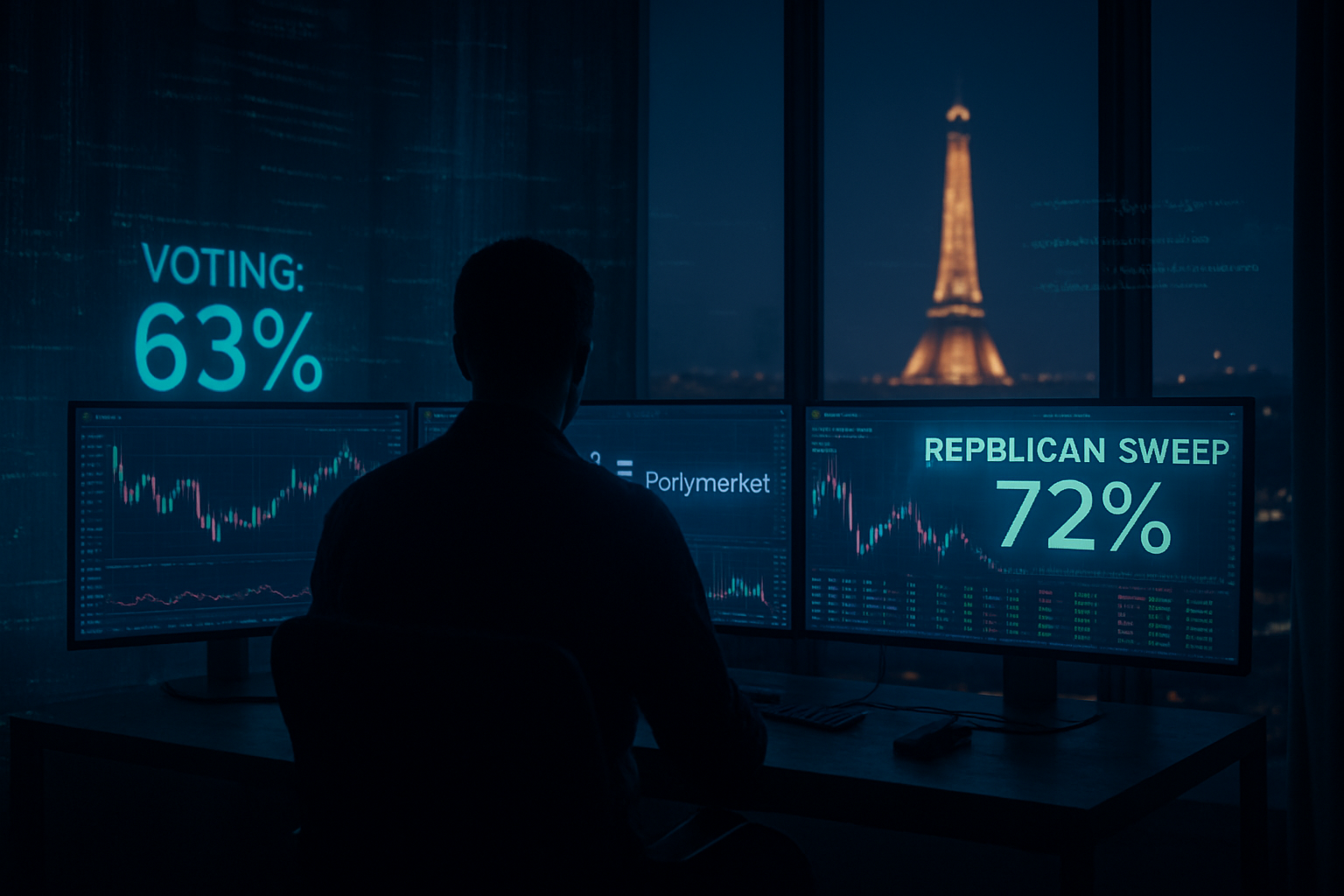
    The "French Whale" didn't just place a bet; he conducted a high-stakes experiment in what industry insiders now call "liquid truth." By wagering over $42 million on Polymarket—a figure that grew closer to $80 million as the election approached—Théo challenged the supremacy of traditional polling. Today, as prediction markets enter a "super-cycle" ahead of the 2026 midterms, the debate over Théo’s high-conviction trades remains the gold standard for understanding how "whales" influence market sentiment and whether their moves represent insider knowledge or simply superior data analysis.

    The Market: What's Being Predicted

    The focus of Théo’s massive position was the 2024 U.S. Presidential Election on Polymarket, the world’s largest decentralized prediction platform. While thousands of traders were betting small sums, Théo operated at a scale never before seen. Using a series of accounts including "Fredi9999," "Theo4," and "PrincessCaro," he built a position that dwarfed the liquidity of many traditional mid-cap stocks. At the peak of the 2024 cycle, the presidential winner market alone saw over $3.7 billion in volume, with Théo’s trades often accounting for significant percentage points of the daily activity.

    The specific contracts being traded weren't just about who would sit in the Oval Office. Théo took a nuanced, "directional" approach, betting heavily on Trump winning the popular vote—a scenario that traditional pollsters and mainstream outlets like The Wall Street Journal (News Corp – NASDAQ: NWSA) had considered a statistical long shot. His bets also extended to key battleground states like Pennsylvania and Michigan. The resolution criteria were binary: if the Associated Press and other major networks called the race for the Republican candidate, the contracts would pay out at $1.00; otherwise, they would go to zero.

    By the time the dust settled, Polymarket’s total election-related volume had surpassed $19 billion. The platform's success during this period was so profound that by early 2026, it had secured data integration partnerships with major financial firms and even saw its odds featured during the 2026 Golden Globes broadcast to predict award winners.

    Why Traders Are Betting

    The primary driver behind Théo’s massive $42 million+ wager was a deep skepticism of traditional polling methods. While the mainstream media relied on standard telephone and digital surveys, Théo claimed to have discovered a systemic "neighbor effect." He believed that many Trump supporters were "shy voters" who wouldn't admit their preference to a pollster but would accurately report how they thought their neighbors were voting.

    To test this theory, Théo reportedly commissioned private, bespoke polling through YouGov (LSE: YOU). These "neighbor polls" consistently showed higher support for Donald Trump than traditional polls, leading Théo to believe the prediction market was underpricing the reality of the electorate. This wasn't just speculative gambling; it was a trade based on a proprietary data advantage.

    The scale of his bets—which at one point put him in a position to profit by over $47 million, and eventually led to a total haul exceeding $80 million—triggered a firestorm of debate. Critics argued that such massive volume was an attempt at market manipulation, intended to create a "momentum effect" to discourage Democratic turnout. However, a formal investigation by Polymarket and third-party intelligence firms found no evidence of foul play. Instead, they concluded that Théo was a "high-conviction" trader with a background in traditional banking who was simply exploiting what he saw as an enormous mispricing of risk.

    Broader Context and Implications

    The "French Whale" phenomenon has had a lasting impact on how the world views prediction markets as a forecasting tool. In the 2026 market environment, "Whale Activity" is no longer viewed solely with suspicion but is often analyzed as a signal of hidden information. The success of Théo’s contrarian strategy has forced traditional polling organizations to re-evaluate their methodologies, specifically looking at how they account for the "non-response bias" that Théo’s neighbor polls successfully identified.

    However, the event also invited significant regulatory scrutiny. In late 2024, the French gambling regulator, ANJ, began investigating Polymarket's operations in France, leading the platform to restrict French users to "view-only" mode. This regulatory tension remains a key theme in 2026, as platforms like Kalshi and Interactive Brokers (NASDAQ: IBKR)—through its ForecastEx exchange—continue to battle for domestic dominance while navigating a complex web of international laws.

    The 2024 election served as a "proof of concept" for the industry. It proved that when millions of dollars are on the line, the "wisdom of the crowd" (or in this case, the wisdom of a very wealthy, data-driven individual) can often outperform expert consensus.

    What to Watch Next

    As we look toward the 2026 midterm elections, all eyes are on whether a new "whale" will emerge to challenge the current market odds. Currently, Republican and Democratic "control of the house" contracts are trading with high liquidity, but we have yet to see a single trader replicate the $80 million conviction of Théo.

    Key milestones to monitor include the upcoming quarterly earnings for major data providers and the potential for new U.S. legislation regarding the legality of political betting. The "Théo Precedent" has set a high bar for what constitutes a "significant" move, and any account that starts accumulating positions north of $10 million is now immediately flagged by automated social media bots, often shifting the entire market sentiment within minutes.

    Furthermore, the integration of prediction market data into financial terminals means that the next big "whale" move won't just influence political junkies—it will likely trigger algorithmic trading shifts across the S&P 500 and other major indices.

    Bottom Line

    The story of the "French Whale" is more than just a tale of a massive payout; it is the founding myth of the modern prediction market era. Théo proved that prediction markets are not just mirrors of public sentiment, but active battlegrounds where superior data and massive capital can expose flaws in conventional wisdom. By the time he walked away with his $80 million profit, he had fundamentally changed the credibility of platforms like Polymarket.

    As we stand in 2026, prediction markets are no longer a "sideshow" to the evening news. They are a primary source of truth for millions of people. Whether you view Théo as a brilliant strategist or a lucky speculator, his impact is undeniable: he provided the liquidity and the legitimacy that prediction markets needed to transition from the fringes of the internet to the center of global finance.


    This article is for informational purposes only and does not constitute financial or betting advice. Prediction market participation may be subject to legal restrictions in your jurisdiction.

    PredictStreet focuses on covering the latest developments in prediction markets.
    Visit the PredictStreet website at https://www.predictstreet.ai/.

  • Wall Street’s Giant Wakes: Goldman Sachs CEO David Solomon Signals Institutional Pivot into Prediction Markets

    Wall Street’s Giant Wakes: Goldman Sachs CEO David Solomon Signals Institutional Pivot into Prediction Markets

    On January 15, 2026, during the Goldman Sachs Group, Inc. (NYSE: GS) fourth-quarter earnings call, the high-finance world received a jolt that few saw coming so soon. CEO David Solomon, usually measured in his assessment of emerging retail trends, threw his weight behind the burgeoning prediction market industry. Solomon characterized the sector as "super interesting" and confirmed that he has personally spent hours in meetings with the leadership of the industry’s two titans—Kalshi and Polymarket—within the last two weeks.

    The market reaction was immediate, with analysts shifting their focus from whether prediction markets are a passing fad to how the world’s most powerful investment bank plans to commoditize them. Solomon’s comments suggest a pivot away from viewing these platforms as "betting sites" and toward treating them as "derivative contract activities," a semantic shift that signals Goldman’s intent to integrate event-based trading into its institutional machinery.

    The Market: What's Being Predicted

    While prediction markets have historically been dominated by political outcomes, the "market" being discussed by Solomon is the infrastructure of the asset class itself. The current trend is the rapid institutionalization of event contracts. By January 2026, prediction markets have moved far beyond the 2024 election cycle that initially vaulted them into the mainstream. They are now used to hedge against macroeconomic shifts, geopolitical flare-ups, and even corporate earnings surprises.

    On platforms like Kalshi (the CFTC-regulated U.S. exchange) and Polymarket (the decentralized global leader), trading volumes have reached record highs. Solomon’s specific mention of "derivative contract activities" aligns with the regulatory framework Kalshi has fought for in the U.S. courts. Traders are currently pricing in a high probability that major investment banks will begin offering "Event-Linked Notes" or direct access to prediction market liquidity for their high-net-worth clients by the end of 2026.

    The liquidity in these markets has deepened significantly; daily trading volume across the top three platforms has routinely exceeded $1.5 billion in early 2026, driven by a mix of retail speculators and a growing contingent of sophisticated quantitative hedge funds.

    Why Traders Are Betting

    The surge in interest—and Solomon’s subsequent endorsement—is driven by the unprecedented accuracy and real-time data provided by these markets. Traditional forecasting methods, such as polling and economic modeling, have struggled to keep pace with the volatility of the mid-2020s. Prediction markets, by contrast, offer a "truth machine" backed by cold, hard cash.

    Investors are betting on the "Goldman Effect." Historically, when Goldman Sachs enters a new asset class, it brings a flood of institutional liquidity and a stamp of regulatory legitimacy. Solomon revealed that a dedicated internal team at Goldman is "spending a lot of time" analyzing how the firm can serve or partner with these platforms. This has led traders to speculate on a looming partnership or even a minority stake in a major exchange.

    Furthermore, the "retail-to-institutional" bridge is being built by the massive success of Robinhood Markets, Inc. (NASDAQ: HOOD), which has become the primary conduit for retail prediction trading. With over 1 million active daily traders in its "Prediction Markets Hub," Robinhood has proven that there is a massive appetite for event-based derivatives. Goldman’s entry would represent the other side of that coin: providing the institutional "top-down" liquidity to match Robinhood’s "bottom-up" volume.

    Broader Context and Implications

    Solomon’s comments highlight a significant competitive tension with Robinhood. As of early 2026, Robinhood has moved to vertically integrate its prediction business, recently moving to acquire the CFTC-licensed exchange and clearinghouse MIAXdx (formerly LedgerX). This move is designed to allow Robinhood to bypass third-party exchanges and keep the entire ecosystem in-house.

    Goldman’s interest indicates that the "Big Banks" are not willing to let Robinhood and Coinbase own the prediction market space. By framing these trades as "derivatives," Solomon is positioning Goldman to treat event contracts similarly to interest rate swaps or credit default swaps. This would bring prediction markets under the oversight of existing institutional compliance and clearing frameworks, potentially resolving the "reputational risk" that has historically kept the 150-year-old firm at arm's length.

    Regulatory clarity has also played a massive role. Following several landmark legal victories for Kalshi against the CFTC in late 2024 and 2025, the path has been cleared for event contracts to be treated as legitimate financial instruments rather than "gaming." This legal certainty is the prerequisite Solomon needed to confirm his meetings with industry leaders.

    What to Watch Next

    The immediate next step for the market is a formal announcement of a pilot program or partnership. Analysts are closely watching for any SEC or CFTC filings from Goldman Sachs that mention "event-linked derivatives" or "binary option clearing."

    Key dates to monitor include:

    • Late Q1 2026: The expected closing of Robinhood’s acquisition of MIAXdx, which will force Goldman’s hand in deciding whether to build their own exchange or partner with an existing one like Kalshi.
    • The March FOMC Meeting: This will likely be the first major "macro" event where institutional liquidity from a firm like Goldman could be tested in the prediction markets, as traders look to hedge against interest rate decisions.
    • Goldman’s Investor Day: Expected in early spring, where Solomon will likely be pressed for more details on the firm’s digital assets and derivatives roadmap.

    Bottom Line

    David Solomon’s comments mark the formal arrival of the "Institutional Era" for prediction markets. By validating these platforms as "super interesting" and practically defining them as derivatives, Goldman Sachs has signaled that the asset class is no longer a peripheral experiment. It is now a core component of the modern financial toolkit.

    The "Goldman stamp of approval" typically precedes a period of rapid consolidation and professionalization in an industry. For prediction markets, this likely means better liquidity, tighter spreads, and more complex financial products. While Robinhood currently leads in retail volume, Goldman Sachs is preparing to dominate the institutional plumbing.

    As we move further into 2026, the question is no longer whether prediction markets will survive, but which Wall Street titan will ultimately control the flow of this "new oil" of the information economy.


    This article is for informational purposes only and does not constitute financial or betting advice. Prediction market participation may be subject to legal restrictions in your jurisdiction.

    PredictStreet focuses on covering the latest developments in prediction markets. Visit the PredictStreet website at https://www.predictstreet.ai/.
  • The $2 Billion Milestone: How Polymarket’s 2024 Election Surge Redefined Political Forecasting

    The $2 Billion Milestone: How Polymarket’s 2024 Election Surge Redefined Political Forecasting

    In a historic shift for the world of decentralized finance and political forecasting, Polymarket has officially surpassed $2 billion in total trading volume for its "Presidential Election Winner 2024" market. This staggering milestone comes as the platform experiences a parabolic surge in activity, cementing its status as the world’s largest prediction market and a primary competitor to traditional polling institutions.

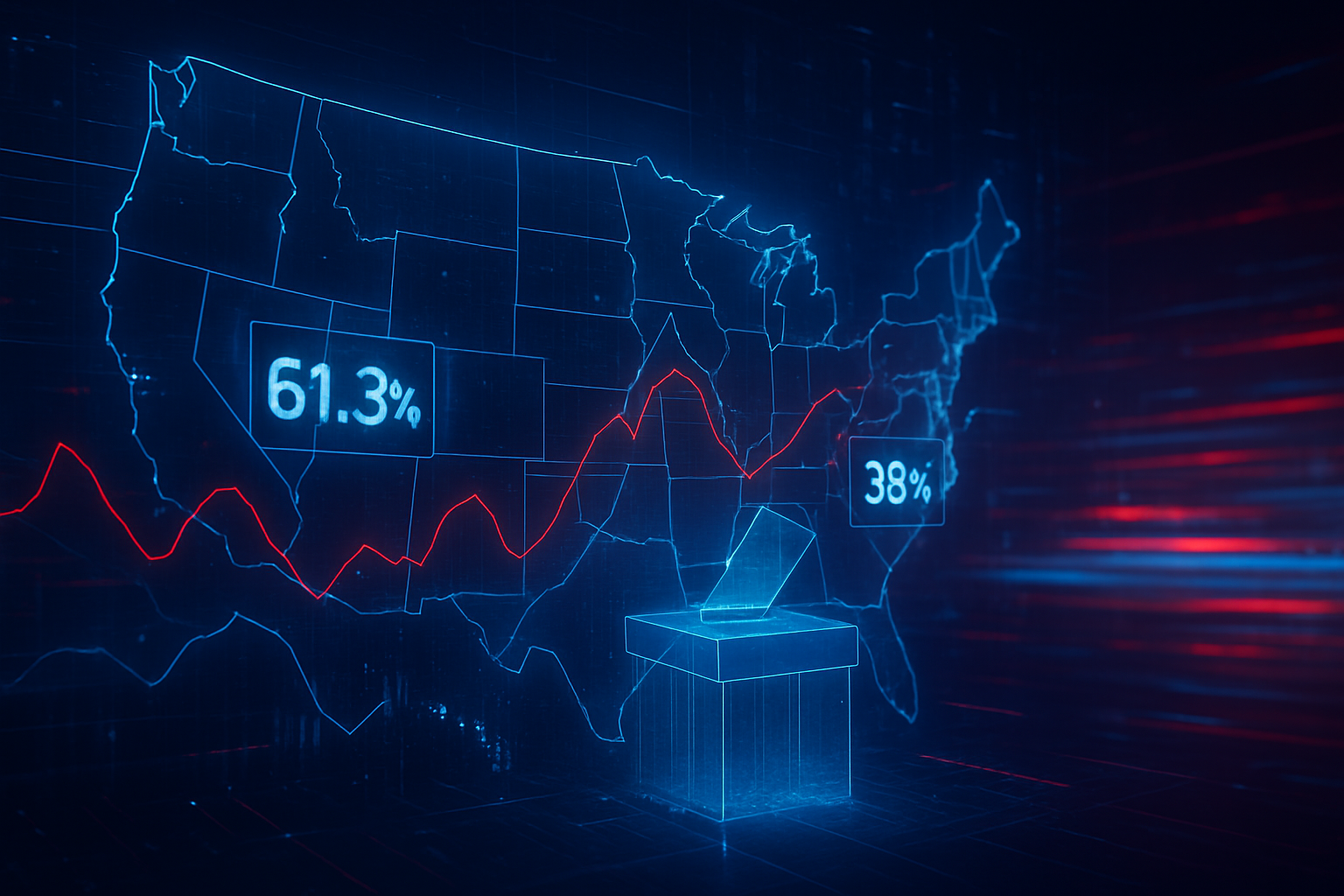
    As of this week, the market consensus has shifted significantly. Republican candidate Donald Trump now holds a commanding 61.3% chance of victory, while Vice President Kamala Harris trails at 38%. This widening gap has captivated traders, political analysts, and the broader public, as the market’s odds diverge sharply from traditional "toss-up" polling data. With nearly $1 billion in volume generated in October alone, the platform is no longer a niche crypto experiment—it is a global financial engine for political sentiment.

    The Market: What's Being Predicted

    The primary driver of this activity is Polymarket’s "Presidential Election Winner 2024" contract. This binary market allows participants to buy "Yes" or "No" shares for a candidate, with each share paying out $1 if the prediction is correct and $0 if it is not. The current price of a Trump "Yes" share stands at roughly 61.3 cents, reflecting a 61.3% probability of him returning to the White House.

    The platform's growth has been nothing short of explosive. After taking years to reach its first $1 billion in total volume, the election market added its second billion in just 24 days during the month of October. This liquidity surge is largely hosted on the Polygon blockchain, utilizing the USDC stablecoin issued by Circle. While Polymarket remains the dominant force, the rise of prediction markets has also prompted legacy fintech firms to enter the fray. For example, Robinhood Markets, Inc. (NASDAQ: HOOD) and Interactive Brokers Group, Inc. (NASDAQ: IBKR) have recently moved to offer event-based trading, seeking to capture the retail enthusiasm that Polymarket pioneered.

    The resolution criteria for the market are strictly tied to the official certification of the election results. Unlike polls, which are snapshots of sentiment with varying margins of error, Polymarket functions as a real-time, 24/7 clearinghouse for information. If a candidate experiences a boost in a swing state or a major endorsement, the price reflects it within seconds, providing a level of "price discovery" for politics that was previously impossible.

    Why Traders Are Betting

    The divergence between Polymarket’s 61.3% odds for Trump and the neck-and-neck figures seen in national polls has sparked a fierce debate over the "wisdom of the crowd." Analysts suggest several factors are driving this pro-Trump tilt. Chief among them is the "skin in the game" factor; traders are incentivized to be right, not to provide a socially acceptable answer to a pollster. This often results in markets picking up on "quiet" shifts in momentum, such as early voting data or high-profile endorsements from tech leaders, before they are reflected in traditional data sets.

    However, the market has also been influenced by significant "whale" activity. Investigative reports and on-chain data have highlighted a single French national, operating under the pseudonym "Théo," who has reportedly bet over $45 million on a Trump victory across multiple accounts. While Polymarket has stated that these positions are purely directional bets and not market manipulation, such massive wagers naturally put upward pressure on the odds.

    Furthermore, the demographic of the platform plays a role. Polymarket’s user base is predominantly tech-savvy, male, and crypto-native—a group that has historically leaned toward the Republican platform’s recent pro-digital asset stance. This "selection bias" is a frequent criticism from skeptics, though proponents argue that the presence of arbitrageurs and institutional traders should theoretically balance out any ideological leanings if the price becomes "wrong."

    Broader Context and Implications

    The rise of Polymarket represents a watershed moment for the "Information Finance" era. According to data from Dune Analytics, the platform’s monthly active users have nearly reached 100,000, a milestone that underscores the mainstreaming of prediction markets. This growth has not gone unnoticed by regulators. The Commodity Futures Trading Commission (CFTC) has engaged in ongoing legal battles with platforms like Kalshi and Polymarket over the legality of election betting in the U.S., with the courts currently leaning toward allowing these markets to operate under specific conditions.

    Historically, prediction markets have often proved more accurate than experts or polls. In previous cycles, platforms like the Iowa Electronic Markets often anticipated shifts in voter sentiment weeks ahead of the media. The $2 billion volume in 2024 suggests that we are witnessing the institutionalization of this tool. If Polymarket accurately predicts the outcome while polls remain deadlocked, it could permanently change how political campaigns, hedge funds, and news organizations allocate resources and trust data.

    From a sociological perspective, these markets reveal a public that is increasingly skeptical of traditional media and polling. By turning political outcomes into a tradable asset, Polymarket has created a new form of "synthetic truth" where the collective financial risk of participants outweighs the individual opinions of pundits.

    What to Watch Next

    As we head into the final weeks of the election cycle, all eyes are on the liquidity of the "swing state" markets. While the national "Winner" market is the headline-grabber, the real action is happening in state-specific contracts for Pennsylvania, Michigan, and Wisconsin. These "Blue Wall" states are currently trading at much tighter margins than the national average, and any sudden movement there will likely trigger a massive shift in the overall 61.3% probability.

    Investors should also monitor the potential for a "liquidity crunch" or extreme volatility on election night. With $2 billion on the line, the platform will face its ultimate stress test. If the results are delayed or contested, the "Presidential Election Winner" contract could see unprecedented swings, testing the platform's decentralized resolution mechanisms.

    Finally, the post-election regulatory landscape will be critical. A Trump victory—currently favored by the market—might lead to a more permissive regulatory environment for crypto-native platforms. Conversely, a Harris victory could see a renewed push for restrictions on event-based betting. Regardless of the outcome, the 100,000 active users currently trading on Polymarket represent a new constituency that is unlikely to go away quietly.

    Bottom Line

    The $2 billion volume reached by Polymarket is more than just a number; it is a testament to the growing power of decentralized prediction markets. With Donald Trump holding a significant lead in the betting odds at 61.3%, the market is effectively betting against the "toss-up" narrative of mainstream polling. Whether this represents superior foresight or a demographic bubble remains to be seen, but the sheer scale of the participation is undeniable.

    As a tool for sentiment analysis, prediction markets have officially arrived. They offer a high-stakes alternative to traditional forecasting, driven by real-time data and massive financial incentives. While risks like "whale" influence and demographic bias remain, the "wisdom of the crowd" has never had a larger or more liquid stage than it does today on Polymarket.


    This article is for informational purposes only and does not constitute financial or betting advice. Prediction market participation may be subject to legal restrictions in your jurisdiction.

    PredictStreet focuses on covering the latest developments in prediction markets.
    Visit the PredictStreet website at https://www.predictstreet.ai/.
  • The Maduro Trade: Prediction Market Insider Scandal Triggers Congressional Action

    The Maduro Trade: Prediction Market Insider Scandal Triggers Congressional Action

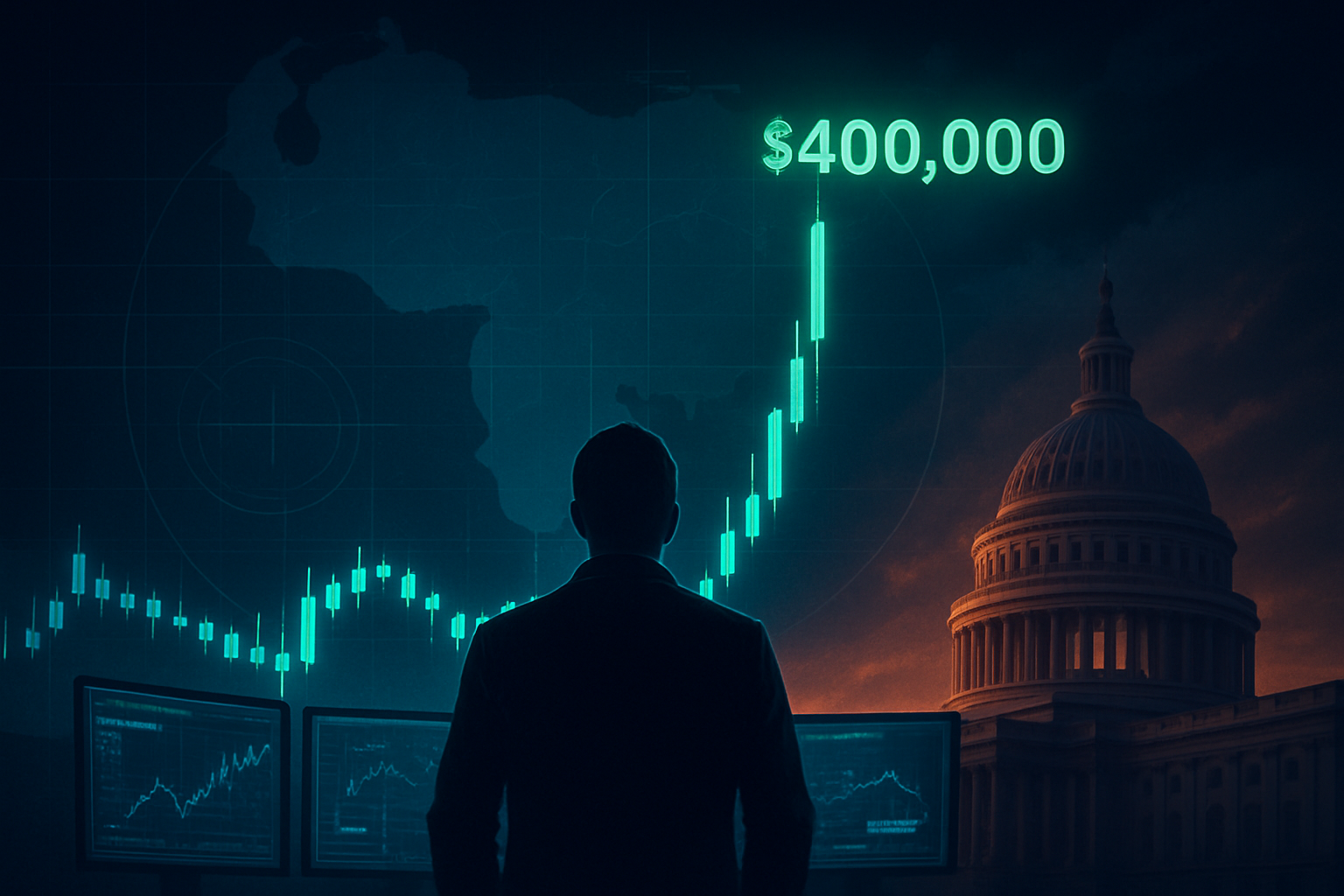
    In a stunning display of prediction markets outperforming traditional media—and potentially uncovering federal corruption—an anonymous trader on the decentralized platform Polymarket turned a $32,000 bet into more than $400,000 by correctly predicting the capture of Venezuelan President Nicolás Maduro. The trades were executed on January 2, 2026, just hours before U.S. special operations forces conducted "Operation Absolute Resolve," a high-stakes raid that resulted in Maduro’s detention.

    The "Yes" shares for Maduro’s removal, which had been languishing at a mere 7% probability for weeks, surged to nearly 100% within seconds of President Trump’s 4:21 AM ET announcement on Truth Social the following morning. While proponents of prediction markets point to this as proof of their efficiency, the "perfect" timing of the wager has sparked a firestorm of "insider trading" allegations, leading to a major legislative push in Washington to regulate how government officials interact with event-contract platforms.

    The Market: What's Being Predicted

    The contract at the center of the storm, "Maduro out by January 31, 2026?", was one of the most liquid geopolitical markets on Polymarket. For much of the fourth quarter of 2025, the market reflected a consensus of skepticism; Maduro had survived numerous coup attempts and international pressure campaigns over the years, leading traders to price the "Yes" outcome at approximately $0.07 to $0.08 per share.

    The anonymous trader, operating under the handle "Burdensome-Mix," began aggressively accumulating these "Yes" shares in the late evening hours of January 2. By the time the position was fully built, the trader had committed approximately $32,537. Because the odds were so heavily stacked against the outcome, the payout upon the market's resolution exceeded $436,000.

    While Polymarket is a decentralized platform, the sheer size and timing of the move caused immediate friction. Unlike traditional financial markets governed by the SEC or the CFTC, Polymarket operates primarily on-chain, allowing for pseudonymized participation that makes identifying the source of "insider" information notoriously difficult.

    Why Traders Are Betting

    The "Maduro Trade" highlights a growing trend of "whale" activity in prediction markets, where high-net-worth individuals or entities use massive liquidity to signal information that has not yet hit the newswires. In this case, there were no public indicators—no leaked troop movements, no diplomatic warnings—that an operation of this magnitude was imminent.

    Analysts suggest three possible drivers for the "Burdensome-Mix" position:

    1. Material Non-Public Information: The most likely scenario, currently being investigated, is that the trader had access to classified military schedules or executive branch briefings.
    2. Advanced Sentiment Analysis: Some argue that sophisticated AI tools monitoring localized social media traffic in Caracas or private aviation patterns could have signaled unusual activity, though the precision of the bet suggests a higher level of certainty.
    3. High-Risk Speculation: A smaller camp believes this could have been a "black swan" bet by a trader with high risk-tolerance, though the timing—occurring less than six hours before the raid—makes this theory less plausible.

    The event has cast a shadow over the "wisdom of the crowd," as the market didn't reflect a collective intelligence so much as it reacted to a single, potentially compromised actor.

    Broader Context and Implications

    The controversy has moved rapidly from the crypto-twitter sphere to the halls of Congress. On January 9, 2026, Representative Ritchie Torres introduced the 'Public Integrity in Financial Prediction Markets Act of 2026'. The bill aims to establish a federal framework that explicitly prohibits government employees, military personnel, and their immediate families from trading on markets where they may have an informational advantage due to their official duties.

    This incident has also heightened the contrast between the two titans of the industry: Polymarket and Kalshi. While Polymarket has remained largely silent on the specific identity of "Burdensome-Mix," citing its decentralized nature, Kalshi has moved to capitalize on the moment. Kalshi, which is a U.S.-regulated exchange, already enforces an explicit ban on insider trading by government employees and requires full Know Your Customer (KYC) documentation for all participants.

    The fallout has also impacted public companies in the crypto and fintech sectors. Coinbase Global, Inc. (NASDAQ: COIN), which serves as a primary gateway for many Polymarket users to bridge assets to the Polygon network, has seen increased scrutiny regarding its role in facilitating potentially illicit trades. Similarly, the broader tech sector, including companies like Alphabet Inc. (NASDAQ: GOOGL) that have explored integration of prediction data into search and AI, may face new hurdles if the industry is branded as a "haven for corruption."

    What to Watch Next

    The immediate focus is on the Commodity Futures Trading Commission (CFTC), which has reportedly opened a formal inquiry into the "Maduro Trade." Investigators are likely looking for links between the "Burdensome-Mix" wallet and U.S.-based exchange accounts to unmask the trader. If the trader is revealed to be a government or military official, it could lead to the first major criminal prosecution for insider trading in the prediction market era.

    Legislatively, the Torres bill is expected to see a floor vote by late February. Its passage would mark the most significant regulatory change for the industry since the CFTC began its crackdown on offshore platforms years ago. Prediction market advocates are currently lobbying for amendments that would protect "legitimate" hedging and information discovery while still penalizing bad actors.

    Furthermore, the resolution of Maduro's legal status in the U.S. will likely trigger a new wave of contracts. Markets are already forming around his potential trial date, the identity of his legal counsel, and the future of Venezuelan oil production—an area closely watched by energy giants like Chevron Corporation (NYSE: CVX).

    Bottom Line

    The Maduro controversy is a "coming of age" moment for prediction markets, albeit a painful one. It has demonstrated that these platforms can indeed "predict" the future with terrifying accuracy when someone in the room knows the outcome. However, it has also exposed a critical vulnerability: if these markets are seen as rigs for insiders rather than tools for public insight, they risk losing the trust of the retail traders who provide the necessary liquidity.

    As the industry moves toward 2026, the "Maduro Trade" will likely be remembered as the catalyst that forced prediction markets to choose between their decentralized, "Wild West" roots and a future as a respected, regulated pillar of the global financial system. For now, all eyes remain on the blockchain, waiting to see where "Burdensome-Mix" moves their $400,000 next.


    This article is for informational purposes only and does not constitute financial or betting advice. Prediction market participation may be subject to legal restrictions in your jurisdiction.

    PredictStreet focuses on covering the latest developments in prediction markets.
    Visit the PredictStreet website at https://www.predictstreet.ai/.
  • The Rise of the Economic Oracle: Fed Decision Markets Top $360M as Wall Street Pivots to Prediction Odds

    The Rise of the Economic Oracle: Fed Decision Markets Top $360M as Wall Street Pivots to Prediction Odds

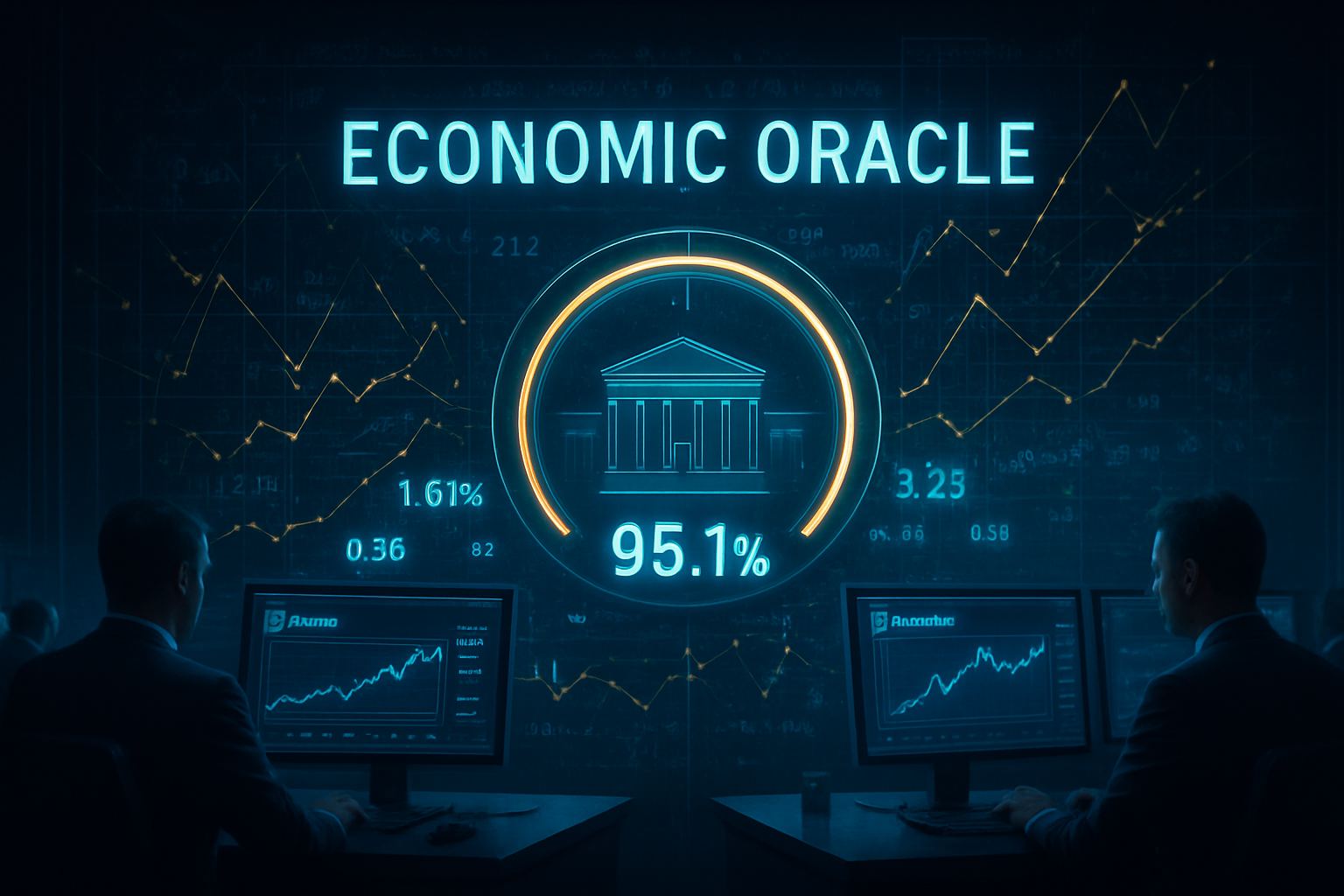
    As the Federal Reserve prepares for its first policy meeting of 2026, the global financial community is looking past traditional bank reports and focusing on a new, high-speed indicator: the prediction market. With over $360 million in trading volume now concentrated on the outcome of the January 28, 2026, FOMC meeting, these platforms have officially transitioned from niche betting arenas into what analysts are calling the "Economic Oracle."

    Current market odds reflect a decisive consensus, with a 95.1% probability of a "pause" (no change in rates). This surge in volume and precision comes as hedge funds and institutional liquidity providers increasingly use event-based contracts to hedge against macro volatility. What was once dismissed as a "prediction game" is now a cornerstone of the modern financial infrastructure, providing real-time sentiment that often moves faster than traditional federal funds futures.

    The Market: What's Being Predicted

    The focus of the financial world is currently fixed on the "Fed Decision: January 2026" contract. On Polymarket, the decentralized heavyweight, the specific contract for a rate hold has seen a staggering $363.2 million in volume. Parallel to this, Kalshi—the CFTC-regulated exchange—has reported record-breaking activity, with daily volumes across its broader suite of macro contracts reaching $465.9 million earlier this week.

    Traders are specifically betting on whether the Federal Open Market Committee (FOMC) will maintain the current target rate, cut by 25 basis points, or—in a tail-risk scenario—hike rates. The liquidity in these markets has been bolstered by the entry of major brokerage firms. Interactive Brokers (NASDAQ: IBKR), through its ForecastEx exchange, has played a pivotal role by offering a "yield-enhanced" structure, where participants earn an incentive coupon of up to 3.8% APY on the collateral of their open positions, effectively paying institutions to provide market depth.

    The resolution criteria are straightforward: the market settles based on the official target range announced by the Federal Reserve at the conclusion of its January 28 meeting. Unlike traditional futures, which can be influenced by complex technical factors and term premiums, these binary contracts offer a "pure" expression of probability that is easily digestible for retail and institutional investors alike.

    Why Traders Are Betting

    The primary driver behind the current 95% "pause" consensus is a string of "sticky" economic data released in early January. The December Consumer Price Index (CPI) printed at 2.7%, which, while stable, failed to show the continued cooling that would have justified a fourth consecutive rate cut. Furthermore, the January labor report showed non-farm payrolls adding a modest 66,000 jobs—just enough to keep the Fed from feeling an urgent need to stimulate the economy despite a 4.6% unemployment rate.

    The shift in market participation is also a major factor. Quant-heavy firms such as Susquehanna International Group (SIG) and Jane Street have reportedly established dedicated prediction market desks. These "whales" are not just betting on the Fed; they are performing sophisticated arbitrage between prediction market odds and the CME Group (NASDAQ: CME) FedWatch tool.

    "Prediction markets are the ultimate truth engine," says one macro trader at a Tier-1 hedge fund. "During the Fed's 10-day blackout period, when officials cannot speak to the press, these markets continue to process new global data in real-time. They aren't just predicting the Fed; they are front-running the Fed's own data-dependency."

    Broader Context and Implications

    The emergence of the "Economic Oracle" marks a significant evolution in how public sentiment and institutional risk are measured. Historically, economists relied on surveys or lagged data. Today, the aggregate wisdom of thousands of traders—incentivized by profit and loss—is proving to be a more accurate and responsive barometer.

    This trend has not escaped the eyes of regulators. In New York, the introduction of the ORACLE Act (Oversight and Regulation of Activity for Contracts Linked to Events) represents a milestone in the legitimization of the sector. The bill seeks to formalize the role of these platforms as "utility" engines for the broader financial system, rather than mere gambling sites.

    Furthermore, the historical accuracy of these markets has been impressive. Throughout 2025, prediction markets successfully anticipated three out of three Fed pivots several weeks before the mainstream financial press caught up. This "speed gap" is why firms like Saba Capital Management are now using Kalshi's CPI contracts to hedge inflation directly, bypassing the complexities of bond-market proxies.

    What to Watch Next

    As we approach the January 28 resolution date, volatility is expected to remain low unless a major exogenous shock occurs. However, the market will be hypersensitive to any "leaks" or late-breaking commentary from secondary Fed signals. The key milestone to watch is the January 22nd release of regional manufacturing data, which could provide a last-minute nudge to the odds if the numbers deviate significantly from expectations.

    Beyond the January meeting, traders are already shifting their gaze to the March 2026 outlook. Early betting on Polymarket suggests a return to the "cut" cycle, with a 42% probability of a 25-basis-point reduction currently priced in for the spring. This suggests that while the market expects a pause now, the long-term trend remains focused on normalization.

    Bottom Line

    The $360 million volume in the January Fed market is more than just a number; it is a signal that the financial world has embraced a new way of processing information. Prediction markets have solved the "noise" problem of traditional forecasting by forcing participants to back their opinions with capital.

    For the Federal Reserve, these markets provide a transparent feedback loop. For hedge funds, they provide a surgical tool for hedging macro risks. As we head toward the end of January, the 95% certainty of a pause serves as a testament to the efficiency of the "Economic Oracle." While the Fed remains data-dependent, the market has already crunched that data and rendered its verdict.


    This article is for informational purposes only and does not constitute financial or betting advice. Prediction market participation may be subject to legal restrictions in your jurisdiction.

    PredictStreet focuses on covering the latest developments in prediction markets.
    Visit the PredictStreet website at https://www.predictstreet.ai/.
  • Hedging the Apocalypse: Inside the 29.7% Geopolitical Surge on Prediction Markets

    Hedging the Apocalypse: Inside the 29.7% Geopolitical Surge on Prediction Markets

    As of mid-January 2026, a seismic shift has occurred in the landscape of global finance. Prediction markets, once relegated to the fringes of political punditry and sports betting, have officially matured into what many are calling "Information Finance." Nowhere is this more evident than in the "Geopolitical Surge"—a phenomenon that has seen geopolitical risk markets become the fastest-growing segment on Polymarket, currently boasting a 29.7% activity rate. This spike represents a massive migration of capital away from traditional asset classes and toward event-based contracts that track the world’s most volatile flashpoints.

    The surge reached a fever pitch on January 12, 2026, when total daily trading volume across the industry hit a record $701.7 million. Traders are no longer just betting on who will win an election; they are pricing the probability of "Operation Iron Strike" in the Middle East and the stability of the Iranian regime. With markets moving up to 15 minutes ahead of traditional news wires like Bloomberg or Reuters, prediction platforms have become the ultimate "truth engine" for institutional desks looking to navigate a world increasingly defined by kinetic conflict.

    The Market: What's Being Predicted

    The core of the current geopolitical surge is centered on high-stakes military outcomes in the Middle East. On Polymarket, the most heavily traded contract is "Israel to strike Iran by January 31, 2026," which has seen over $8 million in volume this month alone. As of January 15, the odds are fluctuating wildly between 34% and 52%, following intelligence reports of Israeli security cabinet meetings regarding retaliatory measures. Meanwhile, a broader contract on whether the U.S. will strike Iran by mid-year has seen its probability surge to 83%, with over $22 million in liquidity.

    While Polymarket leads in geopolitical variety, Kalshi has dominated the volume charts, capturing 66.4% of the market share on peak days. Much of this growth is attributed to its integration with Robinhood (NASDAQ: HOOD), which has opened the door for over 100 million retail users to trade economic and political event contracts. This massive influx of liquidity has stabilized bid-ask spreads, making it possible for larger institutional players to enter and exit positions without massive slippage, even in high-tension "global conflict" categories.

    The resolution criteria for these markets have become increasingly sophisticated. Rather than simple "Yes/No" outcomes, many markets now use multi-layered triggers. For instance, the "Ali Khamenei out as Supreme Leader" contract is tied to official state announcements or verified reports from three international news agencies. By mid-January 2026, the probability of a leadership change in Tehran by year-end has reached a startling 66%, driven by the ongoing "Bazaar Revolts" and the hyper-devaluation of the Iranian Rial.

    Why Traders Are Betting

    The 29.7% activity rate isn't just driven by speculators; it is being propelled by institutional "macro-political hedging." Sophisticated firms, such as Oldenburg Capital Partners, have pioneered strategies that treat prediction markets as insurance policies against physical world disruptions. For example, a fund with heavy exposure to defense contractors like Lockheed Martin (NYSE: LMT) or Northrop Grumman (NYSE: NOC) might buy "Yes" contracts on a Middle East escalation. If a conflict breaks out, the "Yes" contract pays out, offsetting the potential broader market volatility or supply chain disruptions that could hurt their equity portfolio.

    Specific defense stocks are now acting as proxies for these prediction markets. Traders have noted a nearly perfect correlation between the price of RTX Corporation (NYSE: RTX)—the manufacturer of the Iron Dome interceptors—and the "Israel Strike" contract. When the prediction market probability of a strike increases, RTX stock often follows as investors price in the inevitable demand for defensive systems. This "Hedged Escalation" strategy has become a standard playbook for navigating the early 2026 conflict cycle.

    Beyond institutional hedging, the markets are absorbing "insider signal leakage." The early January capture of Venezuelan President Nicolás Maduro by U.S.-backed forces served as a landmark proof-of-concept. Hours before the official Pentagon announcement, the probability of Maduro's downfall on Polymarket spiked from 12% to 85%. One anonymous trader reportedly turned $32,000 into $400,000 by acting on the "signal" before it hit the mainstream news. This speed advantage—often 10 to 15 minutes ahead of traditional media—is a primary driver for high-frequency traders.

    Broader Context and Implications

    The "Geopolitical Surge" signifies a fundamental change in how the public and the financial sector consume information. We are moving away from an era of "expert analysis" and into an era of "incentivized accuracy." In a world of deepfakes and propaganda, the prediction market offers a cold, hard number backed by real capital. If the probability of a conflict is 80%, it doesn't matter what a talking head on television says; the collective intelligence of the market has reached a consensus that carries financial weight.

    Historically, these markets have shown remarkable accuracy compared to traditional polling or diplomatic forecasting. During the 2024 cycles, prediction markets were often the first to correctly price in legislative stalemates. Now, in 2026, they are being used to navigate even more complex hurdles, such as the passage of the CLARITY Act for digital asset regulation. The regulatory environment has also shifted; as the CFTC and other bodies grapple with the rise of event contracts, the massive retail adoption through platforms like Robinhood has made these markets "too big to ignore."

    Furthermore, these markets reveal a deep public cynicism—or perhaps realism—about global stability. The high activity rate in "World War III" or "Regime Collapse" markets suggests that the public is using these platforms to process and price their anxieties. By turning a global crisis into a tradable asset, prediction markets provide a way for individuals to gain a sense of agency, or at least financial protection, in an increasingly unpredictable world.

    What to Watch Next

    The immediate focus for the market is the January 31 deadline for the Israel-Iran strike contract. Any movement in the diplomatic sphere or localized skirmishes in the Levant will cause massive swings in these odds. Traders should also keep a close eye on the "Bazaar Revolts" in Iran; if the internal unrest leads to a significant crack in the military's loyalty to the Supreme Leader, the "Regime Stability" markets will likely be the first to signal a historic shift in Persian politics.

    Looking further ahead, the June 30, 2026, U.S.-Iran strike contract remains a high-liquidity "whale" market. This contract is expected to become the centerpiece of geopolitical trading for the first half of the year. Additionally, watch for the emergence of "Cyber-Conflict" markets, which are predicted to be the next sub-sector to experience a surge as state-sponsored hacking incidents become more frequent and impactful on global trade.

    Finally, the intersection of these markets with the 2026 U.S. Midterm Elections will be critical. If the geopolitical situation continues to deteriorate, expect to see "Cross-Market" hedging where traders bet on congressional control as a way to predict future defense spending authorizations. The feedback loop between the battlefield, the ballot box, and the betting slip has never been tighter.

    Bottom Line

    The 29.7% activity rate in geopolitical markets is not a fluke; it is the new baseline for 2026. As traditional news sources struggle to keep pace with the speed of global events, Polymarket and Kalshi have stepped in to provide a real-time, financially incentivized map of the world's risks. For the modern investor, "Information Finance" is no longer optional—it is the primary tool for survival in a volatile macro environment.

    Whether it is hedging a position in Northrop Grumman (NYSE: NOC) or simply looking for the most accurate news on Iranian stability, the message from the markets is clear: the most valuable commodity in 2026 is a "Yes" or "No" contract that settles on the truth. As we move deeper into this year of global transition, the "Geopolitical Surge" will likely continue to define the frontier of the global economy.


    This article is for informational purposes only and does not constitute financial or betting advice. Prediction market participation may be subject to legal restrictions in your jurisdiction.

    PredictStreet focuses on covering the latest developments in prediction markets.
    Visit the PredictStreet website at https://www.predictstreet.ai/.
  • The Great Sports Pivot: Prediction Markets Hit Record $700M Daily Volume as NFL Playoffs Heat Up

    The Great Sports Pivot: Prediction Markets Hit Record $700M Daily Volume as NFL Playoffs Heat Up

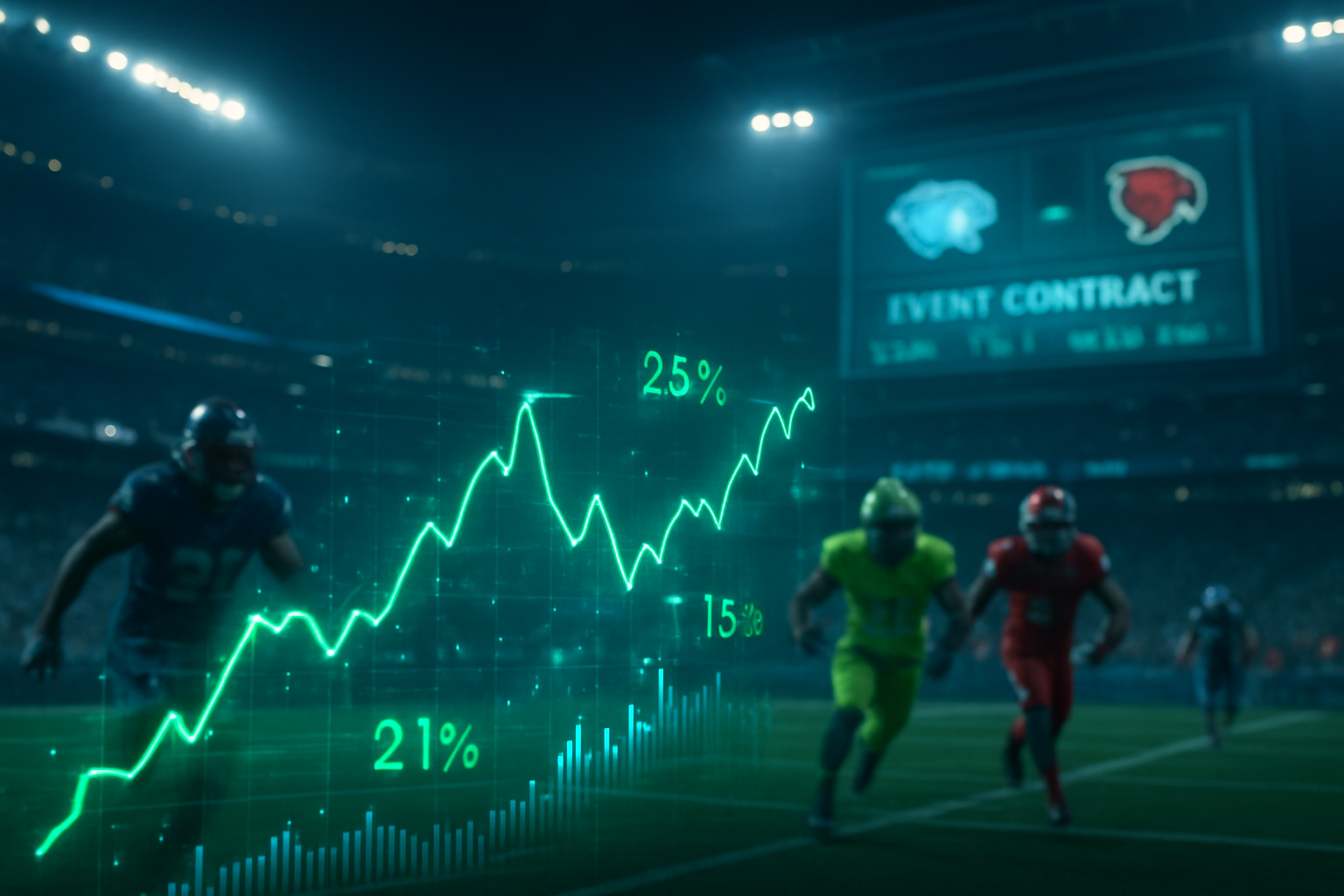
    As the NFL post-season enters its most critical stretch, the traditional landscape of sports wagering is facing a paradigm shift. On January 14, 2026, the prediction market industry reached a staggering milestone, processing over $701.7 million in a single day of trading. This record-breaking activity, driven primarily by the high-stakes matchups of the NFL Wild Card and Divisional rounds, marks the first time that decentralized and regulated event contracts have seriously rivaled the "handle" of the world’s largest sportsbooks.

    Currently, the markets are pricing the Seattle Seahawks as the frontrunners for Super Bowl LX at a 25% probability, followed closely by the Los Angeles Rams at 21%. Unlike previous years where these figures were merely "odds" set by a bookmaker, these percentages represent live, liquid trades where millions of dollars are moving every hour. The surge in volume is being hailed as the "Information Finance" revolution, as traders move away from the high-fee models of traditional betting toward the transparent, order-book mechanics of prediction platforms.

    The Market: What's Being Predicted

    The primary focus of the current trading frenzy is the "Super Bowl LX Champion" contract, which has become the most liquid sports market in history. On Polymarket, the global leader in crypto-native prediction volume, the Super Bowl winner market has already surpassed $674.5 million in cumulative volume. Meanwhile, Kalshi, the CFTC-regulated exchange, has seen its volume explode to over $465 million in daily activity, bolstered by its recent integration with retail powerhouse Robinhood (NASDAQ: HOOD).

    The current odds reflect a significant shift in sentiment over the last 48 hours. The Buffalo Bills, once a 10% underdog, have climbed to 15% following a dominant performance, while the Philadelphia Eagles have stabilized at 11%. These markets are binary: a contract for a team to win pays out at $1.00 if they take the trophy and $0.00 if they don't. This "yes/no" structure allows for a level of transparency that traditional "plus-minus" odds struggle to match.

    The liquidity is no longer limited to the eventual champion. Traders are now actively making markets on micro-events, such as individual player milestones and even specific coaching decisions. Resolution is strictly tied to official NFL data, ensuring that contracts settle within minutes of the game clock hitting zero.

    Why Traders Are Betting

    The migration from traditional sportsbooks like DraftKings (NASDAQ: DKNG) and FanDuel (NYSE: FLUT) to platforms like Kalshi and Polymarket is largely driven by "the vig"—or rather, the lack of it. Traditional sportsbooks typically bake in a 5% to 10% "juice" or margin into their lines. In contrast, the competitive order-book model of prediction markets has squeezed spreads down to 1% or 2%. For high-volume traders, this price discovery is the difference between a profitable season and a losing one.

    "We aren't just betting on a game; we are trading an asset," says one high-frequency trader on the Kalshi platform. "If the Seahawks score an early touchdown, the price of their 'Yes' contract jumps immediately. I can sell my position and take profit before the first quarter is even over. You can't do that with the same efficiency at a traditional book."

    Furthermore, the introduction of "Combos"—Kalshi’s regulated answer to the parlay—has attracted the retail audience that previously fueled the growth of MGM Resorts (NYSE: MGM) and its BetMGM platform. By allowing traders to link multiple event outcomes into a single derivative contract, these platforms have successfully captured the speculative "lottery ticket" interest that makes sports betting so popular, but with the added benefit of a transparent secondary market where those positions can be traded in real-time.

    Broader Context and Implications

    This surge in volume represents more than just a good month for sports fans; it signifies a structural change in how the public consumes information. Major news networks have begun displaying Kalshi and Polymarket probabilities alongside traditional game stats, treating the market price as the "true" probability of an event occurring. This "truth engine" effect has made prediction markets a primary source for sports analysts who previously relied on subjective expert opinions.

    However, the rapid growth has not been without friction. State regulators in Nevada and Connecticut have recently challenged the legality of these "sports event contracts," arguing they bypass traditional state-level gambling taxes and oversight. Kalshi maintains that they are an authorized derivatives exchange under the Commodity Exchange Act, setting the stage for a landmark legal battle that could define the future of financialized sports in America.

    Historically, prediction markets have shown a remarkable ability to outperform individual "experts." During the 2025 season, the closing prices on Polymarket were more accurate in predicting playoff upsets than the opening lines at major Vegas sportsbooks in 72% of cases.

    What to Watch Next

    As we approach the Divisional Round this weekend, all eyes are on the liquidity depth for the "Underdog" contracts. A massive "whale" position was recently spotted on Polymarket, with a single trader betting over $2.5 million on the New England Patriots to reach the AFC Championship. If the Patriots pull off an upset, it could trigger a massive "gamma squeeze" style movement in the AFC winner markets.

    Key dates to monitor include January 25, the date of the Conference Championships, and February 8, the date of Super Bowl LX. Industry analysts project that the Super Bowl will be the first single-day event in history to see over $1 billion in trading volume across all prediction platforms combined.

    Additionally, keep a close watch on the "Robinhood Effect." As more retail investors gain access to these markets through their existing brokerage accounts, the volatility of these contracts is expected to increase, creating opportunities for sophisticated arbitrageurs to capitalize on price discrepancies between the regulated US markets and the international crypto markets.

    Bottom Line

    The early 2026 NFL Playoffs have proven that prediction markets are no longer a niche corner of the internet for "crypto-bros" and political junkies. They have become a mainstream financial infrastructure that is actively cannibalizing the handle of multi-billion dollar sportsbooks. By offering better prices, more flexibility, and a transparent "order-book" model, these platforms are effectively turning sports fans into sophisticated market participants.

    Whether the Seahawks fulfill their 25% promise or a long-shot like the Patriots stages a historic run, the real winner of the 2026 season appears to be the prediction market model itself. As the "vig" continues to shrink and liquidity continues to grow, the line between "betting" on a game and "investing" in an outcome is becoming thinner than ever.


    This article is for informational purposes only and does not constitute financial or betting advice. Prediction market participation may be subject to legal restrictions in your jurisdiction.

    PredictStreet focuses on covering the latest developments in prediction markets.
    Visit the PredictStreet website at https://www.predictstreet.ai/.
  • Polymarket’s $112 Million Gambit: The QCEX Acquisition and the High-Stakes Battle for the U.S. Market

    Polymarket’s $112 Million Gambit: The QCEX Acquisition and the High-Stakes Battle for the U.S. Market

    As of January 15, 2026, the prediction market landscape has been fundamentally reshaped by what insiders are calling the "regulatory heist of the decade." Following years of operating in a state of "regulatory exile" from the United States, Polymarket has successfully completed its strategic acquisition of QCEX, a CFTC-licensed exchange. The $112 million deal, finalized in late 2025, has paved the way for Polymarket’s official domestic relaunch, bringing the world’s most liquid prediction platform directly into competition with the incumbent heavyweight, Kalshi.

    The move has sent shockwaves through the industry. For years, American traders were forced to watch from the sidelines or use complex workarounds to access Polymarket’s deep liquidity pools. Now, with the acquisition of QCEX’s Designated Contract Market (DCM) and Derivatives Clearing Organization (DCO) licenses, Polymarket is no longer an offshore outsider. The platform is currently in a high-stakes race to onboard millions of American retail users, with trading volumes across the industry hitting a record-shattering $700 million daily this month.

    The Market: What's Being Predicted

    The focus of prediction market enthusiasts has shifted from if Polymarket would return to the U.S., to how fast it can seize market share from Kalshi. Currently, secondary markets on various platforms are tracking "Polymarket U.S. Volume vs. Kalshi" for the first half of 2026. While Kalshi currently commands approximately 66% of the daily U.S. regulated volume—thanks to its deep integration with platforms like Robinhood Markets, Inc. (NASDAQ: HOOD)—Polymarket’s "waitlist-only" U.S. app has already seen over 500,000 sign-ups since its December rollout.

    Liquidity remains the primary metric. Traders are closely monitoring the "Total Value Locked" (TVL) in Polymarket’s new U.S.-compliant silos. Unlike its international version, which operates on the Polygon blockchain using USDC, the U.S. version is a hybrid model designed to appease federal regulators while maintaining the fast-paced, high-liquidity environment that defined the platform during the 2024 election cycle. The resolution of these "market share" contracts is set for July 1, 2026, and the odds have been swinging wildly as Polymarket clears new regulatory hurdles.

    Why Traders Are Betting

    The primary driver of the current market volatility is the sheer scale of institutional backing Polymarket has secured. In the wake of the QCEX deal, the Intercontinental Exchange (NYSE: ICE), the parent company of the New York Stock Exchange, finalized a landmark $2 billion investment in Polymarket. This partnership integrates Polymarket’s real-time data into ICE’s professional financial terminals, effectively treating prediction market odds as a legitimate new asset class for institutional desks.

    However, the path hasn't been entirely smooth. Traders are currently processing the fallout from the "Venezuela Controversy." Earlier this month, a $10.5 million market regarding the capture of Nicolás Maduro led to widespread outrage when Polymarket’s decentralized oracle initially hesitated to pay out, citing technicalities in the "invasion" definition. This has created a "trust gap" that Kalshi is actively exploiting in its marketing, positioning itself as the "cleaner" and more legally robust alternative.

    Whale activity has been notable on the "U.S. Market Dominance" contracts. Several large positions were recently taken by decentralized finance (DeFi) hedge funds betting that Polymarket's "culture-first" approach—focusing on viral news and sports contracts—will eventually overwhelm Kalshi’s more "academic" focus on macroeconomic data and interest rate pivots.

    Broader Context and Implications

    The acquisition of QCEX represents a "regulatory reset" that many thought impossible after the CFTC’s 2022 enforcement action against Polymarket. By purchasing an existing licensed entity (previously owned by Quadcode Group), Polymarket bypassed the standard multi-year federal registration process. This "M&A-first" strategy for regulatory compliance is now being studied by other international crypto firms looking to re-enter the U.S.

    The real-world implications of this battle are significant. The surge in prediction market volume has caught the eye of Washington D.C., leading to the introduction of the Public Integrity in Financial Prediction Markets Act of 2026. This proposed legislation aims to curb "insider trading" by government officials on markets where they may have non-public knowledge—such as upcoming regulatory decisions or military actions. The accuracy of these markets has reached a point where they are frequently cited on major news networks like CNN and CNBC as more reliable than traditional polling or expert analysis.

    Furthermore, the competition is forcing a technological evolution. We are seeing the "Robinhood-ification" of prediction markets, where complex derivatives are being packaged into user-friendly mobile interfaces that appeal to the same demographic that fueled the 2021 meme-stock craze.

    What to Watch Next

    The immediate milestone to watch is the full public launch of the Polymarket U.S. app, currently slated for late February 2026. Until now, the platform has been restricted to a slow waitlist rollout. A successful "unveiling" could see a massive migration of liquidity. Additionally, keep a close eye on the ongoing state-level legal battles. States like Tennessee and Connecticut have issued cease-and-desist orders, arguing that "event contracts" are a form of unlicensed sports betting. How Polymarket and Kalshi navigate these state vs. federal jurisdictional conflicts will determine the industry's ceiling.

    Another key event is the upcoming "Predictive Data Summit" in March, where ICE is expected to reveal how it will package Polymarket data for high-frequency trading firms. If institutional "market makers" begin providing deep liquidity to these markets, the bid-ask spreads will tighten significantly, making prediction markets a viable hedging tool for traditional corporations.

    Bottom Line

    The QCEX acquisition was more than just a business deal; it was a declaration of war for the future of the "Information Economy." By moving into the U.S. market with federal licenses in hand, Polymarket has transformed from a crypto-native underdog into a systemic financial player. The competition with Kalshi is no longer just about who has the better interface, but about who can maintain the delicate balance between high-octane trading and the stringent requirements of the CFTC.

    Prediction markets are finally graduating from the fringes of the internet to the center of the financial world. Whether Polymarket’s liquidity can overcome Kalshi’s institutional trust remains the biggest bet of 2026. One thing is certain: the era of "betting on the news" has officially arrived in America, and the stakes have never been higher.


    This article is for informational purposes only and does not constitute financial or betting advice. Prediction market participation may be subject to legal restrictions in your jurisdiction.

    PredictStreet focuses on covering the latest developments in prediction markets.
    Visit the PredictStreet website at https://www.predictstreet.ai/.