Tag: Polymarket

  • From Gambling to Gauges: Wall Street Embraces Prediction Markets as the New Macro Hedge

    From Gambling to Gauges: Wall Street Embraces Prediction Markets as the New Macro Hedge

    As of mid-January 2026, the global financial landscape is witnessing a profound shift in how risk is priced and managed. Long dismissed as the domain of political junkies and speculators, prediction markets have officially entered the "Institutional Era." This morning, January 19, 2026, trading desks at major investment banks are no longer just looking at the Bloomberg Terminal for yields; they are looking at the live odds on Kalshi and Polymarket to determine the true probability of a 25-basis-point Fed rate cut in March.

    The interest is driven by a staggering surge in liquidity. On January 12, the prediction market industry processed a record $701.7 million in a single 24-hour session, fueled by the "Maduro Incident"—a geopolitical shock involving the capture of the Venezuelan leader that was priced into prediction markets hours before it hit mainstream news wires. This "information edge" has transformed these platforms from niche betting sites into what Wall Street now calls "Information Finance."

    The Market: What's Being Predicted

    While the 2024 U.S. presidential election served as the "proof of concept" for prediction markets, the focus in 2026 has shifted toward sophisticated economic and finance-related hedging tools. On Kalshi, the flagship regulated U.S. exchange, the "Federal Reserve Target Rate" contracts have become the new gold standard for interest rate forecasting. In December 2025 alone, Kalshi’s Fed contracts saw $394 million in volume, frequently outpacing the predictive accuracy of the NY Fed’s own Nowcast models.

    Beyond interest rates, institutional traders are increasingly using "CPI-Linked Contracts" and "GDP Growth Caps" to hedge against specific macro-economic outcomes. Polymarket, which transitioned into a fully licensed U.S. exchange in late 2025 after its parent company, Intercontinental Exchange (NYSE:ICE), made a landmark $2 billion investment, now offers global "Tail Risk" contracts. These allow firms to hedge against low-probability, high-impact events like a sudden sovereign default or a localized conflict affecting shipping lanes. The liquidity is now deep enough that a firm can move $50 million in or out of a macro position without the massive slippage that plagued these markets just two years ago.

    Why Traders Are Betting

    The migration of Wall Street firms to prediction markets is driven by the search for "directness." Unlike traditional options or futures, which can be influenced by Greeks like theta or vega, a prediction market contract is a binary representation of an event occurring. Goldman Sachs Group Inc (NYSE:GS) recently established a dedicated "Event Desk" within its Global Banking & Markets segment to facilitate these trades for clients. According to CEO David Solomon in a recent earnings call, these contracts are now viewed as "sophisticated derivative activities" rather than speculative bets.

    Quant shops like Susquehanna International Group (SIG) and Jane Street have also become dominant players, acting as market makers to ensure deep liquidity. These firms use prediction markets to capture "basis" differences—the gap between what a prediction market says an event is worth and what traditional derivatives say. Furthermore, the "Truth Engine" effect—where prediction markets aggregate non-public or "gray" information into a single price—provides a real-time risk gauge that traditional forecasting methods simply cannot match. For instance, during the Maduro capture in early January, the "odds of a regime change" on Polymarket spiked to 85% nearly two hours before the official military announcement, allowing savvy hedgers to adjust their oil-exposed positions in real-time.

    Broader Context and Implications

    This cultural shift was cemented by the CLARITY Act of 2025, a landmark piece of legislation that officially classified event contracts as "digital commodities" under the oversight of the Commodity Futures Trading Commission (CFTC). This regulatory "green light" solved the compliance hurdles that had previously kept major banks on the sidelines. The 2024 election was the catalyst, as prediction markets correctly predicted the outcome of key swing states while traditional pollsters struggled with high margins of error.

    The implications go far beyond finance. Prediction markets are now being used as a public policy tool. By 2026, the odds for a "Soft Landing" or "Recession in 2026" are cited in Congressional testimony as a measure of public and market confidence. However, the growth has not been without controversy. The "Public Integrity in Financial Prediction Markets Act of 2026" is currently being debated in the House, aiming to prevent government employees with inside information on policy shifts from trading on these platforms. Despite these regulatory growing pains, the historical accuracy of these markets has proven that they are superior at distilling complex global data into actionable prices.

    What to Watch Next

    The immediate focus for institutional traders is the upcoming 2026 U.S. Midterm Elections. Unlike previous cycles, firms are setting up "Election Hedging Wraps" that combine prediction market contracts with traditional S&P 500 hedges to protect against the volatility of a potential shift in House control. Watch for the volume on these mid-term contracts to hit new highs by mid-summer as firms begin their quarterly risk assessments.

    Additionally, keep a close eye on the rollout of "Event-Linked Notes" (ELNs) by major banks. These products will allow pension funds and insurance companies to gain exposure to prediction market yields without directly trading on Kalshi or Polymarket. This "securitization" of event risk is expected to bring billions in new capital into the space by the end of 2026. Finally, the integration of event contracts into retail platforms like Robinhood Markets Inc (NASDAQ:HOOD) will continue to bridge the gap between institutional hedging and retail sentiment, potentially creating a feedback loop that increases price accuracy.

    Bottom Line

    The transformation of prediction markets from a fringe curiosity to a vital piece of the global financial infrastructure is complete. In 2026, "hedging an event" has become as standard as "hedging a currency." Wall Street’s adoption of platforms like Kalshi and Polymarket represents more than just a search for new profits; it represents a fundamental shift toward "Information Finance," where the most valuable asset is not capital, but the ability to accurately predict the future.

    While regulatory scrutiny will continue to evolve, the underlying utility of these markets as a "truth engine" is undeniable. For institutional traders, the question is no longer whether prediction markets are legitimate, but how much of their risk profile they can afford not to hedge on them. As we look toward the remainder of 2026, expect prediction markets to become the primary barometer for the global economy, providing a clearer view of what's coming than any model or poll ever could.


    This article is for informational purposes only and does not constitute financial or betting advice. Prediction market participation may be subject to legal restrictions in your jurisdiction.

    PredictStreet focuses on covering the latest developments in prediction markets.
    Visit the PredictStreet website at https://www.predictstreet.ai/.
  • Betting on the Brink: Inside the Explosive Rise of Geopolitical Disaster Markets

    Betting on the Brink: Inside the Explosive Rise of Geopolitical Disaster Markets

    As of January 19, 2026, the global financial landscape is increasingly dominated by a controversial new asset class: geopolitical instability. Following the chaotic start to the year—marked by the capture of Nicolás Maduro in Venezuela on January 3 and a subsequent hypersonic missile test by Pyongyang on January 4—prediction markets have seen an unprecedented surge in activity. These "disaster markets," which allow traders to bet on everything from nuclear tests to regime changes, are no longer just niche corners of the internet; they have become a multi-billion-dollar "parallel intelligence" infrastructure.

    On platforms like Polymarket and Kalshi, the volume of bets regarding North Korean aggression and potential U.S. diplomatic breakthroughs has reached a fever pitch. Currently, the market for a face-to-face summit between Donald Trump and Kim Jong-un in 2026 is trading at a robust 42% probability, while more extreme "invasion" contracts are seeing high-frequency fluctuations as traders attempt to price in the risk of a global kinetic conflict. This shift has transformed prediction markets into a leading indicator of real-world volatility, often moving faster than traditional news cycles.

    The Market: What's Being Predicted

    The focus of the early 2026 trading season has been the Korean Peninsula. On the decentralized platform Polymarket, cumulative volume for 2025 reached nearly $40 billion, with a significant portion dedicated to "North Korean provocation" contracts. Specifically, the market for "North Korea to launch a ballistic missile by January 31, 2026" saw a massive spike in liquidity following the January 4 test. Before the launch was even officially confirmed by the Pentagon, "Yes" contracts reached near-parity, suggesting that traders with localized intelligence or advanced satellite monitoring were front-running the official news.

    On the regulated U.S. exchange Kalshi, the focus is more diplomatic but no less high-stakes. Traders are currently eyeing the "Kim Jong-un to visit the U.S. in 2026" contract. While the odds remain lower at 18%, the volume has increased tenfold since the start of the year. Unlike the "wild west" markets on offshore platforms, Kalshi’s contracts are strictly defined, requiring a physical presence in the 50 U.S. states to resolve.

    In Asia, a new Binance-backed platform named Opinion has gained massive traction, specifically targeting South Korean retail investors. This platform hosts hyper-local markets, such as "DMZ skirmish before March" and "Cyberattack on Seoul infrastructure." Weekly volumes on Opinion have reportedly exceeded 2 trillion won ($1.5 billion), highlighting a regional obsession with hedging against the very real possibility of local disaster.

    Why Traders Are Betting

    The motivations for these bets are shifting from speculative gambling to strategic hedging. Institutional players, once wary of the "death pool" optics, are now the primary drivers of volume. Goldman Sachs (NYSE: GS) recently acknowledged that it tracks a "Basket of Geopolitical Risk Stocks" that directly correlates with the odds seen on these prediction platforms. For a hedge fund manager, a "Yes" bet on a North Korean missile launch acts as a protective hedge against their long positions in South Korean equities or global tech manufacturing.

    "We aren't just looking at what CNN says anymore," noted one anonymous high-volume trader on Polymarket. "We are looking at where the $500,000 'whale' positions are moving at 3:00 AM. When a whale bets $30,000 at 7-cent odds on a regime change and wins, like we saw with the Maduro removal in early January, you realize these markets are being fed by people with boots-on-the-ground information."

    Furthermore, the "Trump Factor" remains a primary catalyst. The market's 42% odds for a Trump-Kim summit reflect a belief in the return of "personal diplomacy" and the President's penchant for grand, televised summits. Traders are betting on the President's unpredictability, using historical patterns from the 2018-2019 period to gauge the likelihood of a sudden de-escalation that would see Kim Jong-un on U.S. soil.

    Broader Context and Implications

    The rise of these markets has ignited a firestorm of ethical debate. Critics argue that allowing individuals to profit from war and suffering is inherently "ghoulish." In response, Representative Ritchie Torres introduced the Public Integrity in Financial Prediction Markets Act of 2026 earlier this month. The bill aims to prevent federal officials from trading on outcomes they might influence, treating prediction markets with the same scrutiny as the equities market to prevent "government insider trading."

    The ethical concern extends to moral hazard: could a high-stakes bet on an assassination or a terrorist attack actually incentivize the event? While no such link has been proven, the sheer amount of money—over $10 billion in monthly volume in late 2025—makes the possibility a central concern for regulators at the CFTC.

    Despite the controversy, the accuracy of these markets is difficult to ignore. Throughout 2025, prediction markets consistently outperformed traditional think tanks and intelligence agencies in forecasting regional skirmishes. The correlation between these markets and the stock prices of major defense contractors is now nearly 1:1. For instance, Hanwha Aerospace (KRX: 000880) and LIG Nex1 (KRX: 079550) saw their stock prices surge by 25.4% and 15.2% respectively in the first week of 2026, perfectly mirroring the rising "conflict odds" on Polymarket. Similar movements were seen in U.S. giants like Lockheed Martin (NYSE: LMT) and Northrop Grumman (NYSE: NOC).

    What to Watch Next

    The coming weeks will be a critical litmus test for these disaster markets. All eyes are on the upcoming vote for the 2026 U.S. defense budget, which President Trump has proposed at a record $1.5 trillion. If the budget passes with its current focus on "Pacific Deterrence," expect the odds for a diplomatic summit to drop while "Missile Launch" and "Satellite Deployment" contracts see increased action.

    Key dates to monitor include the late-February anniversary of the founding of the Korean People’s Army. Traditionally a time for military parades, traders are already positioning themselves for a "spectacular" missile demonstration. Additionally, any movement in the stock of Korea Aerospace Industries (KRX: 047810) will be closely watched; the company’s stock has recently moved in tandem with markets predicting the detection of new North Korean submarine-launched ballistic missile (SLBM) capabilities.

    Bottom Line

    The emergence of "geopolitical disaster" markets represents a fundamental shift in how the world processes risk. What was once considered a morally questionable hobby has matured into a vital instrument for financial hedging and information aggregation. Whether it is the 42% chance of a Trump-Kim summit or the split-second reaction to a missile launch, these markets provide a raw, unfiltered look at public and institutional sentiment that traditional polls cannot match.

    However, the legal landscape is shifting. As the Torres Bill makes its way through Congress and the ethical debate over "profiting from chaos" intensifies, the future of these platforms may depend on their ability to self-regulate. For now, they remain the most accurate—and perhaps the most unsettling—barometer of a world on the edge.


    This article is for informational purposes only and does not constitute financial or betting advice. Prediction market participation may be subject to legal restrictions in your jurisdiction.

    PredictStreet focuses on covering the latest developments in prediction markets. Visit the PredictStreet website at https://www.predictstreet.ai/.
  • Nvidia’s Crown on the Line: Polymarket Traders Bet $10M on the World’s Most Valuable Company Race

    Nvidia’s Crown on the Line: Polymarket Traders Bet $10M on the World’s Most Valuable Company Race

    As the first month of 2026 reaches its crescendo, a high-stakes financial battle is playing out not just on the trading floors of Wall Street, but in the digital arenas of prediction markets. On Polymarket, the world’s largest decentralized prediction platform, a market titled "Largest Company by Market Cap at end of January?" has surpassed $10 million in trading volume. Traders are putting millions on the line to forecast whether Nvidia (NASDAQ: NVDA) can maintain its status as the world’s most valuable company through the end of the month.

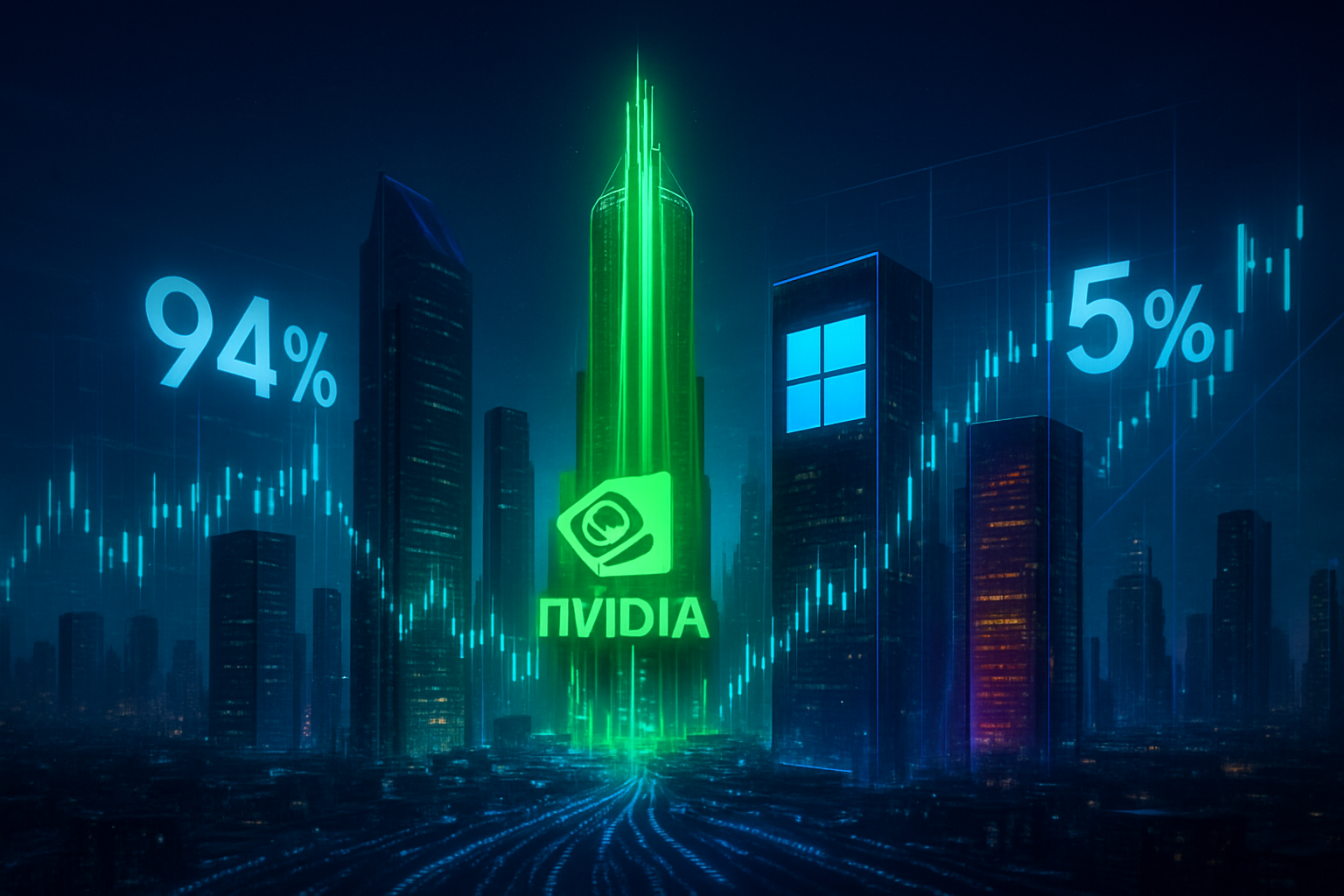
    Currently, the odds are heavily skewed in favor of the semiconductor giant, with "Yes" shares for Nvidia trading at roughly 94 cents—implying a 94% probability of dominance. Despite the commanding lead, the market has seen a flurry of activity as competitors like Alphabet Inc. (NASDAQ: GOOGL) surge in value, creating a rare window of volatility that has captured the attention of both retail speculators and institutional hedgers.

    The Market: What's Being Predicted

    The specific market on Polymarket asks a straightforward but high-consequence question: Which company will have the highest market capitalization as of the close of business on January 31, 2026? While the contract includes options for perennial heavyweights like Apple Inc. (NASDAQ: AAPL) and Microsoft Corp. (NASDAQ: MSFT), the primary action is centered on Nvidia’s ability to defend its title.

    As of January 19, 2026, the market caps stand in a hierarchy that would have seemed unthinkable just two years ago:

    • Nvidia (NVDA): ~$4.55 Trillion (94% odds)
    • Alphabet (GOOGL): ~$4.02 Trillion (5% odds)
    • Apple (AAPL): ~$3.79 Trillion (<1% odds)
    • Microsoft (MSFT): ~$3.42 Trillion (<1% odds)

    The liquidity in this market is exceptionally high for a short-term corporate event, with over $10.2 million in total volume. Resolution is tied to verified closing data from major financial aggregators, such as CompaniesMarketCap or Bloomberg. The market has seen significant shifts over the last two weeks; earlier in January, Alphabet’s odds were virtually non-existent, but a sudden rally sparked by a landmark AI integration deal saw "Yes" shares for Google’s parent company spike briefly to 15% before settling.

    Why Traders Are Betting

    The primary driver for the current betting frenzy is the stark contrast between Nvidia’s stable trajectory and the upcoming "Magnificent Seven" earnings gauntlet. Analysts from firms like Wolfe Research remain aggressively bullish on Nvidia, citing the transition to the "Rubin" chip architecture as a catalyst that could push the stock toward a $6 trillion valuation by late 2026. However, prediction market traders are focused on a much tighter window.

    The "whale" activity in this market suggests a sophisticated hedging strategy. Because Nvidia is not scheduled to report its own earnings until February 25, 2026, its market cap is perceived as less susceptible to a sudden idiosyncratic crash in the next 12 days. Conversely, Microsoft and Apple are both slated to report earnings on January 28 and January 29, respectively.

    "Traders are essentially betting on the 'earnings gap,'" says one high-volume Polymarket participant. "If Microsoft or Apple were to report a massive beat, they could theoretically close a $500 billion gap in a single session. But at a 94% probability, the market is signaling that Nvidia’s $700 billion lead over Apple is an insurmountable 'moat' for the month of January."

    Broader Context and Implications

    This $10 million market is a microcosm of a larger trend: the "financialization" of market sentiment. Traditional analyst predictions often focus on 12-month price targets and fundamental ratios, which can be slow to react to daily momentum. Prediction markets, however, provide a real-time "probability scoreboard" that incorporates macro risks, technical levels, and even geopolitical rumors.

    The rise of Alphabet to the #2 spot, overtaking Apple earlier this month, was reflected in Polymarket odds hours before many traditional brokerages updated their morning notes. This reveals a "wisdom of the crowd" effect where prediction markets act as a leading indicator for sentiment shifts among tech investors.

    Furthermore, the focus on "Market Cap King" status has real-world implications for passive investment flows. When a company holds the #1 spot, it often commands a larger weight in S&P 500 and Nasdaq-100 indices, forcing institutional buying. Polymarket traders are, in effect, betting on the direction of these massive, automated capital flows.

    What to Watch Next

    The next 12 days will be critical for the resolution of this market. While Nvidia holds a massive lead, two specific events could flip the odds:

    1. January 28 – Microsoft Earnings: If Microsoft reports a breakthrough in Azure AI margins that triggers a 15-20% rally, the gap between it and Nvidia could shrink overnight, though it currently remains the "dark horse" of the group.
    2. January 29 – Apple Earnings: As the former #1, Apple has the most historical volatility around its earnings reports. A "monster" quarter fueled by AI-integrated iPhone sales could see it leapfrog Alphabet and challenge Nvidia.

    However, the most likely scenario remains a "Nvidia Walkover." With no earnings report to act as a negative catalyst, Nvidia would likely only lose its top spot if a broader macro-economic shock hit the semiconductor sector specifically—a scenario that currently has low probability according to broader options market data.

    Bottom Line

    The $10 million Polymarket battle over the world’s largest company highlights a shift in how we measure corporate success. While analysts are debating where Nvidia will be in 2027, prediction market traders are ruthlessly calculating the probability of its dominance over the next 288 hours.

    The current 94% odds for Nvidia suggest that the "AI King" is safe for now, but the 5-6% odds for Alphabet represent a "non-zero" chance that the recent shuffling in the tech hierarchy isn't over. For investors, these markets offer a unique window into the "tail risks" that traditional research might overlook. As the month draws to a close, all eyes will be on whether the semiconductor giant can hold its $4.5 trillion throne against the impending earnings-season volatility.


    This article is for informational purposes only and does not constitute financial or betting advice. Prediction market participation may be subject to legal restrictions in your jurisdiction.

    PredictStreet focuses on covering the latest developments in prediction markets.
    Visit the PredictStreet website at https://www.predictstreet.ai/.

  • The 100-Hour Hustle: How Logan Sudeith Became the Face of the $100,000-a-Month Prediction Market Elite

    The 100-Hour Hustle: How Logan Sudeith Became the Face of the $100,000-a-Month Prediction Market Elite

    As of January 2026, the image of the "professional trader" has undergone a radical transformation. Gone are the days when high-stakes finance was solely the province of Wall Street floor traders or quantitative hedge fund analysts staring at Bloomberg terminals. Today, the new face of alpha is Logan Sudeith, a 25-year-old former risk analyst from Atlanta, Georgia, who famously resigned from a stable $75,000-a-year job to trade the "scoreboard of reality" full-time.

    Sudeith represents a burgeoning class of "Professional Event Traders" (PMTs) who have turned prediction markets like Kalshi and Polymarket into their personal ATM machines. While many retail investors were still learning the ropes of "Information Finance" in late 2024, Sudeith was already scaling a lifestyle that defies traditional labor norms: working 100-hour weeks, "bed-lounging" with a laptop, and DoorDashing every meal to ensure he never misses a live market ticker. The results have been staggering, culminating in a recent milestone that has sent shockwaves through the community—a single $100,000 profit month.

    The Market: What’s Being Predicted

    The markets Sudeith and his peers navigate are far more granular than the broad indices of the traditional stock market. While a typical investor might buy shares in Apple Inc. (NASDAQ: AAPL) or Tesla, Inc. (NASDAQ: TSLA) based on quarterly earnings, Sudeith trades on the specificities of daily life. These "event contracts" allow traders to buy and sell shares in the probability of a specific outcome, ranging from Federal Reserve interest rate hikes to the specific phrasing used by political figures in press conferences.

    The primary arenas for this activity are Kalshi and Polymarket. By early 2026, Kalshi has seen its valuation surge to a reported $11 billion, with weekly volumes frequently exceeding $2 billion. Meanwhile, Polymarket has completed a massive re-entry into the U.S. market following its acquisition of a CFTC-licensed exchange. These platforms offer thousands of niche markets, such as whether a certain bill will pass the Senate by Friday, the exact number of times a sports commentator will say "air ball," or the winner of the New York City mayoral race—a trade that netted Sudeith over $7,400 in profit.

    Why Traders Are Betting

    For Sudeith, the "edge" isn't found in guessing the future, but in identifying "mispriced probabilities." His strategy involves a blend of high-speed data mining and obsessive monitoring of live events. To win $40,236 on the Time Magazine Person of the Year contract, Sudeith didn't just guess; he meticulously analyzed historical selection patterns and tracked late-breaking media signals that the broader market had ignored.

    "Professional event trading is about being faster and more informed than the person on the other side of the contract," says one peer in Sudeith's "Crypto Inner Circle" Discord. Traders now use institutional-grade tools like API integrations for millisecond execution and order flow analysis software to spot "insidered" activity—outlier bets that suggest a trader has non-public information, such as the exact release date of a new AI model. Sudeith’s 100-hour work week is dedicated to this information gathering, often focusing on high-volatility events like Donald Trump's speeches, where a single keyword—like "drill baby drill"—can move half a million dollars in a matter of seconds.

    Broader Context and Implications

    The rise of traders like Logan Sudeith signals a broader shift toward "Information Finance," a term popularized in 2025 to describe the use of markets to aggregate truth. Major brokerages like Robinhood Markets, Inc. (NASDAQ: HOOD) have leaned into this trend, now offering regulated event contracts to their millions of retail customers. In late 2025, Robinhood reported that its users traded over 2.5 billion event contracts, treating questions about Fed rate cuts with the same seriousness as blue-chip stocks.

    This mainstreaming has been bolstered by a shifting regulatory environment. While previous administrations viewed prediction markets with skepticism, the current 2026 landscape treats them as vital forecasting tools. News networks like CNN and CNBC now display "Kalshi Tickers" alongside traditional stock prices, acknowledging that these markets are often more accurate than traditional polling or expert punditry. The "sober boom" of prediction markets has turned what was once a "gray market" into a fundamental pillar of the American financial system.

    What to Watch Next

    As the industry matures, the focus is shifting toward the institutionalization of event trading. We are likely to see the emergence of "Event Hedge Funds" that utilize the same high-frequency strategies Sudeith pioneered, potentially squeezing out solo retail traders. The next major milestone to monitor will be the launch of "Macro-Event ETFs," which would allow investors to hedge against broad geopolitical risks—like the outbreak of a trade war or a global pandemic—through a single diversified product.

    Furthermore, keep an eye on the "rulescucks"—a slang term for traders who win on the technical wording of contracts. As the stakes rise, the precision of contract language is becoming a legal battleground. The resolution of high-profile disputes in early 2026 will set the precedent for how these markets are governed for the next decade.

    Bottom Line

    Logan Sudeith’s journey from a $75,000-a-year analyst to a six-figure-a-month event trader is the quintessential success story of the Information Finance era. It proves that in a world of infinite data, the ability to accurately price probability is one of the most valuable skills in the modern economy. Sudeith isn't just betting; he is participating in a global machine that rewards truth and punishes noise.

    As prediction markets continue to integrate with traditional finance through platforms like Robinhood Markets, Inc. (NASDAQ: HOOD), the line between "gambling" and "investing" continues to blur. For Sudeith and the new class of PMTs, the world is no longer just a series of events—it is a series of tradeable opportunities, provided you are willing to put in the 100 hours a week to find them.


    This article is for informational purposes only and does not constitute financial or betting advice. Prediction market participation may be subject to legal restrictions in your jurisdiction.

    PredictStreet focuses on covering the latest developments in prediction markets.
    Visit the PredictStreet website at https://www.predictstreet.ai/.
  • The Wisdom of the Ticker: How the Dow Jones-Polymarket Alliance is Mainstreaming Market-Based Truth

    The Wisdom of the Ticker: How the Dow Jones-Polymarket Alliance is Mainstreaming Market-Based Truth

    On January 7, 2026, a tectonic shift occurred in the landscape of global media. Dow Jones & Co. (NASDAQ: NWSA), the parent company of The Wall Street Journal, announced an exclusive multi-year partnership with Polymarket, the world’s largest decentralized prediction market. This deal formally integrates real-time, blockchain-based prediction data across the Dow Jones consumer ecosystem, including Barron’s, MarketWatch, and Investor’s Business Daily. By treating prediction market probabilities as a core financial data layer alongside the S&P 500 and Treasury yields, the partnership signals the ultimate graduation of the sector from a crypto-native curiosity to a critical tool for institutional risk assessment.

    Currently, the markets are flashing a clear, albeit complex, signal for the 2026 U.S. Midterm elections. Traders on Polymarket are pricing in a 79% probability of the Democratic Party regaining control of the House of Representatives, while giving the Republican Party a 66% chance of maintaining the Senate. These odds, which have remained remarkably stable despite a flurry of early-year legislative maneuvering, are now being viewed by millions of WSJ readers through embedded real-time widgets—a move that Almar Latour, CEO of Dow Jones, describes as providing "real-time insight into collective beliefs" and a "leading indicator" for global risk.

    The Market: What's Being Predicted

    The partnership focuses on two primary categories of data: geopolitical/electoral outcomes and "market-implied" financial events. On the political front, the 2026 Midterm markets are the primary engine of volume. Traders are betting on the "Balance of Power" in the 110th Congress, with the most likely scenario currently being a "Split Congress" (44% probability). This market has seen its daily volume swell to over $700 million in mid-January alone, as the Dow Jones integration brings a wave of traditional retail and institutional interest to the platform.

    Beyond the ballot box, the integration features a new "Market-Implied Earnings Calendar" on MarketWatch. This tool provides probabilities for upcoming corporate results for companies like Apple (NASDAQ: AAPL) and Nvidia (NASDAQ: NVDA). For instance, as Apple prepares to report its Q1 2026 results on January 29, prediction markets are showing a 100% conviction that the stock will maintain its current support level above $275 through the end of the month, despite an options-implied move of ±4.8%.

    The data isn't just restricted to digital sidebars; it has even begun appearing in the print edition of The Wall Street Journal. Key resolution criteria for these markets are strictly managed by UMA (Universal Market Access) and integrated through Polymarket’s recent U.S. relaunch following its acquisition of the regulated exchange QCEX. This regulatory clearance was the necessary precursor for a legacy firm like News Corp (NASDAQ: NWSA) to bridge the gap between decentralization and the mainstream press.

    Why Traders Are Betting

    The primary driver of the current odds is the "speed gap" between traditional polling and market action. While traditional surveys might take days to reflect the impact of a breaking scandal or an economic report, prediction markets react in seconds. Traders are incentivized by "skin in the game," a concept often cited by Polymarket CEO Shayne Coplan. This financial incentive creates a more accurate filter for truth than sentiment-based polling, which has faced significant accuracy challenges in recent years.

    Institutional adoption is also a massive tailwind. Firms like Goldman Sachs (NYSE: GS) and JPMorgan Chase & Co. (NYSE: JPM) have reportedly begun using Polymarket’s data as a secondary check against their own internal models. For the upcoming March 2026 Federal Reserve meeting, for instance, Barclays (NYSE: BCS) analysts are forecasting a 25 basis point cut, but the Polymarket "No Change" contract is trading at 81%. This divergence suggests that traders see a higher risk of "sticky" inflation from new fiscal policies than the sell-side analysts are currently modeling.

    Furthermore, "whale" activity has become more transparent through the WSJ’s reporting. Large positions—often exceeding $10 million in a single contract—are now tracked like insider trades in a corporate stock. This level of transparency has changed trading strategies, as retail participants often follow the "smart money" moving into specific midterm battleground districts or rate-cut probabilities.

    Broader Context and Implications

    The Dow Jones-Polymarket alliance marks the arrival of "probability-based news." In a world of deepfakes and polarized media, prediction markets provide a neutral, quantitative counterweight to descriptive reporting. This trend isn't isolated; it mirrors similar moves by competitors like Kalshi, which recently partnered with CNN and CNBC to provide electoral data. However, the Dow Jones deal is notably more expansive, embedding these signals directly into the financial tools used by professional traders and retail investors alike.

    This shift has profound implications for the legitimacy of the sector. For years, prediction markets were derided as "gambling for nerds." By integrating them into the WSJ terminal and MarketWatch homepages, they are being rebranded as a sophisticated asset class. This institutionalization is also pushing regulators to provide more clarity. While some states like Tennessee have challenged the platforms, the weight of a Dow Jones partnership suggests that the federal trend is moving toward regulated, exchange-based prediction trading.

    Historically, markets like Polymarket have outperformed traditional polls in every major election cycle since 2020. This track record of accuracy is exactly what the traditional media is seeking to leverage. By offering "market-based truth," outlets like the WSJ are essentially outsourcing their forecasting to the most efficient machine ever built: the global market.

    What to Watch Next

    The next major milestone for the partnership—and the broader sector—will be the January 29 earnings call from Apple (NASDAQ: AAPL). This will be the first "Big Tech" earnings event where the Dow Jones "Market-Implied Earnings Calendar" will be fully operational for its massive subscriber base. Analysts at Evercore ISI (NYSE: EVR) have set high targets for tech in 2026, and any sharp divergence between analyst consensus and Polymarket probabilities will be a key test of the data's utility.

    On the geopolitical front, watchers should monitor the Federal Reserve’s March meeting. If the market’s 81% "No Change" bet holds true against the calls for a rate cut from major investment banks, it will solidify the status of prediction markets as the superior prognosticator for macro events. Any upcoming volatility in the 2026 Midterm markets following the first quarter’s primary filing deadlines will also serve as a barometer for how "sticky" the current Democratic House advantage (79%) really is.

    Bottom Line

    The partnership between Dow Jones and Polymarket is more than just a data-sharing agreement; it is a validation of the "wisdom of the crowd" as a fundamental pillar of modern journalism. By providing real-time, financially incentivized probabilities to the world’s most influential readers, the alliance is effectively ending the era of the "pundit" and ushering in the era of the "price signal."

    As we look toward the 2026 Midterms and the Fed decisions of the first half of the year, the primary takeaway is clear: the most accurate news of the future may not be found in a headline, but in a contract price. While regulatory challenges remain at the state level, the momentum behind prediction markets as a "financialized truth machine" has never been stronger. For investors and readers alike, the ticker is no longer just about where we are—it's about exactly where we’re going.


    This article is for informational purposes only and does not constitute financial or betting advice. Prediction market participation may be subject to legal restrictions in your jurisdiction.

    PredictStreet focuses on covering the latest developments in prediction markets.
    Visit the PredictStreet website at https://www.predictstreet.ai/.
  • The Maduro Bet: How a $32,000 Wager Foretold a U.S. Military Raid

    The Maduro Bet: How a $32,000 Wager Foretold a U.S. Military Raid

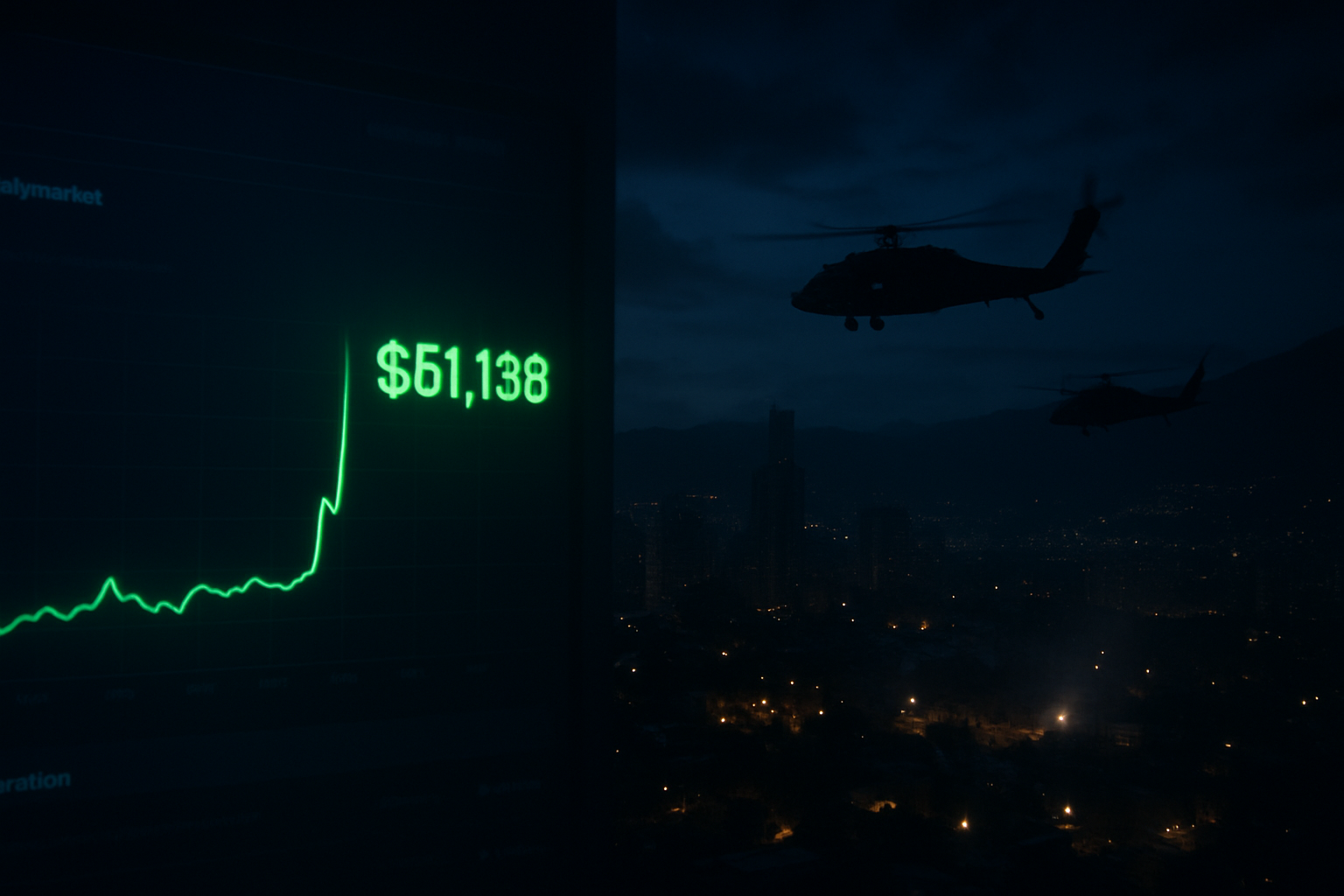
    In the hyper-volatile world of decentralized prediction markets, "alpha"—the industry term for an information edge—is everything. But on the evening of January 2, 2026, a single trader on Polymarket appeared to possess an edge so sharp it cut through the fog of international diplomacy. Just hours before U.S. Special Forces descended on Caracas in a daring mission codenamed "Operation Absolute Resolve," an anonymous account turned a $32,537 bet into a staggering $436,000 windfall.

    The wager, now infamously known as the "Maduro Bet," has sent shockwaves through the financial world and the U.S. intelligence community. By betting that Venezuelan President Nicolás Maduro would be out of power by the end of January—at a time when the market gave the outcome a mere 7% probability—the trader known as "Burdensome-Mix" didn't just win a bet; they ignited a national debate over the legality of betting on state secrets and the potential for prediction markets to serve as a back door for high-level insider trading.

    The Market: What's Being Predicted

    The focal point of the controversy was a contract on Polymarket titled "Will Nicolás Maduro be out of power by January 31, 2026?". Polymarket, a decentralized platform that uses the Polygon blockchain, allows users to buy and sell "shares" in the outcome of real-world events. Each share pays out $1.00 if the prediction comes true and $0.00 if it does not.

    For much of late 2025, the "Yes" shares for Maduro’s removal were trading in the "basement," hovering around $0.06 to $0.07. Geopolitical analysts largely agreed that while tensions were high, Maduro’s control over the Venezuelan military remained firm. However, the volume surged on January 2, 2026. Within a four-hour window, liquidity poured into the "Yes" side, briefly moving the needle to $0.15 before the market was flooded by the "Burdensome-Mix" account.

    The resolution criteria were crystalline: Maduro had to be physically removed from the presidency, resign, or be captured by a foreign power. When news broke at 4:30 AM ET on January 3 that U.S. Special Forces had successfully extracted Maduro from the Fort Tiuna military complex, the market instantly spiked to $0.98. By the time Maduro was arraigned in a New York courtroom on January 5, the market settled, and the anonymous trader walked away with a 1,242% return on investment.

    Why Traders Are Betting

    The "Maduro Bet" stands out not because of its size—whales often move millions on Polymarket—but because of its surgical timing. While retail traders were busy betting on the NFL playoffs or the price of Bitcoin, "Burdensome-Mix" placed their final, largest buy order at 9:58 PM ET on January 2. This was approximately four hours before the first U.S. aircraft entered Venezuelan airspace.

    The community’s initial reaction was one of awe, but it quickly soured into suspicion. Unlike traditional forecasting methods—which relied on satellite imagery showing increased naval activity from Chevron (NYSE: CVX) tankers or regional troop movements—this trade showed no signs of hedging. It was an "all-in" move on a low-probability event.

    Evidence of a leak became undeniable when the White House announced on January 16 that federal authorities had arrested Aurelio Perez-Lugones, a Navy veteran and government contractor. Perez-Lugones allegedly used his Top Secret clearance to access tactical databases and pass the timing of "Operation Absolute Resolve" to an associate linked to the "Burdensome-Mix" account. This "insider edge" allowed the trader to front-run a geopolitical earthquake that would eventually send shares of defense giants like Lockheed Martin (NYSE: LMT) and RTX Corporation (NYSE: RTX) to record highs.

    Broader Context and Implications

    The Maduro Bet has forced a reckoning for the prediction market industry. Proponents, such as those at the Mercatus Center, argue that these markets are "truth machines" that successfully aggregated hidden information to provide a public warning of the impending raid. They point out that the price spike on January 2 was a leading indicator that something major was about to happen—information that could have been used by civilians or businesses to prepare for the fallout.

    However, regulators view it differently. The Commodity Futures Trading Commission (CFTC) has ramped up its scrutiny of Polymarket, questioning whether the platform’s lack of "Know Your Customer" (KYC) rigor for certain tiers of users makes it a haven for illicit gains. The incident has already sparked legislative action: Representative Ritchie Torres introduced the "Public Integrity in Financial Prediction Markets Act of 2026." The bill proposes a total ban on federal employees and contractors wagering on outcomes related to their official duties.

    Furthermore, the event has highlighted the intersection of "Info-War" and finance. Media conglomerates like Fox Corp (NASDAQ: FOX) and Warner Bros. Discovery (NASDAQ: WBD) saw record viewership during the weekend of the raid, but prediction markets provided the only venue where that information was being priced into a tradable asset in real-time.

    What to Watch Next

    As Maduro remains in federal custody at the Metropolitan Detention Center in Brooklyn, the prediction market community has shifted its focus to his trial. Markets are already forming around the likelihood of a conviction versus a plea deal that would see him exiled to a third country.

    Key dates to monitor include:

    • February 12, 2026: The first evidentiary hearing for Aurelio Perez-Lugones, which may reveal more about the "Burdensome-Mix" trader’s identity.
    • March 2026: The expected floor vote for the Torres Bill, which could fundamentally change how prediction markets operate in the United States.
    • Infrastructure Tenders: Watch for movement in Palantir Technologies (NYSE: PLTR) and Exxon Mobil (NYSE: XOM), as markets begin to bet on which U.S. firms will be awarded the lion's share of contracts for Venezuela’s reconstruction.

    Bottom Line

    The "Maduro Bet" is a watershed moment for the 2020s. It demonstrated that prediction markets are no longer just a niche playground for "crypto-bros" and political junkies; they are a potent, albeit dangerous, tool for surfacing information that traditional intelligence and journalism often miss.

    While "Burdensome-Mix" may have successfully cashed out their $436,000, the cost to the industry may be much higher. If prediction markets are perceived as a way for insiders to monetize classified information, they risk a regulatory crackdown that could stifle the very "wisdom of the crowd" they seek to harness. For now, the Maduro Bet remains the ultimate example of a market that knew too much, too soon.


    This article is for informational purposes only and does not constitute financial or betting advice. Prediction market participation may be subject to legal restrictions in your jurisdiction.

    PredictStreet focuses on covering the latest developments in prediction markets.
    Visit the PredictStreet website at https://www.predictstreet.ai/.
  • Prediction Market Volume Hits Record $3.7 Billion as Traders Abandon Meme Coins

    Prediction Market Volume Hits Record $3.7 Billion as Traders Abandon Meme Coins

    Prediction markets have officially crossed the rubicon into the financial mainstream. In a staggering display of market maturity, the sector recorded an all-time high weekly volume of $3.7 billion during the second week of January 2026. This surge was punctuated by a single-day trading peak of $701.7 million, signaling that "event-based trading" is no longer a niche hobby for crypto enthusiasts, but a foundational pillar of modern price discovery.

    The primary driver of this explosion in activity is a fundamental shift in retail psychology. As the speculative fever of the "meme coin supercycle" cooled throughout 2025, investors have migrated toward markets that offer what many now call "liquid truth." Whether it is the probability of Federal Reserve interest rate cuts, the outcome of the 2026 U.S. Midterm Elections, or the logistical success of global sporting events, prediction markets are capturing the capital—and the attention—that once flowed into volatile digital assets.

    The Market: What's Being Predicted

    The current landscape of prediction markets is dominated by a few key players, with Kalshi emerging as the undisputed leader in the United States. According to recent exchange data, Kalshi accounted for roughly two-thirds (approximately 62–65%) of the total market activity this past week. The platform has benefited immensely from its regulated status and its ability to integrate directly with major retail brokerages like Robinhood (NASDAQ: HOOD) and Interactive Brokers (NASDAQ: IBKR).

    While political contracts remain a major draw, the recent volume spike was largely fueled by a diverse array of non-political events:

    • Macroeconomic Data: Markets predicting the Federal Reserve’s February 2026 rate decision saw over $900 million in notional value.
    • Sports & Entertainment: With the 2026 FIFA World Cup preparation in full swing, sports-related event contracts on Kalshi now represent nearly 90% of its daily active volume in some segments.
    • Geopolitics: Tensions in South America and global supply chain disruptions have become high-liquidity markets, attracting sophisticated traders looking to hedge real-world risk.

    Polymarket continues to lead in the decentralized space, capturing roughly 25% of global volume, particularly in "crypto-native" events and global pop culture. However, the rise of new challengers like Opinion on the BNB Chain shows that the competition for liquidity is intensifying.

    Why Traders Are Betting

    The massive influx of capital into prediction markets is being described by analysts as "The Great Rotation." Throughout late 2024 and 2025, the meme coin market cap plummeted from a peak of over $150 billion to just $36.5 billion by early 2026. Burned by the inherent volatility and lack of utility in "dog-themed" tokens, retail traders have sought refuge in markets where information—not just hype—provides an edge.

    "Traders are tired of the 'rug pulls' and the zero-sum games of meme coins," says one high-volume participant on Kalshi. "In a prediction market, there is an objective resolution. Either the event happens or it doesn't. It allows for a level of strategic analysis and hedging that you just don't get with speculative tokens."

    Furthermore, institutional participation has increased. Large-scale traders are now using these markets as "alternative polling." After traditional polling failed to accurately capture sentiment in recent international elections, the "wisdom of the crowd" reflected in real-money betting has become a more trusted metric for hedge funds and corporate strategists.

    Broader Context and Implications

    The surge to $3.7 billion in weekly volume is a direct consequence of the legal and regulatory clarity gained in late 2024. The landmark court victory by Kalshi against the Commodity Futures Trading Commission (CFTC) paved the way for the current "gold rush" in event contracts. This ruling effectively institutionalized prediction markets, allowing them to compete directly with traditional derivatives.

    This trend has significant real-world implications. We are seeing the birth of a "truth economy," where the market's odds are treated as a more reliable lead indicator than news headlines. For instance, prediction markets correctly anticipated several major corporate mergers and central bank pivots weeks before they were officially announced.

    However, growth has brought its own set of challenges. Several states are currently embroiled in legal battles to classify these markets as "unlicensed gambling." This has created a bifurcated market: regulated exchanges like Kalshi, which maintain strict KYC (Know Your Customer) standards, are thriving in the U.S., while offshore decentralized platforms face increasing scrutiny from global regulators.

    What to Watch Next

    As we look toward the remainder of 2026, several key milestones could push volume even higher. The 2026 U.S. Midterm Elections are expected to be the highest-liquidity event in the history of the industry, with some analysts predicting a cumulative $50 billion in notional volume across all platforms during the election cycle.

    Additionally, the integration of AI-driven trading agents is a major trend to monitor. In early 2026, an estimated 15% of prediction market trades were executed by AI bots capable of scanning global news feeds in milliseconds to adjust positions. This is likely to increase market efficiency but may also lead to "flash" movements in odds that could catch retail traders off guard.

    Finally, keep an eye on the sports betting giants. Platforms like DraftKings (NASDAQ: DKNG) and Flutter Entertainment (NYSE: FLTR), the parent company of FanDuel, are reportedly exploring "event contract" features to compete with the rapid growth of Kalshi and Polymarket.

    Bottom Line

    The record-breaking $3.7 billion weekly volume and $701.7 million daily peak mark a turning point for prediction markets. By capturing the interest of traders who were once focused on meme coins and NFTs, these platforms have proven that there is a massive appetite for speculative markets rooted in real-world outcomes.

    Kalshi’s dominance demonstrates that regulatory compliance is currently the winning strategy for capturing the American market. As prediction markets continue to evolve from a "crypto experiment" into a standard financial tool, they are poised to change how the world consumes information and manages risk. For the savvy trader, the shift from "memes to macro" isn't just a trend—it's the new reality of the global financial landscape.


    This article is for informational purposes only and does not constitute financial or betting advice. Prediction market participation may be subject to legal restrictions in your jurisdiction.

    PredictStreet focuses on covering the latest developments in prediction markets.
    Visit the PredictStreet website at https://www.predictstreet.ai/.
  • The 2026 Tax Reckoning: A Trader’s Guide to Prediction Market Earnings

    The 2026 Tax Reckoning: A Trader’s Guide to Prediction Market Earnings

    As the calendar turns to January 18, 2026, millions of Americans are opening their mailboxes and email inboxes to find a new kind of tax document. Following the explosive growth of prediction markets throughout 2025—a year defined by massive volume in election contracts, Fed rate cut forecasts, and climate milestones—the Internal Revenue Service (IRS) is preparing for its most significant season of event-contract reporting in history.

    For traders on platforms like Kalshi, PredictIt, and the newly regulated Polymarket US, the tax bill for 2025 is no longer a theoretical concern. With billions of dollars in volume traded over the last twelve months, the IRS is paying closer attention than ever to how "event contract" proceeds are categorized. Whether you were betting on the outcome of the D.C. Circuit Court cases or the latest inflation prints, understanding the difference between a 1099-MISC and a self-reported DeFi audit is the difference between a smooth filing and a costly audit.

    The Market: What’s Being Predicted

    The current "market" being predicted by tax professionals and platform operators is the finality of IRS guidance. For the 2025 tax year, the industry remains in a transitional state. On regulated exchanges like Kalshi and Interactive Brokers Group, Inc. (NASDAQ: IBKR), activity has shifted from niche political betting to a mainstream financial asset class. These platforms are now competing directly with traditional options for the attention of retail and institutional traders alike.

    Liquidity in these markets reached record highs in late 2025, particularly following the relaunch of Polymarket’s US-regulated entity in December. While the global version of Polymarket continues to operate on the Polygon blockchain, the US version has adopted a strict Know Your Customer (KYC) and reporting framework. This has created a bifurcated tax landscape: one where domestic platforms provide neat, government-ready forms, and another where decentralized participants must play detective with their own digital wallets.

    The "resolution criteria" for this tax season are the April 15, 2026, filing deadline. Traders are currently betting on whether the IRS will issue a last-minute Revenue Ruling to clarify the treatment of these contracts. Until then, most platforms are defaulting to the most conservative reporting standards, leaving the burden of interpretation on the individual taxpayer.

    Why Traders Are Strategizing

    The core of the 2025 tax debate centers on classification: Are these earnings gambling winnings, capital gains, or "Other Income"? Most traders are finding that their profits are being pushed toward Schedule 1, Line 8z as "Other Income." The reason is largely administrative. The IRS has historically lacked a specific "event contract" category, and in the absence of a designated brokerage form like a 1099-B for all platforms, the 1099-MISC has become the default for Kalshi and PredictIt.

    However, a growing number of "whales" and professional traders are pushing back, citing the landmark 2024-2025 legal victories. Specifically, after the CFTC dropped its appeal against Kalshi in May 2025, prediction markets were effectively codified as federally regulated derivatives. This has led aggressive tax strategies to favor Section 1256 treatment. Under this rule, 60% of gains are taxed at long-term capital gains rates and 40% at short-term rates, regardless of the holding period—a massive tax break compared to the ordinary income rates found on Line 8z.

    This tension is driving recent movement in tax-preparation software and crypto-audit tools. Traders who used the global version of Polymarket are currently using blockchain explorers to calculate their "cost basis" for every share of "Yes" or "No" they held. Because these tokens are technically "disposed of" at the moment of market resolution, every single trade is a taxable event, much like trading stocks on Robinhood Markets, Inc. (NASDAQ: HOOD).

    Broader Context and Implications

    The 2025 tax season is the first to feel the impact of the One Big Beautiful Bill Act (OBBBA), signed into law on July 4, 2025. A little-known provision in the OBBBA limits gambling loss deductions to 90% of winnings for non-professional bettors. This has created a panicked rush to ensure prediction market activity is classified as "derivative trading" rather than "wagering." If the IRS views your Polymarket activity as gambling, you could be taxed on your wins while being unable to fully deduct your losses.

    This regulatory friction reveals a growing pains phase for the industry. While the CFTC now views these markets as legitimate financial instruments, the IRS's lag in updating Form 1040 instructions has created a "gray zone." Historically, the IRS has been slow to move on new asset classes—as seen with the decade-long wait for clear crypto guidance—but the sheer volume of the 2025 election cycle may force their hand sooner than expected.

    The accuracy of these markets as forecasting tools has already been proven; now, their survival as a viable investment class depends on tax parity. If prediction market gains continue to be taxed as ordinary "Other Income" (potentially reaching rates as high as 37%) while traditional futures enjoy the 60/40 split of Section 1256, liquidity may migrate to more tax-efficient, if less accurate, financial products.

    What to Watch Next

    Between now and the April filing deadline, the most important milestone is the potential release of an IRS "Internal Technical Advice" memo. This document would provide the first official hint at whether the IRS will honor the CFTC’s classification of event contracts as derivatives. Traders should also watch for the 1099-MISC mailings from PredictIt and Kalshi, which are expected to land in late January and early February.

    Furthermore, the "Polymarket Split" will be a key scenario to monitor. Many US traders likely used the global platform via VPNs in early 2025 before switching to the regulated US app in December. These individuals will face a nightmare of cross-platform reporting, needing to reconcile decentralized wallet history with the centralized 1099s they receive from the new US entity.

    If a major court case emerges in the next few months—perhaps a trader suing for the right to use Section 1256—it could set a precedent that changes the math for the entire industry. For now, the probability remains high that most casual users will simply follow the platforms' lead and report on Line 8z to avoid the "red flag" of an unconventional filing.

    Bottom Line

    The 2025 tax year represents the end of the "Wild West" era for prediction market taxation. As the IRS catches up to the volume of the past year, the distinction between "Other Income" on Schedule 1 and capital gains on Schedule D has become the most important trade of the season.

    Regulated platforms like Kalshi and PredictIt have simplified the process with 1099-MISC forms, but in doing so, they have largely locked their users into ordinary income tax rates. Meanwhile, Polymarket users face the double-edged sword of self-reporting: more work and higher audit risk, but the potential to argue for more favorable capital gains treatment.

    As we move toward the April 15 deadline, one thing is certain: the era of "tax-free" prediction market gains is over. Whether you viewed your 2025 trades as a hobby, a hedge, or a high-stakes bet, the IRS is now an uninvited partner in every market you enter.


    This article is for informational purposes only and does not constitute financial or betting advice. Prediction market participation may be subject to legal restrictions in your jurisdiction.

    PredictStreet focuses on covering the latest developments in prediction markets.
    Visit the PredictStreet website at https://www.predictstreet.ai/.
  • The “Maduro Trade” Aftermath: Congress Moves to Curb Insider Trading in Prediction Markets

    The “Maduro Trade” Aftermath: Congress Moves to Curb Insider Trading in Prediction Markets

    The meteoric rise of event-based contracts has reached a legislative boiling point. Following a series of high-profile trades that appeared to anticipate classified government actions, Washington has responded with the "Public Integrity in Financial Prediction Markets Act of 2026." Introduced on January 9, 2026, by Representative Ritchie Torres (D-NY), the bill seeks to bring the same ethical guardrails found in the STOCK Act to the rapidly maturing world of prediction markets.

    Currently, the odds of the bill passing into law within the current session remain low, with proxy markets on PredictIt trading at just 12 cents. However, the regulatory pressure is already reshaping how institutional players and retail traders approach the market. This tension represents the definitive clash of the 2026 financial landscape: the "Information-Efficacy" school, which views these markets as the ultimate truth engines, versus the "Social-Harm" school, which views them as a dangerous incentive structure for corruption.

    The Market: What's Being Predicted

    The focus of traders has shifted from the events themselves to the rules of the game. On Kalshi—the first fully regulated exchange for event contracts—traders are currently pricing the probability of the Commodity Futures Trading Commission (CFTC) adopting new, stringent insider trading rules at 20%. While this is a modest probability, it has climbed from 5% in early December, reflecting a growing consensus that the status quo is unsustainable.

    Simultaneously, on the offshore platform Polymarket, volume has surged to record highs despite the regulatory dark clouds. The resolution criteria for these new regulatory markets often hinge on the signing of federal legislation or the formal adoption of agency rules. Specifically, the "Public Integrity Act" market on PredictIt requires a majority vote in both the House and Senate and a presidential signature by December 31, 2026.

    Liquidity in these "regulatory meta-markets" is surprisingly high, as institutional players use them to hedge against the risk of the entire industry being throttled. While Kalshi has publicly supported the Torres bill as a way to formalize the industry, the market sentiment remains skeptical that a divided Congress will move quickly enough to implement these changes before the 2026 midterms.

    Why Traders Are Betting

    The primary driver of the current market movement was the infamous "Maduro Trade" in early January 2026. A trader on Polymarket wagered approximately $32,000 on the capture of Venezuelan President Nicolás Maduro just hours before a surprise U.S.-led operation was announced. The trade, which paid out over $400,000, sparked immediate calls for an investigation into whether the user had access to classified military intelligence.

    This event galvanized "Social-Harm" advocates who argue that without strict prohibitions, prediction markets offer a "bounty" for government insiders to leak or profit from sensitive information. Conversely, "Information-Efficacy" proponents argue that the trade actually served the public good by signaling a high-probability geopolitical event that traditional news outlets missed. They view the attempt to ban such trades as a "war on accuracy."

    Notable whale activity has been spotted on Manifold Markets, where a contract on "Federal Preemption of State Bans" is trading at a staggering 81%. This indicates that while traders doubt the Torres bill will pass, they are highly confident that federal courts will protect the industry from being banned at the state level by places like New York or Tennessee.

    Broader Context and Implications

    The debate over the Public Integrity Act occurs as traditional finance is finally embracing prediction markets. Goldman Sachs (NYSE: GS) recently signaled that it may begin offering event-contract derivatives to its institutional clients, treating them as a legitimate asset class for hedging political and economic risk. Similarly, Robinhood Markets, Inc. (NASDAQ: HOOD) has aggressively moved to vertically integrate by acquiring MIAXdx, a CFTC-licensed exchange, to bring prediction trading to its massive retail base.

    However, this institutionalization brings prediction markets into direct conflict with existing financial regulations. If these contracts are legally treated as "swaps" or "derivatives," the legal standard for insider trading becomes much clearer—and much more punitive. The historical accuracy of these markets has often been their best defense; during the 2024 and 2025 cycles, prediction markets consistently outperformed traditional polling. But critics argue that "being right" does not excuse "being unethical."

    What this market reveals about public sentiment is a profound distrust of government transparency. The fact that the "Maduro Trade" is widely believed to be the result of a leak, rather than brilliant synthesis of public data, highlights the uphill battle prediction markets face in gaining broad social acceptance.

    What to Watch Next

    The next major milestone for the market will be the House Financial Services Committee hearing scheduled for late February 2026. Testimony from the CEOs of major platforms and the CFTC Chairperson will likely cause significant volatility in the "Regulation" contracts. If the committee signals a "bipartisan path forward," we could see the odds of the Public Integrity Act jump from 12% to over 40% overnight.

    Traders should also monitor the legal challenge currently making its way through the D.C. Circuit Court regarding the CFTC’s authority to block "public interest" contracts. A ruling in favor of the exchanges would likely decrease the immediate pressure for the Torres bill, as the industry would feel it has a judicial mandate to operate even without new legislation.

    Finally, keep a close eye on "proxy trading" alerts. If more suspiciously timed trades appear before major policy shifts—such as a surprise interest rate cut or a Supreme Court ruling—the political pressure for the Public Integrity Act may become irresistible, regardless of the current low odds.

    Bottom Line

    The Public Integrity in Financial Prediction Markets Act of 2026 marks the end of the "Wild West" era for event contracts. Whether the bill passes or not, the "Maduro Trade" has ensured that the era of government insiders trading on their own secrets is effectively over. The market is currently pricing in a slow, bureaucratic response, but the underlying trend is clear: professionalization and regulation are the only path forward for the industry.

    Prediction markets have proven they are a powerful tool for forecasting the future, but they are now facing their greatest test yet—the need to prove they are compatible with a stable, ethical society. For traders, the play is no longer just about who wins an election or a war; it is about who writes the rules of the market itself.

    As we move toward the 2026 midterms, the "Social-Harm" vs. "Information-Efficacy" debate will likely define the boundaries of financial innovation for the rest of the decade.


    This article is for informational purposes only and does not constitute financial or betting advice. Prediction market participation may be subject to legal restrictions in your jurisdiction.

    PredictStreet focuses on covering the latest developments in prediction markets.
    Visit the PredictStreet website at https://www.predictstreet.ai/.
  • The Death of the Lagging Indicator: How Prediction Markets Became the Fed’s New Crystal Ball

    The Death of the Lagging Indicator: How Prediction Markets Became the Fed’s New Crystal Ball

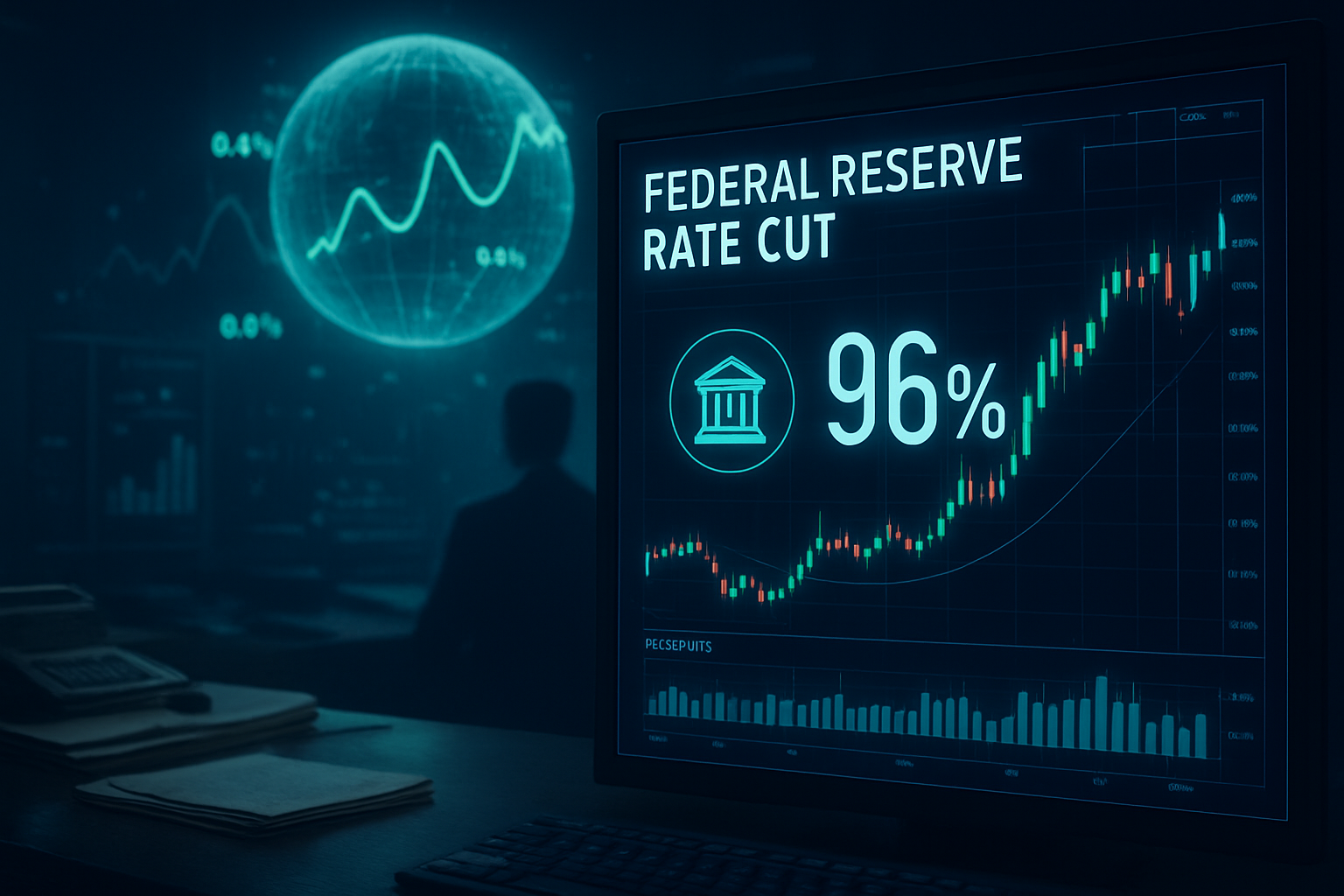
    As of mid-January 2026, a fundamental shift has occurred in how Wall Street and Main Street digest economic reality. For decades, the Federal Reserve Bank of New York’s "Nowcast" and other lagging indicators were the gold standard for tracking the economy in real-time. But as the dust settles on the Federal Reserve's December 2025 meeting, it is clear that the torch has been passed to prediction markets. On the morning of the rate decision, while traditional models were still debating the nuances of "sticky inflation," the crowd on Kalshi and Polymarket had already priced in a 25-basis-point cut with a staggering 96% and 97% probability, respectively.

    This isn't just about a single rate cut; it's about the emergence of "Information Finance." Traders are no longer waiting for the Bureau of Labor Statistics (BLS) or the Fed’s Summary of Economic Projections to tell them where the economy is—they are using prediction markets to tell the Fed what the economy needs. With daily volumes on platforms like Kalshi hitting record highs of $700 million this month, these markets have evolved from speculative curiosities into the most sensitive macro indicators in the global financial toolkit.

    The Market: What's Being Predicted

    The focal point of macro forecasting in late 2025 was the FOMC meeting on December 10. While the Federal Reserve had already initiated a cutting cycle earlier in the year, the "higher for longer" narrative still had its adherents among traditional bank analysts. However, the prediction markets told a different story. On Kalshi, a federally regulated exchange, the "Will the Fed cut rates in December?" market saw liquid interest that eventually consolidated into a 96% "Yes" conviction. Simultaneously, the decentralized giant Polymarket saw its odds for a 25-basis-point cut climb from 70% in mid-November to 97% by the morning of the announcement.

    The scale of this activity is unprecedented. Total wagering on the December Fed outcome exceeded $348 million on Polymarket alone, while Kalshi reported $15.8 million in volume specifically for its Fed decision contracts. These markets are settled based on the official announcement from the Federal Reserve Board of Governors. Unlike the CME FedWatch tool, operated by CME Group (NASDAQ: CME), which is derived from Fed Funds futures and often reflects the hedging needs of large institutions, prediction markets like Kalshi allow a more diverse set of participants—from retail speculators to economic researchers—to express a "pure" directional view on policy.

    Why Traders Are Betting

    The primary driver behind the 96% conviction for a December cut was the "wisdom of the crowd" reacting to real-time labor data. While the NY Fed’s Nowcast model was projecting a resilient Q4 GDP growth of 2.7%, prediction market traders focused on the "cracks in the foundation"—specifically a tick upward in unemployment to 4.5% in November. Traders betting on these platforms are often processing information 15 to 30 minutes faster than traditional news wires like Reuters, as every new data point, from jobless claims to retail sales, is immediately reflected in the contract price.

    Furthermore, the strategy has shifted from speculation to institutional hedging. Large funds are now using prediction markets to "de-risk" their portfolios ahead of Fed meetings. Because these contracts are binary (either the Fed cuts or it doesn't), they offer a more precise hedge than Treasury futures or the S&P 500. This has led to massive "whale" activity; in the final week of 2025, several multi-million dollar positions were spotted on Polymarket, betting that the Fed would prioritize labor stability over the final inch of the 2% inflation goal. This collective intelligence proved superior to traditional models, which remained "data-dependent" and arguably too slow to catch the dovish pivot.

    Broader Context and Implications

    The success of prediction markets in 2025 has led to their formal integration into the financial establishment. In a landmark move, both Google Finance, owned by Alphabet Inc. (NASDAQ: GOOGL), and Bloomberg Terminals began incorporating real-time odds from Kalshi and Polymarket into their macro dashboards in early 2026. This mainstreaming follows a banner year for Kalshi, which reported a staggering $23.8 billion in total volume for 2025—a 1,100% increase year-over-year. Even traditional brokerages like Interactive Brokers (NASDAQ: IBKR) have entered the fray with their own forecasting platforms, signaling that the demand for "event-based" trading is here to stay.

    However, the regulatory landscape remains a complex patchwork. While Kalshi won a major legal victory in January 2026, securing emergency relief against state-level cease-and-desist orders in Tennessee, the broader federal framework is still in limbo. The Digital Asset Market Clarity Act (CLARITY Act), intended to define the jurisdiction of the CFTC and SEC over these markets, has stalled in the U.S. Senate. According to current Polymarket odds, there is only a 41% chance the bill passes in 2026. This regulatory uncertainty hasn't dampened volume, but it has created a "fragmented battleground" where some states attempt to classify these markets as unregulated gambling, while federal courts increasingly view them as vital economic tools.

    What to Watch Next

    As we move into the first quarter of 2026, the market has shifted its focus to the "Sahm Rule"—a historically reliable indicator that a recession has begun when the three-month moving average of the unemployment rate rises by 0.50 percentage points or more relative to its low during the previous 12 months. With unemployment hitting 4.6% in January, prediction markets are currently pricing in a 65% chance of a formal recession declaration by the NBER before the end of the year. This is significantly more bearish than the "soft landing" consensus still held by many traditional bank economists.

    Investors should also keep a close eye on the February 2026 FOMC meeting. Current odds on Kalshi suggest a 55% probability of a "pause," as the Fed assesses the impact of its 2025 cuts. Any deviation in these odds following the next Consumer Price Index (CPI) release will be the first signal of whether the Fed intends to continue its dovish trajectory or if the "last mile" of inflation will force a defensive stance. The ability of these markets to front-run official policy will be tested yet again as the CLARITY Act's fate in the Senate becomes clearer by mid-year.

    Bottom Line

    The events of the past year have proven that prediction markets are no longer just a "side show" for political junkies. By accurately nailing the 96% probability of the December 2025 rate cut while traditional models were still lagging, these platforms have established themselves as the ultimate macro indicators. They provide something that a GDP Nowcast cannot: a real-time, incentivized consensus on the future, rather than a polished report on the past.

    For the modern investor, ignoring prediction market data is becoming as risky as ignoring the 10-year Treasury yield. As volume continues to migrate from traditional futures to these transparent, binary markets, the "wisdom of the crowd" is becoming the primary driver of price discovery in the global economy. Whether the Fed likes it or not, the market isn't just watching them anymore—it’s frequently one step ahead of them.


    This article is for informational purposes only and does not constitute financial or betting advice. Prediction market participation may be subject to legal restrictions in your jurisdiction.

    PredictStreet focuses on covering the latest developments in prediction markets.
    Visit the PredictStreet website at https://www.predictstreet.ai/.