Tag: Political Betting

  • High Stakes in the Cabinet: Noem and Gabbard Lead Kalshi Departure Markets Amid Mounting Controversies

    High Stakes in the Cabinet: Noem and Gabbard Lead Kalshi Departure Markets Amid Mounting Controversies

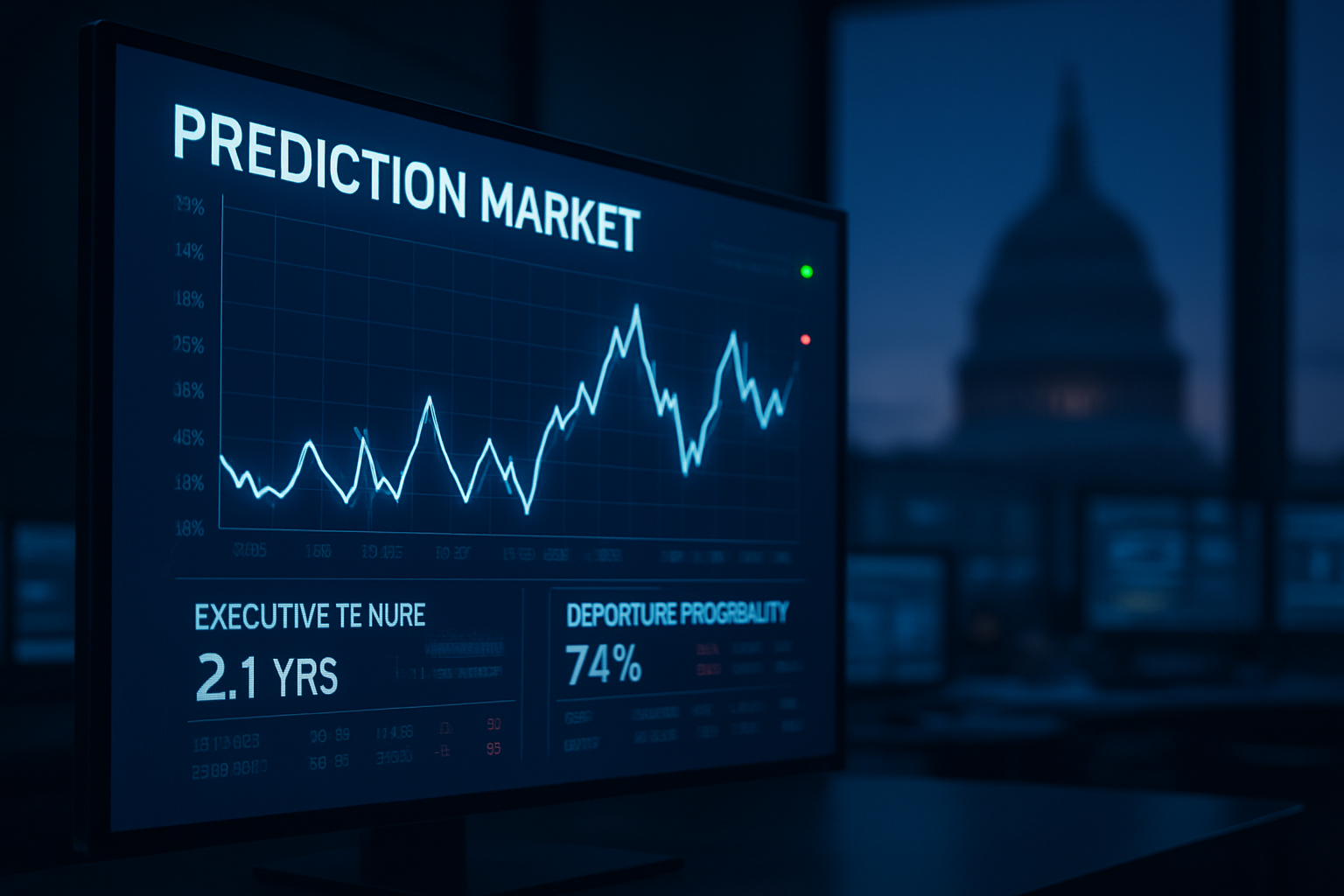
    As the second Trump administration enters its second year, the "honeymoon phase" for his Cabinet appears to be over—at least according to prediction markets. On the regulated exchange Kalshi, traders are increasingly betting on a major shakeup in the President's inner circle. Recent weeks have seen a sharp spike in the probability of departures for several high-profile officials, with Department of Homeland Security (DHS) Secretary Kristi Noem and Director of National Intelligence (DNI) Tulsi Gabbard topping the list of most likely exits.

    Currently, the market for "Who will leave the Trump Administration this year?" shows Noem and Gabbard both trading at near-coin-flip odds. Noem’s probability of departure before the end of 2026 has surged to approximately 50%, while Gabbard follows closely at 47%. These figures represent a dramatic shift from the relatively stable outlook seen just six months ago, signaling that prediction market participants are pricing in a period of intense political instability within the executive branch.

    The Market: What’s Being Predicted

    The primary venue for these predictions is Kalshi, the first U.S.-regulated prediction market, which has seen record volumes in its "Cabinet Tenure" contracts. These markets are structured around specific binary outcomes: whether a named official will remain in their post through a certain date. The "Who will be the first Cabinet member to leave?" contract is particularly liquid, with Kristi Noem currently the runaway favorite at a 34-40% chance of being the first to depart.

    The resolution criteria for these markets are strict. A "departure" is defined as a formal resignation, firing, or impeachment and removal from office. Temporary leaves or deaths are excluded. For traders, the timeline is the critical factor; these contracts are currently focused on the 2026 calendar year. Since her confirmation in January 2025 by a 59-34 vote, Noem's "leave" odds were initially low—around 15%—but the market sentiment soured as domestic enforcement actions intensified. Similarly, Tulsi Gabbard, who was sworn in on February 13, 2025, has seen her odds fluctuate wildly alongside news of intelligence community friction.

    Why Traders Are Betting

    The sudden bearishness on Noem’s job security is largely attributed to the fallout from "Operation Metro Surge." Following a large-scale ICE deployment in Minneapolis in early January 2026, which resulted in the fatal shootings of protesters, Noem’s vocal defense of federal agents and her classification of victims as "domestic terrorists" triggered a firestorm of bipartisan criticism. While President Trump has publicly backed her, traders are watching for "friendly fire" from Republican senators like Roger Wicker (R-MS), who have expressed concerns over Noem’s proposed "detention warehouses." Such fractures within the GOP base often precede a Cabinet departure, and Kalshi whales have been moving aggressively on "Yes" contracts for her exit.

    Tulsi Gabbard’s precarious position is fueled by a different set of pressures. Recent reports of a "highly classified whistleblower complaint" allegedly suppressed by the DNI’s office have led to calls for her removal from both sides of the aisle. Furthermore, headlines in early 2026 suggested Gabbard may have blindsided the White House by revoking 37 high-level security clearances without prior notification. These events have created a perception of a "rogue" DNI, a narrative that prediction market participants are betting will eventually lead to her resignation or dismissal. The volatility in these roles has also begun to weigh on government services firms like Booz Allen Hamilton (NYSE: BAH) and Palantir Technologies (NYSE: PLTR), as investors worry about continuity in federal contracts.

    Broader Context and Implications

    This market activity underscores a broader trend in the maturation of prediction markets. Unlike traditional polling or punditry, which often lag behind the news cycle, Kalshi’s prices react in real-time to every leaked memo and late-night tweet. The fact that Noem and Gabbard are trading at such high exit probabilities suggests that the "wisdom of the crowd" sees an unsustainable level of friction between these officials and the political realities of 2026.

    Historically, prediction markets have been remarkably accurate in forecasting Cabinet turnover. During Trump's first term, similar (though then unregulated) markets on platforms like Polymarket often correctly anticipated the departures of figures like Rex Tillerson and John Bolton. The real-world implications of these "departure odds" are significant; high exit probabilities can often become self-fulfilling prophecies, as the perceived "lame duck" status of an official diminishes their ability to lead their department or negotiate with Congress.

    What to Watch Next

    The immediate future of the Noem and Gabbard markets will likely hinge on several key milestones. For Noem, the upcoming Senate Judiciary Committee oversight hearings scheduled for late February will be a make-or-break moment. If she faces significant pushback from Republican committee members, her departure odds could easily climb into the 60-70% range. Traders are also monitoring the White House press briefings for any softening of the President’s "total confidence" rhetoric.

    For Gabbard, the "Gang of Eight" briefing on the alleged whistleblower complaint remains the primary catalyst. If the complaint is forwarded to Congress against her wishes, it could be the "smoking gun" that forces a leadership change at the DNI. Additionally, keep an eye on other high-risk officials like Attorney General Pam Bondi (currently at 48% to leave) and FBI Director Kash Patel (at 54%), whose own controversies regarding the release of redacted files and resource management are creating a "cluster" of high-probability departures.

    Bottom Line

    The Kalshi markets offer a sobering look at the stability of the current administration. While confirmation hearings are long over, the "job security" phase of the second Trump term is proving to be even more volatile. The high odds for both Kristi Noem and Tulsi Gabbard reflect a market that believes the current level of controversy is untenable for a long-term tenure.

    For observers of prediction markets, this is a masterclass in how these platforms aggregate political risk. Whether Noem and Gabbard survive the year remains to be seen, but the markets have already placed their bets: the status quo is unlikely to hold. As we move deeper into 2026, these departure markets will serve as a vital barometer for the internal health and longevity of the administration's most powerful offices.


    This article is for informational purposes only and does not constitute financial or betting advice. Prediction market participation may be subject to legal restrictions in your jurisdiction.

    PredictStreet focuses on covering the latest developments in prediction markets.
    Visit the PredictStreet website at https://www.predictstreet.ai/.
  • PredictIt’s ‘Grand Relaunch’: Higher Stakes, No Caps, and the Return of the ‘Cadillac’ of Politics

    PredictIt’s ‘Grand Relaunch’: Higher Stakes, No Caps, and the Return of the ‘Cadillac’ of Politics

    As the 2026 midterm election cycle kicks into high gear, the political prediction landscape has been fundamentally reshaped by the official relaunch of PredictIt. Long considered the "academic gold standard" for political forecasting, the platform has emerged from years of regulatory limbo with a massive upgrade that many are calling the "New Era" of information finance. Following its late 2025 transition into a fully regulated exchange, PredictIt is no longer just a research experiment; it is a high-octane venue for price discovery that is already challenging the dominance of rivals like Kalshi and Polymarket.

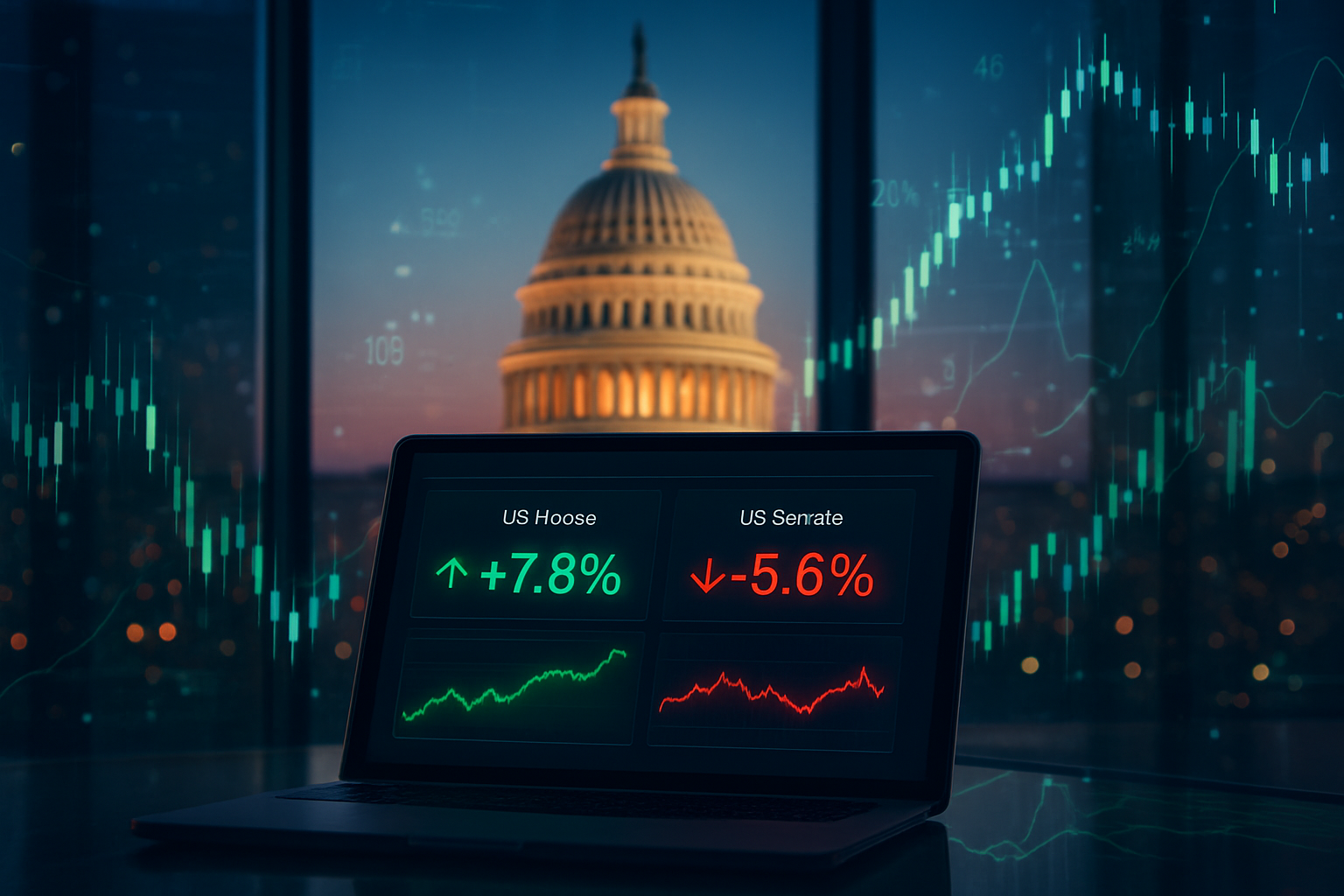
    Currently, the markets are flashing a clear signal for the November 2026 contests. PredictIt traders are pricing in a 78% probability of a Democratic House and a 65% probability of a Republican Senate, suggesting a return to divided government. This surge in activity is driven by the platform's new $3,500 individual investment limit and the total removal of the 5,000-trader cap—changes that have fundamentally altered the liquidity profile of political contracts and restored PredictIt’s status as a top-tier destination for serious political handicappers.

    The Market: What's Being Predicted

    The "New PredictIt," now operating as a fully registered Designated Contract Market (DCM) under the Aristotle Exchange, has moved beyond its humble beginnings as an academic project at Victoria University of Wellington. The platform now trades with a legal status comparable to institutional giants like Interactive Brokers Group (NASDAQ: IBKR) and the CME Group (NASDAQ: CME). For the first time, traders can take positions up to $3,500 in a single contract, a 411% increase from the previous $850 cap.

    More importantly, the removal of the 5,000-trader limit has solved the platform’s historical "liquidity desert" problem. Previously, popular markets would frequently "sell out," causing PredictIt prices to disconnect from the broader market. Today, the 2026 "Balance of Power" contracts are seeing millions of shares traded daily. The current consensus across PredictIt and its competitors shows a narrowing path for a "Trifecta" for either party, with a Democratic House/Republican Senate split trading as the most likely outcome at 45%.

    Why Traders Are Betting

    The influx of capital into PredictIt is driven by three main factors: regulatory certainty, higher limits, and its reputation for "smart money" data. By pegging the new $3,500 limit to the federal individual campaign contribution cap, PredictIt has created a psychological and financial link to the real world of political finance. Traders are no longer just "gaming" a small-cap market; they are deploying significant capital that reflects deeper political insights.

    Bettors are currently reacting to the typical midterm "pendulum effect," where the party in power (Republicans) faces headwinds in the House due to legislative gridlock and historical trends. However, the Senate map for 2026 heavily favors Republican incumbents, which explains the high 65-68% odds for a GOP hold in the upper chamber. Unlike the whale-driven volatility often seen on crypto-based platforms like Polymarket, PredictIt’s capped limit (even at $3,500) filters out massive market manipulation while still allowing for a sophisticated class of "super-forecasters" to move the needle.

    Broader Context and Implications

    The relaunch of PredictIt marks a turning point in the "Information Finance" wars. For years, PredictIt was the "Cadillac" of prediction markets—esteemed for its data but limited by its engine. Now, with the engine rebuilt by Aristotle International and oversight from the Nasdaq, Inc. (NASDAQ: NDAQ) Eqlipse Clearing technology, it is competing directly for the retail trader's attention. This shift is part of a larger trend where prediction markets are becoming mainstream financial tools, integrated into the apps of brokers like Robinhood Markets, Inc. (NASDAQ: HOOD) and backed by the clearing power of the Intercontinental Exchange (NYSE: ICE).

    The regulatory settlement that allowed this relaunch (Clarke vs. CFTC) has provided a blueprint for other platforms. By graduating from a "no-action letter" to a DCM, PredictIt has proven that prediction markets can coexist with traditional financial regulation. The real-world implication is that political campaigns and corporate strategy offices now look at PredictIt’s $3,500-limit data as more reliable than traditional polling, which has struggled with response rates and demographic weighting in recent years.

    What to Watch Next

    As we move toward the summer of 2026, keep a close eye on the "Statewide Control" markets. These are often the first to react to local scandals or shifts in economic sentiment that haven't hit the national polls yet. Additionally, the 2028 Presidential Primary markets on PredictIt are already seeing significant volume. Because the platform has abolished trader caps, these long-dated contracts are providing a much clearer picture of "who is the frontrunner" than was possible in the 2020 or 2024 cycles.

    Key dates to monitor include the June 2026 primary season. If Democrats overperform in "purple" districts, expect the 78% House odds to hit the 85-90% range, potentially triggering a sell-off in Republican-aligned equities. Conversely, any shift in the Senate odds—currently a Republican stronghold—would signal a total collapse of the GOP's 2026 defensive strategy.

    Bottom Line

    The return of PredictIt as a fully functional, high-limit exchange is a victory for data transparency and market efficiency. By positioning itself as the "Cadillac"—reliable, regulated, and academically backed—it offers a unique middle ground between the "Wild West" of uncapped crypto markets and the rigid macro-focus of traditional commodities exchanges.

    For the 2026 and 2028 cycles, the increased liquidity means that the "PredictIt Price" is once again the most important number in politics. As more retail investors migrate from platforms like Coinbase Global, Inc. (NASDAQ: COIN) into specialized political event contracts, the accuracy of these markets is likely to reach all-time highs. Whether you are a trader looking for an edge or a voter looking for the truth, the "New PredictIt" is officially the place to watch.


    This article is for informational purposes only and does not constitute financial or betting advice. Prediction market participation may be subject to legal restrictions in your jurisdiction.

    PredictStreet focuses on covering the latest developments in prediction markets.
    Visit the PredictStreet website at https://www.predictstreet.ai/.
  • The Billion-Dollar Ballot: Why the 2026 Midterms are the New Engine of Prediction Markets

    The Billion-Dollar Ballot: Why the 2026 Midterms are the New Engine of Prediction Markets

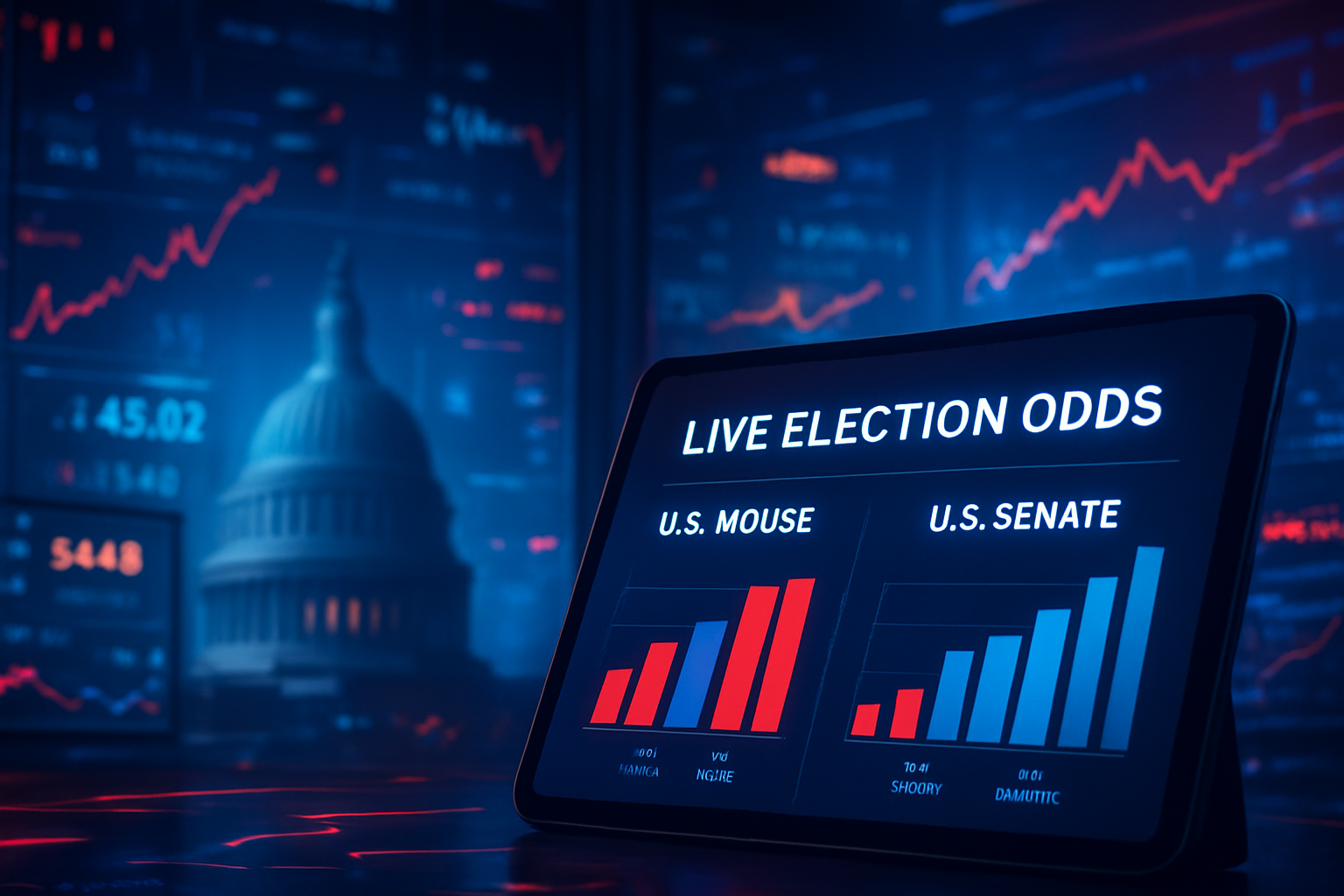
    As the calendar turns to January 30, 2026, the global financial eye has shifted from the traditional exchanges of Wall Street to the high-stakes digital arenas of prediction markets. The primary catalyst is the 2026 U.S. Midterm Elections, which have rapidly ascended to become the most significant volume driver in the history of the forecasting industry. With the first year of the second Trump administration in the rearview mirror, traders are now aggressively pricing the likelihood of a "midterm correction," with current odds on major platforms like Polymarket showing a 78% probability of Democrats flipping the House of Representatives, while Republicans maintain a 66% chance of holding the Senate.

    This surge in activity isn't just a political curiosity; it is a financial phenomenon. The prediction market sector has transformed into a $44 billion powerhouse, representing a staggering 130-fold growth in monthly volume compared to the same point in the 2024 cycle. Driven by institutional entry and a newfound regulatory "green light" from the Commodity Futures Trading Commission (CFTC), the 2026 midterms are serving as the ultimate stress test and growth engine for a burgeoning asset class that treats political outcomes as tradable commodities.

    The Market: What's Being Predicted

    The 2026 midterm markets are characterized by unprecedented liquidity and a diverse array of contract types. On Polymarket, the primary contract for House control has already surpassed $2 million in trading volume, an unheard-of figure for a race still nine months away. Similarly, Kalshi—a regulated U.S. exchange—has seen its political event contracts contribute to a record-breaking 2025 where it processed over $23.8 billion in total volume. These platforms have moved beyond simple "who will win" bets to offer more granular instruments, such as the number of seats gained or lost, the performance of specific incumbents, and even the margin of victory in key swing districts.

    Currently, the most liquid market across all platforms is the "Congressional Control" parlay. On Kalshi, the "Split Congress" outcome (Democratic House, Republican Senate) is trading at 46%, making it the consensus favorite among high-volume traders. Meanwhile, PredictIt, which remains a staple for retail political enthusiasts, shows Republican shares for "Winning 192 or fewer House seats" trading at 26¢, suggesting a significant portion of the market expects a substantial "blue wave" in the lower chamber.

    The resolution criteria for these markets are strictly defined by the certification of election results by the respective state secretaries of state and the convening of the 119th Congress in January 2027. This long lead time has allowed for the development of complex hedging strategies, where institutional investors use these markets to offset potential policy risks associated with shifts in legislative power.

    Why Traders Are Betting

    The primary driver of the current odds is the historical "midterm penalty" that typically plagues the party holding the White House. However, traders are also reacting to specific 2026 variables, most notably the public response to the second Trump administration’s economic and trade policies. The potential for renewed trade tensions has led many to bet on a Democratic House as a legislative "brake" on executive action. Sentiment is also closely tied to macro indicators; when the Consumer Price Index (CPI) shows signs of cooling or heating, the odds for the incumbent party fluctuate in real-time.

    Another major factor is the upcoming appointment of a new Federal Reserve Chair. With names like Kevin Warsh and Kevin Hassett circulating, the market is pricing in how a more hawkish or dovish Fed will impact the electoral prospects of Republicans. Significant "whale" activity has been spotted on Polymarket, where large positions—some exceeding $500,000—have been taken on a Democratic House flip, often coinciding with major policy announcements from the White House regarding government spending and a narrow brush with a government shutdown earlier this month.

    Furthermore, these markets are increasingly viewed as more reliable than traditional polling. While polls have struggled with non-response bias and the "shy voter" effect, prediction markets require participants to put capital at risk, creating a "wisdom of the crowds" effect that many institutional players now prefer. The inclusion of institutional capital, such as the reported $2 billion investment from Intercontinental Exchange (NYSE: ICE) into the prediction market infrastructure, has provided the depth necessary for these markets to reflect nuanced political realities faster than a telephone survey ever could.

    Broader Context and Implications

    The 2026 cycle marks a turning point in the regulatory status of prediction markets. In late January 2026, the new CFTC Chairman, Michael Selig, announced a major policy reversal, withdrawing the previous year's proposal to ban political event contracts. By treating these contracts as legitimate derivatives rather than gambling, the federal government has opened the floodgates for mainstream adoption. This shift has been bolstered by partnerships with major data providers like Yahoo Finance, owned by Apollo Global Management (NYSE: APO), which now integrates prediction market odds alongside traditional stock tickers.

    However, the rapid growth has not been without friction. State-level regulators remain cautious; Nevada recently launched enforcement actions against certain decentralized platforms, and Massachusetts has sought to maintain a temporary ban on specific event markets. Additionally, the industry is grappling with integrity concerns. Allegations of "insider trading" involving the timing of White House press conferences led to a brief period of volatility in mid-January, sparking calls for the "Torres Bill," a legislative proposal aimed at establishing strict non-public information rules for political staffers.

    Historically, prediction markets have shown a remarkable ability to predict midterm outcomes, often outperforming the "generic ballot" polls in the final months of a campaign. In 2022 and 2024, these markets correctly identified key shifts in the Senate long before mainstream media outlets updated their projections. The 2026 cycle is proving that political cycles are not just a distraction for these platforms—they are their lifeblood, providing the high-stakes, binary outcomes that drive the liquidity needed to sustain a global exchange.

    What to Watch Next

    The immediate future of the 2026 markets hinges on several key milestones. The upcoming primary season will be the next major volatility event, particularly in districts where "MAGA" incumbents face challenges from more moderate wings of the party, or vice versa for the Democrats. Traders will be looking for signs of candidate quality, as "electability" often shifts the odds in the Senate more than national trends.

    Economic data releases in the second and third quarters of 2026 will also be pivotal. If the "trade war" dynamics lead to a noticeable spike in consumer prices, expect the odds for a Democratic House flip to climb into the 85-90% range. Conversely, if the administration manages to secure a significant legislative win or a major foreign policy breakthrough—such as a resolution to tensions in Venezuela—the "Republican Sweep" odds, currently at 21%, could see a rapid resurgence.

    Finally, the progress of the "Torres Bill" in Congress will be a significant indicator for the industry's health. If the market can move toward a more transparent, regulated framework for handling political information, it will likely attract even more conservative institutional capital that has so far remained on the sidelines.

    Bottom Line

    The 2026 U.S. Midterm Elections have solidified prediction markets as the "new polling," providing a real-time, capital-backed pulse on the American electorate. As platforms like Polymarket and Kalshi continue to shatter volume records, it is clear that political cycles are the essential engine of growth for this sector. The markets currently tell a story of a nation leaning toward a divided government, with a clear preference for a Democratic House to act as a check on the current administration.

    For the prediction market industry, 2026 is the year of maturity. The combination of massive liquidity, regulatory softening at the federal level, and institutional backing from giants like Intercontinental Exchange (NYSE: ICE) has moved these platforms from the fringes of the internet to the center of the global financial conversation. Whether the markets' current 78% certainty regarding a House flip holds true remains to be seen, but one thing is certain: the world is watching the odds, not the polls.


    This article is for informational purposes only and does not constitute financial or betting advice. Prediction market participation may be subject to legal restrictions in your jurisdiction.

    PredictStreet focuses on covering the latest developments in prediction markets.
    Visit the PredictStreet website at https://www.predictstreet.ai/.
  • The Odds of Governance: How Prediction Markets Redefined the NYC Mayoral Race

    The Odds of Governance: How Prediction Markets Redefined the NYC Mayoral Race

    As New York City enters the first weeks of the Zohran Mamdani administration, political analysts and financial traders alike are looking back at the 2025 mayoral race not just for its ideological shift, but as a watershed moment for the prediction market industry. For the first time in a major U.S. municipal election, real-time betting data from platforms like Kalshi and Polymarket moved from the fringes of political nerd-dom into the center of campaign strategy, social media warfare, and high-budget television advertisements.

    By the time the polls closed on November 4, 2025, prediction markets were showing a staggering 95% probability of victory for Mamdani, the 34-year-old Democratic Socialist. This high-conviction forecast stood in stark contrast to traditional polling, which suggested a much tighter "margin of error" race against former Governor Andrew Cuomo. The markets’ aggressive stance—and the candidates' reactions to it—has ignited a fierce debate over whether these financial instruments are tools for clarity or weapons of psychological voter suppression.

    The Market: What's Being Predicted

    The 2025 NYC Mayoral market was the largest municipal betting event in history, facilitated by a significant regulatory expansion earlier in the year. Leading the charge were Kalshi, a regulated exchange, and Polymarket, the decentralized giant. Together, these platforms saw hundreds of millions of dollars in trading volume, providing a liquidity depth that allowed for sophisticated price discovery throughout the turbulent campaign cycle.

    The market narrative was defined by the "Cuomo Collapse." In early 2025, markets assigned Andrew Cuomo an 80–90% chance of returning to the governor’s mansion’s city-level equivalent. However, the price of "Mamdani Yes" contracts began a meteoric rise in June 2025, surging from a mere 7 cents to over 50 cents in a matter of weeks. By late October, as the general election approached, the markets were effectively "locked," with Mamdani trading at nearly 94 cents on Kalshi, implying a nearly certain victory that traditional pollsters were hesitant to call.

    The resolution criteria for these markets were strictly tied to the official certification of results by the NYC Board of Elections. However, the sheer volume of "event contracts" allowed traders to hedge against specific outcomes, such as a ranked-choice voting upset or even the likelihood of a legal challenge to the results—a market that spiked briefly after Cuomo supporters alleged voter fraud in early November.

    Why Traders Are Betting

    The divergence between market odds and traditional polling was the primary driver of the year's heavy trading volume. While polls often struggled with the complexities of New York’s ranked-choice voting and the enthusiasm of younger demographics, traders were quick to price in the "ground game" advantage of Mamdani’s progressive coalition.

    "The markets weren't just looking at who people said they would vote for; they were looking at the momentum of the donor base and the collapse of the centrist vote after Eric Adams' indictment," said one high-frequency trader who specialized in political contracts. Notable "whale" activity also influenced the boards. Billionaire Bill Ackman, a frequent commentator on market integrity, publicly questioned the odds on social media, suggesting that large positions were being taken to create a "mirage of inevitability" for the Mamdani campaign.

    In response, the Mamdani campaign did something unprecedented: they weaponized the odds. At "NYC Is Not For Sale" rallies, Mamdani frequently pointed to Kalshi odds on large screens to warn his base against complacency. By showing how the "smart money" had shifted from Cuomo to him, he argued that the power of grassroots organizing was literally changing the financial forecast of the city. This feedback loop—where market data influences the very events it is trying to predict—has become a central point of study for political scientists.

    Broader Context and Implications

    The NYC race served as a proof-of-concept for the mainstreaming of prediction markets. Public companies like Robinhood Markets, Inc. (NASDAQ: HOOD) and Interactive Brokers Group, Inc. (NASDAQ: IBKR) had expanded their "Election Event" offerings throughout 2025, allowing retail investors to trade on political outcomes with the same ease as buying a share of Apple Inc. (NASDAQ: AAPL). This accessibility brought political betting into the living rooms of average New Yorkers, but not without significant controversy.

    The most heated debate involved "victory ads" run by Kalshi. On the morning of Election Day, the platform ran digital billboards in Times Square and ads on Meta Platforms, Inc. (NASDAQ: META) and Alphabet Inc. (NASDAQ: GOOGL) properties that effectively "called" the race for Mamdani based on their 93% probability data. Critics, including the Cuomo campaign, argued that declaring a winner while people were still standing in line to vote was a dangerous new form of voter suppression.

    Furthermore, the post-election "Deportation Market"—which allowed users to bet on the odds of the Ugandan-born, naturalized Mamdani being deported under a potential future federal administration—showed the darker side of these platforms. The existence of such a market drew condemnation from civil rights groups, highlighting the regulatory vacuum regarding "distasteful" or "unethical" contracts that nonetheless meet the technical criteria for being a predictable event.

    What to Watch Next

    As the Mamdani administration begins its first 100 days, the focus of prediction markets has shifted from "who will win" to "what will they do." Currently, active markets are tracking whether the new Mayor can successfully implement his promised citywide rent freeze by July 2026. Traders are currently pricing that outcome at a cautious 42% probability, reflecting skepticism over the legal hurdles in the State Legislature.

    Another key milestone is the upcoming FY 2026 budget. With a projected $2 billion deficit, markets on the "NYC Credit Rating Downgrade" are seeing increased activity. Investors should also keep an eye on federal-city relations; contracts regarding federal funding cuts for "Sanctuary Cities" are already trading on Polymarket, with significant implications for Mamdani’s ambitious social programs.

    Bottom Line

    The 2025 NYC Mayoral race proved that prediction markets are no longer a niche hobby for economists; they are a potent political force. By accurately forecasting the "Mamdani Wave" long before it was reflected in mainstream media narratives, these markets provided a level of real-time insight that traditional methods failed to capture.

    However, the controversy over campaign-led "odds ads" and the ethical questions surrounding sensitive contracts suggest that the industry is at a crossroads. While platforms like Kalshi and Polymarket offer a more efficient way to aggregate information, the "commodification of expectations" can have real-world consequences on voter turnout and political stability. As we look toward the 2028 presidential cycle, the lessons of New York City will serve as the primary case study for how—or if—prediction markets should be regulated in the heat of a democratic contest.


    This article is for informational purposes only and does not constitute financial or betting advice. Prediction market participation may be subject to legal restrictions in your jurisdiction.

    PredictStreet focuses on covering the latest developments in prediction markets.
    Visit the PredictStreet website at https://www.predictstreet.ai/.

  • The “Vance Heir” Trade: JD Vance Emerges as 2028 Frontrunner as Prediction Markets Take Center Stage in 2026

    The “Vance Heir” Trade: JD Vance Emerges as 2028 Frontrunner as Prediction Markets Take Center Stage in 2026

    As the calendar turns to January 16, 2026, the political landscape is already vibrating with the energy of the next race for the White House. While the 2024 inauguration feels like a recent memory, prediction markets are signaling that the 2028 cycle has effectively begun. Vice President JD Vance has solidified his position as the early betting favorite to succeed Donald Trump, commanding a dominant lead on the regulated exchange Kalshi. Traders are currently pricing in a 28% probability that Vance will win the 2028 Presidency, a figure that has remained resilient despite a turbulent first year for the second Trump administration.

    The surge in interest isn't just about the 2028 horizon; it's about the immediate reality of 2026. With markets like "Who will be President on December 31, 2026?" seeing millions in volume, prediction platforms have evolved into a real-time sentiment gauge for the stability of the current administration. The convergence of high-stakes politics and liquid trading has turned JD Vance into a "blue-chip" asset for political bettors, reflecting both his consolidated power within the MAGA movement and the market's expectation of a smooth succession.

    The Market: What's Being Predicted

    The primary theater for this speculation is Kalshi, the first federally regulated prediction market under the Commodity Futures Trading Commission (CFTC). On Kalshi, the "2028 Presidential Election" market has become one of the most liquid contracts in the history of the platform, which recently reported a staggering $4.5 billion in monthly trading volume for late 2025. Vance’s current price of 28 cents (representing a 28% probability) puts him significantly ahead of his nearest Republican rival, Secretary of State Marco Rubio, who sits at 15%.

    Meanwhile, on Polymarket, the decentralized platform that recently gained legal visibility in the U.S. via a landmark 2025 CFTC agreement, Vance holds a similar 27% lead. Interestingly, these markets aren't just tracking the eventual winner. They are segmented into "Who will be the 2028 Republican Nominee?" where Vance is currently trading at a 48% implied probability. The resolution criteria for these contracts are strictly defined: the person who is inaugurated on January 20, 2029, or the individual who officially secures the party nomination at the 2028 convention.

    The liquidity in these markets has reached a "super-cycle" phase. Since Alphabet Inc. (NASDAQ: GOOGL) integrated Kalshi and Polymarket data into Google Finance in late 2025, retail participation has skyrocketed. This has narrowed the spreads and made the odds increasingly sensitive to daily news cycles, turning the 2028 race into a live, fluctuating scoreboard long before a single ballot is cast.

    Why Traders Are Betting

    The market’s confidence in Vance is driven by a combination of "muscular" foreign policy successes and his role as the administration's primary domestic messenger. The early January 2026 capture of Venezuelan leader Nicolás Maduro by U.S. forces provided a massive "strength" narrative that benefited the entire ticket. While Secretary Rubio managed the diplomatic fallout, traders viewed Vance’s oversight of regional stabilization as proof of his executive readiness.

    However, the "Vance Trade" is also a bet on internal party dynamics. The recent appointment of Donald Trump Jr. to the advisory boards of both Kalshi and Polymarket has been interpreted by some traders as a signal of the family's blessing for Vance as the "heir apparent." This has stifled the odds for other potential challengers like Florida Governor Ron DeSantis, who has seen his 2028 probability languish in the single digits throughout early 2026.

    Contrarian traders, however, point to Vance’s approval ratings as a reason to "sell" his current high. While he enjoys an 89% favorability rating with the GOP base, his net disapproval among independents remains high at -12 points. Some whales on Polymarket have been taking large positions on California Governor Gavin Newsom (currently at 21%), wagering that Vance’s hardline stance on the "TrumpRx" healthcare plan—the administration's proposed successor to the Affordable Care Act—will eventually alienate swing voters as the 2026 midterm elections approach.

    Broader Context and Implications

    The rise of JD Vance in the 2026 markets highlights a broader shift in how the public consumes political news. Prediction markets are no longer fringe hobbies; they are becoming the primary lens through which political viability is measured. This shift was accelerated when News Corp (NASDAQ: NWSA), the parent company of the Wall Street Journal, named Polymarket its exclusive prediction partner for political coverage. The market is now seen as more reactive—and often more accurate—than traditional polling, which struggled to capture the nuances of the 2024 electorate.

    This real-time sentiment gauge also provides a fascinating look at presidential succession. The market * "Trump out as President before 2027?"* has seen over $2 million in volume on Polymarket. While the probability remains low (roughly 12%), the existence of the market forces a level of transparency regarding the President's health and the Vice President's role that was previously confined to whispered rumors in D.C.

    Regulators are watching closely. The CFTC's decision to allow these markets to flourish has created a new data point for economic stability. Because political outcomes in 2026 and 2028 are tied to tax policy and trade tariffs, the "Vance odds" are increasingly used by hedge funds to hedge against potential shifts in the American regulatory environment.

    What to Watch Next

    The immediate future of the Vance market depends on the 2026 midterm elections. If the GOP holds the House and Senate under the "Trump-Vance" banner, Vance’s 2028 odds are expected to climb above 35%. Conversely, a "renegade" faction of the House recently voted to extend ACA subsidies against the administration's wishes; if Vance cannot corral his own party on this signature issue by the summer of 2026, his "executive competence" premium may evaporate.

    Key dates to monitor include the upcoming March 2026 release of the administration's "TrumpRx" details and the quarterly health disclosures from the White House. Any movement in the "President in 2026" markets will immediately spill over into the 2028 winner markets. Additionally, keep an eye on Marco Rubio’s travel schedule; if the Secretary of State begins making frequent stops in Iowa or New Hampshire, expect a "Rubio Rally" that could compress Vance's lead.

    Bottom Line

    As of mid-January 2026, JD Vance is the undisputed heavyweight of the prediction market world. His 28% probability on Kalshi reflects a market that sees him not just as a Vice President, but as the inevitable successor to the most dominant political movement of the 21st century. The integration of these markets into mainstream financial tools like Google Finance suggests that the "wisdom of the crowd" is now the definitive metric for political momentum.

    Ultimately, Vance’s position as the favorite is a testament to the "MAGA consolidation" trade. While traditional polls show a divided country, the betting markets show a party that has largely decided on its next leader. However, as any seasoned political trader knows, 2028 is an eternity away in market terms. While Vance holds the "pole position" today, the high-volume succession markets of 2026 remind us that in politics, the only certainty is the next fluctuation in the price.


    This article is for informational purposes only and does not constitute financial or betting advice. Prediction market participation may be subject to legal restrictions in your jurisdiction.

    PredictStreet focuses on covering the latest developments in prediction markets.
    Visit the PredictStreet website at https://www.predictstreet.ai/.
  • The Resurrection of PredictIt: Inside the Push to Become the ‘Gold Standard’ for Regulated Forecasting

    The Resurrection of PredictIt: Inside the Push to Become the ‘Gold Standard’ for Regulated Forecasting

    The "Little Market That Could" has finally grown up. As of January 16, 2026, the prediction market landscape looks radically different than it did just eighteen months ago. The most significant shift has not come from the arrival of new crypto-based giants, but from the rebirth of an industry pioneer: PredictIt. Following a grueling three-year legal battle with federal regulators, PredictIt has emerged from its "No-Action" limbo to become a fully regulated exchange and clearinghouse under the Commodity Futures Trading Commission (CFTC).

    The transition, finalized in late 2025, has effectively removed the "training wheels" that once held the platform back. With the elimination of the 5,000-trader-per-contract cap and a significant jump in individual wager limits from $850 to $3,500, PredictIt is no longer just an academic curiosity—it is a high-stakes arena for political intelligence. Traders are now pouring millions into markets ranging from the 2026 Midterm control to the next Supreme Court vacancy, testing whether PredictIt’s reputation for "wisdom of the crowd" accuracy holds up when the volume is turned to ten.

    The Market: What's Being Predicted

    The "New PredictIt" operates under a radically different set of rules than its predecessor. Since late 2025, the platform has transitioned its operations to a Designated Contract Market (DCM) and Derivatives Clearing Organization (DCO) framework, a status it shares with established financial institutions like Interactive Brokers Group (NASDAQ: IBKR) and its ForecastEx exchange.

    Currently, the primary focus of the market is the 2026 Congressional Midterms. Unlike previous cycles where the 5,000-trader cap led to "bottlenecking"—where a contract would reach its limit and prices would stagnate regardless of new information—the current market for "GOP Control of the House" is seeing unprecedented liquidity. At the time of writing, the odds of Republicans maintaining their majority sit at 58%, while the Democratic path to the Senate gavel is priced at 44 cents (a 44% probability).

    Trading volume on PredictIt has surged by over 400% since the removal of the trader cap. Previously, large events like the 2024 Presidential Election were hampered by the $850 limit, which often allowed "fan bias" or low-information retail traders to move the needle. Now, the $3,500 limit—deliberately indexed to match federal individual campaign contribution limits—allows more sophisticated actors to enter the fray, providing a deeper pool of capital and more stable pricing.

    Why Traders Are Betting

    The move to full regulation has fundamentally changed who is trading. The $3,500 limit is the primary driver. While still modest compared to the uncapped offshore markets like Polymarket, the 4x increase in the wager cap has attracted a new class of "professionalized" political junkies and small-scale hedge fund analysts.

    "The old $850 limit was essentially a hobbyist's cap," says one high-volume trader who has been active on the platform since 2016. "With $3,500, you can actually build a meaningful position that rewards the hours of research we put into precinct-level data. It’s enough money to make the signal drown out the noise."

    Furthermore, the legal certainty provided by the 2025 settlement—stemming from the Clarke v. CFTC lawsuit—has eliminated the "platform risk" that plagued the exchange for years. Traders no longer fear that their funds will be frozen or that the market will be shuttered by a regulatory whim. This has led to a "flight to quality," where traders who prefer the legal protections of a U.S.-regulated exchange are moving away from decentralized platforms and back to PredictIt’s refined interface.

    Broader Context and Implications

    PredictIt’s evolution is part of a broader "mainstreaming" of prediction markets that accelerated throughout 2025. The entry of Robinhood Markets (NASDAQ: HOOD) into the event contract space and the growth of CME Group (NASDAQ: CME)'s event derivatives have forced PredictIt to adapt or die. By securing its status as a fully regulated exchange, PredictIt has managed to maintain its niche as the "gold standard" for political data—a reputation built on a decade of providing more accurate forecasts than traditional polling.

    The regulatory shift also highlights a major change in the CFTC’s philosophy. After years of resisting election-based betting, the Commission, influenced by court losses and a shifting legislative tide, has pivoted toward a "regulated expansion" model. This model acknowledges that prediction markets provide a public good by aggregating information that polls often miss.

    However, this expansion is a double-edged sword for PredictIt's accuracy. Some critics argue that the "wisdom of the crowds" relied on the platform's high density of small-dollar, highly informed academic and political observers. There is a fear that by raising limits to $3,500, the market may become more susceptible to "whales" or manipulative attempts by political campaigns to shift public perception—though supporters argue that higher limits actually make manipulation more expensive and therefore less likely.

    What to Watch Next

    The immediate test for the New PredictIt will be the upcoming primary season for the 2026 Midterms. Watch for the "liquidity test" in high-profile Senate races in Pennsylvania and Georgia. If these markets can handle tens of thousands of traders and multi-million dollar pools without the price volatility seen in the "old" PredictIt, it will prove that the platform can scale.

    Additionally, keep an eye on the competitive response from Cboe Global Markets (NASDAQ: CBOE). While Cboe has traditionally focused on financial indicators, there are rumors that they may partner with data providers to launch their own suite of political contracts to compete with PredictIt’s new DCM status.

    Finally, the relationship between PredictIt and the Prediction Market Research Consortium (PMRC)—the non-profit entity now overseeing its research mission—will be critical. How they balance the "for-profit" needs of a regulated exchange with the "pro-social" mission of academic data collection will define the platform's identity in the years to face.

    Bottom Line

    The transition of PredictIt into a fully regulated, high-capacity exchange marks the end of the "wild west" era of U.S. prediction markets and the beginning of their institutionalization. By removing the 5,000-trader cap and nearly quadrupling wager limits, PredictIt is effectively betting that more money and more people will lead to more truth.

    If the 2026 Midterm cycle proves that PredictIt can maintain its "gold standard" accuracy under these new conditions, it will cement the platform's place not just as a betting site, but as a critical piece of the American democratic infrastructure. For the first time in history, the "wisdom of the crowd" has the regulatory backing and the financial depth to truly challenge the dominance of traditional political punditry.


    This article is for informational purposes only and does not constitute financial or betting advice. Prediction market participation may be subject to legal restrictions in your jurisdiction.

    PredictStreet focuses on covering the latest developments in prediction markets. Visit the PredictStreet website at https://www.predictstreet.ai/.