
Tag: Paychex

  • The Great Pivot: Can the Paychex Partnership Supercharge PayPal’s Financial Services Ambitions?

    The Great Pivot: Can the Paychex Partnership Supercharge PayPal’s Financial Services Ambitions?

    As of January 13, 2026, the financial technology landscape has moved far beyond the simple "buy button." For PayPal Holdings, Inc. (NASDAQ: PYPL), the journey from a pandemic-era darling to a value-stock turnaround story has been fraught with skepticism. However, a pivotal shift is underway. Under the leadership of CEO Alex Chriss, the company is pivoting from being a mere checkout utility to a comprehensive financial services hub. A central pillar of this transformation is the newly expanded strategic partnership with payroll and human capital management giant Paychex, Inc. (NASDAQ: PAYX). This collaboration represents a "Trojan Horse" strategy into the small-to-medium business (SMB) ecosystem, aiming to capture direct deposits and integrate banking services directly into the workflow of millions of employees.

    Historical Background

    PayPal’s story is one of the most storied in Silicon Valley, beginning in 1998 as Confinity and later merging with Elon Musk’s X.com. After being acquired by eBay in 2002 for $1.5 billion, it became the standard for online payments. The company was eventually spun off into an independent public entity in 2015, entering a period of hyper-growth that culminated during the COVID-19 pandemic. In 2021, PayPal reached an all-time high valuation exceeding $300 billion, driven by the explosion of e-commerce. However, the subsequent years were marked by a "growth hangover," increased competition from Apple Pay and Stripe, and a massive stock price correction that forced the company to rethink its identity, leading to the appointment of Alex Chriss in late 2023.

    Business Model

    PayPal operates a two-sided network of over 400 million active accounts, consisting of consumers and merchants. Its revenue model is primarily transaction-based, taking a percentage of the Total Payment Volume (TPV) processed through its platform.

    • Branded Checkout: The traditional "PayPal" button on websites.
    • Unbranded Processing: Driven by Braintree, which provides back-end payment processing for large enterprises like Uber and DoorDash.
    • Venmo: A peer-to-peer (P2P) payment giant that is increasingly being monetized through the "Pay with Venmo" feature and debit card offerings.
    • Financial Services: A growing segment including "Buy Now, Pay Later" (BNPL), high-yield savings, and small business lending.

    Stock Performance Overview

    The stock’s performance over the last decade tells a tale of two halves.

    • 1-Year Performance: Down roughly 31%, as the market remains cautious about the pace of its turnaround and margin compression in its unbranded segment.
    • 5-Year Performance: A staggering decline of approximately 75%. Investors who bought during the 2021 peak have seen their capital significantly eroded.
    • 10-Year Performance: Up 75%, outperforming its initial spinoff price but lagging behind the S&P 500 and tech-heavy indices.
      As of early 2026, the stock is trading near 11x forward earnings, a valuation typically reserved for low-growth legacy businesses rather than technology innovators.

    Financial Performance

    For the full year 2025, PayPal reported a resilient set of financials. Total revenue reached approximately $32.1 billion, an 8.6% year-over-year increase. More importantly, the company reported an adjusted EPS of $5.37, beating consensus estimates. Operating margins have stabilized at 19.4%, a critical metric for investors who feared that low-margin unbranded processing would permanently dilute the bottom line. Perhaps most impressively, PayPal generated robust free cash flow, which supported a $15 billion share repurchase program—one of the largest in the fintech sector’s history.

    Leadership and Management

    CEO Alex Chriss has brought a "back to basics" mentality with a focus on "Self-Disruption." Since taking the helm, he has overhauled the executive suite and focused the company on high-margin products. His management style is defined by transparency and aggressive product velocity, aiming to move PayPal from a "stable but boring" legacy player to an AI-first commerce leader. His previous experience at Intuit has been instrumental in shaping the company’s recent focus on the SMB market and the integration of financial tools into business workflows.

    Products, Services, and Innovations

    The 2025 rollout of PayPal Fastlane—a one-click guest checkout service—has been a game-changer, improving merchant conversion rates by up to 40%. Furthermore, PayPal has embraced "Agentic Commerce," partnering with AI leaders to ensure PayPal is the native wallet for AI-driven shopping assistants. In late 2025, the company filed for an FDIC banking charter, a move that would allow it to hold deposits directly and expand its lending capabilities without relying on third-party bank partners, significantly improving its unit economics.

    Competitive Landscape

    PayPal remains the "incumbent" in a field of aggressive disruptors:

    • Adyen (AMS: ADYEN): Dominates the high-end enterprise market with superior margins and unified commerce tech.
    • Block, Inc. (NYSE: SQ): Competes through the Square ecosystem for SMBs and Cash App for consumers.
    • Stripe: The developer favorite that has moved into the "everything" platform for online businesses.
    • Apple Pay: The primary threat to PayPal’s branded checkout on mobile devices.
      While PayPal has lost some market share in mobile checkout, its massive global scale and consumer trust remain a formidable "moat" that newer players struggle to replicate at a similar volume.

    Industry and Market Trends

    The fintech industry in 2026 is defined by "The Great Consolidation." The era of "point solutions" (apps that only do one thing) is over. Consumers and businesses now prefer "super-apps" or platforms that integrate payments, lending, payroll, and savings. Additionally, the shift toward real-time payments (FedNow) and AI-automated accounting is forcing legacy providers to modernize their infrastructure or face irrelevance.

    Risks and Challenges

    • Margin Compression: As unbranded processing (Braintree) grows faster than branded checkout, overall transaction margins may face downward pressure.
    • Regulatory Scrutiny: The bid for a banking charter will likely face intense scrutiny from the FDIC and the CFPB regarding consumer data privacy and anti-money laundering (AML) protocols.
    • Interest Rate Sensitivity: Higher rates benefit PayPal's interest income on balances, but a sudden shift in Fed policy could impact the profitability of its lending products.

    Opportunities and Catalysts: The Paychex Factor

    The partnership with Paychex is the primary catalyst for 2026. By embedding PayPal as a direct deposit option for Paychex Flex Perks, PayPal gains access to a massive stream of "sticky" capital.

    1. Direct Deposit Integration: This allows PayPal to capture the "primary financial relationship" with the consumer.
    2. Early Pay Access: By leveraging Paychex data, PayPal can offer workers their wages two days early, a high-demand feature that drives daily active usage of the PayPal app.
    3. Cross-Selling: Once an employee's paycheck lands in a PayPal account, they are significantly more likely to use the PayPal Debit Mastercard and high-yield savings features.

    Investor Sentiment and Analyst Coverage

    Wall Street remains in a "show-me" phase. The consensus rating is a "Hold," with a target price of $77.26. While value-oriented investors are drawn to the low P/E ratio and high buyback yield, institutional investors are waiting for evidence that branded checkout growth is accelerating before committing new capital. Retail sentiment is mixed, with many "bag-holders" from the 2021 peak expressing frustration, while newer entrants see a classic deep-value opportunity.

    Regulatory, Policy, and Geopolitical Factors

    The application for a banking charter is the most significant regulatory hurdle. If successful, it would put PayPal on equal footing with traditional banks, but it also invites much stricter capital requirements. Geopolitically, PayPal's "PayPal World" initiative aims to navigate the increasingly fragmented global payment landscape, particularly in Europe and Asia, where domestic payment schemes are challenging the dominance of U.S.-based networks.

    Conclusion

    PayPal at the start of 2026 is a company in the middle of a high-stakes pivot. The Paychex partnership is more than just a marketing deal; it is a fundamental shift toward capturing the core of the financial lifecycle—the paycheck. If Alex Chriss can successfully navigate the transition to a bank-like entity while maintaining the tech-driven growth of "Fastlane" and AI commerce, the current valuation may look like a generational buying opportunity. However, the path is narrow, and the competition is relentless. Investors should closely watch transaction margin trends and the progress of the FDIC application as the ultimate indicators of PayPal's long-term health.


    This content is intended for informational purposes only and is not financial advice.
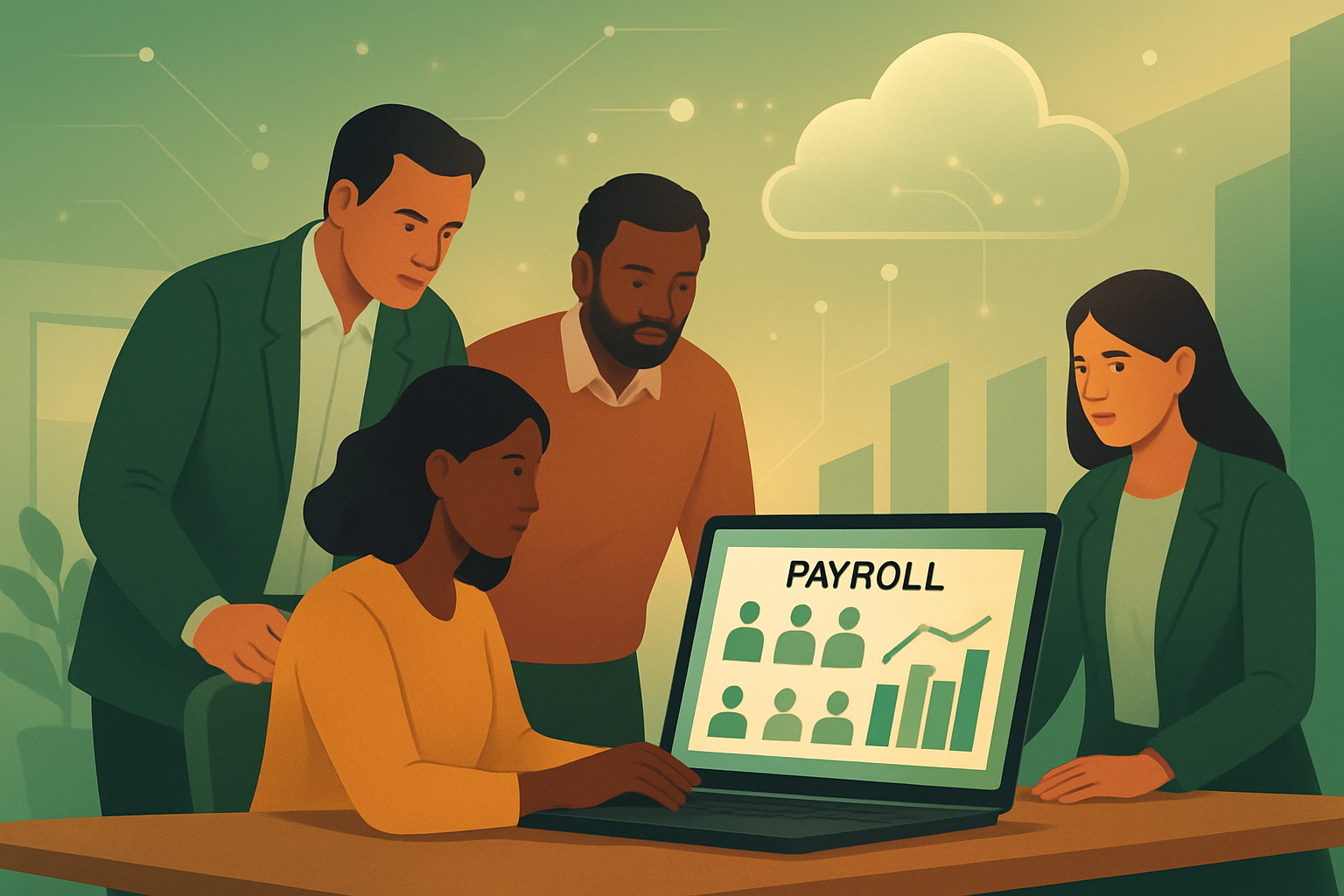
  • Paychex (PAYX) Deep-Dive: Navigating the SMB Frontier in 2026

    Paychex (PAYX) Deep-Dive: Navigating the SMB Frontier in 2026

    In the landscape of the American economy, few companies serve as a more precise barometer for the health of small-to-mid-sized businesses (SMBs) than Paychex, Inc. (NASDAQ: PAYX). On this Friday, December 19, 2025, the Rochester-based Human Capital Management (HCM) giant finds itself at a critical crossroads. Following yesterday’s second-quarter fiscal 2026 earnings report, which saw the company beat both top and bottom-line estimates, investors are weighing a potent mix of technological transformation and balance sheet recovery.

    With the dust settling on its massive 2025 acquisition of Paycor, Paychex is no longer just a "payroll company." It is a tech-enabled behemoth attempting to bridge the gap between small-business intimacy and enterprise-level sophistication. This feature explores the narrative and numbers behind a company that pays one out of every 12 private-sector employees in the United States.

    Historical Background

    The Paychex story is a classic piece of American corporate lore. Founded in 1971 by B. Thomas Golisano with a mere $3,000 and a vision to bring payroll services—then the exclusive domain of large corporations—to small businesses, the company revolutionized the "back office" for the entrepreneur. Golisano’s insight was that small firms faced the same regulatory and tax complexities as giants but lacked the resources to manage them.

    After going public on the Nasdaq in 1983, Paychex spent decades as a steady, high-margin dividend aristocrat. The company’s trajectory shifted significantly in 2018 with the $1.2 billion acquisition of Oasis Outsourcing, which solidified its position in the Professional Employer Organization (PEO) space. However, the most defining moment in its recent history occurred in April 2025, when Paychex completed a $4.1 billion acquisition of Paycor HCM. This move was designed to catapult Paychex into the "mid-market" segment, where larger employee counts and more complex HR needs offer higher revenue per client.

    Business Model

    Paychex operates a diversified revenue model that capitalizes on the "stickiness" of HR functions. Once a business integrates its payroll, tax, and benefits with Paychex, the switching costs are high, leading to retention rates that have historically hovered around 82-83%.

    1. Management Solutions: This is the core engine, generating fees from payroll processing, tax administration, and HR technology (Paychex Flex).
    2. Professional Employer Organization (PEO): Under a co-employment model, Paychex becomes the employer of record for tax purposes, allowing SMBs to leverage Paychex’s scale to get better rates on health insurance and workers' compensation.
    3. Interest on Funds (The "Float"): A unique aspect of the payroll business, Paychex collects payroll funds from clients several days before they are disbursed. In a high-interest-rate environment, the interest earned on these billions of dollars represents pure-profit "float" income.
    4. Ancillary Services: This includes 401(k) recordkeeping—where Paychex is a perennial leader by number of plans—and business insurance brokerage.

    Stock Performance Overview

    Paychex has traditionally been viewed as a "defensive" tech stock—less volatile than high-growth SaaS firms but more rewarding than traditional utilities.

    • 10-Year Horizon: Investors have enjoyed consistent compounding, with the stock more than tripling over the past decade, supported by aggressive dividend hikes.
    • 5-Year Horizon: The performance was bolstered by the post-pandemic hiring boom and the "Great Resignation," which forced companies to invest in better HR tech.
    • 1-Year Horizon (2025): The last 12 months have been a rollercoaster. After reaching all-time highs in late 2024, the stock faced a "valuation reset" in early 2025 following the Paycor announcement. The market initially balked at the $4.1 billion price tag and the associated debt. As of today, December 19, 2025, the stock is trading in the $115 range, having recovered slightly from its post-acquisition lows as the Q2 earnings beat suggests the integration is ahead of schedule.

    Financial Performance

    Yesterday's Q2 fiscal 2026 earnings release provided a clear picture of the "New Paychex." The company reported total revenue of $1.56 billion, an 18.3% increase year-over-year. While much of this growth was inorganic—stemming from the Paycor addition—organic growth in the core payroll segment remained resilient at 5%.

    Adjusted earnings per share (EPS) came in at $1.26, beating the consensus estimate of $1.24. Operating margins, however, remain a point of scrutiny. While Paychex has historically maintained industry-leading margins near 40%, the integration costs of Paycor and the shift toward lower-margin PEO services have pressured these figures. The balance sheet now carries roughly $3.5 billion in total debt, a significant jump from its historically conservative leanings, giving the company a debt-to-equity ratio of approximately 1.15.

    Leadership and Management

    Under the leadership of CEO John Gibson, who took the helm in 2022, Paychex has moved aggressively to modernize its stack. Gibson, a veteran of the HR outsourcing industry, has steered the company away from being a "service bureau" toward becoming a "software-plus-service" platform.

    The management team’s current focus is "synergy realization"—proving to Wall Street that the Paycor acquisition was not just a grab for market share, but a technological upgrade. The board remains highly regarded for its shareholder-friendly policies, maintaining a dividend payout ratio near 75-80% of net income, even as it navigates the current debt load.

    Products, Services, and Innovations

    The crown jewel of the company’s current offering is Paychex Flex, a highly scalable cloud platform. In late 2024 and throughout 2025, Paychex introduced several AI-driven features:

    • Recruiting Copilot: An AI talent-search engine that uses machine learning to match candidates to job openings based on internal skill gaps.
    • Agentic AI for Payroll: In 2025, Paychex rolled out "autonomous payroll agents" that can detect and correct anomalies in time-tracking and tax withholding before a human administrator ever sees them.
    • Paycor Integration: The integration has brought Paycor’s superior "Talent Management" and "Performer" modules to Paychex’s larger client base, filling a previous gap in their mid-market offering.

    Competitive Landscape

    The HCM market is a battlefield of three distinct tiers:

    1. The Legacy Giant: Automatic Data Processing (NASDAQ: ADP) remains the primary rival. ADP has a larger global footprint and more R&D muscle, but Paychex often wins on the "human touch" service model for smaller firms.
    2. The Enterprise Elite: Workday, Inc. (NASDAQ: WDAY) and Oracle (NYSE: ORCL) dominate the Fortune 500. Paychex’s acquisition of Paycor is a direct attempt to challenge these players in the "mid-enterprise" (500–5,000 employees) space.
    3. The Cloud Insurgents: Companies like Gusto and Rippling have disrupted the very low end of the market with "silicon-valley" style UX. Paychex has responded by simplifying the Flex interface to match the ease of use of these startups.

    Industry and Market Trends

    Three macro trends are currently shaping the industry in late 2025:

    • Embedded Finance: Payroll is becoming the hub for financial services. Paychex’s "Funding Solutions" (invoice factoring) allows SMBs to manage cash flow gaps, an essential tool during the current period of restrictive credit.
    • The Regulatory Tsunami: With the 2025 legislative cycle introducing new state-level paid-leave mandates and shifting overtime rules, the "compliance burden" has never been higher, making outsourcing a necessity rather than a luxury for SMBs.
    • Workforce Fragmentation: The rise of "fractional" employees and gig workers requires HCM platforms to handle complex multi-state tax filings for single employees, a task Paychex’s AI-enhanced system is built to handle.

    Risks and Challenges

    The most pressing risk for Paychex is macroeconomic sensitivity. If the U.S. economy enters a cooling period in early 2026, SMBs are often the first to feel the pinch. A rise in small business bankruptcies would directly impact Paychex’s client base.

    Furthermore, the leverage risk cannot be ignored. The Paycor acquisition was a bold move, but it has reduced the company's "margin of error." If integration hits a snag or if client attrition increases during the software migration, the debt load could become a drag on future dividend growth. Finally, there is the interest rate risk: as the Federal Reserve begins to signal potential rate cuts for 2026, the lucrative "float" income could diminish.

    Opportunities and Catalysts

    The primary catalyst for 2026 is Paycor Accretion. Management has signaled that the combined entity will begin to see significant cost and revenue synergies by Q4 of this fiscal year. If Paychex can successfully "cross-sell" its robust 401(k) and insurance products to the existing Paycor client base, revenue per client could see a double-digit jump.

    Additionally, the expansion into International Markets remains an untapped frontier. While primarily U.S.-focused, Paychex’s European operations provide a beachhead for a more aggressive global rollout of the Flex platform.

    Investor Sentiment and Analyst Coverage

    Wall Street is currently in a "wait and see" mode. The consensus rating for PAYX as of December 2025 is a Hold. Analysts at major firms like JPMorgan and Morgan Stanley have praised the Q2 beat but remain cautious about the high valuation and the debt-to-equity ratio.

    Institutional ownership remains high, near 70%, with firms like Vanguard and BlackRock holding significant stakes. Among retail investors, the chatter centers on the "dividend safety," as the current yield near 3.2% remains attractive in a volatile market.

    Regulatory, Policy, and Geopolitical Factors

    Paychex operates at the intersection of labor law and tax policy. The company’s "Compliance-as-a-Service" model thrives on complexity. Recent 2025 Department of Labor (DOL) rulings regarding the classification of independent contractors have driven a wave of new clients to Paychex seeking to avoid misclassification penalties.

    Geopolitically, while Paychex is largely domestic, any shifts in U.S. immigration policy or work-visa regulations (H1-B) affect its mid-market and enterprise clients, making its internal compliance-tracking tools a vital competitive advantage.

    Conclusion

    As 2025 draws to a close, Paychex, Inc. stands as a titan in transition. The Q2 earnings beat is a signal of resilience, suggesting that the "Paycor Pivot" is yielding early results. The company has successfully evolved from a traditional service bureau into a sophisticated AI-driven HCM platform, yet it remains tethered to the fundamental health of the American small business.

    For the long-term investor, Paychex remains a high-quality "compounding machine" with a formidable moat built on compliance expertise and client retention. However, the near-term path will be defined by how effectively management can deleverage the balance sheet and whether the AI "agents" currently being deployed can truly drive the next leg of margin expansion. Investors should watch the Q3 retention numbers closely; they will be the ultimate verdict on whether the new tech-heavy Paychex is still the trusted partner for the American entrepreneur.


    This content is intended for informational purposes only and is not financial advice.