Tag: Nicolás Maduro

  • The Maduro Raid: $400,000 Prediction Market Payout Sparks Insider Trading Outcry and Legislative Crackdown

    The Maduro Raid: $400,000 Prediction Market Payout Sparks Insider Trading Outcry and Legislative Crackdown

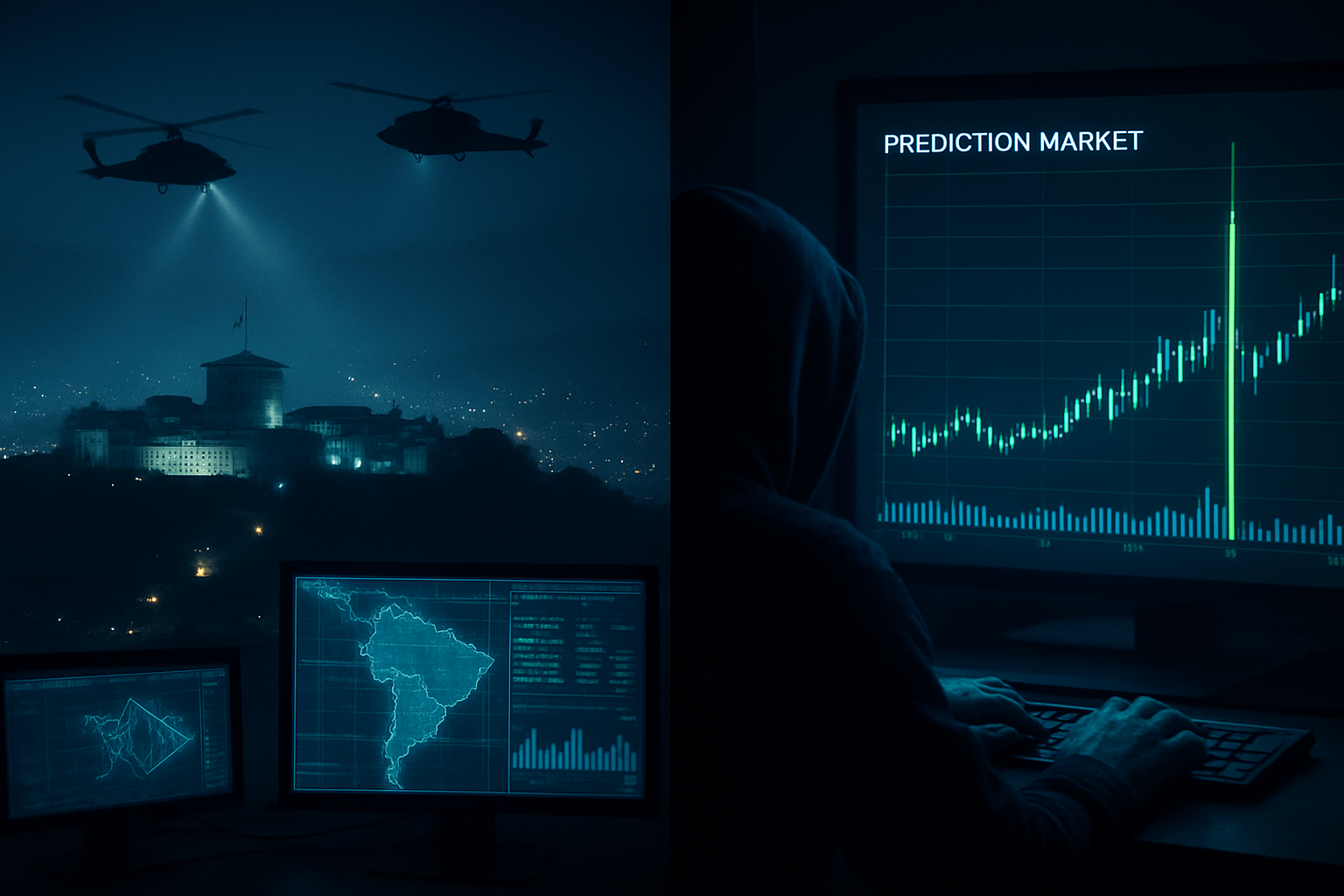
    The early morning of January 3, 2026, will be remembered as one of the most significant geopolitical shifts of the decade. As U.S. Army Delta Force commandos descended upon the Fort Tiuna military complex in Caracas to capture Nicolás Maduro, a parallel drama was unfolding in the digital corridors of decentralized finance. While the world slept, a series of high-stakes trades on Polymarket signaled the impending raid hours before the first explosion echoed through the Venezuelan capital.

    The successful capture of Maduro—now awaiting trial on narco-terrorism charges in New York—triggered a massive payout on one of the most controversial prediction contracts in history. With nearly half a million dollars flowing to a single anonymous trader who appeared to know the "unknowable," the event has ignited a firestorm of debate over the integrity of prediction markets, the potential for state-level insider trading, and the urgent need for new regulatory guardrails.

    The Market: What’s Being Predicted

    The focal point of the controversy was a Polymarket contract titled: "Will Nicolás Maduro be out of office by January 31, 2026?" For much of the latter half of 2025, this market was a quiet corner of the platform, with shares trading between $0.05 and $0.08. This pricing indicated that the broad market assigned less than an 8% probability to Maduro being removed from power, as geopolitical analysts viewed a direct military extraction as a "tail risk" that could destabilize the region.

    The resolution criteria for the contract were specific: Maduro had to be resigned, physically removed, captured by a foreign power, or otherwise rendered unable to exercise the powers of the presidency. Following the announcement of "Operation Absolute Resolve" by President Trump at 4:21 a.m. EST on January 3, the market quickly moved toward a $1.00 valuation. By the time Maduro was confirmed to be in custody aboard the USS Iwo Jima, the total trading volume for Maduro-related ouster markets across platforms had surged past $64 million.

    On the night of the raid, between 9:58 p.m. and 2:58 a.m. EST, the market witnessed an unprecedented anomaly. An anonymous user under the pseudonym "Burdensome-Mix" began aggressively buying "Yes" shares. This trader wagered approximately $32,537 on the low-probability outcome just hours before the Delta Force helicopters crossed the Venezuelan border. When the market resolved, the trader walked away with a staggering profit of $436,759.61—a return of more than 1,242%.

    Why Traders Are Betting

    The timing of the "Burdensome-Mix" trades has led many to believe that the bet was not based on public sentiment, but on classified military intelligence. The bulk of the positions were entered after the final strike authorization was reportedly signed but before the public—or even the Venezuelan military—was aware of the operation. This "pitch-perfect" conviction on a low-probability event has led to widespread allegations of "dark information" usage.

    While some traditional geopolitical analysts were caught off guard, the prediction markets were reacting in real-time. Proponents of these platforms argue that this is exactly how they are supposed to work: by aggregating all available information, including that held by people "in the know," to produce the most accurate forecast possible. Critics, however, argue that when the "information" is a top-secret military operation, the market ceases to be a forecasting tool and becomes a vehicle for laundering government secrets into personal profit.

    Furthermore, a secondary conflict erupted over an "invasion" market. While the ouster market paid out, a separate contract asking if the U.S. would "invade" Venezuela was ruled as "No" by the UMA oracle. The oracle determined that a "snatch-and-extract" mission by special forces did not meet the definition of an invasion, which typically requires a large-scale occupation of territory. This distinction left many "Yes" bettors frustrated, claiming the oracle manipulated the outcome to favor the house or high-volume liquidity providers.

    Broader Context and Implications

    The fallout from the "Maduro Bet" has reached the halls of Congress. Representative Ritchie Torres (D-N.Y.) recently introduced the Public Integrity in Financial Prediction Markets Act of 2026. The bill aims to close what Torres calls the "geopolitical loophole" by prohibiting federal elected officials, political appointees, and executive branch staff from trading on prediction markets if they possess material nonpublic information related to their official duties.

    The event has also highlighted the operational role of defense contractors in modern conflicts. During the raid, high-tech assets from companies like Lockheed Martin (NYSE: LMT), including F-35 stealth fighters used to suppress Venezuelan air defenses, were critical to the mission's success. The intersection of military hardware and digital betting software has created a new paradigm where the success of a $100 million aircraft can directly determine the winner of a $400,000 bet.

    This incident marks a turning point for the credibility of decentralized prediction markets. On one hand, Polymarket correctly "predicted" the event through its pricing mechanism, proving its utility as a leading indicator. On the other hand, the suspicion of insider trading and the semantic disputes over oracle resolutions have provided ammunition for regulators who wish to see these platforms brought under stricter oversight by the Commodity Futures Trading Commission (CFTC).

    What to Watch Next

    In the coming weeks, the focus will shift from the betting floor to the courtroom. The U.S. Department of Justice is reportedly investigating the "Burdensome-Mix" account to determine if the individual behind it has ties to the Department of Defense or the National Security Council. Any evidence linking the trades to a government employee could lead to the first major criminal prosecution for "prediction market insider trading."

    Additionally, the passage of Rep. Torres's bill remains a key milestone. If enacted, it would force platforms like Polymarket and Kalshi to implement more rigorous Know Your Customer (KYC) protocols to identify and block government employees from specific markets. The debate over whether an "extraction" counts as an "invasion" will also likely lead to a standardizing of contract language across the industry to avoid future "oracle disputes."

    Finally, eyes are on the upcoming legal proceedings for Maduro in the Southern District of New York. Markets are already forming around the length of his trial and the eventual verdict. Traders are closely watching for any signs of a plea deal, which could once again send shockwaves through the political prediction markets.

    Bottom Line

    The $400,000 Maduro payout is a watershed moment for prediction markets. It has demonstrated their uncanny ability to capture the "wisdom of the crowds" (or the knowledge of the few) with surgical precision. However, it has also exposed the significant ethical and legal risks inherent in betting on global security events.

    As we move further into 2026, the "Maduro Bet" will serve as the primary case study for the tension between transparency and security. While these markets provide invaluable data to the public, the risk of incentivizing the leak of classified information remains a daunting challenge for lawmakers and platform operators alike. For now, the "Burdensome-Mix" trader remains a symbol of the high stakes—and high suspicions—of the new era of geopolitical forecasting.


    This article is for informational purposes only and does not constitute financial or betting advice. Prediction market participation may be subject to legal restrictions in your jurisdiction.

    PredictStreet focuses on covering the latest developments in prediction markets.
    Visit the PredictStreet website at https://www.predictstreet.ai/.
  • The $400,000 ‘Sure Thing’: Maduro Capture Sparks Prediction Market Insider Trading Crisis

    The $400,000 ‘Sure Thing’: Maduro Capture Sparks Prediction Market Insider Trading Crisis

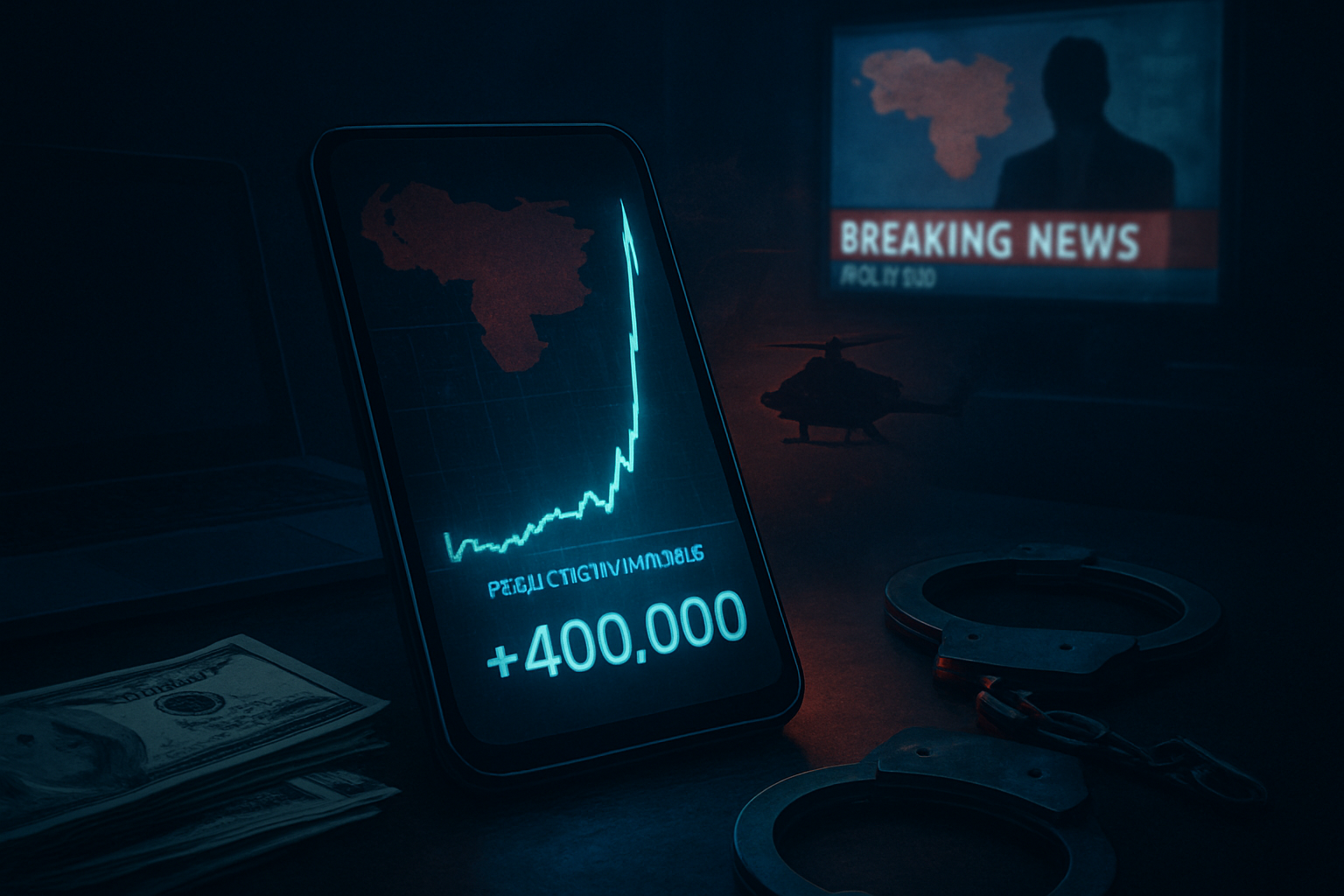
    CARACAS/NEW YORK — On January 3, 2026, at 4:21 a.m. EST, a post on Truth Social, the platform owned by Trump Media & Technology Group (NASDAQ: DJT), sent shockwaves across the globe: Venezuelan strongman Nicolás Maduro had been captured by U.S. special operations forces in "Operation Absolute Resolve." While the world grappled with the geopolitical fallout of the regime's collapse, a more localized explosion was occurring on the blockchain-based prediction platform Polymarket.

    Just hours before the first official confirmation of the capture, a single anonymous trader turned a $32,000 gamble into a staggering $436,000 windfall. The "pitch-perfect" timing of the wager has ignited a firestorm of controversy, with critics alleging that the trade was not a feat of "crowd wisdom," but a blatant case of insider trading using classified military intelligence. As the dust settles on the streets of Caracas, the focus is shifting to Washington, where regulators are facing renewed pressure to police the "Wild West" of geopolitical betting.

    The Market: What's Being Predicted

    The specific contract at the center of the storm was titled "Will Nicolás Maduro be out of office by January 31, 2026?" For months, this market had been a niche corner of Polymarket, with the "Yes" shares trading at a dismal $0.05 to $0.08—implying less than a 10% chance of a transition of power. Trading volume remained steady but unremarkable until the final week of December 2025.

    As the clock ticked toward the New Year, the market's liquidity deepened significantly. Total volume on Maduro-related contracts surpassed $15 million across Polymarket and its regulated competitor Kalshi. However, while Kalshi—which operates under the oversight of the Commodity Futures Trading Commission (CFTC)—saw odds hover around 13% based on public reports of civil unrest, Polymarket experienced a sudden, violent surge in "Yes" buying in the pre-dawn hours of January 3.

    The resolution criteria for the market were straightforward: Maduro had to be physically removed from power, resign, or be captured by a foreign entity. While the "Out of Office" market resolved quickly in favor of "Yes" holders, a sister market regarding a "U.S. Invasion of Venezuela" has remained frozen in a $10.5 million legal limbo. Polymarket’s oracle has so far refused to pay out the "Invasion" contracts, arguing that a "snatch-and-extract" mission does not meet the technical definition of an invasion intended to occupy territory—a move that has left many retail traders feeling cheated by the "house."

    Why Traders Are Betting

    The focus of the investigation is an account originally named "Burdensome-Mix," which was created on December 26, 2025. Blockchain forensics provided by firms such as Chainalysis reveal that the account was funded via a direct transfer from Coinbase Global, Inc. (NASDAQ: COIN), suggesting the trader made little effort to hide their identity behind privacy mixers.

    Between midnight and 2:00 a.m. on the day of the capture, "Burdensome-Mix" aggressively purchased nearly 500,000 "Yes" shares. "This wasn't a hedge or a speculative play," noted one high-volume trader on the platform. "This was someone who knew the helicopters were already in the air." By the time the Truth Social announcement went live, the trader's $32,537 investment had ballooned to nearly half a million dollars.

    Analysts point to the sharp divergence between Polymarket and traditional forecasting as evidence of an information leak. While intelligence agencies and political pundits were still debating the likelihood of a coup, the prediction market "knew" something was coming. This has raised the uncomfortable possibility that U.S. military personnel, intelligence officers, or high-level administration officials may be using prediction markets as a "tax-free bonus" system to profit from secret state actions.

    Broader Context and Implications

    The Maduro windfall has become a defining moment for the prediction market industry. For years, proponents have argued that these markets are the most accurate way to aggregate disparate information and predict the future. However, if that information is sourced from classified briefings rather than public analysis, the "wisdom of the crowd" becomes a mask for corruption.

    The political backlash was instantaneous. On January 9, 2026, Representative Ritchie Torres (D-N.Y.) introduced the Public Integrity in Financial Prediction Markets Act of 2026. The bill aims to close the "geopolitical loophole" by criminalizing the use of non-public material information by federal employees to trade on prediction platforms. "If you have a security clearance, you shouldn't have a Polymarket account," Torres told reporters on Capitol Hill.

    Furthermore, the incident has highlighted the jurisdictional "gray zone" of Polymarket. Because the platform technically bars U.S. users, it often escapes the direct reach of the CFTC. However, the use of U.S.-based exchanges like Coinbase to fund these accounts provides a potential hook for federal investigators. Senate leaders have already sent a formal letter to CFTC Chairman Michael Selig demanding an investigation into whether the platform is being used to facilitate money laundering or insider trading by government actors.

    What to Watch Next

    The immediate future of prediction markets depends on the outcome of two major investigations. First, the CFTC is expected to issue a report on the Maduro trades by the end of Q1 2026. If they find evidence that the "Burdensome-Mix" trader had ties to the U.S. government, it could lead to a permanent ban on geopolitical event contracts in the United States.

    Second, the "Invasion vs. Capture" dispute is headed for a potential class-action lawsuit. The $10.5 million in locked funds represents a significant portion of Polymarket’s current liquidity. If the platform is forced to pay out to "Invasion" bettors, it could face a liquidity crunch; if it refuses, it risks losing the trust of the very community that fuels its growth.

    Traders should also monitor the progress of the Torres Bill in the House Financial Services Committee. If passed, it would represent the first major legislative framework specifically targeting prediction market ethics, potentially forcing platforms to implement "Know Your Customer" (KYC) protocols that check for government employment and security clearances.

    Bottom Line

    The capture of Nicolás Maduro should have been a triumphant moment for prediction markets—proof that they can signal world-changing events before the traditional media. Instead, the "Burdensome-Mix" trade has left the industry defending its very existence. The line between "superior analysis" and "insider information" has blurred to the point of invisibility, creating an existential crisis for decentralized forecasting.

    As we move further into 2026, the Maduro scandal serves as a warning: when the stakes are global and the information is classified, prediction markets may not be reflecting the wisdom of the crowd so much as the secrets of the few. Whether the industry can survive this transition from a niche hobby to a high-stakes geopolitical tool remains to be seen.


    This article is for informational purposes only and does not constitute financial or betting advice. Prediction market participation may be subject to legal restrictions in your jurisdiction.

    PredictStreet focuses on covering the latest developments in prediction markets.
    Visit the PredictStreet website at https://www.predictstreet.ai/.

  • The $32,000 ‘Glint’ Before the Storm: Did a Polymarket Trader Have Advance Knowledge of Maduro’s Capture?

    The $32,000 ‘Glint’ Before the Storm: Did a Polymarket Trader Have Advance Knowledge of Maduro’s Capture?

    The sudden and dramatic capture of Nicolás Maduro by U.S. special operations forces in early January 2026 sent shockwaves through the global political landscape. However, for those watching the prediction markets, the real explosion happened hours before the first Delta Force helicopter crossed the Venezuelan border. A single, anonymous trader placed a high-stakes bet that has now become the center of a firestorm involving allegations of insider trading and calls for a federal crackdown on the industry.

    As the dust settles in Caracas and Maduro awaits trial in New York, the focus has shifted to Polymarket, the decentralized betting platform that correctly—if suspiciously—predicted the regime's collapse. At the heart of the controversy is a $32,000 wager that ballooned into a nearly half-million-dollar payout, occurring just as the final authorization for "Operation Absolute Resolve" was being signed in the Oval Office.

    The Market: What's Being Predicted

    The primary theater for this financial drama was the Polymarket contract titled "Will Maduro remain in power?" Throughout the final months of 2025, as the U.S. tightened a naval blockade on Venezuelan oil exports, the market remained remarkably skeptical of a total regime change. For most of December, the odds of Maduro being ousted by January 31, 2026, hovered between a mere 7% and 10%. Liquidity was high, with the market attracting over $57 million in total volume as speculators weighed the likelihood of continued diplomatic stalemate against the possibility of military action.

    The resolution criteria for the market were explicit: the contract would settle as "Yes" (for removal) if Maduro was physically removed from Venezuelan territory or if he officially resigned and a successor was recognized by the international community. Trading remained relatively stagnant until the evening of January 2, 2026, when a flurry of activity—led by a single account—completely upended the order book.

    In addition to the "power" market, a secondary contract regarding a potential "U.S. invasion" of Venezuela saw over $10.5 million in volume. While the "power" market resolved in favor of those betting on Maduro's downfall, the "invasion" market sparked its own controversy. Despite the presence of U.S. troops, Polymarket ruled the event as "No," citing their criteria that defined an invasion as "establishing territorial control" rather than a "snatch-and-extract" raid. This semantic nuance has led to a "Polyscam" backlash among traders who feel the platform moved the goalposts to avoid a massive payout.

    Why Traders Are Betting

    The sudden shift in odds was driven by a trader using the pseudonym "Burdensome-Mix." This account, created only weeks prior, began a methodical accumulation of "Yes" shares in late December. The defining moment occurred at 9:58 PM ET on January 2—less than an hour before President Donald Trump reportedly signed the final strike authorization. At that time, with the "downfall" probability still sitting at 8%, "Burdensome-Mix" dropped a final $32,537 into the pool.

    When the news of the raid broke at 4:21 AM the following morning, the shares spiked to a full $1.00. The trader walked away with a profit of $436,759.61, a staggering 12-fold return on an event the broader market viewed as highly improbable. Analysts from various crypto-intelligence firms have pointed out that the timing was too precise to be a mere coincidence. "It is statistically an anomaly to see that level of conviction on a low-probability event right before the command is given," noted one lead researcher at Polysights.

    Traditional forecasting methods, including geopolitical risk assessments from major firms, had estimated the likelihood of a direct military extraction as a "tail risk" due to the potential for regional escalation. However, the prediction markets proved once again that they can act as a magnet for "dark information." Whether this trader was a high-level government staffer, a military contractor, or simply an incredibly lucky speculator remains the subject of intense debate.

    Broader Context and Implications

    This incident has reignited the conversation regarding the role of prediction markets in modern governance. Supporters of platforms like Polymarket and Kalshi argue that these markets serve as an invaluable tool for "truth discovery." CEO Shayne Coplan has previously suggested that if someone has inside information, the market provides a way for that truth to be priced in, essentially alerting the public to impending events before they happen.

    However, the "Maduro Trade" has also caught the attention of regulators who see it differently. Following the capture, U.S. Representative Ritchie Torres introduced the "Public Integrity in Financial Prediction Markets Act of 2026." The bill seeks to explicitly bar government officials, their staff, and military personnel from trading on markets where they possess material nonpublic information. The concern is that prediction markets could become a new, harder-to-track avenue for corruption and the monetization of classified secrets.

    The geopolitical ramifications are equally massive. As the U.S. signals its intention to oversee a "safe transition" in Venezuela, global energy markets are already reacting. Companies like Chevron (NYSE: CVX), ExxonMobil (NYSE: XOM), and ConocoPhillips (NYSE: COP) are being watched closely by investors as the potential for the revitalization of Venezuela’s massive oil reserves becomes a reality. The prediction markets correctly signaled the end of the Maduro era, but the resulting regulatory fallout may change how these platforms operate forever.

    What to Watch Next

    The immediate focus for the markets is now on the stability of the transitional government in Caracas. While Vice President Delcy Rodríguez was technically sworn in as acting president, her hold on power is tenuous. Polymarket has already launched new contracts regarding the date of the next Venezuelan general election and the potential for a formal U.S. military occupation to secure oil fields.

    On the regulatory front, a group of 12 U.S. Senators has called on the Commodity Futures Trading Commission (CFTC) to launch a full-scale investigation into the "Burdensome-Mix" trade. If the identity of the trader is linked to the U.S. government or the military, it could lead to the first major "insider trading" prosecution in the history of decentralized prediction markets. This would likely result in mandatory Know Your Customer (KYC) requirements that could alienate a large portion of the current user base.

    Bottom Line

    The capture of Nicolás Maduro will be remembered as a pivotal moment in 21st-century history, but in the world of finance, it will be remembered as the "Maduro Trade." The event highlighted the uncanny ability of prediction markets to sniff out "black swan" events before they occur, often by attracting those with "inside" knowledge who are looking for a payout.

    While the $32,000 bet by "Burdensome-Mix" was a masterstroke of timing, it has also put a target on the back of the entire prediction market industry. As lawmakers move to close the "insider trading" loophole, the platform's reputation for being an unbiased aggregator of truth is being tested. Ultimately, the Maduro controversy proves that when the stakes are high enough, the line between a "prediction" and "privileged information" becomes razor-thin.


    This article is for informational purposes only and does not constitute financial or betting advice. Prediction market participation may be subject to legal restrictions in your jurisdiction.

    PredictStreet focuses on covering the latest developments in prediction markets.
    Visit the PredictStreet website at https://www.predictstreet.ai/.
  • The “Maduro Trade”: How a $32,000 Bet Sparked an Insider Trading Firestorm on Polymarket

    The “Maduro Trade”: How a $32,000 Bet Sparked an Insider Trading Firestorm on Polymarket

    The world of decentralized finance is no stranger to "whales" and high-stakes gambles, but a single series of trades executed in the final hours of January 2, 2026, has sent shockwaves through Washington and the global prediction market industry. Just hours before U.S. Special Operations forces launched "Operation Absolute Resolve" to capture Venezuelan leader Nicolás Maduro, an anonymous trader turned a modest $32,000 position into a staggering $436,000 windfall.

    The capture of Maduro, announced by the White House in the early hours of January 3, 2026, was the resolution event for several high-liquidity contracts on Polymarket. While the geopolitical world scrambled to react to the fall of the Caracas regime, the prediction market community was focused on a wallet address starting with 0x31a56e. The timing of the bets—placed less than four hours before the first explosions were reported in the Venezuelan capital—has led to widespread allegations of insider trading and a direct challenge to the integrity of decentralized forecasting platforms.

    The Market: What's Being Predicted

    The focus of the controversy is the "Maduro out by January 31, 2026?" contract on Polymarket, a decentralized platform that has seen a massive surge in institutional interest following a $2 billion investment from the Intercontinental Exchange (NYSE: ICE). At the start of the year, the market viewed the departure of Maduro as a "black swan" event. Shares for a "Yes" outcome were trading at a mere 7 to 8 cents, implying a market-calculated probability of less than 10%.

    Trading volume on the Maduro-related suite of contracts exceeded $150 million in the first week of January alone. The platform offered several ways to play the Venezuelan crisis, including contracts on whether Maduro would be in U.S. custody, whether an invasion would occur, and even the specific date of his first court appearance in Manhattan. As the "Burdensome-Mix" account (the handle associated with the 0x31a56e wallet) began aggressively buying "Yes" shares on January 2, the odds began to tick upward, though they never crossed 15% before the news of the raid broke.

    The resolution criteria for the "Maduro out" market were stringent: it required a definitive change in the head of state recognized by the U.S. State Department or the physical removal of Maduro from the presidential palace. When the Delta Force raid successfully extracted Maduro from the Miraflores Palace at 1:00 AM ET on January 3, the market entered a "lock" state, eventually resolving in favor of the "Yes" holders.

    Why Traders Are Betting

    The suspicious nature of the "Maduro Trade" stems from the sheer precision of the timing. The trader, who created their account only on December 26, 2025, executed their final significant wager at 9:58 PM ET on January 2. At that moment, there was no public news indicating a military operation was imminent. In fact, most mainstream geopolitical analysts were focused on a possible diplomatic summit scheduled for later in the month.

    The trader's strategy involved diversifying $32,000 across several interlinked outcomes. They bet heavily on "Maduro out" and "Maduro in U.S. custody," while simultaneously taking smaller positions in the "U.S. invasion" contract. By spreading the bets, the user maximized their potential payout while keeping individual contract price movements from alerting the broader market too early.

    Unlike traditional forecasting methods—which rely on diplomatic cables, troop movements, and satellite imagery—this trader appeared to have the ultimate "alpha": the exact timeline of a classified military operation. This has reignited the debate over whether prediction markets are truly "wisdom of the crowd" or merely a "marketplace for leaks."

    Broader Context and Implications

    This event has catalyzed a massive regulatory backlash. On January 5, 2026, Representative Ritchie Torres (D-NY) introduced the Public Integrity in Financial Prediction Markets Act of 2026. The proposed legislation seeks to apply SEC-style insider trading rules to prediction markets, making it a federal crime for government employees or contractors to trade on non-public information. "What we saw with the Maduro Trade wasn't genius—it was a leak," Torres stated during a floor speech.

    The controversy also highlights a growing rift in the Polymarket community regarding the "Invasion" contract. While Maduro was captured in a military raid involving 75 casualties, Polymarket’s resolution committee ruled that the "U.S. Invasion" contract would resolve as "No." The committee argued that a "snatch-and-extract" mission did not meet the definition of an invasion, which requires an intent to establish territorial control. This "semantic freeze" has led to accusations that the platform is manipulating outcomes to protect liquidity providers from massive payouts to "informed" traders.

    The involvement of the Intercontinental Exchange (NYSE: ICE) as a major backer of Polymarket adds a layer of institutional complexity. While traditional exchanges are strictly regulated, decentralized platforms like Polymarket have operated in a gray area. The Maduro incident may force these platforms to adopt rigorous "Know Your Customer" (KYC) standards and monitoring tools similar to those used on the New York Stock Exchange.

    What to Watch Next

    All eyes are now on the Department of Justice (DOJ) and the Commodity Futures Trading Commission (CFTC), which have reportedly opened a joint inquiry into the "Burdensome-Mix" wallet. Blockchain analysis from firms like Chainalysis has already tracked the $436,000 payout to several mainstream U.S. exchanges, suggesting that the identity of the trader may be uncovered sooner rather than later if a subpoena is issued.

    Additionally, the passage of the Torres bill will be a critical milestone for the industry. If enacted, it could lead to the first-ever "insider trading" prosecution in the history of decentralized prediction markets. This would set a legal precedent that could either legitimize the industry by purging bad actors or stifle it by making traders fear that any successful "high-conviction" bet will trigger a federal investigation.

    Finally, the resolution of the "Invasion" contract remains a point of contention. Several large-scale traders have threatened to sue Polymarket, arguing that the resolution committee's definition was too narrow and ignored the reality of the military engagement on the ground.

    Bottom Line

    The "Maduro Trade" is a watershed moment for prediction markets. On one hand, it proves that these markets are incredibly efficient at incorporating information—the price moved toward the truth before the world knew it. On the other hand, it exposes a glaring vulnerability: if the source of that information is an illegal leak, the market ceases to be a tool for public insight and becomes a vehicle for corruption.

    As we move further into 2026, the industry must find a balance between its decentralized roots and the necessary guardrails of financial integrity. Whether "Burdensome-Mix" is a lucky gambler or a high-ranking intelligence officer, their trade has ensured that prediction markets will never be viewed the same way again. The Maduro capture was a triumph for U.S. foreign policy, but for the world of forecasting, it may be the start of a long and difficult regulatory winter.


    This article is for informational purposes only and does not constitute financial or betting advice. Prediction market participation may be subject to legal restrictions in your jurisdiction.

    PredictStreet focuses on covering the latest developments in prediction markets.
    Visit the PredictStreet website at https://www.predictstreet.ai/.
  • The $400,000 “Shadow Bet”: How a Timely Wager on Maduro’s Downfall Ignited an Insider Trading Firestorm

    The $400,000 “Shadow Bet”: How a Timely Wager on Maduro’s Downfall Ignited an Insider Trading Firestorm

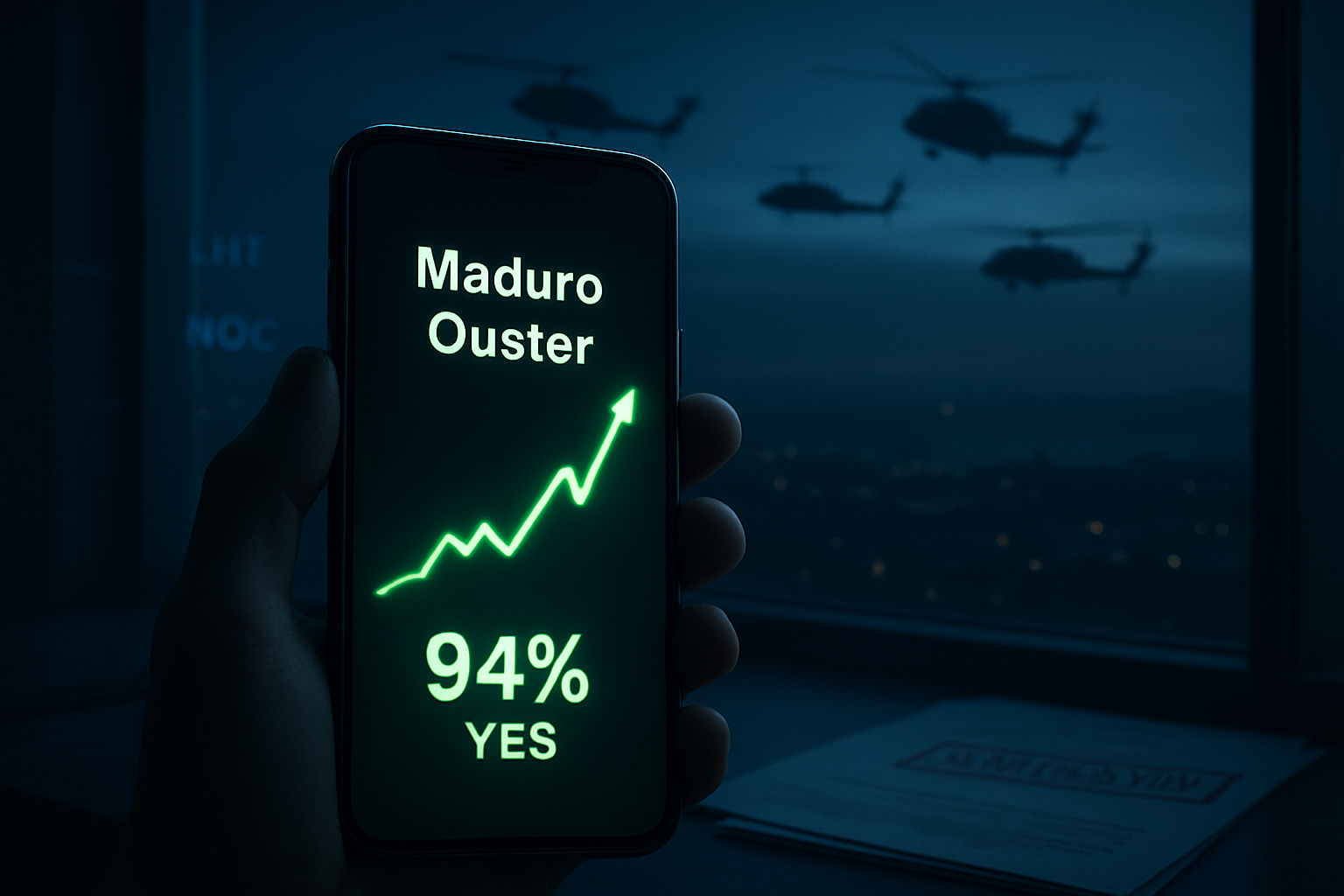
    On January 3, 2026, as U.S. Special Forces launched "Operation Absolute Resolve" to apprehend Venezuelan President Nicolás Maduro, the world watched in shock. But on the decentralized prediction platform Polymarket, the shock had already been priced in. Just hours before the first Delta Force boots hit the ground in Caracas, an anonymous user liquidated a massive position, turning a $34,000 wager into a staggering $436,000 windfall. The "impeccable" timing of the trade, executed while the market gave Maduro’s removal a mere 6% probability, has sent shockwaves through the prediction market industry and caught the eye of federal investigators.

    Today, January 14, 2026, the fallout has reached a boiling point. As the U.S. Senate demands an immediate investigation into the payout, the incident has become a lightning rod for critics who argue that prediction markets are becoming high-stakes playgrounds for individuals with access to classified military and diplomatic intelligence. With a $400,000 payout now at the center of a geopolitical scandal, the question is no longer whether prediction markets can forecast the future, but whether they are being used to profit from its secrets.

    The Market: What's Being Predicted

    The controversy centers on a specific contract hosted on Polymarket: "Will Nicolás Maduro be out of power by January 31, 2026?" For much of late 2025, this market was a sleepy corner of the platform, with shares trading at roughly 7 cents (representing a 7% probability). Most geopolitical analysts viewed Maduro’s grip on power as firm, despite ongoing sanctions and internal unrest. However, the liquidity in this market spiked dramatically in the final 48 hours of December 2025, as a newly created account under the handle "Burdensome-Mix" began aggressively buying "Yes" shares.

    While Polymarket operated as the primary hub for this speculative activity, the regulated U.S. exchange Kalshi also hosted a similar market (Series: KXMADUROOUT). On Kalshi, the odds remained relatively stable until the early morning hours of January 3, when prices began to surge just ahead of the official 4:21 a.m. ET announcement from the White House. The discrepancy between the two platforms has highlighted the differences in oversight; Kalshi operates under the watchful eye of the Commodity Futures Trading Commission (CFTC), while Polymarket’s decentralized nature has historically made it more difficult to police for "informed" trading.

    The resolution of the market was not without its own drama. While the "Ouster" contract was settled quickly following Maduro’s appearance in a Manhattan federal court on January 5, a secondary market regarding a potential "U.S. Invasion" of Venezuela became mired in a bitter dispute. Polymarket initially refused to pay out "Yes" bettors for the invasion contract, arguing that a targeted special forces raid did not constitute a full-scale territorial invasion—a technicality that left many retail traders furious and further muddied the platform's reputation.

    Why Traders Are Betting

    The primary driver behind the sudden market movement was not public sentiment, but rather a suspected leak of "material non-public information." Before the raid, traditional forecasting methods—including intelligence briefs from major consultancies and public diplomatic channels—showed no indication that a military strike was imminent. In fact, most experts believed the U.S. was pursuing a policy of containment rather than direct intervention.

    The "Burdensome-Mix" account represents what many in the industry call "whale activity," but with a darker undertone. By investing approximately $34,000 into a high-risk contract that the broader public deemed a "long shot," the user demonstrated a level of confidence that suggests access to the Pentagon’s operational timeline for Operation Absolute Resolve. This has led to a comparison between prediction markets and traditional equity markets; when Maduro was captured, defense giants like Lockheed Martin (NYSE: LMT) and Northrop Grumman (NYSE: NOC) saw immediate stock rallies of 8% and 2.7% respectively, but those moves happened after the news broke. The Polymarket trade, by contrast, happened before.

    Traders on these platforms are often a mix of hobbyist geeks and professional arbitrageurs. However, the Maduro payout has highlighted a third category: the "insider trader." While traditional forecasting focuses on aggregated public data, this event suggests that prediction markets are increasingly being used as a way to "monetize" secrets. The surge in gold prices to over $4,300 per ounce and the rally of energy companies like Valero (NYSE: VLO) and Phillips 66 (PSX) further confirm that the markets were reacting to the raid, but only the prediction markets seemed to have a "tell" in the hours preceding the mission.

    Broader Context and Implications

    The "Maduro Bet" is being viewed as a watershed moment for the regulation of prediction markets. It has exposed a significant "insider information" loophole that current laws are ill-equipped to handle. In response, Congressman Ritchie Torres (D-NY) has introduced the Public Integrity in Financial Prediction Markets Act, which would specifically ban federal officials, political appointees, and military personnel from wagering on outcomes they may have a hand in shaping.

    This event also reveals a paradoxical truth about prediction markets: their greatest strength—their ability to incorporate "all available information"—is also their greatest regulatory liability. If a market is "accurate" because it contains leaked classified data, it loses its status as a public sentiment tool and becomes a national security risk. The CFTC, led by Chair Michael Selig, is now under immense pressure from a bipartisan group of 12 U.S. Senators to determine if Polymarket’s security protocols are sufficient to prevent such manipulation.

    Historically, prediction markets have been praised for their accuracy in elections and corporate mergers. However, the intersection of these markets with kinetic military operations like Operation Absolute Resolve creates a new ethical frontier. If speculators can profit from the movement of troops, the incentive to leak or even influence military strategy increases exponentially. This has led to renewed calls for platforms to adopt the same rigorous anti-manipulation standards as the NYSE or Nasdaq.

    What to Watch Next

    In the coming weeks, all eyes will be on the Department of Justice and the CFTC as they attempt to unmask the owner of the "Burdensome-Mix" account. If the trail leads back to a government or military official, it could lead to the first major criminal prosecution for "prediction market insider trading." This would set a legal precedent that could redefine how these platforms operate globally.

    Furthermore, the "Invasion" versus "Ouster" dispute on Polymarket is expected to go to a formal arbitration or a community vote. The outcome of this dispute will be a major test for the decentralized governance models that many of these platforms use. If the platform is seen as "moving the goalposts" to avoid a large payout, it could lead to a mass exodus of liquidity toward more regulated competitors like Kalshi or ForecastEx.

    Finally, keep a close watch on the legislative progress of the Torres bill. If passed, it would represent the most significant expansion of financial oversight in the prediction market space since the Dodd-Frank Act. The defense sector will also remain volatile; as data analytics firms like Palantir (NASDAQ: PLTR) and hardware providers like Raytheon (NYSE: RTX) and General Dynamics (NYSE: GD) report their quarterly earnings, analysts will be looking for clues as to how much "pattern of life" intelligence was used in the Venezuelan operation—and whether any of that data could have been the source of the Polymarket leak.

    Bottom Line

    The $400,000 Maduro payout is a "smoke alarm" for the prediction market industry. While the capture of a high-profile target like Nicolás Maduro is a significant military achievement for the U.S., the corresponding activity on Polymarket suggests that the "wisdom of the crowd" may sometimes just be the "knowledge of the few." The event has proved that these markets are no longer just a niche interest; they are sensitive instruments that can reflect—and perhaps even compromise—the most sensitive geopolitical operations.

    As a tool, prediction markets remain incredibly powerful, offering a real-time gauge of probability that traditional polls and news outlets cannot match. However, without the guardrails of transparency and strict anti-insider trading enforcement, they risk becoming a tool for corruption rather than a source of truth. The Maduro scandal will likely be the catalyst that finally brings these platforms into the mainstream regulatory fold.

    Ultimately, the capture of Maduro has changed the map of South American politics, but the $400,000 bet may have changed the landscape of global finance forever. Whether this leads to a more transparent era of forecasting or the eventual shutdown of unregulated platforms remains the most important prediction of all.


    This article is for informational purposes only and does not constitute financial or betting advice. Prediction market participation may be subject to legal restrictions in your jurisdiction.

    PredictStreet focuses on covering the latest developments in prediction markets.
    Visit the PredictStreet website at https://www.predictstreet.ai/.