Tag: New York Law

  • The 81% Gamble: Why Traders Bet Federal Law Will Crush New York’s Prediction Market Ban

    The 81% Gamble: Why Traders Bet Federal Law Will Crush New York’s Prediction Market Ban

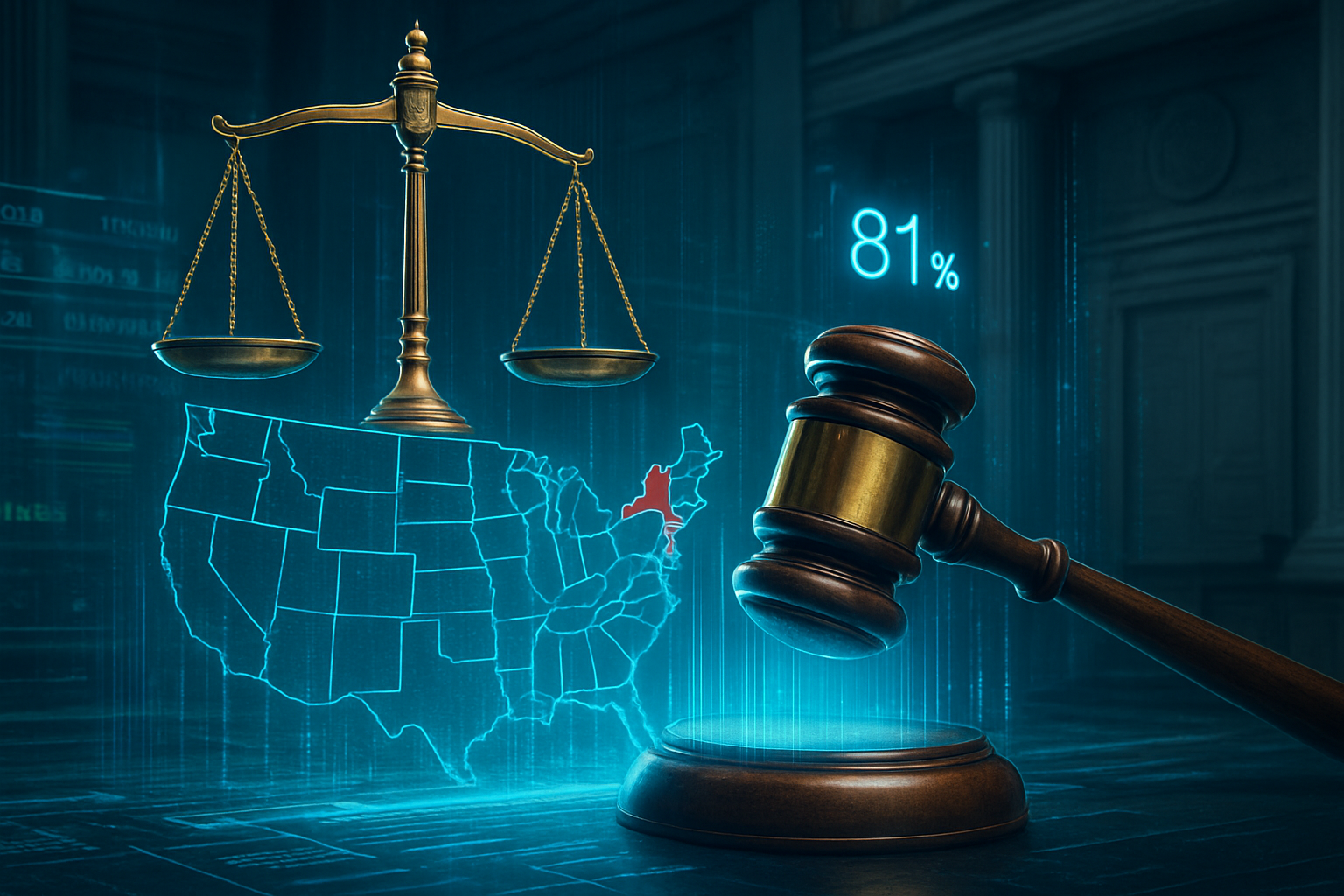
    As the battle for the future of information markets moves from the betting floor to the federal courtroom, a new consensus is emerging among the world’s most active forecasters. On the social prediction platform Manifold Markets, a high-stakes contract titled "Will Federal Preemption Protect DCMs from State Bans by End of 2026?" has seen a dramatic surge in confidence, with traders now pricing in an 81% probability that federal law will ultimately shield the industry from state-level shutdowns.

    This "81% Gamble" represents a pivotal moment for the industry. While state legislators in Albany push for aggressive bans on event-based trading, market participants are betting heavily that the U.S. Constitution’s Supremacy Clause—and the "exclusive jurisdiction" of the Commodity Futures Trading Commission (CFTC)—will render those bans toothless. The outcome will decide whether prediction markets become a unified national financial asset class or remain a fragmented, state-by-state legal minefield.

    The Market: What's Being Predicted

    The focus of the "81% Gamble" is the legal doctrine of federal preemption. Traders on Manifold Markets are wagering on whether Designated Contract Markets (DCMs)—platforms fully registered with the federal government like Kalshi and Interactive Brokers Group, Inc. (NASDAQ: IBKR)—will be legally permitted to operate even in states that have passed explicit bans.

    The market has seen significant liquidity over the last two weeks, following the reintroduction of the ORACLE Act in New York on January 7, 2026. While the bill aims to impose fines of up to $1 million per day on platforms offering contracts on "catastrophic events" or political outcomes, the probability of the ban succeeding has actually dropped on prediction platforms. Trading volume has spiked as professional "arbs" move between play-money sentiment on Manifold and real-money hedges on regulated exchanges. The resolution hinges on a definitive court ruling or federal legislation by December 31, 2026, that establishes the CFTC as the sole arbiter of these markets.

    Why Traders Are Betting

    The bullish sentiment for federal preemption is driven by a string of legal victories for the industry throughout 2024 and 2025. Traders are looking at the "Kalshi Precedent" as their North Star. After winning a landmark federal case that allowed for Congressional election markets, Kalshi is now suing the New York State Gaming Commission in the Southern District of New York (SDNY). The core of their argument is that once the CFTC approves a contract, a state cannot use "gambling" laws to override that federal authorization.

    Furthermore, the entry of major financial players has changed the "optics" of the legal fight. Robinhood Markets, Inc. (NASDAQ: HOOD) recently integrated Kalshi’s infrastructure directly into its app, effectively turning millions of retail investors into stakeholders in the market's legality. "When you have a company like Robinhood or Interactive Brokers treating these as financial derivatives, it becomes much harder for a local gaming commission to argue they are just 'illegal gambling' like an unlicensed sportsbook," says one lead trader on the Manifold contract. The 81% odds reflect a belief that federal judges will favor the stability of national financial markets over localized moral objections.

    Broader Context and Implications

    The conflict in New York is a microcosm of a larger national struggle. The ORACLE Act (Assembly Bill A9251) represents the "nuclear option" for state regulators, seeking to ban everything from political betting to contracts on security price movements. However, a competing piece of legislation, the Cooney Bill (S8889), suggests a different path: regulating prediction markets as financial entities under the New York Department of Financial Services (DFS) rather than the Gaming Commission.

    If the 81% probability holds true and federal preemption wins the day, it would strip states of the power to ban specific types of contracts, provided they are sanctioned by the CFTC. This would align prediction markets with other federally regulated commodities like oil, gold, and wheat. A defeat for preemption, conversely, would create a "patchwork" regulatory environment, where a trader in New Jersey could hedge against a recession while a trader across the river in Manhattan would be committing a felony for the same transaction.

    What to Watch Next

    The most immediate catalyst for this market is the expected ruling in the SDNY case, Kalshi vs. NYSGC, due in late February 2026. A preliminary injunction in favor of Kalshi would likely send the Manifold odds into the mid-90s, effectively ending the debate for the current year. Conversely, if the judge denies the injunction and allows New York to proceed with its ban, we could see a "black swan" collapse in the odds as platforms prepare for a state-by-state retreat.

    Investors should also monitor the Public Integrity in Financial Prediction Markets Act of 2026, introduced by Rep. Ritchie Torres (D-NY) on January 9. While the bill seeks to ban insider trading by government officials, its passage would indirectly codify the legality of the platforms themselves, providing the "federal shield" that traders are currently betting on. Even traditional institutions like The Goldman Sachs Group, Inc. (NYSE: GS) have begun hinting at entering the space, a move that would provide massive political cover for the "preemption" argument.

    Bottom Line

    The "81% Gamble" is more than just a bet on a legal outcome; it is a vote of confidence in the institutionalization of prediction markets. For years, these platforms existed in a gray area, but the massive adoption seen in late 2025 has moved them into the financial mainstream. Traders believe that the federal government—specifically the CFTC—is better equipped to manage the risks and rewards of this technology than a decentralized collection of state gaming boards.

    As we approach the critical February ruling in New York, the lopsided odds on Manifold Markets suggest that the "state's rights" argument against prediction markets is on its last legs. Whether that confidence is justified will depend on a single federal judge in Manhattan, but for now, the smart money is betting that federal law will prove to be an impenetrable shield.


    This article is for informational purposes only and does not constitute financial or betting advice. Prediction market participation may be subject to legal restrictions in your jurisdiction.

    PredictStreet focuses on covering the latest developments in prediction markets.
    Visit the PredictStreet website at https://www.predictstreet.ai/.
  • The Battle for Albany: New York’s High-Stakes Clash Over Prediction Markets

    The Battle for Albany: New York’s High-Stakes Clash Over Prediction Markets

    As of January 15, 2026, the future of the prediction market industry in the United States is being decided not in a trading pit in Chicago or a tech hub in San Francisco, but in the legislative chambers of Albany, New York. A fierce legal and legislative battle has erupted as New York lawmakers move to classify event contracts—the bread and butter of platforms like Kalshi and Polymarket—as "unlicensed gambling."

    The conflict reached a fever pitch this week with the introduction of competing bills that could either cement New York as a hub for "information finance" or effectively ban the industry from the state’s borders. With nearly $700 million in daily trading volume recorded across the industry on January 14, 2026, the stakes for traders and platforms have never been higher. At the heart of the debate is a fundamental question: Are these markets essential tools for risk management and truth discovery, or are they simply a high-tech loophole for illegal wagering?

    The Market: What's Being Predicted

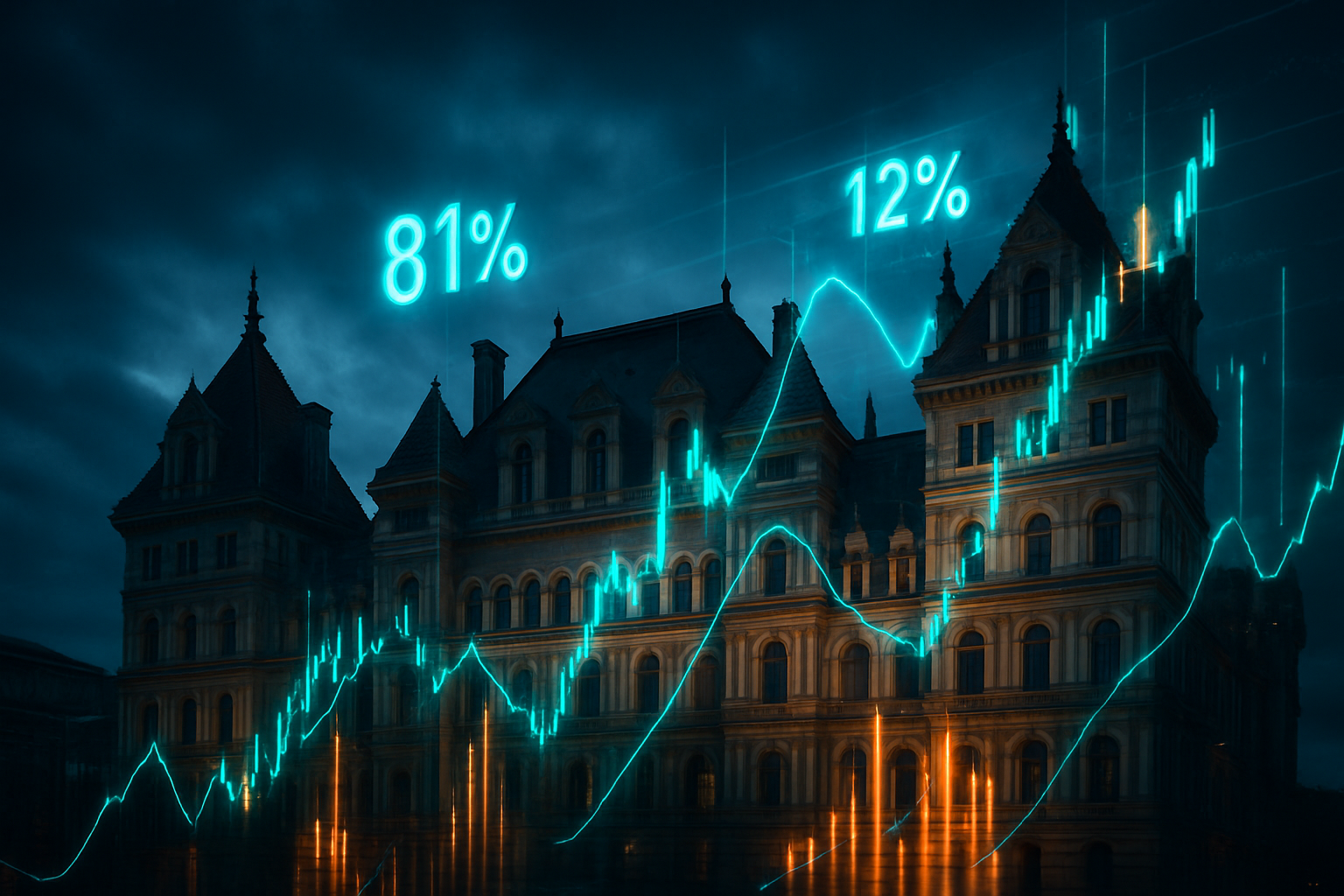
    While regulated exchanges like Kalshi often avoid hosting direct contracts on their own legality to prevent self-referential conflicts of interest, the "shadow market" for New York’s regulatory fate is incredibly active. On decentralized platforms like Manifold, traders are currently placing an 81% probability on federal preemption successfully shielding prediction markets from state-level bans. Meanwhile, on PredictIt, proxy contracts regarding federal oversight suggest a deep skepticism that Congress will intervene to save the platforms, with only a 12% chance given to new federal protections passing in 2026.

    The two legislative paths currently being "traded" in the court of public opinion are:

    • The ORACLE Act (Assembly Bill A9251): Reintroduced on January 7, 2026, by Assemblymember Clyde Vanel, this bill seeks to ban New Yorkers from trading on politics, sports, and "catastrophic events." It carries potential fines of up to $1 million per day for non-compliant platforms.
    • The NY Prediction Market Regulation Act (Senate Bill S8889): A more industry-friendly alternative introduced on January 13 by Senator Jeremy Cooney, which would treat platforms as financial entities regulated by the Department of Financial Services (DFS).

    Currently, Kalshi is operating in New York under a "litigation stay" following a cease-and-desist from the state’s gaming commission. This temporary reprieve has allowed the platform to maintain its position as a market leader, contributing over $466 million to the industry's record-breaking volume this week.

    Why Traders Are Betting

    The volatility in these markets is being driven by a "Vegas vs. Wall Street" narrative. Lawmakers like Vanel argue that prediction markets have "wrapped wagering in new jargon" to bypass state licensing requirements. Concerns intensified following the "Maduro Trade" earlier this month, where a Polymarket user made massive profits on a contract regarding a U.S. military raid just hours before it was officially announced—sparking fears of systemic insider trading.

    Conversely, the industry has successfully framed its services as indispensable hedging tools. For instance, small business owners in New York have been using Kalshi to hedge against the economic fallout of potential trade wars or local tax hikes. This "skin in the game" philosophy, industry advocates argue, creates a superior form of "truth discovery" that is more accurate than traditional polling or punditry.

    The recent marketing partnership between Polymarket and the New York Rangers—owned by Madison Square Garden Sports Corp. (NYSE: MSGS)—has also influenced sentiment. The sight of prediction market branding inside a major New York arena suggests a degree of mainstream acceptance that contradicts the "unlicensed gambling" label, emboldening traders who believe the industry is now "too big to ban."

    Broader Context and Implications

    This battle represents a significant friction point between state-level "public morality" concerns and federal Commodity Futures Trading Commission (CFTC) authorization. Kalshi, as a CFTC-regulated Designated Contract Market (DCM), argues that the federal Commodity Exchange Act (CEA) gives the CFTC exclusive jurisdiction over derivatives trading. If a state like New York can successfully classify these contracts as gambling, it could trigger a "regulatory domino effect," where other states implement their own patchwork of bans.

    The historical accuracy of these markets is also at play. Throughout 2024 and 2025, prediction markets consistently outperformed traditional forecasts on everything from inflation rates to election outcomes. Proponents argue that banning these markets would be akin to "blinding the pilot," removing a vital source of real-time, objective data from the public sphere.

    Furthermore, the introduction of the federal Public Integrity in Financial Prediction Markets Act by Representative Ritchie Torres on January 9 suggests that even if New York bans the practice, federal legitimization with stricter "insider" guardrails may be the ultimate endgame.

    What to Watch Next

    The most critical milestone for the industry is a pending ruling in the Southern District of New York (SDNY). A federal judge is expected to decide on Kalshi’s motion for a preliminary injunction by late February 2026. A victory for Kalshi would solidify the "federal preemption" argument, effectively neutering the ORACLE Act before it can be enforced.

    In Albany, the reconciliation process between the Vanel and Cooney bills will be the primary legislative focus throughout February. Traders should watch for any amendments to the Cooney bill that would allow for "limited" political and event-based contracts under DFS oversight, which would likely lead to a massive surge in liquidity and institutional participation.

    Finally, the activity of "whales"—large-scale traders—on the upcoming "February Fed Rate Hike" contracts will serve as a bellwether for the market's health. If institutional volume remains high despite the legal threats, it will signal that the financial sector remains committed to prediction markets as a permanent fixture of the modern economic landscape.

    Bottom Line

    The legal drama in New York is more than a regional spat; it is a defining moment for the legitimacy of "information finance." While the ORACLE Act poses an existential threat to the current model of event-based trading in the state, the emergence of the Cooney Bill and the ongoing protection of a federal litigation stay provide a glimmer of hope for the industry.

    For the prediction market community, the current odds favor a messy, protracted legal battle rather than a swift ban. The massive trading volumes recorded this month prove that the demand for these markets is irrepressible. Whether New York chooses to regulate and tax this activity or drive it into the arms of decentralized, offshore platforms will likely depend on the SDNY's interpretation of where "Wall Street" ends and "Vegas" begins.


    This article is for informational purposes only and does not constitute financial or betting advice. Prediction market participation may be subject to legal restrictions in your jurisdiction.

    PredictStreet focuses on covering the latest developments in prediction markets.
    Visit the PredictStreet website at https://www.predictstreet.ai/.