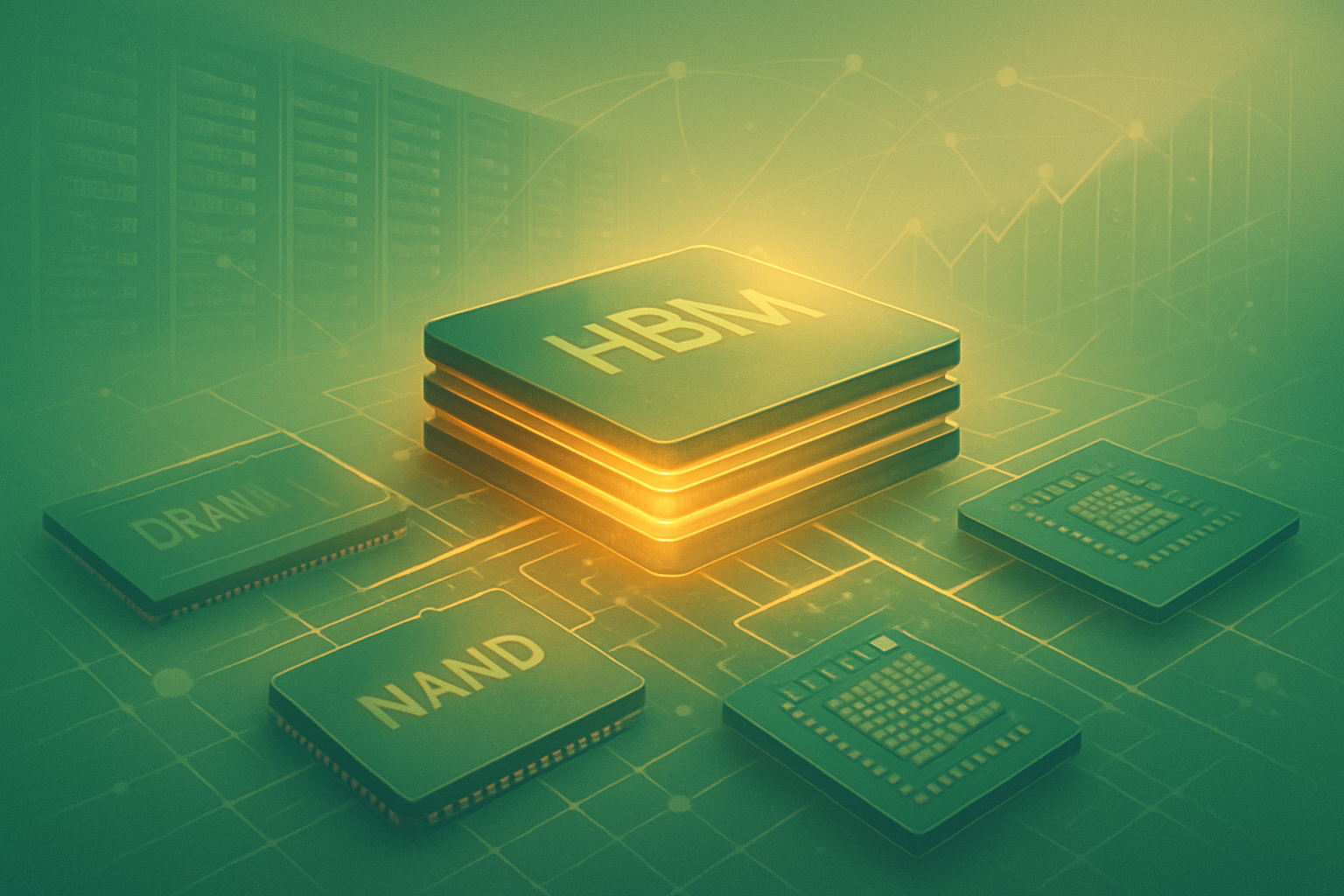
Micron Technology (NASDAQ: MU) is a leading American semiconductor company at the forefront of designing, developing, manufacturing, and selling advanced computer memory and data storage solutions. As of December 17, 2025, Micron finds itself at the epicenter of a profound technological transformation, primarily driven by the insatiable demand for artificial intelligence (AI) infrastructure.
Micron's core business is bifurcated into two critical memory technologies: Dynamic Random Access Memory (DRAM) and NAND Flash Memory. DRAM, a volatile memory essential for computers, servers, and mobile devices, and NAND, a non-volatile storage technology prevalent in SSDs and mobile devices, form the bedrock of modern computing. These products are indispensable components across a vast customer spectrum, from data centers and mobile communication to consumer electronics, automotive, and industrial applications.
The company is currently experiencing a period of intense focus due to several converging factors. A robust, AI-driven memory supercycle is underway, fueling unprecedented demand for high-performance memory within AI data centers. Micron is a pivotal player in the High-Bandwidth Memory (HBM) market, a specialized memory technology critical for advanced AI and cloud computing workloads. Notably, Micron's HBM production for all of 2025 is reportedly sold out, with strong demand visibility extending into 2026, signaling a high-margin growth trajectory.
Furthermore, Micron is undergoing a strategic portfolio transformation, including the planned exit from its Crucial consumer business by fiscal Q2 2026. This move aims to enhance focus and supply for its larger, strategic customers in more profitable segments, particularly those tied to AI and data centers. The broader memory market is tightening, with demand projected to outstrip supply through calendar year 2026, leading to significant price increases for both DRAM and NAND. Analysts anticipate DRAM prices to climb at least 30% in Q1 FY26, with NAND prices expected to rise by approximately 20%.
Micron's stock performance in 2025 has been remarkable, leading the U.S. semiconductor sector with a year-to-date gain exceeding 182%. This strong showing, coupled with rising analyst price targets and positive ratings, underscores the market's optimism regarding Micron's strategic positioning and anticipated financial improvements.
Micron's relevance in the technology sector cannot be overstated. As a key enabler of the AI revolution, its HBM solutions are foundational for AI data centers and crucial for major GPU manufacturers. Micron stands as one of the world's largest semiconductor companies and a dominant force in the global memory chip industry, alongside Samsung and SK Hynix. As the sole U.S.-based manufacturer of memory, it holds a significant strategic and geopolitical position. Beyond AI, its products are vital for cloud computing, mobile technology, the automotive industry, and a myriad of industrial and consumer electronics, underpinning a wide array of technological advancements and digital infrastructure. The company's continuous innovation in DRAM and NAND technologies is essential for meeting the escalating demand for memory and storage driven by the expansion of AI, IoT, and 5G technologies.
2. Historical Background
Micron Technology (NASDAQ: MU), a global leader in memory and storage solutions, boasts a rich history of innovation and strategic evolution since its inception. Founded on October 5, 1978, in a dental office basement in Boise, Idaho, by Ward Parkinson, Joe Parkinson, Dennis Wilson, and Doug Pitman, the company initially focused on semiconductor design consulting. Crucial early funding from local businessmen, including potato billionaire J.R. Simplot, proved instrumental in its formative years.
Micron's pivotal transformation from a consulting firm to a manufacturing powerhouse occurred when a contract to design a 64K memory chip for Mostek Corporation was canceled. This challenge spurred the founders to independently develop the 64K chip, leading to the groundbreaking of its first wafer fabrication unit, "Fab 1," in Boise in 1980. By 1981, Micron was producing its first 64K DRAM chips, renowned for being the smallest in the world and adopted by early personal computers like the Commodore 64.
The company went public on NASDAQ on June 1, 1984, under the ticker MU, securing vital capital for expansion. Further milestones in the 1980s included the unveiling of the world's smallest 256K DRAM chip in 1984 and the expansion into video RAM and fast static RAM by 1988. In 1994, Steve Appleton took the helm as CEO, ushering in a period of aggressive growth and earning Micron a spot on the Fortune 500 list.
The 1990s and early 2000s were marked by significant expansion and diversification. Micron broadened its product line into NAND flash memory and CMOS image sensors, notably acquiring Texas Instruments' worldwide memory operations in 1998, which substantially boosted its manufacturing capacity and global presence. The company also pioneered the industry's first DDR DRAM in 1999 and introduced its innovative quad data rate (QDR) architecture in 2000. Key technological contributions during this period included the development of atomic layer deposition high-k films for DRAM and pitch double-patterning for NAND flash memory by engineers Gurtej Singh Sandhu and Trung T. Doan.
The mid-2000s to 2010s saw strategic partnerships and major acquisitions that reshaped Micron's market position. In 2005, a joint venture with Intel, IM Flash Technologies, solidified its presence in NAND flash. Following the tragic death of CEO Steve Appleton in 2012, Mark Durcan assumed leadership, overseeing the transformative acquisitions of Elpida Memory and Rexchip. These deals made Micron the world's second-largest DRAM supplier and a critical supplier to major tech companies.
Since 2017, under the leadership of CEO Sanjay Mehrotra, Micron has intensified its focus on advanced memory solutions for data centers and artificial intelligence. Key innovations include the launch of QLC NAND memory with Intel in 2018, the industry's first Quad-Level Cell NAND SSD, and the introduction of GDDR6X, the world's fastest discrete graphics memory solution, in 2020. Micron achieved significant technological breakthroughs with the shipment of the industry's first 1α (1-alpha) node DRAM memory chips in 2021 and the world's most advanced DRAM technology with the 1-Beta Node and the first 232-layer NAND in 2022.
In recent years, Micron has made substantial long-term U.S. manufacturing investments, including up to $100 billion for new megafab complexes in Clay, New York, and $15 billion in Boise, Idaho, bolstered by the CHIPS Act. By 2023, the company sampled the industry's first 24GB 8-high HBM3E memory, critical for AI server buildouts. Significant product introductions in 2024 included the fastest G9 TLC NAND and the first production-capable HBM3E 12-high.
As of 2025, Micron reached a major milestone of 60,000 lifetime patents granted and became the first to ship 1γ (1-gamma), its sixth-generation DRAM node-based memory, and HBM4 to key customers. The data center business has emerged as a primary growth engine, accounting for a record 56% of total company revenue, with full-year fiscal 2025 revenue reaching $37.38 billion. In a strategic pivot to enhance focus on enterprise markets, Micron announced its decision to discontinue its Crucial brand and exit the consumer market, underscoring its commitment to high-growth segments like AI and data centers.
3. Business Model
Micron Technology (NASDAQ: MU) operates a sophisticated business model centered on the design, manufacture, and sale of advanced memory and storage solutions. As of December 17, 2025, the company is undergoing a strategic transformation, pivoting from a largely commodity memory chip provider to a growth-oriented AI powerhouse, primarily through its High-Bandwidth Memory (HBM) offerings.
Primary Revenue Sources:
Micron's revenue is overwhelmingly generated from the sale of Dynamic Random-Access Memory (DRAM) and NAND flash memory. In fiscal year 2025, the company reported record total revenue of $37.38 billion, a substantial 49% increase year-over-year, largely propelled by robust AI data center demand. DRAM sales surged by 62% in fiscal 2025, driven by higher average selling prices (ASPs) and increased bit shipments. The company's Q1 fiscal 2026 revenue guidance of $12.5 billion (± $300M) anticipates continued strong growth.
A critical shift in revenue composition is the escalating contribution from High-Bandwidth Memory (HBM). HBM, a specialized, high-margin variant of DRAM essential for AI and cloud computing, is experiencing rapid market expansion. Micron's HBM revenue reached nearly $2 billion in fiscal Q4 2025, indicating an annualized run rate approaching $8 billion, with its entire HBM supply for calendar year 2025 already sold out. Micron expects its HBM market share to align with its overall DRAM share in the latter half of 2025.
Product Lines:
- DRAM (Dynamic Random-Access Memory): This remains a cornerstone product. Micron maintains competitive positioning through continuous technological advancements, including the industry-first 1-gamma (1γ) DRAM node. This node, utilizing extreme ultraviolet (EUV) lithography, offers over 30% more bits per wafer and a lower cost per bit, enhancing efficiency and profitability. Micron's DRAM portfolio includes DDR4, DDR5, LPDDR5X-Auto (for automotive), and critically, HBM (HBM3E, HBM4).
- NAND Flash Memory: Micron produces NAND flash memory, vital for various storage solutions. While its NAND business has historically seen more cyclicality, often tied to the mobile phone sector, recent manufacturing cost reductions have led to improvements. Innovations include 232-layer NAND Gen2, which delivers high sequential read speeds and endurance for hyperscale SSDs, and G9 NAND.
- NOR Flash Memory: Micron also offers NOR flash memory products for specific applications.
Services:
Micron's "services" are intrinsically linked to its product offerings, focusing on delivering specialized memory and storage solutions tailored to the evolving needs of its diverse customer base. This includes optimizing products for specific applications such as AI, data centers, and automotive systems. Historically, Micron also marketed consumer products under the Crucial brand. However, in December 2025, the company announced its strategic decision to exit the Crucial consumer business by the end of fiscal Q2 2026, to concentrate exclusively on higher-margin enterprise and commercial markets, particularly data centers and AI.
Market Segments:
In April 2025, Micron reorganized its business units to better align with AI-driven demand, establishing four key divisions:
- Cloud Memory Business Unit (CMBU): This segment manages HBM and strategic relationships related to data center demand. It is a significant growth driver, accounting for 40% of total company revenue in fiscal Q4 2025 and generating high gross margins (59%). In Q4 2025, cloud and data center customers contributed 54% of revenue and 65% of operating income.
- Core Data Center Business Unit (CDBU): This unit focuses on data center DRAM and NAND products, experiencing increased demand for data center SSDs.
- Mobile & Client Business Unit (MCBU): This segment addresses the mobile phone, PC, and broader consumer electronics markets. While AI-driven data center demand is the primary growth engine, recovery in smartphones and PCs remains important given their substantial contribution to Micron's revenue base.
- Automotive & Embedded Business Unit (AEBU): This unit provides memory solutions for the automotive and industrial sectors, including advanced platforms like LPDDR5X-Auto for ADAS and infotainment systems in electric vehicles.
Customer Base:
Micron serves a diverse global customer base, which increasingly includes:
- Hyperscale Cloud Providers and AI Companies: These are becoming dominant customers, with major clients such as NVIDIA and AMD for HBM for AI accelerators and high-performance computing. Other key customers include tech giants like Google, AWS, and Azure for their AI storage clusters and data center needs.
- Original Equipment Manufacturers (OEMs): Across computing, mobile, automotive, and industrial markets.
- Enterprises: Utilizing Micron's products for data centers and other computing infrastructure.
Micron's strategic repositioning towards high-value, AI-optimized memory solutions, particularly HBM, coupled with a strong emphasis on data center and cloud customers, marks a significant evolution in its business model as of late 2025. This shift aims to drive higher margins and more stable growth, mitigating the historical cyclicality of the broader memory market.
4. Stock Performance Overview
Micron Technology's (NASDAQ: MU) stock performance has been significantly dynamic across the 1-year, 5-year, and 10-year horizons leading up to December 17, 2025, largely influenced by the inherent cyclicality of the semiconductor industry and, more recently, by the explosive demand for AI-optimized memory.
1-Year Performance (December 17, 2024, to December 17, 2025)
The past year has been nothing short of extraordinary for Micron's stock. As of December 17, 2025, MU has seen an approximate gain of 145% to 180% over the last 12 months, leading the U.S. semiconductor sector. This exceptional surge is primarily attributable to an unprecedented "AI supercycle" in the memory market. The escalating demand for High-Bandwidth Memory (HBM), critical for AI accelerators, has been a key catalyst.
Micron shares recently touched a 52-week high of $264.75 on December 10, 2025. Throughout 2025, the company consistently delivered robust earnings reports, surpassing analyst expectations and providing optimistic guidance. For instance, in fiscal Q2 2025, revenue reached $9.3 billion with adjusted EPS of $1.91, both exceeding estimates. The momentum continued into fiscal Q3 2025, with revenue surging 37% year-over-year to $9.3 billion and adjusted earnings more than tripling. Management's guidance for fiscal Q1 2026 (ending November 2025) projected strong revenue around $12.5 billion and EPS of approximately $3.75.
A significant factor in this performance has been the substantial recovery in pricing for both DRAM and NAND chips, following a prior downturn. DRAM prices were anticipated to rise at least 30%, and NAND pricing by about 20% in Q1 fiscal 2026. Despite the overall bullish trend, the stock experienced some minor selling pressure and a slight pullback from its record highs just before its Q1 fiscal 2026 earnings report scheduled for December 17, 2025. The 52-week low for MU during this period was $61.54, observed around April 2025, contrasting sharply with the current share price of approximately $232.51 as of December 16, 2025.
5-Year Performance (December 17, 2020, to December 17, 2025)
Over the past five years, Micron's stock has demonstrated substantial growth, albeit with the characteristic volatility of the semiconductor industry. From a closing price of approximately $72.26 on December 17, 2020, to about $232.51 on December 16, 2025, the stock has appreciated roughly 221.7%.
This period encapsulates the cyclical nature of the memory market. Following December 2020, Micron experienced growth into 2021, reaching highs in the low $90s. However, 2022 and early 2023 saw a significant downturn, reflecting a broader memory market correction, with prices falling to a 52-week low of $61.54 in early 2025 (e.g., closing at $49.28 in December 2022). A powerful resurgence began in late 2023, accelerating dramatically into 2024 and 2025, primarily driven by the burgeoning AI market and the resulting demand for advanced memory solutions like HBM. AI has emerged as a game-changer, transforming the memory market and shifting Micron's revenue mix towards higher-value products, significantly boosting margins.
10-Year Performance (December 17, 2015, to December 17, 2025)
Looking back a decade, Micron's stock has delivered an impressive long-term return. With an adjusted close of around $15.54 in December 2015, compared to approximately $232.51 on December 16, 2025, the stock has seen a remarkable gain of over 1,400%.
This decade has encompassed multiple full semiconductor market cycles, characterized by both periods of robust growth and significant downturns. Micron's stock has historically been volatile due to the supply-demand dynamics of DRAM and NAND memory. However, the long-term trend has been strongly upward, reflecting the increasing importance of memory and storage across various technological applications. The latter half of this decade witnessed the growing influence of cloud computing, the Internet of Things (IoT), and most notably, the rise of Artificial Intelligence (AI). These secular drivers have supported sustained expansion in memory demand. Micron's strategic shifts, including its focus on technology leadership, advancements in DRAM and NAND technologies, and more recently, its significant market share gains in the HBM segment, have been crucial to this long-term performance. The company has also focused on strengthening its financial health, including debt reduction and share repurchases, aiming for a net cash positive position.
In summary, Micron Technology's stock performance over the past decade, and particularly in the last year, underscores its critical role in the technology sector, especially with the exponential growth of AI and data center demand. While subject to industry cycles, the long-term trend has been strongly upward, culminating in a significant surge in 2025 due to a powerful AI-driven memory supercycle.
5. Financial Performance
Micron Technology (NASDAQ: MU) is a global leader in memory and storage solutions, and as of December 17, 2025, the company is demonstrating robust financial performance, significantly bolstered by the burgeoning demand for memory chips in AI-driven data centers. The industry is widely acknowledged to be in a "supercycle," with substantial expansion projected for the DRAM sector in 2025 and 2026.
Latest Earnings and Revenue Growth:
For the fiscal year ending August 28, 2025, Micron reported annual revenue of $37.38 billion, marking an impressive 48.85% increase year-over-year. In the fourth quarter of fiscal year 2025 (ending August 28, 2025), revenue reached $11.32 billion, representing a 46% year-over-year growth and exceeding analysts' expectations. Earnings per share (EPS) for Q4 2025 were $3.03, surpassing the consensus estimate of $2.86.
Looking ahead, Micron is expected to report its Q1 Fiscal Year 2026 earnings today, December 17, 2025. Analysts project Q1 FY26 revenue to be between $12.8 billion and $12.9 billion, with an estimated EPS ranging from $3.80 to $3.96. These figures would signify a substantial doubling of earnings compared to the same quarter last year, driven by strengthening memory pricing and robust demand from AI infrastructure.
Profit Margins:
Micron's profitability metrics highlight efficient management and strong market conditions. For the fiscal year ending August 28, 2025, the company's gross margin stood at 39.79%. The trailing twelve months (TTM) gross profit margin as of August 2025 was even higher at 44.67%.
Other key profit margins for the TTM include:
- Operating Margin: 26.41%
- Net Margin: 22.84%
- Pretax Margin: 25.85%
These healthy margins are a testament to improved pricing conditions and a strategic pivot towards higher-value memory products like High Bandwidth Memory (HBM) for AI data centers.
Debt Levels:
Micron's balance sheet reflects financial strength with manageable debt. As of August 2025, total debt was approximately $15.27 billion USD, comprising $14.02 billion in long-term debt and $634 million in short-term debt. The debt-to-equity ratio of 0.28 indicates a healthy reliance on equity financing. The company also boasts a strong current ratio of 2.52, suggesting robust liquidity, and an Altman Z-Score of 7.41, underscoring financial stability. Net debt stands at $5.64 billion, with cash and short-term investments totaling $10.3 billion.
Cash Flow:
Micron has demonstrated significant improvement in its cash flow. For the fiscal year ending August 31, 2025, annual free cash flow was $1.668 billion, representing a remarkable 1278.51% increase year-over-year. The free cash flow for the trailing twelve months (TTM) ending August 2025 was also $1.668 billion. The company reported a net cash flow of $5.867 billion for the twelve months ending August 31, 2025.
Key Valuation Metrics:
As of December 2025, Micron's valuation metrics present a mixed but generally favorable picture:
- P/E Ratio (Trailing): 30.63, close to its one-year high, yet considered good value compared to the US Semiconductor industry average of 36.8x and a fair P/E ratio estimate of 51.4x.
- P/S Ratio: 7, near its one-year high.
- P/B Ratio: 4.82, close to its ten-year high.
- PEG Ratio: 0.35.
- EV/EBITDA Ratio: 14.62.
- EV/FCF Ratio: 158.51.
- Market Cap: $260.98 billion.
- Enterprise Value: $264.40 billion.
Some analyses suggest that Micron Technology Inc. may be undervalued by 14%, based on an intrinsic value of $269.04 USD per share compared to a current market price of $232.51 USD.
In conclusion, Micron Technology's latest financial performance reflects robust revenue and earnings growth, healthy profit margins, manageable debt, and strong cash flow, all significantly propelled by the surging demand for memory chips in the AI sector.
6. Leadership and Management
Micron Technology (NASDAQ: MU) operates under the experienced guidance of its executive team and a diverse Board of Directors, strategically steering the company toward innovation and robust governance.
Current CEO
Sanjay Mehrotra serves as the Chairman, President, and Chief Executive Officer of Micron Technology. He assumed the role of Chairman in January 2025, succeeding Bob Switz, and has been at the helm as CEO since 2017. Under his leadership, Micron has undergone significant technological advancements and strategic repositioning within the global memory market.
Key Leadership Team
Micron's key leadership team, working alongside Mehrotra, comprises a group of highly experienced executives:
- Sanjay Mehrotra: Chairman, President, and Chief Executive Officer
- Mark Murphy: Executive Vice President and Chief Financial Officer
- Sumit Sadana: Executive Vice President and Chief Business Officer
- April S. Arnzen: Executive Vice President and Chief People Officer
- Manish Bhatia: Executive Vice President, Global Operations
- Michael Ray: Senior Vice President, Chief Legal Officer, and Corporate Secretary
- Scott J. DeBoer: Executive Vice President, Chief Technology and Products Officer
- Mike Cordano: Executive Vice President, Worldwide Sales
Other critical leaders include David Moore, SVP, Chief Strategy Officer; Jeff Bader, Corporate VP & GM, Embedded Business Unit; and Jeremy Werner, Corporate VP & GM, Storage Business Unit. This team's collective expertise spans finance, operations, technology, sales, and human resources, providing a comprehensive approach to managing Micron's complex global operations.
Board of Directors
As of December 2025, Micron's Board of Directors features a blend of seasoned individuals and recent strategic appointments. Following Bob Switz's retirement in January 2025, Sanjay Mehrotra took on the role of Board Chair, with Lynn Dugle appointed as Lead Independent Director, enhancing independent oversight.
In March 2025, Micron strategically appointed two new business leaders to its board: Mark Liu, bringing over 30 years of experience from Taiwan Semiconductor Manufacturing Company (TSMC), including his role as executive chairman; and Christie Simons, with nearly 30 years of experience from Deloitte & Touche LLP, specializing in technology clients and leading Deloitte's Global Semiconductor Center of Excellence. These appointments underscore Micron's commitment to strengthening its technological and financial acumen at the board level.
Richard M. Beyer and Mary Pat McCarthy are slated to retire from the board at the upcoming annual shareholders meeting in January 2026. The nominated directors for re-election at this meeting include Lynn Dugle, Steven J. Gomo, Linnie M. Haynesworth, T. Mark Liu, Sanjay Mehrotra, A. Christine Simons, Robert H. Swan, and MaryAnn Wright. The board operates through several committees, including Audit, Compensation, Finance, Governance and Sustainability, and Security, each chaired by an independent director, ensuring specialized oversight of critical areas.
Strategic Direction Under Current Management
Under Sanjay Mehrotra's leadership, Micron Technology is undergoing a significant strategic pivot, transforming from a traditional commodity memory chip provider into an "AI powerhouse." The company's strategic direction is heavily concentrated on High-Bandwidth Memory (HBM), a specialized memory technology that is indispensable for AI and cloud computing workloads.
Key pillars of their strategy include:
- Technological Leadership: A relentless focus on investing in advanced DRAM and NAND technologies and prioritizing R&D to maintain a competitive edge in performance and efficiency.
- AI-Driven Growth: Aggressively capitalizing on the surging demand for memory and storage in emerging technologies such as artificial intelligence, IoT, and 5G.
- Manufacturing and Operational Excellence: Emphasizing efficient supply chain and manufacturing processes, supported by a significant commitment to investing $200 billion domestically in manufacturing and R&D.
- Market Share Expansion: Aiming to increase its HBM market share, thereby positioning Micron as a critical enabler of next-generation computing.
- Portfolio Diversification: While traditional DRAM and NAND remain core, the company is actively diversifying its product mix into higher-margin, growth-oriented markets.
Micron's financial outlook for Q1 2026, announced in December 2025, projects robust growth, fueled by strong AI demand, with expected revenue of $12.5 billion and climbing gross margins, validating the efficacy of their strategic choices.
Reputation Regarding Governance
Micron Technology maintains a strong reputation for its corporate governance practices, earning recognition as one of Ethisphere's World's Most Ethical Companies in 2024. This accolade underscores its unwavering commitment to ethical conduct, integrity, transparency, and accountability across its global operations.
The company's governance framework includes a dedicated Governance and Sustainability Committee of the Board of Directors, which oversees its comprehensive sustainability strategy and regularly reviews activities and performance. The Board, with the committee's assistance, annually reviews its Corporate Governance Guidelines to ensure their ongoing appropriateness, with the latest amendment and restatement effective July 17, 2025. Micron emphasizes open dialogue with all stakeholders and actively incorporates feedback into its decision-making processes. The Chief Legal Officer holds ultimate oversight for the company's ethics and compliance program, reinforcing a culture of integrity throughout the organization.
7. Products, Services, and Innovations
As of December 17, 2025, Micron Technology (MU) stands as a prominent global leader in memory and storage solutions, undergoing a significant strategic transformation to capitalize on the burgeoning Artificial Intelligence (AI) market. The company is intensifying its focus on high-margin enterprise and data center segments, shifting away from consumer-oriented products, and making substantial investments in advanced manufacturing and research and development (R&D).
Current Product Offerings
Micron's core product portfolio encompasses DRAM, NAND, and NOR memory technologies, which are fundamental to a wide range of applications from data centers to mobile devices and automotive systems.
-
DRAM (Dynamic Random-Access Memory): Micron is a major player in the DRAM market, with its 1γ (1-gamma) DRAM node having achieved mature yields at an accelerated pace, 50% faster than the previous generation. A cornerstone of its current offerings is High-Bandwidth Memory (HBM), which is critical for AI and cloud computing workloads. Micron's HBM3E chips are essential components for AI GPUs, and the company projects its HBM revenue to reach "multibillion dollars" in fiscal year 2025. Furthermore, Micron anticipates its upcoming HBM4 to deliver a 60% performance increase, with HBM4 samples already shipping at 11 Gbps, and HBM4E planned for the 2027 timeframe. The traditional DRAM market is also currently favorable, with strong demand (partly AI-related) and reallocated production capacity leading to high spot prices.
-
NAND Flash Memory: Micron offers a comprehensive range of NAND products, including Single-Level Cell (SLC), Multi-Level Cell (MLC), Triple-Level Cell (TLC), and Quad-Level Cell (QLC) NAND, designed for various applications such as mobile, embedded, and data center storage. In July 2025, Micron introduced a 256-gigabit radiation-tolerant SLC NAND flash memory for space applications, marking the first in a planned portfolio of space-qualified memory products. The company also launched its 2600 NVMe SSD, featuring the industry's first 9th-generation QLC NAND technology. Micron's ninth-generation (G9) 3D NAND flash memory, presented at the 2025 IEEE International Memory Symposium, boasts a 1Tbit capacity per silicon wafer, a 40% increase in memory cell array storage density, and 1.5 times faster data transmission speeds, utilizing 276 wordline layers. While traditionally lagging behind DRAM, the NAND business is seeing increased prices, and Micron is winding down mobile-managed NAND product development to focus on more profitable areas.
-
NOR Flash Memory: Micron provides highly reliable NOR Flash solutions, available in octal, serial, and parallel configurations. These products are engineered for demanding industrial, automotive, and enterprise environments, emphasizing secure, high-speed data handling and long-term reliability. NOR solutions are also slated to be part of their expanding portfolio of space-qualified memory products.
Services
Micron's primary business model revolves around hardware production. While not offering traditional "services" as a separate revenue stream, the company supports its customers with tools and resources. Examples include a parallel NAND system power calculator and an SLC NAND cross-reference tool, aiding in product selection and integration for diverse applications.
Innovation Pipelines & R&D
Innovation is a core value for Micron, driving its mission to advance memory and storage solutions.
-
Strategic Focus: Micron's innovation pipeline is heavily concentrated on next-generation memory technologies, particularly HBM and advanced 3D NAND, to support the rapid growth of AI, cloud computing, and edge computing. The company is actively shifting its portfolio towards high-value AI memory, positioning HBM as the "new gold standard."
-
Significant Investments: Micron has announced ambitious investment plans totaling approximately $200 billion in U.S. manufacturing and R&D. This includes establishing a second leading-edge memory fab in Boise, Idaho, expanding and modernizing its existing facility in Manassas, Virginia, and bringing advanced HBM packaging capabilities to the U.S. A substantial portion of this, up to $100 billion over two decades, is allocated to building a megafab in Clay, New York, aiming to increase U.S.-based DRAM production to 40% of its global output. Additionally, Micron is investing up to $3.6 billion in its Hiroshima, Japan plant to advance next-generation 1-gamma process technology DRAM chips for generative AI applications.
-
R&D Expenditure: Micron consistently allocates significant resources to R&D, with spending often ranging between 7% and 20% of its revenue. Annual R&D expenses for fiscal year 2025 were $3.798 billion, representing a 10.73% increase from 2024.
-
Internal AI Adoption: The company is leveraging Generative AI internally for tasks such as code generation and design simulation, which has led to a reported 30-40% uplift in productivity.
Patents
Micron possesses a robust and expanding intellectual property portfolio.
-
Extensive Portfolio: Globally, Micron holds 60,481 patents, with 38,775 of these having been granted. Over 69% of its patents are active. The United States serves as the primary hub for Micron's R&D and patent filings, followed by China and Japan.
-
High Grant Rate: At the USPTO, Micron has filed 42,624 patent applications, with an impressive grant rate of 96.33%.
-
Recent Activity: In November 2025, Micron received several patent grants, including "Memory circuitry and method used in forming memory circuitry" and "Apparatus with multi-deck read level management and methods for operating the same." The company ranked 19th on IFI's list of companies receiving U.S. patents in 2020.
-
Legal Landscape: Micron has been involved in patent litigation, including a 2022 lawsuit from Netlist regarding memory-module lines, where a jury found willful patent infringement. In November 2023, Chinese chipmaker Yangtze Memory Technologies Corp (YMTC) also filed a lawsuit against Micron alleging infringement of eight patents.
Competitive Edge
Micron's competitive edge in December 2025 is significantly shaped by its strategic pivot towards high-value memory solutions, particularly in the context of the AI boom.
-
AI-Driven HBM Leadership: Micron is strongly positioned as a leader in High-Bandwidth Memory (HBM), which is indispensable for AI and cloud computing. The company is deeply integrated into the AI ecosystem, with major clients like NVIDIA and AMD. This focus allows Micron to capture high-margin segments, differentiating itself from rivals. The HBM market is consolidating around key players, and Micron is actively expanding its market share, aiming for 20-25% by the end of 2025.
-
U.S.-Based Manufacturing and Supply Chain Resilience: As the sole U.S.-based memory manufacturer, Micron benefits from favorable geopolitical trends and government initiatives like the CHIPS and Science Act. Its substantial domestic investments in manufacturing and R&D enhance supply chain resilience, a critical advantage for government and aerospace sectors, potentially giving it an edge over foreign competitors like SK Hynix and Samsung.
-
Focused Technological Innovation: Unlike some rivals with broader semiconductor portfolios, Micron's concentrated strategy on memory allows it to excel in specific technological advancements. The company's rapid progression with its 1γ DRAM node and its vision for HBM4 and HBM4E demonstrate its commitment to technology leadership.
-
Strategic Portfolio Transformation: Micron's decision to exit the consumer memory market (including its Crucial brand) by February 2026 underscores its commitment to focusing on more profitable, high-growth enterprise and commercial segments. This shift is expected to improve supply for strategic customers and enhance long-term business performance and margins.
-
Strong Financial Performance: Fiscal year 2025 saw record-breaking revenues of $37.38 billion and a substantial increase in net income to $8.54 billion, driven by robust AI data center demand. Micron's Q4 FY25 revenue reached $11.32 billion, and the company projects Q1 FY26 revenue of $12.5 billion with gross margins exceeding 50%, reflecting the strong demand and profitability of its AI-driven product mix.
8. Competitive Landscape
Micron Technology (NASDAQ: MU) operates within a fiercely competitive global memory and storage solutions industry, primarily contending with a handful of dominant players. As of December 17, 2025, the competitive landscape is highly dynamic, largely fueled by the surging demand for High-Bandwidth Memory (HBM) for Artificial Intelligence (AI) and continuous advancements in DRAM and NAND flash technologies.
Primary Industry Rivals
Micron Technology's main competitors are:
- Samsung Electronics (South Korea): A diversified electronics conglomerate with a historically dominant presence across both DRAM and NAND flash markets.
- SK Hynix (South Korea): A major player with a strong focus on advanced DRAM, particularly HBM, and NAND flash.
- Kioxia (Japan): Primarily focused on NAND flash memory and solid-state drives (SSDs).
- Western Digital (USA): A significant competitor in both hard disk drives (HDDs) and NAND flash-based SSDs.
While other broader semiconductor companies like NVIDIA, Intel, and AMD operate in related ecosystems, they are often partners or customers rather than direct memory rivals.
Estimated Market Share in Key Segments (as of Q3 2025)
DRAM Market Share (Q3 2025): The global DRAM industry experienced significant revenue growth in Q3 2025.
- SK Hynix: 33.2% (maintaining its leading position, though with a slight decline due to fierce competition).
- Samsung Electronics: 32.6% (reported a significant increase in bit shipments, boosting its quarterly revenue).
- Micron Technology: 25.7% (experienced substantial growth in both average selling price (ASP) and bit shipments, with its market share increasing by 3.7 percentage points from the previous quarter).
NAND Market Share (Q3 2025): The NAND flash market also grew in Q3 2025, driven by AI infrastructure demand and rising prices due to production cuts.
- Samsung Electronics: 32.3% (retained the top position, propelled by robust enterprise SSD shipments despite competition in mobile NAND).
- SK Group (SK Hynix + Solidigm): Ranked second with approximately $3.53 billion in revenue.
- Kioxia: While specific Q3 2025 market share data was not explicitly available, Kioxia's production volume (including its joint venture with Sandisk Group) accounted for 29% of the global flash memory market in fiscal year 2024. Kioxia also recorded the highest quarter-on-quarter growth of 33.1% in Q3 2025.
- Micron Technology: Specific Q3 2025 NAND market share for Micron was not explicitly available. However, in Q2 2025, NAND market revenue rose by 24% quarter-on-quarter. Micron's NAND business has historically lagged, partly due to its reluctance to aggressively cut prices in oversupplied markets and its weaker connections in the mobile phone sector compared to rivals like Samsung.
Comparison of Competitive Strengths and Weaknesses (as of 12/17/2025)
Micron Technology (MU)
Strengths:
- HBM Leadership & AI Focus: Micron is a leader in high-bandwidth memory (HBM), with its HBM3E chips being crucial for AI GPUs. Its HBM supply for calendar 2025 is fully committed, and HBM revenue is projected to reach "multibillion dollars" in fiscal 2025. The upcoming HBM4 is expected to offer a 60% performance increase.
- Technological Advancement: The company demonstrates prowess in DRAM and NAND technological advancements, with an advanced 1-year process expected to account for 38% of its total bit output by the end of 2026, potentially outperforming competitors.
- Strategic Positioning: Micron is advantageously positioned for the surge in demand driven by AI, IoT, and 5G technologies, focusing on high-growth, high-margin segments like high-capacity server DIMMs and HBM.
- Intellectual Property: A strong intellectual property portfolio and proprietary technologies are cornerstones of its competitive edge.
- U.S. Geopolitical Advantage: Micron benefits from favorable U.S. geopolitical positioning and strong demand from major clients like NVIDIA and AMD.
- Vertical Integration & Financial Health: The firm is vertically integrated, enhancing operational efficiency, and demonstrates strong financial health with robust margins and a solid balance sheet.
Weaknesses:
- NAND Business Lag: Micron's NAND business has historically lagged, partly due to its reluctance to aggressively cut prices in oversupplied markets and its weaker connections in the mobile phone sector compared to rivals like Samsung.
- Market Cyclicality: The memory business remains cyclical, and a slowdown in AI demand or macroeconomic weakening could lead to falling memory prices and impact profitability.
- Intense Competition: Competition from Samsung and SK Hynix remains intense, particularly in the race to develop advanced HBM, where a strategic misstep could cause Micron to fall behind.
- Geopolitical Risks: Geopolitical risks and export restrictions on advanced semiconductors add uncertainty to its operating environment.
- Client Concentration: Potential risks from client concentration, despite strong partnerships with NVIDIA and AMD.
Key Competitors' Strengths and Weaknesses:
Samsung Electronics:
- Strengths: Traditionally the largest memory maker, Samsung holds strong positions in both DRAM and NAND markets. In Q3 2025, it regained the top spot in the overall memory market due to strong conventional DRAM and NAND demand and is expected to reclaim DRAM leadership in Q4 2025. Samsung's memory division is experiencing record margins and surging chip prices. It also possesses strong ecosystem connections and scale advantages in the mobile phone sector for NAND.
- Weaknesses: Samsung has faced challenges and lost market share in the high-growth HBM segment, with its HBM shipment share dropping significantly in Q2 2025. It has struggled to secure deals with major clients like NVIDIA, experiencing delays in HBM3E quality tests. Export restrictions to China have also limited its HBM sales channels.
SK Hynix:
- Strengths: SK Hynix is a dominant leader in the HBM market, holding an estimated 70% share in Q1 2025 and 58% in Q3 2025, largely driven by AI demand. HBM accounted for 40% of its total DRAM sales in Q3 2025. It surpassed Samsung in DRAM market share in Q1 2025 and maintained the #1 position in Q3 2025. The company is a key partner for NVIDIA in HBM and is investing heavily in new fabs for advanced HBM and DRAM. SK Hynix also leads in NAND innovation, mass-producing the world's first 321-layer 4D NAND flash in late 2024 and developing 400-layer NAND for mass production by late 2025.
- Weaknesses: Despite its strong HBM performance, its overall DRAM market share saw a slight decline in Q3 2025 amidst fierce competition.
Kioxia:
- Strengths: Kioxia possesses one of the world's largest flash memory production capacities, benefiting from economies of scale and high production efficiency through smart factories. It is investing to increase capacity to meet AI and data center demand, with the data center segment accounting for 60% of its revenues. Its K2 plant offers significant expansion potential, which could be an advantage as NAND supply tightens.
- Weaknesses: Kioxia's heavy reliance on the NAND business makes it vulnerable to market share fluctuations and pricing pressures. The company has experienced declines in revenue and profit in 2025 due to intense competition, technological hurdles, and lukewarm market reception for new products, leading to inventory overruns and price cuts. The emergence of Chinese competitors like YMTC further intensifies pressure.
Western Digital:
- Strengths: Western Digital holds a significant position in both HDD and NAND flash (SSD) markets, backed by deep expertise, an extensive patent portfolio, and strong brand recognition. The company is strategically realigning by separating its Flash and HDD businesses to enhance focus and agility. It has shown strong revenue growth in 2025, particularly in cloud-related revenue, driven by AI-powered storage solutions.
- Weaknesses: The data storage industry is characterized by intense competition, commoditization, and pricing pressures. Western Digital faces strong rivalry from Seagate Technology in the HDD market.
9. Industry and Market Trends
As of December 17, 2025, the semiconductor memory sector is navigating an unprecedented period of transformation, characterized by robust demand, constrained supply, and significant geopolitical influences. These dynamics are profoundly impacting major industry players like Micron Technology (NASDAQ: MU).
Major Industry and Market Trends
1. Macro Drivers:
The dominant macro driver reshaping the semiconductor memory landscape is the explosion in Artificial Intelligence (AI) demand. AI applications, particularly in hyperscale data centers operated by tech giants, are creating an insatiable need for high-bandwidth memory (HBM) and high-capacity Quad-Level Cell (QLC) NAND SSDs. HBM, crucial for AI accelerators, is projected to see a 70% year-over-year growth by 2025 and is expected to account for over 20% of total DRAM revenue in 2025 and 30% in 2026. The rapid expansion of these data centers drives demand for specialized components, advanced memory solutions, and energy-efficient designs. Emerging Edge AI applications are also beginning to contribute to future memory demand.
While 5G adoption and smartphones continue to drive demand for NAND flash, requiring higher storage capacities for advanced features and AI-driven functionalities, this segment faces headwinds. The smartphone market is predicted to experience a 2.1% drop in shipments and a 6.9% increase in average selling prices in 2026, largely due to memory chip shortages caused by the prioritization of AI memory. The automotive sector, while still a consumer of advanced memory, has seen its growth momentum slow due to cooling electric vehicle (EV) adoption and shifts in software-defined vehicle programs. Memory suppliers are prioritizing higher-margin AI and server orders, potentially tightening automotive memory supply. General digitalization trends and the proliferation of IoT devices also contribute to overall memory demand.
2. Supply Chain Dynamics:
The semiconductor supply chain is undergoing a fundamental geopolitical fragmentation, often termed "decoupling." What was once a globally integrated and efficient model is rapidly segmenting into regional manufacturing ecosystems. Geopolitical tensions, particularly export controls imposed by the US on advanced chip-making equipment to China, and the reintroduction of tariffs (e.g., the 2025 Trump administration's tariffs), are forcing companies to localize supply chains, reassess manufacturing footprints, and seek new strategies for competitiveness. China, in response, is heavily investing in semiconductor self-sufficiency through initiatives like "Made in China 2025" and leveraging its dominance in critical raw materials.
A critical dynamic is the manufacturing capacity shift and constraints. Major memory manufacturers, including Samsung, SK Hynix, and Micron, are strategically reallocating wafer capacity from commodity DRAM (DDR4/DDR5) to the more lucrative HBM. This shift, driven by the higher profitability and critical nature of HBM for AI acceleration, is a primary cause of severe shortages in conventional DRAM. Despite surging demand and skyrocketing prices, memory manufacturers are exercising caution with capital expenditures (CapEx) in 2026. Instead of aggressive bit output expansion, investments are focused on process upgrades, higher-layer stacking, hybrid bonding, and high-value HBM products. Constructing new fabrication plants (fabs) is a lengthy process, taking at least three years; for example, Micron's new US fab is not expected to be operational before 2027. Furthermore, back-end bottlenecks, particularly in advanced packaging and assembly, are proving to be a significant constraint on overall availability, rather than just wafer output. Some manufacturers are also reducing or discontinuing production of older memory technologies like DDR3 to free up capacity for higher-margin products. The supply chain remains vulnerable due to the concentration of critical raw materials (e.g., gallium, germanium, rare earth elements) in a few regions, susceptible to export restrictions and disruptions. To mitigate these risks, companies are diversifying sourcing, implementing dual sourcing, regionalizing supply chains, and increasingly viewing inventory as a strategic buffer against volatility.
3. Cyclical Effects:
The semiconductor memory market is currently in an unprecedented "supercycle" as of late 2025, largely driven by the surging AI demand colliding with existing manufacturing constraints. This has led to a severe RAM (DRAM) shortage, with contract DRAM prices for key chips reportedly tripling year-over-year by late 2025.
Price Increases:
- DRAM: Contract prices for 16Gb DDR5 chips, for instance, surged from approximately $6.84 in September 2025 to $27.20 in December 2025, marking nearly a 300% increase. Overall DRAM prices are up a staggering 171.8% year-over-year as of Q3 2025. Further significant price hikes are anticipated, with Q4 2025 expected to see an 18-23% quarter-over-quarter increase, and DDR5 prices potentially jumping 30-50% per quarter through the first half of 2026.
- NAND: The NAND flash market, projected to reach over $73 billion in 2025, is also experiencing substantial price increases, with some reports indicating 100% hikes for SSDs. Prices are expected to rise double-digits in Q1 2026 and by 20-30% for the full year 2026, as demand (projected at 20-22% growth) outstrips capacity expansion (15-17% growth).
Supply Shortages: The DRAM shortage is particularly acute, with inventories shrinking to a mere eight weeks of supply. These shortages are expected to persist through at least the first half of 2026, and possibly extend into 2027-2028, awaiting the commissioning of new fabrication plants. The long lead times for new fab construction mean that even immediate investment decisions will not alleviate the current supply tightness for several years.
Micron Technology (MU) Specifics (as of 12/17/2025)
Micron Technology is exceptionally well-positioned to benefit from these unfolding industry dynamics. The company is poised to be a significant beneficiary of the surging DRAM industry, with Wells Fargo projecting over 100% year-over-year growth for the DRAM sector in 2026. TrendForce has consequently revised its industry-wide DRAM revenue forecasts for 2025 and 2026 upwards, signaling a highly favorable environment for Micron.
Micron has made a strategic and successful pivot towards high-value memory products, moving away from lower-margin consumer memory to focus on enterprise memory for AI data centers and cloud applications, especially HBM. This strategic shift is now central to how investors value the company. Micron, alongside its major competitors, is actively dedicating new production capacity to HBM (and advanced LPDDR5X), recognizing the significantly higher gross margins (around 53% historically for HBM compared to 30-40% for standard DRAM) that these products command.
Furthermore, Micron is demonstrating an aggressive investment strategy among DRAM suppliers. Its projected capital expenditure for 2026 stands at $13.5 billion, a 23% year-over-year increase, primarily directed towards adopting the 1-gamma node and expanding Through-Silicon Via (TSV) equipment for HBM. Micron's 1-gamma process is anticipated to account for 38% of its total bit output by the end of 2026, up from 12% in 2025. Although Micron plans a modest capacity increase in NAND, its primary focus remains on high-value DRAM.
From a financial perspective, Micron's stock has performed exceptionally well, with its market capitalization more than tripling in 2025. The company's upcoming Q1 FY26 earnings are expected to reflect robust growth driven by AI demand, with projected revenue between $12.5–12.8 billion (over 45% year-over-year growth) and earnings per share (EPS) anticipated to be around $3.83–$3.90, representing a 115% increase from the prior year. Analysts have responded by significantly raising price targets for MU, with some forecasts reaching $300-$330, citing the tightening memory market, expected demand exceeding supply throughout 2026, and strong DRAM and NAND pricing. Micron has already implemented broad DRAM price increases across various markets, including automotive, suspending quotations and raising prices by 20-30% across multiple DRAM types in September, with automotive DRAM seeing increases as high as 70%.
10. Risks and Challenges
Micron Technology (MU), a leading player in the semiconductor memory industry, faces a complex landscape of risks and challenges as of December 17, 2025. While the company is currently benefiting from robust demand in the AI-driven memory market, several factors could impact its operational efficiency, regulatory compliance, public perception, and market performance.
Here are the key risks and challenges facing Micron Technology:
Operational Risks
- Supply Chain Disruptions and Raw Material Shortages: The semiconductor industry, including Micron, remains highly vulnerable to supply chain disruptions. Geopolitical events, such as the ongoing conflict in Ukraine, have caused shortages of critical raw materials like neon gas, essential for semiconductor fabrication. Additionally, materials like tantalum and silicon have concentrated supply sources, primarily in Africa and China, making the supply chain susceptible to international friction. Logistical obstructions and delays in fab construction also contribute to supply chain instability. Although Micron has diversified its material supplies, these broader industry challenges could still impact its production and costs.
- Manufacturing Execution and Yield Pressures: The production of advanced memory, particularly High-Bandwidth Memory (HBM), is highly complex. Manufacturing ramp-ups and achieving optimal yield for these intricate products can negatively affect Micron's near-term cost structures. HBM production is significantly more wafer-intensive, requiring approximately three times the number of wafers compared to standard DRAM for the same bit output, adding to the manufacturing challenge.
- Technological Obsolescence: While Micron is strategically focused on High-Bandwidth Memory (HBM) to capitalize on AI demand, traditional DRAM and NAND products remain prone to cyclical downturns and could face obsolescence in the long term, impacting revenue growth and margins.
- Skilled Labor Shortages: The semiconductor sector globally is experiencing a shortage of skilled labor. This can lead to delays in production, particularly for new fabrication facilities, and drive up operational costs.
Regulatory Risks
- Geopolitical Tensions and Trade Policies:
- U.S.-China Relations: Escalating geopolitical tensions, especially between the United States and China, pose significant risks. This includes the imposition of tariffs and export controls on advanced semiconductor technologies and manufacturing equipment, which can disrupt Micron's supply chains and increase operational costs. Notably, China has banned Micron server chips for critical infrastructure, limiting the company's access to a substantial data center market. Micron has also experienced increased costs due to tariffs, leading to surcharges on some products.
- Broader Geopolitical Instability: Conflicts beyond the U.S.-China dynamic, such as the Russia-Ukraine war, can impact the availability of essential materials like neon gas, which is critical for semiconductor fabrication.
- Environmental Regulations and Resource Limitations: The manufacturing of semiconductors is a water-intensive process. Regions prone to droughts, like Taiwan, have previously seen impacts on water supply for chip fabrication. While some companies are investing in water recycling, this remains a potential environmental and operational risk.
Potential Controversies
- Class Action Lawsuits and Shareholder Allegations: Micron is currently facing class action lawsuits from investors. These lawsuits allege that the company made misleading statements regarding demand for its NAND products and the overall financial sustainability of consumer markets between September 28, 2023, and December 18, 2024. Separately, a shareholder derivative lawsuit accuses Micron's CEO and several board members of insider trading, alleging they sold approximately $70 million worth of stock based on "material non-public information" shortly before the release of disappointing financial results concerning semiconductor demand.
- Intellectual Property Disputes: Micron has previously been involved in legal disputes over patents with competitors, such as the Chinese memory producer YMTC. Such disputes can lead to costly litigation and potential restrictions on market access or technology use.
Market-Specific Risks
- Memory Market Cyclicality and Potential Oversupply: Despite the current AI-driven "supercycle" in memory demand, the memory market is historically cyclical and prone to significant supply-demand fluctuations and pricing volatility, particularly for traditional DRAM and NAND products. While HBM demand is robust and Micron's 2025 HBM capacity is reportedly sold out, there are predictions of a potential HBM oversupply by 2027. This could be driven by aggressive production ramp-ups from competitors like SK Hynix and Samsung, which may lead to price declines and impact Micron's pricing power and profitability beyond 2026. Macroeconomic headwinds and a slowdown in broader tech spending could also dampen enterprise investment and overall demand for memory products.
- Intense Competition: Micron faces formidable competition from major rivals such as SK Hynix and Samsung Electronics. These competitors are aggressively expanding their HBM offerings, with SK Hynix currently holding a leading market share in HBM. Samsung's plans to launch more advanced HBM4 products could further intensify competitive pressures. Additionally, Chinese memory manufacturers like CXMT and YMTC are increasing their presence in the NAND market, adding another layer of competition. A technological misstep or slower innovation could cause Micron to lose its competitive edge.
- Client Concentration: A significant portion of Micron's revenue, approximately 20%, comes from NVIDIA (directly and indirectly). While this highlights Micron's strong position in the AI market, a high degree of client concentration introduces risk. Shifts in supplier preferences by key customers or a rationalization of AI spending could disproportionately impact Micron's financial performance.
- Elevated Expectations and Valuation Concerns: Micron's stock has seen substantial appreciation driven by the AI boom, leading to high investor expectations for future earnings. If the company's performance fails to meet these elevated expectations, or if market enthusiasm for AI-related investments wanes, the stock could experience significant corrections. Some analyses suggest that Micron's valuation might be stretched, and the company could be vulnerable to market corrections, particularly if AI spending rationalizes.
- Capital Expenditure Management: While investing in new fabs is crucial for growth, overly aggressive capital expenditure (capex) plans that are not perfectly aligned with demand visibility could be viewed negatively by the market, especially if profitability concerns arise or if it contributes to future oversupply.
Micron Technology's strategic shift towards high-margin, AI-driven memory products, particularly HBM, positions it well for current market opportunities. However, navigating the inherent cyclicality of the memory market, intense competition, complex geopolitical landscape, and potential legal challenges will be crucial for sustained success.
11. Opportunities and Catalysts
Micron Technology (NASDAQ: MU) is positioned for significant growth, primarily driven by the escalating demand for artificial intelligence (AI) infrastructure and a strategic pivot towards high-margin memory solutions. As of December 17, 2025, the company's primary opportunities and potential catalysts for growth include its leadership in High-Bandwidth Memory (HBM), the ongoing transition to DDR5, new product launches, a favorable market supply-demand dynamic, and upcoming earnings reports.
Primary Opportunities and Potential Catalysts for Growth:
1. AI-Driven High-Bandwidth Memory (HBM) Demand:
The most significant catalyst for Micron is the explosive growth in demand for High-Bandwidth Memory (HBM), which is indispensable for AI and cloud computing workloads. HBM offers significantly higher margins (historically around 53% compared to 30-40% for standard DRAM) and substantial growth potential, with the market projected to expand rapidly.
- Market Leadership and Supply Sell-Out: Micron's entire HBM supply for calendar year 2025 is already sold out, with strong demand visibility extending into 2026. The company is actively working with customers to prepare for HBM demand in 2026.
- Strategic Partnerships and Diversification: Micron is a primary supplier for leading AI platforms, including NVIDIA's Blackwell GB200 and AMD's Instinct MI350 series, whose next-generation platforms like NVIDIA's Rubin and AMD's MI400 will heavily rely on HBM4. While SK Hynix has been NVIDIA's primary HBM supplier, diversification trends are favoring Micron due to its cost-effective offerings and geopolitical considerations.
- Expanding Market Share: Micron currently holds an estimated 20% HBM market share, which is growing rapidly. The company expects its HBM market share to reach parity with its overall DRAM supply share by calendar Q4 2025.
- Higher Margins: HBM commands significantly higher gross margins, which is dramatically boosting Micron's profitability as its product mix shifts. The Cloud Memory business unit, which focuses on high-margin products, achieved a gross margin of 59% in Q4 FY2025.
2. DDR5 Adoption and Market Dominance:
DDR5 memory is becoming the standard for modern data centers and PCs, offering more than twice the effective bandwidth of DDR4, improved power management, and higher density.
- Strategic Shift: Micron has strategically reallocated a "high majority" of its DRAM production to leading-edge products like DDR5 and HBM.
- Sold-Out Supply: Micron's DDR5 supply for 2026 is already sold out, with the company reportedly selling 2027 production slots.
- New Product Launches: Micron has unveiled and is shipping new Crucial DDR5 CUDIMM and CSODIMM modules at speeds up to 6,400 MT/s, doubling DDR4 performance. It also introduced its high-capacity monolithic 32Gb DRAM die-based 128GB DDR5 RDIMM memory, adopted by industry leaders like AMD, HPE, Intel, and Supermicro.
3. Favorable Memory Market Dynamics:
The broader DRAM and NAND markets are experiencing a strong recovery and a "supercycle" due to tightening supply and surging demand, much of which is also AI-related.
- Industry Growth Projections: The DRAM industry is projected to grow over 100% year-over-year in 2026, with TrendForce revising its revenue forecasts upward to $165.7 billion (+73% y/y) for CY2025 and $333.5 billion (+101% y/y) for CY2026. Cantor expects the semiconductor sector to outperform by 2026, with semiconductor revenues potentially surpassing $1 trillion.
- Supply Constraints: The reallocation of DRAM capacity to HBM production, coupled with constrained node migration and longer lead times for new wafer capacity, is limiting supply growth for standard DRAM, leading to higher prices.
- Pricing Power: Micron appears to retain meaningful pricing power in this supply-constrained market. DRAM spot prices are at all-time highs.
4. Strategic Market Focus and New Market Expansions:
Micron is actively shifting its business model from a cyclical commodity provider to an AI memory leader with a structurally higher mix of high-value products.
- Exit from Consumer Business: Micron is exiting its Crucial consumer business entirely by February 2026 to dedicate manufacturing capacity to the more lucrative AI server chip market.
- Automotive Segment: In November, Micron began shipping its automotive UFS 4.1 solution, designed to meet the data-hungry AI models in next-generation vehicles, doubling bandwidth to 4.2 gigabytes per second.
- Data Center Dominance: In Q4 2025, Micron derived 54% of its revenue and 65% of its operating income from cloud and data center customers, underscoring the segment's dominance and higher profitability. The data center memory business achieved record revenue levels.
- NAND Technology: Micron is ramping its Gen9 NAND technology node, offering the industry's fastest TLC-based NAND, and achieved record market share in data center SSDs in calendar Q4 2024.
5. Near-Term Events:
- Q1 FY2026 Earnings Report (December 17, 2025): Micron is scheduled to report its Q1 FY2026 earnings today, December 17, 2025, with a conference call following the report. Analysts expect robust growth, with revenue projected to reach $12.5–12.8 billion (over 45% year-over-year growth) and EPS anticipated around $3.83–$3.90 (a 115% improvement from the year-ago period). This report is highly anticipated to confirm the company's shift to an AI-driven growth story and could ignite a "Christmas rally."
- Future Earnings Reports: Projected earnings release dates for Q2, Q3, and Q4 2026 are March 31, June 30, and September 28, 2026, respectively.
- Annual General Meeting: Micron's Annual General Meeting is scheduled for January 15, 2026.
In summary, Micron Technology is undergoing a significant transformation, moving beyond its historical cyclical nature to become a key enabler of the AI revolution. The insatiable demand for HBM, combined with strategic shifts in production and market focus, and a favorable memory pricing environment, presents compelling opportunities and catalysts for sustained growth in the near and long term.
12. Investor Sentiment and Analyst Coverage
Current investor sentiment towards Micron Technology (MU) as of December 17, 2025, is overwhelmingly positive, driven by strong Wall Street analyst ratings, significant institutional investment, and optimistic retail investor chatter, all largely fueled by the burgeoning demand for AI-related memory chips.
Wall Street Analyst Ratings
Micron Technology currently holds a "Strong Buy" or "Buy" consensus rating from Wall Street analysts. Out of 37 analysts, 29 have issued a "Buy" rating, and 5 have given a "Strong Buy" rating, with only 3 holding a "Hold" rating, and no "Sell" ratings recorded. The average brokerage recommendation stands at 1.9, indicating an "Outperform" status.
Recent analyst activities underscore this bullish sentiment:
- Several prominent firms, including Stifel, Citigroup, HSBC, Morgan Stanley, UBS, Rosenblatt, Wells Fargo, Deutsche Bank, Susquehanna, Mizuho, Wedbush, TD Cowen, and Needham, have reiterated or upgraded their ratings to "Buy" or "Overweight" in late 2025.
- Price targets have seen significant increases. While the median target is around $215.0, many recent targets are set at or above $300.00. For instance, Stifel, Citigroup, Rosenblatt, and Wedbush have set a $300.00 target in December 2025, while HSBC has gone as high as $330.00.
- The average twelve-month price target from 39 analysts is $245.27, with a high estimate of $362.00 and a low of $86.28. This average implies a potential upside of 1.71% from the current price of $241.14 as of December 15, 2025. Needham recently raised its price target to $300.00 from $200.00, citing a tightening memory market and significantly higher DRAM and NAND pricing, projecting demand to exceed supply through 2026.
Significant Hedge Fund Movements and Institutional Investor Positions
Institutional investors demonstrate strong confidence in Micron Technology. As of the most recent quarter (Q3 2025), 1,164 institutional investors increased their holdings, while 882 decreased them. Overall, institutional ownership stands at a robust 78.81% of the company's stock. A total of 3,145 institutional owners and shareholders have filed 13D/G or 13F forms, collectively holding over 1 billion shares (1,041,252,485 shares).
Notable movements in Q3 2025 include:
- UBS AM, a distinct business unit of UBS Asset Management Americas LLC, significantly increased its portfolio by adding 9,046,315 shares, an 87.4% increase.
- AQR Capital Management LLC also made a substantial addition of 2,918,535 shares, marking a 411.9% increase in their portfolio.
- Conversely, some large institutional investors reduced their positions, including CAPITAL RESEARCH GLOBAL INVESTORS (-45.3%), CAPITAL WORLD INVESTORS (-9.4%), JPMORGAN CHASE & CO (-24.3%), BANK OF AMERICA CORP /DE/ (-29.4%), and SUSQUEHANNA INTERNATIONAL GROUP, LLP (-74.7%).
- Major institutional shareholders include Vanguard Group Inc, BlackRock, Inc., Capital World Investors, and State Street Corp.
Retail Investor Chatter
Retail investor sentiment is characterized by high anticipation and optimism, particularly surrounding Micron's upcoming Q1 Fiscal 2026 earnings report scheduled for December 17, 2025. Discussions across social media and investment forums highlight the expected positive impact of AI-driven demand for memory chips, leading to predictions of strong performance and tight supply. The recent analyst upgrades and rising price targets are also actively discussed and are fueling positive conversations. There is a significant focus on Micron's pivotal role in the AI hardware boom, with mentions of surging DRAM and NAND pricing and expectations of sustained growth through 2027 due to memory shortages. Some retail investors are even exploring call options ahead of the earnings release, indicating a belief in upward price movement.
Overall Context
Micron Technology's stock has experienced an "extraordinary run" in 2025, with a year-to-date increase of 206.43% and a 152.7% surge over the past 52 weeks. This strong performance is primarily attributed to surging demand for memory chips, especially High Bandwidth Memory (HBM), driven by the artificial intelligence (AI) boom, tightening supply dynamics, and renewed pricing power in the DRAM and NAND markets. Micron's strategic shift towards high-margin, AI-centric memory products, moving away from lower-margin consumer lines, is central to its current valuation by investors. Industry projections anticipate the dynamic random access memory (DRAM) sector to expand significantly, with revenue forecasts for 2025 and 2026 revised upwards. Notably, Micron's HBM3E and HBM4 capacity is reported to be sold out for 2026, and HBM products command margins above corporate and DRAM averages. Average DRAM spot prices have increased by 162% quarter-over-quarter, and NAND spot prices by 34% quarter-over-quarter in Q1 2026, further indicating a robust market.
13. Regulatory, Policy, and Geopolitical Factors
Micron Technology (NASDAQ: MU), a leading player in the semiconductor industry specializing in memory and storage chips, navigates a complex landscape shaped by evolving regulatory frameworks, government policies, and significant geopolitical dynamics as of December 17, 2025. The company's strategic direction is heavily influenced by efforts to bolster domestic manufacturing, manage international trade tensions, and capitalize on the burgeoning demand for AI-driven memory solutions.
Regulatory and Compliance Factors
Micron operates within a highly regulated global environment, facing various compliance requirements:
- Trade Compliance and Export Controls: A critical regulatory challenge for Micron stems from the increasing stringency of U.S. export controls on semiconductors, particularly those targeting China. These regulations, enacted for national security reasons, aim to limit China's access to advanced AI chips and related design software. Such controls create revenue risks for semiconductor manufacturers, including Micron, that export to China. While the U.S. government rescinded the AI Diffusion Rule in May 2025, new executive orders from the Department of Commerce in July 2025 continued to coordinate agency efforts on these controls.
- International Investigations: China's Ministry of Commerce initiated an investigation into alleged discriminatory practices in U.S. trade policy within the semiconductor sector, with a specific focus on chips, potentially impacting companies like Micron. This follows Beijing's earlier 2023 ban on Micron's products for use in "critical information infrastructure," which reportedly led to Micron's plans to cease supplying server chips to data centers in China by October 2025.
- Responsible Sourcing and Labor Practices: Micron mandates that its suppliers adhere to the Responsible Business Alliance (RBA) Code of Conduct, which encompasses labor, health and safety, environmental stewardship, ethics, and management systems. Furthermore, suppliers must comply with all applicable laws concerning conflict minerals, forced labor, sanctions, and trade.
- Intellectual Property (IP): As is typical in the high-technology sector, Micron regularly faces assertions regarding infringement on intellectual property rights related to its products or manufacturing processes. The company has also been involved in patent disputes with Chinese competitors like YMTC.
- Environmental Regulations: Large-scale manufacturing facilities, such as Micron's new megafab, necessitate adherence to environmental regulations and substantial infrastructure development to manage their ecological footprint.
Policy Factors and Government Incentives
Government policies, particularly in the United States, play a pivotal role in shaping Micron's operational and investment strategies:
- CHIPS and Science Act: The bipartisan CHIPS and Science Act is a cornerstone of Micron's domestic expansion strategy. The act directly supports Micron's colossal $100 billion investment over two decades to construct a new semiconductor megafab in Clay, New York. This initiative is designed to significantly boost domestic production of leading-edge Dynamic Random-Access Memory (DRAM), aiming to increase U.S.-based DRAM production to 40% of Micron's global output within the next decade. Micron has secured up to $6.4 billion in U.S. government CHIPS Act funding to support new fabrication plants in New York, Idaho, and Virginia.
- Supply Chain Resilience and Onshoring: The CHIPS Act incentives underscore a concerted effort by the U.S. government to re-shore advanced manufacturing, create a more resilient, secure, and geographically diverse semiconductor supply chain, and reduce reliance on potentially vulnerable foreign sources for critical memory components. This move is seen as vital for artificial intelligence (AI), electric vehicles, 5G technology, and national defense.
- Economic Impact: The New York megafab alone is projected to generate nearly 50,000 jobs in the state—9,000 high-paying Micron positions and over 40,000 community jobs—transforming Central New York into a major semiconductor industry hub.
- Potential Policy Shifts: While there is strong bipartisan support for the CHIPS Act, potential future administrations may review federal spending, which could impact semiconductor research and development funding. However, Micron executives have expressed confidence in the continued support for growing the semiconductor ecosystem in the U.S. Proposed legislation like the CHIP Equip Act also seeks to restrict the use of advanced semiconductor manufacturing equipment from foreign countries of concern in U.S. facilities funded by the CHIPS Act.
Broader Geopolitical Risks and Opportunities
Micron's global operations are profoundly affected by geopolitical trends, presenting both risks and strategic opportunities:
- U.S.-China Geopolitical Tensions: The ongoing "tech war" between the U.S. and China is a primary geopolitical factor. China's pursuit of semiconductor self-reliance, exemplified by its "Made in China 2025" policy, is a direct response to U.S. export controls. This has led to a bifurcation of the global semiconductor landscape, creating challenges for companies operating across both spheres. More aggressive and expansive U.S. export controls are anticipated, including efforts to broaden restrictions to other strategic emerging technologies and enforce a harder line with allies on enforcement.
- Supply Chain Diversification: Geopolitical risks have spurred a global shift towards diversifying supply chains. Many firms are adopting a "China +1" strategy, relocating some production to countries like Vietnam and India to mitigate dependencies and risks. Micron's significant investments in U.S. manufacturing are also a direct response to these vulnerabilities.
- AI Revolution as an Opportunity: The exponential growth of Artificial Intelligence (AI) presents a substantial opportunity for Micron. High-Bandwidth Memory (HBM), critical for AI accelerators and cloud computing workloads, offers significantly higher margins and immense growth potential. Micron's HBM production for 2025 was entirely sold out, with robust demand visibility extending into 2026, positioning the company as a central player in the AI infrastructure buildout. This strategic shift towards high-margin, AI-centric memory products aims to transition Micron from a traditionally cyclical commodity provider to a growth-oriented AI powerhouse.
- Market Competition and Cyclicality: Micron faces intense competition from rivals such as Samsung and SK Hynix. While the semiconductor industry is historically cyclical, the current AI-driven boom is characterized by a significant supply-demand imbalance, particularly for HBM and next-generation server memory, leading to record-high prices and expanding margins for Micron. Micron's strategic focus on enterprise memory products and its exit from some lower-margin consumer lines reinforce confidence in its product mix pivot, suggesting a more structural rather than purely cyclical growth trajectory.
In summary, as of late 2025, Micron Technology is strategically leveraging government incentives like the CHIPS Act to onshore production and enhance supply chain resilience, mitigating geopolitical risks associated with U.S.-China tensions. The company is actively adapting to evolving export controls and navigating a bifurcated global market while aggressively capitalizing on the immense opportunities presented by the AI revolution, particularly through its leadership in High-Bandwidth Memory.
14. Outlook and Scenarios
Micron Technology (MU) is positioned at a critical juncture as of December 17, 2025, undergoing a significant strategic pivot towards high-margin, AI-centric memory products. This shift aims to transform the company's historically cyclical business into one with more stabilized growth, leveraging the explosive demand for artificial intelligence (AI) infrastructure.
Short-Term Projections (Next 6-18 months):
The immediate outlook for Micron is largely positive, driven by strong demand for High-Bandwidth Memory (HBM) and improving pricing in both DRAM and NAND markets.
- Strong Memory Market: The memory market is experiencing a strong upcycle, with DRAM and NAND prices expected to continue rising, particularly for DDR5 and enterprise SSDs. Contract prices for some DRAM and 3D NAND categories have already seen substantial increases. Industry forecasts suggest that DRAM industry revenue could grow by over 100% year-over-year in 2026. The ongoing shift of manufacturing capacity to HBM is causing supply constraints for commodity DDR and LPDDR memory, leading to significant price hikes.
- HBM Dominance: Micron has successfully rolled out its HBM3E, and its HBM capacity for calendar year 2026 is almost entirely sold out. HBM revenue is projected to be on par with DRAM in early Q1 2026, with an annual run rate of $8 billion in Q4 2025. Micron is actively engaged with customers for HBM4, with agreements expected to be finalized soon to sell out the remaining 2026 supply.
- Strategic Product Focus: Micron is refocusing on high-margin Cloud Memory, which achieved a 59% gross margin and 48% operating margin in Q4 2025. This shift involves winding down mobile-managed NAND product development and exiting the Crucial consumer product business, with shipments discontinuing in Q2 2026.
- Earnings Expectations: Micron is expected to report Q1 FY26 earnings on December 17, 2025. Analysts anticipate revenue around $12.8-$12.9 billion and adjusted EPS of approximately $3.8-$3.96, significantly higher than the previous year. This reflects robust demand from hyperscalers and increasing capital deployment for cloud services.
- Inventory and Supply: SanDisk reports an undersupplied NAND market through late 2026, with tight supply potentially extending into 2027, as fabs operate at full capacity.
Long-Term Projections (3-5+ years):
The long-term outlook remains bullish, primarily driven by the sustained growth of AI and data center infrastructure, though cyclicality remains a consideration.
- AI Infrastructure Growth: AI workloads are expected to continue driving explosive demand for high-capacity DRAM and NAND, pushing demand beyond initial forecasts. This demand is driven by multi-year AI infrastructure developments and long-term supply agreements.
- Continued HBM Leadership: Micron's focus on HBM, including its HBM4 roadmap, positions it well for long-term growth as AI models evolve and require even more advanced memory.
- NAND Market Shift: By 2026, data centers are projected to surpass mobile as the largest NAND segment, with AI applications consuming one in five NAND bits and contributing up to 34% of the total market value by then. The global NAND flash market is forecasted to reach $65 billion in 2026 and $70 billion in 2027.
- Potential for Margin Accretion: The shift towards Cloud Memory and HBM is expected to lead to continued margin expansion, potentially normalizing in the high-40s to low-50s percentage range, well above previous levels.
- Innovation and Efficiency: Micron is utilizing GenAI for internal tasks like code generation and design simulation, which could lead to a 30-40% productivity uplift and stronger margins.
- Analyst Targets: Long-term price forecasts vary, with some suggesting MU stock could reach an average of $452.52 by 2035, $582.98 by 2040, and $798.68 by 2050, representing significant increases from current levels.
Bull Case Scenario:
- Unabated AI Demand: The most significant driver is the sustained, exponential growth in AI, data centers, and cloud computing, leading to insatiable demand for HBM and high-capacity DRAM and NAND.
- HBM Technology Leadership & Pricing Power: Micron maintains its technological edge in HBM, successfully bringing HBM4 and future generations to market, securing premium pricing and long-term supply agreements with key customers like NVIDIA.
- Favorable Supply-Demand Dynamics: The memory market remains in an undersupplied state for an extended period, particularly for high-value memory, leading to strong pricing and margin expansion across Micron's portfolio.
- Successful Portfolio Transformation: Micron's pivot away from lower-margin consumer segments towards high-margin Cloud Memory proves successful, leading to a more stable and profitable business model with reduced cyclicality.
- Operational Efficiency: Continued implementation of AI in internal operations leads to significant productivity gains and further margin improvement.
- Strong Financial Position: Micron's cash flow remains robust, allowing for strategic investments in new capacity and R&D without excessive leverage.
Bear Case Scenario:
- Memory Market Oversupply: Despite current tightness, aggressive capacity expansion by competitors (Samsung and SK Hynix) in 2026 and beyond could lead to an oversupply, triggering a downturn in memory prices and margins. Industry-wide capital expenditures for new fabs by 2027-2028 risk future oversupply.
- Intensified HBM Competition: Increased competition in the HBM market, particularly from Samsung targeting 35% market share in 2026, could threaten Micron's HBM pricing power and market share.
- Global Economic Slowdown: A significant global economic slowdown or recession could temper AI spending and broader demand for memory, impacting Micron's revenue and profitability.
- Execution Risks: Delays in bringing new HBM technologies (like HBM4) to market, manufacturing challenges impacting yields, or failure to secure design wins with key customers could erode Micron's competitive advantage.
- Geopolitical Risks: Trade restrictions, such as China's ban on Micron server chips for critical infrastructure, continue to limit access to large markets, creating revenue headwinds.
- High Expectations and Volatility: Micron's stock has seen a significant rally in 2025, leading to high investor expectations. If earnings or guidance fall short, or if the "AI fervor wanes," the stock could experience sharp corrections. Memory stocks are inherently cyclical and can experience steep drops even amidst strong fundamentals.
Potential Strategic Pivots:
- Further HBM Specialization and Diversification: Micron could further specialize its HBM offerings to cater to specific AI workload demands, developing custom products beyond standard HBM4E.
- Expanded Cloud Memory Solutions: While already a focus, Micron could deepen its partnerships with hyperscalers to offer more integrated and optimized memory solutions tailored for diverse cloud environments and emerging compute architectures.
- Increased Vertical Integration/Partnerships: To mitigate supply chain risks and enhance control over advanced memory integration, Micron might explore further vertical integration or stronger strategic alliances with foundry partners for FinFET base dies and HBM integration.
- Geographic Diversification of Manufacturing: In response to geopolitical tensions and to enhance supply chain resilience, Micron may continue to diversify its manufacturing footprint beyond current locations, potentially expanding in regions with supportive government incentives.
- Focus on Edge AI Memory: With increasing demand for AI at the edge, Micron could develop specialized, low-power, high-performance memory solutions for edge AI devices, potentially exploring alternatives like KIOXIA's high-bandwidth Flash (HBF).
- Capital Allocation Strategy: Micron's capital expenditure plans (estimated at $18 billion for FY2025 and similar for FY2026, primarily for DRAM construction and equipment) demonstrate a commitment to capacity expansion. Future pivots could involve adjusting this allocation based on market signals, such as prioritizing HBM over traditional DRAM or NAND capacity if demand shifts.
15. Conclusion
Micron Technology (MU) Investment Summary as of December 17, 2025
Micron Technology (MU) is currently experiencing a robust upturn, driven by surging demand for memory chips, particularly from the artificial intelligence (AI) and data center sectors. The company reported record financial performance in fiscal year 2025, with strong growth and an optimistic outlook for fiscal year 2026. However, investors should monitor competitive dynamics and potential market cyclicality.
Key Findings:
- Strong Financial Performance and AI-Driven Growth: Micron concluded fiscal year 2025 with record revenue of $37.4 billion, a nearly 50% increase year-over-year. Non-GAAP diluted EPS reached $8.29, marking a 538% increase from the prior year. This strong performance was largely fueled by demand for high-value data center products and High Bandwidth Memory (HBM), which is crucial for AI applications. The Cloud Memory Business Unit alone accounted for 40% of total company revenue in Q4 FY2025 and achieved record revenues. Micron's gross margins expanded significantly to 41% in fiscal 2025. For Q4 FY2025, revenue was $11.32 billion, exceeding expectations, and non-GAAP diluted EPS was $3.03. The company provided strong guidance for Q1 FY2026, with expected revenue of $12.5 billion and EPS of $3.75.
- Favorable Memory Market Conditions: The DRAM and NAND flash markets are in a strong upcycle, with AI demand pushing prices higher. Micron has led with price hikes, with some DRAM prices increasing significantly. Industry forecasts predict a continued rise in prices for general-purpose DRAM and NAND in 2026 due to supply shortages as manufacturers prioritize HBM production. The global memory and storage market is projected to exceed $400 billion by 2036, driven by AI, with HBM's share of the total DRAM market expected to reach 50% by the end of the decade.
- Strategic Repositioning and Competitive Edge: Micron is strategically refocusing its product portfolio on high-margin data center memory chips and has sold out nearly all HBM capacity for calendar year 2026. The company is a leader in HBM and cutting-edge DRAM products, with HBM3E chips being essential for AI GPUs. Its HBM revenue reached nearly $2 billion in Q4 FY2025, implying an annualized run rate of nearly $8 billion. Micron is the only U.S.-based memory manufacturer, positioning it uniquely to capitalize on the AI opportunity.
- Positive Analyst Sentiment: Wall Street analysts maintain an overwhelmingly positive outlook, with a consensus "Buy" or "Strong Buy" rating from numerous brokerage firms. Price targets range widely, with several firms reiterating or raising targets to $300 or more, indicating significant potential upside from its current trading price of around $241.14 as of December 15, 2025.
Critical Factors for Investors to Monitor:
- Intensifying Competition and Potential Oversupply: While Micron currently holds a strong position, particularly in HBM, fierce competition from rivals like Samsung Electronics and SK Hynix is escalating. These competitors are aggressively expanding HBM production, leading to predictions of a potential HBM oversupply by 2027. This could impact Micron's market share and pricing power in the long run.
- Memory Pricing Volatility and Market Cyclicality: Despite the current "supercycle" driven by AI, the memory industry is historically cyclical. If supply eases faster than expected, memory prices could stabilize sooner than anticipated. The shift of manufacturing capacity to HBM is causing price hikes in commodity DRAM and NAND, but sustained price increases beyond 2027-2028 are uncertain as new production capacity comes online.
- Execution Challenges and Strategic Shifts: While Micron has demonstrated strong execution in recent quarters, manufacturing ramp-ups and yield pressures in advanced technologies could affect near-term cost structures. The company has also announced the wind-down of mobile-managed NAND product development and the exit of its Crucial consumer product business, indicating a strategic shift away from certain segments.
- High Expectations for Earnings: Micron is expected to report its Q1 FY2026 earnings on December 17, 2025. Analysts have high expectations for revenue and EPS, and any results aligning closer to management's guidance rather than elevated consensus could lead to short-term stock volatility.
- Geopolitical Risks: Geopolitical factors, including U.S. export controls and advancements by Chinese memory manufacturers, remain a consideration, although Micron's focus on HBM and diversification into other markets help mitigate some threats.
In conclusion, Micron Technology appears well-positioned to capitalize on the robust demand for memory in the AI era, underpinned by strong financial performance and strategic focus on high-value products. However, investors should remain vigilant regarding competitive pressures, potential market cyclicality, and the company's ability to maintain execution amidst high expectations.
This content is intended for informational purposes only and is not financial advice