Tag: Military Strike

  • The Price of Conflict: Prediction Markets Signal 83% Probability of Iran Strike in 2026

    The Price of Conflict: Prediction Markets Signal 83% Probability of Iran Strike in 2026

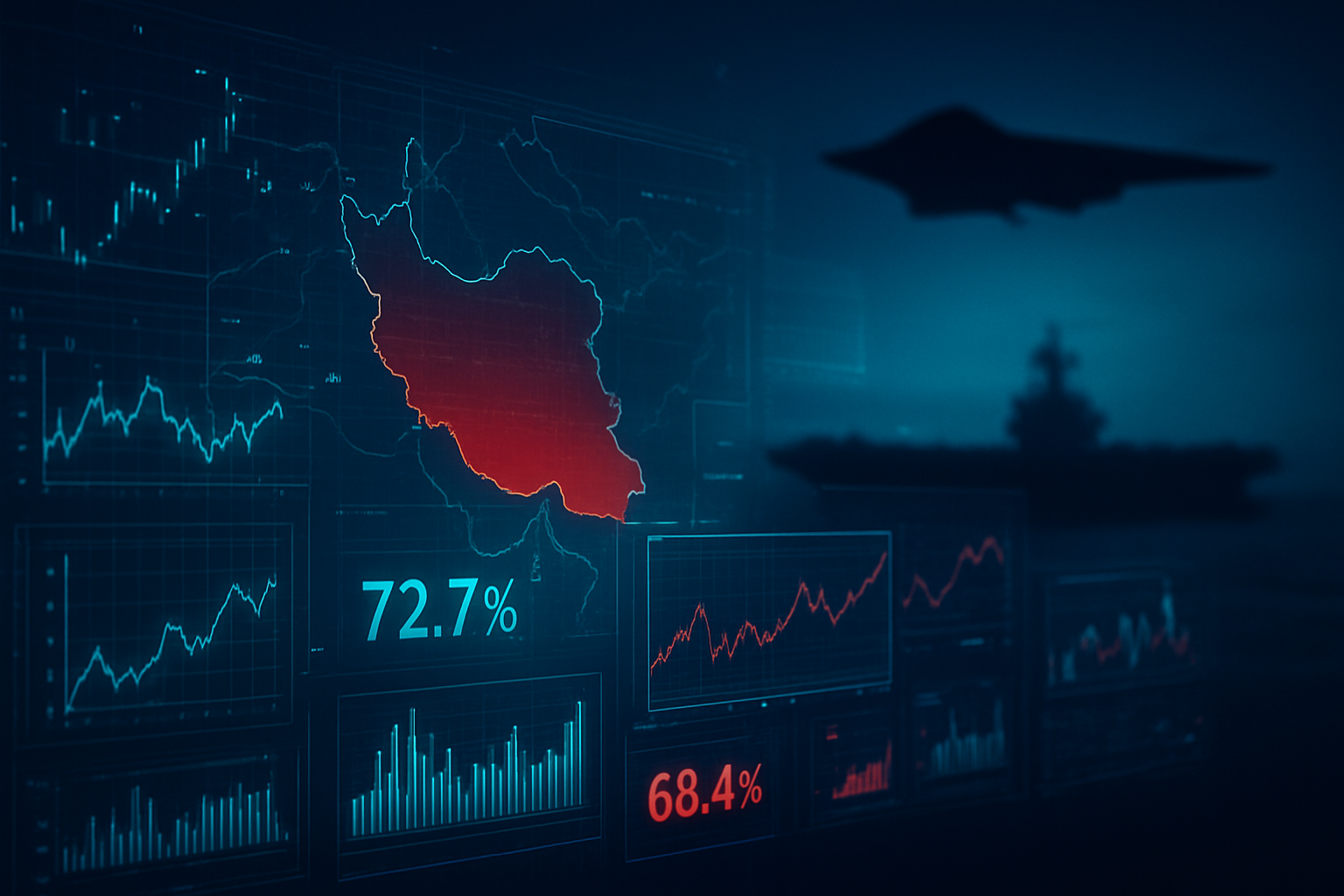
    As of January 14, 2026, prediction markets are flashing a severe warning signal for the Middle East, with traders pricing in an overwhelming likelihood of a direct military strike on Iran by the United States or Israel this year. Current odds on major decentralized platforms have surged to a staggering 83% for a U.S. strike by June 2026, marking a significant departure from the more cautious rhetoric seen in traditional diplomatic circles.

    This spike in activity follows a turbulent 2025 that saw regional tensions reach a boiling point, including the "12-Day War" in June and the subsequent collapse of several Iranian-aligned regional proxies. While traditional polling often struggles to capture the nuances of rapidly evolving geopolitical crises, prediction markets are operating as a real-time "war room," aggregating the collective intelligence of global participants who are putting millions of dollars on the line to forecast the next move in a high-stakes game of brinkmanship.

    The Market: What's Being Predicted

    The most liquid markets regarding this conflict are currently hosted on Polymarket, where the "U.S. strikes Iran by June 30, 2026" contract has seen its volume balloon to over $22 million. The odds on this specific outcome have experienced a dramatic climb, rising from 48% in the first week of January to the current 83%. Simultaneously, a shorter-term market on whether Israel will strike Iranian soil by January 31, 2026, is currently hovering around 53%, suggesting that traders believe a multi-national or U.S.-led operation is more likely than a unilateral Israeli action in the immediate future.

    On the regulated U.S. side, Kalshi has seen significant interest in markets related to Iranian leadership stability. The contract for "Ali Khamenei out as Supreme Leader by end of 2026" is trading at a 66% probability. This correlation between military action and regime change suggests that traders aren't just betting on a singular strike, but on a broader campaign designed to fundamentally alter the Iranian political landscape.

    Resolution criteria for these markets are remarkably precise to ensure "truth signals" for participants. A "strike" is typically defined as a kinetic military operation—missiles, drones, or manned aircraft—originating from Israeli or U.S. forces that impacts targets on Iranian soil. Cyberattacks and proxy engagements, while common, are explicitly excluded from the resolution, ensuring that the odds reflect actual direct military escalation.

    Why Traders Are Betting

    The "smart money" is currently reacting to a series of escalatory triggers that defined the late months of 2025. Following the re-implementation of the "Maximum Pressure" campaign by the current U.S. administration, Iran’s nuclear breakout time was reportedly reduced to zero, prompting fears of a nuclear-armed Tehran. Defense contractors like Lockheed Martin (NYSE: LMT) and Northrop Grumman (NYSE: NOC) have seen increased focus as traders monitor the deployment of specialized hardware, such as the B-2 Spirit and B-21 Raider stealth bombers, which were utilized in the limited strikes of June 2025.

    Traders are also closely watching the domestic situation within Iran. In late 2025, the Iranian Rial plummeted to a historic low of 1.4 million to $1 USD, sparking the "Bazaar Revolts." Prediction market participants appear to be betting that the U.S. and Israel will view this internal fragility as a strategic window of opportunity to degrade Iran’s nuclear and military infrastructure while the regime is preoccupied with civil unrest.

    Large-scale "whale" activity has been noted on Polymarket, with several high-net-worth accounts taking six-figure positions in favor of a strike. These moves often precede major news breaks, leading some to speculate that prediction markets are capturing "insider" cues or early-warning signals from intelligence communities that haven't yet been confirmed by mainstream media outlets.

    Broader Context and Implications

    This trend highlights the growing reliance on prediction markets over traditional expert analysis. While a standard political analyst might be hesitant to predict a full-scale war due to reputational risks, prediction market participants are incentivized solely by accuracy. Research from late 2025 indicates that these markets have maintained an accuracy rate of roughly 76% in predicting kinetic actions, outperforming traditional expert panels which often hover around 68%.

    The real-world implications of these odds are profound. When prediction markets hit an 80%+ threshold for military conflict, it often triggers a cascade of economic shifts. Oil futures typically see a "conflict premium," and defense stocks become highly volatile. For the first time, prediction markets are being used by hedge funds and risk managers as a primary hedging tool against geopolitical "black swan" events.

    However, the regulatory environment remains complex. While Kalshi has paved the way for legal event contracts in the U.S., decentralized platforms like Polymarket still operate in a legal gray area for American participants. Despite this, the volume and liquidity of these markets have become too large for regulators or policymakers to ignore, effectively creating a "shadow" intelligence agency that operates in the public eye.

    What to Watch Next

    In the coming weeks, several key milestones could send these odds even higher or cause a sharp correction. The International Atomic Energy Agency (IAEA) is scheduled to release a "special report" on Iranian enrichment levels by January 25. If the report confirms a nuclear weaponization milestone, traders expect the 83% odds to move toward the high 90s.

    Military drills in the Persian Gulf and troop movements across U.S. bases in Qatar and Bahrain are also being tracked via satellite imagery by traders on social platforms. Any sign of "readiness" beyond standard training exercises will likely be priced into the markets within minutes. Furthermore, the upcoming 2026 State of the Union address will be a pivotal moment for participants to gauge the administration's appetite for a prolonged engagement.

    Bottom Line

    Prediction markets are signaling that the era of "strategic patience" with Tehran has likely ended. The high probability of a 2026 military strike reflects a market consensus that the diplomatic and economic escalations of 2025 have failed to resolve the nuclear issue, leaving kinetic action as the perceived "inevitable" next step for the U.S. and Israeli leadership.

    As a tool for geopolitical forecasting, these platforms have proven themselves to be faster and often more accurate than traditional models. By forcing participants to have "skin in the game," prediction markets filter out the noise of partisan rhetoric and media bias, providing a cold, hard look at the probability of conflict. Whether these markets are a self-fulfilling prophecy or a vital early warning system, one thing is clear: the "wisdom of the crowd" is currently betting on a year of unprecedented fire and fury in the Middle East.


    This article is for informational purposes only and does not constitute financial or betting advice. Prediction market participation may be subject to legal restrictions in your jurisdiction.

    PredictStreet focuses on covering the latest developments in prediction markets.
    Visit the PredictStreet website at https://www.predictstreet.ai/.
  • War Clouds Over Tehran: Polymarket Odds Surge as Traders Bet on 2026 U.S.-Israeli Military Action

    War Clouds Over Tehran: Polymarket Odds Surge as Traders Bet on 2026 U.S.-Israeli Military Action

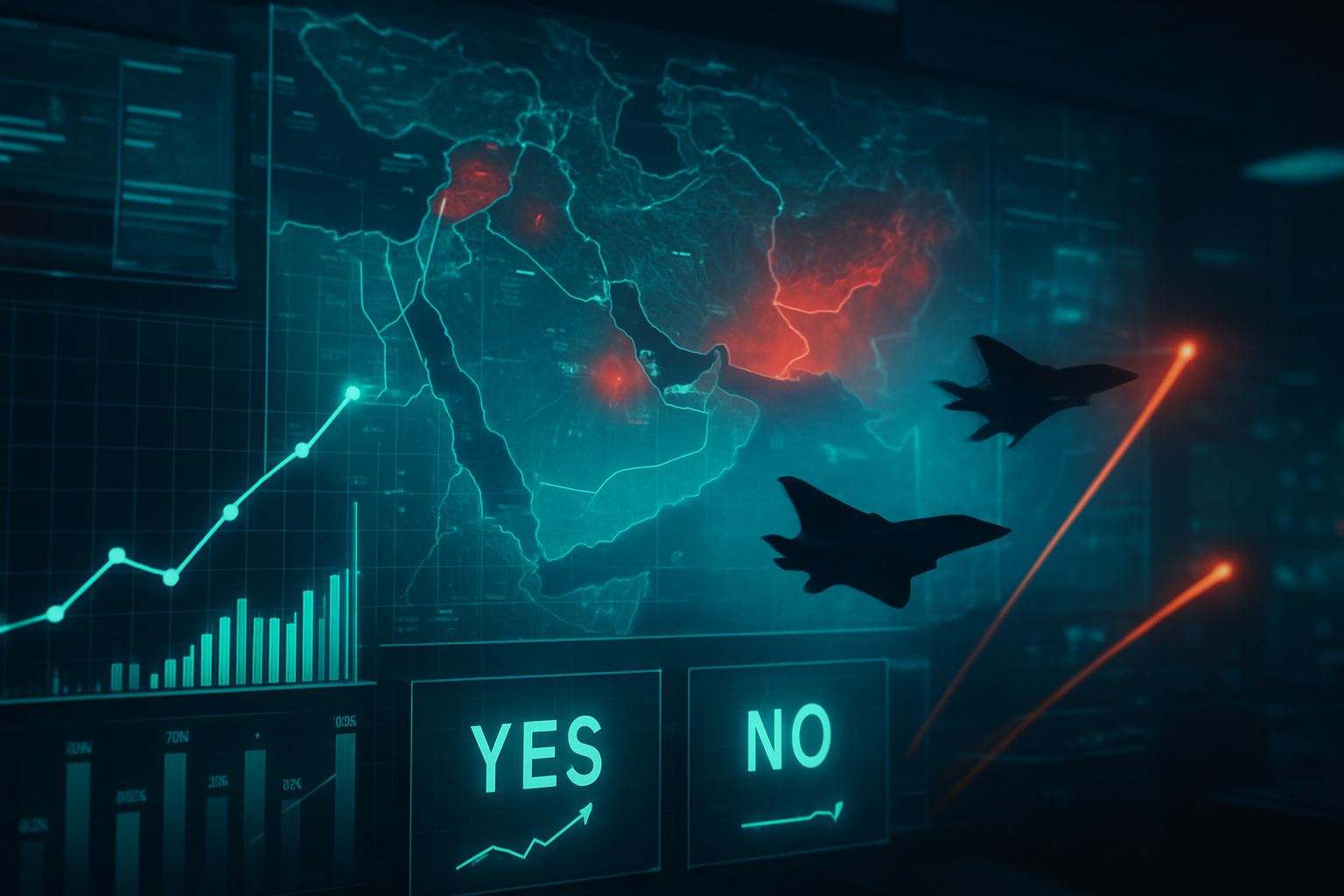
    As of January 13, 2026, the geopolitical landscape in the Middle East is reaching a boiling point, and nowhere is this tension more visible than in the world’s prediction markets. On platforms like Polymarket, the probability of a U.S. military strike on Iran by mid-year has surged to a staggering 71-80%, reflecting a market consensus that diplomatic avenues have all but vanished. This spike follows a series of escalations that began with the "12-Day War" in the summer of 2025 and has been further fueled by domestic instability within the Islamic Republic.

    Traders are dumping millions of dollars into contracts that speculate on kinetic military action, leadership changes, and the closure of vital shipping lanes. For many observers, these markets are no longer just a niche interest for speculators; they have become the primary real-time sentiment indicator for global conflict, often moving faster than traditional news cycles or intelligence briefings. With rumors of "Operation Iron Strike" circulating in Washington and ongoing nationwide protests in Iran, the "Yes" side of these contracts has seen unprecedented liquidity.

    The Market: What's Being Predicted

    The current focus of the predictive community is split between short-term Israeli actions and medium-term U.S. intervention. On Polymarket, a decentralized platform that has become the de facto home for geopolitical betting, the contract "Israel strikes Iran by January 31, 2026" is currently trading between 34% and 52%. This high volatility reflects daily fluctuations in satellite imagery and rhetoric from the Israeli Defense Forces. The total volume for this specific market has already surpassed $8 million, with liquidity being provided by both retail traders and institutional desks hedging against regional instability.

    Meanwhile, Kalshi (the U.S.-regulated exchange) has seen a surge in volume for leadership-based markets. The contract "Will Ali Khamenei be out as Supreme Leader by July 1, 2026?" is currently priced at a 52% probability. This market is particularly significant because it settles based on official government announcements or confirmations from multiple reputable news agencies. Unlike "war" markets, which have faced regulatory scrutiny, these "leadership" contracts have benefited from recent legal victories that allowed Kalshi to expand its offerings into political and administrative outcomes.

    The resolution criteria for these markets are stringent. For a strike to be confirmed "Yes" on Polymarket, there must be evidence of a kinetic military operation—drones, missiles, or manned aircraft strikes—originating from Israeli or U.S. forces and hitting targets on Iranian soil. Cyberattacks or intercepted missiles that do not cause ground impact typically do not trigger a "Yes" resolution, making these bets high-stakes and focused on overt military conflict.

    Why Traders Are Betting

    The primary driver behind the current 80% probability of U.S. action is the collapse of the Iranian economy and the regime's subsequent "all-in" push for nuclear reconstitution. In late 2025, the Iranian Rial plummeted to a historic low of 1.4 million to the dollar, sparking nationwide protests that have now spread to over 50 cities. Traders are betting that the U.S. administration will view this internal chaos as an opportune moment to degrade Iran's nuclear infrastructure under the guise of "Operation Iron Strike."

    Defense stocks have become a proxy for these bets in traditional markets. Companies like Lockheed Martin (NYSE:LMT) and Northrop Grumman (NYSE:NOC) are seeing record backlogs as the Pentagon replenishes stockpiles used during the limited June 2025 conflict. Similarly, RTX Corporation (NYSE:RTX), the manufacturer of the Iron Dome and Patriot interceptors, has seen its stock price correlate closely with the Polymarket odds; as the probability of an Iranian missile retaliation increases, so does the perceived demand for RTX’s defensive systems.

    Whale activity on Polymarket suggests a "hedged escalation" strategy. Large positions are being taken in "No" contracts for a new nuclear deal (currently trading at <5% probability) alongside "Yes" positions for military strikes. This indicates a market belief that the era of diplomacy is over. Furthermore, the redeployment of U.S. Air Force KC-135 tankers and F-35 fighter jets to the region in the first week of January has served as a "technical indicator" for traders who monitor flight tracking data as part of their due diligence.

    Broader Context and Implications

    The rise of these markets marks a shift in how the public consumes and acts on geopolitical intelligence. During the Cold War, such assessments were the exclusive domain of state actors and elite analysts. Today, the "wisdom of the crowd" provides a 24/7 price signal that incorporates satellite data, social media leaks from Iranian protesters, and shifts in energy markets. For instance, the "geopolitical premium" currently added to the price of Brent crude—monitored via ExxonMobil (NYSE:XOM) and Chevron (NYSE:CVX)—often lags behind the moves on Polymarket by several hours.

    Historically, prediction markets have shown a remarkable ability to discount "noise" and focus on outcomes. During the 2024 and 2025 skirmishes, Polymarket odds often preceded official announcements of military movement by up to 48 hours. However, the ethical and regulatory implications remain a point of contention. Critics argue that betting on war is ghoulish, while proponents argue that it provides a vital service: an honest, unsentimental assessment of risk that can help businesses and governments prepare for the worst.

    Furthermore, these markets reveal a deep public skepticism toward "soft power." In 2026, the market for a "New US-Iran Nuclear Deal" is virtually dead, trading at nearly zero. This suggests that the betting public has moved past the era of the JCPOA, viewing military or internal regime change as the only realistic outcomes remaining on the table.

    What to Watch Next

    The immediate milestone for traders is the January 31st deadline for the Israeli strike market. If the month ends without a confirmed kinetic event, we can expect a temporary "relief rally" in shipping stocks like ZIM Integrated Shipping (NYSE:ZIM) and a potential dip in defense contractors. However, the larger "U.S. Strike by June 30" market will likely remain elevated as long as "Operation Iron Strike" remains a discussed option in Washington.

    The second key date is March 31, the resolution point for several contracts regarding the stability of the Iranian regime. Should the nationwide protests result in a high-level defection or a change in the IRGC's command structure, the odds for an external strike might actually decrease, as the U.S. and Israel may opt to let the internal collapse play out rather than providing the regime with a "rally 'round the flag" moment through an outside attack.

    Finally, keep a close eye on the Strait of Hormuz. While prediction markets currently place the probability of a total closure at single digits, any movement toward maritime blockades would cause a catastrophic spike in energy-related contracts and likely force a "Yes" resolution on U.S. military intervention markets within hours, as the U.S. Navy is doctrinally committed to keeping the waterway open.

    Bottom Line

    Prediction markets in early 2026 are painting a grim picture of the Middle East. With an 80% probability of U.S. military action by mid-year, the "smart money" is no longer betting on if a conflict will occur, but when and how severe it will be. These platforms have effectively democratized intelligence, allowing anyone to see the same risk signals that are likely being discussed in the Situation Room.

    What this tells us about prediction markets as a tool is that they are at their best when information is asymmetric and stakes are high. While they cannot predict the future with 100% certainty, they offer a cold, hard look at reality that is often obscured by political rhetoric. As we move through the first quarter of 2026, the movement of these "war tokens" will remain the most reliable barometer for a world on the brink.

    Whether these bets resolve as "Yes" or "No," the data being generated today will serve as a historical record of what the world expected during one of the most volatile periods of the 21st century. For now, all eyes—and millions of dollars—remain fixed on Tehran.


    This article is for informational purposes only and does not constitute financial or betting advice. Prediction market participation may be subject to legal restrictions in your jurisdiction.

    PredictStreet focuses on covering the latest developments in prediction markets.
    Visit the PredictStreet website at https://www.predictstreet.ai/.