
Tag: META

  • The Agentic Spring: Why Prediction Markets Are Betting Big on Claude 5 and the AI Agent Revolution

    The Agentic Spring: Why Prediction Markets Are Betting Big on Claude 5 and the AI Agent Revolution

    As of February 8, 2026, the artificial intelligence sector is moving at a pace that traditional tech journalism can barely track. On Manifold Markets, a leading prediction platform known for its real-time crowdsourced intelligence, a feverish surge of betting activity has centered on the "Agentic Spring." The most watched contract on the site currently gives an 82% probability that Anthropic will release Claude 5 (Sonnet) before the end of March 2026. This surge follows a chaotic first week of February that saw major product launches from both OpenAI and Anthropic, signaling a definitive shift in the industry from passive chatbots to autonomous agentic systems.

    The interest isn't just academic; it’s a reflection of a high-stakes arms race among the "Big Three"—Anthropic, Meta (NASDAQ: META), and OpenAI. While markets for a unified "Agent App" release in February remain cautiously priced at 27%, recent maneuvers by these companies have already begun to fulfill the spirit of these predictions. With traders reacting to technical leaks and internal platform logs, prediction markets have become the de facto front-runner for identifying the next major shift in the AI landscape.

    The Market: What's Being Predicted

    The primary focus for traders right now is the "Claude 5 Release" market on Manifold. Unlike traditional binary options, this market operates as a play-money forecasting tool that has historically sniffed out Anthropic’s product cycles with uncanny accuracy. The odds for a Claude Sonnet 5 release before March 1st skyrocketed from 45% in late January to its current 82% peak. This movement has been accompanied by high trading volume, with thousands of unique participants betting on various granular outcomes, including the model’s performance on software engineering benchmarks.

    Specifically, the resolution criteria for the lead market require an official announcement or public API availability of a model branded as "Claude 5" or "Claude 5 Sonnet." A secondary market is tracking the likelihood of an "Agent App" from the major players, currently at a 43% probability for a launch before the end of Q1. These markets are heavily influenced by recent activity on developer platforms like Alphabet’s (NASDAQ: GOOGL) Google Vertex AI, where traders monitor for new model identifiers.

    Why Traders Are Betting

    The 82% confidence in an imminent Claude 5 release is not based on vibes alone. On February 3, 2026, a technical leak on a cloud provider's error log revealed a model identifier: claude-sonnet-5@20260203. Codenamed "Fennec" internally, this model is rumored to be the successor to the highly successful Claude 4 line. Traders are betting that Anthropic is preparing a "spoiler" release to counter the momentum of Microsoft-backed (NASDAQ: MSFT) OpenAI, which just launched its Frontier platform on February 5.

    Furthermore, the competitive pressure is immense. OpenAI’s recent release of GPT-5.3 Codex—optimized for long-running agentic tasks—has set a new bar for what "AI Agents" should be able to do. Anthropic’s response has already begun with the February 5th rollout of Claude Opus 4.6, which introduced "Agent Teams." Traders are viewing Sonnet 5 as the "efficiency play"—a model that can match the reasoning of the heavyweights while being significantly cheaper to run, making it the perfect engine for mass-market autonomous agents.

    Broader Context and Implications

    This surge in Manifold activity highlights how prediction markets are evolving into an essential tool for the tech sector. While traditional analysts wait for press releases, prediction markets synthesize rumors, GitHub commits, and cloud log leaks into a single, tradable probability. This "real-time gauge" is particularly valuable during the current shift toward the Agentic Era, where the goal is no longer just generating text but performing complex, multi-step actions like managing a legal review or building a full software application autonomously.

    The implications of an 82% probability for Claude 5 are significant for the broader economy. If Anthropic delivers on these expectations, it signals that the cost of "reasoning" is dropping faster than anticipated. This trend is mirrored in Meta’s strategy; Mark Zuckerberg recently highlighted "agentic commerce" as a core pillar of Meta’s 2026 roadmap, aiming to integrate autonomous shopping concierges into WhatsApp and Instagram. Prediction markets are essentially forecasting the death of the "chat box" and the birth of the "AI employee."

    What to Watch Next

    The next three weeks are critical for these markets. The most significant upcoming milestone is the rumored release of Meta’s Llama 4 "Behemoth" in late February. If Meta releases a flagship open-weights model that rivals Claude 5, it could force Anthropic to accelerate its rollout, potentially pushing the March 1st release odds even higher. Traders are also closely watching for any "o-series" updates from OpenAI, specifically an o2 full-scale reasoning engine that could serve as the backbone for more advanced agents.

    Investors and tech enthusiasts should also keep an eye on performance benchmarks. A key Manifold market is currently trading at a 79% chance that Sonnet 5 will outperform the current Opus 4.6 in coding tasks. If early developer previews of Sonnet 5 (under NDAs) begin to leak, expect these odds to consolidate toward 95% or higher. Conversely, if February ends without an Anthropic announcement, we could see one of the largest "market crashes" in recent AI forecasting history.

    Bottom Line

    The 82% odds on Manifold Markets for a Claude 5 release by March suggest that the AI industry is entering its most aggressive competitive phase yet. These markets have moved beyond mere speculation, acting as a sophisticated processing unit for disparate pieces of technical data. Whether it is the "Fennec" leak or the competitive pressure from OpenAI's Frontier, the signal is clear: the wait for the next generation of AI is nearly over.

    As prediction markets continue to outperform traditional forecasting in the tech space, they provide a vital service for those trying to navigate the "Agentic Spring." If the crowd is right, the next few weeks will redefine our relationship with AI—from tools we talk to, to agents that work for us.


    This article is for informational purposes only and does not constitute financial or betting advice. Prediction market participation may be subject to legal restrictions in your jurisdiction.

    PredictStreet focuses on covering the latest developments in prediction markets.
    Visit the PredictStreet website at https://www.predictstreet.ai/.
  • The Death of the Poll: How Google and Meta are Turning Prediction Markets into the Global Truth Engine

    The Death of the Poll: How Google and Meta are Turning Prediction Markets into the Global Truth Engine

    As of February 6, 2026, the digital landscape has undergone a tectonic shift. Once relegated to the fringes of the internet and dismissed as "speculative casinos," prediction markets have officially entered the mainstream. This transformation is crystallized by the recent, sweeping policy updates from Alphabet (NASDAQ: GOOGL) and Meta (NASDAQ: META), which have moved to treat prediction markets not as gambling, but as vital financial and information tools.

    The current probability of prediction markets becoming the primary source for real-time news verification—a concept now widely known as "Information Finance" or InfoFi—sits at an all-time high. Markets tracking the efficacy of traditional polling versus prediction market accuracy for the upcoming 2026 U.S. Midterms show a staggering 85% confidence level that markets will outperform traditional data sets. This surge in interest is driven by a series of regulatory victories and a fundamental change in how the world's largest advertising platforms categorize "event-based" trading.

    The Market: What’s Being Predicted

    The "market" for prediction markets itself has exploded. Leading platforms like Kalshi and Polymarket are no longer niche startups; they are billion-dollar infrastructure plays. In early 2026, Kalshi reached an estimated valuation of $11 billion, while Polymarket, following its successful U.S. pivot, is trailing closely at $9.5 billion. The sheer volume of trade is the most telling metric: industry analysts project notional trading volume for event contracts to reach between $120 billion and $150 billion by the end of this year.

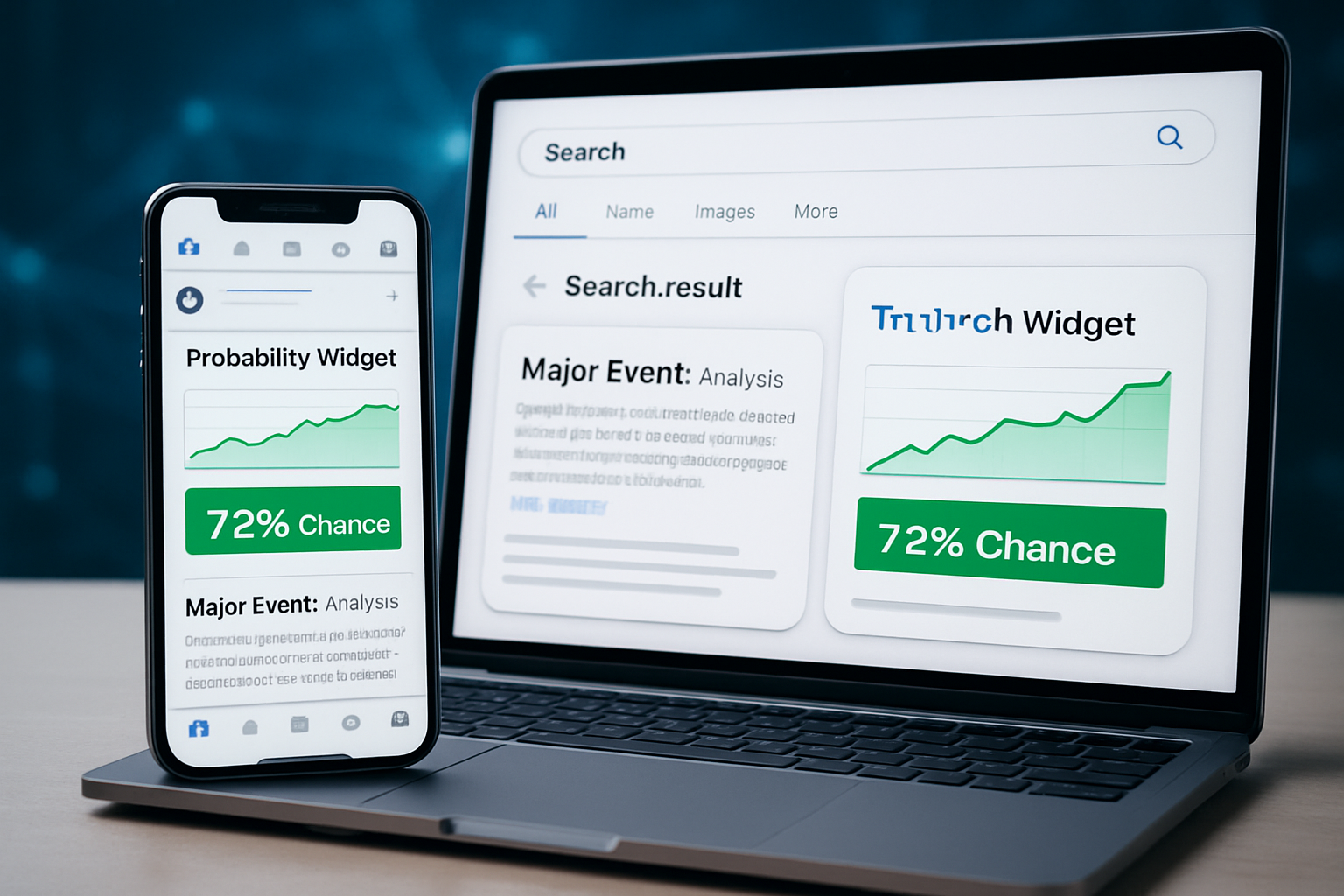
    This growth is being funneled through highly visible integrations. Google has recently embedded "Probability Widgets" directly into Google Finance and Search results. Users searching for "Fed interest rate hike" or "2026 World Cup winner" are now presented with a live odds-based widget sourced from CFTC-regulated exchanges. Meanwhile, Robinhood (NASDAQ: HOOD) has fully integrated election and economic contracts into its primary retail app, making "trading the news" as accessible as buying a fractional share of an ETF.

    The key resolution criteria for this shift rest on the "mainstreaming" of these platforms. When Google updated its ads policy on January 21, 2026, it specifically opened the gates for Commodity Futures Trading Commission (CFTC)-authorized markets to run search ads. This move ended a decade of "shadow-banning" for the industry, effectively legitimizing prediction markets as regulated financial instruments rather than offshore betting sites.

    Why Traders Are Betting

    The primary driver for the current betting frenzy is the proven accuracy of these markets during the 2024 election cycle. While traditional polls were mired in margin-of-error debates, prediction markets provided a stable, real-time barometer of voter sentiment that correctly signaled key pivots weeks in advance. Traders aren't just betting on outcomes; they are betting on the superiority of the mechanism.

    Recent movements have been fueled by the concept of "Information Finance," a term popularized by thinkers like Vitalik Buterin. The logic is simple: when people put their money where their mouth is, the resulting data is "correct by construction." This has led to the rise of institutional "alpha seekers"—hedge funds and market makers—who now provide deep liquidity to these markets. They treat event contracts as legitimate hedges against geopolitical and economic risks, such as sudden shifts in trade policy or central bank decisions.

    Furthermore, the introduction of interactive "Truth Widgets" on Meta platforms like Facebook and Instagram has created a new class of "social predictors." Meta’s pilot program allows users to see real-time market odds alongside controversial news stories. This serves as a market-based counter-narrative to misinformation, shifting the public perception from "gambling for profit" to "participating in truth discovery."

    Broader Context and Implications

    The mainstreaming of InfoFi represents a massive regulatory and cultural pivot. The 2024 landmark legal victory of Kalshi over the CFTC acted as a catalyst, stripping the agency of its power to unilaterally ban political event contracts. Under the leadership of the current CFTC Chairman, Michael Selig, the agency has performed a "Regulatory Reset," withdrawing previous bans and asserting exclusive federal jurisdiction over these markets. This has effectively pre-empted the patchwork of state-level gambling laws that previously stifled growth.

    This shift reveals a growing public hunger for objective truth in an era of AI-generated content and fragmented media. Prediction markets offer a decentralized, incentive-aligned alternative to the "expert class." Historically, these markets have shown a remarkable ability to process complex information faster than traditional newsrooms, accurately predicting everything from the resolution of the Hollywood strikes to the exact timing of tech layoffs.

    However, the "InfoFi" revolution is not without friction. Some platforms, including X (formerly Twitter), have faced challenges with "market spam"—automated accounts designed to manipulate odds or farm rewards. This has led to a technological arms race, where platforms are deploying advanced verification and anti-manipulation algorithms to ensure that the market signal remains pure.

    What to Watch Next

    The most immediate milestone to monitor is the full-scale rollout of Meta’s prediction widgets across its global news feeds. If successful, this will integrate market data into the daily social experience of billions, potentially making "checking the odds" as common as checking the weather. Additionally, the 2026 FIFA World Cup, hosted in North America, is expected to be the largest non-political event in prediction market history, providing a massive liquidity test for platforms like DraftKings (NASDAQ: DKNG) and Fanatics, which are increasingly eyeing the event-contract space.

    Investors should also watch for the potential launch of a "Prediction Market ETF." With the industry's valuation soaring, rumors of a structured product that allows investors to gain exposure to a basket of event-contract platforms are intensifying. The regulatory path for such a product seems clearer now than ever before, following the CFTC’s shift toward a pro-innovation stance.

    Bottom Line

    The mainstreaming of prediction markets marks the end of the "speculative casino" era and the beginning of the "Information Finance" age. By allowing these markets to advertise and integrating their data into core products, Alphabet and Meta have effectively deputized prediction markets as the internet’s "Source of Truth." This is not just about betting on the future; it is about creating a more accurate, incentive-driven way to understand the present.

    As we move deeper into 2026, the distinction between a "trader" and a "news consumer" is blurring. In a world where information is the most valuable commodity, the platforms that can most accurately price that information are the ones that will win. Prediction markets have evolved from a niche hobby into the foundational infrastructure of the modern information economy, and the "Big Tech" seal of approval is the final hurdle they needed to clear.


    This article is for informational purposes only and does not constitute financial or betting advice. Prediction market participation may be subject to legal restrictions in your jurisdiction.

    PredictStreet focuses on covering the latest developments in prediction markets.
    Visit the PredictStreet website at https://www.predictstreet.ai/.

  • The Rise of Corporate Prediction Markets: Betting on Meta AI, Amazon Layoffs, and Starbucks Strategy

    The Rise of Corporate Prediction Markets: Betting on Meta AI, Amazon Layoffs, and Starbucks Strategy

    As of January 21, 2026, the financial landscape has undergone a seismic shift. While traditional equity analysts still pore over balance sheets, a new breed of institutional and retail traders is looking elsewhere for an informational edge: prediction markets. Once dismissed as a niche interest for political junkies, platforms like Polymarket and Kalshi have evolved into high-volume "truth engines" where billion-dollar corporations are the primary subjects of speculation.

    The market has reached a fever pitch this week, with daily turnover hitting a record $814 million. Traders are no longer just betting on who will win the next election; they are wagering on the internal mechanics of Silicon Valley and the strategic pivots of Fortune 500 giants. From the release date of Meta Platforms, Inc. (NASDAQ:META) next AI model to the exact number of pink slips at Amazon.com, Inc. (NASDAQ:AMZN), the "wisdom of the crowd" is now being priced in real-time, often moving ahead of official press releases.

    The Market: What's Being Predicted

    The current landscape of corporate prediction markets is dominated by two giants: the decentralized powerhouse Polymarket and the CFTC-regulated Kalshi. Polymarket, recently buoyed by a landmark $2 billion investment from the Intercontinental Exchange, Inc. (NYSE:ICE), has become the go-to for speculative tech releases. Currently, the market for "Meta releases Llama 5 in 2025?" has seen substantial volume, while a specialized contract for the Meta "Mango" model is trading at a staggering 88% probability for a June 30 release.

    Meanwhile, Kalshi has leveraged its integration with Robinhood Markets, Inc. (NASDAQ:HOOD) to bring "Event Contracts" to over 10 million retail users. These markets are granular; for instance, traders are currently betting on whether Starbucks Corporation (NASDAQ:SBUX) CEO Brian Niccol will use the phrase "Smart Queue" in the next earnings call (65% probability) or if the company will announce a major international acquisition by the end of Q2.

    The volume in these specific corporate markets has skyrocketed, with combined trading volumes exceeding $37 billion in 2025. This liquidity has turned prediction markets into a viable alternative to traditional derivatives, with some contracts resolving in hours while others track long-term metrics like Amazon's robot-to-human ratio in its fulfillment centers.

    Why Traders Are Betting

    The primary driver behind this surge is the search for "alpha"—the excess return on an investment. Institutional desks at firms like The Goldman Sachs Group, Inc. (NYSE:GS) and Susquehanna International Group are increasingly using these markets to identify what analysts call the "Certainty Gap." This occurs when prediction markets price an event with high confidence while traditional futures or options markets remain sluggish.

    For example, early in 2026, prediction markets showed a 96% certainty of a Federal Reserve pause, while traditional interest-rate futures were only pricing in a 16% chance. Traders who followed the prediction market signal were able to front-run moves in interest-rate-sensitive stocks. In the corporate sector, "information leakage" is a significant factor. On Polymarket, large "whale" positions often appear hours before major corporate news breaks, leading many to believe that insiders are using the platforms to monetize their knowledge anonymously.

    Furthermore, these markets provide a hedge against corporate PR. While a company like Amazon.com, Inc. (NASDAQ:AMZN) might emphasize "workforce optimization," a prediction market contract for "15,000+ additional layoffs by May 2026" provides a cold, hard probability that tells a different story. Traders are betting because the price of a contract is often a more accurate reflection of reality than a sanitized corporate statement.

    Broader Context and Implications

    The rise of these markets marks the institutionalization of collective intelligence. The Digital Asset Market CLARITY Act of 2025 was a turning point, reclassifying many event contracts as commodity swaps and providing a stable regulatory framework in the U.S. This was further bolstered by the CFTC’s "Future-Proof" initiative in early 2026, which officially recognized prediction markets as valid tools for "price discovery" rather than mere gambling.

    However, the implications are not purely financial. These markets serve as a public sentiment gauge that can impact a company's reputation and its stock price. When a market for a Starbucks Corporation (NASDAQ:SBUX) operational failure gains traction, it can force leadership to respond before the issue even hits the mainstream press. This creates a feedback loop where the market doesn't just predict the future—it potentially influences it.

    Despite the progress, the sector faces a "patchwork" of legal challenges. While federal regulators have softened their stance, several U.S. states, including Nevada and Massachusetts, have issued cease-and-desist orders against platforms offering sports-adjacent or "socially detrimental" contracts. These legal battles are expected to reach the Supreme Court later this year, which could determine the ultimate ceiling for the industry.

    What to Watch Next

    As we move further into 2026, the upcoming Q1 earnings season will be the next major catalyst. Watch for a flurry of activity in "keyword" markets—contracts that pay out based on specific phrases used by CEOs during earnings calls. These are often seen as proxies for internal confidence in new initiatives, such as Meta's AGI (Artificial General Intelligence) timeline or Starbucks' turnaround strategy.

    Additionally, keep an eye on the resolution of the Amazon "Automation Blueprint" contracts. As the company pushes toward its goal of replacing 600,000 roles with autonomous models like Proteus by 2033, the prediction markets tracking the deployment of these robots are becoming essential reading for labor analysts and tech investors alike.

    Finally, the potential for a "Black Swan" event—like the sudden geopolitical shift seen earlier this month with the capture of Nicolás Maduro—could trigger massive volatility in these markets. Such events test the liquidity and resilience of decentralized platforms like Polymarket, proving whether they can handle the volume of a true global crisis.

    Bottom Line

    The evolution of corporate prediction markets on platforms like Polymarket and Kalshi represents a fundamental change in how information is valued and traded. No longer are "insider" insights or deep-dive research the sole province of elite hedge funds; the price of a contract now offers a democratized, real-time probability of everything from tech launches to mass layoffs.

    As a tool, these markets are proving to be remarkably accurate, often outperforming traditional forecasting models by cutting through the noise of corporate communications. For companies like Meta, Starbucks, and Amazon, the existence of these markets means they are being watched more closely than ever before—not just by regulators or journalists, but by a global network of traders putting their money where their conviction is.

    Whether you are a retail trader on Robinhood or a portfolio manager at a major bank, the message is clear: the most valuable data point for the future of a company might no longer be in its SEC filings, but on a prediction market dashboard.


    This article is for informational purposes only and does not constitute financial or betting advice. Prediction market participation may be subject to legal restrictions in your jurisdiction.

    PredictStreet focuses on covering the latest developments in prediction markets.
    Visit the PredictStreet website at https://www.predictstreet.ai/.

  • The Agentic Pivot: Decoding Meta Platforms’ $70 Billion Bet on the Future of Intelligence

    The Agentic Pivot: Decoding Meta Platforms’ $70 Billion Bet on the Future of Intelligence

    Meta Platforms, Inc. is no longer just a collection of social apps; it has evolved into a vertically integrated technology titan spanning silicon design, frontier AI models, and spatial computing hardware. In early 2026, Meta is in focus because it represents the purest public equity play on the "Agentic AI" revolution—the shift from chatbots that talk to AI agents that act. With over 3.3 billion daily active people across its Family of Apps, Meta's scale remains unmatched, yet its future valuation increasingly hinges on its ability to turn massive hardware investments into a new computing paradigm.

    Historical Background

    The Meta story is one of constant reinvention. Founded in a Harvard dorm in 2004, the company transitioned from a website to a mobile-first leader via the pivotal acquisitions of Instagram (2012) and WhatsApp (2014). The most radical transformation occurred in October 2021 when Mark Zuckerberg rebranded Facebook to Meta, signaling a long-term commitment to the "Metaverse." Following a challenging 2022, Meta initiated its "Year of Efficiency" in 2023. This period recalibrated the company, leading to record-breaking profitability in 2024 and setting the stage for the current era. By early 2026, the company has effectively bridged the gap between its social media roots and its hardware-centric future, using its "Llama" open-source AI models to dictate the industry standard.

    Business Model

    Meta’s revenue engine is divided into two primary segments:

    1. Family of Apps (FoA): Including Facebook, Instagram, Messenger, and WhatsApp. Revenue is almost entirely derived from advertising, now heavily automated by AI tools like Advantage+.
    2. Reality Labs (RL): Focuses on AR and VR hardware, software, and content. While loss-making, it is the R&D hub for the Quest line and Orion AR glasses.

    A major structural shift in 2025 was the acceleration of WhatsApp Business Messaging. By integrating autonomous AI agents, WhatsApp has moved from a messaging utility to a transactional platform where businesses handle full sales cycles via chat.

    Stock Performance Overview

    Meta’s stock performance has been a study in resilience:

    • 10-Year Performance: Returns exceeding 650%, significantly outperforming the S&P 500.
    • 5-Year Performance: The stock has more than tripled, driven by the recovery from 2022 lows and the subsequent AI-led rally.
    • 1-Year Performance: The stock reached an all-time high of $788.82 in August 2025. Since then, it has corrected to around $652 (as of early January 2026) due to tax charges and high CapEx guidance.

    Financial Performance

    Meta’s Q3 2025 results showed a complex financial picture. Revenue reached a record $51.24 billion, up 26% YoY. However, reported net income dropped to $2.71 billion due to a $15.93 billion one-time tax charge from the "One Big Beautiful Bill Act" (OBBBA). Adjusted net income stood at a healthy $18.64 billion. Meta increased its quarterly dividend to $0.525 per share in 2025 and continued aggressive share repurchases.

    Leadership and Management

    Mark Zuckerberg remains CEO with controlling voting power. In January 2026, Dina Powell McCormick joined as President and Vice Chairman to manage global capital partnerships and AI infrastructure. The technical vision is led by CTO Andrew Bosworth, while CFO Susan Li manages the company's $70B+ annual capital expenditure.

    Products, Services, and Innovations

    • Llama 4 Series: Meta’s flagship AI models featuring Mixture-of-Experts architecture and native multimodality.
    • Orion AR Glasses: A high-end prototype defining the company's "North Star" for AR.
    • Ray-Ban Display: Launched in late 2025, these glasses feature a heads-up display and neural interface, serving as a successful precursor to full AR.
    • Threads: Now with 500 million monthly users, it serves as a real-time information hub.

    Competitive Landscape

    • TikTok: After the 2026 restructuring into the Oracle-led TikTok USDS Joint Venture, it faces a transition period that Meta is exploiting.
    • Apple: Rivalry in "Spatial Computing" and on-device AI remains intense, though Apple's Vision Pro saw slower sales in 2025.
    • Google: Remains the primary ad rival, but Meta’s AI-driven tools are gaining e-commerce market share.

    Industry and Market Trends

    The dominant trend of 2026 is Agentic Commerce—AI agents completing purchases on behalf of users. The industry is also defined by a "CapEx Arms Race," where Meta is one of the few players capable of spending $50B+ annually on AI infrastructure.

    Risks and Challenges

    • CapEx Fatigue: Investor concern over the multi-billion dollar spend on data centers without immediate Reality Labs profitability.
    • Technical Hurdles: Potential diminishing returns in LLM scaling as seen in the delayed "Behemoth" model.
    • Regulation: Ongoing scrutiny in the EU under the Digital Markets Act (DMA).

    Opportunities and Catalysts

    • WhatsApp Monetization: Transforming the app into a transactional platform.
    • AR Mainstream: A future "prosumer" version of Orion glasses could be a major stock catalyst.
    • Open Source Leadership: Establishing Llama as the global standard for AI development.

    Investor Sentiment and Analyst Coverage

    Sentiment is "Cautiously Bullish" with a consensus price target near $845. Institutional ownership remains strong, viewing Meta as a premier play on consumer-facing AI.

    Regulatory, Policy, and Geopolitical Factors

    The 2025 FTC victory significantly lowered the domestic antitrust risk. However, geopolitical tensions regarding semiconductor supply chains (TSMC/NVIDIA) remain a macro risk factor.

    Conclusion

    Meta Platforms (NASDAQ: META) has successfully pivoted from social media to an AI and infrastructure leader. While high spending and technical challenges remain, its massive user base and leadership in open-source AI position it as a foundational technology holding for the next decade.


    This content is intended for informational purposes only and is not financial advice.

  • Meta Platforms (META) 2026 Deep Dive: The Nuclear-Powered AI Pivot

    Meta Platforms (META) 2026 Deep Dive: The Nuclear-Powered AI Pivot

    Date: January 9, 2026

    Introduction

    Meta Platforms, Inc. (NASDAQ: META) has entered 2026 in the midst of its most ambitious transformation since the transition from desktop to mobile. Once perceived primarily as a social media conglomerate, Meta has aggressively repositioned itself as an "AI-First" infrastructure and hardware powerhouse. The company’s current relevance is underscored by a daring multi-billion-dollar pivot toward energy independence and frontier AI development. Today, on January 9, 2026, Meta dominated headlines by announcing a massive nuclear energy partnership with Oklo Inc. (NYSE: OKLO) and others, signaling that the battle for AI supremacy will be won not just with code, but with the raw power needed to run it.

    Historical Background

    Founded in a Harvard dormitory in 2004, Facebook’s trajectory has been marked by ruthless adaptation. From its early "move fast and break things" ethos to its strategic acquisitions of Instagram (2012) and WhatsApp (2014), the company has consistently outmaneuvered rivals to maintain its grip on global attention. The 2021 rebranding to Meta Platforms marked a controversial shift toward the "Metaverse," which initially led to a disastrous stock collapse in 2022 as investors balked at the spending.

    However, the 2023 "Year of Efficiency" and the subsequent 2024-2025 AI pivot demonstrated Mark Zuckerberg’s ability to pivot at scale. By early 2026, the company has integrated Generative AI across its entire product suite, effectively silencing critics who once viewed Meta as a legacy social media firm.

    Business Model

    Meta’s business model remains a high-margin engine fueled by two primary segments:

    1. Family of Apps (FoA): Comprising Facebook, Instagram, Messenger, and WhatsApp. Revenue is almost entirely generated through digital advertising, now supercharged by the "JEM" AI model, which automates creative generation and targeting for millions of advertisers.
    2. Reality Labs (RL): This segment focuses on augmented and virtual reality (AR/VR) and the development of the "AI-Display" wearables ecosystem. While currently loss-making, Meta views this as the next computing platform.
    3. Meta AI / Llama Ecosystem: While primarily an open-source initiative to set industry standards, Meta has begun exploring "Enterprise Llama" tiers, providing a nascent B2B revenue stream through cloud partnerships and API access.

    Stock Performance Overview

    META’s stock performance has been a story of extreme volatility followed by a resilient recovery.

    • 1-Year Performance: In 2025, META gained roughly 25%, hitting all-time highs above $750 before a late-year pullback driven by massive capital expenditure concerns.
    • 5-Year Performance: Since 2021, the stock has effectively doubled, recovering from the 2022 nadir ($88) to its current position near the $700 level.
    • 10-Year Performance: Long-term shareholders have seen nearly 700% growth, significantly outperforming the S&P 500 as Meta successfully monetized its multi-billion-user base across multiple app cycles.

    Financial Performance

    Meta’s fiscal 2025 results highlight a company of immense scale. In Q3 2025, Meta reported revenue of $51.24 billion, a 19% year-over-year increase. However, the "bottom line" was impacted by a one-time $15.93 billion non-cash tax charge related to the corporate minimum tax (OBBA).

    A critical metric for 2026 is the staggering Capital Expenditure (Capex). Meta raised its 2025 Capex to $70–$72 billion to fund H100 and B200 GPU clusters and proprietary "MTIA" chips. Despite these costs, Meta maintains a robust cash position and high free cash flow (FCF), though Reality Labs continues to burn approximately $4.2 billion per quarter.

    Leadership and Management

    Mark Zuckerberg remains the definitive leader of Meta, holding majority voting control through Class B shares. His reputation has evolved from a besieged CEO during the "Facebook Papers" era to a respected product visionary in the AI age.
    Supporting him is CFO Susan Li, who has earned Wall Street’s trust through disciplined guidance and the successful execution of the 2023 efficiency mandates. CTO Andrew "Boz" Bosworth continues to lead the high-stakes Reality Labs division, while the board has been bolstered by figures with deep expertise in energy and infrastructure to support the company’s new power-hungry roadmap.

    Products, Services, and Innovations

    Meta’s product pipeline is currently centered on three pillars:

    • Llama 5 ("Avocado"): Codenamed "Avocado," Meta’s next-generation LLM is expected to launch in Q1 2026. Rumors suggest it may be Meta’s first partially closed-source model, designed for "Agentic" workflows that can take actions across the internet.
    • Ray-Ban Meta "Display": The 2025 release of smart glasses with an integrated Head-Up Display (HUD) has been a breakout hit. Demand has been so high that international rollouts were postponed to late 2026 to satisfy U.S. backlogs.
    • WhatsApp Business: The monetization of WhatsApp via "Click-to-Message" ads and business API services has become a multi-billion dollar growth driver, particularly in emerging markets like India and Brazil.

    Competitive Landscape

    Meta faces a multi-front war:

    • AI: Meta competes with Google (Alphabet Inc. (NASDAQ: GOOGL)) and OpenAI (Microsoft Corp (NASDAQ: MSFT)) in the race for "Superintelligence."
    • Social/Short Video: TikTok continues to pressure Instagram Reels, though potential U.S. divestiture mandates have softened its competitive edge.
    • Hardware: Apple Inc. (NASDAQ: AAPL) and its Vision Pro compete with Quest, but Meta’s focus on low-cost, stylish glasses has given it a lead in the "daily-wear" AR segment.

    Industry and Market Trends

    The "Compute War" is the defining trend of 2026. As AI models grow in complexity, the availability of low-cost, reliable energy has become the ultimate competitive moat. Meta’s move into nuclear power (SMRs) mirrors similar moves by other "Magnificent 7" firms, but the scale of the Oklo 1.2 GW deal is unprecedented. Furthermore, there is a clear trend toward "Edge AI," where processing happens on the device (glasses) rather than the cloud, a field where Meta’s hardware and software integration is uniquely positioned.

    Risks and Challenges

    • Capex Burn: Spending $70B+ annually on AI infrastructure is a high-risk bet. If AI monetization (via ads or agents) fails to scale proportionally, the "Year of Efficiency" gains could be erased.
    • Reality Labs Losses: With $70 billion in cumulative losses since 2020, the division remains a massive drag on earnings.
    • Technical Execution: Any significant delay in Llama 5 or the "Orion" holographic AR glasses could cede the market to rivals.

    Opportunities and Catalysts

    • Nuclear Synergy: Securing 6.6 GW of carbon-free capacity by 2035 could lower Meta’s long-term energy costs by 30-40% compared to spot market rates.
    • AI Agents: The transition from "Generative AI" to "Agentic AI"—where Meta AI books travel, manages emails, and shops for users—represents a paradigm shift in how users interact with the internet.
    • WhatsApp Monetization: WhatsApp is still in the early innings of its revenue potential compared to Facebook or Instagram.

    Investor Sentiment and Analyst Coverage

    As of early January 2026, the Wall Street consensus on Meta remains a "Strong Buy." Analysts at PredictStreet and other major firms point to Meta’s attractive valuation (currently trading at ~22x forward earnings) relative to its growth profile. While some institutional investors are cautious about the Reality Labs burn, the legal victory in the FTC case (November 2025) has removed a major "overhang" on the stock, as the threat of a forced breakup is now largely off the table.

    Regulatory, Policy, and Geopolitical Factors

    Meta’s regulatory outlook has improved significantly. The November 2025 court ruling in favor of Meta in the FTC antitrust case was a landmark win, essentially validating Meta’s acquisition strategy. In the European Union, the adoption of a "Less Personalized Ads" model in January 2026 has temporarily pacified regulators under the Digital Markets Act (DMA). However, the ongoing debate over AI safety and copyright for Llama training data remains a persistent legislative risk.

    Conclusion

    Meta Platforms has successfully transitioned from a social media company into an AI-infrastructure titan. The bold move into nuclear energy announced today, January 9, 2026, underscores Mark Zuckerberg’s commitment to long-term dominance. For investors, the thesis rests on a delicate balance: can the high-margin "Family of Apps" continue to fund the eye-watering costs of the AI and hardware future? With a cleared legal path in the U.S. and a leadership position in open-source AI, Meta appears well-positioned to lead the next decade of computing, provided it can execute on its massive infrastructure investments.


    This content is intended for informational purposes only and is not financial advice. PredictStreet specializes in AI-generated insights and financial research.

  • The Silicon Spectacle: Meta Platforms’ AI Hardware Pivot and the Future of Wearable Automation

    The Silicon Spectacle: Meta Platforms’ AI Hardware Pivot and the Future of Wearable Automation

    As the tech world gathers in Las Vegas for the 2026 Consumer Electronics Show (CES), the spotlight is no longer on the massive television screens or autonomous vehicles of years past. Instead, all eyes are on the face. Meta Platforms (NASDAQ: META) has transitioned from a social media giant into the undisputed leader of the "wearable AI" revolution.

    Today, January 7, 2026, Meta’s presence at CES marks a definitive shift in the company’s narrative. No longer just the curator of digital feeds, Meta is positioning itself as the gatekeeper of a new era of hands-free computing. With the breakout success of its AI-powered smart glasses and a bold new focus on agentic automation, the company is attempting to do for the face what Apple did for the pocket nearly two decades ago.

    Historical Background

    Founded in a Harvard dorm room in 2004 as Facebook, the company’s trajectory has been defined by radical pivots. The first was the "mobile-first" shift in 2012, which saved the company after a rocky IPO. The second, and perhaps most controversial, was the 2021 rebrand to Meta Platforms, signaling a multibillion-dollar bet on the "Metaverse."

    For years, critics viewed the Metaverse as a vanity project of CEO Mark Zuckerberg. However, the 2023 "Year of Efficiency" followed by a pivot toward Generative AI in 2024 and 2025 transformed the company’s prospects. By integrating its Llama large language models (LLMs) into hardware products like the Ray-Ban Meta smart glasses, the company found the "killer app" for its wearable ambitions: a context-aware AI assistant that can see and hear the world alongside the user.

    Business Model

    Meta’s business model remains a tale of two houses. The Family of Apps (FoA)—comprising Facebook, Instagram, Messenger, and WhatsApp—generates over 98% of the company's revenue, primarily through highly targeted digital advertising. In early 2026, this engine is more efficient than ever, thanks to the total automation of ad campaigns via the "Advantage+" AI ecosystem.

    The second house, Reality Labs, is the hardware and R&D arm responsible for the Quest VR headsets and Ray-Ban Meta glasses. While Reality Labs continues to operate at a multi-billion dollar annual loss, it is no longer viewed by investors as a "money pit." Instead, it is seen as the foundation for Meta's next primary computing platform, shifting the company away from its historical dependence on mobile operating systems controlled by rivals.

    Stock Performance Overview

    Over the last decade, META has been one of the most volatile yet rewarding stocks in the S&P 500.

    • 10-Year Horizon: Since early 2016, the stock has grown significantly, surmounting the "Great Pivot" of 2022 when it fell below $100 per share.
    • 5-Year Horizon: The stock has seen a massive recovery from its late-2022 lows, fueled by the 2023 efficiency drive and the AI-led bull market of 2024-2025.
    • 1-Year Horizon: Following an all-time high of $788.82 in August 2025, the stock has recently pulled back to approximately $660 as of January 7, 2026. This 16% correction reflects investor caution regarding the company’s projected $100 billion capital expenditure for the 2026 fiscal year.

    Financial Performance

    Meta’s financial health entering 2026 is robust. In Q3 2025, the company reported revenue of $51.2 billion, a 26% year-over-year increase, driven by a recovery in the Chinese advertising market and improved ad-targeting AI.

    • Margins: Operating margins remain healthy at 38%, though they are under pressure from massive investments in H100 and B200 GPU clusters.
    • Cash Position: Meta continues to generate massive free cash flow, allowing for aggressive stock buybacks and strategic acquisitions, such as the late-2025 purchase of Manus AI for $2 billion.
    • Valuation: At $660, Meta trades at a forward P/E of approximately 21.5x, which many analysts consider attractive given its dominant position in the AI hardware race.

    Leadership and Management

    Mark Zuckerberg remains the singular force behind Meta’s strategy. His "founder-led" approach allows the company to take long-term risks that many of its peers avoid. Supporting him is a leadership team focused on operational excellence, including CFO Susan Li and CTO Andrew "Boz" Bosworth.

    The governance reputation of the company has stabilized since the "Year of Efficiency," with Zuckerberg winning back Wall Street’s trust by demonstrating that he can balance futuristic bets with fiscal discipline—though the $100B capex plan for 2026 is testing that trust once again.

    Products, Services, and Innovations

    At CES 2026, Meta’s innovation pipeline is on full display:

    • Ray-Ban Meta (Gen 2/3): The current market leader in AI wearables. The 2026 models feature Llama 4 integration, offering a "Teleprompter Mode" and real-time multimodal translation.
    • Neural Wristbands (EMG): Meta’s latest "muscle-controlled" wearables allow users to interact with digital interfaces using finger movements. A new partnership with Garmin (NYSE: GRMN) aims to bring this tech to vehicle dashboards.
    • Orion AR Glasses: Meta’s true augmented reality (AR) glasses remain in a developer-only phase but have seen their ecosystem expand significantly in late 2025.
    • Llama 5 (Project Avocado): Rumored to launch in Q1 2026, this model is expected to be the first truly "agentic" AI, capable of performing complex multi-step tasks like travel booking and digital filing with minimal user input.

    Competitive Landscape

    Meta currently holds a commanding 75-80% market share in the burgeoning AI smart glasses segment, but the competition is heating up:

    • Apple (NASDAQ: AAPL): After the niche success of the Vision Pro, Apple has reportedly pivoted to "Apple Glass," a display-less AI wearable expected in late 2026 or 2027.
    • Alphabet (NASDAQ: GOOGL): Google has returned to the fray with Android XR, a collaborative platform with Samsung (KOSPI: 005930) and Warby Parker, seeking to replicate the Android OS success in the wearables market.
    • Snap (NYSE: SNAP): While smaller, Snap remains a creative competitor with its Spectacles line, though it lacks Meta’s massive AI compute scale.

    Industry and Market Trends

    The "Edge AI" trend is the primary macro driver in 2026. As LLMs become more efficient, the processing is shifting from the cloud to the device (the "edge"). This allows for lower latency and better privacy, making devices like smart glasses viable for daily use. Additionally, the shift toward "Agentic AI"—where AI doesn't just answer questions but performs tasks—is transforming the wearable from a gadget into a productivity tool.

    Risks and Challenges

    Despite its momentum, Meta faces significant hurdles:

    • Capex Burn: The $100 billion investment in data centers for 2026 is a staggering sum that could hurt margins if AI monetization slows.
    • Supply Chain: At CES 2026, Meta announced an indefinite pause on the international rollout of its display-equipped glasses due to "unprecedented demand" and manufacturing bottlenecks.
    • Privacy Paradox: As Meta’s glasses "see" more of the world, privacy concerns from regulators and the public remain a persistent threat to mass adoption.

    Opportunities and Catalysts

    • Agentic AI (Manus AI): The acquisition of Manus AI provides Meta with the software stack needed to turn its glasses into "personal secretaries" by the end of 2026.
    • Automotive Integration: The Garmin partnership opens a new revenue stream in the "Unified Cabin" space, moving Meta beyond personal devices and into the enterprise/auto sector.
    • Monetization of Llama: A rumored shift toward a "tiered" open/closed-source model for Llama 5 could create a significant new B2B revenue stream.

    Investor Sentiment and Analyst Coverage

    Wall Street is currently "cautiously bullish." Institutional investors favor Meta’s dominant lead in AI hardware, but hedge fund activity has shown some profit-taking following the 2025 run-up. Retail sentiment remains high, driven by the "cool factor" of the Ray-Ban partnership. Analysts from Goldman Sachs and J.P. Morgan maintain a "Strong Buy" rating, citing the attractive valuation relative to Meta's growth profile in AI automation.

    Regulatory, Policy, and Geopolitical Factors

    The regulatory environment remains Meta’s greatest external threat. The European Union’s AI Act has forced Meta to delay several AI feature rollouts in Europe. Furthermore, the company’s heavy reliance on high-end chips makes it sensitive to geopolitical tensions in the Taiwan Strait. Domestically, Meta faces ongoing antitrust scrutiny regarding its dominance in the digital ad market and its acquisition strategy.

    Conclusion

    Meta Platforms enters 2026 at a pivotal junction. By successfully wedding its world-class AI models with stylish, functional hardware, the company has effectively "won" the first round of the wearable AI war. However, the path forward is paved with massive capital expenditures and regulatory minefields.

    For investors, Meta is no longer a simple social media play; it is a high-stakes bet on the future of human-computer interaction. The CES 2026 announcements suggest that Meta is ready to lead that future, but the market's ultimate verdict will depend on whether "agentic" AI can translate into bottom-line growth to justify its $100 billion price tag.


    This content is intended for informational purposes only and is not financial advice.

  • The Open Intelligence Giant: A Deep Dive into Meta Platforms (META) Heading into 2026

    The Open Intelligence Giant: A Deep Dive into Meta Platforms (META) Heading into 2026

    As of January 2, 2026, Meta Platforms, Inc. (NASDAQ: META) has transitioned from being perceived primarily as a social media conglomerate to a titan of global artificial intelligence (AI) infrastructure. Following a transformative 2025, Meta sits at the vanguard of the "Open Intelligence" movement, leveraging its massive user base of nearly 4 billion people to deploy AI at a scale rivaled only by a handful of entities globally.

    The company enters 2026 as a dominant force in both digital advertising and frontier AI development. While the "Year of Efficiency" in 2023 repaired its balance sheet, 2024 and 2025 were defined by a massive "AI-first" pivot. Today, Meta is no longer just the "Facebook company"; it is a provider of the world’s most widely adopted open-weights AI models and a pioneer in AI-integrated wearable technology.

    Historical Background

    Founded in 2004 as "TheFacebook" by Mark Zuckerberg and his Harvard roommates, the company initially revolutionized the way people connect online. Its history is marked by aggressive acquisitions, notably Instagram in 2012 for $1 billion and WhatsApp in 2014 for $19 billion—moves that cemented its social media dominance but drew long-term regulatory scrutiny.

    The most significant pivot in the company's history occurred in October 2021, when Facebook, Inc. rebranded as Meta Platforms to signal a focus on the "metaverse." However, after a difficult 2022 characterized by a plummeting stock price and rising competition from TikTok, the company pivoted again. Under the 2023 "Year of Efficiency" banner, Meta laid off over 20,000 employees and streamlined its operations. This lean period paved the way for the massive AI infrastructure investments of 2024 and 2025, which have since become the bedrock of the company's current valuation.

    Business Model

    Meta’s business model operates through two primary reporting segments:

    1. Family of Apps (FoA): This remains the core profit engine, encompassing Facebook, Instagram, Messenger, and WhatsApp. Revenue is almost entirely derived from digital advertising. By late 2025, the integration of generative AI ad tools has significantly increased the average revenue per user (ARPU) by automating creative processes and optimizing ad targeting.
    2. Reality Labs (RL): This segment focuses on hardware, software, and content related to augmented and virtual reality (AR/VR). While historically loss-making, RL transitioned its strategy in 2025 toward "AI Wearables," focusing on smart glasses that integrate the Llama AI assistant, creating a new consumer hardware revenue stream alongside its Quest headsets.

    Stock Performance Overview

    Meta’s stock performance over the last decade has been a study in volatility and resilience.

    • 10-Year Horizon: Investors who held through the "Cambridge Analytica" scandal and the 2022 crash have been handsomely rewarded, with the stock significantly outperforming the S&P 500.
    • 5-Year Horizon: The stock underwent a massive "V-shaped" recovery from its 2022 lows (sub-$90) to its current position at the start of 2026.
    • 1-Year Horizon (2025): Throughout 2025, Meta’s stock surged as investors gained confidence in its AI roadmap. From approximately $470 in early 2024 to a range of $830–$850 by January 2026, Meta has consistently beaten earnings expectations, fueled by Reels monetization and a favorable antitrust ruling in late 2025.

    Financial Performance

    Meta’s fiscal 2025 was a record-breaking year. Revenue growth was sustained in the mid-to-high teens, bolstered by Instagram’s transition to a "video-first" platform.

    • CapEx: The company spent a staggering $70–$72 billion on capital expenditures in 2025, primarily on H100 and Blackwell GPU clusters.
    • Margins: Despite the heavy spending, operating margins remained healthy (above 30%) due to the continued efficiencies gained from AI-automated internal workflows.
    • Reality Labs Losses: The division continued to operate at an annual loss of approximately $18–$19 billion, though management has announced a 30% budget reduction for 2026 to focus on high-margin wearables.

    Leadership and Management

    Mark Zuckerberg remains the controlling force of the company as CEO and Chairman, holding majority voting power. His reputation has shifted from a controversial figure to a respected "Product CEO" who successfully navigated two major pivots (Mobile and AI).

    Key leadership includes:

    • Susan Li (CFO): Highly regarded for her disciplined financial management during the high-CapEx AI build-out.
    • Javier Olivan (COO): The architect behind Meta’s global operations and growth strategies.
    • Alexandr Wang: Leading the newly formed Meta Superintelligence Labs (MSL), Wang is central to Meta’s goal of achieving Artificial General Intelligence (AGI).

    Products, Services, and Innovations

    The technological centerpiece of Meta in 2026 is the Llama 4 model family. Released in 2025, Llama 4 "Maverick" (400B) has become the industry standard for open-weights AI, allowing developers to build sophisticated applications without the costs associated with closed-source rivals.

    Innovations in 2025 included:

    • The "Behemoth" (2T) Model: A 2-trillion parameter model designed for complex multi-step reasoning, slated for full deployment in 2026.
    • Ray-Ban Meta Glasses: The "Hypernova" edition, launched late in 2025, features an in-lens display and a neural wrist-band controller, marking Meta's first major hit in the wearable market.
    • Threads: Now boasting 400 million monthly active users (MAUs), Threads has successfully integrated ads and is projected to contribute significant revenue in the 2026 fiscal year.

    Competitive Landscape

    Meta competes on multiple fronts:

    • Social Media: ByteDance's TikTok remains the primary rival for attention, though Meta’s Reels has achieved parity in monetization efficiency.
    • Artificial Intelligence: Meta competes with Alphabet Inc. (NASDAQ: GOOGL), Microsoft Corp. (NASDAQ: MSFT), and OpenAI. Meta’s "Open Weights" strategy is its primary differentiator, attracting a massive developer ecosystem that the closed-model providers lack.
    • Digital Ads: Amazon.com, Inc. (NASDAQ: AMZN) and Google remain the primary rivals for ad budgets, but Meta’s AI-driven "Advantage+" tools have given it a technical edge in conversion lift.

    Industry and Market Trends

    The dominant trend in 2026 is the "Industrialization of AI." This involves a shift from experimental chatbots to deep infrastructure integration. Meta is a primary beneficiary of the "compute moat" trend—where companies with the most processing power (GPUs) can iterate faster than the competition. Additionally, the regulatory headwinds facing TikTok in the U.S. have provided a persistent tailwind for Meta’s engagement metrics.

    Risks and Challenges

    • CapEx Fatigue: There is a lingering concern that Meta’s massive $70B+ annual infrastructure spend may eventually outpace revenue growth, leading to margin compression.
    • Hardware Adoption: While smart glasses are trending upward, the "Quest" VR headsets have seen softer demand, raising questions about the long-term ROI of the metaverse vision.
    • EU Regulation: The European Union’s Digital Markets Act (DMA) continues to squeeze Meta’s data-gathering capabilities, requiring costly compliance and potential fines.

    Opportunities and Catalysts

    • Threads Monetization: The full-scale rollout of advertising on Threads in 2026 could provide a multi-billion dollar revenue bump.
    • AI-Agents: The 2026 launch of "Meta AI Agents" for small businesses could revolutionize customer service on WhatsApp and Messenger, opening a new B2B revenue stream.
    • WhatsApp Monetization: Beyond simple messaging, WhatsApp is increasingly becoming a commerce platform in markets like India and Brazil.

    Investor Sentiment and Analyst Coverage

    Wall Street enters 2026 with a "Strong Buy" consensus on META. Analysts at major firms like Goldman Sachs and Morgan Stanley have set price targets as high as $1,100, citing Meta’s valuation (P/E ratio) which remains attractive compared to other Mag-7 peers like Microsoft or Nvidia. Institutional ownership remains high, with hedge funds increasingly viewing Meta as a "core" AI infrastructure play.

    Regulatory, Policy, and Geopolitical Factors

    A pivotal moment occurred on November 18, 2025, when Judge James Boasberg ruled in favor of Meta in the FTC’s long-running antitrust case. The ruling found the FTC failed to prove a monopoly, effectively ending the immediate threat of a forced divestiture of Instagram or WhatsApp. This legal "clearing of the decks" has been a major factor in the stock's late-2025 rally.

    However, geopolitical risks remain, particularly regarding the supply chain for the advanced chips (Nvidia/TSMC) that power Meta’s data centers. Any escalation in the Taiwan Strait remains the "black swan" risk for the entire AI sector.

    Conclusion

    Meta Platforms enters 2026 in its strongest position in years. By successfully navigating the transition from a social media company to an AI infrastructure giant, Mark Zuckerberg has future-proofed the organization. With a massive "compute moat," a dominant position in the open-weights AI ecosystem, and a core advertising business that is more efficient than ever, Meta is well-positioned for the next decade of computing.

    Investors should monitor the 2026 CapEx guidance and the actual revenue contribution from the "Behemoth" model. While the costs of building AGI are astronomical, Meta’s ability to monetize that intelligence across 4 billion users remains its most formidable competitive advantage.


    This content is intended for informational purposes only and is not financial advice. Information is accurate as of the projected date of January 2, 2026.

  • Meta in 2026: From Social Giant to AI Agent Powerhouse

    Meta in 2026: From Social Giant to AI Agent Powerhouse

    As of January 1, 2026, Meta Platforms, Inc. (NASDAQ: META) stands at a pivotal crossroads in its twenty-two-year history. After a transformative 2025, the company has shed its former reputation as a pure-play social media giant and emerged as a leading force in the "AI Agent" era. With its stock trading near all-time highs and a major regulatory cloud recently lifted by a landmark court victory, Meta is arguably the most influential player in the open-source artificial intelligence movement. This feature explores the narrative of Meta’s resilience, its massive capital expenditure on AI infrastructure, and the strategic bets that have repositioned the company for the second half of the decade.

    Historical Background

    Founded in 2004 as a Harvard networking site, Facebook’s evolution has been defined by radical pivots. From the desktop-to-mobile shift in 2012 to the controversial acquisitions of Instagram and WhatsApp (which cost a then-staggering $1 billion and $19 billion respectively), the company has always prioritized scale and future-proofing.

    The 2021 rebrand to "Meta" signaled a move away from the "Facebook" identity, initially focusing on the metaverse—a bet that initially cost the company billions in market value as investors grew wary of heavy spending without immediate returns. However, the "Year of Efficiency" in 2023, characterized by aggressive layoffs and cost-cutting, restored market confidence. By late 2024 and throughout 2025, the narrative shifted again: Meta used its efficiency gains to fund a colossal pivot toward Generative AI and open-source Large Language Models (LLMs), a move that has now become its core strategic pillar.

    Business Model

    Meta’s business model remains a tale of two distinct segments: Family of Apps (FoA) and Reality Labs (RL).

    • Family of Apps (FoA): This is the company's financial engine, encompassing Facebook, Instagram, Messenger, and WhatsApp. Revenue is almost entirely derived from digital advertising. In 2025, Meta significantly enhanced this model by integrating "Advantage+" AI tools, which automate ad creation and targeting, leading to a massive boost in advertiser ROI and a $60 billion annual run-rate for AI-driven ads alone.
    • Reality Labs (RL): This segment develops the hardware and software for augmented and virtual reality. While it continues to operate at a quarterly loss of approximately $4.5 billion to $4.9 billion, the focus has shifted from "virtual worlds" to "AI interfaces."
    • AI Agents & Services: A new vertical is emerging. With the late 2025 acquisition of Singapore-based Manus AI, Meta is transitioning from a service that shows content to a service that performs tasks. Integrating autonomous AI agents into WhatsApp and Instagram enables a new transactional revenue stream beyond simple ads.

    Stock Performance Overview

    Meta’s stock performance has been a roller coaster for long-term investors. Over the 10-year horizon, the stock has vastly outperformed the S&P 500, buoyed by the growth of Instagram. However, the 5-year window captures the dramatic "metaverse crater" of 2022, where shares plummeted below $100, followed by a historic recovery.

    In the last 12 months (2025), the stock reached an all-time high of $796.25 in August before stabilizing in the $710–$730 range. The 2025 rally was driven by the release of the Llama 4 model and the surprising retail success of the Ray-Ban Meta glasses. Despite a late-year correction due to high capital expenditure concerns, the stock ended 2025 as one of the top performers in the "Magnificent Seven," competing with Nvidia (NASDAQ: NVDA) and Alphabet (NASDAQ: GOOGL) for market leadership.

    Financial Performance

    Meta’s Q3 2025 earnings report highlighted its massive scale and fiscal complexity.

    • Revenue: $51.24 billion for the quarter, a 26% year-over-year increase.
    • Net Income: Impacted by a one-time non-cash tax charge of $15.93 billion due to the "One Big Beautiful Bill Act" of 2025, resulting in a GAAP EPS of $1.05. However, normalized EPS was $7.25, beating analyst expectations.
    • Capital Expenditure (CapEx): Meta is spending at a historic rate, with 2025 guidance raised to $70–$72 billion. This capital is flowing directly into "Prometheus" and "Hyperion" data centers to house the H100 and Blackwell GPU clusters from Nvidia.
    • User Growth: Family Daily Active People (DAP) reached 3.54 billion, proving that despite its age, Meta’s ecosystem remains the most engaged on the planet.

    Leadership and Management

    Mark Zuckerberg remains the undisputed leader, holding majority voting control through a dual-class share structure. In 2025, his strategy shifted toward "Superintelligence." He recently formed Meta Superintelligence Labs (MSL), aiming to create "world models" capable of reasoning.

    Key support comes from CFO Susan Li, who has been credited with maintaining financial discipline amid the AI arms race, and Andrew "Boz" Bosworth, the CTO overseeing the successful pivot of Reality Labs toward AI-integrated wearables. The board’s reputation has stabilized following years of privacy scandals, as the focus has moved to technical innovation and competing with OpenAI and Microsoft (NASDAQ: MSFT).

    Products, Services, and Innovations

    Meta’s product roadmap is now defined by the synergy between software and hardware:

    • Llama 4: Released in early 2025, Llama 4 has become the industry standard for open-source AI. Its "Maverick" (400B) variant is widely used by developers globally, allowing Meta to control the ecosystem without charging for the model itself.
    • Ray-Ban Meta Glasses: This has been the "dark horse" hit of 2025. Sales tripled year-over-year as users adopted the glasses as their primary AI interface—asking the AI to identify objects, translate signs, or send messages via voice.
    • Quest 4: Internal leaks suggest two variants of the Quest 4 (codenamed "Pismo") are slated for a late 2026 release, promising a more compact design to better compete with Apple’s (NASDAQ: AAPL) Vision Pro.
    • Threads: Now a permanent fixture in the social media landscape, Threads reached 250 million monthly active users in 2025, successfully capturing the "microblogging" market share from X (formerly Twitter).

    Competitive Landscape

    Meta faces a multi-front war:

    • The AI Race: Meta’s open-source strategy directly challenges the closed-garden approach of OpenAI and Microsoft. By making Llama free, Meta commoditizes its rivals' primary product.
    • Social & Video: TikTok (ByteDance) remains the primary threat to Instagram Reels and Facebook's attention share. However, the rise of YouTube (NASDAQ: GOOGL) as a long-form and short-form video powerhouse is a growing concern for Meta’s ad revenue.
    • Hardware: In the premium headset market, Meta is currently losing to Apple in terms of brand prestige but winning on volume and price. The 2026 launch of Quest 4 will be a critical test of whether Meta can bridge the gap in "spatial computing" quality.

    Industry and Market Trends

    The broader tech industry is currently navigating the shift from "Generative AI" (generating content) to "Agentic AI" (executing actions). Meta’s acquisition of Manus AI positions them at the forefront of this trend. Additionally, the "Wearables Revolution" is gaining steam as consumers show a preference for smart glasses over heavy VR headsets. Macro-economically, the high interest rate environment of 2024–2025 has favored "Big Tech" firms like Meta that possess massive cash reserves and can self-fund their AI infrastructure.

    Risks and Challenges

    • CapEx Fatigue: Investors are increasingly nervous about the $70B+ annual spend on data centers. If AI-driven revenue does not continue to scale, Meta could face a significant valuation correction.
    • European Regulation: The EU’s Digital Markets Act (DMA) continues to be a thorn in Meta’s side. A €200 million fine in late 2025 regarding the "pay or consent" model suggests that European ad revenue may be suppressed in 2026 as Meta is forced to offer less-personalized ad options.
    • AI Safety and Hallucinations: As Meta integrates AI agents into transactional services (like WhatsApp shopping), the legal liability of an AI agent making a mistake (e.g., booking the wrong flight or providing incorrect financial advice) remains an unresolved risk.

    Opportunities and Catalysts

    • WhatsApp Monetization: For years, WhatsApp was the "sleeping giant" of Meta’s portfolio. With the integration of AI Agents, WhatsApp is becoming a "super-app" similar to WeChat, handling everything from customer support to payments, which could unlock tens of billions in new revenue.
    • Llama 4 "Behemoth": The upcoming 2-trillion parameter model scheduled for 2026 could provide a massive leap in reasoning capabilities, potentially making Meta the leader in AGI (Artificial General Intelligence).
    • The Boasberg Ruling: The November 18, 2025, court victory against the FTC has essentially removed the threat of a breakup for the foreseeable future, allowing Meta to acquire smaller AI startups with less regulatory scrutiny.

    Investor Sentiment and Analyst Coverage

    The consensus on Wall Street is a "Strong Buy."

    • Price Targets: Average targets hover around $822, with bull-case scenarios from firms like Morgan Stanley and Goldman Sachs (NYSE: GS) pointing toward $1,100 by the end of 2026.
    • Institutional Sentiment: Large hedge funds have increased their positions in Meta, viewing it as the "cheapest" way to play the AI revolution relative to its P/E ratio, especially when compared to the higher valuations of Microsoft or Amazon (NASDAQ: AMZN).

    Regulatory, Policy, and Geopolitical Factors

    The regulatory landscape has shifted significantly. In the U.S., the focus has moved from "Antitrust" to "AI Sovereignty." The federal government is now incentivizing companies like Meta to keep their AI models open and competitive against Chinese firms. However, geopolitical tensions remain a risk, particularly regarding the supply chain for advanced chips. Any escalation in the Taiwan Strait would immediately cripple Meta’s ability to build the data centers required for Llama 5 and beyond.

    Conclusion

    Entering 2026, Meta Platforms is no longer just a social media company; it is an AI infrastructure and hardware powerhouse. The transition from the "Year of Efficiency" to the "Year of AI" has been remarkably successful, evidenced by robust revenue growth and a dominant position in the open-source community.

    Investors should keep a close eye on two things in the coming months: the actual utility and adoption of AI Agents in the "Family of Apps," and the continued scaling of Reality Labs revenue through smart glasses. While the capital expenditure is undeniably high, Meta’s ability to generate cash from its 3.5 billion users provides a safety net that few companies in history have ever enjoyed. In the high-stakes game of 2026 tech, Meta is holding a very strong hand.


    This content is intended for informational purposes only and is not financial advice.

  • Meta Platforms: The AI Titan Navigating the Metaverse Frontier (2025 Research Feature)

    Meta Platforms: The AI Titan Navigating the Metaverse Frontier (2025 Research Feature)

    As of late 2025, Meta Platforms, Inc. (NASDAQ: META) stands at a pivotal junction in its corporate history. Once defined primarily as a social media conglomerate, the company has successfully transitioned into a premier global powerhouse of artificial intelligence (AI) and spatial computing. Following the "Year of Efficiency" in 2023 and the subsequent "Year of AI Execution" in 2024, Meta has silenced many of its skeptics by proving that its massive investments in data centers and proprietary silicon can yield tangible returns. Today, the company is not just a platform for connection but a foundational infrastructure layer for the next generation of digital interaction.

    Historical Background

    Founded in a Harvard dormitory in 2004 as "TheFacebook," the company underwent several transformative eras before reaching its current state. The initial "Desktop Era" (2004–2011) was defined by rapid user growth and the conquest of the college demographic. This was followed by the high-stakes "Mobile Pivot" (2012–2016), during which CEO Mark Zuckerberg famously refocused the entire engineering staff on mobile development, culminating in the blockbuster acquisitions of Instagram and WhatsApp.

    In October 2021, the company rebranded from Facebook, Inc. to Meta Platforms, signaling a long-term commitment to the "metaverse." However, this transition initially met with extreme market volatility. In 2022, Meta’s market capitalization plummeted amid concerns over Apple’s (NASDAQ: AAPL) privacy changes and the ballooning costs of Reality Labs. The company’s recovery began in 2023 with a series of layoffs and a strategic pivot toward generative AI, which laid the groundwork for the record-breaking performance seen throughout 2024 and 2025.

    Business Model

    Meta operates through two primary reporting segments:

    1. Family of Apps (FoA): This includes Facebook, Instagram, Messenger, and WhatsApp. The primary revenue driver is digital advertising, powered by an AI-driven recommendation engine that matches billions of users with relevant content and products. By 2025, WhatsApp has also emerged as a significant revenue contributor through business messaging and click-to-message ads.
    2. Reality Labs (RL): This segment focuses on augmented reality (AR), virtual reality (VR), and AI hardware. While traditionally loss-making, it represents Meta’s attempt to own the next computing platform, reducing its reliance on third-party mobile operating systems like iOS and Android.

    Meta’s unique business model in 2025 is increasingly "verticalized," as it designs its own AI chips (Meta Training and Inference Accelerator, or MTIA) to lower the costs of running its massive Llama language models.

    Stock Performance Overview

    • 1-Year Performance (2025): Meta has seen a year-to-date gain of approximately 13%. While the stock hit an all-time high of $796.25 in August 2025, it has recently consolidated around the $667 level due to increased capital expenditure guidance for 2026.
    • 5-Year Performance: Since the 2022 lows (where the stock dipped below $90), Meta has staged one of the most significant recoveries in the history of the S&P 500, with shares up over 350% in the last five years.
    • 10-Year Performance: Long-term investors have seen Meta grow into a trillion-dollar entity, significantly outperforming broader tech indices despite periods of intense regulatory scrutiny and shifting consumer habits.

    Financial Performance

    In the third quarter of 2025, Meta reported revenue of $51.24 billion, a 26% year-over-year increase. While GAAP earnings were temporarily suppressed by a one-time $15.93 billion non-cash tax charge related to federal legislation, the company’s normalized EPS of $7.25 blew past analyst estimates.

    Operational discipline remains high in the Family of Apps segment, maintaining margins above 40%. However, Reality Labs continues to burn through cash, reporting an operating loss of $4.4 billion in Q3 2025 alone. The company’s balance sheet remains fortress-like, with tens of billions in cash and equivalents, allowing for aggressive stock buybacks and continued AI infrastructure investment.

    Leadership and Management

    Mark Zuckerberg remains the central figure and controlling shareholder, holding approximately 60% of the voting power through dual-class shares. His leadership style has evolved from "move fast and break things" to a more disciplined, long-term visionary approach.

    Key lieutenants include:

    • Susan Li (CFO): Credited with maintaining fiscal discipline and managing the company’s massive capital expenditure cycles.
    • Andrew "Boz" Bosworth (CTO): The architect of the hardware strategy and the company's leading voice on spatial computing.
    • Chris Cox (Chief Product Officer): The steady hand overseeing the integration of AI across the social ecosystem.

    Products, Services, and Innovations

    The year 2025 has been defined by the release of Llama 4, Meta’s most advanced multimodal AI family.

    • Llama 4 Scout & Maverick: These models now power the Meta AI assistant, which is integrated across every app in the portfolio. Llama 4 is natively multimodal, capable of processing video and audio in real-time, making it a direct competitor to Google’s Gemini and OpenAI’s GPT-5.
    • Ray-Ban Meta Glasses: This product has become a surprise consumer hit, with over 2 million units sold. The late-2025 "Meta Ray-Ban Display" model includes a subtle heads-up display (HUD), bringing AR to the masses in a stylish, wearable form factor.
    • Project Orion: While still a prototype, Meta’s "true" AR glasses were demonstrated at Meta Connect 2025, showcasing a vision of the future where digital holograms are overlaid seamlessly onto the physical world.

    Competitive Landscape

    Meta faces a multi-front war with some of the world’s most powerful entities:

    • Alphabet (NASDAQ: GOOGL): A constant rival in the digital advertising market and a primary competitor in the race for AI supremacy.
    • TikTok (ByteDance): While Meta’s "Reels" has successfully blunted TikTok’s growth, the short-form video space remains highly competitive for Gen Z attention.
    • Apple (NASDAQ: AAPL): Though the Vision Pro has struggled to gain mass-market traction, Apple remains a formidable threat in the premium hardware and operating system space.
    • Amazon (NASDAQ: AMZN): A growing threat in retail-media advertising, competing for the same performance-marketing dollars as Meta.

    Industry and Market Trends

    Three macro trends are currently favoring Meta’s long-term strategy:

    1. AI-Driven Recommendation: The shift from social-graph-based feeds to interest-based AI recommendations (the "TikTok-ification" of social media) has increased user time-spent by nearly 8% in 2025.
    2. The Rise of Business Messaging: In markets like India and Brazil, WhatsApp is becoming the primary interface for commerce, a trend Meta is now successfully exporting to the US and Europe.
    3. Wearable Tech Inflection: As consumer fatigue with screens increases, "smart audio" and "light AR" glasses are beginning to replace smartphones for basic tasks like navigation, messaging, and photography.

    Risks and Challenges

    Despite its dominance, Meta faces several structural risks:

    • CapEx Burn: Meta is projected to spend $70 billion to $72 billion on capital expenditures in 2025. If AI revenue (through better ad targeting) does not scale at a similar rate, investors may sour on the "spend at all costs" strategy.
    • Reality Labs Losses: With cumulative losses surpassing $70 billion since 2020, the metaverse remains a high-stakes gamble with no clear timeline for profitability.
    • Data Sovereignty: Tightening regulations in the EU and emerging markets could limit Meta’s ability to train its AI models on user data, potentially eroding its competitive edge against more closed-loop ecosystems.

    Opportunities and Catalysts

    • Llama 4 Monetization: As Meta begins to license its high-end models (like "Behemoth") to enterprise customers, it could unlock a new multi-billion dollar SaaS-like revenue stream.
    • Unified AI Assistant: The potential for Meta AI to become the "universal interface" for billions of users provides a massive opportunity to capture high-intent search data, challenging Google’s core business.
    • M&A Potential: With the FTC antitrust case effectively settled in late 2025, Meta may have more breathing room to acquire smaller AI startups to bolster its research talent.

    Investor Sentiment and Analyst Coverage

    Wall Street sentiment is overwhelmingly positive, with a consensus "Strong Buy" rating. Analysts point to the "FTC win" in November 2025—which ended the legal threat of a forced breakup of Instagram and WhatsApp—as a massive de-risking event. Median price targets for late 2026 hover around the $850 mark, with some bulls looking toward $1,000 if the "wearables" segment continues its double-digit growth.

    Regulatory, Policy, and Geopolitical Factors

    In a landmark ruling on November 18, 2025, U.S. District Judge James Boasberg ruled in favor of Meta in its long-standing antitrust battle with the FTC. This victory has largely cleared the regulatory overhang in the United States. However, the company continues to battle the European Commission over the Digital Markets Act (DMA) and the "pay-or-consent" model for ad-free tiers. Geopolitically, Meta remains at the center of the US-China "AI Arms Race," with its open-source Llama models being used as a tool for American soft power globally.

    Conclusion

    Meta Platforms enters 2026 as a radically different company than it was a decade ago. By successfully wedding its massive social graphs to a world-class AI research organization, it has built a moat that is increasingly difficult for competitors to breach. While the Reality Labs division remains a financial drain and capital expenditures are reaching eye-watering levels, the core Family of Apps business is more profitable than ever. For investors, Meta represents a high-conviction play on the future of AI and the inevitability of the next computing platform, managed by a leadership team that has proven its ability to pivot under pressure.


    This content is intended for informational purposes only and is not financial advice. All figures and projections reflect the market landscape as of December 26, 2025.

  • Meta Platforms 2025: From Social Network to AI Infrastructure Titan

    Meta Platforms 2025: From Social Network to AI Infrastructure Titan

    Date: December 26, 2025
    Author: Financial Research Desk
    Company Focus: Meta Platforms, Inc. (NASDAQ: META)


    Introduction

    As we close out 2025, Meta Platforms, Inc. (NASDAQ: META) stands at a historic crossroads. Once defined solely by the blue-and-white interface of a social network, the company has successfully rebranded itself—not just in name, but in utility—as a global leader in artificial intelligence (AI) and wearable computing.

    In a year marked by aggressive infrastructure spending and a major legal victory against the U.S. Federal Trade Commission (FTC), Meta has proven to be one of the most resilient and ambitious players in Big Tech. With a market capitalization that has flirted with the $2 trillion mark throughout the year, Meta remains a focal point for investors seeking exposure to the next phase of the digital economy: the era of "Superintelligence" and ubiquitous AI hardware. This report examines Meta’s evolution, financial health, and the strategic road ahead as of late December 2025.

    Historical Background

    Meta’s journey began in 2004 in a Harvard dorm room, but its modern identity was forged in two distinct transformations. The first was the mobile pivot of 2012, which followed its IPO and established Facebook as the dominant force in mobile advertising. The second, more controversial transformation occurred in October 2021, when Mark Zuckerberg rebranded the company as Meta Platforms, signaling a shift toward the "Metaverse."

    The path was not linear. 2022 saw a catastrophic loss of nearly 75% of the company's market value due to rising competition from TikTok and privacy changes by Apple. However, the "Year of Efficiency" in 2023, characterized by significant layoffs and a focus on AI-driven recommendation engines, laid the groundwork for the massive recovery of 2024 and 2025. Today, Meta is no longer viewed as a "legacy" social media firm but as an integrated AI and hardware powerhouse.

    Business Model

    Meta’s business model is a two-engine system:

    1. Family of Apps (FoA): Comprising Facebook, Instagram, WhatsApp, and Messenger. This segment generates nearly 98% of Meta’s revenue, primarily through highly targeted advertising. In 2025, this engine has been supercharged by AI, which now handles nearly all ad creative generation and placement optimization.
    2. Reality Labs (RL): This is the high-stakes R&D arm focused on the Metaverse and Wearables. While still loss-making on a GAAP basis, Reality Labs achieved a "product-market fit" breakthrough in 2025 with its smart glasses line.
    3. AI as a Service / Ecosystem: With the Llama series of Large Language Models (LLMs), Meta has adopted an "open-weights" strategy, making Llama the industry standard for developers and creating a vast ecosystem that indirectly feeds back into Meta’s infrastructure efficiency.

    Stock Performance Overview

    Meta’s stock performance in 2025 has been a story of "valuation resilience" amidst heavy spending.

    • 1-Year Performance: YTD, META is up approximately 13%, trading near $667. The stock hit an all-time high of $796.25 in August 2025, fueled by the launch of the Llama 4 family.
    • 5-Year Performance: Over the last five years, Meta has significantly outperformed the S&P 500, recovering from its $90 lows in late 2022 to reach its current levels—a nearly 600% gain from the 2022 trough.
    • 10-Year Performance: Long-term investors have seen Meta grow from a $100 stock in 2015 to its current heights, representing a compounded annual growth rate (CAGR) that remains the envy of the tech sector.

    Financial Performance

    The Q3 2025 earnings report, released in late October, provided a complex but optimistic picture.

    • Revenue: Reached $51.24 billion, a 26% year-over-year increase.
    • Net Income: GAAP net income was reported at $2.71 billion, though this was heavily distorted by a one-time non-cash tax charge of $15.93 billion related to the U.S. "One Big Beautiful Bill Act" (OBBB).
    • Normalized EPS: Excluding this one-time charge, Meta earned $7.25 per share, comfortably beating Wall Street estimates.
    • Margins: Operating margins remained robust at 40%, despite a massive Capital Expenditure (CapEx) budget of $70–72 billion for the full year. This spending is almost entirely dedicated to securing Nvidia H100 and B200 GPU clusters.

    Leadership and Management

    Mark Zuckerberg remains the undisputed leader, holding a controlling voting interest through dual-class shares. His reputation has evolved from a "social media wunderkind" to a "long-term visionary" who survived multiple calls for his resignation in 2022.
    Supporting him are key figures like CFO Susan Li, who has gained investor trust through disciplined financial forecasting, and Andrew "Boz" Bosworth, the CTO driving the Reality Labs division. The board of directors has been bolstered recently by experts in semiconductor design and international policy, reflecting the company’s new priorities.

    Products, Services, and Innovations

    2025 was the year Meta’s hardware finally caught up to its software.

    • Ray-Ban Meta Glasses: Sales tripled in the first half of 2025. The new Ray-Ban Display glasses ($799), featuring a monocular heads-up display and a Neural Wristband, have become the first "must-have" wearable since the Apple Watch.
    • Llama 4: The release of Llama 4 "Scout" and "Maverick" in early 2025 introduced a 10-million-token context window, allowing the AI to "remember" entire libraries of user data for hyper-personalized assistance.
    • Quest 4: The latest VR headset has found a niche in industrial training and high-end gaming, though it remains secondary to the glasses in terms of consumer volume.

    Competitive Landscape

    Meta operates in a hyper-competitive environment across three fronts:

    • Advertising: Google (Alphabet) remains the primary rival, but Meta’s "Advantage+" AI ad tools have allowed it to gain market share in the SMB (small and medium business) segment.
    • Short-Form Video: TikTok continues to compete for attention, but Meta’s Reels has achieved parity in monetization rates as of late 2025.
    • AI Models: Meta competes with OpenAI and Google. While OpenAI maintains a slight edge in "reasoning" with GPT-5, Meta’s Llama has become the "Linux of AI," dominant in the developer community.

    Industry and Market Trends

    The "Year of AI Implementation" (2025) has seen brands shift from experimenting with AI to relying on it for entire supply chains. Meta has benefited from the trend of "Edge AI," where processing happens on the device (like smart glasses) rather than the cloud, reducing latency and increasing privacy. Furthermore, the "Spatial Web" is slowly becoming a reality, as digital overlays on physical objects (AR) begin to replace traditional smartphone interactions for quick tasks.

    Risks and Challenges

    Despite its strengths, Meta faces significant hurdles:

    • CapEx Fatigue: Some investors are concerned that the $70B+ annual spend on AI infrastructure may not yield an immediate ROI if AI scaling hits a "plateau."
    • Hardware Execution: Scaling manufacturing for high-end AR glasses is notoriously difficult, as seen in the delays of the "Llama 4 Behemoth" model.
    • Data Privacy: While Meta has improved its image, its reliance on user data for AI training remains a point of friction with privacy advocates.

    Opportunities and Catalysts

    • WhatsApp Monetization: WhatsApp Pay and Business Messaging are still in the early innings. A successful global rollout could add billions to the bottom line.
    • The "Behemoth" Launch: The delayed Llama 4 Behemoth model (expected early 2026) could serve as a major catalyst if it proves to be the world's most capable open-source reasoning model.
    • M&A Potential: With the FTC case now behind them, Meta may look to acquire smaller AI startups to bolster its "Superintelligence" roadmap.

    Investor Sentiment and Analyst Coverage

    Wall Street sentiment is currently "Cautiously Bullish."

    • Analyst Ratings: Roughly 85% of analysts covering META have a "Buy" or "Strong Buy" rating.
    • Institutional Moves: Major hedge funds have maintained their positions, viewing the infrastructure spend as a necessary "entry fee" for the AI era.
    • Retail Sentiment: Retail investors have been particularly enthusiastic about the Ray-Ban Meta glasses, which has helped sustain the stock's "cool factor" during periods of volatility.

    Regulatory, Policy, and Geopolitical Factors

    The regulatory landscape reached a fever pitch in late 2025:

    • The US Victory: On November 18, 2025, Judge James Boasberg dismissed the FTC’s antitrust case against Meta, ruling that the agency failed to prove a monopoly in social networking. This effectively ended the threat of a forced breakup of Instagram and WhatsApp.
    • EU Headwinds: The European Commission remains aggressive, investigating Meta for alleged "anti-competitive API access" on WhatsApp and demanding "less personalized" ad tiers under the Digital Markets Act (DMA).
    • India: Meta’s largest market by users continues to be a challenge, with local courts restricting data sharing between apps, forcing Meta to build "localized" AI silos.

    Conclusion

    As we look toward 2026, Meta Platforms has successfully transitioned from a social media company to an AI infrastructure and hardware titan. The "Metaverse" vision has been grounded by the practical success of AI-integrated glasses and the dominance of the Llama ecosystem.

    While the massive $70 billion annual investment in GPUs is a staggering risk, the company’s ability to generate nearly $50 billion in quarterly revenue while maintaining 40% operating margins gives it a cushion that few competitors can match. Investors should watch for the full release of Llama 4 Behemoth and the adoption rates of the Neural Wristband in 2026. Meta is no longer just a "platform"—it is becoming the very interface through which we interact with the digital world.


    This content is intended for informational purposes only and is not financial advice.