Tag: Massachusetts

  • The Bay State Shutdown: Massachusetts Court Bars Kalshi Sports Markets in Landmark Ruling

    The Bay State Shutdown: Massachusetts Court Bars Kalshi Sports Markets in Landmark Ruling

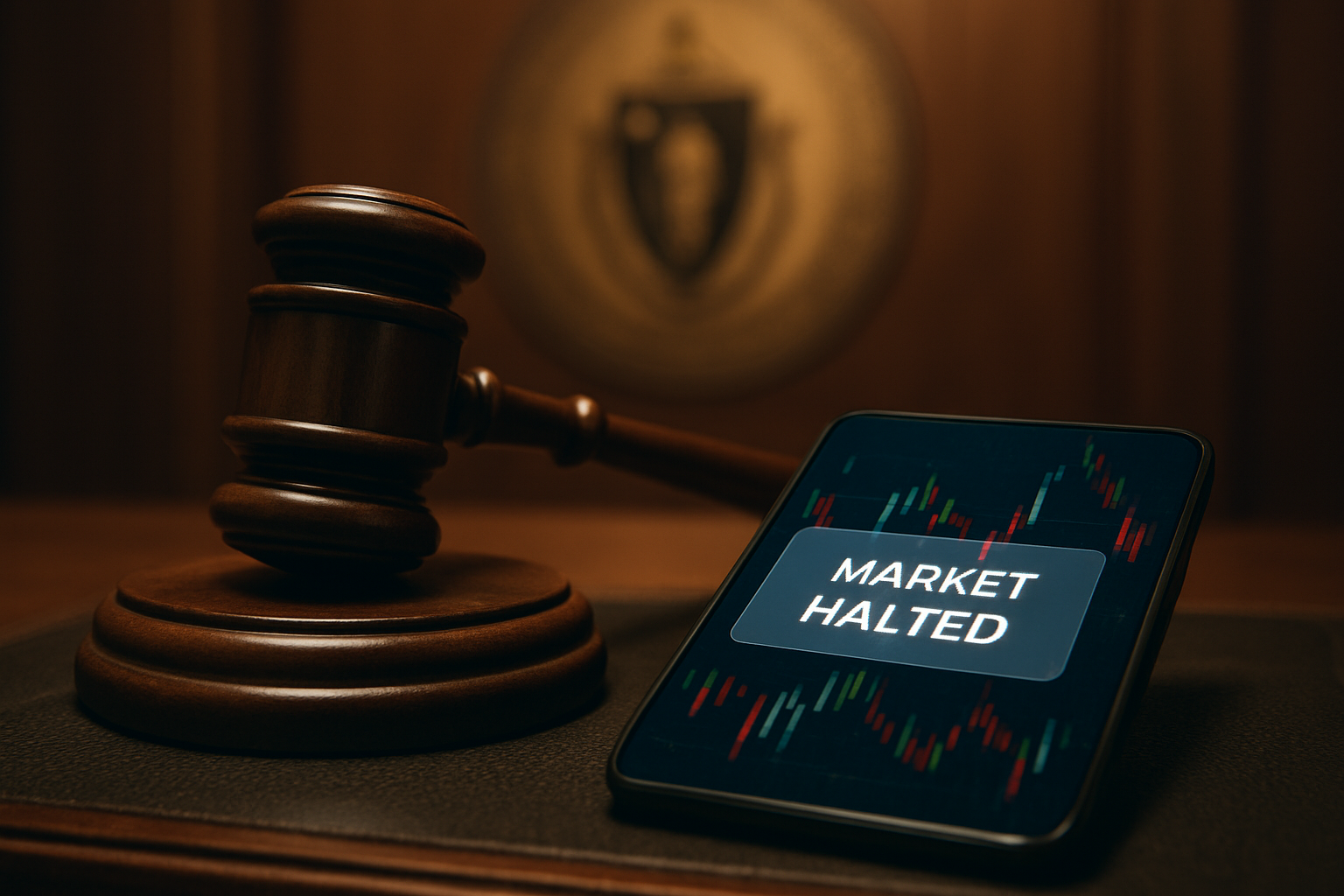
    In a decision that has sent shockwaves through the prediction market and sports betting industries, Judge Christopher Barry-Smith of the Suffolk County Superior Court ruled on January 20, 2026, that the platform Kalshi must halt its sports-related "event contracts" in Massachusetts. The preliminary injunction represents a massive victory for Massachusetts Attorney General Andrea Joy Campbell, who argued that Kalshi’s offerings—despite being regulated as commodities at the federal level—functionally constitute unlicensed sports wagering under state law.

    The news has immediately trickled into the prediction markets themselves. On Polymarket, a contract asking if Kalshi will stop offering sports contracts in Massachusetts by January 31 is currently trading at just 4 cents (4%). This low probability for an immediate exit is not a sign of Kalshi’s legal strength, but rather a reflection of a tactical delay: on January 23, Judge Barry-Smith "kicked the can down the road" by staying the enforcement of his own injunction. This maneuver effectively allows Kalshi to remain operational through the 2026 Super Bowl while the court considers a longer-term stay pending appeal.

    The Market: What's Being Predicted

    The central conflict involves Kalshi’s suite of sports-themed event contracts, including "Moneyline," "Point Spread," and "Over/Under" predictions. While traditional sportsbooks like DraftKings Inc. (NASDAQ: DKNG) and Flutter Entertainment (NYSE: FLUT)—the parent company of FanDuel—operate under the Massachusetts Sports Wagering Law (G.L. c. 23N), Kalshi has long maintained that its products are binary options or "swaps" regulated by the Commodity Futures Trading Commission (CFTC).

    The specific market in question is whether Kalshi will be forced to "geofence" Massachusetts, effectively blocking residents from accessing these specific sports contracts. Since the January 20 ruling, trading volume on the "legal outcome" markets has spiked. Analysts are watching two key fronts:

    • The Immediate Exit: Traders on Polymarket are betting on the specific date Kalshi will flip the switch to "off" for Massachusetts users.
    • The Appellate Survival: On platforms like Manifold Markets, traders are pricing in a roughly 35% chance that Kalshi successfully overturns this injunction in the Massachusetts Appeals Court by the end of Q2 2026.

    Resolution of these markets depends on the next set of court filings due on January 30 and February 4, which will determine if Kalshi gets to keep its "open for business" sign hanging through the spring.

    Why Traders Are Betting

    The volatility in these legal prediction markets is driven by the judge’s explicit rejection of "federal preemption." Kalshi’s primary defense—that its status as a federal Designated Contract Market (DCM) shields it from state gambling laws—was described by Judge Barry-Smith as "overly broad." Traders are betting on whether this judicial skepticism will spread to other jurisdictions.

    Recent news of a "domino effect" has heavily influenced market sentiment. Following the Massachusetts ruling, gaming commissions in New York, Ohio, and Nevada filed the Barry-Smith decision as "supplemental authority" in their own ongoing legal battles against Kalshi. Whale activity on Polymarket has notably shifted toward "Yes" positions for a Massachusetts exit, as the judge's comments about Kalshi’s "self-inflicted" harm suggest a lack of sympathy for the platform's business model.

    Strategic traders are also eyeing the 2026 Super Bowl as a pivot point. The court’s decision to delay the injunction’s enforcement until early February suggests a "last hurrah" for Kalshi’s sports volume in the state. Those betting on the "4-cent" Polymarket contract are banking on the legal bureaucracy moving slower than the NFL playoff calendar.

    Broader Context and Implications

    This injunction is the first of its kind in the United States. While other states have issued cease-and-desist letters, this is the first time a U.S. court has granted a preliminary injunction specifically targeting a CFTC-regulated platform’s sports offerings. It draws a stark line in the "event contract vs. sports betting" debate, with Judge Barry-Smith ruling that if a product "mirrors digital gambling experiences," it must be regulated as such.

    The real-world implications are significant for the broader prediction market ecosystem. If Massachusetts successfully forces Kalshi to obtain a gaming license, it sets a precedent that federal oversight does not equal a "blanket shield" for all products. This could force prediction markets to:

    1. Raise the minimum age from 18 to 21 for certain contracts.
    2. Pay state taxes on "handle" similar to traditional sportsbooks.
    3. Implement strict geofencing, fragmenting the national liquidity that makes prediction markets efficient.

    This case reveals a growing tension between the "innovate first, ask permission later" ethos of fintech and the "historic police powers" of states to regulate vice and gambling.

    What to Watch Next

    The most critical date on the horizon is February 4, 2026, when the court is expected to issue a final ruling on whether the injunction will be stayed during the entirety of Kalshi’s appeal. If the stay is denied, Kalshi will have to immediately block Massachusetts users from sports markets, likely causing the Polymarket "Yes" shares to moon.

    Investors should also monitor the Massachusetts Gaming Commission (MGC). If Kalshi decides to apply for a license rather than fight, it would represent a total surrender of its "not gambling" legal thesis. Additionally, keep an eye on federal movements; if the CFTC issues new guidance in response to this state-level encroachment, it could provide Kalshi with the federal "hook" it needs to revive its preemption argument in the Appeals Court.

    Bottom Line

    The Massachusetts ruling is a watershed moment that challenges the very identity of prediction markets. By labeling sports-based event contracts as "wagers," Judge Barry-Smith has stripped away the linguistic armor Kalshi used to differentiate itself from the likes of DraftKings.

    As a tool, these prediction markets on the case itself show that while the legal community is divided, traders are increasingly pessimistic about Kalshi’s ability to maintain a "one-size-fits-all" federal regulatory approach. If the injunction holds, 2026 may be remembered as the year the "Wild West" of prediction markets was finally fenced in by the traditional boundaries of state gaming law.

    The ultimate outcome will likely depend on whether the Massachusetts Appeals Court views these contracts as legitimate hedging tools for the "knowledge economy" or simply a clever way to bypass the high taxes and strict rules of the sportsbook industry.


    This article is for informational purposes only and does not constitute financial or betting advice. Prediction market participation may be subject to legal restrictions in your jurisdiction.

    PredictStreet focuses on covering the latest developments in prediction markets. Visit the PredictStreet website at https://www.predictstreet.ai/.

  • The Massachusetts “Red Line”: Court Labels Kalshi’s Sports Markets Unlicensed Gambling

    The Massachusetts “Red Line”: Court Labels Kalshi’s Sports Markets Unlicensed Gambling

    On January 20, 2026, the legal landscape for prediction markets shifted dramatically when a Massachusetts court delivered a stinging blow to Kalshi, the leading federally regulated exchange. Suffolk County Superior Court Judge Christopher Barry-Smith granted a preliminary injunction requiring the platform to immediately cease offering its popular sports-related "event contracts" to Massachusetts residents without first obtaining a state-sanctioned sports wagering license.

    The ruling, which takes full effect today, January 23, 2026, marks the first time a state court has successfully pierced the "federal preemption" shield that Kalshi has used to expand nationwide. For months, the platform’s sports markets—ranging from NFL point spreads to individual player performances—had been the primary driver of its explosive growth. However, with the court officially categorizing these contracts as unlicensed gambling rather than financial derivatives, the industry now faces an existential crisis regarding state-level regulation.

    The Market: What's Being Predicted

    At the center of this legal firestorm are Kalshi’s sports event contracts. Unlike traditional sportsbooks that offer "odds," Kalshi frames its markets as binary options where the price (between $0.01 and $0.99) represents the market-implied probability of an event occurring. In 2025, Kalshi aggressively expanded its catalog to include high-liquidity markets on game outcomes, "prop" bets on player yardage, and even live in-game trading for major league events.

    As of early January, sports contracts accounted for an estimated 75% of Kalshi’s total trading volume, which has surged into the billions of dollars since the platform’s landmark legal victories against the federal government in 2024. Before the injunction, the probability of "The Home Team winning by 7 or more points" might trade at $0.55, implying a 55% chance of success. Following the ruling, liquidity in these markets has begun to fragment as Massachusetts traders—who represented a significant portion of the platform's New England user base—are forcibly sidelined.

    The court’s resolution criteria are stark: Kalshi must halt all new sports trades for users with Massachusetts IP addresses or residential credentials by 11:59 PM tonight. While existing positions held by Massachusetts residents will be allowed to settle naturally to avoid a "market-clearing catastrophe," no new capital from the state can enter the sports vertical.

    Why Traders Are Betting

    The legal battle has pitted two fundamentally different views of the world against each other. Kalshi argues its contracts are "swaps"—financial instruments intended for risk management and price discovery—regulated exclusively by the federal Commodity Futures Trading Commission (CFTC). To many traders, this was a distinction with a massive difference: Kalshi offered a "cleaner" financial experience without the heavy "vig" or house edge found at traditional sportsbooks like DraftKings Inc. (NASDAQ:DKNG) or FanDuel.

    However, Massachusetts Attorney General Andrea Joy Campbell argued that Kalshi was effectively "masquerading" as a financial exchange while providing an experience indistinguishable from a digital sportsbook. The state’s case focused on three key factors:

    1. Consumer Demographics: Allegations that the platform allowed 18-to-20-year-olds to trade, bypassing the state’s 21+ requirement for sports betting.
    2. Product Design: The introduction of "parlay-style" event bundles that closely mimicked gambling products.
    3. Revenue Models: Court filings revealed that Kalshi’s revenue was no longer coming primarily from economic hedging but from retail speculation on athletic outcomes.

    Whale activity on the platform had recently shifted toward these sports markets, with some institutional traders using Kalshi to hedge large-scale investments in sports media and advertising. The sudden removal of Massachusetts liquidity has caused minor "slippage" in prices for upcoming Super Bowl LIX markets, as professional arbitrageurs adjust to the smaller pool of participants.

    Broader Context and Implications

    The Massachusetts ruling sets a dangerous precedent for what many call the "fragmentation" of prediction markets. For years, the industry operated under the assumption that a single federal license as a Designated Contract Market (DCM) would provide a "golden ticket" to operate across all 50 states. Judge Barry-Smith’s rejection of this "federal preemption" argument suggests that states still maintain "police powers" to regulate gambling, even if the instrument is technically a financial derivative.

    This decision is a significant victory for traditional gambling regulators and a setback for fintech giants like Robinhood Markets, Inc. (NASDAQ:HOOD), which recently integrated Kalshi’s markets into its trading app. If other states follow Massachusetts' lead—and early reports suggest Nevada and New York are already preparing similar filings—prediction markets could be forced into a "patchwork" compliance model. This would require them to pay state taxes (20% in Massachusetts) and abide by varying state-level consumer protection laws, effectively ending the era of the "frictionless" national exchange.

    Furthermore, this ruling highlights the tension between the CFTC and state Attorneys General. While the CFTC has historically been the primary regulator for commodities, the court’s decision suggests that "sports" may not constitute a "commodity" in the eyes of state law, regardless of how the federal government classifies the trade.

    What to Watch Next

    The immediate focus shifts to the federal courts. Robinhood (NASDAQ:HOOD) has already filed a separate federal lawsuit against the Commonwealth of Massachusetts, arguing that state interference in a federally regulated market violates the Supremacy Clause of the U.S. Constitution. A ruling in that case, expected by late February 2026, could potentially override the Massachusetts state court injunction.

    Additionally, industry analysts are watching Nevada. The Silver State has historically been protective of its licensed gambling industry and is rumored to be citing the Massachusetts "Barry-Smith Precedent" in a forthcoming cease-and-desist order against several prediction platforms. If Nevada moves, it could trigger a "domino effect" among other states with established gaming commissions.

    Finally, keep an eye on Kalshi’s internal pivot. To mitigate the loss of sports revenue, the platform is expected to accelerate the rollout of "pure-play" economic and political markets—such as Federal Reserve rate hike probabilities and legislative outcomes—which are less likely to be classified as "sports betting" under state law.

    Bottom Line

    The Massachusetts ruling is a reality check for the prediction market "gold rush." While Kalshi and its partners have successfully argued that betting on elections and economic data is a legitimate financial activity, the attempt to swallow the $100 billion sports betting market has run into a wall of state-level protectionism and regulatory scrutiny.

    This setback tells us that prediction markets are currently in a "hybrid" state: federally accepted as finance, but state-regulated as gambling. For the industry to reach its multi-trillion-dollar potential, it must resolve this identity crisis. Until a higher federal court or the U.S. Supreme Court settles the preemption debate, the "odds" of a unified national prediction market remain highly volatile. For now, the "Red Line" drawn in Massachusetts serves as a stark reminder that in the eyes of the law, a "swap" on a touchdown still looks an awful lot like a bet.


    This article is for informational purposes only and does not constitute financial or betting advice. Prediction market participation may be subject to legal restrictions in your jurisdiction.

    PredictStreet focuses on covering the latest developments in prediction markets.
    Visit the PredictStreet website at https://www.predictstreet.ai/.

  • The State vs. The Swap: Kalshi’s High-Stakes Legal Battle Over Prediction Markets

    The State vs. The Swap: Kalshi’s High-Stakes Legal Battle Over Prediction Markets

    As of mid-January 2026, the meteoric rise of prediction markets has hit a formidable regulatory wall. Kalshi, the federally regulated exchange that pioneered event contracts in the U.S., is currently locked in a high-stakes legal standoff with several powerful state regulators. The conflict has reached a boiling point in Massachusetts, where a state court is weighing a permanent injunction that could fundamentally redefine whether a prediction is a "trade" or a "bet."

    Traders are watching with bated breath as the "gambling vs. trading" debate moves from theoretical white papers to the courtroom floor. On secondary markets like ForecastEx—the prediction platform launched by Interactive Brokers (NASDAQ: IBKR)—the odds of Kalshi successfully defending its "federal preemption" status in the Third Circuit Court of Appeals are currently hovering at a bullish 81%. However, the ground-level reality in state courts like Massachusetts remains far more volatile, with the future of the $24 billion prediction market industry hanging in the balance.

    The Market: What's Being Predicted

    The central focus of the current legal drama is a series of lawsuits and cease-and-desist orders targeting Kalshi’s expansion into sports-related event contracts. While Kalshi secured a landmark victory at the federal level to host election markets in late 2024, its 2025 move into NFL, NBA, and collegiate sports outcomes triggered immediate retaliation from state gaming commissions.

    In Massachusetts, Attorney General Andrea Joy Campbell filed a formal lawsuit in September 2025 in Suffolk County Superior Court, alleging that Kalshi is operating an "unlicensed sports wagering enterprise." The state is seeking a permanent injunction to geofence Massachusetts residents out of the platform. Meanwhile, the New York State Gaming Commission issued a cease-and-desist order in October 2025, which Kalshi is currently challenging in the Southern District of New York (SDNY).

    On the trading side, these legal outcomes have become markets themselves. Liquidity is surging in "lawsuit contracts" on platforms like ForecastEx and Polymarket. The key resolution criteria for these markets typically revolve around whether a federal court will rule that the Commodity Exchange Act (CEA) preempts state gambling laws. If Kalshi wins, it solidifies the status of "event-based swaps" as financial derivatives; if it loses, it may be forced to obtain 50 separate state gaming licenses, a death knell for its current business model.

    Why Traders Are Betting

    The bullishness seen in the 81% "Yes" odds for a Kalshi win in the Third Circuit (New Jersey) is driven by the legal doctrine of federal preemption. Kalshi’s legal team, bolstered by a coalition that includes Robinhood (NASDAQ: HOOD), argues that as a Designated Contract Market (DCM), Kalshi falls under the exclusive jurisdiction of the Commodity Futures Trading Commission (CFTC). They contend that their contracts are "swaps" intended for hedging economic risk—such as a local business owner hedging against the loss of revenue if a home team loses a playoff game.

    Conversely, skeptics and state regulators point to the lack of traditional "responsible gaming" safeguards. In Massachusetts, Judge Christopher Barry-Smith has expressed skepticism, questioning how the outcome of a "trivial" sports game can be classified as a sophisticated financial derivative. This skepticism is mirrored by a nationwide class-action lawsuit filed in New York in November 2025, which alleges that Kalshi acts as a "shadow sportsbook" rather than a neutral exchange.

    The entry of traditional sportsbooks into the fray has also shifted market sentiment. Initially, giants like DraftKings (NASDAQ: DKNG) and FanDuel, owned by Flutter Entertainment (NYSE: FLUT), lobbied against prediction markets. However, in a significant pivot in late 2025, both companies launched their own "prediction" products in states where traditional sports betting is illegal, such as California and Texas. Traders see this as a sign that the industry is converging, which could either provide Kalshi with powerful allies or create a more crowded and hostile regulatory environment.

    Broader Context and Implications

    This conflict represents the most significant challenge to the prediction market industry since the 2024 election cycle. It reveals a deep-seated tension between the 20th-century model of state-regulated gambling and the 21st-century model of federally-regulated decentralized (or semi-decentralized) finance. If Kalshi prevails, it could open the door for a massive "financialization" of everyday events, allowing everything from the weather to pop culture milestones to be traded as hedgeable assets on platforms integrated with retail giants like Robinhood.

    The historical accuracy of these markets has often been their best defense. During the 2024 elections, prediction markets were widely cited for their ability to aggregate information more efficiently than traditional polling. However, state regulators argue that efficiency does not equal legality. They maintain that the state's "police power" to regulate gambling is a core constitutional right that cannot be swept away by the CFTC’s designation of an exchange.

    Furthermore, the formation of the "Coalition for Prediction Markets" (CPM) in December 2025—consisting of Kalshi, Robinhood, and Coinbase—suggests that the industry is preparing for a legislative solution. The proposed "Safe Harbor Act of 2026" is currently being discussed in Congress, which would provide permanent federal protection for these markets, effectively ending the state-by-state legal battles.

    What to Watch Next

    The most immediate milestone is the ruling from Judge Barry-Smith in the Massachusetts state court, expected by late February 2026. A win for the state there would likely trigger an immediate appeal by Kalshi, but it could also embolden other states like Illinois and Pennsylvania to issue their own cease-and-desist orders.

    In the federal arena, the Third Circuit’s decision regarding the New Jersey cease-and-desist will be a watershed moment. If the court upholds the preliminary injunction in favor of Kalshi, it will create a powerful legal precedent that "event-based swaps" are indeed federally protected derivatives. This would likely move the "Federal Preemption" odds on Polymarket toward the 90% range.

    Finally, keep an eye on Robinhood's acquisition of a 90% stake in MIAXdx. This move indicates that the retail giant is moving toward hosting its own contracts, potentially bypassing the current legal drama surrounding Kalshi by using a different regulatory architecture.

    Bottom Line

    The battle between Kalshi and the states is more than just a legal technicality; it is a fight for the soul of the modern exchange. While the current 1/19/2026 market odds favor Kalshi’s federal defense, the aggressive stance taken by Massachusetts and New York shows that state regulators are not going down without a fight.

    For prediction market participants, these legal battles offer a unique, "meta" trading opportunity. The markets aren't just predicting the news anymore; they are predicting the very rules that will govern how we trade the news in the decade to come. Whether Kalshi is ultimately viewed as a revolutionary financial tool or an unlicensed bookie will depend on which side of the "preemption" argument the courts finally land on.


    This article is for informational purposes only and does not constitute financial or betting advice. Prediction market participation may be subject to legal restrictions in your jurisdiction.

    PredictStreet focuses on covering the latest developments in prediction markets.
    Visit the PredictStreet website at https://www.predictstreet.ai/.