Tag: Manufacturing

  • The Resilient Giant: A Deep-Dive into First Solar (FSLR) Amidst the 2025 Renewable Shift

    The Resilient Giant: A Deep-Dive into First Solar (FSLR) Amidst the 2025 Renewable Shift

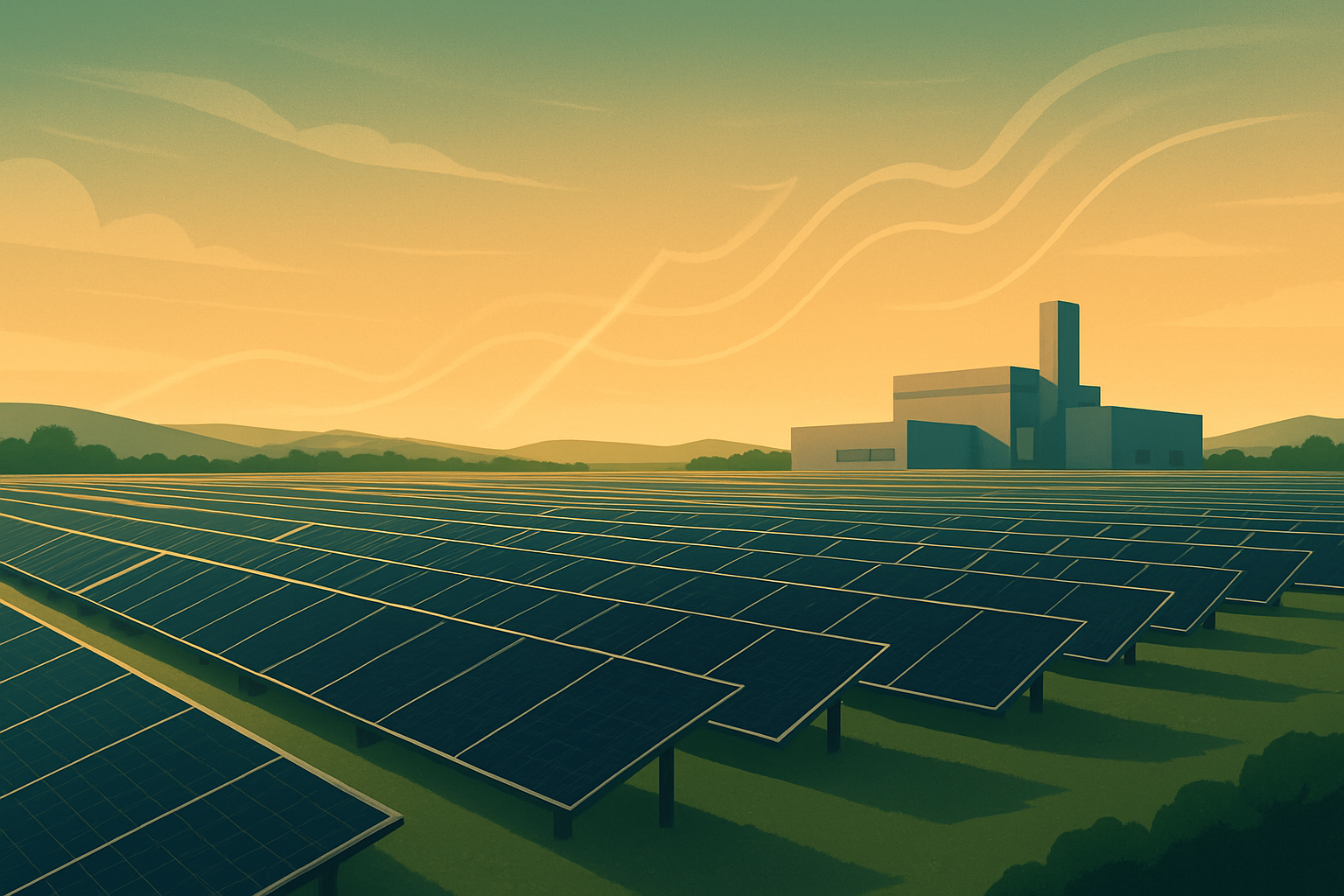
    As of December 24, 2025, the renewable energy sector finds itself at a historic crossroads. While many clean energy stocks have weathered a turbulent eighteen months characterized by high interest rates and a sweeping shift in the U.S. political landscape, First Solar, Inc. (NASDAQ: FSLR) has emerged not just as a survivor, but as a dominant outlier. At a time when residential solar installers have struggled with consumer demand and shifting net metering policies, First Solar—the largest solar manufacturer in the Western Hemisphere—has fortified its position.

    The company is currently in focus due to its unique "policy-insulated" business model. Following the legislative developments of 2025, First Solar has demonstrated that its thin-film technology and vertically integrated domestic manufacturing are more than just competitive advantages; they are strategic national assets. This article explores how First Solar has navigated the recent industry pullback to post record earnings and why it remains the primary bellwether for the American energy transition.

    Historical Background

    Founded in 1999 in Tempe, Arizona, First Solar’s journey is one of contrarian technological commitment. While the global solar industry moved almost entirely toward crystalline silicon (c-Si) photovoltaic (PV) technology—a market now dominated by Chinese manufacturers—First Solar doubled down on Cadmium Telluride (CdTe) thin-film technology.

    In its early years, the company focused on making solar affordable through high-volume manufacturing. By the late 2000s, it became the first solar company to reduce manufacturing costs to under $1 per watt. Over the following decade, the company shifted its strategy from selling complete power plants to focusing on its core strength: high-efficiency module manufacturing. Key transformations include the retirement of its legacy Series 4 and 6 lines in favor of the current Series 7 platform, a move that successfully modernized its fleet to compete on power density and reliability in the utility-scale market.

    Business Model

    First Solar’s business model is characterized by two distinct pillars: technological differentiation and vertical integration. Unlike its competitors who often assemble modules from third-party cells and wafers, First Solar controls its entire manufacturing process—from glass to finished panel—under one roof. This reduces supply chain risk and carbon footprint.

    The company primarily targets the utility-scale market, selling large-format modules to developers and owners of massive solar farms. Its revenue streams are bolstered by the Section 45X Advanced Manufacturing Production Credit, a federal incentive for domestic production. By focusing on the U.S. market, where its modules qualify for "Domestic Content" bonuses under federal law, First Solar secures a premium price and high demand that many international rivals cannot match.

    Stock Performance Overview

    Over the long term, First Solar has been a volatile but rewarding investment.

    • 1-Year Performance: In 2025, FSLR has outperformed the broader S&P 500 and the MAC Global Solar Energy Index, gaining approximately 53% YTD as of late December.
    • 5-Year Performance: The stock has seen a meteoric rise, increasing over 250% since late 2020, largely fueled by the passage of the Inflation Reduction Act (IRA) and the subsequent protectionist trade policies that favored domestic manufacturers.
    • 10-Year Performance: The decade-long view shows a company that survived the "solar winter" of the mid-2010s to become a multibillion-dollar powerhouse, though the journey was marked by significant drawdowns during periods of global oversupply.

    The recent pullback in the wider renewable sector in late 2024 and early 2025 actually served to highlight FSLR's relative strength, as investors rotated out of interest-rate-sensitive residential solar into FSLR's stable utility-scale backlog.

    Financial Performance

    First Solar enters the final week of 2025 with what analysts call a "fortress balance sheet." In its Q3 2025 report, the company announced record net sales of $1.6 billion.

    • Earnings: Full-year 2025 EPS is guided between $14.00 and $15.00, a massive jump from previous years.
    • Margins: Gross margins have expanded to nearly 50% in certain segments, largely thanks to the realization of 45X tax credits and improved manufacturing efficiencies in its new Series 7 factories.
    • Cash Position: The company maintains $1.5 billion in net cash, providing a significant buffer for capital expenditures.
    • Backlog: First Solar boasts a contracted backlog of 53.7 GW, valued at $16.4 billion, with some orders extending into 2030, providing remarkable revenue visibility.

    Leadership and Management

    Under the leadership of CEO Mark Widmar, who took the helm in 2016, First Solar has prioritized financial discipline and long-term scaling over short-term market share grabs. Widmar is credited with the high-stakes decision to pivot the company toward Series 6 and eventually Series 7, as well as his aggressive advocacy for U.S. trade enforcement.

    The management team, including CFO Alex Bradley, is highly regarded for its transparent communication regarding tax credit monetization and its conservative approach to capacity expansion. The board of directors maintains a strong reputation for corporate governance, focusing on sustainability and ethical sourcing, which has become a key selling point in an industry plagued by forced-labor concerns in overseas supply chains.

    Products, Services, and Innovations

    The crown jewel of First Solar’s current portfolio is the Series 7 module. Produced in its state-of-the-art facilities in Ohio, Alabama, and Louisiana, the Series 7 is designed specifically for the U.S. utility-scale market.

    • Thin-Film Advantage: CdTe modules perform better than crystalline silicon in high-temperature and humid environments, which are common in many high-growth solar regions.
    • Innovation Pipeline: The company is investing heavily in tandem technology—combining CdTe with perovskites—to break through current efficiency ceilings.
    • Sustainability: First Solar’s modules are the most environmentally friendly in the industry, with the lowest carbon and water footprint and a sophisticated global recycling program.

    Competitive Landscape

    The solar industry is a global battlefield. First Solar’s primary rivals include Chinese giants such as JinkoSolar (NYSE: JKS), Canadian Solar (NASDAQ: CSIQ), and Hanwha Qcells.

    • Competitive Strengths: First Solar’s primary moat is its immunity to the U.S. Department of Commerce’s anti-dumping and countervailing duty (AD/CVD) investigations on Chinese-linked silicon products. Furthermore, its technology is completely silicon-free, shielding it from the volatility of polysilicon pricing.
    • Weaknesses: Thin-film modules historically had lower energy conversion efficiency than top-tier silicon modules, though First Solar has narrowed this gap significantly in recent years.

    Industry and Market Trends

    Three major trends are currently defining the industry:

    1. AI and Data Centers: The explosion of artificial intelligence has led tech giants like Alphabet (Google) and Microsoft to seek massive amounts of carbon-free energy. Alphabet’s recent acquisition of Intersect Power has directly benefited First Solar, securing a multi-gigawatt pipeline.
    2. Domestic Manufacturing Resurgence: Governments globally are subsidizing local production to ensure energy sovereignty.
    3. Grid Constraints: The "pullback" in some solar segments is attributed to interconnection delays and aging grid infrastructure, which remains the primary bottleneck for utility-scale growth.

    Risks and Challenges

    Despite its success, First Solar faces several headwinds:

    • Policy Cliff: While the "One Big Beautiful Bill" (OBBB) of 2025 preserved manufacturing credits, it repealed the "transferability" of these credits starting in 2028. This will force First Solar to find new ways to utilize its massive tax benefits.
    • Technology Risk: If silicon-based "TOPCon" or "HJT" technologies see a massive drop in cost or a surge in efficiency, First Solar’s CdTe could lose its competitive edge.
    • Oversupply: Global overcapacity from Chinese manufacturers continues to put downward pressure on module prices worldwide, even if First Solar is somewhat protected in the U.S. market.

    Opportunities and Catalysts

    • New Capacity: The commercial start of the Louisiana facility in August 2025 and the full ramp of the Alabama plant are set to drive volume growth through 2026.
    • Domestic Content Rules: Stricter "Foreign Entity of Concern" (FEOC) rules taking effect in 2026 will likely disqualify many competitors from federal incentives, leaving First Solar as the primary beneficiary.
    • Tandem Cells: The potential commercialization of a CdTe-perovskite tandem module could represent a generational leap in power output.

    Investor Sentiment and Analyst Coverage

    Wall Street remains largely bullish on First Solar. As of late 2025, the consensus rating is a "Strong Buy." Analysts point to the company’s $14+ EPS and its role as a "hedge" against geopolitical instability. Hedge funds have increased their positions in FSLR throughout 2025, viewing it as a safer alternative to the high-beta residential solar players like Enphase (NASDAQ: ENPH) or SolarEdge (NASDAQ: SEDG).

    Regulatory, Policy, and Geopolitical Factors

    First Solar is perhaps the most politically significant energy stock in America. It is a major beneficiary of:

    • Section 45X Credits: Providing roughly $0.17 per watt in subsidies, which significantly pads the bottom line.
    • Section 301 Tariffs: Protectionist measures that make Chinese modules more expensive in the U.S.
    • National Security Narrative: As the U.S. seeks to decouple its energy transition from Chinese supply chains, First Solar is frequently cited by policymakers as the model for "Made in America" clean energy.

    Conclusion

    As we close out 2025, First Solar stands as a testament to the power of strategic focus. While the broader renewable sector has struggled with the "recent pullback" caused by interest rate uncertainty and policy shifts, First Solar has used its unique technological niche and domestic manufacturing footprint to separate itself from the pack.

    For investors, First Solar represents a rare combination of high growth, massive government backing, and a clear competitive moat. While the 2028 change in tax credit transferability and the ongoing challenge of grid interconnection are real risks, the company’s massive backlog and role in powering the AI-driven data center boom provide a compelling long-term narrative. In the volatile world of green energy, First Solar has proven that sometimes, being different—and being domestic—is the ultimate winning strategy.


    This content is intended for informational purposes only and is not financial advice.

  • The National Champion’s Gambit: A 2025 Deep-Dive into Intel’s Turnaround

    The National Champion’s Gambit: A 2025 Deep-Dive into Intel’s Turnaround

    As of December 22, 2025, Intel Corporation (NASDAQ: INTC) stands as perhaps the most significant industrial experiment in American history. Once the undisputed king of the semiconductor world, the company has spent the last four years in a high-stakes race to reinvent itself. Today, Intel is no longer just a chip designer; it is a "national champion" bifurcated into a product powerhouse and a nascent foundry giant.

    With the recent launch of its 18A process technology into high-volume manufacturing and a historic equity partnership with the U.S. government, Intel is attempting to prove that the "Integrated Device Manufacturing" (IDM 2.0) strategy can survive in an era dominated by specialized rivals like NVIDIA (NASDAQ: NVDA) and manufacturing behemoths like TSMC (NYSE: TSM). This article explores whether Intel’s "survival mode" has successfully pivoted into a sustainable growth phase.

    Historical Background

    Founded in 1968 by Robert Noyce and Gordon Moore, Intel was the literal bedrock of Silicon Valley. Under the legendary leadership of Andy Grove, the company adopted the "Only the Paranoid Survive" mantra, successfully pivoting from memory chips to microprocessors. Throughout the 1990s and 2000s, the "Intel Inside" campaign and the "Tick-Tock" manufacturing model allowed the company to maintain a near-monopoly on PC and server chips.

    However, the 2010s were marked by complacency. Intel missed the mobile revolution, allowing ARM-based processors to dominate smartphones. More critically, the company stumbled on its 10nm and 7nm process nodes, leading to years of delays that allowed Advanced Micro Devices (NASDAQ: AMD) to seize significant market share and TSMC to become the world’s most advanced manufacturer. By 2021, the return of Gelsinger signaled a "hail mary" attempt to regain process leadership, a journey that has defined the company’s trajectory through late 2025.

    Business Model

    Intel has fundamentally restructured its business into two distinct, albeit interconnected, reporting segments:

    1. Intel Product: This includes the Client Computing Group (CCG), which focuses on PC and laptop processors; the Data Center and AI (DCAI) group; and Network and Edge (NEX). This segment remains Intel's primary cash cow, though it now competes as a "fabless" customer of its own internal foundry.
    2. Intel Foundry: Now operated as an independent subsidiary with its own board, this unit aims to manufacture chips not only for Intel but for external giants like Microsoft and Amazon. By Dec 2025, the foundry model has reached a "High-Volume Manufacturing" (HVM) state for its 18A node, marking the first time Intel has opened its most advanced "kitchen" to the outside world.

    Stock Performance Overview

    The last five years have been a rollercoaster for INTC shareholders.

    • 1-Year Performance: The stock has seen a modest recovery of approximately 12% in 2025 as the company hit technical milestones on its 18A node.
    • 5-Year Performance: Down roughly 35%, reflecting the massive capital expenditures, dividend suspension, and market share losses to AMD and NVIDIA.
    • 10-Year Performance: Intel has significantly underperformed the PHLX Semiconductor Index (SOX), with its valuation remaining stagnant while the broader sector experienced a multi-trillion dollar boom.

    The stock faced significant pressure in mid-2025 due to shareholder dilution after the U.S. Department of Commerce took an equity stake in the company as part of a revised CHIPS Act funding agreement.

    Financial Performance

    Intel's financials in late 2025 reflect a company in the middle of a painful restructuring.

    • Revenue: 2024 revenue settled at $53.1 billion. For Q3 2025, Intel reported $13.7 billion, a 3% year-over-year increase.
    • Profitability: Gross margins have stabilized between 35-40%, a far cry from the 60% margins of the previous decade. The company reported a non-GAAP EPS of $0.23 in Q3 2025.
    • Cost Management: The company successfully executed a $10 billion cost-reduction plan, which included a 15,000-person workforce reduction (approx. 15% of the global staff).
    • Cash Flow: Free cash flow remains strained by massive capital expenditures (approx. $18 billion in 2025) required to build out fabs in Arizona and complete the "Five Nodes in Four Years" (5N4Y) roadmap.

    Leadership and Management

    In a surprise transition in early 2025, Pat Gelsinger stepped down as CEO, assuming a role on the board to oversee the "Secure Enclave" government initiatives. He was succeeded by Lip-Bu Tan, the former Cadence Design Systems CEO and semiconductor veteran.

    Tan’s leadership has been characterized by "ruthless prioritization." Under his watch, Intel has trimmed non-core projects—including the cancellation of the original Falcon Shores XPU and the sale of a majority stake in Altera—to focus exclusively on manufacturing yields and AI PC leadership. The board has also been refreshed with more manufacturing and software expertise to address the company’s historical weaknesses in those areas.

    Products, Services, and Innovations

    The centerpiece of Intel’s 2025 lineup is the 18A (1.8nm class) process node. This technology introduces two industry-firsts at scale:

    • RibbonFET: A gate-all-around (GAA) transistor architecture that improves power efficiency.
    • PowerVia: A backside power delivery system that simplifies chip routing and boosts performance.

    In December 2025, Intel launched Panther Lake, its first mobile CPU built on the 18A node, aimed at the "AI PC" market. On the data center side, Xeon 6 (Granite Rapids) has helped the company defend its server footprint, though it continues to play catch-up with NVIDIA in the high-end GPU accelerator space. The AI strategy has shifted toward Jaguar Shores, a discrete GPU focused on AI inference, slated for 2026.

    Competitive Landscape

    Intel faces a "war on two fronts":

    • Manufacturing: TSMC remains the gold standard. While Intel’s 18A is technically competitive with TSMC’s N2 (2nm), TSMC retains a massive advantage in ecosystem support and customer trust.
    • Design: AMD has reached a record 41% revenue share in the server market as of late 2025. Meanwhile, NVIDIA’s dominance in AI training (H100/Blackwell) has left Intel’s Gaudi 3 as a niche, price-conscious alternative rather than a direct competitor.
    • The ARM Threat: Qualcomm (NASDAQ: QCOM) and Apple (NASDAQ: AAPL) continue to push ARM-based silicon into the laptop market, threatening Intel’s core "Wintel" dominance.

    Industry and Market Trends

    The semiconductor industry in late 2025 is driven by three macro trends:

    1. AI Everywhere: The shift from centralized AI training to "edge" AI inference has created a massive opportunity for the AI PC—a segment Intel is aggressively targeting with its NPU-equipped processors.
    2. Geopolitical Decoupling: The "China Plus One" strategy is forcing companies to diversify supply chains. Intel is the primary beneficiary of this trend in the Western hemisphere.
    3. Foundry Outsourcing: As the cost of leading-edge nodes exceeds $20 billion per fab, even giants like Microsoft are looking for domestic manufacturing partners to reduce reliance on Taiwan.

    Risks and Challenges

    • Execution Risk: While 18A has entered production, the "yield ramp" (the percentage of usable chips per wafer) remains a closely guarded secret. If yields are low, the Foundry business will bleed cash.
    • Customer Concentration: Aside from Microsoft and AWS, Intel Foundry has yet to sign a "mega-customer" like Apple or NVIDIA, who are essential for long-term viability.
    • Software Gap: Intel’s OneAPI and AI software stack still lag significantly behind NVIDIA’s CUDA, making it difficult for developers to switch to Intel hardware for AI workloads.
    • Dilution: The U.S. government’s ~9% equity stake and potential future funding rounds may continue to dilute existing shareholders.

    Opportunities and Catalysts

    • Intel Foundry Independence: There is persistent speculation that Intel may fully spin off its Foundry business into a separate public company by 2027, which could unlock value for shareholders.
    • The "Sovereign AI" Boom: Governments worldwide are investing in domestic compute. Intel’s "Secure Enclave" program for the U.S. military provides a steady, high-margin revenue stream.
    • 14A Node Development: Success with 18A paves the way for the 14A (1.4nm) node, which Intel claims will be the first to use "High-NA EUV" lithography at scale.

    Investor Sentiment and Analyst Coverage

    Wall Street remains cautious. As of December 2025, the consensus rating is a "Hold."

    • Bulls argue that Intel is "too big to fail" and is currently valued like a distressed asset despite owning the world's second-most advanced manufacturing tech.
    • Bears point to the declining market share in data centers and the massive capital intensity of the foundry business, which they believe will suppress earnings for years.
    • Institutional Moves: Hedge fund activity has been mixed, though several "distressed value" funds have increased positions, betting on a successful 18A ramp.

    Regulatory, Policy, and Geopolitical Factors

    Intel is now inextricably linked to U.S. industrial policy. By December 2025, the company has received a total of $11.1 billion in CHIPS Act support, including $3.2 billion for the "Secure Enclave."

    However, this support comes with strings. The U.S. government now holds a veto over significant corporate changes and has placed strict limits on Intel’s manufacturing expansions in China. Geopolitical tensions over Taiwan continue to act as a "shadow subsidy" for Intel, as Western customers seek a "safe" manufacturing alternative to TSMC.

    Conclusion

    Intel enters 2026 as a company that has successfully stared down an existential crisis but has not yet escaped the gravity of its past mistakes. The technical success of the 18A node is a monumental achievement that puts Intel back in the leading-edge conversation. However, the financial reality remains grim: high debt, lower-than-historic margins, and a government partner that is now a major shareholder.

    For investors, Intel is no longer a "safe" blue-chip stock; it is a high-stakes play on the future of American manufacturing and the AI PC. The next 12 months will be defined by one metric: the volume of external customers who actually commit their flagship designs to Intel’s fabs. If Intel can prove it is a reliable partner to the world, the turnaround will be complete. If not, it may remain a perpetual "National Strategic Asset" with limited upside for private equity.


    This content is intended for informational purposes only and is not financial advice. Today's date: 12/22/2025.

  • The Rise of Jabil (JBL): From Circuit Boards to AI Infrastructure Powerhouse

    The Rise of Jabil (JBL): From Circuit Boards to AI Infrastructure Powerhouse

    This article is intended for informational purposes only and is not financial advice. All data and events are presented as of December 22, 2025.
    Introduction

    In the high-stakes world of advanced manufacturing, few companies have undergone a transformation as radical or as rewarding as Jabil Inc. (NYSE: JBL). Once perceived as a traditional contract manufacturer tethered to the volatile cycles of consumer electronics, Jabil has successfully repositioned itself as a linchpin of the global AI infrastructure and specialized healthcare ecosystems. As of late 2025, the company has emerged as a top performer within the S&P 500, punctuated by a recent single-day surge of 7.3% following a "double beat" in its fiscal 2026 Q1 earnings report. This article explores the strategic maneuvers, leadership shifts, and technological innovations that have propelled Jabil to the forefront of the industrial technology sector.

    Historical Background

    Jabil’s story began in 1966 in Detroit, Michigan. Founded by James Golden and Bill Morean—whose first names were combined to form the "Ja-Bil" moniker—the company started modestly as a circuit board repair shop. Over the following decades, it evolved into a global powerhouse, going public in 1993 and expanding aggressively into Europe and Asia.

    The most defining moment in its modern history occurred in late 2023, when Jabil finalized the $2.2 billion sale of its Mobility business to BYD Electronic. This divestiture was more than just a financial transaction; it was a strategic declaration. By exiting the high-volume but low-margin smartphone casing market, Jabil freed up capital and management bandwidth to focus on more complex, higher-margin sectors like cloud computing, renewable energy, and medical devices. This pivot set the stage for the record-breaking performance seen throughout 2024 and 2025.

    Business Model

    Jabil operates a sophisticated business model divided into two primary segments, designed to balance scale with high-margin specialization:

    • Diversified Manufacturing Services (DMS): This segment focuses on high-growth industries with long product lifecycles. It includes healthcare, automotive (specifically electric vehicles), and high-end consumer products. Key partners include Apple and Johnson & Johnson. The DMS segment is characterized by higher engineering complexity and deeper integration into the customer’s R&D process.
    • Electronics Manufacturing Services (EMS): This segment leverages Jabil’s massive global footprint to serve the IT infrastructure, cloud, and 5G sectors. Major clients include Amazon Web Services (AWS) and Cisco. While traditionally lower margin than DMS, the EMS segment has seen a significant profitability boost in 2025 due to the explosion in demand for AI-optimized server racks and networking hardware.

    Stock Performance Overview

    Over the past decade, Jabil has evolved from a steady dividend payer to a high-octane growth stock.

    • 1-Year Performance: In 2025, JBL has been a standout in the S&P 500, gaining nearly 50% year-to-date. The 7.3% jump on December 17, 2025, took the stock to new all-time highs, surpassing the $225 mark.
    • 5-Year Performance: Since 2020, the stock has outperformed the broader manufacturing sector by a wide margin, driven by its early pivot toward EV components and healthcare tech.
    • 10-Year Performance: Long-term investors have seen substantial wealth creation, with the stock price increasing more than fivefold as the company moved from a $15 billion revenue run-rate to its current status as a $30+ billion titan.

    Financial Performance

    Jabil’s recent financial results reflect the success of its "portfolio pruning" strategy. For the first quarter of fiscal 2026, the company reported:

    • Revenue: $8.3 billion, beating estimates.
    • Core EPS: $2.85, a significant beat over the $2.62 consensus.
    • Margins: Core operating margins expanded to 5.7%, a record high for the company, driven by the mix shift toward AI infrastructure.
    • Capital Allocation: The company continues to be a "buyback machine," having repurchased over $1 billion in shares in the previous fiscal year. With a forward P/E ratio currently sitting between 24x and 26x, analysts suggest the stock still holds a "scarcity premium" as one of the few pure-play beneficiaries of AI hardware scaling.

    Leadership and Management

    The current era of Jabil is defined by the leadership of Michael Dastoor, who took the helm as CEO in May 2024. Dastoor, the former CFO, stepped into the role following the departure of Kenny Wilson. Dastoor has been credited with the "Jabil 3.0" strategy—a relentless focus on capital efficiency and "margin over volume." Under his tenure, Jabil has become more selective about its partnerships, choosing to walk away from low-margin contracts to preserve its industry-leading Return on Invested Capital (ROIC). The management team is highly regarded for its transparency and disciplined approach to capital expenditure.

    Products, Services, and Innovations

    Innovation at Jabil is currently centered on two high-growth pillars:

    1. AI and Data Centers: Jabil has become a leader in liquid cooling solutions and high-speed optical interconnects. As AI models require more power and generate more heat, Jabil’s specialized cooling systems have become essential for hyperscale data centers.
    2. Healthcare and Life Sciences: Following the acquisition of Pharmaceutics International, Inc. (Pii) in late 2024, Jabil has expanded into "CDMO" (Contract Development and Manufacturing Organization) services. This allows Jabil to not only manufacture medical devices but also participate in the regulated drug-delivery market.
    3. Automotive: Despite broader market fluctuations in EVs, Jabil remains a key supplier of power electronics and Advanced Driver Assistance Systems (ADAS) hardware, benefiting from the increasing electronic content per vehicle.

    Competitive Landscape

    Jabil competes in a crowded field, yet it has carved out a distinct niche:

    • Foxconn (TPE: 2317): While Foxconn remains the largest by volume, its heavy reliance on consumer electronics and China-centric manufacturing makes it a more volatile play compared to Jabil’s diversified, high-margin portfolio.
    • Flex (NASDAQ: FLEX): Flex is Jabil’s closest rival. While both companies have shifted toward industrial and healthcare markets, Jabil currently leads in the specific sub-sector of AI-driven thermal management.
    • Sanmina (NASDAQ: SANM) and Celestica (NYSE: CLS): These firms are smaller and more specialized. Jabil maintains a "scale advantage" over them, allowing it to negotiate better terms with component suppliers.

    Industry and Market Trends

    The EMS industry is currently being reshaped by "Reshoring" and "Friend-shoring." In 2025, companies are increasingly moving manufacturing closer to the end consumer to avoid supply chain disruptions. Jabil’s extensive footprint in the United States, Mexico, and Vietnam has positioned it perfectly to benefit from this trend. Furthermore, the "AI Arms Race" has shifted the industry focus from simple assembly to complex system integration, a transition that Jabil’s engineering-heavy approach is well-suited for.

    Risks and Challenges

    Despite its stellar performance, Jabil is not without risks:

    • Customer Concentration: While improved, Jabil still relies heavily on a handful of "top-ten" customers (like Apple and Amazon). A change in the sourcing strategy of any of these giants could impact revenue.
    • Geopolitical Friction: Although the BYD sale reduced its China exposure, Jabil still maintains facilities globally that could be affected by trade wars or localized conflicts.
    • Margin Maintenance: As Jabil moves into more complex AI hardware, the cost of R&D and advanced robotics is rising. Maintaining its 5% plus operating margins requires near-perfect execution.

    Opportunities and Catalysts

    Several near-term catalysts could drive the stock even higher:

    • NVIDIA Partnerships: Rumors of expanded collaborations for liquid-cooled Blackwell-architecture server racks could serve as a major revenue driver in 2026.
    • Healthcare Expansion: Continued M&A in the medical device and pharmaceutical manufacturing space could further de-risk the company's earnings by adding non-cyclical revenue streams.
    • S&P 500 Weighting: As Jabil's market cap grows, increased weighting in index funds will likely drive further passive inflows.

    Investor Sentiment and Analyst Coverage

    Wall Street is overwhelmingly bullish on Jabil. Following the December 2025 earnings beat, several major investment banks raised their price targets to the $250–$260 range. Institutional ownership remains high, with major funds viewing Jabil as a "infrastructure play" on the AI revolution. Retail sentiment has also shifted, with the stock frequently trending on financial platforms as investors look for "picks and shovels" companies that support the cloud giants.

    Regulatory, Policy, and Geopolitical Factors

    The regulatory environment in 2025 is increasingly focused on "technological sovereignty." Jabil has benefited from incentives such as the CHIPS Act and similar European policies that encourage domestic manufacturing of critical infrastructure. However, the company must navigate a complex web of environmental, social, and governance (ESG) regulations, particularly regarding carbon-neutral manufacturing and conflict-free mineral sourcing in its supply chain.

    Conclusion

    Jabil Inc. has successfully navigated one of the most impressive strategic pivots in the manufacturing sector. By divesting its low-margin mobility business and doubling down on AI infrastructure and healthcare, the company has transformed into a high-growth, high-margin powerhouse. Its recent 7.3% stock surge and position as a top S&P 500 performer are not merely the results of a single earnings beat, but the culmination of years of disciplined capital allocation and engineering excellence. For investors, Jabil represents a sophisticated way to play the AI and healthcare megatrends without the extreme volatility of pre-revenue startups. As 2026 approaches, Jabil’s ability to execute on its "3.0 Strategy" will determine if it can sustain its newfound status as a premier industrial technology leader.


    This content is intended for informational purposes only and is not financial advice.

  • Deep Dive: Amber Enterprises (AMBER) and the Rs 500 Crore Punjab R&D Bet

    Deep Dive: Amber Enterprises (AMBER) and the Rs 500 Crore Punjab R&D Bet

    As of December 19, 2025, the Indian industrial landscape is witnessing a significant pivot from assembly-led growth to deep-tech engineering. At the heart of this transformation is Amber Enterprises India Ltd (NSE: AMBER), a company that has long functioned as the silent backbone of India’s cooling industry. Recently, Amber made headlines with a strategic commitment of Rs 500 crore to establish a cutting-edge Research & Development (R&D) centre in Rajpura, Punjab. This move is not merely an expansion of capacity but a clear signal of the company's intent to dominate the high-end HVAC (Heating, Ventilation, and Air Conditioning) design space and reduce the nation’s reliance on imported technology.

    Historical Background

    Founded in 1990 by Vivek K. Bansal, Amber Enterprises began its journey as a modest sheet metal component manufacturer in Rajpura, Punjab. Over the next three decades, the company underwent a radical metamorphosis. What started as a small-scale vendor for consumer durable brands evolved into a multi-plant powerhouse.

    A pivotal moment occurred in the mid-2000s when Amber transitioned from being a simple Original Equipment Manufacturer (OEM) to an Original Design Manufacturer (ODM), taking charge of the intellectual property behind the products it built. The company’s 2017 Initial Public Offering (IPO) marked its entry into the big leagues, providing the capital necessary to diversify beyond air conditioners into electronics and mobility subsystems.

    Business Model

    Amber operates a sophisticated, backward-integrated business model that spans four key verticals:

    1. Room Air Conditioners (RAC): The core legacy business where Amber manufactures finished AC units for 8 of the top 10 brands in India.
    2. Components: A high-margin segment producing heat exchangers, motors, and sheet metal parts. This vertical has recently expanded into components for washing machines and refrigerators through a 50:50 joint venture with Resojet.
    3. Electronics (EMS): Through its subsidiary IL JIN Electronics and the recent 2025 acquisition of Shogini Technoarts, Amber has become a leader in Printed Circuit Board (PCB) assembly and design.
    4. Mobility: Operated under the Sidwal brand, this segment provides specialized HVAC solutions for the Indian Railways, Metro networks, and defense applications.

    Stock Performance Overview

    Amber Enterprises has been a rewarding, albeit volatile, play for long-term investors. Since its 2017 listing at an issue price of approximately Rs 859, the stock has seen multi-bagger returns.

    • 1-Year Performance: The stock reached a record high of Rs 8,626 in October 2025, driven by a blistering summer and infrastructure tailwinds.
    • 5-Year Performance: Amber has significantly outperformed the Nifty 50, benefiting from the "China Plus One" strategy and India's Production Linked Incentive (PLI) schemes.
    • Recent Trends: Following a recent Q2 FY26 earnings miss—attributed to an extended monsoon and GST policy uncertainty—the stock has corrected to the Rs 6,600 – Rs 6,700 range, offering what many analysts consider a strategic entry point.

    Financial Performance

    The financial narrative of 2025 is one of two halves. In H1 FY2025-26, Amber reported a robust 25% revenue growth, reaching Rs 5,096 crore. However, the second quarter (Q2) saw a net loss of Rs 32 crore, a stark contrast to the Rs 21 crore profit in the previous year.

    Despite these short-term headwinds, the company’s balance sheet remains geared for growth. With a focus on increasing its Return on Capital Employed (ROCE) to the 19-21% range, Amber is shifting its revenue mix toward higher-margin electronics and mobility segments, which currently offset the seasonal fluctuations of the RAC business.

    Leadership and Management

    The company is steered by Executive Chairman and CEO Jasbir Singh and Managing Director Daljit Singh. The leadership is widely respected for its "execution-first" approach and its ability to integrate acquisitions seamlessly. Under their tenure, Amber has transformed from a family-run enterprise into a professionally managed corporation with a clear focus on corporate governance and long-term value creation. Their strategy focuses on "vertical integration," ensuring that Amber controls as much of the bill of materials as possible.

    Products, Services, and Innovations

    The newly announced Rs 500 crore R&D centre in Punjab is the crown jewel of Amber’s innovation pipeline. This facility will house 500 engineers dedicated to:

    • Variable Refrigerant Volume (VRV) Technology: Moving into high-end commercial cooling.
    • Energy Efficiency: Designing 5-star and beyond energy-rated systems to meet tightening BEE norms.
    • In-house PCB Design: Reducing the lag between design and mass production in the electronics segment.

    Competitive Landscape

    Amber operates in an increasingly crowded field, yet it maintains a distinct moat. Its primary competitors include:

    • Dixon Technologies (NSE: DIXON): While Dixon leads in mobile and lighting EMS, Amber holds a monopoly-like advantage in HVAC and railway cooling.
    • PG Electroplast (NSE: PGEL): A rising challenger in the RAC space that has shown aggressive growth but lacks Amber’s depth in mobility and heavy engineering.
    • In-house Manufacturing: Brands like Blue Star and Voltas occasionally expand their own manufacturing, but Amber’s scale usually allows it to produce components at a lower cost than the brands can achieve themselves.

    Industry and Market Trends

    The cooling industry in India is no longer a luxury but a necessity, driven by rising global temperatures and urbanization. Key trends include:

    • Premiumization: Consumer preference is shifting toward inverter ACs and smart, IoT-enabled cooling.
    • Infrastructure Boom: The expansion of Vande Bharat trains and new Metro lines in Tier-2 cities has created a massive order book for Amber’s mobility division.
    • Local Sourcing: The Indian government's push to curb imports from China has forced brands to rely more heavily on domestic ODMs like Amber.

    Risks and Challenges

    No investment is without risk. Amber faces three primary challenges:

    1. Seasonality: A short summer or an extended monsoon, as seen in late 2025, can significantly impact the RAC segment’s quarterly earnings.
    2. Commodity Sensitivity: Fluctuations in the prices of copper and aluminum directly impact margins if not passed on to customers immediately.
    3. Client Concentration: While Amber serves many brands, losing one of the top three customers could create a temporary revenue vacuum.

    Opportunities and Catalysts

    The Rs 500 crore Punjab R&D centre is a massive long-term catalyst. By owning the R&D process, Amber can transition from a domestic supplier to a global export hub for the Middle East and Southeast Asian markets. Additionally, the recent acquisition of Shogini Technoarts positions Amber to capture the burgeoning PCB market, which is essential for India’s broader electronics ecosystem.

    Investor Sentiment and Analyst Coverage

    Despite the Q2 FY26 dip, investor sentiment remains largely bullish. Institutional investors (FIIs and DIIs) maintain significant holdings, viewing Amber as a proxy for India’s manufacturing resurgence. Most major brokerage houses maintain a "BUY" rating, with price targets looking toward the Rs 8,500 – Rs 9,000 range, citing the "unmatched" scale of their mobility order book, which currently stands at over Rs 2,600 crore.

    Regulatory, Policy, and Geopolitical Factors

    Amber is a "poster child" for the Production Linked Incentive (PLI) scheme for White Goods. Having committed Rs 460 crore under the scheme, the company has already begun receiving substantial incentives that bolster its bottom line. Geopolitically, the shift of supply chains away from China (the "China Plus One" strategy) continues to favor Amber, as global brands seek reliable, non-Chinese manufacturing partners.

    Conclusion

    As we look toward 2026, Amber Enterprises India Ltd stands at a crossroads of maturity and expansion. The Rs 500 crore investment in its Punjab R&D centre signifies a shift from a manufacturer to an innovator. While short-term earnings may be susceptible to the whims of the weather and macro-economic policy shifts, the company’s strategic positioning in high-growth areas like electronics and railway mobility provides a robust cushion. For the patient investor, Amber represents a foundational play in the "Make in India" story—one that is increasingly defined not by the assembly of parts, but by the creation of technology.


    This content is intended for informational purposes only and is not financial advice.