Tag: Manifold Markets

  • The 81% Gamble: Why Traders Bet Federal Law Will Crush New York’s Prediction Market Ban

    The 81% Gamble: Why Traders Bet Federal Law Will Crush New York’s Prediction Market Ban

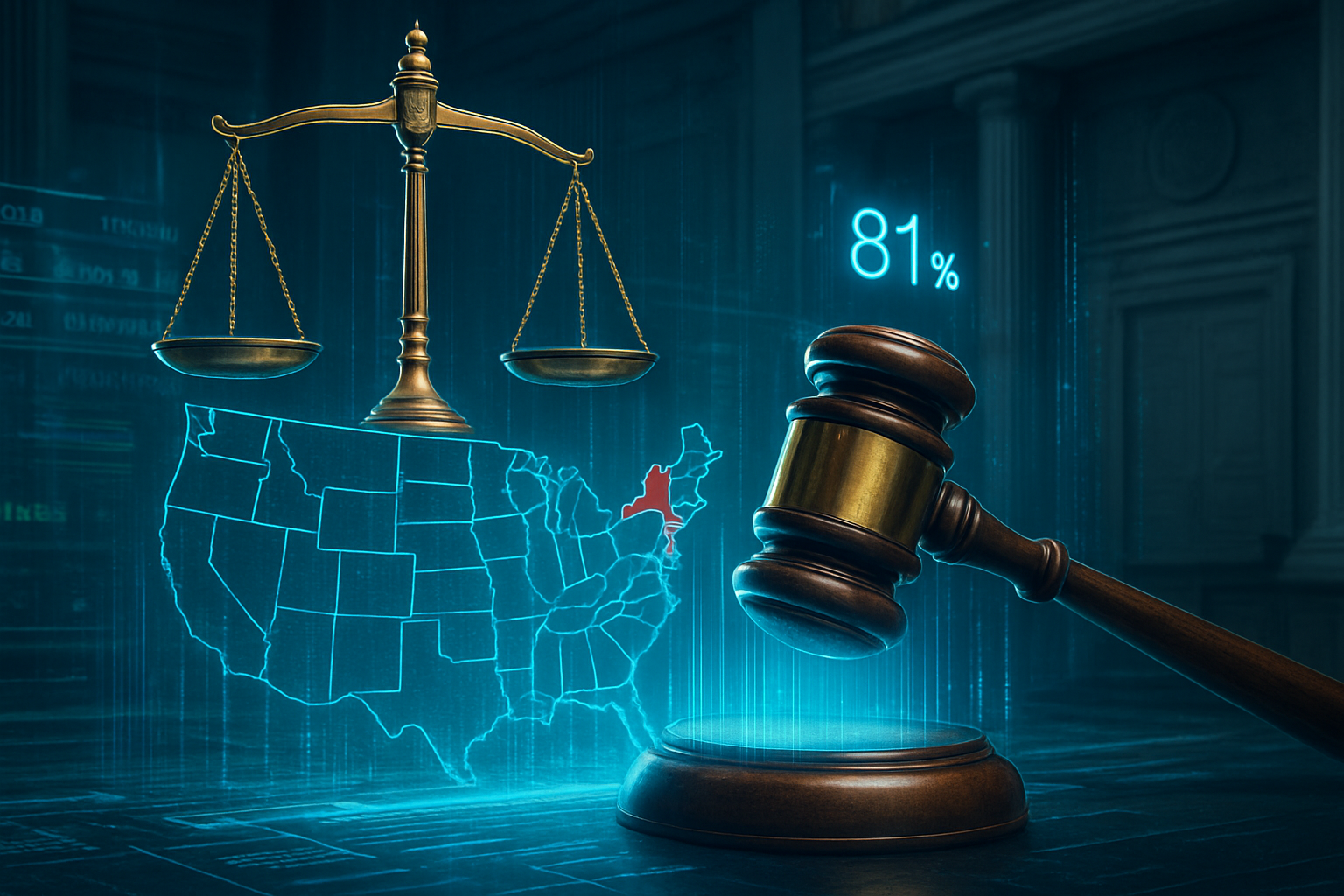
    As the battle for the future of information markets moves from the betting floor to the federal courtroom, a new consensus is emerging among the world’s most active forecasters. On the social prediction platform Manifold Markets, a high-stakes contract titled "Will Federal Preemption Protect DCMs from State Bans by End of 2026?" has seen a dramatic surge in confidence, with traders now pricing in an 81% probability that federal law will ultimately shield the industry from state-level shutdowns.

    This "81% Gamble" represents a pivotal moment for the industry. While state legislators in Albany push for aggressive bans on event-based trading, market participants are betting heavily that the U.S. Constitution’s Supremacy Clause—and the "exclusive jurisdiction" of the Commodity Futures Trading Commission (CFTC)—will render those bans toothless. The outcome will decide whether prediction markets become a unified national financial asset class or remain a fragmented, state-by-state legal minefield.

    The Market: What's Being Predicted

    The focus of the "81% Gamble" is the legal doctrine of federal preemption. Traders on Manifold Markets are wagering on whether Designated Contract Markets (DCMs)—platforms fully registered with the federal government like Kalshi and Interactive Brokers Group, Inc. (NASDAQ: IBKR)—will be legally permitted to operate even in states that have passed explicit bans.

    The market has seen significant liquidity over the last two weeks, following the reintroduction of the ORACLE Act in New York on January 7, 2026. While the bill aims to impose fines of up to $1 million per day on platforms offering contracts on "catastrophic events" or political outcomes, the probability of the ban succeeding has actually dropped on prediction platforms. Trading volume has spiked as professional "arbs" move between play-money sentiment on Manifold and real-money hedges on regulated exchanges. The resolution hinges on a definitive court ruling or federal legislation by December 31, 2026, that establishes the CFTC as the sole arbiter of these markets.

    Why Traders Are Betting

    The bullish sentiment for federal preemption is driven by a string of legal victories for the industry throughout 2024 and 2025. Traders are looking at the "Kalshi Precedent" as their North Star. After winning a landmark federal case that allowed for Congressional election markets, Kalshi is now suing the New York State Gaming Commission in the Southern District of New York (SDNY). The core of their argument is that once the CFTC approves a contract, a state cannot use "gambling" laws to override that federal authorization.

    Furthermore, the entry of major financial players has changed the "optics" of the legal fight. Robinhood Markets, Inc. (NASDAQ: HOOD) recently integrated Kalshi’s infrastructure directly into its app, effectively turning millions of retail investors into stakeholders in the market's legality. "When you have a company like Robinhood or Interactive Brokers treating these as financial derivatives, it becomes much harder for a local gaming commission to argue they are just 'illegal gambling' like an unlicensed sportsbook," says one lead trader on the Manifold contract. The 81% odds reflect a belief that federal judges will favor the stability of national financial markets over localized moral objections.

    Broader Context and Implications

    The conflict in New York is a microcosm of a larger national struggle. The ORACLE Act (Assembly Bill A9251) represents the "nuclear option" for state regulators, seeking to ban everything from political betting to contracts on security price movements. However, a competing piece of legislation, the Cooney Bill (S8889), suggests a different path: regulating prediction markets as financial entities under the New York Department of Financial Services (DFS) rather than the Gaming Commission.

    If the 81% probability holds true and federal preemption wins the day, it would strip states of the power to ban specific types of contracts, provided they are sanctioned by the CFTC. This would align prediction markets with other federally regulated commodities like oil, gold, and wheat. A defeat for preemption, conversely, would create a "patchwork" regulatory environment, where a trader in New Jersey could hedge against a recession while a trader across the river in Manhattan would be committing a felony for the same transaction.

    What to Watch Next

    The most immediate catalyst for this market is the expected ruling in the SDNY case, Kalshi vs. NYSGC, due in late February 2026. A preliminary injunction in favor of Kalshi would likely send the Manifold odds into the mid-90s, effectively ending the debate for the current year. Conversely, if the judge denies the injunction and allows New York to proceed with its ban, we could see a "black swan" collapse in the odds as platforms prepare for a state-by-state retreat.

    Investors should also monitor the Public Integrity in Financial Prediction Markets Act of 2026, introduced by Rep. Ritchie Torres (D-NY) on January 9. While the bill seeks to ban insider trading by government officials, its passage would indirectly codify the legality of the platforms themselves, providing the "federal shield" that traders are currently betting on. Even traditional institutions like The Goldman Sachs Group, Inc. (NYSE: GS) have begun hinting at entering the space, a move that would provide massive political cover for the "preemption" argument.

    Bottom Line

    The "81% Gamble" is more than just a bet on a legal outcome; it is a vote of confidence in the institutionalization of prediction markets. For years, these platforms existed in a gray area, but the massive adoption seen in late 2025 has moved them into the financial mainstream. Traders believe that the federal government—specifically the CFTC—is better equipped to manage the risks and rewards of this technology than a decentralized collection of state gaming boards.

    As we approach the critical February ruling in New York, the lopsided odds on Manifold Markets suggest that the "state's rights" argument against prediction markets is on its last legs. Whether that confidence is justified will depend on a single federal judge in Manhattan, but for now, the smart money is betting that federal law will prove to be an impenetrable shield.


    This article is for informational purposes only and does not constitute financial or betting advice. Prediction market participation may be subject to legal restrictions in your jurisdiction.

    PredictStreet focuses on covering the latest developments in prediction markets.
    Visit the PredictStreet website at https://www.predictstreet.ai/.

  • The Great Disconnect: Prediction Markets Brace for Undersea Cable Sabotage Through 2026

    The Great Disconnect: Prediction Markets Brace for Undersea Cable Sabotage Through 2026

    The global internet, a seemingly ethereal cloud of data, is anchored to the reality of thousands of miles of fiber-optic cables resting on the ocean floor. According to prediction market participants, that physical foundation is looking increasingly precarious. As of mid-January 2026, traders on platforms like Manifold Markets are pricing in a staggering 43% to 89% chance of a major internet outage caused by undersea cable failure before the end of the year.

    This surge in "Yes" bets follows a series of high-profile "gray-zone" incidents in the Baltic and Red Seas that have left infrastructure experts and geopolitical analysts on edge. With traditional diplomatic channels strained, the vulnerability of the global data backbone has become a focal point for speculators who believe the next major theater of conflict won't be fought on land, but in the depths of the ocean.

    The Market: What's Being Predicted

    The primary theater for this speculation is Manifold Markets, where the question "Major internet outage due to undersea cables breaking by end of 2026?" has seen significant volume and volatility. While the odds have fluctuated wildly based on daily news cycles, the consensus has trended upward since a recent incident near Liepāja, Latvia, on January 14, 2026. Resolution criteria for these markets are typically stringent: a "YES" resolution requires an outage that affects at least one entire nation or results in a documented 50% or greater reduction in regional bandwidth specifically attributed to physical cable damage.

    On Polymarket, the focus has been more granular, targeting specific geopolitical actors. For instance, a market regarding whether Iranian activity will be blamed for recent U.S. service disruptions is currently trading at 18%, reflecting a more skeptical view of domestic impacts versus international ones. Meanwhile, regulated exchanges like Kalshi (whose parent company is KalshiEX LLC) have seen increased interest in broader infrastructure and power grid markets, which often serve as a proxy for traders hedging against a general breakdown in societal connectivity.

    Why Traders Are Betting

    The bullishness on a "Global Disconnect" scenario is driven by a sobering reality: undersea cables are remarkably easy to break and notoriously difficult to fix. Traders are pointing to the "economic asymmetry" of cable sabotage. As evidenced by the February 2024 sinking of the Rubymar and the subsequent damage to the AAE-1 and Seacom lines, a single ship's anchor can cause hundreds of millions of dollars in damage and disrupt 25% of traffic between Asia and Europe.

    Geopolitical tensions are the primary catalyst. In late 2024 and throughout 2025, suspicious vessel activity—including a Chinese-linked ship and a Finnish-investigated vessel—coincided with severed links in the Baltic Sea. Traders are betting that these are not accidents but "stress tests" by adversarial powers. Furthermore, the global fleet of cable-repair ships is currently at a breaking point; with a record backlog of repairs as of early 2026, even a minor increase in cable "faults" could lead to the kind of prolonged, major outage that would trigger a market payout.

    Corporate giants like Alphabet Inc. (NASDAQ: GOOGL) and Meta Platforms, Inc. (NASDAQ: META) have invested billions in private subsea infrastructure to ensure redundancy, but even their massive networks are not immune to simultaneous cuts in chokepoints like the Luzon Strait or the Suez Canal. Traders on Manifold have noted that if a conflict were to erupt in the Taiwan Strait, the resulting cable damage would likely cause a total regional blackout, making a "YES" resolution almost certain.

    Broader Context and Implications

    This market reflects a broader shift in prediction markets away from election forecasting and toward "tail-risk" infrastructure events. The high probability assigned to a cable failure suggests that the public—or at least the segment of the public that trades on these platforms—has lost confidence in the "invincibility" of the modern web. It highlights a transition where the internet is no longer viewed as a resilient, decentralized mesh, but as a fragile series of pipes owned by a handful of tech titans and vulnerable to any bad actor with a heavy enough anchor.

    The real-world implications of such an event would be catastrophic. Beyond the inability to scroll social media, a major cable failure would paralylyze global finance, disrupt supply chains managed by companies like Amazon.com, Inc. (NASDAQ: AMZN), and potentially take down cloud services provided by Microsoft Corporation (NASDAQ: MSFT). Prediction markets are currently serving as an early warning system, pricing in risks that traditional insurance and government agencies may be slower to acknowledge publicly.

    What to Watch Next

    The next several months are critical for this market. Traders are closely monitoring the deployment of new cable-laying vessels and the progress of the "Far North Fiber" project, which aims to bypass traditional chokepoints by laying cable through the Arctic. Any delay in these projects will likely drive the "YES" odds higher on Manifold Markets.

    Key dates to watch include the upcoming NATO summit in June 2026, where "undersea infrastructure resilience" is expected to be a top agenda item. Additionally, any unusual movement of "research vessels" in the North Sea or the South China Sea will likely cause immediate spikes in betting volume. If the current trend of "accidental" anchor draggings continues into the spring, we could see the probability of a major 2026 outage cross the 90% threshold.

    Bottom Line

    The prediction markets are sending a clear, if alarming, signal: the "physical internet" is under siege. With odds sitting well above 50% for a major disruption by the end of 2026, traders are no longer asking if a major cable failure will happen, but where and when. The convergence of aging infrastructure, a shortage of repair capacity, and aggressive "gray-zone" tactics by nation-states has created a perfect storm for a global connectivity crisis.

    Whether these markets prove to be accurate or merely a reflection of modern geopolitical anxiety remains to be seen. However, for those looking to understand the fragility of our digital age, the activity on Manifold and Polymarket offers a much more immediate and visceral data point than any white paper. In the high-stakes game of global infrastructure, the "smart money" is currently betting that the lights—or at least the routers—might soon go out.


    This article is for informational purposes only and does not constitute financial or betting advice. Prediction market participation may be subject to legal restrictions in your jurisdiction.

    PredictStreet focuses on covering the latest developments in prediction markets.
    Visit the PredictStreet website at https://www.predictstreet.ai/.
  • Betting on Revolution: Prediction Markets Signal a ‘Winter of Discontent’ for Iran and Cuba in 2026

    Betting on Revolution: Prediction Markets Signal a ‘Winter of Discontent’ for Iran and Cuba in 2026

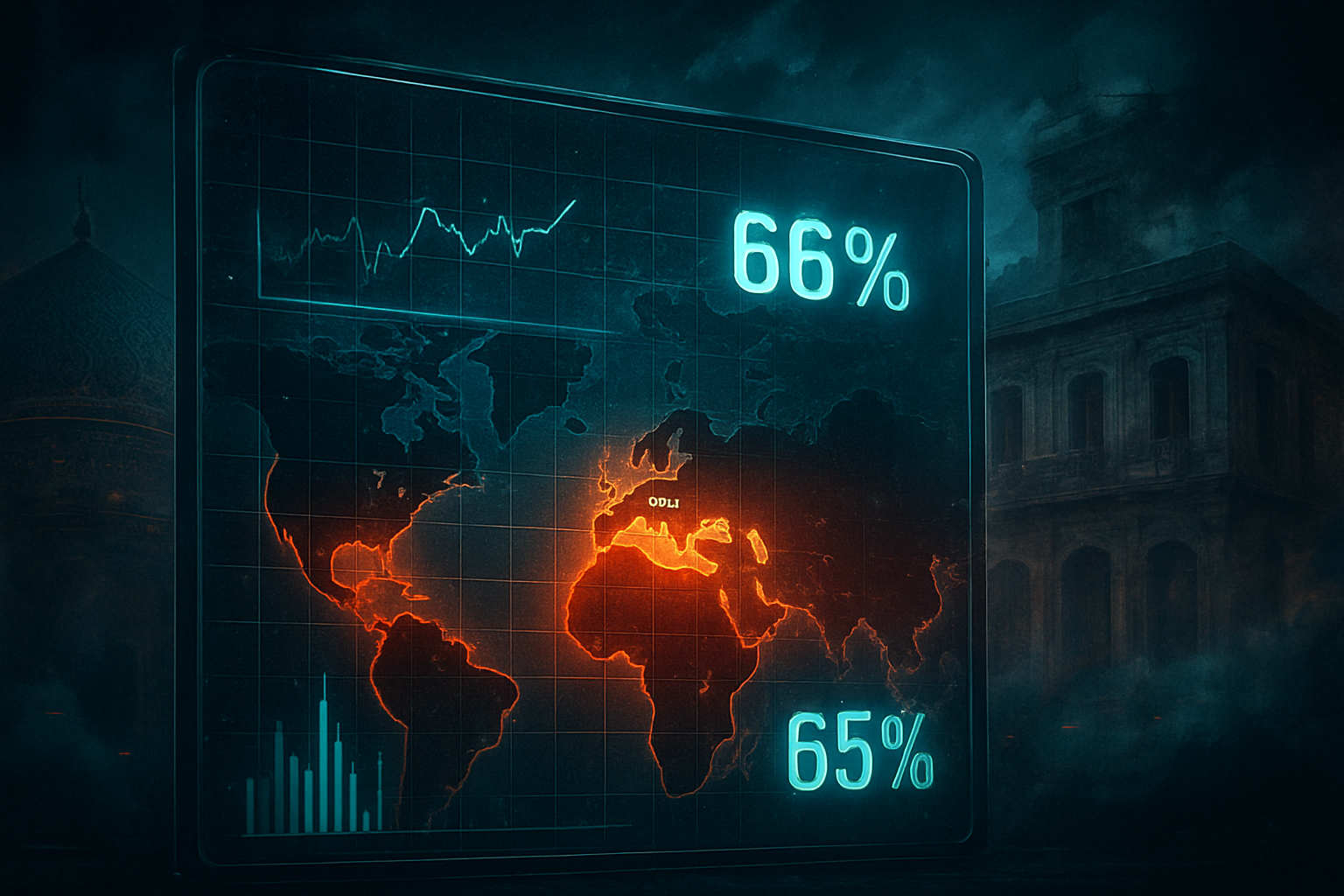
    As of January 16, 2026, the geopolitical landscape is being rewritten not just in the halls of diplomacy, but across the digital ledgers of global prediction markets. In a startling shift of sentiment, traders on platforms like Polymarket, Manifold Markets, and Kalshi are pricing in a historic "Winter of Discontent" for two of the world’s most enduring autocratic regimes: Iran and Cuba. For the first time in decades, the "wisdom of the crowd" suggests that the survival of the Islamic Republic and the Cuban Communist Party is no longer a safe bet, with leadership turnover odds in both nations soaring past the 60% mark.

    This surge in activity is being fueled by a series of black-swan events that have unfolded in the first two weeks of 2026. From the "Winter Uprising" in Tehran to the seismic "Maduro Shock" in the Caribbean, speculative volume has reached record highs. On Polymarket alone, the "Iran Leadership" market has seen over $4.1 million in trading volume, as participants bet on the departure of Supreme Leader Ali Khamenei before the year’s end. These markets are increasingly being viewed by analysts at firms like Meta Platforms, Inc. (NASDAQ: META) and Alphabet Inc. (NASDAQ: GOOGL) as vital indicators of on-the-ground reality in regions where traditional media access is restricted.

    The Market: What's Being Predicted

    The current focus of geopolitical traders is split between two distinct but related outcomes: leadership transition and total regime collapse. In the Iran markets, there is a marked divergence in probability. On Polymarket and Kalshi, the odds that Ayatollah Ali Khamenei (86) will exit his post—whether by death, resignation, or ouster—by the end of 2026 are currently hovering between 56% and 66%. However, the probability of a total "regime fall"—defined as the dissolution of the Islamic Revolutionary Guard Corps’ (IRGC) clerical authority or a change in the constitution—remains lower, at approximately 34% on Manifold Markets and only 5% on the more conservative Metaculus.

    In Cuba, the sentiment is even more bearish for the status quo. Following the reported capture of Venezuelan President Nicolás Maduro by U.S. forces on January 3, 2026, the market for President Miguel Díaz-Canel’s ouster has spiked to 65%. Traders on Manifold are essentially betting on "economic terminal entropy," where the loss of Venezuelan oil subsidies—the island’s "energetic floor"—leads to an irreversible breakdown of state control.

    The resolution criteria for these markets are notoriously strict. For a "Yes" resolution on regime change, most platforms require verification from a consensus of international news organizations like Reuters or the Associated Press. On Metaculus, the bar is even higher, requiring that the government lose de facto control of more than 50% of its territory and that the term "Islamic Republic" or "Communist Party" be removed from the nation's governing documents.

    Why Traders Are Betting

    The primary driver for the Iran markets is the catastrophic collapse of the Iranian Rial, which hit an all-time low of 1.65 million per USD this week. This currency devaluation has sparked the "Winter Uprising," a wave of protests spanning 92 cities. Unlike previous movements, traders are betting that the current unrest is different due to the perceived fragility of the succession plan. With rumors of Khamenei’s failing health circulating on social media platforms like X, speculators are divided on whether the transition to his son, Mojtaba Khamenei, will trigger a "sclerotic" council takeover or a full-scale revolution.

    External pressure is also a significant factor. The second Trump administration has signaled a "maximum pressure 2.0" campaign, threatening 25% tariffs on any nation trading with Iran. On Polymarket, a specific contract for a "U.S. Military Strike on Iran by June 30, 2026" is currently trading at 74%, reflecting a high degree of confidence in "Operation Iron Strike."

    In Cuba, the "Maduro Shock" has completely altered the risk profile. Without the lifeblood of Venezuelan oil, which traditionally flowed through tankers operated by companies like Chevron (NYSE: CVX), the Cuban state is facing permanent blackouts in its interior provinces. Traders are betting that the "hollow state" phenomenon—where the government maintains control of Havana while losing the provinces of Santiago de Cuba and Holguín—will eventually lead to "elite fragmentation" following the inevitable passing of 94-year-old Raul Castro.

    Broader Context and Implications

    The rise of these markets marks a paradigm shift in how global intelligence is aggregated. Traditionally, the stability of the Iranian or Cuban regimes was the purview of think tanks and classified intelligence briefings. Today, prediction markets provide a real-time, incentivized alternative. "Prediction markets are essentially the ultimate bullshit detector," says one high-volume trader on Manifold. "You can't hide a currency collapse or a military mobilization from a market that is looking for a 1% edge in satellite imagery or social media sentiment."

    This has significant real-world implications. Multi-national corporations and logistics giants are increasingly using these odds to hedge their regional risks. If the markets suggest a 65% chance of a Cuban regime change, insurance premiums for shipping in the Caribbean may adjust accordingly. Furthermore, the accuracy of these markets has historically outperformed traditional forecasting; for instance, prediction markets were faster to price in the instability of the 2024 Iranian helicopter incident than most geopolitical journals.

    However, the regulatory environment remains a hurdle. While Kalshi has fought for its right to host election-related and geopolitical contracts in the U.S., the Commodity Futures Trading Commission (CFTC) continues to eye these "event contracts" with skepticism, citing concerns about "public interest" and the potential for market manipulation by foreign actors.

    What to Watch Next

    The coming weeks will be critical for the resolution of these contracts. In Iran, all eyes are on the upcoming anniversary of the 1979 Revolution in February. A failure by the state to mobilize its usual pro-regime rallies, or a surge in "counter-rallies," could send the "Regime Fall" odds on Manifold skyrocketing from 34% toward the 50% mark. Additionally, any verified health update regarding the Supreme Leader will likely cause immediate, high-volume volatility.

    In Cuba, the key milestone is the "Economic Deregulation" deadline rumored for March 2026. If the Díaz-Canel administration is forced to fully dollarize the economy to survive the loss of Venezuelan support, it may be viewed as a surrender of sovereignty, triggering the "Yes" resolution on leadership change. Investors are also monitoring the movement of U.S. naval assets in the Caribbean, with the "Invasion/Strike" market currently sitting at a tense 25%.

    Bottom Line

    The prediction markets of early 2026 paint a picture of a world at a geopolitical tipping point. While the "total collapse" of the Iranian and Cuban governments is not yet a consensus view, the odds for significant leadership turnover are the highest they have been in the 21st century. The markets are telling us that the combination of economic insolvency and leadership transition is a more potent threat to these regimes than decades of external sanctions.

    Ultimately, these platforms serve as more than just a place to gamble; they are becoming the world's most transparent risk-assessment tool. Whether the "Winter Uprising" results in a new constitution or a reshuffled autocracy remains to be seen, but for now, the smart money is betting that the old guards in Tehran and Havana are running out of time.


    This article is for informational purposes only and does not constitute financial or betting advice. Prediction market participation may be subject to legal restrictions in your jurisdiction.

    PredictStreet focuses on covering the latest developments in prediction markets.
    Visit the PredictStreet website at https://www.predictstreet.ai/.
  • The Wisdom of Play-Money: How Manifold Markets Nailed the NFL Wild Card Chaos

    The Wisdom of Play-Money: How Manifold Markets Nailed the NFL Wild Card Chaos

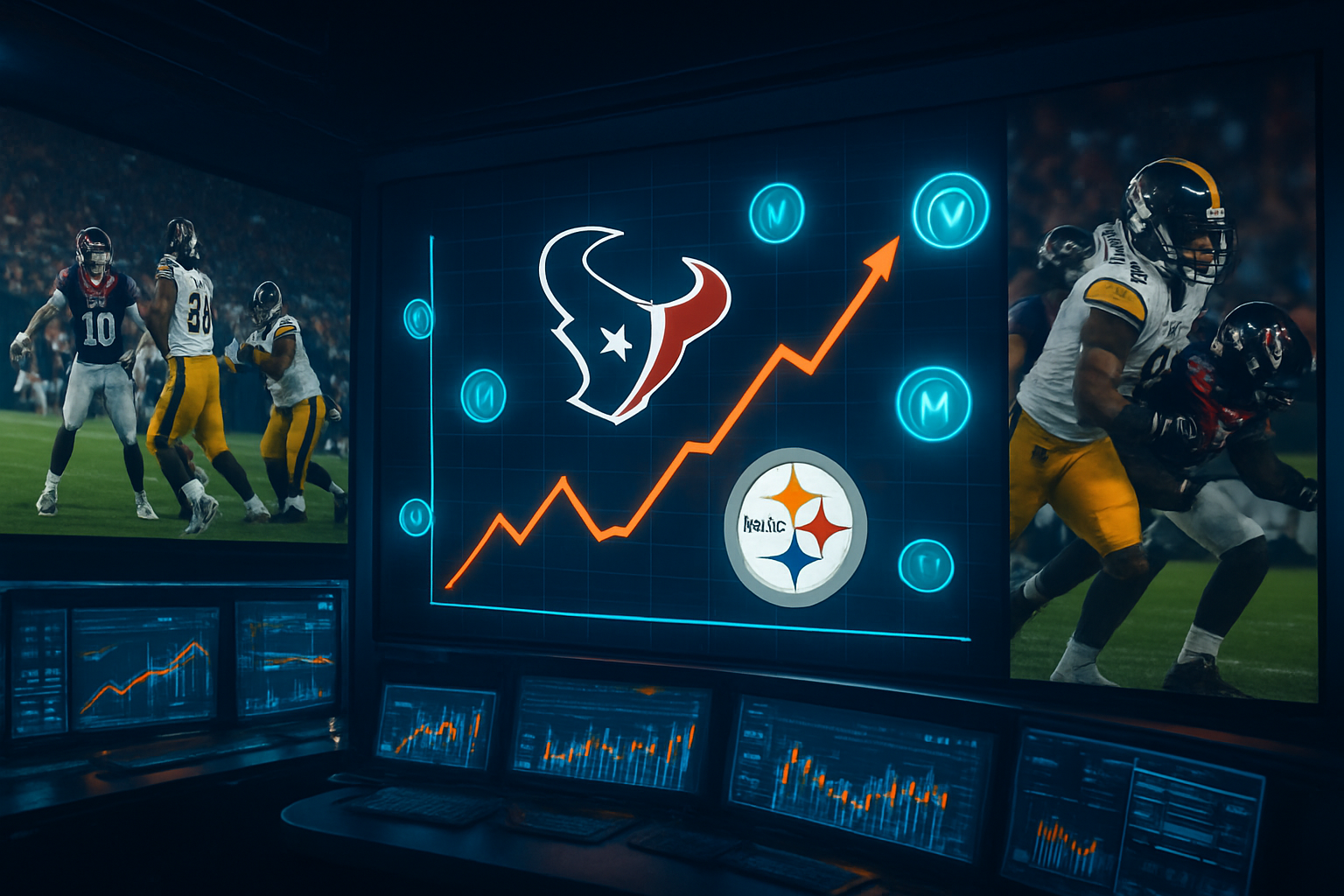
    As the smoke clears from one of the most unpredictable NFL Wild Card weekends in modern history, the biggest winner isn’t just a team on the field, but a unique prediction model in the cloud. While traditional sportsbooks and Vegas sharps scrambled to adjust lines for veteran-heavy favorites, Manifold Markets, a play-money social prediction platform, correctly tracked a groundswell of sentiment that pointed toward the weekend's most shocking upset: the Houston Texans’ 30–6 dismantling of the Pittsburgh Steelers.

    On Monday, January 12, 2026, the Texans didn't just win; they dominated a Steelers squad led by a struggling 42-year-old Aaron Rodgers. While real-money markets like DraftKings (Nasdaq: DKNG) and FanDuel (Flutter Entertainment – NYSE: FLUT) held the Steelers as firm favorites throughout the week, Manifold’s "Mana" traders—using the platform’s proprietary play-money currency—were already bidding up the Texans’ win probability, signaling a shift in sentiment that traditional data models missed.

    The Market: What's Being Predicted

    The Houston vs. Pittsburgh matchup was the center of a "high-mana" storm on Manifold Markets. Early in the week, the Texans were viewed as a long shot, with the market pricing them at a mere 18% probability to win on the road at Acrisure Stadium. However, unlike traditional books that are bound by balancing liability and managing professional "sharps," Manifold functions as a decentralized social network. Users trade "Mana" to express their conviction, and the platform’s order-book model allows for rapid price discovery based on news, rumors, and qualitative analysis.

    By the time kickoff arrived, the Texans' probability on Manifold had surged to 31%, with several "whales"—traders with massive Mana balances accumulated through accurate historical forecasting—taking massive long positions on Houston. This trend was echoed on Polymarket, a crypto-based prediction platform, but the movement on Manifold was uniquely driven by its social features. The Texans market alone saw over 150,000 Mana traded, a record for a non-championship game, with the resolution criteria based on the official NFL score.

    Why Traders Are Betting

    The shift toward the Texans was fueled by a convergence of "social signals" that traditional algorithms often overlook. In the comment sections of Manifold Markets, traders aggregated reports regarding Aaron Rodgers’ mobility and his reported difficulties with the Steelers' offensive scheme. While official injury reports from Disney’s ESPN (NYSE: DIS) remained vague, the "wisdom of the crowd" on Manifold correctly identified that the Texans’ "S.W.A.R.M." defense, led by head coach DeMeco Ryans, was perfectly built to exploit a stationary veteran quarterback.

    Furthermore, Manifold’s structure allows for "mini-markets" to be embedded within larger events. Traders weren't just betting on the win; they were betting on micro-events like "Will C.J. Stroud have 2+ turnovers?" and "Will the Texans defense outscore the Steelers offense?" The latter market saw a massive spike in "Yes" bets just 24 hours before the game. This granular betting behavior served as a real-time sentiment analysis tool, revealing that the crowd wasn't just predicting a win, but a specific type of defensive-driven blowout.

    Broader Context and Implications

    The accuracy of Manifold’s play-money crowd during the 2026 Wild Card round highlights a growing trend: social prediction as a legitimate form of information discovery. Because Mana has no inherent cash value (though it can be used for charitable donations or platform status), it attracts a different demographic of forecasters—often data scientists and sports nerds who are more interested in being "right" than winning a payout. This removes the "risk-aversion" bias often seen in real-money gambling.

    This phenomenon is increasingly being studied by tech giants like Alphabet (Nasdaq: GOOGL) as a way to filter noise from actual signal in public discourse. If a play-money crowd can outperform a multi-billion dollar gambling industry in predicting a sports upset, the implications for political and economic forecasting are profound. The 2026 Wild Card round proved that when people are incentivized by reputation and social standing, the resulting "wisdom" can be more agile than markets weighed down by massive institutional liquidity.

    What to Watch Next

    As we move into the Divisional Round on January 17–18, 2026, all eyes are on the Texans as they travel to face the #2 seed New England Patriots. Early Manifold data shows that the "crowd" is not yet ready to hop off the Houston bandwagon. Despite the Patriots being favored by 3 points in Vegas, Manifold traders have already bid the Texans up to a 44% win probability.

    Another key market to watch is the Buffalo Bills vs. Denver Broncos matchup. The Bills are currently a narrow favorite on Manifold (51%), despite the Broncos holding the #1 seed and the home-field advantage. Traders are citing the "Josh Allen factor" and recent injuries to the Denver secondary as key drivers. If the "wisdom of the play-money crowd" holds true for a second consecutive week, we could be looking at one of the most chaotic AFC Championship matchups in history.

    Bottom Line

    The 2026 NFL playoffs are proving that the line between "play" and "prediction" is blurring. Manifold Markets’ ability to correctly track the Texans’ rise wasn't a fluke; it was the result of a platform that encourages the rapid sharing of information and rewards accuracy over luck. For prediction market enthusiasts, the lesson is clear: don't ignore the play-money markets.

    As the Texans prepare for Foxborough and the Rams head to Chicago, the Mana-rich traders of Manifold will be the first to move when the next piece of news breaks. Whether it's a minor injury update or a shift in weather conditions, the "social prediction" model is proving to be the most responsive tool in the modern forecasting kit.


    This article is for informational purposes only and does not constitute financial or betting advice. Prediction market participation may be subject to legal restrictions in your jurisdiction.

    PredictStreet focuses on covering the latest developments in prediction markets.
    Visit the PredictStreet website at https://www.predictstreet.ai/.
  • The Preemption Power Play: Why Prediction Markets Are Betting 81% on a Federal Victory

    The Preemption Power Play: Why Prediction Markets Are Betting 81% on a Federal Victory

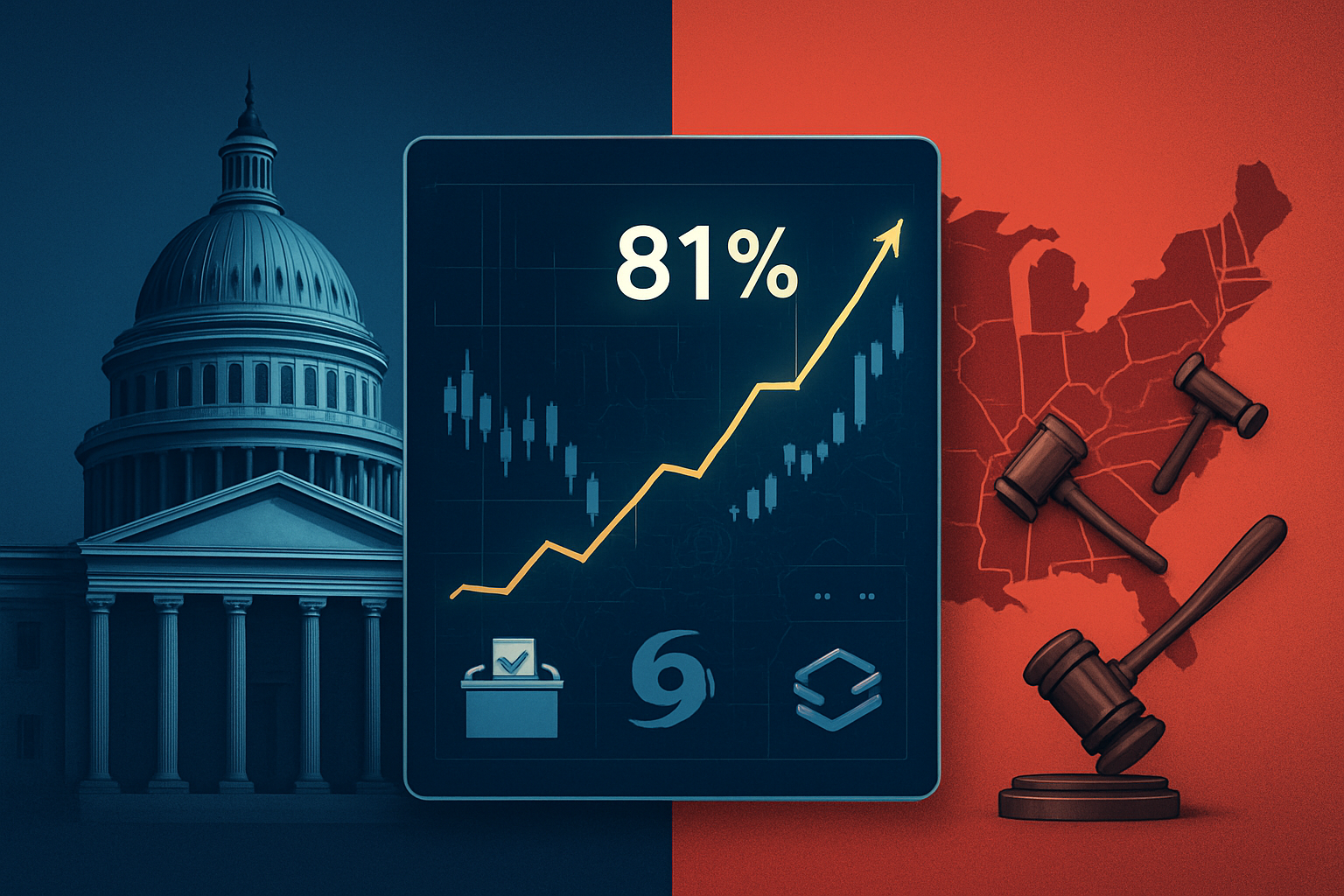
    The battle for the soul of the prediction market industry has reached a fever pitch as 2026 begins, with traders increasingly convinced that federal authority will ultimately crush state-level attempts to ban event contracts. On Manifold Markets, a leading sentiment-based forecasting platform, the probability that federal preemption will protect regulated exchanges from state-level bans currently sits at a dominant 81%. This high-conviction forecast reflects a growing belief among legal experts and high-stakes traders that the "Wild West" era of state-by-state regulation is nearing its end, potentially being replaced by a unified federal framework under the Commodity Exchange Act (CEA).

    This surge in confidence follows a chaotic 2025 that saw a direct collision between the U.S. Commodity Futures Trading Commission (CFTC) and aggressive state regulators in New York and Maryland. As several states attempt to enforce "gaming" bans on markets involving elections and catastrophic events, the 81% odds suggest the market believes the federal government’s exclusive jurisdiction over derivatives will serve as an impenetrable shield for companies like Kalshi and Interactive Brokers Group, Inc. (NASDAQ: IBKR).

    The Market: What's Being Predicted

    The specific market fueling this discussion is a high-volume "legal futurism" contract on Manifold Markets titled "Will Federal Preemption Protect DCMs from State Bans by End of 2026?" This market tracks whether a federal court or acts of Congress will explicitly prevent state gaming commissions from shutting down exchanges that hold Designated Contract Market (DCM) status. While Manifold operates on a play-money and sweepstakes model, it has become the primary hub for real-time legal analysis, with the 81% probability serving as a benchmark for institutional confidence.

    The odds have seen a dramatic climb since early 2025. Following a mixed ruling in Maryland that initially cast doubt on federal supremacy, the probability dipped to 55%. However, it rebounded sharply in late 2025 after a Manhattan federal judge issued a "litigation stay" against New York’s newly proposed ORACLE Act, allowing exchanges to continue operating while the constitutionality of the state's ban is litigated. The resolution criteria for this market require either a definitive U.S. Supreme Court ruling or a federal law that codifies the CFTC’s exclusive jurisdiction over event contracts as "financial derivatives."

    Liquidity in this niche legal market has been surprisingly deep, with over 1.2 million "mana" (Manifold’s currency) traded. Observers note that the market has become a "shadow docket" for the actual litigation occurring in the Second and Fourth Circuits. The timeline is tight; if no clear federal protection is established by December 31, 2026, the market will resolve to "No," creating a sense of urgency among the "bullish" legal theorists who currently hold the majority of positions.

    Why Traders Are Betting

    The core of the 81% bull case rests on the "Field Preemption" theory derived from the Commodity Exchange Act. Proponents argue that when Congress passed the CEA, it intended to "occupy the field" of derivatives trading. Traders point to the landmark 2024 victory by Kalshi against the CFTC as the foundational precedent. That ruling established that the CFTC could not block election contracts simply by labeling them "gaming." By extension, traders believe that if a contract is a federal financial instrument, it cannot simultaneously be a state-level gambling crime.

    "The logic is simple: you can't have a national exchange if 50 states have 50 different definitions of what constitutes a hedge versus a bet," says one high-volume Manifold trader known as LegalEagle. Traders are also heartened by the introduction of the Financial Prediction Markets Public Integrity Act of 2026 by U.S. Rep. Ritchie Torres. While the bill seeks to limit insider trading by government officials, its very existence is viewed by markets as a de facto federal recognition of prediction markets as a legitimate asset class. This legislative "nod" has contributed significantly to the recent 10-point jump in the preemption odds.

    Furthermore, "whale" activity suggests that institutional players are betting on the "too big to fail" nature of the current market. With daily global volumes for event contracts now exceeding $700 million, the fragmentation of these markets through state bans would cause massive financial disruption. Traders are betting that federal courts will prefer a uniform standard to avoid a "checkerboard" of legality that would render national hedging strategies impossible for corporations and retail investors alike.

    Broader Context and Implications

    The tension between federal and state authority is not a new phenomenon in the U.S. financial system, but its application to prediction markets is revolutionary. This conflict mirrors the early days of the internet and interstate commerce, where the Supreme Court eventually ruled that states could not burden the "national marketplace." If the 81% probability holds true, it would transform prediction markets from a legal gray area into a regulated pillar of the American financial system, akin to the Chicago Mercantile Exchange (CME Group Inc. (NASDAQ: CME)).

    In states like New York, the stakes are particularly high. The reintroduction of the ORACLE Act (Assembly Bill A09251) in January 2026 represents the "Last Stand" of state gaming commissions. The bill specifically targets "death markets" and "political wagering," categories that Kalshi and others argue are essential for hedging economic risk. A federal victory would effectively nullify the ORACLE Act, stripping state regulators of their power to define what constitutes a "productive" financial trade.

    Moreover, this market reveals a profound shift in public sentiment. By pricing the probability of federal preemption at 81%, the crowd is signaling that the era of viewing prediction markets as mere "gambling" is over. Instead, they are being priced as essential information-aggregation tools that require federal protection to function effectively. The historical accuracy of these markets—which correctly predicted the 2024 Kalshi court victory and the subsequent explosion in election trading volume—gives this 81% figure significant weight among policymakers.

    What to Watch Next

    The most immediate catalyst for market movement will be the resolution of the "litigation stay" in Manhattan. If the stay is lifted and New York begins active enforcement against DCMs, the 81% probability will likely plummet toward the 40-50% range as the "State Rights" argument gains momentum. Conversely, if the Manhattan court grants a permanent injunction against the ORACLE Act, the market could move toward a near-certainty of 95%.

    Another key milestone is the potential for a "Circuit Split." With the Maryland court (Fourth Circuit) currently favoring state rights and the D.C. and potentially New York (Second Circuit) favoring federal preemption, a collision at the Supreme Court is almost inevitable by late 2026. Legal observers are closely watching the "certiorari" filings—if the Supreme Court agrees to hear a preemption case, the Manifold market will likely see massive volatility as traders react to the conservative or liberal leanings of the justices regarding the "Administrative State" and the "Major Questions Doctrine."

    Finally, keep an eye on the CFTC’s own internal rulemaking. If the Commission, under new leadership in 2026, chooses to officially codify "Event Contracts" as "Swaps," it would provide the "Field Preemption" argument the definitive legal footing it currently lacks. Such a move would effectively end the state-level resistance and resolve the Manifold market at 100%.

    Bottom Line

    The 81% probability on Manifold Markets is a powerful testament to the perceived inevitability of federal dominance in the prediction market space. Traders have weighed the risks of aggressive state-level bans and found them lacking against the combined weight of the Commodity Exchange Act and recent pro-market court precedents. The market is increasingly viewing event contracts not as a subset of gambling, but as a primary financial tool that requires a single, federal regulator.

    This high conviction suggests that prediction markets have successfully navigated their most dangerous legal phase. While the "ORACLE Acts" of the world present a temporary hurdle, the prevailing sentiment is that the federal government—driven by the need for market stability and the push for financial innovation—will eventually act as the industry's ultimate protector.

    As we move further into 2026, the Manifold odds serve as a vital signal for both regulators and participants. The message is clear: the market expects federal law to prevail, and it is betting heavily that the "state ban" era is a closing chapter in the history of American forecasting.


    This article is for informational purposes only and does not constitute financial or betting advice. Prediction market participation may be subject to legal restrictions in your jurisdiction.

    PredictStreet focuses on covering the latest developments in prediction markets.
    Visit the PredictStreet website at https://www.predictstreet.ai/.
  • Crowds vs. Bookies: How Manifold Markets Predicted the NFL’s Wild Card Chaos

    Crowds vs. Bookies: How Manifold Markets Predicted the NFL’s Wild Card Chaos

    As the NFL transitions into the high-stakes Divisional Round, the dust is still settling on a Wild Card Weekend that defied the expectations of many traditional analysts but was precisely tracked by the "wisdom of the crowd." On social prediction platform Manifold Markets, the high-octane matchups between the Houston Texans and the Pittsburgh Steelers, as well as the San Francisco 49ers and the Philadelphia Eagles, generated record-breaking trading volume, signaling a shift in how fans process sports data.

    While traditional sportsbooks were cautious, the play-money markets on Manifold reflected a growing skepticism toward the favorites early in the week. By the time the Texans dominated the Steelers 30–6 and the 49ers squeaked past the Eagles 23–19, the prediction market "whales" had already seen the writing on the wall. Currently, sentiment is shifting rapidly toward the Divisional Round, with the Seattle Seahawks emerging as a 19% favorite to take home the Lombardi Trophy, followed closely by the Los Angeles Rams at 18%.

    The Market: Betting on the "Underdog" Narrative

    The activity on Manifold Markets surrounding the Wild Card round was defined by its agility. Unlike traditional sportsbooks like DraftKings (NASDAQ: DKNG) or FanDuel, owned by Flutter Entertainment (NYSE: FLUT), which rely on professional oddsmakers to set a "line" designed to balance the house's risk, Manifold operates on a pure order-book model using "Mana," its native play-money currency.

    Leading up to the Texans-Steelers game on Monday, January 12, the market for a "Houston Upset" saw massive volatility. While traditional books held the Steelers as a slight favorite due to their veteran roster, Manifold’s user-driven odds hovered around a 31% probability for a Texans victory—a figure that rose sharply as news of Steelers’ QB Aaron Rodgers’ struggles against Houston’s top-ranked defense circulated in the comments sections. For the 49ers-Eagles clash, the market was even more divided; users on social platforms were far more bullish on the 49ers’ defense than the official point spreads suggested, with 49ers "Yes" shares trading at a significant premium in the hours before kickoff.

    Why Traders Are Betting: Sentiment vs. The Spread

    The surge in Manifold activity is driven by a fundamental difference in philosophy: sentiment-driven trading versus risk-mitigation betting. In a traditional setting, the "vig" or house edge often obscures the true probability of an event. On social prediction platforms, however, the price is the probability.

    Traders were particularly influenced by "real-time intelligence" found in the platform’s social feeds. For instance, the 49ers' upset over the Eagles was telegraphed by a surge in "Yes" bets following reports of locker-room friction in Philadelphia. While a sportsbook might wait for an official injury report or a confirmed story from a major outlet like ESPN, owned by The Walt Disney Company (NYSE: DIS), to move a line, Manifold traders often react to rumors and specialized data—such as advanced weather tracking or social media sentiment—within seconds. This creates a market that functions more like a high-frequency news aggregator than a gambling hall.

    Broader Context and Implications

    The rise of platforms like Manifold Markets reflects a broader trend in the "gamification" of forecasting. By removing the barrier of real-money risk (though Manifold does offer some real-money sweepstakes features in certain jurisdictions), the platform attracts a younger, more data-driven demographic that treats sports as a series of tradeable assets.

    This trend has significant implications for how sports data is consumed. Traditional media giants like FOX Corporation (NASDAQ: FOXA) are increasingly incorporating betting odds into their broadcasts, but social prediction markets offer a more granular look at what fans actually believe, rather than just what the house wants them to bet. Historically, these "wisdom of the crowd" platforms have shown a remarkable ability to sniff out upsets, as the collective intelligence of thousands of participants often outweighs the models of a few expert bookmakers.

    What to Watch Next

    With the Wild Card round concluded, the focus has shifted to the Divisional Round matchups scheduled for January 17–18. The No. 6 San Francisco 49ers will travel to face the top-seeded Seattle Seahawks, a game that Manifold users are already pricing as one of the most unpredictable of the season. Early trading shows the Seahawks as favorites, but a vocal minority of "mana-rich" traders are betting heavily on a 49ers momentum-carry.

    In the AFC, the Houston Texans’ blowout victory has made them a "market darling." They are set to face the No. 2 New England Patriots on Sunday, January 18. Traders will be watching the health of the Texans’ defensive front and the "mana" flow in prop markets, such as "Will the Texans record 3+ sacks?" These micro-markets often serve as leading indicators for the primary win/loss contracts.

    Bottom Line

    The high activity on Manifold Markets throughout the 2026 NFL Playoffs underscores the growing power of social prediction as a tool for sentiment analysis. By allowing users to trade on their convictions without the predatory structures of traditional betting, these platforms provide a clearer, more reactive picture of the sports landscape.

    As we move toward the Super Bowl, the lesson for fans and analysts alike is clear: if you want to know what's going to happen on the field, stop looking at the point spread and start looking at the order book. The wisdom of the crowd isn't just a psychological theory—it's a market force that is currently rewriting the playbook for NFL forecasting.


    This article is for informational purposes only and does not constitute financial or betting advice. Prediction market participation may be subject to legal restrictions in your jurisdiction.

    PredictStreet focuses on covering the latest developments in prediction markets.
    Visit the PredictStreet website at https://www.predictstreet.ai/.