Tag: Maduro Trade

  • The January 2nd Shockwave: How Institutional ‘Whales’ and the ICE-Polymarket Alliance Rewrote the Prediction Playbook

    The January 2nd Shockwave: How Institutional ‘Whales’ and the ICE-Polymarket Alliance Rewrote the Prediction Playbook

    The prediction market landscape was forever altered on January 2, 2026, by what traders are now calling the "January 2nd Shockwave." While the industry has long flirted with mainstream relevance, this single day of unprecedented institutional-sized trades—triggered by a geopolitical "black swan" and a massive injection of Wall Street capital—has cemented prediction markets as the global "truth engine." At the center of the storm was a staggering payout on a high-stakes geopolitical event that proved these platforms could price information faster than the world’s most sophisticated intelligence agencies.

    Currently, the probability of prediction markets being classified as a "systemically important financial infrastructure" has surged to 78%, up from just 15% a year ago. This surge in interest is not merely retail speculation; it is the result of deep-pocketed "whales" and institutional giants finally moving the needle. Following a landmark investment by the Intercontinental Exchange (NYSE: ICE), the same entity that owns the New York Stock Exchange, the wall between "betting" and "finance" has effectively collapsed, ushering in an era where market-implied probabilities are traded with the same rigor as treasury yields.

    The Market: What's Being Predicted

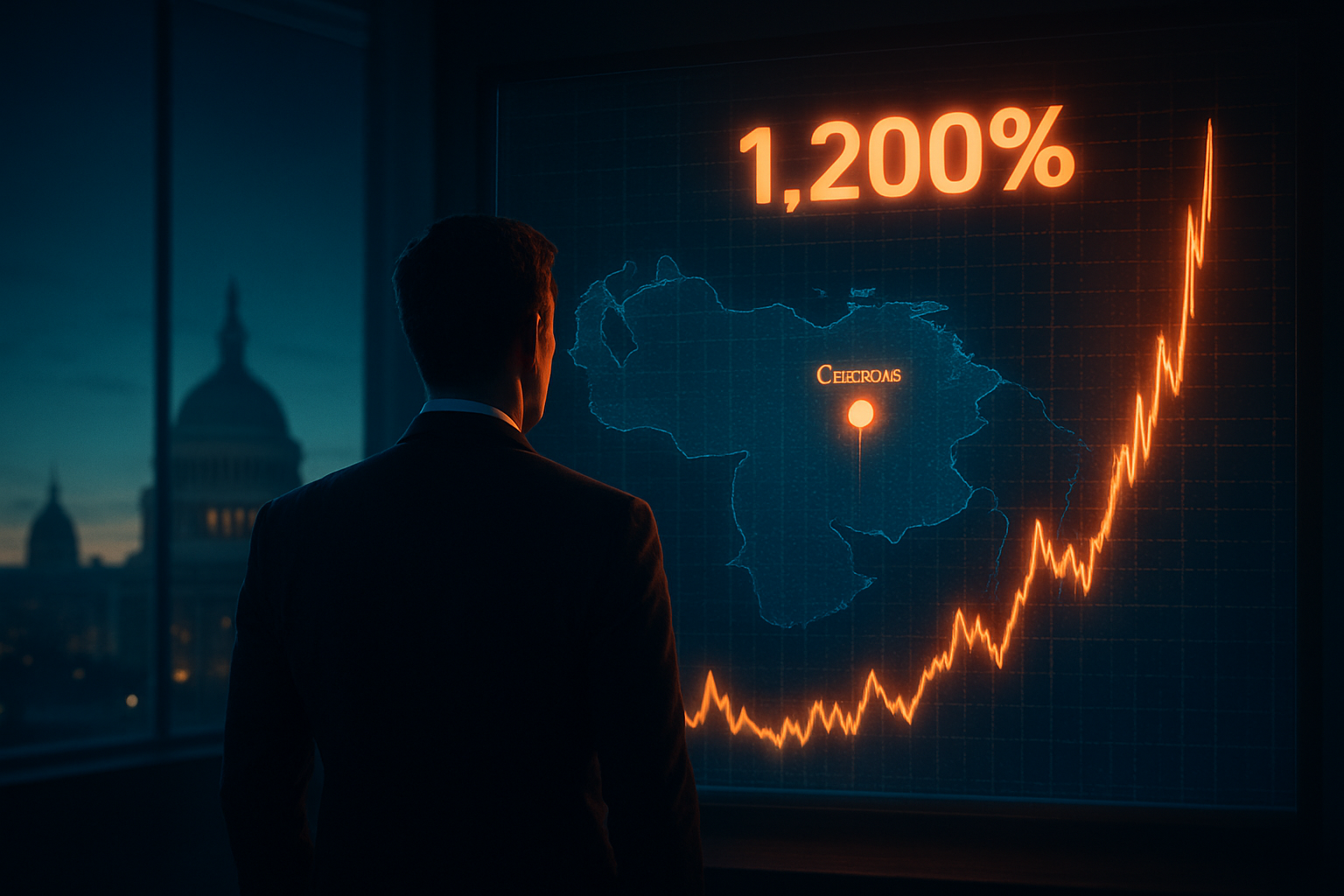
    The "Shockwave" was ignited by the "Maduro Trade" on Polymarket, where an anonymous trader turned a $32,000 position into a $436,000 windfall by betting on the capture of Venezuelan President Nicolás Maduro. On January 2nd, mere hours before the U.S.-led "Operation Absolute Resolve" took place, millions of dollars in "Yes" contracts flooded the market, causing the odds to spike from 12% to 85% in a matter of minutes. This move signaled to the world that someone, somewhere, had access to actionable intelligence and chose to monetize it via a prediction market rather than traditional outlets.

    While Polymarket dominated the geopolitical headlines with a cumulative volume of $33.4 billion for the previous year, Kalshi has been leading in terms of Open Interest (OI), which hit $355.9 million by late January. This growth has been fueled by a strategic retail partnership with Robinhood Markets, Inc. (NASDAQ: HOOD), allowing millions of everyday investors to hedge their portfolios against event-driven risks. The resolution of these contracts is no longer a niche event; for the Maduro Trade, the resolution was finalized within 12 hours of the capture, providing a liquidity event that dwarfed many mid-cap equity trades on the same day.

    The liquidity on these platforms has matured significantly. In early 2026, monthly activity on the "Big Two" exchanges—Polymarket and Kalshi—has stabilized at a combined $25 billion. This scale has allowed for institutional-sized positions to be entered and exited without the massive slippage that plagued the markets in 2024 and 2025. The transition from "play money" or small-cap betting to a legitimate multi-billion-dollar liquidity pool has been the primary driver of the current market structure.

    Why Traders Are Betting

    The primary driver of this new institutional confidence is the $2 billion strategic investment made by the Intercontinental Exchange (NYSE: ICE) into Polymarket in late 2025. By valuing the platform at $9 billion and becoming the exclusive global distributor of its real-time data, ICE has provided the "Seal of Approval" that risk-averse hedge funds were waiting for. For the first time, market-implied probabilities for Federal Reserve policy, election outcomes, and geopolitical shifts are being streamed directly into institutional terminals alongside S&P 500 and Brent Crude data.

    Furthermore, a unique synergy has developed between the decentralized "whales" on Manifold Markets and the institutional desks at firms like Interactive Brokers Group, Inc. (NASDAQ: IBKR). Whales on Manifold, such as the prolific traders 'pixel' and 'Ziddletwix,' often act as early warning systems. Because Manifold allows for meta-forecasting—betting on the success or regulatory hurdles of other platforms—these "info-whales" move the needle on retail sentiment days before the capital actually shifts on the real-money exchanges.

    This "Information Finance" (InfoFi) strategy has become a standard part of the Wall Street toolkit. Traders are no longer just betting on an outcome; they are betting on the speed of information dissemination. The Maduro Trade showed that prediction markets are the first place that "private information" becomes "public price." Institutional trust is growing because these markets have proven to be more resilient and accuracy than traditional polling or expert pundits, who were largely caught off guard by the January 2nd events.

    Broader Context and Implications

    The "Shockwave" has forced a reckoning among global regulators. In the United States, the tide appears to be turning. On January 29, 2026, the new CFTC Chairman, Michael S. Selig, announced a pivot toward "clear rules of the road," withdrawing several restrictive staff advisories that had previously hampered the growth of sports and political contracts. This regulatory thaw is a direct response to the market’s utility during the Maduro crisis, where the market provided a clearer picture of reality than any news network.

    However, the rapid professionalization of the space has not been without its hurdles. On January 20, 2026, a Massachusetts judge issued a preliminary injunction barring Kalshi from offering certain contracts in the state, citing concerns over the "gamification" of sensitive events. This has led to the introduction of the Torres Bill (H.R. 7004) by Representative Ritchie Torres, which seeks to ban government insiders from trading on these markets while simultaneously legitimizing the exchanges as "Truth Machines" for the broader public.

    Historically, prediction markets were criticized as "unregulated gambling." In 2026, that narrative has shifted toward "decentralized intelligence." The integration of these markets into the broader financial system suggests that event-driven contracts will soon be as common as commodity futures. When a major public company like CME Group Inc. (NASDAQ: CME) or ICE gets involved, it signals that the accuracy of these markets is now a valuable commodity in its own right.

    What to Watch Next

    The coming months will be critical for the continued expansion of this asset class. The "Post-Shockwave" volatility has settled, but all eyes are now on the potential IPO of Kalshi, which current markets price at a 62% probability for late 2026. If Kalshi successfully goes public, it will provide a second major institutional bridge for "InfoFi" capital. Traders should also monitor the upcoming Federal Reserve meetings, as the "Fed-Watch" contracts on Kalshi have recently seen their highest volume ever, surpassing traditional Eurodollar futures in terms of predictive accuracy.

    Another key milestone is the resolution of the Massachusetts injunction. If Kalshi can successfully overturn this ruling, it will set a legal precedent that could open the floodgates for other states to adopt "Event-Based Trading" frameworks. Additionally, keep a close watch on Manifold Markets’ whale activity regarding the 2026 mid-term election cycles; their early movements have historically been a leading indicator for the billions that eventually flow into Polymarket.

    Finally, the impact of the Torres Bill (H.R. 7004) will be the ultimate litmus test for the industry. If passed, it would provide the federal oversight necessary for pension funds and insurance companies to begin using prediction markets as a standard hedging tool against geopolitical instability.

    Bottom Line

    The January 2nd Shockwave was the "Big Bang" moment for prediction markets. What began as a tool for hobbyists and political junkies has matured into a sophisticated financial ecosystem backed by the world’s most powerful exchange operators. The Maduro Trade didn’t just make a few traders wealthy; it proved that prediction markets are the fastest, most accurate way to price the unknown.

    For the modern investor, prediction markets are no longer an alternative asset—they are a primary source of truth. As institutional trust grows and regulatory clarity emerges, the line between information and finance will continue to blur. Whether you are a retail trader on Robinhood (NASDAQ: HOOD) or a hedge fund manager using ICE (NYSE: ICE) data, the January 2nd Shockwave has made one thing clear: the future is being priced in real-time, and the markets are never wrong for long.


    This article is for informational purposes only and does not constitute financial or betting advice. Prediction market participation may be subject to legal restrictions in your jurisdiction.

    PredictStreet focuses on covering the latest developments in prediction markets. Visit the PredictStreet website at https://www.predictstreet.ai/.
  • The $400,000 Whistleblower: How the ‘Maduro Trade’ Shook Polymarket and Washington

    The $400,000 Whistleblower: How the ‘Maduro Trade’ Shook Polymarket and Washington

    In the early hours of January 3, 2026, the world woke to the shocking news that Nicolás Maduro had been captured by U.S. Special Operations forces in a daring raid dubbed "Operation Absolute Resolve." But while mainstream news outlets like The New York Times (NYSE: NYT) and News Corp (NASDAQ: NWSA) were scrambling to confirm the reports, a different kind of drama was unfolding on the blockchain. On Polymarket, a single anonymous trader had already locked in a massive windfall, having bet heavily on Maduro’s ouster just hours before the first helicopter took flight.

    The "Maduro Trade," as it has become known, saw an anonymous account turn a modest $32,000 position into a staggering $436,000 payout. The suspicious timing of the wager—placed with surgical precision before any public knowledge of the military operation—has sparked a firestorm of controversy. What began as a win for a savvy bettor has evolved into a national conversation on insider trading, "war-profiteering," and a desperate call for federal regulation of the prediction market industry.

    The Market: What's Being Predicted

    The focus of this controversy was a high-liquidity contract on Polymarket titled "Will Maduro be out of office by January 31, 2026?" Unlike the chaotic resolution of the 2024 Venezuelan election market, which saw disputes over "official" state data versus opposition reporting, this market had a clear binary outcome: Maduro either remained in power in Caracas, or he did not.

    As of late December 2025, the odds of Maduro leaving office were trading at a mere 8%, reflecting a general skepticism that the long-standing regime would crumble anytime soon. However, as the calendar turned to 2026, trading volume surged. By the time the market was resolved on January 3, it had seen over $115 million in total volume, making it one of the most liquid geopolitical markets in the platform's history. Polymarket, which recently received a $2 billion strategic investment from Intercontinental Exchange (NYSE: ICE), found itself at the center of a geopolitical earthquake.

    The resolution criteria were strict. The market required Maduro to be physically removed from his executive functions or held in custody. When "Operation Absolute Resolve" concluded with Maduro in a U.S. detention facility, the market resolved almost instantly. While many traders celebrated the "truth machine" capability of prediction markets, the focus quickly shifted to the identity of the winners.

    Why Traders Are Betting

    For months, traders had been betting on the "Maduro Trade" based on varying factors: economic collapse, internal military coups, or diplomatic pressure. Most traditional forecasting models gave Maduro a high chance of survival through 2026. However, the activity of one specific wallet, identified by blockchain analysts as "Burdensome-Mix," defied all standard logic.

    Between 9:00 PM and 11:30 PM ET on January 2, 2026, "Burdensome-Mix" aggressively bought up "Yes" shares at 8 cents on the dollar. The sheer aggression of the buying pushed the price from 8% to 22% in under three hours. Less than six hours later, the raid began. President Donald Trump later fueled the fire during a press conference, confirming that a "leaker" within the logistical chain of the operation had been identified. This comment confirmed the worst fears of market skeptics: the payout wasn't the result of superior analysis, but of material non-public information.

    This whale activity stands in stark contrast to the retail sentiment seen on other platforms like Robinhood Markets, Inc. (NASDAQ: HOOD) and Interactive Brokers Group (NASDAQ: IBKR) through its ForecastEx exchange. While those platforms saw steady, incremental increases in "Yes" bets as geopolitical tensions rose, Polymarket’s decentralized nature allowed for the kind of anonymous, massive-scale positioning that looks, to many regulators, like a textbook case of insider trading.

    Broader Context and Implications

    The "Maduro Trade" has reignited a debate that has simmered since the 2024 election. During that cycle, Polymarket faced intense criticism for resolving a Venezuela election market in favor of Maduro based on "official" counts, despite widespread evidence of fraud. Critics argued then that the platform was susceptible to state-sponsored manipulation. Now, the pendulum has swung to the other extreme: the platform is being accused of being a conduit for U.S. government insiders to monetize classified military secrets.

    This controversy has profound implications for the future of the industry. U.S. Rep. Ritchie Torres (D-NY) has already introduced the Public Integrity in Financial Prediction Markets Act of 2026, which would explicitly ban federal and military personnel from participating in these markets. The bill argues that prediction markets, while valuable for price discovery, cannot become a "casino for the deep state."

    Furthermore, the infrastructure supporting these platforms is coming under the microscope. Regulators are questioning whether cloud providers like Alphabet Inc. (NASDAQ: GOOGL) and Amazon (NASDAQ: AMZN) should be required to implement "kill switches" for markets that involve active military operations or sensitive national security data.

    What to Watch Next

    The immediate focus is on a series of upcoming congressional hearings scheduled for February 2026. The Commodity Futures Trading Commission (CFTC) is expected to testify on whether it has the authority to claw back payouts derived from insider information on offshore, decentralized platforms. If the CFTC asserts jurisdiction, it could set a precedent that fundamentally changes the "permissionless" nature of crypto-based markets.

    Traders should also keep an eye on "Operation Absolute Resolve" follow-up markets. Contracts are already active regarding the transition of power in Venezuela and the potential for a U.S. military presence in Caracas through the end of the year. If suspicious volume patterns emerge in these markets, it could trigger a coordinated shutdown of similar event contracts on regulated U.S. exchanges.

    Lastly, the identity of "Burdensome-Mix" remains the ultimate "known unknown." If the Department of Justice is able to link the wallet to a specific individual within the military or intelligence community, the resulting legal battle will likely define the boundaries of "insider trading" in a realm where the "commodity" being traded is information itself.

    Bottom Line

    The "Maduro Trade" is a watershed moment for prediction markets. On one hand, it proved that these markets are the fastest way to aggregate information—Polymarket’s odds were "right" about the raid hours before any journalist. On the other hand, it highlighted a glaring ethical and legal vacuum. If prediction markets are to become the "global source of truth" that their proponents claim, they must find a way to distinguish between "collective intelligence" and "criminal intelligence."

    As we move further into 2026, the era of the "Wild West" in prediction markets appears to be closing. With institutional giants like ICE and Robinhood now deeply invested in the space, the pressure for a "clean" market will likely lead to more KYC (Know Your Customer) requirements and stricter federal oversight. For now, the "Maduro Trade" stands as both a triumph of market efficiency and a cautionary tale of the dangers inherent in betting on the movements of the most powerful military on earth.


    This article is for informational purposes only and does not constitute financial or betting advice. Prediction market participation may be subject to legal restrictions in your jurisdiction.

    PredictStreet focuses on covering the latest developments in prediction markets.
    Visit the PredictStreet website at https://www.predictstreet.ai/.
  • The $400,000 Tip-Off: How the ‘Maduro Trade’ Broke Polymarket and Sparked a DC Crackdown

    The $400,000 Tip-Off: How the ‘Maduro Trade’ Broke Polymarket and Sparked a DC Crackdown

    The capture of Venezuelan President Nicolás Maduro by U.S. forces on January 3, 2026, was a geopolitical shockwave that few saw coming. But while the world’s intelligence agencies and newsrooms were caught off guard, a single anonymous trader on the prediction platform Polymarket appeared to have a front-row seat to the planning. In a series of high-conviction bets placed just hours before the "snatch-and-extract" operation in Caracas, a user known as "Burdensome-Mix" turned a modest $32,000 into a windfall of over $400,000.

    The trade has since become the center of a firestorm in Washington D.C. and New York, reigniting the debate over the legality and ethics of prediction markets. With odds on Maduro’s removal hovering at a mere 7% just before the raid, the sudden influx of "informed" capital has led lawmakers to question whether these platforms have become the ultimate venue for modern-day insider trading. The event, now dubbed the "Maduro Trade," is currently the primary exhibit in a push for federal regulation that could fundamentally alter the landscape of event-based betting.

    The Market: What's Being Predicted

    The controversy centers on several interlinked contracts hosted on Polymarket, a decentralized prediction platform that has surged in popularity despite its regulatory battles in the United States. The most prominent contract, "Maduro out by January 31, 2026?", saw relatively low volume throughout December as analysts remained skeptical of any immediate regime change in Venezuela. For much of the holiday season, shares were trading at approximately $0.07, representing a consensus probability of just 7%.

    However, the liquidity of the market changed drastically on December 26, 2025, when the "Burdensome-Mix" account was created. The trader began accumulating "Yes" shares aggressively across four specific contracts: Maduro’s removal, the presence of U.S. forces in Venezuela, and a controversial market titled "Will the US invade Venezuela by January 31?" By the early hours of January 3, the trader had amassed a position of $32,537.

    When news of the capture broke, the contracts "Yes" shares immediately spiked to $1.00. While the removal and troop presence contracts resolved smoothly, the "Invasion" contract, which saw over $10.5 million in total volume, became a flashpoint. Polymarket's refusal to initially pay out "Yes" holders—arguing that a tactical raid did not constitute a full-scale "invasion"—led to a "semantic freeze" that left millions in limbo and infuriated the trading community.

    Why Traders Are Betting

    The sheer precision of the "Maduro Trade" has led experts to believe this wasn't the result of superior geopolitical analysis, but rather what critics call the "Alpha Raccoon" effect. This term describes traders who exploit massive information asymmetry, likely derived from government or military leaks. Analysts note that "Burdensome-Mix" held four times more contracts than the next-highest bidder, suggesting a level of "conviction" that is rarely seen in speculative markets without inside knowledge.

    Suspicion has also fallen on the intersection of the political and financial worlds. Scrutiny has specifically targeted the dual roles of prominent figures like Donald Trump Jr., whose firm 1789 Capital has invested heavily in the sector. With Trump Jr. serving as a strategic advisor to the regulated exchange Kalshi and an advisory board member for Polymarket, critics argue that the proximity between prediction market stakeholders and the executive branch creates a moral hazard where non-public military plans could be commodified.

    From a trading perspective, the Maduro event showcased the limits of traditional forecasting. While mainstream media was focused on diplomatic stalemates, the "whisper" in the prediction markets was shouting. Proponents of the markets, such as economist Robin Hanson, argue that this is actually a feature, not a bug. They contend that the "Maduro Trade" forced private information into a public price, providing a more accurate signal to the world than any news outlet could offer.

    Broader Context and Implications

    The fallout from the Maduro Trade is now fueling a significant legislative push. On January 9, 2026, Rep. Ritchie Torres (D-NY) introduced the Public Integrity in Financial Prediction Markets Act of 2026. The bill aims to criminalize insider trading on these platforms by federal officials and their families. Torres has been vocal about his concerns, describing the current state of prediction markets as "the most corrupt corner of Washington."

    In Albany, the New York State Assembly is moving forward with the ORACLE Act (A9251). If passed, the act would effectively ban New York residents from trading on contracts linked to political or catastrophic events, potentially classifying them as unlicensed gambling. This mirrors the aggressive stance taken by the CFTC under Chair Michael Selig, who has been pressured by a group of 12 Democratic senators, led by Catherine Cortez Masto, to investigate the "improbable" timing of the Caracas-related trades.

    The financial community remains deeply divided. While some see these markets as essential tools for "hedging uncertainty"—a sentiment echoed by Thomas Peterffy, Chairman of Interactive Brokers (Nasdaq: IBKR)—others, like Daniel Taylor of the Wharton School, warn that the lack of robust oversight by the CFTC undermines the integrity of the entire financial system. Unlike the SEC's clear mandate over equities, the "event contract" space remains a regulatory gray zone.

    What to Watch Next

    The immediate focus for the industry is the progress of the Torres bill in D.C. and the ORACLE Act in New York. If these laws pass, they could force platforms like Polymarket to implement rigorous KYC (Know Your Customer) and "insider" screening processes similar to those used by traditional stock exchanges. We are also expecting a formal report from the CFTC by the end of Q1 2026 regarding the specific trades made by the "Burdensome-Mix" account.

    Another key milestone is the resolution of the "Invasion" contract dispute. The outcome of this arbitration will set a precedent for how prediction markets handle "edge cases" where the technical definition of an event differs from the public's perception. If Polymarket is forced to pay out, it could face a liquidity crunch; if it refuses, it may lose the trust of its most active whales.

    Finally, market watchers are looking at the 2026 midterm election markets. If "informed" trades continue to appear hours before major policy shifts or announcements, the calls for a total ban on political betting will likely become deafening. The maturation of these platforms hinges on their ability to prove they are tools for collective intelligence, not just laundry mats for classified leaks.

    Bottom Line

    The "Maduro Trade" has proven that prediction markets are no longer just a niche hobby for data nerds; they are potent, sometimes dangerous, tools of financial intelligence. A single trader turning $32,000 into $400,000 by betting on a secret military operation has stripped away the illusion that these platforms are immune to the same "insider" pressures that haunt Wall Street.

    As we move further into 2026, the question is not whether prediction markets will exist, but who will be allowed to use them and under what constraints. While the efficiency of the "Maduro price signal" was undeniably high, the cost of that efficiency may be a wave of regulation that brings the "Wild West" era of Polymarket to a definitive end. For now, the "Alpha Raccoons" are in the spotlight, and Washington is finally reaching for the trap.


    This article is for informational purposes only and does not constitute financial or betting advice. Prediction market participation may be subject to legal restrictions in your jurisdiction.

    PredictStreet focuses on covering the latest developments in prediction markets.
    Visit the PredictStreet website at https://www.predictstreet.ai/.

  • The $400,000 Secret: How an Anonymous Bet on Maduro Exposed the Deep Fault Lines of Prediction Markets

    The $400,000 Secret: How an Anonymous Bet on Maduro Exposed the Deep Fault Lines of Prediction Markets

    The early morning hours of January 3, 2026, will be remembered for the thundering rotors of U.S. special operations forces over Caracas. But for the high-stakes world of decentralized finance, the real "shock and awe" happened hours earlier on a digital scoreboard. As the world slept, an anonymous trader on the prediction platform Polymarket turned a relatively modest $34,000 into a staggering $410,000 windfall. The timing was more than suspicious—it was nearly telepathic.

    Just 48 minutes before President Trump reportedly signed the final execution order for "Operation Absolute Resolve"—the military raid that captured Venezuelan leader Nicolás Maduro—the anonymous account began aggressively buying "Yes" shares on the prospect of Maduro’s downfall. By the time news organizations like The New York Times Co. (NYSE: NYT) confirmed the capture, the market had spiked from a niche 8% probability to a virtual certainty, leaving regulators and the public asking a chilling question: Did a government insider just monetize a military secret?

    The Market: What's Being Predicted

    The controversy centers on several high-liquidity contracts hosted on Polymarket, a decentralized platform built on the Polygon blockchain. The primary market, "Will Nicolás Maduro be out of office by January 31, 2026?", had seen tepid volume throughout the winter, with many analysts assuming the Venezuelan strongman would remain entrenched despite growing international pressure.

    In the final days of December 2025, the "No" side of the trade was dominant, pricing the odds of Maduro's removal at less than 10%. However, blockchain data reveals that between 9:00 PM and 10:00 PM ET on January 2, a single wallet—created only days prior—conducted 13 separate transactions to scoop up nearly all available "Yes" shares at roughly 8 cents on the dollar.

    The liquidity for these trades was deep enough to absorb the $34,000 without immediate price slippage, but the sheer aggression of the buy orders eventually pushed the market to 25% just before the first reports of explosions at Fort Tiuna. While traditional financial markets were closed for the weekend, Polymarket traded 24/7, providing a real-time heatmap of a geopolitical earthquake.

    Why Traders Are Betting

    The debate over the Maduro trade has split the prediction market community into two camps. On one side are the "Oracle" proponents, who argue that prediction markets are doing exactly what they were designed to do: aggregate all available information, including whispers and "soft" signals, into a single, accurate price.

    "The market didn't just predict the raid; it announced it," said one prominent DeFi analyst. Traders point out that movements on Polymarket often precede official announcements because the financial incentive to be first is so high. Some suggest the trader might not have been a high-ranking official, but perhaps a logistical contractor or a staffer who noticed unusual activity at Florida's Southern Command and decided to "bet their hunch."

    However, the "Insider" camp is much more skeptical. The precision of the 9:58 PM ET wager—just minutes before the "go" order—suggests access to the most sensitive of state secrets. This has sparked a secondary controversy regarding a separate contract on whether the U.S. would "invade" Venezuela. While the capture of Maduro was undisputed, Polymarket initially hesitated to resolve the "invasion" contract as "Yes," sparking a backlash from traders who used platforms like Alphabet Inc. (NASDAQ: GOOGL) and Meta Platforms, Inc. (NASDAQ: META) to organize protests against the platform's "arbitrary" definitions of military action.

    Broader Context and Implications

    This event has catapulted prediction markets into the crosshairs of federal regulators. While the Intercontinental Exchange, Inc. (NYSE: ICE) manages traditional commodities and futures with strict insider trading prohibitions, decentralized platforms like Polymarket operate in a legal gray area.

    The Maduro trade has already triggered a legislative firestorm. Democratic Representative Ritchie Torres has introduced the Public Integrity in Financial Prediction Markets Act of 2026, which specifically seeks to criminalize the use of non-public government information on these platforms. "We cannot have a system where the decision to go to war is treated as a tip for a crypto-gambler," Torres stated in a recent press briefing.

    Historically, prediction markets have been praised for their accuracy in elections, but the Maduro trade represents a "dark frontier." It suggests that as these markets grow in liquidity, they may become unintended "leaks" for intelligence, where the price of a contract becomes a proxy for classified briefings. This creates a perverse incentive structure where those with the power to make events happen—politicians and generals—could theoretically profit from their own decisions.

    What to Watch Next

    In the coming weeks, all eyes will be on the Commodity Futures Trading Commission (CFTC) as they investigate the source of the funds used in the $34,000 trade. If the agency can trace the wallet to a U.S. person with security clearance, it could lead to the first major criminal prosecution for "event contract" insider trading.

    Furthermore, the resolution of the "invasion" contract remains a flashpoint. Polymarket's internal "Umpire" or decentralized governance mechanisms must decide if a targeted snatch-and-grab extraction by special forces constitutes a "invasion" of a sovereign nation. The outcome of this dispute will likely set the precedent for how future military and geopolitical contracts are phrased and resolved.

    Finally, keep a close watch on the "Maduro Trial" markets. Contracts are already appearing regarding the likelihood of a conviction in the Southern District of New York and the potential for a plea deal. These markets are currently seeing heavy volume as legal experts and political junkies weigh the strength of the narco-terrorism evidence against the complexities of international law.

    Bottom Line

    The "Maduro Trade" is a watershed moment for prediction markets. It proved that these platforms can indeed function as a "super-oracle," identifying events before they happen with uncanny accuracy. Yet, it also exposed a massive ethical and regulatory vacuum. If the public loses faith in the "fairness" of these markets—fearing they are playing against insiders with a 20/20 view of the future—liquidity could dry up just as the industry is reaching the mainstream.

    For now, the anonymous trader sits on a $410,000 profit, and the world has a new, albeit controversial, way to monitor the secrets of the state. Whether this remains a legitimate tool for forecasting or becomes a "black market for secrets" will depend on the regulatory actions taken in the wake of Operation Absolute Resolve.


    This article is for informational purposes only and does not constitute financial or betting advice. Prediction market participation may be subject to legal restrictions in your jurisdiction.

    PredictStreet focuses on covering the latest developments in prediction markets.
    Visit the PredictStreet website at https://www.predictstreet.ai/.