Tag: macroeconomics

  • Higher for Longer: Polymarket Traders Signal Resignation to Fed Pause in March

    Higher for Longer: Polymarket Traders Signal Resignation to Fed Pause in March

    As of February 7, 2026, the era of aggressive interest rate cuts appears to have hit a significant roadblock. For months, investors had been pricing in a steady glide path toward lower rates, but a recent string of robust economic data and hawkish rhetoric from Federal Reserve officials has fundamentally reshaped the narrative. On the leading decentralized prediction platform Polymarket, the consensus has reached a fever pitch: traders are now placing an 85% probability on "No Change" for the upcoming March 18 FOMC meeting.

    This shift marks a dramatic reversal from the start of the year, when the market was nearly evenly split on whether the Fed would continue its easing cycle or pause to digest late-2025 data. The sudden consolidation around a "higher for longer" stance suggests that the "soft landing" narrative is being replaced by one of "no landing," where growth remains too hot and inflation too sticky for the central bank to risk another move downward.

    The Market: What's Being Predicted

    The primary vehicle for this sentiment is the "Fed Interest Rate – March 2026" contract on Polymarket. This binary market allows participants to bet on whether the FOMC will raise, lower, or hold the federal funds rate at its next meeting. As of this morning, the "No Change" shares are trading at $0.85, effectively pricing in an 85% chance of a pause. This is a staggering climb from the $0.45 (45%) level seen just four weeks ago.

    The activity isn't limited to decentralized platforms. On Kalshi, a regulated prediction market, the March FOMC target rate contracts are showing even more conviction, with some segments pricing a hold as high as 91%. Total open interest across these platforms for the March decision has surged past $450 million, providing a level of liquidity that rivals traditional interest rate futures. The resolution criteria are straightforward: the market settles based on the official target range announced by the Federal Reserve at the conclusion of their March 18 session.

    This surge in trading volume has turned prediction markets into a primary focal point for macro analysts. Unlike traditional surveys of economists, these markets reflect real-time capital allocation, often moving minutes after a Bureau of Labor Statistics release or a speech by a Fed Governor. The current target range of 3.50%–3.75% is now widely expected to remain the benchmark through the first half of the year.

    Why Traders Are Betting

    The 85% conviction rate among traders is rooted in a trifecta of economic resilience, stubborn inflation, and a notable shift in Fed leadership dynamics. The most recent data showed that Q3 2025 GDP grew at a blistering 4.4% annual rate, far exceeding the "moderate" growth the Fed had projected. With the economy on such solid footing, traders argue that there is no urgent need for the Fed to provide further stimulus through rate cuts.

    Furthermore, inflation has proved more difficult to eradicate than previously hoped. Headline CPI for December 2025 clocked in at 2.7%, while the Fed’s preferred gauge, the Core PCE, remains stalled at 2.8%. These figures are uncomfortably above the 2% target, leading many to believe that the Fed has reached its "neutral rate"—the point where policy is neither restrictive nor stimulative. Chair Jerome Powell echoed this sentiment in late January, suggesting it was "hard to argue that policy is significantly restrictive" in the current environment.

    Another factor influencing the "No Change" bet is the political and administrative transition at the central bank. With the nomination of Kevin Warsh to succeed Jerome Powell in May 2026, markets are beginning to price in a "hawkish moderate" approach. Warsh is perceived as a candidate who may prioritize productivity gains and financial stability over aggressive easing, giving the current FOMC cover to remain cautious and wait for his tenure to begin before making further significant moves.

    Broader Context and Implications

    The dominance of the "No Change" outcome on Polymarket mirrors, and in some cases leads, traditional tools like the CME FedWatch Tool, operated by the CME Group (NASDAQ: CME). While the CME FedWatch Tool—which derives its probabilities from 30-Day Fed Funds futures—currently shows an 80% chance of a pause, prediction markets have been more aggressive in pricing in the hawkish shift. This suggests that retail and "whale" traders on prediction platforms may be reacting more swiftly to the qualitative "vibes" of the economy than the purely quantitative futures market.

    This "higher for longer" expectation has immediate real-world implications. Mortgage rates, which had begun to dip in late 2025, have stabilized or even ticked upward in response to the March expectations. For the broader equity markets, the news is a double-edged sword. While it signals a strong economy, it also means that the "discount rate" used to value growth stocks—such as those found in the Invesco QQQ Trust (NASDAQ: QQQ)—will remain higher, potentially capping gains for high-multiple tech companies.

    Historically, prediction markets have been remarkably accurate in forecasting FOMC decisions within a 30-day window. In 2024 and 2025, whenever a specific outcome crossed the 80% threshold on Polymarket or Kalshi three weeks before a meeting, it proved to be the correct call in every instance. This track record is why institutional desks are increasingly monitoring these platforms as a legitimate "wisdom of the crowd" indicator.

    What to Watch Next

    Despite the 85% consensus, the market remains sensitive to upcoming data releases that could disrupt the "No Change" narrative. The most critical milestone is the February Consumer Price Index (CPI) report, scheduled for release in mid-March, just days before the FOMC meeting. If inflation shows a surprise cooling toward the 2.3% or 2.4% range, the 15% minority betting on a 25-basis-point cut could see their shares skyrocket in value.

    Additionally, the "data blackout" caused by the partial government shutdown in late 2025 is finally clearing. As delayed reports on private payrolls and retail sales are released, they will either confirm the "solid growth" thesis or reveal hidden cracks in the labor market. Traders will also be listening intently to any final "Fedspeak" before the official blackout period begins ten days prior to the meeting.

    If the unemployment rate—currently at 4.4%—were to spike toward 4.7% in the next monthly report, the "No Change" bet would likely see a sharp correction. However, as of early February, the momentum is firmly with the hawks.

    Bottom Line

    The 85% probability of a Fed pause in March is a clear signal from the collective intelligence of the prediction markets: the easing cycle has hit a plateau. Traders have weighed the risks of re-igniting inflation against the benefits of lower rates and have concluded that the Federal Reserve will choose the path of caution.

    For prediction markets as a whole, this event demonstrates their growing role as a vital piece of the financial information ecosystem. By providing a clear, tradeable percentage on complex macroeconomic outcomes, platforms like Polymarket and Kalshi are offering a level of clarity that traditional financial commentary often lacks.

    As we move closer to March 18, the "No Change" bet represents more than just a prediction about interest rates; it is a vote of confidence in the underlying strength of the 2026 economy—and a warning that the days of "easy money" are not returning as quickly as many had hoped.


    This article is for informational purposes only and does not constitute financial or betting advice. Prediction market participation may be subject to legal restrictions in your jurisdiction.

    PredictStreet focuses on covering the latest developments in prediction markets.
    Visit the PredictStreet website at https://www.predictstreet.ai/.

  • Gamifying the Fed: Robinhood’s ‘Custom Combos’ Turn Macroeconomics into the Ultimate Parlay

    Gamifying the Fed: Robinhood’s ‘Custom Combos’ Turn Macroeconomics into the Ultimate Parlay

    As the clock ticks toward the February Consumer Price Index (CPI) release, a new kind of "game day" ritual is taking over the morning routines of young investors. Forget the NFL playoffs or the NBA finals—for the 24 million active users on Robinhood (NASDAQ: HOOD), the most exciting play of the season is the "Macro Stack."

    In January 2026, Robinhood officially launched its "Custom Combos" feature, a revolutionary addition to its Prediction Markets Hub that allows users to bundle up to 10 different event outcomes into a single, high-leverage contract. With the potential for payouts exceeding 40-to-1 on "Goldilocks" economic scenarios, the feature is effectively gamifying macroeconomics for a demographic that treats Jerome Powell’s press conferences with the same fervor as a Super Bowl halftime show. Currently, the market is pricing in a 91% probability that the Federal Reserve will hold rates steady in March, but the real action lies in the "long-shot parlays" where traders are betting on a surprise rate cut paired with a core inflation miss.

    The Market: What's Being Predicted

    At the heart of this frenzy is the Robinhood Prediction Markets Hub, which has rapidly evolved since the platform’s first foray into election contracts in late 2024. The "Custom Combos" feature operates on a Request for Quote (RFQ) system powered by MIAXdx, the CFTC-regulated exchange in which Robinhood (NASDAQ: HOOD) acquired a 90% stake in early 2026. This vertical integration allows Robinhood to offer seamless, near-instant settlement on complex, multi-leg event contracts.

    Unlike traditional prediction platforms like Polymarket or Kalshi, which typically focus on single binary outcomes, Custom Combos allow for "horizontal betting" across categories. A typical high-volume combo in early February 2026 might include:

    • The CPI Leg: Predicting February YoY CPI falls below 2.3%.
    • The Fed Leg: Predicting a "Pause" at the March 18 FOMC meeting.
    • The Tech Leg: Predicting that Nvidia (NASDAQ: NVDA) will close the month above $1,800.
    • The Political Leg: Predicting a specific outcome in a 2026 U.S. Midterm primary.

    Because every "leg" of the parlay must hit for the contract to pay out at its full $1-per-share value, the cost of entry is remarkably low—often just pennies per share—creating the "lotto ticket" appeal that has long driven the success of sports betting parlays. Trading volume on the Hub has already surpassed 11 billion cumulative contracts, with "Custom Combos" accounting for an estimated 30% of new activity.

    Why Traders Are Betting

    The surge in "Macro Parlay" activity is driven by a cultural shift Robinhood executives call "Information Finance." For Gen Z and Millennial traders, the traditional 60/40 portfolio feels antiquated. Instead, they are using Custom Combos to express complex views on how the world works, often using these markets to "hedge their lives."

    "I'm long on tech stocks, so if the Fed hikes and the market crashes, my portfolio takes a hit," explains one viral trader on X whose 5-leg "Recession Hedge" combo recently turned $200 into $8,500. "By betting on a 'Triple Threat'—high CPI, a Fed hike, and an unemployment spike—I'm basically buying insurance that pays out if my day job or my stocks are in trouble."

    This "hedging life" mentality is frequently augmented by Robinhood’s "Cortex AI" assistant, which suggests "Optimal Combos" based on real-time news sentiment. If a major retailer like Walmart (NYSE: WMT) reports sluggish guidance, Cortex might prompt a user to "add a leg" predicting a dip in retail sales data, further increasing the potential payout. This creates a feedback loop where news consumption is immediately monetized, shifting the investor's role from a passive observer to an active, high-velocity speculator.

    Broader Context and Implications

    The timing of the "Custom Combo" craze is no coincidence. On February 4, 2026, the Commodity Futures Trading Commission (CFTC) made a landmark policy reversal, withdrawing a 2024 proposal that sought to ban "gaming" and sports-related event contracts. This move has been hailed as a "Green Light" for the prediction economy, signaling that federal regulators now view event contracts as legitimate financial derivatives rather than prohibited gambling.

    However, the rise of these markets has reignited the debate over the "gamification" of finance. Critics argue that by mimicking the structure of sports betting—complete with "boosted odds" and viral "gain porn" screenshots—Robinhood is encouraging risky behavior among inexperienced traders. Proponents, meanwhile, argue that these markets serve as a "truth engine," providing more accurate forecasts than traditional pundits or polling.

    Historically, prediction markets have shown remarkable accuracy in forecasting FOMC decisions and election outcomes. By aggregating the "wisdom of the crowd" into a tradable price, Robinhood is creating a real-time sentiment gauge that institutional players are beginning to watch closely. The convergence of sports betting mechanics with macroeconomic data is not just a feature; it’s the birth of a new asset class where "knowledge of the world" is the primary currency.

    What to Watch Next

    The immediate focus for the market is the February 13 CPI print. "Nowcast" models from the Cleveland Fed currently project a 2.34% YoY headline increase, but the spread on Robinhood suggests retail traders are split between a "cool-down" and a "sticky inflation" narrative. Any significant deviation from the 2.34% mark will likely trigger massive payouts—or liquidations—for thousands of "Macro Stacks."

    Looking further ahead, the March 18 FOMC meeting remains the "Anchor Leg" for most custom combos. While a "Hold" is the overwhelming consensus at 91%, the 9% of traders betting on a cut are looking at astronomical payouts if the Fed pivots early. Additionally, as the 2026 Midterm election cycle heats up, expect Robinhood to introduce "Political-Economic Combos," where users can bet on how specific election results might impact localized economic data or sector-specific stock prices.

    Bottom Line

    Robinhood’s "Custom Combos" represent a fundamental evolution in how retail investors engage with the world. By lowering the barrier to entry for complex derivative trading and wrapping it in the familiar, high-adrenaline interface of a sportsbook, Robinhood has successfully turned the "dismal science" of economics into a viral entertainment product.

    While the risks of high-leverage parlays are real, the success of the Prediction Markets Hub suggests that the demand for "Information Finance" is here to stay. As the CFTC moves toward a more permissive framework and MIAXdx provides the institutional-grade plumbing, the "Macro Parlay" may soon become as common in the American household as the Sunday night football bet. In this new era, the Federal Reserve isn't just a regulatory body—it’s the most watched team in the league.


    This article is for informational purposes only and does not constitute financial or betting advice. Prediction market participation may be subject to legal restrictions in your jurisdiction.

    PredictStreet focuses on covering the latest developments in prediction markets.
    Visit the PredictStreet website at https://www.predictstreet.ai/.
  • The FOMC Disconnect: Kalshi Traders Signal March Rate Cut as Macro Prediction Markets Explode

    The FOMC Disconnect: Kalshi Traders Signal March Rate Cut as Macro Prediction Markets Explode

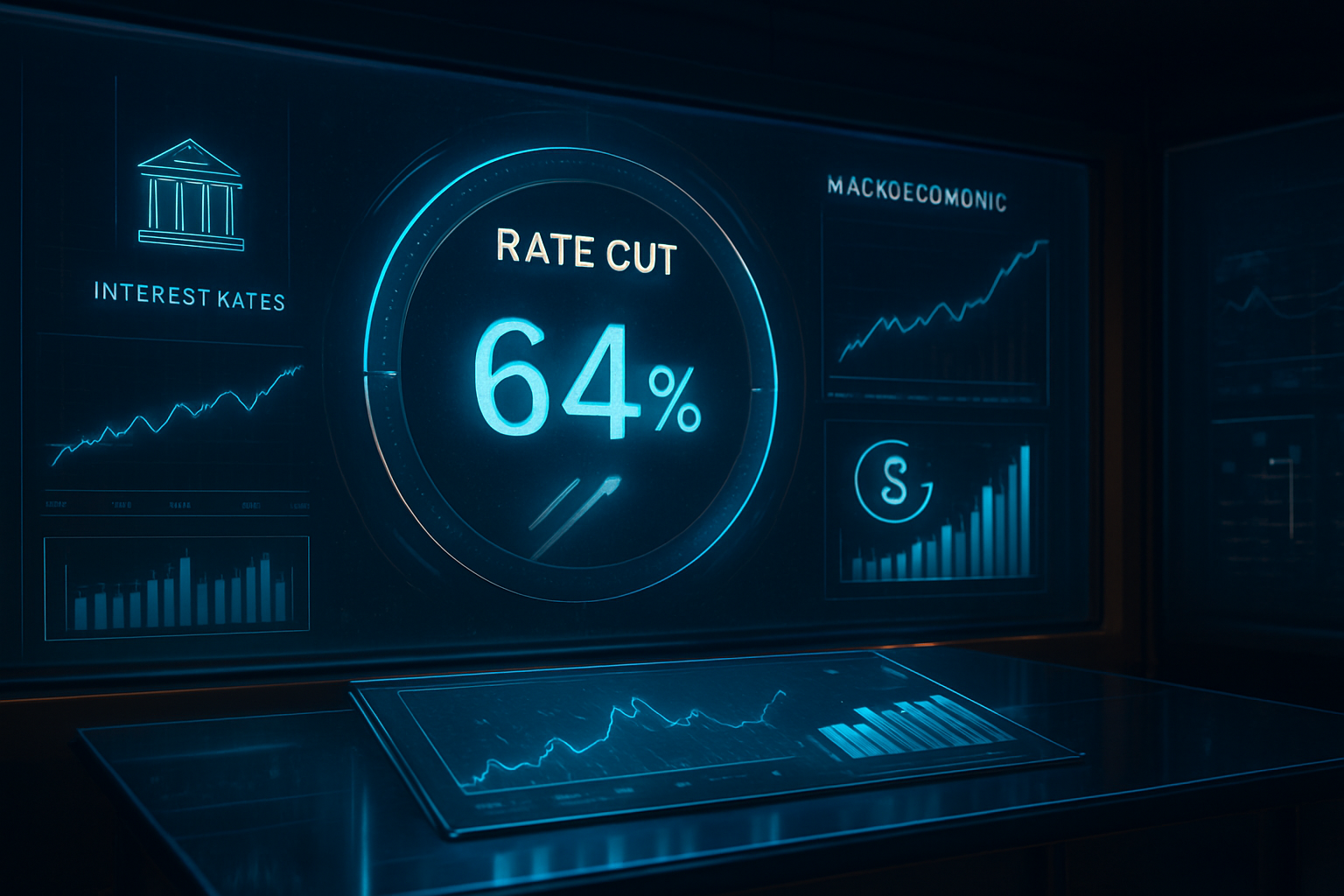
    As the Federal Reserve's March 2026 meeting approaches, a striking divergence has emerged between traditional financial instruments and the burgeoning world of "Information Finance." On Kalshi, the federally regulated prediction market, traders are increasingly convinced that the central bank will pivot toward easing. Currently, 64% of participants on the platform are betting on a 25-basis-point rate cut for the March 17-18 session, a stark contrast to the more conservative stance reflected in the broader bond market.

    This surge in activity is not merely speculative retail interest; it represents a fundamental shift in how macroeconomic risk is priced. With open interest on Kalshi’s Federal Reserve contracts exceeding $450 million as of February 5, 2026, these markets are no longer a sideshow. They have become a primary source of truth for hedge funds and high-frequency trading (HFT) firms, which are increasingly using these event contracts to hedge against policy shifts that traditional models often fail to capture in real-time.

    The Market: What's Being Predicted

    The focus of the financial world is currently fixed on the "March 2026 FOMC Target Rate" contract. Trading on Kalshi, the first CFTC-regulated prediction exchange, the market allows participants to buy "Yes" or "No" contracts on specific interest rate ranges. At the current 64% probability for a 25-basis-point cut, the price of a "Yes" contract sits at approximately $0.64, aiming for a $1.00 payout if the Fed lowers the target range from its current 3.5%–3.75% level.

    This volume is part of a broader explosion in prediction market liquidity. While Kalshi leads the regulated US space with its $450 million in open interest, Polymarket—which recently re-entered the US market after acquiring a CFTC-licensed clearinghouse—is seeing similar enthusiasm, with its March rate-cut contracts trading at an even more aggressive 71% probability. The scale of these markets is now rivaling the daily turnover of mid-cap equities, providing a level of depth that allows institutional players like Jump Trading and Susquehanna Government Products to execute large-scale positions without massive slippage.

    In comparison, the CME Group (NASDAQ: CME) FedWatch Tool, which derives its data from 30-Day Fed Funds Futures, is currently pricing in a much higher 90% probability that the Fed will hold rates steady. This massive 54% "spread" between prediction markets and traditional futures has created a lucrative arbitrage opportunity for algorithmic traders, who are using the Kalshi "oracle" to front-run movements in the Treasury market.

    Why Traders Are Betting

    The conviction among Kalshi traders is driven by a weakening labor market that has yet to be fully acknowledged by official Fed rhetoric. While Federal Reserve Chair Jerome Powell characterized economic activity as "solid" during the January 28 press conference, January’s employment data showed a significant cooling in job gains. Prediction market participants, who often prioritize "nowcasting" data over lagging government reports, are betting that the Fed will be forced to act to prevent a harder landing.

    Furthermore, the "Warsh Factor" is looming large over the market. President Trump’s nomination of Kevin Warsh to succeed Powell in May 2026 has introduced a new variable. Many traders believe the current board may want to "clear the deck" with a preemptive cut before the leadership transition begins, or that they are responding to subtle political pressure for more aggressive easing. Analysts at firms like JPMorgan Chase & Co. (NYSE: JPM) and Goldman Sachs (NYSE: GS) have remained cautious in their public notes, but the "skin-in-the-game" nature of Kalshi is telling a different story.

    Another factor is the rise of the "Synthetic Straddle." Institutional desks are reportedly buying "No" on a rate cut on Kalshi while simultaneously going long on interest-rate futures at the CME Group. This allows them to profit if the prediction market’s aggressive forecast proves correct, while hedging their exposure with traditional derivatives.

    Broader Context and Implications

    The surge in macroeconomic betting reflects the maturation of "InfoFi"—the intersection of information and finance. Major news networks have fully embraced this shift; CNBC (NASDAQ: CMCSA) recently integrated a live "Kalshi Ticker" into its daily broadcasts, acknowledging that these markets often move faster than the Bloomberg terminal in the wake of breaking news. When a probability shifts on Kalshi, it now frequently triggers multi-billion dollar trades in the S&P 500 (NYSEARCA: SPY) within milliseconds.

    The entry of major infrastructure players has also lent the sector a new level of legitimacy. The Intercontinental Exchange (NYSE: ICE), the parent company of the New York Stock Exchange, recently made a landmark $2 billion investment in prediction market infrastructure. This move signals that traditional exchanges view event contracts as a permanent and essential part of the modern financial stack, rather than a fleeting trend.

    However, regulatory hurdles remain. While Kalshi operates under federal oversight, Polymarket continues to face state-level challenges, including a recent temporary restraining order in Nevada. These legal battles highlight the ongoing tension between federal deregulation and state-level gaming concerns, even as the markets themselves become indispensable for risk management.

    What to Watch Next

    The primary catalyst for the next major movement in these odds will be the upcoming Consumer Price Index (CPI) release for January, scheduled for mid-February. If inflation continues its "sticky" trend near 2.7%, the 64% probability for a cut may retreat as traders fear the Fed will prioritize price stability over labor market support. Conversely, a sub-2.5% print could send the Kalshi odds north of 80%.

    Traders should also monitor the public appearances of Fed governors over the next three weeks. Any shift in tone toward a "risk-management" approach—a common euphemism for preemptive cuts—will likely be priced into Kalshi hours before it is reflected in the CME futures.

    Finally, the transition of the "Warsh nomination" through the Senate will be a key milestone. Any delays or complications in the confirmation process could inject volatility into the May and June 2026 contracts, which currently anticipate a rapid easing cycle once the new Chair takes the helm.

    Bottom Line

    The March 2026 FOMC meeting is shaping up to be a watershed moment for prediction markets. With $450 million at stake on Kalshi, the "wisdom of the crowd" is directly challenging the established wisdom of Wall Street’s largest banks and the CME Group’s traditional futures. The fact that 64% of traders are leaning toward a cut suggests a deeper anxiety about the labor market than official figures currently show.

    What we are witnessing is the birth of a more democratic, real-time economic forecasting tool. As hedge funds and HFT bots continue to bridge the gap between prediction markets and traditional assets, the distinction between "betting" and "investing" continues to blur. Whether or not the Fed actually cuts in March, the prediction markets have already won by providing a level of transparency and responsiveness that the financial world has never seen before.


    This article is for informational purposes only and does not constitute financial or betting advice. Prediction market participation may be subject to legal restrictions in your jurisdiction.

    PredictStreet focuses on covering the latest developments in prediction markets.
    Visit the PredictStreet website at https://www.predictstreet.ai/.
  • The Oracle Layer: How Prediction Markets Became Wall Street’s Real-Time Macro Data Feed

    The Oracle Layer: How Prediction Markets Became Wall Street’s Real-Time Macro Data Feed

    As of early February 2026, the global financial landscape has undergone a silent but profound architectural shift. Prediction markets, once dismissed as "gambling for nerds," have matured into the essential "Oracle layer" of the financial system. Today, institutional liquidity and algorithmic trading bots no longer wait for official press releases or the slow-moving updates of traditional futures data; instead, they treat the real-time order books of Kalshi and Polymarket as the primary source of truth for macroeconomic events.

    Currently, all eyes are on the upcoming March 17-18 Federal Open Market Committee (FOMC) meeting. While traditional analysts at firms like JPMorgan Chase (NYSE: JPM) have publicly forecasted a "Hold" on interest rates through the second quarter, prediction markets are signaling a sharp divergence. As of February 2, 2026, the aggregate probability of a 25-basis-point rate cut has climbed to 60%. This shift isn't just driven by retail sentiment; it is the result of billions of dollars in volume being processed by automated systems that respond to economic data in milliseconds—far faster than traditional financial benchmarks.

    The Market: What's Being Predicted

    The focus of the trading world is currently centered on the "Fed Interest Rate" contracts for the March 2026 meeting. These contracts are trading across two dominant platforms: Kalshi, the regulated leader in the U.S. market, and Polymarket, which has solidified its global footprint following its strategic acquisition of the licensed exchange QCX in late 2025. Between these two giants, notional volume for macro-event contracts exceeded $44 billion in 2025, a growth trajectory that has made them more liquid than many mid-cap equity markets.

    On Kalshi, the "March Rate Cut" contract has seen a significant surge in trading volume over the last 48 hours, following a "hotter" than expected labor report. While traditional futures derived from the CME Group (NASDAQ: CME) FedWatch tool are pricing the probability of a cut at a cautious 48%, the event-contract markets are significantly more aggressive. This 12% spread has created a massive arbitrage opportunity that high-frequency trading (HFT) firms are aggressively exploiting.

    The resolution criteria for these markets are remarkably simple: if the Federal Reserve's target range is lower by the close of the March meeting, the "Yes" contracts pay out at $1.00. This binary clarity is what makes these markets so attractive to algorithmic systems compared to the complex calculations required to derive probabilities from 30-day Fed Funds Futures. With millisecond execution times and deep order books, the price of these contracts has effectively become a real-time interest rate ticker.

    Why Traders Are Betting

    The dominance of prediction markets in 2026 is largely due to the integration of advanced AI trading agents like Polybro and Alphascope. These bots are programmed to treat price movements on prediction markets as "truth events." When a major whale position moves the probability of an FOMC outcome, these bots execute near-instantaneous corresponding trades in traditional assets like the 10-year Treasury or the S&P 500 futures. In this new paradigm, prediction markets don't just reflect the news—they become the news that drives the rest of the market.

    Furthermore, the strategy of "synthetic straddles" has become common among sophisticated players. Traders might buy a "No" contract on a rate cut on Kalshi while simultaneously going long on interest-rate futures at the CME Group (NASDAQ: CME). This allows institutions to hedge against regulatory and economic risks in ways that were impossible just three years ago. The depth of these markets has attracted major players like Interactive Brokers (NASDAQ: IBKR), which has integrated event-trading directly into its professional workstations alongside stocks and options.

    This surge in betting is also fueled by a growing distrust of traditional bank forecasts. After several years where "consensus" bank estimates missed the mark on inflation and employment trends, capital-weighted conviction has proven to be a more reliable indicator. In the current March 2026 cycle, traders are betting that the "wisdom of the crowd"—backed by billions of dollars—is seeing a softening in the economy that the Fed's lagging data has yet to officially capture.

    Broader Context and Implications

    The transition of prediction markets into essential financial infrastructure was accelerated by the "Selig Doctrine." In January 2026, the newly appointed CFTC Chairman, Michael Selig, formally withdrew several restrictive proposed rules from 2024. Selig characterized these markets as "early warning systems" for the U.S. economy, essentially granting event contracts the same legitimacy as traditional commodity futures. This regulatory pivot ended years of legal ambiguity that had kept many institutional "real money" managers on the sidelines.

    Moreover, major tech platforms have fully embraced this data. Alphabet (NASDAQ: GOOGL) through Google Finance and the Bloomberg Terminal now list prediction market probabilities as standard features alongside the VIX and the yield curve. This integration means that every retail investor and professional portfolio manager is now looking at the same probabilistic data, creating a feedback loop that reinforces the market's accuracy.

    The rise of event trading also represents a shift toward "Information Finance." When Robinhood Markets (NASDAQ: HOOD) completed its acquisition of MIAXdx in early 2026, it wasn't just buying an exchange; it was building a vertically integrated factory for truth. By owning the exchange, the clearinghouse, and the retail interface, firms like Robinhood have made event-trading a seamless part of the modern portfolio, alongside traditional equities and cryptocurrencies.

    What to Watch Next

    As we move closer to the March FOMC meeting, several key milestones will likely trigger massive volatility in the prediction markets. The most immediate is the upcoming Consumer Price Index (CPI) release. In the 2026 market environment, the "CPI prediction market" on Kalshi will often move seconds before the data is even broadcast on major news networks, as algorithmic bots parse the data feeds from government servers.

    Key dates to monitor include the mid-February employment revision and the final pre-meeting "blackout period" for Fed officials. If the 60% probability of a rate cut holds or increases through these data points, expect to see significant positioning shifts in the broader bond markets. The divergence between the 60% probability in prediction markets and the 48% in traditional futures will eventually have to close, and the "Information Oracle" of prediction markets has historically been the one to lead the way.

    Traders should also watch for any commentary from Federal Reserve officials regarding these markets. While the Fed officially relies on its own internal data, the sheer volume and accuracy of prediction markets in 2025 have made them impossible for policymakers to ignore. Acknowledgment of "market-based probabilities" in a Fed speech could be the final catalyst that cements these platforms as the definitive macro benchmark.

    Bottom Line

    The story of early 2026 is the story of prediction markets coming of age. They are no longer a sideshow; they are the primary data feed for the world's most sophisticated trading algorithms. By providing a real-time, capital-weighted consensus on macro events, platforms like Kalshi and Polymarket have solved the "latency problem" that has long plagued traditional economic forecasting.

    This evolution tells us that the future of finance is probabilistic. Rather than relying on a handful of analysts at major investment banks, the market now relies on a global, 24/7 engine of price discovery that rewards accuracy and punishes bias. For the March FOMC meeting, the market is currently signaling a move that many traditionalists aren't yet ready to accept.

    Ultimately, whether the Fed cuts rates in March or not, the prediction markets have already won. They have provided the liquidity, the data, and the infrastructure that allowed the financial system to price in the outcome months in advance. In the high-speed world of 2026, the question is no longer "What do the experts think?" but rather "Where is the money moving?"


    This article is for informational purposes only and does not constitute financial or betting advice. Prediction market participation may be subject to legal restrictions in your jurisdiction.

    PredictStreet focuses on covering the latest developments in prediction markets.
    Visit the PredictStreet website at https://www.predictstreet.ai/.
  • The New Macro Insurance: How Traders are Using Kalshi to Hedge the ‘OBBBA’ Economy

    The New Macro Insurance: How Traders are Using Kalshi to Hedge the ‘OBBBA’ Economy

    As the Federal Reserve prepares for its first policy meeting of 2026 on January 28, a quiet revolution is taking place on the trading floors of Manhattan and Chicago. While traditional bond traders scramble to interpret yield curve shifts, a growing cohort of institutional and retail investors is turning to Kalshi to buy direct protection against macroeconomic volatility. Current market odds on Kalshi place a 98% probability on the Fed holding rates steady next week, but the real action is in the March 2026 contracts, where a 74% chance of a 25-basis-point cut has created a high-stakes hedging ground for those fearing a growth slowdown.

    This surge in interest follows the implementation of the One Big Beautiful Bill (OBBBA) Act, a massive fiscal package that has injected fresh capital into the economy while simultaneously stoking fears of a secondary inflation wave. For investors holding diversified portfolios, the traditional "60/40" hedge is no longer enough. Instead, they are using Kalshi’s event contracts to "isolate" specific risks—like a surprise CPI print or a hawkish Fed dissent—acting as a more surgical tool than the blunt instruments of the options or bond markets.

    The Market: What's Being Predicted

    At the center of this movement is Kalshi, the first U.S. regulated exchange dedicated solely to "event contracts." Unlike traditional exchanges like the CME Group (NASDAQ: CME), which offer complex interest rate futures, Kalshi allows participants to trade directly on the outcome of economic data releases. The most active markets currently involve the Fed Target Rate (March 2026) and the January CPI Inflation print.

    Trading volume in these macro-economic categories has exploded. In late 2025, Kalshi's total notional volume for the year was estimated to be between $23.8 billion and $40 billion, representing a staggering 1,200% year-over-year increase. On January 12, 2026, the industry saw a record $701.7 million in daily volume, with Kalshi commanding over 66% of that activity. This liquidity has turned these markets from speculative curiosities into legitimate financial benchmarks.

    The resolution criteria for these contracts are crystal clear: they settle based on the official press releases from the Federal Reserve or the Bureau of Labor Statistics (BLS). A contract on a "March Rate Cut" pays out exactly $1.00 if the Fed lowers the target range and $0 if they do not. This binary structure eliminates the "noise" of interest rate math, allowing a price of $0.74 to represent a clean 74% market-implied probability.

    Why Traders Are Betting

    The primary driver for this shift is the concept of "risk isolation." Traditional hedging tools are often "muddied" by multiple variables. For example, an investor buying put options on the SPDR S&P 500 ETF Trust (NYSE: SPY) to hedge against inflation might find that even if inflation rises, the hedge fails because the stock market rallies on better-than-expected corporate earnings. Kalshi contracts remove this correlation risk.

    Institutional whales, including high-frequency trading firms like Jane Street and specialized hedge funds like Saba Capital, are reportedly using these contracts to hedge "hawkish surprises." If a firm holds high-duration Treasury bonds that lose value when rates rise, they can purchase "No" contracts on a Fed rate cut. If the Fed stays "higher for longer," the payout from the Kalshi contract provides a direct cash infusion to offset the losses in their bond portfolio.

    Furthermore, the integration of Kalshi into major retail platforms like Robinhood Markets, Inc. (NASDAQ: HOOD) has democratized access to these tools. Previously, sophisticated macro-hedging was the playground of those with access to ISDA agreements and complex derivative desks. Today, a retail investor concerned about the inflationary impact of the OBBBA Act can buy a contract on "CPI exceeds 3.1%" for a few cents, effectively buying "inflation insurance" for their cost of living or their stock portfolio.

    Broader Context and Implications

    This trend signals the rise of what industry experts call "Information Finance." By January 2026, prediction markets have frequently outperformed traditional economic models, including the New York Fed’s "Nowcasts." Because real money is on the line, these markets aggregate information faster than academic or government surveys, providing a real-time "truth engine" for the U.S. economy.

    The regulatory landscape has also stabilized significantly following the 2024 elections, with the CFTC and major exchanges reaching a detente that favors the growth of regulated event markets. This clarity has allowed firms like Interactive Brokers Group, Inc. (NASDAQ: IBKR) to expand their own event-trading offerings, though Kalshi remains the dominant force in the domestic macro space.

    Historically, prediction markets have shown a remarkable ability to sniff out "black swan" events before they appear in traditional data. In 2025, Kalshi traders successfully anticipated the "sticky" inflation prints of the third quarter weeks before the BLS release, as participants tracked real-time shipping data and energy price fluctuations to inform their bets.

    What to Watch Next

    The immediate focus for all macro traders is the January 28 FOMC meeting. While a "pause" is nearly certain, the language in the Fed's statement regarding the OBBBA Act's fiscal impact will be the primary market mover. Traders will be looking for any sign of a "hawkish pause"—where the Fed keeps rates steady but suggests that future cuts might be delayed if the deficit-fueled growth continues to overheat.

    Key dates to monitor include:

    • January 28, 2026: Federal Reserve interest rate decision.
    • February 13, 2026: The release of the January CPI data, which will confirm if the OBBBA-related spending is translating into immediate price hikes.
    • March 18, 2026: The highly anticipated FOMC meeting where Kalshi currently predicts the first cut of the year.

    If the CPI print on February 13 comes in significantly higher than the anticipated 2.7%, expect the odds for a March rate cut to tumble instantly on Kalshi, providing an early warning signal for the broader equity and bond markets.

    Bottom Line

    As we move deeper into 2026, the line between "betting" and "hedging" continues to blur. Kalshi has successfully carved out a niche as a more direct, transparent, and efficient way to manage macroeconomic risk than the centuries-old bond and options markets. For the modern investor, an event contract is no longer a gamble—it is a strategic necessity.

    The insights gleaned from these markets suggest that while the consensus expects a "soft landing," there is a significant undercurrent of concern regarding fiscal-driven inflation. By providing a platform where these concerns can be priced in real-time, prediction markets are not just predicting the future; they are helping the financial system survive it.


    This article is for informational purposes only and does not constitute financial or betting advice. Prediction market participation may be subject to legal restrictions in your jurisdiction.

    PredictStreet focuses on covering the latest developments in prediction markets.
    Visit the PredictStreet website at https://www.predictstreet.ai/.
  • The Death of the Lagging Indicator: How Prediction Markets Became the Fed’s New Crystal Ball

    The Death of the Lagging Indicator: How Prediction Markets Became the Fed’s New Crystal Ball

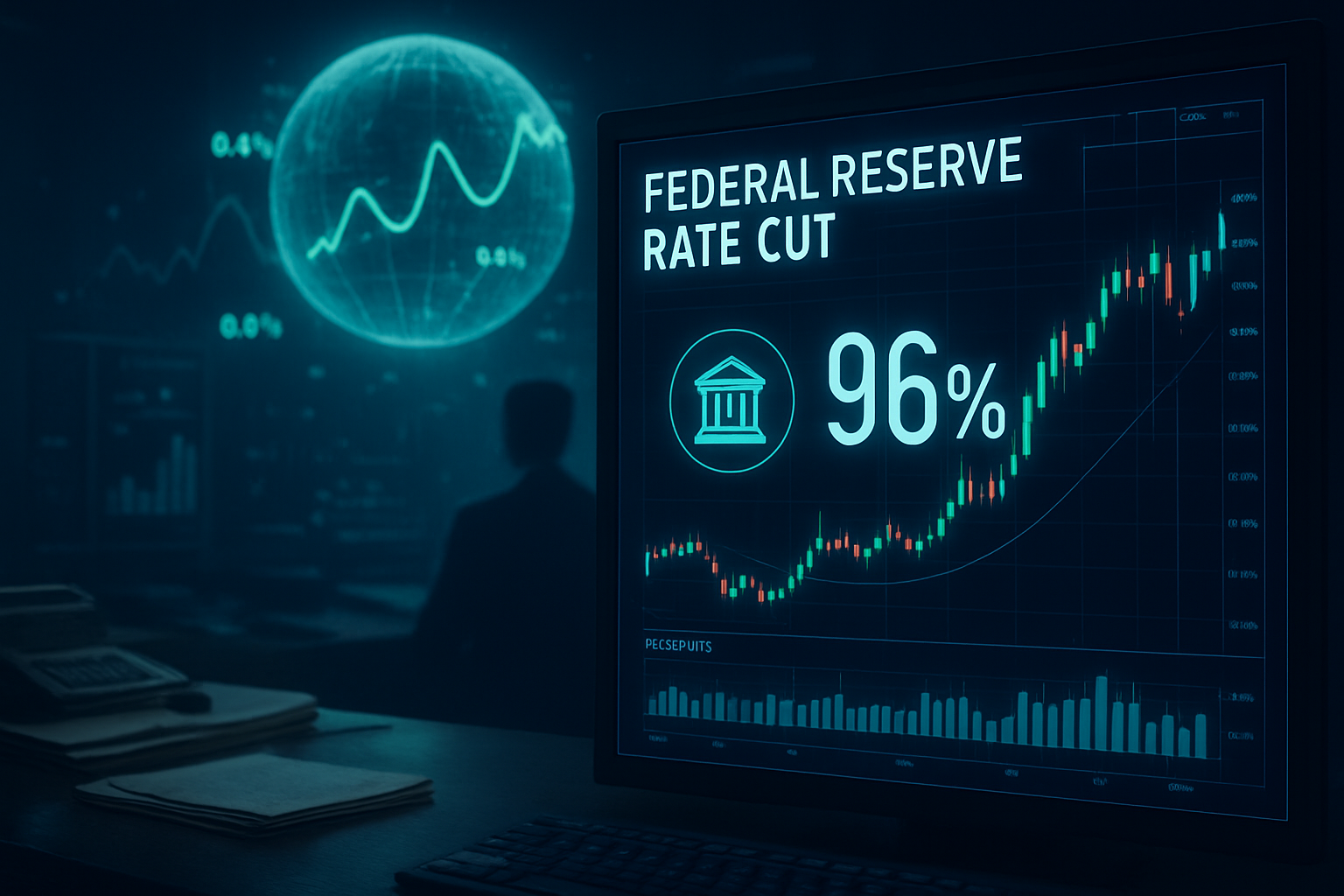
    As of mid-January 2026, a fundamental shift has occurred in how Wall Street and Main Street digest economic reality. For decades, the Federal Reserve Bank of New York’s "Nowcast" and other lagging indicators were the gold standard for tracking the economy in real-time. But as the dust settles on the Federal Reserve's December 2025 meeting, it is clear that the torch has been passed to prediction markets. On the morning of the rate decision, while traditional models were still debating the nuances of "sticky inflation," the crowd on Kalshi and Polymarket had already priced in a 25-basis-point cut with a staggering 96% and 97% probability, respectively.

    This isn't just about a single rate cut; it's about the emergence of "Information Finance." Traders are no longer waiting for the Bureau of Labor Statistics (BLS) or the Fed’s Summary of Economic Projections to tell them where the economy is—they are using prediction markets to tell the Fed what the economy needs. With daily volumes on platforms like Kalshi hitting record highs of $700 million this month, these markets have evolved from speculative curiosities into the most sensitive macro indicators in the global financial toolkit.

    The Market: What's Being Predicted

    The focal point of macro forecasting in late 2025 was the FOMC meeting on December 10. While the Federal Reserve had already initiated a cutting cycle earlier in the year, the "higher for longer" narrative still had its adherents among traditional bank analysts. However, the prediction markets told a different story. On Kalshi, a federally regulated exchange, the "Will the Fed cut rates in December?" market saw liquid interest that eventually consolidated into a 96% "Yes" conviction. Simultaneously, the decentralized giant Polymarket saw its odds for a 25-basis-point cut climb from 70% in mid-November to 97% by the morning of the announcement.

    The scale of this activity is unprecedented. Total wagering on the December Fed outcome exceeded $348 million on Polymarket alone, while Kalshi reported $15.8 million in volume specifically for its Fed decision contracts. These markets are settled based on the official announcement from the Federal Reserve Board of Governors. Unlike the CME FedWatch tool, operated by CME Group (NASDAQ: CME), which is derived from Fed Funds futures and often reflects the hedging needs of large institutions, prediction markets like Kalshi allow a more diverse set of participants—from retail speculators to economic researchers—to express a "pure" directional view on policy.

    Why Traders Are Betting

    The primary driver behind the 96% conviction for a December cut was the "wisdom of the crowd" reacting to real-time labor data. While the NY Fed’s Nowcast model was projecting a resilient Q4 GDP growth of 2.7%, prediction market traders focused on the "cracks in the foundation"—specifically a tick upward in unemployment to 4.5% in November. Traders betting on these platforms are often processing information 15 to 30 minutes faster than traditional news wires like Reuters, as every new data point, from jobless claims to retail sales, is immediately reflected in the contract price.

    Furthermore, the strategy has shifted from speculation to institutional hedging. Large funds are now using prediction markets to "de-risk" their portfolios ahead of Fed meetings. Because these contracts are binary (either the Fed cuts or it doesn't), they offer a more precise hedge than Treasury futures or the S&P 500. This has led to massive "whale" activity; in the final week of 2025, several multi-million dollar positions were spotted on Polymarket, betting that the Fed would prioritize labor stability over the final inch of the 2% inflation goal. This collective intelligence proved superior to traditional models, which remained "data-dependent" and arguably too slow to catch the dovish pivot.

    Broader Context and Implications

    The success of prediction markets in 2025 has led to their formal integration into the financial establishment. In a landmark move, both Google Finance, owned by Alphabet Inc. (NASDAQ: GOOGL), and Bloomberg Terminals began incorporating real-time odds from Kalshi and Polymarket into their macro dashboards in early 2026. This mainstreaming follows a banner year for Kalshi, which reported a staggering $23.8 billion in total volume for 2025—a 1,100% increase year-over-year. Even traditional brokerages like Interactive Brokers (NASDAQ: IBKR) have entered the fray with their own forecasting platforms, signaling that the demand for "event-based" trading is here to stay.

    However, the regulatory landscape remains a complex patchwork. While Kalshi won a major legal victory in January 2026, securing emergency relief against state-level cease-and-desist orders in Tennessee, the broader federal framework is still in limbo. The Digital Asset Market Clarity Act (CLARITY Act), intended to define the jurisdiction of the CFTC and SEC over these markets, has stalled in the U.S. Senate. According to current Polymarket odds, there is only a 41% chance the bill passes in 2026. This regulatory uncertainty hasn't dampened volume, but it has created a "fragmented battleground" where some states attempt to classify these markets as unregulated gambling, while federal courts increasingly view them as vital economic tools.

    What to Watch Next

    As we move into the first quarter of 2026, the market has shifted its focus to the "Sahm Rule"—a historically reliable indicator that a recession has begun when the three-month moving average of the unemployment rate rises by 0.50 percentage points or more relative to its low during the previous 12 months. With unemployment hitting 4.6% in January, prediction markets are currently pricing in a 65% chance of a formal recession declaration by the NBER before the end of the year. This is significantly more bearish than the "soft landing" consensus still held by many traditional bank economists.

    Investors should also keep a close eye on the February 2026 FOMC meeting. Current odds on Kalshi suggest a 55% probability of a "pause," as the Fed assesses the impact of its 2025 cuts. Any deviation in these odds following the next Consumer Price Index (CPI) release will be the first signal of whether the Fed intends to continue its dovish trajectory or if the "last mile" of inflation will force a defensive stance. The ability of these markets to front-run official policy will be tested yet again as the CLARITY Act's fate in the Senate becomes clearer by mid-year.

    Bottom Line

    The events of the past year have proven that prediction markets are no longer just a "side show" for political junkies. By accurately nailing the 96% probability of the December 2025 rate cut while traditional models were still lagging, these platforms have established themselves as the ultimate macro indicators. They provide something that a GDP Nowcast cannot: a real-time, incentivized consensus on the future, rather than a polished report on the past.

    For the modern investor, ignoring prediction market data is becoming as risky as ignoring the 10-year Treasury yield. As volume continues to migrate from traditional futures to these transparent, binary markets, the "wisdom of the crowd" is becoming the primary driver of price discovery in the global economy. Whether the Fed likes it or not, the market isn't just watching them anymore—it’s frequently one step ahead of them.


    This article is for informational purposes only and does not constitute financial or betting advice. Prediction market participation may be subject to legal restrictions in your jurisdiction.

    PredictStreet focuses on covering the latest developments in prediction markets.
    Visit the PredictStreet website at https://www.predictstreet.ai/.
  • Prediction Markets Shatter Records: $700 Million Trading Day Signals a New Era for Global Finance

    Prediction Markets Shatter Records: $700 Million Trading Day Signals a New Era for Global Finance

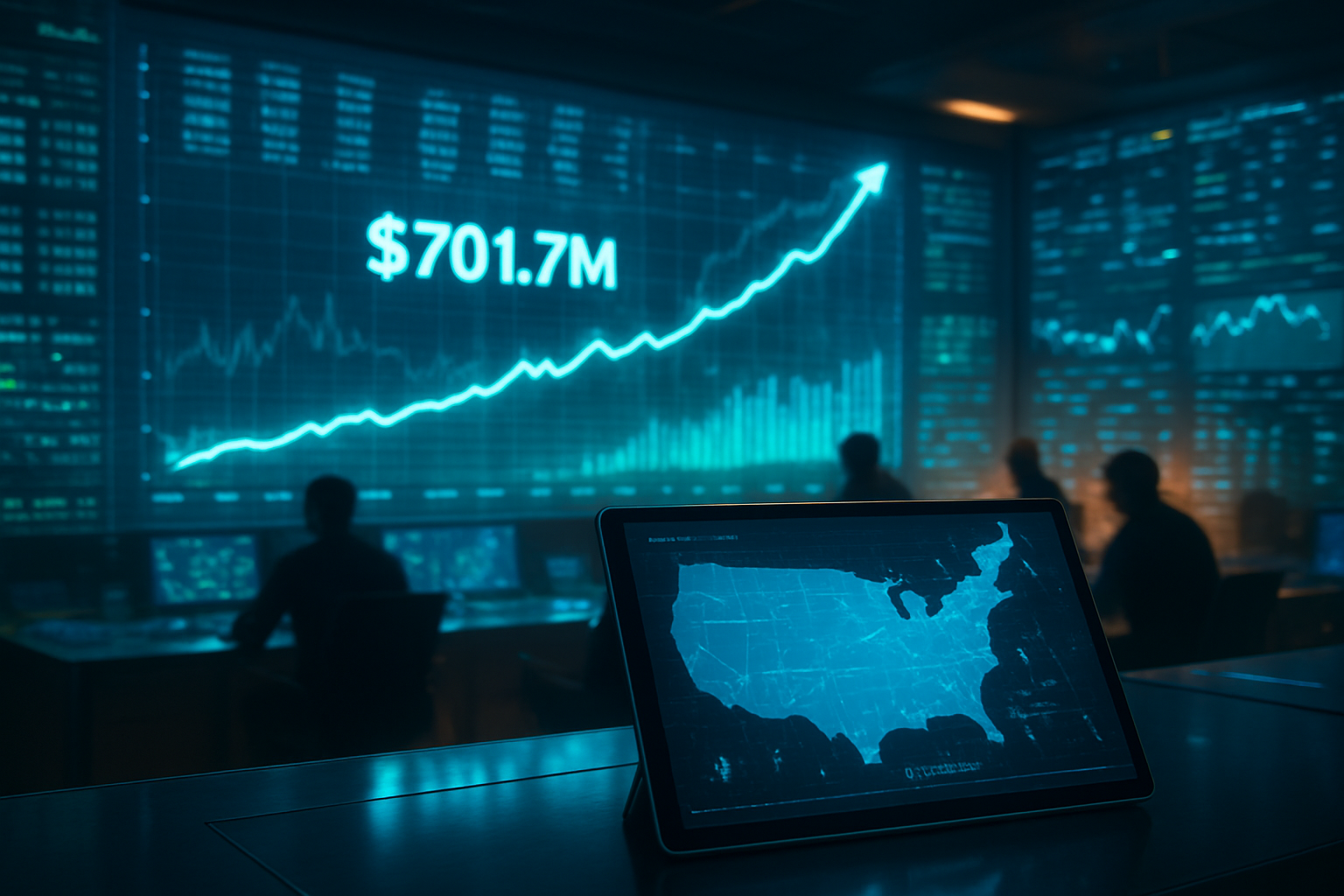
    On January 12, 2026, the prediction market industry reached a historic milestone, processing a staggering $701.7 million in a single 24-hour trading session. This unprecedented volume represents a watershed moment for the sector, effectively transitioning event-based contracts from a niche curiosity into a primary "truth engine" for institutional and retail investors alike. The surge was fueled by a volatile combination of macroeconomic uncertainty, high-stakes political maneuvering, and a geopolitical shock in South America, proving that markets can price real-world outcomes with more agility than traditional polling or economic forecasting.

    Leading the charge was Kalshi, which commanded a dominant 66.4% of the market share, facilitating over $465.9 million in trades. The record-breaking day was not merely a fluke of liquidity but the result of a "perfect storm" of events: a high-stakes standoff between the Department of Justice and the Federal Reserve, an aggressive early-cycle positioning for the 2026 U.S. Midterm Elections, and the sudden capture of Venezuelan President Nicolás Maduro. As traders recalibrated their portfolios in real-time, the day's activity cemented prediction markets as the go-to destination for hedging against systemic risk.

    The Market: What's Being Predicted

    The bulk of the day's record volume was concentrated on high-impact economic and political outcomes. On Kalshi, the regulated leader in the U.S. market, the most liquid contracts centered on Federal Reserve policy and the 2026 Midterm Election landscape. Specifically, traders were obsessively pricing the odds of a March 2026 interest rate cut, which fluctuated wildly throughout the day, peaking at a 74% probability. This was complemented by the platform's "Combos" feature, which allowed users to bet on multi-layered outcomes—such as the simultaneous occurrence of a "sticky" CPI print and a specific Fed reaction—generating over $100 million in positioning alone.

    While Kalshi dominated the U.S. domestic scene, Polymarket and Opinion Labs each processed approximately $100 million in volume, focusing on global geopolitical stability. Polymarket’s liquidity was driven by its "Operation Iron Strike" contracts regarding Middle Eastern military outcomes and the immediate aftermath of the capture of Nicolás Maduro. This event created a massive liquidity vacuum, with one savvy trader reportedly turning a $30,000 bet into a $400,000 windfall in just hours. These markets are no longer just binary "yes/no" propositions; they have evolved into complex instruments with deep liquidity, often resolving within hours of major news breaks.

    Why Traders Are Betting

    The record volume was catalyzed by a breakdown in traditional institutional trust and a series of high-stakes domestic developments. Tensions between the U.S. Department of Justice (DOJ) and Federal Reserve Chair Jerome Powell reached a boiling point on January 12. Reports surfaced that the DOJ had issued grand jury subpoenas to Powell regarding renovations at the Fed’s headquarters, a move interpreted by many as an assault on the central bank’s independence. This constitutional friction sent traders to prediction markets to hedge against a potential leadership crisis at the Fed, driving massive volume into "Fed Chair Stability" and "Interest Rate" contracts.

    Further driving the frenzy was a tactical move by the executive branch. President Trump’s directive for Fannie Mae and Freddie Mac to purchase $200 billion in mortgage bonds was seen as a direct attempt to stimulate the housing market outside the purview of the Federal Reserve. This "fiscal-monetary decoupling" led to intense positioning on the January 13 CPI (Inflation) release. Simultaneously, the 2026 Midterms moved into the spotlight as institutional traders began placing heavy bets on a "Split Congress" outcome. Current odds on Kalshi suggest a 66–68% probability that Republicans will retain control of the Senate, while the House remains a toss-up, forcing hedge funds to use these markets to price in future legislative gridlock.

    Broader Context and Implications

    The January 12 record is a testament to the successful integration of prediction markets into the broader financial ecosystem. A significant portion of Kalshi’s volume was facilitated through its deep integration with Robinhood Markets (NASDAQ: HOOD), which gave over 24 million retail traders direct access to event contracts through its "Prediction Markets Hub." This democratization of access has allowed retail sentiment to collide with institutional hedging, creating a more robust and accurate pricing mechanism. Additionally, the Intercontinental Exchange (NYSE: ICE) has fueled the sector's growth by providing a $2 billion liquidity injection into platforms like Polymarket, signaling that the traditional financial establishment now views these markets as a legitimate asset class.

    Historically, prediction markets have often been more accurate than pundits or polls. A Vanderbilt University study released on the same day noted that PredictIt—despite its regulatory size limits—maintained a 93% accuracy rate on political outcomes compared to traditional forecasting. This "wisdom of the crowd" effect is now being scaled to hundreds of millions of dollars. As these platforms grow, they are also facing increased regulatory scrutiny, yet their ability to provide real-time, incentivized data makes them indispensable for policy makers and investors trying to navigate an increasingly unpredictable global landscape.

    What to Watch Next

    The immediate focus for traders is the fallout from the January 13 CPI release and the escalating legal drama surrounding the Federal Reserve. If the CPI print comes in higher than the anticipated 2.7%, expect the probability of a March rate cut to plummet, potentially triggering another high-volume day as traders unwind their positions. Furthermore, the capture of Maduro has opened up a vacuum in South American political markets, with new contracts already appearing on the future of Venezuelan governance and oil production quotas.

    In the political arena, the 2026 Midterm markets are just beginning to heat up. Watch for the first major primary challenges in late Q1 2026, which will likely shift the "Split Congress" odds. As more public companies begin to report Q4 2025 earnings in the coming weeks, we may also see a surge in "Earnings Triple-Play" contracts, where traders bet on a company’s revenue, EPS, and guidance simultaneously.

    Bottom Line

    The $701.7 million trading day on January 12, 2026, marks the end of the experimental phase for prediction markets. With Kalshi’s $466 million performance proving the viability of regulated U.S. exchanges and Polymarket’s dominance in global geopolitics, the industry has reached a level of maturity that demands the attention of every serious investor. These markets are no longer just for "betting" on the news; they are becoming the news themselves, providing the most accurate, real-time data available on everything from inflation to international coups.

    As the intersection of finance, politics, and technology continues to blur, prediction markets will likely become the primary venue for price discovery in the 21st century. The ability to hedge against a constitutional crisis or a missed jobs report with the click of a button—aided by giants like Robinhood Markets (NASDAQ: HOOD)—has changed the rules of the game. For those watching the numbers, January 12 was not just a record day; it was a glimpse into the future of global markets.


    This article is for informational purposes only and does not constitute financial or betting advice. Prediction market participation may be subject to legal restrictions in your jurisdiction.

    PredictStreet focuses on covering the latest developments in prediction markets.
    Visit the PredictStreet website at https://www.predictstreet.ai/.
  • The $120 Million Bet: Why ‘Hard’ Economic Markets are Dominating Kalshi’s Order Books

    The $120 Million Bet: Why ‘Hard’ Economic Markets are Dominating Kalshi’s Order Books

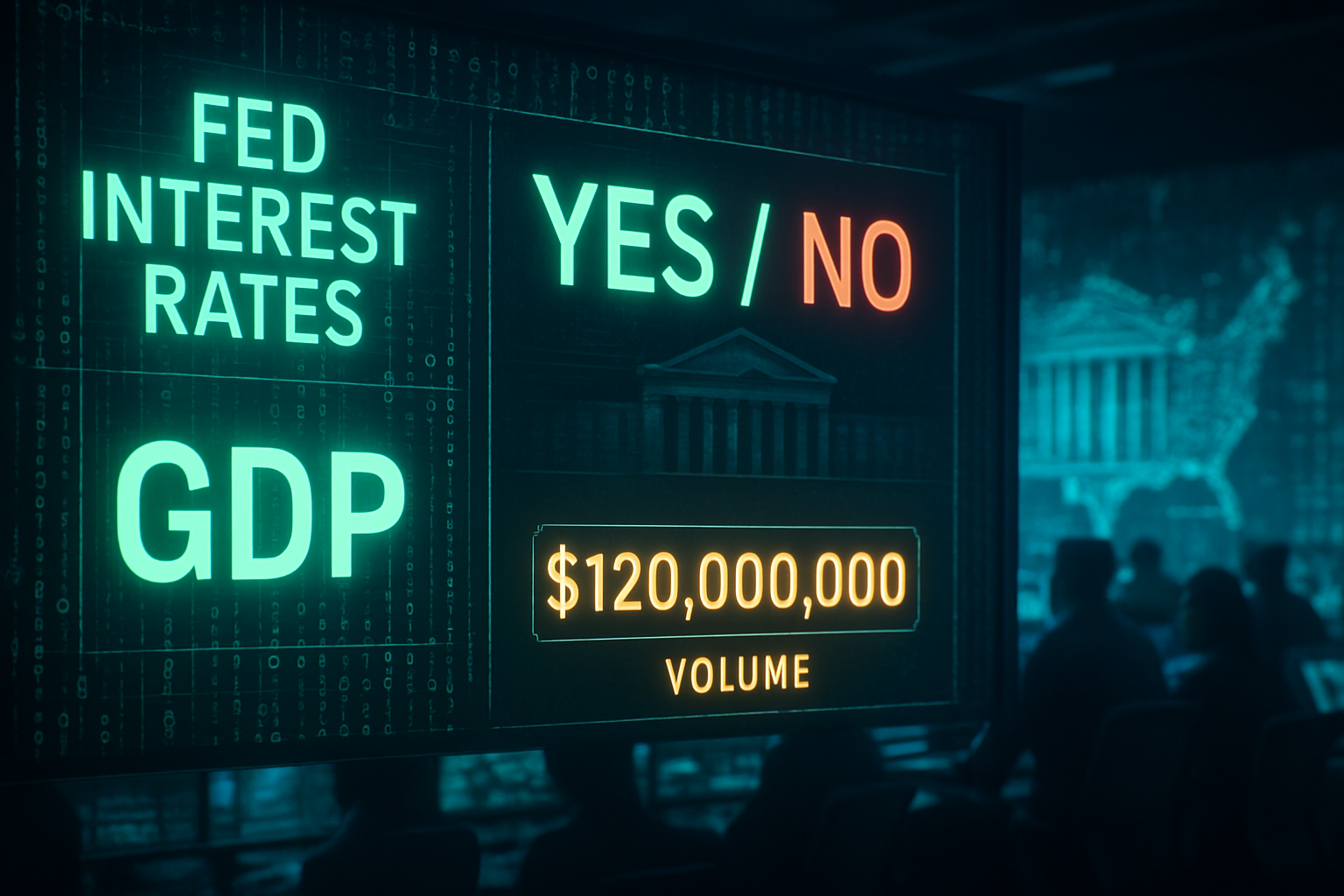
    As of January 15, 2026, the global prediction market landscape has evolved from a speculative niche into a $20 billion pillar of institutional finance. While political elections once provided the primary fuel for these platforms, the focus has shifted decisively toward "hard" macroeconomic data. The centerpiece of this shift is Kalshi’s blockbuster contract, "Will the Fed cut rates in March 2026?", which has just crossed a staggering $120 million in trading volume.

    Currently, the market reflects a cautious consensus. Traders are pricing in a 95% probability that the Federal Reserve will maintain current rates during the upcoming January 28 meeting, but the March contract is where the real battle is being fought. With professional desks and retail investors alike pouring capital into these binary options, prediction markets are no longer just guessing games—they are serving as the "truth engine" for the modern economy.

    The Market: What's Being Predicted

    The headline event for the first quarter of 2026 is the Federal Reserve’s interest rate trajectory. On Kalshi, the flagship "Will the Fed cut rates in March?" contract has become one of the most liquid financial instruments in the event-trading space. Unlike traditional interest rate futures traded on the CME Group (NASDAQ: CME), which involve complex calculations of the effective federal funds rate, Kalshi’s contracts are legally structured binary derivatives. They pay out $1 if the event occurs and $0 if it does not, making the trading price a direct proxy for the market-implied probability.

    The liquidity in this market is unprecedented. The $120 million volume in the March contract is supported by a mix of institutional "whales" and a massive influx of retail traders following the platform's 2025 integration with Robinhood Markets (NASDAQ: HOOD). Resolution is straightforward: the market settles based on the official post-meeting statement from the Federal Open Market Committee (FOMC). If the Fed announces a cut of at least 25 basis points, "Yes" contracts pay out; if they hold or hike, "No" contracts take the pot.

    Why Traders Are Betting

    The surge in volume isn't just driven by retail enthusiasm; it is powered by professional firms like Susquehanna and DRW, alongside hedge funds such as Saba Capital. These entities use Kalshi to hedge "tail risk"—extreme events that traditional bond or equity hedges might fail to cover. For instance, if a portfolio is heavily exposed to high-duration Treasuries, a surprise "no cut" in March could be devastating. By buying "No" contracts on Kalshi, these firms create a direct, linear hedge against a hawkish Fed.

    Furthermore, these markets are proving to be more agile than traditional forecasting. While the Atlanta Fed’s GDPNow model recently estimated Q4 2025 growth at a robust 5.3%, Kalshi’s "GDP Print" markets have consistently traded at a more conservative 45-52% probability for a high-growth outcome. Professional traders are betting on this divergence, using prediction markets to exploit what they see as "model lag" in traditional economic indicators. In 2025, Kalshi traders outperformed Wall Street consensus on inflation data by nearly 40%, cementing the platform's reputation for accuracy during periods of high volatility.

    Broader Context and Implications

    The dominance of "hard" economic markets on Kalshi reflects a broader trend: the institutionalization of prediction markets. Because Kalshi is a CFTC-regulated exchange, its contracts are treated as legally structured derivatives, allowing large-scale asset managers like BNY (NYSE: BK) to participate without the regulatory hurdles associated with offshore or decentralized platforms. This legal clarity has allowed prediction markets to steal market share from the traditional CME FedWatch tool, which many traders now view as slower and more volatile.

    This shift also reveals a fundamental change in how public sentiment is measured. Unlike surveys or "nowcasts," prediction markets require participants to put real capital at risk, filtering out noise and focusing on the most likely outcomes. The historical accuracy of these markets throughout late 2025 has turned them into a primary source of data for newsrooms and policy makers. When the "hard" markets speak, the financial world now listens with the same intensity it once reserved for Bloomberg terminals or Federal Reserve minutes.

    What to Watch Next

    The immediate focus for traders is the January 28 FOMC meeting. While a "pause" is almost entirely priced in, the language used by the Fed Chair will cause immediate, violent swings in the March cut contract. Every word regarding labor market cooling or stubborn service-sector inflation will be instantly reflected in the Kalshi price.

    Additionally, the release of the final Q4 2025 GDP print in late January will be a major catalyst. If the GDP data aligns with the more cautious prediction market view rather than the optimistic "nowcasts," it could trigger a massive migration of capital away from traditional economic models and into event-based derivatives. Traders should also keep an eye on February’s CPI (Consumer Price Index) release, which will serve as the final major data point before the March Fed decision.

    Bottom Line

    The transition of prediction markets from political novelties to essential macroeconomic tools is now complete. The $120 million volume in Kalshi’s March rate cut contract is a testament to the platform's liquidity and its growing role in the global financial infrastructure. By providing a regulated, binary way to trade on the most important economic indicators, Kalshi has effectively democratized sophisticated hedging strategies.

    As we move toward the March decision, these markets will likely remain the most accurate barometer of economic reality. Whether the Fed cuts or holds, the real winner in 2026 is the prediction market itself, which has finally proven that the "wisdom of the crowd"—when backed by $120 million—is a force that even the most established financial institutions can no longer ignore.


    This article is for informational purposes only and does not constitute financial or betting advice. Prediction market participation may be subject to legal restrictions in your jurisdiction.

    PredictStreet focuses on covering the latest developments in prediction markets.
    Visit the PredictStreet website at https://www.predictstreet.ai/.