Tag: Legal News

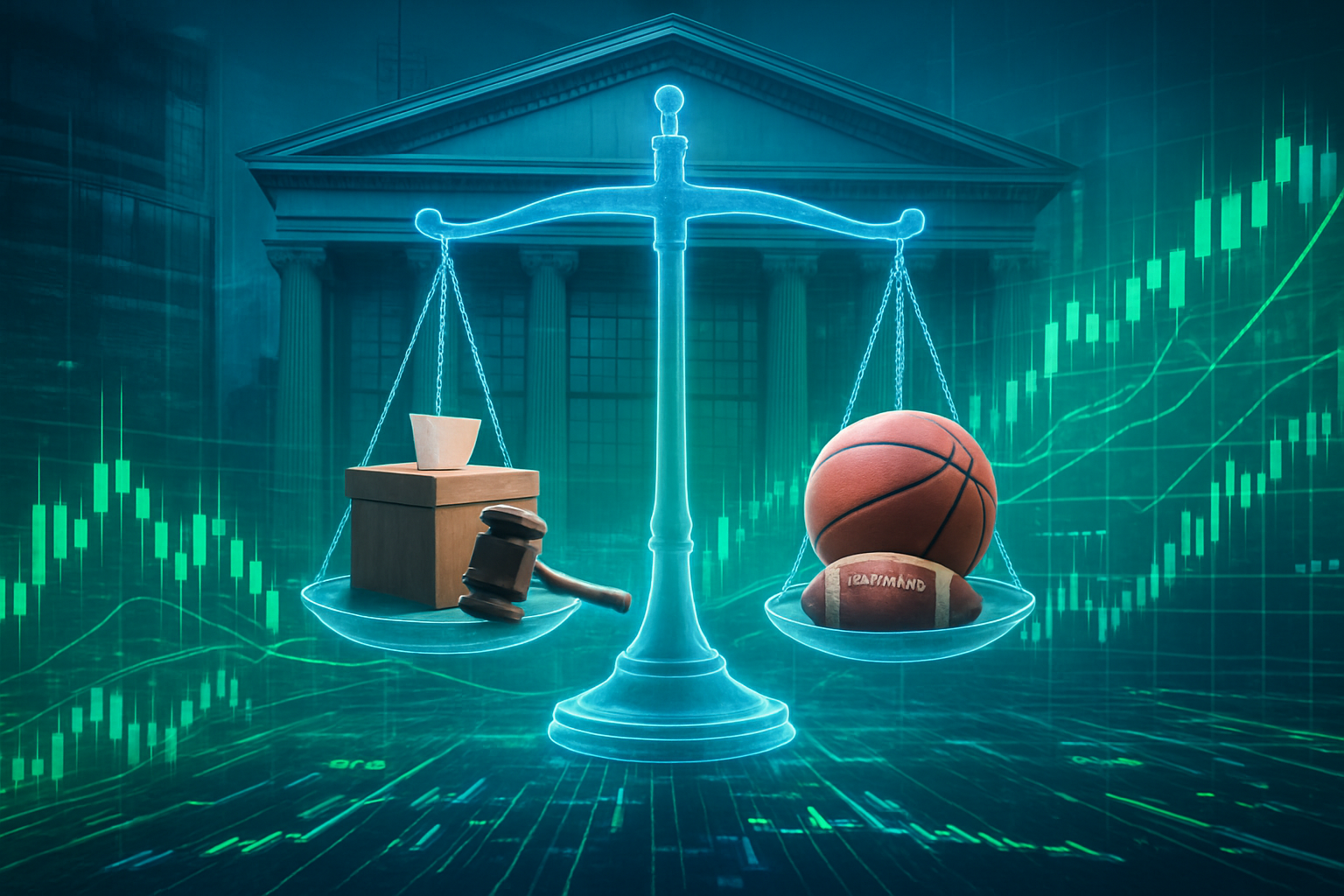
  • The ‘Gaming’ Gambit: Kalshi Fights 19 Lawsuits to Redefine Prediction Markets as Finance

    The ‘Gaming’ Gambit: Kalshi Fights 19 Lawsuits to Redefine Prediction Markets as Finance

    As of February 6, 2026, the prediction market industry is no longer just a niche playground for political junkies; it is the front line of a massive constitutional and regulatory war. At the center of this storm is Kalshi, the federally regulated exchange that has spent the last year oscillating between landmark legal victories and existential threats. The core of the conflict rests on a single, deceptively simple question: Is a prediction market a sophisticated financial instrument for hedging risk, or is it just a high-tech sportsbook?

    The stakes have reached a fever pitch as Kalshi and its peers grapple with 19 active federal lawsuits that threaten to fragment the U.S. market into a patchwork of geofenced jurisdictions. While a 2024 D.C. federal court ruling famously declared that election betting does not constitute "gaming," new and conflicting decisions from Maryland and Massachusetts have cast a long shadow over the industry. With sports event contracts now accounting for more than 90% of Kalshi’s total trading volume, the company’s ability to convince judges that these are financial derivatives—not gambling—will determine whether the multi-billion dollar prediction market industry survives in its current form.

    The Market: What's Being Predicted

    The "market" currently under the most intense scrutiny isn't an election or a sporting event, but the legal status of the industry itself. Traders across platforms like Polymarket and Kalshi are closely monitoring the "judicial climate," as the 19 pending federal lawsuits are categorized into three distinct fronts. There are six "offensive" suits where Kalshi has sued regulators in states like New York, Michigan, and Illinois, arguing that the Commodity Exchange Act (CEA) grants the Commodity Futures Trading Commission (CFTC) exclusive jurisdiction over their operations.

    Conversely, eight "defensive" suits have been launched by state gaming commissions and tribal entities, such as the Ho-Chunk Nation, alleging that Kalshi is operating as an unlicensed sportsbook. The final five cases are consumer-led class actions focusing on gambling addiction. This legal sprawl has created a volatile environment where liquidity is often tied to the latest courtroom transcript. On Kalshi, the volume for sports-related event contracts hit an estimated $9.1 billion monthly in January 2026, representing a staggering 91.1% of the platform's activity. The resolution of these cases will dictate whether this liquidity remains centralized or is throttled by state-level "police powers."

    Why Traders Are Betting

    The divergence in judicial opinion has turned legal analysis into a primary trading strategy. In Washington D.C., Judge Jia Cobb’s "Rocket-Booster" precedent remains the industry's North Star. Her ruling that "politics is not a game" effectively stripped the CFTC of its power to block election markets, arguing that the term "gaming" in the CEA refers to traditional games of chance like poker, not solemn public processes. This gave traders confidence that federal law favored the expansion of event contracts.

    However, that confidence has been shaken by more recent rulings. In August 2025, Judge Adam Abelson of the Maryland Federal Court rejected Kalshi's attempt to block state regulators, ruling that sports contracts are "indistinguishable" from traditional sports wagering. This was followed by a January 2026 bombshell in Massachusetts, where Judge Christopher Barry-Smith ordered Kalshi to geofence the state, noting that the platform's user interface "mirrors other digital gambling experiences." Traders are now forced to weigh the "exclusive jurisdiction" argument against the 10th Amendment rights of states to regulate gambling—a conflict that many believe is destined for the Supreme Court.

    Broader Context and Implications

    This legal battle represents a fundamental shift in how the U.S. views risk. Kalshi argues that its sports contracts are essential financial tools. For example, a small business owner in a college town might use a "home team loss" contract to hedge against the drop in foot traffic and revenue that follows a losing season. In this view, prediction markets are more akin to the CME Group (NASDAQ: CME) or Interactive Brokers (NASDAQ: IBKR) ForecastEx than to a casino.

    However, the CFTC, under new Chairman Michael Selig, is navigating a delicate path. While Selig has begun withdrawing the more restrictive "Event Contracts" proposals from 2024, the commission is still pressured by states and anti-gambling advocates. The broader implication is the potential "fragmentation" of the U.S. economy. If a financial instrument is legal in D.C. but "illegal gambling" in Massachusetts, the efficiency of prediction markets as a forecasting tool is severely diminished. The industry's historical accuracy—which famously outperformed traditional polling during the 2024 cycle—relies on deep, nationwide liquidity pools that state geofencing would destroy.

    What to Watch Next

    The next three to six months will be pivotal. The "Blue Lake Rancheria v. Kalshi" case in California, which Kalshi won in late 2025 on federal preemption grounds, is currently being appealed. A win for Kalshi in the Ninth Circuit would create a powerful counterweight to the Massachusetts and Maryland decisions, potentially forcing a Supreme Court intervention.

    Additionally, investors should watch for the CFTC's upcoming "durable standards" memo, expected in the second quarter of 2026. Chairman Selig has hinted at a framework that would solidify the "financial instrument" status for event contracts while requiring more robust consumer protections. Key dates in April will also see hearings for the class-action suits in Michigan, which could determine if Kalshi is liable for "gambling losses" under state statutes—a ruling that would be catastrophic for the platform's revenue model.

    Bottom Line

    The legal war facing Kalshi is a battle for the soul of the "Information Age" economy. If Kalshi succeeds in proving that sports and political events are economic variables rather than "games," it will open the floodgates for a new era of decentralized finance and risk management. If the "gaming" definition holds in state courts, the industry may be forced into a permanent defensive crouch, operating as a glorified, geofenced sportsbook rather than a global revolutionary exchange.

    For now, the data is clear: the public wants to trade these markets. With over $9 billion in monthly volume moving through sports contracts alone, the market has already "voted" on the utility of these instruments. The question remains whether the 19 federal lawsuits will catch up to the reality of the 21st-century trader.


    This article is for informational purposes only and does not constitute financial or betting advice. Prediction market participation may be subject to legal restrictions in your jurisdiction.

    PredictStreet focuses on covering the latest developments in prediction markets.
    Visit the PredictStreet website at https://www.predictstreet.ai/.
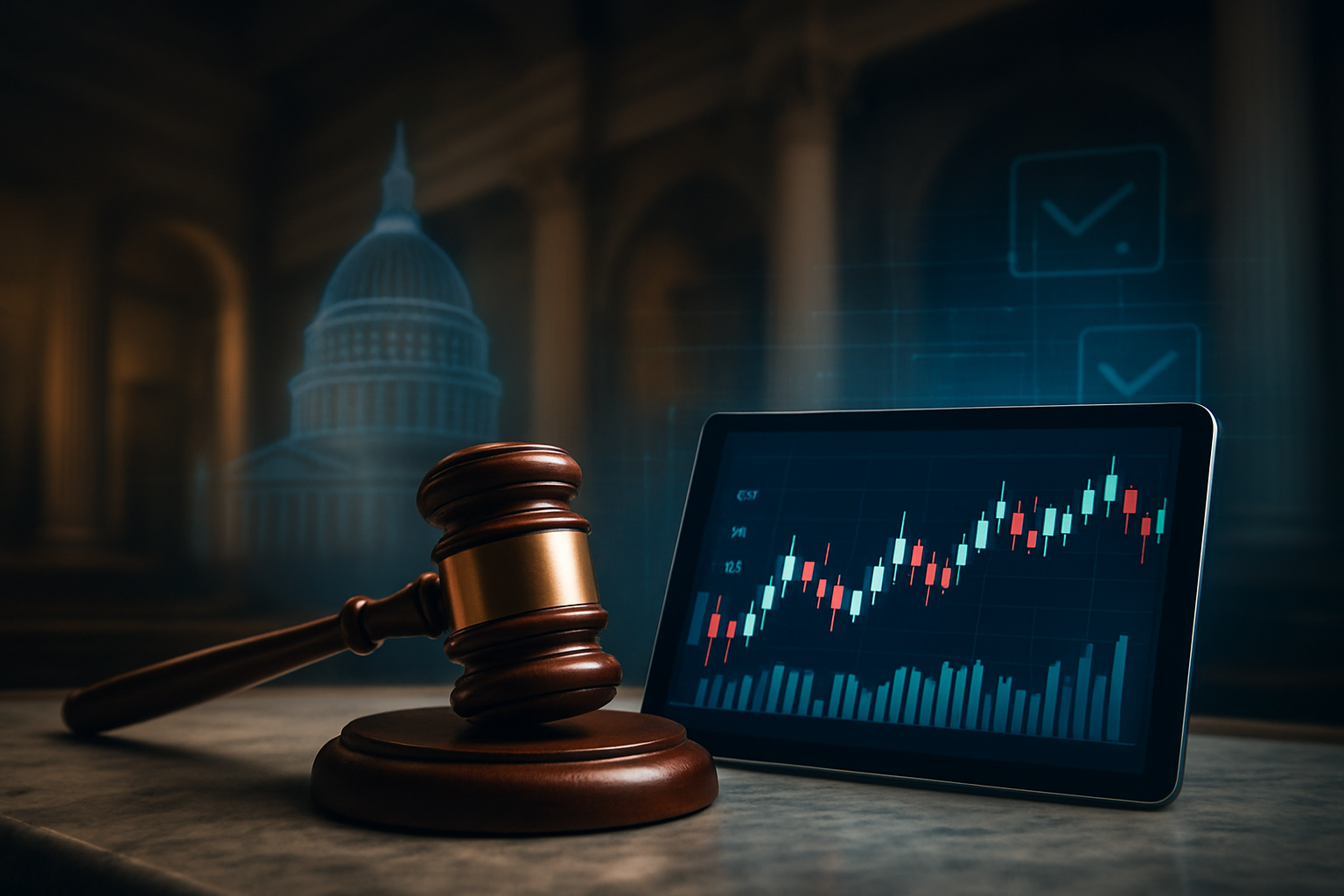
  • The Gavel Falls for Prediction Markets: How Kalshi’s Legal Victory Rewrote the Rules for 2026

    The Gavel Falls for Prediction Markets: How Kalshi’s Legal Victory Rewrote the Rules for 2026

    The landscape of American elections changed forever not at a ballot box, but in a federal courtroom. Following a historic legal triumph over the Commodity Futures Trading Commission (CFTC), Kalshi has transitioned from an embattled startup to the vanguard of a multi-billion dollar industry. Today, as of January 16, 2026, the platform’s "Congressional Control" markets are the primary pulse-check for the upcoming midterm elections, boasting record-breaking liquidity and institutional participation that was unthinkable just two years ago.

    The shift began when the U.S. Court of Appeals denied the CFTC's motion to block Kalshi from offering election contracts, a move that effectively dismantled the agency's decade-long blockade against political derivatives. Current market data shows a "Blue Wave" in the House is now priced at a staggering 75% probability, while Republicans maintain a 67% grip on the Senate. This divergence has turned prediction markets into the most scrutinized data source in Washington, overshadowing traditional polling which continues to struggle with representative sampling.

    The Market: What's Being Predicted

    The current crown jewel of the prediction world is the 2026 "Congressional Control" suite on Kalshi. Unlike the fragmented markets of the past, these contracts are now fully integrated into the broader financial ecosystem, with retail giants like Robinhood Markets, Inc. (NASDAQ: HOOD) and Interactive Brokers Group, Inc. (NASDAQ: IBKR) offering direct or indirect exposure to these event-clearing instruments.

    As of mid-January 2026, the House of Representatives market has seen over $450 million in volume. Traders are currently pricing a Democratic takeover of the House at 74-76 cents on the dollar, reflecting a strong consensus that the incumbent administration will face a classic midterm correction. Conversely, the Senate remains a Republican stronghold in the eyes of the market, with the GOP trading at a 66% chance to retain control, largely due to a favorable 2026 map that forces Democrats to defend several vulnerable seats in deep-red states.

    The resolution criteria are strictly tied to the official results of the November 2026 elections. A "Democratic House" contract pays out $1 if the Democratic Party secures at least 218 seats, and $0 otherwise. This binary simplicity, combined with the legal certainty provided by the courts, has invited massive liquidity, with "whale" positions exceeding $10 million now appearing regularly in the order books.

    Why Traders Are Betting

    The primary driver behind the current betting frenzy is the legal clarity established by Judge Jia Cobb’s landmark 2024 ruling. The court famously determined that "gaming" does not apply to election contracts, reasoning that elections are a "civic process" rather than a "game" like a sporting event or a casino match. This distinction stripped the CFTC of its ability to block contracts based on "public interest" concerns, as the agency's jurisdiction over "gaming" was found not to extend to the democratic process.

    Traders are also reacting to the "Midterm Slump" narrative, a historical trend where the president's party almost always loses seats. However, the 2026 markets are being specifically moved by a surge in "Impeachment Odds." Kalshi’s contract on "Will Donald Trump be impeached in 2026?" has climbed to 57%, a sentiment that directly correlates with the 75% odds of a Democratic House. Markets are effectively betting that a new House majority will move immediately toward oversight and impeachment proceedings.

    The integration of "Combos"—parlay-style contracts—has further fueled activity. Professional traders are now hedging macro risks by betting on outcomes like "Democrats win the House AND the Federal Reserve cuts interest rates in September." This intersection of political and economic forecasting has drawn in hedge funds that previously viewed election betting as a novelty.

    Broader Context and Implications

    The Kalshi victory was a watershed moment for the "Loper Bright" era of administrative law. By applying the Supreme Court's decision to end Chevron deference, the courts signaled that federal agencies can no longer "invent" definitions for terms like "gaming" to expand their regulatory reach. This has opened the door for a host of other event markets, including climate milestones, Supreme Court rulings, and even geopolitical conflicts, all trading under the same regulated framework.

    Real-world implications are already being felt in political strategy. Campaign consultants now use Kalshi prices as a more reliable indicator than private internal polling. If a candidate’s "Win Probability" drops 10 points in an afternoon, it often signals a localized scandal or a shift in donor sentiment before it hits the news cycle. This "truth machine" effect has brought a level of brutal transparency to the 2026 midterms that wasn't present in 2022 or 2024.

    Furthermore, the "irreparable harm" argument used by the CFTC—that election markets would undermine democracy—has largely been debunked by the 2024 experience. Instead of causing chaos, the markets provided a stabilizing influence during the 2024 vote count, offering a cold, hard look at the probabilities when partisan rhetoric was at its peak. The markets proved to be a "ballast" against misinformation, a fact that has softened Congressional opposition to the industry.

    What to Watch Next

    The next major milestone for the markets will be the "Primary Season High," expected in late Spring 2026. Key Senate races in Georgia and Ohio are currently the most volatile. In Georgia, Senator Jon Ossoff (D) is a 75% favorite, but any entry of a high-profile Republican challenger could see those odds collapse overnight. Traders should keep a close eye on the "Candidate Filing" deadlines, as these dates often trigger the largest single-day movements in individual race markets.

    Beyond the candidates, the CFTC’s ongoing regulatory posture remains a factor. While they voluntarily dismissed their appeal in May 2025, the agency is expected to propose new "conduct rules" later this year to prevent market manipulation by political insiders. Any news regarding "Insiders Betting Bans" could temporarily dry up liquidity or shift the odds as certain participants are forced to exit their positions.

    Finally, the "Combos" markets for Q3 2026 will be critical. As we approach the heat of the campaign, the correlation between election odds and inflation data will likely tighten. If inflation remains sticky, expect the "Democratic House" odds to soften as the "economic pain" narrative takes hold of the betting public.

    Bottom Line

    The Kalshi legal victory didn't just win a court case; it birthed a new era of the American information economy. By defeating the "gaming" label, Kalshi ensured that prediction markets would be treated as legitimate financial tools rather than fringe gambling. As we head into the 2026 midterms, the market is no longer wondering if these platforms are legal, but rather how they will transform our understanding of political power.

    Prediction markets have proven to be the most efficient aggregator of public and private information in existence. While polls offer a snapshot of what people say, Kalshi offers a snapshot of what people know—or at least, what they are willing to bet on. As the 2026 cycle heats up, the odds will continue to shift, but the house that Kalshi built on a foundation of legal victory is here to stay.


    This article is for informational purposes only and does not constitute financial or betting advice. Prediction market participation may be subject to legal restrictions in your jurisdiction.

    PredictStreet focuses on covering the latest developments in prediction markets.
    Visit the PredictStreet website at https://www.predictstreet.ai/.