Tag: Legal

  • State Gaming Boards vs. Silicon Valley: The High-Stakes Legal Battle Threatening Kalshi’s $200 Billion Ambitions

    State Gaming Boards vs. Silicon Valley: The High-Stakes Legal Battle Threatening Kalshi’s $200 Billion Ambitions

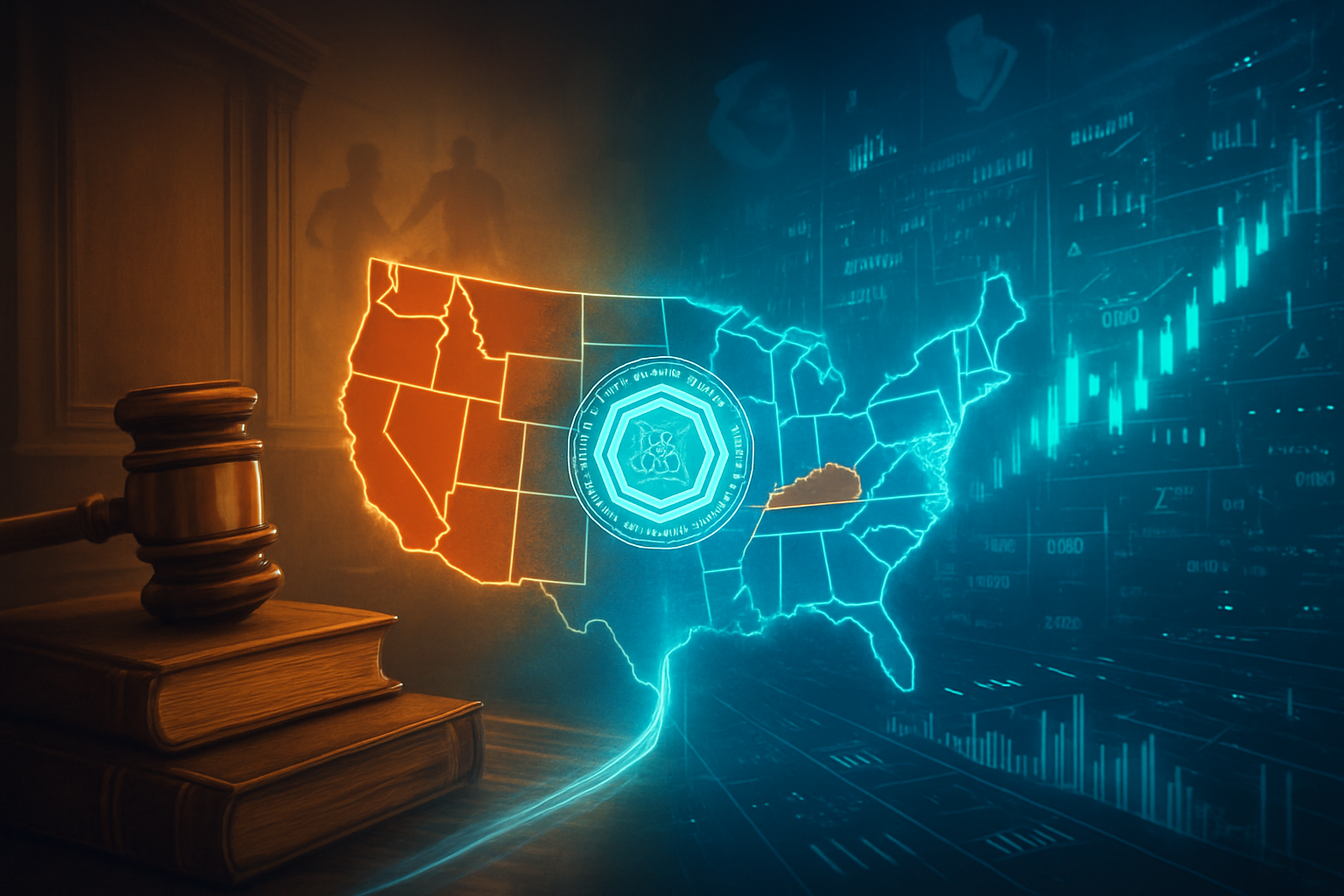
    As of January 30, 2026, the meteoric rise of prediction markets faces its most existential threat yet: a "jurisdictional civil war" between federal regulators and state gaming authorities. While platforms like Kalshi have successfully argued their case before the Commodity Futures Trading Commission (CFTC) and federal courts, a new wave of state-level cease-and-desist orders is threatening to fragment the market. The core of the dispute centers on whether a contract predicting a sports outcome is a sophisticated financial derivative or simply an unlicensed bet.

    Market participants are currently pricing in a high degree of uncertainty regarding Kalshi's geographic reach. While the platform processed a staggering $23.8 billion in notional volume in 2025, recent legal setbacks in Massachusetts and looming hearings in Connecticut have forced traders to consider a future where prediction markets are geofenced state-by-state. This "regulatory design problem" has become the primary driver of market sentiment, as the industry waits to see if federal preemption will shield these exchanges from the heavy hand of state gambling commissions.

    The Market: What's Being Predicted

    The current focus of the prediction market community isn't just on the outcomes of the events themselves, but on the survival of the markets that host them. On Kalshi and competing platforms like Polymarket, the most liquid contracts currently involve high-stakes sports events, including the upcoming Super Bowl LX and the 2026 NBA playoffs. For instance, the market for "Will the Kansas City Chiefs win Super Bowl LX?" is seeing massive liquidity, with shares trading at $0.34 (implying a 34% probability), despite the legal clouds gathering over the platform's right to host such contracts.

    Kalshi, which operates as a CFTC-regulated Designated Contract Market (DCM), has seen its weekly trading volume surge to over $2.3 billion this month. However, the platform's liquidity is increasingly bifurcated by geography. Following a preliminary injunction in Massachusetts on January 20, 2026, and a cease-and-desist in Tennessee, traders in those states have been sidelined. This has created a "phantom liquidity" scenario where national price discovery is hampered by the sudden exit of users from key markets, leading to wider spreads on certain state-contested contracts.

    The resolution criteria for these legal battles are clear: a federal court hearing in Connecticut scheduled for February 12, 2026, is expected to determine whether the "federal preemption" defense holds water. If Kalshi loses this round, the platform may be forced to exit up to 15 states by the end of the year, a move that would drastically alter the volume outlook for 2026.

    Why Traders Are Betting

    Traders are flocking to Kalshi’s sports-event contracts primarily because of the "vig" gap. Traditional sportsbooks, managed by giants like DraftKings (NASDAQ: DKNG) and Flutter Entertainment (NYSE: FLUT), typically charge a significant house edge, often between 5% and 10%. In contrast, Kalshi’s peer-to-peer exchange model allows for much tighter spreads, often effectively reducing the cost of a "bet" to a fraction of a percent. This has attracted high-frequency traders and institutional "whales" who view these contracts as efficient hedging tools rather than mere gambling.

    The narrative driving current positions is one of "hedging vs. consumption." Proponents argue that a contract on the price of a touchdown is no different than a contract on the price of corn; both provide a "truth signal" and allow parties to manage risk. For example, a local business in a host city might buy "No" contracts on a home team's victory to hedge against the loss of local economic activity that follows a playoff exit. This sophisticated financial logic is what traders are betting will eventually win over federal judges.

    However, the opposition is equally motivated. State gaming boards in Nevada and Connecticut argue that Kalshi is exploiting a "regulatory design problem." By structuring bets as $0 or $1 binary options, Kalshi is accused of "engineering preemption"—deliberately designing gambling products to look like commodities to bypass state taxes and consumer protection laws. Large positions are being taken by speculators who believe a "federal legislative solution" is the only way out, betting that the current administration will favor a "future-proof" regulatory framework for fintech.

    Broader Context and Implications

    This conflict highlights a significant shift in the prediction market landscape. In 2024 and 2025, the industry's biggest hurdle was scaling user demand; in 2026, the problem is one of legal architecture. If states like Massachusetts and Nevada succeed in classifying these markets as "gaming," the regulatory burden could become insurmountable. Traditional sportsbooks are currently taxed at rates as high as 51% in some jurisdictions, a cost that would destroy the low-margin exchange model Kalshi relies on.

    The real-world implications are profound. Prediction markets have historically been more accurate than polls or pundits, offering real-time data on everything from inflation to election outcomes. If these markets are geofenced or shut down, the world loses a critical "truth engine." Furthermore, the entry of traditional finance players like Robinhood (NASDAQ: HOOD) into the space—following their own legal skirmishes in Connecticut—suggests that the "financialization of everything" is a trend that state regulators may be unable to stop, only delay.

    Historically, the CFTC has had a complicated relationship with event contracts. While the agency under Chairman Michael Selig has signaled a more permissive approach, the "Gaming Clause" of the Commodity Exchange Act remains a potent weapon for states. The outcome of this struggle will decide if the United States maintains a unified national market for information or a fragmented patchwork of state-regulated betting shops.

    What to Watch Next

    The immediate milestone for every trader in this space is February 12, 2026. The hearing in the Connecticut Department of Consumer Protection case will be the first major test of whether the federal pause on state enforcement will hold. A victory for Kalshi there would likely lead to a "legal rally," where liquidity returns to the platform as traders gain confidence in its nationwide longevity. Conversely, a defeat would likely trigger a wave of geofencing across the Northeast.

    Additionally, keep a close eye on the "Massachusetts model." If other states adopt the logic that event contracts are "substantively indistinguishable" from wagering, we may see a mass exodus of prediction market startups to offshore jurisdictions or decentralized protocols. Investors should also watch for any movement from the Tennessee Sports Wagering Council, which has ordered a cease-operations deadline for the end of this month.

    Finally, the total notional volume projections for 2026—estimated by analysts at Piper Sandler to reach $222.5 billion—hinge entirely on these court dates. Any sign of a Supreme Court petition regarding federal preemption could send shockwaves through the industry, as it would represent the final word on the legality of the "regulatory design" Kalshi has pioneered.

    Bottom Line

    The battle over Kalshi’s sports-event contracts is about more than just football or basketball; it is a fundamental test of the United States' regulatory agility in the face of financial innovation. Kalshi has proven that there is a massive, multi-billion dollar appetite for low-cost, transparent event contracts. However, the "regulatory design problem" has created a friction point where state-level police powers meet federal commodity oversight.

    As of early 2026, the market remains in a state of "cautious expansion." While the volume numbers are record-breaking, the legal foundation is at its most precarious. For prediction markets to fulfill their potential as a global utility for price discovery, they must first survive a domestic gauntlet of gaming regulators who see them not as the future of finance, but as a threat to the established order of the betting industry.

    The next few months will determine if Kalshi remains a nationwide powerhouse or becomes a niche platform serving only a handful of "permissive" states. For now, the odds favor a prolonged legal stalemate, with the ultimate resolution likely requiring an act of Congress to finally bridge the gap between "hedging" and "gaming."


    This article is for informational purposes only and does not constitute financial or betting advice. Prediction market participation may be subject to legal restrictions in your jurisdiction.

    PredictStreet focuses on covering the latest developments in prediction markets.
    Visit the PredictStreet website at https://www.predictstreet.ai/.
  • The Buckeye Blockade: Ohio Intensifies War on Federally Licensed Prediction Markets

    The Buckeye Blockade: Ohio Intensifies War on Federally Licensed Prediction Markets

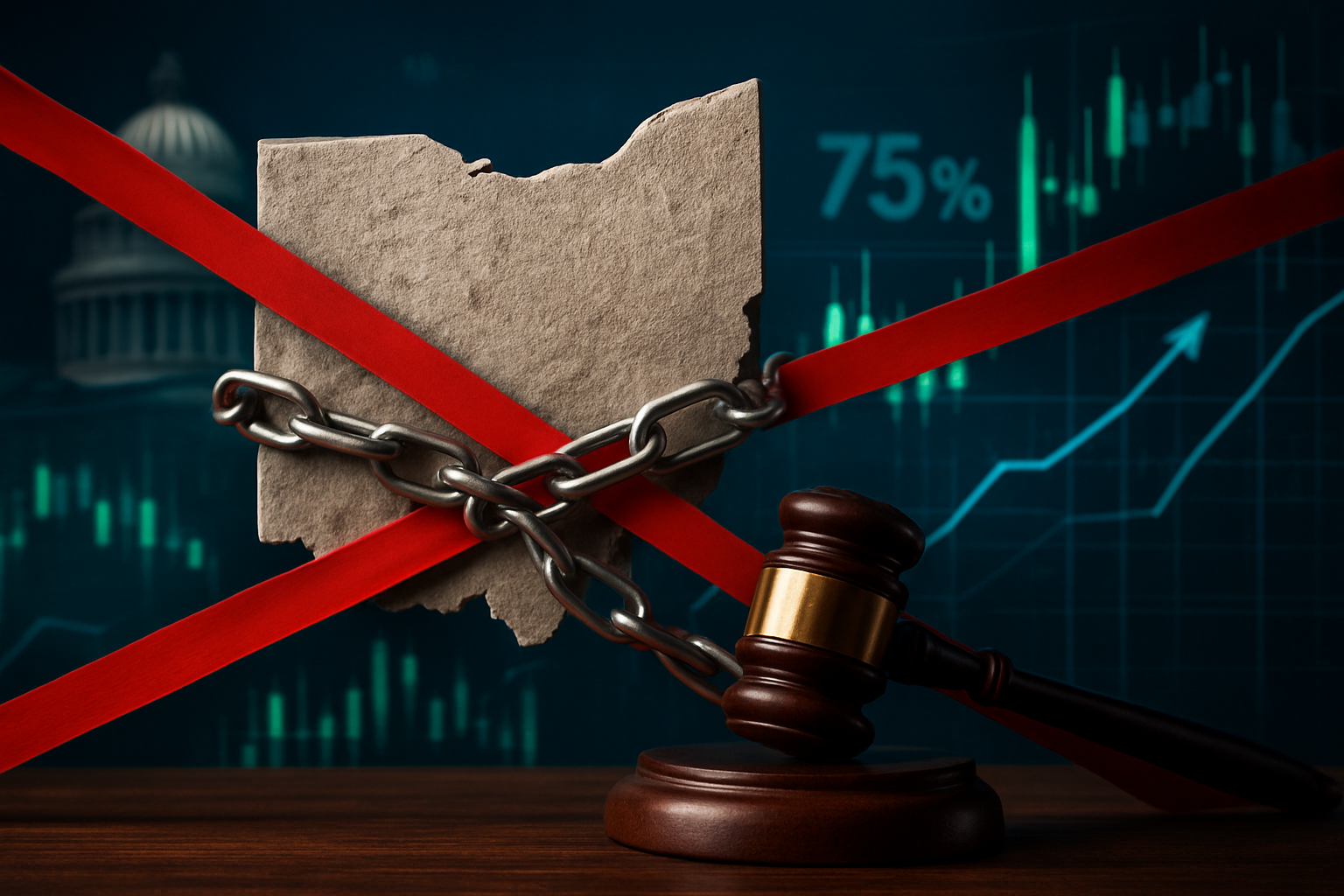
    In a legal maneuver that has sent ripples through the prediction market community, the state of Ohio has formally doubled down on its efforts to block federally regulated exchanges from operating within its borders. On January 23, 2026, the Ohio Casino Control Commission (OCCC) filed a notice of supplemental authority in federal court, signaling a significant escalation in the battle between state gambling regulators and the Commodity Futures Trading Commission (CFTC). The move is aimed directly at KalshiEx LLC, the pioneer of regulated event contracts in the U.S., which is currently suing Ohio to protect its right to offer markets to the state’s residents.

    Traders and legal analysts are watching this development with intense scrutiny. At the heart of the conflict is a fundamental question: does a federal license from the CFTC provide a "nationwide permission slip," or can individual states use their historic "police powers" to classify prediction markets as illegal gambling? With Ohio now leveraging a fresh legal victory from Massachusetts to bolster its case, the probability of a fragmented, state-by-state regulatory landscape for prediction markets has never been higher.

    The Market: What's Being Predicted

    While prediction markets are typically used to forecast elections or economic data, the "market" currently under the most intense observation is the legal survival of the industry itself. In the U.S. District Court for the Southern District of Ohio, the case KalshiEx LLC v. Ohio Casino Control Commission et al. has become the primary theater for this conflict. Kalshi seeks to prevent Ohio’s Attorney General, Dave Yost, and the OCCC from enforcing state gaming laws against its CFTC-regulated platform.

    The tension has escalated since April 2025, when the OCCC issued cease-and-desist orders not only to Kalshi but also to major fintech players like Robinhood Markets, Inc. (NASDAQ: HOOD) and Crypto.com, alleging they were facilitating unlicensed sports gaming. Trading volume on these platforms in Ohio has effectively frozen as geofencing measures were tightened in response to the state’s aggressive posture. Investors are now pricing in a significant risk that other states will follow Ohio’s lead, potentially creating a "patchwork" regulatory environment similar to the early days of the U.S. sports betting rollout.

    Resolution in the Ohio case is expected by mid-2026, but the recent filing of supplemental authority has accelerated the timeline. Ohio is specifically citing a January 20, 2026, ruling from Massachusetts, where a judge granted a preliminary injunction against Kalshi, effectively banning its sports-related event contracts. Ohio argues that this Massachusetts precedent provides the "roadmap" for why state laws should not be preempted by federal commodities law.

    Why Traders Are Betting

    The primary driver of the current uncertainty is the strategic pivot by state attorneys general. Led by Ohio’s Dave Yost, a coalition of 36 states has argued that prediction markets—particularly those involving elections and sports—pose "life-altering consequences" for citizens if left to the relatively light-touch oversight of the CFTC. This perspective stands in stark contrast to the "Selig Doctrine" currently emerging from Washington.

    The new CFTC Chairman, Michael Selig, who was confirmed in December 2025, has championed a "future-proof" regulatory framework that views prediction markets as essential financial hedging tools. Traders who are bullish on the industry had hoped that Selig’s permissive stance would override state-level concerns. However, the Massachusetts ruling has proven that state judges are increasingly sympathetic to the argument that the Commodity Exchange Act (CEA) does not explicitly displace state gaming commissions.

    Market participants are also closely watching the behavior of traditional sportsbooks like FanDuel, owned by Flutter Entertainment plc (NYSE: FLUT), and DraftKings Inc. (NASDAQ: DKNG). In a bold move in August 2025, OCCC Executive Director Matthew Schuler warned these licensed operators that their Ohio gaming licenses would be at risk if they even peripherally associated with prediction market exchanges. This has effectively isolated Kalshi and its peers from the broader gaming ecosystem in the Midwest, forcing traders to weigh the risk of total exclusion from the Ohio market.

    Broader Context and Implications

    The Ohio-Massachusetts alliance represents a significant shift in the narrative of prediction markets. For years, the industry was viewed through a federal lens—a battle between the CFTC and exchanges. Now, the conflict has shifted to a "Federalism vs. Preemption" fight. If Ohio succeeds in using the Massachusetts ruling to defeat Kalshi's motion for a preliminary injunction, it could set a precedent that renders a CFTC license nearly worthless in a dozen or more "restrictive" states.

    This reveals a deep public sentiment divide regarding the nature of "event contracts." While Silicon Valley and Wall Street view these as "truth machines" and hedging instruments, state regulators in the "Rust Belt" and beyond continue to view them through the prism of consumer protection and tax revenue. By labeling these contracts as "gaming," Ohio ensures it can maintain its 20% tax on sports gaming revenue—a revenue stream that prediction markets, which operate as low-fee exchanges, currently do not provide to the state.

    Historically, prediction markets have thrived when they have clear, singular regulatory oversight. The current friction mirrors the early 20th-century battles over "bucket shops," where states successfully shuttered unregulated exchanges. The difference today is that the exchanges are federally licensed, creating a constitutional clash that may ultimately require intervention from the U.S. Supreme Court to resolve the ambiguity of the Commodity Exchange Act.

    What to Watch Next

    The immediate next step is the ruling from the U.S. District Court for the Southern District of Ohio on Kalshi’s request for a preliminary injunction. Following the January 23 filing of the Massachusetts authority, a decision is expected within the next 30 days. If the court sides with Ohio, expect an immediate "domino effect" as states like New Jersey, Nevada, and Tennessee—who have already been coordinating with Ohio—move to issue their own injunctions.

    Another critical milestone is the CFTC’s formal notice-and-comment rulemaking, scheduled to begin in February 2026. Chairman Selig’s attempt to codify prediction market rules could include language specifically intended to preempt state laws. However, if the courts have already ruled in favor of state "police powers" by then, the CFTC’s rules may arrive too late to protect the exchanges from being geofenced out of significant portions of the U.S. population.

    Finally, keep a close watch on the 2026 midterm election markets. If the legal blockade in Ohio remains in place, it will serve as the first major test of how a "fragmented market" affects the accuracy of these platforms. If Ohio residents—historically a bellwether for national trends—are excluded, the predictive power of these markets could be significantly diminished, potentially impacting the liquidity and utility that make them attractive to traders in the first place.

    Bottom Line

    The "Buckeye Blockade" is more than just a local regulatory dispute; it is a fundamental challenge to the federal government's authority over the next generation of financial markets. Ohio’s strategic use of the Massachusetts ruling as "supplemental authority" shows that state regulators are no longer acting in isolation—they are building a collective legal arsenal to keep prediction markets under the thumb of state gambling commissions.

    For prediction markets to serve as effective tools for social and economic forecasting, they require broad, liquid participation. The current pushback from Ohio threatens to Balkanize the U.S. market, creating a scenario where a trader's ability to hedge against political or economic risk depends entirely on their zip code.

    As we move further into 2026, the likely outcome is a prolonged period of legal volatility. While the CFTC may want to usher in a new era of "event-driven finance," Ohio has made it clear that the path to a national market runs directly through the state house in Columbus—and the gate is currently locked.


    This article is for informational purposes only and does not constitute financial or betting advice. Prediction market participation may be subject to legal restrictions in your jurisdiction.

    PredictStreet focuses on covering the latest developments in prediction markets.
    Visit the PredictStreet website at https://www.predictstreet.ai/.
  • The Preemption Power Play: Why Prediction Markets Are Betting 81% on a Federal Victory

    The Preemption Power Play: Why Prediction Markets Are Betting 81% on a Federal Victory

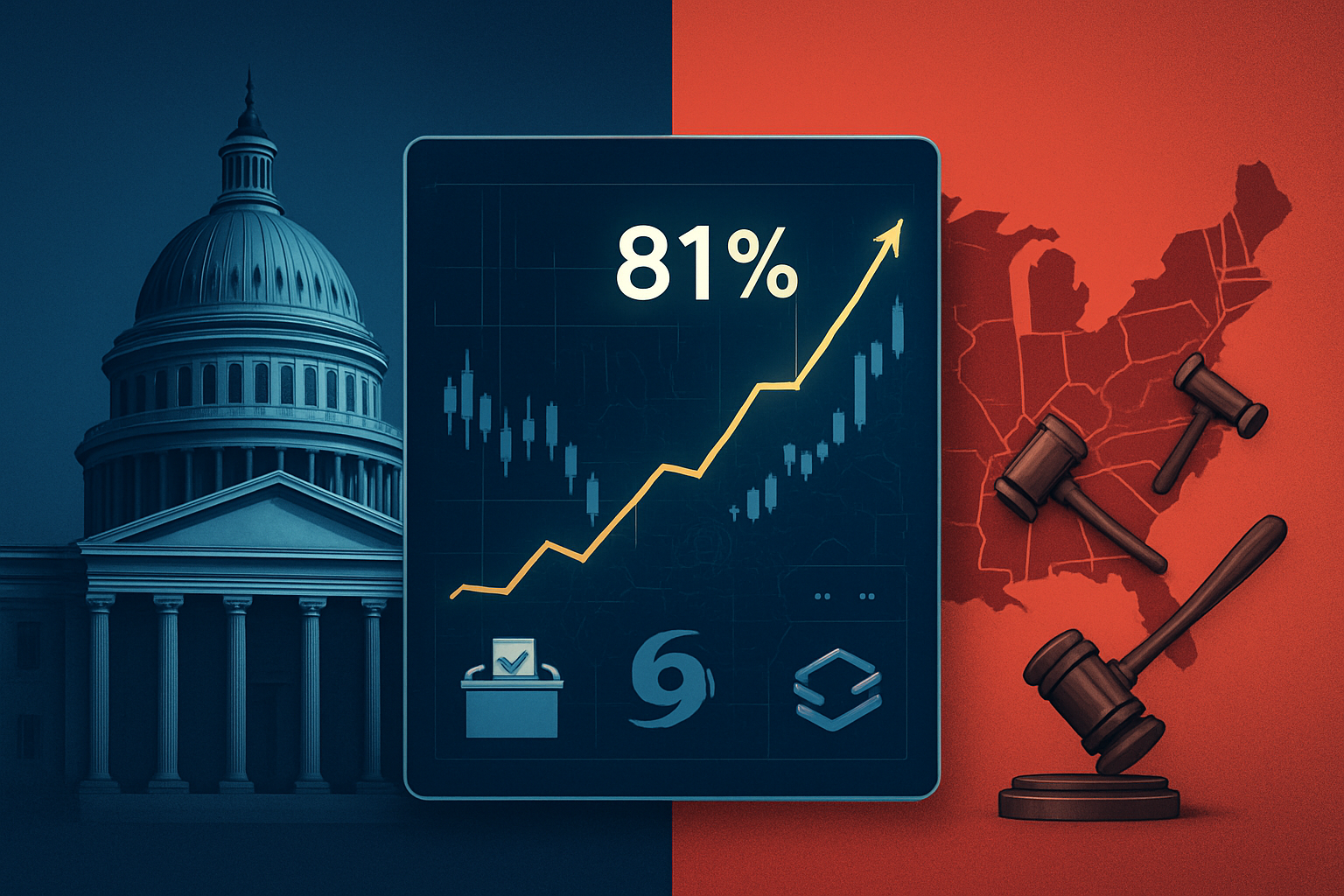
    The battle for the soul of the prediction market industry has reached a fever pitch as 2026 begins, with traders increasingly convinced that federal authority will ultimately crush state-level attempts to ban event contracts. On Manifold Markets, a leading sentiment-based forecasting platform, the probability that federal preemption will protect regulated exchanges from state-level bans currently sits at a dominant 81%. This high-conviction forecast reflects a growing belief among legal experts and high-stakes traders that the "Wild West" era of state-by-state regulation is nearing its end, potentially being replaced by a unified federal framework under the Commodity Exchange Act (CEA).

    This surge in confidence follows a chaotic 2025 that saw a direct collision between the U.S. Commodity Futures Trading Commission (CFTC) and aggressive state regulators in New York and Maryland. As several states attempt to enforce "gaming" bans on markets involving elections and catastrophic events, the 81% odds suggest the market believes the federal government’s exclusive jurisdiction over derivatives will serve as an impenetrable shield for companies like Kalshi and Interactive Brokers Group, Inc. (NASDAQ: IBKR).

    The Market: What's Being Predicted

    The specific market fueling this discussion is a high-volume "legal futurism" contract on Manifold Markets titled "Will Federal Preemption Protect DCMs from State Bans by End of 2026?" This market tracks whether a federal court or acts of Congress will explicitly prevent state gaming commissions from shutting down exchanges that hold Designated Contract Market (DCM) status. While Manifold operates on a play-money and sweepstakes model, it has become the primary hub for real-time legal analysis, with the 81% probability serving as a benchmark for institutional confidence.

    The odds have seen a dramatic climb since early 2025. Following a mixed ruling in Maryland that initially cast doubt on federal supremacy, the probability dipped to 55%. However, it rebounded sharply in late 2025 after a Manhattan federal judge issued a "litigation stay" against New York’s newly proposed ORACLE Act, allowing exchanges to continue operating while the constitutionality of the state's ban is litigated. The resolution criteria for this market require either a definitive U.S. Supreme Court ruling or a federal law that codifies the CFTC’s exclusive jurisdiction over event contracts as "financial derivatives."

    Liquidity in this niche legal market has been surprisingly deep, with over 1.2 million "mana" (Manifold’s currency) traded. Observers note that the market has become a "shadow docket" for the actual litigation occurring in the Second and Fourth Circuits. The timeline is tight; if no clear federal protection is established by December 31, 2026, the market will resolve to "No," creating a sense of urgency among the "bullish" legal theorists who currently hold the majority of positions.

    Why Traders Are Betting

    The core of the 81% bull case rests on the "Field Preemption" theory derived from the Commodity Exchange Act. Proponents argue that when Congress passed the CEA, it intended to "occupy the field" of derivatives trading. Traders point to the landmark 2024 victory by Kalshi against the CFTC as the foundational precedent. That ruling established that the CFTC could not block election contracts simply by labeling them "gaming." By extension, traders believe that if a contract is a federal financial instrument, it cannot simultaneously be a state-level gambling crime.

    "The logic is simple: you can't have a national exchange if 50 states have 50 different definitions of what constitutes a hedge versus a bet," says one high-volume Manifold trader known as LegalEagle. Traders are also heartened by the introduction of the Financial Prediction Markets Public Integrity Act of 2026 by U.S. Rep. Ritchie Torres. While the bill seeks to limit insider trading by government officials, its very existence is viewed by markets as a de facto federal recognition of prediction markets as a legitimate asset class. This legislative "nod" has contributed significantly to the recent 10-point jump in the preemption odds.

    Furthermore, "whale" activity suggests that institutional players are betting on the "too big to fail" nature of the current market. With daily global volumes for event contracts now exceeding $700 million, the fragmentation of these markets through state bans would cause massive financial disruption. Traders are betting that federal courts will prefer a uniform standard to avoid a "checkerboard" of legality that would render national hedging strategies impossible for corporations and retail investors alike.

    Broader Context and Implications

    The tension between federal and state authority is not a new phenomenon in the U.S. financial system, but its application to prediction markets is revolutionary. This conflict mirrors the early days of the internet and interstate commerce, where the Supreme Court eventually ruled that states could not burden the "national marketplace." If the 81% probability holds true, it would transform prediction markets from a legal gray area into a regulated pillar of the American financial system, akin to the Chicago Mercantile Exchange (CME Group Inc. (NASDAQ: CME)).

    In states like New York, the stakes are particularly high. The reintroduction of the ORACLE Act (Assembly Bill A09251) in January 2026 represents the "Last Stand" of state gaming commissions. The bill specifically targets "death markets" and "political wagering," categories that Kalshi and others argue are essential for hedging economic risk. A federal victory would effectively nullify the ORACLE Act, stripping state regulators of their power to define what constitutes a "productive" financial trade.

    Moreover, this market reveals a profound shift in public sentiment. By pricing the probability of federal preemption at 81%, the crowd is signaling that the era of viewing prediction markets as mere "gambling" is over. Instead, they are being priced as essential information-aggregation tools that require federal protection to function effectively. The historical accuracy of these markets—which correctly predicted the 2024 Kalshi court victory and the subsequent explosion in election trading volume—gives this 81% figure significant weight among policymakers.

    What to Watch Next

    The most immediate catalyst for market movement will be the resolution of the "litigation stay" in Manhattan. If the stay is lifted and New York begins active enforcement against DCMs, the 81% probability will likely plummet toward the 40-50% range as the "State Rights" argument gains momentum. Conversely, if the Manhattan court grants a permanent injunction against the ORACLE Act, the market could move toward a near-certainty of 95%.

    Another key milestone is the potential for a "Circuit Split." With the Maryland court (Fourth Circuit) currently favoring state rights and the D.C. and potentially New York (Second Circuit) favoring federal preemption, a collision at the Supreme Court is almost inevitable by late 2026. Legal observers are closely watching the "certiorari" filings—if the Supreme Court agrees to hear a preemption case, the Manifold market will likely see massive volatility as traders react to the conservative or liberal leanings of the justices regarding the "Administrative State" and the "Major Questions Doctrine."

    Finally, keep an eye on the CFTC’s own internal rulemaking. If the Commission, under new leadership in 2026, chooses to officially codify "Event Contracts" as "Swaps," it would provide the "Field Preemption" argument the definitive legal footing it currently lacks. Such a move would effectively end the state-level resistance and resolve the Manifold market at 100%.

    Bottom Line

    The 81% probability on Manifold Markets is a powerful testament to the perceived inevitability of federal dominance in the prediction market space. Traders have weighed the risks of aggressive state-level bans and found them lacking against the combined weight of the Commodity Exchange Act and recent pro-market court precedents. The market is increasingly viewing event contracts not as a subset of gambling, but as a primary financial tool that requires a single, federal regulator.

    This high conviction suggests that prediction markets have successfully navigated their most dangerous legal phase. While the "ORACLE Acts" of the world present a temporary hurdle, the prevailing sentiment is that the federal government—driven by the need for market stability and the push for financial innovation—will eventually act as the industry's ultimate protector.

    As we move further into 2026, the Manifold odds serve as a vital signal for both regulators and participants. The message is clear: the market expects federal law to prevail, and it is betting heavily that the "state ban" era is a closing chapter in the history of American forecasting.


    This article is for informational purposes only and does not constitute financial or betting advice. Prediction market participation may be subject to legal restrictions in your jurisdiction.

    PredictStreet focuses on covering the latest developments in prediction markets.
    Visit the PredictStreet website at https://www.predictstreet.ai/.