Tag: Kevin Warsh

  • The “Warsh Shock”: Prediction Markets Signal 94.8% Certainty for the Next Fed Chair

    The “Warsh Shock”: Prediction Markets Signal 94.8% Certainty for the Next Fed Chair

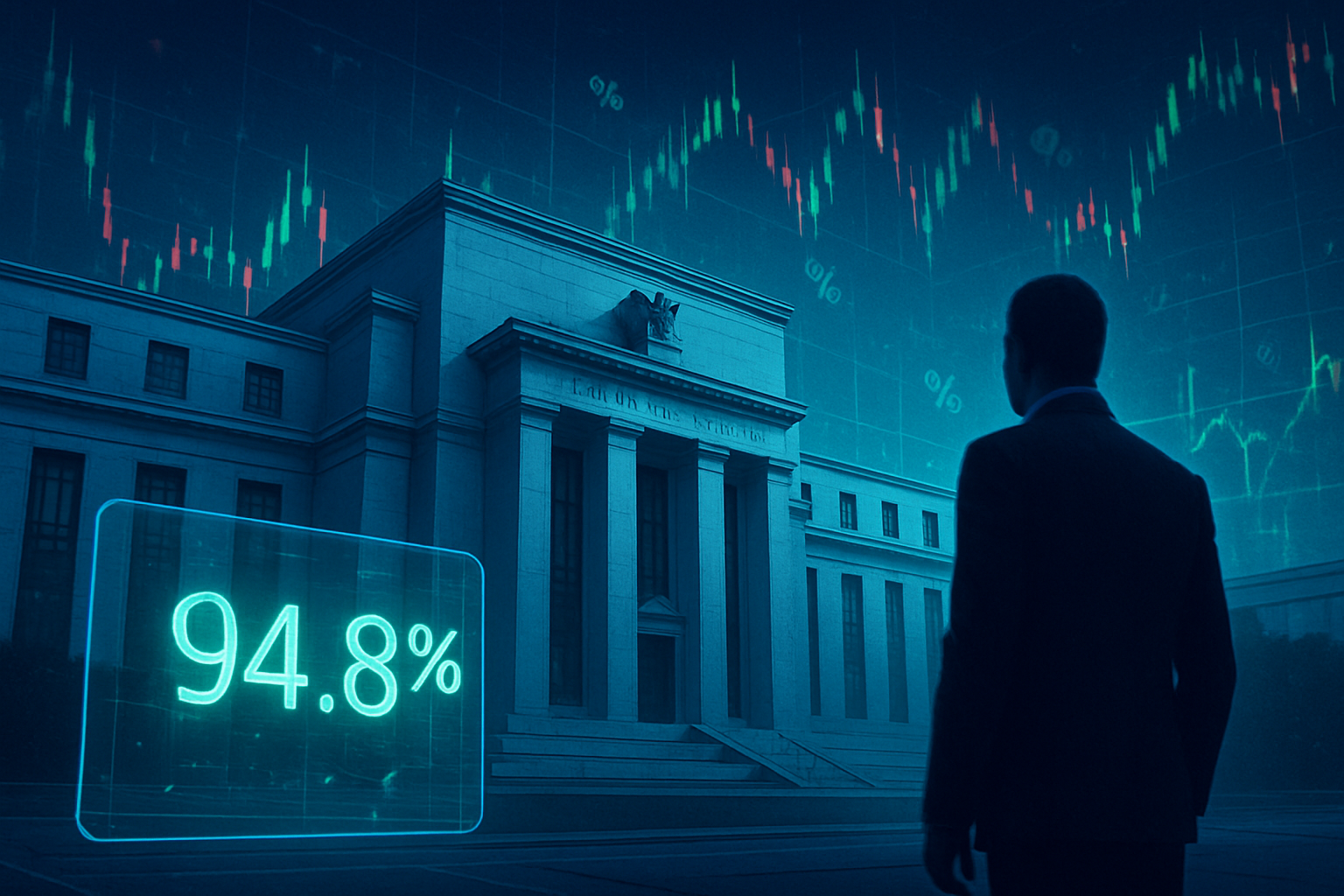
    As the countdown to the end of Jerome Powell’s tenure at the Federal Reserve begins, prediction markets have reached a state of near-unanimity. Kevin Warsh, the former Fed Governor and long-time favorite of the Republican establishment, has emerged as the overwhelming frontrunner to be the next Chair of the Federal Reserve. According to data from Polymarket and CoinMarketCap, Warsh currently holds a commanding 94.8% probability of being nominated by President Donald Trump to lead the world’s most powerful central bank.

    This market, which has seen hundreds of millions of dollars in trading volume, is generating intense interest because it signals more than just a personnel change; it represents a fundamental shift in the "Shadow Fed" strategy being deployed by the White House. With Powell’s term set to expire in May 2026, the market’s conviction suggests that the "Warsh era" has effectively begun months ahead of schedule, creating a unique "dual chair" dynamic that is already rippling through global bond and equity markets.

    The Market: What's Being Predicted

    The prediction market for the next Federal Reserve Chair has become one of the most liquid political events of the 2026 calendar. On Polymarket, the primary hub for crypto-native forecasting, the contract "Who will Trump nominate as Fed Chair?" has surpassed $432 million in total trading volume. Kevin Warsh’s "Yes" shares are currently trading at approximately 95 cents, mirroring the 94.8% figure seen on other aggregators.

    While Polymarket dominates the retail and international space, Kalshi, the CFTC-regulated exchange, has seen a massive influx of institutional activity. Kalshi reported record-breaking participation in January 2026, with the Fed Chair contract maintaining a probability as high as 98%. The market is also seeing new liquidity from the Jupiter platform on the Solana blockchain, which recently integrated prediction market tools, allowing a wider range of retail traders to bet on the "Warsh Shock."

    The resolution criteria for these markets are strictly defined: the market pays out once a formal nomination is sent to the U.S. Senate. While Trump announced his intention to nominate Warsh on January 30, 2026, the markets remain active as traders hedge against potential Senate confirmation hurdles or last-minute shifts in the President’s preference.

    Why Traders Are Betting

    The 94.8% probability isn't just a reflection of rumors; it is backed by a sequence of tactical moves from the White House. Traders shifted heavily toward Warsh after the President pivoted away from other high-profile candidates like Kevin Hassett, who was recently tapped to remain at the White House as Director of the National Economic Council, and Marc Rowan, the CEO of Apollo Global Management (NYSE: APO). While Rowan was a favorite for his "titan of industry" profile, prediction markets correctly sniffed out that his private equity ties might create too many conflict-of-interest hurdles in a closely divided Senate.

    Notable "whale" activity has also solidified the odds. On-chain data has identified several multi-million dollar positions, including a legendary "French high-roller" on Polymarket and a strategic "insider" address on the Hyperliquid platform that realized significant gains by front-running the official announcement in late January.

    Furthermore, traditional forecasting tools like the CME FedWatch tool from CME Group (NASDAQ: CME) have indirectly supported the Warsh narrative. As expectations for aggressive rate cuts in late 2026 grew to 94.8% in early January, traders deduced that Trump would want a Chair who—while historically hawkish—is perceived as more "market-sensitive" and "central casting" than the incumbent Powell.

    Broader Context and Implications

    The rise of Kevin Warsh is being interpreted by Wall Street as the beginning of a "Shadow Chair" period. Analysts at Goldman Sachs (NYSE: GS) and JPMorgan Chase (NYSE: JPM) have noted that a 95% market certainty effectively neuters Jerome Powell’s influence for the remainder of his term. JPMorgan (NYSE: JPM) has labeled this a "Shadow Policy Shift," arguing that the FOMC’s voting behavior may begin to tilt toward Warsh’s known preferences—specifically a more aggressive stance on balance sheet reduction—even before he takes the gavel.

    This market also highlights the maturing of prediction markets as a geopolitical tool. Unlike 2020 or 2024, where these markets were often dismissed as "crypto-niche," the 2026 Fed Chair market has been cited by major financial news outlets as a primary source of truth. The high accuracy of these markets in predicting the Rowan-to-Warsh pivot has given them new-found legitimacy among institutional hedgers.

    However, the real-world implications are stark. The "Warsh Shock" has already caused a "Great Metal Flush," with gold and silver prices retreating as investors price in a Fed that might prioritize price stability and a stronger dollar more aggressively than the Powell administration.

    What to Watch Next

    While the 94.8% probability suggests the race is over, two key factors could still inject volatility. First is the ongoing Department of Justice investigation into internal Fed operations. Some Republican Senators, including Thom Tillis, have hinted that Warsh’s confirmation could be delayed until the cloud over the current Fed leadership is cleared. If the confirmation process hits a snag, we could see Warsh’s odds dip back into the 80s as the market considers a "re-opening" of the shortlist.

    Second, the market is closely watching the official Senate Banking Committee hearing schedule. Key dates in late February and early March will be critical milestones. Any sign of friction during the "vettings and greetings" phase on Capitol Hill will be immediately reflected in the contract prices. Traders should also monitor the Interactive Brokers (NASDAQ: IBKR) ForecastEx markets, which often attract the most conservative, professional-grade bets on regulatory outcomes.

    Bottom Line

    The prediction markets have spoken: the "Warsh Era" is no longer a question of "if," but "when." With a 94.8% probability, the markets are effectively treating the nomination as a settled fact, leaving only the logistics of confirmation and the timing of Jerome Powell’s exit to be determined.

    This event serves as a masterclass in how prediction markets can serve as a leading indicator for institutional shifts. By the time traditional media outlets were reporting on the shortlist, Polymarket and Kalshi traders had already moved the needle, pricing in the transition weeks in advance. For investors, the takeaway is clear: the Fed is about to change its "aesthetic authority," and the markets are already trading the reality of a Kevin Warsh-led central bank.


    This article is for informational purposes only and does not constitute financial or betting advice. Prediction market participation may be subject to legal restrictions in your jurisdiction.

    PredictStreet focuses on covering the latest developments in prediction markets.
    Visit the PredictStreet website at https://www.predictstreet.ai/.
  • The $140M Fed Chair War: Kevin Warsh Nears 94% Odds as Trump Era Reshapes the Central Bank

    The $140M Fed Chair War: Kevin Warsh Nears 94% Odds as Trump Era Reshapes the Central Bank

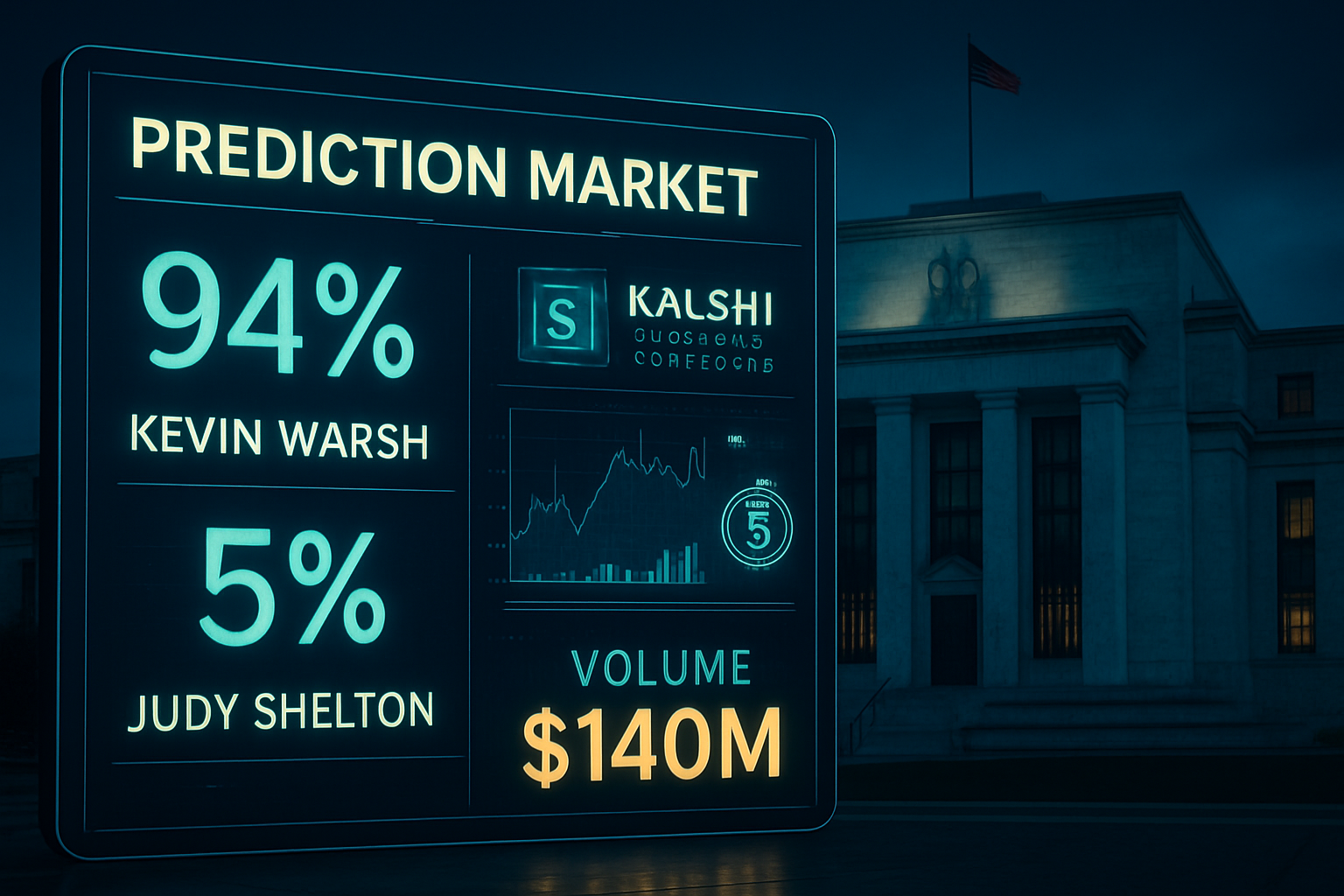
    The race to lead the world’s most powerful financial institution has moved from the boardrooms of Washington to the high-stakes arena of prediction markets. As of February 7, 2026, Kevin Warsh has emerged as the overwhelming favorite to succeed Jerome Powell as Chair of the Federal Reserve, commanding a staggering 94% probability on the prediction platform Kalshi. Meanwhile, the once-buzzy candidacy of sound-money advocate Judy Shelton has collapsed to a mere 5%, reflecting a market that is increasingly pricing in a "traditional-but-aligned" transition for the U.S. central bank.

    This market has become a focal point for institutional investors and political junkies alike, generating an unprecedented $140.8 million in total volume. The surge in activity underscores a growing reliance on event contracts to navigate the volatile intersection of monetary policy and presidential politics. With Jerome Powell’s term as Chair officially set to expire on May 15, 2026, the betting action is no longer just about who gets the job, but how quickly they can navigate a contentious Senate confirmation process.

    The Market: What's Being Predicted

    The primary battleground for this financial forecasting is Kalshi, the federally regulated prediction market that has seen its volume explode following its successful legal challenges against the CFTC. The specific contract, "Who will Trump nominate as Fed Chair?", has seen its liquidity deepen as the administration’s plans became clearer. While Robinhood Markets, Inc. (Nasdaq: HOOD) and Interactive Brokers Group, Inc. (Nasdaq: IBKR) have expanded their own event-trading offerings, Kalshi remains the epicenter for this specific $140.8 million pool of capital.

    The odds have undergone a dramatic shift over the last month. In late 2025, the market was a fragmented field with candidates like Kevin Hassett and Rick Rieder of BlackRock, Inc. (NYSE: BLK) holding significant shares. However, following President Trump’s official announcement on January 30, 2026, Kevin Warsh’s odds catapulted from 65% to the current 94%. Conversely, Judy Shelton, who traded as high as 20% in early January, saw her shares crater as the administration signaled a preference for Warsh’s "central casting" appeal.

    The resolution criteria for these contracts are tied to the formal nomination and, in secondary markets, the successful confirmation by the U.S. Senate. With the nomination now official, the focus of traders has shifted to the "Confirmation" contracts, which are currently trading at a slight discount to the nomination odds due to potential legislative friction.

    Why Traders Are Betting

    The 94% conviction in Warsh is driven by a combination of presidential endorsement and strategic political maneuvering. President Trump has publicly praised Warsh, stating he is a leader who "will never let you down." This endorsement was reportedly heavily influenced by Treasury Secretary Scott Bessent, who favored Warsh’s ability to maintain market stability while remaining more receptive to the administration's economic vision than the incumbent Powell.

    Traders are also closely watching the "shadow" surrounding Jerome Powell’s exit. A public DOJ investigation into Powell regarding alleged cost overruns in the $2.5 billion renovation of the Fed’s headquarters has provided significant tailwinds for the "Change" side of the market. Critics, including several prominent Democratic senators, have characterized the investigation as a political tool to pressure Powell, but for prediction market participants, the controversy simply hardens the reality that the Powell era is concluding.

    Meanwhile, Judy Shelton’s decline is attributed to a "flight to credibility" by the administration. While Shelton’s advocacy for the gold standard resonates with a specific segment of the base, institutional players—many of whom hedge their interest-rate exposure on these platforms—viewed her nomination as a potential source of "market jitters." The 5% odds remaining for her represent a "black swan" hedge in case the Warsh confirmation hits a fatal snag in the Senate Banking Committee.

    Broader Context and Implications

    The $140 million volume in the Fed Chair market represents a watershed moment for the prediction market industry. It proves that these platforms are no longer just for predicting election winners but are vital tools for pricing "policy risk." The sheer size of the pool suggests that major financial institutions are likely using these contracts to hedge against different interest rate regimes. If Warsh is seen as more "dovish" or more "aligned" with the White House, the prediction market acts as a leading indicator for the bond market.

    This market also reveals a shift in public sentiment regarding the independence of the Federal Reserve. By betting so heavily on a candidate praised for being "aligned" with the executive branch, traders are implicitly pricing in a future where the Fed’s "political independence" is more fluid than it has been in decades. This has significant real-world implications for the S&P 500 (SPX) and the broader global economy, as the Fed’s posture on inflation and employment is the primary driver of capital costs.

    Historically, prediction markets have often outpaced traditional pundits in identifying presidential favorites. In the 2024 cycle, these markets were significantly more sensitive to shift in momentum than traditional polling. The high confidence in Warsh suggests that despite potential Senate "holds," the market views his path to the 20th floor of the Eccles Building as nearly inevitable.

    What to Watch Next

    The next major catalyst for this market will be the Senate Banking Committee hearings, expected to begin in late February 2026. While Warsh has the numbers on paper, Senator Thom Tillis (R-NC) and several key Democrats have signaled they may place a "hold" on the nomination until more clarity is provided regarding the DOJ’s investigation into Powell. Any delay in the committee vote could see Warsh’s 94% odds dip toward the 80s as "process risk" increases.

    Key dates to monitor include:

    • Late February 2026: Opening of Senate Banking Committee hearings.
    • April 2026: The administration's target window for a full Senate confirmation vote.
    • May 15, 2026: The official expiration of Jerome Powell’s term as Chair.

    Should the DOJ investigation take an unexpected turn—either exonerating Powell or revealing deeper issues—the volatility in the "Confirmation" market will likely spike. Additionally, any public comments from Warsh regarding the "neutral rate" of interest will be scrutinized by traders looking to front-run the first FOMC meeting of the post-Powell era.

    Bottom Line

    The $140 million battle for the Fed Chairmanship has effectively been won by Kevin Warsh, at least in the eyes of the market. The 94% odds reflect a belief that the Trump administration has successfully cleared the path for its preferred candidate, combining political loyalty with a profile that the financial markets can digest. The collapse of Judy Shelton’s odds further suggests that while the administration seeks change, it is not yet ready for the radical structural shifts Shelton represents.

    As a tool, this market has demonstrated remarkable maturity. The high volume and tight spreads show that prediction markets are becoming a primary source of truth for high-stakes political appointments. For investors, the message is clear: the transition to "Warsh’s Fed" is the base case for the global economy in 2026.

    Whether Warsh can maintain the Fed’s delicate balance between fighting inflation and supporting the administration’s growth agenda remains to be seen. But for now, the "smart money" is betting $140 million that he is the man who will be tasked with trying.


    This article is for informational purposes only and does not constitute financial or betting advice. Prediction market participation may be subject to legal restrictions in your jurisdiction.

    PredictStreet focuses on covering the latest developments in prediction markets. Visit the PredictStreet website at https://www.predictstreet.ai/.
  • Rick Rieder Surges to 60% Odds as Trump’s Preference for Next Fed Chair Crystallizes

    Rick Rieder Surges to 60% Odds as Trump’s Preference for Next Fed Chair Crystallizes

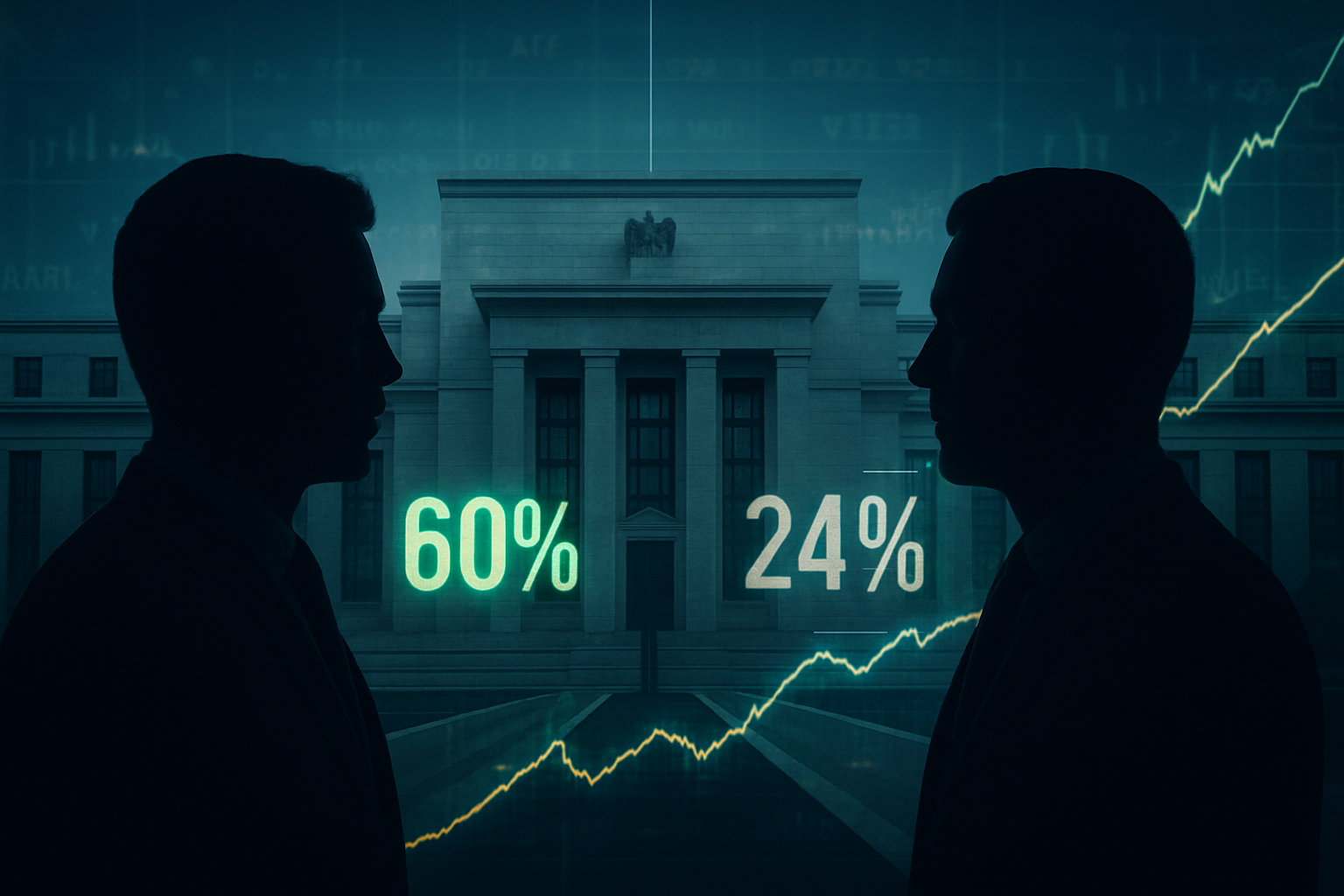
    The race to lead the world’s most powerful central bank has reached a fever pitch in prediction markets, with a decisive shift in sentiment favoring Wall Street veteran Rick Rieder. As of January 24, 2026, Rieder, the Chief Investment Officer of Global Fixed Income at BlackRock Inc. (NYSE: BLK), has emerged as the clear frontrunner to succeed Jerome Powell, whose term is set to expire in May. While the race was previously a dead heat between various conservative economists, Rieder now commands a dominant 60% probability on major forecasting platforms, leaving former Federal Reserve Governor Kevin Warsh trailing in a distant second.

    This market movement reflects more than just speculation; it is the culmination of high-stakes political signaling from the White House. The surge in Rieder’s odds coincides with a massive influx of capital into these markets, as traders scramble to position themselves ahead of a formal announcement. With over $300 million in combined volume between decentralized and regulated platforms, the "Next Fed Chair" market has become the focal point of global macro trading in early 2026.

    The Market: What's Being Predicted

    The prediction markets for the next Federal Reserve Chair have seen unprecedented liquidity this cycle. On Polymarket, the leading decentralized prediction platform, total volume for the Fed Chair contract has surpassed $250 million. Simultaneously, Kalshi, the U.S.-regulated exchange, has seen its volume climb to $55 million. The sheer scale of these markets suggests that institutional players and professional "political hunters" are using these contracts to hedge against potential shifts in monetary policy.

    Current odds across both platforms are remarkably aligned:

    • Rick Rieder: 60%
    • Kevin Warsh: 23-24%
    • Christopher Waller: 10%
    • Kevin Hassett: 5-7%

    The contract resolution is tied specifically to the official nomination by President Trump and subsequent confirmation or a formal announcement designated as the "intended nominee." Historically, these markets have traded with high volatility, but the recent consolidation around Rieder represents the first time a single candidate has held a supermajority probability since the speculation began in late 2025.

    Why Traders Are Betting

    The primary catalyst for the "Rieder Rally" was a strategic pivot by President Trump regarding his economic team. For much of late 2025, Kevin Hassett, the Director of the National Economic Council (NEC), was the betting favorite. However, Trump’s public insistence that Hassett is "too good on television" to be moved from the NEC essentially eliminated him from the running.

    Traders jumped on this "Hassett Pivot" to find the President's next preferred candidate. While Kevin Warsh briefly surged to 60% odds last week, the momentum shifted toward Rieder following a series of high-profile signals:

    1. Trump’s CNBC Endorsement: In a mid-January interview, the President praised Rieder’s "market-based judgment" and labeled him a "reformer" who understands the "true cost of debt."
    2. The Housing Factor: Rieder has been vocal about the need for the Fed to aggressively target mortgage rates to stimulate housing affordability—a key pillar of the current administration’s economic rhetoric.
    3. Hassett’s "Kingmaker" Move: Kevin Hassett himself recently described Rieder as "the best bond guy in the world," signaling that the President’s inner circle has reached a consensus.

    Whale activity on Polymarket suggests that several large-scale bettors moved seven-figure positions out of Warsh and into Rieder following these endorsements, viewing Rieder as the "outsider" candidate that Trump typically favors over "Washington insiders" like Warsh or Waller.

    Broader Context and Implications

    The dominance of Rick Rieder in these markets marks a potential shift in the Federal Reserve’s philosophy. Unlike previous chairs, Rieder would come directly from the heart of the private sector, specifically from BlackRock Inc. (NYSE: BLK), rather than from academia or a long-standing legal career. Prediction market participants are effectively betting that the Fed under Rieder would be more reactive to market conditions and perhaps more aggressive in cutting rates to accommodate fiscal expansion.

    Furthermore, this market highlights the increasing utility of prediction platforms like Kalshi and Polymarket as real-time barometers for political appointments. Traditional news outlets have been slower to catch the shift, often still reporting Warsh as the "likely" pick based on 2017-era precedents. However, the "wisdom of the crowd" in prediction markets has proven highly sensitive to the specific populist and market-driven rhetoric emerging from the Trump administration in 2026.

    The legal and regulatory backdrop also looms large. As Kalshi and other platforms fight to maintain their status in the U.S. regulatory landscape, the high volume and accuracy of the Fed Chair market serve as a powerful case study for their role in price discovery for political risk.

    What to Watch Next

    The window for a formal nomination is narrowing. With Jerome Powell’s term ending in May, President Trump is expected to make an announcement by the end of January or early February to allow for a smooth Senate confirmation process. Traders should keep a close eye on any "trial balloon" tweets or comments regarding the ongoing DOJ investigations into the Fed’s internal operations, which Trump has used as a justification for an early transition.

    A sudden drop in Rieder’s odds would likely only occur if a "dark horse" candidate—such as a surprise pick from a different major financial institution—emerges during one of the President's weekend meetings at Mar-a-Lago. Conversely, if the administration confirms that Rieder has met with the Senate Finance Committee, his odds could easily climb toward 80% or 90% before the official press release.

    Bottom Line

    As of January 24, 2026, the prediction markets have spoken: the "Warsh Era" that many expected has been eclipsed by the "Rieder Surge." With 60% odds and massive volume backing him, Rick Rieder is the clear market favorite to become the next Chair of the Federal Reserve.

    This shift tells us that traders are prioritizing "outsider" status and market expertise over traditional central banking credentials. While Kevin Warsh remains a viable backup at 24%, the alignment of Trump’s public praise and Hassett’s endorsement has created a powerful narrative that Rieder is the intended nominee. For those watching the future of American monetary policy, the prediction markets aren't just reflecting reality—they are increasingly the most reliable signal we have.


    This article is for informational purposes only and does not constitute financial or betting advice. Prediction market participation may be subject to legal restrictions in your jurisdiction.

    PredictStreet focuses on covering the latest developments in prediction markets.
    Visit the PredictStreet website at https://www.predictstreet.ai/.
  • The Battle for the Fed: Warsh and Hassett Neck-and-Neck in High-Stakes Kalshi Race

    The Battle for the Fed: Warsh and Hassett Neck-and-Neck in High-Stakes Kalshi Race

    The transition of power at the Federal Reserve has officially moved from a matter of speculation to a high-stakes duel in the prediction markets. As of January 14, 2026, the race to succeed Jerome Powell as Chair of the Federal Reserve has seen a dramatic shift in momentum. For months, the market had favored a "loyalist" pick, but the tides are turning as political and legal tensions between the White House and the central bank reach a boiling point.

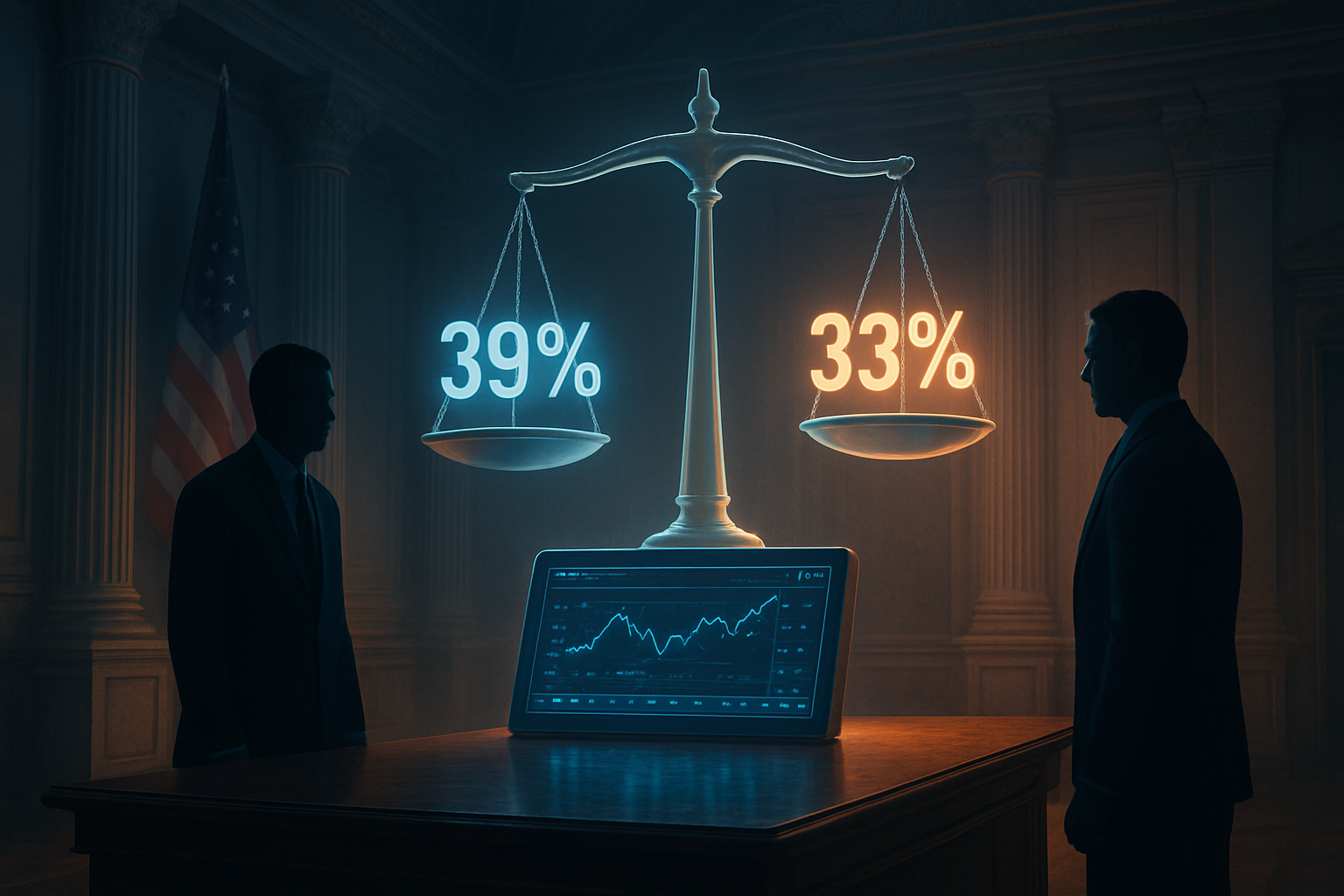
    On the prediction platform Kalshi, a significant "flip" occurred this week: Kevin Warsh has surged to a 39% probability of becoming the next Fed Chair, overtaking former frontrunner Kevin Hassett, who has slipped to 33%. This three-point lead for Warsh marks a sharp reversal from late December, when Hassett held a dominant 58% share of the market. Traders are now pricing in a more complex confirmation process, as the "Two Kevins" represent vastly different visions for the future of American monetary policy and institutional independence.

    The Market: What's Being Predicted

    The Kalshi market for "Next Fed Chair" is currently one of the most liquid and closely watched contracts in the prediction space. The contract asks participants to forecast who will be the individual officially nominated by the President and subsequently confirmed by the Senate to lead the Federal Reserve when Jerome Powell’s term expires in May 2026. While other platforms like Polymarket have seen similar volume, Kalshi’s status as a CFTC-regulated exchange has made it a primary destination for institutional hedgers and political junkies alike.

    The recent volatility in these odds is striking. Just two weeks ago, Kevin Hassett was viewed as a "done deal" by many traders, given his close ties to the current administration and his alignment with the President's public demands for aggressive interest rate cuts. However, as the January 14 data shows, Warsh’s 39% lead reflects a growing consensus that the nomination will not be a simple "coronation." Trading volume has spiked in the last 48 hours, with over $15 million in total position value across the top candidates as the market reacts to every leak from the West Wing and the Senate Banking Committee.

    The resolution criteria for this market are specific: the individual must be the first person to be confirmed by the U.S. Senate for the role. This nuance is critical, as it forces traders to account not just for who the President wants to pick, but who can actually survive the gauntlet of a divided Senate. With the current odds sitting at 39% for Warsh and 33% for Hassett, the market is effectively signaling a "toss-up" with a slight lean toward the candidate perceived as more palatable to institutional gatekeepers.

    Why Traders Are Betting

    The primary driver behind Kevin Warsh’s ascent is the perceived "confirmation risk" associated with Kevin Hassett. While Hassett is viewed as a "growth-oriented dove" who would readily implement the President’s goal of 1% interest rates, his perceived lack of independence has sparked a rebellion among moderate Republicans in the Senate. Senators like Thom Tillis and Lisa Murkowski have recently signaled they might block any nominee viewed as a political "tool," creating a opening for Warsh.

    Warsh, a former Fed Governor and Morgan Stanley (NYSE: MS) investment banker, is seen as the "Wall Street Choice." He has garnered implicit support from major financial leaders, including Jamie Dimon of JPMorgan Chase & Co. (NYSE: JPM). Traders are betting that the administration may eventually pivot to Warsh to avoid a protracted confirmation battle. "Warsh offers a 'regime change' that satisfies the President's desire for a Fed overhaul but keeps the bond market from revolting," noted one prominent trader on the Kalshi Discord.

    Conversely, the decline in Hassett’s odds is directly linked to the burgeoning Department of Justice (DOJ) probe into Jerome Powell. The investigation has turned the Fed Chair succession into a partisan lightning rod. As the White House ramps up its "coercion" of Powell, the risk of a "loyalist" nominee like Hassett being rejected by the Senate has increased. Traders are increasingly using these contracts to hedge against broader market volatility; a Hassett nomination is viewed as "risk-on" for the S&P 500 (NYSEARCA: SPY), while a Warsh nomination is seen as a stabilizing force for the financial sector and banks like Goldman Sachs Group Inc. (NYSE: GS).

    Broader Context and Implications

    This race highlights the growing role of prediction markets as a real-time barometer for political developments that traditional polling and media cannot capture. While cable news outlets are still debating whether Powell will resign early, the Kalshi market has already moved on, pricing in the likelihood of various successors. This "wisdom of the crowd" often identifies shifts in sentiment days before they appear in mainstream headlines, serving as a vital tool for economists and portfolio managers.

    The real-world implications of this choice are staggering. A Kevin Hassett chairmanship would likely signal a period of aggressive monetary easing and a potential challenge to the Fed's traditional independence. This could lead to a massive rally in growth-heavy sectors like Technology (NYSEARCA: XLK). On the other hand, a Kevin Warsh-led Fed would likely focus on "institutional reform" and balance sheet reduction, which could favor the Financials (NYSEARCA: XLF) by normalizing the yield curve and reducing regulatory uncertainty.

    Historically, prediction markets have been remarkably accurate in forecasting high-level appointments. In 2017, markets correctly identified Jerome Powell as the frontrunner months before he was formally chosen. The current 39% to 33% split suggests that we are in the most uncertain phase of the process, where a single tweet or a leaked shortlist could cause a 20-point swing in minutes.

    What to Watch Next

    As we move closer to the expiration of Powell's term, several key milestones will dictate the next moves in the Kalshi market. The most immediate event is the President’s scheduled "Economic Summit" later this month, where he is expected to provide further clarity on his shortlist. Any mention of "institutional stability" would likely see Warsh’s odds climb above 45%, while a renewed call for "radical rate cuts" would likely see Hassett regain his lead.

    Furthermore, keep a close eye on the Senate Banking Committee. If the committee's leadership begins to publicly vet Warsh, it would signal that a "backroom deal" has been struck to ensure a smooth transition. Conversely, any progress in the DOJ's investigation into Powell could delay the nomination process entirely, potentially giving rise to a "dark horse" candidate like Christopher Waller, who currently languishes at 9% odds.

    Finally, the reaction of the bond market will be a leading indicator. If the 10-year Treasury yield begins to spike in anticipation of a "political" Fed Chair, the pressure on the White House to nominate a "market-credible" candidate like Warsh will become immense.

    Bottom Line

    The current flip on Kalshi—Kevin Warsh at 39% and Kevin Hassett at 33%—is more than just a change in numbers; it is a reflection of the deep-seated tension between political ambition and market reality. While Hassett remains the ideological favorite of the administration, Warsh has emerged as the pragmatic choice for a President who cannot afford a failed confirmation or a bond market collapse.

    For participants in prediction markets, this race serves as a masterclass in "event hedging." The closeness of the odds tells us that the outcome is far from decided and that the "Two Kevins" represent a binary path for the U.S. economy. Whether the Fed moves toward a populist, pro-growth model under Hassett or a reformist, institutionalist model under Warsh, the prediction markets will be the first to tell us which way the wind is blowing.

    In the coming weeks, the 6% gap between the two frontrunners will likely expand or contract based on the political temperature in Washington. For now, Kevin Warsh holds the narrowest of leads, but in the world of high-stakes nominations, a 39% probability is a far cry from a victory lap.


    This article is for informational purposes only and does not constitute financial or betting advice. Prediction market participation may be subject to legal restrictions in your jurisdiction.

    PredictStreet focuses on covering the latest developments in prediction markets.
    Visit the PredictStreet website at https://www.predictstreet.ai/.
  • The Battle of the Kevins: Warsh Edges Out Hassett in High-Stakes Race for Fed Chair

    The Battle of the Kevins: Warsh Edges Out Hassett in High-Stakes Race for Fed Chair

    As the countdown to the expiration of Jerome Powell’s term begins, the prediction markets have narrowed the field for the next leader of the Federal Reserve to a two-man sprint. In what traders are calling the "Battle of the Kevins," former Fed Governor Kevin Warsh has narrowly overtaken former Council of Economic Advisers Chairman Kevin Hassett as the favorite to receive Donald Trump’s nomination. On PredictIt, Warsh is currently trading at 43¢, a slim but significant lead over Hassett’s 41¢, marking a dramatic shift in a race that appeared settled just weeks ago.

    This market is drawing unprecedented interest due to its direct impact on global monetary policy and the escalating tensions between the White House and the current Fed leadership. With the Federal Reserve's independence at the center of the 2026 political discourse, prediction markets have become the primary venue for pricing in the "loyalty vs. credibility" debate that characterizes the administration's search for a successor.

    The Market: What’s Being Predicted

    The central prediction market revolves around the identity of the individual who will be confirmed as the next Chair of the Federal Reserve Board of Governors. While the primary action is concentrated on PredictIt, related contracts are trading with high volume on Polymarket (where Warsh leads 41% to 38%) and Kalshi (which shows a tighter 39% to 40% split in favor of Hassett).

    Trading liquidity has spiked in early January 2026, with over $15 million in combined volume across platforms. The resolution criteria for most of these markets require the individual to be officially nominated by the President and confirmed by the Senate. The timeline is fixed by the calendar: Jerome Powell’s term officially expires on May 15, 2026. However, the market also prices in the possibility of an "Acting Chair" scenario should the confirmation process stall—a contingency that has kept odds for darker-horse candidates like Christopher Waller (13¢) from hitting zero.

    Why Traders Are Betting

    The sudden surge for Kevin Warsh can be traced back to a mid-December interview President Trump gave to The Wall Street Journal, owned by News Corp (NASDAQ: NWSA). In the interview, the President explicitly narrowed his shortlist to "Kevin and Kevin," effectively ending the hopes of several other candidates. While Hassett was the initial frontrunner—peaking at nearly 85% on some platforms due to his perceived loyalty—traders began pivoting toward Warsh following reports of a successful 45-minute private meeting between Warsh and the President.

    Traders are increasingly betting that Warsh offers the "Goldilocks" solution for the administration. Having served as a Fed Governor from 2006 to 2011 and holding a background at Morgan Stanley (NYSE: MS), Warsh possesses the "market credibility" that institutional investors demand. Conversely, Hassett’s odds have softened amid concerns that his nomination might face a more difficult path in a Senate wary of installing a Chair perceived as too politically compliant. The "Warsh Trade" is essentially a bet that the administration will prioritize a candidate who can simultaneously appease the President’s desire for lower rates and Wall Street’s need for stability.

    Broader Context and Implications

    The "Battle of the Kevins" is unfolding against a backdrop of extreme institutional friction. Jerome Powell is currently under a Department of Justice investigation regarding alleged cost overruns in the renovation of the Fed’s headquarters, a situation Powell has characterized as political intimidation. Prediction markets are currently pricing a 30% chance that Powell resigns before his May 15 deadline, though his recent public vows to stay on have seen that probability drop from a December high of 70%.

    This market reveals a deep public skepticism regarding the traditional nomination process. By tracking the odds in real-time, we see that the market is currently more influenced by "vibe checks" and reported private meetings than by official White House press releases. Furthermore, the "Shadow Governor" strategy—where Powell might remain on the Board of Governors even after his Chairmanship ends to prevent an additional Trump appointment—has become a key variable that traders are now forced to calculate. This demonstrates how prediction markets have evolved to incorporate complex procedural maneuvering that traditional polling often misses.

    What to Watch Next

    The next major volatility event for this market will be the formal announcement of a nominee, which is expected no later than mid-February to allow for the confirmation process. Key dates to monitor include the resolution of the DOJ’s probe into the Fed's renovation budget; if the investigation is dropped or escalated, the odds for an interim or "Acting" Chair could fluctuate wildly.

    Additionally, watch for public comments from Senator Thom Tillis and other members of the Senate Banking Committee. Tillis has signaled he may block any new nominee until the Powell investigation is concluded. If a legislative "roadblock" becomes the consensus expectation, we could see the odds for both Kevins decline in favor of a "Field" bet or a scenario where the current Vice Chair for Supervision takes the reins temporarily.

    Bottom Line

    The narrow lead held by Kevin Warsh suggests that prediction markets are betting on a "return to normalcy" within the context of a disruptive administration. Traders are signaling that while the President wants a change, the structural need for a Chair with deep ties to the financial establishment—like Warsh’s history at Morgan Stanley (NYSE: MS)—will ultimately outweigh the desire for a more partisan appointment.

    Ultimately, these markets serve as a real-time barometer for the tension between political will and institutional inertia. Whether it is Warsh or Hassett who takes the gavel on May 16, the volatility of these contracts highlights just how much the "independence" of the Federal Reserve is currently being re-priced by the world's most informed speculators.


    This article is for informational purposes only and does not constitute financial or betting advice. Prediction market participation may be subject to legal restrictions in your jurisdiction.

    PredictStreet focuses on covering the latest developments in prediction markets.
    Visit the PredictStreet website at https://www.predictstreet.ai/.