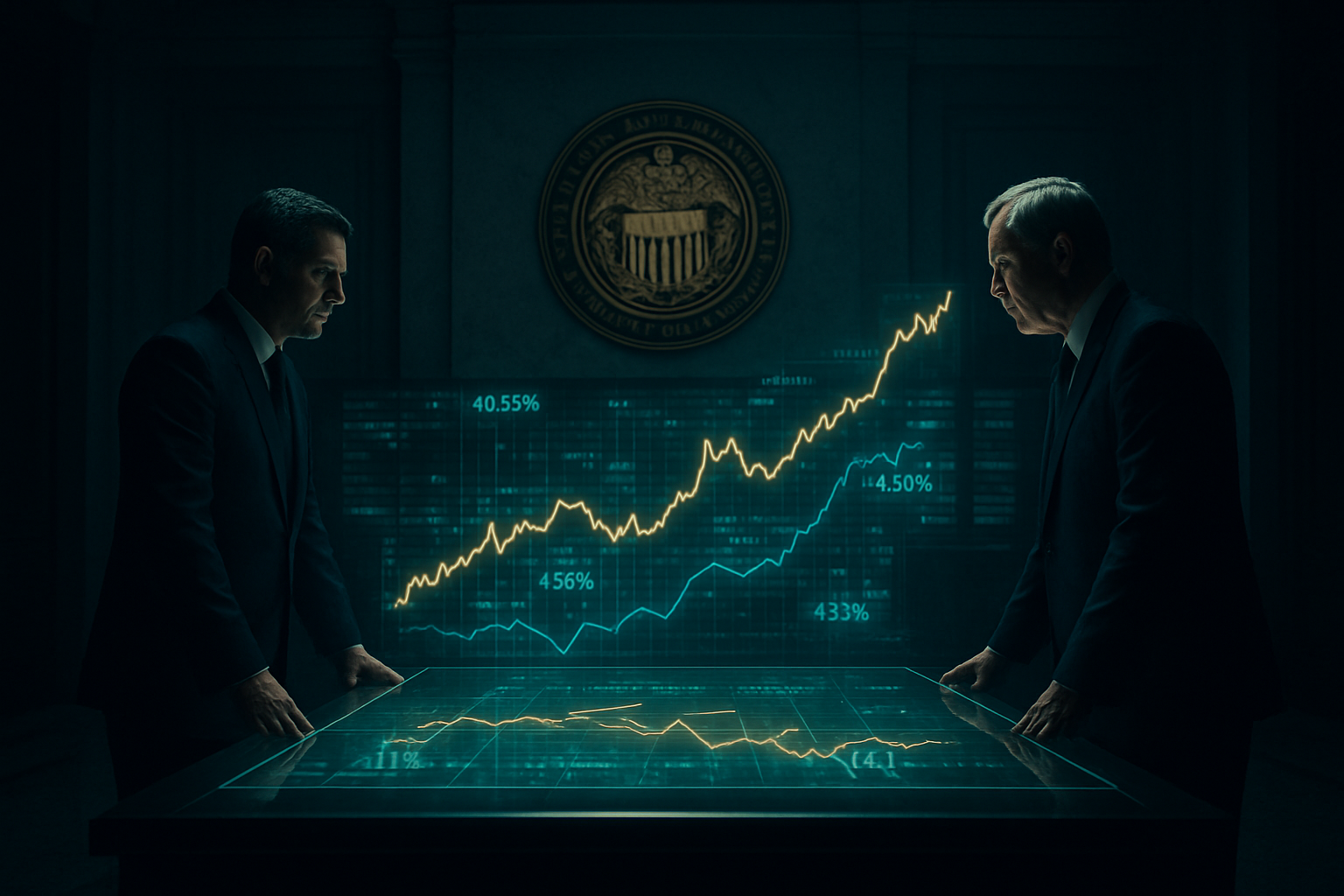
The transition of power at the Federal Reserve has officially moved from a matter of speculation to a high-stakes duel in the prediction markets. As of January 14, 2026, the race to succeed Jerome Powell as Chair of the Federal Reserve has seen a dramatic shift in momentum. For months, the market had favored a "loyalist" pick, but the tides are turning as political and legal tensions between the White House and the central bank reach a boiling point.
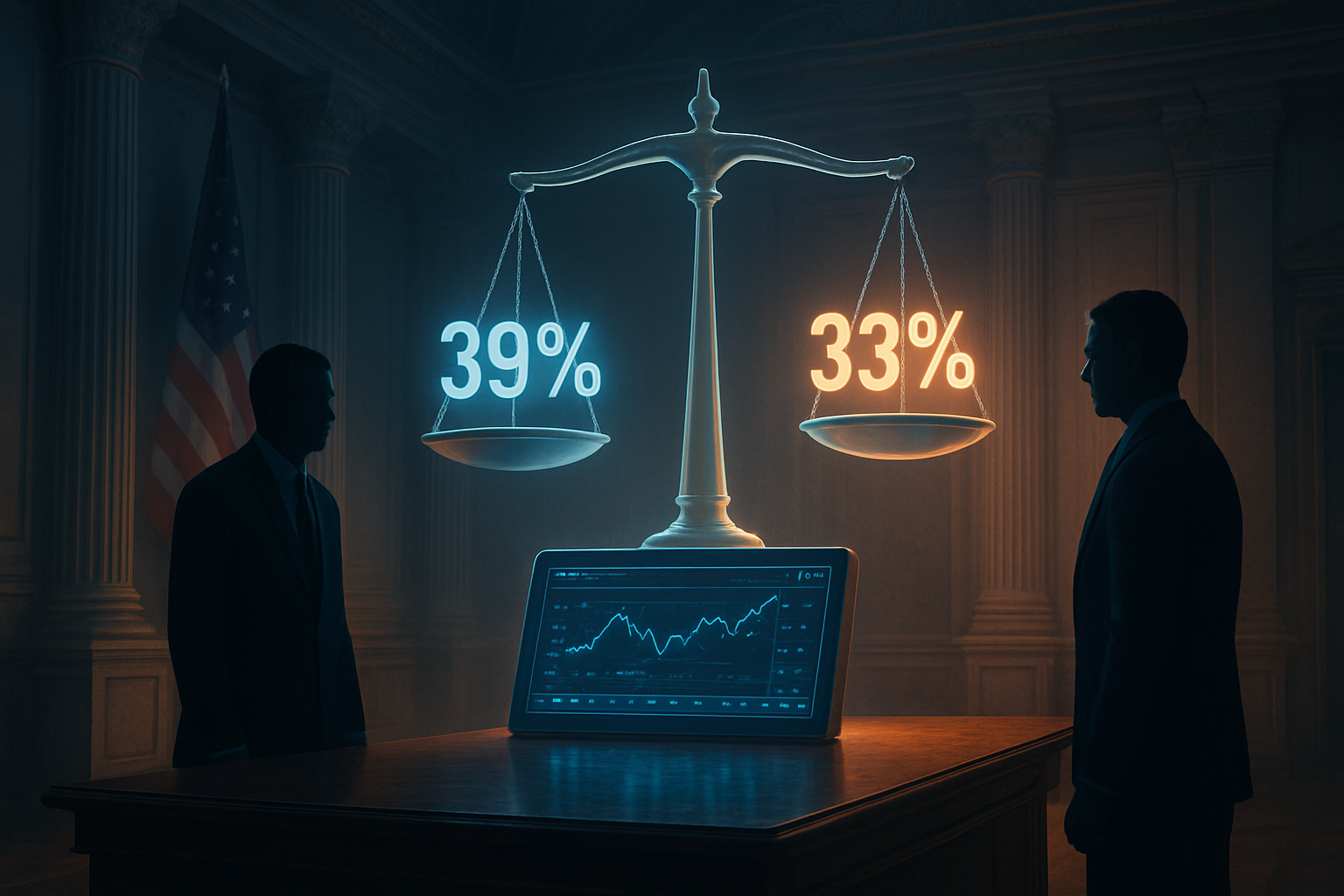
On the prediction platform Kalshi, a significant "flip" occurred this week: Kevin Warsh has surged to a 39% probability of becoming the next Fed Chair, overtaking former frontrunner Kevin Hassett, who has slipped to 33%. This three-point lead for Warsh marks a sharp reversal from late December, when Hassett held a dominant 58% share of the market. Traders are now pricing in a more complex confirmation process, as the "Two Kevins" represent vastly different visions for the future of American monetary policy and institutional independence.
The Market: What's Being Predicted
The Kalshi market for "Next Fed Chair" is currently one of the most liquid and closely watched contracts in the prediction space. The contract asks participants to forecast who will be the individual officially nominated by the President and subsequently confirmed by the Senate to lead the Federal Reserve when Jerome Powell’s term expires in May 2026. While other platforms like Polymarket have seen similar volume, Kalshi’s status as a CFTC-regulated exchange has made it a primary destination for institutional hedgers and political junkies alike.
The recent volatility in these odds is striking. Just two weeks ago, Kevin Hassett was viewed as a "done deal" by many traders, given his close ties to the current administration and his alignment with the President's public demands for aggressive interest rate cuts. However, as the January 14 data shows, Warsh’s 39% lead reflects a growing consensus that the nomination will not be a simple "coronation." Trading volume has spiked in the last 48 hours, with over $15 million in total position value across the top candidates as the market reacts to every leak from the West Wing and the Senate Banking Committee.
The resolution criteria for this market are specific: the individual must be the first person to be confirmed by the U.S. Senate for the role. This nuance is critical, as it forces traders to account not just for who the President wants to pick, but who can actually survive the gauntlet of a divided Senate. With the current odds sitting at 39% for Warsh and 33% for Hassett, the market is effectively signaling a "toss-up" with a slight lean toward the candidate perceived as more palatable to institutional gatekeepers.
Why Traders Are Betting
The primary driver behind Kevin Warsh’s ascent is the perceived "confirmation risk" associated with Kevin Hassett. While Hassett is viewed as a "growth-oriented dove" who would readily implement the President’s goal of 1% interest rates, his perceived lack of independence has sparked a rebellion among moderate Republicans in the Senate. Senators like Thom Tillis and Lisa Murkowski have recently signaled they might block any nominee viewed as a political "tool," creating a opening for Warsh.
Warsh, a former Fed Governor and Morgan Stanley (NYSE: MS) investment banker, is seen as the "Wall Street Choice." He has garnered implicit support from major financial leaders, including Jamie Dimon of JPMorgan Chase & Co. (NYSE: JPM). Traders are betting that the administration may eventually pivot to Warsh to avoid a protracted confirmation battle. "Warsh offers a 'regime change' that satisfies the President's desire for a Fed overhaul but keeps the bond market from revolting," noted one prominent trader on the Kalshi Discord.
Conversely, the decline in Hassett’s odds is directly linked to the burgeoning Department of Justice (DOJ) probe into Jerome Powell. The investigation has turned the Fed Chair succession into a partisan lightning rod. As the White House ramps up its "coercion" of Powell, the risk of a "loyalist" nominee like Hassett being rejected by the Senate has increased. Traders are increasingly using these contracts to hedge against broader market volatility; a Hassett nomination is viewed as "risk-on" for the S&P 500 (NYSEARCA: SPY), while a Warsh nomination is seen as a stabilizing force for the financial sector and banks like Goldman Sachs Group Inc. (NYSE: GS).
Broader Context and Implications
This race highlights the growing role of prediction markets as a real-time barometer for political developments that traditional polling and media cannot capture. While cable news outlets are still debating whether Powell will resign early, the Kalshi market has already moved on, pricing in the likelihood of various successors. This "wisdom of the crowd" often identifies shifts in sentiment days before they appear in mainstream headlines, serving as a vital tool for economists and portfolio managers.
The real-world implications of this choice are staggering. A Kevin Hassett chairmanship would likely signal a period of aggressive monetary easing and a potential challenge to the Fed's traditional independence. This could lead to a massive rally in growth-heavy sectors like Technology (NYSEARCA: XLK). On the other hand, a Kevin Warsh-led Fed would likely focus on "institutional reform" and balance sheet reduction, which could favor the Financials (NYSEARCA: XLF) by normalizing the yield curve and reducing regulatory uncertainty.
Historically, prediction markets have been remarkably accurate in forecasting high-level appointments. In 2017, markets correctly identified Jerome Powell as the frontrunner months before he was formally chosen. The current 39% to 33% split suggests that we are in the most uncertain phase of the process, where a single tweet or a leaked shortlist could cause a 20-point swing in minutes.
What to Watch Next
As we move closer to the expiration of Powell's term, several key milestones will dictate the next moves in the Kalshi market. The most immediate event is the President’s scheduled "Economic Summit" later this month, where he is expected to provide further clarity on his shortlist. Any mention of "institutional stability" would likely see Warsh’s odds climb above 45%, while a renewed call for "radical rate cuts" would likely see Hassett regain his lead.
Furthermore, keep a close eye on the Senate Banking Committee. If the committee's leadership begins to publicly vet Warsh, it would signal that a "backroom deal" has been struck to ensure a smooth transition. Conversely, any progress in the DOJ's investigation into Powell could delay the nomination process entirely, potentially giving rise to a "dark horse" candidate like Christopher Waller, who currently languishes at 9% odds.
Finally, the reaction of the bond market will be a leading indicator. If the 10-year Treasury yield begins to spike in anticipation of a "political" Fed Chair, the pressure on the White House to nominate a "market-credible" candidate like Warsh will become immense.
Bottom Line
The current flip on Kalshi—Kevin Warsh at 39% and Kevin Hassett at 33%—is more than just a change in numbers; it is a reflection of the deep-seated tension between political ambition and market reality. While Hassett remains the ideological favorite of the administration, Warsh has emerged as the pragmatic choice for a President who cannot afford a failed confirmation or a bond market collapse.
For participants in prediction markets, this race serves as a masterclass in "event hedging." The closeness of the odds tells us that the outcome is far from decided and that the "Two Kevins" represent a binary path for the U.S. economy. Whether the Fed moves toward a populist, pro-growth model under Hassett or a reformist, institutionalist model under Warsh, the prediction markets will be the first to tell us which way the wind is blowing.
In the coming weeks, the 6% gap between the two frontrunners will likely expand or contract based on the political temperature in Washington. For now, Kevin Warsh holds the narrowest of leads, but in the world of high-stakes nominations, a 39% probability is a far cry from a victory lap.
This article is for informational purposes only and does not constitute financial or betting advice. Prediction market participation may be subject to legal restrictions in your jurisdiction.
PredictStreet focuses on covering the latest developments in prediction markets.
Visit the PredictStreet website at https://www.predictstreet.ai/.