
Tag: Kalshi

  • The Great Prediction War of 2026: Polymarket and Kalshi Battle for Dominance

    The Great Prediction War of 2026: Polymarket and Kalshi Battle for Dominance

    As of January 26, 2026, the landscape of global finance is being reshaped not by interest rate swaps or traditional equities, but by the "Great Prediction War." On the popular meta-forecasting platform Manifold Markets, a high-stakes contract titled "Top 1 Prediction Market by Volume in 2026" has become the industry's most-watched barometer. Currently, Polymarket holds a 47% chance of leading the year in trading volume, while its chief rival, Kalshi, sits at 34%.

    This market is generating unprecedented interest because it represents more than a corporate rivalry; it is a battle for the soul of "Information Finance." In the last few weeks, the odds have fluctuated wildly following a series of regulatory rulings and massive institutional investments. While Kalshi dominated 2025 in raw notional volume, a recent crackdown on sports-related contracts has shifted momentum toward Polymarket, which is currently preparing for a landmark return to the United States market.

    The Market: What's Being Predicted

    The Manifold Markets meta-contract focuses on which platform will facilitate the highest total trading volume (measured in USD equivalent) for the 2026 calendar year. For resolution purposes, the contract strictly excludes "pure sports betting" to distinguish prediction markets from traditional gambling operations. This distinction is critical: in 2025, Kalshi cleared a staggering $43.1 billion in notional volume, but nearly 90% of that was derived from sports event contracts. Polymarket, meanwhile, recorded $33.4 billion, almost entirely through geopolitical, macroeconomic, and cultural markets.

    Currently, the odds reflect a "mindshare" premium for Polymarket at 47%. Traders are betting that as the 2026 U.S. midterm elections approach, the demand for non-sports "truth pricing" will outpace the retail sports volume that Kalshi has historically relied upon. Liquidity in this meta-market has surged, with over $5 million in play on Manifold alone, as whales from both the crypto and traditional finance sectors hedge their bets on the future of the industry.

    Why Traders Are Betting

    The 13-point lead held by Polymarket is largely driven by its recent institutional pivot. In October 2025, the platform secured a $2 billion strategic investment from the Intercontinental Exchange (NYSE: ICE), the parent company of the New York Stock Exchange. This partnership signaled that prediction markets are no longer "fringe" crypto projects but are being integrated into the plumbing of global markets.

    Conversely, Kalshi—which is heavily integrated with Robinhood Markets, Inc. (NASDAQ: HOOD)—has hit a regulatory speed bump. On January 20, 2026, a Massachusetts judge issued a preliminary injunction requiring Kalshi to cease offering sports-related contracts in the state. This legal friction has caused a 10% drop in Kalshi's 2026 volume odds, as traders fear more states may follow suit, strangling the platform’s primary volume driver.

    Furthermore, the "Maduro Trade" in early January—where a whistleblower allegedly profited $400,000 on a contract regarding the capture of Nicolás Maduro just hours before the news broke—has reinforced Polymarket's reputation as a "truth engine" that can price in information faster than any traditional news wire or intelligence agency.

    Broader Context and Implications

    The "Great Prediction War" coincides with the rise of "Information as an Asset Class." In 2026, information is no longer just something you consume; it is something you trade. Major market makers like Susquehanna International Group and DRW have officially entered the space, treating event contracts as legitimate financial derivatives used to hedge against "black swan" events.

    This shift has moved prediction markets away from the "speculative casino" label that plagued them in 2024. Today, corporations use these markets to hedge against specific geopolitical risks, such as semiconductor trade deals or the "Greenland Acquisition" negotiations. The historical accuracy of these markets during the 2024 election cycle has given them a "gold standard" status, often leading mainstream media polls by 48 to 72 hours in identifying shifts in public sentiment.

    What to Watch Next

    The next major catalyst for this market is Polymarket's anticipated re-entry into the U.S. market. Currently, there is a 90% priced-in probability that the CFTC will grant Polymarket full operational status in the U.S. by Q2 2026. If this occurs, a massive influx of domestic liquidity could solidify Polymarket’s lead over Kalshi.

    Investors should also keep a close eye on the 2026 midterm election cycles. If the volume for political "control of the house" markets exceeds the volume for the 2026 World Cup, Polymarket is almost certain to win the volume war. However, if Kalshi can successfully pivot its Robinhood user base toward macroeconomic contracts—such as CPI or Fed rate hike predictions—the 34% underdog could see a rapid resurgence.

    Bottom Line

    The battle between Polymarket and Kalshi is the defining economic conflict of 2026. While Kalshi has the advantage of existing U.S. infrastructure and a massive retail partnership with Robinhood, Polymarket’s backing by the NYSE’s parent company and its dominance in "truth-based" geopolitical markets give it the current edge.

    Ultimately, the "Great Prediction War" tells us that the world has entered the era of Information Finance. Whether the winner is the platform that masters sports and retail or the one that dominates geopolitical intelligence, the real victor is the market itself. Prediction markets are no longer just tools for bettors; they are the most accurate sensors we have for a volatile, fast-moving world.


    This article is for informational purposes only and does not constitute financial or betting advice. Prediction market participation may be subject to legal restrictions in your jurisdiction.

    PredictStreet focuses on covering the latest developments in prediction markets.
    Visit the PredictStreet website at https://www.predictstreet.ai/.
  • The Bay State Shutdown: Massachusetts Court Bars Kalshi Sports Markets in Landmark Ruling

    The Bay State Shutdown: Massachusetts Court Bars Kalshi Sports Markets in Landmark Ruling

    In a decision that has sent shockwaves through the prediction market and sports betting industries, Judge Christopher Barry-Smith of the Suffolk County Superior Court ruled on January 20, 2026, that the platform Kalshi must halt its sports-related "event contracts" in Massachusetts. The preliminary injunction represents a massive victory for Massachusetts Attorney General Andrea Joy Campbell, who argued that Kalshi’s offerings—despite being regulated as commodities at the federal level—functionally constitute unlicensed sports wagering under state law.

    The news has immediately trickled into the prediction markets themselves. On Polymarket, a contract asking if Kalshi will stop offering sports contracts in Massachusetts by January 31 is currently trading at just 4 cents (4%). This low probability for an immediate exit is not a sign of Kalshi’s legal strength, but rather a reflection of a tactical delay: on January 23, Judge Barry-Smith "kicked the can down the road" by staying the enforcement of his own injunction. This maneuver effectively allows Kalshi to remain operational through the 2026 Super Bowl while the court considers a longer-term stay pending appeal.

    The Market: What's Being Predicted

    The central conflict involves Kalshi’s suite of sports-themed event contracts, including "Moneyline," "Point Spread," and "Over/Under" predictions. While traditional sportsbooks like DraftKings Inc. (NASDAQ: DKNG) and Flutter Entertainment (NYSE: FLUT)—the parent company of FanDuel—operate under the Massachusetts Sports Wagering Law (G.L. c. 23N), Kalshi has long maintained that its products are binary options or "swaps" regulated by the Commodity Futures Trading Commission (CFTC).

    The specific market in question is whether Kalshi will be forced to "geofence" Massachusetts, effectively blocking residents from accessing these specific sports contracts. Since the January 20 ruling, trading volume on the "legal outcome" markets has spiked. Analysts are watching two key fronts:

    • The Immediate Exit: Traders on Polymarket are betting on the specific date Kalshi will flip the switch to "off" for Massachusetts users.
    • The Appellate Survival: On platforms like Manifold Markets, traders are pricing in a roughly 35% chance that Kalshi successfully overturns this injunction in the Massachusetts Appeals Court by the end of Q2 2026.

    Resolution of these markets depends on the next set of court filings due on January 30 and February 4, which will determine if Kalshi gets to keep its "open for business" sign hanging through the spring.

    Why Traders Are Betting

    The volatility in these legal prediction markets is driven by the judge’s explicit rejection of "federal preemption." Kalshi’s primary defense—that its status as a federal Designated Contract Market (DCM) shields it from state gambling laws—was described by Judge Barry-Smith as "overly broad." Traders are betting on whether this judicial skepticism will spread to other jurisdictions.

    Recent news of a "domino effect" has heavily influenced market sentiment. Following the Massachusetts ruling, gaming commissions in New York, Ohio, and Nevada filed the Barry-Smith decision as "supplemental authority" in their own ongoing legal battles against Kalshi. Whale activity on Polymarket has notably shifted toward "Yes" positions for a Massachusetts exit, as the judge's comments about Kalshi’s "self-inflicted" harm suggest a lack of sympathy for the platform's business model.

    Strategic traders are also eyeing the 2026 Super Bowl as a pivot point. The court’s decision to delay the injunction’s enforcement until early February suggests a "last hurrah" for Kalshi’s sports volume in the state. Those betting on the "4-cent" Polymarket contract are banking on the legal bureaucracy moving slower than the NFL playoff calendar.

    Broader Context and Implications

    This injunction is the first of its kind in the United States. While other states have issued cease-and-desist letters, this is the first time a U.S. court has granted a preliminary injunction specifically targeting a CFTC-regulated platform’s sports offerings. It draws a stark line in the "event contract vs. sports betting" debate, with Judge Barry-Smith ruling that if a product "mirrors digital gambling experiences," it must be regulated as such.

    The real-world implications are significant for the broader prediction market ecosystem. If Massachusetts successfully forces Kalshi to obtain a gaming license, it sets a precedent that federal oversight does not equal a "blanket shield" for all products. This could force prediction markets to:

    1. Raise the minimum age from 18 to 21 for certain contracts.
    2. Pay state taxes on "handle" similar to traditional sportsbooks.
    3. Implement strict geofencing, fragmenting the national liquidity that makes prediction markets efficient.

    This case reveals a growing tension between the "innovate first, ask permission later" ethos of fintech and the "historic police powers" of states to regulate vice and gambling.

    What to Watch Next

    The most critical date on the horizon is February 4, 2026, when the court is expected to issue a final ruling on whether the injunction will be stayed during the entirety of Kalshi’s appeal. If the stay is denied, Kalshi will have to immediately block Massachusetts users from sports markets, likely causing the Polymarket "Yes" shares to moon.

    Investors should also monitor the Massachusetts Gaming Commission (MGC). If Kalshi decides to apply for a license rather than fight, it would represent a total surrender of its "not gambling" legal thesis. Additionally, keep an eye on federal movements; if the CFTC issues new guidance in response to this state-level encroachment, it could provide Kalshi with the federal "hook" it needs to revive its preemption argument in the Appeals Court.

    Bottom Line

    The Massachusetts ruling is a watershed moment that challenges the very identity of prediction markets. By labeling sports-based event contracts as "wagers," Judge Barry-Smith has stripped away the linguistic armor Kalshi used to differentiate itself from the likes of DraftKings.

    As a tool, these prediction markets on the case itself show that while the legal community is divided, traders are increasingly pessimistic about Kalshi’s ability to maintain a "one-size-fits-all" federal regulatory approach. If the injunction holds, 2026 may be remembered as the year the "Wild West" of prediction markets was finally fenced in by the traditional boundaries of state gaming law.

    The ultimate outcome will likely depend on whether the Massachusetts Appeals Court views these contracts as legitimate hedging tools for the "knowledge economy" or simply a clever way to bypass the high taxes and strict rules of the sportsbook industry.


    This article is for informational purposes only and does not constitute financial or betting advice. Prediction market participation may be subject to legal restrictions in your jurisdiction.

    PredictStreet focuses on covering the latest developments in prediction markets. Visit the PredictStreet website at https://www.predictstreet.ai/.
  • NHL Goes “All-In” on Prediction Markets: Inside the Landmark Deal with Kalshi and Polymarket

    NHL Goes “All-In” on Prediction Markets: Inside the Landmark Deal with Kalshi and Polymarket

    The National Hockey League (NHL) has officially shattered the glass ceiling for the prediction market industry. In a multiyear deal that has become the talk of both Wall Street and the sports world, the league has partnered with Kalshi and Polymarket to provide official proprietary data and broadcast branding rights. As of late January 2026, this collaboration has transformed how fans interact with the game, turning speculative interest into high-volume, data-driven markets.

    Currently, the primary focus of these markets is the 2026 Stanley Cup winner. On Polymarket, the Colorado Avalanche are the current frontrunners with a 21.0% probability of taking home the Cup, followed closely by the Tampa Bay Lightning at 11.1%. The market is seeing unprecedented activity, with traders reacting in real-time to every puck drop, injury report, and official league announcement. The integration of official data has not only stabilized these odds but has also sparked a surge in retail and institutional participation.

    The Market: What's Being Predicted

    At the center of this partnership are the "event contracts" hosted on Kalshi and Polymarket. Unlike traditional sportsbooks like DraftKings Inc. (NASDAQ: DKNG) or Flutter Entertainment (NYSE: FLUT) (the parent company of FanDuel), these platforms operate as peer-to-peer exchanges where users trade shares in an outcome. The flagship market is the "2026 Stanley Cup Champion," which has seen its total trading volume on Polymarket explode to over $7.06 million as of January 25, 2026.

    Kalshi, which operates as a regulated exchange in the U.S., has seen similar success. Its 2026 Stanley Cup market recorded nearly $1 million in volume within just its first week of the league partnership in late 2025. The key to this volume is liquidity; by using official NHL proprietary data to settle contracts, the "basis risk"—the fear that a market might settle incorrectly—has been virtually eliminated. Contracts are now settled instantly based on verified league statistics, a move that has attracted "sharp" traders who previously stayed on the sidelines of decentralized markets.

    Why Traders Are Betting

    The current surge in "Yes" shares for the Colorado Avalanche (trading at roughly $0.21 to $0.26 across platforms) is driven by their dominant start to the 2026 calendar year. Traders are betting on the "steamroller" effect, as the Avalanche have dismantled high-ranking opponents throughout January. However, it isn't just team performance driving the action. The official partnership allows these platforms to offer hyper-specific in-game contracts, such as "Will Connor McDavid record 3+ points tonight?", with settlement guaranteed by the NHL's own data feed.

    Furthermore, the "whale" activity—large-scale positions taken by institutional players—has shifted toward the Carolina Hurricanes and Edmonton Oilers, both hovering around 8-10% probability. Traders are utilizing sophisticated hedging strategies, playing the prediction markets against traditional lines found on sports networks like ESPN, owned by The Walt Disney Company (NYSE: DIS), to find arbitrage opportunities. The consensus among top traders is that the reliability of official data makes these markets a more accurate "source of truth" than traditional sportsbooks, which often bake in a higher house edge or "vig."

    Broader Context and Implications

    This partnership marks a massive step for the legitimacy of the prediction market industry. For years, platforms like Polymarket operated in a regulatory grey area, often forced to use generic names like "Florida Hockey Team" due to licensing restrictions. Now, with the NHL’s blessing and branding, the league's logos and the "official partner" designation are appearing on everything from Digitally Enhanced Dasherboards (DEDs) to the virtual blue line signage during national broadcasts.

    NHL Commissioner Gary Bettman has emphasized that the deal provides the league with "regulatory control," allowing them to request the removal of any contracts that could jeopardize league integrity. This level of cooperation between a major sports league and prediction platforms is a historical first, signaling a shift in how professional sports leagues view the intersection of data, gambling, and fan engagement. It suggests a future where every major league could eventually have a "prediction market partner" to provide an alternative, more transparent layer to the betting ecosystem.

    What to Watch Next

    The immediate focus for traders is the upcoming 2026 Stadium Series in Tampa, where the Lightning will face the Bruins on February 1. Markets for this event are expected to see record-breaking daily volume, as the NHL plans to feature live prediction market odds directly on the broadcast. These "live odds" will move in real-time based on exchange activity, offering fans a secondary screen experience that traditional betting apps struggle to replicate.

    Looking further ahead, the NHL Trade Deadline in March will be the next major catalyst. Prediction markets are already forming around which star players will be moved, with "official data" ensuring that the moment a trade is registered with the league office, the market resolves. This transparency is expected to drive even higher engagement from fans who want to capitalize on breaking news before it hits the mainstream wire.

    Bottom Line

    The NHL’s partnership with Kalshi and Polymarket is more than just a sponsorship deal; it is a fundamental shift in the sports data economy. By providing proprietary data and broadcast space, the NHL has effectively "deputized" prediction markets as an official extension of the fan experience. This has resulted in a more robust, liquid, and trusted marketplace for hockey fans and professional traders alike.

    As the Avalanche continue their march toward the playoffs, the prediction markets will remain the most accurate barometer of public and institutional sentiment. For the industry at large, this deal serves as a blueprint: when leagues embrace the transparency of prediction markets, they don't just increase engagement—they build a more resilient and legitimate ecosystem for the future of sports.


    This article is for informational purposes only and does not constitute financial or betting advice. Prediction market participation may be subject to legal restrictions in your jurisdiction.

    PredictStreet focuses on covering the latest developments in prediction markets.
    Visit the PredictStreet website at https://www.predictstreet.ai/.

  • PredictIt’s ‘New Era’: Regulated, Uncapped, and Ready for the 2026 Midterm Surge

    PredictIt’s ‘New Era’: Regulated, Uncapped, and Ready for the 2026 Midterm Surge

    The landscape of American political forecasting has fundamentally shifted. For over a decade, PredictIt was the "little engine that could"—a research project operating under the restrictive constraints of an academic "No-Action" letter from federal regulators. Today, January 26, 2026, those training wheels are officially gone. PredictIt has completed its transformation into a fully regulated Designated Contract Market (DCM) and Derivatives Clearing Organization (DCO) under the Commodity Futures Trading Commission (CFTC).

    The result is a "New Era" for the platform, characterized by the removal of the infamous 5,000-trader cap and a quadrupling of individual investment limits. As the 2026 Midterm Elections approach, these changes have already triggered a massive influx of liquidity. Currently, PredictIt traders are pricing a 78% chance ($0.78) that Democrats will retake the House of Representatives, while giving Republicans a 65% chance ($0.65) to maintain their grip on the Senate. This divergence—suggesting a return to divided government—is generating record-breaking volume as the platform finally competes on a level playing field with institutional giants.

    The Market: What's Being Predicted

    The "New" PredictIt, now officially operated by the parent company Aristotle International, Inc., is no longer just a place for $850 bets and "sold out" contracts. Under its new DCM status, the platform has listed hundreds of contracts for the 2026 cycle. The most active markets currently center on the 2026 Midterm Control, where the "Balance of Power" contract is the crown jewel of the exchange.

    On PredictIt, the market for a "Democratic House / Republican Senate" split is currently trading at 46¢, the consensus favorite among the three major US-facing platforms. Unlike the "Old" PredictIt, where high-interest markets would hit the 5,000-trader limit months before an election, the new "unlimited" capacity has allowed these contracts to absorb millions in trade volume.

    The liquidity is bolstered by a significant regulatory win: the individual investment limit per contract has been raised from a mere $850 to $3,500. This figure was strategically chosen to mirror the Federal Election Campaign Act (FECA) individual contribution limit, allowing traders to back their convictions with meaningful capital without opening the door to the "market-moving" whale activity often seen on offshore crypto platforms like Polymarket.

    Why Traders Are Betting

    The surge in PredictIt’s activity is driven by a unique blend of high-conviction political quants and a regulatory framework that emphasizes accuracy over pure speculation. While the platform has modernized, it has retained its reputation for precision. A 2025 Vanderbilt University study noted that PredictIt's capped-investment model (even at $3,500) achieved a 93% accuracy rate in down-ballot races during the 2024 cycle, outperforming more "liquid" competitors.

    Traders are currently reacting to several early-2026 catalysts:

    • Geopolitical Volatility: Recent administrative friction regarding Greenland and military shifts in South America have made GOP "Sweep" contracts (21¢) feel like a risky bet.
    • The "Core Four" Senate Races: Markets for critical seats in Ohio, Alaska, Maine, and North Carolina are seeing intense action. PredictIt traders are notably more bullish on Senator Susan Collins (R-ME) holding her seat (66¢) compared to the more volatile pricing on Polymarket.
    • The Power of the Purse: Sentiment suggests that voters are seeking a "check" on the executive branch, a historical pattern that PredictIt’s sophisticated trader base is pricing as a near-certainty for the House.

    Broader Context and Implications

    This transition marks the end of the "wild west" era for US prediction markets. For years, the industry was a binary choice: the restricted academic environment of PredictIt or the regulated, yet non-political, markets of Kalshi. In late 2024 and throughout 2025, a series of legal victories—most notably Clarke v. CFTC—cleared the path for political event contracts to be treated as legitimate financial instruments rather than "gambling."

    The mainstreaming of these markets is evident in the involvement of major public companies. Robinhood Markets (NASDAQ: HOOD) has successfully integrated event-contract trading for its millions of users via a partnership with Kalshi, while Interactive Brokers (NASDAQ: IBKR) has expanded its ForecastEx subsidiary to compete directly for institutional flow. Even heavyweights like CME Group (NASDAQ: CME) and Goldman Sachs (NYSE: GS) have begun exploring the clearing and settlement of event-based derivatives.

    PredictIt’s new DCM/DCO status means it is no longer an "exception" to the rule; it is a core pillar of the new financial infrastructure. This regulatory clarity has narrowed the bid-ask spreads on major contracts to as little as a single penny, providing a "wisdom of the crowd" data point that is often more reliable than traditional polling.

    What to Watch Next

    As we move toward the 2026 primary season, the "New Era" PredictIt will face its first major stress test. Watch for the following milestones:

    1. The $10 Million Milestone: Analysts expect the "House Control" market to be the first in PredictIt history to reach $10 million in total volume before the summer, thanks to the removed trader caps.
    2. State-Level Challenges: While federal regulators are now on board, several states, including Massachusetts and Nevada, are currently embroiled in legal battles over whether "prop-style" event contracts violate state gaming laws.
    3. The Polymarket US Rollout: Polymarket’s recent acquisition of a CFTC-licensed exchange (QCX) means it will soon exit its beta phase. The "liquidity war" between PredictIt’s accuracy and Polymarket’s volume will be the defining story of the 2026 election.

    Bottom Line

    PredictIt’s evolution from a university research project to a fully-fledged, CFTC-regulated exchange is the most significant development in the prediction market space this decade. By removing the 5,000-trader cap and raising investment limits to $3,500, the platform has successfully professionalized without losing the "distributed intelligence" that made its forecasts so accurate in the past.

    For the average trader, this means a more robust, liquid, and legally secure way to hedge against political outcomes or profit from unique insights. For the broader public, it provides a high-fidelity signal of the nation's political trajectory. As of January 2026, the signal is clear: the markets are betting on a divided Washington, but the real winner is the legitimacy of the prediction market itself.


    This article is for informational purposes only and does not constitute financial or betting advice. Prediction market participation may be subject to legal restrictions in your jurisdiction.

    PredictStreet focuses on covering the latest developments in prediction markets. Visit the PredictStreet website at https://www.predictstreet.ai/.

  • Traders Betting on ‘Snowmageddon’ in NYC: Markets Price in Major Accumulation for Winter Storm Fern

    Traders Betting on ‘Snowmageddon’ in NYC: Markets Price in Major Accumulation for Winter Storm Fern

    As Winter Storm Fern barrels toward the Northeast, New York City is bracing for its most significant snowfall in years, and prediction markets are reflecting the high stakes. On Kalshi, the CFTC-regulated exchange, traders have aggressively bid up the probability of a major event, with the consensus now pointing toward a heavy accumulation that could shut down the city through Monday, January 26, 2026.

    Current market data indicates a staggering 92% probability that New York City will see more than 6 inches of snow by the time the storm concludes. Perhaps more surprisingly, the "long tail" of the forecast—the chance of a true blizzard scenario—is seeing significant action. Traders are currently pricing in a 77% chance that snowfall exceeds 10 inches, a sharp increase from just 48 hours ago as meteorological models began to align. This surge in betting activity has turned the weather into one of the most liquid and volatile markets on the platform this week.

    The Market: What's Being Predicted

    The primary hub for this activity is Kalshi, where the "Snow in NYC this month?" markets have seen a massive influx of capital. Total monthly volume for NYC snowfall contracts has surpassed $720,000, driven largely by the high-conviction trades surrounding this specific weekend window. The market is structured around tiered thresholds, allowing participants to hedge or speculate on specific accumulation levels as measured by the National Weather Service (NWS) at Central Park.

    As of Saturday morning, January 24, the odds for various thresholds are:

    • Above 6.0 inches: 92% ($0.92)
    • Above 8.0 inches: 86% ($0.86)
    • Above 10.0 inches: 77% ($0.77)
    • Above 12.0 inches: 65% ($0.65)

    The specific "6 to 10 inch" bracket has become a focal point for conservative bettors, though the implied probability for the storm stalling in this range is actually shrinking (now at approximately 15%) because traders are increasingly "over-betting" the higher totals. If the storm exceeds 10 inches, the "Above 6" and "Above 10" contracts both pay out, but the rapid appreciation of the "Above 12" contract—now at 65%—suggests that the market anticipates a historic over-performance rather than a moderate dusting.

    Why Traders Are Betting

    The primary driver for the recent market movement is the rare convergence of the two major global forecasting systems: the American GFS and the European ECMWF. Early in the week, the models were divided, with the European model suggesting a "glancing blow" of light snow and sleet. However, as of the 18z runs on January 23, the models have harmonized, both showing a powerful coastal low-pressure system deepening rapidly as it moves past the Jersey Shore.

    Beyond pure speculation, there is evidence of significant hedging activity. Large positions have been observed from entities likely tied to the logistics and service industries. For example, snow removal contractors and local logistics hubs often use these markets to offset the increased operational costs—such as overtime pay and salt procurement—that a major storm triggers.

    Public companies are already reacting to the forecast. The Home Depot (NYSE: HD) has reported a surge in emergency preparedness sales in the Tri-State area, while logistics giants like FedEx (NYSE: FDX) and UPS (NYSE: UPS) have issued service disruption alerts. For a professional trader or a business owner, a $0.77 contract on a "10-inch plus" event acts as an insurance policy against the inevitable economic slowdown that follows a city-wide standstill.

    Broader Context and Implications

    This flurry of activity highlights a growing trend: the shift of weather forecasting from a public service announcement to a high-stakes financial instrument. While traditional meteorology provides the "what" and "where," prediction markets provide a "wisdom of the crowd" assessment of the "how likely." The $720,000 monthly volume on Kalshi for a single city's snowfall suggests that these markets are moving past their niche origins and becoming essential tools for local economic planning.

    Historically, weather prediction markets have shown a remarkable ability to filter out the "hype" often found in sensationalist media coverage. Because traders have real capital at risk, they tend to react only to hard data—such as model shifts or barometric pressure changes—rather than the "doom-scrolling" narratives often seen on social media. In this case, the fact that the "Above 12 inches" market is trading as high as 65% serves as a louder warning to city officials than a standard weather advisory might.

    Furthermore, the regulatory environment for these markets has matured. Kalshi’s oversight by the CFTC provides a level of security and transparency that encourages larger institutions to participate. This liquidity, in turn, makes the market's "price" more accurate, creating a feedback loop where the market price becomes a reliable data point for emergency management and retail supply chain adjustments.

    What to Watch Next

    The most critical window for the market occurs between 1:00 AM on Sunday, January 25, and Monday afternoon. The New York City Department of Sanitation (DSNY) has already issued a high-level "Snow Alert," deploying over 2,000 workers and 700 salt spreaders. Traders should monitor the "warm nose" phenomenon—a layer of warm air that the ECMWF model suggests could sneak into the city center. If this happens, snow could turn to sleet, causing the "Above 12 inch" contracts to crash while the "6 to 10 inch" bracket potentially pays out.

    Another key milestone is the official measurement at Central Park. Because prediction markets resolve based on specific, verifiable data sources, any discrepancy between localized neighborhood totals and the Central Park reading can lead to late-stage market volatility. Traders will be glued to the NWS hourly updates throughout the night on Sunday to see if the rate of accumulation matches the aggressive 1-to-2-inches-per-hour rates currently being priced in.

    Bottom Line

    The NYC snowfall market for January 24-26, 2026, is a textbook example of how prediction markets can aggregate complex scientific data into a single, actionable price. With over $720,000 in monthly volume, the "crowd" is signaling a high-conviction belief that Winter Storm Fern will be a transformative event for the city. The 77% probability of exceeding 10 inches is a clear indicator that the market is leaning toward a severe scenario.

    For residents and businesses, these odds are more than just numbers; they are a signal to finish preparations. Whether it’s Walmart (NYSE: WMT) prepping its supply chain or a local delivery service bracing for delays, the market’s aggressive pricing of the 10-to-12-inch range suggests that the window for "hoping for the best" has closed. As the first flakes begin to fall late Saturday, the markets have already spoken: New York should prepare for a long, white weekend.


    This article is for informational purposes only and does not constitute financial or betting advice. Prediction market participation may be subject to legal restrictions in your jurisdiction.

    PredictStreet focuses on covering the latest developments in prediction markets.
    Visit the PredictStreet website at https://www.predictstreet.ai/.
  • Betting Against the Brink: Why Prediction Markets See Only an 11% Chance of a January Shutdown

    Betting Against the Brink: Why Prediction Markets See Only an 11% Chance of a January Shutdown

    As the January 31 deadline for federal funding rapidly approaches, the high-stakes political drama usually associated with Capitol Hill budget battles appears to be fizzling out—at least according to the collective intelligence of the world’s most active traders. On the leading decentralized prediction platform Polymarket, the probability of a U.S. government shutdown has plummeted to just 11%, a stark contrast to the coin-flip odds seen just months ago.

    This low-probability signal comes despite the looming expiration of several funding measures, suggesting that the "shutdown fatigue" following 2025’s record-breaking 43-day funding lapse has fundamentally altered the legislative landscape. With over $3 million in trading volume on this specific outcome, the market isn't just guessing; it is pricing in a high degree of confidence that a deal is already effectively done.

    The Market: What's Being Predicted

    The primary theater for this financial forecasting is Polymarket, where the contract "Will there be another US government shutdown by January 31?" has become a focal point for political speculators. Currently, the "Yes" shares are trading at approximately 11 cents, implying an 11% chance of a funding lapse. This represents a significant collapse in odds from late December, when the same contract touched 45% amid fears of a renewed partisan deadlock.

    Parallel activity is occurring on the U.S.-regulated exchange Kalshi, which has seen even higher engagement levels. Kalshi’s shutdown market has recorded over 1.66 million transactions, with a massive liquidity pool of more than 28 million contracts. While Kalshi’s implied probability sat slightly higher at 24% earlier in the month, live order book activity has rapidly converged with Polymarket’s sub-15% levels as news of legislative progress reached the floor.

    The resolution criteria for these markets are strict: a shutdown is typically defined as a lapse in appropriations that results in the issuance of "furlough notices" to federal employees. With the clock ticking toward midnight on January 30, the narrow window for failure is what's driving the current 11% floor, as any minor procedural hiccup in the Senate could still theoretically trigger a weekend lapse.

    Why Traders Are Betting

    The overwhelming sentiment for a "No" resolution is rooted in the unique political composition of early 2026. Following the 2024 elections, Republicans maintain control of the White House, the House of Representatives, and the Senate. This unified government has streamlined the appropriations process, moving away from the chaotic "continuing resolution" (CR) cycles of the previous year.

    Traders are specifically reacting to the passage of two massive funding bills. On January 22, the House passed H.R. 7148, the Consolidated Appropriations Act of 2026, with a bipartisan 341–88 vote. This followed the enactment of the "One Big Beautiful Bill" (OBBB) Act late last year, which pre-funded nearly 90% of federal operations. Markets are also closely monitoring the influence of the Department of Government Efficiency (DOGE), whose cost-cutting recommendations have provided fiscal hawks with enough "wins" to support the broader spending packages without resorting to shutdown tactics.

    Furthermore, the memory of the 43-day shutdown in late 2025—the longest in American history—acts as a powerful deterrent. That event caused significant volatility for major defense contractors like Lockheed Martin (NYSE: LMT) and Northrop Grumman (NYSE: NOC), and traders believe leadership is desperate to avoid a repeat that could spook the broader markets or the SPDR S&P 500 ETF Trust (NYSE Arca: SPY).

    Broader Context and Implications

    The divergence between traditional media narratives and prediction markets has never been clearer. While some cable news outlets continue to highlight the "looming deadline" and "partisan friction," prediction markets have been steadily pricing in a resolution for over two weeks. This suggests that these platforms are increasingly serving as a "truth machine," filtering out political posturing to focus on the mechanical realities of bill drafting and vote counts.

    Real-world implications of these odds are significant. A low shutdown probability allows federal agencies and private sector partners to maintain normal operations without the costly preparation for a work stoppage. Historically, prediction markets have been remarkably accurate in forecasting budget resolutions, often moving ahead of official announcements from leadership.

    From a regulatory perspective, the high volume on these markets—now totaling millions across platforms—underscores the growing appetite for "event hedging." For institutional investors, these markets are no longer just a curiosity; they are a vital tool for managing the political risk associated with government contracts and Treasury yields.

    What to Watch Next

    The final hurdle remains the U.S. Senate. While the House has cleared the necessary legislation, the market will be watching for any "poison pill" amendments or filibuster threats that could delay the final vote past the January 30 deadline. Traders should monitor the Senate floor schedule on January 28 and 29; if a "cloture" vote is successfully called, the 11% probability will likely crash toward zero.

    Another factor to watch is the specific language regarding the Department of Homeland Security funding (H.R. 7147). This remains the most contentious piece of the puzzle. If the Senate decides to split this bill from the broader "minibus" package, we could see a "partial shutdown" scenario, which might still trigger a "Yes" resolution depending on the specific wording of the Polymarket and Kalshi contracts.

    Bottom Line

    The 11% probability of a government shutdown on January 31 is a testament to the current era of unified government and a collective desire to avoid the economic scars of 2025. With $3 million in volume backing this sentiment on Polymarket, the "smart money" is clearly betting that the era of the frequent "shutdown cliff" is, at least for now, in the rearview mirror.

    As a tool for public insight, these markets suggest that despite the loud rhetoric often found in Washington, the underlying legislative machinery is functioning with surprising efficiency. For those holding "No" positions, the next few days will be about watching the Senate clock. For everyone else, it’s a sign that the federal government is likely to stay open for business through the remainder of the fiscal year.


    This article is for informational purposes only and does not constitute financial or betting advice. Prediction market participation may be subject to legal restrictions in your jurisdiction.

    PredictStreet focuses on covering the latest developments in prediction markets. Visit the PredictStreet website at https://www.predictstreet.ai/.

  • Arctic Real Estate: Greenland Acquisition Odds Surge as Trump Pivots to NATO ‘Framework’

    Arctic Real Estate: Greenland Acquisition Odds Surge as Trump Pivots to NATO ‘Framework’

    As of January 24, 2026, the geopolitical landscape has been rocked by a sudden and intense focus on the world's largest island. What was once dismissed as a peripheral diplomatic curiosity has transformed into one of the most liquid and debated markets in the prediction space. Traders are currently grappling with the nuances of "ownership" versus "control," as President Donald Trump’s administration signals a strategic pivot that has recalibrated expectations across major forecasting platforms.

    On Polymarket, the flagship contract tracking whether the U.S. will acquire Greenland has seen its volume skyrocket to a massive $25 million. Meanwhile, on the regulated exchange Kalshi, a broader contract predicting whether the U.S. will take control of any part of Greenland before 2029 is currently pricing in a 47% probability. This surge in interest follows a pivotal week of diplomacy at the World Economic Forum in Davos, where a shift in rhetoric has fundamentally changed how the market views the "Greenland question."

    The Market: What's Being Predicted

    The prediction markets regarding Greenland are currently bifurcated into two distinct categories: outright sovereignty and strategic jurisdictional control. On Polymarket, a crypto-native platform, the primary focus is on the total acquisition of the island before the end of 2026 or 2027. Despite the high volume, the odds for a full "purchase" remain relatively conservative, hovering between 13% and 20%. This reflects the significant legal and international hurdles required for a total transfer of sovereignty from the Kingdom of Denmark.

    In contrast, Kalshi, which operates under the oversight of the Commodity Futures Trading Commission (CFTC), offers a contract with a wider lens. Their market—"Will the U.S. take control of any part of Greenland before 2029?"—is trading at a much higher 47% chance. The discrepancy lies in the resolution criteria. While Polymarket traders are betting on a formal deed or annexation, Kalshi traders are betting on "formal jurisdiction" or "governance" over specific "pockets" of the island. This distinction has made the Kalshi contract a preferred vehicle for those betting on a hybrid "leasing" or "basing" model.

    The liquidity in these markets is unprecedented for a geopolitical event of this nature. Polymarket’s $25 million volume demonstrates the global interest and the "whale" activity often seen in decentralized finance. On the other hand, Kalshi’s $3.8 million in total Greenland-related contracts shows a growing participation from institutional and retail traders who prefer a regulated environment to express their views on American foreign policy.

    Why Traders Are Betting

    The primary driver of the recent market movement was a bombshell announcement on January 21, 2026. During the Davos summit, President Trump revealed he had reached a "framework of a future deal" with NATO Secretary-General Mark Rutte. This announcement marked a significant de-escalation from earlier in the month when the administration had floated the possibility of 25% tariffs against European allies to force a sale.

    Traders responded immediately to this "NATO Framework." By ruling out military force and dropping tariff threats, the administration shifted the goalposts toward a "Sovereign Base" model, similar to the UK’s Sovereign Base Areas in Cyprus. This model would allow the U.S. to exert permanent sovereign control over specific strategic zones—particularly those housing the proposed "Golden Dome" missile defense system—without requiring Denmark to surrender the entire island.

    Major defense contractors like RTX Corporation (NYSE: RTX) and Lockheed Martin Corporation (NYSE: LMT) are central to this narrative. The "Golden Dome" project, a cornerstone of the Trump administration's defense policy, would require significant infrastructure in the Arctic. Traders are betting that the promise of increased NATO-wide security and shared mineral rights will be enough to sway the Danish government toward a compromise.

    Broader Context and Implications

    The Greenland market is more than just a bet on real estate; it is a proxy for the shifting dynamics of the 21st-century "Great Power Competition." The Arctic has become a frontline for energy security and rare earth mineral extraction. MP Materials Corp. (NYSE: MP) and other mineral producers have seen their prospects tied to these geopolitical maneuvers, as Greenland holds some of the world's largest untapped deposits of neodymium and praseodymium.

    This market also highlights the growing utility of prediction platforms as a sentiment gauge. While traditional polls or punditry might dismiss a "Greenland deal" as impossible, the $25 million in "skin in the game" on Polymarket suggests that a significant portion of the global community views some form of U.S. jurisdictional expansion as a realistic possibility.

    Historically, prediction markets have been more accurate than pundits in forecasting complex international negotiations. By aggregating the collective intelligence of thousands of participants, these markets are pricing in a "middle path" outcome: the U.S. will likely not "buy" Greenland in a traditional real estate transaction, but it may very well obtain "de facto" sovereignty over the island's most critical assets.

    What to Watch Next

    The immediate focus for traders will be the upcoming NATO ministerial meetings in February 2026. This is where the technical details of the "Sovereign Base" framework are expected to be hashed out. Any signal from the Danish government or the Greenlandic Self-Rule Government that they are open to "jurisdictional leases" would likely send the Kalshi odds well above the 50% mark.

    Key milestones to monitor include:

    • The "Golden Dome" Budget Allocation: If Congress fast-tracks funding for Arctic missile defense, it will signal that the "control" model is the administration's primary objective.
    • Danish Parliamentary Statements: Watch for any shift in the "Not for Sale" rhetoric toward "Strategic Cooperation Agreements."
    • Rare Earth Mining Licenses: Any U.S.-led consortia receiving licenses to mine in southern Greenland would serve as a "soft" indicator of increasing American influence.

    Bottom Line

    The prediction markets for Greenland have evolved from a fringe curiosity into a sophisticated barometer for a new era of American diplomacy. The shift from "outright purchase" to a "NATO security framework" has allowed the market to find a more realistic equilibrium, reflected in the 47% probability of the U.S. taking control of strategic portions of the island by 2029.

    For observers of prediction markets, the Greenland saga is a masterclass in how market resolution criteria can dictate price discovery. While the "ownership" dream of 2019 has faded, the "strategic control" reality of 2026 is gaining steam. Whether this results in a formal lease or a new type of sovereign partnership, the $25 million already wagered shows that the market is convinced the Arctic map is about to be redrawn.


    This article is for informational purposes only and does not constitute financial or betting advice. Prediction market participation may be subject to legal restrictions in your jurisdiction.

    PredictStreet focuses on covering the latest developments in prediction markets.
    Visit the PredictStreet website at https://www.predictstreet.ai/.
  • Rick Rieder Surges to 60% Odds as Trump’s Preference for Next Fed Chair Crystallizes

    Rick Rieder Surges to 60% Odds as Trump’s Preference for Next Fed Chair Crystallizes

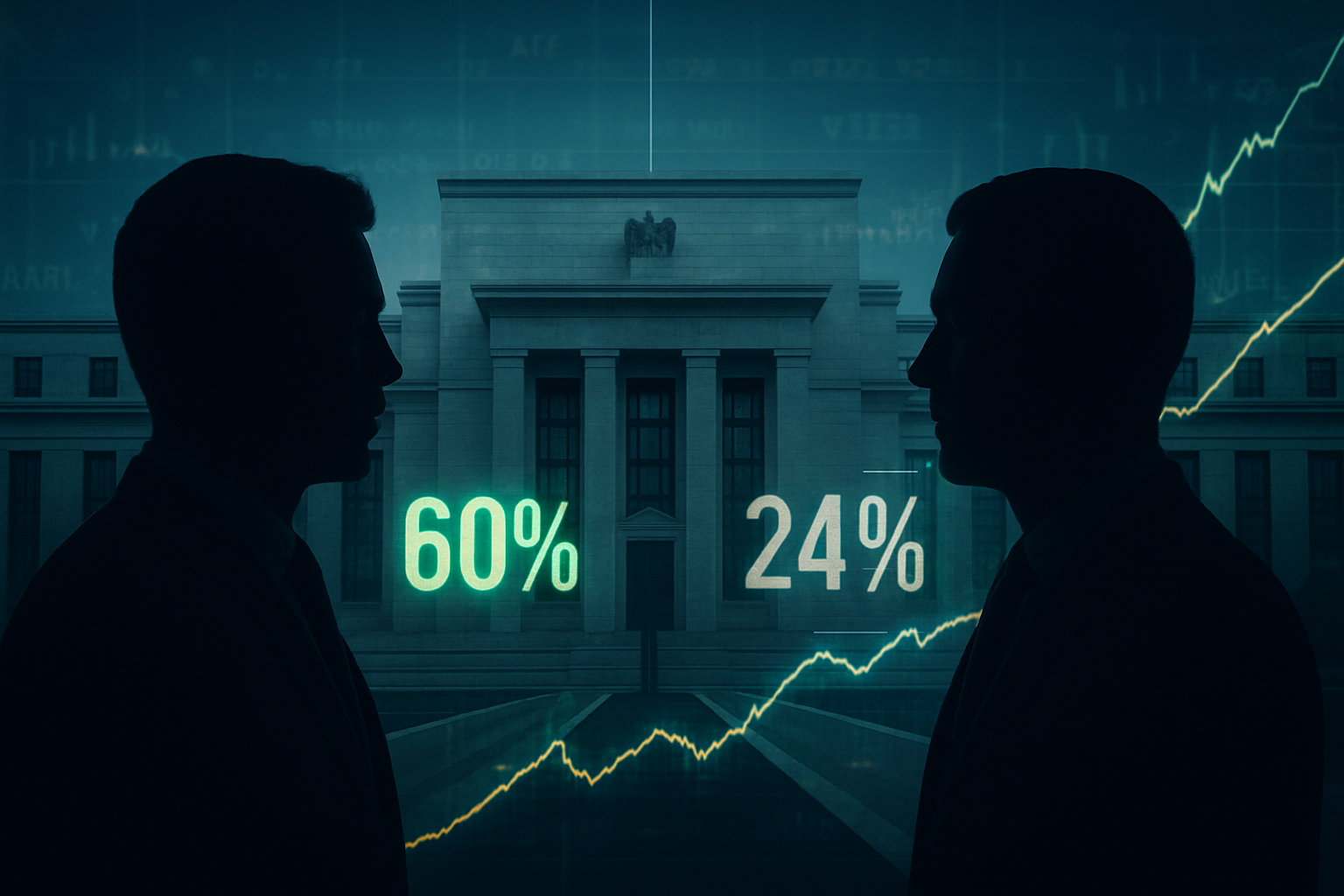
    The race to lead the world’s most powerful central bank has reached a fever pitch in prediction markets, with a decisive shift in sentiment favoring Wall Street veteran Rick Rieder. As of January 24, 2026, Rieder, the Chief Investment Officer of Global Fixed Income at BlackRock Inc. (NYSE: BLK), has emerged as the clear frontrunner to succeed Jerome Powell, whose term is set to expire in May. While the race was previously a dead heat between various conservative economists, Rieder now commands a dominant 60% probability on major forecasting platforms, leaving former Federal Reserve Governor Kevin Warsh trailing in a distant second.

    This market movement reflects more than just speculation; it is the culmination of high-stakes political signaling from the White House. The surge in Rieder’s odds coincides with a massive influx of capital into these markets, as traders scramble to position themselves ahead of a formal announcement. With over $300 million in combined volume between decentralized and regulated platforms, the "Next Fed Chair" market has become the focal point of global macro trading in early 2026.

    The Market: What's Being Predicted

    The prediction markets for the next Federal Reserve Chair have seen unprecedented liquidity this cycle. On Polymarket, the leading decentralized prediction platform, total volume for the Fed Chair contract has surpassed $250 million. Simultaneously, Kalshi, the U.S.-regulated exchange, has seen its volume climb to $55 million. The sheer scale of these markets suggests that institutional players and professional "political hunters" are using these contracts to hedge against potential shifts in monetary policy.

    Current odds across both platforms are remarkably aligned:

    • Rick Rieder: 60%
    • Kevin Warsh: 23-24%
    • Christopher Waller: 10%
    • Kevin Hassett: 5-7%

    The contract resolution is tied specifically to the official nomination by President Trump and subsequent confirmation or a formal announcement designated as the "intended nominee." Historically, these markets have traded with high volatility, but the recent consolidation around Rieder represents the first time a single candidate has held a supermajority probability since the speculation began in late 2025.

    Why Traders Are Betting

    The primary catalyst for the "Rieder Rally" was a strategic pivot by President Trump regarding his economic team. For much of late 2025, Kevin Hassett, the Director of the National Economic Council (NEC), was the betting favorite. However, Trump’s public insistence that Hassett is "too good on television" to be moved from the NEC essentially eliminated him from the running.

    Traders jumped on this "Hassett Pivot" to find the President's next preferred candidate. While Kevin Warsh briefly surged to 60% odds last week, the momentum shifted toward Rieder following a series of high-profile signals:

    1. Trump’s CNBC Endorsement: In a mid-January interview, the President praised Rieder’s "market-based judgment" and labeled him a "reformer" who understands the "true cost of debt."
    2. The Housing Factor: Rieder has been vocal about the need for the Fed to aggressively target mortgage rates to stimulate housing affordability—a key pillar of the current administration’s economic rhetoric.
    3. Hassett’s "Kingmaker" Move: Kevin Hassett himself recently described Rieder as "the best bond guy in the world," signaling that the President’s inner circle has reached a consensus.

    Whale activity on Polymarket suggests that several large-scale bettors moved seven-figure positions out of Warsh and into Rieder following these endorsements, viewing Rieder as the "outsider" candidate that Trump typically favors over "Washington insiders" like Warsh or Waller.

    Broader Context and Implications

    The dominance of Rick Rieder in these markets marks a potential shift in the Federal Reserve’s philosophy. Unlike previous chairs, Rieder would come directly from the heart of the private sector, specifically from BlackRock Inc. (NYSE: BLK), rather than from academia or a long-standing legal career. Prediction market participants are effectively betting that the Fed under Rieder would be more reactive to market conditions and perhaps more aggressive in cutting rates to accommodate fiscal expansion.

    Furthermore, this market highlights the increasing utility of prediction platforms like Kalshi and Polymarket as real-time barometers for political appointments. Traditional news outlets have been slower to catch the shift, often still reporting Warsh as the "likely" pick based on 2017-era precedents. However, the "wisdom of the crowd" in prediction markets has proven highly sensitive to the specific populist and market-driven rhetoric emerging from the Trump administration in 2026.

    The legal and regulatory backdrop also looms large. As Kalshi and other platforms fight to maintain their status in the U.S. regulatory landscape, the high volume and accuracy of the Fed Chair market serve as a powerful case study for their role in price discovery for political risk.

    What to Watch Next

    The window for a formal nomination is narrowing. With Jerome Powell’s term ending in May, President Trump is expected to make an announcement by the end of January or early February to allow for a smooth Senate confirmation process. Traders should keep a close eye on any "trial balloon" tweets or comments regarding the ongoing DOJ investigations into the Fed’s internal operations, which Trump has used as a justification for an early transition.

    A sudden drop in Rieder’s odds would likely only occur if a "dark horse" candidate—such as a surprise pick from a different major financial institution—emerges during one of the President's weekend meetings at Mar-a-Lago. Conversely, if the administration confirms that Rieder has met with the Senate Finance Committee, his odds could easily climb toward 80% or 90% before the official press release.

    Bottom Line

    As of January 24, 2026, the prediction markets have spoken: the "Warsh Era" that many expected has been eclipsed by the "Rieder Surge." With 60% odds and massive volume backing him, Rick Rieder is the clear market favorite to become the next Chair of the Federal Reserve.

    This shift tells us that traders are prioritizing "outsider" status and market expertise over traditional central banking credentials. While Kevin Warsh remains a viable backup at 24%, the alignment of Trump’s public praise and Hassett’s endorsement has created a powerful narrative that Rieder is the intended nominee. For those watching the future of American monetary policy, the prediction markets aren't just reflecting reality—they are increasingly the most reliable signal we have.


    This article is for informational purposes only and does not constitute financial or betting advice. Prediction market participation may be subject to legal restrictions in your jurisdiction.

    PredictStreet focuses on covering the latest developments in prediction markets.
    Visit the PredictStreet website at https://www.predictstreet.ai/.
  • The Great Convergence: How Kalshi’s Solana Pivot and ‘Builder Codes’ Are Rewiring Prediction Markets

    The Great Convergence: How Kalshi’s Solana Pivot and ‘Builder Codes’ Are Rewiring Prediction Markets

    The dawn of 2026 has brought a seismic shift to the prediction market landscape, one that is blurring the lines between the regulated boardrooms of Washington D.C. and the permissionless protocols of decentralized finance. As of January 23, 2026, the focus of the trading world has shifted from specific election outcomes to the very infrastructure of the markets themselves. At the center of this revolution is Kalshi, the first CFTC-regulated prediction market, which has successfully bridged its order books onto the Solana (SOL) blockchain.

    This technical expansion is not merely a change in venue; it is a fundamental re-engineering of how liquidity is accessed and distributed. By tokenizing its event contracts as SPL tokens and introducing a novel “Builder Codes” incentive program, Kalshi is attempting to create a global, decentralized front-end for regulated forecasting. Market analysts are watching closely as the platform’s "Yes/No" contracts—once confined to a single proprietary app—now circulate through decentralized exchanges (DEXs) and lending protocols, signaling a new era for real-world asset (RWA) tokenization.

    The Market: What's Being Predicted

    The "market" currently under the microscope isn't just a single event, but the adoption and performance of Kalshi’s new tokenized ecosystem. Since the official launch on December 1, 2025, Kalshi has partnered with DFlow to create a specialized tokenization layer. This API-driven system allows Kalshi’s federally regulated contracts—ranging from Fed interest rate decisions to movie box office results—to be minted as on-chain representations. These tokens mirror the liquidity of Kalshi’s central limit order book, providing what developers call "100% market coverage on-chain."

    Trading volume has seen a massive surge as these contracts hit the Jupiter (JUP) aggregator, Solana’s largest decentralized exchange. By integrating with Jupiter, Kalshi has effectively placed its regulated markets in front of millions of active crypto wallets. The liquidity for these tokenized contracts is deep, bolstered by a hybrid request-for-quote (RFQ) and automated market maker (AMM) model that ensures trades on-chain are matched instantly with Kalshi’s underlying institutional order book. Settlement occurs in USDC, providing a stable and compliant medium for exchange that bridges the gap between traditional finance and DeFi.

    Why Traders Are Betting

    The primary driver behind the current momentum is the introduction of Builder Codes. This mechanism allows any third-party developer to integrate Kalshi’s markets into their own applications and earn a percentage of the trading fees generated. It is a "Lego-brick" approach to prediction markets: a weather app can now embed a "Will it snow in NYC?" contract directly into its interface, while a political news site can offer live betting on legislative votes.

    Traders and developers are also being lured by the $2 million Builder Grant Program, which Kalshi launched in late 2025 to kickstart this ecosystem. Beyond the fees, the "composability" of these tokens is a major draw. For the first time, a trader can hold a "Yes" position on a Federal Reserve rate cut and use that position as collateral on lending platforms like Kamino or Marginfi. This allows for sophisticated hedging strategies that were previously impossible in the siloed world of traditional prediction markets.

    Furthermore, the rise of AI agents has added a new layer of activity. Autonomous trading bots are utilizing Builder Codes to execute high-frequency trades across various front-ends, collecting rebate fees while providing essential liquidity to the network. This "machine-to-machine" economy is rapidly becoming a significant portion of Kalshi’s total daily volume.

    Broader Context and Implications

    This expansion is the culmination of a multi-year journey for Kalshi. Following a landmark legal victory against the Commodity Futures Trading Commission (CFTC) in late 2024, which cleared the way for regulated political event contracts, Kalshi found itself with the legal standing to challenge offshore rivals like Polymarket. However, while Polymarket dominated the crypto-native audience during the 2024 election cycle, Kalshi’s pivot to Solana is an attempt to capture both the regulatory high ground and the technical agility of DeFi.

    The implications for the broader financial system are profound. By bringing regulated RWAs onto a high-speed blockchain like Solana, Kalshi is providing a blueprint for how other traditional assets—stocks, bonds, or commodities—might eventually be traded. It also reveals a shift in public sentiment: traders are increasingly demanding the transparency and instant settlement of blockchain technology, but with the legal protections afforded by a regulated exchange.

    However, this move is not without its risks. The integration of regulated assets into permissionless DeFi protocols raises complex questions for regulators. While Kalshi remains the central counterparty and ensures KYC/AML compliance for its users, the movement of tokenized "claims" through secondary DEXs tests the boundaries of existing financial laws.

    What to Watch Next

    As we move deeper into 2026, the key metric for success will be the diversity of the "Powered by Kalshi" ecosystem. Watch for the emergence of "niche terminals"—specialized trading apps built by third parties that cater to specific sectors like sports, entertainment, or macro-economics. The success of these apps will determine whether Builder Codes can successfully decentralize the user acquisition process.

    Another critical milestone will be the potential integration of these markets into major retail fintech platforms. Rumors have circulated that established players like Robinhood Markets, Inc. (NASDAQ: HOOD) or Coinbase Global, Inc. (NASDAQ: COIN) could leverage Kalshi’s Builder Codes to offer prediction markets to their massive user bases without having to build their own regulatory or liquidity infrastructure from scratch.

    Finally, keep an eye on the liquidity depth of tokenized contracts during major "black swan" events. The true test of the Solana integration will be its ability to maintain stability and narrow spreads when market volatility spikes and thousands of AI agents and retail traders rush to adjust their positions simultaneously.

    Bottom Line

    Kalshi’s expansion into tokenized markets on Solana represents more than just a technical upgrade; it is the first major bridge between the "Wild West" of decentralized prediction markets and the regulated stability of the U.S. financial system. The introduction of Builder Codes effectively turns Kalshi into a liquidity layer for the entire internet, allowing any website or app to become a prediction market hub.

    As the ecosystem grows, the distinction between "betting" and "hedging" continues to fade. For the average participant, the result is a more accessible, liquid, and versatile marketplace. Whether Kalshi can maintain its dominance in this new hybrid landscape remains to be seen, but the "Great Convergence" of 2026 has officially begun, and the prediction market industry will likely never be the same.


    This article is for informational purposes only and does not constitute financial or betting advice. Prediction market participation may be subject to legal restrictions in your jurisdiction.

    PredictStreet focuses on covering the latest developments in prediction markets. Visit the PredictStreet website at https://www.predictstreet.ai/.

  • The New Oracle: Prediction Markets Emerge as Global ‘Early Warning Systems’

    The New Oracle: Prediction Markets Emerge as Global ‘Early Warning Systems’

    As we move into early 2026, the global information landscape has undergone a radical transformation. No longer are political analysts and corporate strategists solely reliant on slow-moving surveys or expert panels to gauge the future. Instead, they are turning to the real-time, high-stakes data of prediction markets. These platforms, once viewed as niche betting hubs, have matured into what many are now calling the world’s most accurate "Early Warning Systems" (EWS).

    In January 2026, the evidence of this shift is undeniable. While traditional polling data often lags behind reality by days or even weeks, prediction markets are responding to geopolitical tremors and economic shifts in mere seconds. From the capture of international fugitives to the timing of Federal Reserve interest rate cuts, these markets are providing a level of foresight that traditional media is struggling to match.

    The Market: What's Being Predicted

    The scope of what can be traded on prediction markets has expanded dramatically since the landmark 2024 election cycle. Platforms like Polymarket and Kalshi have moved far beyond simple "Who will win the presidency?" contracts. Today, traders are betting on everything from the success of SpaceX's Starship Flight 12 to the number of confirmed measles cases in specific Texas counties.

    The scale of these markets is equally impressive. In late 2025, total weekly notional volume across major platforms frequently exceeded $5 billion. Kalshi alone recorded its highest-ever weekly volume of $1.98 billion in the first week of January 2026, largely driven by NFL-related event contracts. Meanwhile, Polymarket, following its successful U.S. relaunch via the acquisition of a CFTC-licensed exchange, reported over $21.5 billion in total nominal volume through December 2025.

    These platforms rely on binary outcome contracts—where a share pays out $1 if the event occurs and $0 if it doesn't—providing a clear, percentage-based probability for any given event. This "price discovery" for future events has become an essential tool for institutional investors and news organizations alike.

    Why Traders Are Betting

    The 2024 U.S. Presidential Election was the ultimate proof of concept for the "Early Warning" theory. Throughout October 2024, traditional pollsters like The New York Times (NYSE: NYT) and 538 described the race as a "dead heat." However, prediction markets told a different story. By late October, the price of a Donald Trump "win" share on Polymarket and Kalshi had moved decisively toward 67%, signaling a shift in momentum that polls didn't capture until it was too late.

    Traders are driven by the "financial incentive for accuracy." Unlike a survey respondent who may give a socially desirable answer, or a television pundit who faces no financial penalty for a wrong prediction, prediction market participants must put capital at risk. This filters out noise and prioritizes "hidden" information.

    A prime example occurred in early January 2026. Hours before the Trump administration announced the capture of Venezuelan leader Nicolás Maduro, a single trader on Polymarket placed a $32,000 bet on his downfall, eventually netting a $400,000 profit. This instance of "information finance" sparked debates about insider information, but it also proved that markets can act as a sensor for events long before they hit the headlines.

    Broader Context and Implications

    The evolution of these markets has been bolstered by significant regulatory victories. Following the CFTC vs. Kalshi legal battle, which concluded in May 2025 when the government dropped its appeal, political event contracts are now legally traded on federally regulated exchanges in the U.S. This has cleared the path for mainstream integration, with Warner Bros. Discovery (NASDAQ: WBD) and its subsidiary CNN, as well as Comcast’s (NASDAQ: CMCSA) CNBC, now featuring live prediction market odds as a standard part of their election and economic coverage.

    Furthermore, traditional finance players like Robinhood Markets, Inc. (NASDAQ: HOOD) and Interactive Brokers Group, Inc. (NASDAQ: IBKR) have integrated these markets into their platforms, bringing prediction contracts to millions of retail investors. This influx of liquidity has reduced the influence of "whales" and increased the "wisdom of crowds," making the signals more stable and reliable.

    Historically, prediction markets have shown a remarkable ability to process complex news faster than experts. In 2025, economic contracts on the CME Group (NASDAQ: CME) FedWatch tool and Kalshi correctly priced in a June rate cut months in advance, even as many bank analysts remained skeptical of a cooling labor market.

    What to Watch Next

    As we look toward the remainder of 2026, the 2026 Midterm Elections (November 3, 2026) are already the highest-liquidity markets in the world. Currently, markets are pricing a 79% probability of a Democratic House takeover and a 67% chance of the GOP maintaining control of the Senate. These odds are expected to shift rapidly as the primary season begins in March.

    Outside of politics, the 2026 Winter Olympics in Milan-Cortina (February 6–22) and the 2026 FIFA World Cup in June will provide massive volume for sports-related event contracts. In the tech sector, all eyes are on the anticipated IPO of SpaceX. Rumors of a mid-2026 public offering have already created a highly active market, with traders currently betting on a debut valuation exceeding $1 trillion.

    Bottom Line

    The rise of prediction markets as "Early Warning Systems" represents a fundamental shift in how we perceive and process the future. By attaching a financial value to truth, these platforms have successfully bypassed the biases of traditional polling and the lag of institutional reporting. They are no longer just betting platforms; they are the new infrastructure of information.

    As we head into the 2026 midterms and beyond, the most important signal won't be found in a pundit's monologue or a "margin of error" poll—it will be found in the fluctuating price of a contract on an exchange. For the first time in history, the collective wisdom of the crowd isn't just a theory; it’s a tradable asset.


    This article is for informational purposes only and does not constitute financial or betting advice. Prediction market participation may be subject to legal restrictions in your jurisdiction.

    PredictStreet focuses on covering the latest developments in prediction markets.
    Visit the PredictStreet website at https://www.predictstreet.ai/.