
Tag: Kalshi

  • Newsom Leads the Pack: Analyzing the $45 Million Surge in 2028 Democratic Nominee Markets

    Newsom Leads the Pack: Analyzing the $45 Million Surge in 2028 Democratic Nominee Markets

    While the dust of the 2024 election has long since settled, the gaze of the political and financial worlds has already shifted toward the next horizon. As of February 7, 2026, prediction markets for the 2028 Democratic Nominee have reached an unprecedented level of early activity. On Kalshi, the premier regulated event contract exchange, the market for the 2028 Democratic Presidential Nominee has seen a staggering $45.2 million wagered, a figure that dwarfs the liquidity of any primary market at this stage in history.

    Currently, California Governor Gavin Newsom sits atop the leaderboard with a dominant 30% probability of securing the nomination. This early "market pricing" reveals a political landscape that is consolidating much faster than traditional polling suggests. While voters are still years away from casting their first ballots, traders are already putting massive sums behind a specific vision of the Democratic future—one characterized by high-visibility "resistance" politics and a formidable West Coast fundraising machine.

    The Market: What's Being Predicted

    The "2028 Democratic Nominee" market on Kalshi is a simple "Yes/No" binary contract that resolves to $1 for the candidate who ultimately wins the party’s nomination at the 2028 Democratic National Convention. Unlike the speculative "gray markets" of previous decades, this is a fully CFTC-regulated environment, attracting not just political hobbyists but institutional liquidity.

    Gavin Newsom’s 30% odds place him in a tier of his own. The next closest contenders are Pennsylvania Governor Josh Shapiro at 9%, followed by former Vice President Kamala Harris at 8%. Progressive standard-bearer Alexandria Ocasio-Cortez and Maryland Governor Wes Moore are locked in a dead heat for fourth place at 7% each.

    The liquidity in this market has been bolstered by Kalshi’s expansion of position limits to $3,500 per contract and the entry of major market-making firms like Susquehanna International Group (SIG) and Jane Street. These firms are now providing deep order books, allowing high-net-worth individuals and institutional desks to take significant positions without the "slippage" that plagued earlier, more volatile cycles.

    Why Traders Are Betting

    The discrepancy between market odds and public polling is perhaps the most fascinating aspect of the current 2028 landscape. While traditional polls still show high name recognition for Kamala Harris, prediction markets have effectively "priced her out," viewing her 8% odds as "dead money" compared to Newsom’s momentum.

    Traders are betting on Newsom for three primary reasons:

    1. The Shadow Campaign: Throughout 2025 and into early 2026, Newsom has conducted a relentless national media blitz, including a high-profile memoir launch and frequent appearances as the primary critic of the Trump-Vance administration. Traders view this as a "de facto" campaign launch.
    2. Fundraising Supremacy: Newsom’s PAC has already outpaced his rivals, tapping into deep donor networks in Silicon Valley and Hollywood. Markets value "cash on hand" as a leading indicator of nominee longevity.
    3. Institutional Backing: Unlike the more progressive or "outsider" candidates, Newsom is seen by traders as the establishment’s safest bet for a high-resource national campaign.

    Conversely, the market is pricing in "electability insurance" with Josh Shapiro. His 9% odds reflect a belief among traders that if the party pivots toward a moderate, mid-Atlantic strategy to win back the "Blue Wall," Shapiro is the natural successor to the Biden-era coalition.

    Broader Context and Implications

    This surge in betting volume marks the definitive arrival of the "Information Finance" (InfoFi) era. Following landmark court victories in 2024 that prevented the CFTC from banning election contracts, prediction markets have become integrated into the broader financial ecosystem. Major public brokerages have taken notice. Interactive Brokers (NASDAQ: IBKR) has expanded its ForecastEx platform, and Robinhood (NASDAQ: HOOD) recently integrated Kalshi-regulated contracts directly into its retail app, bringing millions of small-dollar traders into the fold.

    Other public companies are also jockeying for position in this new asset class. Coinbase (NASDAQ: COIN) has moved toward a "one-stop-shop" model for regulated event contracts, while DraftKings (NASDAQ: DKNG) and Flutter Entertainment (NYSE: FLUT) have launched dedicated prediction verticals to capture the "political-gaming" crossover. Even the Intercontinental Exchange (NYSE: ICE), parent of the New York Stock Exchange, recently made a strategic investment in the space, signaling that prediction markets are no longer a niche curiosity.

    This shift has real-world implications: political campaigns now monitor Kalshi and Polymarket odds as closely as internal polling. The "wisdom of the crowd" is being used to price political risk for everything from corporate tax planning to treasury exposure.

    What to Watch Next

    The immediate catalyst for market movement will be the 2026 midterm elections. While the 2028 nominees aren't on the ballot, their "proxies" are. If Gavin Newsom-endorsed candidates underperform, or if Josh Shapiro wins a resounding reelection in Pennsylvania with significant crossover support, the odds could flip overnight.

    Additionally, the battle over the Democratic primary calendar remains a critical factor. Michigan Governor Gretchen Whitmer, currently at 5% odds, is leading the charge to make Michigan the first-in-the-nation primary state. If she succeeds, her odds are expected to spike as she gains a home-field advantage in the crucial opening act of the primary season.

    Traders should also watch for "black swan" candidates. Prediction markets are famously sensitive to "viral" moments. A breakout performance by a "dark horse" like Wes Moore at a national dinner or a high-profile Senate hearing could see his 7% odds double in a matter of hours.

    Bottom Line

    The $45 million wagered on Kalshi is more than just a bet on a person; it is a bet on the direction of the Democratic Party and the maturity of a new financial instrument. Gavin Newsom’s 30% lead suggests that, at least in the eyes of the most capitalized observers, the 2028 primary is his to lose.

    However, as any seasoned trader knows, "early" is a dangerous word in politics. While Newsom has the visibility and the bankroll, the high liquidity in these markets means they are incredibly efficient at pricing in new information. As we head into the heart of the 2026 midterm cycle, these markets will provide the most accurate, real-time barometer of who the next leader of the Democratic Party will be.


    This article is for informational purposes only and does not constitute financial or betting advice. Prediction market participation may be subject to legal restrictions in your jurisdiction.

    PredictStreet focuses on covering the latest developments in prediction markets.
    Visit the PredictStreet website at https://www.predictstreet.ai/.
  • High Stakes in the Cabinet: Noem and Gabbard Lead Kalshi Departure Markets Amid Mounting Controversies

    High Stakes in the Cabinet: Noem and Gabbard Lead Kalshi Departure Markets Amid Mounting Controversies

    As the second Trump administration enters its second year, the "honeymoon phase" for his Cabinet appears to be over—at least according to prediction markets. On the regulated exchange Kalshi, traders are increasingly betting on a major shakeup in the President's inner circle. Recent weeks have seen a sharp spike in the probability of departures for several high-profile officials, with Department of Homeland Security (DHS) Secretary Kristi Noem and Director of National Intelligence (DNI) Tulsi Gabbard topping the list of most likely exits.

    Currently, the market for "Who will leave the Trump Administration this year?" shows Noem and Gabbard both trading at near-coin-flip odds. Noem’s probability of departure before the end of 2026 has surged to approximately 50%, while Gabbard follows closely at 47%. These figures represent a dramatic shift from the relatively stable outlook seen just six months ago, signaling that prediction market participants are pricing in a period of intense political instability within the executive branch.

    The Market: What’s Being Predicted

    The primary venue for these predictions is Kalshi, the first U.S.-regulated prediction market, which has seen record volumes in its "Cabinet Tenure" contracts. These markets are structured around specific binary outcomes: whether a named official will remain in their post through a certain date. The "Who will be the first Cabinet member to leave?" contract is particularly liquid, with Kristi Noem currently the runaway favorite at a 34-40% chance of being the first to depart.

    The resolution criteria for these markets are strict. A "departure" is defined as a formal resignation, firing, or impeachment and removal from office. Temporary leaves or deaths are excluded. For traders, the timeline is the critical factor; these contracts are currently focused on the 2026 calendar year. Since her confirmation in January 2025 by a 59-34 vote, Noem's "leave" odds were initially low—around 15%—but the market sentiment soured as domestic enforcement actions intensified. Similarly, Tulsi Gabbard, who was sworn in on February 13, 2025, has seen her odds fluctuate wildly alongside news of intelligence community friction.

    Why Traders Are Betting

    The sudden bearishness on Noem’s job security is largely attributed to the fallout from "Operation Metro Surge." Following a large-scale ICE deployment in Minneapolis in early January 2026, which resulted in the fatal shootings of protesters, Noem’s vocal defense of federal agents and her classification of victims as "domestic terrorists" triggered a firestorm of bipartisan criticism. While President Trump has publicly backed her, traders are watching for "friendly fire" from Republican senators like Roger Wicker (R-MS), who have expressed concerns over Noem’s proposed "detention warehouses." Such fractures within the GOP base often precede a Cabinet departure, and Kalshi whales have been moving aggressively on "Yes" contracts for her exit.

    Tulsi Gabbard’s precarious position is fueled by a different set of pressures. Recent reports of a "highly classified whistleblower complaint" allegedly suppressed by the DNI’s office have led to calls for her removal from both sides of the aisle. Furthermore, headlines in early 2026 suggested Gabbard may have blindsided the White House by revoking 37 high-level security clearances without prior notification. These events have created a perception of a "rogue" DNI, a narrative that prediction market participants are betting will eventually lead to her resignation or dismissal. The volatility in these roles has also begun to weigh on government services firms like Booz Allen Hamilton (NYSE: BAH) and Palantir Technologies (NYSE: PLTR), as investors worry about continuity in federal contracts.

    Broader Context and Implications

    This market activity underscores a broader trend in the maturation of prediction markets. Unlike traditional polling or punditry, which often lag behind the news cycle, Kalshi’s prices react in real-time to every leaked memo and late-night tweet. The fact that Noem and Gabbard are trading at such high exit probabilities suggests that the "wisdom of the crowd" sees an unsustainable level of friction between these officials and the political realities of 2026.

    Historically, prediction markets have been remarkably accurate in forecasting Cabinet turnover. During Trump's first term, similar (though then unregulated) markets on platforms like Polymarket often correctly anticipated the departures of figures like Rex Tillerson and John Bolton. The real-world implications of these "departure odds" are significant; high exit probabilities can often become self-fulfilling prophecies, as the perceived "lame duck" status of an official diminishes their ability to lead their department or negotiate with Congress.

    What to Watch Next

    The immediate future of the Noem and Gabbard markets will likely hinge on several key milestones. For Noem, the upcoming Senate Judiciary Committee oversight hearings scheduled for late February will be a make-or-break moment. If she faces significant pushback from Republican committee members, her departure odds could easily climb into the 60-70% range. Traders are also monitoring the White House press briefings for any softening of the President’s "total confidence" rhetoric.

    For Gabbard, the "Gang of Eight" briefing on the alleged whistleblower complaint remains the primary catalyst. If the complaint is forwarded to Congress against her wishes, it could be the "smoking gun" that forces a leadership change at the DNI. Additionally, keep an eye on other high-risk officials like Attorney General Pam Bondi (currently at 48% to leave) and FBI Director Kash Patel (at 54%), whose own controversies regarding the release of redacted files and resource management are creating a "cluster" of high-probability departures.

    Bottom Line

    The Kalshi markets offer a sobering look at the stability of the current administration. While confirmation hearings are long over, the "job security" phase of the second Trump term is proving to be even more volatile. The high odds for both Kristi Noem and Tulsi Gabbard reflect a market that believes the current level of controversy is untenable for a long-term tenure.

    For observers of prediction markets, this is a masterclass in how these platforms aggregate political risk. Whether Noem and Gabbard survive the year remains to be seen, but the markets have already placed their bets: the status quo is unlikely to hold. As we move deeper into 2026, these departure markets will serve as a vital barometer for the internal health and longevity of the administration's most powerful offices.


    This article is for informational purposes only and does not constitute financial or betting advice. Prediction market participation may be subject to legal restrictions in your jurisdiction.

    PredictStreet focuses on covering the latest developments in prediction markets.
    Visit the PredictStreet website at https://www.predictstreet.ai/.
  • The $7 Million Setlist: Bad Bunny’s Super Bowl Opener Sparks Betting Frenzy on Kalshi

    The $7 Million Setlist: Bad Bunny’s Super Bowl Opener Sparks Betting Frenzy on Kalshi

    With just twenty-four hours remaining until kickoff at Levi’s Stadium, the spotlight isn't just on the Seattle Seahawks and the New England Patriots. In the prediction markets, a different kind of high-stakes drama is unfolding. Traders have poured more than $7 million into Kalshi alone, speculating on every detail of the Apple Music (NASDAQ: AAPL) Super Bowl LX Halftime Show headlining global superstar Bad Bunny.

    As of February 7, 2026, the market for Bad Bunny’s opening song has become one of the most liquid "novelty" events in the history of prediction markets. While the football game itself has seen hundreds of millions in volume, the halftime show markets—specifically the opening track and guest appearances—have reached a fever pitch. Current odds on Kalshi place the hit "Tití Me Preguntó" as the heavy favorite to open the set, trading at a 58% implied probability, though a late-breaking surge for "BAILE INoLVIDABLE" has kept the order books volatile.

    The Market: What's Being Predicted

    The primary theater for this speculation is Kalshi, the federally regulated exchange that has aggressively expanded its "Culture" category over the last year. Unlike traditional sportsbooks, Kalshi allows traders to buy and sell "Yes" or "No" contracts on specific outcomes, creating a real-time price discovery mechanism for pop culture. The "Bad Bunny Super Bowl Setlist" suite includes contracts for the opening song, the closing song, and the total number of guest performers.

    Currently, the "Opening Song" market is the crown jewel of the halftime category:

    • Tití Me Preguntó: $0.58 (58% chance)
    • BAILE INoLVIDABLE: $0.14 (14% chance)
    • NUEVAYoL: $0.11 (11% chance)
    • Monaco: $0.06 (6% chance)

    Resolution of these contracts is strictly defined by the first audible lyrics or recognizable melody performed by Bad Bunny after the halftime show officially commences. With over $7 million in total volume across the setlist markets, liquidity is remarkably high for a non-political event, allowing "whales" to move five-figure positions without massive slippage.

    Why Traders Are Betting

    The sudden influx of capital into the "Opening Song" market can be traced back to Bad Bunny’s historic night at the 68th Grammy Awards last week. After winning Album of the Year for Debí Tirar Más Fotos, the artist’s first all-Spanish project to take the top prize, momentum shifted toward his newer material. Traders who previously backed "Monaco" or "VOU 787" have rotated into "BAILE INoLVIDABLE," the standout track from the new album.

    Insider speculation and "soundcheck leaks" have also fueled the market. On Wednesday, a blurry TikTok video allegedly filmed near the stadium captured a faint audio loop of the percussion from "Tití Me Preguntó," causing the contract to spike from $0.45 to $0.62 in under an hour. However, seasoned prediction market participants remain skeptical, noting that artists often soundcheck multiple tracks to misdirect fans and bettors alike.

    Another factor is the intersection of fashion and music. Prediction markets on Polymarket are currently tracking what the "King of Latin Trap" will wear, with "Western/Cowboy Aesthetic" leading at 72%. Traders are betting that the opening song will coordinate with his entrance attire—a strategy that has historically favored the more rhythmic, high-energy "Tití Me Preguntó."

    Broader Context and Implications

    The $7 million volume for a halftime setlist signals a major shift in the prediction market landscape. What were once considered "fringe" or "novelty" bets are now being treated as legitimate asset classes by retail and institutional traders. For Kalshi, these markets serve as a powerful customer acquisition tool, drawing in a younger, more diverse demographic that may not be interested in Federal Reserve interest rate hikes but has strong opinions on Latin music.

    Furthermore, the Halftime Show market highlights the regulatory evolution of the space. Because Kalshi is regulated by the CFTC, it must ensure its markets are not susceptible to manipulation. This has led to strict "source of truth" requirements, using official NFL and Apple (NASDAQ: AAPL) broadcasts as the final word. The massive volume also reflects the "financialization of everything"—a trend where cultural moments are instantly translated into tradable data points.

    Historically, prediction markets have been remarkably accurate for the Super Bowl. In 2025, markets correctly identified Kendrick Lamar’s opener "DNA." and his surprise guest, despite heavy secrecy from the production team. Traders are betting that the "wisdom of the crowd" will once again outperform the predictions of music critics.

    What to Watch Next

    As we approach the 6:30 PM ET kickoff tomorrow, watch for "last-minute information asymmetry." The most significant price movements typically happen in the final two hours before the game, as production staff or backup dancers might inadvertently leak details.

    Key milestones to monitor include:

    1. The Red Carpet: If Bad Bunny arrives in a specific themed outfit, expect immediate "arbitrage" movements in the song markets.
    2. The "Guest" Surge: If Cardi B or Ricky Martin are spotted in the VIP boxes, their respective guest appearance contracts will likely hit the $0.90+ range.
    3. Liquidity Drains: As the game starts, some traders may pull their limit orders to avoid "headline risk," leading to increased volatility.

    Bottom Line

    The $7 million Bad Bunny setlist market is a testament to the growing maturity of prediction markets as a reflection of public sentiment. Whether it’s "Tití Me Preguntó" or a surprise deep cut, the prices on Kalshi provide a more accurate forecast of the show’s structure than any social media poll or expert editorial.

    For the prediction market industry, this Super Bowl is a proof-of-concept for high-volume, non-financial event trading. As we look toward the 2027 show—where markets are already forming around Taylor Swift—the Bad Bunny "opener" frenzy will likely be remembered as the moment when culture betting went mainstream.


    This article is for informational purposes only and does not constitute financial or betting advice. Prediction market participation may be subject to legal restrictions in your jurisdiction.

    PredictStreet focuses on covering the latest developments in prediction markets.
    Visit the PredictStreet website at https://www.predictstreet.ai/.

  • Betting Against ‘Elon Time’: Prediction Markets Hedge on Musk’s 2026 Deadlines

    Betting Against ‘Elon Time’: Prediction Markets Hedge on Musk’s 2026 Deadlines

    As of February 7, 2026, the intersection of aerospace engineering, artificial intelligence, and retail speculation has found a permanent home in prediction markets. With the recent, earth-shaking announcement of a merger between SpaceX and xAI on February 2, traders are no longer just betting on individual rocket launches; they are wagering on the formation of a $1.25 trillion "techno-conglomerate." Yet, while Elon Musk’s long-term visions carry a significant "Musk Premium" in valuation markets, a battle-hardened class of traders is making a fortune by betting against his immediate deadlines—a phenomenon now formally tracked as the "Elon Time" discount.

    Currently, markets on Polymarket and Kalshi show a sharp divergence between belief and reality. While there is an 86% probability that SpaceX will achieve a valuation exceeding $1 trillion by the end of 2026, the odds of Musk meeting his self-imposed deadline for "Unsupervised" Full Self-Driving (FSD) by June have plummeted to 27%. This contrast highlights a growing sophistication among bettors: they believe in the man, but they don’t believe his calendar.

    The Market: What’s Being Predicted

    The "Musk Deadline" markets have become some of the most liquid contracts in the prediction market ecosystem. On Kalshi, a regulated U.S. exchange, and Polymarket, a decentralized global leader, three primary pillars of the "Musk-verse" dominate trading:

    1. SpaceX & Starship Milestones: Following the success of Flight 11 in late 2025, the market for Starship Flight Test 12 is currently at a 64% "Yes" for a successful landing or "catch" of the Super Heavy booster. Traders are also eyes-deep in the "2026 Mars Window" market. Despite Musk’s target of launching five uncrewed ships to Mars between November and December 2024, the market currently only gives a 7% chance to an intact landing on the Red Planet by year-end.
    2. Tesla (NASDAQ:TSLA) FSD and Robotaxis: Tesla markets have shifted from "When will FSD release?" to "When will the safety driver be removed?" Following a limited rollout of "Unsupervised FSD" in Austin late last year, the probability of a wider California launch by June 30, 2026, has dropped to 22%, as traders react to a slower-than-promised data ramp-up.
    3. The xAI-SpaceX Merger Synergy: A new "meta" market emerged this week regarding the SpaceX-xAI merger. Total Musk-related trading volume across all platforms exceeded $6.8 million in the first week of February alone, with millions more locked in speculative bets regarding the upcoming SpaceX IPO ticker (with $X currently leading at 64% odds).

    Why Traders Are Betting

    The driving force behind these markets is the "Elon Time" discount. Professional bettors have realized that Musk’s public statements often serve as "aspirational marketing" rather than "project management reality." Top traders on Polymarket have reportedly netted tens of thousands of dollars by consistently betting "No" on any Musk deadline that is less than six months away.

    However, this skepticism is balanced by the "Musk Premium." Long-term contracts—those looking out two to five years—tend to be aggressively bullish. This reflects a belief that Musk eventually overcomes technical hurdles, even if he is perpetually "two weeks" late. For example, while traders are skeptical of a 2026 Mars landing, they are almost certain (88% odds) that SpaceX will go public by December 31, 2026, reflecting deep confidence in the company’s underlying commercial viability.

    Recent news has further fueled this activity. The January announcement that Tesla would shift to a subscription-only FSD model by February 14, 2026, triggered a massive spike in volume for "FSD Revenue" prediction contracts. Whale activity has also been noted in "AGI by 2027" markets, which ticked up to 34% probability following the merger of Musk’s AI and aerospace interests.

    Broader Context and Implications

    The rise of Musk-deadline markets marks a shift in how the public consumes corporate news. Instead of relying on press releases or earnings calls from Tesla Inc. (NASDAQ:TSLA), many sophisticated observers now look to Kalshi and Polymarket as a more accurate "engineering truth." Prediction markets act as a real-time bullshit detector, aggregating the collective wisdom of thousands of engineers, data scientists, and industry insiders who "put their money where their mouth is."

    This trend has significant real-world implications. Regulatory bodies like the CFTC and SEC are increasingly monitoring these markets to gauge public sentiment and potential insider movements. The historical accuracy of these markets has been remarkably high; in 2025, prediction markets accurately "called" the delay of the Starship Flight 10 booster catch three weeks before SpaceX officially announced the schedule shift.

    Furthermore, these markets reveal a hardening of public sentiment. The "Musk Premium" suggests that while the billionaire’s brand may be polarizing, his perceived ability to execute on "impossible" engineering feats remains the bedrock of his companies' valuations.

    What to Watch Next

    The next 60 days will be a crucible for these markets. All eyes are on March 2026, the current target for Starship Flight 12. If the "Chopstick" arms of the launch tower successfully catch the Super Heavy booster again, we expect to see the "Mars 2026" landing odds double overnight, potentially jumping from 7% to 15-20%.

    Another key milestone is the "4/20" Grok release. xAI is rumored to be preparing Grok 4.20, a meme-coded update aimed at showcasing the integrated compute power of the new "Colossus" supercomputer cluster. Markets currently price this release at a 97% certainty. However, the more technically significant Grok 5—which Musk claims has a 10% chance of achieving AGI—is viewed with more skepticism, with only a 12% probability of a Q1 2026 release.

    Bottom Line

    The Elon Musk prediction markets of 2026 have evolved into a sophisticated financial instrument that separates "vision" from "execution." The data is clear: traders believe in the eventual arrival of a $1.2 trillion Musk-led future, but they are unwilling to trust the billionaire’s calendar. The 2026 "Elon Time" discount remains a profitable strategy for those betting against short-term deadlines, even as long-term bullishness keeps SpaceX IPO odds at record highs.

    Ultimately, these markets serve as a vital tool for price discovery in an era where corporate tweets can move billions of dollars. Whether it’s a rocket landing or a software update, the prediction market "tape" is proving to be a more reliable guide to the future than any social media post. As the SpaceX-xAI merger begins to take shape, the stakes—and the potential payouts—have never been higher.


    This article is for informational purposes only and does not constitute financial or betting advice. Prediction market participation may be subject to legal restrictions in your jurisdiction.

    PredictStreet focuses on covering the latest developments in prediction markets.
    Visit the PredictStreet website at https://www.predictstreet.ai/.
  • The Silent Succession: $17M Bet on the End of the Khamenei Era

    The Silent Succession: $17M Bet on the End of the Khamenei Era

    As of February 7, 2026, the geopolitical world is fixated on a high-stakes question that has long been whispered in the corridors of power in Tehran: when will the era of Ayatollah Ali Khamenei end? For years, this was the subject of classified intelligence briefs and academic speculation. Today, it is a $17 million market on the regulated exchange Kalshi. Traders are currently pricing in a 38% probability that Khamenei will exit his position as Supreme Leader of Iran by September 1, 2026.

    This market is not merely a curiosity for political junkies; it has become a focal point for global finance and intelligence analysts alike. The 38% odds represent a volatile consensus that has fluctuated wildly over the last six months, driven by reports of the 86-year-old leader's deteriorating health and a series of unprecedented internal and external pressures on the Islamic Republic. As the volume nears the $20 million mark, the contract is now one of the most liquid geopolitical instruments in the history of prediction markets.

    The Market: What's Being Predicted

    The primary vehicle for this speculation is the Kalshi contract titled "Ali Khamenei out as Supreme Leader?" Specifically, the September 2026 series (Series: KXKHAMENEIOUT) has captured the lion's share of the volume. The rules are clinical and definitive: the market resolves to "Yes" if Ali Khamenei officially leaves the office of Supreme Leader, is removed, or if an official state announcement is made regarding a definitive transition within the designated timeframe.

    The resolution criteria are rigorous, relying on official announcements from the Iranian government or corroboration by at least two major international news organizations, such as The New York Times (NYSE: NYT) or The Wall Street Journal, owned by News Corp (NASDAQ: NWSA). To maintain ethical standards, the market includes a "Death Provision"—if the Leader passes away in office, the market resolves based on the last traded price prior to the announcement, effectively preventing the contract from becoming an "assassination bounty" while still allowing traders to hedge against the political vacuum a death would create.

    Currently, the market boasts over $17 million in total volume, with hundreds of thousands of individual contracts changing hands. Liquidity is remarkably deep, allowing institutional players to take significant positions. This is a far cry from the "play money" markets of a decade ago; the capital at risk suggests that those with access to high-level intelligence are using the platform to express their views on the stability of the Iranian regime.

    Why Traders Are Betting

    The 38% probability reflects a complex "perfect storm" of factors that traders are weighing daily. Chief among them is the physical fragility of the Supreme Leader. Throughout late 2025 and into early 2026, reports have surfaced regarding Khamenei's retreat into a hardened bunker in Lavizan, with some intelligence leaks suggesting he has suffered from "advanced cognitive impairment" or intermittent medical crises.

    Furthermore, the succession race has been thrown into chaos. Following the 2024 death of Ebrahim Raisi, who was the hand-picked successor, the field has narrowed to a few contentious figures. Traders are closely monitoring the influence of Mojtaba Khamenei, the Leader's second son. While he commands the loyalty of the IRGC Intelligence Organization, the possibility of a "hereditary" transition is a flashpoint for internal dissent. Recent market activity spiked following reports that Ali Khamenei excluded his son from a "shortlist" presented to the Assembly of Experts, a move intended to preserve the revolutionary ideology of the state but one that creates a massive power vacuum.

    External pressures are also priced in. Continued regional escalations involving Israel and the United States have forced the Iranian leadership into a defensive crouch. Traders often move the "Yes" odds higher following major kinetic events in the region, betting that external shocks could accelerate a transition or collapse of the current leadership structure.

    Broader Context and Implications

    The "Khamenei Exit" market serves as a leading indicator for several global sectors. The energy market is perhaps the most sensitive; a sudden transition in Tehran could lead to massive volatility in crude prices, affecting giants like Exxon Mobil (NYSE: XOM) and Chevron (NYSE: CVX). Similarly, defense contractors such as Lockheed Martin (NYSE: LMT) and RTX Corporation (NYSE: RTX) often see their stock prices correlate with the perceived instability in the Middle East, a sentiment that is now being distilled into a single percentage on prediction platforms.

    Beyond the financial implications, this market represents a milestone for prediction platforms as a tool for "nowcasting" geopolitical stability. Unlike traditional polling or intelligence reports, which can be lagging or biased, prediction markets provide a real-time, incentivized aggregate of information. The historical accuracy of such markets—often outperforming expert panels in high-uncertainty environments—gives this 38% figure a weight that the Iranian government cannot easily ignore.

    However, regulatory scrutiny remains a shadow over the industry. As markets like Kalshi and Polymarket grow in influence, regulators are increasingly wary of the potential for market manipulation or the ethical implications of "betting" on the death or removal of foreign heads of state. For now, the Kalshi market remains a legal, regulated venue for U.S. participants to trade on one of the most significant transitions of the 21st century.

    What to Watch Next

    The next six months will be critical for this market. Investors should keep a close eye on the biennial meetings of the Assembly of Experts. Any sudden change in the composition of this 88-member body or an unscheduled "emergency" session would likely send the "Yes" odds for a September 2026 exit soaring above 50%.

    Additionally, the "January 2026 Uprising"—a wave of domestic protests sparked by economic stagnation and 45%+ inflation—remains a wildcard. If the IRGC’s response to these protests shows signs of fracturing or if the "Regency Council" currently managing day-to-day affairs in Tehran loses its grip on the narrative, the probability of an "early" exit will likely climb. Traders should also watch for any rare public appearances by Khamenei; his physical presence (or lack thereof) during the upcoming Persian New Year (Nowruz) in March will be a binary event for the market.

    Bottom Line

    The $17 million volume on the Ali Khamenei exit market is a testament to the growing role of prediction markets in deciphering the world’s most opaque political systems. At 38%, the market is signaling that while a transition is not yet the "base case" for the next 18 months, it is a high-probability risk that is no longer being ignored by the global financial community.

    For participants and observers alike, this market highlights a shift in how we process global risk. We are moving away from the era of the "expert opinion" and into the era of the "incentivized consensus." Whether or not Khamenei remains in power by September 2026, the movement of this market will provide the most accurate real-time barometer of the regime’s longevity that we have ever seen.


    This article is for informational purposes only and does not constitute financial or betting advice. Prediction market participation may be subject to legal restrictions in your jurisdiction.

    PredictStreet focuses on covering the latest developments in prediction markets. Visit the PredictStreet website at https://www.predictstreet.ai/.
  • Geopolitical Risk Pricing: Iran Strike Odds Surge as Polymarket Volume Hits $188M Milestone

    Geopolitical Risk Pricing: Iran Strike Odds Surge as Polymarket Volume Hits $188M Milestone

    As of February 7, 2026, the intersection of high-stakes diplomacy and military posturing has turned the eyes of the world toward the Persian Gulf. Prediction markets are currently pricing in a significant probability of military conflict between the United States and Iran, with the flagship "U.S. strike on Iran" market on Polymarket seeing its cumulative volume surge to a staggering $188 million. This massive influx of capital comes as the USS Abraham Lincoln carrier strike group takes its position in the Gulf of Oman, creating a visual and strategic catalyst that has sent traders into a frenzy.

    Current odds reflect a complex geopolitical landscape: the probability of a U.S. strike by the mid-February deadline (February 13) stands at 31%, while the odds for a strike by the end of the month (February 28) have climbed to 44%. These figures represent a volatile "truth signal" that often moves faster than traditional news cycles, as participants bet millions on whether the current "maximum pressure" campaign will culminate in kinetic action or de-escalate through high-stakes diplomacy currently unfolding in Oman.

    The Market: What's Being Predicted

    The primary theater for this financial forecasting is Polymarket, a decentralized prediction platform that has dominated the geopolitical betting space throughout late 2025 and into early 2026. The specific contract, "U.S. strikes Iran by…?", has become a focal point for institutional hedgers and retail speculators alike. While Polymarket handles the bulk of the decentralized volume, Kalshi, a U.S.-regulated exchange, has captured over $87 million in volume for related contracts concerning Iranian leadership stability and domestic government shutdown risks, providing a regulated alternative for American participants.

    The resolution criteria for these markets are notoriously strict. For a "Yes" resolution on the February deadlines, the U.S. military must conduct a confirmed kinetic strike—ranging from drone strikes to manned aerial bombardments—within Iranian territory or territorial waters. As of early February, the liquidity in these markets is exceptionally high, with approximately $1 million in standing buy/sell orders, ensuring that even large "whale" trades do not cause irrational price swings without significant conviction.

    Why Traders Are Betting

    The current surge in volume is not occurring in a vacuum. Traders are heavily weighing the precedent set by "Operation Absolute Resolve" on January 3, 2026, which saw the surprise U.S. capture of Nicolás Maduro. This event signaled to the markets that the current administration is willing to authorize high-risk, high-reward operations. Furthermore, the memory of "Operation Midnight Hammer" in June 2025—a massive U.S.-Israeli strike on the Fordow nuclear facility—remains fresh, establishing a baseline expectation for military intervention if diplomatic red lines are crossed.

    Recent movements have also been influenced by the domestic political climate. A fatal Border Patrol shooting in late January led to a U.S. government shutdown on January 31, 2026. Initially, this caused "strike" odds to plummet, as traders assumed a distracted Washington would avoid foreign entanglements. However, the deployment of the USS Abraham Lincoln has reversed that trend. Notably, "Unusual Whales" recently flagged a massive $5 million "No" bet on the February 28 deadline, suggesting that some high-net-worth traders believe the naval buildup is a leverage play for the Oman nuclear talks rather than a precursor to immediate war.

    Broader Context and Implications

    The activity in these prediction markets is mirrored in the traditional equities market, particularly within what analysts are calling the "Security Supercycle." Shares of Lockheed Martin (NYSE: LMT) have surged nearly 28% year-to-date, trading near $628 as investors eye the company’s $194 billion backlog and the prominent role of the F-35 Lightning II in regional deployments. Similarly, Northrop Grumman (NYSE: NOC) has seen increased scrutiny as its B-21 Raider stealth bombers are viewed as the primary assets for any deep-strike mission into fortified Iranian airspace.

    This trend highlights a growing reliance on prediction markets as a more accurate gauge of sentiment than traditional polling or expert punditry. When millions of dollars are on the line, "noise" tends to be filtered out, leaving a raw probability that incorporates everything from troop movements to leaked diplomatic cables. The accuracy of these markets was recently vindicated in January, when "insider" betting patterns correctly predicted the Maduro ouster hours before it was officially announced, leading to increased regulatory scrutiny but also increased public trust in the markets' predictive power.

    What to Watch Next

    The immediate focus for traders is the outcome of the bilateral talks in Muscat, Oman, which began on February 6. If these talks show signs of stalling or if either side issues a formal walk-away statement, the 44% probability for a late-February strike could easily spike above 60%. Conversely, any joint statement regarding a "de-escalation framework" would likely cause the markets to "fade," rewarding the "No" bettors who have recently taken large positions.

    Key milestones to monitor include the February 13 deadline, which serves as a psychological "checkpoint" for the market. If this date passes without incident, attention will shift entirely to the February 28 deadline, which many see as the "breaking point" for the current diplomatic cycle. Beyond the military aspect, watch for movements in the United States Oil Fund (NYSEARCA: USO) and Brent crude futures, which are currently forecasting a $64/bbl floor but remain highly sensitive to "Strait of Hormuz closure" odds, currently sitting at 31%.

    Bottom Line

    The $188 million volume on Polymarket’s Iran contracts is a testament to the maturation of prediction markets as a vital tool for geopolitical risk assessment. By aggregating the collective intelligence of thousands of traders—and the heavy conviction of million-dollar "whales"—these platforms offer a real-time probability of conflict that traditional media simply cannot replicate.

    While the current odds of 44% for a strike by the end of February suggest a "coin-flip" scenario, the underlying data points to a period of unprecedented tension. Whether the USS Abraham Lincoln’s presence in the Gulf of Oman leads to a "kinetic event" or serves as the ultimate diplomatic bargaining chip, the prediction markets will likely be the first to know the outcome. For now, the "smart money" is split, but the massive volume indicates that the world is bracing for a definitive conclusion to this February standoff.


    This article is for informational purposes only and does not constitute financial or betting advice. Prediction market participation may be subject to legal restrictions in your jurisdiction.

    PredictStreet focuses on covering the latest developments in prediction markets.
    Visit the PredictStreet website at https://www.predictstreet.ai/.
  • The $140M Fed Chair War: Kevin Warsh Nears 94% Odds as Trump Era Reshapes the Central Bank

    The $140M Fed Chair War: Kevin Warsh Nears 94% Odds as Trump Era Reshapes the Central Bank

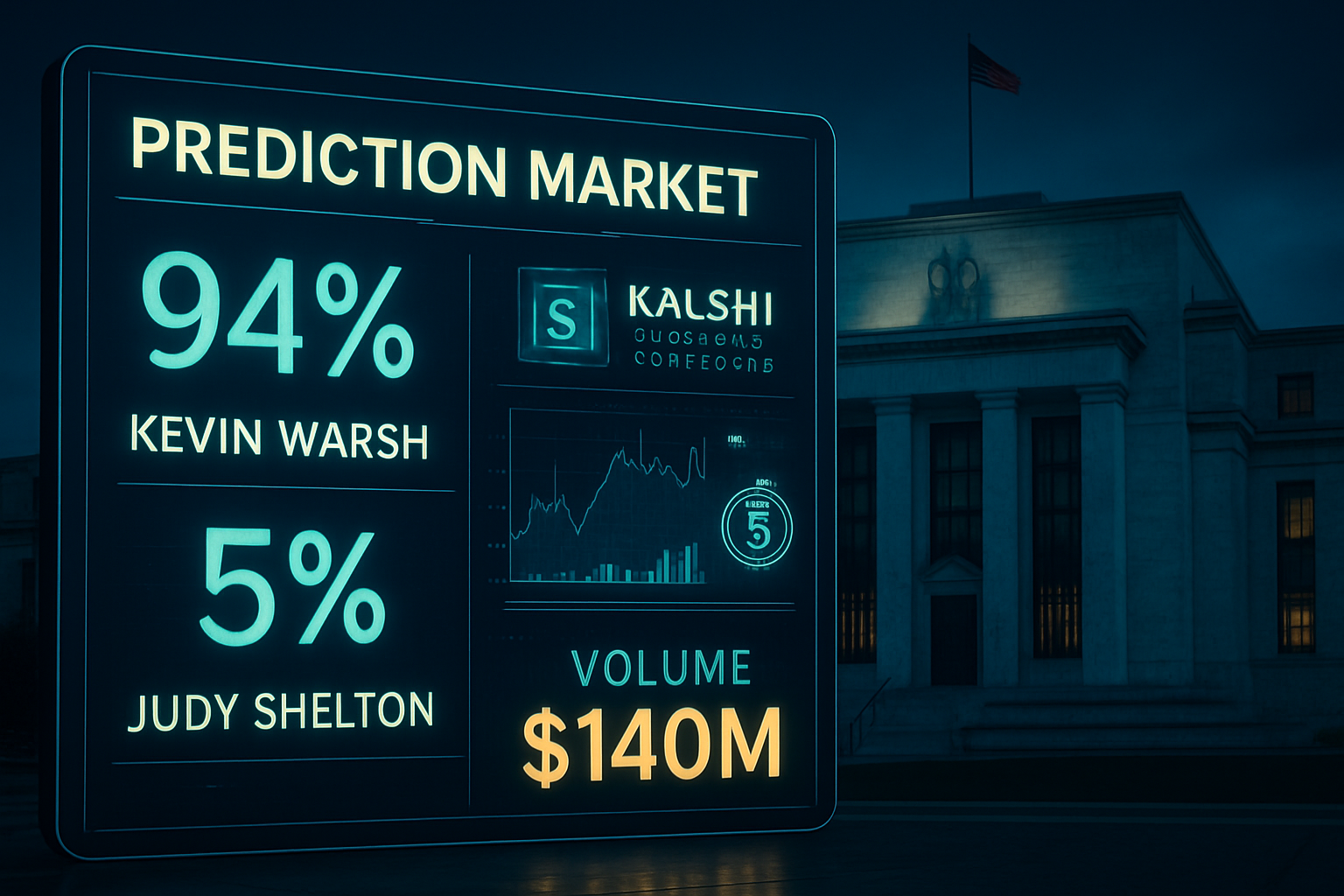
    The race to lead the world’s most powerful financial institution has moved from the boardrooms of Washington to the high-stakes arena of prediction markets. As of February 7, 2026, Kevin Warsh has emerged as the overwhelming favorite to succeed Jerome Powell as Chair of the Federal Reserve, commanding a staggering 94% probability on the prediction platform Kalshi. Meanwhile, the once-buzzy candidacy of sound-money advocate Judy Shelton has collapsed to a mere 5%, reflecting a market that is increasingly pricing in a "traditional-but-aligned" transition for the U.S. central bank.

    This market has become a focal point for institutional investors and political junkies alike, generating an unprecedented $140.8 million in total volume. The surge in activity underscores a growing reliance on event contracts to navigate the volatile intersection of monetary policy and presidential politics. With Jerome Powell’s term as Chair officially set to expire on May 15, 2026, the betting action is no longer just about who gets the job, but how quickly they can navigate a contentious Senate confirmation process.

    The Market: What's Being Predicted

    The primary battleground for this financial forecasting is Kalshi, the federally regulated prediction market that has seen its volume explode following its successful legal challenges against the CFTC. The specific contract, "Who will Trump nominate as Fed Chair?", has seen its liquidity deepen as the administration’s plans became clearer. While Robinhood Markets, Inc. (Nasdaq: HOOD) and Interactive Brokers Group, Inc. (Nasdaq: IBKR) have expanded their own event-trading offerings, Kalshi remains the epicenter for this specific $140.8 million pool of capital.

    The odds have undergone a dramatic shift over the last month. In late 2025, the market was a fragmented field with candidates like Kevin Hassett and Rick Rieder of BlackRock, Inc. (NYSE: BLK) holding significant shares. However, following President Trump’s official announcement on January 30, 2026, Kevin Warsh’s odds catapulted from 65% to the current 94%. Conversely, Judy Shelton, who traded as high as 20% in early January, saw her shares crater as the administration signaled a preference for Warsh’s "central casting" appeal.

    The resolution criteria for these contracts are tied to the formal nomination and, in secondary markets, the successful confirmation by the U.S. Senate. With the nomination now official, the focus of traders has shifted to the "Confirmation" contracts, which are currently trading at a slight discount to the nomination odds due to potential legislative friction.

    Why Traders Are Betting

    The 94% conviction in Warsh is driven by a combination of presidential endorsement and strategic political maneuvering. President Trump has publicly praised Warsh, stating he is a leader who "will never let you down." This endorsement was reportedly heavily influenced by Treasury Secretary Scott Bessent, who favored Warsh’s ability to maintain market stability while remaining more receptive to the administration's economic vision than the incumbent Powell.

    Traders are also closely watching the "shadow" surrounding Jerome Powell’s exit. A public DOJ investigation into Powell regarding alleged cost overruns in the $2.5 billion renovation of the Fed’s headquarters has provided significant tailwinds for the "Change" side of the market. Critics, including several prominent Democratic senators, have characterized the investigation as a political tool to pressure Powell, but for prediction market participants, the controversy simply hardens the reality that the Powell era is concluding.

    Meanwhile, Judy Shelton’s decline is attributed to a "flight to credibility" by the administration. While Shelton’s advocacy for the gold standard resonates with a specific segment of the base, institutional players—many of whom hedge their interest-rate exposure on these platforms—viewed her nomination as a potential source of "market jitters." The 5% odds remaining for her represent a "black swan" hedge in case the Warsh confirmation hits a fatal snag in the Senate Banking Committee.

    Broader Context and Implications

    The $140 million volume in the Fed Chair market represents a watershed moment for the prediction market industry. It proves that these platforms are no longer just for predicting election winners but are vital tools for pricing "policy risk." The sheer size of the pool suggests that major financial institutions are likely using these contracts to hedge against different interest rate regimes. If Warsh is seen as more "dovish" or more "aligned" with the White House, the prediction market acts as a leading indicator for the bond market.

    This market also reveals a shift in public sentiment regarding the independence of the Federal Reserve. By betting so heavily on a candidate praised for being "aligned" with the executive branch, traders are implicitly pricing in a future where the Fed’s "political independence" is more fluid than it has been in decades. This has significant real-world implications for the S&P 500 (SPX) and the broader global economy, as the Fed’s posture on inflation and employment is the primary driver of capital costs.

    Historically, prediction markets have often outpaced traditional pundits in identifying presidential favorites. In the 2024 cycle, these markets were significantly more sensitive to shift in momentum than traditional polling. The high confidence in Warsh suggests that despite potential Senate "holds," the market views his path to the 20th floor of the Eccles Building as nearly inevitable.

    What to Watch Next

    The next major catalyst for this market will be the Senate Banking Committee hearings, expected to begin in late February 2026. While Warsh has the numbers on paper, Senator Thom Tillis (R-NC) and several key Democrats have signaled they may place a "hold" on the nomination until more clarity is provided regarding the DOJ’s investigation into Powell. Any delay in the committee vote could see Warsh’s 94% odds dip toward the 80s as "process risk" increases.

    Key dates to monitor include:

    • Late February 2026: Opening of Senate Banking Committee hearings.
    • April 2026: The administration's target window for a full Senate confirmation vote.
    • May 15, 2026: The official expiration of Jerome Powell’s term as Chair.

    Should the DOJ investigation take an unexpected turn—either exonerating Powell or revealing deeper issues—the volatility in the "Confirmation" market will likely spike. Additionally, any public comments from Warsh regarding the "neutral rate" of interest will be scrutinized by traders looking to front-run the first FOMC meeting of the post-Powell era.

    Bottom Line

    The $140 million battle for the Fed Chairmanship has effectively been won by Kevin Warsh, at least in the eyes of the market. The 94% odds reflect a belief that the Trump administration has successfully cleared the path for its preferred candidate, combining political loyalty with a profile that the financial markets can digest. The collapse of Judy Shelton’s odds further suggests that while the administration seeks change, it is not yet ready for the radical structural shifts Shelton represents.

    As a tool, this market has demonstrated remarkable maturity. The high volume and tight spreads show that prediction markets are becoming a primary source of truth for high-stakes political appointments. For investors, the message is clear: the transition to "Warsh’s Fed" is the base case for the global economy in 2026.

    Whether Warsh can maintain the Fed’s delicate balance between fighting inflation and supporting the administration’s growth agenda remains to be seen. But for now, the "smart money" is betting $140 million that he is the man who will be tasked with trying.


    This article is for informational purposes only and does not constitute financial or betting advice. Prediction market participation may be subject to legal restrictions in your jurisdiction.

    PredictStreet focuses on covering the latest developments in prediction markets. Visit the PredictStreet website at https://www.predictstreet.ai/.

  • The New Casino-Bank: How Robinhood is Democratizing Truth and Risk with Event Contracts

    The New Casino-Bank: How Robinhood is Democratizing Truth and Risk with Event Contracts

    In the world of retail finance, the "meme stock" era has officially been replaced by the "event contract" era. Leading this charge is Robinhood (NASDAQ: HOOD), which has successfully pivoted its massive user base from speculative equity trading toward the rapidly expanding frontier of prediction markets. As of early February 2026, the platform has moved far beyond its origins, transforming into a one-stop-shop where a user can buy Bitcoin, trade S&P 500 options, and now, hedge their weekend plans against an NFL upset—all within the same interface.

    The timing could not be more critical. With Super Bowl LX between the Seattle Seahawks and the New England Patriots just days away, Robinhood’s prediction markets are seeing unprecedented liquidity. Unlike traditional sportsbooks that operate on a "house vs. player" model, Robinhood’s partnership with Kalshi allows users to trade directly against one another. This "peer-to-peer" (P2P) structure has driven the cumulative volume of event contracts on Robinhood to over 11 billion, creating a "truth engine" that many analysts believe is more accurate than any traditional polling or punditry.

    The Market: What's Being Predicted

    The current centerpiece of Robinhood's prediction ecosystem is its comprehensive suite of football event contracts, launched in partnership with the CFTC-regulated exchange Kalshi in August 2025. This market covers every NFL regular-season game and the "Power Four" college football conferences. Unlike the opaque odds of Las Vegas, these contracts trade between $0.00 and $1.00. If you buy a "Seattle Seahawks to Win" contract at $0.60, the market is effectively giving them a 60% chance of victory; if they win, your contract settles at $1.00, netting a $0.40 profit.

    Since its inception, the platform has rapidly expanded its "menu" of outcomes. Traders can now speculate on point spreads, over/under totals, and as of December 2025, highly specific player props like anytime touchdowns or quarterback passing yards. The liquidity is staggering: the Super Bowl LX winner market alone has seen over $166 million in volume across the Robinhood-Kalshi ecosystem. This represents a nearly six-fold increase over the volume seen just one year ago, signaling a massive shift in how the public engages with major cultural events.

    Why Traders Are Betting

    The primary driver behind this retail migration is the introduction of "Custom Combos," a sophisticated feature that mimics traditional sports betting parlays but functions through a financial Request-for-Quote (RFQ) mechanism. When a user bundles up to 10 different outcomes—such as a Seahawks win, a Federal Reserve rate cut, and a specific movie’s opening weekend performance—Robinhood’s system polls market makers, led by Susquehanna International Group, to provide a real-time price.

    Traders are also drawn to the efficiency of the "bid-ask spread" compared to the "vig" of a traditional sportsbook. While companies like DraftKings (NASDAQ: DKNG) or FanDuel typically bake a 5% to 10% margin into their odds, Robinhood's peer-to-peer model often sees spreads as thin as a single penny. "I'm not betting against a bookie who wants me to lose," says one high-volume trader on the platform. "I'm trading a financial instrument against someone who simply has a different view of the future."

    Furthermore, the ability to "day trade" these contracts has revolutionized the experience. In a traditional bet, your money is locked until the final whistle. On Robinhood, if the Seahawks take a 14-point lead in the first quarter, the price of a "Yes" contract might jump from $0.60 to $0.85, allowing traders to exit early and lock in gains—a mechanic that feels much more like trading stocks than placing a wager.

    Broader Context and Implications

    Robinhood’s aggressive expansion into this space is part of a larger strategic vision that CEO Vlad Tenev calls the "Prediction Market Supercycle." By framing these as "truth futures" rather than gambling, Robinhood is navigating a complex regulatory landscape. Because the trades are routed through the CFTC-regulated Kalshi—and soon through Robinhood's newly acquired MIAXdx (formerly LedgerX) exchange—the platform can offer these products in states where traditional sports betting remains illegal, such as California and Texas.

    This vertical integration is a game-changer. In January 2026, Robinhood completed its 90% acquisition of MIAXdx, giving it its own Designated Contract Market (DCM) and clearinghouse. This move reduces the company's reliance on third-party partners and paves the way for "Robinhood-exclusive" contracts that could range from hyper-local weather events to corporate earnings outcomes.

    The move is also paying off on the balance sheet. Prediction markets have become Robinhood’s fastest-growing revenue stream, currently on a trajectory to contribute over $300 million in annual revenue. It has effectively turned "news" into a tradable asset class, competing not just with sportsbooks, but with traditional derivatives exchanges like the CME Group (NASDAQ: CME) and Interactive Brokers (NASDAQ: IBKR), which has also launched its own "ForecastEx" platform.

    What to Watch Next

    As we move past the Super Bowl, the next major test for Robinhood’s infrastructure will be the 2026 mid-term election cycle and the integration of AI-assisted trading tools. Tenev has hinted at a future where users can use "AI Hedging Agents" to automatically buy event contracts that protect them against real-world risks, such as a rise in gas prices or a drop in their local housing market.

    Additionally, the industry is closely watching for potential regulatory pushback. While the CFTC has currently allowed these "event contracts" to flourish, a shift in the political or legal winds could result in tighter restrictions on what qualifies as a "financial event." Robinhood’s ownership of MIAXdx is a defensive moat in this regard, providing it with the legal standing of a registered exchange rather than just a brokerage.

    Bottom Line

    Robinhood's pivot to prediction markets represents the final evolution of the "everything app" for the retail investor. By blurring the lines between sports, politics, and finance, the platform has created a high-engagement ecosystem that thrives on the 24-hour news cycle. The sheer volume seen in the 2025-2026 football season suggests that the public's appetite for "trading the truth" is only beginning to grow.

    Ultimately, Robinhood (NASDAQ: HOOD) is betting that prediction markets will eventually be viewed as a core pillar of a modern portfolio. Whether it’s hedging a mortgage or speculating on a touchdown, the message to retail traders is clear: the future is no longer something to just watch—it’s something to trade.


    This article is for informational purposes only and does not constitute financial or betting advice. Prediction market participation may be subject to legal restrictions in your jurisdiction.

    PredictStreet focuses on covering the latest developments in prediction markets.
    Visit the PredictStreet website at https://www.predictstreet.ai/.
  • The Signal in the Noise: Why Prediction Markets Are the New ‘Information Asset Class’ for Global Crises

    The Signal in the Noise: Why Prediction Markets Are the New ‘Information Asset Class’ for Global Crises

    As of February 6, 2026, the traditional landscape of geopolitical analysis is undergoing a radical transformation. While cable news pundits and academic experts grapple with the nuances of diplomatic cables and legislative posturing, a more precise—and often more brutal—barometer has emerged: the prediction market. In the first week of February, these markets have become the primary "truth signal" for two of the most volatile issues of the year: the escalating military tensions with Iran and the ongoing paralysis of the U.S. government.

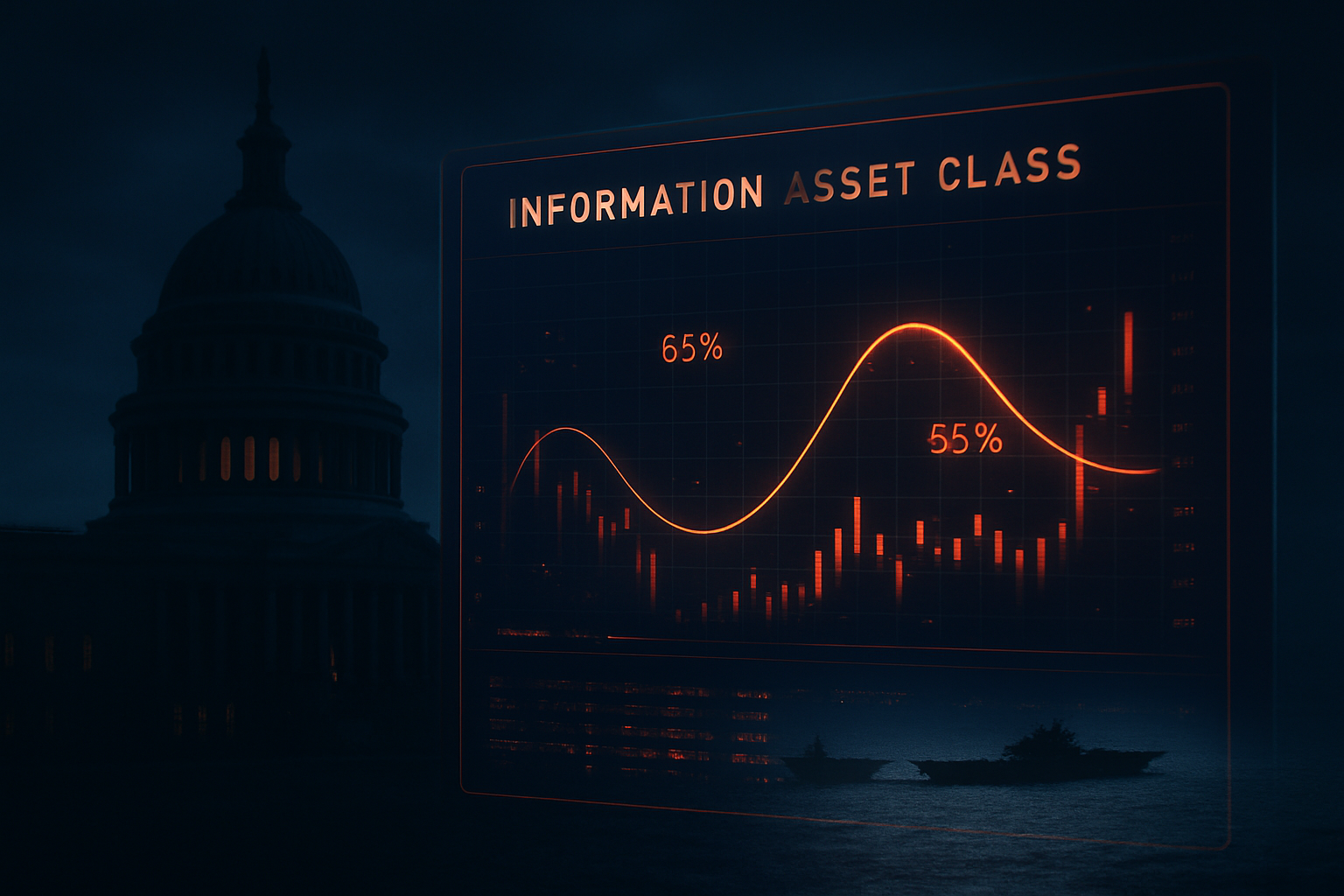
    Currently, Polymarket and Kalshi are pricing the likelihood of another U.S. government shutdown at 65%, following a peak of 73% in late January. Simultaneously, the probability of a U.S. strike on Iran by mid-summer has climbed to a significant 55%, even as short-term traders "fade the heat" of an immediate conflict. This shift represents more than just a new way to gamble; it marks the maturation of prediction markets into a bona fide "Information Asset Class" that consistently outperforms traditional forecasting models by aggregating real-time data through the lens of financial risk.

    The Market: What's Being Predicted

    The current focus of global traders is split between the "Maximum Pressure" campaign in the Persian Gulf and the domestic budget gridlock in Washington. On Polymarket, the world’s largest decentralized prediction platform, the market for a "U.S. strike on Iran" has seen its volume swell past $182 million. While the odds for a strike by the end of February sit at a relatively low 29%, the "By June 30" contract is trading at 55%, suggesting that traders expect the current naval standoff to reach a breaking point within the next quarter.

    Domestically, the U.S. government is currently navigating a partial shutdown that began on January 31, 2026. On Kalshi—the first regulated prediction market in the U.S.—the "Government Shutdown Extension" contract is the most liquid asset on the platform. Traders are currently pricing a 65% chance that the Department of Homeland Security (DHS) will remain unfunded past the upcoming February 14 deadline. These markets are no longer dominated by retail hobbyists; the involvement of major financial institutions and platforms like Interactive Brokers (NASDAQ: IBKR) and Robinhood (NASDAQ: HOOD), which both integrated prediction products in late 2024, has brought unprecedented liquidity and professional rigor to these forecasts.

    Why Traders Are Betting

    The 73% probability peak for the current shutdown wasn't driven by general political malaise, but by a specific catalyst known as the "Minneapolis Incident." Following the fatal shooting of a U.S. citizen, Alex Pretti, by Border Patrol agents in late January, Senate Democrats withdrew support for the DHS funding bill. Prediction market traders identified this "black swan" event instantly, spiking the shutdown odds 40 points higher in a single afternoon—hours before mainstream political analysts realized the legislative path forward had vanished.

    In the geopolitical sphere, the 55% odds for an Iran strike are being influenced by the deployment of the USS Abraham Lincoln and its surrounding carrier strike group to the Gulf of Oman. However, a significant "whale" position—recently flagged by the tracking tool Unusual Whales—has placed $5 million on "No strike by February 28." These sophisticated traders are betting that the current naval posturing is a high-stakes negotiating tactic designed to force Iran back to the table in Oman, rather than a precursor to immediate kinetic action. This "fading the heat" strategy highlights the depth of analysis within these markets, where participants must distinguish between political theater and actual intent.

    Broader Context and Implications

    The rise of the "Information Asset Class" finds its roots in the 2024 U.S. Presidential Election. During that cycle, traditional pollsters and cable news networks labeled the race a "dead heat" or "too close to call" well into election night. In contrast, prediction markets had consistently priced a 60% probability of a Republican sweep for weeks. The most famous example was "Théo," a French trader who used "neighbor polling" techniques to identify hidden voter support, eventually netting over $80 million on Polymarket.

    This historical accuracy has forced a shift in how the public and policymakers view these platforms. Unlike pundits, who face no financial penalty for being wrong, prediction market participants are incentivized to seek out the most accurate, unvarnished truth. This has led to a "virtuous cycle" of accuracy: as the markets prove more reliable, they attract more capital, which in turn leads to even more precise pricing. However, this success has also brought regulatory scrutiny. The Commodity Futures Trading Commission (CFTC) continues to monitor these markets for potential "insider trading" by government officials, especially following reports of high-accuracy trades originating from sensitive diplomatic zones.

    What to Watch Next

    The coming weeks will be a crucible for these markets. The February 14 budget deadline is the next major milestone for the government shutdown contracts. If a bipartisan deal regarding DHS reform remains elusive by February 12, expect the 65% odds to surge toward 90% as "lame duck" legislative sessions begin to stall.

    Regarding Iran, the key signal will be the conclusion of the Oman diplomatic talks. If the Sultanate of Oman issues a "no progress" statement, the June 30 strike odds are expected to climb toward 70%. Traders are also closely watching the movement of the USS Abraham Lincoln; any repositioning toward the Strait of Hormuz will likely trigger an immediate price jump in the conflict-related contracts.

    Bottom Line

    The current pricing of a 73% shutdown peak and a 55% chance of mid-year conflict with Iran confirms that prediction markets have transcended their origins as "betting sites." They are now essential tools for navigating an increasingly complex world where traditional media often lags behind the reality of the ground. By forcing participants to "put their money where their mouth is," these markets strip away the partisan bias and "hopium" that often cloud expert analysis.

    As we move through 2026, the success of these platforms as an "Information Asset Class" suggests that the most accurate news of the future won't be found in a headline, but in a price chart. Whether it’s the survival of a government or the start of a war, the smartest money in the room is already telling us what happens next.


    This article is for informational purposes only and does not constitute financial or betting advice. Prediction market participation may be subject to legal restrictions in your jurisdiction.

    PredictStreet focuses on covering the latest developments in prediction markets. Visit the PredictStreet website at https://www.predictstreet.ai/.
  • The Death of the Poll: How Google and Meta are Turning Prediction Markets into the Global Truth Engine

    The Death of the Poll: How Google and Meta are Turning Prediction Markets into the Global Truth Engine

    As of February 6, 2026, the digital landscape has undergone a tectonic shift. Once relegated to the fringes of the internet and dismissed as "speculative casinos," prediction markets have officially entered the mainstream. This transformation is crystallized by the recent, sweeping policy updates from Alphabet (NASDAQ: GOOGL) and Meta (NASDAQ: META), which have moved to treat prediction markets not as gambling, but as vital financial and information tools.

    The current probability of prediction markets becoming the primary source for real-time news verification—a concept now widely known as "Information Finance" or InfoFi—sits at an all-time high. Markets tracking the efficacy of traditional polling versus prediction market accuracy for the upcoming 2026 U.S. Midterms show a staggering 85% confidence level that markets will outperform traditional data sets. This surge in interest is driven by a series of regulatory victories and a fundamental change in how the world's largest advertising platforms categorize "event-based" trading.

    The Market: What’s Being Predicted

    The "market" for prediction markets itself has exploded. Leading platforms like Kalshi and Polymarket are no longer niche startups; they are billion-dollar infrastructure plays. In early 2026, Kalshi reached an estimated valuation of $11 billion, while Polymarket, following its successful U.S. pivot, is trailing closely at $9.5 billion. The sheer volume of trade is the most telling metric: industry analysts project notional trading volume for event contracts to reach between $120 billion and $150 billion by the end of this year.

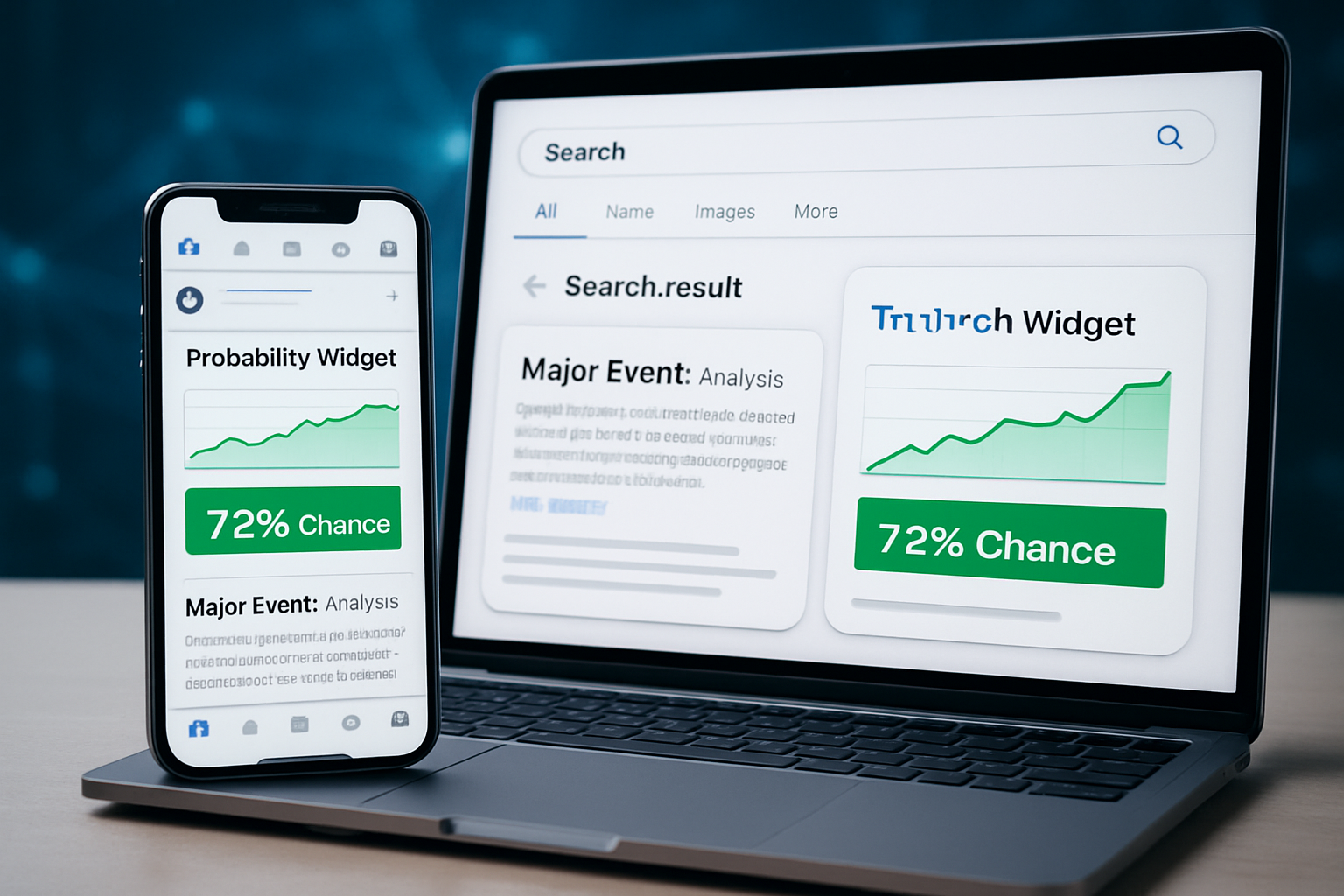
    This growth is being funneled through highly visible integrations. Google has recently embedded "Probability Widgets" directly into Google Finance and Search results. Users searching for "Fed interest rate hike" or "2026 World Cup winner" are now presented with a live odds-based widget sourced from CFTC-regulated exchanges. Meanwhile, Robinhood (NASDAQ: HOOD) has fully integrated election and economic contracts into its primary retail app, making "trading the news" as accessible as buying a fractional share of an ETF.

    The key resolution criteria for this shift rest on the "mainstreaming" of these platforms. When Google updated its ads policy on January 21, 2026, it specifically opened the gates for Commodity Futures Trading Commission (CFTC)-authorized markets to run search ads. This move ended a decade of "shadow-banning" for the industry, effectively legitimizing prediction markets as regulated financial instruments rather than offshore betting sites.

    Why Traders Are Betting

    The primary driver for the current betting frenzy is the proven accuracy of these markets during the 2024 election cycle. While traditional polls were mired in margin-of-error debates, prediction markets provided a stable, real-time barometer of voter sentiment that correctly signaled key pivots weeks in advance. Traders aren't just betting on outcomes; they are betting on the superiority of the mechanism.

    Recent movements have been fueled by the concept of "Information Finance," a term popularized by thinkers like Vitalik Buterin. The logic is simple: when people put their money where their mouth is, the resulting data is "correct by construction." This has led to the rise of institutional "alpha seekers"—hedge funds and market makers—who now provide deep liquidity to these markets. They treat event contracts as legitimate hedges against geopolitical and economic risks, such as sudden shifts in trade policy or central bank decisions.

    Furthermore, the introduction of interactive "Truth Widgets" on Meta platforms like Facebook and Instagram has created a new class of "social predictors." Meta’s pilot program allows users to see real-time market odds alongside controversial news stories. This serves as a market-based counter-narrative to misinformation, shifting the public perception from "gambling for profit" to "participating in truth discovery."

    Broader Context and Implications

    The mainstreaming of InfoFi represents a massive regulatory and cultural pivot. The 2024 landmark legal victory of Kalshi over the CFTC acted as a catalyst, stripping the agency of its power to unilaterally ban political event contracts. Under the leadership of the current CFTC Chairman, Michael Selig, the agency has performed a "Regulatory Reset," withdrawing previous bans and asserting exclusive federal jurisdiction over these markets. This has effectively pre-empted the patchwork of state-level gambling laws that previously stifled growth.

    This shift reveals a growing public hunger for objective truth in an era of AI-generated content and fragmented media. Prediction markets offer a decentralized, incentive-aligned alternative to the "expert class." Historically, these markets have shown a remarkable ability to process complex information faster than traditional newsrooms, accurately predicting everything from the resolution of the Hollywood strikes to the exact timing of tech layoffs.

    However, the "InfoFi" revolution is not without friction. Some platforms, including X (formerly Twitter), have faced challenges with "market spam"—automated accounts designed to manipulate odds or farm rewards. This has led to a technological arms race, where platforms are deploying advanced verification and anti-manipulation algorithms to ensure that the market signal remains pure.

    What to Watch Next

    The most immediate milestone to monitor is the full-scale rollout of Meta’s prediction widgets across its global news feeds. If successful, this will integrate market data into the daily social experience of billions, potentially making "checking the odds" as common as checking the weather. Additionally, the 2026 FIFA World Cup, hosted in North America, is expected to be the largest non-political event in prediction market history, providing a massive liquidity test for platforms like DraftKings (NASDAQ: DKNG) and Fanatics, which are increasingly eyeing the event-contract space.

    Investors should also watch for the potential launch of a "Prediction Market ETF." With the industry's valuation soaring, rumors of a structured product that allows investors to gain exposure to a basket of event-contract platforms are intensifying. The regulatory path for such a product seems clearer now than ever before, following the CFTC’s shift toward a pro-innovation stance.

    Bottom Line

    The mainstreaming of prediction markets marks the end of the "speculative casino" era and the beginning of the "Information Finance" age. By allowing these markets to advertise and integrating their data into core products, Alphabet and Meta have effectively deputized prediction markets as the internet’s "Source of Truth." This is not just about betting on the future; it is about creating a more accurate, incentive-driven way to understand the present.

    As we move deeper into 2026, the distinction between a "trader" and a "news consumer" is blurring. In a world where information is the most valuable commodity, the platforms that can most accurately price that information are the ones that will win. Prediction markets have evolved from a niche hobby into the foundational infrastructure of the modern information economy, and the "Big Tech" seal of approval is the final hurdle they needed to clear.


    This article is for informational purposes only and does not constitute financial or betting advice. Prediction market participation may be subject to legal restrictions in your jurisdiction.

    PredictStreet focuses on covering the latest developments in prediction markets.
    Visit the PredictStreet website at https://www.predictstreet.ai/.