Tag: Kalshi

  • Wall Street’s Giant Wakes: Goldman Sachs CEO David Solomon Signals Institutional Pivot into Prediction Markets

    Wall Street’s Giant Wakes: Goldman Sachs CEO David Solomon Signals Institutional Pivot into Prediction Markets

    On January 15, 2026, during the Goldman Sachs Group, Inc. (NYSE: GS) fourth-quarter earnings call, the high-finance world received a jolt that few saw coming so soon. CEO David Solomon, usually measured in his assessment of emerging retail trends, threw his weight behind the burgeoning prediction market industry. Solomon characterized the sector as "super interesting" and confirmed that he has personally spent hours in meetings with the leadership of the industry’s two titans—Kalshi and Polymarket—within the last two weeks.

    The market reaction was immediate, with analysts shifting their focus from whether prediction markets are a passing fad to how the world’s most powerful investment bank plans to commoditize them. Solomon’s comments suggest a pivot away from viewing these platforms as "betting sites" and toward treating them as "derivative contract activities," a semantic shift that signals Goldman’s intent to integrate event-based trading into its institutional machinery.

    The Market: What's Being Predicted

    While prediction markets have historically been dominated by political outcomes, the "market" being discussed by Solomon is the infrastructure of the asset class itself. The current trend is the rapid institutionalization of event contracts. By January 2026, prediction markets have moved far beyond the 2024 election cycle that initially vaulted them into the mainstream. They are now used to hedge against macroeconomic shifts, geopolitical flare-ups, and even corporate earnings surprises.

    On platforms like Kalshi (the CFTC-regulated U.S. exchange) and Polymarket (the decentralized global leader), trading volumes have reached record highs. Solomon’s specific mention of "derivative contract activities" aligns with the regulatory framework Kalshi has fought for in the U.S. courts. Traders are currently pricing in a high probability that major investment banks will begin offering "Event-Linked Notes" or direct access to prediction market liquidity for their high-net-worth clients by the end of 2026.

    The liquidity in these markets has deepened significantly; daily trading volume across the top three platforms has routinely exceeded $1.5 billion in early 2026, driven by a mix of retail speculators and a growing contingent of sophisticated quantitative hedge funds.

    Why Traders Are Betting

    The surge in interest—and Solomon’s subsequent endorsement—is driven by the unprecedented accuracy and real-time data provided by these markets. Traditional forecasting methods, such as polling and economic modeling, have struggled to keep pace with the volatility of the mid-2020s. Prediction markets, by contrast, offer a "truth machine" backed by cold, hard cash.

    Investors are betting on the "Goldman Effect." Historically, when Goldman Sachs enters a new asset class, it brings a flood of institutional liquidity and a stamp of regulatory legitimacy. Solomon revealed that a dedicated internal team at Goldman is "spending a lot of time" analyzing how the firm can serve or partner with these platforms. This has led traders to speculate on a looming partnership or even a minority stake in a major exchange.

    Furthermore, the "retail-to-institutional" bridge is being built by the massive success of Robinhood Markets, Inc. (NASDAQ: HOOD), which has become the primary conduit for retail prediction trading. With over 1 million active daily traders in its "Prediction Markets Hub," Robinhood has proven that there is a massive appetite for event-based derivatives. Goldman’s entry would represent the other side of that coin: providing the institutional "top-down" liquidity to match Robinhood’s "bottom-up" volume.

    Broader Context and Implications

    Solomon’s comments highlight a significant competitive tension with Robinhood. As of early 2026, Robinhood has moved to vertically integrate its prediction business, recently moving to acquire the CFTC-licensed exchange and clearinghouse MIAXdx (formerly LedgerX). This move is designed to allow Robinhood to bypass third-party exchanges and keep the entire ecosystem in-house.

    Goldman’s interest indicates that the "Big Banks" are not willing to let Robinhood and Coinbase own the prediction market space. By framing these trades as "derivatives," Solomon is positioning Goldman to treat event contracts similarly to interest rate swaps or credit default swaps. This would bring prediction markets under the oversight of existing institutional compliance and clearing frameworks, potentially resolving the "reputational risk" that has historically kept the 150-year-old firm at arm's length.

    Regulatory clarity has also played a massive role. Following several landmark legal victories for Kalshi against the CFTC in late 2024 and 2025, the path has been cleared for event contracts to be treated as legitimate financial instruments rather than "gaming." This legal certainty is the prerequisite Solomon needed to confirm his meetings with industry leaders.

    What to Watch Next

    The immediate next step for the market is a formal announcement of a pilot program or partnership. Analysts are closely watching for any SEC or CFTC filings from Goldman Sachs that mention "event-linked derivatives" or "binary option clearing."

    Key dates to monitor include:

    • Late Q1 2026: The expected closing of Robinhood’s acquisition of MIAXdx, which will force Goldman’s hand in deciding whether to build their own exchange or partner with an existing one like Kalshi.
    • The March FOMC Meeting: This will likely be the first major "macro" event where institutional liquidity from a firm like Goldman could be tested in the prediction markets, as traders look to hedge against interest rate decisions.
    • Goldman’s Investor Day: Expected in early spring, where Solomon will likely be pressed for more details on the firm’s digital assets and derivatives roadmap.

    Bottom Line

    David Solomon’s comments mark the formal arrival of the "Institutional Era" for prediction markets. By validating these platforms as "super interesting" and practically defining them as derivatives, Goldman Sachs has signaled that the asset class is no longer a peripheral experiment. It is now a core component of the modern financial toolkit.

    The "Goldman stamp of approval" typically precedes a period of rapid consolidation and professionalization in an industry. For prediction markets, this likely means better liquidity, tighter spreads, and more complex financial products. While Robinhood currently leads in retail volume, Goldman Sachs is preparing to dominate the institutional plumbing.

    As we move further into 2026, the question is no longer whether prediction markets will survive, but which Wall Street titan will ultimately control the flow of this "new oil" of the information economy.


    This article is for informational purposes only and does not constitute financial or betting advice. Prediction market participation may be subject to legal restrictions in your jurisdiction.

    PredictStreet focuses on covering the latest developments in prediction markets. Visit the PredictStreet website at https://www.predictstreet.ai/.
  • The Rise of the Economic Oracle: Fed Decision Markets Top $360M as Wall Street Pivots to Prediction Odds

    The Rise of the Economic Oracle: Fed Decision Markets Top $360M as Wall Street Pivots to Prediction Odds

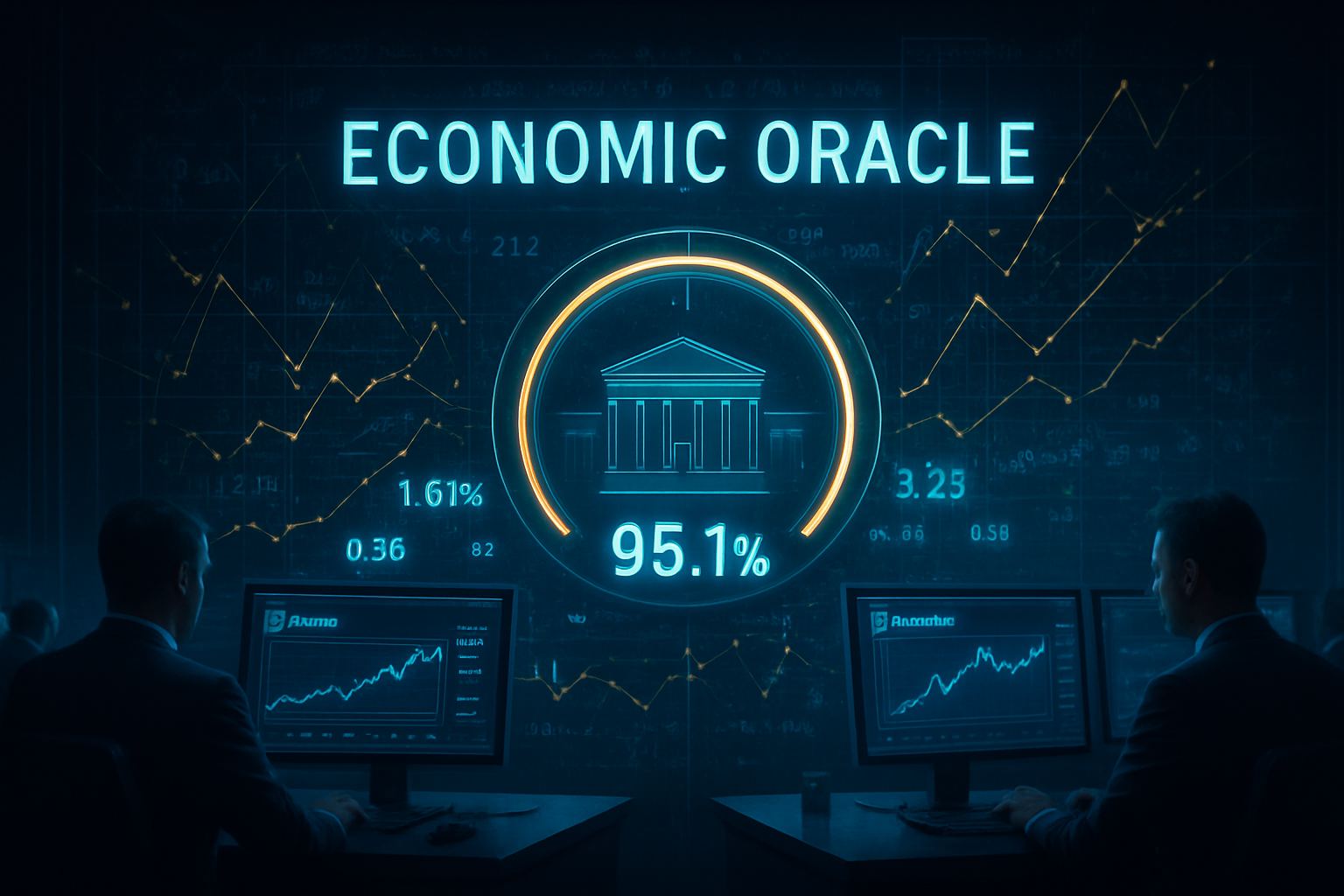
    As the Federal Reserve prepares for its first policy meeting of 2026, the global financial community is looking past traditional bank reports and focusing on a new, high-speed indicator: the prediction market. With over $360 million in trading volume now concentrated on the outcome of the January 28, 2026, FOMC meeting, these platforms have officially transitioned from niche betting arenas into what analysts are calling the "Economic Oracle."

    Current market odds reflect a decisive consensus, with a 95.1% probability of a "pause" (no change in rates). This surge in volume and precision comes as hedge funds and institutional liquidity providers increasingly use event-based contracts to hedge against macro volatility. What was once dismissed as a "prediction game" is now a cornerstone of the modern financial infrastructure, providing real-time sentiment that often moves faster than traditional federal funds futures.

    The Market: What's Being Predicted

    The focus of the financial world is currently fixed on the "Fed Decision: January 2026" contract. On Polymarket, the decentralized heavyweight, the specific contract for a rate hold has seen a staggering $363.2 million in volume. Parallel to this, Kalshi—the CFTC-regulated exchange—has reported record-breaking activity, with daily volumes across its broader suite of macro contracts reaching $465.9 million earlier this week.

    Traders are specifically betting on whether the Federal Open Market Committee (FOMC) will maintain the current target rate, cut by 25 basis points, or—in a tail-risk scenario—hike rates. The liquidity in these markets has been bolstered by the entry of major brokerage firms. Interactive Brokers (NASDAQ: IBKR), through its ForecastEx exchange, has played a pivotal role by offering a "yield-enhanced" structure, where participants earn an incentive coupon of up to 3.8% APY on the collateral of their open positions, effectively paying institutions to provide market depth.

    The resolution criteria are straightforward: the market settles based on the official target range announced by the Federal Reserve at the conclusion of its January 28 meeting. Unlike traditional futures, which can be influenced by complex technical factors and term premiums, these binary contracts offer a "pure" expression of probability that is easily digestible for retail and institutional investors alike.

    Why Traders Are Betting

    The primary driver behind the current 95% "pause" consensus is a string of "sticky" economic data released in early January. The December Consumer Price Index (CPI) printed at 2.7%, which, while stable, failed to show the continued cooling that would have justified a fourth consecutive rate cut. Furthermore, the January labor report showed non-farm payrolls adding a modest 66,000 jobs—just enough to keep the Fed from feeling an urgent need to stimulate the economy despite a 4.6% unemployment rate.

    The shift in market participation is also a major factor. Quant-heavy firms such as Susquehanna International Group (SIG) and Jane Street have reportedly established dedicated prediction market desks. These "whales" are not just betting on the Fed; they are performing sophisticated arbitrage between prediction market odds and the CME Group (NASDAQ: CME) FedWatch tool.

    "Prediction markets are the ultimate truth engine," says one macro trader at a Tier-1 hedge fund. "During the Fed's 10-day blackout period, when officials cannot speak to the press, these markets continue to process new global data in real-time. They aren't just predicting the Fed; they are front-running the Fed's own data-dependency."

    Broader Context and Implications

    The emergence of the "Economic Oracle" marks a significant evolution in how public sentiment and institutional risk are measured. Historically, economists relied on surveys or lagged data. Today, the aggregate wisdom of thousands of traders—incentivized by profit and loss—is proving to be a more accurate and responsive barometer.

    This trend has not escaped the eyes of regulators. In New York, the introduction of the ORACLE Act (Oversight and Regulation of Activity for Contracts Linked to Events) represents a milestone in the legitimization of the sector. The bill seeks to formalize the role of these platforms as "utility" engines for the broader financial system, rather than mere gambling sites.

    Furthermore, the historical accuracy of these markets has been impressive. Throughout 2025, prediction markets successfully anticipated three out of three Fed pivots several weeks before the mainstream financial press caught up. This "speed gap" is why firms like Saba Capital Management are now using Kalshi's CPI contracts to hedge inflation directly, bypassing the complexities of bond-market proxies.

    What to Watch Next

    As we approach the January 28 resolution date, volatility is expected to remain low unless a major exogenous shock occurs. However, the market will be hypersensitive to any "leaks" or late-breaking commentary from secondary Fed signals. The key milestone to watch is the January 22nd release of regional manufacturing data, which could provide a last-minute nudge to the odds if the numbers deviate significantly from expectations.

    Beyond the January meeting, traders are already shifting their gaze to the March 2026 outlook. Early betting on Polymarket suggests a return to the "cut" cycle, with a 42% probability of a 25-basis-point reduction currently priced in for the spring. This suggests that while the market expects a pause now, the long-term trend remains focused on normalization.

    Bottom Line

    The $360 million volume in the January Fed market is more than just a number; it is a signal that the financial world has embraced a new way of processing information. Prediction markets have solved the "noise" problem of traditional forecasting by forcing participants to back their opinions with capital.

    For the Federal Reserve, these markets provide a transparent feedback loop. For hedge funds, they provide a surgical tool for hedging macro risks. As we head toward the end of January, the 95% certainty of a pause serves as a testament to the efficiency of the "Economic Oracle." While the Fed remains data-dependent, the market has already crunched that data and rendered its verdict.


    This article is for informational purposes only and does not constitute financial or betting advice. Prediction market participation may be subject to legal restrictions in your jurisdiction.

    PredictStreet focuses on covering the latest developments in prediction markets.
    Visit the PredictStreet website at https://www.predictstreet.ai/.
  • Hedging the Apocalypse: Inside the 29.7% Geopolitical Surge on Prediction Markets

    Hedging the Apocalypse: Inside the 29.7% Geopolitical Surge on Prediction Markets

    As of mid-January 2026, a seismic shift has occurred in the landscape of global finance. Prediction markets, once relegated to the fringes of political punditry and sports betting, have officially matured into what many are calling "Information Finance." Nowhere is this more evident than in the "Geopolitical Surge"—a phenomenon that has seen geopolitical risk markets become the fastest-growing segment on Polymarket, currently boasting a 29.7% activity rate. This spike represents a massive migration of capital away from traditional asset classes and toward event-based contracts that track the world’s most volatile flashpoints.

    The surge reached a fever pitch on January 12, 2026, when total daily trading volume across the industry hit a record $701.7 million. Traders are no longer just betting on who will win an election; they are pricing the probability of "Operation Iron Strike" in the Middle East and the stability of the Iranian regime. With markets moving up to 15 minutes ahead of traditional news wires like Bloomberg or Reuters, prediction platforms have become the ultimate "truth engine" for institutional desks looking to navigate a world increasingly defined by kinetic conflict.

    The Market: What's Being Predicted

    The core of the current geopolitical surge is centered on high-stakes military outcomes in the Middle East. On Polymarket, the most heavily traded contract is "Israel to strike Iran by January 31, 2026," which has seen over $8 million in volume this month alone. As of January 15, the odds are fluctuating wildly between 34% and 52%, following intelligence reports of Israeli security cabinet meetings regarding retaliatory measures. Meanwhile, a broader contract on whether the U.S. will strike Iran by mid-year has seen its probability surge to 83%, with over $22 million in liquidity.

    While Polymarket leads in geopolitical variety, Kalshi has dominated the volume charts, capturing 66.4% of the market share on peak days. Much of this growth is attributed to its integration with Robinhood (NASDAQ: HOOD), which has opened the door for over 100 million retail users to trade economic and political event contracts. This massive influx of liquidity has stabilized bid-ask spreads, making it possible for larger institutional players to enter and exit positions without massive slippage, even in high-tension "global conflict" categories.

    The resolution criteria for these markets have become increasingly sophisticated. Rather than simple "Yes/No" outcomes, many markets now use multi-layered triggers. For instance, the "Ali Khamenei out as Supreme Leader" contract is tied to official state announcements or verified reports from three international news agencies. By mid-January 2026, the probability of a leadership change in Tehran by year-end has reached a startling 66%, driven by the ongoing "Bazaar Revolts" and the hyper-devaluation of the Iranian Rial.

    Why Traders Are Betting

    The 29.7% activity rate isn't just driven by speculators; it is being propelled by institutional "macro-political hedging." Sophisticated firms, such as Oldenburg Capital Partners, have pioneered strategies that treat prediction markets as insurance policies against physical world disruptions. For example, a fund with heavy exposure to defense contractors like Lockheed Martin (NYSE: LMT) or Northrop Grumman (NYSE: NOC) might buy "Yes" contracts on a Middle East escalation. If a conflict breaks out, the "Yes" contract pays out, offsetting the potential broader market volatility or supply chain disruptions that could hurt their equity portfolio.

    Specific defense stocks are now acting as proxies for these prediction markets. Traders have noted a nearly perfect correlation between the price of RTX Corporation (NYSE: RTX)—the manufacturer of the Iron Dome interceptors—and the "Israel Strike" contract. When the prediction market probability of a strike increases, RTX stock often follows as investors price in the inevitable demand for defensive systems. This "Hedged Escalation" strategy has become a standard playbook for navigating the early 2026 conflict cycle.

    Beyond institutional hedging, the markets are absorbing "insider signal leakage." The early January capture of Venezuelan President Nicolás Maduro by U.S.-backed forces served as a landmark proof-of-concept. Hours before the official Pentagon announcement, the probability of Maduro's downfall on Polymarket spiked from 12% to 85%. One anonymous trader reportedly turned $32,000 into $400,000 by acting on the "signal" before it hit the mainstream news. This speed advantage—often 10 to 15 minutes ahead of traditional media—is a primary driver for high-frequency traders.

    Broader Context and Implications

    The "Geopolitical Surge" signifies a fundamental change in how the public and the financial sector consume information. We are moving away from an era of "expert analysis" and into an era of "incentivized accuracy." In a world of deepfakes and propaganda, the prediction market offers a cold, hard number backed by real capital. If the probability of a conflict is 80%, it doesn't matter what a talking head on television says; the collective intelligence of the market has reached a consensus that carries financial weight.

    Historically, these markets have shown remarkable accuracy compared to traditional polling or diplomatic forecasting. During the 2024 cycles, prediction markets were often the first to correctly price in legislative stalemates. Now, in 2026, they are being used to navigate even more complex hurdles, such as the passage of the CLARITY Act for digital asset regulation. The regulatory environment has also shifted; as the CFTC and other bodies grapple with the rise of event contracts, the massive retail adoption through platforms like Robinhood has made these markets "too big to ignore."

    Furthermore, these markets reveal a deep public cynicism—or perhaps realism—about global stability. The high activity rate in "World War III" or "Regime Collapse" markets suggests that the public is using these platforms to process and price their anxieties. By turning a global crisis into a tradable asset, prediction markets provide a way for individuals to gain a sense of agency, or at least financial protection, in an increasingly unpredictable world.

    What to Watch Next

    The immediate focus for the market is the January 31 deadline for the Israel-Iran strike contract. Any movement in the diplomatic sphere or localized skirmishes in the Levant will cause massive swings in these odds. Traders should also keep a close eye on the "Bazaar Revolts" in Iran; if the internal unrest leads to a significant crack in the military's loyalty to the Supreme Leader, the "Regime Stability" markets will likely be the first to signal a historic shift in Persian politics.

    Looking further ahead, the June 30, 2026, U.S.-Iran strike contract remains a high-liquidity "whale" market. This contract is expected to become the centerpiece of geopolitical trading for the first half of the year. Additionally, watch for the emergence of "Cyber-Conflict" markets, which are predicted to be the next sub-sector to experience a surge as state-sponsored hacking incidents become more frequent and impactful on global trade.

    Finally, the intersection of these markets with the 2026 U.S. Midterm Elections will be critical. If the geopolitical situation continues to deteriorate, expect to see "Cross-Market" hedging where traders bet on congressional control as a way to predict future defense spending authorizations. The feedback loop between the battlefield, the ballot box, and the betting slip has never been tighter.

    Bottom Line

    The 29.7% activity rate in geopolitical markets is not a fluke; it is the new baseline for 2026. As traditional news sources struggle to keep pace with the speed of global events, Polymarket and Kalshi have stepped in to provide a real-time, financially incentivized map of the world's risks. For the modern investor, "Information Finance" is no longer optional—it is the primary tool for survival in a volatile macro environment.

    Whether it is hedging a position in Northrop Grumman (NYSE: NOC) or simply looking for the most accurate news on Iranian stability, the message from the markets is clear: the most valuable commodity in 2026 is a "Yes" or "No" contract that settles on the truth. As we move deeper into this year of global transition, the "Geopolitical Surge" will likely continue to define the frontier of the global economy.


    This article is for informational purposes only and does not constitute financial or betting advice. Prediction market participation may be subject to legal restrictions in your jurisdiction.

    PredictStreet focuses on covering the latest developments in prediction markets.
    Visit the PredictStreet website at https://www.predictstreet.ai/.
  • The Great Sports Pivot: Prediction Markets Hit Record $700M Daily Volume as NFL Playoffs Heat Up

    The Great Sports Pivot: Prediction Markets Hit Record $700M Daily Volume as NFL Playoffs Heat Up

    As the NFL post-season enters its most critical stretch, the traditional landscape of sports wagering is facing a paradigm shift. On January 14, 2026, the prediction market industry reached a staggering milestone, processing over $701.7 million in a single day of trading. This record-breaking activity, driven primarily by the high-stakes matchups of the NFL Wild Card and Divisional rounds, marks the first time that decentralized and regulated event contracts have seriously rivaled the "handle" of the world’s largest sportsbooks.

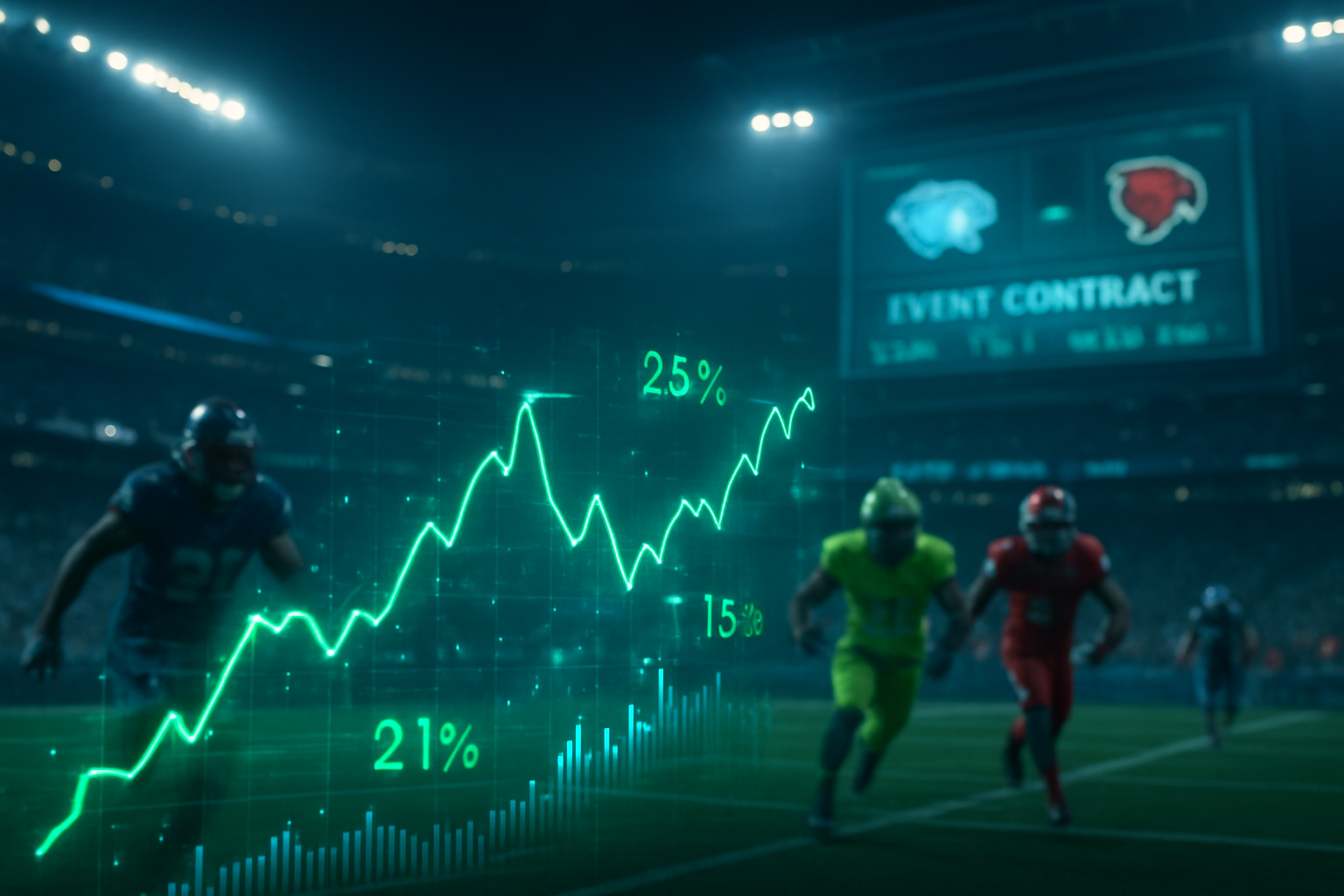
    Currently, the markets are pricing the Seattle Seahawks as the frontrunners for Super Bowl LX at a 25% probability, followed closely by the Los Angeles Rams at 21%. Unlike previous years where these figures were merely "odds" set by a bookmaker, these percentages represent live, liquid trades where millions of dollars are moving every hour. The surge in volume is being hailed as the "Information Finance" revolution, as traders move away from the high-fee models of traditional betting toward the transparent, order-book mechanics of prediction platforms.

    The Market: What's Being Predicted

    The primary focus of the current trading frenzy is the "Super Bowl LX Champion" contract, which has become the most liquid sports market in history. On Polymarket, the global leader in crypto-native prediction volume, the Super Bowl winner market has already surpassed $674.5 million in cumulative volume. Meanwhile, Kalshi, the CFTC-regulated exchange, has seen its volume explode to over $465 million in daily activity, bolstered by its recent integration with retail powerhouse Robinhood (NASDAQ: HOOD).

    The current odds reflect a significant shift in sentiment over the last 48 hours. The Buffalo Bills, once a 10% underdog, have climbed to 15% following a dominant performance, while the Philadelphia Eagles have stabilized at 11%. These markets are binary: a contract for a team to win pays out at $1.00 if they take the trophy and $0.00 if they don't. This "yes/no" structure allows for a level of transparency that traditional "plus-minus" odds struggle to match.

    The liquidity is no longer limited to the eventual champion. Traders are now actively making markets on micro-events, such as individual player milestones and even specific coaching decisions. Resolution is strictly tied to official NFL data, ensuring that contracts settle within minutes of the game clock hitting zero.

    Why Traders Are Betting

    The migration from traditional sportsbooks like DraftKings (NASDAQ: DKNG) and FanDuel (NYSE: FLUT) to platforms like Kalshi and Polymarket is largely driven by "the vig"—or rather, the lack of it. Traditional sportsbooks typically bake in a 5% to 10% "juice" or margin into their lines. In contrast, the competitive order-book model of prediction markets has squeezed spreads down to 1% or 2%. For high-volume traders, this price discovery is the difference between a profitable season and a losing one.

    "We aren't just betting on a game; we are trading an asset," says one high-frequency trader on the Kalshi platform. "If the Seahawks score an early touchdown, the price of their 'Yes' contract jumps immediately. I can sell my position and take profit before the first quarter is even over. You can't do that with the same efficiency at a traditional book."

    Furthermore, the introduction of "Combos"—Kalshi’s regulated answer to the parlay—has attracted the retail audience that previously fueled the growth of MGM Resorts (NYSE: MGM) and its BetMGM platform. By allowing traders to link multiple event outcomes into a single derivative contract, these platforms have successfully captured the speculative "lottery ticket" interest that makes sports betting so popular, but with the added benefit of a transparent secondary market where those positions can be traded in real-time.

    Broader Context and Implications

    This surge in volume represents more than just a good month for sports fans; it signifies a structural change in how the public consumes information. Major news networks have begun displaying Kalshi and Polymarket probabilities alongside traditional game stats, treating the market price as the "true" probability of an event occurring. This "truth engine" effect has made prediction markets a primary source for sports analysts who previously relied on subjective expert opinions.

    However, the rapid growth has not been without friction. State regulators in Nevada and Connecticut have recently challenged the legality of these "sports event contracts," arguing they bypass traditional state-level gambling taxes and oversight. Kalshi maintains that they are an authorized derivatives exchange under the Commodity Exchange Act, setting the stage for a landmark legal battle that could define the future of financialized sports in America.

    Historically, prediction markets have shown a remarkable ability to outperform individual "experts." During the 2025 season, the closing prices on Polymarket were more accurate in predicting playoff upsets than the opening lines at major Vegas sportsbooks in 72% of cases.

    What to Watch Next

    As we approach the Divisional Round this weekend, all eyes are on the liquidity depth for the "Underdog" contracts. A massive "whale" position was recently spotted on Polymarket, with a single trader betting over $2.5 million on the New England Patriots to reach the AFC Championship. If the Patriots pull off an upset, it could trigger a massive "gamma squeeze" style movement in the AFC winner markets.

    Key dates to monitor include January 25, the date of the Conference Championships, and February 8, the date of Super Bowl LX. Industry analysts project that the Super Bowl will be the first single-day event in history to see over $1 billion in trading volume across all prediction platforms combined.

    Additionally, keep a close watch on the "Robinhood Effect." As more retail investors gain access to these markets through their existing brokerage accounts, the volatility of these contracts is expected to increase, creating opportunities for sophisticated arbitrageurs to capitalize on price discrepancies between the regulated US markets and the international crypto markets.

    Bottom Line

    The early 2026 NFL Playoffs have proven that prediction markets are no longer a niche corner of the internet for "crypto-bros" and political junkies. They have become a mainstream financial infrastructure that is actively cannibalizing the handle of multi-billion dollar sportsbooks. By offering better prices, more flexibility, and a transparent "order-book" model, these platforms are effectively turning sports fans into sophisticated market participants.

    Whether the Seahawks fulfill their 25% promise or a long-shot like the Patriots stages a historic run, the real winner of the 2026 season appears to be the prediction market model itself. As the "vig" continues to shrink and liquidity continues to grow, the line between "betting" on a game and "investing" in an outcome is becoming thinner than ever.


    This article is for informational purposes only and does not constitute financial or betting advice. Prediction market participation may be subject to legal restrictions in your jurisdiction.

    PredictStreet focuses on covering the latest developments in prediction markets.
    Visit the PredictStreet website at https://www.predictstreet.ai/.
  • The New Newsroom: Why Real-Time Prediction Odds Are Replacing Traditional Punditry

    The New Newsroom: Why Real-Time Prediction Odds Are Replacing Traditional Punditry

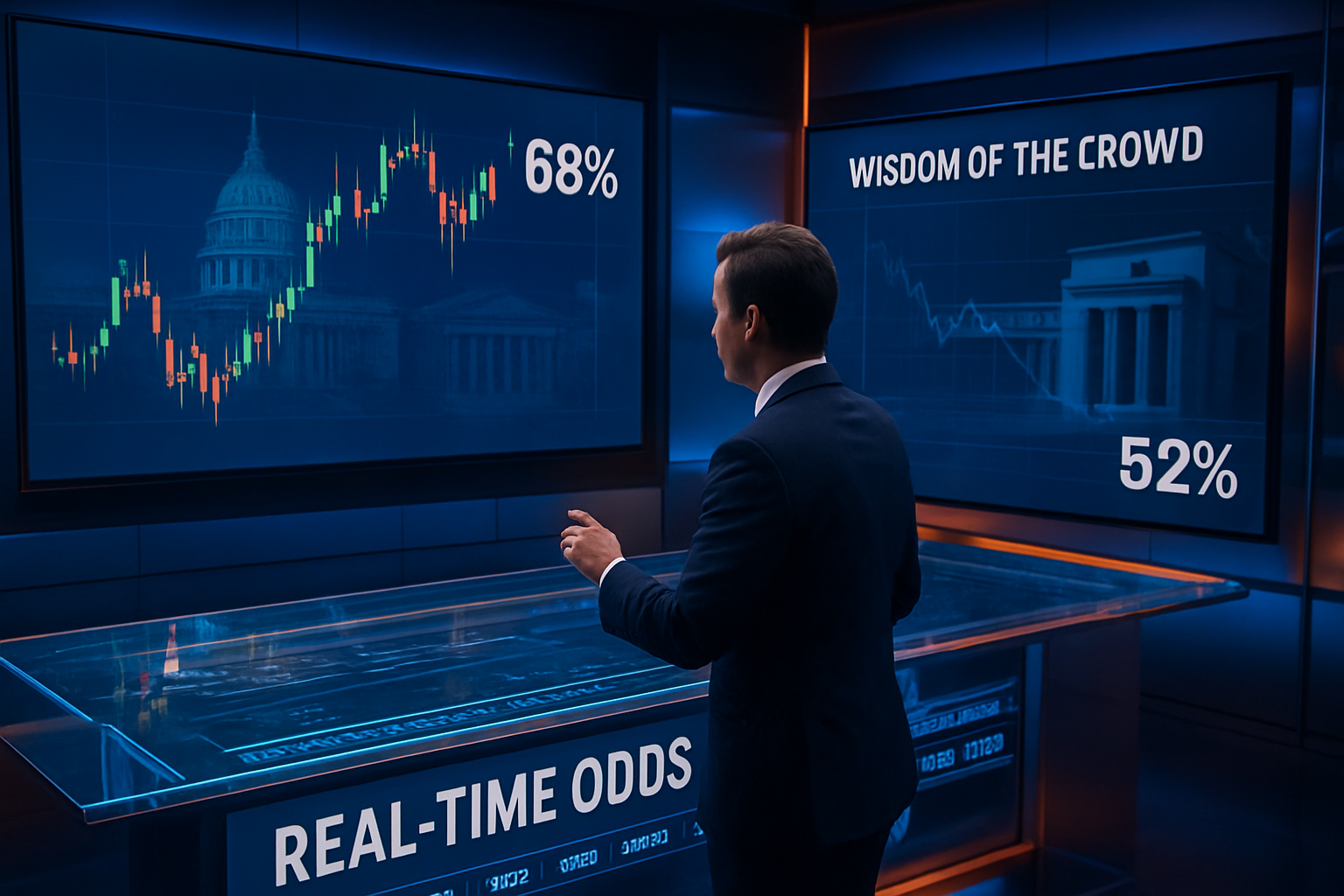
    The landscape of American news has undergone a radical transformation over the past twelve months. As of January 15, 2026, the once-sharp divide between financial speculation and civic journalism has effectively collapsed. Today, when viewers tune into major news networks, they are no longer just seeing poll results or expert opinions; they are seeing live, fluctuating probabilities powered by real-money prediction markets.

    At the center of this shift is the "Information Finance" revolution. Currently, major market-implied probabilities—such as the 68% chance of a federal interest rate cut in March or the 52% probability of a specific legislative package passing the Senate—are being treated with more gravity than traditional surveys. This shift is driven by the massive success of prediction markets during the 2024 election cycle and a series of landmark regulatory victories that have rebranded "gambling" as "the ultimate data-driven insight."

    The Market: What's Being Predicted

    The primary vehicle for this integration has been Kalshi, the first federally regulated prediction market in the U.S. Throughout 2025, Kalshi moved aggressively to colonize the mainstream media landscape. In December 2025, Kalshi announced a historic partnership with CNN, owned by Warner Bros. Discovery (NASDAQ: WBD), establishing the exchange as the network's "Official Prediction Market Partner." This deal introduced a live on-screen ticker during prime-time broadcasts, providing viewers with "market-driven signals" on everything from geopolitical conflicts to domestic policy shifts.

    Simultaneously, CNBC, a subsidiary of Comcast Corporation (NASDAQ: CMCSA), fully integrated Kalshi’s data API into its financial news suite. This wasn't merely a citation of odds; it was a structural integration. CNBC launched a dedicated "Prediction Hub" where viewers could watch a segment on Squawk Box and immediately click through to trade on the outcome being discussed. By the end of 2025, Kalshi reported that its weekly trading volume had eclipsed $1 billion, fueled largely by these mainstream media funnels and the high liquidity of its event contracts.

    The resolution criteria for these markets are strictly defined by verifiable real-world outcomes. Whether it is a Bureau of Labor Statistics report or a confirmed vote in the House of Representatives, the binary nature of these contracts—paying out $1 if the event occurs and $0 if it does not—creates a transparent probability that is updated in micro-seconds as new information hits the wire.

    Why Traders Are Betting

    The migration of traders to these platforms is fueled by a growing distrust in traditional forecasting methods. The 2024 U.S. Presidential Election served as a watershed moment; while many traditional polls suggested a "dead heat" until the final days, prediction markets on Kalshi and other platforms like Polymarket consistently maintained a 55% to 60% probability for the eventual winner weeks in advance.

    Traders are not just "betting"; they are participating in a decentralized intelligence gathering process. The core philosophy driving this activity is the "Incentive to be Right." Unlike a political pundit who faces little personal cost for a wrong prediction, a trader on Kalshi loses capital. This financial accountability creates a more rigorous filter for information.

    Recent activity in January 2026 shows a heavy concentration of volume in "Policy Pivot" markets. As the new administration settles in, traders are aggressively positioning themselves in contracts related to trade tariffs and regulatory rollbacks. The sheer volume of these trades provides a "wisdom of the crowd" effect that news networks are now leveraging to provide context that traditional reporting often misses.

    Broader Context and Implications

    The transition of prediction markets from the fringes of the internet to the center of CNN’s "Election Center" is the result of a hard-fought legal battle. In late 2024, a federal court ruling by Judge Jia Cobb stripped away the Commodity Futures Trading Commission's (CFTC) ability to block election markets, a decision the agency officially stopped appealing in May 2025. This legal clarity opened the floodgates for institutional participation.

    This shift reveals a significant change in public sentiment. The term "gambling" is rapidly being replaced in the public lexicon by "Information Finance." This terminology highlights the belief that prediction markets are a way of pricing the future, much like the stock market prices the value of a company.

    Historically, prediction markets have proven more accurate than experts in various fields, from Oscar winners to scientific breakthroughs. By 2026, this historical accuracy has finally been institutionalized. The implications are profound: when the "market" says an event has a 90% chance of happening, it changes how corporations plan their budgets, how politicians frame their speeches, and how the public perceives the inevitability of change.

    What to Watch Next

    The coming weeks represent another potential leap forward for the industry. Rumors are circulating that Alphabet Inc. (NASDAQ: GOOGL) is prepared to update its global advertising policies as early as next week, potentially allowing federally regulated prediction markets to advertise across its entire network. Such a move would allow Kalshi and its peers to reach billions of users directly, further democratizing access to event trading.

    Key dates to monitor include the upcoming Federal Reserve meeting in late January and the rollout of several high-stakes "Supreme Court Ruling" contracts on Kalshi. These markets are expected to see record liquidity as the CNN and CNBC integrations continue to mature, bringing in a new wave of retail participants who see these markets as a more reliable news source than the articles they are reading.

    The industry is also bracing for potential new legislation. With the 2024 "proof of concept" complete, some lawmakers are calling for a formal "Prediction Market Act" to provide a permanent regulatory framework, ensuring that these markets remain transparent and free from manipulation as they become a core part of the American information diet.

    Bottom Line

    The integration of prediction market data into mainstream news marks the end of the era of the "opinion-based" news cycle. By 2026, the data has won. The partnerships between Kalshi, CNN, and CNBC have validated a new form of journalism—one that prioritizes skin-in-the-game probabilities over speculative punditry.

    Prediction markets are no longer viewed as a "side show" for enthusiasts; they are the scoreboard for reality. As the $1 billion weekly volume suggests, the public is increasingly willing to vote with their wallets on what they believe the future holds. While risks regarding market manipulation and volatility remain, the sheer transparency of a price-discovery mechanism for truth is a tool that the 2026 newsroom simply cannot live without.


    This article is for informational purposes only and does not constitute financial or betting advice. Prediction market participation may be subject to legal restrictions in your jurisdiction.

    PredictStreet focuses on covering the latest developments in prediction markets.
    Visit the PredictStreet website at https://www.predictstreet.ai/.

  • Polymarket’s $112 Million Gambit: The QCEX Acquisition and the High-Stakes Battle for the U.S. Market

    Polymarket’s $112 Million Gambit: The QCEX Acquisition and the High-Stakes Battle for the U.S. Market

    As of January 15, 2026, the prediction market landscape has been fundamentally reshaped by what insiders are calling the "regulatory heist of the decade." Following years of operating in a state of "regulatory exile" from the United States, Polymarket has successfully completed its strategic acquisition of QCEX, a CFTC-licensed exchange. The $112 million deal, finalized in late 2025, has paved the way for Polymarket’s official domestic relaunch, bringing the world’s most liquid prediction platform directly into competition with the incumbent heavyweight, Kalshi.

    The move has sent shockwaves through the industry. For years, American traders were forced to watch from the sidelines or use complex workarounds to access Polymarket’s deep liquidity pools. Now, with the acquisition of QCEX’s Designated Contract Market (DCM) and Derivatives Clearing Organization (DCO) licenses, Polymarket is no longer an offshore outsider. The platform is currently in a high-stakes race to onboard millions of American retail users, with trading volumes across the industry hitting a record-shattering $700 million daily this month.

    The Market: What's Being Predicted

    The focus of prediction market enthusiasts has shifted from if Polymarket would return to the U.S., to how fast it can seize market share from Kalshi. Currently, secondary markets on various platforms are tracking "Polymarket U.S. Volume vs. Kalshi" for the first half of 2026. While Kalshi currently commands approximately 66% of the daily U.S. regulated volume—thanks to its deep integration with platforms like Robinhood Markets, Inc. (NASDAQ: HOOD)—Polymarket’s "waitlist-only" U.S. app has already seen over 500,000 sign-ups since its December rollout.

    Liquidity remains the primary metric. Traders are closely monitoring the "Total Value Locked" (TVL) in Polymarket’s new U.S.-compliant silos. Unlike its international version, which operates on the Polygon blockchain using USDC, the U.S. version is a hybrid model designed to appease federal regulators while maintaining the fast-paced, high-liquidity environment that defined the platform during the 2024 election cycle. The resolution of these "market share" contracts is set for July 1, 2026, and the odds have been swinging wildly as Polymarket clears new regulatory hurdles.

    Why Traders Are Betting

    The primary driver of the current market volatility is the sheer scale of institutional backing Polymarket has secured. In the wake of the QCEX deal, the Intercontinental Exchange (NYSE: ICE), the parent company of the New York Stock Exchange, finalized a landmark $2 billion investment in Polymarket. This partnership integrates Polymarket’s real-time data into ICE’s professional financial terminals, effectively treating prediction market odds as a legitimate new asset class for institutional desks.

    However, the path hasn't been entirely smooth. Traders are currently processing the fallout from the "Venezuela Controversy." Earlier this month, a $10.5 million market regarding the capture of Nicolás Maduro led to widespread outrage when Polymarket’s decentralized oracle initially hesitated to pay out, citing technicalities in the "invasion" definition. This has created a "trust gap" that Kalshi is actively exploiting in its marketing, positioning itself as the "cleaner" and more legally robust alternative.

    Whale activity has been notable on the "U.S. Market Dominance" contracts. Several large positions were recently taken by decentralized finance (DeFi) hedge funds betting that Polymarket's "culture-first" approach—focusing on viral news and sports contracts—will eventually overwhelm Kalshi’s more "academic" focus on macroeconomic data and interest rate pivots.

    Broader Context and Implications

    The acquisition of QCEX represents a "regulatory reset" that many thought impossible after the CFTC’s 2022 enforcement action against Polymarket. By purchasing an existing licensed entity (previously owned by Quadcode Group), Polymarket bypassed the standard multi-year federal registration process. This "M&A-first" strategy for regulatory compliance is now being studied by other international crypto firms looking to re-enter the U.S.

    The real-world implications of this battle are significant. The surge in prediction market volume has caught the eye of Washington D.C., leading to the introduction of the Public Integrity in Financial Prediction Markets Act of 2026. This proposed legislation aims to curb "insider trading" by government officials on markets where they may have non-public knowledge—such as upcoming regulatory decisions or military actions. The accuracy of these markets has reached a point where they are frequently cited on major news networks like CNN and CNBC as more reliable than traditional polling or expert analysis.

    Furthermore, the competition is forcing a technological evolution. We are seeing the "Robinhood-ification" of prediction markets, where complex derivatives are being packaged into user-friendly mobile interfaces that appeal to the same demographic that fueled the 2021 meme-stock craze.

    What to Watch Next

    The immediate milestone to watch is the full public launch of the Polymarket U.S. app, currently slated for late February 2026. Until now, the platform has been restricted to a slow waitlist rollout. A successful "unveiling" could see a massive migration of liquidity. Additionally, keep a close eye on the ongoing state-level legal battles. States like Tennessee and Connecticut have issued cease-and-desist orders, arguing that "event contracts" are a form of unlicensed sports betting. How Polymarket and Kalshi navigate these state vs. federal jurisdictional conflicts will determine the industry's ceiling.

    Another key event is the upcoming "Predictive Data Summit" in March, where ICE is expected to reveal how it will package Polymarket data for high-frequency trading firms. If institutional "market makers" begin providing deep liquidity to these markets, the bid-ask spreads will tighten significantly, making prediction markets a viable hedging tool for traditional corporations.

    Bottom Line

    The QCEX acquisition was more than just a business deal; it was a declaration of war for the future of the "Information Economy." By moving into the U.S. market with federal licenses in hand, Polymarket has transformed from a crypto-native underdog into a systemic financial player. The competition with Kalshi is no longer just about who has the better interface, but about who can maintain the delicate balance between high-octane trading and the stringent requirements of the CFTC.

    Prediction markets are finally graduating from the fringes of the internet to the center of the financial world. Whether Polymarket’s liquidity can overcome Kalshi’s institutional trust remains the biggest bet of 2026. One thing is certain: the era of "betting on the news" has officially arrived in America, and the stakes have never been higher.


    This article is for informational purposes only and does not constitute financial or betting advice. Prediction market participation may be subject to legal restrictions in your jurisdiction.

    PredictStreet focuses on covering the latest developments in prediction markets.
    Visit the PredictStreet website at https://www.predictstreet.ai/.
  • The Quants of Probability: Wall Street’s $200,000-Salary Bet on Prediction Markets

    The Quants of Probability: Wall Street’s $200,000-Salary Bet on Prediction Markets

    The era of prediction markets being dismissed as niche playgrounds for "degen" crypto enthusiasts and political junkies has officially ended. As of January 15, 2026, the world’s most elite high-frequency trading (HFT) firms have not just entered the arena—they have colonized it. Firms like DRW, Susquehanna International Group (SIG), and Jane Street are no longer watching from the sidelines; they are aggressively hiring mathematical talent to build out dedicated prediction market desks, treating event contracts with the same rigor as high-yield bonds or complex derivatives.

    Currently, the primary "trade" isn't just about who will win the next election or what the Federal Reserve will do. Instead, it is a sophisticated arbitrage play. Institutional traders are exploiting price discrepancies between regulated platforms like Kalshi and the now ICE-backed Polymarket, leveraging massive balance sheets to capture fractions of a cent across billions in volume. This influx of "smart money" has transformed the market from a sentiment gauge into a hyper-efficient financial engine, with monthly volumes across the sector surpassing $8 billion for the first time in December 2025.

    The Market: What’s Being Predicted

    The prediction market landscape in early 2026 is defined by a bifurcated but increasingly connected ecosystem. On one side stands Kalshi, the CFTC-regulated heavyweight that paved the way for legal event trading in the U.S. On the other is Polymarket, which, following a landmark $2 billion investment from the Intercontinental Exchange (NYSE: ICE) in late 2025, has shed its "offshore" reputation to become a global liquidity hub.

    These platforms are currently dominated by three major categories:

    1. Macroeconomic Policy: Contracts on the exact timing of Fed rate cuts, monthly CPI prints, and even the probability of a U.S. recession.
    2. The 2026 Midterm Elections: With the primary season approaching, hundreds of millions are already locked into "Control of the House" and "Senate Majority" markets.
    3. Climate and Infrastructure: Emerging markets for hurricane landfalls and major bridge completions, often used as insurance proxies.

    Liquidity has reached an all-time high. On January 12, 2026, the industry recorded a single-day trading volume of $701.7 million. This depth is largely maintained by designated market makers like SIG, which was the first major firm to sign a formal liquidity agreement with Kalshi. Consequently, bid-ask spreads on high-profile contracts, which used to sit at a clunky 5% or 10%, have compressed to less than 0.5%, mirroring the efficiency of the S&P 500 options market.

    Why Traders Are Betting

    The catalyst for this Wall Street gold rush is the sheer "alpha" available in non-traditional data sets. Unlike the stock market, where information is disseminated in milliseconds via Bloomberg terminals, prediction markets often move based on "ground-truth" reality that algorithms are still learning to parse. To bridge this gap, firms like DRW and SIG have begun offering base salaries of approximately $200,000 for specialized "Event Traders," with total compensation packages for mid-level quants frequently reaching the $500,000 mark.

    These traders are employed to execute three primary strategies:

    • Cross-Platform Arbitrage: If a "Yes" contract for a Fed rate hike is trading at 62 cents on Kalshi but 65 cents on Polymarket, HFT bots execute thousands of trades per second to close that 3-cent gap, locking in a risk-free profit.
    • Negative Correlation Baskets: Traders look for "sum-of-outcomes" errors. In a market where multiple candidates are running for a position, if the combined probability of all candidates exceeds 100% (or falls below 98%), institutional desks buy the entire basket to capture the mathematical delta.
    • Asset-Class Hedging: Hedge funds, including firms like Saba Capital, are now using prediction markets as a "pure" hedge. Rather than buying gold to protect against inflation, they buy "CPI exceeds 3.1%" contracts on Kalshi, providing a direct payout that isn't muddied by equity market volatility.

    Broader Context and Implications

    The "professionalization" of these markets represents a paradigm shift in how society aggregates information. The 2024 court victories that allowed Kalshi to list election contracts served as the "Big Bang" for the industry. Since then, the entry of Interactive Brokers (NASDAQ: IBKR) via its ForecastEx platform and CME Group (NASDAQ: CME) through its partnership with FanDuel (owned by Flutter Entertainment (NYSE: FLUT)) has provided the regulatory plumbing necessary for pension funds and insurance companies to participate.

    This shift has profound real-world implications. Prediction markets are increasingly viewed as more accurate than traditional polling or expert pundits. In fact, major news networks like CNBC and CNN have begun integrating live Kalshi and Polymarket odds into their daily broadcasts, effectively treating market prices as the "source of truth" for public sentiment. However, this transition hasn't been without friction. As HFT bots dominate the order books, retail participants are finding it harder to profit from "slow" news, leading to a market that is more accurate but arguably less "accessible" for the casual bettor.

    What to Watch Next

    The next six months will be a trial by fire for this new institutional infrastructure. The upcoming 2026 U.S. Midterm Elections will be the first major political event where Wall Street's dedicated desks are fully operational. Market observers are closely watching to see if the sheer volume of institutional capital can prevent the "price spikes" and manipulation attempts that occasionally plagued thinner markets in the early 2020s.

    Additionally, keep an eye on the SEC. While the CFTC has largely embraced event contracts, several asset managers have recently filed for the first "Exchange Traded Prediction Funds" (ETPFs). These funds would allow retail investors to gain exposure to a diversified basket of high-probability outcomes through their standard brokerage accounts. If approved, it would mark the final step in the journey of prediction markets from the fringes of the internet to a standard component of a 401(k).

    Bottom Line

    The entry of firms like DRW and Susquehanna signals that prediction markets have reached a point of no return. With $200,000 base salaries and $8 billion in monthly volume, these are no longer "betting sites"—they are sophisticated financial exchanges. The "quantification of everything" has finally reached the realm of human events, turning the messy uncertainty of politics and macroeconomics into a tradable, liquid, and highly efficient asset class.

    For the average observer, the primary takeaway is clear: the most accurate forecast for the future is no longer found in a poll or a think-tank report—it’s found in the order books of the world’s most sophisticated trading firms. As spreads flatten and liquidity deepens, prediction markets are evolving into the ultimate "truth machine," powered by the very same Wall Street engines that drive the global economy.


    This article is for informational purposes only and does not constitute financial or betting advice. Prediction market participation may be subject to legal restrictions in your jurisdiction.

    PredictStreet focuses on covering the latest developments in prediction markets.
    Visit the PredictStreet website at https://www.predictstreet.ai/.
  • The Year the ‘Truth Machine’ Won: How Kalshi’s Legal Victory Remade US Finance

    The Year the ‘Truth Machine’ Won: How Kalshi’s Legal Victory Remade US Finance

    As we enter 2026, the American financial landscape has been permanently altered by a revolution that didn't happen on Wall Street, but in a federal courtroom in Washington D.C. Late 2024 marked the "Big Bang" for prediction markets, spearheaded by Kalshi’s landmark legal victory against the Commodity Futures Trading Commission (CFTC). The fallout from that decision has been nothing short of explosive, with Kalshi reporting a staggering 1,680% surge in transaction volume throughout 2025.

    Currently, the probability of prediction markets becoming a standard feature in major retail brokerage apps stands at nearly 100%, following the successful integration of Kalshi's order book into platforms like Robinhood Markets, Inc. (NASDAQ: HOOD). Traders are no longer just betting on stocks; they are "hedging their lives" by trading on everything from the 2026 midterm elections to the Federal Reserve's next interest rate hike, with liquidity reaching levels that rival traditional mid-cap equity markets.

    The Market: What's Being Predicted

    The core of this transformation was the "Congressional Control Contract," a derivative product that allows traders to speculate on which political party will hold the gavel in the U.S. House and Senate. While offshore, crypto-based platforms like Polymarket had long offered similar products to non-U.S. residents, Kalshi became the first U.S.-regulated exchange to bring these "event contracts" to the domestic mainstream.

    Trading volume on Kalshi reached a fever pitch in late 2024, with over $1 billion flowing through election-related contracts in just a few weeks. By the end of 2025, the exchange had recorded over 97 million transactions and a total notional trading volume of $23.8 billion. The resolution criteria for these markets are strict: for Congressional control, the result is determined by the official certification of election results, ensuring a "hard" settlement that eliminates the ambiguity often found in traditional political polling.

    The market has since evolved far beyond simple "Red vs. Blue" binaries. Today, Kalshi offers hundreds of granular contracts on specific legislative outcomes, judicial appointments, and even the performance of specific news segments on networks like CNN, owned by Warner Bros. Discovery, Inc. (NASDAQ: WBD), and CNBC, owned by Comcast Corporation (NASDAQ: CMCSA).

    Why Traders Are Betting

    The 1,680% volume surge in 2025 was driven by a fundamental shift in how Americans perceive "betting." Traders are increasingly using prediction markets as a superior form of news and insurance. For instance, small business owners in 2025 used Congressional control contracts to hedge against potential changes in corporate tax rates, while tech investors traded on the probability of specific AI regulations passing the Senate.

    The factors driving the current odds are no longer just public opinion polls, which many traders now view as lagging indicators. Instead, the market responds in real-time to "whale" activity—large institutional positions from hedge funds that use Kalshi as a proxy for political risk. Notable shifts in volume are often seen minutes before major news breaks, as the "truth machine" aggregates private information into a public price.

    Strategic shifts have also played a role. By Q4 2025, sports prediction contracts accounted for nearly 90% of Kalshi's weekly volume during the NFL season. This move into sports allowed the platform to maintain the momentum it gained during the 2024 election cycle, converting "political junkies" into year-round event traders who prefer the transparent, exchange-cleared nature of Kalshi over traditional sportsbooks.

    Broader Context and Implications

    The catalyst for this entire movement was Judge Jia Cobb’s September 2024 ruling. In a decision that stunned the CFTC, Cobb ruled that "gaming" should be defined as playing a game, not the act of wagering on a real-world event. This legal distinction effectively neutered the CFTC’s primary argument that election betting was "contrary to the public interest."

    Furthermore, the ruling was one of the first to apply the Supreme Court’s Loper Bright precedent, which ended "Chevron deference." This prevented the CFTC from simply inventing its own definitions of "public interest" to block new financial products. The regulatory clarity was so profound that by May 2025, the CFTC officially withdrew its appeal, acknowledging that regulated prediction markets are here to stay.

    This shift has profound real-world implications. Prediction markets are now widely cited as "The Truth Machine" by major news outlets. When a market gives a candidate an 80% chance of winning, it carries more weight in the 2026 political discourse than a dozen pundit opinions. This has forced traditional pollsters to adapt or face irrelevance in a world where "putting your money where your mouth is" is the ultimate metric of confidence.

    What to Watch Next

    As we look toward the remainder of 2026, the primary focus is the 2026 Midterm Election cycle. Markets for the "2026 Senate Majority" are already showing significant liquidity, with traders beginning to price in the historical "midterm slump" for the incumbent party. We are also seeing the emergence of more complex "conditional markets"—for example, betting on the price of gold if a specific party wins a specific number of seats.

    Key dates to monitor include the upcoming quarterly earnings reports from Robinhood and other retail brokers who have integrated Kalshi's API. Their transaction fees from event contracts are expected to be a major growth driver in 2026. Additionally, watch for any legislative attempts to "codify" the CFTC's oversight power in a way that might circumvent Judge Cobb’s ruling, though current political appetite for such a move appears low.

    Finally, keep an eye on the potential for "Cross-Exchange Arbitrage" between Kalshi and the now-expanding prediction market arms of traditional players like Interactive Brokers Group, Inc. (NASDAQ: IBKR). As more institutions enter the space, we expect spreads to tighten and liquidity to rival the S&P 500 E-mini futures.

    Bottom Line

    The 2024 legal victory was more than just a win for one company; it was the birth of a new asset class. Kalshi’s ability to withstand federal scrutiny and subsequently deliver a 1,680% growth rate in 2025 proves that there is a massive, untapped demand for regulated "truth markets" in the United States.

    What this tells us is that prediction markets are no longer a niche curiosity for mathematicians and political nerds. They are a core pillar of the modern financial system, providing a unique combination of risk management and high-fidelity information. As we move deeper into 2026, the question is no longer whether prediction markets are legal, but how long it will take for them to become the primary way the world anticipates the future.

    The odds of a reversal in this trend are currently trading near zero. The "Truth Machine" is on, and it isn't turning off anytime soon.


    This article is for informational purposes only and does not constitute financial or betting advice. Prediction market participation may be subject to legal restrictions in your jurisdiction.

    PredictStreet focuses on covering the latest developments in prediction markets.
    Visit the PredictStreet website at https://www.predictstreet.ai/.

  • The Great Decoupling: How 2024 Cemented Prediction Markets as the World’s News Thermometer

    The Great Decoupling: How 2024 Cemented Prediction Markets as the World’s News Thermometer

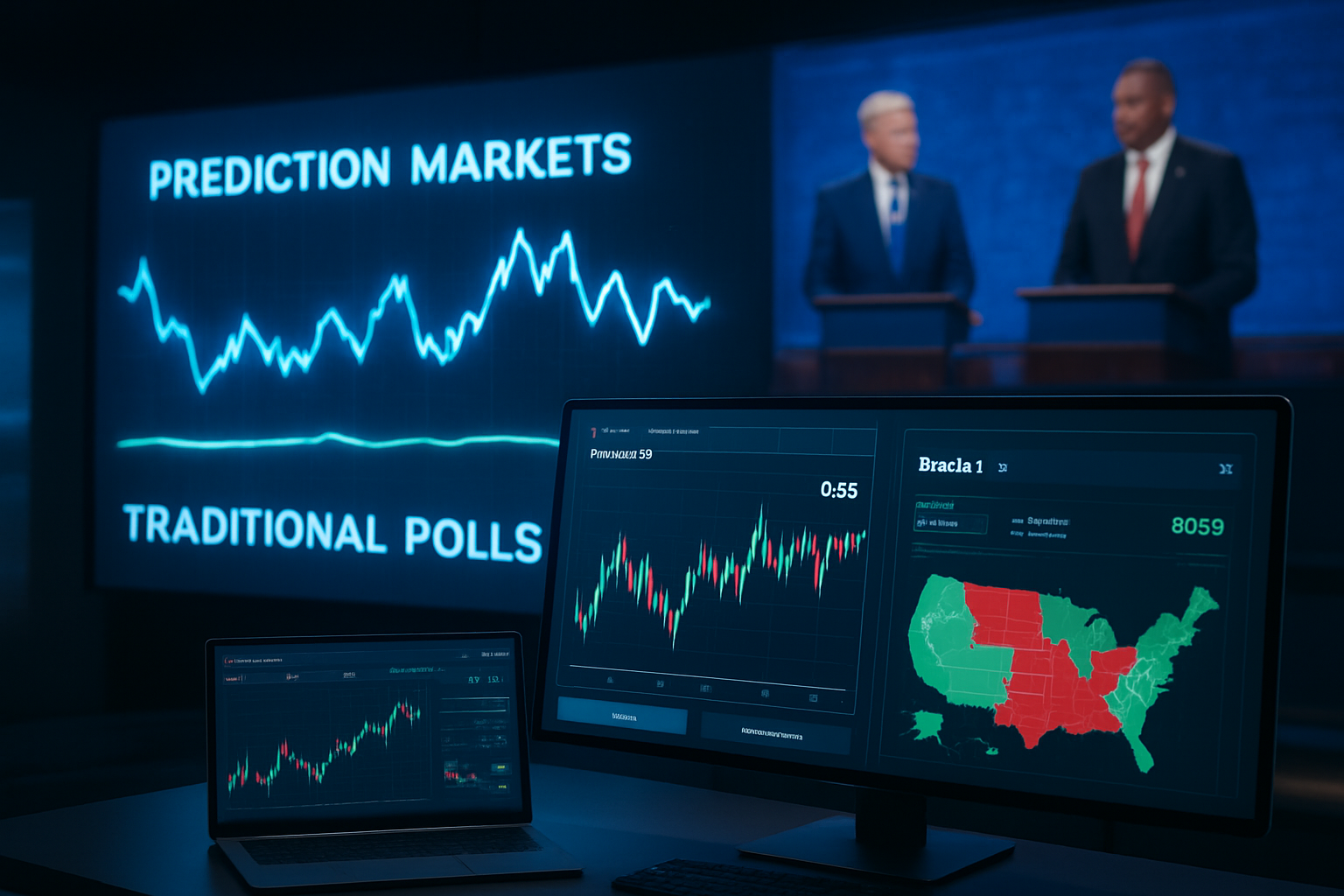
    In the high-stakes theater of the 2024 U.S. Presidential Election, two narratives competed for the public’s trust. One, driven by traditional pollsters like NYT/Siena and FiveThirtyEight, suggested a race "too close to call"—a coin-flip election destined for a weeks-long recount. The other, broadcast in real-time by prediction markets like Polymarket and Kalshi, signaled a decisive Donald Trump advantage as early as October.

    As of early 2026, the debate over which signal to follow is effectively settled. While major polling outfits struggled with a 3.8% error rate and missed the "Trump floor" for the third consecutive cycle, prediction markets correctly priced in a 312-electoral-vote sweep. This success has transformed the industry from a fringe interest for crypto-enthusiasts into a cornerstone of the global financial apparatus, lending these platforms "serious credibility" that has only intensified as we head into the 2026 midterms.

    The Market: What's Being Predicted

    The 2024 presidential market was the largest collective wagering event in human history. At its peak, Polymarket saw over $3.3 billion in volume on the winner alone, while Kalshi, following a landmark legal victory over the CFTC, processed hundreds of millions in regulated U.S. trades. On the eve of the election, while polls showed a dead heat, Kalshi traders priced Trump at a 62% favorite, and Polymarket hovered at 63%.

    The resolution criteria for these markets were strictly binary: who would be inaugurated on January 20, 2025? However, the real value lay in the swing-state markets. A December 2025 study by Vanderbilt University revealed that while PredictIt had a higher "hit rate" on the final binary outcome (93%), Polymarket was superior in predicting the magnitude of the shift in key states like Pennsylvania and Arizona. The liquidity in these markets allowed for a level of precision that traditional "margin of error" polling simply couldn't replicate.

    Why Traders Are Betting

    The primary driver of the 2024 market success was its ability to act as a "news thermometer." Unlike traditional polling, which functions as a "rearview mirror," prediction markets process information in seconds. The most cited example remains the June 2024 presidential debate. Within 15 minutes of the opening statements, Joe Biden’s odds on Polymarket collapsed from 38% to 19%. Traditional pollsters took nearly 14 days to release data reflecting that same collapse.

    Traders are also incentivized by "skin in the game," a factor that analysts say eliminates the "social desirability bias" often found in telephone polling. In 2024, many "shy Trump voters" were hesitant to tell a pollster their intentions but were more than happy to back their conviction with capital. Furthermore, the entry of major financial institutions like Intercontinental Exchange (NYSE: ICE)—which invested $2 billion into Polymarket in late 2025—has brought a more sophisticated class of institutional "whales" to the markets, further refining the price signal.

    Broader Context and Implications

    The shift in credibility has had profound regulatory and corporate implications. Following the 2024 election, Interactive Brokers (NASDAQ: IBKR) launched its ForecastEx platform, which has grown to represent a significant portion of its 4.13 million customer accounts as of January 2026. Similarly, Robinhood (NASDAQ: HOOD) reported that its election contracts were its fastest-growing revenue stream in 2025, generating $300 million in a single quarter.

    This mainstreaming has turned prediction markets into a "news thermometer" that is now integrated into daily journalism. In late 2025, Kalshi signed exclusive data partnerships with CNN and CNBC, the latter of which now runs a dedicated "Kalshi Ticker" alongside the S&P 500. The regulatory environment has also thawed; Polymarket’s acquisition of a CFTC-licensed exchange in late 2025 allowed it to legally re-enter the U.S. market, effectively ending the era of "gray market" offshore betting.

    What to Watch Next

    As we look toward the 2026 Midterm Elections, the markets are already providing a sharp divergence from "generic ballot" polls. While polls suggest a competitive environment, current markets on Polymarket and Kalshi are aggressively pricing in a Democratic takeover of the House of Representatives with a 75-80% probability. Conversely, Republicans are currently given a 66% chance of retaining the Senate, thanks to a structurally favorable map that traders believe will outweigh national sentiment.

    Another key metric to watch is the "Vance Premium." Current 2028 Presidential markets show Vice President JD Vance as the undisputed favorite at 48%, a figure that far outpaces his current public approval ratings. Traders are betting on the power of incumbency and institutional support—a nuance that traditional "favorability" polling often fails to capture.

    Bottom Line

    The 2024 election was not just a political event; it was the "proof of concept" for prediction markets. By correctly identifying the shift toward Donald Trump weeks before pollsters—and reacting to events like the June debate in minutes rather than weeks—these platforms proved they are the most efficient processors of political information currently available.

    As we move deeper into 2026, the question is no longer whether prediction markets are accurate, but rather how much they will disrupt the $18 billion polling and political consultancy industry. For investors and observers, the message is clear: if you want to know where the country is going, stop looking at the polls and start looking at the prices.


    This article is for informational purposes only and does not constitute financial or betting advice. Prediction market participation may be subject to legal restrictions in your jurisdiction.

    PredictStreet focuses on covering the latest developments in prediction markets.
    Visit the PredictStreet website at https://www.predictstreet.ai/.

  • The House Always Loses: How Kalshi’s $100 Million ‘Combos’ Launch is Revolutionizing Prediction Markets

    The House Always Loses: How Kalshi’s $100 Million ‘Combos’ Launch is Revolutionizing Prediction Markets

    As of mid-January 2026, the landscape of digital wagering has undergone a fundamental shift. What was once a niche world of political "event contracts" has been swallowed by the behemoth of American sports. Kalshi, the leading CFTC-regulated prediction market, has officially completed its metamorphosis into a financialized sports powerhouse. The catalyst? The late 2025 launch of "Combos," a peer-to-peer parlay feature that processed over $100 million in trading volume during its first week of full operation.

    Currently, sports markets—primarily centered on the NFL and NBA—now account for a staggering 90% of weekend trading volume on the platform. During the most recent NFL Wild Card weekend (January 10–12, 2026), the platform reached a fever pitch, with a single matchup between the Bears and Packers (NYSE: GME, just kidding – no ticker for NFL teams) generating $112 million in volume alone. For the first time, prediction markets aren't just predicting the news; they are competing directly for the multi-billion dollar sports betting throne.

    The Market: What's Being Predicted

    The central engine of Kalshi’s recent growth is the "Combos" feature, which allows traders to build custom, multi-leg event contracts. Unlike traditional sportsbooks where users bet against a "house" that sets the price, Kalshi uses a Request for Quote (RFQ) system. When a trader wants to bet on a "Combo"—such as the Lakers winning and LeBron James scoring over 25 points—the platform generates a live order book where other market participants can provide liquidity and take the opposite side.

    This peer-to-peer structure has led to unprecedented liquidity in sports prediction markets. While traditional sportsbooks like DraftKings (NASDAQ: DKNG) or FanDuel, owned by Flutter Entertainment (NYSE: FLUT), use centralized algorithms to manage risk, Kalshi’s market is entirely driven by supply and demand. Currently, the most active markets are the NFL Divisional Round matchups and NBA mid-season props, with individual contracts seeing tens of millions of dollars in open interest.

    The resolution of these markets is strictly tied to official league data, but the "event contract" wrapper allows for a level of transparency that traditional betting lacks. Because Kalshi is a regulated exchange, every trade is recorded on a public ledger, providing a level of "real-time truth" regarding where the money is actually flowing—a stark contrast to the opaque "handle" reports released by traditional sportsbooks weeks after the games end.

    Why Traders Are Betting

    The migration of "sharps" and institutional traders from sportsbooks to Kalshi is driven by three primary factors: pricing, limits, and taxes. In the traditional sports betting world, "winning players" are frequently limited or outright banned by sportsbooks to protect the house’s margin. On Kalshi, there is no house; winning is encouraged because the exchange earns its revenue from transaction fees, not from the losses of its users.

    Furthermore, the tax implications have become a major draw for high-volume traders. Many Kalshi contracts are treated as Section 1256 contracts, which qualify for a 60/40 tax split (60% long-term capital gains, 40% short-term). This is significantly more favorable than the ordinary income tax rates applied to standard sportsbook winnings. Traders are also leveraging the platform’s integration with Robinhood (NASDAQ: HOOD), which has democratized access to event contracts for millions of retail stock traders who view an NFL game through the same lens as a tech stock’s earnings report.

    Market sentiment is currently favoring "high-probability combos" as a way to hedge against broader economic volatility. With the S&P 500 showing signs of stagnation in early 2026, the short-term, high-liquidity nature of sports contracts offers an attractive alternative for capital. Large "whale" positions have been spotted in the NFL Super Bowl winner markets, where institutional-sized bets are being placed at odds that are often 2–3% better than what is available at traditional books due to the lack of a "vig" or overround.

    Broader Context and Implications

    The success of Kalshi’s sports pivot represents a broader "financialization of everything." Prediction markets are no longer just tools for political junkies or economists; they have become a mainstream asset class. This shift has not gone unnoticed by regulators. While Kalshi operates under the oversight of the Commodity Futures Trading Commission (CFTC), several states, including New York and Massachusetts, have recently filed lawsuits arguing that these "event contracts" are merely a loophole for illegal gambling.

    Historically, prediction markets have been praised for their "wisdom of the crowd" accuracy. By applying this to sports, Kalshi is providing a more accurate reflection of true probability than traditional odds. When a sportsbook moves a line, it is often a reaction to a liability shift; when Kalshi moves a line, it is a reaction to new information being priced into the market by thousands of competing traders.

    The implications for the industry are profound. As prediction markets gain market share, traditional sportsbooks are being forced to innovate. DraftKings has recently piloted its own "exchange-style" platform to compete with the transparency and pricing of Kalshi. We are witnessing the end of the "house" era and the beginning of the "exchange" era in American wagering.

    What to Watch Next

    All eyes are now on Super Bowl LXI. Analysts expect Kalshi to see its first-ever $500 million single-day trading event during the championship game. The "Combos" feature is expected to expand into more granular player props, including "micro-betting" contracts that resolve after every drive or quarter.

    Beyond the field, the legal battles in New York and Massachusetts will be the "Super Bowl" for the platform's regulatory future. A favorable ruling for Kalshi would effectively green-light the expansion of prediction markets into every state in the U.S., potentially siphoning billions more away from the "gray market" of offshore books. Additionally, keep a close watch on the NBA trade deadline in February; Kalshi is expected to launch "Trade Prediction" contracts, further blurring the line between sports news and financial markets.

    Bottom Line

    The transformation of Kalshi from a political prediction site into a $100 million-per-week sports powerhouse is the most significant development in the wagering industry since the repeal of PASPA in 2018. By treating a touchdown as a commodity rather than a gamble, Kalshi has cracked the code for institutional and retail engagement alike.

    Ultimately, the rise of sports on prediction markets tells us that the modern investor craves transparency and fairness. The days of being limited for winning or paying a 10% "juice" to a sportsbook are numbered. As we move further into 2026, the question is no longer whether prediction markets will survive, but how much of the $100 billion sports betting industry they will eventually own.


    This article is for informational purposes only and does not constitute financial or betting advice. Prediction market participation may be subject to legal restrictions in your jurisdiction.

    PredictStreet focuses on covering the latest developments in prediction markets.
    Visit the PredictStreet website at https://www.predictstreet.ai/.