Tag: Kalshi

  • The “Volume Trap”: Why PredictIt’s 93% Accuracy Is Shaking the Prediction Market Foundation

    The “Volume Trap”: Why PredictIt’s 93% Accuracy Is Shaking the Prediction Market Foundation

    A landmark study from Vanderbilt University has sent shockwaves through the burgeoning prediction market industry, delivering a rigorous autopsy of the 2024 election cycle that fundamentally challenges the "liquidity equals truth" dogma of modern finance. As of January 17, 2026, the findings are reshaping how institutional investors, political strategists, and retail traders view the reliability of real-time forecasting platforms.

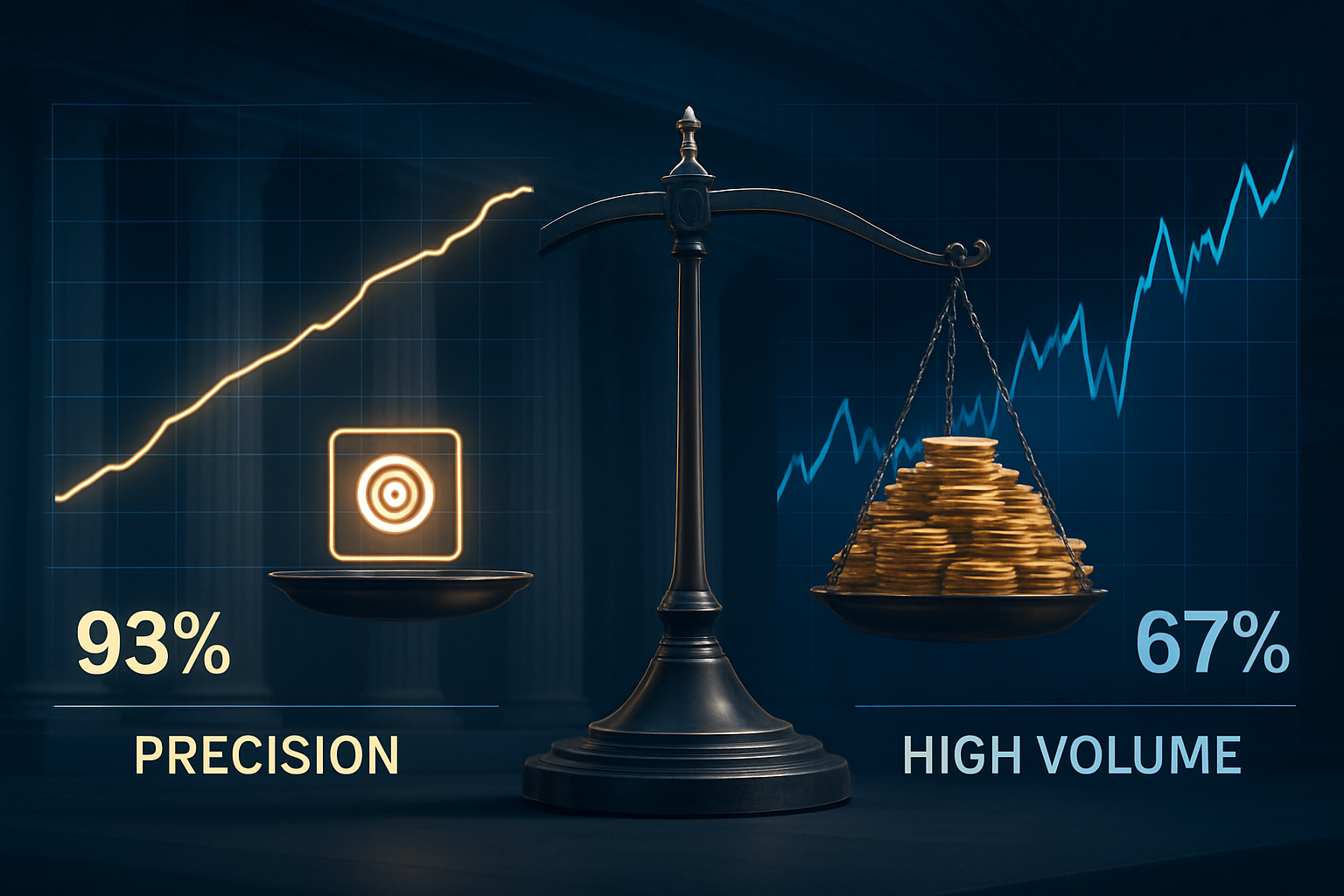
    The study, titled "Prediction Markets? The Accuracy and Efficiency of $2.4 Billion in the 2024 Presidential Election," revealed a surprising hierarchy of precision: PredictIt, the oldest and most restricted of the major platforms, achieved a staggering 93% accuracy rate in correctly forecasting election outcomes. Meanwhile, the regulated U.S. exchange Kalshi (NYSE: KLS) trailed at 78%, and the crypto-native heavyweight Polymarket—despite processing billions in volume—languished at a 67% accuracy rate. This data has sparked a heated debate over the "Volume Trap," a phenomenon where massive liquidity may actually degrade the quality of the information signal.

    The Market: What's Being Predicted

    The Vanderbilt researchers, led by Professor Joshua D. Clinton and TzuFeng Huang, analyzed more than 2,500 political contracts spanning the 2024 U.S. election cycle. The focus was not merely on the top-line Presidential winner but also on a granular level: battleground state margins, House and Senate control, and down-ballot races. While all three platforms—PredictIt, Kalshi, and Polymarket—traded identical outcomes, their price discovery mechanisms behaved in fundamentally different ways.

    PredictIt, which has historically operated under a Commodity Futures Trading Commission (CFTC) no-action letter with strict $850-per-contract limits (raised to $3,500 by late 2025), showed the highest resilience to volatility. In contrast, Kalshi, a federally regulated exchange, and Polymarket, which operates on the Polygon blockchain, saw massive influxes of "whale" capital. Polymarket, in particular, recorded a historic $2.4 billion handle for the 2024 election, yet its prices frequently diverged from the eventual reality, especially in state-level contests.

    The study used "log-loss" and Brier scores to measure how "confidently wrong" markets were. A Brier score rewards markets that are 90% certain of an outcome that occurs, while heavily penalizing those that are 90% certain of an outcome that fails. The results showed that while Polymarket had the most liquidity, it suffered from "mutual exclusivity errors," where the sum of probabilities for competing outcomes often exceeded 100%, indicating a lack of internal logic among its high-volume traders.

    Why Traders Are Betting

    The disparity in accuracy between these platforms can be attributed to the type of traders each platform attracts and the incentives created by their respective architectures. According to the Vanderbilt study, PredictIt’s success is a direct result of its restrictive "retail-only" model. Because no single trader can bet millions of dollars to "move the needle," the price is driven by a diverse crowd of "super-forecasters"—political staffers, data scientists, and wonks who trade on nuanced information rather than momentum.

    Conversely, the "Volume Trap" identified in the study describes a feedback loop seen on high-volume platforms like Polymarket. When high-net-worth "whales"—such as the widely reported "Théo" account that bet over $30 million on a Trump victory—place massive positions, it creates a "narrative gravitational pull." Smaller traders often follow the price movement (herding) rather than the underlying polling data or ground-game metrics. This creates "artificial confidence," where the market price reflects the conviction of a few wealthy individuals rather than the collective intelligence of the crowd.

    Institutional players are now taking notice of these findings. Companies like Interactive Brokers Group, Inc. (Nasdaq: IBKR), through their ForecastEx exchange, and Robinhood Markets, Inc. (Nasdaq: HOOD) have begun refining their contract offerings to prioritize "cleaner" data signals. Traders on these platforms are increasingly looking for ways to arbitrage the gap between the "pure" signal of PredictIt and the "noisy" sentiment of crypto-driven markets.

    Broader Context and Implications

    The Vanderbilt study arrives at a critical juncture for the industry. For years, proponents of prediction markets argued that the more money at stake, the more accurate the forecast would be. The 2024 data suggests the opposite may be true for political events: that concentrated capital can act as a pollutant to price discovery. This has significant regulatory implications, as the CFTC has long expressed concerns that high-stakes political betting could be used to manipulate public perception.

    PredictIt’s 93% accuracy provides a powerful defense for the "limited-stake" model, suggesting that such markets function more like a refined intelligence tool than a gambling venue. This distinction is vital as prediction markets move toward becoming a mainstream financial asset class. If the market's primary value is its "signal" for decision-makers, then accuracy—not volume—is the most valuable metric.

    Furthermore, the study highlights a "State-Level Disconnect." While Polymarket was highly accurate on the national "binary" outcome (who wins the Presidency), it was notably poor at predicting the specific electoral college math. This suggests that global speculators (the "whales") are good at broad sentiment but lack the "on-the-ground" knowledge that smaller, regional traders on PredictIt possess.

    What to Watch Next

    As we enter the 2026 Midterm election cycle, the industry is pivoting. Watch for a "flight to quality" among professional bettors. We are likely to see the emergence of "Aggregator Platforms" that weight prices based on the Vanderbilt accuracy rankings—giving a 93% weight to PredictIt signals and a lower weight to high-volume, low-accuracy sources.

    Key dates to monitor include the upcoming CFTC hearings on contract limits, where the Vanderbilt study is expected to be cited as "Exhibit A" for maintaining position caps. Additionally, look for the performance of new "Expert-Only" markets being developed by traditional financial firms that aim to replicate PredictIt’s success by restricting participation to verified domain experts rather than the highest bidder.

    The next major test for these platforms will be the 2026 Congressional primaries. If the "Volume Trap" holds true, we should expect to see Polymarket prices swing wildly based on social media trends, while PredictIt remains a more boring, but ultimately more accurate, barometer of political reality.

    Bottom Line

    The Vanderbilt University study has shattered the myth that the biggest market is always the smartest market. In the world of political forecasting, it appears that "less is more." PredictIt’s 93% accuracy rate proves that a well-regulated, capped-limit market can outperform a multi-billion dollar crypto giant by filtering out noise and focusing on high-quality, diverse information sources.

    For the prediction market industry, this is a "growing pain" moment. It forces a realization that liquidity is a double-edged sword. While volume provides the profit that sustains exchanges, it can simultaneously degrade the very "wisdom of the crowd" that makes these markets valuable to society in the first place.

    Ultimately, the Vanderbilt findings suggest that for those looking to see the future of American politics, the smartest move isn't to follow the money—it’s to follow the signal. As the 2026 Midterms loom, the "PredictIt Model" stands as the gold standard for anyone who values truth over hype.


    This article is for informational purposes only and does not constitute financial or betting advice. Prediction market participation may be subject to legal restrictions in your jurisdiction.

    PredictStreet focuses on covering the latest developments in prediction markets.
    Visit the PredictStreet website at https://www.predictstreet.ai/.
  • From Courtroom to Living Room: How Kalshi’s 2024 Victory Built the $40 Billion Prediction Economy of 2026

    From Courtroom to Living Room: How Kalshi’s 2024 Victory Built the $40 Billion Prediction Economy of 2026

    As we cross the midpoint of January 2026, the landscape of American finance and political discourse has been fundamentally rewritten. What was once a niche corner of the internet for statistics nerds and high-stakes contrarians has become the primary lens through which the public views reality. Today, "market-implied probability" is no longer just a metric; it is the headline.

    The 2026 Midterm elections are already seeing unprecedented volume, with over $8 billion positioned across various House and Senate control markets. This "marquee year" for prediction markets didn't happen by accident. It is the direct result of a legal domino effect that began in October 2024, when a federal court order shattered the regulatory shackles holding back Kalshi and the broader industry. Looking back, that court victory was the "Big Bang" for what we now call Information Finance.

    The Market: What’s Being Predicted

    Currently, the primary focus for traders is the "2026 Midterm Power Balance" markets on Kalshi. Traders are currently pricing in a 68% probability that the GOP retains control of the House, while the Senate remains a toss-up at 51% for Democratic retention. Unlike the 2024 cycle, where liquidity was often fragmented, these markets now boast deep order books and institutional-grade stability.

    Kalshi, the only U.S.-regulated exchange of its kind, has seen its daily active user base grow by 400% since January 2025. Alongside it, Polymarket continues to dominate global volume, though Kalshi’s integration into mainstream retail platforms has given it a distinct edge in "Main Street" participation. The current total value locked (TVL) across political markets has crossed the $12 billion mark this month, with resolution criteria for the Midterms set for the first Tuesday of November 2026.

    The timeline for these markets has also shifted. In previous years, trading only heated up weeks before an election. In 2026, the markets are live and liquid two years out, providing a real-time "fear and greed" index for political sentiment that traditional polling—now largely relegated to a secondary data point—simply cannot match.

    Why Traders Are Betting

    The explosion in betting volume is driven by the formalization of "Information Finance." Investors no longer view these bets as mere gambling; they are increasingly used as a hedge against policy shifts. For instance, institutional traders are using House control markets to hedge against potential changes in corporate tax law, while retail investors are betting on Federal Reserve rate cuts to offset their mortgage concerns.

    This shift was accelerated by the integration of prediction markets into major brokerage apps. After Kalshi’s legal win, Robinhood Markets, Inc. (NASDAQ: HOOD) and Interactive Brokers Group, Inc. (NASDAQ: IBKR) moved quickly to offer event contracts to their millions of users. This provided a "firehose" of liquidity that permanently moved the needle on market accuracy.

    The cultural mainstreaming of the industry was perhaps best captured in late 2025, when the long-running animated series South Park aired the episode "Conflict of Interest" (Season 27, Episode 5). The plot, which featured the townspeople betting on everything from school board meetings to the lunch menu, satirized the "betting on everything" culture that Kalshi helped create. In a meta-twist that only 2026 could produce, Kalshi actually hosted a market on how many times the word "prediction" would be uttered in the episode, with over $500,000 traded on the outcome.

    Broader Context and Implications

    To understand why 2026 is a "marquee year," one must look back to October 2, 2024. On that day, the D.C. Circuit Court of Appeals denied the Commodity Futures Trading Commission (CFTC) an emergency stay, effectively legalizing election trading in the United States. Judge Jia Cobb’s earlier ruling—which argued that the CFTC had exceeded its authority by labeling elections as "gaming"—became the "Magna Carta" of prediction markets.

    By mid-2025, the CFTC officially dropped its remaining appeals, signaling a "white flag" moment that allowed for permanent regulatory clarity. This legal peace led to a massive influx of venture capital and the entry of traditional sports betting giants like DraftKings Inc. (NASDAQ: DKNG) and Flutter Entertainment PLC (NYSE: FLUT), the parent company of FanDuel, into the event-contract space.

    The implications for public sentiment are profound. We have moved from an era of "manufactured consensus" via polls to "skin-in-the-game" reality. When a market moves today, people pay attention because money is changing hands. This has created a more resilient information ecosystem, where rumors are quickly "priced out" by those with better information, making the 2026 markets the most efficient we have ever seen.

    What to Watch Next

    As we head deeper into 2026, the next major catalysts for the market will be the primary season debates. Traditionally, these were television events; now, they are high-frequency trading sessions. Watch for "candidate survival" markets to fluctuate wildly as the first debates of the 2026 cycle begin this summer.

    Furthermore, keep an eye on the "Regulatory Harmonization Act" currently being debated in Congress. This proposed legislation aims to create a unified federal framework for all event contracts, potentially merging the oversight duties of the CFTC and the SEC for this asset class. If passed, it would likely trigger another massive wave of institutional adoption.

    Finally, the evolution of "Social Betting"—where users can create their own private markets for friends and communities—is expected to be the next big feature release from Kalshi. This could turn the 2026 Midterms into a localized experience, with neighbors betting on local city council races and school board seats with the same ease they trade the S&P 500.

    Bottom Line

    The retrospective on Kalshi’s 2024 victory reveals a simple truth: the genie is out of the bottle. What was once dismissed as a legal longshot has transformed into a $40 billion industry that has fundamentally changed how we process news and risk. 2026 is the year prediction markets became the "source of truth" for a world weary of partisan polling and media spin.

    The "marquee year" is characterized by a fusion of entertainment, finance, and democracy. Whether it’s through a South Park parody or a Robinhood notification, prediction markets are now part of the American fabric. As we look toward the 2026 Midterms, the odds don't just tell us what might happen—they tell us what the world knows will happen.


    This article is for informational purposes only and does not constitute financial or betting advice. Prediction market participation may be subject to legal restrictions in your jurisdiction.

    PredictStreet focuses on covering the latest developments in prediction markets.
    Visit the PredictStreet website at https://www.predictstreet.ai/.

  • The $52K Floor: Why Prediction Markets are Hedging Against a Bitcoin ‘Black Swan’ in Early 2026

    The $52K Floor: Why Prediction Markets are Hedging Against a Bitcoin ‘Black Swan’ in Early 2026

    As Bitcoin (BTC) hovers near the $95,600 mark this January 16, 2026, a curious divergence is emerging between the exuberant headlines of traditional finance and the cold, calculated skepticism of prediction markets. While retail investors celebrate a recovery from the volatile "Year of the Snake" in 2025, a growing segment of traders on platforms like Polymarket and Kalshi are placing heavy bets on a catastrophic reversal. Specifically, a niche but high-stakes market tracking whether Bitcoin will fall below $52,000 before March 31, 2026, has become a focal point for those hedging against a global macro "black swan."

    Currently, prediction markets are pricing the probability of a sub-$52,000 move by the end of Q1 at approximately 8%, a figure that has tripled since the start of the year. While the spot price remains strong, the "tail risk" demand suggests that professional speculators are increasingly worried about a "liquidity vacuum" similar to the 30% crash witnessed in late 2025. This market is generating intense interest because it represents the ultimate "line in the sand"—the level where institutional conviction meets the reality of a looming U.S. recession.

    The Market: What's Being Predicted

    The specific contract in question—"Bitcoin Below $52,000 by March 31, 2026"—is primarily trading on Polymarket, the decentralized platform that dominated the 2024 election cycle and has since become the de facto source for crypto sentiment. Unlike traditional futures on the CME Group (NASDAQ: CME), which often reflect institutional "long-only" momentum, these prediction contracts act as a binary insurance policy. If Bitcoin touches or closes below the $52,000 mark before the expiration date, the "Yes" shares pay out a full dollar, providing a massive windfall for those who bought in at current "penny" levels.

    Trading volume for this specific downside target has surged to over $12 million across various platforms. On Kalshi, the regulated U.S. exchange, a broader "How low will Bitcoin go?" market shows that while the consensus "floor" is expected to be around $75,000 (with a 63% probability), the $50k–$55k bucket has seen the highest percentage increase in open interest over the last 14 days. This indicates that while few expect a crash to happen, many are willing to pay for the protection if it does.

    The resolution criteria are strict: the market typically uses a 24-hour Volume Weighted Average Price (VWAP) across major exchanges like Coinbase (NASDAQ: COIN) to prevent "flash crash" manipulation from triggering a payout. The timeline is tight, with only ten weeks remaining until the March 31 deadline, making every macro headline a potential market mover.

    Why Traders Are Betting

    The primary driver behind these bearish bets is the "Sahm Rule," a recession indicator that was officially triggered in early January 2026 as U.S. unemployment climbed to 4.6%. For the first time in years, Bitcoin is facing a true "recession trade," where high-beta assets are the first to be sold during a dash for cash. Traders betting on the $52,000 level are essentially betting that the U.S. economy is entering a hard landing, which would force even the most diamond-handed institutions to liquidate.

    Furthermore, the "Saylor Risk" has re-entered the conversation. MicroStrategy (NASDAQ: MSTR), which continued its aggressive acquisition strategy throughout 2025, now holds an average purchase price of roughly $74,972. Analysts warn that if Bitcoin drops below $80,000, the "Saylor Premium"—the amount the stock trades above its net asset value—could evaporate, potentially leading to forced selling or debt-servicing issues. Traders in the prediction markets are watching the MSTR discount to NAV closely; it recently hit 0.95x, suggesting the market is already pricing in a period of underperformance.

    Technical analysts also point to the $52,000 level as the "61.8% Fibonacci golden ratio" and the primary consolidation floor from 2024. Proponents of the "Bear Flag" theory argue that the drop from the October 2025 high of $126,272 has yet to find its true bottom. For these traders, $52,000 isn't just a random number; it is the ultimate "value zone" where the 2026 bull market will either be reborn or buried.

    Broader Context and Implications

    This market reveals a fascinating psychological split in the 2026 financial landscape. Traditional analysts at firms like Standard Chartered (LSE: STAN) and Fundstrat continue to issue price targets of $150,000 to $200,000 for the end of the year. However, prediction markets are far more skeptical, with Polymarket bettors giving only a 21% chance of Bitcoin hitting $150,000 at any point in 2026. This "Crowd Wisdom" often serves as a more accurate gauge of actual risk appetite than the aspirational targets of sell-side research.

    The real-world implications of a drop to $52,000 would be catastrophic for the burgeoning "Crypto-Policy" ecosystem in Washington. With the GENIUS Act (regulating stablecoins) and the CLARITY Act (defining market structure) currently moving through the Senate, a price collapse could stall legislative progress. Lawmakers often use price action as a proxy for industry legitimacy; a 50% drawdown from the 2025 highs would likely embolden critics who argue the asset class is too volatile for sovereign-level adoption.

    Historically, prediction markets have been remarkably accurate at sniffing out "black swan" events before they appear in spot prices. During the 2022 FTX collapse and the 2024 regional banking crisis, prediction market odds moved hours—and sometimes days—before the broader market realized the extent of the damage. The current buildup of "Yes" positions on the $52k contract suggests that while the surface looks calm, the underlying plumbing of the crypto market is bracing for a surge in pressure.

    What to Watch Next

    The most immediate hurdle for the market is the January 31 U.S. government funding deadline. A potential shutdown is viewed as a volatility catalyst that could disrupt the regulatory "guardrails" the market has come to rely on. If a shutdown occurs and the dollar strengthens in a flight to safety, the odds of the $52,000 target being hit will likely jump instantly.

    Investors should also monitor the Supreme Court’s upcoming ruling on President Trump’s "Liberation Day" tariffs. A ruling that upholds broad executive power to levy tariffs could trigger a "higher-for-longer" inflation scenario, potentially forcing the Federal Reserve to pause its planned rate cuts. Since prediction markets currently price a 91.7% chance of a dovish Fed replacement in early 2026, any hawkish surprise would be a "reset" event for Bitcoin's valuation.

    Finally, keep an eye on the BlackRock (NYSE: BLK) IBIT ETF flows. Despite the bearish sentiment in prediction markets, IBIT saw over $750 million in net inflows in the first two weeks of January. If these institutional inflows begin to taper off or turn negative, the "black swan" bets on the $52,000 floor will shift from a low-probability hedge to a high-probability reality.

    Bottom Line

    The Bitcoin market of early 2026 is a tale of two realities. In one, institutional giants like BlackRock (NYSE: BLK) and MSCI (NYSE: MSCI) are finalizing the infrastructure to make Bitcoin a permanent fixture in global portfolios. In the other, prediction market traders are looking at the Sahm Rule, MSTR’s leverage, and a cooling macro environment and seeing a recipe for a 45% correction.

    The "Bitcoin below $52,000" market is the ultimate expression of this tension. While it remains a "tail risk" event with low single-digit odds for a Q1 resolution, the rising volume and shifting probabilities suggest that the market’s "bullish bias" is being tested by a cold front of economic data.

    Whether $52,000 acts as a doomsday scenario or the buying opportunity of a lifetime depends on the Fed's next move and the resilience of the U.S. consumer. For now, prediction markets are sending a clear signal: the path to $100,000 is not as clear as the headlines suggest, and the "floor" may be much further down than most are prepared for.


    This article is for informational purposes only and does not constitute financial or betting advice. Prediction market participation may be subject to legal restrictions in your jurisdiction.

    PredictStreet focuses on covering the latest developments in prediction markets. Visit the PredictStreet website at https://www.predictstreet.ai/.

  • The Democratization of Destiny: How Robinhood and Kalshi Mainstreamed Prediction Markets

    The Democratization of Destiny: How Robinhood and Kalshi Mainstreamed Prediction Markets

    The landscape of retail finance has undergone a seismic shift, culminating in today's milestone as prediction markets move from the fringes of political junkies to the center of the mobile brokerage experience. As of January 16, 2026, the partnership between Robinhood (NASDAQ: HOOD) and Kalshi has transformed "event contracts" into a multi-billion dollar asset class. What began as a high-stakes legal battle with regulators has evolved into a daily habit for millions of investors who are now trading the outcome of everything from Federal Reserve meetings to the weekend’s NFL divisional playoffs with the same ease as buying a share of stock.

    Interest in these markets has reached a fever pitch this week, following the launch of "Custom Combos"—a new Robinhood feature that allows users to bundle multiple event contracts into bespoke derivatives. This integration has bridged the gap between traditional sports betting and financial hedging, creating a regulated environment where "skin in the game" applies to the news cycle itself. With over 1 million active prediction traders on the Robinhood platform, the liquidity provided by this retail surge has turned prediction markets into some of the most accurate forecasting tools in existence, often moving faster than traditional news desks or polling data.

    The Market: What's Being Predicted

    The core of the Robinhood-Kalshi integration lies in the "Prediction Markets Hub," a dedicated interface within the Robinhood app that routes orders directly to KalshiEX LLC, a CFTC-regulated exchange. Unlike traditional options, which can be complex and Greeks-heavy, these contracts are binary: a simple "Yes" or "No" on whether an event will occur. Currently, the most active markets center on the upcoming January Federal Open Market Committee (FOMC) meeting, where traders are currently pricing in a 68% probability of a 25-basis-point rate cut.

    Since the partnership's full-scale rollout in 2025, trading volume has exploded, recently surpassing 9 billion total contracts traded. The resolution criteria are strictly defined by Kalshi’s rulebook, ensuring that contracts are settled based on verifiable data—such as official government reports or sports box scores. This transparency has been a primary driver of liquidity; during peak periods, such as the 2024 Presidential Election, Robinhood users alone accounted for over 35% of the daily volume on the Kalshi exchange, facilitating a level of market depth that was previously non-existent in the event contract space.

    Why Traders Are Betting

    The surge in betting activity is driven by a fundamental shift in how retail investors consume information. In an era of fragmented media, prediction markets offer a "source of truth" backed by capital. Traders are no longer just passive observers of the news; they are active participants. For many, event contracts serve as a superior alternative to traditional options for hedging specific risks. For instance, a small business owner might buy "Yes" contracts on an interest rate hike to offset increased borrowing costs, while a tech enthusiast might trade on the probability of a specific AI regulation being passed.

    Strategies have also become more sophisticated. "Whale" activity—once the domain of secretive offshore accounts on unregulated platforms—is now visible and regulated. Notable large positions are frequently taken by institutional players who use the Robinhood-Kalshi pipeline to gauge retail sentiment. Unlike traditional forecasting methods like polling, which have faced a crisis of credibility, prediction markets are incentivized by profit. If a poll is wrong, the pollster keeps their job; if a trader is wrong, they lose their stake. This "accountability by design" is why Robinhood’s user base has embraced these markets as a more reliable barometer of reality than cable news.

    Broader Context and Implications

    The success of this partnership is a direct result of the landmark Kalshi vs. CFTC legal ruling in late 2024. When Judge Jia Cobb ruled that "elections are not gaming," it broke the regulatory dam that had held back prediction markets for decades. By 2025, the CFTC’s decision to drop further appeals provided the regulatory "green light" that Robinhood (NASDAQ: HOOD) needed to fully integrate these products. This transition from "gambling" to "regulated financial derivatives" has been crucial for mainstream adoption, as it allows users to trade within the same protected environment as their 401(k) or IRA holdings.

    Historically, prediction markets have shown remarkable accuracy, often outperforming experts in fields ranging from public health to geopolitical conflicts. By bringing these markets to millions of retail investors, Robinhood and Kalshi have effectively created a "global brain"—a decentralized mechanism for processing information. However, this has not been without controversy. The newly formed Coalition for Prediction Markets (CPM), which includes Robinhood and Kalshi alongside Coinbase (NASDAQ: COIN), is currently lobbying against several states that are attempting to reclassify these contracts as illegal gambling. The outcome of these state-level battles will determine whether the "democratization of destiny" remains a nationwide phenomenon or a regional privilege.

    What to Watch Next

    The next major milestone for this integration is Robinhood’s pending acquisition of a 90% stake in MIAXdx, a CFTC-licensed exchange and clearinghouse. Expected to close by the end of Q1 2026, this move will allow Robinhood to vertically integrate its prediction market stack, potentially lowering fees even further and allowing for the creation of proprietary contracts that go beyond what is currently offered via Kalshi.

    Traders should also keep a close eye on the "Custom Combos" performance over the next few weeks. If retail adoption of these parlay-style derivatives mirrors the explosion of same-game parlays in the sports betting world, it could lead to a massive spike in platform revenue. Additionally, with several high-profile Senate races and global climate summits scheduled for mid-2026, the "Prediction Markets Hub" will likely see its next major test of liquidity and forecasting accuracy.

    Bottom Line

    The partnership between Robinhood and Kalshi has done more than just add a new feature to an app; it has validated a new way of interacting with the future. By providing a regulated, liquid, and user-friendly gateway to event contracts, they have turned the "wisdom of crowds" into a tradable commodity. For the retail investor, the ability to hedge against real-world outcomes or profit from unique insights has leveled the playing field in a way that traditional equities never quite could.

    As we look toward the remainder of 2026, the line between "investing" and "predicting" continues to blur. While risks remain—particularly on the regulatory front at the state level—the genie is out of the bottle. Prediction markets are now a permanent fixture of the financial landscape, proving that when people are given the opportunity to bet on what they believe, the resulting data is a powerful tool for understanding the world.


    This article is for informational purposes only and does not constitute financial or betting advice. Prediction market participation may be subject to legal restrictions in your jurisdiction.

    PredictStreet focuses on covering the latest developments in prediction markets.
    Visit the PredictStreet website at https://www.predictstreet.ai/.
  • Empire State vs. The Odds: New York Moves to Tame the Prediction Market Frontier

    Empire State vs. The Odds: New York Moves to Tame the Prediction Market Frontier

    As the winter legislative session kicks off in Albany, the future of prediction markets in the United States is facing its most significant legal challenge to date. Following the explosive growth of event-based wagering during the 2024 election cycle, New York lawmakers are now moving to implement some of the most stringent regulations in the country. At the center of the storm is a clash between those who view these markets as vital "truth machines" for forecasting and those who see them as a dangerous "gamification" of democracy and global instability.

    Currently, markets on the survival of these very platforms are trading at a fever pitch. On unregulated platforms, the probability of a "New York Ban" by the end of 2026 has surged to 64%, up from just 22% in early December. This volatility reflects a rapidly shifting political climate where high-profile trades—some allegedly fueled by insider information—have caught the attention of federal and state officials. The stakes are no longer just about who wins an election, but whether the platforms themselves will be allowed to operate in the world’s financial capital.

    The Market: What's Being Predicted

    The current legislative battle centers on two competing visions for the industry. On one side is the ORACLE Act (Assembly Bill A9251), introduced on January 7, 2026, by Assemblymember Clyde Vanel. This bill represents the "prohibitive" approach, seeking to ban New York residents from trading on elections, natural disasters, and "death markets." On the other side is the New York Prediction Market Regulation Act (Senate Bill S8889), introduced on January 13, which proposes a "financialized" model where markets are overseen by the New York Department of Financial Services (DFS), similar to how the state regulates traditional banks and insurance companies.

    The primary venues for this activity remain Kalshi and Polymarket, though traditional financial giants have entered the fray. Interactive Brokers (NASDAQ: IBKR) via its ForecastEx exchange and Robinhood Markets, Inc. (NASDAQ: HOOD) have both integrated event contracts into their suites, bringing millions of retail traders into the ecosystem. Trading volume for "Political Outcome" contracts reached a record $4.2 billion in the first two weeks of 2026, driven largely by speculation regarding the New York legislative session and potential federal interventions.

    Liquidity in these "regulatory markets" has remained surprisingly deep. Large institutional players are using these contracts to hedge against the possibility of a "dark market" scenario where they might lose access to the predictive data these platforms provide. The resolution criteria for these markets are tied directly to the signature of New York’s governor on any bill by the June 2026 legislative deadline.

    Why Traders Are Betting

    The recent surge in betting activity is driven by a series of "Black Swan" events that have heightened the scrutiny on prediction markets. The most notable was the "Maduro Catalyst" earlier this month, where a trader on Polymarket turned a $30,000 bet into a $400,000 windfall by correctly predicting the capture of Venezuelan leader Nicolás Maduro just hours before it was publicly announced. This has led many to believe that "insider trading" is not just a risk, but a core component of the current market move.

    Congressman Ritchie Torres (D-NY) has emerged as the leading critic of this trend. On January 9, 2026, Torres introduced the Public Integrity in Financial Prediction Markets Act, which specifically targets the use of "material nonpublic information" by government officials. Torres argues that the "gamification" of world affairs creates "perverse incentives," where the people responsible for policy might benefit financially from their own failures or the chaos they oversee.

    Traders are also reacting to the aggressive stance of Kalshi, which is currently suing the New York State Gaming Commission in federal court. Kalshi’s strategy is to position itself as the "clean" alternative to offshore platforms, publicly supporting Torres’ anti-insider trading bill while simultaneously fighting state-level bans. This "regulatory arbitrage" strategy is being watched closely by whales who are betting that regulated U.S. exchanges will eventually monopolize the market by forcing out their offshore rivals.

    Broader Context and Implications

    The New York situation is a microcosm of a larger global debate over the "commodification of truth." Proponents argue that prediction markets are the most accurate way to aggregate information, often outperforming traditional polling and expert analysis. However, the regulatory pushback in New York suggests that "accuracy" may not be enough to satisfy lawmakers concerned about social costs.

    If the ORACLE Act passes, it could create a fragmented landscape where prediction markets are legal in some states but strictly prohibited in the nation's financial hub. This would be a significant blow to platforms like Robinhood (NASDAQ: HOOD), which have marketed these products as a way to "democratize" high-finance strategies. Historical data from similar regulatory crackdowns in the sports betting world suggests that a state-level ban often leads to a resurgence in unregulated, offshore "gray market" activity, which is even harder for officials to monitor.

    Furthermore, the "insider trading" narrative pushed by Congressman Torres highlights a fundamental tension: for a market to be accurate, it needs to incorporate all available information, including information that may not yet be public. If the law makes it illegal for those with the most knowledge to trade, the markets may become less accurate, potentially undermining their primary value proposition as a forecasting tool.

    What to Watch Next

    The immediate focus for traders will be the upcoming committee hearings for the ORACLE Act in late February. Any signs of the bill gaining bipartisan support in the New York Assembly could cause the "Ban" markets to spike toward 80% or 90%. Conversely, if the DFS-led licensing model (S8889) gains traction, we could see a massive rally in the "Regulated Access" contracts.

    Another key milestone is the federal court's decision in Kalshi v. NYSGC. A ruling in favor of Kalshi would affirm that the Commodity Futures Trading Commission (CFTC) has primary jurisdiction over these markets, potentially stripping New York of its power to ban specific contracts. This would be a landmark win for the industry and could trigger a wave of new listings from other public brokers like Interactive Brokers (NASDAQ: IBKR).

    Finally, keep a close watch on the "Maduro Trader" investigation. If federal authorities can prove that the trade was based on leaked intelligence, it will provide the political ammunition Ritchie Torres needs to fast-track his federal legislation, potentially ending the "Wild West" era of prediction markets for good.

    Bottom Line

    The battle for New York is more than a local regulatory dispute; it is a fight for the soul of prediction markets. As Congressman Ritchie Torres leads the charge against "gamification" and insider corruption, the industry is at a crossroads. Platforms like Kalshi are attempting a delicate balancing act—supporting federal oversight to gain legitimacy while fighting state-level bans to preserve their business model.

    What this tells us is that prediction markets have officially outgrown their "niche" status. They are now viewed by the state as significant financial instruments capable of influencing public policy and perception. Whether they evolve into a standard part of the financial landscape or are relegated to the fringes of the internet will depend on the outcome of the legislative and legal skirmishes unfolding right now in New York.

    For now, the odds favor a more regulated, restricted environment. While the "truth" may be tradable, in the Empire State, the house—in the form of the state legislature—usually finds a way to win.


    This article is for informational purposes only and does not constitute financial or betting advice. Prediction market participation may be subject to legal restrictions in your jurisdiction.

    PredictStreet focuses on covering the latest developments in prediction markets.
    Visit the PredictStreet website at https://www.predictstreet.ai/.
  • Seahawks Take Flight: Seattle Leads Super Bowl LX Prediction Markets as Kalshi Redefines Sports Trading

    Seahawks Take Flight: Seattle Leads Super Bowl LX Prediction Markets as Kalshi Redefines Sports Trading

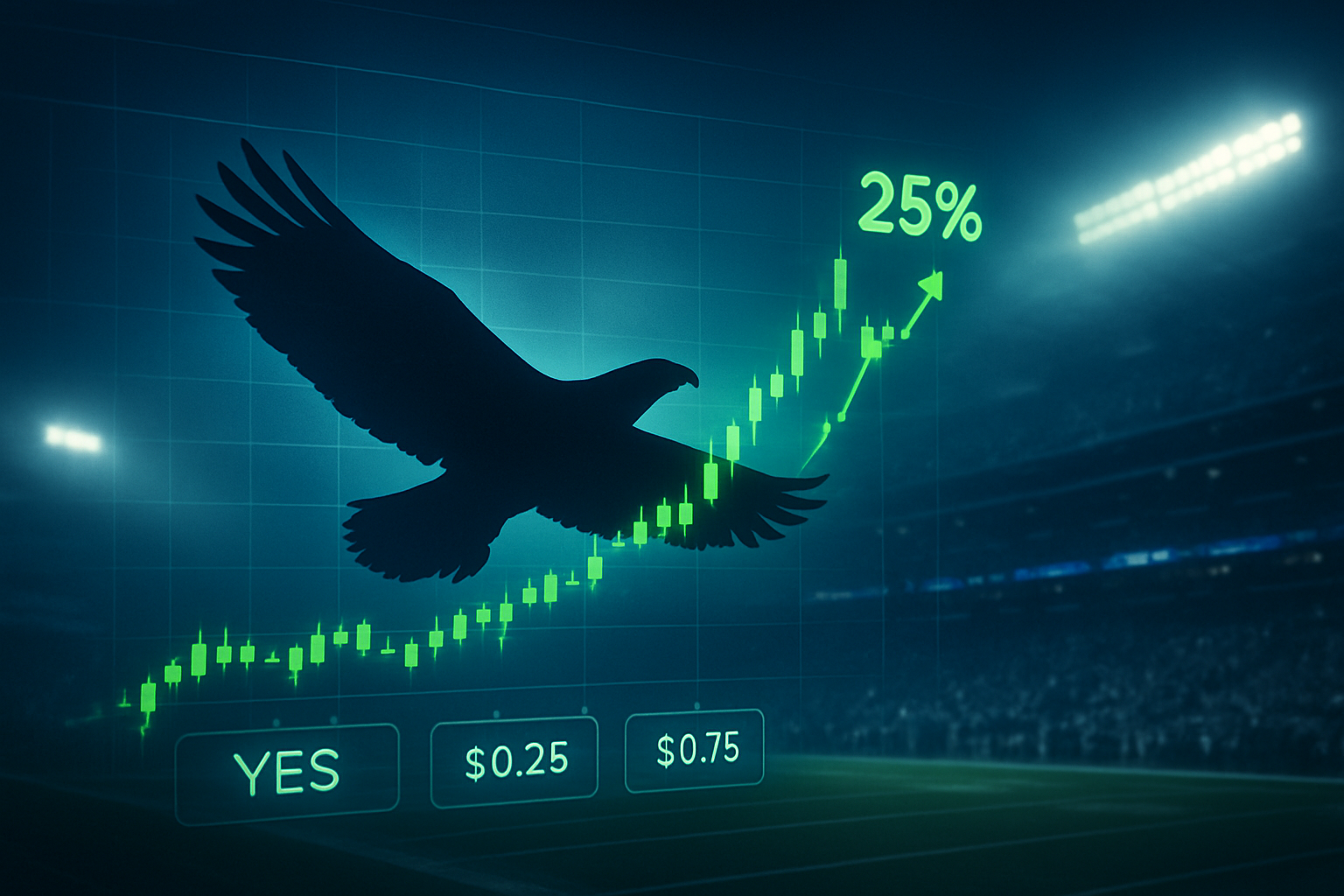
    As the NFL playoffs enter their most high-stakes phase, a clear consensus is emerging not just from the sidelines, but from the high-frequency trading floors of prediction markets. The Seattle Seahawks have officially solidified their position as the favorites to win Super Bowl LX, currently trading at a 25% probability on Kalshi. With the championship game in February 2026 fast approaching, the market reflects a team that has defied preseason expectations and established itself as the NFC’s undisputed powerhouse.

    The surge in Seattle’s price is generating unprecedented interest, marking a departure from traditional gambling narratives. Traders are no longer just "betting" on a team; they are managing positions in a volatile asset class. With a contract price of $0.25 for a "Yes" outcome, the Seahawks represent the most liquid and heavily traded asset on the sports side of the Kalshi exchange, drawing in millions of dollars from participants who view the NFL through the lens of data and probability rather than just team loyalty.

    The Market: What's Being Predicted

    The central prediction market revolves around a straightforward binary question: "Will the Seattle Seahawks win Super Bowl LX?" On Kalshi, this market operates as a peer-to-peer exchange rather than a traditional bookmaker. A "Yes" contract currently trades at $0.25, while a "No" contract sits at $0.75. This pricing implies a 25% chance of Seattle lifting the Lombardi Trophy on February 8, 2026. This is significantly higher than their nearest competitors, the Los Angeles Rams, who are trading at a 21% probability, and the AFC’s frontrunner, the Buffalo Bills, at 15%.

    Unlike traditional sportsbooks such as DraftKings (NASDAQ: DKNG) or FanDuel, owned by Flutter Entertainment (NYSE: FLUT), Kalshi provides a transparent order book where participants can see the depth of the market. Trading volume for Super Bowl LX contracts has skyrocketed in the first two weeks of January 2026, with the Seahawks market alone seeing over $45 million in total volume. The resolution criteria are absolute: the market will pay out $1.00 per contract to "Yes" holders if Seattle wins the game, and $0.00 if any other team takes the title.

    Why Traders Are Betting

    The market’s confidence in Seattle is rooted in a historic 2025-2026 regular season. The Seahawks finished with a franchise-best 14-3 record, securing the No. 1 seed in the NFC. Under second-year head coach Mike Macdonald, the team has implemented a defensive scheme that is currently ranked 2nd in the league for Expected Points Added (EPA) per play allowed. This defensive dominance is a primary driver for "smart money" traders who value statistical consistency over flashy offensive bursts.

    Furthermore, the "Darnold Redemption" narrative has moved from a sports talk radio trope to a quantifiable market factor. Quarterback Sam Darnold, who signed with Seattle in the 2025 offseason, has revitalized his career, supported by record-breaking receiver Jaxon Smith-Njigba. Traders are increasingly using "exit-ability" strategies on Kalshi—buying Seahawks contracts before high-leverage games and selling them mid-game or after a victory to lock in profits. This dynamic trading, which allows participants to liquidate their positions at any time, has attracted a more sophisticated "financial trader" demographic compared to the "buy-and-hold" nature of traditional sports bets.

    Broader Context and Implications

    The rise of the Super Bowl LX market on Kalshi signals a major shift in the regulatory and cultural landscape of sports. Kalshi operates as a Designated Contract Market (DCM) regulated by the Commodity Futures Trading Commission (CFTC). By framing these markets as "event contracts" rather than gambling, Kalshi has managed to navigate federal laws to offer sports trading in states where traditional sports betting remains legally murky or prohibited, such as California and Texas. This has opened a massive, previously untapped liquidity pool.

    The broader implication is the "financialization" of sports. Traders are increasingly treating NFL outcomes like corn futures or treasury yields. Recent legal victories, including a temporary restraining order in Tennessee that prevented state regulators from blocking Kalshi’s operations, suggest that the "exchange model" may soon become the standard for high-volume sports participation. This market reveals a public sentiment that is more cold-blooded and analytical than what is found in sportsbooks, often serving as a more accurate forecaster of game outcomes than traditional media pundits.

    What to Watch Next

    The immediate focus for traders is the NFC Divisional Round, scheduled for January 17, 2026. The Seahawks are set to face the San Francisco 49ers, a team they beat twice in the regular season. Currently, Kalshi markets give Seattle a 73% probability of winning this specific game. Any deviation from a dominant performance—or, more critically, an injury to a key player like Darnold or Smith-Njigba—could cause the Super Bowl win probability to swing wildly in either direction.

    Key milestones to monitor over the next three weeks include the release of official injury reports and the results of the AFC Championship. If the Buffalo Bills or the Kansas City Chiefs emerge from the AFC with significant injuries, Seattle’s "Yes" contract could easily climb toward the $0.30 or $0.35 mark as their path to the trophy becomes statistically easier.

    Bottom Line

    As of mid-January 2026, the Seattle Seahawks are the undisputed kings of the prediction markets. Their 25% probability on Kalshi reflects a rare alignment of statistical dominance and market liquidity. For the sports fan, it's a reason to cheer; for the prediction market trader, it's a high-confidence position in a season defined by NFC West dominance.

    What this market truly highlights is the evolution of how we quantify uncertainty in sports. By moving away from the "house-banked" model of traditional books and toward the peer-to-peer exchange model, Kalshi has provided a more accurate, transparent, and flexible tool for forecasting. Whether the Seahawks ultimately win or lose, the way we predict the Super Bowl has changed forever, turning every touchdown into a tick on a financial chart.


    This article is for informational purposes only and does not constitute financial or betting advice. Prediction market participation may be subject to legal restrictions in your jurisdiction.

    PredictStreet focuses on covering the latest developments in prediction markets.
    Visit the PredictStreet website at https://www.predictstreet.ai/.

  • The “Vance Heir” Trade: JD Vance Emerges as 2028 Frontrunner as Prediction Markets Take Center Stage in 2026

    The “Vance Heir” Trade: JD Vance Emerges as 2028 Frontrunner as Prediction Markets Take Center Stage in 2026

    As the calendar turns to January 16, 2026, the political landscape is already vibrating with the energy of the next race for the White House. While the 2024 inauguration feels like a recent memory, prediction markets are signaling that the 2028 cycle has effectively begun. Vice President JD Vance has solidified his position as the early betting favorite to succeed Donald Trump, commanding a dominant lead on the regulated exchange Kalshi. Traders are currently pricing in a 28% probability that Vance will win the 2028 Presidency, a figure that has remained resilient despite a turbulent first year for the second Trump administration.

    The surge in interest isn't just about the 2028 horizon; it's about the immediate reality of 2026. With markets like "Who will be President on December 31, 2026?" seeing millions in volume, prediction platforms have evolved into a real-time sentiment gauge for the stability of the current administration. The convergence of high-stakes politics and liquid trading has turned JD Vance into a "blue-chip" asset for political bettors, reflecting both his consolidated power within the MAGA movement and the market's expectation of a smooth succession.

    The Market: What's Being Predicted

    The primary theater for this speculation is Kalshi, the first federally regulated prediction market under the Commodity Futures Trading Commission (CFTC). On Kalshi, the "2028 Presidential Election" market has become one of the most liquid contracts in the history of the platform, which recently reported a staggering $4.5 billion in monthly trading volume for late 2025. Vance’s current price of 28 cents (representing a 28% probability) puts him significantly ahead of his nearest Republican rival, Secretary of State Marco Rubio, who sits at 15%.

    Meanwhile, on Polymarket, the decentralized platform that recently gained legal visibility in the U.S. via a landmark 2025 CFTC agreement, Vance holds a similar 27% lead. Interestingly, these markets aren't just tracking the eventual winner. They are segmented into "Who will be the 2028 Republican Nominee?" where Vance is currently trading at a 48% implied probability. The resolution criteria for these contracts are strictly defined: the person who is inaugurated on January 20, 2029, or the individual who officially secures the party nomination at the 2028 convention.

    The liquidity in these markets has reached a "super-cycle" phase. Since Alphabet Inc. (NASDAQ: GOOGL) integrated Kalshi and Polymarket data into Google Finance in late 2025, retail participation has skyrocketed. This has narrowed the spreads and made the odds increasingly sensitive to daily news cycles, turning the 2028 race into a live, fluctuating scoreboard long before a single ballot is cast.

    Why Traders Are Betting

    The market’s confidence in Vance is driven by a combination of "muscular" foreign policy successes and his role as the administration's primary domestic messenger. The early January 2026 capture of Venezuelan leader Nicolás Maduro by U.S. forces provided a massive "strength" narrative that benefited the entire ticket. While Secretary Rubio managed the diplomatic fallout, traders viewed Vance’s oversight of regional stabilization as proof of his executive readiness.

    However, the "Vance Trade" is also a bet on internal party dynamics. The recent appointment of Donald Trump Jr. to the advisory boards of both Kalshi and Polymarket has been interpreted by some traders as a signal of the family's blessing for Vance as the "heir apparent." This has stifled the odds for other potential challengers like Florida Governor Ron DeSantis, who has seen his 2028 probability languish in the single digits throughout early 2026.

    Contrarian traders, however, point to Vance’s approval ratings as a reason to "sell" his current high. While he enjoys an 89% favorability rating with the GOP base, his net disapproval among independents remains high at -12 points. Some whales on Polymarket have been taking large positions on California Governor Gavin Newsom (currently at 21%), wagering that Vance’s hardline stance on the "TrumpRx" healthcare plan—the administration's proposed successor to the Affordable Care Act—will eventually alienate swing voters as the 2026 midterm elections approach.

    Broader Context and Implications

    The rise of JD Vance in the 2026 markets highlights a broader shift in how the public consumes political news. Prediction markets are no longer fringe hobbies; they are becoming the primary lens through which political viability is measured. This shift was accelerated when News Corp (NASDAQ: NWSA), the parent company of the Wall Street Journal, named Polymarket its exclusive prediction partner for political coverage. The market is now seen as more reactive—and often more accurate—than traditional polling, which struggled to capture the nuances of the 2024 electorate.

    This real-time sentiment gauge also provides a fascinating look at presidential succession. The market * "Trump out as President before 2027?"* has seen over $2 million in volume on Polymarket. While the probability remains low (roughly 12%), the existence of the market forces a level of transparency regarding the President's health and the Vice President's role that was previously confined to whispered rumors in D.C.

    Regulators are watching closely. The CFTC's decision to allow these markets to flourish has created a new data point for economic stability. Because political outcomes in 2026 and 2028 are tied to tax policy and trade tariffs, the "Vance odds" are increasingly used by hedge funds to hedge against potential shifts in the American regulatory environment.

    What to Watch Next

    The immediate future of the Vance market depends on the 2026 midterm elections. If the GOP holds the House and Senate under the "Trump-Vance" banner, Vance’s 2028 odds are expected to climb above 35%. Conversely, a "renegade" faction of the House recently voted to extend ACA subsidies against the administration's wishes; if Vance cannot corral his own party on this signature issue by the summer of 2026, his "executive competence" premium may evaporate.

    Key dates to monitor include the upcoming March 2026 release of the administration's "TrumpRx" details and the quarterly health disclosures from the White House. Any movement in the "President in 2026" markets will immediately spill over into the 2028 winner markets. Additionally, keep an eye on Marco Rubio’s travel schedule; if the Secretary of State begins making frequent stops in Iowa or New Hampshire, expect a "Rubio Rally" that could compress Vance's lead.

    Bottom Line

    As of mid-January 2026, JD Vance is the undisputed heavyweight of the prediction market world. His 28% probability on Kalshi reflects a market that sees him not just as a Vice President, but as the inevitable successor to the most dominant political movement of the 21st century. The integration of these markets into mainstream financial tools like Google Finance suggests that the "wisdom of the crowd" is now the definitive metric for political momentum.

    Ultimately, Vance’s position as the favorite is a testament to the "MAGA consolidation" trade. While traditional polls show a divided country, the betting markets show a party that has largely decided on its next leader. However, as any seasoned political trader knows, 2028 is an eternity away in market terms. While Vance holds the "pole position" today, the high-volume succession markets of 2026 remind us that in politics, the only certainty is the next fluctuation in the price.


    This article is for informational purposes only and does not constitute financial or betting advice. Prediction market participation may be subject to legal restrictions in your jurisdiction.

    PredictStreet focuses on covering the latest developments in prediction markets.
    Visit the PredictStreet website at https://www.predictstreet.ai/.
  • Shutdown Showdown: Markets Signal 30% Chance of a January 31 Federal Furlough

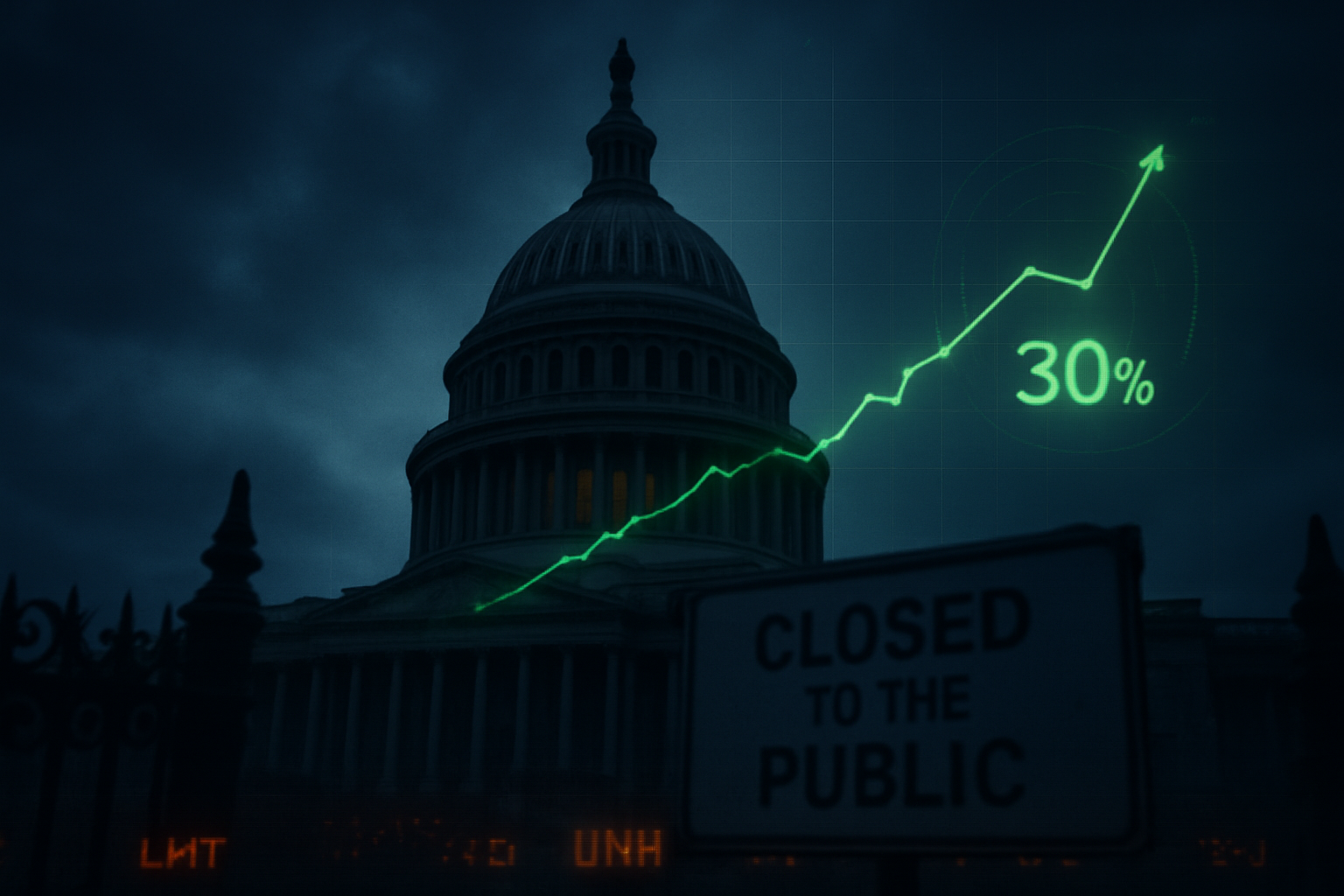
    Shutdown Showdown: Markets Signal 30% Chance of a January 31 Federal Furlough

    As the calendar turns toward late January 2026, a familiar sense of dread has returned to the halls of Congress and the screens of global investors. After the record-breaking 43-day shutdown that paralyzed the federal government in late 2025, a new "funding cliff" is fast approaching on January 31. This time, however, the uncertainty is being quantified in real-time by a surging prediction market on Kalshi, where traders are currently pricing the odds of a government shutdown at a precarious 30%.

    The market is not just a niche interest for political junkies; it has become a high-stakes arena for institutional hedging and retail speculation. With over $1.6M in total volume traded and more than 880,000 open positions, the Kalshi contract "Will the government shut down on January 31?" has become a primary barometer for the success—or failure—of high-stakes budget negotiations between the White House and a divided Congress.

    The Market: What’s Being Predicted

    The specific market in question focuses on the midnight deadline of January 30, 2026. If a new funding agreement is not reached, the federal government will enter a partial shutdown on January 31. On Kalshi, the leading regulated prediction market in the U.S., the "Yes" contracts are currently trading at approximately 30 cents, implying a 30% probability of a shutdown. This represents a significant bounce from early January, when odds dipped to 20% following the passage of a bipartisan "minibus" spending package.

    Unlike traditional polling, the Kalshi market provides a 24/7 liquidity pool that reacts instantly to legislative maneuvers. The resolution of the contract is tied specifically to the official website of the U.S. Office of Personnel Management (OPM). If the OPM site displays a notice of a lapse in appropriations at 10:00 AM ET on January 31, the market resolves to "Yes." Interestingly, Jan 31, 2026, falls on a Saturday—a detail that has led to a fascinating "technicality" gap between regulated platforms and decentralized ones like Polymarket, where traders are debating whether a weekend lapse without a formal Monday furlough notice counts as a "shutdown."

    Why Traders Are Betting

    The volatility in the odds is driven by three primary legislative "poison pills." First is the expiration of the Enhanced Premium Tax Credits for the Affordable Care Act (ACA), which officially lapsed on December 31, 2025. Democrats have signaled they will block any further funding bills unless these subsidies are restored, while Senate Republicans are demanding strict eligibility reforms. This "subsidy cliff" has already caused healthcare premiums to spike, and traders are watching the healthcare sector, particularly UnitedHealth Group (NYSE: UNH), for signals on how much pressure the industry is putting on lawmakers.

    Second, the market is reacting to the shadow of the "One Big Beautiful Bill Act" (OBBBA), the massive tax and spending law passed in mid-2025. While that bill funded some agencies through late 2026, nine major appropriations bills—including those for Defense, Homeland Security, and Justice—remain on the chopping block for January 31.

    Finally, the market has been influenced by "whale" activity. On decentralized platforms, a trader known by the pseudonym "Burdensome-Mix" has reportedly taken a massive "Yes" position, leading to rumors of insider information regarding the breakdown of Senate negotiations. This activity has been so pronounced that it spurred the introduction of the "Public Integrity in Financial Prediction Markets Act of 2026," a proposed bill by Rep. Ritchie Torres aimed at preventing federal officials from trading on non-public legislative timelines.

    Broader Context and Implications

    The 30% odds reflect a market that is skeptical but not yet panicked. For defense titans like Lockheed Martin (NYSE: LMT) and RTX Corporation (NYSE: RTX), the market serves as a "payment risk" index. Recent executive orders from the Trump administration have already restricted stock buybacks and dividends for defense contractors until production targets are met. A shutdown on January 31 would halt progress payments on major weapon systems, creating a liquidity crunch that these firms are desperate to avoid.

    Historically, prediction markets have been remarkably accurate at front-running Congressional "deals." In the 2025 shutdown, the Kalshi market predicted the resolution four days before the final bill was signed. Today, the 30% probability suggests that while the rhetoric on Capitol Hill is heated, "smart money" still believes there is a 70% chance that a last-minute Continuing Resolution (CR) or a second "minibus" will be hammered out.

    Furthermore, the divergence between Kalshi and Polymarket—where a "funding lapse" is priced at 56% but a "shutdown" at 29%—highlights the nuance of these markets. Traders expect the funding to technically expire, but many believe a deal will be reached over the weekend of January 31 before the "furlough" reality hits federal workers on Monday morning.

    What to Watch Next

    The most immediate catalyst for the market is scheduled for January 22, 2026, when the CEO of UnitedHealth Group is set to testify before a Senate committee regarding the expiration of ACA subsidies. If the testimony results in a breakthrough or a "hardening" of partisan lines, expect the 30% odds to move violently in either direction.

    Another key milestone is the progress of the "Homeland Security and Border Security" funding bill. This has remained the most contentious piece of the appropriations puzzle. If a "clean" funding bill for this department fails to advance by January 25, the "Yes" odds on Kalshi will likely surge toward 50%. Traders are also keeping a close eye on the Senate's "minibus" package; its failure to clear a 60-vote threshold this week would be a clear signal that a lapse is imminent.

    Bottom Line

    The Kalshi market for the January 31 shutdown is more than just a betting pool; it is a sophisticated data point in an era of extreme political polarization. The current 30% probability suggests a "cautious optimism" among traders, but the $1.6M in volume indicates that the stakes could not be higher. For the first time, prediction markets are acting as a real-time check on Congressional grandstanding, forcing lawmakers to contend with a public and transparent probability of their own failure.

    As we approach the January 30 deadline, the intersection of healthcare subsidies, defense spending restrictions, and prediction market transparency will define the start of 2026. Whether the government remains open or shutters its doors, the message from the markets is clear: the era of "wait and see" politics is being replaced by the era of "price it in."


    This article is for informational purposes only and does not constitute financial or betting advice. Prediction market participation may be subject to legal restrictions in your jurisdiction.

    PredictStreet focuses on covering the latest developments in prediction markets.
    Visit the PredictStreet website at https://www.predictstreet.ai/.
  • The $400,000 Maduro “Snatch-and-Extract” Payout: Prediction Markets Face an Existential Insider Trading Crisis

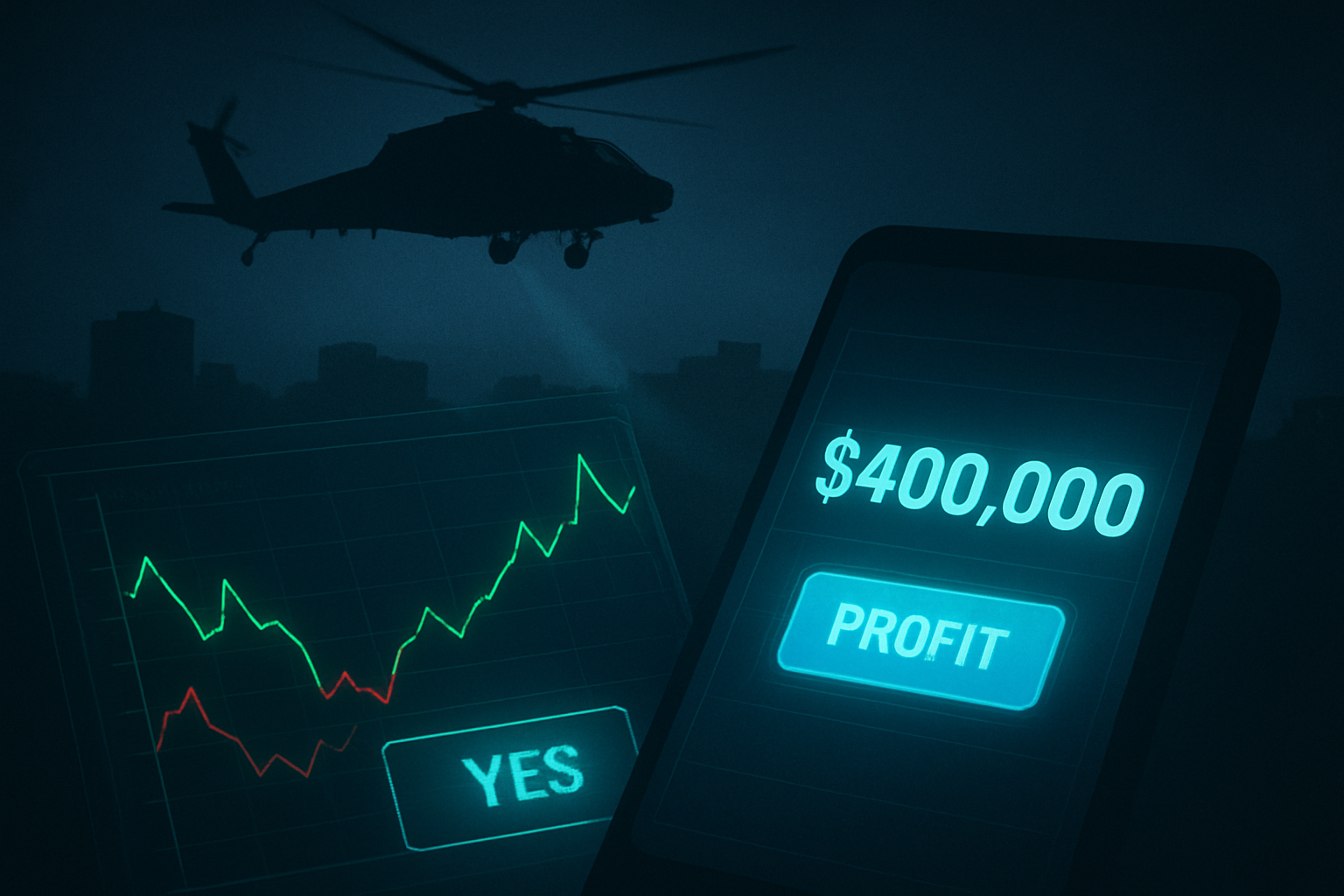
    The $400,000 Maduro “Snatch-and-Extract” Payout: Prediction Markets Face an Existential Insider Trading Crisis

    On January 3, 2026, as U.S. Special Operations forces executed "Operation Absolute Resolve"—a daring nighttime raid on Nicolás Maduro’s compound in Caracas—the geopolitical landscape shifted in an instant. But while the world watched the dramatic extraction of the Venezuelan leader, a storm was already brewing in the digital trenches of prediction markets. Just hours before the first official confirmation of the raid hit the news wires, an anonymous trader on Polymarket placed a series of aggressive bets totaling $32,000 on Maduro’s departure. When the dust settled, that trader walked away with over $400,000, sparking a firestorm of controversy that has reached the highest levels of government in New York and Washington, D.C.

    The market in question, which asked if Maduro would be "out of office by January 31, 2026," saw its odds skyrocket from a 15% long-shot to a 99% certainty in a matter of minutes—occurring precisely as military assets were moving into position. This uncanny timing has transformed a windfall profit into a federal flashpoint. Now, as Maduro sits in federal custody at the Metropolitan Detention Center in Brooklyn, New York, lawmakers are asking a harrowing question: Did someone monetize classified military intelligence on a decentralized betting platform?

    The Market: What's Being Predicted

    The focus of the current controversy is a specific contract hosted on Polymarket, the world’s largest decentralized prediction platform. The market, titled "Maduro out of power by January 31," became a focal point for high-stakes speculation throughout late 2025 as the U.S. ramped up its narco-terrorism rhetoric against the Venezuelan regime. While Polymarket operates on a blockchain-based, decentralized model, its influence has forced regulated competitors like Kalshi and Interactive Brokers Group, Inc. (NASDAQ: IBKR)—through its ForecastEx exchange—to closely monitor their own geopolitical listings.

    Trading volume for the Maduro contract exceeded $15 million in the final 48 hours before the raid, representing some of the highest liquidity seen for a non-election event in recent years. The resolution criteria were straightforward: Maduro had to effectively lose control of the state or be removed from the presidential palace. However, the market’s resolution was not without drama. A secondary market regarding a U.S. "invasion" of Venezuela saw its odds crash after Polymarket’s decentralized oracles ruled that a "snatch-and-extract" mission did not constitute a full-scale territorial invasion, leading to millions in losses for those who failed to read the fine print of the contract terms.

    Why Traders Are Betting

    The sudden surge in betting activity was initially attributed to the Trump administration’s increasingly hawkish stance toward the Cartel de los Soles. Analysts noted a steady climb in "Yes" odds following the unsealing of a superseding indictment against Maduro on January 3, but the truly anomalous activity occurred in the middle of the night, just three hours before the USS Iwo Jima's helicopters were spotted over Caracas.

    Whale activity—large-scale trades by high-net-worth individuals—has become a hallmark of 2026 prediction markets. In this case, the $32,000 bet was placed by a newly created account with no prior trading history, a "red flag" that suggested the user was not a seasoned political analyst but someone with "asymmetric information," according to industry experts. This contrasts sharply with traditional forecasting methods, such as those used by geopolitical think tanks, which had predicted a 20% chance of a military extraction, citing the high risk of a broader regional conflict.

    Broader Context and Implications

    The "Maduro Trade" has provided fresh ammunition for critics of prediction markets who argue they have become "intelligence casinos." In Washington, Rep. Maxine Waters (D-CA) and the House Financial Services Committee have launched a formal investigation into whether executive branch insiders or military personnel leveraged non-public information to profit from the strike. The investigation is also looking into whether platforms like Robinhood Markets, Inc. (NASDAQ: HOOD), which expanded its prediction market offerings in 2025, have sufficient safeguards to prevent "war-profiteering."

    The regulatory pressure is intensifying on both Polymarket and Kalshi. In New York, Representative Ritchie Torres (D-NY) has introduced the Public Integrity in Financial Prediction Markets Act of 2026. This legislation aims to extend the STOCK Act—which prohibits members of Congress from trading stocks on non-public information—to the burgeoning world of prediction contracts. "The most corrupt corner of Washington is the one where self-dealing meets matters of war and peace," Torres stated in a recent press conference. Meanwhile, the Commodity Futures Trading Commission (CFTC), under pressure from Senator Elizabeth Warren (D-MA), is being urged to tighten its grip on how exchanges like CME Group Inc. (NASDAQ: CME) or Kalshi handle events of national security.

    What to Watch Next

    The immediate focus for traders and regulators alike is the upcoming federal trial of Nicolás Maduro in Brooklyn. Prediction markets are already active with contracts regarding the verdict, the length of the trial, and the likelihood of a plea deal. On Kalshi, a new market asking "Who will lead Venezuela on July 1, 2026?" currently shows Delcy Rodríguez as a narrow favorite at 52%, reflecting the profound uncertainty following the collapse of the Maduro administration.

    More importantly, the industry is watching the progress of the Torres bill. If passed, it would represent the most significant regulatory overhaul of prediction markets in a decade, potentially requiring platforms to implement strict "Know Your Customer" (KYC) protocols that match those of major stock exchanges. The outcome of the House investigation into the $400,000 payout could also lead to the first-ever criminal prosecution for "insider trading" on a prediction market contract, a move that would set a massive legal precedent.

    Bottom Line

    The Maduro payout controversy highlights a fundamental tension in the world of modern forecasting: Prediction markets are unparalleled in their ability to aggregate information and provide real-time "truth," but they are also uniquely vulnerable to those who already know the truth. The $400,000 profit made in the shadows of "Operation Absolute Resolve" has proved that these markets are no longer just a niche interest for policy wonks; they are now a significant financial frontier where the stakes are measured in human lives and national security.

    As we move further into 2026, the survival of platforms like Polymarket and Kalshi will depend on their ability to convince regulators that they can police their own "whales." While the Maduro capture was a triumph for U.S. foreign policy, for the prediction market industry, it may be remembered as the moment the "Wild West" era finally came to an end.


    This article is for informational purposes only and does not constitute financial or betting advice. Prediction market participation may be subject to legal restrictions in your jurisdiction.

    PredictStreet focuses on covering the latest developments in prediction markets.
    Visit the PredictStreet website at https://www.predictstreet.ai/.

  • The Trillion-Dollar Horizon: Why Prediction Markets are the Next Great Asset Class

    The Trillion-Dollar Horizon: Why Prediction Markets are the Next Great Asset Class

    As of January 16, 2026, the United States prediction market ecosystem has shifted from a speculative niche into a cornerstone of the modern financial landscape. Once defined by the volatility of election cycles, the sector is now witnessing an institutional-grade transformation. According to a landmark analysis by Citizens Financial Group (NYSE: CFG) and a detailed sector report from Eilers & Krejcik Gaming (EKG), the industry is no longer just "growing"—it is on a direct flight path toward exceeding $1 trillion in annual trading activity as it matures into a universal tool for hedging and entertainment.

    Current market data shows that the industry's annual trading volume has already surged to an estimated $13 billion to $15 billion in late 2025, representing a staggering tenfold increase from 2024 levels. This "exponential scaling" phase has been ignited by a confluence of regulatory clarity, the entry of major retail brokerages, and a massive shift in consumer behavior that prizes peer-to-peer event contracts over traditional sports betting or static financial derivatives.

    The Market: What's Being Predicted

    The central "prediction" being tracked by analysts is the timeline for the U.S. ecosystem to hit the $1 trillion mark in annual volume. EKG’s research, titled “U.S. Prediction Markets: How Big, How Fast, What’s Next?”, identifies the end of the decade as the "plausible ceiling" for this milestone. For context, the industry is currently operating at a revenue run-rate of approximately $2 billion annually, a figure Citizens Financial Group (NYSE: CFG) projects will quintuple to over $10 billion by 2030.

    The dominant player in this space is currently Kalshi, which has secured a commanding 66% market share as of early 2026. Kalshi’s dominance is largely attributed to its status as a federally regulated exchange under the CFTC and its high-profile integration with Robinhood (NASDAQ: HOOD). This partnership has effectively democratized event trading, allowing millions of retail investors to swap event contracts with the same ease as they trade stocks.

    While Kalshi leads on the domestic regulated front, Polymarket remains a titan in the global and on-chain sectors. Despite sitting at second place in total U.S. volume, Polymarket boasts a valuation near $12 billion and continues to dominate the "crypto-native" and international markets. The competition between these platforms has created a liquidity-rich environment, where weekly volumes on Kalshi alone have recently topped $2 billion.

    The resolution criteria for this "trillion-dollar" forecast depend on three main factors: continued federal regulatory support, the successful integration of sports event contracts into peer-to-peer formats, and the expansion of prediction markets into corporate finance and M&A hedging.

    Why Traders Are Betting

    The massive capital flows into prediction markets are no longer just "political betting." EKG’s analysis reveals that Sports has become the primary engine of the market, projected to account for 44% (~$435 billion) of the eventual trillion-dollar volume. Traders are fleeing traditional sportsbooks—operated by the likes of DraftKings (NASDAQ: DKNG) and Flutter Entertainment (NYSE: FLUT), the parent of FanDuel—in favor of prediction markets because event contracts offer superior odds and lower "juice" (the vigorish) by allowing users to bet against each other rather than a house.

    Finance and macroeconomics have emerged as the second-largest pillar, accounting for 31% (~$310 billion) of projected volume. In early 2026, it is common practice for hedge funds and retail traders to use Kalshi or Polymarket to hedge against CPI prints, Federal Reserve rate decisions, and even the daily flows of Bitcoin ETFs. These "macro-mini" contracts provide a more precise tool for hedging specific news risks than traditional equity options.

    The "financialization of everything" is the primary driver here. As Robinhood (NASDAQ: HOOD) recently reported, event contracts have become their fastest-scaling product line in history, now accounting for 10% of the firm's total revenue. Traders are betting on prediction markets because they provide a "truth machine" that aggregates information more efficiently than traditional media or polling, offering a clear, real-time probability for any event.

    Broader Context and Implications

    This shift represents a fundamental "blurring of the lines" between gambling, finance, and social media. The rise of prediction markets has forced a re-evaluation of how the public consumes information. In 2025, during several high-stakes geopolitical events, prediction market odds were cited more frequently by news outlets than traditional expert commentary, as the "money on the line" was viewed as a more reliable indicator of reality.

    However, this growth has not been without friction. While the CFTC has largely accepted event contracts at the federal level, a "regulatory split" has emerged. In early 2026, states like Connecticut and Nevada issued cease-and-desist orders against platforms offering sports-based event contracts, arguing they constitute unlicensed gambling. This jurisdictional battle is the most significant hurdle on the road to the $1 trillion milestone.

    The broader implication is the birth of an "Information Economy" where news is not just consumed, but traded. The historical accuracy of these markets—which outperformed traditional polls by a wide margin in the 2024 and 2025 cycles—has given them a level of institutional credibility that was unthinkable five years ago. This has led companies to explore internal prediction markets for forecasting project deadlines and supply chain disruptions.

    What to Watch Next

    The most critical milestone to watch in the coming months is the outcome of the state-level legal challenges. If Kalshi and Robinhood (NASDAQ: HOOD) can successfully argue that their contracts are financial instruments rather than gambling products in state courts, it will clear the way for a massive influx of liquidity from states that have previously banned online sports betting.

    Additionally, the expansion of "Combos"—peer-to-peer parlay products—is expected to be a major volume driver throughout 2026. Watch for traditional sportsbooks like DraftKings (NASDAQ: DKNG) to respond; many analysts expect the legacy operators to launch their own exchange-style products by the end of the year to combat the drain on their user bases.

    Finally, keep an eye on institutional adoption. As more Fortune 500 companies begin using event contracts to hedge against specific regulatory or weather-related risks, the "Finance & Crypto" segment of the market could grow even faster than EKG’s current projections.

    Bottom Line

    The transition of prediction markets from a fringe curiosity to a trillion-dollar ecosystem is the defining financial story of the mid-2020s. The EKG and Citizens Financial reports underscore a reality that is already visible on the screens of millions of traders: the world is increasingly viewing "events" as an asset class.

    Whether it is a Fed rate hike, the outcome of the Super Bowl, or the success of a blockbuster movie, the ability to trade these outcomes in a transparent, peer-to-peer environment is a revolutionary shift. While regulatory hurdles at the state level remain a significant variable, the momentum behind the "truth machine" suggests that the $1 trillion annual volume mark is not a matter of if, but when.

    PredictStreet focuses on covering the latest developments in prediction markets. Visit the PredictStreet website at https://www.predictstreet.ai/.


    This article is for informational purposes only and does not constitute financial or betting advice. Prediction market participation may be subject to legal restrictions in your jurisdiction.