
Tag: Investing

  • The RNAi Powerhouse: A Deep Dive into Alnylam Pharmaceuticals’ Path to the S&P 500

    The RNAi Powerhouse: A Deep Dive into Alnylam Pharmaceuticals’ Path to the S&P 500

    As the calendar turns to 2026, Alnylam Pharmaceuticals (Nasdaq: ALNY) stands at the threshold of a new era. Once a speculative pioneer in the arcane world of RNA interference (RNAi), the Cambridge-based company has matured into a biopharmaceutical titan with a market capitalization exceeding $50 billion. Today, Alnylam is no longer just a "biotech story"; it is a massive revenue-generating machine. With a pivotal transition to profitability achieved in late 2025 and its flagship drug, Amvuttra, successfully penetrating the high-stakes cardiomyopathy market, Alnylam has emerged as the most anticipated candidate for inclusion in the S&P 500. For investors, the company represents a rare blend of "orphan drug" stability and "blockbuster" growth potential.

    Historical Background

    Founded in 2002, Alnylam was built on a scientific breakthrough that earned the Nobel Prize in 2006: the discovery of RNA interference. The company’s journey, however, was far from linear. In its first decade, Alnylam weathered a "RNAi winter" as major partners like Roche and Novartis abandoned the field due to delivery challenges—the difficulty of getting RNA molecules into the right cells without triggering a toxic immune response.

    Under the long-term leadership of founding CEO John Maraganore and his successor Yvonne Greenstreet, Alnylam perfected the "GalNAc" delivery platform, which effectively steered RNAi to the liver. This persistence culminated in the 2018 FDA approval of Onpattro, the world’s first-ever RNAi therapeutic. Since then, the company has successfully commercialized five medicines, transforming from a research lab into a global commercial enterprise.

    Business Model

    Alnylam’s business model is built on the "Platform Effect." By utilizing its proprietary RNAi technology, the company can "silence" disease-causing genes before they ever produce harmful proteins. This approach offers several distinct advantages:

    1. Productivity: RNAi drug discovery is more predictable than traditional small-molecule chemistry.
    2. Durability: Many Alnylam drugs require only quarterly or biannual injections, creating high barriers to entry and strong patient adherence.
    3. Recurring Revenue: The company focuses on chronic, genetic, and metabolic conditions requiring lifelong treatment.
    4. Royalty Streams: Beyond its own sales, Alnylam earns significant royalties from partners like Novartis (for the cholesterol drug Leqvio) and Sanofi (for fitusiran).

    Stock Performance Overview

    Alnylam’s stock has been a standout performer in the large-cap biotech space.

    • 1-Year Performance (2025): The stock enjoyed a "breakout year," rising approximately 66% in 2025. This surge was fueled by the FDA expansion of vutrisiran (Amvuttra) into ATTR-CM and the company’s first quarter of non-GAAP profitability.
    • 5-Year Performance: Looking back to early 2021, the stock has more than tripled, significantly outperforming the Nasdaq Biotechnology Index (IBB).
    • 10-Year Performance: Long-term shareholders have seen nearly 500% returns, a testament to the company’s success in moving from clinical-stage losses to commercial-stage gains.

    Financial Performance

    In 2025, Alnylam crossed the "Rubicon" of biotechnology: sustainable financial self-sufficiency.

    • Revenue Growth: Total product revenues for FY 2025 are estimated at approximately $3.0 billion, a massive jump from $1.65 billion in 2024.
    • Profitability: The company reported its first non-GAAP net income in Q3 2025 ($44 million), driven by the explosive launch of Amvuttra in cardiomyopathy.
    • Balance Sheet: Alnylam maintains a robust cash position of over $2.4 billion, providing a sufficient cushion for its aggressive R&D expansion without the need for dilutive equity raises.
    • Valuation: While trading at a premium to established "Big Pharma" on a P/E basis, its Price-to-Sales ratio has normalized as revenue catches up to its $54 billion valuation.

    Leadership and Management

    CEO Dr. Yvonne Greenstreet has been praised for her disciplined execution of the "Alnylam P5x25" strategy. Her leadership has been defined by a shift from rare diseases to "population health" indications. Under her tenure, the management team has successfully navigated complex regulatory hurdles and optimized the company’s commercial footprint in Europe and Asia. The board remains a "who’s who" of industry veterans, maintaining a reputation for high governance standards and strategic stability.

    Products, Services, and Innovations

    The crown jewel of the current portfolio is Amvuttra (vutrisiran). Following the landmark HELIOS-B trial results, which showed a ~30% reduction in mortality for patients with ATTR-cardiomyopathy, the drug is now positioned as a first-line standard of care.

    • Rare Disease Stable: Givlaari (porphyria) and Oxlumo (hyperoxaluria) continue to provide steady, high-margin cash flow.
    • The "Next Big Thing": Zilebesiran, an RNAi for hypertension being developed with Roche (OTC: RHHBY), is currently in Phase 3 trials. If successful, it could replace daily blood pressure pills with a single injection every six months.
    • CNS Expansion: Alnylam is now moving beyond the liver, with its first candidate for Alzheimer’s disease (mivelsiran) currently in clinical trials.

    Competitive Landscape

    Alnylam faces a competitive "three-front war":

    1. Pfizer (NYSE: PFE): Pfizer’s Vyndaqel has long dominated the ATTR-CM market. However, Amvuttra’s superior clinical data from 2025 is currently driving a massive market-share shift.
    2. BridgeBio Pharma (Nasdaq: BBIO): BridgeBio’s acoramidis is a late entrant to the TTR space, though Alnylam’s "first-mover" subcutaneous advantage remains a strong moat.
    3. Ionis Pharmaceuticals (Nasdaq: IONS): A long-time rival in the RNA space, Ionis is pursuing similar targets but has historically struggled with a less convenient dosing profile.

    Industry and Market Trends

    The biopharma industry in 2026 is defined by "Value-Based Care" and "Long-Acting Therapeutics." Alnylam’s RNAi platform perfectly aligns with these trends. Payers (insurance companies) are increasingly favoring drugs that improve patient adherence through infrequent dosing. Furthermore, the industry is seeing a "flight to quality," where investors are rotating out of speculative pre-revenue biotechs and into profitable "Compounders" like Alnylam.

    Risks and Challenges

    Despite its success, Alnylam is not without risks:

    • Drug Pricing Legislation: The Inflation Reduction Act (IRA) in the U.S. continues to pose a threat to orphan drug exclusivity and pricing power.
    • Clinical Setbacks: As Alnylam moves into complex areas like the Central Nervous System (CNS), the risk of high-profile trial failures increases.
    • Commercial Execution: The "population health" launch for hypertension will require a much larger sales force and a different commercial strategy than rare diseases.

    Opportunities and Catalysts

    • S&P 500 Inclusion: As of January 2026, Alnylam is the largest U.S. company not currently in the S&P 500. Inclusion would trigger mandatory buying from index funds, potentially adding 5–8% to the stock price.
    • M&A Potential: With a proven platform and profitable profile, Alnylam remains a perennial takeover target for cash-rich giants like Roche, Novartis, or even Sanofi.
    • Zilebesiran Data: Further Phase 3 data in hypertension expected in late 2026 could provide the next multi-billion dollar catalyst.

    Investor Sentiment and Analyst Coverage

    Wall Street sentiment is overwhelmingly bullish. Major firms, including Goldman Sachs and Morgan Stanley, have maintained "Overweight" ratings throughout 2025. Institutional ownership is high (over 90%), reflecting the stock’s status as a "core" healthcare holding. Retail sentiment has also improved as the company’s path to profitability removed the primary bear argument against the stock.

    Regulatory, Policy, and Geopolitical Factors

    Alnylam’s global footprint makes it sensitive to international regulatory shifts. The company has proactively engaged with the FDA and EMA to secure "Breakthrough Therapy" designations for its newer pipeline assets. Geopolitically, while Alnylam has minimal exposure to China compared to peers, any changes in U.S. patent law or "March-in rights" regarding drug pricing could impact long-term valuation.

    Conclusion

    Alnylam Pharmaceuticals has successfully navigated the difficult journey from a scientific concept to a profitable pharmaceutical powerhouse. As we enter 2026, the company is defined by its dominance in the TTR market and its promising expansion into common cardiovascular diseases. While the "easy money" from its 2025 breakout may have been made, the pending S&P 500 inclusion and the multi-billion dollar potential of the hypertension pipeline suggest that Alnylam remains a cornerstone investment for those seeking exposure to the future of genetic medicine. Investors should keep a close eye on Q1 2026 index rebalancing and the scale of Amvuttra's market share gains against Pfizer.


    This content is intended for informational purposes only and is not financial advice.

  • The Great Media Pivot: A 2026 Deep Dive into Warner Bros. Discovery (WBD)

    The Great Media Pivot: A 2026 Deep Dive into Warner Bros. Discovery (WBD)

    As we usher in 2026, few companies in the media landscape have undergone a transformation as volatile and consequential as Warner Bros. Discovery (Nasdaq: WBD). Once a poster child for the "debt-laden legacy media" narrative, WBD enters the new year as the centerpiece of a high-stakes bidding war that could redefine the entertainment industry. Following a brutal multi-year restructuring process led by CEO David Zaslav, the company has successfully pivoted from a defensive posture to an offensive one, driven by a rejuvenated theatrical slate and a now-profitable global streaming engine in Max. With the stock experiencing a massive 172% rally throughout 2025, investors are no longer asking if WBD will survive, but rather who will eventually own its unparalleled library of intellectual property.

    Historical Background

    Warner Bros. Discovery was forged in the fires of corporate necessity. The company officially launched on April 8, 2022, the result of a $43 billion merger between Discovery Inc. and the spun-off WarnerMedia division from AT&T. The merger sought to combine Discovery’s unscripted "real-life" programming with WarnerMedia’s premium scripted content and massive film library.

    However, the union’s early years (2022–2024) were fraught with challenges. The company inherited a staggering $55 billion in debt and a messy array of disparate streaming services. Under Zaslav’s leadership, the firm became known for aggressive—and often controversial—cost-cutting measures, including the cancellation of nearly finished films like Batgirl and the removal of content from its platforms to save on residuals. By 2025, these painful maneuvers had achieved their goal: the company emerged leaner, more efficient, and strategically positioned to leverage its franchises like Harry Potter, DC Universe, and Game of Thrones.

    Business Model

    WBD operates as a diversified media conglomerate with three primary revenue pillars, which as of mid-2025 have been internally reorganized to facilitate potential divestitures:

    1. Studios: This remains the crown jewel, encompassing Warner Bros. Pictures, New Line Cinema, and DC Studios. It generates revenue through theatrical distribution, television production for third parties, and licensing its deep 100-year-old library.
    2. Direct-to-Consumer (DTC): Centered around the Max streaming service, this segment earns through monthly subscriptions and a rapidly growing advertising tier. By early 2026, Max has successfully integrated HBO, Discovery content, and live sports.
    3. Networks: This is the legacy "cash cow," featuring CNN, TNT, TBS, and the Discovery suite. While it generates significant cash flow through affiliate fees and linear advertising, it faces secular pressure from the ongoing "cord-cutting" trend.

    Stock Performance Overview

    The performance of WBD shares has been a "tale of two halves." From its inception in 2022 through late 2024, the stock was a persistent underperformer, sliding from the mid-$20s to a devastating low of $7.52 in early 2025. This decline reflected market anxiety over the company’s massive debt and the accelerating decline of linear television.

    However, 2025 marked a historic turnaround. The stock ended 2025 at $28.82, recovering all its post-merger losses. This 172% one-year gain was fueled by the "Golden Year" at the box office, Max reaching sustainable profitability, and the emergence of competing multi-billion dollar acquisition offers from Netflix (Nasdaq: NFLX) and Paramount Skydance.

    Financial Performance

    WBD’s financial profile as of the end of 2025 reflects a company that has successfully stabilized its balance sheet.

    • Revenue: 2025 revenue is estimated at ~$37.8 billion, a slight increase from 2024 as streaming gains offset linear declines.
    • EBITDA: Consolidated Adjusted EBITDA reached ~$9.5 billion, bolstered by the DTC segment contributing its first full year of $1B+ profitability.
    • Free Cash Flow (FCF): The company generated ~$4.5 billion in FCF in 2025, despite significant one-time costs associated with corporate restructuring.
    • Debt Reduction: WBD has been a "deleveraging machine," reducing gross debt to $34.5 billion by Q3 2025, down from over $55 billion at the time of the merger. Net leverage now sits at a much more manageable 3.3x.

    Leadership and Management

    CEO David Zaslav remains a polarizing but effective figure. His strategy has evolved from "survive and deleverage" to "monetize and consolidate." Zaslav has been credited with making the hard decisions necessary to make WBD an attractive acquisition target.

    Supporting him is a management team that includes Jean-Briac Perrette (Streaming & Games) and the duo of James Gunn and Peter Safran, who have taken the reins of DC Studios. The board of directors, heavily influenced by legendary investor John Malone, has remained steadfast in its focus on "sum-of-the-parts" value, recently recommending a structured sale of the company's growth assets.

    Products, Services, and Innovations

    WBD’s competitive edge lies in its "IP-first" approach. In 2025, the company launched the first phase of the new DC Universe with Superman, which became a billion-dollar global hit. Simultaneously, the Harry Potter television series on Max has entered production, representing a decade-long commitment to one of the world’s most valuable franchises.

    Innovation in 2025 also focused on "The Bundle." Max has become a cornerstone of multi-platform bundles with players like Disney (NYSE: DIS) and wireless carriers, significantly reducing churn. Furthermore, WBD’s gaming division, despite some volatility, continues to explore "live service" models using its core IPs, following the massive success of Hogwarts Legacy.

    Competitive Landscape

    WBD competes in an ecosystem dominated by giants.

    • Netflix: While a fierce rival for eyeballs, Netflix has recently emerged as WBD's primary suitor, offering $82.7 billion for the Studio and Streaming assets to bolster its own library.
    • Disney: WBD’s theatrical success in 2025 has bridged the gap with Disney, though WBD still lacks the theme park infrastructure to monetize IP as comprehensively as the House of Mouse.
    • Tech Rivals: Amazon and Apple continue to bid up the price of live sports, a traditional stronghold for WBD’s TNT network.

    Industry and Market Trends

    The media industry in 2026 is defined by two divergent trends: the terminal decline of linear cable and the maturation of the streaming market. For WBD, this has necessitated a "managed retreat" from cable, where they harvest cash to fund the expansion of Max. We are also seeing a period of "Re-Bundling," where consumers exhausted by app-fatigue are returning to consolidated packages—a trend WBD has leaned into aggressively.

    Risks and Challenges

    Despite the 2025 rally, significant risks remain:

    • Linear Erosion: If the decline of cable advertising and affiliate fees accelerates faster than streaming grows, the company’s cash flow could be squeezed.
    • Execution Risk: The relaunch of the DC Universe is in its infancy; a string of theatrical misses could damage the brand's long-term value.
    • Antitrust Hurdles: The potential sale to Netflix faces intense scrutiny from the Department of Justice (DOJ), with regulators concerned about a "streaming monopoly."

    Opportunities and Catalysts

    The primary catalyst for 2026 is the Consolidation Event. With both Netflix and Paramount Skydance in the mix, a bidding war has set a floor for the stock price. Analysts estimate the "sum-of-the-parts" value of the Studios and Max alone could exceed $30 per share.
    Additionally, the successful settlement with the NBA in late 2024 has allowed WBD to retain the iconic Inside the NBA brand and secure international rights, turning a potential disaster into a strategic win for Max’s global expansion.

    Investor Sentiment and Analyst Coverage

    Wall Street sentiment has shifted from "Sell" to "Moderate Buy." Hedge funds have returned to the name, viewing it as a prime merger arbitrage play. As of January 1, 2026, the consensus price target is ~$28.00, though bulls argue that a bidding war could push the price toward $35.00. Institutional investors are particularly pleased with the company's disciplined debt repayment and the clear separation of the "growth" (Max/Studios) and "value" (Linear Networks) segments.

    Regulatory, Policy, and Geopolitical Factors

    The regulatory environment remains the biggest "X-factor." The DOJ’s stance on media consolidation has been historically aggressive, and a Netflix-WBD tie-up would represent the largest vertical integration in history. Geopolitically, WBD’s expansion into European and Asian markets with Max in 2025 has made it more sensitive to local content regulations and international digital services taxes.

    Conclusion

    As 2026 begins, Warner Bros. Discovery stands at a crossroads. It has successfully navigated a period of existential dread, emerging with a repaired balance sheet and a hit-making engine that is once again firing on all cylinders. For investors, WBD is no longer just a "linear television company in decline," but a premier content fortress in the midst of a transformative sale. While regulatory hurdles for its potential merger are daunting, the fundamental value of its IP library ensures that WBD will remain a dominant force in the global "attention economy" for years to come.


    This content is intended for informational purposes only and is not financial advice.

  • Apple in 2026: Navigating the AI Supercycle and a New Era of Leadership

    Apple in 2026: Navigating the AI Supercycle and a New Era of Leadership

    As of January 1, 2026, Apple Inc. (NASDAQ: AAPL) remains the quintessential bellwether of the global technology sector. With a market capitalization fluctuating between $3 trillion and $4 trillion over the past year, the Cupertino-based giant has transitioned from being a mere hardware manufacturer to a pervasive ecosystem of high-margin services and integrated artificial intelligence. Today, Apple sits at a critical crossroads: navigating the most significant leadership transition since the passing of Steve Jobs, while simultaneously defending its "walled garden" against aggressive regulatory maneuvers in both the United States and Europe. This article explores the current state of Apple, analyzing whether its pivot toward "Apple Intelligence" and spatial computing can sustain the parabolic growth investors have enjoyed for the last decade.

    Historical Background

    Founded in 1976 by Steve Jobs, Steve Wozniak, and Ronald Wayne, Apple began as a garage-based hobbyist computer company. Its early years were marked by the success of the Apple II and the revolutionary introduction of the Macintosh in 1984, which brought the graphical user interface to the masses. However, internal friction led to Jobs’s ousting in 1985, followed by a decade of near-bankruptcy.

    The "Second Act" began with Jobs’s return in 1997, leading to a string of hits: the iMac, iPod, and eventually the 2007 launch of the iPhone—a device that fundamentally redefined human communication and commerce. Since Tim Cook took the helm in 2011, Apple’s narrative has shifted from pure innovation to operational excellence and the aggressive expansion of "Services." By 2026, Apple has evolved into a diversified powerhouse where hardware serves as the gateway to a lifetime of high-margin digital subscriptions.

    Business Model

    Apple’s business model is built on the philosophy of vertical integration—owning the hardware, software, and silicon that power its devices. This "walled garden" creates high switching costs for consumers and provides Apple with unparalleled pricing power.

    Revenue is primarily derived from:

    • The iPhone: Still the bedrock of the company, accounting for roughly half of total revenue.
    • Services: Including the App Store, iCloud, Apple Music, Apple Pay, and Apple TV+. This segment reached nearly $100 billion in annual revenue by the end of 2025, boasting margins significantly higher than hardware.
    • Wearables, Home, and Accessories: Featuring the Apple Watch, AirPods, and the burgeoning Vision Pro line.
    • Mac and iPad: Mature product lines that serve as essential tools for professionals and creatives.

    The 2024–2025 period saw the formal integration of "Apple Intelligence" into this model, where AI features are used as a primary catalyst to drive hardware upgrade cycles.

    Stock Performance Overview

    Apple’s stock has remained a cornerstone of institutional and retail portfolios. As of January 1, 2026, the stock is trading near $273.40, reflecting a resilient performance despite macroeconomic headwinds.

    • 1-Year Performance (2025): The stock returned approximately 8%, peaking at $288.62 in December. This was driven by a stronger-than-expected "AI supercycle" with the iPhone 16 and 17.
    • 5-Year Performance: AAPL has delivered a total return of ~104%, doubling its value since early 2021 as it navigated the pandemic and subsequent supply chain recoveries.
    • 10-Year Performance: Long-term shareholders have seen a staggering ~1,050% return. A $10,000 investment on January 1, 2016, would be worth approximately $115,000 today, factoring in splits and dividends.

    Financial Performance

    For the fiscal year ending September 2025, Apple reported record-breaking figures that silenced critics of its growth potential.

    • Revenue: $416.16 billion, a 6.4% increase year-over-year.
    • Net Income: $112.01 billion, marking a significant recovery from 2024 (which was impacted by a one-time €13 billion tax ruling in the EU).
    • Margins: Gross margins expanded to an impressive 46.5%, largely due to the continued growth of Services and the efficiency of Apple’s in-house M-series and A-series silicon.
    • Cash Position: Apple continues to generate massive free cash flow, allowing it to maintain an aggressive share buyback program, which has historically exceeded $70 billion annually.

    Leadership and Management

    The "Tim Cook Era" is entering a period of significant transition. While Cook remains at the helm, 2025 saw a major reshuffling of the executive suite:

    • CFO Succession: Luca Maestri transitioned out of the CFO role on January 1, 2025, succeeded by Kevan Parekh, who has earned praise from analysts for maintaining financial discipline.
    • Operational Shifts: The retirement of COO Jeff Williams in mid-2025 left a void in the "heir apparent" pipeline, with Sabih Khan stepping up to manage the company’s complex global supply chain.
    • The AI Guard: John Giannandrea continues to lead the AI strategy, though his upcoming retirement in 2026 suggests Apple is looking for fresh leadership to helm its generative AI future.

    Products, Services, and Innovations

    The focus of 2025 has been the refinement of Apple Intelligence. Unlike competitors who focused on standalone chatbots, Apple integrated AI into the core OS, emphasizing "on-device processing" for privacy. The full launch of the personal context-aware Siri (iOS 18.4) in early 2025 marked the true beginning of this era.

    The Vision Pro remains a prestige product. While 2025 sales (~450,000 units) were modest, the device has solidified Apple’s lead in "spatial computing" hardware. Innovations in custom silicon (M4 and A19 chips) continue to provide a significant performance-per-watt advantage over rivals like Qualcomm (NASDAQ: QCOM) and Intel (NASDAQ: INTC).

    Competitive Landscape

    Apple faces a dual-front battle:

    1. High-End Hardware: Samsung (KRX: 005930) continues to challenge in the foldable market, an area where Apple has yet to debut a product. In China, Huawei’s resurgence with its own high-end silicon has reclaimed significant market share from the iPhone.
    2. The AI Race: Microsoft (NASDAQ: MSFT) and Alphabet (NASDAQ: GOOGL) have a head start in cloud-based generative AI. Apple’s strategy relies on the belief that consumers prefer private, integrated AI over powerful but intrusive cloud models.

    Industry and Market Trends

    The "premiumization" of the smartphone market has played into Apple’s hands; consumers are holding onto phones longer but are willing to pay more for the "Pro" tiers. Simultaneously, the industry is shifting toward a "device-as-a-service" model.

    Supply chain diversification is another dominant trend. Apple has aggressively shifted production to India, which now accounts for nearly 25% of iPhone manufacturing, reducing its historical over-reliance on China (the "China Plus One" strategy).

    Risks and Challenges

    • Regulatory Scrutiny: The U.S. Department of Justice (DOJ) antitrust lawsuit entered the discovery phase in 2025. If successful, the DOJ could force Apple to open its ecosystem, potentially devaluing its Services revenue.
    • Geopolitical Friction: While diversifying to India, Apple remains vulnerable to any sudden escalation in U.S.-China trade tensions.
    • Succession Risk: The departure of several key long-term executives in 2025 has raised questions about whether the next generation of leaders can maintain the culture of perfectionism established by Jobs and Cook.

    Opportunities and Catalysts

    • The AI Supercycle: As Apple Intelligence becomes more deeply embedded in the user experience, it could trigger a massive replacement cycle among the estimated 1.5 billion active iPhone users.
    • India’s Consumer Market: Beyond manufacturing, India represents a massive untapped retail market. Apple’s expansion of its physical retail footprint in Mumbai and Delhi is a long-term play for the country's growing middle class.
    • Health Tech: Further integration of medical-grade sensors in the Apple Watch (such as rumored non-invasive glucose monitoring) could pivot Apple into a primary healthcare provider.

    Investor Sentiment and Analyst Coverage

    Institutional sentiment remains overwhelmingly positive, with Apple often serving as the "safe haven" during tech volatility. On Wall Street, "Buy" ratings outnumber "Holds" by a 4-to-1 margin. Analysts have shifted their focus from "unit sales" to "ecosystem monetization," praising Apple’s ability to extract more value from its existing user base through Services and subscriptions.

    Regulatory, Policy, and Geopolitical Factors

    In Europe, the Digital Markets Act (DMA) has already forced Apple to allow third-party app stores and alternative payment methods. While Apple has mitigated the financial impact through its "Core Technology Charge," the era of absolute control over the iOS software environment in Europe is over.

    Domestically, the outcome of the 2024 U.S. elections has led to a shifting regulatory landscape, though the DOJ’s focus on Big Tech remains a bipartisan priority. Investors must monitor whether future trade policies offer incentives for domestic manufacturing or further penalize offshore assembly.

    Conclusion

    As we enter 2026, Apple Inc. remains a titan of industry, unparalleled in its ability to blend technology with luxury-brand loyalty. Its pivot to AI is not just a feature update; it is a fundamental shift in how the company intends to interact with its users. While regulatory threats and leadership changes introduce a level of uncertainty not seen in a decade, Apple’s massive cash reserves and "sticky" ecosystem provide a formidable safety net. For the long-term investor, Apple is no longer just a "growth" stock—it is a foundational utility of the digital age.


    This content is intended for informational purposes only and is not financial advice.

  • The Resilience of the Falcon: A Deep Dive into CrowdStrike (CRWD) for 2026

    The Resilience of the Falcon: A Deep Dive into CrowdStrike (CRWD) for 2026

    As we enter 2026, CrowdStrike Holdings, Inc. (NASDAQ: CRWD) stands at a unique crossroads in the history of cybersecurity. Long regarded as the gold standard of endpoint protection, the company faced a literal existential crisis in mid-2024. Today, on January 1, 2026, the narrative has shifted from "fragility" to "fortification." CrowdStrike is no longer just a security vendor; it has successfully repositioned itself as the "Operating System for the Security Operations Center (SOC)." With a market capitalization surging back toward record territory, the company’s ability to turn a global catastrophe into a catalyst for platform consolidation has become a masterclass in corporate resilience.

    Historical Background

    Founded in 2011 by George Kurtz and Gregg Marston, CrowdStrike was born from a realization at McAfee: traditional antivirus software was failing. The founders envisioned a cloud-native platform that used a "lightweight agent" to stop breaches before they happened.

    The company’s early years were marked by high-profile investigations, including the 2014 Sony Pictures hack and the 2016 Democratic National Committee breach, which cemented its reputation as the "Special Forces" of cybersecurity. After a blockbuster IPO in June 2019 at $34 per share, the company enjoyed a meteoritic rise, fueled by the shift to remote work and the explosion of cloud-based infrastructure. However, July 19, 2024, became the most significant date in the company’s history. A faulty content update for its Falcon sensor triggered a global IT outage, crashing 8.5 million Windows devices. The recovery period of late 2024 and 2025 has been defined by a fundamental overhaul of its deployment architecture and a massive push toward AI-driven automation.

    Business Model

    CrowdStrike operates a highly efficient Software-as-a-Service (SaaS) model centered on its proprietary Falcon platform. The core of the business is its "Land and Expand" strategy:

    • Subscription-Based Revenue: Over 95% of revenue is recurring. Customers typically start with basic endpoint protection and add modules over time.
    • The Falcon Platform: A single-agent architecture that covers everything from identity protection and cloud security to data loss prevention and next-gen SIEM (Security Information and Event Management).
    • Customer Segments: While initially serving the Fortune 500, CrowdStrike has expanded aggressively into the Mid-Market and Small-to-Medium Business (SMB) sectors through partnerships and specialized "Falcon Go" packages.
    • Falcon Flex: Introduced post-2024 outage, this model allows customers to purchase a pool of credits and deploy any module on demand, reducing friction in the sales cycle.

    Stock Performance Overview

    As of January 1, 2026, CRWD has been a rollercoaster for investors, yet ultimately a rewarding one.

    • 1-Year Performance: The stock gained approximately 38% in 2025, significantly outperforming the S&P 500 and the Nasdaq-100 as the "outage discount" evaporated.
    • 5-Year Performance: Despite the 2022 tech wreck and the 2024 crash, the stock is up roughly 131% over five years, driven by consistent 25%+ revenue growth.
    • Life-to-Date (since 2019 IPO): From its $34 IPO price, the stock has soared over 600%, recently hitting a peak near $567 in late 2025.
      The stock remains a "high beta" favorite, prone to sharp moves during earnings but supported by strong institutional backing.

    Financial Performance

    CrowdStrike’s financial health is characterized by aggressive growth and elite-level cash generation.

    • Revenue Growth: For Fiscal Year 2025 (ending Jan 31, 2025), the company reported $3.95 billion in revenue, a 29% increase YoY. By late 2025, Annual Recurring Revenue (ARR) has crossed the $4.9 billion threshold.
    • Profitability: While GAAP net income has flirted with break-even (reporting a modest $19.3 million loss in FY25), Non-GAAP net income reached a record $987.6 million, or $3.93 per share.
    • Margins: Subscription gross margins remain best-in-class at 80%.
    • Free Cash Flow (FCF): In 2025, the company generated $1.07 billion in FCF (a 27% margin). This cash flow has allowed the company to weather legal threats from the 2024 outage without significantly diluting shareholders.
    • Valuation: The stock continues to trade at a premium, with a Price-to-Sales (P/S) ratio near 28x and a high forward P/E, reflecting the market's belief in its $10 billion ARR long-term target.

    Leadership and Management

    CEO and Co-founder George Kurtz remains the face of the company. His leadership was tested during the 2024 "Blue Screen of Death" crisis; however, his hands-on approach and transparency during the remediation process largely saved his reputation with the Board and institutional investors.
    The management team has been bolstered by the appointment of new quality-assurance and "Customer Success" executives. Governance remains a point of focus, with Kurtz maintaining significant voting power. In late 2025, Kurtz was granted a new performance-based stock award package tied to the company reaching $10 billion in ARR, aligning his incentives with long-term shareholders.

    Products, Services, and Innovations

    CrowdStrike is no longer just "the endpoint guy." The current product pipeline is dominated by two pillars:

    • Charlotte AI: Now a "Mission-Ready Agentic AI," Charlotte has evolved from a chatbot into an autonomous agent that handles alert triage, incident response, and threat hunting. By late 2025, "Charlotte Agentic SOAR" was released, allowing the platform to autonomously investigate and remediate breaches with minimal human oversight.
    • Falcon Next-Gen SIEM: This is the company's fastest-growing segment, designed to replace legacy providers like Splunk. By leveraging its "Threat Graph," CrowdStrike offers significantly lower data ingestion costs, which has led to massive "rip-and-replace" wins in 2025.
    • Cloud and Identity: These "emerging" modules now contribute over $1 billion combined to ARR, proving the platform's multi-dimensional strength.

    Competitive Landscape

    The cybersecurity market has entered a "Platform War."

    • Microsoft (NASDAQ: MSFT): The primary competitor. Microsoft wins on price and ubiquity (bundling security with E5 licenses). However, CrowdStrike maintains the "best-in-breed" edge, particularly in non-Windows environments and complex detection scenarios.
    • Palo Alto Networks (NASDAQ: PANW): PANW's "platformization" strategy—offering free services to lock in long-term contracts—is a direct threat to CrowdStrike's margins. CrowdStrike counters this with its single-agent simplicity vs. PANW's more fragmented architecture.
    • SentinelOne (NYSE: S): A smaller, nimbler rival that competes on price and automation, though it lacks CrowdStrike's massive data moat.

    Industry and Market Trends

    Three major macro trends are favoring CrowdStrike as we move into 2026:

    1. AI-Native Attacks: As hackers use generative AI to create more sophisticated malware, organizations are shifting toward AI-native defense platforms.
    2. Vendor Consolidation: Post-outage, enterprises paradoxically doubled down on consolidation. CIOs prefer one "throat to choke" (and one integrated platform) rather than managing 50 different security tools.
    3. SOC Automation: With a persistent global shortage of cybersecurity professionals, there is a massive push to automate the Security Operations Center, a trend CrowdStrike leads with Charlotte AI.

    Risks and Challenges

    Despite the recovery, risks remain:

    • Litigation: The $500M+ lawsuit from Delta Air Lines regarding the 2024 outage remains in the Georgia court system. While CrowdStrike argues liability is capped in the low millions, a surprise ruling for "gross negligence" could be costly.
    • Single Point of Failure: The reputational scar of the 2024 outage remains. Another major platform-wide failure would be catastrophic for customer trust.
    • Valuation Sensitivity: At a high P/S ratio, the stock is hypersensitive to any deceleration in growth. Any guidance "miss" results in immediate and severe corrections.

    Opportunities and Catalysts

    • The $10B ARR Goal: Management's North Star is reaching $10 billion in ARR by 2028-2029. Each quarterly step toward this goal acts as a catalyst.
    • M&A Potential: With over $4 billion in cash and equivalents, CrowdStrike is expected to be an active buyer of niche AI and data security firms in 2026.
    • Public Sector Expansion: The U.S. Federal government’s "Zero Trust" mandate is a multi-year tailwind for CrowdStrike, which has the highest levels of FedRAMP certification.

    Investor Sentiment and Analyst Coverage

    Wall Street remains overwhelmingly bullish. As of January 2026, the consensus rating is a "Strong Buy."

    • Institutional Holdings: Titans like BlackRock and Vanguard remain top holders, while hedge funds have largely returned to the stock after the 2024 volatility.
    • Retail Sentiment: On social platforms, the "cult of Kurtz" remains strong, with retail investors viewing CRWD as a foundational tech holding alongside Nvidia or Microsoft.
    • Price Targets: Median 12-month price targets hover around $565, suggesting analysts believe there is still room for multiple expansion if AI adoption accelerates.

    Regulatory, Policy, and Geopolitical Factors

    New SEC rules requiring four-day disclosure of "material" cyber incidents have increased the demand for CrowdStrike’s incident response services. Geopolitically, the continued "Cyber Cold War" between the West and state-sponsored actors from Russia, China, and Iran ensures a constant floor for cybersecurity spending. Furthermore, the European Union’s NIS2 Directive is forcing European corporations to upgrade their security posture, providing a significant tailwind for CrowdStrike’s international expansion.

    Conclusion

    CrowdStrike enters 2026 as a survivor that has been tempered by fire. By absorbing the shocks of 2024 and doubling down on Agentic AI and Next-Gen SIEM, the company has transformed a potential "Kodak moment" into a "Microsoft moment"—a period of renewed dominance through platform evolution.

    For investors, the decision to hold CRWD comes down to a trade-off between a high valuation and high-quality, recurring growth. While the Delta litigation remains a lingering cloud, the company's underlying fundamentals—record cash flows, high retention, and an AI-moat—suggest that CrowdStrike is well-positioned to remain the apex predator of the cybersecurity ecosystem for the remainder of the decade. Investors should closely monitor the Q1 2026 earnings for updates on the $10B ARR trajectory and any developments in the Georgia courts.


    This content is intended for informational purposes only and is not financial advice.
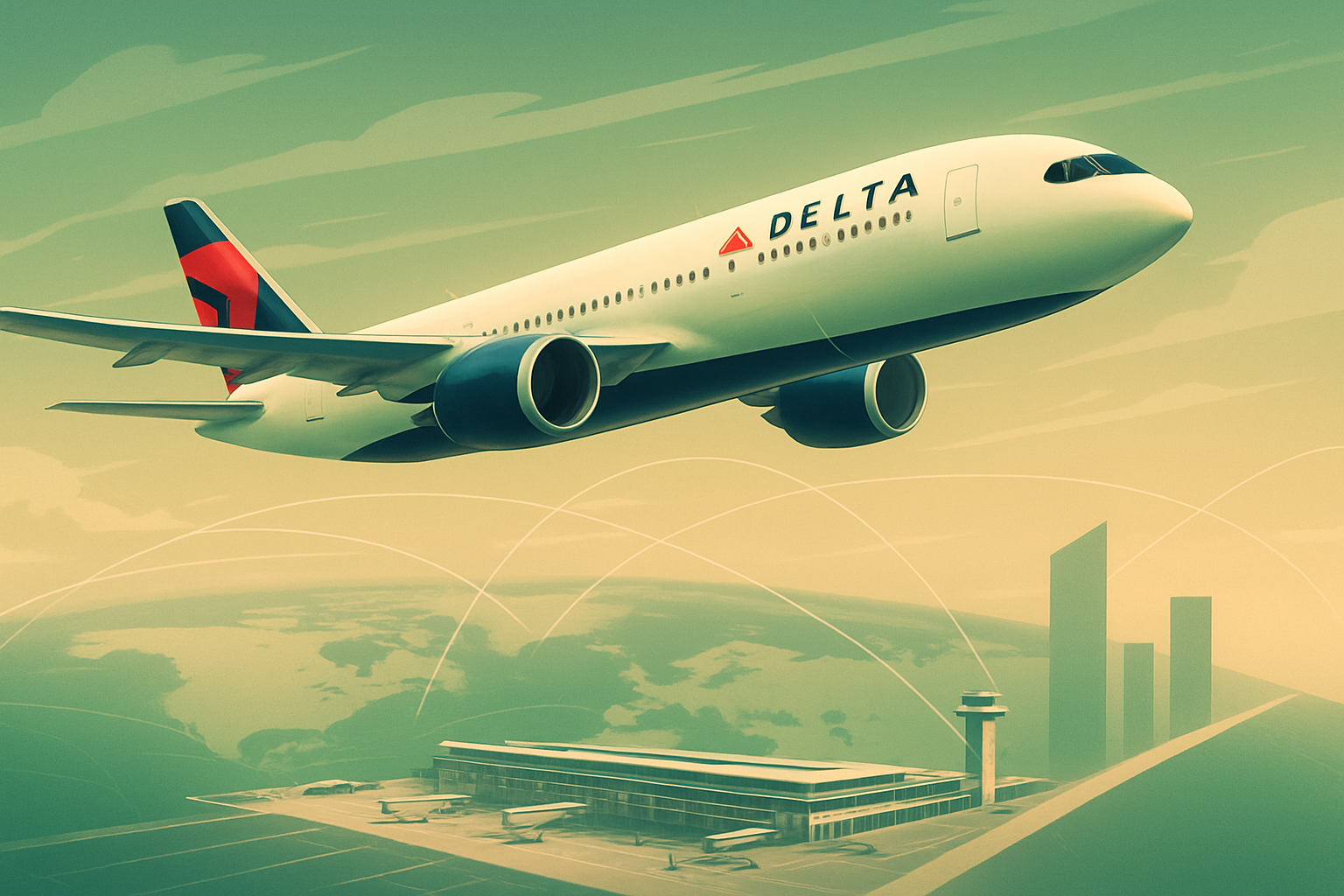
  • The Centennial Titan: A Comprehensive Research Report on Delta Air Lines (DAL)

    The Centennial Titan: A Comprehensive Research Report on Delta Air Lines (DAL)

    As we enter the first day of 2026, Delta Air Lines (NYSE: DAL) stands at a historic crossroads. Celebrating its centennial year of operation, the Atlanta-based carrier has transitioned from a humble crop-dusting operation into the world’s most financially formidable airline. While the broader aviation industry has spent the last five years grappling with post-pandemic volatility, labor unrest, and supply chain bottlenecks, Delta has carved out a unique identity as a "premium-first" transport giant.

    Today, Delta is more than an airline; it is a high-margin consumer loyalty engine powered by a multi-billion-dollar partnership with American Express and a fleet strategy that prioritizes reliability and luxury over cut-throat fare wars. With the stock recently touching all-time highs in late 2025, investors are looking to see if the "Delta Difference" can sustain its momentum in an era of shifting regulatory landscapes and evolving global travel patterns.

    Historical Background

    Delta’s journey began in 1925 as Huff Daland Dusters, the world’s first aerial crop-dusting operation in Macon, Georgia. It officially moved to Monroe, Louisiana, and then to Atlanta in 1941, evolving through the mid-20th century via strategic acquisitions of Chicago and Southern Air Lines and Northeast Airlines.

    The most transformative moment in Delta’s modern history was its 2008 merger with Northwest Airlines. This acquisition provided Delta with a massive transpacific gateway and a dominant hub in Minneapolis-St. Paul, effectively creating the blueprint for the modern global mega-carrier. Following its successful navigation of the Great Recession and a Chapter 11 reorganization earlier that decade, Delta emerged with a renewed focus on operational excellence. Under the leadership of former CEO Richard Anderson and current CEO Ed Bastian, the company shifted its philosophy toward "fortress hubs" and vertical integration, famously purchasing the Trainer oil refinery in 2012 to hedge fuel costs—a move once mocked by analysts that has since proven to be a strategic masterstroke.

    Business Model

    Delta operates a hub-and-spoke business model centered on key domestic fortresses: Atlanta (the world’s busiest airport), Detroit, Minneapolis-St. Paul, New York (JFK and LaGuardia), Salt Lake City, Seattle, and Los Angeles.

    However, its revenue sources have diversified significantly beyond seat sales:

    • Premium Products: Delta has aggressively shifted its cabin mix. Revenue from Delta One, Premium Select, and First Class now accounts for a significantly higher portion of total revenue than standard main cabin fares.
    • Loyalty and Credit Cards: The SkyMiles program is a juggernaut. Through its exclusive partnership with American Express, Delta receives billions in annual payments for miles purchased by the bank. By the end of 2025, this partnership generated over $7 billion in high-margin revenue.
    • Delta TechOps: One of the world’s largest Maintenance, Repair, and Overhaul (MRO) providers, TechOps services not only Delta’s fleet but also dozens of other global airlines, providing a counter-cyclical revenue stream.
    • Refinery Operations: The Monroe Energy subsidiary operates the Trainer refinery, providing Delta with a unique internal hedge against jet fuel price volatility.

    Stock Performance Overview

    Over the last decade, DAL has consistently outperformed its "Big Three" peers, United Airlines (NASDAQ: UAL) and American Airlines (NASDAQ: AAL).

    • 1-Year Performance: In 2025, DAL shares surged nearly 30%, finishing the year at approximately $69.40. This rally was fueled by record summer travel demand and a significant deleveraging of the balance sheet.
    • 5-Year Performance: Looking back to 2021, the stock has undergone a massive recovery. From the depths of the pandemic-era travel slump, Delta has more than doubled its valuation, outstripping the S&P 500’s airline index.
    • 10-Year Performance: Long-term shareholders have seen substantial capital appreciation and the reinstatement of a healthy dividend, which was briefly suspended during the COVID-19 crisis but returned to growth in 2024 and 2025.

    Notable moves in 2025 included a sharp spike in December as the company hit an all-time high of $72.06, reflecting investor confidence in the 2026 outlook.

    Financial Performance

    Delta’s financial results for the fiscal year 2025 have solidified its position as the industry’s "blue chip" stock.

    • Revenue and Earnings: Total revenue for 2025 exceeded $65 billion, a record for the company. Adjusted Earnings Per Share (EPS) landed at a robust $7.35, significantly higher than the $6.16 reported in 2024.
    • Margins: Operating margins remained in the double digits (approx. 11.5%), driven by high-yield premium traffic and the cooling of jet fuel prices in the latter half of the year.
    • Debt and Cash Flow: Delta’s "crusade against debt" reached a milestone in late 2025, with net debt falling to approximately $15.3 billion. Free cash flow for the year exceeded $4 billion, allowing the company to accelerate share buybacks and debt retirement simultaneously.
    • Valuation: Despite the price appreciation, DAL trades at a forward P/E ratio of roughly 9.4x, which many analysts argue is still a discount given the quality of its earnings compared to its peers.

    Leadership and Management

    CEO Ed Bastian has become the elder statesman of the U.S. aviation industry. His tenure is defined by a "people-first" culture, famously sharing 10% or more of annual profits with employees.

    As of January 1, 2026, the leadership team is navigating a critical succession phase:

    • Ed Bastian (CEO): Remains committed to the role but has begun grooming the next generation of leaders.
    • Glen Hauenstein (President): The architect of Delta’s network and revenue strategy, Hauenstein is set to retire in February 2026. His departure marks the end of an era, but his successor, Joe Esposito, is a 35-year veteran expected to maintain the "Hauenstein" network philosophy.
    • Dan Janki (CFO): Formerly of GE, Janki is credited with the disciplined capital allocation strategy that has restored Delta’s investment-grade balance sheet.

    Products, Services, and Innovations

    Delta’s competitive edge lies in its obsession with the "customer experience" as a tech-enabled journey.

    • Fleet Modernization: Delta is currently integrating the Airbus A350-1000, which serves as its long-haul flagship. These aircraft offer superior fuel efficiency and a higher density of premium suites.
    • Delta Sync: Introduced in 2023 and perfected by 2025, this platform offers personalized entertainment and free, fast Wi-Fi across the entire fleet, creating a "living room in the sky" experience that encourages SkyMiles sign-ups.
    • Sustainability: The company has invested heavily in Sustainable Aviation Fuel (SAF) and is a leader in the "First Movers Coalition," aiming for net-zero emissions by 2050.

    Competitive Landscape

    The U.S. airline market has bifurcated into two tiers: the premium-focused legacy carriers and the struggling low-cost carriers (LCCs).

    • Vs. United Airlines: United is Delta’s most competent rival, particularly in international markets. While United has a larger global footprint, Delta consistently maintains higher domestic reliability and customer satisfaction scores.
    • Vs. American Airlines: Delta has significantly outperformed American in terms of profitability. American’s focus on smaller, regional hubs has struggled to compete with Delta’s dominance in high-yield corporate centers like New York and London.
    • Vs. Southwest Airlines (NYSE: LUV): Southwest’s recent move to assigned seating and "premium-lite" offerings in late 2025 is a direct response to the market share Delta has captured from middle-class travelers who now value comfort over the lowest possible fare.

    Industry and Market Trends

    The "Front of the Plane" economy is the defining trend of 2026. Data shows that premium leisure travel—travelers willing to pay for Business or Premium Economy for personal trips—has become a permanent fixture of the market, decoupling airline profits from the traditional corporate travel cycle.

    Macro-drivers include:

    • Remote Work Flexibility: "Bleisure" (combining business and leisure) travel has smoothed out traditional seasonal troughs.
    • Supply Constraints: Ongoing delays at Boeing (NYSE: BA) have limited industry capacity, allowing Delta (which leans heavily on Airbus) to maintain high "load factors" and pricing power.

    Risks and Challenges

    Despite the stellar performance, Delta faces several headwinds:

    • Labor Costs: Following record-breaking pilot and flight attendant contracts in 2024 and 2025, labor is now Delta’s largest expense. Maintaining margins while paying top-tier wages is a delicate balancing act.
    • Boeing 737 MAX 10 Delays: While Delta is "Airbus-heavy," it still has significant orders for the Boeing MAX 10. Continued certification delays could hamper domestic growth plans for late 2026.
    • Geopolitical Instability: Fluctuations in the Middle East and Eastern Europe continue to pose risks to fuel prices and international route viability.

    Opportunities and Catalysts

    • The 2026 FIFA World Cup: With the tournament being held in North America, Delta’s massive hubs in Atlanta, Seattle, and New York are expected to see unprecedented traffic volumes.
    • International Expansion: Delta’s joint ventures with LATAM in South America and Air France-KLM in Europe are yielding higher returns as global connectivity reaches new peaks.
    • Investment Grade Dividends: Analysts expect a significant dividend hike in mid-2026, which could attract a new class of conservative, income-oriented institutional investors.

    Investor Sentiment and Analyst Coverage

    Wall Street is overwhelmingly bullish on DAL. As of January 2026, the consensus rating is a "Strong Buy," with an average price target of $82.00.

    • Institutional Moves: Major funds like Vanguard and BlackRock have increased their stakes, citing Delta’s "fortress balance sheet."
    • Retail Chatter: On platforms like Reddit’s r/stocks, Delta is often cited as the only airline "safe" for long-term holding, a testament to its brand equity.

    Regulatory, Policy, and Geopolitical Factors

    The regulatory environment shifted in late 2025 toward a more industry-friendly, deregulatory stance. The Department of Transportation (DOT) recently eased several proposed rules regarding delay compensation, providing carriers with more operational flexibility.

    However, scrutiny remains over "junk fees" and carbon emissions. Delta’s proactive approach to sustainability and transparent pricing has largely shielded it from the harshest political attacks, though antitrust regulators continue to monitor its dominant position in key hubs.

    Conclusion

    Delta Air Lines enters 2026 as the undisputed champion of the U.S. skies. By pivoting toward the premium traveler and leveraging its lucrative American Express partnership, the company has transformed from a cyclical transport provider into a high-performance consumer brand.

    For investors, the key will be watching the leadership transition following Glen Hauenstein’s retirement and the airline’s ability to manage labor costs in a high-inflation environment. While risks remain in the form of aircraft delivery delays and global volatility, Delta’s financial discipline and operational excellence make it the benchmark for the aviation industry. As it begins its second century of flight, Delta appears well-positioned to maintain its altitude.


    This content is intended for informational purposes only and is not financial advice.

  • Celanese Corporation (CE): Navigating a High-Stakes Transformation in 2026

    Celanese Corporation (CE): Navigating a High-Stakes Transformation in 2026

    As we enter 2026, Celanese Corporation (NYSE: CE) finds itself at a critical crossroads. Once a reliable, cash-generative stalwart of the chemical sector, the company is currently navigating one of the most complex restructuring and deleveraging periods in its century-long history. Following the transformative—and controversial—$11 billion acquisition of DuPont’s Mobility & Materials (M&M) business in late 2022, Celanese has transitioned from a dominant player in the acetyl chain to a global leader in high-performance engineered materials. However, this evolution came at a steep price: a ballooning debt load and a credit rating downgrade to "junk" status in late 2025. Today, investors are weighing the company’s world-class asset portfolio against a balance sheet that remains heavily "handcuffed" by interest expenses and a sluggish global industrial recovery.

    Historical Background

    Celanese’s story began in 1918 as the American Cellulose & Chemical Manufacturing Company. Founded by Swiss brothers Camille and Henri Dreyfus, the company’s first major success was producing "airplane dope"—a fire-resistant cellulose acetate lacquer for World War I aircraft. By the 1920s, the company commercialized acetate fiber, revolutionizing the textile industry.

    The late 20th century saw Celanese undergo several radical transformations. In 1987, it was acquired by the German giant Hoechst AG, only to be spun off as an independent entity in 1999. In a quintessential private equity play, Blackstone Capital Partners took the company private in 2004 for $3.8 billion, restructured it, and returned it to the public markets via the New York Stock Exchange in 2005. This era established the "Celanese Model": a focus on vertical integration and high-margin specialty chemicals that would define the company for the next two decades.

    Business Model

    Celanese operates through a dual-engine model that relies on vertical integration to maintain cost leadership.

    1. The Acetyl Chain: This is the company's "cash cow." Celanese is the world’s largest and lowest-cost producer of acetic acid and vinyl acetate monomer (VAM). By controlling the entire chain—from methanol feedstock to downstream chemicals—Celanese captures margins that rivals cannot match. These chemicals are essential components in paints, adhesives, and coatings.
    2. Engineered Materials (EM): Following the DuPont M&M acquisition, this segment now accounts for over 55% of total revenue. It focuses on high-performance thermoplastics used in demanding environments. Celanese provides materials that are lighter than metal and more durable than standard plastics, making them indispensable for automotive electrification and advanced electronics.

    Stock Performance Overview

    The performance of CE shares over the last decade reflects its cyclical nature and the recent weight of its acquisition debt.

    • 1-Year Performance: The stock has struggled through 2025, significantly underperforming the S&P 500 as the company slashed its dividend by 95% to prioritize debt repayment.
    • 5-Year Performance: This period shows a "rollercoaster" trend—peaking in 2021-2022 during the post-pandemic chemicals boom, followed by a sharp correction as high interest rates and the $11B DuPont deal strained the company's valuation.
    • 10-Year Performance: Long-term shareholders have benefited from Celanese’s historical operational excellence, though the gains of the mid-2010s have been partially erased by the recent leverage-induced volatility.

    Financial Performance

    As of the start of 2026, the financial profile of Celanese is defined by deleveraging.

    • Earnings: In late 2025, Celanese reported adjusted EPS of $1.34, beating narrowed analyst estimates but remaining well below historical peaks.
    • Debt & Credit: The company ended 2025 with a net debt-to-EBITDA ratio of approximately 6.2x. This led S&P Global to downgrade the company’s credit rating to BB (non-investment grade) in November 2025.
    • Cash Flow: Management has redirected all available liquidity toward the $11 billion debt pile. The dividend, once a major draw for investors, was cut from $0.70 to a nominal $0.03 per share quarterly in late 2024—a move that saved approximately $300 million annually in cash.
    • Valuation: Trading at a forward P/E that reflects significant "distress" compared to peers like Dow or Eastman, Celanese is currently viewed as a "deep value" or "turnaround" play.

    Leadership and Management

    The leadership transition at Celanese has been a focal point for institutional investors. Lori Ryerkerk, who served as CEO from 2019 to early 2025, was the architect of the DuPont M&M deal. While she succeeded in doubling the company's specialty materials footprint, the timing of the deal—just before interest rates surged—left the company vulnerable.

    On January 1, 2025, Scott Richardson (formerly the COO) took the helm. Richardson’s mandate is strictly focused on "operational execution and deleveraging." He has gained a reputation for fiscal conservatism, focusing on $150 million in incremental productivity gains and the divestiture of non-core assets to accelerate debt retirement.

    Products, Services, and Innovations

    Celanese is no longer just a "chemical company"; it is a "materials science" partner.

    • Zytel® and Crastin®: Acquired from DuPont, these nylons and PBT resins are critical for the thermal management and housing of Electric Vehicle (EV) batteries.
    • Hostaform®/Celcon® (POM): A high-strength acetal copolymer used in everything from insulin pens to fuel system components.
    • Vinnapas®: Used in sustainable building materials.
    • Innovation Pipeline: The company is currently investing heavily in biopolymers and molecular recycling, aiming to provide "circular" options for consumer electronics companies under pressure to reduce their carbon footprint.

    Competitive Landscape

    Celanese competes with global giants across multiple fronts:

    • Eastman Chemical (NYSE: EMN): A primary rival in engineered materials. While Eastman has bet heavily on molecular recycling technology, Celanese has focused on scale and being the low-cost producer.
    • Dow Inc. (NYSE: DOW): Competes in basic chemicals. Dow enjoys a stronger credit rating and larger scale, allowing it to navigate the cyclical downturn with less balance sheet stress.
    • BASF (ETR: BAS): Competes globally, particularly in Europe. Celanese’s competitive edge remains its US-based, low-cost acetyl advantage, which provides a feedstock hedge that European rivals lack due to higher energy costs.

    Industry and Market Trends

    The chemical industry in 2026 is grappling with a "post-hype" reality for Electric Vehicles. While the long-term trend toward electrification remains intact, the 2024-2025 slowdown in EV adoption rates delayed the expected "synergy windfall" from the DuPont M&M acquisition. Additionally, the global construction market remains sluggish, impacting demand for the Acetyl Chain. However, the rise of medical-grade polymers and the "China+1" supply chain diversification strategy are providing tailwinds for Celanese’s specialty segments.

    Risks and Challenges

    • The Debt Wall: With over $10 billion in debt, Celanese is highly sensitive to interest rate fluctuations and credit market conditions.
    • Cyclicality: A significant portion of revenue is tied to the automotive and housing sectors. A global recession in 2026 would severely hamper the company’s ability to de-lever.
    • The "Junk" Label: The BB credit rating increases borrowing costs and limits the pool of institutional investors who can hold the stock.
    • PFAS Liability: While DuPont provided indemnification for certain legacy "forever chemical" issues, the evolving regulatory landscape in the EU and US creates ongoing litigation risks that could exceed current provisions.

    Opportunities and Catalysts

    • Synergy Realization: Celanese has targeted $450 million in annual synergies from the M&M deal. Full realization of these targets by late 2026 would provide a massive boost to EBITDA.
    • Asset Divestitures: The potential sale of minor business units (like Micromax) or the remaining stake in joint ventures could provide "lump sum" debt repayments that boost investor confidence.
    • EV Market Rebound: If EV sales accelerate in 2026, Celanese’s high "content per vehicle" will lead to rapid margin expansion.

    Investor Sentiment and Analyst Coverage

    The current sentiment on Wall Street is cautiously neutral. Most analysts maintain a "Hold" rating, citing the high quality of the underlying assets but the "uncomfortably high" leverage. Hedge funds have shown mixed interest; some see a classic "mean reversion" play as debt falls, while others remain on the sidelines until the net debt-to-EBITDA ratio drops below 4.0x. Retail sentiment is largely negative due to the massive dividend cut in 2024, which alienated income-seeking investors.

    Regulatory, Policy, and Geopolitical Factors

    Celanese is heavily impacted by the EU’s REACH regulations and the EPA’s tightening stance on chemical manufacturing emissions. Geopolitically, the company is caught in the middle of US-China trade tensions. While it has significant manufacturing in China, it is increasingly positioning itself as a "regionalized" supplier to mitigate the risks of tariffs or export controls on high-tech polymers.

    Conclusion

    Celanese Corporation is a company in the middle of a high-stakes transition. It has successfully assembled one of the most formidable portfolios of specialty materials in the world, positioning itself as a vital partner for the future of mobility and healthcare. However, the financial weight of that transformation has left the company with zero margin for error.

    For the patient investor, 2026 represents a potential "inflection point." If management can continue its disciplined path of debt repayment and cost-cutting, the eventual "rerating" of the stock could be significant. For now, however, Celanese remains a high-beta bet on the management's ability to clean up the balance sheet before the next cyclical downturn arrives.


    This content is intended for informational purposes only and is not financial advice.

  • DocuSign (DOCU): From E-Signatures to the Intelligent Agreement Era

    DocuSign (DOCU): From E-Signatures to the Intelligent Agreement Era

    Once the darling of the "work-from-home" era, DocuSign (NASDAQ: DOCU) has spent the last two years reinventing itself. No longer content with just being the "signing" company, DocuSign is refocusing its entire enterprise on the "Intelligent Agreement Management" (IAM) category. This shift is designed to address the "agreement trap"—the estimated $2 trillion in global economic value lost annually due to inefficient agreement processes and "trapped" data within static PDFs. With a market capitalization that has stabilized after the volatility of 2022-2023, the company is now a primary case study for how a "single-feature" SaaS giant can pivot into a comprehensive AI-powered platform.

    Historical Background

    Founded in 2003 by Tom Gonser, Court Lorenzini, and Eric Ranft, DocuSign was born from the realization that the traditional "print-sign-scan" workflow was a major bottleneck in a digital world. Headquartered in San Francisco, the company spent its first decade evangelizing the legality and security of electronic signatures, successfully lobbying for the adoption of the ESIGN Act in the U.S. and similar frameworks globally.

    The company went public in 2018, initially trading at $29 per share. However, its true "tectonic" shift occurred in 2020. The COVID-19 pandemic accelerated a decade's worth of digital transformation into 18 months, making DocuSign an essential utility for businesses, real estate, and government agencies. This period of hyper-growth was followed by a difficult transition as the world returned to hybrid work, leading to a change in leadership and a fundamental rethink of the company's value proposition.

    Business Model

    DocuSign operates primarily as a Software-as-a-Service (SaaS) provider. Its revenue is overwhelmingly derived from subscriptions (approx. 97%), providing high visibility and recurring cash flow. The business model has recently shifted from a transactional "per-envelope" (per-document) pricing structure toward a seat-based and platform-access model, supplemented by "AI usage tokens" for its high-end analytical features.

    The company's customer base is massive, exceeding 1.5 million paying customers and over a billion users worldwide. This base is segmented into:

    • Enterprise & Commercial: Large-scale deployments integrated with CRM and ERP systems.
    • Small & Medium Businesses (SMB): Standardized plans for smaller teams.
    • Individual/Professional: Self-service options for solo practitioners (e.g., real estate agents).

    Stock Performance Overview

    The performance of DOCU stock has been a tale of three eras.

    • 10-Year View: Since its 2018 IPO, the stock has delivered significant gains from its initial $29 offering, though investors who bought at the peak in 2021 have seen substantial capital erosion.
    • 5-Year View: This period represents the "mountain" on the chart. After peaking near $310 in late 2021, the stock plummeted as growth normalized. As of January 1, 2026, the stock is trading in the $75–$85 range, reflecting a roughly 70% decline from its all-time high but a stabilization from its 2023 lows.
    • 1-Year View (2025): 2025 has been a year of recovery. Following the successful rollout of its IAM platform and "Contract Agents," the stock has outperformed the broader SaaS index, gaining approximately 25% over the last 12 months as investors gain confidence in the AI pivot.

    Financial Performance

    DocuSign enters 2026 with a robust balance sheet. For the full fiscal year 2025 (ended January 31, 2025), the company reported total revenue of $2.98 billion, an 8% increase year-over-year. While this growth is a far cry from the 40%+ seen during the pandemic, it represents a stabilized baseline.

    Most impressive has been the company's shift toward GAAP profitability. In FY2025, DocuSign reported a significant jump in net income, aided by operational efficiencies and improved tax structures. As of late 2025, the company maintains non-GAAP operating margins above 30%, which is top-tier for its sector. Furthermore, the company has utilized its strong free cash flow—exceeding $800 million annually—to fund a $1 billion share repurchase program, signaling management's belief that the stock remains undervalued.

    Leadership and Management

    The "new" DocuSign is defined by CEO Allan Thygesen, who took the helm in late 2022. A former Google executive, Thygesen has been credited with restoring "innovation mojo" to the company. His strategy moved away from the defensive posture of 2022 toward an aggressive "Intelligent Agreement" roadmap.

    Under Thygesen, the leadership team has been overhauled with executives from high-scale platform backgrounds (Google, Microsoft, Salesforce). This shift reflects a move away from being a "legal tool" toward becoming a "data platform." The board has also focused on governance, emphasizing long-term value creation over the short-term growth-at-all-costs mindset of previous years.

    Products, Services, and Innovations

    The flagship of the current portfolio is DocuSign IAM. Launched in 2024 and expanded in 2025, IAM is divided into three key areas:

    1. DocuSign Navigator: An AI-powered central repository that "reads" a company's entire library of agreements, allowing users to search for expiration dates, liability clauses, or pricing terms across thousands of PDFs.
    2. Maestro: A workflow builder that allows businesses to create custom agreement journeys (e.g., verifying identity, then signing, then triggering a payment in Stripe) without writing code.
    3. AI Contract Agents: Released in April 2025, these generative AI tools act as virtual legal assistants, summarizing complex contracts and flagging "off-market" clauses that deviate from a company's standard policy.

    Competitive Landscape

    DocuSign remains the market leader, but it is no longer the only game in town.

    • Adobe (NASDAQ: ADBE): Through Adobe Acrobat Sign, Adobe remains the most formidable competitor, often bundling its e-signature tools into its Creative Cloud and Document Cloud enterprise agreements.
    • Dropbox (NASDAQ: DBX): Following its acquisition of HelloSign, Dropbox focuses on the SMB and individual market, emphasizing ease of use and price.
    • Niche Players: Companies like PandaDoc (sales-focused) and Ironclad (enterprise CLM) compete for specific high-value segments of the agreement lifecycle.
    • Regional Competition: In Europe and Asia, DocuSign faces pressure from localized players like Itsme (Belgium) or ZeeSign (India) that specialize in specific national digital ID integrations.

    Industry and Market Trends

    The primary trend in 2026 is the "Platformization of Legal Tech." Enterprises are tired of managing fragmented tools for drafting, signing, and storing documents. There is a strong macro-driver toward consolidation.

    Secondly, the rise of Generative AI has shifted the value proposition from "moving ink" to "extracting intelligence." Every agreement is a data point. The companies that can best help businesses manage the risks and obligations within their "agreement clouds" will capture the most value. Finally, there is an increasing shift toward Qualified Electronic Signatures (QES), which require biometric or hardware-based verification, particularly in highly regulated markets like the EU and Brazil.

    Risks and Challenges

    Despite its recovery, several risks remain:

    • Commoditization: The basic "e-signature" is increasingly viewed as a commodity. If DocuSign cannot convince customers that its IAM features are worth a premium, it may face pricing wars.
    • Execution Risk: Moving from a simple tool to a complex platform requires a specialized sales force. The transition from transactional sales to "solution selling" is notoriously difficult for legacy SaaS companies.
    • Macroeconomic Sensitivity: While agreements are essential, a slowdown in hiring (HR agreements) or real estate (mortgage agreements) directly impacts DocuSign's usage volumes.

    Opportunities and Catalysts

    • M&A Potential: DocuSign has been a perennial target for private equity firms. Rumors involving Bain Capital and Hellman & Friedman have persisted into early 2026. A buyout could offer a significant premium to current shareholders.
    • Public Sector Expansion: Having recently achieved FedRAMP and GovRAMP authorizations, DocuSign is poised to capture more of the multi-billion dollar U.S. government digital transformation market.
    • The "Agreement Agent" Upsell: If the company can successfully move its 1.5 million customers onto its AI-metered pricing tiers, it could see a significant re-acceleration of revenue growth.

    Investor Sentiment and Analyst Coverage

    Wall Street sentiment as of January 1, 2026, is "Cautiously Bullish." The consensus rating has shifted from "Hold" to "Buy" over the last six months as the IAM platform showed early traction in Q3 FY26 earnings.

    Institutional ownership remains high (over 80%), with major positions held by Vanguard and BlackRock. Hedge fund interest has seen a slight uptick in 2025, primarily driven by "value-oriented" tech investors who see the company's free cash flow and dominant market share as a protective moat against further downside.

    Regulatory, Policy, and Geopolitical Factors

    Regulatory tailwinds are generally favorable. The eIDAS 2.0 regulation in the European Union is driving a new wave of adoption for "digital identity wallets," which DocuSign has integrated into its mobile apps.

    In the U.S., the push for greater transparency in supply chains (e.g., the Uyghur Forced Labor Prevention Act) has made DocuSign's "Navigator" tool essential for companies needing to audit their vendor contracts for compliance. Geopolitically, the company faces some headwinds in China and Russia due to data residency laws, but its focus remains primarily on the OECD markets.

    Conclusion

    DocuSign (NASDAQ: DOCU) has successfully shed its image as a "pandemic-only" stock and emerged as a leaner, more focused platform company. By January 2026, the narrative has shifted from "how much growth is left in signatures?" to "how much value can be extracted from agreements?"

    For investors, DocuSign represents a "quality at a reasonable price" (QARP) play in the SaaS space. It possesses a dominant market share, high margins, and a clear path toward AI monetization. However, the path forward requires flawless execution in a world where Adobe is a relentless competitor and the threat of commoditization is always present. Investors should watch the "IAM adoption rate" and "AI-driven billings" in upcoming earnings reports as the primary indicators of whether this 2025 "rejuvenation" will turn into a long-term bull market for the stock.


    This content is intended for informational purposes only and is not financial advice.

  • The Trillion-Dollar Apothecary: Inside Eli Lilly’s Era of Metabolic Dominance

    The Trillion-Dollar Apothecary: Inside Eli Lilly’s Era of Metabolic Dominance

    As of late 2025, the global pharmaceutical landscape has undergone a tectonic shift, and at its center stands Eli Lilly and Company (NYSE: LLY). Once regarded as a steady, dividend-paying stalwart of the "Big Pharma" old guard, Lilly has transformed into a high-growth juggernaut. In late 2025, the company made history by becoming the first pure-play pharmaceutical firm to cross the $1 trillion market capitalization threshold, a valuation driven by a generational breakthrough in metabolic health and neuroscience.

    The narrative surrounding Lilly today is one of supply chains, weight-loss miracles, and a race to cure Alzheimer’s. With its dual-threat portfolio of tirzepatide (marketed as Mounjaro and Zepbound) and its Alzheimer’s therapy Kisunla, Lilly is no longer just a drug maker; it is a central player in global public health policy and a cornerstone of the modern equity market.

    Historical Background

    Founded in 1876 by Colonel Eli Lilly, a Civil War veteran and pharmaceutical chemist, the company was built on a commitment to quality and scientific rigor in an era of "patent medicines" and snake oil. Based in Indianapolis, Indiana, Lilly’s first major breakthrough came in the 1920s when it became the first company to mass-produce insulin, a feat that defined its identity for the next century as a leader in diabetes care.

    The company's history is marked by pivotal transformations. In the 1980s, the launch of Prozac revolutionized the treatment of clinical depression and ushered in a golden era of neuroscience. In the early 2010s, Lilly faced a daunting "patent cliff" as several blockbusters lost exclusivity. However, under the leadership of David Ricks, who took the helm in 2017, the company aggressively pivoted its R&D toward high-risk, high-reward biologics, setting the stage for the explosive growth witnessed in the 2024–2025 period.

    Business Model

    Eli Lilly operates a research-driven pharmaceutical business model focused on discovering, developing, and manufacturing human medicines. Its revenue is primarily generated from the sale of branded prescription drugs to wholesalers, who then distribute them to pharmacies and healthcare providers globally.

    The company organizes its business into four primary therapeutic pillars:

    1. Metabolic Health: The largest segment, encompassing diabetes (Mounjaro) and obesity (Zepbound).
    2. Oncology: Focused on lung, breast, and various solid tumors (Verzenio, Jaypirca).
    3. Immunology: Targeting autoimmune diseases like psoriasis and ulcerative colitis (Taltz, Omvoh).
    4. Neuroscience: A renewed focus area with the launch of Kisunla for Alzheimer’s disease.

    Lilly’s model increasingly emphasizes "The Medicine Foundry"—a proprietary manufacturing strategy that integrates drug discovery with advanced production capabilities to ensure supply chain resilience for complex injectable biologics.

    Stock Performance Overview

    Lilly’s stock performance over the last decade has been nothing short of extraordinary for a large-cap healthcare company.

    • 1-Year Performance (2025): LLY shares rose approximately 36% in 2025, closing near $1,077.75 by late December. This significantly outperformed the S&P 500’s health care sector.
    • 5-Year Performance: Over the past five years, the stock has appreciated by over 500%, driven by the clinical success and commercial launch of the tirzepatide franchise.
    • 10-Year Performance: Long-term investors have seen a nearly 1,200% return, a figure that rivals the performance of major Silicon Valley technology firms.

    The stock’s momentum in 2025 was catalyzed by consistent earnings beats and the realization that the obesity market was even larger and more durable than analysts had initially projected.

    Financial Performance

    Lilly’s 2025 financial results reflect a company in a hyper-growth phase.

    • Revenue: For the full year 2025, revenue is estimated to reach approximately $63.5 billion, a massive jump from $45 billion in 2024.
    • Margins: Non-GAAP gross margins expanded to 83.6% by Q3 2025, highlighting the immense pricing power and manufacturing efficiencies of its metabolic portfolio.
    • Earnings Per Share (EPS): The 2025 non-GAAP EPS guidance was adjusted upward to roughly $23.70.
    • Valuation: While the company’s P/E ratio remains high relative to traditional pharma peers (trading at over 45x forward earnings), proponents argue that the growth profile justifies the premium.

    Leadership and Management

    CEO David Ricks has been the architect of Lilly’s modern era. Named 2025 "CEO of the Year" by Chief Executive magazine, Ricks has been praised for his long-term vision and capital allocation. Under his tenure, Lilly exited underperforming business units and doubled down on internal R&D rather than over-relying on massive, dilutive M&A.

    Key leadership moves in 2025 included the promotion of Ilya Yuffa to lead the critical U.S. business as President of Lilly USA. The management team is currently focused on an unprecedented $50 billion capital expenditure program to expand manufacturing capacity across the U.S. and Europe.

    Products, Services, and Innovations

    The crown jewels of Lilly’s portfolio are Mounjaro and Zepbound. In 2025, Mounjaro (for Type 2 diabetes) reached quarterly sales of $6.5 billion, while Zepbound (for obesity) generated over $9 billion in the first nine months of the year alone.

    Beyond metabolic health, Kisunla (donanemab) received a critical label update in July 2025, improving its safety profile and cementing its position as the preferred choice for early-stage Alzheimer’s patients due to its limited-duration dosing schedule.

    The Pipeline:

    • Orforglipron: An oral, once-daily GLP-1 pill that completed Phase 3 trials in late 2025. It is expected to revolutionize the market by removing the need for injections.
    • Retatrutide: A "triple agonist" (targeting GLP-1, GIP, and Glucagon) that showed a record-breaking 28.7% mean weight loss in clinical trials, the highest ever recorded for a pharmaceutical intervention.

    Competitive Landscape

    Lilly is currently locked in a "duopoly" with Novo Nordisk (NYSE: NVO). In mid-2025, Lilly successfully overtook Novo Nordisk in U.S. GLP-1 market share, reaching approximately 57%.

    This victory was fueled by the SURMOUNT-5 head-to-head trial, which demonstrated that Zepbound (tirzepatide) offered superior weight loss (20%) compared to Novo’s Wegovy (13.7%). While Pfizer (NYSE: PFE) and Amgen (NASDAQ: AMGN) are developing their own obesity candidates, Lilly’s deep manufacturing moat and established clinical data give it a significant multi-year lead.

    Industry and Market Trends

    The "Metabolic Revolution" is the defining trend of the 2020s. Beyond weight loss, GLP-1 therapies are being studied for sleep apnea, chronic kidney disease, and cardiovascular health. Lilly is at the forefront of this "label expansion" strategy.

    Additionally, the pharmaceutical industry is seeing an shift toward "Bio-Manufacturing," where the ability to produce complex molecules at scale is as important as the discovery of the molecule itself. Lilly’s investment in automated, high-throughput manufacturing plants is a direct response to the global shortages that plagued the industry in 2023 and 2024.

    Risks and Challenges

    Despite its trillion-dollar status, Lilly faces several headwinds:

    • Drug Pricing Legislation: The U.S. Inflation Reduction Act (IRA) allows the government to negotiate prices on top-selling drugs. Lilly’s blockbusters will eventually become targets.
    • Supply Chain Vulnerability: Producing enough injectable pens to meet global demand remains a constant operational struggle.
    • Patent Cliffs: While the metabolic portfolio is young, oncology products like Verzenio will face generic competition later this decade.
    • Safety Scrutiny: As millions more people take GLP-1s, any rare long-term side effects could lead to significant litigation or regulatory setbacks.

    Opportunities and Catalysts

    The primary near-term catalyst is the anticipated FDA approval of Orforglipron (the oral pill) in early 2026. An oral option would open the market to patients who are "needle-phobic" and significantly lower the cost of logistics.

    Furthermore, Lilly is exploring the use of tirzepatide in treating Metabolic Dysfunction-Associated Steatohepatitis (MASH), a liver condition with no current cure. Success in this area would add another multibillion-dollar indication to its portfolio.

    Investor Sentiment and Analyst Coverage

    Wall Street remains overwhelmingly bullish on LLY, though some analysts express caution regarding the "priced for perfection" valuation. Institutional ownership remains high, with major funds like Vanguard and BlackRock holding significant stakes.

    In late 2025, several analysts raised their price targets to $1,200, citing the company's ability to maintain high margins even as it scales. Retail sentiment is also exceptionally high, with Lilly often compared to "the Nvidia of healthcare" due to its dominant market position and technological lead.

    Regulatory, Policy, and Geopolitical Factors

    Geopolitically, Lilly is navigating a complex landscape. In 2025, it announced a $3 billion facility in the Netherlands to diversify its European manufacturing base.

    Domestically, the company is a frequent participant in policy debates regarding the affordability of medicines. Lilly has taken a proactive stance by offering $25-a-month insulin programs, a move that served as a "regulatory olive branch" while it defended the premium pricing of its newer weight-loss therapies.

    Conclusion

    Eli Lilly and Company enters 2026 as a titan of the global economy. Its ascent to a $1 trillion valuation is a testament to the power of breakthrough science and aggressive industrial scaling. While the "GLP-1 wars" are far from over, Lilly has secured a dominant position through superior clinical efficacy and a massive head start in manufacturing capacity.

    For investors, the key will be watching how Lilly navigates the transition from injectable dominance to oral availability, and whether Kisunla can achieve the same market saturation in the Alzheimer's space. Though the valuation is steep, Lilly’s pipeline suggests that its era of metabolic dominance may only be in its early chapters.


    Disclaimer: This content is intended for informational purposes only and is not financial advice. Investing in the stock market involves risk. Always conduct your own research or consult with a qualified financial advisor before making investment decisions.

  • The Backbone of the Intelligent Edge: A Deep Dive into Broadcom Inc. (AVGO)

    The Backbone of the Intelligent Edge: A Deep Dive into Broadcom Inc. (AVGO)

    As 2025 draws to a close, Broadcom Inc. (NASDAQ: AVGO) has solidified its position not merely as a semiconductor manufacturer, but as the indispensable architect of the generative AI revolution. While NVIDIA often captures the headlines for its dominant GPUs, Broadcom provides the critical "connective tissue" and custom brainpower that allow these GPUs to function as a coherent, massive-scale system.

    In the final week of 2025, Broadcom sits at a fascinating intersection of hardware prowess and software stability. Having successfully digested its massive $69 billion acquisition of VMware, the company has transformed its profile into a "software-hardware hybrid" with high recurring revenues and some of the fattest margins in the technology sector. This article explores how a company once known for diverse commodity chips has become a mission-critical infrastructure giant worth nearly $1 trillion.

    Historical Background

    Broadcom’s history is a masterclass in strategic evolution and aggressive consolidation. The company’s roots trace back to the original Hewlett-Packard (NYSE: HPQ) semiconductor division, which was spun off as Agilent Technologies in 1999. In 2005, the private equity firms KKR and Silver Lake acquired Agilent’s chip group, forming Avago Technologies.

    The modern era began when Hock Tan became CEO in 2006. Under Tan’s leadership, Avago launched a series of high-stakes acquisitions: LSI Corp in 2013, the original Broadcom Corp in 2016 (taking its name), and Brocade Communications in 2017. Tan’s strategy was clear: buy "franchise" assets—products that are #1 or #2 in their niche with high barriers to entry—and optimize them for cash flow.

    In 2018, following a blocked hostile bid for Qualcomm, Broadcom shifted its focus toward infrastructure software, acquiring CA Technologies ($19B) and Symantec’s enterprise security business ($11B). This culminated in the late 2023 acquisition of VMware, a move that fundamentally altered the company’s revenue mix and defensive characteristics.

    Business Model

    Broadcom operates through two primary reporting segments: Semiconductor Solutions and Infrastructure Software.

    1. Semiconductor Solutions (~60% of Revenue): This segment provides high-performance semiconductor products for data center networking, set-top boxes, broadband access, and wireless communication. Its crown jewels are its Ethernet switching silicon (Tomahawk and Jericho lines) and its Custom AI Silicon (ASIC) business, where it co-designs chips for hyper-scalers like Google and Meta.
    2. Infrastructure Software (~40% of Revenue): This segment has expanded dramatically with VMware. It focuses on helping large enterprises manage complex hybrid cloud environments. The business model has shifted from one-time perpetual licenses to a high-margin, recurring subscription model.

    The "Broadcom way" involves focusing on the most profitable 20% of customers—the global Fortune 500 and mega-scale cloud providers—who have "sticky" needs and deep pockets.

    Stock Performance Overview

    Broadcom has been a generational wealth creator. Over the last 10 years, the stock has delivered a total return (including dividends) exceeding 3,000%, vastly outperforming the S&P 500 and most of its peers in the PHLX Semiconductor Index (SOXX).

    • 1-Year Performance (2025): The stock surged approximately 52% in 2025, buoyed by the "Ethernet Crossover" (the trend of using Ethernet over proprietary InfiniBand for AI clusters) and successful VMware synergies.
    • 5-Year Performance: AVGO has seen a nearly 400% rise, driven by the explosion of cloud computing and the initial waves of GenAI.
    • The Split: In July 2024, Broadcom executed a 10-for-1 stock split to make its then-$1,700 share price more accessible to retail investors. As of late December 2025, the stock trades in the $340–$360 range (post-split).

    Financial Performance

    Broadcom’s fiscal 2025 financials reflect a "best-of-both-worlds" profile: growth in AI hardware combined with stable cash flow in software.

    • Revenue: Total revenue for FY2025 reached approximately $64.2 billion, a 24% year-over-year increase.
    • Margins: The company achieved an adjusted EBITDA margin of 68%, a figure more common for pure-play software companies than hardware manufacturers.
    • Free Cash Flow (FCF): Broadcom generated $26.9 billion in FCF in FY2025. This cash flow supports a robust dividend policy, currently yielding approximately 1.5% with a consistent history of double-digit annual increases.
    • Valuation: Trading at roughly 28x forward earnings, AVGO is not "cheap" by historical standards, but it carries a premium due to its near-monopoly in AI networking and high software backlog ($73 billion).

    Leadership and Management

    CEO Hock Tan is widely regarded as one of the most effective capital allocators in corporate history. His management style is decentralized and ruthlessly efficient. He organizes the company into autonomous business units, each responsible for its own P&L, but all held to a singular standard of profitability.

    Tan’s leadership has not been without controversy; his aggressive price hikes at VMware and CA Technologies have drawn the ire of some legacy customers. However, for shareholders, his "private equity-style" management of a public company has yielded industry-leading returns. In late 2025, Tan’s contract was extended through 2030, ensuring continuity in this high-discipline strategy.

    Products, Services, and Innovations

    Broadcom's competitive edge lies in its R&D depth in high-speed connectivity.

    • Tomahawk 6: Launched in late 2025, this 102.4 Tbps switching chip is the industry benchmark for moving data within AI "super-clusters."
    • Custom AI Accelerators (ASICs): Broadcom dominates the market for custom chips. It co-developed Google’s (NASDAQ: GOOGL) TPU v6 and is currently working with Meta (NASDAQ: META) on its MTIA chips. These custom designs are more power-efficient than general-purpose GPUs for specific workloads.
    • VMware Cloud Foundation (VCF): This is the flagship software offering that allows enterprises to run a "private cloud" with the same efficiency as a public cloud, a key trend for companies worried about data privacy in the AI era.

    Competitive Landscape

    Broadcom faces different rivals in each of its segments:

    • In Networking: Marvell Technology (NASDAQ: MRVL) is its closest competitor in custom silicon and optical DSPs. NVIDIA (NASDAQ: NVDA) competes via its Spectrum-X Ethernet platform and Mellanox InfiniBand, though Broadcom maintains an edge in open-standard Ethernet.
    • In Software: VMware competes with Microsoft (NASDAQ: MSFT) Azure and various open-source containerization tools, though its legacy footprint in the enterprise data center remains massive.
    • Strengths: Unrivaled scale, deep patent portfolio (20,000+ patents), and a "closed" ecosystem of high-end networking that is difficult for smaller players to replicate.

    Industry and Market Trends

    The dominant trend in 2025 is the shift toward "AI Infrastructure 2.0." Initial AI spending focused purely on GPUs; the current phase focuses on networking to prevent data bottlenecks.

    Another key trend is the "Ethernet Crossover." For years, NVIDIA’s InfiniBand was the gold standard for low-latency AI training. In 2025, however, Ethernet (led by Broadcom) became the preferred choice for massive multi-rack deployments due to its superior scalability and lower cost, providing a significant tailwind for the Tomahawk and Jericho product lines.

    Risks and Challenges

    Despite its strengths, Broadcom faces several headwinds:

    1. Apple Dependency: Apple (NASDAQ: AAPL) historically accounts for ~20% of revenue. Apple’s long-term goal of insourcing Wi-Fi, Bluetooth, and cellular modem chips poses a "top-line cliff" risk, though Broadcom has mitigated this with long-term supply agreements through 2026.
    2. High Debt: The VMware acquisition left Broadcom with a significant debt load. While it is paying this down rapidly using its massive FCF, high interest rates make debt servicing a non-negligible expense.
    3. Customer Concentration: A handful of cloud giants (Google, Meta, Amazon) drive a large portion of the custom chip revenue. If one were to pull back or switch to internal design only, the impact would be significant.

    Opportunities and Catalysts

    • OpenAI Partnership: In 2025, reports emerged of a lead design partnership with OpenAI for a custom inference chip ("Project Titan"), which could be a multi-billion dollar catalyst for 2026 and 2027.
    • Anthropic Infrastructure: A reported $11 billion deal to provide networking and custom silicon for Anthropic’s AI clusters provides a visible growth runway.
    • VMware Upselling: Broadcom is successfully moving legacy VMware customers to the "Cloud Foundation" bundle, significantly increasing the average revenue per user (ARPU).

    Investor Sentiment and Analyst Coverage

    Wall Street remains overwhelmingly bullish on AVGO. As of December 2025, roughly 85% of analysts cover the stock with a "Buy" or "Strong Buy" rating. Institutional ownership remains high, with firms like Vanguard and BlackRock holding significant stakes.

    Retail sentiment is also strong, particularly following the 2024 stock split, which made the company a popular "Blue Chip AI" play for individual portfolios. The primary debate among analysts is whether the AI growth is "pulled forward" or represents a sustainable new baseline of demand.

    Regulatory, Policy, and Geopolitical Factors

    Geopolitics remain the "wild card." Broadcom derives roughly 20% of its revenue from China.

    • Tariffs: In late 2025, the U.S. government announced a delay in certain semiconductor tariffs until mid-2027, giving Broadcom more time to diversify its supply chain.
    • Export Controls: Tightening restrictions on high-end AI chips and networking equipment to China act as a persistent headwind for Broadcom’s data center business in that region.
    • Antitrust: The VMware acquisition was approved after intense scrutiny in the EU and China, but any future large-scale software acquisitions would likely face an even higher regulatory bar.

    Conclusion

    Broadcom Inc. enters 2026 as a titan of the modern era. It has successfully navigated the complexities of integrating VMware while capturing the lion's share of the AI networking market. For investors, AVGO offers a unique proposition: the growth potential of a semiconductor AI play, paired with the defensive, cash-cow characteristics of an enterprise software giant.

    While risks related to China and the "Apple Cliff" remain, Broadcom’s dominance in the "plumbing" of the AI world makes it a difficult company to bet against. As the world moves toward more complex, distributed AI models, the demand for Broadcom’s high-speed switching and custom brainpower is likely to remain robust.


    This content is intended for informational purposes only and is not financial advice.


    Tags: #Broadcom #AVGO #Semiconductors #AI #VMware #StockMarket #TechAnalysis #HockTan #Investing

  • The Final Battle for the Iron Throne of Media: A Deep Dive into Warner Bros. Discovery

    The Final Battle for the Iron Throne of Media: A Deep Dive into Warner Bros. Discovery

    Date: December 29, 2025
    Author: Financial Research Editorial Team

    Introduction

    As we close out 2025, no company in the media landscape commands more attention than Warner Bros. Discovery (NASDAQ: WBD). Once the poster child for the "debt-heavy" era of media consolidation, WBD has transformed into the ultimate prize in a high-stakes bidding war that could redefine Hollywood forever. With a content library that spans from the Wizarding World of Harry Potter to the sprawling DC Universe and the prestige of HBO, WBD sits at the epicenter of a tectonic shift in the entertainment industry. This feature explores how a company that began the year under a cloud of linear TV decline and massive debt is ending it as the target of multi-billion dollar offers from the industry’s biggest titans.

    Historical Background

    Warner Bros. Discovery was forged in the fires of a complex corporate divorce. In April 2022, AT&T completed the spin-off of WarnerMedia and its subsequent merger with Discovery, Inc. This created a media behemoth led by David Zaslav, the former chief of Discovery. The merger combined the storied 100-year history of the Warner Bros. studio—responsible for classics like Casablanca and global hits like The Dark Knight—with the high-margin, unscripted content empire of Discovery (HGTV, Food Network, TLC).

    However, the honeymoon was short-lived. The company inherited nearly $55 billion in debt and faced a rapidly deteriorating linear television market. The 2023 Hollywood strikes further complicated the transition, forcing management into a period of aggressive cost-cutting, "content tax write-downs," and a controversial rebranding of HBO Max to simply "Max." By late 2024, the narrative shifted from survival to optimization, setting the stage for the dramatic bidding wars of late 2025.

    Business Model

    WBD operates through three primary segments, each facing distinct market dynamics:

    1. Studios: This includes Warner Bros. Pictures, DC Studios, and Warner Bros. Television. It is the creative engine, producing feature films, TV shows, and video games (like the blockbuster Hogwarts Legacy).
    2. Network Group: The "old guard" of the business, consisting of linear channels like CNN, TNT, TBS, and Discovery Channel. While these generate significant cash flow, they are under pressure from "cord-cutting."
    3. Direct-to-Consumer (DTC): Centered around the Max streaming service. This segment has transitioned from a loss-leader to a profitable global platform, integrating HBO’s premium content with Discovery’s library and live sports/news.

    The company’s revenue is diversified across licensing, theatrical releases, advertising, and recurring subscription fees.

    Stock Performance Overview

    The stock performance of WBD has been a rollercoaster for shareholders:

    • 1-Year Performance (2025): WBD has seen a massive 150% surge in 2025, driven almost entirely by M&A speculation and the bidding war between Netflix and Paramount Skydance.
    • 5-Year Performance: Looking back to the pre-merger Discovery days, the stock spent much of the 2022–2024 period in the doldrums, losing over 50% of its value as investors feared the $40B+ debt pile and linear decline.
    • 10-Year Performance: Historically, the legacy Discovery stock was a steady performer until the "Streaming Wars" era introduced high volatility and expensive content spending.

    As of today, December 29, 2025, the stock is trading near its 52-week high, buoyed by Paramount's $108.4 billion hostile takeover bid.

    Financial Performance

    WBD’s financials in 2025 reflect a company that has "fixed the plumbing."

    • Earnings: In Q3 2025, WBD reported revenue of approximately $9.0 billion. While this was down 6% year-over-year due to linear declines, the company's profitability margins have improved.
    • Debt: The defining metric for WBD has been its debt reduction. As of Q3 2025, gross debt has been whittled down to $34.5 billion from over $41 billion in early 2024.
    • Streaming Profitability: A major milestone was reached in 2025, with the DTC segment reporting consistent adjusted EBITDA profitability, including $293 million in Q2 2025 alone.
    • Impairments: 2024 was marred by an $11.3 billion net loss, mostly due to a $9.1 billion write-down of its linear assets, a "clearing of the decks" that allowed for the 2025 recovery.

    Leadership and Management

    CEO David Zaslav has been a polarizing figure. Critics point to his high compensation and the cancellation of near-finished projects like Batgirl for tax purposes. However, proponents argue his "financial discipline" saved the company from a debt-fueled collapse.

    Under the guidance of CFO Gunnar Wiedenfels, the company has stayed disciplined on content spending, focusing on "quality over quantity." Meanwhile, James Gunn and Peter Safran were tapped to lead DC Studios, a move that finally brought a coherent creative vision to the DC Comics portfolio.

    Products, Services, and Innovations

    WBD’s crown jewels are its Intellectual Properties (IP):

    • The DC Universe (DCU): The July 2025 release of Superman, directed by James Gunn, was a pivotal success, grossing over $616 million and restoring faith in the brand.
    • Max: The streaming service expanded to Australia and France in 2025, pushing global subscribers to 128 million.
    • Gaming: Following the success of Hogwarts Legacy, WBD has leaned further into "live-service" games and high-fidelity titles, leveraging its IP across media formats.
    • Harry Potter: The announcement of a decade-long TV series reboot for Max has kept the franchise at the forefront of consumer interest.

    Competitive Landscape

    WBD competes with the largest entities in tech and media:

    • Netflix (NASDAQ: NFLX): Currently bidding to buy WBD’s studio and streaming assets for $82.7 billion to solidify its content dominance.
    • The Walt Disney Company (NYSE: DIS): WBD’s primary rival in the "prestige" and "IP-heavy" space.
    • Amazon (NASDAQ: AMZN): Amazon’s Prime Video recently secured the NBA rights that WBD lost, making them a direct threat in sports.
    • Paramount Global (NASDAQ: PARA): Through the Skydance merger, Paramount is now attempting a hostile takeover of WBD to create a "Mega-Media" entity.

    Industry and Market Trends

    The media industry in 2025 is defined by Consolidation 2.0. The era of "peak streaming" (where every company had its own service) is ending. Companies are now bundling services or merging to achieve the scale necessary to compete with tech giants like Apple and Alphabet. Additionally, the transition of sports from linear TV to streaming has accelerated, as evidenced by WBD’s loss of domestic NBA rights and the subsequent licensing of Inside the NBA to ESPN.

    Risks and Challenges

    Despite the stock's recent rally, significant risks remain:

    1. Regulatory Hurdles: A merger with either Netflix or Paramount will face intense scrutiny from the FTC and DOJ on antitrust grounds.
    2. Linear Decay: The decline of TNT, TBS, and CNN is accelerating. If a sale does not go through, the cash flow from these networks may not be enough to service remaining debt in the long term.
    3. Creative Volatility: While Superman was a hit, the success of the DCU is not guaranteed for future installments.
    4. NBA Impact: The loss of live NBA games on TNT starting in the 2025-26 season could lead to a faster drop-off in cable carriage fees.

    Opportunities and Catalysts

    • The M&A Upside: The current $108.4 billion bid from Paramount suggests a significant premium over current market pricing.
    • International Expansion: Max is still in the early stages of its global rollout.
    • IP Monetization: Licensing older HBO content to rivals like Netflix has proven to be a lucrative revenue stream without cannibalizing the Max subscriber base.
    • Gaming: WBD owns some of the few studios capable of producing "Triple-A" games based on world-class IP.

    Investor Sentiment and Analyst Coverage

    Wall Street is currently divided. Most analysts hold a "Moderate Buy" rating, largely predicated on the company being an acquisition target. Hedge funds have been active in the stock throughout 2025, betting on the "break-up value" of the assets. Institutional investors like Vanguard and BlackRock remain the largest holders, but retail sentiment is cautious, still scarred by the stock's poor performance in 2022 and 2023.

    Regulatory, Policy, and Geopolitical Factors

    The Biden administration’s FTC, led by Lina Khan, has historically been skeptical of large media mergers. However, with the landscape shifting so rapidly toward tech dominance, WBD’s lawyers are expected to argue that a merger is necessary for survival against "Big Tech" (Amazon/Apple). Geopolitically, WBD faces challenges in China regarding content censorship and theatrical distribution quotas.

    Conclusion

    Warner Bros. Discovery enters the final days of 2025 as a company transformed. By aggressively tackling its debt and refocusing on its core creative strengths, it has made itself the "must-have" asset for competitors looking to survive the streaming endgame. Whether it remains an independent entity, merges with Paramount, or sells its crown jewels to Netflix, WBD's library of stories ensures it will remain at the heart of global culture for decades to come. For investors, the play is no longer about "wait and see"—it is a high-stakes bet on the final consolidation of the traditional Hollywood era.


    This content is intended for informational purposes only and is not financial advice.