
Tag: Insider Trading

  • The $400,000 ‘Maduro Windfall’: Prediction Markets Face ‘Insider Trading’ Reckoning After Caracas Raid

    The $400,000 ‘Maduro Windfall’: Prediction Markets Face ‘Insider Trading’ Reckoning After Caracas Raid

    The world of prediction markets is currently reeling from what critics are calling the most brazen example of "political insider trading" in the history of decentralized finance. Just weeks after U.S. special forces conducted "Operation Absolute Resolve" to apprehend Venezuelan President Nicolás Maduro, a single trader on the platform Polymarket has become the face of a mounting regulatory storm. The trader, operating under the pseudonym "Burdensome-Mix," managed to turn a modest $32,000 bet into a staggering $403,000 windfall by betting on Maduro’s downfall just hours before the mission was made public.

    As of early February 2026, the fallout from this trade has moved from the digital message boards of crypto-enthusiasts to the halls of Congress and the headquarters of the Commodity Futures Trading Commission (CFTC). With the odds of Maduro being ousted sitting at a mere 8% just moments before the trade was placed, the surgical timing of the wager has led many to believe that the trader had access to classified military intelligence. The event has ignited a fierce debate: are prediction markets a revolutionary tool for truth-seeking, or have they become a lucrative incentive for government leakers to sell state secrets for a profit?

    The Market: What's Being Predicted

    The contract at the center of the controversy was hosted on Polymarket, a decentralized platform that has surged in popularity during the mid-2020s. The specific market asked: "Will Nicolás Maduro be out of power by January 31, 2026?" For months, the contract had traded at low levels, reflecting the long-standing stalemate in Venezuelan politics. However, on the evening of January 3, 2026, the "Burdensome-Mix" account (linked to a wallet funded via Coinbase Global, Inc. (NASDAQ: COIN)) began aggressively buying "Yes" shares at approximately $0.08 each.

    At the time of the trade, the implied probability of Maduro’s exit was less than 10%. Trading volume for the day had been relatively thin until this sudden influx of capital. By the time the Pentagon confirmed the capture of Maduro in a midnight press conference, the shares had soared to $1.00. The rapid price movement and the massive liquidity available on Polymarket allowed the trader to realize a gain of over 1,200% in under 24 hours. The resolution criteria were straightforward—Maduro’s physical removal from the presidential palace—making the contract’s settlement almost instantaneous once the news broke.

    Why Traders Are Betting

    The "Burdensome-Mix" trade was not the result of traditional geopolitical analysis or "wisdom of the crowds." Rather, the timing suggests a "perfect information" advantage. While other traders were looking at stagnant diplomatic reports and regional protests, this specific actor moved in less than an hour before President Donald Trump reportedly signed the final strike authorization for the raid. Analysts who track blockchain movement noted that the wallet address 0x31a56e showed no prior history of trading in South American politics, focusing instead on high-conviction, low-probability events.

    This "whale" activity stands in stark contrast to traditional forecasting methods. Intelligence agencies and think tanks had largely characterized a direct intervention in Caracas as a high-risk, low-probability "black swan" event for early 2026. The fact that a retail-facing prediction market moved before the news hit the Bloomberg terminals has highlighted a significant shift in how information is priced in the modern era. While some argue this proves the "efficiency" of prediction markets, others, including federal investigators, see it as a "red alert" for systemic abuse.

    Broader Context and Implications

    The "Maduro Trade" has provided a massive catalyst for lawmakers who have long been skeptical of event-based betting. In Washington, D.C., and New York, the reaction has been swift and bipartisan. Rep. Ritchie Torres (D-NY) introduced H.R. 7004, the "Public Integrity in Financial Prediction Markets Act of 2026," on January 9. The bill seeks to apply the ethical guardrails of the STOCK Act to prediction markets, effectively making it a felony for federal employees or military personnel to trade on non-public information.

    "We cannot allow prediction markets to become a bounty system for classified leaks," Torres stated during a recent press briefing. The bill has gained traction with over 40 co-sponsors, including high-profile New York lawmakers like Rep. Dan Goldman (NY). The concern is that if a trader can net $400,000 on a single raid, the temptation for a low-level analyst or staffer to leak operational details becomes a matter of national security. Meanwhile, Kalshi—the leading U.S.-regulated competitor to Polymarket—has moved to distance itself from the controversy. Kalshi CEO Tarek Mansour has reiterated that his platform strictly prohibits government employees from trading on markets related to their official duties, emphasizing their "Know Your Customer" (KYC) protocols as a deterrent to the kind of anonymous "insider" trading seen on offshore platforms.

    What to Watch Next

    The coming weeks will be pivotal for the future of the industry. The CFTC has officially opened an investigation into the "Burdensome-Mix" account, and because the funds originated from Coinbase, investigators are reportedly close to unmasking the account holder. The arrest of Aurelio Perez-Lugones in late January on charges related to leaking sensitive military data has already signaled that the Department of Justice is treating this as a criminal conspiracy rather than a lucky bet.

    Investors should monitor the progress of H.R. 7004 in the House Financial Services Committee. If the bill passes, it could force a massive restructuring of how prediction markets operate in the U.S., potentially requiring platforms to implement more rigorous monitoring tools. Additionally, the Senate, led by Sen. Elissa Slotkin (D-MI), is pressuring the CFTC to provide a comprehensive framework for "geopolitical insider trading," which could lead to stricter regulations on contracts involving foreign elections, coups, or military actions.

    Bottom Line

    The $400,000 Maduro windfall is a watershed moment for prediction markets. On one hand, it demonstrates the unparalleled speed at which these platforms can reflect real-world changes. On the other, it exposes a glaring vulnerability: when the stakes are this high, the market creates a financial incentive for the betrayal of public trust. The Maduro trade wasn't just a bet on a dictator's downfall; it was a test of the integrity of the entire forecasting ecosystem.

    As we move further into 2026, the question is no longer whether prediction markets are accurate, but whether they can be ethical. If the "Burdensome-Mix" trader is indeed proven to be an insider, the resulting crackdown could fundamentally change the landscape of political betting, shifting it away from "wild west" offshore platforms toward highly regulated, transparent exchanges. For now, the Maduro windfall remains a chilling reminder that in the world of high-stakes predictions, some traders are playing with a deck that the rest of the world hasn't even seen yet.


    This article is for informational purposes only and does not constitute financial or betting advice. Prediction market participation may be subject to legal restrictions in your jurisdiction.

    PredictStreet focuses on covering the latest developments in prediction markets.
    Visit the PredictStreet website at https://www.predictstreet.ai/.
  • The Maduro Whale: Inside the $400,000 Trade That Sparked a Washington Firestorm

    The Maduro Whale: Inside the $400,000 Trade That Sparked a Washington Firestorm

    The capture of Venezuelan leader Nicolás Maduro by U.S. special operations forces on January 3, 2026, was a geopolitical earthquake that few saw coming. But for one anonymous trader on the decentralized prediction platform Polymarket, the event was more than a headline—it was a $400,000 windfall. Hours before President Donald Trump took to Truth Social, owned by Trump Media & Technology Group Corp. (NASDAQ: TMTG), to announce that "Operation Absolute Resolve" had successfully taken Maduro into custody, a series of aggressive bets were placed that have now triggered a federal investigation and a legislative firestorm in Washington.

    At the time the trades were executed, the market-implied probability of Maduro’s downfall by the end of January sat at a measly 7%. The sudden, massive influx of capital from a single account, just as the raid was commencing in Caracas, has forced a reckoning for the prediction market industry. Critics argue the trade is the "smoking gun" of insider trading on decentralized platforms, while proponents claim the market performed exactly as intended: by surfacing truth before the rest of the world caught up.

    The Market: What's Being Predicted

    The controversy centers on a specific contract on Polymarket: "Will Nicolás Maduro be out of power by January 31, 2026?" For much of late 2025, this was a low-liquidity "longshot" market. Traders viewed Maduro’s grip on power as firm, despite escalating rhetoric from the White House. Trading volume hovered in the low tens of thousands of dollars, and the "Yes" shares were trading at roughly 8 cents, implying an 8% chance of success.

    On the morning of January 3, 2026, the market dynamics shifted violently. An account using the handle "Burdensome-Mix" began vacuuming up "Yes" shares. According to on-chain data, the user deployed approximately $32,537 across several hours. By the time the trade was completed, the sudden demand had pushed the odds up to 15%, though most of the general public remained unaware of the military operation unfolding in real-time.

    The contract was structured to resolve based on a consensus of major news outlets or an official government statement. When President Trump’s announcement went live at 4:21 AM EST, the "Yes" shares immediately hit $1.00. The "Burdensome-Mix" account cashed out shortly after, realizing a profit of over $403,000—a staggering 1,240% return on investment in under 24 hours.

    Why Traders Are Betting

    The "too-perfect" timing of the "Burdensome-Mix" trade is the primary driver of the current controversy. Financial watchdogs, including experts at Better Markets, have noted that the account was funded and the positions established just as U.S. forces were descending on Maduro’s compound in Caracas. This suggests the bettor may have had access to classified details of the raid’s timing or its authorization.

    While most traders were reacting to public news cycles and historical precedent, the "Maduro Whale" appeared to be trading on a certainty that didn't exist in the public record. This has reignited the debate over "information leakage" in high-stakes geopolitics. In a decentralized environment like Polymarket, which operates on the Polygon blockchain, users are often shielded by pseudonymity. This makes it difficult to determine if the trader was a government official, a military contractor, or an associate of a political appointee with direct knowledge of Operation Absolute Resolve.

    Beyond the "Burdensome-Mix" account, other "whales" have entered the fray, betting on secondary contracts related to the fallout, such as whether a U.S.-backed transition government will be installed by March. The market for "Will the U.S. invade Venezuela?" also saw a massive spike in volume, though it led to a secondary dispute: Polymarket’s decentralized oracle initially hesitated to rule the capture of a leader as an "invasion," leading to a $10.5 million liquidity deadlock that frustrated many institutional participants.

    Broader Context and Implications

    This incident has provided the ultimate ammunition for lawmakers who have long been skeptical of event-based wagering. On January 9, 2026, Representative Ritchie Torres (D-NY) introduced the Public Integrity in Financial Prediction Markets Act of 2026. The bill aims to strictly prohibit federal officials and those with access to classified information from participating in markets that overlap with their official duties. The legislation has gained rapid, high-profile co-sponsorship from veteran lawmakers including Nancy Pelosi and Brad Sherman.

    The regulatory response has been swift. Michael S. Selig, the recently appointed Chairman of the Commodity Futures Trading Commission (CFTC), announced that the agency is moving to establish a formal framework for "Event Contracts." While the CFTC has historically been hostile toward political betting, the Maduro incident has shifted the focus toward anti-manipulation and insider trading rules rather than outright bans.

    Competitors in the regulated space, such as Kalshi and the prediction wings of Coinbase Global, Inc. (NASDAQ: COIN) and Robinhood Markets, Inc. (NASDAQ: HOOD), have moved to distance themselves from Polymarket. These platforms, which operate under U.S. regulatory umbrellas, have joined a newly formed Coalition for Prediction Markets to lobby for a clear federal framework that would mandate "Know Your Customer" (KYC) protocols for all large-scale event traders—a move that could fundamentally change the "permissionless" nature of decentralized betting.

    What to Watch Next

    The immediate focus for the market is the resolution of the "Invasion" contract. The dispute over whether a "snatch-and-extract" operation constitutes an invasion is currently being adjudicated by UMA, the decentralized oracle used by Polymarket. The outcome of this dispute will serve as a litmus test for whether decentralized governance can handle the nuances of international law and military terminology, or if centralized oversight is inevitable.

    In Washington, all eyes are on the progress of the Torres bill. If it passes, it would mark the first time prediction markets are explicitly named in U.S. federal code as a venue for potential insider trading. Such a development could lead to a massive migration of "smart money" away from offshore platforms and toward regulated U.S. exchanges that offer better legal protections, albeit with more transparency.

    Finally, keep an eye on the "Burdensome-Mix" wallet. If the U.S. Department of Justice moves to freeze the assets or subpoena the exchange that served as the wallet's ramp, it will signal a new era of enforcement where "code is law" no longer protects traders from the reach of federal investigators.

    Bottom Line

    The Maduro trade has proven that prediction markets are a double-edged sword. On one hand, they functioned as a "truth machine," moving the odds of a regime change in Venezuela hours before the world’s media caught wind of the story. On the other hand, the $400,000 profit for a perfectly timed, anonymous bet has exposed the systemic vulnerabilities of platforms that operate outside traditional financial oversight.

    As prediction markets continue to mature into a multi-billion dollar industry, the "Maduro Whale" will likely be remembered as the catalyst for the industry's "Great Regulation." Whether these markets can survive the transition from the "Wild West" of decentralized finance to the strictly governed corridors of federal oversight remains the biggest bet of all. For now, the Maduro trade serves as a stark reminder: in the world of prediction markets, information is the most valuable currency—and sometimes, it’s too valuable for the law to ignore.


    This article is for informational purposes only and does not constitute financial or betting advice. Prediction market participation may be subject to legal restrictions in your jurisdiction.

    PredictStreet focuses on covering the latest developments in prediction markets. Visit the PredictStreet website at https://www.predictstreet.ai/.
  • The Maduro Payout: How a $33,000 Prediction Market Bet Preceded a Delta Force Raid

    The Maduro Payout: How a $33,000 Prediction Market Bet Preceded a Delta Force Raid

    In the early morning hours of January 3, 2026, the world woke to the stunning news that U.S. Army Delta Force commandos had successfully captured Nicolás Maduro in a daring raid codenamed Operation Absolute Resolve. While the geopolitical shockwaves were immediate, a different kind of explosion was occurring in the world of "InfoFi" or information finance. On the decentralized prediction platform Polymarket, a single anonymous trader had just completed one of the most controversial "perfect" trades in the history of prediction markets.

    The trader, known only by the username "Burdensome-Mix," managed to turn a relatively modest investment of roughly $32,537 into a staggering $436,000. The timing was more than just lucky; the bulk of the "Yes" shares on Maduro’s ouster were purchased on January 2—less than 24 hours before 150 aircraft, many manufactured by defense giants like Lockheed Martin (NYSE: LMT) and Boeing (NYSE: BA), crossed into Venezuelan airspace. As the news of Maduro’s capture in Caracas broke, the market for "Maduro out by January 31, 2026" instantly hit 100%, sparking a firestorm of allegations regarding insider trading and the ethics of profiting from classified military operations.

    The Market: What's Being Predicted

    The specific contract at the center of the controversy was "Maduro out by January 31, 2026." For months, the market had traded at low probabilities, reflecting a general skepticism that the long-standing Venezuelan leader would be unseated anytime soon. Most geopolitical analysts and traders on Polymarket had priced the "Yes" shares between 5¢ and 12¢ throughout late 2025, suggesting a less than 15% chance of his removal.

    Trading volume on the Maduro contract was relatively thin until the final 48 hours. While other political markets, such as those tracking the U.S. midterm elections, saw millions in liquidity, the Maduro market was a niche corner of the platform. However, the sudden influx of capital from "Burdensome-Mix" and a few other newly created accounts on January 2 caused the odds to spike sharply just before the resolution event.

    The resolution criteria for the market were straightforward: the market would resolve to "Yes" if Nicolás Maduro ceased to be the de facto or de jure head of state of Venezuela by the end of January. When Maduro was transported to New York City to face federal charges of narco-terrorism—a story widely covered by major outlets including The New York Times (NYSE: NYT)—the market was settled, and the "Maduro Payout" was officially cemented.

    Why Traders Are Betting

    The "Maduro Trade" has become a case study in the power and peril of prediction markets. Most traders in the weeks leading up to the raid were betting based on public sentiment, sanctions analysis, and diplomatic posturing. Traditional forecasting methods and mainstream news outlets had given no indication that a military intervention of this scale was imminent.

    However, the activity of "Burdensome-Mix" suggests a different strategy entirely. The trader did not gradually build a position; they executed a high-conviction "snipe." Analysis of the blockchain data reveals that the account was funded specifically to make this play, with almost no prior history of trading on Polymarket. This "pitch-perfect" timing led many to conclude that the trader had access to non-public information—potentially as a government official, military contractor, or high-level staffer with knowledge of the January 3 deadline.

    Large "whale" activity in prediction markets often acts as a signal to other participants. In this case, the sudden movement in the Maduro market caused a minor flurry of "follow-the-leader" trades, but the sheer speed of the military operation meant that only those already in the market by midnight on January 2 were able to reap the massive 1,200% returns.

    Broader Context and Implications

    The "Maduro Payout" has pushed prediction markets into the crosshairs of federal regulators and lawmakers. The controversy centers on whether these platforms are providing a valuable public service by aggregating information or if they are simply creating a new, unregulated venue for corruption.

    In response to the scandal, Representative Ritchie Torres (D-NY) introduced H.R. 7004, titled the "Public Integrity in Financial Prediction Markets Act of 2026." Introduced on January 9, just six days after the raid, the bill seeks to apply the ethical guardrails of the 2012 STOCK Act to the prediction market space. If passed, the law would explicitly prohibit federal employees, members of Congress, and military personnel from trading on markets that are directly influenced by their official duties or access to classified data.

    Historically, prediction markets have been praised for their accuracy, often outperforming traditional polling or expert pundits. However, when that accuracy is derived from "insider" knowledge rather than collective intelligence, the "integrity of the signal" is compromised. The debate now raging in Washington is whether a ban on insider participation will make these markets more ethical but less accurate, or if it is a necessary step to prevent the "gamification" of national security.

    What to Watch Next

    The immediate focus for the prediction market community is the movement of H.R. 7004 through the House Committees on Oversight and Government Reform. Supporters of the bill argue it is essential for the long-term legitimacy of the industry. Conversely, some industry leaders at firms like Kalshi—which recently fought its own legal battles with the CFTC—have expressed a cautious willingness to accept "rules of the road" if it means avoiding a total ban on event contracts.

    In the coming weeks, market participants should watch for:

    • Subpoenas and Investigations: There is a strong possibility that the Department of Justice will attempt to identify "Burdensome-Mix." If the trader is found to be a U.S. government employee, it could lead to the first-ever criminal prosecution for "prediction market insider trading."
    • Platform Response: Polymarket and other decentralized platforms may implement more stringent KYC (Know Your Customer) protocols to appease regulators, potentially ending the era of truly anonymous high-stakes political betting.
    • New Defense Markets: In the wake of Maduro’s capture, new markets are already appearing regarding the stability of the transition government in Venezuela and the potential for similar operations in other regions.

    Bottom Line

    The "Maduro Payout" is a landmark moment that proves prediction markets can be the most accurate forecasters in the world—but for all the wrong reasons. While the $400,000 profit for "Burdensome-Mix" is a legendary "win" in the annals of crypto-betting, it has also become a lightning rod for legislative reform that could fundamentally change how these platforms operate.

    Prediction markets are transitionary tools, moving from the fringe of the internet to the center of the financial and political discourse. As H.R. 7004 moves through Congress, the industry faces a choice: embrace regulation and institutionalize "InfoFi," or remain a "Wild West" where the person with the most classified briefcase also has the most profitable portfolio. For now, the Maduro trade remains a stark reminder that in the world of prediction markets, some "predictions" are actually certainties in disguise.


    This article is for informational purposes only and does not constitute financial or betting advice. Prediction market participation may be subject to legal restrictions in your jurisdiction.

    PredictStreet focuses on covering the latest developments in prediction markets.
    Visit the PredictStreet website at https://www.predictstreet.ai/.

  • The Maduro Capture Windfall: How a $33,000 Bet Sparked an Insider Trading Scandal

    The Maduro Capture Windfall: How a $33,000 Bet Sparked an Insider Trading Scandal

    The predawn hours of January 3, 2026, will be remembered for one of the most audacious military operations in modern history: "Operation Absolute Resolve." As U.S. special operations forces descended on Caracas to extract Venezuelan President Nicolás Maduro, the geopolitical landscape shifted in an instant. But while the world watched the tactical execution of the raid, a different kind of drama was unfolding on the digital ledgers of Polymarket, where an anonymous trader turned a modest $32,537 into a staggering $436,760 windfall.

    The trade—executed just hours before the first F-35 fighter jets, manufactured by Lockheed Martin (NYSE: LMT), crossed into Venezuelan airspace—has become the flashpoint for a heated national debate. With the "Maduro Out of Office" contract spiking from a mere 7% probability to near-certainty in a matter of minutes, the "Burdensome-Mix" trader’s suspiciously well-timed bet has prompted federal investigations, new legislation, and a fundamental questioning of whether prediction markets are a "truth machine" or a playground for insiders with access to classified military intelligence.

    The Market: What's Being Predicted

    The primary vehicle for this financial phenomenon was a Polymarket contract titled "Will Nicolás Maduro be out of power by January 31, 2026?" Throughout late 2025, the market had been relatively stagnant, reflecting a skepticism that any U.S. administration would risk a direct kinetic intervention. For months, the odds hovered between 3% and 10%, with trading volumes picking up only slightly as diplomatic tensions rose.

    By the time the operation was launched, the total volume across Maduro-related contracts had swelled to an unprecedented $64.3 million. Polymarket commanded the lion's share of this liquidity, hosting $56.6 million in total wagers. Other platforms, including Kalshi and Interactive Brokers (NASDAQ: IBKR), also saw significant action, as retail and institutional traders sought to hedge against the potential for a localized energy crisis or regional instability.

    The resolution criteria for the Polymarket contract were stringent: Maduro had to be removed from the presidency or effectively unable to exercise power by the end of the month. When news broke at 4:30 a.m. EST that Maduro was in custody and being transported to New York to face narco-terrorism charges, the contract hit its ceiling. For the "Burdensome-Mix" trader, whose final "Yes" shares were purchased at a deep discount, the payout was nearly 13 times their initial investment.

    Why Traders Are Betting

    The surge in betting activity wasn't just driven by geopolitical enthusiasts. In the weeks leading up to the raid, sophisticated traders were monitoring "on-chain" activity and physical movement of military assets. Lockheed Martin (NYSE: LMT) and other defense contractors had seen an uptick in maintenance contracts and logistics deployments, a signal that many "whale" accounts on prediction markets interpreted as a precursor to action.

    However, the "Burdensome-Mix" trade was different. Unlike the gradual accumulation of positions seen by institutional hedgers on platforms like Interactive Brokers (NASDAQ: IBKR), this specific user placed a concentrated series of bets in a six-hour window before the operation was public knowledge. This "information asymmetry" is what separates a smart macro play from a suspected leak. Analysts noted that the odds shifted significantly enough to suggest that someone, somewhere, knew the "go-order" had been given.

    Moreover, the integration of prediction market data into mainstream platforms has changed the betting psychology. Alphabet (NASDAQ: GOOGL) and Meta (NASDAQ: META) have recently begun embedding real-time "Probability Widgets" into search results and social feeds. This democratization of data meant that as soon as the "Burdensome-Mix" whale moved the needle, thousands of retail traders on Robinhood (NASDAQ: HOOD) followed suit, creating a feedback loop that accelerated the price movement before the first official press release from the White House.

    Broader Context and Implications

    The Maduro windfall has effectively ended the "wild west" era of prediction markets. On January 9, 2026, Representative Ritchie Torres (D-NY) introduced the Public Integrity in Financial Prediction Markets Act, a bill designed to extend the insider-trading prohibitions of the STOCK Act to event contracts. The logic is clear: if it is illegal for a Senator to trade stocks based on a classified briefing, it should be equally illegal to bet on the outcome of a military raid they helped oversee.

    The Commodity Futures Trading Commission (CFTC), under the leadership of Chairman Michael S. Selig, has taken a nuanced stance. Rather than banning political contracts—a move the agency considered in 2024—Selig has opted to "plant the flag" as the definitive regulator. The agency is now drafting standards for "market integrity" that would require platforms like Polymarket to implement more robust Know Your Customer (KYC) protocols and report "suspiciously timed" trades directly to federal investigators.

    The event has also highlighted a growing rift in how these platforms settle disputes. While the "Maduro Out" contracts were paid out smoothly, a secondary contract on "U.S. Invasion of Venezuela" remains in a $10.5 million legal limbo. Polymarket’s decentralized oracle initially ruled that a "snatch-and-extract" capture did not qualify as an "invasion," leading to an outcry from traders who argued the spirit of the bet was fulfilled. This dispute highlights the "contract risk" that remains a major hurdle for prediction markets seeking institutional legitimacy.

    What to Watch Next

    The immediate focus for the markets now shifts to the legal proceedings in New York. Prediction markets are already active on whether Maduro will be convicted before the end of 2026 and whether a new Venezuelan election will be held by the fourth quarter. These markets are currently trading at a 65% probability for a conviction, though legal experts warn that the discovery process could be lengthy.

    Investors should also keep a close eye on the legislative progress of the Torres Bill. If it passes, we could see a massive "de-risking" event where government-adjacent traders exit the markets, potentially leading to a temporary drop in liquidity across high-stakes political contracts. Furthermore, the CFTC’s upcoming "integrity standards" will likely dictate whether mainstream brokers like Robinhood (NASDAQ: HOOD) continue to expand their event contract offerings or pull back due to compliance costs.

    Finally, the resolution of the $10.5 million "Invasion" dispute on Polymarket will be a landmark moment for the industry. If the platform's decentralized governance cannot reach a consensus that satisfies the majority of participants, it may accelerate the migration of serious capital toward more traditionally regulated exchanges like Kalshi or those offered by Interactive Brokers (NASDAQ: IBKR).

    Bottom Line

    The "Maduro Capture" windfall is a double-edged sword for the prediction market industry. On one hand, the markets successfully "predicted" the event by showing a massive, albeit suspicious, move in probability hours before the media could report it. This reinforces the idea of prediction markets as the world’s most efficient "truth machine," aggregating information from those with the highest conviction.

    On the other hand, the $436,000 profit for a single anonymous user has laid bare the vulnerabilities of these platforms to insider trading. If prediction markets are to become a permanent fixture of the global financial system—used by companies like Lockheed Martin (NYSE: LMT) to gauge geopolitical risk or by Alphabet (NASDAQ: GOOGL) to verify news—they must survive the regulatory firestorm currently brewing in Washington.

    As Maduro awaits trial, the prediction market for his ultimate fate remains the most liquid geopolitical contract in history. Whether these markets represent the future of intelligence or a new frontier for corruption remains the $64 million question.


    This article is for informational purposes only and does not constitute financial or betting advice. Prediction market participation may be subject to legal restrictions in your jurisdiction.

    PredictStreet focuses on covering the latest developments in prediction markets. Visit the PredictStreet website at https://www.predictstreet.ai/.
  • The ‘STOCK Act for InfoFi’: Markets Skeptical of Congressional Crackdown on Insider Trading

    The ‘STOCK Act for InfoFi’: Markets Skeptical of Congressional Crackdown on Insider Trading

    The nascent but rapidly maturing world of "Information Finance" (InfoFi) is facing its most significant regulatory test yet. Introduced in early January 2026, the Public Integrity in Financial Prediction Markets Act of 2026 (H.R. 7004) seeks to formally ban federal officials, political appointees, and government employees from trading in prediction markets using non-public information. The bill, which many have dubbed the "STOCK Act for Prediction Markets," comes in the wake of a scandalous wager involving the ouster of a foreign leader that has sent shockwaves through Washington and the financial world.

    Despite the high-profile nature of the controversy, prediction markets themselves remain unconvinced that the legislative hammer will fall anytime soon. On the non-profit platform PredictIt, contracts for the bill’s passage in 2026 are currently trading at a lowly 12 to 15 cents, implying less than a 15% probability that the legislation will clear both chambers and reach the President's desk this year. This skepticism highlights a growing disconnect between the public outrage in the halls of Congress and the cold, hard calculations of the trading pits.

    The Market: What's Being Predicted

    The primary venue for speculating on this legislative outcome is PredictIt, where the market "Will H.R. 7004 pass in 2026?" has seen a surge in volume since the bill’s introduction on January 9. Trading opened at a cautious 8 cents and peaked briefly at 22 cents following a fiery press conference by the bill’s sponsor, Rep. Ritchie Torres (D-NY), before settling back to its current range. The low price suggests that while the bill has political momentum, traders expect it to languish in the House Committee on Oversight and Accountability, a common fate for ethics-related legislation during a midterm election cycle.

    On Kalshi, the first CFTC-regulated prediction market in the U.S., the platform has opted not to list a direct contract on the bill to avoid potential conflicts of interest among its politically active user base. However, traders are using a proxy market: "Will the CFTC adopt new insider trading rules by year-end?" That contract is currently priced at 20 cents (20%), reflecting a belief that even if H.R. 7004 fails, regulatory agencies may act independently to tighten the screws on market participants.

    The liquidity in these markets has remained robust, with over $500,000 in open interest across the major platforms. The resolution criteria are strictly tied to the bill being signed into law by 11:59 PM ET on December 31, 2026.

    Why Traders Are Betting

    The sudden urgency for H.R. 7004 was sparked by the now-infamous "Maduro Trade." On January 3, 2026, an anonymous trader on the decentralized platform Polymarket wagered $32,000 that Venezuelan leader Nicolás Maduro would be removed from power by the end of the month. Hours later, the U.S. government announced "Operation Absolute Resolve," a successful raid that led to Maduro’s capture. The trader's position skyrocketed, netting a profit of over $400,000.

    "The timing was too perfect to be anything other than a leak from someone with high-level security clearance," said one veteran PredictIt trader. This event has become the "smoking gun" for proponents of H.R. 7004, who argue that prediction markets have become a "dark pool" for government insiders to monetize classified intelligence.

    However, the "No" voters (those betting against the bill) point to the gridlocked nature of the current Congress. With a slim majority and a crowded legislative calendar, passing a bill that restricts the financial activities of members of Congress and their staff is a notoriously difficult task. Furthermore, platforms like Interactive Brokers Group (NASDAQ: IBKR) and Robinhood Markets, Inc. (NASDAQ: HOOD), which have expanded their "event contract" offerings, have lobbied for "surgical" regulation rather than broad bans, fearing that over-regulation could stifle the liquidity that makes these markets useful forecasting tools.

    Broader Context and Implications

    The debate over H.R. 7004 represents a pivotal moment for the prediction market industry. For years, proponents like economist Robin Hanson have argued that "insider trading" is actually a feature of these markets, as it forces the most accurate information to the surface. However, as prediction markets move into the mainstream—competing with traditional financial instruments—they are being held to the same integrity standards as the Nasdaq (NASDAQ: NDAQ) or the New York Stock Exchange.

    Tarek Mansour, CEO of Kalshi, has taken a proactive stance, publicly supporting the spirit of H.R. 7004. He argues that regulated U.S. exchanges already have surveillance systems in place to catch suspicious activity, similar to those used by the Cboe Global Markets (BATS: CBOE). By codifying these rules into law, the industry hopes to distinguish "clean" regulated platforms from offshore, unregulated competitors that have become magnets for illicit activity.

    If the bill were to pass, it would likely lead to a "Know Your Customer" (KYC) overhaul across the industry, requiring platforms to flag accounts held by "Politically Exposed Persons" (PEPs). This could temporarily reduce liquidity but significantly increase the institutional credibility of prediction markets as a source of "truth" for policymakers and businesses.

    What to Watch Next

    The next major catalyst for the market will be a scheduled hearing in the House Financial Services Committee in late February 2026. Market analysts suggest that if the bill gains even a single prominent Republican co-sponsor during that session, the odds on PredictIt could jump from 15% to over 30% instantly.

    Additionally, the Commodity Futures Trading Commission (CFTC) is expected to release its report on the "Maduro Trade" investigation in early March. Any evidence linking the trade to a specific government official would likely create an irresistible public mandate for Congress to act, potentially forcing a floor vote on H.R. 7004 before the summer recess.

    Investors should also watch for any defensive moves from the major platforms. If Polymarket or other decentralized venues implement voluntary bans on federal official trading, the "fire" behind the legislative push might subside, as lawmakers often prefer industry self-regulation over passing new statutes.

    Bottom Line

    The "Public Integrity in Financial Prediction Markets Act" is the first major legislative attempt to define the boundaries of the "InfoFi" era. While the markets are currently pricing in a high degree of skepticism regarding the bill's passage, the underlying issues of market integrity and insider access are not going away.

    For prediction markets to fulfill their potential as "truth machines," they must navigate the transition from a niche hobby to a regulated financial ecosystem. Whether or not H.R. 7004 becomes law, the "Maduro Trade" has ensured that the days of consequence-free insider wagering in prediction markets are likely over. Traders who can correctly anticipate the timing and severity of this regulatory "moat-building" will be the ones who profit as the industry matures.


    This article is for informational purposes only and does not constitute financial or betting advice. Prediction market participation may be subject to legal restrictions in your jurisdiction.

    PredictStreet focuses on covering the latest developments in prediction markets. Visit the PredictStreet website at https://www.predictstreet.ai/.
  • The ‘Truth Machine’ vs. The Insider: Kalshi CEO Backs Federal Ban on Political Insider Trading

    The ‘Truth Machine’ vs. The Insider: Kalshi CEO Backs Federal Ban on Political Insider Trading

    As prediction markets move from the fringes of the internet to the center of the American financial landscape, a new battle is brewing over the integrity of the information they produce. On January 9, 2026, Representative Ritchie Torres (D-NY) introduced the Public Integrity in Financial Prediction Markets Act of 2026 (H.R. 7004), a landmark bill designed to prohibit federal officials from trading on non-public information. The legislation has found an enthusiastic, if strategic, ally in Tarek Mansour, the CEO of Kalshi, who views the bill not just as a regulatory necessity, but as a crucial step in fulfilling the industry's destiny as an "antidote" to misinformation.

    Despite the high-profile support from tech leaders and over 30 Democratic co-sponsors—including Speaker Emerita Nancy Pelosi—traders remain deeply skeptical that the bill will clear a divided Congress during a tumultuous midterm election year. On the political forecasting platform PredictIt, the market for "Will H.R. 7004 pass in 2026?" is currently trading at just 12 cents, implying a meager 12% probability of success. Nevertheless, the debate surrounding the bill has ignited a conversation about the "InfoFi" (Information Finance) sector’s ability to serve as a definitive source of unbiased truth.

    The Market: What's Being Predicted

    The primary market under the microscope is the legislative fate of H.R. 7004. While the bill itself is the subject of intense lobbying, traders are using multiple platforms to hedge their bets on the future of prediction market regulation.

    • PredictIt: The "Will H.R. 7004 pass in 2026?" contract has seen steady volume since the bill’s introduction, but prices have struggled to break above the 15-cent mark.
    • Kalshi: While Kalshi does not host a contract on the specific bill (avoiding a potential conflict of interest), it has listed a proxy market: "Will the CFTC adopt new insider trading rules by year-end?" This contract is currently trading at a 20% probability, suggesting that traders see administrative action by the Commodity Futures Trading Commission as more likely than a formal act of Congress.
    • Manifold: On the decentralized front, traders are betting on "Federal Preemption," with an 81% probability that federal law will eventually override state-level bans. This suggests that while H.R. 7004 might fail, some form of federal legitimization is viewed as an inevitability.

    The resolution criteria for these markets typically require the bill to be signed into law by the President or for the CFTC to finalize a rule in the Federal Register by December 31, 2026.

    Why Traders Are Betting

    The sudden urgency for H.R. 7004 was triggered by what has become known in trading circles as the "Maduro Trade." In early January 2026, an anonymous account on the decentralized platform Polymarket placed a $32,000 bet that Venezuelan President Nicolás Maduro would be ousted. Hours later, a U.S.-led special forces operation resulted in his capture. The trader netted over $400,000, sparking a firestorm of allegations that the bet was placed with material non-public information.

    "This was the smoking gun," says one high-volume trader on PredictIt. "If someone can bet on a military raid before the public knows about it, the market isn't a forecast—it's a leak. That’s what is driving the 12% odds. People want the ban, but they don't think Congress can move fast enough to stop the 'leakers' who might be sitting in the very rooms where these decisions are made."

    Public companies are also entering the fray. Interactive Brokers (NASDAQ: IBKR), through its affiliate exchange ForecastEx, has emerged as a vocal proponent of the legislation. By establishing federal guardrails, IBKR aims to transition prediction markets from "casinos" to "Truth Machines" that institutional investors can trust. Similarly, Robinhood (NASDAQ: HOOD) has voiced support for the bill as it expands its own "Prediction Markets Hub," seeking a stable regulatory environment to compete with offshore giants.

    Broader Context and Implications

    Tarek Mansour’s support for the bill is central to his vision for Kalshi. He has repeatedly described prediction markets as the ultimate "antidote to misinformation." In his view, the "skin in the game" required to trade forces a level of honesty that traditional polling and media narratives cannot replicate. By supporting a ban on political insider trading, Mansour is attempting to shield the "purity" of the data.

    "Kalshi is supportive of the bill Ritchie Torres is looking to introduce… because we already implement it," Mansour stated in a recent public address. He argues that for prediction markets to serve as a source of unbiased truth, they must be free from the distortion of "governing for profit."

    This push for regulation marks a significant divide in the industry. While regulated U.S. exchanges like Kalshi and ForecastEx seek to align with federal law, decentralized platforms have historically operated in a gray area. However, even the broader crypto ecosystem is leaning toward cooperation. Coinbase (NASDAQ: COIN) is currently lobbying for the Digital Asset Market CLARITY Act, which shares many of the same goals as H.R. 7004: providing a clear federal framework that would legitimize the sector. Even Intercontinental Exchange (NYSE: ICE), the parent company of the New York Stock Exchange, is watching closely after making a significant investment in the sector late last year.

    What to Watch Next

    The next major milestone for H.R. 7004 will be its first hearing in the House Financial Services Committee, expected in late February. Traders will be looking for signs of bipartisan support; if the bill picks up Republican co-sponsors, the PredictIt odds could see a significant "step up" toward the 30-40 cent range.

    Additionally, keep a close eye on the CFTC’s upcoming open meetings. If the Commission moves to preemptively issue a "Notice of Proposed Rulemaking" regarding event contracts and insider trading, it could effectively render H.R. 7004 redundant, causing those legislative markets to collapse while the "CFTC Rules" proxy markets on Kalshi spike.

    Finally, the behavior of "whales"—large-volume traders—on platforms like Polymarket will continue to serve as a catalyst. Any further "suspicious" windfalls tied to government action will likely increase the political pressure on Congress to act, potentially turning H.R. 7004 from a 12% long shot into a front-burner priority.

    Bottom Line

    The battle over H.R. 7004 represents a maturation point for the prediction market industry. Whether the bill passes or not, the "Truth Machine" narrative championed by Tarek Mansour is winning the cultural war. The market’s 12% probability of passage isn't a reflection of the bill's popularity, but rather a cynical (and often accurate) assessment of Congressional gridlock.

    Ultimately, the support from CEOs like Mansour and major financial players like Interactive Brokers (NASDAQ: IBKR) suggests that the era of the "unregulated wild west" in prediction markets is drawing to a close. If these platforms are to fulfill their promise as an antidote to misinformation, they must first prove they can keep the insiders out of the game.


    This article is for informational purposes only and does not constitute financial or betting advice. Prediction market participation may be subject to legal restrictions in your jurisdiction.

    PredictStreet focuses on covering the latest developments in prediction markets. Visit the PredictStreet website at https://www.predictstreet.ai/.
  • The Oracle of War: Shin Bet Probes Polymarket as ‘Rundeep’ Bets on Near-Term Iran Strike

    The Oracle of War: Shin Bet Probes Polymarket as ‘Rundeep’ Bets on Near-Term Iran Strike

    The intersection of high-stakes military intelligence and decentralized finance has reached a boiling point this week as Israeli security services launch an unprecedented investigation into a single prediction market account. The focus is on the user known as Rundeep (formerly RicoSauve666), whose uncanny ability to "predict" Israeli military operations has earned them over $150,000 in profits and the intense scrutiny of the Shin Bet.

    As of January 26, 2026, the global eyes of the trading community are fixed on a specific market: "Israel strikes Iran by January 31, 2026?" What began as a low-probability long shot earlier this month has surged in value, driven largely by the massive positions taken by Rundeep. With only five days remaining until the deadline, the odds have fluctuated wildly between 38% and 50%, reflecting a market that is no longer just speculating on geopolitics, but following what many believe to be a direct leak from within the Israeli defense establishment.

    The Market: What's Being Predicted

    The current focus of the controversy is a high-volume contract on the decentralized platform Polymarket. The market asks a binary question: will Israel conduct a kinetic strike against Iranian territory before the clock strikes midnight on January 31? While diplomatic channels remain officially quiet, the liquidity in this specific market has ballooned to over $12 million, making it one of the most active geopolitical contracts of the year.

    The odds for this event were languishing at a mere 16% in the first week of January. However, the momentum shifted dramatically when the Rundeep account resurfaced from a seven-month hiatus. After placing an initial wager of approximately $15,517 on the "Yes" outcome, the market saw a "follow-trade" effect. Retail traders and institutional "whales" alike have begun mirroring the account's moves, assuming that the user has access to classified military timelines. The resolution criteria are strict: an officially acknowledged strike or undeniable satellite confirmation of an attack on Iranian soil.

    Why Traders Are Betting

    The obsession with Rundeep stems from a track record that many analysts call "statistically impossible" without insider knowledge. The account first gained notoriety during Operation Rising Lion in June 2025. During that 12-day conflict (June 13–24), the user—then trading as RicoSauve666—placed four high-conviction bets just 48 hours before the first missiles were launched. At the time, the market gave a strike only a 14% chance of occurring.

    The user’s precision was surgical, betting on the exact dates of the initial aerial assault on Iranian nuclear facilities in Natanz and Isfahan. By the time the operation concluded, the account had cleared over $154,219 in profit. The Shin Bet and the Israel Defense Forces (IDF) have reportedly been "looking into" the account for months, but the recent activity has accelerated the probe. Authorities are reportedly weighing the risk of a formal criminal investigation against the possibility that such a move would confirm to the world that the account’s bets are indeed based on top-secret military clocks.

    Traders are not just betting on war; they are betting on the integrity of the source. The phenomenon has turned Polymarket into a "shadow intelligence agency," where the movement of a single digital wallet carries more weight for some than official statements from the Pentagon or the Knesset.

    Broader Context and Implications

    The Rundeep saga is part of a growing trend of "geopolitical insider trading" that is forcing a reckoning for prediction market platforms. Earlier this month, a different anonymous account profited over $400,000 on the surprise capture of Venezuelan leader Nicolás Maduro, placing bets just hours before U.S.-led forces moved in. This has caught the attention of regulators in Washington.

    U.S. Representative Ritchie Torres (D-NY) has already introduced the Public Integrity in Financial Prediction Markets Act of 2026. The bill aims to prohibit federal officials and political appointees from trading on these platforms and would classify the use of material non-public information in prediction markets as a federal crime. While proponents of these markets, including Coinbase Global, Inc. (NASDAQ: COIN) CEO Brian Armstrong, have previously argued that such "insiders" help create a more accurate "truth oracle," national security experts are concerned that these platforms provide a financial incentive for leaking state secrets.

    The historical accuracy of these markets has often outperformed traditional intelligence analysis, but at a cost. If military commanders can see their own surprise attacks being priced in real-time by anonymous bettors, the strategic element of surprise is fundamentally compromised.

    What to Watch Next

    The next 120 hours are critical. If the "Israel strikes Iran" market resolves as "Yes" by January 31, it will virtually confirm that Rundeep has a direct line to the IDF's tactical plans. This could lead to a massive crackdown on the platform or a "purge" of suspected leakers within the Israeli security establishment.

    Conversely, if the deadline passes without a strike, the "Oracle" will be debunked, likely causing a massive liquidity exit from geopolitical markets as traders lose faith in the "insider" narrative. Watch for any sudden shifts in the odds during the overnight hours in Tel Aviv; in previous operations, Rundeep's most aggressive betting occurred precisely six to eight hours before kinetic action.

    Bottom Line

    The Rundeep investigation highlights the double-edged sword of prediction markets. While they offer unparalleled foresight into global events by aggregating hidden information, they also create a "marketplace for secrets" that can destabilize international relations. As of now, the market is pricing in a coin-flip chance of a major conflict in the Middle East within the week.

    For the Shin Bet, the goal is no longer just about catching a leaker; it is about managing the narrative in a world where the blockchain may know the date of the next war before the generals do. Whether Rundeep is a high-ranking official or an incredibly lucky analyst, the $150,000 in profits has already changed the way the world watches the drums of war.


    This article is for informational purposes only and does not constitute financial or betting advice. Prediction market participation may be subject to legal restrictions in your jurisdiction.

    PredictStreet focuses on covering the latest developments in prediction markets.
    Visit the PredictStreet website at https://www.predictstreet.ai/.
  • The $400,000 Whistleblower: How the ‘Maduro Trade’ Shook Polymarket and Washington

    The $400,000 Whistleblower: How the ‘Maduro Trade’ Shook Polymarket and Washington

    In the early hours of January 3, 2026, the world woke to the shocking news that Nicolás Maduro had been captured by U.S. Special Operations forces in a daring raid dubbed "Operation Absolute Resolve." But while mainstream news outlets like The New York Times (NYSE: NYT) and News Corp (NASDAQ: NWSA) were scrambling to confirm the reports, a different kind of drama was unfolding on the blockchain. On Polymarket, a single anonymous trader had already locked in a massive windfall, having bet heavily on Maduro’s ouster just hours before the first helicopter took flight.

    The "Maduro Trade," as it has become known, saw an anonymous account turn a modest $32,000 position into a staggering $436,000 payout. The suspicious timing of the wager—placed with surgical precision before any public knowledge of the military operation—has sparked a firestorm of controversy. What began as a win for a savvy bettor has evolved into a national conversation on insider trading, "war-profiteering," and a desperate call for federal regulation of the prediction market industry.

    The Market: What's Being Predicted

    The focus of this controversy was a high-liquidity contract on Polymarket titled "Will Maduro be out of office by January 31, 2026?" Unlike the chaotic resolution of the 2024 Venezuelan election market, which saw disputes over "official" state data versus opposition reporting, this market had a clear binary outcome: Maduro either remained in power in Caracas, or he did not.

    As of late December 2025, the odds of Maduro leaving office were trading at a mere 8%, reflecting a general skepticism that the long-standing regime would crumble anytime soon. However, as the calendar turned to 2026, trading volume surged. By the time the market was resolved on January 3, it had seen over $115 million in total volume, making it one of the most liquid geopolitical markets in the platform's history. Polymarket, which recently received a $2 billion strategic investment from Intercontinental Exchange (NYSE: ICE), found itself at the center of a geopolitical earthquake.

    The resolution criteria were strict. The market required Maduro to be physically removed from his executive functions or held in custody. When "Operation Absolute Resolve" concluded with Maduro in a U.S. detention facility, the market resolved almost instantly. While many traders celebrated the "truth machine" capability of prediction markets, the focus quickly shifted to the identity of the winners.

    Why Traders Are Betting

    For months, traders had been betting on the "Maduro Trade" based on varying factors: economic collapse, internal military coups, or diplomatic pressure. Most traditional forecasting models gave Maduro a high chance of survival through 2026. However, the activity of one specific wallet, identified by blockchain analysts as "Burdensome-Mix," defied all standard logic.

    Between 9:00 PM and 11:30 PM ET on January 2, 2026, "Burdensome-Mix" aggressively bought up "Yes" shares at 8 cents on the dollar. The sheer aggression of the buying pushed the price from 8% to 22% in under three hours. Less than six hours later, the raid began. President Donald Trump later fueled the fire during a press conference, confirming that a "leaker" within the logistical chain of the operation had been identified. This comment confirmed the worst fears of market skeptics: the payout wasn't the result of superior analysis, but of material non-public information.

    This whale activity stands in stark contrast to the retail sentiment seen on other platforms like Robinhood Markets, Inc. (NASDAQ: HOOD) and Interactive Brokers Group (NASDAQ: IBKR) through its ForecastEx exchange. While those platforms saw steady, incremental increases in "Yes" bets as geopolitical tensions rose, Polymarket’s decentralized nature allowed for the kind of anonymous, massive-scale positioning that looks, to many regulators, like a textbook case of insider trading.

    Broader Context and Implications

    The "Maduro Trade" has reignited a debate that has simmered since the 2024 election. During that cycle, Polymarket faced intense criticism for resolving a Venezuela election market in favor of Maduro based on "official" counts, despite widespread evidence of fraud. Critics argued then that the platform was susceptible to state-sponsored manipulation. Now, the pendulum has swung to the other extreme: the platform is being accused of being a conduit for U.S. government insiders to monetize classified military secrets.

    This controversy has profound implications for the future of the industry. U.S. Rep. Ritchie Torres (D-NY) has already introduced the Public Integrity in Financial Prediction Markets Act of 2026, which would explicitly ban federal and military personnel from participating in these markets. The bill argues that prediction markets, while valuable for price discovery, cannot become a "casino for the deep state."

    Furthermore, the infrastructure supporting these platforms is coming under the microscope. Regulators are questioning whether cloud providers like Alphabet Inc. (NASDAQ: GOOGL) and Amazon (NASDAQ: AMZN) should be required to implement "kill switches" for markets that involve active military operations or sensitive national security data.

    What to Watch Next

    The immediate focus is on a series of upcoming congressional hearings scheduled for February 2026. The Commodity Futures Trading Commission (CFTC) is expected to testify on whether it has the authority to claw back payouts derived from insider information on offshore, decentralized platforms. If the CFTC asserts jurisdiction, it could set a precedent that fundamentally changes the "permissionless" nature of crypto-based markets.

    Traders should also keep an eye on "Operation Absolute Resolve" follow-up markets. Contracts are already active regarding the transition of power in Venezuela and the potential for a U.S. military presence in Caracas through the end of the year. If suspicious volume patterns emerge in these markets, it could trigger a coordinated shutdown of similar event contracts on regulated U.S. exchanges.

    Lastly, the identity of "Burdensome-Mix" remains the ultimate "known unknown." If the Department of Justice is able to link the wallet to a specific individual within the military or intelligence community, the resulting legal battle will likely define the boundaries of "insider trading" in a realm where the "commodity" being traded is information itself.

    Bottom Line

    The "Maduro Trade" is a watershed moment for prediction markets. On one hand, it proved that these markets are the fastest way to aggregate information—Polymarket’s odds were "right" about the raid hours before any journalist. On the other hand, it highlighted a glaring ethical and legal vacuum. If prediction markets are to become the "global source of truth" that their proponents claim, they must find a way to distinguish between "collective intelligence" and "criminal intelligence."

    As we move further into 2026, the era of the "Wild West" in prediction markets appears to be closing. With institutional giants like ICE and Robinhood now deeply invested in the space, the pressure for a "clean" market will likely lead to more KYC (Know Your Customer) requirements and stricter federal oversight. For now, the "Maduro Trade" stands as both a triumph of market efficiency and a cautionary tale of the dangers inherent in betting on the movements of the most powerful military on earth.


    This article is for informational purposes only and does not constitute financial or betting advice. Prediction market participation may be subject to legal restrictions in your jurisdiction.

    PredictStreet focuses on covering the latest developments in prediction markets.
    Visit the PredictStreet website at https://www.predictstreet.ai/.
  • The “Maduro Windfall”: Washington Moves to Ban Insider Betting as H.R. 7004 Hits the Floor

    The “Maduro Windfall”: Washington Moves to Ban Insider Betting as H.R. 7004 Hits the Floor

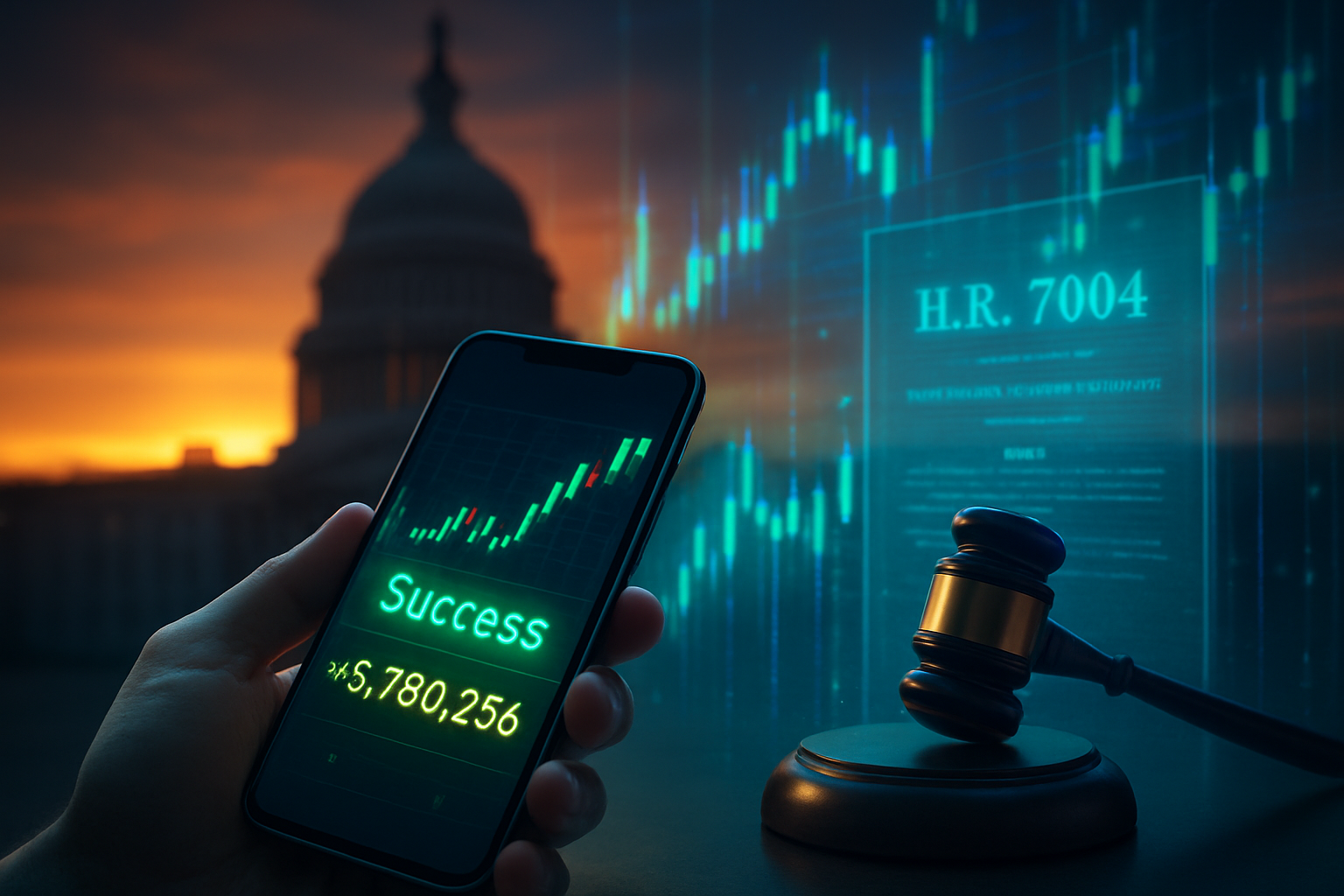
    The sudden $400,000 profit on a Venezuelan regime-change contract has done more than just mint a new crypto-millionaire; it has ignited a firestorm on Capitol Hill. As of January 23, 2026, the prediction market industry is facing its most significant regulatory reckoning to date with the introduction of the "Public Integrity in Financial Prediction Markets Act of 2026" (H.R. 7004).

    Introduced by Congressman Ritchie Torres (D-NY), the bill seeks to effectively outlaw "insider trading" in the world of event contracts. The push follows a suspicious trade on Polymarket that perfectly anticipated the U.S. special forces' capture of Nicolás Maduro, turning a modest $32,000 position into nearly half a million dollars in less than 24 hours. While the trade has been hailed by some as a triumph of "Information Finance," it has provided lawmakers with the "smoking gun" needed to argue that government staffers are treating classified intelligence like a personal brokerage account.

    The Market: What's Being Predicted

    The primary market under the microscope isn't just the fate of foreign dictators, but the survival of the prediction market industry itself. On PredictIt, a popular platform for political wagering, the contract "Will H.R. 7004 pass in 2026?" is currently trading at 12 cents, suggesting a meager 12% probability that the bill will become law this year.

    Despite the low odds of the full act passing a divided Congress, related "proxy" markets show a much higher expectation for regulatory intervention. On Kalshi, a platform regulated by the Commodity Futures Trading Commission (CFTC), a market tracking whether the CFTC will adopt new insider trading rules by year-end is trading at 20%.

    Trading volume has reached feverish heights. In January 2026 alone, Polymarket has seen over $6 billion in total volume, a 40% month-over-month increase. Much of this liquidity is concentrated in geopolitical and regulatory "risk" contracts, as institutional traders and retail bettors alike scramble to hedge against the potential for a federal crackdown.

    Why Traders Are Betting

    The catalyst for H.R. 7004 was an account pseudonymously known as "Burdensome-Mix." On January 3, 2026, just hours before "Operation Absolute Resolve"—the mission that led to the capture of Nicolás Maduro—was declassified, this trader placed $32,000 on "Yes" shares for Maduro’s exit. At the time, the market was trading at less than 8 cents. When the news broke, the shares hit $1.00, resulting in a $404,000 windfall.

    Suspicion immediately fell on government insiders. The account was funded via Coinbase Global, Inc. (NASDAQ: COIN) without the use of privacy mixers, allowing investigators to trace the funds back to a U.S.-based exchange. This "pitch-perfect" timing has led Congressman Torres to argue that the current legal framework is insufficient to prevent staffers with access to briefing materials from front-running the public.

    "We cannot have a system where a junior staffer at the Pentagon can pay off their student loans by betting on the very missions our brave service members are executing," Torres said during a press briefing last week.

    Broader Context and Implications

    The introduction of H.R. 7004 represents the "maturation" of the prediction market sector, often called InfoFi. For years, these markets operated in a legal gray area, but the massive scale of the 2024 and 2025 election cycles proved they are here to stay. Major brokerage firms like Robinhood Markets, Inc. (NASDAQ: HOOD) and Interactive Brokers Group, Inc. (NASDAQ: IBKR) have already integrated event contracts into their platforms, further blurring the lines between gambling and traditional finance.

    The bill's provisions are modeled after the 2012 STOCK Act, which aimed to prevent members of Congress from using non-public information to trade stocks. H.R. 7004 would extend these prohibitions to "event contracts" tied to government policy, military actions, and political outcomes.

    However, the industry is split on the implications. While Kalshi CEO Tarek Mansour has voiced support for the bill—viewing federal "rules of the road" as a prerequisite for institutional trust—decentralized advocates on Polymarket argue that the "insider information" actually makes the markets more accurate. They contend that the $400,000 Maduro trade provided a valuable signal to the world that something major was about to happen, effectively serving as an early warning system.

    What to Watch Next

    The most immediate milestone for the bill is a House Committee hearing scheduled for late February 2026. Traders will be watching for any signs of Republican support; currently, the bill has 30 Democratic co-sponsors, including former Speaker Nancy Pelosi, but lacks a GOP lead. If a prominent Republican joins the effort, the odds of passage on PredictIt could easily double overnight.

    Simultaneously, the CFTC has opened a formal investigation into the "Burdensome-Mix" account. If the commission manages to unmask the trader and prove they are a government employee, the resulting scandal could provide the political momentum needed to bypass congressional gridlock.

    Finally, keep an eye on the Supreme Court. Several legal challenges regarding the CFTC’s authority to regulate "public interest" markets are currently making their way through the appellate courts. A ruling that limits the CFTC’s power would make H.R. 7004 even more critical for those seeking to rein in the markets.

    Bottom Line

    The "Public Integrity in Financial Prediction Markets Act" is a classic example of "regulation by scandal." The $400,000 Maduro windfall provided a clear narrative of abuse that has forced the hand of regulators and lawmakers. While the markets currently give the bill a low 12% chance of passing in its current form, the era of the "unregulated wild west" for political betting is clearly drawing to a close.

    Whether through H.R. 7004 or administrative action by the CFTC, the integration of prediction markets into the broader financial system—represented by the likes of Robinhood (NASDAQ: HOOD)—means that "insider trading" rules are no longer an if, but a when. For now, the "Burdensome-Mix" trade stands as a testament to the power of prediction markets to surface hidden information—and the political firestorms that follow when they do.


    This article is for informational purposes only and does not constitute financial or betting advice. Prediction market participation may be subject to legal restrictions in your jurisdiction.

    PredictStreet focuses on covering the latest developments in prediction markets. Visit the PredictStreet website at https://www.predictstreet.ai/.
  • The Maduro Raid: $400,000 Prediction Market Payout Sparks Insider Trading Outcry and Legislative Crackdown

    The Maduro Raid: $400,000 Prediction Market Payout Sparks Insider Trading Outcry and Legislative Crackdown

    The early morning of January 3, 2026, will be remembered as one of the most significant geopolitical shifts of the decade. As U.S. Army Delta Force commandos descended upon the Fort Tiuna military complex in Caracas to capture Nicolás Maduro, a parallel drama was unfolding in the digital corridors of decentralized finance. While the world slept, a series of high-stakes trades on Polymarket signaled the impending raid hours before the first explosion echoed through the Venezuelan capital.

    The successful capture of Maduro—now awaiting trial on narco-terrorism charges in New York—triggered a massive payout on one of the most controversial prediction contracts in history. With nearly half a million dollars flowing to a single anonymous trader who appeared to know the "unknowable," the event has ignited a firestorm of debate over the integrity of prediction markets, the potential for state-level insider trading, and the urgent need for new regulatory guardrails.

    The Market: What’s Being Predicted

    The focal point of the controversy was a Polymarket contract titled: "Will Nicolás Maduro be out of office by January 31, 2026?" For much of the latter half of 2025, this market was a quiet corner of the platform, with shares trading between $0.05 and $0.08. This pricing indicated that the broad market assigned less than an 8% probability to Maduro being removed from power, as geopolitical analysts viewed a direct military extraction as a "tail risk" that could destabilize the region.

    The resolution criteria for the contract were specific: Maduro had to be resigned, physically removed, captured by a foreign power, or otherwise rendered unable to exercise the powers of the presidency. Following the announcement of "Operation Absolute Resolve" by President Trump at 4:21 a.m. EST on January 3, the market quickly moved toward a $1.00 valuation. By the time Maduro was confirmed to be in custody aboard the USS Iwo Jima, the total trading volume for Maduro-related ouster markets across platforms had surged past $64 million.

    On the night of the raid, between 9:58 p.m. and 2:58 a.m. EST, the market witnessed an unprecedented anomaly. An anonymous user under the pseudonym "Burdensome-Mix" began aggressively buying "Yes" shares. This trader wagered approximately $32,537 on the low-probability outcome just hours before the Delta Force helicopters crossed the Venezuelan border. When the market resolved, the trader walked away with a staggering profit of $436,759.61—a return of more than 1,242%.

    Why Traders Are Betting

    The timing of the "Burdensome-Mix" trades has led many to believe that the bet was not based on public sentiment, but on classified military intelligence. The bulk of the positions were entered after the final strike authorization was reportedly signed but before the public—or even the Venezuelan military—was aware of the operation. This "pitch-perfect" conviction on a low-probability event has led to widespread allegations of "dark information" usage.

    While some traditional geopolitical analysts were caught off guard, the prediction markets were reacting in real-time. Proponents of these platforms argue that this is exactly how they are supposed to work: by aggregating all available information, including that held by people "in the know," to produce the most accurate forecast possible. Critics, however, argue that when the "information" is a top-secret military operation, the market ceases to be a forecasting tool and becomes a vehicle for laundering government secrets into personal profit.

    Furthermore, a secondary conflict erupted over an "invasion" market. While the ouster market paid out, a separate contract asking if the U.S. would "invade" Venezuela was ruled as "No" by the UMA oracle. The oracle determined that a "snatch-and-extract" mission by special forces did not meet the definition of an invasion, which typically requires a large-scale occupation of territory. This distinction left many "Yes" bettors frustrated, claiming the oracle manipulated the outcome to favor the house or high-volume liquidity providers.

    Broader Context and Implications

    The fallout from the "Maduro Bet" has reached the halls of Congress. Representative Ritchie Torres (D-N.Y.) recently introduced the Public Integrity in Financial Prediction Markets Act of 2026. The bill aims to close what Torres calls the "geopolitical loophole" by prohibiting federal elected officials, political appointees, and executive branch staff from trading on prediction markets if they possess material nonpublic information related to their official duties.

    The event has also highlighted the operational role of defense contractors in modern conflicts. During the raid, high-tech assets from companies like Lockheed Martin (NYSE: LMT), including F-35 stealth fighters used to suppress Venezuelan air defenses, were critical to the mission's success. The intersection of military hardware and digital betting software has created a new paradigm where the success of a $100 million aircraft can directly determine the winner of a $400,000 bet.

    This incident marks a turning point for the credibility of decentralized prediction markets. On one hand, Polymarket correctly "predicted" the event through its pricing mechanism, proving its utility as a leading indicator. On the other hand, the suspicion of insider trading and the semantic disputes over oracle resolutions have provided ammunition for regulators who wish to see these platforms brought under stricter oversight by the Commodity Futures Trading Commission (CFTC).

    What to Watch Next

    In the coming weeks, the focus will shift from the betting floor to the courtroom. The U.S. Department of Justice is reportedly investigating the "Burdensome-Mix" account to determine if the individual behind it has ties to the Department of Defense or the National Security Council. Any evidence linking the trades to a government employee could lead to the first major criminal prosecution for "prediction market insider trading."

    Additionally, the passage of Rep. Torres's bill remains a key milestone. If enacted, it would force platforms like Polymarket and Kalshi to implement more rigorous Know Your Customer (KYC) protocols to identify and block government employees from specific markets. The debate over whether an "extraction" counts as an "invasion" will also likely lead to a standardizing of contract language across the industry to avoid future "oracle disputes."

    Finally, eyes are on the upcoming legal proceedings for Maduro in the Southern District of New York. Markets are already forming around the length of his trial and the eventual verdict. Traders are closely watching for any signs of a plea deal, which could once again send shockwaves through the political prediction markets.

    Bottom Line

    The $400,000 Maduro payout is a watershed moment for prediction markets. It has demonstrated their uncanny ability to capture the "wisdom of the crowds" (or the knowledge of the few) with surgical precision. However, it has also exposed the significant ethical and legal risks inherent in betting on global security events.

    As we move further into 2026, the "Maduro Bet" will serve as the primary case study for the tension between transparency and security. While these markets provide invaluable data to the public, the risk of incentivizing the leak of classified information remains a daunting challenge for lawmakers and platform operators alike. For now, the "Burdensome-Mix" trader remains a symbol of the high stakes—and high suspicions—of the new era of geopolitical forecasting.


    This article is for informational purposes only and does not constitute financial or betting advice. Prediction market participation may be subject to legal restrictions in your jurisdiction.

    PredictStreet focuses on covering the latest developments in prediction markets.
    Visit the PredictStreet website at https://www.predictstreet.ai/.